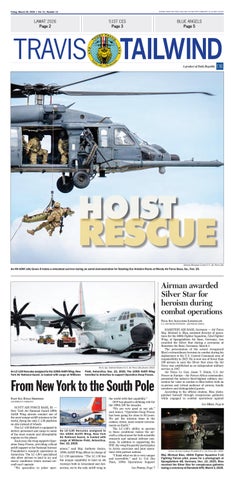

TRAVIS TAILWIND

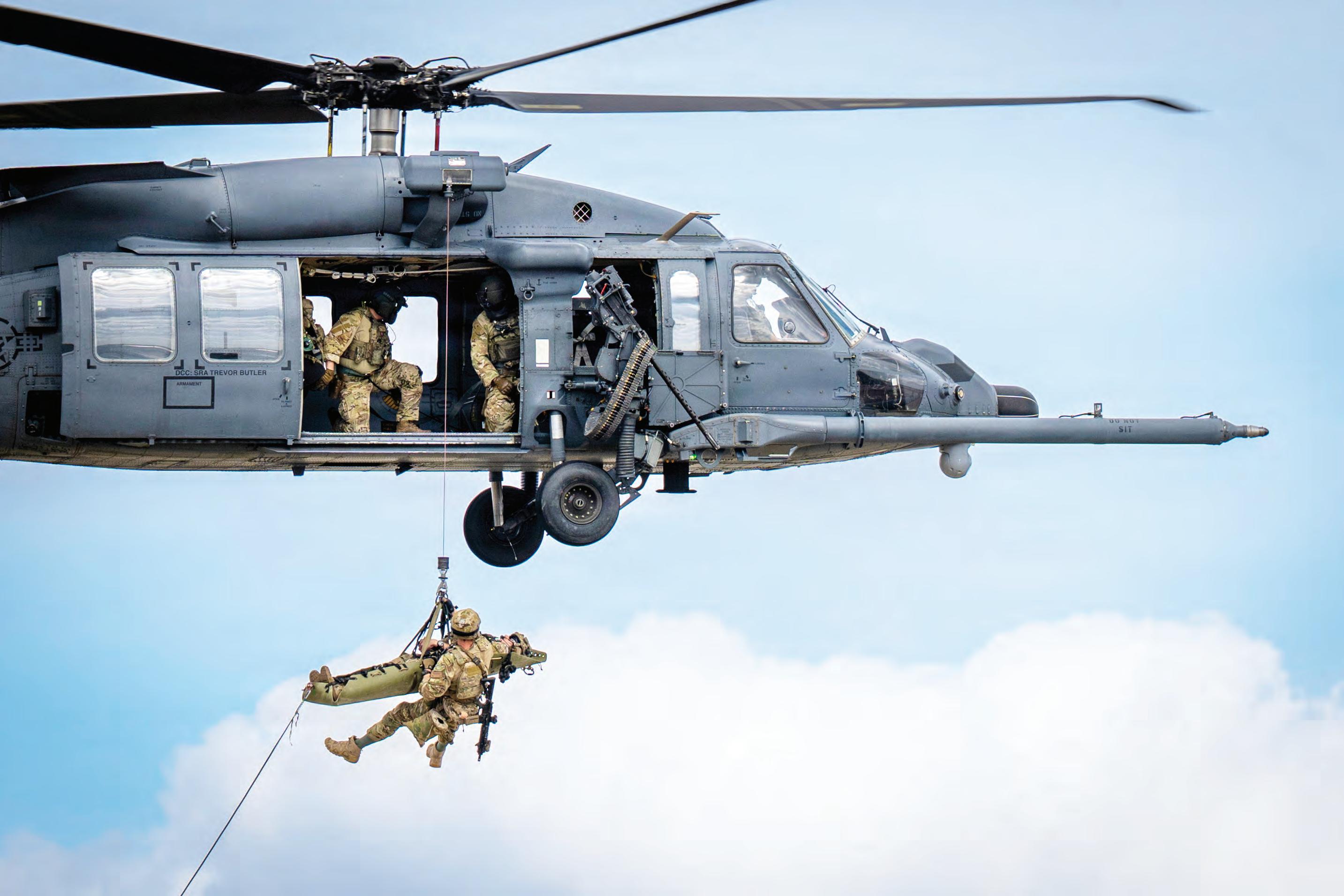
HOIST RESCUE

From New York to the South Pole
the wing supports Operation Deep Freeze, providing critical airlift support to the National Science Foundation’s research operations in Antarctica. The LC-130’s specialized skis allow airmen to land in icy and snowy conditions where normal aircraft can’t operate.
“We specialize in polar oper-
ations,” said Maj. Anthony Amico, 109th Airlift Wing officer in charge of LC-130 operations. “The LC-130 has the unique capability to land on ski runways both in Greenland and Antarctica; we’re the only airlift wing in
the world with that capability.”
ODF has played a defining role for the 109th AW for decades.
“We are very good at our job,” said Amico. “Operation Deep Freeze has been going for close to 50 years. We get the mission done in the coldest, driest, most remote environments on Earth.”
The LC-130’s ability to operate in these conditions makes the aircraft a critical asset for both scientific research and national defense missions. In addition to supporting the NSF, the wing frequently participates in Arctic exercises and joint operations with partner nations.
“I think what we do is very unique and incredible,” said Lt. Col. Dia Ham, 109th Operations Support
See Freeze, Page 7
Airman awarded Silver Star for heroism during combat operations
tEch. Sgt a lExandra longfEllow
AFRICA
RAMSTEIN AIR BASE, Germany — Air Force Maj. Michael A. Blea, assistant director of operations for the 480th Fighter Squadron, 52nd Fighter Wing, at Spangdahlem Air Base, Germany, was awarded the Silver Star during a ceremony at Ramstein Air Base, Germany, March 3.
The presentation of the award recognized Blea’s extraordinary heroism in combat during his deployment to the U.S. Central Command area of responsibility in 2025. He is now one of fewer than 100 airmen to earn the Silver Star since the Air Force was established as an independent military service in 1947.
Air Force Lt. Gen. Jason T. Hinds, U.S. Air Forces in Europe – Air Forces Africa commander, presented the nation’s third-highest military decoration for valor in combat to Blea before both an in-person and virtual audience of airmen, family members and distinguished guests.
According to the official citation, Blea distinguished himself through conspicuous gallantry while engaged in combat operations against
See Silver, Page 6
An LC-130 Hercules assigned to the 109th Airlift Wing, New York Air National Guard, is loaded with cargo at Williams Field, Antarctica, Dec. 22, 2025.
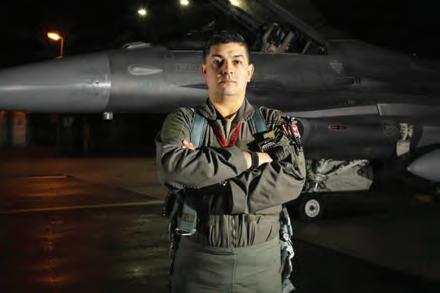
Senior Airman Sydney Franklin/U.S. Air Force file (2025) Maj. Michael Blea, 480th Fighter Squadron F-16 Fighting Falcon pilot, poses for a photograph at Spangdahlem AB, Germany, Dec. 10, 2025. Blea received the Silver Star for conspicuous gallantry during a ceremony at Ramstein AFB, March 3, 2026.
Travis Exchange to salute military kids
Exchange gift cards, available at ShopMyExchange.com/sweepstakes beginning March 27.
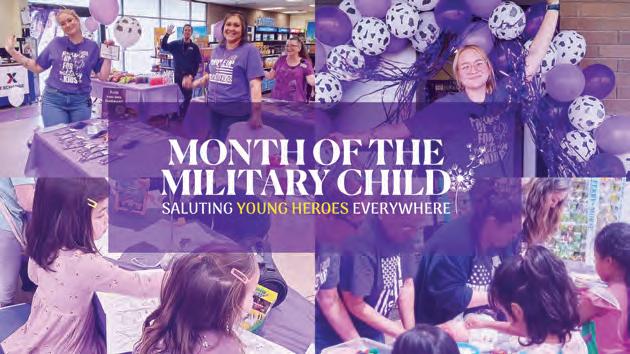
BASE — It’s time to celebrate the children of our nation’s heroes for Month of the Military Child.
Established in 1986 by former Defense Secretary Casper Weinberger, Month of the Military Child is celebrated by the Department of War annually in April and recognizes more than 1.6 million military children. These children face unique experiences as a direct result of their parents’ service.
Throughout the month of April, the Travis Exchange is celebrating with free events, giveaways, activities and sweepstakes for military children.
Offerings include:
n A free collectible military brat patch at the Travis Exchange checkouts (while supplies last).
n In-store events from late March through April featuring themes and toys such as Play-Doh, Marvel and Furby Furblets.
n Exclusive sweepstakes giving away more than $22,000 in toys and
n Giveaways for military kids including a free goodie bag and certificate of appreciation for Purple Up Day.
n Free Treat Day on April 18, offering free food and drinks at participating Travis AFB Exchange restaurants including Starbucks, Pizza Hut, Qdoba, Panera Bread and more.
“The Travis Exchange is honored to recognize military children with the same respect and gratitude we show their parents,” said Travis Exchange General Manager Cathie Byrns. “Month of the Military Child underscores the vital role these young individuals play in strengthening our nation and reminds us that no contribution is ever too small.”
Exchange salutes youngest heroes with free military brat patch
Pre-registration for events is not required. Military families can contact the Travis Exchange or visit the community hub for more information regarding events. A rmy & A
TRAVIS AIR FORCE
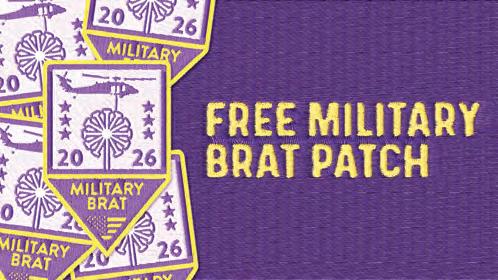
BASE — The Travis Exchange is kicking off the Month of the Military Child by offering military brats a tangible badge of honor.
Beginning April 1, eligible Exchange shoppers can visit the BX to claim up to five free, collectible iron-on military brat patches at registers while supplies last.
“Just as our service members proudly wear the insignia that reflect their service
and sacrifice, our military children deserve a symbol that honors their own strength,” said Travis Exchange General Manager Cathie Byrns. “This badge of honor celebrates their resilience, courage and the quiet sacrifices they make every day – and the Travis Exchange is honored to recognize them in this way.”
Airmen and their families can contact the Travis Exchange or visit the Exchange’s Month of the Military Child community hub for more information.

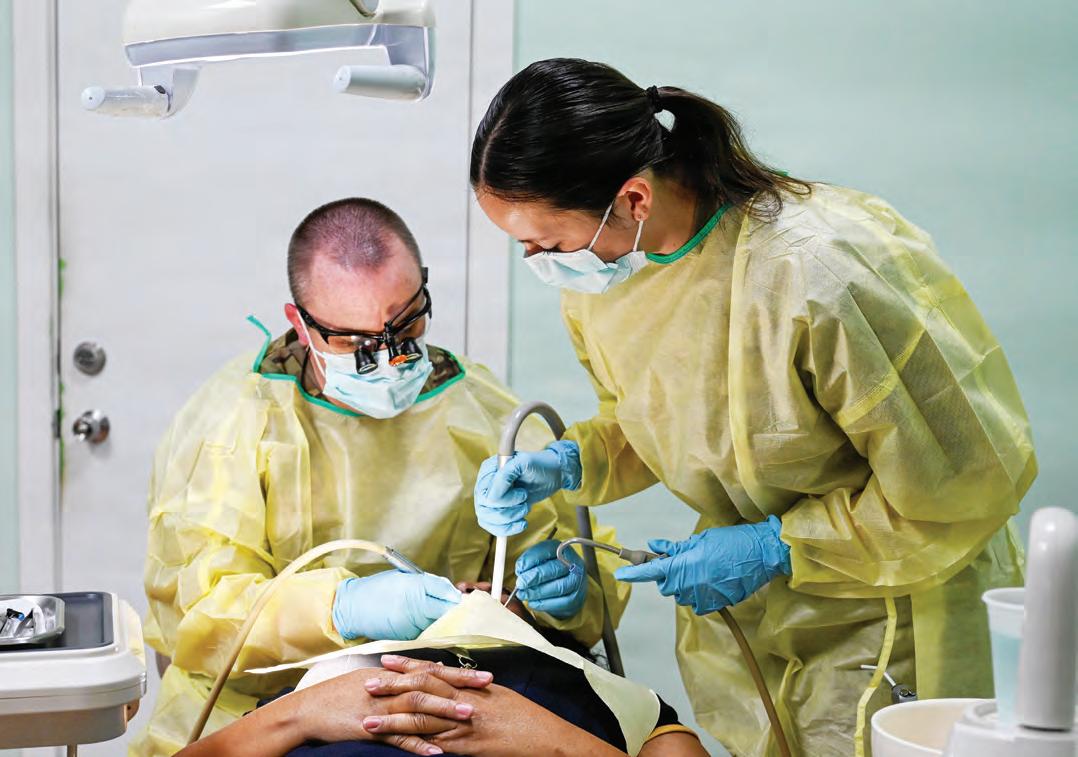
CHARLESTOWN, Saint Kitts and Nevis — As part of Lesser Antilles Medical Assistance Team 2026, U.S. Air Force Reserve dental personnel are working alongside their Nevician counterparts to deliver essential dental care while strengthening relationships across the Caribbean.
LAMAT, a health security cooperation engagement, enhances regional medical collaboration and professional integration among healthcare providers across Caribbean nations. For LAMAT 2026 dental teams, working in a resourceconstrained environment encourages adaptability and shared learning while delivering meaningful care to local Nevician communities.
As the senior enlisted leader overseeing Air Force medical personnel in Nevis, U.S. Air Force Reserve Senior Master Sgt. Francesca Maliwanag, 349th Medical Squadron said LAMAT 26 represents more than a medical mission – it reflects a commitment to collaboration and people.
“LAMAT 26 strengthens our relationship with St. Kitts and Nevis at every level,” she said. “Yes, we’re here to provide care, but we’re also here to build trust. When our airmen work side-by-side with local providers, we’re not just delivering services – we’re learning from one another and reinforcing a shared commitment to patient care.”
While humanitarian in nature, the mission directly supports military readiness as well.
“Providing dental care during LAMAT supports the broader mission of the Air Force – it improves relations with our host country, St. Kitts and Nevis, and it gives us the opportunity to work in an environment that’s very different from private practices or hospitals in the United States, where we typically have everything at our fingertips,” said U.S. Air Force Reserve Maj. Nicholas Lieb, 419th Medical Squadron Dental flight commander. “Here, we don’t necessarily have that. It challenges us to find workarounds and still take care of patients safely and effectively.”
Unlike a fixed-base clinic, the mission at Nevis requires adapt-
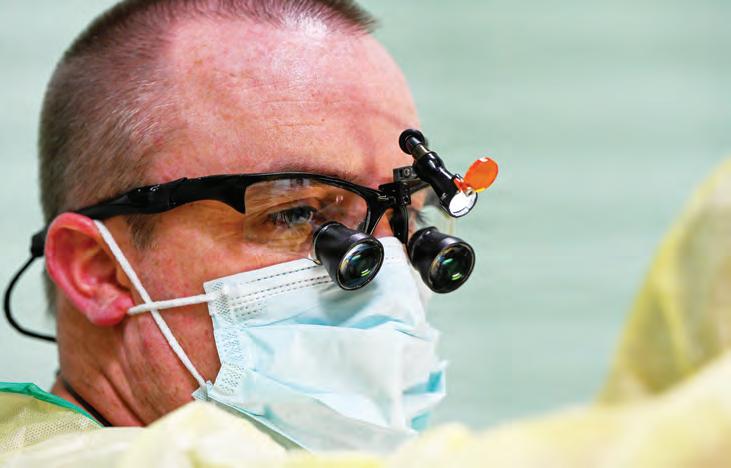
ability, innovation and flexibility. Operating in a new environment means using different materials and instruments than they would normally have access to in the United States – a challenge that ultimately strengthens their capabilities.
“We’ve learned to repurpose instruments and adjust how we use certain tools,” Lieb explained.
“Some items we would normally grab easily in the U.S. aren’t available here. The biggest adjustment has been working around limited X-ray capabilities and determining how to safely treat patients within those limitations. That has required creativity and flexibility.”
The four-member team provides a variety of services ranging from exams
and cleanings to restorative procedures and urgent dental interventions, with prevention remaining a central focus.
The team treated 20 patients in its first two days of operations with patient volume expected to increase as word spreads and local school groups begin clinic visits.
“We’re focusing heavily on preventative care and community outreach, especially oral hygiene instruction for students and children,” Lieb added. “Preventative care makes a significant difference, especially for younger patients. Focusing on hygiene, diet, and nutrition early reduces long-term dental disease and future complications.”
Beyond clinical care, LAMAT reinforces the
standing relationship between the United States and its Caribbean partners.
“When you’re entering another country to provide care, there can be uncertainty about how you’ll be received,” Lieb said. “But the people here – both patients and providers – have welcomed us with open arms and been incredibly supportive.”
Providing care to the people of Nevis has already proven meaningful to the entire team.
“We’ve only been here two days, but the experience has been great,” Lieb said. “Patients have been very receptive to us being here.”
Working side-by-side with host-nation healthcare professionals allows











Staff Sgt. Dakota Carter/U.S. Air Force file photos
Air Force Reserve Maj. Andrew Hutchison, 419th Medical Squadron officer-in-charge of the Nevis dental team, left, and Tech. Sgt. Courtney Hubenthal, 419th Medical Squadron dental technician, repair a dental filling on a Nevisian patient at Charlestown Dental Clinic in
Charlestown, Nevis, Feb. 24. This procedure was part of the Lesser Antilles Medical Assistance Team 2026 mission, which connects airmen with international partners, expanding deployed medical readiness and strengthening the health infrastructure of host nations.
Air Force Reserve Maj. Andrew Hutchison, 419th Medical Squadron officer-in-charge of the Nevis dental team, performs a filling repair on a Nevisian patient at Charlestown Dental Clinic in Charlestown, Nevis, Feb. 24.
See LAMAT, Page 4
Air Force Medical Service announces 2025 award winners
AF Surgeon gener Al Public A FFAirS
FALLS CHURCH, Va. — The Air Force Surgeon General is proud to announce the recipients of the 2025 Air Force Medical Service Annual Awards. The awards include both individual and team awards.
The nominations submitted reflect the extraordinary quality of Air Force medics. The accomplishments of those recognized demonstrate expertise, leadership, and commitment across the full breadth of the mission support we provide to the Air Force and Space Force. We should also acknowledge the hard work and support of wingmen, fellow medical professionals, at every level, who enabled success.
Please join us in congratulating all award recipients - they represent the many outstanding Air Force medical professionals emulating the AFMS mission: “To deliver Trusted Care… anytime, anywhere.”
Individual Awards:
USAF Health Care Administrator of the Year – Company Grade Category
Capt. Ria Grace A. Gozon-Marquez.
86 MDG, Ramstein AB, Germany, USAFE-AFAF.
USAF Medical Service Corps Commitment to Service Award
Lt. Col. Justin L. Wolthuizen.
HQ AFPC/DPMND, JBSA-Randolph, Texas, AFPC.
USAF Medical Service Corps Civilian of the Year
Ms. Shanelle K. Malnar. USAFE/SGX, Ramstein AB, Germany, USAFE-AFAF.
USAF Biomedical Clinician of the Year –Company Grade Category
Maj. Matthew J. Mazick.
82 OMRS/SGXH, Sheppard AFB, Texas, AETC.
USAF Biomedical Clinician of the Year – Field Grade Category
Maj. Brandon O. Wielert.
382 TRS/TXXY, JBSA-Fort Sam Houston, Texas, AETC.
USAF Biomedical Specialist of the Year –Company Grade Category
Capt. Tristan P. Eddy. 42 HCOS/SGGD, Maxwell AFB, Ala., AETC.
USAF Biomedical Specialist of the Year – Field Grade Category
Lt. Col. William C. Matthews.
75 OMRS/SGXB, Hill AFB, Utah, AFMC.
USAF Biomedical Clinician Civilian of the Year
Ms. Amy L. Schrupp.
28 OMRS/SGXD, Ellsworth AFB, S.D., AFGSC.
USAF Biomedical Specialist Civilian of the Year
Dr. Denise L. Kramer. 711 HPW/USAFSAM, Wright-Patterson AFB, Ohio, AFMC.
USAF Biomedical Sciences Corps Educator of the Year
Capt. Leigh M. Durden
711 HPW/USAFSAM, Wright-Patterson AFB, Ohio, AFMC.
USAF Clinical Dentist of the Year
Capt. Anna M. Captain
20 MDG/SGXD, Shaw, AFB, S.C., ACC.
USAF Dental Educator of the Year
Lt. Col. Jared D. Mason
Lackland Dental Training Sq, JBSA-Lackland, Texas, AETC. USAF Health Services Management Airman of the Year
Senior Airman Herold Orphee. 673 MDSS/SGSM, JB Elmendorf-Richardson, Alaska, PACAF.
USAF Health Services Management NCO
of the Year
Staff Sgt. Jeremy P. Shires.
937 Training Support Sq, JBSA-Fort Sam Houston, Texas, AETC.
USAF Medical Mate riel Airman of the Year Airman 1st Class Za’Nyla A. Robinson. 45 HCOS/SGSM, Patrick SFB, Fla., AFMC.
USAF Medical Mate riel NCO of the Year
Tech Sgt. Jem V. Thipphakesone. 48 MDSS/SGSM, RAF Lakenheath, USAFE-AFAF.
USAF Biomedical Equipment Technician Airman of the Year
Senior Airman Tytus A. Yarbrough. 673 MDSS/SGSM, JB Elmendorf-Richardson, Alaska, PACAF.
USAF Biomedical Equipment Technician NCO of the Year
Tech Sgt. Gabriel Ayala-Martinez. AFSOC-GSU, Pope AAF, N.C., AFSOC.
USAF Base Bioenvironmental Engineering Airman of the Year
Senior Airman Bamowo O. Okunowo. 1 SOMDG, Hurlburt Field, Fla., AFSOC.
USAF Base Bioenvironmental Engineering NCO of the Year
Staff Sgt. Nicholas S. Thornton.
55 OMRS/SGXB, Offutt AFB, Neb., ACC.
USAF Mental Health Airman of the Year
Senior Airman Benito Sanchez De La Rosa.
81 OMRS/ SGPW, Keesler AFB, Miss., AETC.
USAF Mental Health NCO of the Year
Tech Sgt. Randi L. Sologaistoa. Lackland Trainee Health Sq, JBSA-Lackland, Texas, AETC.
USAF Diet Therapy Airman of the Year Airman 1st Class AriOnna M. Lowe. 88 DTS/SGQD, Wright Patterson AFB, Ohio, AFMC.
USAF Diet Therapy NCO of the Year
Tech Sgt. Latrice D. Boyd.
88 DTS/SGQD, Wright-Patterson AFB, Ohio, AFMC.
USAF Public Health Airman of the Year
Senior Airman Sandra Velasquez Castro.
377 OMRS/SGXM, Kirtland AFB, N.M., AFGSC.
USAF Public Health NCO of the Year
Tech Sgt. Milyka L. Moses.
633 OMRS/SGXS, JB Langley-Eustis, Va., ACC.
USAF Respiratory Care Practitioner Airman of the Year Senior Airman Saleema Bano. FSH MDOS/SG05L, JBSA-Fort Sam Houston, Texas, AETC.
USAF Respiratory Care Practitioner NCO of the Year
Tech Sgt. Derrick
See Awards, Page 4
51st CES conducts Rapid Osan Airfield Recovery training
Senior A irm An rome bowerm ASter 51ST FIGHTER WING
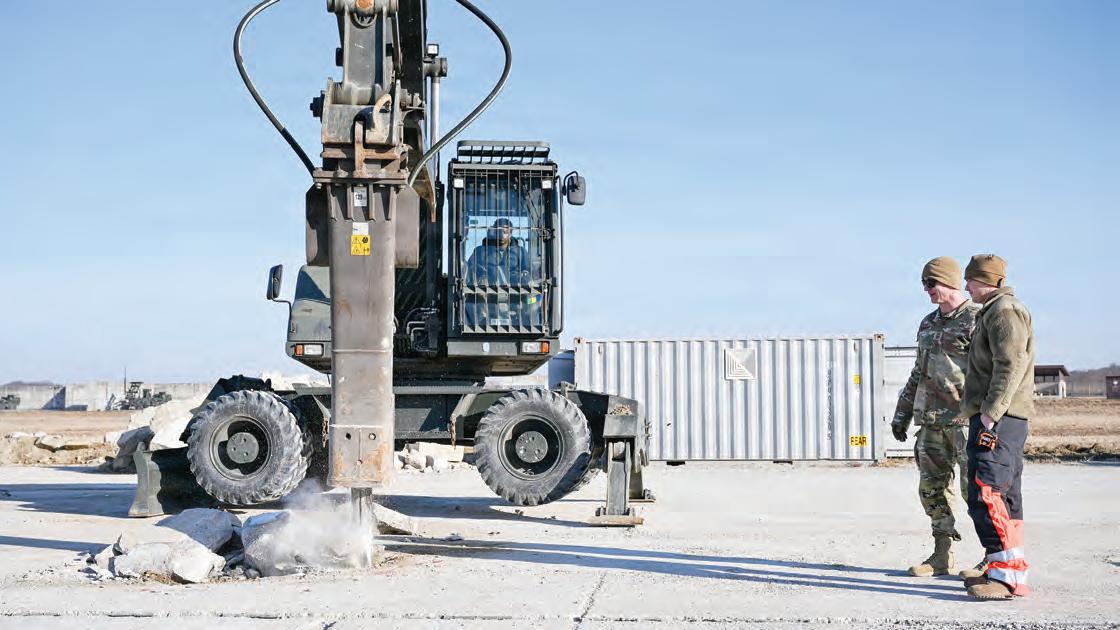
OSAN AIR BASE, Republic of Korea — U.S. Air Force airmen assigned to the 51st Civil Engineer Squadron tested Rapid Osan Airfield Recovery methods, Feb. 26–27, refining concepts designed to restore runway capability during contingency operations. The training evaluated ROAR, an Osanspecific, speed-focused approach intended to rapidly generate limited sortie capability following simulated attack scenarios. Unlike Rapid Airfield Damage Repair, which is designed for long-term durability, ROAR prioritizes rapid restoration to achieve approximately 300 aircraft passes, enabling jets to launch before transitioning to more permanent repairs.
On the first day of training, airmen tested the placement of flowable fill concrete over crushed stone using a volumetric mixer. Following debris removal, pavement breaking, excavation and compaction, the team capped the repair with wet-placed flowable fill and conducted strength testing to determine how quickly the surface could support aircraft operations.
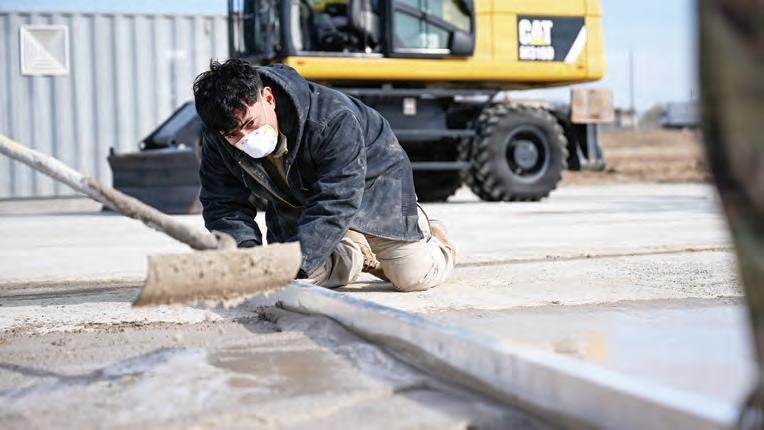

The second day focused on installing fiber reinforced polymer panels over compacted crushed stone, creating an immediate load-bearing surface intended to further reduce runway downtime during contingency scenarios.
“Each method provides redundancy to the other,” said Senior Master Sgt. Andrew Thurman, 51st CES heavy repair superintendent. “If we have equipment malfunctions, conceivably we should still be able to recover the runway enabling our aircraft to take the fight to the enemy.”



Throughout the exercise, airmen executed full-scale crater repair procedures, beginning with debris removal and upheaval marking before progressing through excavation, backfilling, compaction and surface restoration. The squadron measured both completion time and structural performance, conducting hardness testing to
validate durability under projected aircraft loads.
By accelerating runway recovery techniques, the 51st CES strengthens Osan’s ability to sustain combat airpower under dynamic conditions.
ROAR provides commanders with the capability to rapidly launch aircraft, preserving mission continuity while follow-on teams implement longer-
term recovery methods.
“We are working with the Air Force Civil Engineer Center to streamline the process and potentially spread it across the CE enterprise,” said Thurman. “RADR is still a viable process, and it’s something we will do when we have time because it will be a necessity to receive followon forces.”
The training underscores the critical role civil engineers play in sustaining airfield operations and ensuring the 51st Fighter Wing remains postured to generate airpower and ready to Fight Tonight.
“As we continue to test ROAR methods it will allow us to recover the airfield faster in the event of contingency,” said Willhite. “This allows us to put jets in the air faster to defeat our adversaries while minimizing the amount of time our troops have to spend working in the elements exposed to enemy threats.”





Senior Airman Rome Bowermaster/U.S. Air Force file photos
Senior Airman Delroy Williams, 51st Civil Engineer Squadron pavement and construction heavy equipment operator, breaks up the ground with an excavator during Rapid Osan Airfield Recovery training at Osan Air Base,
Republic of Korea, Feb. 26. The training evaluates the placement of flowable fill concrete over crushed stone using a volumetric mixer to rapidly restore limited runway capability under the Rapid Osan Airfield Recovery concept.
Senior Airman Omar Becerra, 51st Civil Engineer Squadron pavement and construction heavy equipment operator, removes excess concrete during Rapid Osan Airfield Recovery training at Osan Air Base, Republic of Korea, Feb. 26. Airmen tested a flowable fill concrete cap over crushed stone to evaluate whether the streamlined method can improve repair timelines during simulated attack scenarios.
Airmen assigned to the 51st Civil Engineer Squadron move around freshly poured concrete during Rapid Osan Airfield Recovery training at Osan Air Base, Republic of Korea, Feb. 26. The Osan-developed recovery method prioritizes speed to achieve approximately 300 aircraft passes before transitioning to longer-term repair solutions.
ICBM test confirms MIRV capability and reliability
A ir Force
GlobAl Strike comm And Public A FFAirS
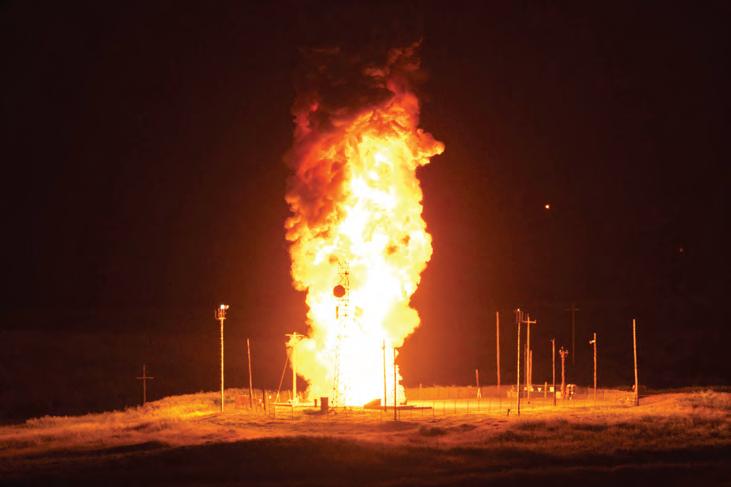
VANDENBERG SPACE FORCE BASE — Air Force Global Strike Command conducted a test launch of an unarmed Minuteman III intercontinental ballistic missile equipped with two test re-entry vehicles from Vandenberg Space Force Base, March 3.
This launch, designated GT 255, was scheduled years ago, and is not in response to world events. It is a key component of a data-driven program that has been in place for decades, involving over 300 similar tests designed to validate the performance of the weapon system. The data collected from these routine tests is essential for ongoing and future force development.
“GT 255 allowed us to assess the performance of individual components of the missile system,” said Lt. Col. Karrie Wray, 576th Flight Test Squadron commander. “By continually assessing varying mission profiles, we are able to enhance the performance of the entire ICBM fleet, ensuring the maximum level of readiness for
the land-based leg of the nation’s nuclear triad.”
This test not only focused on the performance of the ICBM but also the performance of its multiple reentry vehicles, which are primarily used to increase missile effectiveness and overcome enemy defenses.
“It is critical to test all aspects of our ICBM force, including our ability to deliver multiple, independently targeted payloads with absolute precision,”
USAF Ophthalmic Airman of the Year
said Gen. S.L. Davis, commander of AFGSC. “This test validates the intricate synchronization of the weapon system, from the initial launch sequence to the flawless deployment of each reentry vehicle.”
During the test, the ICBM’s two reentry vehicles traveled thousands of miles to a pre-determined target at the Kwajalein Atoll in the Marshall Islands. This long-range flight allows engineers and weapons experts from the
Mossay.
Pitchford
60 HCOS/SGGH, Travis AFB, AMC.
USAF Physical Medicine Airman of the Year
Senior Airman DeVante J. King.
375 OMRS/SGXY, Scott AFB, Ill., AMC.
USAF Physical Medicine NCO of the Year
Tech Sgt. Ryan A. Thomas.
82 OMRS/SGXH, Sheppard AFB, Texas, AETC.
USAF Aerospace Medicine Airman of the Year
Senior Airman Deangelo Reinoso-Bunch.
377 OMRS/SGXF, Kirtland AFB, N.M., AFGSC.
USAF Aerospace Medicine NCO of the Year
Tech Sgt. David Dejarnette.
36 MDG/SGGE, Anderson AFB, Guam, PACAF.
USAF Surgical Service Airman of the Year
Senior Airman Vincent C. Grant II.
673 SGCS/SGCS, JB Elmendorf-Richardson, Alaska, PACAF.
USAF Surgical Service NCO of the Year
Tech Sgt. Michael P. Hansen.
FSH SGCS/SGCO, JBSA-Fort Sam Houston, Texas, AETC.
USAF Pharmacy Technician Airman of the Year
Senior Airman
Briana L. Rubio.
375 MDSS/SGSD, Scott AFB, Ill., AMC.
USAF Pharmacy Technician NCO of the Year
Tech Sgt. Scott J. Wadsworth.
60 MDTS/SGQP, Travis AFB, AMC.
USAF Diagnostic Imaging Airman of the Year
Senior Airman
Amber K. Lynn.
60 MDTS/SGQQ, Travis AFB, AMC.
USAF Diagnostic Imaging NCO of the Year
Tech Sgt. Joshua R. Fleek.
86 MDG, Ramstein AB, Germany, USAFE-AFAF.
USAF Laboratory Airman of the Year
Senior Airman Jacob J. Ramirez.
48 MDSS/SGSL, RAF Lakenheath, UK, USAFE-AFAF.
USAF Laboratory NCO of the Year
Tech Sgt. Noah D. Sermon.
86 MDG, Ramstein AB, Germany, USAFE-AFAF.
Senior Airman Felicia M. Sanchez. 52 OMRS/SGXH, Spangdahlem AB, UK, USAFE-AFAF.
USAF Ophthalmic NCO of the Year
Tech Sgt. Simon L. Arnold. 10 SGCS/SGCO, US Air Force Academy, Colo., USAFA.
USAF Dental Airman of the Year
Senior Airman Madison N. Bentle. Bolling MDS, JB Anacostia-Bolling, D.C., AFDW.
USAF Dental NCO of the Year
Tech Sgt. Hamila H. Burton
412 OMRS/SGXD, Edwards AFB, AFMC.
USAF SNCO Operational Medicine Excellence Award
Senior Master Sgt. Matthew R. Walsh. HAF/SG3, Falls Church, Va., HAF.
USAF SNCO Organizational Management Excellence Award
Master Sgt. Emilio J. Martinez. 8 OMRS/SGXP, Kunsan AB, PACAF.
USAF SNCO Clinical Support Excellence Award
Master Sgt. Nance F. Pea
382 TRS/TXXYAG, JBSA-Fort Sam Houston, Texas, AETC.
USAF Medical Service
SNCO Leadership Award
Master Sgt. Monica E. Hipsher 509 MDG/CCC, Whiteman AFB, Mo., AFGSC.
USAF Company Grade Physician of the Year
Capt. Erin K. O’Pry
49 HCOS/SGGP, Holloman AFB, N.M., AETC.
USAF Field Grade Physician of the Year
Maj. Maggie C. Wertz
480 ISRW/SG, Langley AFB, Va., ACC.
USAF Chief of Aerospace Medicine of the Year Award
Lt. Col. Ashley N. Franz 354 MDG/SGP, Eielson AFB, Alaska, PACAF.
USAF Chief of the Medical Staff of the Year
Lt. Col. Julie A. Griffith
20 MDG/SGH, Shaw AFB, S.C., ACC.
USAF Academic Physician of the Year Award
Lt. Col. Matthew K. Hawks.
Andrews HCOS/SGGF, JB Andrews, Md., AFDW.
USAF Clinical Excellence in Nursing Award – Company Grade Nurse of the Year
Capt. MiaLisa G.
72 HCOS/SGGP, Tinker AFB, Okla., AFMC.
USAF Clinical Excellence in Nursing Award – Field Grade Nurse of the Year
Maj. Nicole Grow.
48 SGCS/SGCM, RAF Lakenheath, UK, USAFE-AFAF.
USAF Privileged Advanced Practice Nurse of the Year – Company Grade Category Capt. Brittany King.
18 OMRS/SGXP, Kadena AB, Japan, PACAF.
USAF Privileged Advanced Practice Nurse of the Year – Field Grade Category Maj. Naomi C. Torrance.
20 MDG/SGGP, Shaw AFB, S.C., ACC. USAF Civilian Nurse of the Year
Ms. Deedra Nelson.
75 OMRS/SGXW, Hill AFB, Utah, AFMC.
USAF Outstanding Excellence in Nursing Leadership Award Lt. Col. Jennifer L. Varney.
22 HCOS/CC, McConnel AFB, Kan., AMC.
USAF Outstanding Achievement in Nursing Force Development Award Maj. Savannah A. Jumpp.
86 MDG, Ramstein AB, Germany, USAFE-AFAF.
USAF Nursing Educator of the Year
Maj. Christy Anne R. Mitchell USUHS, Bethesda, Md., AFELM MED DOD.
USAF Medical Service Civilian Performance Excellence Award
Ms. Latemia Thomas.
LAK MDOS/SGOF, JBSA-Lackland, Texas, AETC.
USAF Medical Service Civilian Organizational Leadership Award
Ms. Faith R. Yingling. USAFSAM/FEB, Wright-Patterson AFB, Ohio, AFMC.
USAF Medical Service Civilian Enterprise Leadership Excellence Award
Ms. Kimberly Hartmann. AFMEDCOM/A4/10M, Fort Detrick, Md., AFMEDCOM.
USAF Outstanding Achievement in Operational Research Award Maj, Anna R. Prendergast 99 MDG/SGEO, Nellis AFB, Nev., ACC.
USAF Outstanding Personnel Reliability Assurance Program Competent Medical Authority (CMA) of the Year Maj. Christy-Lynne M.
From Page 2
Air Force active duty and Reserve medical teams to exchange best practices, share clinical perspectives, and build professional relationships that continue after the mission concludes.
“Collaboration has been one of the most impactful parts of this mission,” Maliwanag said.
“Our airmen are seeing different approaches to care, different systems, and different resource realities. That kind of exposure builds cultural awareness and adaptability – skills that make them better professionals and stronger representatives of our Air Force.”
For Nevis residents, the presence of the airmen means additional clinical capacity and direct collaboration with local providers.
mander, the impact extends beyond patient numbers.
“As the flight commander, it’s been extremely rewarding seeing my team make a difference in the community,” Lieb said. “We’re a small group here in Nevis, and seeing our technicians gain hands-on experience - experience they wouldn’t normally get during a standard reserve weekend – has been very beneficial for everyone.”
But the most powerful reminder of the mission’s value comes from the patients themselves.
“Seeing how receptive patients are to our care has been rewarding and reminds us why missions like this matter,” Lieb said. “There can be uncertainty about how people will feel about us being here, but their openness has been meaningful.
377th Test and Evaluation Group to collect invaluable data on the missile’s accuracy and reliability, verifying that every component of the ICBM weapon system performs as designed.
The 377 TEG then provides the data collected from these test launches to a wide range of stakeholders, including the Department of War, the Department of Energy and U.S. Strategic Command,
See ICBM, Page 6
McGinnis. HQ AFPC/DPMON, JBSA-Randolph, AFPC.
USAF Outstanding Personnel Reliability Assurance Program MTF Monitor/Technician of the Year Staff Sgt. Alyssa N. McDermott 52 OMRS/SGXF, Spangdahlem AB, Germany, USAFE-AFAF Team Awards:
USAF Medical Logistics Team of the Year 48 MDSS/SGSM, RAF Lakenheath, UK, USAFE-AFAF.
USAF Resource Management Team of the Year 45 MDG/SGGR, Patrick SFB, Fla., AFMC.
USAF Medical Information Services Team of the Year 35 MDSS/SGST, Misawa AB, Japan, PACAF.
USAF Health Plan Management Team of the Year
“This mission creates mutual benefit,” Maliwanag furthered. “On a personal level, our Airmen are forming genuine connections with the people here. On a broader level, we’re demonstrating our commitment to being reliable partners. When communities see our professionalism, compassion, and willingness to serve, it strengthens trust – and trust is what will sustain long-term.”
For the flight com-
8 HCOS/SGGT, Kunsan AB, ROK, PACAF.
USAF Medical Readiness Team of the Year USAFE/SGX, Ramstein AB, Germany, USAFE-AFAF.
USAF Medical Service Corps Team of the Year 96 MDG/SGA, Eglin AFB, Fla., AFMC.
USAF Biomedical Sciences Corps Team of the Year 75 OMRS/SGXB, Hill AFB, Utah, AFMC.
USAF Small Dental Clinic of the Year 8 OMRS/SGXD, Kunsan AB, ROK, PACAF.
USAF Medium Dental Clinic of the Year 56 MDG/SGXD, Luke AFB, Ariz., AETC.
USAF Large Dental Clinic of the Year 18 DS/SGD, Kadena AB, Japan, PACAF.
USAF Outstanding Personnel Reliability


“Service is using what you’re trained to do for the benefit of others,” he added. “It means having a particular skill set and being willing to share it with another culture or group of people.”
Through partnership, and patient care, the Nevis dental team supporting LAMAT 26 is proving that readiness and relationships go hand in hand – one procedure, one student, and one smile at a time.
Assurance Program Team of the Year 509 OMRS/SGXF, Whiteman AFB, Mo., AFGSC.
USAF Outstanding Operational Team of the Year 36 MDG/SGGM, Andersen AFB, Guam, PACAF.
USAF Best AE Squadron Patient Safety Program 86 Aeromedical Evacuation Sq/AECM, Ramstein AB, Germany, USAFE-AFAF.
USAF Surgeon General Hospital of the Year 99 MDG, Nellis AFB, Nev., ACC. USAF Surgeon General Clinic of the Year 51 MDG, Osan AB, ROK, PACAF.
USAF International Health Operations Team Excellence HQ PACAF/SGX, JB Pearl Harbor-Hickam, Hawaii, PACAF.




















Staff Sgt. Joshua LeRoi/U.S. Space Force file
An unarmed Minuteman III intercontinental ballistic missile launches during an operational test at Vandenberg Space Force Base, March 3.
Blue Angels celebrate 80 years in flight, certified for upcoming 2026 airshow season
Morgan galvin CHIEF OF NAVAL AIR TRAINING
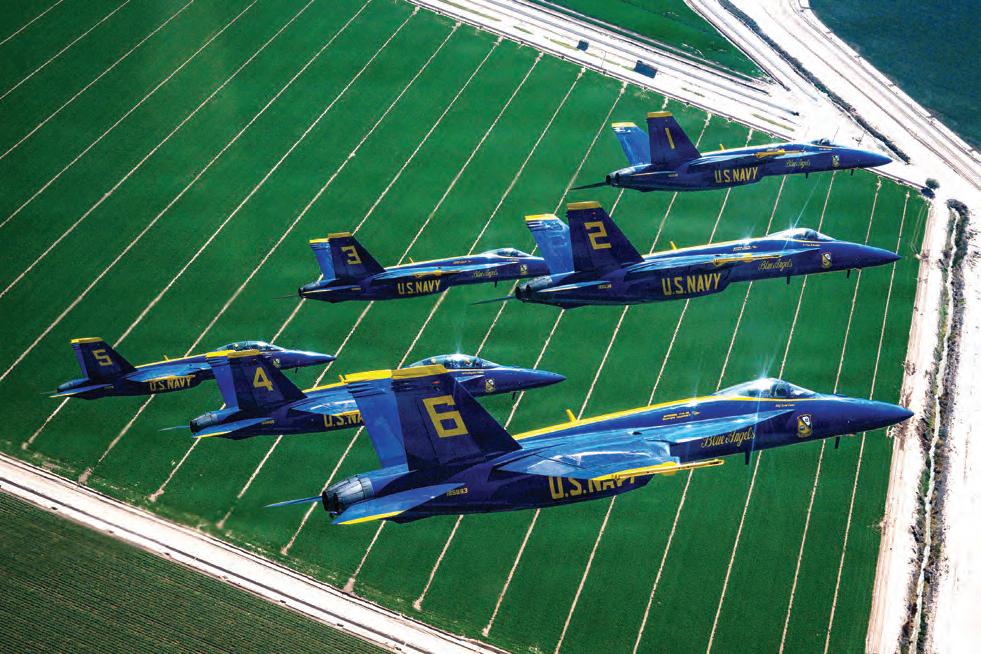
EL CENTRO — The U.S. Navy flight demonstration squadron, the Blue Angels, successfully completed its annual certification for the 2026 airshow season, Feb. 23, marking the squadron’s 80th anniversary. The “airshow-ready” designation was granted after the team completed its demanding winter training, ensuring it meets the highest safety and performance standards before embarking on the 2026 season.
Since its founding in 1946, the Blue Angels have served as ambassadors of naval aviation. Navy
Rear Adm. Max McCoy, chief of naval air training, gave final approval for the team’s 80th season after observing its last practice demonstration in El Centro.
“Earning this certification is always an honor, but it carries special weight this year as we prepare to celebrate the squadron’s
80th anniversary,” said Navy Capt. Adam Bryan, Blue Angels commanding officer. “This team has worked incredibly hard to be ready to honor that
legacy and represent the men and women of the U.S. Navy and Marine Corps. We are eager to get the season started.”
This year’s certifica-
tion was overseen with a unique understanding of the squadron’s mission, as McCoy is the first former Blue Angel to oversee the flight demonstration
squadron as the chief of naval air training. McCoy was assigned to the squadron in 2001 and 2005.
“For 80 years, the Blue Angels have represented
the absolute pinnacle of naval aviation, and this anniversary is a testament to a legacy of excellence that few organizations ever achieve,” McCoy said. “Certification for this historic season was exceptionally rigorous because the standard must be met. This squadron demonstrated unwavering precision and commitment, proving they are not only ready to fly, but ready to continue the Blue Angel legacy with the honor it deserves.”
With its certification complete, the Blue Angels will now begin its season tour across the United States. The Blue Angels team consists of 158 active-duty sailors and Marines, including pilots, aircrew, maintainers and support personnel.
The Blue Angels will host the last show of the season, the Blue Angels Homecoming Air Show, at its home base, Naval Air Station Pensacola, Florida, Nov. 6.

a.m.
Union Avenue, Fairfield, CA www.1ag .com







Vaca Valley Pkwy Ste.F, Vacaville, 95688
Email: o ce@northhillsvv.org
Website: www.northhillsvv.org
Service Times: Sunday morning 10 a.m., Wednesday evening 6:30 p.m. Phone: 707-449-8977 We















“The People of The United Methodist Church™”
Petty Officer 2nd Class Maxwell Orlosky/U.S. Navy file
The Blue Angels fly in formation during winter training in El Centro, Feb. 24. After rigorous training and evaluations,
Rear Adm. Max McCoy, Chief of Naval Air Training, officially certified the team as airshow ready.
How the Defense Mapping Agency shaped the Gulf War
nAtionAl geoSPAtiAlintelligence Agency
WASHINGTON, D.C.
Thirty-five years ago, on Feb. 24, 1991, coalition troops began the Operation Desert Storm ground offensive, seeking to liberate Kuwait from Iraqi occupation.
Before the day ended, the Iraqi army was devastated – 10,000 troops were held as prisoners and a U.S. air base was set up deep within Iraq’s borders. Within 100 hours, Iraq agreed to a ceasefire and pledged to honor the peace terms.
Instrumental to this offensive – and efforts across the entirety of the Gulf War – was the Defense Mapping Agency, whose work marked a turning point for geospatial support.
Travis
AFB Exchange hosts in-store
Beyblades
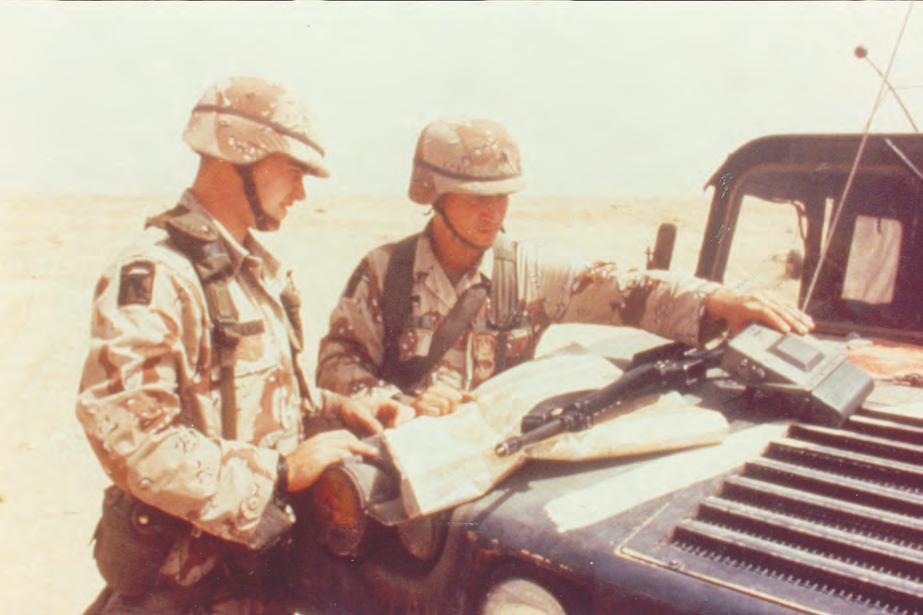
Before the Gulf War, maps of Kuwait, eastern Saudi Arabia and southern Iraq were largely based on data from the British colonial period. These existing products were rapidly becoming obsolete due to explosive growth in Kuwait and the surrounding areas, leaving limited or nonexistent coverage for military operations. This deficiency led to the rapid retargeting of spacebased imagery platforms that mapping agency analysts used to map the region at unprecedented speed, scope and scale.
One core product was 1:50,000-scale topographic line maps, which were key to ground operations. In response to the incredible demand for these products, the mapping agency compressed its map production time from six months to six weeks.
The Defense Mapping Agency was also instrumental in providing data that fueled the targeting of precision-guided missiles. The Gulf War was one of the earliest major conflicts to see widespread use of these weapons. In past conflicts like the Vietnam War, commanders shouldered a difficult burden – the
ICBM
From Page 4
for comprehensive force development evaluation. The program’s primary goal is to evaluate the operational capability of the Minuteman III, ensuring the United States maintains a technically sound and dependable weapon system.
Army Soldiers operate small, lightweight GPS receivers during Operation Desert Storm in 1991. The receiver, which facilitated GPS navigation in the open desert, along with other space-based capabilities, such as missile warning, imagery and satellite communications, played a significant role in enabling the success of U.S. and coalition forces during 100 hours of sustained combat.
primary tools for decisive action, namely large-scale strikes and area bombing, were blunt instruments often resulting in widespread collateral damage.
Precision-strike capabilities, fueled by the mapping agency, alleviated much of this burden, significantly reducing collateral damage and allowing commanders to quickly and decisively strike Iraqi forces. The agency’s impact extended beyond precision targeting, with hydrographic and bathymetric products that proved critical to military and logistical operations.
The Navy was uncertain of its ability to conduct extended carrier battle group operations in the confined waters of the Persian Gulf and Red Sea before the war. Aided by Defense Mapping Agency marine charts, the Navy confidently deployed much closer to the Kuwait theater, boosting carrier effectiveness and increasing the range of the force’s cruise missiles. The agency’s products
“Test launches are the most visible and vital way we verify our capabilities and validate the performance of our systems,” said Col. Dustin Harmon, 377th TEG commander. “The men and women of our missile community represent some of the most highly trained professionals in our nation’s defense. These tests confirm their unmatched ability to support this critical mission and provide
also supported amphibious assaults, counter-mine activities and special operations.
When Saddam Hussein sabotaged an oil tanker facility, coastal hydrographic charts were used to plot and predict the advance of the oil slick, which posed an immediate environmental impact and operational threat. Furthermore, 90% of all equipment and supplies entering the Gulf theater were delivered by sea, reliant not only on local charts but also on global Defense Mapping Agency maritime products.
The agency’s Operation Desert Storm logistics team, comprising civilian and military members, prepared and shipped over 44 million map sheets in support of the war. Because of the team’s attention to detail, dedication and teamwork, the Defense Mapping Agency was the only element that never lost a shipment during the conflict. For its work, the team was inducted into the Geospa-
crucial data that ensures our systems remain ready and reliable.”
The launch was the result of months of meticulous preparation involving multiple government partners. Airmen from the 91st Missile Wing at Minot Air Force Base, North Dakota, provided direct maintenance support, while operators from across all three missile wings initiated the launch.
“The data we gather
tial-Intelligence Hall of Fame in 2018.
The Gulf War demonstrated a fundamental shift in how warfare was conducted. The growing demand for satellite imagery, along with the increased sophistication of modern weapon systems, created a direct dependency on precise geographic intelligence –a need the mapping agency rose to meet, ultimately producing more than 1,900 unique maps and charts and printing more than 54 million paper maps.
The Defense Mapping Agency’s timely and detailed support for air, land and sea operations proved critical, not only for the contingency planning of Operation Desert Shield but also for the successful execution of real-time combat in Operation Desert Storm, cementing its vital role in a new era of warfare and creating a legacy that is carried on today by its successor, the National Geospatial Intelligence Agency.
ensures our long-range strike capabilities are not just a theoretical concept, but a proven, reliable, and lethal force, ready to defend the nation at a moment’s notice,” Davis said.
As the Minuteman III remains on alert, the Air Force is committed to its replacement, the LGM-35A Sentinel, which represents the modernization of the land-based leg of the U.S. nuclear triad.
event for military children
rmy & A ir Force xchAnge Service ublic A FFAirS
TRAVIS AIR FORCE
BASE — Military families can get a head start on Month of the Military Child celebrations with a free in-store event at the Travis Exchange featuring Beyblades.
Military kids can test play kits such as the Xtreme Battle set, Deluxe String Launcher set and Beyblade Beystadium from 11 a.m. to 1 p.m. on March 28.
“Team Exchange is honored to welcome mili-
tary families to celebrate Month of the Military Child and the role military children make in our community,” said Travis AFB Exchange General Manager Cathie Byrns. “We look forward to continuing welcoming families throughout the year to show our appreciation for their resilience and sacrifices.”
Preregistration is not required. For more information, shoppers can contact the Travis AFB Exchange or visit the Travis AFB Exchange’s social media pages.

From Page 1
enemy forces. Despite intense enemy fire and significant personal risk suppressing enemy air defenses, Blea, piloting his F-16 Fighting Falcon, deliberately placed himself in harm’s way to lead and protect his team.
During the engagement, Blea maintained composure in a rapidly evolving and hostile environment. He coordinated critical actions under fire and ensured the safe movement and accountability of personnel. His decisive leadership and calm under pressure directly enabled mission accomplishment while preventing loss of life.
Blea actions preserved the unit’s ability to fight and protect fellow service members at a moment of extreme danger when decisive heroism was crucial.
“I am truly honored to be presented with a Silver Star,” Blea said. “While we never wish to be in these circumstances that put us in this position, it is always a possibility that we understand and that we are prepared to handle through the dedication and perfection that we strive to attain every day in training. The hard work and commitment allow the unpredictable situations to be manage-
able ones that we can and will overcome.” Hinds emphasized both the magnitude of the actions described in the citation and the character behind them.
“We are here to award Maj. Michael Blea the Silver Star medal for gallantry and action against an enemy of the United States, an honor that’s reserved for those whose courage under fire rises far above the call of duty,” Hinds said. “[His] skill, his composure under pressure, allowed him to outmaneuver the threats, support his wingman and enable mission success.” Retired Air Force Gen. Jeffrey L. Harrigian, former U.S. Air Forces in Europe – Air Forces Africa commander, attended the ceremony. Harrigian reflected on both Blea’s valor and the example he sets for future generations of airmen.
“This doesn’t happen without the team,” Harrigian said. “We have an incredible team. What you all continue to deliver each and every day is demonstrated not only in this mission, but what the troops, the maintainers and everybody that it takes to generate a sortie, that was part of what [Blea] did.” As the medal was pinned to his uniform, the audience responded with a standing ovation – a tribute to Blea’s courage, leadership and selfless service.





Courtesy photo/U.S.
ability to work with other services and countries to supplement worldwide capabilities is neat.”
Unique aircraft and missions often draw the most attention; however, the team was quick to say that the real backbone of the operation is the maintenance team that keeps the planes flying in extreme conditions.
“We don’t have hangars on the ice,” said Amico. “Our maintainers are the life source of our planes, they make sure they’re good and flyable.”
Maintainers often work outdoors in Antarctica’s harsh weather, braving freezing temperatures and high winds.
“They work on these planes exposed, wearing only cold-weather gear in these crazy wind conditions,” said Amico.
Despite those challenges, airmen say they are proud to be part of the mission.
For the pilots, even the act of taking off from an Antarctic runway is unlike any other experience in the world. Once the aircraft begins to take off, the landscape becomes a wall of
snow and ice.
“You can’t ever stop, from the time that your engines are going and you start taxiing to taking off,” said Ham. “If you stop, the skis will melt to the snow surface. You look ahead, and you go slow as you run checklists. Once you speed up, all you see is white. The ski takeoff itself is unlike taking off in any other airplane.”
Despite the mission’s importance to scientific research and polar operations, Operation Deep Freeze remains relatively unknown outside military and scientific circles.
Operating out here on the edge of the world, sustaining scientific research and polar operations, Ham shared what she hopes people learn about Operation Deep Freeze and the 109th Airlift Wing. “That we exist, that we do something so cool.”
Despite the unit’s small size, the 109th AW’s unique capabilities have a global impact.
“Our small Guard unit has such a big impact overall on what the United States brings to the global table,” said Ham. For the airmen who carry out the mission each year, the work is more than just a job.
“It’s a lifestyle for us,” said Amico. “Only airplane in the world that’s capable of landing on the ice and snow. That’s something to be proud of.”


US Navy, Estonian partners conduct ice diving training
22nd naval ConstruCtion r egiment
RUMMU QUARRY
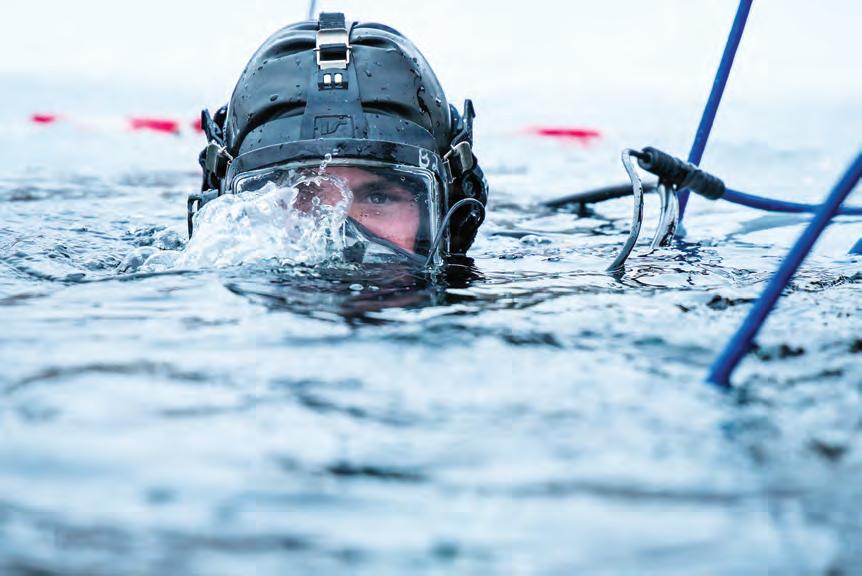
LAKE, Estonia — U.S. Navy Seabee Divers assigned to Underwater Construction Team (UCT) One, Construction Dive Detachment Bravo (CDD/B), are conducting ice diving and underwater demolition training with the Estonian Rescue Board (ERB) and Estonian navy divers during an annual bilateral ice exercise, Jan. 31 to Feb. 17.
The exercise focuses on developing cold weather capabilities that enhance maritime security, improve alliance readiness, and reinforce Estonia’s contributions to the conventional defense of the Baltic Sea region.
“This opportunity builds real-world capability in one of the most demanding dive environments imaginable,” said Senior Chief Constructionman Keith Reed, master diver assigned to UCT-1 CDD/B. “Operating under ice requires absolute trust in equipment, procedures, and teammates, especially in conditions where precision, readiness, and discipline directly affect mission success.”
The exercise takes place at Rummu Quarry Lake and Miinisadam Naval Base and includes classroom instruction, pier-side safety training, practical ice dives, and a salvage survey of a submerged barge.
Estonia faces a significant volume of explosive remnants of war, particularly in waterways and coastal regions affected by historic conflicts. The training supports humanitarian mine action objectives while improving Allied
capacity to detect, assess, and respond to underwater hazards that threaten maritime infrastructure, commercial traffic, and regional security in all weather conditions.
“Ice diving stresses every element of a diver’s training from planning, communications, emergency response, and execution,” Reed said. “Working alongside Estonian Rescue Board and navy divers allows us to exchange techniques, leverage their local expertise, and carry lessons forward that strengthen cold-weather and Arctic diving operations across the Naval Construction Force.”
Beyond technical dive training, the training is designed to improve interoperability, expand operational readiness, and support










NATO maritime safety and deterrence efforts by ensuring regional forces are prepared to operate effectively in austere and contested environments.
“This engagement reflects years of trusted coordination with Estonia and deliberate planning across U.S. and host-nation teams,” said Chief Builder David Madmon, diving action officer assigned to 22nd Naval Construction Regiment (22NCR). “Our role was to align the right capabilities, ensure safety and logistics were in place, and create a training environment that delivers lasting operational value for both nations.”
UCT-1 CDD/B, currently deployed under 22NCR, is a specially trained and equipped unit within Navy Expeditionary Combat Forces that specializes in diving, light salvage, underwater construction, and military engineering operations in austere environments.
22NCR commands naval construction forces for Navy Expeditionary Forces Europe-Africa/ Task Force 68 across the U.S. 6th Fleet area of operations to defend U.S., allied, and partner interests.
This training builds on previous U.S.–Estonian humanitarian mine action engagements dating back to 2017 and supports NATO objectives to enhance maritime readiness, resilience, and safety across the Baltic Sea region. It also reinforces a forward defense posture by strengthening European Allies’ ability to lead regional maritime safety and security efforts, with U.S. forces providing specialized capabilities and operational support.




Tech. Sgt. Gabriel Enders/U.S. Air Force file (2025)
Airman 1st Class Chase Santoro, a loadmaster assigned to the 139th Airlift Squadron, 109th Airlift Wing, gives directions while cargo is loaded onto an LC-130 Hercules aircraft at Williams Field, Antarctica, Dec. 22, 2025.
Chief Petty Officer Justin Stumberg/U.S. Navy file
Equipment Operator 1st Class Devon Maher, Navy Seabee Diver assigned to Underwater Construction Team One, Construction Dive Detachment Bravo, conducts ice diving operations during a bilateral ice diving exchange with Estonian Rescue Board and Estonian Navy divers at Rummu Quarry Lake, Feb. 10. The annual exercise enhances cold-weather diving proficiency and maritime readiness.