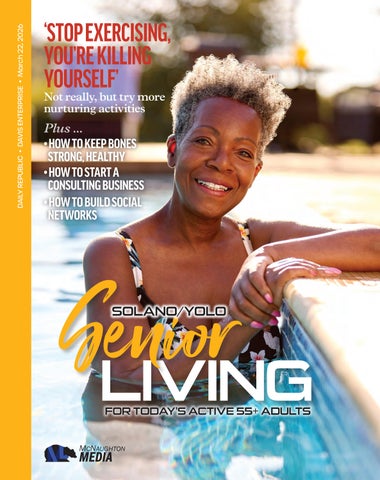
‘STOP EXERCISING, YOU’RE KILLING YOURSELF’
Not really, but try more nurturing activities
Plus ...
• HOW TO KEEP BONES STRONG, HEALTHY
• HOW TO START A CONSULTING BUSINESS
• HOW TO BUILD SOCIAL NETWORKS
Not really, but try more nurturing activities
Plus ...
• HOW TO KEEP BONES STRONG, HEALTHY
• HOW TO START A CONSULTING BUSINESS
• HOW TO BUILD SOCIAL NETWORKS
‘Stop exercising, you’re killing yourself.’
Not really, but try more nurture, less torture
STEVE LOPEZ
LOS ANGELES TIMES
One day my left foot hurt for no good reason. I stood up to shake off the pain and tweaked my right Achilles tendon, so I headed for the medicine cabinet, bent over like an ape because of a stiff back. Actually, I lied.
It wasn’t one day. It’s pretty much every day. None of this is severe or serious, and I’m not
complaining at the age of 72. I’m just wondering. Are my exercise routines, which were meant to keep me from falling apart, slowing my demise, or accelerating it?
What better time than the start of a new year to get an answer? In one poll, the top New Year’s resolution for 2026 is exercising more. Also among the top six resolutions are eating healthier, improving physical health and losing weight, so good luck to all you dreamers, and I hope you last longer than I








































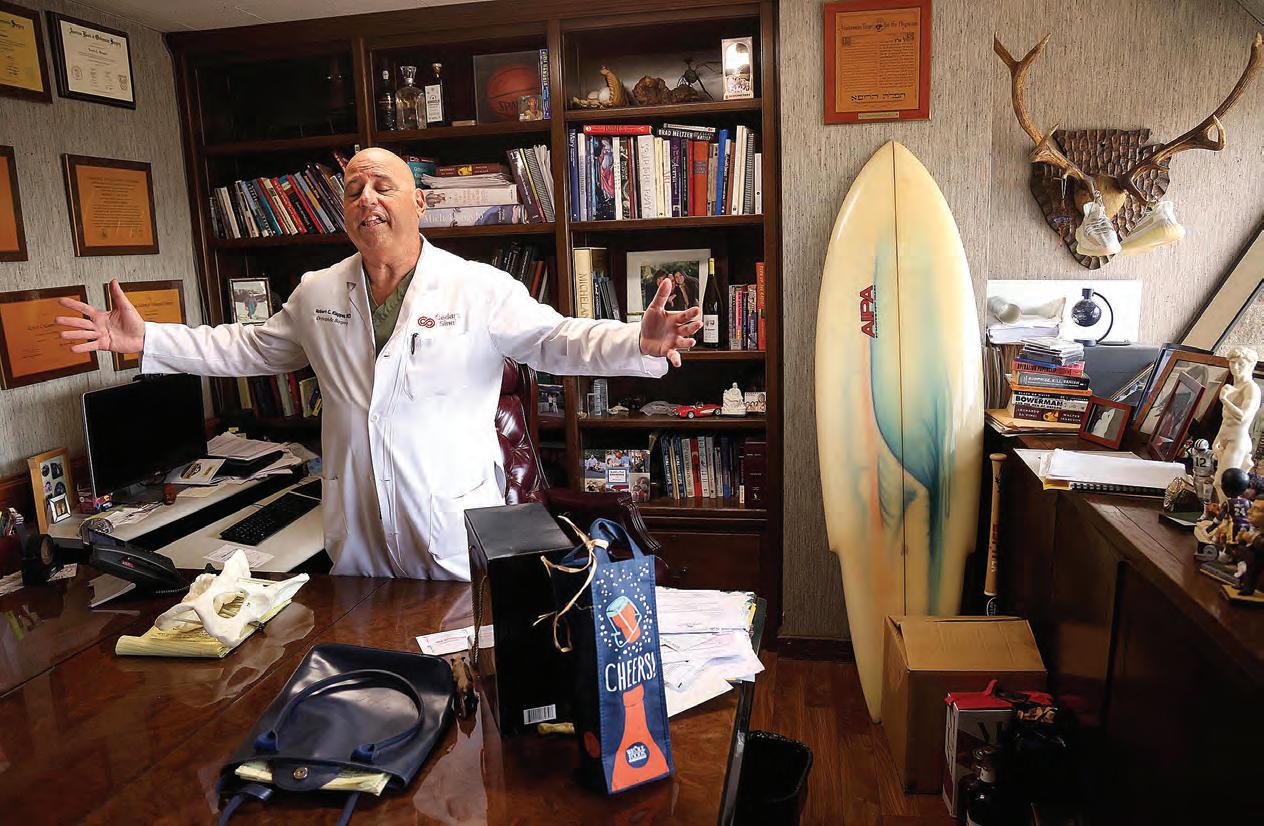
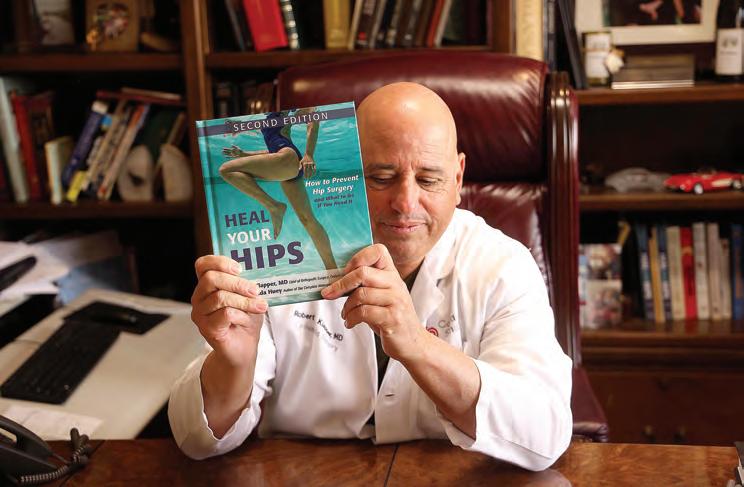
Dr. Robert Klapper holds up his book, “Heal Your Hips: How to Prevent Hip Surgery – and What to Do If You Need It,” in his office in West Hollywood.
GENARO MOLINA/LOS ANGELES TIMES/TNS
have with similar resolutions.
Instead of a resolution, I have a goal, which is to find a sweet spot – if there is one – between exercise and pain.
Maybe I’m asking too much. I’ve had two partial knee replacements, I’ve got a torn posterior cruciate ligament, a scar tissue knob on a frayed Achilles tendon, a hideously pronated left foot, a right shoulder that feels like it needs an oil change, and a pacemaker that keeps on ticking.
But I decided to get some expert advice that might be useful for anyone who has entered this glorious phase of life in which it’s possible to pull a muscle while taking a nap, or pinch a nerve in your neck while brushing your teeth.
And I knew just whom to call.
Cedars-Sinai orthopedic surgeon Robert Klapper hosts an ESPN radio show called “Weekend Warrior.”
This lab-coated Renaissance man, a surfer and sculptor in his spare time, also weighs in regularly on the radio with “Klapper Vision” – clear-eyed takes on all manner of twisted, pulled and broken body parts suffered by elite athletes and banged-up buzzards like me.
On “Weekend Warrior,” Klapper might be talking about knee replacement surgery one minute, segue to Michelangelo’s rendering of the human form, and then insist that a sandwich is not a sandwich without peperoncini. It isn’t necessarily all
connected, but it doesn’t matter.
When I emailed Klapper about my aches and pains, he responded immediately to say he’s written one book on hips, another on knees and a third one is in the works with the following title:
“Stop Exercising, You’re Killing Yourself.”
No, he’s not saying you should never get off the sofa. In a phone conversation and later at his office, Klapper said the subtitle is going to be, “Let Me Explain.” He’s making a point about what kind of exercise is harmful and what kind is helpful, particularly for people in my age group.
My daily routine, I told him, involves a two-mile morning walk with my dog followed by 30 minutes of swimming laps or riding a stationary bike.
So far, so good.
But I also play pickleball twice a week.
“Listen, I make a living from pickleball now,” Klapper said. “Exercise is wonderful, but it comes
in two flavors.”
One is nurturing, which he calls “agercise” for my demographic.
The other is abusive, and one of Klapper’s examples is pickleball. With all its starts and stops, twists and turns, reaches and lunges, pickleball is busting the Medicare bank, with a few hundred million dollars’ worth of injuries each year. I know. The game looks pretty low key, although it was recently banned in Carmel-by-the-Sea because of all the racket. I had no idea, when I first picked up a paddle, that there’d be so much ice and ibuprofen involved, not to mention the killer stares from retirees itching for a chance to drill you in the sternum with a hot laser.
“This is a sport which has the adrenaline rushing in every 50-yearold, 60-year-old, 80-year-old,” Klapper told me in his office, which is the starting point in his joint replacement factory. The walls are covered with photos of star athletes and A-list Hollywood celebrities he’s operated on.
“I see these patients, but they’re
‘It’s hard to move your arms and legs and your body through water, and yet it’s unloading the joint.’
— DR. ROBERT KLAPPER
not coming to me with acute injuries. They didn’t snap their Achilles tendon … like they do in tennis. They’re not snapping their ACL like they are in pickup basketball,” Klapper said. “They’re coming to me saying, ‘My shoulder is killing me, my knee is killing me.’ ”
Pickleball has obvious conditioning benefits for every age group. But it can also worsen arthritis and accelerate joint degeneration, Klapper said, particularly for addicts who play several times a week.
Not that he’s the first MD to suggest that as you age, walking, cycling and swimming are easier on your body than higher-impact activities. As one doctor said in an AARP article on joint care and the benefits of healthy eating, watching your weight and staying active, “the worst thing you can do with osteoarthritis after 50 is be sedentary.”
Still, I thought Klapper might tell me to stop pickling, but he didn’t.
“Pickleball is more than a sport to you … and all of your compadres,” he said. “It’s mental. You need it because of the stress. The world’s falling apart.… I want you to play it, but I
want you to do the nurturing exercises so you can do the abuse.”
There’s no fountain of youth, Klapper said, but the closest thing is a swimming pool.
OK, but I already swim three times a week.
Klapper had different ideas.
“You need to be walking forward and backwards for half an hour,” he said. Do that three times a week, he told me, and ride a stationary bike three times.
Why the water walking?
“We as humans take over a million steps a year. Forget pickleball, just in … daily living,” Klapper said, so I’m well beyond 72 million steps.
“Think about that,” he said.
Do I have to?
Water walking will develop muscles and joints without the stress of my full weight, and that could “optimize” my pickleball durability and general fitness, Klapper said. Buoyancy and the touch of water on skin are magic, he said, but there’s science involved too.
“It’s hard to move your arms and legs and your body through water, and yet it’s unloading the joint,”
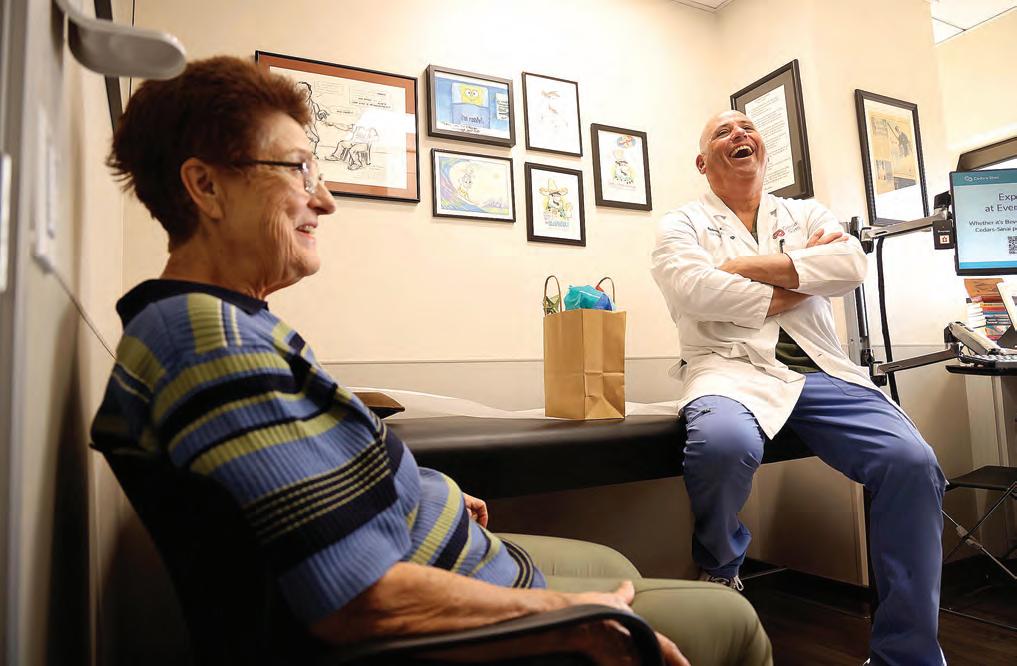
Genaro Molina Dr. Robert Klapper meets with patient
Kathleen Clark, who is recovering from knee surgery, at Cedars-Sinai Orthopaedics in West Hollywood.
Klapper said. “And finally – and this is the real X factor – when you close your eyes and straighten your elbow and bend your elbow, straighten your knee and bend your knee … your brain knows where your limbs are in space.”
This is called proprioception, Klapper said. Receptors in your skin, muscles, ligaments and tendons send messages to your brain, leading to better balance, coordination and agility and potentially reducing risk of injury.
There are lots of exercises for sharpening proprioception, but the surfing doctor is partial to bodies of water. At my age, he said, my proprioception “batteries are running low,” but I can recharge them with a short break from pickleball and a focus on the pool.
“You can’t guarantee anything in life and medicine,” Klapper said. “But I guarantee you, a month into it, you’re going to feel so much better than you do at this moment.”
It’s worth a try, and I’ll let you know how it goes.
In the pool and on the court.
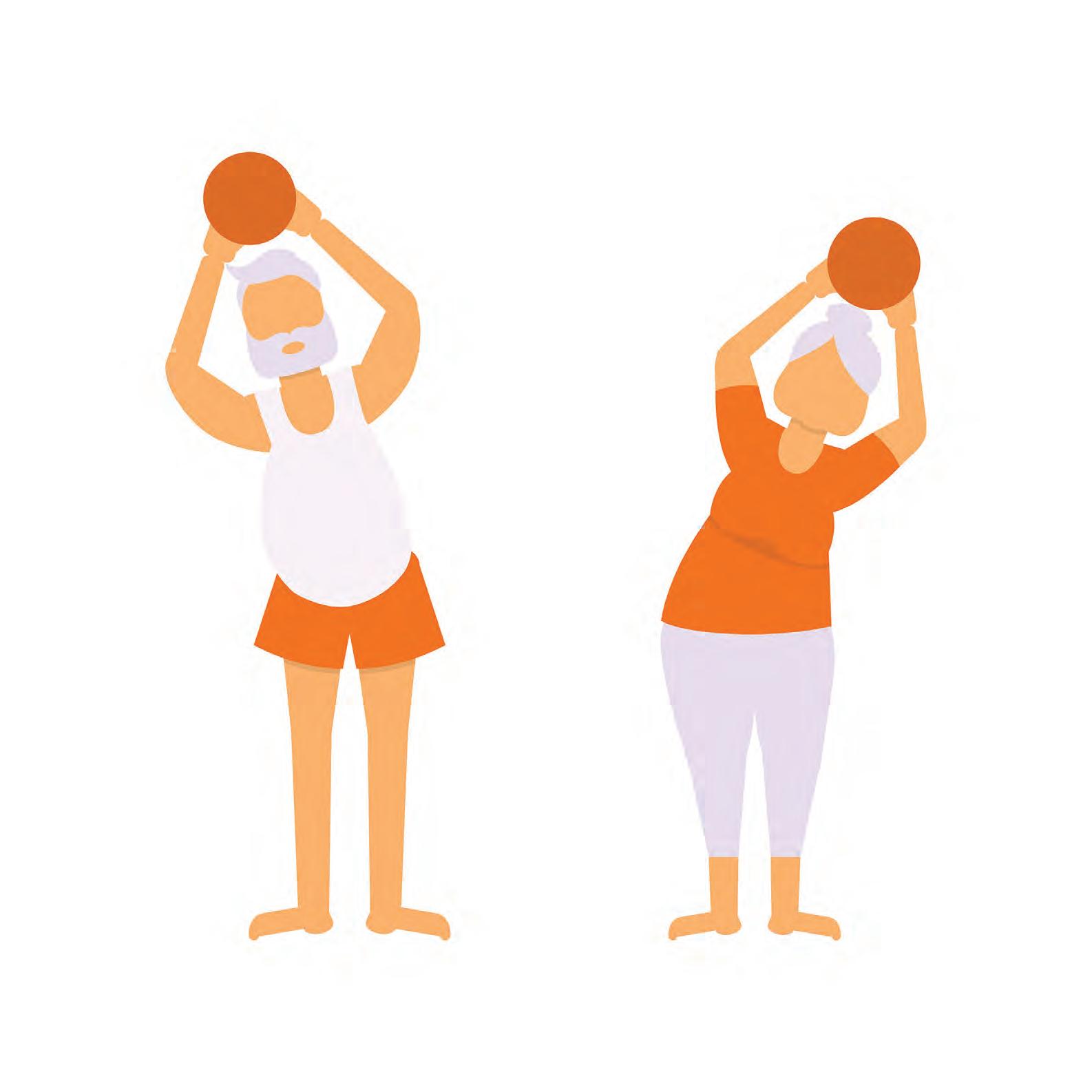
“Impact activity is really important for bones because when you jump about on your bones, they bones regenerate,” says Macdonald. “You can even start with doing some sit-to-stand exercises in bed as a warm up and then a few little bunny hops on the spot every morning.”
“Strength training is also really good for bone density because whenever you contract a muscle with force, that muscle, via a tendon, will pull on the bone, and that pulling on the bone is good for bone regeneration,” says Macdonald. “So, it’s good to do a combination of impact exercise and strength training.
“Sleep is when our bones and muscles recover,” explains Macdonald. “If you’re not getting a decent night’s sleep, then your recovery will not be as good and your cell regeneration won’t be as good.

“If you’ve done no exercise in the last few years, then I would recommend starting with the strength and conditioning first, with a nice resistance training program, and then moving onto more impact stuff as and when you’re strong enough to do so.”
“You can make good progress with strength training if you do it a couple of times a week, but make sure you are also giving yourself some days to recover,” advises Macdonald. “Rest is a really important part of the process of becoming stronger, especially if you’re training the muscles heavy enough that you’re getting muscle soreness.”
“Find something that you enjoy,” encourages Macdonald. “If you’re not necessarily into running, then something like a Zumba or dance class can be really good for jumping around to music.
“If you commit to doing it with a friend or a group of people, you’re much more likely to stick to it.”
“The vast majority of us need eight hours sleep, so try to prioritize things that help you get as much sleep as possible.”
“Make sure you are eating a decent diet with enough protein and are having minimal processed food, as sugar and processed food are not good for muscle or bone recovery,” says Macdonald. “Don’t underestimate the importance of all the nutrients that come with vegetables, fruits, dairy, whole foods and good fats.”
“Having the guidance of someone who fully understands the physiology of your body and can pitch the exercise at exactly the right level for you can be very helpful and reassuring,” says Macdonald.

progressive overload
“Start slowly and build up your training and exercises in small increments, so that your bones gradually get stronger and stronger over time,” recommends Macdonald. “If you go from nothing to suddenly doing a lot of impact exercise, that can increase your risk of a stress fracture.”
“Smoking is really bad for your bone health,” says Macdonald. “Reduced bone density is one of the established negative effects of smoking.”




People who regularly speak multiple languages age more slowly on average, a study using data from more than 86,000 adults in 27 European countries found.
Published in the journal Nature Aging, an international team led by Agustin Ibañez of Trinity College Dublin matched participants’ chronological ages with biological data and behavioral measures, including health, fitness, lifestyle and social activity.
They then calculated whether individuals were biologically younger or older than their chronological age. Participants were aged between 50 and 90.
Multilingual people had a markedly lower likelihood of accelerated
ageng than those who speak only one language.
What’s more the effect doesn’t stop at two languages, and each additional language strengthened the protective effect, researchers found.
Peter Berlit, secretary general of the German Society for Neurology and not involved in the study, said the research also points to protection against dementia.
“This study confirms smaller observational studies that have shown that multilingualism appears to be a protective factor against dementia.”
While no people with dementia were included in the study, he said there were important indications of mechanisms that could reduce the risk of cognitive decline in older age.
“Resilience to cognitive decline is actually increased by using multiple languages.”
The researchers attribute the effect to the so-called cognitive reserve.
“Multilingualism seems to be a buffer in the brain,” explained Berlit.
“People who speak several languages have more memory to draw on in old age.”
The challenge now, say neuroscientists Jason Rothman and Federico Gallo of Lancaster University in a commentary on the study, is to understand the mechanisms of this effect and translate them into strategies for healthy ageing.
They say multilingualism could be a cost-effective lever for public health, potentially as significant as programmes promoting physical activity or smoking cessation.
Berlit also described it as an effective preventive option.
“Learning a new language is a simple and very effective recommendation for dementia prevention. It is a health policy measure that anyone can implement.”
The researchers now plan to investigate whether learning new languages in later life has the same protective effect as lifelong multilingualism.
“Future studies should distinguish between languages learned in childhood and those learned in old age. I believe both are effective, but this still needs to be proven,” said Berlit.
The research comes at a time when AI has begun to undermine the value of multilingualism in some areas, with software better than ever at translating between spoken and written language in real time.

















etirement is often characterized as a time to kick up one’s heels and enjoy some welldeserved rest and relaxation. However, over time many retirees desire to return to the workforce in some shape or form. Starting a consulting business is an opportunity for a retiree to leverage personal experience on one’s own terms. Successful consultants know each
situation is unique. Some look at things through the vantage point of a business owner, while others may examine a situation through the eyes of employees. That’s a challenge some retirees are uniquely qualified to take on. But before doing so, some pointers may help the new venture hit the ground running.
A niche is the specific area where your expertise can solve problems.
Identifying your strongest skills will help you zero in on where to focus your attentions. Maybe you help save companies on procurement costs? Perhaps you’re a whiz with grassroots marketing? After identifying your niche, you can begin to target clients.
MBP Partners suggests tapping into a professional network of colleagues, clients and friends when beginning an encore consultancy
Explain the value that you can offer, then ask for suggestions and referrals. It’s likely someone in your network knows someone who is in need of the services you are offering.
Build momentum right off the bat by securing your first client, who can serve as a building block to a successful consulting business. After landing that first client, you can establish the efficacy of your approach and look for ways to expand. Focus on delivering exceptional results to this initial client, so he or she can spread the word.
How much you charge is important. While you may start off with modest rates, as the consulting business grows, you can adjust accordingly. Most consulting operates on a project-based/fixed-fee model.
ADOBE STOCK
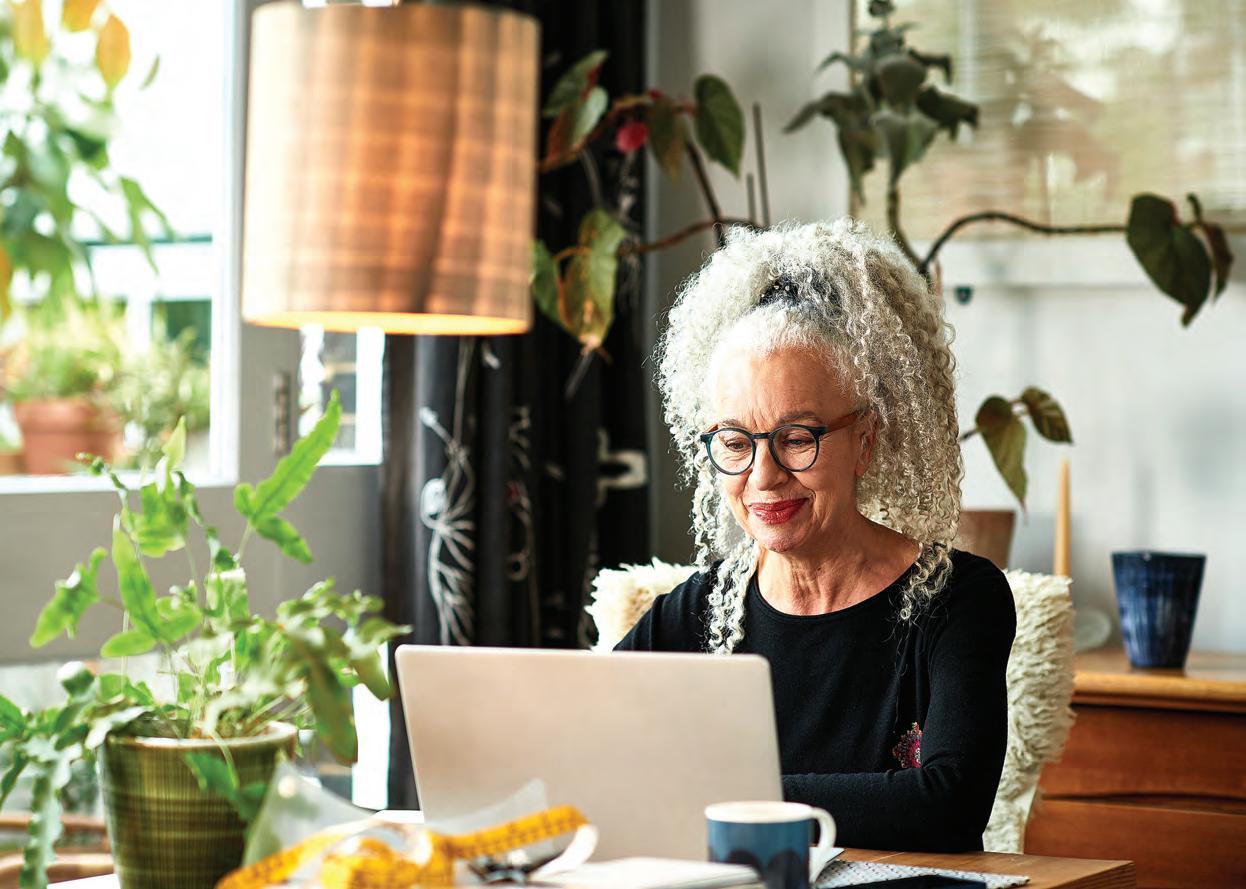
Tap into a professional network of colleagues, clients and friends when beginning an encore consultancy career.
Calculate the time it will take to handle a job, and multiply by a reasonable hourly rate. Then add in a buffer for unforseen circumstances.
Speak with a tax professional or business attorney about the best way

to establish a legal business. A sole proprietorship is the simplest to start, but offers owners no protection against personal liability. Citizens Bank says a limited liability company (LLC) means owners are not personally liable for the company’s debts. It’s a hybrid between a corporation and a partnership, and LLCs may have some tax benefits. Once the business is established, separate personal and business finances through different bank accounts.
Some consultants want to grow exponentially. Others may be satisfied with a few core clients. The goal may be to scale up income without increasing your time commitment at this stage in life.
A startup consulting business provides an avenue for retirees to re-enter the workforce on their own terms.





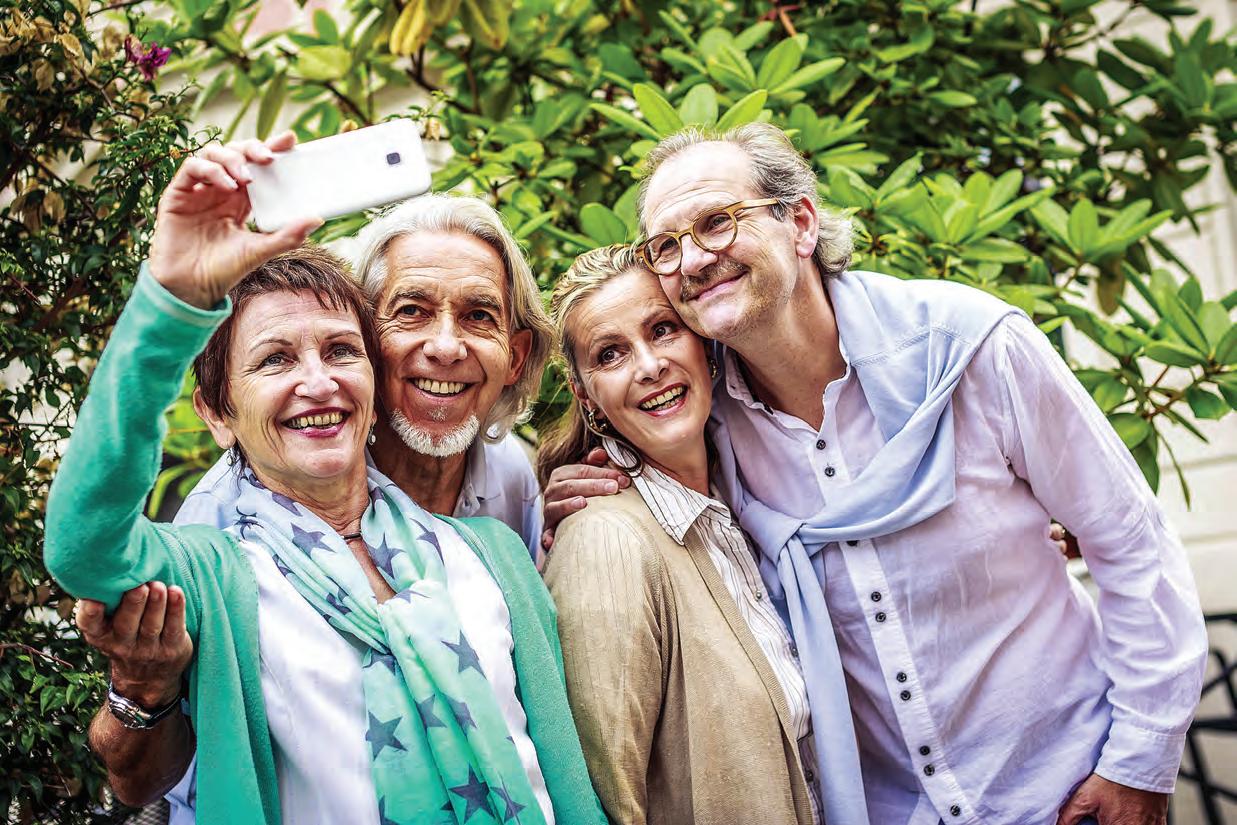
Social isolation and loneliness can have a notably adverse effect on a person’s overall health. According to the World Health Organization, roughly 12 percent of older individuals experience loneliness, which can have a negative impact on their physical and mental health, quality of life, and even their life expectancy.
Seniors have much to gain when they take successful steps to avoid social isolation. Seniors who are concerned about the prospect of
social isolation or loneliness or those already experiencing such feelings can try these strategies to build their social networks in retirement.
It’s easy for adults to lose touch with old friends. By the time many adults reach middle age, professional and personal obligations can leave little time for a thriving social life. Successful professionals may be preoccupied with work projects, and while parents may be juggling their own hectic schedules with their
children’s obligations. Come retirement, much of those responsibilities have ended, making this a perfect time to reconnect with old friends who also might have extra free time on their hands. Reach out through social media, text message or even a phone call, and let the situation unfold organically from there.
Many communities sponsor events for seniors, like bus trips to local museums or stadiums, in an effort to encourage seniors to get out of the
attract like-minded individuals with the same interests. A bus trip to a theater production will attract fellow arts lovers, and shared interests are a solid foundation for friendship.
Start a local club or group
Starting a local club based on a
way for seniors to build a social network in retirement. Take to social media and express your interest in starting a local book club or walking group. Like community-sponsored bus trips, clubs and groups tend to attract like-minded individuals, providing a built-in pathway to friendship.
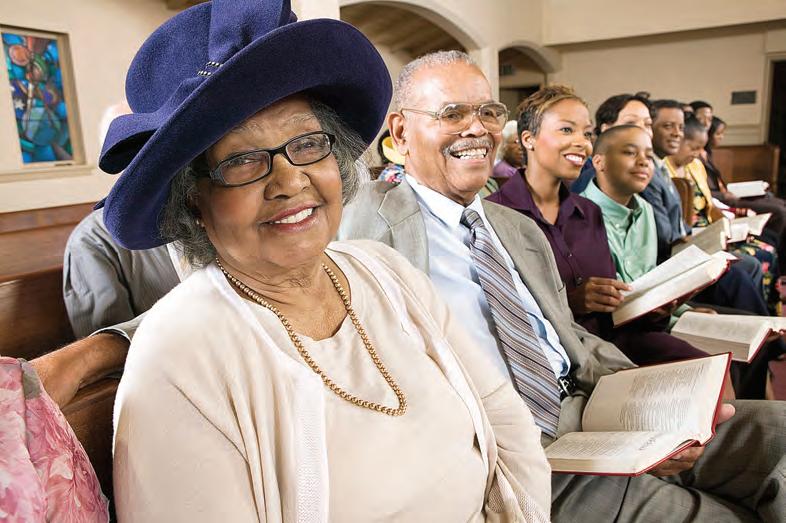
Houses of worship also offer a great way to meet locals and build relationships based on a shared identity. Faith-based communities provide a sense of belonging that can help retirees overcome social isolation and loneliness.
Trying something new is another great way to make new friends. Many local agencies like parks departments or community recreation offices offer seniors in-person workshops covering a wide range of activities. These offerings are a great way to discover a new pastime and meet new people along the way.
Social isolation and loneliness poses a significant threat to millions of seniors. But there are many ways for seniors to build their social networks in retirement.
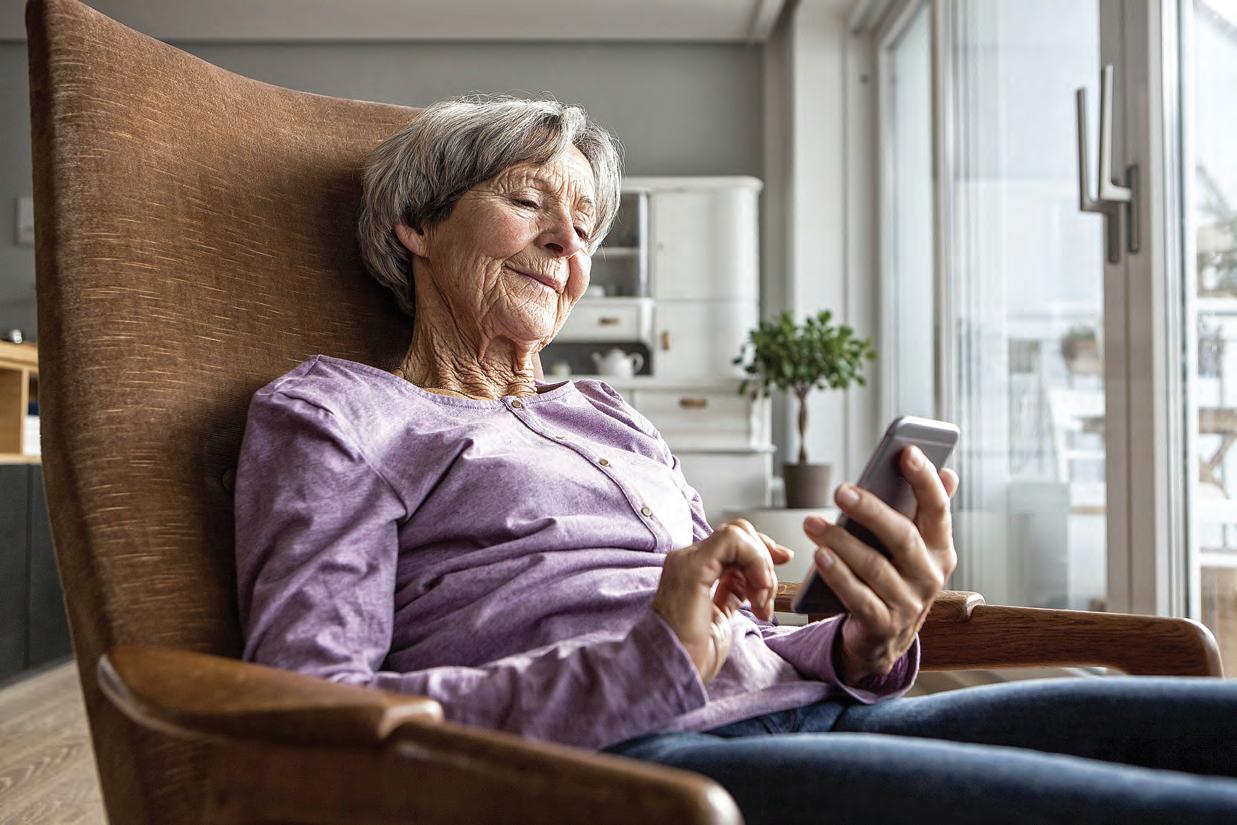
Keeping up with technology has become a full-time job for many people. The devices individuals rely on continue to evolve at a rapid pace. While younger generations who were raised on technology can adapt with ease, seniors may have a slightly more lengthy learning curve, particularly when it comes to artificial intelligence (AI).
AI is no longer a sci-fi concept; it’s a component of daily life. AI can do everything from summarize emails to turn images into quirky cartoons to answer health-related questions.
According to the 2026 AARP Tech Trends Report, AI usage among people ages 50 and older has nearly doubled in the last two years. Thirty percent of seniors are navigating the
AI frontier, and there are many ways AI can be put to good use.
• Aging in place: AI technology can be used to ensure seniors can enjoy their independence longer than they otherwise might. AI-powered homes can do a lot of the work for most seniors, and safeguards can help protect them. For example, radarbased sensors can detect a fall without the use of cameras and alert emergency services. AI can automatically adjust environments by illuminating hallways or shutting off a stove if it has been left unattended, according to Age Safe® America.
• Health monitoring: A primary driver for AI adoption, health is something that can be managed and even improved with the use of AI. The University of Michigan National Poll on Healthy Aging found that
more than half of seniors like AI devices for aging in place. AI can summarize complex medical reports or produce meal plans according to nutritional guidance. Smart pill dispensers use AI to track adherence and can help keep a person safe.
• Companionship: Loneliness and social isolation is a real concern for seniors. AI conversational partners can initiate conversations, suggest activities or tell jokes. The National Institutes of Health says AI-driven interventions using social robots or digital human facilitators have led to significant reductions in loneliness among adults ages 55 and over
Artificial intelligence is being integrated into many facets of daily life. Seniors can benefit from AI in many unique and useful ways.



































When we think about helping others, grand gestures often come to mind. Yet sometimes, the most meaningful difference is made in just one heartfelt knock at someone’s front door. At Meals on Wheels Solano County, our volunteers are doing just that – delivering nourishment, dignity, and a friendly face to homebound seniors across our community.
Beyond nutrition: More than just meals, your presence conveys compassion and human connection. Many clients eagerly await their delivery not just for the food, but for the chance to see someone caring about them.
Flexible roles: Whether you prefer active work or behind-thescenes support, there’s a volunteer role that fits your strengths and schedule. Options include the warmth of meal delivery, the precision of meal packing, the support of office assistance, and the energy of fundraising and event help. mealsonwheelssolano.org
Meaningful impact: Every hour you invest nurtures independence, combats isolation, and strengthens our local safety net.
Imagine: you sign up for a weekly delivery route. You step into a quiet neighborhood, knock on a client’s door, hand them a nutritious meal, and share a brief greeting. That brief exchange may brighten their entire

A volunteer prepares meals, which are to be
seniors, at the Meals on Wheels office.
day. Meanwhile, in the kitchen, another volunteer is organizing bags for the next day, ensuring every client gets the regular, nourishing food they deserve.
Behind the scenes, in the office, volunteers help with administrative tasks, data entry, or calls that keep the program running efficiently. Others bring their energy to fundraising events, spreading awareness and support for this vital service.
It doesn’t take long to make a difference. Volunteers of all backgrounds and ages are welcome. mealsonwheelssolano.org/volunteer You choose what role suits you best and how much time you can give.
and
• Deliver Meals: Bring nutritious meals and compassion to seniors’ doorsteps
• Pack Meals & Produce: Help prepare shelf-stable and fresh produce bags
• Office Assistance: Support administrative and operational work
• Events & Fundraising: Assist with community outreach, events, and campaign efforts
Ready to step in? Apply today and join a community of caring volunteers who show up – sometimes with a meal, always with heart. Your dedication can change lives and uplift the spirits of those who need it most. Visit mealsonwheelssolano.org/ volunteer to learn more and sign up. ❙
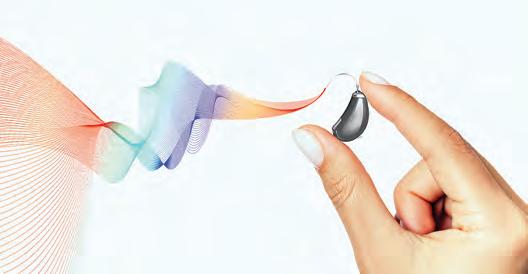
Kenwood Hearing Centers in Fairfield has been helping people in the North Bay improve their lives through better hearing for more than 60 years.
The company has six conveniently located offices with professionally trained audiologists and hearing specialists to provide customers with the very best care. Kenwood is family owned and operated and treats each patient as if they were family, too.
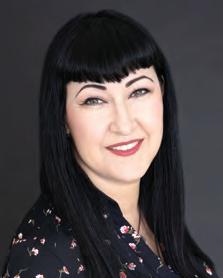
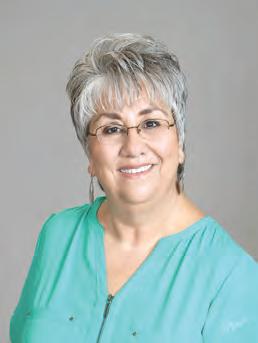
Deb Davis
• In Fairfield: 1261 Travis Blvd., Suite 140
• To schedule an appointment, call 707-766-0782.
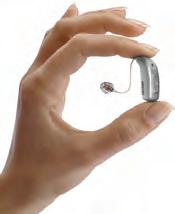
Kenwood Hearing Centers offers a complete suite of hearing care services, including hearing testing, hearing aids, repair, custom earplugs and more. If you need a hearing aid, how can you know which one is right for you? With Kenwood’s Hearing Aid Test Drive, you are able to try out different hearing aids at home, work, or wherever you go to make sure it’s the right fit before you commit.
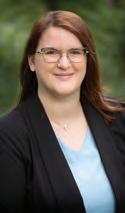
Visitors to the Fairfield office will see the smiling faces of Hearing Aid Dispenser Deb Davis and Patient Care Coordinator Tanya Drummond.
Davis has lived in Solano County for almost her entire life and loves the people and places of Northern California. She has a keen eye for design, a genuine love of people and a deep technical knowledge of the hearing aid fitting process.
With attention to detail and a desire to make a difference, people can be assured that they will feel comfortable with her expert advice. ❙
SOLANO TRANSPORTATION AUTHORITY
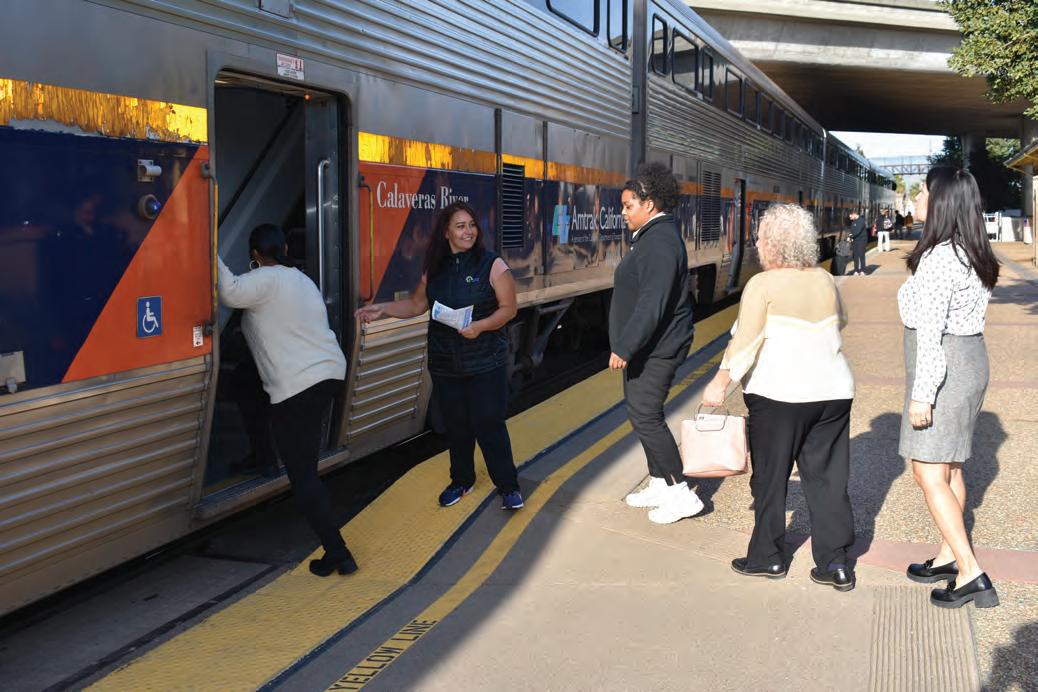
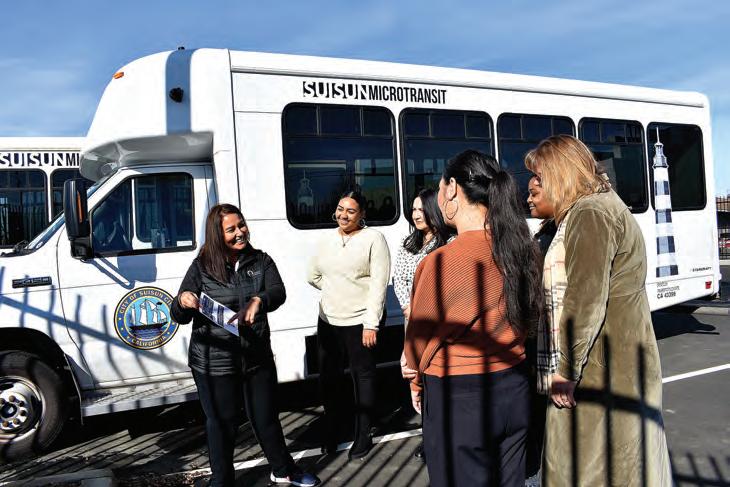
Solano Mobility’s Travel Training Program provides one-on-one instruction and group training designed to teach people how to travel independently on fixed-route public transportation in their community. Travel Training is also offered if you need to travel within Solano and neighboring counties. This FREE service teaches everything, from how to read a schedule, to how to pay for your travel. During the 2024-25 fiscal year, a total of 170 trainings (one-onone trainings and group field trips) were conducted, as well as 35 Travel Training presentations reaching 842 individuals.
There are several types of Travel Training available:
1. Personalized one-on-one training to and from a specific location: This form of Travel Training is designed for first-time bus riders or individuals that have not ridden the bus in a while. A Travel Trainer will ride with you as many times as you want until you feel comfortable riding by yourself and will answer questions before setting off on your first transit journey.
2. Presentations: In a group setting, a Travel Trainer will help you learn where the different routes go, how to read a schedule, where to board the bus, how to pay fares and use various special features of the bus such as bike racks, lifts, and more. During the training, a bus may be available for you to tour, or the training may include a group ride on
trainings: These types of training offer a multiple-modal approach to navigating through the San Francisco Bay Area. This program gives a broad understanding of the possibilities that public transit can provide. Participants experience various forms of transit in a small group setting, with emphasis on social interactions while experiencing the opportunities the San Francisco Bay has to offer.
4. Do-it-yourself videos: Travel Training videos are available at solanomobility.org.
5. Personalized training is also available for people with disabilities.
Through Solano Mobility’s Travel Training program, you can expect to learn:
1. How to read transit schedules and plan your trip using printed materials and/or online applications
2. How to purchase a ticket
3. How to get on and off the bus
4. How to recognize your bus/train
5. How to transfer between buses and/or various modes of transportation
6. Where the nearest stop/station is
8. How to use technologies avail able to aid in trip planning, bus locating, fare purchasing, etc.
9. How to connect to cities and counties through transit
10. About the various programs Solano Mobility has to offer to ensure mobility, travel safety, and economic vitality for all
Travel training teaches the skills necessary to navigate public transit independently. It is highly recommended to learn to use Solano Mobility’s transportation options to ensure continued mobility and independence if a personal car isn’t available or driving is not an option. Having the knowledge and ability to use other forms of transportation can allow for a smooth transition from being a driver to a rider.
For more information on Solano Mobility’s Travel Training program, visit the Solano Mobility website at www.solanomobility.org or call 800-535-6883, Monday-Friday, 8 a.m. to 5 p.m., to schedule your free travel training. ❙