WHEELS OVER TIME Trucks become safer, more efficient
WELL STOCKED A bold move to go public set the stage for long-term growth
NASDAQ RINGS IN 50 YEARS OF CASELLA A NEW CHAPTER FOR COMPANY LEADERSHIP
17 18 20 22 26 28 30 31
DRIVEN BY SAFETY Culture of Care and Operational Excellence
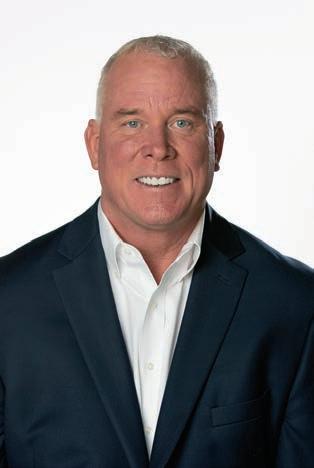
MEET JEFF MARTIN Vice President of Safety
SUSTAINABILITY LEADERSHIP AWARDS
CONNECTING A CIRCULAR ECONOMY Upgrades to recycling help return more waste to supply chain
RECYCLING PROCESS
LEADING THE CHARGE Sleep Better with Sustainable Waste Solutions
COMMUNITY SERVICE
DRIVING HAPPINESS Our Commitment to Super Fans
CASELLA COMES FULL CIRCLE FOR ITS ANNIVERSARY
Great people, sustainable resource management and a commitment to innovation have fueled the growth of Casella for 50 years.
THE EARLY DAYS
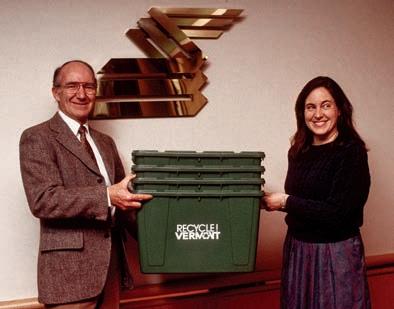
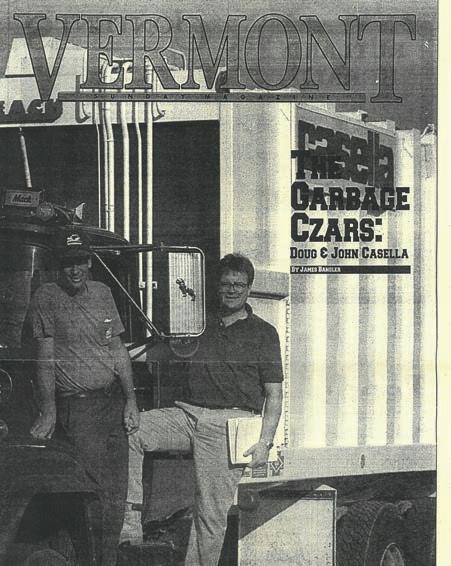
In 1975, Doug Casella used his high school savings to buy a truck he used to collect trash from around the Killington area. His brother, John Casella, who had been working in the hospitality industry like their parents, assisted with administrative work.
After about a year, John Casella officially became his brother’s business partner full time. Today, he is the company’s executive chairman.
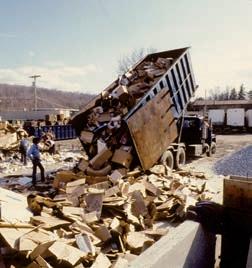
“One of the things that we saw early on was, whenever we go into the landfill, there was a tremendous amount of corrugated cardboard,” says Casella. “Even back then, cardboard had value as a recycling commodity, and it was also very difficult to manage in the landfill.”
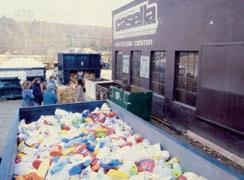
By 1977, the brothers had built Vermont’s first recycling facility. Then, they went to Maine to buy an upstroke baler
from a defunct woolen mill to compact cardboard into something that could be sold.
“We did the research for all the paper mills in New England, started building relationships with them and started selling all of the cardboard coming out of the waste stream,” Casella says.
“We ended up going into the landfill with a load of waste and coming out of the landfill with a load of cardboard back to the recycling facility.”
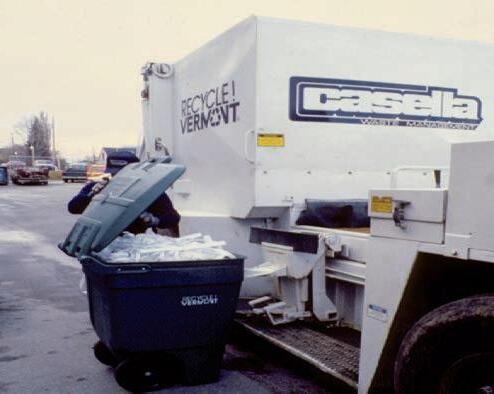
Vermont’s bottle bill had taken effect just a few years earlier, so Casella’s recycling facility also processed glass, PET plastics, aluminum and steel.
GREAT PEOPLE, GREAT SERVICE
Ned Coletta had been working at med-tech companies in the early 2000s, and after leaving a company he cofounded, he was looking to get more business experience working with senior leadership.
“The first day I met John Casella, he said, ‘Ned, I'm going to interview you at 8 a.m., but show up at the Walmart parking lot at 4 a.m. Have boots on, jeans, work gloves, and I’ll have one of my drivers pick you up,’” Coletta says.
“I worked my butt off all morning.”
Casella and the driver met in between the collection and the interview to assess Coletta’s efforts. It must have been a satisfactory report; Coletta was hired as vice president of finance and investor relations in December 2004. He was named president and chief executive officer in 2025.
“I appreciate the fact that the leader of this company cared about his employees so much and wanted to know that people who were joining his team had empathy for how the work gets done,” Coletta says.
The driver he worked with that morning was Ken Hier, Casella’s first employee in 1976 with a 40-year tenure.
In 2020, Casella created a driver training school that now bears his name: the Kenneth A. Hier Sr. CDL Training Center. More than 300 employees have completed the program.
“He enjoyed getting up at 1 a.m. to start his route every day, always ending the day to clean his truck to make sure it upheld those expectations that Casella set forward,” Hier’s daughter said at the training center dedication. “He rarely took a vacation to hunt or fish, but when he did, he always checked in on his customers, making sure everything was OK.”
Ned Coletta President & Chief Executive Officer
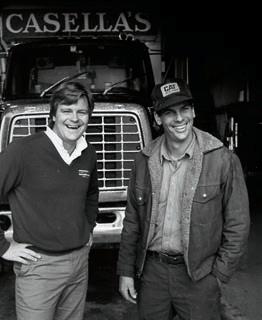
John, left, and Doug Casella in front of a Casella truck in 1988.
50 YEARS OF
OUR BEGINNINGS
Doug Casella founds Casella’s Refuse Removal, and in 1976, invites his brother John to join him (Rutland, Vt.).
LEADERS IN RECYCLING
MILESTONES
The brothers build their first recycling facility, which is also the first in the State of Vermont. MODERN ENGINEERING
Casella’s public-private partnership model is established and brings modern engineering to the Clinton County, N.Y., Landfill.
Joins EPA Climate Leaders as a charter member.
WE’VE GOT ENERGY
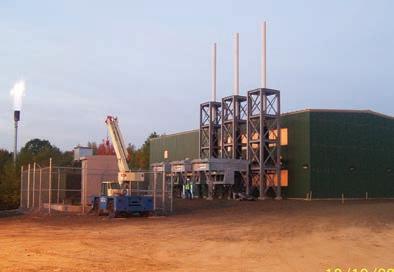
Casella builds its first landfill-gas-to-energy power plant in Hampden, Maine, quickly followed by two additional plants in upstate New York.
Issues first Sustainability Report.
Establishes farmbased anaerobic digesters in Massachusetts.
LEADERS IN ORGANICS
Casella launches its first food waste collection route. Two years later, it completes the strategic acquisition that would become Casella Organics.
CLIMATE LEADERSHIP
Casella reduces its carbon footprint by 45% and earns the 2012 EPA Climate Leadership Award for Excellence in Greenhouse Gas Management.
INVESTING IN RECYCLING
Casella retrofits its Charlestown, Mass., recycling facility, bringing 750 tons per day of singlestream capacity to Greater Boston.
MILESTONES
RESOURCE SOLUTIONS
Casella begins to build Resource Solutions extending professional services across the country, and one year later, the company produces over 1 million tons per year of recycling.
Introduces first CNG fueling stations for Vermont’s collection fleet.
BREAKING GROUND
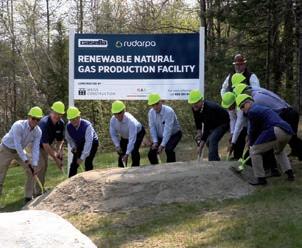
In support of its renewable energy goals, Casella breaks ground on the first renewable natural gas (RNG) facility in Bethlehem, NH, with partner Rudarpa.
Introduces Sustainability Leadership Award Program.
HALL OF FAME INDUCTEES
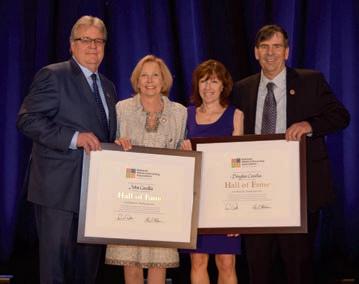
John and Doug Casella are inducted into the National Waste & Recycling Association’s Hall of Fame. The award recognizes industry visionaries who have created an enduring legacy through their leadership, core values and significant contributions.
Three years after receiving NHBSR’s partnership for innovation award, Casella and its customer Hypertherm achieve 90% recycling in the manufacturer’s NH operations.
STOCK MARKET
BELL RINGING
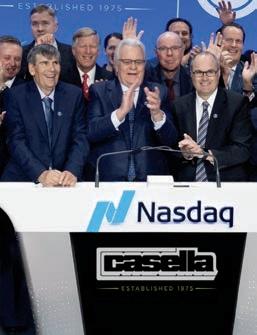
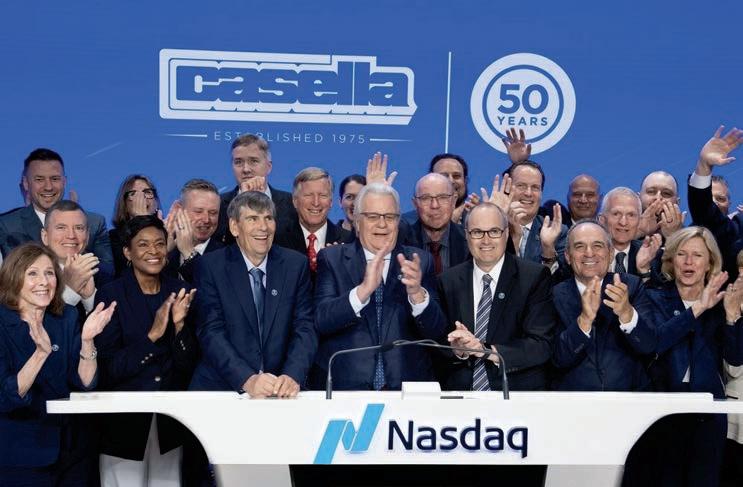
Casella representatives ring the bell at the Nasdaq stock exchange amid its 50th anniversary celebrations.
Receives 2022 World Finance Sustainability Award.
INDUSTRY LEADER
Casella is named to USA Today’s “America’s Climate Leaders” list for the second consecutive year.
Casella reaches 3,000 employees, each contributing to the delivery of environmental services to our customers and community.
GROWTH AND CHALLENGES
In 1997, Casella Waste Systems became a publicly traded company on the Nasdaq.
“One of the reasons for the public offering was we had significant opportunities to grow, similar to what we've done in the last 20 years, so we took advantage of that,” Casella said.
A strong couple of decades at its launch and strong recent growth bookend a period of uncertainty for the company. Acquisitions and a massive landfill development initiative at the start of the millennium stressed Casella’s debt burden.
“When I became CFO in 2013, we were levered, which means how much debt we had to how much cash we produced in a year was close to six times, which is very, very high,” Coletta says. “We were having a really hard time investing back into the business.”
A new strategic plan was implemented to change up the company’s capital allocation, maximize capacity at the landfills and work with customers on recycling prices.
“In 2017, we put forward a new strategic plan that said, ‘Let’s start working on development projects again,’” Coletta says. “We created a new adjacent market for us to vertically integrate our landfills and recycling facilities. Since that point, we’ve acquired 70 companies across the Northeast and really accelerated growth.”
In the eight years since that plan launched, they’ve tripled revenues.
Today, Casella has facilities in 10 New England and MidAtlantic states, more than 5,000 employees and a market capitalization of $7 billion.
INNOVATION AND INFRASTRUCTURE
From the first purchase of a second-hand baler, Casella has supported its growth through improvements and expansions to recycling.
“I was here when we first started rolling out singlestream recycling to customers, and that was really revolutionary,” Coletta says.
Continued investments in technology have made it so that the company can process even more recyclables faster and have a cleaner product to sell at the end.
Casella recently completed renovations to their Charlestown, Mass., and Willimantic, Conn., recycling centers. As a result, the throughput of single-stream recycling has increased nearly 40%, and the quality of the material being shipped to market has increased about 35%.
The company also worked to create a formula to help reduce the volatility of selling recycled material.
“One of the biggest innovations we've had as a company in the last decade is something called the Sustainability Recycling Adjustment Fee,” Coletta says. “Almost 10 years ago, we created a floating fee on our customers’ bills that, if commodity prices are low, we charge a slight fee to our residents or commercial businesses. If commodity prices go higher, we reduce that fee. And all of a sudden, we created a model that took a lot of recycling commodity risk and gave a very small piece to millions of different customers.”
Casella also has clients in 47 states that they work with on waste reduction measures.
“The sustainability piece was always in our blood right from ’77, but the level of sophistication has changed,” Casella says. “We're now providing circular services to industrial companies like Becton Dickinson, which is a large medical device company, helping them with hard-to-recycle plastics that are coming off of their manufacturing process.”
Overall, these programs are helping to shift more waste away from landfills and put them back into circulation.
“We want to be a partner, and we want to help to understand what our customers’ needs are, especially from a sustainability standpoint, and how to help them achieve those goals,” Coletta says.
THE ROAD AHEAD
“The future is very bright,” Casella says. He expects improvements in artificial intelligence and robotics will continue to make recycling more efficient and thus more accessible to all. Landfill technologies have improved the environmental safety of facilities and more efforts are going into leachate treatment and methane capture.
“We're going to be the first to cannibalize ourselves in the landfill business,” Casella says. “If we can find a higher and better use and put material through the recycling processing facility, we'll generate more free cash flow by doing that. It's very consistent with the financial implications of the business. Not many people understand that. They think that waste companies make all of their money on the disposal side, in the landfill, and it's not the case anymore.”
In partnering with customers, Casella improves the circular economy and finds solutions to benefit communities.
“Our business enables our customers to be more sustainable and have more of a positive impact on the world around them,” Coletta says. “For each ton of carbon Casella emits — running our trucks, our recycling facilities, our landfills — every day, we reduce close to five tons through our actions of how we run our business: through recycling, organics management, carbon sequestration, clean energy. It's kind of an amazing story that each day we run our business, the world gets five times better.” n
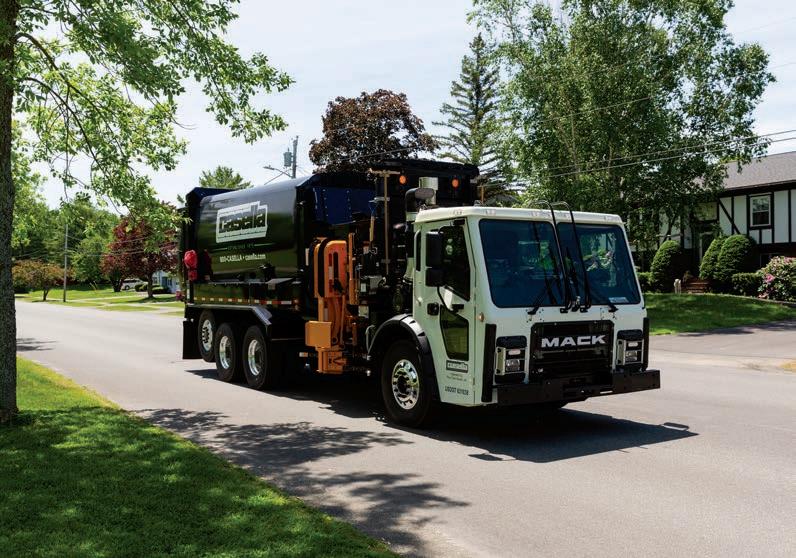
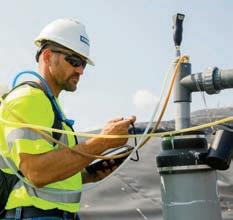
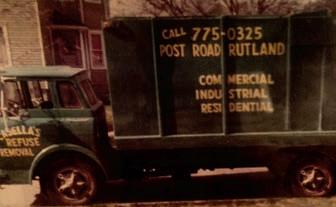
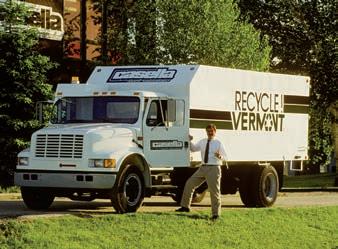
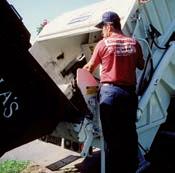
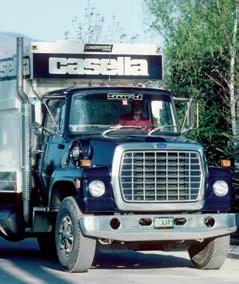
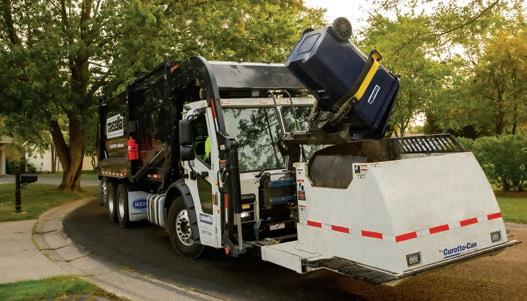
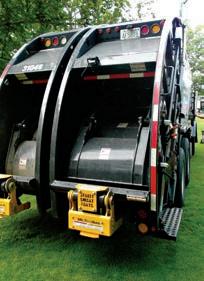
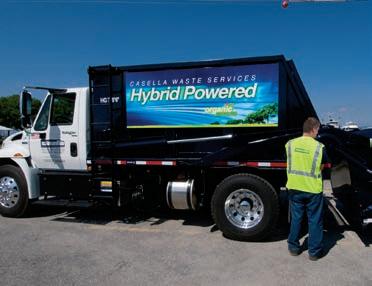
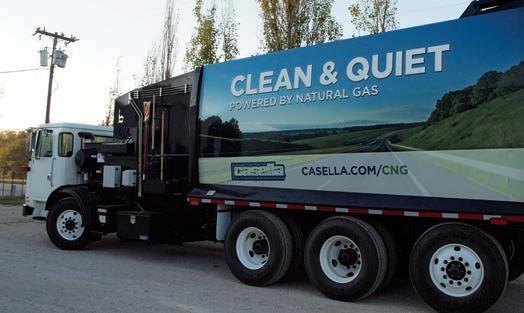
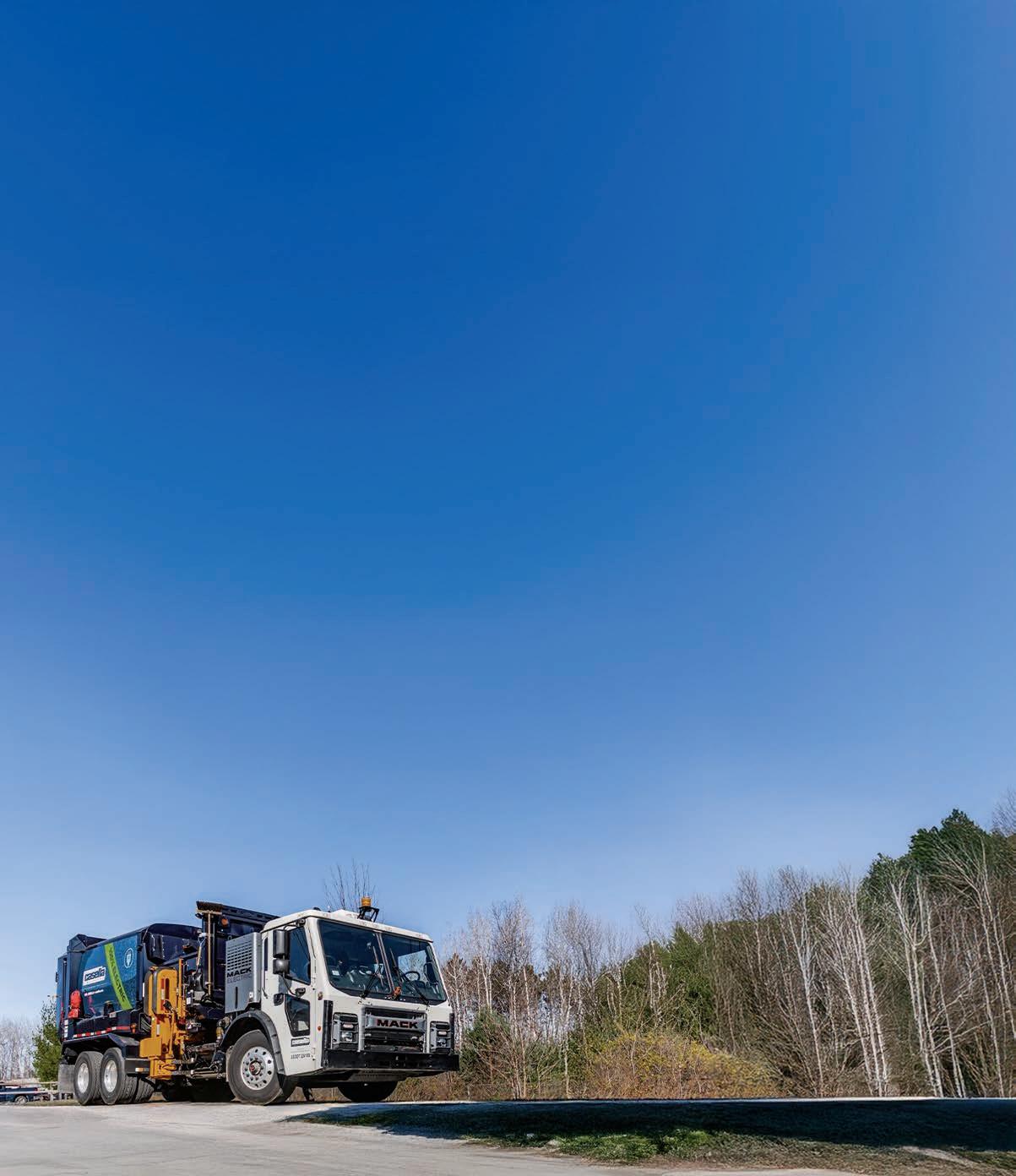
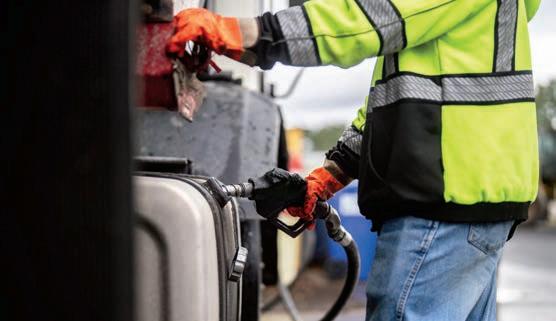
TECHNOLOGY FUELS TRUCKING
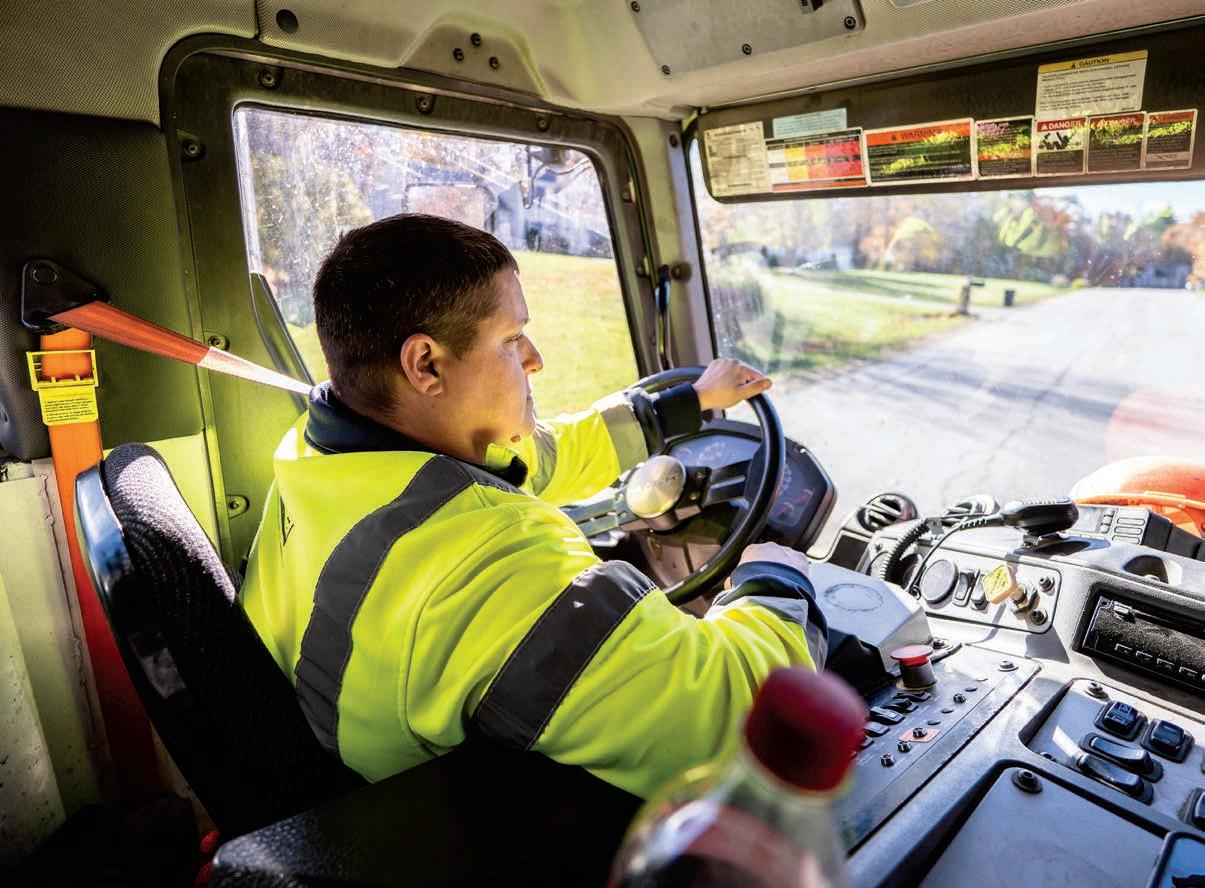
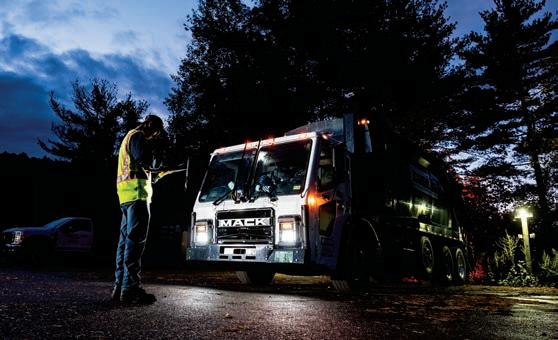
From the first pickup truck to the latest in automation and clean energy, Casella’s fleet has evolved to make serving their customers and communities more efficient, safer and cleaner.
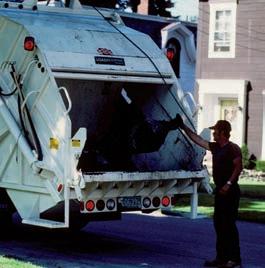
The earliest trucks were big on utility and ensured that, through a combination of hard physical labor and multiple trucks, the waste and recycling was picked up from homes and businesses. Early technology equipped trucks with hydraulic hoppers and on-board compactors, marking the first steps toward more efficient collection, cutting down on trips to the landfill and improving urban cleanliness.
The demand for speed and safety continued to grow and front-loading trucks became the norm for commercial routes, lifting massive dumpsters with mechanical arms. This innovation slashed collection times and minimized worker injuries. Soon after, automated side-loaders appeared, allowing operators to stay inside the cab while robotic arms handled the bins — a game-changer for safety and efficiency. In addition to automation, dualcollection trucks have allowed for a reduction in the number of trucks on the roads providing service.
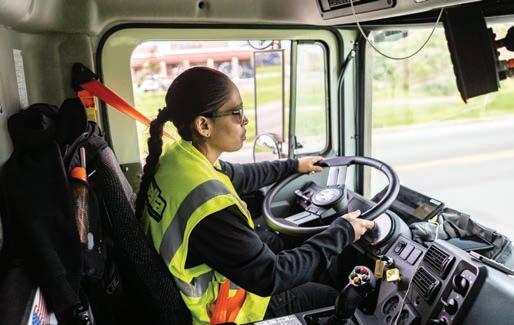
The next wave of technology aimed at protecting workers and the public with backup cameras, emergency braking systems and improved visibility features that helped reduce accidents. Fleet managers embraced telematics and route optimization software, cutting fuel costs and emissions while ensuring timely pickups.
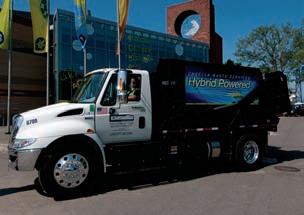
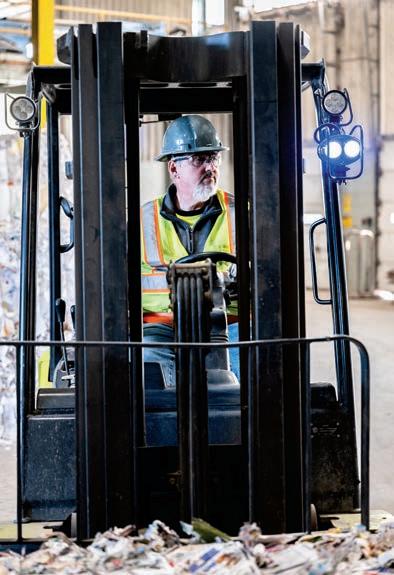
Today, sustainability drives the technology forward. Garbage trucks powered by compressed natural gas (CNG), biomethane and electricity are replacing diesel fleets, reducing greenhouse gas emissions and noise pollution. Smart sensors and AI-assisted routing now help to minimize unnecessary stops, while advanced collision mitigation systems keep communities safer than ever.
From hydraulic compactors to electric drivetrains, the garbage truck has evolved into a high-tech cornerstone of modern sanitation — quietly shaping cleaner, safer and greener communities. n
WELL-STOCKED
Casella’s
bold move to go public set the stage for long-term growth
CASELLA WASTE SYSTEMS, INC. (CWST)
When Goldman Sachs, DLJ and Oppenheimer took Casella public on the Nasdaq exchange in 1997 as CWST, the timing was anything but ideal. Trading of Casella stock began the day after one of the largest single-day collapses in U.S. stock market history. Yet despite the market jitters, Casella’s initial public offering proved to be one of the most successful in the industry, a testament to the company’s strong foundation, clear vision and confident leadership.
“We went public in 1997 and grew to about $250 million in revenues,” recalled Casella Executive Chairman John Casella. “There was fairly rapid growth early on, and one of the reasons for the public offering was that we had significant opportunities to continue to grow. We needed to raise capital to support those efforts, and we also had private equity investors who were looking for an exit after five or seven years.”
Casella described the company’s expansion at the time as both ambitious and capital intensive. “To build a landfill is $750,000 an acre. Trucks now cost half a million dollars apiece,” he said. “If you want to grow the business, you really do need to be in a position to raise capital.”
The IPO provided the resources to expand the
company’s operational footprint and marked a turning point in the company’s evolution from a regional hauler to a publicly recognized environmental solutions leader. Since its first day of trading, Casella’s value to shareholders has seen tremendous growth, an impressive reflection of nearly three decades of disciplined, valuesdriven success in the company’s 50-year history.
But being a public company also brought new challenges. “We talk about sometimes being a public company and trying to recreate yourself while everyone’s watching you, and they’re measuring you quarter by quarter,” said president and chief executive officer Ned Colletta. “It’s a very hard thing to do, and not many companies succeed doing it. For us, the winning formula has been being able to, year in and year out, grow our cash flows at a meaningful pace.”
For Casella, a formula built on operational excellence, strategic investment, and a culture of continuous improvement has carried the company through the fluctuations of both markets and industry trends. Going public was more than a financial milestone; it was a defining moment that enabled Casella to build the scale, resilience and credibility that continue to power its success today.
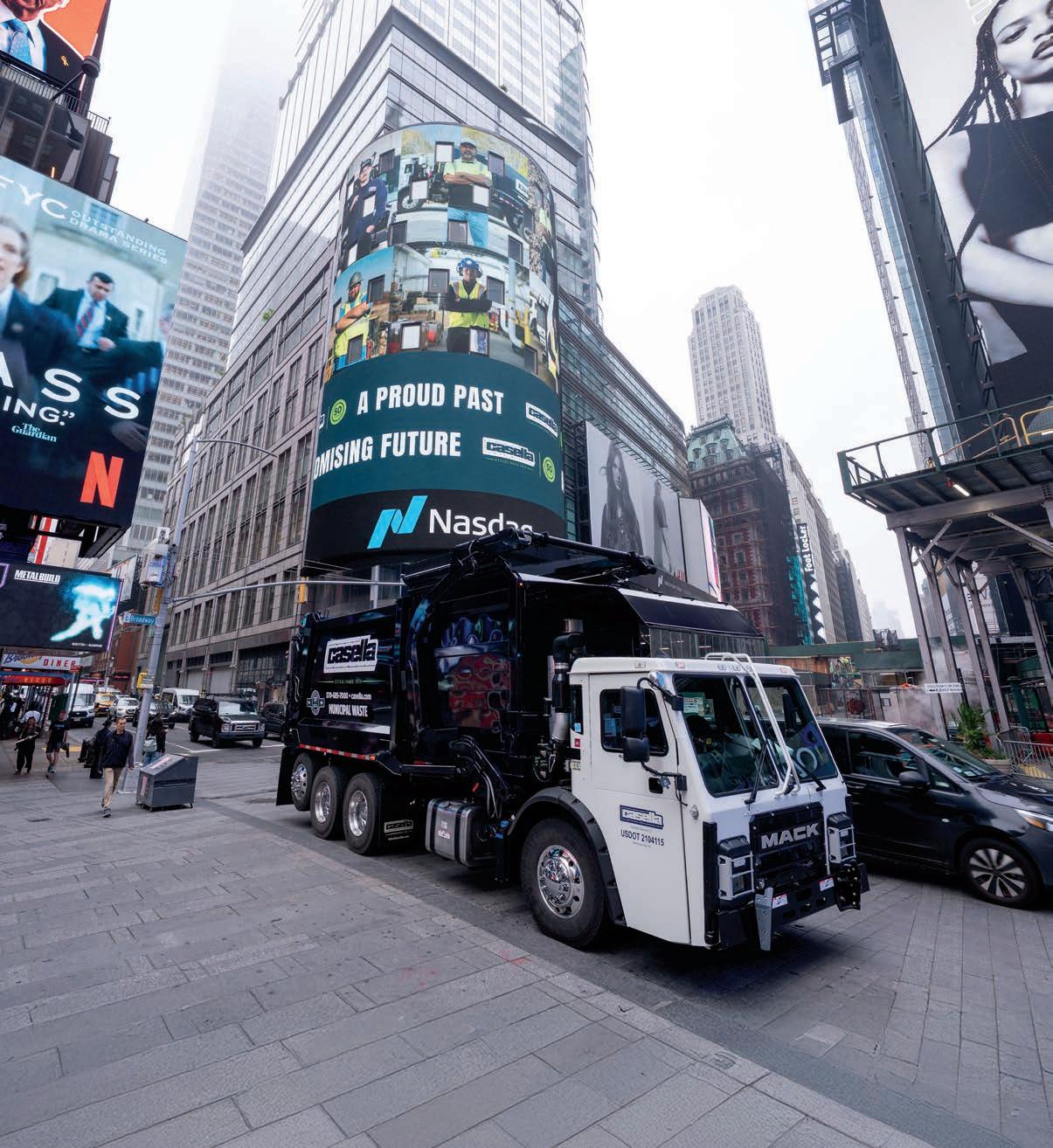
NASDAQ RINGS IN 50 YEARS OF CASELLA
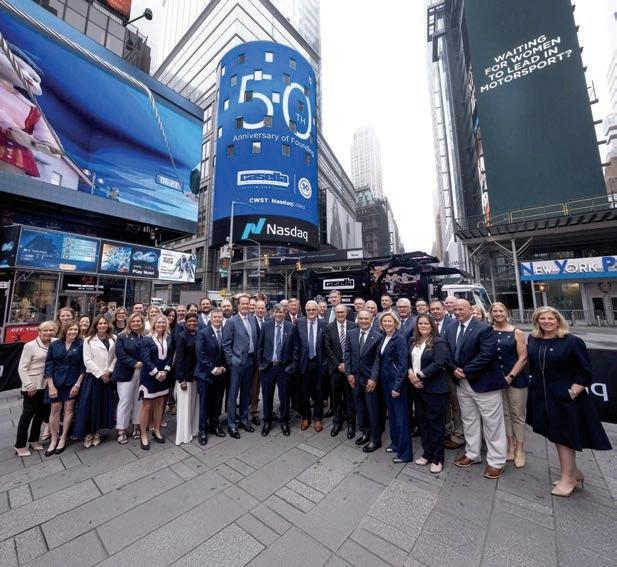
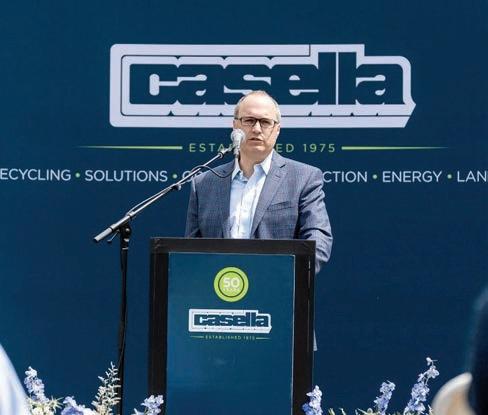
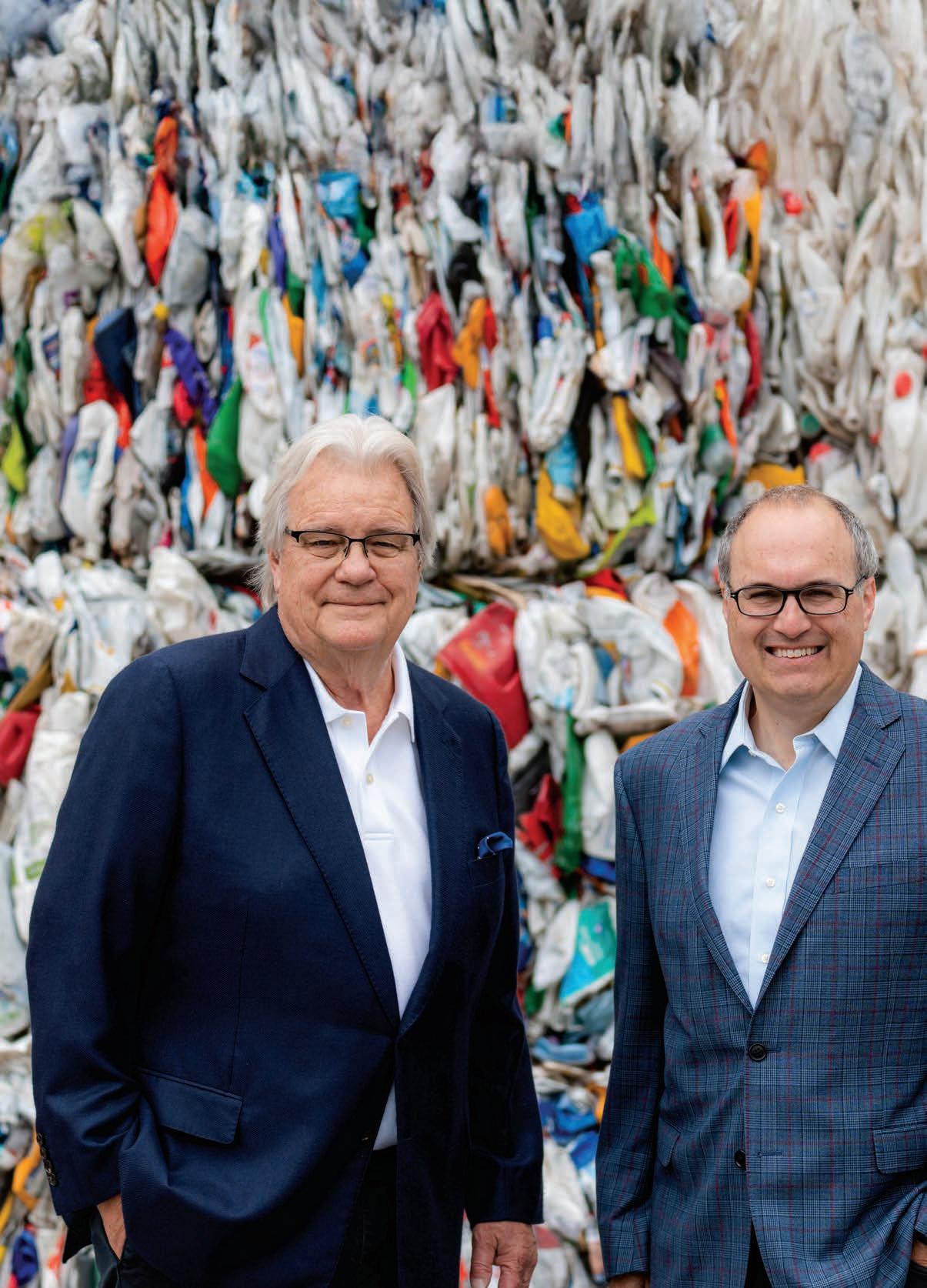
On June 17, Casella Executive Chairman John Casella, President and Chief Executive Officer
Ned Coletta, and Founder and Vice Chairman Doug Casella rang the Opening Bell at the Nasdaq MarketSite in New York’s Times Square in recognition of the company’s 50th anniversary.
The day also marked Global Garbageman Day and the official start to National Waste and Recycling Workers Week, and was specifically chosen to recognize the hard work and dedication of the more than 5,000 Casella employees throughout the company.
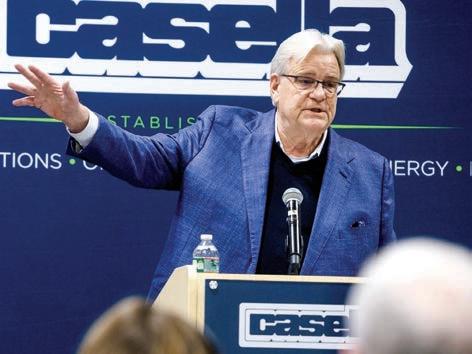
“It’s an honor to be invited to ring the Opening Bell at Nasdaq in recognition of our 50th anniversary,” said John Casella. “Since our initial public offering in 1997, to where we stand today, Nasdaq has been a tremendous partner in our success.”
Founded in 1975 as a single truck collection service, Casella has grown its operations to provide solid waste collection and disposal, transfer, recycling and organics services to more than 1 million customers in 10 eastern states. The company’s commitment to being a sustainable enterprise began almost immediately when it established Vermont’s first recycling facility in 1977. As the only waste and recycling company among the founding members of the EPA Climate Leaders program,
Casella’s climate leadership has been recognized by the EPA, the Association of Climate Change Officers, the Center for Climate and Energy Solutions, and the Climate Registry with a Climate Leadership Award for Excellence in greenhouse gas management.
“Sustainable materials management has been the foundation of our business since it began,” said Casella. “We continue to make progress towards a more sustainable future and achieve greater circularity for customers and communities due to the consistent dedication and hard work of more than 5,000 Casella employees. Recognizing all of them on the world stage, on Global Garbageman Day and as a kickoff to Waste and Recycling Workers’ Week, helps to shine a light on all their contributions to society day in and day out.”
Global Garbageman Day is a day dedicated to recognizing and celebrating the efforts of the men and women who keep our communities clean by collecting garbage, recyclables and other waste. This day also acknowledges the broader role of waste management in protecting the environment and making the world a better place, officially marking the beginning of National Waste and Recycling Workers’ Week, a week-long celebration honoring the individuals in the waste and recycling industry for their hard work and dedication. n
“Ned’s extensive experience and proven leadership capabilities make him exceptionally qualified to lead Casella into its next chapter of growth and success.”
—JOE DOODY, LEAD DIRECTOR
“John’s strategic vision and unwavering commitment have shaped Casella’s trajectory and positioned us strongly for the future.”
—JOE DOODY, LEAD DIRECTOR
John Casella Executive Chairman
Ned Coletta President & Chief Executive Officer
A NEW CHAPTER FOR CASELLA LEADERSHIP
After five decades as chief executive officer, Casella announced in August 2025 that John W. Casella would step down and Edmond R. “Ned” Coletta would become the company’s next CEO and join the board as a director at the start of 2026.
On January 5, the company announced the successful completion of its CEO succession plan as Coletta became CEO and Casella transitioned to the executive chairman role where he will continue to collaborate with the board and CEO to support the company’s strategic development, stakeholder engagement and organizational culture.
“I’m honored to lead Casella into its next chapter,” said Coletta. “Our focus is clear: execute against our long-term strategy and strengthen our foundation for future growth, with a focus on investing in our people and fostering a culture of safety, innovation and accountability. These fundamentals will drive continued growth and deliver lasting value for our customers, shareholders and communities.”
Coletta brings over two decades of experience with Casella, joining the company in 2004. He has served in pivotal roles, including chief financial officer and president, where he drove financial discipline, operational excellence and strategic expansion. A champion of sustainability, Coletta advanced Casella’s balanced approach to economic and environmental stewardship, positioning the company as an industry leader in resource recovery while delivering consistent cash flow growth and enabling investments in cutting-edge recycling technology and infrastructure.
“Ned’s deep understanding of our business and his proven ability to execute make him the ideal leader for Casella’s future,” said Casella. “His vision aligns perfectly with our long-term strategy to grow responsibly and lead in sustainability.”
John Casella, who joined his brother in 1976, a year after Doug Casella founded the company, has led the growth and expansion of the company into a leading waste management and resource solutions service in the eastern United States, significantly enhancing value for shareholders, customers and communities.
“I am incredibly proud of the dedication and hard work from our entire Casella team over five decades,” said John Casella. “It has been my privilege to lead this company and witness its evolution into an industry leader committed to sustainability and innovation. I have great confidence in Ned and the executive leadership team to build on our legacy of delivering exceptional service and sustainable solutions.”
Prior to joining the company, Coletta co-founded and served as chief financial officer of Avedro, Inc. and held a research and development engineering role at Lockheed Martin Michoud Space Systems. He holds an MBA from the Tuck School of Business at Dartmouth College and a Bachelor of Science degree from Brown University.
“On behalf of the entire board, I thank John for his outstanding leadership, irrepressible perseverance and invaluable contributions,” said Joe Doody, lead director. “John’s strategic vision and unwavering commitment have shaped Casella’s trajectory and positioned us strongly for the future. Ned’s extensive experience and proven leadership capabilities make him exceptionally qualified to lead Casella into its next chapter of growth and success." n
PEOPLE WORKERS, ESSENTIAL EXCEPTIONAL
Forbes named Casella Waste Systems, Inc. among America’s Best Midsize Employers in 2025. Casella was the only company in the waste, recycling and resource management services industry — and the only company headquartered in Vermont — to be recognized among the nearly 500 organizations.
“We often say that our people are the biggest differentiator and competitive advantage as a
JESSICA DIBBLE Operations Manager
Started in 2006
“My grandpa, aunts, uncles and mom all have worked — and most are still working — in the waste and recycling industry. I feel grateful for the opportunity to grow alongside my mom and daughter.”
sustainable enterprise,” says John Casella, executive chairman of Casella. “We have invested a great deal in our people over the years, and our investments in safety, training, recruitment and retention are passed on exponentially to the customers and communities we serve.”
Here are a few of Casella’s more than 5,000 employees and what they love about their work:
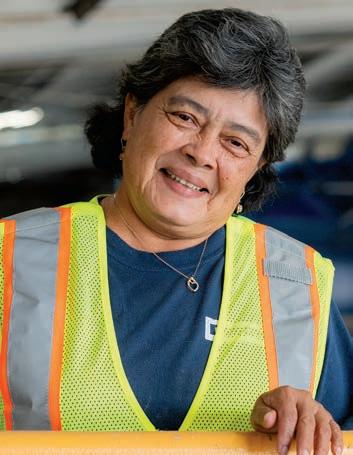
ELSA LEAL Sorter
Started in 1996
“This past March was my 28th anniversary. I started as a sorter, later became a supervisor, and then decided to go back to being a sorter. I am content and happy with where I am at.”
AIDEN BANIA Apprentice
Started in 2025
“I like to work with my hands, and I didn’t want to sit at a desk. My guidance counselor told me about Casella, and I had a good gut feeling about it. It’s been great.”
MICHAEL BURNS
Sales Representative Started in 2020
“A lot of my colleagues have been in the industry for 15 to 20 years and have lots to share. It’s been great to search for my own solutions while getting wisdom from them. It’s exciting to me.”
TOM JEFFRIES
Laborer
Started in 2007
“Keeping our facilities clean is a priority. It’s important work. I do it for the company, and, most importantly, I do it for the community. I know this place like the back of my hand. I make sure it is done and done correctly.”
DAN TILDEN Director of Safety Started in 2000
“The most enjoyable part of my job is the people I get to meet and work with. We have so many fantastic employees within Casella, and the best part of my role is being of service to them.”
RACHEL OLSEN
Environmental Technician Started in 2023
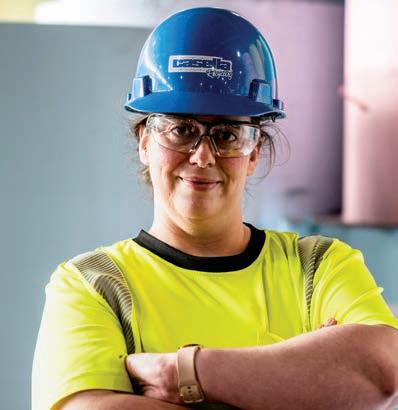
“I worked so hard as a laborer, and I earned everyone’s respect. It was cool to start at the bottom and work my way up. (Being a woman in this field) is so empowering.”
SUE AHEARN
Administrative Office Specialist Started in 2006
“I have always been involved with various community opportunities because I want to give back. Casella supports that and helps give me that opportunity.”
MURANDA KLEIS
Customer Care Started in 2011
“When you call Casella, there is a real person answering the phone. We advocate, follow up and strive for the best possible outcome for you. Our team makes me proud every single day.”
ADAM DIMARINO
Dispatcher
Started in 2020
“I started in sales, but I arrived at the point where I was looking for something more hands-on. When we get to the end of the day, and our customers are taken care of, that’s the best part of the job.”
NICOLE MARUCA
Maintenance Production Administrator
Started in 2022
“To be a woman in this industry is an honor because I get to be a role model for little girls who want to get their hands dirty. I tell my nieces that they can be anything they set their mind to, and my job is an example of that.”
“We have invested a great deal in our people over the years, and our investments in safety, training, recruitment and retention are passed on exponentially to the customers and communities we serve.”
—JOHN CASELLA
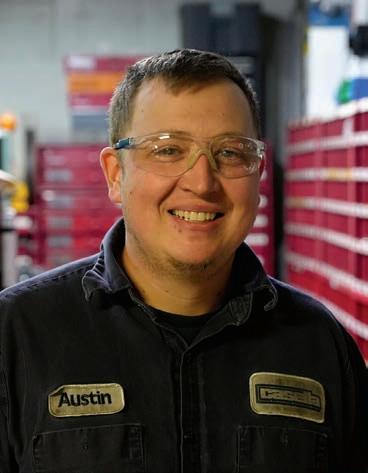
AUSTIN SMITH
Diesel Technician
Started in 2021
“I have been with Casella for about four years after serving in the Army. My experience with trucks really carried over and gave me a great foundation for this job. It is satisfying to see a project to completion and watch the truck roll out after fixing it.”
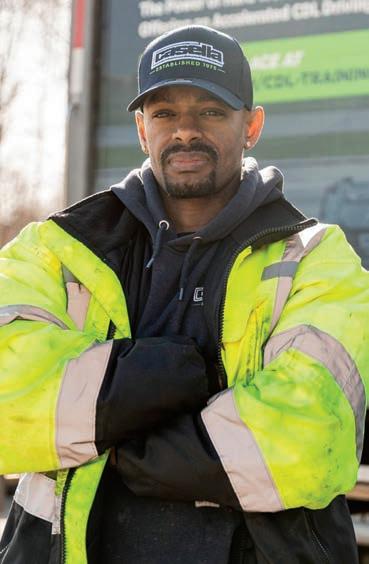
JOAQUIN MARTINEZ
RIVAS Driver
Started in 2018
“What I enjoy most about my job is taking care of our customers and the time I spend behind the wheel. It’s a perfect fit for me, and that’s what keeps me going every day.”
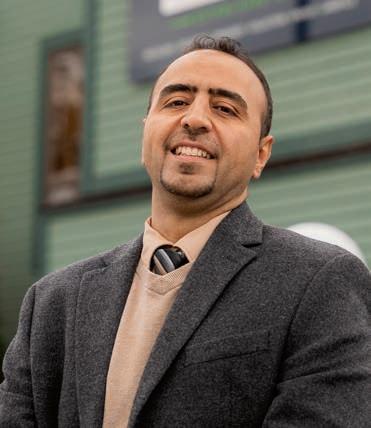
HUSSAM ALHALLAK
Tax Accountant
Started in 2019
“I’m so excited to be part of such a great company, and my team is amazing. Throughout my employment they have supported my professional educational progress and development, and I am very grateful for their encouragement.”
DRIVEN BY SAFETY
CASELLA’S CULTURE OF CARE AND OPERATIONAL EXCELLENCE
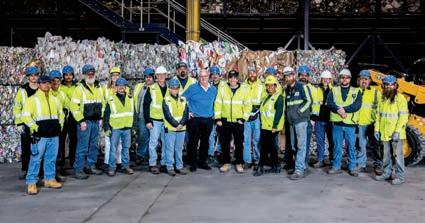
At Casella, safety is an operational commitment to excellence, not just a checkbox for compliance.
From the first collection efforts in 1975 to today’s 5,000-plus-member team, safety remains at the heart of every decision, every route and every facility.
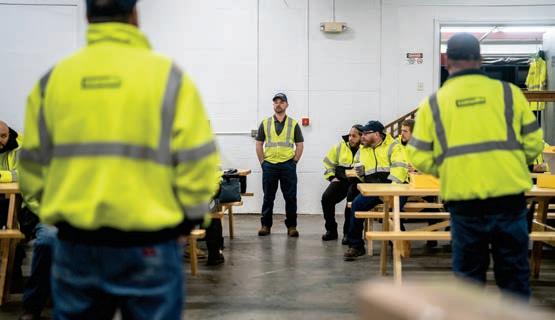
Casella’s unwavering focus on safety is reflected in its 2030 Sustainability Goal to reduce its Total Recordable Incident Rate (TRIR) to 4.0, a target already trending downward from 6.2 in 2019 to 5.0 in 2023. This progress stems from a company-wide culture of care and accountability, reinforced through monthly safety meetings, retraining protocols and leadership incentives that directly tie bonuses to safety performance.
“To me, a strong safety culture is when an organization, from top to bottom, shares the same behaviors and attitudes toward keeping our people safe, protecting the public and preserving the company,” said Dan Tilden, director of safety. “When that occurs, compliance becomes almost effortless, and the negative impacts of injuries and incidents begin to wane, resulting in significant gains across many aspects of the company.”
Casella’s investment in training has been central to building that mindset. The Kenneth A. Hier Sr. Training Center, home to the company’s CDL and Diesel Technician schools, has prepared more than 300 drivers
and technicians to launch safe, sustainable careers. Graduates carry forward the company’s values of service, professionalism and continuous improvement, qualities that make Casella’s workforce stand out across the industry.
That dedication was on display when three Casella drivers — Frank Corl (Cheshire, Mass.), Juan Caraballo (Potsdam, N.Y.) and Daniel Hale (Salem, NH) — were honored as 2025 NWRA Drivers of the Year. Each was recognized for an exceptional record of professionalism, customer service and safety, representing the best of an industry that keeps communities clean and safe every day.
As Casella expands down the eastern seaboard, its commitment to safety evolves as it adopts new technologies, predictive analytics and fleet innovations to prevent incidents before they occur. The company’s approach is simple yet powerful: empower people, invest in training and lead with integrity.
“I measure success by having personnel and management believe in the mission of safety, which is ultimately to have our people go home in the same condition in which they showed up,” Tilden said. “That is how I measure success in safety; the incident rates and compliance scores will naturally improve as our proactive safety culture takes root.” n
MEET JEFF MARTIN
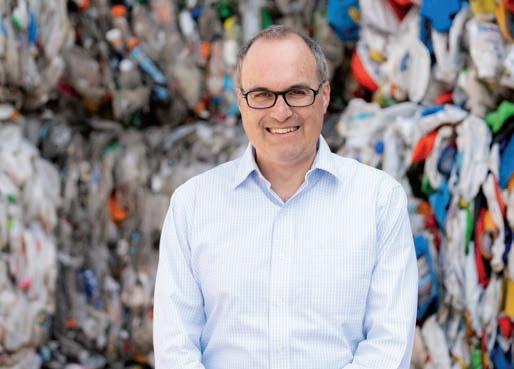
Jeff Martin joined Casella as vice president of safety in August, continuing a lengthy career in waste management and a personal passion for safety.
What was your experience before coming to Casella?
I joined Waste Management in 1996, where I served 25 years in a variety of capacities, from sales to operations to safety. In 2022, I retired, but I came out of retirement to join Lytx, which is a video safety technology company. After retiring, I got bored and missed the people in the industry terribly, so I consulted until I joined the Casella team in a full-time capacity.
With your wide experience in waste management, what directed you toward safety departments?
My wife’s previous husband was killed in a workplace accident involving a forklift when her three children were ages 5, 4 and 2, and I became an instant dad when I joined her family.
Then our son, Connor, when he was 10 years old was critically injured and his best friend was killed in a boating accident when a wakeboarder swerved into their tube’s wake and collided with them.
So those two lifetime tragedies have really propelled me to not only embrace safety, but to take it personally and to share those stories with people. It doesn't have to happen. Casella workers are trained to realize how things can change in an instant. That fuels me. There's nothing better than seeing people understand that they know that their safety is most important.
What made you interested in working for Casella?
The ability to work with a highly respected company with a tremendous reputation. Casella is a highly motivated company and a very progressive company, in that the ability to safely service the customers efficiently is a key focus. We're going to drive the efficiencies. Efficiency is not about going faster — I want to make that very clear. It's about eliminating wasteful steps in your day. When you do that with great customer service and you do it safely, it builds a great momentum and a great spirit within the company.
What is the safety culture at Casella that you have to build on?
It’s the employee engagement and the one-on-one accountability. We've got to win hearts in order to win minds. We want to get to a place where we have 100% of the employees wanting to be safe instead of doing it as a condition of employment. When people are fully bought in, they are some of the best cheerleaders and fellow coaches on the front lines. It's a great opportunity to further strengthen our safety culture and really look at taking a building block approach. It's the most rewarding thing for me when you see people believing in safety, because nothing's more important. We want everyone to go home safely each and every day.
What role does leadership play in Casella’s culture of safety?
It's really leadership by example. It starts with Ned Coletta and the rest of the leadership team, who are fully committed to taking the next step in the safety culture at Casella.
Any top safety performance company must start with senior leadership. If it's there and we all know what is expected at the top level of the company, that has a cascading effect through the organization. It's infectious, it's exciting.
How is technology helping with those coaching conversations?
The artificial intelligence today, it's what is referred to as a “coach in the cab.” If I pick up my cellphone or I don't have my seat belt on, it's going to go, “ding, ding, ding, seat belt.” So now I know, I have to put on my seat belt. If I don't, it will continue to remind me. Same thing if I pick up a cell phone. The power in that, with today's safety technology, is it allows drivers to self-correct in the moment, and they feel good about it. It not only protects our drivers, but it also makes sure that we are safely servicing the communities that we're responsible for.
What are other areas that you’re looking to make safety improvements?
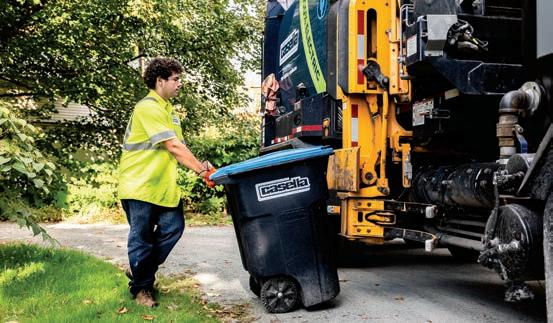
One of the ways we are looking to eliminate muscular-skeletal injuries that are related to our rear load operations trucks, and replacing them with what are called automated side load (ASL) trucks that can pick up a 45- or 96-gallon cart from a residence curbside and safely collect that without the use of people, who unfortunately are not only subject to muscular skeletal injuries but susceptible to being struck in the street by vehicles.
How do you ensure safe operations across Casella’s many different facilities and services?
It all starts with our new hire orientation and training program and making sure that in our facilities employees understand the rules, guidelines and expectations, and are outfitted with personal protective equipment (PPE), and most importantly, are observed and coached on awareness and operating practices. We are developing our new hire orientation and training programs so that it is replicated easily throughout our system.
Whether it's a recycling facility or a disposal facility, we are making sure everybody understands that every employee or visitor has the authority to stop work immediately. If you see something wrong or somebody is at risk, stop work authority is your authority. It's everyone's authority, and it's very important.
How does Casella stay up-to-date on the latest safety policies and best practices?
We participate in the National Waste and Recycling Association and share best practices and safety. The great news is that, whether it's within the industry or outside of the immediate solid waste recycling industry, there is a spirit among safety professionals to steal shamelessly and share with one another, because who can ever argue with saving lives and saving dreams?
Casella has a 2030 goal of lowering the total recordable incident rate down to 4.0 from 6.2 in 2019. What steps are taken after an incident or close-call to mitigate future harm?
First and foremost is tremendous care for our employees and the folks affected. With any incident or near miss, it must be dealt with openly and honestly. What are those takeaways? What opportunities do we have, individually and collectively, to address and mitigate before the risk presents itself, and to obviously rectify it? What can we do to raise awareness in training and other remediations to prevent it from happening again?
What is the last thing you like to leave people with?
I think the really big one is that safety is everyone's responsibility at Casella. That is our belief system, and everyone owns it and is empowered. We’re focused on taking great care of our customers, but we understand we have a great responsibility to do it safely. n
THE POWER OF PARTNERSHIP
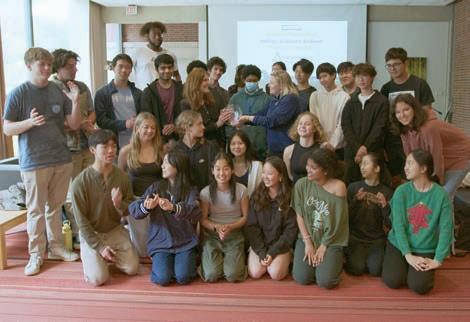
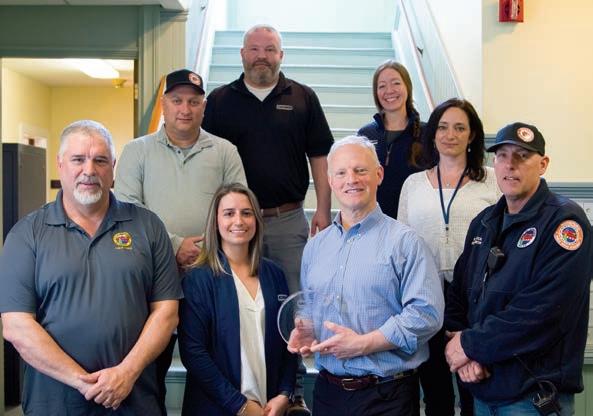
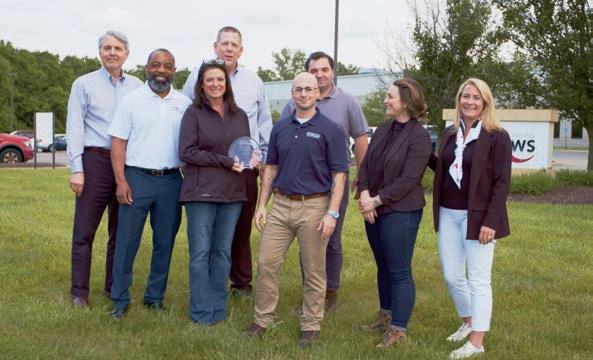
The Casella Sustainability Leadership Awards represent innovation and commitment to creating a better tomorrow by showcasing each recipient’s sustainable material management practices. Recipients were selected from a range of segments, including municipalities, colleges and universities, industrial manufacturers, food and beverage producers, and more.
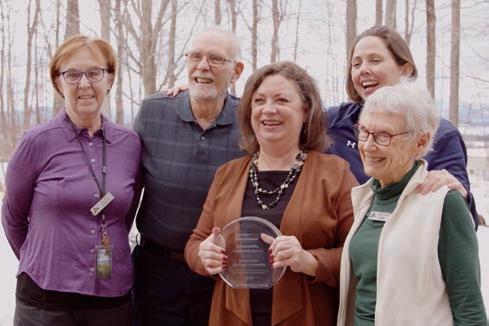
Casella is pleased to announce that four of its customers were recently honored for their leadership in sustainability: Primo Brands, Dartmouth College, The Arc
WAKE ROBIN
Otsego and the University of Vermont Medical Center.
“We are proud to recognize and celebrate the achievements of these organizations with our annual sustainability awards,” said John W. Casella, executive chairman of Casella. “This year’s recipients exemplify bold innovation and forward-thinking leadership, demonstrating that, regardless of the size or scope of an organization, we can all make a difference. It’s a privilege to work alongside them, providing services to help advance their materials management initiatives on a journey to achieving our sustainability goals.”
THE ARC OTSEGO
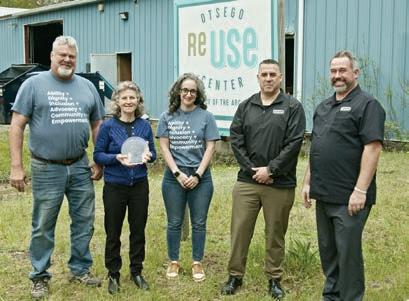
The Arc Otsego, a nonprofit organization in Otsego County, New York, that supports individuals with developmental disabilities, has partnered with Casella for over 25 years to drive sustainable practices. With recycling at all service locations and the Otsego ReUse Center repurposing building materials and household goods, the organization helps to reduce waste while supporting the local community. The Arc Otsego also leads recycling efforts for hard-to-recycle materials like polystyrene, fluorescent bulbs, plastic film and more throughout Oneonta.
Wake Robin, a continuing care retirement community in Shelburne, Vermont, has made the responsible stewardship of resources part of its core mission. The community has fully implemented Casella’s singlestream recycling, compost and municipal solid waste services, in addition to establishing its own initiatives, such as the Wake Robin Green Committee and Climate Action Taskforce, to further explore and expand on-site sustainability programs with the support of residents, staff and administration.
PHILLIPS ACADEMY – ANDOVER
Phillips Academy, in Andover, Mass., is a university preparatory school for over 1,100 boarding and day students in grades 9-12 that has been a Casella customer and partner for 10 years. Their Climate Action Plan includes a goal to achieve 90% waste diversion by the year 2030. Casella and Phillips Academy have expanded programs on campus to capture compost, e-waste, universal waste, metal and wood. Together, we have run Green Move Out programs for several years now, successfully redirecting reusable items to Goodwill.
BIDDEFORD, MAINE
Biddeford, Maine, is a city with a strong commitment to recycling education and measures to reduce contamination in the recycling stream. They work with us to educate community members through local events, curbside tagging and regular audits. The city recycling committee meets monthly to review results and discuss new initiatives. From spring 2022 to fall 2023, the city reduced contamination by as much as 26%, proving the effectiveness and impact of their hard work and commitment to recycling.
NOVOLEX
Novolex develops and manufactures food and food service packaging products. Last year, Casella worked with Novolex to recycle nearly 60,000 tons of postindustrial commodities. At these locations, we have collaborated on employee training initiatives and installed on-site processing equipment to increase recycling tonnage. Novolex reports sourcing 50% of its raw materials from recyclables, has invested in How2Recycle labeling to support customer recycling, and estimates that 78% of its revenue comes from products that support a circular economy.
WINNERS
2025
PRIMO BRANDS
DARTMOUTH COLLEGE
ARC OTSEGO
UNIVERSITY OF VERMONT MEDICAL CENTER
2024
CITY OF BIDDEFORD, MAINE
PHILLIPS ACADEMY – ANDOVER
NOVOLEX
2023
BOSTON UNIVERSITY
CITY OF WORCESTER, MASSACHUSETTS
COCA-COLA NORTHEAST
WAKE ROBIN
WORCESTER RED SOX
PURINA
2022
CABOT/AGRI-MARK
GLOBALFOUNDRIES
MIDDLEBURY NATURAL
FOODS CO-OP
RHODE ISLAND RESOURCE RECOVERY CORPORATION
ST. PAUL’S SCHOOL
TOWN OF STRATHAM, NEW HAMPSHIRE
TUFTS UNIVERSITY
2021
TOMPKINS COUNTY
UMASS LOWELL
BECTON DICKINSON
DUPONT NUTRITION
GOODWILL NORTHERN
NEW ENGLAND
READ CUSTOM SOILS
BENTLEY UNIVERSITY
TOWN OF FAIRFAX, VERMONT
CASELLA CONNECTS A CIRCULAR ECONOMY
Upgrades to recycling help return more waste to supply chain
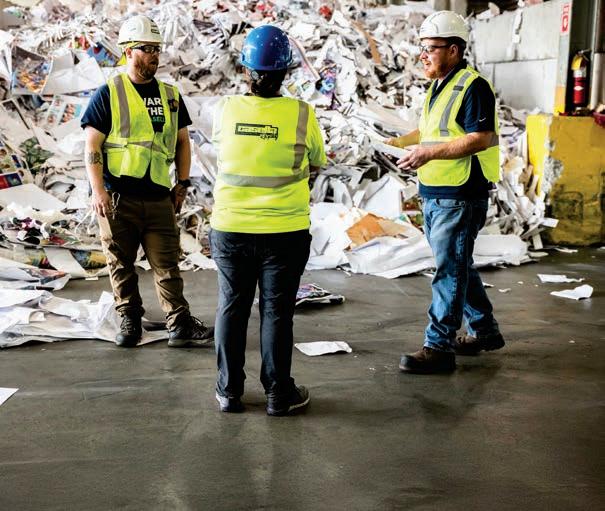
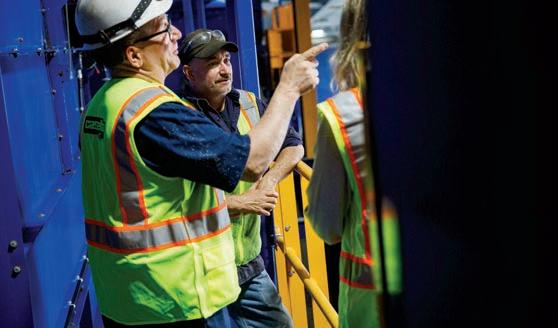
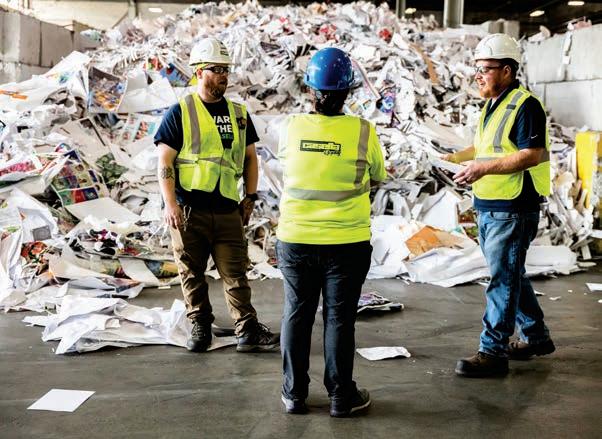
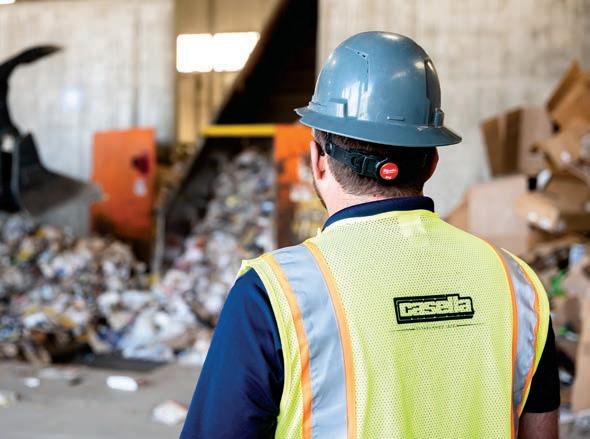
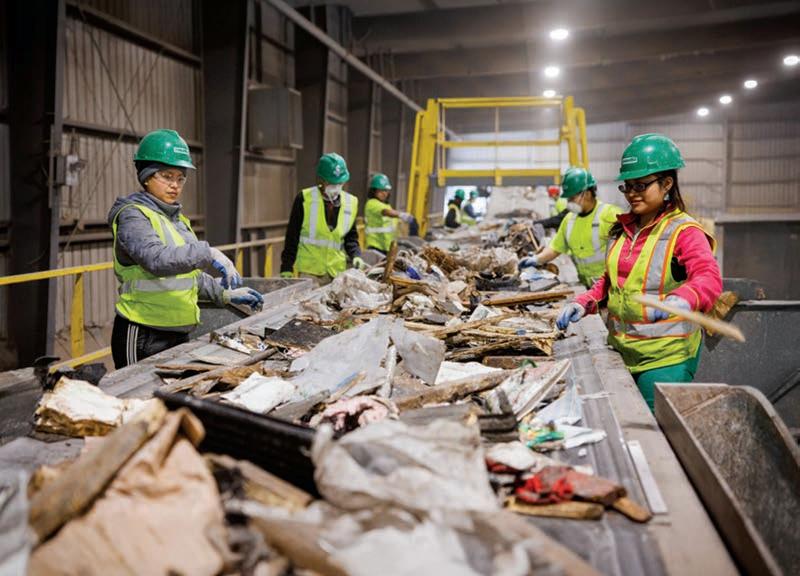
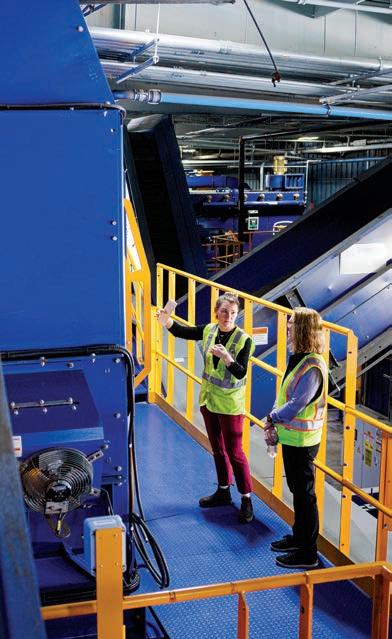
At Casella’s newly upgraded Willimantic facility, blue conveyors carry mixed recyclables beneath optical sorters that separate cardboard, paper and plastics. The technology boosts processing to 27 tons per hour — an investment that increases both quality and quantity of materials targeted for reuse.
The company built Vermont’s first recycling facility just two years after its founding. Its foresight continues through efforts like the Casella Center for Circular Economy at the University of Vermont, which advances research in circular waste solutions — shifting from a linear waste-to-landfill model toward continuous reuse.
IMPROVING RECYCLING THROUGH TECH
Robert Cappadona, currently vice president of resource solutions, joined Casella in 1999. At that point, Casella was primarily focused on residential recycling with dualstream sorting, where divided trucks picked up paper/ cardboard on one side and containers like plastic, metal and glass on the other.
In the 2000s, single-stream recycling launched on the West Coast. Casella was the first in the Northeast to convert its Vermont facility from the multi-stream method to single-stream recycling.
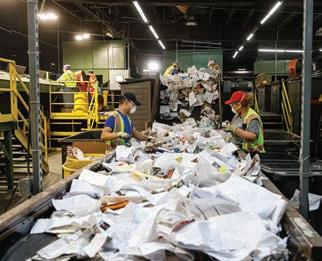
“There's a lot more technology today,” Cappadona said. “In the old days, with dual-stream there was a lot of manual hand-sorting. Today, technology such as optical sorters, magnets, eddy currents and glass breakers is used in the processing of single stream.”
When residential customers no longer have to pre-sort, their recycling participation increases.
“All of a sudden you have a lot more volume,” Cappadona said. “Folks are making it very convenient to recycle, as opposed to the dual stream.”
Recent upgrades at the Willimantic, Connecticut, and
Charlestown, Massachusetts, material recovery facilities have increased both the volume of recyclables handled and the quality of the finished bundles.
“We're increasing the throughput by 35% to 40% and we're increasing the quality of the material that we're shipping into the market by 30% or 35%,” John Casella said in the spring. “That’s a very dramatic increase.”
Making sure that households know what and how to recycle is among the responsibilities of Abbie Webb, Casella’s vice president of sustainability.
“We're providing marketing materials and education materials to make sure that our individual households understand their recycling programs, have a level of confidence and know what to put in the bin and what not to put in,” she said.
Recycling guidelines are particularly important so residents can maximize things that can be reused. Avoiding “tanglers,” like ropes and wires, that snag on equipment, or lithium batteries, which explode when crushed, are not just a reusability concern but a safety measure.
EXPLORING BETTER AND HIGHER USES
As part of its 2030 sustainability goals, Casella aims to reduce, reuse or recycle more than 2 million tons of solid waste per year. It has increased its materials management by 36% from 2019 to 2023, currently recycling more than 1.4 million tons annually.
While improvements in recycling technology have contributed to this, it’s also due to Casella’s work in reducing waste at the source and better handling of mixed materials.
In the last 15 years or so, Casella has also expanded its work with commercial and industrial clients.
“I spend a lot of time with industrial manufacturing customers, health care and higher education: clients
MATERIALS MANAGEMENT VALUE CHAIN
The value chain refers to the full life cycle of a product, including raw material sourcing, production, distribution, consumption, and end-of-life disposal or recycling. We work to transform one customer’s outputs into another customer’s inputs, while creating the connections that add up to a circular economy.
RAW MATERIALS
who have ambitious goals around Zero Waste or waste reduction,” Webb said.
Casella’s sustainability advisors work with commercial customers to assess all their material needs, not just how to reduce the volume of waste that’s leaving a facility.
“It becomes more of a conversation of those products that they're making, do those have pathways to recycling?” Webb said.
Webb said Casella also helps clients design products and supply chains that incorporate recycled materials.
She gave the example of a syringe manufacturer. It can make a product that is recyclable, but it can’t force hospitals to recycle it. Casella, however, can work with the hospital to put in place systems that collect the syringes and manage the recycling chain, because there are places that will want to buy that recycled plastic.
“Since 2018, Casella has pledged that we will not sell any plastics overseas,” Cappadona said. “All of our traditional curbside plastics are sold domestically. There's plenty of markets, there's plenty of capacity, and there's no need for it to be shipped.”
GETTING MORE OUT OF MIXED MATERIALS
Casella has also invested in workflows and technology that help maximize materials from mixed sources. Separating multi-material waste was previously timeintensive and not always financially feasible, but improvements in mechanical separation are making it easier, faster and less costly.
Depackaging technology helps divert packaged food waste by separating it from plastic, glass or cardboard containers. This allows food to be composted, used for biogas production or even sold as animal feed.
“I think society underestimates how much packaged food gets generated,” Webb said. “We picture our leftovers, we picture our plate scrapings, but packaged food is a huge area of food waste, and we have solutions for that, too.”
At any manufacturing facility, there will be a small percentage of products that don’t meet quality standards due to misaligned labels, loose lids, product line changes or other issues. Previously, these rejects would go to a landfill or incinerator.
“We've invested in technology to separate the packaging from the food: big steel machines that break the packaging apart,” Webb said. “Then, best case scenario, we can both recycle the packaging and send the food or beverage to an anaerobic digester to make renewable energy or return the nutrients to the soil. That's really one of those hidden parts of the waste stream that people don't know about, which turned out to be a big part of the puzzle once we started looking at it.”
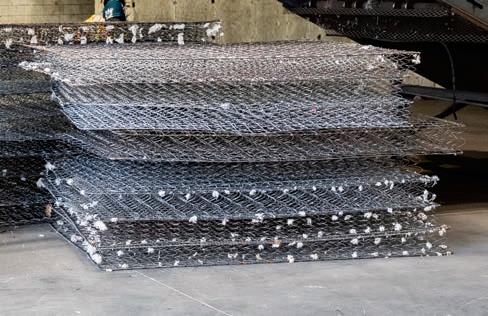
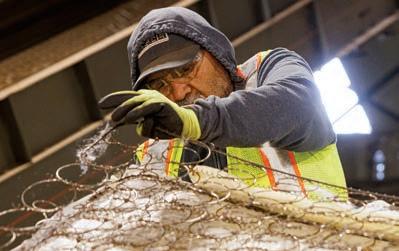
Mattresses, which can take up lots of landfill space, are another multi-material product that can be disassembled so that wood, metal springs, foam and fabric can be recycled independently.
“Mattress recycling is an area that, 10 years ago, I don't think most people would have believed that would be a viable recycling material,” Webb said. “We've actually found that there are mattresses primarily composed of recyclable material, and the key is to get it separated.”
(Learn more about mattress recycling on page 28.)
CONNECTING THE CIRCULAR ECONOMY
For Casella, reclaiming waste and connecting it with better and higher uses is critical to its sustainability and financial goals.
“Every home and business in our country and beyond makes some form of waste and recycling output,” Webb said. “The work we do is often around efficiency.”
The company keeps a wide perspective on that, looking at everything from the most effective collection routes to finding solutions for complicated waste streams. The more Casella is able to find avenues for recyclables, the less new raw materials will need to be extracted, as well.
“The real promise and potential of recycling is the opportunity to reduce the extraction of resources all over the world,” Webb said. “If you think of whether it's recycled paper, plastic or metal, you're bringing that back into the supply chain.”
Furthermore, in the Northeast, landfill disposal capacity is not what it once was, so finding those reuse diversions is an economical mission and an ecological one.
Investments in better recycling systems, collaboration with clients and a drive for innovation have positioned Casella as a champion for waste reduction.
As people pay more attention to products they use and where they end up, Casella is there as a champion to help meet their Zero Waste goals.
“We want to find a higher and better use for everything that's in the waste stream that's going to ultimate disposal,” Casella said. “We’re going to be the first to cannibalize our business in landfills.” n
Investing in the Future of Recycling FACILITY UPGRADES
Casella has made major infrastructure investments to expand recycling capacity and improve material quality across the Northeast. Two recently retrofitted material recovery facilities (MRFs) — in Charlestown, Mass., and Willimantic, Conn. — now feature cuttingedge systems designed to boost throughput, efficiency and sustainability.
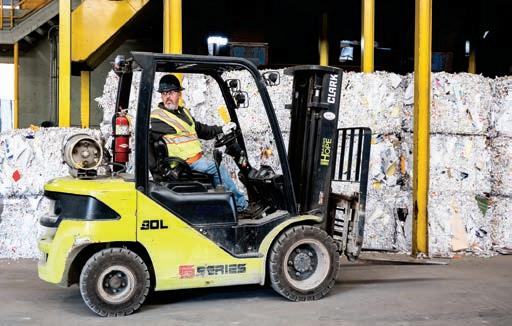
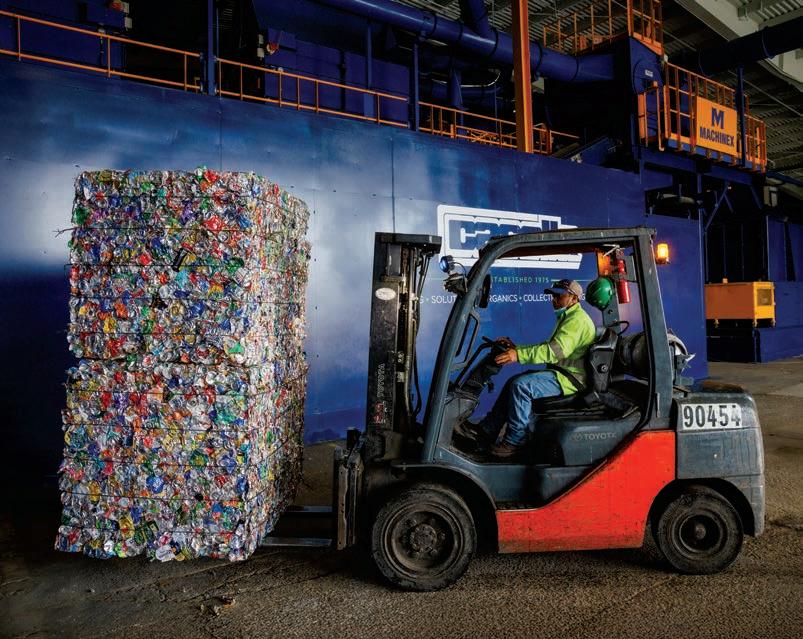
At its Charlestown MRF, one of the largest recycling facilities in the country, Casella invested $20 million to install new robotics, optical sorters and artificial intelligence-driven technology developed by Machinex. The state-of-the-art retrofit increases processing capacity from 180,000 to 240,000 tons annually, making it the largest MRF on the East Coast.
The upgraded system features six optical sorters for fiber, three for containers, two ballistic separators, and robotics for precision sorting and quality control, all designed to produce cleaner materials and reduce contamination.
“The Charlestown MRF consistently ranks among the top recycling facilities in the country in terms of tons processed annually,” said Rusty Angel, eastern region sales manager for Machinex. “Our established partnership from past projects, built on mutual trust and shared values, has laid a solid foundation for success.”
Casella’s Willimantic, Conn., MRF has also undergone a full modernization, replacing aging systems to meet rising demand. Originally built in 2008, the single-stream facility’s capacity declined as the regional recycling stream evolved. In 2024, Casella completed a comprehensive retrofit that tripled throughput, from 15 to 25 tons per hour, and increased annual capacity to 165,000 tons.
The Willimantic upgrade included a new Machinex sorting line, enhanced power and fire suppression systems, a replacement tipping floor and energyefficiency improvements through a partnership with Eversource. Despite construction, Casella maintained service continuity by diverting recycling to other facilities and continuing on-site processing of metals and mattresses.
Together, the two upgraded facilities demonstrate Casella’s long-term commitment to advancing recycling technology, reducing environmental impact and building the infrastructure needed for a more circular economy. n
RECYCLING PROCESS
Through investments in infrastructure, innovation and education, Casella aims to be recycling 2 million tons per year by 2030. Since 2019, Casella has increased the tonnage we recycle annually by nearly 400,000 tons.
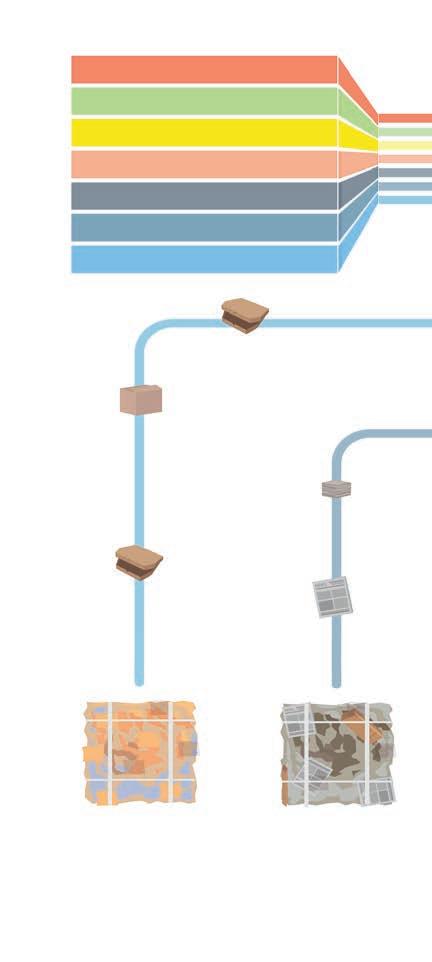
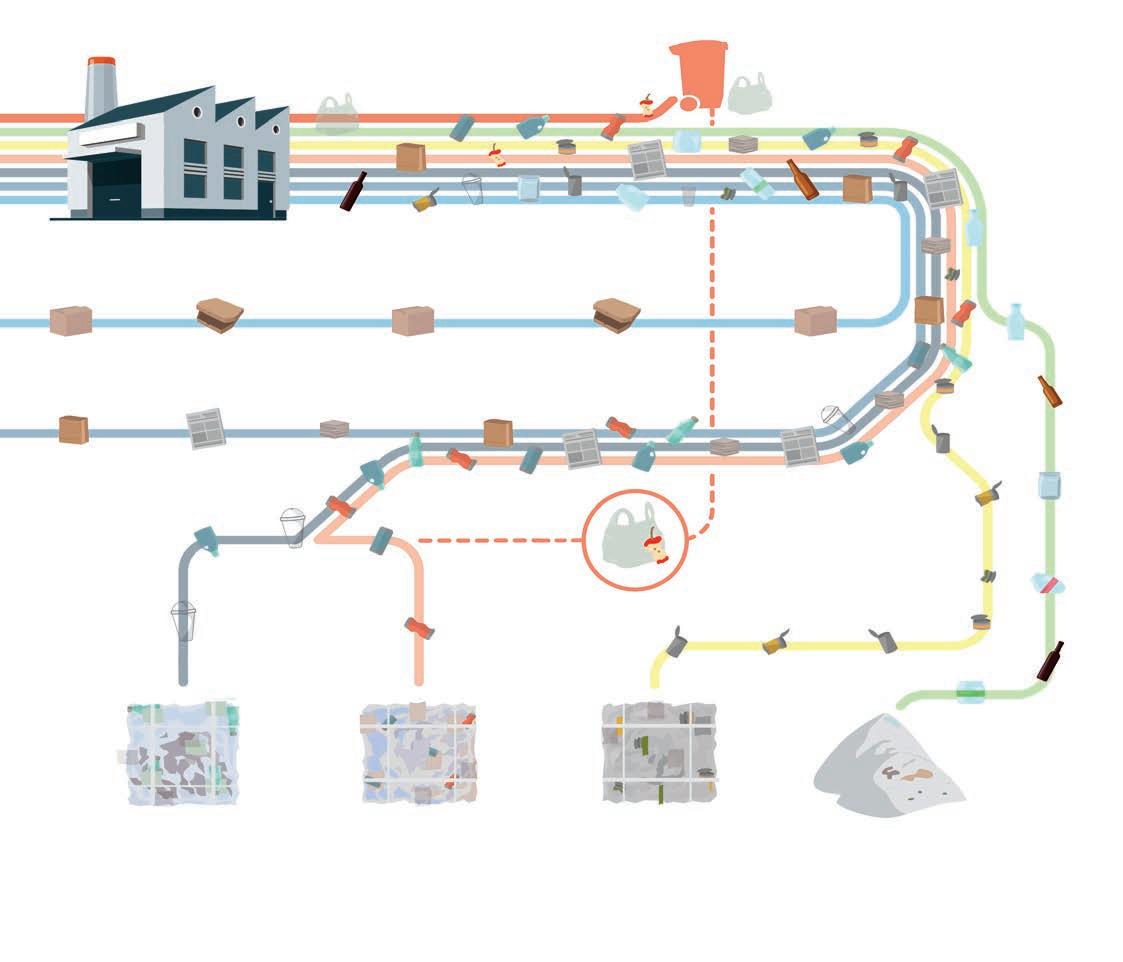
Modern recycling facilities use advanced technology to separate mixed recyclables into clean recycled commodities that can be manufactured into new products.
Processing technology continues to advance. Recent innovations deploy optical sensors, robotics and machine learning to simultaneously optimize efficiency, productivity and commodity quality. Many of these technological advancements can be seen in our facilities.
OPTICAL SORTERS
Sensors visually scan and identify target materials then separate them using compressed air and/or robotics.
DISC SCREEN
Rotating shafts with rubber discs are calibrated to capture cardboard and paper while allowing other items to fall through.
GLASS BREAKER
A specialized disc screen separates glass fragments, which are then cleaned and sized using ballistic separators and blowers.
MAGNET
Magnetic separators — often in the form of large rotating magnetic drums — pull metals from other recyclables.
EDDY CURRENT
Rotating magnets induce a charge in nonferrous metals such as aluminum and repel them from the other materials.
ROBOTICS
Robotics are increasingly used to both identify and capture target materials at high rates of speed and accuracy.
AI TECHNOLOGY
Advancements in artificial intelligence and machine learning can support productivity, product quality and material data.
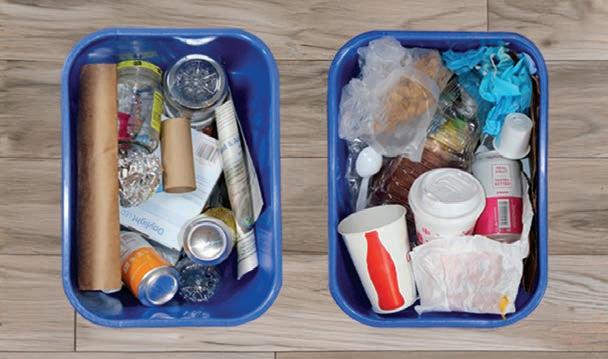
YES You can recycle dry, unwaxed cardboard; paper; plastic bottles, jugs, tubs and lids; metal cans; and glass jars and bottles.
NO Please don’t include plastic bags or bagged recyclables; clothing or fabric; tanglers like wires, ropes or hoses; scrap metal; batteries; anything smaller than 2x2 inches like plastic cutlery and straws; food waste or liquids (compost this!); electronics.
Cardboard becomes New Cardboard Boxes Paper becomes Pizza Boxes
CONTAMINATED MATERIAL GLASS METAL ALUMINUM PLASTIC PAPER CARDBOARD
CONTAMINATED MATERIALS
GENERAL RECYCLING TIPS
EMPTY AND CLEAN
Recyclables must be empty and clean. So, take that last sip, enjoy that last bite and rinse your container well.
KEEP IT LOOSE
Remember to keep it loose! Bags are a drag! Bagged recyclables cannot be sorted, so if you collect your recyclables in a bag, be sure to dump them out when you get to your bin.
SHAPE MATTERS
CONTAMINATED & REJECTED MATERIALS
WHEN IN DOUBT, THROW IT OUT!
Americans toss far too many non-recyclable items in their recycling bins. These sorting mistakes add up and hurt recycling programs. We all need to understand what’s acceptable in our local recycling program and remember: When in doubt, throw it out.
DON’T FORGET TO REDUCE AND REUSE! Recycling is great, but waste reduction and reuse can be even better. Don’t forget to reduce and reuse whenever you can. 1 2 4 5 3
When recycling, remember shape matters! Small and narrow items slip through the cracks in our sorting equipment and cannot be recovered. They should go in the trash. Caps are OK if you twist them back onto the container.
Plastic becomes New Plastic Packaging
Aluminum becomes New Cans
Metal becomes New Cans
Glass becomes Road Base
LEADING THE CHARGE
Sleep Better with Sustainable Waste Solutions
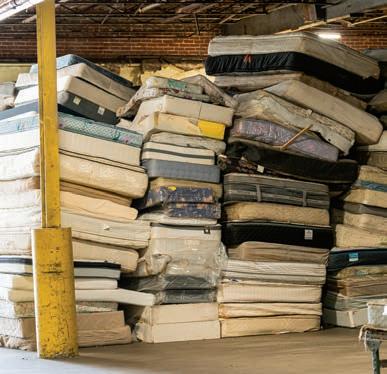
CASELLA RECYCLES THOUSANDS OF MATTRESSES ANNUALLY, a testament not only to its commitment to waste management but of its pursuit of innovative solutions to find ways to reuse products and materials regarded as throwaway only.
We're constantly looking to innovate solutions around needs out there,” says Trevor Mance, senior business development manager with Casella. Using a hub-and-spoke network, Casella has more than 30 tractor trailers strategically placed throughout the Northeast to accept old mattresses. Most mattresses come from residences, hotels, hospitals, or colleges and universities.
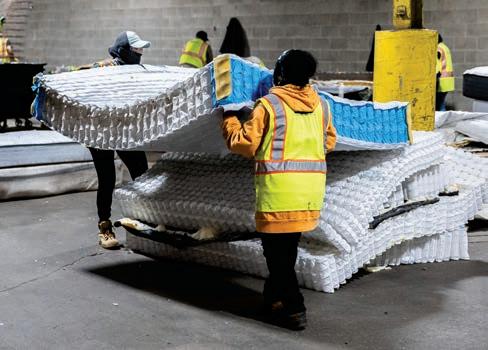
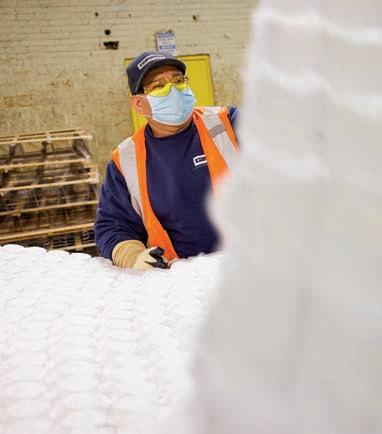
Once full, the trailer is trucked to one of Casella’s processing facilities located in Buffalo, N.Y., and Willimantic, Conn. There, 75% of the materials that make up a unit (a unit is the mattress or box spring) are processed for reuse.
When Mike Crowell arrived in Willimantic a few years ago as market area manager, he says he was only slightly aware of the extent of a mattress's recyclability.
Crowell, who has been in the recycling industry for almost 30 years, was excited by the prospect of entering a new market with Casella's recent acquisition. "I was vaguely aware of mattress recycling, but my entire background was in commercial, industrial and household recycling, so to me mattress recycling was a whole new opportunity."
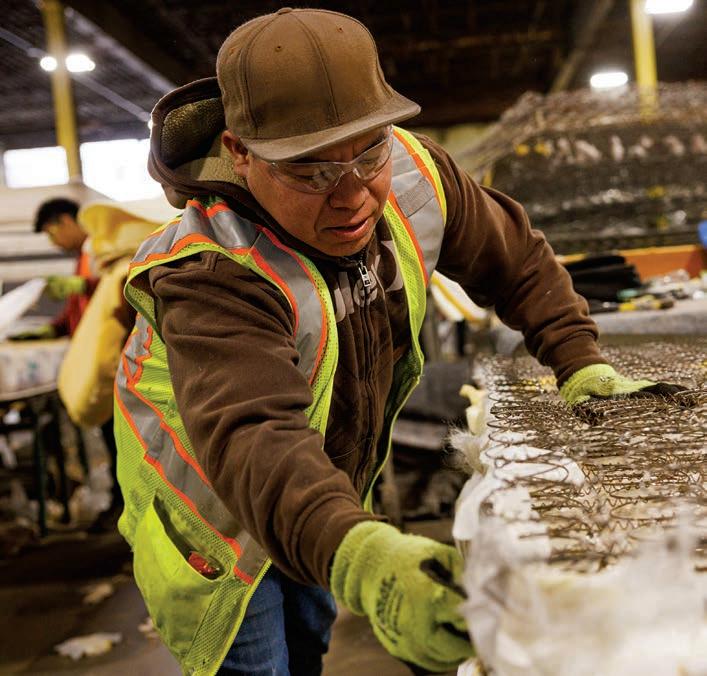
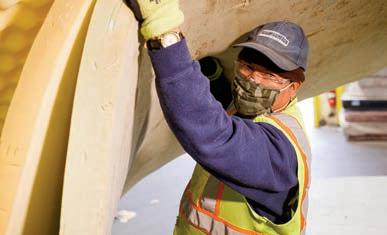
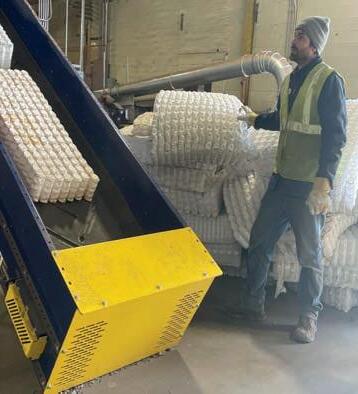
Teams at the processing facilities disassemble each unit to extract and repurpose certain material. For instance, the different kinds of foam padding that come from a mattress are used by one of the world's largest rug manufacturers for carpet padding. Fabrics, wood and
“We are centered on the separating, processing and getting recyclable material back into the market.”
—TREVOR MANCE, SR. BUSINESS DEVELOPMENT MANAGER
metal from the coils are also extracted and reused.
“Yes, you can recycle a mattress,” says Crowell. “It’s not a theory; it's reality.”
Beyond the benefit of providing material for new products, the mattress recycling program benefits the trash haulers, the landfill operators, the landfill itself, and, ultimately, the environment.
“You have constrained landfill capacity. You have operators that can't reach the load weight in transfer stations. You've got equipment operators at landfills with springs wrapped around the axles and driveshafts and stability issues if they're not properly managed in the open face of a landfill,” says Crowell. “And the Northeast is well aware of the landfill space capacity restraint. So we're excited, because by pulling out each one of these mattresses, we're saving a cubic yard of airspace.”
Casella is working with partners in the bedding industry to identify ways and materials that might lead to greater than 75% of material recyclability.
“We have a conference every year, and everybody
gets together — from the manufacturers to the wholesalers to the recyclers — and we talk about how we can get to that zero-waste mark,” says Crowell. “If I had to guess, between all our efforts, I'd say within the next 10 years it's totally doable and likely that every mattress will be able to be recycled 100%.”
As Casella looks for ways to completely recycle mattresses and box springs, it is also looking at other products once thought to be throwaway only.
Unwanted ski boots are just one example of a product they might be able to recycle, according to Mance.
Casella kept a million tons a year of waste out of landfills last year through its recycling efforts, and what is reused as a result can be significant.
“It’s part of that forest that doesn't need to be cut down for paper. It's oil that doesn't need to be pumped into plastic. It's metal that doesn't need to be mined toward metal,” says Mance. “We at Casella are very centered on the separating, processing and getting recyclable material back into the market.” n
SERVING OUR COMMUNITIES
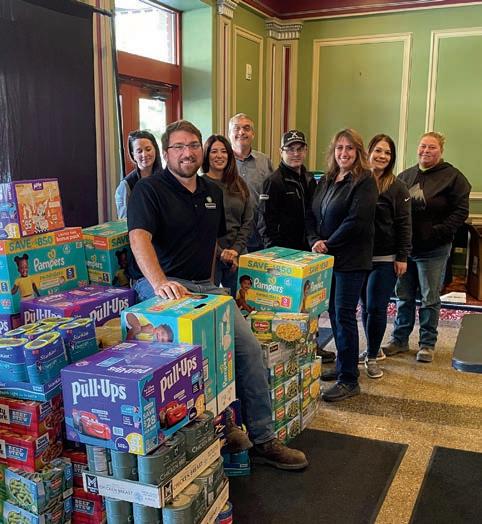
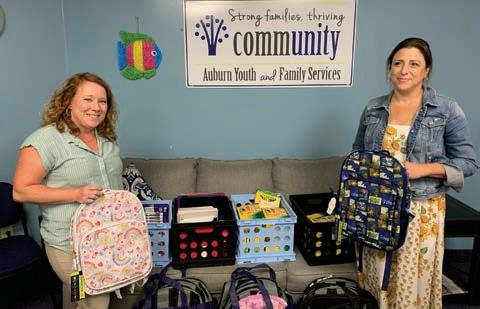
At Casella, we are driven to make a difference by investing in the communities where we live and work through community giving, employee volunteering and educational outreach.
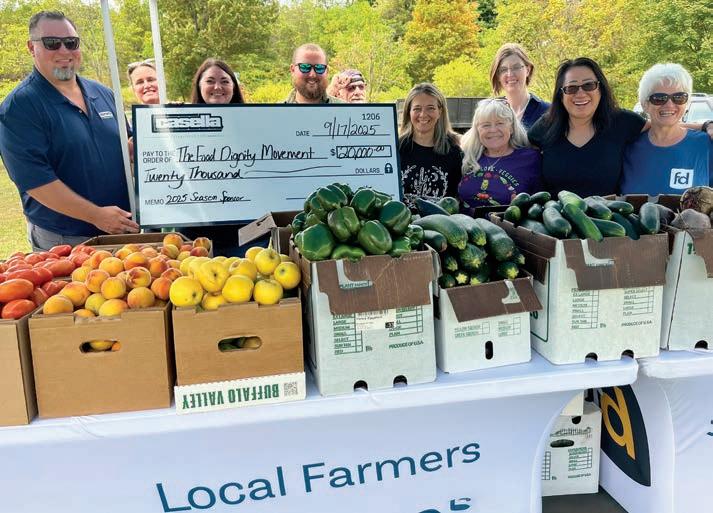
COMMUNITY GIVING
By 2023, we achieved and surpassed our community giving goal, contributing about $2,200,000 in the form of charitable donations, local sponsorships and in-kind services.
In addition to achieving our 2030 goal, we launched The Casella Foundation in 2024 to support qualified charitable organizations demonstrating impact in environmental and natural resource conservation. Beyond this primary focus, we also support organizations advancing neighborhood revitalization, workforce development and disaster relief.
EMPLOYEE VOLUNTEERING
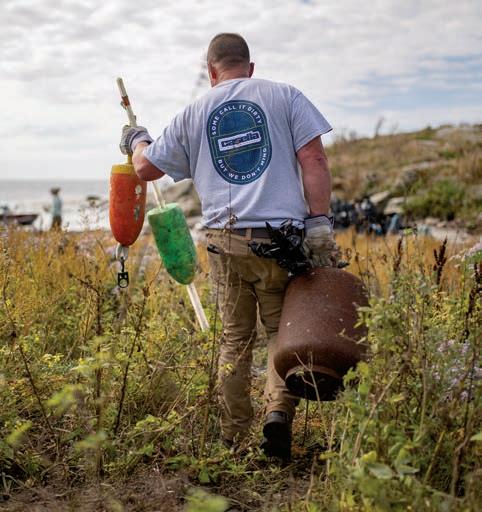
As part of our drive to make a difference, our team members volunteer for disaster relief efforts, food drives, neighborhood cleanups, mentor connections and much more. Having achieved our first community giving goal, we will now focus on building our employee volunteering program, with a new goal to invest 21,000 hours per year of our time and expertise in our communities. As our team grows, we expect to increase this goal.
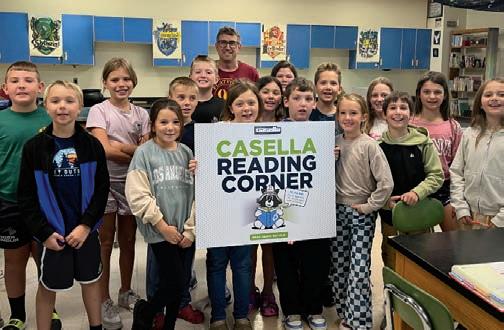
EDUCATIONAL OUTREACH
At Casella, we know that sharing our expertise, in-person and online, across our region helps us to educate the communities we serve. Each year, we share our technical knowledge by participating in community events, visiting local schools, lecturing in university classrooms, offering facility tours, serving on industry panels, meeting with municipal governments, testifying to state-level leaders and more. n
DRIVING HAPPINESS
CASELLA’S COMMITMENT TO SUPER FANS
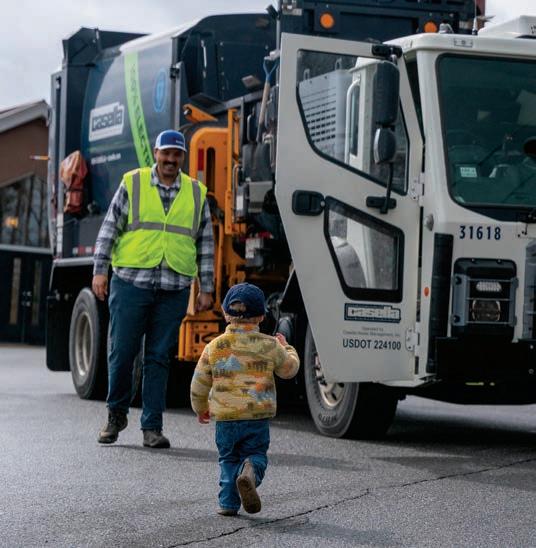
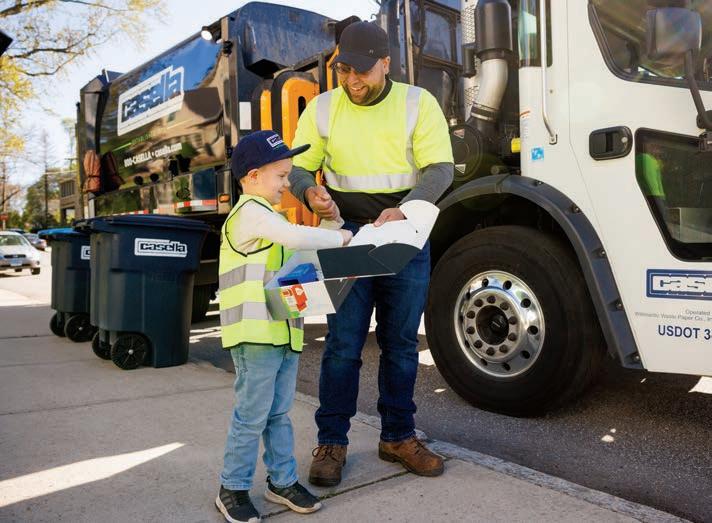
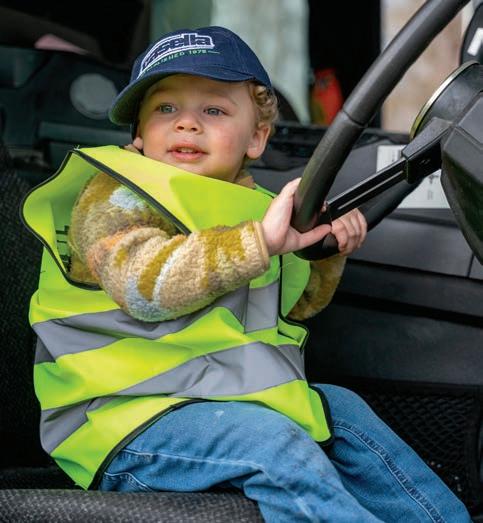
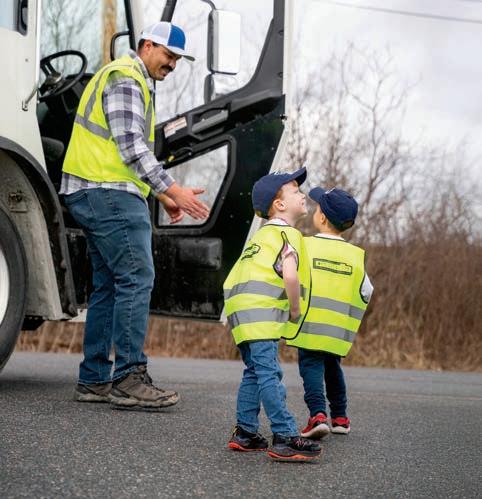
For many children, their local Casella driver provides a weekly dose of excitement and serves as a shining example of hard work and dedication. Since its inception in 2021, the Casella Super Fan Box initiative has taken on a life of its own, spreading joy to over 500 kids throughout our communities.
“I love getting little kids involved with the trucks and seeing their smiling faces,” says driver Paul Riopelle of Salem. “I get to have fun and drive a trash truck every day while serving and engaging with my local community.”
This vibrant care package is bursting with Casella-branded fun. Inside, you'll find a soft, stress-reliever toy waste truck that's ready for play. Children can also dive into creativity with an activity book featuring the Recycling Raccoon. It's the perfect opportunity for them to color and learn with Casella. Plus, we include crayons to get them started right away!
And, of course, every young fan needs the proper gear. A Casella hat and reflective safety vest allow them to immerse themselves in imaginative playtime.
LET’S NOT FORGET OUR FOUR-LEGGED FANS
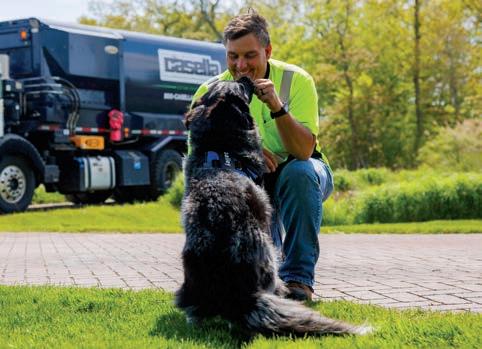
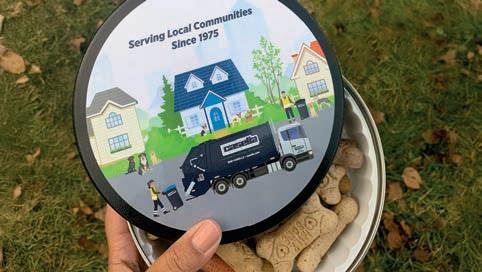
Casella drivers often go the extra mile to brighten their customers' days, including their furry family members. Inspired by daily driver interactions, our Casella dog treat tins have become a cherished token of appreciation along our collection routes.
These initiatives are more than just a fun package — they are a way to build connections, foster community spirit and bring smiles to faces young and old. Whether it's through engaging with enthusiastic kids or delighting our four-legged friends, Casella drivers are making a positive impact every day. So next time you see your local driver, know they're not just collecting waste; they're spreading joy and building community bonds, one Casella Super Fan at a time. n