MICHAEL CHMIEL
Questions and Curiosities
SELECTED WORKS 2024 PORTFOLIO.
How can the regional vernacular inform the design? How can a school play a larger role in its community? How does the form of the school influence its relationship to the community and the landscape? What does mean in a place that can go months without rain? H ow can the educational environment be kept comfortable extreme climatological conditions?
W hat does construction look like in a place with limited resources? What is the relationship between volume and void? H ow can light and form define a hierarchical order?
How can a building commune with its site?
H ow can we reimagine a traditional Chilean courtyard? W hat opportunities can be unearthed when situating the project on its site? H ow can a void subvert expectations of its exterior volume?
H ow does the physical form of an object reflect its essence? How can we design to the human form and scale? W hat can we learn from what once was?
H ow can a Cultural Network begin to restitch a city that was divided half a century ago?
Hello!
My name is Michael, and I am an applicant for the Master of Architecture program.
H ow can the Cultural Center activate adjacent public space? H ow can the Cultural Center foster cultural expression and collaboration? How can the regional vernacular inform the design?
Why architecture?
How can a school play a larger role in its community? How does the form of the school influence its relationship to the community and the landscape? What does mean in a place that can go months without rain? H ow can the educational environment be kept comfortable in extreme climatological conditions? W hat does construction look like in a place with limited resources? W hat is the relationship between volume and void?
When I was eight years old, my family and I were driving through the concrete labyrinth that is JFK Airport in New York City. As we passed through the monotony, my eye was caught by a structure that seemed impossible - Eero Saarien’s TWA Flight Center. How could a building leave me in wonder as to how it stood up, while simultaneously capturing the excitement I felt for the trip I was about to leave for?
H ow can light and form define a hierarchical order? H ow can a building commune with its site? H ow can we reimagine a traditional Chilean courtyard? What opportunities can be unearthed when situating the project on its site?
H ow can a void subvert expectations of its exterior volume?
I did not realize it at the time, but those few minutes of quiet observation would have a profound effect on the course of my life. From that point on, buildings were no longer just buildings. Each one had a voice of its own - something to say.
H ow does the physical form of an object reflect its essence?
H ow can we design to the human form and scale? W hat can we learn from what once was?
How can a Cultural Network begin to restitch a city that was divided half a century ago?
H ow Cultural Center activate adjacent public space?
How did I get here?
H ow can the Cultural Center foster cultural expression and collaboration? How can the regional vernacular inform the design? How can a school play a larger role in its community? How form of the school influence its relationship to the community and the landscape? What does water mean place that can go months without rain?
H ow can the educational environment be kept comfortable in extreme climatological conditions? W hat does construction look like in a place with limited resources? W hat relationship between volume and void?
I began my studies at Suffolk County Community College and soon transferred to Roger Williams University to earn a Bachelor of Science in Architecture. Throughout my academic career, I worked as a CAD Drafter at a company responsible for concrete superstructure for mid to high-rise buildings.
H ow can light and form define a hierarchical order? H ow building commune with its site?
H ow can we reimagine a traditional Chilean courtyard?
W hat opportunities can be unearthed when situating the project on its site? H ow can a void subvert expectations of its exterior volume?
H ow does the physical form of an object reflect its essence? How can we design to the human form and scale?
W hat can we learn from what once was?
H ow can a Cultural Network begin to restitch a city that was divided half a century ago?
I was not satisfied in the highly specialized field of concrete construction. After careful consideration, I took a step back from that career path and dedicated time to participate in a design competition. These experiences have led me to the desire to further my education, enhance the skills I have developed, and continue to challenge myself by pursuing a Master of Architecture.
H ow can the Cultural Center activate adjacent public space?
H ow can the Cultural Center foster cultural expression and collaboration? How can the regional vernacular inform the design?
What are the ideas that define my approach to architecture?
How can a school play a larger role in its community? How does the form of the school influence its relationship to the community and the landscape? What does mean in a place that can go months without rain? H ow can the educational environment be kept comfortable in extreme climatological conditions?
The most important part of design is asking the right questions. Asking these questions allows us to define a cohesive narrative and clearly see each design problem.
W hat does construction look like in a place with limited resources? W hat is the relationship between volume and void?
H ow can light and form define a hierarchical order?
H ow can a building commune with its site? H ow can we reimagine a traditional Chilean courtyard? What opportunities can be unearthed when situating the project on its site?
I am sensitive and respectful to the context, environment, and purpose of each project. I take great care in recognizing and responding to the existing conditions - both natural and urban - rather than imposing arbitrary ideas on them. I understand the responsibility of building in our world, and how architecture can impact people and place.
H ow can a void subvert expectations of its exterior volume?
H ow does the physical form of an object reflect its essence?
H ow can we design to the human form and scale?
W hat can we learn from what once was?
How can a Cultural Network begin to restitch a city that was divided half a century ago?
H ow Cultural Center activate adjacent public space? H ow can the Cultural Center foster cultural expression and collaboration? How can the regional vernacular inform the design?
The following projects are composed of a series of questions, explorations, and curiosities that reflect my ideas on architecture, context, and people.
How can a school play a larger role in its community? How does the form of the school influence relationship to the community and the landscape? What does water mean in a place that can go months without rain? H ow can the educational environment be kept comfortable in extreme climatological conditions?
W hat does construction look like in a place with limited resources? W hat is the relationship between volume and void?
H ow can light and form define a hierarchical order? H ow can a building commune with its site?
H ow can we reimagine a traditional Chilean courtyard? What opportunities can be unearthed situating the project on its site? H ow can a void subvert the expectations of its exterior volume?
How does the physical form of an object reflect its essence? H ow can we design to the human form and W hat can we learn from what once was? H ow can a Cultural Network begin to restitch a city that was divided half a century ago? H ow can the Cultural Center activate adjacent public space?
How does the form of the
does water comfortable in the How Cultural foster regional does water kept construction its opportunities the How can Cultural the How does in extreme What is How can the How Cultural foster regional does water kept construction its opportunities the How can Cultural influence months conditions? volume unearthed when scale? divided the
Restitching the Cultural Fabric
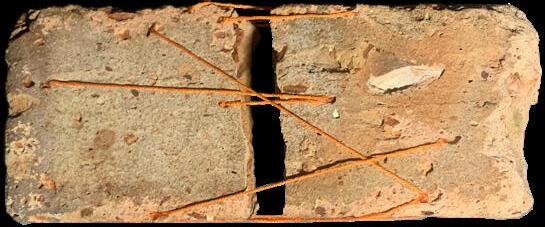
28-39 14-27 04-13 44-47
Underneath the Andes
40-43
L’Ecole de la Collectivite
Contents Waveform Seating Adjacent Explorations
L’ECOLE DE LA COLLECTIVITE
PRIMARY SCHOOL
Location: Valikounda, Senegal
Type: Competition
Year: 2023
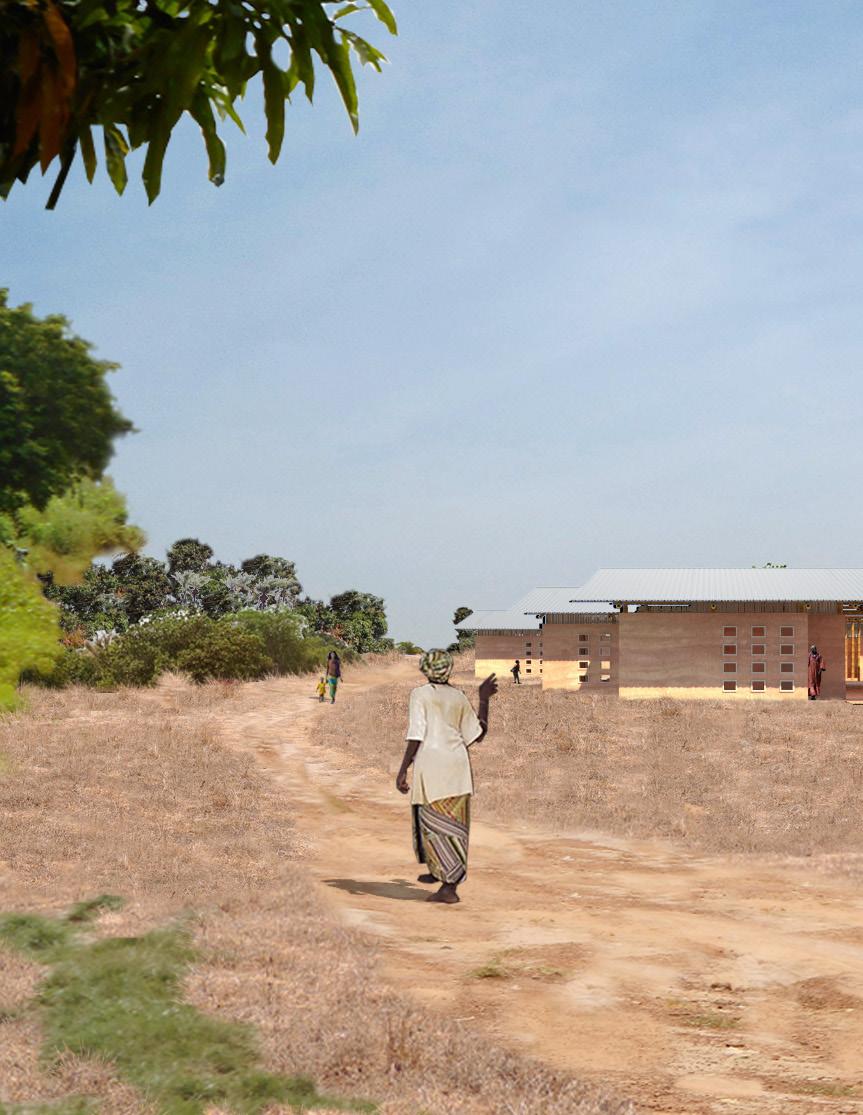
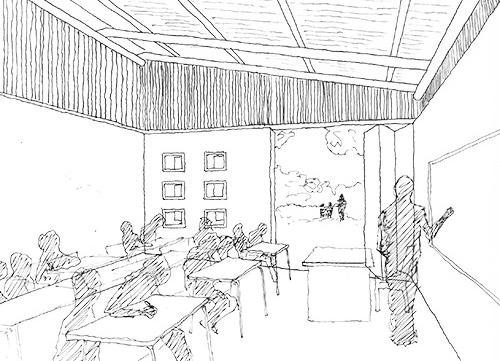
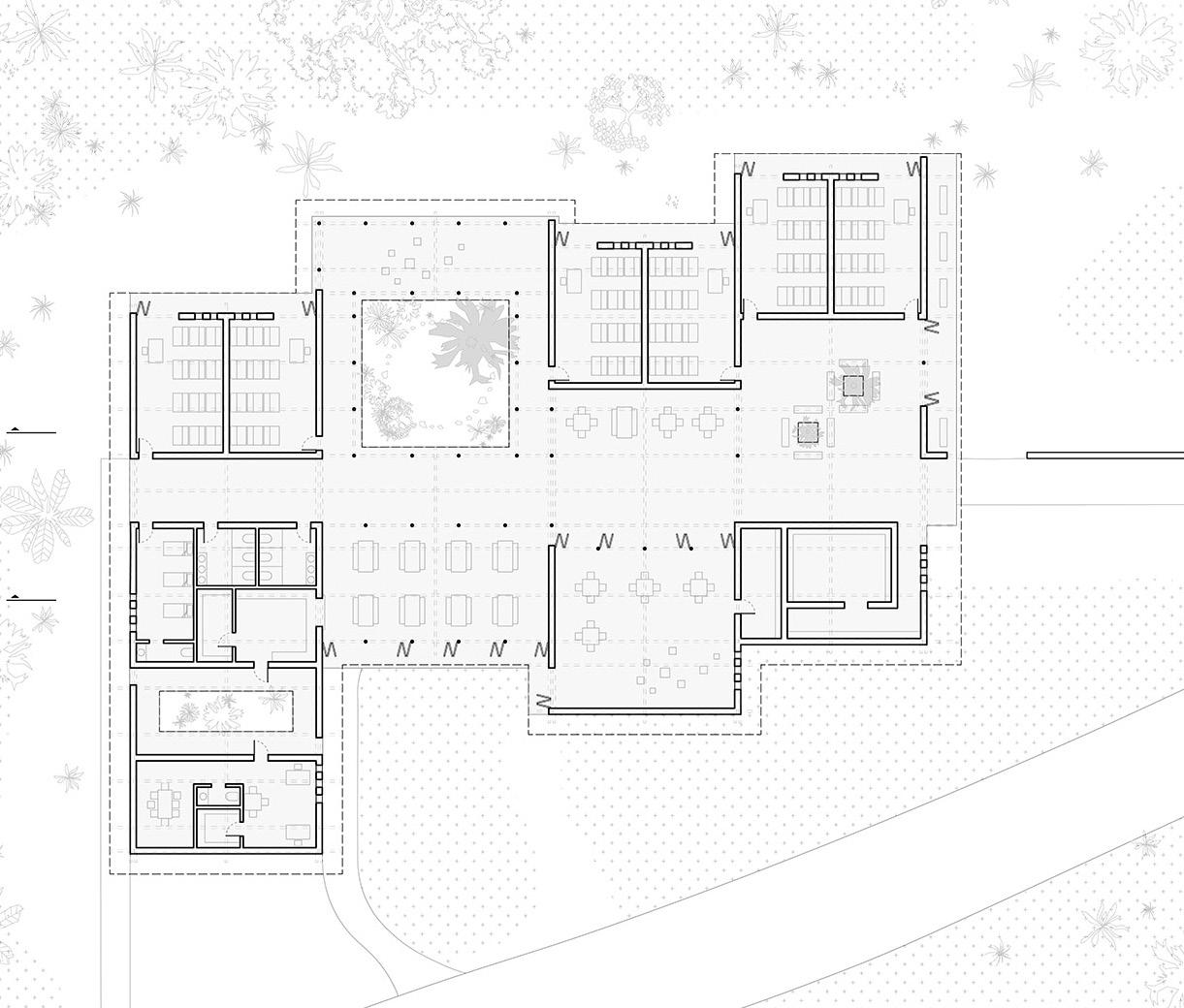
L’Ecole de Collectivite, or “The Community School” seeks to create a model pedagogical environment by establishing a vibrant network of spaces within the school and fostering a relationship with the community beyond. By arranging simple forms derived from the vernacular, the school becomes a lively place of educational and social interaction.
In southern Senegal, the public sphere and private sphere are not independent. When class is in session the school is self-contained with a variety of enriching social and educational spaces. When class is not in session, the project becomes an extension of the village. Spaces such as the library and multi-use space become available for community use and the canteen and courtyard become an extension of the public space itself.
05
How can the regional vernacular inform the design?

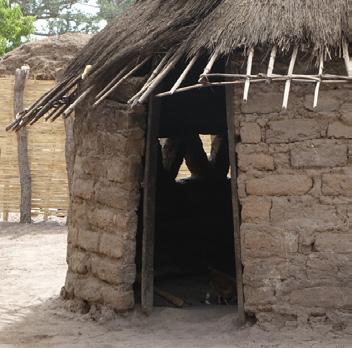
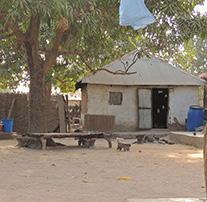
The vernacular architecture of rural southern Senegal is characterized by the use of materials that are readily available and easily assembled by unskilled laborers. The architecture is a reflection of the earth, the climate, and the people. Schools are built in an impermanent fashion, and can be destroyed during the rainy season.
The line between public and private space is blurred - even the most intimate of spaces are part of the community sphere.

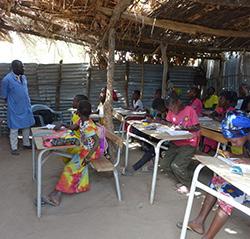
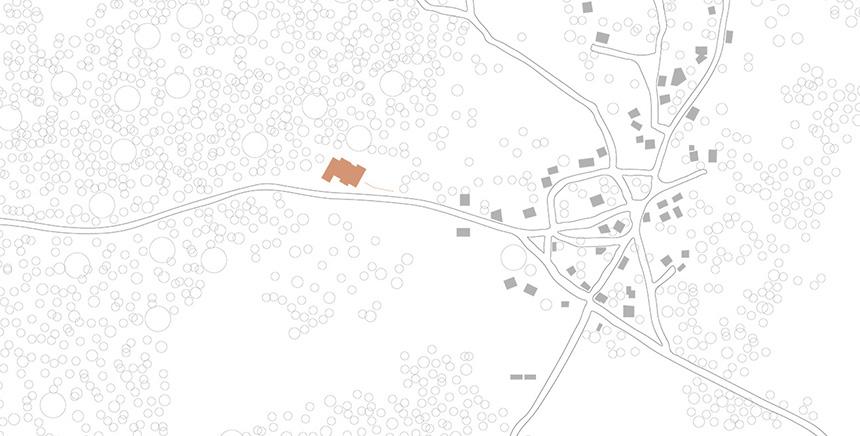
L’Ecole de la Collectivite uses an arrangement of simple forms that relate to the region’s existing vernacular to create a community within, and to establish an interface with the village beyond. The school becomes part of the community and the community becomes part of the school.
Vernacular Architecture of Southern Senegal
Site Plan, Valikounda Senegal
06
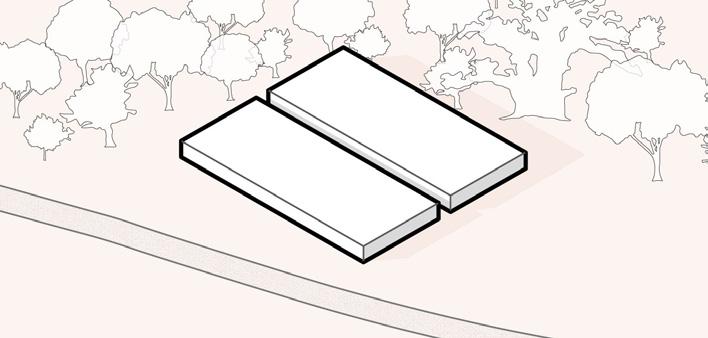
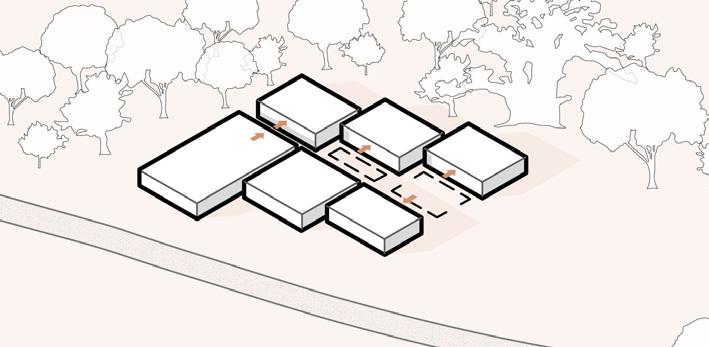
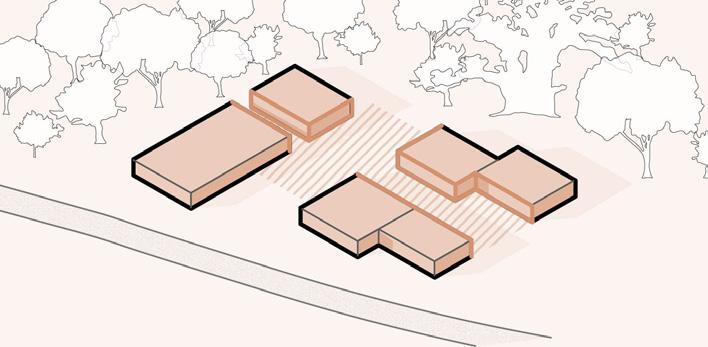
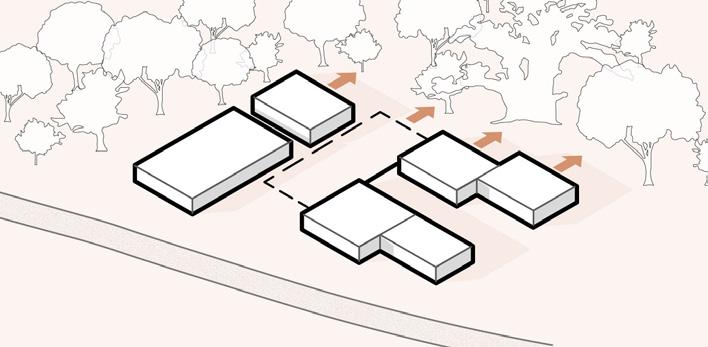
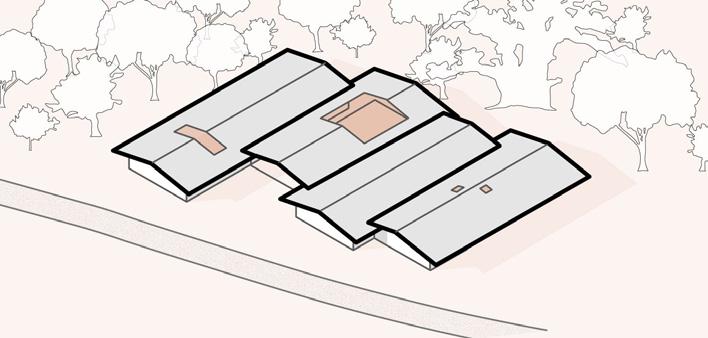
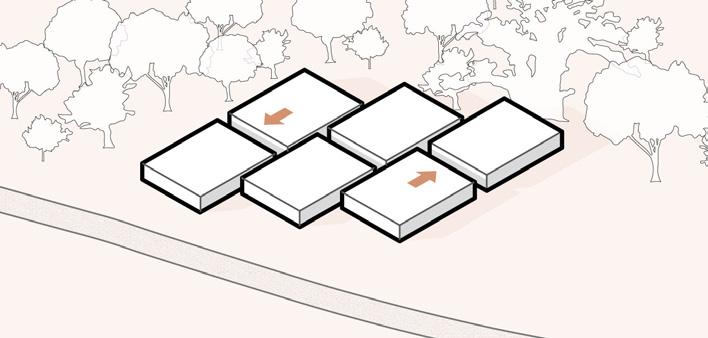
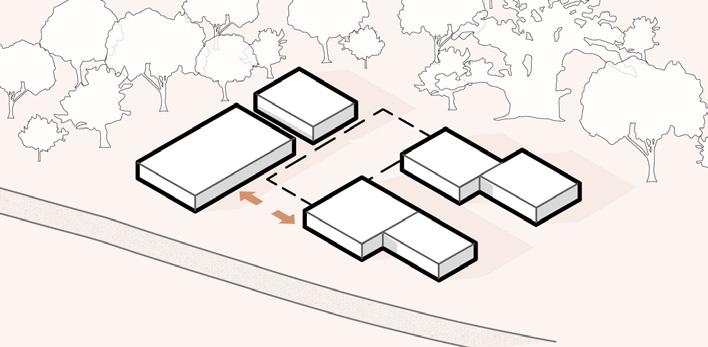
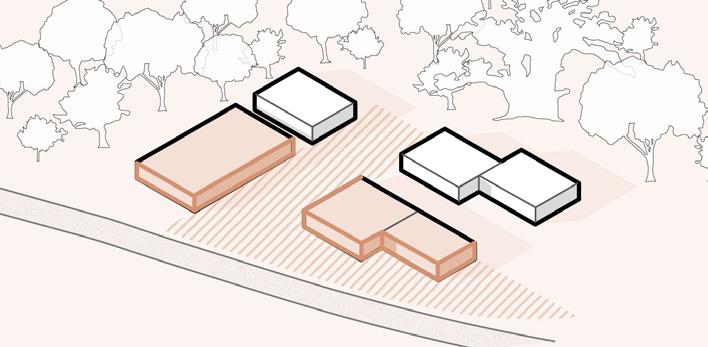
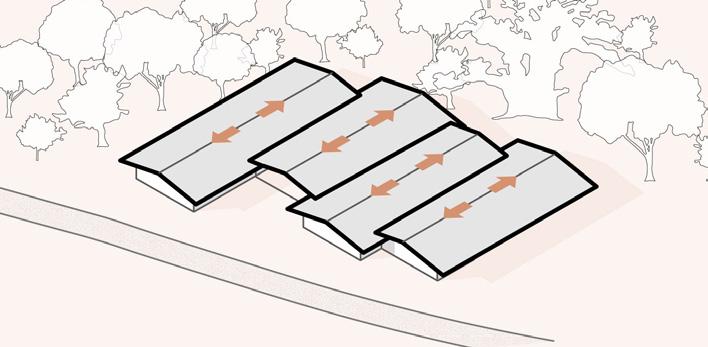
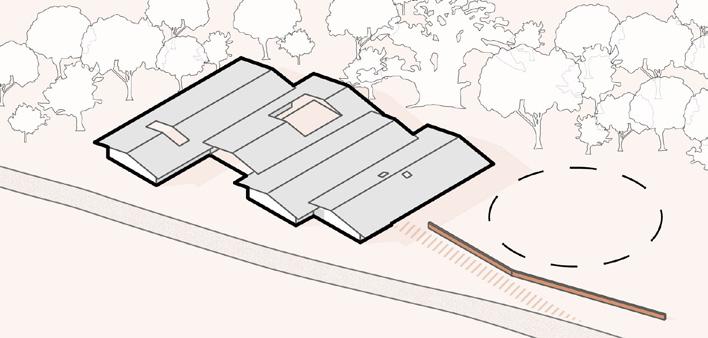 1. Volumes
2.
Shear
3. Scale to Reveal Negative Space
4. Divide to Create Gathering Space
5. School Space
6. Public Space
7. Relationship to Landscape
8. Directional Canopies
9. Roof Openings
07
10. Extend + Create Schoolyard
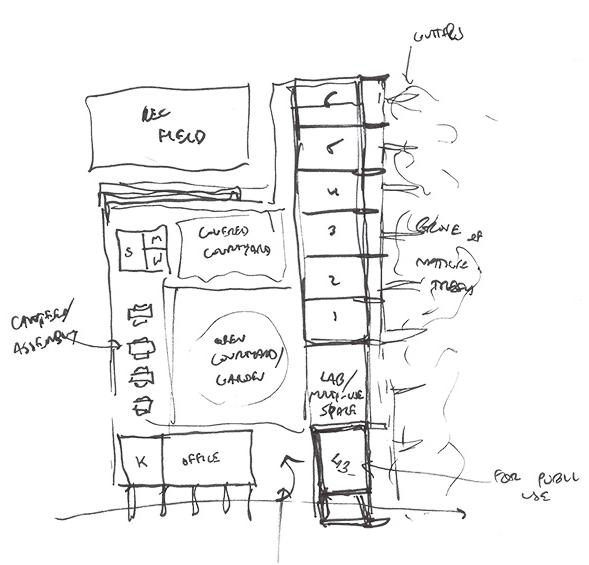
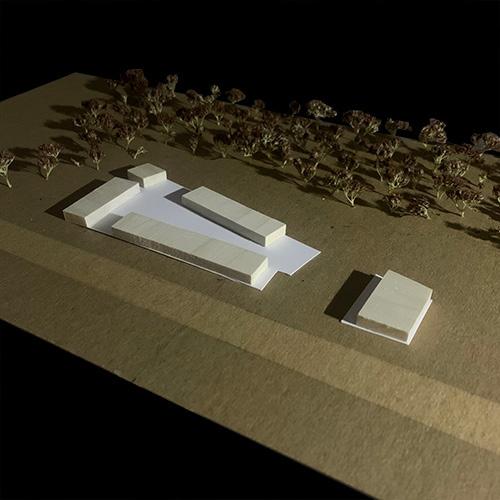
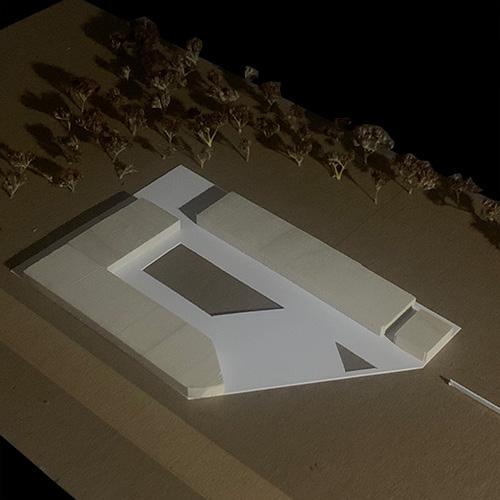
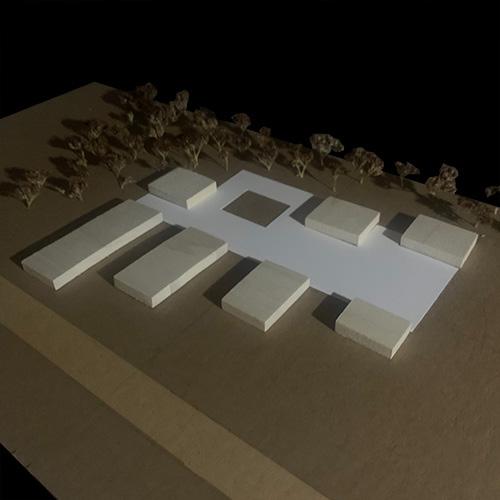
How can a school play a larger role in its community?
08
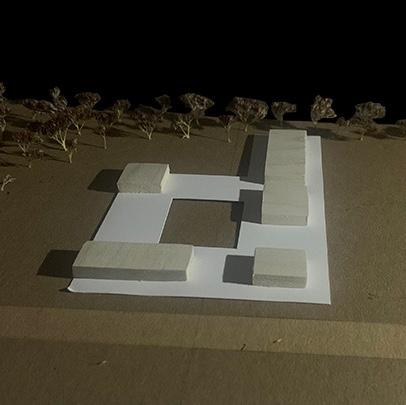
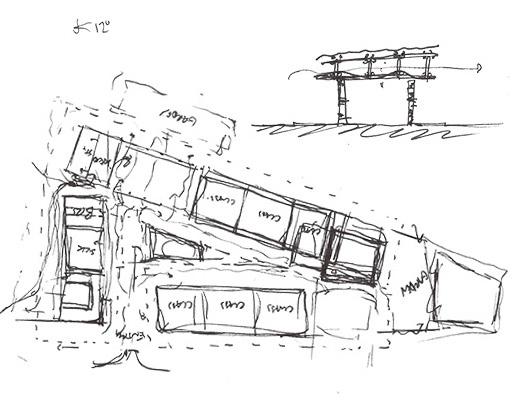
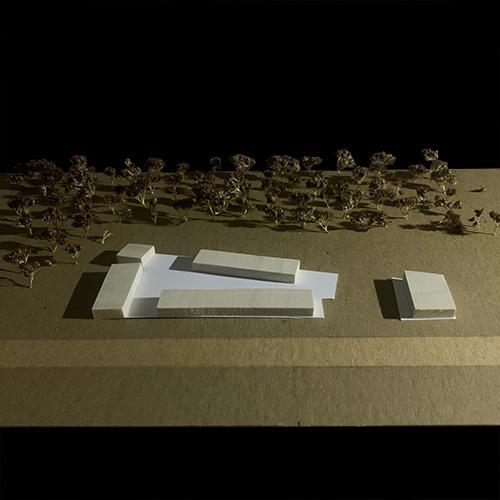
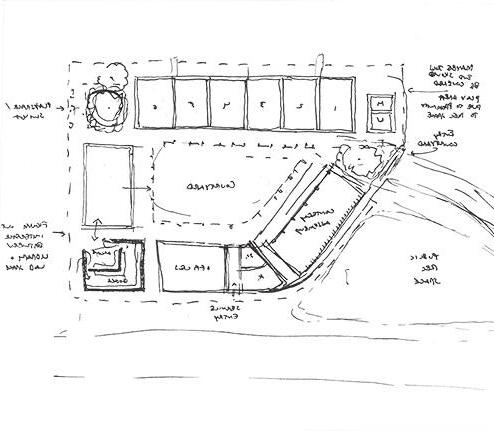
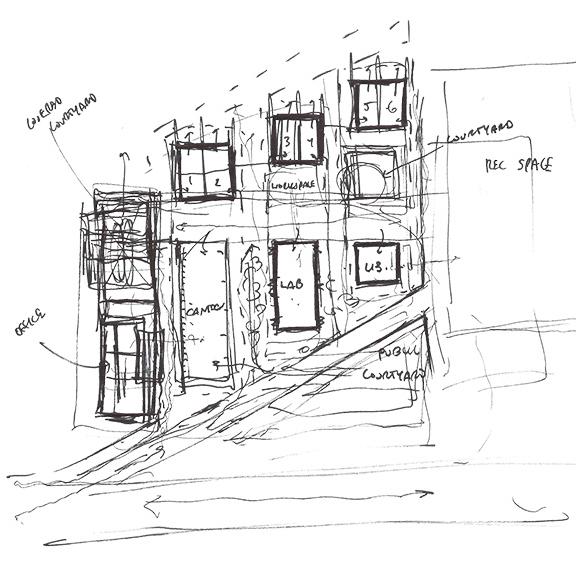
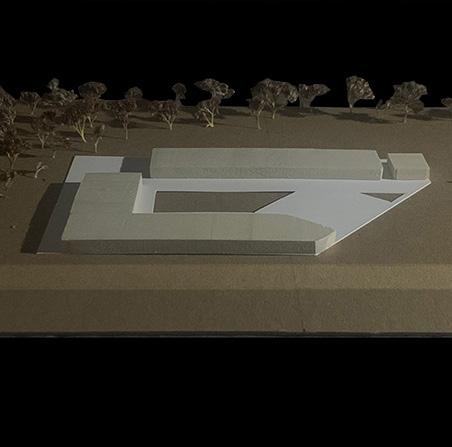
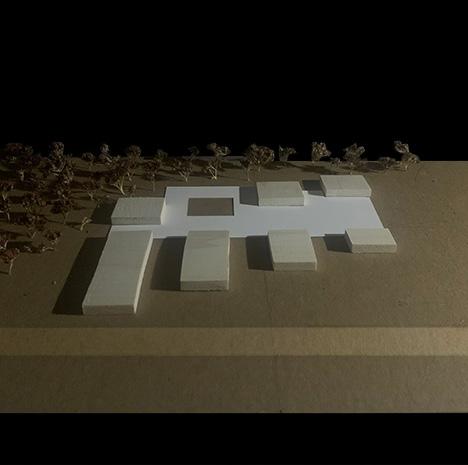
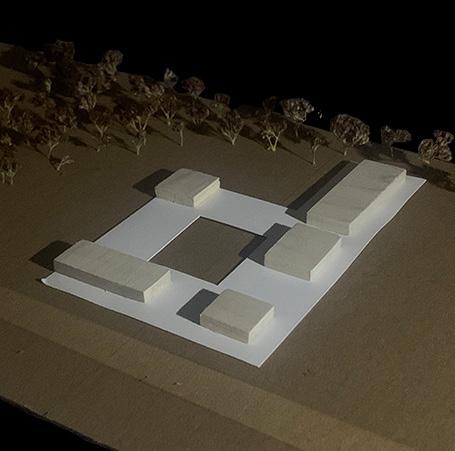
Iterative Studies: Hand Sketches, Wood Models (1:400)
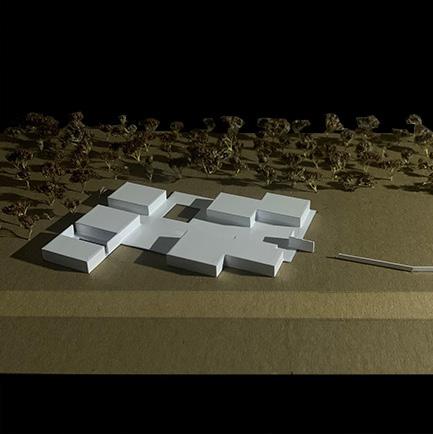
How does the form of the school influence its relationship to the community and the landscape?
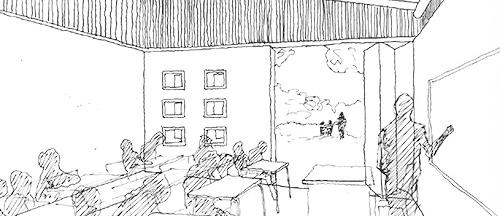
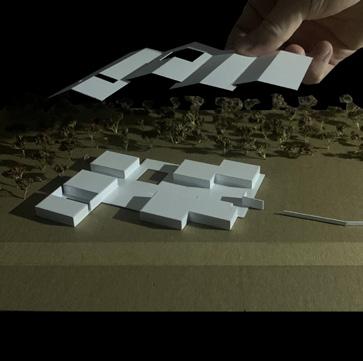
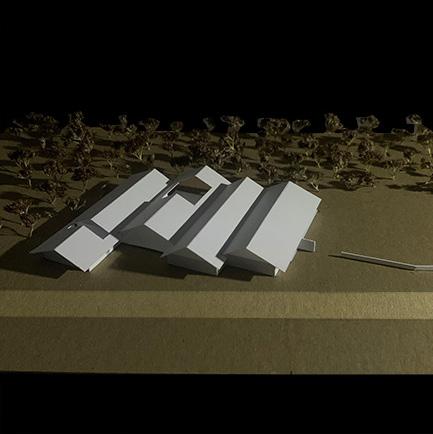
A variety of iterations were created, each exploring a different variation of the relationship between school space and public space. The final iteration uses distinct bars of programming to reach out towards the road.
09
Structure Model (1:50)
Final Massing Study: 3D Print (1:400)



A B Floor Plan Section A-A Section B-B 10 B A
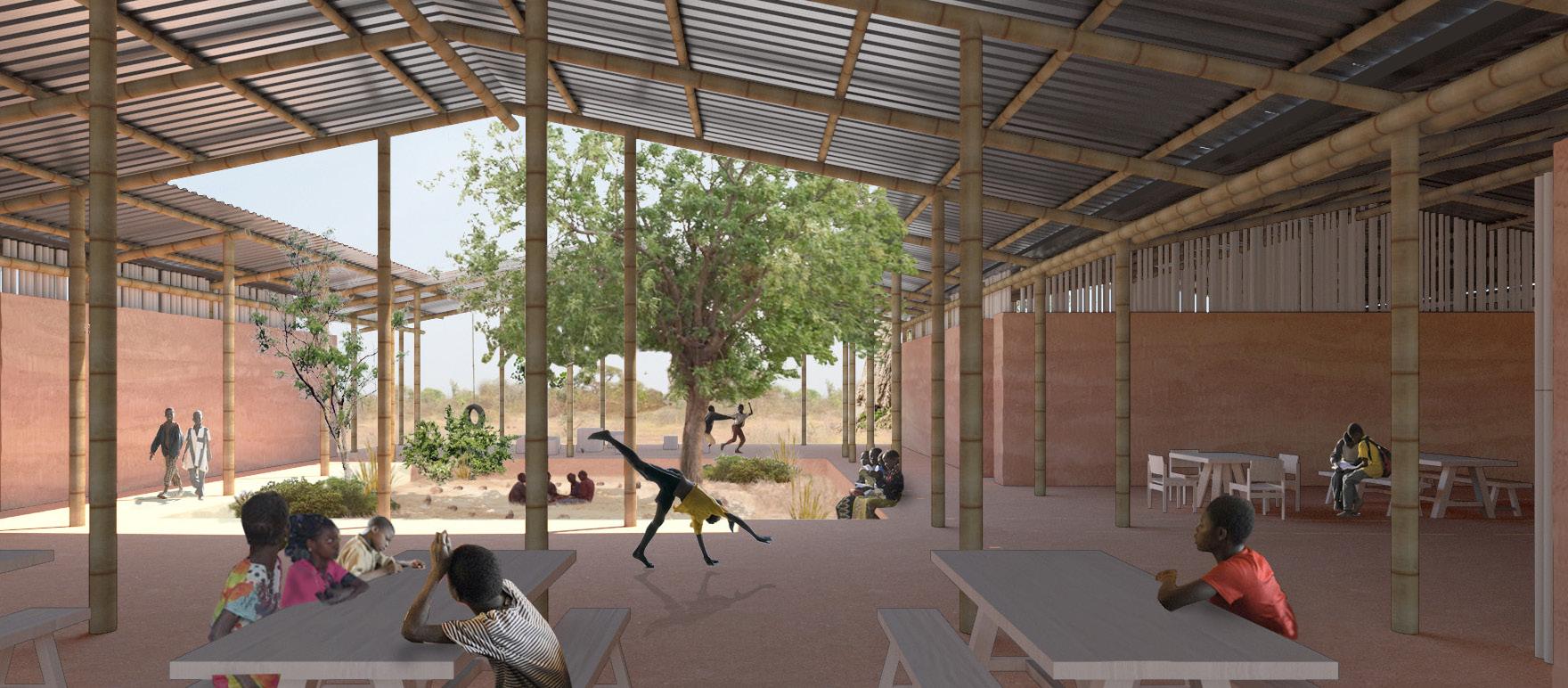
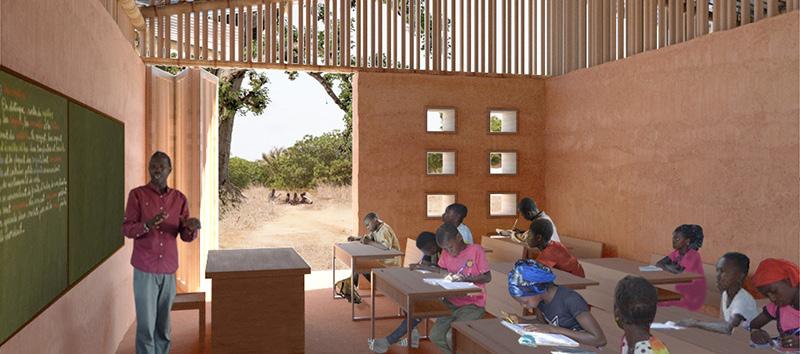
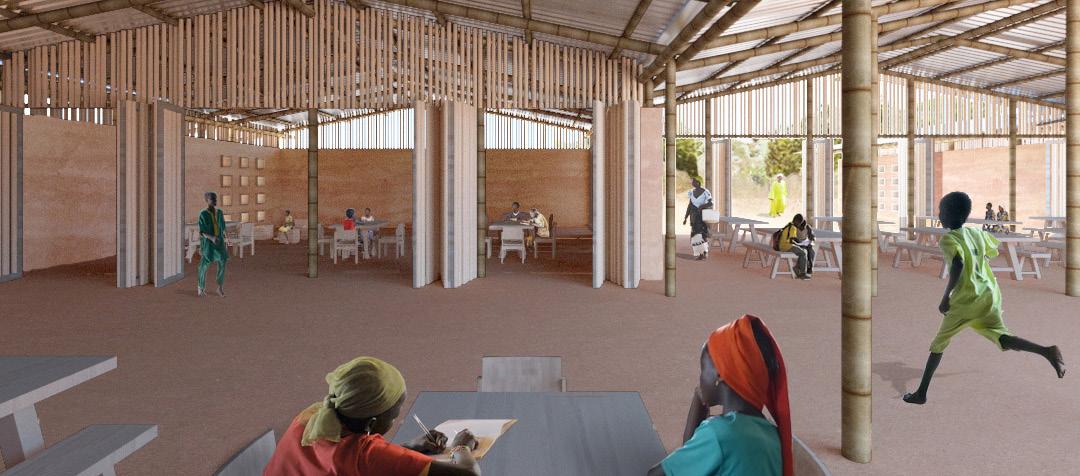 Interior Render
Classroom Render
Interior Render
Classroom Render
11
Interior + Courtyard Render
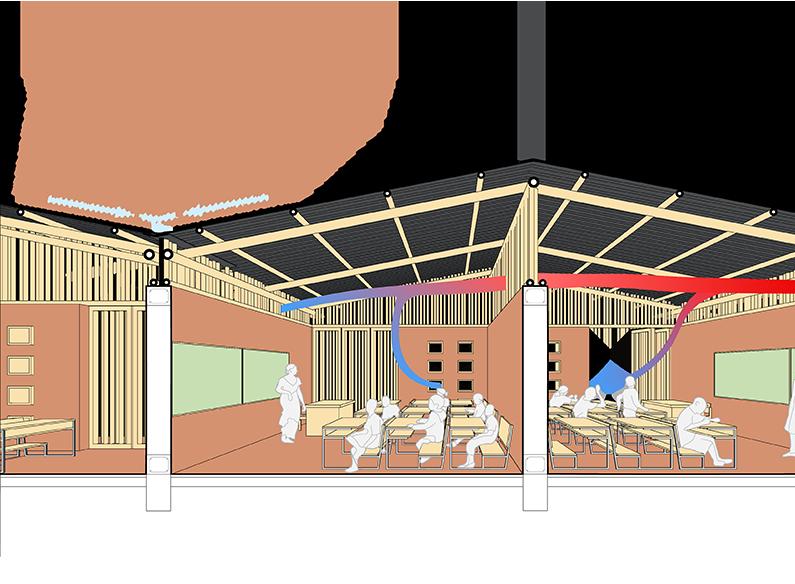
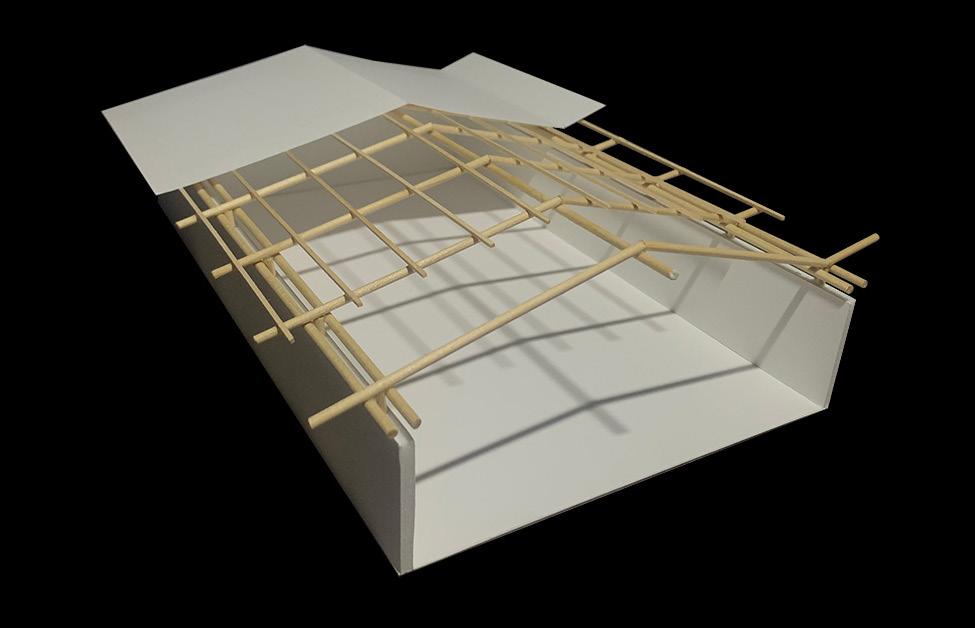
In a place of temporary and seasonal structures, the construction of L’Ecole de la Collectivite establishes an attitude of stability and persistence. The educational environment is kept comfortable through proper ventilation and protection from the sun, while rainwater can be collected and repurposed.
vulgaris ridge beam 20cm / 8”
Corrugated sheet metal roofing
Bamboo vulgaris batten 15cm / 6”
Bamboo vulgaris rafter 20cm / 8”
Bamboo vulgaris beams 20cm / 8”
Wild bamboo screen 5-10cm / 2-4”
Pigmented reinforced concrete ring beam
40cm x 30cm / 16” x 12”
Laterite rammed earth wall
40 cm / 16” wide
Compacted gravel footing
40cm x 50cm / 16” x 20”
Polished clay floor finish on compacted gravel
Bamboo
a. b. c. d. e. f. g. h. j. k. a. b. c. d. e. f. g. h. g. j. k. 12
How can the educational environment be kept comfortable in extreme climatological conditions?
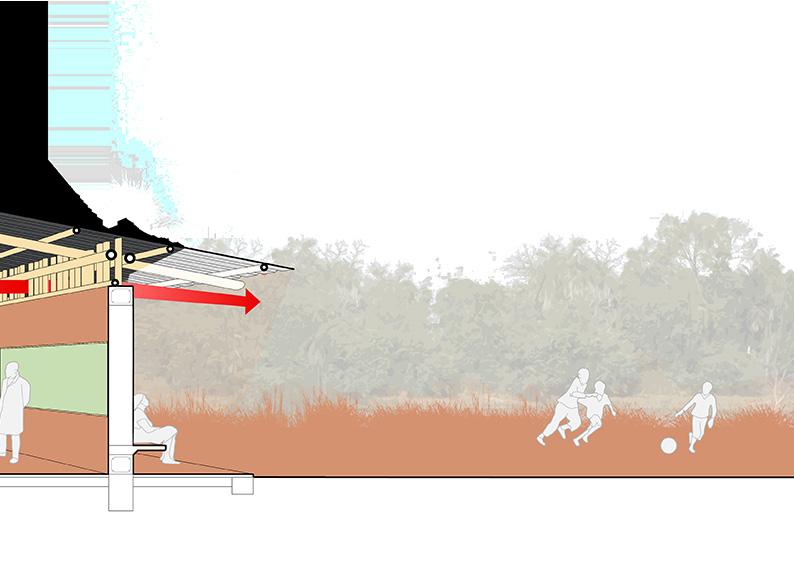
What does construction look like in a place with limited resources?
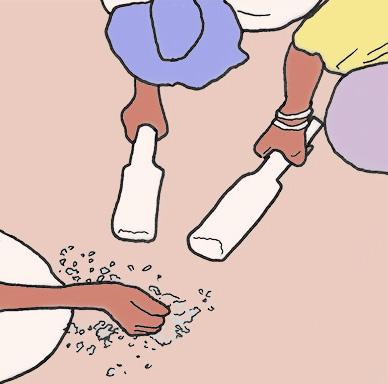
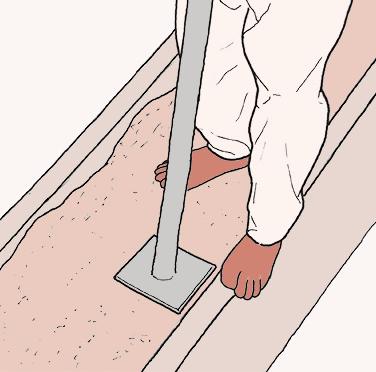
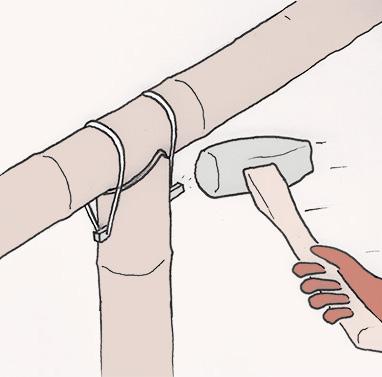
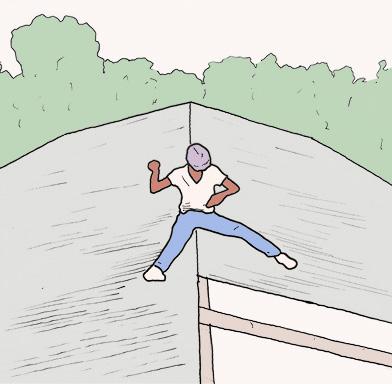
The construction process of L’Ecole de Collectivite is intended to be a community centered and driven project, with a focus on materials that are easily assembled and readily available, and construction techniques that do not require skilled labor or heavy machinery. Processes such as (A) polishing the clay floors, (B) constructing the rammed earth walls, (C) building the bamboo structure, and (D) attaching the sheet metal roofing provide opportunities for members of the community to get involved and use or gain a variety of skills.
13
B.
D.
A.
C.
UNDERNEATH THE ANDES
GATHERING SPACE IN THE MOUNTAINS
Location: Santiago, Chile
Type: Academic Year: 2022
Instructor: Roberto Viola-Ochoa Honors: SASH Award Recipient
This project does not have a specific program. Understanding program as the most ephemeral quality of architecture allowed us to focus on other aspects of design that sometimes get lost behind bubble diagrams. We were given a plan of an already-built architectural work without any supplemental information, a site in Santiago, Chile, and no program other than “public gathering space”.
Underneath the Andes explores how a project relates to its environment, site context, and local vernacular architecture. This studio also explores how to create interesting space even with a lack of program and a predetermined plan. By focusing on these questions, this project is both spatially rich and grounded in its place at the base of the quiet and powerful Andes Mountains.
15
Analyzing the Given Plan
Church of St. Anna • Rudolf Schwartz • Duren, Germany 1956
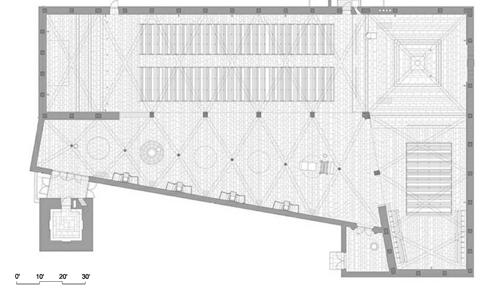
Original Plan
Hierarchy
Spatial Order
Geometric Analysis + Reconstructed Plan
arch313/arch413
16
What is the relationship between volume and void?
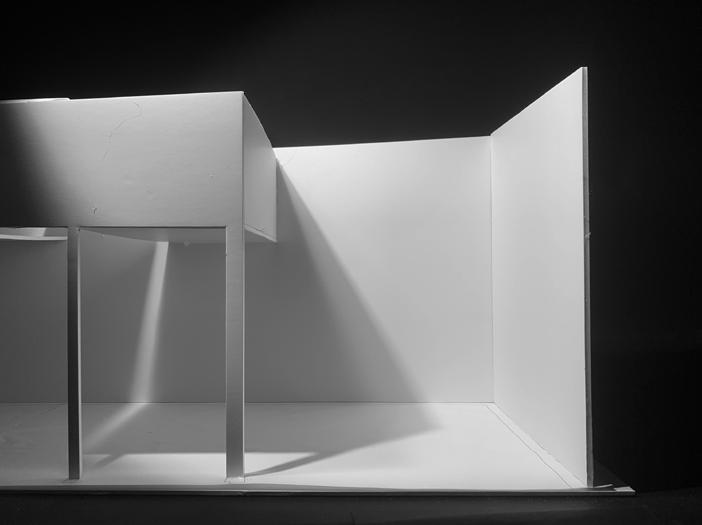
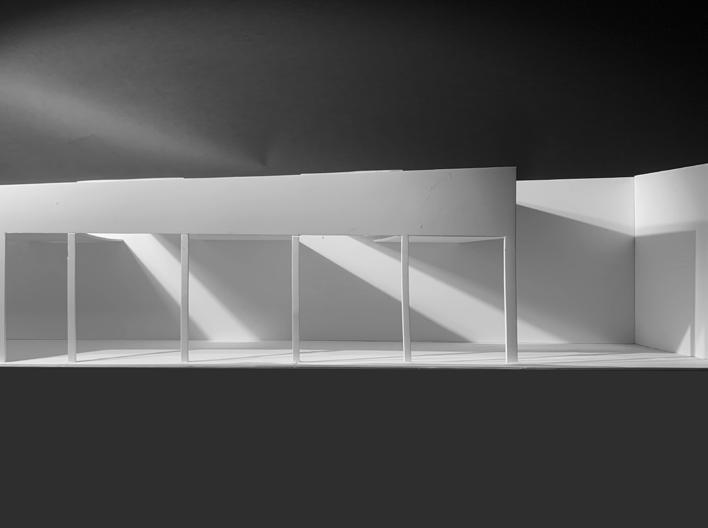
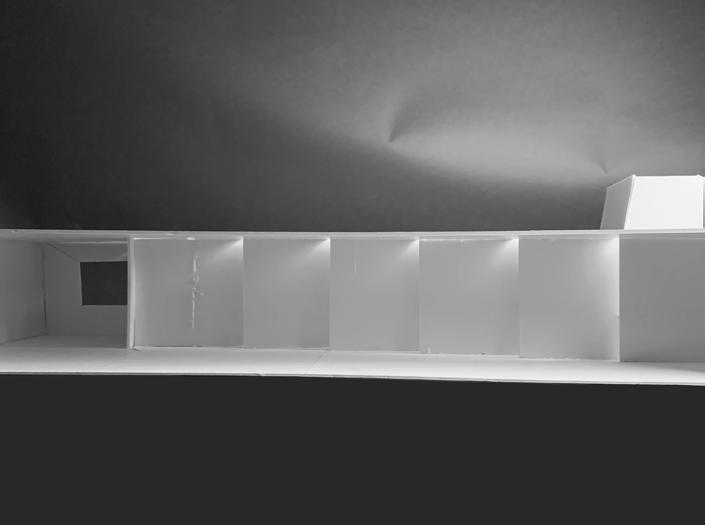
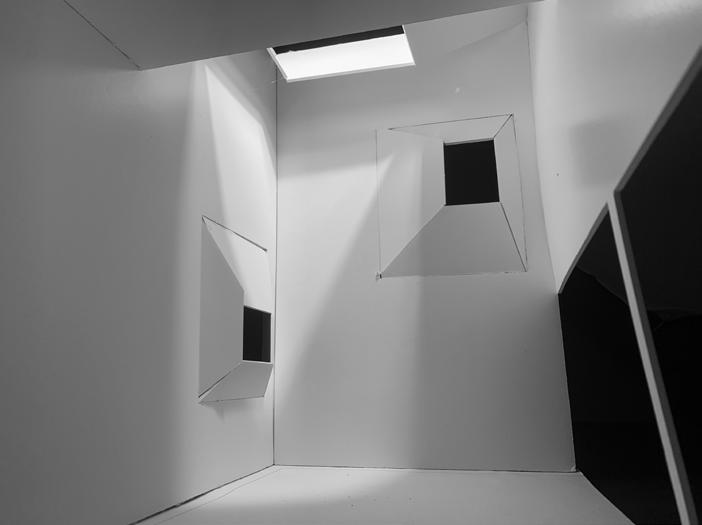
How can light and form define a hierarchical order?
17
Formal Studies
Study Models 1/2” = 1’-0”
How can a building commune with its site?
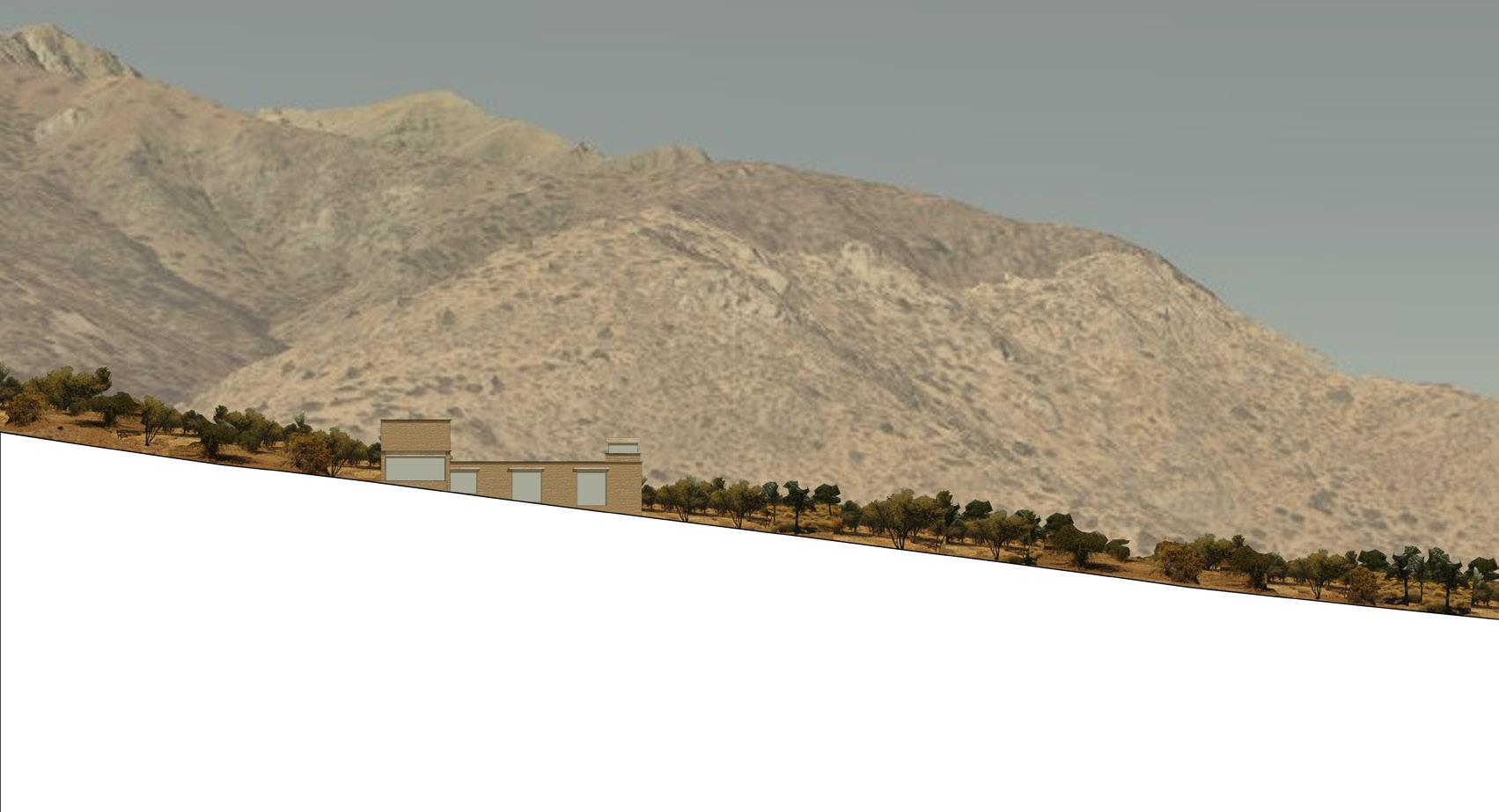
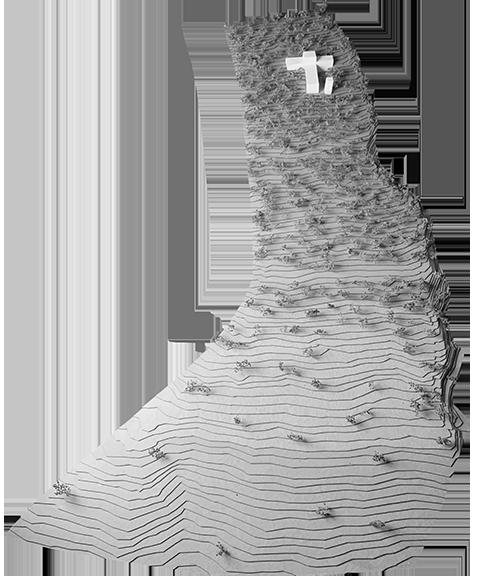
The proximity to the city, size, and natural state of the site provides an opportunity for a retreat within the natural environment of the Andes.
By placing the project deep within its site, it can be fully enveloped within nature.
16 Full Site Model 1/16”= 1’-0”
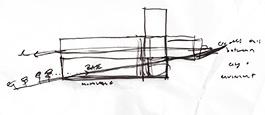
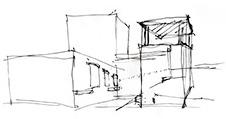
Process Sketches
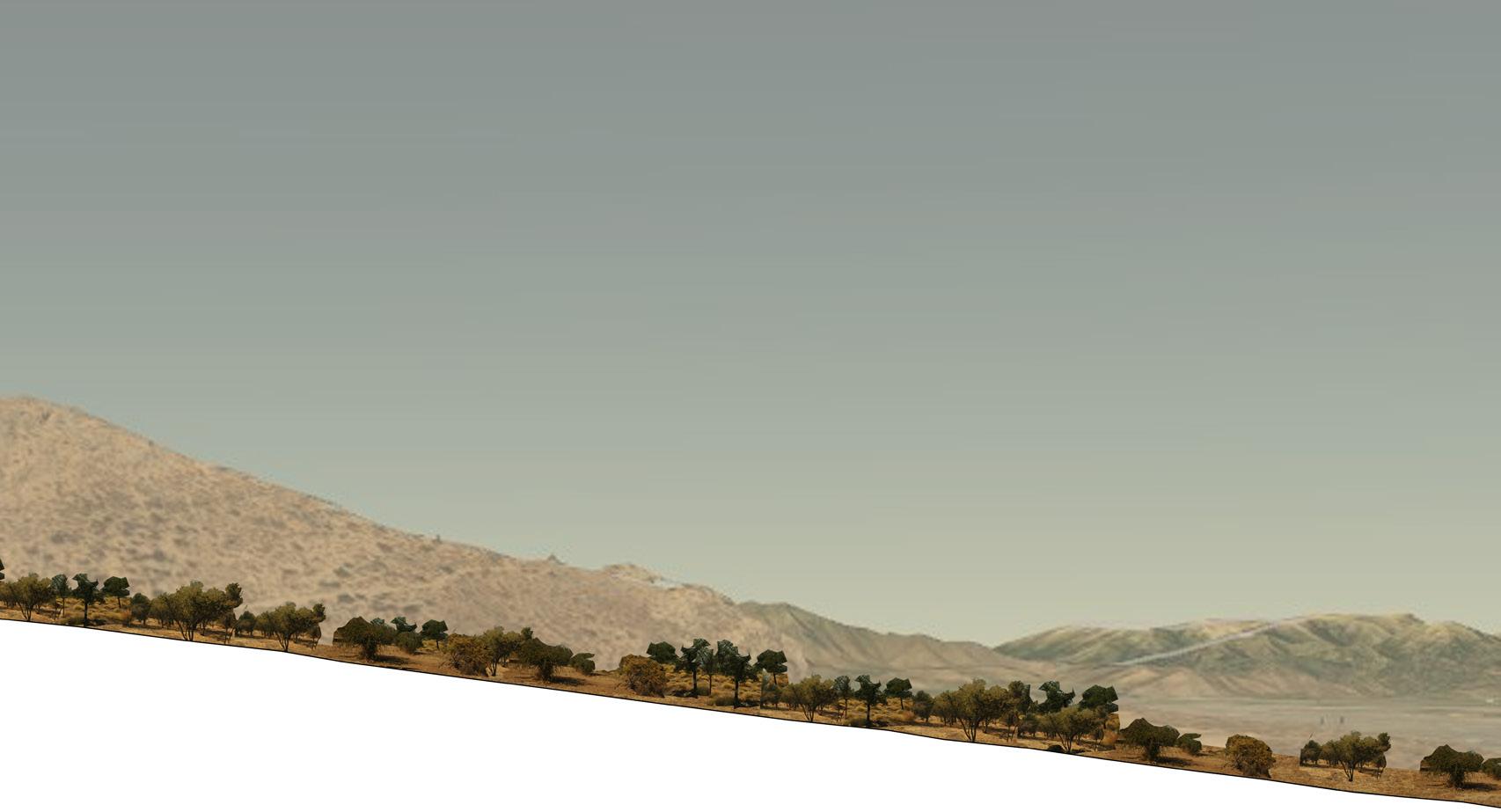
The site is natural and characterized by a lack of human intervention, in contrast to the city below. Santiago is an unnaturally green city, evidence of a wasteful landscape order being imposed without respect to the existing environment.
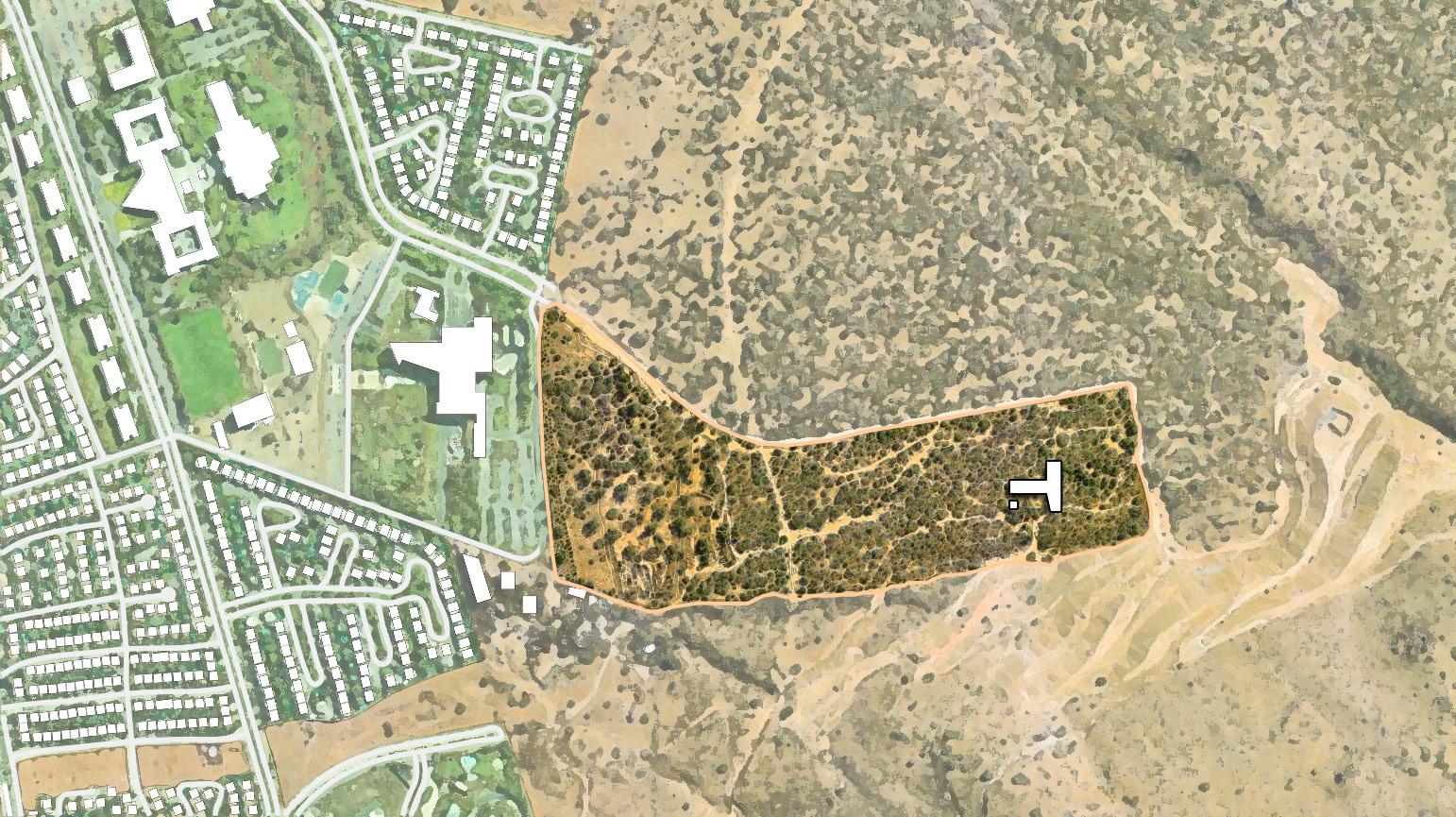
19
Site Plan
Full Site Section with North Elevation
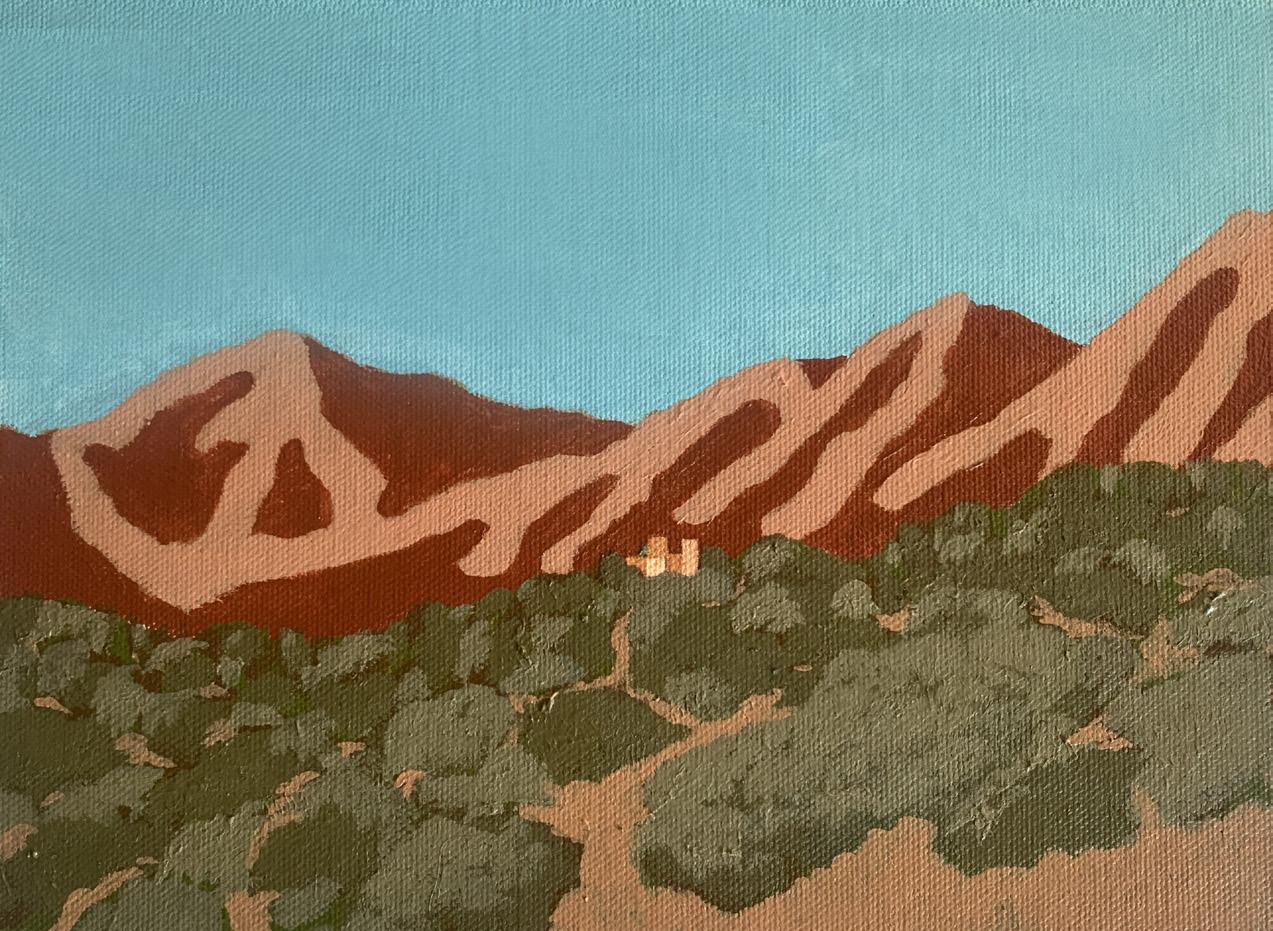
The structure appears small from a distance, but upon approach the true scale of the project - and the vastness of the Andes beyond - become fully apparent.
Using materials excavated directly from the site in the floor plate gives the impression that occupants can walk directly out into the landscape.
20
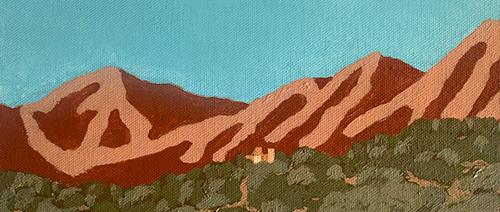
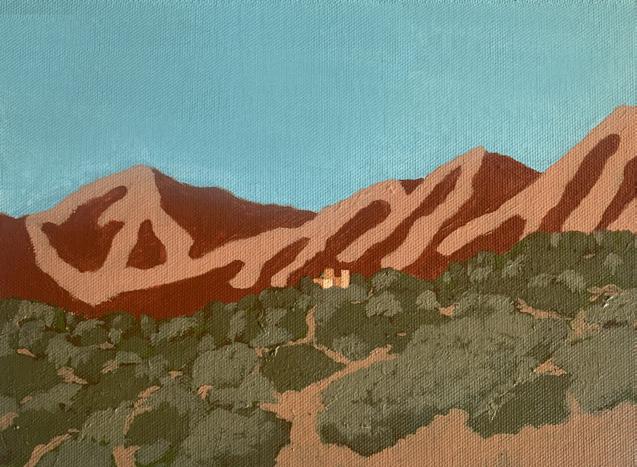
Acrylic Painting

21
Acrylic Painting


Lower Level Plan 22
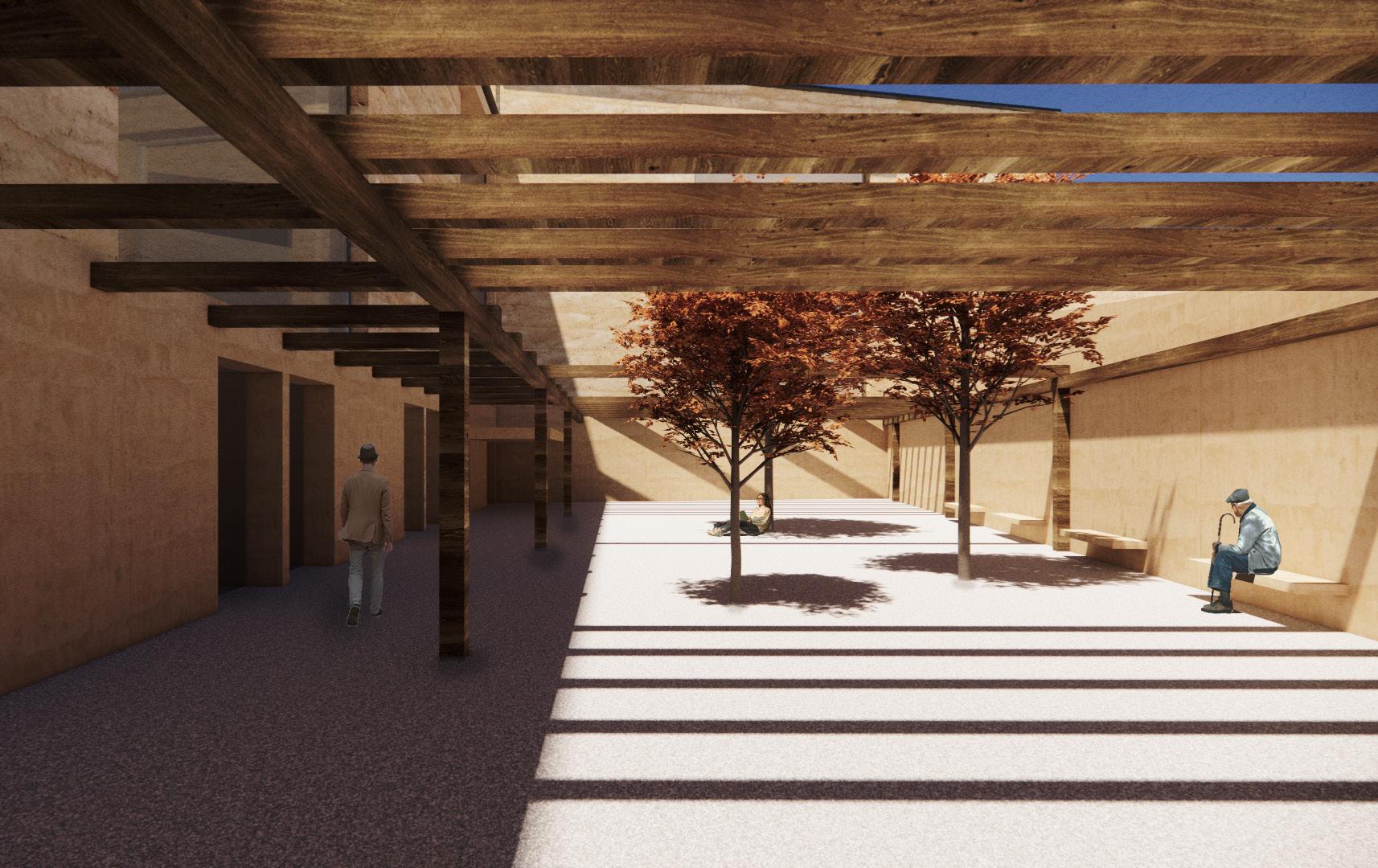
How can we reimagine a traditional Chilean courtyard?
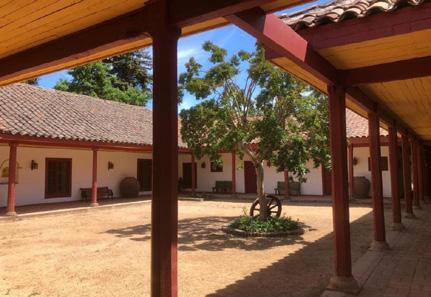
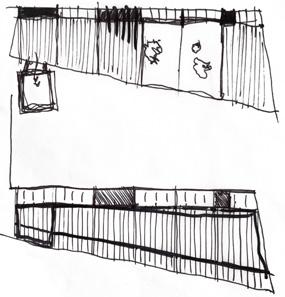
The lower level reimagines the aisle as a courtyard. Similar to what is seen in Chilean vernacular architecture, this courtyard is used as both its own space and circulation between interior spaces. The courtyard is high thermal mass and permeable, responding to the warm and sometimes wet climate of the region.
23
Courtyard Render
Courtyard Sketches
Traditional Chilean Courtyard
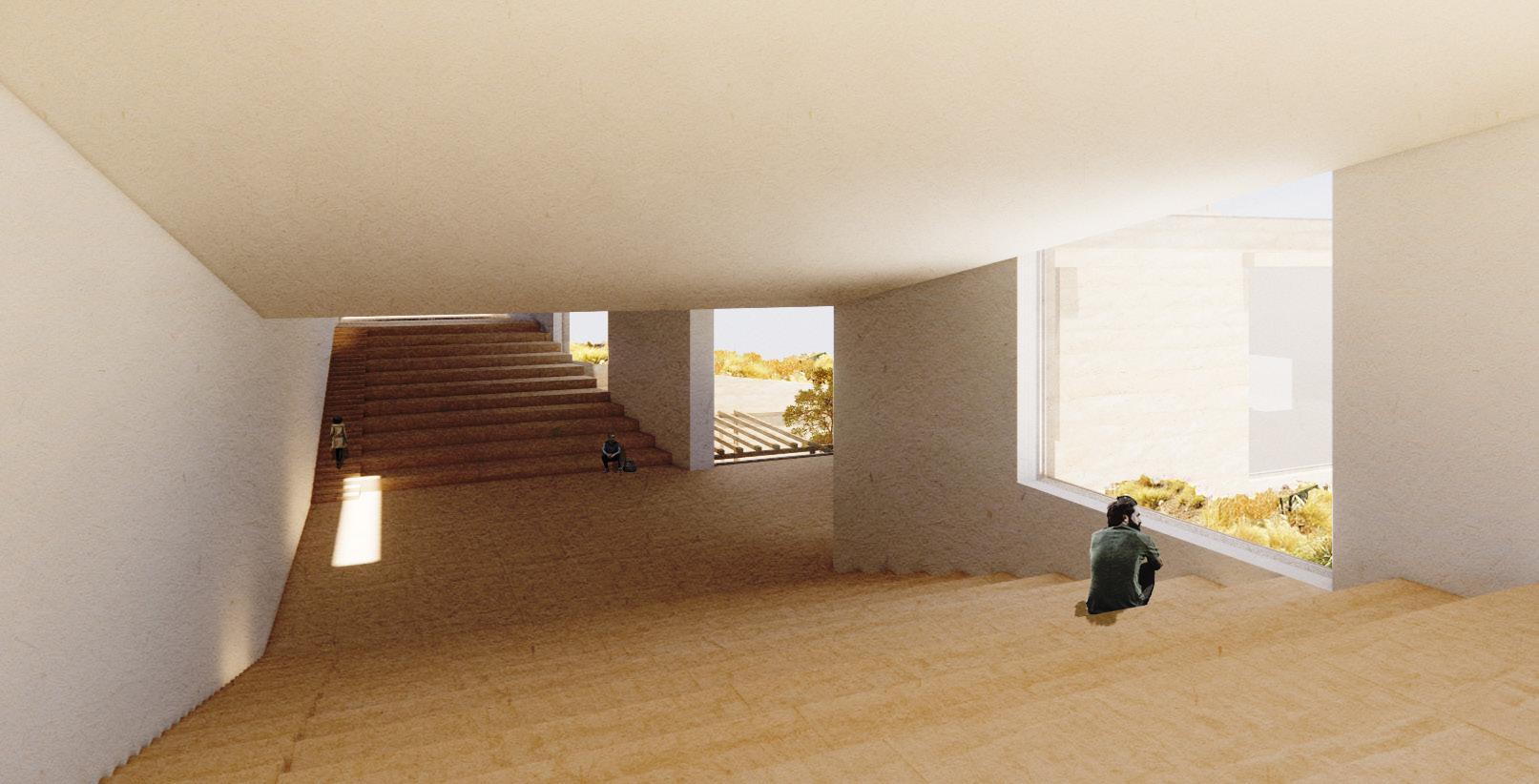
What opportunities can be unearthed when situating the project on its site?
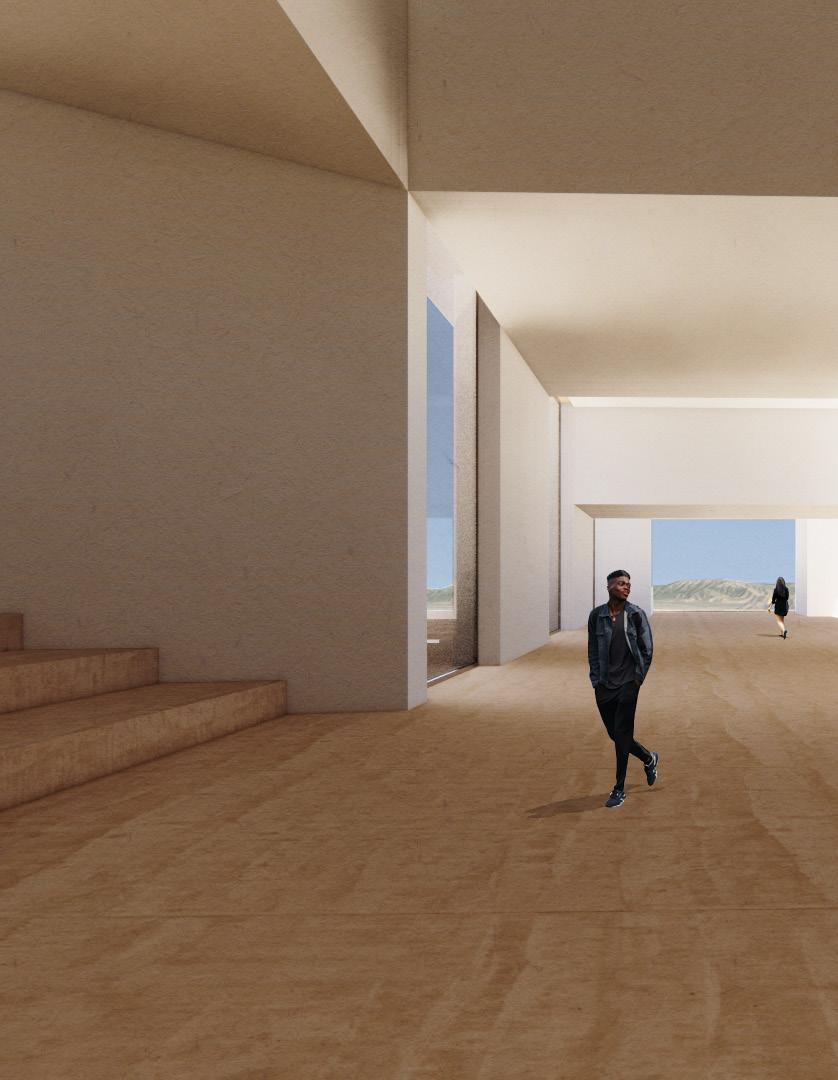
The transepts feature stadium seating to facilitate both formal and informal gatherings. The building is brought to the level of the landscape, allowing people to continue on to the trails leading into the mountains.
 Section A-A
Interior Render
Section A-A
Interior Render
24

Upper Level Plan A A B B 25
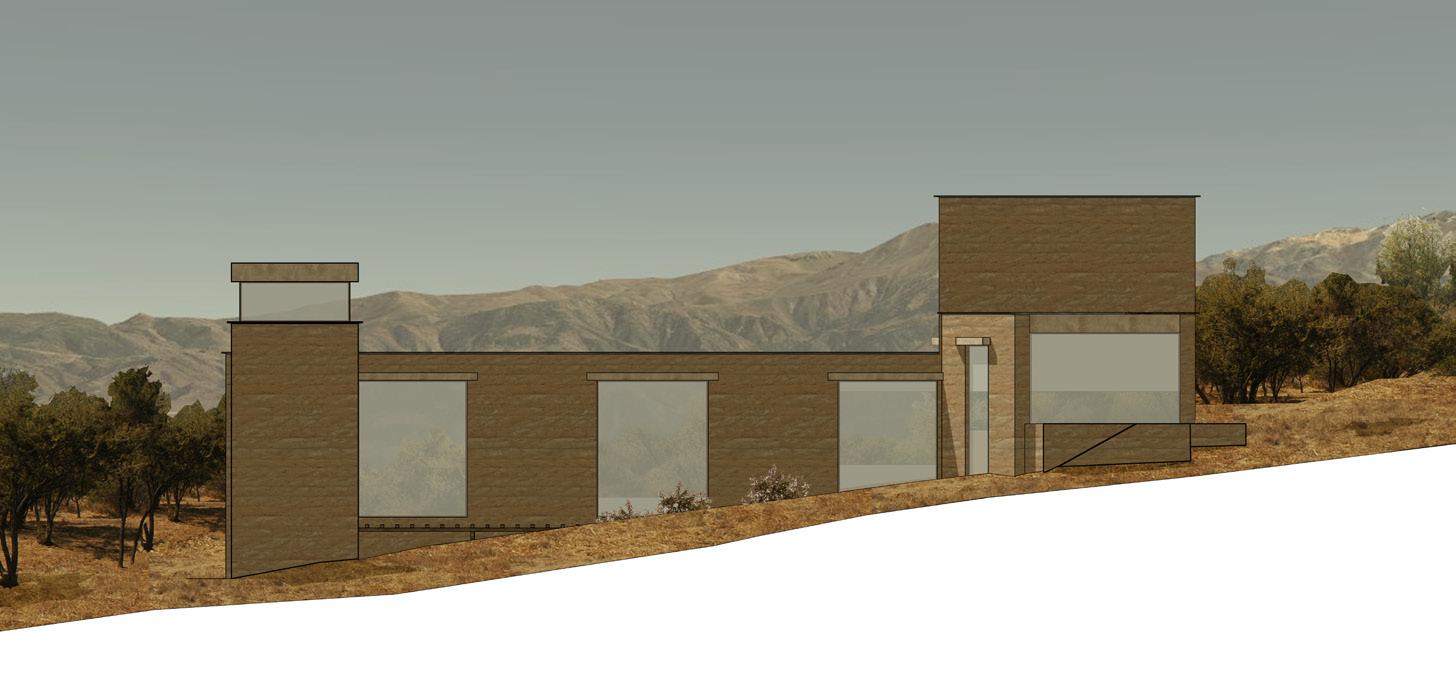
How can a void subvert the expectations of its exterior volume?
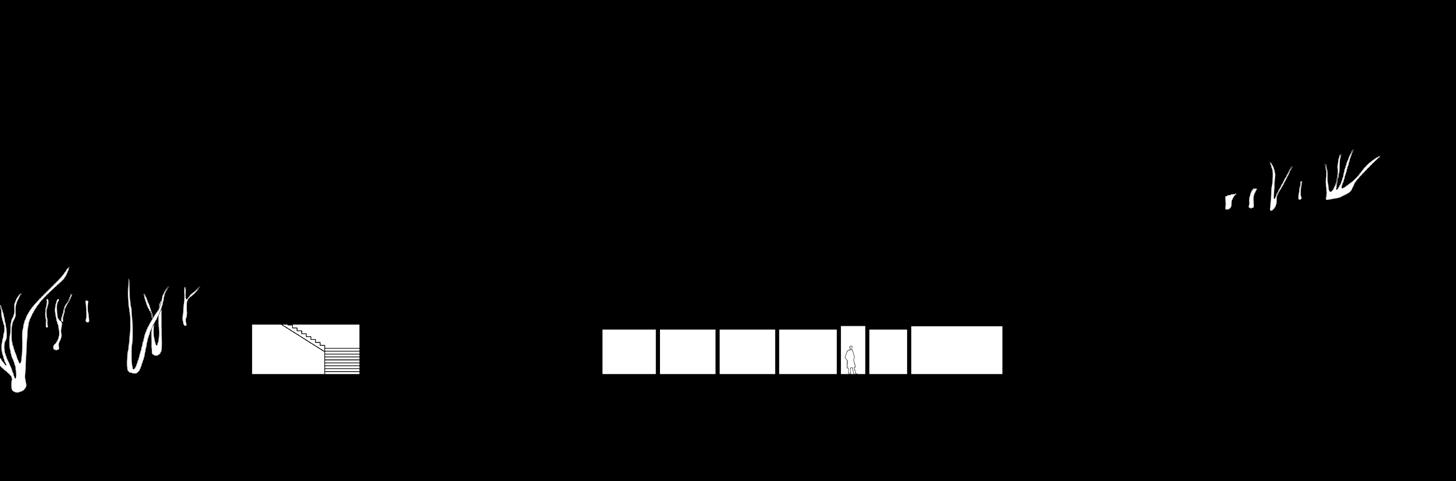 Section B-B
South Elevation
Section B-B
South Elevation
26
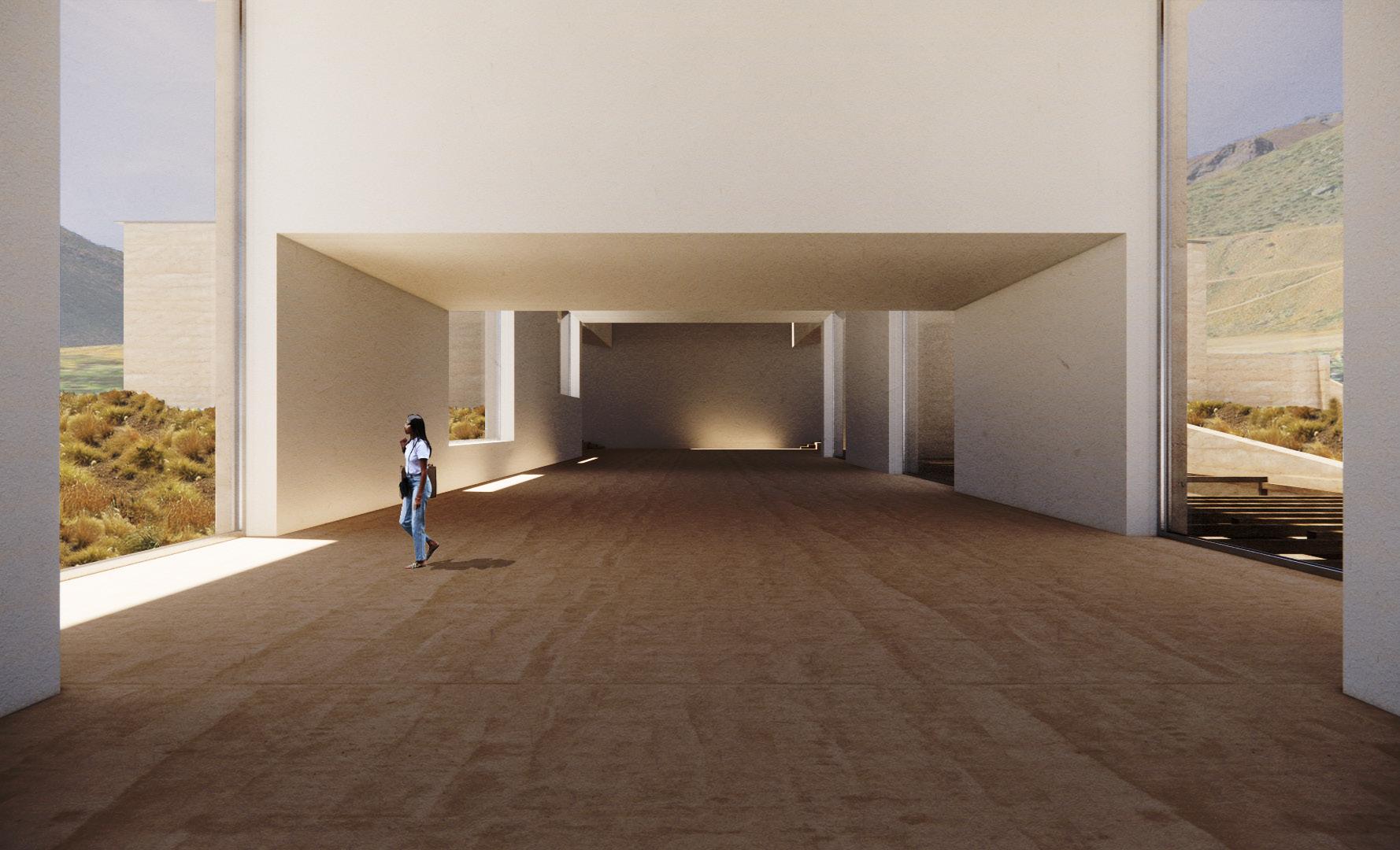
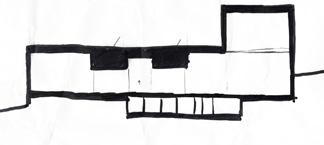
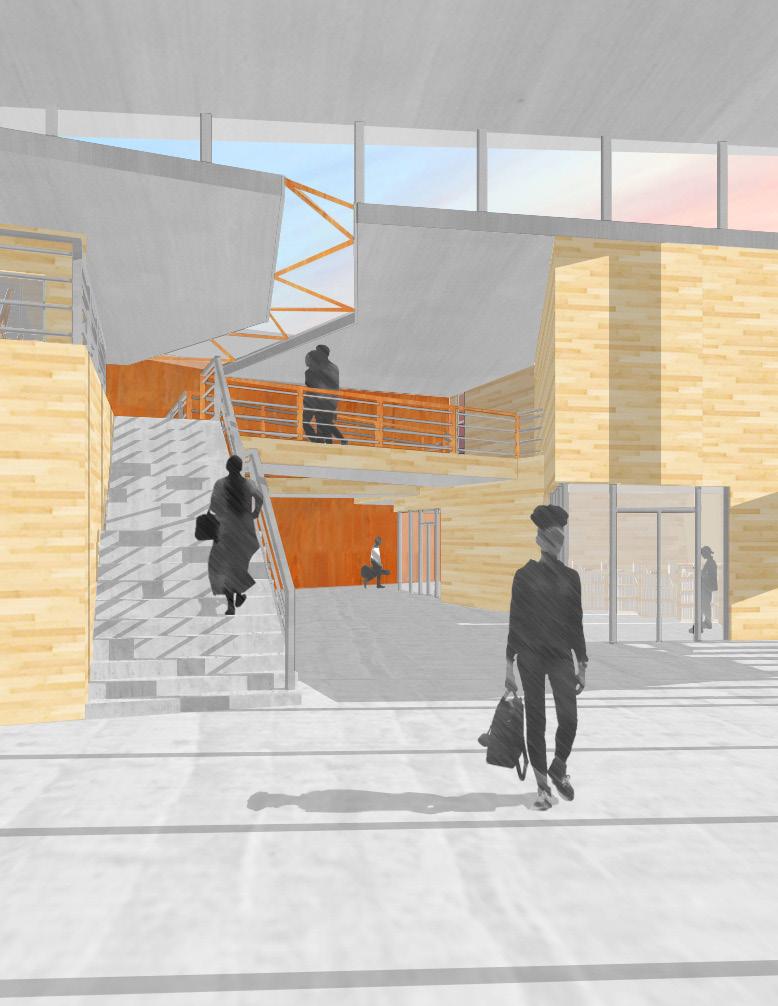
The volume of the exterior differs from the void on the interior in order to create variations in the way the main space is experienced.
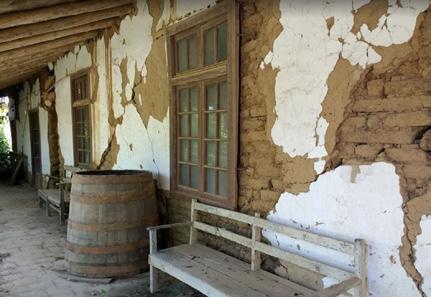
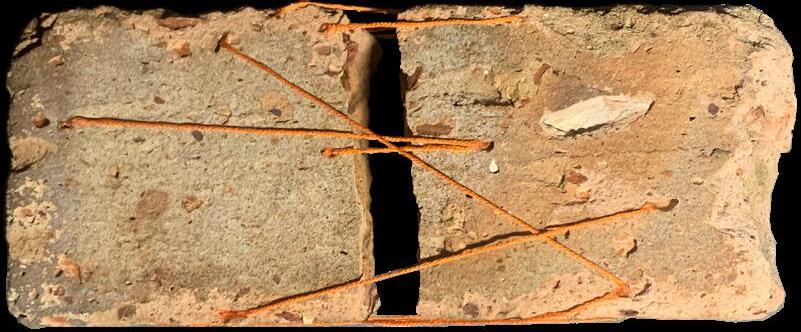
The use of white plaster on the interior allows the spaces to be experienced volumetrically, reflects solar radiation, and creates a relationship with the vernacular architecture of the region.
27
Interior Render
Vernacular Architecture
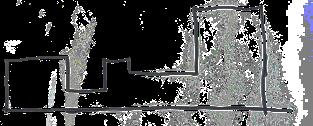
Process Sketches
RESTITCHING THE CULTURAL FABRIC
URBAN DESIGN + CULTURAL CENTER
Location: Providence, Rhode Island, USA
Type: Academic
Year: 2022
Instructor: Julia Bernert
Honors: SASH Award Recipient
Restitching the Cultural Fabric is a mix of urban design and architecture, and how those two may overlap. The first half of the studio was composed of urban design, while the second half focused on one building from the urban plan to bring to a higher level of resolution.
Cathedral Square is a neighborhood that sits between Downcity and the West End of Providence. This neighborhood, and by extension the city, was split in two by the construction of I-95 in the 1960s. This studio explores how to restitch a city after its urban fabric has been severed for over half a century. Creating a cultural network, with Cathedral Square at its heart, can begin to heal the division that has turned the neighborhood from a thriving hub of culture into a forgotten corner of Providence.
29
What can we learn from what once was?
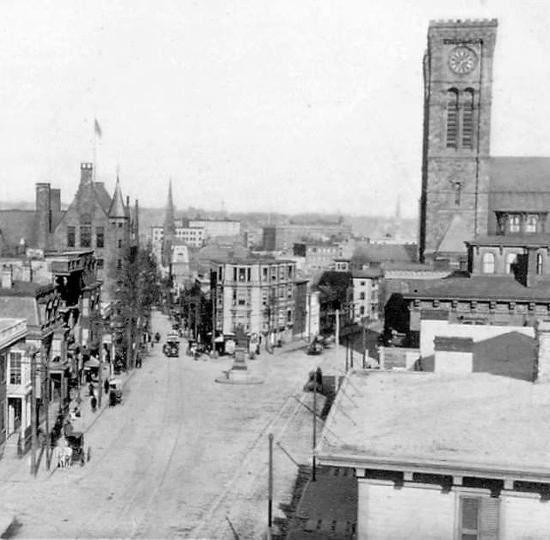
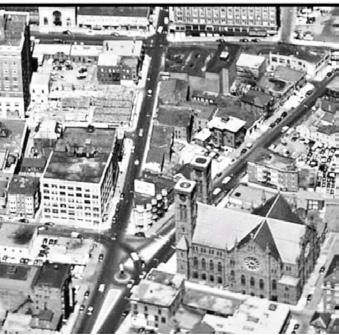
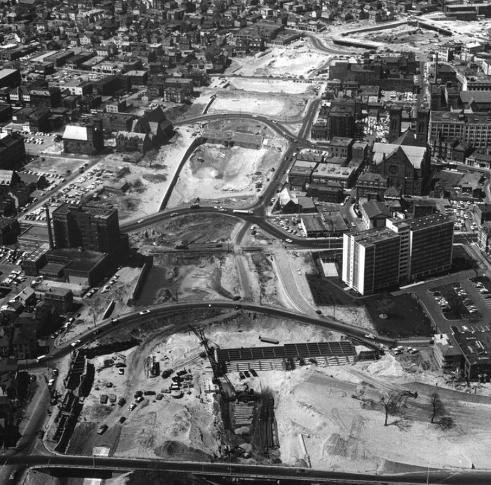
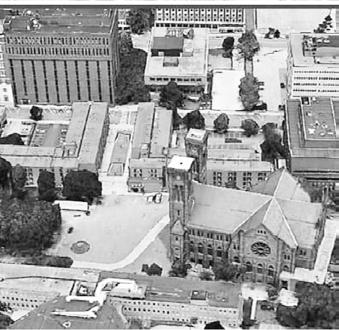

Cathedral Square was once a vibrant and lively neighborhood that was an integral part of downtown Providence. The area acted as a bustling civic center for the city, and the streets were lined with many shops and businesses. In the 1960s the neighborhood was razed to construct I-95, carving through a once dynamic and culturally important area. The city remains divided to this day.
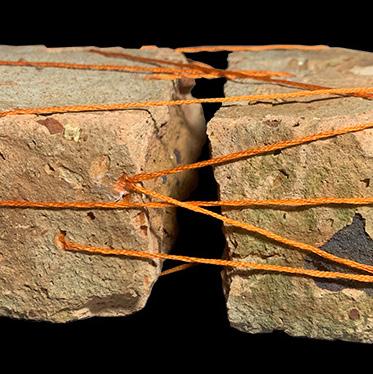
How can a Cultural Network begin to restitch a city that was divided half a century ago?
The urban fabric is repaired by creating a “Cultural Network,” connecting various landmarks and institutions. The “superblock” is deconstructed in order to return to intimate urban spaces.
1/8mle -3minutew k /2 m e - 10 mi ute wa k 1/4mie -5 m n k 3/8 m e - 8 te wa k 1905 Present Proposed
Cathedral Square 1889-Present 1889 Present Proposed
Cultural Network
Concept Model
30
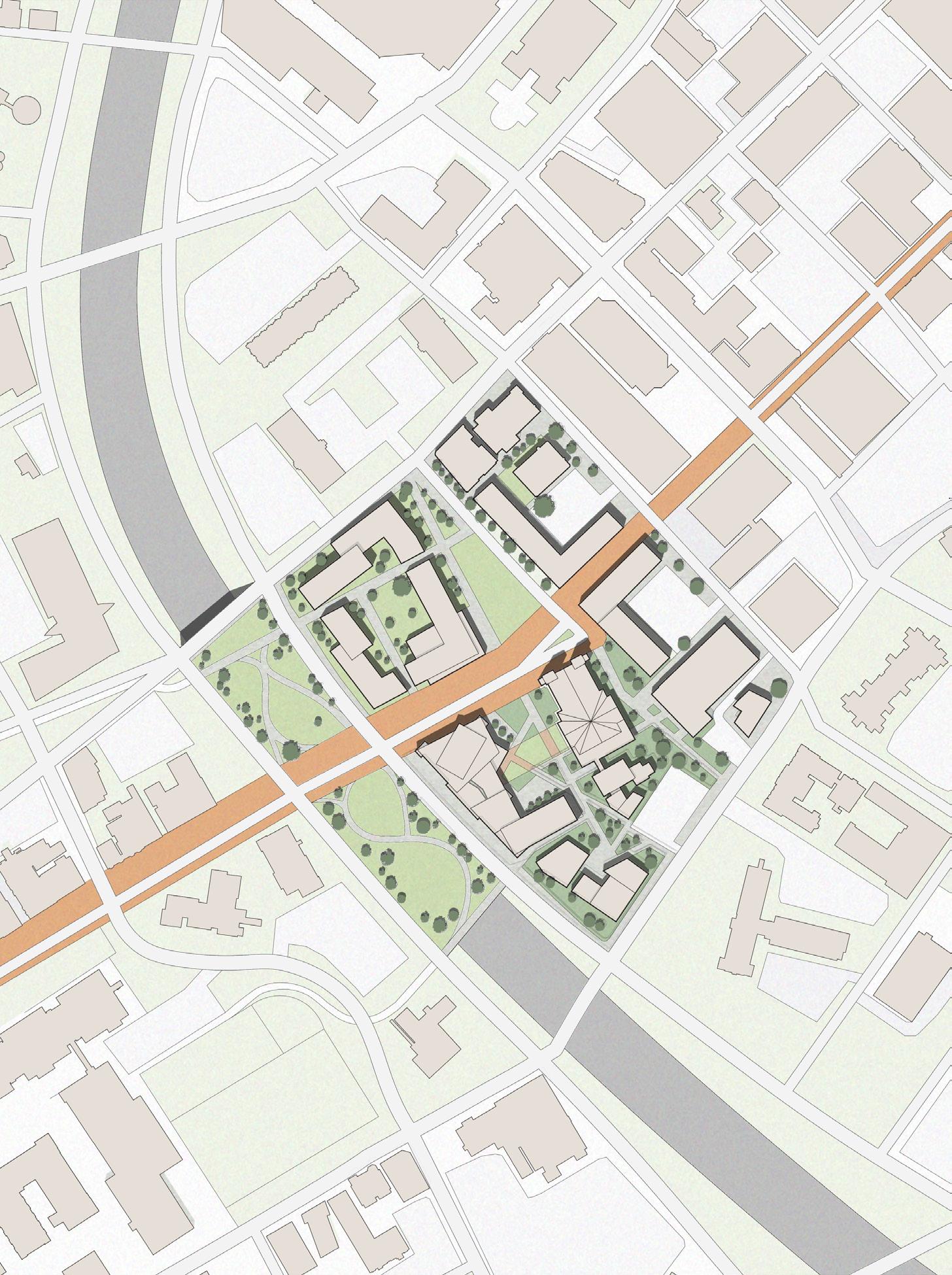

Cathedral Square Urban Design Plan 31
32
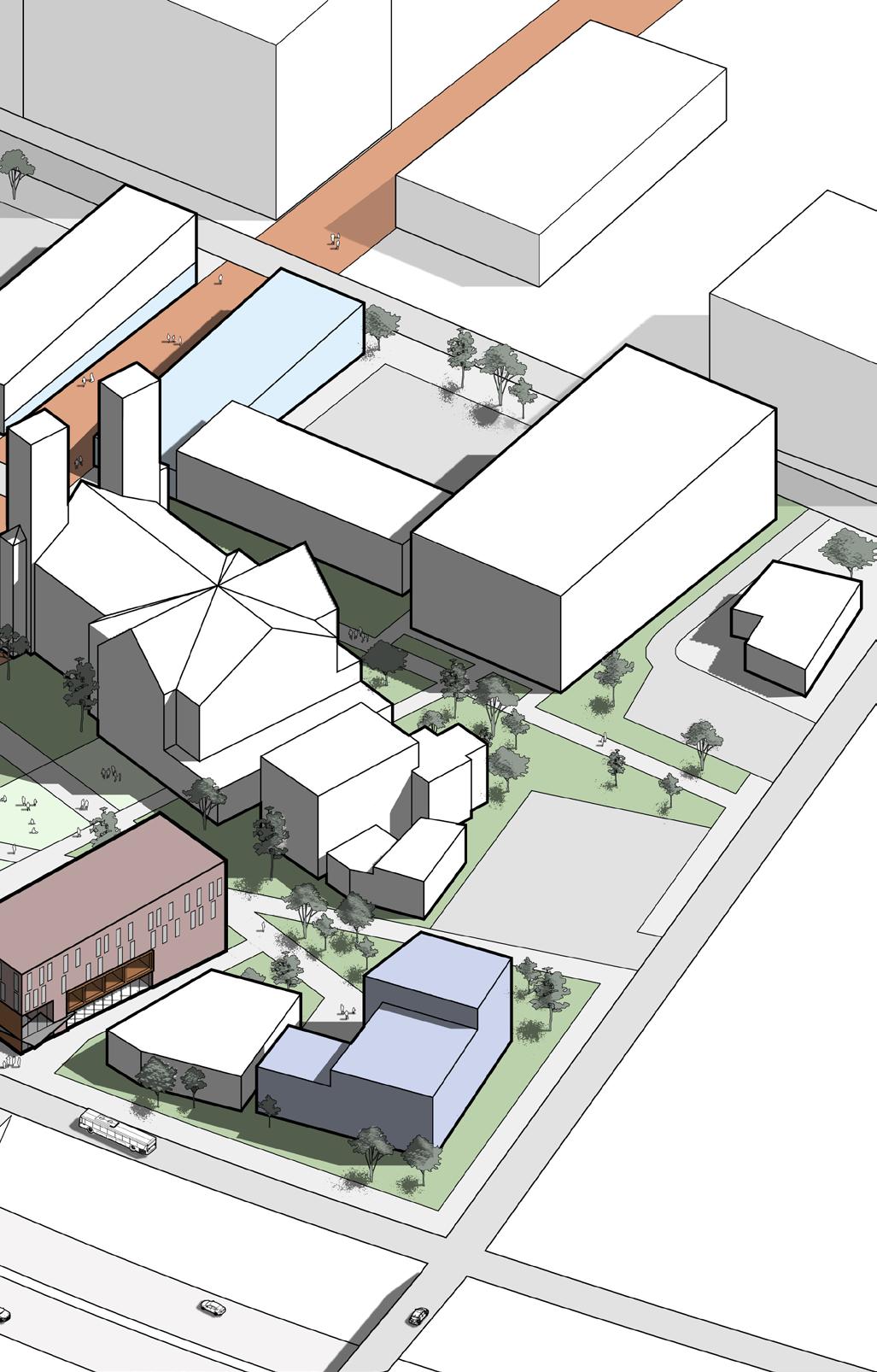
Residential District
In the “Residential District,” additional housing is created to address the current housing crisis in Providence. Varied typologies of housing are introduced to establish more heterogeneous communities.
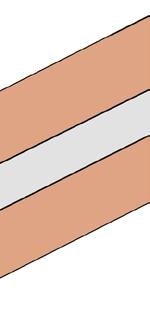
Key
Community Center
Market Rate Apartments
Affordable Housing
Senior Affordable Housing
Restaurant/Retail (adaptive re-use)
Diocese Chancery
Existing Conditions
Cultural Center
Cultural Center
The Cultural Center - at the heart of the “Cultural Network” - is located along the axis of the newly re-established connection between the West End and Downcity, and is directly in dialogue with the adjacent Cathedral.
33
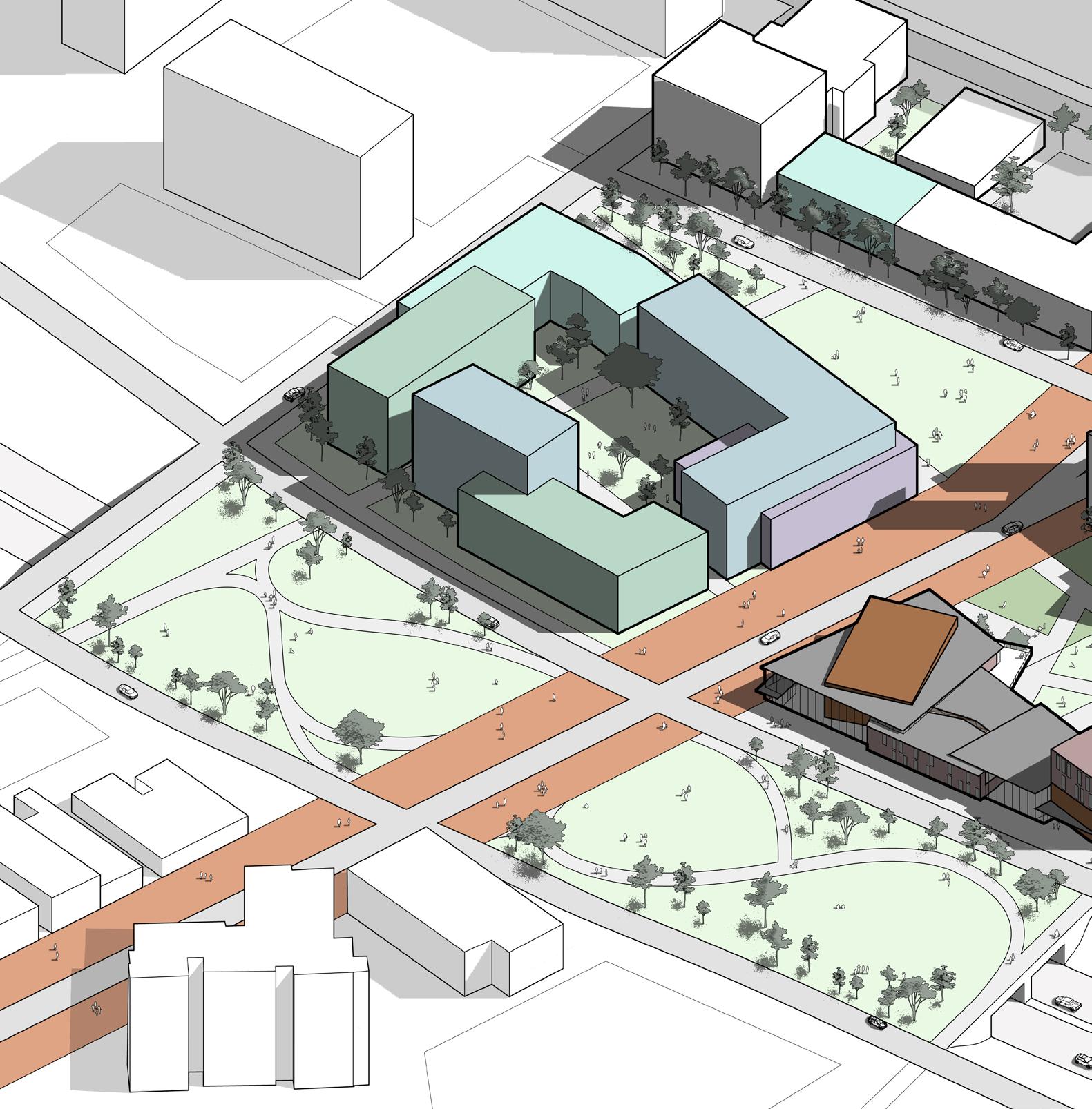
Cathedral Square Axonometric
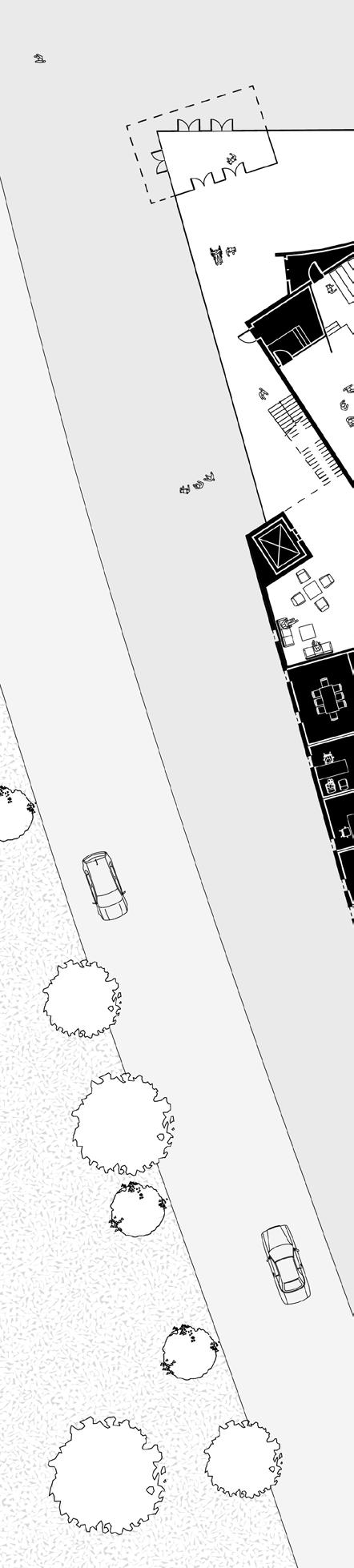
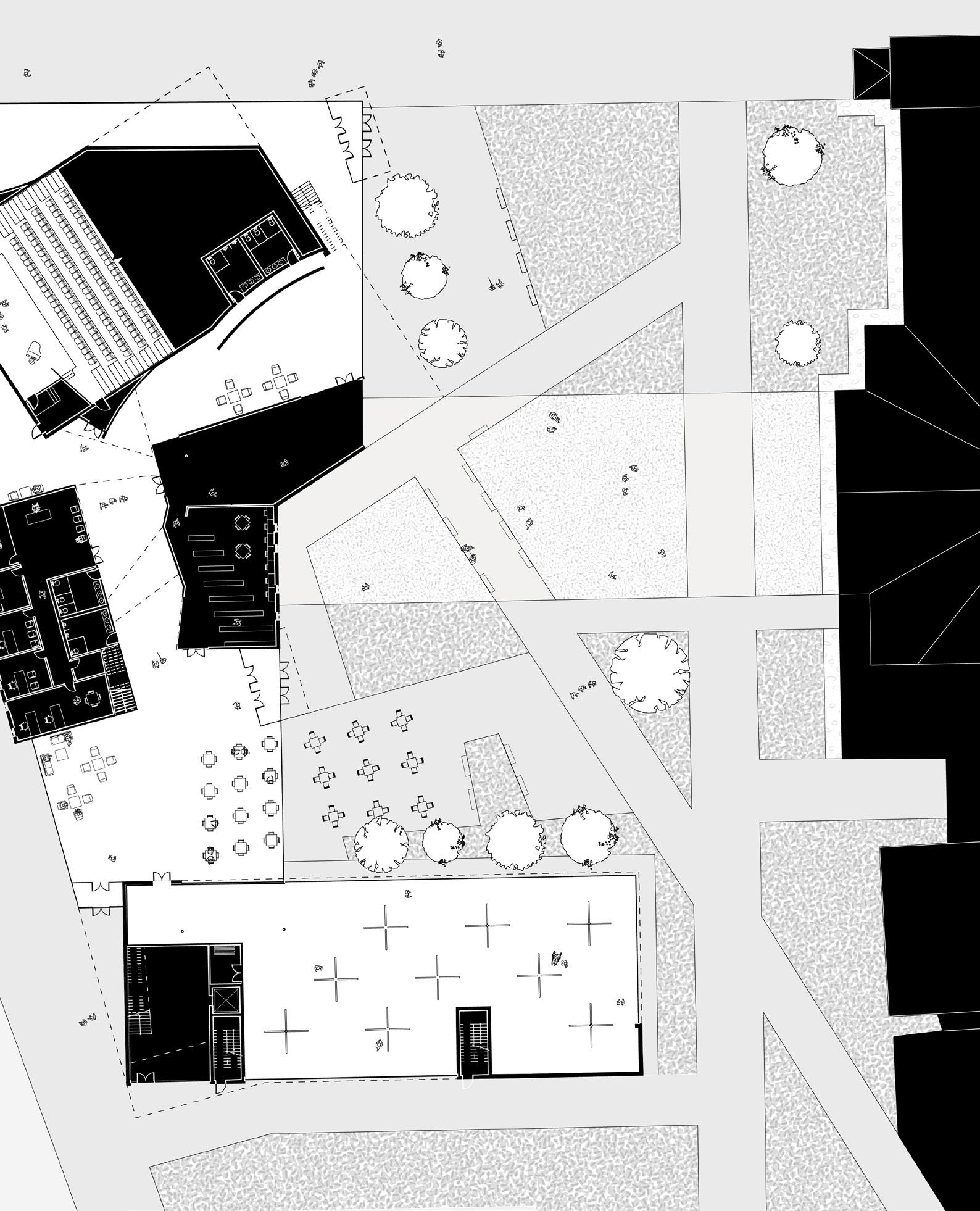
How can the Cultural Center activate adjacent public space?
The massing of the Cultural Center is in dialogue with the Cathedral, creating a lively public space in the void between the two. The rose window of the Cathedral folds down onto the ground in the form of a lawn for public use. The lawn is surrounded by gardens of native plantings and sculptural exhibitions.
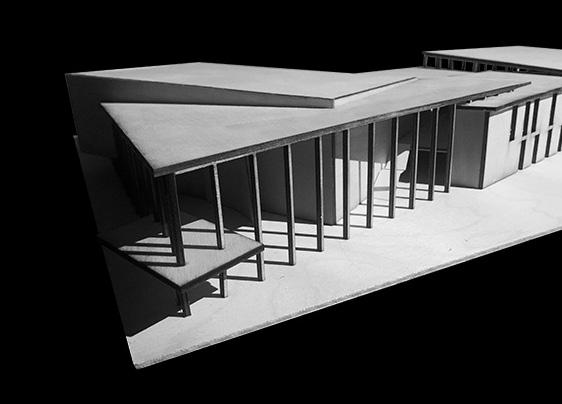
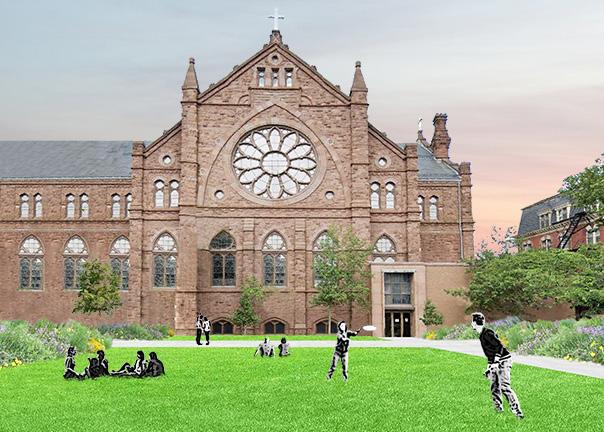


34
Basswood Model 3/32” = 1’-0”
Collage Facing Cathedral
B
A
35 Cultural Center Ground Floor Plan A B
How can the Cultural Center foster cultural expression and collaboration?
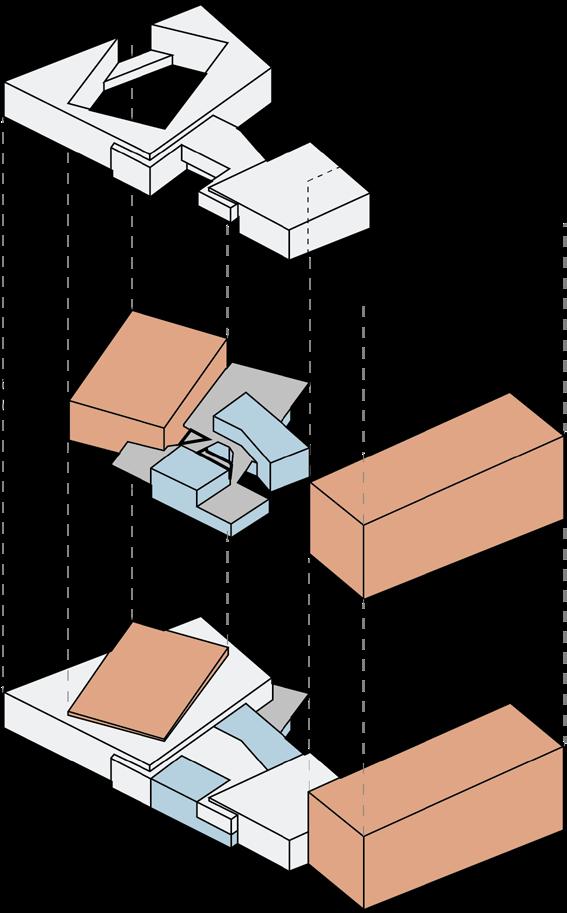
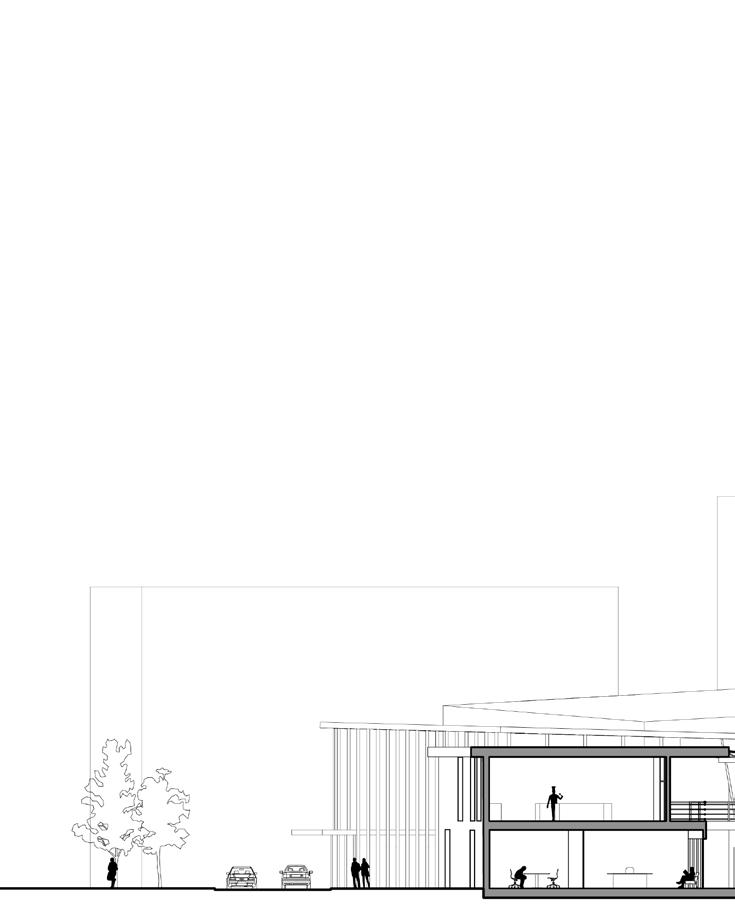
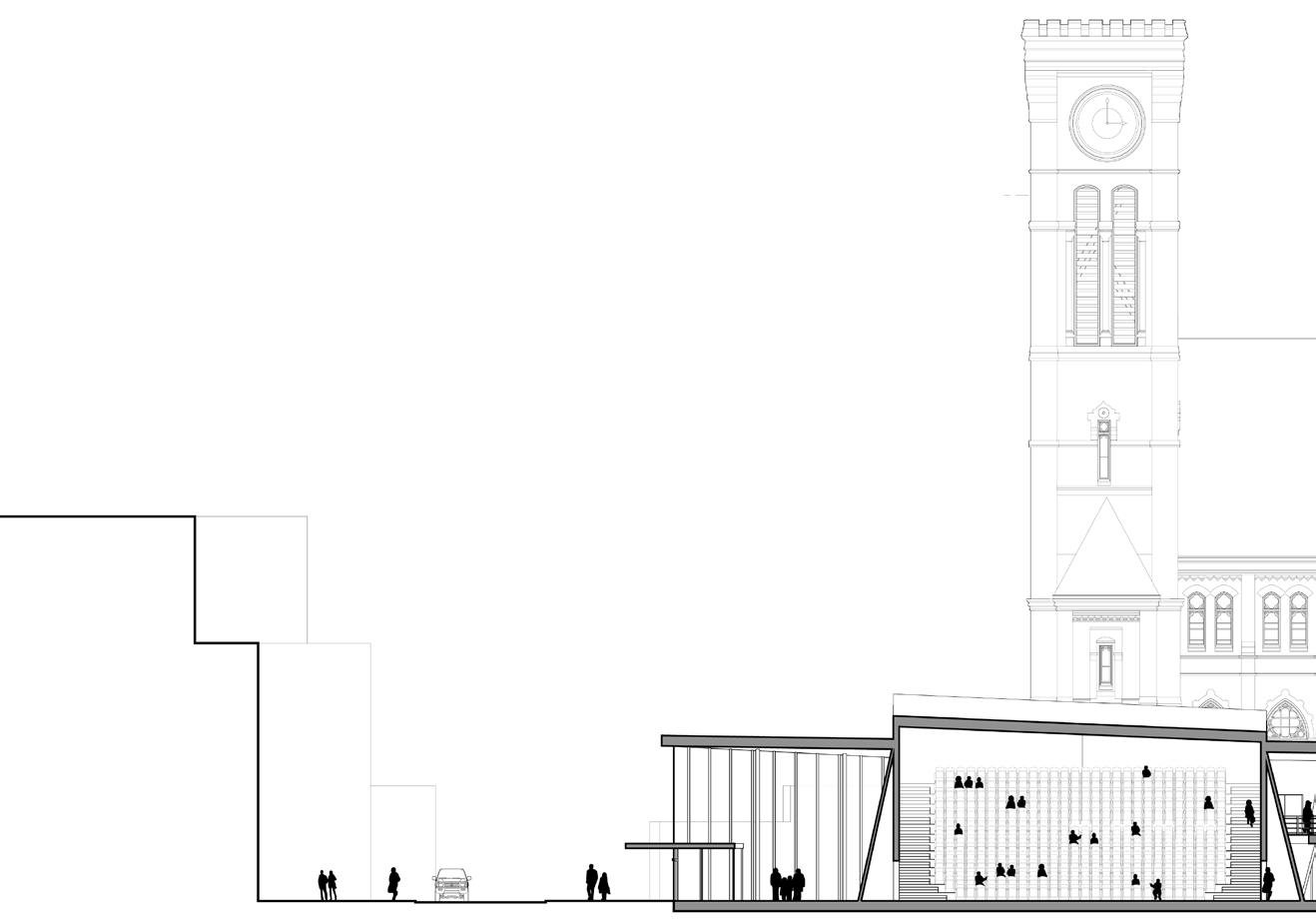
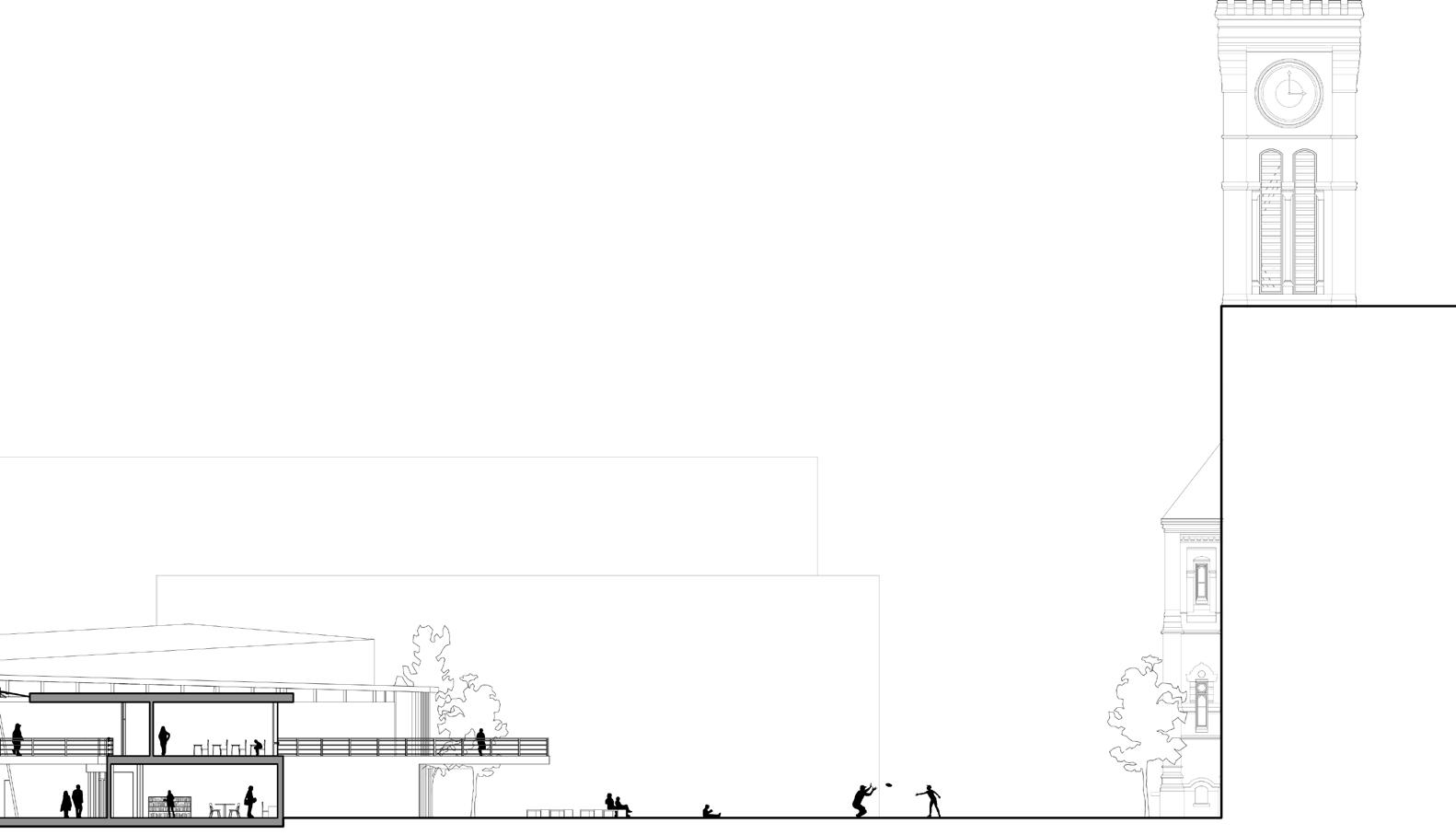
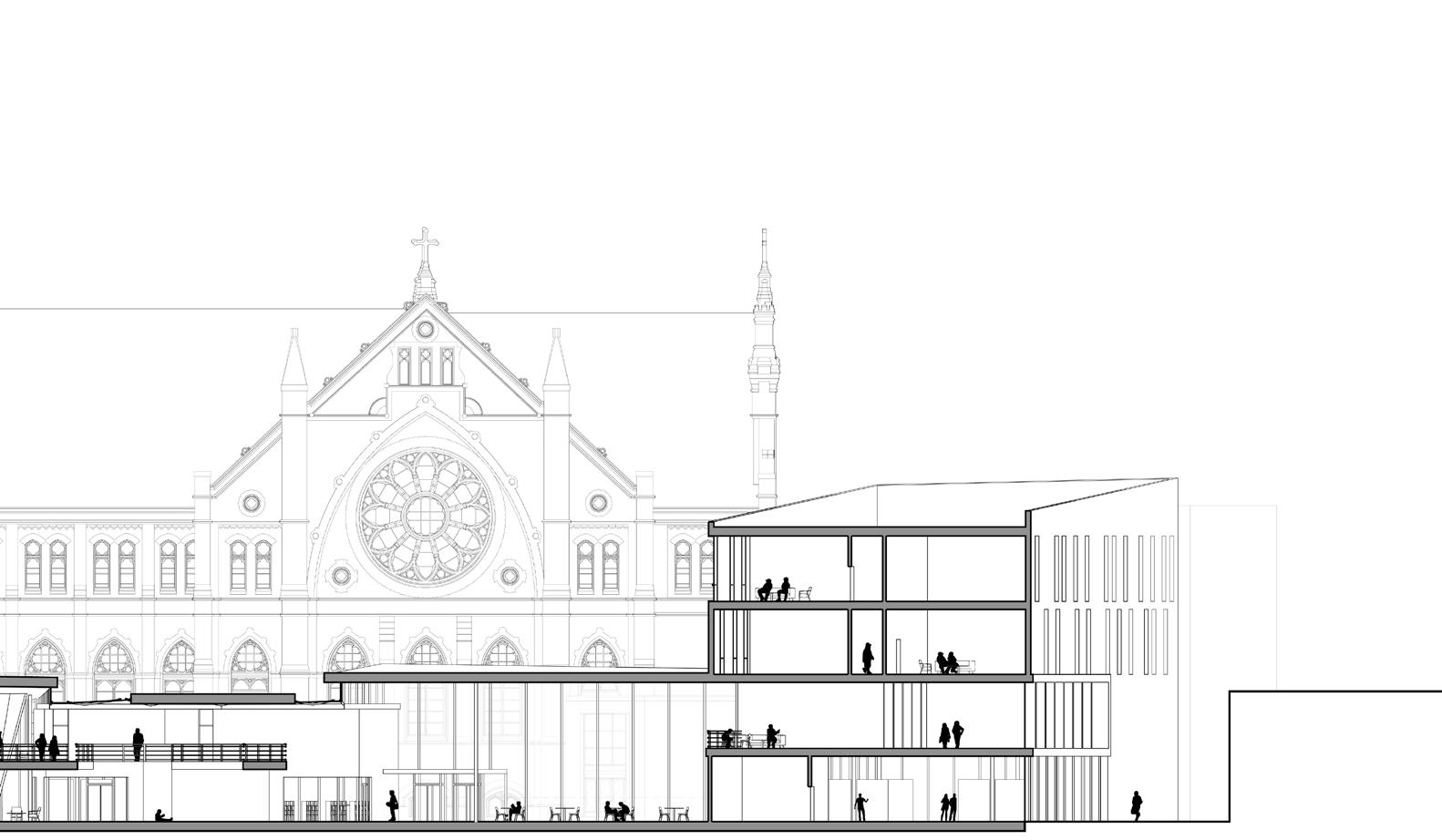
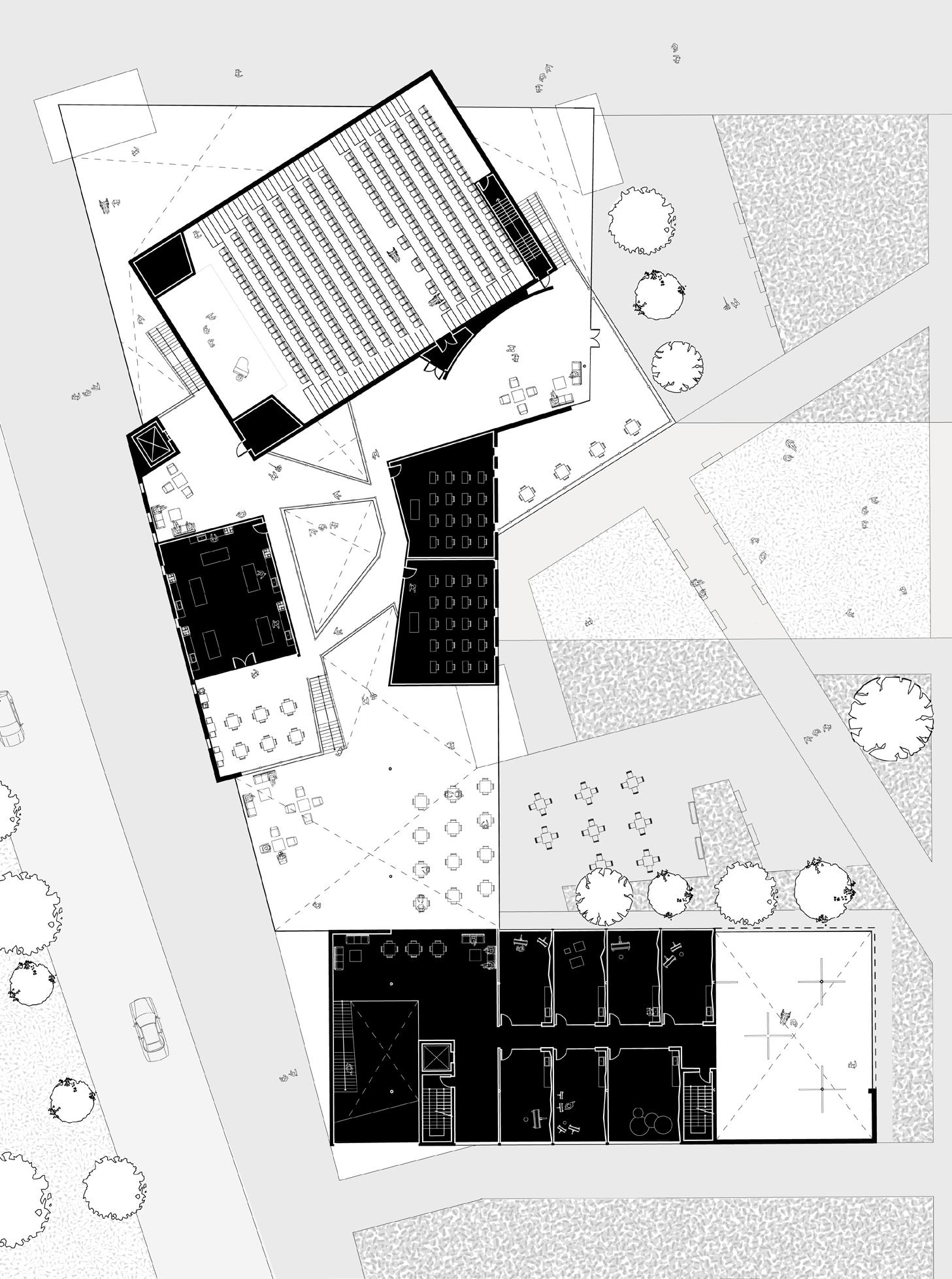
The Cultural Center is organized as one continuous space that is bookended by a theater at one end and the artist studios and galleries at the other. Between the two volumes are classrooms and other spaces for interaction and connection between people of different backgrounds and cultures.
Exploded Axon of Spatial Organization
36
A-A Section B-B 37
Section
38 Cultural Center Upper Floor Plan
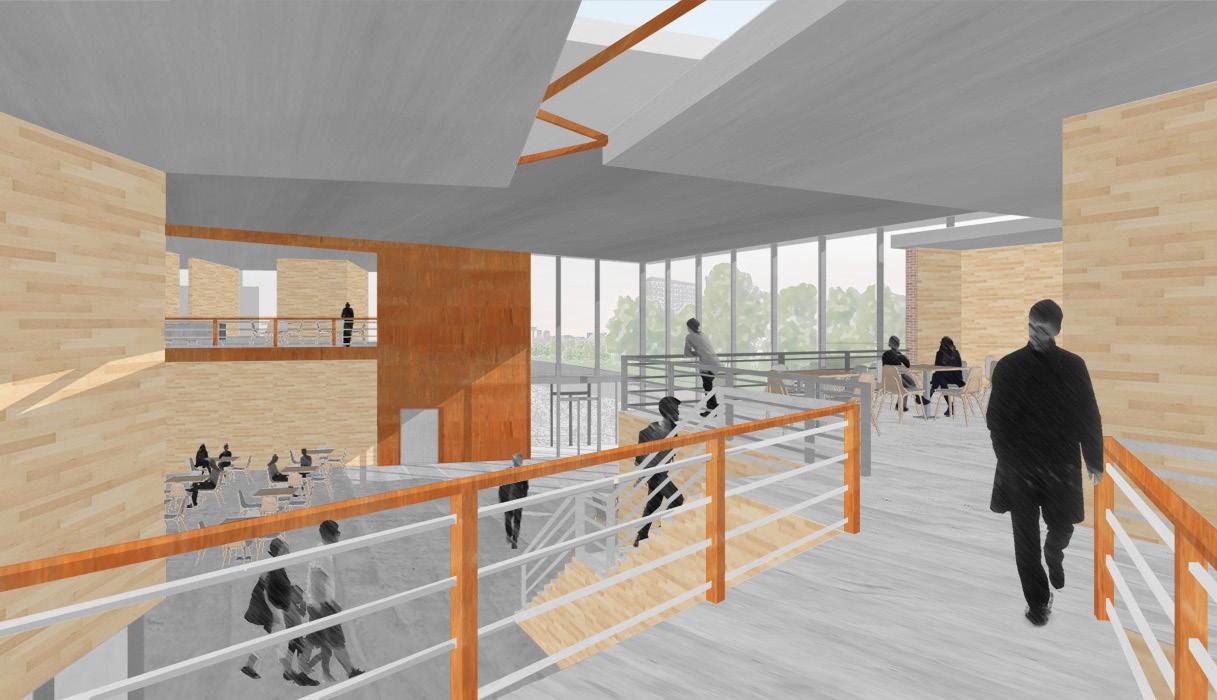
The plan is organized as an abstraction of the idea of restitching. The classroom volumes are connected on the upper floor by dynamic walkways. The upper floor peers down into the main space of the Cultural Center, creating a visual connection and fostering collaboration.
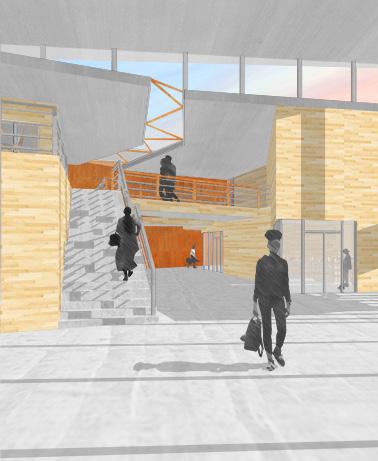
 Interior Collage
Interior Collage
Interior Collage
39
Basswood Model 3/32” = 1’-0”
WAVEFORM SEATING
FURNITURE
Type: Academic Year: 2021
Instructor: Greg Laramie Honors: SASH Award Recipient
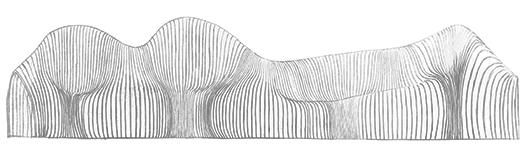
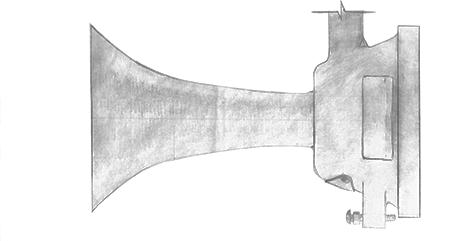
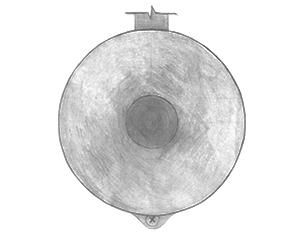
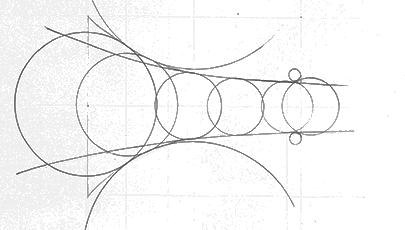
The essence of an object creates - and is created by - the purpose of said object. It is an intrinsic quality that defines the object. In this case, the given object is a boat foghorn, and its essence is to create and amplify sound to communicate with other boats while on the water. Through abstraction, it was found that the form of the horn is very similar to the form of two sound waves from different sources communicating with one another.
When sound waves interact they create a wave interference pattern, in which the amplitude of the waves both combine with and counteract one another. Waveform Seating is inspired by these nodes of interaction. The constructive interference nodes are carved away to provide space for the human form to occupy the seating device.
41
How does the physical form of an object reflect its essence?


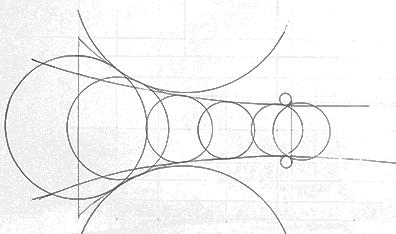
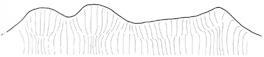

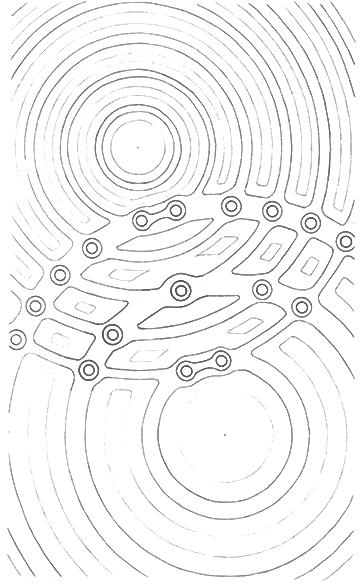
Wave Interference Pattern - Hand Drafted
Horn Orthographic - Hand Drafted
Horn Abstraction - Hand Drafted
42
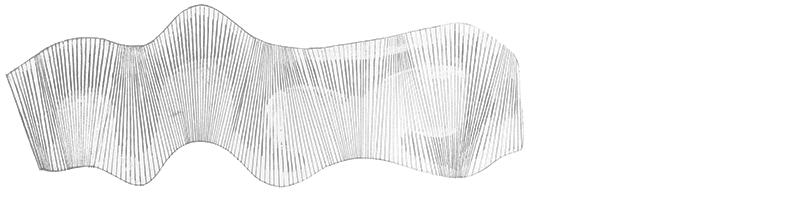

Waveform Seating Orthographic - Hand Drafted
How can we design to the human form and scale?
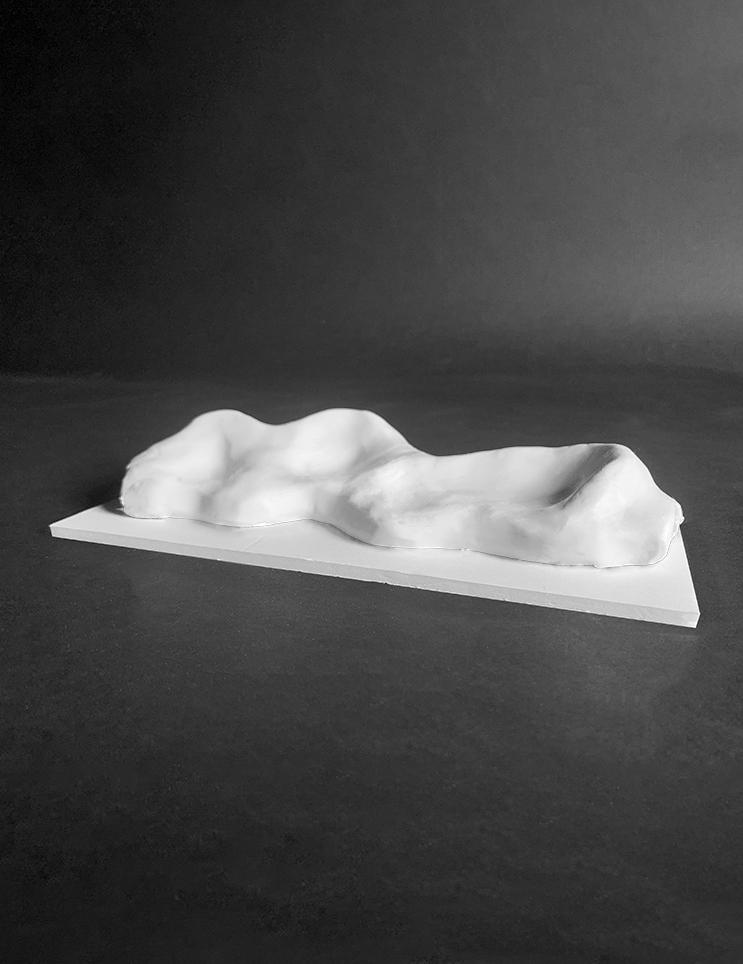
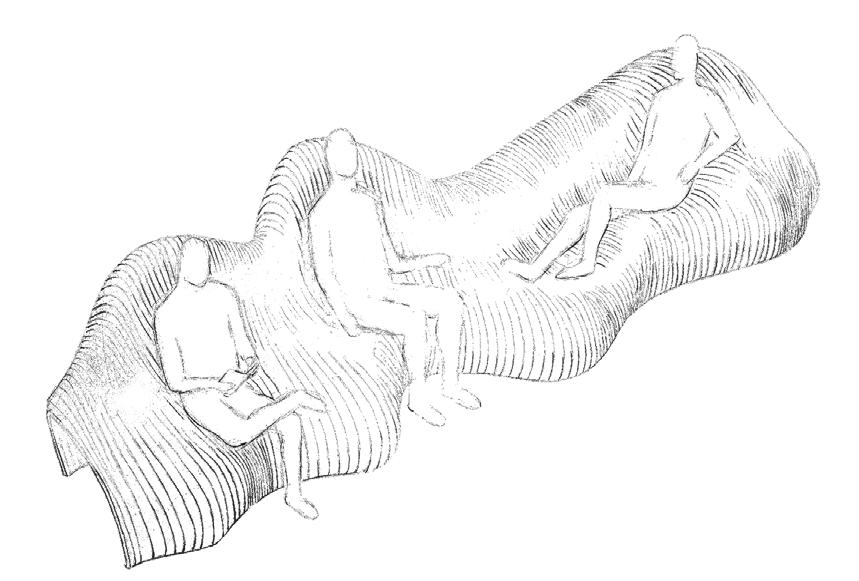
The nodes from the interference pattern create high points, which are carved away to define space for inhabiting the seating device.
The wicker-like material compresses and stretches like sound waves traveling through air.
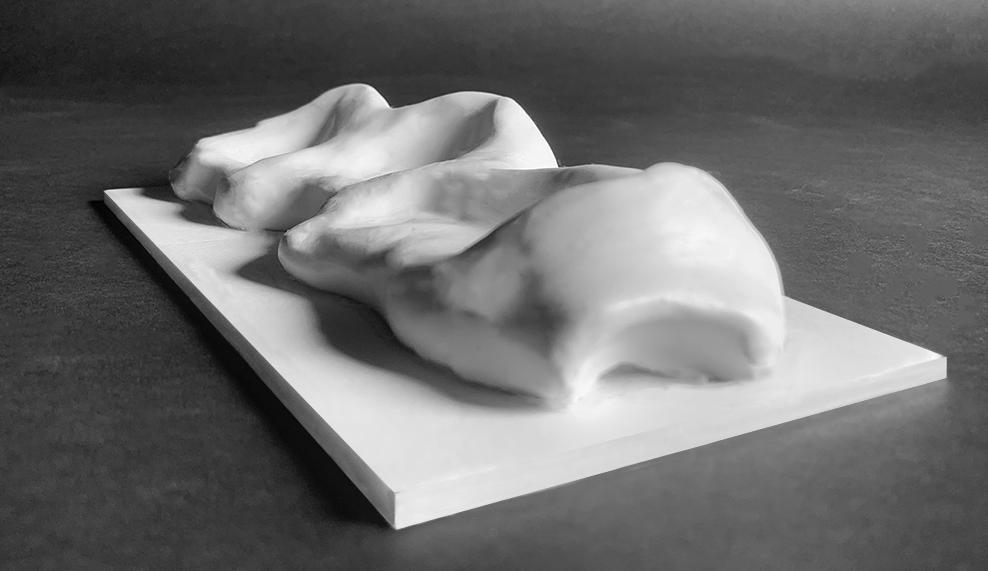 1” = 1’-0” Clay Model
43
ADJACENT EXPLORATIONS
ASSORTED EXERCISES IN ART, COLOR, AND FORM
Type: Academic and Extracurricular Year: 2020-2023
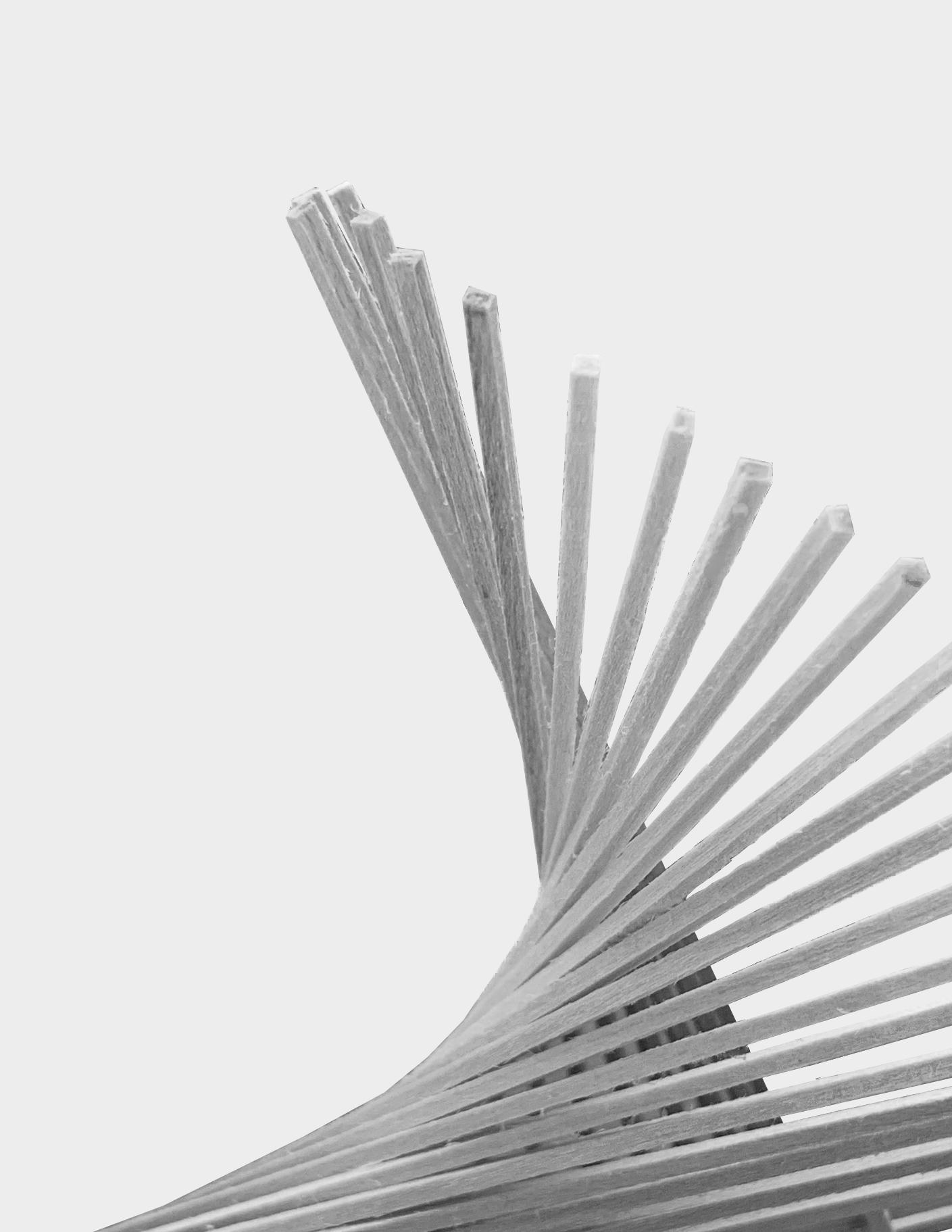
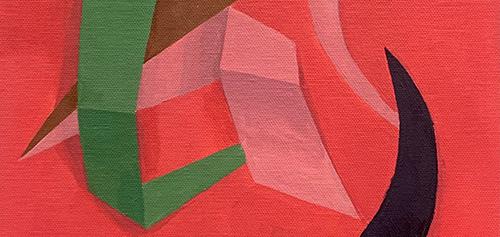
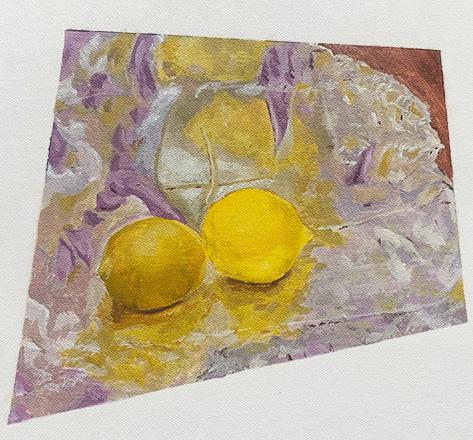
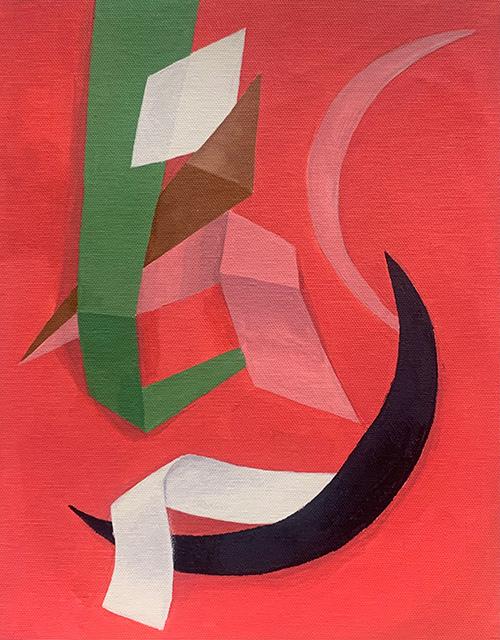
While the previous projects are a display of my best work in the realm of architecture, I have also undertaken many other creative endeavors as a person, artist, and architecture student. Many of these projects reflect the way I see the world in a similar manner to my later more complete works of architecture.
On the following page are works exploring art, color theory, the human form, and a variety of architectural model-making techniques.
45
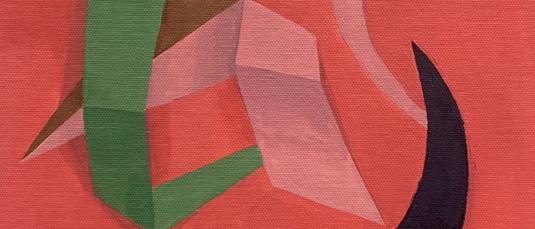
Acrylic Paintings
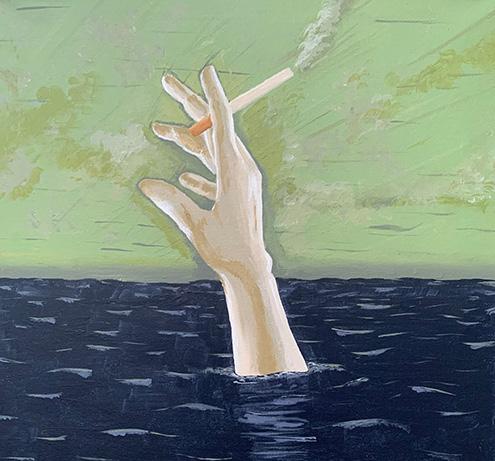
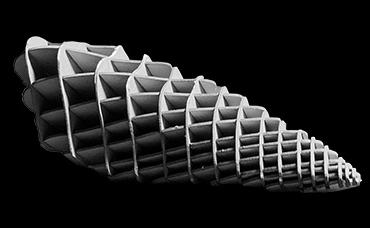
and Assembling
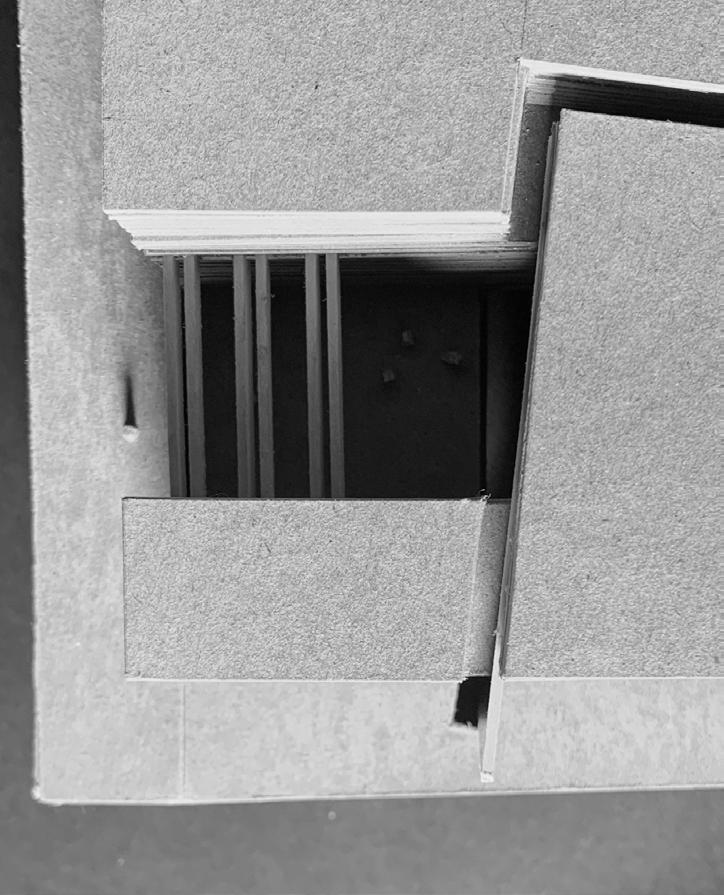 Digging
Painting I • Prof. Julie Gearan • 2022
Layered Density
Digging
Painting I • Prof. Julie Gearan • 2022
Layered Density
46
Architectural Analysis II • Prof. Olga Mesa • 2021
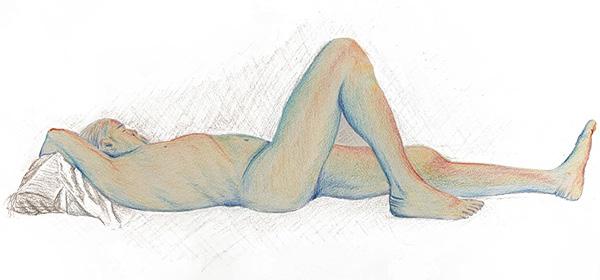
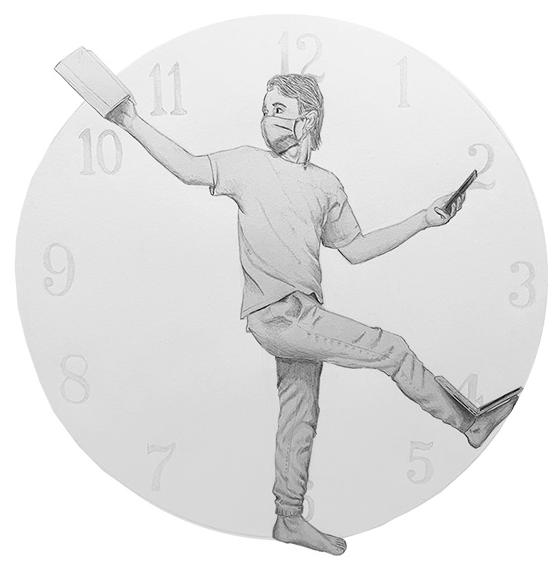
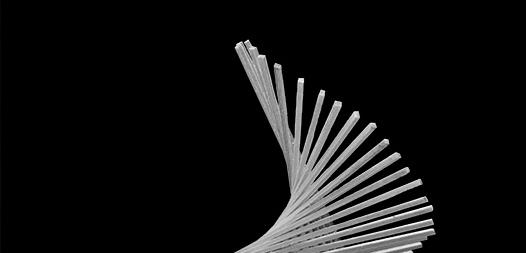
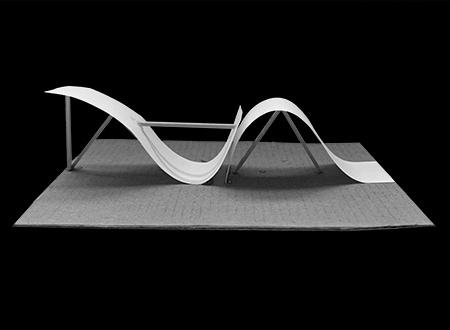
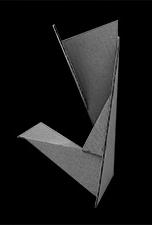
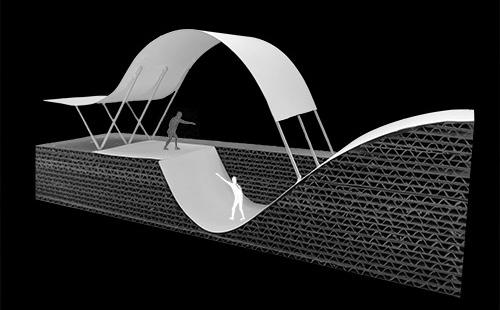
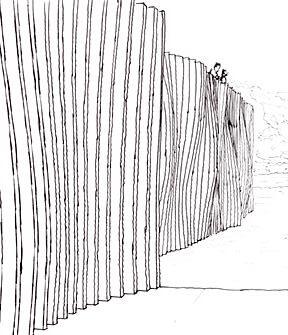
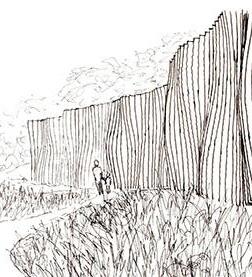
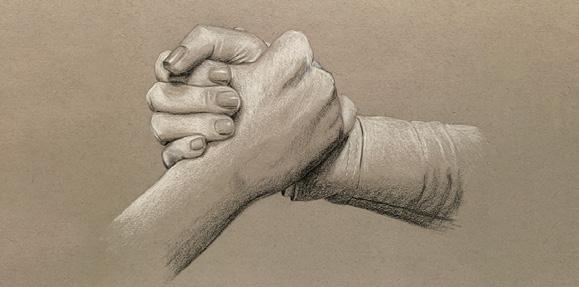 Embrace
Parametric Facade
Studio III • Prof. Greg Laramie • 2021
Studio I • Prof. Aaron Brode • 2020
Extracurricular • 2020
Figure Drawing
Twisting, Folding and Reaching
Embrace
Parametric Facade
Studio III • Prof. Greg Laramie • 2021
Studio I • Prof. Aaron Brode • 2020
Extracurricular • 2020
Figure Drawing
Twisting, Folding and Reaching
47
Life Drawing I • Prof. Dan Gilhooley • 2020
MICHAEL CHMIEL
michael.j.chmiel@gmail.com
+1 631 655 8940
Miller Place, NY 11764, United States
Thank you for your time!