





Dear MCC friends, supporters and advocates,
Welcome to a new year at Metropolitan Community College. On behalf of the MCC Foundation, thank you for your continued support, which creates the possibilities that await in 2026. Before we look forward, it is important to recognize the impact you created in the lives of MCC students and communities over the past year.
Because of your investment, the MCC Foundation awarded 161 scholarships to 1,336 students, totaling $1.8 million in direct support during the 2024-25 academic year. Scholarships bridged financial access and created educational opportunities for our students to shine.
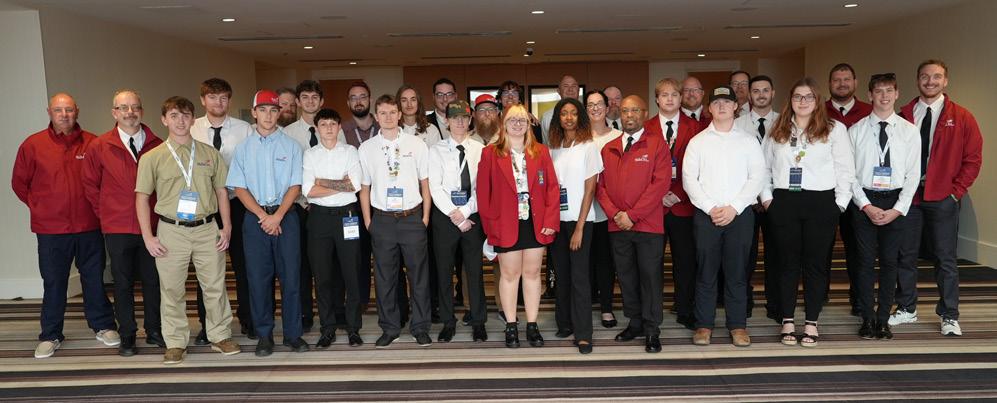
Your support helped our students reach the top at the Mopar CAP Bracket Challenge and SkillsUSA events, and our information technology programs ranked among the top in the nation.
You gave MCC momentum.
Momentum is a force that is harder to stop the more it moves forward, clearing the path for innovation, creating the conditions for growth and building a brighter future.
While 2026 has just begun, momentum is growing. The MCC at The Ashton location, the College’s resource and education hub for entrepreneurs and small business owners, was designated in January as a Small Business Development Center, powered by the Small Business Administration. This designation expands the College’s ability to support and train area entrepreneurs and small business owners. When they succeed, so too does our workforce and economic development across the region.
This fall, a new biotechnology program launches alongside the completion of a state-of-the-art biotechnology lab at the Elkhorn Valley Campus. This area of study prepares graduates to enter the workforce with high-demand skills and contribute to industries that produce life-saving medicines, ensure food safety and promote sustainability in agriculture. The College also took an important step forward bringing Naomi Mardock, Ph.D., associate vice president for Digital Learning and Innovation, to MCC. Her arrival bolsters the service we provide to our largest campus — online.
Thank you for being part of MCC and for keeping the momentum going with us. We invite you to stay connected and celebrate with the Foundation in 2026 through events such as Cars and Coffee, Beyond MCC networking gatherings, the return of the MCC golf outing and more to come.


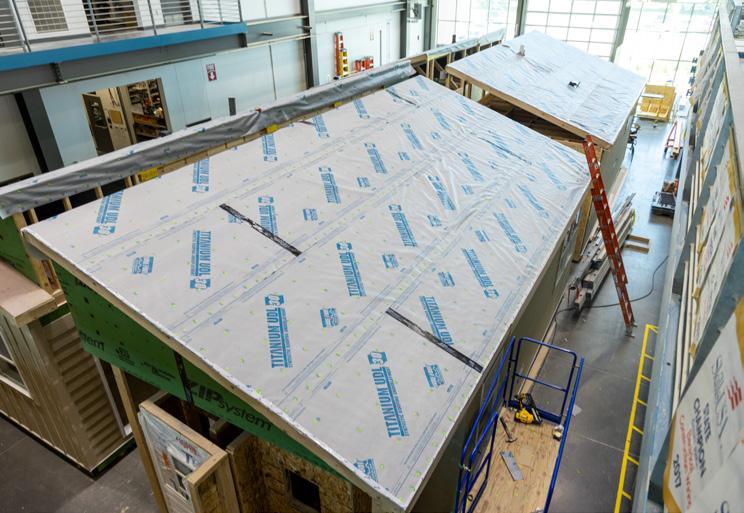
Not every class concludes with the physical representation of a full year of hard work, but that’s exactly what happens for students in the Construction Capstone course at Metropolitan Community College.
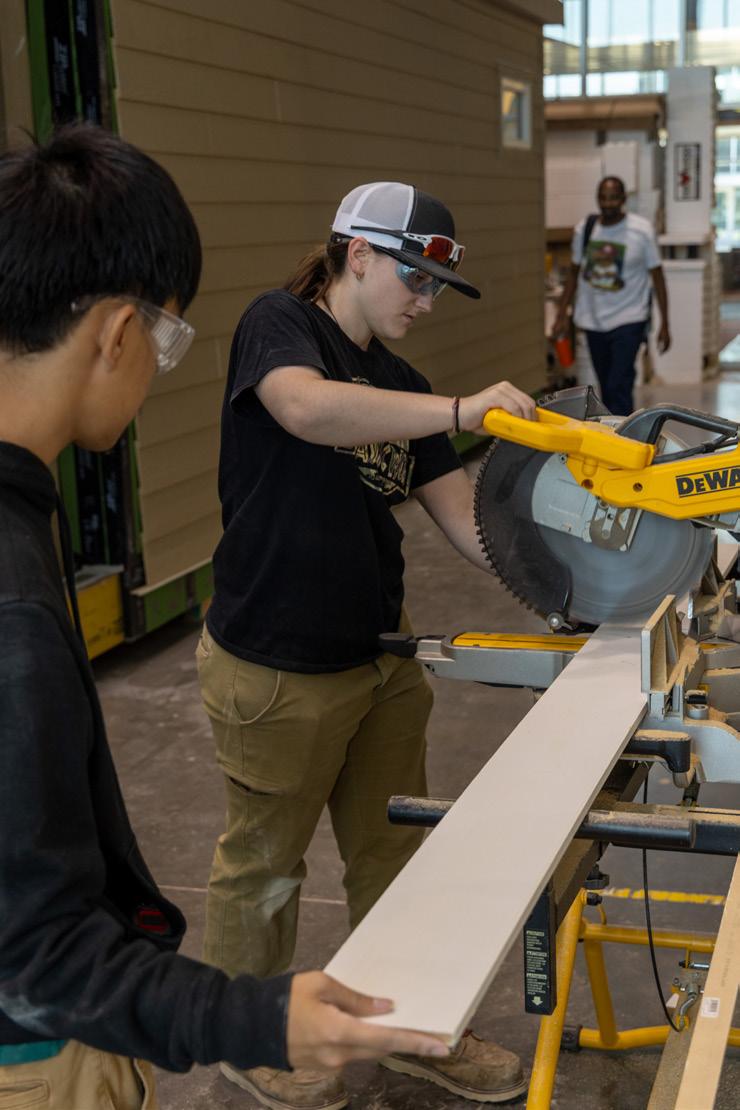
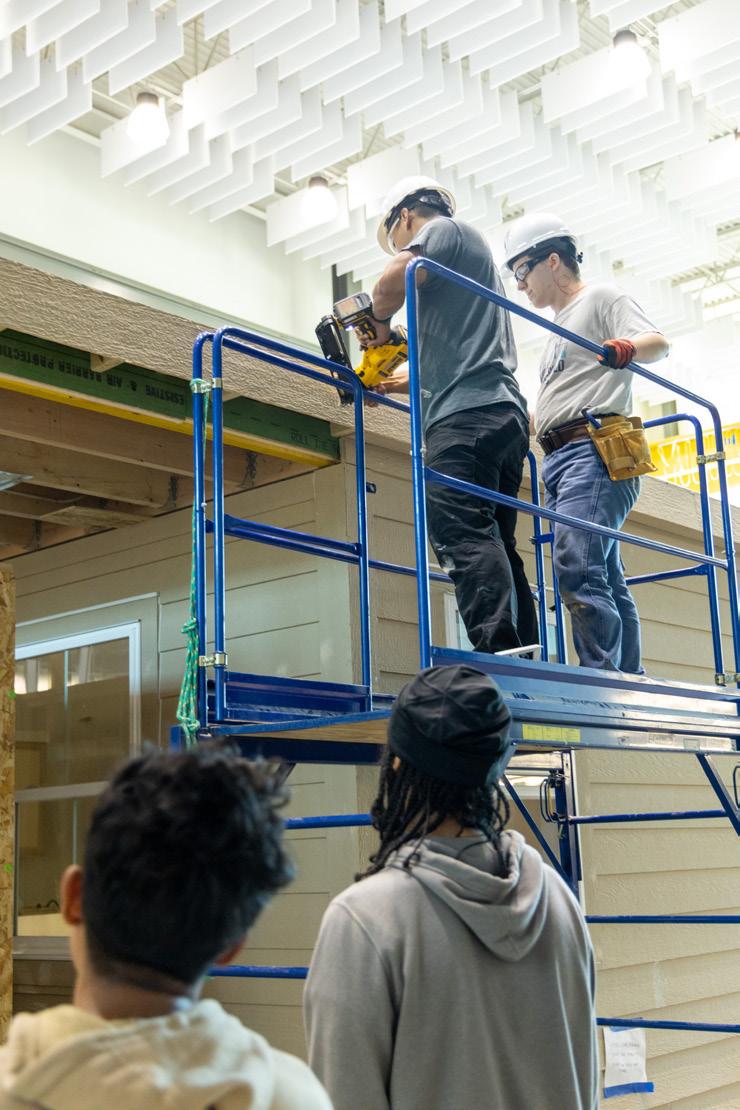
This year, more than 170 students — representing construction and building science technology, plumbing, architecture and electrical programs — gained real-world experience when they helped complete a workforce-ready house for Holy Name Housing Corp (HNHC).
Workforce-ready housing refers to homes designed for middle-income earners — such as teachers, health care workers and skilled trades professionals — who earn too much to qualify for traditional affordable housing but are often priced out of the market. The project is supported in part by the Nebraska Department of Economic Development’s Middle Income Housing Fund.
This is the second year HNHC and MCC have partnered to provide this service-learning experience. In this agreement, HNHC pays for the physical materials and provides the project scope and MCC students deliver a high-quality home to be placed in the community. The project is completed over the course of a four-quarter academic year.
For Nathan Friedly, the opportunity to learn while supporting his community aligned with his personal goals. After serving in the military for 10 years, Friedly returned to Nebraska and is interning with Habitat for Humanity.
Through partnerships with local nonprofit organizations, MCC students gain real-world experience participating in the Construction Capstone course. Over the course of this one-year project, MCC students apply skills learned in construction and building science, architectural design, electrical and plumbing.
The first capstone project was completed in 2018 and delivered across the street from the Fort Omaha Campus. Since the start of the capstone, MCC students have now built 13 affordable housing residences near the Fort Omaha Campus, including the first seven tiny homes that are part of the 50-unit Cottages at Siena Francis House on North 16th St.
“This is my way of coming back to Nebraska and helping my community out,” he said.
This year, the Architecture Design Technology students were challenged when HNHC provided a narrow lot in the Miller Park Neighborhood. HNHC Executive Director Matthew Cavanaugh said the nonprofit is working to create affordable, workforce-ready housing opportunities in desirable areas.
“There’s not a lot of housing stock that doesn’t get gobbled up by investors, and when there are properties, they’re older homes that need a lot of work and investment,” Cavanaugh said. “So we’re bringing something affordable to show that there is market demand for middle-income housing.”
Through a combination of private and public funding and its partnership with MCC, HNHC can keep costs low and quality high while supporting skilled trades and architecture students.
To create a home that fit the neighborhood, architecture students crafted a single-story, 1,259-square-foot gable roof design with a small, covered front porch and large windows throughout.
“The students wanted to increase the perception of interior space without increasing the house’s footprint on-site, so they opted for an open-concept floor plan with a vaulted ceiling for the communal spaces — a kitchen, as well
as dining and living rooms,” said Stephanie Ling, MCC Architectural Design Technology instructor. “The design decision makes the house feel larger and completely removes the feeling of it being a modular home.”
The two-bedroom, one-and-a-half bath residence includes main-floor laundry and flex space.
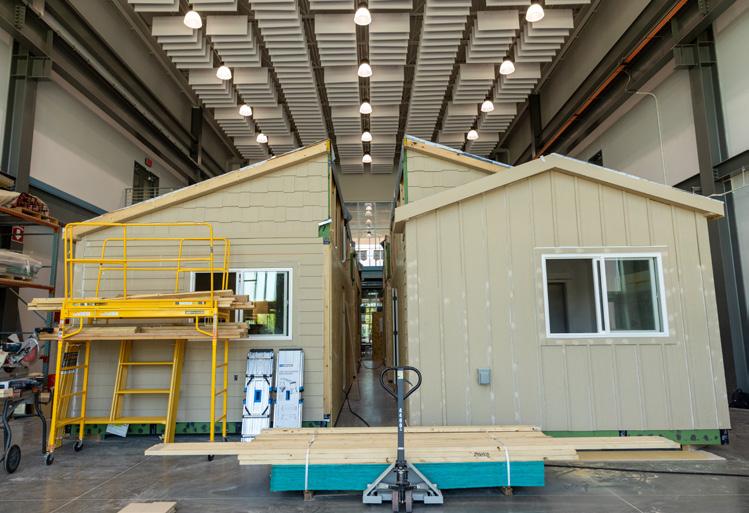
Homes built inside the MCC Construction Education Center (Building 25) on the Fort Omaha Campus are built in four sections, called modules, and are moved to their permanent location one section at a time, then assembled on-site.
To accommodate for the narrow lot size, architecture students had to create a new configuration connecting four modules at the center, which added structural challenges.
“The students and construction instructors had to work closely to address this added complexity without calling unwanted attention to the area,” Ling said.
Andrew Henrichs, the MCC Construction and Building Science faculty member who led the project, said students are treated like employees on a jobsite to simulate a real-world experience.
“A big part of this class is teaching students that not every part of construction is enjoyable, but the stuff that seems boring is what makes a build high quality,” Henrichs said.

Created by MCC Architecture Design Technology students






Being able to physically see those connections is one of the reasons this capstone project is key for students.
“You get to see how everything ties together — all the small details, like caulking, all the siding and trim. It may seem mundane, but it’s needed to fill in all the gaps and make sure everything is waterproof,” said Construction and Building Science Technology student Luis Roman.
Before joining the program, Roman was a maintenance technician for a local apartment complex when he got an idea — he could do the work himself as a homebuilder or home renovator. Completing the program has not only taught Roman what it takes to build a home, but
No stranger to the construction industry, Gigi Miedl was confident in following her father’s footsteps into the construction field, but she wasn’t sure if she wanted to go to college before joining the workforce.
Learning about the College’s Walter Scott, Jr. Career Pathway Scholarship, touring its Construction Education Center and learning about available programs changed her mind.
“I’m a visual learner — learning things in the classroom would just go in one ear and out the other,” she said. “With this program, I get hands-on experience before getting onto a jobsite.”

“You get to see how everything ties together.”
Two decades of exploring photography has taught MCC instructor Adam Dienst-Scott that perspective is key. Now, he’s sharing five tips for developing a stronger photographic eye.
Like many students, Dienst-Scott found his love for photography by happenstance while studying theater education at Emporia State University in Emporia, Kansas.

“I just happened to come across an old Pentax SLR camera and I needed a humanities credit for my degree,” he said. “I took a dark room class and that’s when I fell in love with it ... it changed what I wanted to teach.”
After finishing his senior thesis, Dienst-Scott was prepared to begin student teaching when he was offered a spot in the inaugural photography master’s program at Kansas State University. After receiving his master’s degree, he began teaching photography at MCC.
Since then, smartphones with built-in cameras have become increasingly more advanced and popular.
In November 2024, Pew Research Center reported that 91% of Americans have a smartphone, up from 35% in the Center’s first survey on smartphone ownership in 2011. That means that 9 in 10 Americans have access to a highly sophisticated camera — bypassing the need for specialized camera equipment and training for “everyday” photography.
Sharing photos is also easier than ever with social media. In fact, some reports note that 95 million images are uploaded to Instagram daily. With so much image sharing going on all the time, let’s take a moment to talk quality.

Adam Dienst-Scott
Dienst-Scott said the first thing to consider is your ‘why.’
“If you’re walking down the sidewalk or driving down the street and something catches your eye so much that you have to stop and pull out your camera, you need to figure out what it is about that moment that made you stop,” he said.
For example, was it the way that the light hit the trees or the shapes of skyline buildings that caught your eye?
Identifying what appeals to you will allow you to create a strategy for capturing the moment confidently. Then, consider how your perspective is unique.
“I think we have a tendency to always shoot from eye level,” he said. “If you’re trying to show how big something is, or show how important someone is, shoot from below ... give your subject a dominant angle.”
No film required — embrace having a wide margin for error
Your perspective is unique and figuring out how to express it takes time and effort. To begin to understand your style, Dienst-Scott recommends creating a gallery — either digitally or physically — of photos that pull you in.
“If you want to take better photographs, identify the ones that you are drawn to and why. Then figure out how to make it your own,” he said.
Because modern cameras and smartphones let you take and erase hundreds of photos with the push of a button, trial and error can be part of learning.
“You have unlimited tries to get the photo you want,” Dienst-Scott said. “Shoot vertically, shoot horizontally, shoot at an angle. Take the same photo as many times as you want because one of those photos will capture what you want.”
In his experience, Dienst-Scott said most people aren’t comfortable in front of the camera, leading to stiff photos that don’t capture a person’s natural, authentic self.
He recommends giving the subject a countdown but taking a few photos before and after the count is complete — “when people are more relaxed and a bit more natural.”
“When I’m working in my studio and I have a couple in front of me, I’m always watching through the viewfinder,” Dienst-Scott said. “There might be a moment where their hands touch or one of them puts an arm around the other. That’s the shot.”
You can’t always control what types of photos you’ll get, but planning can help increase your chances of getting the photos you want.
For example, if you’re shooting subjects outside, avoid doing so at noon. Not only can the heat be uncomfortable, but the direction of the light is harshest.
“It’s going to make everybody look like skeletons because skin tones get washed out and the shadows from eyebrows make the eyes look hollow,” Dienst-Scott said.
Instead, time your outdoor shots for “golden hour.” Golden hour is the time shortly after sunrise or before sunset when the light is softer and more diffused.
“If you have to shoot in the middle of the day, find some open shade,” he said.
If you’re working with groups of people, try to find a space where the lighting is even across the entire group to avoid shadows across faces. Also, pay attention to what’s going on in the background of your landscape.
“Don’t pose grandma in front of a tree whose branches will make her look like she has antlers,” Dienst-Scott said.














No matter your level of experience, there will always be times when one or two details affect the overall look of an otherwise great photo.
Luckily, smartphones come with dozens of preloaded filters, external editing tools and software have become more advanced and accessible.
“There’s nothing wrong with using those digital apps to help get your intent across,” he said. “Don’t be scared of technology, embrace it.”
For example, one challenge that can be remedied thanks to technology is lighting. With a click of a button, smartphone filters and software applications can automatically adjust for the desired lighting.
Other widely used functions available on your smartphone or via editing software include contrast, saturation and exposure.
Contrast refers to the difference between light and dark areas, which Dienst-Scott said can help boost details and enhance textures.
“Be careful because too much contrast can cause your images to look pixelated,” he said.
Saturation will increase or decrease the vibrancy of a color. For example, it’s a great way to make water look even bluer.
Lastly, exposure affects the overall brightness of the image.
“Editing is helpful in allowing you to regain details that might have been lost when you took the original photo,” Dienst-Scott said.


Participants will learn to:
• Establish a shared AI language for repeatable prompting
• Apply ethical and transparent AI practices at work
• Build everyday habits that improve focus and productivity
• Reduce burnout by automating repetitive tasks and streamlining workflows
• Identify which tasks can be automated — and which require human judgment
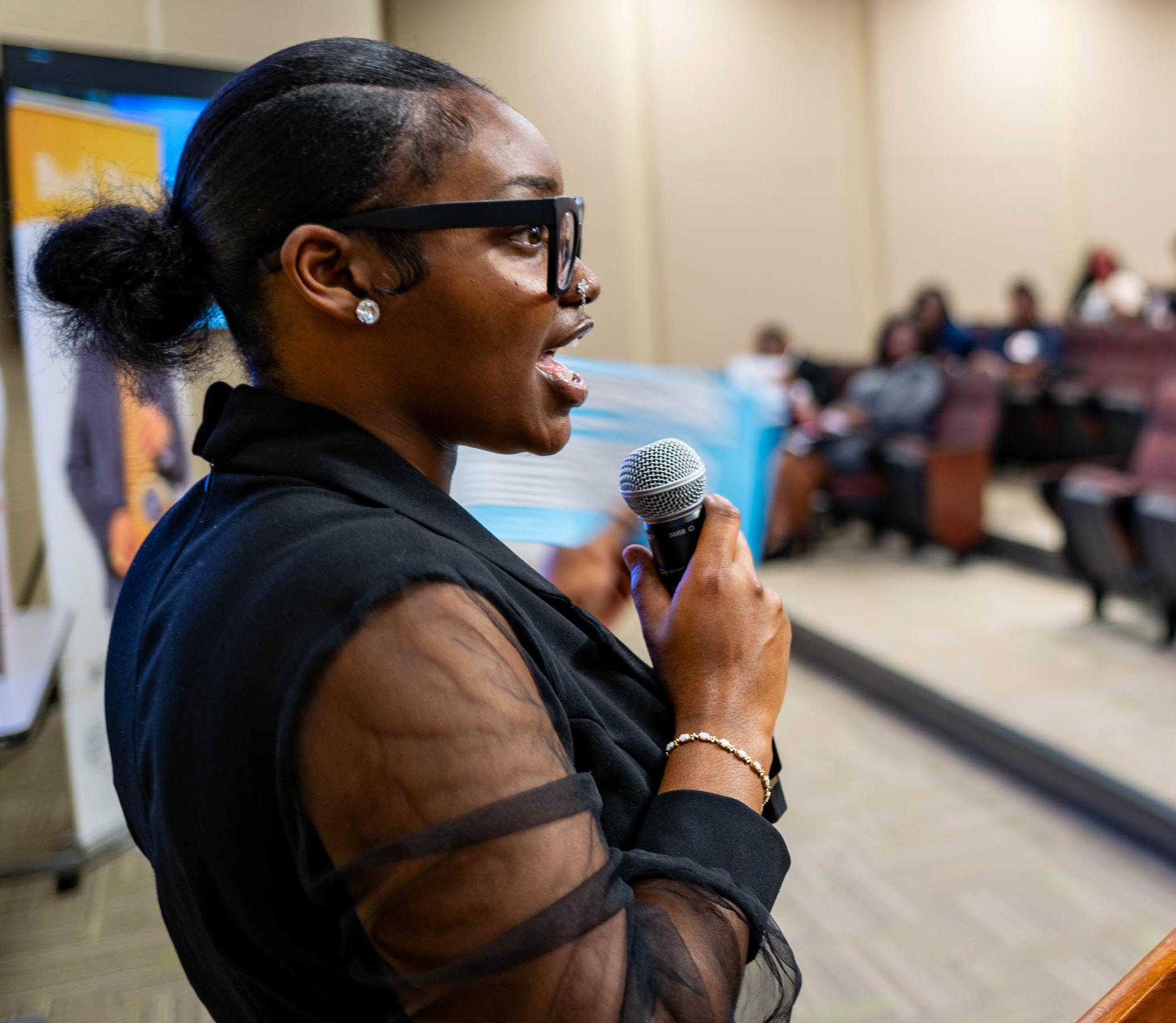
The MCC Small Business Development Center (SBDC), which opened in Millwork Commons in September, is building momentum serving aspiring area entrepreneurs and small businesses through education, resources and corporate partnership activations. The success of small businesses is critical in Nebraska. According to the U.S. Small Business Administration, small businesses account for more than 99% of businesses and 48% of total employment in the state.
The Center’s key offering, the 15-week MCC FastTrac Entrepreneurship and Business Development course, is offered on weeknights and evenings, helping business dreams come into focus as participants develop a business plan and
road map for growth. The course culminates with participants pitching their business idea to a panel of judges for the chance to earn seed money.
The second pitch competition last November had inaugural participant Carmine Cutaia on hand to lend encouragement and support. Cutaia, owner of Vintage Worldwide — a mobile thrift shop — won second place and $500 in seed money, which he used to purchase a cargo van to expand his company’s reach.
“I’ve been able to hit the road and travel to places that are farther away to sell and buy clothes,” Cutaia said. “Keep doing your thing and don’t let anyone discourage you. You know what you can do and you’re capable of it.”

99.1 percent of Nebraska businesses are small businesses
48.6 percent of Nebraska employees work at a small business
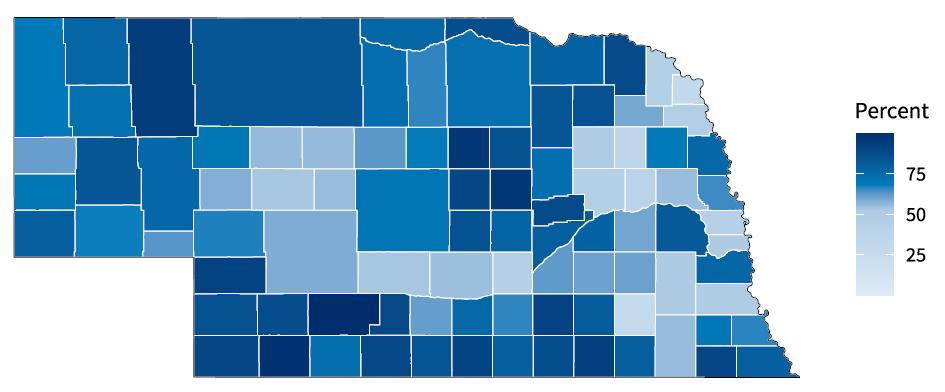
Share of employees working at small businesses by county
Source: U.S. Small Business Administration
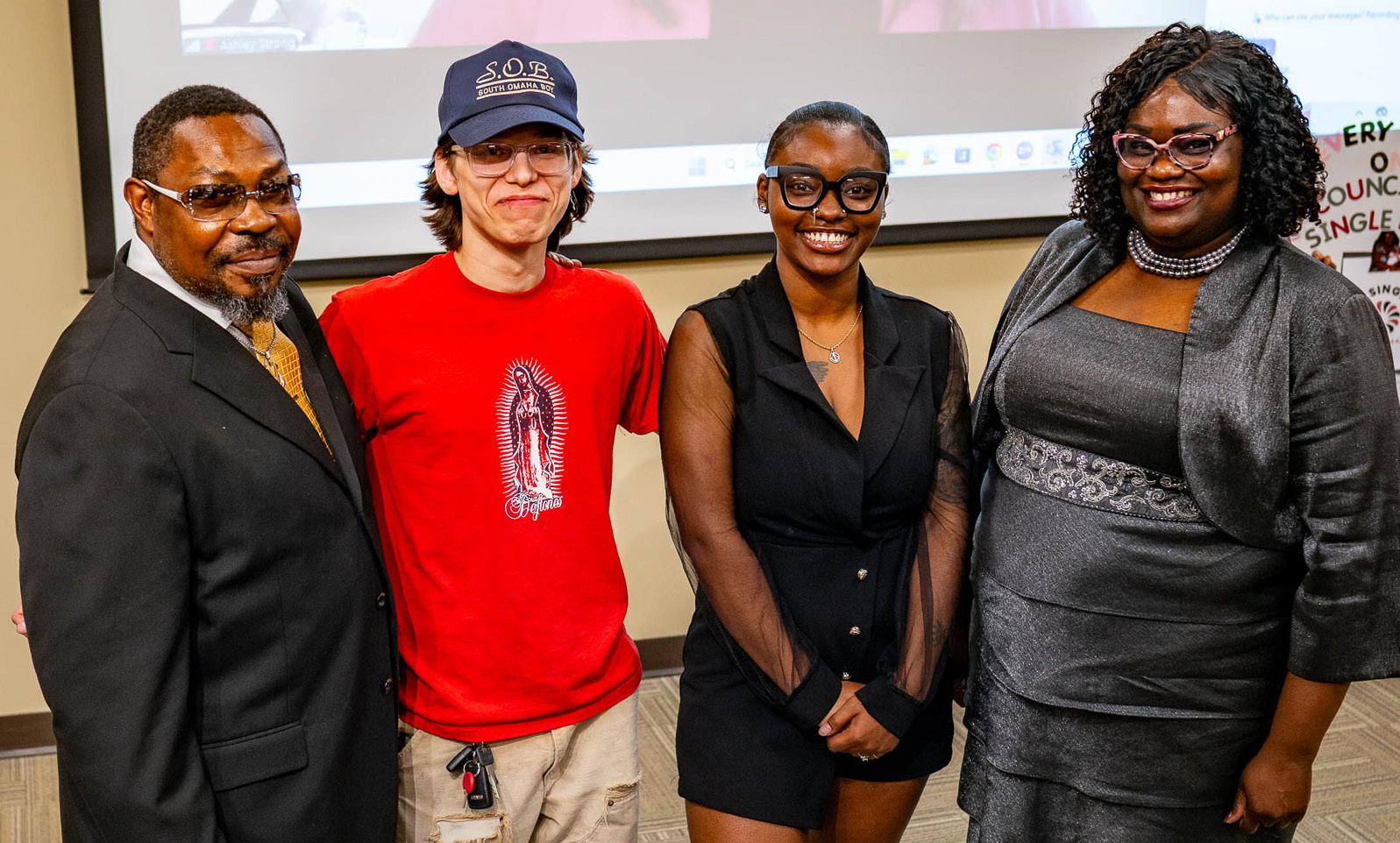
Cutaia competed against four other classmates — Ashley Strong of Panhandle Gymnastics, Chy-Nai Jones-Hill of Clawed by Chy, Manifest Impact Entity of EGA Impact and LaTanya Jackson of Every Single One — following the completion of the spring cohort.
While optional, the pitch competition gave program participants a chance to test their business plans and receive feedback from other business owners, entrepreneurs and experts.
In just two cohorts, the FastTrac program has helped 20 entrepreneurs from various stages develop a path forward for their businesses.
Daphne Cook, MCC director of Business Development Education, said she was impressed by the range of pitch competition participants.
“We’ve had a student who just graduated from high school, a student who’s in his 50s, one who already has a successful business and another who has a master’s degree. It really highlighted the variety of experiences represented by our students and local businesses,” Cook said.
The range of program participants was a testament to the research done by MCC executive director of Business Development, Dr. Marla Ashe.
Ashe said focus groups indicated participants wanted to be taught by other small business owners they could relate to.
One of those instructors is Tiffany Johnson, a career advisor for the Walter Scott, Jr. Career Pathway Scholarship program. Another is Melani Luedtke-Taylor, who owns her own consulting business and teaches the Intro to Entrepreneurship class at MCC.
“I really understand the struggles that some of the students have,” Luedtke-Taylor said. “I went to school at night. That’s how I got both my bachelor’s and master’s. I also went to MCC to complete my first credits.”
With a doctorate in business administration and more than 25 years of experience in the corporate sector, Ashe understood the limitations of traditional approaches to entrepreneurship and business development instruction.
“Business is conceptual, and most entrepreneurial education is rooted in theory and lack practical
applications,” Ashe said. “We needed something different.”
After learning about the Kauffman Foundation’s FastTrac curriculum, she knew she’d found the right fit. The program, which is offered in person and online, was not only applicable for entrepreneurs at any stage but also provided hands-on learning.
“We talk about the real-time application — transitioning from theory to real world in stages,” Johnson said. “There’s the ideation stage, the business plan stage and the launch stage. The workspace we use allows students to generate and view what their business plan looks like in real time, so they can see it as it updates.”
Johnson said simulation tools helped students understand startup costs and financial planning in real time.
“The simulation populates information into a financial statement so they can see how the data is used,” Johnson said. “For those who are just starting, they can take financial projections to the bank or an investor to get a loan.”
Another key component that separates this FastTrac program is the valuable product that students who complete the program leave with — a business plan.
“FastTrac gives you the real-world basics that help you develop that business plan,” Luedtke-Taylor said.
Before taking the class, Jones-Hill was pursuing her associate in business administration.
“I didn’t even know entrepreneurship was something I wanted to focus on,” she said.
During the program, she built a business plan for her side hustle, Clawed by Chy, and learned how to position her business uniquely as a mobile nail salon that caters to all ages.
“It helped me get to the point where now I know what I want. I want to be a business owner full-time. I want to be a motivational speaker, and I want to open an academy and teach other girls how to do nails,” she said.
Jones-Hill won third place and $300 in seed money at the inaugural pitch competition.
On the other end of the spectrum, Travis Brown’s business, All Around Brown, has been in existence for 15 years.
“I’ve been cutting down trees, pouring concrete, cleaning and doing dirt work,” Brown said. “Going through this program helped me focus on just one thing, and that’s the tree care service.”
He won second place and $500 in the fall pitch competition. He said he’s going to use the money to build sidewalls for his refuse dump area.
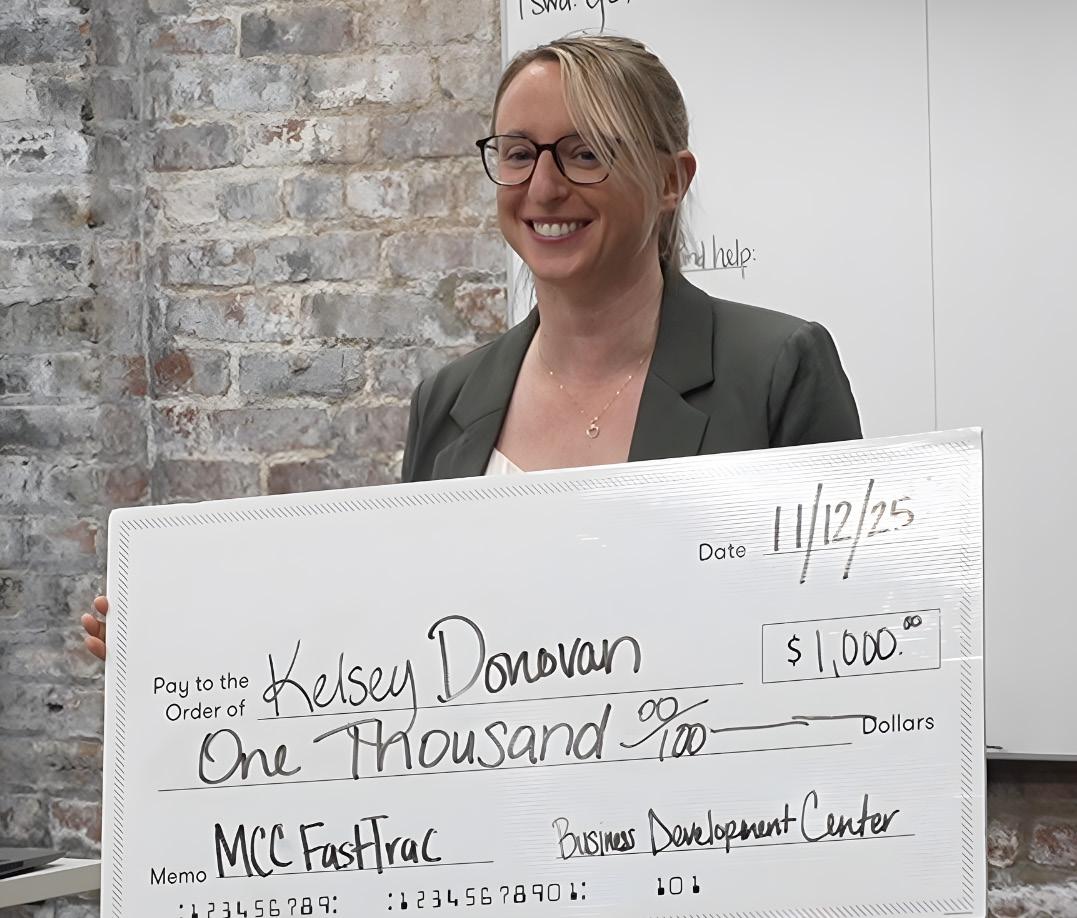
Much like Strong, Kelsey Donovan entered the program with a strong desire to support the community.
For Strong, her community is located 430 miles away from the MCC Fort Omaha Campus in Chadron, Nebraska. Chadron is a town of just over 5,000 in northwestern Nebraska.
Strong opened Panhandle Gymnastics eight years ago to provide kids in Chadron with the same opportunities she had while growing up. When she joined the program in the spring, her business was “in the middle of some difficult growing pains.”
“I have families who have daughters in gymnastics, but their sons can’t participate because we don’t have enough room. Or one child is enrolled, but another can’t be because of space limitations,” she said.
Donovan, who was enrolled in the fall program, wanted to bring a local ice cream shop back to Gretna.
“I grew up in Gretna and there used to be a small ice cream shop called Cone Corner that I loved ... I would go with my mom, and we would share an old-fashioned banana split and it was just such a wonderful memory,” she said.
“[Now] there isn’t a neighborhood ice cream shop in Gretna, and every small town needs a local ice cream shop.”
The program helped both women develop a business plan that brought additional value to the community.
Strong, whose pitch was for capital to expand into an adjacent space and purchase additional equipment, planned to add an after-school program on Fridays and during holiday breaks. She won first place and received $600 in seed funding.
Donovan decided to make her creamery an agri-tourism stop. She plans to partner with a local
dairy farmer to raise cows and sheep on-site, using their milk for her ice cream and cheese. Visitors will be able to take tours, learn about the process and purchase a variety of items.
“I believe that people will travel for good food and experiences,” Donovan said.
A $10,000 grant from the National Association for Community College Entrepreneurship boosted the seed funding available at the second competition, allowing Donovan to receive $1,000 for her first-place win.
The program has given participants a network of like-minded individuals to lean on. This is incredibly important as more studies demonstrate a higher level of mental health challenges for entrepreneurs.
“We all need communities,” Johnson said. “It was so nice seeing students help and support each other in class.”
Johnson said her support as an instructor doesn’t end when the course is over.
“I’m riding with them until they launch, and I’ll continue to support them. That’s what it’s about for me,” she said.
Have a business concept you’d like to explore with a local professional?
Head to mccneb.edu/SBDC to learn more about the MCC FastTrac Entrepreneurship and Business Development course and other services and resources available.

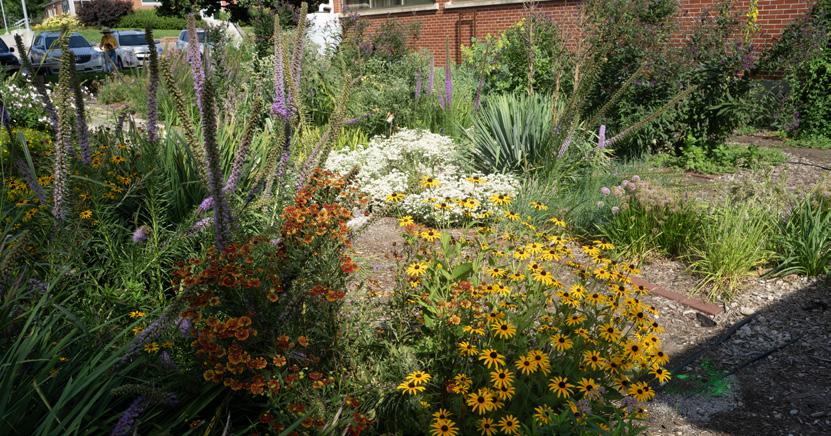


The Fort Omaha Campus horticulture gardens were a featured stop in the 2025 North Omaha Summer Arts (NOSA) Garden Walk held last August. The walk included eight gardens located along North 30th Street, spanning Ames Avenue to Dick Collins Road.

Other stops included: Omaha Public Library Washington and Florence branches, Church of the Resurrection, Lutheran Service Corps, No More Empty Pots Food Hub, Florence Mill and The Pollinator Garden.
The NOSA Garden Walk returns in August 2026. Check the North Omaha Summer Arts Facebook page for more information.
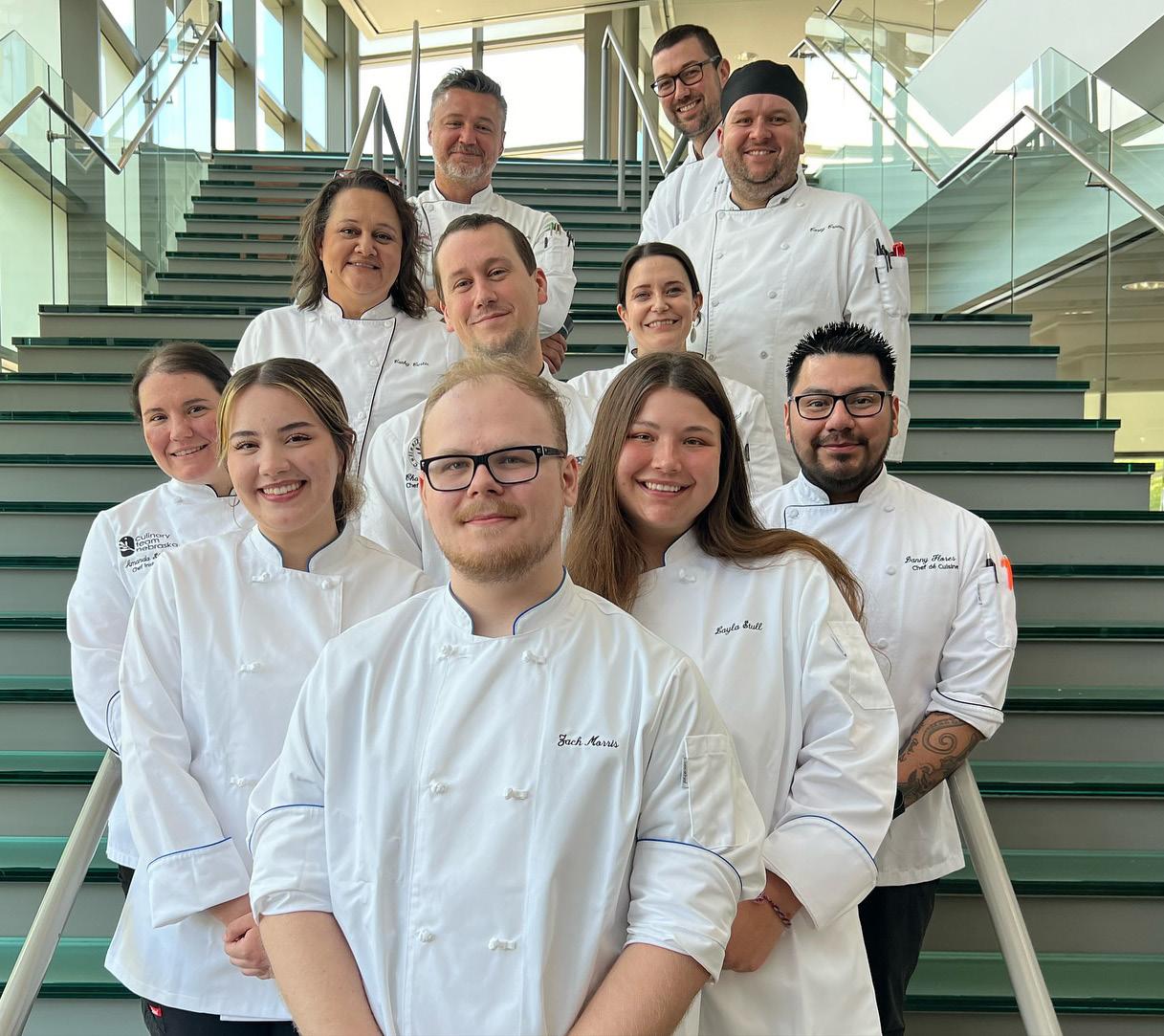
Family and friends of three Culinary Arts and Management program students gathered at Sage Student Bistro to celebrate the participants’ halfway mark in the program. Students continuing their journey receive their chef’s coat embroidered with their full name, a rich tradition at the MCC Institute for the Culinary Arts.
“It signifies their accomplishments thus far and demonstrates that we believe in their ability to succeed as they move forward in the program and out into industry,” said Culinary Arts instructor Cathy Curtis.
The three students who received their coats were Talia Lopez, Zach Morris and Layla Stull.
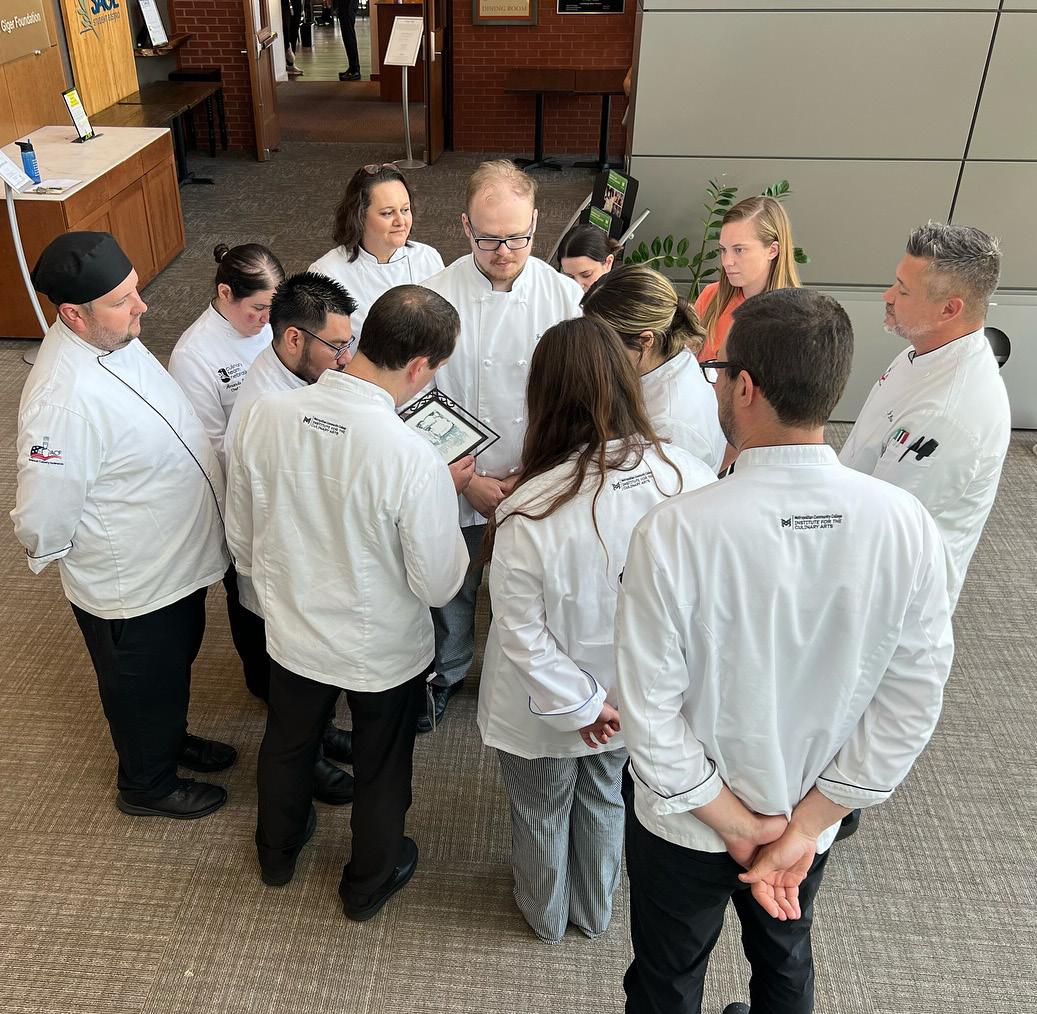
Before receiving their coats, instructors and staff were asked to give the students some words of wisdom.
“Even if you have a bad practical or you burn something, that’s bound to happen. It doesn’t make you a bad chef,” said Emma Helwig, outreach specialist. “Brush it off and refire. Refire 1,000 times because we all burn things.”
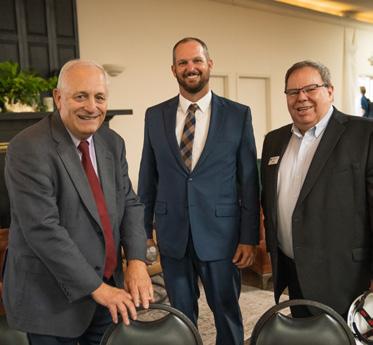
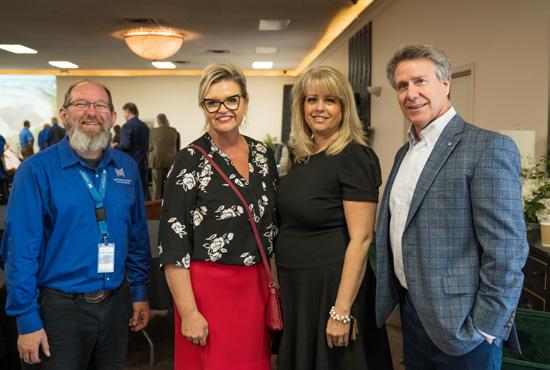


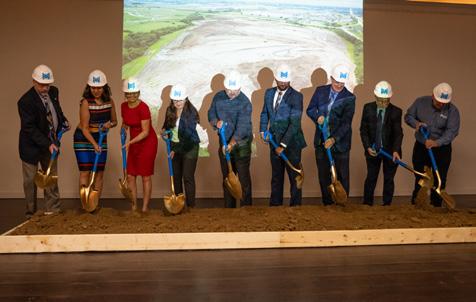
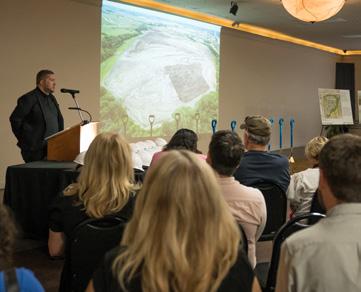
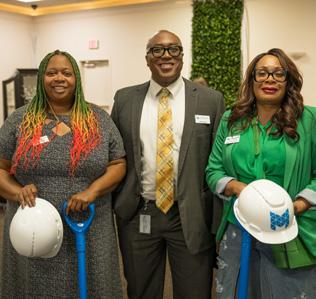
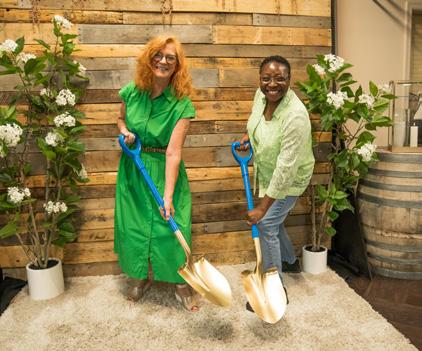

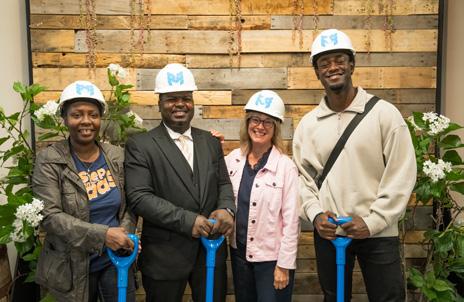
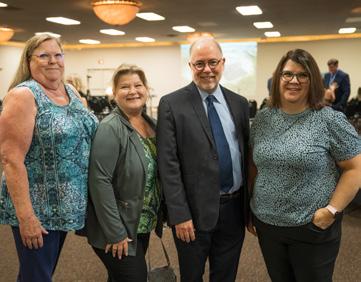

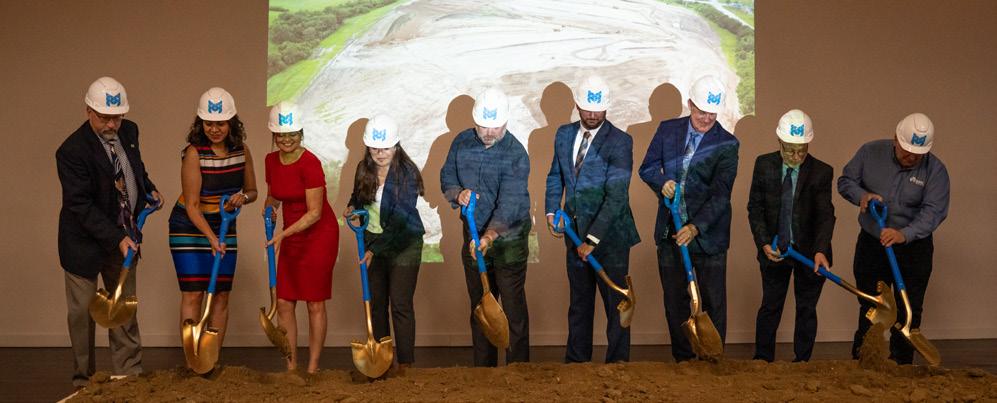
Community members, employees and city officials gathered at Millard Social Hall to celebrate the groundbreaking of the future home for the College’s fourth permanent campus — the Sarpy County Campus. Strategically located near the I-80 interchange at Highways 50 and 370, the 144-acre campus will anchor a mixed-use, purpose-built development.
“The groundbreaking marks not just a plan to construct some buildings, but a reaffirmed commitment to our students, faculty, staff, our partners in the business community, local high schools, and, most importantly, the communities we serve,” said MCC Board of Governors Chair and District 4 Representative Zach Reinhardt at the event.
Recognizing a surging population, the College purchased the land nearly a decade ago. Today, Sarpy County continues to be the fastest-growing county in Nebraska.
The new campus will be located within a 15-minute drive from seven area high schools, increasing accessibility for youth.
Potential programs located at the campus could include advanced diesel technology, supply chain logistics and first responder training.
“This campus is being built with the future in mind ... a place where the pursuit of lifelong learning is interwoven with workforce, innovation, community, connections and opportunity for all who wish to participate,” said MCC Vice President for Strategic Operations and Initiatives, Nate Barry.
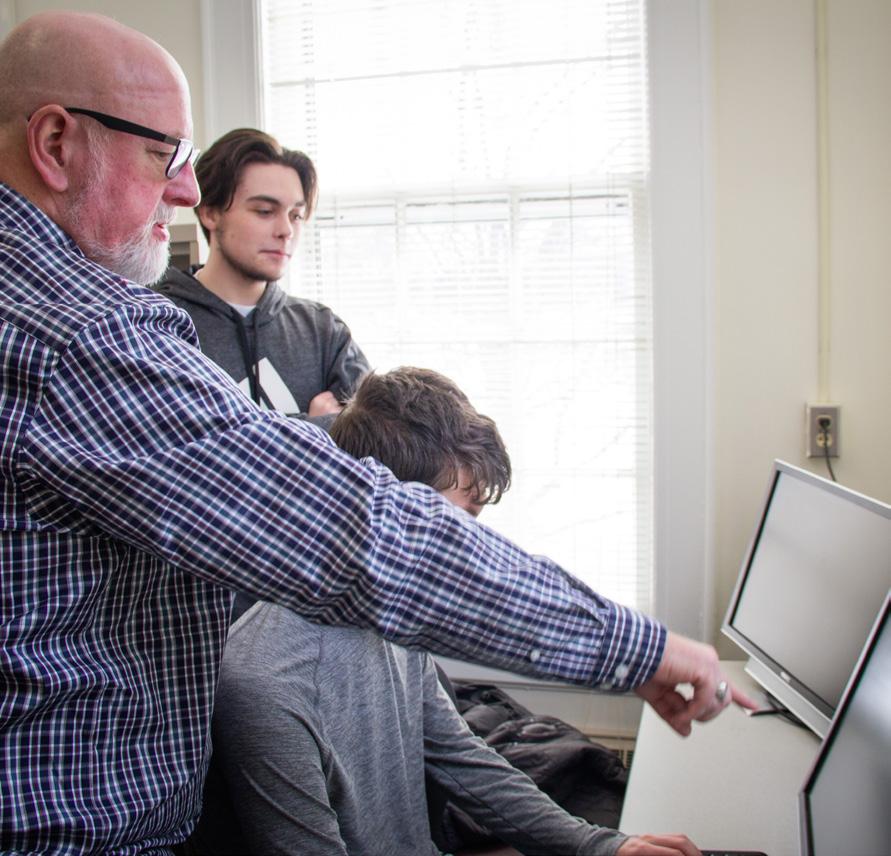
Cybersecurity Guide, an online resource for people interested in attaining degrees and entering careers in cybersecurity, ranked the Metropolitan Community College Cybersecurity program the No. 16 associate degree program in the nation for 2026. “All 150 schools listed in the rankings were required to hold designations as Academic Centers for Excellence by the National Security Agency,” said Cybersecurity program coordinator and instructor Gary Sparks.
“I came to MCC to finish my degree and [faculty in the program] always helped me out,” said Dylan Cooper, a 2023 graduate of the program. “They’ve always had a place for me to work on my studies,
and I enjoyed it. It’s a great program — they teach you everything you need to know.”
TechGuide, a website dedicated to providing resources on tech-focused careers and education, ranked the MCC online Computer Technology Transfer – Computer Science program as the 14th-most affordable online associate degree in the country.
MCC was the only community college in the Midwest ranked among the top schools with the majority of programs located in California and Texas.
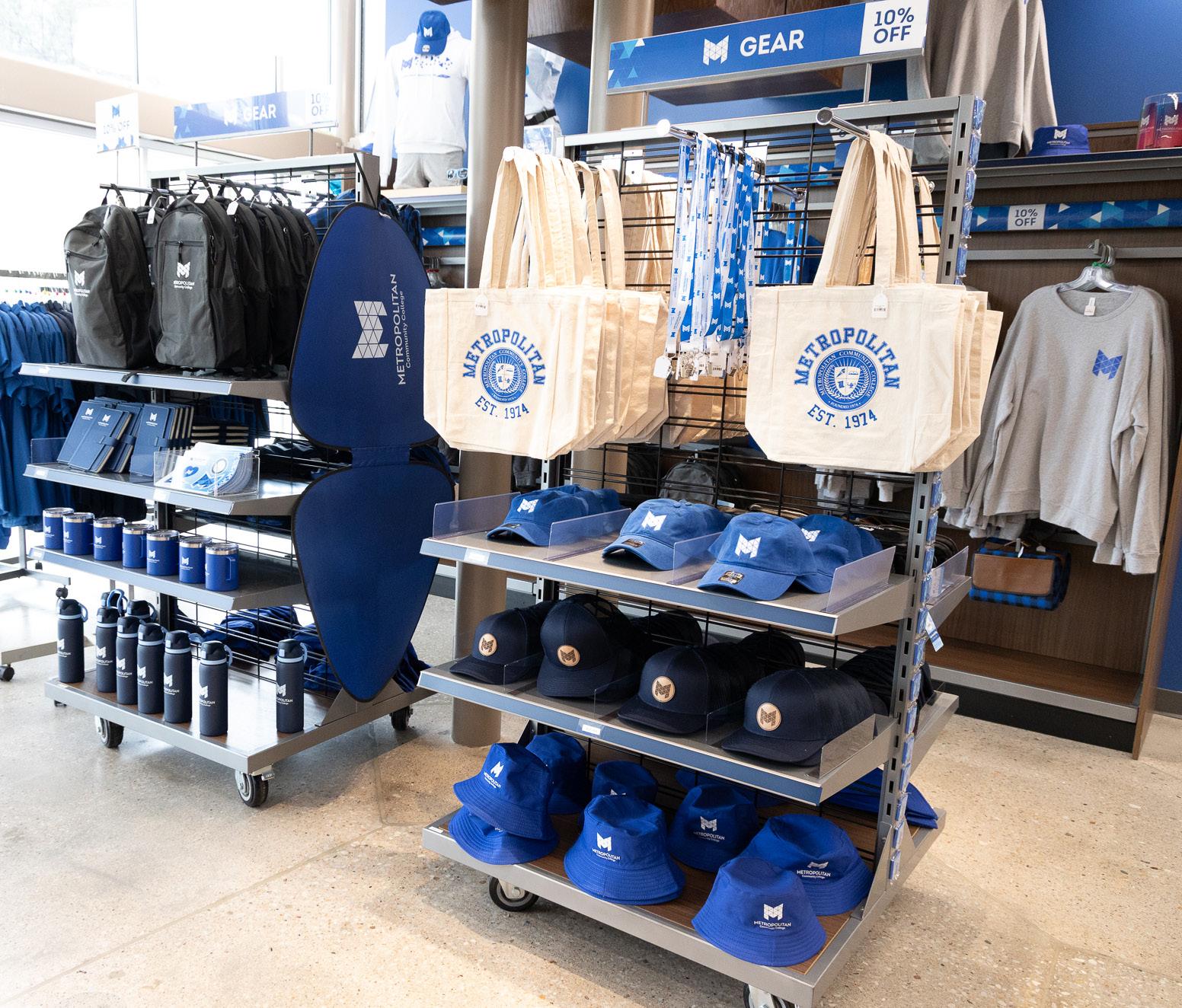
After a full reset over the spring and summer, the MCC Campus Store at the Elkhorn Valley Campus opened its doors in September. The store is now fully owned and managed by the College, generating revenue and offering high-quality, affordable goods.
For the first time, a local coffee provider is operating out of the Campus Store at EVC. Karma Koffee provides signature coffee drinks, smoothies, teas and made-to-order breakfast and lunches, including gluten-free and vegan options.
The store also provides a variety of ready-to-eat snacks, frozen microwaveable entrees, drinks, school supplies and personal care items.
View Campus Store hours at mccneb.edu/Community-Business/Bookstore or call 531-MCC-1208.
It offers exclusive, MCC-branded merchandise and apparel with special discounts and deals offered periodically.

I graduated from Papillion-La Vista High School in 1997. I really struggled due to having ADHD. I chose to attend Metropolitan Community College because my high school counselor highly recommended I start my college career there. While at MCC, I had a 3.7 GPA due to the supportive staff and teachers.
I have been in early childhood education for more than 25 years, spending 23 at the UNMC Early Childhood Center. Then I went to Underwood Hills Early Childhood Center for seven months, before deciding to get a special education/behavior paraprofessional job at Ralston High School to get some experience working with older children and special education experience.
I’ve had many proud moments in my early childhood career after graduating from MCC. First, I got promoted from full-time assistant infant teacher to full-time lead teacher. I was the lead infant teacher for 20 years, then I decided to go back to school full-time to earn my bachelor’s degree at University of Nebraska Omaha. MCC and UNO have a great partnership and I was able to successfully transfer 64 credits from MCC to UNO, starting my bachelor’s degree as a junior.
Despite going to UNO 20 years later, I was able to retain most of the information I learned while attending MCC, applying it to my job in early childhood education. It helped make me more confident and knowledgeable when caring for the kids and communicating with the families. I learned great team player skills!
At UNO I am majoring in elementary education/special education and minoring in psychology. The psychology classes I took at MCC all transferred. My favorite classes were Creative Curriculum, Abnormal Psychology, Children’s Literature, Public Speaking and learning resourceful ways to teach children during my practicum.
Mrs. Leidy and Mrs. Halverson were amazing at running the Early Childhood Program at MCC. I had several other teachers that I had so much fun with, too. My favorite activities at MCC were getting to know the other students and building a study group together. I felt so grown up! Instead of partying on a Friday night, we would take turns going to different houses to study and have dinner together. I made some great friends. We all wanted each other to succeed.
The number of veteran and military-connected students enrolled at Metropolitan Community College continues to rise. Today, the College serves more than 850 military or military-connected students, a 38% increase from 2020.
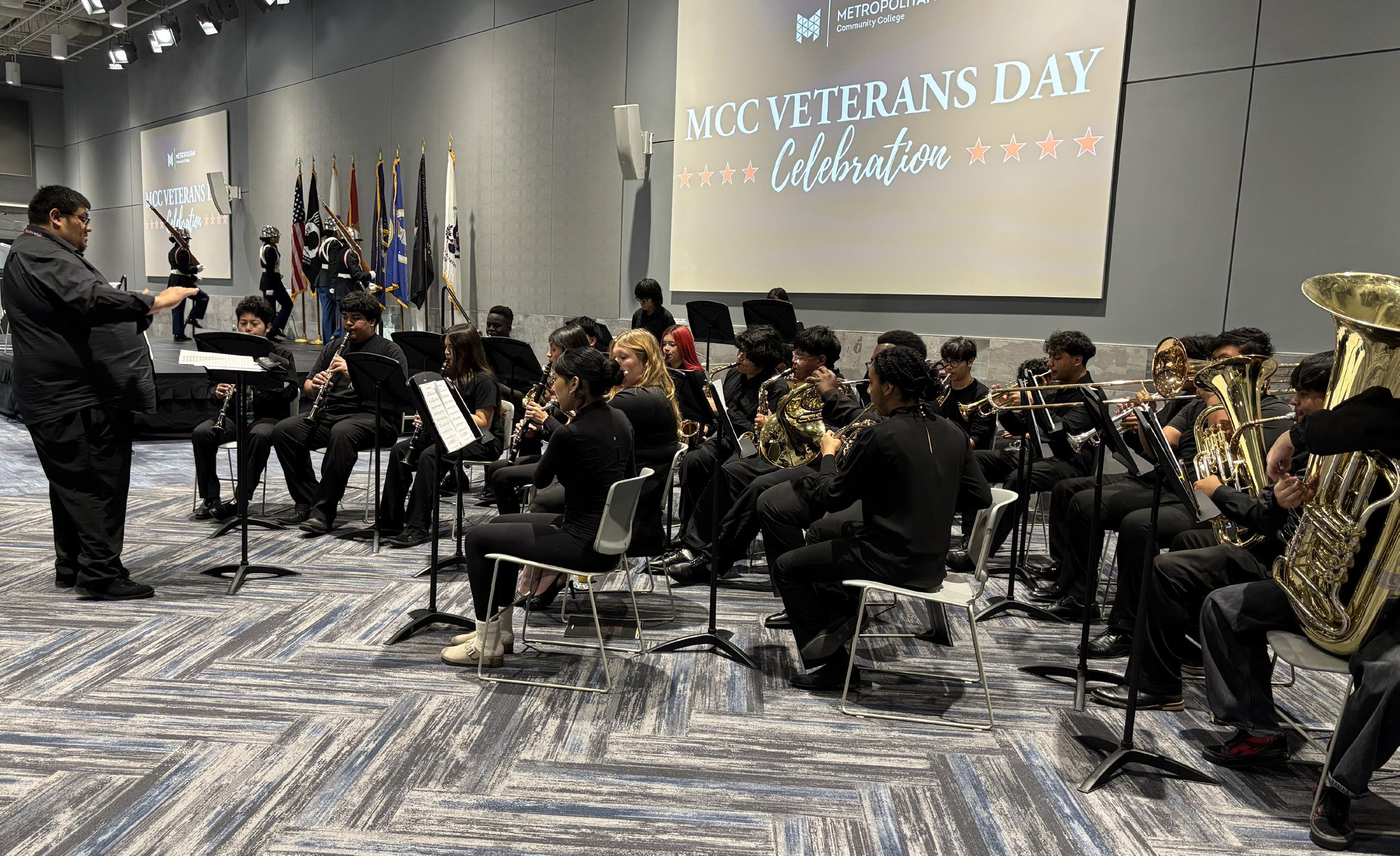
Students with service affiliations aren’t just showing up more in the College’s classrooms. More than 200-plus guests attended the College’s annual Veterans Day Celebration on Nov. 11 at the South Omaha Campus — a spectacular turnout.
The celebration, held in the event space at the Center for Advanced Manufacturing, spotlighted three student artists who have connections to the military — Claire Guinzy, U.S. Army veteran; Robbin Alex, U.S. Navy veteran; and Nanika (Niki) James, the spouse of a U.S. Navy veteran. James also works in the MCC Veterans and Military Resource Center (VMRC) on the South Omaha Campus.
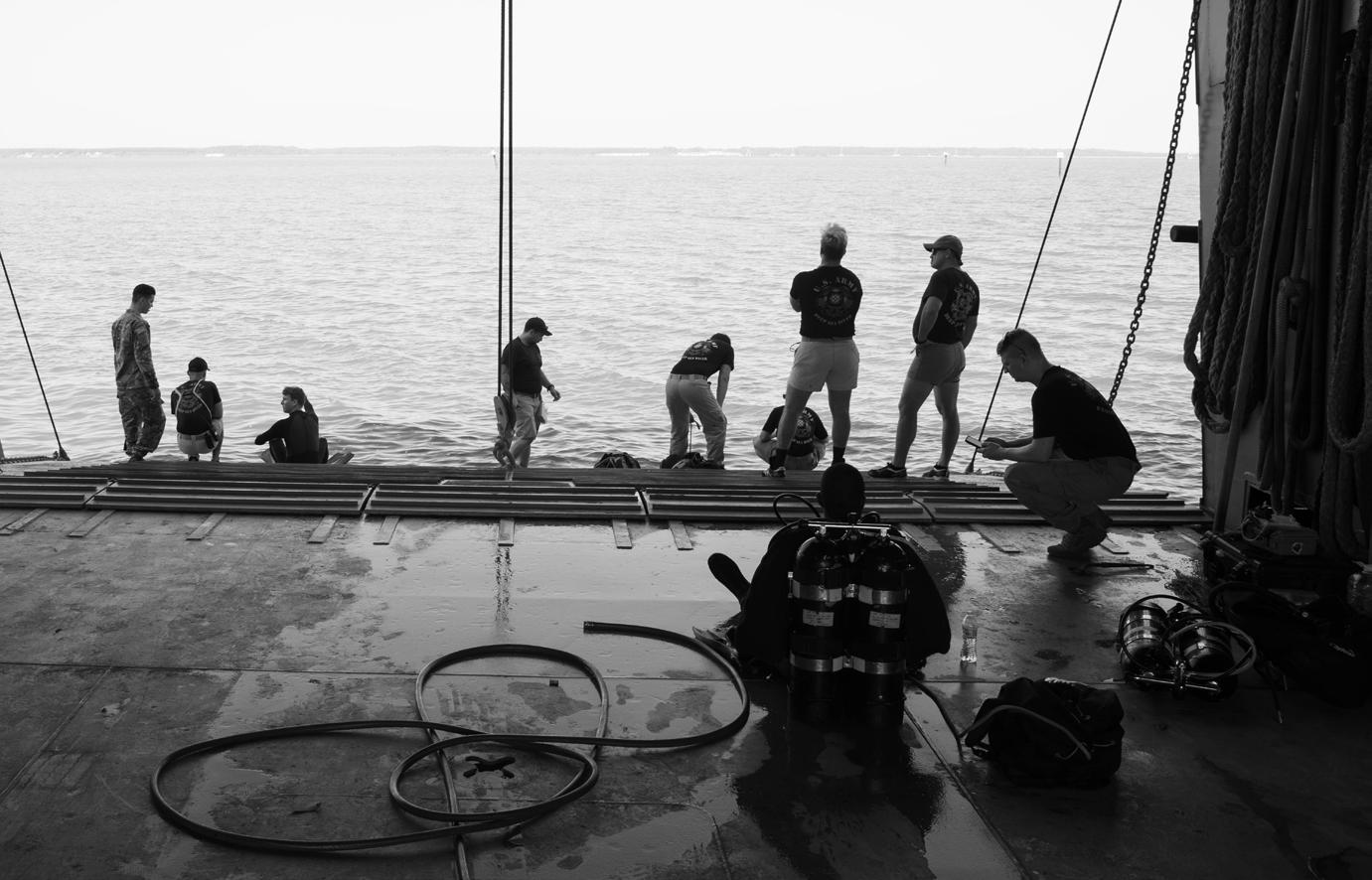
Guinzy’s black-and-white photography exhibit lined the hallways outside the VMRC — work informed by more than 10 photography classes she has taken at MCC since 2022 using her military benefits. Photography was a long-standing passion she wanted to pursue after serving in the Army from 2012 to 2015, stationed
at Fort Jackson, South Carolina, and the United States Military Academy at West Point, New York. Guinzy’s collection, titled “Depths of Duty,” captured her brother’s service as a U.S. Army diver. Her project explored his dedication to a job that “exists mostly out of sight” and was an attempt to “understand the space between duty and identity.”
Like Guinzy, Alex gravitated toward photography following military service. She served as a nurse in the U.S. Navy. Alex was featured in a reflection video with three other student veterans who shared why they joined the military, what they learned from the experience and why they chose MCC.
“I am a nurse and I have to be on point every day. You can’t make a mistake when other people’s lives depend on you,” she said. “I always loved photography, and I wanted to do something less life and death. The instructors broadened my horizons. They didn’t let me just go to the things I liked, like barns and flags.”
David Cruz, a U.S. Navy veteran, spoke about his desire to help other veterans in North Omaha express themselves. He is on track to receive an associate degree in business administration and hopes to open a veterans community center.

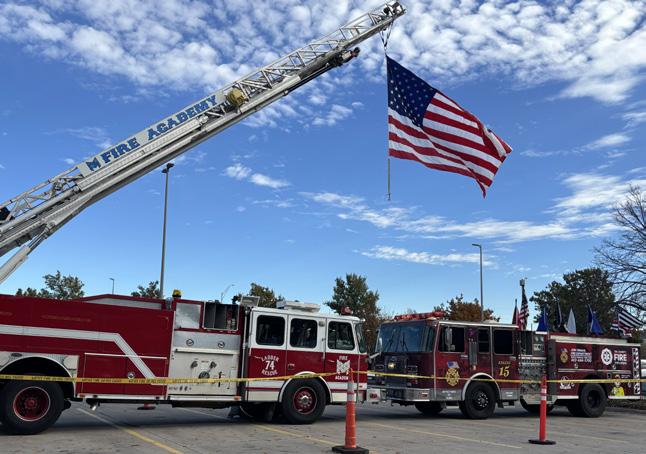

Continuing to serve was a theme throughout the program. Like Cruz, keynote speaker Tony Barnes was looking to support fellow veterans when he opened Victory Riding Academy (VRA) with his wife JoDee Barnes. Tony Barnes served in the U.S. Navy from 1986 to 1990 as an aviation fire control technician. JoDee Barnes is a U.S. Air Force veteran. Both have family members who served.
In 2010, the couple opened VRA to offer veterans and military-connected community members opportunities for healing through equine therapy. Since opening, they have served 4,850 individuals.
“That is 4,850 moments of trust and healing,” Barnes said. “Each ride represents more than time in the saddle. It represents a veteran rediscovering calm, or a family reconnecting and learning to breathe again after years of high stress. That’s the magic that happens when horses meet heroes.”
Rounding out the event was Mandy Robinson, whose husband served on active duty in the U.S. Air Force for more than 25 years. She shared some of the often-unseen challenges that come with being a spouse of a career military member.
“The military life has been good to us, but it hasn’t always been easy,” she said. “As an aircraft mechanic, Dan always worked long, untraditional hours and was called to serve on several deployments. Thankfully, we were blessed with a village of friends, neighbors, coworkers and countless others who knew what we were going through and showed up without being asked.”
After raising four children, Robinson found a new village at MCC, where she is pursuing a nursing degree.
“Being an older, nontraditional student, I was worried about going back to school after such a long absence,” she said. “Thanks to the wonderful benefits that I have because of my husband’s service and the generosity of scholarship donors, I am on track to finish my education and graduate this summer.”
Visit mccneb.edu/VMRC to learn more about support available at MCC for veterans and military-connected students and families.
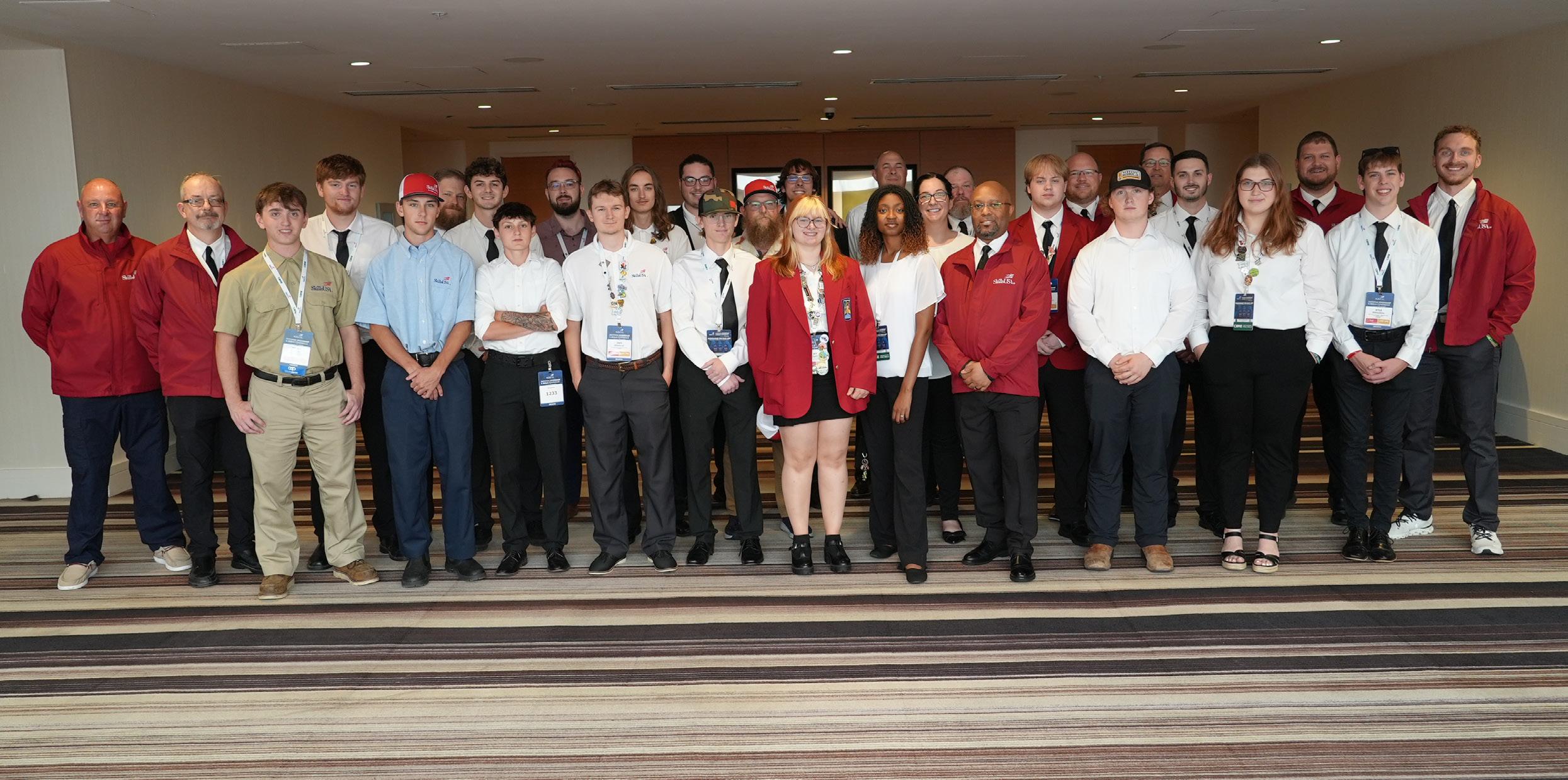
As the nation’s largest technical skills-based student competition of its kind, SkillsUSA is annual tradition.
For the past three years, the number of MCC students participating in SkillsUSA events at state and national levels has steadily increased, along with the number of medals brought back to campus.
This year, nearly 140 high school and college students competed under the MCC banner in the statewide championships. Almost half of them received either a gold, silver or bronze medal. Nineteen of them received a gold medal, punching their tickets to the SkillsUSA National Leadership and Skills Conference in Atlanta during the summer.
The MCC Foundation supports student participation and travel to nationals, creating a unique learning experience. In Atlanta, qualifying students compete in more than 100 timed and judged events related to their area of study against the top postsecondary and high school
students in the country. The event brings together more than 6,500 students annually.
“I was thrilled to see the level of participation by our students across all of our programs and so many competing at SkillsUSA Nebraska for the first time,” said Scott Broady, MCC dean of Skilled Trades and Technical Sciences.
But the best part of competing isn’t the medal; it’s the experience, which begins in Grand Island, Nebraska, at the state event each April.
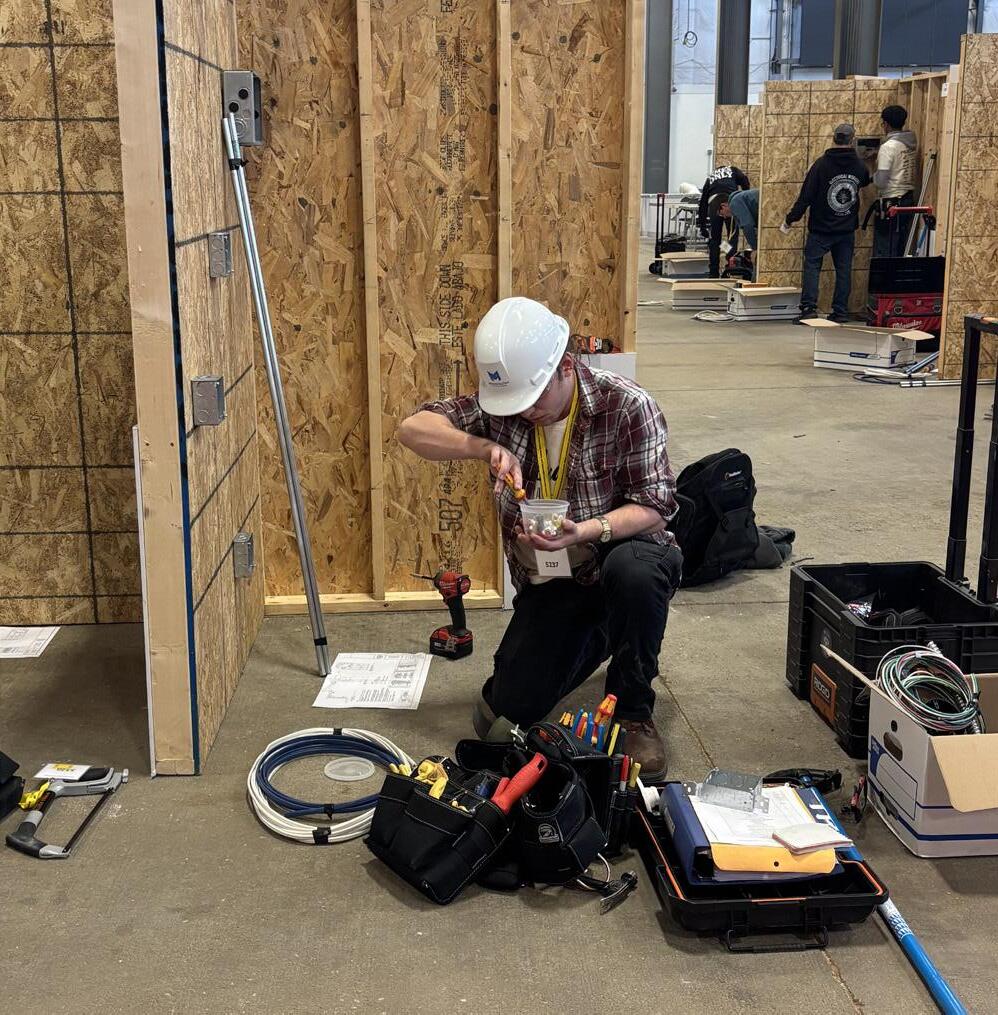
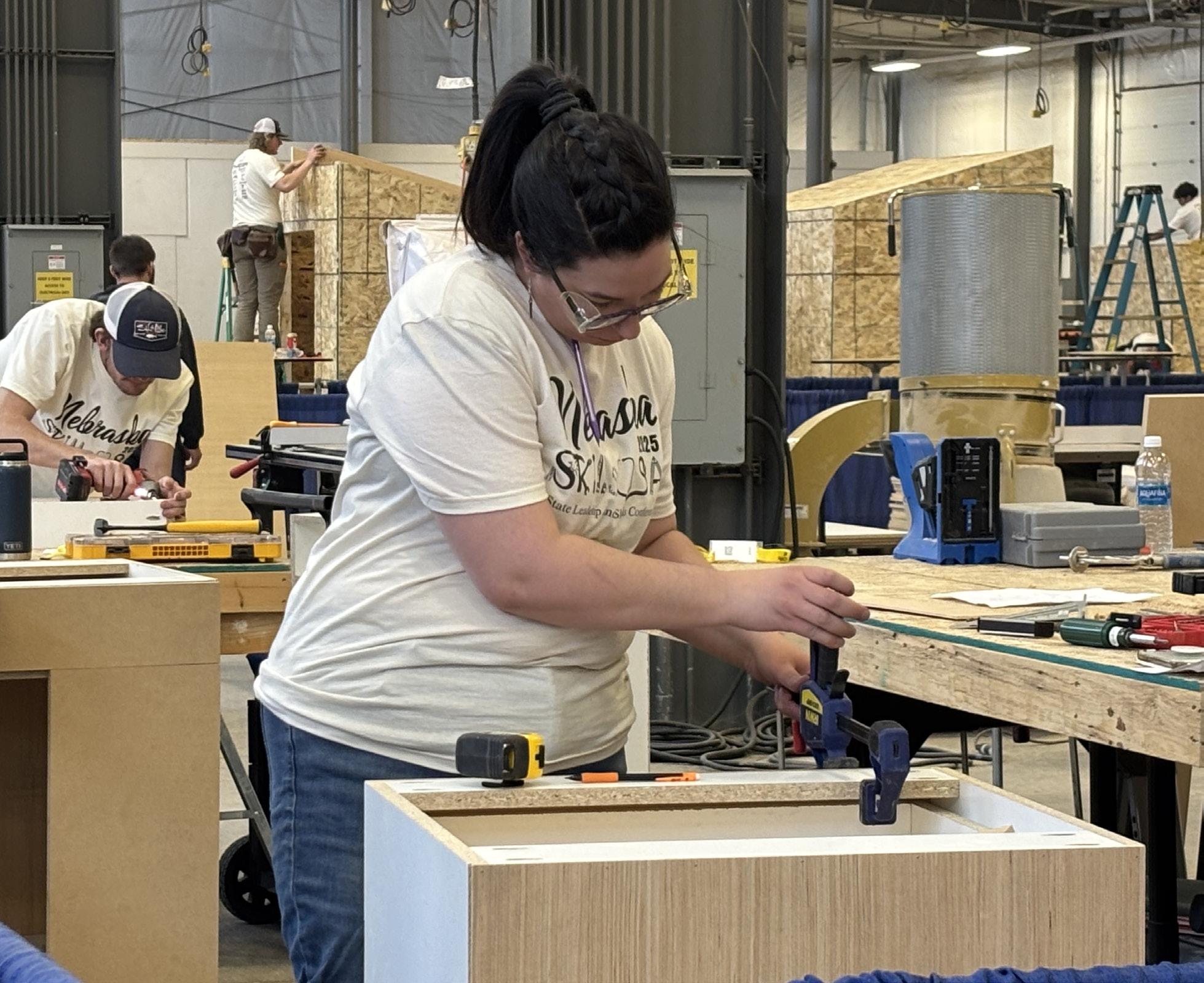
Natalie Salt won first place in Cabinetmaking in the college division at the SkillsUSA Nebraska Championships. She went on to take third place in the national competition in Atlanta.
Unless you’ve been to a SkillsUSA competition, it’s difficult to envision its size. SkillsUSA Nebraska takes over several of the buildings at Fonner Park in Grand Island — over half a million square feet of exhibition space.
“Once you get to see everybody, and what they’re capable of, you realize you’ve got to step it up,” said Michael Freeman, an electrical construction wiring student competing at the college level.
Competing against thousands of peers is likely to make even the most seasoned and confident students nervous.
“I was a little frustrated with the initial start, because I couldn’t think of a character,” said Sean Lee, competing in 3D Animation and Visualization at the college level. “But once we got started, I wasn’t nervous anymore.”
Both Freeman and Lee were recognized for their work. Freeman won a bronze medal and Lee won gold. At nationals, Lee and his partner Jake Douglas narrowly missed the podium, placing fourth out of nine teams.
At the state competition, Freeman said the event
was inspiring because it showed him that he could do the work.
“Just keep going and figure out what you’re doing wrong,” he said. “I was kind of iffy about it, but once I started, I realized I already knew how to do it.”
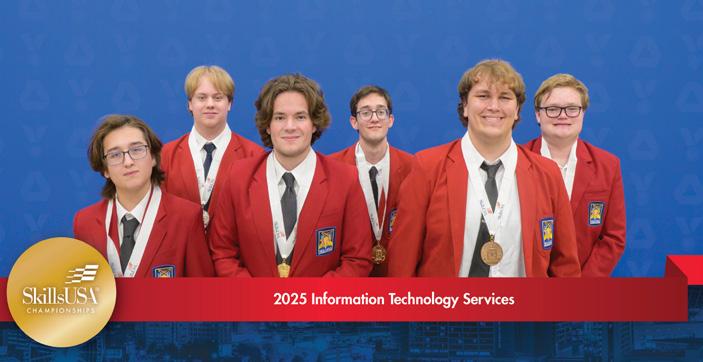
Also arriving at SkillsUSA Nebraska for the first time for MCC — three students competing at the collegiate level in information technology services. Students Liam Blachard, Enzo Del Balzo and Codie Petersen were coached by Guillermo Rosas. Rosas said participation was the only goal for the program’s first experience at SkillsUSA.
“It’s just a big win that we’re here,” he said. “We’ve been a unified department for over 25 years and this is the first time info tech has participated in Skills[USA].”
Blachard and Del Balzo wanted to participate in the competition to help gauge what they knew about the field and where they could improve. Both are lab technicians at MCC who are passionate about creating a community for other info tech students.
“We’re trying to build this community of students who help each other,” Del Balzo said. “Where instead of finishing up their work and walking out the door, they look at their neighbor and ask if they need anything. You learn a lot more that way, and I found that out by being a lab tech. I didn’t realize the gaps in my knowledge until I had other people around me.”
Rosas’ students overdelivered with an MCC sweep at state. The trio took home top honors with Blanchard receiving the gold medal, Parsons the silver and Del Balzo the bronze. At the national competition, Blanchard placed second in the nation.
Even though he didn’t make it to nationals, Del Balzo hopes to return to the state competition next year.
“We’re on the maiden voyage,” he said. “I’m trying to get my foot in the door and open it for other people. Hopefully next year we’ll be coming with more people.”
Returning to state, Mychaela Obbink was testing her knowledge of a new skill — automotive collision appraisal.
She previously competed in collision repair technology but shifted to collision appraisal after realizing that Gateway Collision Center — where she interns — was having trouble filling that position.
Gateway Collision Center is one of the College’s collision engineering partner shops, which allows students to receive hands-on experience while getting paid. Obbink is also taking advantage of the Career Forward grant, which covers tuition and allows Obbink to focus on her studies.
“I like [collision appraisal] more,” she said. “I have a greater understanding of what goes into fixing a car because of my experience in repair.”
Her experience earned her a bronze medal alongside fellow students Jeremy McBride (gold), and Tyler Kramar (silver).
Returning to the state for a third time in cabinetmaking, Natalie Salt was prepared. At her first state competition in 2023, Salt won a gold
medal and then finished in the top 10 at nationals. At state last year, a dispute regarding her score kept her out of placement.
Since then, Salt has been working on paid projects for family and friends.
“I’ve been working on my parents’ house,” she said. “There’s probably not one surface in that house that I haven’t touched.”
She also completed an advanced cabinetmaking class. What started as a desire to build her own kitchen cabinets three years ago has now turned into a side hustle that she’s passionate about.
“I have a daughter. She’s 14 and in high school,” Salt said. “I’d love to show her that she can do the things that she wants to.”
This year, Salt was back on top, receiving the gold medal at state and a bronze medal at nationals.
When James Strawn signed up for his first state competition, it was simply because he heard it was fun. Over the last four years, though, it’s been more than just fun.
“I learned behind the scenes about how the fire science industry works,” he said.
This year he received a gold medal at the state championship.
“I felt very good going into the state competition, not as much at the national competition,” he said.
Despite the nerves, Strawn’s experience guided him to a second-place finish at nationals — continuing the MCC Fire Science Technology program’s three-year streak of medaling at nationals.
Participating in SkillsUSA Nebraska for the first time, dual enrollment student Jack Kirk, who goes to Papillion-La Vista High School, said the competition helped him picture a career in electrical work.
“It’s a really energetic environment. [From competing at the conference], I realized that if I went into electrical construction for work, it wouldn’t feel like work because it’s so much fun,” said Kirk, who earned a bronze medal in Electrical Construction Wiring in the high school division.
More than 6,500 participants competing in 14 skilled trades and leadership contests gathered in Atlanta for the SkillsUSA National Leadership and Skills Conference, from June 23-27. Represented by 19 students and 14 advisors, MCC competitors brought home five medals.
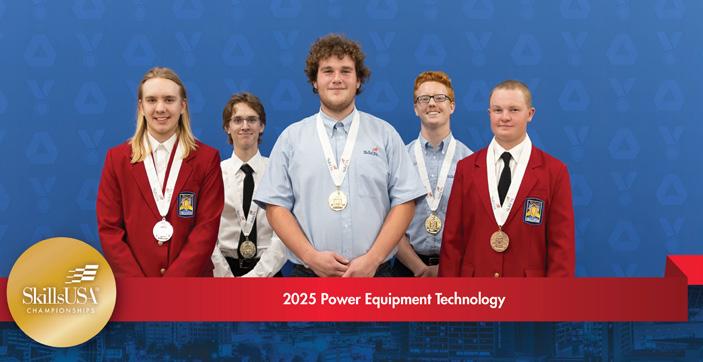
For the second consecutive year, Callan Scholz earned a gold medal in the Power Equipment Technology category at the college level. This marks only the second year that a student from MCC had competed in Power Equipment Technology at both the state and national levels.
“As Callan’s instructor, watching him win the national SkillsUSA championship for the second year in a row is a moment of immense pride and validation. His dedication, technical skill and professionalism reflect the highest standards we strive to instill in our students every day,” said instructor Terry Kuebler, who helped launch the Powersports and Outdoor Equipment Technology program at MCC. “This national recognition affirms that our curriculum, hands-on training and commitment to student success are producing top-tier technicians ready to lead the industry.”
Students who medaled at nationals will receive a scholarship from MCC to help pay for their fall courses — gold, $3,000; silver, $2,000; and bronze, $1,500.
STUDENTS FOR AN EXCELLENT SHOW OF SKILL, KNOWLEDGE AND DEDICATION.
• 3-D Visualization & Animation (college): Sean Lee and Jake Douglas
• Automotive Refinishing Technology (high school): Callie Nickerson
• Cabinetmaking (college): Natalie Salt
• Collision Damage Appraisal (college): Jeremy McBride
• Collision Damage Appraisal (high school): Kyle Ferguson
• Diesel Equipment Technology (high school): Zack Carson
• Digital Cinema Production (college): Kaden Andersen and Gabriel Ysusi
• Firefighting (college): James Strawn
• Firefighting (high school): Justice DeWitt
• Heating, Ventilation, Air Conditioning & Refrigeration (high school): Dylan Strong
• Information Technology Services (college): Liam Blanchard
• Motorcycle Service Technology (high school): Jordan Camden
• Photography (college): Kaniah Alston
• Plumbing (high school): Matthew Kelly
• Power Equipment Technology (college): Callan Scholz
• Welding (college): Jay Dake
• Welding Sculpture (high school): Hayden Johnson
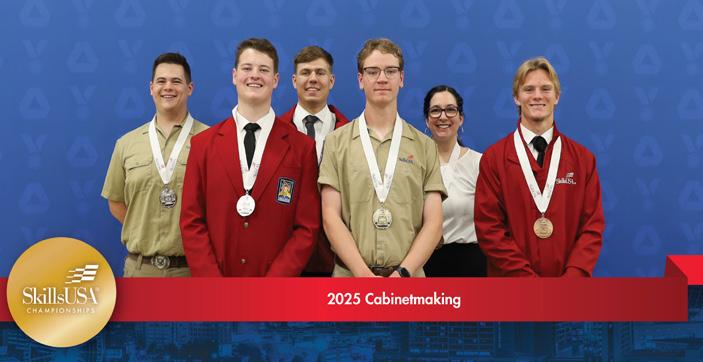
Second from far right: Natalie Salt received a bronze medal in Cabinetmaking, her second time qualifying for nationals and first time medaling at the event.
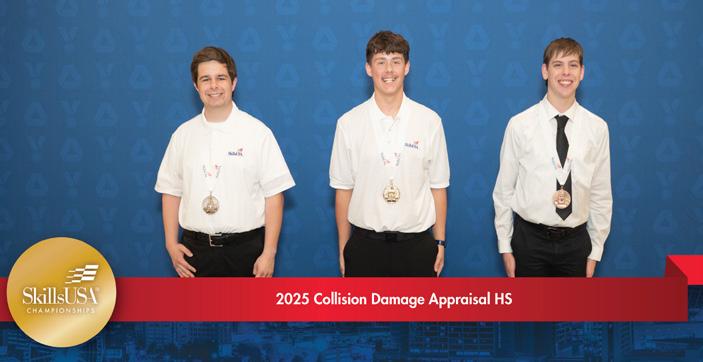
Far right: Kyle Ferguson took third place in the high school division of the Collision Damage

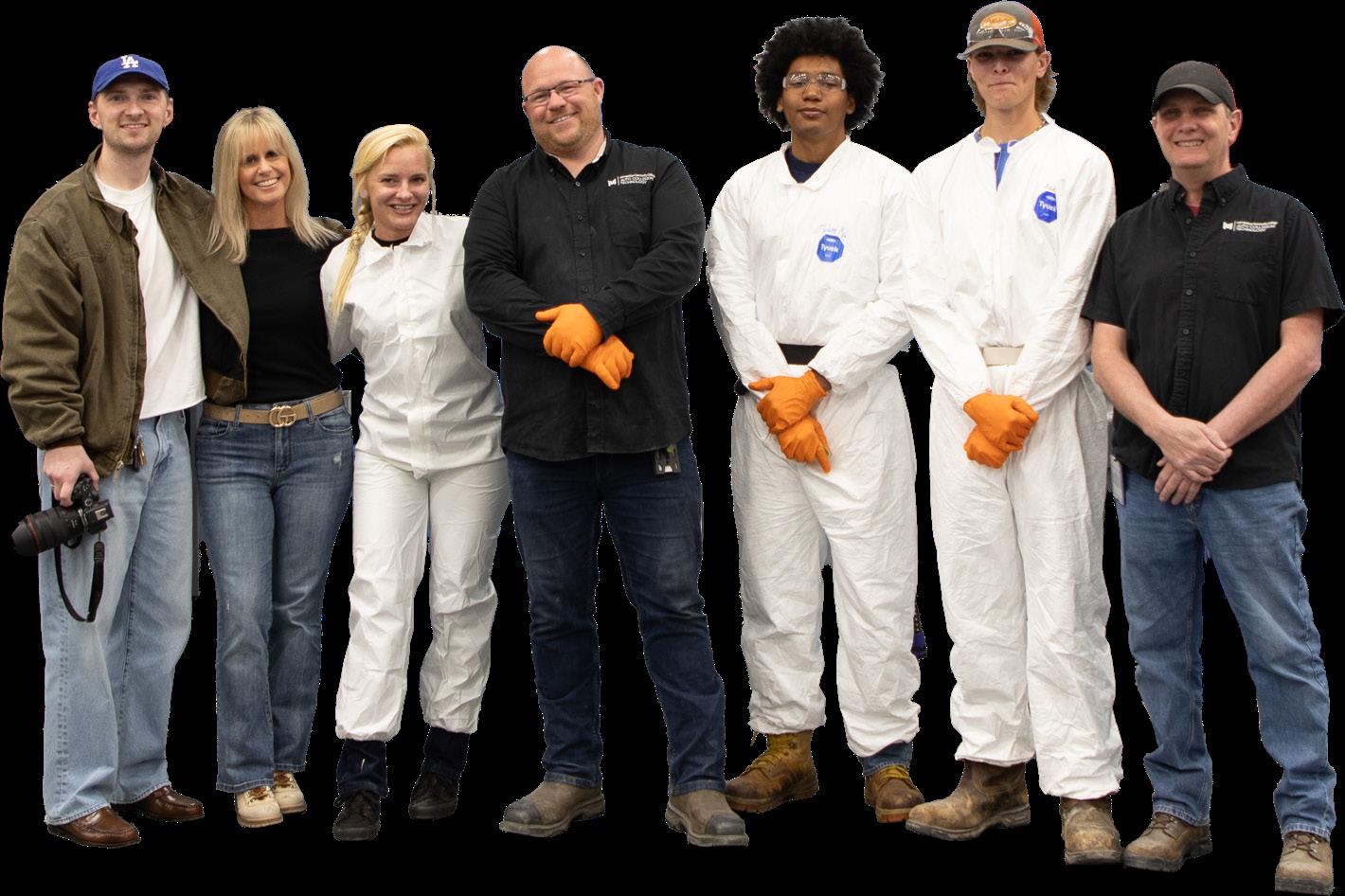

Students in the Automotive Collision Technology program repaired an Infiniti X35 that was destined to provide reliable transportation for a local single mother — a project made possible through a partnership with Chariots4Hope.
“Normally, all they work on in class are cars that we buy that are not returning to the road,” said Chris Cogan, Automotive Collision Technology program instructor. “When we’re done, the cars go to Fire Science, and they set them on fire. Providing a car to someone in need is more exciting for us.”
Chariots4Hope leverages industry partnerships and donations to help procure transportation for individuals and families in need through four programs: Road2Freedom, SafeRoute, Transportation Grants and Vehicle Ownership.
Venus Nickerson, who was surprised with her Infiniti during the Feel the Freedom fundraiser, participated in the Vehicle Repair Program before the Vehicle Ownership
Program. The vehicle is intended to last for at least two years.
“We are all about a hand up, not a handout,” said Michelle Hurt, Chariots4Hope cofounder and development director.
The Vehicle Ownership Program requires participants to pass several classes — including insurance fundamentals, vehicle maintenance and financial literacy for vehicles — and pay a $500 fee towards the car.
MCC has been partnering with Chariots4Hope since 2023. The collaboration was brought to MCC by Cogan, who has been donating his skills for more than 10 years, first through a former employer, then continuing to volunteer since joining MCC.
“Chariots would not exist without collaborations like these. We’ve blessed almost 850 people and Chris has been with us from the start,” Hurt said.
Hurt said the nonprofit’s unique mission means individuals in the trades have an opportunity to share their talents.
“IT CHANGED MY LIFE AND I’VE BEEN INVOLVED EVER SINCE.”
— TOBY FOLEY, CHARIOTS4HOPE PROGRAM PARTICIPANT
For Cogan’s part, the creative license is another huge benefit.
“They give me the opportunity to kind of do as I wish and surprise them with different, creative ideas,” Cogan said.
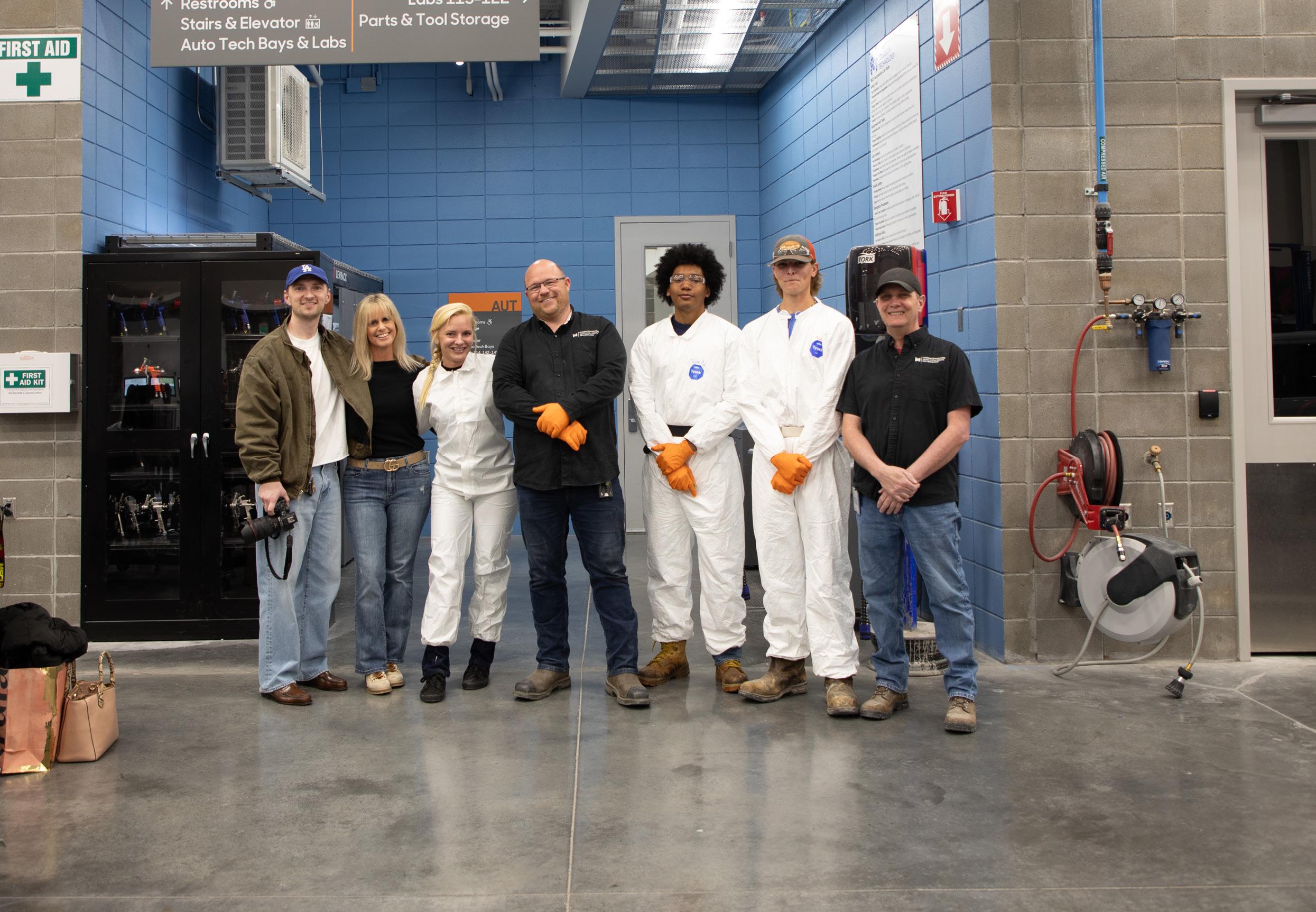
For this time around, Cogan involved a few students in the College’s Automotive Collision Accelerated program, as well as a few from the Automotive Collision Career Academy for high school students.
In the first stages, damage was identified — dents on the body and bumper, a damaged wheel well and dingy headlights.
College students worked to repair those damages before the vehicle was prepped for a new paint job.
Jackson Scheele, a junior at Millard West High School, and Julian Moreno, a senior at Buena Vista High School in Omaha, were selected to assist with painting the vehicle.
“Someone from MCC came to my school last year and told me about everything that MCC offers,” Moreno said. “I was already in auto body through OPS, and I wanted to step it up and go to MCC, too.”
Moreno and Scheele were joined in the paint booth by Toby Foley. Foley previously took general education courses at MCC and participated in the Chariots4Hope Vehicle Ownership Program. She received her vehicle in 2019.
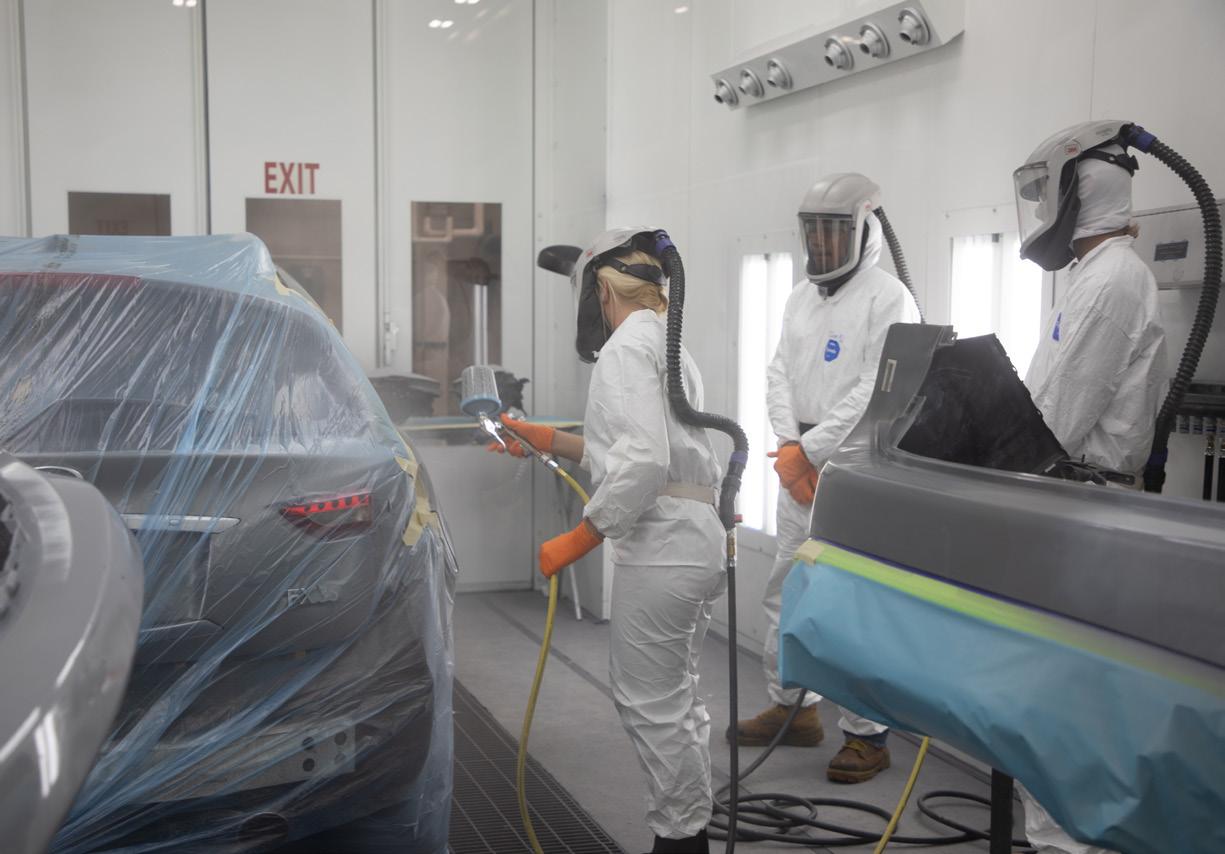
“It changed my life and I’ve been involved ever since,” Foley said.
Access to stable transportation allowed Foley to pursue a career in automotive refinishing. Now she paints locomotives for Union Pacific and is one of the only women on the team.
Foley was blown away by the Automotive Training Center on the South Omaha Campus, specifically its cleanliness.
“It’s so nice,” she said. “Normally, when you’re nib sanding, you see a bunch of stuff because of the dirt and dust. There were only a few [things that needed to be sanded down].”
Cogan explained that keeping the space extremely clean is part of the students’ training.
“The way you get paid is everything is bid for a certain number of hours. If they get it all done in five hours instead of 10, they make double, so the more efficient, the cleaner you can be, the more money you can make,” he said.
The MCC students were able to witness the impact of their contributions during the Feel the Freedom event, where Nickerson was named the recipient of an Infiniti.

MCC students also worked on what has been dubbed the “Barbie van.” Painted in Barbie’s iconic pink with pops of skyblue waves and red daisies, the vehicle has served as a conversation starter.
The van was previously owned by Ronco Construction and was driven by various team members for over a year to raise awareness for Chariots4Hope. Now it is being gifted to Chariots4Hope to provide transportation for a family of five.

the program.
MCC Celebrates Manufacturing Month with Hands-On Experiences
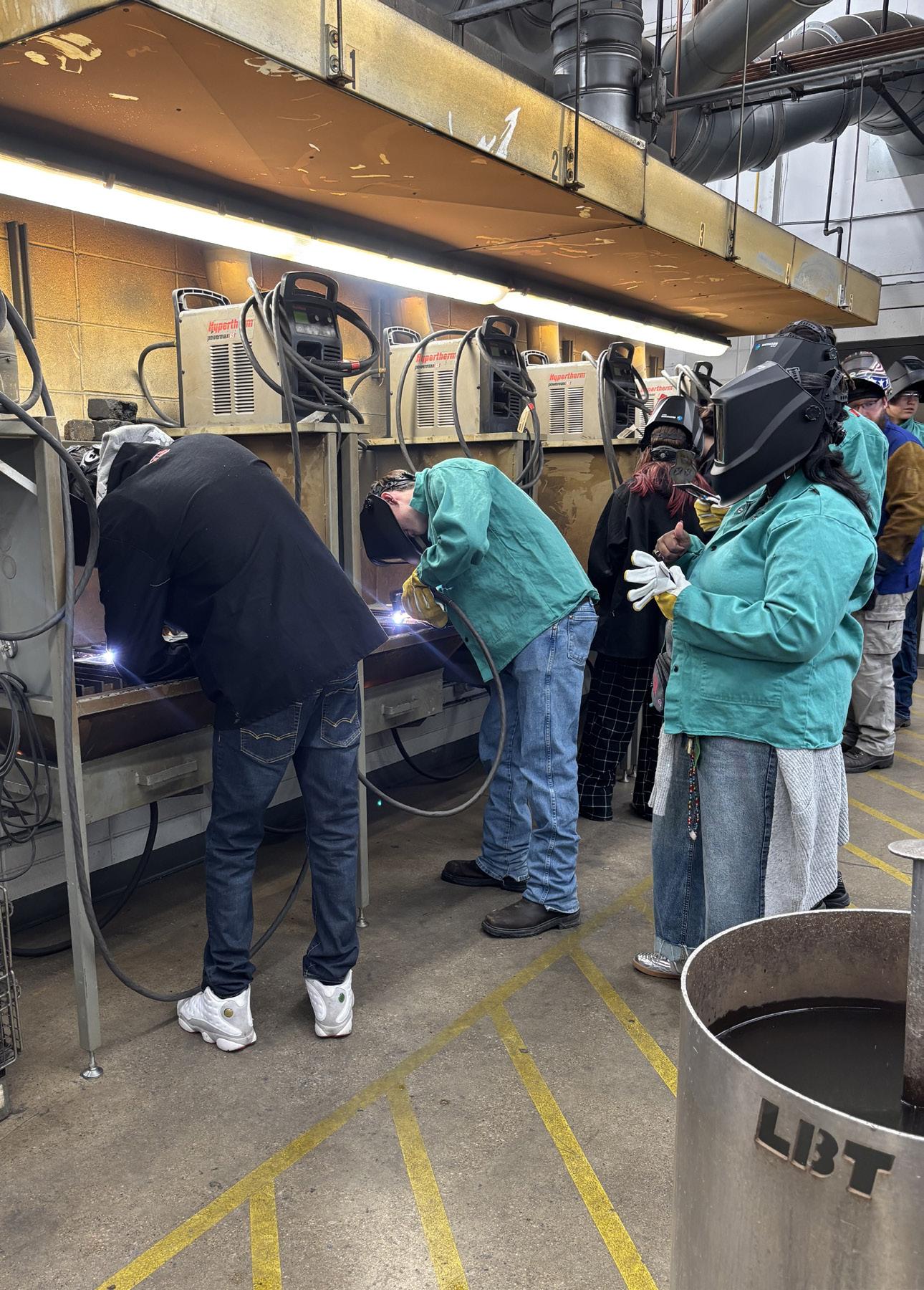
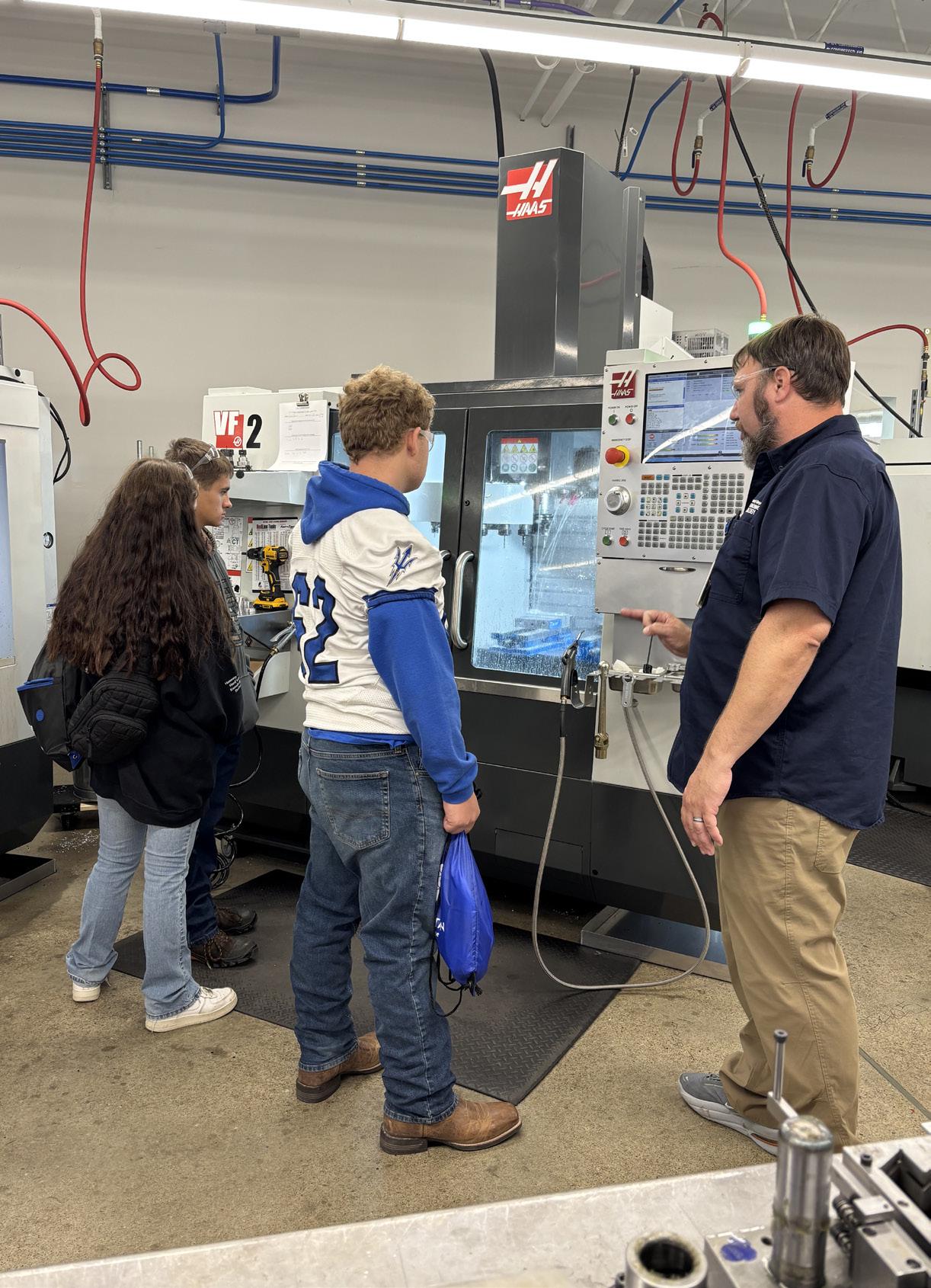
Hundreds of high school students visited the Center for Advanced Manufacturing in October to learn about manufacturing — one of Nebraska’s top industries — during Manufacturing Month in October. Manufacturing employment is projected to grow 5.47% by 2030, according to the Nebraska Department of Labor.
“I like to say manufacturing is a bit of a choose-your-own-adventure,” said Hannah Bolte, director of marketing and communications for MCC industry partner Lozier. “Manufacturing can mean a lot of things. It can mean making salad dressing, shelving or surgical robots, but it can also mean managing logistics and engineering.”
Kicking off Manufacturing Month was the Manufacturing Career Exploration Day. More than 90 students participated in hands-on activities at the South Omaha Campus.
Students rotated through nine stations led by MCC instructors in areas such as welding, robotics, precision machining, power and process manufacturing, mechanical drafting and design, and electromechanical maintenance. They also met with nine industry partners and toured the nearby Phillips Manufacturing plant.
Outreach continued with the Manufacturing Meet and Greet. Hosted in the evening, the event was designed to give potential students an opportunity to tour the Center for Advanced Manufacturing, learn about the six programs offered in manufacturing and connect with area employers.
“Classroom to career connections is a focal point for our college and hosting meet and greets achieves that goal,” said Career Experiences Coordinator Tyler Cannon. “Employers sign up year over year because they understand the value MCC brings to their industry and community.”
Twenty industry partners met with 75 potential students and community members at the fall meet and greet.
Rounding out Manufacturing Month was the Women in Manufacturing Lunch and Learn. This was the third year that MCC partnered with the local Women in Manufacturing chapter to host a panel of six inspiring women followed by a hands-on activity.
Over 40 high school students heard from: Lanee Connell and Laura Koory, both of whom are MCC alums who now work for Valmont; Jackie Carrol, Karina Lockman and Stephanie LaFarr of Conductix-Wampfler; Elisa Hutchison of Lozier; and Derrion Severson of Pacific Engineering.
Connell, who recently graduated from MCC, told attendees that in high school she wasn’t a good student.
“I couldn’t sit still, I didn’t do my homework and I was really stubborn,” she said. “Then I took a welding class and I realized I was good at it. I decided to go to MCC and got a two-year scholarship. Now I’m working at Valmont.”
While Connell is just beginning her career, several other panelists talked about their varied journeys. Both LaFarr and Lockman started at Conductix-Wampfler as temp-to-hires over a decade ago with no experience in the industry.
Today LaFarr is a global product manager and Lockman is its first female engineer and market development manager.
“I never thought about manufacturing as a career, I just needed a job at the time,” Lockman said. “Now I work in intralogistics and entertainment with companies like Universal Studios or Disney and that’s the coolest part — being able to say I had a part in that.”
After the panel, students got a hands-on look at how magnets are made. Lozier’s Bolte said she hopes these events inspire the next generation to pursue a career in manufacturing.
“You might not know what you want to do coming out of high school, but if you get in there and learn, then doors will open for you,” she said. “You can reinvent yourself over and over again in this industry — and you can do it at the same company if you choose to.”
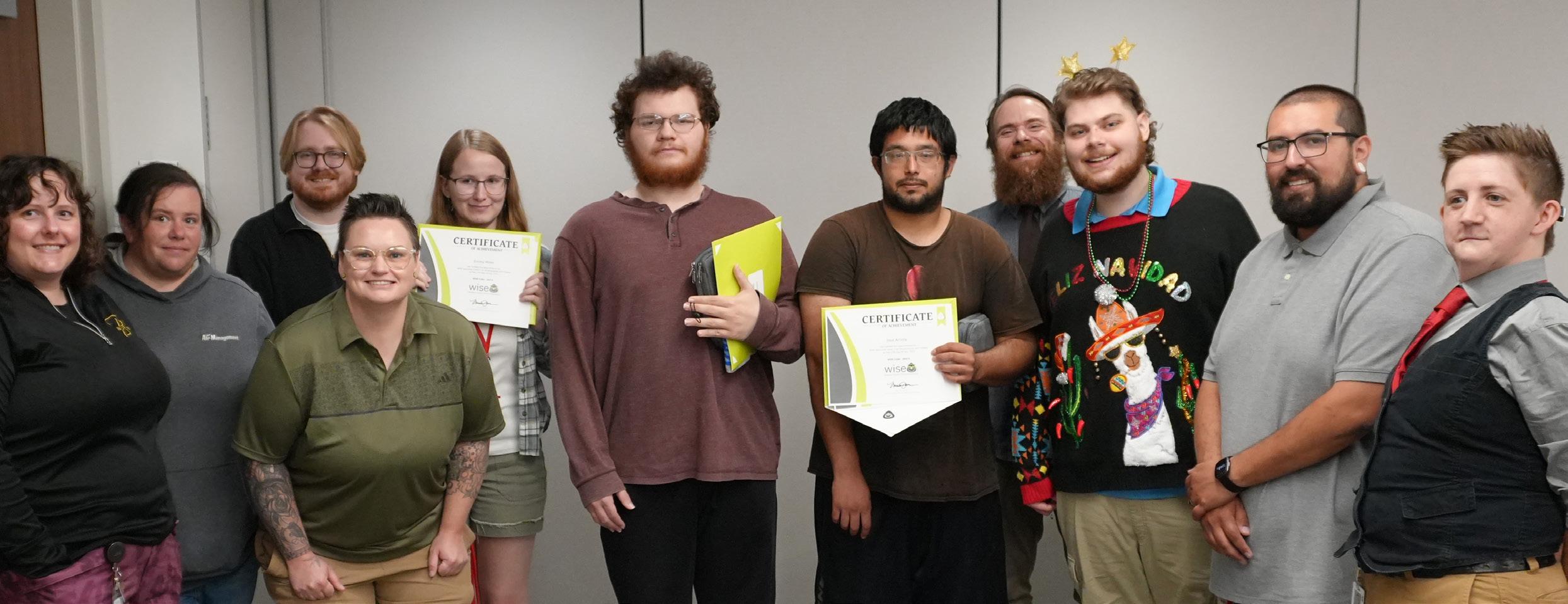
Standing in front of a packed room at the Munroe-Meyer Institute (MMI), iFixAmerica founder and CEO Jason DeWater’s eyes welled as he addressed four Mobile Device Repair Academy Wireless Industry Service Excellence (WISE) Level 1 graduates.
“Your potential is going to change the industry. I’m so proud of you,” he said.
The students — Drew Curphey, Adyson Sandoval, Emmy Miller and Jose Arriola — were a part of the first MMI Trailblazer Academy collaboration with Metropolitan Community College’s Credential College program and iFixAmerica, a local technology repair service provider. The Trailblazer Academy offers tailored educational programs to young adults between the ages of 18-25 who have mild to moderate intellectual disabilities.
The partnership is an expansion of Credential College, an initiative that provides entry-level credentials to the nearly 40% of Nebraska high school graduates who don’t plan to pursue a traditional four-year college degree after finishing high school.
“It’s about getting good jobs, not necessarily a degree,” said Gary Girard, vice president of MCC Community and Workforce Education.
Credential College began three years ago when Girard and MCC Associate Vice President for Community and Workforce Education Todd Hansen reached out to DeWater with an idea to bring the Mobile Device Repair Academy to Keith Lutz Horizon High School, an alternative school in the Millard Public Schools district.
Horizon was selected because of its nontraditional student population that ranges from 150-180 students. The school provides additional support services to students, such as a credit recovery program and behavioral counseling.
The first cohort saw 15 students successfully complete the WISE Level 1 and Level 2 certifications. A second pilot focused on the information technology-based CompTIA program at Millard North — six students completed the first cohort.
“We thought we were going to place them into a job, but they all wanted to come to MCC and continue their education,” Girard said. “It lit a fire.”
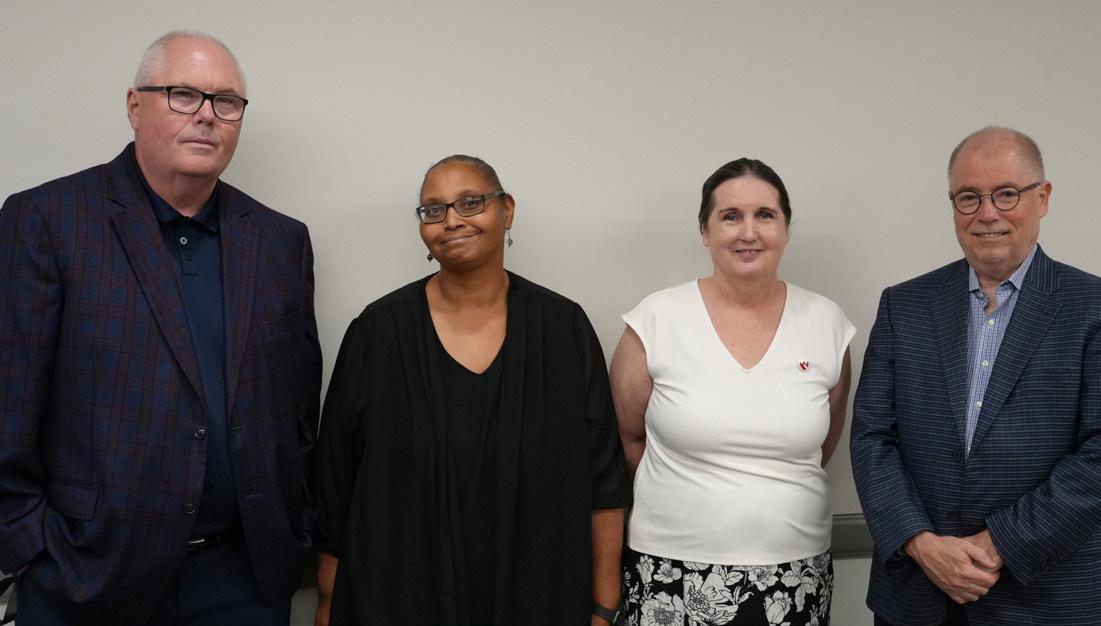
With the success of the first two cohorts, Girard’s team began considering what other student populations might be served. That’s when Rachel Ray from MMI reached out.
MMI is a division of the University of Nebraska Medical Center and houses the University Center for Excellence in Developmental Disabilities, a special designation for academic centers that support individuals with developmental disabilities in attaining independence.
Ray, who is the director of the MMI-UNO Trailblazer program, said MMI had been looking for a workforce skills training partner since 2015.
“We finally found the right partner and the right program with MCC,” she said.
“Sometimes when you talk about these kinds of collaborations, especially for students with intellectual and developmental disabilities, folks wonder if [the students] are able to do this. [The MCC team’s] passion, commitment and willingness to give individuals with intellectual disabilities a chance, and to trust that they can do the work, made MCC the perfect partner.”
The four MMI students were enrolled in an adapted five-week Mobile Device Repair Academy to receive the WISE Level 1 certification. Traditionally, the Mobile Device Repair Academy takes place over five, eight-hour days to achieve the WISE Level 1 and 2 certifications and is followed by an internship.
“That’s a long time to stay engaged for anybody,” Ray said. “We wanted to make sure students understood the information before we moved on.”
Level 1 curriculum covers foundational knowledge, from inspecting and testing basic functionality to determining user error.
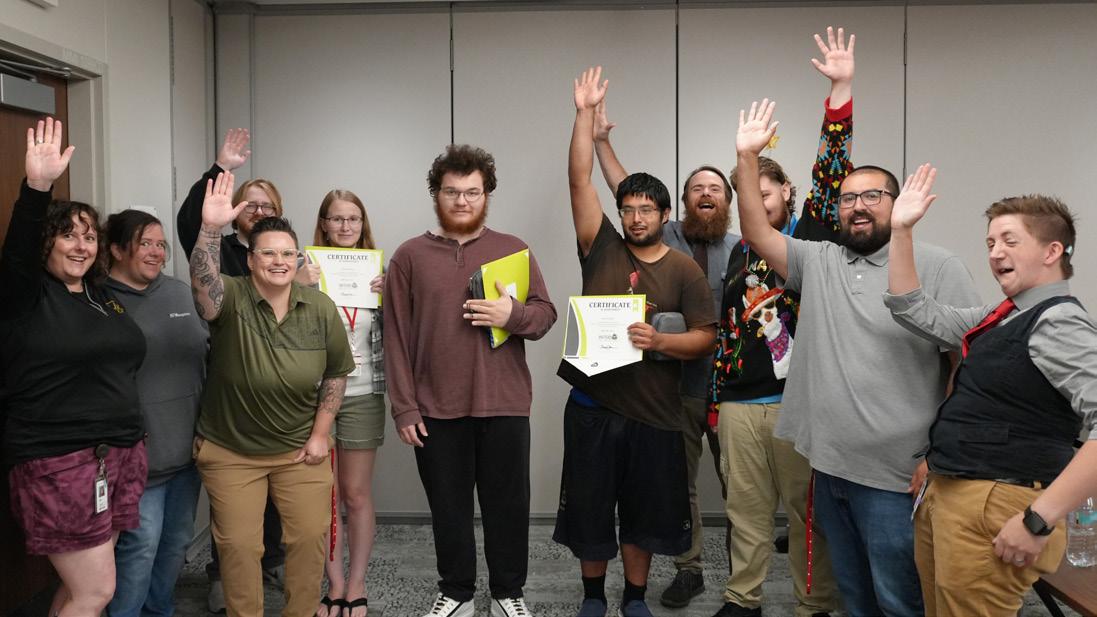
DeWater said that the coursework is rigorous and assessments are “hard as nails.” So hard, in fact, that after writing and testing the first assessment DeWater found that even he was challenged.
“The morning before class I took the assessment myself quickly and submitted it. I scored an 87 on it and found that I had made a silly mistake. I wrote the test and I still couldn’t ace it,” he said.
However, all four students scored 100, proving that they were not only learning the information, but retaining it perfectly. As DeWater passed out the certificates, he was emotional about the students’ achievements. Students left the ceremony with confidence in their newly learned skills.
“It’s a nice feeling knowing I can help someone fix something that’s broken,” Arriola said.
During the WISE 1 certificate ceremony, students were gifted a tool set they’ll be able to use during the WISE 2 certificate course, which teaches device disassembly and repair.
“If you show me a technician that can disassemble a modern iPhone to its bare components and reassemble that phone to working condition, then I can show you a technician that can fix any appliance — anything with a chip in it,” DeWater said.
This partnership has proven that education is for everyone — it just takes the right program and the right support system.
“At MCC, we’re in communities to educate all learners, from 5 to 85 and older,” Hansen said. “We’re here for everybody.”


Today’s recipe comes from Chef Chase Grove, lunch service instructor for the MCC Culinary Arts program. Sample Grove’s menu firsthand at Sage Student Bistro Monday through Thursday, 11 a.m.-1 p.m. (while courses are in session).
As late winter yields to spring, muhammara, a Sage Student Bistro favorite, offers the perfect bridge between seasons. Syria is the origin of this savory spread, with its name derived from the Arabic word for “reddened.” It draws its smoky flavor from the collision of earthy toasted walnuts, sweet-tart pomegranate molasses and the slow heat of Aleppo pepper. Shopping for the ingredients will require visiting a Mediterranean grocer. Begin by gently sweating your scallions in olive oil over medium heat until tender. As you bloom the Aleppo pepper and Turkish spices, they should release their aromatic oils in less than a minute, perfuming your kitchen. Do not brown the mixture, which could introduce bitterness and muddy the dip’s signature vibrancy.
As the roasted red peppers join the pan, you’ll notice the mixture releasing moisture. Let it cook until those pan juices evaporate and the peppers begin to concentrate. Meanwhile, your toasted walnuts, still warm from the oven — you can sub pine nuts for food allergies — will transform in the food processor from coarse pieces to a fine, almost sandy texture.
For the final blending, as the processor runs, the mixture will evolve from grainy to a smooth, creamy consistency. The finished muhammara should be a deep, burnished red color.
Muhammara’s versatility is one of its best assets. Serve it as part of a spread for early spring gatherings, pair it with crisp vegetables or pita bread, or use it as a sauce or topping for chicken, fish (salmon, cod) or steak.
Muhammara
Yield: 1 quart
Portions: 10
Extra virgin olive oil: 1 cup, divided
Scallions, fine sliced whites (about 3 bunches): 1 cup
Turkish spice blend: 1 Tbsp
Aleppo pepper, crushed: 1 Tbsp
Roasted red peppers, canned and drained: 1½ quarts
Walnuts, toasted at 300°F
Toasted molasses: ¼ cup
Lemon juice: 2 Tbsp
Kosher salt: to taste
Start to finish: 30 minutes
• Preheat a sauté pan over medium heat. Add ¼ cup olive oil and scallions. Sweat until tender.
• Into the pan, add Aleppo pepper and Turkish spice. Sauté briefly until aromatic. Do not brown.
• Add roasted red peppers. Continue to sauté until the pan juices are nearly dry.
• Transfer warm, toasted walnuts to a food processor. Process until finely ground, approximately 2 minutes.
• Add the sautéed mixture, pomegranate molasses, lemon juice and remaining olive oil. Process until smooth and creamy, approximately 4 minutes.
• Season with kosher salt to taste.
Visit mccneb.edu/Bistro to make reservations for lunch or dinner. Check out Sage Student Bistro on Facebook or Instagram (@SageStudentBistro) for the latest operating hours, menus and student specials.
Metropolitan Community College
P.O. Box 3777
Omaha, NE 68103-0777
Stay informed. Connect with your community. issuu.com/mccneb @mccneb
Keep us updated on your personal and career achievements at fans@mccneb.edu.