Mennonite Brethren Herald Digest is digitally published bimonthly by the Canadian Conference of Mennonite Brethren Churches, primarily for the use of its members, to build a Canadian MB community of faith. We seek to 1) share the life and story of the church by nurturing relationships among members and engaging in dialogue and reflection; 2) teach and equip for ministry by reflecting MB theology, values, and heritage, and by sharing the good news; 3) enable communication by serving conference ministries and informing our members about the church and the world. However, the opinions expressed here are not necessarily those of the church as a whole.
DEC 2025 | JAN 2026 | VOLUME 64, NO. 06
EDITORIAL OFFICE
1310 Taylor Avenue Winnipeg, Manitoba R3M 3Z6
Phone: 204-669-6575
Toll-free in Canada: 888-669-6575
MBHERALD@MBCHURCHES.CA WWW.MBHERALD.COM
ISSN: 0025-9349
The Mennonite Brethren Herald is a publication of
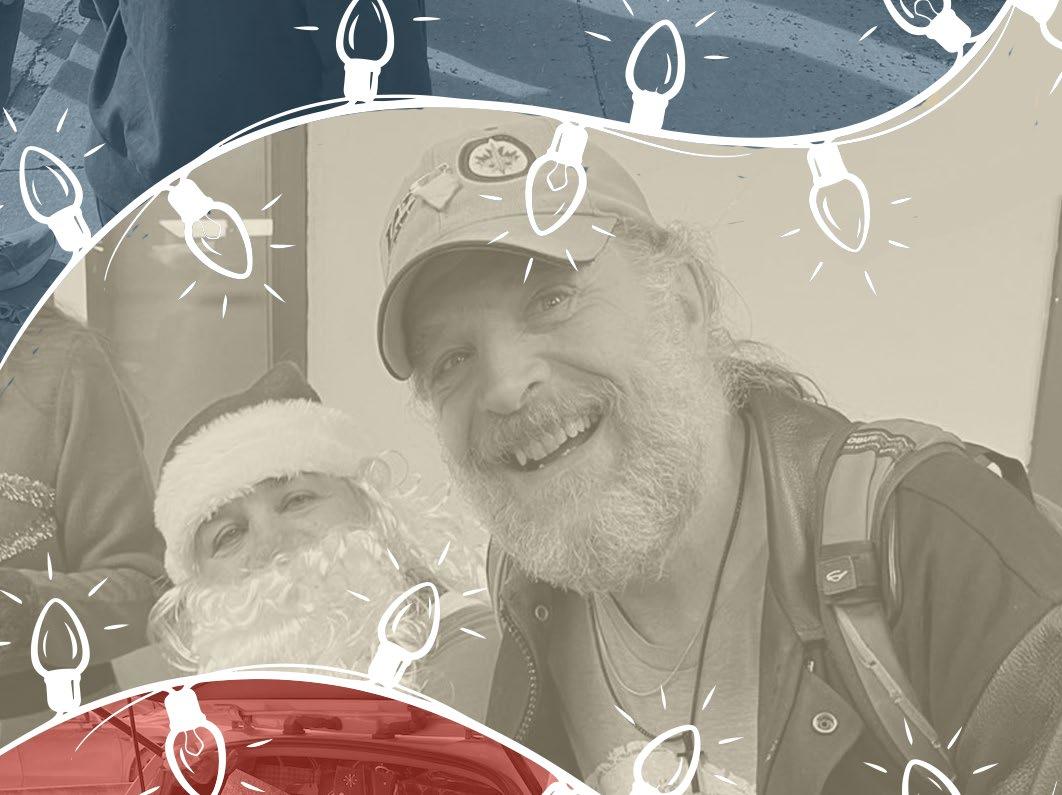
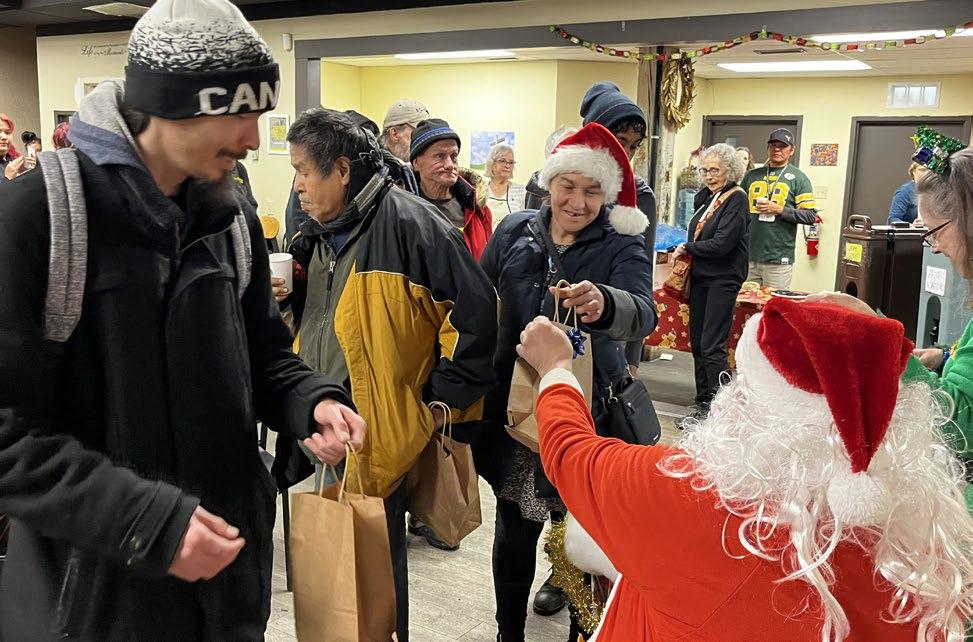
WE WAIT MB Seminary TRACING THE EXAMPLE OF JESUS Craig Thiessen Members at One88 Church in Winnipeg enjoy Christmas festivities together. Read the full story on page 8
A
From the editors
"Why were you searching for me?" he asked. "Didn't you know I had to be in my Father's house?"
– Luke 2:49a
"WHY ARE YOU SEARCHING FOR ME?"
These are the first recorded words of Jesus Christ by Luke. A child, separated from his parents, was at home—at ease—in the temple, preaching among the teachers. Their long search had come to an end; all was well again.
At Advent, we wait for the saviour, but do we search for him? Christmas can be hard: for some of us, it's a reminder of what's lost, of broken promises and relationships and hard times not easily forgotten. Some of us are in the midst of those hard times—we're not seeking the Christmas spirit—we're trying to pay the hydro bill; on the lookout for the next meal.
I am grateful to those who have heeded Jesus' call to proclaim the good news to the poor (Luke 4:18) and to invite the less fortunate to your Christmas dinners (Luke 14:12-14). While this call is meant for all of us, I acknowledge that other people do this with a humility and eagerness I have yet to fully embrace. Dave Ens and the staff at One88 exemplify this commitment throughout the year. Dave's article "Sausage rolls, socks and presence," is a prompting to not just give of our wealth, but of our selves
For three days Mary and Joseph searched for their son. Imagine their relief and joy upon finding him. Imagine now a relief that quickly turns to puzzlement and confusion as they (we) come face to face with the full majesty of the Christ child.
Look for the Christ child—search for Jesus, he isn't hard to find. Jesus is in the temple, he's at One88, your church, your home, the shopping mall, the airport, and everywhere between. Sometimes he's there to comfort you and other times he's there to send you as a comforter to others.
Will you seek out Jesus, and what will you do when you find him?
Merry Christmas,
Carson
CARSON SAMSON Editor
“MOM, DAD, WE FORGOT TO PRAY!”
Our eight-year-old daughter gasped in disbelief.
We had just merged onto the highway at the start of an hours-long road trip. It has been our practice as a family to begin our vacations in prayer, asking God for safety, good memories, and patience with each other (an essential while trapped in a minivan!). Michael and I were thankful for our daughter’s reminder of the power of prayer.
Pray first, pray always. It was CCMBC’s motto of 2025 — and is a posture that will continue into 2026. Our MB family began the year by asking God to deepen our culture of prayer within our churches, that we would be unified and reconciled with one another, and share the transformative love of Jesus with our communities and the world. At our gathering in Winnipeg for EQUIP 2025, as you’ll read in the summaries throughout this issue (on pages 25 and 26), unity and reconciliation ran deep. It seems to me that God has been graciously answering the prayers of his people.
In 2026, the week of prayer and monthly prayer columns will focus on peacemaking: peace with God, peace with others, peace in our churches, peace with creation, peace with ourselves, and for peace with the world. (For more information on the week of prayer, see page 15)
In our increasingly violent and divided world, peace seems a long way off. But let’s follow my daughter’s lead — let’s remember to pray. May we have the faith to believe that shalom is possible through Jesus, and to see our part in bringing peace to the world.
In him,
Leanne
LEANNE JANZEN Assistant Editor
I appreciate receiving the MB Herald and in particular, J Janzen’s article, “Making peace with conflict” in the October-November 2025 issue.
Janzen rightfully states, “My hunch is that we Canadian MB’s struggle mightily to know how to be peacemakers at home, in our neighbourhoods, on the job, or on the playground,” and I would add, at some congregational meetings.
The following random comments might help to lower the temperature in some situations.
˚ In official groups, such as a congregation or a work place, clarify in advance who has the authority to make which decisions. This is a matter of governance, as found in general operating by-laws or company policies. In some cases it might be majority vote, in others a specific person.
˚ In addition to using the term “conflict,” try using the phrase “a difference of opinion.” It’s less loaded and may lead to considering more options.
˚ Many decisions are not life or death matters. As my friend Howard who served on municipal council said, “Some of us voted for the motion, some against it, and then we all went out for coffee.”
˚ Watch athletic events, particularly football. They hit hard, but when it’s over, they shake hands and pat each other on the shoulder. Note that most athletic events are not known as “conflicts,” they are called “games.” Choice of words is important.
Peter Durksen, Breslau, ON One-time chair of the Canadian MB Conference Governance Committee
Letters to the editor
MB Herald welcomes your letter on issues relevant to the Mennonite Brethren church, especially in response to material published in the magazine. Please include name, address and phone number, and keep your letters concise, courteous, and about one subject only. We may edit letters for length and clarity. We will not publish letters sent anonymously, although we may withhold names from publication at the letter writer’s request and at our discretion. Letters may also appear online or be published in the Digest from an online source, such as comments on articles posted to mbherald.com or on our social media platforms. In these circumstances, letter writers will be contacted by the editor to obtain permission. Because the letters column is a free forum for discussion, it should be understood that letters represent the position of the letter writer, not necessarily the position of the MB Herald or the Mennonite Brethren church.
Send letters to MB Herald, 1310 Taylor Avenue, Winnipeg, Man. R3M 3Z6, or by email: mbherald@mbchurches.ca
As we reflect on God’s faithfulness, we are thankful for the opportunity to come alongside individuals and churches in our shared mission to make disciples. Your partnership strengthens our ability to serve our MB family, care for our employees, and steward every resource entrusted to us for God’s glory.
May the hope of Christ renew you in the coming year.
Please note our office will close for the Christmas break on December 24, 2025, and reopen on January 5, 2026.
www.ccmbclegacyfund.com
.com
In case you missed it
We regularly publish website-exclusive stories on mbherald.com. Here are a few articles we’ve posted online in the last few months.
MCC British Columbia executive director announces plans to retire in September 2026
After 29 years of service with Mennonite Central Committee (MCC), including 18 years as executive director for MCC British Columbia (MCC BC), Wayne Bremner has announced his plans to retire in September 2026.
What God begins
“In 1952, missionaries Jacob Loewen and David Wirsche were sent to the Colombian Chocó, and first encountered the indigenous Wounaan. These two men later began a ministry among this same ethnic group in Panama, but were never able to return to the Wounaan of Colombia. Years passed, and no other missionaries were sent to them. Then, seven years ago, God sent us.”
Opening prison doors
In July 2025, members of Meadowbrook MB Church in Leamington, Ontario, were asked to stand and intercede for two pastors imprisoned for their faith, one in Bangladesh, the other in Myanmar. Read how God answered the prayers of his people on behalf of both pastors — almost simultaneously!
‘Thus saith the Lord’ in 2025
Read Mackenzie Graham’s reflection on the 50th anniversary of MCC’s Peace & Justice Office in Ottawa.
2026 PROVINCIAL CONVENTIONS
ONTARIO
ONMB CONFERENCE WEEK
FEBRUARY 19-21 AND 26, 2026
MOUNTAIN PARK CHURCH (NIAGARA FALLS)
MANITOBA
MBCM ASSEMBLY 2026
MARCH 6-7, 2026
EASTVIEW COMMUNITY CHURCH (WINNIPEG)
QUEBEC
AEFMQ ANNUAL CONFERENCE / L’ASSEMBLÉE GÉNÉRALE ANNUELLE DE L’AEFMQ
MARCH 21, 2026 (TENTATIVE DATE)
LOCATION COMING SOON
SASKATCHEWAN
SKMB ASSEMBLY 2026
MARCH 27-28, 2026
WEST PORTAL CHURCH (SASKATOON)
BRITISH COLUMBIA
BCMB ELEVATE AND AGM 2026
APRIL 24-25, 2026
WILLOW PARK CHURCH (KELOWNA)
ALBERTA
ABMB GATHERING 2026
MAY 8-9, 2026
CAMP EVERGREEN (SUNDRE)
FROM THE CCMBC EXECUTIVE BOARD
A CCMBC GOVERNANCE PROPOSAL FOR MORE EFFECTIVE MISSIONAL COLLABORATION
Before 2019 and the implementation of our Collaborative Model, CCMBC served the local MB churches with programming and communications, and the local MB churches provided direct accountability through their church delegates at CCMBC’s National Assembly as well as financial support by channeling donations directly to CCMBC. It was recognized by all parties that this structure often led to conflicting and redundant activities, financial appeals, and personnel, as the provincial conferences were also serving the local MB churches in similar ways to CCMBC.
The Collaborative Model refocused CCMBC as a facilitation organization that worked not directly with local MB churches but with the nine member organizations who in turn provided services to the local churches in ways that eliminated conflicting and redundant activities. The new structure in turn refocused local churches away from CCMBC directly and onto their provincial conferences for accountability, ministry involvement, and financial support. CCMBC’s new 2021 bylaws reflect an awkward hybrid between the previous model where local MB church delegates were CCMBC’s direct accountability partners and the Collaborative Model where CCMBC works directly with the member organizations. As a result, the present bylaws require both local church delegates and member organization delegates—with the local church delegates needing to be a majority.
This structure is unsustainable and ineffective for a variety of reasons. First, it is difficult for local church delegates to be informed about CCMBC when CCMBC is not focused on providing services to the local church directly but on equipping and facilitating collaboration with the member organizations who are the providers of those services for increased collective impact. Second, local church delegates over the last five years (and beyond) participating at National Assemblies/AGMs have rarely represented more than 20-25% of our churches which means that effective representation is not happening. Third, local church delegates can approve budgets and programs, but they have no meaningful means of directly supporting CCMBC since funding is now directed through the provincial conferences. Fourth, it is clear that local churches themselves are unable to find delegates for CCMBC’s delegate assemblies and reaching the minimum quorum (viz., 100 delegates with at least 51% church delegates) is becoming an increasingly difficult challenge.
The Executive Board is recommending that we embrace the intended structure for governance that our family has already accepted when it approved the Collaborative Model (2019) and the Collaborative Unified Strategic Plan (2021). The Collaborative Model made the member organizations full and voting members of CCMBC. This means that the member organizations are the primary participants on all CCMBC boards and teams. This means that the member organizations have primary say in CCMBC’s budgets, strategic plans, and programing priorities. In this new model, it is the member organizations through whom CCMBC works. They are the primary partners who serve the local MB churches across Canada.
The biggest implication of more fully embracing the Collaborative Model already agreed to, would be that the National Assembly/AGM would be a smaller group of somewhere between 50 and 70 delegates, but these delegates would be made up solely of approved member organization board members (or their designates). This would mean that local MB churches who are members of CCMBC (not through their own initiatives but automatically because of their membership in their provincial conferences), would be represented at CCMBC’s National Assemblies/AGMs through their provincial conference delegates. Local church delegates could be guests at these meetings but would not be voting participants.
WHY WOULD THIS BE A POSITIVE CHANGE?
First, we believe that this change will help CCMBC and our whole Canadian MB family of churches be more effective in our mission (“To cultivate a community and culture of healthy disciple-making churches and ministries, faithfully joining Jesus in his mission”). The member organizations are the ones CCMBC is serving, even as the local churches are the “end users” and ultimate recipients of CCMBC’s efforts. The Provincial member orgs are at the front lines cultivating their provincial community of churches toward this goal of being healthy disciple-making churches. The Agency Member Orgs are at the front lines helping local churches toward greater effectiveness in mission, leadership development, and organizational health. This governance change creates a much more logical accountability structure for CCMBC as the facilitator and “coach” of the member orgs who steward the churches toward our shared mission. The nine Member Orgs are the hands and feet of CCMBC— and having these member org Boards carry the responsibility for collaboration, as well as for financial and program accountability, should increase the missional effectiveness of all bodies.
Second, we believe that this change will help member organizations and CCMBC lean in and
more fully embrace collaboration and collective impact. CCMBC is an organization situated “behind the curtain” working not with each local church but with the member organizations for increased collective impact and increased disciple-making. The member organizations are presently a minority vote at the National Assembly when they are the ones CCMBC is most directly serving.
Third, this change will increase CCMBC’s organizational and financial health. The present voting system is a strange conflation of the past (member church delegates) and the new Collaborative Model (Member Org delegates at both the NA/AGM and National Council). The presence of the National Council (Member Org delegates who recommend things but do not make any final decisions) and the NA/AGM with its majority delegates from member churches, who may or may not have either the knowledge nor the real authority to implement and fund the National budget and strategies, means that at present we have a twoheaded redundancy structure, requiring a significant outpouring of effort from the CCMBC EB, Staff, and member orgs for very limited results. The new structure would correct this while better positioning member organizations to implement collaborative strategies and initiatives.
WHAT NEEDS TO HAPPEN FOR THIS CHANGE TO BE INSTITUTED?
First, this potential change would need to be communicated clearly and openly with all our member churches and member organizations who are invited to provide feedback and suggestions. It is recognized that there will be some local churches and some long-time faithful church delegates who will grieve this change. It is hoped that their provincial conference board members will provide significant opportunities for feedback and informed accountability so that these churches and individuals can continue to provide wise counsel to CCMBC.
Second, we need to ensure that all member churches through their approved delegates have significant opportunity to speak into and directly vote on any recommended amendments to the MB Confession of Faith. The new bylaws will have to create structures to allow for this.
Third, assuming that the feedback from our larger family is positive, the Executive Board would need to propose the changes to our General Operating Bylaws and have them approved by a National Assembly/AGM. Because of Canada’s Notfor-Profit Corporation Act (199:1), this change would need to be approved in two separate votes—the first
by the church delegates present and the second by all of the delegates present.
What can local MB churches and members do to help in this process?
The Executive Board invites our family to pray for wisdom and discernment so that any changes we make are faithful to God’s character and intended mission. The Executive Board invites our family to provide feedback, encouragement, and suggestions so that we can process them well together.
As CCMBC continues to grow and mature into our Collaborative Model of governance, we are learning and discovering ways that we can be more effective in our decision-making process. The proposal outlined above was first developed by the CCMBC Governance Committee and given to the Executive Board. The Executive Board unanimously approved this idea and is now sending it through all the correct channels for input and feedback.
This proposal has not been decided upon; it is in the process of discernment. The process so far has included feedback from the National Ministry Team who affirms the wisdom of this idea. The proposal was also presented to the constituency at Equip in Winnipeg last month. It was well received. For those who have had questions or concerns, we have been processing their comments and have taken their views into consideration.
At the recent National Council meeting (Nov. 20th) there was openness and agreement to the proposed direction. People consistently resonated with both the problems identified and how this shift could be more effective for our purposes. It was noted that clear, efficient, consistent communication methods would be required from the provincial boards as they would be the primary means of communication among our churches. It was also stressed that we would need a more robust decision-making process for any changes to the Confession of Faith. There were various views expressed on what member organizations representation should look like in the new structureare provinces equal voices at the table regardless of size, or should there be proportional representation in decision making, based on the size of the provincial conference?
Having this proposal placed in the MB Herald is another means we are communicating with our broader constituency. We welcome your feedback. Please email us with any comments, suggestions, and questions you might have at questions@mbchurches.ca.
On behalf of the CCMBC team, Cam Stuart CCMBC
National Director
Sausage rolls, socks, and presence
Thoughts on being charitable at Christmas
BY DAVE ENS
In 2021, one of the most popular Christmas songs in the UK was entitled “Sausage Rolls for Everyone” by LadBaby. It is the fourth link in a wurstthemed medley that started with “We Built This City (on Sausage Rolls)” in 2018, followed by “I Love Sausage Rolls” in 2019, and “Don’t Stop me Eatin’ (Sausage Rolls)” in 2020. The popularity of the songs came from the fact that they were charitable appeals within the UK, inviting people to be generous towards those who had little during the Christmas season. With a play on eating sausage rolls, the songs encouraged people to make sure that no one went hungry in this season of plenty. It was a kind of “We are the World: Christmas edition” and apparently, did quite well. It makes sense that this kind of appeal would come during the Christmas season. It is a season of generosity and good cheer, a season in which we wish peace and joy to everyone. As well, it is a season in which the gap between those who have and those who do not have becomes much more obvious, motivating us to do what we can to bridge that gap. Of course, Christmas can create some tension in us. On one hand, it is a season of abundance, in that the abundance of God’s grace comes to dwell among us in the person of Jesus, born in Bethlehem. It is a season of abundant praise and celebration, of great music and food, of sharing gifts and seeking peace. And on the other hand, cultural appropriation of the season means that it is a season of over-abundance as well. Too much food, too much hype, too much buying and materialism, too much exhaustion, and too little peace.
Partially as a way of navigating that tension, Christmas is a season of charity. Whether it’s songs about sausage rolls or not, appeals from charities are common and we respond to them by giving. Perhaps it’s giving financially to organizations that work with impoverished people, serving at a soup kitchen, or preparing a Christmas hamper
for an underprivileged family. Generosity abounds and this is good. As I said, there is no season in our western world that so clearly exposes the gap that exists between those who have lots and those who have little. It’s good for us to recognize that. Christmas feels like a time when people should not be without.
I pastor One88 Community Church in downtown Winnipeg, a small faith community that journeys with vulnerable people, those on the receiving end of charitable activity. Christmas creates tension for many folks downtown as well. It’s a time when many are reminded of what they don’t have. A person carries a desire to celebrate, to shower family and children with gifts. Yet, they are reminded that they don’t have money, they don’t see their children, and either family is not a safe place or is not interested in seeing them. And while there are many charitable activities that take place downtown at Christmas, for many, it is a time in which they are reminded how alone they are.
For years, I have wondered what a kingdom-response to this reality might look like. This is not to speak against acts of charity. As a church community, we are often recipients of those acts and are grateful for them. Yet it seems to me that the kingdom of God is more holistic than that. While there are good initiatives that provide for people during the season, the issue with charity is that it shrinks the person down to a singular, shallow attribute. A person is hungry, so we give them food. They don’t have clothes, so we give them clothing. Yet, the hope of the kingdom and the message of Christmas is much richer than that. We need to hear Jesus when he asks, “Is not life more than food, and the body more than clothing” (Matthew 6:25b, NRSV)?
Christmas is the answer to the cry of the prophets who say, “O that you would tear open the heavens and come down, so that the mountains would quake at your presence” (Isaiah 64:1). It is the Mighty One doing great things,
bringing down the powerful from their thrones, lifting up the lowly, filling the hungry with good things, and sending the rich away empty (Luke 1:52-53). God’s response to the poverty of humankind is to come and be present with us. It is the Word becoming flesh and making his dwelling among us (John 1:14).
The love and justice of God are on full display as Jesus breaks into our world. It is much richer than an act of charity. It is Jesus proclaiming:
“The Spirit of the Lord is upon me, because he has anointed me to bring good news to the poor. He has sent me to proclaim release to the captives and recovery of sight to the blind, to let the oppressed go free, to proclaim the year of the Lord’s favor” (Luke 4:18–19).
Immanuel, “God with us” is the greatest gift we receive at Christmas. The profound depth of what God has done and is doing in Jesus is not found in the stuff he gave us but in the emptying of himself, “taking on the form of a slave, being born in human likeness” (Philippians 2:7). Jesus addresses our poverty not by giving us things but by being with us. This is truly good news to the poor. For us downtown, we agree with Christian theologian and ethicist Samuel Wells who says that “the poor” is not merely an economic distinction but refers to a people who have no idea what to do to change their lives and have no one with whom to do it. In other words, poverty is social. It is the lack of healthy relationships within community, particularly a community that leads us into the fullness of what God has for us.
So while it is good to recognize the gap that exists between those who have and those who do not, to be content to respond with only charitable acts robs marginalized people of the abundant hope that is found in the good news of Christmas. It stifles the imagination
that is necessary to sustain the hope that life is about more than sausage rolls and new socks and turkeys. While it is good to help, this lack of imagination keeps marginalized people from moving beyond the need for the basics and into the new life that is found in Christ.
Perhaps at this point you are confused and asking, “So we shouldn’t be giving to charities or serving in soup kitchens over the Christmas season?” No, please continue to be generous. Go serve, hand out food, give money to charities. The generosity of the season does help. It helps marginalized folks feel seen. But know that this is not the fullness of what this season is about. If you really want to give gifts, give the gift of presence. Be with people, not in a transactional way but in a “sit down and get to you know you” way. Yes, that takes time and is not easily done in one evening. In that way, this article is too late if you are looking for last minute gift-giving ideas. But these things always need to start somewhere.
And the reality is, this is larger than dealing with marginalized people. I’m not sure the answer for any of us is more stuff. The issues of poverty are amplified in our downtowns, but they exist everywhere. There is an epidemic of loneliness. So give yourself this Christmas — give your time, your attention, your listening ear. Give your presence whether it’s with a person downtown or your neighbour or someone in your home. In doing so, we reflect the hope that is found in this life-changing season.
“For you know the generous act of our Lord Jesus Christ, that though he was rich, yet for your sakes he became poor, so that by his poverty you might become rich” (2 Corinthians 8:9).
DAVE ENS is the
pastor of One88 Community Church in Winnipeg, Manitoba.
I pop in the tape marked “Manitou,” and press play, wait to recognize a voice silent for 28 years. Wait through prayers 50 Christmases old. Through sudden angels and newborn kings.
A strange voice tells me, Like the shepherds you have only vague ideas about what is happening. Tells me my need to Behold
And maybe it’s when he reads in German that the believing will live though they die, his repeated furthermore, furthermore,
or when he calls his listeners my friend…my brother that, like a distant mourning dove, the voice begins to breathe
into this black and white image I’m holding. The pulpit where I held his giant hand. A robed choir behind his head.
In Remembrance of Me at his feet.
ANGELINE SCHELLENBERG
is the author of Tell Them It Was Mozart, Fields of Light and Stone, and Mondegreen Riffs. This piece is dedicated to her maternal grandfather Abram John Froese (1919-1997), who pastored MB churches in Boissevain, Brandon, Manitou, and Justice, Man.
Our CCMBC theme for 2025 is Pray First! Pray Always! and we want to embrace that in our monthly prayer columns. 1 Thessalonians 5:17 is the foundation verse telling us to “pray continually.”
For 2025 we want to deliberately and intentionally pray the Lord’s Prayer. We want to pray this prayer as part of devotional routines, as we commute, as we face both the pleasant and the challenging moments in our day, and as we lie in bed at the end of our day reflecting on all that we have experienced. Each month, we will focus on a phrase from the Lord’s Prayer so that we can more fully appreciate the depth and beauty of this prayer.
Praying the Lord’s Prayer daily and thoughtfully is not a “vain repetition” (Matt 6:7 KJV), but an act of worship with the power to slowly transform disciples of Jesus (and the churches made up of these disciples) ever closer into the character and Kingdom mission of Jesus. It is also part of participating in God’s work of salvation in the world as God’s Kingdom comes to earth as it is in heaven.
We are excited this year to welcome a variety of writers from our MB family across Canada as they share their own insights and guide us to pray more faithfully. May 2025 be a year of transformation and may the Lord’s Prayer be part of our commitment to Pray First! Pray Always!
DECEMBER 2025 PRAY FIRST! PRAY ALWAYS!
The Lord’s Prayer (Part 11)
Our Father in heaven, hallowed be your name, your kingdom come, your will be done on earth as it is in heaven.
Give us today our daily bread. And forgive us our debts, as we also forgive our debtors.
And lead us not into temptation, but deliver us from the evil one. For thine is the kingdom and the power and the glory forever, Amen.
(Note: the ending in italics is only found in later manuscripts. It is included in the KJV but not in most modern translations.)
We have reached the end of our 11-part prayer series through the phrases of the Lord’s Prayer. Our final December 2025 prayer guide is all about one word—Amen. That is the concluding word in the Lord’s Prayer, at least in its traditional full form still preserved in the KJV and NKJV. For some the word Amen is almost a throwaway word that simply marks the end of a sermon or a prayer. (I must admit that as a child, I spent more than a few Sunday mornings just waiting to hear that final amen spoken by the preacher.)
The word amen is a Hebrew word used about 30 times in the Old Testament and then used many times as a loan word in the New Testament. The basic idea seems to revolve around faithfulness, truth, or trust. There are at least three ways that amen can be used. First, it can be a personal or corporate affirmation that something is true and faithful. God is even described in Isaiah 65:16 two times as the God of Amen (translated in our English Bibles as the God of truth or the true God). In Revelation 3:14, Jesus is identified as “the Amen, the faithful and true witness.” Jesus often uses the word amen twice in a row in the Gospel of John (e.g., John 1:51; 3:3, 5, 11; 10:7) implying that this is definitely faithful and true. This double amen is normally translated as “truly, truly” in the Gospel. We can say amen to a statement to show that we affirm that it is true and faithful.
A second use of amen is to express our confident desire that something will happen (Neh 5:13; Jer 11:5; 28:6; Rom 15:33; Gal 6:18; Rev 22:20-21). We want something huge to happen that is beyond anything we are able to do. We want, for example, God to receive “glory, majesty, power and authority, through Jesus Christ our Lord, before all ages, now and forevermore! Amen” (Jude 1:25). We can say amen then to statements that we really are praying for and trusting God for!
A third use of amen is to express our personal commitment to participate in something. It is a way of saying “YES—I’m in!” or “YES—I’m committed to this!” This is exemplified in Nehemiah 8:6: “Ezra praised the LORD, the great God; and all the people lifted their hands and responded, ‘Amen! Amen!’ Then they bowed down and worshiped the LORD with their faces to the ground.” Their amens were statements of corporate commitment to join Ezra in worship.
So when we use the word amen, we can mean—this is true and faithful statement—or as a desire for something to become true in our world—or as a commitment (I’m all in). At the end of the Lord’s prayer, since the prayer itself contains mostly the expression of our desire for God to make big things happen, the word amen would seem to fit best the second category. We are saying amen to mean “May this happen, King Jesus!”—but we are also saying “We’re all in!” because we are joining in the prayer by wanting God’s will to happen in our own lives.
BY SAYING AMEN AT THE END OF THE LORD’S PRAYER:
˚ We say AMEN to the sacred desire that God’s name would be “hallowed” or made holy in the world.
˚ We say AMEN to the sacred desire that God’s Kingdom would come and his will be done on earth as in heaven.
˚ We say AMEN to the sacred desire for daily bread, forgiveness, the avoidance of temptation, and deliverance from the evil one.
˚ We say AMEN and commit ourselves, by God’s grace, to forgive our debtors.
For the month of December, let us again pray the Lord’s Prayer daily. What a beautiful way to finish 2025! And when we come to the word AMEN, may we embrace confidence, conviction, and commitment. The final amen in the
Lord’s Prayer draws us in and confronts us with the invitation to join the prayer with believers historical and global—and then live the prayer in ways faithful to its sacred desires.
CONSIDER:
˚ How do you use the word “Amen” in your own life?
˚ How can this word become more intentional and meaningful in your life of discipleship?
PRAYING THE LORD’S PRAYER: PART 11
Our Father in heaven—hallowed by your name. We say AMEN to this prayer! May your name be hallowed more today than ever!
Your Kingdom come, your will be done on earth as it is in heaven. We say AMEN to this prayer! May your Kingdom come in real ways today—and may we witness to and participate in your Kingdom work today!
Give us today our daily bread. We say AMEN to this prayer! May we have what we need to sustain us today—and may this prayer also be a reality for our loved ones, neighbours, and even enemies!
Forgive us our debts as we also forgive our debtors. We say AMEN to this prayer! Forgive us in Jesus and help us to forgive others because of the amazing forgiveness we have experienced!
And lead us not into temptation but deliver us from evil. We say AMEN to this prayer for guidance and deliverance!
For thine is the kingdom and the power and glory forever! We say AMEN to this truth that changes everything.
SO NOW WE PRAY:
Our Father in heaven, hallowed be your name, your kingdom come, your will be done on earth as it is in heaven.
Give us today our daily bread. And forgive us our debts, as we also forgive our debtors.
And lead us not into temptation, but deliver us from the evil one. For thine is the kingdom and the power and the glory forever, Amen.
KEN ESAU is the National Faith and Life Director for CCMBC. He and his wife Karen attend The Life Centre in Abbotsford, BC.
Pray rst/pray always
Jan 4-10, 2026
Being people of peace in a divided world
Jan 5-9, 2026 12pm PST Join in nation-wide prayer via Zoom
Daily prayer themes
Jan. 4 (no Zoom call)
Sunday service theme: Enjoying peace with God through Jesus Christ
Jan. 5
Praying for peace with others
Jan. 6
Praying for peace in our churches
Jan. 7
Praying for peace with creation
Scan to add to your calendar!
Jan. 8
Praying for peace with ourselves
Jan. 9
Praying for peace with the world
Jan. 10 (no Zoom call)
Pray together at your church buildings or on prayer walks where you pray for peace in your neighbourhoods
AS WE WAIT
A DAILY DEVOTIONAL DELIVERED TO YOUR INBOX DURING THE SEASON OF ADVENT
The following four readings are the first in As We Wait, an Advent devotional series produced by MB Seminary. Since 2015, MB Seminary has worked together with our national constituency to develop devotional readings for the seasons of Advent (Christmas) and Lent (Easter). All entries are written by authors from MB churches and/or agencies.
If you haven’t already, sign up to receive a daily devotion sent to your inbox during each day in the season of Advent. The 2025 devotional will focus on the four traditional themes of Advent: hope, joy, peace, and love. The readings published below (with permission) are focused on the theme of hope.
May we be encouraged to read the Bible this Advent as we wait for our Saviour, and experience its transformational message of hope, joy, peace, and love.
Longing for our Saviour
ISAIAH 62:6-12
When our daughters were young, I loved coming home after being away for work. I loved opening the front door and seeing our girls standing at the top of the stairs waiting for me.
I loved it so much that I found myself thinking about it well before I arrived. After all, I knew what was about to happen!
Even today, all these years later, I love—absolutely love—a long hug with each of my girls as we see one another again.
As I read Isaiah 62:6-12, it seems that the watchmen were hoping and waiting for God’s arrival with just as much longing as I had to be greeted by my daughters.
And I get the sense that the Lord’s anticipation was likely as high as theirs. Maybe even higher.
“No rest” is the phrase used to describe the nature of their waiting (vv. 6-7).
Always be ready. Don’t become distracted.
This Christmas season, have you been waiting for the Lord with no rest?
Were you so desperate to be with Jesus today that you couldn’t sleep last night?
Verses 11-12 paint a picture of the long-anticipated Saviour finally arriving on the scene.
Hallelujah! The Saviour has arrived!
The Lord’s arrival was so transformative that his people were given new names.
Holy People. The Redeemed of the Lord. Sought After. The City Not Forsaken.
Each name pointed to God. Each name was a witness to God. And each name was a declaration of worship.
Christmas celebrates the long-expected arrival of Jesus more than 2,000 years ago. From a chronological perspective, the waiting ended a long time ago.
With your personal relationship with God, though, are you at the top of the stairs, waiting and ready for a long hug with your Saviour?
Today, amid the inevitable activity and busyness, read the Christmas story.
Father, in the busyness of Christmas, help me to step away from everything else and reflect on your love for me, and embrace the birth of Jesus with a deep sense of hope and worship. Amen.
Merry Christmas!
MARK WESSNER is President of MB Seminary and Associate Professor of Biblical Studies for Leadership. He attends Central Heights Church in Abbotsford, British Columbia.
Hanging by a thread…
1 PETER 1:3-9
“Praise be to the God and Father of our Lord Jesus Christ! In his great mercy he has given us new birth into a living hope through the resurrection of Jesus Christ from the dead” (1 Pet. 1:3).
I love to knit. The process from idea to finished product is a long and winding road of conceptualizing, calculating, winding, untangling, preparing, pondering, and finally a lot of knitting, purling, and working with the fiber. I know what it should look like, and I hold on to that picture throughout the process. However, a Mystery Knit Along (KAL) is a trend in the knitting world where you just follow a pattern someone sends you day by day and don’t see the outcome until the very end.
This is much like our hope in Jesus. While we do, however, know the end story, there are many unknowns along the way. Imagine my delight in discovering that the Hebrew word often translated as hope is “tiqvah” which means “a cord” or “line.” Many tiqvahs in Scripture are scarlet and these cords are woven throughout biblical history to form a tapestry of salvation and purification.
Moses used scarlet thread and hyssop to consecrate the tabernacle and God’s people (Lev. 14:49-53). Job spoke of holding on to his tiqvah through tough times (Job 6:8). The sign for Israel to rescue Rahab from Jericho was a scarlet cord (Josh. 2:17-18)—she staked her life on that visible symbol of salvation.
Hope for Israel was once future and unseen until Immanuel arrived and became our living hope—the anchor for our souls. Now we can know the hope we have, because we have seen our salvation. We can look ahead and rest, not dread, because our tiqvah has bought our redemption with his scarlet blood and conquered the grave through his resurrection.
Living hope means we have a dynamic resurrection-rooted confidence. We are alive because Jesus himself is alive.
Lord Jesus, thank you for being my living hope—the thread that holds me fast when life feels tangled and uncertain. Help me to cling to you, the sure anchor of my soul, and to remember that because you live, my hope lives too. Amen.
CONNIE PETERS
is the Office Manager at Clearbrook MB Church in Abbotsford, British Columbia, and she attends South Abbotsford Church.
Hope is a rope
1 PETER 1:13-21
Around this time every year, I engage in what has become an annual tradition. I put away all my open- water fishing gear and pull out even more—the ice fishing supply! My love for fishing is too deep to have a full offseason, especially one as long as a Manitoba winter. So, I’ve gotten into fishing through the ice.
I’m not one of those modern high-tech fisherfolk, so there is always some degree of mystery as to what might be lurking down below, and an even greater sense of victory when it is brought to the surface. But through the many hours spent in this hobby, one deeper realization has been brought to the surface in me: fishing is about hope.
In the Bible, fisherfolk were people of hope. Another author, John Buchan, caught this deeper realization when he wrote, “The charm of fishing is that it is the pursuit of what is elusive but attainable, a perpetual series of occasions for hope.” When fishers set out in the morning, they are primed with hope, and at the end of their time, the famous fishing declaration, “last cast!” is one final exercise of that hope (at least for today).
Moving into this winter season, how are you casting your lines?
As the people of God’s promises, we are casting our ultimate hope upon Jesus. Peter described this patient and intentional task like this: “Therefore, with minds that are alert and fully sober, set your hope on the grace to be brought to you when Jesus Christ is revealed at his coming” (1 Pet. 1:13).
Whether aware of it or not, people are operating in hope constantly, and casting in a variety of directions. Some are hoping in 2026, some in the record-setting stock values of gold and silver (heed Peter’s warning in 1:18!), and some in the distraction of the perfect Christmas present (maybe a new ice auger?). But we do well to realize that hope is a rope. Whatever we tie our hope to has a way of pulling our minds toward it.
Our Christian hope is about seeing the fulfillment of our lives in Jesus. But it’s even stronger than just that! We’re not the only ones holding onto that rope. The mighty hands of Jesus are pulling us in.
“He was chosen before the creation of the world, but was revealed in these last times for your sake. Through him you believe in God, who raised him from the dead and glorified him, and so your faith and hope are in God” (1:20-21).
Jesus, may we listen to where you tell us to cast, hold fast to the hope we have in you, and trust in your hands. Amen.
I’ll leave you with this common send-off in the fishing community: “Tight lines!”
DENVER WILSON is a graduate of MB Seminary (MA, 2018) and he serves as High School & Young Adults Pastor at Eastview Community Church in East Saint Paul, Manitoba.
Ignited hope in the face of fear
1 PETER 3:15-16
If you’ve been following Jesus for a while, it’s likely you’ve seen, read or heard 1 Peter 3:15-16. It’s the type of statement that gets a lot of airtime. My high school Christian Club had it blazoned on the back of hoodies, across bracelets, and even on stress balls. Why do these verses strike a chord with so many? Perhaps it’s because we’re searching for the courage and strength to follow this teaching. As believers, we know we’ve been called to share the good news of Jesus Christ. But why is it so challenging?
We live in a time that is ripe for evangelism. The world is in disarray. People are frightened and without hope. And we have the answer! We have the greatest hope to offer, hope that brings life and light in the darkest of times. So why am I so afraid to bring up the topic of hope with my neighbours?
There is a two-sided fear that can creep in and mute our witness:
Peter taught us to share our hope “with gentleness and respect, keeping a clear conscience…” (vv. 3:15b-16a). This teaching does not necessarily fit the reputation of Christianity in our Western culture. Sometimes we can allow the fear of being perceived as angry or hurtful to impede our readiness to share the gospel.
Secondly, Peter invited us to be ready to give an answer when others ask about the hope that we have. But what if they don’t ask? What if the fears of this age seep in and dim our hope?
If either of these fears ring true for you today, I invite you to return to the beginning of our passage: “But in your hearts revere Christ as Lord” (v. 15). God knows our susceptibility to fear, but he died and rose again to defeat fear and death. When we turn to him in our fear, when we revere him as Lord over this world and Lord of our lives, our hope is ignited. This is especially true at Christmas, when we remember the arrival of Hope incarnate. He is Immanuel, God with us (Matt. 1:23). This hope is never far away. We simply need to look to the One who is Hope.
Jesus, to you I bring my fear. I ask that you remind me of the hope I have in you. I praise you that you came to the earth as the perfect hope, the light in the darkness. Thank you that you are still with me, giving me the courage to hope and trust in you. May this hope lead me to love those around me. Amen.
RENÉE SEREZ is Pastor of Missional Engagement at WMB Church in Waterloo, Ontario.
Growing a heart for the lost Using Discovery Bible Study as a model for discipleship
BY JOHNNY DODSWORTH
n the fall of 2024, National Director Cam Stuart shared with those of us serving on the CCMBC Executive Board his desire to see MB Churches move into more intentional disciple-making movements, specifically geared towards reaching the lost.
He invited those on the board to a sample group to “try out” what this could look like, using a method called Discovery Bible Study.
As a Discipleship Pastor, I was excited by this initiative, and so I joined Cam’s group, along with another board member (who is also a Discipleship Pastor. Big surprise — the people who do discipleship want to do more discipleship!) A youth pastor from Vancouver Island also joined the group.
We started meeting that January to learn and work through a disciple-making method based on the Discovery Bible Study model. We committed to six weeks
together to learn the model and its values and then pass it along to others.
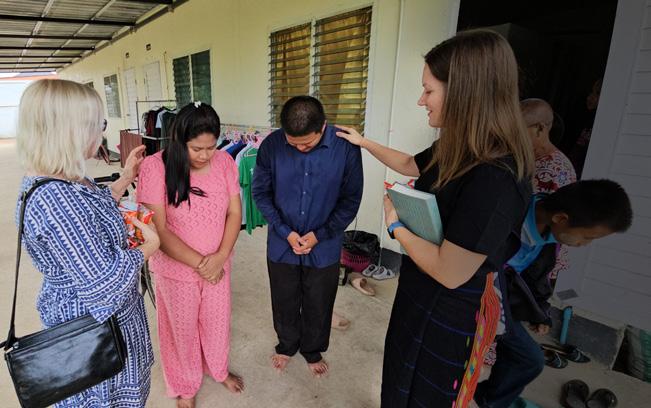
Simultaneously, I was preparing to lead a team of 12 people from my home church, Eastview Community Church in Winnipeg, MB, to Thailand for a two-week mission trip with Multiply.
I had written, in my estimation, a really awesome daily devotional plan for our team to work through while on mission. It was based on the Sermon on the Mount, and I was so excited to use it.
In the final weeks leading up to this trip, I felt a prompt on my heart to scrap what I had prepared; instead, I should use the method Cam had taught us.
This was a prompt from the Holy Spirit, and I am so thankful for it.
In Thailand each morning, before we left for the missional activities of the day, our group began in the Word. We would read a story about Jesus, retell the
story by memory, and then respond to three questions:
1. What does this teach us about God/people?
2. What is Jesus saying to you/how will you obey?
3. Who will you share this story with?
Each day, a different person from our team led the discussion. By reciting and reflecting on these stories and then having an awareness of who God was calling us to share with, each person on our team was prepared to share the good news of the gospel with someone else that same day. It was amazing!
If you have ever had the chance to partner with Multiply on a local mission trip, you know that they prepare teams to preach the Word at a moment’s notice. Someone on our team — an extreme introvert — was called upon to preach with about five minutes notice. And he was ready. He shared what God had revealed to him that morning.
This happened to multiple people on our team. It emboldened us to trust the Spirit in the moment when we were called upon, to give a defence for the hope we have in Jesus.
Coming home we challenged our team to keep this practice going. To pray for people who God is laying on your heart, to share a Word from scripture with them, to be obedient to follow up and invite them to study scripture together, and to introduce them to the presence of Jesus through their time together.
Some did this, but for most, it was difficult to get it going once we hit the daily rhythms of life back home. It’s one thing to think through disciple-making movements and put them into action while on an overseas mission trip. It’s another entirely to bring that into your everyday life as a follower of Jesus.
For me, I brought this method of Bible study into our Home Church that meets every Friday night. We’re an intergenerational group of believers and a few who are exploring faith in Jesus.
A few weeks ago, a single mom connected to our group brought her boyfriend who is not a believer. It was the first time we had ever met him — or had even heard about him. Because we had familiarity with Discovery Bible Study, we were able to seamlessly integrate someone brand new to our group, and brand new to faith, into conversation that was welcoming and accessible. We had a great conversation that evening, and we welcomed him back to join our group again in the future.
This journey certainly hasn’t been perfect. I’ll be the first to admit the difficulty of trying to start these studies among gatherings of unbelievers. The roadblock for me seems to be in finding people who are interested in doing a Bible study together.
I’ve noticed that when I go out and look to start a group on my own, there isn’t much fruit. But when I’m
I AM THANKFUL TO PEOPLE LIKE CAM STUART, WHO IS LEADING THE CHARGE IN OUR CONFERENCE TO GROW IN A HEART FOR THE LOST, AND FOR CREATING STRATEGIES FOR INTENTIONAL, MUVLTIPLICATIVE DISCIPLE-MAKING.
patient, and when I train the people around me to engage with Jesus in his Word in ways that are accessible to lost people, the Holy Spirit has been faithful to send people our way.
I am seeing fruit in equipping believers with this Discovery Bible Study tool as a model for introducing lost people to the kingdom story of the Bible. God is using this method globally with Multiply to great effect, and I think the Lord has something for us here in Canada.
I am a big believer in the Alpha course as an excellent program-based model for reaching lost people in the name of Jesus. But the Discovery Bible Study tool has felt like an excellent relationship-based model for North American churches.
I am thankful to people like Cam Stuart, who is leading the charge in our conference to grow in a heart for the lost, and for creating strategies for intentional, multiplicative disciple-making.
I am also thankful to our many Multiply missionaries around the world who have been effective in catalyzing disciple-making movements for years. I believe there is much we can learn from our brothers and sisters around the globe, and I know there is much that Jesus wants to do among our friends and neighbours who have yet to experience the love of the Father. What will happen if we are increasingly attentive and obedient to the leading of the Spirit among us here in Canada?
I, for one, am excited to see more of what God has for us!
For more information on Discovery Bible Study, visit dbsguide.org
JOHNNY DODSWORTH is the Lead Pastor at Eastview Community Church in Winnipeg, Manitoba.
HOW MUCH IS TOO MUCH?
Thinking biblically about retirement
A FAITH AND FINANCE COLUMN BY CCMBC LEGACY FUND
Think back to March 2020. Those first few weeks of the pandemic were so uncertain, an ocean of questions flooding our minds: How is the coronavirus transmitted? I feel a cough coming on — does that mean I have it? Where can I buy a mask? Can I visit my loved ones?
And, most urgently: when, where, and how can I buy some toilet paper?
What a treasured commodity — stored and hoarded by the masses in those early days. It may be a silly example, but getting to the “end of the roll” revealed a very human bent toward greed and selfishness. It’s hard to put limits on our own perceived needs for the good of others. Afterall, the toilet paper shortage wasn’t due to a supply chain issue as some initially thought; it was purely a result of panic-buying.
In Luke 13:13-21 we hear another story of warning about the futility of stockpiling. Jesus tells a parable about a man whose land yielded a bumper crop so big, he ran out of room to hold it all. In order to keep all the harvested grain, he decided to tear down his old barns and replace them with bigger ones. This, he thought, would guarantee living out the remainder of his days in comfort and luxury. But once the new barns were built, God said to the man, “‘You fool! This very night
your life will be demanded from you. Then who will get what you have prepared for yourself?’” (Luke 12:20).
Yet we also read in Proverbs 13:22 that a “good person leaves an inheritance for their children’s children.” And Jesus teaches us to be good stewards with what we have been given. (For more on this, read “What is biblical stewardship?”).
When we think about saving for retirement, it seems as if there’s this great tension between saving and generosity. How much do we save for retirement? And how much is too much?
Maria Dawes is a portfolio manager at Capstone Asset Management, one of CCMBC Legacy Fund’s partners. Capstone offers more traditional investing from a faith-based perspective, and Dawes has over 20 years of experience working as a financial planner.
When she is meeting with clients, she says there is no one-size-fits-all solution to retirement savings: “As a Christian, there’s an additional responsibility when stewarding assets to pray and seek the Lord’s guidance…. You need to hold everything with an open hand and trust that God will direct you. That might be giving it all away, it might be saving in order to do something very meaningful,” Dawes says.
“It’s living on purpose and being intentional, … seeking God and his wisdom in every aspect of life,” says Dawes. “[If you decide to] ‘build additional barns,’ you need to really feel confident that the Lord’s not calling you to something else, and that it’s not your security.”
Dawes also encourages people to think about the effects of giving — to see it not only as an act of love in the present, but also as an investment in the Kingdom of God:
“Think about the compound returns that are being made on that giving investment. Whether it’s to a nonprofit, whether it’s to relieve poverty — there’s a compound return that may be exponentially bigger than a financial return,” says Dawes.
While you are asking the Lord to guide you in preparing for your future retirement, Dawes shares a few practical tips:
1. ENSURE YOUR HOUSING IS SECURE.
“If you don’t have housing, then you have a lot of instability,” says Dawes. A retired person needs to think about where she or he wants to live, whether to rent or buy, downsize, and so on, she says. “Figure out what housing looks like and then start building your financial plan off of that.”
2. GET HELP IN MAKING A FINANCIAL PLAN WITH SOMEONE WHO SHARES YOUR VALUES.
To understand your goals and how to achieve them, Dawes suggests making a plan with someone who understands your perspective and affirms what you believe God is calling you to. This might include working with a certified financial planner, especially one who respects your values and long-term vision. It could also mean seeking wisdom from trusted individuals in your church community who understand financial concepts and can offer faith-aligned counsel. Often, drawing on the insights of multiple advisors, both spiritual and financial, can provide clarity and confidence, helping you make decisions rooted in faith rather than fear. The professionals at Advisors with Purpose can help donors create an estate plan that reflects their faith, their family, and their desire to leave a legacy.
3. PRACTICE YOUR BUDGET BEFORE RETIRING. Dawes says that many people, when they make their retirement budget, believe they can live on a lot less than what they’re used to. “And then they find they absolutely cannot do it,” says Dawes. “It’s just impractical.” She recommends trying to live off a retirement budget before retiring and then adjust as needed.
4. HAVE A PLAN TO DEAL WITH ALL YOUR THINGS The stewardship of your possessions is your responsibility, not your children’s. “It’s just an absolute overwhelming burden, and [your things will] just get
chucked in the bin anyways,” she says. “You can’t take it with you. Don’t die with all this stuff, don’t leave that to your kids.”
As we plan, we should do so with open hands and hearts; we need to be careful about solely trusting in our own storehouses. In 1 Timothy 6:17-19, Paul writes that instead of putting our hope in wealth, we are to put our hope in God, the steadfast provider in this life and in the coming age. By being generous, we are released from the grip money has over us. Rather, we can “take hold of the life that is truly life” (v. 19).
How you spend your money — in and out of retirement — reveals your true allegiance. Jesus famously says in Matthew 6:21, “where your treasure is, there your heart will be also.”
Be honest before the Lord today. Are you hoarding “the toilet paper” because you are afraid you will run out? Have you sought his guidance when planning for your retirement, asking him to show you how to be generous? Are you being a good steward with what you have been given, seeking to save and invest wisely, and trusting that God will direct you?
If you are interested in investing in CCMBC Investments Ltd., please contact Capstone Asset Management at 1-855-437-7103 or ccmbc@capstoneassets.ca
If you are interested in creating an estate plan, please contact Advisors with Purpose at 1-866-336-3315 or plan@advisorswithpurpose.ca.
The Gospel, Peacemaking, and the Kingdom
Equip 2025 is now in the books. About 270 registered guests gathered at North Kildonan MB Church (NKMB Winnipeg, MB) around these beautiful and central themes. We invited our Creator God, King Jesus, and the Holy Spirit to lead us as we reflected together on this important biblical-theological topic, enjoyed family reunion moments and welcomed new family members around tables, reflected on how to live more faithfully as disciples and disciple-makers, and prayed together through sung prayers, silent prayers, and spoken prayers.
The topic and focus of Equip 2025 was chosen in part because of this year being the 500th anniversary of the birth of Anabaptism so it was a great opportunity to talk about peace and peacemaking according to our biblical-theological perspective as MBs. We asked about what peace looks like in the Bible—as in the robust multi-dimensional peace described as shalom and eirene. We asked if this peace is core to the gospel and God’s Kingdom. We asked if peace and peacemaking involve evangelism and personal salvation or whether they are only about interpersonal peace and justice. We heard heartbreaking stories of believers living in places of war and violence and on how they have different perspectives on discipleship and the use of violence.
The plenary sessions involved Ken Esau (NFL Director) on the
biblical definitions and context; Gil Dueck (Columbia Bible College) on our MB cultural instincts and relationship with the larger world; Dave Ens (One88 Pastor) on seeking the shalom of the city; European Multiply leaders on seeking the shalom of the larger world; Tim Geddert (Retired Fresno Pacific Seminary Faculty) on peace and police/military service; and Jodi Enns (Conflict Consultant) on seeking the peace of the local church. Eight breakout presentations were held on the Wednesday most of which involved how to practically apply and live out God’s peace in our world.
In addition, registrants sat around round tables and explored carefully our MB Confession Article 12: Society and State and Article 13: Love and Nonresistance, giving feedback about the DRAFT revised Explanatory Notes and also reflecting on whether the NFLT should consider doing a review of the wording of the articles themselves. There was significant engagement in these sessions and significant feedback given to the team. Registrants also interacted with 14 exhibitor tables hearing about how these organizations were involved in various forms of preventative and/or restorative peacemaking.
The Tuesday afternoon also involved “An Important MB Family Conversation” where registrants listened to some of the exciting things
happening within our larger MB family of churches as well. They also began to process a proposed change to CCMBC’s governance structure. On Wednesday afternoon, four optional off-schedule sessions (given the title “secret sessions”) provided registrants an opportunity to connect over topics of interest. One of these brought together new MB leaders from diaspora churches who shared about peace in their contexts and about their experience of being present at this gathering.
It is hoped that all the Equip registrants will have come away from Equip 2025 with a greater passion for faithful peacemaking in the way of Jesus and a heart for living this out in their contexts!
The National Faith & Life Team wants to express thanks to North Kildonan MB Church and their whole staff team for being exceptionally gracious hosts for Equip. And we thank all of those who attended Equip 2025. We hope it was encouraging, provocative, and relationally and spiritually rich! We hope to see you at Equip 2027 (details coming soon!). “Blessed are the peacemakers, for they will be called children of God” (Matt 5:9).
May the LORD turn his face toward you and give you Shalom! (Num 6:26)
KEN ESAU (National Faith & Life Director)
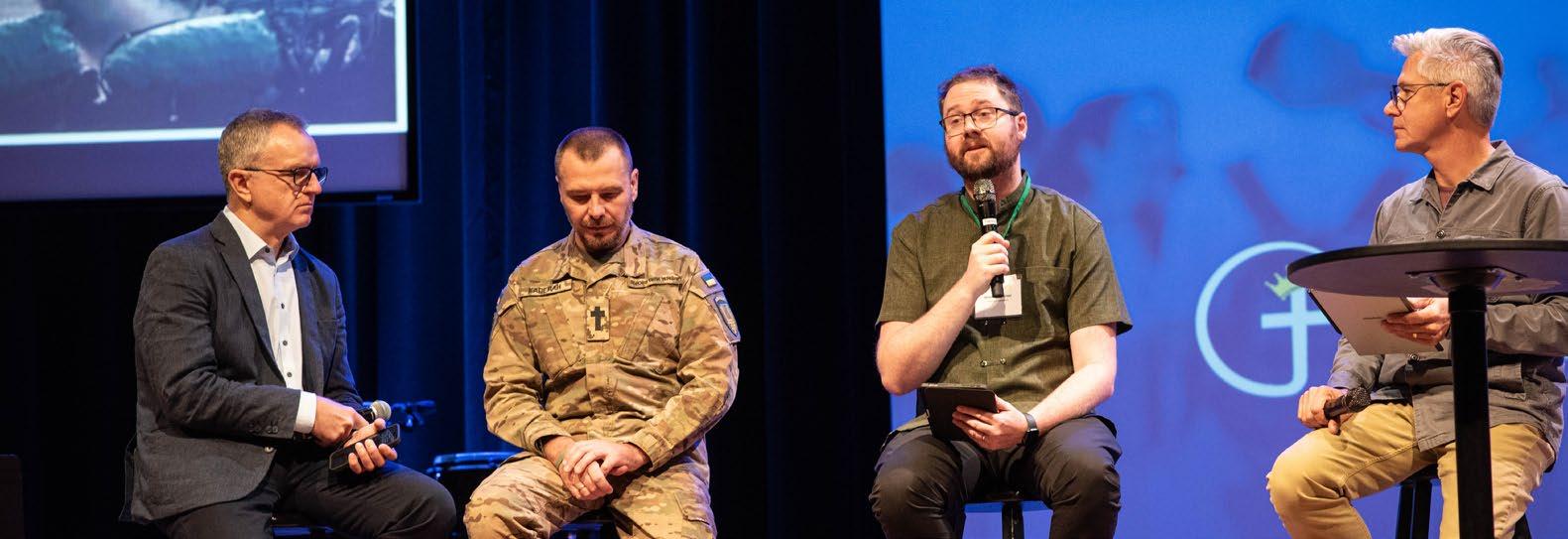
Multiply leaders on seeking the shalom of the larger world. They shared heartbreaking stories of believers living in places of war and violence.
TRACING THE EXAMPLE OF JESUS A
reflection on Equip 2025
BY CRAIG THIESSEN
Do you remember learning to write the alphabet? You might, like me, remember kindergarten worksheets where the letters of the alphabet were outlined in big, dotted lines and your assignment was simply to trace them so you could eventually gain the muscle memory to do it freehand. Tracing the example led to the ability to write with confidence on one’s own.
Did you know that the discipleship journey is described with exactly this same picture in Scripture? 1 Peter 2:21 says, “To this you were called, because Christ suffered for you, leaving you an example, that you should follow in his steps.” The word “example” in the original Greek is the word hypogrammon, which is two words combined into one: the preposition hypo, meaning “by” or “under,” and the noun gramma meaning a letter of the alphabet (the related verb graphe means “to write”). A hypogrammon is quite literally the sheet that your kindergarten teacher put in front of you!
Peter suggests to us that Jesus’ life is like this kind of worksheet, providing for us something to copy with our lives. What are the letters that Jesus outlined with his life that we ought to trace out with our lives? In context, the invitation is to suffer like Jesus did: to do good even when it means enduring the consequences.
At Equip 2025, delegates dissected the various elements of the MB position on peacemaking. One aspect that struck me deeply was the idea that sometimes peacemaking means being willing to absorb violence into ourselves rather than deflecting it back to others. This is what Jesus did so brilliantly and counterintuitively on the cross. Jesus very easily could have fought back with the power of the forces of heaven (Matthew 26:53) — and
would have excited many of his followers by doing so — but instead chose to overcome the violence by submitting himself to God and absorbing the violence into himself. He won the victory through his amazing, humble, and peacemaking approach!
There are obviously many difficult and complex questions about how active peacemaking in the way of Jesus plays out in various scenarios in our world. At Equip, I grew to appreciate the complexity to a greater degree, and it is important to consider the bigger questions of war and societal violence.
For me though, the way to trace Jesus’ example begins with small things: deciding not to escalate a conflict when something is said that makes me feel defensive; being less concerned about my reputation than God’s; doing good no matter what it might mean for me.
Further, it means entrusting myself to the God who judges justly (1 Peter 2:23). It can be easy for me to lash out with what I feel is righteous anger or to think that I know the way to achieve victory over the evil I see in the world. But I must always patiently remember that God will ultimately deal with evil in the most comprehensive way — and for all eternity.
Jesus’ example is instructive for us in many ways, but the idea of Jesus as a hypogrammon when it comes to his willingness to take on suffering is a beautiful, startling, and paradoxical vision of what it means to grow as a disciple. How can you better trace Jesus with your life?
CRAIG THIESSEN is Lead Pastor at Ross Road Community Church in Abbotsford, BC.
Q&R corner
Q&R corner provides responses to questions that readers may have about CCMBC and its work collaborating with provincial MB conferences in areas of spiritual health and theology, leadership development, mission, and organizational health in order to achieve the overall mission: “To cultivate a community and culture of healthy disciple-making churches and ministries, faithfully joining Jesus in his mission.” If you would like to contribute a question, please send it to questions@mbchurches.ca
Please note that we will not be using your name in the MB Herald Digest in order to respect those who prefer anonymity. There may not be space to respond to every question—and sometimes we might not really have the ability or authority to respond to some questions (for example, those that relate more directly to one of our provincial MB conferences or to a local church leadership). We apologize in advance if we are unable to publish a response to your specific question.
What feedback did the National Faith and Life Team (NFLT) receive from Equip 2025 participants about a potential review of Article 12 and/or Article 13? What will happen next?
This question has been floating around and is being asked by a number of Equip 2025 participants and others who heard about our theme and deliberations. (Recordings of most Equip 2025 sessions are available here). About 250 attendees sat around about 40 tables and engaged in vigorous and thoughtful discussion about the draft versions of the Explanatory Notes for Article 12 (available here) and Article 13 (available here). After that careful conversation, each table was free to respond to the following question: “Should the NFLT consider a review of Article 12 and/or Article 13?”
The reason this question was even asked is because the NFLT “stewards the Confession of Faith on behalf of the Conference” and is only one of the two bodies (the other is the Executive Board) who can sponsor a motion to amend the Confession of Faith (Article 12:8; 16:2 — CCMBC Bylaws 2021). Prior to the
pandemic, the Board of Faith and Life (now called the NFLT) surveyed our churches and leaders about possible reviews of our MB Confession and Article 13 was already identified then as the top recommendation for review. Equip 2025 and its theme “The Gospel, Peacemaking, and the Kingdom” provided an excellent opportunity to engage with Article 13 (and the closely related Article 12) as a larger family.
Feedback on the question of whether the NFLT should consider a review of Article 13 and/or Article 12 was written on sticky notes and put on a whiteboard for all to see. It was also recorded so the NFLT could include it in their discussions going forward. At their last meeting, the NFLT reviewed the feedback and expressed a desire to share this conversation with our larger constituency. The NFLT highly values prayer, faithfulness to Scripture, collaboration, and transparency — so sharing this conversation is an important next step.
But before sharing the feedback itself, it is important to understand the process for any possible revision to an article of the MB Confession of Faith (for the detailed policy, see here). The policy
describes the reasons that qualify for a consideration of an article revision.
Revision to an article in the Confession of Faith can be undertaken for one or more of the following reasons:
1. We believe that the older language needs updating in order to clarify the original intention of an article as understood when approved in 1999/2021.
2. We believe that something needs to be added to a specific article in order to address a new situation facing our MB family today.
3. We believe that a present article does not faithfully express biblical teaching.
This means that when it comes to a particular article, do we think that there is some language that is confusing and/or no longer communicates well the intention of the article as originally approved? Do we think that the article needs to include some new topic/ concern that is addressed by the Scriptural writers but was not seen to be relevant when the confessional article was originally approved? Do we think that an article does not faithfully express biblical teaching? (This could mean that some element in the article is directly in conflict with biblical teaching; an element in an article understates or overstates biblical teaching; or an article makes a disputable matter in Scripture into a confessional matter.) While our policy doesn’t address this situation, it is difficult to know what to do if one discovers that a large percentage of MB church leaders and/or church members simply reject what is stated clearly in a particular article. This situation was part of the motivation for the USMB’s revision of Article 13 in 2014 (for Tim Geddert’s Equip 2025 presentation about this process, see here).
Now when it came to the Equip 2025 conversation about Article 12: Society and State, only 16 table responses were passed on to the NFLT on the question of an article review which by itself implies that there is less urgency about reviewing this article. Of these 16 responses, only nine (56%) expressed a desire to review the article; five (31%) did not wish for a review; and two (13%) were undecided. The most challenging section of Article 12 is shown here:
God has given governments authority to maintain law and order and to punish wrongdoers. Followers of Christ respect and pray for those in authority so that peaceful order may prevail. We deplore the loss of life in the exercise of state-sanctioned violence. (Article 12)
Four of the nine respondents mentioned the statement “We deplore the loss of life in the exercise of state-sanctioned violence” — wondering whether the word deplore was the right word to use in light of Romans 13:4 — “the one in authority is God’s servant for your good” whose rulers “do not bear the sword for
no reason. They are God’s servants, agents of wrath to bring punishment on the wrongdoer.” There was also call to better define “state-sanctioned violence.”
A second (and less strongly supported) concern had to do with this section of Article 12:
Because Christ forbids the swearing of oaths, we simply affirm the truth in legal transactions. Believers do not participate in secret societies which demand the swearing of oaths or which otherwise conflict with the Christian’s allegiance to Christ and the church. (Article 12)
Some questioned whether the prohibition on oaths and secret societies is still of such relevance that it needs to be included in our confession.
To summarize: The largest concern in Article 12 had to do with the proper attitude of believers toward governments and their God-given authority, exercised through police, corrections, and border services (and maybe even through military forces). The closely related concern had to do with the language of “deplore” and the lack of clarity about the definition of violence. Lastly, there was some limited concern about oaths and secret societies.
A more enthusiastic response about article review came in the session directly addressing Article 13: Love and Nonresistance. Thirty-two table responses were returned, with 25 of those (78%) encouraging a review of the article; five (16%) recommending no review; and two (6%) expressing indecision.
By far, the greatest reason came from the title itself — “Love and Nonresistance” — included in 15 of the 25 table responses (60%) recommending a review. Many felt that the word nonresistance did not communicate clearly Jesus’s intentions from Matthew 5:39. Our USMB family revised their Article 13 in 2014, renaming it “Love, Peacemaking and Reconciliation” (see here) and some felt we should follow their title revision.
The second common reason for a review surrounded the lack of definition related to the word “violence” which is condemned as evil and inhumane in all its forms in the article:
We view violence in its many different forms as contradictory to the new nature of the Christian. We believe that the evil and inhumane nature of violence is contrary to the gospel of love and peace. (Article 13)
The various concerns expressed about this universal condemnation of violence was that it potentially conflicted with the approved role of governments described in Article 12; made any involvement in police, border, and corrections service inconsistent with our confession; and failed to differentiate between violence and force.
The third common reason for a review had to do with the last section which describes the only practical application of peacemaking in this section of the article.
In times of national conscription or war, we believe we are called to give alternative service where possible. (Article 13)
There were a number who questioned whether this situation (viz., conscription and alternative service), which has not been a Canadian reality for 80 years, should be highlighted as if it were our main means to express our commitment to peace and peacemaking.
Finally, a number of those calling for a review talked about how we presently have inconsistent practice around Article 13. We do not expect the same level of support and affirmation for Article 13 as we do for our other articles. Of the five respondents who did not recommend a review, only two gave a reason for this (viz., we do not have a biblical reason for changing it; if we were to reopen it, we will likely water it down).
To summarize: the largest concerns with Article 13 had to do with the title (especially the word “Nonresistance”); with the universal condemnation of violence without providing a definition that can coexist with the “sword” given to governments; the somewhat archaic and limited focus on alternative service as the epitome of peacemaking; and with how the present article can continue to guide us when it is unclear and easily misunderstood.
So where do we go from here? The NFLT continues to invite feedback and suggestions from our Canadian MB family. We recommend that individuals send their feedback to their Provincial Faith and Life Team (PFLT), feedback can also be sent to us directly at listeningwell@mbchurches.ca. We are also communicating with and inviting feedback from our six Member Organizations (Provincial Conferences) and three
Member Organizations (Agencies). This step reflects our commitment to CCMBC’s Collaborative Model.
If a particular MB Confession article is chosen for review (and the review is of a more significant nature than changing one Bible verse reference for example), this begins a fairly intense and lengthy process of prayer, biblical study and reflection facilitated through a National Community Summit, creation of a draft, and the testing of and revising of drafts through our Member Organizations, local MB churches, and larger partners (e.g., ICOMB, USMB, etc.). Assuming that the ongoing listening and revision process does produce a satisfactory end product, this would be presented at each of the six provincial MB church annual gatherings and ultimately would need approval by CCMBC members at a formal meeting.
The theological and ethical convictions contained in the MB Confession of Faith are important to us “because we believe that they are an accurate picture and a faithful road map for us about what it means to follow Jesus and be the kind of people of God we believe Jesus is calling us to be” (From “The Introduction to the MB Confession of Faith [2023]” available here). Therefore we do not want to revise our MB Confession simply because we don’t like something it says or what it says is difficult to live out in our present world. However, we also want to live with integrity together as a family and express our convictions in a way that is clear, winsome, and most of all faithful to King Jesus and the Scriptural writers. Please pray for us as we move to discern the way forward!
Blessings and Shalom in King Jesus — the true Prince of Peace!
Ken Esau. National Faith & Life Director
Finish lines
BENJAMIN (BEN) ZERBE
Benjamin Zerbe was born on June 15, 1926, in the farm community of Lustre, Mont., near the Canadian border. His memoirs identified three important early influences: birth into a family of immigrant/ pioneer homesteaders; being the son of practising Christians in the Mennonite Brethren community, and living through the Great Depression. At 15, Ben made a personal confession of faith and at 16, he began his training for ministry, which included education at Prairie Bible Institute, Three Hills, Alta., and coursework in missionary medicine and linguistics. Soon after Ben married Esther Reddig in 1949, they sailed for Japan and served as missionaries for 20 years. Their early years in Japan were challenging as they adjusted to a country devastated by WWII, studied Japanese culture and language, learned how to engage in effective ministry in Japan, integrated their musical skills in ministry, and raised a family of five children. They served with several mission organizations, including Mennonite Brethren Missions, worked in partnership with the growing Japanese church, and assisted with planting two churches in Japan’s largest urban regions. Following their return to North America in 1970, Ben and Esther fulfilled pastoral roles at four MB churches: in North Dakota (1970-1976), Abbotsford, B.C. (Bakerview, 1976-1981), Washington state (1981-1985), and Minneapolis (1985-1988). These pastoral settings encompassed contrasts: rural and urban locations, West Coast and Midwestern regions, well-established and new congregations, traditional and nontraditional
worship styles, and thriving congregations and those struggling with hard times and declining numbers. The nature of “church” changed substantially during these North American pastoral assignments. Following retirement, Ben remained active as a community service volunteer and speaker, travelled domestically and internationally, and maintained contact with the Japanese church. Over his lifetime, Ben desired most of all to be a faithful follower of Jesus Christ and someone who had a positive impact on those around him. Following Esther’s death after 52 years of marriage, Ben was married to Marilyn Berg for 12 years until her death, and then to Doris Chase. Ben is survived by Doris Chase, his youngest sister Lois Zerbe and sister-in-law Marlene Zerbe. He is also survived by his five children: Carolyn (Rich) of Mount Vernon, Iowa; Douglas (Alice) of Rochester, Minn.; Gordon (Wendy) of Winnipeg; Nathan (Joan) of Vancouver, Wash.; Dorinda (Rick) of Winnipeg; 10 grandchildren and their partners; 10 greatgrandchildren, and numerous nieces and nephews and their families.
Birth: June 15, 1926 Birthplace: Lustre, Mont., USA
Death: May 20, 2025 Parents: William & Marie Redekopp Zerbe Married: Esther Reddig Zerbe, 1949 [d. 2001]; Marilyn Olfert Berg, 2002 [d. 2014]; Doris Chase, 2017 Family: Doris; children Carolyn Zerbe Enns (Rich Enns), Douglas (Alice), Gordon (Wendy Kroeker), Nathan (Joan Nichols Zerbe), Dorinda Cornelsen Zerbe (Rick Cornelsen Zerbe); 10 grandchildren; 10 great-grandchildren; sister Lois; sister-in-law Marlene Church: Lustre (Mont.) MB; Bakerview, Abbotsford, B.C; Harvey (ND) MB; New Hope MB, Minneapolis; King Community Fellowship, Federal Way, Wash.
OBITUARIES HAVE LONG BEEN A VALUED PART OF THE MB HERALD . FROM THE FUNERAL BULLETINS, EULOGIES, AND NEWSPAPER OBITUARIES YOU SEND, OUR EDITORS CRAFT LIFE STORIES OF OUR MEMBERS TO INSPIRE AND ENCOURAGE OUR READERS, CREATING A MEMORIAL OF MB SAINTS.
CLICK HERE TO SUBMIT AN OBITUARY
LORENZ O. WIEBE
Lorenz Wiebe was born Nov. 19, 1938, in Foam Lake, Sask., to Paul and Sara Wiebe; the seventh of nine children. His family moved west to B.C., when he was 5-years-old, and then lived in several communities including Matsqui, Ladner, North Delta, and Vancouver. He was led to faith in Christ when a child. As a young man, Lorenz held a wide variety of jobs—from farm chores, to trucking, to working in flour mills. After high school, he attended Bethany Bible Institute in Hepburn, Sask., (1958–1961) where he met Victoria Peters, whom he married in 1962. The couple moved back to B.C., where Lorenz completed a Bachelor of Arts degree at University of B.C. in 1964. His love of learning and interest in people naturally led him to a career in teaching math and science at elementary schools in Hixon, Yarrow, and North Delta and later as a principal at schools in Langley. He retired in 1998, an administrator who combined fairness with compassion and who took time for staff and students alike. Faith in Jesus was central to Lorenz’s private and public life. He prayed for his family daily and often let them know how he was holding them up to his heavenly Father. Wherever he lived, he served actively in church—as Sunday School Superintendent and teacher, moderator,
DOREEN LENORA NETTLETON
Doreen Lenora Nettleton, beloved wife, mother, grandmother, and great-grandmother, died peacefully on Oct. 14, 2025, after a short illness. Born in Alliance, Alta., and raised in Calgary, Doreen met the love of her life, Philip Nettleton, through their church’s young people’s group. They married in 1953 and built a life rooted in faith and service. Doreen’s relationship with God was central to her life, and she and Phil were active volunteers in their churches wherever they lived. They welcomed three children while living in Calgary. In 1971, the family moved to B.C., living in Burnaby for 22 years and in Langley for 30 years before relocating to Kelowna in 2023 to be near family. Doreen and Phil also cherished their summers spent with family and friends at their vacation property on Christina Lake, a beloved retreat for more than 50 years. Predeceased by her parents, Donald and Lenora
youth leader, lay preacher, and deacon—at the MB churches of Queensboro, Prince George, Yarrow, Kennedy Heights and South Langley. He especially loved Mennonite and church history, often weaving this passion into the many Bible studies he led. After retirement, he served on the board of Mennonite Central Committee B.C. (2009–2014). Lorenz found joy in camping and fishing, gardening, and in following his favourite sports, especially hockey, baseball, and football. He is survived by his wife Vicki, and their children: Karen, Darice (Dale Lutz), Kevin (Theresa), and Cliff (Rachel). He was a proud grandfather to Jayden (Christina) and Devon; Dryden, Logan (Jaylene), and Stephanie; and Jacob and Chloe. Those who knew Lorenz remember a man of quiet strength, steady faith, and deep kindness. He built schools and gardens; taught math, science, and Bible studies; and created spaces of welcome— whether in his backyard, his classroom, or the church. Lorenz leaves behind a legacy of love and service.
Birth: November 19, 1938 Birthplace: Foam Lake, Sask. Death: September 1, 2025 Parents: Paul & Sara (Balzer) Wiebe Married: Victoria (Vicki) Peters, 1962 Family: Vicki; children Karen, Darice (Dale Lutz), Kevin (Theresa), Cliff (Rachel); grandchildren Jayden (Christina), Devon, Dryden, Logan (Jaylene), Stephanie, Jacob, Chloe Church: South Langley, B.C.
Gollan, and her brother, Ralph Gollan; Doreen is survived by her husband of 72 years, Philip; her sons, Don (Brenda) of Kelowna and Ken (Kimberley) of Calgary; and her daughter, Lenore (Robert) Klassen of York, England. She will also be deeply missed by her grandchildren Stephen, Jodi, Andrea, Scott, Phil, Danielle, Christy, and Joel, along with their spouses, and by her 10 great-grandchildren. Doreen’s kindness and friendship touched many, and she leaves behind numerous lifelong friends. The family extends heartfelt thanks to the residents and staff at Missionwood, as well as to the staff at Cottonwoods Care Centre, Kelowna Hospice House, and Dr. André Hugo, for their exceptional care and compassion.
Birth: April 8, 1929 Birthplace: Alliance, Alta. Death: October 14, 2025 Parents: Donald & Lenora Gollan Married: Philip Nettleton, 1953 Family: Philip; children Don (Brenda), Ken (Kimberley), Lenore (Robert) Klassen; 8 grandchildren; 10 greatgrandchildren