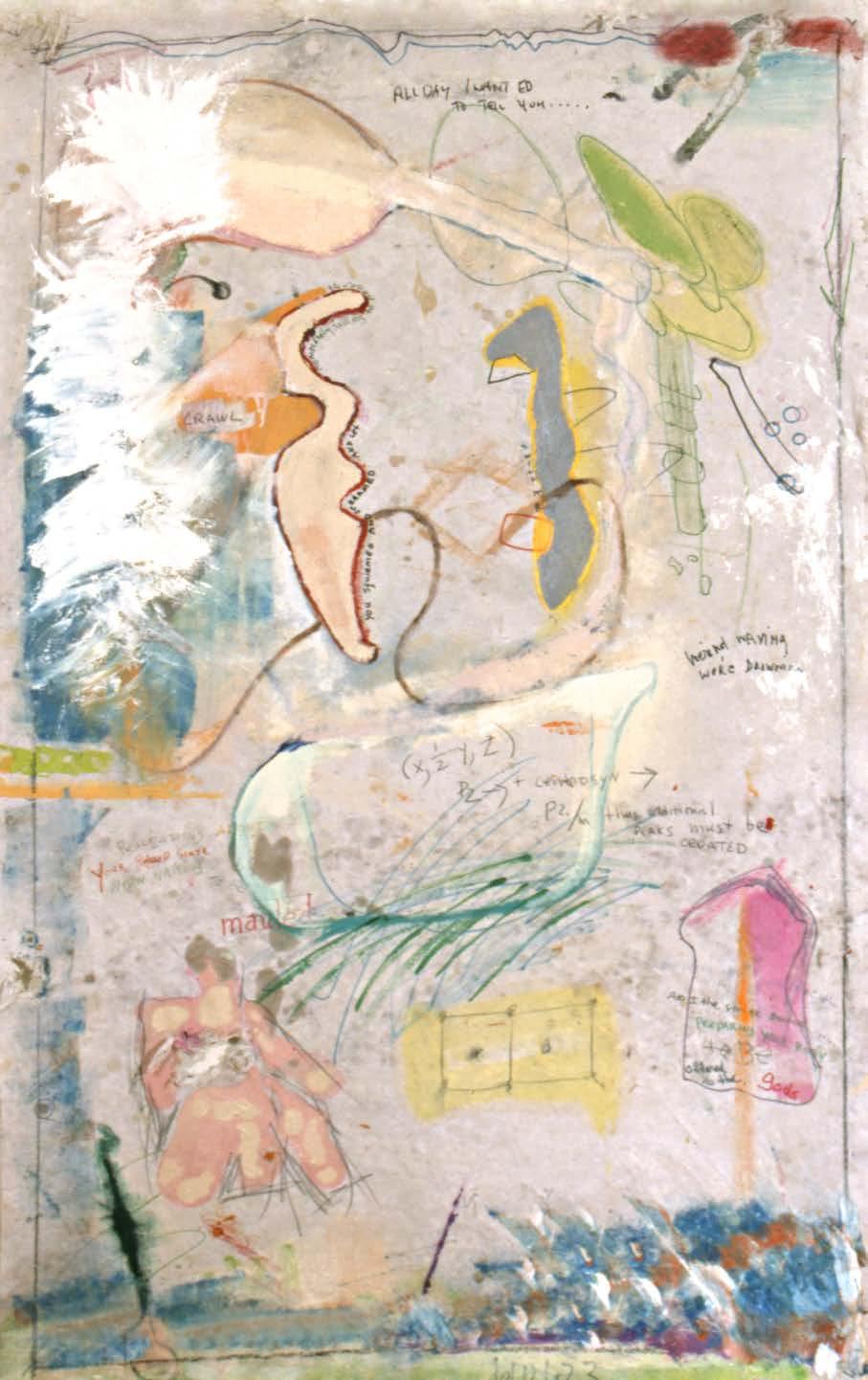
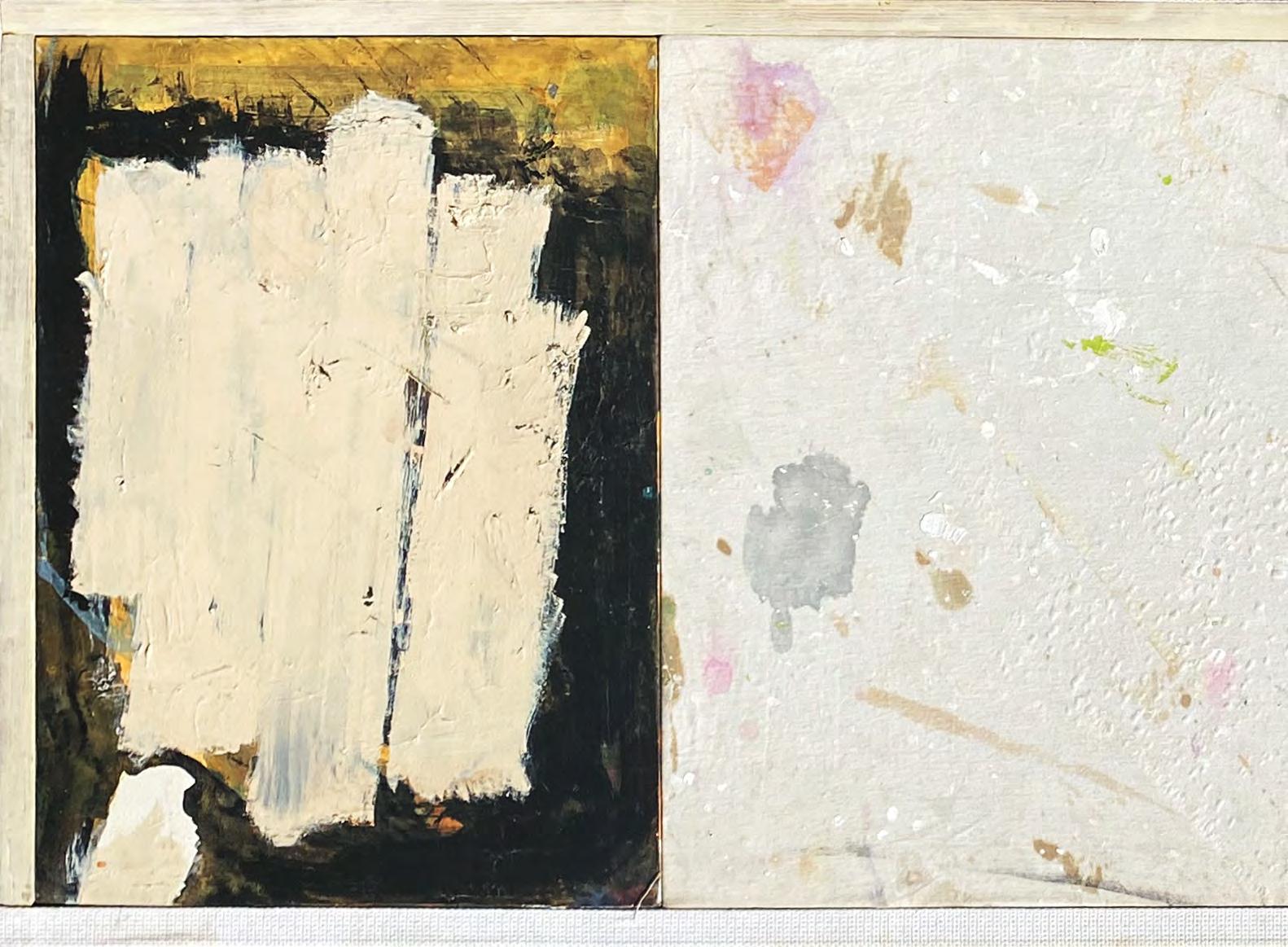
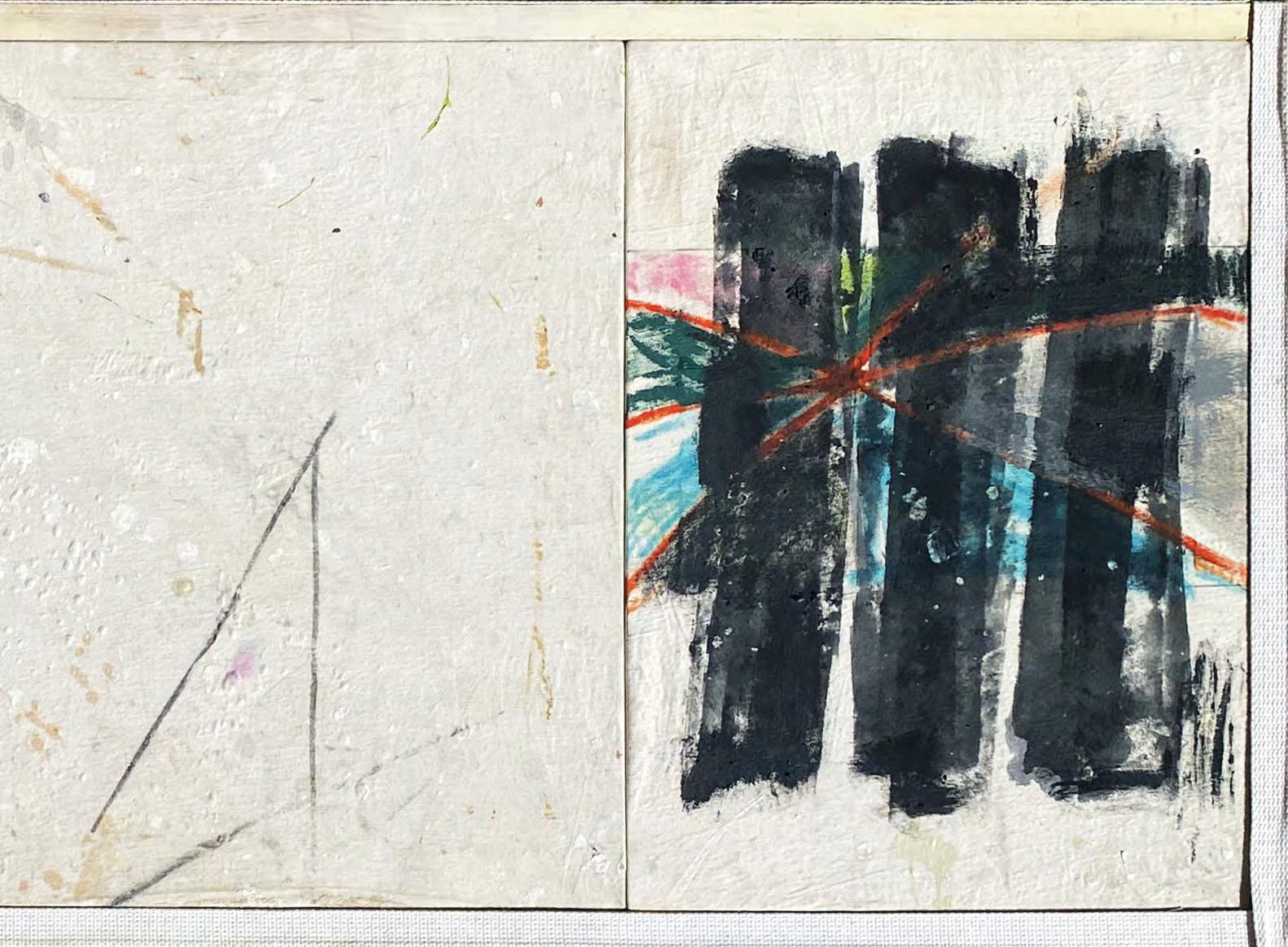
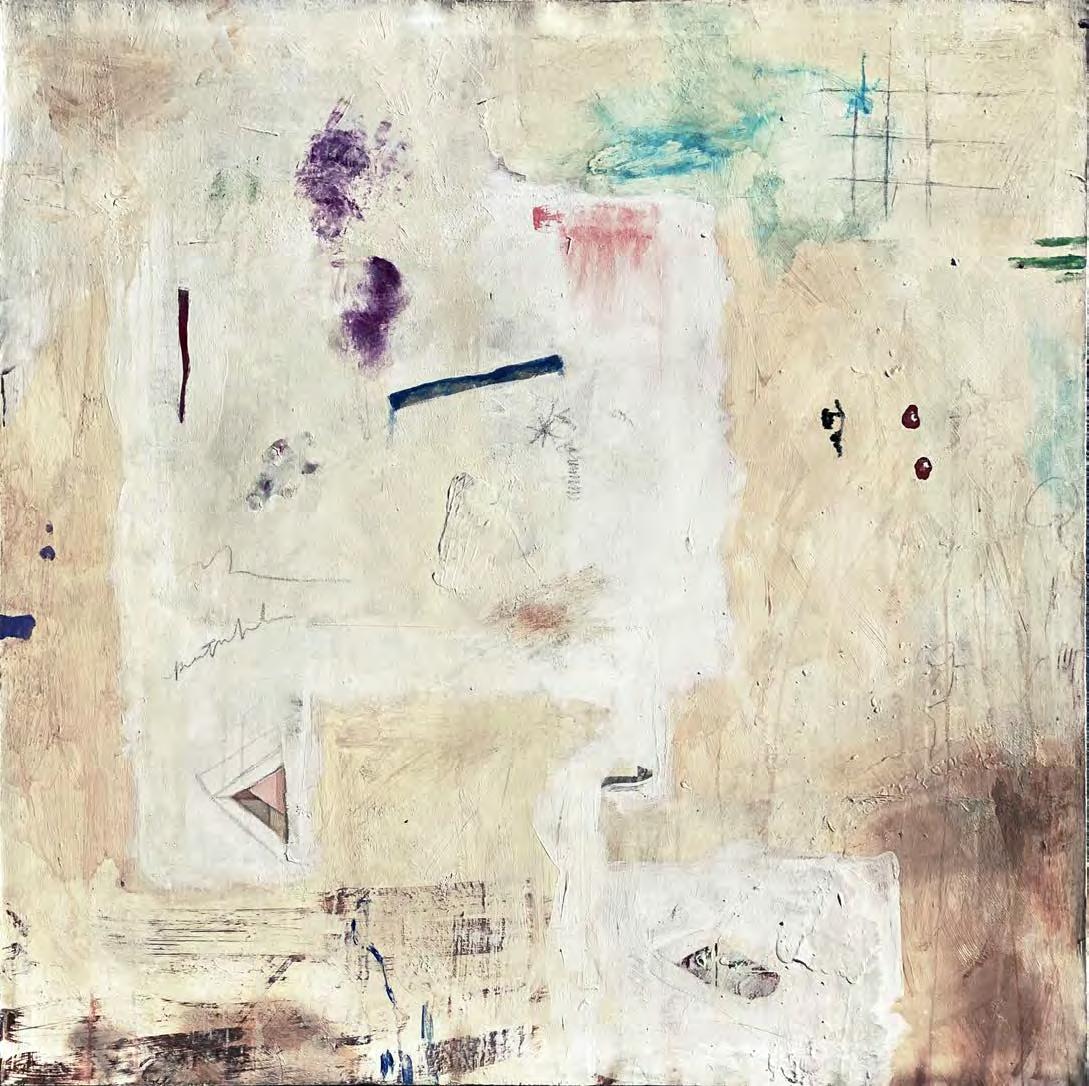
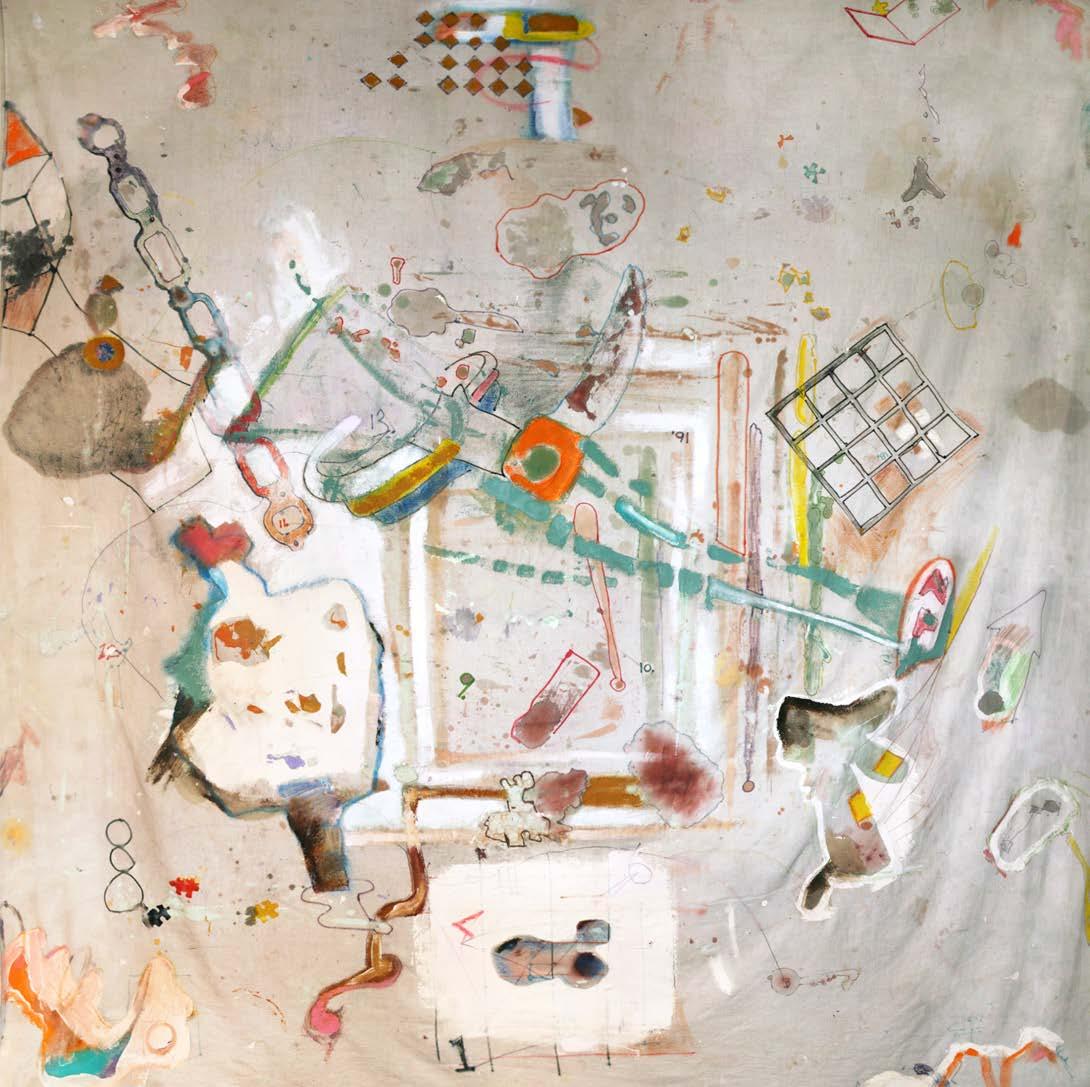
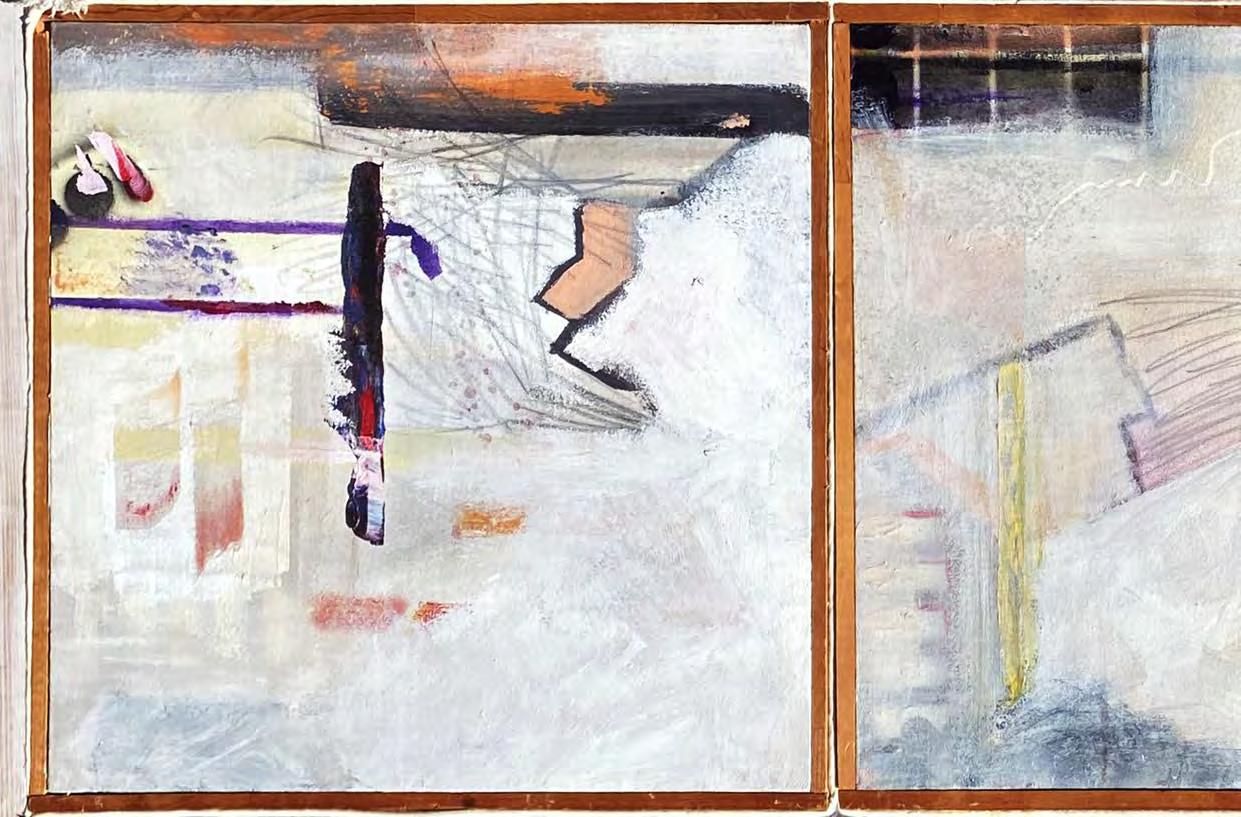
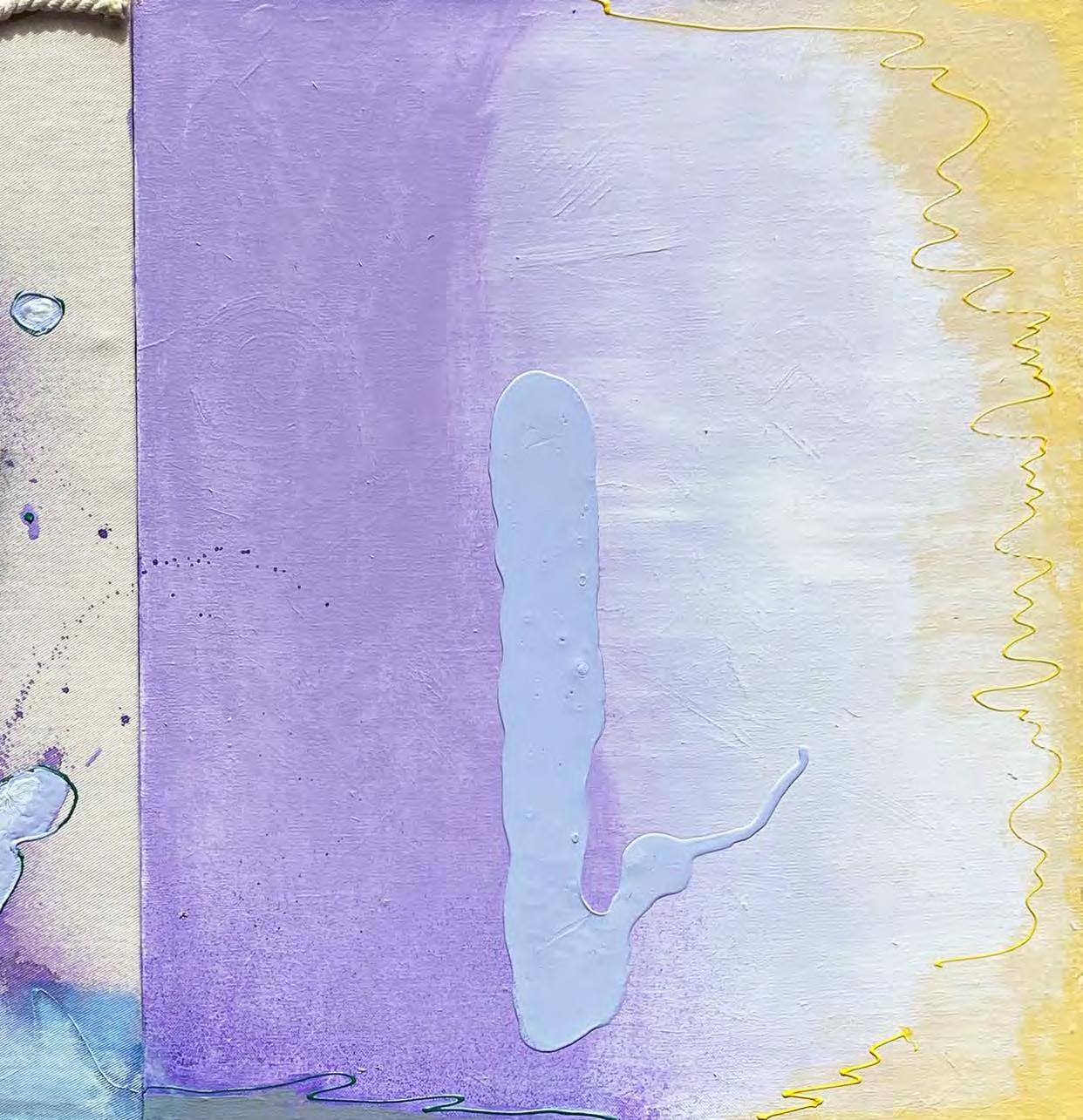
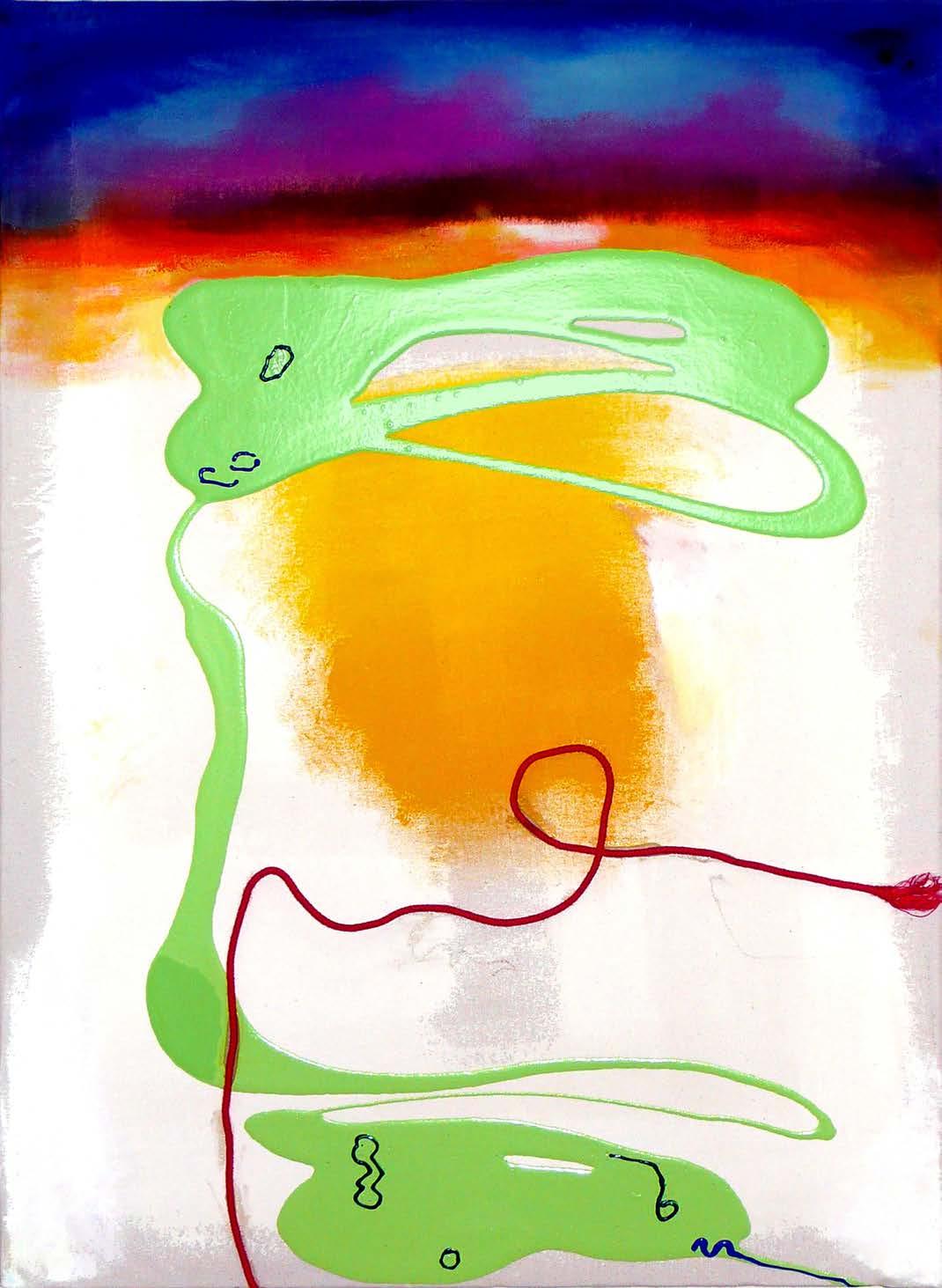
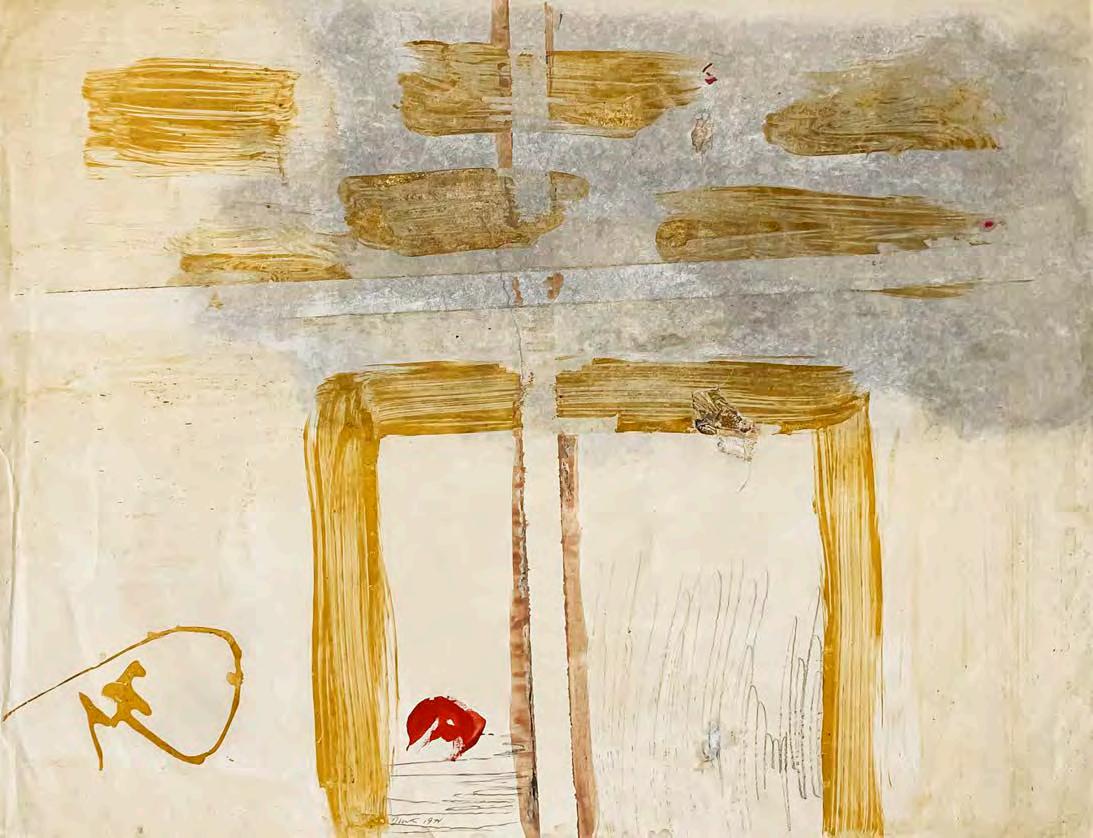
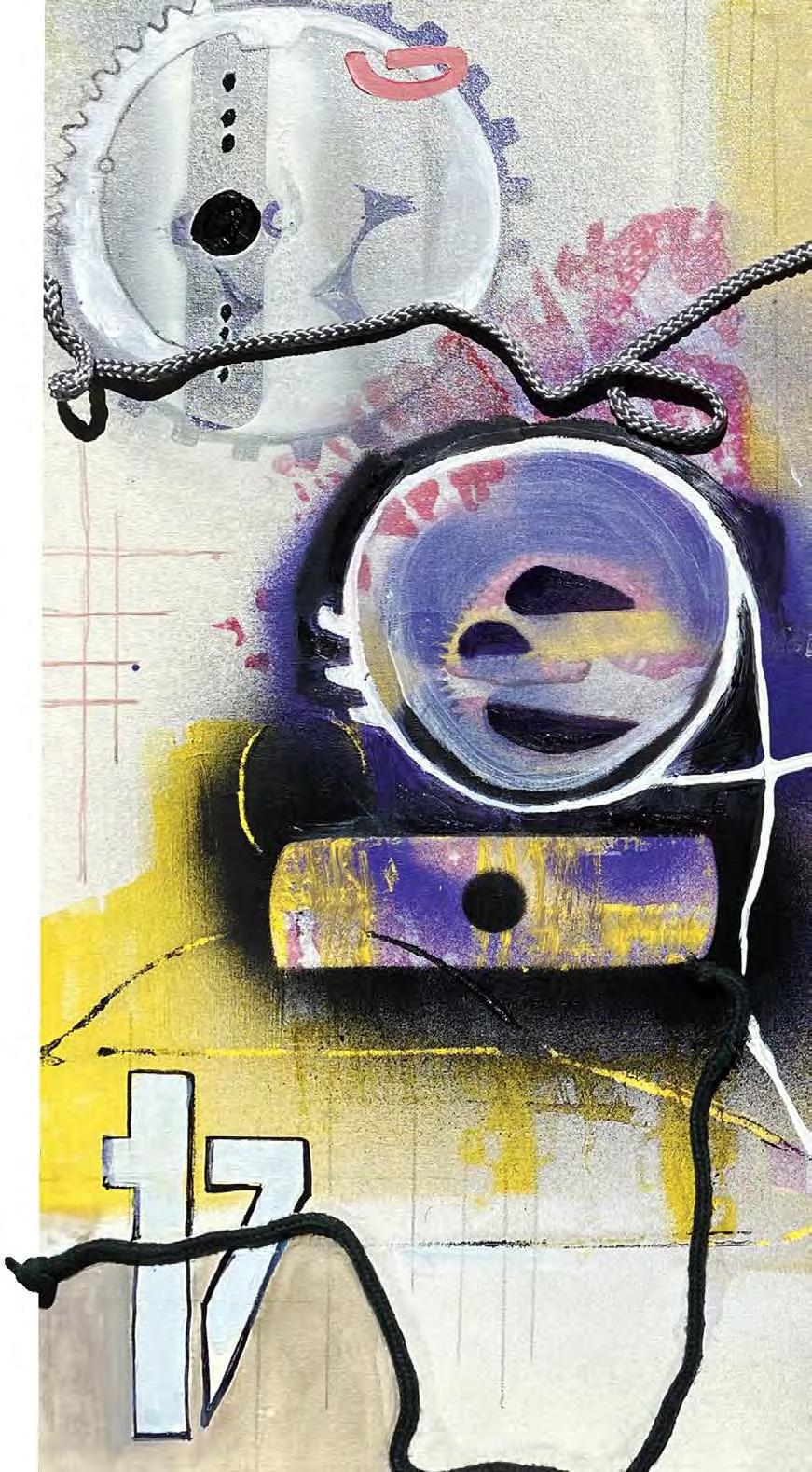
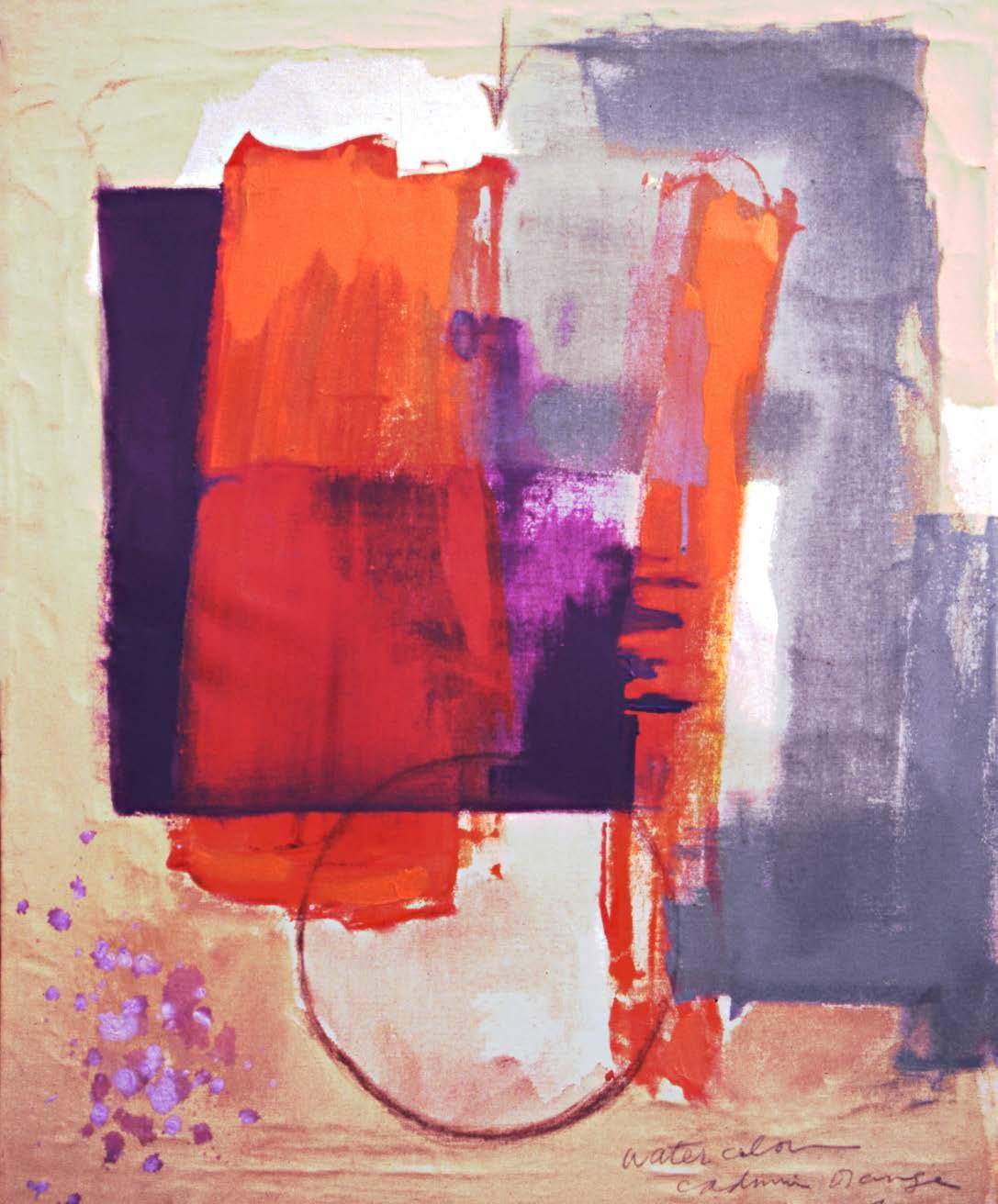
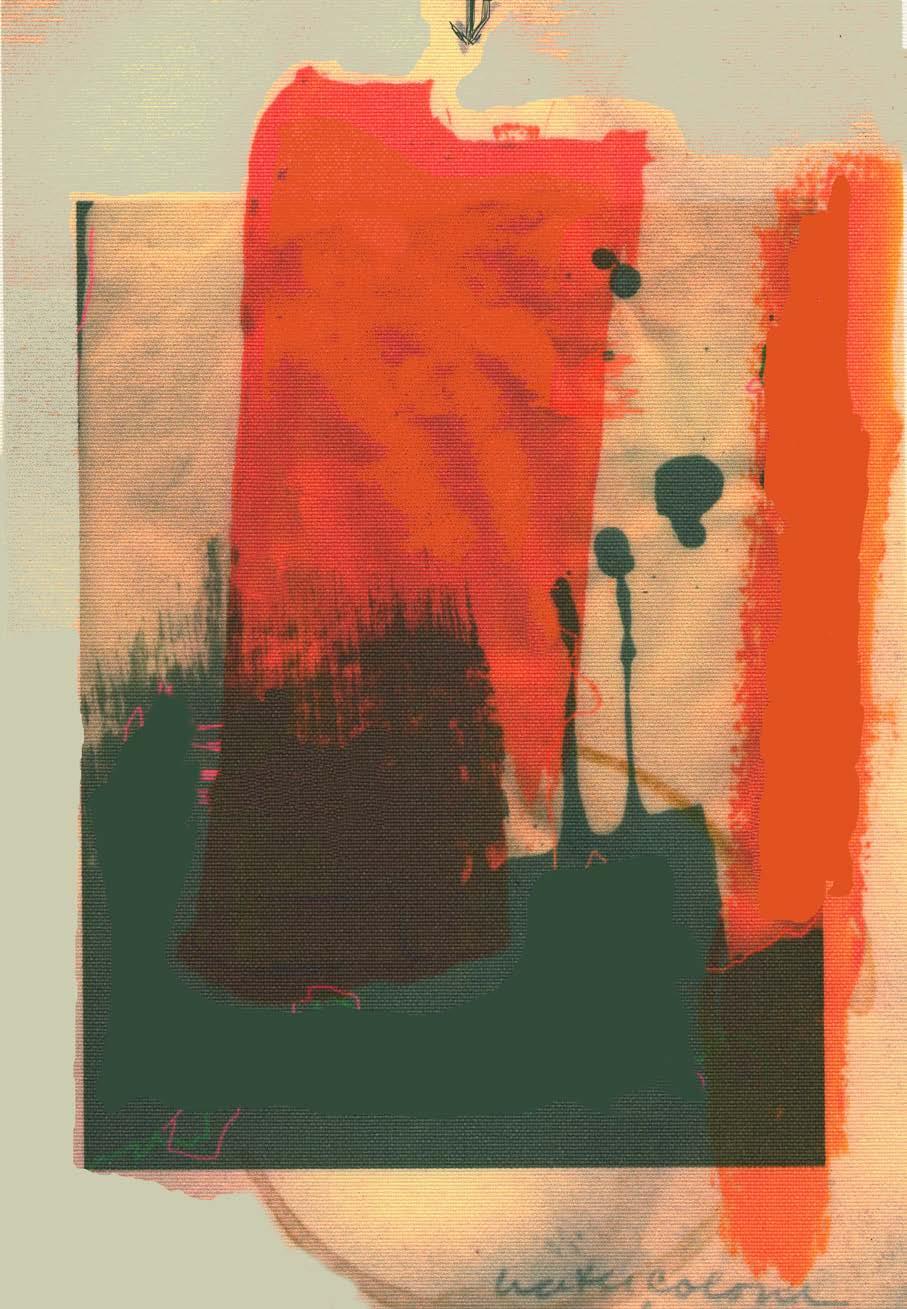
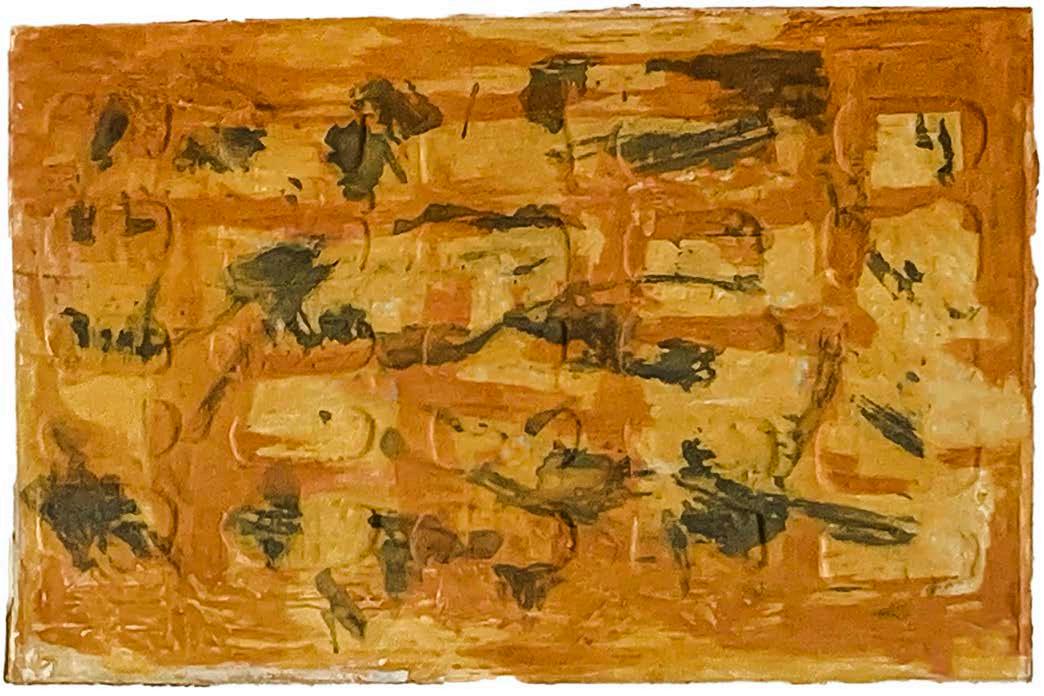
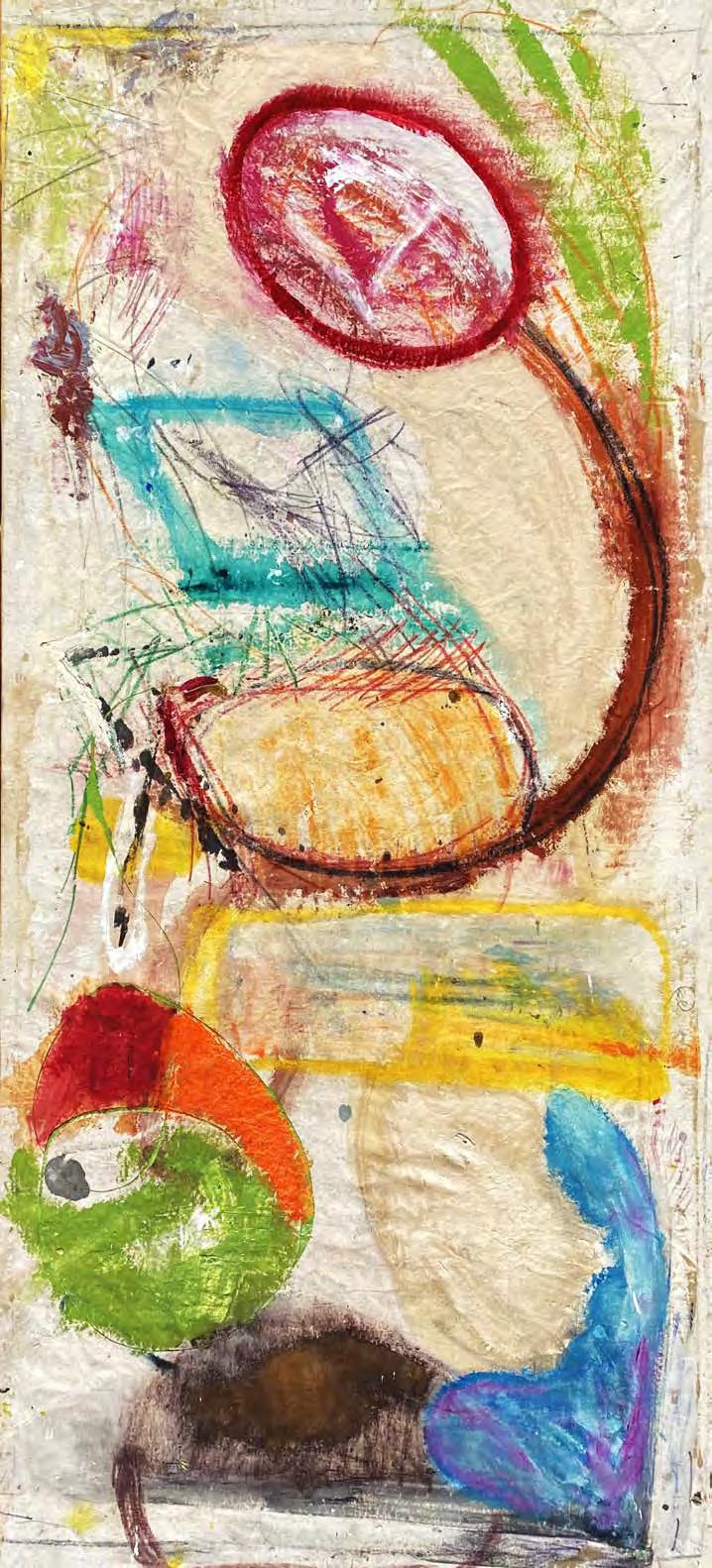
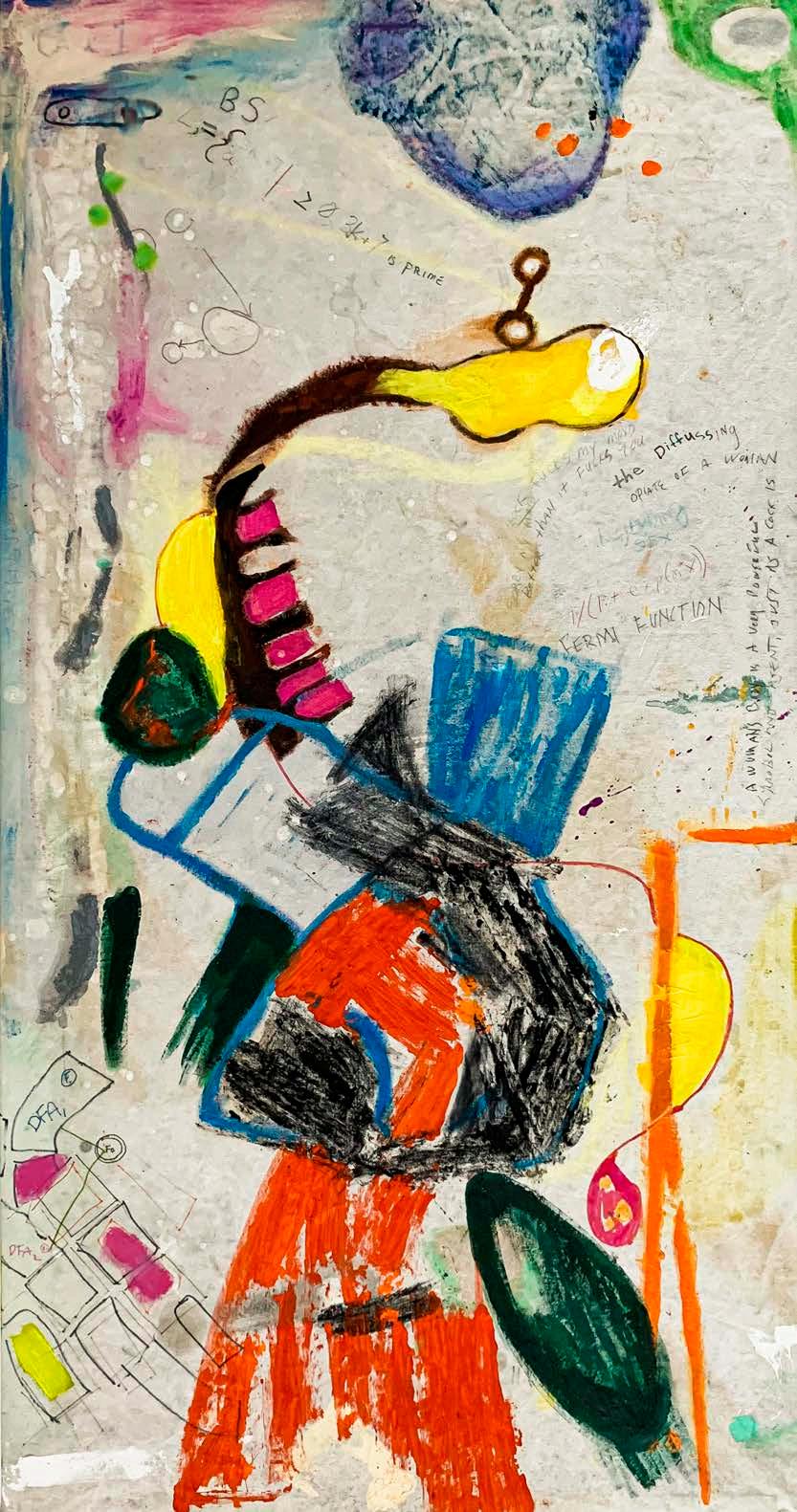
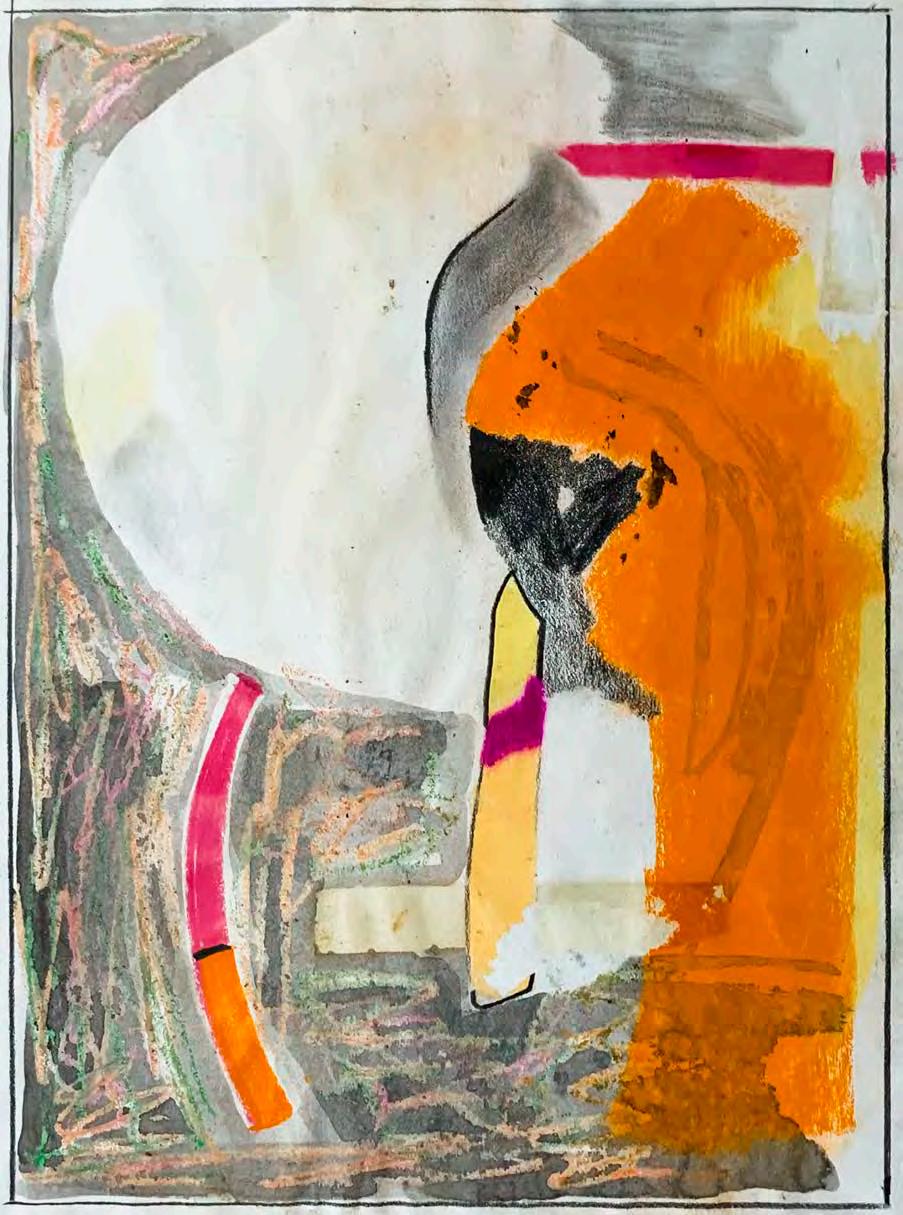
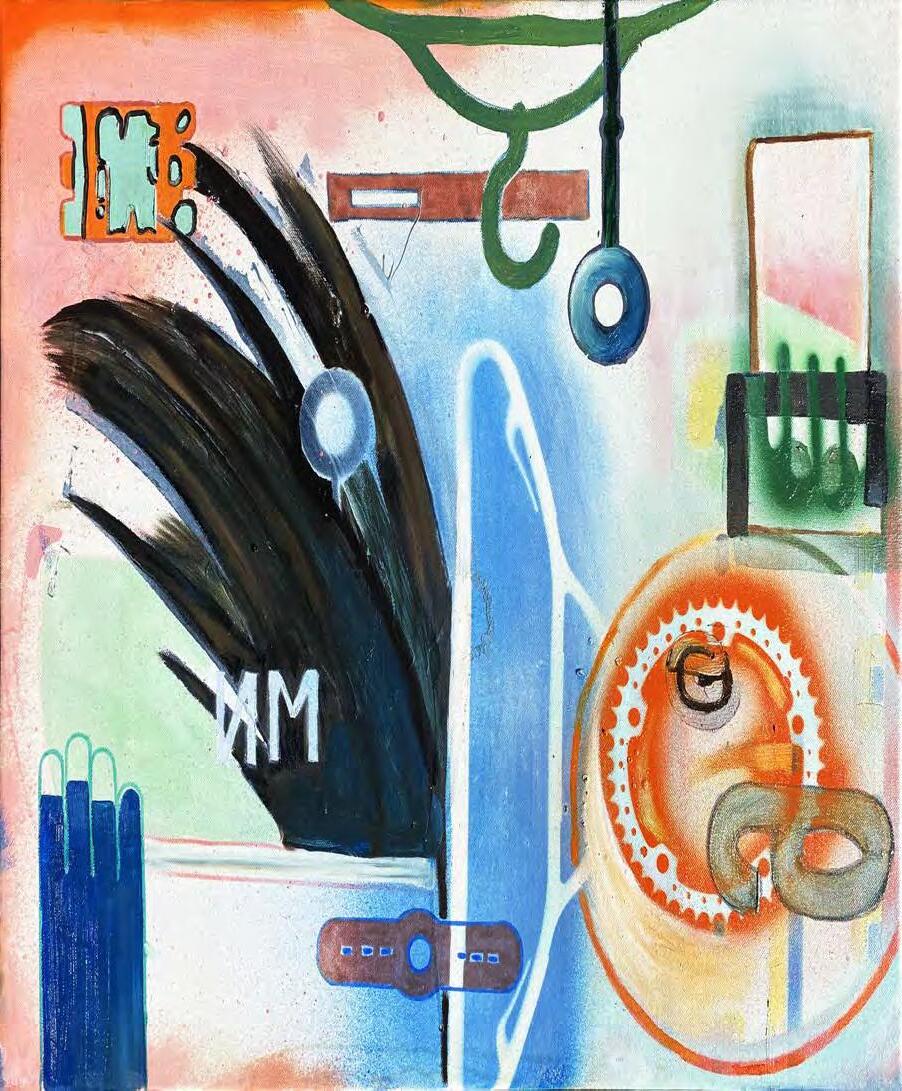
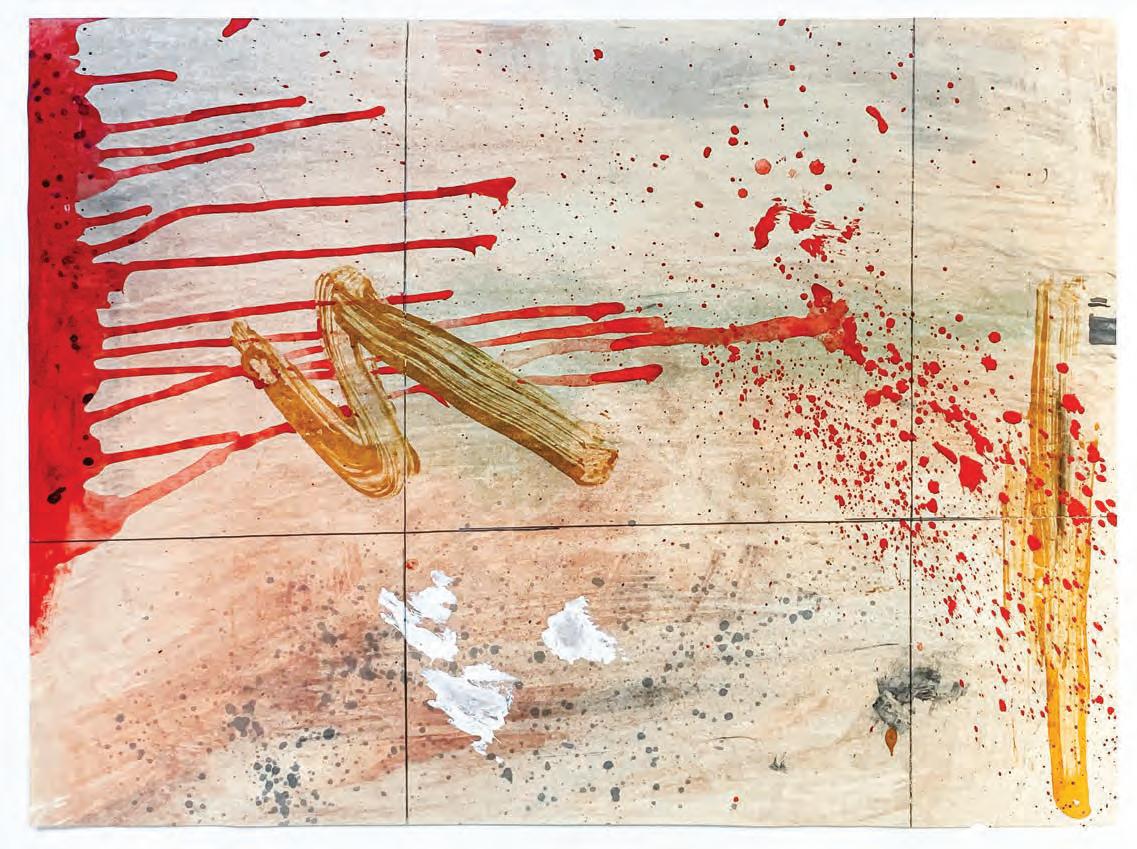
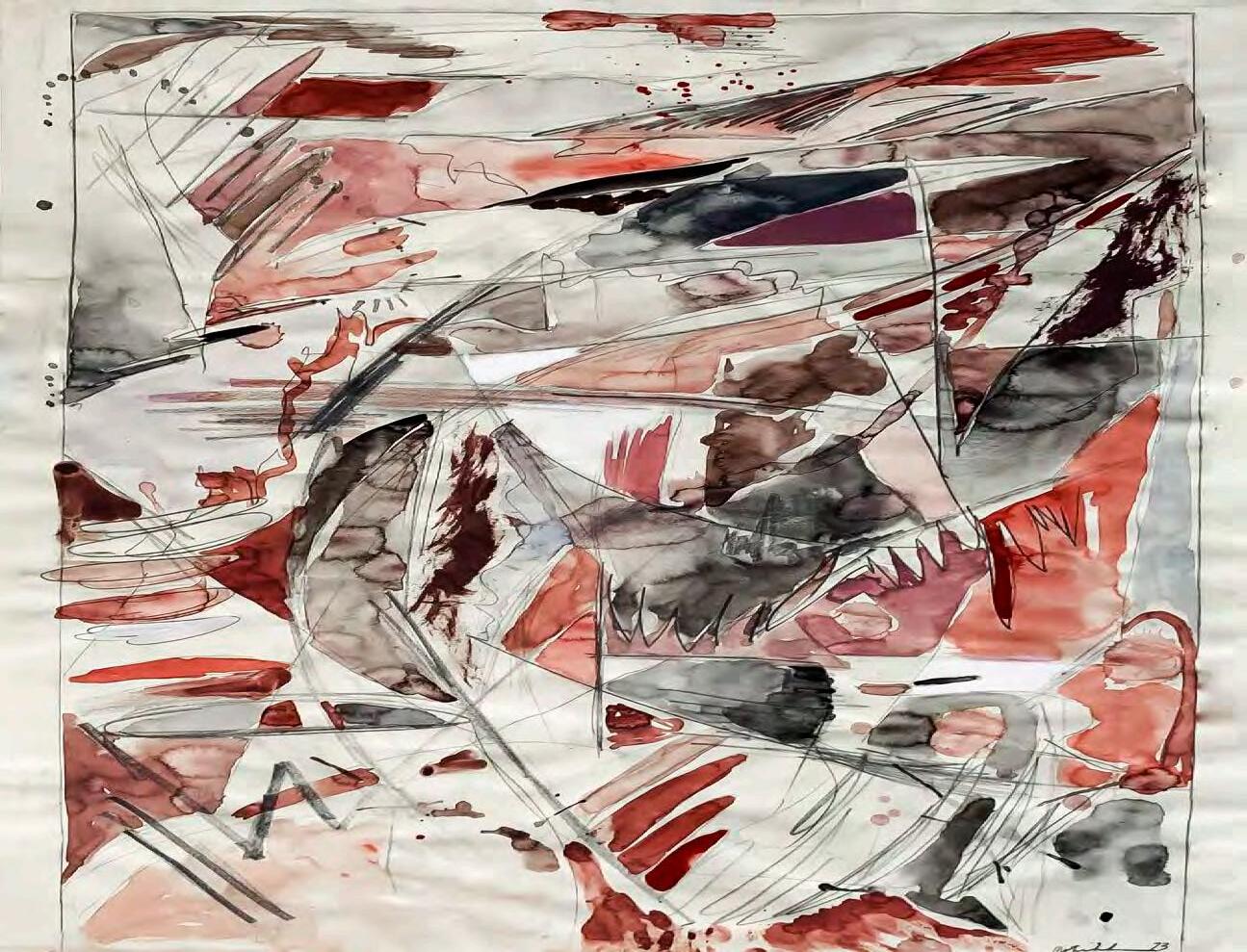
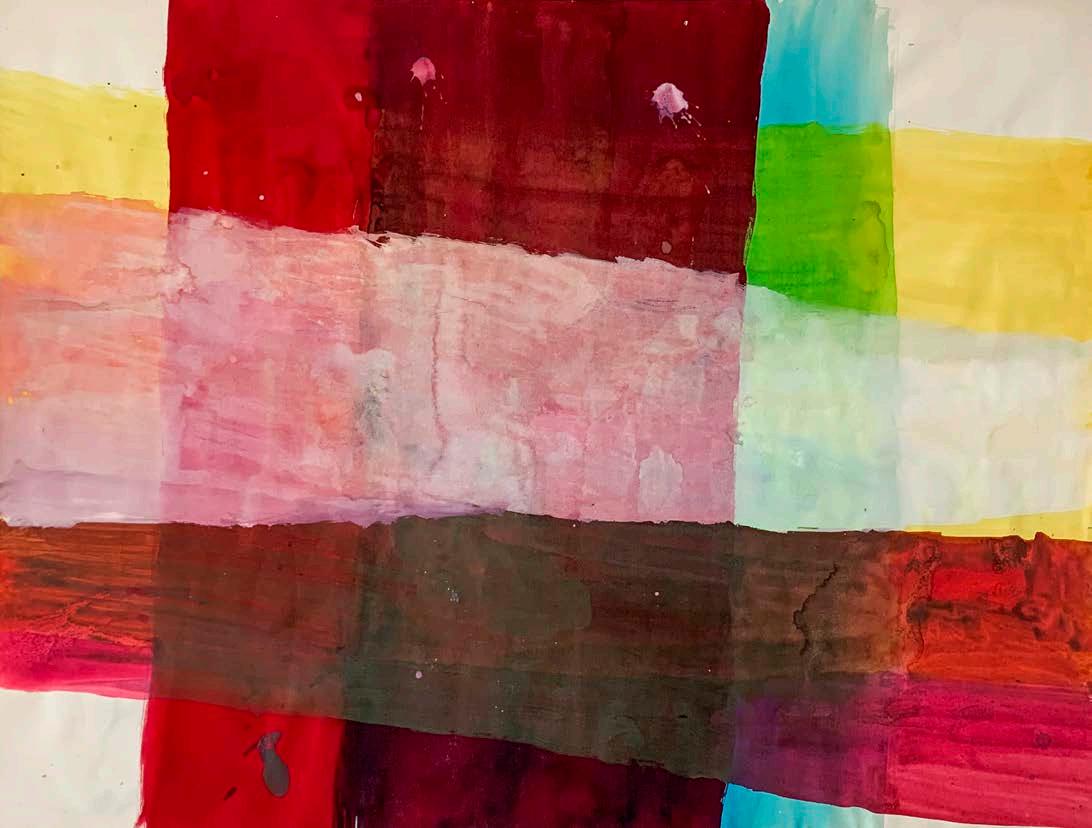
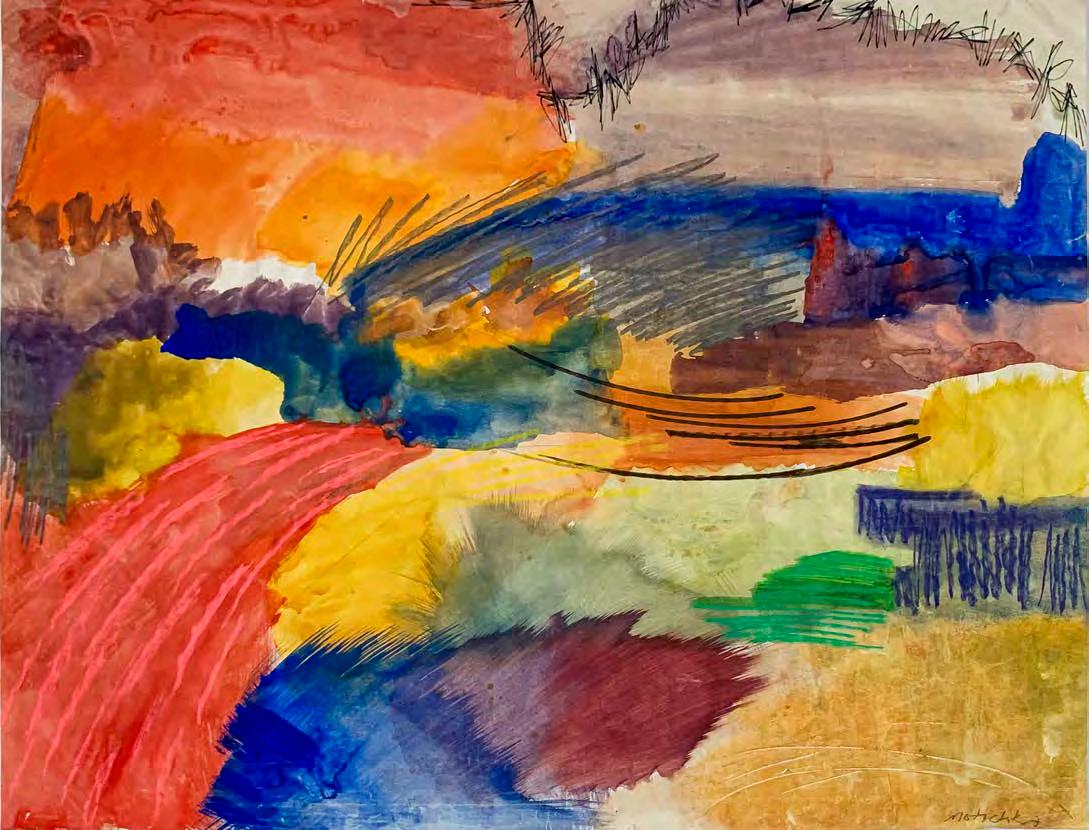
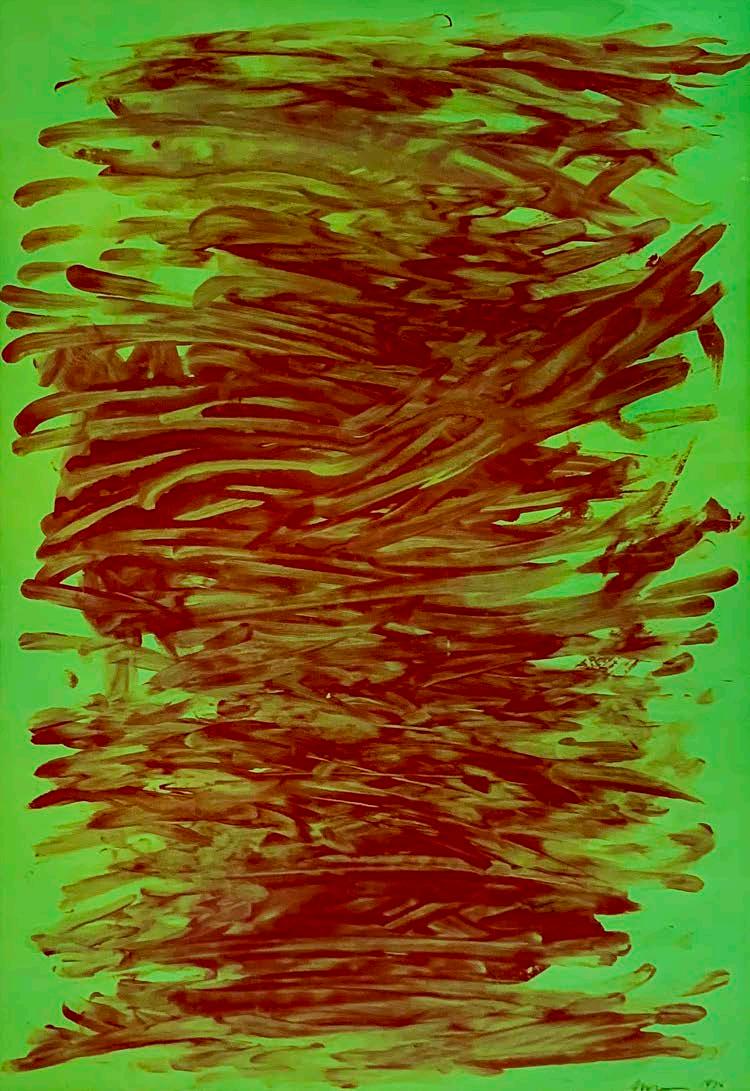
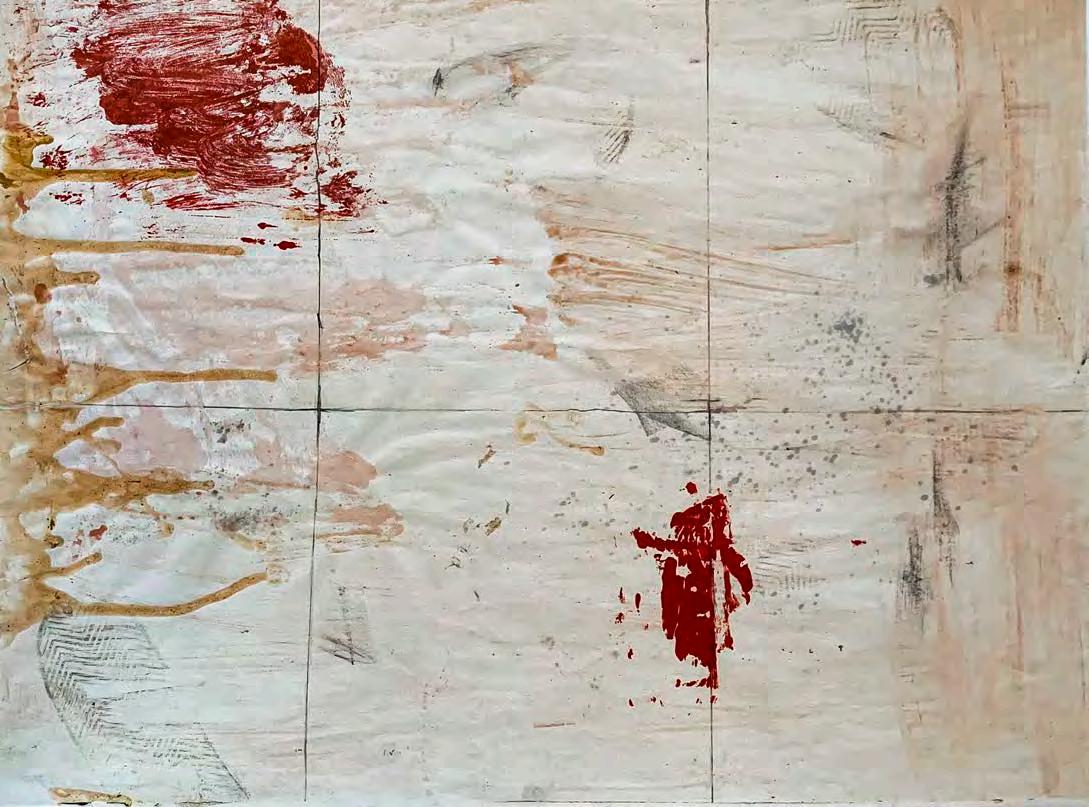
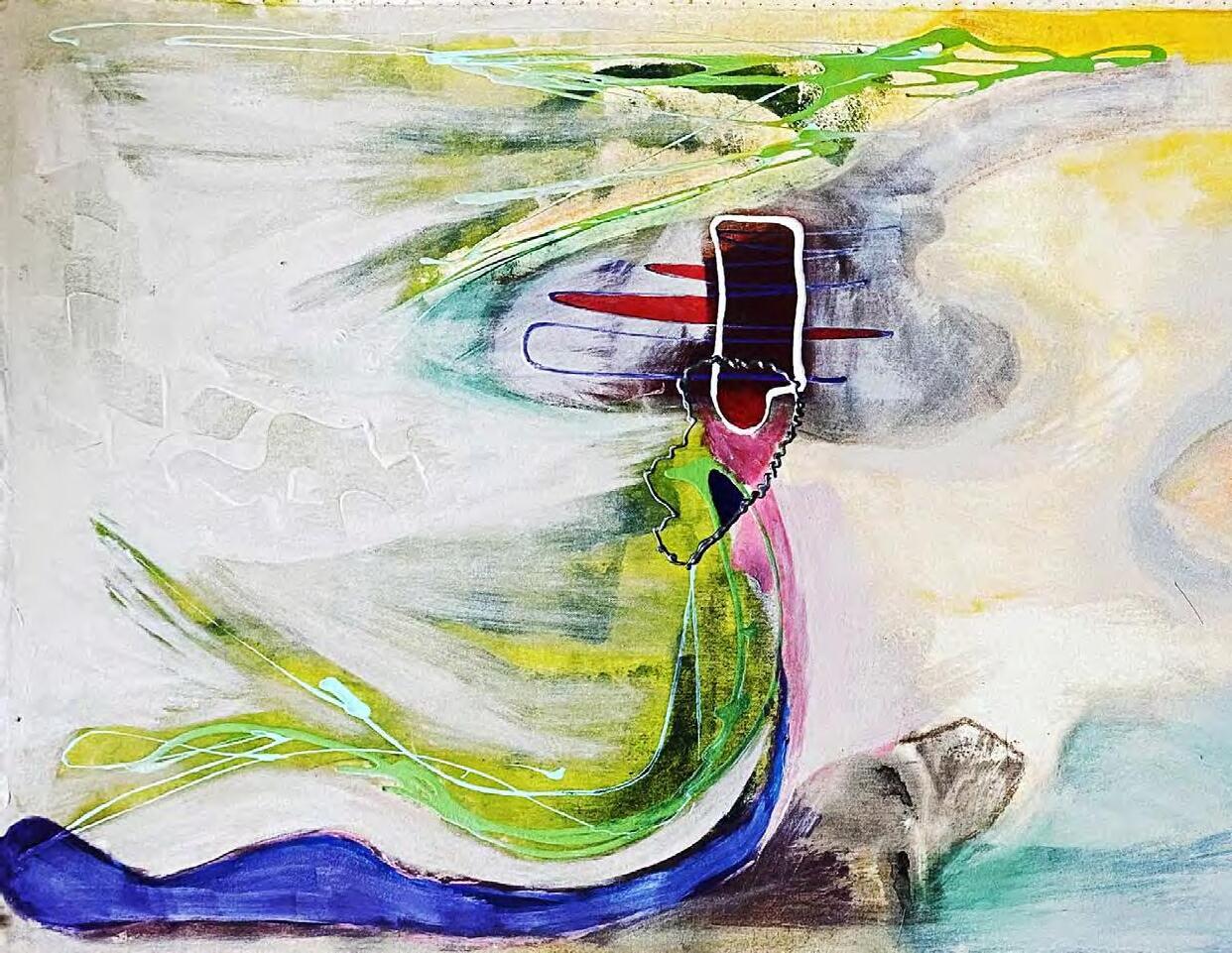
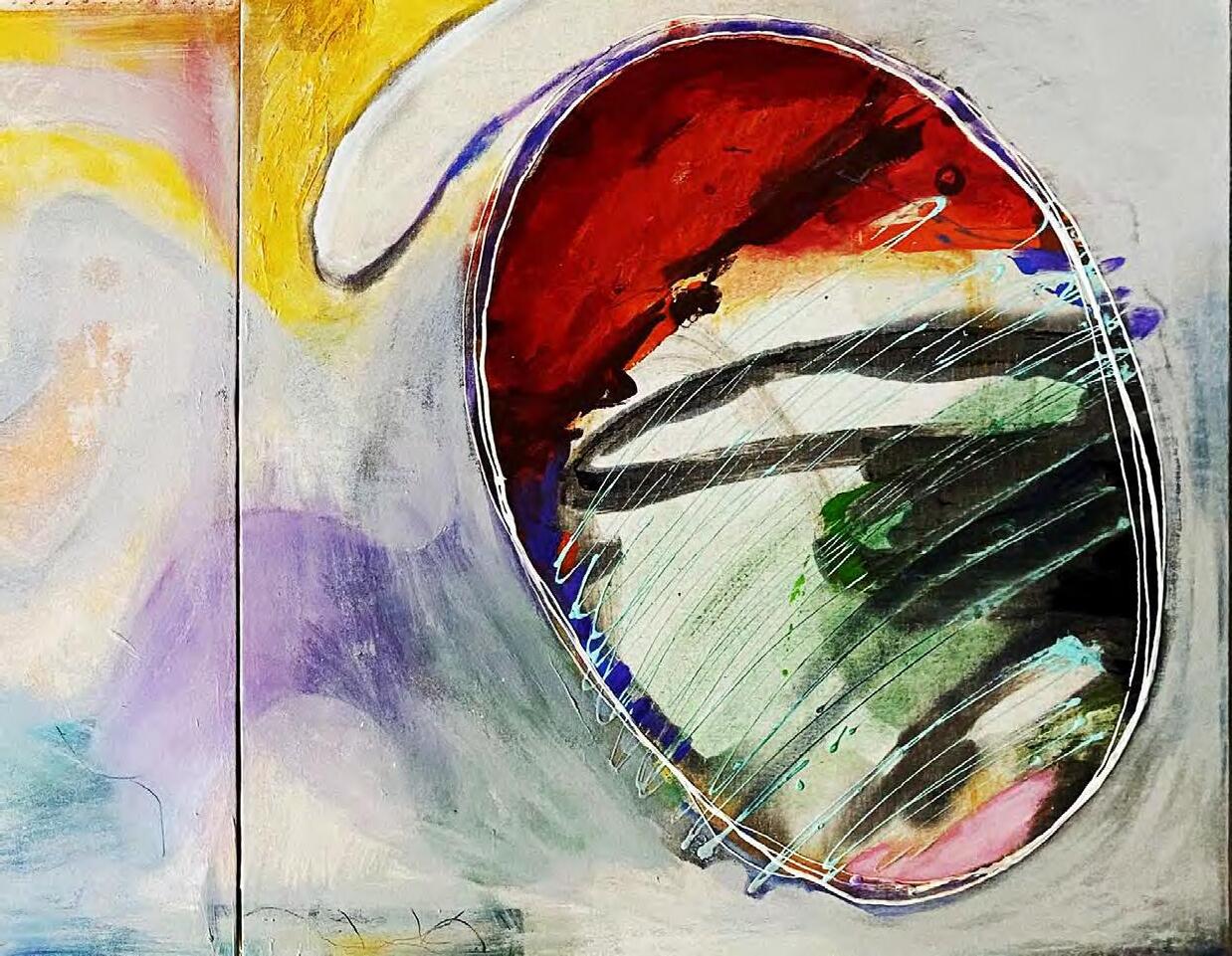
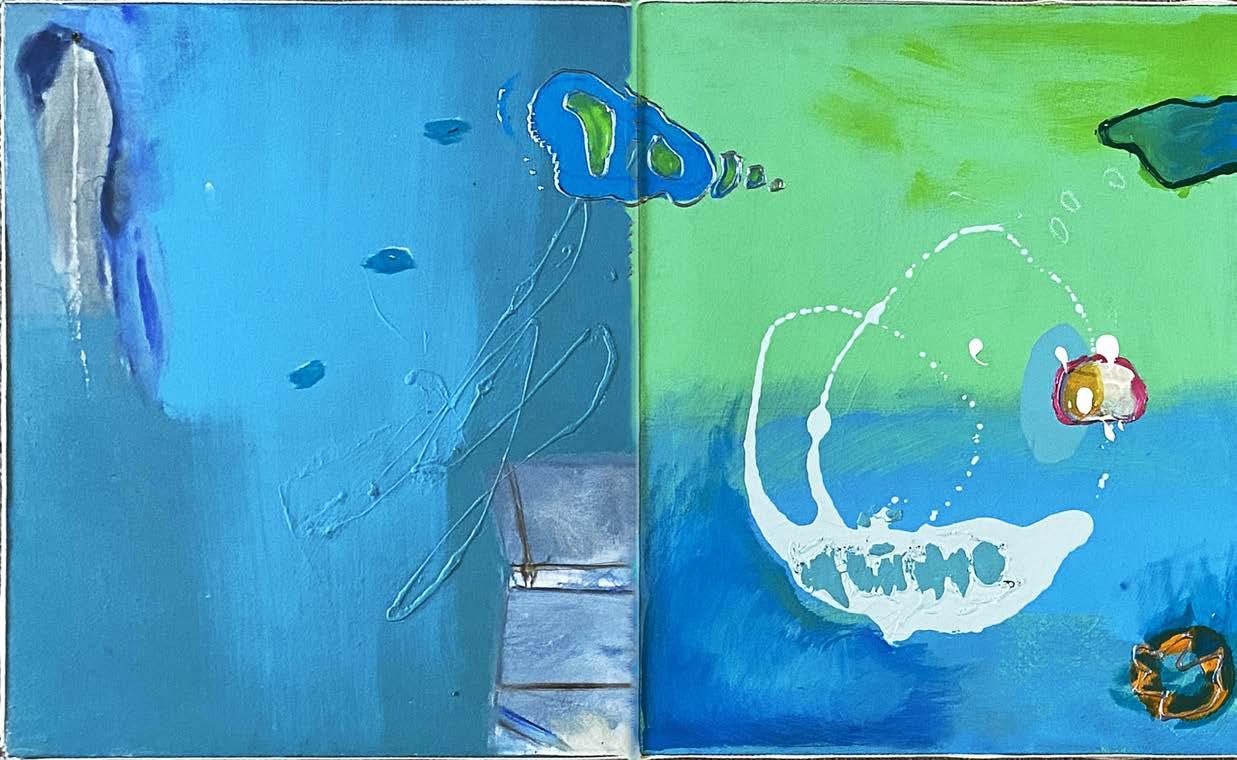
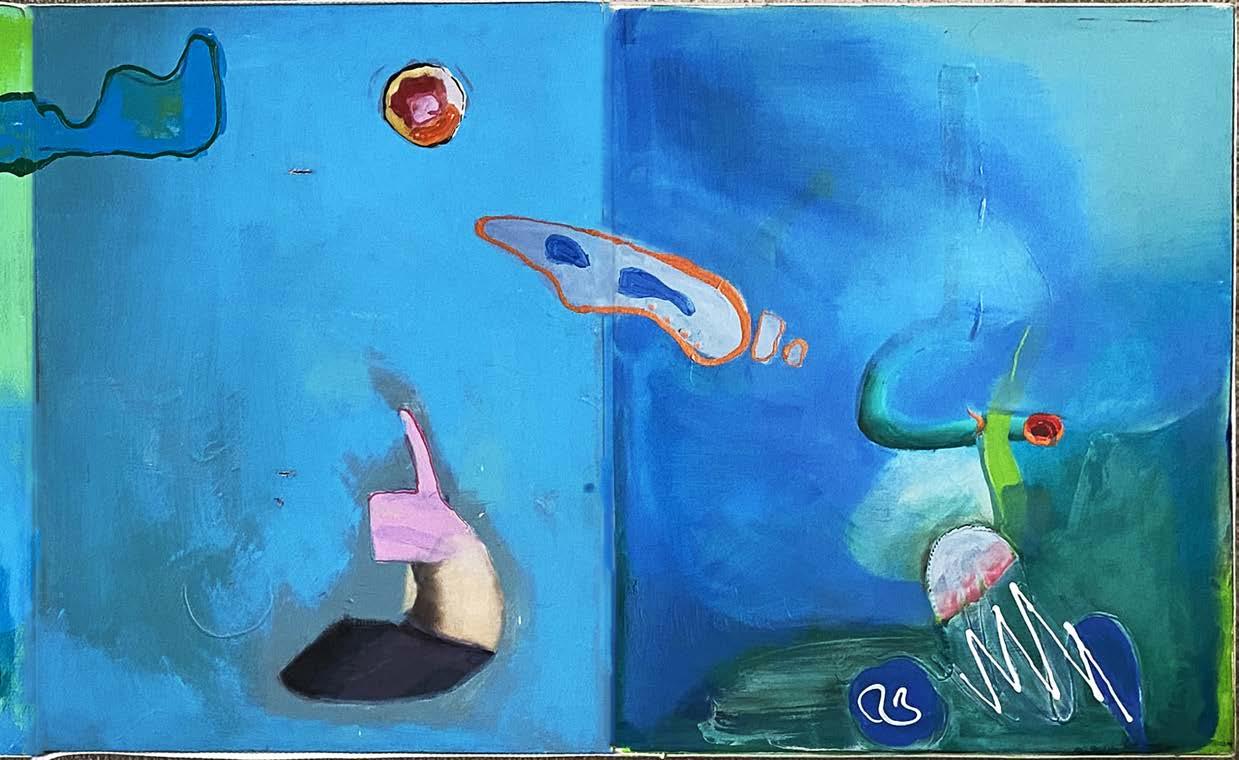
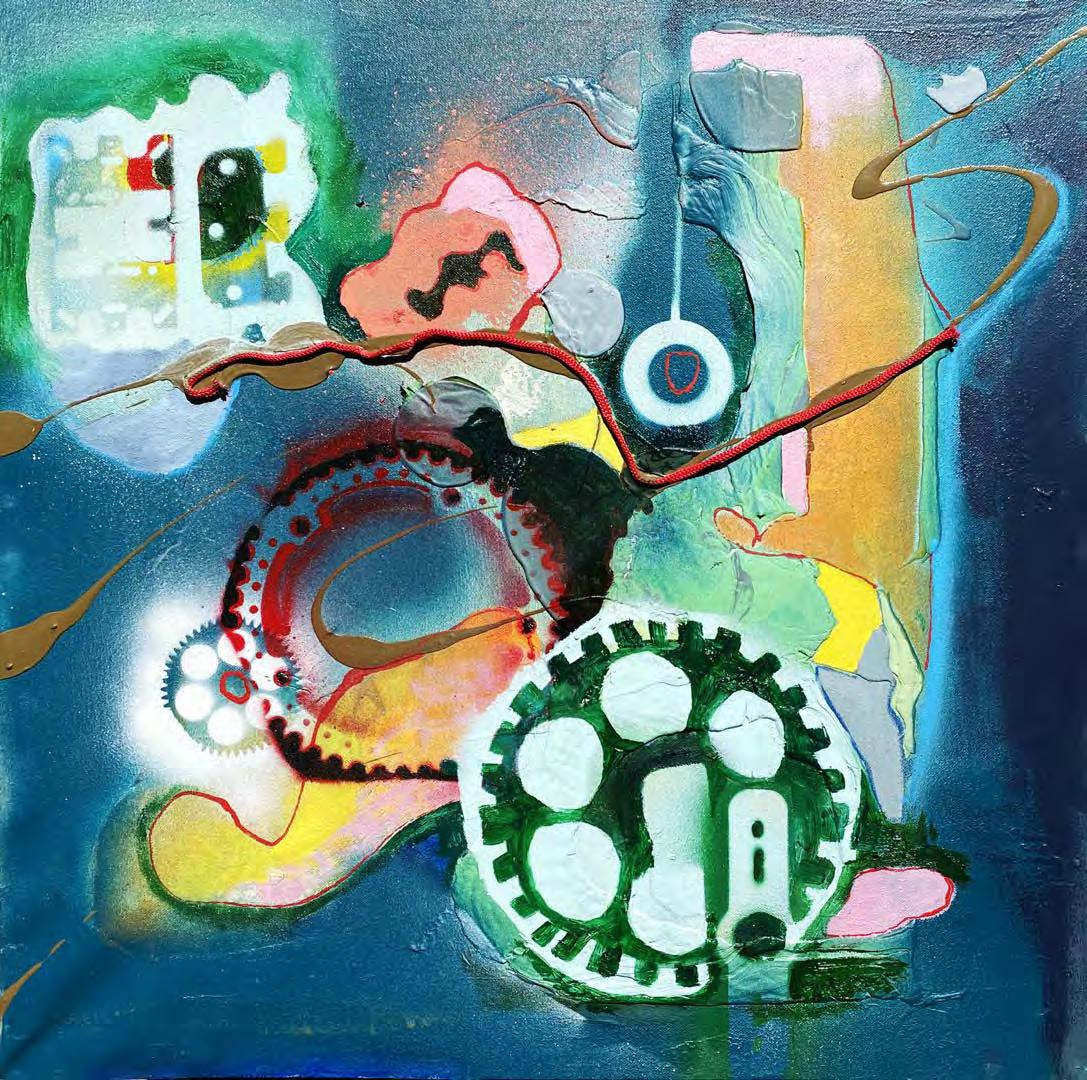
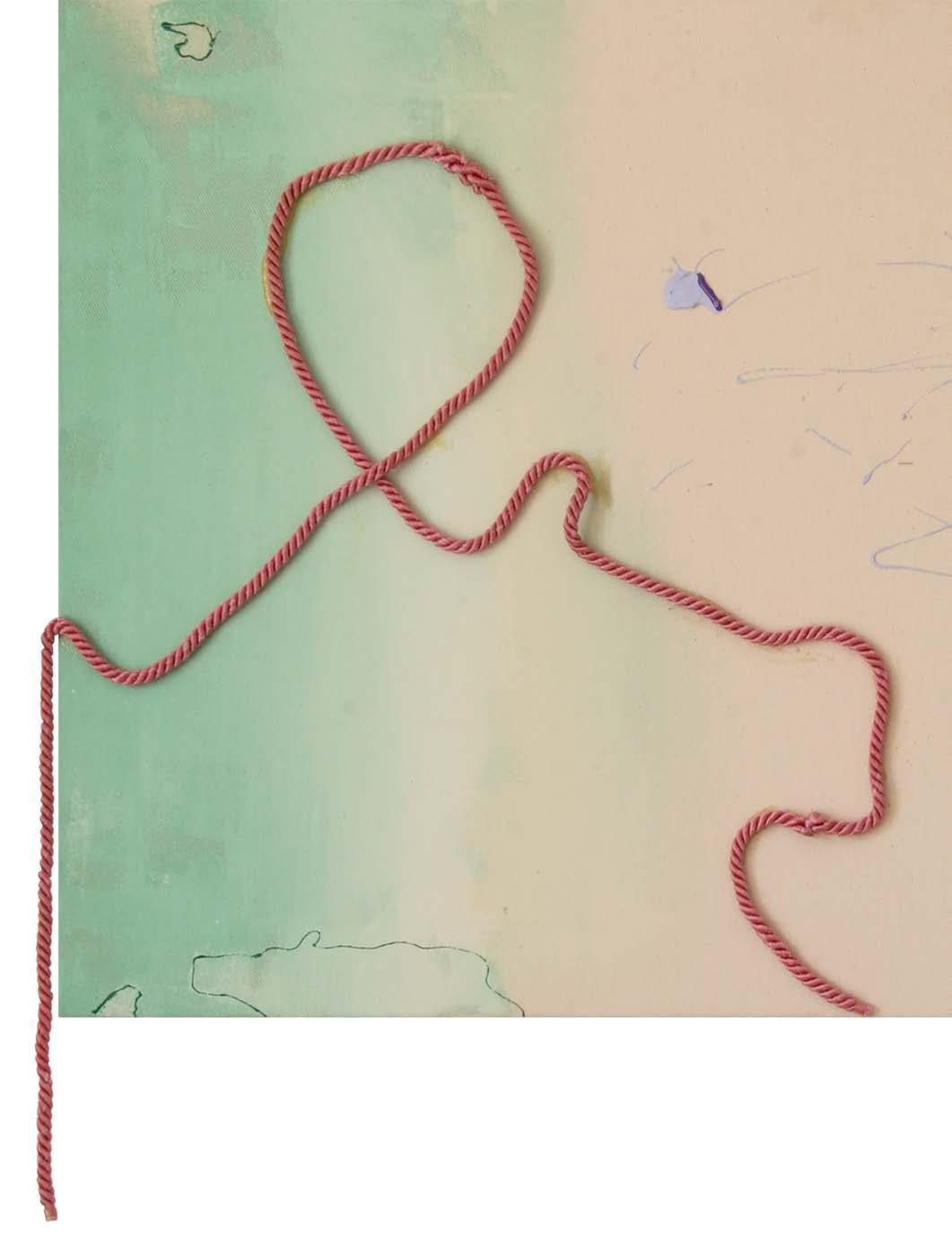
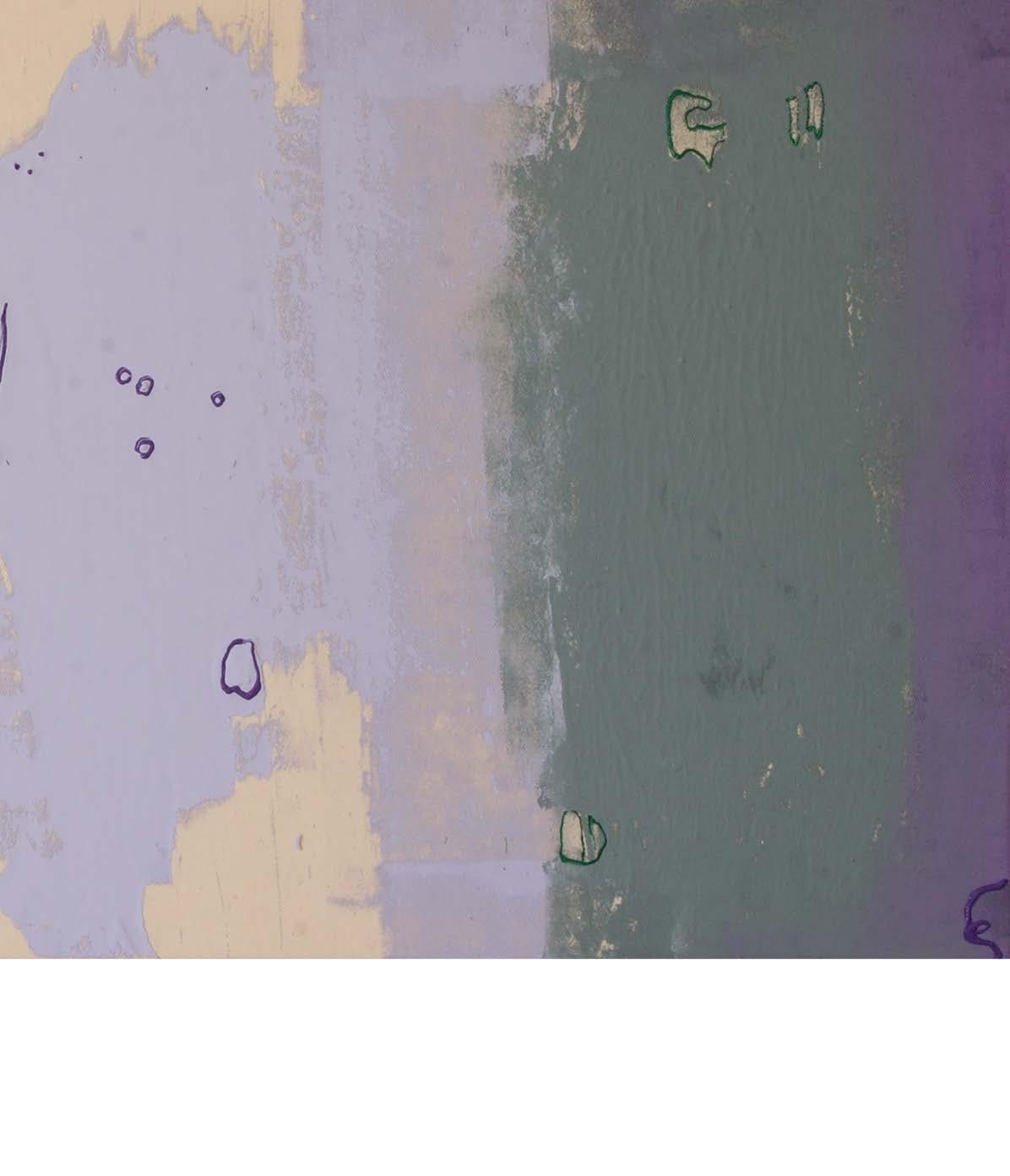
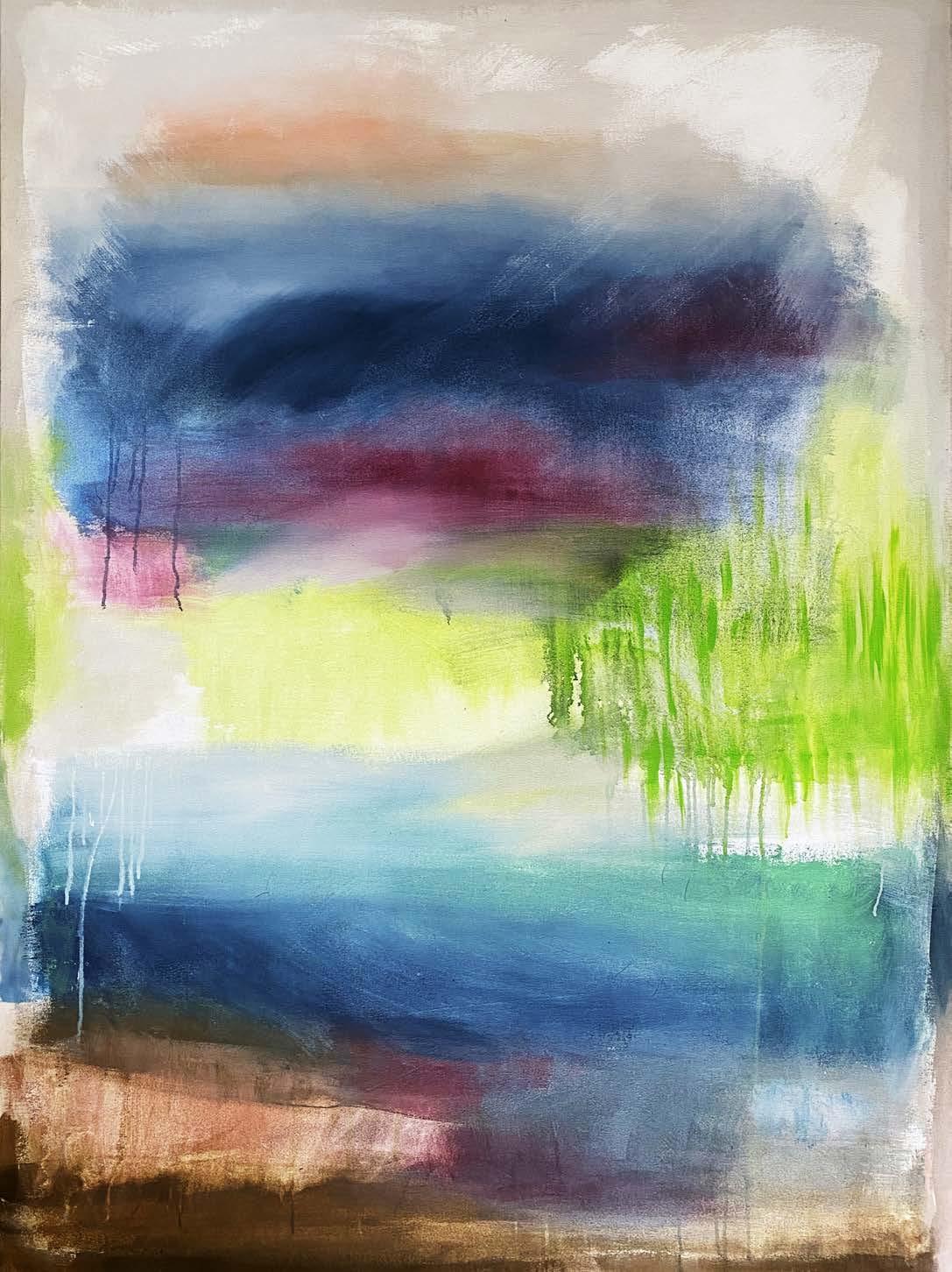
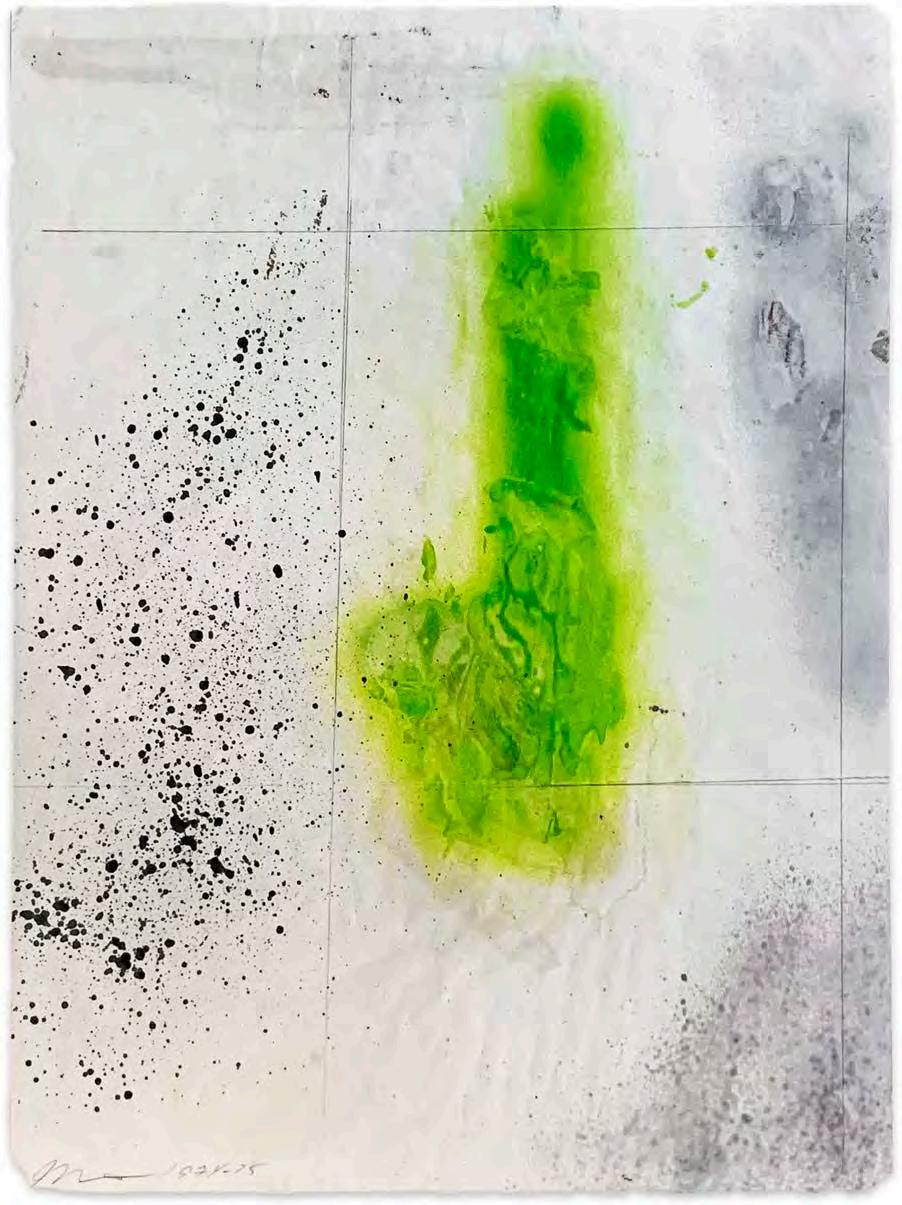
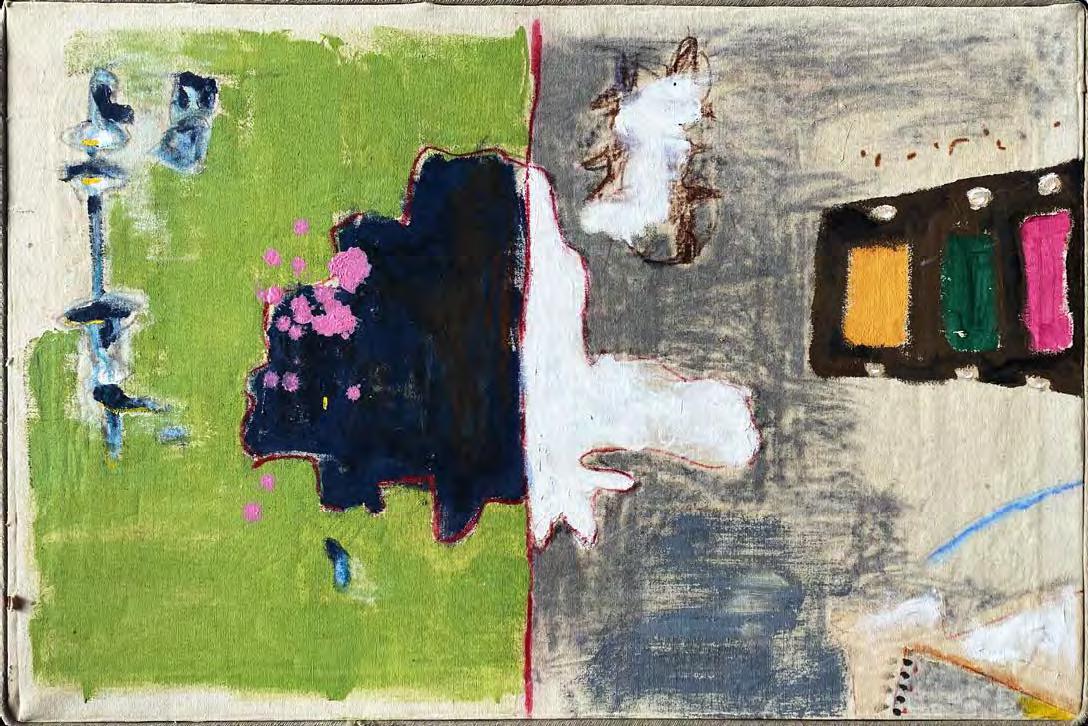
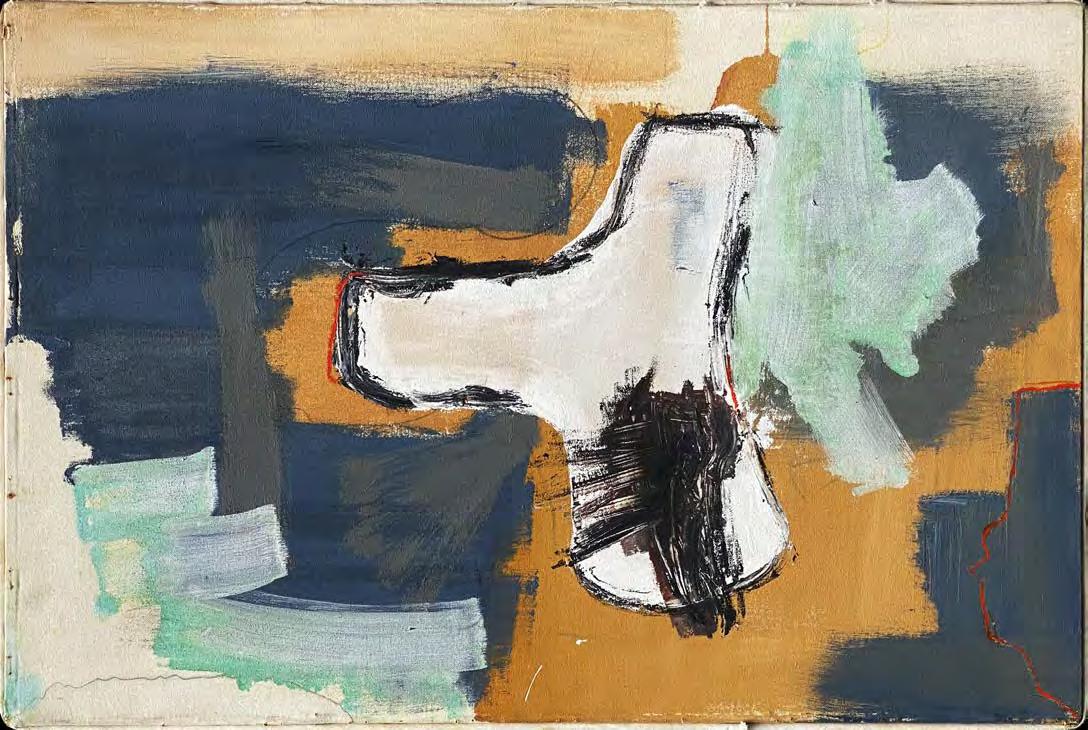
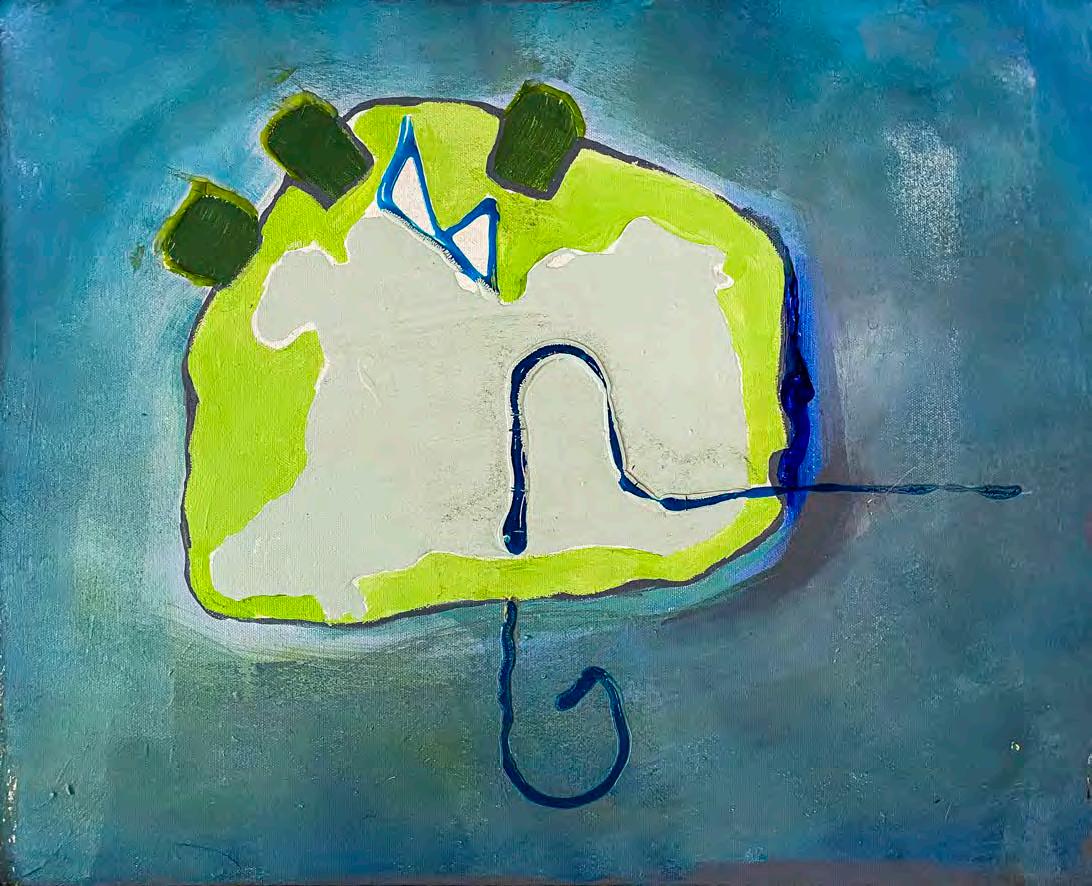
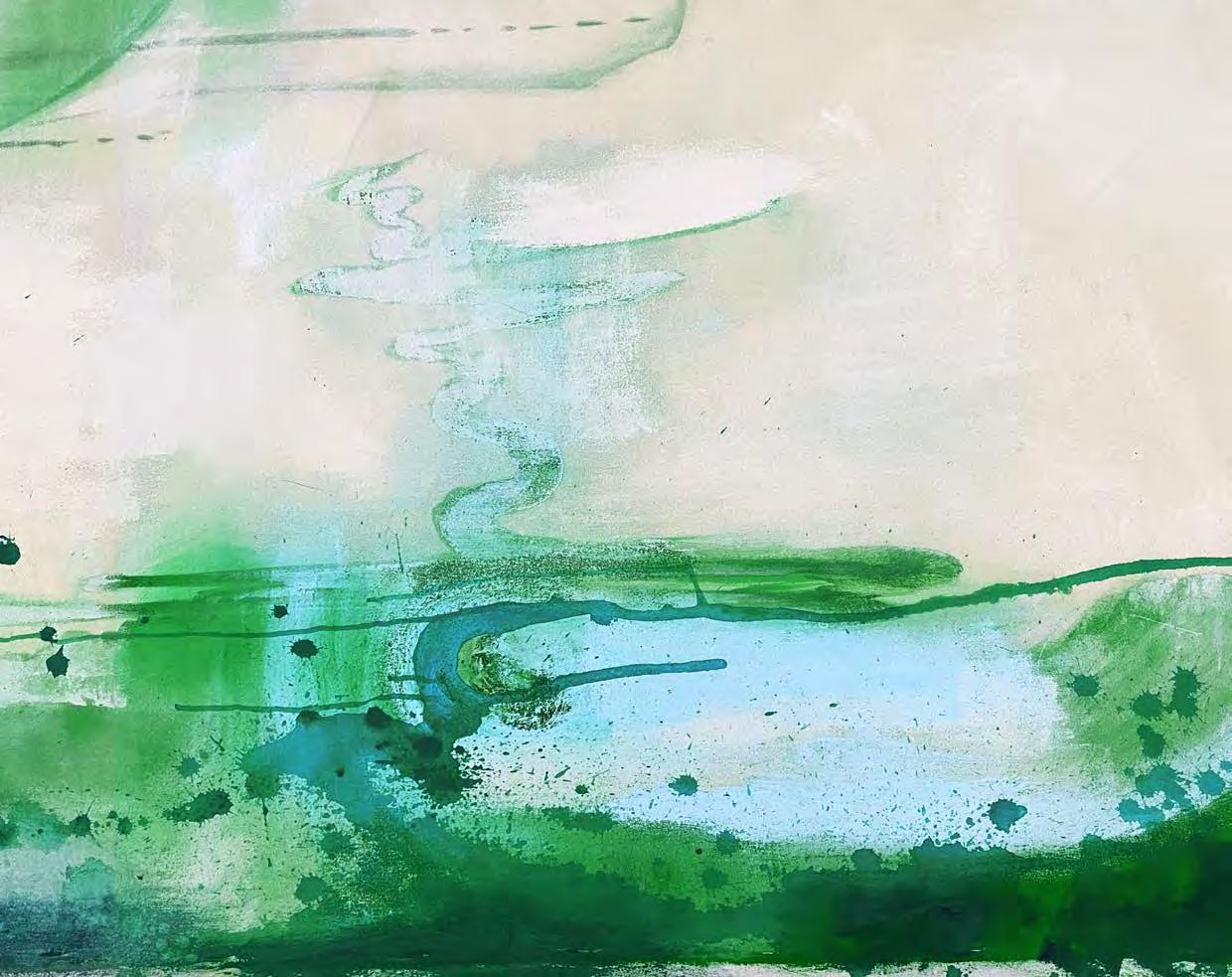
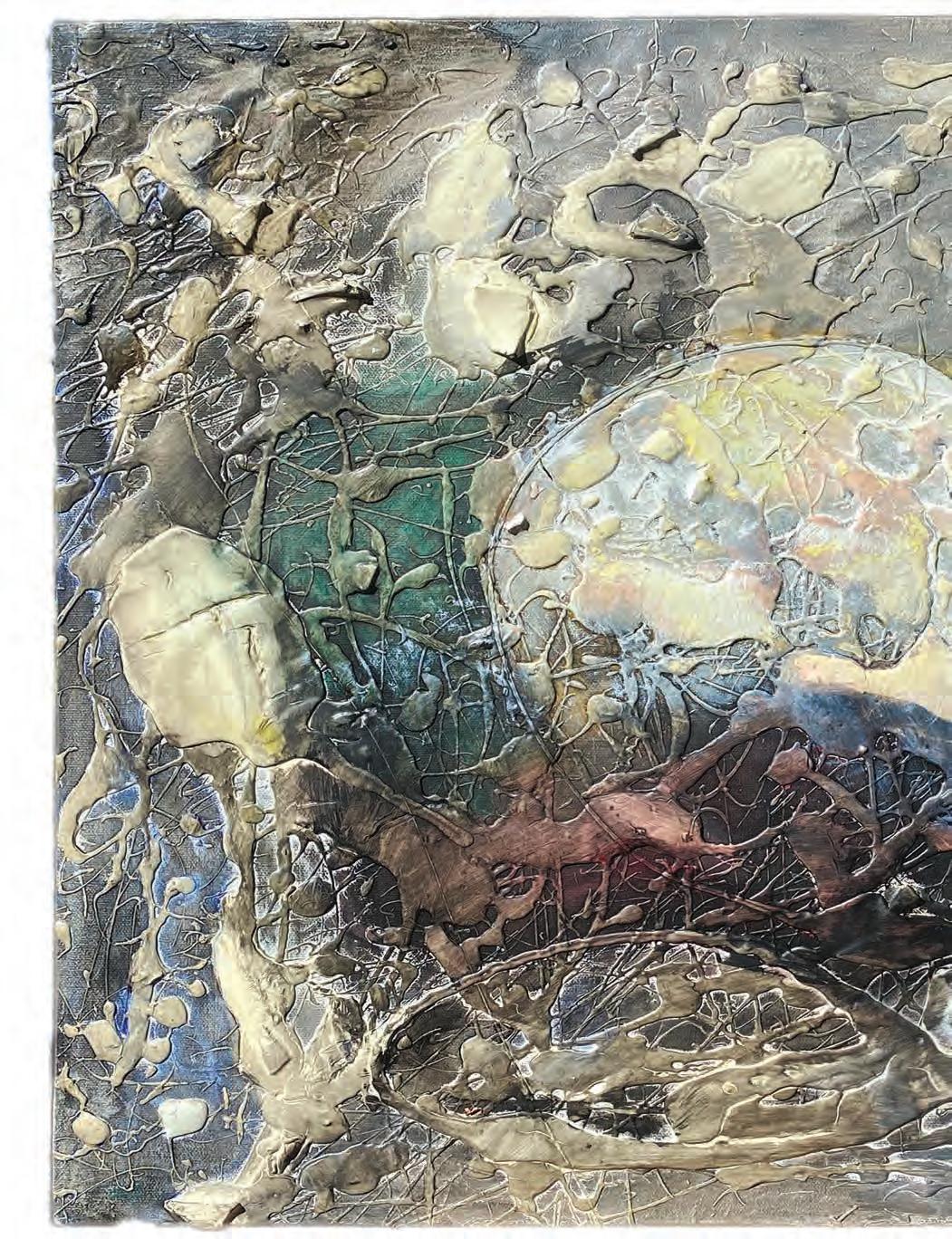
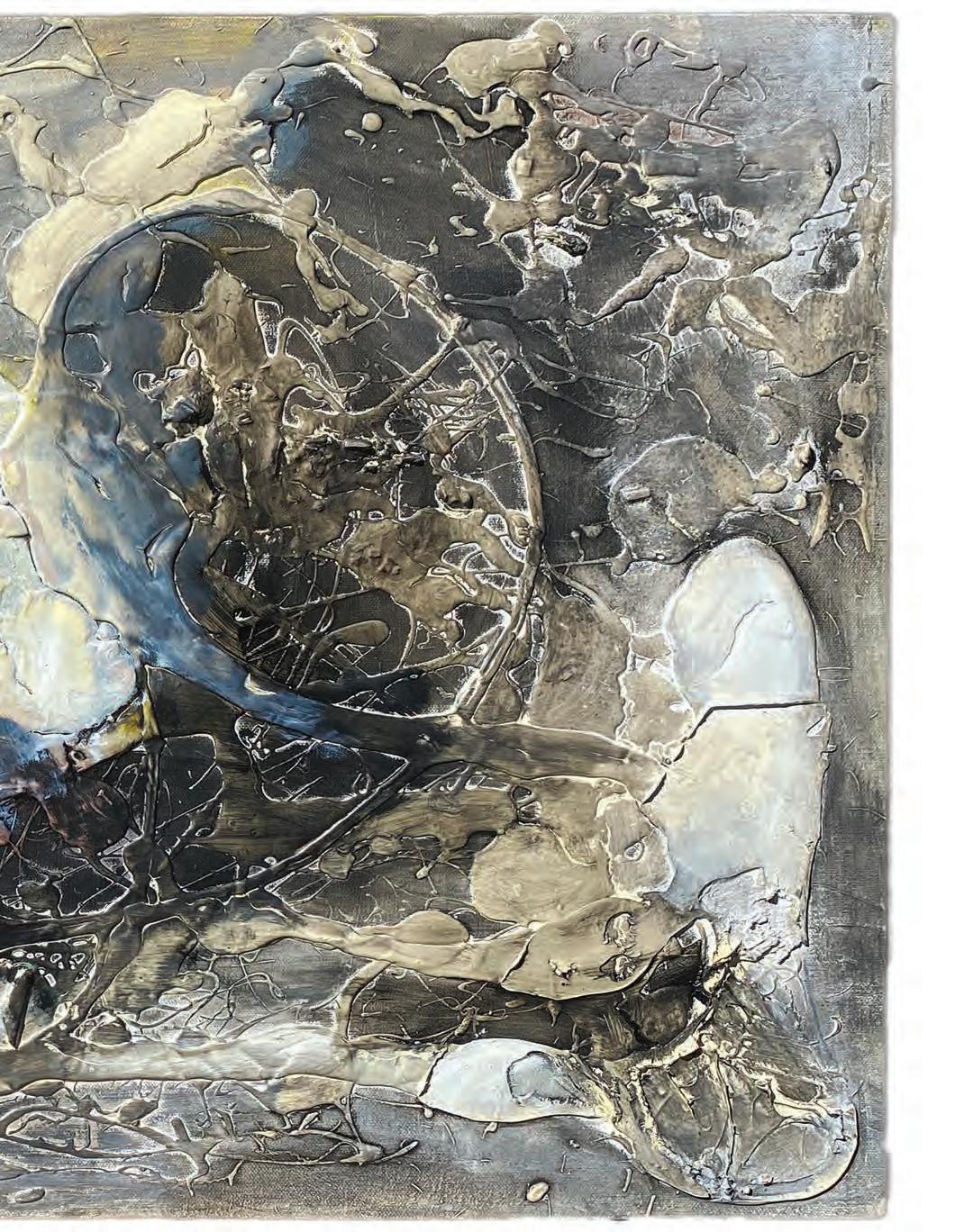
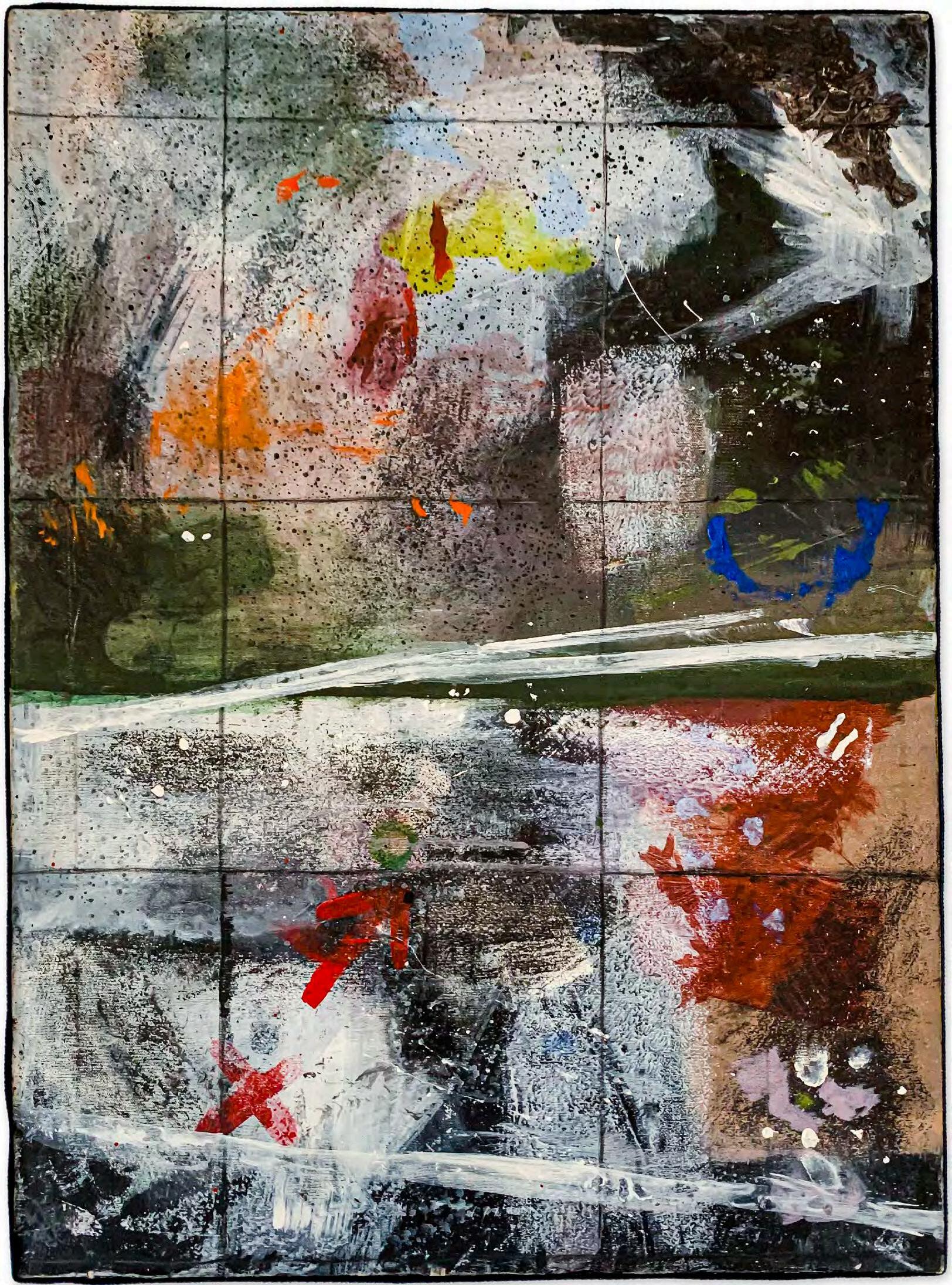
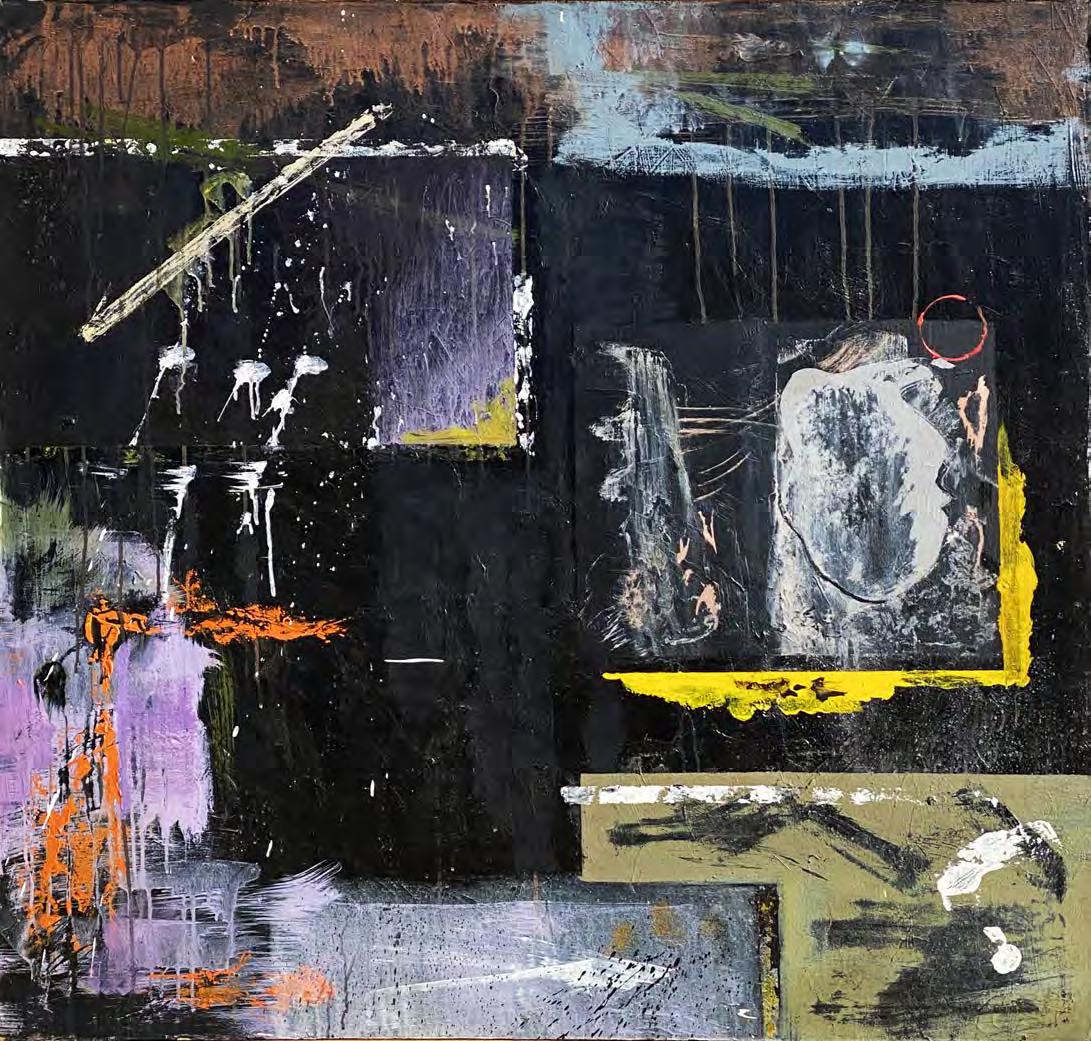
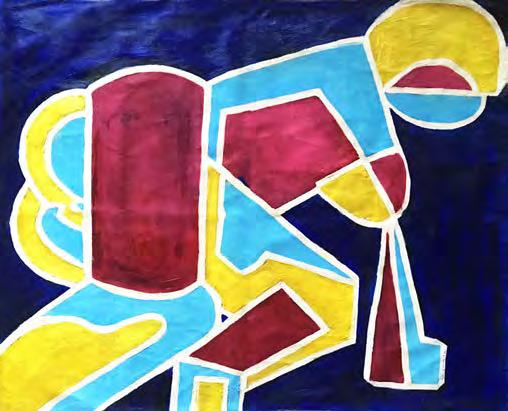
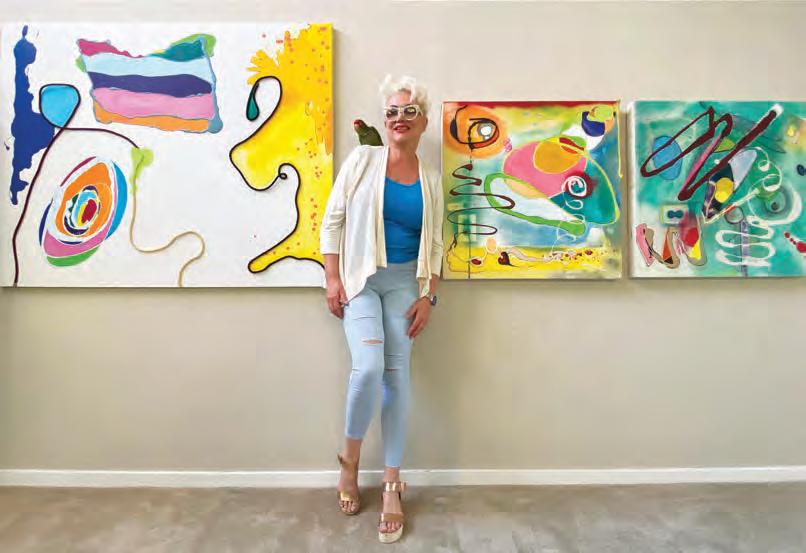
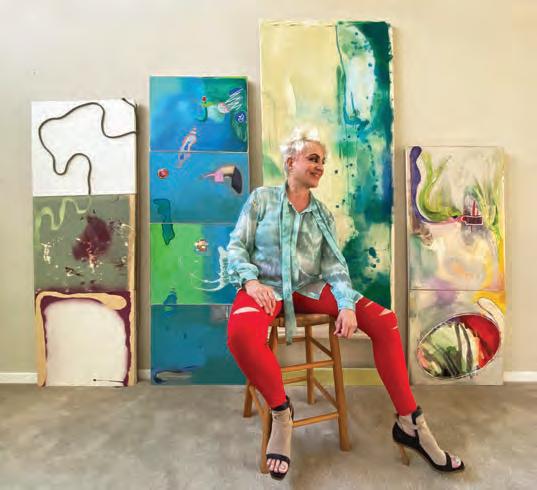
Matuschka’s artworks can seem unexpected, like gatecrashers at the formal party of PoMo Abstraction. Not for her deft exercises in retro radicalism, her art comes at you like a tropical storm. An individual piece may be filmy, scritchy-scratchy, spattered, fluid as a rainstorm, all-over painterly, a muscular Ab Ex brushstroke, suggestively figural or as boldly graphic as a slap in the face but, despite her thumbs-down approach to that once indispensable element in an art career, a signature style, each is unmistakably the product of her eye and her hand.
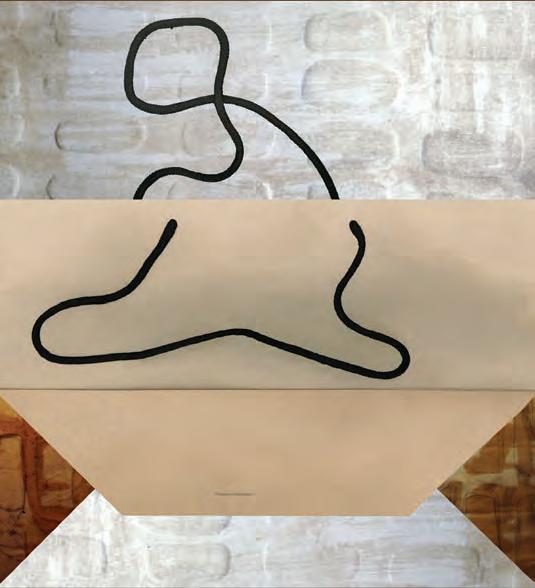
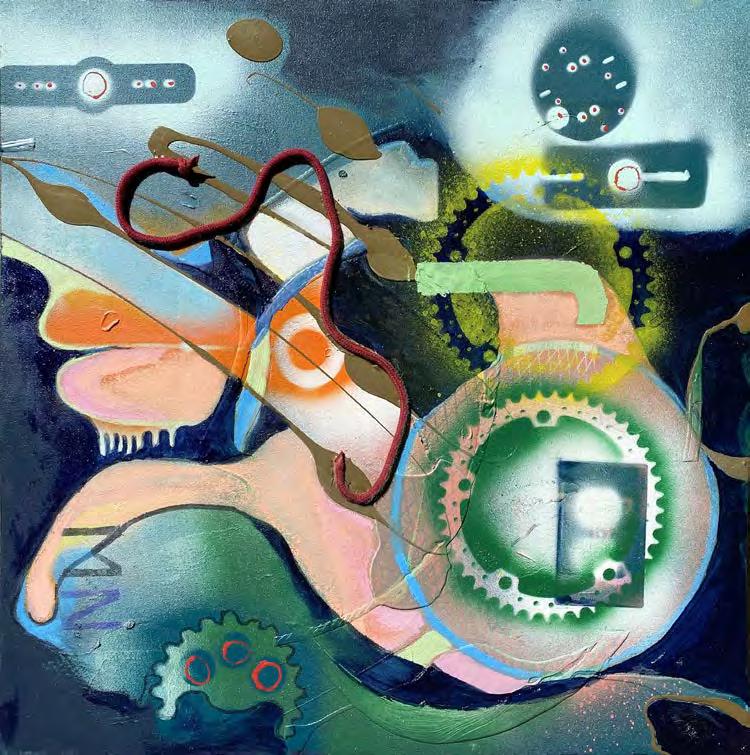
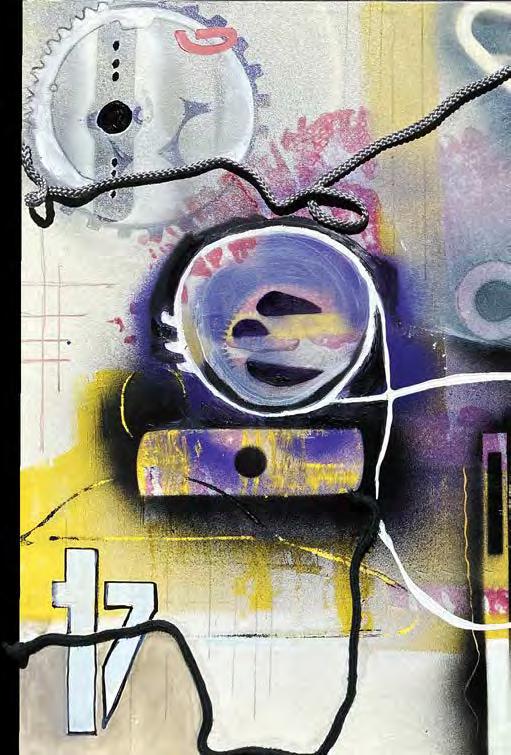
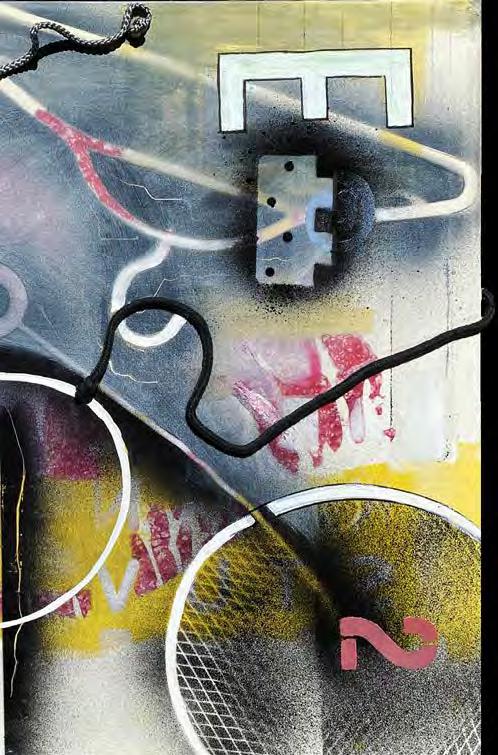
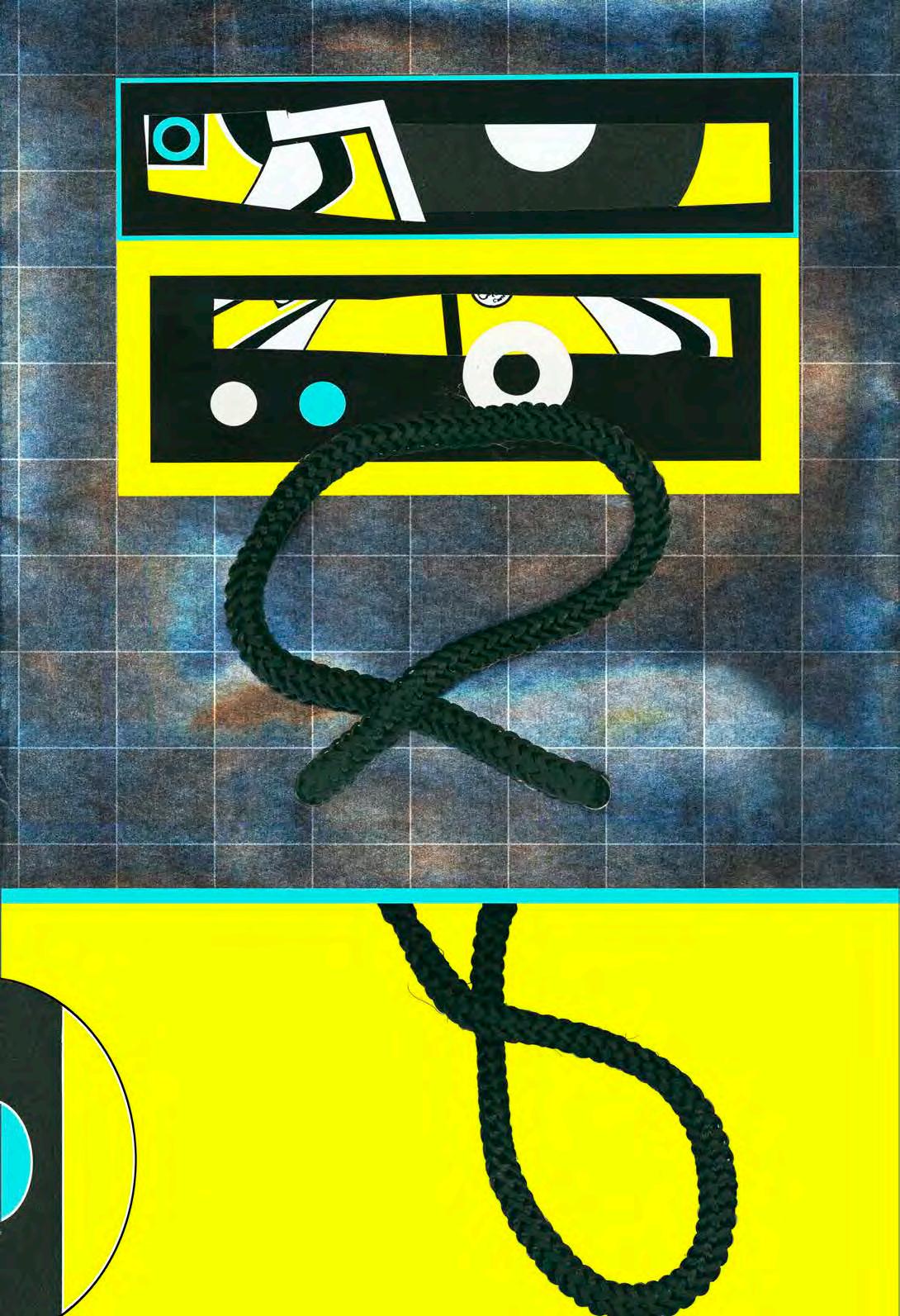
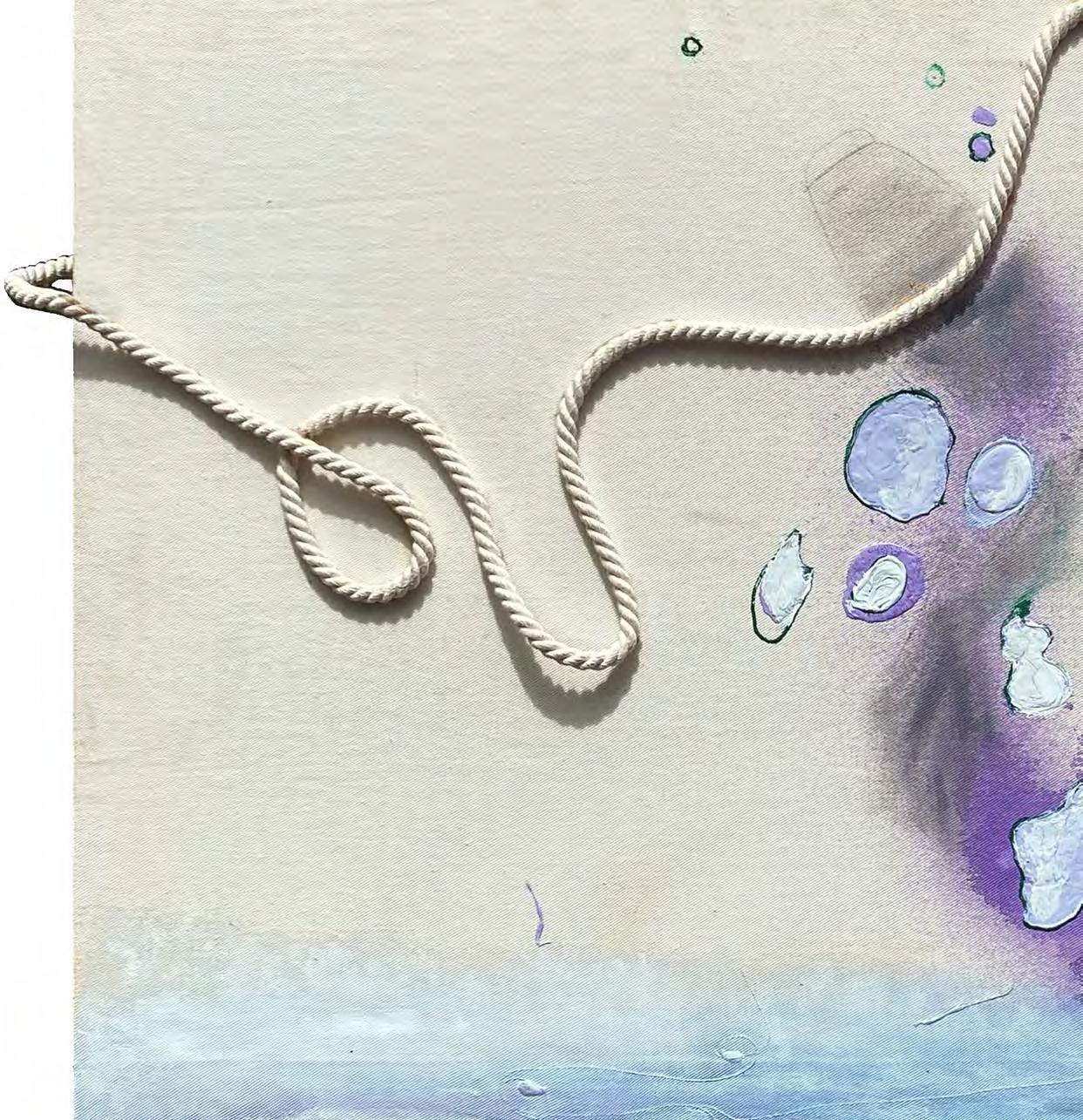
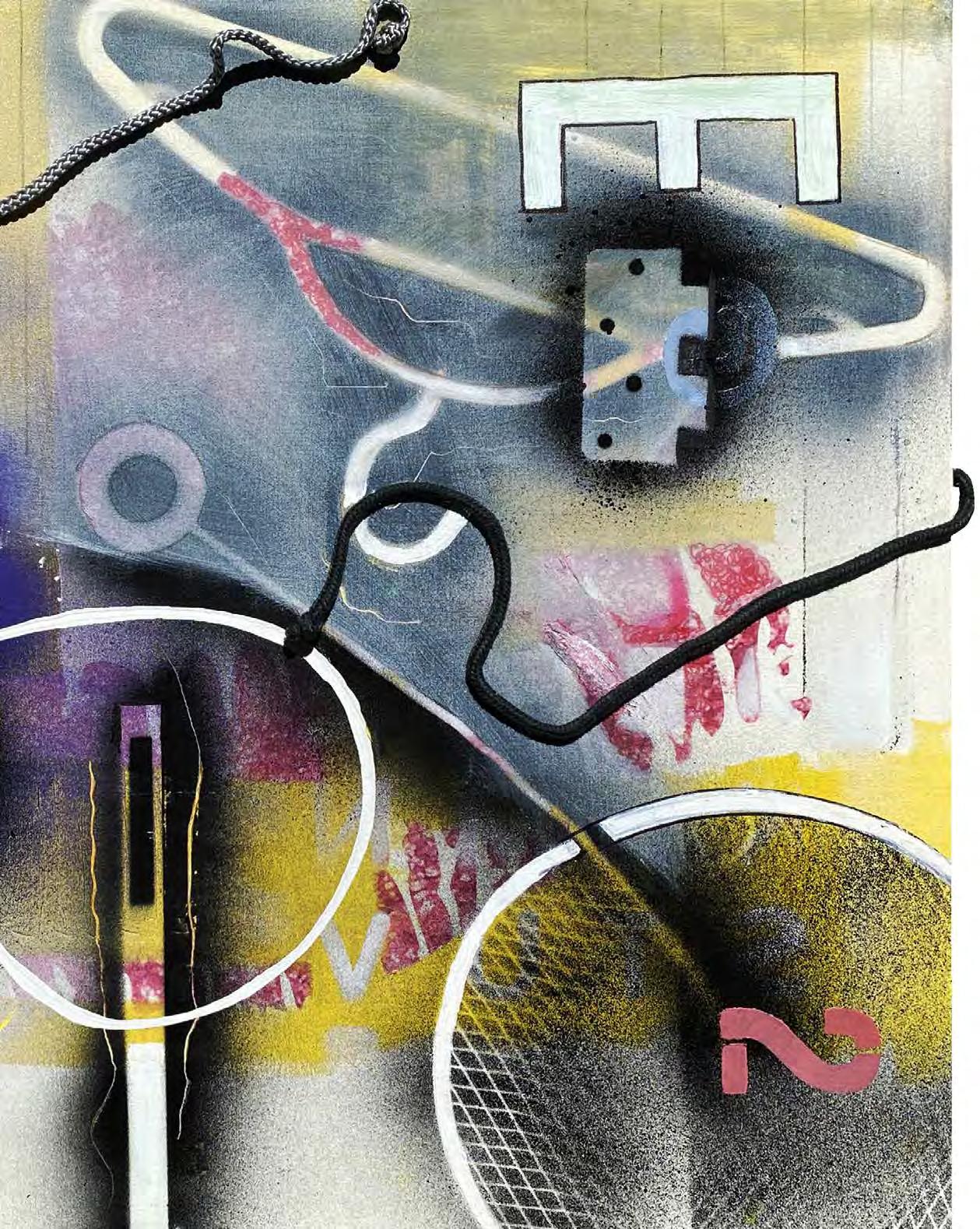
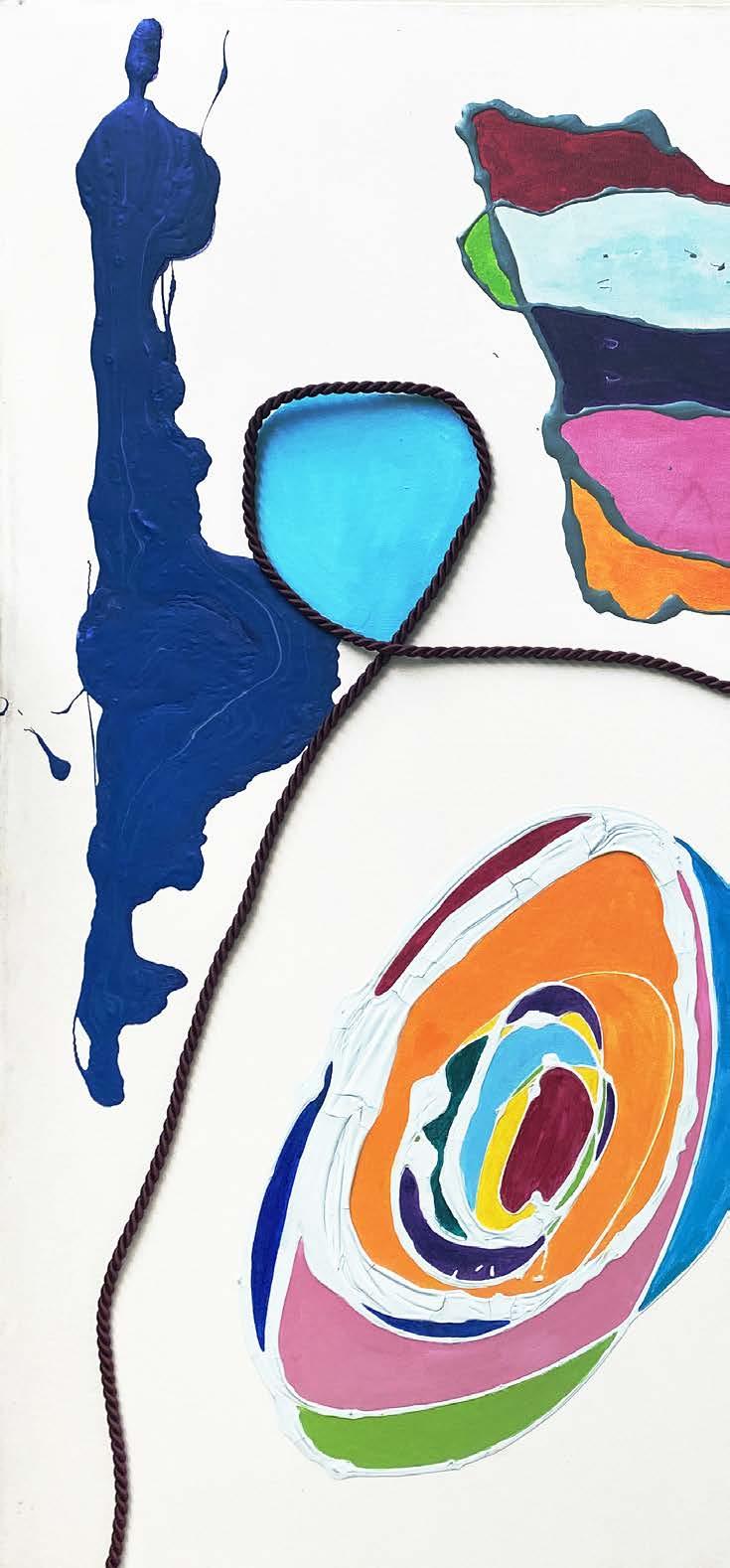
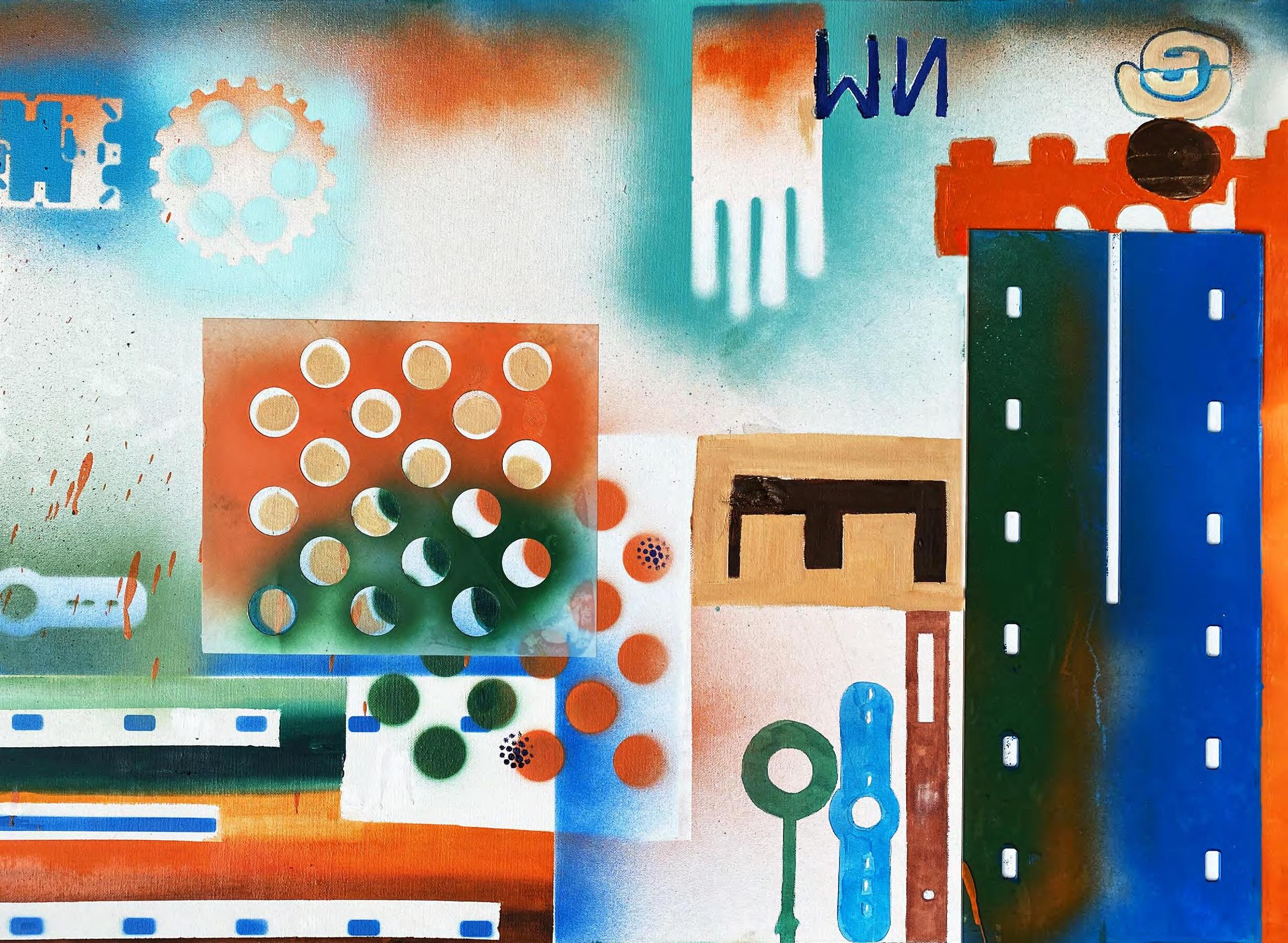
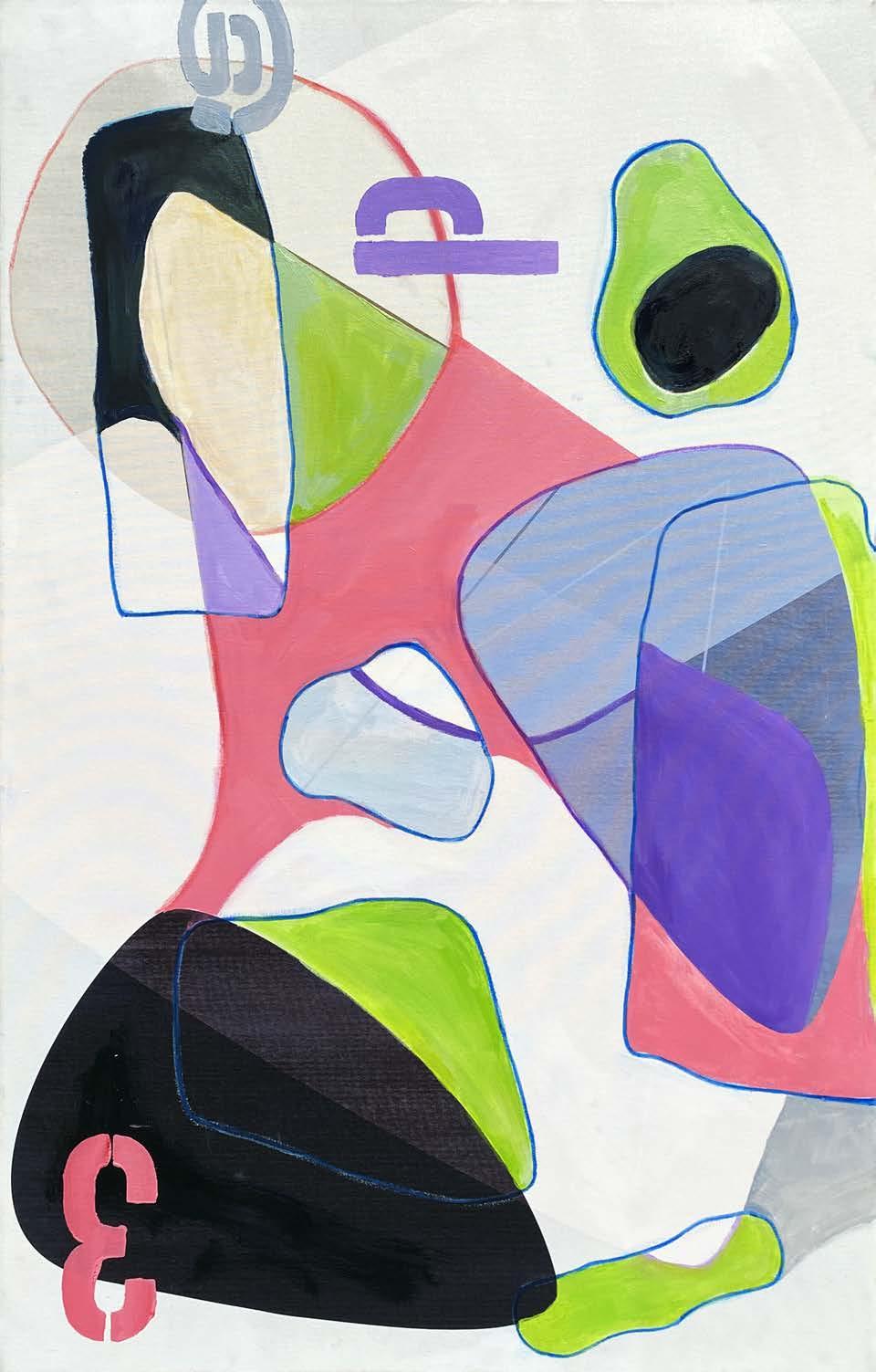
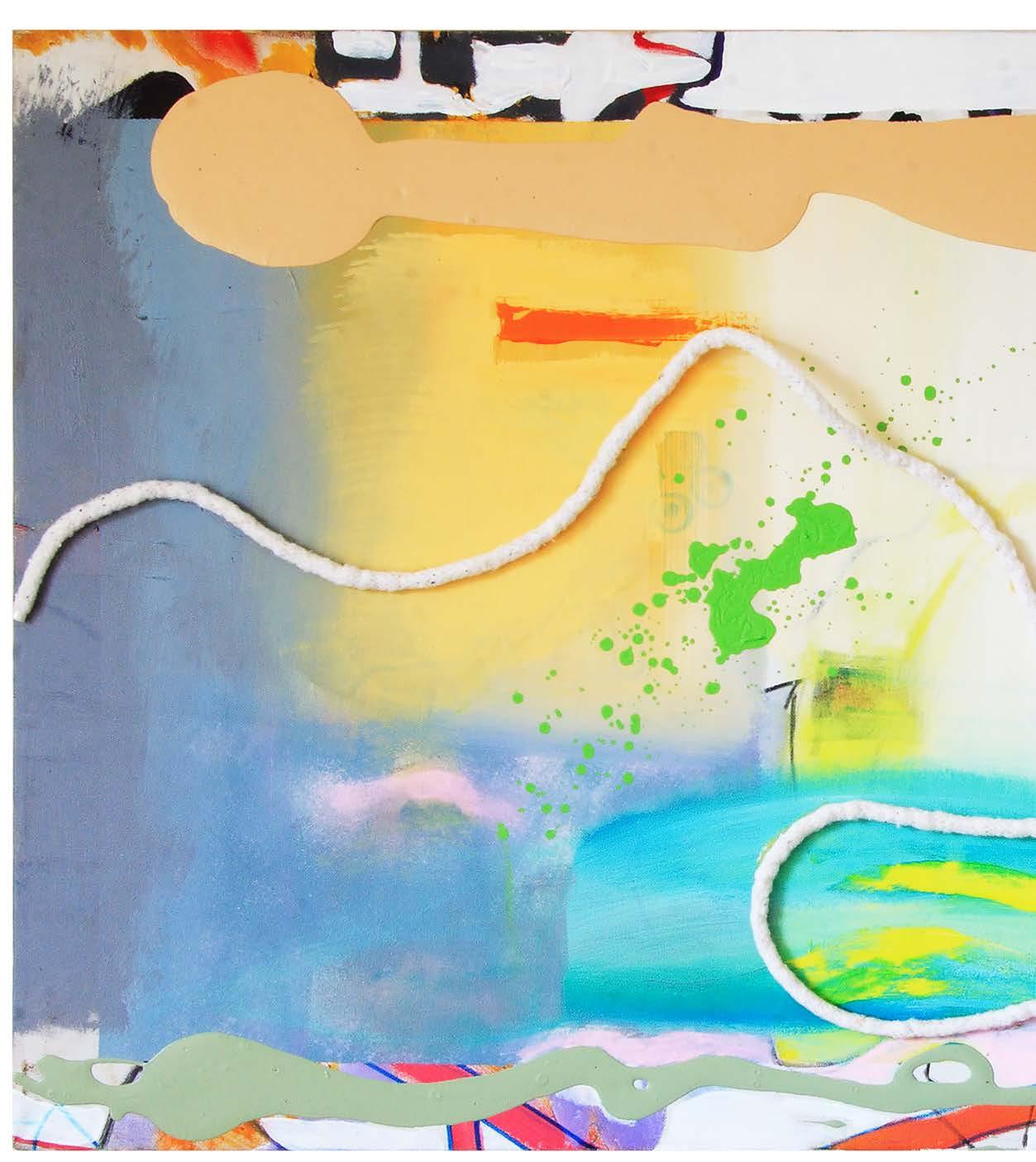
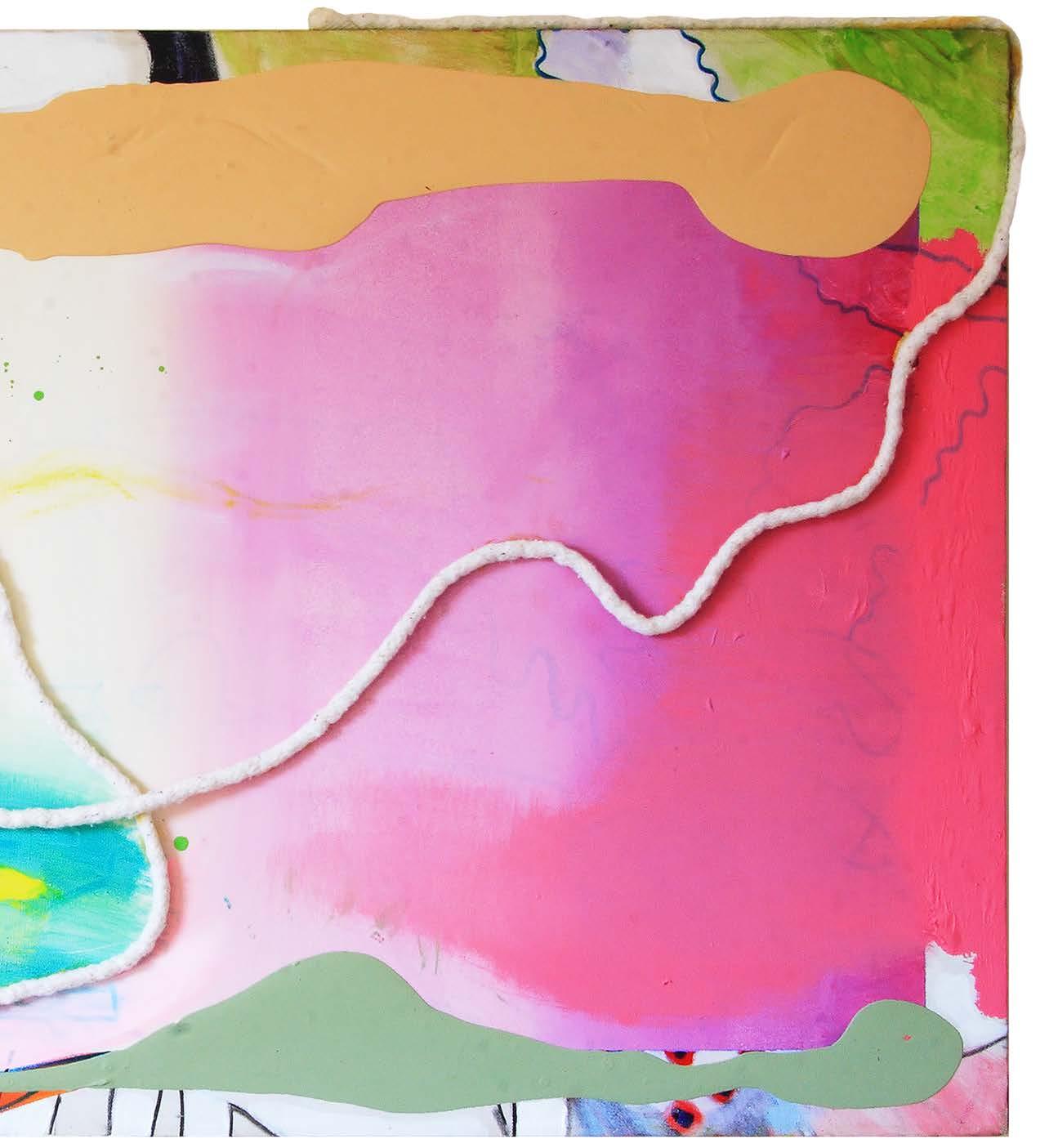
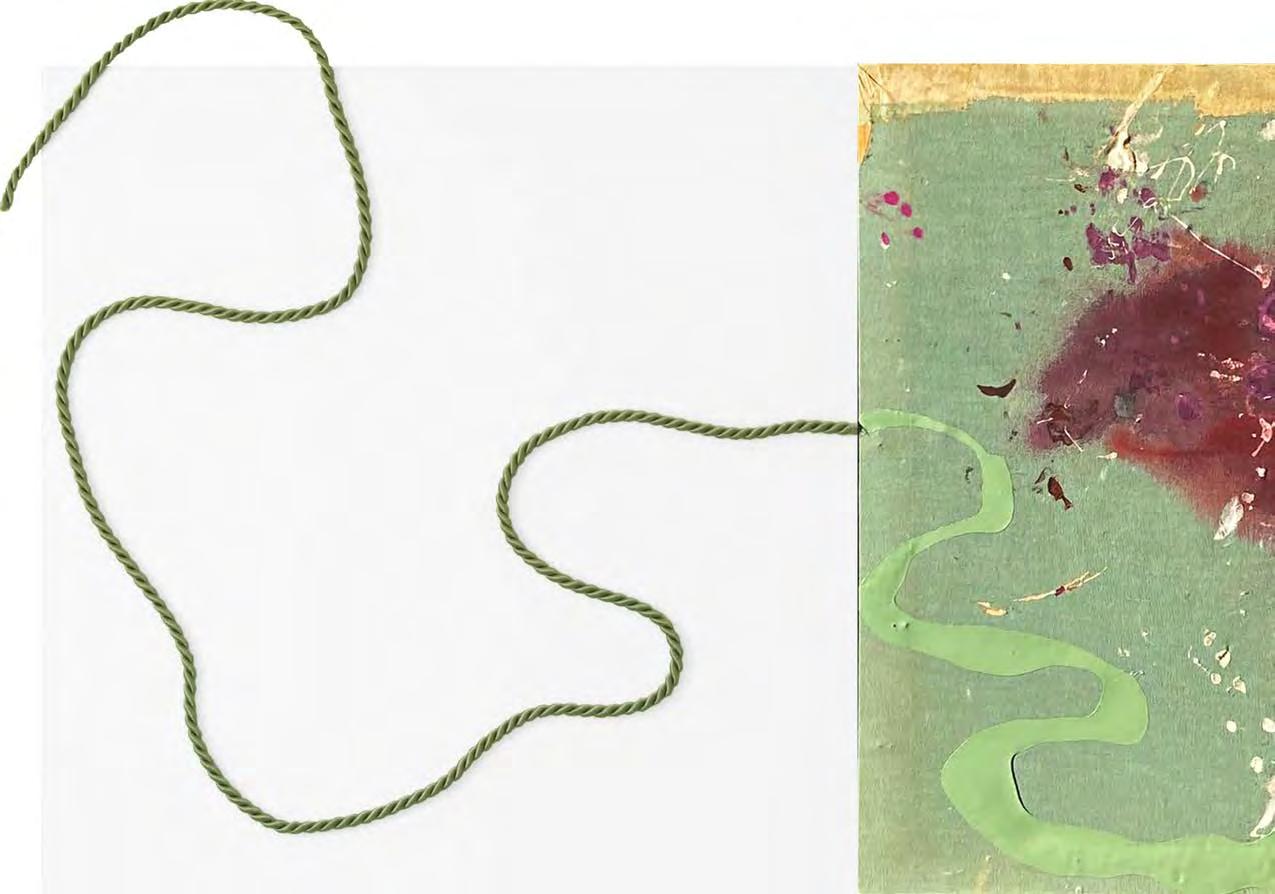
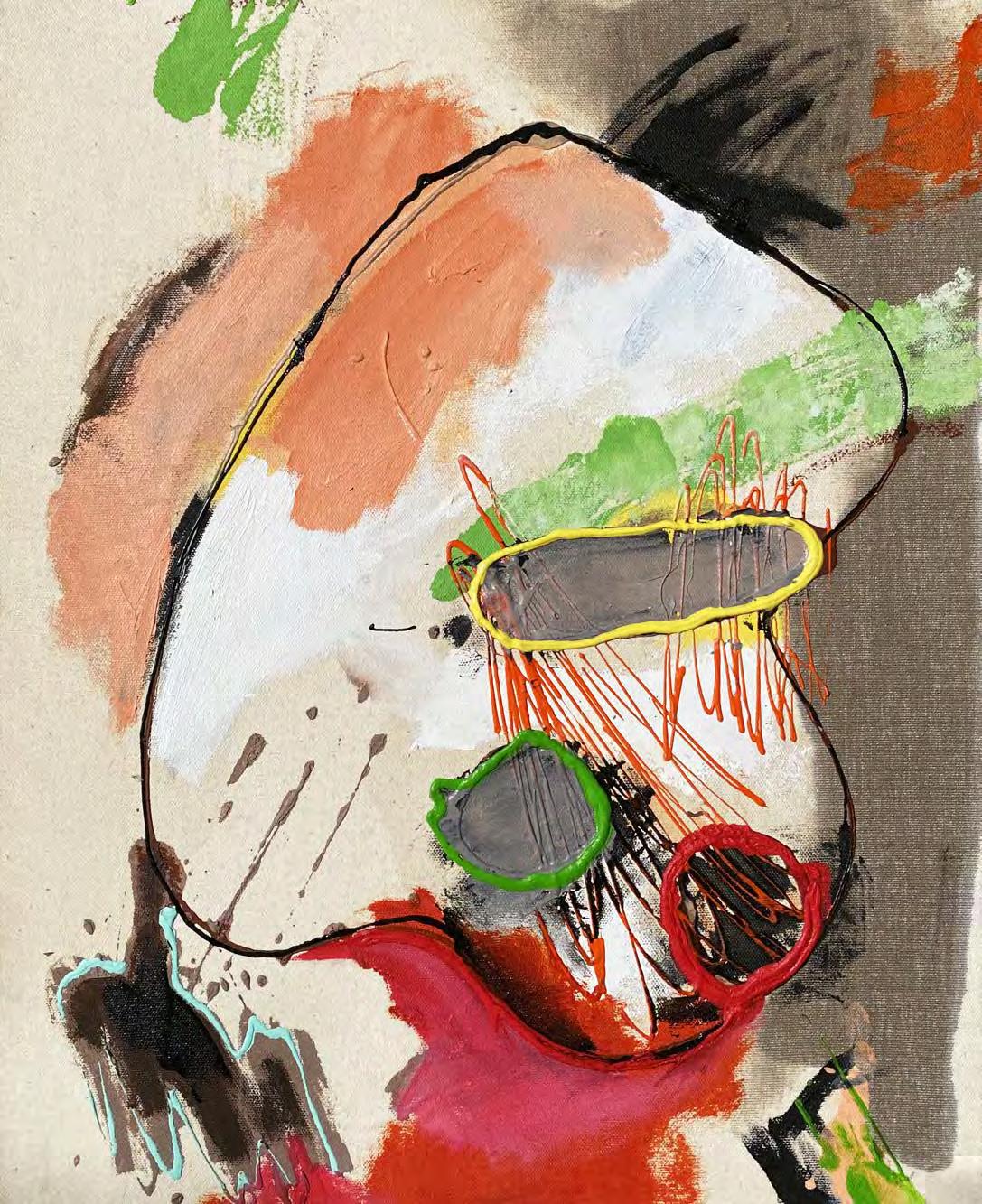
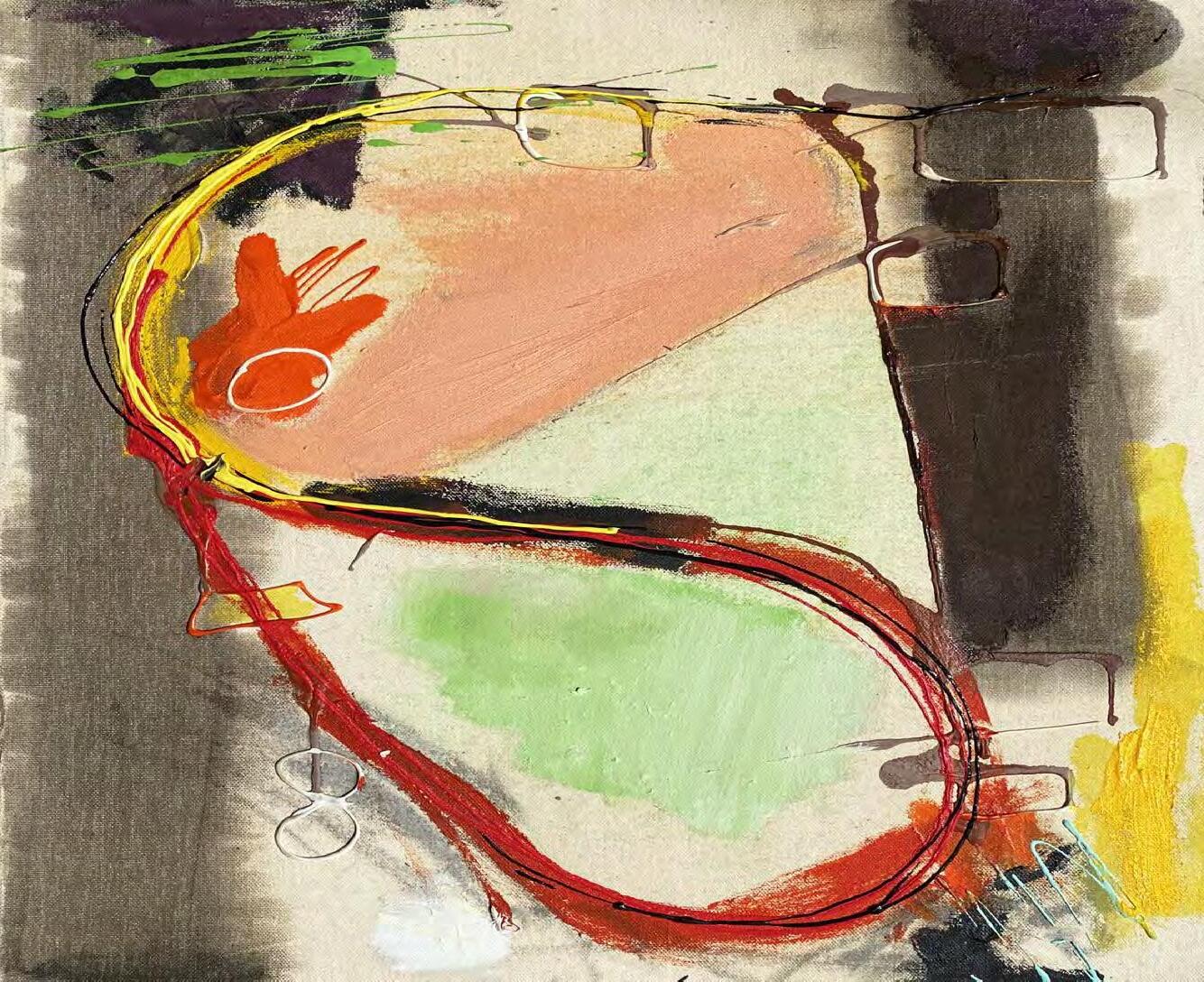
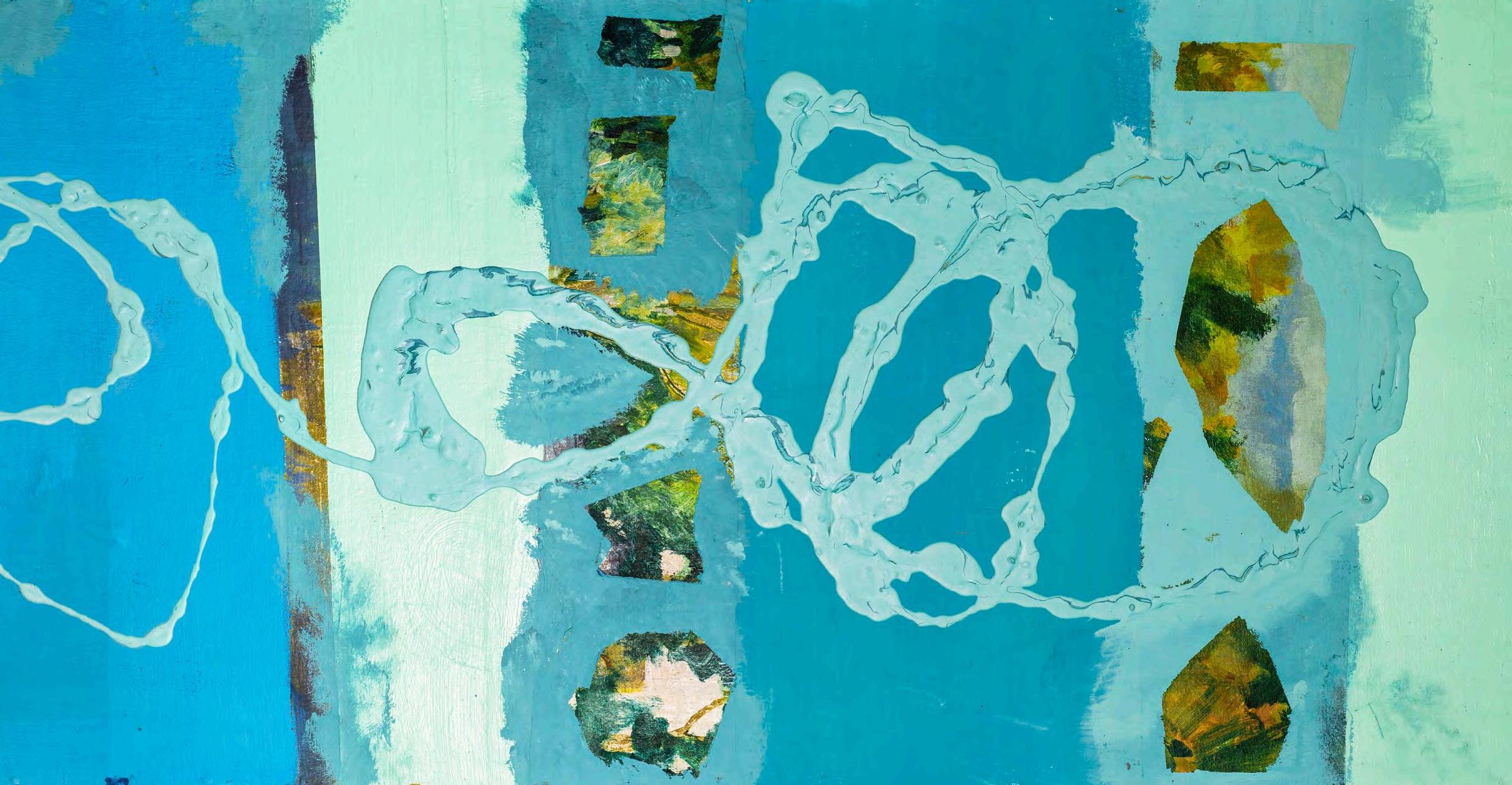
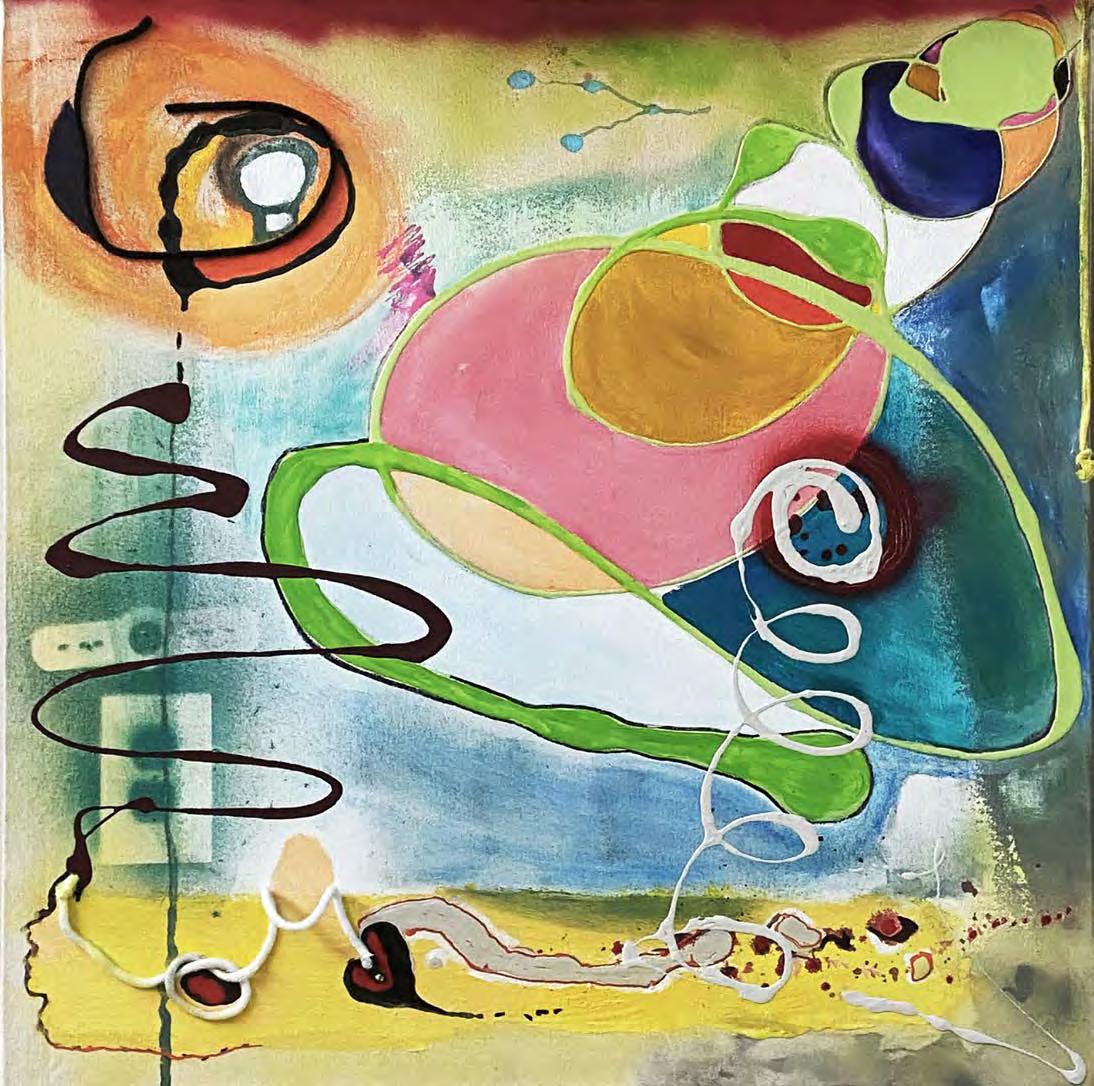
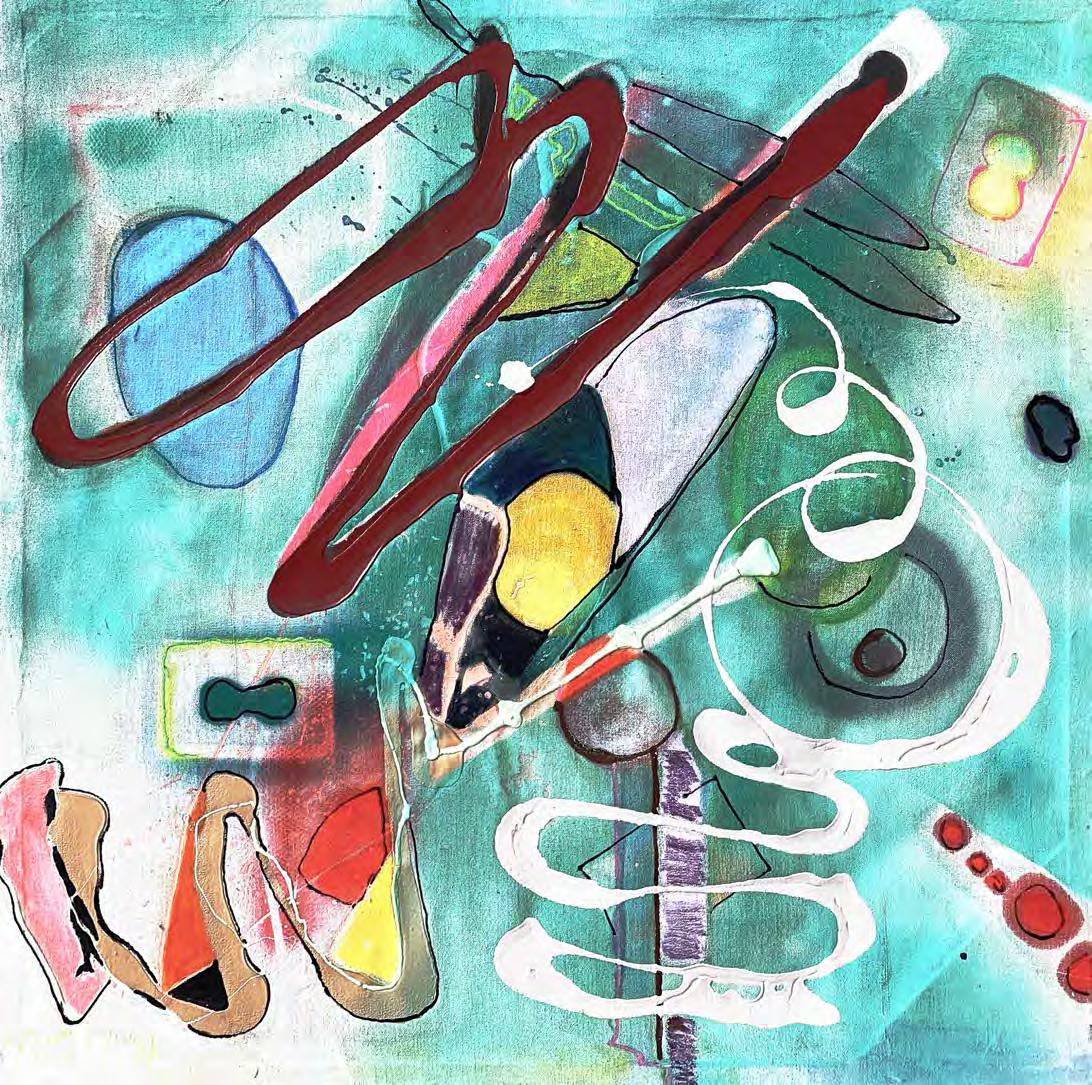
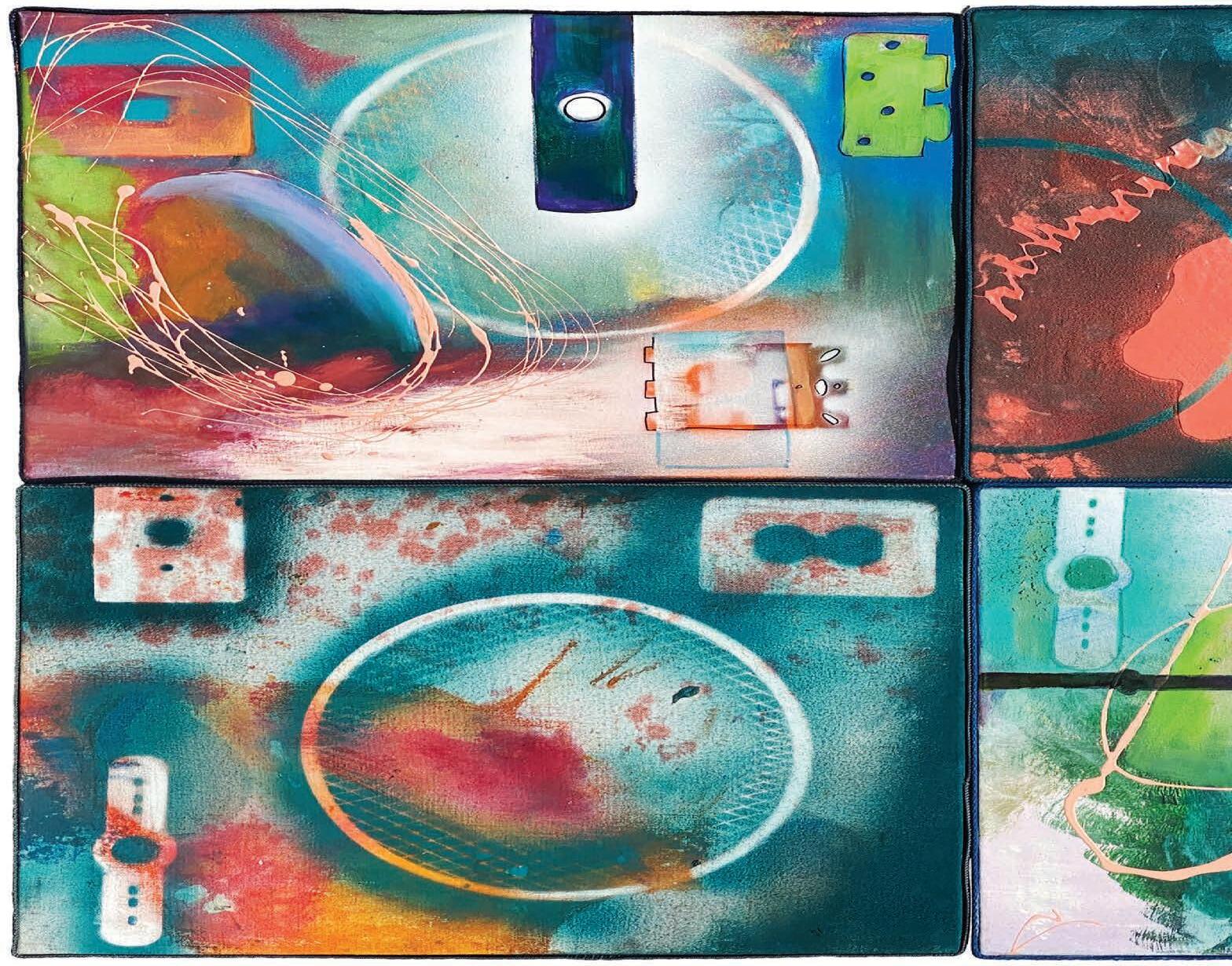
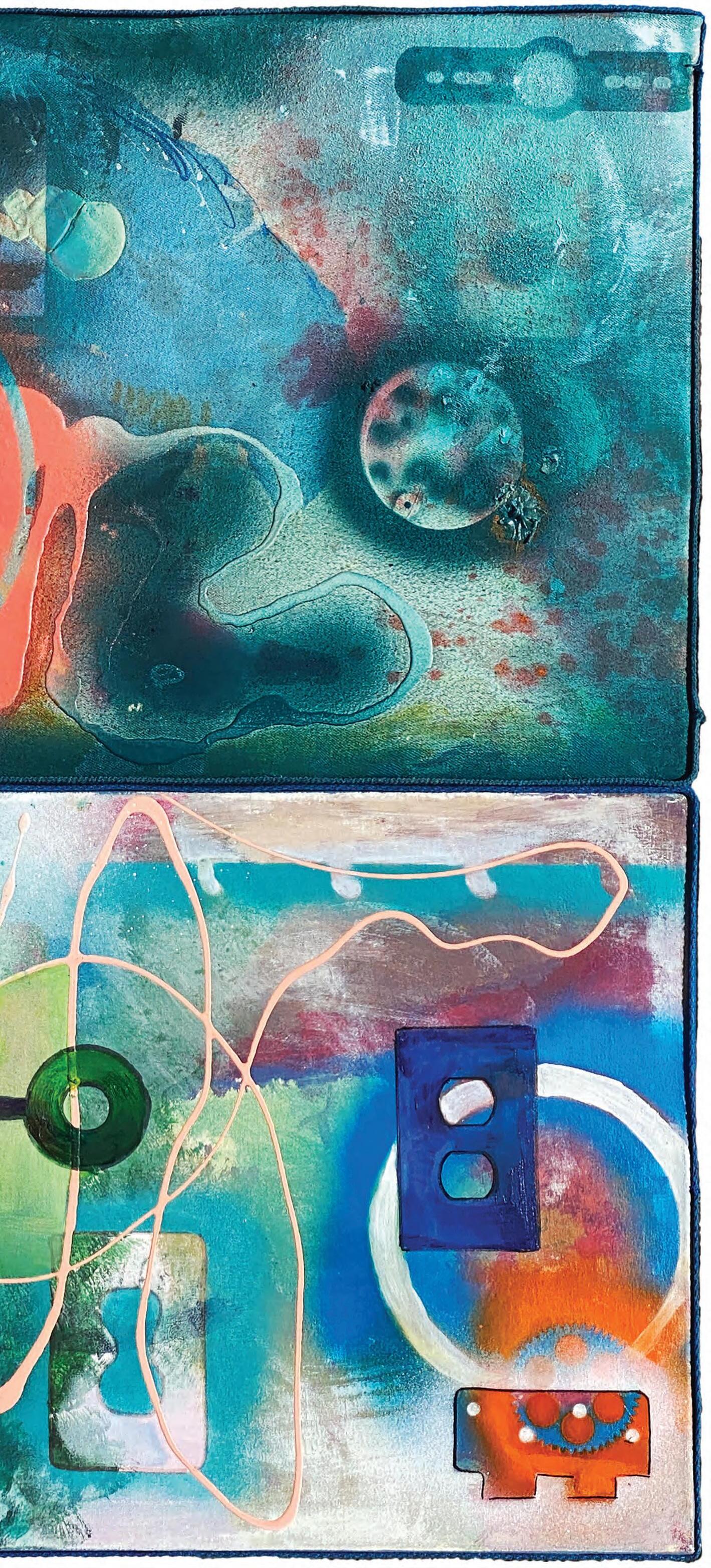
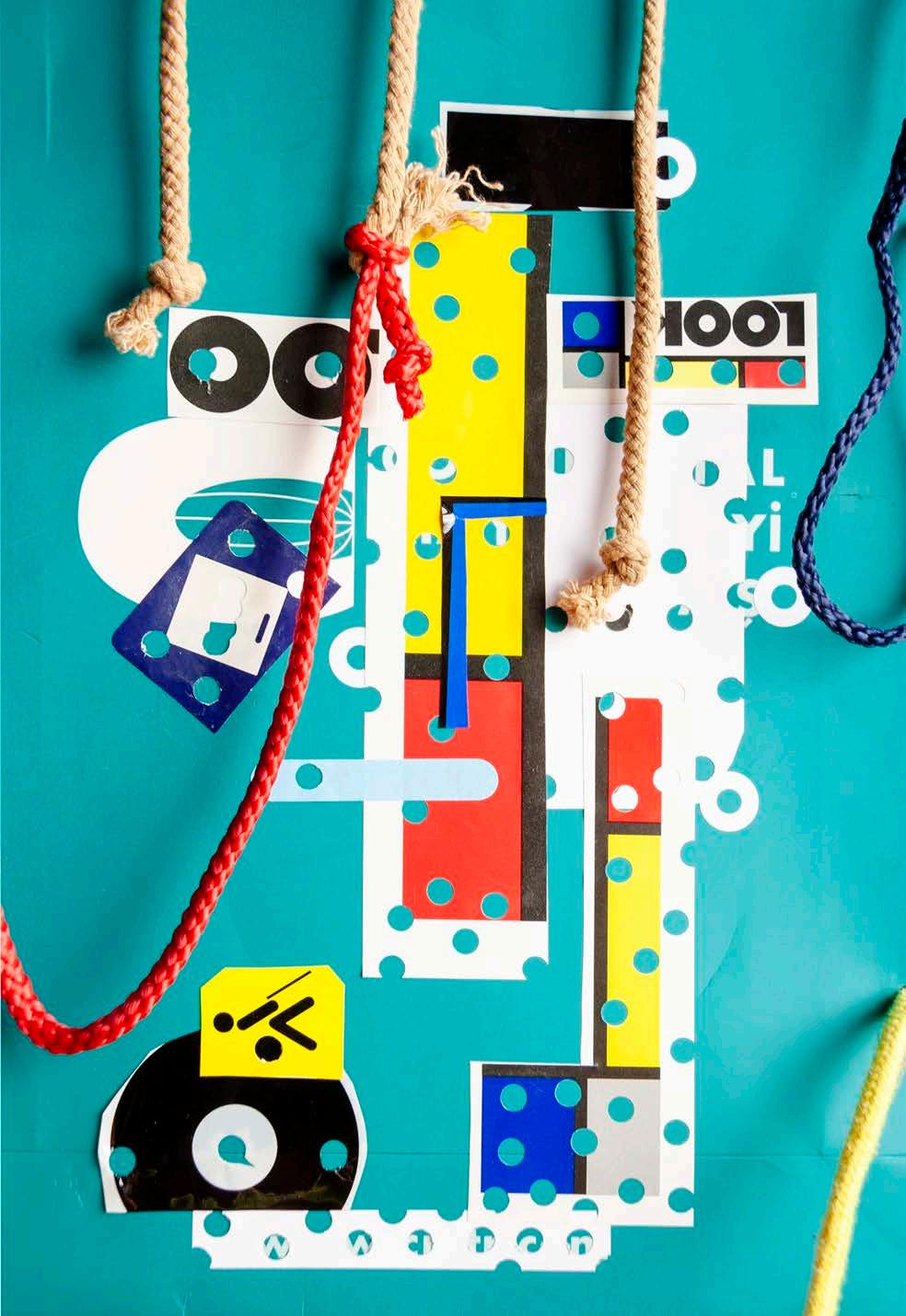
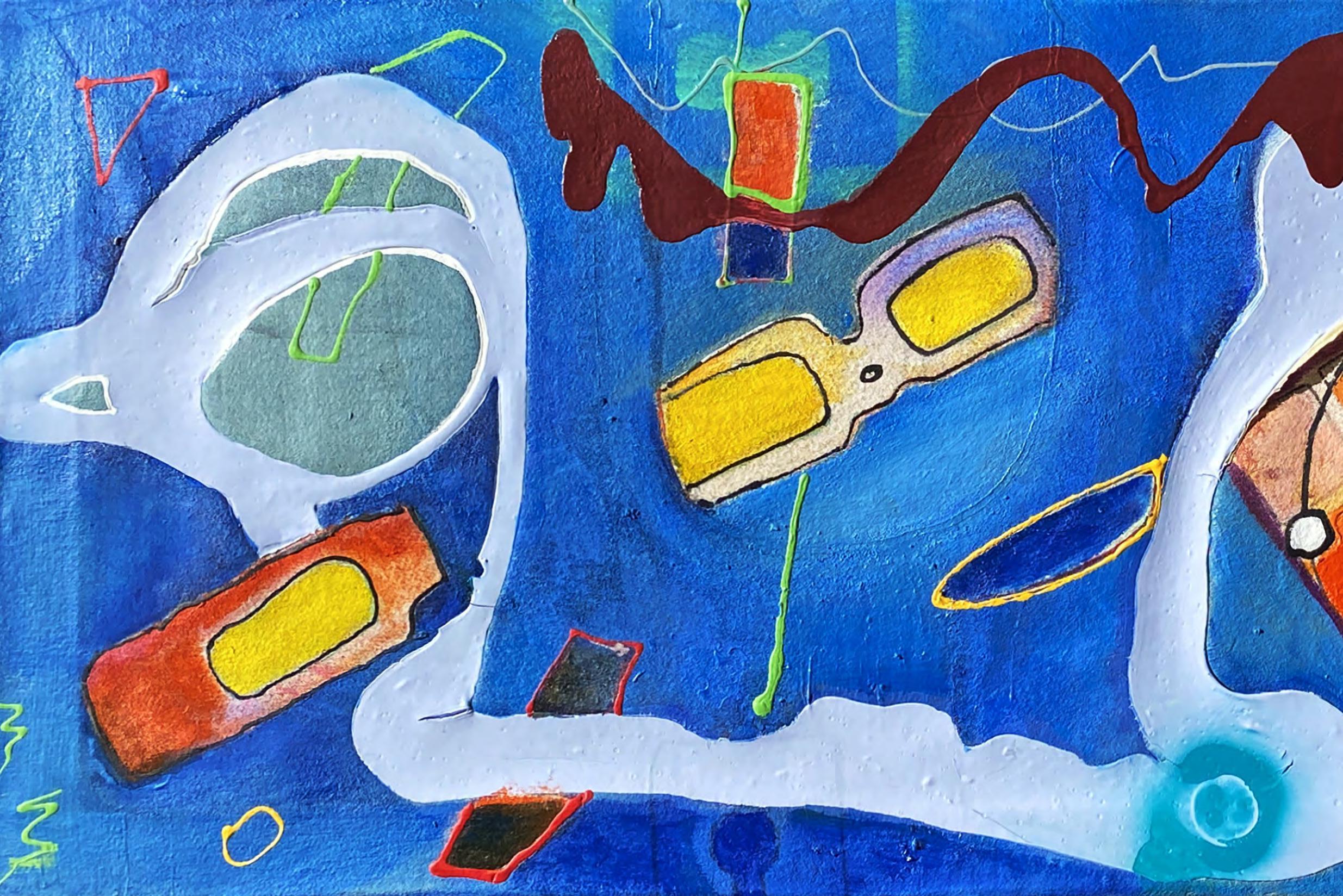
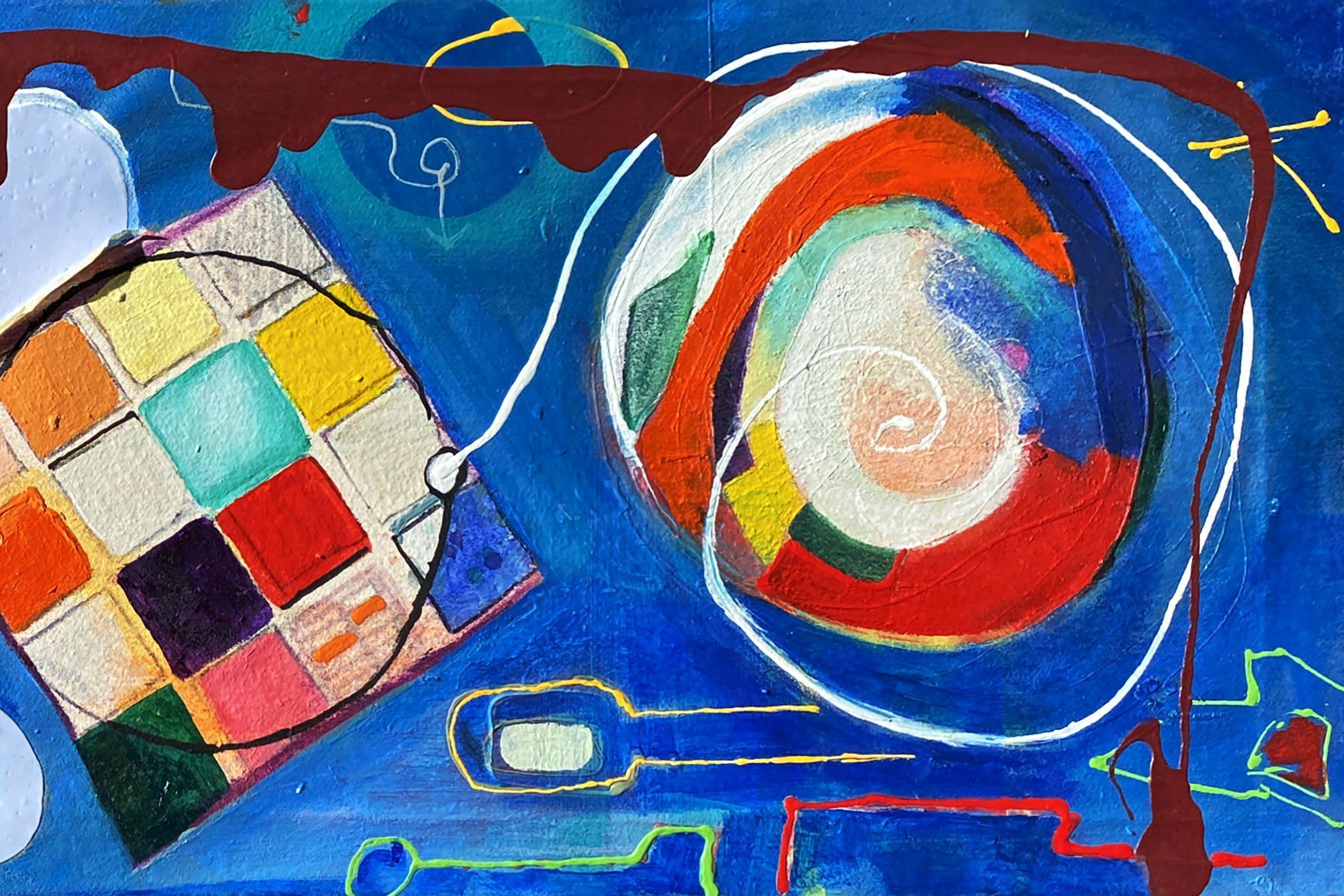
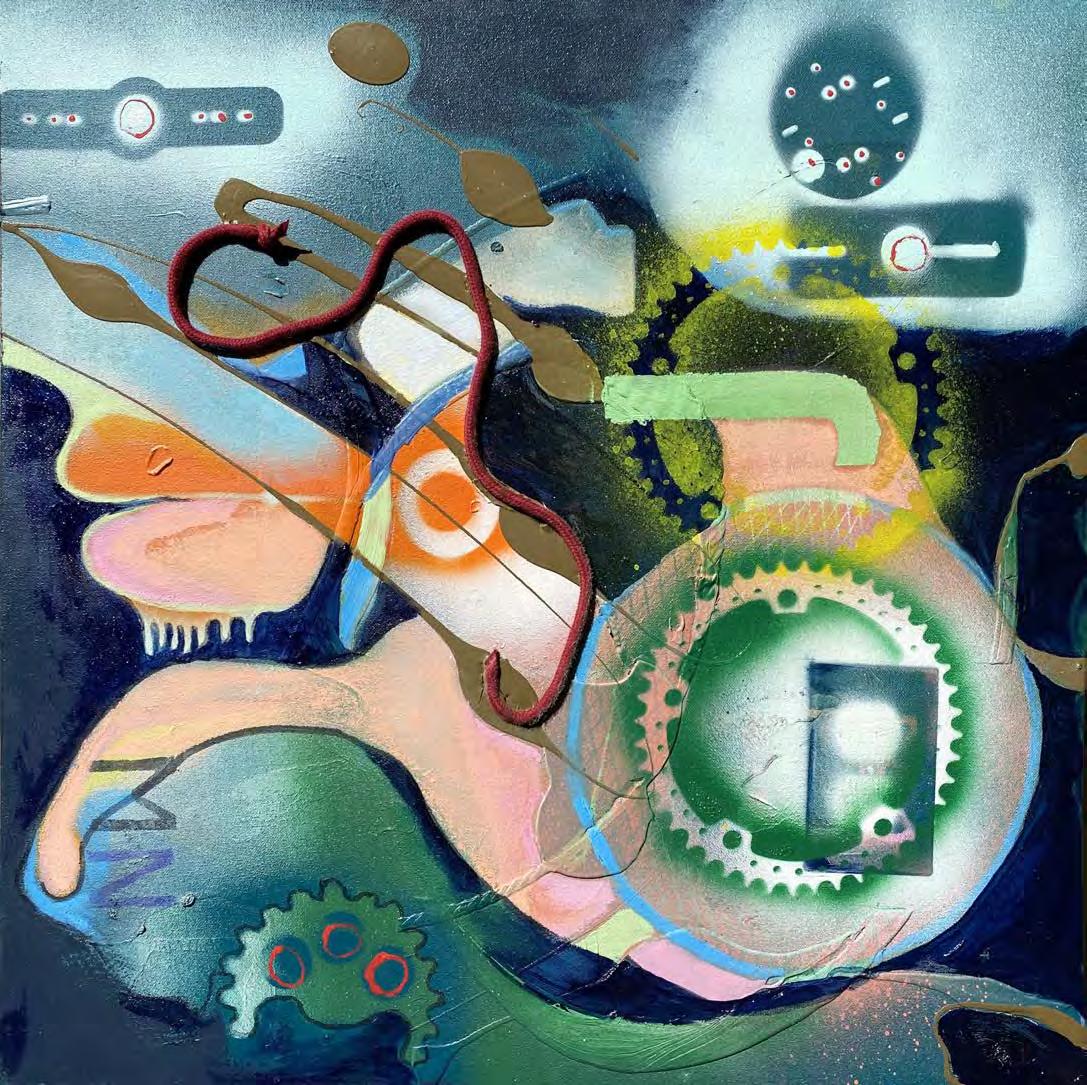
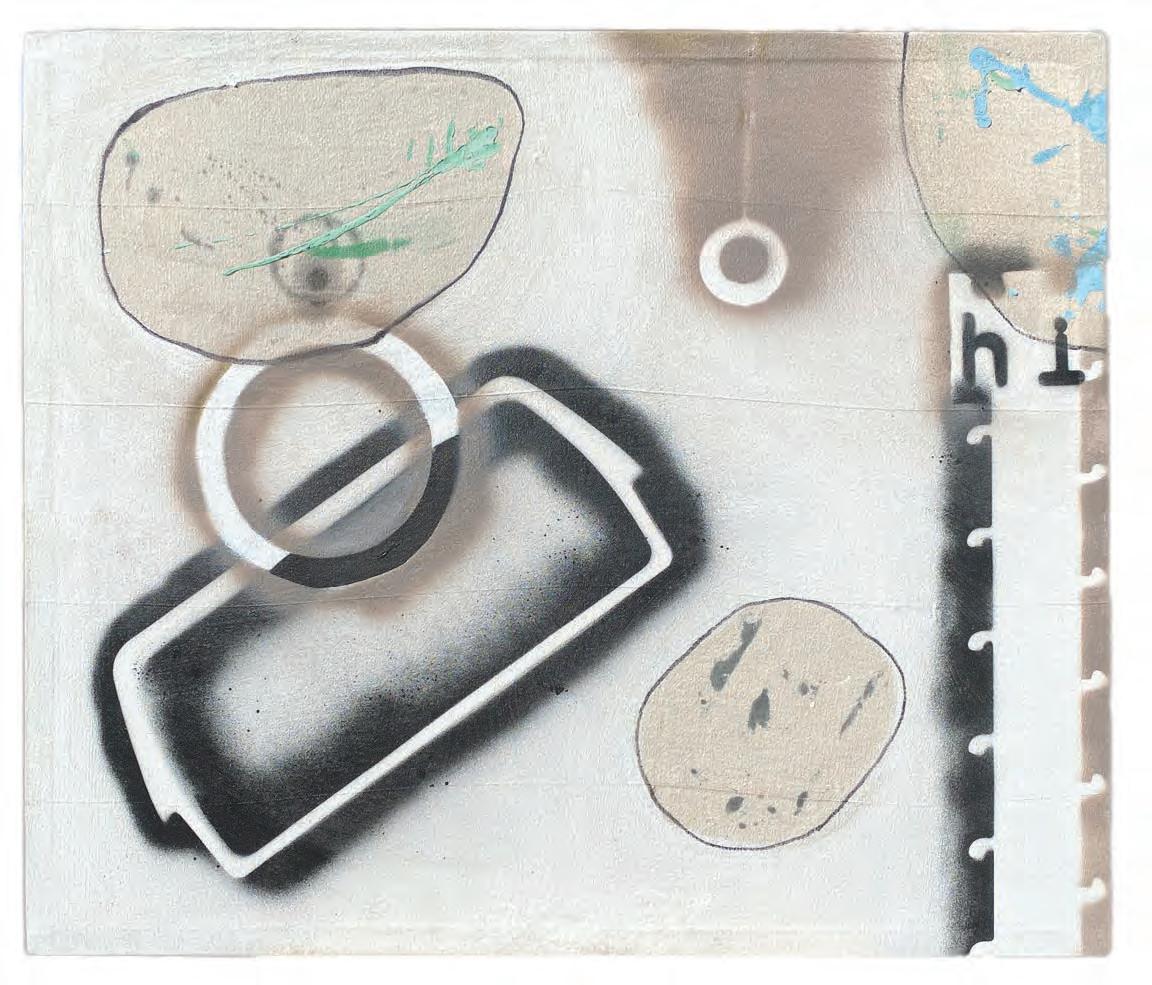
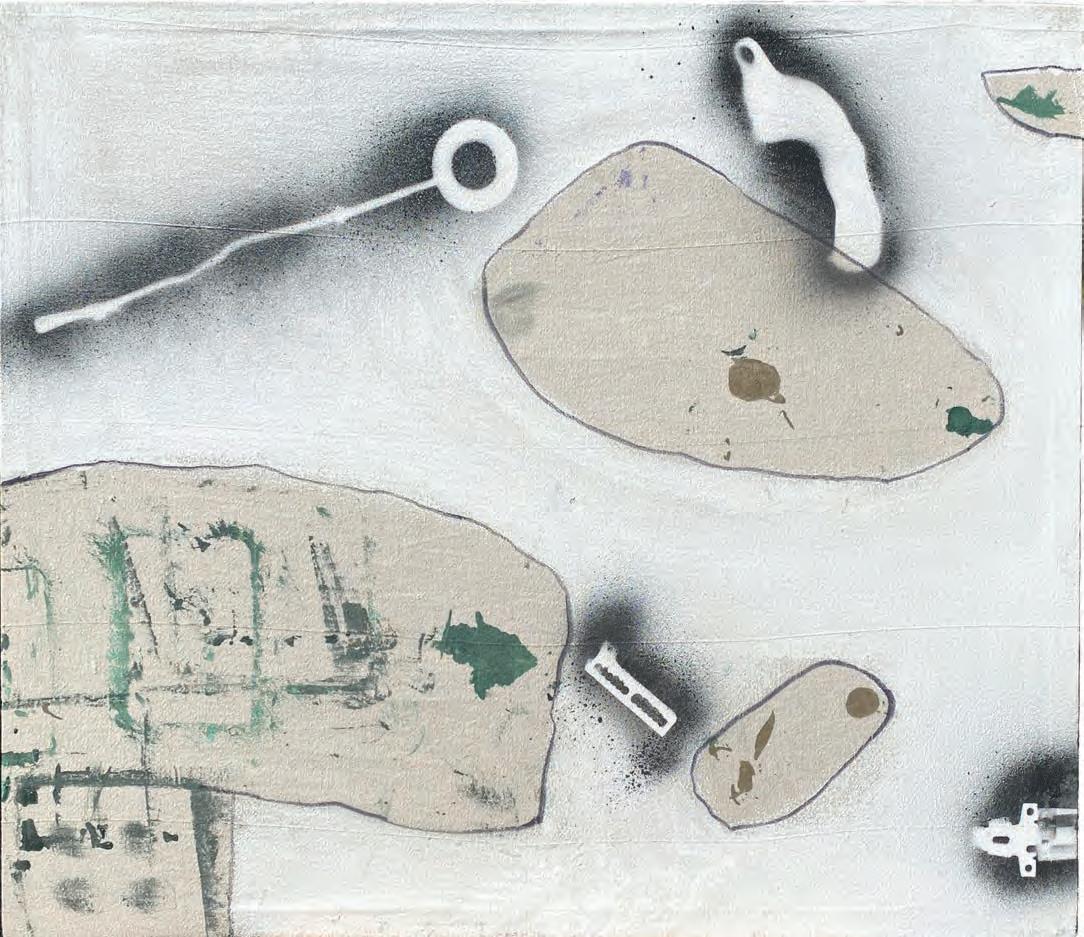
A number of these abstractions, like those of the Russian Constructivists, channel visual elements of the real world where she uses ordinary items like that of a rope which often whiplashes across her pictures, either under or above stencil applications. Her unique use of stenciling — a way to put an image on a surface which is at once fast and quick-drying when the right marker is used — came to attention when put on walls by Mussolini’s Fascists, but it became rather more widely admired when it became a tool of the Street Art movement, most noticeably in the hands of Blek le Rat and Banksy. Stenciling is a central part of Matuschka’s art-making process, as can be seen in her most recent images from 2019.
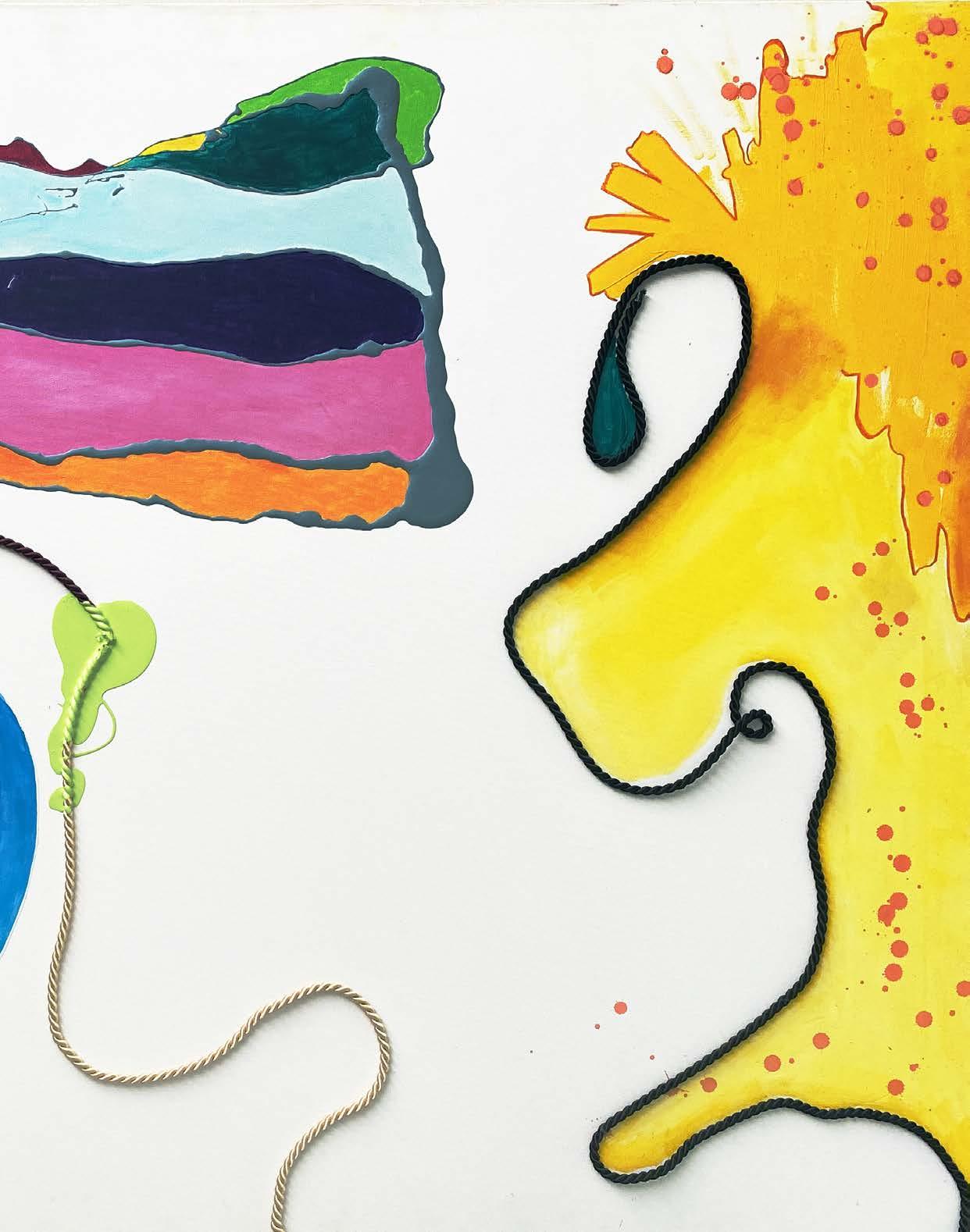
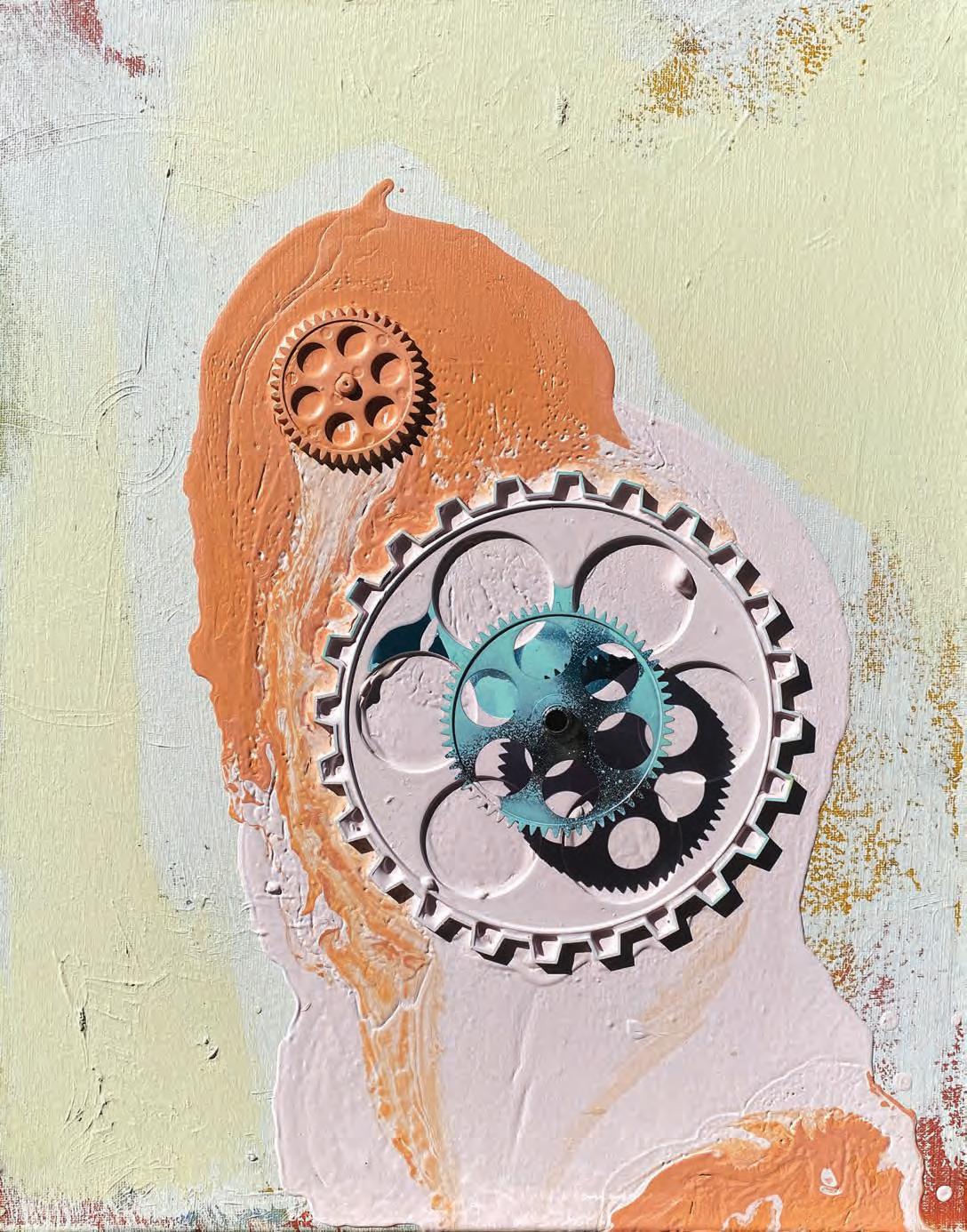
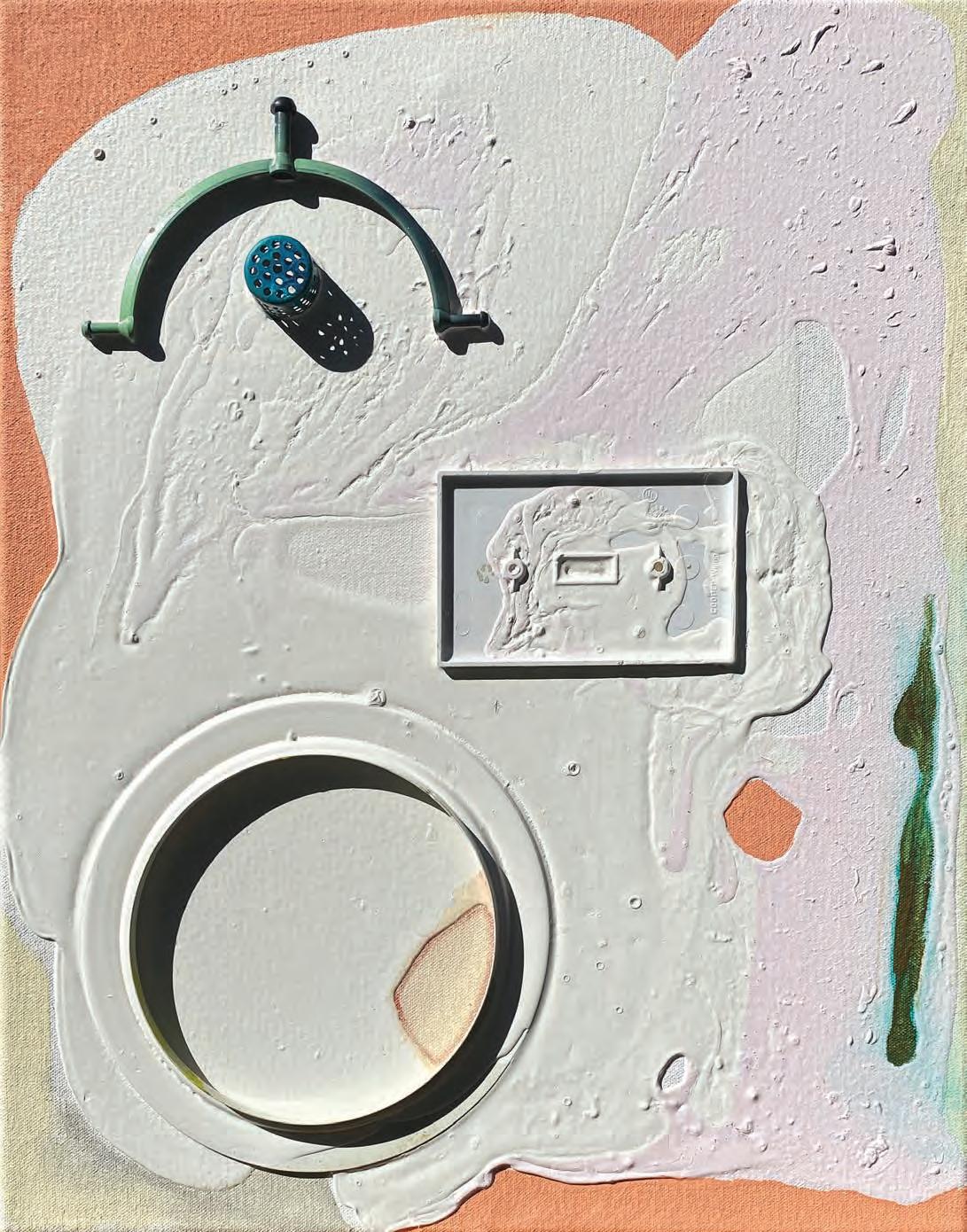
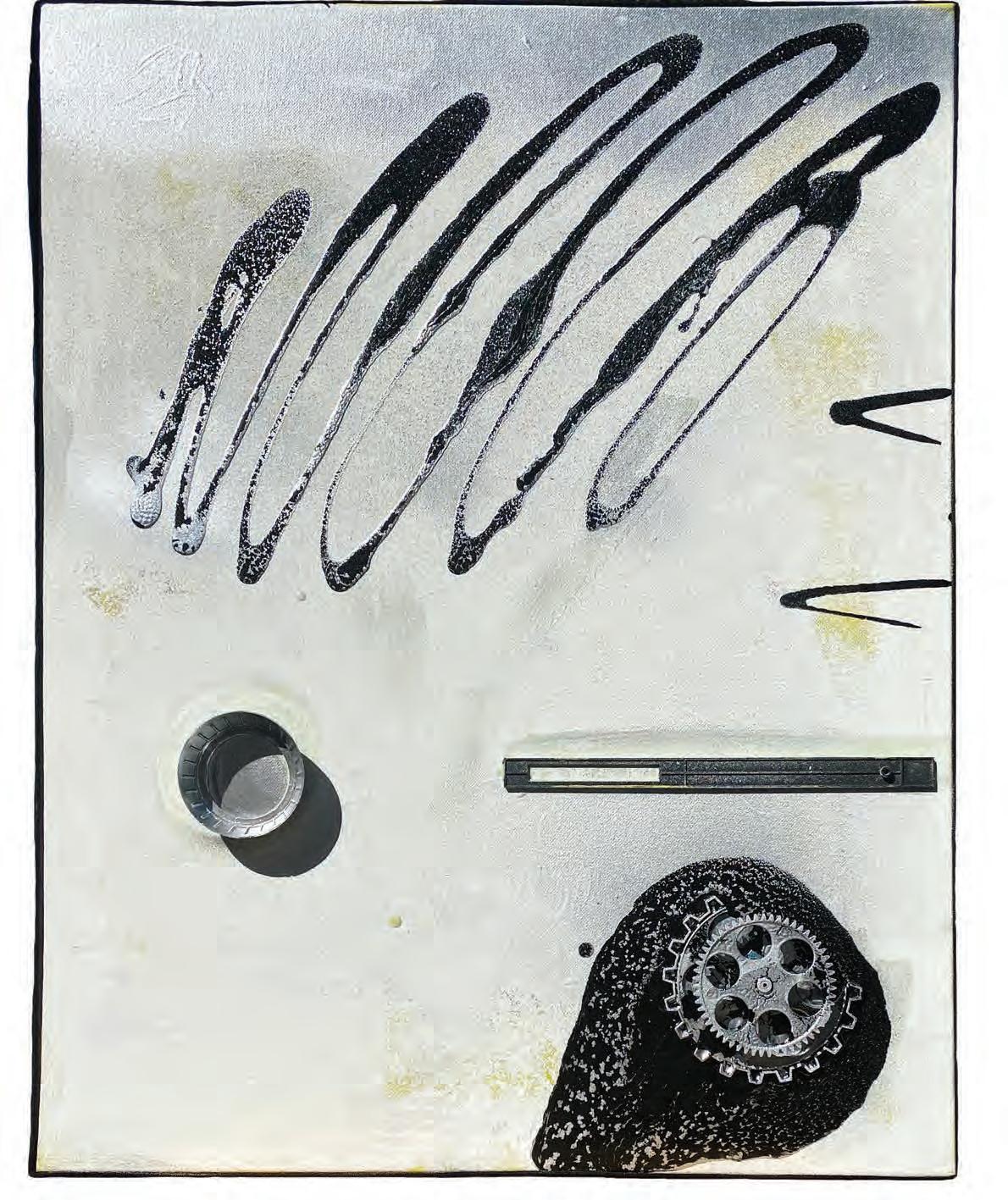
These newer paintings telegraph another characteristic of Matuschka’s abstractions, and one of the more singular, the way that her blurs, plops and squiggles of pigment can seem as though they allude to story, vibrate with hidden content. In this regard Matuschka’s addition of applied ordinary objects into poured paint seems at home with the more robust aesthetic of such predecessors as Francis Picabia, the French-born Dadaist, and close friend of Marcel Duchamp, who combined the figural and abstract, and Sigmar Polke, the creator of the German equivalent of Pop art, Capitalist Realism, who also worked with both history paintings and abstractions. It is here that Matuschka’s work belongs, rather than the manicured gardens of PoMo.
Portions of this book have been reproduced in White Hot Magazine of Contemporary Art, online issue, December 2021, and The Artful Mind magazine, published June 2022.
BOOK DESIGN
Matuschka
COVER DESIGN
Karla Gruss
PHOTOGRAPHY CREDITS
Karen Andrews
Tim Aanensen
Austin Ventola
Mark Chin
Matuschka
CONTACT
matuschka@verizon.net
MATUSCHKA FINE ARTS
THE
NOISY PAINTBRUSH
INTRODUCTION BY ANTHONY HADEN-GUEST
NOISY PAINTBRUSH
ABSTRACT ART BY MATUSCHKA (1972-2023)
Organized by colors, the collection will usher you into various moods. Let the themes be your guide. You’ll find yourself visiting one section or the other time and time again. No matter what is going on in your life, there’s a section that will give you comfort or energy, irritation or peace. It’s art, after all.
At once intense and whimsical, Matuschka’s paintings conjure a wide range of masters, from Picasso to Georgia O’Keefe; cultural influences from Jimmy Hatlo to Timothy Leary; and worldly phenomena from a police blotter to an urban alley, a jazz combo or a rural landscape. The fact that such a wide range of impacts can be assembled into one cohesive body of work is remarkable in itself.
Few people have seen the paintings included in The Noisy Paintbrush, many of them made nearly fifty years ago by the then twenty-year-old artist at the School of Visual Arts. That they have been saved, assembled and made available is a service to art appreciators everywhere. They provide insight into a most unique creative force.
An award-winning (Pulitzer-nominated) photographer, Matuschka’s abstract oil paintings are finally getting their due. They may be her most notable creative achievement yet.
—Ed Bride
Contributing writer to The Artful Mind and other arts and culture media. His work has appeared in "All About Jazz," "The Berkshire Eagle," the "International Jazz History Database," and in broadcast commentary.
I believe a painting already tells a story and needs no explanation.
—MATUSCHKA
by Anthony Haden–Guest
What we can see in this striking and highly varied body of work by Matuschka, as in the work of certain other of her contemporaries, is a real change in the way an artist can choose to conduct his or her art-making career. In The End of Art, Arthur Danto, the late philosopher, art critic of The Nation, observed that there have been two art narratives since painting had developed from being an element in worship into being accepted as a distinct practice. The first art narrative had been Representation, Danto declared, and this, he specified, was born in the 1400’s and died with Monet. The second art narrative had been Modernism, which died for him in the early ’60s when he was confronted with Andy Warhol’s Brillo boxes, which he fervently supported in the face of such grumpy avant-garde naysayers as Rothko and Motherwell.
What the end of Modernism meant to Danto was that the highly focused forward-moving momentum of the Isms was dead and done with. The current art world, he argued, had become an
area where “nothing is ruled out,” where there are “no narratives” and “anything goes.” Nor was Danto by any means the only art writer to take it as a given that Modernism was through, and he alluded to other critics who were claiming that such current work as Robert Ryman’s white paintings and Daniel Buren’s stripes were “signs of internal exhaustion” in abstraction. Just one such artist, Ad Reinhardt, had proudly called his black monochromes “the last paintings anyone can make.” Working artists, though, are pretty good at ignoring such diktats from the heights, and it has remained the norm for artists to work, work, work until they hit on a signature style, drive it on, on, on, until the tires show signs of wear, upon which he or she will work at developing another.
Matuschka’s modus operandi though, has always been way more instinctual. It was prefigured by a dream she had in the ’80s. A meticulous self-chronicler, she commits her dreams to paper. “When I want to slip out of reality, I take another door,” she once wrote. “If someone says I
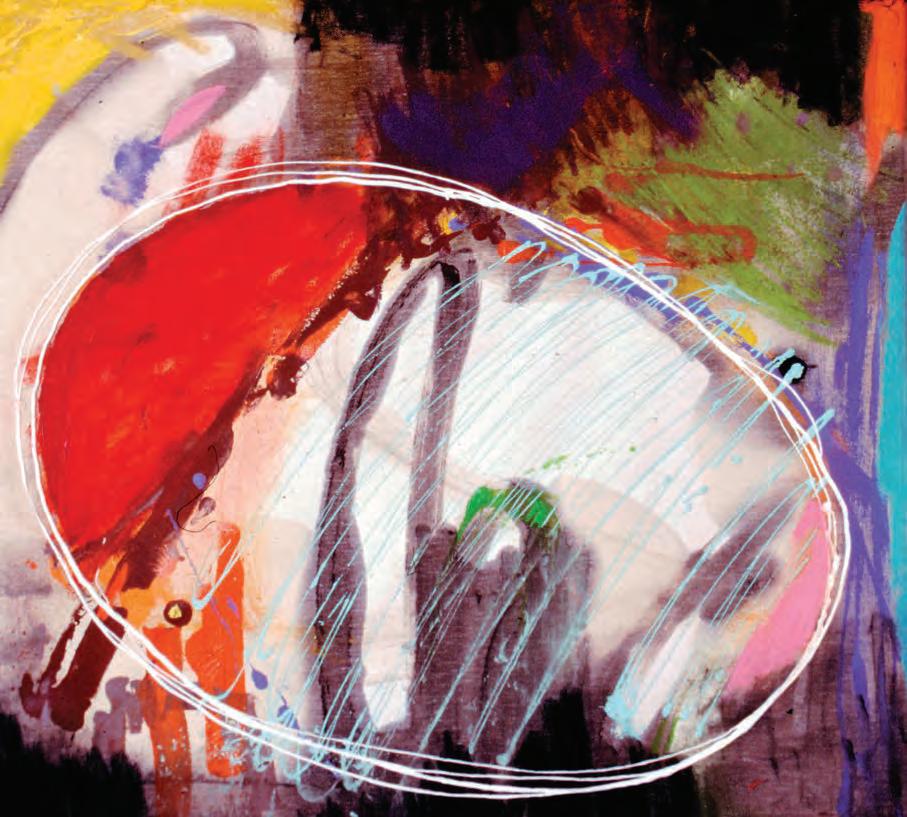
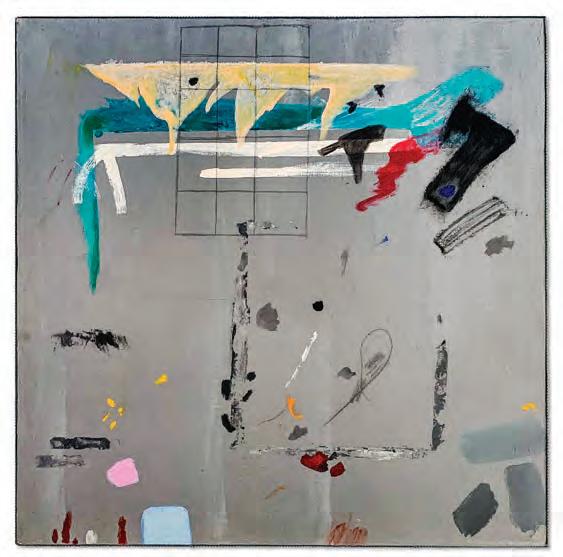
Red Shot, 2001
Acrylic on canvas
30 x 30 inches
have to wake up, it’s like depriving a kid from going to the movies on his birthday when his little mind is doing its own box-office smash.” During this particular dream she was eavesdropping on a painting class during which a teacher congratulates a young artist for being the first to use “splattering, finger painting, texturing, kissing and plopping paint on canvas all at once.”
The infuriated Matuschka bursts in to tell the throng of wannabe artists: “I myself splash, finger, kiss, and plop all the time. And my paintbrush is louder than yours!”
So, she got out a canvas and demonstrated: “On one brush I squeezed a little blue, yellow, red, and white. Then I plopped down a big glob of white paint at the top of the canvas and spat on it to get it rolling through the other wet colors. Everyone was amazed as we watched the white goo-ish spit slide through the yellows, blues, and reds that the paintbrush had just applied. I had created the first rainbow. When the dripping stopped, everyone clapped, and I took a bow. ‘Enjoy the show!’ I heard Soupy say, as he pulled back the curtain.”
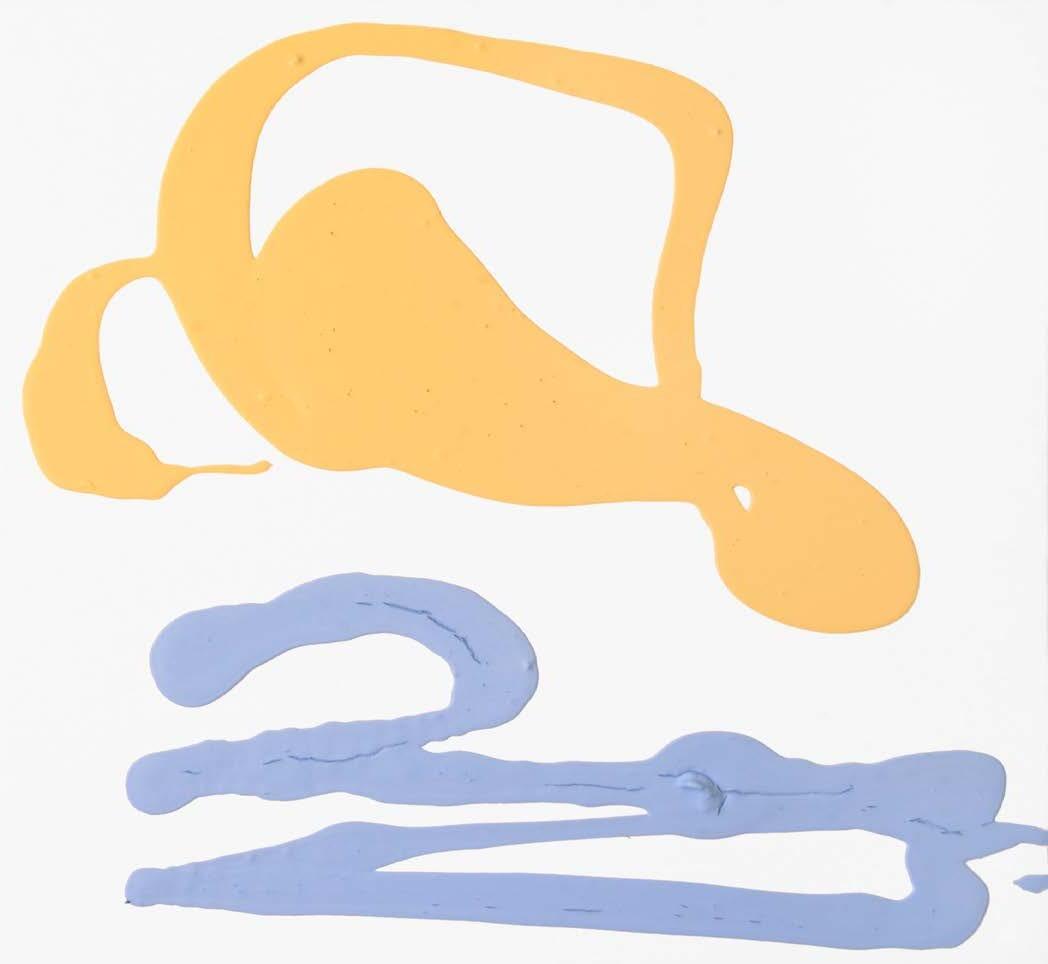
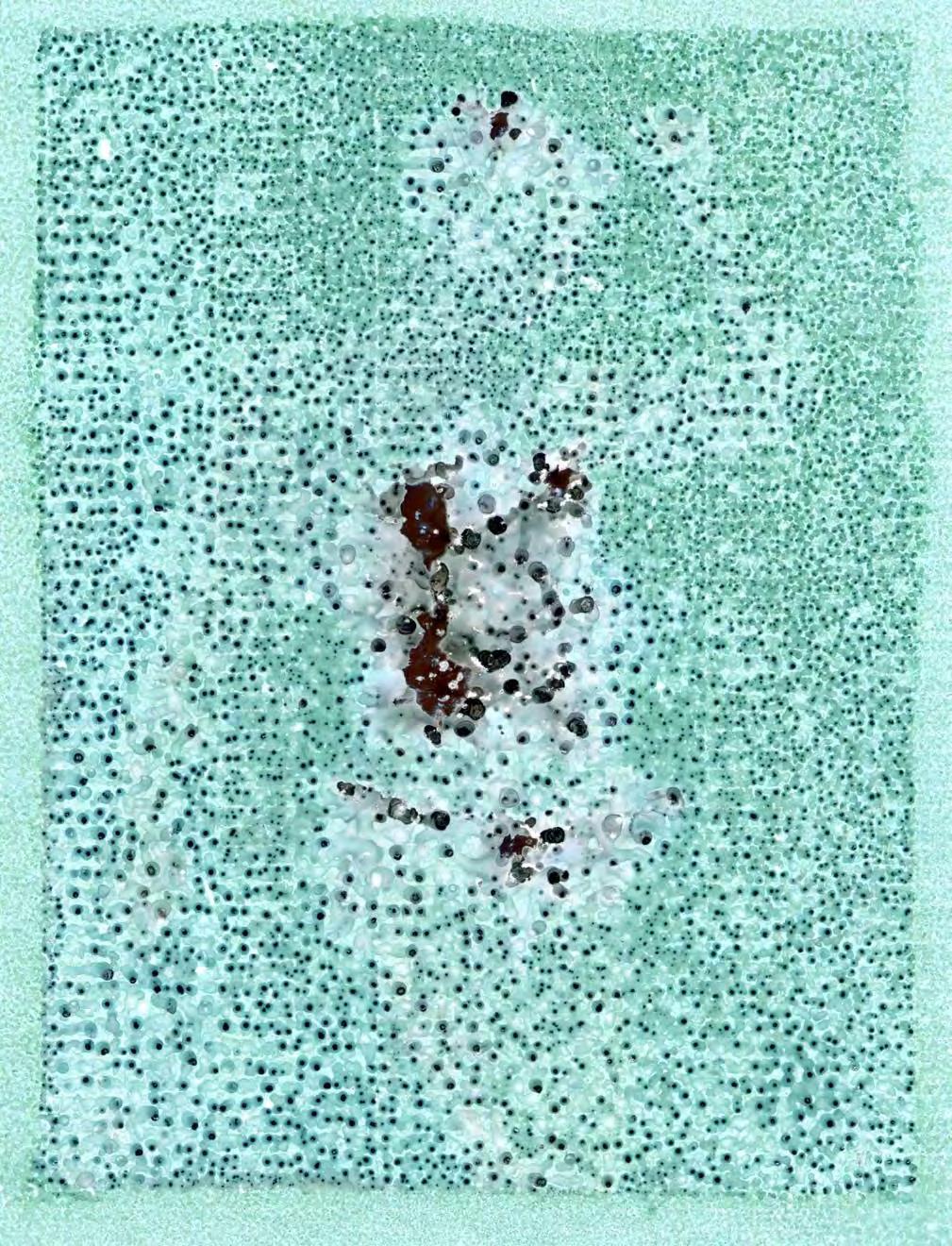
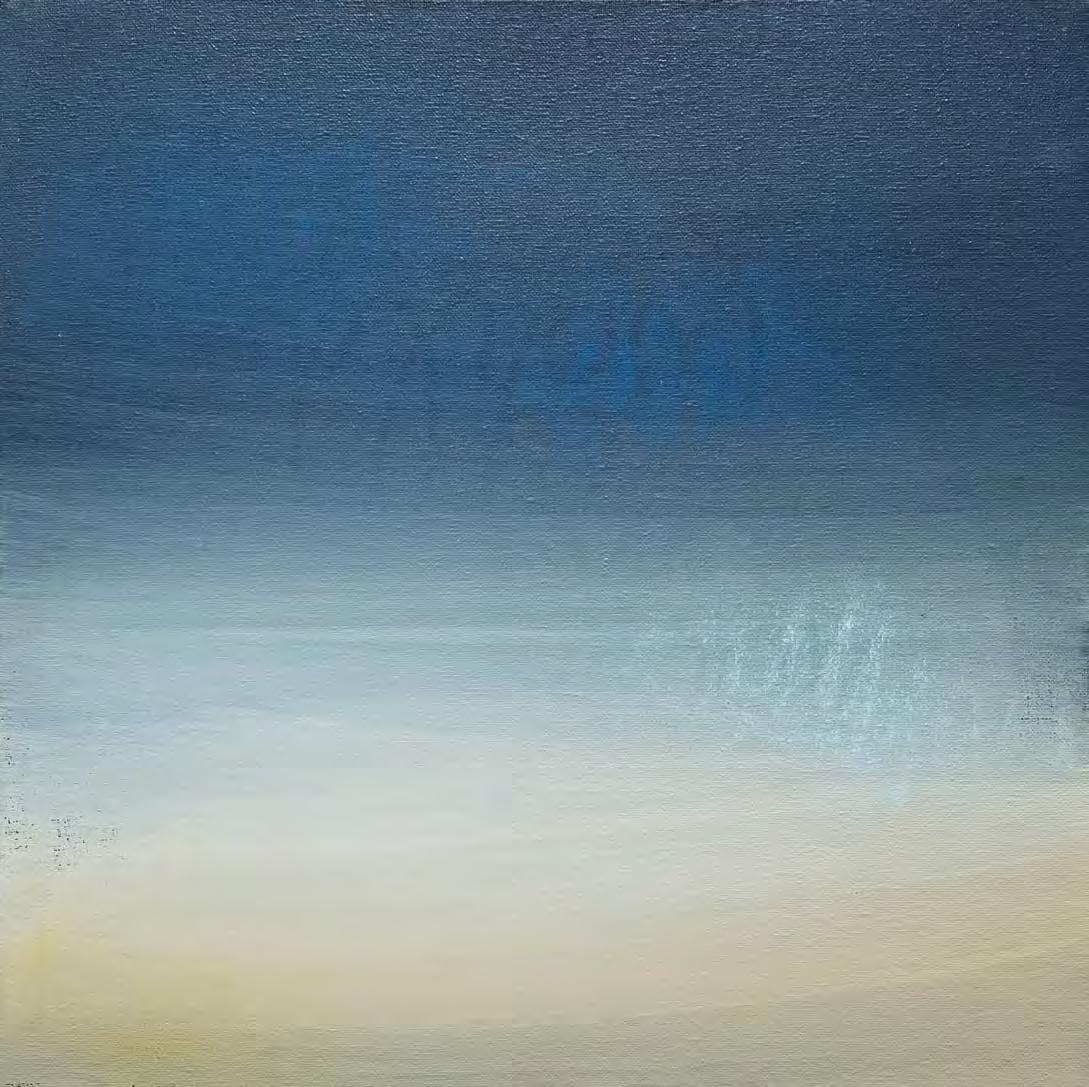
“Soupy” being, of course, Soupy Sales, the TV comic great of the ’50s through the ’70s, and you will learn from the interview later that watching Soupy Sales instructing his viewers to conjure images from random marks had been foundational in young Matuschka’s determination to make art herself. Thus, it was Soupy Sales who had led her to find abstraction bewitching, and so it is that many images in The Noisy Paintbrush features blobs, too animate to register as ideograms, more juicily suggestive of mini-lifeforms, pulsing on a field of pale blue, as radiant as the Mediterranean in the shallows.
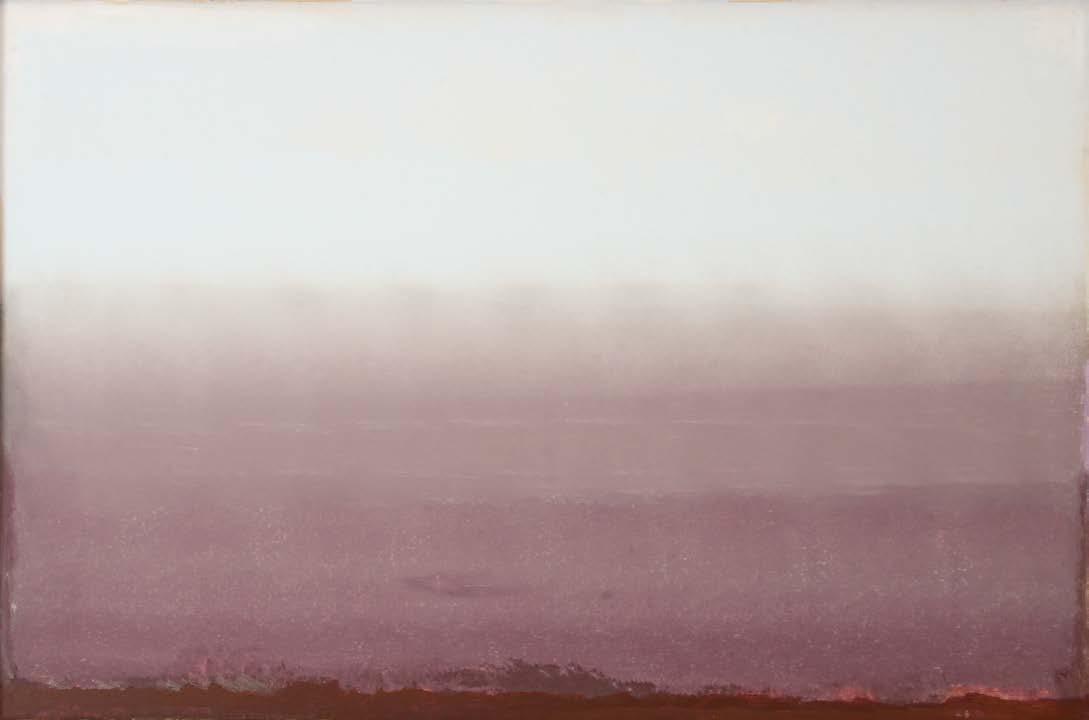
From there we are taken by way of several of the hazy abstractions that Matuschka calls “Graduations” to one that looks like a helty-melty floorplan, and from there into the first of the segments into which Matuschka has organized The Noisy Paintbrush. Each of these segments is named for what she takes to be the dominant color in the work, which is not necessarily the color that takes up the most space, and the sequence begins with WHITE.
An easy-peasy process, right? Wrong. This was as disruptive a procedure as tossing a brick through a gallery’s plate-glass window in that it simply brushes aside the established art historical way of representing an artist’s career, which is as a sequence of periods, of style developments. But Matuschka didn’t choose this particular way of putting together The Noisy Paintbrush just to be
radical for the hell of it. The color-coding makes it clear that she doesn’t see the changes in her ways of picture making—in, for instance, her painthandling—as a process of organic, chronological development.
Matuschka will change her approach when moving from one piece to another, whether according to her feelings at that moment, to what might happen during the making of an individual work, or for whatever other reason might activate her. And by color-coding the segments instead of sorting them according to modes of abstraction or methods of applying the pigment she is communicating the fluid nature of her process and her readiness to pivot while also making it clear to the viewer that these highly disparate images are the work of a singular vision, of one painter’s eye.
Which is remarkable. Yes, there are some artists making strongly individual abstraction now, for instance Sean Scully and Cecily Brown, but almost all abstractions one has been seeing are, yes, well crafted, handsome, but also used up, way too knowing, worthy of the word radical only with quotation marks. It all looks the same, said Jerry Saltz in his broadside, “Crapstraction,” and painter/ writer Walter Robinson blasted it to bits as Zombie Formalism, a gimmick movement enabled by a breed of dealers known as “flippers” and a now popped sales bubble, with a couple of worthy artist survivors, Oscar Murillo and Lucien Smith.
The variety, the sheer “difference” in Matuschka’s work sets it absolutely apart.
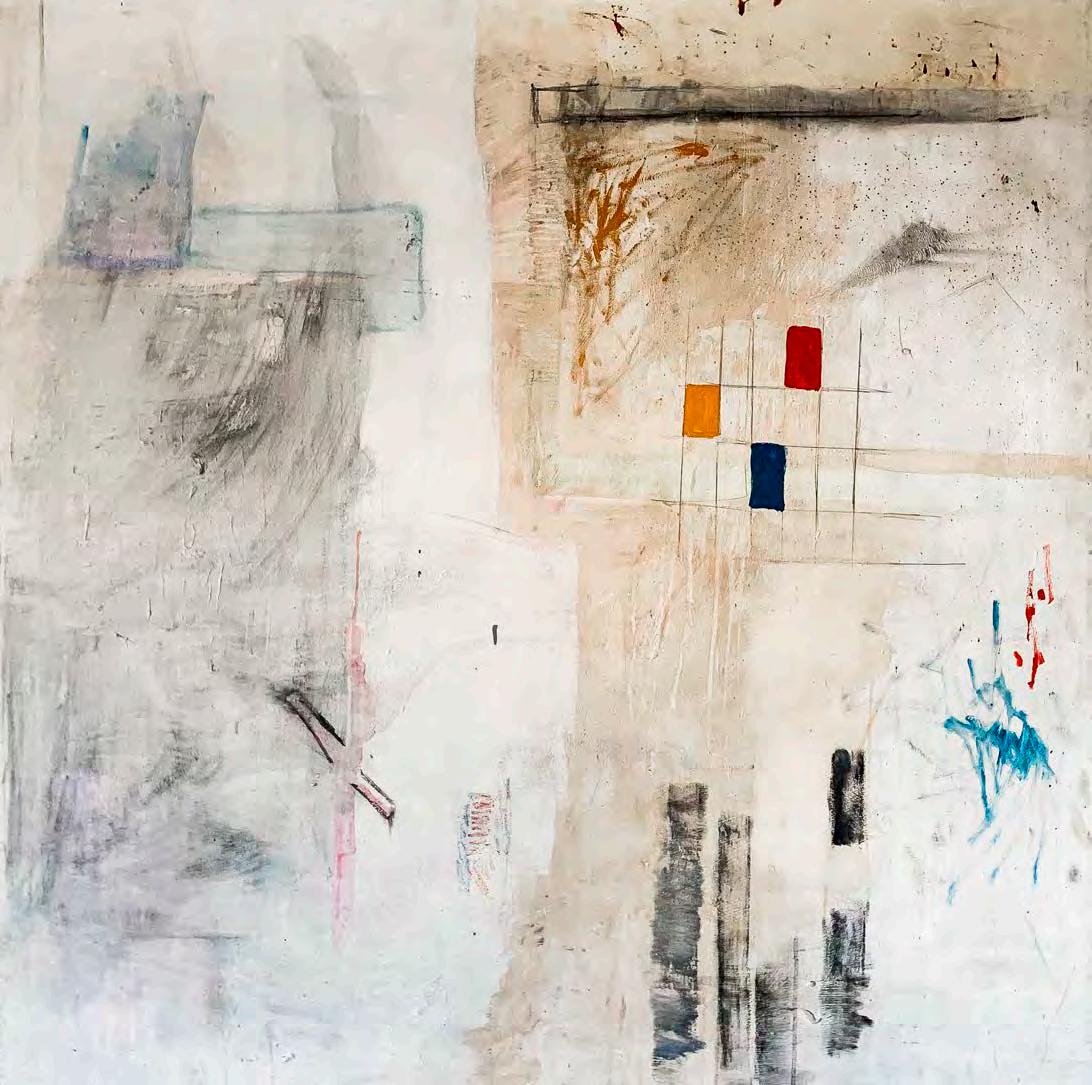
So to WHITE. The pieces are hard-edged, but not aggressively so, more painterly than Minimalist.
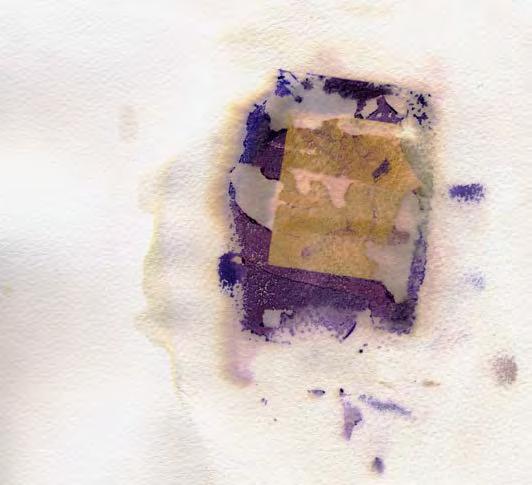
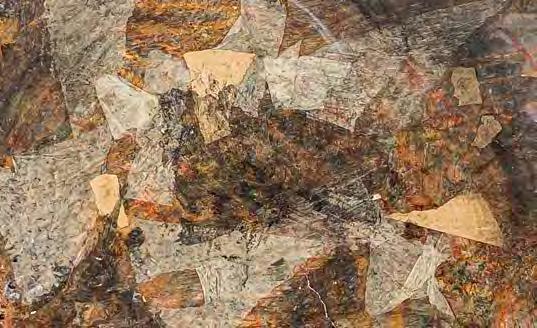
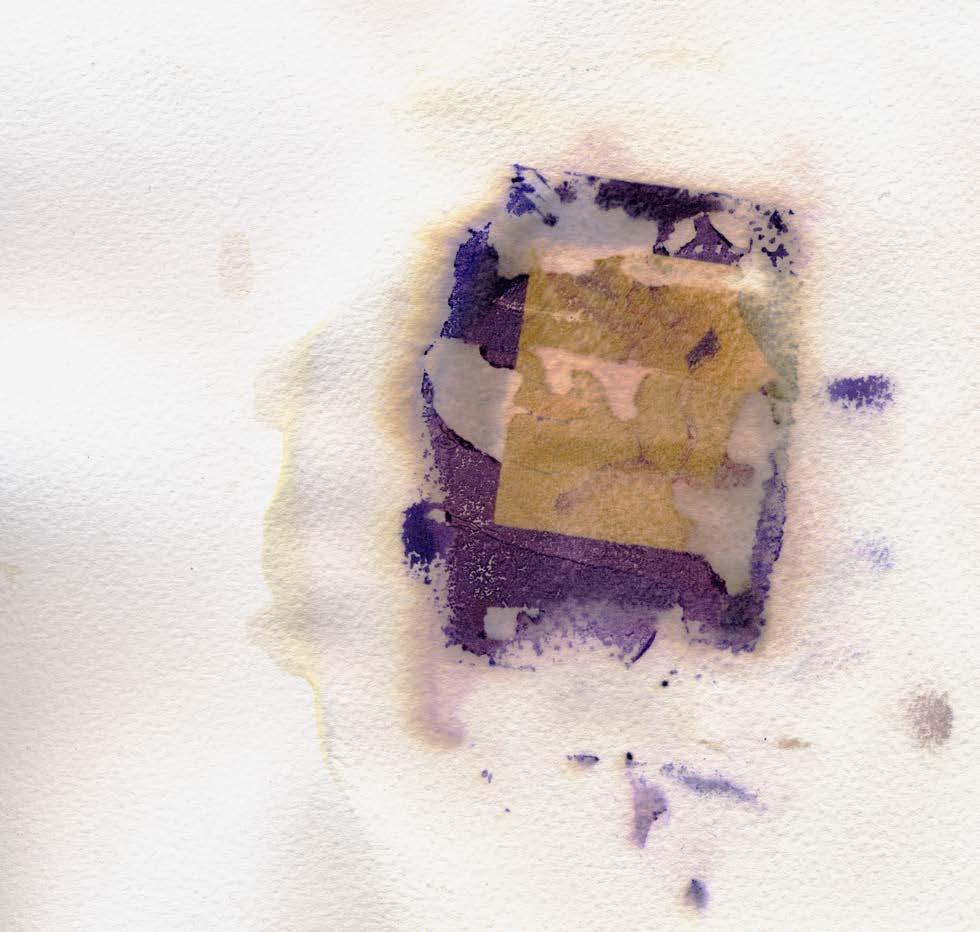
Mars Rover, 1999
Polaroid transfer on watercolor paper 10 x 10 inches
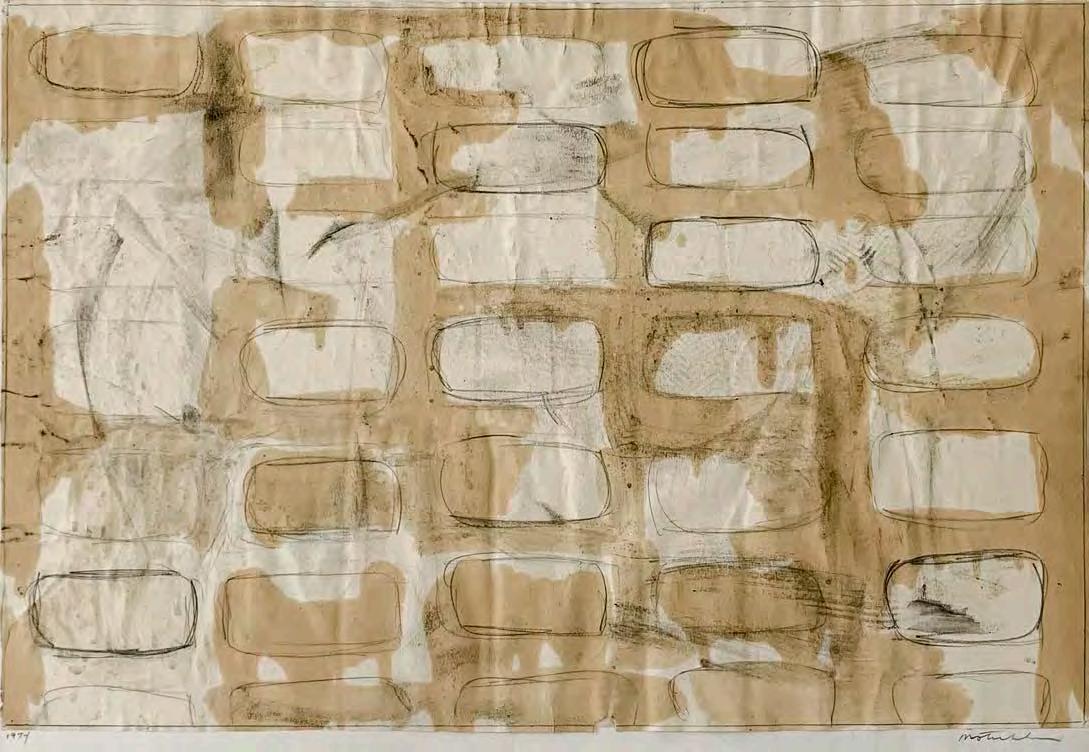
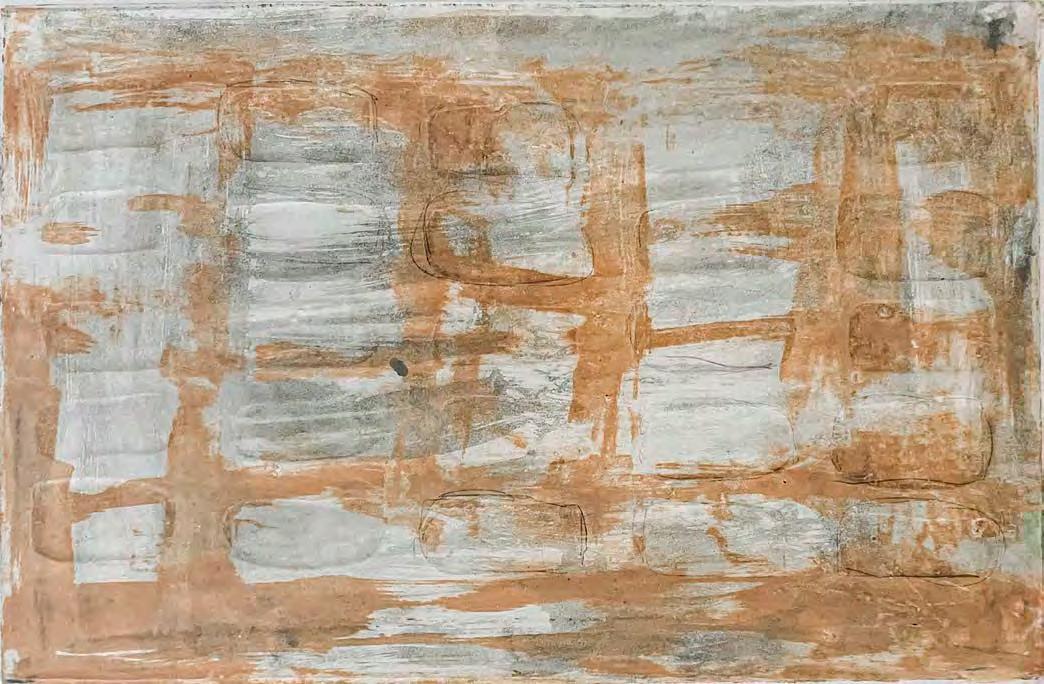
The work owes much to what Matuschka learned from the teaching of the painter Jennifer Bartlett, at New York’s School of Visual Arts, most specifically from Bartlett’s insistence that there should be no accidents, that when making a painting, a sculpture, a drawing, every move should be intentional. “Most of her class was about the application of paint,” Matuschka says. The two end panels of a strong triptych featuring, respectively, three broad brushstrokes, white-on-black and black-on-white, reflect this, as do a sequence of five canvases based on the tiling of the SVA classroom floor, which have the severity of the Russian Constructivists, as well as the Constructivist intent, which was to convey the essence of urban life in an industrial culture. These canvases function as the core of WHITE
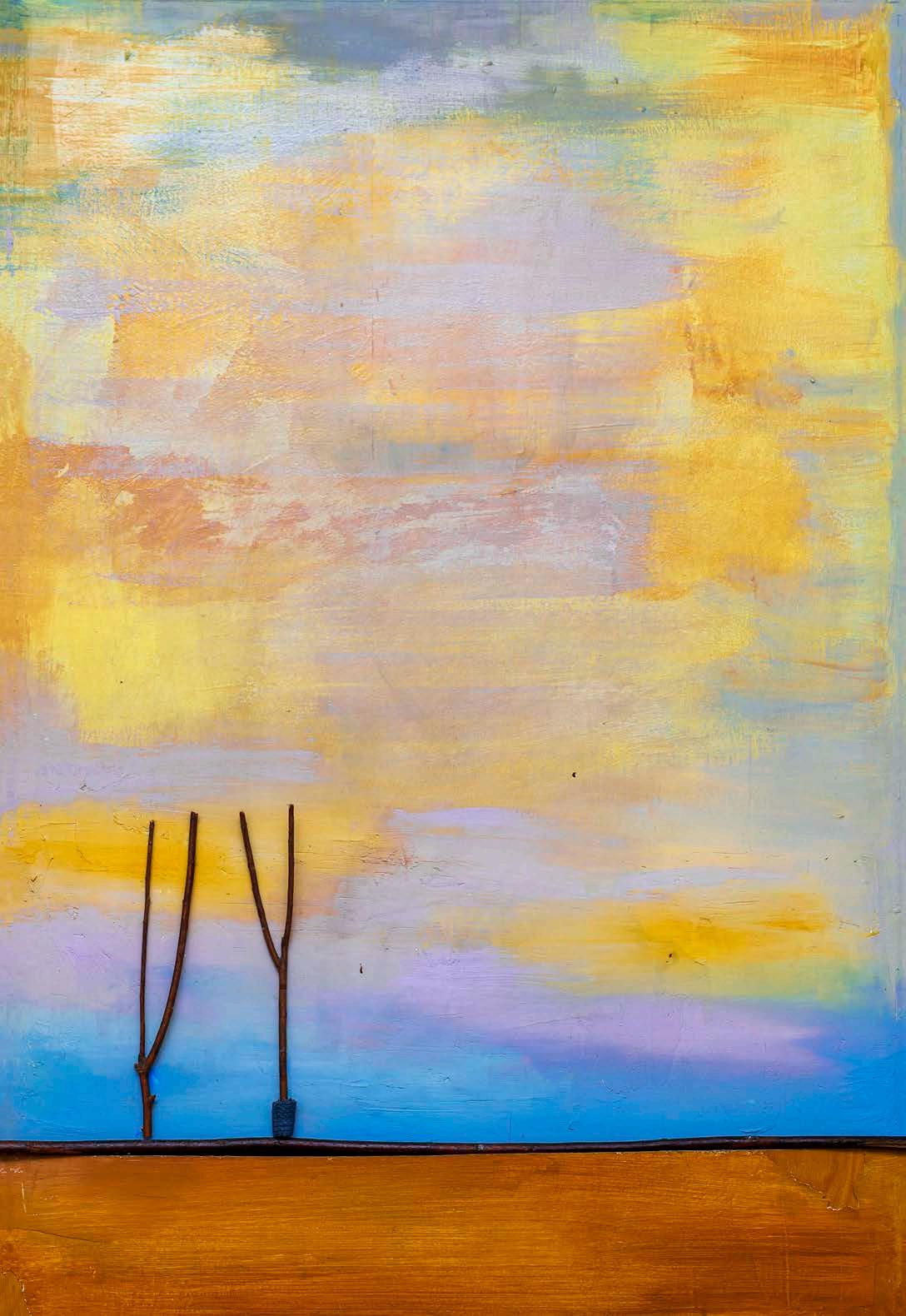
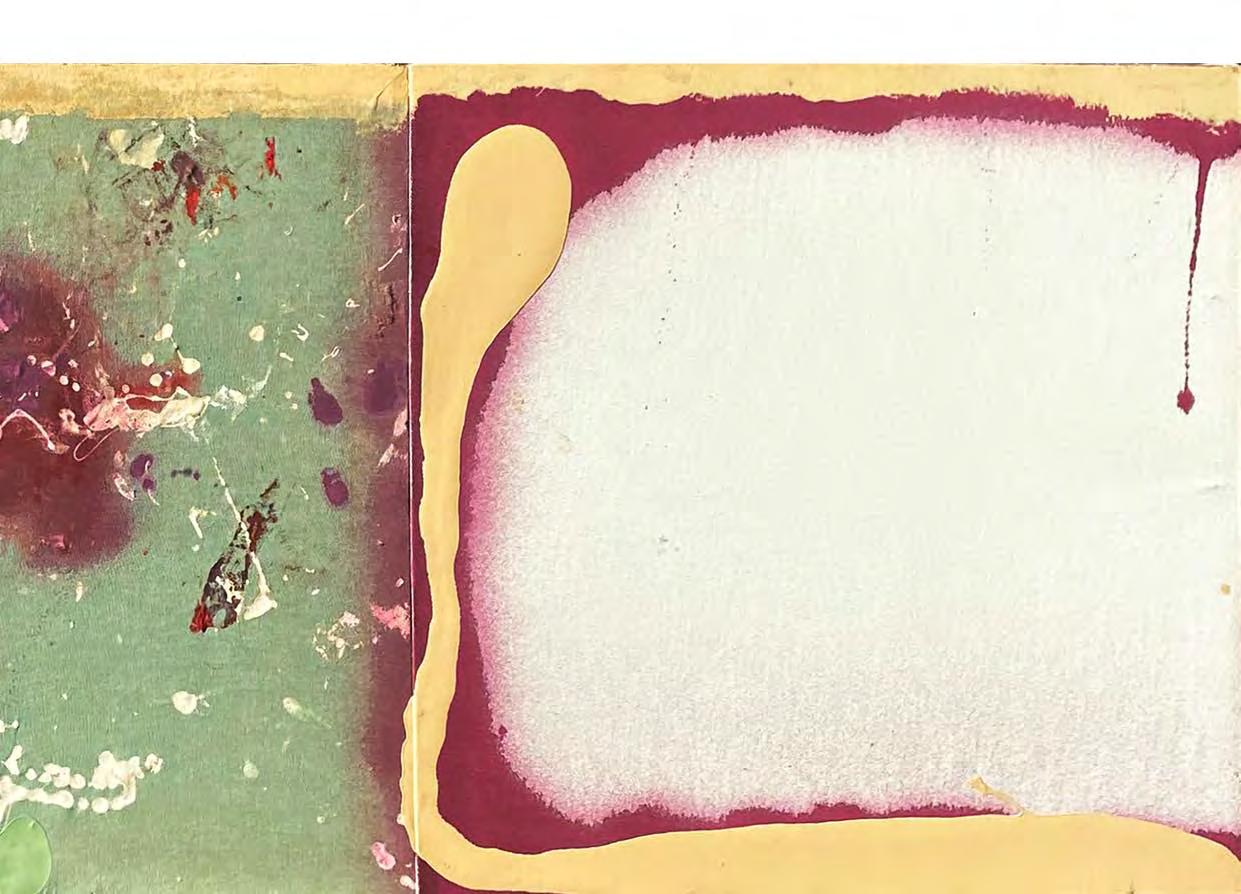
YELLOW follows WHITE and begins with a sequence of abstractions, which are vaporous, inevitably suggesting landscape and atmosphere, and the artist is plainly happy to empower these references, as with the canvas upon which there are presences that clearly register as trees. Upon the opposing page to this is a canvas that includes a collage element: A rope.
This introduces an element as integral to Matuschka’s body of work as the gridded tile pieces. Marcel Duchamp had used ropes in artmaking when he made Three Standard Stoppages, dropping three, then using them in the shapes they had taken upon hitting the ground. “This experiment
was made in 1913 to imprison and preserve forms obtained through chance,” he said in a lecture half a century later.
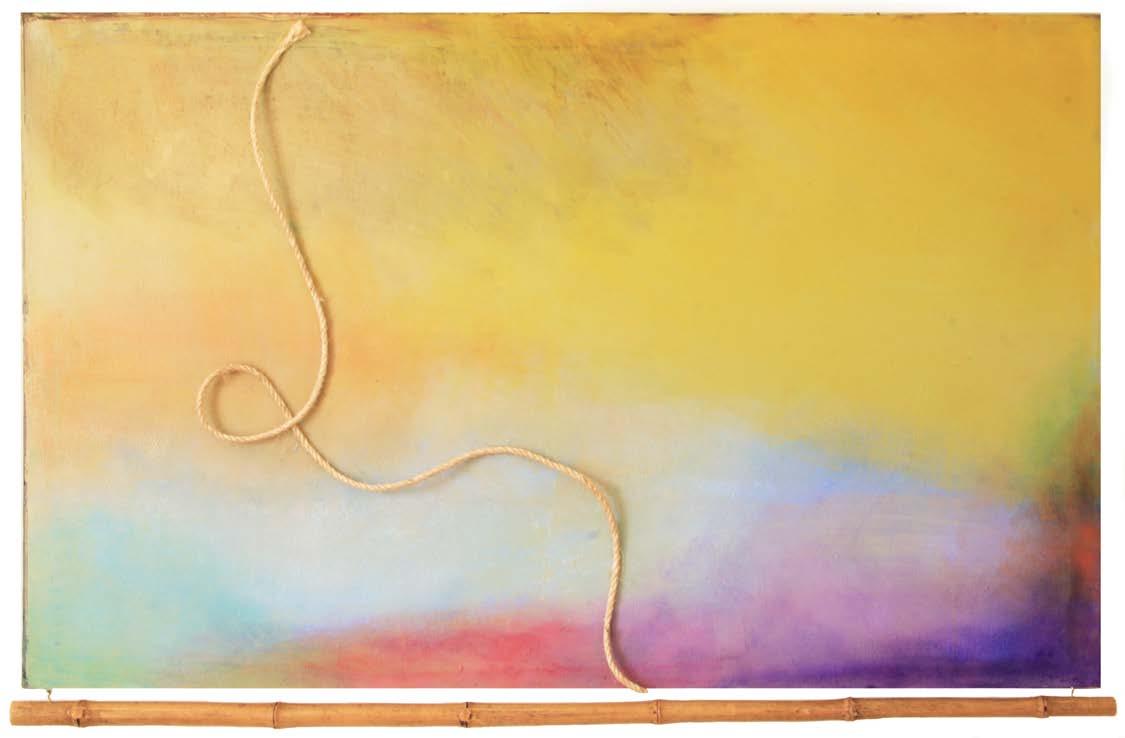
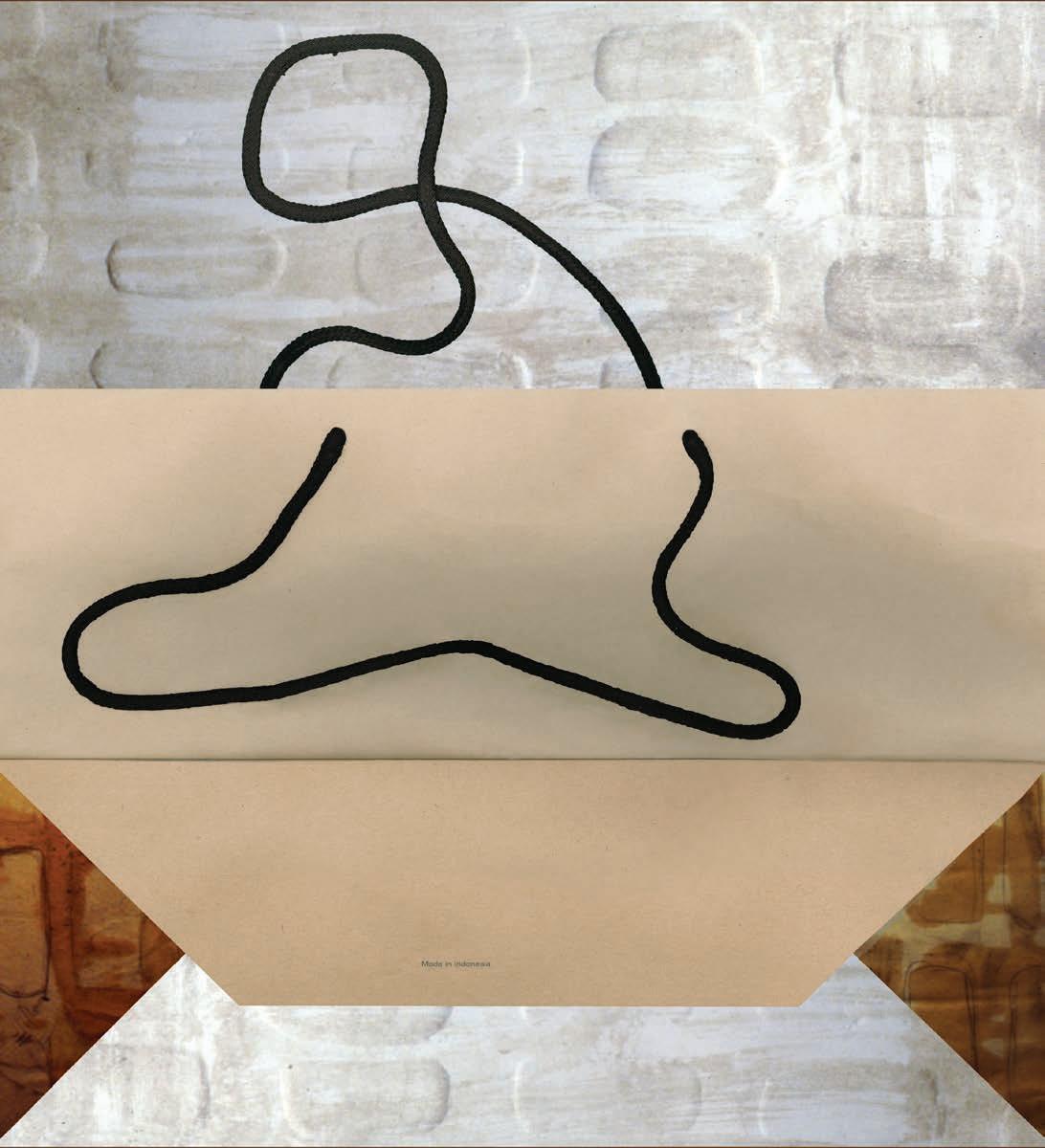
Ropes entered Matuschka’s toolkit rather differently, though, no thought-through art world move here. She had completed a collage which incorporated a shopping bag, only to find that she had accidentally included the rope when photocopying the piece at Staples. Bartlett may have really tut-tutted about this accident, maybe not, but Matuschka noted that the rope had given the piece a dancing energy. She has been using ropes ever since, as can be seen in an excellent earlier book entirely devoted to these collages, Bagit! No, that’s not a typo, and YELLOW contains three strong images from the book, which lend it a special resonance like trumpet notes during a piano concerto.
Two other strong images, these on the final pages of the YELLOW segment, bring us to a distinctively different area: Humor. As a child Matuschka had loved such amusement parks as Coney Island and Asbury Park; copies of Mad magazine and Hot Rod comics were heaped beneath her bed, and she was drawing spiky and knowing cartoons long before she was making art, so she has no problem in making abstractions that are charged with humor. It’s an observationals, witty humor, though, depending on line, rather than being broadly jokey, and it tends to involve a deft use of pareidolia, this being our human characteristic of discerning human faces or animal shapes in clouds, ink stains, and any other such cluster of details.
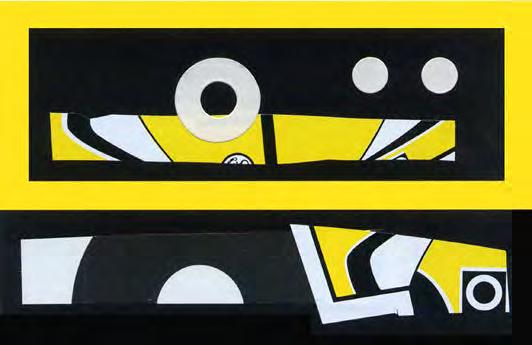
One of the images in YELLOW, for instance, is a multi-level wedge of colors that unavoidably suggests a scrumptious slice of cake, that, or perhaps a flag. The other half of that painting— brings to mind a frowny face, the profile being a rope, and this piece has a back story. “I put a rope
Crew, 2006
Collage 24 x 28 inches
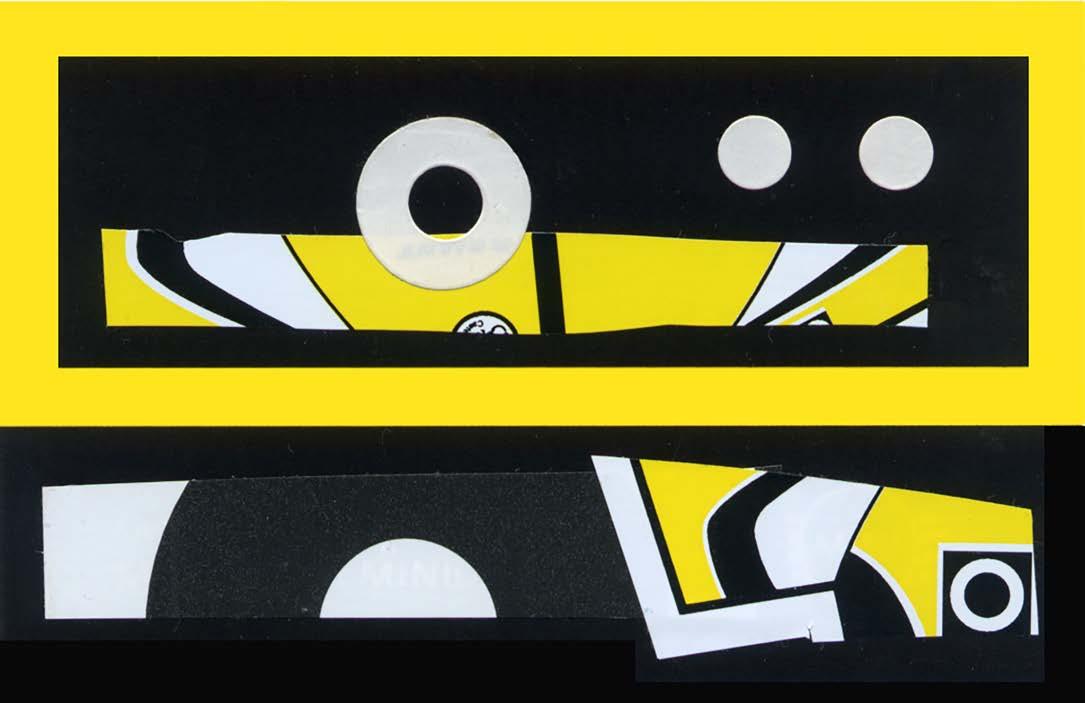
Yellow Business Card, 2006 Paper collage on business card 5½ x 3¼ inches
down on the canvas,” she says. “I thought I could get away with just having the rope on canvas and not include any paint. But it didn’t quite work out. So I filled in the spaces, much like ‘coloring between the lines’.”
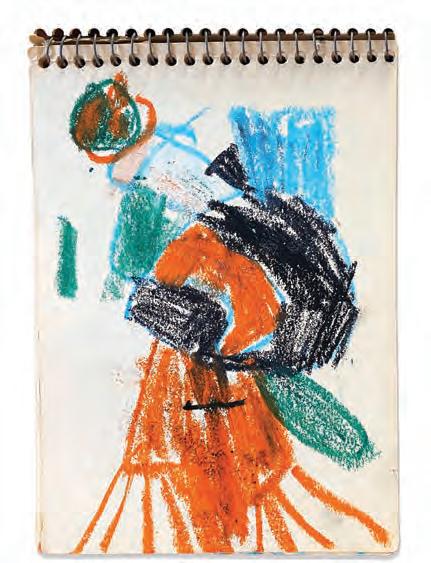
The color segments which follow YELLOW contain work made with humor and Bartlett-period gridworks but they also introduce fresh material. ORANGE, for instance, contains much work in which Matuschka has made use of one of her favorite procedures, stenciling, and some pieces that are based on the doodles made in her new sketchbook by her three-year-old sister Karen surreptitiously when Matuschka herself was thirteen, an incident also described in the interview on page 182. The doodle-based works include Karen’s Bug, so-named for its insectile form, and Karen’s Circle, and these pieces suggest feeling rather that the wit of some of the other abstractions, although Karen’s Bug does get some pizazz from its title.
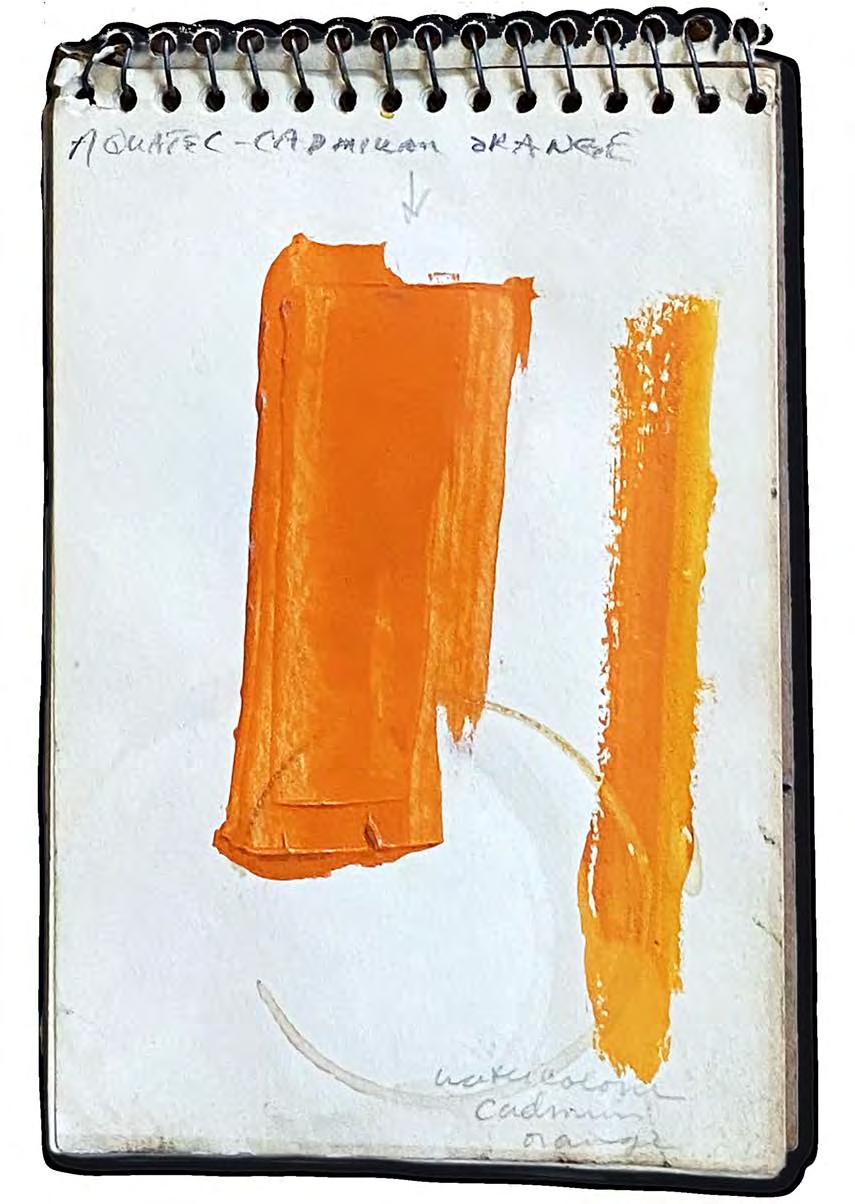
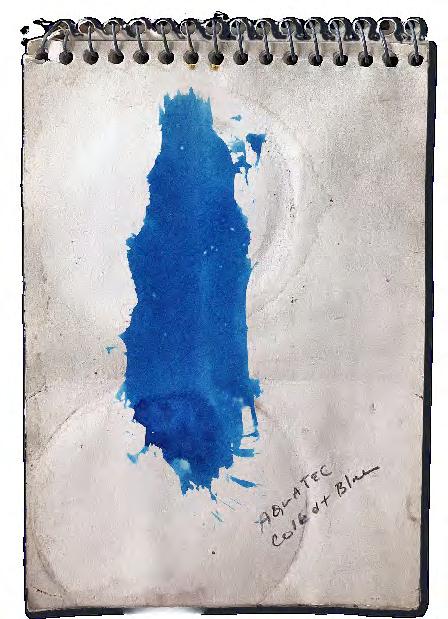
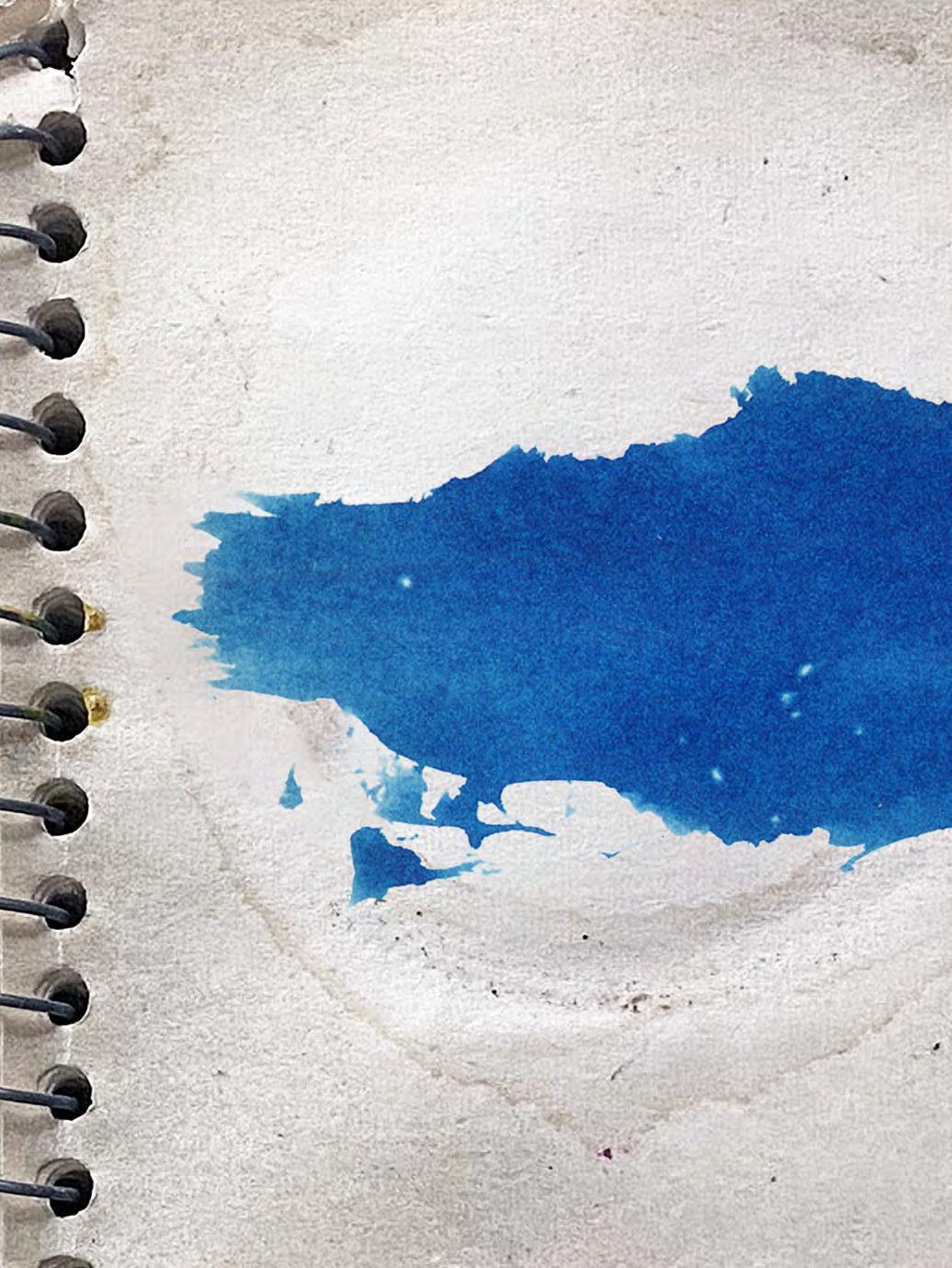
Also in ORANGE is the image of a page from the spiral notebook that Matuschka always carried, which carries a brush mark and also the stain of a coffee cup ring, both of which Matuschka replicated in a piece based on the page. Indeed, she reproduced the coffee ring twice. I sense that Bartlett’s tuttutting might have gone into overdrive here!
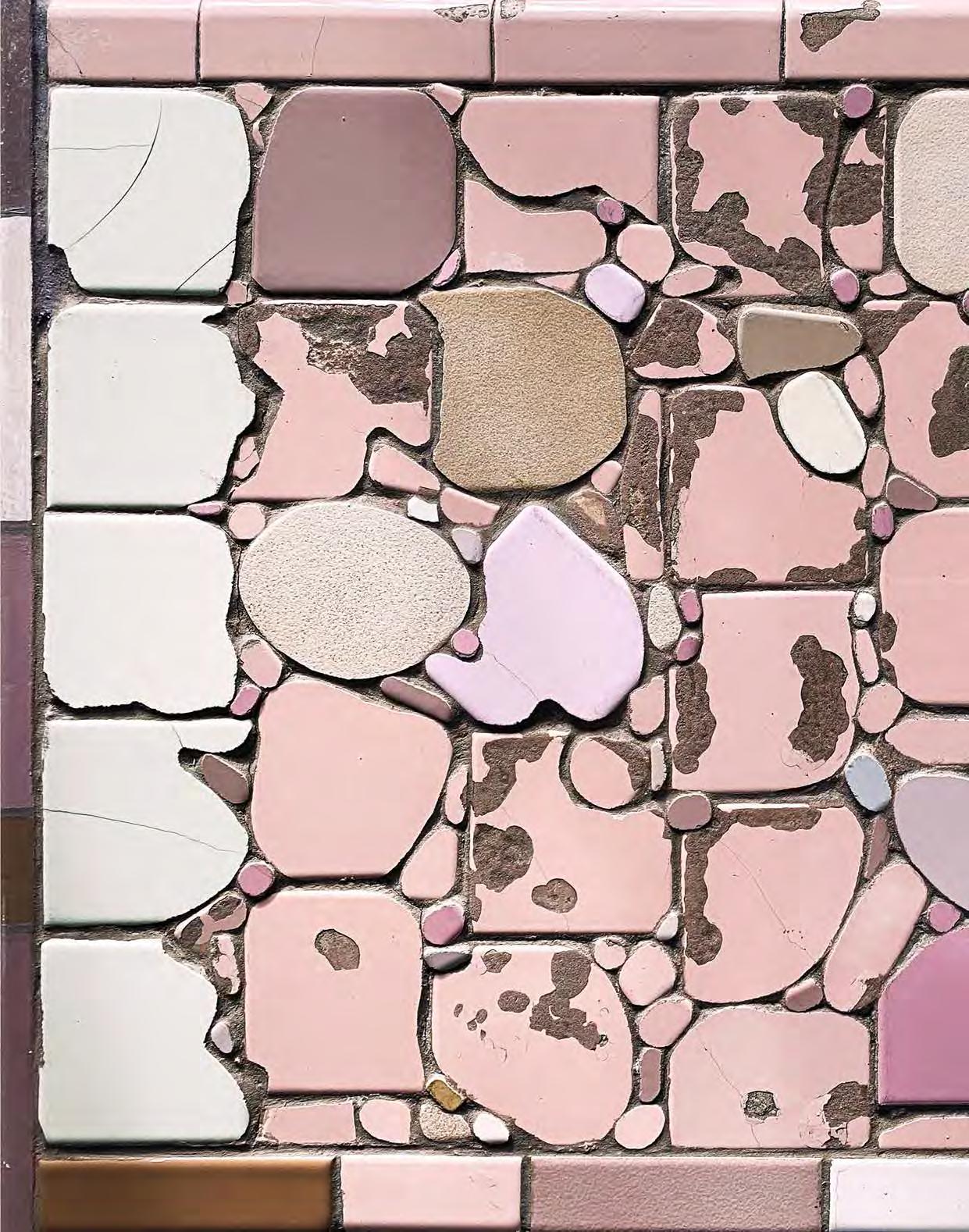
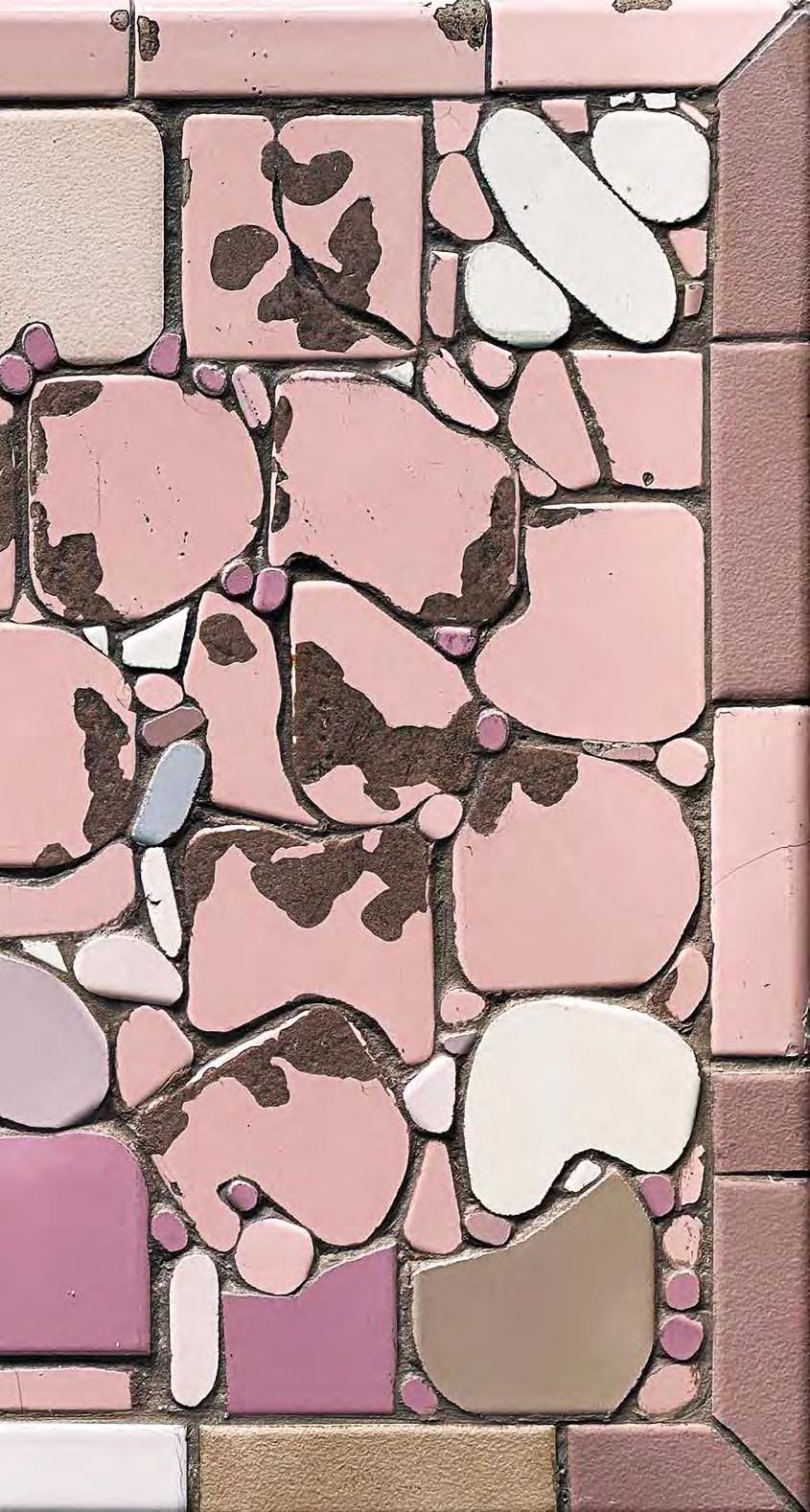
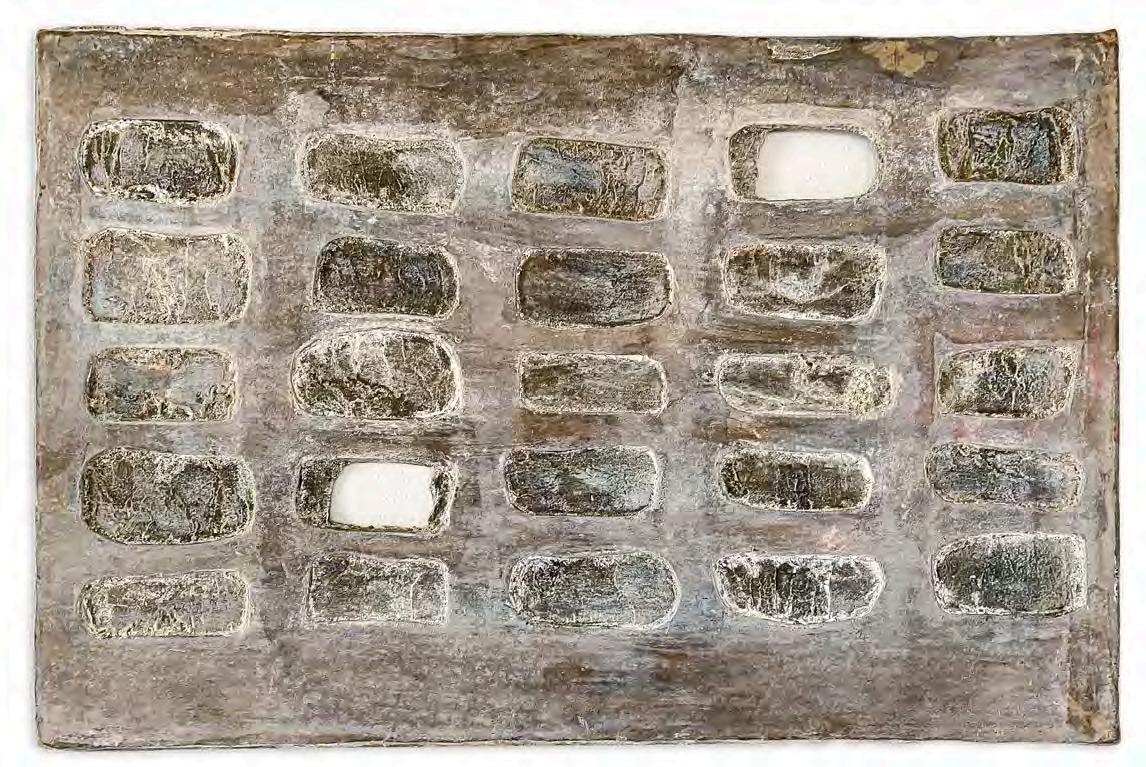
A piece in the PINK segment has been developed from a piece of furniture that Matuschka fabricated for her long-time studio apartment on Manhattan’s Upper East Side. “It didn’t make a good kitchen counter top,” she explained. It’s a striking, unusual piece, kind of a bas-relief, and I asked why she hadn’t made further use of the method. “I don’t like to repeat myself,” she said. “I get bored. Bored!”
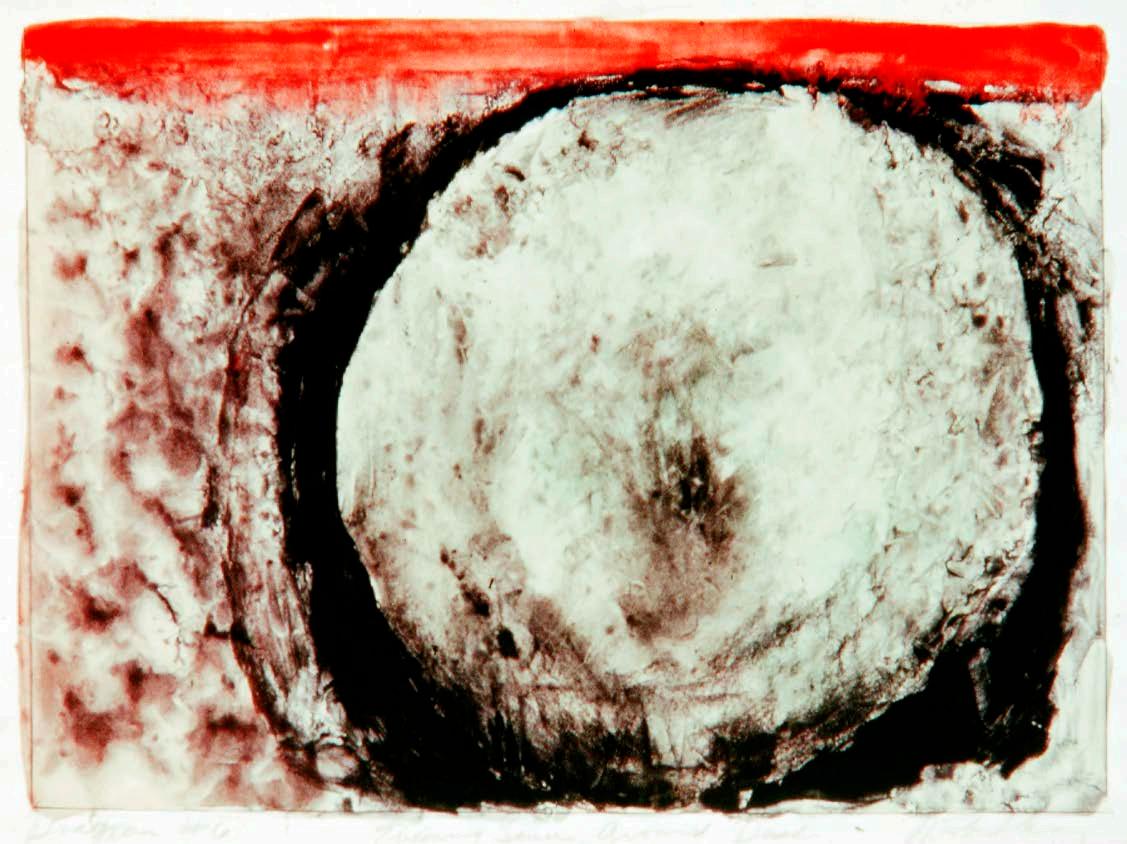
A graphic piece in the RED segment is centered on a dark circular presence. This is the work product of another Jennifer Bartlett project
at SVA which would have a lasting effect on Matuschka.
Bartlett’s painting classes were all-day affairs, six hours long, and Matuschka states that the same class that motivated her to do the tile series was also the one in which students were instructed to choose a childhood memory or recover an image and use that in a series of paintings and drawings
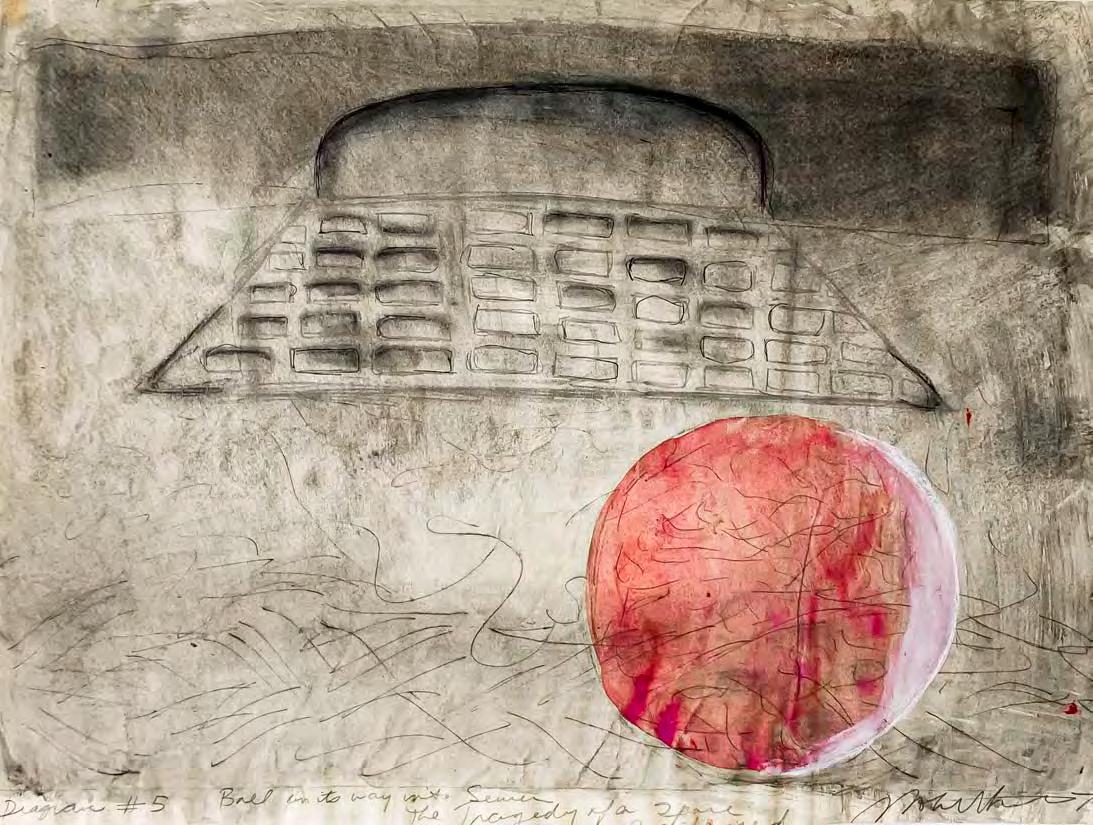
Matuschka chose her childhood playground and a memory of a sewer located at the end of the street where she had played stickball and from the bowels of which her playmates had frequently needed to retrieve the ball after it had been hit. The piece she made endows the round tunnel or exit-way where the ball passes through with the severity of Minimalism, and this was one of a number of her pieces acquired by the dean of SVA.
That sewer/tunnel opening, along with the tiles and the ropes, has become a durable presence in Matuschka’s world, indeed an icon, but it would evolve, not necessarily being a round shape, indeed more often a gridded oblong, like her tiled pieces. And again, like the tile pieces, the sewer image has a double punch, the retinal impact of a geometric abstraction, artwork plus being charged with the presence of a sewer covering in the actual world.
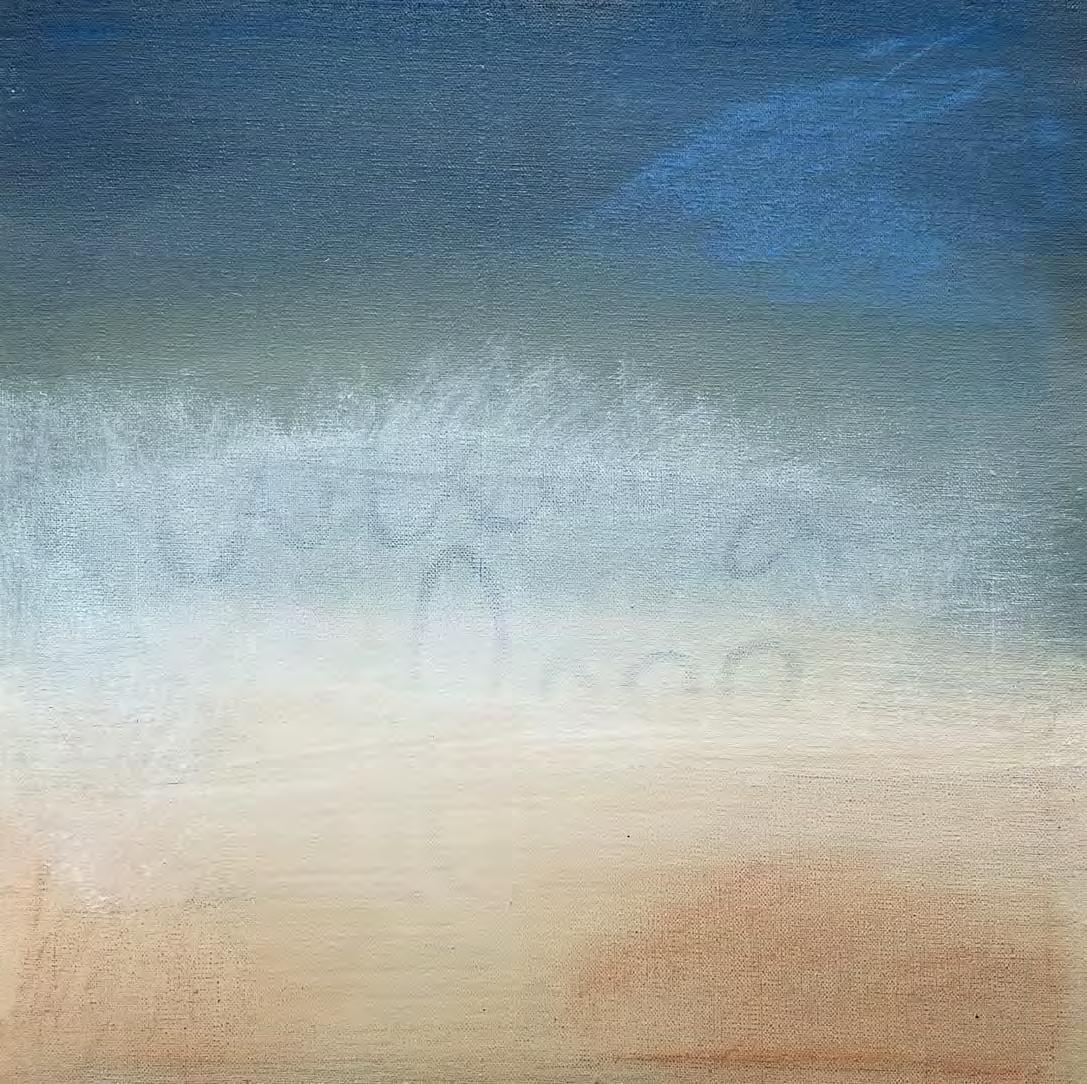
BLUE lifts the curtain onto another pictorial dimension. Indeed, the coloration takes on a stainedglass luminous quality when we reach the BLUE segment. “That happened to me when I was in Florida,” Matuschka says. “I’m living on the water and I have this big blue sky in front of me. People tend to paint with brighter colors down there.”
Artist’s portrait of her sister Karen, 1977, 11 x 14 inches
Karen’s sketchbook Bug, 1968 4 x 6 inches
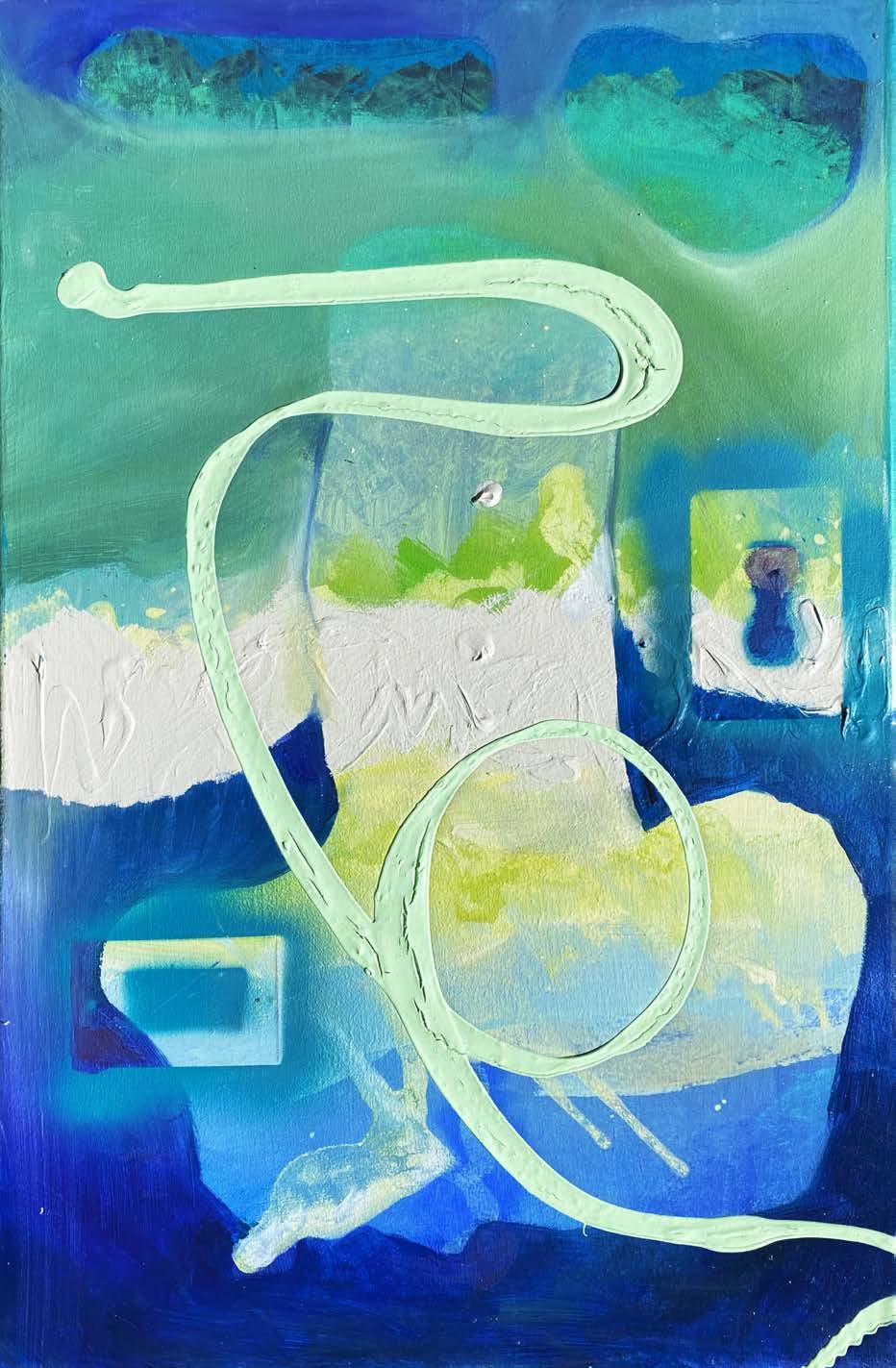
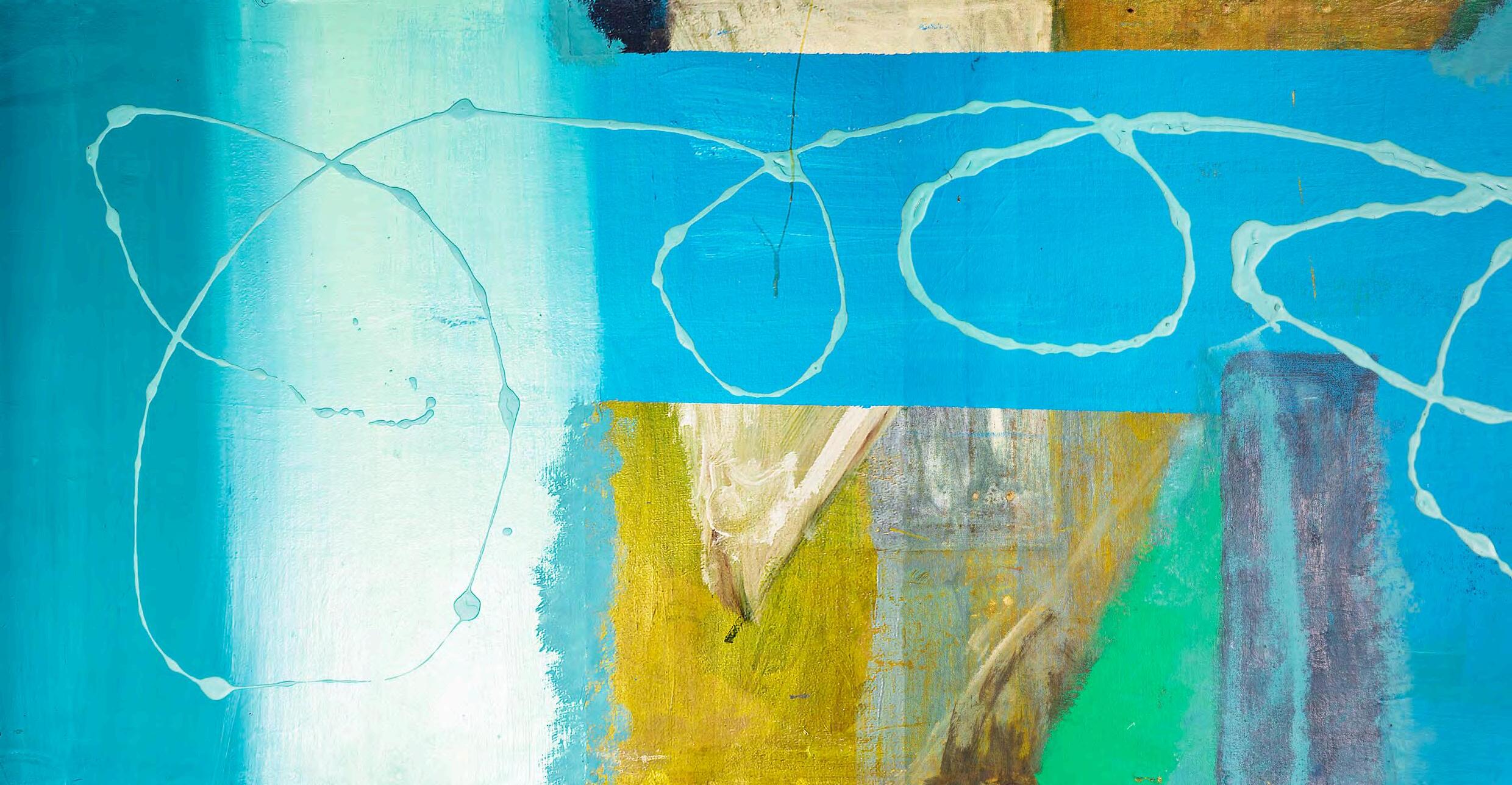
A taut double loop of slender paint whiplashes diagonally across the canvas on page 110. Was she deliberately replicating the rope effect with paint for the energy?
“Not consciously. But I guess I did,” Matuschka said.
How in the world had she done that with a paintbrush?
“It’s not a paintbrush stroke,” she said. “It’s carefully poured paint.”
There are complex images on page 114 and page 115 unlike anything else in The Noisy Paintbrush. What’s going on with those, I asked.
“I call these My Brain at Night Number One and Number Two,” Matuschka said. “These are paintings that it took quite a long time to complete. I started them in 2006. I thought they were finished and then I didn’t like them.” She redid them naturally. Leonardo da Vinci was only the first artist known to have said, “Art is never finished, only abandoned.”
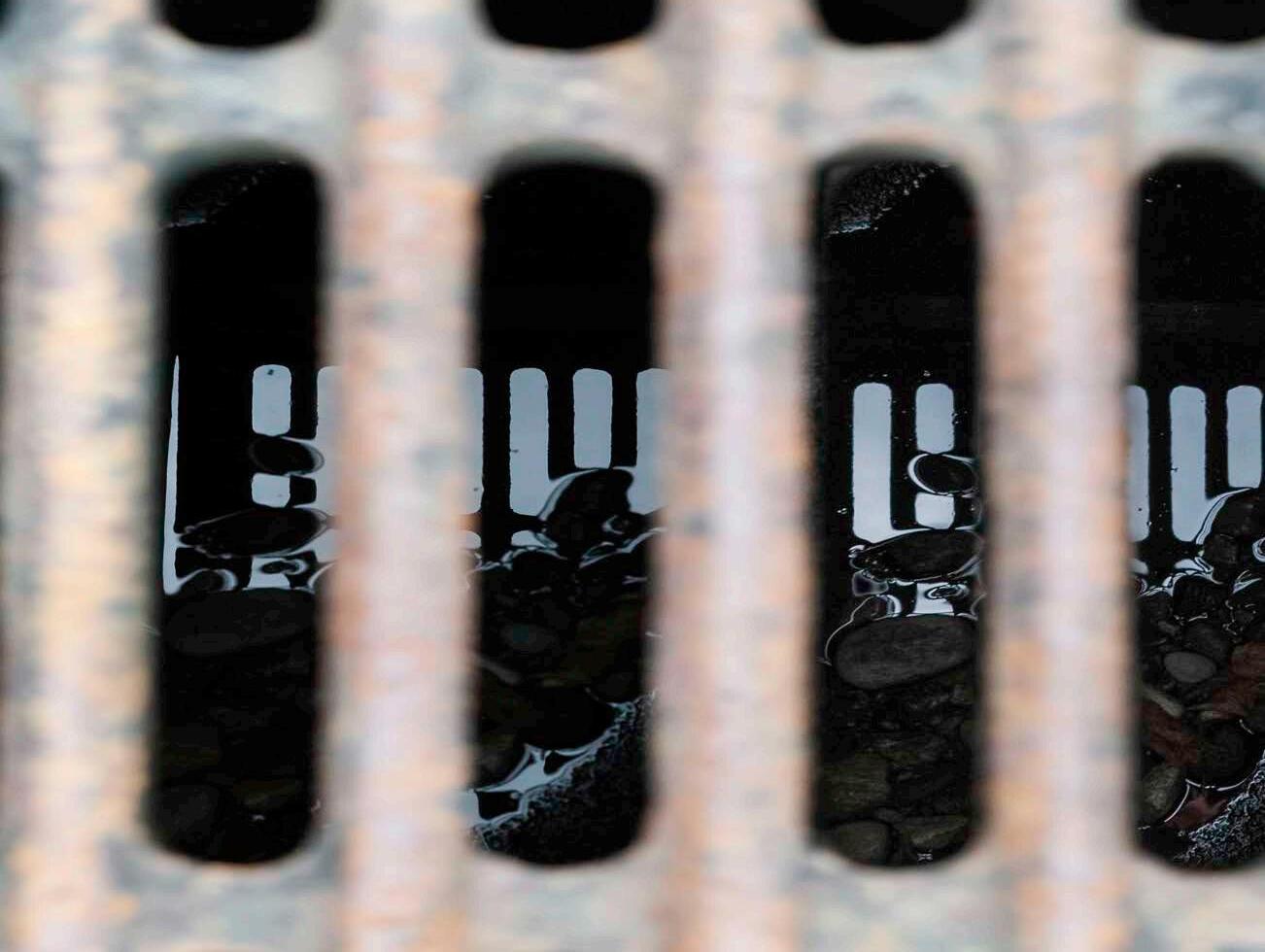
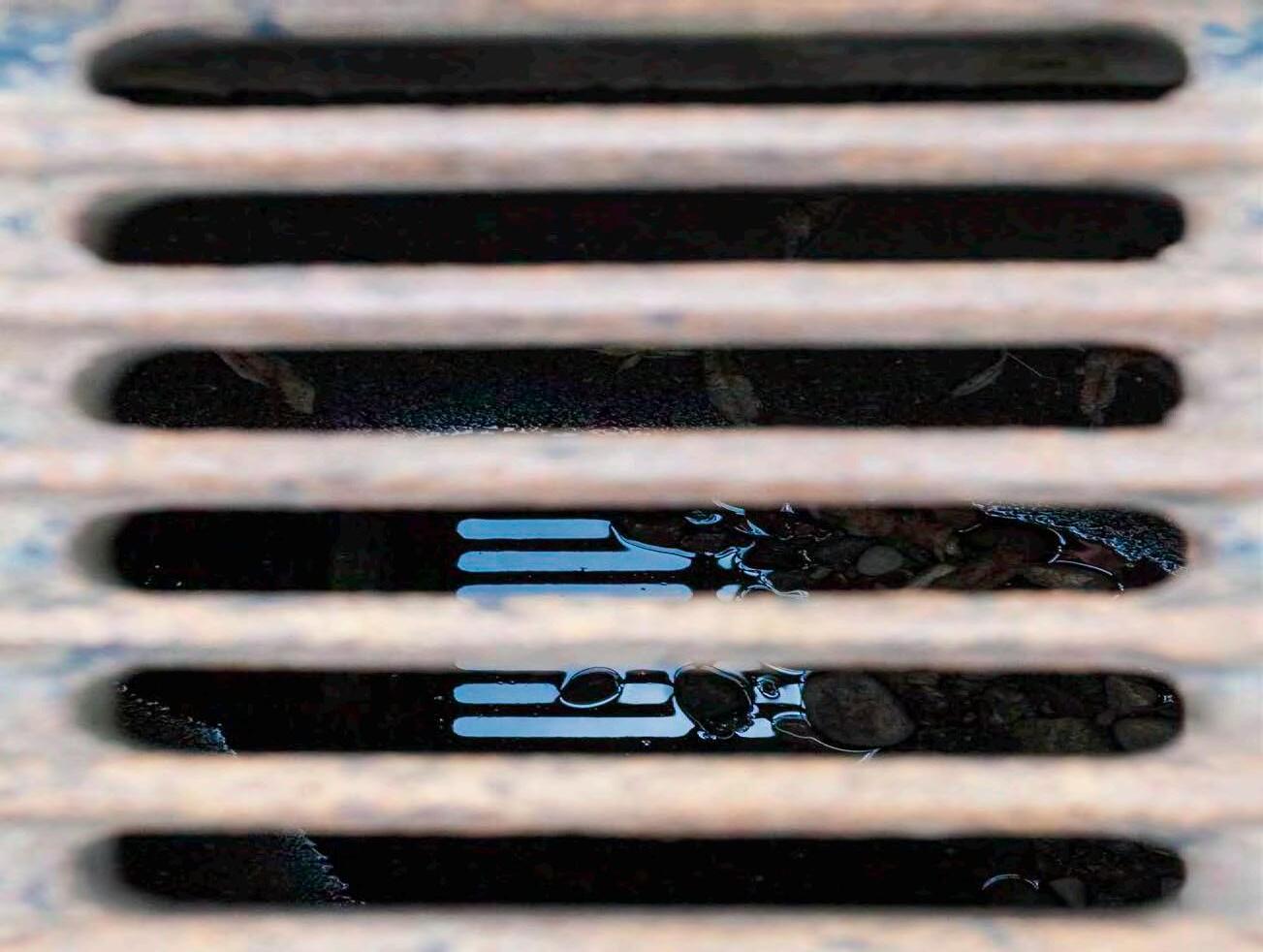
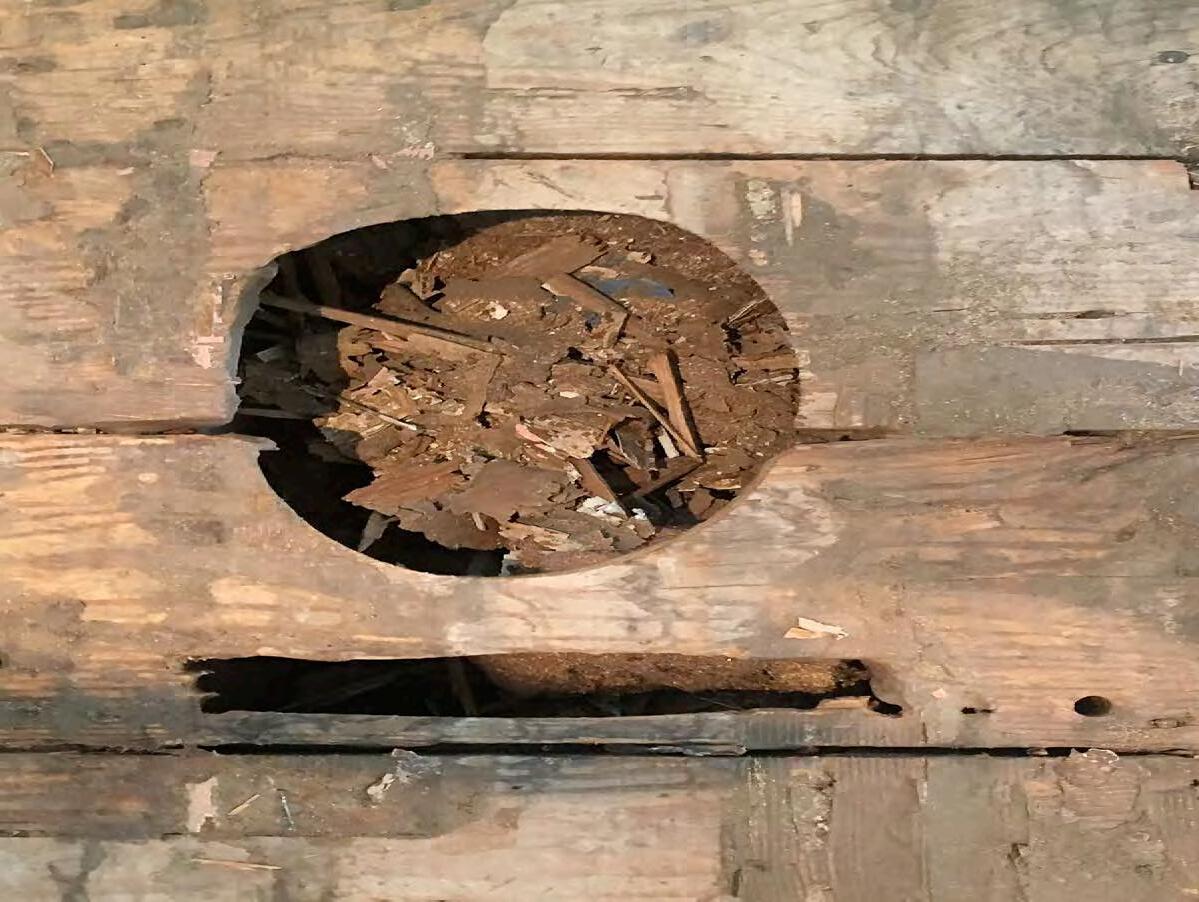
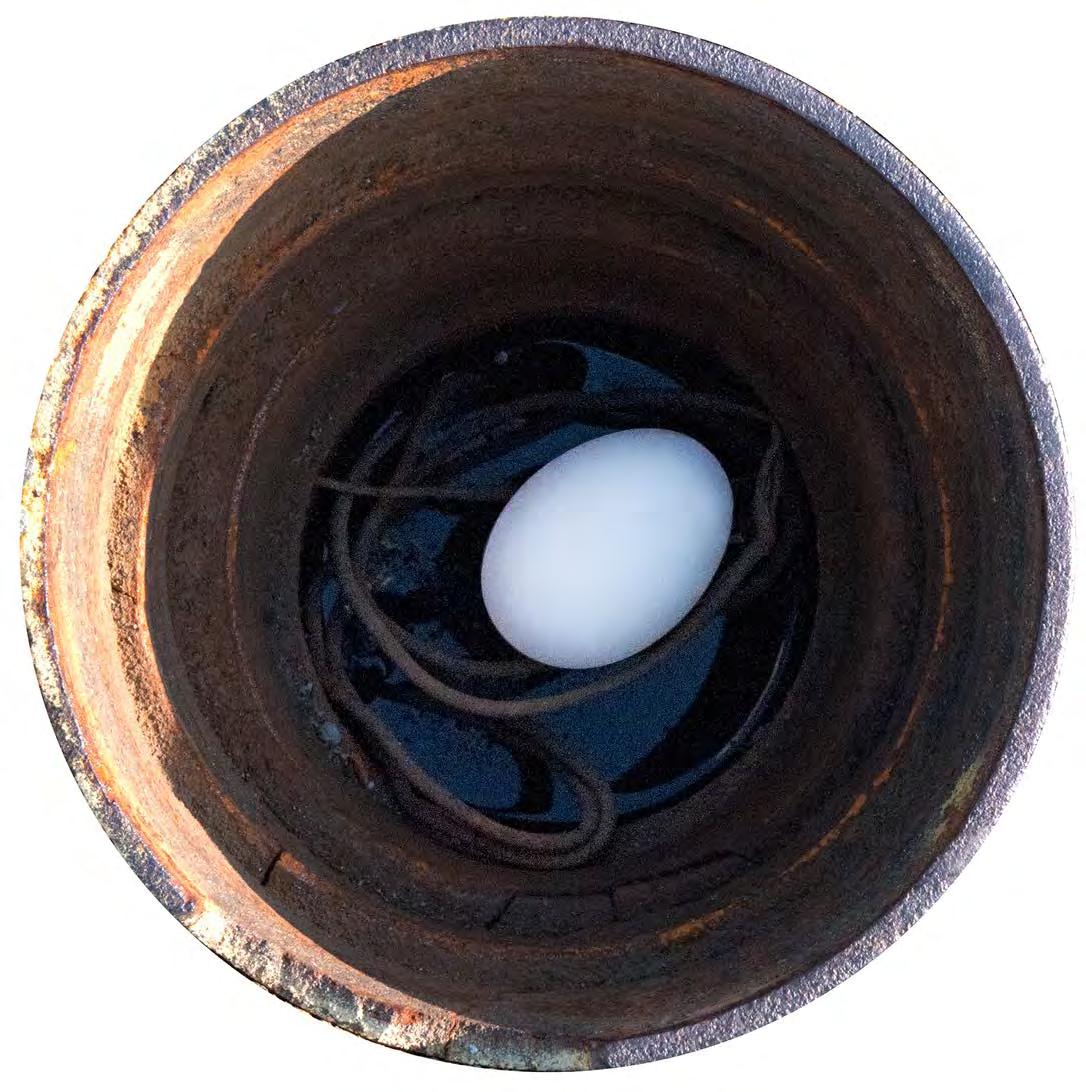
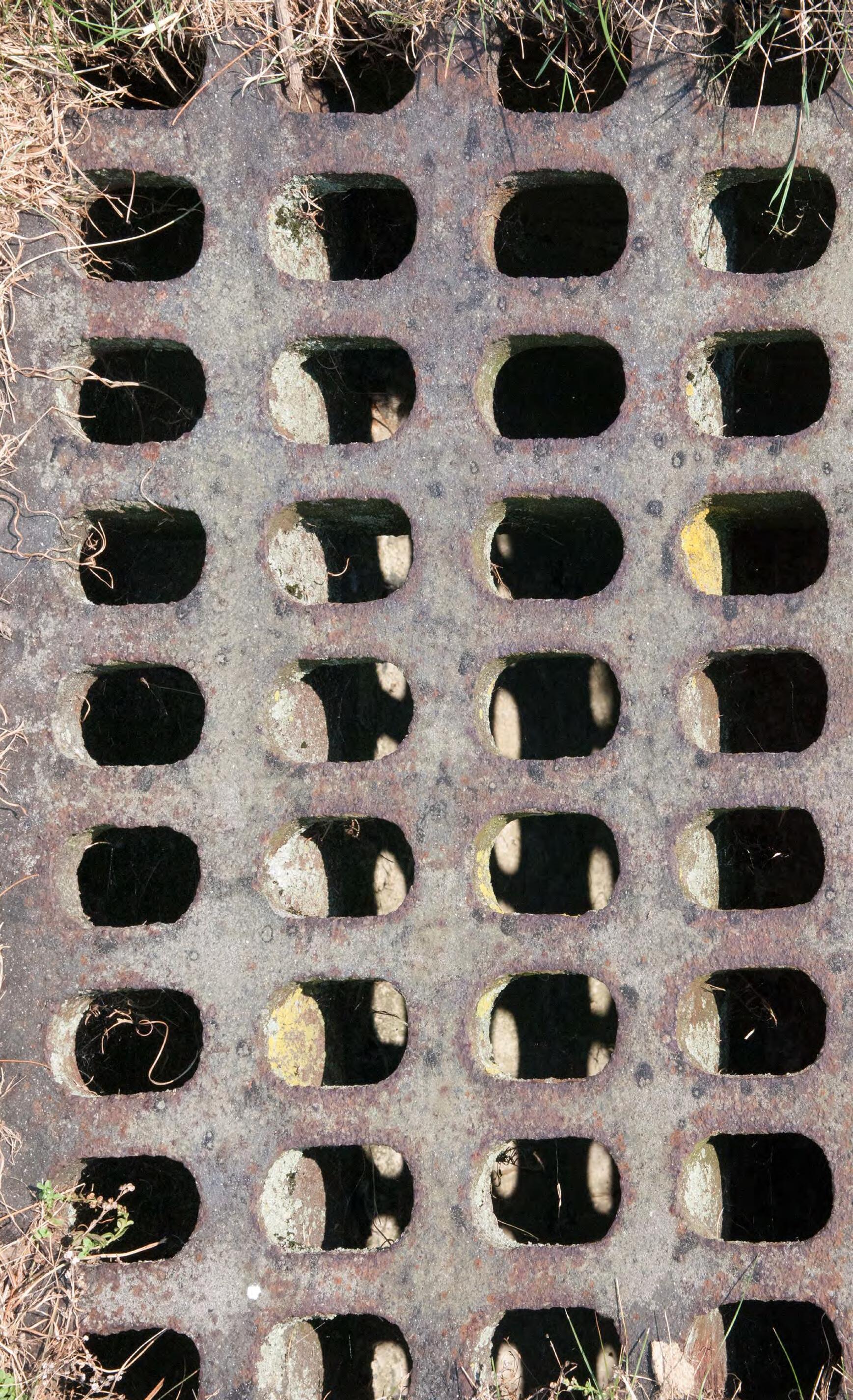
So to BROWN. And this has an add-on. Matuschka is an excellent photographer, who has both shown and published work, such as The Beauty Out Of Damage series, unsparing documentation of the surgery she has undergone, but she had used no photographs in The Noisy Paintbrush. Until BROWN The first two photos being of sewer gratings, one vertical, one horizontal, then a few others, the subject of which is their puzzling shapes, one of which she took in her apartment. “When they took my floor up this hole was here,” she says. “And I have no idea what was there. Was it a toilet at some point?”
Another photographic image in BROWN— is of course, another sewer.
“This hole was in the street. Normally there would be a top on it. But the manhole cover was off, missing. Which was actually very dangerous if you’re riding a bicycle. People have accidents on sewers all the time.”
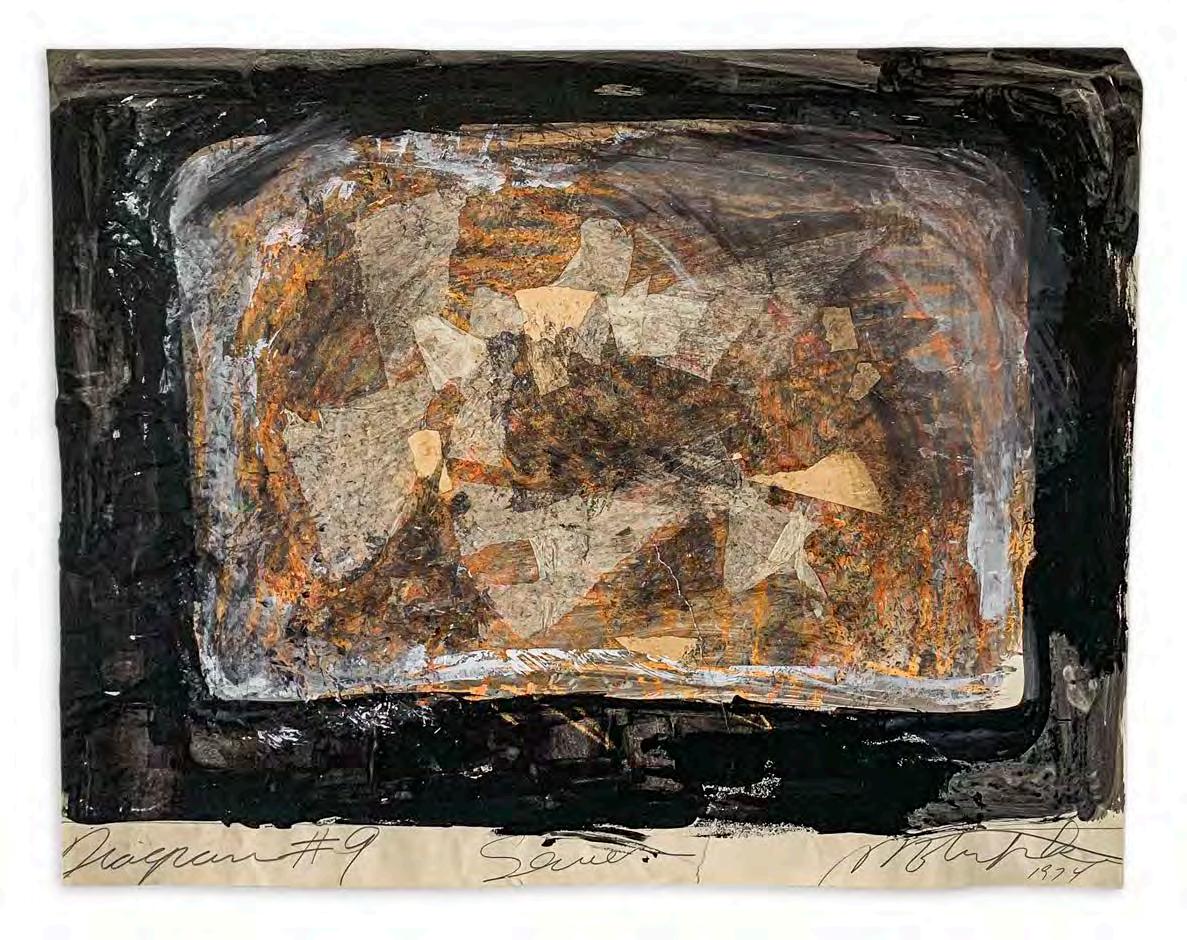
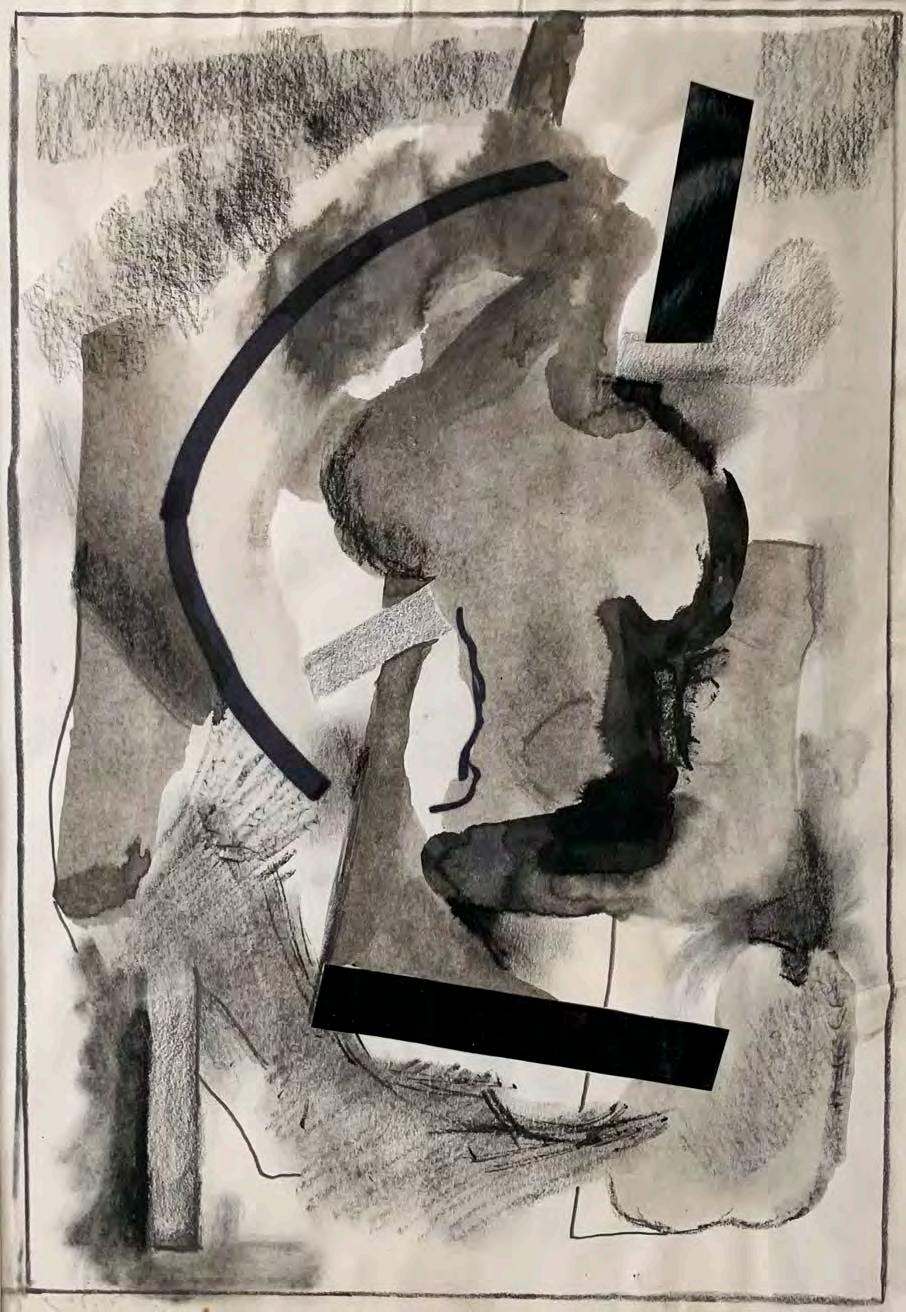
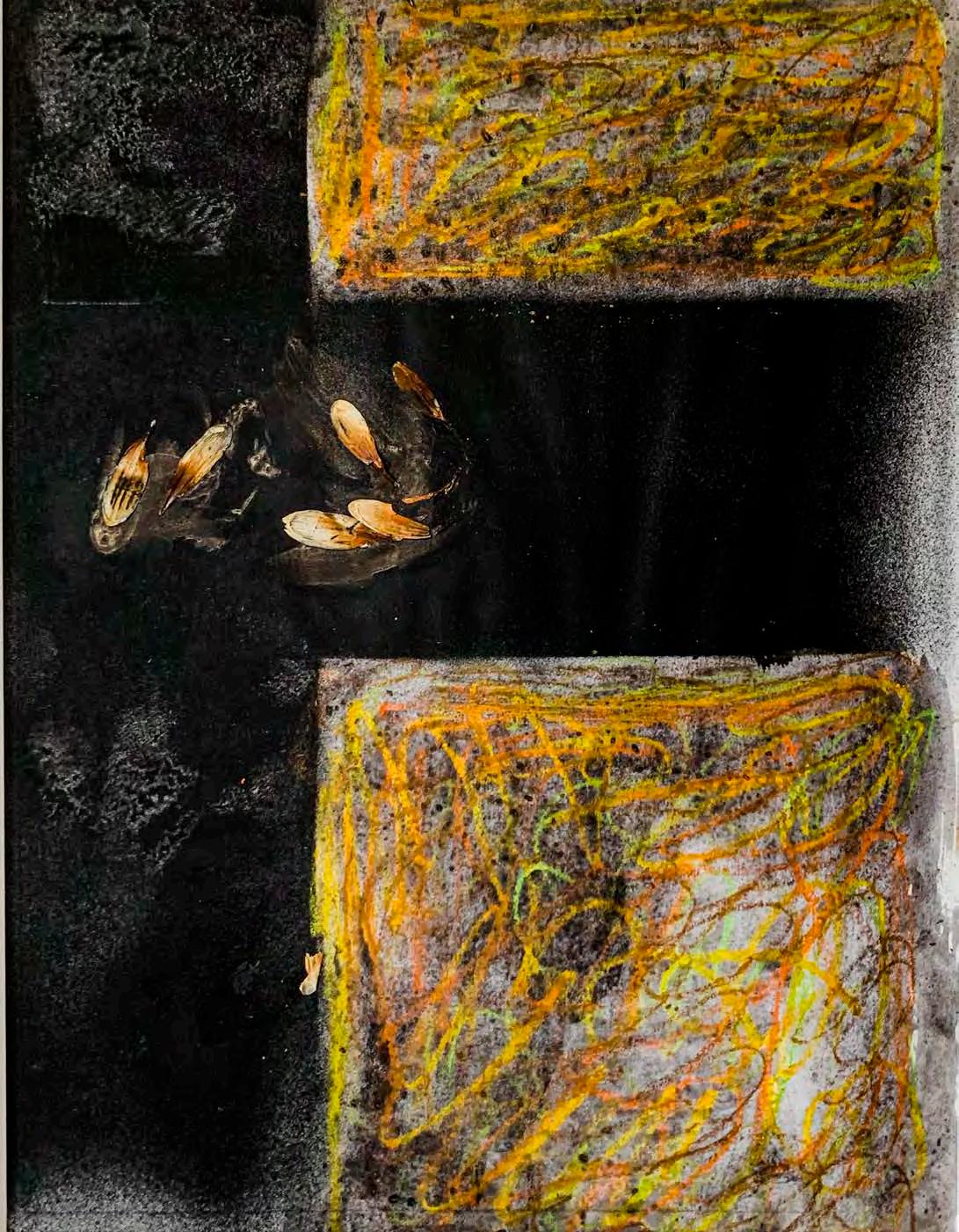
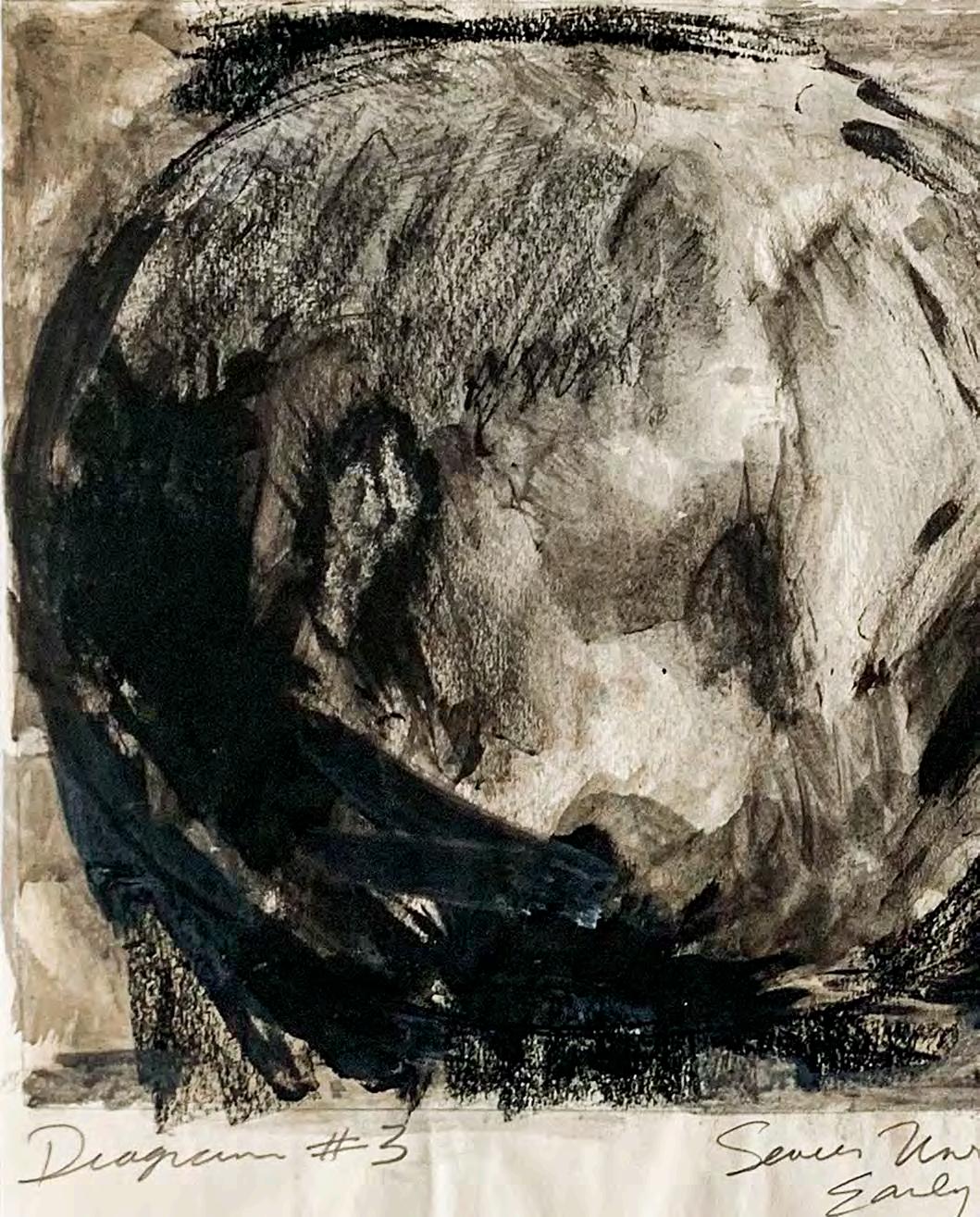
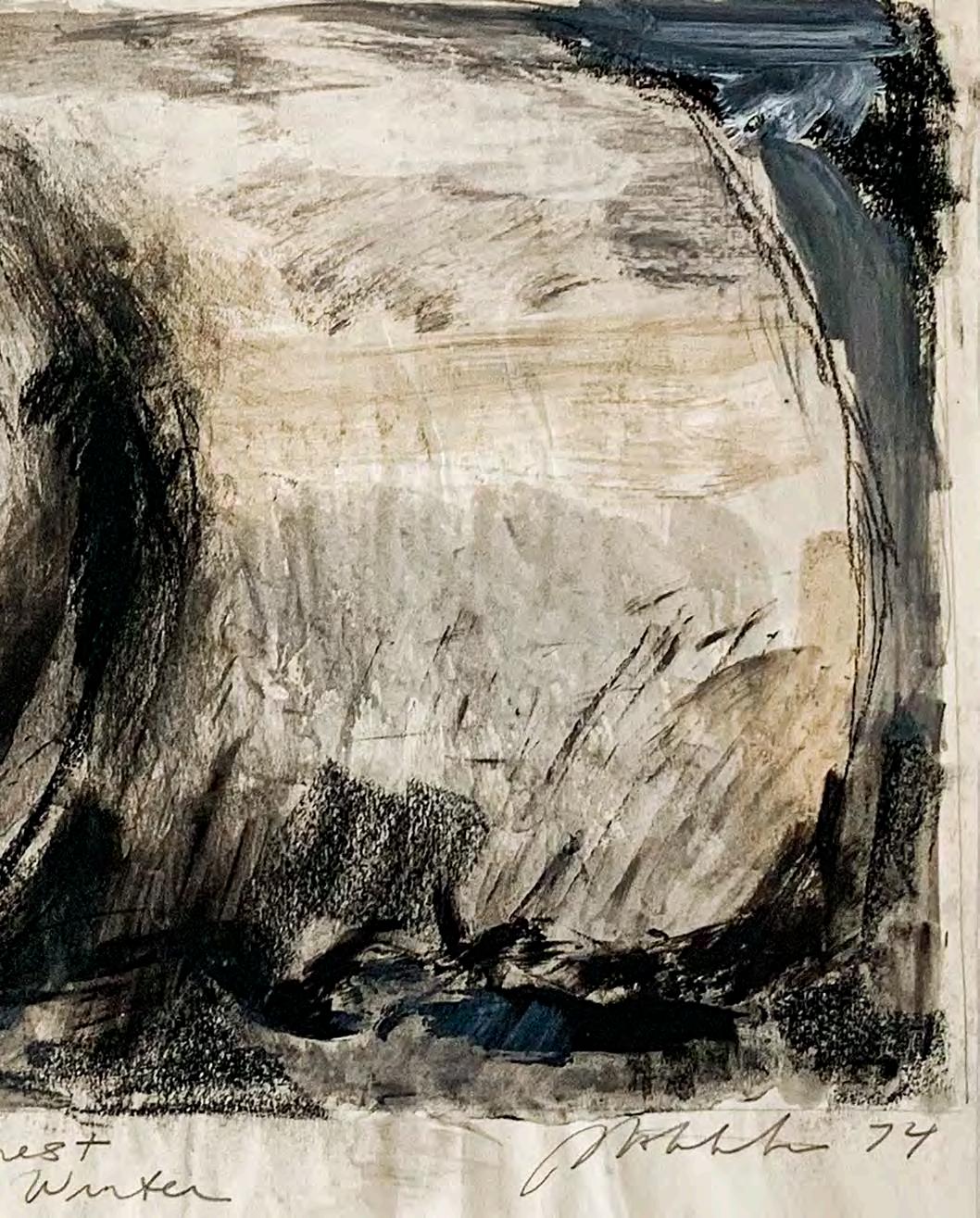
BLACK, the final segment in The Noisy Paintbrush, concludes with a sewer piece, this one a combination of drawing and painting, a raw cylinder. It is called Sewer Unrest and it is one of the most powerful images in the book, an impact which you first experience as pure abstraction. “I see my abstract paintings as a form of jazz,” Matuschka says. “There’s improvisation, you don’t really think about what you’re doing. When I write or make photographs, there are many choices and decisions that are consciously made. But with painting, dancing, or jazz, it’s all fluid.” Friedrich Nietzsche, that durably influential philosopher, is her perhaps unexpected predecessor in this. “We should consider every day lost on which we have not danced at least once,” he observed. Matuschka adds: “Can you worry when you’re dancing? Or think about anything negative while you’re dancing? When I dance I just dance. When I paint I just paint.”
“There is no such thing as a good painting about nothing,” Mark Rothko once observed. True. For the obsessive Rothko, that subject would be dark.
“The sewer was very mysterious,” Matuschka says. “It’s in New Jersey, fifteen miles west of NYC. There’s a hill, a trickling creek, a romantic railroad track, and then the Hackensack River. Leaves and twigs would drain from the street, enter the sewer, then travel through a tunnel and funnel out into a small stream into the woods below. At the end of this ductwork was a rather large cylinder—a mysterious dugout, a sort of hideout that we could crawl into. Kids like these dark, small spaces to escape to.”
Grey Abstract, 1974
Acrylic on canvas
32 x 32 inches
Detail of Sewer Leaves, 1974, from page 157
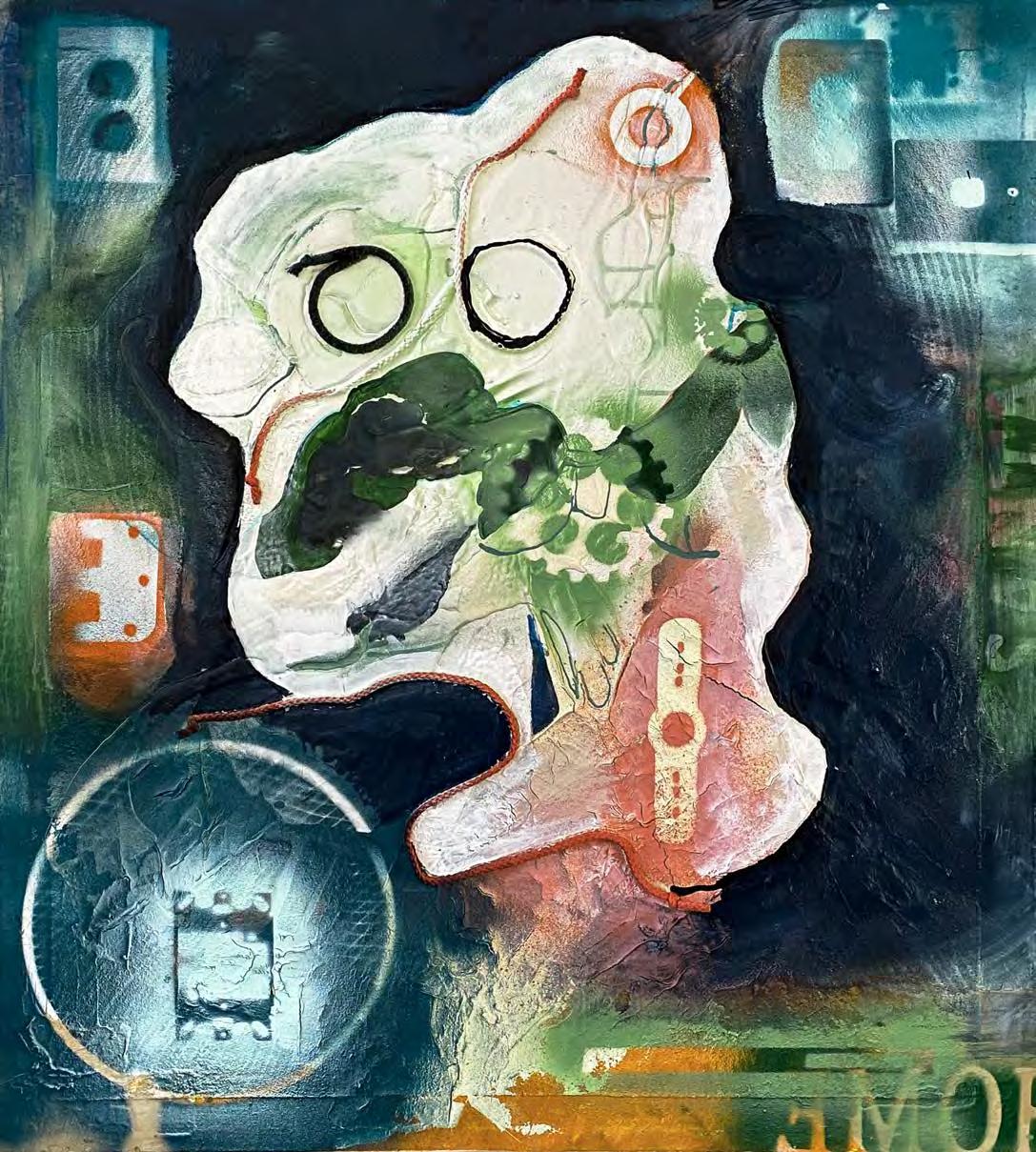
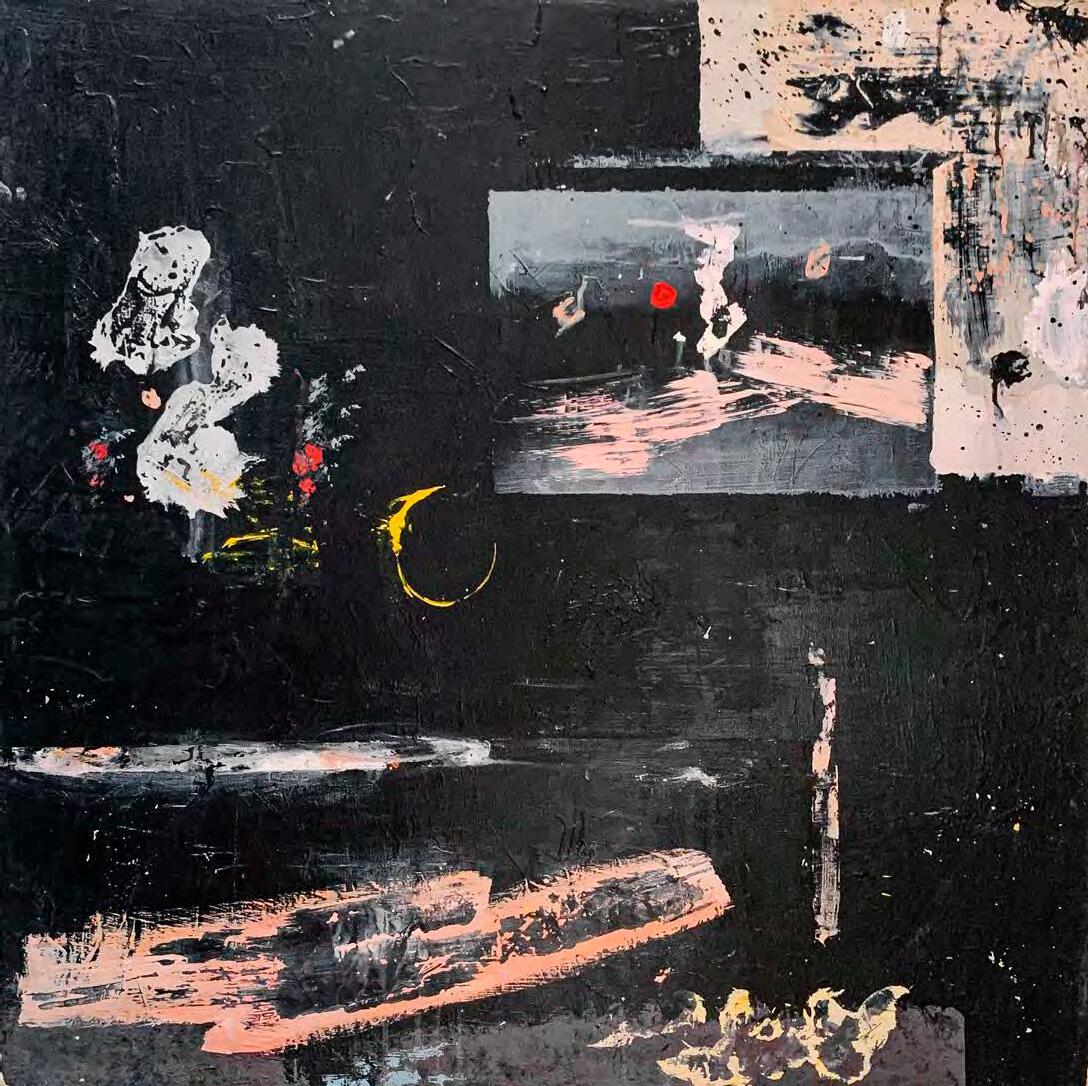
CO, 2022 Oil and acrylic on canvas 40 x 30 inches
Matuschka, the grown-up artist, has become mistress of that mystery. “Do I make specific decisions and choices—which color goes in, and which things come out?” she asks. “Yes! If I don’t like it, out it goes. I paint over it and put something else in its place until it works”.
A number of these abstractions, like those of the Russian Constructivists, channel visual elements of the real world. The Sewer Series, for instance, her single longest-running body of work, is powered by memories of a particular sewer, a protective space she would play in as a child. Without the series title, though, this isn’t a connection that a viewer would necessarily make. But in other artworks, the chunk of real is as in-your-face as the actual spoons implanted in Picasso’s three sculptured absinthe glasses. Such is the case with Pink Tile, a table of ceramic mosaic that has become a compelling bas-relief, and so it is also with the Bagit! series of shopping bags, which she has likewise morphed into striking art. An accident occurred during the making of one of the Bagit! items: The inclusion of a cord. And a tasty accident it was. She saw the cord had energized the painting, and cords have shimmied and whiplashed across her pictorial surfaces ever since. The stencil, too, a way to put an image on a
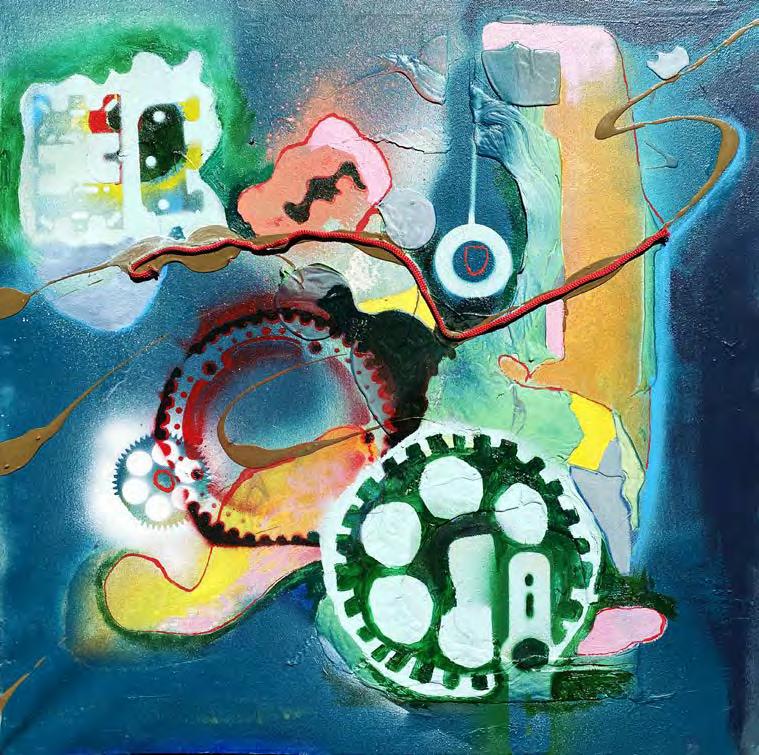
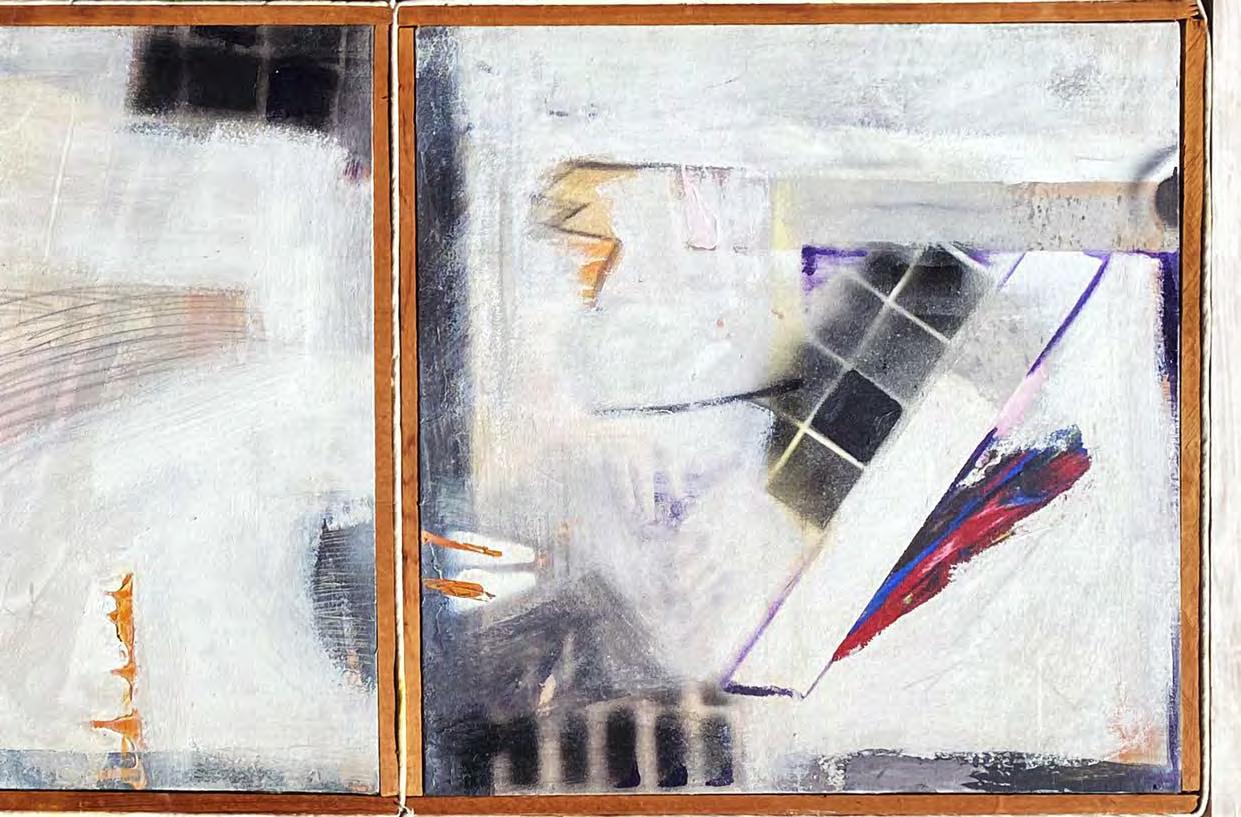
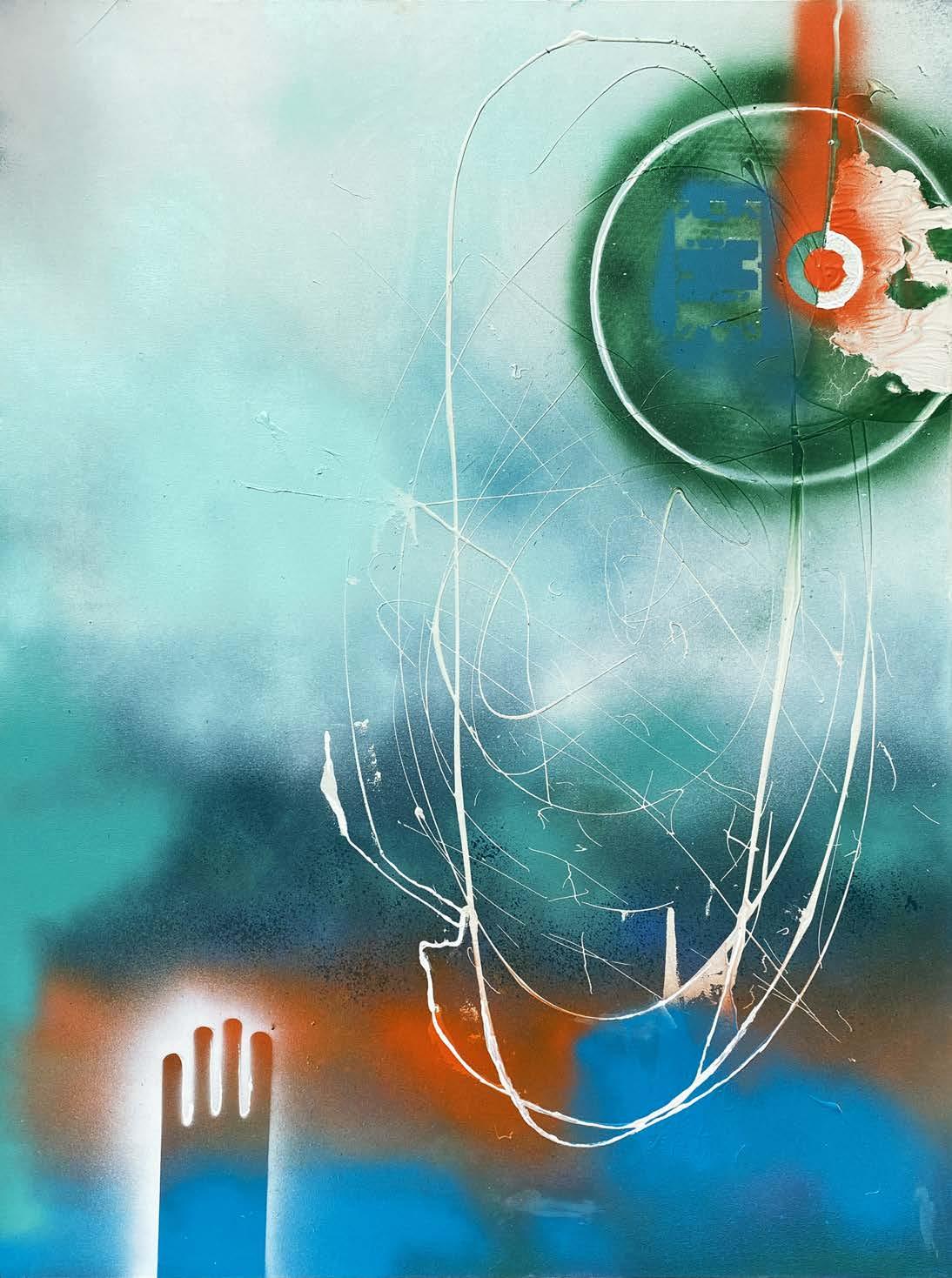
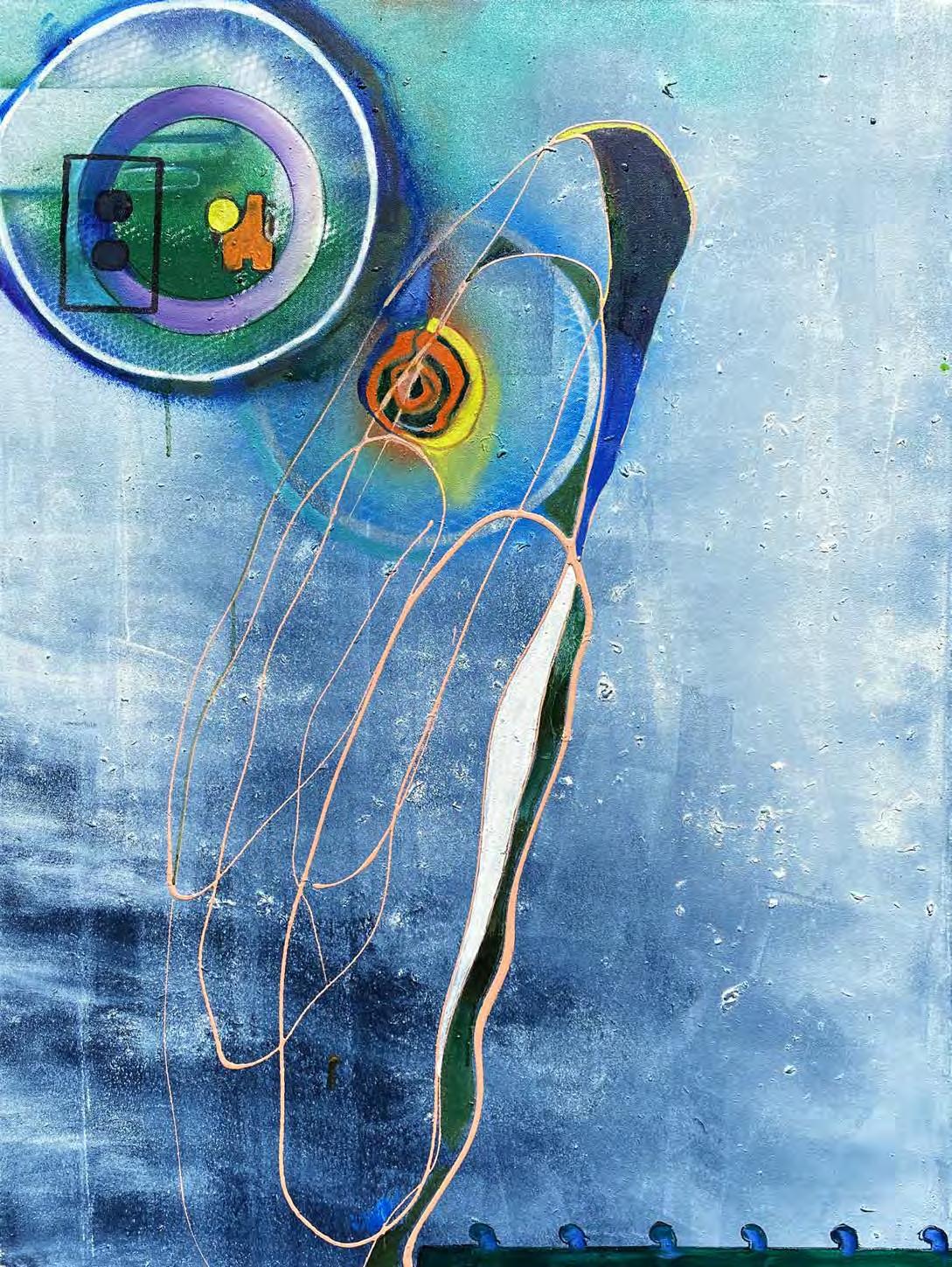
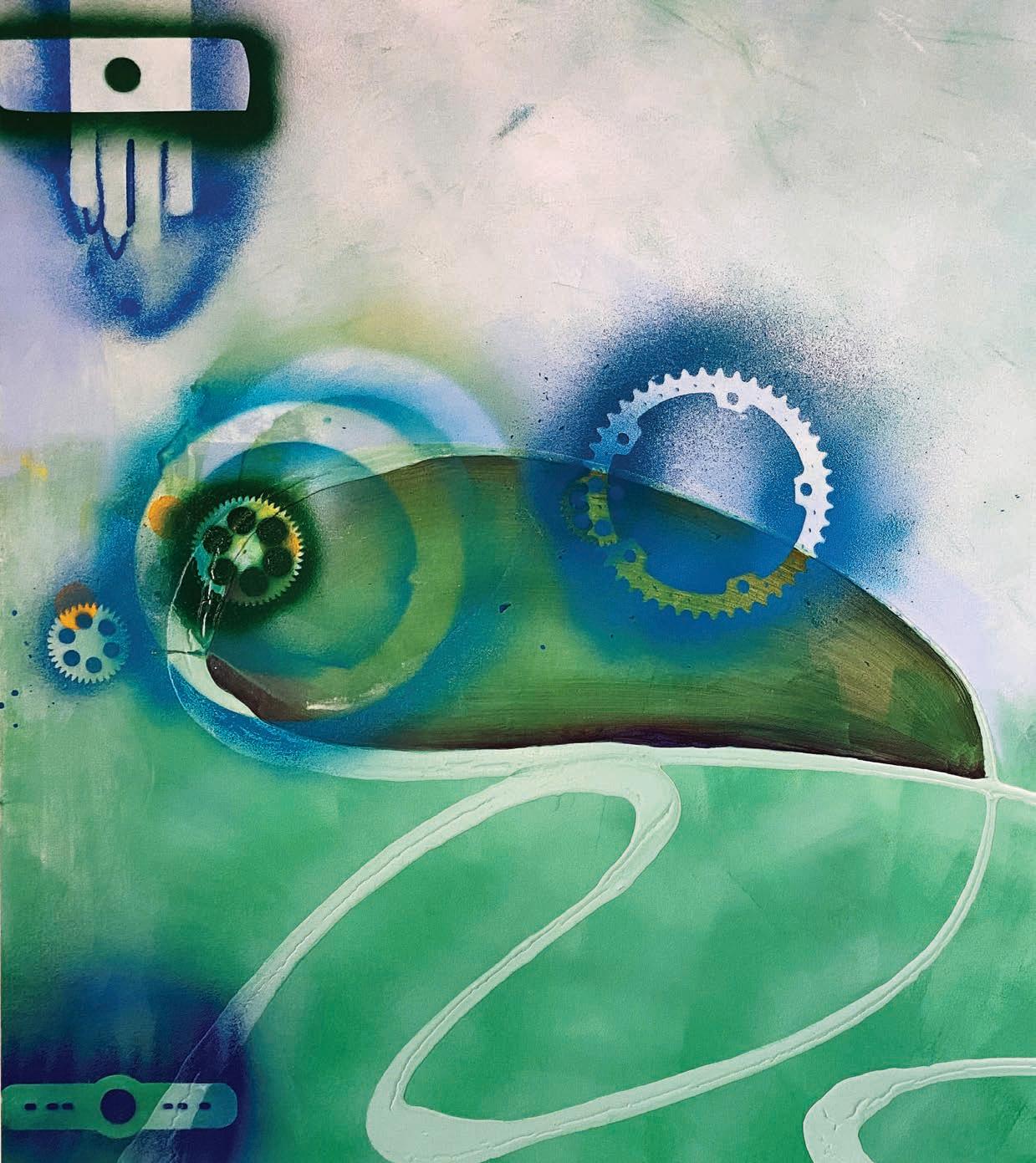
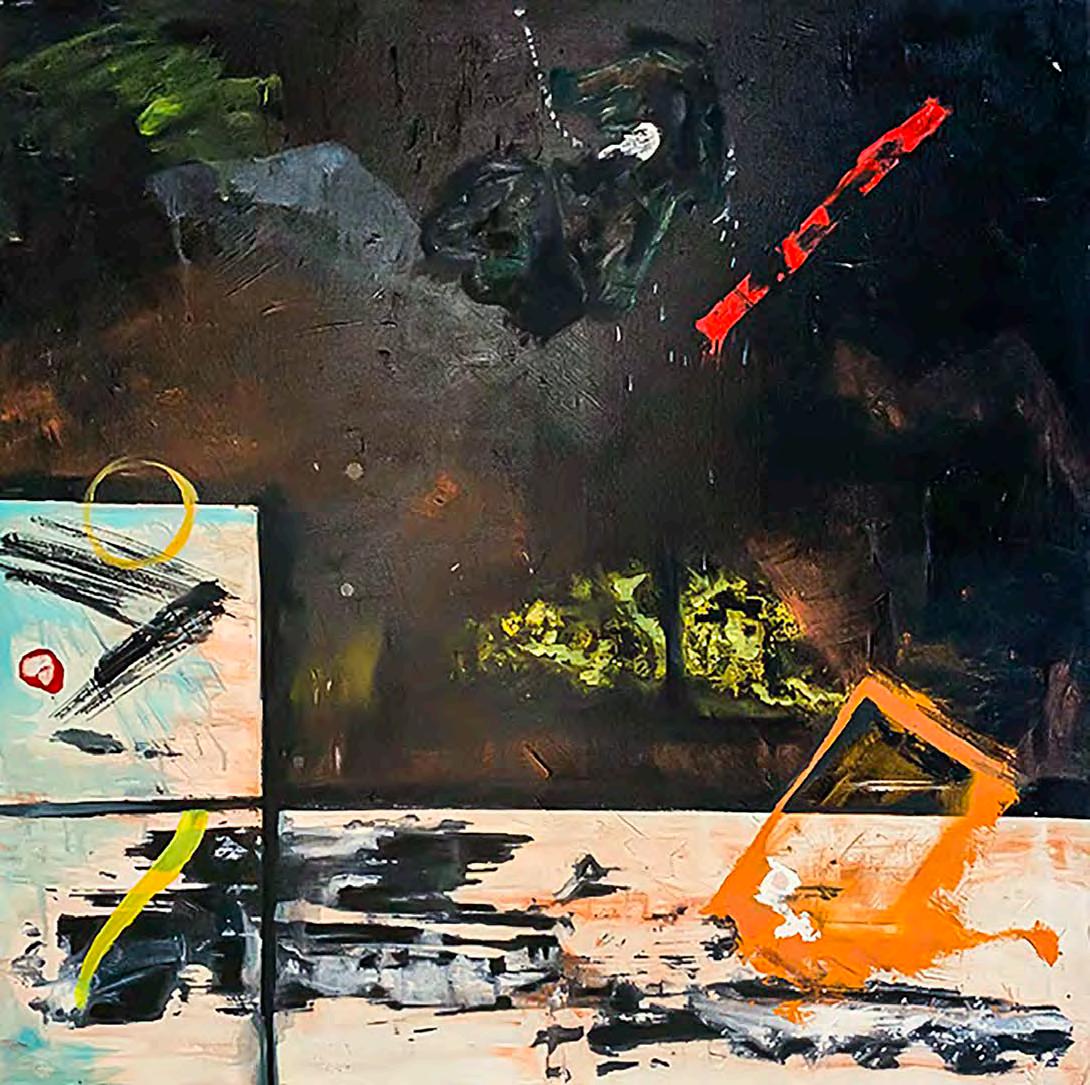
surface which is at once fast and quick-drying when the right marker is used, came to attention when put on walls by Mussolini’s Fascists, but it became rather more widely admired when it became a tool of the Street Art movement, most noticeably in the hands of Blek le Rat and Banksy. It’s a central part of Matuschka’s art-making process, as can be plainly seen in C0 (above) and Triptych E-4 (following), the two most recent images in The Noisy Paintbrush. Sewer Unrest and the suite of sewer pieces work as pure abstraction but also as a pure abstraction powered by real-life energies and feelings. Wassily Kandinsky, Kazimir Malevich, Piet Mondrian, and the newly rediscovered Swedish painter Hilma af Klint, whose show at New York’s Guggenheim was that museum’s biggest draw ever, are generally seen as having birthed pure abstractions. But all four were directly channeling their experience of Madame Blavatsky’s Secret Doctrine: Theosophy. Their work is not about Mark Rothko’s Nothing. Nor is that of Matuschka and her masterful piece, Sewer Unrest, which works not only as a pure abstraction, but is wholly powered by a childhood joy: A joy which had been resurfaced by an assignment in Jennifer Bartlett’s class.
E4 Triptych, 2022 Oil, acrylic and rope on canvas 24 x 84 inches
I never wanted color to be color. I never wanted texture to be texture, or images to become shapes. I want them all to fuse together into a living spirit.
—CLYFFORD STILL
Sewer Grid, 1974
Pencil and turpentine on paper 21 x 14 inches
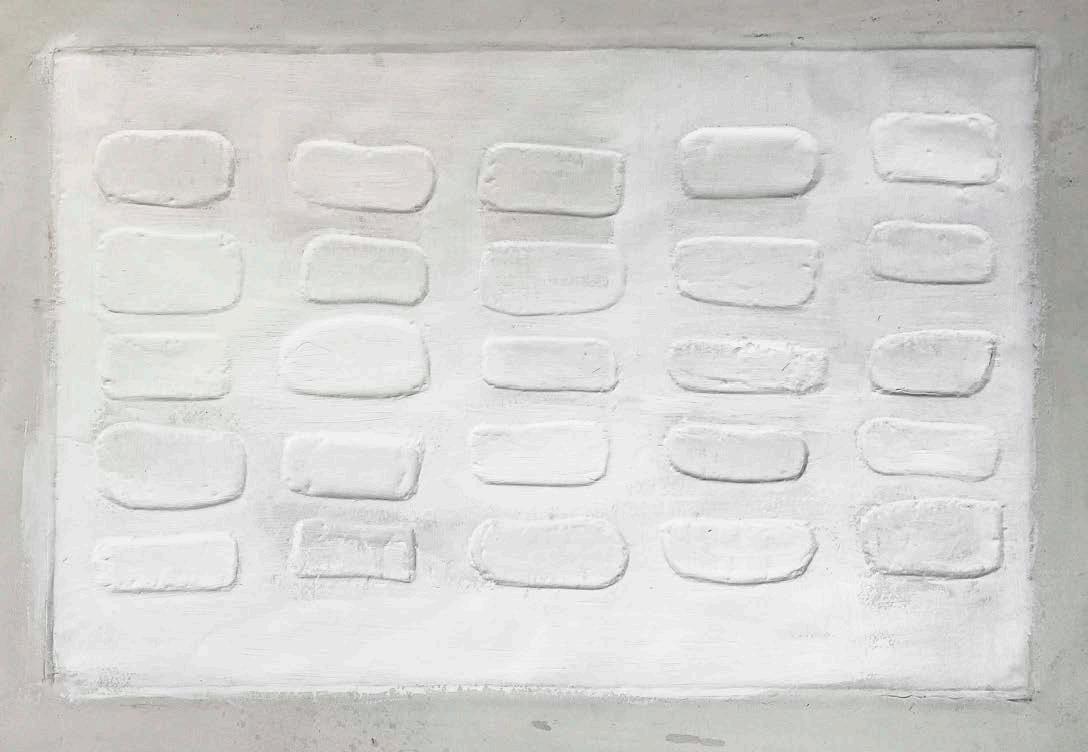
White Embossed, 1975 Blind emboss on paper 21 x 13¾ inches
The world of the imagination is fancy-free and violently opposed to common sense. It is our functions as artists to make the spectator see the world our way—not his way.
—MARK ROTHKO
Best White, 1975
Acrylic on canvas 48 x 48 inches
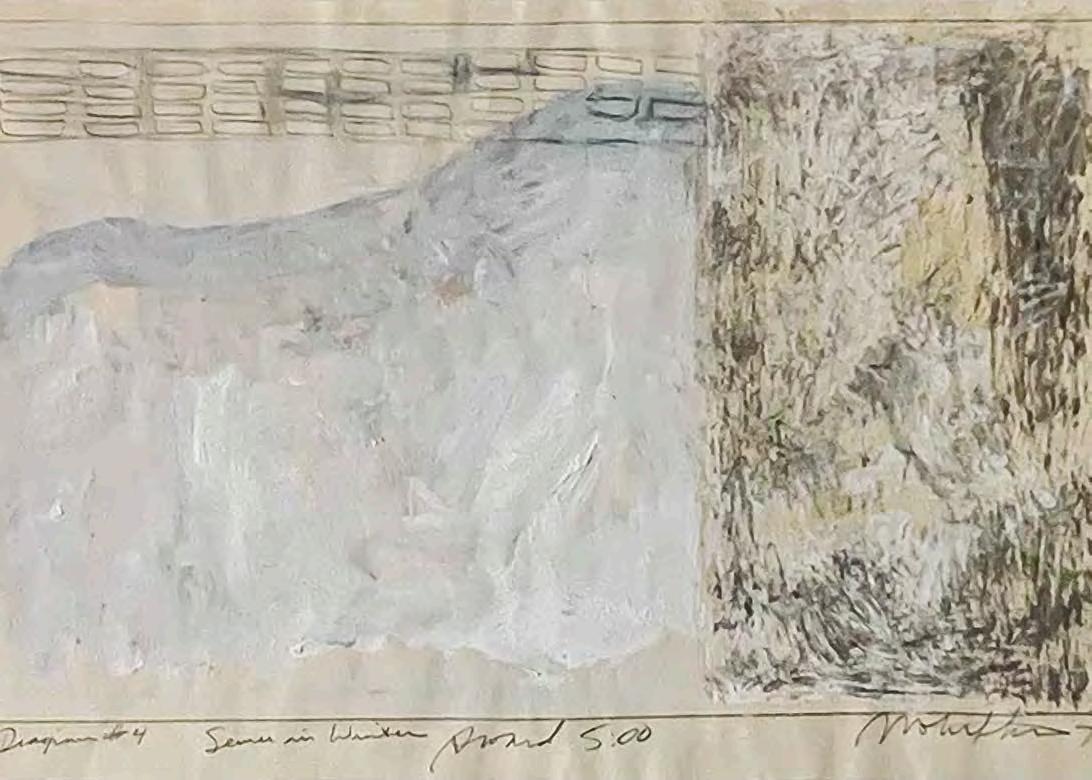
Sewer in Winter Around 5PM, 1974
Acrylic and pencil on paper
19 x 12¾ inches
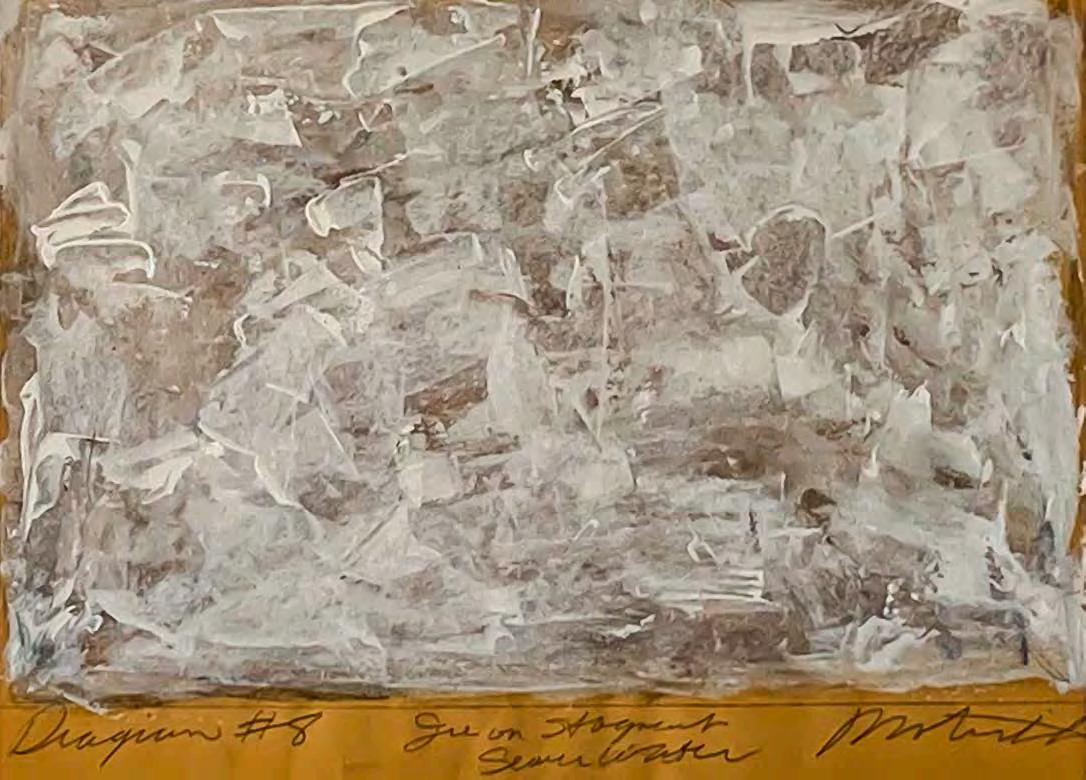
Ice on Stagnant Sewer Water, 1974 Acrylic on paper 19½ x 14¾ inches
Oriental By Design, 2001
Acrylic on canvas 38 x 72 inches
We’re Not Waving, We’re Drowning, 2001 Acrylic on canvas 36 x 60 inches
Japan Triptych, 2000
Acrylic on canvas
72 x 24 inches
Second to White, 1974
Acrylic on canvas
48 x 48 inches
Jigsaw Puzzle #1, 1999
Acrylic on canvas
72 x 72 inches
#7 Triptych, 1990 Acrylic on canvas 72 x 24 inches
To us art is an adventure into an unknown world, which can be explored only by those willing to take the risks.
—MARK ROTHKO & ADOLPH GOTTLIEB
YELLOW
Yellow Business Card, 2006 Paper collage on business card 5½ x 3¼ inches
Homage to Kandinsky, 2006
Sticker and rope collage
Two Trees, 2012
Acrylic, twigs on board
30 x 48 inches
Bamboo Shoot, 2007
Acrylic, bamboo, hemp rope on canvas
50 x 38 inches
Roper, 2007
Acrylic, chalk, rope on canvas 44 x 24 inches
Red Roper, 2007
Acrylic and Rope on Canvas 26 x 29 inches
Sewer Series #4, 1974
Glue and oil on paper 22 x 16 inches
Center Panel of E4 Triptych, 2022 Oil, acrylic and rope on canvas 30 x 24 inches
Yellow Meets Purple, 2007
Acrylic on canvas 25 x 27 inches
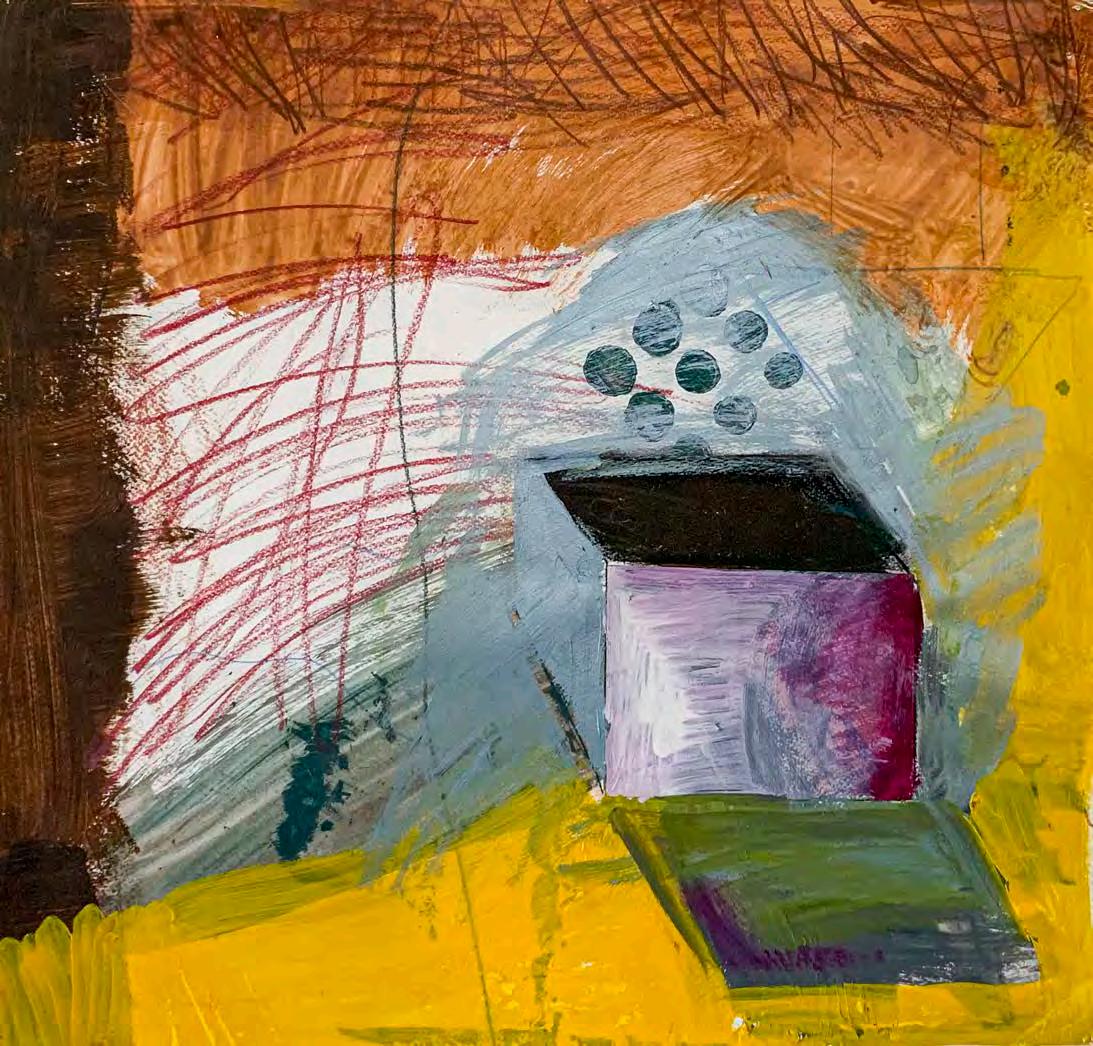
Box with Polka Dots, 1999
Acrylic, colored pencil, and makeup on watercolor paper 19 x 19 inches
Mark and Maurice, 2020 Oil, acrylic and rope on canvas 60 x 48 inches
It is a widely accepted notion among painters that it does not matter what one paints as long as it is well painted. This is the essence of academicism. There is no such thing as a good painting about nothing. We assert that the subject is crucial and only that subject matter is valid which is tragic and timeless. That is why we profess spiritual kinship with primitive and archaic art.
—MARK ROTHKO
03 ORANGE
Purple-Orange-Gray, 2001
Acrylic on canvas 24 x 36 inches
Orange-Gray, 1999
Print on watercolor paper 26 x 38 inches
A drawing is simply a line going for walk.
—PAUL KLEE
Sewer Grid #4, 1975
Embossed print on paper 21 x 13¾ inches
Sewer Grid #5, 1975 Embossed print on paper 21 x 13¾ inches
Yo-Yo in a Windstorm, 2021 Acrylic and spraypaint on canvas 30 x 40 inches
Karen’s Circles, 2000
Acrylic on canvas 70 x 32 inches
The Balloon Effect, 2000 Acrylic on canvas 74 x 33 inches
Karen’s Bug, 2000
Acrylic on canvas
26½ x 50½ inches
Moon Landing, 1975
Acrylic, crayon, and pen on paper
8 x 10 inches
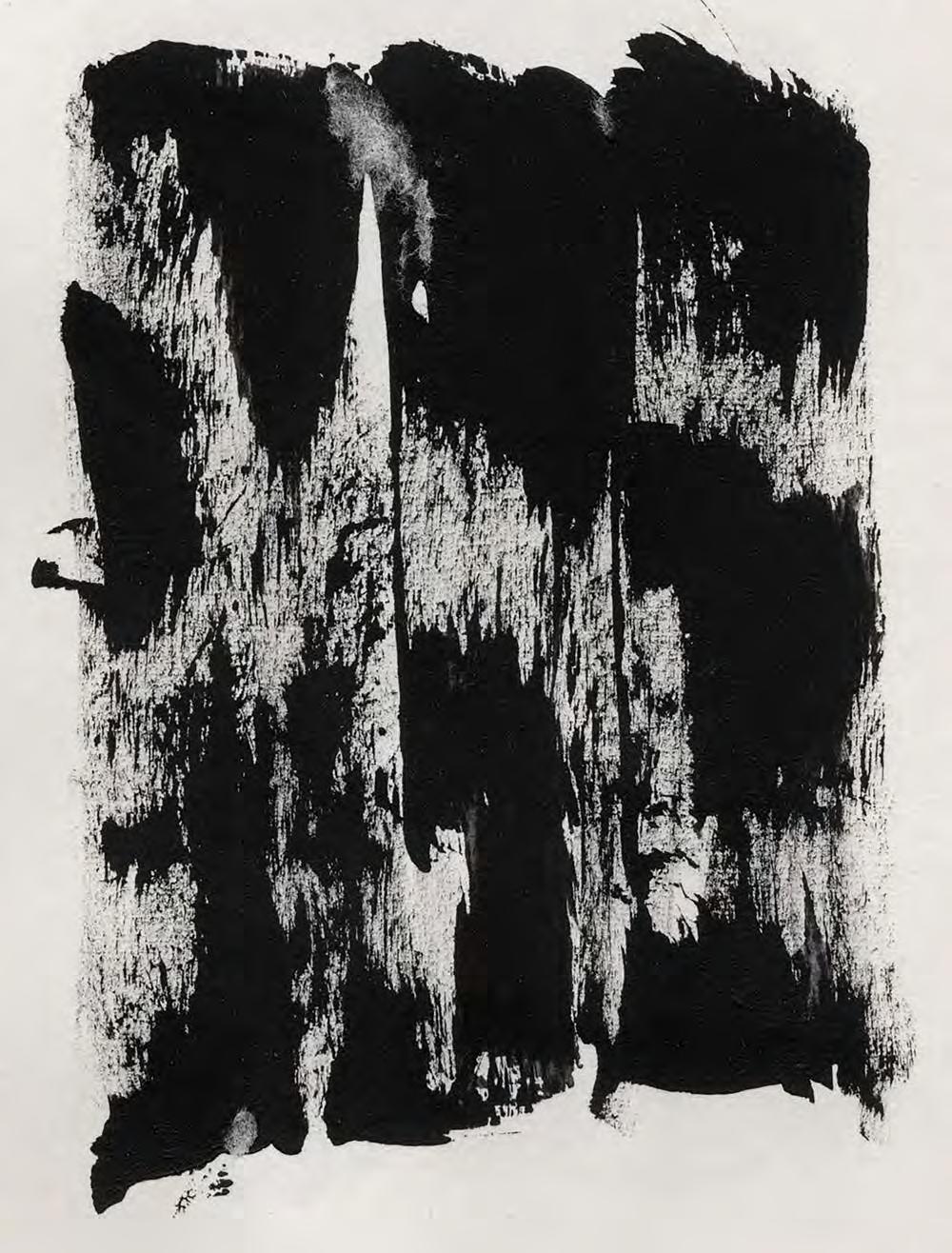
Orange Stroke, 1974 Ink on paper 4 x 6 inches
NM Plus E-5, 2022
Mixed media on canvas
26 x 683/4 inches
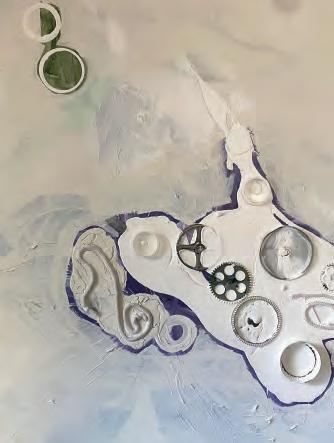
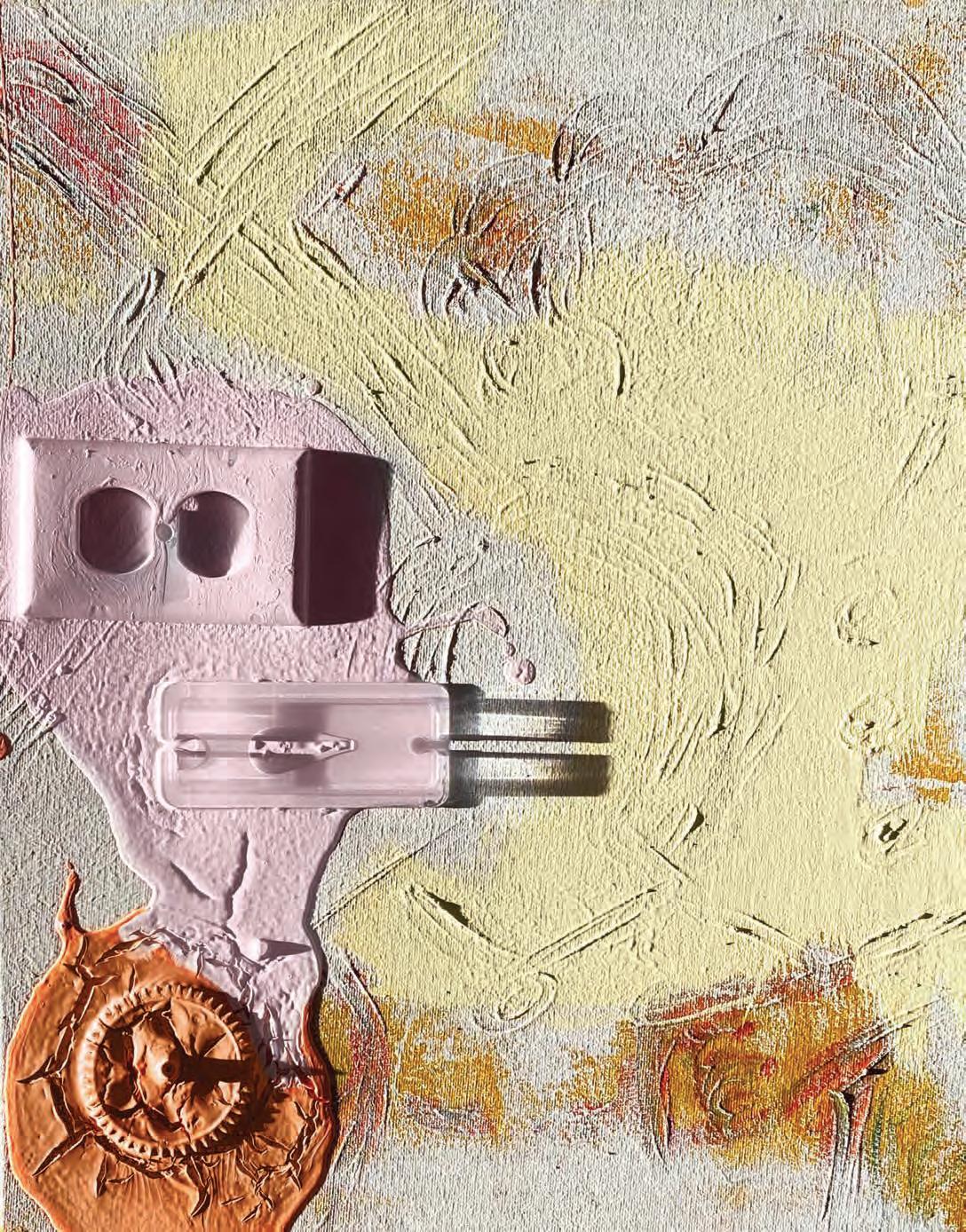
Gears Galore, panel 2, 2023
Mixed media
16 x 20 inches
Gears Galore, panel 4, 2023
Mixed media 16 x 20 inches
Remove pink from the palette of art history and a teasing dimension to the story of image-making would be lost. Edgar Degas’s Pink Dancers would fall flat-footed and Pablo Picasso’s pivotal pink period wouldn’t rise to the occasion. Now seductive, now innocent, pink is coquettish and coy, sultry and sly.
—KELLY GROVIER
Ball On Its Way Into Sewer, 1974
Paint and pencil on paper
22 x 163/8 inches
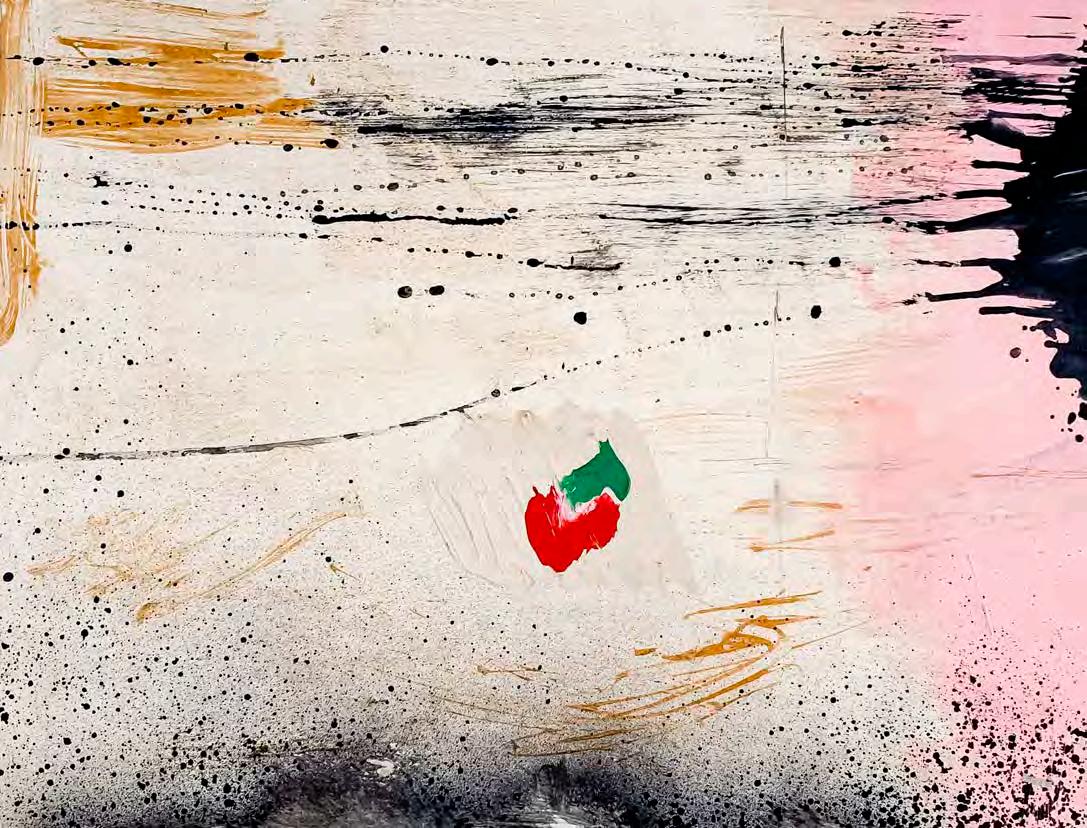
Pink Pussy Explosion, 1974
Glue, spray paint, ink, and acrylic on paper 24 x 18 inches
Pink Tile, 2009 Ceramic mosaic on wood 34 x 26 inches
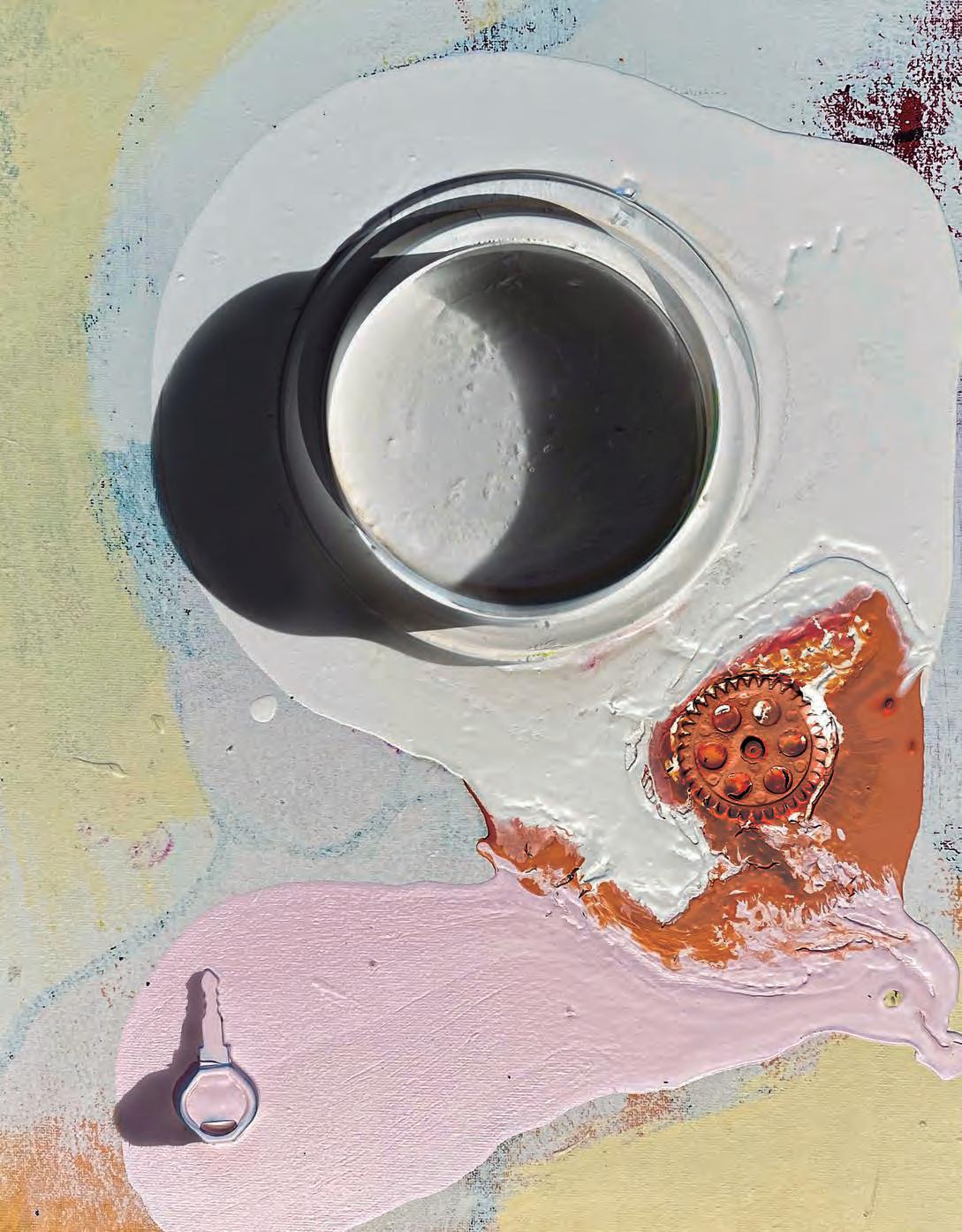
Gears Galore, panel 1, 2023
Mixed media
16 x 20 inches
Gears Galore, panel 3, 2023
Mixed media 16 x 20 inches
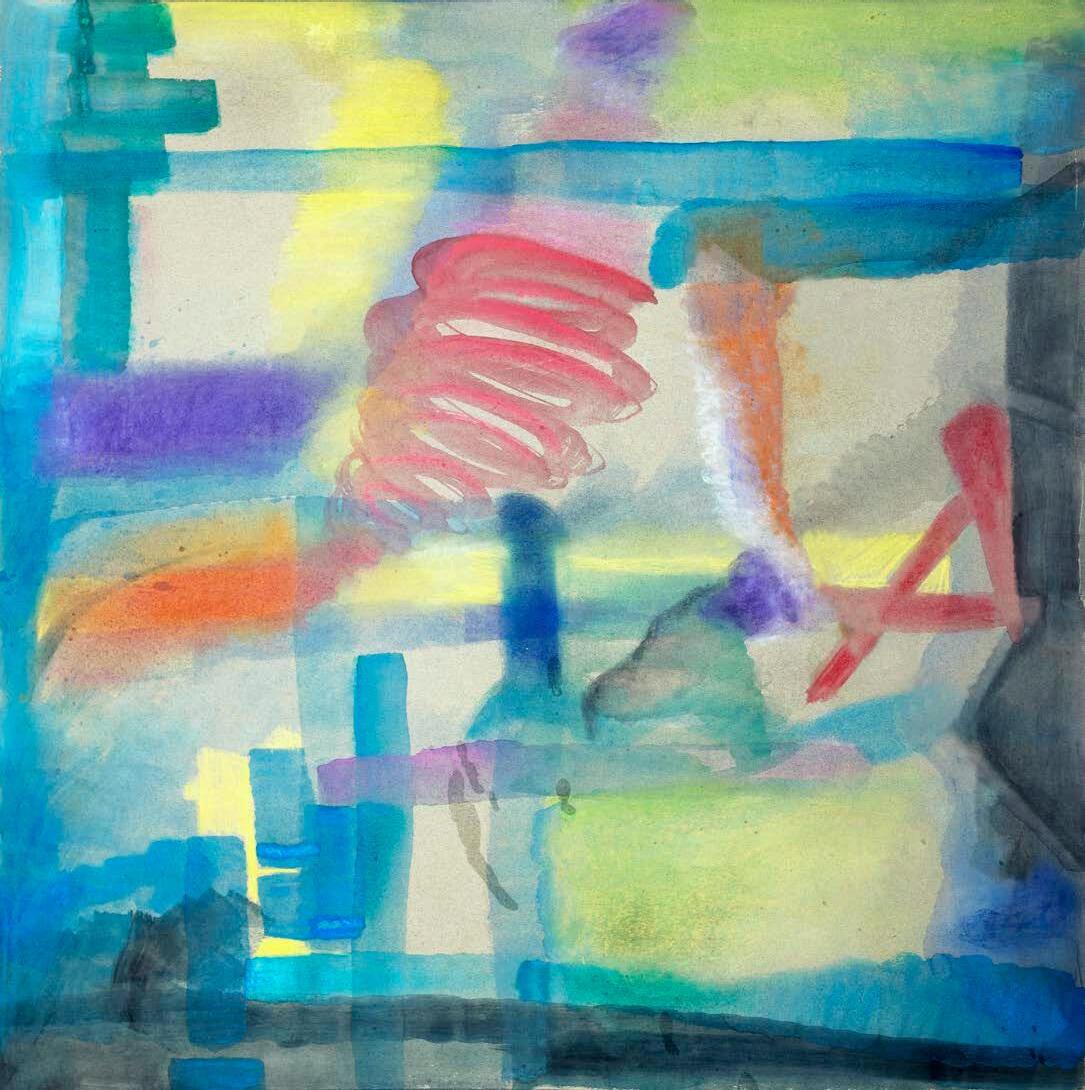
Guggenheim Aftermath, 2012 Watercolor on matboard, detail 24 x 24 inches
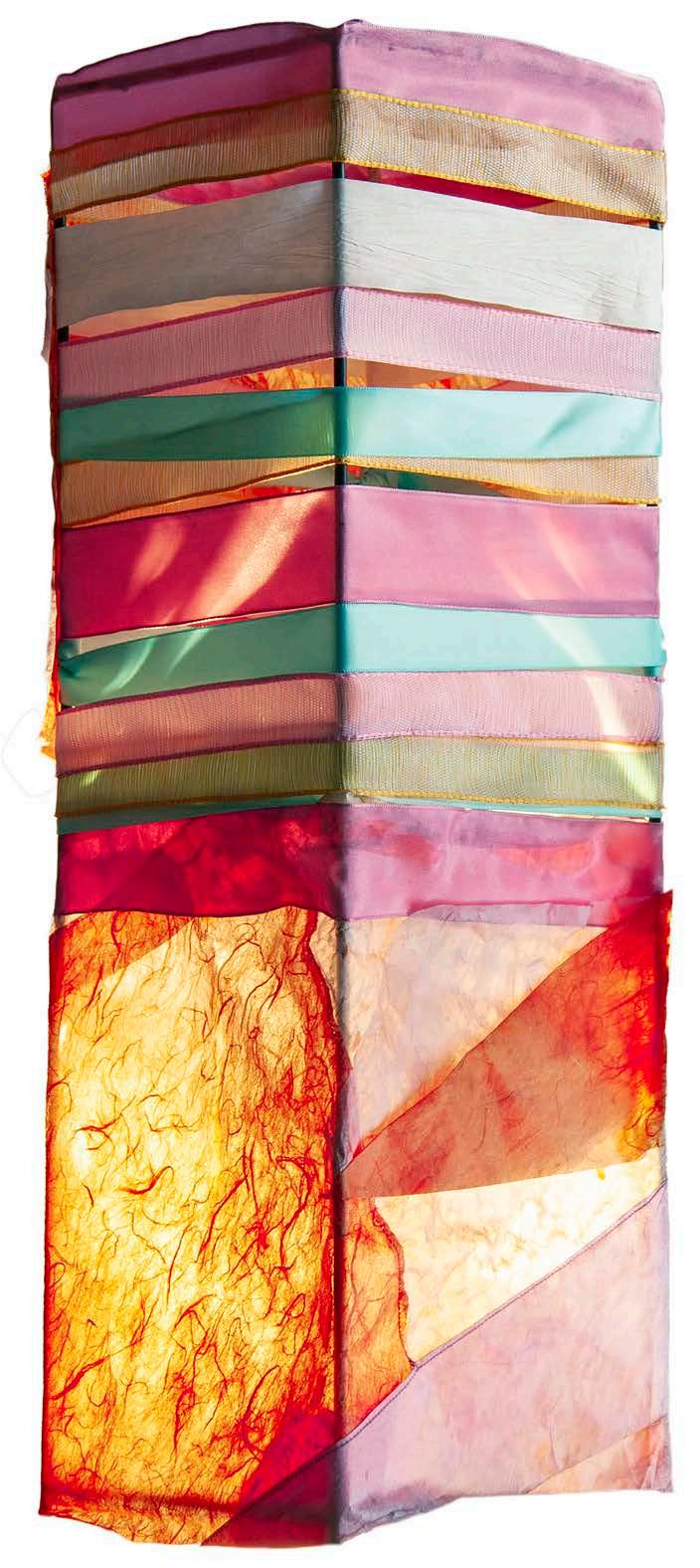
Lampshade, 1999 Ribbons, metal 24 x 7 x 7 inches
I found I could say things with color and shapes that I couldn't say any other way--things I had no words for.
—GEORGIA O'KEEFFE
P3, 2022
Oil and acrylic on canvas 24 x 36 inches
Miami Vice, 2007 Acrylic on canvas 49 x 24 inches
There is a shade of red for every woman. Red is the ultimate cure for sadness. Red is the first color of spring. When in doubt, wear red.
—AUDREY HEPBURN
Evening Sewer Around Dark, 1974
Mixed media on paper
24 x 18 inches
(Private Collection)
Red Drip, 1974
Mixed media on paper
24 x 18 inches
Colour is a power which directly influences the soul.
—WASSILY KANDINSKY
on paper 18 x 24 inches
Arizona Desert, 1973
Watercolor
Plaid, 1974
Watercolor on paper
24 x 18 inches
Arizona Highway, 1973
Acrylic on paper 23 x 171/8 inches
West Stockbridge Triptych, 2007
Acrylic on canvas 73 x 24 inches
Tornado Red, 1975
Acrylic on canvas 19½ x 14½ inches
White Tile with Footprint, 1974 Paint, glue, and pencil on paper 221/8 x 16¾ inches
The Space Between Us, 2001 (Left panel of triptych) Acrylic on canvas 16 x 20 inches
The Space Between Us, 2001 (Right panel of triptych) Acrylic on canvas 16 x 20 inches
Easter Egg, 2019
Acrylic and oil on canvas 60 x 24 inches
The deeper the blue becomes, the more strongly it calls man towards the infinite, awakening in him a desire for the pure and, finally, for the supernatural. The brighter it becomes, the more it loses its sound, until it turns into silent stillness and becomes white.
—WASSILY KANDINSKY
BLUE
Four Blue Panels, 2019
Acrylic and oil on canvas 24 x 781/2 inches
Mushroom, 2019
Acrylic and oil on canvas
20 x 30 inches
Blue Stroke, 1974
Watercolor on paper 6 x 4 inches
Art should comfort the disturbed and disturb the comfortable.
—BANKSY
Electric, 2022 Oil on canvas
30 x 40 inches
Thinking Seahorse, 1999
Digital composite
251/2 x 371/2 inches
Steeler, 1999
Digital composite 251/2 x 371/2 inches
From Sea To Sky, 2016 Acrylic on canvas 108 x 26 inches
The world today doesn't make sense, so why should I paint pictures that do.
—PABLO PICASSO
Bubbles, 2000 Ink on Paper 8 x 10 inches
My Brain At Night #1, 2019
Acrylic on canvas
32 x 32 inches
My Brain At Night #2, 2019 Acrylic on canvas 32 x 32 inches
Unhinged, 2022 Oil and acrylic on canvases 32 x 40 inches
I am not interested in illustrating my time.
A man’s “Time” limits him, it does not truly liberate him. Our age- it is one of science, of mechanism, of power and death.
I see no point in adding to its mechanism of power and death. I see no point in adding to its mammoth arrogance the compliment of graphic homage.
—CLYFFORD STILL
Continental, 2008 Collage, rope on gift bag 10 x 15 x 3 inches
Blue Beach #1, 2019
Acrylic on canvas
12 x 12 inches
Blue Beach #2, 2019 Acrylic on canvas 12 x 12 inches
Tim’s Table, 2019
Acrylic and oil on canvas
60½ x 24 inches
Art is not what you see, but what you make others see.
—EDGAR DEGAS
GREEN
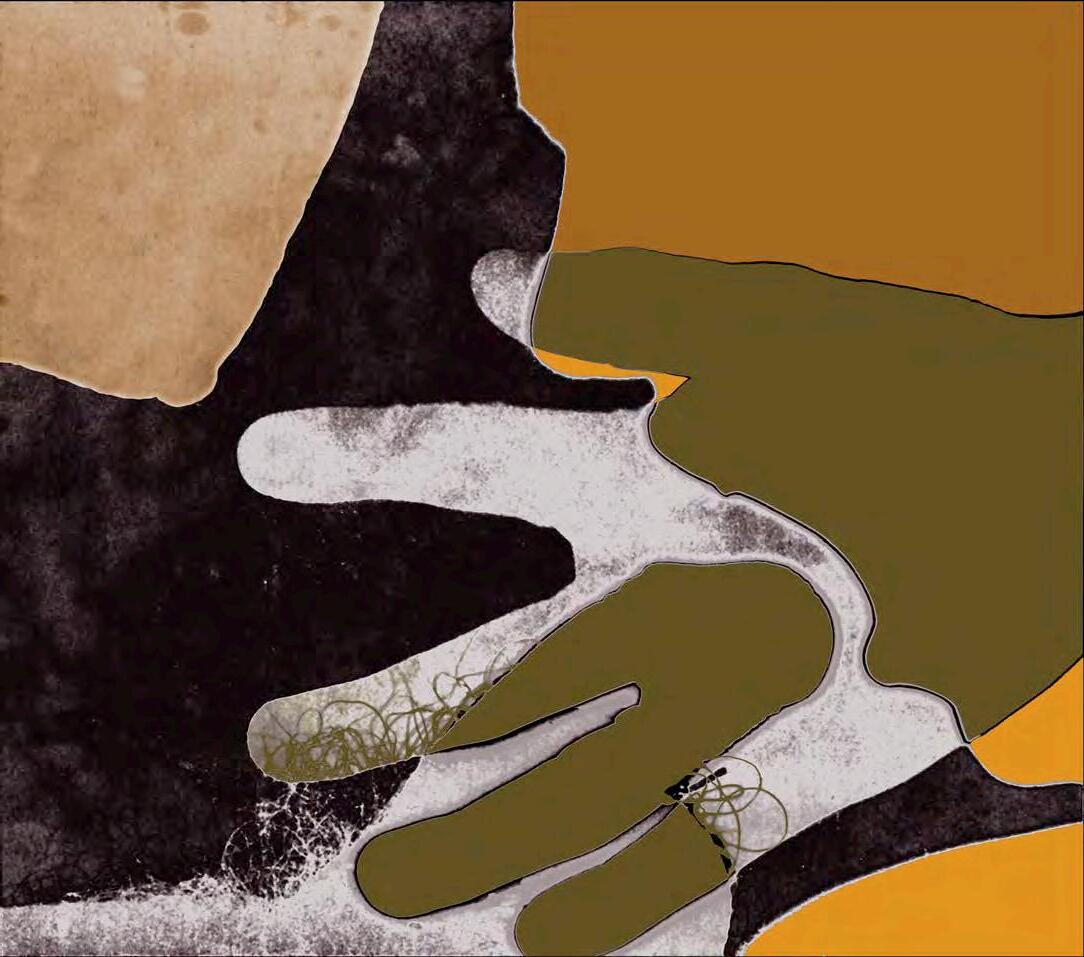
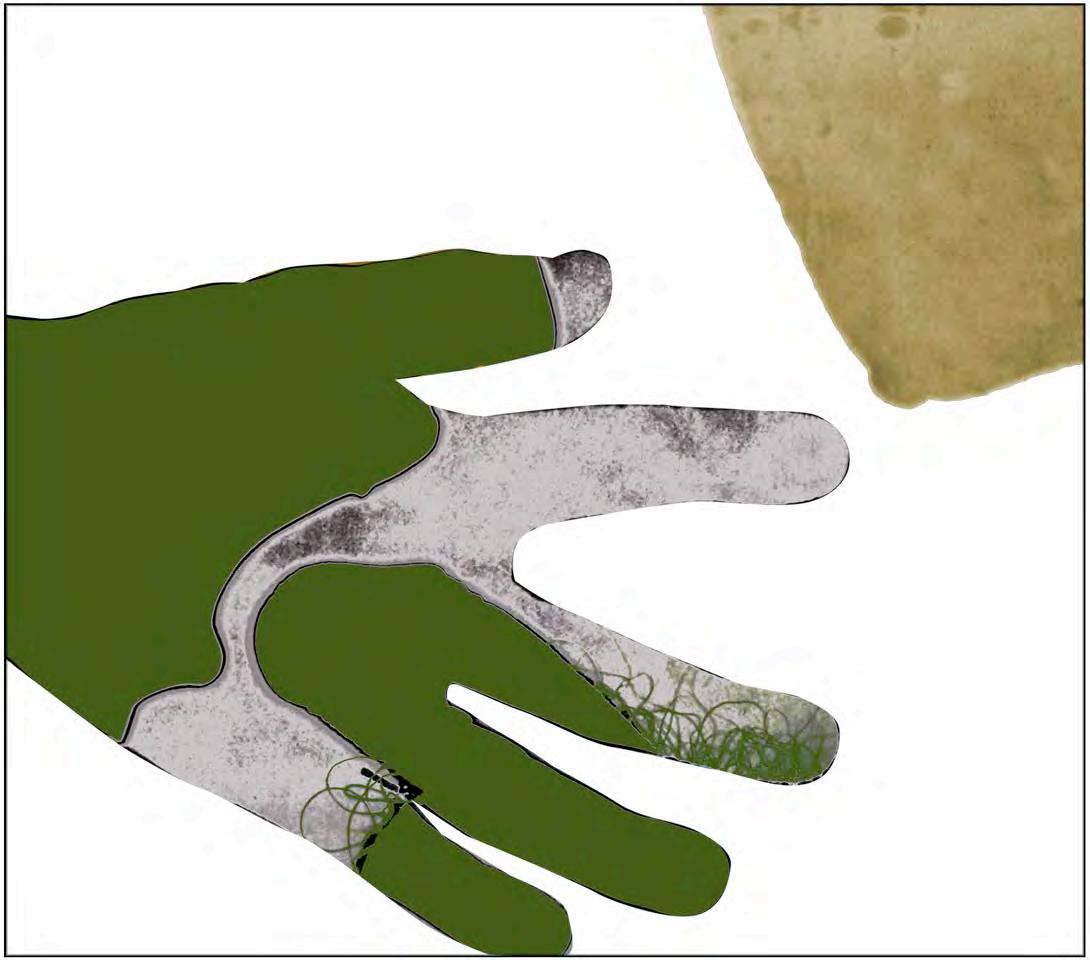
Hand Job Blow Job 1, 1994
Digitized photogram
30 x 30 inches
Hand Job Blow Job 2, 1994
Digitized photogram 30 x 30 inches
Frogman, 2023
Mixed media on canvas 48 x 36 inches
Left Panel of E4 Triptych, 2022
Oil, acrylic and rope on canvas 24 x 24 inches
Right Panel of E4 Triptych, 2022 Oil, acrylic and rope on canvas 24 x 24 inches
Berkshire Swamp, 2006
Acrylic and rope on canvas 43 x 21 inches
Little Sarasota Bay, 2019
Acrylic on canvas
45½ x 71 inches
Green Tile, 1974
Acrylic and pencil on paper 15¾ x 21¾ inches
The First Thing, 1999
Acrylic on canvas
30 x 20 inches
The Thing Before The Thing, 1999 Acrylic on canvas 30 x 20 inches
Ode to Klee, 2008
Acrylic on canvas
20 x 16 inches
Green Gears, 2022 Oil on canvas
36 x 48 inches
Van De Bovenkamp, 1988
Acrylic on canvas
32 x 32 inches
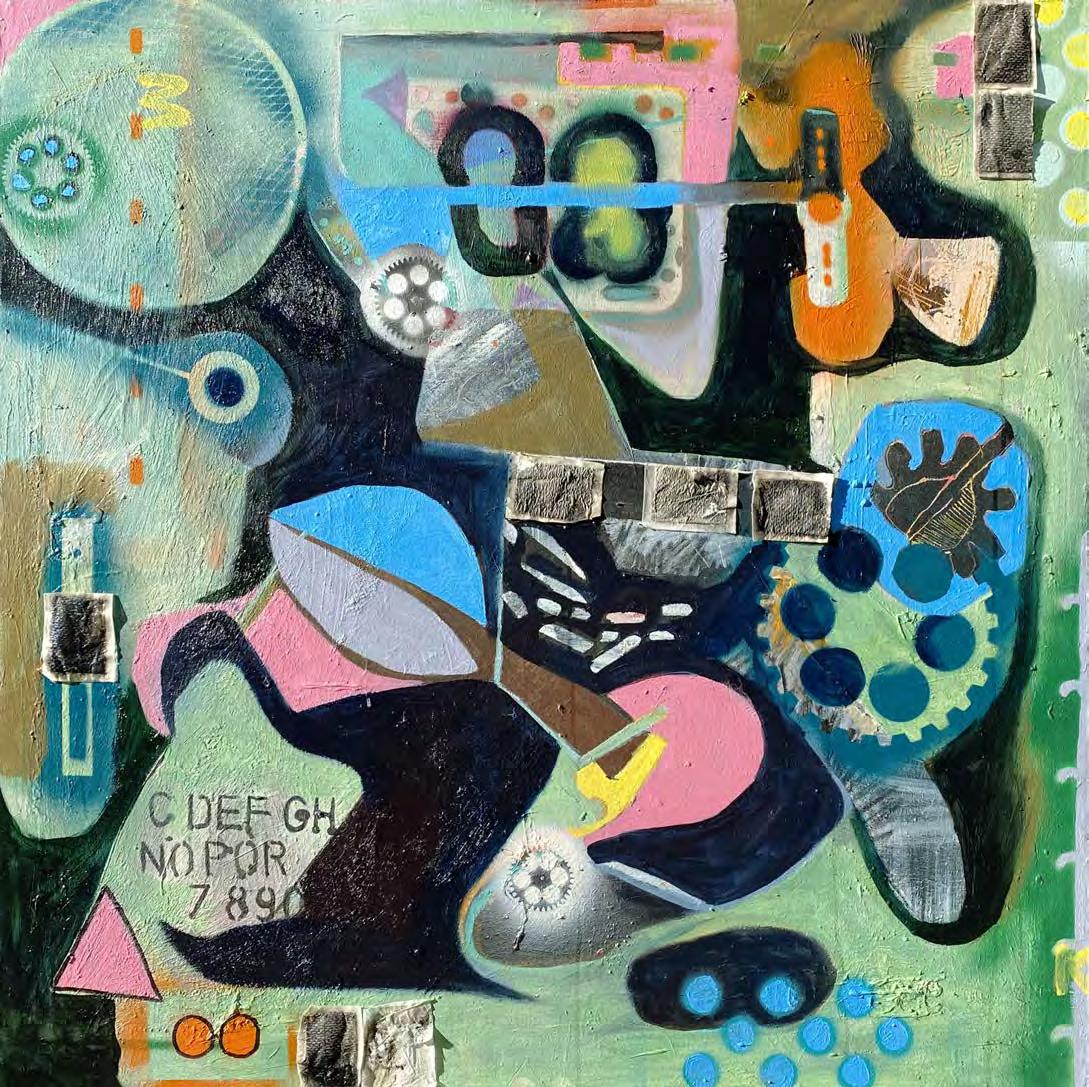
Doc! This Pill’s Too Big, 2020
Acrylic and spray paint on canvas
30½ x 34 inches
Fidelity #2, 2012
Collage on paper 17 x 11 inches
Fidelity #1, 2012
Collage on paper 11 x 17 inches
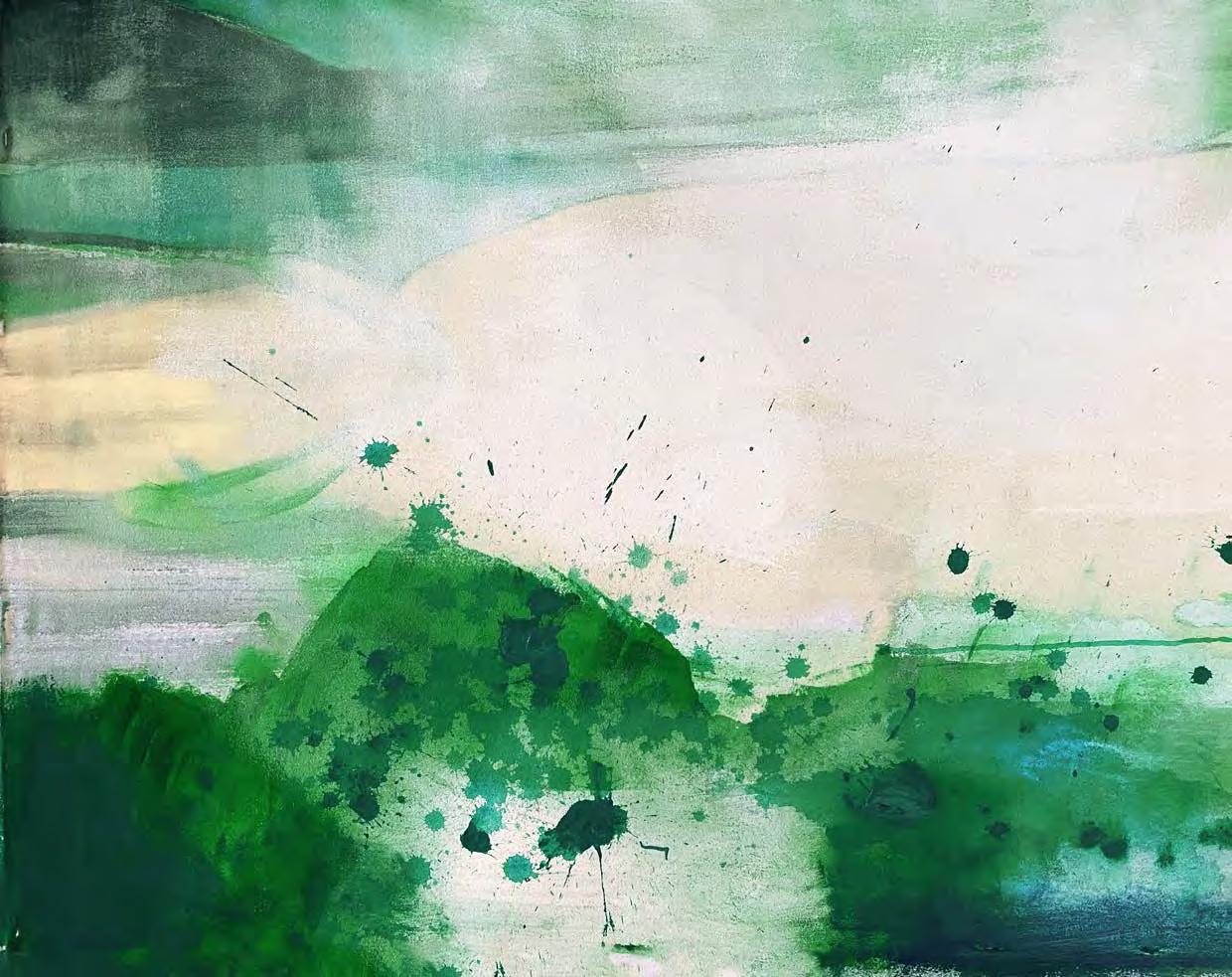
Green Landscape, 2014
Acrylic on canvas 78 x 32 inches
The practice of hiding out in borrowed shells was not only employed by worms and other sea creatures, but by us kids who took safety and refuge in tunnels, small caves, and sewers.
—MATUSCHKA
Mahwah Sewer #1, 2014
Photograph 14 x 19 inches
Mahwah Sewer #2, 2014
Photograph 14 x 19 inches
Installation 14 x 19 inches
Subfloor, 2016
Crew, 2006
Collage 24 x 28 inches
World Trade Center, 1994
Chemicals on photographic paper
8 x 10 inches
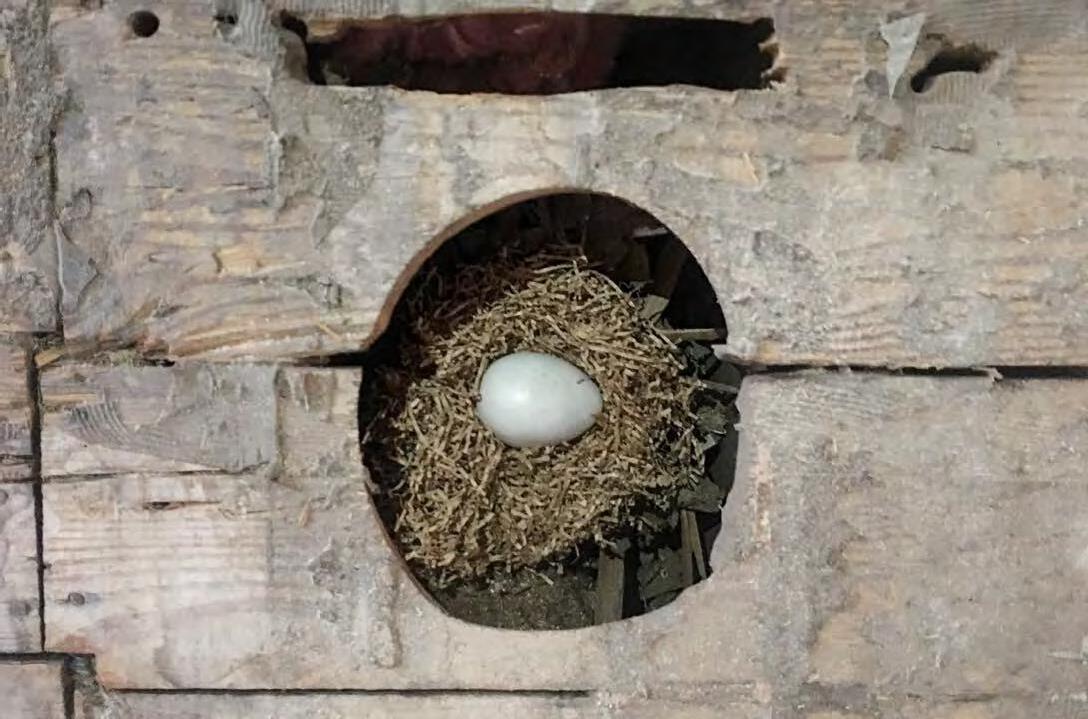
Sewer Egg, 2014
Morning, 2004
Acrylic on board
37½ x 25½ inches
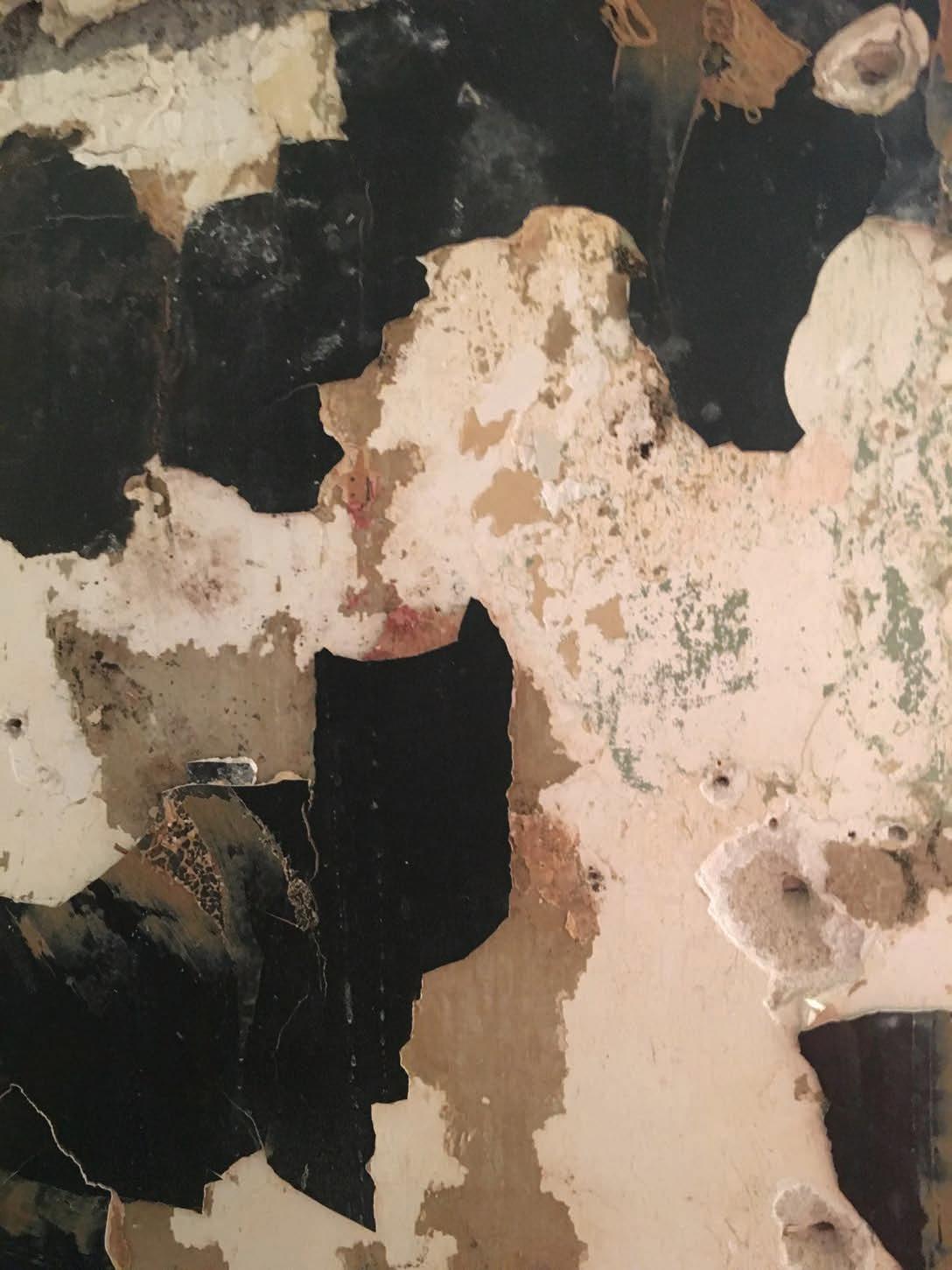
Bathroom Wall, 2023
Oil and acrylic on canvas
36 x 48 inches
Sewer Leaves, 1974
Collage and ink on paper
24 x 18 inches
Color is all. When color is right, form is right. Color is everything, color is vibration like music; everything is vibration.
—MARC CHAGALL
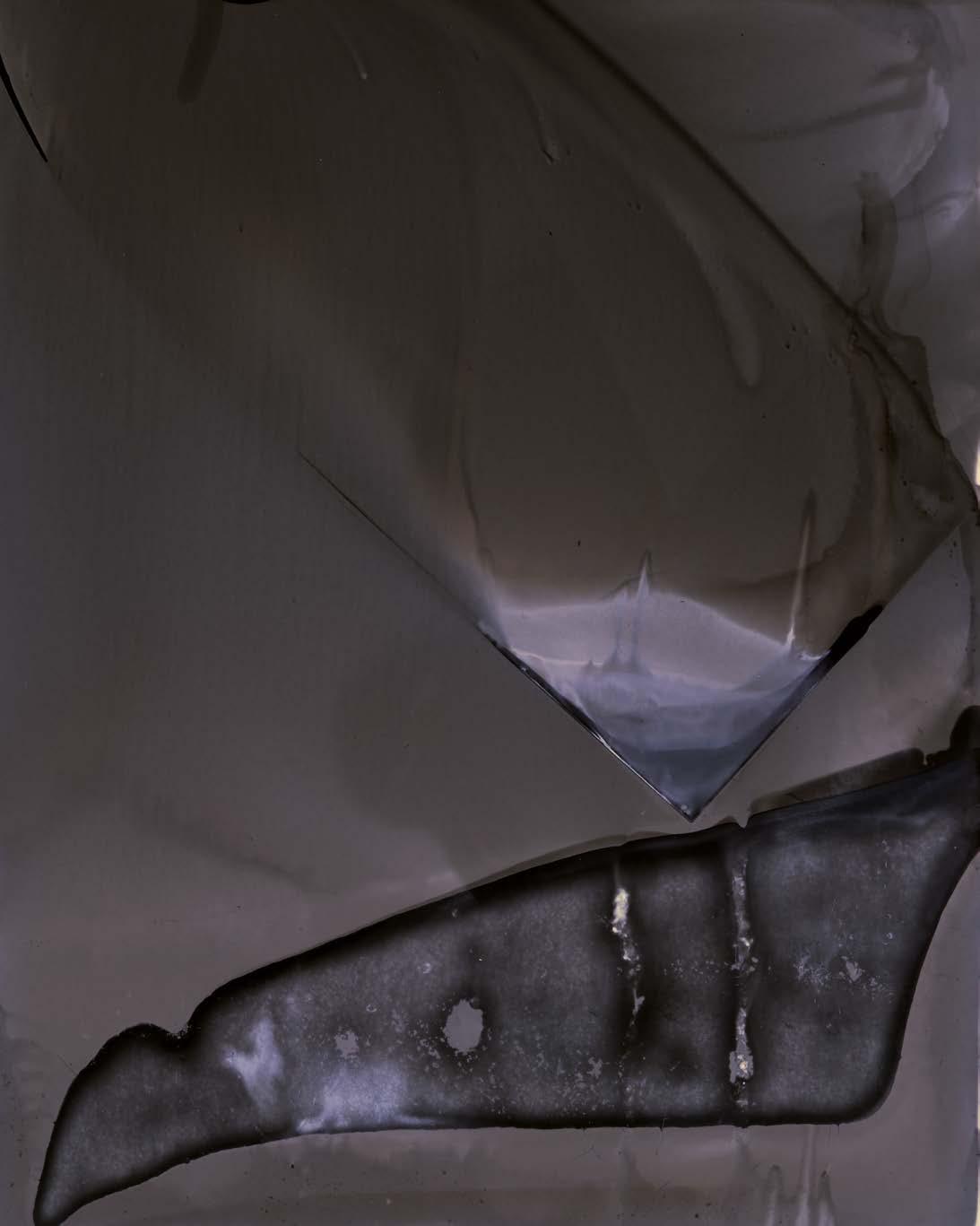
Mars Rover, 1999
Polaroid transfer on watercolor paper 10 x 10 inches
Sewer Egg Crate, 2014
Photograph 19 x 14 inches
Sewer Plate, 1974
Cardboard embossment plate 21 x 14 inches
Color is the place where our brain and the universe meet.
—PAUL KLEE
Black Tape, 1975
Acrylic, ink, and tape on paper
7 x 10 inches
Black Stroke, 1974
Watercolor on paper 4 x 6 inches
Dante's Inferno, 2023
Mixed media on canvas 29 x 24 inches
Black Tiles, 1974
Acrylic on canvas 22 x 30 inches
Black Galaxy, 1974
Acrylic on canvas 48 x 48 inches
Amoeba 1, 2023
Mixed media on canvas
30 x 251/2 inches
Amoeba 2, 2023
Mixed media on canvas
30 x 251/2 inches
If I could say it in words there would be no reason to paint.
—EDWARD HOPPER
Chemicals on photographic paper 8 x 10 inches
Yin & Yang, 1994
Starship 1, 2023
Mixed media on canvas 22 x 28 inches
Interior Starship 1, 2023
Mixed media on canvas 22 x 28 inches
Sewer Grid Closeup With Leaves, 1974
Crayon, paint, and leaves on paper
8 x 10 inches
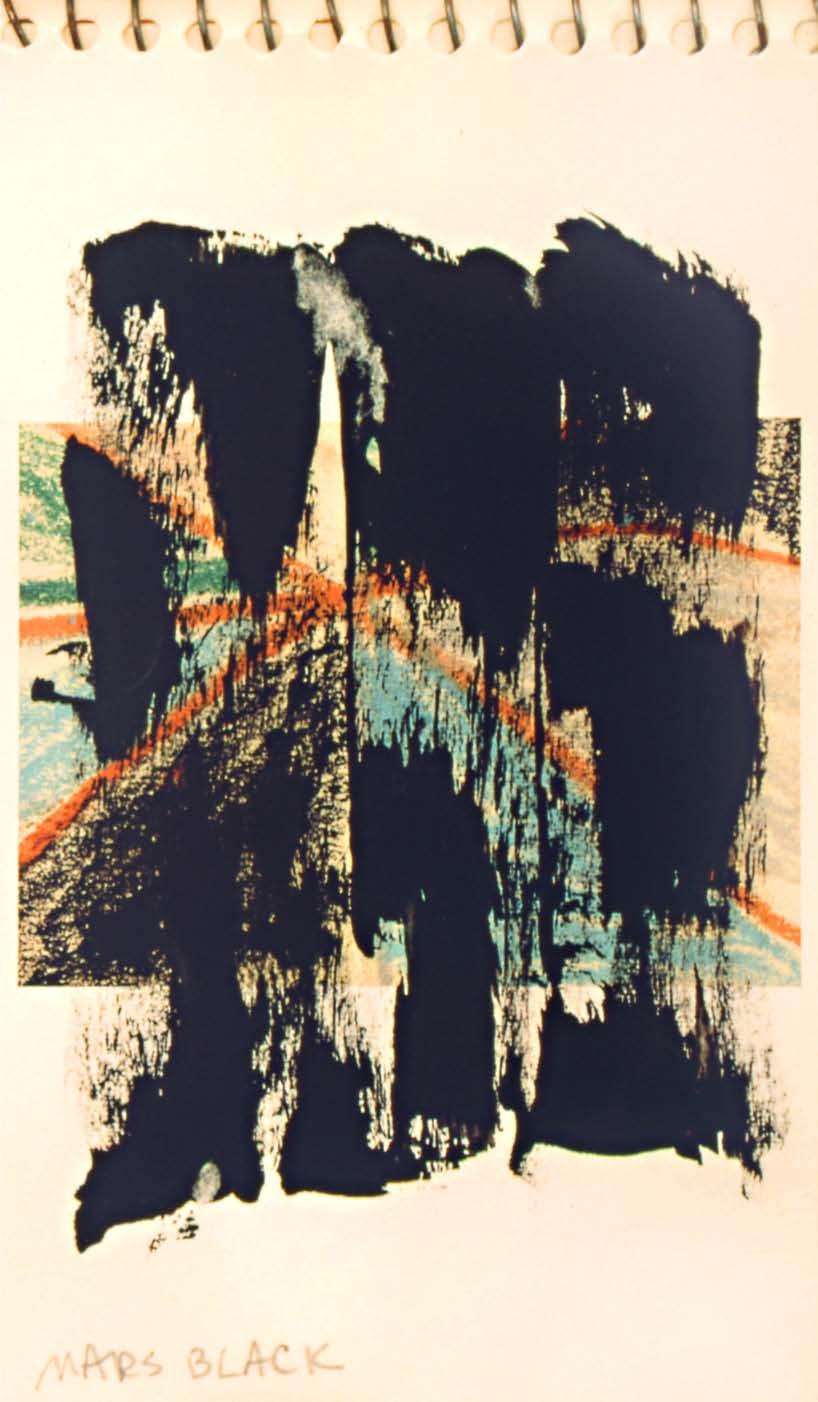
Mars Black, 1999 Ink and crayon on sketchbook page 5 x 7 inches
Black Comet #1, 1974
Acrylic on canvas
32 x 32 inches
Black Comet #2, 1974
Acrylic on canvas
32 x 32 inches
Sewer Unrest, 1974
Ink, charcoal, and gouache on paper 20¾ x 13½ inches
NOISY INTERVIEW
Anthony Haden-Guest in Matuschka’s studio
A Conversation with Matuschka by Anthony Haden–Guest
When did you start making art?
My interest in art started with watching Soupy Sales on TV. Soupy would draw random lines and squiggles on a chalkboard and then encourage his audience to find connections between these marks. He urged us to discover actual images lurking within this mess of lines and unite them. Just as one sees faces or animals in clouds, Soupy suggested we look at these apparently meaningless chalkboard markings and turn them into picture stories. I would do this over and over again in my attic room, making arbitrary marks on my blackboard, then linking them into recognizable shapes, figures and symbols. I called this exercise “prepubescent brain training.”
Meaning just what?
It gave me an indelible sense of the physical presence of the “invisible and the unimaginable,” which allowed me to see things differently, to look at “stuff” that wasn’t there. My love affair with finding the whimsical, the comical within the abstract began right then and there. Soupy’s exercises directed my mind and eyes to see images that didn’t exist anywhere except for in my imagination! The pictures I made just happened! Making something out of nothing was comparable to being a magician!
This was pretty early in your life.
I was about five and my favorite scent then was the smell of crayons. A box of Crayolas turned me on the way drugs excite a junkie. I was addicted to the impact the colors, the aroma had on my senses. I’d flip open the box top, stare at those rows of beautifully sharpened sticks arranged by color, and take the pack straight to my nose for a long hard sniff. Then as I inhaled, I would wax nostalgic for a different world, a world loving under a waterfall, rolled-up jeans, tied blouse, and freedom from Suburbia! I could camp by the river and roll in the grass and snuggle next to my imaginary Prince. I was addicted to the crayons because they gave me ideas. Don’t know how, but they did! My parents thought my crayon-smelling was peculiar. So did many others. Indeed, my habit got my mother and me an invitation to the principal’s office and a number of sessions with the school shrink followed! I would happily describe to the psychologists the fantastic images I saw in the Rorschach inkblot tests. These tests are used to investigate personality and emotions, but to me they were just another sort of Soupy Sales exercise. Find the figures and make up a story about them as you go along. After all, art is magic.
Paper was important to you too, I think.
From an early age I dug paper products like bags, doilies, bows, ribbons, wrapping paper, and packaging. Paper was almost as exciting to me as crayons, particularly paper where I could still smell the ink. When the family went out for dinner, which was a rarity, I’d ask the waitress for a stack of menus and napkins to take home. Birthday parties and Christmas always provided a stash of great stuff for me to repurpose. By the time I turned nine, I had developed my own stationery line. I would cut out stencils and glue them to colored card stock, fold the page and stick it in a brightly colored envelope that I decorated with stickers. Borrowing an idea from the Girl Scouts, I took to hawking my homemade greeting cards door to door instead of the boxed cookie sets I was supposed to be selling.
What else drew you to art?
Hot Rod Cartoon magazines. One publication in particular had a few blank pages in the back that were sort-of drawing lessons whereby we could try copying various characters that appeared in the magazine. I was obsessed with drawing, often to the point of repeatedly sketching the same image over and over again, as if I was working up an edition to be numbered. I could catch the likeness of a human being, plant, or animal, but I preferred distorting reality rather than duplicating it.
Did you have other favorite sources?
Mad magazine and Car Calendars were piled under my bed. Family trips to see the freak shows at Coney Island in Brooklyn made a huge impression, and my urge to create caricatures certainly springs from what I saw in the late ’50s and early ’60s on the boardwalks of Asbury Park, Palisades Amusement Park, and most particularly Coney Island. These parks offered me my first look at actual living artists. I was fascinated by watching them as they sat in front of their easels sketching fairgoers for a few bucks. They had their boxes of stick charcoals and colored chalks laid out in front of them and most wore smocks and floppy caps, which I thought was cool. They looked so happy.
So you started drawing?
Inspired by these artists, I carried around a sketchpad and doodled constantly. I would sketch faces on fruit or vegetables I initially laid down on the page, and then I’d stick these out-of-proportion heads on teeny-weeny squirming bodies. I would tack these drawings onto the slanted attic walls of a small bedroom that I shared with my younger sister who was ten years my junior. When we lay in bed, these hilarious creatures looked down upon us, like a mocking flock of cranky parrots, and I was dreaming of the day I’d become a cartoon artist on the beach!
Crazy Waitress, 1979
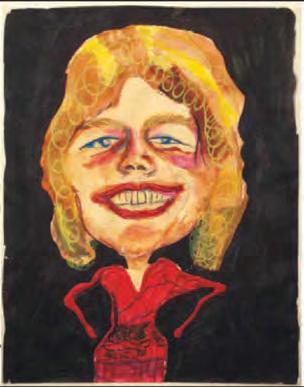
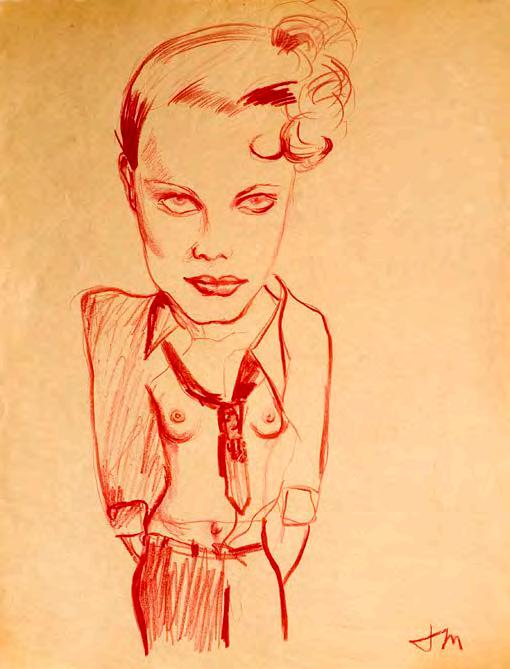
Self-Portrait in Red Pencil, 1977
You took art classes in school. Was this a mandatory class or elective?
In school I loved the art studio. Just walking in and inhaling the aroma of oils and inks gave me a rush. I also liked home economics because I learned to use a sewing machine and dug the sewing boxes I had back then. These were electives like the Girl Scouts. I took pleasure in dutifully pinning the badges I received from the Girls Scouts to my uniform sash. That was the only “social club” besides art class that I fit into because we were constantly making something, typically presents for our moms. In public school, art was an elective like sports, carpentry, or music class. Some kids engaged in one or the other or all of the above. I was in the “all of the above” category, as I needed to stay active and busy.
Did you get any grown-up support for your art ambitions?
I did from my teachers, but certainly not my parents who had dreadful taste, as did my relatives. Van Gogh or Mozart would just be “odd” names or “people over there” that intimidated them. It was mostly Doris Day and knickknacks, deer hooves turned into ashtrays. Lace doilies on end tables under little taxidermy animals (such as squirrels and chipmunks) that my father or brother killed for “the fuck of it.” The house was like a morgue for dead animals. Even the three-dimensional velvety printed fake flora wallpaper was atrocious. But what I really found disturbing was this ugly Nazi wood carving that my father brought home from World War II and hung above the living room couch. Really hurt my eyes. I couldn’t stand our home décor, so I had two choices: escape to the woods or hide out in my room.
And your teachers?
They were really different and very special. I remember Mr. Wally, who in sixth grade introduced the class to the work of Salvador Dali. It was Dali’s melted clocks slung over tree trunks that turned me on to the practice of “re-purposing and collaging.” Mr. Wally drew Dali’s misshaped objects on the blackboard with as much enthusiasm as Soupy Sales did on his boards! So Dali was the first “famous artist” I learned about as a kid, and Dali ironically was the first prominent artist I met thirteen years later in Paris when I was twenty-three. Is that karma, providence, or what?
Besides your sketchpad and making stationery, what other art projects were you involved in?
I participated in all sorts of arts and crafts from an early age and loved particularly “window dressing” and creating the seasonal decorations. Holidays gave me the opportunity to “dress up” my bedroom window for the neighbors to see. I would craft Christmas ornaments from acorns, chestnuts, pinecones, leaves, and feathers and hang them upside down from the ceiling. Sometimes I placed my favorite album covers in the windows too! I decorated and redecorated my room, rearranging the furniture constantly as if I were trying to restack the deck chairs on the Titanic. I always had to be making things. In the summer I would unleash these energies outside. I would take off into the woods or I would draw on the sidewalks with chalk. I must have re-made the design for Hopscotch a thousand times on the pavement in front of our house, with the numbers building into complex forms years before I had heard of something called Conceptual or Cubistic art.
Another favorite activity was rearranging the flowers in my garden every week in the summer (my favorite season) because that’s when the “true colors” of the world appeared! I was given a small plot of land in the backyard for my little garden and would rearrange my flowers every other week because I thought they needed a new arrangement to look more beautiful. Often I would go down to the woods with my shovel and pail, dig up small ferns and bring them back to install in my neat and tidy garden amongst the petunias and portulacas that I was forever uprooting and moving about. I felt it was absolutely necessary to make the flowers look more attractive than the week before. My plants and my parents no doubt felt that this behavior was absolutely mad.
And in the winter?
Spring and summer were teaming with life but come autumn and early winter, dead settled in like a mosquito you just couldn’t swat away. I’d get into a funk and hide out in my little art factory up in the attic: playing with Barbie and Ken like most girls. I pushed the couple around in an aquamarine Corvette convertible and gave them a “room with a view.” My father built me a three-level dollhouse and I made their furniture out of carved-up milk cartons covered with cloth. I was preoccupied with dress-
ing up my dolls because my family’s poverty forced me to wear hand-me-downs, get my toys from the town dump, and receive two new outfits per school term. I dealt with this deprivation by using both my allowance and other things I found on the town dump to dress up Ken and Barbie to look more stylish than me. Fashion has somewhat of a naughty type of relationship and is dependent on its main mission: sales. Often the sex appeal of luxury products and brand-name obsession is based on the gospel of consumerism. “I am what I eat,” is replaced with: “I am what I buy or what I bag.” My dolls prepped me for a future in fashion in which I treat myself as a sort of Christmas tree to decorate.
What was it like growing up as a child in Suburbia in the ’50s and ’60s?
A bit odd. I preferred visiting the farm where my grandmother was a sharecropper (a slave), or visits to the Lower East Side to buy pierogis and kielbasa with my father. Fortunately, when I lived in Bergen County there were still farmlands, woods, and the county was not known for the big mall which permanently paved over my paradise. A need for beauty and meaning led me to the woods, a need for retreat, to feel safe where I could make a dugout (home) for myself between worlds where I could live at the intersection of fantasy, paradise, and nature
while escaping Suburbia. I don’t think any place really felt like home for me, except in nature, mostly down by the Hackensack River. Under dense foliage, rolling in piles of leaves, dipping my toes in the creek, and hoping to catch a salamander. All these sensations tickled my imagination.
Seems you were a bit… restless?
I couldn’t sit still or play with toys like other children: I had to be making something. I guess to prevent boredom, avoid “the relatives” and not go insane one could always find me doodling, drawing, sewing, or making bouquets of dried weeds, spray-painted leaves and feathers I found by the duck pond. I also played with yarn and remember that little pink octopus I created from a ball of yarn and proudly displayed on my twin bedspread! It was rather cute!
What took you from cartooning to becoming a so-called “serious” artist?
There was an incident with my sister, Karen. A huge one, actually, when I was thirteen and she three. I had bought a sketchpad and left it on the bedroom dresser that we shared. When I was at school, Karen got ahold of it and scribbled on every page. When I got home, she looked at me like a pet that knows it has done something wrong. At first, I was mad but there was a big surprise when I flipped through her doodles. They were very sophisticated, abstract, and well-composed images showing both spontaneity and magic. I kept this sketchpad and it went everywhere with me. Decades later I incorporated some of her sketches onto large canvases I painted in my studio in Philadelphia.
This period of your life was also a dark time in your neighborhood…
The ’60s was the decade of death, from all the “famous assassinations” to the rash of mortalities I witnessed right on my street. My second-grade girlfriend died of leukemia. The teenager behind our house passed after her right leg was amputated, and the neighbor next door shot himself. My uncle died of lymphoma. The older fellow across the street whom I had a crush on pinned himself against a tree with his Volkswagen. My dog got hit by a car and was killed in front of me. Who’s next? My mother! She dies of breast cancer in 1968. The grandparents, in their sixties go shortly thereafter, with the exception of the one who committed suicide before I was born. By the time I was thirteen,
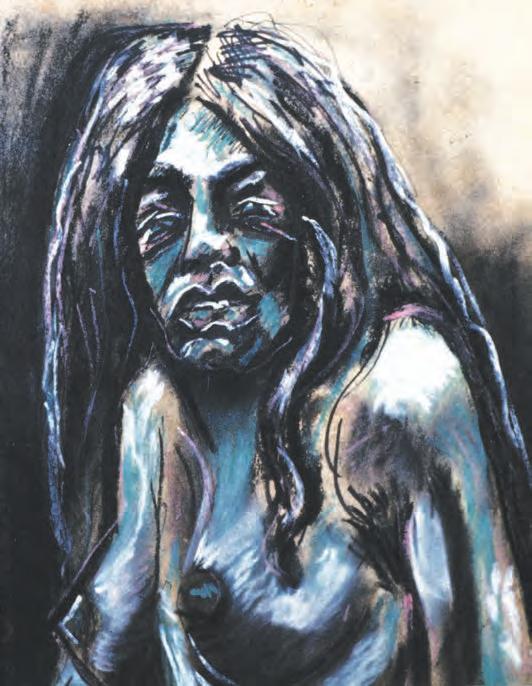
Distortion of a Self-Portrait, 1972
I had witnessed thirteen close deaths! Not to mention all the suicides my father reported because he was a cop on the George Washington Bridge where people flung themselves off the decks like little human torpedoes. My father risked his life by climbing the suspension cables of the bridge and talking desperate individuals out of jumping. He once held onto a man by his ankles. He became an honored cop because he was a hero for saving people’s lives.
Looking back at that era, I think I was in a perpetual state of trauma, but there was, ironically, a rainbow at the end of this tunnel.
Describe the beginning of making “grown-up” art.
After our mother died in 1968, I ran away to NYC and started hanging with older artists, so I got the “drift” or the “bug.” But I was only fourteen and really couldn’t hide out forever, so a year later I returned to New Jersey and was placed in foster care. Mrs. Marco, my first foster mom, saw my sketchpads. I was just beginning my “German Expressionist Period,” with very dark images on the order of Kathe Kollwitz, though I had no idea who she was at the time.
Mrs. Marco had been an artist. She was also a Special Ed teacher and my first mentor: She sent me to museums in NYC, provided me with art books, and quickly enrolled me in art school. She also suggested I become a life-sketching model to earn a little bread on the side.
Did the style of your art change after you began taking classes?
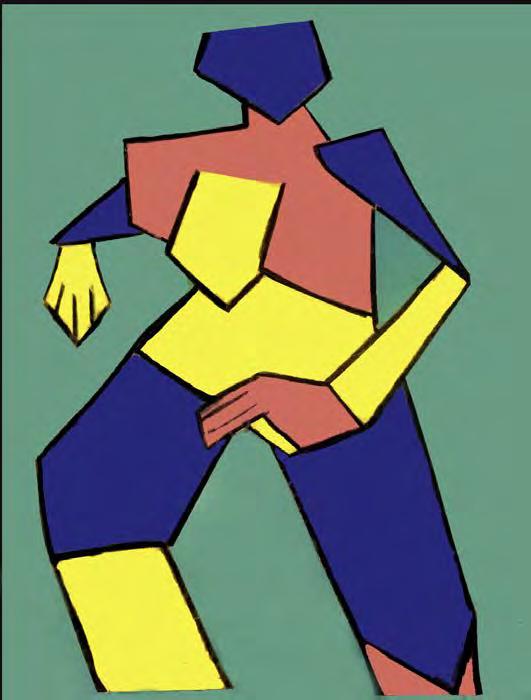
I was sixteen but never followed the teacher’s lessons; I would do my own thing. Instead of trying to draw the nude model, I would see shapes and colors in the body and found myself doing abstract, Cubistic works right off the bat.
Weren’t you a bit underage for nude modeling?
In those days it was very different. It was the Woodstock era. In the Berkshires there was a huge hippy enclave—songwriters Arlo Guthrie and James Tayler; poet supreme Ira Cohen and artist Gerard Malanga; drummer Angus MacLise from the Velvets, and photographers Don Snyder and Clemens Kalischer, whom I tailgated after. These were my “role models.” Back then, men and women walked around without any clothes on. We swam naked: skinny-dipping was a normal thing. I don’t know if many sixteen-year-olds would pose nude now but in those days anybody could do it. Do you remember Blind Faith’s album cover of a topless eleven-yearold holding an airplane? It was controversial, but didn’t inspire a lawsuit. I believe, more importantly, that when I posed for artists privately and for classes, I got not only money, but a great education. On breaks, I would walk around in my robe and observe the other students’ sketches while listening carefully as the instructors taught and critiqued student's work.
What would you say to somebody starting out, as you were?
I’d say first, selecting your mentors is crucial to your education and development as an artist, more than your contemporaries. Second, try working for older, successful artists. Luckily, I had access to quite a few through my modeling and my interest in photography. Although I might be relegated to just cleaning their brushes, spotting their prints, or being their muse, just being around their work firsthand in their studios was crucial to my own development. They also had great libraries and music collections.
Cubist Nude #1, 1971
As I said earlier, my second favorite scent, after crayons, was paper, whether ink on paper or printed books or even record jackets. By twenty, I had an amazing library of art books and often, when alone in my little study, I would put these books up to my nose to smell the pages the way I used to snort crayons. Even after the ink had dried and the volumes were stained with the smell of mildew and mold, the odor the books emitted turned me on! In some ways I replaced my addiction to sniffing crayons with smelling book pages when I was a teenager! I loved the way the old colored plates felt as I slid my fingers over the slick reproductions in awe! Studying art is crucial for one’s development as an artist whether it be with teachers, visiting museums, or just flipping through art books and reading about art history.
You moved to NYC in 1974 and went to the School of Visual Arts. Is that a good memory?
NYC was dangerous and nearly bankrupt, but it was easy to find affordable housing, and I hit a home run when I scored an 1,100-square-foot rent-stabilized apartment that has been my crib and art studio ever since. I would sum up NYC in the early ’70s with this quote from the late Peter Jennings: “New York was some sort of container of dreams, a muse to artists, hipsters, inventors and entrepreneurs. NYC in the ’70s was not only a beacon of optimism and energy, but it was also a dynamite stick of liberty.” It was a fantastic and fascinating time for me!
What did you learn from being taught by artists?
Wow! Do we have enough space here? I was very lucky to have Jennifer Bartlett as my instructor at SVA in the fall of ’74. She was a fantastic artist, and her lessons, class assignments, and painting exercises were outstanding. She taught us to be responsible for every square inch of the canvas. Every drip, splatter, or smudge must be intended. The application of paint was as crucial as the subject matter. Bartlett was a hard taskmaster, no mistake about it, and was one of the best teachers you could ask for.
What were her classes like?
When I entered her class, I had already begun painting abstractly at Prescott College in Arizona. This wasn’t what Bartlett was teaching in her freshman foundation course, though. She believed
we first had to learn how to paint realistically. But I already had done that and was not interested in representational art anymore. Her first assignment was to paint a still-life scene in class. We were instructed to bring in props and set them up on a table. I found a way to get around this.
I masked off a rectangle of the studio wall with tape and did the same with a section of the floor tiles that had the remnants of other painters’ splatters, sprays, drips, and stomped-on paint, even tracks of their footprints. I copied this so-called mess onto my canvases, sometimes adding marks and paintbrush strokes on the masked-off section of the wall or floor to make the compositions more dynamic. Then I copied these additions onto my canvases. I think Bartlett was surprised by my paintings because I was unaware that she was becoming known for her tile installations based on a grid system. The grid was a huge motif in Minimalist art and the floor tiles in the art studio became my grid.
What other projects for the class did Bartlett come up with?
She stressed the idea of the series, a number of works centered on a single theme, and once asked us to do a succession of paintings based on a childhood memory. I chose a sewer on a street
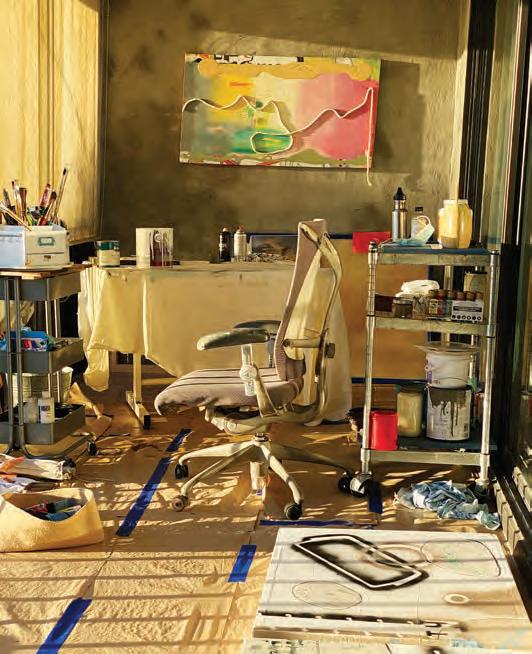
Florida Studio, 2023
where I played stickball as a child. The ball would often find its way into the sewer, and I’d have to fish it out. In this series I created for her class, the sewer plate acted as Minimalist grid. I sold several pieces to the Dean of SVA.
What brought Bartlett to your studio on East 87th Street?
She needed to see the canvases collectively in order to grade us at the end of the semester but I told her that my paintings were just too big to cart back to school on the subway one at a time. I offered to chauffeur her up to my apartment to inspect them because, of all things, I had a car in the city. So, one Sunday I picked her up. She had a broken toe and was hobbling on two crutches. We drove to my pad on East 87th Street. Unlike her loft building, mine didn’t have an elevator! Whoops! Thank God I lived on the second floor and she only had to stagger up one flight of crooked steps. When I showed her the paintings on the walls, her comment was, “You call this big?” She looked around my makeshift studio, didn’t say anything else, and I drove her back to her building. I did receive the only “A” in the class that semester.
Do you have other significant memories of SVA?
Frank Roth, who taught in the next studio to Bartlett, was an excellent painter who would also become a great influence on my work. He was represented by Ivan Karp of OK Harris Gallery and had somewhat of a career when I met him. I spent a year in his company and earned my first art commission in 1976 when I sold one of his paintings to a boyfriend of mine for $18,000. I was twentytwo years old; my commission was $2,000! This took me to Europe, supposedly to be a fashion model in Paris and Milan. But I spent more time going to museums than trekking to “go sees” with my portfolio to meet photographers and potential clients. That’s when I met Salvador Dali and had an affair with his bodyguard! My relationship with his attendant afforded me invitations to have dinner with Dali and Gala several times in NYC and attend the private opening of his show at the Guggenheim. Dali had been interested in my posing for him but decided against booking me when he realized I wasn’t a transvestite! Years later I would craft my carrot-stick hairdo after his brilliantly comic whiskers.
Have you had other interesting encounters with artists?
I was almost killed riding my bicycle on Third Avenue in 1989. Change, a Rauschenberg Foundation Grant, which provides Emergency Medical Grants for Artists who need help paying for healthcare and medical expenses, gave me $500. Rauschenberg signed the check himself. I was conflicted on cashing it because I knew his signature might be worth a lot someday, but I needed the money! Two years later I received another gift from his foundation when I was diagnosed with cancer. This check was double the former one, but this time Rauschenberg didn’t sign it.
I was at the Dakota when John Chamberlain cut the infamous Styrofoam couch for the Herseys without injuring anyone (lol!); I modeled for the eccentric Charles James, at the Chelsea Hotel during the hottest summer on record, with no A/C and his beloved dog, Sputnick, spraying my Charles Jordan Spikes.
About this time, I also met some pretty interesting writers, such as the infamous screenwriter, Norman Wexler, who wrote Saturday Night Fever across the hall from me and in a manic fit smashed all the windows to the front entrance of my building!
Cubist Nude #2, 1971
So, to your art. You use rope in your collages with striking effect.
It was a pure accident. One day while I was photocopying a shopping bag I had collaged, the rope got copied too. But it was a lucky accident. The rope gave the piece movement, and danced across the page. I have been using ropes on canvas ever since, providing me with a poured-paint kind of brush stroke.
Although I have lived in my NYC apartment most of my life, I often rent studios in other states where I won’t be distracted by the frenetic blender called NYC! I call these times my painting sabbaticals. I’d hole up somewhere for six months and work on multiple canvases at once. Often I’d work twenty-four hours straight until I finished a piece! I tend to label the series by the state in which they were created. (Works from Philly, Works from Florida). In 2006 I returned to the Berkshires and set up a studio there. That’s where I began applying ropes to my paintings based on my fondness for shopping bags. Hence, Berkshire Paintings.
So painting is a form of freedom for you?
Yes, similar to meditating. No thoughts, no worries, and no logic. Picasso said, “Art washes away from the soul the dust of everyday life. Don’t think about making art, just get it done.” My idea exactly!
Who are some of your preferred artists?
I especially admire the superhuman Caravaggio. Other favorite artists in no particular order include Picasso, Rothko, Cy Twombly, Warhol, and Basquiat.
You have had another art career. Tell me about your photography.
In the ’80s I ran out of room to store my paintings in my apartment so I took up photography because the medium was a whole lot more manageable. In the late ’80s I began photographing myself in two series, one called The Ruins, which was before my surgery, and Beauty Out of Damage, which was after. Actually, I’ve been involved with the “selfie” since 1970 and have directed or shot hundreds of pictures of myself in a variety of guises.
Artists sometimes come from difficult backgrounds and may themselves have difficult lives. What are your thoughts on this?
A troubling, fractured background certainly provides the impetus to live life differently and search for meaning in some deep, dark, and decadent places! Could be a good thing, who knows? There’s a saying that only artists and criminals make their own lives. “Each of us is forced to create his own environment, that is, program his own psychic and sensory life.
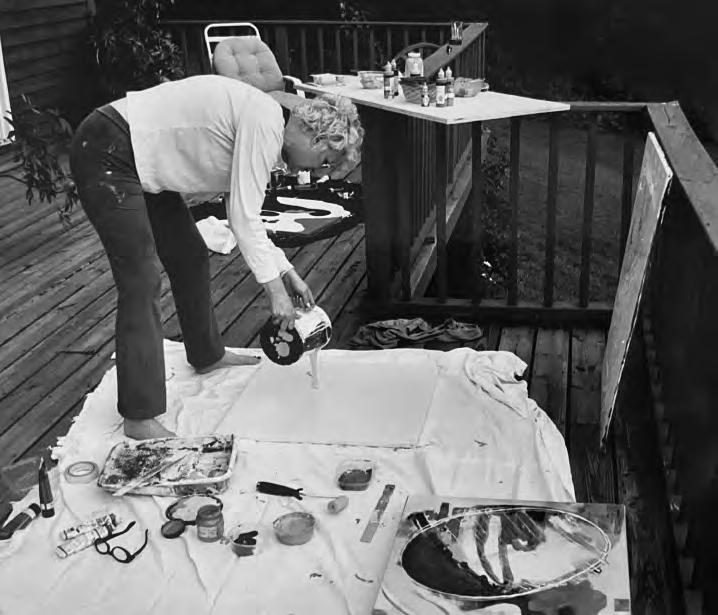
Matuschka with Rope Series. Photo by Austin Ventola, 2021
To this end we turn to the arts, for only artists, and maybe criminals, have exciting lives!”
Look at the Italian artist Caravaggio who painted some gruesome pictures, now that’s some story. He lost both parents at a young age and ended up with a career in painting and fighting. Caravaggio was a magician with the paintbrush but also a notorious criminal and murderer.
Certainly my background provided a need for developing an “art life,” and I, too, got into some dubious situations with the fuzz. One could say I had quite a “record” by the time I was adopted by Mrs. Marco, but I cleaned up my act by the time I turned sixteen. No doubt watching many people die at an early age was not a great way to jump-start my adolescence. Nor did being bullied by my peers for being so tall and well-endowed: none of this provided the necessary or proper tools to socialize, network, or build a family structure. But making things, crafts, building my small Utopia in the woods and my peculiar flower gardens sheltered me from the parade of untimely deaths, violence, and substance abuse I witnessed in my formative years. You can say circumstances made me a loner: I didn’t engage with my classmates much because I preferred to draw, make things, and abide by these three little words, Look, Listen, and Learn. That was my mantra. What these challenging years did prepare me for was a life of making art.
So it all goes back to the past. You could perhaps say that Matuschka’s art began with her escape to the woods?
As I roamed around the woods like a feral cat or as a super-busy child, alone in my room playing with my crayons or other artifacts, I found a way to amuse myself. Years before I became a “serious” art student, I made art from things I found in the town dumps on the other side of the railroad tracks. Yes, that thrown-out dented green colander turned upside down could be a Halloween hat for my “heavy metal” costume! And I always relished those flower arrangements I made with the Girl Scouts, or the stone-and-twig installations I built in the woods. Discovery and exploration were a big part of the game. Hiding out in the sewer tunnel thinking I was out-slicking the enemy gave me a feeling of excitement and empowerment. There I had a different view on how to “view reality.” Somehow, by the railroad tracks, where the sewer emptied out into a creek, a fuse blew. I was no longer unwanted but embraced by my surroundings. Down by the Hackensack River I found Paradise, and art made life not only manageable but all that more magical. I consider Art my Utopia. A life saver.
And thank god for crayons!
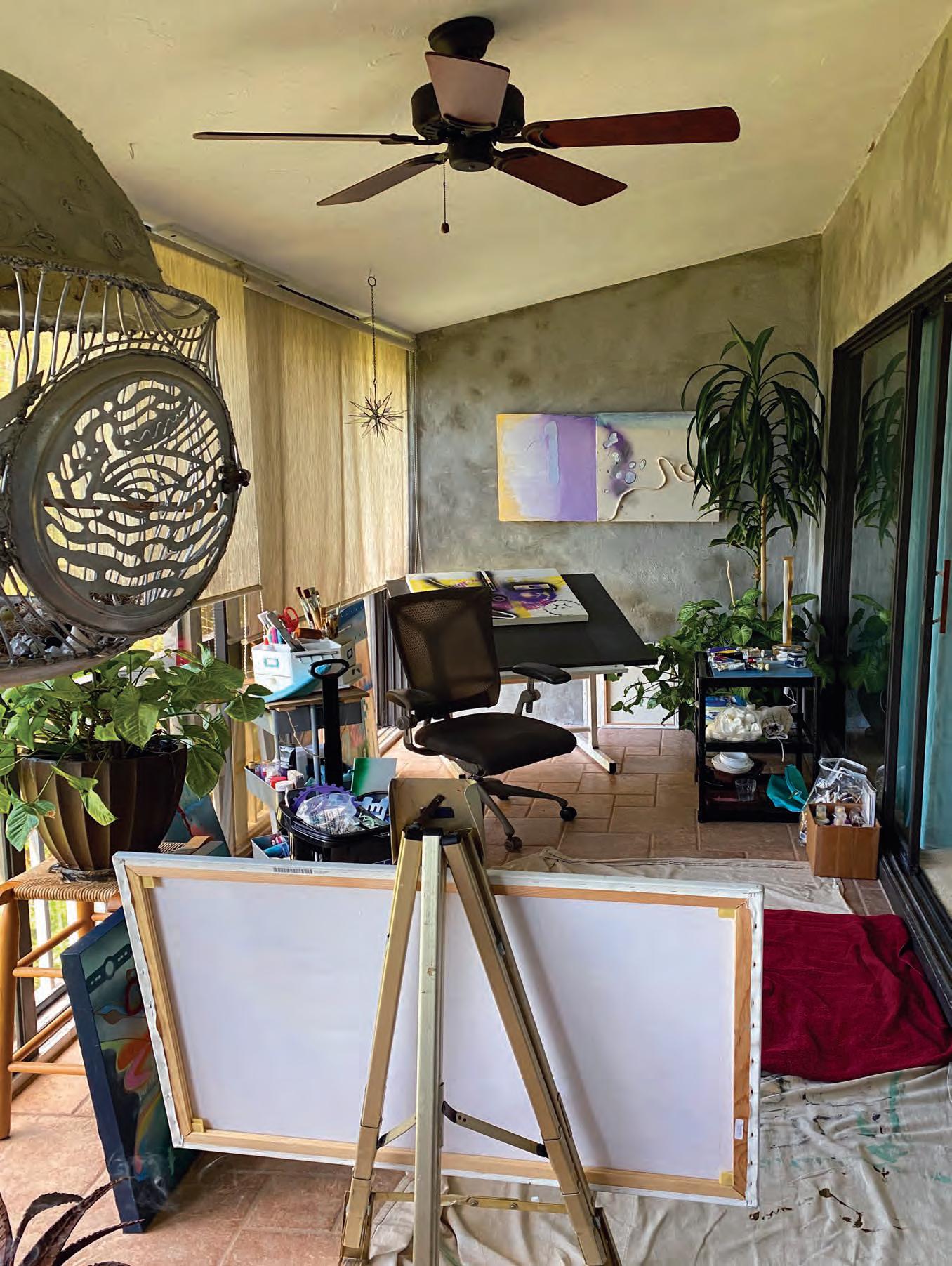
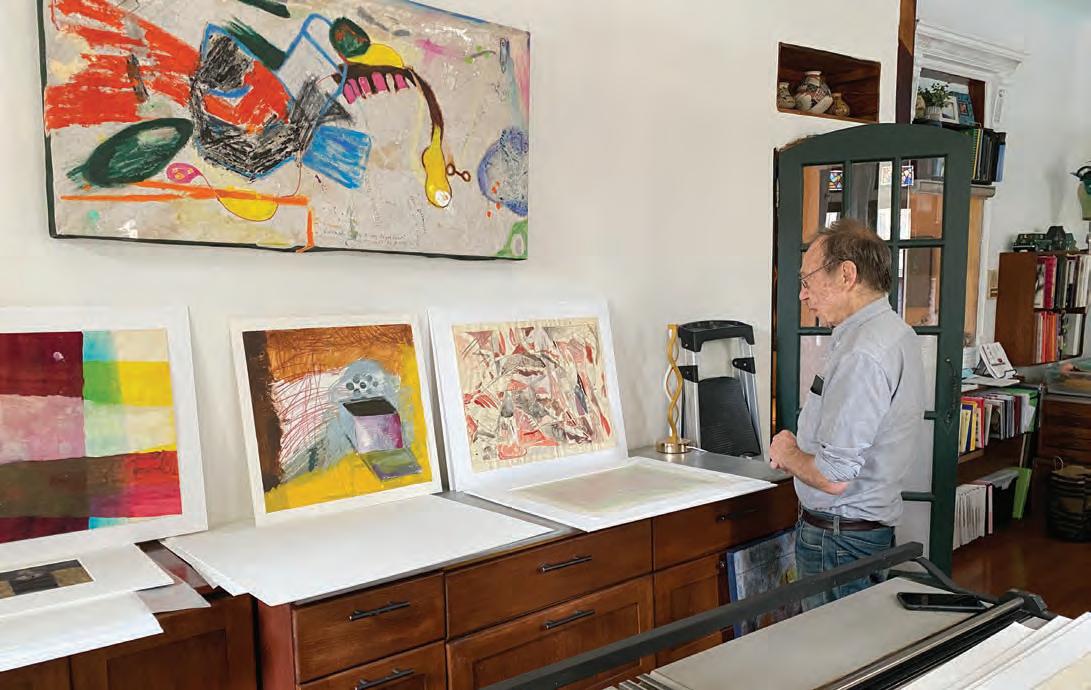
Matuschka in Florida studio. Photo by Austin Ventola, 2021
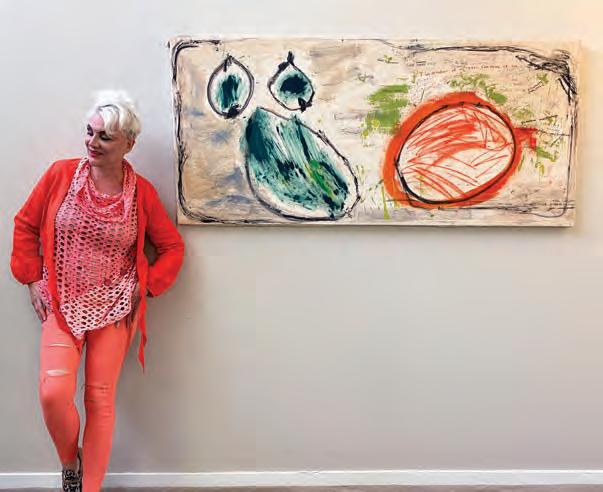
Matuschka in front of Karen’s Circle. Photo by Austin Ventola, 2021
Matuschka is a New York based artist, activist and author whose photos and essays have been widely published in a variety of international publications since the 80s. She attended the School of Visual Arts in the mid-seventies and her accolades include the prize winning 1993 cover of The New York Times Sunday Magazine, The Rachael Carson Award for her work addressing environmental concerns, a Gold Award from the World Press Foundation and a Pulitzer Prize nomination for photography. In 1996 the artist's poster, Time for Prevention, commissioned by Greenpeace won the Best Environmental Poster Award. In 2003 LIFE Magazine chose Matuschka's iconic self-portrait Beauty out of Damage for their special tribute: "One Hundred Pictures That Changed the World."
Although known as a photographer and model, Matuschka's works on paper and canvas remain a constant and essential element of her art. For more than 50 years, she has been creating new bodies of work with inimitable innovation and unrelenting energy. Her art is not solely about personal experience, her imagery resonates with a universal importance and is very much a product of the times in which she resides.
Born in New Jersey, Matuschka began studying art when she was sixteen years old. She received full scholarships to attend college and studied painting with Jennifer Bartlett at the School of Visual Arts. Few people have seen the paintings included in The Noisy Paintbrush, many of them made nearly fifty years ago by the then twenty-year-old student at SVA.
In the 1970s, female artists were largely ignored, and Matuschka felt she was no exception. At age twenty-one, she quit painting large canvasses, had a brief career as a model and resumed her interest in photography. Since the 80s her self-portraits graced the covers of more than twenty international magazines, but her main passion was always fine art. At the turn of the century she returned to abstraction, her primary art form.
Currently, the artist works primarily in vibrant, tactile, and layered abstract compositions on primed and raw canvas. Many of her paintings and sculptures include rope motifs and poured paint, where she both reacts to and controls the unpredictability that comes with such.
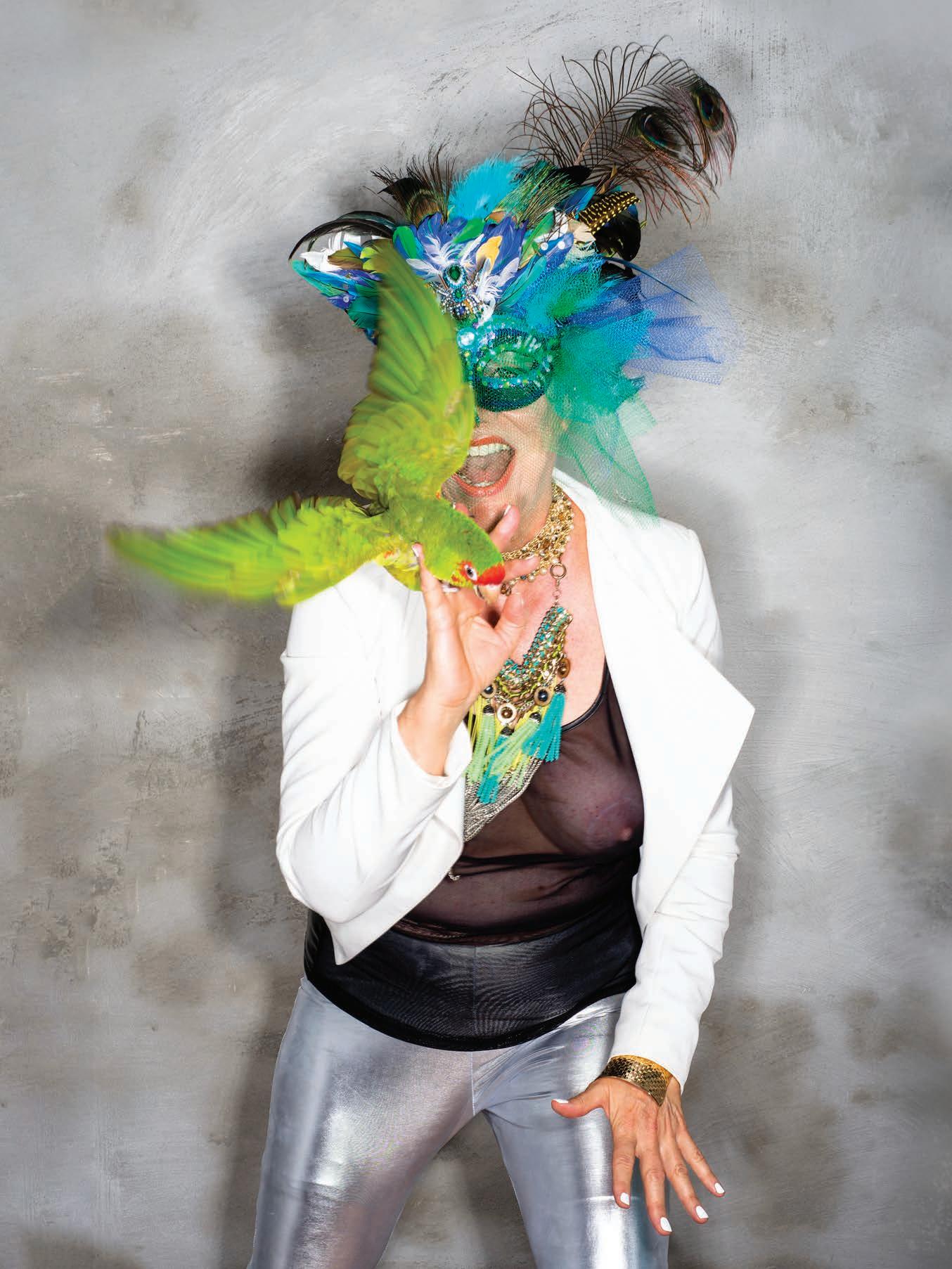
Matuschka resides in NYC and has fostered a variety of parrots. This book is in memory of Mini Max Areeno Bambino who lived with the artist from 2006-2023.