A Selection of Works From Undergraduate and Graduate Design Studios, Completed in Pursuit of a Bachelor of Science In Architecture and a Master of Architecture By:
Matthew Kositzin
Studies completed at the Catholic University of America in Washington, D.C.
Copyright All Rights Reserved By Matthew Kositzin
REIMAGINE
Matthew Kositzin
REIMAGINE HEALTH
THESIS PROJECT
In response to the pressing societal challenges and the concerning deterioration of children’s mental and physical health, the creation of a recreational wellness center for youth emerges as a paramount initiative. By uniting aspects of well-being traditionally treated separately, such as recreation and student health, the center encourages holistic development, making wellness a core value. This center will provide a space that fosters the development of the whole self, including physical, cognitive, social, and mental well-being. Recognizing their significant impact on the overall well-being of school-age children, these facilities play a pivotal role in instilling lifelong habits and essential skills. As society continues to evolve, prioritizing and establishing accessible avenues for youth recreation and health becomes imperative, ensuring a healthier and more resilient foundation for the next generation.
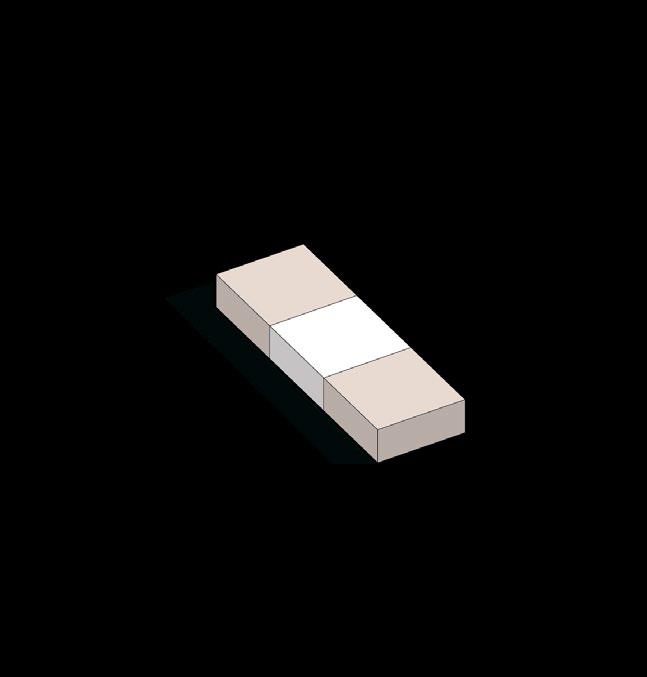
DIVIDE
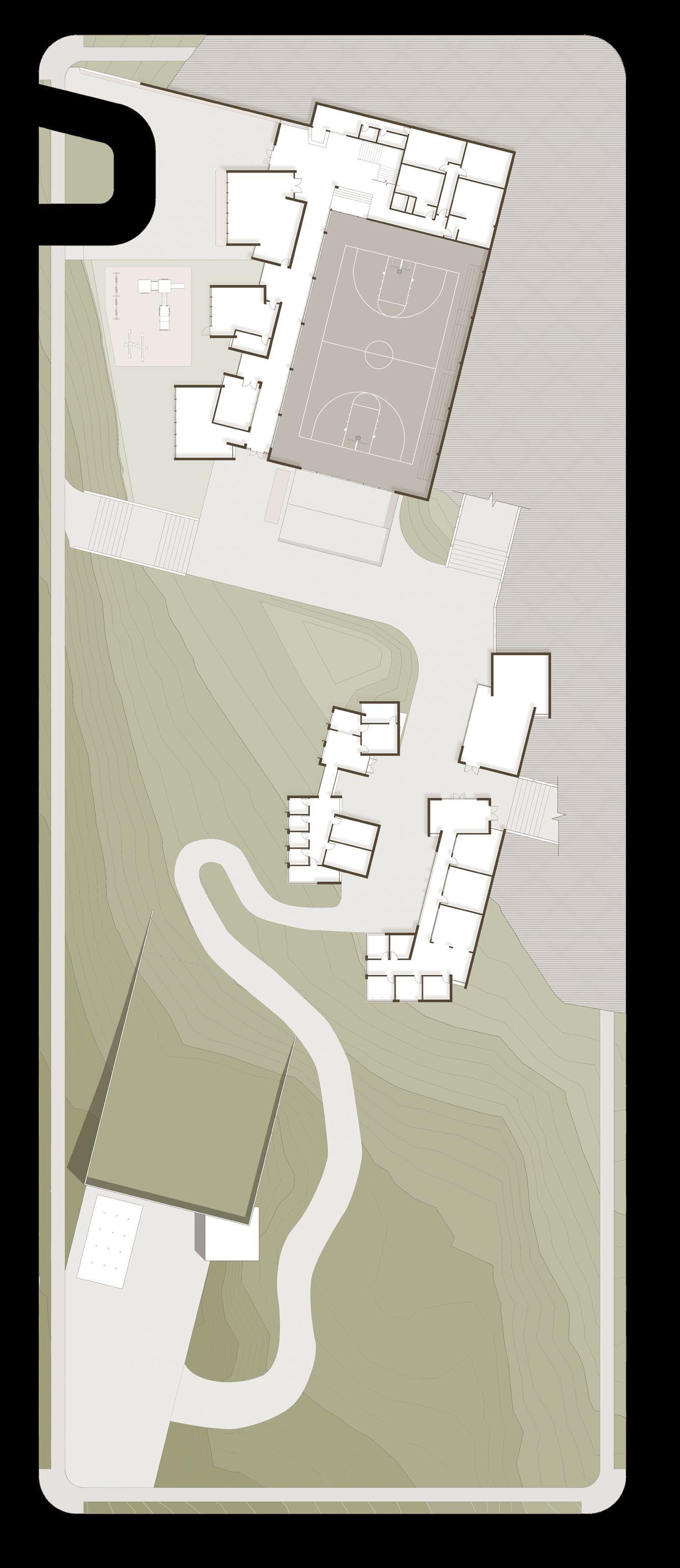
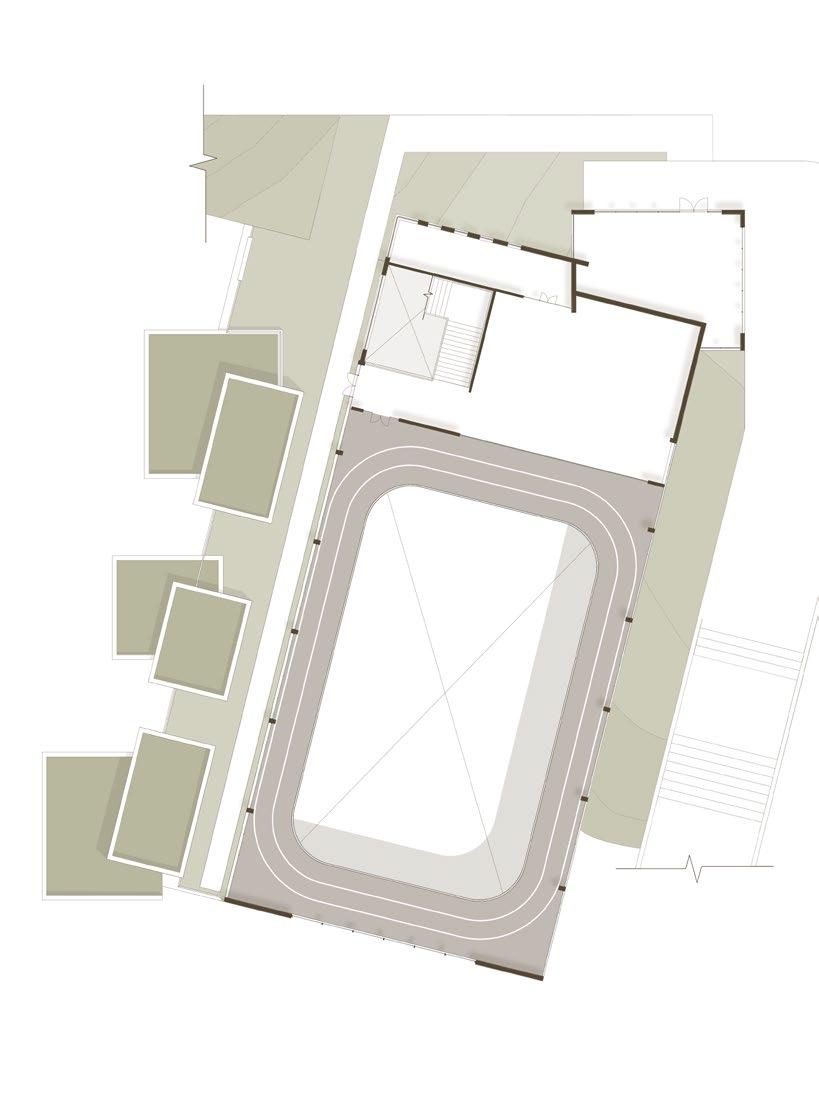
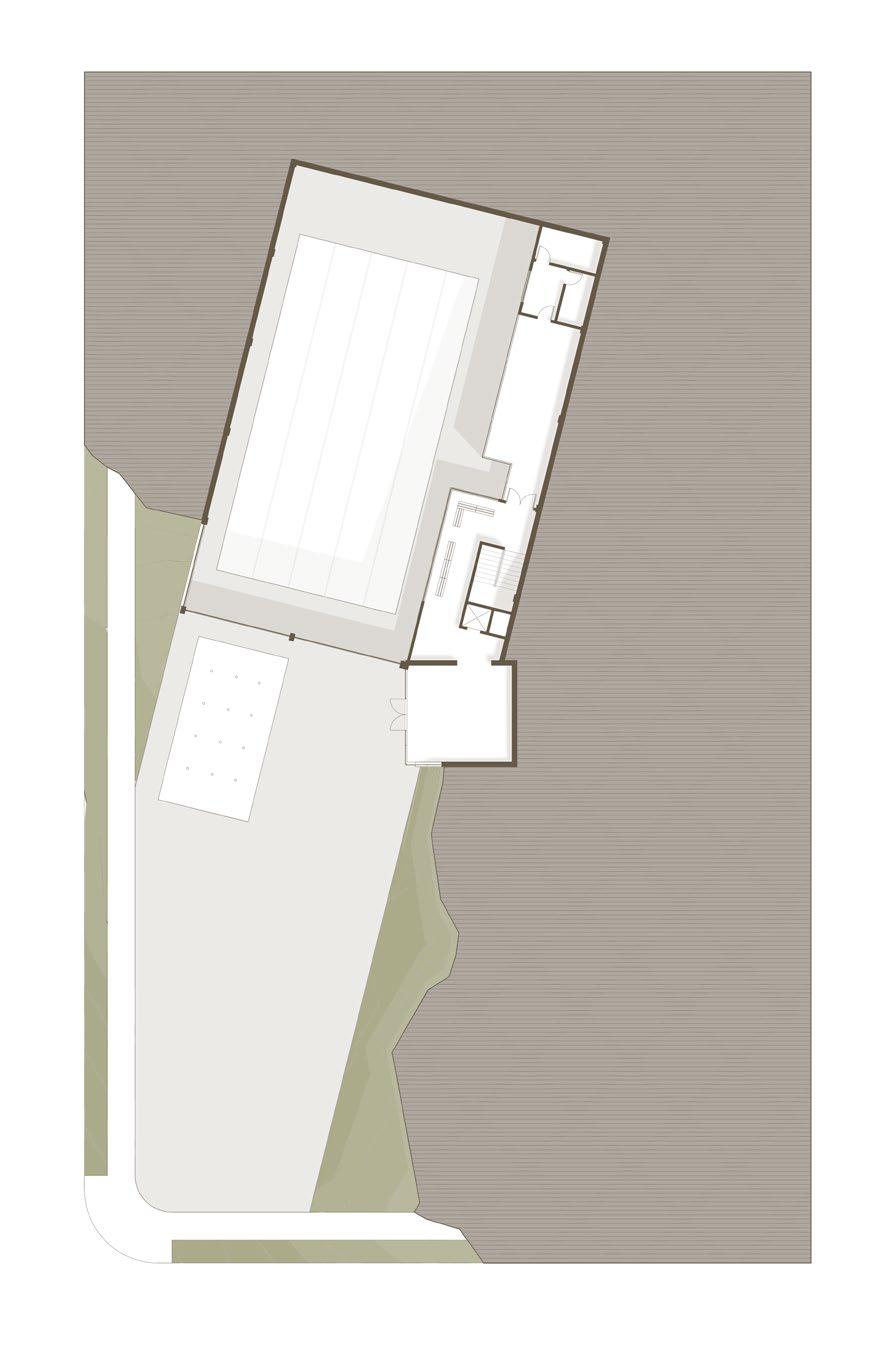
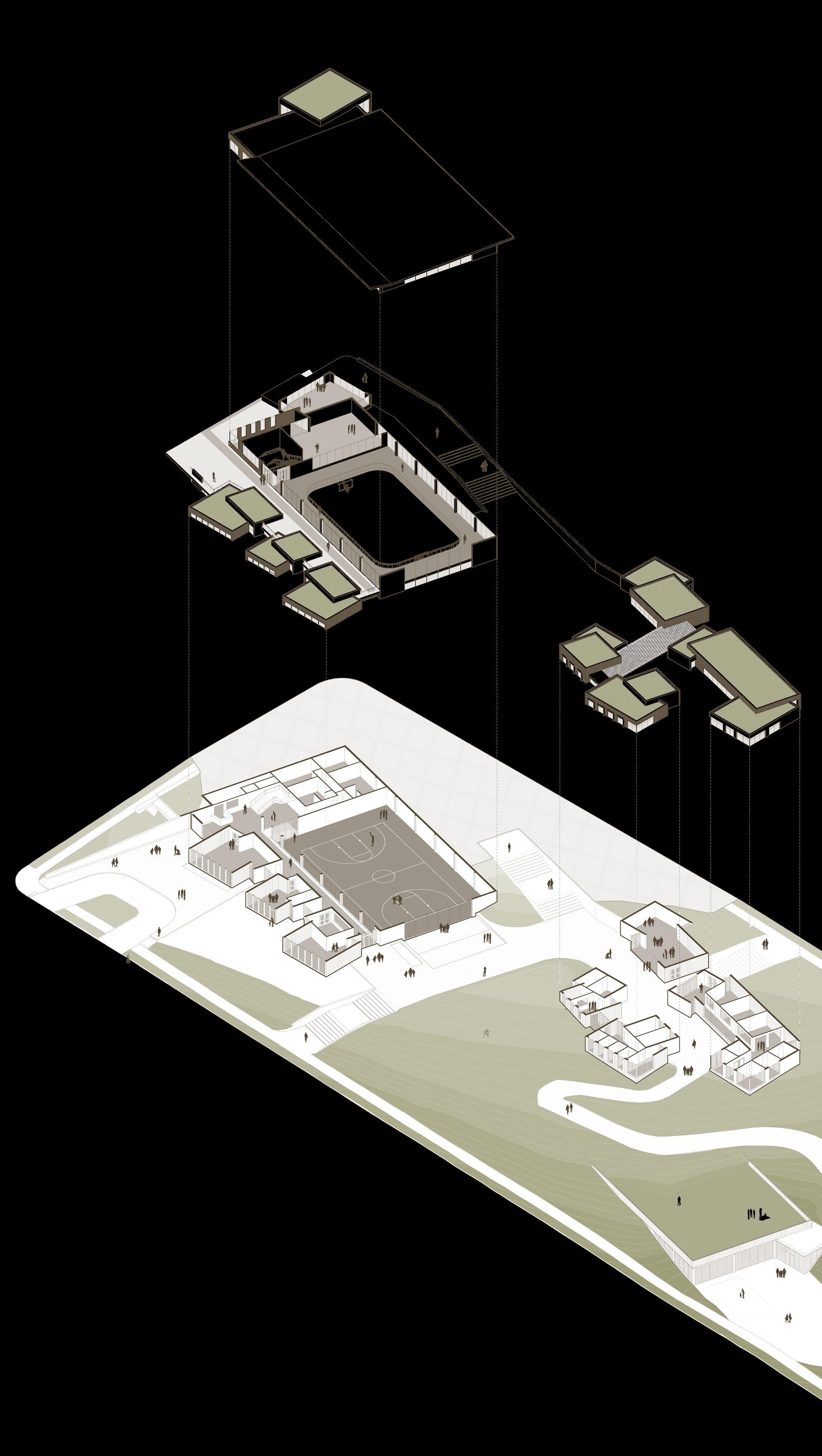
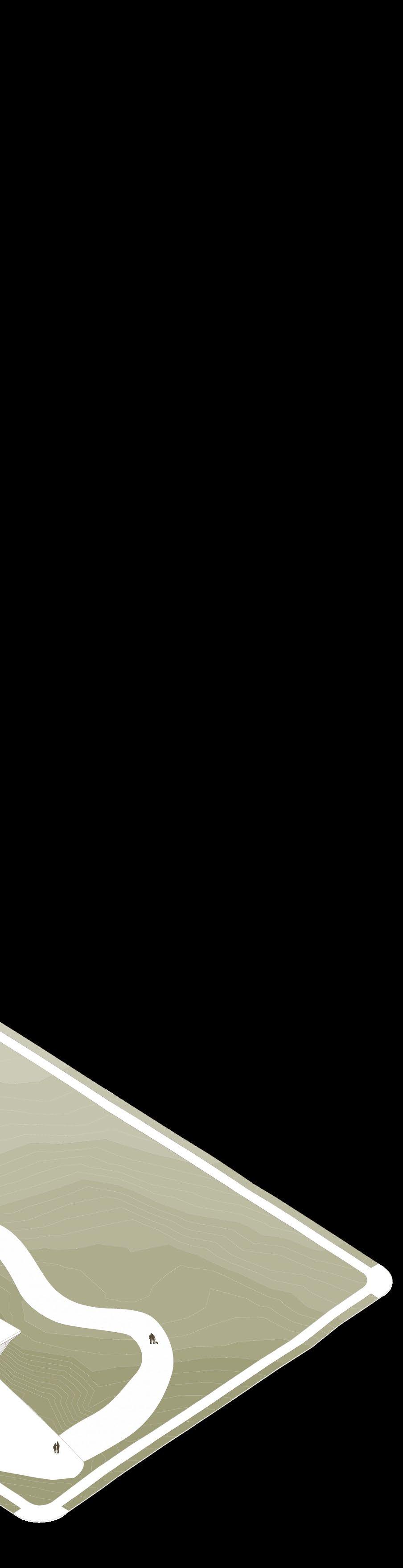
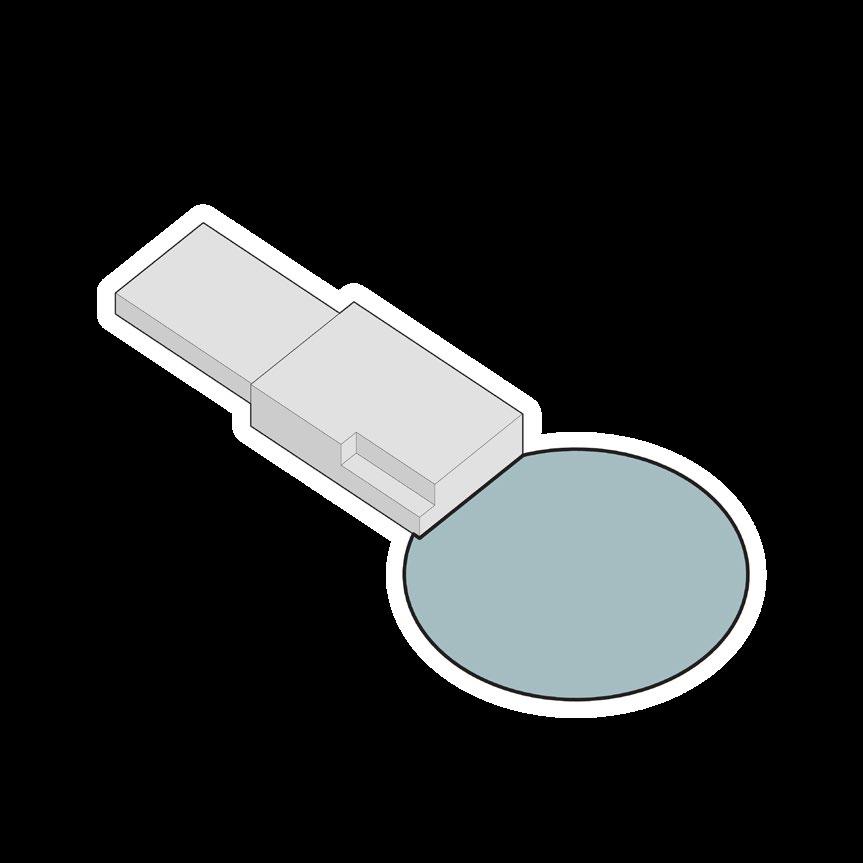
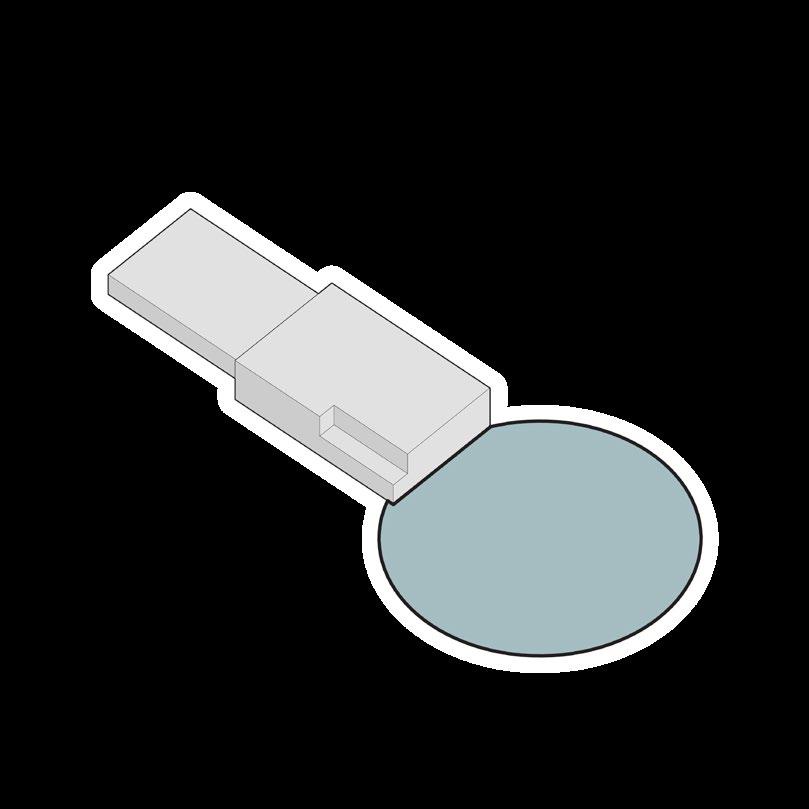
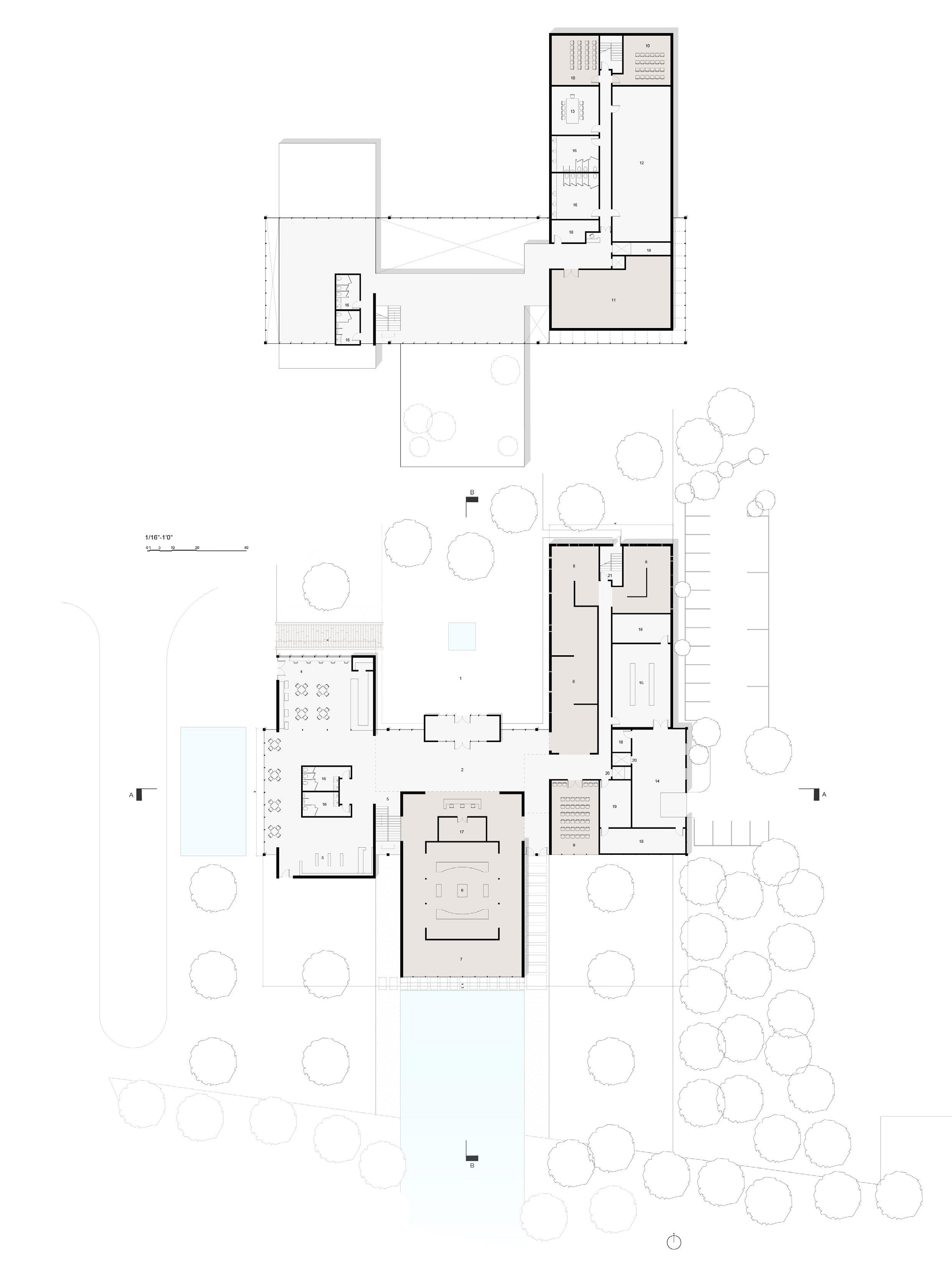
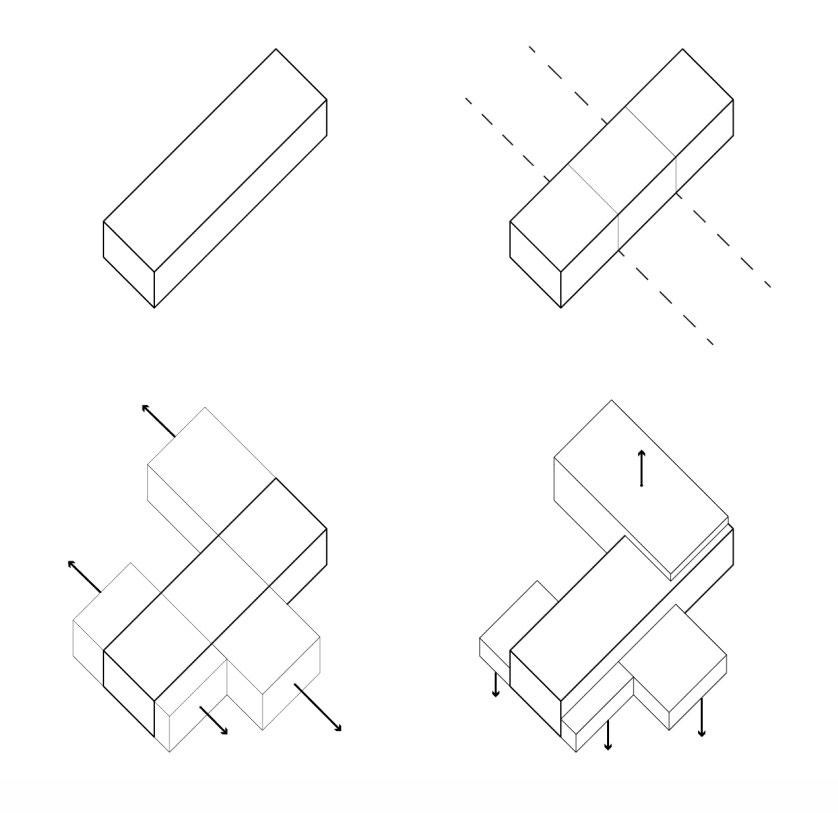
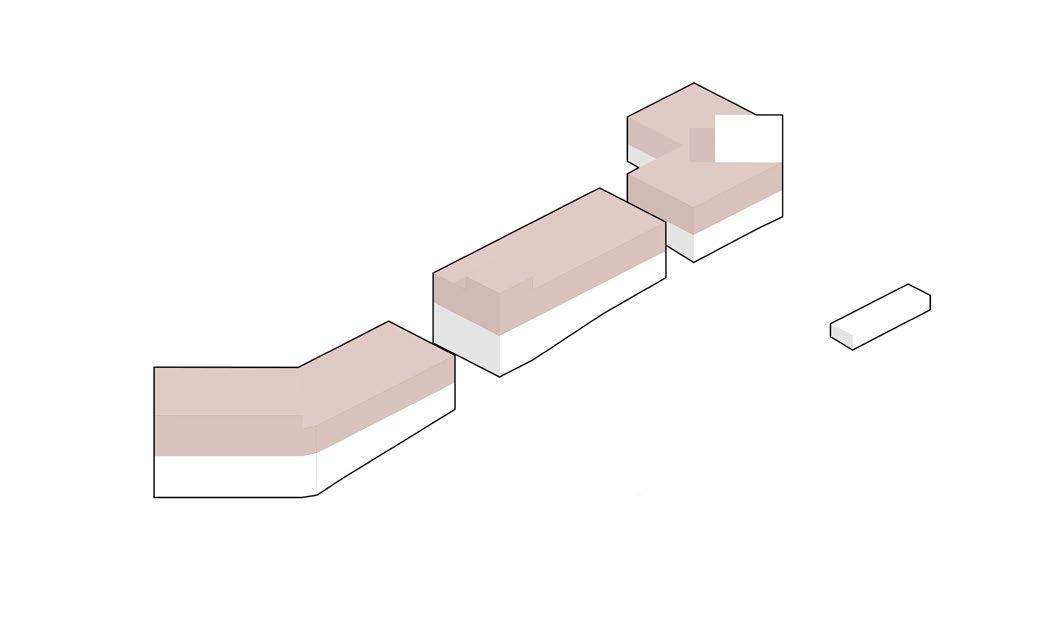
The design began with a primary axis aligned against the site’s topography, guiding the spatial organization. The massing was then divided into key spaces—physical, cognitive, and mental. Strategic separations, such as between the counseling center and basketball court, ensure each space supports its intended function while maintaining thoughtful connectivity across the program.
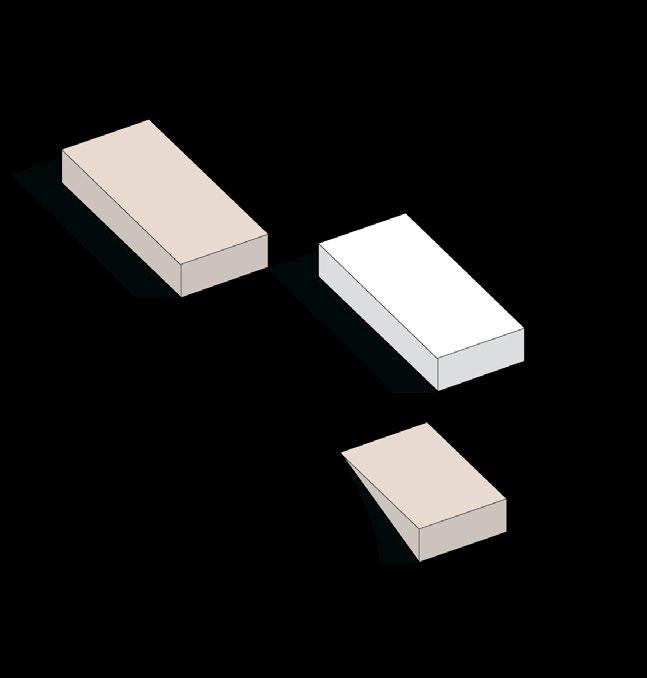
SEPERATE
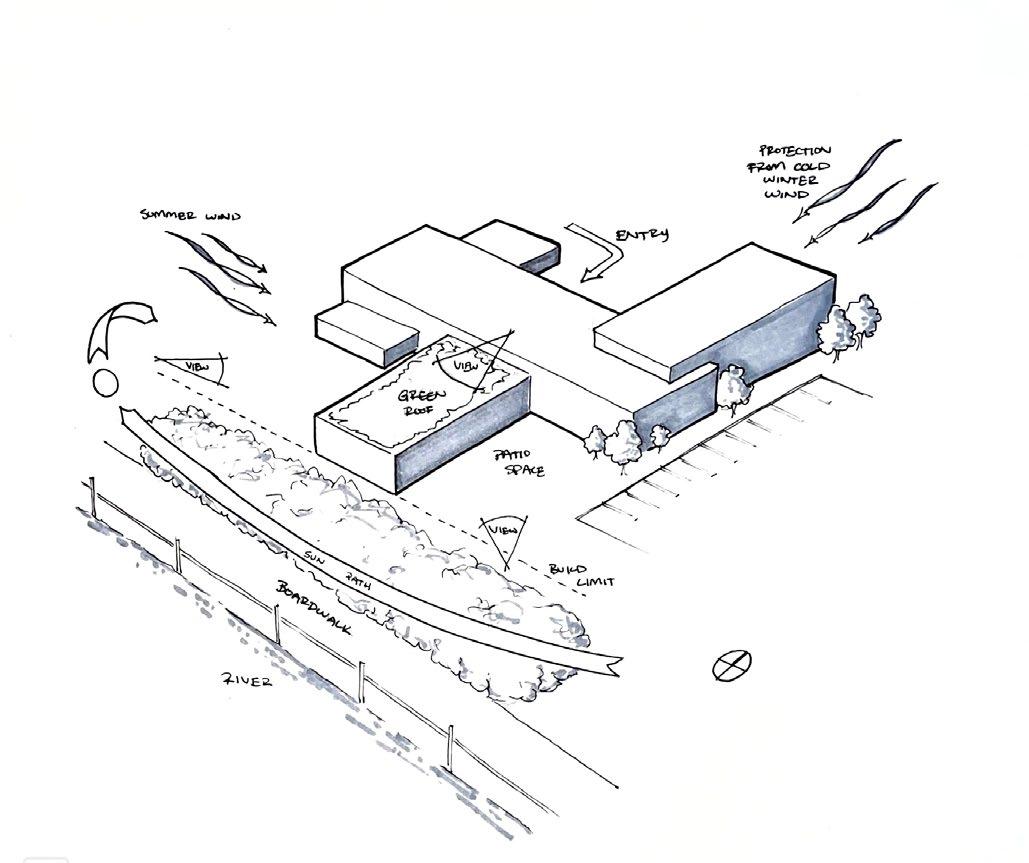
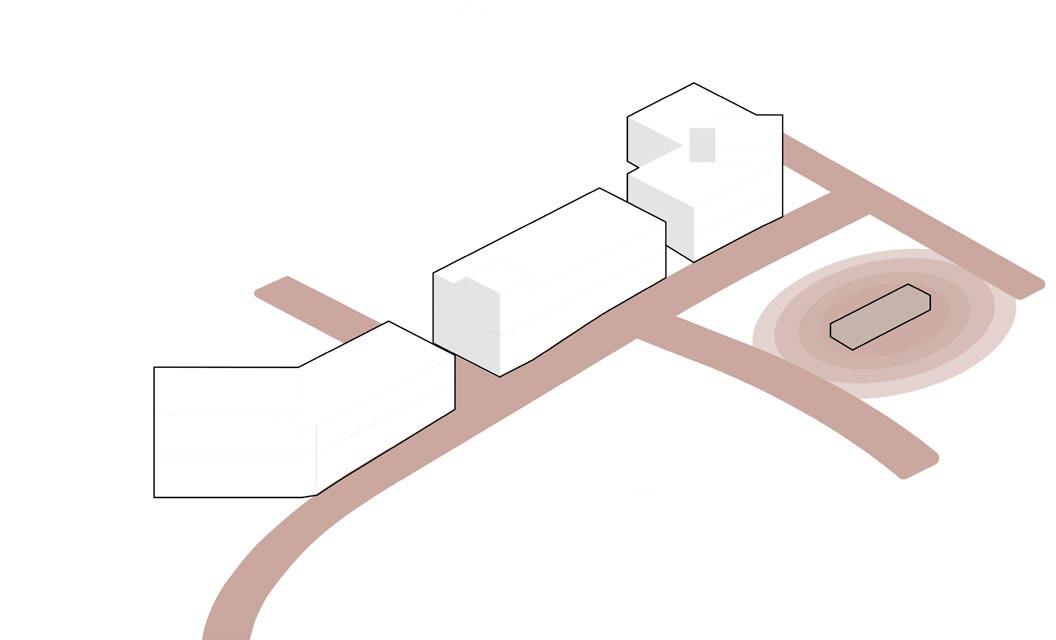
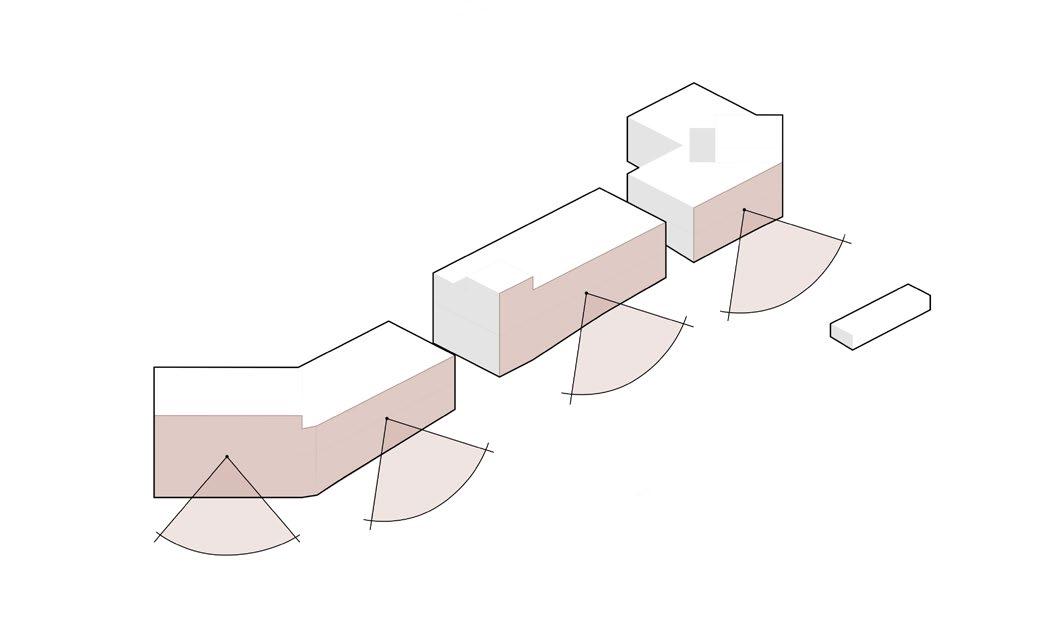
The design separates program elements into distinct buildings, creating a village-like layout that promotes movement and engagement. This approach forms a sheltered central courtyard, protected from 19th Avenue’s traffic and oriented toward the Pacific Ocean. The resulting space offers a calm, inviting environment that enhances both user experience and the overall functionality of the facility.
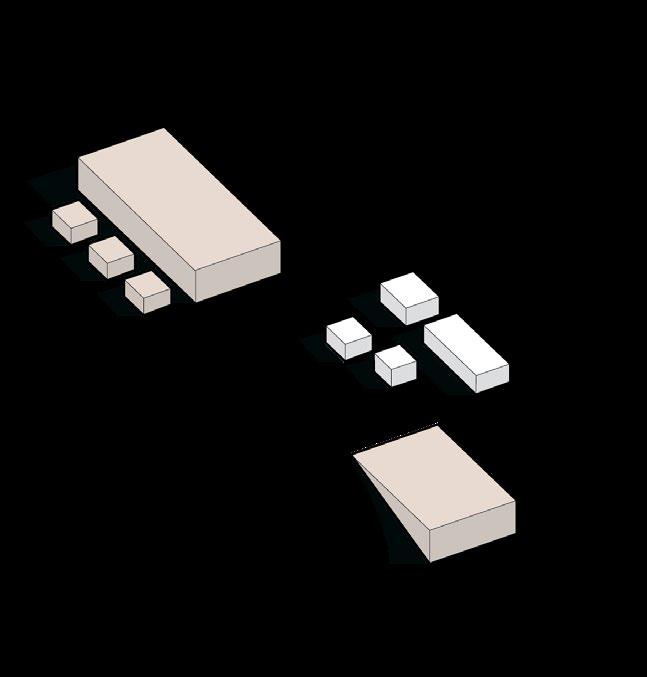
CITY GRID
The buildings were further divided using a secondary grid, subtly offset from the city’s existing layout. This intervention creates a cohesive link between the center and its residential surroundings. The resulting smaller volumes house key amenities—such as the gym and pool—while reinforcing the facility’s primary functions and integrating seamlessly into the broader urban fabric.
20TH
19TH
HOLISTIC WELLNESS
The design for this recreational wellness center embodies a holistic approach, integrating physical, cognitive, social, and mental well-being into a unified framework. Addressing the critical societal challenges of declining youth health, the center prioritizes accessible, interconnected spaces that foster comprehensive development. By combining recreation with mental health support, the design promotes lifelong wellness habits and skills, empowering individuals and strengthening the community.
PROGRAM
PHYSICAL
gym, pool, fitness center, studios
COGNITIVE
classes, study spaces, makers space
MENTAL
counseling center, meditation spaces
DESIGN FOR COMMUNITY
This center is thoughtfully designed to serve as a vibrant hub for the community, fostering connection and well-being for individuals of all ages. Located in San Francisco’s Sunset District, it offers an inclusive space where residents can engage in physical activity, stimulate their minds, build social connections, and nurture their mental health. By integrating recreational and wellness facilities, the center becomes more than a venue—it’s a cornerstone for holistic health and a sense of belonging within the community.
SITE SECTION
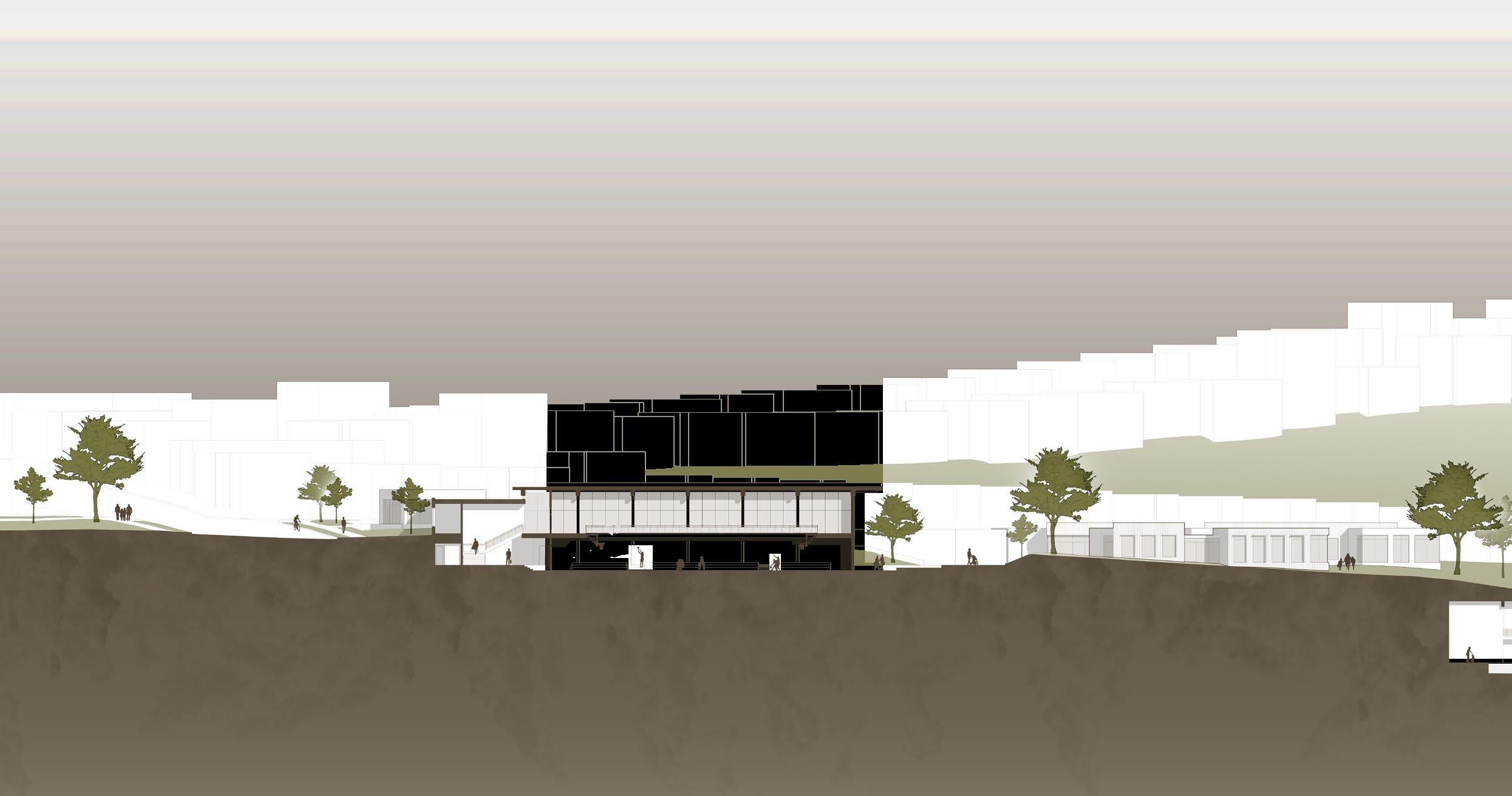
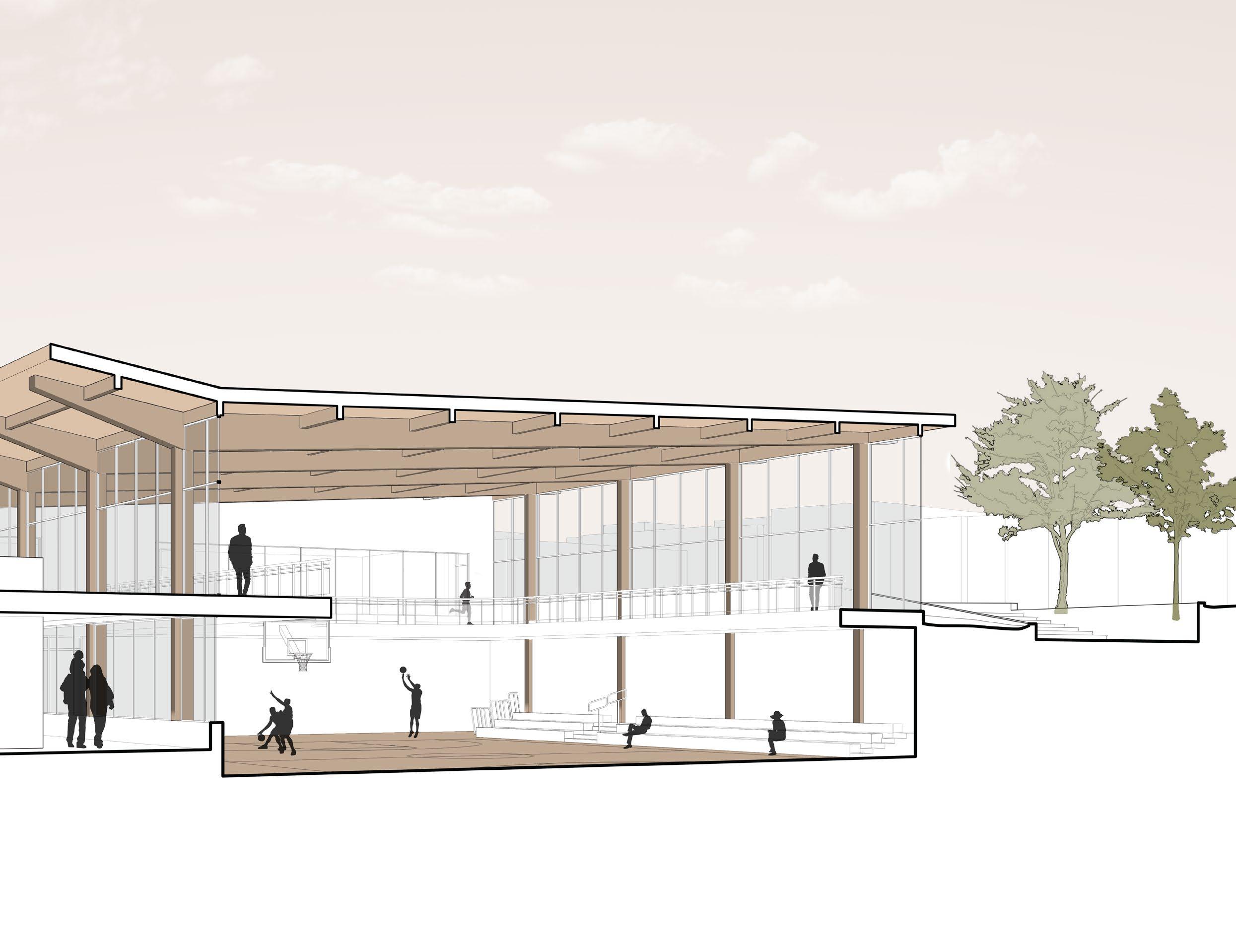
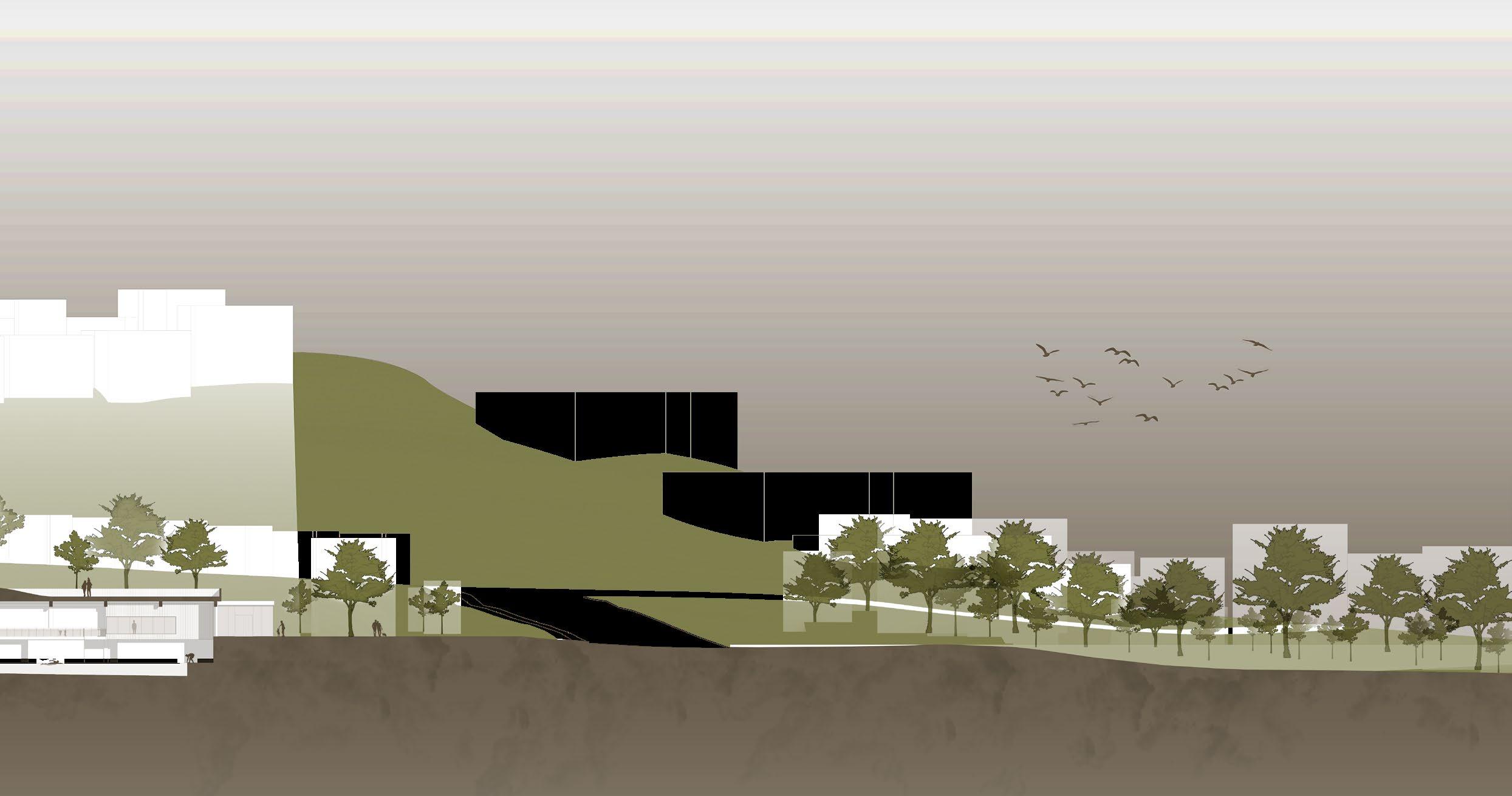
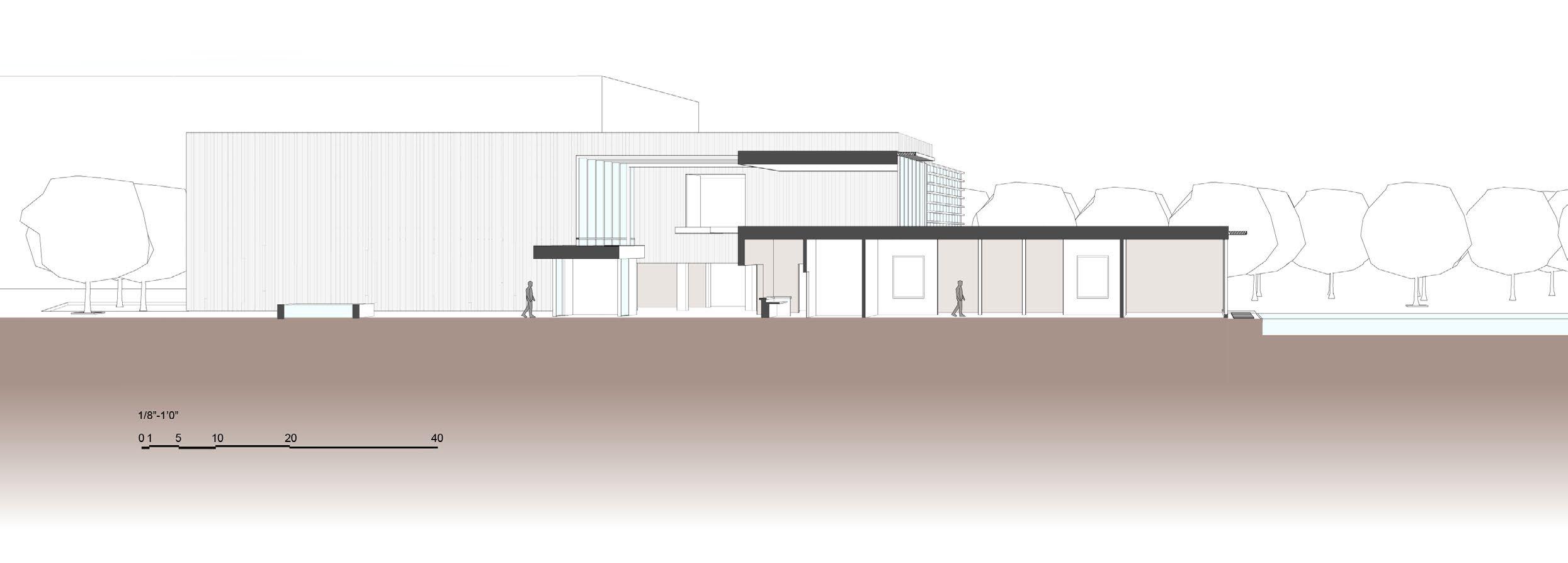
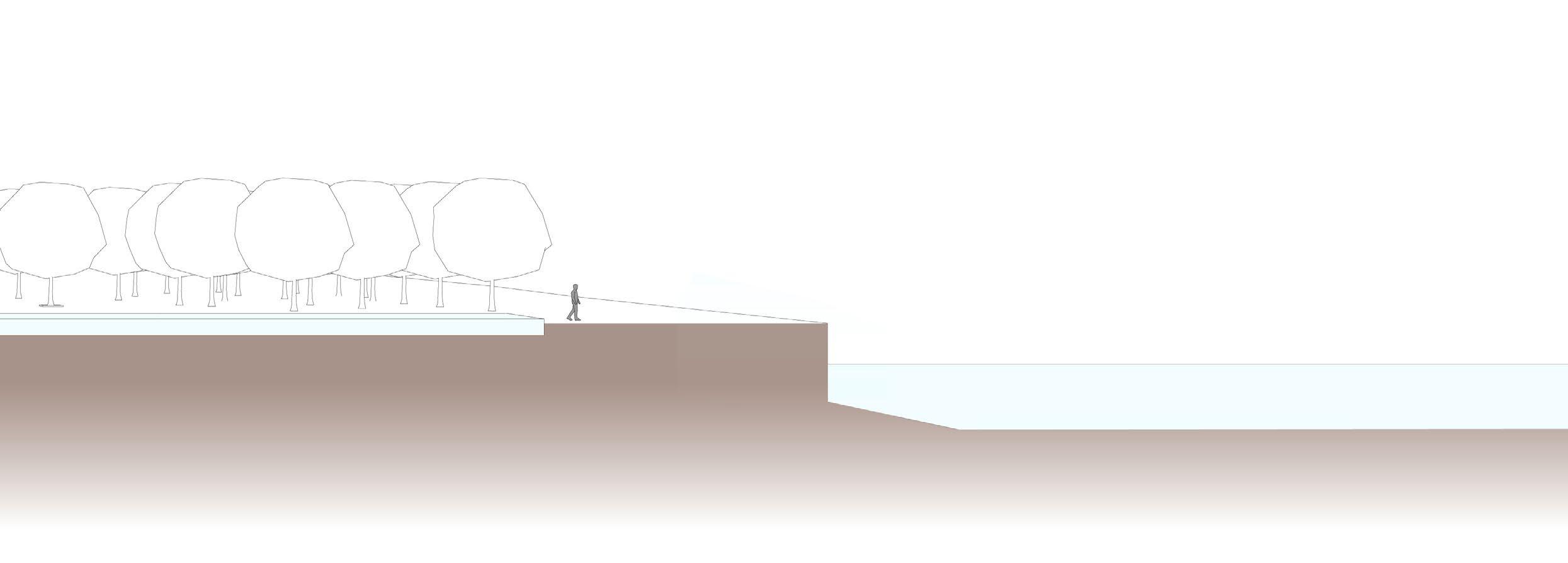
This longitudinal section illustrates the site from top to bottom, highlighting the elevation change between the gym and pool.
ENTRY VIEW
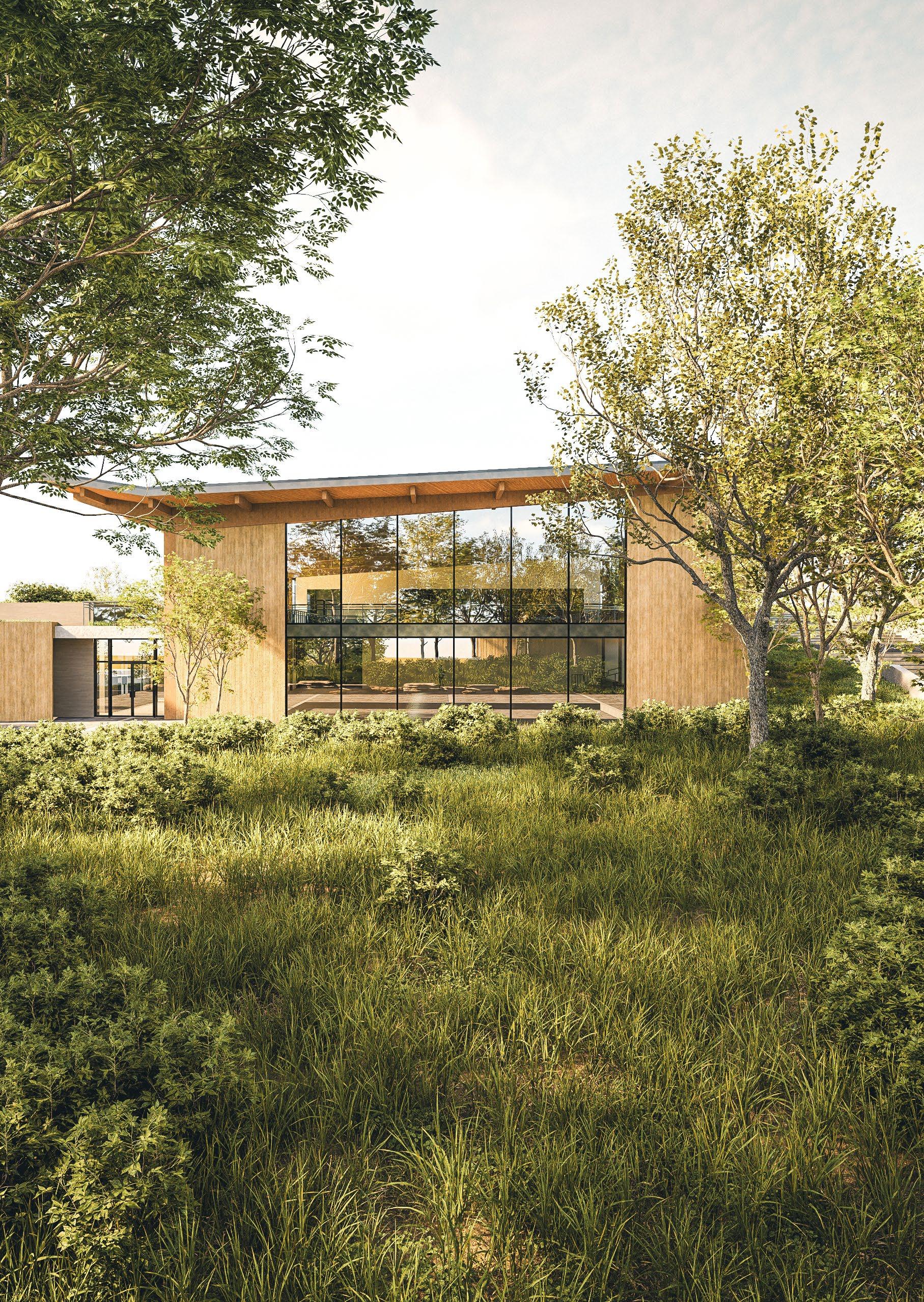
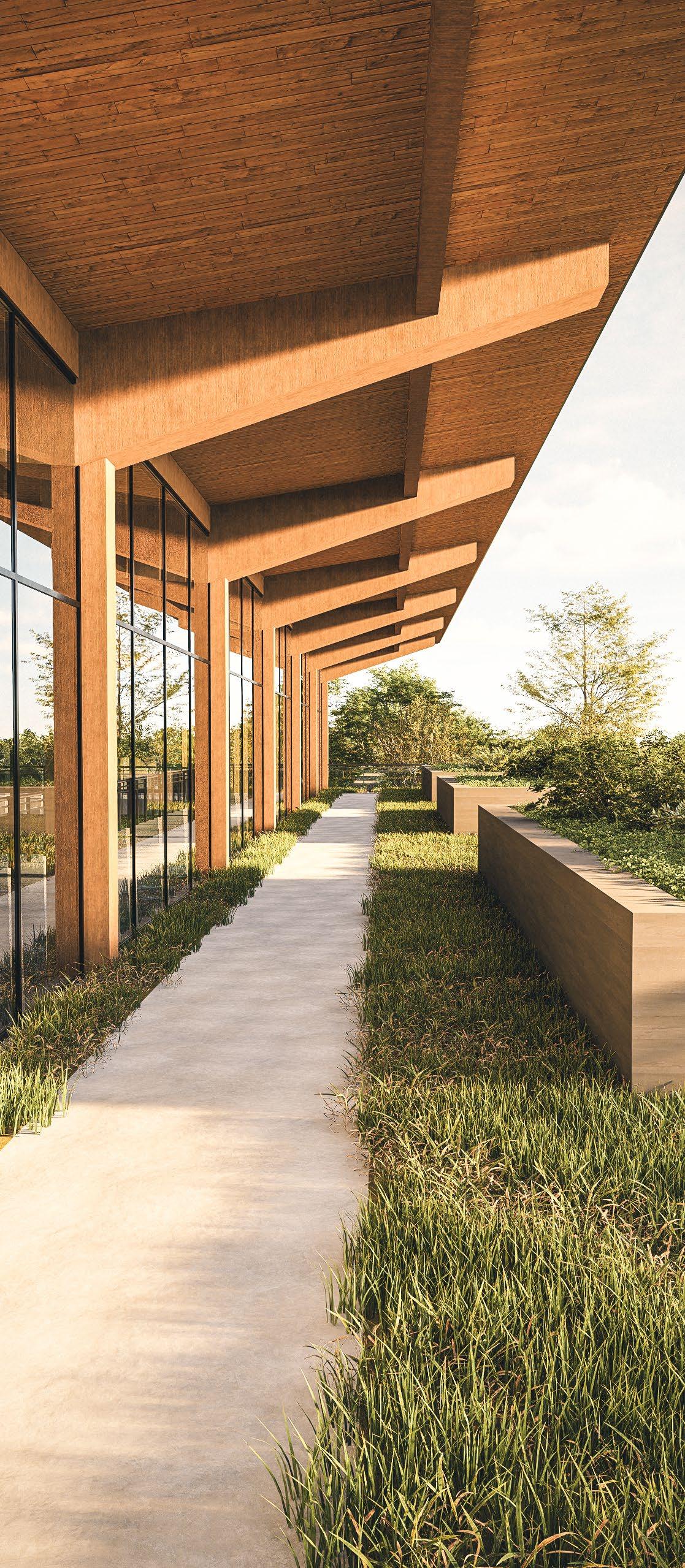
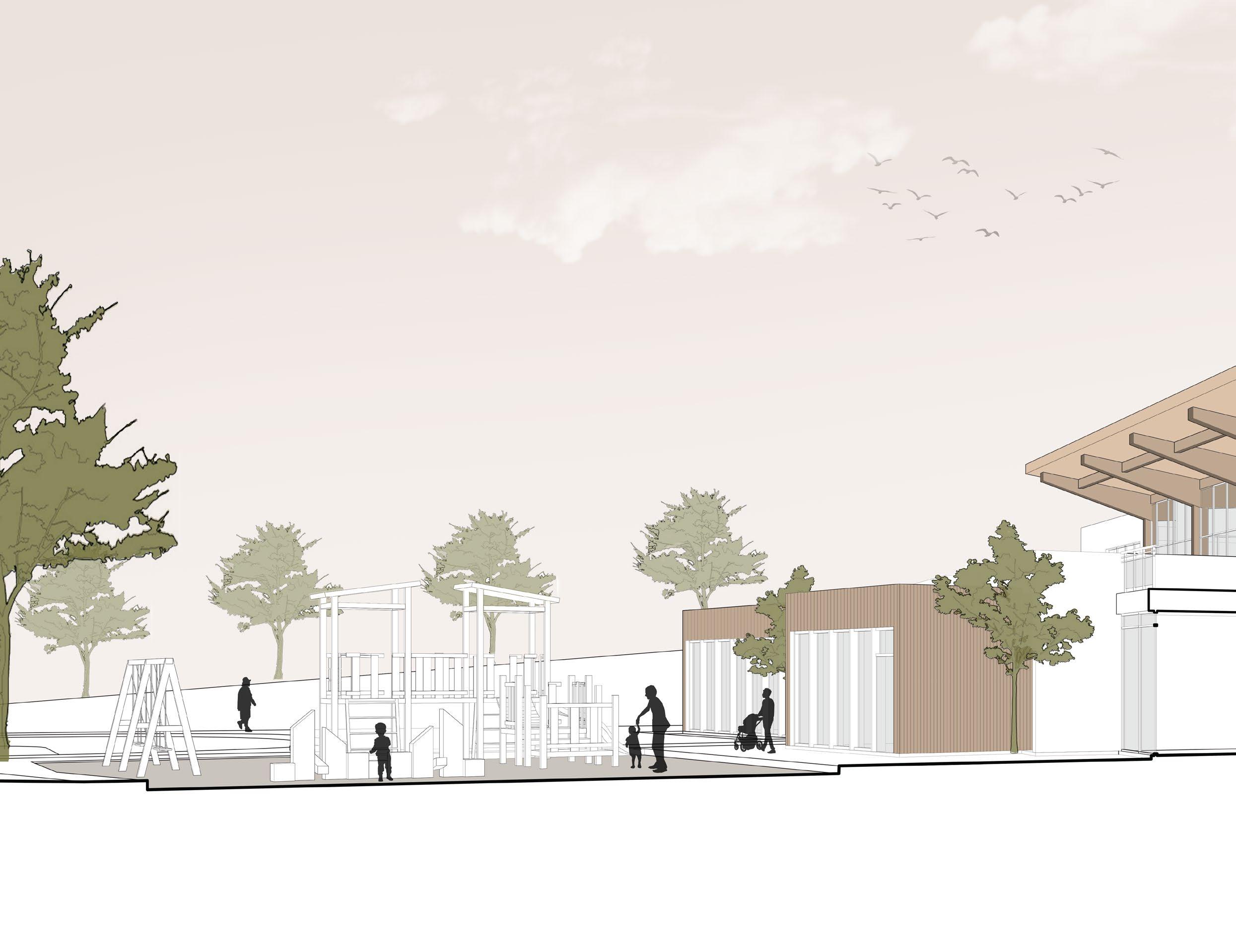
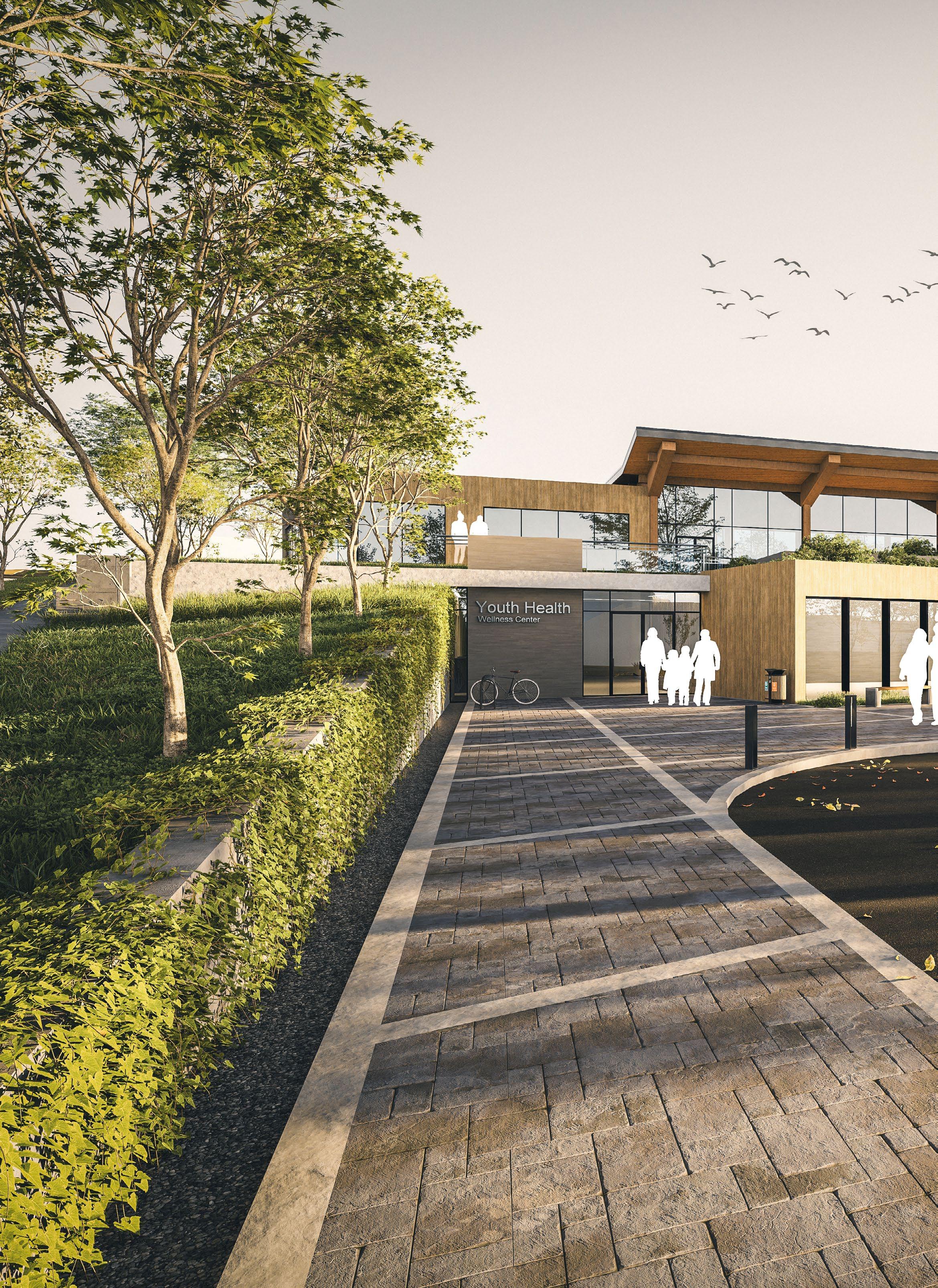
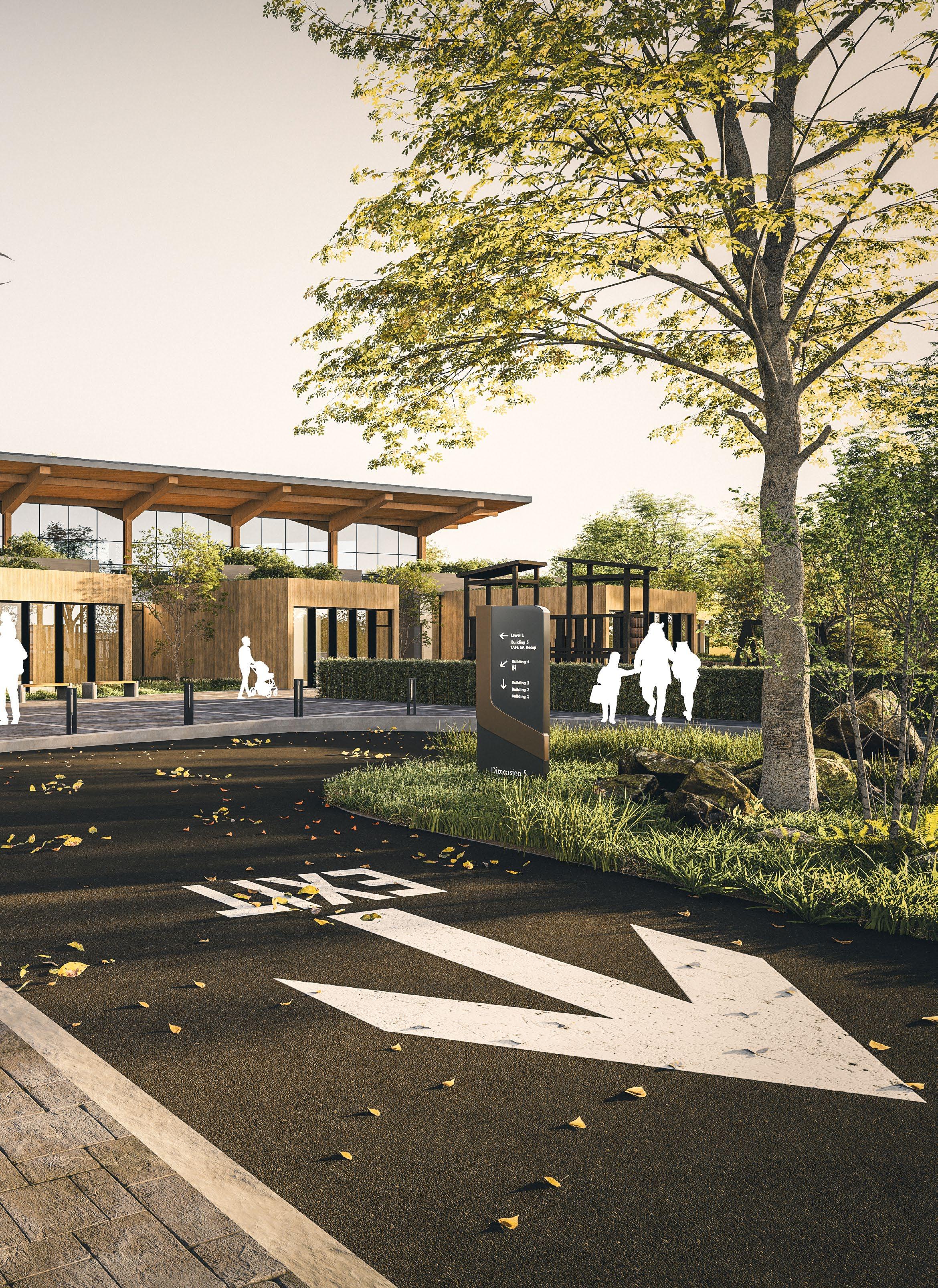
The main entry on the western side is integrated into the existing topography, limiting the visual impact of the large gym space.
RIVERSIDE OASIS
NET ZERO STUDIO
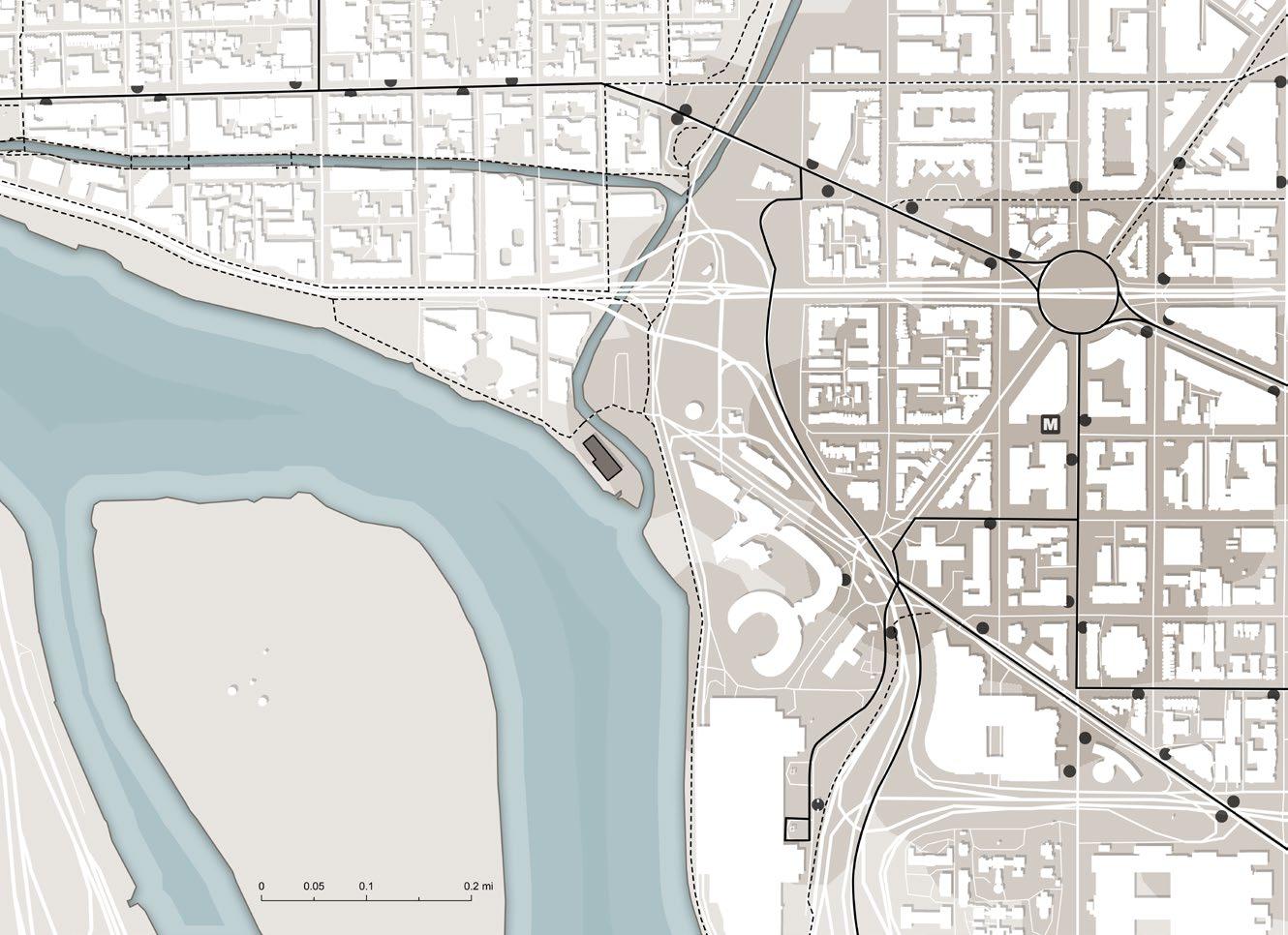
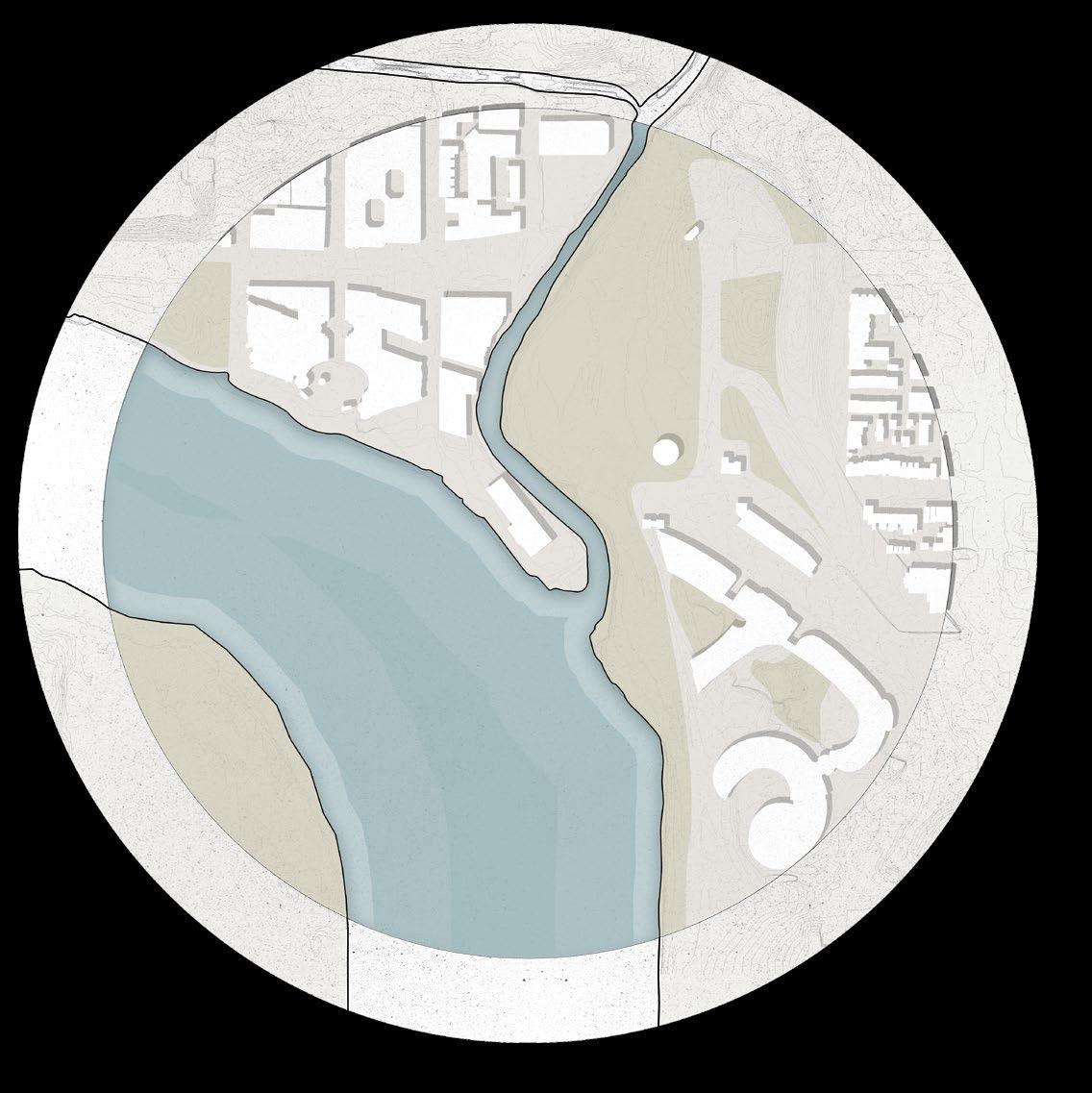
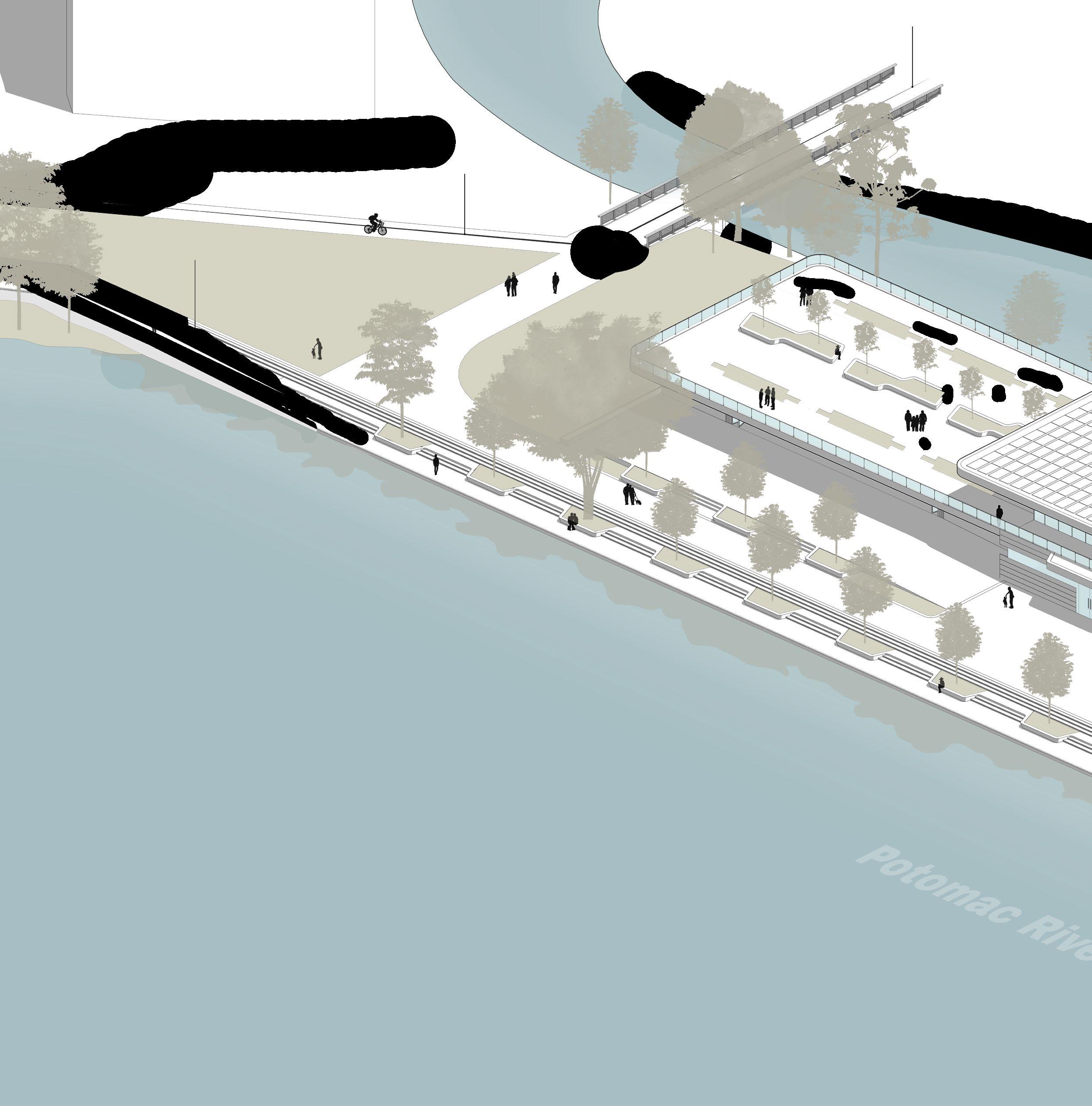
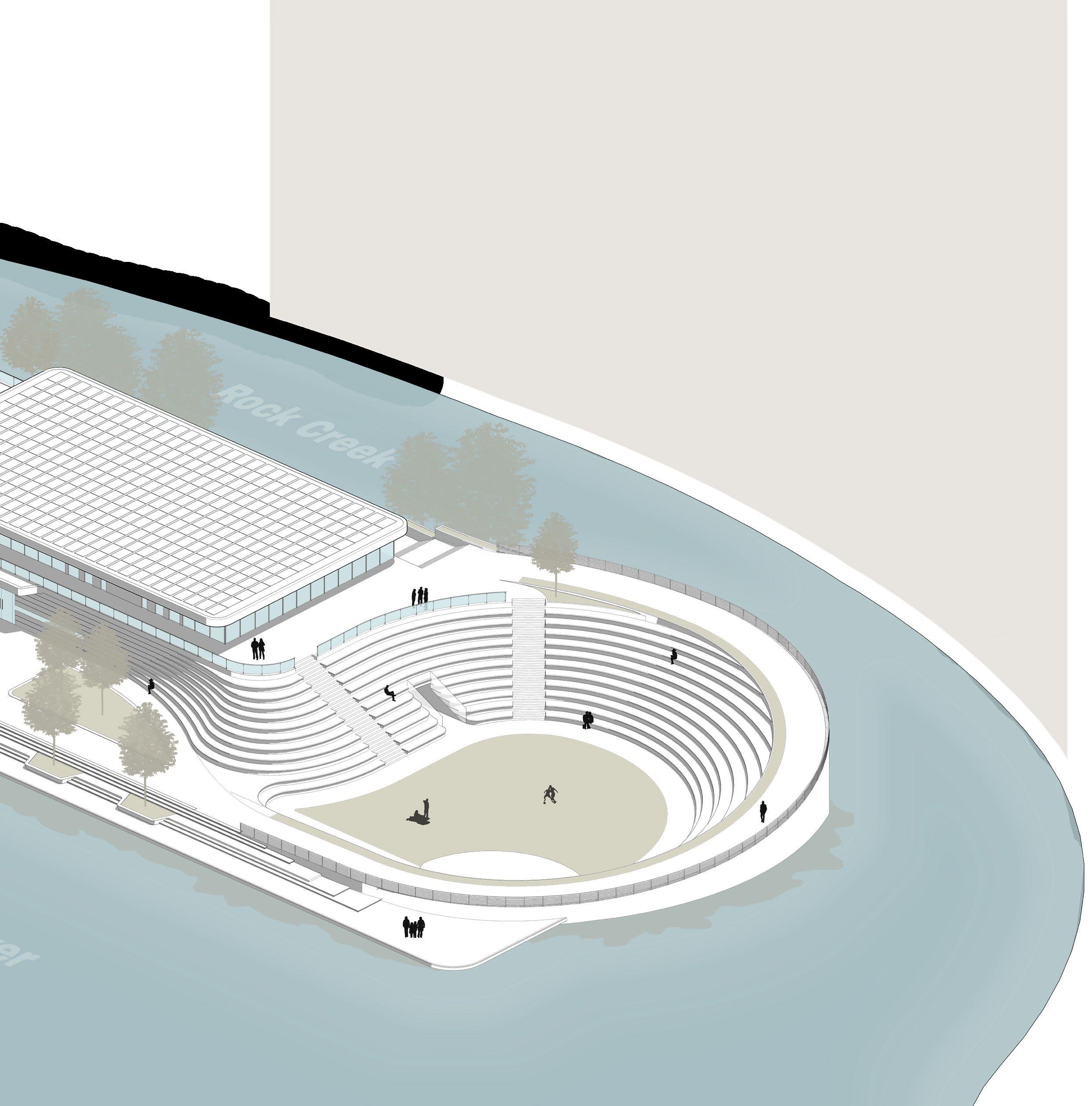
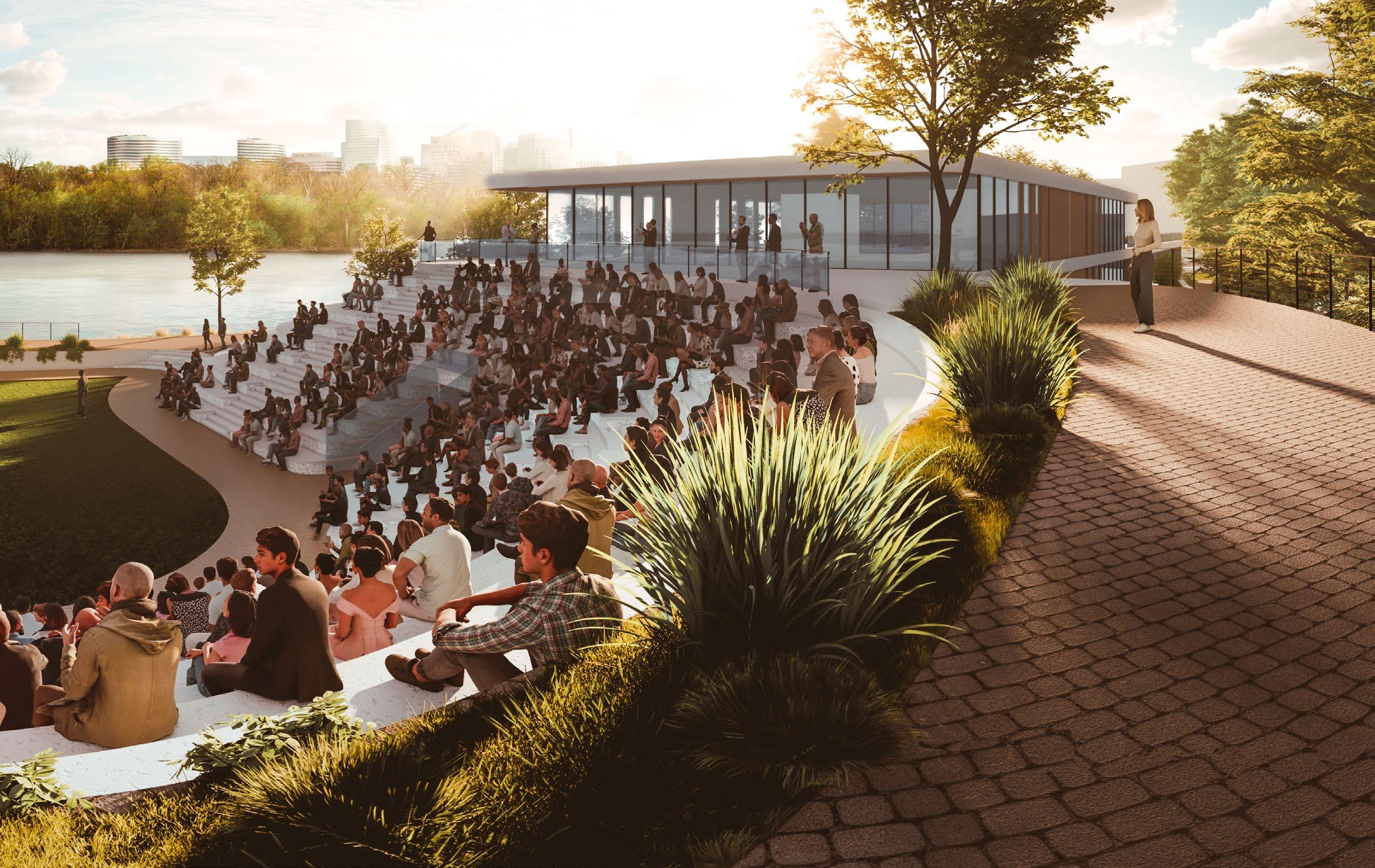
Riverside Oasis is a contemporary reinterpretation of the ancient Greek amphitheater, carved into the undulating topography of the Potomac Riverbank. Designed to blend seamlessly into its natural surroundings, the project offers sweeping views of the Kennedy Center, Memorial Bridge, Roosevelt Island, and the Arlington skyline. More than just a performance venue, it aims to serve as a vibrant community gathering space and cultural destination. The amphitheater strengthens the connection between art, nature, and the city, transforming the riverfront into an immersive public landscape. With a focus on ecological integration, Riverside Oasis not only enhances the existing pedestrian network of the Georgetown waterfront but also fosters a dialogue between performance and environment. It envisions a new kind of public space—one that embraces natural processes, promotes cultural exchange, and elevates the sensory experience of the river. The result is a civic landmark rooted in both ecological stewardship and artistic expression.
ADAPTIVE REUSE
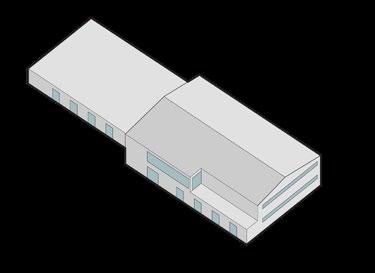
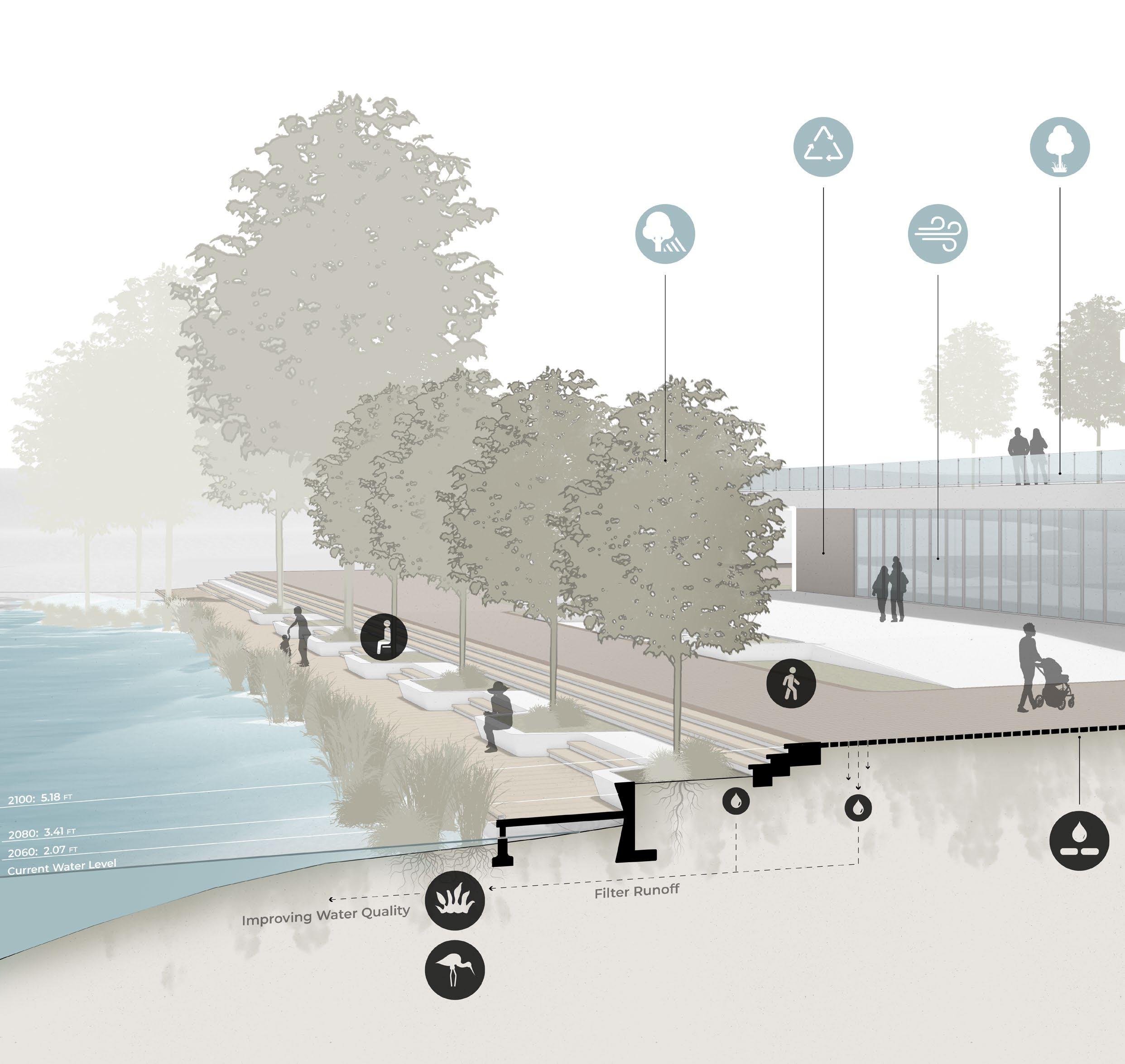
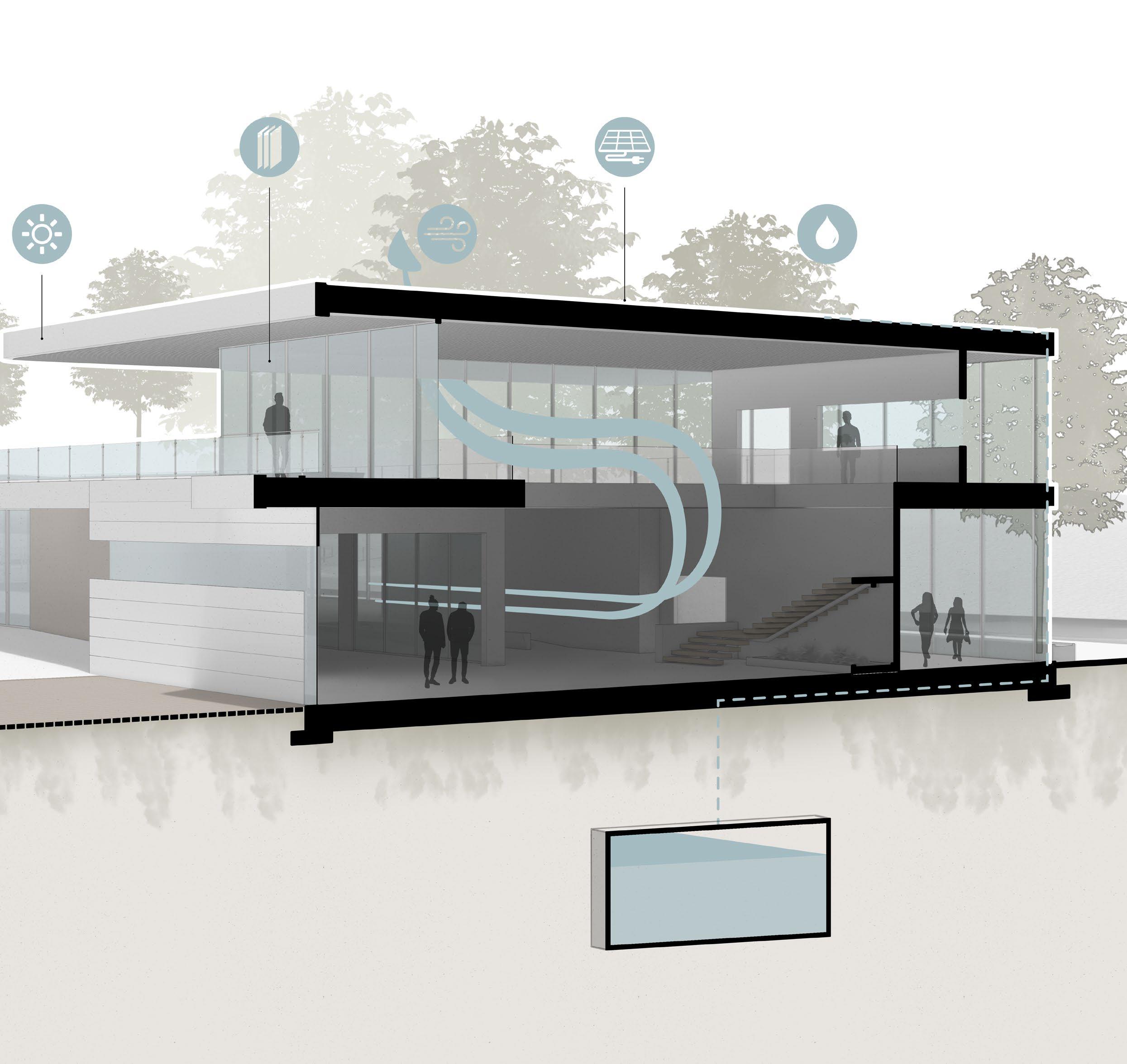
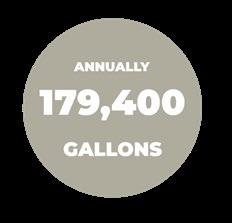
At the heart of Riverside Oasis is a commitment to sustainability and adaptive reuse. The design repurposes portions of the existing boathouse, integrating them with new architecture powered by renewable energy. Solar panels provide clean electricity, while a green roof offers natural insulation and supports local biodiversity. Southern shading devices enhance comfort and reduce energy use by minimizing solar heat gain. Constructed wetlands and permeable floodplains stabilize the riverbank, encourage native plant growth, and manage stormwater runoff. A rainwater
harvesting system supplies non-potable water for landscaping needs, reinforcing the project’s eco-conscious footprint. These strategies merge seamlessly into the site, enhancing both ecological resilience and visitor experience. As an extension of the Georgetown waterfront, the amphitheater weaves art, nature, and infrastructure into a cohesive whole. Riverside Oasis exemplifies how performance spaces can serve as platforms for environmental education, civic engagement, and sustainable urban design—celebrating culture while restoring and preserving the natural world.
CONNECTION TO WATER
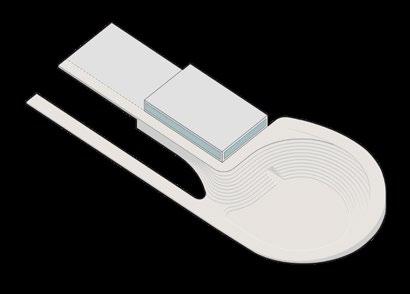
The design began by situating the main amphitheater at the tip of the peninsula, surrounded by over 180 degrees of water. Inspired by ancient Greek theaters, the concept embraces an open-air, exterior setting that connects performance with the natural landscape, offering panoramic views and a strong relationship between the built form and its riverfront context.
EXTERIOR RAMP
A gently sloping ramp connects the waterfront boardwalk to the second floor of the existing building, forming a natural transition through the site. This gradual rise creates a bowl-like amphitheater, with its lower end opening toward the river, framing expansive views and enhancing the connection between the performance space and the surrounding landscape.
PUBLIC GREEN ROOF
The ramp leads to a publicly accessible green roof on the second floor, offering open access regardless of the center’s hours. This design extends the riverbank’s natural landscape up to the building, seamlessly integrating greenery with architecture and enhancing the site’s connection to its ecological surroundings.
RETURNING LAND TO NATURE
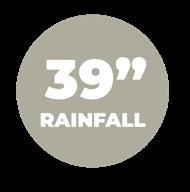
The project emphasizes sustainability through the use of locally sourced natural materials, reducing environmental impact while reflecting the region’s character. Approximately 17,000SF of new vegetation has been added, enhancing biodiversity and contributing to stormwater management. Additionally, impervious surfaces were reduced by 11% compared to the pre-adaptive reuse condition, improving site permeability and reinforcing the project’s commitment to ecological restoration and resilient landscape design.
Multi-Use Space
Green Roof
Atrium
From: Waterfront boarwalk
NATIVE PLANTINGS
The landscape design introduces 25 native trees—including white oak, red maple, and river birch— strategically placed to enhance
ecological resilience and site aesthetics. These species, welladapted to the local environment, collectively generate approximately 6,000 pounds of oxygen annually while sequestering 2,000 pounds of carbon. This integration of native vegetation supports biodiversity, improves air quality, and reinforces the project’s broader commitment to sustainable design.
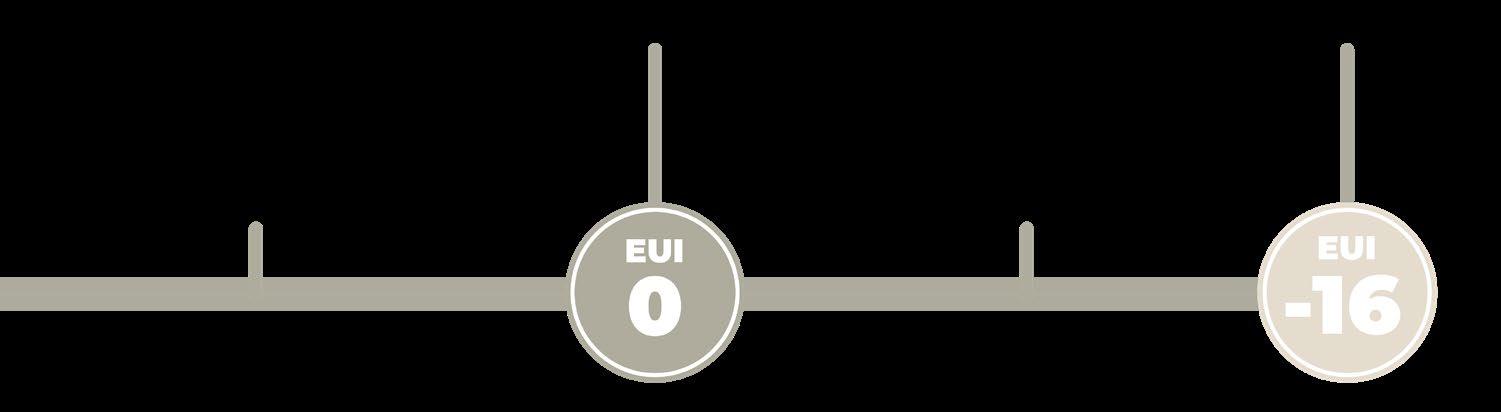
ENERGY SAVINGS
$22,260 per
$20,716 per year in compensation for surplus
Cistern
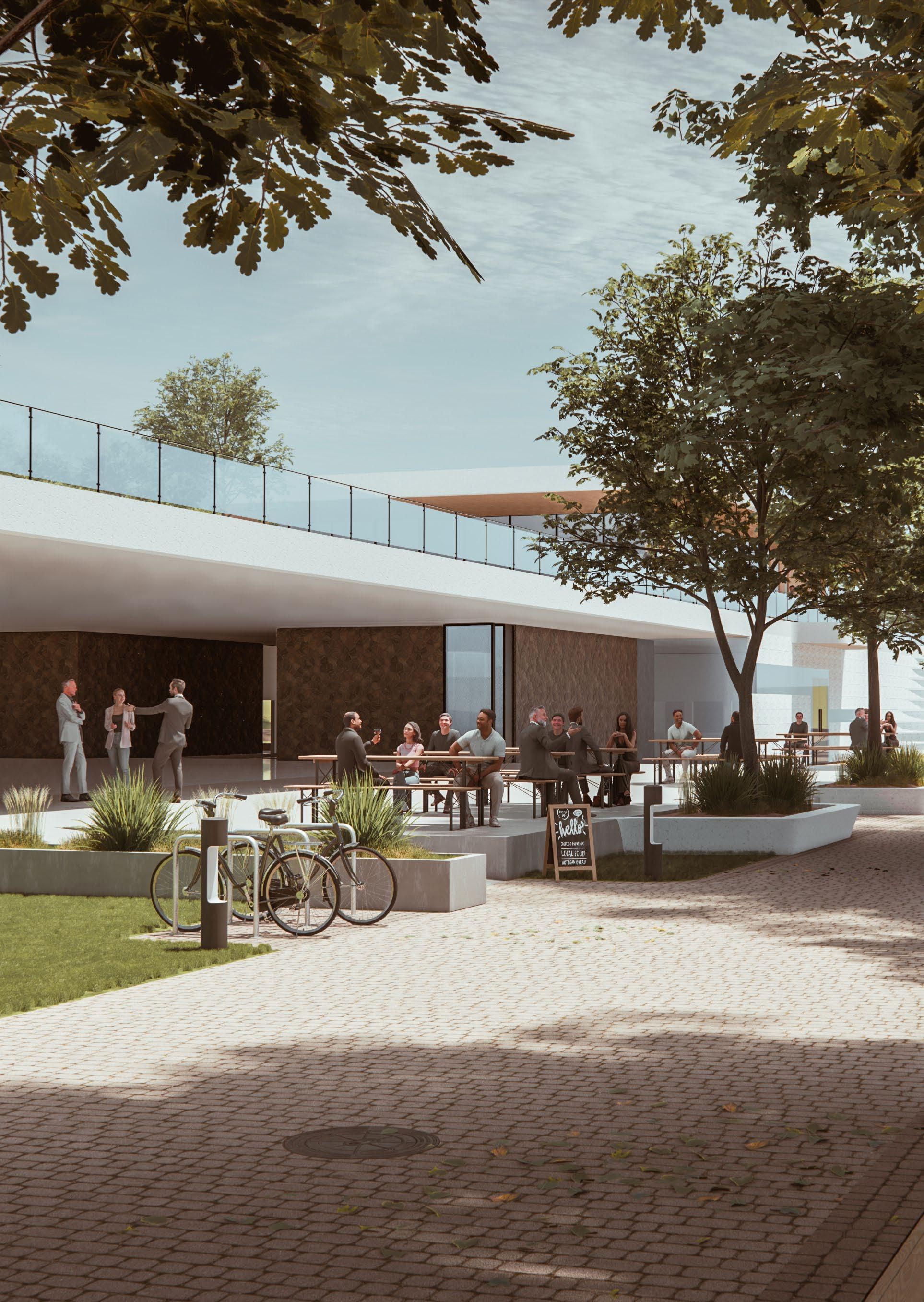
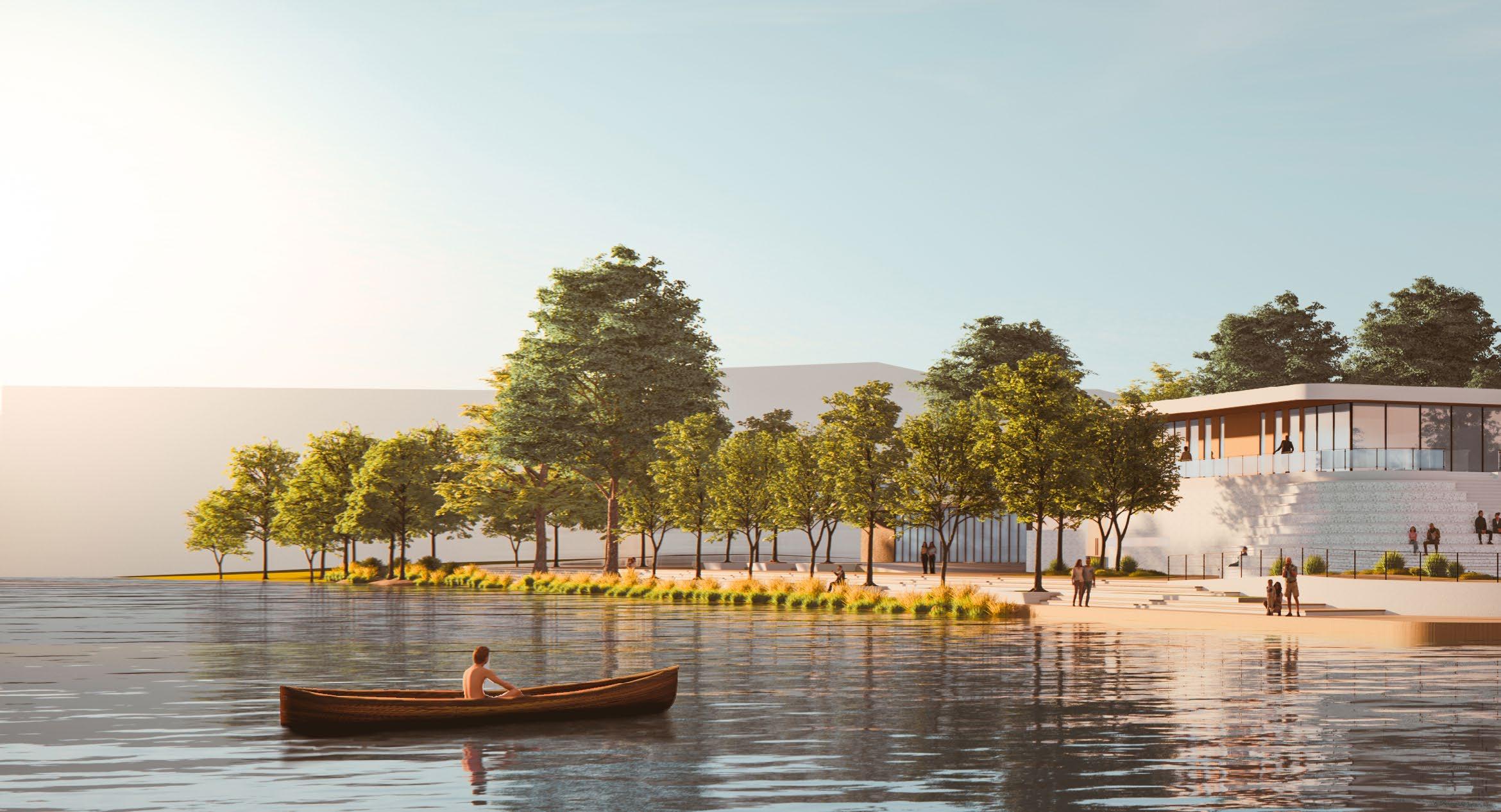
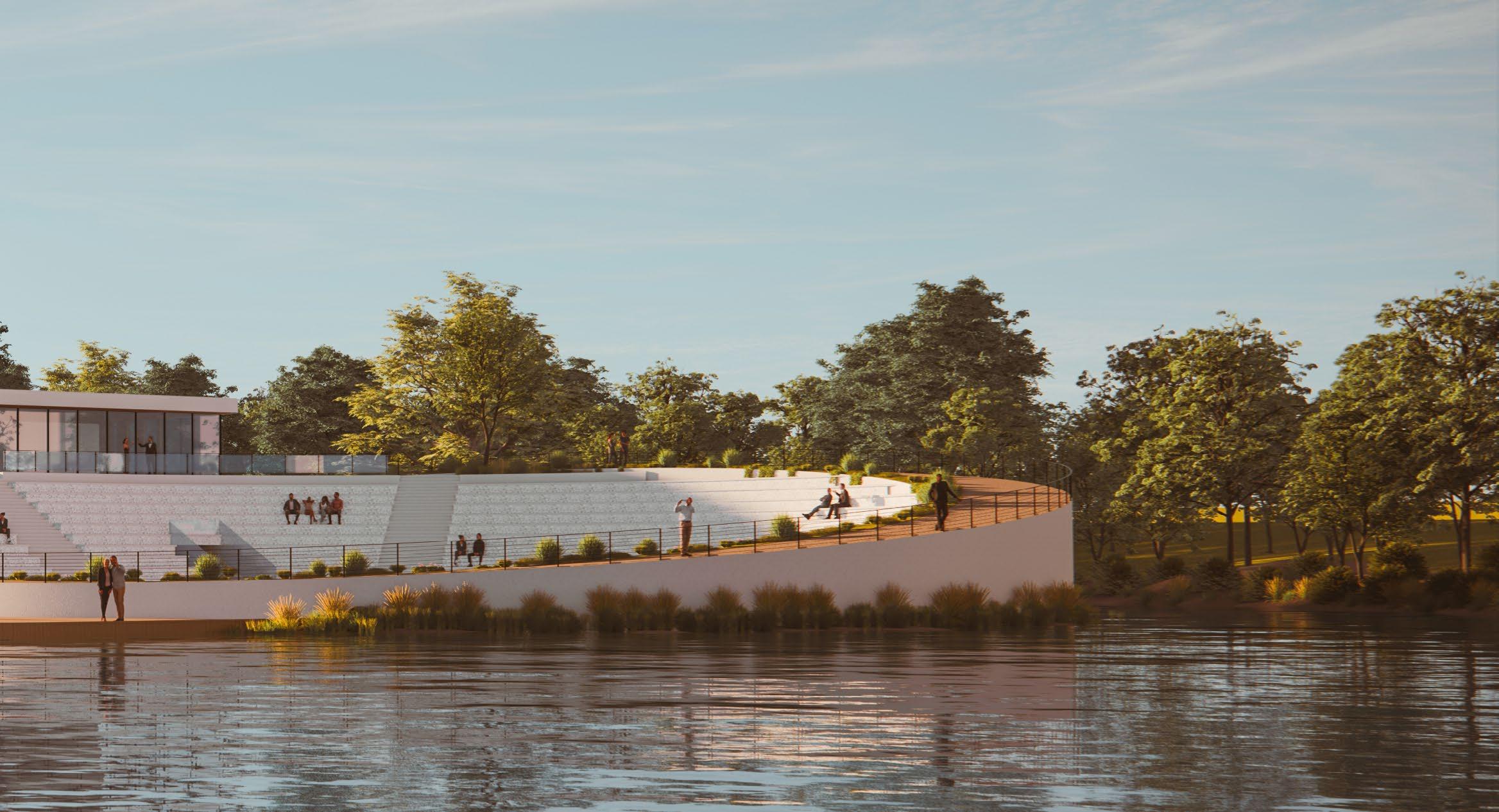
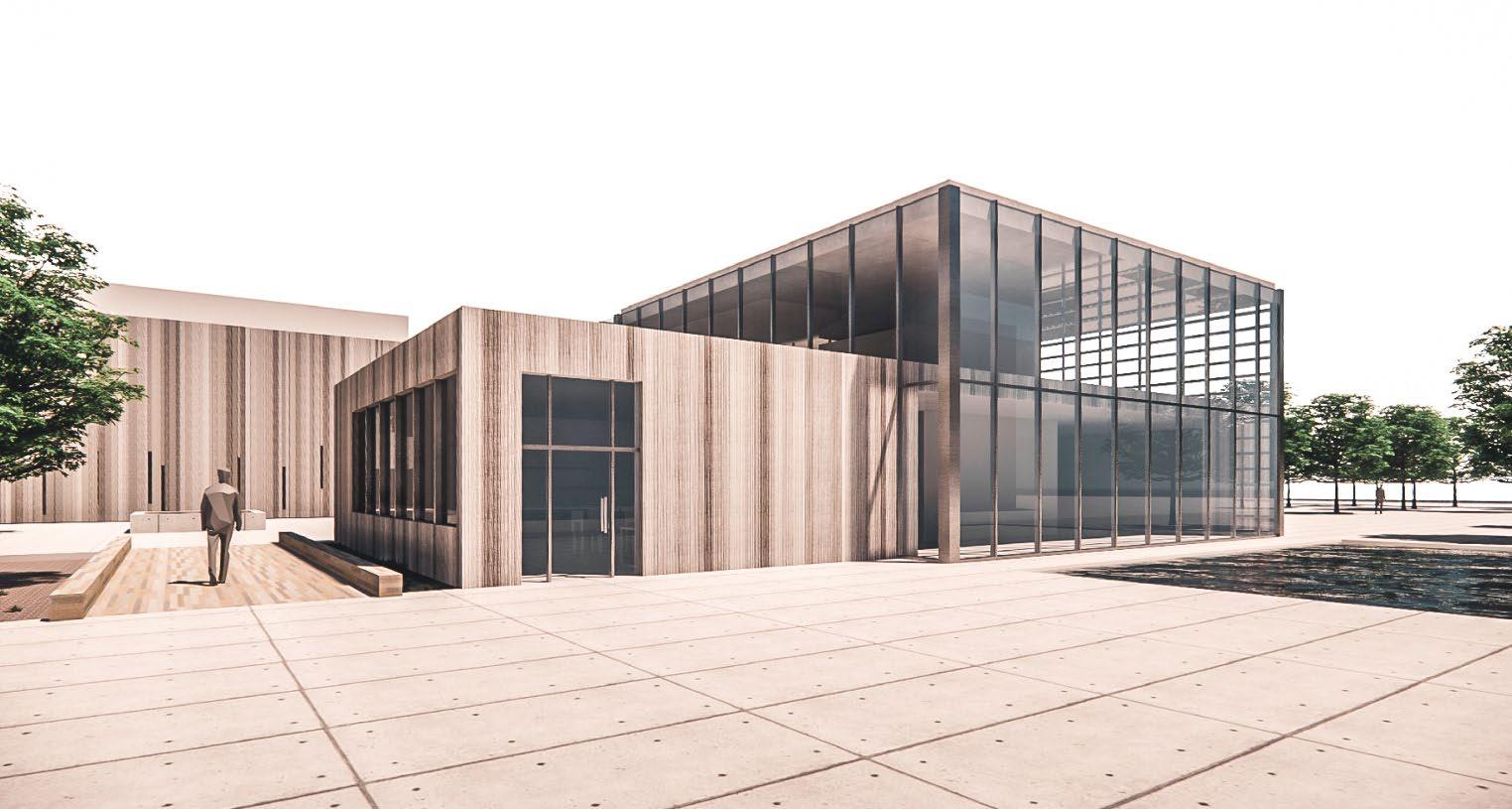
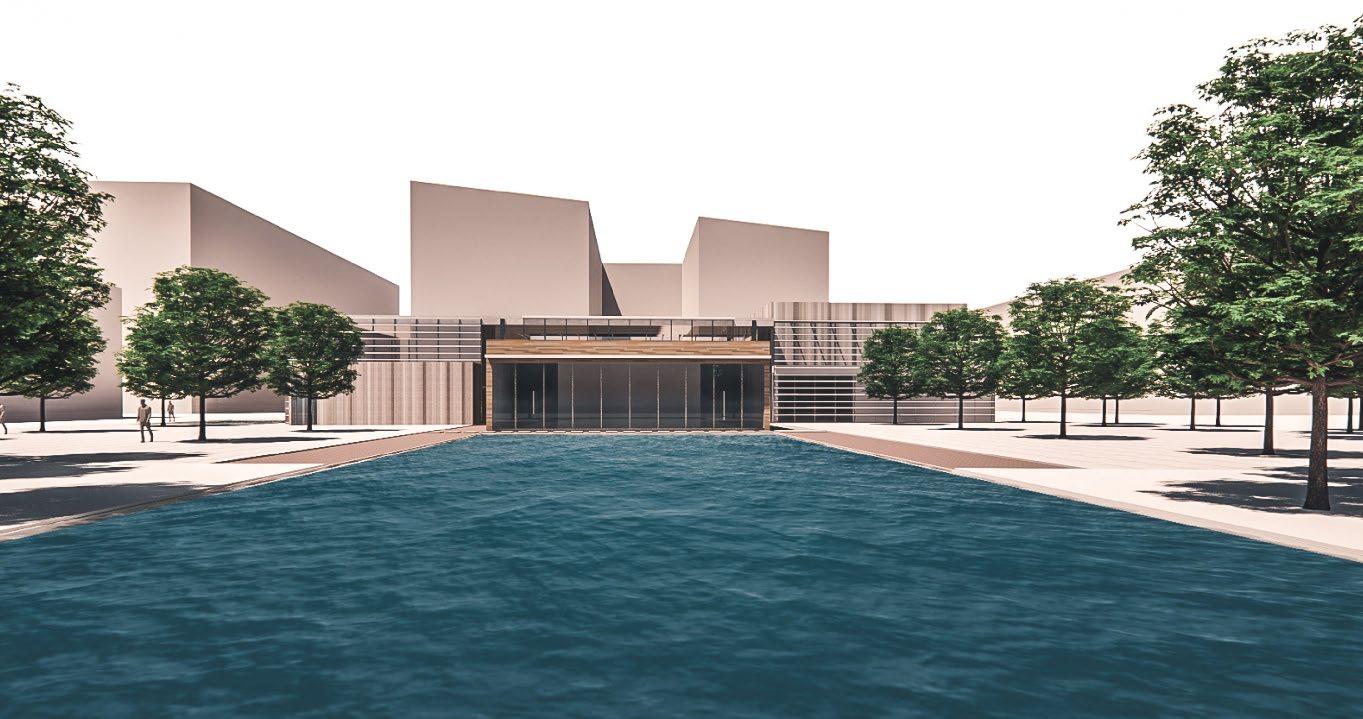
The render depicts the amphitheater emerging from the riverbank, integrating with the renovated structure above.
RIVER BANK
NATURAL BACKDROP
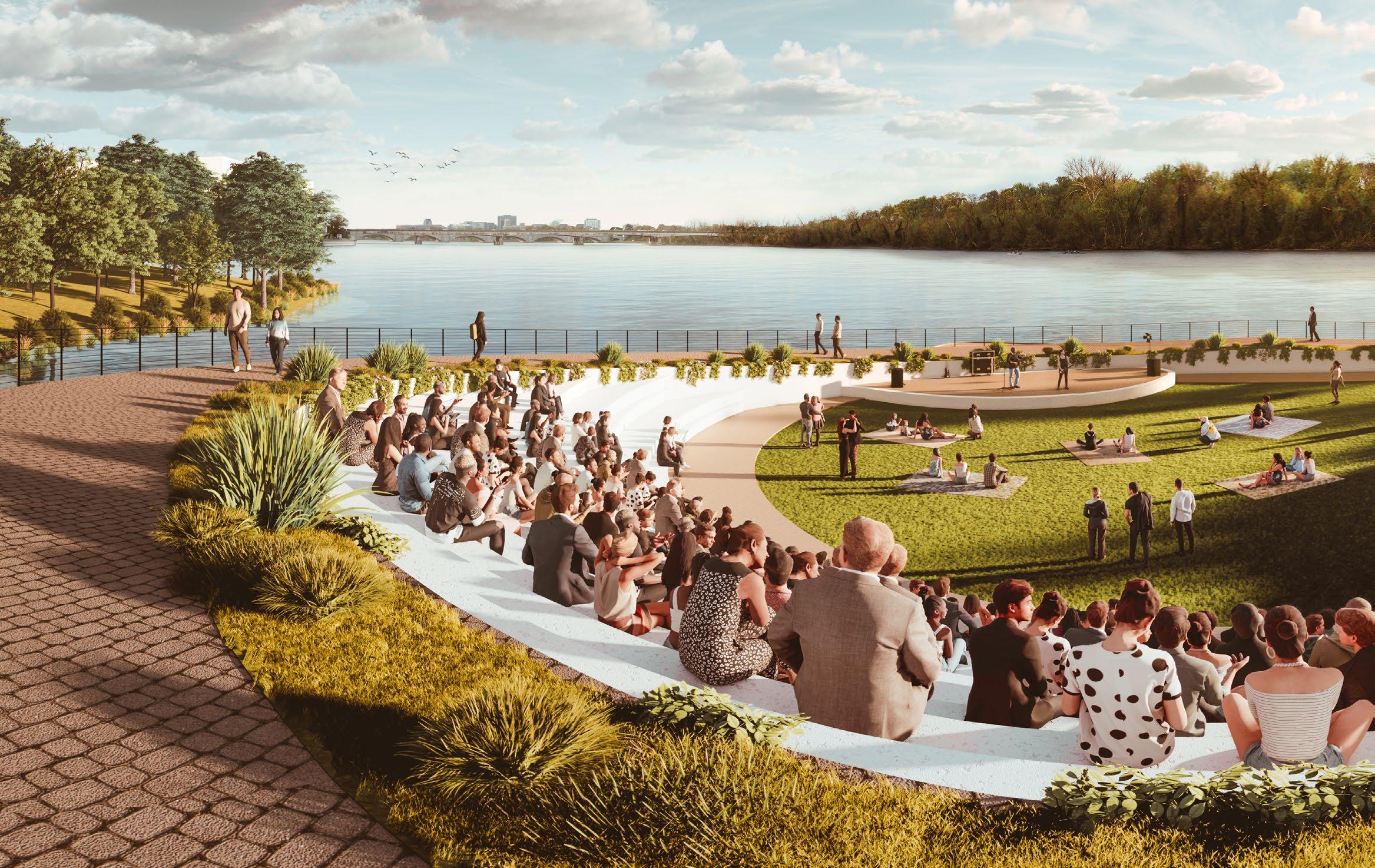
The render showcases the open-air amphitheater, with a stage elegantly framed by the Potomac River and a lush treeline backdrop.
HOUSE OF ICELAND
4TH YEAR STUDIO
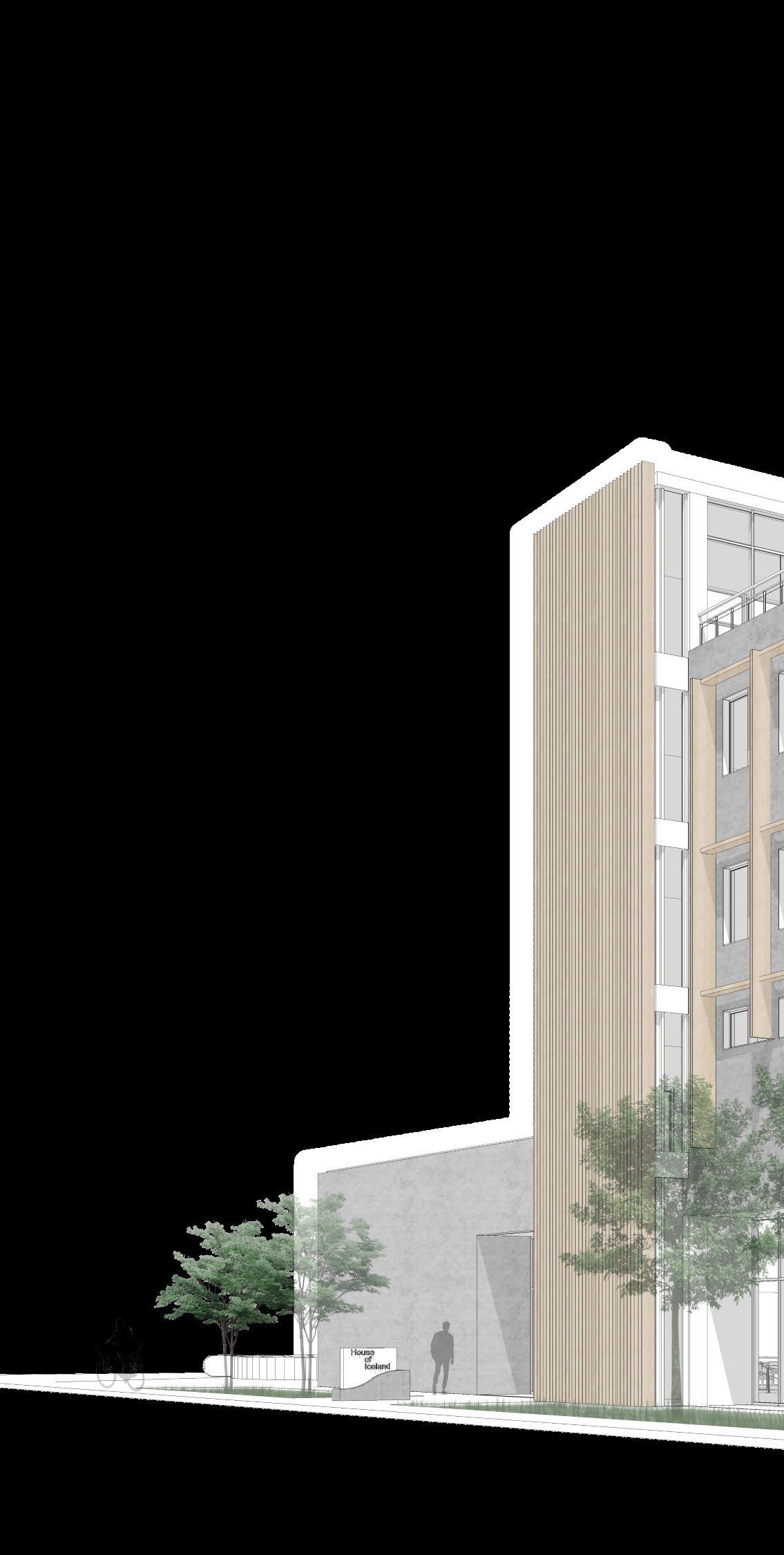
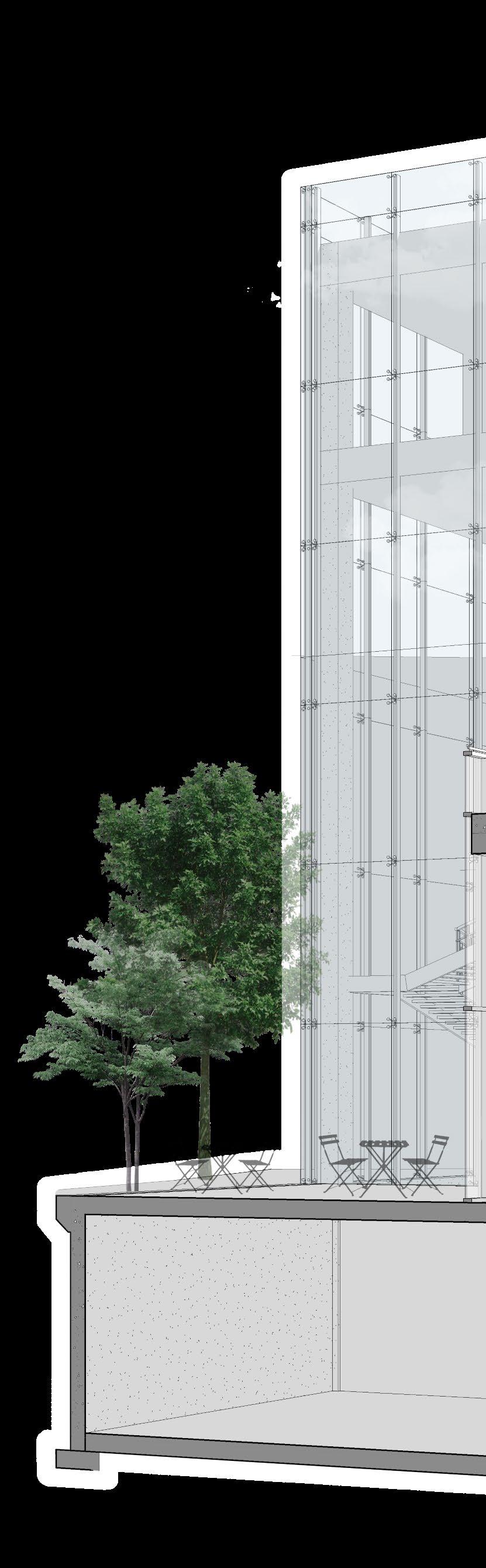
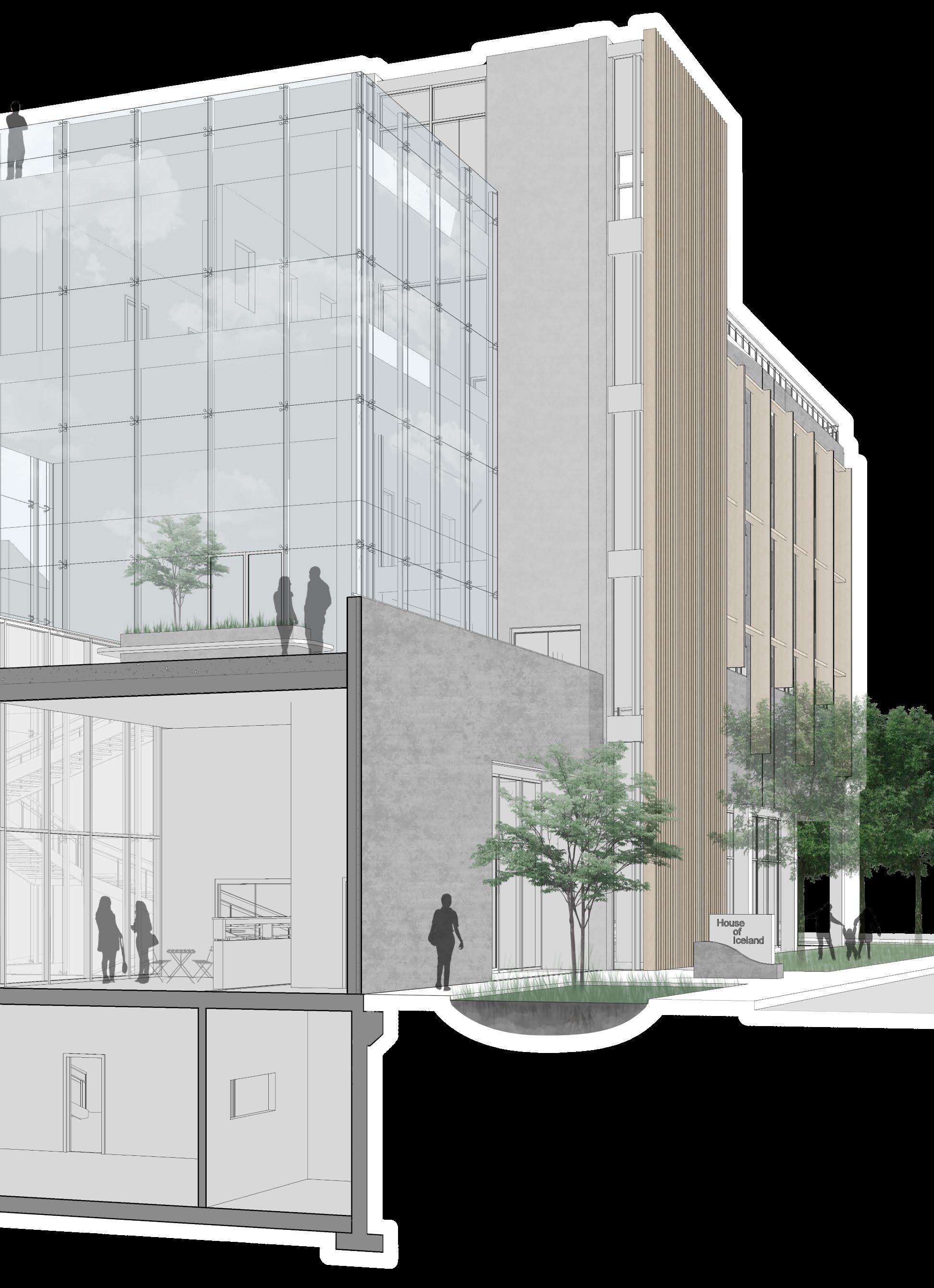
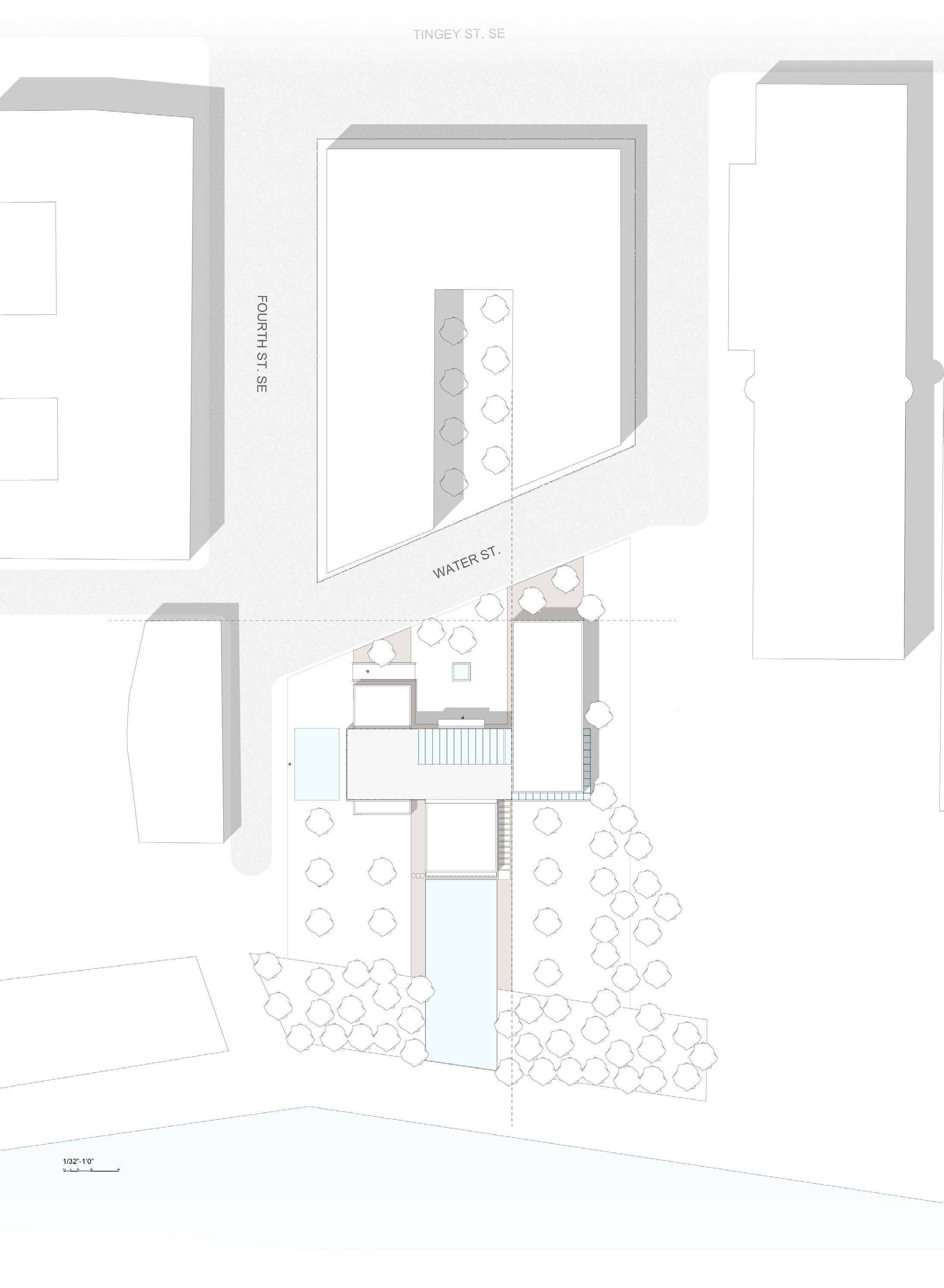
This project called for the design of an embassy from the country of our choosing. The site is located just NorthWest of Dupont Circle, and immediately adjacent to the North entrance of the Dupont Metro. As it stands, our site is home to the Dupont Circle Farmers Market, along with the 20th Streetery and outdoor restaurant seating. All of this, makes our site an ideal spot for public engagement. This led us to one of our main goals of enhancing public space, improving the existing greenscape, and embodying the dichotomies of Iceland. After meeting with the Ambassador, we began to understand that Iceland presents itself as a land between two vast worlds, and their goal is to create a connection between the two. With this in mind, we utilized the ground floor and rooftop as an extension of the existing public space, and as a result, our diplomatic offices were intertwined with the public space around them.
PUBLIC SPACE
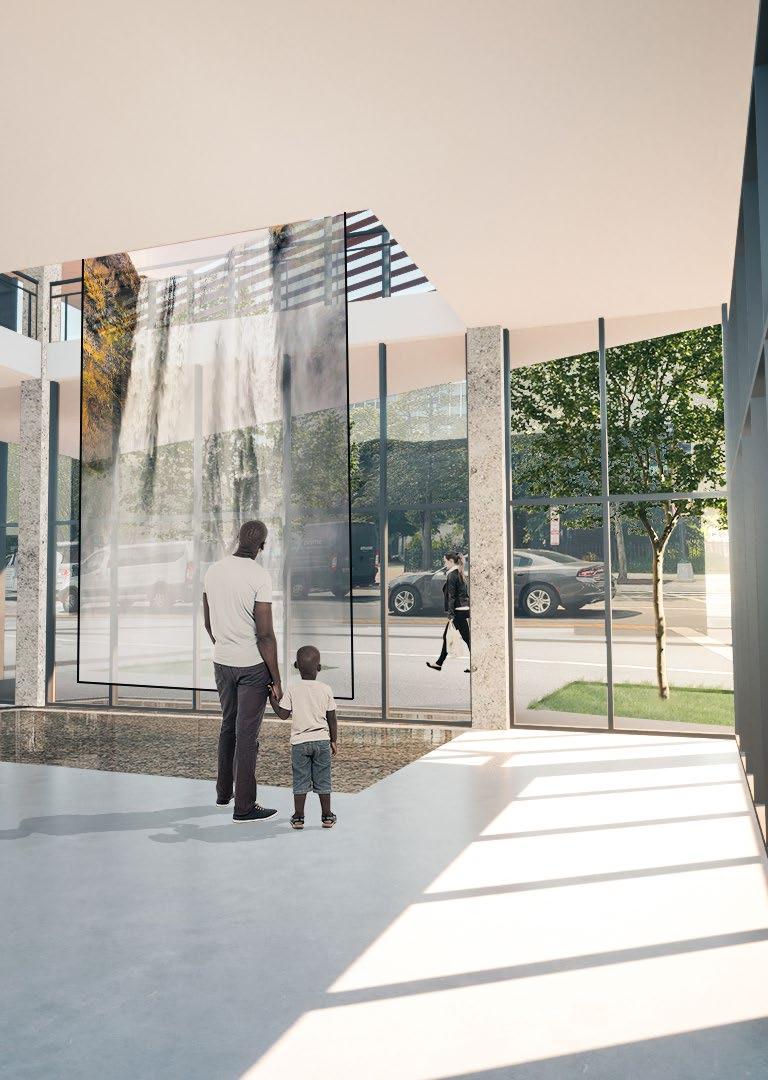
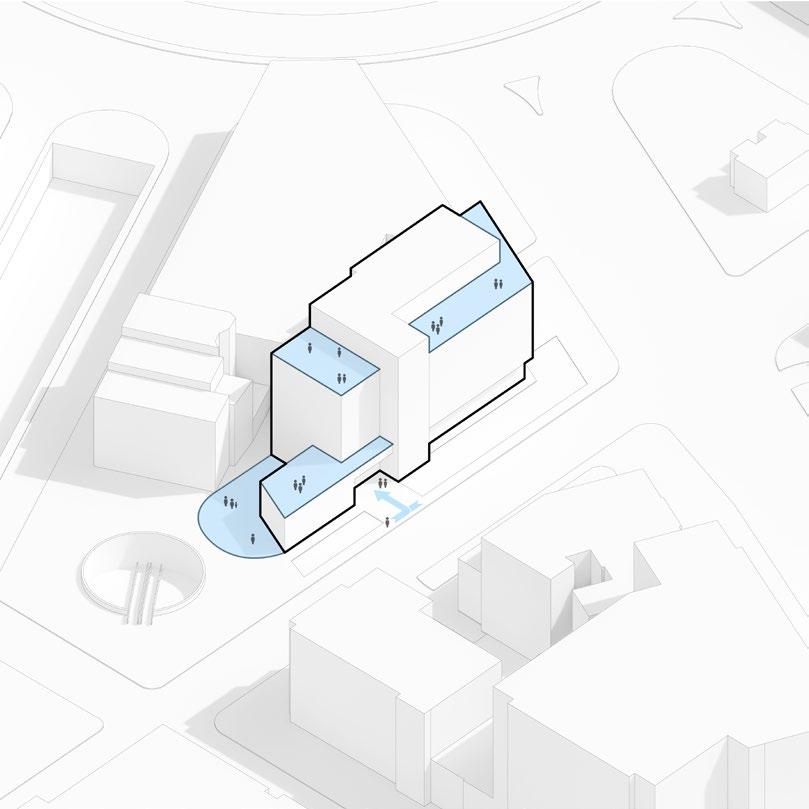
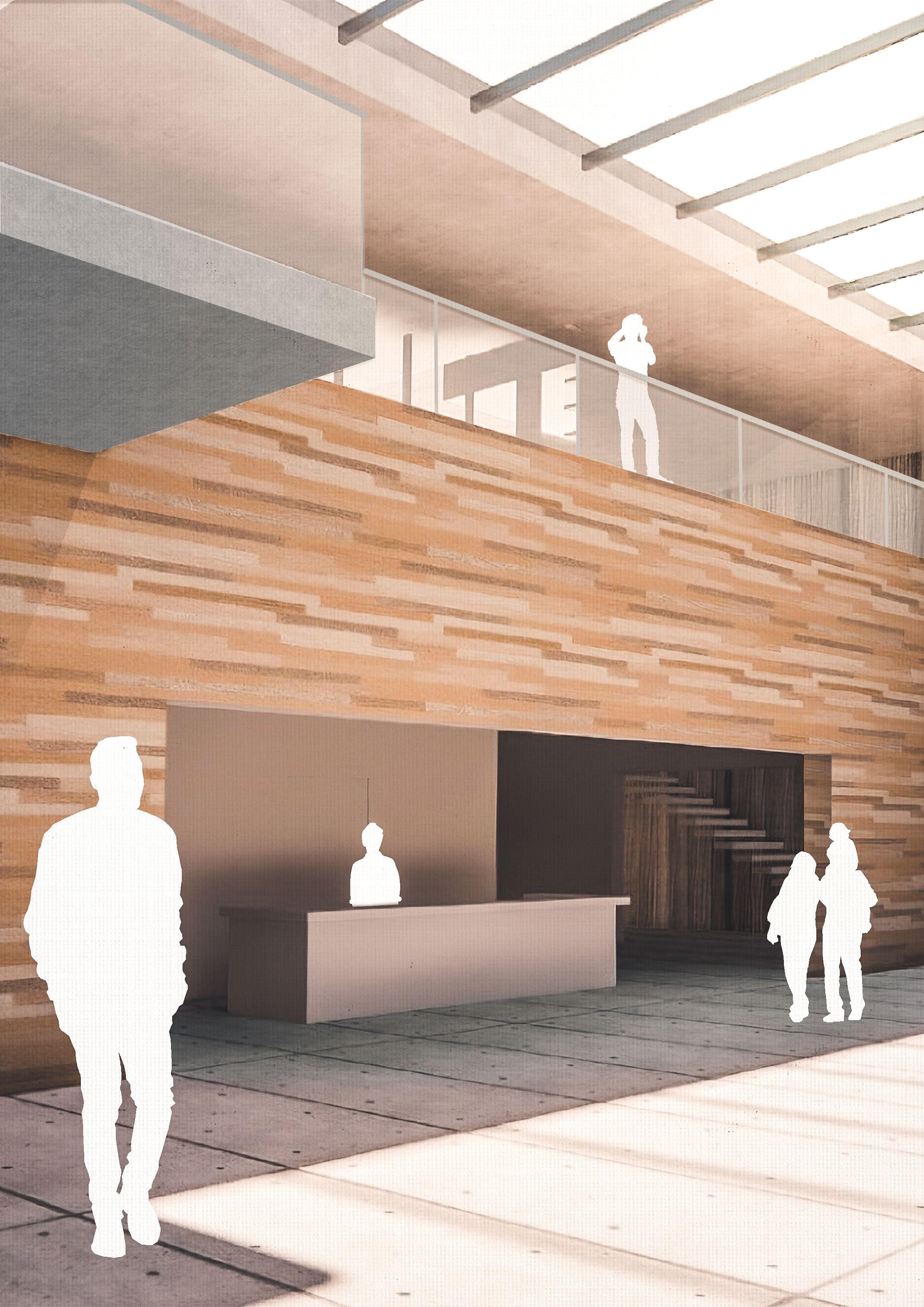
Our design was intended to be a place where the beauty of Iceland can be on display for the public. This meant that the creation of public space and its interaction with the context was integral. We sought to draw people from the metro into the building’s cafe, museum, and public rooftop spaces as a symbol of Iceland’s transparency and affability.
GREEN SPACE
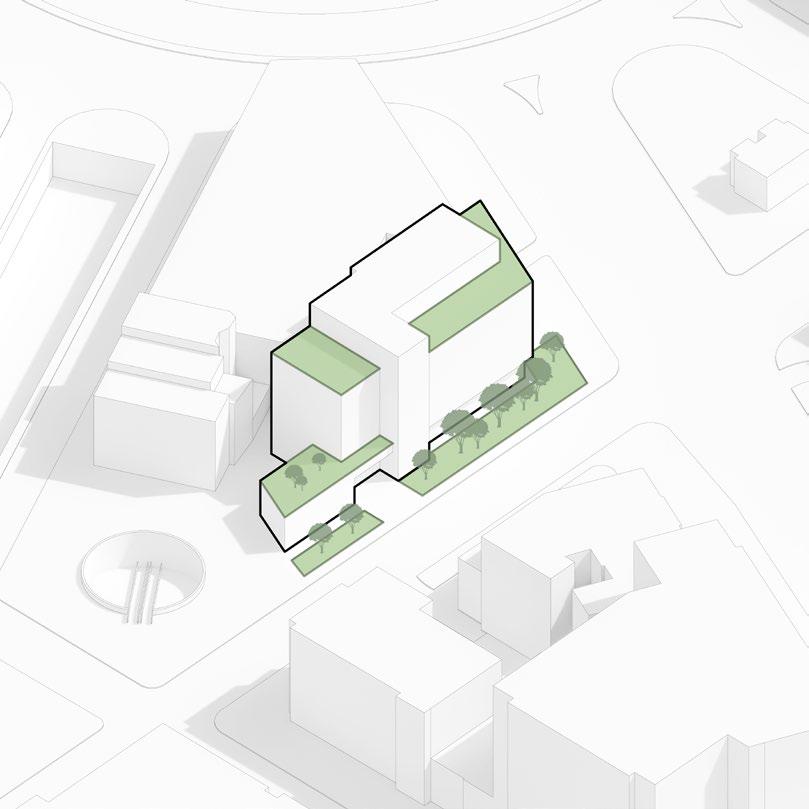
We also sought to enhance the greenery in the urban environment. Iceland is defined by its spectacular landscapes, from monumental waterfalls to ice caves and volcanic rock formations. The design was not only closely tied to these ideas through the materiality but also the access to fresh air and green spaces. With the landscape as the heart of Iceland, it was essential to our design.
PUBLIC/PRIVATE
Iceland is also a country of dichotomies such as the sea and land, fire and ice. The House of Iceland embodied this principle through the juxtaposition of solid and void and public and private spaces. The first two floors and the top floor are largely public spaces with a museum, event spaces, and a cafe.
Atrium
Museum
Cafe Rooftop
Consular Services
Embassy Reception 8. Conference Room
Communal Space
Office
11. Ambassador’s Suite
12. Bar Rooftop 13. Public Terrace
Event Space
PUBLIC ACCESS
As we peel back the north side of the building, we can see the cafe, connecting the public to the embassy. Icelandic culture utilizes the cafe to bring people together, and we felt it appropriate to have this as the connection that draws people in. We also implemented an occupiable roof above the cafe to create another outdoor space and additional greenery.
MARITIME MUSEUM
3RD YEAR STUDIO
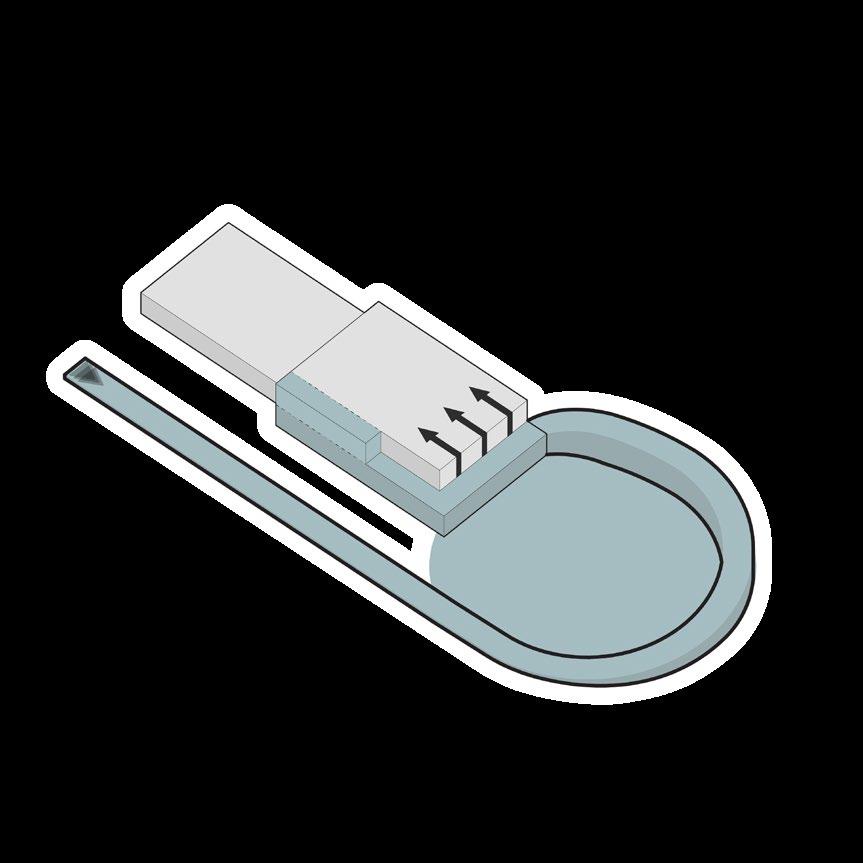
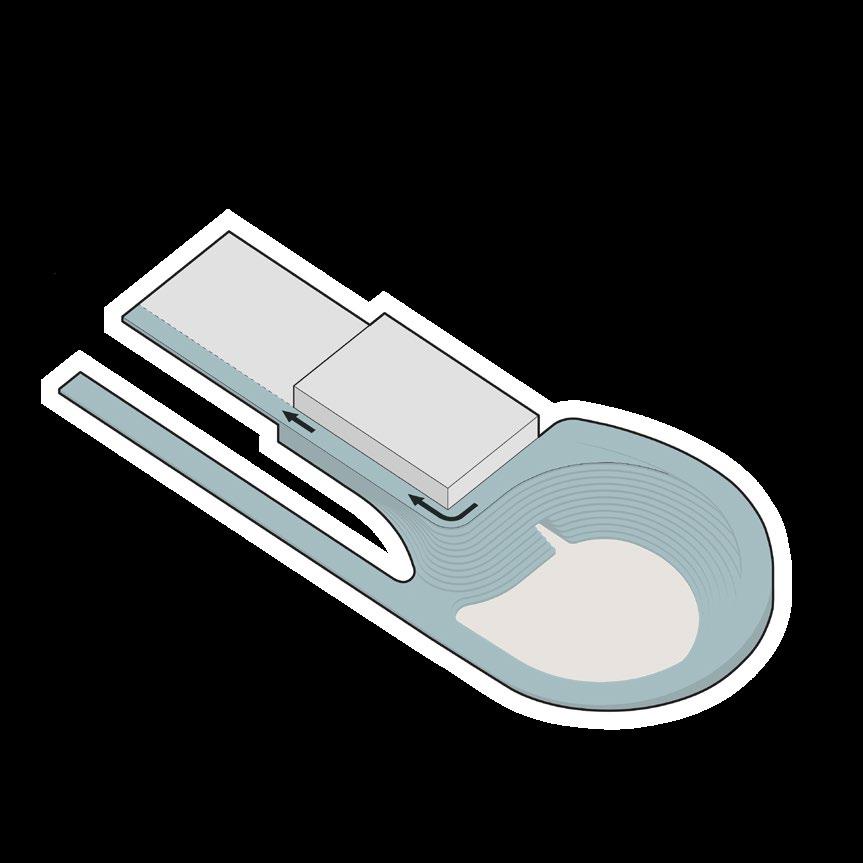
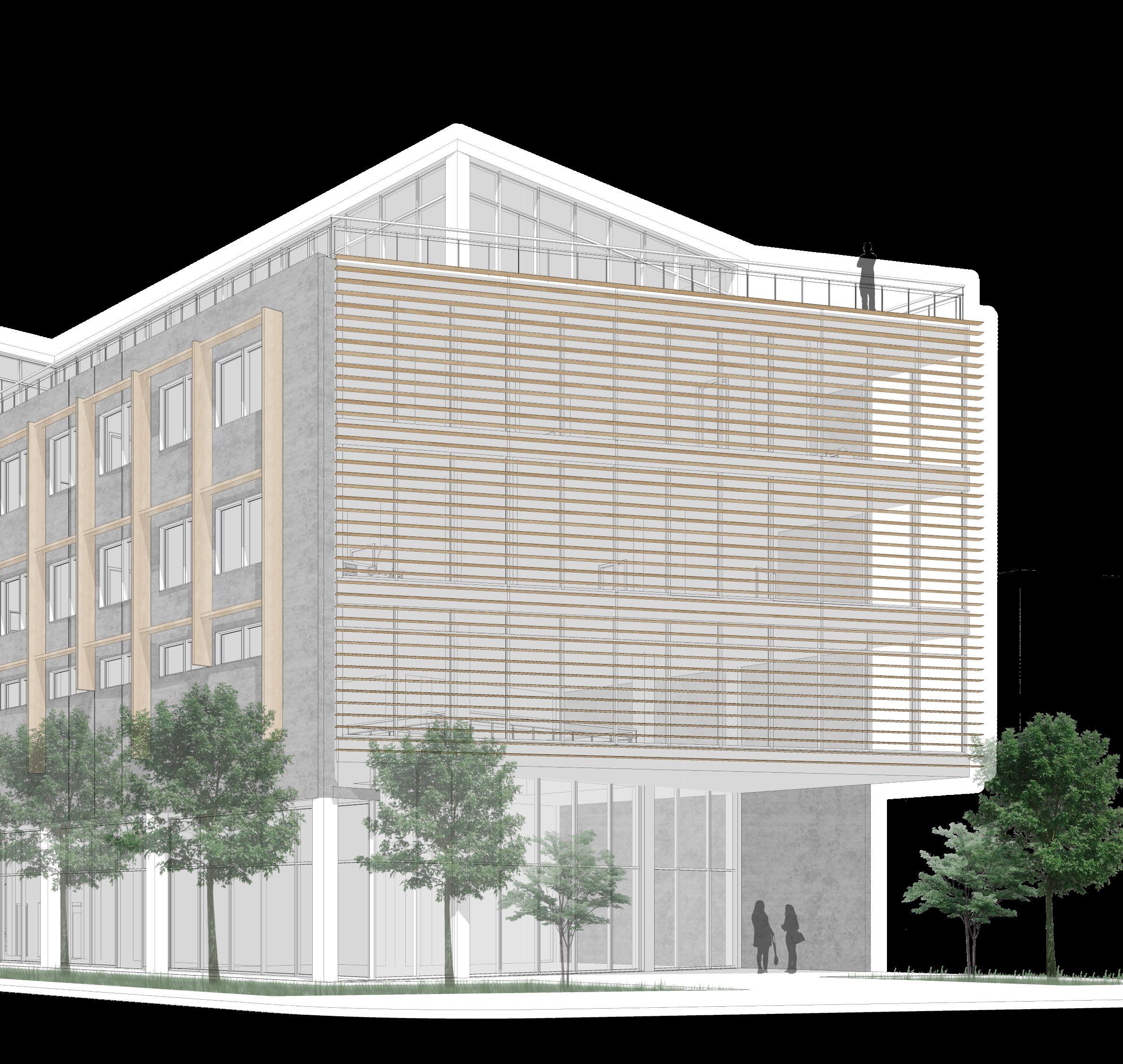
The Maritime Museum was designed to highlight local marine life of the Anacostia river which flows just south of the site. The building is separated into three distinct volumes and connected by the large horizontal atrium. Each volume holds a different use, from the cafe to the display spaces. As the individual turns the corner and enters the space, the three parallel volumes guide them toward the river, framing the views. The permanent exhibit houses information on the history and life cycle, extinction and revivals, and the necessary steps to creating a prospering river ecosystem. It stresses the importance of cleaning and nourishing the river and opens outward toward the water. The western wing of the museum sits across the street from a winery and other public amenities, making it useful for the public. The museum display spaces and back of house necessities are housed on the eastern part of the site.
I began by creating a horizontal volume divided into three parts. The left space for public, center for views, and the right for private. Those spaces were then extruded to and from the river, directing the occupant toward the views of the Anacostia. The height of the three voids then step up as they move from the public street toward the private museum functions.
SUSTAINABILITY
Sustainability was another focus of the design. The southern facade is shaded with horizontal louvers to protect the glass atrium from excessive heat gain. Additionally, a green roof is located above the exhibit space as part of the viewing deck. Adding greenery and water to the site helped to address heat island effect and rainwater collection.
SOUTHERN
ELEVATING ANACOSTIA
URBAN DESIGN STUDIO
Situated in Ward 8, Washington D.C., the urban design studio focused its efforts on the Anacostia neighborhood, a community grappling with poverty and inadequate infrastructure. Following a comprehensive analysis of the broader Anacostia area, we honed in on the Fort Stanton neighborhood. While Fort Stanton is home to amenities such as a Smithsonian Community Museum, a Recreational Center, and multiple schools, it faces a crucial deficiency in density to adequately sustain these public facilities. Identifying this gap, we prioritized three pivotal factors in our approach: density, connectivity, and safety. The overarching objective was to devise a transformative urban proposal tailored to address the community’s deficiencies. We actively engaged with community members in design charrettes and presented our urban plan proposal. The collaborative dialogue aimed at enhancing the overall fabric of the Fort Stanton neighborhood.
DENSITY
Our project focused on mixed-use multifamily housing as a means of increasing the neighborhood’s density. The goal of this increased population density was to not only bring people to the existing amenities, but also promote growth in jobs, families, and commercial opportunities. Creating space for people is essential in fostering community.
CONNECTIVITY
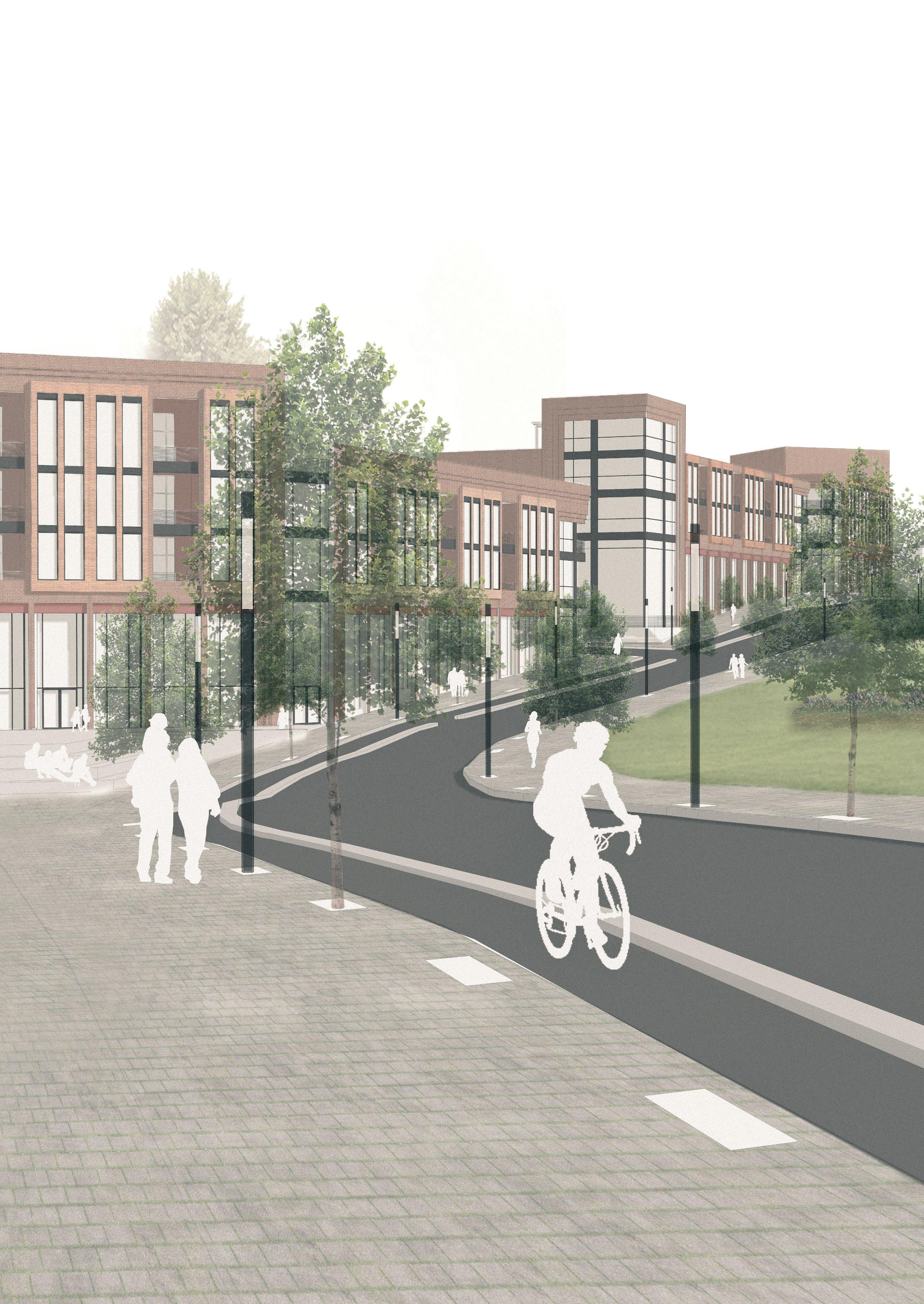
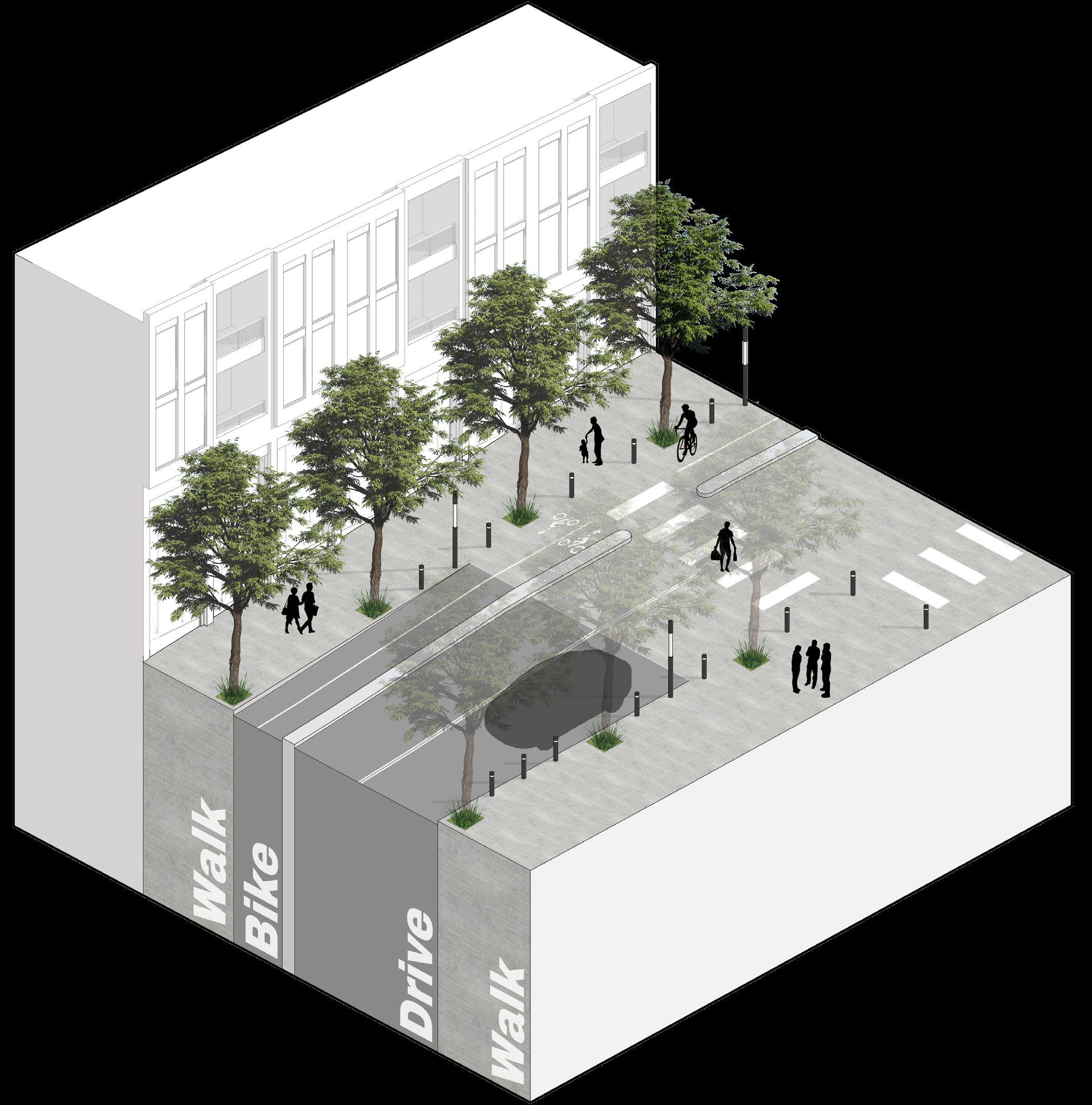
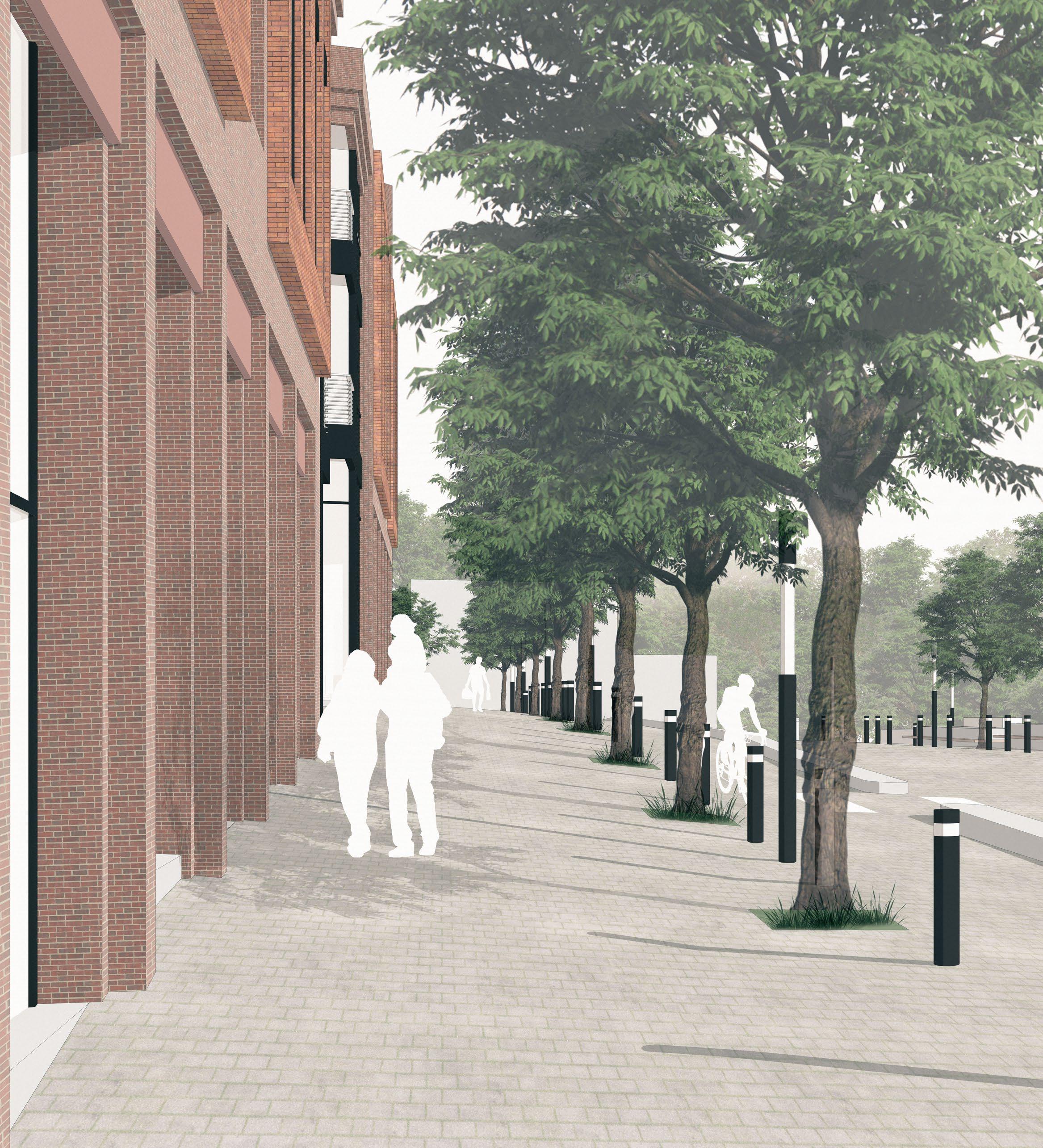
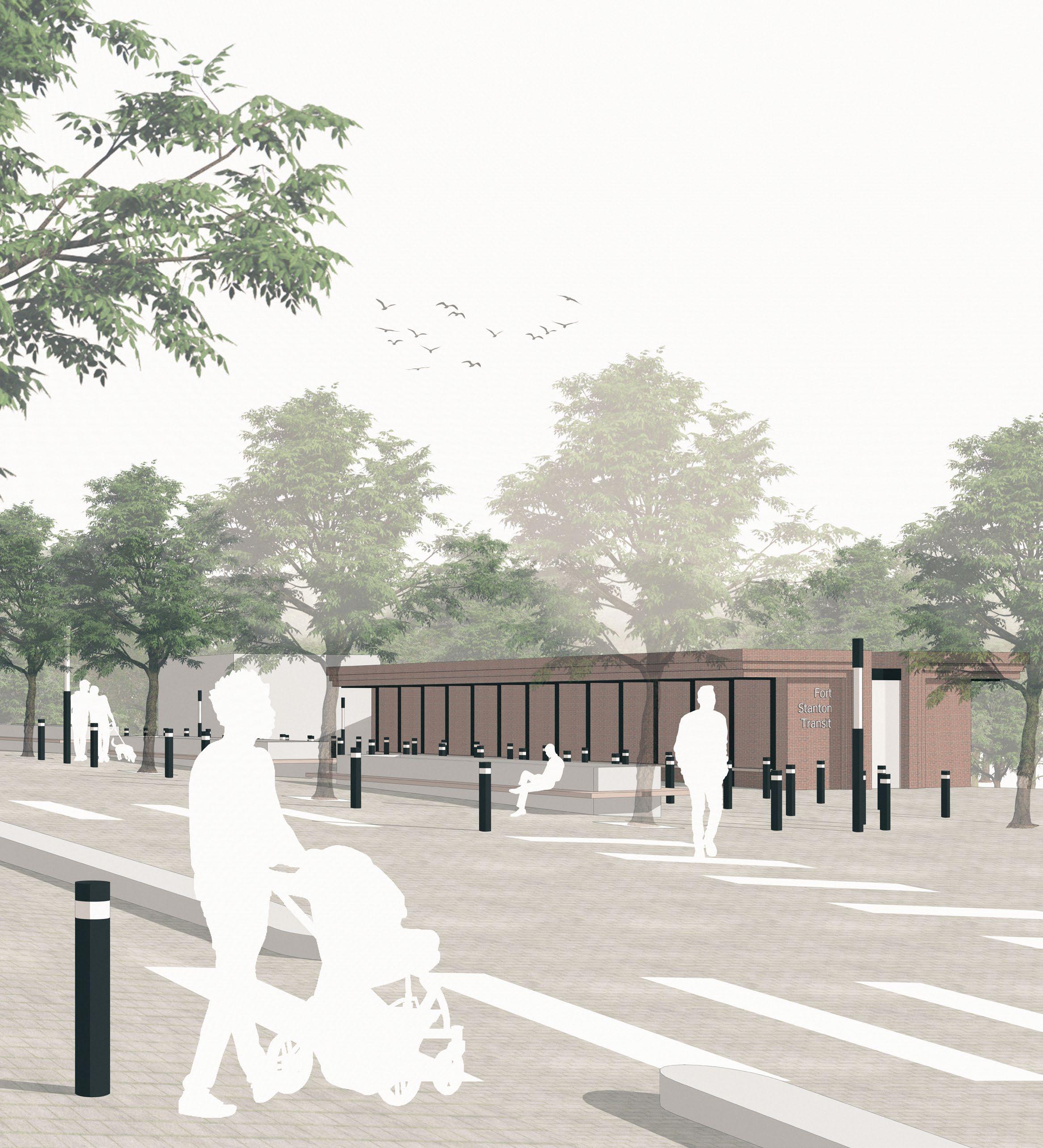
In order to improve connectivity, we looked to the street conditions and methods of transportation. We improved the sidewalk conditions and tree coverage while making the street more narrow to reduce car speeds. We also provided a protected bike path and a hyperlocal transportation hub to promote sustainable local connectivity.
SAFETY
Finally, safety was our third pillar of design. By fronting the street with the new mixed-use apartments, we provided a watchful eye over the public spaces and streetscape. The increased density creates a safer community where people can look out for each other. The improved street conditions also make it safer to get to one’s destination.
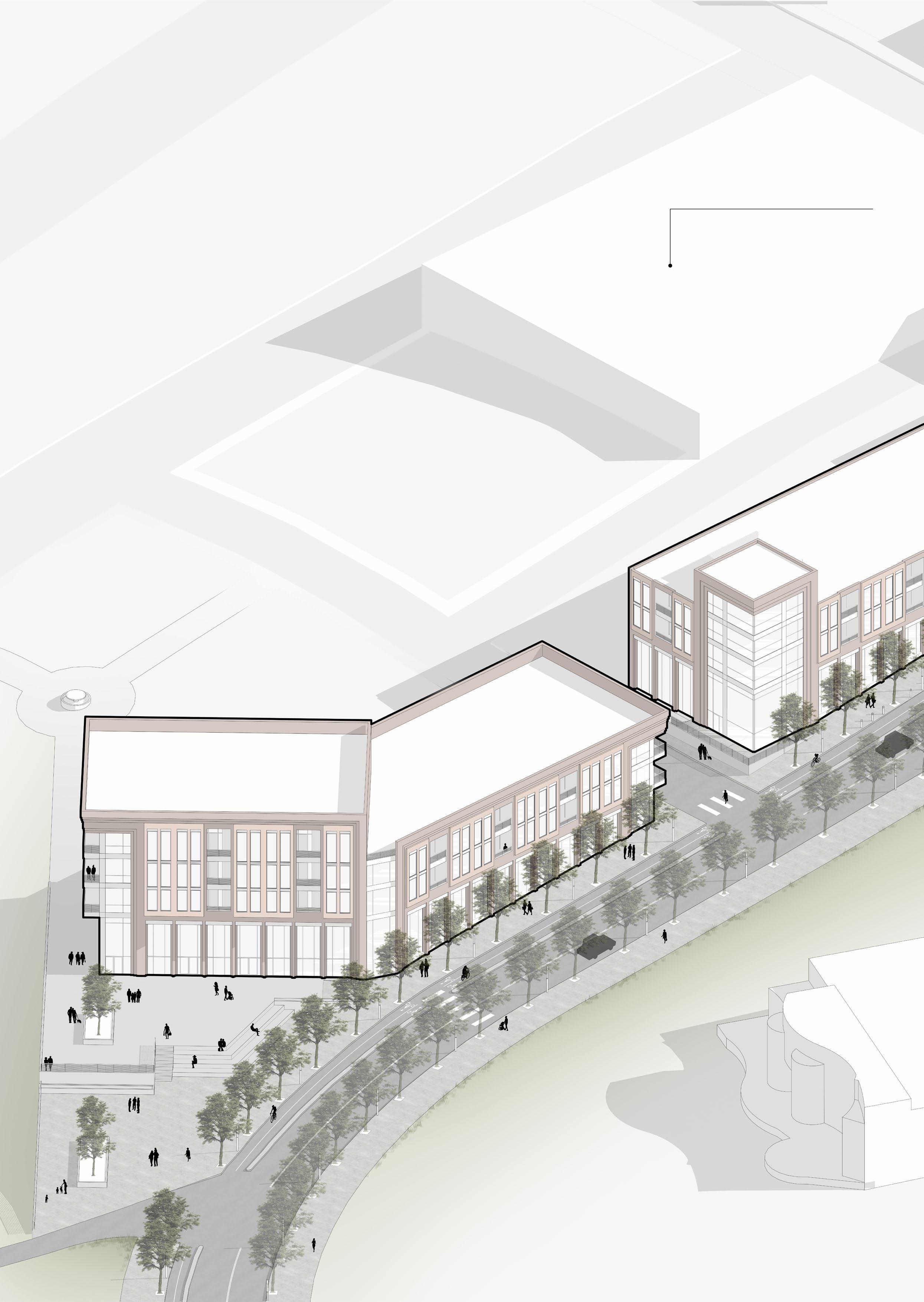
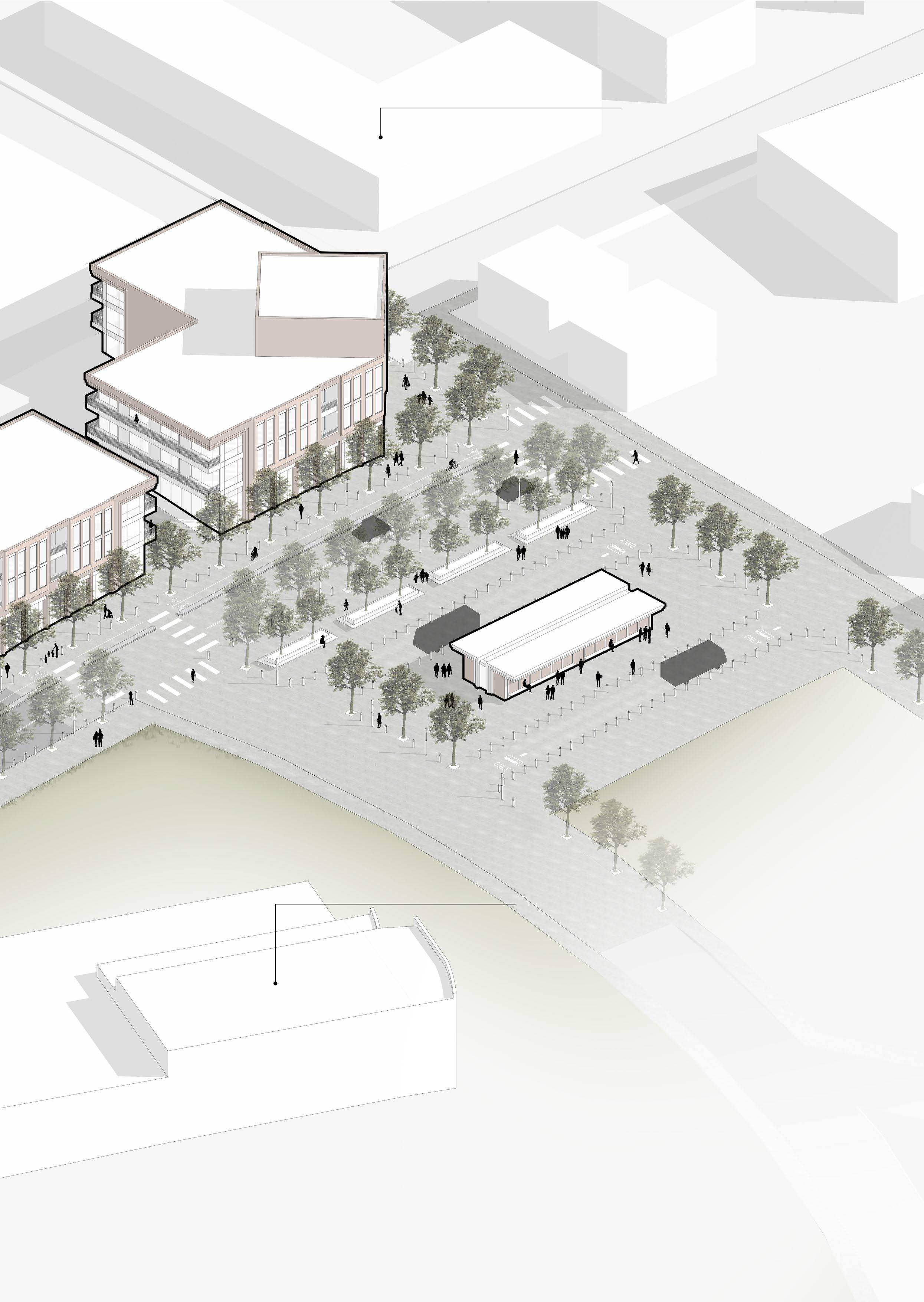
STREET AXON
DESIGN PROPOSAL
Three mixed-use buildings front the street creating a strong urban edge. The commercial space occupies the ground level with open glazing, while the apartments sit above. There are two plazas located at either end of the site with the hyperlocal transportation hub on one end. The street level rises to meet the curb height creating one level around the station for easy pedestrian access.
Woodland Terrace Re-development
Anacostia Community Museum
CARPENTRY
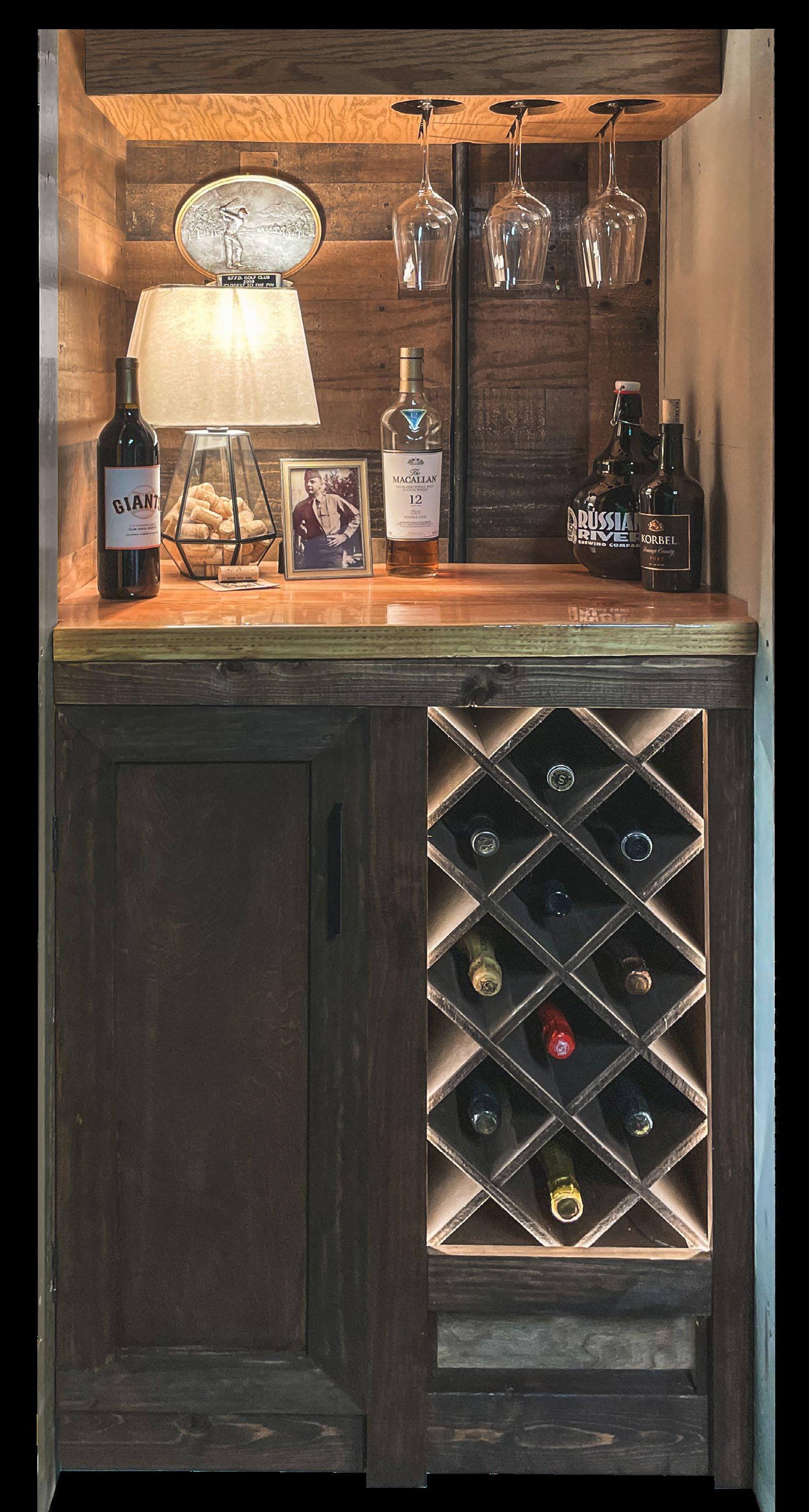
LED Wine Display
Custom Cabinet Door
Epoxy Coated Countertop
Reclaimed Wood
Built-in Glass Holder
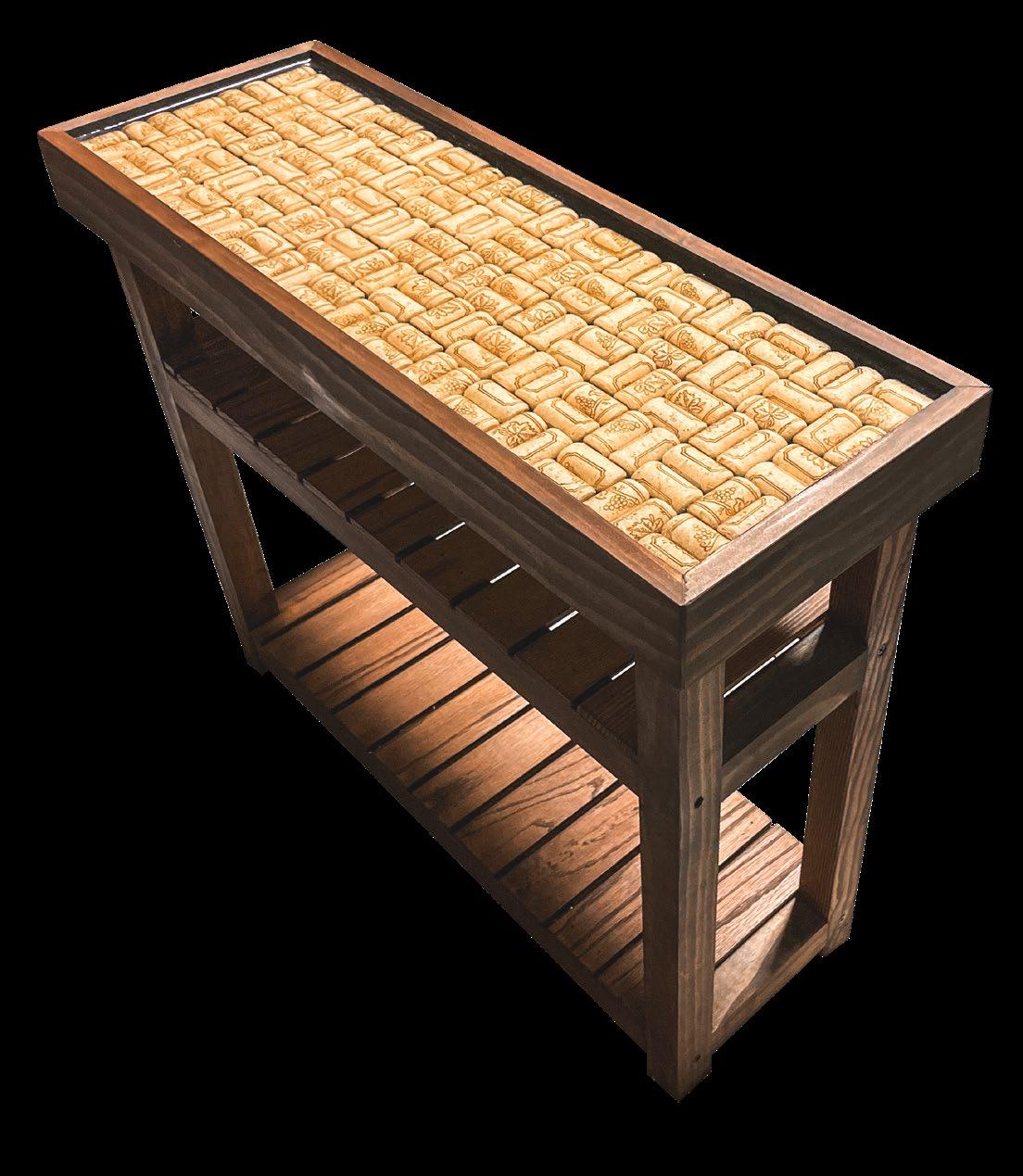
CORK SIDE TABLE
This is a roughly 1 foot by 3 foot table top built as a set of end tables. It is constructed from plywood, 2”x2” lumber, and thinner trim pieces to create the shelves and framing. The corks were then set into the tabletop using clear epoxy resin, creating a clear, waterproof, hard surface.
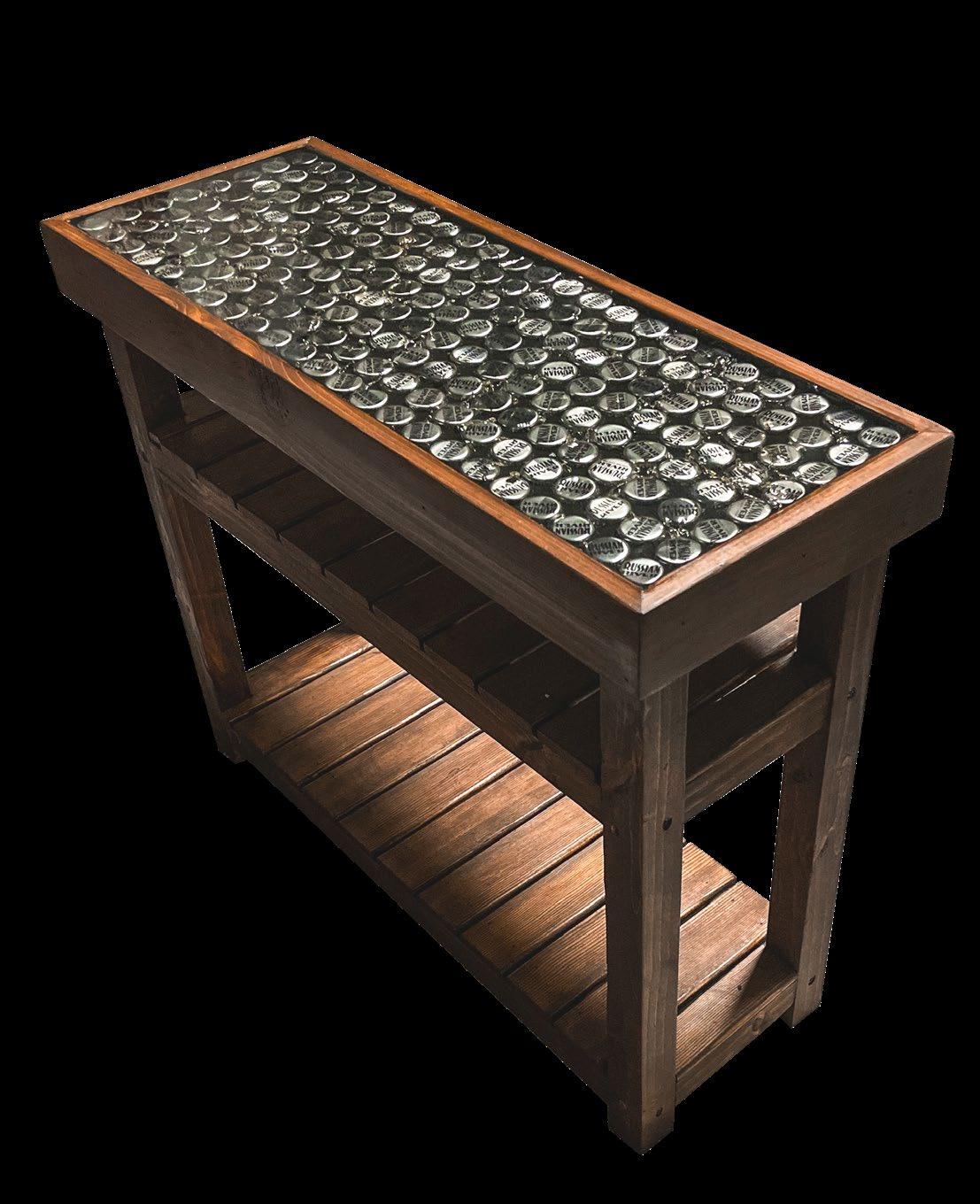
BOTTLE CAP SIDE TABLE
This table was the counterpart to the cork side table. With the same dimensions and construction method the project differs only in the display on the top itself. In this table, I used old bottle caps and again coated them in a layer of clear epoxy. Both pieces were stained in a dark walnut color and serve as end pieces on either side of a couch.