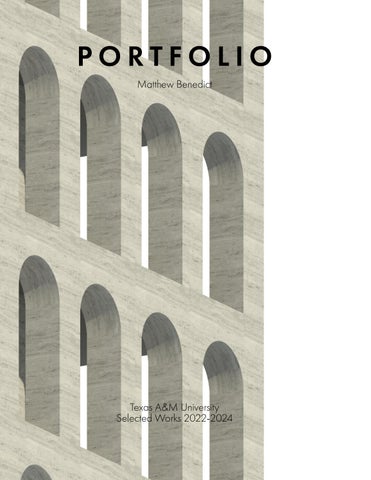

PORTFOLIO
Matthew Benedict
Texas A&M University Selected Works 2022-2024
PROFILE
I am Matthew Benedict, a first-year Master of Architecture student at Texas A&M University. This portfolio showcases selected works from both my undergraduate and graduate studies, highlighting my growth in design, conceptual thinking, technical proficiency, and collaboration.
With two years of internship experience and a range of studio projects, I have developed a foundation and strong interests in sustainability, commercial mixed-use design, urban planning, and mass timber construction. My design approach prioritizes creating meaningful spaces that enhance the experience of occupants and users, aiming to leave a lasting impact.
Thank you for taking the time to explore my work. I hope these projects inspire you. For my resume and additional qualifications, please scan the QR code or reach out via my contact information below.
Please scan the QR code to view my full resume.
Contact. (512) 751-7815
matthewb5901@gmail.com

Reinventing Downtown Austin
Transforming Vacancy into Vibrant, Sustainable Living
INSTRUCTORS
Dr. Fabrizio Aimar
LOCATION
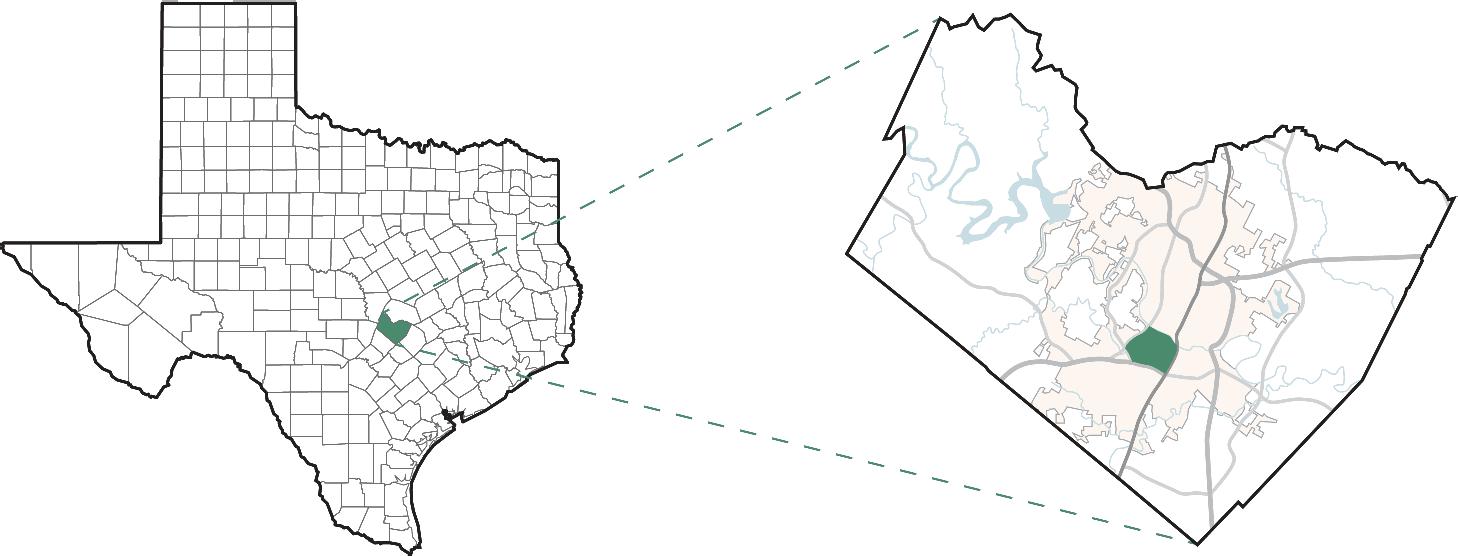
Austin, Texas
CONTRIBUTIONS
SWOT analysis, adaptive reuse, architectural design, final drawings
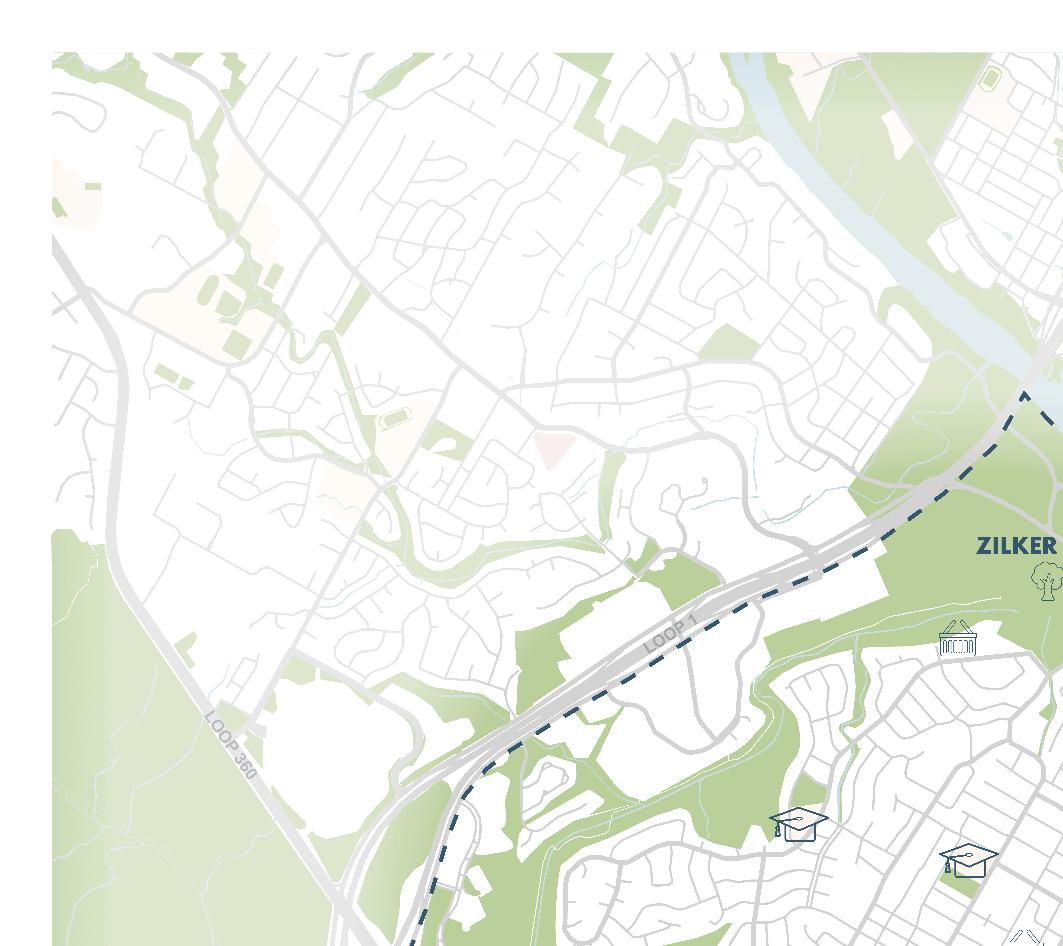
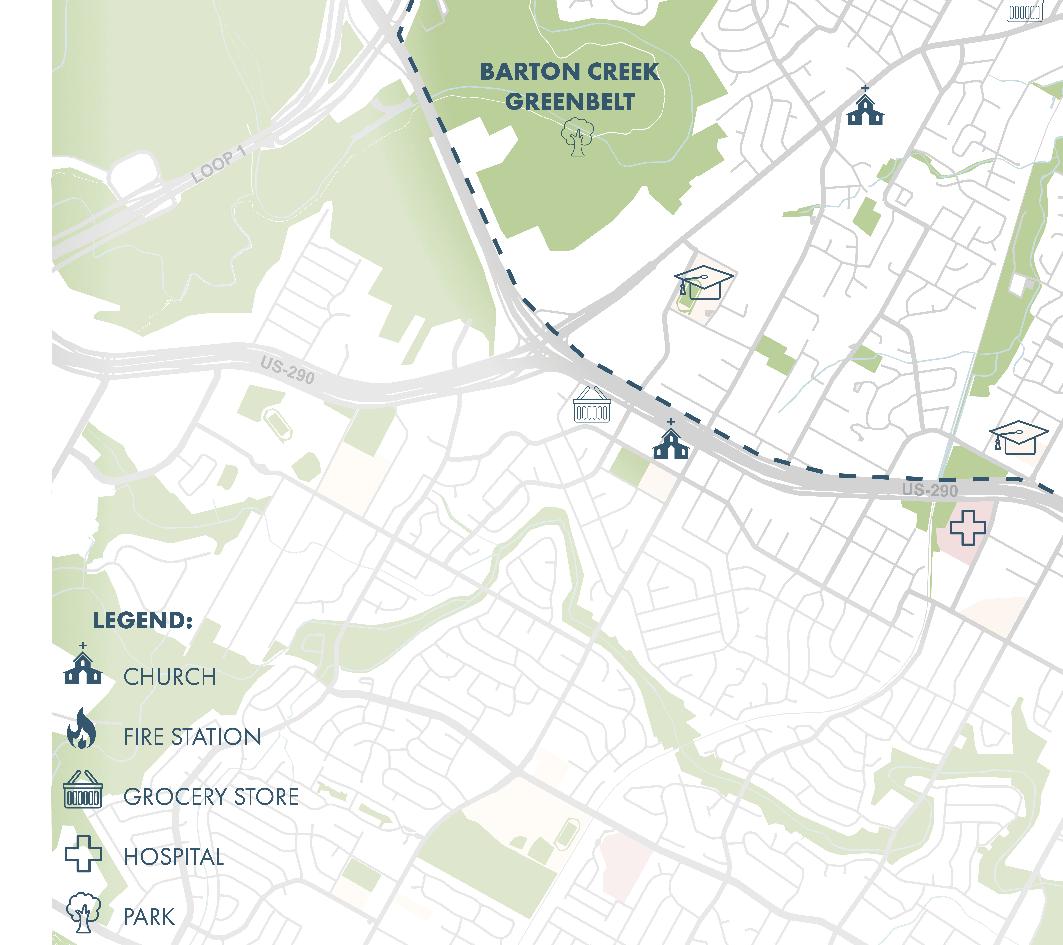
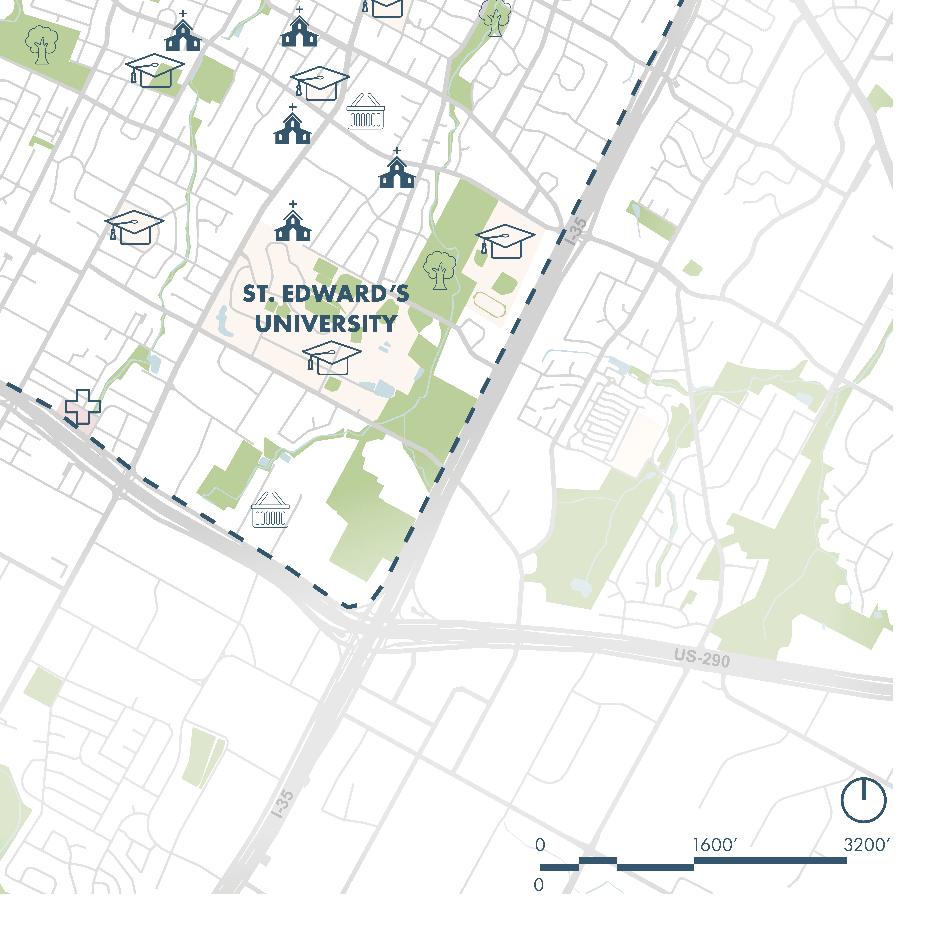
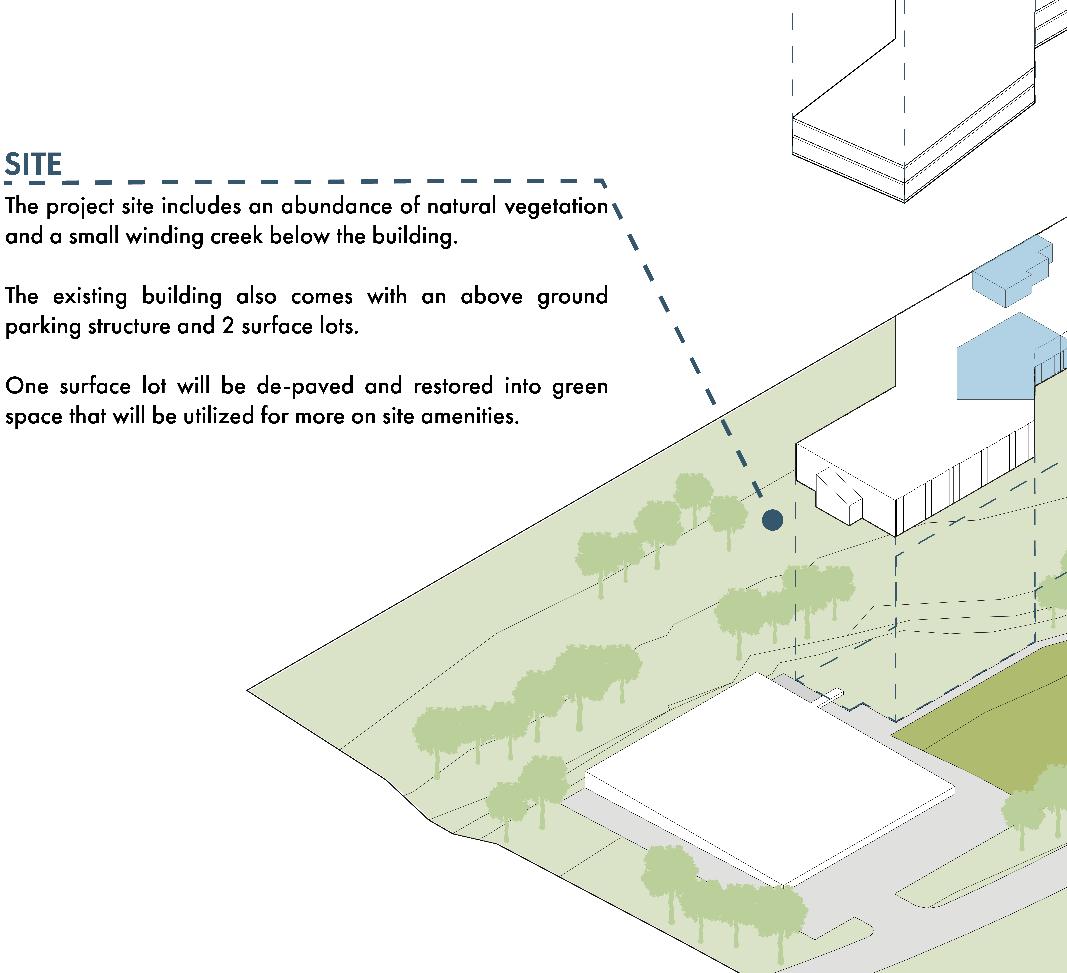
Austin, Texas, has experienced unprecedented population and economic growth in recent years, presenting both opportunities and challenges in achieving urban resilience. However, despite this expansion, office vacancy rates have surged—from 14% in 2022 to 18% in 2023, now reaching 24.3%. This issue is further exacerbated by the imminent addition of six new highrise buildings by 2026, including one dedicated entirely to office use and three mixed-use developments with office components. Meanwhile, housing affordability remains a pressing concern, with the cost of renting and homeownership continuing to rise, emphasizing the urgent need for innovative residential solutions.
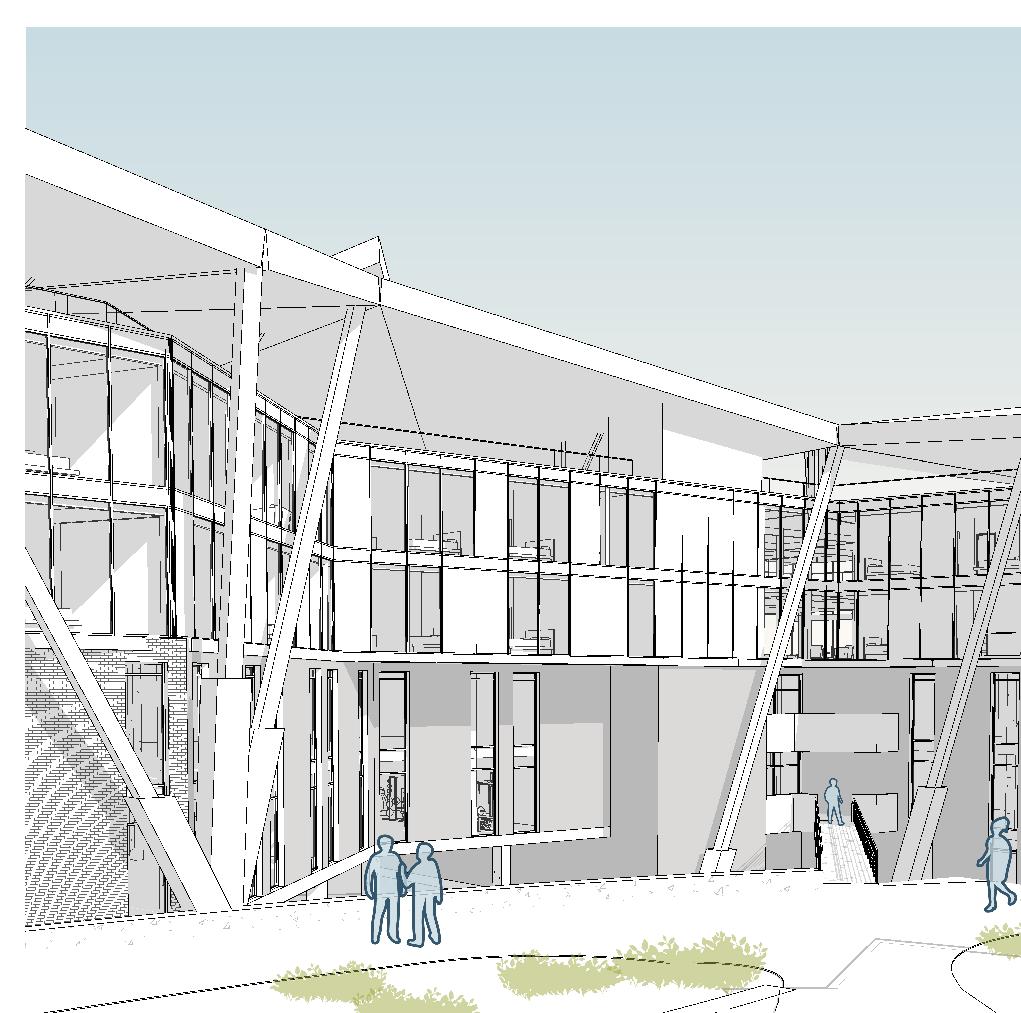
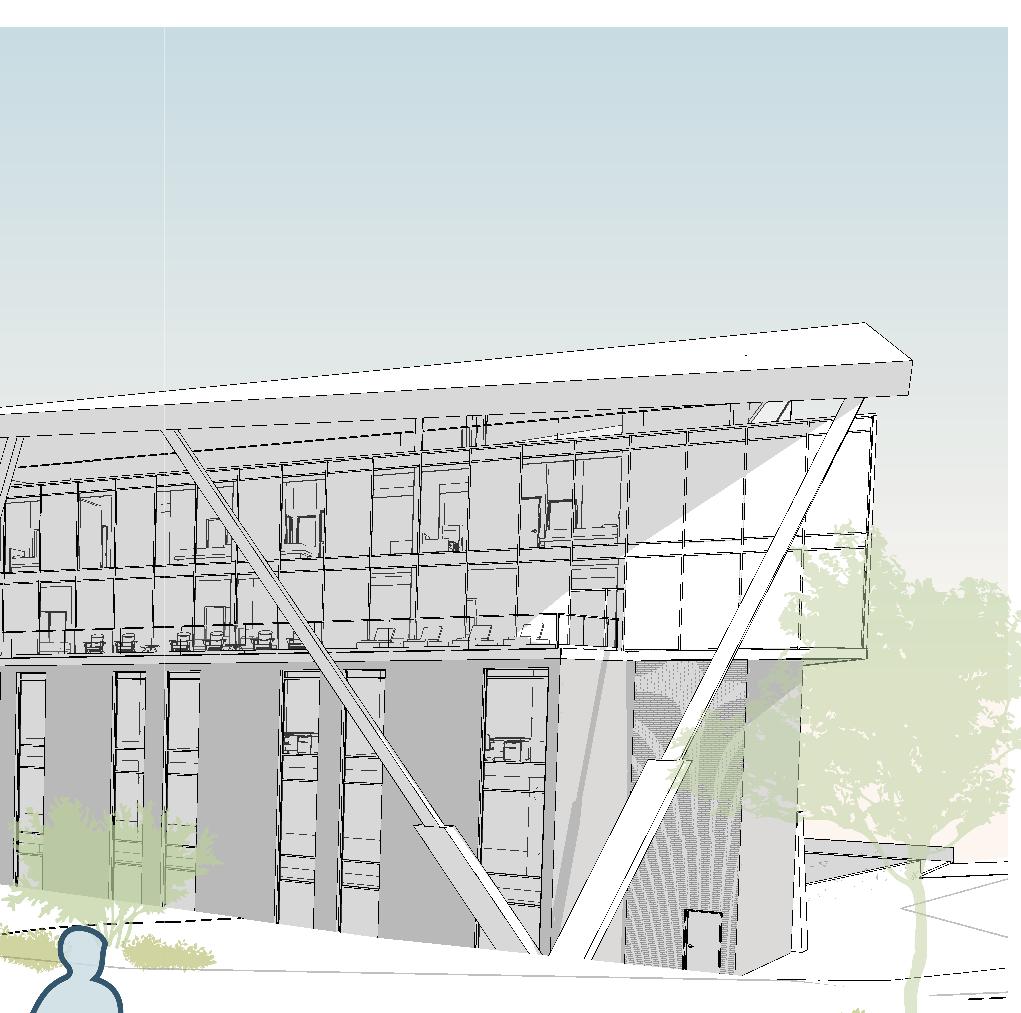
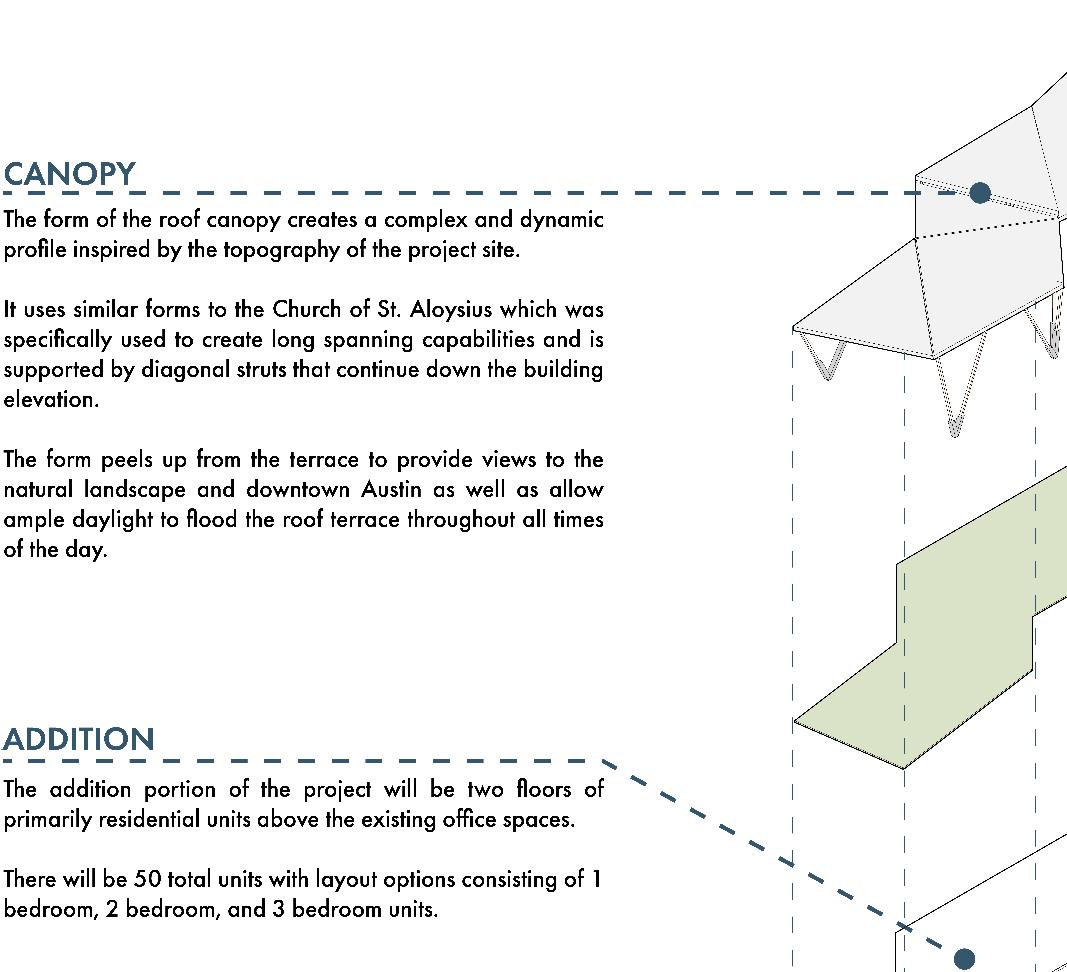
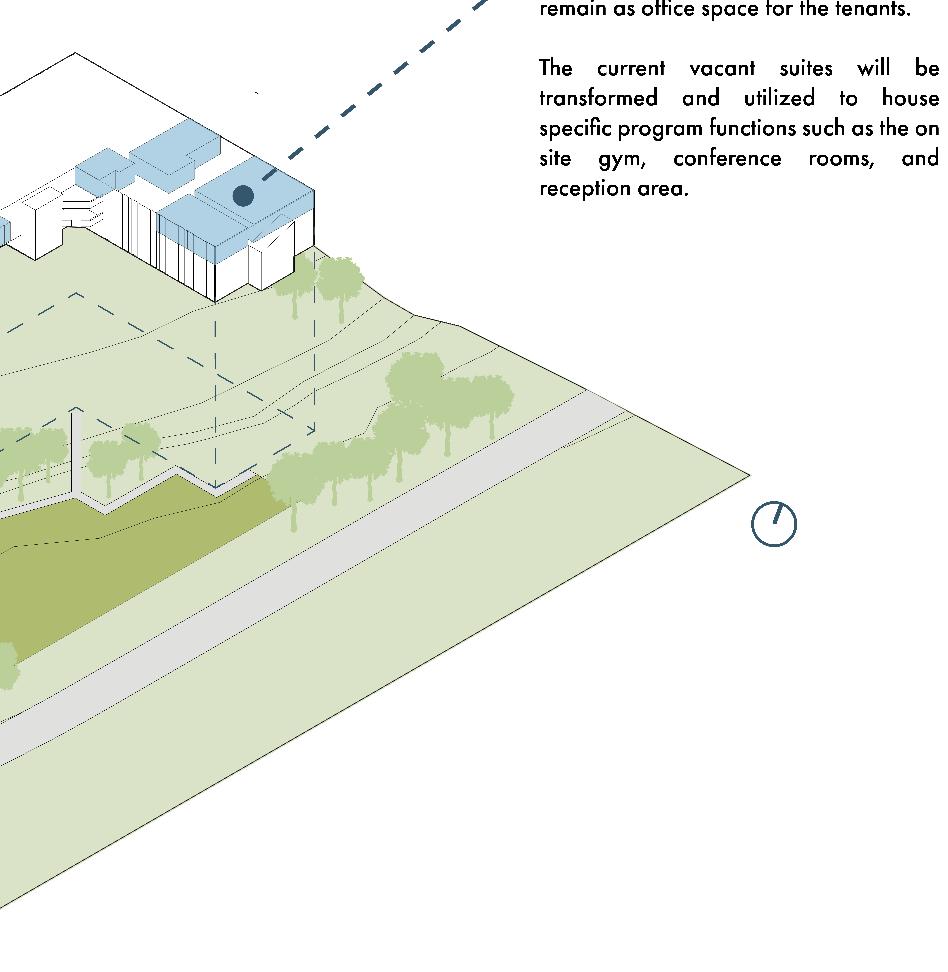
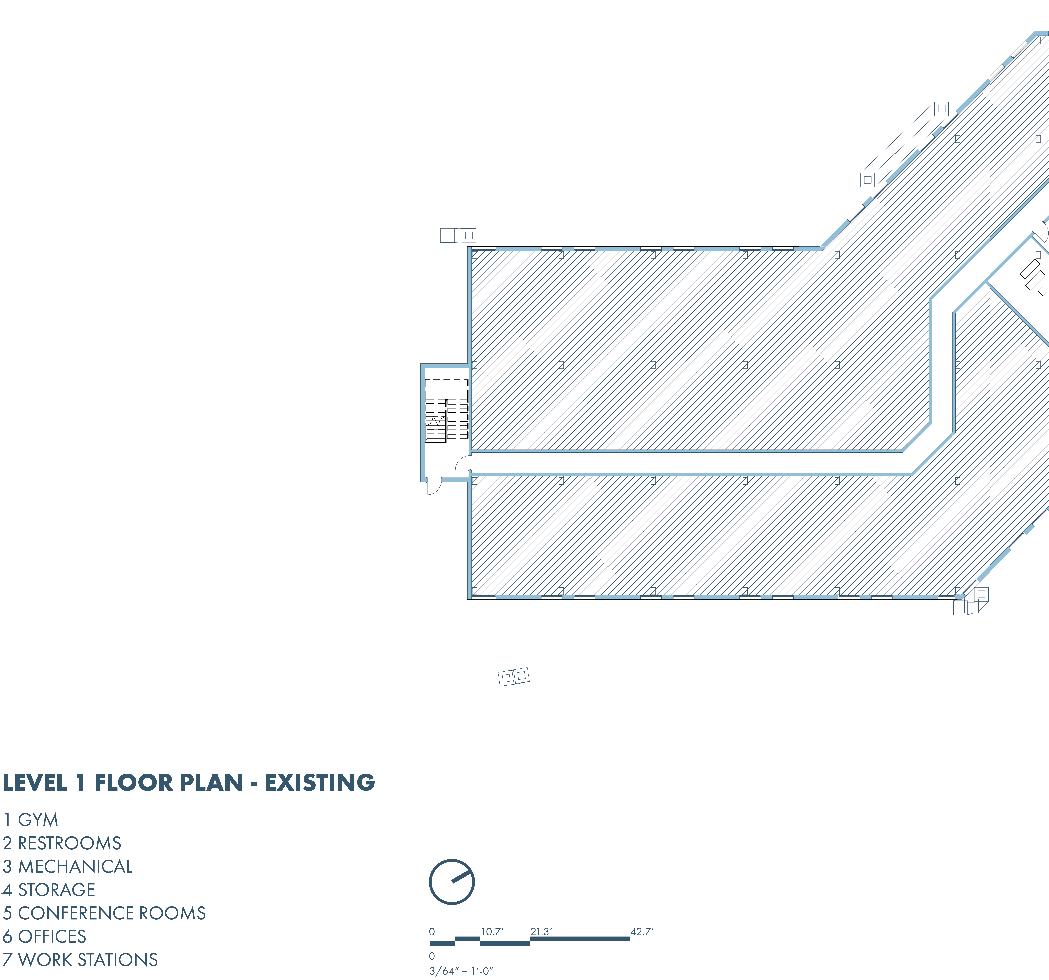
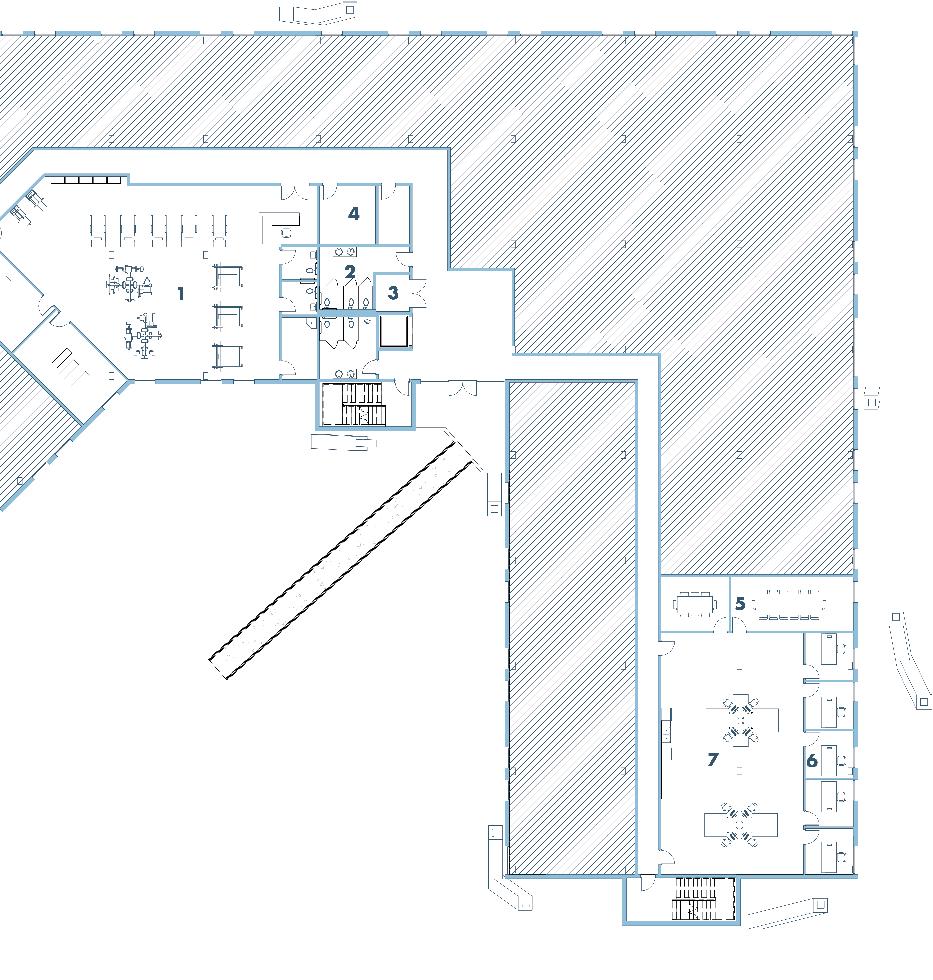
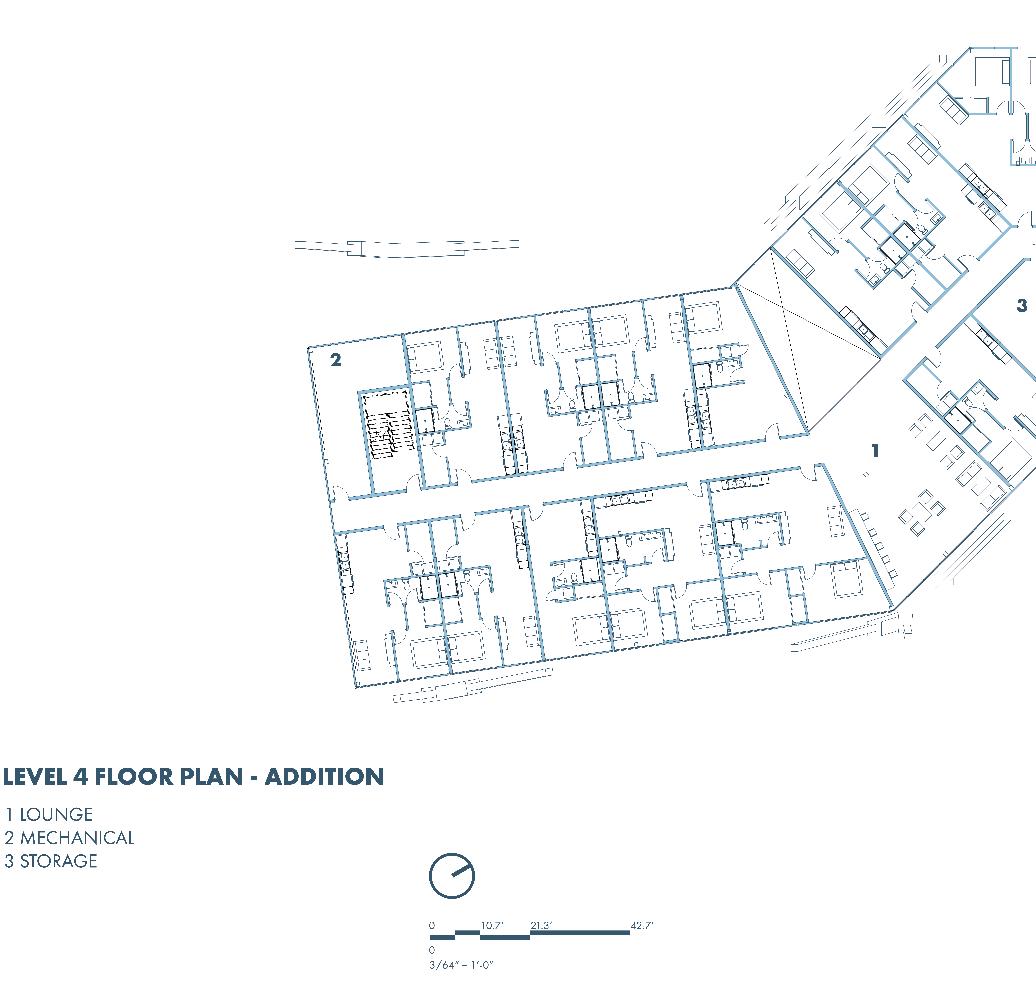
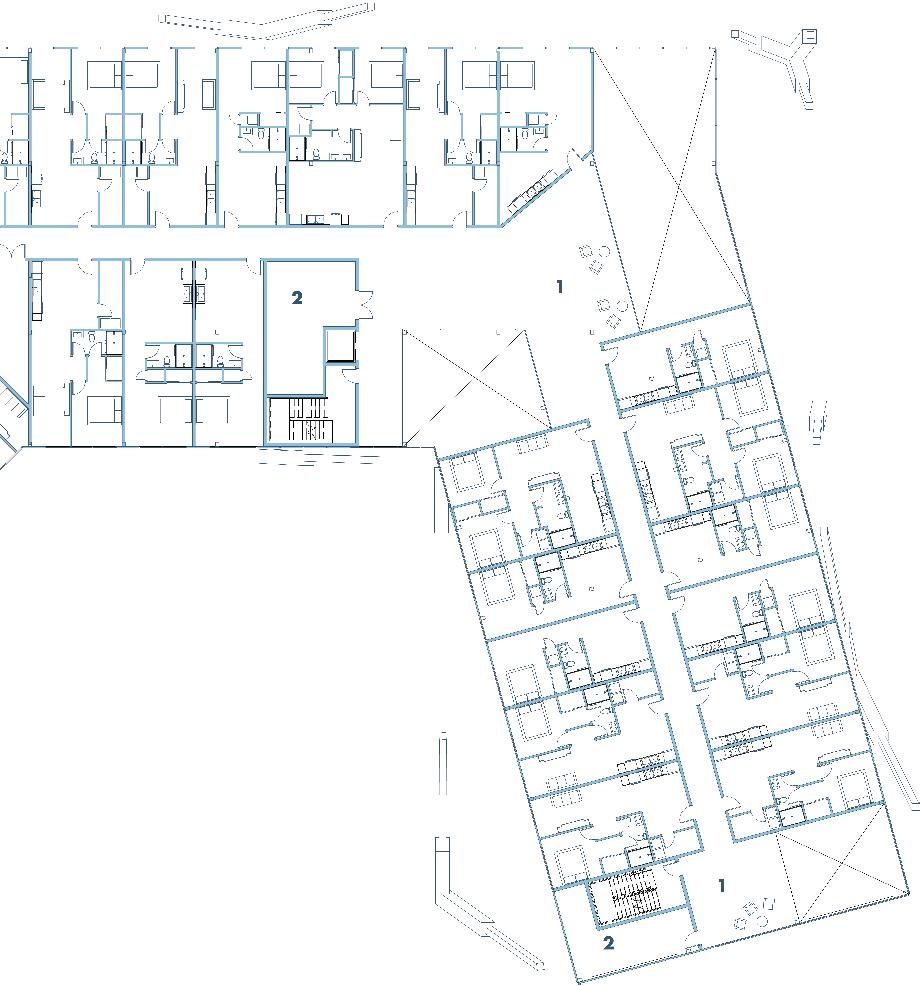
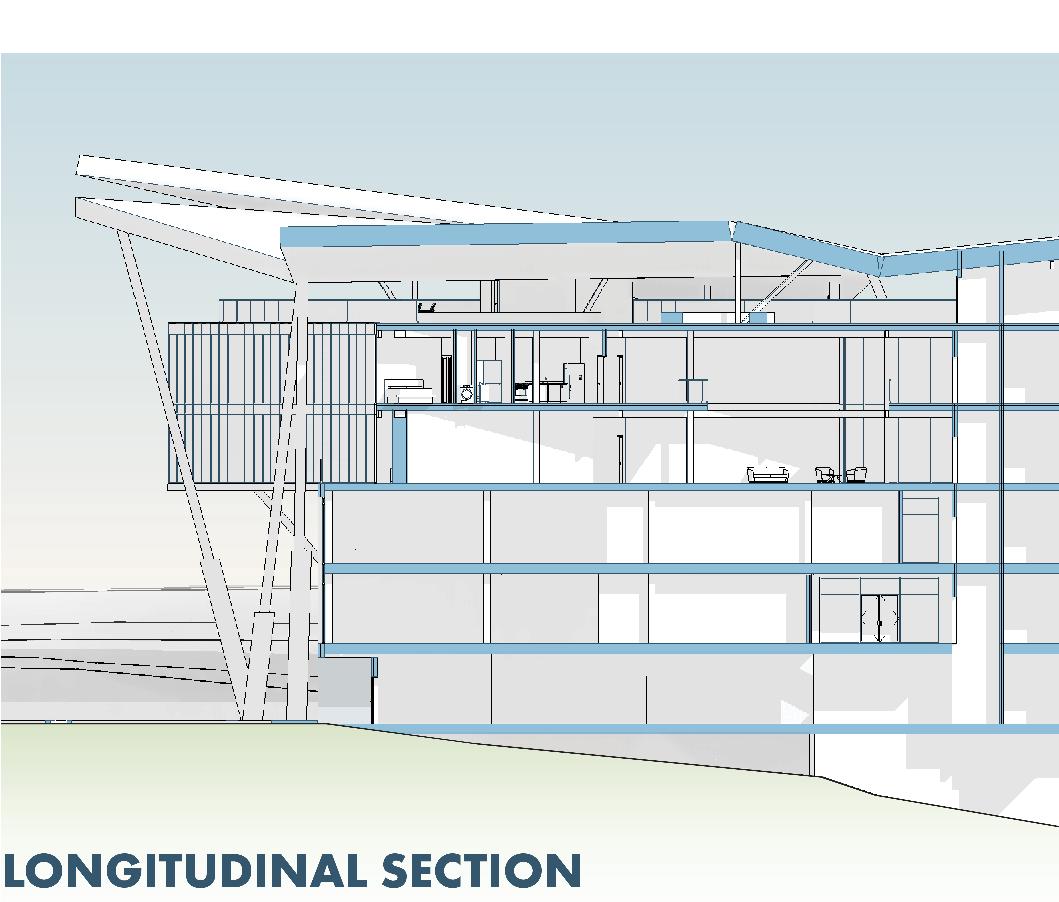
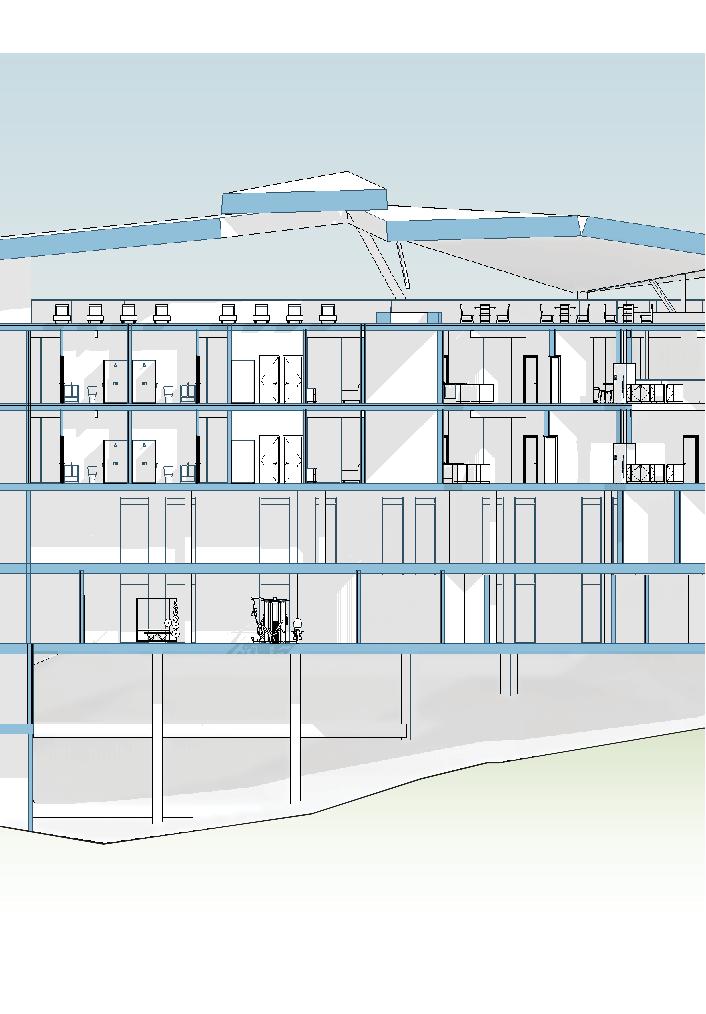
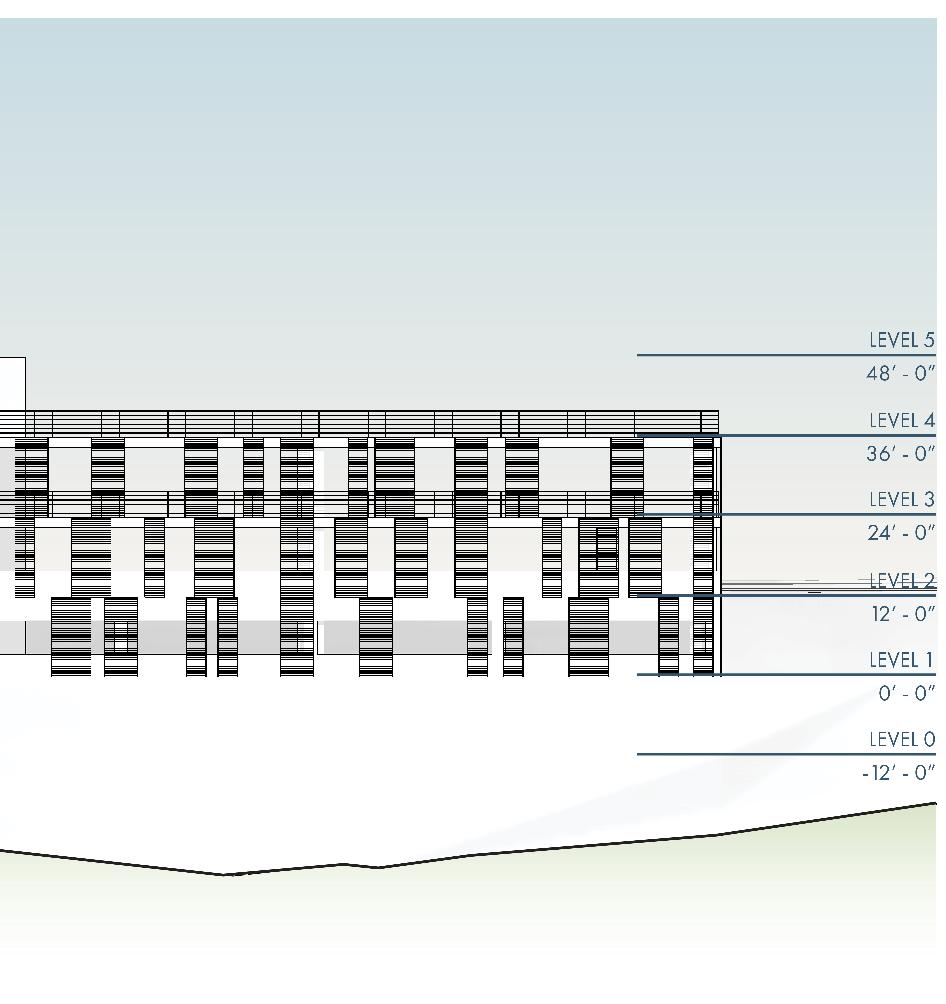
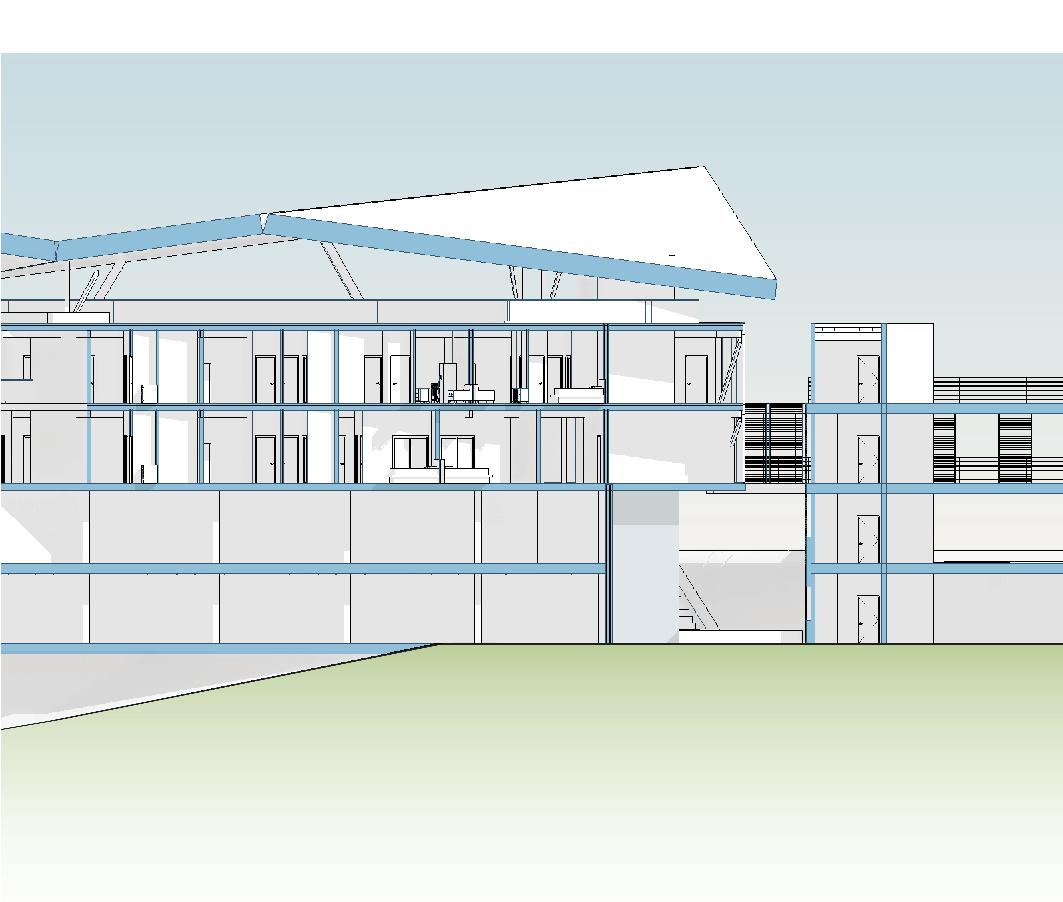
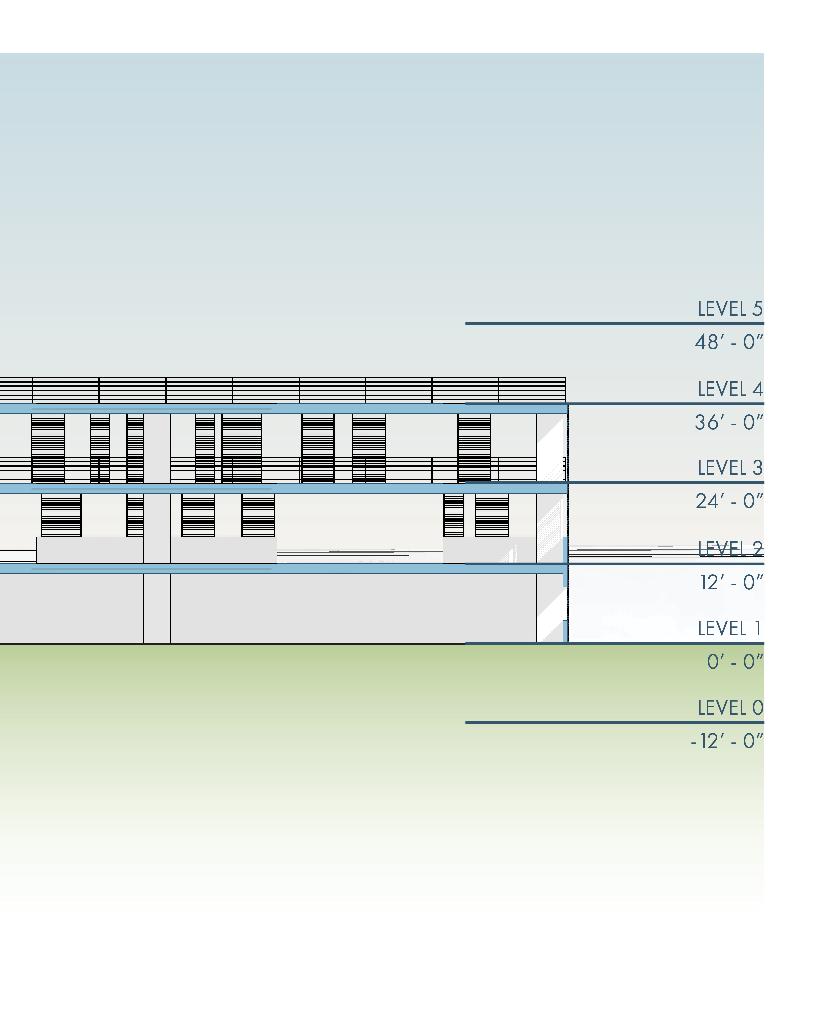
In response to these challenges, this project proposes the adaptive reuse of anexistingofficebuildingtocreateattainablemid-incomehousingwhileintegratingvibrantcommunityspaces.Originallyconstructedin1980asageneral office building, the structure encompasses over 75,000 square feet of rentable space, yet currently stands 36.3% vacant and in need of renovation. The transformation will include converting underutilized office areas into essential community amenities such as a bookstore, coffee shop, and gym, fostering an active and engaging environment. Additionally, the project introduces two new floors of affordable housing, providing over 50 residential units in three distinct layouts tailored to diverse community needs.
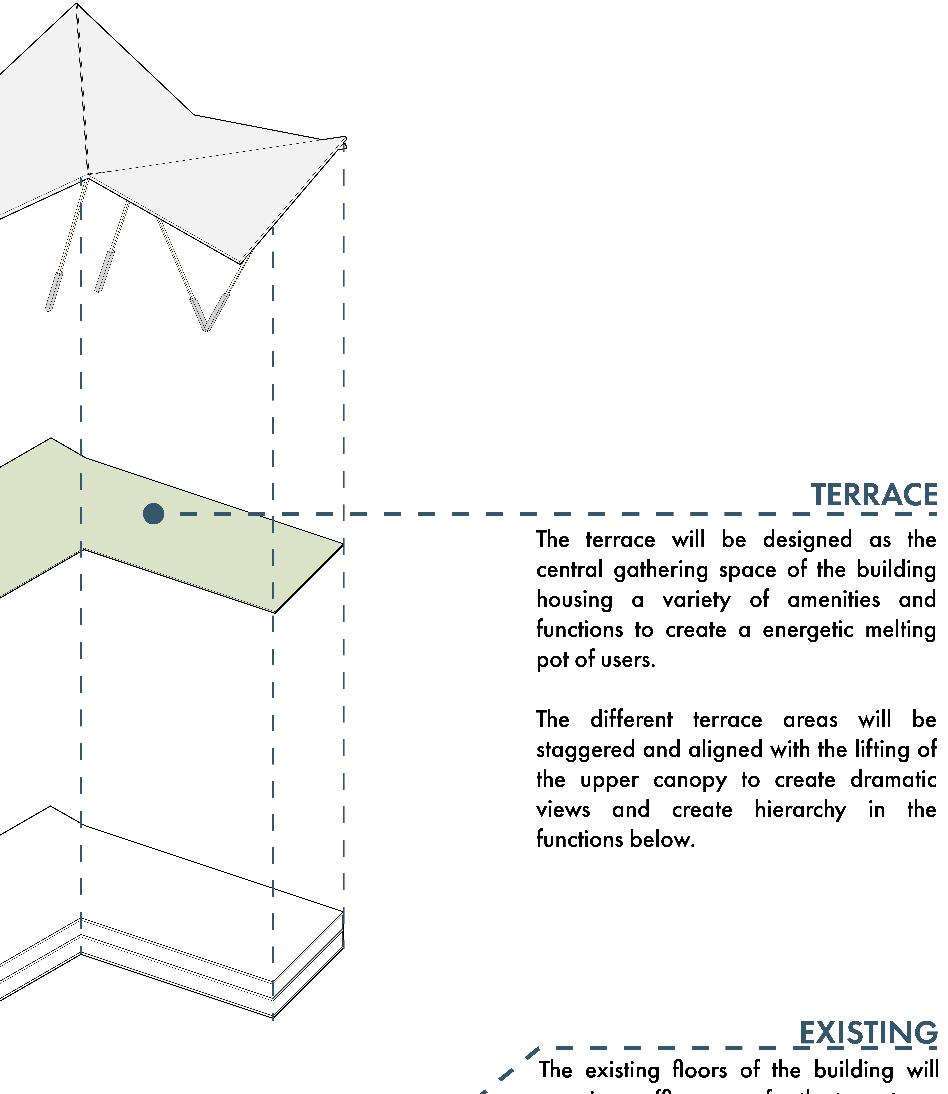
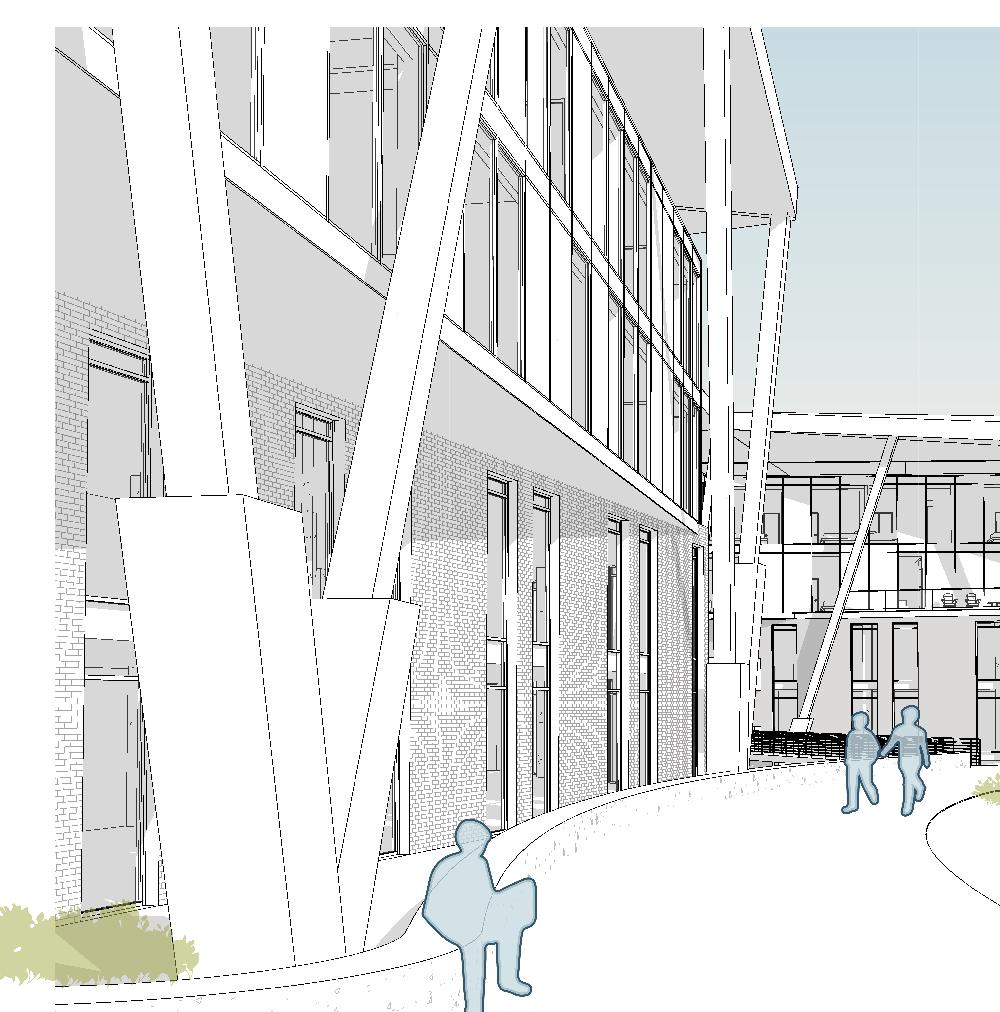
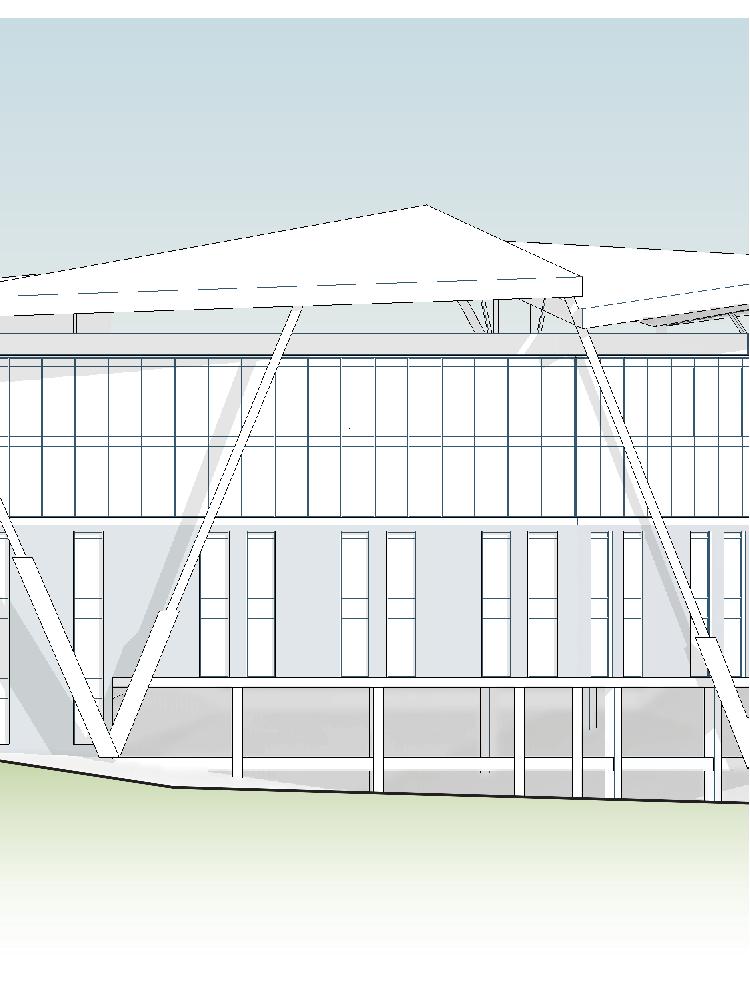
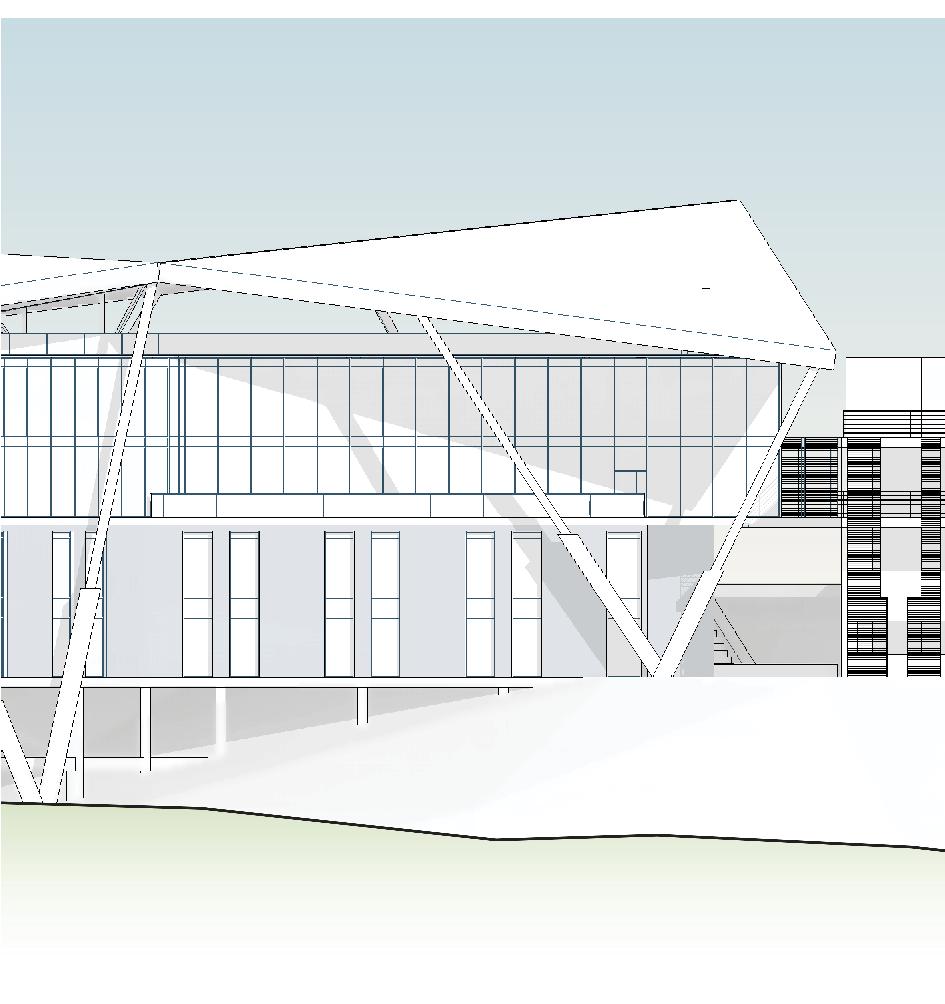
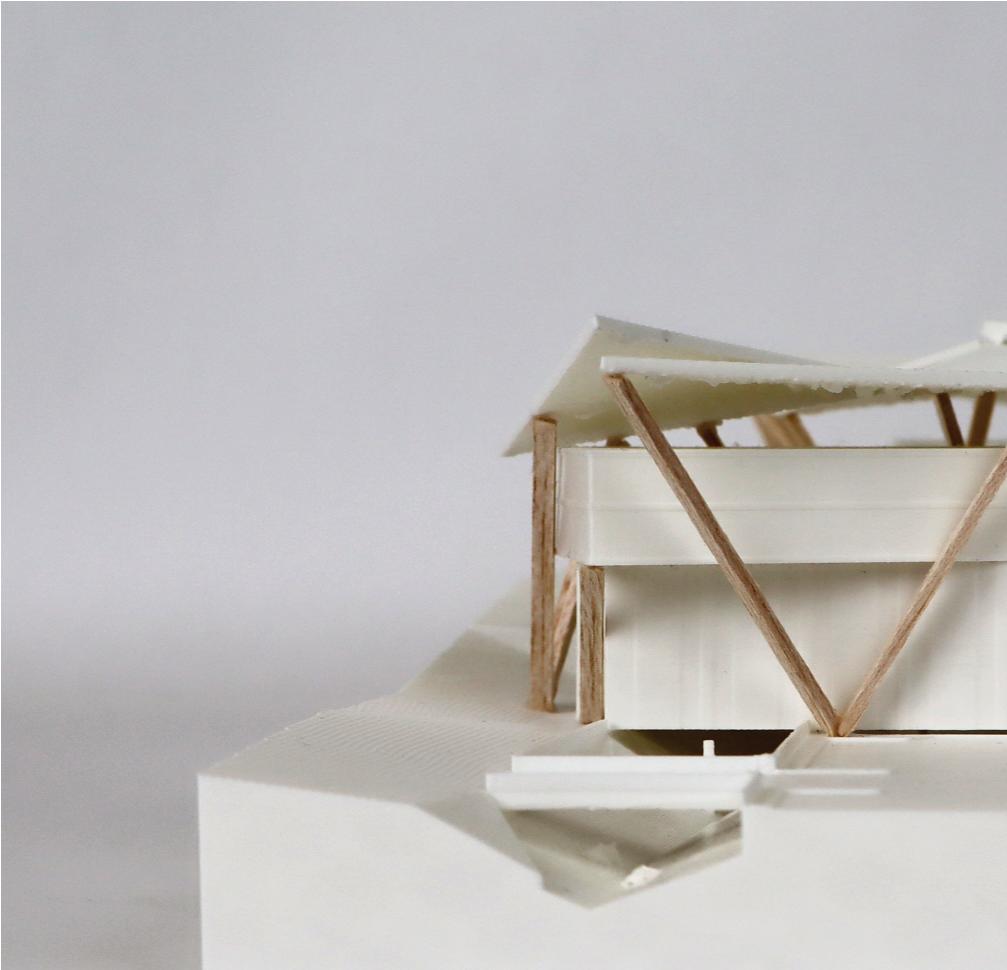
A defining feature of the design is the rooftop terrace and its dynamic undulating canopy, constructed with a long-span steel and timber structure that offers shading and comfort to occupants. Inspired by the site’s natural topography, the canopy’s fluid form creates a striking architectural expression while enhancing the building’s environmental performance. Sustainability remains a core focus of the project, showcased through thoughtful site design, water harvesting strategies, and energy-efficient systems, ensuring a holistic approach to resilience and adaptation.




GLASS RAILING
PVC ROOF MEMBRANE
XPS RIGID INSULATION
INSULATED SPANDREL PANEL
1” INSULATED GLASS WITH LOW-E COATING
CLT FLOOR PANEL
GLULAM BEAM
GLULAM COLUMN
BRICK VENEER WALL
CURTAIN WALL
GYPSUM BOARD CEILING
CAST IN PLACE CONCRETE COLUMN
CAST IN PLACE CONCRETE SLAB
CARTON FORMS
STRAIGHT SHAFT CONCRETE PIER
Level 6
Level 5
Level 4
- 0”
Level 3
- 0”
Level 2
- 0”
Level 1
- 0”

Connected Courtyards
A Study of CLT Workforce Housing
INSTRUCTORS
Benjamin Ennemoser & James Michael Tate
TEAM
Lincoln Clark-Batemen, Addison Whittenton, Riley Gourley & Alfredo Saenz
LOCATION
Bryan, Texas
CONTRIBUTIONS
Research and exploration, urban layout, massing development, final drawings
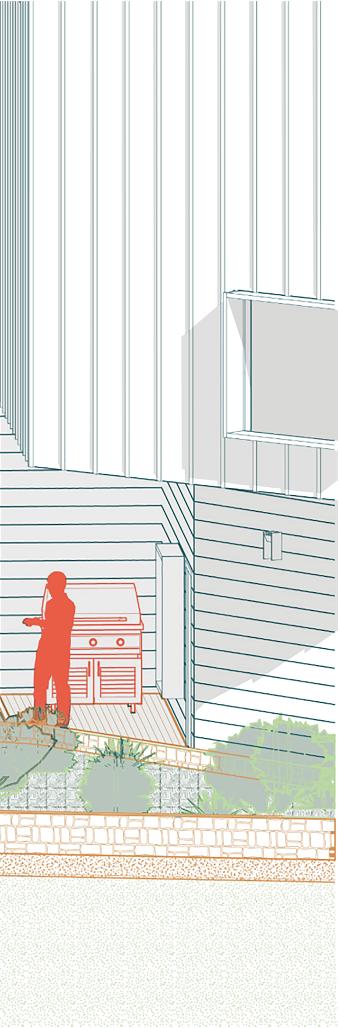
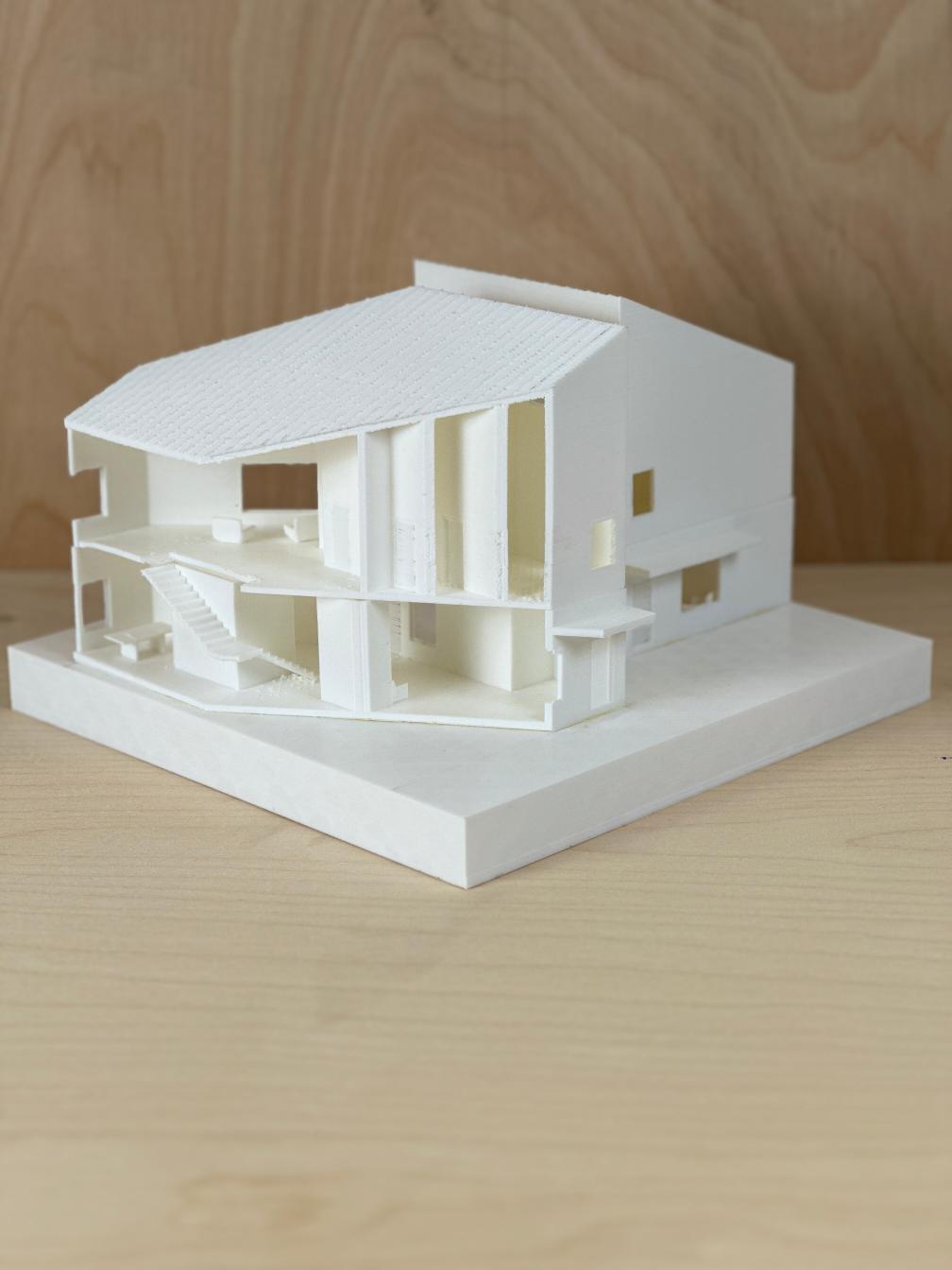
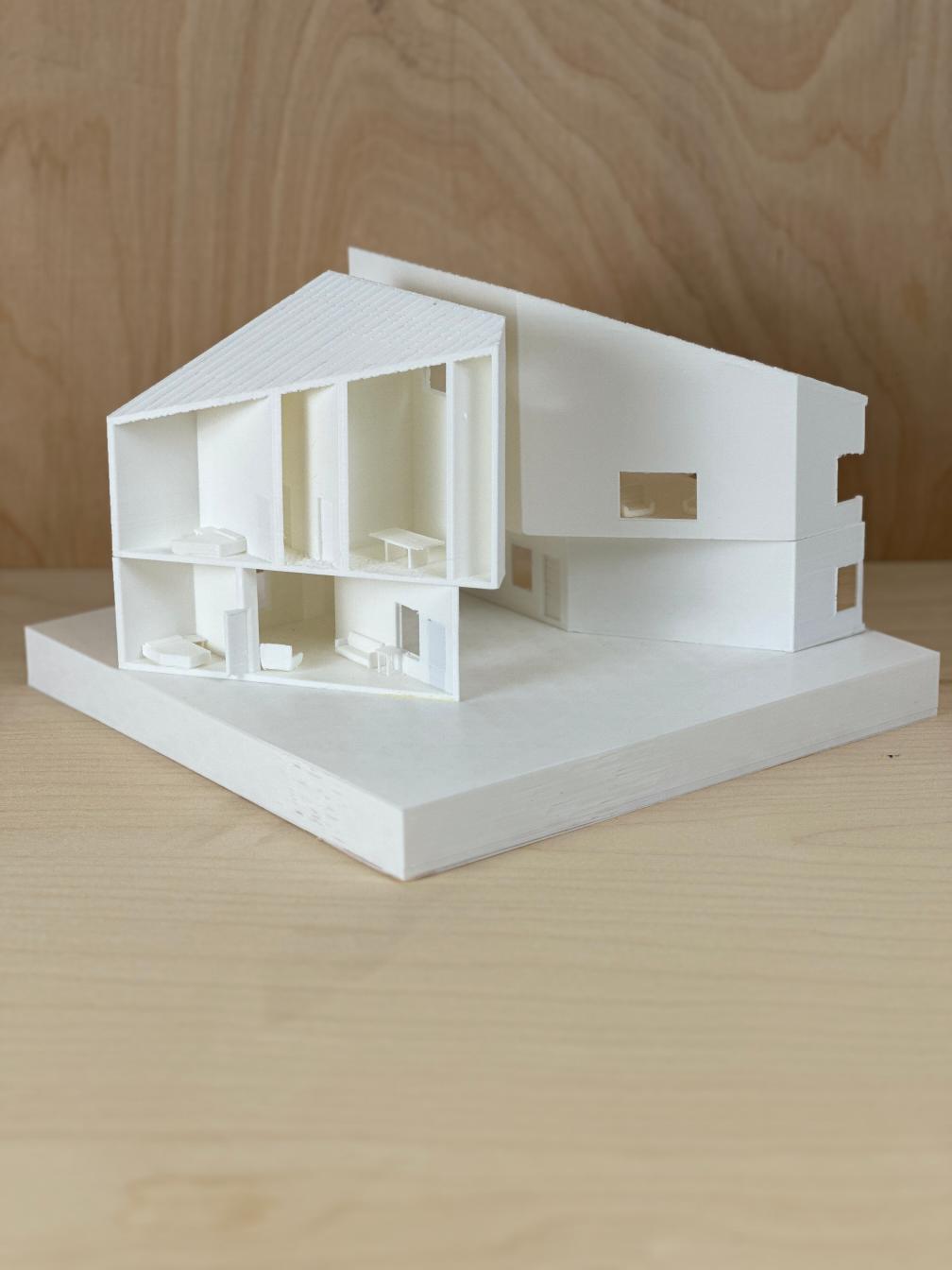
Integrating new tools into the design process is always an exciting opportunity to enhance our workflows. In this studio, we explored the machine learning and image generation capabilities of MidJourney, leveraging this advanced AI platform to rapidly produce ideas and precedents at an unprecedented scale. Our focus centered on reimagining specific residential architectural elements: courtyards, openings, passages, and windows.
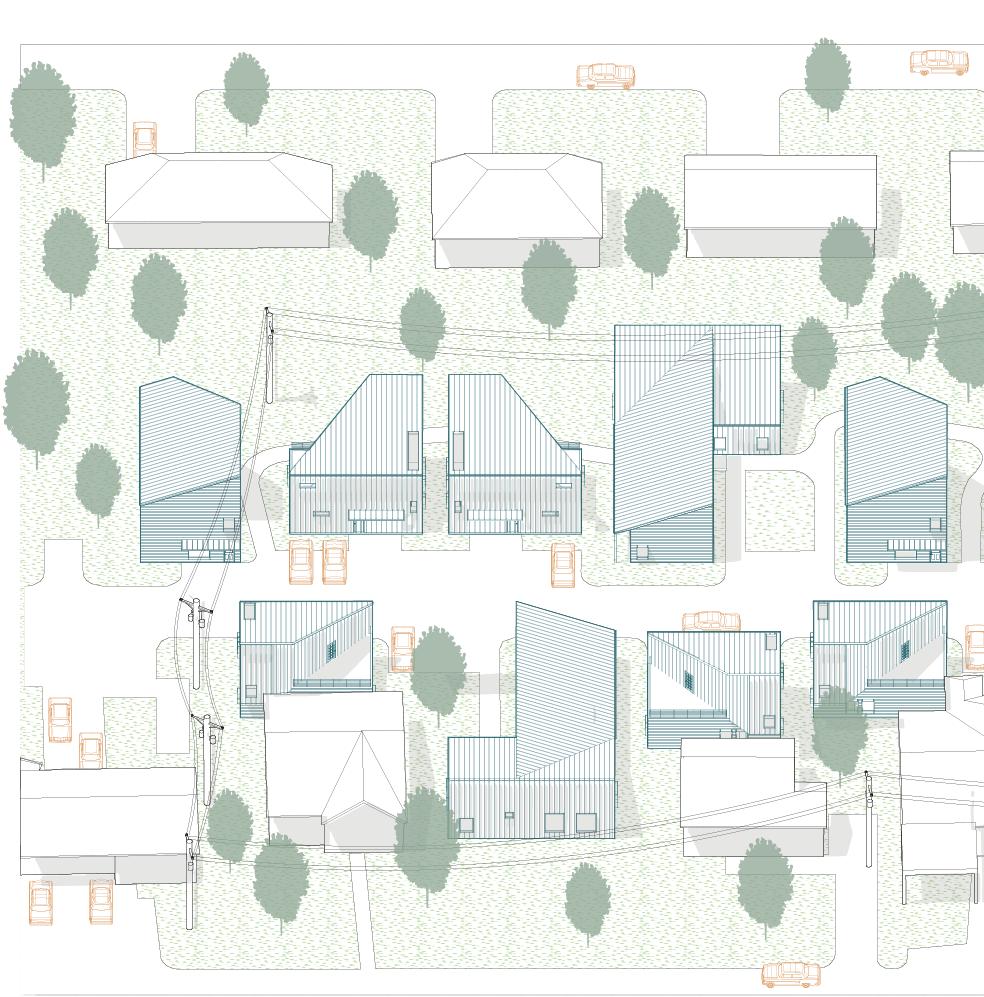
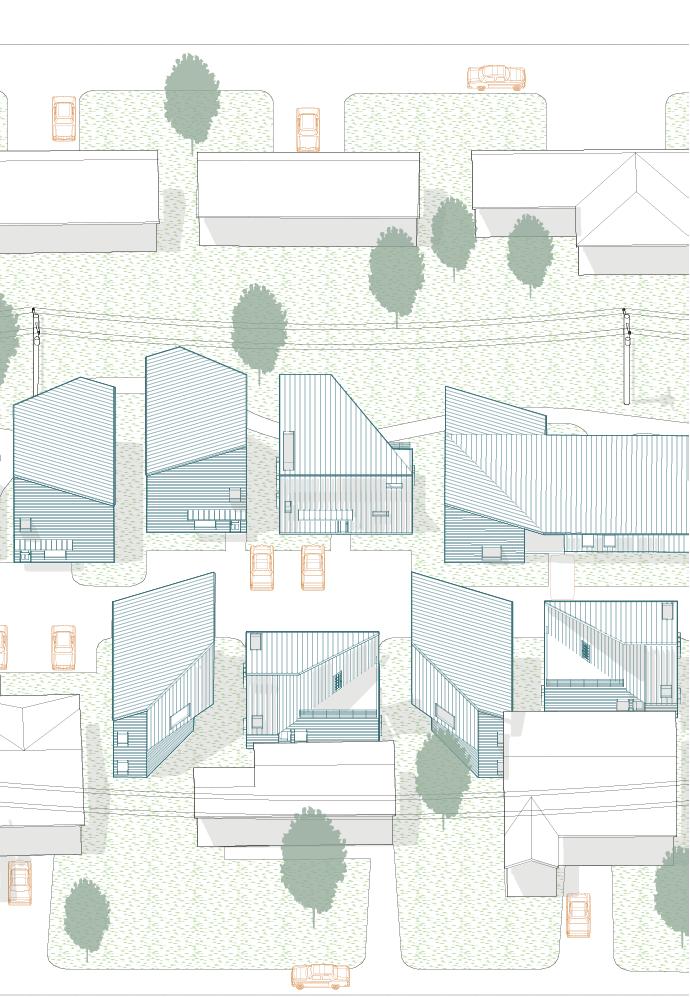
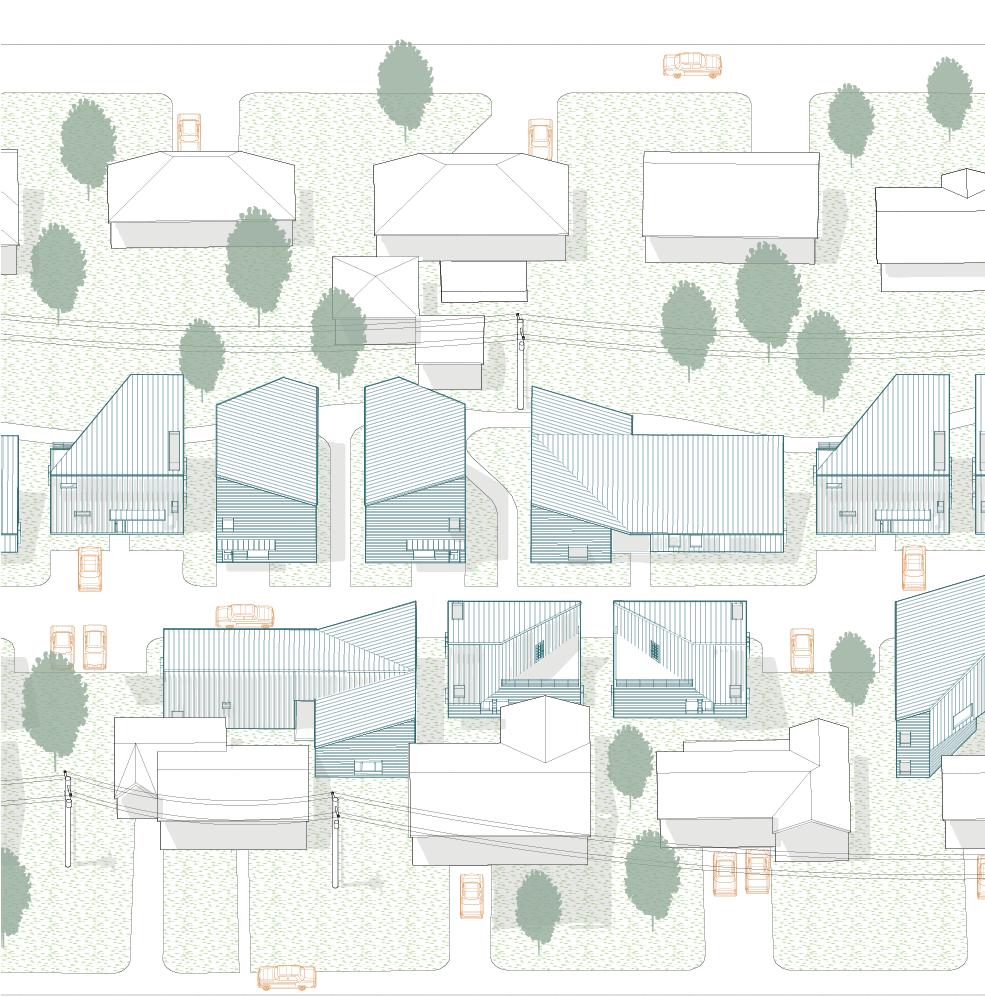
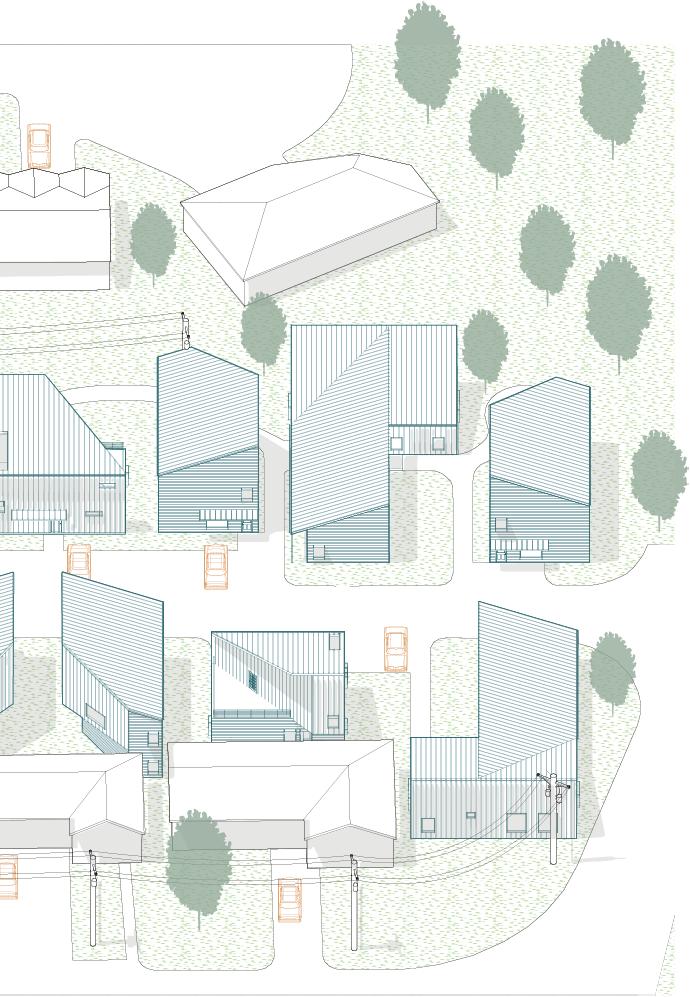
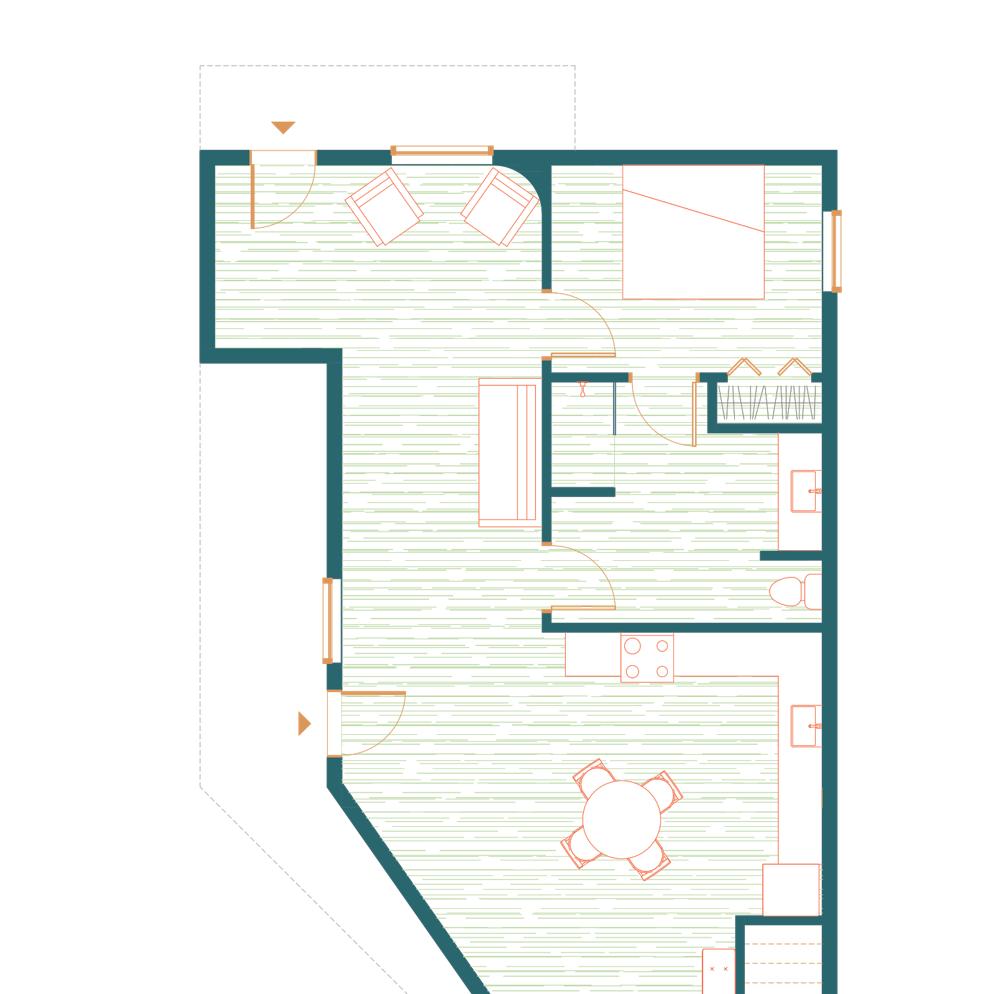
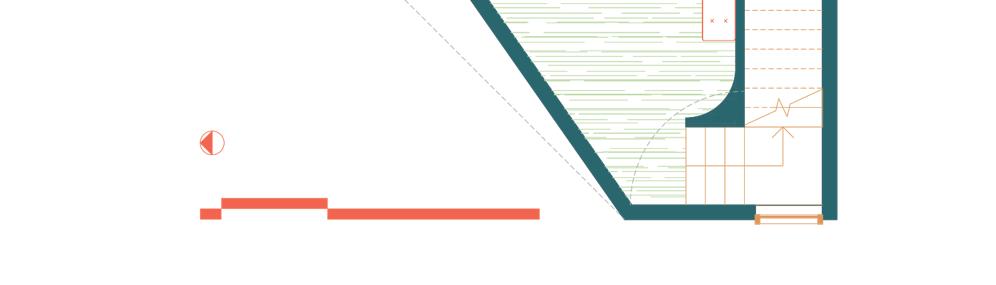
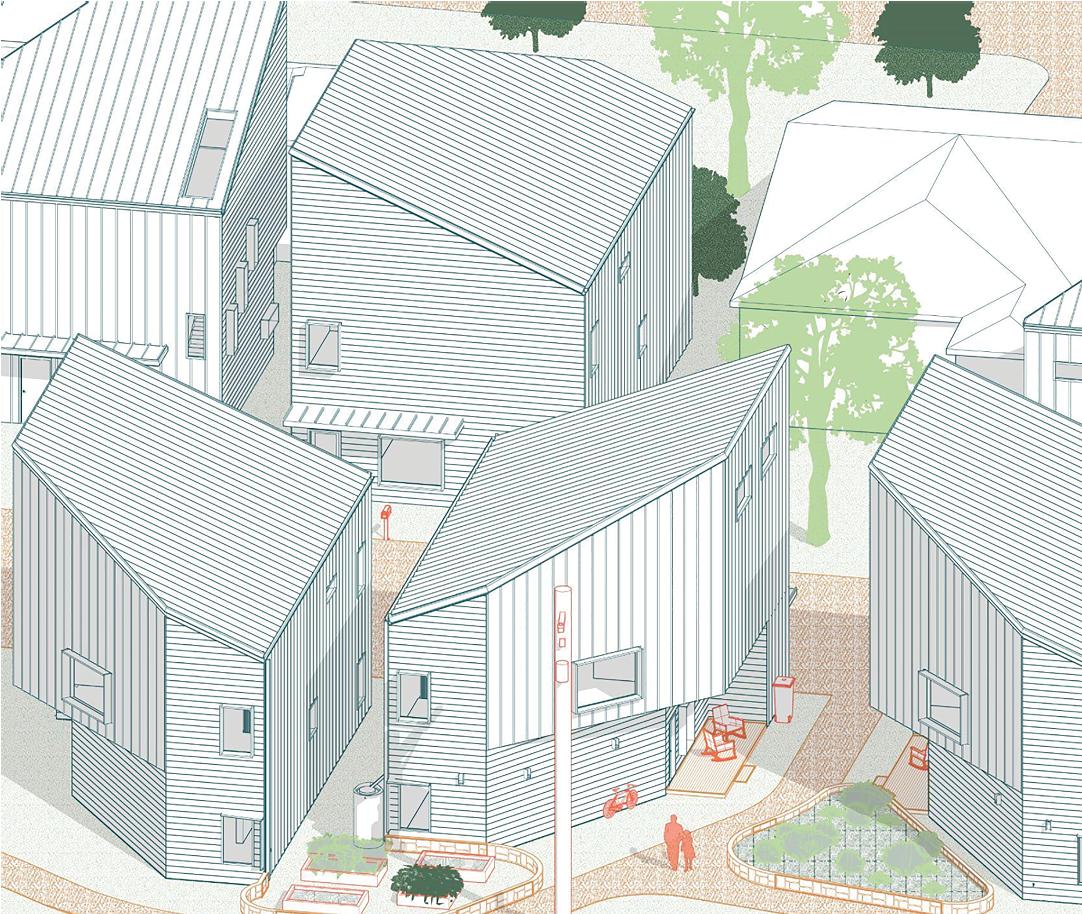
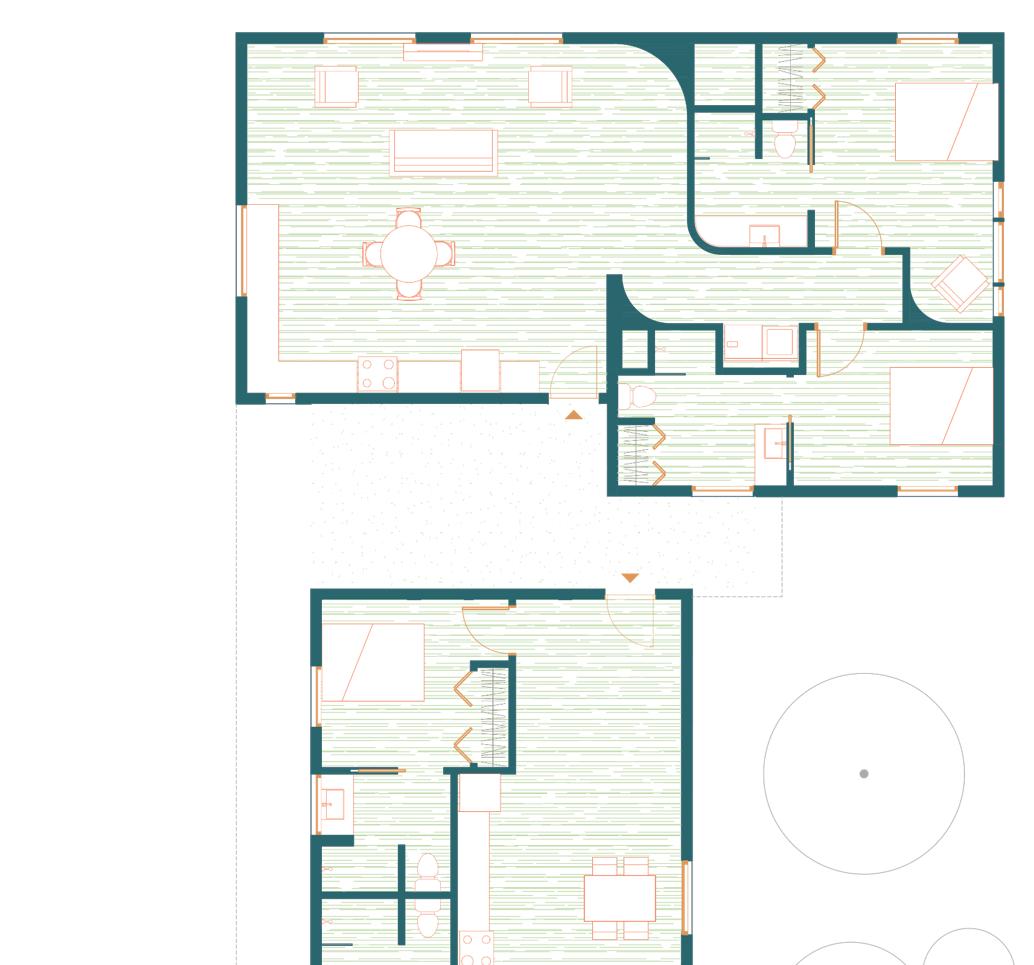
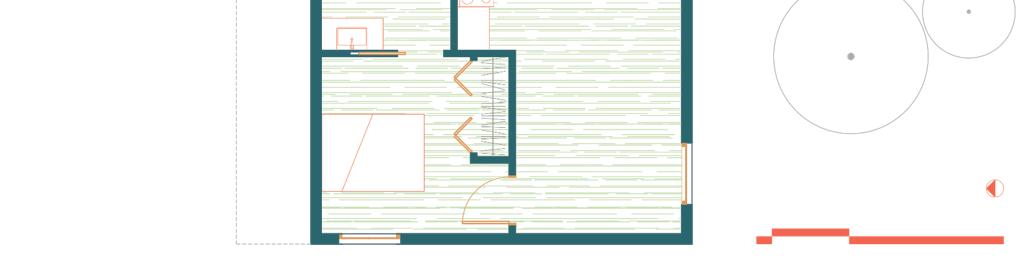
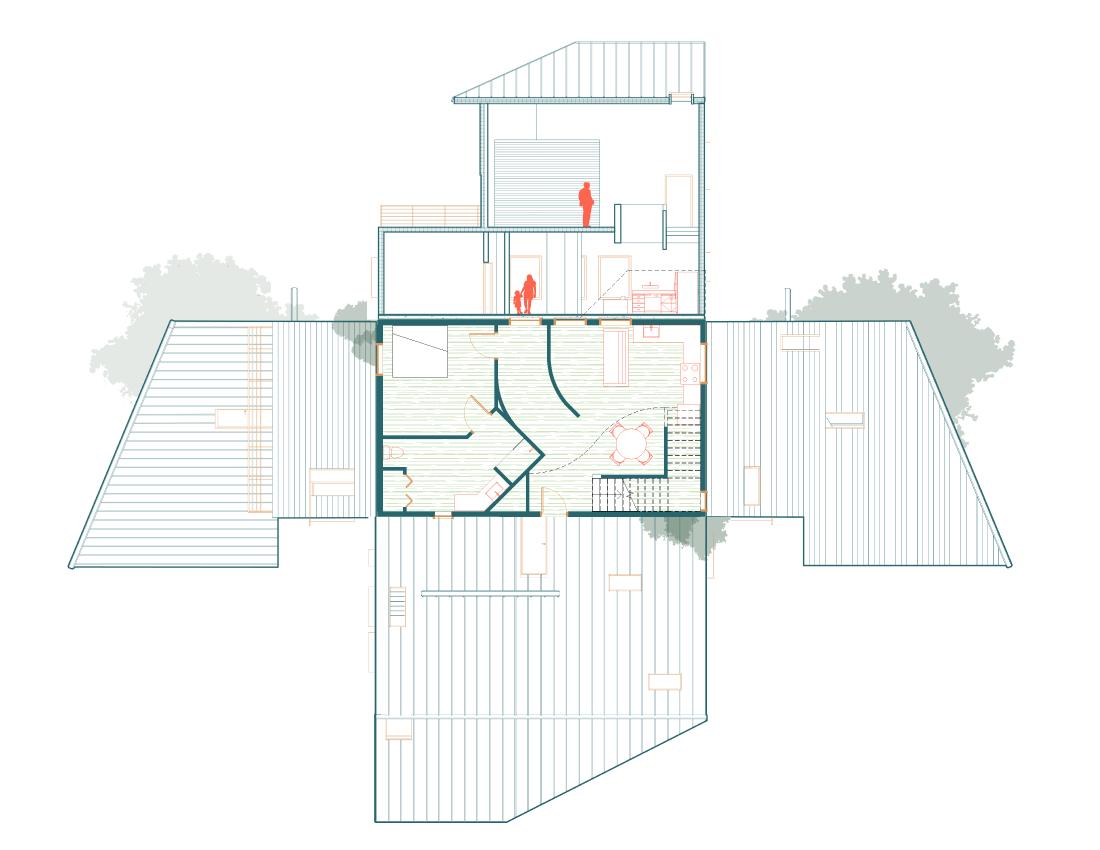
Using MidJourney, we generated hundreds of conceptual images, which became instrumental in shaping our approach to these elements on a residential scale. This exploration was rooted in addressing a critical need: designing functional and pleasant workforce housing for the Bryan/College Station area. Our objective was to create a series of houses that emphasize the integration of courtyards, passageways, and windows, utilizing these elements as fundamental components of an urban strategy.
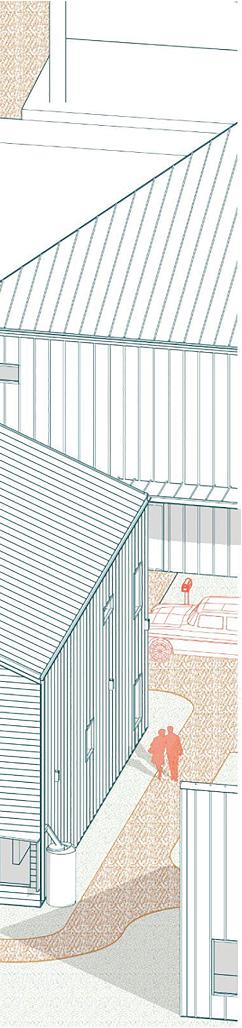
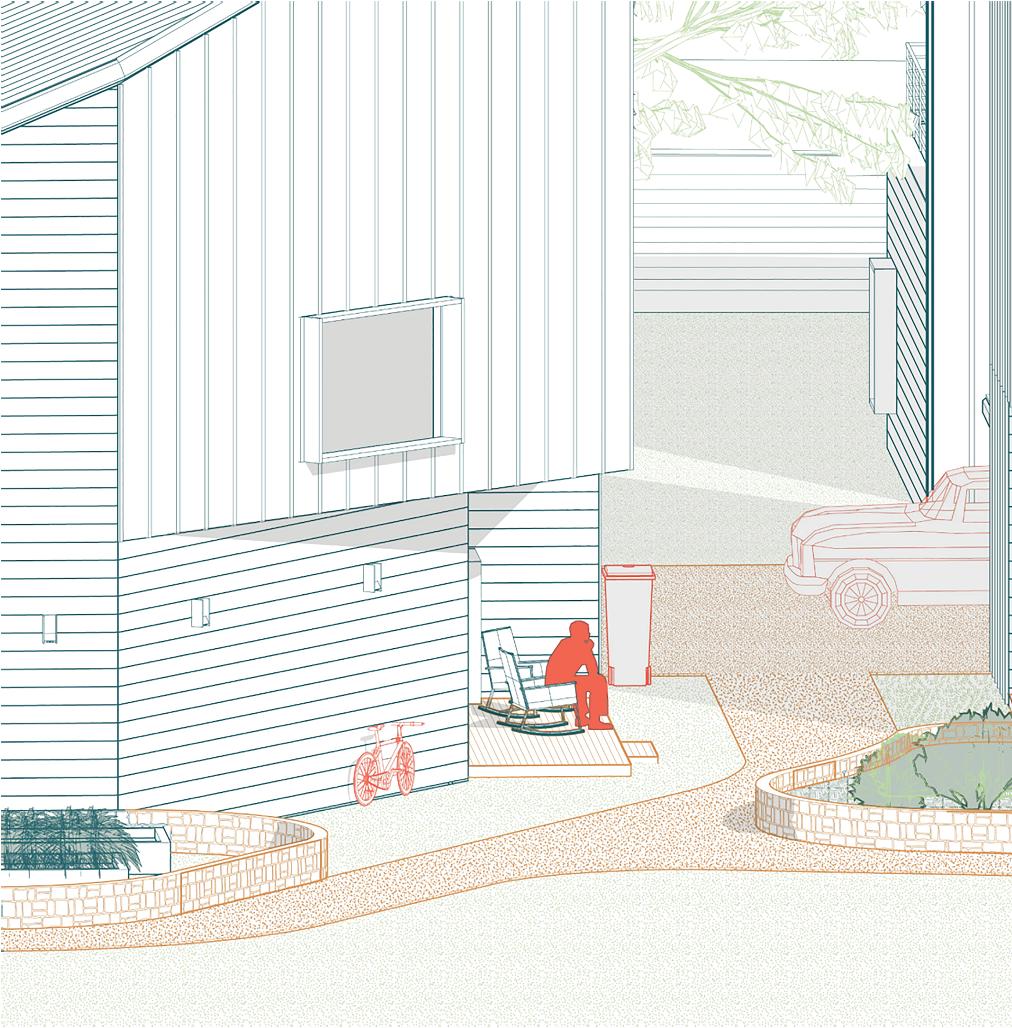
The urban layout was guided by a vision of interconnected courtyards positioned behind the houses, fostering a sense of community through shared public spaces. This configuration not only prioritizes social interaction but also introduces a thoughtful balance between private and communal living.
Throughout the studio, we also investigated the potential of cross-laminated timber (CLT) in residential construction. The material’s versatility inspired our interior designs, while its structural properties informed the exterior concepts of the houses. By aligning the architectural language of CLT with the exploration of courtyards, passages, and openings, we created a cohesive and innovative approach to workforce housing.
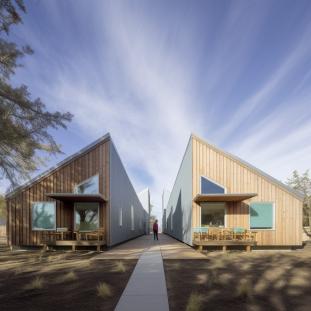
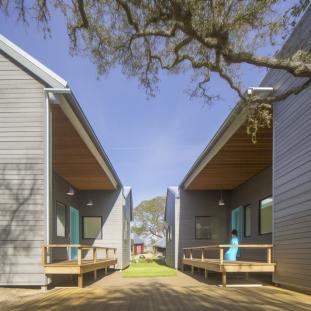
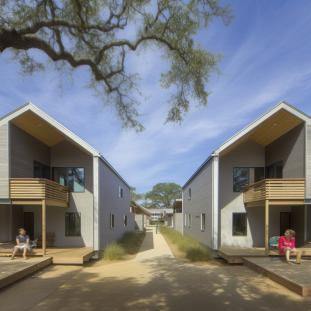
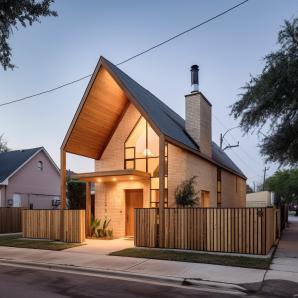
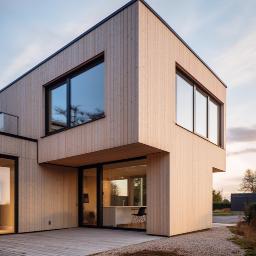
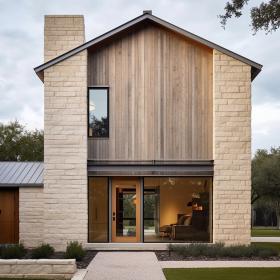
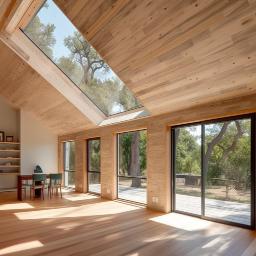
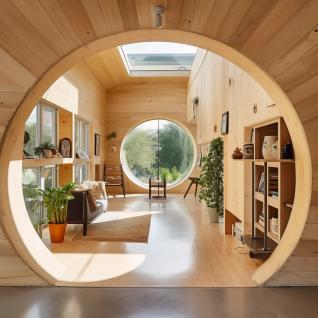
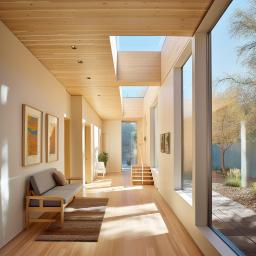
Images produced from Midjourney

Appelt Aggieland Visitor Center
Integrated Studio Design Project
INSTRUCTORS
Michael O’Brien TEAM
Carson Huntsinger LOCATION College Station, Texas CONTRIBUTIONS
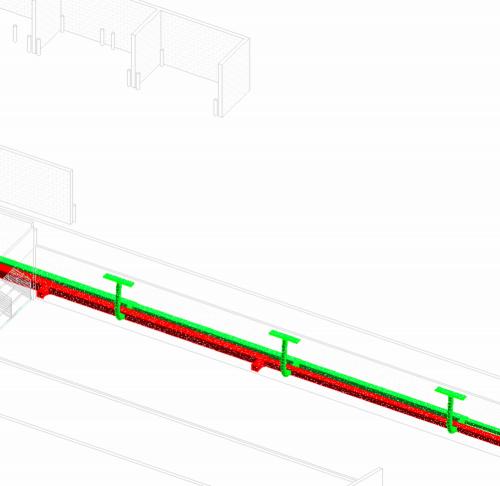
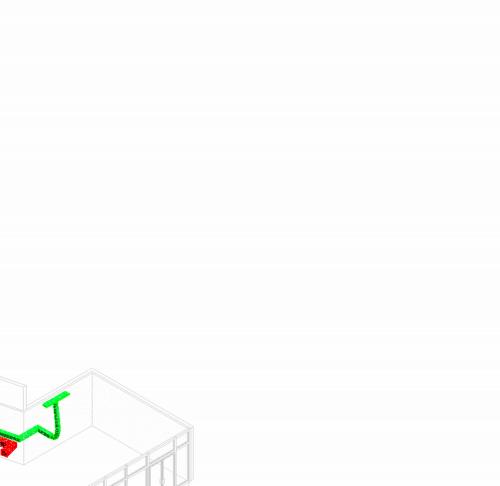
Architectural design, structural layout, systems integration
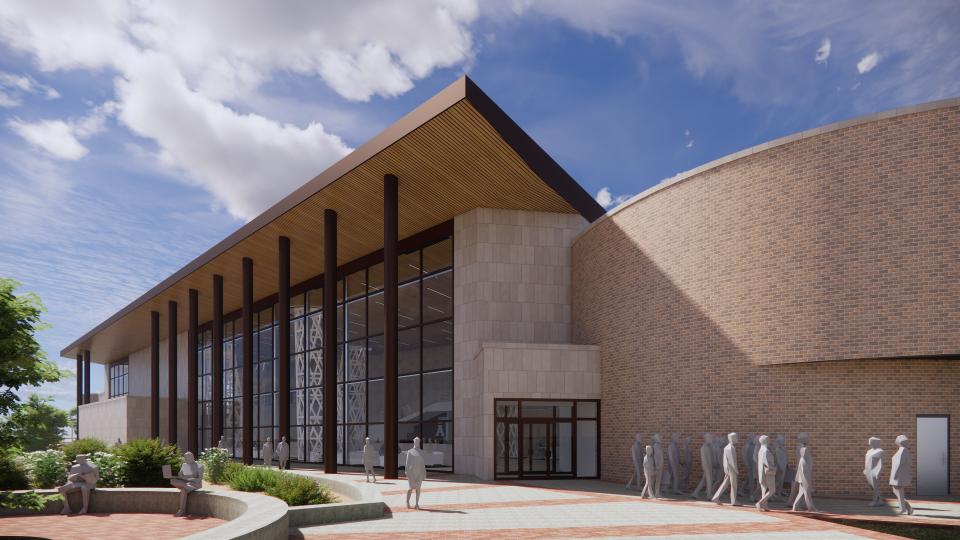
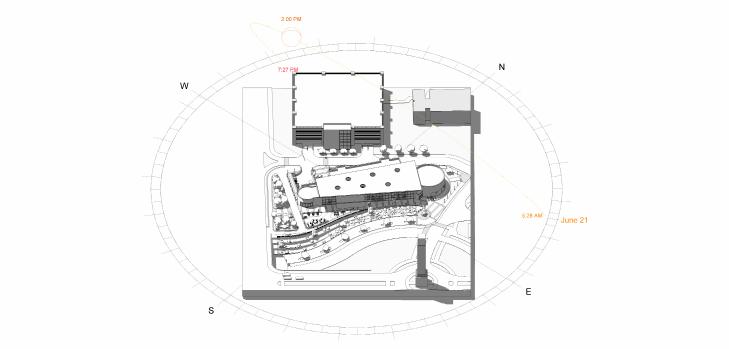
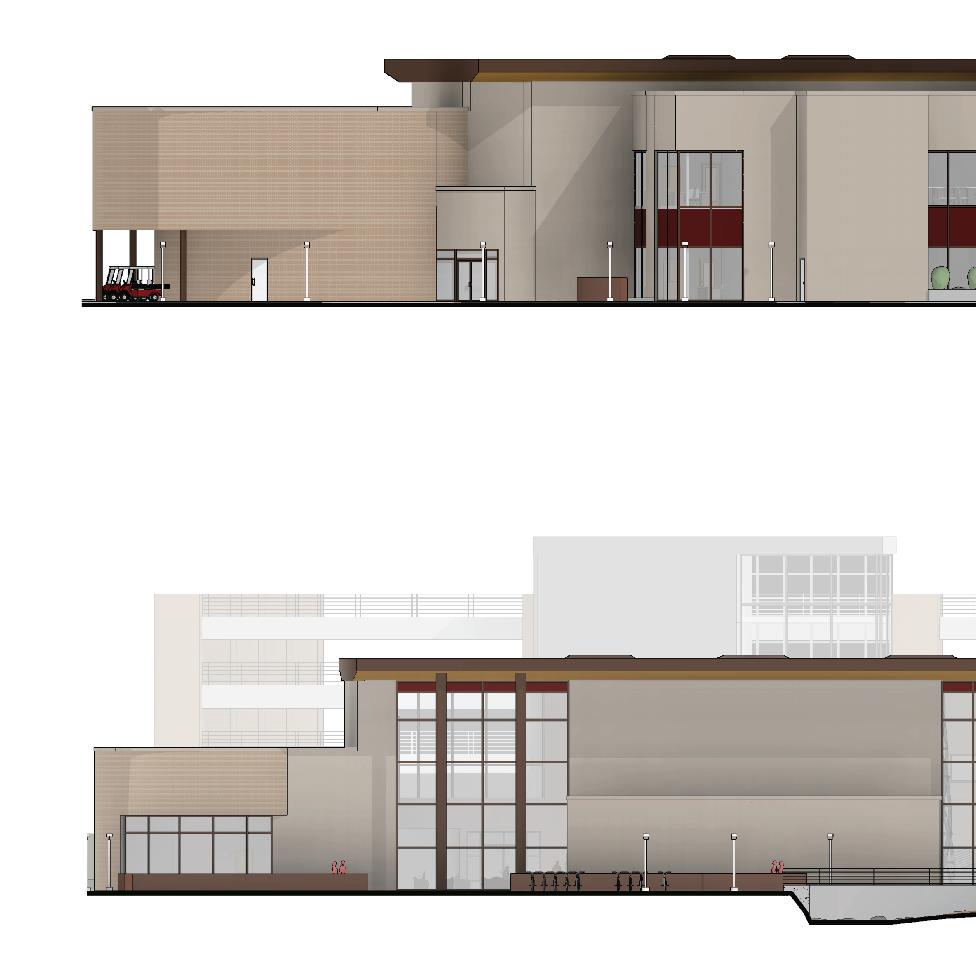
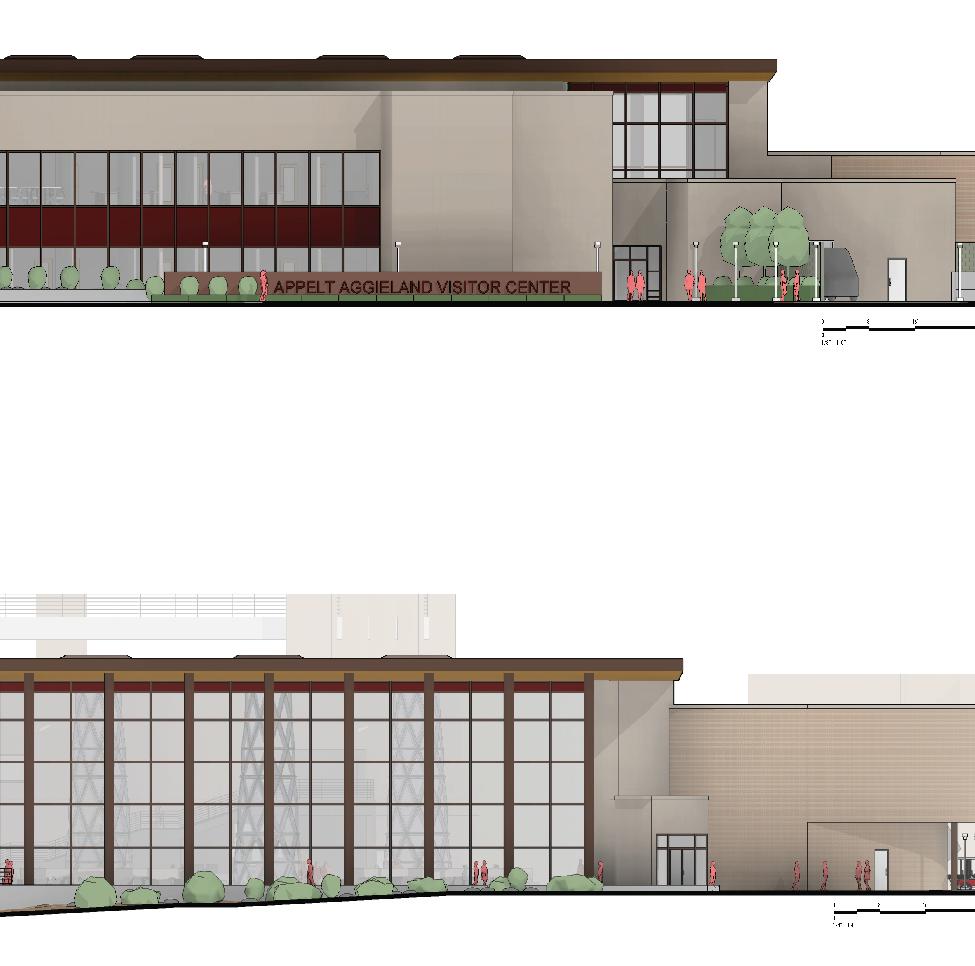
The Appelt Aggieland Visitor Center is a visionary design for a new visitor hub on the Texas A&M campus. This project aimed to integrate all disciplines of design, creating a comprehensive and cohesive solution that addresses the client’s needs—from spatial planning to mechanical systems.
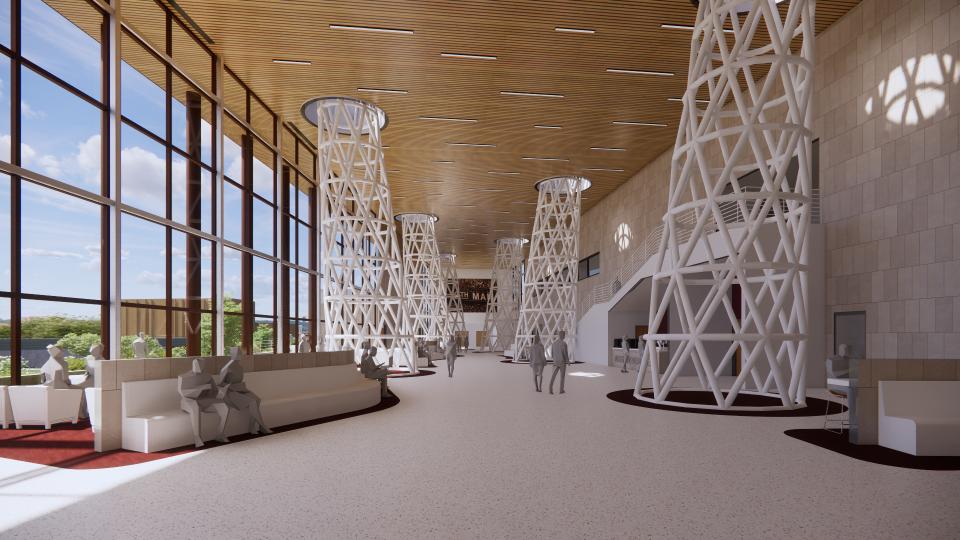
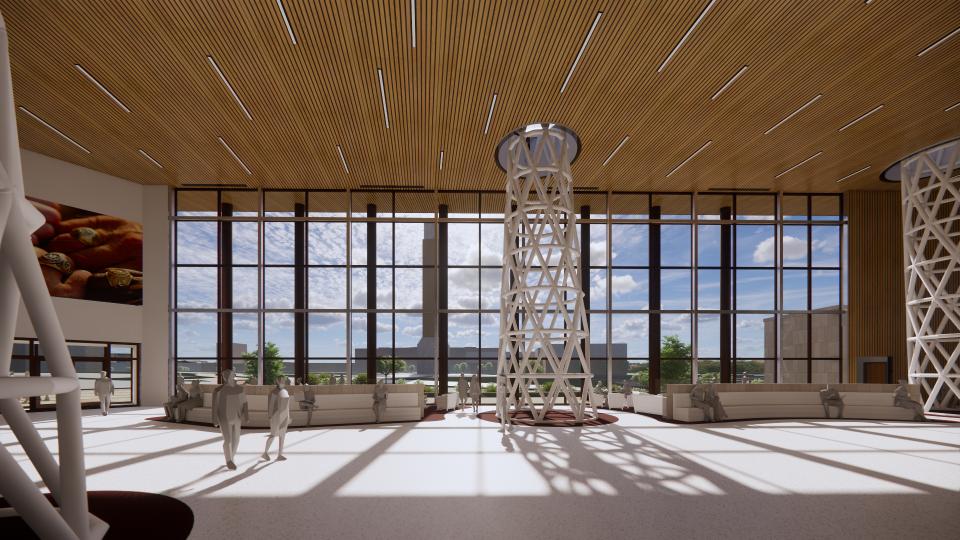
Key project goals included crafting an immersive experience, establishing a gateway to the university, and facilitating seamless interactions for visitors. At the heart of our design is a grand lobby, envisioned as the central spine for circulation, interaction, and exhibits. The program’s layout and overall design language revolve around delivering a unified, immersive visitor experience.
A defining feature of the design is the inclusion of six monumental pillars within the grand lobby. These pillars serve as both architectural and symbolic elements, representing the six core values of Texas A&M. Beyond their aesthetic and symbolic roles, the pillars enhance functionality by incorporating integrated seating and exhibit spaces within their bases, creating opportunities for education and engagement.
The exterior design balances a modern aesthetic with respect for the historic heritage of Texas A&M, expressed through the thoughtful selection of materials and geometric forms. This careful juxtaposition creates a design that feels forward-thinking while remaining grounded in tradition.
JONESST

PVC ROOF MEMBRANE
6” R-30 XPS RIGID INSULATION
CONCRETE TOPPING SLAB
W27X94 STEEL GIRDER
W24X55 STEEL BEAM
HSS 6X6 COLUMN
6” CAST IN PLACE CONCRETE SLAB
30” X 18” CONCRETE GRADE BEAM
LIMESTONE PARAPET CAP
ACOUSTICAL SEALANT
LIMESTONE VENEER
1/2” DRAINBOARD
1” R-5 XPS RIGID INSULATION
FLUID APPLIED AIR & WATER BARRIER
MASONRY VENEER TIE 16” O.C.
5/8” EXTERIOR GYPSUM SHEATHING
6” R-19 BATT INSULATION
STEEL STUD 16” O.C.
5/8” CEMENT FIBERBOARD
PVC FLEX FLASHING & ANCHOR BAR
PVC ROOF MEMBRANE
5/8” CEMENT FIBERBOARD
6” R-30 XPS RIGID INSULATION
5/8” CEMENT FIBERBOARD
2” CORRUGATED STEEL DECKING
W24X55 STEEL BEAM
SPRAYED ON FIRE PROOFING
W27X94 STEEL GIRDER
BOLTED COLUMN CONNECTION
BOLTED GIRDER CONNECTION
HSS 6X6 COLUMN
WEEP
THROUGH WALL FLASHING
CONTINUOUS BENT PLATE
CEILING CABLE
3 5/8” COLD FORMED FRAMING
7/8” HAT CHANNEL
GYPSUM BOARD CEILING
FOAM SILL SEAL
PRESSURE TREATED WOOD BLOCKING
ACOUSTICAL SEALANT
SPRING METAL WEATHERSTRIPPING
1 3/4” TRIPLE PANE GLAZING
HSS 6X6 COLUMN
THERMALLY BROKEN ANNODIZED ALUMINUM CURTAIN WALL FRAME
ACOUSTICAL SEALANT
1/2” STEEL BASE PLATE
NON-SHRINK GROUT
2” TOPPING SLAB
1” SLAB LEDGE
6” CAST IN PLACE CONCRETE SLAB
ANCHOR BOLT
VAPOR BARRIER
FINISHED GRADE
CARTON FORM
30” X 18” CONCRETE GRADE BEAM
24” STRAIGHT SHAFT CONCRETE PIER
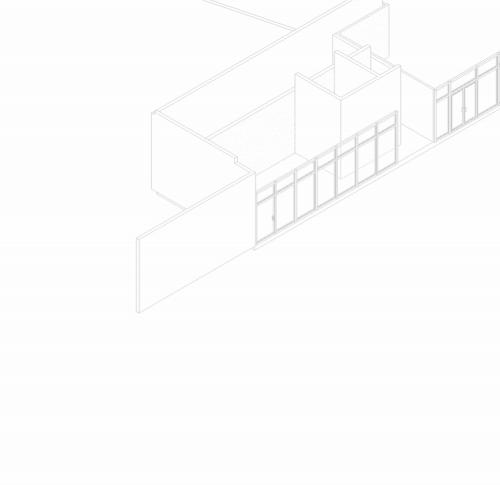
STRUCTURAL FRAMING AXONOMETRIC VIEW


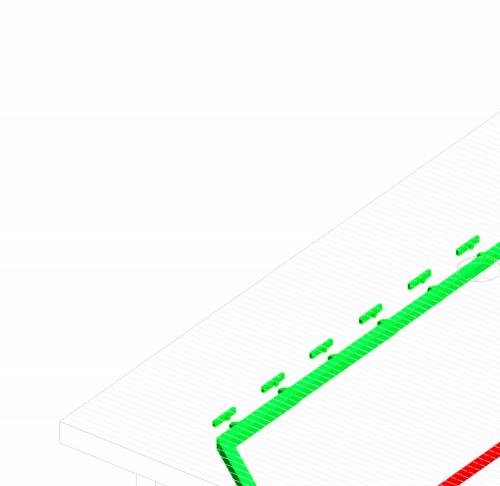
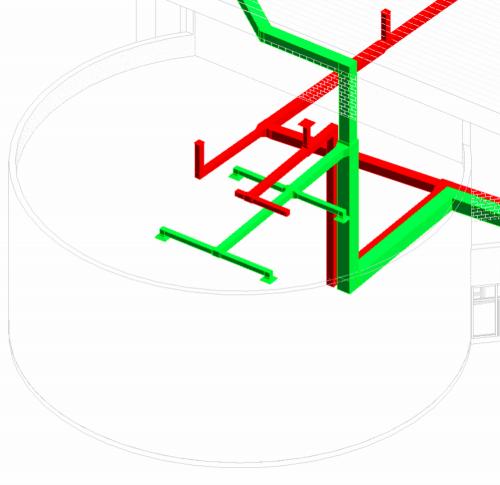
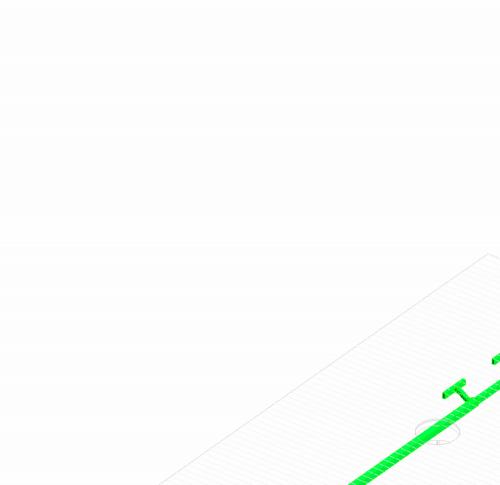
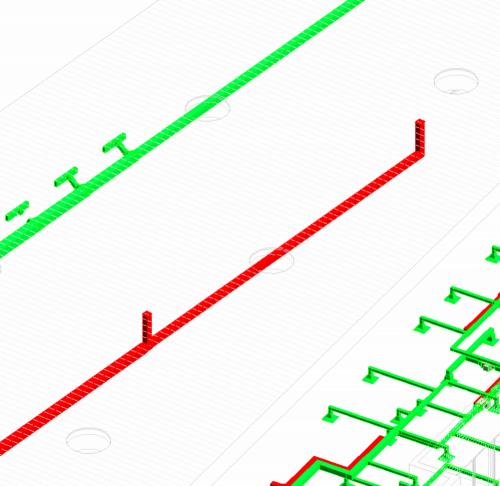
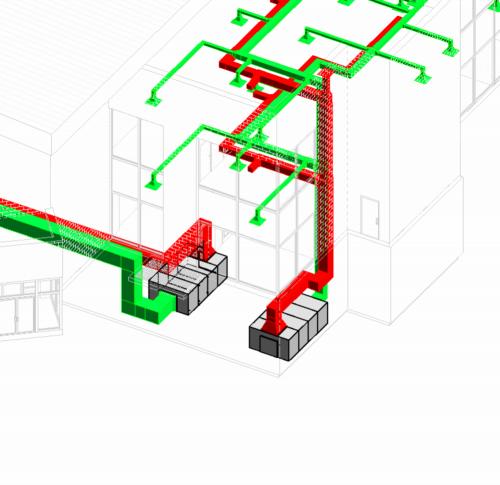
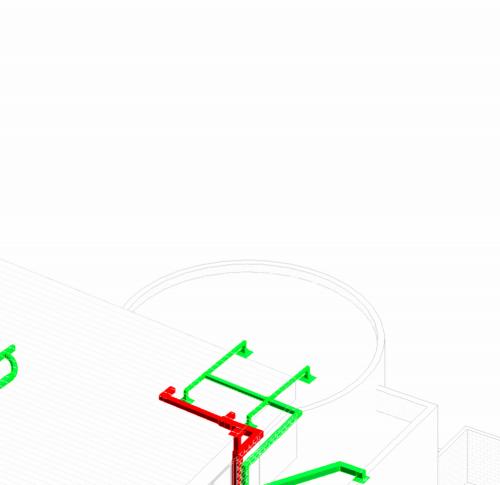
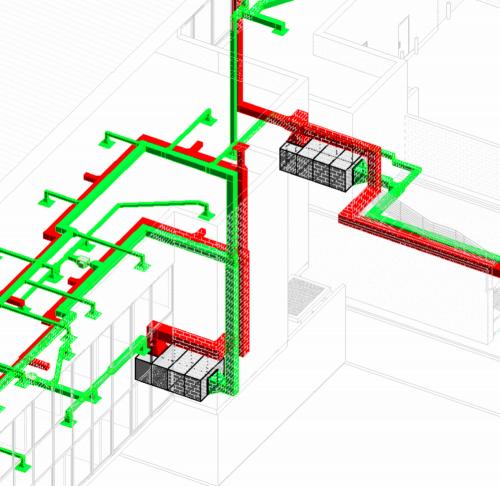


MECHANICAL LAYOUT AXONOMETRIC VIEW
Brazos Valley Station
Integrating Mass Timber and Mass Transit
INSTRUCTORS
Dr. Mark Clayton TEAM
Evelyn Esquivel, Reem Hermas, Alfredo Saenz, Luis Trevino LOCATION
Grimes County, Texas CONTRIBUTIONS
Parametric design, structural design, revit modeling, final drawings
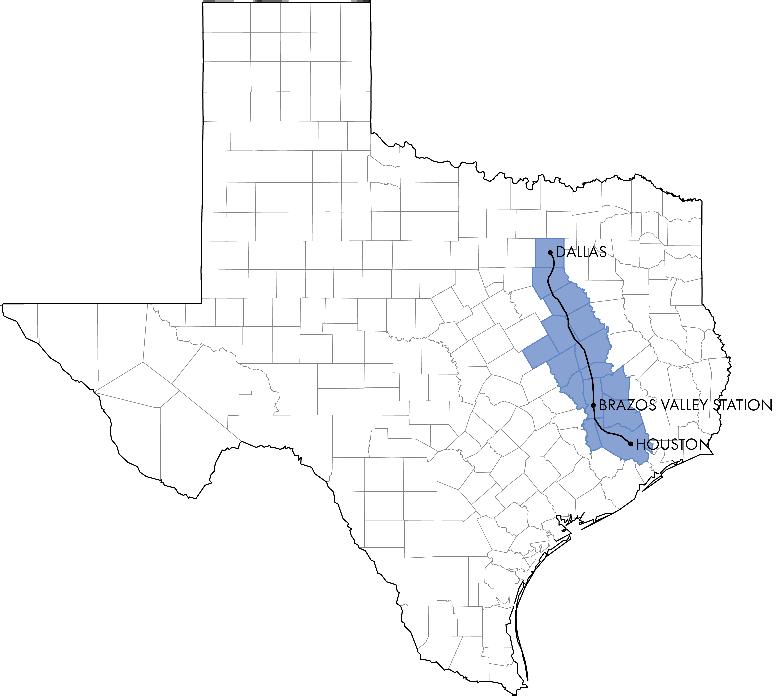
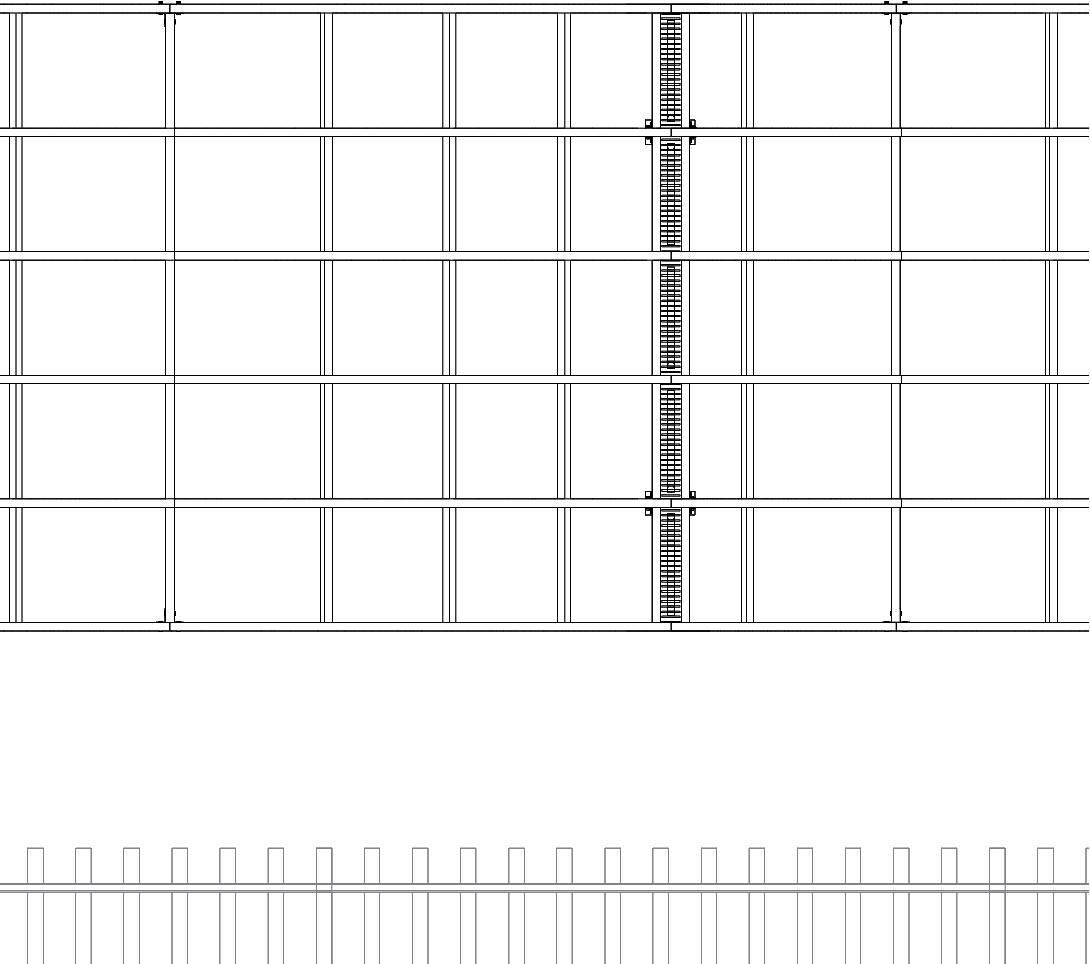
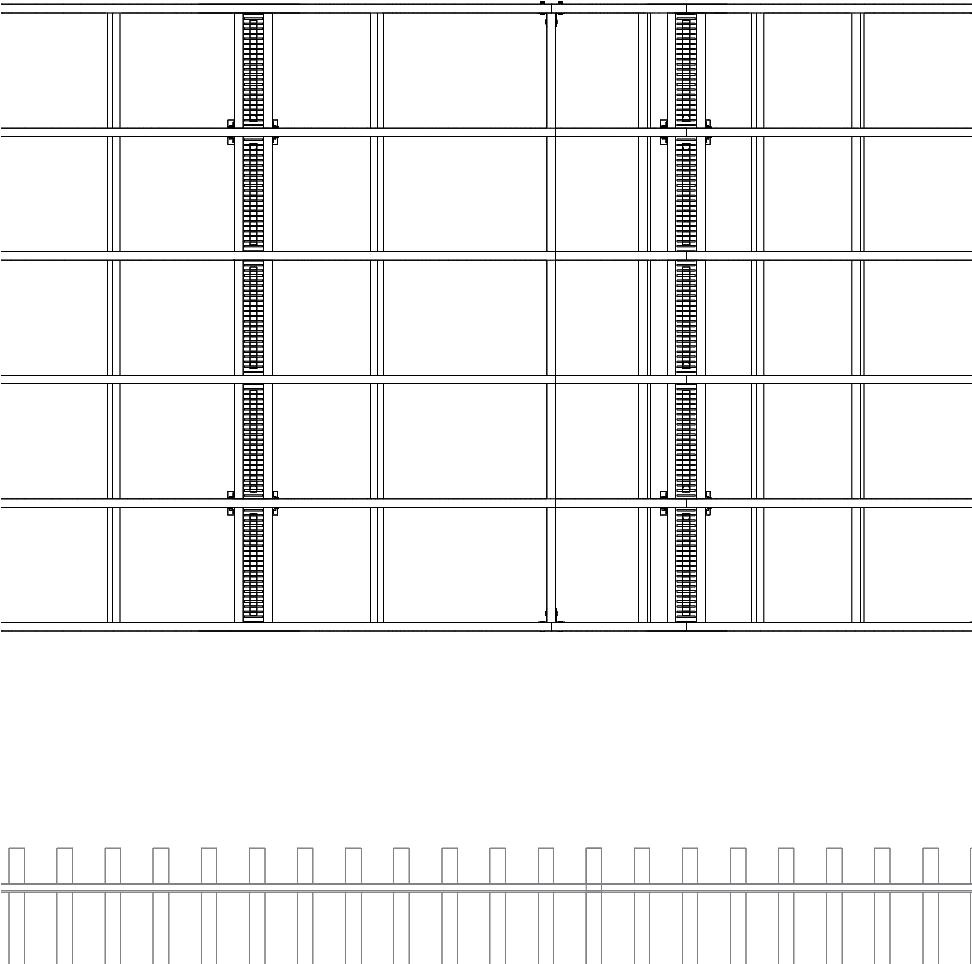
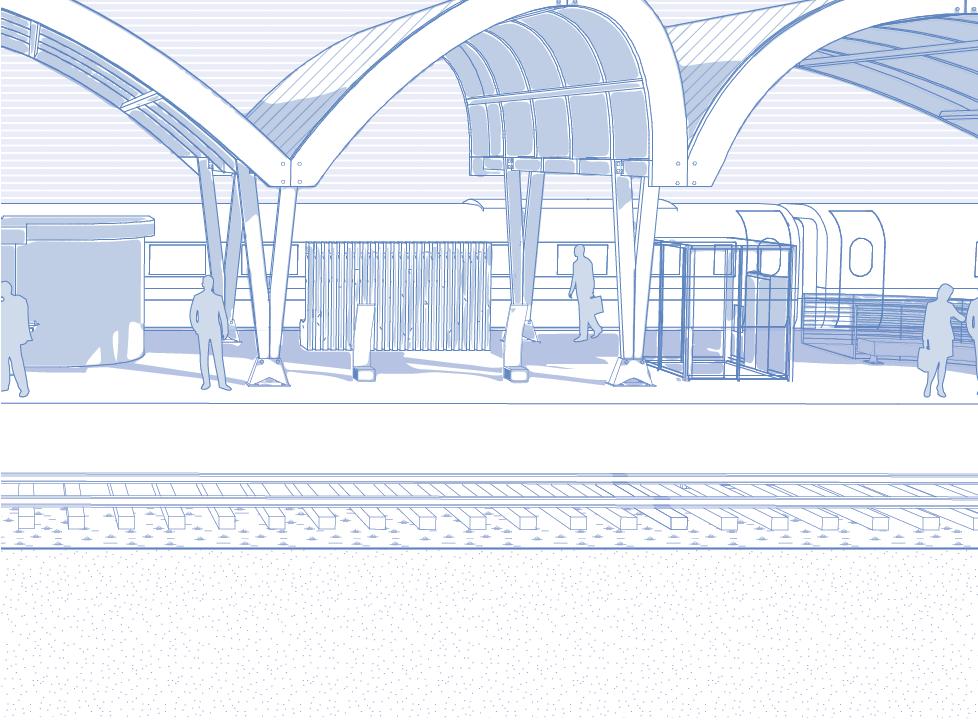
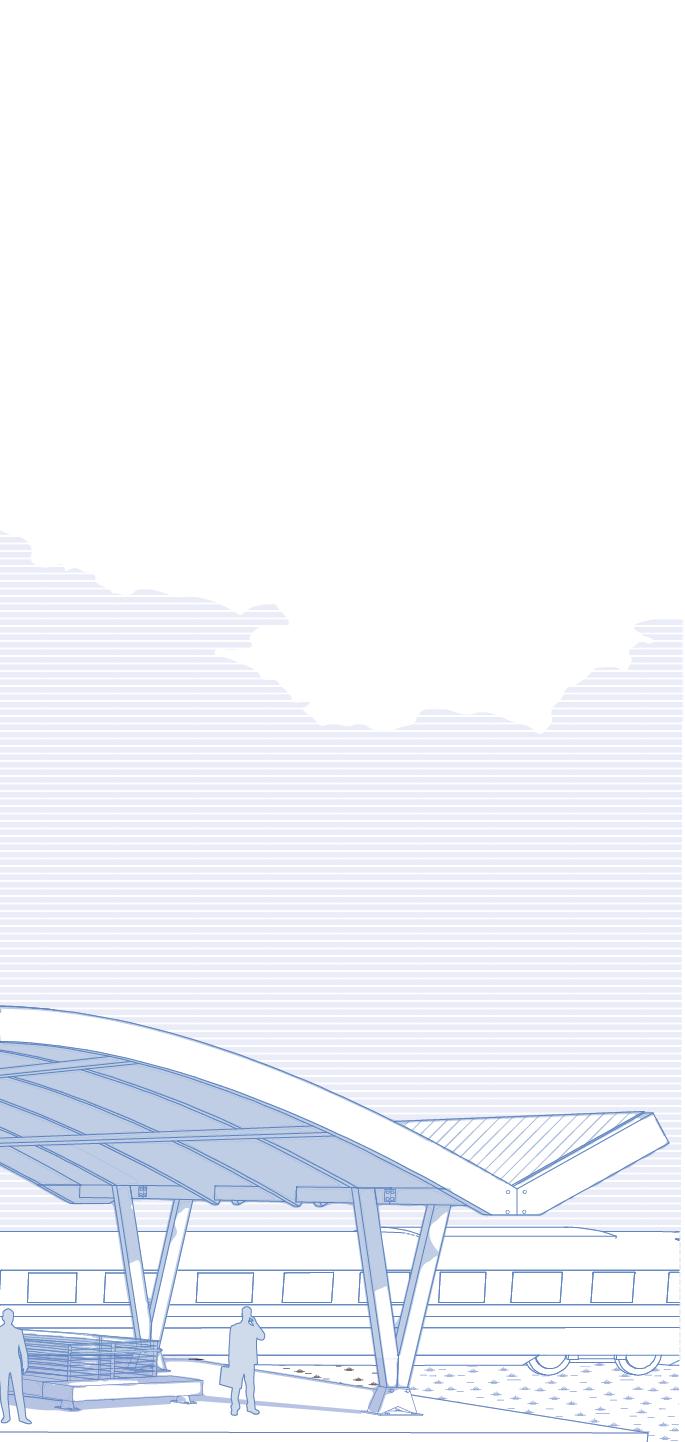
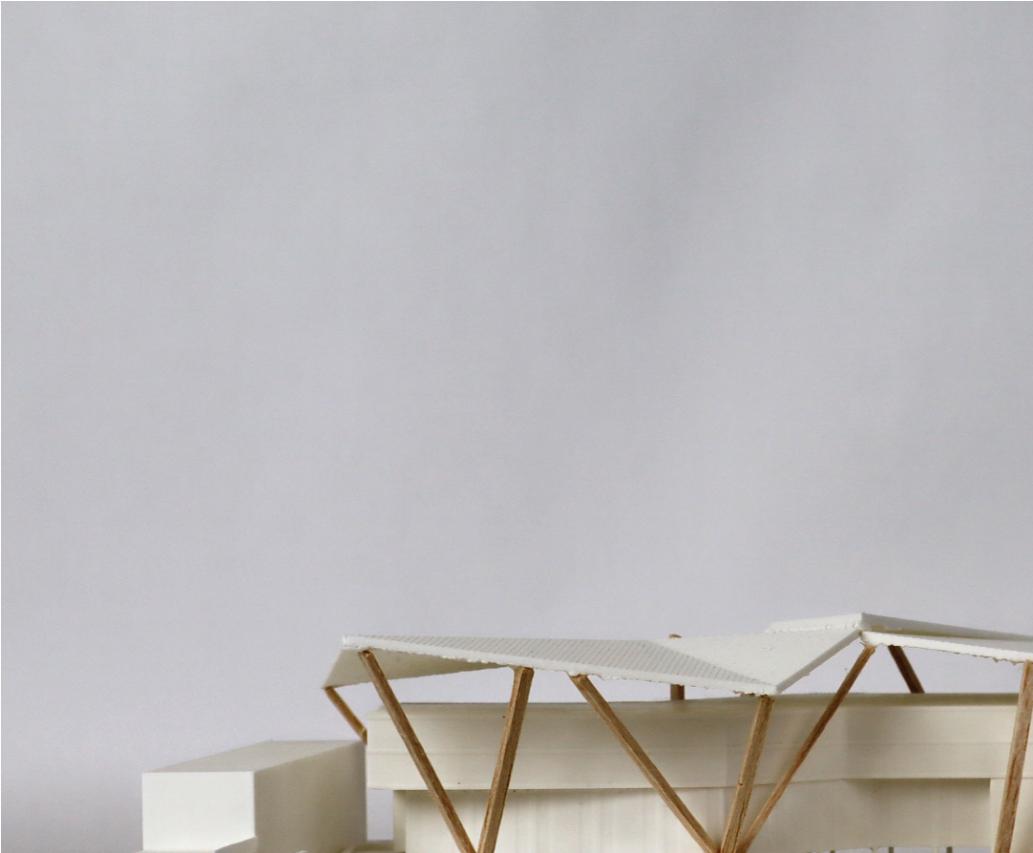
In today’s world, efficiency is a driving force in both transportation and construction. With Texas planning a high-speed rail network connecting Dallas and Houston, this new mode of travel promises to redefine efficiency for frequent commuters. At the same time, mass timber is emerging as a sustainable and high-performance building material, further emphasizing efficiency in modern construction.
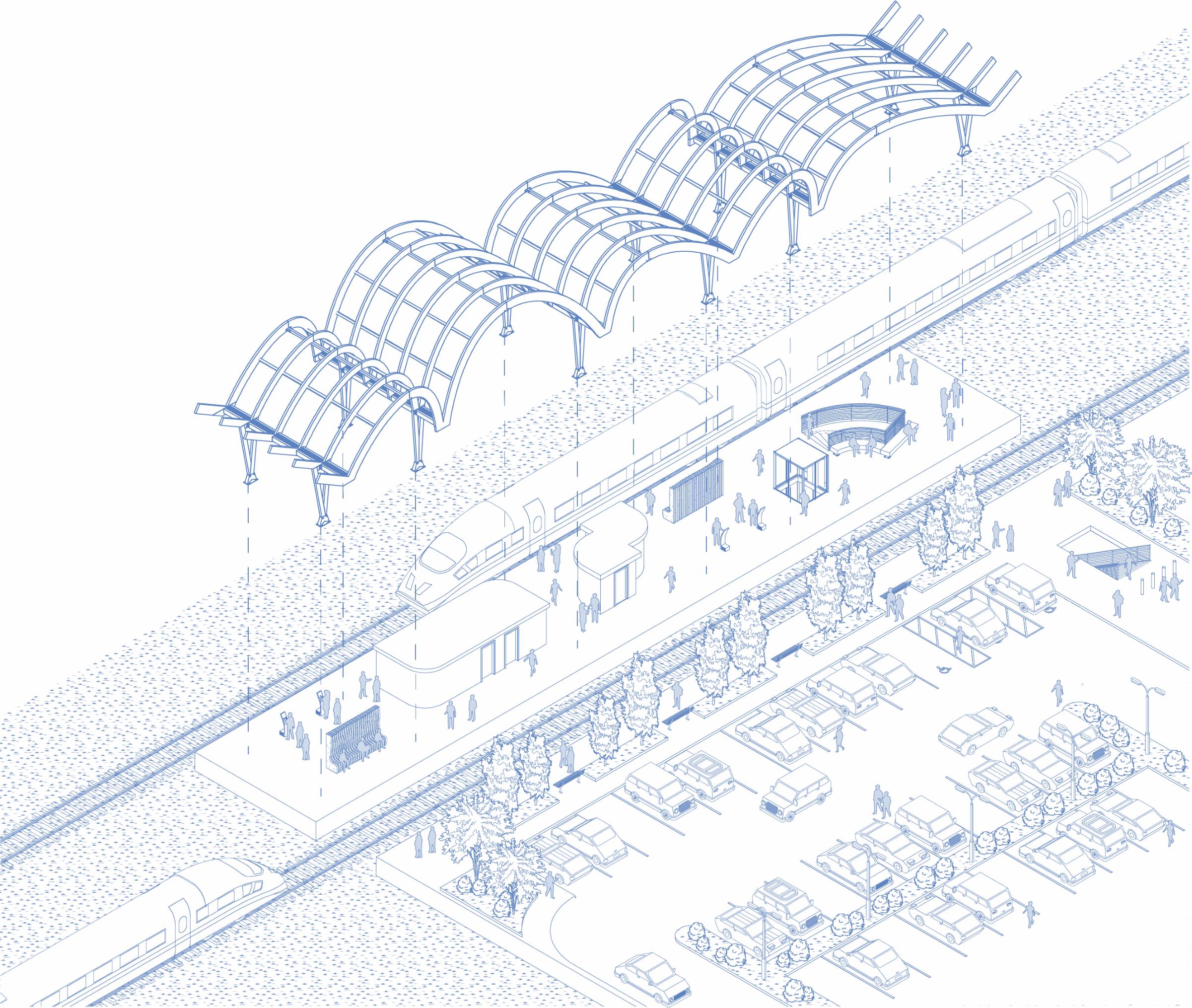
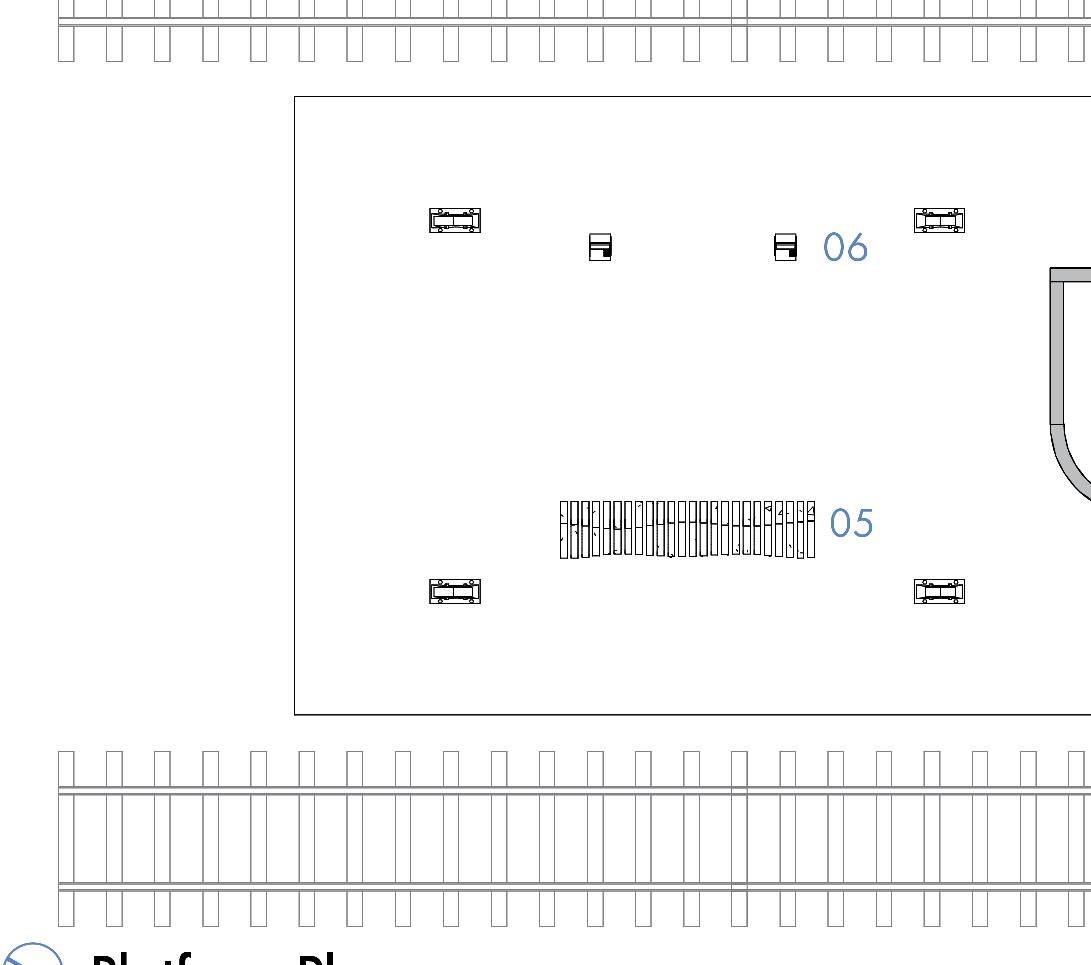
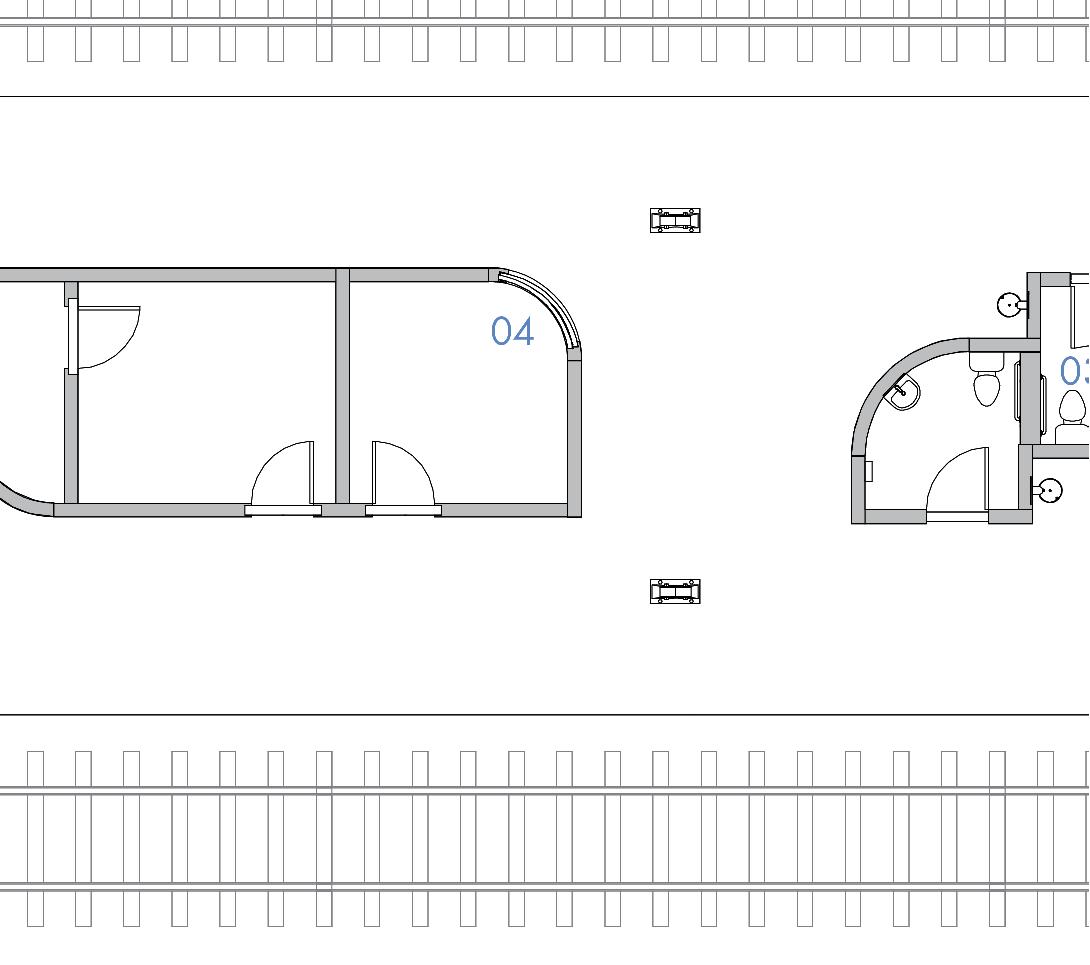
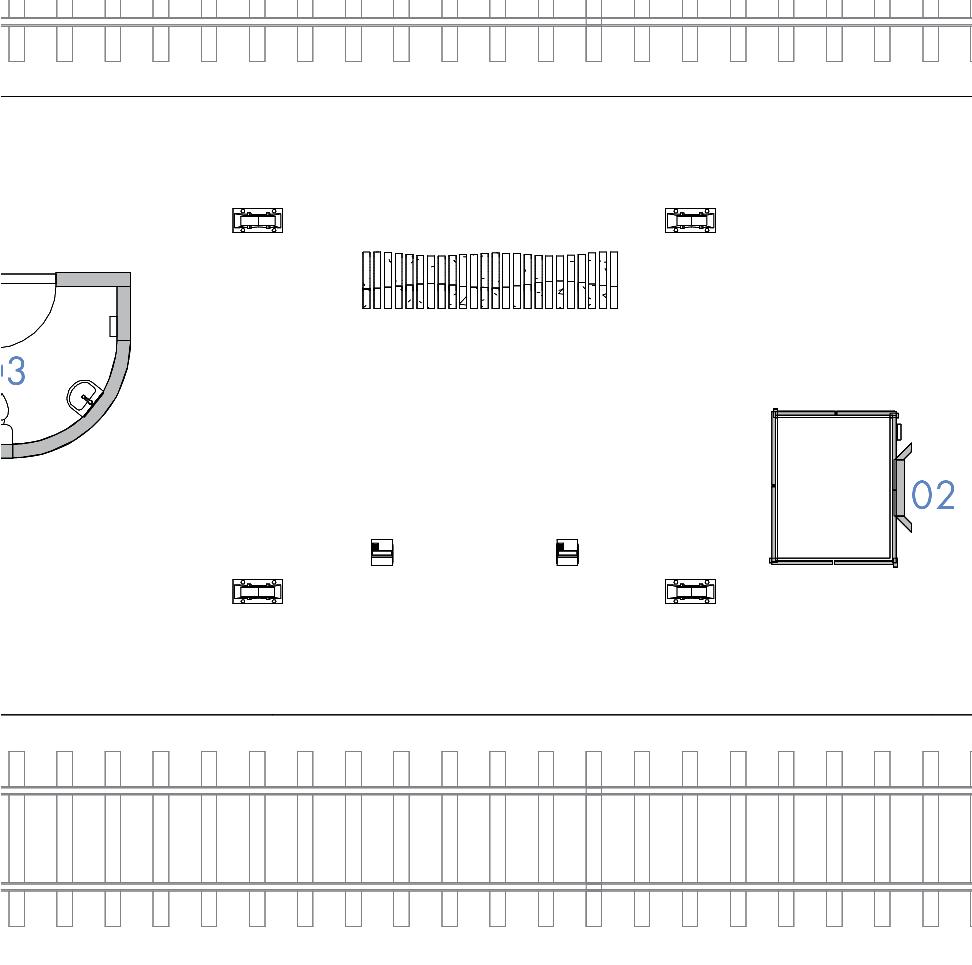
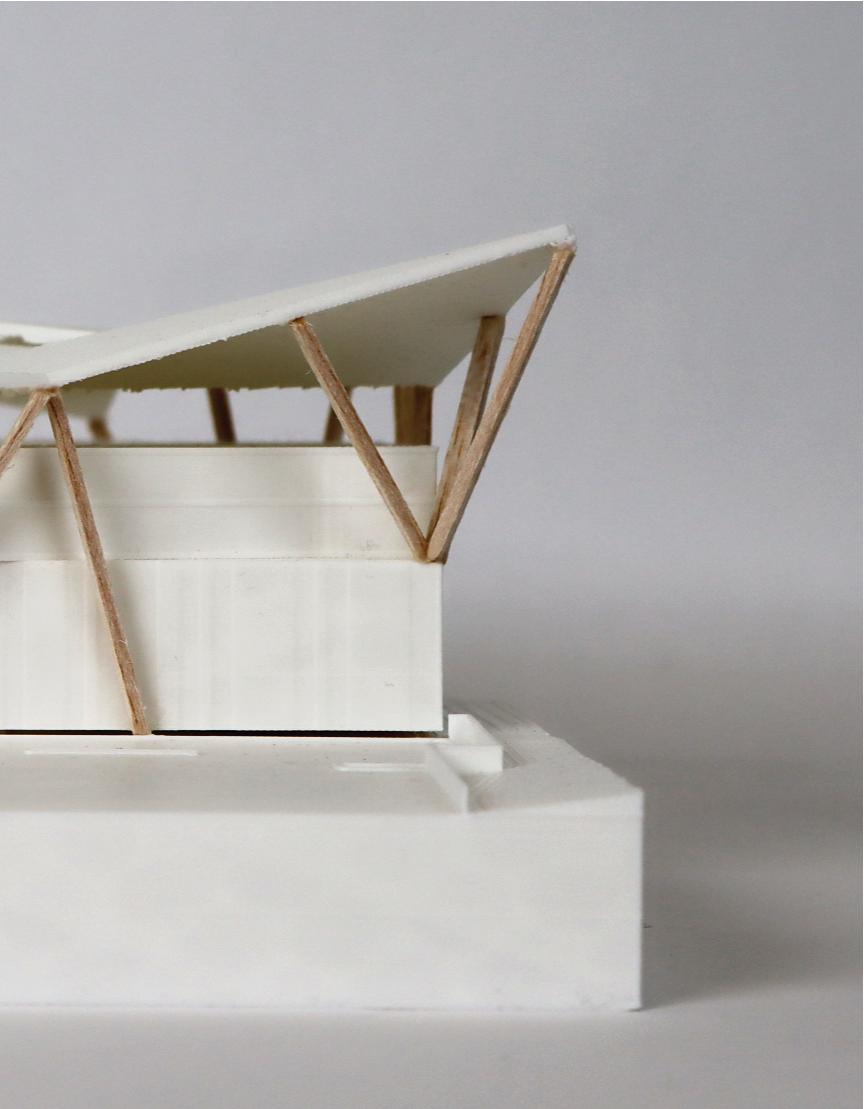
Our team set out to design an intermediate station along the proposed rail route, prioritizing a seamless travel experience while demonstrating the potential of mass timber in contemporary architecture.
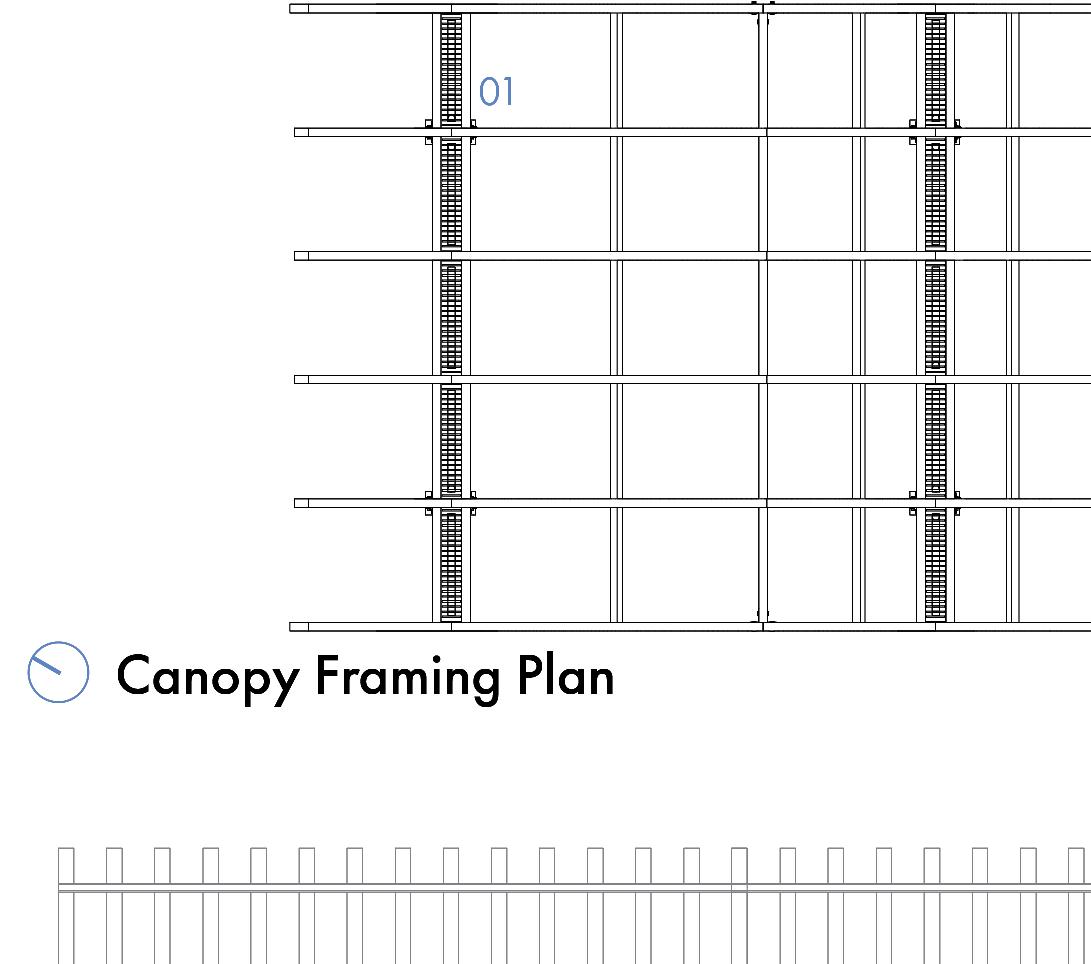
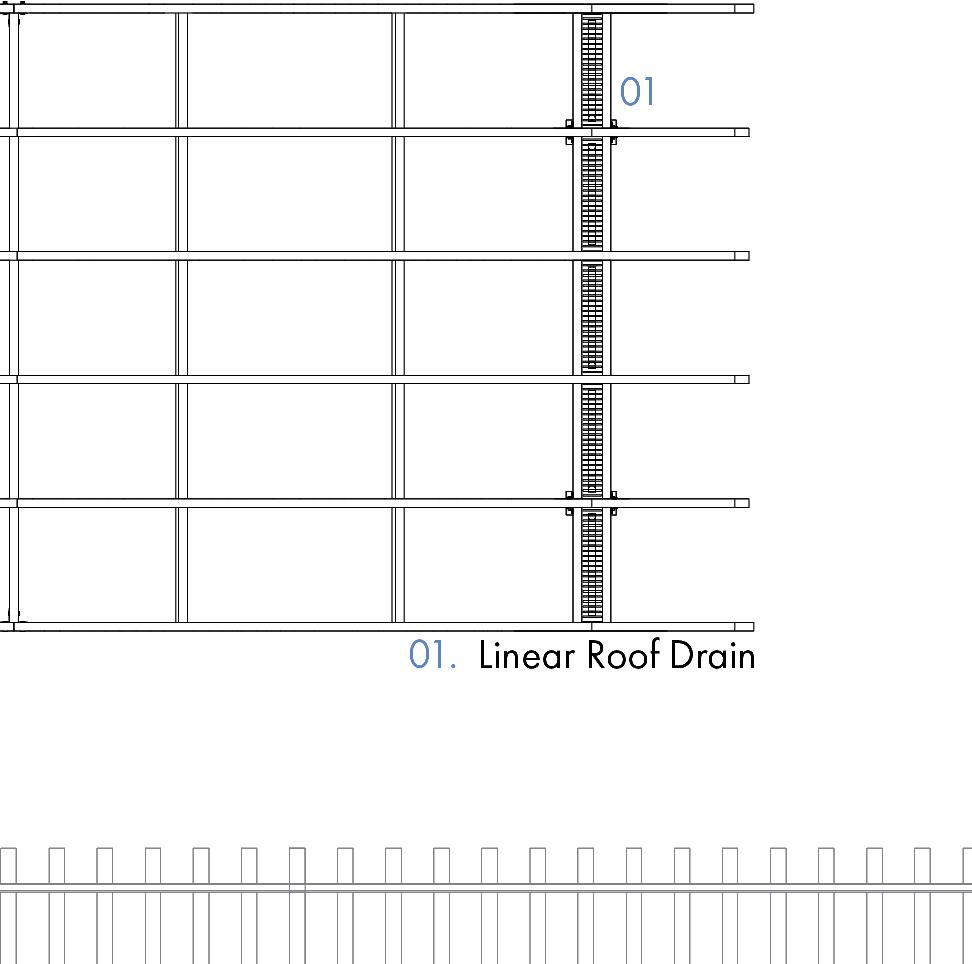
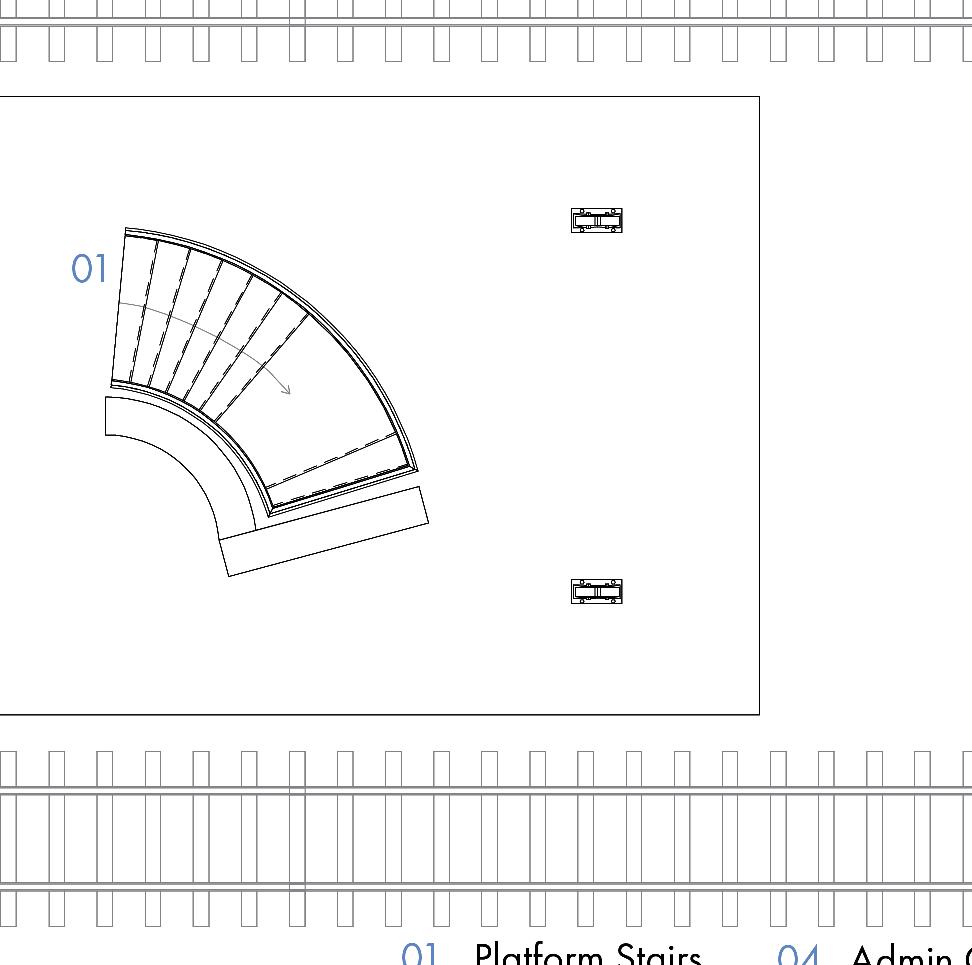
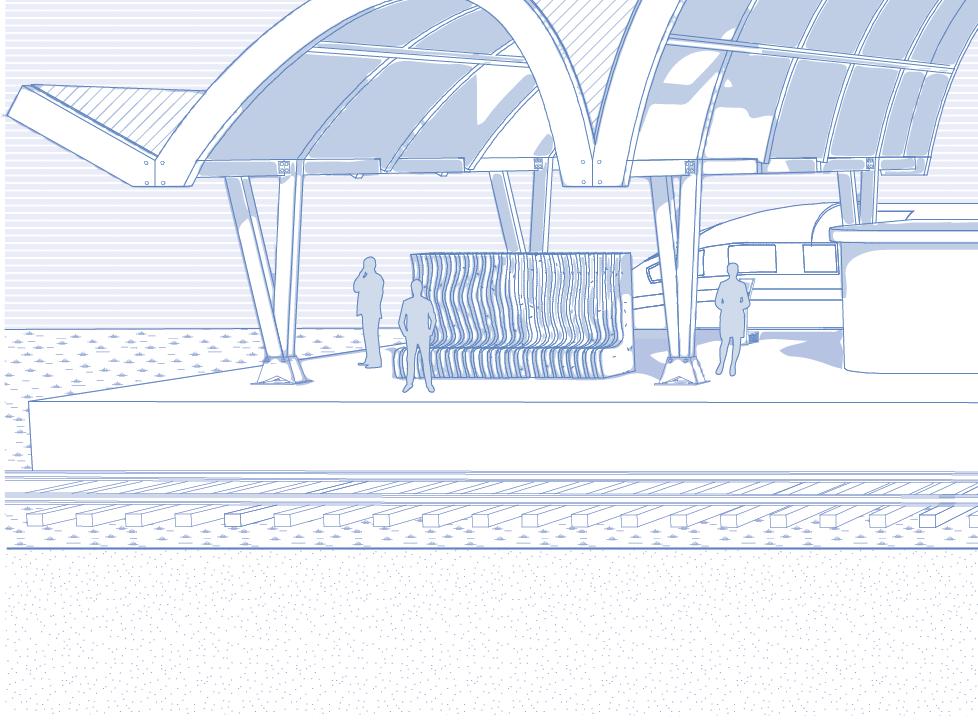
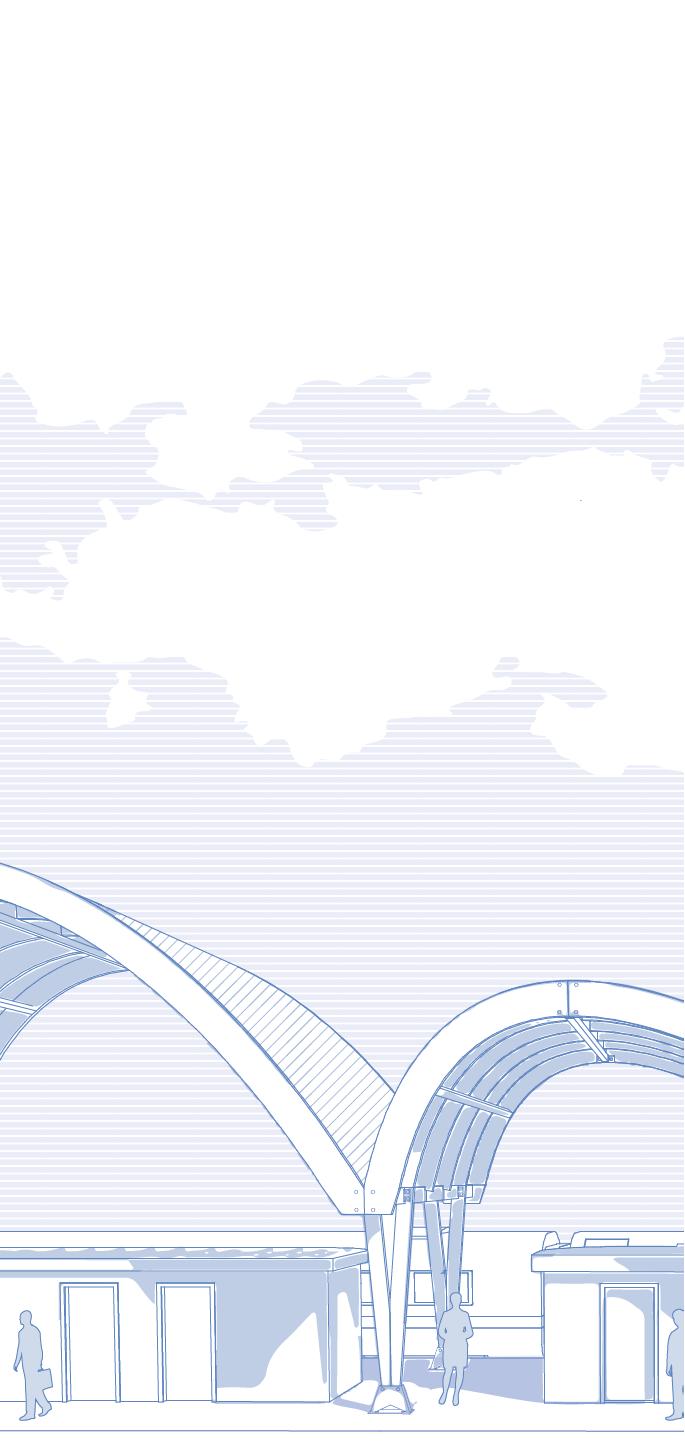
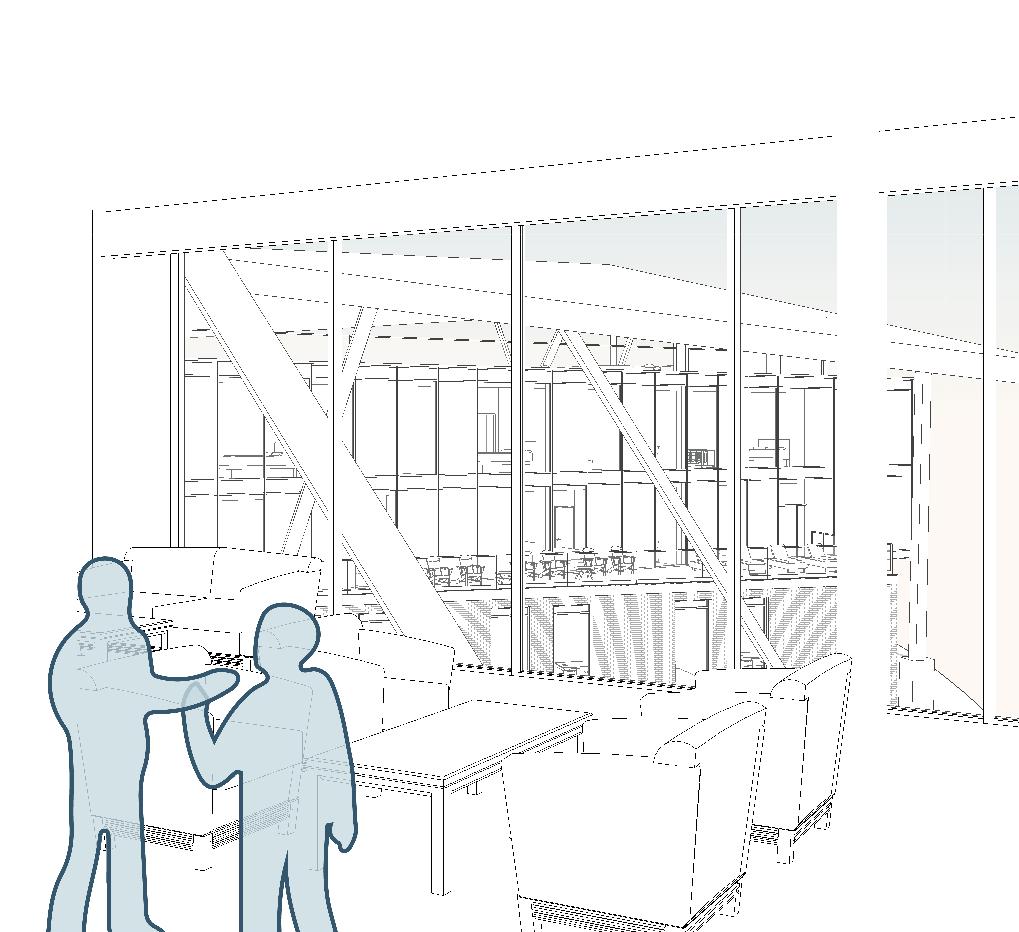
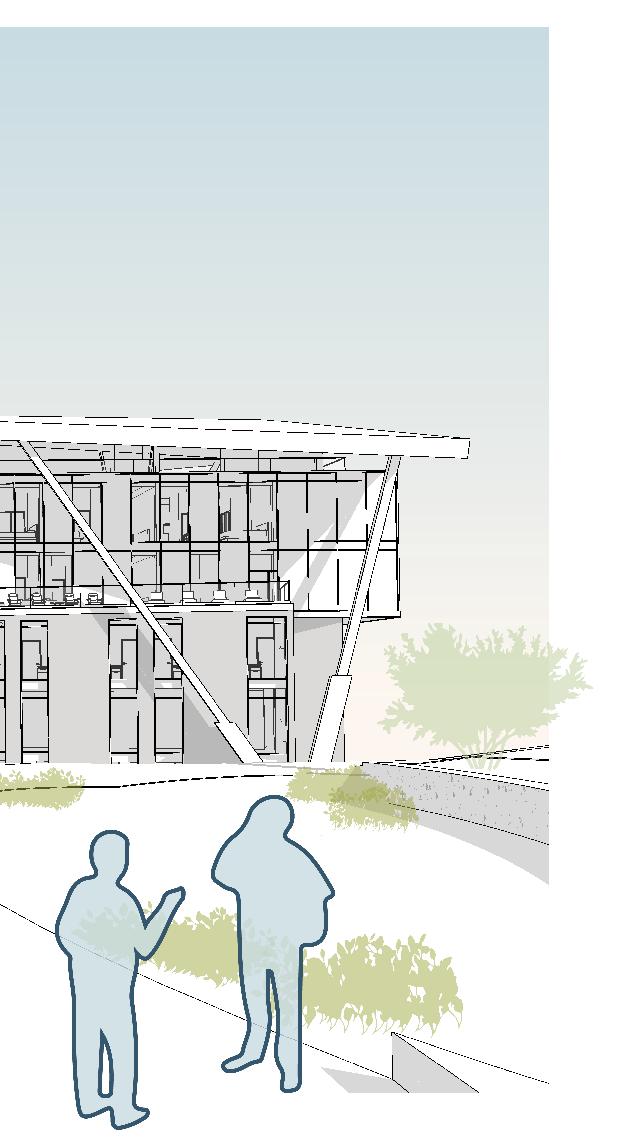
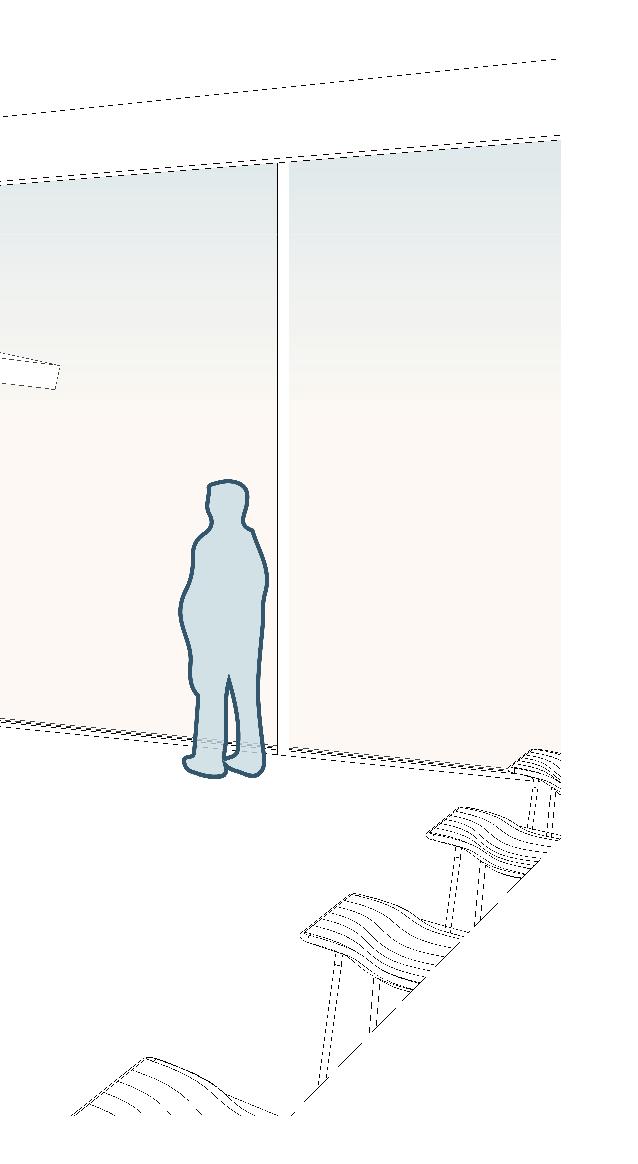
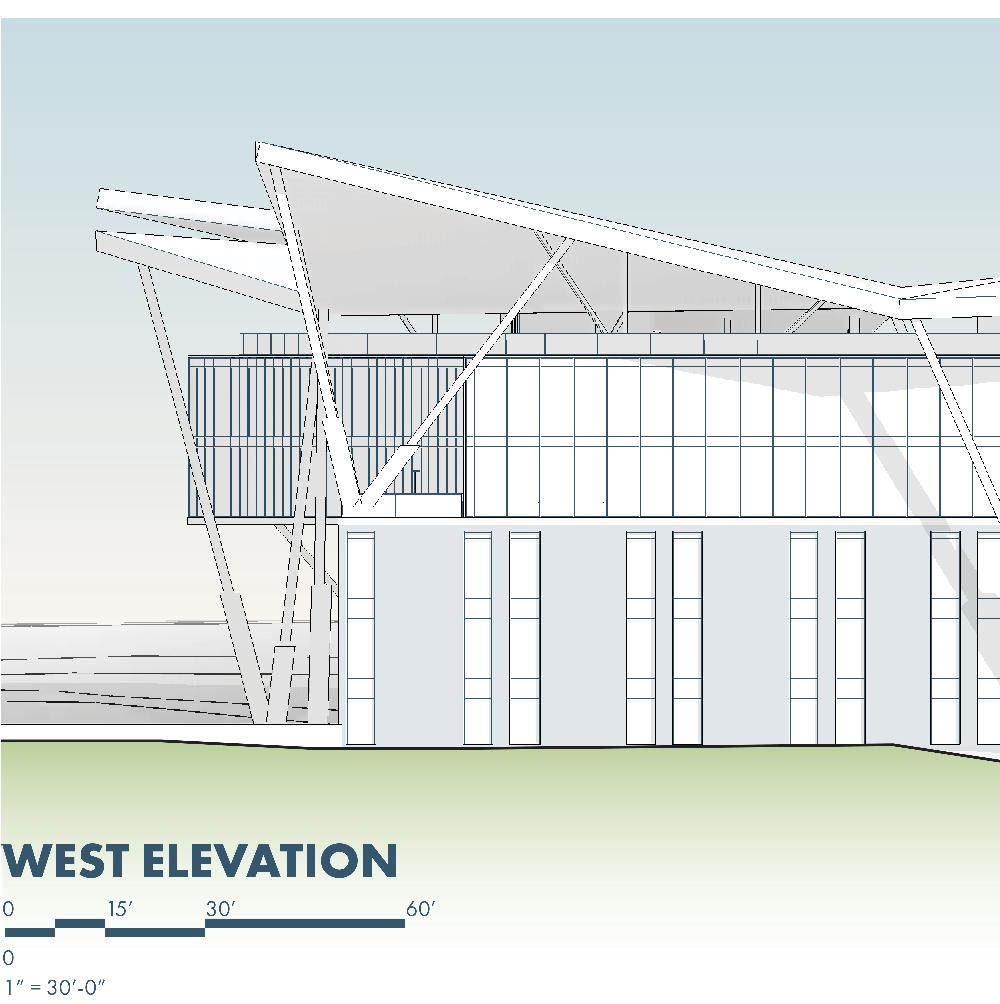
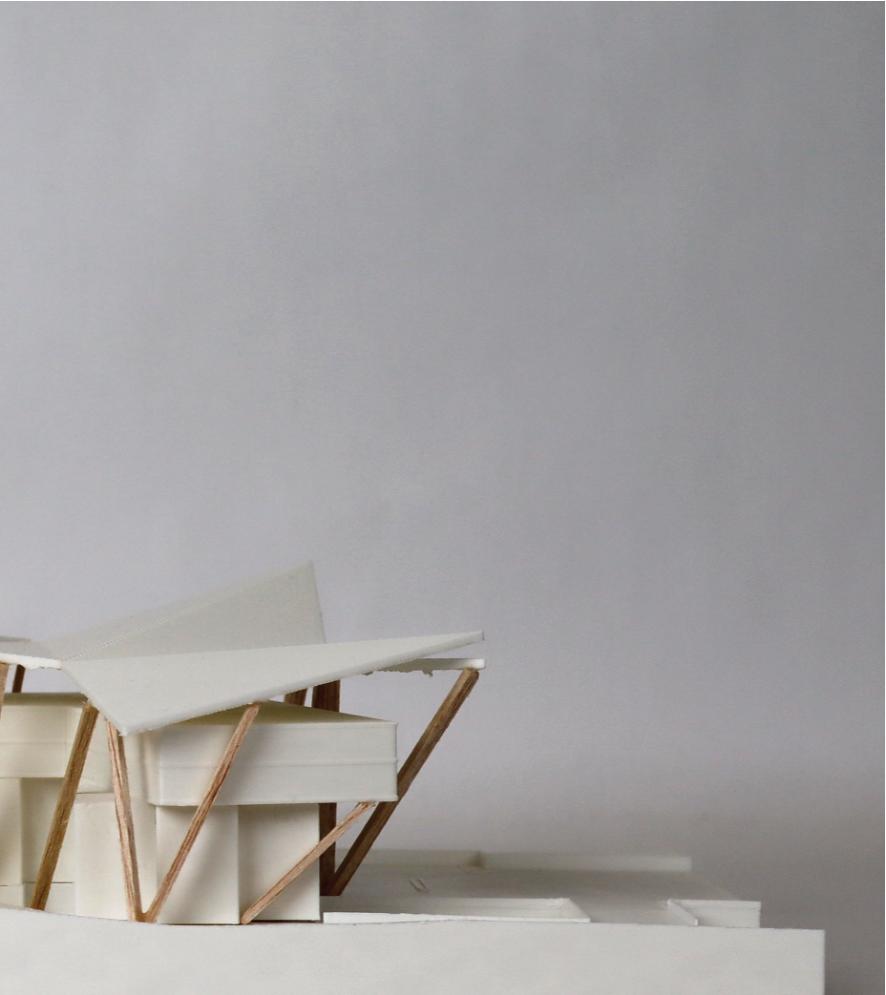
The project centers around a dynamic, parametric canopy that enhances both functionality and aesthetics. The interplay of timber and steel optimizes structural performance, creating a lightweight yet resilient framework. Additionally, integrated technology—such as digital ticketing— elevates the user experience, ensuring a streamlined and intuitive journey.
This station embodies the convergence of innovative materials, advanced design, and cutting-edge transportation, setting a new benchmark for efficiency in rail infrastructure.