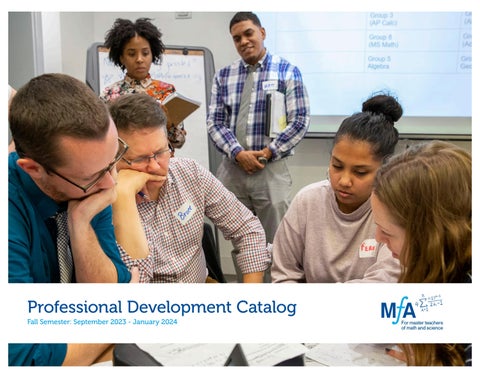
Professional Development Catalog
Fall Semester: September 2023 - January 2024
2 Contents General Information & Registration3 MƒA Programming 6 Summary of Core Learning Opportunities 9 Summary of Additional Learning Opportunities 12 Professional Learning Teams (PLTs) 1 3 Mini-Courses 25 Extended Length Courses 40 Single Session Workshops 42 Affinity Groups 53 Interest Groups 55 MƒAdventures 63 Thursday Thinks 67 Equity Webinars 70 Community Contributions 72
FELLOWSHIP REQUIREMENTS AND GENERAL INFORMATION
In fall 2023, MƒA will offer a variety of in-person and virtual programming sufficient for all teachers to meet attendance requirements comfortably. For the 2023-2024 school year, teachers can satisfy their minimum attendance requirements of seven Core Learning workshops with any mix of in-person and virtual programming. We encourage you to sign up for more than the minimum in the event of unforeseen circumstances to ensure you meet your attendance requirement.
We understand that scheduling conflicts occur for various reasons and may sometimes interfere with your ability to attend a workshop. Occasional absences do not reflect poorly on your participation in the fellowship. However, if you will be absent from a workshop, we ask that you notify MƒA at pdprogram@mathforamerica.org as soon as possible.
IN-PERSON COURSE INFORMATION
Most in-person programming occurs at the MƒA office, 915 Broadway, on either the 14th or 17th floors. Some workshops take place at other locations throughout the city. Please carefully check course listings for details before registering to ensure you can attend the specified location.
In-Person Norms and Attendance
All MƒA workshops run from 5:30-7:30 p.m. (unless otherwise noted). The MƒA lounge is available for teachers to work starting at 4:30 p.m. Pizza arrives by 4:30 p.m., and workshops begin promptly at 5:30 p.m. We suggest arriving by 5:15 p.m. if you would like a few minutes to eat before your course starts.
Teachers must attend and actively engage in more than 75% of the workshop to be marked present. Please follow all community agreements for your workshop, and ensure a productive and respectful experience for all teachers by reviewing and abiding by the standard in-person and virtual MƒA Community Agreements found here, as well as any norms or agreements set with your facilitator.
In case of a citywide NYC DOE public school closure, MƒA will hold in-person programming virtually or reschedule the session.
VIRTUAL COURSE INFORMATION
All MƒA workshops run from 5:30-7:30 p.m. (unless otherwise noted). Please refer to the course details on the Small-World Network. Virtual MƒA courses will continue to take place on the Zoom platform.
Accessing Zoom Workshops
Registered teachers will receive an automated email reminder both one week and two days in advance, including the Zoom link and the password needed to join the workshop. Zoom links for upcoming workshops are also on the Small-World Network in the yellow box on the left-hand side of the home page.
MƒA PROFESSIONAL DEVELOPMENT COURSE CATALOG: FALL 2023 3
Register at: mathforamerica.org/swn
Virtual Norms and Attendance
We track virtual attendance using the Zoom participant record. To be marked present, teachers’ Zoom screen names must match the preferred name MƒA has on file, and teachers must attend and actively engage in more than 75% of the workshop. This includes:
• keeping your camera on as much as possible,
• listening attentively,
• participating in discussions and activities,
• asking relevant questions,
• sharing your thoughts by unmuting yourself,
• t yping into the chat, or
• contributing to the community’s digital activities as appropriate.
If you share your screen, please stop sharing when transitioning to whole group discussion to build more meaningful virtual interaction. Likewise, please ensure your technology works correctly before the workshop begins, including testing your microphone and camera and having a stable internet connection and background environment. We encourage you to find a safe, comfortable, and appropriate space to participate actively. As your safety is imperative, we ask you NOT to join a Zoom course while driving. Please follow all community agreements for your virtual workshop, and ensure a productive and respectful experience for all teachers by reviewing and abiding by the standard in-person and virtual MƒA Community Agreements found here, as well as any norms or agreements set with your facilitator.
ACCESSIBILITY
MƒA strives to make programming inclusive and accessible, enabling all individuals, including individuals with disabilities, to engage fully.
Our office is located in a multi-elevator building with temperature control, air filtration systems, all-gender bathroom options, a wellness/prayer room, and ample seating. We provide gluten-free and vegetarian food options and snacks.
MƒA’s COVID safety policies are based on current evidence and expert recommendations and are subject to change. Current policy, requirements, and logistical information are updated here.
Facilitators have been informed of closed captioning in our virtual courses and may already have it enabled. If not, you can anonymously request it during the session by clicking on “Live Transcription” and then “Request.”
To request additional accommodations or inquire about accessibility or safety, please contact Courtney Ginsberg, MƒA’s Director of Programming.
MƒA PROFESSIONAL DEVELOPMENT COURSE CATALOG: FALL 2023 4
Register at: mathforamerica.org/swn
REGISTRATION
Registration is required for all MƒA professional development and must be done through the Small-World Network. Please refer to your school and DOE calendars before signing up for courses. Please note: Based on teacher feedback, registration will begin at 6 p.m.
September 5, 6 p.m. - Limited Registration
During the two-day limited registration period, you may register for two credit-bearing courses from the Core Learning section of the catalog and add yourself to two waitlists. You are free to register for as many non-credit bearing courses as you can commit to attending.
September 7, 6 p.m. - Open Registration
When open registration begins, you may register for as many additional courses as you can commit to attending in full.
Par ent/Caregiver-Teacher Conferences
Elementary School
Middle School
High School
September 14 & November 2
September 21 & November 9
September 28 & November 16
EQUITY AND INCLUSION p
At MƒA, we believe equity and inclusion should be acknowledged and considered in every professional development experience, regardless of the focus of the course. MƒA also provides many options for teachers who want to take workshops explicitly focusing on equity and inclusion in the classroom. To highlight these opportunities and make them easier for teachers to find, we include this icon p next to courses generally aligning with the TRU dimensions of equitable access and agency, ownership, and identity. Specifically, such courses should directly address the needs of students of color, queer and gender-expansive students, students with disabilities, or multilingual learners. The icon is also placed next to courses and affinity groups addressing the unique challenges faced by educators who are Black, Indigenous, and People of Color (BIPOC); educators within the Lesbian, Gay, Bisexual, Transgender, Queer/Questioning, Intersex, and Asexual (LGBTQIA+) community; and white antiracist co-conspirators.
MƒA PROFESSIONAL DEVELOPMENT COURSE CATALOG: FALL 2023 5
Register at: mathforamerica.org/swn
MƒA Core Learning Opportunities
The following types of professional development satisfy fellowship minimum attendance requirements. They are the primary way MƒA teachers learn and grow during their fellowship.
Professional Learning Teams (PLTs) are a series of four connected workshops that meet monthly over the course of the semester and consist of small teams of MƒA teachers who come together to explore a specific problem of practice in depth. Learn more about PLTs and our facilitator resources here.
Mini-Courses are a series of three connected workshops in which experts from academic institutions, local organizations, and within the MƒA Master Teacher community engage MƒA teachers in a topic at the cutting edge of their content area and/or pedagogical practice.
Extended Length Courses are a series of six to eight connected workshops that meet throughout a semester or school year. Experts from academic institutions, local organizations, and within the MƒA Master Teacher community engage MƒA teachers in topics at the cutting edge of their content area and/or pedagogical practice.
Single Session Workshops are one-time workshops in which experts from the MƒA Master Teacher community, academic institutions, and local organizations engage MƒA teachers in a topic at the cutting edge of their content area and/or pedagogical practice.
Affinity Groups are a series of workshops in which teachers with shared identities grapple with how their particular identities intersect and inform their role as STEM educators, their classroom practice, and their engagement with the broader MƒA community.
MƒA Additional Learning Opportunities
The following meetings and events do not count towards fellowship attendance requirements. They are opportunities for MƒA teachers to expand their professional network, develop leadership skills, and explore their personal and professional passions.
Interest Groups are one-time workshops in which small groups of teachers meet informally around a common interest or identity. They provide opportunities to make connections and begin conversations with MƒA colleagues.
MƒAdventures are offsite events organized by MƒA teachers that allow teachers to explore shared interests. They are a great way to meet MƒA community members outside the MƒA office.
MƒA PROFESSIONAL DEVELOPMENT COURSE CATALOG: FALL 2023 6 6
MƒA Additional Learning Opportunities cont.
Thursday Thinks are monthly STEM talks open to MƒA teachers, their colleagues, and guests from the wider STEM community. This speaker series features engaging and accomplished experts who delve into cutting-edge mathematics, science, computer science, and education topics.
Equity Webinars are virtual workshops open to MƒA teachers, other Master Teacher programs, and people interested in learning more about MƒA. Each webinar leads with a nationally recognized STEM educator talk, followed by breakout sessions, where small groups discuss how they can apply these powerful ideas in their classrooms. To receive credit, teachers are expected to stay for the entire session, including the talk and the small group discussion.
Community Contributions are leadership opportunities for MTII+ (teachers in their second, third, or fourth Master Teacher Fellowship) to deepen their connections within the MƒA community by becoming involved with admissions, recruitment, communications, facilitation, supporting new MƒA teachers, and other leadership activities. Please review each contribution for its unique structure and requirements.
MƒA ƒundamentals
MƒA ƒundamentals is a sequence of workshops that orient teachers to the frameworks which serve as the basis for the MƒA model. MƒA ƒundamentals Part
1: The Five Dimensions of Powerful Classrooms began in 2019 and will continue to be a part of all orientation sessions for new MƒA Master Teachers. MƒA will offer subsequent workshops in the sequence to each cohort and will notify teachers about when and how to register. Teachers are strongly encouraged to attend these workshops as we work to build a common language for STEM teaching and learning, professional growth, and leadership that supports continued learning and collaboration across classroom differences. The goal of these workshops is to help MƒA teachers build capacity for and deepen understanding of (1) powerful classrooms, (2) powerful sites for professional growth, (3) creating value in their fellowship, and (4) leadership at MƒA .
MƒA PROFESSIONAL DEVELOPMENT COURSE CATALOG: FALL 2023 7 7
Annual MƒA Events
MƒA Fall ƒunction is an annual celebration of teaching, honoring the entire MƒA community of ~900 New York City public school mathematics and science teachers. Each year, MƒA teachers, their guests, and other leaders in STEM education gather for the evening gala. The night consists of a cocktail reception, dinner, and program and is a rare moment for all members of the MƒA community to celebrate together in one space. The Fall ƒunction is held in November, and invitations are emailed in early fall. This year’s gala is on November 4, 2023 - mark your calendar!
Mid-Fellowship Check-In takes place on February 6, 2024. This fellowship meeting is open to all teachers in the third year of their MƒA fellowship (2021 cohort). During the session, teachers will hear from a few Master Teachers who have had multiple MƒA fellowships, have an opportunity to reflect on the first half of their fellowship, and set goals for the second half. Registration will open with the launch of our spring catalog.
End of Year Celebration & Muller Award Ceremony takes place June 18, 2024, as MƒA teachers come together to mark the end of the school year. During this event, we honor the winners of the MƒA Muller Award for Professional Influence in Education, an annual honor given to two extraordinary teachers from within the MƒA Master Teacher community who influence the teaching profession in exceptional ways.
2023 MƒA Summer Think is a three-day, teacher-designed, teacher-focused, and teacher-led conference held each July. This year the Summer Think will take place July 9-11, 2024. The MƒA Summer Think empowers teachers to explore and collaborate over the summer, from hands-on events to deep dives into specific topics.
8 8
Summary of Core Learning Opportunities
COMMUNITY
Asian American, Native Hawaiian, and Pacific Islander Affinity Group p (AG)
Black, Latinx, and PoC Affinity Group p (AG)
LGBTQIA+ Affinity Group p (AG)
Space to Breathe: Women of Color Affinity Group p (AG)
White Antiracist Educators Affinity Group p (AG)
COMPUTER SCIENCE AND TECHNOLOGY
Building Virtual Manipulatives Using Desmos Calculator (MINI)
ChatGPT and Coding: A Teacher’s Guide (MINI)
Coding Games With p5.play (SSW)
Cryptology: Encryption Unplugged (SSW)
Do You Want to Excel at Excel? (SSW)
Emerging Technology: Cryptocurrency and Blockchain Essentials (MINI)
High Tech, Low Tech, No Tech: Project-Based Learning and Design Thinking (MINI)
Introduction to CAD and 3D Modeling With STEM Career Explorations (MINI)
Introduction to Coding: From HTML and CSS to Virtual Reality and Canvas (MINI)
Introduction to Python Programming (MINI)
Leveraging ChatGPT to Create Educational Scaffolds (SSW)
Lights, Camera, Teach! Enhancing Learning Beyond the Classroom (PLT)
Peer Review in Computer Science p (PLT)
Professional Graphics and Video Editing for Beginners (SSW)
INQUIRY, PRACTICE, AND LEADERSHIP
Academic Mindfulness: Implementing Executive Function Support for Students (MINI)
Adapting Socratic Seminars for Mathematics and Science Classrooms (SSW)
The Art of Co-Teaching: Building Positive and Productive Relationships p (PLT)
Book Club: Grading For Equity p (PLT)
Book Club: Street Data p (PLT)
Brainstorming Educational Policy p (ELC)
Co-Teaching: Crafting a Successful and Effective Partnership p (SSW)
The Dark Side of STEM p (MINI)
A Day in the Life of a Multilingual Student p (SSW)
A Deeper Look at ASD and ADHD: Advocacy and Allyship p (PLT)
Designing With Purpose: A ProjectBased Learning Approach to STEM (PLT)
Finding Your North Star: Using Theory to Move Your Teaching Practice, Part I (MINI)
From Art Collectives to STEM
Collectives: Building Spaces for Criticality p (PLT)
From String to Art: Practices in Textile Crafts and Mindfulness (MINI)
Gender-Inclusive Data Collection in STEM Classrooms p (SSW)
Growing a Cogen Culture in Your Classroom (PLT)
A Hundred Ways to Differentiate: Work Smarter Not Harder With the UDL Framework (MINI)
Let’s Get Motivated About Motivation (SSW)
Let’s Tell a Story: Using Excel to Write Student Narratives (SSW)
Preparing for Master Teachers on Teaching (MINI)
Putting the A in STEAM: Integrating Art into Science and Mathematics (MINI)
Queer Your Classroom 2.0 p (PLT)
Shifting Instructional Practice to Create Antiracist STEM Classrooms p (MINI)
STEMprov: Improvisation for Effective Communication (SSW)
Teacher as Writer (PLT)
Teacher Leadership for Impactful School Change (MINI)
Teaching Students With Disabilities in Inclusive Mathematics and Science Classes p (MINI)
They’ve Got the Power: Shifting Dynamics to Create Student-Driven Classrooms p (PLT)
Towards a More Academically Honest Classroom (PLT)
Unpacking Your Implicit Bias p (SSW)
Video Learning Community (PLT)
What is Happening?! Processing Current Events in Class (SSW)
MATHEMATICS
Activities and Projects in Algebra II: Building Blocks for Accessible Learning p (PLT)
Adulting 101: Integrating Financial Literacy into the Algebras (PLT)
Analyzing Errors to Provoke Meaningful Student Discussion in Mathematics (PLT)
Awakening Mathematical Thinking Through Play (SSW)
Bending Curriculum for Equity and Joy in Elementary Mathematics Classrooms p (PLT)
The Big Ideas of Linear Algebra (MINI)
Constructing Islamic Geometric Patterns (ELC)
Design Thinking: Creating HumanCentered Classrooms, Schools, and Systems (MINI)
Desmos Activity Builder for Beginners (MINI)
Discovering Calculus: A Focus on Big Ideas p (PLT)
Dream House Projects: Let’s Get Geometric! (SSW)
Electoral College Remix (SSW)
KEY
Professional Learning Teams (PLT)
Mini-Courses (MINI)
Extended Length Courses (ELC)
Single Session Workshops (SSW)
Affinity Groups (AG)
MƒA PROFESSIONAL DEVELOPMENT COURSE CATALOG: FALL 2023 9
Summary of Core Learning Opportunities cont.
Elevating Student Voice and Agency Through Mathematics and Social Justice p (PLT)
Engaging Activities in Statistics (PLT)
Equity in Inquiry: Affective Factors in Inquiry-Based Mathematics Classrooms p (SSW)
Geometric Construction: Making Dynamic Sculptures (MINI)
Geometric Investigations: From Patty Paper to MIRA (SSW)
Geometry for All: Interactive Tasks to Encourage Deep Learning for Every Student p (PLT)
Incorporating Rough Draft Math Into Our Classrooms (PLT)
Intersecting Planes: An Origami Puzzle (SSW)
Investigating the Mathematical Explorations of Young Children (MINI)
A Journey Through High School Statistics (MINI)
Ladders, Multiplication, and Division: Building Trigonometry From K-12 (SSW)
The Marvelous, Majestic Mathematics of Manhattanhenge (MINI)
The Mathematics of Backgammon (MINI)
The Mathematics of Investing With Practical Applications (MINI)
Math Game Jam (SSW)
Options Trading and Profit-Loss Graphs (SSW)
Precalculus for All (PLT)
Samurai, Kissing Circles, and the Geometry of Shinto Shrines (SSW)
Sudoku Mathematics (SSW)
True Origins of Mathematics: Expanding an Engaging Curriculum p (PLT)
Using Family Engagement to Enhance Mathematics Achievement (SSW)
Using Mathematical “Magic” To Engage Students (MINI)
What Made You Say That?: Using Math Talk to Foster Equity p (SSW)
What Should Students Learn?: Updating the Mathematics Curriculum at Your School (PLT)
Where Do I Even Start?: Teaching Toward Social Justice in Mathematics Classrooms p (MINI)
SCIENCE
93 Reasons to Have Hope: Project Drawdown and the Fight Against Climate Change (SSW)
Addressing NGSS With the New Visions Biology Curriculum (PLT)
Aliens in the Classroom: Using Science Fiction to Engage Students in Inquiry (SSW)
Are You Ready for the New IB Biology and Physics Curriculum? (PLT)
Biology Demo Derby: Make Every Unit Come Alive! (SSW)
Bringing CRISPR Into the Classroom (SSW)
Building Bridges Across STEM: Engineering Tomorrow for All (SSW)
Building Thinking Classrooms in Science (PLT)
Canceling the Commons: A Critical Look at the Tragedy of the Commons (MINI)
Capturing Student Brilliance: Desmos Activity Builder for Science Teachers (MINI)
Crushin’ It! Leveraging Anchoring Phenomena in the Chemistry Classroom (SSW)
Cultivating Mycologists: Inspire Fungal Fascination in Your Students (MINI)
Culturally Responsive Chemistry p (PLT)
Data-Driven Climate Justice With EcoRise p (MINI)
Decoding Science: Unraveling the Secrets of Scientific Papers (SSW
Designing Phenomenon-Based Physics Lessons (PLT)
Designing Student-Led Lab Investigations (PLT)
Digging Deep: Applying CR-SE to Earth Science p (PLT)
Equipping Educators With an Equity Lens on Cancer p (MINI)
Find Your Inner Equilibrium for Teaching Equilibrium (MINI)
How to Create a Brain: Neurodevelopment, Stem Cells, and Brain Organoids (SSW)
Illustrate to Stimulate: Understanding Earth Science Through Drawings (SSW)
Incorporating Narrative Writing Into the Chemistry Classroom (SSW)
Lab-solutely Safe: Best Practices for Chemical Safety (MINI)
Lagrangian Mechanics: Who Needs Newton? (MINI)
Let’s Get Into More APES Adventure (PLT)
Let’s Get Physical: Exploring the Genes Behind Your Body-ody-ody (MINI)
Navigating the New NYS Elementary Science Assessment and Investigations (PLT)
Neuroscience in the Age of AI and Neural Networks (MINI)
Nicotine and the Brain: A Barrier to Achieving Social Justice p (MINI)
Not Another Acronym! NGSS Crash Course (SSW)
Pablo Escobar’s Hippos: Constructing Models in the Science Classroom (MINI)
Paper Rockets: Experimental Design for the K-8 Classroom (SSW)
Physics at the Extremes of Scale: An Introduction to Modern Physics (MINI)
Physics Inquiry With High-Speed Camera Videos (SSW)
Playing With STEM: Free Engineering Labs for the Biology Classroom (SSW)
Roller Coasters: Turning Paper Into Profit (SSW)
KEY
Professional Learning Teams (PLT)
Mini-Courses (MINI)
Extended Length Courses (ELC)
Single Session Workshops (SSW)
Affinity Groups (AG)
MƒA PROFESSIONAL DEVELOPMENT COURSE CATALOG: FALL 2023 10
Summary of Core Learning Opportunities cont.
Schoolyard Scientists: Teaching Climate Change Through Citizen Science (MINI)
Sharpening Science Skills With Primary Article Data (PLT)
STEP UP Your Equity Work in Physics p (SSW)
Supersonic Hydroponics: How to Bring Gardening to Your Science Classroom (MINI)
Tackling the New Middle School Science Investigations (PLT)
Taking the Lead From Youth Activists of Climate Justice p (PLT)
Teaching Science to Newly Arrived Multilingual Learners p (PLT)
Tufts BioScann Curriculum: A Public Health Campaign on Stress in High Schools (MINI)
Using Polar Data Stories to Bring the Ends of the Earth Into Your Classroom (MINI)
KEY
Professional Learning Teams (PLT)
Mini-Courses (MINI)
Extended Length Courses (ELC)
Single Session Workshops (SSW)
Affinity Groups (AG)
MƒA PROFESSIONAL DEVELOPMENT COURSE CATALOG: FALL 2023 11
Summary of Additional Learning Opportunities
INTEREST GROUPS
All-Levels Vinyasa Yoga
AP Biology Meetup
Board Game Appreciation
Book Club: The Autobiography of Malcolm X
Brainstorming Support for Black and Brown Boys in Mathematics p
Charting New Horizons: Education in the Age of AI
Creating Math Teams and Clubs!
Cricut It Out: How Do You Use Your Cricut Machine?
Designing Innovative Research Projects Through Effective Grants
Envirothon Teams
Experiential Educators: Bringing First-Hand Science
Fieldwork Into the Classroom
Exploring a Plant Path
Fiber Arts Interest Group
Film Screening: The Most Unknown
Foster Parenting and the Foster Care System p
Gender Diversity in STEM and Computer Science p
Getting Started With Grant Writing and DonorsChoose
International Teaching
It’s Magic in the Classroom!
JupiterGrades Success
Let’s Do...Calculus!
Level Up APES: An Experience-Based Approach
Mathematician Biography Book Club
MƒA Game Night
Mindful Yoga
Moms at Work
One No Trump: Play Bridge!
Organizing a Schoolwide Mathematics Competition
Overbooked
Sabbaticals: Paid Leave for Study or Research
School Trip and Club Leaders
Side Hustles: Ways to Supplement Your Income
Simons STEM Scholars Information Session
Soft Skills and Content Support in AP Chemistry
Solve a Rubik’s Cube!
Special Education Teacher Meetup
Tutoring: Growing Your Side Gig
M ƒADVENTURES
Bronx and Upper Manhattan Meetup
Brooklyn Math Teacher Meetup
Cheers to SpEd and MLL Teachers!
Met Sketch: Night at the Museum
MƒA at MoMath!
MƒAdventures Are for the Dogs!
MƒAle: A Brewery Adventure
MƒA Teachers Climb!
Prospect Park Bike Ride
Rooftop Star Party on Staten Island
Stained Glass Creations: Advanced
Stained Glass Creations: Beginner
Teachers, Take a Hike!
Visit the Bronx Children’s Museum
Visit the National Museum of the American Indian
THURSDAY THINKS
400 Years of Flight: Dragonfly and Damselfly Evolution From Water to Sky
From Bytes to Rights: The Fight for Justice in the Era of Data p
MT²: Master Teachers on Teaching
Seeing Beyond the Visible With the James Webb Space Telescope
EQUITY WEBINARS
Creating Culturally Relevant Math Tasks: Not as Hard as You Think! p
Mathematical Poetry as Praxis: Scientific and Artististic Modes of Being p
COMMUNITY CONTRIBUTIONS
2024 MƒA Summer Think Planner
Equity Advisory Committee p
Equity Webinar Series Facilitator p
Information Session Host
MƒA Connector
Praxis Prep Session Facilitator
Restorative Justice Collaborator p
Shared Knowledge Materials Screener
Small-World Network Mobilizer
MƒA PROFESSIONAL DEVELOPMENT COURSE CATALOG: FALL 2023 12
Professional Learning Teams (PLTs)
Professional Learning Teams (PLTs) are a series of four connected workshops that meet monthly over the semester and consist of small teams of teachers who come together to explore a specific problem of practice in depth.
MƒA PROFESSIONAL DEVELOPMENT COURSE CATALOG: FALL 2023 13
Professional Learning Teams (PLTs)
Activities and Projects in Algebra II: Building Blocks for Accessible Learning p
Facilitated By: MƒA
Master Teachers Sarah Van Etten-Thomas and Christina Varghese, Ph.D.
MONDAYS, OCT 2, NOV 6, DEC 4, JAN 8
ONLINE
MATHEMATICS
How might we create Algebra II activities with multiple entry points? Sometimes, Algebra II tasks can be lengthy and complicated or assume students already have a strong understanding of concepts. How can using short tasks and projects ensure this conceptual understanding? In this PLT, we will build on pre-existing tasks, create new ones, use the TRU framework to support teacher learning and growth, and appropriately scaffold activities for our diverse learners, including students of color, transgender and gender-expansive students, students with disabilities, and multilingual learners. We will develop activities and projects, implement them in our classrooms, reflect on our experiences, and share feedback as we modify studentvetted tasks. By the end of this PLT, we will have a toolbox of activities, projects, and rubrics for Algebra II units that challenge students, foster creative discussions, and maintain individual accountability. This PLT is best suited for Algebra II teachers.
Addressing NGSS With the New Visions Biology Curriculum
Facilitated By: MƒA Master Teachers Camila Lock and Bill Rodriguez
WEDNESDAYS, OCT 11, NOV 8, DEC 13, JAN 17
mandating the New Visions Biology curriculum, we will come together to better understand the curriculum and work towards a smooth transition. In our first session, we will introduce the New Visions framework, which uses storylines and anchoring phenomena to engage students in three-dimensional learning, and share any previous experience using these in our classrooms. At the end of the first session, we will form working groups based on content and interest for each of the six New Visions Biology units. In our second and third sessions, we will work in these groups to create curricular materials and plan for implementation. Checkpoints will allow for troubleshooting and sharing ideas between groups. The final session will provide an opportunity to share work and experiences and reflect on our implementation. We will leave with concrete classroom materials, as well as the confidence to deliver this curriculum successfully. This PLT is best suited for biology or Living Environment teachers interested in using the New Visions Biology curriculum.
Adulting 101: Integrating Financial Literacy into the Algebras
Facilitated By: MƒA Master Teachers Rachel Kessous and TBD
THURSDAYS, OCT 26, NOV 30, DEC 21, JAN 18
MƒA & ONLINE
MATHEMATICS
+ PLEASE NOTE: THIS IS A HYBRID COURSE. SESSIONS 1 AND 2 WILL TAKE PLACE IN-PERSON AT MƒA . SESSIONS 3 AND 4 WILL TAKE PLACE VIRTUALLY.
games from Next Gen Personal Finance, a Shark Tank business plan project, and more! We will also plan new activities and projects that teach content from these curricula through the lens of economics or financial literacy. This PLT is best for Algebra I, Algebra II, Economics, or Applied Mathematics teachers.
Analyzing Errors to Provoke Meaningful Student Discussion in Mathematics
Facilitated By: MƒA Master Teachers Renu Budhraja and David Fier
WEDNESDAYS, SEP 20, OCT 18, NOV 15, DEC 20
M ƒA
MATHEMATICS
How might we design activities in mathematics that anticipate student error and motivate students to take the lead in intervening to rectify common misconceptions? Error analysis is reviewing work and looking for patterns of misunderstanding. In this PLT, we will discuss the different types of errors in mathematics and how to intentionally create sample student work that promotes organic discussion on why these mistakes occur. In session one, we will dive into Sheryl Rushton’s Teaching and Learning Mathematics
How might we support each other during the upcoming transition from Regents-based Living Environment to NGSS (NYSSLS) Biology? As many schools are
How might we teach students to take charge of their financial futures? How often do adults say, “I wish they taught us about taxes in high school!”? In this PLT, we will dive deep into activities and projects that engage students in the Algebra I and II curricula through the exciting and relevant world of financial literacy and economics. We will look at and adapt pre-made curricula, tasks, activities, and projects. Our explorations will include, but not be limited to, a financial literacy project that models and solves exponential and compound interest equations, the FiCycle curriculum,
Through Error Analysis, a research study whose findings support and promote error analysis in the classroom for better concept retention and more robust longterm student performance. In the subsequent sessions, we will analyze samples of errors in student work, create error analysis tasks, explore the benefits of integrating error analysis in our instruction, and compare it to the traditional instructional approach of solving problems based on correctly worked examples. Between sessions, we will pilot our created work in our classrooms and bring our experiences and artifacts back to the group for peer discussion. By the end of the PLT, teachers will leave with a database of rich tasks centered around error analysis and strategies that deepen student thinking and achieve mastery through error analysis. All middle school and high school mathematics teachers are welcome, including those who have taken this PLT in the past and wish to expand on their work.
MƒA PROFESSIONAL DEVELOPMENT COURSE CATALOG: FALL 2023 14
M ƒA
SCIENCE
Professional Learning Teams (PLTs)
Are You Ready for the New IB Biology and Physics Curriculum?
Facilitated By: MƒA Master Teachers Alia Jackson and Edita O’Brien
WEDNESDAYS, SEP 27, OCT 25, NOV 29, JAN 3
M ƒA
SCIENCE
How might we digest the new IB group 4 curriculum (biology, computer science, chemistry, design technology, physics, and sports, exercise, and health science) to align our lessons, adjust our pacing, and allow students to deepen their understanding of the content while gaining resiliency? Join us in this PLT as we investigate the new IB materials in content groups and prepare for the first assessment in 2025. In the first session, we will work in our groups to examine curriculum changes and develop new pacing calendars. In the second session, we will discuss and revise our classroom activity structures to create and share concrete resources. During the third session, we will collaboratively develop student-friendly materials to align with new internal and external assessments. Finally, as a larger group in session 4, we will share and refine our activities and brainstorm strategies to implement the new group 4 project. All IB group 4 teachers are welcome and encouraged to participate.
The Art of Co-Teaching: Building Positive and Productive Relationships p
Facilitated By: MƒA Master Teacher Helen Haritos and MƒA Emeritus Teacher Jake Leibold
WEDNESDAYS, SEP 20, OCT 18, NOV 15, DEC 20
in some, the teachers work together seamlessly and students cannot distinguish between the content and the special education teacher; in others, there are clear differences between the teachers, but each leverages their strengths to support every student; and in others still, the co-teaching relationship isn’t productive at all, leaving students without support. In the first session of this PLT, we will focus on various co-teaching dynamics as we reflect on our own experiences. We’ll identify what is needed in a positive and productive coteaching relationship and create a road map for success no matter who our co-teacher is. In the following sessions, we’ll focus on our students through the lens of co-teaching relationships as we discuss strategies we’ve found successful and make plans to implement new ideas with our co-teachers. Throughout, we will review a selection of resources on co-planning and co-teaching to help inform our practice. Teachers’ experience in co-teaching is important in all sessions; any mathematics, science, or special education teachers who have co-taught classes in the past, are open to sharing their co-teaching glows and grows, and are determined to improve their co-teaching practice are welcome.
Bending Curriculum for Equity and Joy in Elementary Mathematics Classrooms p Facilitated By: MƒA Master Teachers Marcelle Good and Ariel Thompson
TUESDAYS, SEP 26, OCT 24, DEC 5, JAN 9
M ƒA
MATHEMATICS
of equitable access to content as a guide, teachers will co-craft, implement, and reflect on modifications to their curriculum. We’ll explore resources from Illustrative Mathematics (IM), All Learners Learning Every Day (ALLED), and our own bodies of work. Creating meaningful contexts, incorporating movement, using personal whiteboards, and utilizing discussion protocols are some easy-to-implement strategies we will address. This PLT is open to all K-5 mathematics teachers using any curriculum.
Book Club: Grading for Equity p
Facilitated By: MƒA Master Teachers Samantha Adams and Rachel Griffin
WEDNESDAYS, SEP 20, OCT 18, NOV 15, DEC 20
M ƒA
INQUIRY, PRACTICE, AND LEADERSHIP
+ PLEASE NOTE: TEACHERS ARE EXPECTED TO PURCHASE THEIR OWN COPY OF GRADING FOR EQUITY BY JOE FELDMAN, AND CAN BE REIMBURSED THROUGH THE M ƒA FLEX FUNDS PROGRAM.
INQUIRY, PRACTICE, AND LEADERSHIP
How might we utilize the strengths of every adult in the classroom to meet the needs of our diverse learners? Co-taught classrooms come in all shapes and sizes —
How might we adjust curricula to spark joy and increase access for all elementary mathematics learners? Join us as we find ways to manageably modify our current curricula to increase student engagement and create equitable learning experiences for all. We have two key assumptions underpinning our work: (1) using a curriculum and bending it to meet the needs of your students is vital to equitable, accessible classrooms, and (2) entirely re-writing lessons is not sustainable. Using the Teaching for Robust Understanding (TRU) dimension
How might we integrate equitable assessment policies and practices into our STEM classrooms? In a learningcentered classroom, students understand what they’re being asked to know and do, and are motivated to take risks and make mistakes to achieve that learning. In this PLT, we will explore ways of creating a learning-centered classroom through equitable grading practices. This PLT will use a four-part book club structure, anchored by the text Grading for Equity by Joe Feldman. In each session, we will discuss the reading, plan for changes to our practice, and reflect on our work to shift the culture of assessment in our classrooms. We will focus on the issues surrounding more traditional grading systems, assessing students’ work accurately, implementing biasresistant grading practices, and developing standards and rubrics that foster learning and equity. Each session will build towards the PLT’s larger goal of creating learning-centered classrooms. This PLT welcomes teachers of all content areas and grade levels.
MƒA PROFESSIONAL DEVELOPMENT COURSE CATALOG: FALL 2023 15
ONLINE
Professional Learning Teams (PLTs)
Book Club: Street Data p
Facilitated By: MƒA Master Teachers Nicole Beall and Cynthia Jimenez
WEDNESDAYS, OCT 4, NOV 1, DEC 6, JAN 10
M ƒA
INQUIRY, PRACTICE, AND LEADERSHIP
+ PLEASE NOTE: TEACHERS ARE EXPECTED TO PURCHASE THEIR OWN COPY OF STREET DATA: A NEXT-GENERATION MODEL FOR EQUITY, PEDAGOGY, AND SCHOOL TRANSFORMATION BY SHANE SAFIR AND JAMILA DUGAN, AND CAN BE REIMBURSED THROUGH THE M ƒA FLEX FUNDS PROGRAM. THE BOOK IS ALSO AVAILABLE ON THE SORA APP.
How might we use street data to shift our focus to data that emphasizes joy and celebrates our students? Shane Safir writes, “street data is asset based, building on the tenets of culturally responsive education by helping educators look for what’s right in our students, schools, and communities instead of seeking out what’s wrong.” The book, Street Data: A Next-Generation Model for Equity, Pedagogy, and School Transformation, by Shane Safir and Jamila Dugan, describes several guiding principles in four parts: (1) “Why Street Data: Why now?;”
Building Thinking Classrooms in Science
Facilitated By: MƒA Master Teachers Aida Rosenbaum and Andrew Wallace
TUESDAYS, OCT 10, NOV 28, DEC 19, JAN 23
M ƒA
+ PLEASE NOTE: TEACHERS ARE EXPECTED TO PURCHASE THEIR OWN COPY OF BUILDING THINKING CLASSROOMS BY DR. PETER LILJEDAHL, AND CAN BE REIMBURSED THROUGH THE M ƒA FLEX FUNDS PROGRAM.
How might we reimagine and rebuild our science classrooms to prioritize thinking instead of mimicking, copying, or worse, avoiding work? Have you been frustrated with students constantly on their phones or asking to “go to the bathroom”? Then join us in this PLT to develop thinking tasks and assessments aligned to the routines outlined in Dr. Peter Liljedahl’s book, Building Thinking Classrooms. While the book describes routines through a mathematics lens, they have relevance in all subject areas. In the first session, we will review Dr. Liljedahl’s 14 strategies (including using vertical non-permanent surfaces, visually random groupings, and defronting the classroom) by watching
videos of students doing the work and discussing the rationale behind these instructional shifts. Next, we will discuss, collaborate, and reflect on ways to start our own thinking science classrooms by creating Thinking Tasks—highly engaging non-curricular tasks—in working content groups. Then, we will present our tasks, give and receive feedback from peers, and implement our tasks with students. Finally, we will share student work (photos and/or video) produced during our Thinking Classroom routines. We will share our successes and challenges with the routines and discuss the next steps to push our practice further.
Culturally Responsive Chemistry p
Facilitated By: MƒA Master Teachers Denice Gamper and Jamie Kubiak
WEDNESDAYS, NOV 1, NOV 29, DEC 20, JAN 17
M ƒA
SCIENCE
How might we make our chemistry classrooms more culturally responsive, creating learning environments that represent and respect our students? In this PLT,
(3) “Deepen the Learning;” and
(2) “Choose the Margins;”
(4) “Transform the Culture.” In each session of this PLT, we will use protocols and community agreements to ensure equity of voice as we discuss, reflect on, and connect the guiding principles to our classroom culture. Our conversations will support us in shifting to a more asset-based lens, as we examine student work and school data to invite and support the active engagement of all students. All are welcome.
MƒA PROFESSIONAL
COURSE CATALOG: FALL 2023 16
DEVELOPMENT
SCIENCE
Professional Learning Teams (PLTs)
we will begin by articulating the need for a culturally responsive curriculum in chemistry, describing what this could look like, and the potential challenges for implementation. In session two, we will use culturally responsive principles to collaboratively plan or adapt a lesson or unit. In sessions three and four, we will share and reflect on the implementation of our ideas and work on tweaking or changing materials for future implementation. We will reference ideas from Dr. Gholdy Muhammad’s Unearthing Joy: A Guide to Culturally and Historically Responsive Teaching and Learning, the American Chemical Society, and other outside resources. This PLT is best suited for high school chemistry teachers, but other physical science teachers of any level are welcome.
A Deeper Look at ASD and ADHD: Advocacy and Allyship p
from authors Barry M. Prizant, Ph.D., and Russell A. Barkley, Ph.D., as well as powerful accounts from individuals with these disorders. This PLT is intended for all grade levels and subjects. No prerequisite knowledge is required.
Designing Phenomenon-Based Physics Lessons
Facilitated By: MƒA Master Teachers Conor Hunt and Tim Tschurjumov
WEDNESDAYS, OCT 11, NOV 8, DEC 13, JAN 17 M
Facilitated By: MƒA
Master Teachers Laura Brando and Rachel Mushell
WEDNESDAYS, SEP 27, OCT 25, NOV 29, JAN 3 M ƒA INQUIRY, PRACTICE, AND LEADERSHIP
How might we best accommodate our students with autism spectrum disorder (ASD) and/or attention-deficit/ hyperactivity disorder (ADHD)? This PLT aims to support educators in creating inclusive learning environments that promote a culture of respect and acceptance for all learners. In the first two sessions, we will delve into research on ASD and ADHD to understand the biology and prevalence of these conditions and how they affect our students. In the final two sessions, we will identify effective teaching strategies and routines for accommodating students with ASD and/or ADHD, including modifying lessons to meet their specific needs. Our work will be grounded in texts and podcasts
How might we build physics lessons and units based on engaging, real-life phenomena? Join us in this PLT to learn how to use phenomenon-based learning to ground units and lessons in real-life events. This style of instruction incorporates the NGSS Science and Engineering Practices, including (1) developing and using models, (2) analyzing and interpreting data, and (3) constructing scientific explanations. In the first session, we will act as students to model a real-life physics phenomenon via multiple representations, including words, pictures, and diagrams. We will then share our models and leave with a common definition of a scientific model that explains a phenomenon. In session two, we will discuss and build 5E lesson cycles around a chosen physics phenomenon. In our last two sessions, we will work in groups to develop our own lesson cycles. By the end of this PLT, we will leave with group-generated phenomenon-based learning cycles we can incorporate into our own classrooms. All physics teachers, from first-time conceptual physics teachers to AP Physics teachers, are welcome.
Designing Student-Led Lab Investigations
Facilitated By: MƒA Master Teachers Grace Hu and Pravesh Shiwnarain
WEDNESDAYS, OCT 4, NOV 1, DEC 6, JAN 10
How might we design student-led investigations with scaffolds for all students in the classroom? As teachers, we have to juggle covering all the content with providing authentic opportunities for our students to engage in student-driven scientific investigations. Join us in this PLT as we strengthen our knowledge and implementation of this science and engineering practice using NSTA’s Argument-Driven Inquiry resources! We will open by discussing the concept and how to scaffold the process for all learners. Then, teachers will work in small groups to brainstorm possible experiments they want to implement in their classrooms. In the
MƒA PROFESSIONAL DEVELOPMENT COURSE CATALOG: FALL 2023 17
ƒA SCIENCE
ONLINE SCIENCE
Professional Learning Teams (PLTs)
second and third sessions, we will co-create and adapt experimental instructions, slideshows, kits, and rubrics to optimize student leadership. In our final session, we will present our experiments and give and receive feedback for further improvement and iteration. Finally, we will develop a shared folder of resources to bring back to our science departments and classrooms for broad use. All high school science teachers are welcome.
Designing With Purpose: A Project-Based Learning Approach to STEM
Facilitated By: MƒA Master Teachers John Derian and Anna Solovyeva
WEDNESDAYS, OCT 11, OCT 25, NOV 8, NOV 29
MƒA
INQUIRY, PRACTICE, AND LEADERSHIP
How might we design projects that allow students to create products that are genuine, have authentic impact, and connect with their identities and interests?
The paper tower challenge, egg drop challenge, and popsicle catapults are mostly familiar to teachers. While fun, these activities don’t often give students a sense of purpose. In this PLT, teachers will develop one STEM project to implement in their classes. We will explore a variety of engineering design processes, including the Liberatory Design Process from the National Equity Project. Throughout, we will examine how a projectbased learning framework can intentionally elevate project organization and structure. In each session, we will collaboratively explore related topics and plan our projects by implementing discussion and feedback protocols. This PLT is for any teacher who wants to develop meaningful STEM curricula for their students.
Digging Deep: Applying CR-SE to Earth Science p Facilitated By: MƒA Master Teachers Emmett DiPadova, Rae-Ellen Donofrio, and Stivaly Paulino
TUESDAYS, SEP 19, OCT 17, NOV 28, JAN 2
MƒA
SCIENCE
How might we reimagine our Earth science curriculum to celebrate the diverse identities of our students? Often, science is taught from a white patriarchal lens, leaving little room for the identities of marginalized groups to shine through. In this PLT, we will redesign our typical Earth science curriculum to incorporate new voices, perspectives, and materials. By the end of this PLT, teachers will be able to make space to promote anti-oppression by helping illustrate to students their place in the Earth sciences and how power and equity function within the field. Using Gholdy Muhammad’s Criticality framework from Cultivating Genius, we will collaborate to redesign and reimagine our Earth science curriculum. In our first session, we will develop a shared understanding of criticality, identity, and CR-SE, and analyze Earth science-specific example lessons. In the subsequent sessions, we will apply CR-SE concepts across astronomy, geology, and weather and climate lessons in collaborative focus groups. In between sessions, we will incorporate criticality into our lessons and reflect on outcomes and student engagement. In our last session, the focus groups will share their reflections and together build an Earth science CR-SE resource set. This PLT is best suited for middle and high school Earth science teachers interested in making the leap toward more equitable curriculum.
Discovering Calculus: A Focus on Big Ideas
Facilitated By: MƒA Master Teachers Kevin Peters and Elli Simonen
TUESDAYS, SEP 26, OCT 24, DEC 5, JAN 9
MƒA
MATHEMATICS
How might we use the big ideas of calculus to make mathematics more meaningful to students? Often, an
introductory calculus course involves a lot of symbol manipulation. Lost in all of the algebra are big ideas about limits, differentiation, integration, and how the Fundamental Theorem of Calculus connects them. We will begin by discussing these big ideas of calculus, exploring the AP Calculus curriculum, and engaging with David Bressoud’s book, Calculus Reordered:
A History of the Big Ideas. In subsequent sessions, teachers will design lessons that center students’ discovery and understanding of calculus. We will then try these lessons in our classrooms and reflect on our experiences. Our goal will be to include lessons and tasks in teaching calculus that will lead to a deeper understanding of the big ideas. We will focus on improving the experience of taking calculus for students who struggle with some of the more technical aspects of the traditional and AP Calculus curriculum. This PLT is open to all calculus teachers.
Elevating Student Voice and Agency Through Mathematics and Social Justice p
Facilitated By: MƒA Master Teachers Mohammed Aminyar and Sage Forbes-Gray
THURSDAYS, OCT 12, NOV 2, DEC 7, JAN 11
MƒA
MATHEMATICS
How might we elevate students’ identities and communities in our mathematics classrooms? As two experienced queer educators with diverse identities, we plan to collaborate with other interested mathematics teachers to learn and impart socially just pedagogical practices and curricula. After developing a common language around mathematics and social justice theories, we will use large portions of each session to create or modify pre-existing social justice pedagogy, restorative practices, and mathematical tasks. At the end of each session, teachers will be encouraged to practice one of the pedagogical strategies or tasks and share back during the following session. We plan to discuss specific obstacles in teachers’ classrooms or schools that might hinder the inclusion of social justice practices. We will hone in on the group’s expertise to
MƒA PROFESSIONAL DEVELOPMENT COURSE CATALOG: FALL 2023 18
Professional Learning Teams (PLTs)
share examples of tasks and practices, honoring a sense of agency concerning individual expertise. To guide our work, we will use resources including Rethinking Mathematics: Teaching Social Justice by the Numbers, by Eric Gutstein and Bob Peterson, Reading and Writing the World with Mathematics, by Eric Gutstein, and School Reform Initiative: Radical Math. This PLT is best suited for any mathematics teacher ready to collaborate on socially just mathematical pedagogy.
Engaging Activities in Statistics
Facilitated By: MƒA Master Teachers Amy Hogan, Estella Li, and Catharine Maitner
TUESDAYS, OCT 3, OCT 24, DEC 12, JAN 16
M ƒA
MATHEMATICS
How might we captivate statistics students through meaningful and engaging activities? In this PLT, we will share and explore activities that enable our students to thoughtfully connect the science of statistics to its real-world applications. We will present, iterate on, execute, and adapt our most engaging activities to help our students master conceptual and procedural content. Each session will focus on different topics of the AP Statistics curriculum as chosen by the group. Come ready to collaborate, share some of your favorite statistics lessons, and return to your class with a new set of inspiring activities. While we will primarily use resources and materials from the AP Statistics curriculum, all high school statistics teachers are welcome.
From Art Collectives to STEM Collectives: Building Spaces for Criticality p Facilitated
By: MƒA Master Teachers Gifty Asamani, Ph.D., and Tamanna Shahid
WEDNESDAYS, SEP 20, OCT 18, NOV 15, DEC 20
M ƒA & ONLINE
INQUIRY, PRACTICE, AND LEADERSHIP
+ PLEASE NOTE: THIS IS A HYBRID COURSE. SESSIONS 1 AND 2 WILL TAKE PLACE VIRTUALLY. SESSIONS 3 AND 4 WILL TAKE PLACE IN-PERSON AT M ƒA.
How might we analyze art in collective spaces to inform criticality in our school communities? Join us in this PLT to think about how public art spaces foster a sense of collective identity, and how we can infuse this collectivism into STEM classrooms to further affirm students’ intersectional identities. In the first two virtual sessions, teachers will analyze existing collective spaces using the Google Arts and Culture site and speak with the 2022 Astor Fellows who will share their experiences. In the last two in-person sessions,
we will visit collective spaces near the MƒA offices, including Madison Square Park, to perform analyses and develop actionable arts-based strategies that connect to our classrooms. We’ll also explore excerpts from the Documenta 15 Handbook to further develop ways to affirm students’ diverse racial, linguistic, and cultural identities through art. This PLT is open to all STEM teachers, regardless of prior knowledge.
Geometry for All: Interactive Tasks to Encourage Deep Learning for Every Student p
Facilitated By: MƒA Master Teachers Kenya Heard, Azikiwe Peters, and Eileen Prunty
MONDAYS, SEP 18, OCT 16, NOV 13, DEC 11 ONLINE
MATHEMATICS
How might we create interactive tasks to encourage access and depth for all Geometry students? In this PLT, we will collaborate to make content accessible and engaging to all learners as we create innovative, interactive, and cognitively demanding tasks. As we adapt and develop materials, we will share feedback to refine tasks, improve geometric comprehension for struggling students, and challenge more confident students to push themselves deeper into geometric connections and extensions. This PLT is best suited for high school Geometry teachers who want to improve accessibility for diverse learners, including multilingual learners and students with IEPs, and to continually challenge all students to push their geometric understanding.
Growing a Cogen Culture in Your Classroom
Facilitated By: MƒA Master Teachers Jossie Forman and Brian Palacios
THURSDAYS, OCT 26, NOV 30, DEC 21, JAN 18
MƒA
INQUIRY, PRACTICE, AND LEADERSHIP
How might we use cogenerative dialogues to position students as decision-makers of their own learning? Popularized by Christopher Emdin in his influential
MƒA PROFESSIONAL DEVELOPMENT COURSE CATALOG: FALL 2023 19
Professional Learning Teams (PLTs)
book, For White Folks Who Teach in the Hood…and the Rest of Y’all Too, cogenerative dialogues (or cogens) are formal conversations between teachers and a small representative sample of their students that aim to improve the classroom community through cycles of actionable feedback. These structured talks reimagine learning, foster nuanced critiques of our teaching, and challenge inherent power differentials in traditional classrooms. In each session, we will dive into the various elements of a cogen and study examples from members of the PLT. Together, we will discover what works well and what falls flat and support each other as we implement cogens in our classrooms and schools. No previous experience with cogens is necessary, only a willingness to try and a desire to be held accountable. All teachers are welcome.
Incorporating Rough Draft Math Into Our Classrooms
Facilitated By: MƒA Master Teachers Samantha
O’Connor and Sheana Powell
THURSDAYS, OCT 12, NOV 2, DEC 7, JAN 11
MƒA & ONLINE
MATHEMATICS
+ PLEASE NOTE: TEACHERS ARE EXPECTED TO PURCHASE THEIR OWN COPY OF ROUGH DRAFT MATH: REVISING TO LEARN BY DR. AMANDA JANSEN AND CAN BE REIMBURSED THROUGH THE MƒA FLEX FUNDS PROGRAM. THIS IS A HYBRID COURSE. SESSION 1 WILL TAKE PLACE IN-PERSON AT MƒA . SESSIONS 2, 3, AND 4 WILL TAKE PLACE VIRTUALLY.
How might we build revision into our students’ mathematical thinking? Many of our students are only willing to share their mathematical thinking in class if certain they have the “correct answer,” which can lead to low participation and missed opportunities to discuss inprocess and unfinished ideas. We know these ideas are crucial to learning and understanding mathematics, so how do we get students to become more comfortable sharing their thoughts, right or wrong? How can we get
students to value process over product? This PLT will explore the five steps of rough draft mathematics from Dr. Amanda Jansen’s book, Rough Draft Math: Revising to Learn. Through rough draft mathematics, students will learn that even “correct work” can be revised, and teachers can gain greater access to student thinking. Teachers will learn how to create opportunities and honor student revision processes practically. First, we’ll discuss Rough Draft Math, the “5 Steps of Enacting Rough Draft Math,” and its application to our classroom teaching and culture. Then we will brainstorm, explicitly plan, and implement specific mathematics revision moves during our lessons. Next, we’ll bring in student work, reflections, and ideas for iteration. We will finish with individual plans to continue incorporating Rough Draft Math in our classrooms throughout the year. This PLT is open to mathematics teachers of any grade level.
Let’s Get Into More APES Adventure Facilitated
By: MƒA Master Teachers Leovie Diaz and Erika Stafne
WEDNESDAYS, SEP 27, OCT 25, NOV 29, JAN 3 MƒA
SCIENCE
How might we more deeply explore the broad array of engaging labs, data-driven activities, and other programs that support the AP Environmental Science (APES) curriculum? In this PLT, we will work collaboratively to develop comprehensive inquiry-driven labs and classroom activities that align with the units of the APES curriculum framework. In session one, we will review the new DOE Lab Safety Requirements and lab offerings from the AP College Board and share lab best practices. In the next two sessions, we will lead demonstrations of various APES labs and instructional tools to then adapt for our own classrooms. We will also share insights from the National Agriculture in the Classroom conference, focusing on the relevant topics that can enhance the APES curriculum. Before the last session, we will pilot one or more labs designed or adapted by the group in our classrooms. In the last session, we will reflect on
implementation, gather group feedback on student performance, set goals for next steps, and digitally organize the labs shared with the group. This PLT is best suited for AP Environmental Science teachers, but any high school science teacher interested in developing ecologically-driven lab activities is welcome.
Lights, Camera, Teach! Enhancing Learning Beyond the Classroom
Facilitated By: MƒA Master Teachers Raul Saenz and Nancy Yi
TUESDAYS, OCT 3, NOV 21, DEC 12, JAN 16
MƒA
COMPUTER SCIENCE AND TECHNOLOGY
+ PLEASE NOTE: TEACHERS MUST HAVE A MAC, WINDOWS, OR LINUX COMPUTER TO RUN THE DAVINCI VIDEO EDITING SOFTWARE.
Are you tired of scouring the internet for “good enough” content? How might we become the digital content creators our students need? In this PLT, we aim to provide teachers with the necessary knowledge and skills to create, edit, and publish educational videos for their students. During each session, we will introduce various pieces of recording, editing, and production software like Open Broadcaster Software and Davinci Resolve. These sessions will prioritize hands-on experience for teachers as we experiment with video editing and progressively build on our skills as we introduce methods and techniques. Teachers will have the tools they need to continue their projects in video creation for their classrooms, tailored to the needs of their students. This course is suitable for individuals interested in video editing to develop educational content for their students, regardless of the subject or grade level.
MƒA PROFESSIONAL DEVELOPMENT COURSE CATALOG: FALL 2023 20
Professional Learning Teams (PLTs)
Navigating the New NYS Elementary Science Assessment and Investigations
Facilitated By: MƒA Master Teachers Constance Clark and JoEllen Schuleman
WEDNESDAYS, OCT 4, NOV 1, DEC 6, JAN 10
MƒA & ONLINE
SCIENCE
+ PLEASE NOTE: THIS IS A HYBRID COURSE. SESSIONS 1 AND 2 WILL TAKE PLACE IN-PERSON AT MƒA . SESSIONS 3 AND 4 WILL TAKE PLACE VIRTUALLY.
How might we ensure equitable access for our elementary science students as we integrate the new New York State Science Investigation and Assessment requirements into our current curriculum? Fifth graders will take the latest version of the New York State Science Exam in spring 2024. In this PLT, we will analyze key documents, including the teacher guides and scoring rubrics, to ease and support this transition. In our first two in-person sessions, we will review the new science test, complete the four investigations together, and discuss classroom implementation. The last two virtual sessions will focus on when to implement the investigations, aligning our curriculum, reviewing sample questions, and creating a document of best practices to share with the elementary science community. This PLT is best suited for elementary science teachers.
Peer Review in Computer Science p
Facilitated By: MƒA Master Teachers Samuel Keener and John McCoy
THURSDAYS, OCT 12, NOV 2, DEC 7, JAN 11
MƒA & O NLINE
INQUIRY, PRACTICE, AND LEADERSHIP
+ PLEASE NOTE: THIS IS A HYBRID COURSE. SESSIONS 1 AND 4 WILL TAKE PLACE IN-PERSON AT MƒA . SESSIONS 2 AND 3 WILL TAKE PLACE VIRTUALLY.
How might we best leverage peer support in the computer science (CS) classroom? Code reviews have
long been an industry standard and point of celebration. In this PLT, we will build rubrics and tools to support the peer review process in CS. In our first session, we will examine existing peer review models and resources and identify a subgroup of our student population for tracking growth. Next, we will build classroom tasks and tools, explore peer review support for students with IEPs and multilingual learners, and follow these designations within our student subgroups. Then, we will populate a tracker and analyze growth. In our final session, we will consider the effectiveness of our supports, explore student perception data, and reflect on impact. Join us as we explore the efficacy of peer review in CS. This PLT is best suited for CS teachers, but any STEAM teacher interested in enhancing their course through projectbased work, rubric writing, and peer review is welcome!
Precalculus for All
Facilitated By: MƒA Master Teachers Arup Mukherjee and Dustin Shutes
TUESDAYS, SEP 19, OCT 17, NOV 28, JAN 2
MƒA
MATHEMATICS
How might we design a precalculus course that meets the wide variety of all of our students’ needs? The College Board will offer an AP Precalculus exam for the first time this school year. In this PLT, we will work to set students up for success in both AP and non-AP precalculus classrooms, regardless of their prerequisite skills. First, we will identify the essential skills needed to succeed in precalculus and best prepare students for calculus. Next, we will think through the sequencing of units and key topics. Then, we’ll form small groups to dig deeper into a unit of choice and develop and refine an arc of activities. We’ll also consider what technology and tools will best aid student understanding. Finally, we’ll reflect on our work and set goals for further iteration. This PLT is best suited for any precalculus teacher.
Queer Your Classroom 2.0 p
Facilitated By: MƒA Master Teachers Jamie
and KC
Reddy
TUESDAYS, SEP 19, OCT 17, NOV 28, JAN 2
M ƒA
INQUIRY, PRACTICE, AND LEADERSHIP
Kubiak
How might we change our curriculum, classroom culture, and school community to affirm, represent, and celebrate LGBTQIA+ identities? Join us to identify areas of improvement and strength regarding the inclusivity of queer identities in our current curricula, classrooms, and communities and to create action plans to support progress. In the first two sessions, we’ll briefly explore why this work matters, discuss focus areas, share areas of strength and improvement, and develop action plans. In sessions three and four, teachers will learn how to implement this work to advocate for necessary changes that best support queer students through sharing, critiquing, and adjusting action plans. We’ll reference strategies from the following texts: (1) The Educator’s
MƒA PROFESSIONAL DEVELOPMENT COURSE CATALOG: FALL 2023 21
Professional Learning Teams (PLTs)
Guide to LGBT+ Inclusion, by Kryss Shane; (2) Safe Is Not Enough: Better Schools for LGBTQ Students, by Michael Sadowski; and (3) Read This, Save Lives: A Teacher’s Guide to Creating Safer Classrooms for LGBTQ+ Students, by Sameer Jha. This PLT is intended for any teacher (LGBTQIA+ or ally) of any grade level or subject who wants to expand their knowledge and practice around supporting queer students.
Sharpening Science Skills With Primary Article Data
Tackling the New Middle School Science Investigations
Facilitated By: MƒA Master Teachers Lauren Couto and Chereese Gardner
TUESDAYS, OCT 17, NOV 28, DEC 19, JAN 23
M ƒA
SCIENCE
justice can lead to the disengagement of Black and Brown students. First, we will ask,“Who is an activist?,” and explore how the media reinforces stereotypes of white-driven activism. Then we will unpack methods of engaging and motivating students in climate activism as we develop lessons and activities for our classrooms. Next, we will discuss how to build relationships and events outside the classroom by centering youth leaders invited to speak with us. Finally, we will offer each other collaborative feedback on the activities and actions we’ve developed and create a shared digital resource. This course is open to any teacher working to take their climate justice activities or curricula to the next level.
Teacher as Writer
Facilitated By:
MƒA Master Teachers Gilbert Papagayo and Marisa Wagner, Ph.D.
WEDNESDAYS, OCT 4, NOV 1, DEC 6, JAN 10
M ƒA & ONLINE
SCIENCE
+ PLEASE NOTE: THIS IS A HYBRID COURSE. SESSIONS 1 AND 2 WILL TAKE PLACE VIRTUALLY. SESSIONS 3 AND 4 WILL TAKE PLACE IN-PERSON AT M ƒA.
Scientific skills are required! Authentic science is messy and interpreting data is not always straightforward. Students are often provided oversimplified data representations and models, creating missed opportunities to challenge them to hone their scientific skills. How might we give students more latitude to struggle with and embrace the messiness? Our goal is to co-create a collection of activities anchored in primary article data. First, we will share our collective expertise on finding primary articles and adapting content for our students in interest-based groups. In the next two sessions, we will create activities to test in our classrooms. Finally, we will reflect on our work to improve our activities for future use. This PLT is best suited for biology teachers wishing to incorporate more data analysis into their lessons.
How might we best prepare students for the updated 8th grade New York State Assessment in Science this spring? Teachers will need to assess a student’s knowledge and skill through a series of four investigations. Each session of this PLT will be dedicated to one of the four investigations: (1) Cool It!; (2) All Mixed Up; (3) It’s Alive!; and (4) How’s the Weather Up There? We will use our time each session to look over materials, complete the investigation as students, and brainstorm modifications and possible scaffolds to support student success. This PLT is best suited for middle school science teachers.
Taking the Lead from Youth Activists of Climate Justice p
Facilitated By: MƒA Master Teachers Lauren Brady and James Kostka
TUESDAYS, SEP 26, OCT 24, DEC 5, JAN 9
ONLINE
INQUIRY, PRACTICE, AND LEADERSHIP
Facilitated By: MƒA
Master Teachers Jae Berlin and Gijon Polite
TUESDAYS, SEP 26, OCT 24, DEC 5, JAN 9 ONLINE SCIENCE
+ PLEASE NOTE: TEACHERS ARE ENCOURAGED TO PURCHASE THEIR OWN COPY OF A BIGGER PICTURE: MY FIGHT TO BRING A NEW AFRICAN VOICE TO THE CLIMATE CRISIS BY VANESSA NAKATE, AND CAN BE REIMBURSED THROUGH THE M ƒA FLEX FUNDS PROGRAM.
Climate Justice is Social Justice, and youth climate activists know that best. How might we more meaningfully connect our students, particularly students of color, to current youth climate justice movements? In her acclaim for Vanessa Nakate, Greta Thunberg writes, “She reminds us that while we all may be in the same storm, we are not all in the same boat.” Our PLT will use Nakate’s book, A Bigger Picture: My Fight to Bring a New African Voice to the Climate Crisis, and the voices of local and global youth activists to guide our exploration of how whitewashed portrayals of environmental
How might we create space to nurture our creativity and unique voices while also mastering the art of feedback and revision? As teachers, we do a lot of obligatory writing, including lesson plans, emails, and letters of recommendation—and we are constantly trying to improve our feedback delivery. In this PLT, we will approach writing as a restorative practice and means for creative expression. Join us in this brave and supportive community as we nurture communication skills by refining our written work and providing feedback to others. In our first session, we will break down the elements of strong writing based on our favorite works, establish the norms of a writing workshop, introduce a feedback protocol, and share our first original piece of writing (on any subject). In sessions two and three, we will start with a theme of interest (e.g., publishing or revision strategies), then continue to share work and implement our feedback protocol, all while refining the workshop process. In our final session, we’ll use the feedback protocol on a fourth original work and close with an “open mic” to celebrate our progress. We will not only improve our writing, but also elevate our
MƒA PROFESSIONAL DEVELOPMENT COURSE CATALOG: FALL 2023 22
Professional Learning Teams (PLTs)
classroom practice by refining our delivery of feedback as well as our process of revision. All genres of writing and experience level are welcome.
Teaching Science to Newly Arrived Multilingual Learners p
Facilitated By: MƒA Master Teachers Francisco J. Perez Martinez and Will Russell
THURSDAYS, OCT 26, NOV 30, DEC 21, JAN 18 M ƒA SCIENCE
How might we support newly arrived multilingual learners (MLLs) and provide them with the tools for learning rigorous science content? The PLT will be organized into the following sessions according to modality: (1) vocabulary; (2) reading and using texts;
(3) writing; and (4) facilitating student discussions. Each session, we will introduce highly effective models,
strategies, and tools, adapt what we learn toward our classroom goals, and leave each session with a workshopped product we can implement in our classroom. Ultimately, we will build a shared bank of resources for MLLs for use during and after the end of the PLT. This PLT is best suited for science teachers of any grade level in any class setting (ESL, Transitional Bilingual, SIFE, etc.) who want to engage their MLLs.
They’ve Got the Power: Shifting Dynamics to Create Student-Driven Classrooms p
Facilitated By: MƒA Master Teachers Vielca Anglin and Zachary Itzkowitz
WEDNESDAYS, OCT 4, NOV 1, DEC 6, JAN 10
M ƒA
INQUIRY, PRACTICE, AND LEADERSHIP
How might we shift power dynamics in the classroom so students are leading decision-making processes? What does a genuine, authentic, student-led classroom look like when it meets the needs of our diverse student populations? How is a classroom structured when it centers on joy? In this PLT, we will rely on the brilliance in the room to work toward building a genuinely student-led classroom. In session one, we will draw from literature and our lived experiences as teachers and students to dream about how a student-driven classroom looks, feels, and sounds and conclude by setting clear intentions for how we plan to shift the power dynamics in our classrooms. In sessions two and three, we will use discussion protocols in small groups to share what is happening in our classrooms and support one another by sharing promising practices, troubleshooting stuck points, and leaning on the collective knowledge and experiences of the people in the room. In our final session, we will share, celebrate, and reflect on our journey while also thinking about our next steps. This PLT is for any teacher who wants to reimagine the classroom experience, prioritize joy, and work towards building an authentically student-led classroom.
Towards a More Academically Honest Classroom
Facilitated By: MƒA Master Teachers Joe Grogan, Ph.D., and Devin Sprague
TUESDAYS, SEP 26, OCT 24, DEC 5, JAN 9
M ƒA
INQUIRY, PRACTICE, AND LEADERSHIP
+ PLEASE NOTE: TEACHERS ARE EXPECTED TO PURCHASE THEIR OWN COPY OF CHEATING LESSONS: LEARNING FROM ACADEMIC DISHONESTY BY JAMES LANG, AND CAN BE REIMBURSED THROUGH THE M ƒA FLEX FUNDS PROGRAM.
How might we structure our learning environments so students feel empowered to practice academic honesty? Academic dishonesty is all too common in high school—plagiarism may be easy for experienced teachers to spot. Still, it is often difficult, frustrating, and time-consuming to prevent, confront, and educate students about since cheating is often a response to a learning environment not working for a student. This PLT is for high school teachers looking to create a more equitable and accessible classroom by modifying the learning environment to explicitly teach academic honesty and incentivize students to use social and technological tools productively and responsibly. To anchor our work, we will use James Lang’s four guiding principles from Cheating Lessons: (1) fostering student motivation; (2) emphasizing learning for mastery; (3) lowering the stakes of assessments; and (4) instilling self-efficacy. Teachers will build on the text to develop course policies, structures, and routines promoting equity and access through productive and responsible use of academic resources. In our first session, we will work together to define what academic honesty looks like in 2023 and articulate our current struggles and goals. In the second and third sessions, we will examine Lang’s case studies of how real teachers developed routines to promote academic honesty. In our final session, teachers will synthesize their academic honesty strategies, routines, and policies from the ideas and examples we have studied in sessions two and three. This course is for any teacher interested in cultivating a more academically honest learning environment.
MƒA PROFESSIONAL DEVELOPMENT COURSE CATALOG: FALL 2023 23
Professional Learning Teams (PLTs)
True Origins of Mathematics: Expanding an Engaging Curriculum p
Facilitated By: MƒA Master Teachers Rebecca Caporale-Guarino and
Carol Kinney, Ph.D.
TUESDAYS, OCT 10, NOV 21, DEC 19, JAN 23
M ƒA
MATHEMATICS
How might we better integrate culturally responsive representations of mathematical origins into our classrooms? Join us as we explore the non-Eurocentric global history of mathematics and find ways for students to explore and reflect on the origins of mathematics from different civilizations, cultures, and communities throughout history. Each session will focus on various mathematical topics and their discovery as we share resources debunking assumptions about mathematics history. Additionally, we will collaboratively create lessons and curricula relevant to core mathematics content to share on an ethnomathematics site launching this fall. Our first session will explore the site’s current curriculum to introduce teachers to ethnomathematics. Teachers will collaboratively brainstorm, research, and create new lessons in the second and third sessions. In session four, we will share our lessons and give feedback for further iteration. The course is for mathematics teachers committed to building a more culturally responsive mathematics classroom.
Video Learning Community
Facilitated By: MƒA Master Teachers Dave Richardson and Erika Richardson
TUESDAYS, OCT 3, OCT 24, DEC 12, JAN 16 M
INQUIRY, PRACTICE, AND LEADERSHIP
+ PLEASE NOTE: THIS IS A HYBRID COURSE. SESSION 1 WILL TAKE PLACE IN-PERSON AT MƒA . SESSIONS 2, 3, AND 4 WILL TAKE PLACE VIRTUALLY.
How might we make informal observations more
equitable? Informal observations are often evaluative, one-way conversations used to “grade” a teacher for a brief moment in time without capturing their countless hours of planning and preparation. This PLT is centered on the idea that lesson observations should be, and can be, a helpful tool for teachers to improve their pedagogy if done in a collaborative setting. By incorporating a Video Learning Community (VLC), we aim to dismantle the stigma associated with observations. In our first session, we will discuss effective video recording techniques for the classroom and the research to support this practice. In sessions two and three, teachers will record lessons or activities of their choice and receive kind and clear feedback through a self-selected lens. In the final session, teachers will present a second lesson demonstrating how they have incorporated the feedback they received from their first video. This PLT is best suited for middle and high school teachers, but all are welcome!
What Should Students Learn?: Updating the Mathematics Curriculum at Your School
curricular and programming changes at their schools and have some agency and influence in shaping their school’s overall mathematics program. Teachers from the same mathematics department are welcome and encouraged to attend together.
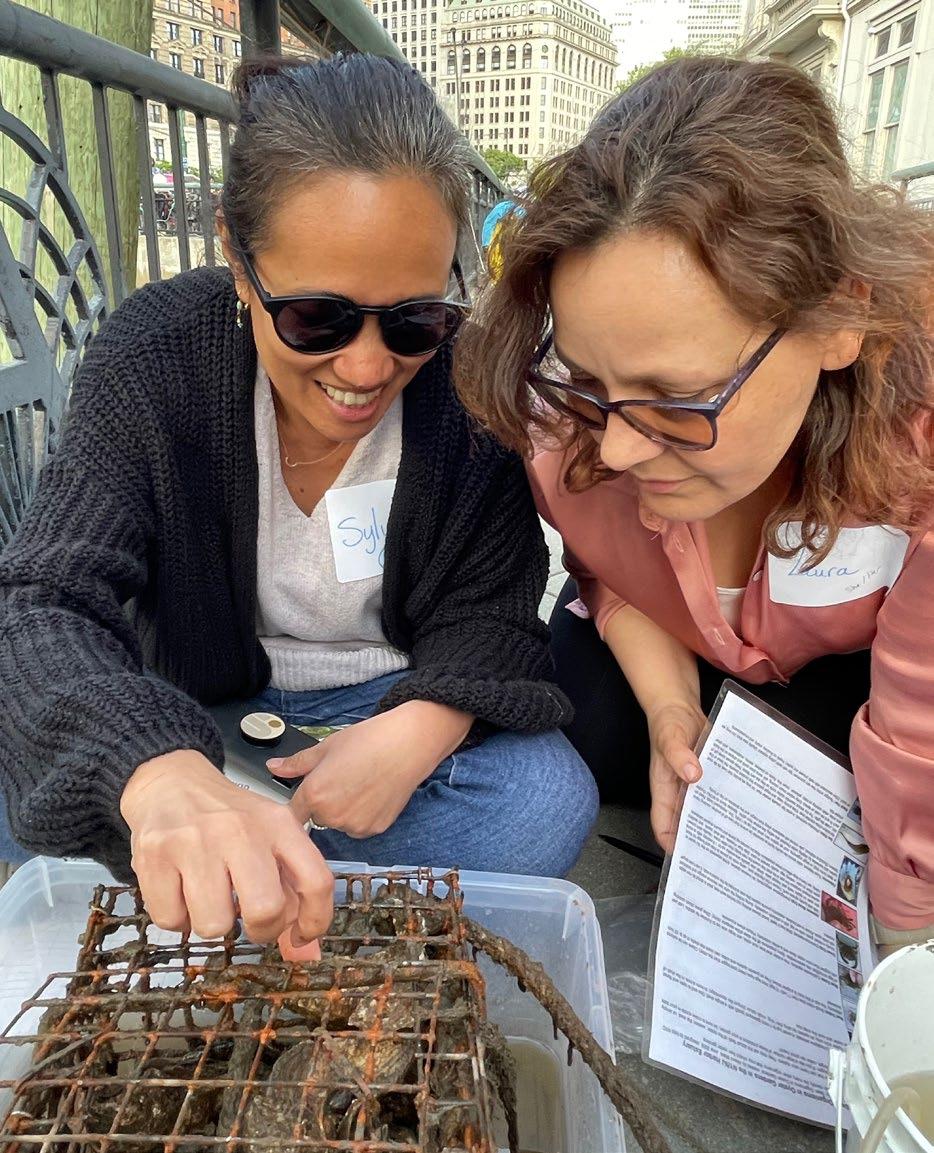
Facilitated By:
MƒA Master Teachers Dash Anderson and Antigone Cox
WEDNESDAYS, OCT 11, NOV 8, DEC 13, JAN 17 M ƒA
MATHEMATICS
How might we reshape the traditional secondary mathematics curriculum to provide new and meaningful pathways for our students to explore the depth and breadth of mathematics? Join us as we come together to evaluate our schools’ current mathematics programs, interrogate the values implicit in these programs, identify how students are (or are not) served by the status quo, and search for areas of potential growth. We will challenge and support each other in (1) formulating and articulating our values; (2) drafting plans and proposals; (3) examining decision-making protocols and hierarchies within our respective schools to develop action plans; (4) communicating with stakeholders; and (5) planning for impact analysis. This PLT is for mathematics teachers who want to make broad
MƒA PROFESSIONAL DEVELOPMENT COURSE CATALOG: FALL 2023 24
ƒA
& ONLINE
Mini-Courses
Mini-Courses are a series of three connected workshops in which experts from academic institutions, local organizations, and within the MƒA Master Teacher community engage MƒA teachers in a topic at the cutting edge of their content area and/or pedagogical practice.
MƒA PROFESSIONAL DEVELOPMENT COURSE CATALOG: FALL 2023 25
Mini-Courses
Academic Mindfulness: Implementing Executive Function Support for Students
Facilitated By: Rhys McGovern
MONDAYS, OCT 2, OCT 16, NOV 6
ONLINE
INQUIRY, PRACTICE, AND LEADERSHIP
Executive function skills allow students—and everyone—to conceptualize, plan, and follow through on all daily tasks. Over three sessions, we will work individually and with our peers to develop our understanding and skill sets around executive function in the classroom. Topics will include how classroom norms can support (and impede) executive function success, skills and strategies to promote student achievement, and how to successfully implement individual and class-wide executive function interventions. All are welcome.
Rhys McGovern is a hard of hearing, bilingual speech-language pathologist and teacher. He holds a Master of Science in Communication Sciences and Disorders from Emerson College, Massachusetts state SLP and teaching licensure, and the ASHA Certificate of Clinical Competence. Rhys has been working with children, teens, and young adults for over 15 years and founded his private practice New Leaf Language in 2018.
The Big Ideas of Linear Algebra
Facilitated By: Francis Su, Ph.D.
TUESDAYS, NOV 28, DEC 5, DEC 12
ONLINE
MATHEMATICS
While linearity often hides in the world around us, it is, in fact, a fundamental mathematical concept. Linear Algebra helps us to uncover these hidden structures. With the growth of data science, its importance in the early stages of mathematics teaching and learning is increasing. In this course, we will explore an introduction to ten big ideas of linear algebra to help us better understand the subject and learn how to prepare our K-12 mathematics students to appreciate
and uncover its applications and beauty. We’ll discuss linearity, practice thinking about it algebraically and geometrically, see how to keep track of linear information in a matrix, learn why matrix multiplication is defined so strangely, and discuss how it corresponds geometrically to a linear transformation. We’ll also unpack the ideas of eigenvectors and eigenvalues, which appear broadly in both classical and quantum mechanics. And finally, we’ll conclude with an introduction to the singular value decomposition, a frequently used tool to find hidden structure in data (e.g., data compression and making Netflix recommendations). All mathematics teachers are welcome. The only prerequisite is a desire to learn why algebra and geometry are so inextricably linked and a willingness to use analogies to stretch one’s ability to visualize more than three dimensions.
Dr. Francis Su is the Benediktsson-Karwa Professor of Mathematics at Harvey Mudd College and a former president of the Mathematical Association of America. In 2013, he received the Haimo Award, a nationwide teaching prize for college mathematics faculty, and in 2018 he won the Halmos-Ford writing award. His work has been featured in Quanta Magazine, Wired, and The New York Times. His book Mathematics for Human Flourishing, winner of the 2021 Euler Book Prize, is an inclusive vision of what mathematics is, who it’s for, and why everyone should learn it.
Building Virtual Manipulatives Using Desmos Calculator
Facilitated By: MƒA Master Teacher Tony Zhang
MONDAYS, DEC 4, DEC 11, DEC 18 ONLINE
COMPUTER SCIENCE AND TECHNOLOGY
Have you ever needed and had trouble finding a highly specific, readily available virtual manipulative? With ingenuity and problem-solving, we can build our own virtual manipulatives using the Desmos Graphing Calculator. Such manipulatives include color-coded graphs with movable points and sliders to demonstrate function transformations, fully manipulatable triangles to illustrate the mechanics behind the law of cosines, and easy-to-use maps of NYC to support students in finding distances between locations. Join us as
we learn how to leverage the full suite of functions built into Desmos to build unique and personalized manipulatives for our students. This mini-course is for middle or high school mathematics teachers who have some familiarity with Desmos Graphing Calculator and its essential functions. The course will focus on algebra and geometry applications, but one could transfer the concepts and skills developed to most subjects.
Tony Zhang is an MƒA Master Teacher and mathematics teacher at The Laboratory School of Finance and Technology: X223 in the Bronx.
Canceling the Commons: A Critical Look at the Tragedy of the Commons
Facilitated By: MƒA Master Teacher Peter Mulroy
THURSDAYS, JAN 4, JAN 11, JAN 18
MƒA
SCIENCE
The tragedy of the commons concept has become a cornerstone of environmental education. At its core, this concept suggests that access to public resources like forests, water, and marine life inevitably results in their depletion (and sometimes destruction), as stakeholders are motivated by their own gain. As a result, many argue that privatization of the environment is the best path to a sustainable future. In this mini-course, we will examine and critique the tragedy of the commons as a tenet of environmental education. We’ll start with a simple game to ground us in a shared understanding of the concept, then form our own critiques by considering Indigenous and collectivist examples of community management of unowned resources. We will continue by reading selected works by Garret Hardin, including his seminal essays “Tragedy of the Commons” and “Lifeboat Ethics,” to consider how his white supremacist ideologies continue to shape environmental movements and reevaluate the commons as a teaching point. Throughout, we will share readings, discussion questions, and protocols for classroom use. We will conclude by exploring the history of the commons, their enclosure and privatization, and the role this has played in spurring the industrial revolution and shaping
MƒA PROFESSIONAL DEVELOPMENT COURSE CATALOG: FALL 2023 26
Mini-Courses
of our modern world. This course is best suited for high school environmental science teachers.
Peter Mulroy is an MƒA Master Teacher and science teacher at NYC iSchool in Manhattan.
Capturing Student Brilliance: Desmos Activity Builder for Science Teachers
Facilitated By: MƒA Master Teachers Jenna Denino and Kate Litman
TUESDAYS, NOV 28, DEC 5, DEC 12
MƒA
SCIENCE
Are you a science teacher who has heard rumblings about Desmos in the hallowed halls of MƒA? Does it feel like mathematics teachers are having all the fun? There is good news! Desmos Activity Builder is
a unique, free lesson-building tool appropriate for all content areas. In this mini-course, we will explore the basics of Desmos as a facilitation tool. You will learn to pace, pause, and examine student work in realtime. Then we will dig into the computation layer—the coding language of Desmos. Teachers will learn how to give basic feedback to students, embed graphs, images, and videos, build card sorts, and more! Finally, teachers will develop their own Desmos science lessons and practice facilitating with peers. This course is best suited for science teachers new to Desmos with a creative and adventurous spirit toward technology.
Jenna Denino is an MƒA Master Teacher and science teacher at Quest to Learn in Manhattan.
Kate
ChatGPT and Coding: A Teacher’s Guide
Facilitated By: Jeff Olson and Taylor Want
WEDNESDAYS, SEP 20, SEP 27, OCT 4 ONLINE
COMPUTER SCIENCE AND TECHNOLOGY
Media coverage of ChatGPT, Large Language Models (LLMs), and Artificial Intelligence (AI) is highly polarized, and sifting through the opinions of both evangelists and skeptics is a full-time job. As teachers, we navigate the additional challenges of ensuring academic honesty and managing changing school policies. We can’t be sure how advancements in AI will impact the future of work and education, but we can make some sensible decisions based on the present. First, we will dive into an LLM to understand what it is, how it works, and why it has been so disruptive. Then, we will practice using AI tools, specifically ChatGPT, to discuss their strengths, weaknesses, and risks as teaching or learning tools. And finally, we’ll share resources on ethical considerations, from academic dishonesty to the potential repercussions of AI use.
Jeff Olson is the Director of Learning & Development at Giant Machines. Jeff has an undergraduate degree in neuroscience and American literature from Baylor University. Upon graduating in 2011, Jeff was placed as an English teacher in Phoenix, Arizona, with Teach For
America and earned his M.Ed. in secondary education from Arizona State University. In 2015, Jeff taught beginner courses in software engineering, iOS app development, and web design to high school students in Los Angeles and New York City. He believes learning to code is the most empowering experience a high school student can have and all students deserve access to this life-changing and joyful form of fun. Taylor Want holds a B.A. in Physics from Carleton College and an M.Ed. in Curriculum and Teaching from Boston University. She has built her career around increasing educational opportunities in computer science for underrepresented populations in tech. Taylor began her career in education as a high school physics and computer science teacher and then as the Director of Strategy and Operations at Upperline Code. At Upperline Code, she built, managed, and trained teachers for computer science education programs in partnership with organizations like Google, JPMorgan Chase, the New York City Department of Education, and Cornell Tech. She is now an Engineering Director at Giant Machines, where she works to support early-career software engineers in their growth and development.
Cultivating Mycologists: Inspire Fungal Fascination in Your Students
Facilitated By: John Michelotti and Diana Richards
WEDNESDAYS, OCT 25, NOV 1, NOV 8
OFFSITE & ONLINE
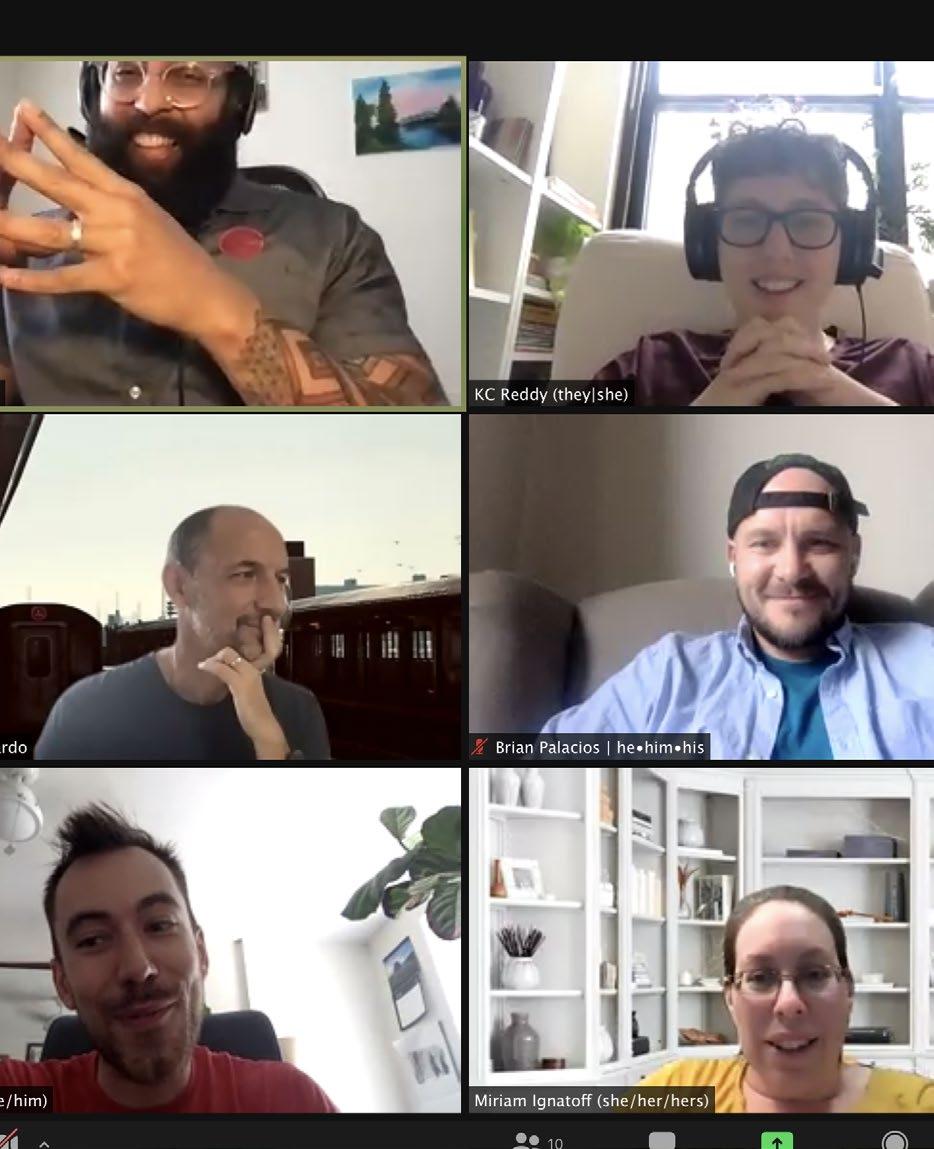
SCIENCE
+ PLEASE NOTE: THIS IS A HYBRID COURSE. SESSION 1 WILL TAKE PLACE IN CENTRAL PARK FROM 4-6 P.M. SESSIONS 2 AND 3 WILL TAKE PLACE VIRTUALLY.
Are you ready to embark on an extraordinary journey into the fascinating world of fungi? Join us as we dive into the realm of mushrooms, exploring their secrets and practical applications. In session one, we’ll head to Central Park on a mushroom identification walk, becoming community scientists and unraveling the mysteries of local fungi. Then, in session two, we will immerse ourselves in the Fungi Foundation’s online curricular resources, with a focus on symbiosis, ecosystems, medicinal uses, and conservation and practical applications of fungi. Finally, in session three, we will learn how to bring the magic of mushrooms into our classrooms through hands-on techniques for cultivating fungi with students. Throughout, we’ll draw insights from acclaimed mycologists, reference texts, and the educational guide from the film, Fantastic Fungi. Prepare to transform your teaching and inspire young minds through the wonders of mycology! This
MƒA PROFESSIONAL DEVELOPMENT COURSE CATALOG: FALL 2023 27
Litman is an MƒA Master Teacher and mathematics teacher at Quest to Learn in Manhattan.
Mini-Courses
course is for science teachers of grades 5-9.
John Michelotti is the founder of Catskill Fungi, which empowers people with fungi through outdoor educational classes, cultivation courses, mushroom art, and mushroom health extracts. John is a former President of the Mid-Hudson Mycological Association (MHMA). He serves as Medicinal Mushroom Committee Chair and is a Poison Control Consultant for the North American Mycological Association. He was selected by the Catskill Center as a “Steward of the Catskills” for his contributions to the environment. His goal is to educate and inspire people to pair with fungi to improve the environment, their health, and communities.
Diana Richards is a “fungi fanatic” and the Education Lead at the Fungi Foundation, a global non-profit devoted to building a healthy planet, increasing knowledge of fungal diversity, and promoting innovative environmental solutions in which fungi are recognized as interconnectors of nature. A teacher for over 15 years, Diana helps build a mycological school curriculum to educate students all over the world about the true wonders of fungi. She is passionate about environmental conservation and providing equitable access to nature for every young person.
The Dark Side of STEM p Facilitated By: MƒA Master Teachers Megan
Berdugo and Lavonne Hunter
THURSDAYS, JAN 4, JAN 11, JAN 18
MƒA
INQUIRY, PRACTICE, AND LEADERSHIP
A review of our nation’s history tells an intriguing and disturbing story involving the weaponization of the sciences (STEM) as instruments of harm. More recently, big data and algorithms have perpetuated the trend of maltreatment in virtually every aspect of our sociocultural, economic, medical, and psychological lives. In this mini-course, we will first explore these hard and complex truths through a broader historical lens, followed by a modern frame of reference. We will use various resources to ponder the focus question: How has STEM’s application, rationale, and methodology been used to cause harm in our democratic society?
Join us to learn about and discuss the nature and limitations of scientific objectivity and how to engage
students in examining these hard truths. All are welcome.
Megan Berdugo is an MƒA Master Teacher and mathematics teacher at Brooklyn International High School in Brooklyn.
Lavonne Hunter is an MƒA Master Teacher and science teacher at City As School in Manhattan.
Data-Driven Climate Justice With EcoRise p Facilitated By: Zakhia
Grant
TUESDAYS, NOV 28, DEC 5, DEC 12 MƒA
Geographic information systems (GIS) mapping helps us understand patterns and relationships within a geographic context. GIS is used in virtually every field and can make data come “alive” for your students. Join us as we discover GIS, explore EcoRise resources, and learn strategies to inspire students to act by providing them with the skills to design solutions to environmental issues within their communities. In session one, we will begin with an introduction to environmental justice issues as we discuss and try out hands-on activities from the EcoRise curriculum. In session two, we’ll delve deeper by examining how EcoRise resources related to climate data, GIS mapping, and climate justice can shape students’ understanding of the causes and impact of climate change within their community. In our final session, teachers will learn how to support student climate action at their schools through the creation of datadriven policy or by applying for a student-driven EcoAudit grant. This course is best for middle and high school life science, environmental science, and Earth Science teachers.
Zakhia Grant is the Northeast Program Manager for EcoRise and provides professional development to K-12 teachers participating in the Sustainable Intelligence Program in New York, New Jersey, and Massachusetts. She is a geologist and a LEED Green Associate and brings with her more than a decade of experience teaching science and sustainability at both the high school and collegiate levels in NYC. She is passionate about equity and justice in sustainability and environmental education. Zakhia holds a B.A. in Geology from George Washington University and an M.S. in Geology from Bowling Green State University.
Design Thinking: Creating Human-Centered Classrooms, Schools, and Systems
Facilitated By: Kara Imm,
Ph.D.
THURSDAYS, OCT 26, NOV 9, NOV 30, DEC 7
MƒA
MATHEMATICS
+ PLEASE NOTE: THIS IS A FOUR SESSION MINI-COURSE. TEACHERS ARE EXPECTED TO COMPLETE ASYNCHRONOUS WORK BEFORE SESSION ONE AND BETWEEN SESSIONS. Even the most inspired teachers among us sometimes lose their way—perhaps becoming mired in the rigid systems, structures, and policies that shape their work. In these moments, we often turn to “best practices” to solve messy problems that surfaced year after year, recycling old ideas and hoping something will “work.” In this intensive four session mini-course, we will explore a radical alternative: design thinking. In teams, we’ll experience the design thinking process—a five-stage, iterative, and imaginative problem-solving approach used in education, product development, and beyond. We will begin by identifying hardto-solve issues in our classrooms, schools, and communities. Then, by developing empathy for the humans (students, colleagues, families) living within our classrooms, schools, and systems, we will focus our design work on their needs, ideas, and dreams. Everyone will leave the course with new prototypes to share and test with each other and our school communities.
Dr. Kara Imm is a K-12 mathematics educator based in New York City. In her more than 20-year career, she has been a middle and high school mathematics teacher, staff developer, leadership coach, and teacher education faculty. At MƒA, Kara has designed and led over 20 courses on design thinking, mathematical routines, models and modeling, developing a coaching practice, early algebra, and more. Kara has written several articles and books with and for teachers on the teaching and learning of mathematics. A proud graduate of Minneapolis Public Schools, Kara earned degrees from Stanford University and Bank Street College of Education. Her recent Ph.D. in urban education from The Graduate Center, The City University of New York, investigated the impact of mathematical modeling on high school girls of color who had experienced the gate-keeping effects of algebra.
MƒA PROFESSIONAL DEVELOPMENT COURSE CATALOG: FALL 2023 28
SCIENCE
Mini-Courses
Desmos Activity Builder for Beginners
Facilitated By: MƒA Master Teachers Patricia Yee and Mehmet Zubaroglu
TUESDAYS, OCT 10, OCT 17
MƒA & ONLINE MATHEMATICS
+ PLEASE NOTE: THIS IS A TWO SESSION HYBRID MINI-COURSE. SESSION 1 WILL TAKE PLACE IN-PERSON AT M ƒA. SESSION 2 WILL TAKE PLACE VIRTUALLY.
Are you interested in utilizing Desmos to design interactive lessons and activities to engage and support your students? Join us in this introduction to Desmos’ free Activity Builder platform as we develop unique activities and uncover how Desmos can support student autonomy and choice, foster class discussion, and aid in sharing student work. We will use preexisting Desmos activities as a starting point to create and modify our own. We will also learn to create slides for text responses, card sorts, multiple-choice questions, and more. We will spend each session designing, developing, and critiquing our Desmos activities. This course is open to all teachers new to Desmos Activity Builder.
Patricia Yee is an MƒA Master Teacher and mathematics teacher at Brooklyn Technical High School in Brooklyn.
Mehmet Zubaroglu is an MƒA Master Teacher and mathematics teacher at International High School at Union Square in Manhattan.
Emerging Technology: Cryptocurrency and Blockchain Essentials
Facilitated By: MƒA Master Teachers Karen Guzman and Yassine Mouaddab
MONDAYS, OCT 23, OCT 30, NOV 6
ONLINE
COMPUTER SCIENCE AND TECHNOLOGY
The 2023 banking crisis catalyzed by the collapse of multiple high-profile regional US banks raises concerns about our current monetary system. Bitcoin, the world’s first cryptocurrency, was created after the
2008 financial crisis and continues to be an appealing alternative to the traditional banking system. As of 2022, more than 300 million people around the globe use cryptocurrencies, and more than 20% of American adults have invested in Bitcoin (Wise, 2022). This workshop will explore blockchain, the underlying technology behind Bitcoin and other cryptocurrencies. By the end of the course, teachers will understand blockchain essentials, including decentralization, distributed ledgers, proof of work, mining, wallets, and public key cryptography, which they can use to educate students. This course is open to teachers from any discipline interested in learning more about cryptocurrencies and blockchain technology.
Yassine Mouaddab is an MƒA Master Teacher and science teacher at High School of Telecommunication Arts and Technology in Brooklyn.
Karen Guzman is an MƒA Master Teacher and computer science teacher at High School of Telecommunication Arts and Technology in Brooklyn.
Equipping Educators With an Equity Lens on Cancer p
Facilitated By: Jasmine McDonald, Ph.D., and Mary Beth Terry, Ph.D.
WEDNESDAYS, JAN 10, JAN 17, JAN 24
MƒA & ONLINE
SCIENCE
+ PLEASE NOTE: THIS IS A HYBRID COURSE. SESSIONS 1 AND 3 WILL TAKE PLACE IN-PERSON AT M ƒA. SESSION 2 WILL TAKE PLACE VIRTUALLY.
Did you know cancer is the number one driver of premature mortality in New York City and that cancer rates differ vastly by neighborhood? Half of all genetic mutations leading to cancer are acquired before age 25, yet none guarantee a person will develop cancer. External exposures also play a significant role, with emerging evidence suggesting exposure during young adulthood is a critical time when these exposures can increase cancer risk. We will begin by exploring cancer statistics and trends across NYC communities. For session two, we will focus on hereditary and acquired genetic mutations, genetic ancestry, and the Next Generation Science Standards. In session three, we will discuss how environmental and social determinants
affect cancer risk and how to engage youth in cancer prevention to enable them to become peer-to-peer educators. We will approach all topics through a health equity lens. Throughout, teachers will explore original curriculum and hands-on activities designed to encourage students to participate in their own cancer risk reduction—from science to personal behaviors to advocacy. This course is best suited for middle and high school health and life science teachers.
Dr. Jasmine McDonald is an Assistant Professor in the Department of Epidemiology at the Mailman School of Public Health at Columbia University. She received her Ph.D. from Harvard University in Biological Sciences in Public Health. Her research aims to explore the etiology of breast cancer and breast cancer risk reduction across the lifecourse. An avid teacher and mentor, Dr. McDonald is also the Assistant Director of the Cancer Research, Training, and Education Core and the Co-Director of the Y.E.S. Pipeline Program at the Herbert Irving Comprehensive Cancer Center. She was awarded the 2021 Columbia University Teaching Award for her dedication and excellence in teaching, mentoring, and community engagement. In her free time, she enjoys gardening with her son and hanging out with their hedgehog and bearded dragon.
Dr. Mary Beth Terry is a Professor in the Department of Epidemiology at the Mailman School of Public Health at Columbia University, where she leads the Chronic Disease Unit. She conducts research addressing the etiology, prevention, distribution, natural history, and treatment outcomes of chronic diseases, including cancer and cardiovascular disease. She co-leads multi-institutional efforts in New York City to reduce health disparities in multiple chronic diseases and increase diversity in cancer clinical trials. She also serves as Associate Director of Population Science and Community Outreach and teaches epidemiological methods and data science to public health students, medical students, and undergraduate students. She also serves on the Board of Scientific Counselors and the PDQ Genetics Board for the National Cancer Institute.
Finding Your North Star: Using Theory to Move Your Teaching Practice, Part I
Facilitated By: Pamela Jones and MƒA Master
Teacher Joshua Modeste
TUESDAYS, OCT 10, OCT 17, OCT 24
MƒA & ONLINE
INQUIRY, PRACTICE, AND LEADERSHIP
+ PLEASE NOTE: THIS IS A HYBRID COURSE. SESSION 1 WILL TAKE PLACE IN-PERSON AT M ƒA. SESSIONS 2 AND 3 WILL TAKE PLACE VIRTUALLY.
What principles guide your approach to teaching mathematics or science? How do you navigate
MƒA PROFESSIONAL DEVELOPMENT COURSE CATALOG: FALL 2023 29
Mini-Courses
challenges when they arise? Dr. Bettina Love writes, “Theory does not solve issues—only action and solidarity can do that—but theory gives you language to fight, knowledge to stand on, and a humbling reality of what intersectional social justice is up against”
(We Want to Do More Than Survive: Abolitionist Teaching and the Pursuit of Educational Freedom, 2019). Equipped with theory, teachers in this minicourse will define their “North Star,” paying specific attention to how their respective teaching philosophies can facilitate the decolonization of their classroom’s curriculum, space, and behavioral support systems. Some of the questions we will ask ourselves include:
(1) How can my theoretical stance help me work for and with students, rather than blame them?;
(2) Why is it vital for me to interrogate my chosen philosophies for colonizer underpinnings or remnants?; and
(3) How can I re-imagine my teaching philosophies through a decolonized lens that accounts for the need to center “Indigenous ways of knowing, being, and doing”
(McGregor, 2012), while paying particular attention to an antiracist pedagogical stance? To ground our theory in practice, teachers will identify a focal student whose experience will be a lens through which we view and process our teaching philosophy work.
Pamela M. Jones, M.S.Ed., M.P.A., is an Advisor and Instructor at Bank Street College. Before joining Bank Street, Pam worked as a learning specialist for grades K and one, and as a third and fifth grade classroom teacher. Pam earned a master’s in Public Administration from Columbia University and her Master of Science in Education from Bank Street College of Education. Pam is pursuing her doctorate in literacy at New York University.
Find Your Inner Equilibrium for Teaching Equilibrium
Facilitated By: Disan Davis, Ph.D.
WEDNESDAYS, OCT 25, NOV 1, NOV 8
MƒA
SCIENCE
Equilibrium can be a challenging concept to master for students and teachers alike. What is equilibrium— both generally and in chemistry specifically? How does a system behave when not at equilibrium? How is chemical equilibrium relevant to science research across STEM fields and our everyday lives? And how does it relate to concepts such as homeostasis and the equilibrium of forces? Join us in this mini-course to answer these questions and more. We’ll begin with a hands-on activity to model chemical equilibrium. Then, in session two we’ll discuss student work and discourse. We will conclude by making connections to equilibrium and related concepts (e.g., forces, homeostasis, etc.) in chemistry and beyond. Come prepared to share your successes, stresses, and challenges with this crosscutting concept. While most aligned with high school chemistry, this course invites and welcomes any science teacher eager to learn about the intersectionality of equilibrium across STEM disciplines.
Dr. Disan Davis is a Research Associate for the STEM PUSH Network, an NSF-funded national alliance of pre-college STEM programs focused on broadening participation in STEM, with a particular aim of supporting Black, Latine, and Indigenous students’ enrollment and persistence. Before this work, she led a pre-college STEM program at Rockefeller University, taught middle and high school science, and earned a Ph.D. in biochemistry. These days, she enjoys exploring science in the kitchen and the woods, and learning mathematics strategies from her seven year old.
From String to Art: Practices in Textile Crafts and Mindfulness
Facilitated By: MƒA
Master Teachers Marisa Miller and Dwaina Sookhoo
WEDNESDAYS, SEP 27, OCT 4, OCT 18
MƒA INQUIRY, PRACTICE, AND LEADERSHIP
Have you been meaning to “get back into crafting?”
Have you always wanted to make a scarf or embroider a pattern by hand? Are you looking for new ways to de-stress or incorporate mindfulness into your routine? In this mini-course, teachers will share and build on their crafting experiences. Some crafts we will explore include embroidery, crochet, knitting, cross-stitching, macrame, bracelet weaving, and lanyard making. We also welcome teachers to share their craft passions. Our goal is for teachers to develop different textile and design skills, possibly bringing them into the classroom as mindfulness activities or brain breaks with students. We will also consider and discuss the application and benefits of these skills in the science and mathematics classroom and leave with several projects directly applicable to school communities. All grade and crafting experience levels are welcome.

MƒA PROFESSIONAL DEVELOPMENT COURSE CATALOG: FALL 2023 30
Joshua Modeste is an MƒA Master Teacher and science teacher at The Urban Assembly School for Global Commerce in Manhattan.
Marisa Miller is an MƒA Master Teacher and science teacher at Forest Hills High School in Queens.
Dwaina Sookhoo is an MƒA Master Teacher and mathematics teacher at N.Y.C. Lab School for Collaborative Studies in Manhattan.
Mini-Courses
Geometric Construction: Making Dynamic Sculptures
Facilitated By: MƒA Master Teachers Saida Atmaca and Quratul Waqas
WEDNESDAYS, JAN 3, JAN 10, JAN 17
MƒA MATHEMATICS
Have you ever constructed a moving sculpture? In this mini-course, we will explore and build 3D sculptures, including a hexaflexagon (a paper hexagon whose sides flex, revealing more surfaces than a standard hexagon would), a kaleidocycle (a ring of tetrahedrons that rotate and move in a spellbinding way), soma cubes (akin to 3D tangrams), infinity cubes, spiral cubes, and ghost cubes. As we construct, we will bring our prior knowledge and experience to the table to collaboratively work through a handful of challenges, connect to algebra and geometry, and discuss ways to engage and enrich our middle and high school mathematics classrooms. While best for middle and high school mathematics teachers, any teacher who loves constructing is welcome.
Saida Atmaca is an MƒA Master Teacher and mathematics teacher at P.S. 049 Dorothy Bonawit Kole in Queens.
Quratul Waqas is an MƒA Master Teacher and mathematics teacher at I.S. 230 in Queens.
High Tech, Low Tech, No Tech: Project-Based Learning and Design Thinking
Facilitated By: MƒA Master Teachers Everton Henriques and Jared Jax, Ed.D.
THURSDAYS, OCT 12, OCT 19, NOV 2
COMPUTER SCIENCE AND TECHNOLOGY
Are you looking for new and innovative ways to incorporate and structure hands-on, projectbased learning (PBL) in your STEM classroom? This course will offer ways to integrate PBL whether you have no access to technology, a fully functioning
makerspace, or something in-between. Join us to share best practices for structuring a PBL approach to teaching and learning. We will use simulated environments, hands-on equipment such as Arduinos and breadboards, and traditional consumables like wood and glue to design and create classroom-ready projects. Additionally, we will discuss Design Thinking, which focuses on promoting creative problem-solving in the project cycle and using feedback to refine ideas. We will work in teams to iterate on and adapt one of the PBL units shared for our unique classroom settings to close the course. The goal is to explore methods of engaging students in design, coding, building, and electronics across the full spectrum of technological access and meet the needs of all learners, including MLLs and students with IEPs. This course is best suited for middle and high school teachers.
Everton Henriques and Dr. Jared Jax are MƒA Master Teachers and science teachers at Staten Island Technical High School in Staten Island.
A Hundred Ways to Differentiate: Work Smarter Not Harder With the UDL Framework
Facilitated By: MƒA Master Teacher Stephen Kos
TUESDAYS, OCT 10, OCT 24
MƒA
INQUIRY, PRACTICE, AND LEADERSHIP
+ PLEASE NOTE: THIS IS A TWO SESSION MINI-COURSE.
In this workshop, teachers will learn how to use the Universal Design for Learning framework (UDL) as a guide for differentiation. We’ll begin with a brief overview of the neuroscience research behind this powerful tool, then gain familiarity with the three tenets of UDL. This work will help us reduce reteaching, improve assessment accuracy, and ultimately support ALL students in thriving and enjoying school. Finally, we’ll explore and use GoalBookApp’s free UDL-Aligned Strategies to update our own lessons. This course is suited for all teachers striving to increase student success and enthusiasm.
Stephen Kos is an MƒA Master Teacher and science teacher at New Explorations into Science, Technology and Math High School in Manhattan.
Introduction to CAD and 3D Modeling With STEM Career Explorations
Facilitated By: MƒA Master Teachers Joseph Buro, Kaitlin Geraghty, and Sandra Rossi
WEDNESDAYS, OCT 25, NOV 1, NOV 8
MƒA
COMPUTER SCIENCE AND TECHNOLOGY
Ready for a guided, hands-on introductory immersion into 3D computer-aided design (CAD) modeling? Using CAD as a tool allows teachers to go beyond textbook learning. Join us to learn how to create virtual and physical models to help students visualize various concepts, including mathematical transformations and representations in geometry, molecular modeling in chemistry, and buoyancy in physics. First, we’ll learn the basics of CAD. Then, we will work in subject teams to brainstorm models. Finally, we’ll create and share our designs. Driving force topics will include the mathematics of architecture and biomedical, mechanical, and civil engineering. Teachers will leave with the ability to develop working CAD models to use with 3D printers, laser cutters, and CNC routers. This course is open to all teachers, not only CAD users!
Joseph Buro and Kaitlin Geraghty are MƒA Master Teachers and computer science teachers at Staten Island Technical High School in Staten Island.
Sandra Rossi is an MƒA Master Teacher and mathematics teacher at Bayside High School in Queens.
Introduction to Coding: From HTML and CSS to Virtual Reality and Canvas
Facilitated By: MƒA Master Teachers Renne Castro and Christa Quint
TUESDAYS, SEP 26, OCT 3, OCT 10
ONLINE
COMPUTER SCIENCE AND TECHNOLOGY
Discover the power of web development as we demystify HTML, CSS, and JavaScript, empowering you to create websites from scratch with no prior coding knowledge required. This mini-course introduces teachers without Computer Science experience to web development fundamentals using HTML, CSS, and Javascript. Teachers will collaborate to learn
MƒA PROFESSIONAL DEVELOPMENT COURSE CATALOG: FALL 2023 31
MƒA
Mini-Courses
webpage design basics, including layout and styling. Then, teachers will explore virtual reality, including immersive experiences using tools like A-Frame. Finally, teachers will engage with creative HTML canvas possibilities, leveraging Javascript for dynamic graphics and animations. By the end, teachers will have a solid foundation in web development and be equipped to create engaging web projects for their classrooms.
Investigating the Mathematical Explorations of Young Children
Facilitated By: Dorothy White, Ph.D.
MONDAYS, NOV 13, NOV 20, NOV 27
ONLINE
MATHEMATICS
Introduction to Python Programming
Facilitated By: MƒA Master Teacher Luna Ramirez
WEDNESDAYS, NOV 29, DEC 6, DEC 13, DEC 20
ONLINE
COMPUTER SCIENCE AND TECHNOLOGY
+ PLEASE NOTE: THIS IS A FOUR SESSION MINI-COURSE.
Python is a computer language easy to learn and teach. Many professional programmers use Python, as it is known for its readability. During this course, teachers will be grouped based on their skill level and interest as they learn concepts in Python through lessons and exercises, explore online resources available to the Python community, and leave with ideas for scalable Python projects. We will also discuss how to create accessible and inclusive computer science courses so all students have equal and equitable resources to succeed. While this course is for computer science teachers interested in learning how to teach a class or unit in Python, any STEM teacher wishing to learn Python is welcome to attend regardless of prior knowledge!
Luna Ramirez is an MƒA Master Teacher and computer science teacher at Thomas A. Edison Career and Technical Education High School in Queens.
Young children have a natural curiosity about quantities, shapes, and patterns. They love sorting, comparing, twirling objects, and asking many questions. Several mathematical concepts are inherent in these early explorations and wonderings that teachers and caregivers can help cultivate. In this mini-course, we will explore how to develop early mathematics concepts in young children and ways to help them express their ideas. We will engage in activities supporting understanding numbers, geometry, and algebra using games, household items, and number cubes. We will discuss teaching strategies to support productive understandings of mathematics and school-home connections to engage parents and caregivers throughout. If you are ready to tap into your inner child, join us for an engaging session. This course is for elementary teachers and caregivers of young children.
Dr. Dorothy Y. White is a professor of mathematics education in the Mary Frances Early College of Education at the University of Georgia. Her research, teaching, and service interconnect and support empowering all students for success in mathematics by purposefully promoting collaborative relationships among mathematics teachers and researchers. She teaches undergraduate teacher preparation courses in early childhood education, middle school mathematics education, and graduate courses in critical issues and national trends in STEM education. She also provides professional development in mathematics to Pre-K-8 classroom teachers at the local, state, and national levels.
A Journey Through High School Statistics
Facilitated By: MƒA Master Teachers Melanie Battles and Melanie P flaum
TUESDAYS, SEP 19, OCT 3, OCT 17
Are you teaching statistics for the first time? Are you anticipating the statistics unit in Algebra I or Algebra II
and want to improve your materials? This mini-course aims to make statistics engaging and applicable for students while providing a refresher on the content for teachers. With an emphasis on the importance of statistical literacy and reasoning, we plan to deepen understanding across four concepts: (1) probability, (2) normal models, (3) regression, and (4) inference. All algebra and statistics (especially non-AP) teachers are invited to dive into activities to enhance curriculum, sharpen content knowledge, and discover the beauty of statistics through various activities, applets, and simulations, all of which you can take back to your classroom.
MƒA PROFESSIONAL DEVELOPMENT COURSE CATALOG: FALL 2023 32
Renne Castro is an MƒA Master Teacher and computer science teacher at Bayside High School in Queens.
Christa Quint is an MƒA Master Teacher and computer science teacher at Urban Assembly Gateway School for Technology in Manhattan.
MƒA MATHEMATICS
Melanie Battles is an MƒA Master Teacher and mathematics teacher at Brooklyn Technical High School in Brooklyn.
Melanie Pflaum is an MƒA Master Teacher and mathematics teacher at Bard High School Early College in Manhattan.
Mini-Courses
Lab-solutely Safe: Best Practices for Chemical Safety
Facilitated B y: MƒA Master Teachers Sara Heymont and Erin Ratz-Guiñals
WEDNESDAYS, OCT 4, OCT 18
MƒA SCIENCE
+ PLEASE NOTE: THIS IS A TWO SESSION MINI-COURSE. Would you like support and training to safely run your lab and teach students safety protocols? Do your student lab contracts languish in a drawer, never to be thought of again? Maintaining lab materials and planning safe and impactful activities for students can be overwhelming. In this mini-course, we will share resources and work together to develop effective safety plans. In session one, we will focus on topics related to planning for safety; i.e., chemical storage, solution prep, and chemical disposal. We’ll explore DOE, UFT, and chemical supply company resources to develop more effective safety plans for our lab spaces. We will also share our safety challenges and collaboratively brainstorm solutions. In session two, we’ll discuss best practices for student safety protocols and develop dynamic student-facing documents and safety systems, including introductory lessons, routines for handling materials, and strategies to maintain safe student behavior. We will also consider ways to integrate more green chemistry activities into our classrooms. All middle or high school chemistry and life science teachers are welcome.
Lagrangian Mechanics: Who Needs Newton?
Facilitated By: MƒA Master Teachers Joshua Ilany and Marieke Thomas
TUESDAYS, NOV 21, DEC 5, DEC 19
MƒA
SCIENCE
How do we predict the motion of a double pendulum? We teach our students how to use Newtonian physics and conservation laws to analyze the world, but what happens when these laws aren’t enough? Join us to learn about Lagrangian mechanics, a formulation of classical mechanics rendering the analysis of many complex physical systems more practical. We’ll begin with an introduction to Lagrangian mechanics, comparing it to the Newtonian approach. In session two, we will work collaboratively through examples, using computational tools like Mathematica to solve or model them numerically and graphically. We’ll conclude by focusing on other valuable properties of the Lagrangian, such as easily identifying conserved quantities by inspection and relating these to the more general principle of Noether’s Theorem. This course is best suited for physics teachers seeking to challenge and deepen their content knowledge. Comfort and familiarity with the basics of calculus and differential equations is a prerequisite.
Joshua Ilany and Marieke Thomas are MƒA Master Teachers and science teachers at The Bronx High School of Science in the Bronx.
Let’s Get Physical: Exploring the Genes Behind Your Body-ody-ody
Facilitated By: MƒA Master Teacher Caitlin
Wockenfuss and MƒA Emeritus Teacher Cyntra Bernardo, Ph.D.
WEDNESDAYS, NOV 29, DEC 6, DEC 13
physiological changes in the human body. Each session will focus on a particular region or body system and the genetic mechanisms underlying a related disease. We’ll begin by exploring the skeletal system and associated tissues to learn more about achondroplasia. In session two, we will “dive” into the thoracic and abdominal cavities, viewing how the position of visceral organs dictates how we diagnose disease and explore the genetics of situs inversus. In session three, we’ll turn to our largest organ, the skin, and consider what happens when this barrier is compromised by examining two genetic disorders, harlequin ichthyosis and hidradenitis suppurativa. Throughout, teachers will engage in a variety of engaging and inquiry-based activities. This course is best suited for high school biology teachers, but anyone interested in learning more about their body-ody-ody is welcome!
+ PLEASE NOTE: THIS IS A HYBRID COURSE. SESSONS 1 AND 2 WILL TAKE PLACE IN-PERSON AT M ƒA. SESSION 3 WILL TAKE PLACE VIRTUALLY.
Have you ever wondered how rare genetic mutations manifest in disease? In this mini-course, we will explore how specific genetic mutations lead to anatomical and
The Marvelous, Majestic Mathematics of Manhattanhenge
Facilitated By:
Paul McDowell, Lawrence Whitfield, and MƒA Emeritus Teacher Elissa Levy
TUESDAYS, DEC 5, DEC 12, DEC 19
ONLINE
MATHEMATICS
What is Manhattanhenge, and how can we compute when it takes place? In the first session, teachers will develop a general equation for calculating solar azimuth to derive the dates Manhattanhenge is observed. In the second session, teachers will construct GeoGebra models—no prior knowledge required—to visualize henges. In the third session, we will combine these ideas to create custom henges for any geography. Teachers can use the materials and tools provided in Earth science, physics, or trigonometry courses to connect mathematical concepts with everyday reality. This course is primarily for Earth science, physics, or mathematics teachers.
MƒA PROFESSIONAL DEVELOPMENT COURSE CATALOG: FALL 2023 33
Sara Heymont is an MƒA Master Teacher and science teacher at New Design High School in Manhattan.
Erin Ratz-Guiñals is an MƒA Master Teacher and science teacher at The Brooklyn Latin School in Brooklyn.
MƒA SCIENCE
Caitlin Wockenfuss is an MƒA Master Teacher and science teacher at Brooklyn Technical High School in Brooklyn.
Dr. Cyntra Bernardo is an MƒA Emeritus Teacher and science teacher at Brooklyn Technical High School in Brooklyn.
Mini-Courses
Paul McDowell studied mathematics and astrophysics at the University of Toronto and then worked in business systems. He progressed from programmer to V.P. and Chief Information Officer. As Managing Director of a major international consulting firm, Paul led global transformations. Most recently, Paul was at the world’s largest hedge fund, building new people/work systems. Paul’s career and passions are about understanding the Universe, simplifying the complex, and unleashing human capability. Paul graduated from Ryerson University with studies in Computing Systems. His hobbies include mathematics, model trains, running, and film-making.
Lawrence Whitfield taught high school mathematics in Zambia, Africa, for six years and then became a software developer. While progressing from software developer to project management to senior management, he enjoyed mathematics as a hobby throughout. Ever intrigued by Earth-Sun geometry, Lawrence challenged his astrophysicist friend to quantify these movements via mathematical equations. This was a successful process with the side benefit of mastering Geogebra. Lawrence developed several renditions of the Earth-Sun movement available on his YouTube channel. Lawrence contributed to SoME and SoME2 via 3Blue1Brown. Lawrence has an Honours B.Sc. in Mathematics and Computer Science.
The Mathematics of Backgammon
Facilitated By: MƒA Master Teachers Stephanie Bohbot an d Jay Lang
THURSDAYS, NOV 30, DEC 7, DEC 21 M ƒA
MATHEMATICS
While backgammon has mostly stayed the same since its creation 5,000 years ago, the leading play styles have evolved considerably as our understanding of probability has grown. This mini-course will establish a baseline understanding of how this dice-based board game is played and then use mathematics to analyze common questions all players face. Topics we will explore include the probability of a good roll, how far behind an opponent is, the number of possible turns left in a game, the mathematical reasonability of leaving game pieces vulnerable for more significant gain, and whether to double the stakes. This course
is for all teachers of any skill or experience level comfortable diving into basic levels of probability and combinatorics.
Stephanie Bohbot is an MƒA Master Teacher and mathematics teacher at High School of Telecommunication Arts and Technology in Brooklyn.
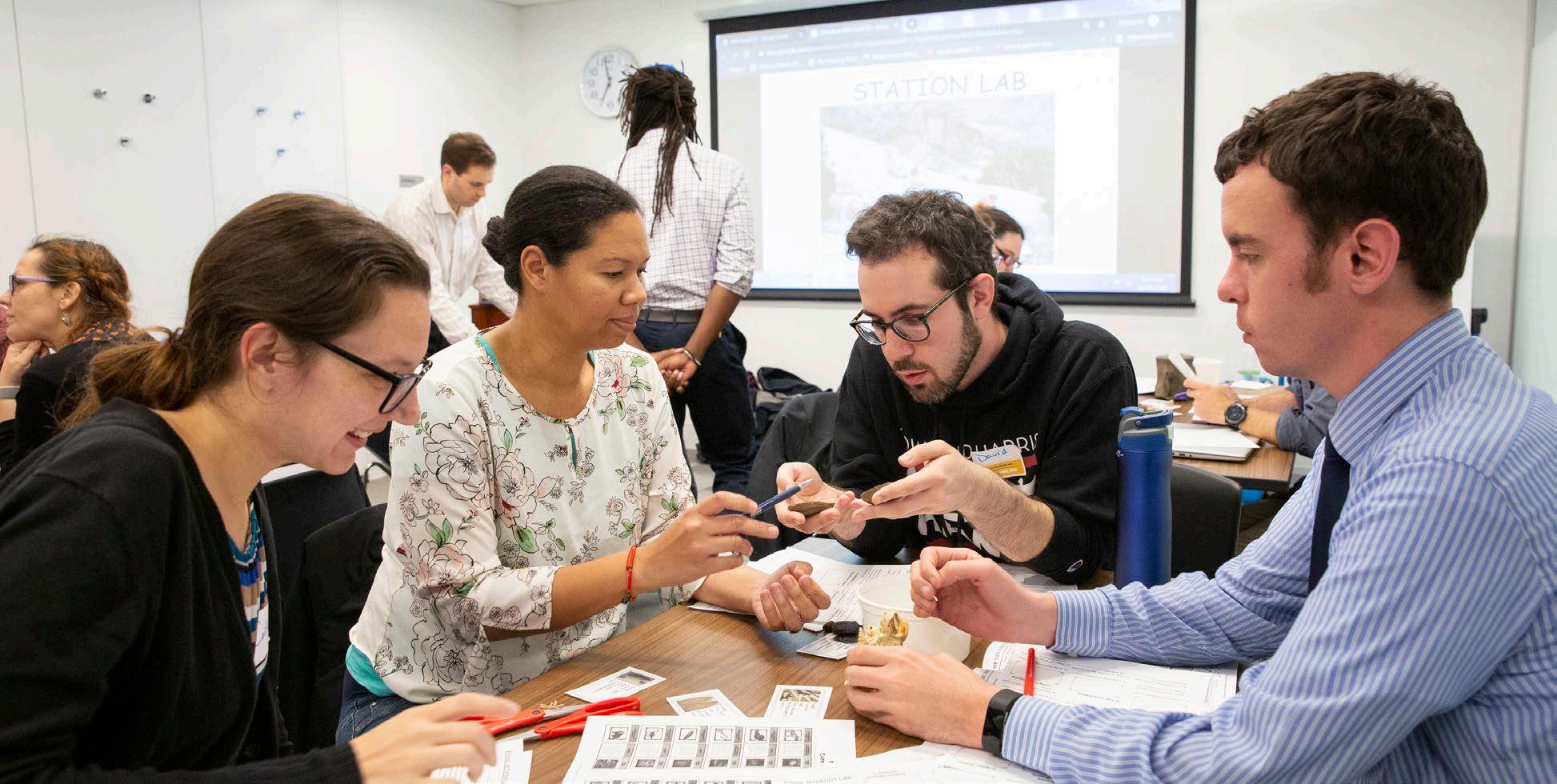
Jay Lang is an MƒA Master Teacher and computer science teacher at Curtis High School in Staten Island.
The Mathematics of Investing With Practical Applications
Facilitated By: Ken Baron, Ph.D.
THURSDAYS, OCT 12, OCT 19, OCT 26
MƒA
MATHEMATICS
Have you ever wondered if investing in that stock or cryptocurrency your friend keeps talking about is a good idea? Are you interested in learning about the stock market, mathematics behind investing, and related practical applications? Join us as we go over some of the critical mathematical insights in modern investing, which have led to multiple Nobel prizes in Economics and the creation of one of the most
successful investment firms in the world. We will start with an overview of the stock market and then explore the critical investment insights of Harry Markowitz and William Sharpe. Finally, we will discuss the practical applications of their research. No prior finance knowledge is required, but attendees should have introductory linear algebra, statistics, and differential calculus knowledge.
Dr. Ken Baron has worked in finance and investment management for over 25 years. He is currently a Managing Director and senior researcher at Two Sigma Investments. Ken was born and raised in New York City, attending NYC public schools. He majored in Mathematics at the University of Chicago and received a Ph.D. in Statistics from Stanford University. Ken co-authors Parimutuel Applications in Finance, a mathematical finance book. During the summer and on weekends, Ken teaches at BEAM, a program that helps underserved students enter advanced study in mathematics.
MƒA PROFESSIONAL DEVELOPMENT COURSE CATALOG: FALL 2023 34
Elissa Levy is an MƒA Emeritus Teacher and science teacher at Hunter College High School in Manhattan.
Mini-Courses
Neuroscience in the Age of AI and Neural Networks
Facilitated By: Pooja Viswanathan, Ph.D.
THURSDAYS, NOV 2, NOV 9
ONLINE
SCIENCE
+ PLEASE NOTE: THIS IS A TWO SESSION MINI-COURSE.
A human-guided AI wrote this course description (and humans edited it). Artificial intelligence (AI) is the simulation of human intelligence in machines and devices programmed to think and act like humans. A neural network is a computational model designed to mimic the structure and function of the human brain and is trained using a learning algorithm and large amounts of data. These networks adapt to new inputs and solve problems in ways that are similar to human problem-solving. In our first session, we will define AI and neural networks, view their historical timeline, and discuss how they are being used in neuroscience research, with a particular focus on image classification networks and human eyesight. In session two, we will take a deeper dive into the architecture of neural networks and different learning algorithms. We will explore how scientists design research experiments involving neural networks and consider important differences between artificial and biological intelligence. We will end with a discussion on the limitations and ethics of using neural networks as a model system. This course is best suited for high school science teachers but is open to anyone interested in learning more about AI and neural networks.
Dr. Pooja Viswanathan is a researcher in neuroscience and a Junior Fellow at the Simons Society of Fellows. She holds a Ph.D. and MSc from the University of Tuebingen, Germany. She studies intelligent behavior and the brain areas that support abstract knowledge in primates.
Nicotine and the Brain: A Barrier to Achieving Social Justice p
Facilitated By: Alia Komsany, Ph.D., Erica Phillips, M.D., and Maryem Zaki
THURSDAYS, OCT 19, OCT 26, NOV 2
MƒA
SCIENCE
Nicotine, the addictive compound in tobacco, can spell trouble at any life stage. But it is particularly dangerous before the age of 25 because the brain is still developing. Research has shown that smoking and vaping nicotine in adolescence can harm areas of the brain that are actively maturing and are responsible for controlling attention, learning, and susceptibility to addiction. Emerging evidence suggests that tobacco advertising, including ads for e-cigarettes and vapes, may not only perpetuate youth tobacco use, but may also exacerbate racial and ethnic disparities in tobacco use and lead to disproportionate risk for respiratory disease and cancer later on in life. Join us as we discuss how tobacco use is a social justice issue and explore original curriculum and hands-on activities that provide students with the knowledge and skills to not only make informed choices about their health, but also help their peers and family members. In session one, we will focus on the importance of media literacy and its influence on health behaviors. In session two, we will delve into the science of nicotine addiction and its impact on the brain. We will conclude by putting on our student hats and engaging with classroom activities, including an exploratory Science Take Out kit on nicotine, brain health, and how to design a youth health campaign. This course is best suited for middle and high school health and life science teachers.
Dr. Alia Komsany is a cancer biologist and a current fellow of Health Equity Research in Medicine at Weill Cornell Medicine. She is also a competitive rower and champion for increasing access and raising the profile for equal opportunities of Muslim women in sport.
Dr. Erica Phillips is a health services researcher and clinical obesity medicine specialist with extensive experience in conducting community-engaged research. You can often find her enjoying weekend gardening at her son’s former elementary school.
Maryem Zaki is an assistant research coordinator with CARES4YOU. She
has extensive experience in health policy and management working with the NYC Department of Education, Department of Health and Mental Hygiene, and Weill Cornell Medicine. She earned a B.S. in psychology from City College and an MPH from the CUNY Graduate School of Public Health & Health Policy. In her free time, she enjoys traveling, trying new cuisines, and spending time with family and friends.
Pablo Escobar’s Hippos: Constructing Models in the Science Classroom
Facilitated By: MƒA Master Teachers Elese Lau and Emily Schmidt, Ph.D.
THURSDAYS, NOV 2, NOV 9
MƒA
+ THIS IS A TWO SESSION MINI-COURSE.
Did you know Pablo Escobar, notorious drug lord and cartel leader, was also an animal lover? In fact, he created a makeshift zoo on his estate, importing animals from all over the world. When Escobar was killed in 1993, most of the animals were captured and relocated—but not his four hippos, the descendants of whom have become an invasive species in Colombia. Join us in this two session mini-course as we learn how to use this phenomenon to teach ecology. In session one, we’ll learn more about hippos in their native range as we explore published studies and the free, web-based program SageModeler to build and test a model of how hippos affect complex ecosystem dynamics. In the second session, we will work in small groups to model our own chosen phenomena and discuss how to use SageModeler in our classrooms. The content and tools are most applicable to life and environmental science teachers, but anyone interested in helping their students model complex phenomena and learning more about Pablo’s hippos is welcome!
MƒA PROFESSIONAL DEVELOPMENT COURSE CATALOG: FALL 2023 35
SCIENCE
Elese Lau and Dr. Emily Schmidt are MƒA Master Teachers and science teachers at The Bronx High School of Science in the Bronx.
Mini-Courses
Physics at the Extremes of Scale: An Introduction to Modern Physics
Facilitated By:
Klejda Bega, Ph.D.
WEDNESDAYS, SEP 20, SEP 27, OCT 4
MƒA SCIENCE
Space contracts and bends, time dilates and even stops altogether, and microscopic particles behave as both objects and waves. All these phenomena appear strange and counterintuitive to humans, but as our understanding of physics has made clear, this is how nature truly behaves. These behaviors become particularly apparent at the extremes of scale. In this mini-course, we will journey along each extreme of scale to introduce our students to the concepts of modern physics. In session one, we will explore special relativity—what happens when objects move at the extremes of speed (near the speed of light)? In session two, we’ll dive into general relativity—what happens when objects are massive? And finally, in session three, we’ll conclude with quantum mechanics—what happens when objects are very small? Throughout, we’ll engage in discussion, activities, and sample problems. All content will be taught at a level appropriate for high school physics, emphasizing concepts rather than mathematical underpinnings.
Dr. Klejda Bega has a Ph.D. in particle physics from Caltech and is currently a Lecturer in Discipline at Columbia University, where she teaches Frontiers of Science, a required interdisciplinary science course and part of the Columbia Core Curriculum.
Preparing for Master Teachers on Teaching (MT 2)
Facilitated By: MƒA Master Teachers Jude Julien, Michael Paoli, and Molly Shabica
WEDNESDAYS, NOV 15, NOV 29, DEC 6
TUESDAY, DEC 12
MƒA
INQUIRY, PRACTICE, AND LEADERSHIP
This workshop is for Master Teachers selected to speak
at this year’s Master Teachers on Teaching (MT²) event on Thursday, December 14, 2023. We will use protocols to develop, practice, and hone (and practice again) our presentations. We will create a warm and supportive space for you and your story to flourish. Please see the listing for the MT² Thursday Think for more information on the event and how to propose a talk.
Jude Julien is an MƒA Master Teacher and science teacher at Bronx High School for Writing and Communication Arts in the Bronx.
Michael Paoli is an MƒA Master Teacher and mathematics teacher at Ella Baker School in Manhattan.
Molly Shabica is an MƒA Master Teacher and science teacher at Fannie Lou Hamer Freedom High School in the Bronx.
Putting the A in STEAM: Integrating Art into Science and Mathematics
Facilitated By: MƒA Master Teachers Gabriela Aldave Jordan and Jessica Cimini-Samuels
WEDNESDAYS, NOV 1, NOV 8, NOV 15
MƒA
INQUIRY, PRACTICE, AND LEADERSHIP
From the sketches of Darwin and da Vinci to the physical models built by structural engineers, art has long been an integral part of scientific exploration, discovery, and communication. This mini-course will focus on creating science, mathematics, and engineering curricula with opportunities for students to grapple with content while expressing themselves creatively. From paper circuits and marble painting to rock haikus and songs about the quadratic formula, incorporating art into scientific pursuits allows all students to be creative, opening their minds to new and exciting possibilities connecting art and content. In each session, we will engage in art-based STEM activities directly applicable to the classroom. All are welcome.
Gabriela Aldave Jordan is an MƒA Master Teacher and science teacher at Aviation Career & Technical Education High School in Queens.
Jessica Cimini-Samuels is an MƒA Master Teacher and science teacher at Marsh Avenue School for Expeditionary Learning in Staten Island.
Schoolyard Scientists: Teaching Climate Change Through Citizen Science
Facilitated By: Katharine Hinkle and MƒA Master Teachers Elisa Margarita, D.C., and Joshua Wickline
TUESDAYS, SEP 19, SEP 26, OCT 3
MƒA
SCIENCE
Raising the next generation of climate change activists is imperative for every science educator and can begin in any urban ecosystem, including a schoolyard or local park. Through the Buds, Leaves, and Global Warming Community Science project from Harvard Forest, teachers will explore tools to engage their students in authentic science practices by observing the impacts of climate change over the course of a school year. In session one, we’ll explore the science of phenology and how teaching seasonal change outdoors can provide access, initiative, and empowerment for all learners. We will also share how the Buds, Leaves, and Global Warming project was implemented locally in Brooklyn. In session two, we’ll head outside to a nearby park and collect data using tools and protocols from the project. In our final session, we’ll dive into data literacy and discuss how to use the publicly available Harvard Forest Schoolyard Ecology database, comparing tree data from urban and rural schoolyards across the northeast. Throughout, we’ll explore curricular connections and extension activities to plan a seasonal change study with your own students. This course is best for science teachers of grades 4-12.
Katharine Hinkle is the Schoolyard Ecology Program coordinator who works closely with educators and their students around the Northeast helping them implement Harvard Forest’s three K-12 Community Science projects. She came to Harvard Forest with 15 years of Earth and Environmental Science classroom teaching in a Title I public school in Massachusetts. She has also worked as a project basedlearning consultant and curriculum coach. Before becoming a teacher, Katharine studied Geology and Geophysics at Mount Holyoke College (BA) and Brown University (MS), where she had the opportunity to study thixotropic fluids on fault surfaces and to explore the paleoenvironments of the desert Southwest.
MƒA PROFESSIONAL DEVELOPMENT COURSE CATALOG: FALL 2023 36
Dr. Elisa Margarita is an MƒA Master Teacher and science teacher at Brooklyn Technology High School in Brooklyn.
Joshua Wickline is an MƒA Master Teacher and science teacher at Talent
Mini-Courses
Unlimited High School in Manhattan.
Shifting Instructional Practice to Create Antiracist
STEM Classrooms p
Facilitated By: Mary Leer, Ed.D., and MƒA Master Teachers Dionne Beckford and Dawoun Jyung
TUESDAYS, DEC 12, DEC 19, JAN 9, JAN 16
M ƒA & ONLINE
INQUIRY, PRACTICE, AND LEADERSHIP
+ PLEASE NOTE: THIS IS A HYBRID COURSE. SESSIONS 1 AND 4 WILL TAKE PLACE IN-PERSON AT M ƒA. SESSIONS 2 AND 3 WILL TAKE PLACE VIRTUALLY.
How might we critically incorporate antiracist practices into our mathematics and science classrooms? Given the long history of mathematics and science education as a gatekeeper for students of color, developing an antiracist stance requires vigilance and collaboration. This mini-course provides a reflective and courageous space for educators to examine the actions and beliefs driving daily instructional and curricular decisions. Teachers will begin by unpacking the idea of antiracist teaching as they share classroom routines. Then, these discussions will be used to uncover implicit and explicit biases that stymie even the best intentions for transforming instructional practice. Every teacher will leave with actionable steps and tools to shift their instructional practices towards anti-racism dismantling practices that block access and equity. This course is for anyone seeking to begin or already engaging in a lifelong journey toward becoming antiracist educators.
Dr. Mary Leer of Visualizing Education, Reframing Achievement Consulting, LLC, is an adjunct advisor to graduate students in the Leadership in Mathematics Education program at Bank Street Graduate School of Education. Her passion for mathematics education and antiracist practice began 30 years ago through a seminal project (Math3, U Pittsburgh) that engaged teachers in thinking critically about how student-teacher interactions (accountable talk©) maintain or decrease cognitive demand and student learning. These ideas continue to support her collaborative work with educators striving to co-create an antiracist mathematics environment that is not an opaque gatekeeper, but a transparent game-changer for students of color.
Dionne Beckford is an MƒA Master Teacher and mathematics teacher at P.S. 321 William Penn in Brooklyn.
Dawoun Jyung is an MƒA Master Teacher and mathematics teacher at Metropolitan Expeditionary Learning School in Queens.
Supersonic Hydroponics: How to Bring Gardening to Your Science Classroom
Facilitated By: MƒA Master Teachers Melissa Redden and Rebecca Webb
WEDNESDAYS, NOV 15, NOV 29, DEC 6
MƒA
M ƒA & OFFSITE
Hydroponics is quickly becoming one of the most engaging and relevant ways to bring outdoor education and science inquiry into the classroom. Join us as we explore a variety of classroom-friendly hydroponic systems and accompanying curricula to excite and inspire our students. We’ll begin with an introduction to hydroponics, discuss the variety of existing systems and how they work, and compare them with traditional gardens. We will also set up both types of gardens, which teachers will take home. Then, in session two, we will grow hydroponic microgreens and explore hydroponic-centered lesson plans and resources. We’ll conclude in session three with a discussion on grantwriting basics and partner organizations including Teens for Food Justice , a youth-led movement to end hunger and food insecurity. All teachers will leave with an Amazon shopping list to continue the work in their own classrooms. This course will be most beneficial to middle school life science teachers but all gardeners are welcome!
the walls of our classrooms? As NYC grapples with complex educational issues, ranging from budget cuts to class sizes and teacher retention, our voices and expertise should be a required part of educational policy conversations and decisions. In this mini-course, we will learn how to influence our school communities and beyond. As Master Teachers, we can transfer our leadership skills from our classrooms to our school communities and the broader NYC educational landscape. In the first session, we will explore teacher leadership through readings and activities, learn the six steps of grassroots advocacy, and work in small groups to identify pertinent educational issues. Our work will be grounded in the book Every Teacher a Leader by Barbara B. Levin and Lynne R. Schrum. In the second session, we will form working groups to dive deep into selected education issues, then engage in the first three steps of grassroots advocacy: (1) planning a strategy; (2) preparing a fact sheet in support of
Teacher Leadership for Impactful School Change
Facilitated By: MƒA Master Teachers Sharon Collins and Ben Morgenroth
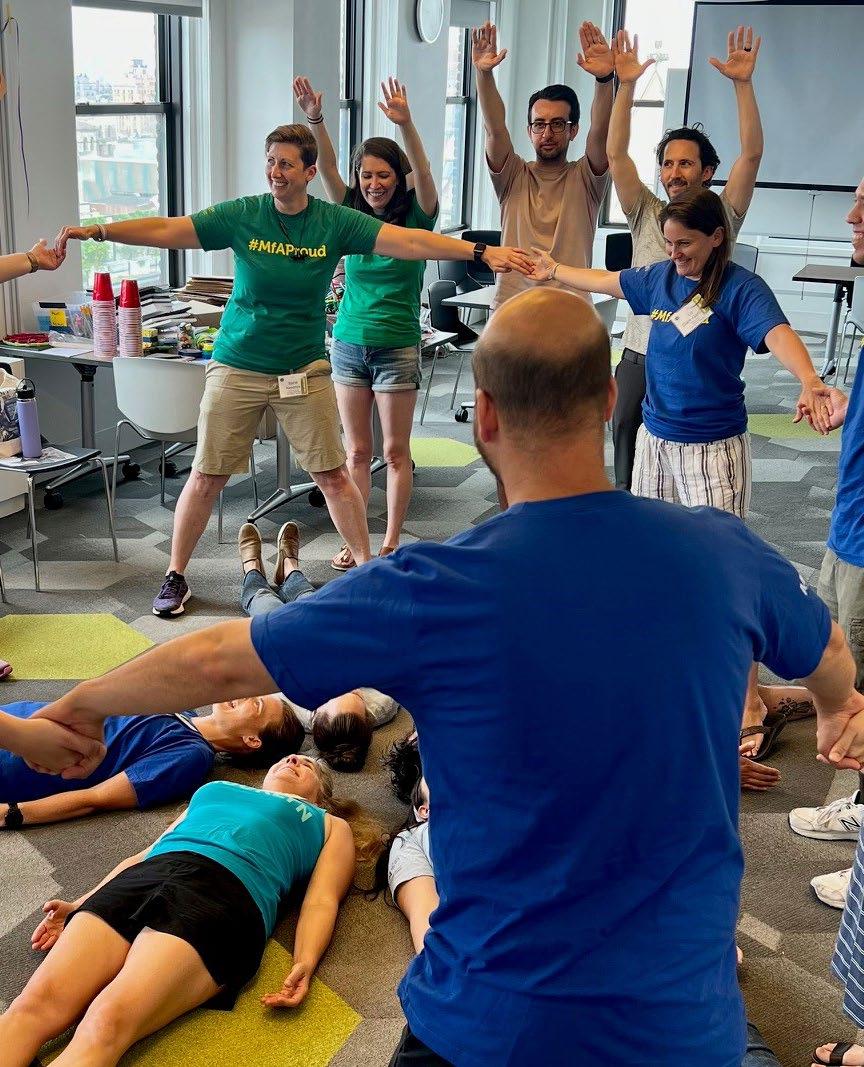
MONDAYS, OCT 2, OCT 16, OCT 30
ONLINE
INQUIRY, PRACTICE, AND LEADERSHIP
How can we influence urban education beyond
MƒA PROFESSIONAL DEVELOPMENT COURSE CATALOG: FALL 2023 37
Melissa Redden and Rebecca Webb are MƒA Master Teachers and science teachers at Scholars’ Academy in Queens.
Mini-Courses
the position; and (3) identifying key stakeholders and reaching the broader community. In the concluding session, we will engage in the final three steps of grassroot advocacy and collaboratively devise next steps. The goal of this mini-course is to transform preliminary discussion and planning into action in our schools and the wider NYC and NYS educational governing bodies. This course is for any mathematics or science teachers interested in developing their leadership skills beyond the classroom and having an impact on the future of education in NYC.
classroom communities, and then conclude our work together by sharing back our discoveries. All are welcome.
Dr. Rhonda Bondie is an Associate Professor in Special education at Hunter College, where she directs the Learning Lab. She enjoyed being a classroom teacher and administrator in public schools for over twenty years. Rhonda’s co-authored book, Differentiated Instruction Made Practical, is used by teachers in more than 30 countries. Teachers can access a variety of free teaching routines and materials at her website: http://alled.org . Teachers are invited to play the online teaching strategy game based on Rhonda’s book, Agility, at https://www.agileteacher.org/ game
become students as they engage in BioScann activities to design a public health campaign about the dangers of chronic stress, role-play various STEM careers, analyze role-specific data, and come to a consensus regarding campaign initiatives. In session two, teachers will review the rest of the curriculum and discuss how to adapt and implement BioScann in their classrooms. This course is best for high school life science, health, or psychology teachers.
Teaching Students With Disabilities in Inclusive Mathematics and Science Classes p
Dr. Kara Imm is a K-12 mathematics educator based in New York City. In her more than 20-year career, she has been a middle and high school mathematics teacher, staff developer, leadership coach, and teacher education faculty. At MƒA, Kara has designed and led over 20 courses on design thinking, mathematical routines, models and modeling, developing a coaching practice, early algebra, and more. Kara has written several articles and books with and for teachers on the teaching and learning of mathematics. A proud graduate of Minneapolis Public Schools, Kara earned degrees from Stanford University and Bank Street College of Education. Her recent Ph.D. in Urban Education from The Graduate Center, The City University of New York, investigated the impact of mathematical modeling on high school girls of color who had experienced the gate-keeping effects of algebra.
Valerie Solon is a curriculum developer and research assistant at the Center for Science Education (CSE) at Tufts University School of Medicine. After obtaining her Master of Arts in Teaching, she taught high school science, mathematics, and reading and writing at the Boston Arts Academy in Boston, Massachusetts. She collaborated with the CSE as a teacher partner and later joined them full time to pursue her interests in developing engaging STEM curricula to foster student interest, confidence, and literacy in STEM.
Suzette Nelson is an MƒA Master Teacher and science teacher at Clara Barton High School in Brooklyn.
Using Mathematical “Magic” To Engage Students
Facilitated By: Michael Riccardo and MƒA Master Teacher Scott Schwartz
Facilitated By:
Rhonda Bondie, Ph.D., and Kara Imm, Ph.D.
TUESDAYS, NOV 21, DEC 5, DEC 12
MƒA
INQUIRY, PRACTICE, AND LEADERSHIP
Join us as we explore high-leverage teaching practices and curricula designed to nurture meaningful and effective learning for culturally, linguistically, and ability diverse students. Together, we will analyze and interrogate barriers to equity in our teaching practices, curriculum, classroom structures, and beliefs about teaching, learning, and students. We will tackle the practical challenges of individualizing a standard curriculum while providing opportunities to make sense of past and current curricula. We will launch discussions about grading, monitoring learning, developing readers and writers in mathematics and science, and providing accommodations and modifications. We will try out strategies to support students’ multiple identities and build inclusive
Tufts BioScann Curriculum: A Public Health Campaign on Stress in High Schools
WEDNESDAYS, NOV 29, DEC 6, DEC 13
MƒA
MATHEMATICS
Facilitated
By: Valerie Solon and MƒA Master Teacher Suzette Nelson
TUESDAYS, OCT 3, OCT 10
+ PLEASE NOTE: THIS IS A TWO SESSION MINI-COURSE.
Chronic stress is one of the most significant issues impacting young people today. Associated with myriad health issues, including depression, cardiovascular disease, and substance use disorders, utilizing stress management and reduction tools is critical to our students’ overall health and wellness. Join Tufts University’s Center for Science Education to explore their newest science curriculum module through BioScann , a web-based learning platform designed to help high school educators teach about bioscience content and careers. In session one, teachers will
One way we can illuminate the beauty of mathematics is through “tricks” and puzzles. In this mini-course, we’ll explore mathematical “magic” to engage students in the beauty of mathematics while they simultaneously learn the concepts needed to strengthen understanding. The first session will focus on easy-to-follow mathematical tricks, engaging all learners. In the following sessions, we will increase the mathematical complexity and collaboratively brainstorm novel tricks and puzzles to improve accessibility. In each session, we’ll interact with the trick or puzzle, consider the mathematical structures at play, and then form generalizations as to why they work. The mathematics topics we will uncover include, but are not limited to, probability, number systems, and algebra. Students who engage in the “why” behind a trick leave with a sense of mathematical amazement.
MƒA PROFESSIONAL DEVELOPMENT COURSE CATALOG: FALL 2023 38
Sharon Collins is an MƒA Master Teacher and mathematics teacher at New Heights Academy Charter School in Manhattan.
Ben Morgenroth is an MƒA Master Teacher and mathematics teacher at Brooklyn Technical High School in Brooklyn.
ONLINE
SCIENCE
Mini-Courses
This mini-course is suitable for any mathematics teacher.
Julie Wood is an MƒA Master Teacher and science teacher at Young Women’s Leadership School of Brooklyn in Brooklyn.
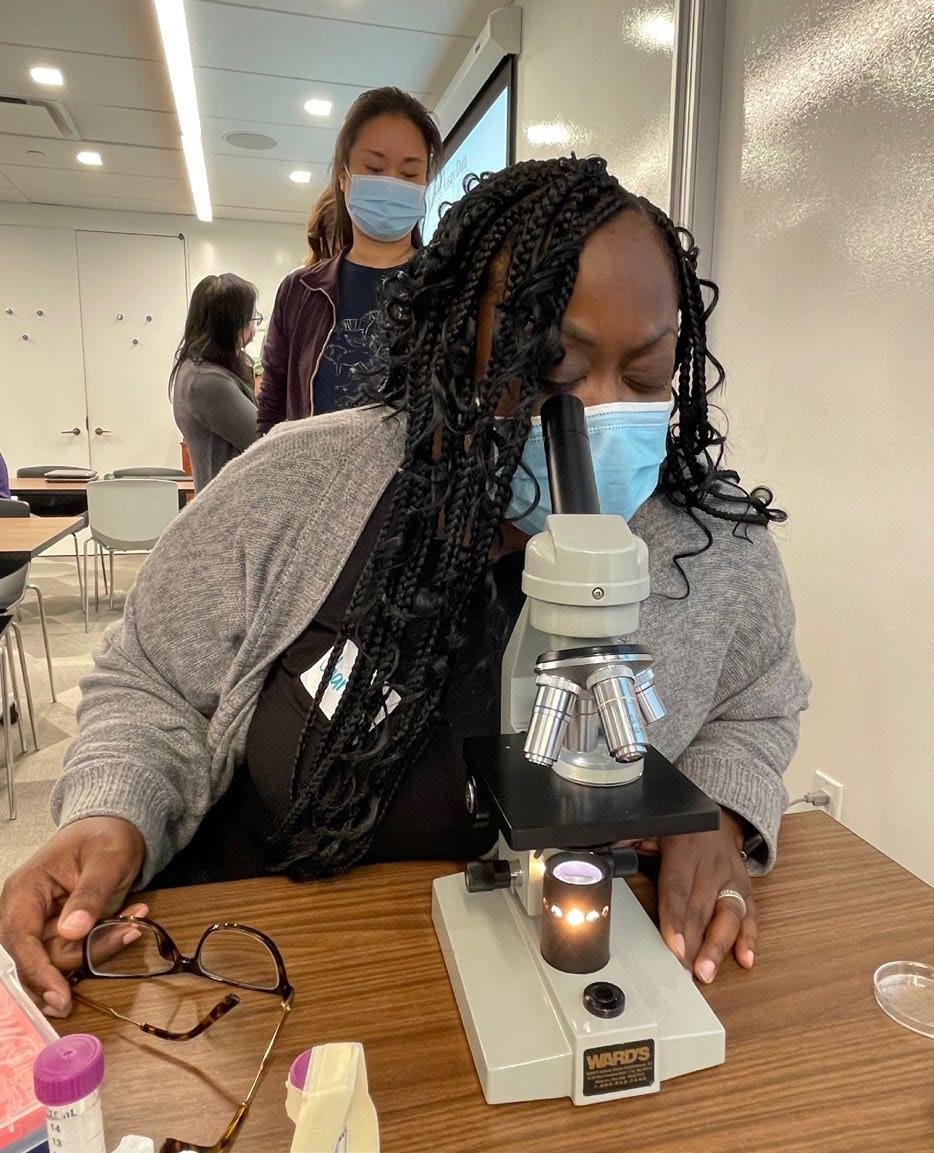
Where Do I Even Start?: Teaching Toward Social Justice in Mathematics Classrooms p Facilitated
By: Tanya Maloney, Ph.D.
MONDAYS, OCT 2, OCT 23, NOV 20
ONLINE
MATHEMATICS
Using Polar Data Stories to Bring the Ends of the Earth Into Your Classroom
Facilitated By: MƒA Master Teacher Julie Wood
WEDNESDAYS, OCT 4, OCT 11, OCT 18
MƒA
SCIENCE
Would you like to share the fascinating and dynamic ecosystems of polar life with your students? It’s easier than you think with Polar Data Stories , which bring authentic data from polar researchers to your NYC classroom! We will start by exploring the Polar Literacy Principles (PLPs), a set of guidelines developed by the scientific community and stakeholders at the poles. We’ll discuss why they were written and how they are used in research and education across marine science, Earth science, and biology. In small groups, teachers will reflect on connections to content and collaborate to identify where the PLPs best fit into their curricula. In session two, we will model a Polar Data Story, examining how climate change affects icefish in Antarctica by looking at both biotic and abiotic factors. Teachers will develop a scientific explanation from the data and share their findings. Finally, in session three, teachers will collaborate on a data story they can incorporate into upcoming course content, exploring the educator resources to plan for implementation. Teachers will give and receive feedback as each group presents their plan. This course is best suited for middle and high school life or Earth science teachers.
Do you want to engage your students in mathematics and social justice topics but need help figuring out where to start? Or perhaps you already teach toward social justice and want to connect with other teachers doing similar work. This mini-course will give you the skills to get started and improve your practice. First, we will consider various teaching tools by examining model lessons developed by a NJ public school mathematics department. We will be students as we try out elements of the lessons and discuss their success. In session two, we will craft a classroom-ready lesson that meaningfully integrates mathematics and social justice components. Between sessions two and three, we will implement all or a portion of our lesson with students. Finally, we’ll reflect and iterate on the lesson and set goals for future work. Join us to gain skills to integrate social justice, develop your justice lens, and build a community of educators dedicated to this work.
Dr. Tanya Maloney is an Associate Professor in the Department of Teaching and Learning and Co-Director of the Transformative Education Network at Montclair State University. Her research considers issues of race, racism, and justice in teacher, leadership, and mathematics education. More specifically, her research focuses on understanding how educators learn to teach and lead toward antiracism and social justice. She began her career as a mathematics teacher in Chicago, IL.
MƒA PROFESSIONAL DEVELOPMENT COURSE CATALOG: FALL 2023 39
Michael Riccardo is a former MƒA Master Teacher who just retired in 2023 after teaching for over 37 years in the NYC Department of Education. He is currently teaching mathematics as an adjunct professor at Queens College.
Scott Schwartz is an MƒA Master Teacher and mathematics teacher at Bayside High School in Queens.
Extended Length Courses
Extended Length Courses are a series of six to eight connected workshops that meet throughout a semester or school year. Experts from academic institutions, local organizations, and within the MƒA Master Teacher community engage MƒA teachers in topics at the cutting edge of their content area or pedagogical practice.
MƒA PROFESSIONAL DEVELOPMENT COURSE CATALOG: FALL 2023 40
Extended Length Courses
Brainstorming Educational Policy p
Facilitated By: MƒA Master Teachers Shangaza Banfield, Billy Green, Seth Guiñals-Kupperman, and Patrick Sunwoo
TUESDAYS, SEP 26, OCT 24, NOV 21, DEC 19, FEB 27, MAR 26, APR 16, MAY 14
MƒA & ONLINE
INQUIRY, PRACTICE, AND LEADERSHIP
+ PLEASE NOTE: IF YOU ARE INTERESTED IN JOINING THIS ELC, PLEASE ADD YOUR NAME TO THE WAITLIST AND COMPLETE THIS SHORT, TWO-QUESTION SURVEY. THIS IS A HYBRID COURSE. SESSIONS 1, 2, 7, AND 8 WILL TAKE PLACE IN-PERSON AT M ƒA. SESSIONS 3, 4, 5, AND 6 WILL TAKE PLACE VIRTUALLY.
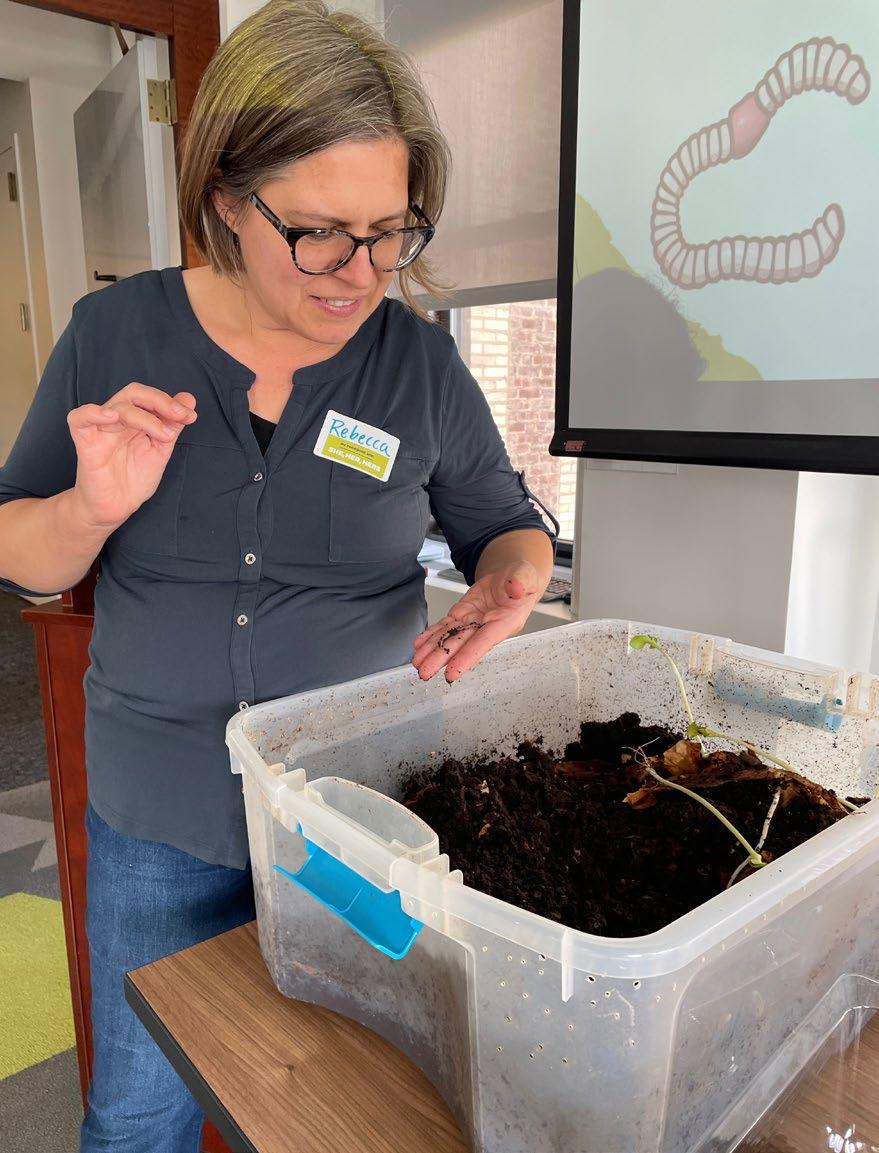
Are you a teacher leader seeking a positive impact on your school community and beyond through policymaking? Join us to examine historic educational policies and brainstorm ways to work within policy to create not only a more just and equitable society, but also safer learning environments for NYC’s diverse student populations. The cornerstone of this group is bringing in, and building off of, the expertise of individual group members to provide resources benefitting and empowering student populations found in the margins (i.e. BIPoC, LGBTQIA+ folks, the ability diverse, the economically disadvantaged, etc.). This ELC aims to: (1) examine institutions of schooling and policies affecting student access to vital educational opportunities, like AP courses, and (2) assist NYS educational policy makers in collecting current data on student experiences and defining strategies for effective educational change. This course is for teachers who have experience in leading social justice and CR-SE initiatives within their schools.
Constructing Islamic Geometric Patterns Facilitated By: MƒA Master Teachers Abigail Kirchman and David
Price
TUESDAYS, OCT 17, NOV 21, DEC 19, JAN 16, FEB 13, MAR 12, APR 16
MƒA
MATHEMATICS
Build your hands-on geometry skills as we explore the world of Islamic geometric patterns, from Morocco’s mosaics to Anatolia’s woodwork and beyond. In this course, we’ll spend significant time constructing these tessellations with a ruler and compass to deepen our knowledge of geometric constructions, symmetry, and rigid motions. We’ll examine patterns in the context of Islamic art, which comprises a wide variety of traditions challenging the oversimplification of “East versus West” or “dark versus enlightened” periods in human history. In each session, we will construct a pattern, learn its historical context, and explore resources for the underlying mathematics. We will leave each session confident in our content knowledge to explore the material with students. With a focus on learning and sharpening skills, this course is best for high school geometry teachers and anyone interested in making and studying beautiful designs. All ranges of experience are welcome!
MƒA PROFESSIONAL DEVELOPMENT COURSE CATALOG: FALL 2023 41
Shangaza Banfield and Patrick Sunwoo are MƒA Master Teachers and science teachers at Stuyvesant High School in Manhattan.
Dr. Billy Green is an MƒA Master Teacher and science teacher at A. Philip Randolph Campus High School in Manhattan.
Seth Guiñals-Kupperman is an MƒA Master Teacher and science teacher at The Brooklyn Latin School in Brooklyn.
Abigail Kirchman is an MƒA Master Teacher and mathematics teacher at Leaders High School in Brooklyn.
David Price is an MƒA Master Teacher and mathematics teacher at Bard High School Early College Queens in Queens.
Single Session Workshops
Single Session Workshops are one-time workshops in which experts from the MƒA Master Teacher community, academic institutions, and local organizations engage MƒA teachers in a topic at the cutting edge of their content area and/or pedagogical practice.
MƒA PROFESSIONAL DEVELOPMENT COURSE CATALOG: FALL 2023 42
Single Session Workshops
93 Reasons to Have Hope: Project Drawdown and the Fight Against Climate Change
Facilitated B y: MƒA Master Teacher Stephen Kos
THURSDAY, JAN 11
MƒA SCIENCE
Learning about climate change can be a lot of gloom and doom, but thanks to Project Drawdown, it doesn’t have to end there. Join us in this workshop as we explore climate change with a focus on solutions! We’ll begin by reviewing Drawdown’s 93 proposals to reduce CO2 emissions. Sorted into categories like electricity, industry, and transportation, solutions are ranked based on CO2 reduction, implementation costs, and overall monetary savings—providing clear, data-driven ways to compare ideas. Next, we’ll engage as students, working in small groups to further explore specific topics and create short presentations to share with the larger group. We’ll combine all presentations into a digital gallery and share feedback on each other’s work. Finally, we’ll switch back to a teacher lens to discuss the resources and planning that go into making this project one of students’ favorites—swapping ideas for how we might implement it in our own classrooms. If you’re a middle or high school teacher looking for a fun way to end a unit about climate change, this session is for you!
Stephen Kos is an MƒA Master Teacher and science teacher at New Explorations into Science, Technology and Math High School in Manhattan.
Adapting Socratic Seminars for Mathematics and Science Classrooms
Facilitated By: MƒA Master Teachers Kelly Hudson and Rebecca Webb
TUESDAY, OCT 10 ONLINE INQUIRY, PRACTICE, AND LEADERSHIP
Are you interested in having rich, student-led discussions in your mathematics or science classrooms?
Then this workshop is for you! The Socratic Seminar is one way for students to engage in authentic discussions, take ownership of sharing their opinions, and build relationships with each other through conversation. During this workshop, teachers will explore various adaptations of the traditional Socratic Seminar used in STEM classrooms. We will also brainstorm and discuss plans for implementing the models for all students.
Kelly Hudson is an MƒA Master Teacher and mathematics teacher at Scholars’ Academy in Queens.
Rebecca Webb is an MƒA Master Teacher and science teacher at Scholars’ Academy in Queens.
Aliens in the Classroom: Using Science Fiction to Engage Students in Inquiry
Facilitated B y: MƒA Master Teachers Tamanna Shahid and Rachel Wax
TUESDAY, JAN 9
MƒA
SCIENCE
Are you interested in bringing some extraterrestrial drama into your classroom? Join us in this workshop to learn how to use science fiction to foster engagement, critical thinking, creativity, and problem-solving skills, all while drawing on students’ prior science knowledge and imagination. We’ll use the seminal science fiction books Project Hail Mary and The Martian by Andy Weir, and short video clips to anchor our work. We will also explore the ethical context and moral dilemmas embedded in each. We’ll begin by reading (provided) excerpts from the books to share examples of literacy and guided inquiry. Then, teachers will generate their own classroom tasks based on additional sections from each book. Examples of student tasks might include a scientific analysis, an ethical reflection, or a creative writing assignment. We’ll conclude by reflecting on the work created and discussing additional examples of scifi media. All middle and high school science teachers are welcome.
Tamanna Shahid and Rachel Wax are MƒA Master Teachers and science teachers at Eleanor Roosevelt High School in Manhattan.
Awakening Mathematical Thinking Through Play
Facilitated By: Anne
WEDNESDAY, NOV 8
MƒA
MATHEMATICS
Paoletti Bayna
What would happen if students had opportunities to play with mathematics? What would that look like, and how might they benefit? In this workshop, teachers will play with a card-shuffling problem, reflect on their experience, and then create a tool to help awaken their students’ abilities to play. Throughout the workshop, we will build awareness around the role of play in mathematics and problem-solving while developing tangible strategies for incorporation into the mathematics classroom. Inspired by the Park City Mathematics Institute, this session is suited for teachers of grades 6-12.
Anne Paoletti Bayna is a high school mathematics teacher, a PAEMST finalist, and the program creator of a Mathematics/STEM Research and Writing Elective for high schoolers. PLAY, THINK, CREATE, and LEAD are the four themes that guide students along the first year of their journey of building mathematical knowledge in their chosen topics. By the end of the first year, students will have selected a research topic to explore, write about, present, and possibly publish.
Biology Demo Derby: Make Every Unit Come Alive!
Facilitated B y: MƒA Master Teachers Olivia Ramirez and Deborah Reich
THURSDAY, OCT 19
MƒA
SCIENCE
+ PLEASE NOTE: TEACHERS ARE EXPECTED TO SHARE A DEMO OR EXPERIMENT DURING THE WORKSHOP.
How can we help students visualize the volume of freshwater on Earth, the location of the color receptors in the human eye, or how enzymes catalyze reactions? Captivating demos can answer these questions and more by keeping lessons relevant, increasing engagement, and helping make abstract concepts accessible. Join us in this workshop as we share our most successful biology demos. During a roundrobin, each teacher will present a short demo or activity, along with a written description, materials, and
MƒA PROFESSIONAL DEVELOPMENT COURSE CATALOG: FALL 2023 43
Single Session Workshops
procedure so other teachers can replicate the demo in their classrooms. The goal is for everyone to leave with a toolbox of classroom-ready demonstrations. All life science, Living Environment, AP Biology, and Environmental Science teachers are welcome.
Bringing CRISPR Into the Classroom
Facilitated By: MƒA Master Teachers Stephanie Kadison, Ph.D., and Suneeta Paroly, Ph.D.
WEDNESDAY, NOV 1
MƒA
SCIENCE
As we enter a new era of genome editing with the use of CRISPR (Clustered Regularly Interspaced Short Palindromic Repeats), there is tremendous potential for medical innovation, agricultural development, and biofuel engineering. Developed by Dr. Jennifer Doudna and Dr. Emmanuelle Charpentier, this gene editing tool allows scientists to selectively add or remove DNA segments with incredible precision. Join us to learn the basics of the CRISPR/Cas9 system and how to share this exciting breakthrough with your students. We’ll begin with an introduction to this technology and how it works. Then, we’ll engage in a hands-on and interactive activity that you can bring back to your classroom. Finally, we’ll discuss the ethical questions and implications associated with CRISPR. This course is best suited for Living Environment and AP Biology teachers.
Dr. Stephanie Kadison and Dr. Suneeta Paroly are MƒA Master Teachers and science teachers at Bard High School Early College Queens in Queens.
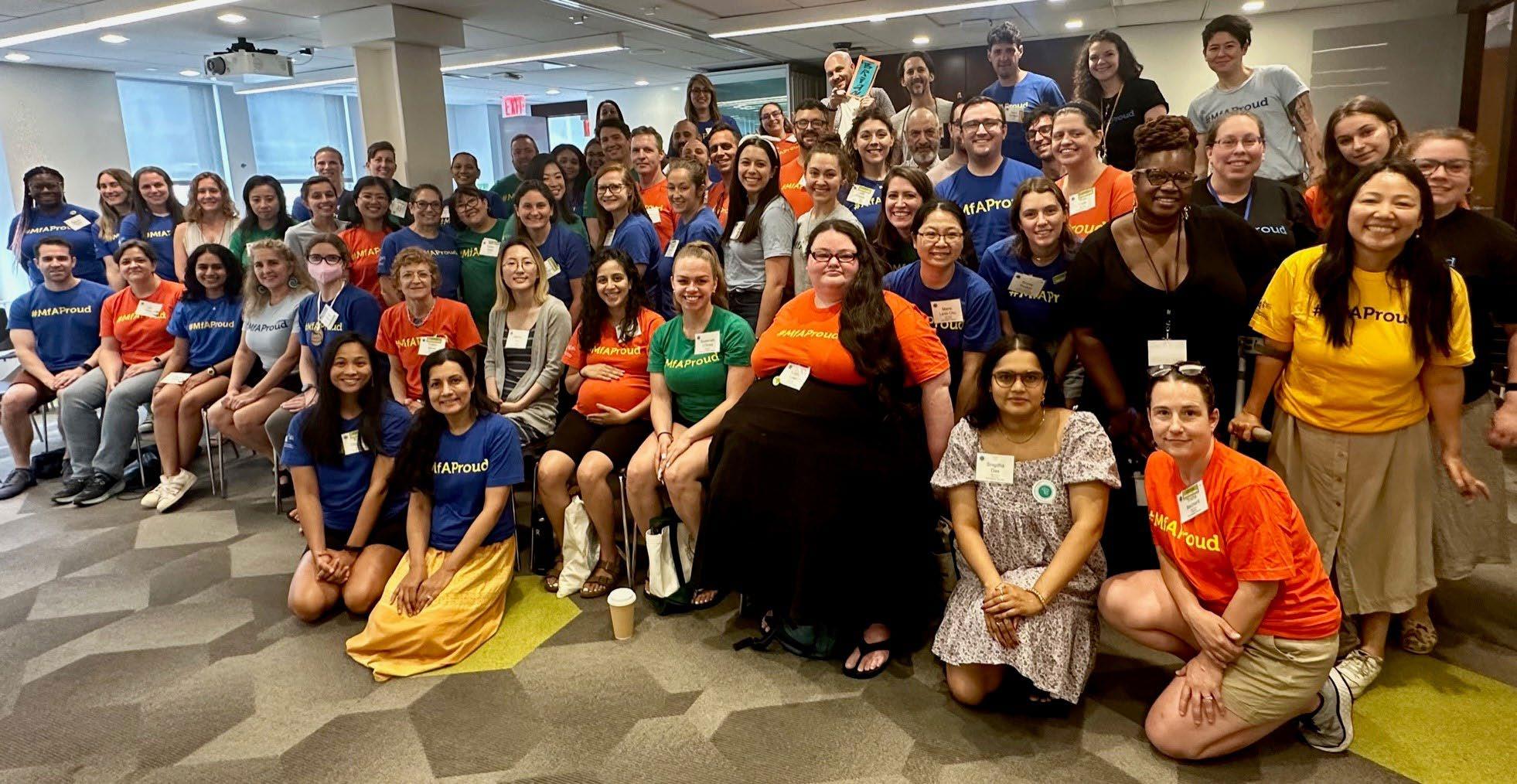
Building Bridges Across STEM: Engineering Tomorrow for All
Facilitated B y: Joanna Caudle and MƒA Master Teacher TJ Smolka
TUESDAY, OCT 3
M ƒA
SCIENCE
Are you looking for ways to bring free, hands-on engineering experiences to your students? Would you like your students to learn about the importance of bridges, Newton’s laws, and engineering design? Join us to explore the “Building Bridges” lab developed by Engineering Tomorrow (ET), a nonprofit organization founded by engineers to inspire young people to pursue engineering careers. The bridges lab focuses on using engineering design to connect communities across the globe and investigate the impact of different materials and plans. All teachers will leave with a sample kit and a goody bag. This course is best suited for physics, environmental science, and geometry teachers, but all high school teachers are welcome as the lab will explore
Newton’s laws, biodiversity, polyhedra, structural analysis, and more!
Joanna Caudle spent the first half of her career as an engineer with the Bechtel Corporation where she designed and oversaw the construction and startup of power projects in the U.S. and abroad. She holds a B.S. in Physics from the University of the South in Sewanee, Tennessee and a BME from Georgia Institute of Technology in Atlanta, Georgia. After a rewarding engineering career, Joanna transitioned to teaching in 2002 and has taught physics and exploratory engineering at the Stone Ridge School of the Sacred Heart in Rockville, Maryland, where she also serves as the chair of the science department and the STEM Program Coordinator.
TJ Smolka is an MƒA Master Teacher and science teacher at Ralph R. McKee Career and Technical Education High School in Staten Island.
Coding Games With p5.play
Facilitated By: MƒA Master Teachers Kate Maschmeyer and Marisa Shuman
THURSDAY, OCT 26
MƒA
COMPUTER SCIENCE AND TECHNOLOGY
Do you enjoy coding or teaching others how to code
MƒA PROFESSIONAL DEVELOPMENT COURSE CATALOG: FALL 2023 44
Olivia Ramirez is an MƒA Master Teacher and science teacher at Marble Hill High School for International Studies in the Bronx.
Deborah Reich is an MƒA Master Teacher and science teacher at World View High School in the Bronx.
Single Session Workshops
in p5.js? Join us to learn how to use the communitycontributed p5.play library to make video games! In this workshop, we will introduce the p5.play library and demonstrate its use for individual or student projects by guiding you through a simple game design and its provided documentation. The p5.play library is an excellent introduction to object-oriented programming and fosters students’ independent learning through code documentation. This workshop welcomes any teacher, from coding beginners to those already teaching p5.js and wanting to spice up their curriculum.
Kate Maschmeyer is an MƒA Master Teacher and mathematics teacher at Community Roots Charter School in Brooklyn.
Marisa Shuman is an MƒA Master Teacher and computer science teacher at Young Women’s Leadership School of the Bronx in the Bronx.
Co-Teaching: Crafting a Successful and Effective Partnership p
Facilitated By: MƒA Master Teachers Constance Giannakakis and Yanique Sears
WEDNESDAY, OCT 18
MƒA
INQUIRY, PRACTICE, AND LEADERSHIP
Are you in a co-teaching partnership and seeking new ways to be more effective as a team? This single session workshop will explore how general education and special education teachers can develop inclusive and effective classroom environments to ensure student success. As teachers who have co-taught together for eight years, we have tried numerous strategies and want to share our successes and challenges. In this workshop, we will discuss the purpose and function of an integrated co-taught (ICT) setting, strategies to work most effectively in this partnership (how DO you work with two adults in the room?), and the many ways that ICT can be structured for your students. This session is for middle and high school teachers currently in an ICT partnership.
Constance Giannakakis is an MƒA Master Teacher and science teacher at High School for Construction Trades, Engineering and Architecture in Queens.
Yanique Sears is an MƒA Master Teacher and science teacher at Stuyvesant High School in Manhattan.
Crushin’ It! Leveraging Anchoring Phenomena in the Chemistry Classroom
Facilitated B y: MƒA Master Teachers Snigdha Das and Brittany Klimowicz
THURSDAY, NOV 9
MƒA
Do you remember the first time you observed the famous can crush experiment and learned the air around us exerts pressure? We all have fond memories of demo days when our science teacher was ready to show us something cool! How can we utilize those experiences and demos to do more than excite and engage our students? Join us in the workshop as we explore the Ambitious Science Teaching website and discuss how to use anchoring phenomena, accompanying demos, and modeling to ground a unit and foster deeper conceptual understanding. We will focus on the gas laws unit as we put on our student hats and examine the role of anchoring phenomenon from a student perspective. Then we will discuss how the website organizes and presents phenomenon and modeling techniques. All teachers will leave with tools and strategies for how to strengthen the use of both anchoring phenomenon and modeling. This course is best for high school chemistry teachers who want to “crush it” in their classrooms.
Cryptology: Encryption Unplugged
Facilitated By: MƒA Master Teacher Wayne Tobias
THURSDAY, JAN 11
MƒA
COMPUTER SCIENCE AND TECHNOLOGY
As children, many of us were fascinated with cracking codes, solving puzzles, and developing our own secret languages. In this workshop, we will draw upon these passions as we use algorithms to encode messages. Beyond just fun, these messages are how we protect information, secure communication, and keep data private. We will begin by examining several techniques used to achieve this goal. Then, we will explore three different ciphers in an unplugged activity to learn about a code breaker used during WWII to solve the German Enigma code. The Enigma code had a combined 159 quintillion possible ways to jumble a message, and solving this problem helped bring the war to an end. By the end of this course, you will have several artifacts to help explain and describe how encryption works and examples coded in Python and Snap languages that can be deconstructed and used in your classroom. No coding experience is necessary.
Wayne Tobias is an MƒA Master Teacher and computer science teacher at Williamsburg Preparatory School in Brooklyn.
A Day in the Life of a Multilingual Student p Facilitated B y: MƒA Master Teacher Laura Antunez Rodriguez
THURSDAY, OCT 12
MƒA
INQUIRY, PRACTICE, AND LEADERSHIP
Experience what it is like to be a multilingual learner (MLL, formerly known as ELL). During this session, teachers will participate in a science lesson entirely taught in Spanish. You’ll witness a variety of scaffolds often used in classrooms with MLLs. After the lesson, we will discuss the levels of success each scaffold provided. Lastly, we will examine NYS’s Comprehensive ELL Education Plan (CR Part 154) and Blueprint for English Language Learner Success and discuss the implications
MƒA PROFESSIONAL DEVELOPMENT COURSE CATALOG: FALL 2023 45
SCIENCE
Snigdha Das is an MƒA Master Teacher and science teacher at Queens High School for Language Studies in Queens.
Brittany Klimowicz is an MƒA Master Teacher and science teacher at NYC iSchool in Manhattan.
Single Session Workshops
for our classroom. This course is for any teacher of MLLs who wants to explore strategies for equitable access and support. Knowing Spanish is not required.
Laura Antunez Rodriguez is an MƒA Master Teacher and science teacher at Academy for New Americans in Queens.
Decoding Science: Unraveling the Secrets of Scientific Papers
Facilitated B y: MƒA Master Teachers Jesse John, Ph.D., and Andy Nissinboim
WEDNESDAY, SEP 27
MƒA
SCIENCE
Do you want to transform how you and your students read, comprehend, and appreciate scientific articles? Join us for an immersive workshop with practical strategies to enhance scientific literacy with our students. We will start with a discussion on research methods that demystify and humanize science literature while fostering students’ agency and identities as scientists. Then, we’ll dive into some scaffold-building activities for students to think critically as they read science text. Finally, we will provide several hands-on activities including concept mapping introductions, cartooning methodologies, creating titles for figures, and using analysis templates to create new experiments. By the end of the workshop, we will be able to guide our students to confidently identify and comprehend the key components of scientific articles with newfound ease. All middle and high school science teachers are welcome.
Do You Want to Excel at Excel?
Facilitated B y: MƒA Master Teachers Peter D’Amico and Rachael Ferreira
TUESDAY, JAN 9
ONLINE
COMPUTER SCIENCE AND TECHNOLOGY
Excel is a highly rated and widely used platform for calculating and collecting data in structured and sophisticated ways. For teachers, this usually means dealing with grades. Join us in this workshop to learn how to use Excel formulas and tools to keep a more organized and effective grade book, calculate marking period and semester-long averages, color code grade distributions in a class, and more! While the focus will be on grade books, you’ll also learn to use these tools across data collection and analysis projects. This introductory workshop applies to teachers of all grade levels and subject areas.
Emmy Rodkin is an MƒA Master Teacher and mathematics teacher at M.S. 243 Center School in Manhattan.
Electoral College Remix
Facilitated By: MƒA Master Teacher Courtney Ferrell
WEDNESDAY, OCT 25
MƒA
MATHEMATICS
Dream House Projects: Let’s Get Geometric!
Facilitated By: MƒA Master Teacher Emmy Rodkin
TUESDAY, NOV 28
MƒA
MATHEMATICS
Have you wanted to try Project-Based Learning (PBL) in your classroom but need help figuring out where to start? Explore the beauty of student creativity and freedom through mathematics projects, specifically building dream houses. In this workshop, we will define PBL and understand its importance in the classroom using the latest research. Then, we will look at student work and collaboratively construct a grading system for a future project. Finally, we will put our skills to the test by creating our own dream houses! While this workshop is most applicable to elementary and middle school mathematics teachers who teach a unit on geometry, all are welcome.
The Electoral College is enormously controversial, with many opinions on changing or eliminating it. However, the last time the United States had a bill on the floor to eliminate the Electoral College in 1969, a Senate filibuster halted it. In this workshop, we will discuss the history of the Electoral College and engage in exercises demonstrating four alternate proposals. First, we will practice on small data sets. Then, using Google Sheets, we will analyze the proposals more thoroughly and explore how election outcomes would change using data from 2020, 2016, 2000, and 1876. Classroom activities and student work from a Statistics and Civics course and previous related MƒA workshops will be shared and discussed. This course is for teachers who want to integrate Electoral College mathematics into their curriculum or further their understanding.
Equity in Inquiry: Affective Factors in InquiryBased Mathematics Classrooms p Facilitated B y: Geillan Aly
WEDNESDAY, NOV 15
MƒA
MATHEMATICS
Tasks in an inquiry-style mathematics classroom are designed for inclusivity. However, status, anxiety, and implicit bias may limit some students’ ability or willingness to participate actively. This workshop will explore some “equity pitfalls” in common inquirybased activities and how to minimize them, particularly regarding inequitable student participation. First, teachers will employ exercises to recognize their
MƒA PROFESSIONAL DEVELOPMENT COURSE CATALOG: FALL 2023 46
Dr. Jesse John and Andy Nissinboim are MƒA Master Teachers and science teachers at High School for Innovation in Advertising and Media in Brooklyn.
Peter D’Amico is an MƒA Master Teacher and science teacher at Eleanor Roosevelt High School in Manhattan.
Rachael Ferreira is an MƒA Master Teacher and mathematics teacher at Eleanor Roosevelt High School in Manhattan.
Courtney Ferrell is an MƒA Master Teacher and mathematics teacher at New Design High School in Manhattan.
Single Session Workshops
biases in the classroom. Then, they will analyze how the structure of a task can support or undermine equity among students. Finally, teachers will examine a framework for designing equitable activities. This workshop is open to all mathematics teachers, particularly those who use student-centered activities.
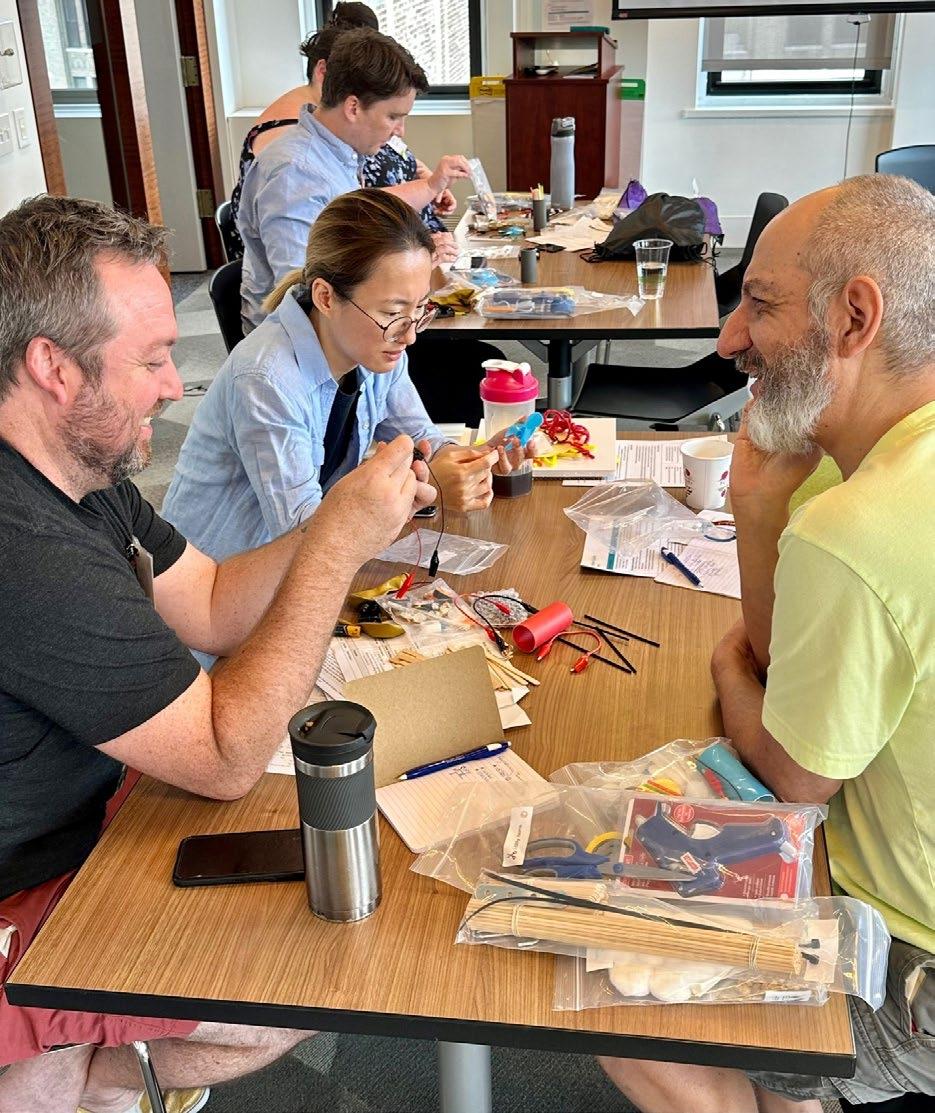
Dr. Geillan Aly is the founder and CEO of Compassionate Math, a mathematics education services and consulting company. A former award-winning Assistant Professor who taught at the university level for over ten years, Dr. Aly received her Ph.D. in Teaching and Teacher Education and a Master’s in Mathematics from the University of Arizona. Her research focuses on the emotional side of learning mathematics. A dedication to equity and social justice underlies Dr. Aly’s work. She enjoys traveling, seeing live music, and is an avid chef. Geillan is also a wife and mother of a beautiful boy.
Gender-Inclusive Data Collection in Statistics and Science Classrooms p
Facilitated B y: MƒA Master Teachers Susie Kang and Akil Wilson
WEDNESDAY, OCT 11
MƒA
INQUIRY, PRACTICE, AND LEADERSHIP
How might we establish and highlight the importance of accurate and equitable gender-inclusive representation and data collection practices in surveys and experiments? Join us to better understand the importance of addressing gender inclusivity in classroom data collection and strategies for approaching this work with students. We will examine activities illuminating gender-related pitfalls in statistical and experimental data collection, including misgendering of participants (intentional or not) and the exclusion of non-binary participants. We will also review excerpts from modern research to educate ourselves, model potential solutions with students, and generate new strategies for addressing such an unresolved problem in STEM. This workshop is best suited for teachers who incorporate data collection into their classes.
Susie Kang is an MƒA Master Teacher and science teacher at Essex Street Academy in Manhattan.
Akil Wilson is an MƒA Master Teacher and mathematics teacher at School of the Future
Geometric Investigations: From Patty Paper to MIRA
Facilitated By: MƒA Master Teachers Nate
Bonheimer and Oyinka Bruce
TUESDAY, OCT 24
M ƒA MATHEMATICS
How can we interactively explore geometry postulates and theorems? Patty Paper Geometry by Michael Serra provides a hands-on exploration of geometric concepts, including properties of intersecting lines to quadrilaterals, the triangle congruence theorems, circle properties, and more. This workshop will explore key investigations from the book and ways to incorporate them into your classroom. Teachers will also see a MIRA (colored transparent plastic used to reflect geometric objects) in action to supplement and enrich these explorations. We will explore investigations that increase accessibility for challenging topics, explore interactive approaches to these concepts, and design activities for our unique classrooms. This course is best suited for high school geometry teachers, particularly those teaching the Regents curriculum.
How to Create a Brain: Neurodevelopment, Stem Cells, and Brain Organoids
Facilitated B y: Thiago Arzua, Ph.D.
WEDNESDAY, OCT 11
It is difficult to say precisely how many cells the human brain has; scientists estimate between 80-100 million cells—all originating from a single stem cell. During the nine months of gestation, every second, over three
thousand cells are created, migrate to the right location, and form connections to neighboring cells. Join us to learn more about the amazing and intricate process of human brain formation. We’ll begin by examining the most recent research in neurodevelopment. Then, we’ll turn to stem cells and explore how they have been used in the past decade to study brain development, with an emphasis on human brain organoids, 3D models that can mimic the structure and function of a human fetal brain. We will conclude by discussing the scientific, societal, and philosophical questions that arise from studying these complex models made from human tissue. This course is best suited to middle and high school life science teachers.
Dr. Thiago Arzua is a postdoctoral scientist at Columbia University’s Zuckerman Institute. He studies the neurodevelopmental aspects of how traumatic experiences get passed down through multiple generations. He completed his Ph.D. in neuroscience at the Medical College of Wisconsin, where he used human stem-cell derived brain organoids as models for Fetal Alcohol Spectrum Disorders. Outside of the lab, Dr. Arzua fights for diversity and equity within science as a
MƒA PROFESSIONAL DEVELOPMENT COURSE CATALOG: FALL 2023 47
High School in Manhattan..
Nate Bonheimer and Oyinka Bruce are MƒA Master Teachers and mathematics teachers at Brooklyn Technical High School in Brooklyn.
SCIENCE
MƒA
Single Session Workshops
co-founder of Black In Neuro, as well as a policy ambassador for the Society for Neuroscience. In his rare free time, he trains for triathlons, recently completing the 2021 Ironman Wisconsin.
Illustrate to Stimulate: Understanding Earth Science Through Drawings
Facilitated B y: MƒA Master Teachers Marna Lehnert Chaky and Angela Oldenburg
THURSDAY, NOV 2
MƒA SCIENCE
Whether it is Darwin’s famous finches or Copernicus’ revolutionary sketches of our heliocentric solar system, drawing has been deep-rooted throughout the history and evolution of science and discovery. Regardless of artistic level, science illustration can be used as a tool to strengthen student observation and metacognitive skills, foster an understanding of complex and abstract ideas, and provide an outlet for creativity, stress relief, and growth. We will begin by defining what makes a “good” scientific illustration and looking at literature supporting the benefits of using science illustrations. Then, we will explore and practice activities and techniques that can be seamlessly incorporated into any Earth Science curriculum. Teachers will have time to discuss, collaborate, and reflect on ways they can develop and strengthen the use of science illustrations in the classroom. This course is best suited for Earth Science teachers, but all teachers are welcome.
Marna Lehnert Chaky is an MƒA Master Teacher and science teacher at High School of Hospitality Management in Manhattan.
Angela Oldenburg is an MƒA Master Teacher and science teacher at Baruch College Campus High School in Manhattan.
Incorporating Narrative Writing Into the Chemistry Classroom
Facilitated B y: MƒA Master Teacher Kevin Wright
MONDAY, OCT 23 ONLINE
Would you like to make your chemistry lab write-ups more engaging, reflective, and meaningful? Do you want your students to reflect on the claims of a text and collect data in order to foster a connection with the scientific concepts? Then join this workshop to learn how to transform your students’ lab write-ups from “cookie-cutter” to creative! We’ll begin by discussing what makes a compelling hook and how to adapt labs to include them. We’ll look at sample labs, including mixture separation and cabbage juice pH. Then, we’ll break into small groups to develop additional narratives for chemistry labs we already use and conclude by sharing our work. All chemistry and physical science teachers are welcome.
Grace Chang is an MƒA Master Teacher and mathematics teacher at Neighborhood School in Manhattan.
Kevin Peters is an MƒA Master Teacher and mathematics teacher at 47 The American Sign Language and English Secondary School in Manhattan.
Ladders, Multiplication, and Division: Building Trigonometry From K-12
Facilitated By: MƒA Master Teachers Evelyn Israel and Kaitlin Nova
WEDNESDAY, NOV 1
MƒA
MATHEMATICS
Do you want to use hands-on connections between elementary and high school mathematics to foster a more robust conceptual understanding of trigonometry?
Intersecting Planes: An Origami
Puzzle
Facilitated B y: MƒA Master Teachers Grace Chang and Kevin Peters
THURSDAY, NOV 30
MƒA
MATHEMATICS
Have you ever wanted to bring origami into your classroom but struggled to do so meaningfully? Are you up for the challenge of making and solving a handson geometric puzzle? In this workshop, we will fold an origami representation of four intersecting planes, where the planes take the shape of equilateral triangles. While folding, we will discuss our experiences and techniques for teaching modular origami, an origami model constructed of multiple pieces. We will also discuss how geometry and trigonometry guide the folding process and the symmetries exhibited by the final model. Finally, we will explore origami folding for folding other geometric models. All levels of folders are
In this workshop, we will explore a hands-on task using multiplication and division (specifically, proportions, ratios, and unit rates) to derive the fundamentals of trigonometry. Then we will connect to the mathematics we teach and how to adapt and create visual investigations for our classrooms. This workshop is for any teacher who wants to experience how trigonometry standards connect grade levels, get ideas for graphic or geometric representations of concepts, or deepen their understanding of trigonometry. The only prerequisites are a foundation in multiplication and division and a willingness to explore.
Evelyn Israel is an MƒA Master Teacher and mathematics teacher at Humanities Preparatory Academy in Manhattan.
Kaitlin Nova is an MƒA Master Teacher and mathematics teacher at Forsyth Satellite Academy in Manhattan.
Let’s Get Motivated About Motivation
Facilitated By: MƒA Master Teachers Sjene Kendrick and Matt Pastore
WEDNESDAY, NOV 8
ONLINE
INQUIRY, PRACTICE, AND LEADERSHIP
Do you ever find yourself wondering about student motivation? What does the research say about using
MƒA PROFESSIONAL DEVELOPMENT COURSE CATALOG: FALL 2023 48
SCIENCE
Kevin Wright is an MƒA Master Teacher and science teacher at The Brooklyn School for Social Justice in Brooklyn.
welcome!
Single Session Workshops
rewards or competition to increase motivation? What role does intrinsic motivation play? Join us to examine and discuss articles, podcasts, and videos on the common misconceptions and latest research about motivation and work collaboratively to connect this research to our practice. Our goal is to leave this session with ideas about better motivating all learners in our classrooms. All are welcome.
Leveraging ChatGPT to Create Educational Scaffolds
Facilitated
By: Jeanne Garbarino, Ph.D.
TUESDAY, DEC 19
MƒA
COMPUTER SCIENCE AND TECHNOLOGY
Let’s Tell a Story: Using Excel to Write Student Narratives
Facilitated B y: MƒA Master Teacher Deborah Katz
TUESDAY, DEC 5
MƒA
INQUIRY, PRACTICE, AND LEADERSHIP
Are you interested in giving individualized feedback at the touch of a button? Join us as we learn how to use an Excel file full of raw data to write personalized emails to every student in your class. In this workshop, teachers will learn how to use Excel formulas to write student narratives. We will explore how to use existing grading platforms to create easily accessible Excel documents and identify the most frequently used coding tricks, tips, and techniques. Once mastered, these skills can be used for both semester narratives or timely assignment feedback. This workshop is for any PC-using, STEM high school teacher, regardless of prior Excel experience.
Deborah Katz is an MƒA Master Teacher and science teacher at Bronx Collaborative High School in the Bronx.
Educational rubrics are vital in providing clear and constructive feedback and guiding students toward achieving learning objectives. In this workshop, we will explore the realm of natural language processing and artificial intelligence (AI) to understand how ChatGPT (generative pre-trained transformer) can be a powerful tool to create comprehensive and adaptable educational rubrics and other types of scaffolding to enhance student learning. Specifically, we will spend time getting acquainted with ChatGPT and its capabilities in comprehending and generating precise assessment criteria, enabling personalized feedback and adaptive assessments for individual student needs. Additionally, we will discuss the ethical implications of using AI for educational rubrics and strategies to ensure fairness, transparency, and inclusivity.
Dr. Jeanne Garbarino is the Director of RockEDU Science Outreach at The Rockefeller University, where she works to promote and support science outreach within the scientific community, open channels for community members to develop an appreciation for science as a human endeavor, and to provide equitable access to scientific resources and opportunities that genuinely reflect the process of science. Jeanne is formally trained as a lipid biochemist, earning her Ph.D. in metabolic biology from Columbia University, then conducting postdoctoral studies on cholesterol transport at Rockefeller.
Math Game Jam
Facilitated B y: MƒA Master Teachers Phylicia Hoyt and Kate Litman
TUESDAY, SEP 26
MƒA
MATHEMATICS
Do you need a break from the norm? Do you want to play original mathematics games made by your peers? Do you believe kids learn best through play? Look no further! In this workshop, we will play a series of mathematics games designed by teachers who are
experts in game-based learning. This session will feature original games such as Zero Out (negative numbers), Absolute Blast (absolute value), Complementary Combos (angles combinations), and Roots (factoring quadratics). We will learn about game-based learning principles, embedding assessment into gameplay, and incorporating “roll out” strategies. We will end with a brainstorming session for adapting game mechanics and modifications for different content levels. Teachers will receive “print and play” and digital copies of all the games played during the session. This course is best suited for middle and high school mathematics teachers with creative minds and playful spirits.
Kate Litman and Phylicia Hoyt are MƒA Master Teachers and mathematics teachers at Quest to Learn in Manhattan.
Not Another Acronym! NGSS Crash Course
Facilitated By: MƒA Master Teachers Kerine McIntosh and Caroline Phillips
THURSDAY, OCT 19
MƒA
SCIENCE
DCI, SEP, CCC—Oh my! Are you new to the Next Generation Science Standards (NGSS)? Are you seeking high-quality examples of NGSS instruction or looking to gain a more robust understanding of the NGSS dimensions? Join us for a crash course on all things NGSS! We will begin by unpacking the standards. Then, we’ll explore how the standards have shifted and critically review some NGSS-aligned assessment questions, comparing them with more traditional regents questions. We will conclude with a discussion on how to integrate the standards using phenomenabased learning and the 5E sequence. To ground our work, we’ll review examples focused on the Flint water crisis as well as from OpenSciEd. By the end of the workshop, teachers will be able to clearly articulate the three dimensions of the NGSS in the context of one relevant performance expectation and understand the shift in NGSS-aligned assessments. All K-12 science teachers are welcome!
MƒA PROFESSIONAL DEVELOPMENT COURSE CATALOG: FALL 2023 49
Sjene Kendrick is an MƒA Master Teacher and mathematics teacher at The Emily Warren Roebling School in Brooklyn.
Matt Pastore is an MƒA Master Teacher and mathematics teacher at Fort Hamilton High School in Brooklyn.
Single Session Workshops
Kerine McIntosh is an MƒA Master Teacher and science teacher at Frederick Douglass Academy V. Middle School in the Bronx.
Caroline Phillips is an MƒA Master Teacher and science teacher at New Explorations into Science, Technology and Math High School in Manhattan.
Options Trading and Profit-Loss Graphs
Facilitated B y: MƒA Master Teacher Jay Lang
WEDNESDAY, DEC 20
MƒA
MATHEMATICS
How can a shrewd investor profit even in a crashing economy? Join us to learn how people take advantage of stock volatility to do just that. We will explore some strategies for trading “options” on the stock market and generate simple profit-loss graphs to help visualize the most profitable combination of options within a given forecast. This workshop is for all teachers. Prerequisite stock market knowledge is unnecessary, and this workshop will not offer specific financial advice.
Jay Lang is an MƒA Master Teacher and computer science teacher at Curtis High School in Staten Island.
Paper Rockets: Experimental Design for the K-8 Classroom
Facilitated B y: MƒA Master Teacher Juan Valencia
THURSDAY, NOV 30
MƒA
SCIENCE
Most of us have made a paper airplane, but have you ever made a paper rocket? Join us to learn how to bring the fun of flight and experimental design to your classroom. We’ll begin with an overview of a sample rocket investigation and discuss some of the variables we could modify and test. In teams, we’ll construct our rockets using index cards, plastic straws, and modeling clay. Then, we’ll have a fly-off as we launch our rockets, collect data, and iterate on our original
designs. We’ll conclude by reflecting on our work and discussing modifications and next steps for classroom implementation. This workshop is best suited for elementary and middle school general science teachers.
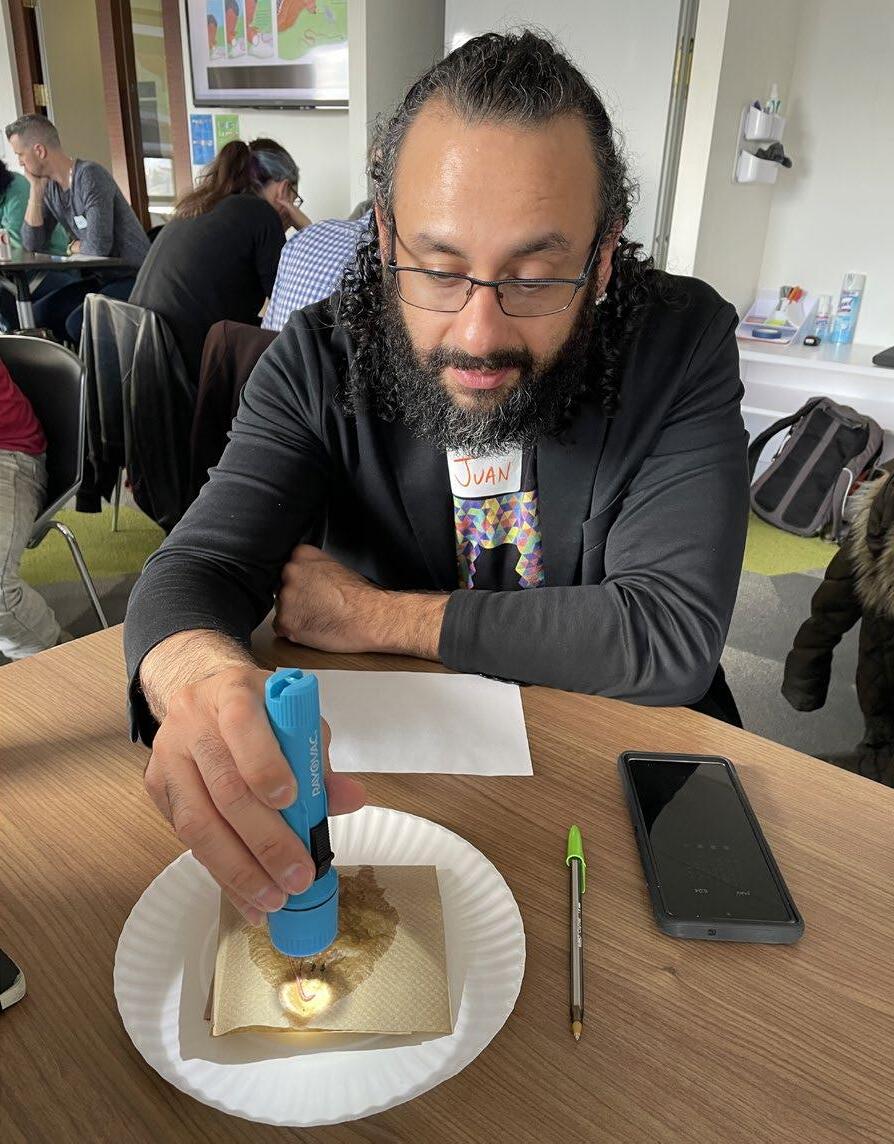
Juan Valencia is an MƒA Master Teacher and science teacher at I.S. 145 Joseph Pulitzer in Queens.
Physics Inquiry With High-Speed Camera Videos
Facilitated B y: MƒA Master Teacher Michael Barr
WEDNESDAY, OCT 25
MƒA
SCIENCE
Are there physics demos you’d love to share with your students but can’t do in your classroom? Join us in this workshop as we harness the power of YouTube and Hi-Speed and phantom camera videos to bring physics demos to you. We’ll begin by visiting YouTubers Veritasium, Smarter Every Day, Steve Mould, The Slow Mo Guys , and “Mythbusters.” Then, we will discuss how to use their videos to create compelling inquiry-based lessons our students will love. Finally, we’ll create a database of videos and lessons to share with the MƒA physics community. All physics and physical science teachers are welcome.
Playing With STEM: Free Engineering Labs for the Biology Classroom
Facilitated By: Milton Davis and MƒA Master Teacher
Marissa Maggio
WEDNESDAY, SEP 20
MƒA
SCIENCE
Do you want to bring more authentic engineering experiences into your biology classroom? Engineering Tomorrow (ET), a nonprofit founded by engineers to inspire young people to pursue careers in engineering, offers free hands-on labs for any science classroom, including biology! In this workshop, teachers will wear their student hats to work through one of these
engineering labs: the diffusion-focused Drug Delivery kit. We’ll also review the ET program, their NGSS-aligned teacher guides and interactive student workbooks, and how to bring an engineer to your classroom, all for free! Teachers will leave with a sample kit and goody bag. This course is best suited for high school biology teachers.
Milton Davis began his engineering career at Goddard Space Flight Center as a Pathways Student in 2000 working with the Navigation and Mission Design and Components and Hardware Systems branches. Milton serves as the National Society of Black Engineers (NSBE) Greenbelt Space Chapter (GSC) President. He holds a B.S. in Aerospace Engineering from Purdue University, a Master’s in Project Management from Johns Hopkins University, and is completing a Master’s in Robotics from Johns Hopkins University.
MƒA PROFESSIONAL DEVELOPMENT COURSE CATALOG: FALL 2023 50
Michael Barr is an MƒA Master Teacher and science teacher at Beacon High School in Manhattan.
Marissa Maggio is an MƒA Master Teacher and science teacher at Stuyvesant High School in Manhattan.
Single Session Workshops
Professional Graphics and Video Editing for Beginners
Facilitated B y: MƒA Master Teacher Meredith Klein
THURSDAY, NOV 30
MƒA
COMPUTER SCIENCE AND TECHNOLOGY
Have you ever wanted to make instructional videos or give your students new communication tools? Are you interested in going beyond TikTok? Are you still trying to determine why TikTok garners so much student attention? With a DOE email, all teachers and students can access Adobe Creative Suite, including Premiere and Photoshop. In this session, teachers will discuss the impact and appeal of short-form videos, get set up and logged into Adobe’s Creative Cloud, receive an overview of available Adobe applications, and learn how cloud storage works across multiple devices and logins. Then, teachers will have a crash course in graphics and video editing as they plan and storyboard a video, shoot and edit it in Premiere, and add personalized images from Photoshop. By the end of the workshop, teachers will have a basic understanding of Adobe Premiere and Photoshop and how the Cloud can work for themselves and their students. This course is designed for beginners from any subject or grade level.
a profitable marble run roller coaster as they explore engineering design, how to create a budget, and more! We will begin with an overview of the resource and present a case study of how it was adapted into a 10week, 7th-grade STEM budgeting project. Then, we will work in groups to brainstorm financial strategies and build our own paper roller coasters. Finally, we will discuss how to adapt the activity for different grade levels, disciplines, and time constraints. By the end of the session, teachers will have all the tools to launch this project in their classrooms. This workshop is best suited for middle school science teachers, but all are welcome!
has taken three groups of students to Japan to experience sangaku inperson and to watch sumo.
Andy Brockmann is an MƒA Master Teacher and mathematics teacher at J.H.S. 088 Peter Rouget in Brooklyn.
STEMprov: Improvisation for Effective Communication
Facilitated B y: MƒA Master Teachers Andy Nissinboim and Jesse John, Ph.D.
THURSDAY, NOV 30
ONLINE
INQUIRY, PRACTICE, AND LEADERSHIP
Samurai, Kissing Circles, and the Geometry of Shinto Shrines
Facilitated B y: David Clarke, Ph.D., and MƒA Master Teacher Andy Brockman
MONDAY, OCT 16 ONLINE
MATHEMATICS
Roller Coasters: Turning Paper Into Profit
Facilitated B y: MƒA Master Teacher James Cordara
TUESDAY, SEP 26
MƒA
SCIENCE
Are you interested in hands-on, inquiry-driven projects? In your ideal classroom, are students thriving as they solve real STEM challenges? Then join us in this workshop to learn about Paper Roller Coasters , where students work in teams to turn cardstock into
Are your modern Western mathematics skills a match for the traditional mathematics puzzles of the East? This workshop will investigate sangaku (wooden tablets inscribed with mathematics problems) and their purpose in 17th and 18th century Japan, including worship, scholarship, and entertainment. We will bring our prior knowledge and experience to the table as we collaborate to work through a handful of sangaku problems; make connections to algebra, geometry, and basic trigonometry; and discuss ways to engage and enrich diverse learners in our middle and high school classrooms. By the end of the workshop, teachers will be able to connect Japanese mathematics and culture in a historical context, identify the aesthetic of traditional geometry problems, and apply basic techniques to solve them.
Dr. David Clark is a Professor of Mathematics at Randolph-Macon College in Ashland, Virginia. In 2017, David organized and hosted an international conference on Japanese mathematics in Ashland and is currently editing a volume of work stemming from that meeting. He
Get ready to elevate your STEM classroom with the power of improvisation! Join us on an exciting journey to explore the dynamic connection between theater and effective communication skills. Through engaging improvisational exercises, we will discover techniques to captivate students, stay present and responsive, and decipher scientific jargon for clearer messaging. This workshop will enhance communication skills and present new opportunities for formative assessments that enable students to engage with STEM content in a dynamic and interactive way. All are welcome as no prior theater experience is required.
Andy Nissinboim and Dr. Jesse John are MƒA Master Teachers and science teachers at High School for Innovation in Advertising and Media in Brooklyn.
STEP UP Your Equity Work in Physics p
Facilitated By: MƒA Master Teacher Ghada Nehmeh, Ph.D., and MƒA Emeritus Teacher Elissa Levy
MONDAY, NOV 6
ONLINE
SCIENCE
Did you know high school physics classes are nearly 50% female while college physics classes are only 20% female? How can we create inclusive spaces to reverse this trend? Join us as we explore the STEP UP curriculum, designed by teachers and researchers to create cultural change through collaborative and communal spaces that inspire young women to pursue physics in college. In this workshop, we will engage with
MƒA PROFESSIONAL DEVELOPMENT COURSE CATALOG: FALL 2023 51
Meredith Klein is an MƒA Master Teacher and mathematics teacher at West Brooklyn Community High School in Brooklyn.
James Cordara is an MƒA Master Teacher and science teacher at Sunset Park Prep in Brooklyn.
Single Session Workshops
STEP UP lessons, explore sample implementation, and discuss how to adapt them for our unique classrooms. This workshop is best suited for high school physics teachers, but all science teachers are welcome.
Dr. Ghada Nehmeh is an MƒA Master Teacher and science teacher at The Bronx High School of Science in the Bronx.
Elissa Levy is an MƒA Emeritus Teacher and science teacher in Virginia.
Sudoku Mathematics
Facilitated B y: MƒA Master Teacher Shana Elizabeth Henry, Ph.D.
THURSDAY, NOV 2
MƒA
MATHEMATICS
Sudoku, a popular logic-based number-placement puzzle, has led to abundant mathematical research on group theory, graph theory, and more. This workshop will explore how to represent a sudoku puzzle as a precoloring extension on an integral Cayley graph. This course is for all teachers who wish to learn the rules of the Sudoku puzzle and experience its fantastic connections to mathematics.
Dr. Shana Elizabeth Henry is an MƒA Master Teacher and mathematics teacher at James Baldwin School: A School for Expeditionary Learning in Manhattan.
Unpacking Your Implicit Bias p
Facilitated B y: MƒA Master Teachers Grace Hu and Andrew Wallace
WEDNESDAY, SEP 27
MƒA
INQUIRY, PRACTICE, AND LEADERSHIP
How might our implicit biases harm our students? This workshop will be a time for teachers to reflect and discuss how their unconscious biases might influence their role as educators and explore how to minimize the effect of those biases in the classroom. Teachers will take an anonymous implicit bias test to measure their
biases for or against specific populations and discuss strategies to minimize the effect of this bias. We will discuss and explore ideas such as how people might have been biased for or against you, how you might be biased and how that affects your teaching, and what solutions you can use or share with others to mitigate implicit bias. This workshop is intended for teachers of all grades and disciplines and does not count toward the NYC DOE Implicit Bias Training.
Grace Hu and Andrew Wallace are MƒA Master Teachers and science teachers at World View High School in the Bronx.
Using Family Engagement to Enhance Mathematics Achievement
Facilitated B y: MƒA Master Teacher Adam Brulhardt
THURSDAY, OCT 12
ONLINE
MATHEMATICS
What obstacles do you face reaching out to students’ families? Do you ever feel like it doesn’t matter? This workshop will help teachers unpack their family engagement experiences and become familiar with research and theoretical models from Engage Every Family by Steven M. Constantino. Energize your return to school with new tips and a proposed action plan to approach family engagement from a new perspective. While many examples will be mathematics-specific, strategies can be quickly adapted to any subject. All are welcome.
Adam Brulhardt is an MƒA Master Teacher and mathematics teacher at Brooklyn Institute for Liberal Arts in Brooklyn.
What is Happening?! Processing Current Events in Class
Facilitated By: MƒA Master Teacher Matt Baker
WEDNESDAY, OCT 18
MƒA
INQUIRY, PRACTICE, AND LEADERSHIP
Traumatic events are hard to ignore in our school communities. How might we address these events head-on while making space for our students and
ourselves to process what’s happening? This workshop will look at materials from Facing History & Ourselves to gain and adapt strategies for navigating discussions around difficult current events. Everyone will leave with easy-to-implement strategies to help our students process things in real-time. As a content warning, we may discuss recent national violent events in the country as part of this work. All are welcome.
Matt Baker is an MƒA Master Teacher and mathematics teacher at The Brooklyn Latin School in Brooklyn.
What Made You Say That?: Using Math Talk to Foster Equity p
Facilitated By: MƒA Master Teachers Larisa Bukalov and Bobson Wong
THURSDAY, OCT 19
MƒA
MATHEMATICS
Speaking and writing are critical parts of language that are often not emphasized in mathematics. Research indicates when students talk and write about mathematics, they process the information and improve their problem-solving ability. In this workshop, we’ll discuss why students need to speak and write more in mathematics and how these conversations demystify content and make instruction more equitable. We’ll also share specific strategies we regularly use in our classrooms to facilitate student conversations. Teachers of all levels are welcome.
Larisa Bukalov and Bobson Wong are MƒA Master Teachers and mathematics teachers at Bayside High School in Queens.
MƒA PROFESSIONAL DEVELOPMENT COURSE CATALOG: FALL 2023 52
Affinity Groups
Affinity Groups
Affinity Groups are a series of workshops in which teachers with shared identities grapple with how their particular identities intersect and inform their role as STEM educators, their classroom practice, and their engagement with the broader MƒA community.
MƒA PROFESSIONAL DEVELOPMENT COURSE CATALOG: FALL 2023 53
Affinity Groups
+ PLEASE NOTE: FOR ALL AFFINITY GROUPS, YOU MAY SIGN UP FOR EACH MEETING SEPARATELY IN ACCORDANCE WITH YOUR AVAILABILITY AND PREFERENCE FOR IN-PERSON OR VIRTUAL MEETINGS. CLICK ON THE DATES BELOW TO NAVIGATE TO EACH MEETING’S REGISTRATION PAGE.
Asian American, Native Hawaiian, and Pacific Islander Affinity Group p
Facilitated B y: MƒA Master Teachers Yishan Lee, Sin Li, Susie Li, and Cathy Xiong
WEDNESDAYS, SEP 27, NOV 15, JAN 17
MONDAYS, OCT 23, DEC 11
ONLINE
COMMUNITY
Our monthly meetup aims to create a tight-knit community of Asian American, Native Hawaiian, and Pacific Islander (AANHPI) educators who explore how our identity intersects with our role as educators. We will discuss and share the diversity of social and cultural values within the AANHPI community. We will also examine the challenges facing all minorities and stand in solidarity with all.
Black, Latinx, and PoC Affinity Group p
Facilitated By: MƒA Master Teachers Leton Hall, Eric Portales, and Samantha Tulloch
WEDNESDAYS, OCT 11, NOV 1, DEC 6, JAN 17
M ƒA & ONLINE COMMUNITY
Do you identify as a Black, Latinx, Indigenous, or PoC educator interested in discussing the experiences and challenges faced by people of color in the world of education? Join us as we consider the issues met by our communities and support one another in our educational endeavors. We will meet monthly, and the needs of our community will set our agenda.
LGBTQIA+ Affinity Group p
Facilitated By: MƒA Master Teachers Lisa Bueno and Ryan Zimmermann and MƒA Program Officer Pooja Bhaskar
WEDNESDAYS, SEP 20, OCT 18, NOV 15, DEC 20, JAN 24
M ƒA & ONLINE
COMMUNITY
Are you interested in meeting other queer educators in the MƒA community? Join us as we collaborate, recharge, and discuss common challenges we may face with fellow LGBTQIA+ STEM teachers. We will meet monthly, and the needs of our community will set our agenda.
Space to Breathe: Women of Color Affinity Group
Facilitated By: MƒA Master Teachers Alana Burgos and Alyson Lopez
TUESDAYS, SEP 26, OCT 24, NOV 28, DEC 12, JAN 9
M ƒA & ONLINE
COMMUNITY
Do you identify as a Black, Latinx, Indigenous, or woman of color interested in discussing ways to prioritize selfcare? Join us in this affinity group as we honestly discuss our shared struggles with work-life balance and explore research-based self-care practices. Gathered by the community, these practices will help us pour back into ourselves and each other to restore and rejuvenate. Any BIPoC woman-identified folks can join!
White Antiracist Educators Affinity Group p
Facilitated By: MƒA Master Teachers Heather Berry, Kristen Brown, and Stephanie Kadison, Ph.D.
TUESDAYS, SEP 26, DEC 19, JAN 9
ONLINE
COMMUNITY
Are you a white educator interested in working towards a more racially just educational system? Join us as we learn from and support one another, take on a more vocal role in our school communities, seek ways to lean into racial discomfort, decenter ourselves, and dismantle our privilege in educational settings. We will meet monthly, and the needs of our community will set our agenda.
MƒA PROFESSIONAL DEVELOPMENT COURSE CATALOG: FALL 2023 54
p
Interest Groups
Interest Groups are one-time workshops in which small groups of teachers meet informally around a common interest or identity. They provide opportunities to make connections and begin conversations with MƒA colleagues.
MƒA PROFESSIONAL DEVELOPMENT COURSE CATALOG: FALL 2023 55
Interest Groups
All-Levels Vinyasa Yoga
Facilitated By: Emilie
MONDAYS, OCT 2, DEC 4
WEDNESDAY, NOV 1
ONLINE
COMMUNITY
Brockmann
+ PLEASE NOTE: YOU MAY SIGN UP FOR EACH MEETING SEPARATELY IN ACCORDANCE WITH YOUR AVAILABILITY.
Are you interested in starting or reconnecting to your yoga practice? In this hour-long virtual session, we will move the body safely through carefully curated yoga postures as we explore different breathing techniques to build heat, seek balance, stretch and strengthen muscles, and quiet the mind. By linking breath to movement, the yoga practice becomes a moving meditation. There will be many modifications offered throughout the class, making it accessible to beginners as well as long-time practitioners.
Emilie Brockmann is a 500hr RYT with a focus in Vinyasa, Restorative, Yin, and Prenatal Yoga. She has completed training in Ayurveda, Meditation, and Childbirth Education. She is a certified Birth and Postpartum Doula.
AP Biology Meetup
Facilitated B y: MƒA Master Teachers Tracy LaGrassa, Ph.D., and Marisa Wagner, Ph.D.
MONDAY, NOV 6
ONLINE
SCIENCE
Are you interested in collaborating with fellow teachers to reflect on what is (and isn’t) working in our AP Biology classrooms? How can we best support a foundation in biology that balances breadth with depth of knowledge? How can we provide ample opportunities for our students to develop key skills to do well on the AP exam and be engaged, scientifically literate citizens? Join us as we share best practices for building student-centered, interactive, culturally responsive classrooms that make all students feel welcome and excited to learn.
This interest group is for all AP Biology teachers, from newbies to veterans.
Board Game Appreciation
Facilitated By: MƒA Master Teacher Yishan Lee
THURSDAYS, OCT 19, DEC 7
M ƒA & ONLINE
COMMUNITY
+ PLEASE NOTE: YOU MAY SIGN UP FOR EACH MEETING SEPARATELY IN ACCORDANCE WITH YOUR AVAILABILITY AND PREFERENCE FOR IN-PERSON OR VIRTUAL MEETINGS.
Are you interested in expanding your board game knowledge? If you are curious about the world of board games beyond the classics, this is the space for you! All experience levels are welcome, from non-gamers to fellow tabletop gaming enthusiasts. Enjoy face-to-face gaming and discussion as we test out non-mainstream titles. We will also explore game mechanics and brainstorm ideas for incorporating play elements into our instruction.
Book Club: The Autobiography of Malcolm X
Facilitated By: MƒA Master Teacher Ricardo Estrada
THURSDAYS, NOV 2, DEC 7, JAN 11
M ƒA
COMMUNITY
+ PLEASE NOTE: YOU MAY SIGN UP FOR EACH MEETING SEPARATELY IN ACCORDANCE WITH YOUR AVAILABILITY. TEACHERS ARE REQUIRED TO PURCHASE THEIR OWN COPY OF THE AUTOBIOGRAPHY OF MALCOLM X: AS TOLD TO ALEX HALEY, AND CAN BE REIMBURSED THROUGH THE M ƒA FLEX FUNDS PROGRAM.
Are you interested in the life of Malcolm X? Maybe you’ve seen edited video snippets of his speeches or heard of him but never from him directly. Let’s read his autobiography together and discuss his life’s work and views on racism, the American government, education, religion, and more. After reflecting on his work, we’ll think about the impact it may have on our teaching.
Brainstorming Support for Black and Brown Boys in Mathematics p
Facilitated B y: MƒA Master Teachers Stephen Jackson, Siaka Kone, and Leslyn Morris
THURSDAY, NOV 2 ONLINE
MATHEMATICS
Are you interested in discussing and sharing ideas to support boys of color in mathematics? Black and Brown boys are as academically capable as their counterparts, so the big question persists “Why are they not succeeding as much as their counterparts?” We invite all interested mathematics teachers to join us as we explore these issues, brainstorm the persistent barriers that have led to this opportunity gap, and discuss relevant and innovative strategies for our classrooms. Our intended goal is to engage the cultural diversity of our student population and to inspire more Black and Brown students, especially boys, to take and succeed in higher-level mathematics classes.
Charting New Horizons: Education in the Age of AI
Facilitated By: MƒA Master Teachers Alexander Dvorak, Ph.D., and Daniel Salamon
WEDNESDAYS, SEP 27, OCT 25
M ƒA
COMPUTER SCIENCE AND TECHNOLOGY
+ PLEASE NOTE: YOU MAY SIGN UP FOR EACH MEETING SEPARATELY IN ACCORDANCE WITH YOUR AVAILABILITY.
Are you interested in exploring the fascinating world of artificial intelligence (AI) and its impact on education? Do you want to explore ways to integrate AI technology into our classrooms while fostering critical thinking, digital literacy, and academic integrity among our students? Join us to discuss, strategize, and revolutionize how we approach teaching and learning in the era of AI. We will share ideas for fostering genuine learning experiences, encouraging creativity, and developing the essential skills to empower our students to become responsible digital citizens. Whether you’re a tech-savvy educator or just curious about AI’s educational potential, this interest group welcomes your
MƒA PROFESSIONAL DEVELOPMENT COURSE CATALOG: FALL 2023 56
Interest Groups
perspective, insight, and questions!
Creating Math Teams and Clubs!
Facilitated By: MƒA Master Teachers Liny Chan and Dylan Persaud
MONDAY, SEP 18
ONLINE
MATHEMATICS
Are you interested in creating a mathematics club or team at your school? Get your students excited about mathematics outside the classroom! Join us to share ideas and content activities not normally available in a standard curriculum. Mathematics teachers of all grade levels are welcome to join!
Cricut It Out: How Do You Use Your Cricut Machine?
Facilitated By: MƒA Master Teacher Brittany Beck
THURSDAY, OCT 12
ONLINE
COMMUNITY
Are you interested in how other MƒA teachers use their Cricut machines professionally or personally? Increasing numbers of teachers have access to a Cricut, but the number of resources for its use can be overwhelming. Join us as we explore resources and share best practices with new owners (like me) and experts using the machine for years.
Designing Innovative Research Projects Through Effective Grants
Facilitated By: MƒA Master Teacher Jason Econome
THURSDAY, JAN 18
M ƒA COMMUNITY
Are you interested in transforming your classroom into
a more vibrant and engaging learning environment? Wouldn’t it be great if you could blink your eyes and the laboratory supplies you’ve always dreamed of magically appeared? Well, the time is now for you to take action and acquire those dissolved oxygen sensors to measure the Hudson River’s health or a PCR thermal cycler to amplify alleles tied to blood type. After reviewing the keys to finding and writing successful grant proposals, we’ll share great research-based projects with detailed lesson plans and appealing activities.
Envirothon Teams
Facilitated By: MƒA Master Teachers Marissa Maggio, Elisa Margarita, and Jennifer Toner
TUESDAYS, OCT 10, NOV 28, DEC 12, DEC 19
THURSDAY, OCT 26
WEDNESDAY, NOV 8
M ƒA & ONLINE
SCIENCE
+ PLEASE NOTE: YOU MAY SIGN UP FOR EACH MEETING SEPARATELY IN ACCORDANCE WITH YOUR AVAILABILITY AND PREFERENCE FOR IN-PERSON OR VIRTUAL MEETINGS.
Are you interested in getting your kids excited about nature while linking the natural world to urban living? Then why not start an Envirothon team at your school? Envirothon is a national competition in which students work in teams of five to compete for recognition and scholarships by demonstrating their knowledge in the environmental topics of forestry, soils, aquatics, wildlife, and current issues. Students are also asked to prepare a ten minute poster presentation on their solution to a real-world problem. In this interest group, we will explore the advantages of starting an Envirothon team, the skills students will be expected to know for the competition, recruitment strategies, fundraising for materials, and training tips for your new team! Teachers are encouraged to attend all sessions.
Experiential Educators: Bringing First-Hand Science Fieldwork Into the Classroom
Facilitated By: MƒA Master Teachers Jerry Citron, Justin Czarka, and Laura Ralph
TUESDAY, SEP 26
ONLINE
SCIENCE
Are you interested in learning how to engage in science fieldwork and bring it back to your classroom? The goal of this interest group is to inspire, encourage, and support each other in doing fieldwork, expanding our content knowledge, and improving our teaching practice. We will highlight stories from our field experiences, share engaging learning activities, and provide resources from partner organizations around fieldwork opportunities and funding.
Exploring a Plant Path
Facilitated By: MƒA Master Teachers Daniel Holstein and Ursula Lovings
TUESDAY, JAN 9 ONLINE
COMMUNITY
Are you interested in exploring the transition to a plantbased lifestyle? In this interest group, we will explore a plant-based lifestyle and share resources on how to strategically shift to a plant-based diet to improve health, increase energy, and fulfill a commitment to environmental sustainability.
Fiber Arts Interest Group
Facilitated By: MƒA Master Teacher Kate Maschmeyer
TUESDAY, OCT 17
M ƒA
COMMUNITY
+ PLEASE NOTE: IF YOU ARE INTERESTED IN PARTICIPATING AND WOULD LIKE GUIDANCE ON SUPPLIES, PLEASE CONTACT THE FACILITATOR.
Are you interested in learning about and sharing fiber arts skills? Do you knit, crochet, spin, weave, cross stitch,
MƒA PROFESSIONAL DEVELOPMENT COURSE CATALOG: FALL 2023 57
Interest Groups
embroider, needle felt, or create other fiber art? Join us as we chat, share, learn, and create fiber art! All skill levels are welcome, whether new, novice, or expert—we all have the potential to create something beautiful!
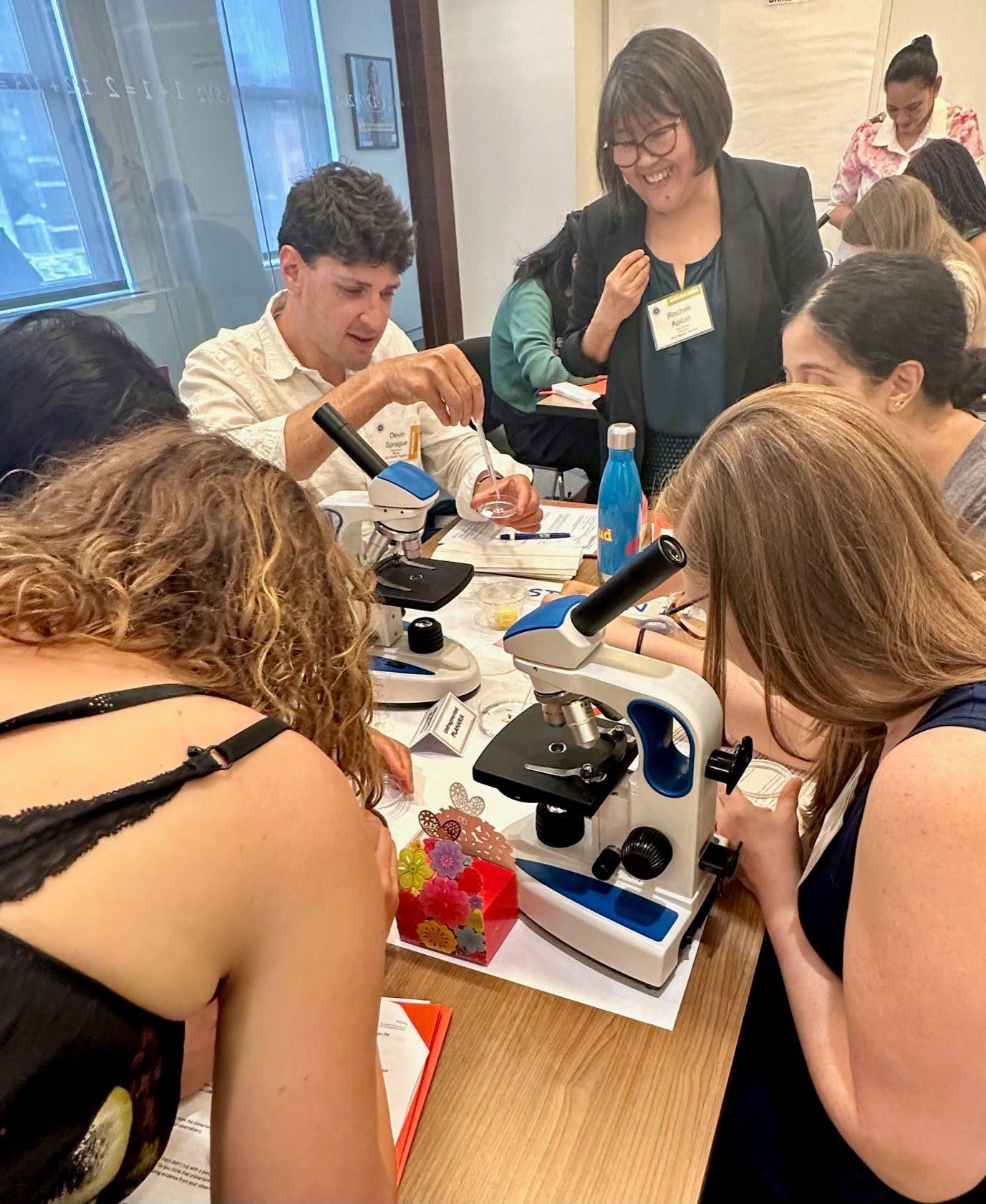
Film Screening: The Most Unknown
Facilitated By: Patrick Hurley and Sam Lazar Riviello
TUESDAY, SEP 26
M ƒA
COMMUNITY
+ PLEASE NOTE: THIS SESSION WILL TAKE PLACE AT THE SANDBOX FILMS THEATER SPACE ON THE 10TH FLOOR.
Are you interested in bringing documentary films into your STEM classroom? Join us at a film screening from our friends at Sandbox Films , creators of the Oscarnominated Fire of Love. This semester’s film is their
documentary, The Most Unknown, which follows nine scientists separated by borders and discipline but united by a thirst for impossible questions. Journey alongside them as they embark on a chain of encounters to explore one another’s greatest experiments, from slimefilled caves to observatories at 14,000 feet, from the depths of the ocean to the interior of the human mind; these unique thinkers find common ground in curiosity. Pizza and popcorn will be served!
Patrick Hurley is the Head of Distribution & Business Affairs at Sandbox Films, where he develops production campaigns while working closely with filmmakers and release partners worldwide to maximize each film’s impact and audience. Patrick has a decade of experience in the documentary film space with roles as the Industry Director at Sheffield DocFest and Distribution Manager at Dogwoof, UK. Patrick holds a degree in economics and political science from the University of Sydney. Prior to working in film, Patrick was a researcher and a teacher.
Sam Lazar Riviello is the Chief of Staff at Sandbox Films, where she plans and directs all administrative, financial, and operational activities while supporting strategic planning initiatives alongside company executives. Prior to joining Sandbox, Sam worked in the executive office of EngenderHealth, a global women’s health and reproductive rights organization. She holds a master’s degree in public administration and a Bachelor of Arts in film marketing.
Foster Parenting and the Foster Care System p
Facilitated By: MƒA Master Teacher Ursula Lovings
MONDAY, OCT 16 ONLINE
COMMUNITY
Are you interested in becoming a foster parent, sharing your experiences as a foster parent, or learning more about the foster care system to better support your students? Join us to hear a first-hand account from a foster parent. In this interest group, we will discuss licensing, training, choosing an agency, the rewards and challenges of foster parenting, the foster child as a student, and more. All are welcome to join!
Gender Diversity in STEM and Computer Science
Facilitated By: MƒA Master Teachers Margaret Tanzosh and Mallory Womer
TUESDAYS, OCT 3, DEC 12
ONLINE
COMMUNITY
+ PLEASE NOTE: YOU MAY SIGN UP FOR EACH MEETING SEPARATELY IN ACCORDANCE WITH YOUR AVAILABILITY.
Are you interested in balancing the gender distribution among students in advanced STEM courses? Are you concerned that our world is dominated by technology typically created by men? The National Center for Women and Information Technology found that women-identified folks majoring in computer science dropped from 37% in 1984 to 18% in 2018. Join us to discuss how to engage more girls and gender-expansive students in the joys of creative problem-solving, reduce entry barriers to science, math and computer science classes, and level the playing field for those with limited exposure or experience. Whether you already have great strategies to share or are looking for thought partners to brainstorm, this is the group for you.
Getting Started With Grant Writing and DonorsChoose
Facilitated By: Andy Yung and MƒA Master Teachers
Steve Oszust and Jordan Wolf
WEDNESDAY, OCT 4
ONLINE
COMMUNITY
Are you interested in acquiring resources for your classroom but don’t have the budget to do so? Then look no further than DonorsChoose. Our team of grant writing experts will help you create a DonorsChoose account, teach you the craft of grant writing, and support you in writing and submitting DonorsChoose projects. We have over 600 completed projects among us. The skills learned in this session are easily transferable to many other grant applications.
MƒA PROFESSIONAL DEVELOPMENT COURSE CATALOG: FALL 2023 58
p
Andy Yung is a pre-K teacher at P.S. 244Q The Active Learning
Interest Groups
Elementary School. He has used DonorsChoose.org to raise over $35,000 for his classroom, school, and community and is always willing to help those who wish to start their own crowdfunding journey.
International Teaching
Facilitated By: MƒA Master Teachers Elisabetta La
Tanza and Leslyn Morris
MONDAY, OCT 30
ONLINE
COMMUNITY
Are you interested in connecting with other teachers who have taught abroad? Whether you are an international teacher from another country or have taught abroad for some time, join us to share experiences, compare and contrast the different education systems and curricula, and discuss successes and struggles throughout our teaching career transitions. Teachers are encouraged to bring examples of topics or curricula taught in different countries. This group is preferably for those who have taught internationally but all are welcome!
It’s Magic in the Classroom!
Facilitated By: MƒA Master Teacher Derek Dubossi
TUESDAYS, SEP 26, DEC 19
MƒA
COMMUNITY
+PLEASE NOTE: YOU MAY SIGN UP FOR EACH MEETING SEPARATELY IN ACCORDANCE WITH YOUR AVAILABILITY.
Are you interested in how magic can build community in the classroom? As mathematics and science teachers, we all understand the sleight of hand, misdirection, and optical illusions that go into magic. However, we also have witnessed the captivating spell it can put on individuals. Join us as we share and investigate magic tricks that can captivate our students’ attention during instruction or for fun in the classroom. Why not build your teacher toolbox with a few new tricks up your sleeve?
JupiterGrades Success
Facilitated By: MƒA Master Teacher Migdalia Sanabria
WEDNESDAYS, OCT 18, DEC 13 ONLINE
COMPUTER SCIENCE AND TECHNOLOGY
+PLEASE NOTE: YOU MAY SIGN UP FOR EACH MEETING SEPARATELY IN ACCORDANCE WITH YOUR AVAILABILITY.
Are you interested in making the most of JupiterGrades to stay better organized and manage your time? Join us to discover how JupiterGrades can provide feedback and collect data to drive instruction. Stay organized throughout the year, maintain constant contact with families, provide periodic progress reports, and assign projects, rubrics, and engaging interactive activities. Any teacher using JupiterGrades at their school and wanting to innovate around grading systems is welcome to collaborate with us!
Let’s Do...Calculus!
Facilitated By: MƒA Master Teacher Stephanie Bohbot
WEDNESDAY, OCT 11
MƒA
MATHEMATICS
Are you interested in working through calculus problems with your peers? Whether you want a refresher on the content before you teach calculus in the future or engagement with calculus problems for fun, this is the place for you! Join us to do some mathematics, learn from each other’s techniques and reasoning, and engage with the prerequisite skills you may teach in your current or future courses. We will work through the 2008 and 2012 AP Calculus AB exam questions together. Self-checking Desmos Activities covering all eight AP Calculus AB Units will be provided as an additional resource.
Level Up APES: An Experience-Based Approach
Facilitated By: MƒA Master Teachers Cynthia Jimenez and Scott Wassmuth
WEDNESDAYS, SEP 20, OCT 18, NOV 15, DEC 13, JAN 17
MƒA
SCIENCE
+PLEASE NOTE: YOU MAY SIGN UP FOR EACH MEETING SEPARATELY IN ACCORDANCE WITH YOUR AVAILABILITY.
Are you interested in increasing the relevance of the AP Environmental Science content by incorporating more real-world examples and activities? Join us in this working interest group to make our classes more experience-based while keeping the fast pace of the AP curriculum. While many educators acknowledge the benefits of experience-based learning, including opportunities to do so can be challenging. We will review current practices, create resources for each topic in the Course and Exam Description (CED), and develop different strategies to give students the benefits of experience-based learning without sacrificing conceptual depth.
Mathematician Biography Book Club
Facilitated By: MƒA Master Teacher Alexander Lord, Ed.D.
THURSDAYS, OCT 19, JAN 4
TUESDAY, NOV 28
MƒA & ONLINE
COMMUNITY
+PLEASE NOTE: YOU MAY SIGN UP FOR EACH MEETING SEPARATELY IN ACCORDANCE WITH YOUR AVAILABILITY AND PREFERENCE FOR IN-PERSON OR VIRTUAL MEETINGS.
Are you interested in learning more about the mathematicians we and our students study? People often forget mathematicians are people with hopes, dreams, fears, challenges, families, interests, and quirks. In this book club, we will read biographies of famous mathematicians to learn more about their lives and the context in which their mathematical discoveries shaped the world around them. We will read Hidden Figures by Margot Lee Shetterly for Session 1, A Beautiful Mind by Sylvia Nasar for Session 2, and The Man Who Loved Only Numbers: The Story of Paul Erdős by Paul Hoffman for Session 3.
MƒA PROFESSIONAL DEVELOPMENT COURSE CATALOG: FALL 2023 59
Interest Groups
MƒA Game Night
Facilitated By: MƒA Master Teachers Deborah Reich and Matt Steiniger
WEDNESDAYS, OCT 4, DEC 20
M ƒA COMMUNITY
+ PLEASE NOTE: YOU MAY SIGN UP FOR EACH MEETING SEPARATELY IN ACCORDANCE WITH YOUR AVAILABILITY.
Are you interested in strategy and diplomacy or backstabbing and intrigue? How about learning and sharing new games while socializing with your colleagues in an informal in-person setting? If so, join us for an MƒA Game Night! Board games will be provided, but feel free to bring your favorites along!
Mindful Yoga Practice
Facilitated By: Roque Rodriguez
TUESDAYS, OCT 17, DEC 19
M ƒA COMMUNITY
+ PLEASE NOTE: YOU MAY SIGN UP FOR EACH 90 MINUTE MEETING SEPARATELY IN ACCORDANCE WITH YOUR AVAILABILITY. SOME YOGA MATS WILL BE PROVIDED, BUT PLEASE BRING YOUR OWN IF POSSIBLE.
Are you interested in mindfulness and self-care? Join us for a yoga experience in which we turn our attention inward and link our movement and breath. We’ll begin by warming our bodies, then move through a mindful yoga flow, and conclude with a guided yoga nidra meditation. Sessions are open to all yoga practitioners— from first-timers to seasoned yogis.
Roque (pronounced: ROW-Keh), the son of Dominican-American immigrants, is a 500-hour trained Yoga teacher. In addition to his 500 hours of training, Roque has studied Anatomy with Jason Brown, Restorative Yoga and Yoga Nidra with Mona Anand, and is a certified Hosh Kids Yoga Teacher. Roque is a proud founder of Suryaside Yoga and Wellness in Queens, NY. When he’s not teaching the Suryaside community and mentoring his new teacher trainees, he is dedicated to spreading love and yoga to underserved and under-resourced communities through programs and partnerships such as Liberation
Prison Yoga, which provides yoga and meditation to incarcerated people, and his “I Can Breathe” Yoga program, which offers teacher training scholarships to BIPOC who want to bring yoga to their community.
Moms at Work
Facilitated By: MƒA Master Teacher Phylicia Hoyt
WEDNESDAY, SEP 20
MONDAY, NOV 13
THURSDAY, JAN 18
ONLINE
COMMUNITY
+ PLEASE NOTE: YOU MAY SIGN UP FOR EACH MEETING SEPARATELY IN ACCORDANCE WITH YOUR AVAILABILITY.
Are you interested in creating more balance as a mom with a new baby or young children? Then this interest group is for you. Together we will build a community to support each other, from pumping at work to navigating work-life balance and beyond. We will also share tips and tricks for managing it all (or most of it!). This interest group is for new and experienced moms with young children.
One No Trump: Play Bridge!
Facilitated By: MƒA Master Teachers Melanie Battles and Melanie Pflaum and MƒA Emeritus Teacher Sherri Shaarbafan
TUESDAYS, OCT 10, NOV 28, JAN 9 M ƒA
COMMUNITY
+ PLEASE NOTE: YOU MAY SIGN UP FOR EACH MEETING SEPARATELY IN ACCORDANCE WITH YOUR AVAILABILITY.
Are you interested in the game of bridge? Are you a tournament player or a total novice? Whatever your skill level or experience, join us in learning this card game of bidding and trick-taking!
Organizing a Schoolwide Mathematics Competition
Facilitated By: MƒA Master Teachers Oyinka Bruce, Irene Espiritu, and Mimi Ong Ante
WEDNESDAYS, NOV 1, JAN 3
THURSDAY, DEC 7
ONLINE
MATHEMATICS
+ PLEASE NOTE: YOU MAY SIGN UP FOR EACH MEETING SEPARATELY IN ACCORDANCE WITH YOUR AVAILABILITY.
Are you interested in conducting schoolwide mathematics competitions in your school? Join us to discuss how teachers, students, parents, school administration, and even non-profit organizations can be motivated to work together and brighten the mathematics spirit in a school community. In this interest group, we will introduce teachers to the nitty-gritty process of running a schoolwide math competition. Each meeting will have a slightly different focus: (1) writing a proposal for school administration; (2) pre-event planning and preparation; and (3) sharing our event progress and plans with one another. You are highly encouraged to attend all three sessions.
Overbooked
Facilitated By: MƒA Master Teachers Phylicia Hoyt and MƒA Emeritus Teacher Theresa Stanley
TUESDAY, OCT 3
MONDAYS, NOV 6, JAN 8
THURSDAY, DEC 7
M ƒA & ONLINE
COMMUNITY
+ PLEASE NOTE: YOU MAY SIGN UP FOR EACH MEETING SEPARATELY IN ACCORDANCE WITH YOUR AVAILABILITY AND PREFERENCE FOR IN-PERSON OR VIRTUAL MEETINGS.
Are you interested in reading for FUN but don’t always have time? Join our book club as we read (mostly fiction) for enjoyment and come together to discuss each book. In the past, we have read books such as The Invisible Life of Addie LaRue by V.E. Schwab, The Swimmers by Julie Otsuka, and Klara and the Sun by Kazuo Ishiguro.
MƒA PROFESSIONAL DEVELOPMENT COURSE CATALOG: FALL 2023 60
Interest Groups
Sabbaticals: Paid Leave for Study or Research
Facilitated By: MƒA Master Teachers Maria Leon Chu and Crystal Thiele
THURSDAY, OCT 12
ONLINE
COMMUNITY
Are you interested in a paid sabbatical leave for study or research? We will cover how to apply, ideas for programs, full or half year sabbaticals, how to select courses and projects, what is expected of you, and the fine print. We have both successfully been granted sabbaticals and are happy to share about the process. All are welcome!
School Trip and Club Leaders
Facilitated By: MƒA Master Teachers Brittany Beck and Matt Pastore
TUESDAY, OCT 24
ONLINE
COMMUNITY
Are you interested in joining other activity coordinators to discuss how to create meaningful and fun experiences for your students and school communities? Many MƒA teachers plan trips, oversee student government, create school-wide events, manage graduation, and fundraise! Whether you are at a big or small school, new to planning activities, or have been doing so for years, all are welcome as we build a network of school trip and club leaders!
Side Hustles: Ways to Supplement Your Income
Facilitated By: MƒA Master Teachers Ramona Fittipaldi-Deoraj and Annycardeli Lopez
TUESDAY, OCT 17
ONLINE
COMMUNITY
Are you interested in making more money or having trips around the world fully financed? Then this is the interest group for you! Join us to create a community for sharing different resources, jobs, fellowships, etc., to boost your teaching income. Let’s create multiple streams of income together! We will provide a space for teachers to share their current methods and plan new ways to make more money.
Simons STEM Scholars Information Session
Facilitated By: Brady Brick and Erwin Cabrera, Ph.D.
WEDNESDAY, SEP 27
ONLINE
COMMUNITY
Are you interested in connecting students pursuing careers in STEM research to a merit-based, FULL ride scholarship opportunity at Stony Brook University? Join us to learn more about the Simons STEM Scholars
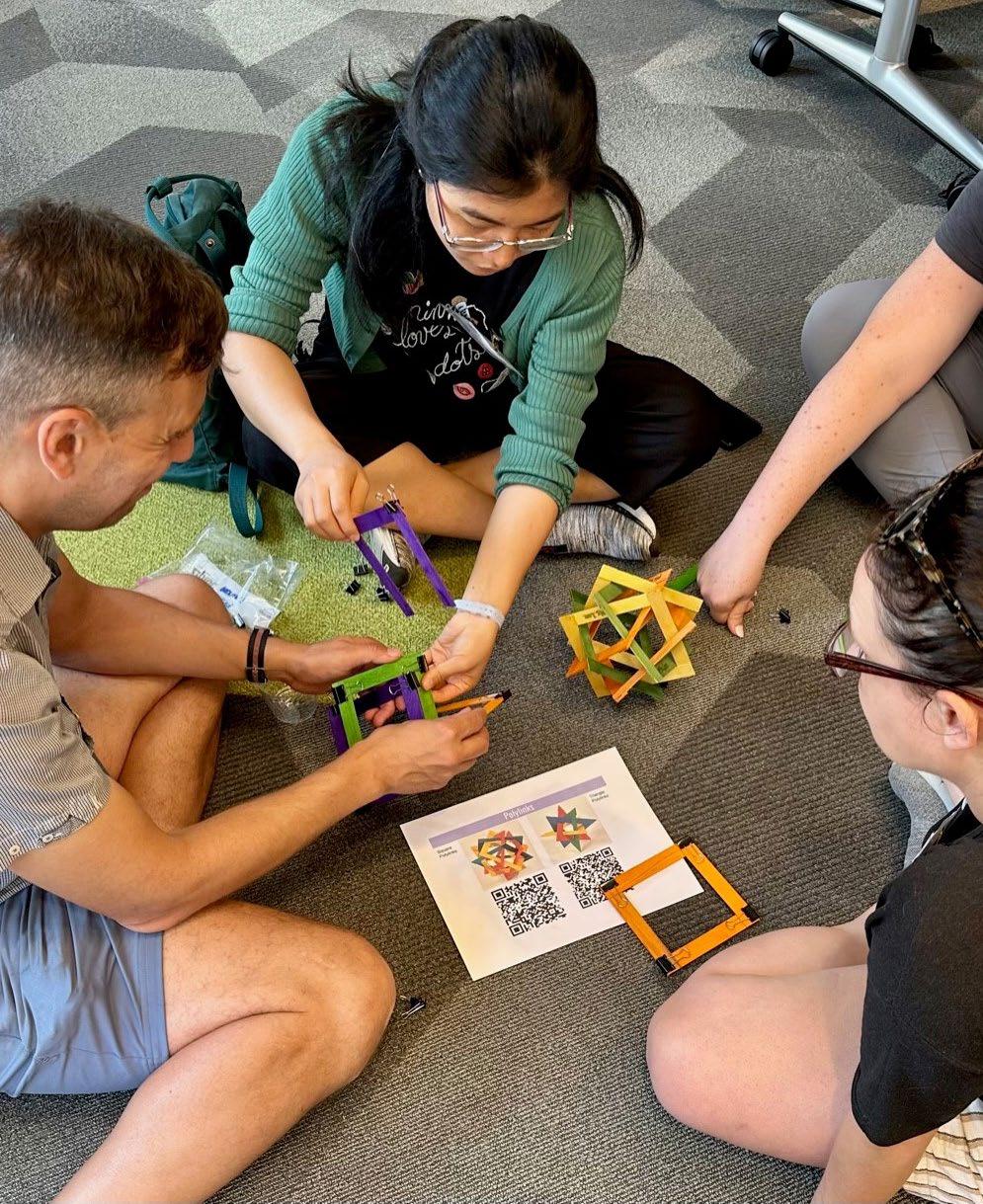
Program, which is open to all students who recognize diversity as vital to STEM, and has a core mission of increasing the number of Ph.D. candidates from students belonging to historically underrepresented backgrounds. In addition to the scholarship, scholars have dedicated campus staff to provide support with research placement, academic advising, tutoring, career and graduate school readiness, and much more. For more information on the program and to find our application, click here. Current scholars in our program can be directly linked back to MƒA educators—help us continue this trend!
Brady Brick is the Recruitment Coordinator for the Simons STEM Scholars Program.
Soft Skills and Content Support in AP Chemistry
Facilitated By: MƒA Master Teachers Patrick Chan, Ph.D., and Anoopa Singh
THURSDAYS, OCT 12, NOV 9, DEC 7
M ƒA & ONLINE
SCIENCE
+ PLEASE NOTE: YOU MAY SIGN UP FOR EACH MEETING SEPARATELY IN ACCORDANCE WITH YOUR AVAILABILITY AND PREFERENCE FOR IN-PERSON OR VIRTUAL MEETINGS.
Are you interested in finding time and strategies to help AP Chemistry students develop essential life skills?
Crunching a heavy-content curriculum into limited class time is a common struggle of AP Chemistry teachers, as they simultaneously build student skills such as selfawareness, time management, and collaboration. In this interest group, we will share, develop, and implement protocols to foster hard and soft skills in our classrooms. In challenging science classes, students tend to view their achievement as the primary goal. We want to reframe and expand the goals of science classes with our collective input.
MƒA PROFESSIONAL DEVELOPMENT COURSE CATALOG: FALL 2023 61
Dr. Erwin Cabrera is the Program Executive Director of the Simons STEM Scholars Program.
Interest Groups
Solve a Rubik’s Cube!
Facilitated By: MƒA Master Teacher Shana Elizabeth Henry, Ph.D.
THURSDAYS, OCT 12, OCT 26
M ƒA
MATHEMATICS
+ PLEASE NOTE: YOU MAY SIGN UP FOR EACH MEETING SEPARATELY IN ACCORDANCE WITH YOUR AVAILABILITY.
Are you interested in learning how to solve the Rubik’s Cube? Join us as we work through the basic algorithms to solve the Rubik’s Cube! This interest group is for beginners in particular.
Special Education Teacher Meetup
Facilitated By: MƒA Master Teachers Shari Eng and Yanique Sears
TUESDAY, DEC 5 ONLINE
COMMUNITY
Are you interested in collaborating with other Special Education STEM teachers? Join us in creating a community for the Special Education teachers in MƒA to encourage and support each other! We will chat about our experiences as Special Education teachers of mathematics and science and advocates for our students with special needs. Let’s get together and exchange insights within the world of special education!
Tutoring: Growing Your Side Gig
Facilitated By: MƒA Master Teacher Joseph Buro and MƒA Emeritus Teacher Felicia Giunta
WEDNESDAY, OCT 4
ONLINE
COMMUNITY
Are you interested in discussing ways to take the classic teacher side job of tutoring and turn it into an amazing source of income? We have been tutoring for years and
will share our strategies to make the business practice of tutoring something you can scale to your desire— without any worries about conflicts of interest or inconvenience to your free time.
MƒA PROFESSIONAL DEVELOPMENT COURSE CATALOG: FALL 2023 62
MƒAdventures
MƒAdventures
MƒAdventures are offsite events organized by MƒA teachers that allow teachers to explore shared interests. They are a great way to meet MƒA community members outside the MƒA office.
MƒA PROFESSIONAL DEVELOPMENT COURSE CATALOG: FALL 2023 63
MƒAdventures
Bronx and Upper Manhattan Meetup
Coordinated By: MƒA Master Teacher Ramona Fittipaldi-Deoraj
FRIDAY, OCT 13
OFFSITE
COMMUNITY
Are you interested in meeting with other MƒA teachers who work or live in the Bronx or Upper Manhattan?
Let’s get to know each other better while sharing teaching experiences and resources over drinks, snacks, and games. This meetup is a fantastic opportunity to reconnect with friends and make new ones. Colleagues who are interested in learning more about MƒA are welcome as well! Teachers are responsible for their own food and drinks.
Brooklyn Math Teacher Meetup
Coordinated By: MƒA Master Teacher Renu Budhraja
WEDNESDAY, SEP 20
THURSDAY, OCT 19
OFFSITE
MATHEMATICS
+ PLEASE NOTE: YOU MAY SIGN UP FOR EACH MEETING SEPARATELY IN ACCORDANCE WITH YOUR AVAILABILITY. EACH M ƒADVENTURE IS FROM 5 - 7 P.M.
Are you interested in meeting other MƒA mathematics teachers in Brooklyn to connect and build community?
If the answer is yes, join us at various Brooklyn locations, where we will share our teaching and MƒA experiences and get to know each other better while breaking bread. You do not need to live or teach in Brooklyn to attend. Teachers are responsible for their own food and drinks.
Cheers to SpEd and MLL Teachers!
Coordinated By: MƒA Master Teacher Abigail Kirchman
FRIDAY, JAN 19
OFFSITE
COMMUNITY
Special services and MLL teachers have a unique role. Join us to share your experiences and get to know this community of mathematics and science educators. Make a new friend, tell your stories, and go wherever the conversation takes us!
Met Sketch: Night at the Museum
Coordinated By: MƒA Master Teacher Snigdha Das FRIDAY, OCT 20
OFFSITE
COMMUNITY
+ PLEASE NOTE: TEACHERS WILL NEED TO COVER THE COST OF ADMISSION.
Are you interested in exploring your artistic side or want an excuse to visit the MET? Join us to sketch, connect, and explore the Metropolitan Museum of Art at night! Under the soft glow of the museum’s evening ambiance, we will roam the halls and select our preferred subjects to capture on paper. From ancient artifacts to modern installations, the museum’s diverse collection will serve as an endless source of inspiration for our sketches. We will work in short drawing sessions to learn as much as possible, connecting time to the elements of building an image—no prior experience with sketching is required.
MƒA at MoMath!
Coordinated By: MƒA Master Teachers Gemma Cangero-Serna and Courtney Ferrell
SATURDAY, OCT 14
OFFSITE
MATHEMATICS
+ PLEASE NOTE: TEACHERS ARE EXPECTED TO COVER THE COST OF ADMISSION FOR THEMSELVES AND THEIR FAMILIES.
Are you interested in learning the secrets hidden within
the designs and exhibits in Manhattan’s Museum of Mathematics (MoMath)? Join us to unlock secrets using the Fibonacci sequence, step inside the hexagonal cross section of a cube, find the coded message in a trebuchet wall tiling, and more. As we explore, we will take an unofficial tour from an MƒA Master Teacher and former museum employee! If you’ve never ridden on a tricycle with square wheels or made a Voronoi diagram with a huge computer on the floor, now’s your chance! Family and friends are welcome.
MƒAdventures Are for the Dogs!
Coordinated By: MƒA Master Teacher Brittany Beck
FRIDAYS, SEP 22, OCT 20
OFFSITE
COMMUNITY
+ PLEASE NOTE: YOU MAY SIGN UP FOR EACH MEETING SEPARATELY IN ACCORDANCE WITH YOUR AVAILABILITY. SPECIFIC START TIMES AND MEETUP LOCATIONS WILL BE DETERMINED BY A SURVEY SENT OUT TO ENROLLED TEACHERS.
Are you interested in meeting the friendly, furry, fourlegged dog friends of your MƒA peers? Do you want some well-deserved social time for your dog and you at the end of a work week? Sign up for this MƒAdventure, where dog owners and dog lovers alike can join to hang out with MƒA members’ dogs. Our locations will vary based on interest as we visit local dog parks, go for walks, or patronize dog-friendly cafes and bars.
MƒAle: A Brewery Adventure
Coordinated By: MƒA Master Teachers Courtney Ferrell and Dave Richardson
FRIDAY, SEP 29
SATURDAY, DEC 2
OFFSITE
COMMUNITY
+ PLEASE NOTE: YOU MAY SIGN UP FOR EACH MEETING SEPARATELY IN ACCORDANCE WITH YOUR AVAILABILITY.
Calling all craft beer enthusiasts! Join the MƒA community at breweries around NYC for networking, community building, and some games! We look forward to hanging out with you, whether you’re into beer, cider, or just plain good company!
MƒA PROFESSIONAL DEVELOPMENT COURSE CATALOG: FALL 2023 64
MƒAdventures
MƒA Teachers Climb!
Coordinated By: MƒA Master Teacher Nicole Beall
FRIDAY, OCT 27
OFFSITE
COMMUNITY
+ PLEASE NOTE: THIS M ƒADVENTURE IS FROM 4 - 6 P.M.
Are you interested in learning to rock climb indoors or want to climb with some of your peers? Metrorock has a community day every Friday for teachers and students to climb and borrow gear for only $20! All levels, friends, and family are welcome!
Prospect Park Bike Ride
Coordinated By: MƒA Master Teacher Ben Morgenroth
SUNDAY, OCT 22
OFFSITE
COMMUNITY
Are you interested in biking with friends? Join us for a bike ride in Prospect Park and connect with other MƒA teachers! We will set our own pace and take three laps around the 3.3 mile Prospect Park loop. The ride will take about one hour, but teachers are welcome to peel off early or to keep riding. Interested teachers are welcome to grab a bite to eat together afterward. Please bring your own bike (rentals and CitiBikes are great, too!). Helmets are strongly encouraged!
Rooftop Star Party on Staten Island
Coordinated By: MƒA Master Teachers David Deutsch, Alia Jackson, and Jay Lang
WEDNESDAY, OCT 18
OFFSITE
SCIENCE
+ PLEASE NOTE: IN THE CASE OF RAIN, THIS M ƒADVENTURE WILL BE HELD ON OCTOBER 20.
Are you interested in stargazing? Then spend an evening with us as we observe the night sky using telescopes and cell phone apps and experience other fun astronomyrelated activities! We plan to (safely) observe the Sun, Moon, available planets, and possibly some fainter objects, all while gazing at the Manhattan skyline from our school’s rooftop. Part of the adventure will be riding the Staten Island Ferry, as our stargazing will take place on the roof of Curtis High School, just a short walk from the Staten Island Ferry Terminal.
Stained Glass Creations: Beginner
Coordinated By: MƒA Master Teacher Scott Wassmuth
TUESDAY, OCT 24
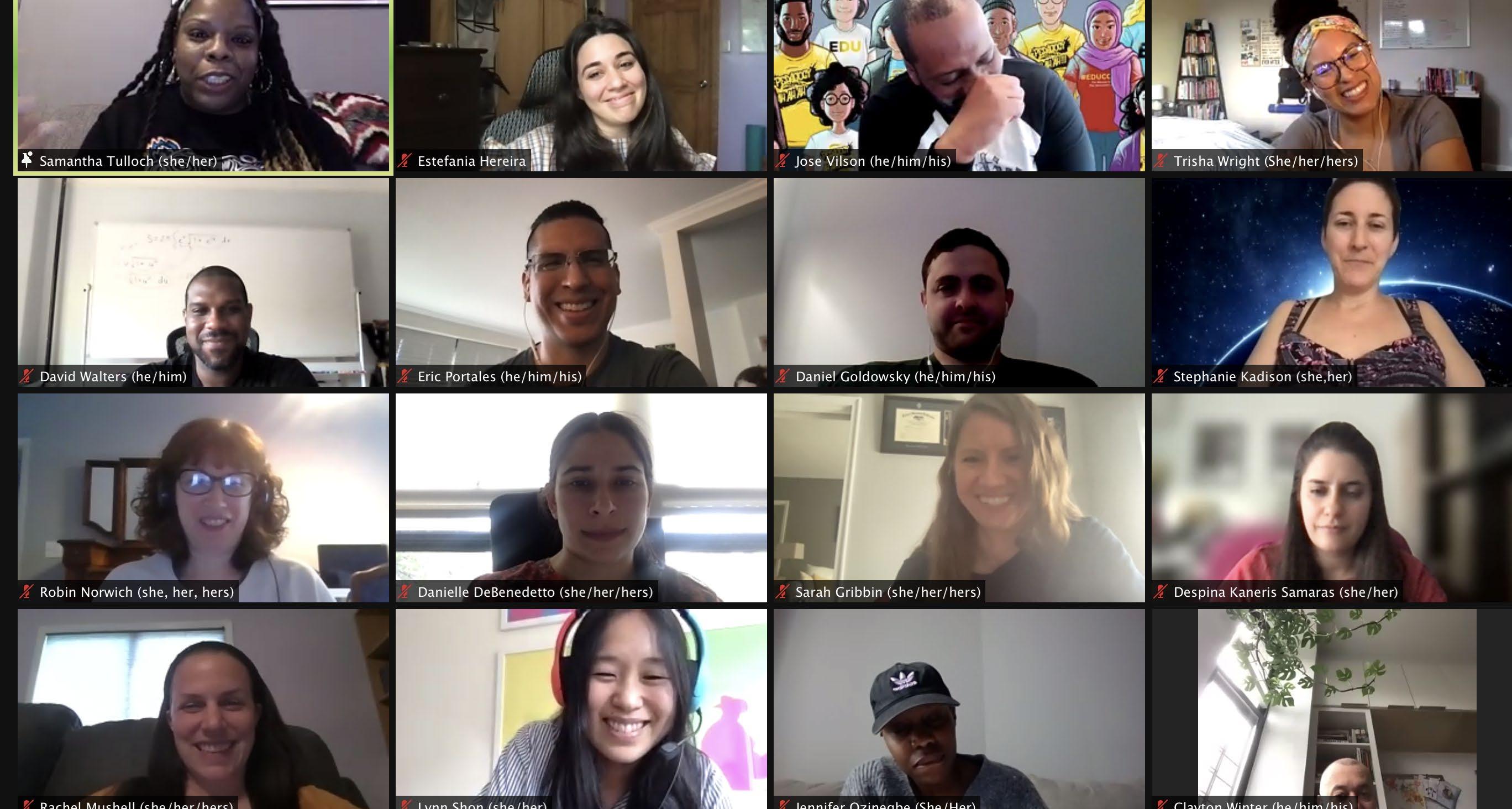
TUESDAY, NOV 28
OFFSITE
COMMUNITY
+ PLEASE NOTE: THERE ARE TWO DATES FOR THIS M ƒADVENTURE . PLEASE ONLY SIGN UP FOR ONE.
Are you interested in how stained glass crafts are made? Do you want to make stained glass items for yourself or as a gift for someone else? Join us at NYC Museum School to learn the basics and hone your stained glass making skills. At the end of the session, you will have your very own piece! You may even want to create more pieces in the advanced course offered later in the semester. No previous artistic ability is needed to sign up and create stained glass!
MƒA PROFESSIONAL DEVELOPMENT COURSE CATALOG: FALL 2023 65
MƒAdventures
Stained Glass Creations: Advanced
Coordinated By: MƒA Master Teacher Scott Wassmuth
TUESDAYS, DEC 12, JAN 9
SATURDAY, JAN 13
ONLINE & OFFSITE
COMMUNITY
+ PLEASE NOTE: THIS IS A THREE SESSION HYBRID M ƒADVENTURE. SESSION 1 WILL TAKE PLACE VIRTUALLY, AND SESSIONS 2 AND 3 WILL TAKE PLACE IN-PERSON AT NYC MUSEUM SCHOOL. SESSION 3 IS ON A SATURDAY FOR 4 HOURS. TEACHERS WILL HAVE TO PURCHASE SOME OF THEIR MATERIALS.
Are you interested in further developing the skills you learned in the Stained Glass Creations: Beginner MƒAdventure to make a more elaborate piece? We will start with a short overview of stained glass history, a showcase of potential creations, and an opportunity to discuss any pitfalls we may encounter. Next, we will create our designs and prepare pieces for foiling. Finally, we will have a full day to finalize our pieces. This three session hybrid MƒAdventure is open only to those who participated in a beginner Stained Glass Creations MƒAdventure.
Teachers, Take a Hike!
Coordinated By: MƒA Master Teachers Nicole Beall, Courtney Ferrell, Yishan Lee, and Mary O’Keefe
SATURDAYS, SEP 30, OCT 21, NOV 18
OFFSITE
COMMUNITY
+ PLEASE NOTE: YOU MAY SIGN UP FOR EACH MEETING SEPARATELY IN ACCORDANCE WITH YOUR AVAILABILITY.
Are you interested in hiking to rejuvenate and reflect as a teacher? If you need an escape from the city to explore nature, join us on the trail! Before each hike, we will communicate about transportation needs.
Visit the Bronx Children’s Museum
Coordinated By: MƒA Master Teachers Grace Hu, Andrea Kung, and Andrew Wallace
SATURDAY, JAN 13
OFFSITE
SCIENCE
Bring your little one(s) to the NEW Bronx Children’s Museum! Join us as we explore the Waterways exhibit, build a beaver lodge in The Woods, put on a butterfly wing cape and pretend to pollinate, or explore our artistic sides in the Loft and Wonder Room. The really little ones can even explore fun sensations in The Nest. The museum is best for 0 to 10 year olds. You don’t have to be a Bronx resident to attend. If you are an elementary teacher without children but still want to check it out for your students, please contact the facilitators.
Visit the National Museum of the American Indian Coordinated By: MƒA Master Teachers Patricia Yee and Mehmet Zubaroglu
SATURDAY, OCT 7
OFFSITE
COMMUNITY
Are you interested in learning more about Indigenous communities? Join us as we gain a deeper understanding of Native cultures and their contributions. We will walk through galleries featuring artifacts throughout the Americas and explore the museum’s interactive center, which showcases the influence of Native innovations and technologies. Teachers can incorporate what they learn into their classroom to honor Indigenous People’s Day on October 9!
MƒA PROFESSIONAL DEVELOPMENT COURSE CATALOG: FALL 2023 66
Thursday Thinks
Thursday Thinks are monthly STEM talks open to MƒA teachers, their colleagues, and guests from the wider STEM community. This speaker series features engaging and accomplished experts who delve into cutting-edge mathematics, science, computer science, and education topics.
MƒA PROFESSIONAL DEVELOPMENT COURSE CATALOG: FALL 2023 67
Thursday Thinks
tools and data transparency can have for championing justice, from developing data toolkits that empower communities to lobbying policy makers for change.
Dr. Chad M. Topaz (A.B. Harvard, Ph.D. Northwestern) is Professor of Complex Systems at Williams College and Professor (by courtesy) of Applied Mathematics at the University of Colorado, Boulder. He cofounded the Institute for the Quantitative Study of Inclusion, Diversity, and Equity (QSIDE), a research-to-action institute working at the intersection of social justice and data science. Chad’s work on criminal justice, diversity in arts and media, education equity, and related topics has been covered in The Atlantic, The Guardian, Smithsonian Magazine, and more. As an award-winning researcher and teacher, and guided by his enthusiasm for scientific communication, he is driven to engage the public about the synergy of data science and social justice. Read more at chadtopaz.substack.com .
Existing for over 250 million years, they have evolved fascinating behaviors for mating, egg-laying, flight, and communication. Such behaviors have enthralled humans for millennia, with dragonflies and damselflies commonly featured in stories, music, art, and fashion across human cultures. In this talk, Dr. Jessica Ware will give an overview of our current knowledge of these remarkable insects, presenting new molecular estimates for damselfly and dragonfly evolution that tell us more about the evolution of flight. She’ll also discuss how human-driven climate change has led to a steady decline in these and all insect species and will provide guidance on how to best protect these colorful creatures and their kin.
From Bytes to Rights: The Fight for Justice in the Era of Data
p
Speaker: Chad Topaz, Ph.D.
TUESDAY, OCT 5
MƒA AUDITORIUM & ONLINE
MATHEMATICS
Civil rights pioneer Ida B. Wells famously said, “the way to right wrongs is to turn the light of truth upon them.” Data science can provide this powerful light of truth. In this talk, Dr. Chad Topaz will present first-hand accounts of data-fueled racial justice efforts in the criminal justice system. Prompted by the disturbing discovery that a small-town Massachusetts police department had a photo of Hitler brazenly displayed, Dr. Topaz will delve into their data to shed light on their operations. He will then examine the spectrum of sentencing in federal district courts, culminating with a deep dive into events at New York City’s Rikers Island jail. Along the way, Dr. Topaz will emphasize the positive impact data
400 Years of Flight: Dragonfly and Damselfly Evolution From Water to Sky
Speaker: Jessica Ware, Ph.D.
TUESDAY, NOV 14
MƒA AUDITORIUM & ONLINE
SCIENCE
Dragonflies and damselflies are among the earliest flying animals—before birds, before bats, before pterosaurs, the first animal to fly was something dragonfly-like!
Dr. Jessica Ware is an Associate Curator in invertebrate zoology at the American Museum of Natural History. Dr. Ware’s research focuses on the evolution of behavioral and physiological adaptations in insects with an emphasis on how these occur in Odonata (dragonflies and damselflies) and Dictyoptera (termites, cockroaches, and mantises). Her research group explores phylogenetics and phylogenomics and uses these tools to inform their work on reproductive, social, and flight behaviors in insects. Jessica holds a B.Sc. from the University of British Columbia in Canada, and a Ph.D. from Rutgers University. She is the former president of both the Worldwide Dragonfly Association and the Entomological Society of America. She was recently awarded a PECASE medal from the US government for her work on insect evolution.
MT²: Master Teachers on Teaching
Speaker: MƒA Master Teachers
THURSDAY, DEC 14
MƒA AUDITORIUM & ONLINE
INQUIRY, PRACTICE, AND LEADERSHIP
Similar to a TEDx event, MT²: Master Teachers on Teaching features original and thought-provoking presentations by MƒA Master Teachers. The twelfth annual Master Teachers on Teaching theme is ChatMƒA: Technology and Transformation. Speakers will explore this theme, what it means to them personally and professionally, and how it applies to their classroom and classrooms across New York City. Join us to witness these innovative and inspiring talks given by our very own MƒA Master Teachers!
MƒA PROFESSIONAL DEVELOPMENT COURSE CATALOG: FALL 2023 68
Thursday Thinks
astronomers hope to discover in the future.
Dr. Nathalie Nguyen-Quoc Ouellette is an astrophysicist, science communicator, and lifetime lover of all things space! She obtained her Ph.D. in Physics & Astronomy at Queen’s University in Kingston, Ontario. Her research focuses on galaxy formation and evolution, particularly those found in clusters. Nathalie is the Deputy Director of the Trottier Institute for Research on Exoplanets and the Mont-Mégantic Observatory at the University of Montréal. She is also the Outreach Scientist for the James Webb Space Telescope in Canada, collaborating with the Canadian Space Agency. She is a frequent contributor and analyst in Canadian media on everything space-related. She also organizes and contributes to science outreach events at the local, national, and international scales to increase scientific literacy and encourage the interest and participation of youth and the general public in space science.
Seeing Beyond the Visible With the James Webb Space Telescope
Speaker: Nathalie Nguyen-Quoc Ouellette, Ph.D. THURSDAY, JAN 25
MƒA AUDITORIUM & ONLINE SCIENCE
The James Webb Space Telescope has dazzled the entire world with its stunning images and discoveries since the start of its scientific mission in 2022. An international collaboration between NASA, the European Space Agency, and the Canadian Space Agency, Webb is one of the most complex machines ever built and, at 6.5 meters, the largest telescope ever sent to space. In this talk, Dr. Nathalie Nguyen-Quoc Ouellette will explain how the Webb Telescope uses the power of infrared light to probe the atmospheres of exoplanets, study the dusty birth and death of stars, and detect the most distant galaxies ever observed. She will discuss some of the fantastic breakthroughs already made and what
MƒA PROFESSIONAL DEVELOPMENT COURSE CATALOG: FALL 2023 69
Equity Webinar Series
Equity Webinar Series
Equity Webinar Series are virtual workshops open to MƒA teachers, other Master Teacher programs, and people interested in learning more about MƒA. Each webinar leads with a nationally recognized STEM educator talk, followed by breakout sessions, where small groups discuss how they can apply these powerful ideas in their classrooms. Teachers are expected to stay for the entire session, including the talk and the small group discussion.
MƒA PROFESSIONAL DEVELOPMENT COURSE CATALOG: FALL 2023 70
Equity Webinar Series
and poetry as critical praxis and lead teachers in a mathematics poetry activity. While the tools shared will focus on mathematics, they can easily be adapted for other disciplines and all STEM teachers are welcome.
Dr. Ricardo Martinez is an Assistant Professor of Mathematics Education in the Department of Curriculum and Instruction at Pennsylvania State University. Prior to earning a doctorate in mathematics education and a Master of Education in curriculum and instructional technology from Iowa State University, he was a high school mathematics teacher in California, Colorado, and Iowa. Both in and out of the classroom, Dr. Martinez seeks to create mathematical learning experiences that return the legitimacy of mathematical knowledge creation to the people. His research focuses on creating spaces for young people to liberate themselves and challenge oppressive systems as they learn more about mathematics, the world, and self.
Many mathematics teachers want to integrate meaningful, culturally relevant tasks but don’t always know where to start. This work begins with understanding our students, uncovering their interests, and learning what they care about and value. In this talk, Dr. Pamela Seda will share principles from her ICUCARE Equity Framework to help teachers consider, implement, and adapt mathematics tasks to engage and empower all students, especially those from marginalized groups.
Dr. Pamela Seda is an educational consultant in Atlanta with over 30 years of educational experience. She is the owner of Seda Educational Consulting, creator of the VANG Math Card Game, and co-author of Choosing to See: A Framework for Equity in the Math Classroom. Dr. Seda was formerly a high school mathematics teacher, instructional coach, college instructor, and district mathematics supervisor. She currently serves on the board of NCSM Leadership in Mathematics Education and is the President-Elect of the Benjamin Banneker Association, an equity affiliate of the National Council of Teachers of Mathematics. As a regular speaker about equity in mathematics at conferences, Dr. Seda is committed to changing how students experience mathematics, especially those from marginalized groups, and advocates for mathematics instruction that develops all students as mathematical thinkers and problem-solvers.
Mathematical Poetry as Praxis: Scientific and Artistic Modes of Being p
Speaker: Ricardo Martinez, Ph.D.
WEDNESDAY, OCT 18
ONLINE
MATHEMATICS
+ PLEASE NOTE: TEACHERS ARE EXPECTED TO STAY FOR THE ENTIRE SESSION, INCLUDING THE TALK AND SMALL GROUP DISCUSSION.
Poetry is a deeply personal and reflective experience for young people; why can’t mathematics and science be the same? Poetic Mathematical Knowledge (Martinez, et al., 2023) is an amalgam of mathematics and poetry, embracing the tension between scientific and artistic ways of being. When students (and teachers) write and perform math-poetry, it provides an opportunity to learn about ourselves, others, and our shared mathematical world, all while creating safer spaces where we commit to changing unjust educational systems. In this talk, Dr. Ricardo Martinez will discuss the union of mathematics
Creating Culturally Relevant Mathematics Tasks: Easier Than You Think!
p
Speaker: Pamela Seda, Ph.D.
MONDAY, DEC 4
ONLINE
MATHEMATICS
+ PLEASE NOTE: TEACHERS ARE EXPECTED TO STAY FOR THE ENTIRE SESSION, INCLUDING THE TALK AND SMALL GROUP DISCUSSION.
MƒA PROFESSIONAL DEVELOPMENT COURSE CATALOG: FALL 2023 71
Community Contributions
Community Contributions are leadership opportunities for MTII+ (teachers in their second, third, or fourth Master Teacher Fellowship) to deepen their connections within the MƒA community by becoming involved with admissions, recruitment, communications, facilitation, supporting new MƒA teachers, and other leadership activities. Please review each contribution for its unique structure and requirements.
MƒA PROFESSIONAL DEVELOPMENT COURSE CATALOG: FALL 2023 72
Community Contributions
2024 MƒA Summer Think Planner
Coordinated By: MƒA Manager of Admissions & Community Engagement Keoma Distan and MƒA Director of Programming Courtney
Ginsberg
WEDNESDAYS, DEC 13, JAN 24, FEB 28, MAR 27, MAY 1, MAY 29, JUN 12
MƒA & ONLINE
COMMUNITY
+ PLEASE NOTE: THIS IS A YEAR-LONG HYBRID COMMUNITY CONTRIBUTION. SESSIONS 1, 2, AND 6 WILL TAKE PLACE INPERSON AT M ƒA. SESSIONS 3, 4, 5, AND 7 WILL TAKE PLACE VIRTUALLY.
Have you attended at least one MƒA Summer Think? Are you a creative and passionate teacher with innovative ideas about conference programming, time management and organizational skills, and an open and collaborative spirit? Then this community contribution is for you! Planners meet monthly to design, plan, and lead the 2024 MƒA Summer Think from December 2023 through July 2024. Between sessions, planners read proposals, email teachers, and brainstorm ideas. Additionally, all Planners must attend the 2024 MƒA Summer Think, which will take place July 9-11, 2024.
Equity Advisory Committee p
Coordinated By: MƒA Staff
TUESDAYS, OCT 10, DEC 5
WEDNESDAYS, NOV 8, FEB 7
THURSDAYS, MAR 7, APR 4, MAY 2
MƒA & ONLINE
COMMUNITY
+ PLEASE NOTE: THIS IS A YEAR-LONG HYBRID COMMUNITY CONTRIBUTION. SESSIONS 1, 2, 3, 6, AND 7 WILL TAKE PLACE INPERSON AT MƒA . SESSIONS 4 AND 5 WILL TAKE PLACE VIRTUALLY.
How might we ensure equitable learning opportunities for all teachers at MƒA? As a member of the Equity Advisory Committee (EAC), you will have opportunities to advise MƒA leadership in our efforts to prioritize and build
on diversity within the MƒA community. This team will consider the different perspectives on equity held by MƒA teachers, help refine a shared definition of equity, and work in subgroups to provide feedback and implement action plans to foster an inclusive and empowering learning environment for every MƒA teacher. Previous EAC subgroups have focused on admissions and recruitment, teacher leadership, equity, inclusion, and belonging, pedagogical impact, and professional growth. EAC members have further opportunities to opt into summer work with MƒA staff to ensure the work continues beyond the school year.
Equity Webinar Series Facilitator p
Coordinated By: MƒA Associate Director, Scientific Outreach & Partnerships, Uzma Shah
TBD
ONLINE
COMMUNITY
+ PLEASE NOTE: YOU MUST BE AVAILABLE FOR AT LEAST ONE OF THE FALL EQUITY WEBINARS TO PARTICIPATE IN THIS COMMUNITY CONTRIBUTION:
WEDNESDAY, OCT 18: DR. RICARDO MARTINEZ MONDAY, DEC 4: DR. PAMELA SEDA
The MƒA Equity Webinar Series brings nationally recognized educators with ideas on how to support equity within STEM education to the MƒA community. Each webinar begins with an engaging talk followed by small group discussions for teachers to brainstorm applications in their classrooms and schools. As an Equity Webinar Series Facilitator, you will co-facilitate one webinar this fall. Facilitation includes introducing the speaker, managing the question and answer period, and facilitating the small group discussions using an Open Space protocol. Equity Webinar Series Facilitators will attend an introductory session to prepare for this work and to learn more about the series, upcoming speakers, and best practices for introducing speakers and facilitating group discussions.
Information Session Host
Coordinated By: MƒA Admissions & Recruitment Team
TUESDAY, OCT 17
MƒA & ONLINE
COMMUNITY
+ PLEASE NOTE: BEFORE SIGNING UP, PLEASE BE SURE YOU CAN ATTEND BOTH THE TUESDAY, OCT 17 ORIENTATION AND AT LEAST TWO OF THE FOLLOWING DATES:
VIRTUAL: OCT 24, DEC 6, JAN 29
IN-PERSON: NOV 15, JAN 9
Current MƒA teachers are essential in encouraging and supporting prospective applicants through the application process. A great way to do this is by being an Information Session Host this fall! We are looking for teachers interested in helping to create an MƒA community built on diversity and excellence and for those looking for a meaningful way to share their MƒA experiences with others. First, all Information Session Hosts will attend a mandatory virtual orientation meeting to become familiar with their roles and responsibilities. Then, each host will help facilitate two Information Sessions this fall/winter.
MƒA Connector
Coordinated By: MƒA Manager of Admissions & Community Engagement Keoma Distan and MƒA Program Officer Nakita VanBiene
COMMUNITY
+ PLEASE NOTE: REGISTRATION DOES NOT GUARANTEE A MATCH. TO BE CONSIDERED, YOU MUST COMPLETE THIS SURVEY. M ƒA WILL EMAIL YOU IN EARLY SEPTEMBER WITH THE STATUS OF YOUR MATCH.
Would you like to welcome new teachers into the MƒA community? Then become an MƒA Connector! In this community contribution, you will help a teacher new to MƒA navigate the early months of their fellowship. From giving insight into course selection and registration tips to answering questions and discussing how to get involved, MƒA Connectors share information and insight to help teachers get the most out of their new MƒA fellowship. We will match MƒA Connectors with a teacher based on a similar subject area, borough, grade level, and interest.
MƒA PROFESSIONAL DEVELOPMENT COURSE CATALOG: FALL 2023 73
Community Contributions
Once connected via email, the MƒA Connector and partner teacher may communicate as often and through whichever format works best for them. The goal of this community contribution is to facilitate connections between current and new MƒA teachers in flexible, informative, and rewarding ways.
Praxis Prep Session Facilitator
Coordinated By: MƒA Admissions & Recruitment Team
TUESDAY, OCT 17
ONLINE
COMMUNITY
+ PLEASE NOTE: BEFORE SIGNING UP, PLEASE BE SURE YOU CAN ATTEND BOTH THE TUESDAY, OCT 17 ORIENTATION AND THE PRACTICE SESSION DATE ALIGNED TO YOUR CONTENT AREA:
DEC 7: BIOLOGY, CHEMISTRY, ELEMENTARY MATHEMATICS/ SCIENCE, PHYSICS
DEC 12: GENERAL SCIENCE, EARTH SCIENCE, MATHEMATICS
JAN 16: BIOLOGY, MATHEMATICS
Praxis Prep Session Facilitators are critical in helping prospective MƒA applicants prepare for the Praxis content test. Additionally, facilitators often serve as a person on the frontline of recruitment, not only answering contentrelated questions but also responding to general inquiries about MƒA fellowships. As part of this community contribution, Praxis Prep Session Facilitators will first attend a virtual orientation to learn about their roles and responsibilities. They will then lead a two-hour virtual Praxis Prep Session with prospective applicants in the subject area they teach.
Restorative Justice Collaborator p
Coordinated By: MƒA Director of Admissions & Recruitment Sharine Stevenson
TUESDAYS, OCT 24, NOV 21, DEC 12, FEB 13, MAR 12, APR 16
MƒA & ONLINE
COMMUNITY
+ PLEASE NOTE: THIS IS A YEAR LONG HYBRID COMMUNITY CONTRIBUTION. SESSIONS 1, 2, AND 6 WILL TAKE PLACE IN-PERSON AT M ƒA. SESSIONS 3, 4, AND 5 WILL TAKE PLACE VIRTUALLY.
Restorative justice is a set of principles and practices based on respect and accountability. These practices, rooted in Indigenous communities, can build and maintain relationships, repair harm when necessary, and transform a community. In this community contribution, we will explore the foundations of restorative and transformative justice, community accountability, and strategies for transforming MƒA into a safer space, personally and structurally. Join us as we collaborate to establish a restorative justice program and help nurture MƒA as a space that supports and respects the inherent dignity and worth of all teachers and staff.
Shared Knowledge Materials Screener
Coordinated By: MƒA Master Teachers Jeffrey Lowenhaupt and Michelle Sims and MƒA Program Officer Nakita VanBiene
TUESDAYS, OCT 3, JAN 16
ONLINE
COMMUNITY
+ PLEASE NOTE: SCREENERS MUST WORK ASYNCHRONOUSLY FOR ABOUT TWO HOURS BETWEEN SESSIONS.
Over the last few years, MƒA Master Teachers (formerly known as Learning Materials Screeners) have worked to create an extensive database of curricular tools. These resources, developed by MƒA teachers, now live on the Small-World Network as the Shared Knowledge site. Our goal is to curate a centralized space where teachers can share and access various highly effective and engaging classroom tools and resources. In this community contribution, Screeners will have the opportunity to review materials submitted by MƒA teachers, add these
materials to the repository found on the Small-World Network, and support the practice of MƒA teachers across the city.
Small-World Network Community Mobilizer
Coordinated By: MƒA Director of Data Systems
Miriam Ignatoff
WEDNESDAYS, SEP 13, NOV 29
ONLINE
COMMUNITY
Are you interested in sharing your knowledge with the MƒA community and connecting with your colleagues online? Join us as we help initiate discussions and respond to questions on the Small-World Network (SWN). Mobilizers will log into the SWN weekly to reply to posts or ask their own questions. Mobilizers will also be responsible for selecting at least one post per week to highlight in the Sunday community digest email.
*Community Contributions are opportunities for MƒA teachers who have completed at least one Master Teacher Fellowship.
MƒA PROFESSIONAL DEVELOPMENT COURSE CATALOG: FALL 2023 74