ALUMNAE/I CAREER PIVOTS
04 Caroline Hewitt '87
06 Cynthia Moore '68
07 Ann Edmonds '70
08 Dominique Bouchard '95
09 Ann Walter Royston '78
10 Yolanda Cortes Mares '75
12 Seth Samuels '00 14
FACULTY CAREER PIVOTS
A Message from LAURA DANFORTH
ALUMNAE/I CAREER PIVOTS
04 Caroline Hewitt '87
06 Cynthia Moore '68
07 Ann Edmonds '70
08 Dominique Bouchard '95
09 Ann Walter Royston '78
10 Yolanda Cortes Mares '75
12 Seth Samuels '00 14
FACULTY CAREER PIVOTS
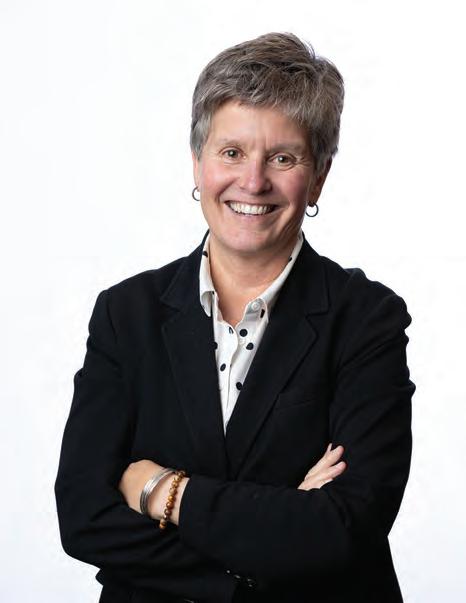
A Message from LAURA DANFORTH
Each of us wants to live a meaningful life: to contribute our time, our energy, our singular light to the world. We want to remain generative — to keep growing. Psychologist Erik Erikson identified the universality of this yearning in adulthood: the blessing and the challenge of the tension between generativity and stagnation. We’ve all had excruciatingly long moments of stagnation — times when we don’t know how to make our way forward.
Perhaps after stewing in stagnant waters, or due to a sudden shift in circumstance, life will urge us to pivot. Whether or not we rise to such moments will shape the whole arc of our lives. In this issue of The Bulletin, we celebrate the courage, resilience and curiosity embodied by so many of our alumnae/i as they navigate career pivots — some born of passion, others from circumstance or necessity. Their stories remind us that a meaningful life is non-linear. It is shaped by the choices we make about when to keep going as planned and when to pivot. And through the uncertainty of change, our deeper purpose and vision will steady us.
A pivot is a change in strategy without a change in vision.
—Eric Ries “ ”
Masters is fueled by the generative work of educating young people, and every year brings pivots large and small. Through it all, our mission anchors us. It is both compass and ballast as we pivot to meet the demands of a rapidly changing world — and the needs of rapidly changing adolescents. At Masters, we strive to prepare students not only to find their path, but also to have the courage to change the path when life, or conscience, demands it.
The graduates and faculty we honor in this issue embody the truth that joy, meaning and generativity come not from staying on a fixed path, but from leaning into the moments that call us to grow, to serve and to rediscover our purpose.
“Tell me, what is it you wish to do with your wild and precious life?” — Mary Oliver
Warmly,
Laura Danforth Head of School
I would like to say thank you for all the wonderful Masters Bulletins. I truly look forward to them each season.
I was sad to learn of the passing of former history teacher Mary Wood last year when you listed it in the fall issue of The Bulletin. I was in her first history class at Dobbs in 1982.
I appreciated the tribute piece that Victoria Love ’88 submitted, which appeared in the spring issue. Ms. Wood’s students truly respected and loved her. She was at Dobbs for almost 40 years — an outstanding educator, mentor, feminist and friend.
Thank you very much.
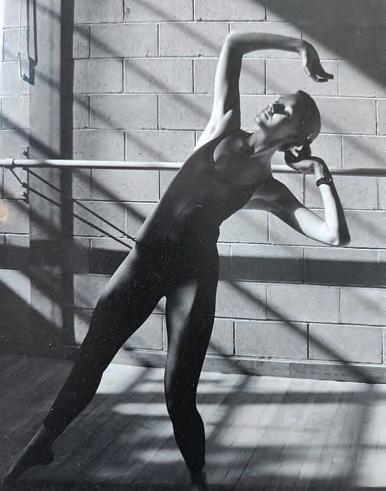
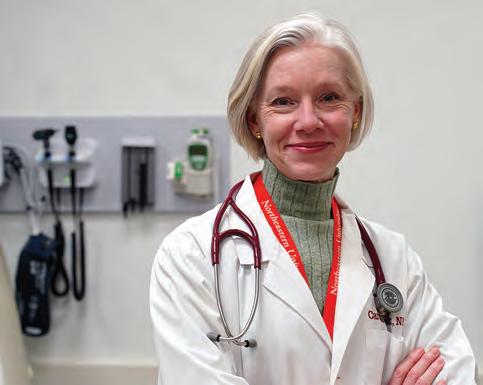
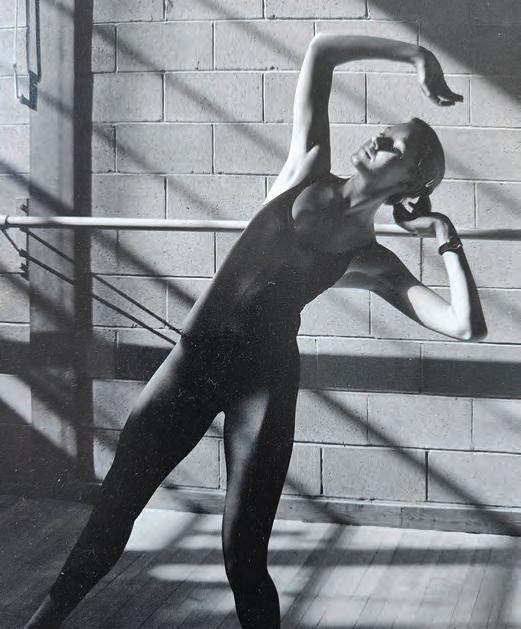
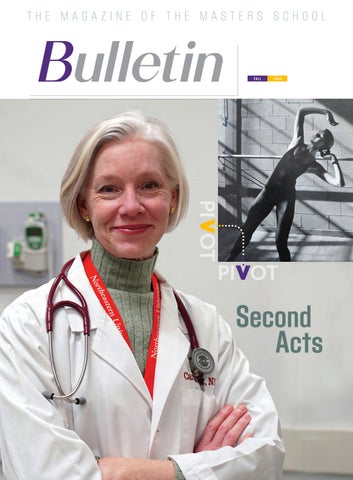
Throughout her high school, college and early professional years, modern dance took center stage in Caroline Hewitt’s life.
“When I was at Dobbs, I was a dancer,” the Class of 1987 alumna recalled. “I was in Dance Company and did the winter musicals — that was my thing.”
After graduating, she continued to pursue her passion, double majoring in dance and history at Skidmore College. For four years, she danced professionally for companies in New York and Boston, including Beth Soll & Company, Bernie Courtney and Dancers, and Mary Anthony Dance Theatre.
But the reality of a dancer’s life began to set in, and Hewitt realized that making a living through dance was going to be difficult. “I knew I wasn’t going to dance for Martha Graham or any of the modern dance companies,” she said.
While dancing, Hewitt began working part time as a medical assistant — a choice that would soon lead her to her next calling.
“Health care was always in the back of my mind,” she said. “My aunt, Julie Schoepf Crocker ’44, was a physician who was trained at Columbia University College of Physicians and Surgeons. My mother, Luan Schoepf Hewitt ’47, went into nursing, graduating from Columbia University School of Nursing. It was in the family.”
Dobbs opened up the world to me, for which I am incredibly grateful. It offered me an exposure to New York that was really important to me. I loved it, and it landed me well. “ ”
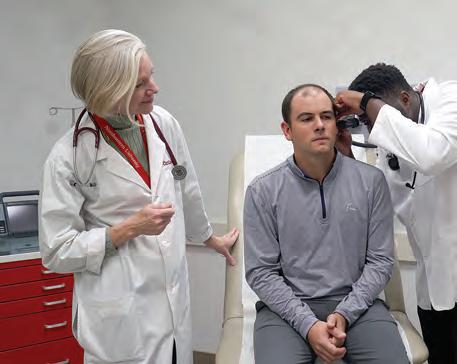
Hewitt enrolled in an accelerated nurse practitioner program at the Massachusetts General Hospital Institute of Health Professions, earning her master’s degree and certification in 1999, and later a doctoral degree in nursing science at the CUNY Graduate Center. What followed was a rich career that wove together clinical practice, teaching and public health policy.
She credits her focus on women’s health to her time at Masters and the class on women in music that introduced her to female artists who led, created and made bold decisions.
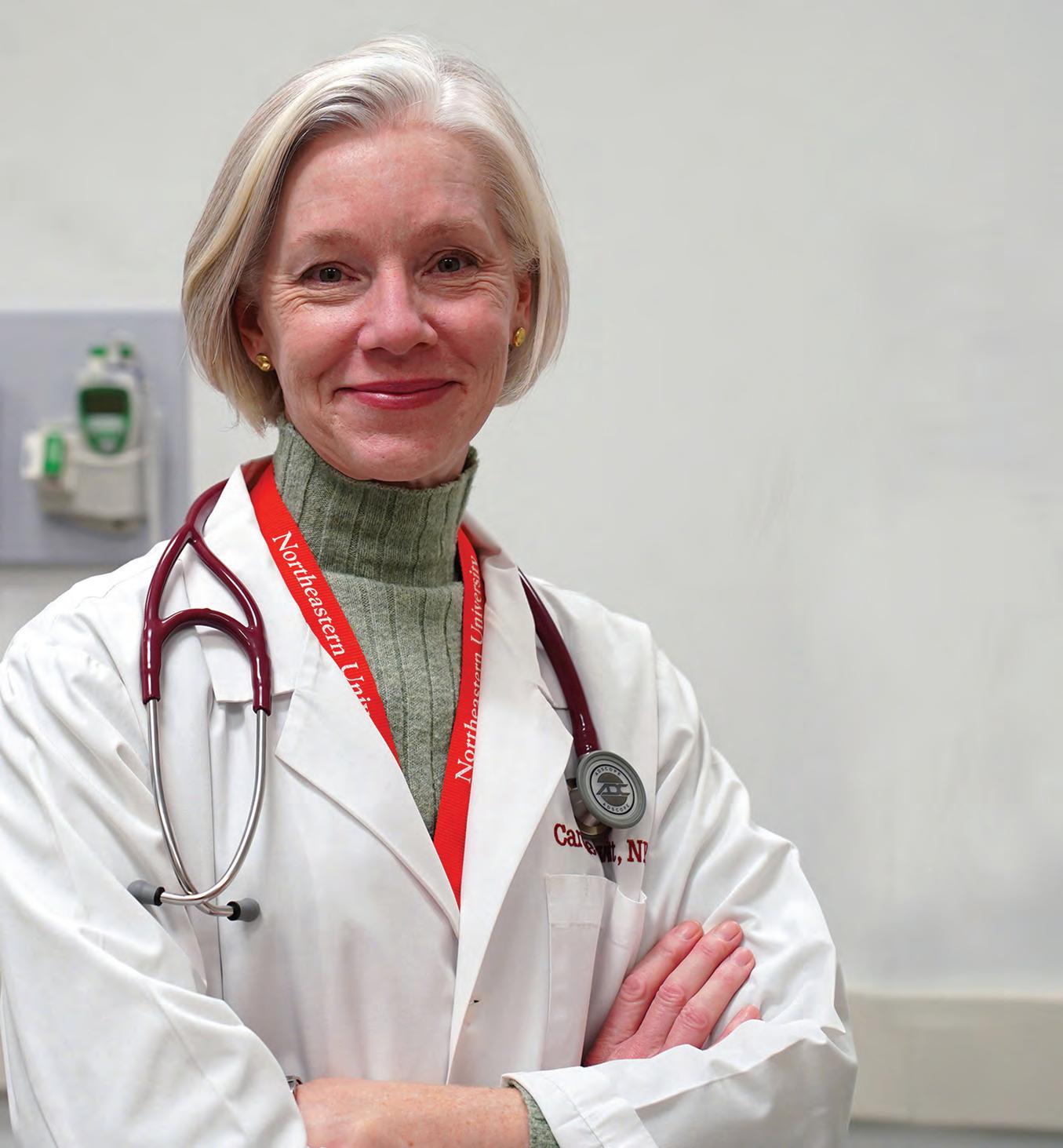
Today, Hewitt serves as assistant dean for clinical affairs and partnerships at Northeastern University, leading strategy and compliance initiatives for more than 3,000 clinical and academic affiliations across six clinical programs within the university’s global network. She is also a clinical professor at the School of Nursing. Over the past 25 years, she has taught at Columbia, Hunter College and NYU.
Yet even as she continues in academia, she has embarked on what she calls her “next pivot”: founding a nonprofit residential hospice in Dublin, New Hampshire, her family’s longtime home.
Hewitt compares the creation of the hospice to being a part of a dance company. “You have a group of people working together to build something and working towards a common goal,” she explained.
This is not her first time starting a nonprofit: In 2004, she founded Women’s Health Resources, Inc. to address women’s health care educational needs.
Now in its development stage, the hospice aims to provide a free, home-like environment for individuals at the end of life who lack caregivers or resources. “We want to offer a true home for those who have nowhere else to go. That’s the mission,” she explained.
This dedication to service and community has long guided Hewitt. Throughout each stage of her journey, she has remained committed to empowering women — a principle she traces back to her days at 49 Clinton Avenue.
As the ninth member of her family to have attended The Masters School (in addition to her mother and aunt, there’s a great aunt, two first cousins, her sister, a nephew and her daughter), Hewitt carries forward a sense of legacy and connection that continues to shape her work.
“Dobbs opened up the world to me, for which I’m incredibly grateful,” she said. “It offered me an exposure to New York that was really important to me. I loved it, and it landed me well.” Hewitt has remained connected to the School throughout the years, serving as a trustee for three years and chair of the Dobbs Alumnae/i Association Board for 11.
“I don’t think I could have imagined this trajectory when I was 16,” she said. “But I do feel, especially now with the hospice work, that I’m drawing on all these skill sets that I have developed over the years to do this.”
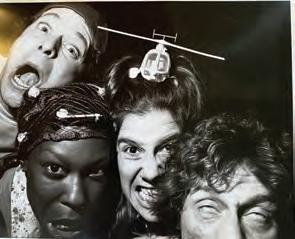
PLAYWRIGHT AND PERFORMER
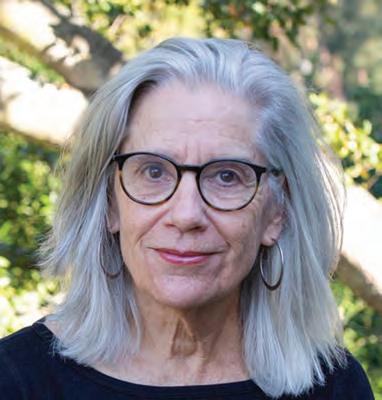
CLINICAL PSYCHOLOGIST
Cynthia Moore ’68 knew from a young age that she belonged in the limelight.
Discovered as a young ballet student, Moore’s stage career began early. At age 6, she was cast in a Bahamian touring production of “The King and I,” starring Academy Awardwinning actor Yul Brynner.
“I was hooked,” Moore said. “It was so thrilling.”
After spending her childhood in the Bahamas and two years in Switzerland, Moore arrived at Masters as a boarding student. She naturally found her place in Phoenix, the School’s drama club. Her favorite class was Comparative Religions, and she fondly recalled writing for the poetry magazine and walking into town for rocky road ice cream.
Her most memorable Phoenix role was playing Mrs. Smith in “The Bald Soprano,” Eugène Ionesco’s absurdist play. Moore went on to earn a degree in theater at Antioch College, where she solidified her love of experimental theater. After college, she moved to the Bay Area.
For more than two decades, she did it all: writing, performing and directing. As a member of The Blake Street Hawkeyes theater troupe in San Francisco, she worked closely with Whoopi Goldberg, the EGOT (Emmy/ Grammy/Oscar/Tony)-winning actor and co-host of
“The View.” Despite Moore’s success, she began to feel something was missing.
Searching for deeper meaning and for a career that was “more authentic and intuitive,” Moore left theater to pursue a master’s in clinical psychology at John F. Kennedy University in Pleasant Hill, California.
“I never second-guessed leaving the theater,” she said. “I took one class to see if I liked it, and I fell in love. I loved psychology. I didn’t know how I would utilize it, but I knew it was the right path.”
She credits her Masters education with giving her the “rigorous intellectual and strong muscular approach to problem solving, analytics and parsing out problems” to manage graduate school. She often relies on her theater background in her current practice as a therapist.
“Performing is a great lesson in presence,” she said. “You have to be fully present. You have to command a stage. You have to know how to inhabit your body and how to relate to a crowd and a room. And those, as you can imagine, are great tools for therapy.”
Now in her 23rd year as a mental health counselor,
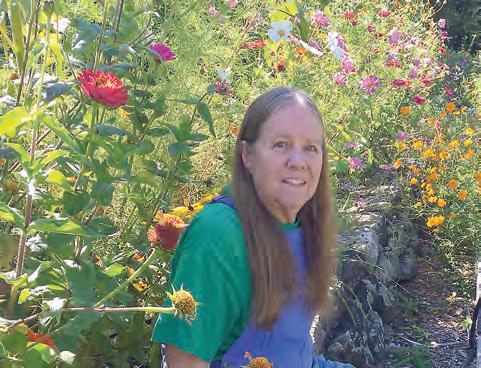
Ann Edmonds ’70 nurtured a passion for gardening that was instilled at a young age.
Moore has found peace and balance in her roles as a wife, mother and grandmother.
“My day now involves a morning of meditation, spiritual reading and contemplation, seeing clients, checking in with myself, having authenticity and congruence as my main guiding forces, seeing friends, and loving my family and my grandson,” she said.
Her recent memoir, “Dancing on Coals: A Memoir of an Overperformer,” chronicles her journey.
“I’ll always be an artist,” she explained. “That’s the fundamental person that I am. Even as a therapist, I’m a creative therapist, I’m an artist. So writing the book was like coming home to that part of myself, too, that I am still an artist.”
For those navigating change, Moore offers this advice: “Trust yourself. Turn up the volume on your inner voice and turn down the volume on societal and family expectations. When you dare to dive into the unknown, something unexpected opens — you’re not on the paved highway anymore. And if you find yourself off road, that’s when the magic happens.”
After more than four decades at JPMorgan Chase, Ann Edmonds ’70 could have eased into a quiet retirement. Instead, she nurtured a passion for gardening that was instilled in her at a young age. Six months after she retired from a career in finance, Edmonds enrolled in the Westchester Cornell Cooperative Extension Master Gardener Volunteer program, the mission of which is to train volunteers to share gardening knowledge with their communities, helping people care for gardens, lawns and landscapes with a focus on food security and the environment.
Edmonds' path to finance was an unexpected one. After earning an undergraduate degree in sociology and religion and a master’s in teaching from Northwestern University, she envisioned a career in the classroom. But with few teaching jobs available, she shifted to banking, having worked for the National Bank of Westchester for a year before graduate school.
Though finance compliance was her professional focus, Edmonds’ love of gardening was a constant throughout her life. She can trace it to her mother, Louise Riker Edmonds ’46, a beloved Latin teacher who taught at Masters for 42 years — and herself an avid gardener. “Gardening was in my blood,” Edmonds reflected.
Masters, too, left an imprint. “Certainly, ‘do it with thy might’ likely influenced my jumping in with both feet my first several years as a Master Gardener volunteer, both in terms of the amount of time I committed and in sharing suggestions,” Edmonds said.
These days, far from Wall Street, Edmonds can be found during gardening season (April through November) at Hart’s Brook Park and Preserve in Hartsdale, New York, volunteering in the gardens of her church or in her own gardens.
“One pleasing aspect of working in the Hart's Brook vegetable garden is that all of our produce is delivered to a food pantry and given to people who experience food insecurity. It is nice to know that in doing something I enjoy, I am able to help others,” Edmonds said. “One other reward of my second chapter is the friendships I have formed in the course of my gardening and the continued learning they enable.”
Her advice to others considering a second chapter: “Pursue something that is near and dear to your heart. As a result of doing this, my volunteer activities do not feel like work.”
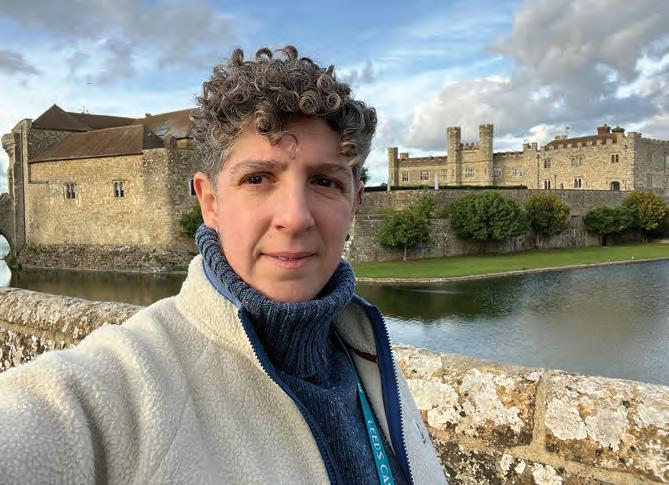
From the Lab to the Loveliest Castle:
At Masters, I was a science geek amongst a school full of artsy, literature-loving musical thespians. I enjoyed art, but I was obsessed with science. I have the embarrassing privilege of being on one of the admission recruitment videos saying that if I had my ideal schedule, I’d only take science courses. I even got special permission to drop history in my senior year so I could enroll in another science course.
At Masters, I was a science geek amongst a school full of artsy, literature-loving musical thespians.
Then, midway through my applied physics engineering/mathematics double B.S./B.A. programme at Columbia University, I visited Greece for the first time. During that trip, I was hiking on a beautiful Aegean island and stepped into a cave. I was surrounded by what seemed like ancient pottery: the handiwork of artisans who stood in the same spot as me, only 2,000 years earlier. It was thrilling.
At that moment, I realised I didn’t want to be a scientist or engineer. I set my sights on a Ph.D. in classical archaeology.
Masters’ academic rigour and incredible opportunities in the arts and culture, alongside Columbia’s intense core curriculum, gave me enough grounding in the humanities to convince my Ph.D. supervisor to take me on. I completed my D.Phil. in classical
archaeology at the University of Oxford and haven’t looked back.
My career as a historian and museum curator has taken me around the world; I’ve worked in Northern Ireland, Hong Kong, Ireland and England and travelled for work across the United States, Europe and Asia. Until recently, I worked for English Heritage Trust, England’s national charity that conserves the national historic collection of buildings and monuments, including the famous World Heritage sites Hadrian’s Wall and Stonehenge. While at English Heritage, the CEO used to refer to me as England’s storyteller in chief. I’m now the director of heritage and engagement at Leeds Castle in Kent, responsible for bringing to life the 900-year history of the castle, reputed to be “the loveliest castle in the world.”
If you had told me 30 years ago that, despite swearing off history in the mid-’90s, I’d spend 25 years of my professional career as a historian, I don’t think I would have believed you. It was a leap of faith — or perhaps youthful naivety or arrogance! — that inspired me to take a chance on an unknown future, but dedicating my life to helping people find personally relevant stories from our collective past has been more rewarding than I could have ever imagined.
On the morning of September 11, 2001, Ann Walter Royston ’78 was away from her office on the 78th floor of 2 World Trade Center, attending a conference out of town. The tragic events that day became a defining moment for the former senior research analyst for Baseline Financial Services.
“I realized later that if I had been there,” she said, “I would not have known what to do to help people, and that bothered me. So about a year later, I joined the Sleepy Hollow (New York) Ambulance Corps and became a volunteer EMT on nights and weekends while still working on Wall Street.”
“I had serious plans to be an actress, inspired by my amazing teacher at Masters, Mrs. Packer, and the many theater experiences and both the intense and funny plays I was in while there. I also loved Glee Club with Mr. Pierpont and the complex music we sang in the many beautiful venues.”
After earning her English degree from Boston College, Royston embarked on a cross-country journey, working at Yellowstone National Park and in Winthrop, Washington, and San Francisco while also acting in and directing local theater productions.
“I flew back home determined to be an actress in New York City,” she said. “I spent several years in my mid- to late 20s working fulltime office jobs during the day and doing acting classes and shows at night.”
She stopped acting at 29, explaining that “motherhood took over.” After 15 years on Wall Street, the haunting aftermath of 9/11 prompted Royston to rethink her path.
Royston returned to school, balancing work and family as she spent the next six years earning her nursing and nurse practitioner degrees while raising three children. “It was hard, to say the least,
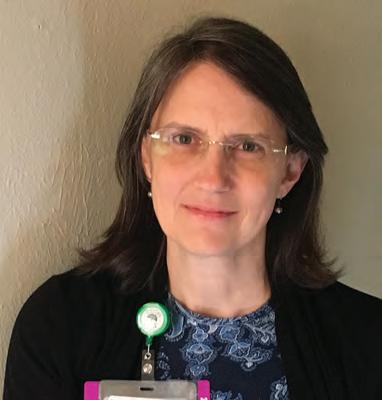
but also exhilarating,” she added. “Going back to school in my 40s was very challenging, but luckily I had a very supportive and wonderful husband who picked up the slack with our parenting jobs and kept the house going.”
“From there, my new career path just started to roll along,” she said. “I was very interested in what happened to my patients after I left them in the emergency room. I also remember how impressed I was with the nursing staff when my younger son went to the hospital multiple times for his epilepsy over the years.”
She now spends her days treating patients at a geriatrics practice in Sleepy Hollow.
“I love being in that environment. Every day is different and I am always learning,” she shared. “Before I was working with numbers all day, but now I’m working with people all day, and it’s so much happier for me that I may be able to help someone and make a difference in their lives.”
While assisting her husband of 37 years, Peter, with his performing arts nonprofit, the Anywhere Theatre Company, in Tarrytown, New York, Royston has even found time to return to her first love: acting.
“I did one show a few years ago, ‘Dracula and the Theatre of Doom,’” she said. “It was scary to restart but was a lot of fun.”
That can-do attitude was born at 49 Clinton. While she reminisces about her days in Phoenix, Dohters and Glee Club, she reflects on her life today.
“I was completely influenced by my education at Masters,” Royston said. “It gave me a great sense of self, and I always felt strongly that it didn’t matter what I did as long as I did the best that I could.”
ARCHITECTURE
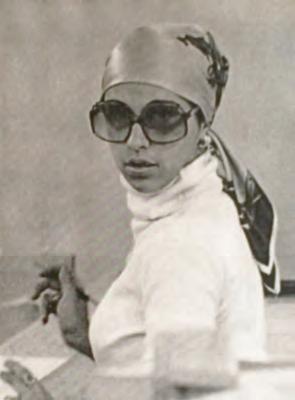
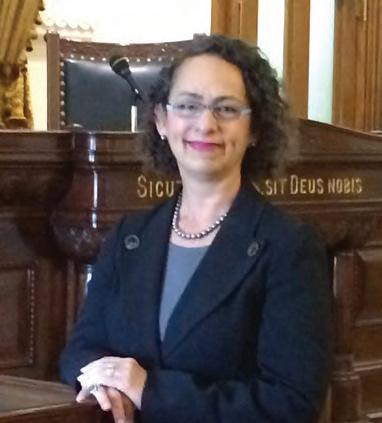
LEFT: Cortes Mares as a first-year Cornell architecture student BELOW: Standing before the Texas Supreme Court bench
ADVOCACY
But as Cortes Mares reflects on the path that brought her to her current role as an assistant county attorney in Bell County, she sees a clear throughline — independence, philanthropy and a school motto that continues to resonate: Do It With Thy Might.
Cortes Mares arrived at Masters through A Better Chance, a scholarship initiative that gave high achieving students from underserved communities the opportunity to attend independent schools.
“I had skipped two grades, so I was 13 when I started and 16 when I graduated,” Cortes Mares said.
An only child, she quickly embraced boarding life: “I loved being surrounded by so many other girls. We bonded deeply, and we’re still in touch today.”
Her three years at 49 Clinton Avenue were full of activity and leadership. She served as president of the Spanish Club, and participated in several student clubs, including the Social Committee, Zetetics, and was a student representative on the Disciplinary Committee, which may have sparked her interest in law.
WHEN YOLANDA CORTES MARES ENTERED THE MASTERS SCHOOL IN TENTH GRADE, SHE COULDN’T HAVE IMAGINED THAT HER JOURNEY — FROM ART STUDENT TO ARCHITECT TO ATTORNEY — WOULD LEAD HER TO ADVOCATE FOR CHILDREN AND FAMILIES IN CENTRAL TEXAS COURTROOMS.
Art, however, was her first passion. She vividly remembers setting up a large three-dimensional project in the basement of Estherwood. “One of the art teachers, Mr. Vranesh, helped me stretch this huge canvas across two construction horses,” she said. “After he and Mr. Blizard saw me working on my project, they gave me a key to the art studio so I could work there anytime. Can you imagine a high schooler with a key to the art studio? They trusted me.” That trust and independence, she said, became defining features of her education.
When it came time to apply to college, Cortes Mares envisioned herself at Pratt or Rhode Island School of Design, continuing in the arts. But a serendipitous phone call changed her trajectory.
“One night I got a call in the dorm from the dean at Cornell,” she recalled. “He said they’d misplaced my application, but they really wanted me to come and study architecture.” Cortes Mares consulted with Headmaster Hugh Silk who encouraged her to choose Cornell and take advantage of the opportunity to attend an Ivy League university.
As she was preparing to graduate from Cornell with a bachelor of architecture, she read an article in Time magazine noting that Texas had the highest rate of construction in the country. “That was it,” she said. “I packed my bags and went where buildings were being built.” She wanted her designs to be built and not just enter design competitions.
She landed in Houston, interned for several different architects and then joined CRSS, Inc., an architecture, engineering and construction firm, as a design architect. For five years, she worked on the design of large commercial projects, including research and development facilities and corporate headquarters, under the leadership of prominent architect Paul A. Kennon.
Cortes Mares found herself needing something to do after work. “I didn’t know anyone when I first arrived in Houston,” she said. “I didn’t even have a television. So I decided to take a class.” She enrolled in law school at night. “It took me four years to finish a three-year program at the University of Houston Law Center,” she says. “I worked all day, sometimes traveled with the design team, and studied all night.”
When she passed the Texas Bar, Cortes Mares concurrently held two professional licenses: architect and attorney. A friend called her one day and said, “‘Call in sick and come with me to the courthouse. It’s so much fun!’ I’d never called in sick before, but I did. And that day, I got sworn in at the courthouse and met my first client. I was hooked.”
That moment proved to be a turning point. Not long after, the president of CRSS, Inc. — whom she regarded as a role model — died unexpectedly. Cortes Mares began to reflect on her career and her future. The
loss, coupled with her growing interest in the law, led her to a realization: It was time to leave architecture behind and do something different.
She turned to law full-time. She practiced construction and commercial litigation, criminal defense, family law and mediation, and was even a municipal judge, before finding her true calling in child welfare law, advocating for children and parents in child protective law cases in the courtroom and in appeals.
In her current role, Cortes Mares prosecutes child welfare cases. “Bell County: It’s not Manhattan,” she said. “This is where all of the important things happen with child welfare law.” She recently handled 14 hearings, including two trials, in a single day.
Her advocacy isn’t confined to the courtroom. It’s a calling that follows her wherever she goes, even out to open water. When she’s not practicing law, Cortes Mares channels that same passion into her favorite pastime: sailboat racing. “I like to encourage women to sail,” she said. “I’ve always been a champion for women in sailing.” She admits it’s an
“
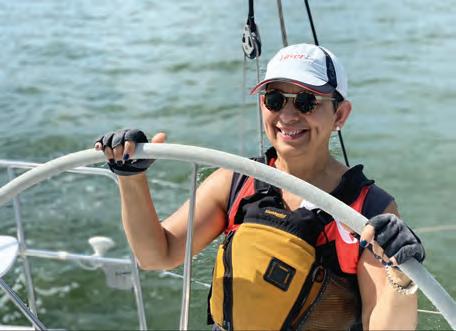
extension of her Masters experience. “It’s all about giving women self-confidence and encouragement.” She has traveled the country organizing regattas for young women. “It’s like teaching girls how to be CEOs.” She is a certified US Sailing Club judge and, as a member of the protest committee, hears violations of the Racing Rules of Sailing at regattas.
For Cortes Mares, the drive to empower others is something she’s carried with her since Masters. “Being on scholarship taught me gratitude and the importance of giving back,” she said. “How wonderful that somebody made that experience possible for me.”
It is a lesson that continues to guide her as her career evolves. “Now I’m a government lawyer and I can’t think of a better thing at this point in my career to do than to give back in this manner… and I love that.”
Being on scholarship taught me gratitude and the importance of giving back.
How wonderful that somebody made that experience possible for me.
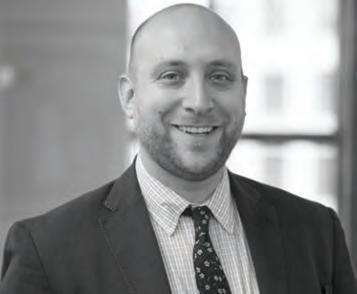
LEFT: Seth Samuels ’00 during his career as a political data scientist
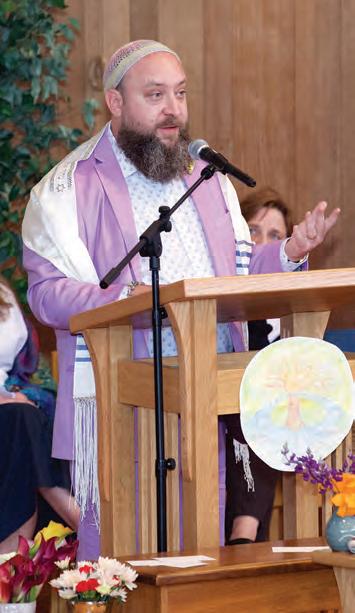
BELOW: After two years of studying at the Chaplaincy Institute, Samuels was ordained in May.
INTERSPIRITUAL MINISTER
Before becoming an interspiritual minister, was deep in the world of political data analysis.
FOR MANY YEARS, SAMUELS WAS STEEPED IN THE WORLD OF POLITICS WITH ONE GOAL: LEVERAGING DATA TO EFFECT MEANINGFUL SOCIAL CHANGE. NOW, HE IS AN ORDAINED INTERSPIRITUAL MINISTER WORKING TO BUILD CONNECTION AND COMMUNITY. TO HIM, THE TWO AREN’T SO DIFFERENT.
THE FIRST CHAPTER
Our story begins at Masters — specifically, in AP Statistics with Ms. DiGuglielmo (now Ms. Dennis).
During that class, Samuels, who was known among his classmates as an actor and musician, discovered that he enjoyed crunching numbers to uncover hidden insights. “I loved the way data and stats could be used to provide context to strategic questions and help make smart decisions,” he said.
A few years later, in college, the United States invaded Iraq. For Samuels, that moment was formative: “The urgency of political action was pretty clear then, as it is now.”
Political data science was a natural way to marry his interest in statistics and his desire to make a positive difference. “Campaigns and elections have an enormous impact on people’s lives, and it seemed like an opportunity to do some good in the world,” he said.
After graduating from Wesleyan University with a B.A. in psychology and UC Berkeley with an M.A. in political science, he began working on Democratic Party campaigns — including President Barack Obama’s 2012 reelection campaign. He was a member of the sophisticated data analytics operation dubbed “The Cave,” based in Obama for America’s Chicago headquarters and the subject of a Time magazine cover story. After the campaign ended, Samuels moved on to senior roles at D.C.-based political data analytics and consulting firms.
He began to see that, even within the Democratic Party, “There are a lot of competing voices and entrenched interests, and convincing people to change their approach is hard. I thought (more than a little naively) that the rise of data would mean that evidence wins out. But as any statistician can tell you, evidence can be interpreted in many different ways, so two different people can look at the same data and draw different conclusions, which creates a lot of room for our incentives to color our understanding of things.”
That realization — that the clarity he sought in data was being obscured by entrenched interests and competing voices — coupled with the reshaping of campaign finance laws in the wake of the 2010 Citizens United v. Federal Election Commission ruling, frustrated Samuels. “I wanted to be part of a movement, and instead I found myself part of an industry,” he said.
Out of that dissatisfaction came one of the core personal beliefs Samuels holds today, which underpins his ministerial work: “Our sincere and deeply held beliefs are shaped by our environment and our perspective.”
Samuels’ decision to pursue a path as an interspiritual minister was not the a-ha moment one might expect. Rather, it was “an accumulation of small experiences,” he explained.
As Samuels was growing disenchanted with his work in politics, a friend suggested he draw on his performing arts background
and start a YouTube show, which he did.
“At some point, I realized that the message I was trying to put out there had a lot of overlap with a number of different religious philosophies,” Samuels said. “I’m not religious, but I realized that every religion that has ever really caught on (and probably many that didn’t) grew out of an attempt to figure out how to navigate the complexity of life. And they all have some really profound truths. So I wanted to learn more about how to tie them together, and I ended up putting my show on hold and going to seminary.”
Samuels spent two years studying at the Chaplaincy Institute, an online and largely asynchronous seminary based in California. The courses covered a broad range of topics: theological literacy, global spiritual traditions, leadership and ministry, and spiritual psychology, among others. For his 400-hour practicum, he worked on his podcast/YouTube show, “The Good World,” (goodworld.love) which has a simple, albeit challenging, mission: “Let’s build a world that is good!”
The ordination ceremony took place in Berkeley, California, in May. “It was a really beautiful experience,” Samuels recalled. “Each of the 11 people being ordained that day gave a short homily, then received some blessings from teachers and the community. Two of my friends from Masters — Caity Johnson-Gottlieb ’01 and David Heidelberger ’01 — both made it to the ceremony, which was really special.”
These days, Samuels has been volunteering with a local interfaith social justice organization and working on his show. “I don’t have a ’typical’ day,” he said. “It just depends on where I’m directing my energy that day.”
Samuels admits that, at first glance, going from political data science to interspiritual ministry might appear to be completely divergent paths. But he sees his trajectory as an evolution of his steadfast value of a world where everyone matters.
“Social change takes much more than
winning elections — which is not at all to diminish the enormous importance of winning elections,” Samuels explained. “But the kind of change I believe in also needs lots of people to stand up in public and do their best to visibly live a life of love and connection and community.”
Samuels readily acknowledges that “big changes aren’t easy.” And during his own transition, he has drawn on lessons he learned as one of the first boys to attend Masters when it became a coeducational institution in 1996.
“I remember being aware of how emotionally fraught that time was for a lot of the students who had been there for years,” Samuels said. “Part of what that taught me is that any time you’re making a big change, you’re losing some things and gaining some things. And it’s always tempting to tell ourselves a story where everything new is good and everything we’ve given up is bad, or the opposite, but the reality is always more complex. And it’s important to hold multiple truths, to grieve what’s lost even as we’re making something different, but to still make an energetic commitment to whatever it is we’re doing — to do it with our might, we might say.”
Another value he carries from Masters is the importance of a diverse community, where, he said, “a lot of different voices are not just represented, but elevated.”
Samuels recalled seeing students, faculty and administrators from many backgrounds and identities in leadership roles. “I saw how powerful it was to understand that this is a place where everyone belongs,” he said. “And even recognizing that people won’t always feel that way in practice, that sometimes we’ll fall short in that goal, that sometimes I’ll personally fall short too, it’s still a really important aspiration.
“That’s really become the core of my value system and my message as a minister: That when our community is not just inclusive but expansive, when everyone matters and can express their truth, we’re all richer for it.”
Changing careers has its challenges, but for these educators, taking the leap turned out to be the right next step.
ELLEN COWHEY, director of the Journalism Collaborative and co-advisor of Tower Broadcast News and Tower Press, just celebrated 21 years as a member of the Masters faculty. Her “second chapters” could fill a book.
“Teaching is my fourth career,” Cowhey explained. “My first career was in book publishing in Simon & Schuster’s Pocket Books division, where I worked in editorial on paperbacks like self-help books and sports bios. The first time my name appeared in a book’s acknowledgements was in ‘The Late Night With David Letterman Book of Top Ten Lists,’ and that was really fun.”
Restlessness got the best of her, and she quit her job to return to a field she explored in college: costume design. She took courses at the Fashion Institute of Technology, worked at a costume shop in Manhattan and was a wardrobe supervisor — and occasional designer — for films, TV and theater.
While working on a Stephen King film, she realized she wanted to help people in other ways — by doing good. She turned the page on costume design and moved to Thailand to work with Maryknoll, a Catholic nonprofit mission organization. During her five years overseas, she taught English as a second language and worked with people living with HIV. She returned to the U.S. as an alumni coordinator for Maryknoll, but she missed teaching.
“I loved connecting with people in the field, but I didn’t love the administrative work. I’m much more of a people person,” she said. Around this time, Cowhey was introduced to Jane Rechtman, a member of Masters’ History and Religion Department, which was looking for an upper school world religions teacher/ sabbatical replacement. After Cowhey’s first year, she was offered a full-time position teaching history and religion as well as journalism.
When a position opened up to advise Tower, the student-run newspaper, Cowhey jumped at the opportunity. How could she not — she had studied journalism at Bethany College in West Virginia and was the editor of the college newspaper (also called Tower).
“In costume design, you are working with a big group and it works as one big machine,” Cowhey said. “With Tower, it’s the same thing. That orchestration
of many different parts coming together in all of that chaos and being able to build community and make sure people recognize that every different role is really crucial, important and valued.”
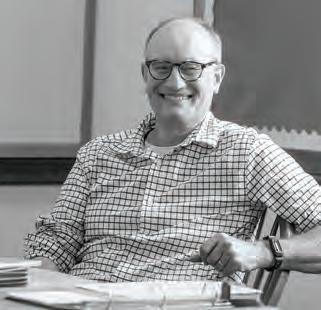
Like Cowhey, upper school history and religion teacher ERIC SHAPIRO was drawn to teaching. “It was always my passion,” Shapiro said. After college he moved to Brazil to teach English, immersed himself in the culture and became fluent in Portuguese. “With a colleague I met there, we set up a business for Brazilians who wanted to study in the U.S.,” Shapiro said.
That passion took a detour after he returned to the U.S. and decided to attend law school: “I ended up working at a big New York law firm in their tax department,” he said, “and did that for a couple of years, transferred to a smaller firm in Connecticut, and at the end of that period I realized that teaching was what I’d always loved.”
While substitute teaching and pursuing a degree at Manhattanville College (now Manhattanville University), Shapiro filled in for Masters upper school history and religion teacher Colleen Roche while she was on maternity leave. He returned to 49 Clinton when there was a full-time opening.
“In Brazil, I was always reading history for fun, and it seemed like a natural fit even though I wasn’t a history major,” Shapiro said. “I majored in philosophy, but I have to give my father a lot of credit. He was a doctor, but we traveled a lot. He read a lot of history, Jewish history, and we were always visiting important sites.”
The transition from practicing law to teaching history was a natural one. “Teaching U.S. history aligns pretty clearly with what I do now, and I feel like I can help students,” he shared. “I certainly don’t give legal advice, but I can help them to have a deeper understanding of some of the legal issues and the Constitution.”
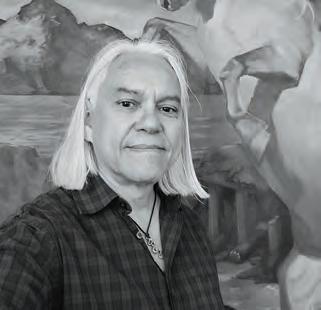
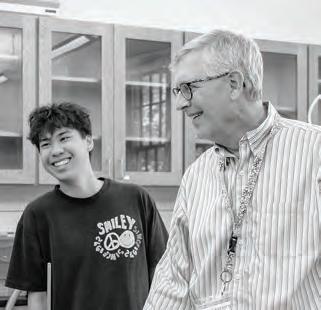
Shapiro has been at Masters for 16 years and is still able to lean into his previous global experience: “One of the things that I have loved about Masters is having international students on campus. I understand what it’s like to live in a country where it’s not your first language.”
That same perspective resonates with middle school visual arts teacher VICENTE SAAVEDRA. Born in California and raised in Venezuela, Saavedra returned to the U.S. at 18 to attend college and found himself in the uncomfortable position of having to relearn English.
In those years, he often turned to painting as a refuge. It was a natural extension of the art and music that surrounded him throughout his childhood in Venezuela. He went on to study French culture, political science and international relations at the University of Massachusetts Boston, and earned a master’s in French politics at New York University. For 15 years, he leveraged his academic background, serving as a research analyst in global investments
with such firms as Credit Suisse, AIG and Chase. Even as Saavedra immersed himself in the world of finance, he remained devoted to art, continuing to study realism, portraiture and figurative painting.
“I was in a constant struggle,” Saavedra reflected. “I didn’t even study finance, and if I wanted to continue in this career, I would have had to go back to school: business school."
Saavedra was at an impasse. He said, “During my last five years while working in global investments, I was thinking: How do I change? How do I get out of here?
And that was when I realized this is not what I want to do. This is not who I am.”
After the financial crisis in 2008, he turned his creative outlet into a fulltime career. In 2010, he opened the Art Academy of Westchester in Dobbs Ferry, teaching artists of all ages, a pursuit he continues to this day. That experience eventually brought him to the Middle School at Masters, where he has spent the last 12 years inspiring young artists.
response in law enforcement regarding why they wanted to be on the job,” he explained. “When I became an educator at Masters, I saw this as a founding principle of Miss Masters, and I viewed my role as just that. The only difference is in the people I serve.”
Thirteen years ago, Tamucci was hired at Masters to take over for retiring middle school humanities teacher Ray Johnson, who had been his teacher at Parsons Elementary School in Harrison 40 years ago. When Johnson left the Harrison School District, he taught at Masters, and the two kept in touch.
“Since we both worked in Harrison, we would chat, and he would inquire about how things were going with my master’s degree in education at Manhattanville College,” Tamucci shared. “Our conversations continued when he got the job at Masters. We speculated that when he retired, I might replace him at Masters and that’s precisely what happened! I often see my students as possible replacements for my position someday.”
— Mark Tamucci, middle school humanities teacher
Shepherding a young person down the right path and helping them to see the light is a rewarding experience. ” “
“It was just meant to be. I don’t know if you call it luck,” Saavedra shared. “It’s just something that I wanted so badly for so many years, and I was shocked when it happened because I wasn’t even looking, and it just came.”
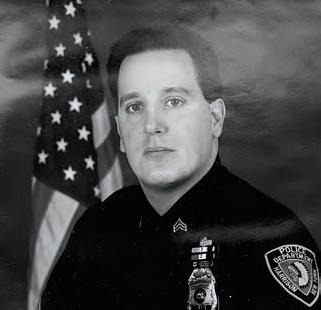
Describing it less as a pivot but a serendipitous return to his first passion, middle school humanities teacher MARK TAMUCCI knew teaching would be his next career after serving 21 years as a police officer for the Town of Harrison Police Department.
“As a cadet at the police academy, I heard being a power for good as the primary
Tamucci’s time as a youth officer and D.A.R.E. (Drug Abuse Resistance Education) instructor also provided him with experience working with and teaching young people.
“Working in law enforcement teaches you to expect the unexpected,” he said. “While the consequences are less dire, middle school students seldom perceive their problems that way. Shepherding a young person down the right path and helping them to see the light is a rewarding experience.”
That same sense of purpose led upper school physics teacher JOHN BOYER to transition easily to the classroom from his science lab.
“My research at Nevis Laboratories involved a long-term project, concerning high-energy cosmic ray physics, which had reached a natural stopping point,” Boyer said. “I felt the need for a change, so rather than sign on to a new project, I decided to look for something else. Teaching was an alternative that seemed like it would be a good fit for me.”
Nine years ago, Boyer landed at Masters. “Since I was working in the field of physics as a scientist, it kept that part of my education fresh,” he explained. “It also provides me with a perspective I can share with my students who might be interested in following a similar path.”
After three pivots, (Cowhey) doesn't regret trading her past careers for one she feels is more meaningful.
Teaching has allowed Boyer to continue his enthusiasm for problem solving: “I enjoy both the problems that arise in the delivery of my content, and the problems about how best to get my students to be able to solve their own problems.”
He was also able to tap into his love of squash when a colleague encouraged him to coach the boys varsity team six years ago. Boyer, who got serious about the sport in graduate school, says he enjoys “the interactions with the (Masters) players, especially being on the court and hitting with them.”
So far, so good, says the former scientist turned educator: “Being a teacher is a
very social job. I hadn’t realized how isolated I felt in my previous career. I treasure my interactions with my students and colleagues.”
Cowhey, who has worked with legends including actor James Earl Jones, agrees. After three pivots, she doesn’t regret trading her past careers for one she feels is more meaningful.
“What I love about teaching is the energy and enthusiasm, seeing my students go out in the world and do these great things toward being ’a power for good,’” she exclaimed. “Now that is super rewarding.”
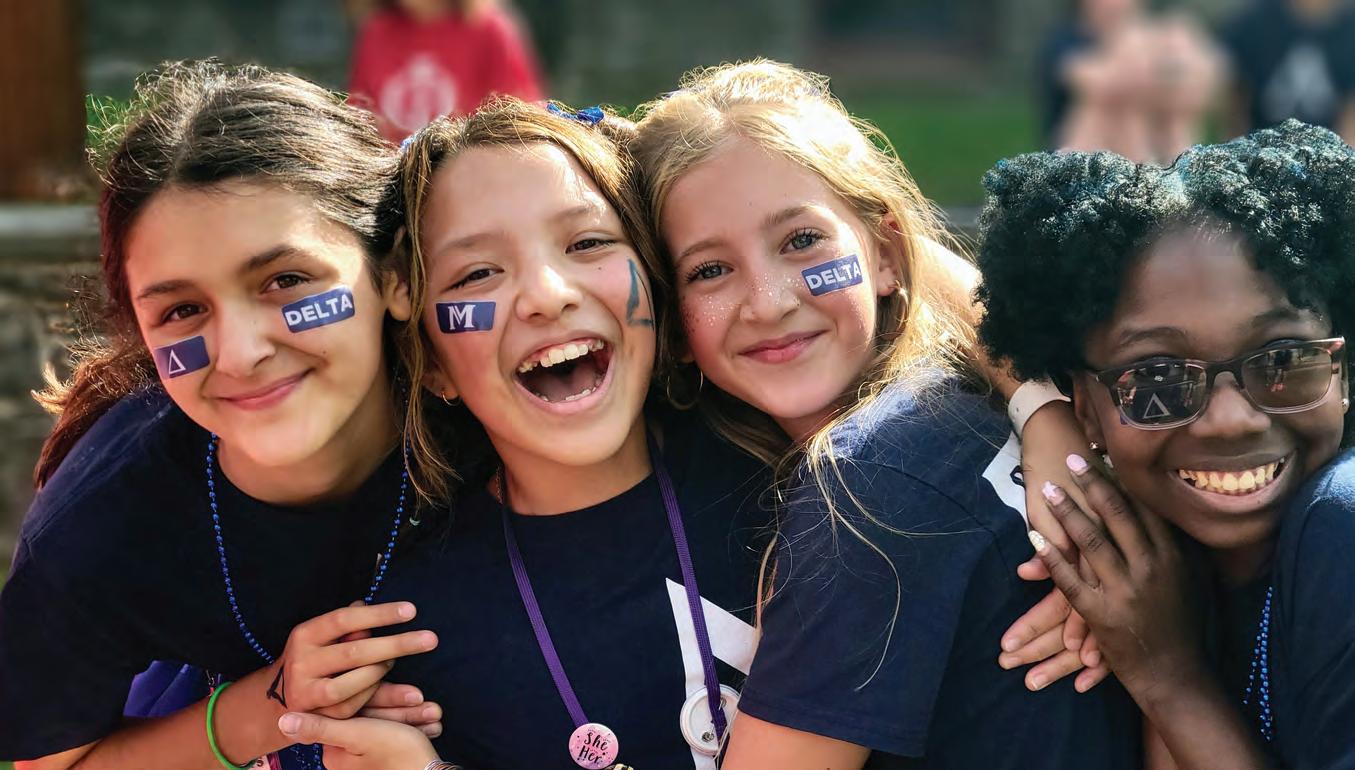
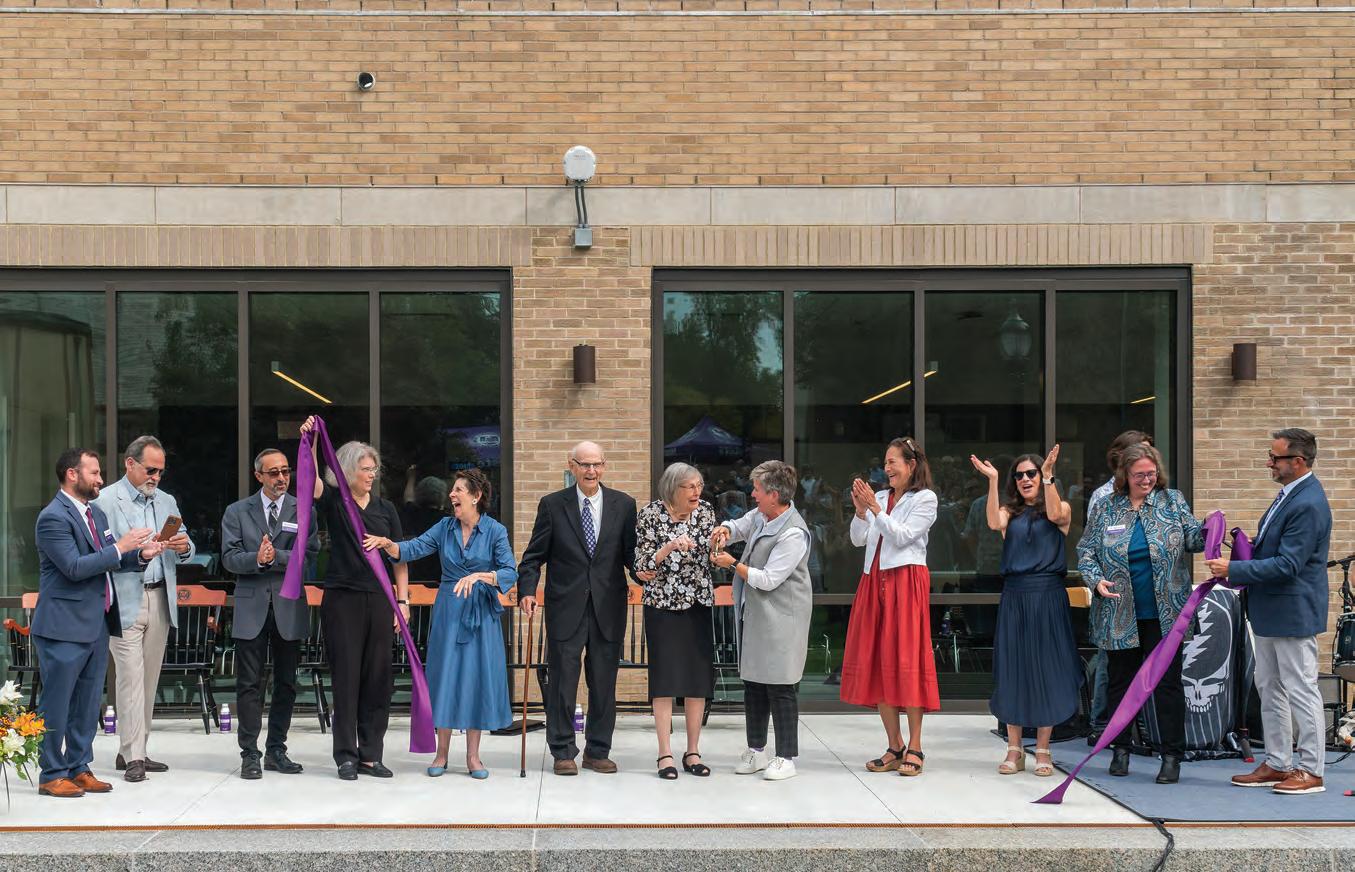
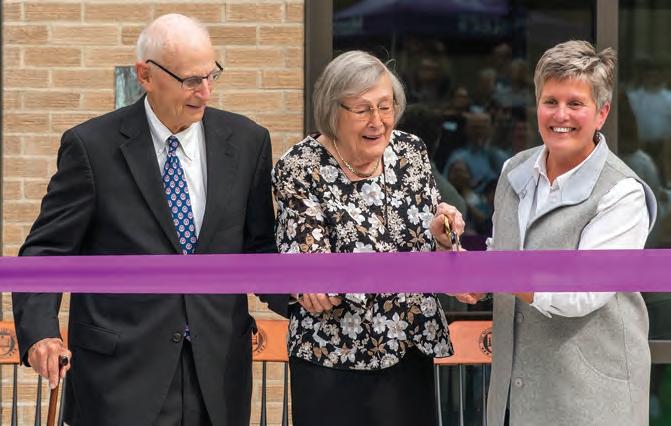
On September 27, the Masters community celebrated the ribbon-cutting and grand opening of Follett Hall, the School’s beautifully renovated performing arts building — a space where collaboration creativity, and expression will continue to flourish.
Follett Hall’s story is one of remarkable transformation.
Originally constructed in the 1950s as a dining hall, the 20,000-square-foot building, formerly known as Strayer Hall, pivoted in the 1980s to become home to performing arts classrooms.
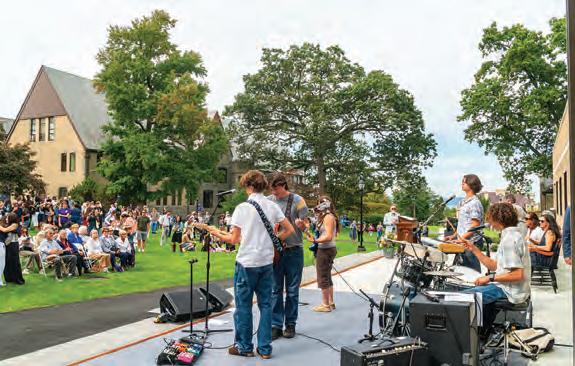
Four decades later, it has been reimagined once again as part of the School’s historic Our Might campaign this time as a center for music and dance instruction and performance. The architectural firm Marvel led the renovation and introduced purpose-built, acoustically isolated spaces for practice and teaching, equipped with modern systems throughout. Follett Hall’s location on the quad also created the opportunity for an informal outdoor performance patio, seamlessly connecting music, movement and community life on campus.
During the ribbon-cutting celebration, Head of School Laura Danforth; life trustees Susan Follett Morris ’57, after whom the building is named, and Edgar Masters H’98; former Board Chair Edith Chapin ’83; and Department of Performing Arts Chair Jen Carnevale reflected on the building’s legacy and the bright future of performing arts at Masters.
“The Masters School has been a part of my life for so many years, and it is a privilege to be a part of its future,” Morris said.
Danforth also looked ahead. “This building reflects a bold vision for our future and a deep commitment to the arts,” she said. “It will be a place where students challenge themselves, find joy and share their talents with our community.”
Moments later, Danforth’s words came to life when student performers filled the new performance patio with music and movement, including the a cappella group Dobbs 16, FUM the band and Masters Dance Company, which delighted guests with a flash mob.
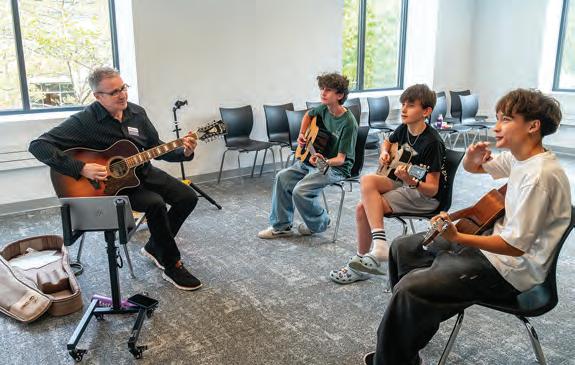
Following the ceremony, the celebration continued inside Follett Hall with guitar workshops, recording sessions and informal jam sessions.
Jack Barek ’29, a member of The 1877: The Band Edition, took part in one of the guitar workshops and couldn’t hide his enthusiasm for the new space. “I love Room 218 — the atmosphere, the view and especially the acoustics,” he said. “I also love all the new instruments, especially the guitars — the Telecaster and the Jaguar — with the Jaguar being my favorite.”
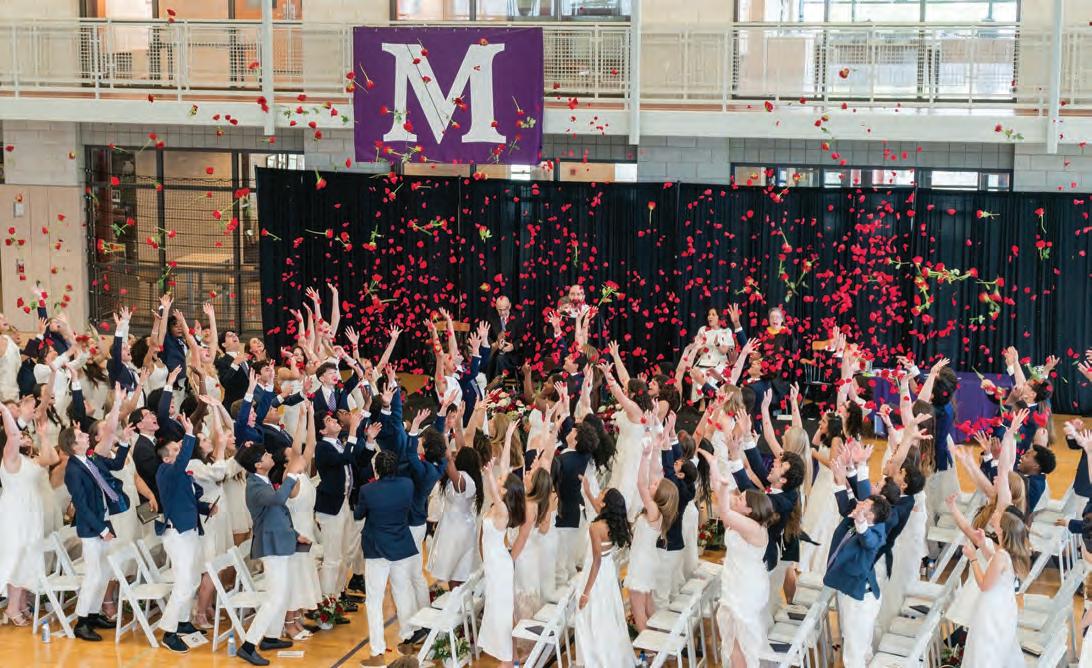
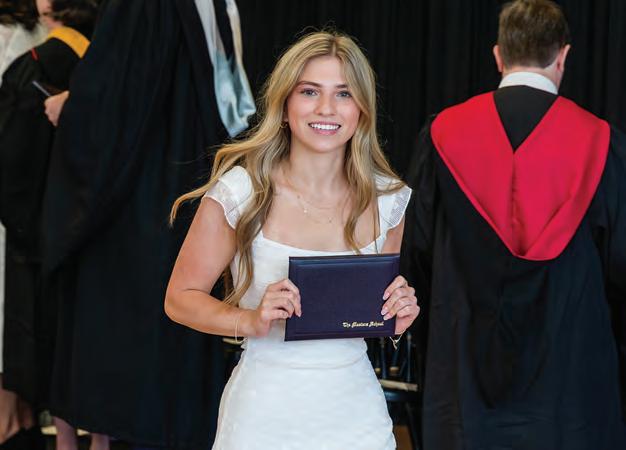
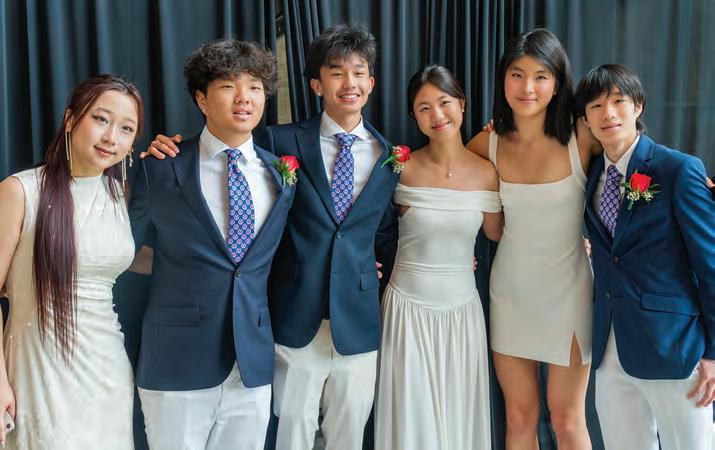
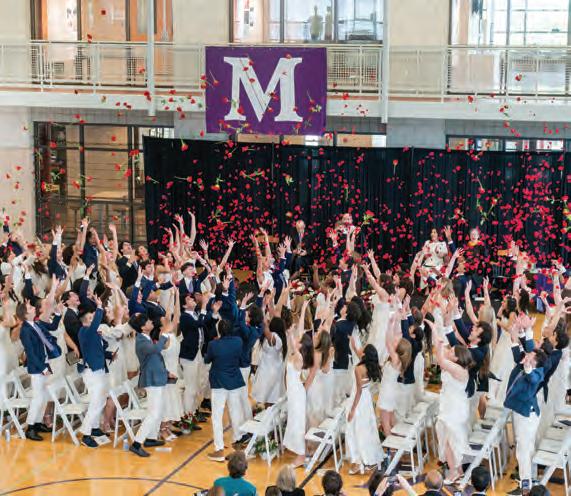
On May 31, members of the Class of 2025 embarked on the next step of their journey, savoring every moment of Graduation. In his remarks to the class, Co-President Velizar Lazarov challenged his peers: “Who do you want to be? What do you want to be remembered for?” Co-President Sophie Moussapour reflected on the class’s spirit of community and cherished Masters memories. Head of School Laura Danforth encouraged graduates to witness and share both beauty and justice in the world.
Congratulations, Class of 2025.
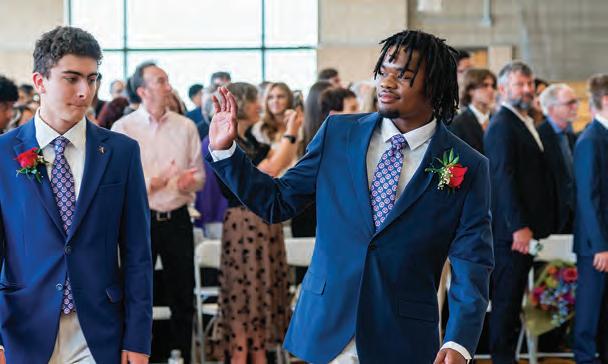
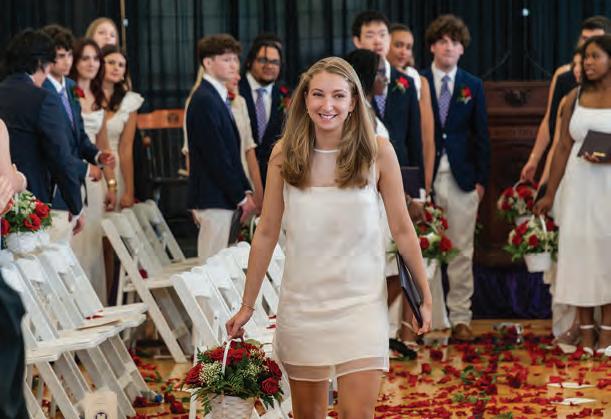
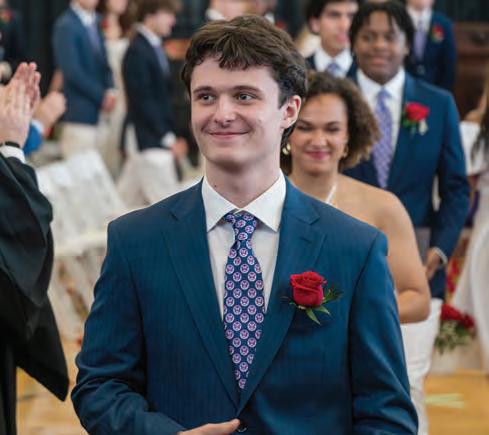
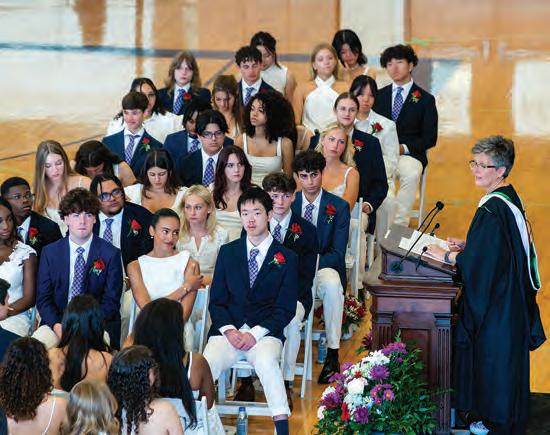
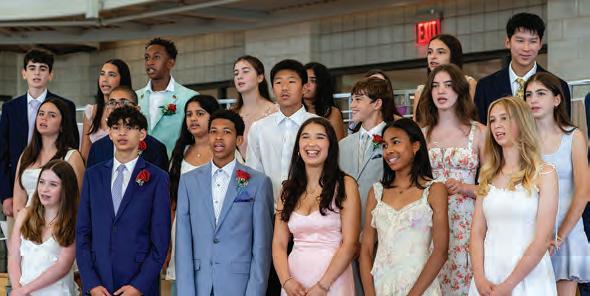
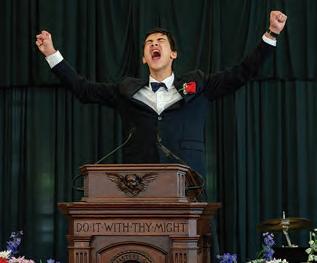
At the Middle School Graduation ceremony on June 6, the prospect of becoming ninth graders had the 56 members of the Class of 2029 “thinking (and singing) about tomorrow.” The sentiment of hope was perfectly captured when the eighth graders sang “Don't Stop” by Fleetwood Mac. As the class speakers’ moving and inspiring speeches revealed, however, there was also time to stop and reflect on the memories they made before looking ahead.
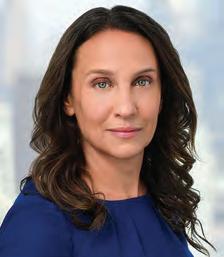
Lauren Aguiar is a partner and the chief legal officer & global general counsel of JAB Holdings, an investment firm based in London and New York. Prior to joining JAB, Lauren spent nearly three decades as a practicing lawyer at Skadden, most of those years as a partner in the Complex Litigation and Trials group. While at Skadden, she represented corporations and individuals in a wide variety of high-profile commercial, fiduciary and corporate disputes across a range of industries. She was a member of Skadden’s Policy Committee and Partnership Selection Committee and served as the president of the Skadden Foundation for many years.
During her career, Lauren has received numerous recognitions and awards, including a top ranking in Chambers USA, America’s Leading Lawyers for Business; Legal 500 Leading Lawyer for Commercial Disputes; Lawdragon’s 500 Leading Global Litigators; The Best Lawyers in America; Benchmark Litigation Star; and was named a Notable Woman in Law by Crain’s New York Business.
Lauren is the incoming chair of the board of directors of New York Lawyers for the Public Interest and a trustee of the Skadden Foundation. She serves on the board of directors and executive committee of Covenant House International, an organization that supports young people experiencing homelessness, including survivors of human trafficking and young families.
Lauren has a B.A. in anthropology and government from Connecticut College and a J.D. from NYU School of Law. She lives with her partner, Joe; her son, Mason ’28; and their chocolate Lab, Boone, in Harlem and Stone Ridge, New York.
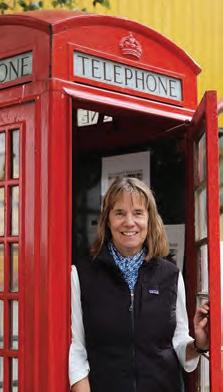
Parke Anderson is an ex-officio member of the Board and president of the Parent Association, a role she has held since August 2023. Prior to becoming PA president, Parke was a member of the PA Executive Committee as a Class of 2027 representative and as co-vice president for the Middle School. She also serves as an admission ambassador and mentor.
Upon moving to New York, Parke, a Florida native, worked as a production coordinator for Blue Sky Studios, managing the workflow for the animation department and consulting on overall pipeline. When her children started elementary school, Parke served as both publishing center chair and yearbook chair for their local public school and was also an active parent volunteer at Logrea Dance Academy and the Westchester Ballet Company. Parke is a licensed real estate agent with and lead administrative support for The Westchester Living Team at Compass.
Parke graduated summa cum laude from Southern Methodist University in 2000 with a degree in mechanical engineering and earned a master’s degree from Texas A&M, specializing in thermodynamics and material science. While at Texas A&M, Parke participated in research at NASA’s Center for Space Power, studying the behavior of ceramic materials to be used in spaceflight power systems.
Parke and her husband, Matt, reside in Chappaqua, New York, with their two children, Cora ’24 and Kate ’27.
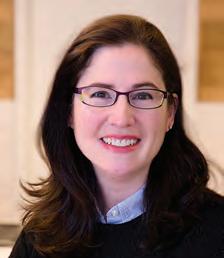
Sydney Shafroth Macy served on the Board of Trustees from July 2010 through June 2023, bringing to the role the expertise of a 40-year career in land conservation, including leadership positions at The Nature Conservancy and The Conservation Fund.
A proud member of a multigenerational Masters family, Sydney followed in the footsteps of her mother, Diana Holland Shafroth ’46, and aunts Lorna Holland Westfeldt ’48 and Penny Holland Foster ’57. Her sister, Tracey Shafroth ’73, and cousins Elizabeth Jones Dennis ’65 and Katharine Foster ’84 also attended Masters.
She has served as a class agent and worked on the 2010 Reunion Scholarship Committee. At Reunion 2010, Sydney received the Eliza Bailey Masters Fellowship Award, which is given to honor alumnae/i who exemplify Miss Masters’ philosophy through outstanding service to their community. As a trustee, Sydney was an active member of the Development Committee and chaired the Audit Committee. She most recently led the charge organizing and overseeing the 1970 class gifts for their 55th reunion in May 2025. She is also an Estherwood Society member.
Sydney earned a B.A. in environmental studies from Stanford University and lives in Boulder, Colorado, with her husband, Tom.
“It appears you like to lay down big blocks as an athletic director. What are you doing right now?”
That was the first phone call I received from Masters — and it sold me on joining this remarkable community. The chance to help revamp the School’s athletic program while also being part of the opening of the Fonseca Center was an opportunity I will always treasure. In a short time, we built more than just teams — we built a program. Together, we welcomed an outstanding group of coaches, shaped a thoughtful athletic requirement, and most importantly, created a culture that placed students at the center. Early on, it was the relationships we formed with neighboring schools and programs that truly laid the foundation. Those connections brought coaches, opportunities for our athletes, and families who quickly discovered what made Masters so special.
Even before the Fonseca Center opened its doors, we had a vision of how it could be a gathering place that elevated both athletics and community life on campus. The years
Chair of Visual Arts 1997-2017
I left Masters in 2017 to move to Boulder, Colorado, near my children (Katie LaMonte ’05 and Lauren LaMonte ’08) and their families. I love living in Boulder; I’ve always had a passion for the outdoors, and the hiking is spectacular!
that followed were deeply rewarding. Our teams captured NYSAIS, NEPSAC and FAA championships, and we celebrated a national championship in squash within just three years. Individual athletes reached extraordinary heights as well, earning U.S. National Squash titles, All-American honors, and competing at the college, professional and national team levels. Seeing their growth, both on and off the field, remains one of my proudest accomplishments. I still check in with Laura to hear about the program’s continued success, and it always makes me smile.
While our time at Masters was shortened by health challenges, both Lynne (who taught math and served in the residential life program) and I remain grateful for those years. After leaving, we settled in Florida, where I’ve continued to stay close to athletics, coaching the local high school boys’ soccer team, doing some substitute teaching, and now working with the athletic department on a leadership and captains’ program. Lynne went on to teach at a local private school until her retirement last year. We’ve also explored real estate projects, built a new home with the chef’s kitchen I always dreamed of, and enjoyed time with family and friends.
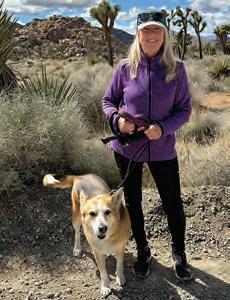
I taught photography and video part time in two schools until 2019, then retired from teaching to care for my ailing husband. I’ve maintained my studio practice at Artworks Center for Contemporary Art in Loveland, Colorado, where I also serve on the board.
I’ve been in several exhibitions along the Front Range, including two solo shows, and lectured on occasion. After Tony passed, I bought a small Winnebago and have been traveling the country (30 states so far!), sometimes with a friend, often alone with my furry companion, Rosie. Oh, and I’ve taken up djembe drumming! I’ve been a member of the Djembe Orchestra of Colorado, along with 40 of my best friends. We perform at farmer’s markets and breweries all around the county. I miss Masters and can hardly believe it’s been eight years!
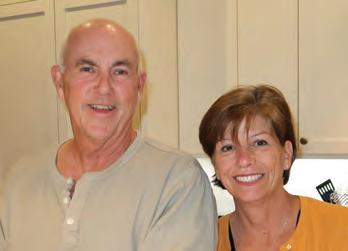
These days, life is full and joyful. I golf twice a week, play pool, paddle in the local springs and the Gulf, spend time with my boys and our dogs, and travel when I can. I haven’t bought that rocking chair just yet.
My time at Masters will always be one of the most meaningful chapters of my life. It was a place where faculty and students grew together, where big dreams took shape, and where lasting friendships were made. I will never forget standing by the fence outside Estherwood Mansion, overlooking Greene Family Field and the Hudson River, watching a game alongside my colleagues. For me, that view captures it all — the beauty of the place, the energy of the students, and the spirit of The Masters School.
Math Teacher, Associate Dean of Students, and Director of Residential Life 2012-2017
Tom left Masters in 2017 to pursue his M.A. in private school leadership and an MBA. After graduating from both programs with honors in 2019, he joined Gartner, Inc.’s strategy consulting arm, where he is now an associate partner in the State-Local Government and Education practice. In his six years at Gartner, Tom has supported institutions of higher education with their digital transformation initiatives, seeking to improve institutional services and experiences for students, faculty and alumni. While he admits to missing the daily interactions with students, he fills the void by teaching advanced counting to his baby boy, whom he and his partner welcomed in the spring of 2024.
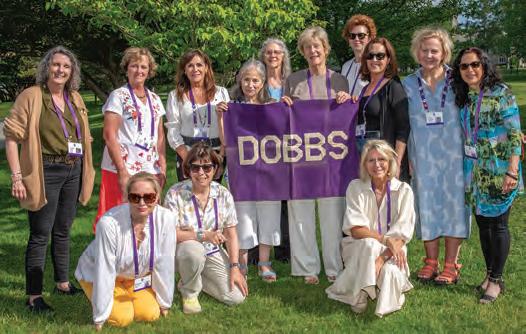
1. The Class of 1975 celebrated 50 years since graduating.
2. Fifty-five years and counting. Holly Tooker ’70 (left) and Leilee Weyerhaeuser ’70 continue to make each other laugh.
3. Board Chair Beth Nolan ’69 and Charles Wright enjoy the reunion festivities.
4. Lynn Pilzer Sobel ’71 (left) joins Head of School Laura Danforth in honoring Tracy Tang ’80, recipient of the 2025 Richmond Bowl.
5. Brandon Schneider ’15, Erin Kopf ’15 and Cormac Walsh ’15 (left to right) reconnect on Rosenberg Terrace.
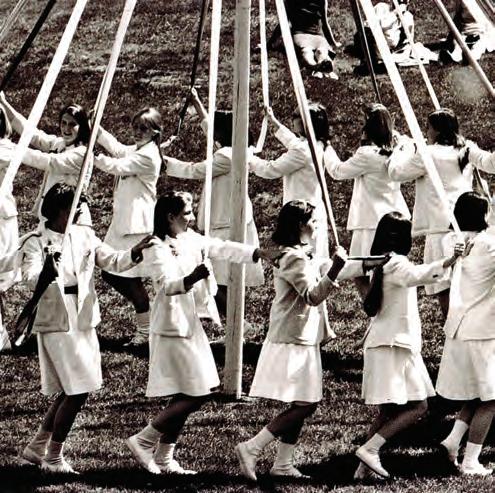
6. It wouldn’t be a reunion without the Maypole.
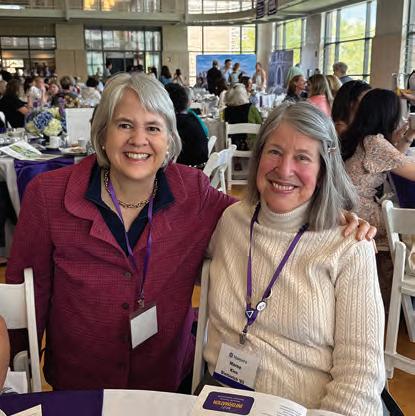
7. Leslie O’Shea ’85 and Marne Kies Dietterich ’65 connect at the Opening Brunch and Alumnae/i Awards Ceremony.
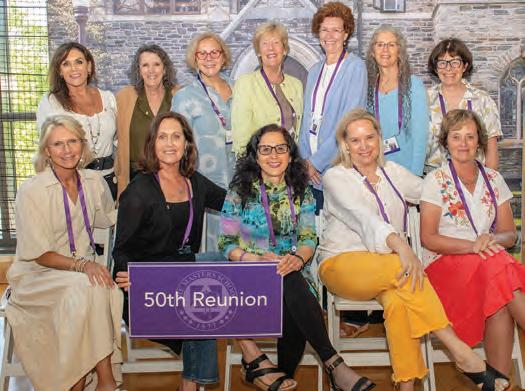
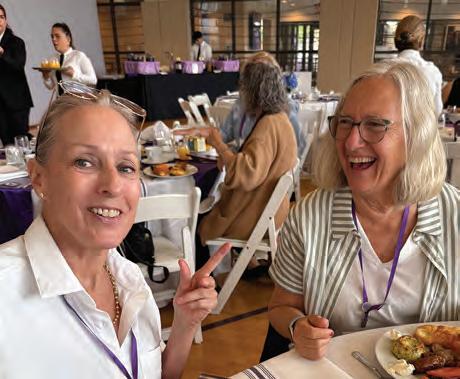
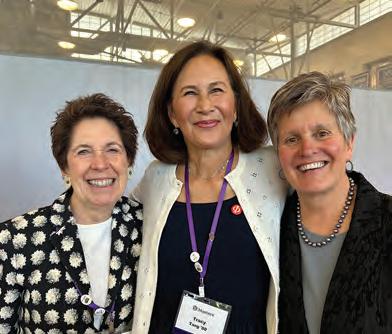
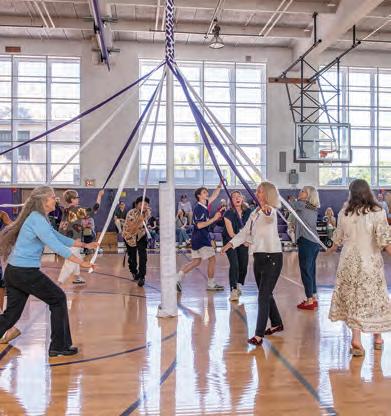
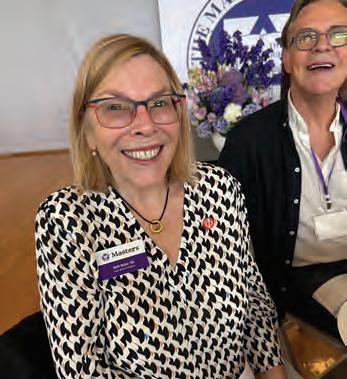
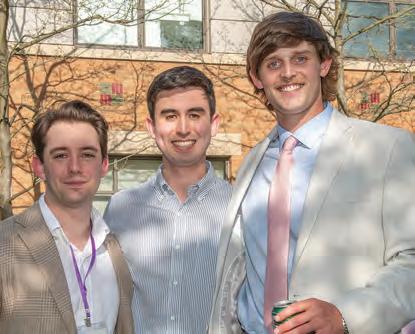
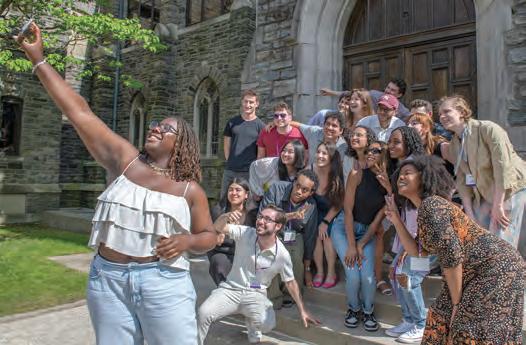
8. Cheers to the Class of 1985. Their reunion day kicked off with a festive Opening Brunch and the inspiring Alumnae/i Awards Ceremony.
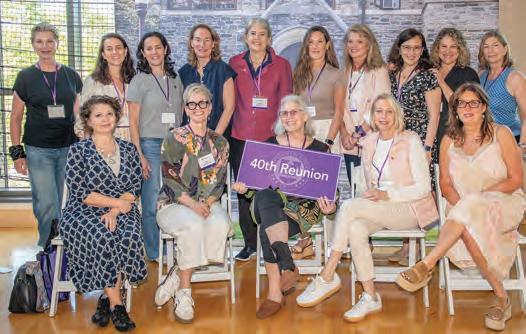
9. Celebrating 50 years with members of the Class of 1975
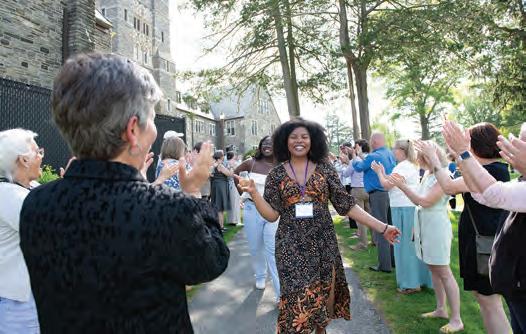
10. Faculty cheer on the Class of 2020.
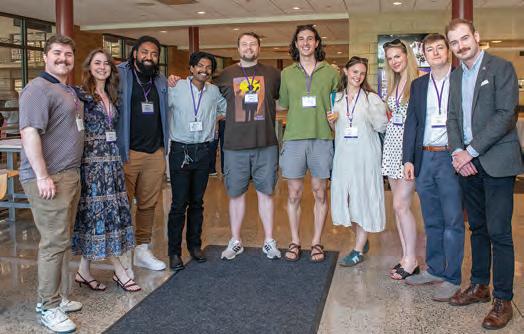
11. Members of the Class of 2015 are all smiles at the Wine and Cheese Reception.
12. The Class of 2020 celebrates on Graduation Terrace.
It is tradition at Reunion to honor members of The Masters School community who have distinguished themselves through service to the School, to its students, and to the world outside Masters.
Congratulations to the following award recipients.
The Eliza Bailey Masters Fellowship Award Nancy Wilkes ’70
The Anna Howe Faculty Award Richard Simon
The Richmond Bowl Tracy Tang ’80
The Maureen Fonseca Young Alumnae/i Award Claress Bahamundi ’23
Remember the feeling of receiving your diploma and hearing your classmates cheering for you?
The Dobbs Alumnae/i Association keeps that spirit alive, connecting generations of graduates since 1915. We're a network that celebrates your achievements, builds career connections and fosters lifelong friendships.
For many, joining the Dobbs Alumnae/i Association Board is a way to give back to the School that gave them so much — and to relive the magic of Masters.
“Masters changed my life,” says Emily J. Daly ’06, the Board’s vice president. “It set me on a career path that has spanned the performing arts, philanthropy, journalism and tech communications. It also gave me lifelong friends — and our kids are even now friends! But most importantly, Masters gave me a supportive community, and it’s an honor to give back to it now through the Board.”
The Board’s mission is to strengthen the alumnae/i community by bringing graduates together in person and online, celebrating their achievements and amplifying their voices and acting as a liaison to The Masters School Board of Trustees. It also plays a key role in organizing Reunion.
In the past year, in partnership with the Office of Alumnae/i Engagement, the Board has hosted a wide variety of events, both virtual and in person. Highlights included a happy hour in New York City for young alumnae/i; a virtual program on careers in Asia, hosted by school trustee Stacey Lacy ’93; book club discussions with alumnae/i authors; career mentorship panels; and numerous gatherings across the country and world.
We have also launched an Instagram channel, @mastersschoolalum, which is a space to celebrate alumnae/i accomplishments, share stories from Masters days and spotlight career milestones.
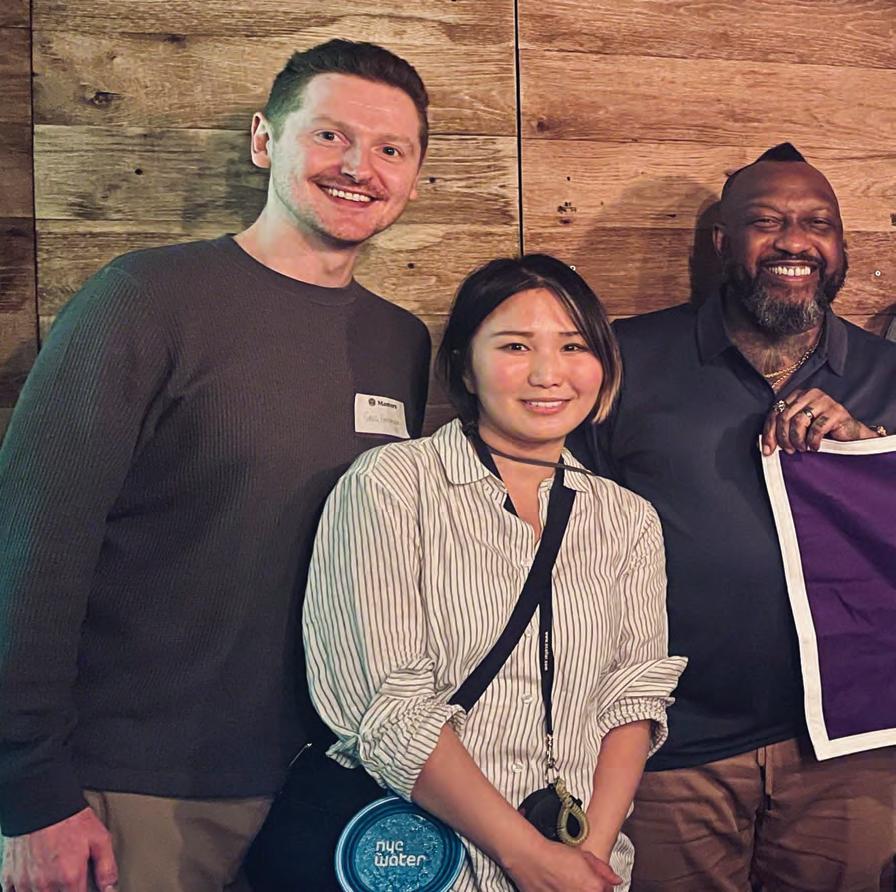
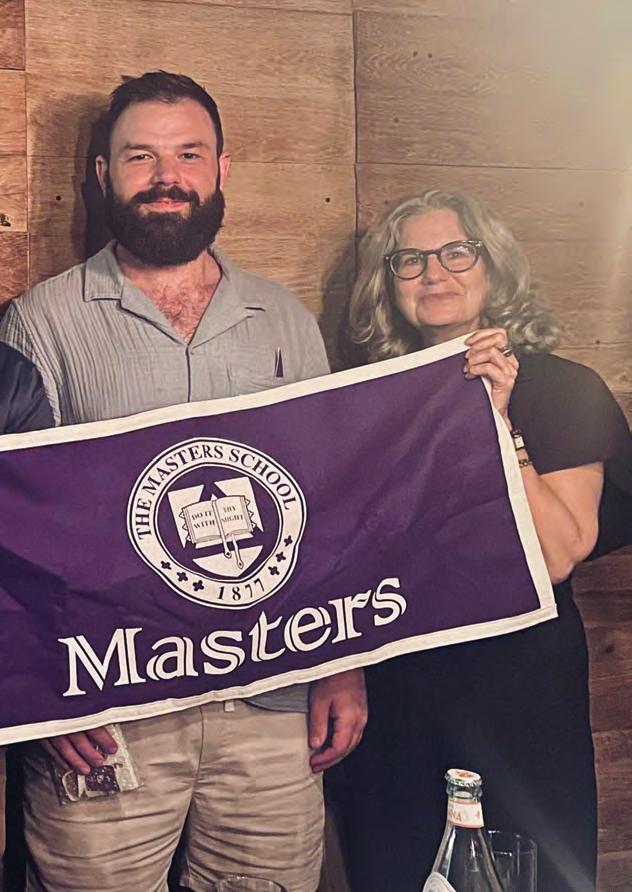
Thanks to the Dobbs Alumnae/i Association, (l-r) Greg Pasternack ‘05, Sojung Park ‘06, Jaison Spain ‘00, Michael Gallinari ‘08 and Annette Bauer ‘83 enjoyed dinner together recently at a restaurant in New York City.
Jodi Innerfield ’05 is entering her final year as president, and reflects on her tenure: “It's been an honor to represent the Masters alumnae/i community as Board president. I'm proud of what we've accomplished, from hosting gatherings that brought together hundreds of alumnae/i, to connecting graduates with current students through mentorship panels for school clubs and classes, to launching our Instagram. Our community is dynamic, creative and inspiring, and it's been a privilege to help connect our alumnae/i to each other, to students and to the School.”
The Board is empowering members to lead their own initiatives — an effort designed to expand impact, spark creativity and deepen engagement across the alumnae/i community.
The spirit of service, rooted in Masters’ values, continues to guide the Board’s work. Plans for the coming year include a family-friendly community service program; a virtual panel featuring alumnae/i in creative careers; and regional gatherings in New York City and Washington, D.C., and on the West Coast.
The Board thrives on the energy and ideas of the entire community. Want to get involved or just share a suggestion? Reach out to alumni@mastersny.org and be part of the next chapter.

died on September 6, 2025, at age 92.
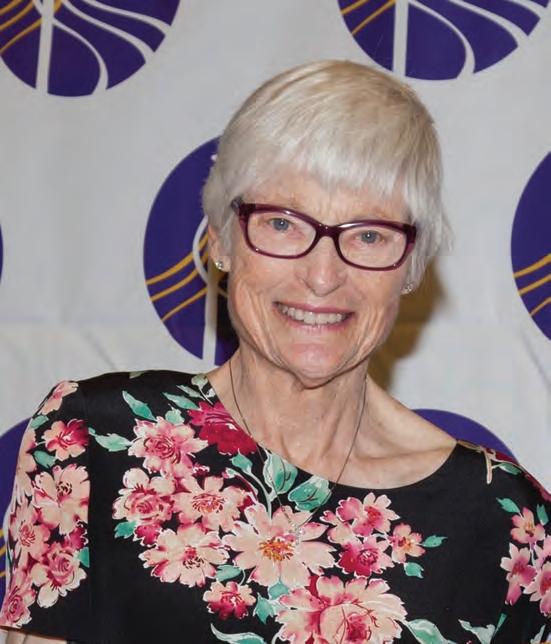
Born in Denver, Colorado, Claudia attended the Kent School for Girls in Denver, where she discovered a love of reading, music and Rockies baseball. Upon joining Masters as a boarding student, Claudia quickly became a true “Dobbs” girl. A member of the Glee Club, Literary Cooks, Reading Committee and the soccer team, Claudia reveled in her studies and in the friends she made at school.
After graduating from Masters, Claudia enrolled at the University of Colorado in Boulder as a music major. There she met the love of her life, Leroy Hoffman. Claudia and Leroy were married in 1954 and moved to Eureka, South Dakota. She was deeply involved in her community as a choir director, Sunday school superintendent and youth group advisor at her church. In 1973, she became the first woman elected to the Eureka School Board.
After Leroy passed away in 1980, Claudia moved to Washington, D.C., to continue her education at American University, where she earned a master’s degree in political science. There she met and married Larry Merthan, who died in 1987. In 1988, Claudia returned to Colorado, settling in Castle Rock. She joined First Plymouth Congregational Church in Denver, where she sang in the choir and remained an active member. In 1995, she met retired minister Ben Smith. They were married in 1996 and moved to a country home near Elizabeth, Colorado. Ben passed away suddenly in 1999.
A year later, Claudia returned to Denver and became active in the Boettcher Foundation, a philanthropic organization founded by her grandfather. She served the foundation for 21 years, including 15 years as board chair. Claudia spent her final years in Eureka, where she continued to live a life of service. She held leadership positions at her church and the Eureka Pioneer Museum, volunteered at the local library, and shared her wit and wisdom through her column Claudia’s Corner, published in The Northwest Blade.
Claudia maintained a strong connection to Masters throughout her life; the Claudia Boettcher Theatre, named in her honor, reflects her generous legacy to the School. She joined the Board of Trustees in 1979 and, upon her retirement in 1995, became an honorary trustee. Claudia represented the Class of 1951 as a class agent from 2001–2007 and received the Eliza Bailey Masters Fellowship Award in 2016.
She is survived by her two sons, Edward Thurn Hoffman and Charles (Dawn) Hoffman; three grandchildren; and eight great-grandchildren.
The Masters School notes with regret the passing of the following members of the extended school family.
FORMER FACULTY & STAFF
Mary Jochen Oberdorf Director of Admission (1970–1973) May 24, 2025
ALUMNAE/I
1930 s
Eleanor Starring von Keszycki ’33
December 25, 2022
Elizabeth Cushing Wolkonsky ’33
September 17, 2019
1940 s
Marianne Prescott Mead ’41 February 2, 2025
Alberta Littlefield McCabe ’44 February 19, 2025
Beatrice S. Bartlett ’45 April 1, 2024
Barbara McLaren Boucher ’46
October 27, 2025
Linda Hamilton Carr ’46
July 10, 2025
Elizabeth A. Scully ’47 April 30, 2025
Sarah Davison Aston ’49 June 2, 2025
Rose-Marie Pettibone Grupp ’49
December 24, 2019
1950 s
Susan Earnshaw Baldwin ’50 May 20, 2025
Lyde Arrott Longaker ’50 January 14, 2025
Helen Marsh Tredwell ’50 August 10, 2025
Mary Barbour Fons ’51 May 27, 2025
Susan Reed McLaine ’51 June 21, 2025
Claudia Boettcher Merthan ’51 September 6, 2025
Laura Strong Butterfield ’52 2023
Ivy Friesell Rufe ’53 September 8, 2025
Ann Lawler Dewey ’55 September 19, 2025
Linda Maloney Knighton ’55 February 8, 2023
Leigh Phillips Beeman ’56 April 15, 2025
Dorothy Roberts Wolcott ’57
May 30, 2025
Anne Wright Bell ’58
April 29, 2025
Gretchen Masters Lowry Brown ’59
May 25, 2025
1960 s
Julie Mecherle Philpott ’60 August 7, 2025
Margaret Wallace Fox ’63 November 26, 2024
Susan Upham McIntosh ’64 March 11, 2025
Elizabeth Van Siclen Townsend ’64
June 10, 2025
Renée Starring Janssen ’66
October 30, 2025
Winifred Shortz ’66 October 28, 2025
Jane Shute Scifres ’67 April 8, 2024
Patty Keough Soeth ’69
January 27, 2023
1970 s
Sylvia Redington ’70
Cynthia Van Norden Folsom ’71 March 26, 2025
Julia Voss Van Zile ’71 June 30, 2025
Pamela Brown Schoen ’72 August 3, 2025
Samantha S. Rand ’74
June 6, 2025
2010 s
William Ernest Steiger ’10 August 11, 2025
THE MAGAZINE OF THE MASTERS SCHOOL
Laura Danforth Head of School
Meredith Halpern Associate Head of Strategic Communications
Isaac Cass
Digital Communications Manager
Christina Ha Communications Associate
Jen Schutten Associate Director of Communications
Design: KBWhite Communications LLC
Seth Marx Associate Head for Institutional Advancement
Judy Donald Advancement Associate
Hilary Finkelstein Director of Annual Giving
Carol Maxwell Sesquicentennial Engagement Manager
HEAD OF SCHOOL
Laura Danforth
BOARD OF TRUSTEES
Beth Nolan ’69, Chair
Allison Moore ’83, P’17, ’19, ’24, Vice Chair
William Roberts
Treasurer
Dana W. Oliver P’22, ’25, Secretary
Lauren Aguiar P’28
Parke Anderson P’24, ’27
Rajay Bagaria P’25, ’28
Natasha Bansgopaul ’04
Sara Barek P’27, ’29
Laura Danforth
Kara DioGuardi ’88, P’31
Michael Greene P’10, ’13
Jodi Innerfield ’05
Ronen Israel P’23, ’28
Christina Masters Jones
Philip Kassen
Susan Katzke P’24
Stacey Lacy ’93
Sydney Shafroth Macy ’70
Edgar M. Masters H’98, Life Trustee
Susan Follett Morris ’57, Life Trustee
Jonathan Resnick P’26
Lynn Pilzer Sobel ’71, P’99, ’05
HONORARY TRUSTEES
Marin Alsop ’73
Cynthia Ferris Evans ’52, P’76, ’86
Jeannette Sanford Fowlkes ’58, P’87
Ruth Mitchell Freeman ’51
Nancy Maginnes Kissinger ’51
Tracy Tang ’80, P’18
DOBBS ALUMNAE/I ASSOCIATION BOARD
Jodi Innerfield ’05, President
Lucas Buyon ’11
Emily Daly ’06
Andy Finkelstein ’04
Kathryn Taylor Harvill ’95
Chloe Lazarus ’12
Karen Li ’20
Victoria Love ’88
Tiffany Tate-Salam ’00
PARENT ASSOCIATION EXECUTIVE COMMITTEE
Officers
Parke Anderson P’24, ’27 President
Jenny Liang Milward P’24, ’26, ’29
Vice President, Upper School
Scott Graves P’27, ’29, ’33
Vice President, Middle School
Committees and Chairs
Sara Barek P’27, ’29
Admission Support Chair
Andrew Barnes P’26, ’26
Masters Fund Parent Chair
Sharon Davenport P’27, ’27
Faculty Staff Appreciation Day
Co-Chair
Peter Lavery P’29
Faculty Staff Appreciation Day
Co-Chair
Jordana Manzano P’23, ’26
PA Program Support Liaison
Saloni Singh P’27
Admission Support Co-Chair
Brooke Nalle Pʼ24, ʼ27 Director of Alumnae/i Engagement
Maryann Perrotta Director of Advancement Services
Mary Ryan ’00 Associate Director of Institutional Advancement
Amie Servino ’95, P’26 Director of Parent Engagement
Maureen Steinhorn Senior Manager Annual Giving and Major Gifts
C lass Representatives
Sara Barek P’27, ’29
Rachel Combe P’24, ’26, ’30, ’32
Barbra Crane P’28
Sonal Gibson P’29, ’31
Scott Graves P’27, ’29, ’33
Lyn Jacobson P’28, ’28
Leslie Laboriel P’27
Justine Lackey P’30
Peter Lavery P’29
Julia Love P’30, ’32
Andrea Miller P’24, ’26, ’27
Jenny Liang Milward P’24, ’26, ’29
Jennifer Vargas P’26, ’31
Steven Yung P’23, ’30
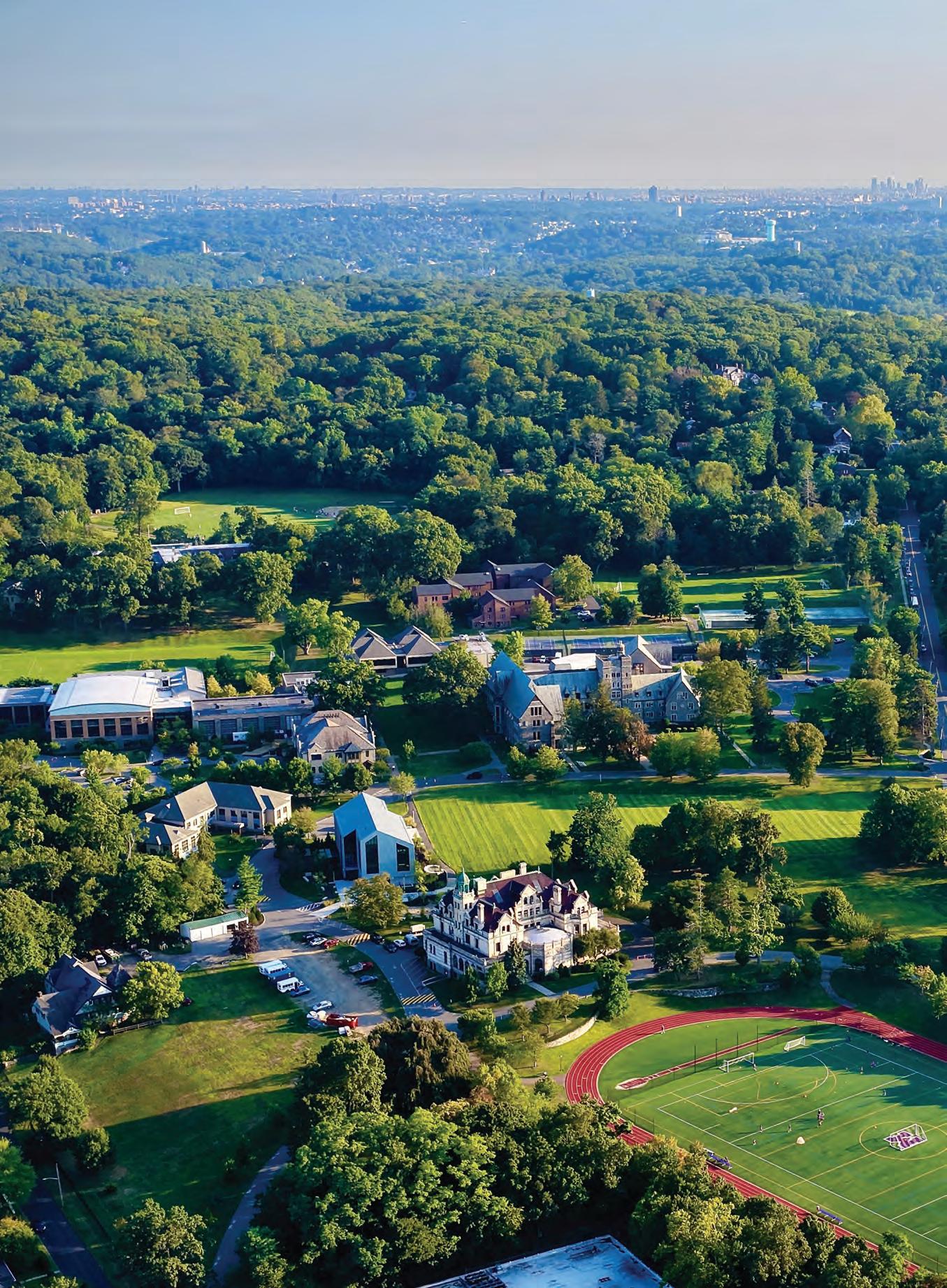
Welcome TO THE END OF YOUR BULLETIN JOURNEY — OR PERHAPS IT’S JUST THE BEGINNING.
FOR THOSE STARTING AT THE BACK OF THE BOOK AND READING FORWARD, WE SEE YOU AND WANT TO MAKE SURE YOU CHECK OUT THESE HIGHLIGHTS — IN ADDITION TO THE WONDERFUL CLASS NOTES.
10
16
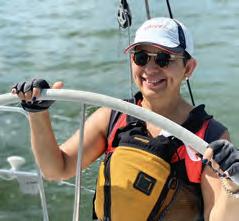
From architect to attorney, Yolanda Cortes Mares ’75 has sailed through unexpected turns—on the water as a sailboat racer, and in Central Texas courtrooms fighting for children and families.
18
20
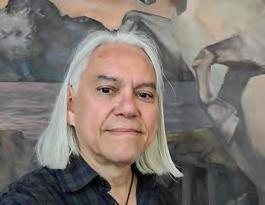
He began his career analyzing equities on Wall Street, but Vicente Saavedra has seen a far better return on his investment as an art teacher to Masters middle school students.
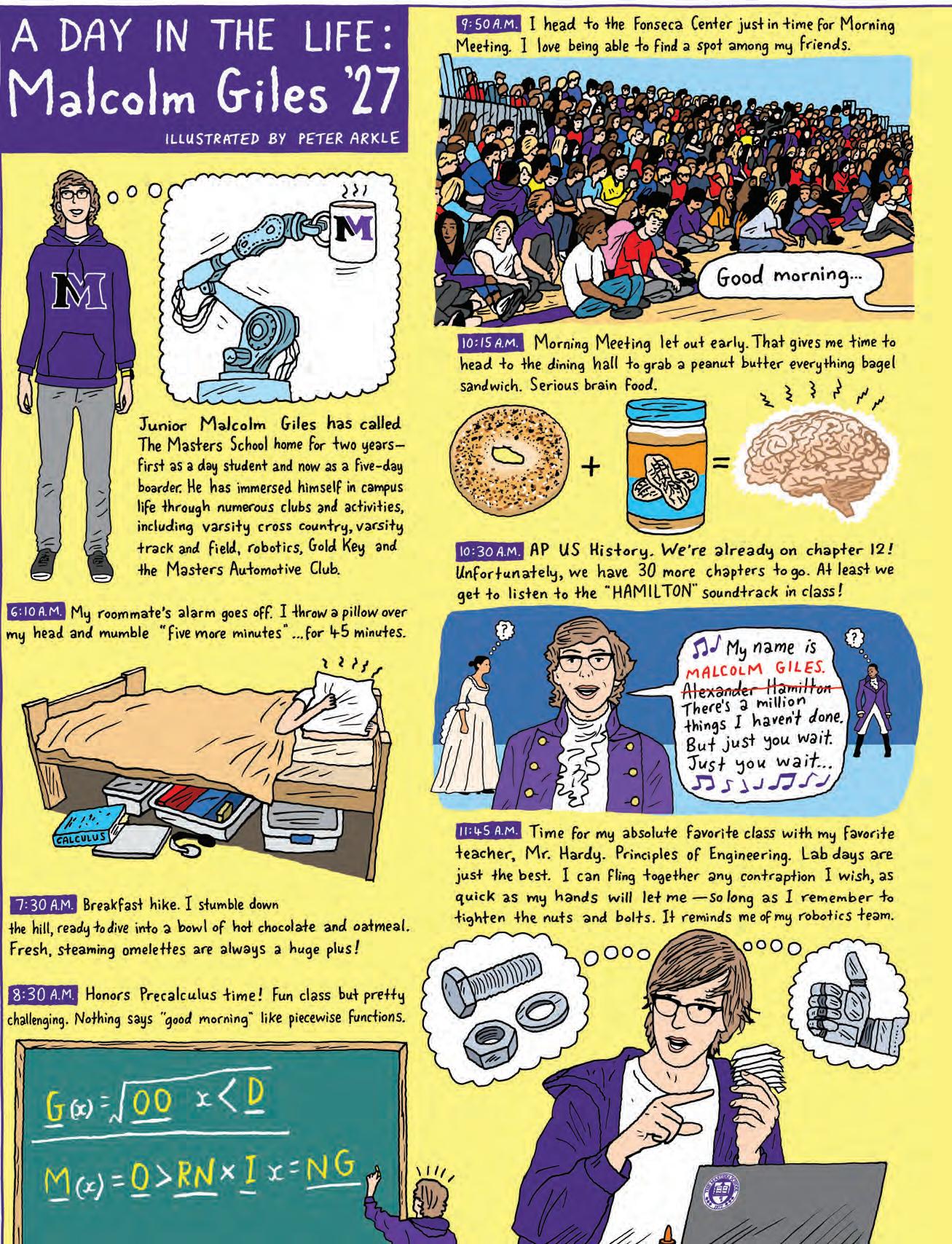
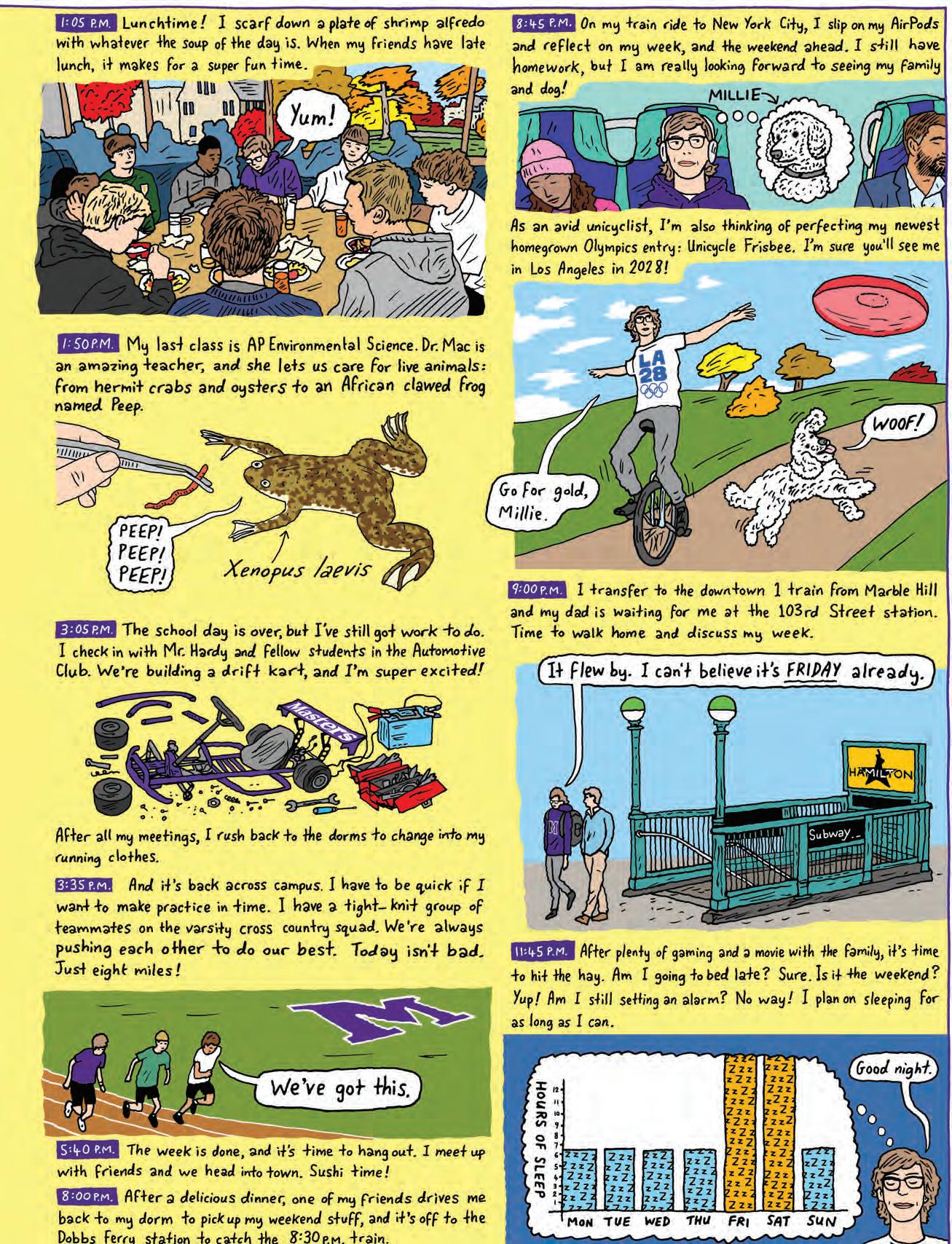
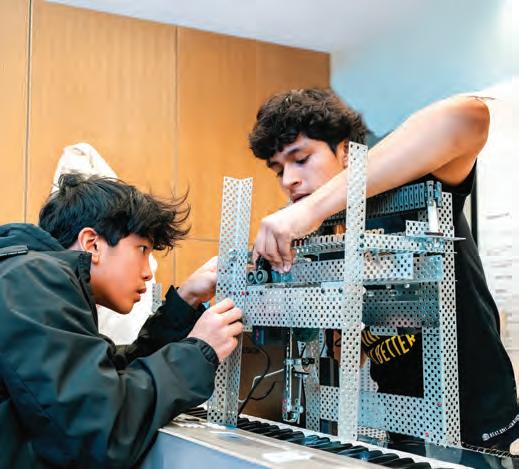
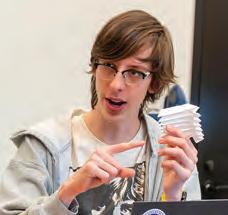
An object in motion stays in motion: That seems to be the guiding principle for five-day boarder Malcolm Giles ’27, who effortlessly moves between varsity track, engineering labs and numerous daily visits to the dining hall to recharge.
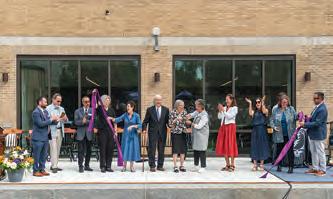
The remarkable transformation of Follett Hall, formerly known as Strayer Hall, isn’t the building’s first: It was the School’s dining hall before becoming a performing arts building in the 1980s.