Embarrassing or Extraordinary?


Disclaimer:





Disclaimer:
ome people are hooked on drugs, others on alcohol. But for me? I’m a fiend for coffee, and I blame Emma Chamberlain.
As a kid, I didn’t understand the appeal of coffee. I remember sneaking a sip of my Mum’s latte and gagging. It tasted like liquid dirt. I stuck with my hot chocolates and chai lattes until the age of 13. It was around this time that YouTuber Emma Chamberlain really began to pop off online. And like the sheep I am, I too began to tune into her weekly vlogs.
Emma was the it-girl of my teenage years. She was relatable, funny, and talented, and I wanted to be just like her. That meant swapping my hairties for scrunchies and my hot choccies for coffee.
The issue was that I still didn’t like coffee. But instead of swearing off the stuff, I drank more and more and more. Soon enough, I had trained my tastebuds to welcome the beverage. On average, I was drinking anywhere between two to six coffees a day from Year 10 and up. It wasn’t that I necessarily needed a coffee, I just wanted to look cool.
As my frontal lobe developed and I realised that I didn’t need to base my entire personality off an influencer, my coffee intake went down to about two cups a day. My bank account and bowels are a lot happier about this. But the damage has already been done.
As the millennials would say: “Don’t talk to me until I’ve had my morning coffee.”
And blame Emma Chamberlain for that.



Hello
I am just a random sort of part time student at Massey. I just recently found out about your magazine and read the March 2026 issue.
I’m an older student (37) and before doing my current study I had done a couple of distance papers in the past some years back.
I was reading your article on the changes to testing for distance students. I felt all the student concerns were valid but I feel that there was a lot of reactionary “the sky is falling” emotions involved.
At the end of the day, Massey offering distance papers and accepting remote enrolments including from other countries puts it on their responsibility to provide the conditions required for the students to undergo testing.
The University can’t expect someone who lives in the middle of nowhere or another country to just magically appear on a campus to undergo a test. It is not practical or logical and also goes against the entire purpose of offering distance papers in the first place.
If they do expect that then the University is incredibly naive in who they think are taking their papers.
This probably plays no small part in why so many Universities still to this day refuse to offer distance learning.
I have done all kinds of tests for distance papers I have done over the years, I have done timed online open book where you have a countdown and you have to finish and upload in a timeframe. I’ve done closed book via webcam where someone if watching the entire time. I have also done ones where Massey have rented a nearby bullying and setup desks to do the test at.
To all those concerned students I say, make it Massey’s problem. They accepted your enrolment, they are taking your money. It is their responsibility to find a way for you to appropriately take the test. If they can’t do that it is their fault because they failed to provide the services expected of them within the agreement.
(Random thought: In fact it would be interesting to go back and read what it says regarding this kind of thing in any kind of student contract accepted during enrolment.)
Have a great day.






























Kia ora everyone,
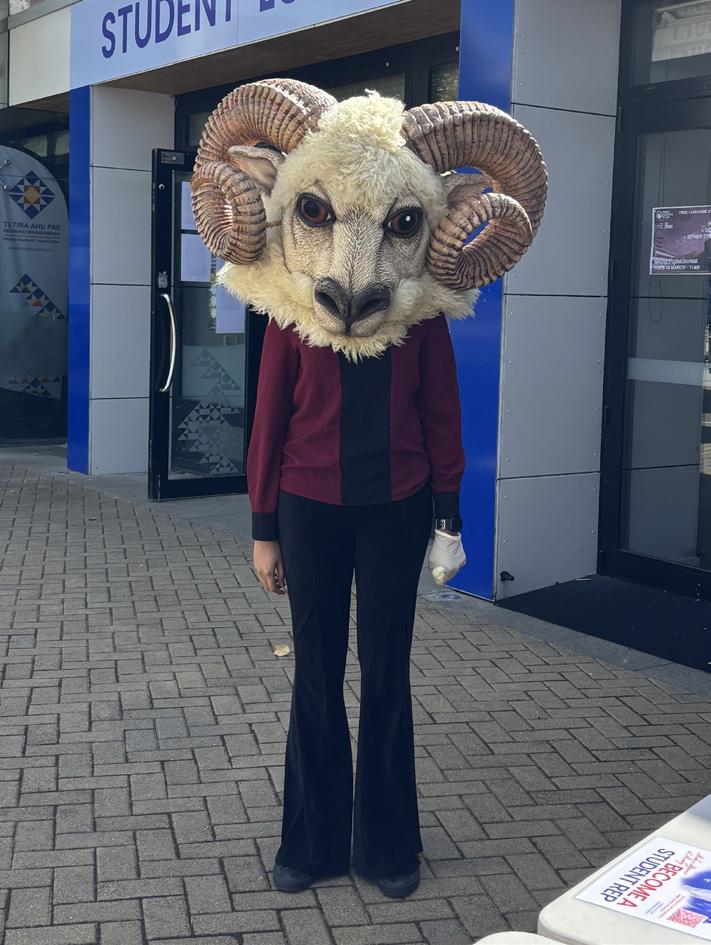
My name is Aditi Kumar and I’m the General Student Rep for the Manawatū campus. You might have seen me around during O-week, and now that the semester is underway, I hope things have been going well for you so far.
I know uni can get hectic and honestly a bit overwhelming at times, no matter what you’re studying. If things ever start to feel like too much and you’re not sure where to go, come find me. Whether it’s course issues, mental health, or even just ideas on how we can make student life better at Massey, I’m always happy to chat and help point you in the right direction.
Last year, I worked on a project called Dress for Success, where students could get free clothing for placements and everyday wear. Placements can get expensive really quickly, so being able to support students in a practical way like that meant a lot to me. This semester, I’m planning to run student consultations during the interim period to hear what you actually want from your student body. These are for you, so definitely get involved and have your say. Te Tira Ahu Pae is here for you, and we’ve got your back.
Also, here’s a picture of me trying on the school mascot, because why not...

Words by Claire Taylor • SHE/HER
Massey University students are questioning the safety of student-run social media pages after a lecturer responded to an anonymous Facebook post criticising their course’s AI use.
Massey English student, May*, posted in the Massey@ Distance Facebook page in early March, questioning the use of AI in her course, but took it down after the lecturer heard about the post.
“I deleted it because unfortunately the lecturer heard about the post and posted in the course forums about it which made me a bit nervous,” she said.
While she respected the lecturer’s expertise, May said AI should not be used to create teaching material.
“I want to hear that expertise from her own words. The same way lecturers don’t want to read essays organised by AI,” she said. “I was very polite and I think the discussion that was created in the comments was actually very telling.”
The third-year course, Oceanic Literatures of Aotearoa, taught by lecturer Tracey Hepi, explored Māori and Pasifika literature and storytelling traditions.
Hepi’s forum post on Stream appeared to respond to May’s concerns.
“I’ve heard through the kumara-vine that some of you have raised concerns about AI in this course—worries about ‘getting a whole degree from AI content’ or questions about why I sometimes use small AI-generation graphics in our materials,” she wrote.
Hepi said she would have loved to receive student concerns directly.
“If something troubles you, approach me through private chat … It’s not fair—and it can be harmful—to talk behind someone’s back without allowing space for open conversation,” she wrote. “We are all adults here.”
She outlined her AI use, saying it ensured consistent formatting, structured layouts, drafted visuals, maintained cohesion, and saved time on repetitive tasks. She added it would be “nearly impossible” for AI to replace the years of research, reading, kōrero, curation, and creative engagement required for the course.
“There simply isn’t enough material online about Pasifika and Indigenous literary scholarship for an AI system to construct what we are doing.”
May said the post made her uncomfortable and questioned whether Hepi had taken her feedback on board.
“Most of the things she addressed were not relevant and she made a quote that wasn’t even said … when [she] said posting on the distance page is talking behind someone’s back and harmful, I was shocked because my post did not have that intention.”
May said most replies on her post were not aimed at a single course but provided a platform for students to share experiences and opinions about lecturers using AI.
She also raised concerns about staff monitoring the page.
“I had heard previously about how tutors are in the distance group and have seen their replies to posts … that was also the reason my post was anonymous,” she said. “I was worried my post could affect my assignment results even though I know that would be crazy and unethical.”
She worried that the lecturer could find out her identity.
“This freaked me out, so I deleted the post.”
May said spaces like the Distance@Massey page were important for students to share concerns freely. However, this safety is undermined if staff responded negatively.
Another student, Daniel*, said Hepi’s Stream post felt defensive and “blatantly AI-generated”.
“It’s the kind of forum post that you’d be able to generate using a very defensive and hurt prompt,” he said. “[I’m not] claiming she’s generated an entire course using AI, that’s ridiculous, but using it to generate any of the course is also ridiculous.”
Daniel submitted a formal complaint, saying the approach disrespected the cultural nature of the topic.
“It’s not my culture but if it was I would want it to be taught authentically. Not chewed up and spat up by a machine that can only pretend to understand.”
Hepi told Massive she followed Massey’s AI guidelines for staff and had never engaged with the Distance@Massey page nor had she seen May’s post. She said she only learned about the concerns raised through a third party.
“I’ve neither seen the post nor do I know the person.”
By responding on Stream, Hepi said: “My intention was to clarify how it was used so as to assuage any concerns for my class because potentially there may be more than one person feeling this way.
“If we ask students to complete an AI statement I thought it was an act of transparency to also explain how I use it for the course, so as to demonstrate using AI with integrity.”
Hepi reiterated that AI was used for formatting consistency across weekly material.
“AI is another tool used to aid pedagogy and design at Massey.”
A Massey spokesperson told Massive that students could share experiences online, but the university doesn’t oversee these pages or take responsibility for staff responses.
“Academic freedom and freedom of expression are important principles within universities,” they said. “However, those freedoms are not absolute and sit alongside other legal and internal policy obligations, and so care should be taken.”
Massey did not comment on how staff responses might affect students’ willingness to share experiences, However, the university’s own policies emphasised transparency, good judgment, and ethical engagement.
It’s staff social media policy advised: “You may come across critical posts about Massey or its activities—unless you are an authorised spokesperson, avoid the temptation to react and respond yourself. Anything you post can potentially damage your reputation and that of the university.”
The Education and Amendment Act 2025 also highlighted the university’s responsibility to ensure students have safe outlets for free speech:
“Academic freedom depends fundamentally on freedom of expression – the ability to express diverse ideas and opinions without fear of censorship.”
Massey’s 2023 Freedom of Speech Statement reinforced this, stating that exchanges should not silence, disparage, marginalise, stigmatise, or incite hostility towards others.
A Massey spokesperson said the university took teaching quality seriously. Massey encouraged a balanced approach that allows staff to embrace new technologies while supporting ethical and responsible use.
“Where materials have been created with the assistance of, or exclusively using GenAI tools (including text, images, video, apps, etc.), this should be disclosed and clearly explained.”
Students are entitled to share experiences on independent social media pages, but Massey encouraged concerns about course content to be raised via the student complaint channel so they can be properly addressed.
Words by Ellice Lawrie • SHE/HER
Fine Arts students are upset after their studio space was moved to a smaller location.
This year, Fine Arts students in their second year and above were moved from block two to block 11. This has left them with half of the amount of studio space they once had.
Fourth year Fine Arts student, Demi Jonassen, said this shift meant her and her friends are left with “a shared feeling of being sidelined” by Massey.
Jonassen said the most significant impact of this move was the downsize in space. Their old studio space had two stories for the students to create and present their work. This has been reduced to one story.
She said they feel like they’re intruding on other courses’ space.
“We have just been put in this random spot in the building that nobody was really using [...] it doesn’t really feel like our space.”
Students were told last year that their studio space would be moving. However, they weren’t told why.
This downsize meant students no longer have test spaces. These are places for students to install their work for critique. Now, they must display their work in their studio space.
She said there were “a lot of inconveniences that make it not as nice a space”.
These included the printer not working, being far away from the library, and the walls being on a lean—meaning they can’t hang their work properly.
Johanssen said Massey doesn’t appreciate the Fine Arts students or the course.
“Everyone who takes Fine Arts is so into it ... everybody including the lecturers are so into it and want it to be so good. It’s just such a shame that it’s not looked at as important to dedicate enough money too.” Jonassen said.
Sophia Ross, a second-year Fine Arts student, also experienced problems with the new space. Talking to Massive, she said, “I did notice when I first got there how unorganized it was.”
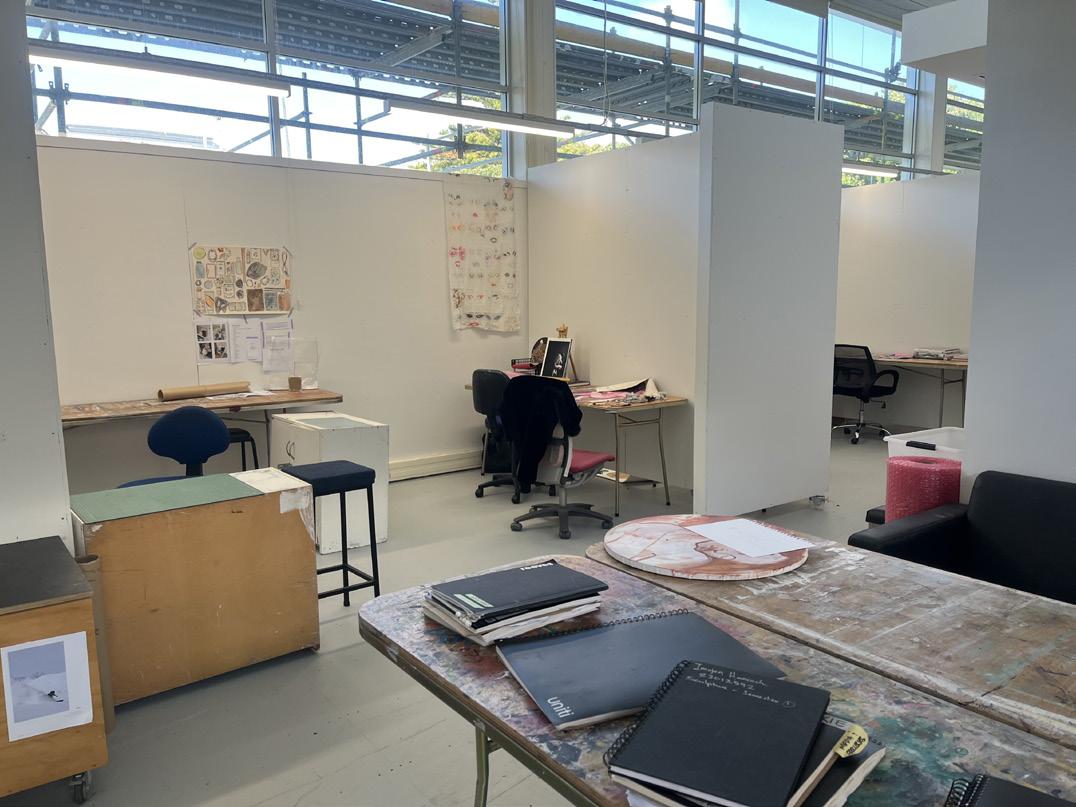
When students picked their studio area, Ross said some students were left “homeless” and put in very small areas due to the lack of space.
She said it’s not fair that Fine Arts students are paying the same amount as previous cohorts for a downgraded studio space.
“It isn’t [fair] if we are getting a smaller space and paying the same amount.”
In a response to Massive, Margaret Maile—pro vice chancellor of the College of Creative Arts—said the decision to change Fine Arts student workspace was due to a “revitalisation”.
“This revitalisation project represents a significant investment by the university in supporting the advancement of the creative arts at Massey, in particular by creating dedicated spaces for contemporary practice, such as the customdesigned art studios,” she said.
“There are a range test-spaces available for students to use and we encourage them to discuss their specific needs with their lecturers for support and guidance.”
She said that it is “inevitable that some adjustments are required as the space revitalisation project wraps” and they are “attentive to feedback from students”.
Words by Maya Trotman • SHE/HER
Last week, a protest sign display was hung on the bushes near the bus stop on Massey’s Auckland campus. However, some students are confused about what it’s protesting.
Two cardboard signs hung off the bushes with the words “Keys to Peace” and “Keys to Freedom” written on them.
Among those were smaller signs with the words “homelessness, child poverty, human trafficking, family violence, religious discrimination”, and more written on them.
It appeared that the display protested all these issues, suggesting that these are the political obstacles preventing world peace and freedom.
However, some students are confused about its message.
Psychology student, Sarah Cooper, said the message should be clearer to make it more impactful.
“All I could make out at a glance walking by was all these white cards with quite confronting words like ‘gambling’ and ‘addiction’,” she said.
For masters student Sophie, she admired the creativity of the protest.
“It’s cool that students are using art to express themselves and their thoughts,” she said.
A Te Tira Ahu Pae spokesperson told Massive that they hadn’t received any enquiries from students about it as of March 12th.
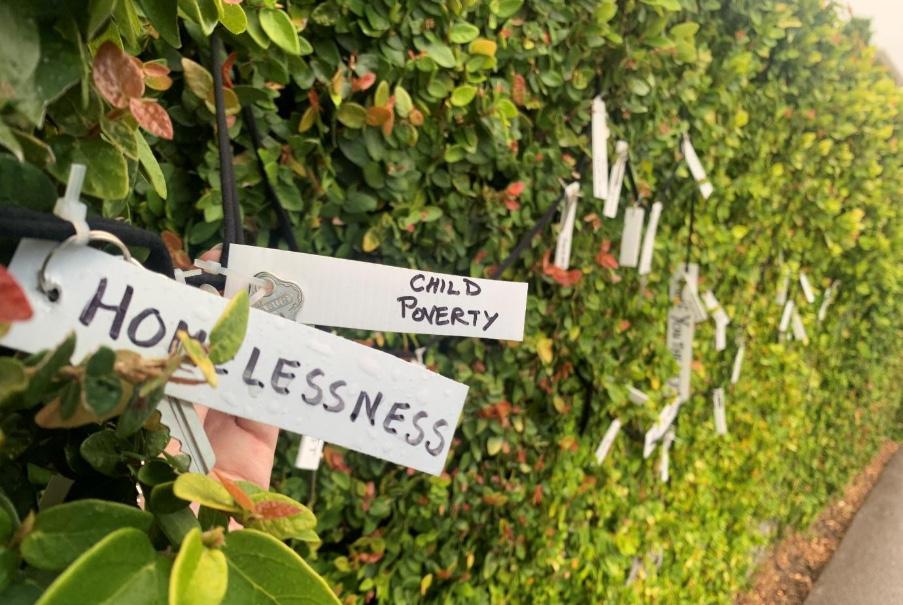
and “Homelessness”
Massey University alumni, Kate Hawley, received her first Oscar award last week for her costume design in Frankenstein
Accepting the award, she thanked the academy: “On behalf of myself and the amazing team that I work with—the artisans, the alchemists, the dreamweavers—we’re so grateful to the academy for recognising our craft.”
Speaking to the media at a post-ceremony press conference, she said she felt lucky.
“To be standing here and to be able to work with Guillermo [del Toro] means everything. I count myself very very lucky.”
Hawley graduated from Massey in 1992 with a diploma in Visual Arts and Design. She has worked on films such as Suicide Squad, The Hobbit: An Unexpected Journey, Mortal Engines, The Lovely Bones, and more.
This was Hawley’s first Oscar award and nomination.
Frankenstein, directed by Guillermo del Toro, was nominated for nine Oscars and won three. These wins were best costume design (Kate Hawley), best makeup and hairstyling, and best production design.

Alcohol wasn’t invented on purpose, but by accident.
The earliest evidence of alcohol was discovered as residue inside pottery around 7000 BCE in Jiahu, China. It was deduced this residue was a blend of rice, honey, and hawthorn fruit. Once people started to feel the intoxicating effects of the combination, they began creating different alcoholic substances.
Alcohol soon spread across China. Wine or ‘jiu’ became popular, and by the 13th centuary distillation was discovered. This created a spirit called ‘baijiu’ or ‘white liquor’. Today, this remains extremely popular and has many variations and names.
Kava is a South Pacific plant which is often consumed as a beverage made from its root. It is known for reducing stress and anxiety by making you relaxed and euphoric.
The plant is believed to have originated in Vanuatu and has spread across Polynesia over thousands of years. Today there are many different strains, each with slightly different ingredients and effects.
Although it is known for its relaxing effects, the Kava brew has strong cultural and ceremonial significance. It’s believed that the brew links the

proper research, guidance and safety measures in place.
drinker to mana and their inner spiritual energy. A parent may drink Kava to transfer their mana to their newborn child. Or a chief must drink Kava to connect to their ancestors and validate their authority.
In Fijian culture, drinking kava is a way of reconciling and resolving an argument, which is a form of matanigasau—a Fijian apology or reconciliation ceremony.
For many Pacific communities, kava is a form of connection which brings people together.

Also known as rotgut, white lightning, and corn liquor, moonshine is a famous liquor which gained its fame in USA during the Prohibition. This era took place from 1920 to 1933, and banned all production, transportation and sales of alcohol. This led to illegal alcohol brewing and smuggling.
Moonshine gained its name because it was brewed in the cover of the night. The alcohol ban skyrocketed the demand for Moonshine. However, the
In the heart of the Amazon, a blend of two native plants sparks a spiritual healing found nowhere else. This is ayahuasca.
In Quechuan, ayahuasca translates to vine of souls. The brew is primarily made of two psychoactive Amazonian plants: the leaves of the Psychotria viridis shrub and the stalks of the Banisteriopsis caapi vine.
Ayahuasca ceremonies are guided by experienced spiritual healers. These healers lead participants through the intense physical and emotional effects of the drink.
quality decreased as demand increased, and some sketchy brews were created.
Moonshine was often made inside car radiators [Editor’s note: This isn’t a good idea]. Lead could seep into the liquor, which obviously poisoned the drinker.
This brew still exists today. Although attempts have been made to legalise the process, it remains confined to the cover of darkness.
Long before people started making weed brownies, a traditional Indian paste called ‘bhang’ allowed people to drink cannabis.
Created in India over 3,000 years ago, bhang is particularly popular during Holi—the Hindu festival of colours.
Bhang is made by grinding and steeping the leaves of cannabis plants and combining it with milk or yoghurt. It’s common to blend bhang with whey to make bhang lassi, or with water to make bhang goli.
The drink purges negative emotions, with many who consume it experiencing a spiritual awakening. However, it also has intense side effects such as vomiting, diarrhoea, hallucinations, fear, and paranoia. These can last anywhere from two-to-six hours.
Ayahuasca is entwined with the identity of indigenous communities. It’s important to respect the cultural and spiritual significance of the plant.
Not even a 336-year ban can stop the Irish from drinking.
Ireland is home to the moonshine’s twin: poitín (pronounced pot-cheen). Distilled from barley, potatoes and other grains, poitín was created by Irish monks and nuns for medicinal purposes. It’s alcohol percentage ranges from 40% to 90%.
Poitín is derived from the word ‘pota’, meaning little pot and referring to the single pot it’s created in. The first evidence of poitín was found in
monastic manuscripts in the 12th century.
It was a popular brew to make until 1661 when the English crown made it illegal to produce without a license to collect taxes. This initiated centuries of illegal production.
In 1997, legal commercial production of poitín was allowed again. Now, you can buy poitín at your local liquor store—even in New Zealand. Finding a traditional brew with up to 90% may be difficult, but 40% is still pretty fecking good.

Although most cannabis products in India are illegal, you can buy bhang in some government licensed shops in certain regions.









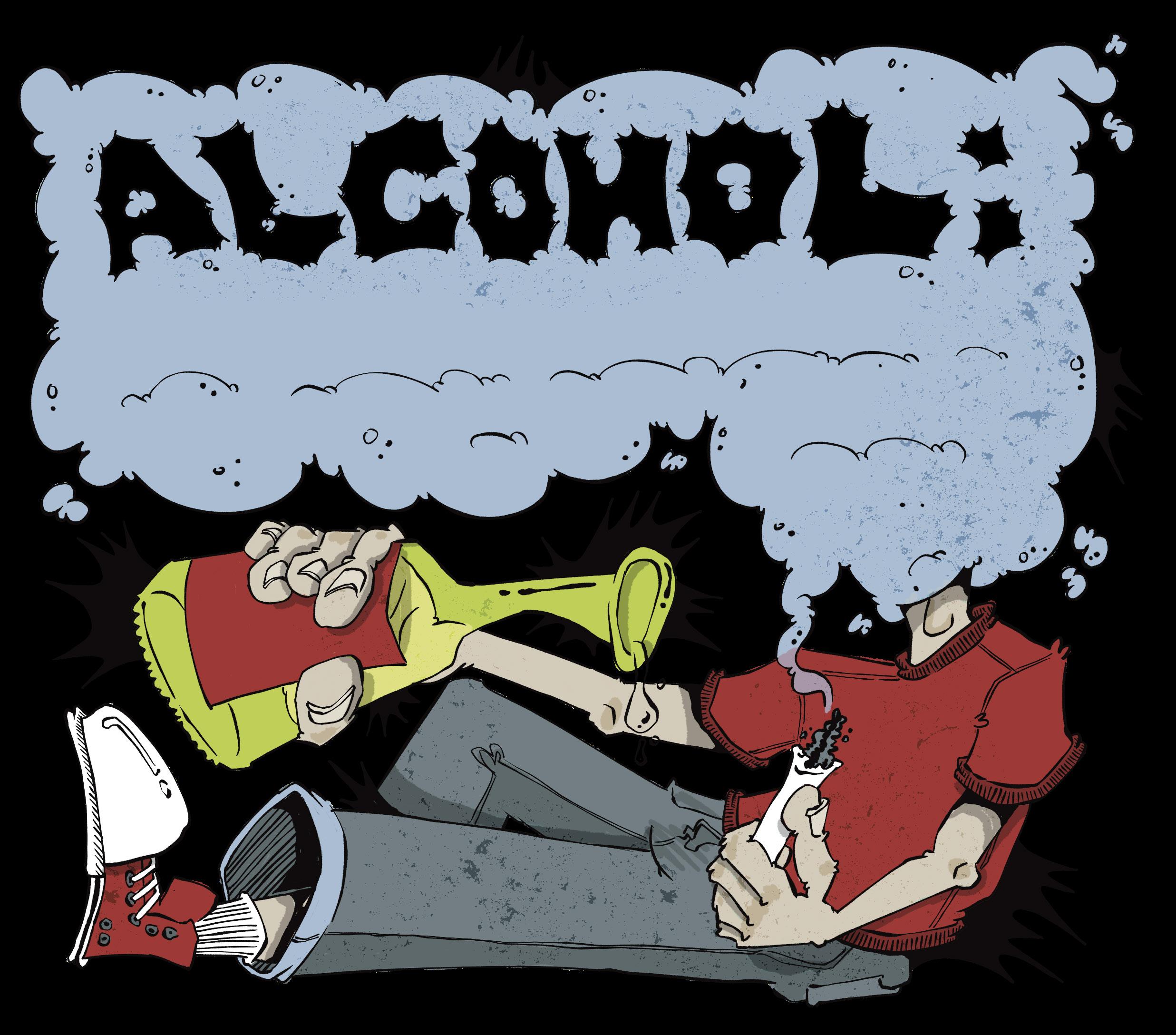
If my worst experiences of drug consumption were an Olympic event, alcohol would forever be standing in first place on the podium.
Throughout my adolescence, alcohol was like an inescapable toxic situationship. She’s that one evil chick from an all-girls school who got boobs before everyone else. One week, she decides that you’re her new BFF. She made you feel really special. Next thing you know, she’s outed you as bisexual to her gaggle of disciples.

She’s so sexy. She makes me feel giggly and conversational. My night becomes an exciting ping-pong between heated DMC’s and shaking ass. But what goes up must come down. When you’ve downed a whole bottle of Jose Cuervo, all signs point to your night going pear-shaped.
If seeing imaginary taniwha keeps me away from psychedelics, why can’t I keep my hands off a bottle of scrumpy after spending a day hurling into a toilet?
For high-functioning alcoholic Aiko*, they started drinking every day in their second year after getting a job at a brewery.
Now, the feeling they get out of drinking has changed.
Aiko says, “When I first started drinking, it came with this euphoric feeling, but now it feels more numbing, and I get more impulsive.”
“It’s not even a good buzz anymore.”
A lot of it came down to Aiko feeling anxious and trying to mitigate overwhelming emotions.
“Some days I feel like being hungover over is a feeling I enjoy, like feeling so stupid that I can’t feel those negative feelings,” says Aiko.
Alcohol is a known depressant, and Professor Kirsty Ross, Massey University’s head of Clinical Psychology, says there is a tipping point where alcohol becomes unhelpful in your life.
“Alcohol has been normalised in Aotearoa’s collective culture because the substance is a focal point of important milestone rituals,” she says.
Weddings, 21st birthdays, graduations, and celebrating the first weekend of summer with crate day are some of these rituals.
Psychologically, Kirsty says it makes no sense why we, as a culture, keep going back to the bottle.
Kirsty says, “When there’s really adverse outcomes to an action, you tend not to do it again.”
However, she says people often celebrate stories of other’s fuck ups and turn them into a rite of passage. So, even if you wake up with a bad case of hangxiety, your friend’s positive reaction reinforces the idea that it’s funny to get drunk and make bad decisions.
“You get social reinforcement that your mistakes were worth it for the story that comes out of it,” she says.
“Even phrases in our social vocabulary that have come out of drinking culture reinforce that unhealthy relationship with alcohol.”
These are phrases such as:

If you eat before you start drinking, you’re less likely to get as drunk because the food will soak up the alcohol instead of your liver.
To drink more than another person.
To mitigate your hangover by drinking in the morning after a big night.
To drink your anxiety away.
Kirsty says, “It’s important to monitor the role that alcohol plays in your life.”
Something that begins as a way to have fun at a party can start causing anxiety and distress. Kirsty explains that alcohol lowers inhibitions and may lead people to act against their values, often resulting in feelings of guilt and shame.
I’ve tried cutting down on my own alcohol consumption. However, Wellington’s social scene is kicking my ass. It’s not even been two months back in the city, and I haven’t gone a weekend without suckling on a can of alcoholic ginger beer like a pacifier.
Kirsty understands the role alcohol plays in Aotearoa’s social zeitgeist. For most people, the answer isn’t to remove it from their lives completely. Instead, they should remember they have the power to control the trajectory of their night before they start drinking.
Before you take a sip, understand what emotions are going to guide you through the night. If you’re feeling anxious or upset, these feelings are only going to be amplified when you start drinking.
Kirsty says, “If you start your night feeling really angry and you’re drinking to settle yourself down, initially you might feel relief, but then you become disinhibited and in turn your anger starts to come through.”
Secondly, be mindful of why you are drinking in the first place and where your night is going to take you. Ask yourself—Can I go to this party and not drink?
If drinking feels like your only option, avoid the gig that your ex is going to and save yourself from drunk tears in the bar’s bathroom stalls.
Being a mindful drinker doesn’t mean you have to isolate yourself from social events. Find someone who can support you on your somewhat sober journey. A mate who can hop on the 0% beers with you and still get silly at a bunker rave.
“We don’t want to demonise alcohol, but we need to be aware of the immediate social and health consequences,” says Kirsty.
Be mindful of how you drink, why you drink, and who you drink with. If you’re not careful, the bottle in your hand could turn into your newest toxic situationship.
When I first moved to Wellington, gear (MDMA) was the go-to student drug. Everywhere I went I saw swinging jaws and bulging pupils. But now, shovels are being replaced with keys, and a new drug has become Wellington’s top pick.
Ketamine is a short-acting anaesthetic with hallucinogenic effects. Medically, the drug is used as a sedative on animals and humans to relieve pain. Now, an increasing number of people are using it as a recreational drug—often choosing it over other substances such as weed, alcohol, and gear.
The 2025 New Zealand Drug Trends Survey found that ketamine has emerged globally in recent years and is “carving out a niche for itself alongside other ‘mainstream’ illegal drugs”.
Their findings, which was completed by 8,883 Kiwis, show that ketamine use is higher in regions with larger student populations, like Otago and Wellington.
Speaking to four ketamine users in their 20s, they all say it wasn’t until this summer that they started using the drug recreationally. On average, they say they take ketamine a couple times a month.
Disclaimer: This article discusses illegal drug use for reporting purposes only and does not encourage the use, supply, or possession of controlled substances.
One of these users, Luchia, believes more people are treating ketamine like weed. While they enjoy using ketamine recreationally, they say there needs to be more research done on the drug.
“I think it is a fun, enhancing drug, but it concerns me that there isn’t a lot of like research around using it recreationally,” Luchia says.
“Ket to me feels more dangerous and a lot of people treat it the same [as weed]. I’ll wake and bake any day, but you won’t catch me taking a line of ket at nine in the morning.”
Ketamine use isn’t new. Not long after its development in 1962, recreational use of the drug began. However, this wasn’t very common until rave culture in the 1990s and early 2000s. It was here that ketamine came to fruition.
*Names changed for anonymity

Words by Ellice Lawrie
Starting in the 2010s, some Aotearoa clinics began prescribing it to patients with depression. This has given ketamine more positive associations.
Luchia believes it’s good that these kinds of positive associations with the drug are coming up. They say, “I know a lot of people who are actually prescribed ket, and it does help them and gives them structure to live their everyday life.”
“But with that, people do start treating it really leniently, and that’s terrifying.”
For Massey student Bee, she only started taking ket more regularly this summer during festivals and parties.
She says, “I only did ket maybe three times last year. I was just doing gear all the time ... then, over the summer I did a lot of ket.”
Bee’s previous drug of choice was gear. However, she says that it’s starting to change to ketamine because she feels more in control.
“I wouldn’t want to do gear for a house party, because I feel like I would wake up feeling embarrassed. But I know that if I did ket, it would make me feel good,” she says.
“I lowkey feel like I’m tweaking when I do gear ... ket’s good for house parties or gigs where you want to feel like you’re under the influence, but you don’t want to be super high energy tweaking out.”
Another perk about the drug is the ‘ket-glow’. This is the lingering after-effect of ketamine. It’s often described as a period of reduced anxiety, positive mood, and enhanced mental clarity.
Bee says, “It’s nice not having a terrible, terrible comedown.”
With no comedown or hangover, people don’t write off what they’re doing the next day when deciding if they should get high.
Wellingtonion Cameron* echoes Bees’ view, saying that unlike gear, you feel a lot more in control of your headspace and a lot less like a “tweaker”.
“You can dictate it a wee bit. You’ve got your own control over how you feel,” he says.
“If you go back to the ‘90s, 2000s ... everybody is doing MDMA and ecstasy. Before that was acid and then coke,” he says.
“It’s kind of like Gen Z’s drug.”
Most drugs are very situational. There are certain drugs for festivals, for sitting in the forest or for hanging out with your friends. But for Massey student Luka*, he believes ketamine works for everything.
“Chill night at home, it’s a ket night. You’re going out, fucking add it to the mix—it’s a ket night,” he says.
“You feel wavy and chill, you know? You can go out on ket, or you can just become one with the sofa on ket.”
Luka believes the cheapness and accessibility of ketamine is part of its growing popularity.
“Just message the bro on Snapchat. So cheap, so fast. You can buy it at like fucking one in the morning. It’s easy,” he says.
All four interviewees say that half a gram of gear would only last them one night. But for the same price, half a gram of ket would last two or three nights.
Ultimately, there’s a lot of reasons why recreational ketamine use has risen.
1) You won’t have a crippling hangover or depressing comedown the morning after.
2) Ketamine works with you instead of dictating how you act... basically you won’t be bouncing around like a tweaker telling everyone you love them.
3) Finally, it won’t bankrupt you. It even fits within your Studylink budget.
Ketamine has been around a lot longer than 2026, but Gen Z is making it the drug of the year.



TW: Mentions of sex under the influence of drugs
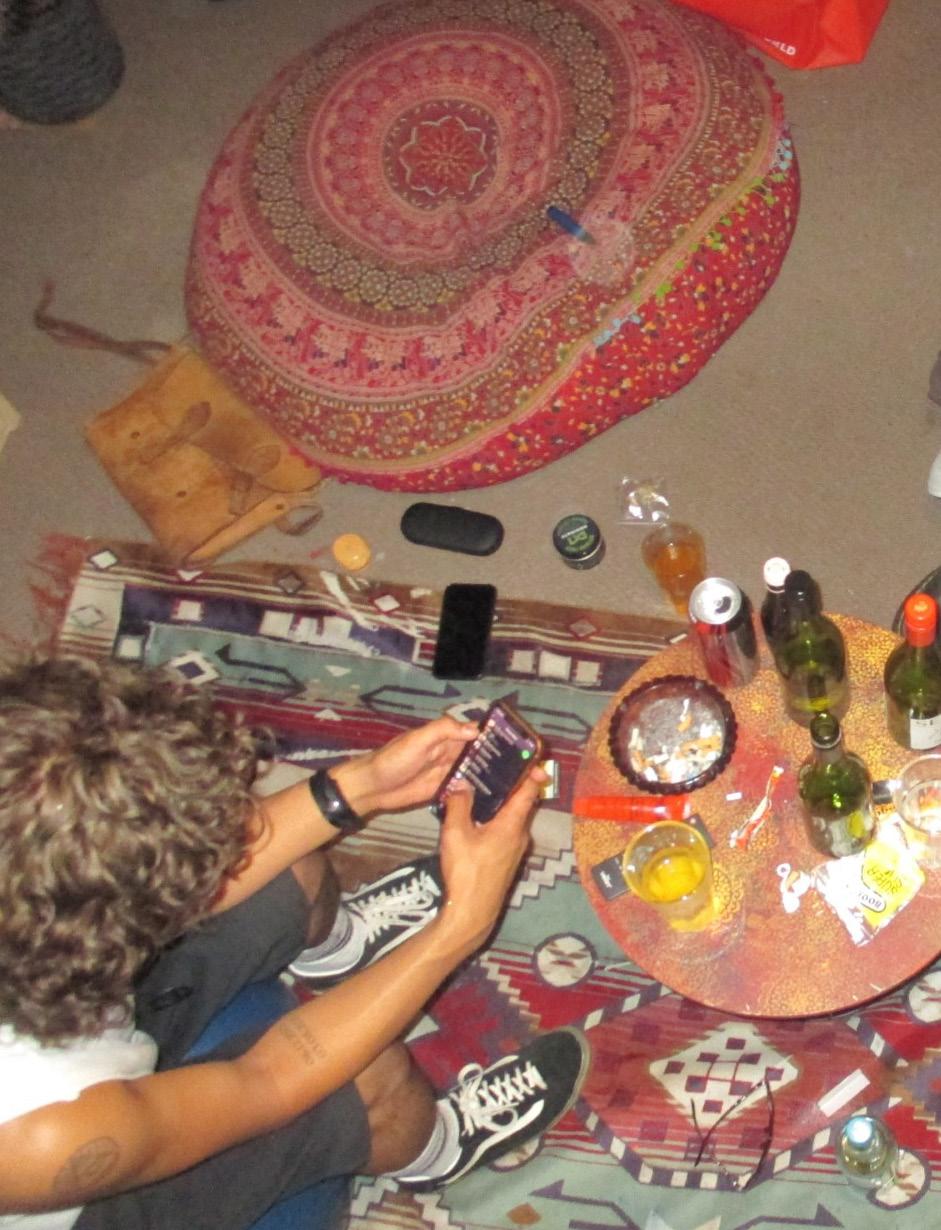
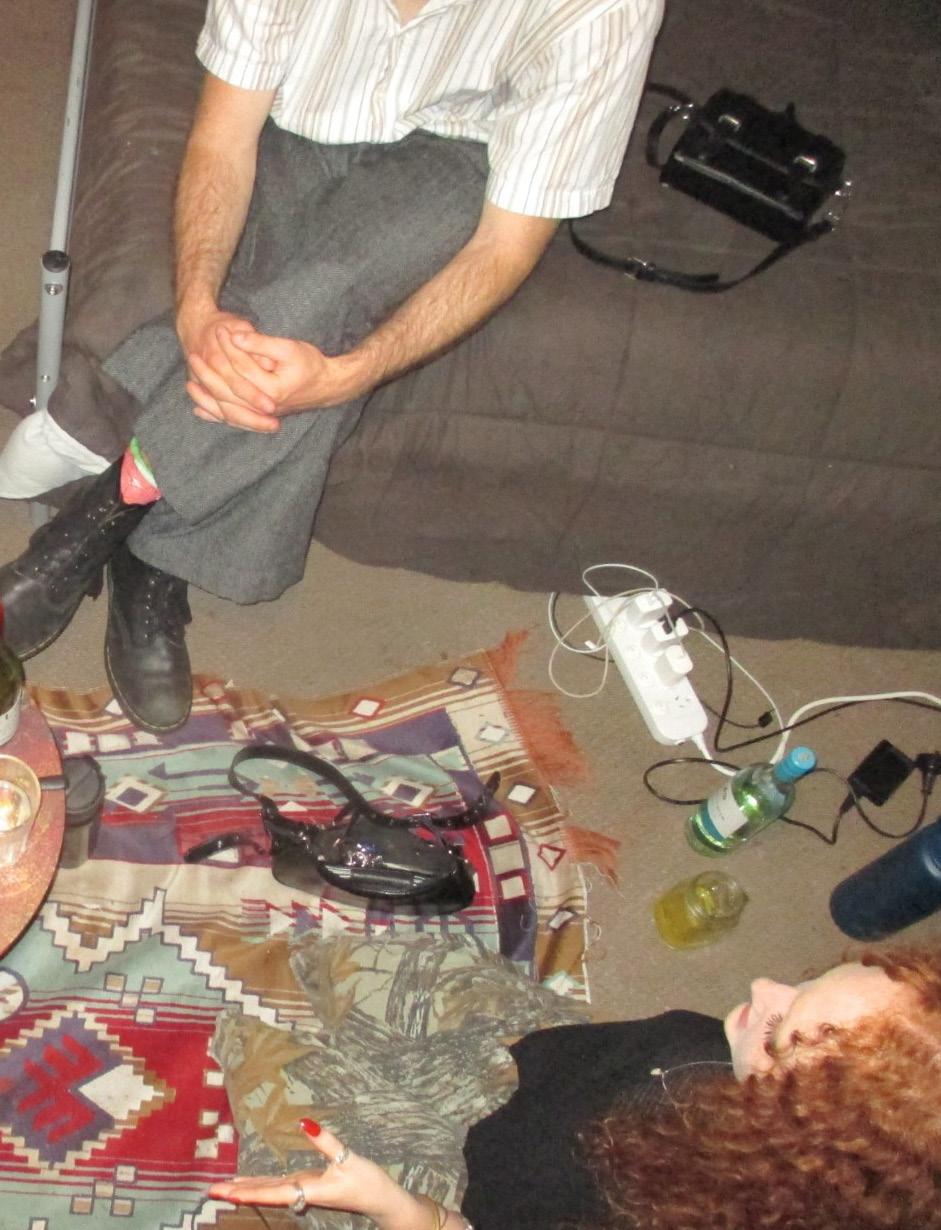
Getting fucked up and fucking have been a lawfully wedded duo since recreational drug use rose in 2800 BC. I can assure you that sneaking away with someone for a cheeky bump in the bathroom has led to more hook-ups than Hinge dates ever have.
The energy we inhabit and the insecurities that evaporate on drugs create a perfect space for getting naked and rolling around with a stranger... allegedly. Theres an erotic utopia surrounding our perceptions of high sex, with orgasms being labelled as ‘pure ecstasy’.
Chewing on all of this, I think about the time I stripped naked in front of Moon Bar and climbed a stranger’s car whilst my friends yelled at me. Or the time my best friend fell through the roof of a shed, and I ran away. Or even the copious number of times I’ve thrown up on people. All of these are very unattractive, embarrassing and unsexy—they don’t coincide with a sensual experience whatsoever.
This left me wondering, is high sex life changing or humiliating? To investigate, I got high every night for a week and had sex... Nah jokes. I just asked around.
Starting off strong, a guy I hooked up with in high school told me that he “did not finish. Can’t say the same about her though”.
Pretty classic for a cis straight guy to consider not cumming a notable experience.
My friend Aria* told me about her Rhythm and Alps tent rendezvous. They were both on MDMA and she could not get over how huge this guy’s dick was. Like seriously, “the largest penis I have ever seen”. But the sex itself ended up being pretty run of the mill.
Having sex on drugs like MDMA, meth, or GHB is known as ‘chemsex’ and is super common—especially in queer spaces. It’s the kind of music-throbbing, make-up-smudging, bathroom-stall sex we associate with partying.
Whilst these experiences can be super fun, 13 out of 20 young Wellington ravers told me that MDMA only mildly increased bodily sensation. Four of them say it didn’t increase at all. Side effects of MDMA include the MD shits, gurning, and profusely sweating—all elements most people avoid during sex.
On the other side of the spectrum, my friend Oliver* has a cosmically beautiful acid sex experience, saying it made for an incredible affair.
“We were so aware of one another. Our breathing would sync in and out. I could feel the way the muscles in her body were reacting as well as my own. It all seemed to make sense. No barrier to different anatomies. It just began to feel like we were one,” he recalls.
Many others I spoke to shared similar stories about bodies merging into one organism while on acid. For instance, Amelia* was having acid sex with her girlfriend in a backyard at a house party when the stars above her started dancing. She began sinking into the grass mid-intercourse. This freaked her out, but luckily an orgasm pulled her back up to earth.
She says, “Then I came and it was awesome.”
Both acid and MDMA create extremely different vibes during intercourse. One feels like a quick hit and the latter a long potent ride—mirroring the high themselves. The drug 2C-B is known to morph both effects. Experiencing psychedelic visuals alongside a heart-racing high energy makes an entirely different venereal buzz.
Lotty* found herself in a warm, long shower after a night of 2C-B lines. Without any flicker of previous lust, her body suddenly started to gyrate from the feeling of the hot water on her skin. As the down pour continued and her high intensified, she built all the way up into a full-fledged orgasm.
Without any clitoral or vaginal stimulation, Lotty* sat on her bathroom floor absolutely gagged that a simple shower could cause her to cum.
High sex isn’t clearly good or bad. But the drug you choose will affect your sensual experience differently. Depending on whether you’re looking for a fun quick connect, a good story for your girls or a crazy bodily escapade with someone you trust—pick your poison wisely.
As always, consent is key. Make sure you and your hookup are inhabiting the same headspace. Pretending that high sex doesn’t happen causes more harm than good to our party goers. When you’re safe and intentional with the drugs we take and what you’re looking for in your night out can make for a hot fun shaking of the sheets.

nder Chris Luxon’s watchful eye, Aotearoa’s roads are now safer than ever from people who smoked a joint two nights ago or experimented with MDMA last month. These are apparently the real roadside dangers... not the increased speed limits or anything.
Last year, the coalition government announced that the New Zealand Police were going to begin roadside screening for drug-impaired drivers. The DrugWipe3S device can detect four illicit substances through a saliva swab: THC (cannabis), cocaine, methamphetamine, and MDMA (ecstasy).
The testing started in late 2025 in Wellington and is expected to roll out nationwide by mid-2026. Police take a saliva sample from drivers and conduct a roadside test. If it’s positive, the sample goes to a lab for further testing, and a second roadside test is done. Two positive tests trigger a 12-hour driving ban. If the lab detects certain drug levels, drivers can face fines of $200 to $400 plus demerit points.
In theory, this sounds great! But the DrugWipe3S drug screening device doesn’t measure impairment—it measures presence. This means you could have taken an edible two days ago and test positive even if you’re no longer impaired.
This isn’t a crackdown on road safety. It’s a crackdown on drug users.
Sam Lasham, founder and national coordinator of Students for Sensible Drug Policy Aotearoa (SSDP), says these roadside tests are “a flawed, expensive and misdirected solution”.
While SSDP supports testing for impairment, Lasham says: “We don’t support the current saliva roadside testing, largely because the false positive rate is very high.”
With alcohol, Lasham says that there’s a pretty clear correlation between blood alcohol levels and impairment. Alcohol testing works, but testing for other drugs is far more complicated.
“Fundamentally, this legislation is a gross, oversimplification of the science… previous governments found that there weren’t any devices in the world that actually met that standard,” he says.
“Even if the test did work perfectly…that still doesn’t actually tell you whether or not the person is impaired. It’s testing for drug presence, not drug impairment.”
Measuring the amount of drugs in someone’s system is highly variable from person-to-person. Some drugs, like THC, can stay in your body for days or even weeks after use, long after their
effects on your mind and body have worn off.
“The period during which someone can fail a roadside drug test is far longer than the time the drug actually impairs their ability to drive,” Lasham says.
In other words, these tests can unfairly penalise people who are completely sober and capable of driving.
Even if you’re prescribed cannabis, police won’t accept a prescription roadside. This means “every single user of medicinal cannabis in the country is taking a legal risk whenever they drive”.
“It harms people’s lives and can introduce a lot of stress.”
The government has decided to roll out these drug tests against the advice of nearly everyone, including the attorneygeneral, Judith Collins.
In 2024, Collins released a report on the legislation which found it conflicted with parts of the Bill of Rights Act. Specifically, the right to be protected from unfair searches and arrests.
“The intrusion on an individual’s privacy that arises from the taking of a bodily sample for the first oral fluid screening test appears disproportionate where there is no basis to suspect the
individual driving is under the influence of an impairing drug,” she wrote.
Even NZ Police have admitted past struggles to find an effective roadside test. In 2024, Stuff reported that no device met Aotearoa’s legal requirements. But instead of funding a test that works, transport minister Simeon Brown changed the requirements and spent $20 million on the DrugWipe3S.
Driving under the influence is a huge problem in Aotearoa, with 38% of crashes a year involving impaired driving. But we’re putting our money into the wrong thing.
Lasham says overseas studies on these tests found they actually do nothing to reduce road fatalities.
As Lasham puts it: “We’ve got a crap solution that’s distracting us from actually putting money and investment into what could be good solutions.”
He points to DRUID (DRiving Under the Influence of Drugs), a mobile tool that measures impairment through reaction time, coordination, and balance. We need to invest in something that tests impairment, not drug use.
But let’s be real. Luxon isn’t doing this to make our roads safer. He just wants to get rid of drugs. And that’s why he’s in my nightmare blunt rotation.
For many, university drinking culture is about getting drunk whenever, wherever, for whatever reason. But there’s a fine line between drinking a couple RTDs to pregame toga night, to doing shots at 9am just to get through the day.
It’s not crazy to assume that Aotearoa’s university drinking culture fosters alcoholism. Like a cult initiation, O-week sets the tone. It’s a seven-day stomach pumping induction.
Uni students pack into their halls, riddled with anxiety and a fear of being alone, and turn to the OG unifier—a 12-pack. This social lubricant initiates most relationships for freshers. You blackout with strangers, confess your secrets, and stumble around streets united by the power of friendship and vodka. Then, O-week ends. But the drinking has just begun, and it comes with unspoken rules...
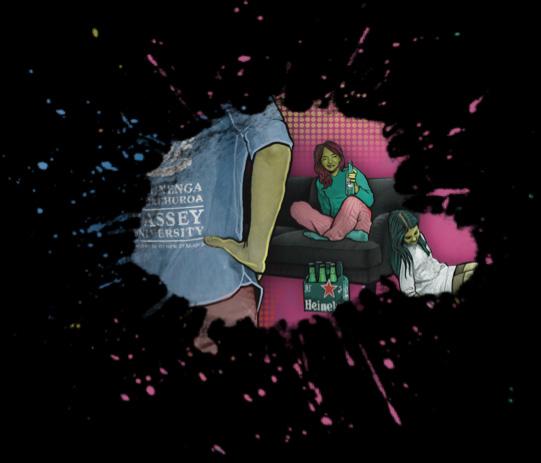
1. In first year, you must cram a crowd of freshers into one hall room every Saturday night. A box each is essential. Once you start flatting, the same principles apply. Now, you are cramming into a mouldy, decaying flat.
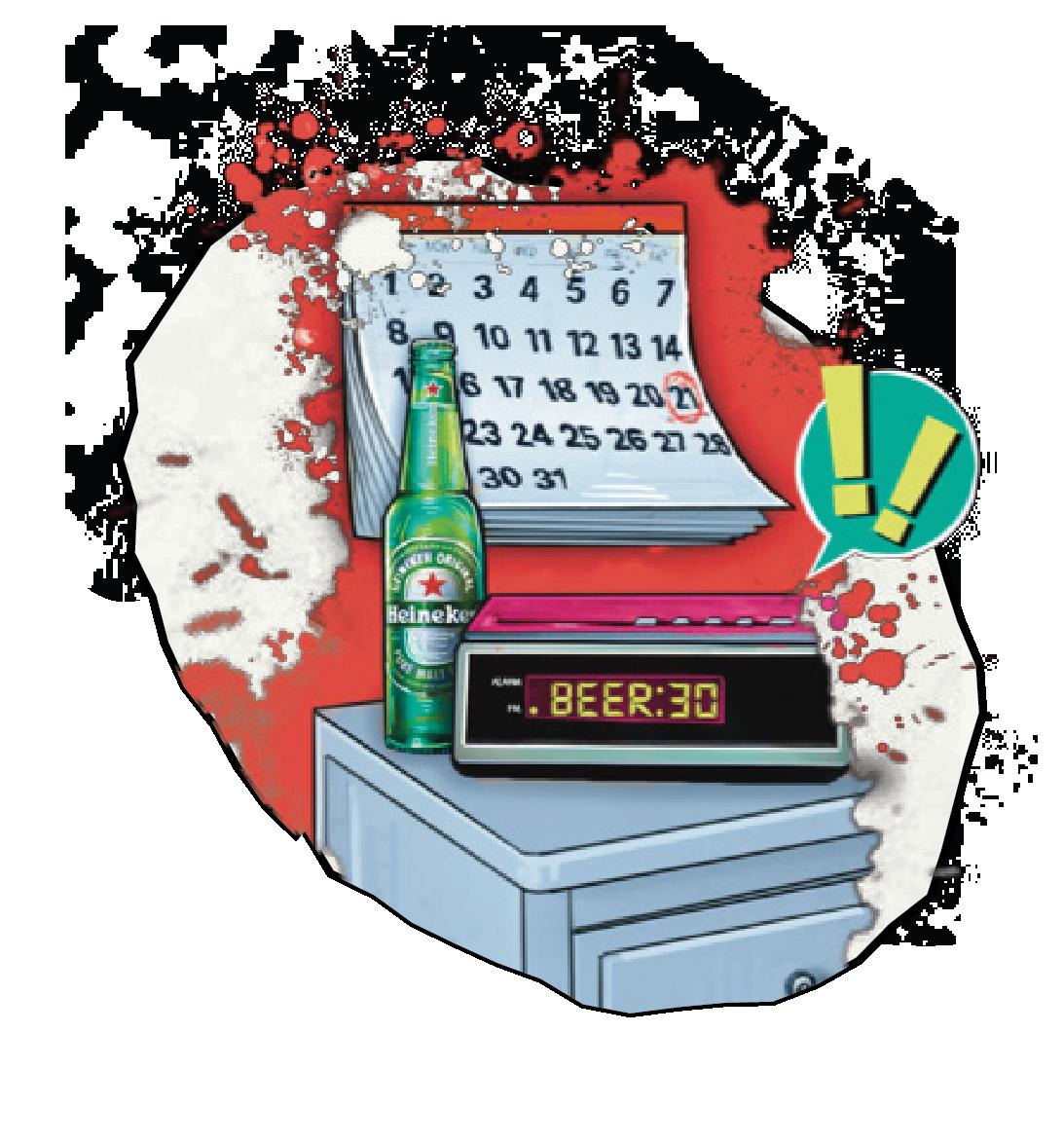
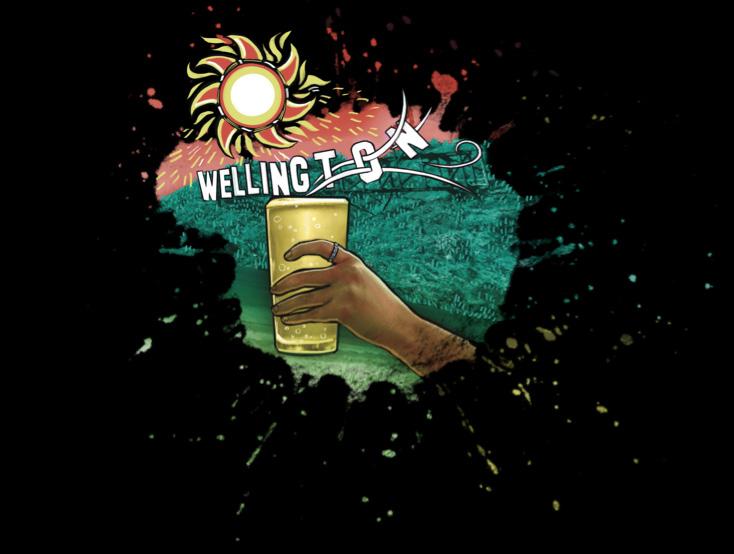
2. On sunny days, it’s mandatory to go to the pub and buy a pint. However, this can also be done on a rainy day.
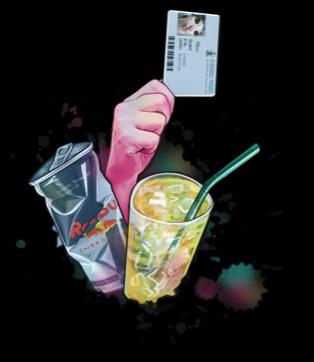
3. You need to make use of student night. This is the only justifiable expense for your course related costs. That discounted Red Bull vodka is calling your name.
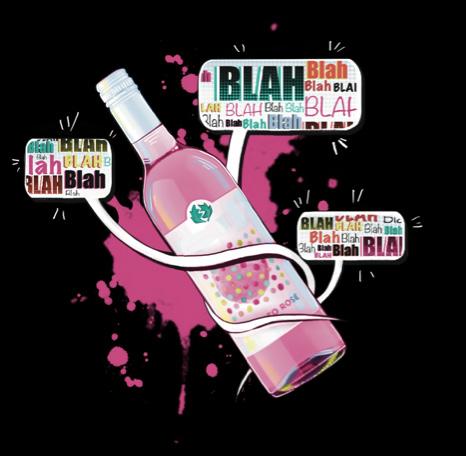
4. Connect with your flatmates by purchasing a $12 bottle of wine, sitting in a circle drinking by the bottle, and bitch about literally anything.
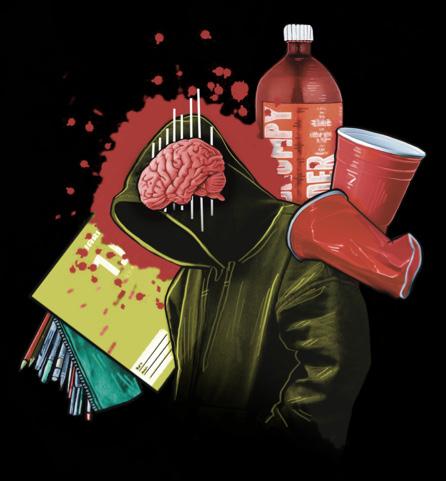
5. Do you have no classes until Wednesday each week? Sounds like a long weekend! Your Tuesdays are now available to go bar hopping. It doesn’t matter if you’re hungover for Wednesday’s 9am lecture.
6.
Is there a function? Bunker rave? Street festival? Someone’s 21st? That’s a sign to get drunk.
As a fresher, I thought these were non-negotiable. I treated these rules as my bible.
But when my itinerary for the week started to sound like a cocktail menu, I began to wonder if these commandments should be questioned.
How does one know when these habits are becoming a problem? When do the lines start to blur?
For student Alex*, they began university eager to have an opportunity and freedom to drink for fun.
Then, they met a boy.
“He was my first love,” Alex says. “He made this scary environment more homely. He was my lifeline”
But at the beginning of their second year, Alex was dumped. Slowly, they turned to alcohol because “it meant I didn’t have to feel the dark emotion of feeling”.
It started small—a drink with dinner. Then two. Then four.
Alex started drinking as much as their bank account would allow, often spending their grocery budget on alcohol.
“I didn’t even realise I was doing it until one day where I was drinking before class at 9 O’clock in the morning.”
Alex had two responses to the hangover—isolating themself or drinking more. The isolation meant not going to classes, and surprisingly, the drinking helped them with university.
“It was a really confusing time. I study a creative degree and when I was drunk, it heightened my creativity which was odd,” Alex says.
This created a distorted perspective about alcohol, making them think that it was helping them succeed. However, it was drastically affecting Alex’s mental health.
“When I was on my come down of alcohol, I would feel such great anxiety that I would isolate myself. I wouldn’t see people for days,” they say.
“I just thought though this was normal and I didn’t clock that it was the alcohol that I had been putting in my body.”
Alex believes that getting drunk to mask emotions is an indicator that the habit is no longer healthy and borders on highfunctioning alcoholism.
They say, “Drinking and drugs, it’s supposed to be fun. Applying deep masking emotions onto that ruins it.”
Health promotion advisor at Alcohol Healthwatch, Lizzie Barratt, says students are particularly vulnerable to aggressive alcohol marketing—especially during major life changes like moving out, handling pressure, and feeling vulnerable.
“These strategies flood our environments with alcohol and ... promote ‘personal responsibility’ narratives that create stigma and shame against people who are struggling with their drinking and take the blame for harm off themselves,” she says.
Alcohol is often framed as a solution to stress and anxiety, creating a cycle where it becomes both a coping mechanism and a reward.
“This cycle can cause isolation, shame, and self-blame—or make it really hard to recognise that alcohol is contributing to these harms at all.”
Barratt says this normalisation means problems can creep in gradually and quietly until they become difficult to break.
Leanne Radovanovich, Massey University’s associate director for student wellbeing, echoes this, warning that short-term relief can quickly turn into a habit.
“While alcohol may temporarily reduce stress, over time it can worsen mental health, increase the risk of anxiety and depression, and negatively influence other areas of life such as relationships, academic performance and physical health.”
She encourages students to seek support from trusted friends or counsellors and find alternative ways to manage stress.
“Becoming more aware of stress triggers, cravings and learning to choose other ways to lower stress levels are useful alternatives to turning to alcohol.”
While it can feel like you’ve signed a blood oath to O-week traditions and student night rituals, those unspoken rules aren’t as fixed as they seem.
The line between social and selfmedicating drinking doesn’t appear overnight. It creeps in, disguised as normal. As something every else is doing. As something you don’t question.
So go ahead and have a cheeky bevvy. But maybe question why you’re having it first.
Insula X Niph

LAUGHING STOCK - Sixk
Wolfboy - Drowntown
G.L.N.C - Good Luck Nihilist CLub
Rust Angel - Hive Mother
researchintospeed - ADCSR
DISPLEASURE – TERF WAR 2025
shannengeorgiapetersen - 17
Eveline Breaker - Chain Sevens, Desire Path
Frau Knotz - Victory Dance on ZR3 (Amamelia Remix)


I’m in love with one of my best friends, and she keeps telling me about the other people she’s interested in. What should I do?
Hey, babe, don’t give your heart to an energy vampire. If she hasn’t realised already that you’re the baddest B in town, then she’s not worth it. You deserve someone who yearns for you as I yearn for my 5pm glass of chardonnay. Love’s not worth it if it’s not reciprocated. Trust me.
Dan (my second husband) only got my attention after giving me a bouquet filled to the brim with water-based lube sachets and rose toys. I won’t even share my ciggies, so my heart is off limits until you’ve proven your devotion to the church of Mother Massive.
Know your worth and stop crying over these people who don’t even see the worth in themselves. These vampires just want to steal your youth, so don’t donate your energy so easily.
Love you (more than you know)!
XOX



If you’re kinda, sorta dating a guy,
he offers to take you out for 2-for-1 cocktails, and you find yourself thinking “Okay, I’ll just go for one round”, it is incredibly important that when you finish the first round, and he asks if you want another one, you say yes.
We ended up having three rounds, and I was thriving. From running my foot up his leg, to eye fucking him like some possessed horn dog. We decided to go back to mine for dessert.
The second we got into my room, I pushed him inside and pulled my top over my head. He grabbed my waist, pushed me against the wall, and started kissing me as if his life depended on it.
From there, it escalated quickly. Like, very quickly. At one point, I remember wondering if my cocktail was an aphrodisiac because I’d never felt so much pleasure or passion in my life. He actually knew how to use his fingers, tongue AND sergeant downstairs. A welcome triple threat, I must say.

Eventually, after one too many rounds, we fell into that dazed post-hookup state, and I wandered into the kitchen in search of water. My hair was wild, makeup halfway down my face, and I probably looked like I’d just survived a small natural disaster, which is when I ran straight into two of my flatmates.



For 20% off your next purchase, enter discount
Turns out the cocktails didn’t just make me bold, they also made me incredibly loud, and my entire flat had enjoyed the full surround-sound experience.
They stared at me. I stared at them. Then one of them burst out laughing.
It’s been a month, and I still hear about it daily. I’ve even been given the nickname “screamer”. So, if you’re wondering whether that second round of cocktails is worth it, just know that sometimes it leads to great sex and sometimes it leads to your flatmates never letting you live it down. one year. You changed my life.


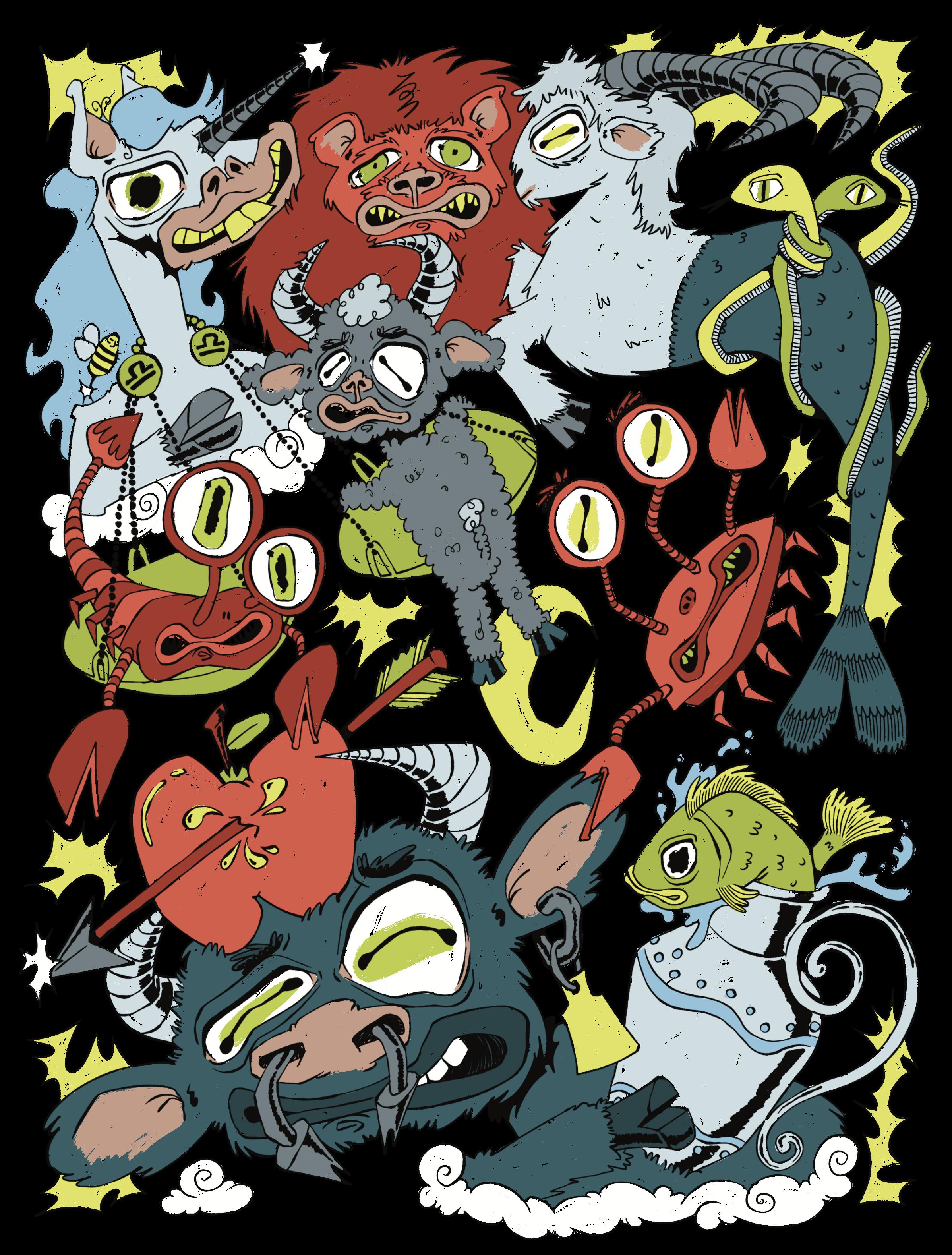

Big baller energy coming your way, Aries. As Venus changes house, you might finally leave your frugal ways and spend a bit of dough. The hole in the crotch of your pants is unsalvageable. Get a new pair. Use this week as an excuse for excessive self-care to prepare for the month ahead. The stars say that April will be your month, so get your glow on before you step into the limelight.
Your ops have eyes everywhere. Watch your actions and your mouth before karma comes knockin’.
You’ve been way too normal recently —time to get your freak on. Eat some popcorn from in between the movie seats or start walking topless around your flat. Let people see your wild side.
Stop spending all your savings on ugly, expensive clothing. Your fits are drying up just like your bank account.
You’ve been straying from desire recently, but it’s time to get lost in the sauce. Embrace your inhibitions this week and get wild. The stars say that taking things too seriously will be your downfall this month.
Go to the doctor, babe. Your stress levels are way too high. Try not to say yes to everything, Libra. Burnout is a bitch you don’t want to mess with.
The chaotic energy that has been following you this month will subside this week. Be prepared for a wave of inner peace and clarity.
Your closest friends have been talking shit about you. Use this week as a moment for reflection to realise that you’re the problem in the relationship.
Stop being such a butterfingers and dropping your friends like you drop your prized possessions. Nobody is going to pick them back up for you, babe.
Slow down this week, Aquarius. There is no need to be speed-running life. To relax, kick back and use that toy in your bedside drawer—you deserve it.
Forget a workout this week, be prepared to be tickled so violently that you break a sweat.


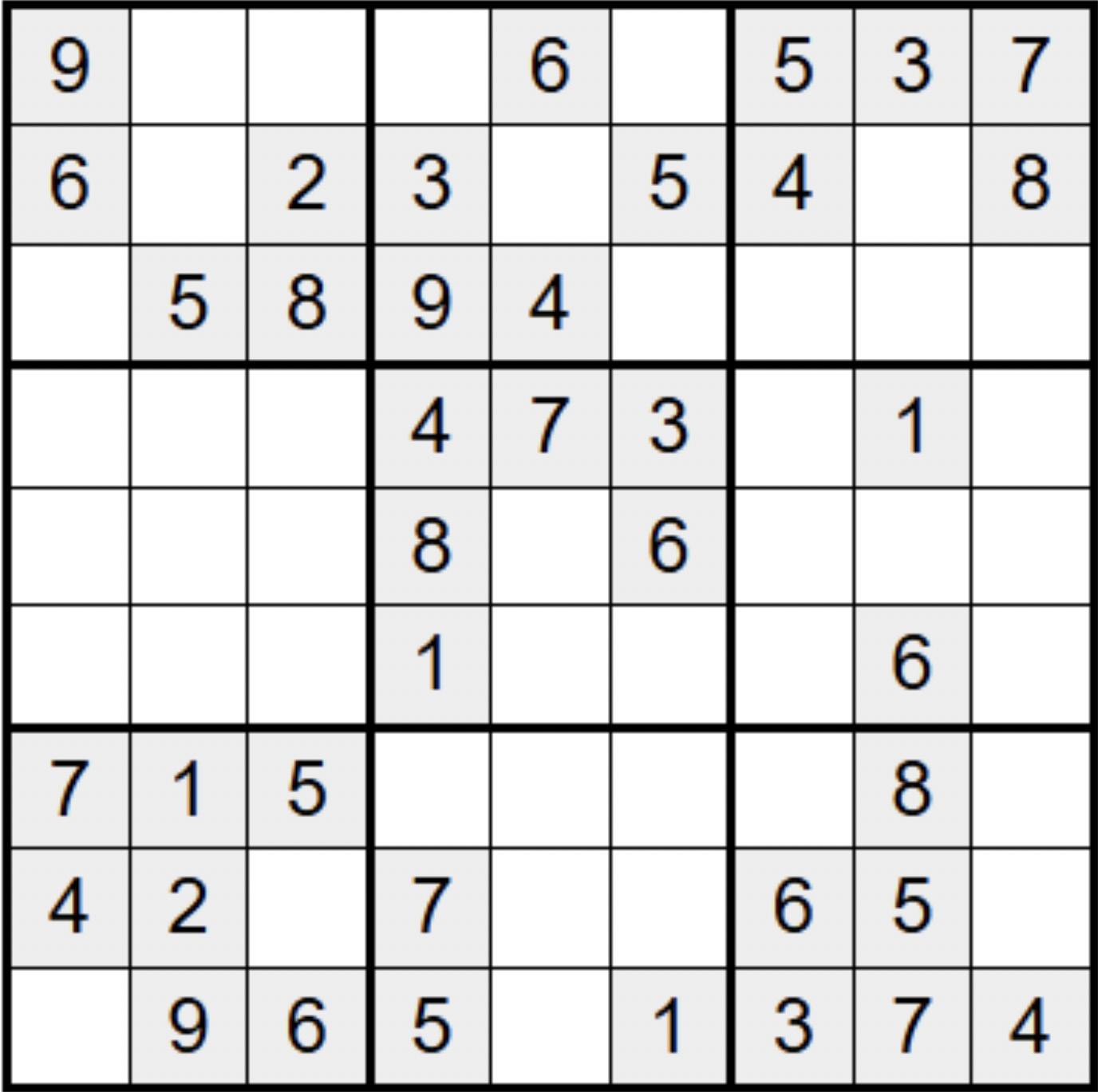
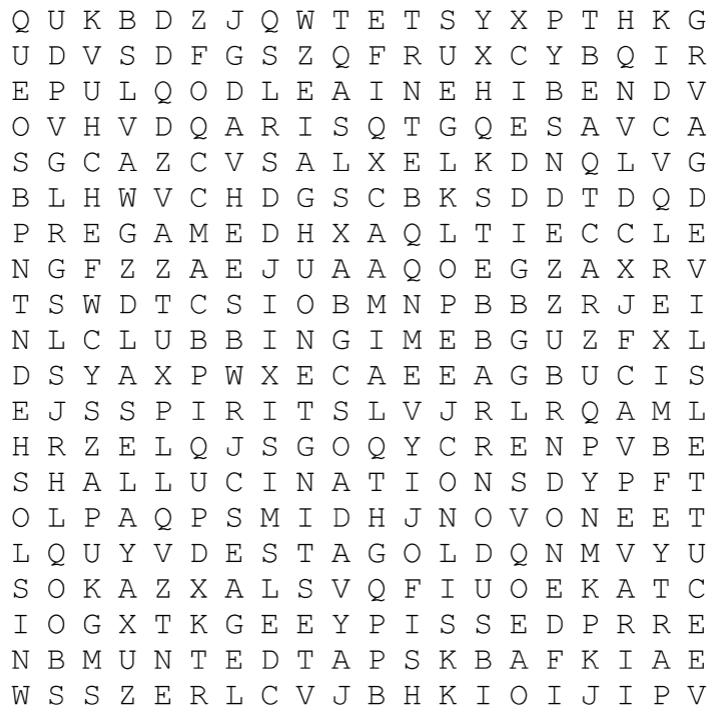
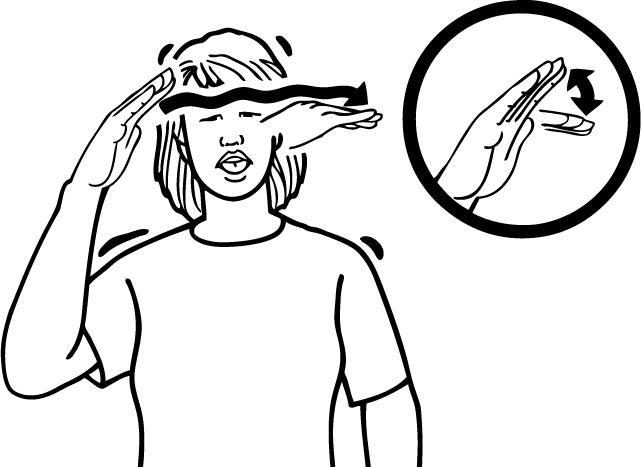


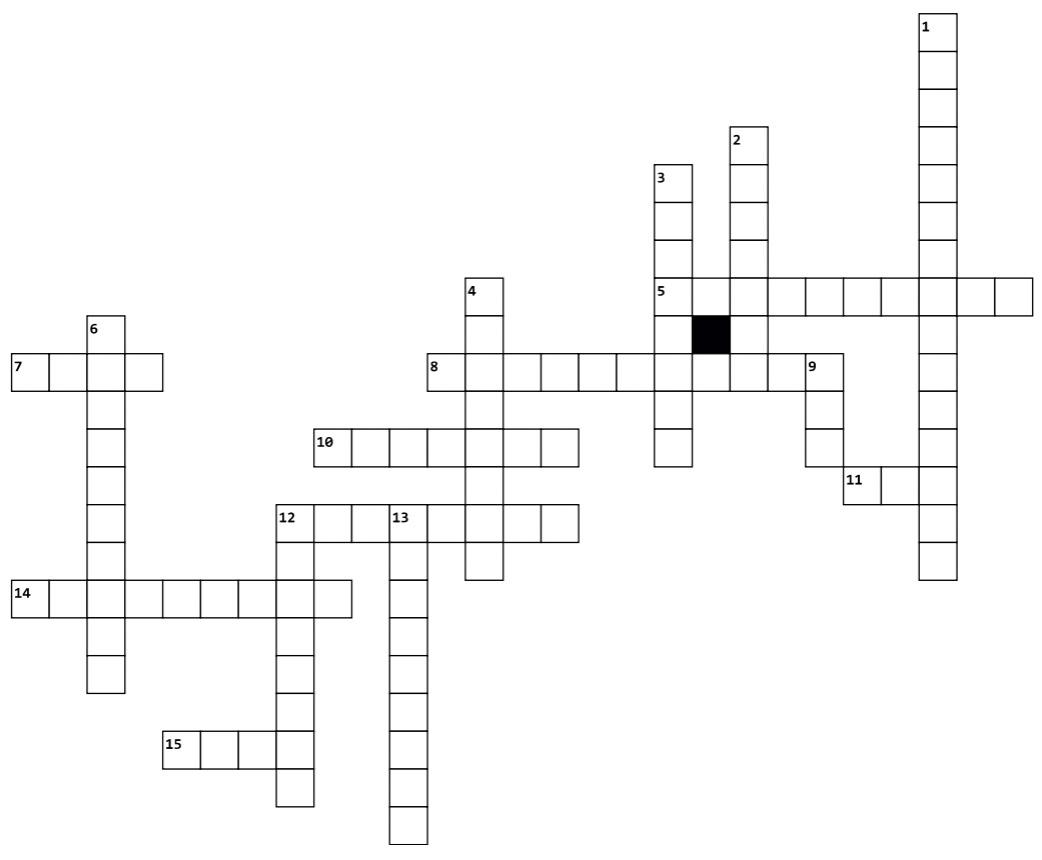
1. NZ University known for its party culture (5, 10)
2. “Crack open a ________” (4, 3)
3. Drinking game that has a royal title in the name (5, 3)
5. “You know I can’t grab you _____” drunk driving advertisement (5, 5)
7. The most purchased alcoholic drink in Aotearoa (4)
8. Cheap NZ wine brand (6, 5)
10. Drink where you split the G (7)
11. NZ alcohol company named after a bird (3)
12. Spiderman’s red-headed love interest (4, 4)
14. Homemade alcohol that got its name for being brewed at night (9)
15. What is Beyonce drunk on in the title of her song Drunk In ___ (4)
4. NZ celebration on the first weekend of summer (5, 3)
6. Gelatin mixed with alcohol (5, 5)
9. Last week’s Massive theme (3)
12. What is it called when you’re high and craving a snack? (8)
13. Traditionally used for 21st birthday drinking challenges (4, 5)
























18th Ñ 25th March 202 6

Voting is offically open for Student Rep Elections

Voting closes at midnight Wednesday, 25th March

























9% samples brought to drug checki ng cl i ni cs for testi ng i n the leadup to summer 2025-26 were not what they were meant to be
6% had been swapped out for somethi ng different
3% had been cut with somethi ng
Over half of the pressed pills brought i n for checki ng over the summer peri od had more than one dose of MDMA i n them