Quiz: Are You More Fruit or Vege? ‘Fruits of Labour’ Breaking Bread
Espresso Shots and Septum Piercings PG
Massive is largely funded by Te Tira Ahu Pae and the student services levy, however, remains editorially independent.
Disclaimer: The views presented within this publication do not necessarily represent the views of the editor. NZ Media Council: Those with a complaint towards the publication should first complain in writing to the editor editor@massivemagazine.org.nz
If unsatisfied with the response, complaints should be made to the NZ Media Council info@mediacouncil.org.nz
Butter is my most valuable possesion
Boyfriends might let me down, but my 1kg bag of flour is yet to do so. I may wince as I pay for a box of tampons, but never for a block of butter. I could go a week without a vegetable, but never baking powder.
As a chronic stress baker, I will continue to pay for my ever-increasing, overpriced supplies without batting an eye. But that doesn’t mean I’m not pissed off about it.
Baking is the activity I go to when everything else feels out of control. I knead my anxieties out of bread and stir worries out of cookie dough. I feel lighter once they’re baked. Afterwards, the house smells delicious, my mind is eased, and I can function like a normal human being.
As much as I love it, baking is busting my bank.
Butter, eggs and chocolate have all become increasingly expensive over the last few years.
Stats NZ reported last year that eggs became more pricey after the banning of battery cages. Chocolate prices have also sky-rocketed thanks to global shortages of cocoa beans. And butter—once a household staple—had prices rise by 60% between 2024 and 2025.
This is a bit baffling, considering Aotearoa has 5.9 million dairy cattle and, according to The Dairy Site, we produce approximately 525,000 metric tonnes of butter annually.
Despite our high production rates, Stuff reported there’s more demand for dairy products globally. But the demand is more than Aotearoa and other sellers can supply. Suddenly, my butter stash has become my most valuable possession.
I could start churning my own butter I suppose. But I just don’t think that’s on my 2026 bingo card.
I don’t know. This is stressing me out. Let me bake some cookies and get back to you.
There is nothing like the feeling of opening up your course content for the distance degree that you’re painstakingly fitting into a schedule of full time work, parenting, chronic illness and housekeeping… to find the content releasing one week at time.
“Flexible study options” *
“Balance work, life and study” *
“Study online in a way that suits you” *
*All subject to weekly content releases.
My focus this year is around holding the university to the Massey University Curriculum Framework that passed in 2024, outlining that distance content be available from the start of semester. Life as a distance student is hard enough. There’s no library nooks or midday snags, no toga party in sight. What we do have is
a whirlwind of availability and time zones, busy schedules and a determination to succeed.
Te Tira Ahu Pae want to see you armed with all the resources you need to drive success, so I’m squared away in the background nipping at toes and chasing where your content is hiding.
Rep projects can vary, from banter and Kahoot to a multi-year reports on student experiences, but what shouldn’t vary is your study experience or access to content.
You’ve got content hiding too? Report it here:
disabilitydistance@tetiraahupae.ac.nz
85 Ghuznee St, Te Aro, Wellington www.splendid.nz @splendid.nz
Technology and Building Issues Disrupts Wellington Classes
Words by Ellice Lawrie • SHE/HER
Since the reopening of level C in Wellington’s block five, students and staff have had their classes disrupted with technology and building issues.
Level C was under renovation last year and has only reopened this semester. Communications classes have now been relocated from block seven to block five, level C.
However, many staff and students have said that building and technical issues have disrupted the classes.
Josie Maddox, a second year Communications student, said within the past two weeks she has experienced these technical problems during class time.
In one of her classes, the aircon was not working, making her classroom unbearably hot.
“I had to keep leaving the classroom to get fresh air,” Maddox said. “No one can concentrate. No one can focus because it’s too hot.”
In another class, she said that the classroom desktop computers would randomly turn on and start talking.
Maddox said these technical issues have affected her and her classmates’ ability to learn.
Public Relations lecturer, Elena Maywell, said that there’s been issues with the technology on level C since the first day of classes this year.
“You couldn’t put the computers into presentation mode, the lights were not switching on, the aircon was not working. So, it was quite stuffy and hot and the projector didn’t work,” Maywell said.
Maywell said that teaching staff can typically check the equipment in their classrooms at the start of the year to check for problems. However, staff were only given access to level C a week before teaching began.
“We are always encouraged to come and check equipment but we couldn’t ... they only opened access to floor C because of orientation and all of them were locked,” Maywell said.
This meant the technical problems were only found once teaching had begun.
Out of the seven classrooms on the level, only one has had no technical problems.
Maywell said there’s been continuous calls to IT and complaints sent to Massey’s online system ‘assystNET’. While the local IT team has been helpful, Maywell said the amount of issues have “overwhelmed” IT.
Classes have been disrupted due to these issues. In one case, one of Maywell’s colleagues had to start their class 45 minutes late.
Maywell said she feels sorry for students who are just beginning their courses to be experiencing such disruptions to their learning.
“Our students are great and they are very understanding, so they won’t express it to lecturers. But students are obviously also affected. Which is not fair,” she said.
Maywell said if teaching staff were given time to check the equipment they would have gotten IT to fix them before the semester began.
Shortly after speaking to Massive, Maywell received an email from Massey about the issue.
She said she was “happy to receive a reply from Massey that the management expressed serious concerns about the tech issues ... and are currently working to resolve them.”
Maywell said that Massey are investigating the processes that had led to those faults.
In a response to Massive, a Massey University spokesperson acknowledged that staff and students have “experienced problems with air conditioning, screen technology and room functionality, during the first two weeks after opening”.
“Most of these issues have now been fixed, and staff are continuing to work hard to resolve the remaining technology issues.”
Government Aiming to Double International Student Revenue by 2034
Words by Claire Taylor • SHE/HER
Last year, the government launched the International Education ‘Going for Growth’ plan–an initiative aimed to double international student revenue to $7.2 billion by 2034.
In July, Education New Zealand published a statement on the initiative, outlining its objectives.
Targets include increasing New Zealand’s study profile to 44% by 2034, lifting enrolments from 83,400 to 119,000, and raising top-destination rankings from 18% to 22%.
This will be made easier after the government’s announcement in December which extends student visa work rights from 20 to 25 hours per week. This change also allows tertiary students in approved programmes to work.
The plan introduces short-term visas for certain sub-degree courses that currently don’t qualify for work rights.
However, many are concerned about how universities will manage increased demand for accommodation, student support, and course enrolments.
Massey University students have expressed concerns across social media about Massey’s current international frameworks.
One prospective international student took to Reddit for advice after being accepted to both Massey and The University of Auckland. She said she’d heard Massey was going downhill with course cuts.
Many Massey students replied to the thread. One commenter said they’d been to both Universities and found Massey to be “absolutely shocking”.
“Entire programmes have been shelved … course offerings have been cut … my friend almost lost her student visa because Massey decided to cancel her campus’ course offering,
Money and she had to either move from PN [Palmerston North] or take the distance version which wouldn’t satisfy INZ’s visa requirements.”
They claimed Massey offered no support in her dealing with immigration or her visa.
Another Reddit post criticised the government’s target, warning the policy could put revenue ahead of domestic students and residents.
They wrote, “They’ll implement it … without any way to mitigate the consequences against people stuck in a country with a degree, up to their eyeballs in debt and limited job prospects.”
And others shared the same concern.
“30000k part time work visas … Why can’t the government be honest here, they aren’t selling education, they’re selling work visas to people who can’t otherwise qualify for one,” one user commented. “This is why young New Zealanders can’t get a job flipping burgers or stocking supermarket shelves.”
Another user said the government has overlooked the infrastructure, housing, and support needed for large numbers of international students.
Massey currently hosts about 5,000 international students, and houses an approximate 1,500 in on-campus accommodation.
With Massey’s current international population, alongside with the government’s estimated growth rate, this goal would see 10,000 international students enrolled in 2034.
In a response to Massive, deputy vice chancellor of students and global engagement, Dr Tere McGonagle-Daly, said Massey supports the government’s aim to grow international education. However, he said success should not be measured solely by student numbers or onshore spending.
McGonagle-Daly said reducing the ‘Going To Growth’ plan to revenue undermines the value that international learners bring to New Zealand.
“Our approach is not to pursue volume for its own sake, but to grow international participation in ways that align with our academic strengths, capacity, locations, and long-term strategy,” he said.
“More importantly, we want students to choose Massey because we meet their needs and aspirations.”
While international fees are a key part of Massey’s funding, he said they cannot replace sustainable public investment in higher education.
According to McGonagle-Daly, Massey plans enrolments five years in advance. Any increase in international students would be gradual and carefully matched to available capacity.
“We have a strong academic governance in place, and an increase in student enrolments will not change that, but we will continue to review and evolve our current practices to ensure they are contemporary and relevant.”
Campus Kebab Stays Open on Auckland Campus
Words by Maya Trotman • SHE/HER
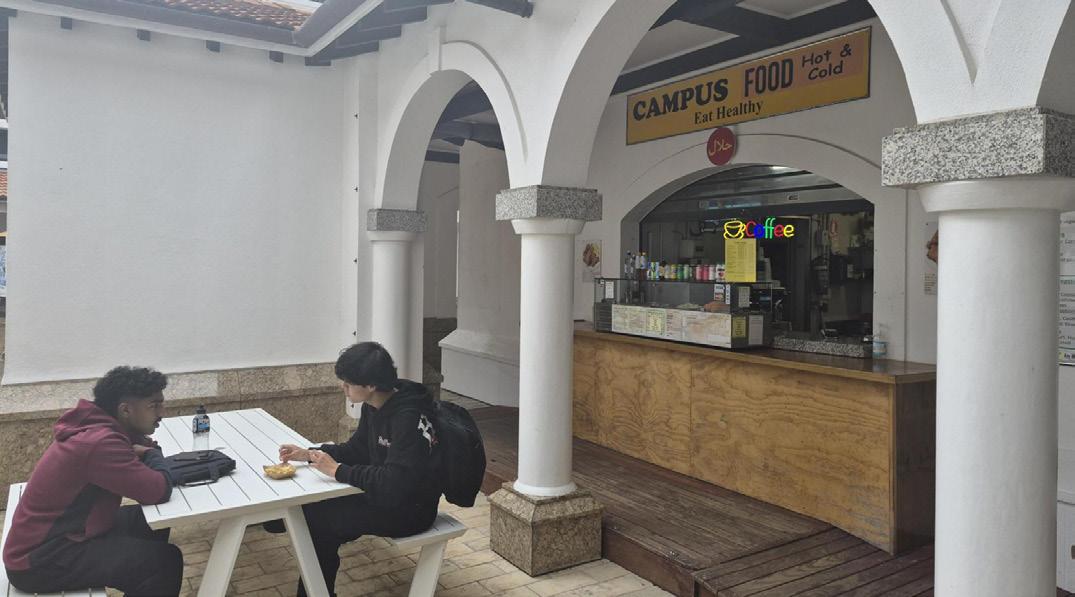
Auckland’s Campus Kebab remains open for business after Massey threatened to give them the boot last year.
Campus Kebab has been on Massey University’s Auckland campus for nearly 19 years, and is family owned and operated by Abbas Froozen Far.
Despite being the only place that serves Halal food on campus, Massive reported in July last year that Campus Kebab was being forced to vacate their premises. This came after the university decided to re-lease the buildings.
Soon after, a petition was launched by student representative Kevin Francis. This petition gained over 500 signatures and saved the shop.
Froozen Far told Massive that lots of university staff members including doctors, professors and lecturers signed the petition.
“Thanks to everybody’s help, we survived,” he said.
But with their lease on a monthly renewal, the future of Campus Kebab is uncertain. Froozen Far said the shop has no plans if their lease is not renewed.
He said he was concerned about the university’s actions, claiming that he wasn’t told why Campus Kebab was meant to be shut down.
“They should tell us why they are doing this to us. There is nothing. They are trying to get rid of us.”
“This is not the way people normally conduct business.”
If Campus Kebab is to be moved, Froozen Far said that the university should consider relocating them closer to the student plaza.
“We are qualified chefs with over 40 years of experience. So they should give us at least a larger place so we can supply all kinds of food as much as possible,” he said.
“I hope they give us a better place to do the business.”
As a news reporter, you’ll be responsible for keeping students in the loop about what’s happening on your respective campus. You will:
Do you enjoy scouring news sites every morning or know all the latest gossip on campus? You’d fit right in as a Massive news reporter. We have our Distnace news reporter role up for grabs!
Send your CV, cover letter, and examples of your writing to:editor@massivemagazine.org.nz with the subject line ‘Application for insert role here’.
Don’t be shy, any examples of writing will do from an essay from class or a poem from your note’s app.
ART BY OLIVE BARTLETT • SHE/THEY
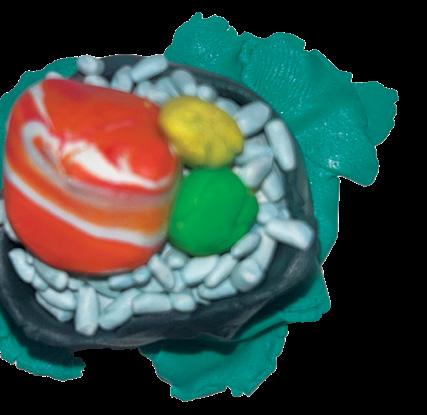
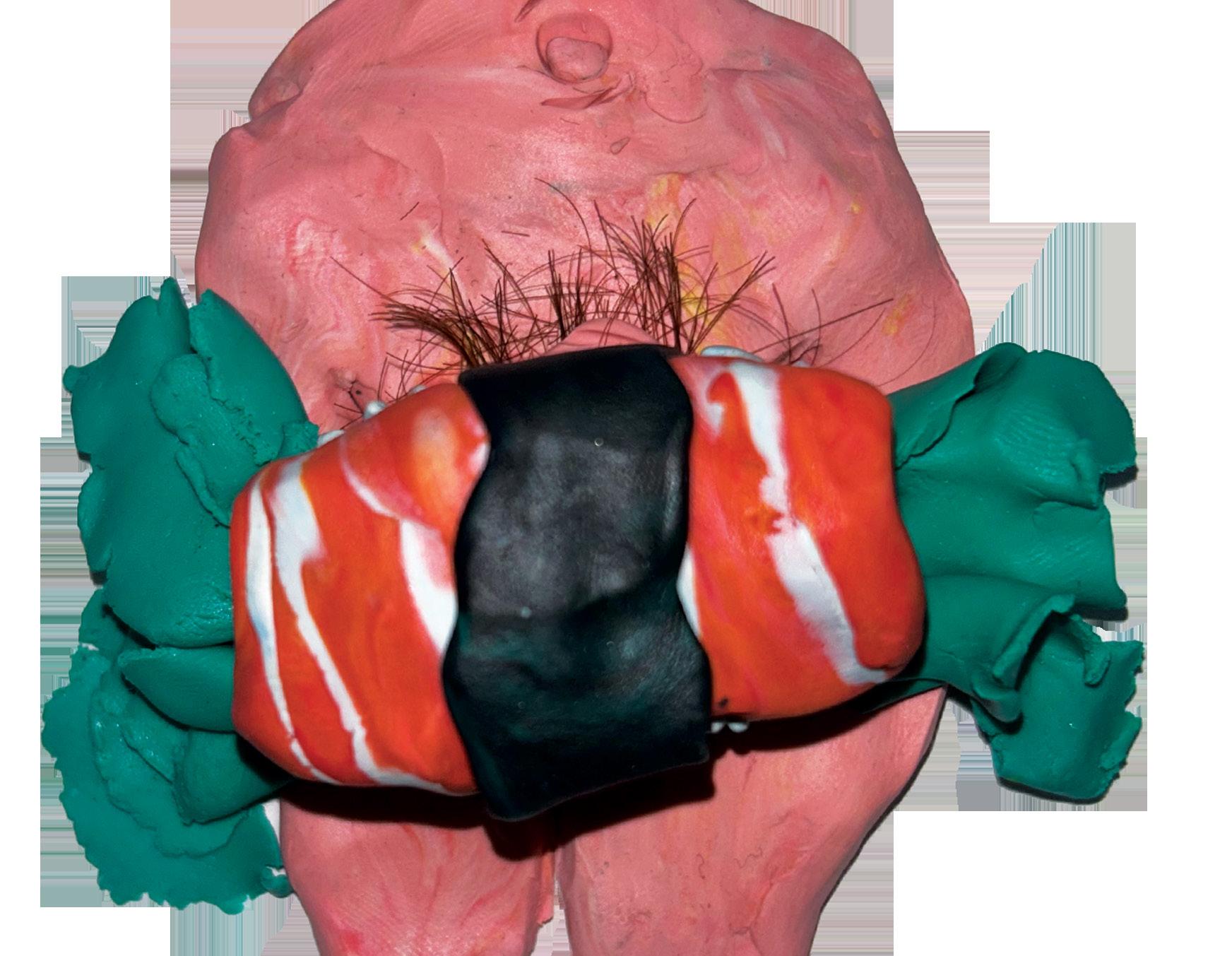
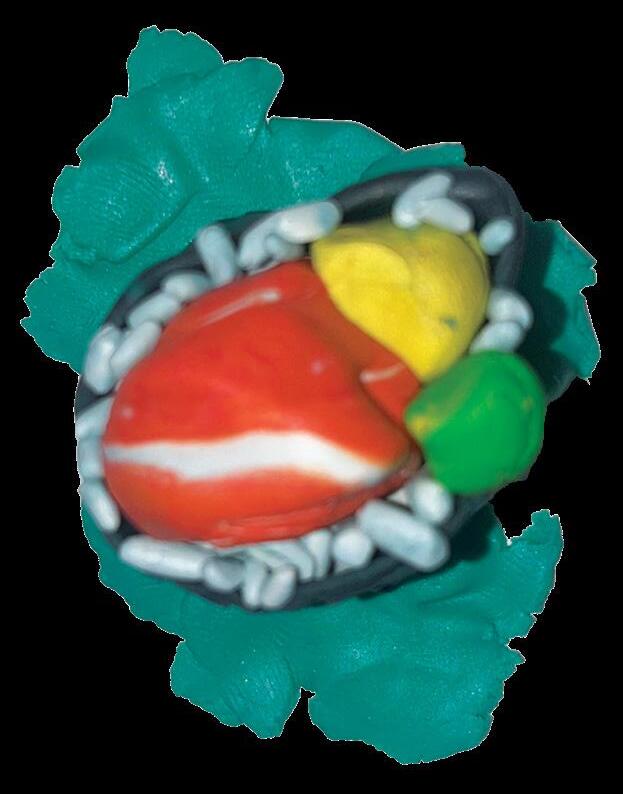
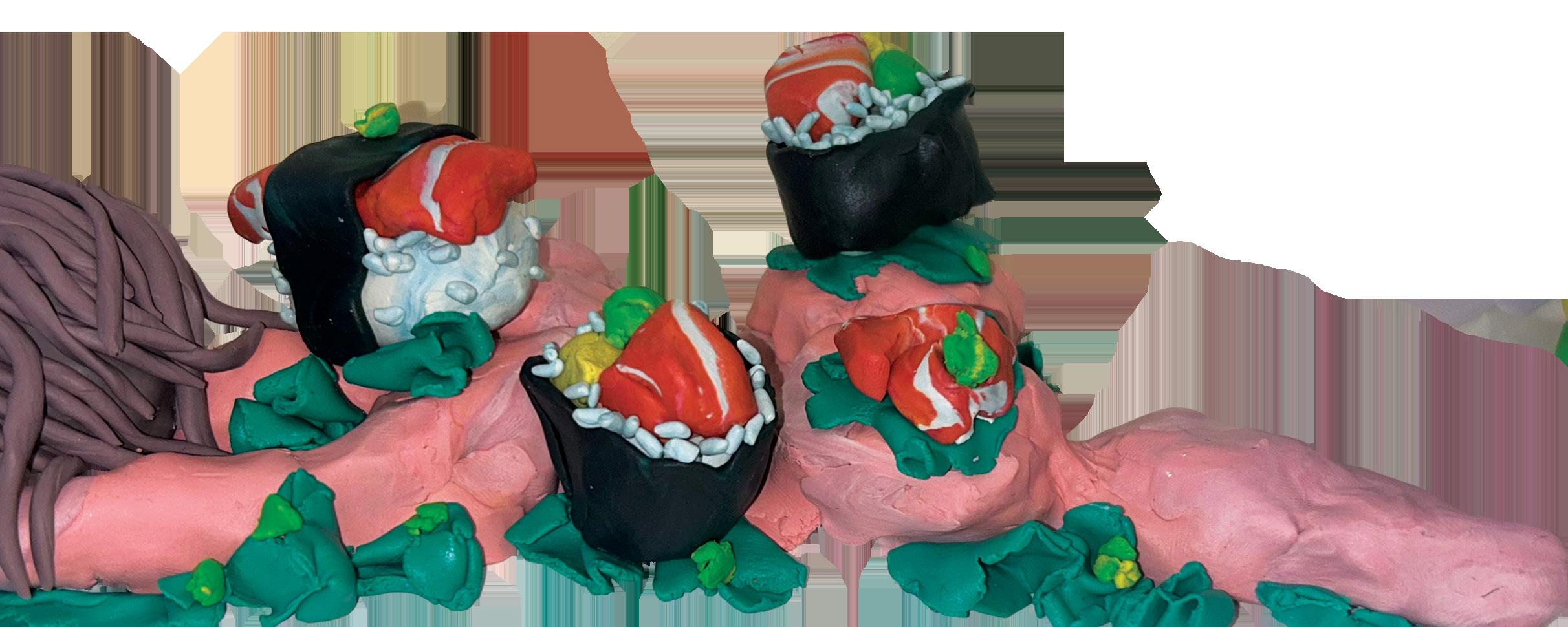
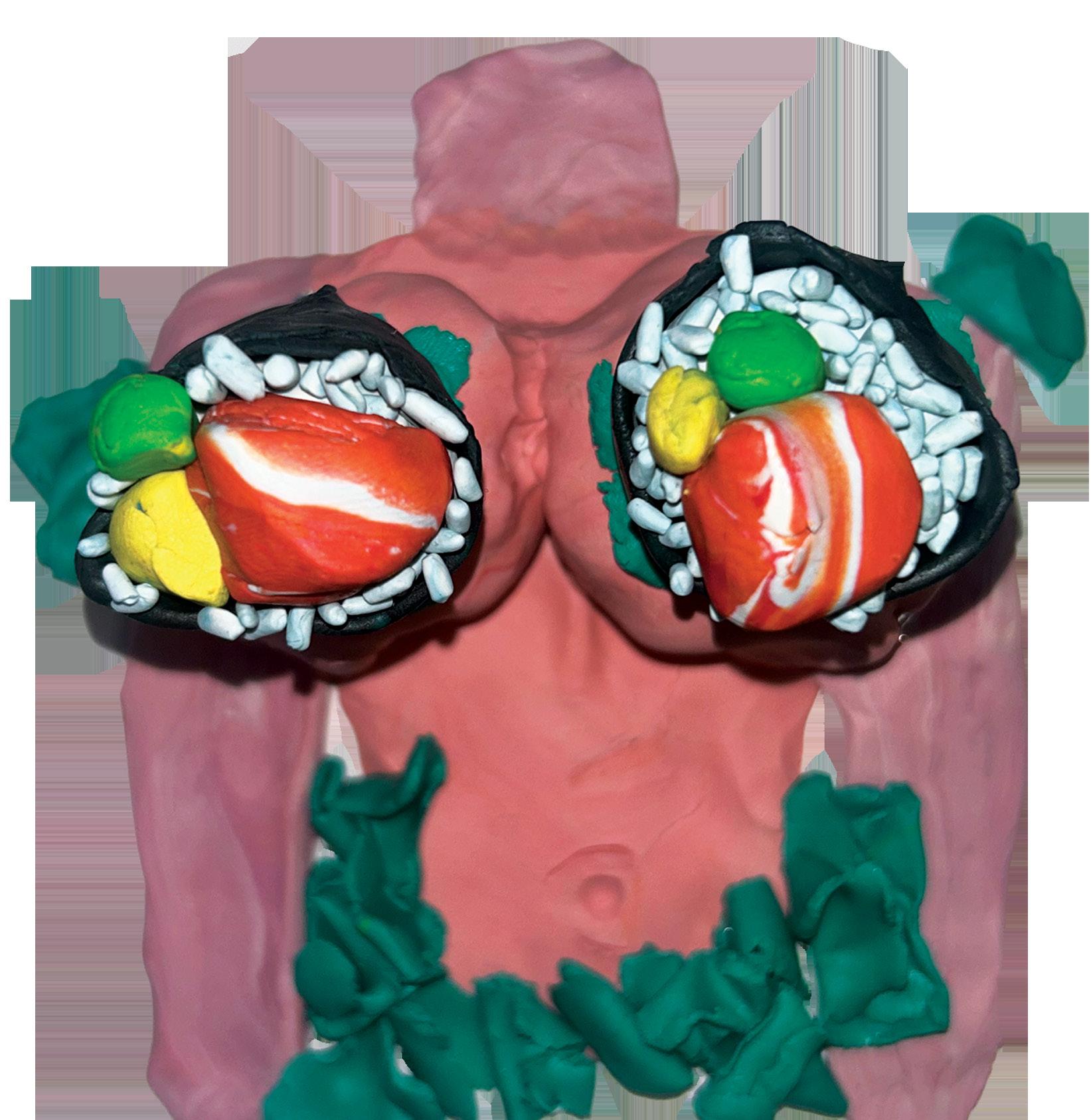
Snuggled up on the couch with my mum watching Sex and The City at the ripe age of eight, I blushed watching Samantha lying naked as raw fish covered her nipples and vulva. I was convinced this was the height of sensuality.
Nyotaimori is a Japanese practice where sushi is eaten off a women’s naked body, and the Western world is obsessed with it. From Austin Powers to American Dad! to Ugly Betty to The Simpsons—if you were a somebody, you were eating room-temp tuna marinated in skin cells.
As I got older, I was dismayed to have never experienced this decadence... until today.
Walking into an empty room in my partner’s flat with three trays of St. Pierres sushi, I winced at the icy temperature. Wind bashed at the windows as I stared at the cold, hard floor I was about to lie on.
Gritting my teeth, I stripped down.
TRYING OUT NYOTAIMORI
WORDS BY LEE JUDI • THEY/THEM
Trying to balance chicken katsu rolls on my girls proved to be a frustratingly tedious challenge. But soon enough, I finally became the human platter I had dreamt of.
Feeling totally ridiculous, I lay completely still and silent, ready for my first and only customer (my partner).
It was almost impossible not to laugh while listening to them eat in silence. The sensory feeling of the sushi was totally disgusting. Instead of getting aroused, I spent most of my time imagining the bliss of my shower after.
Nyotaimori didn’t feel sexual or intimate whatsoever. I lay with my eyes closed and breath short. It was bland and wriggly. I was bored, uncomfortable, cold, and craving my bed.
In all honesty? It felt like a job.
My partner finished eating rapidly—they just wanted it to be over. I jumped in the shower, and that was that. The entire experience was eerily awkward.
My conclusion was clear. Nyotaimori was an over hyped, uninteresting kind of foreplay made by the male imagination and advertised by Western media.
The queer eight-year-old in me wasdisappointed. Was the hype around nyotaimori all made up?
Early 2000s Western pop culture was obsessed with nyotaimori. While it did originate in Japan, it’s extremely niche and nontraditional.
In 1603, peace, economic growth and fun sex stuff began to blossom in Japan as the Edo period began. Suddenly, citizens (particularly men) had a whole bunch of financial freedom, and they started experimenting with food play.
In the ‘90s, raunchy comedy writers spread this erotic practice through Hollywood like wildfire. Nyotaimori was used to represent wealth and the luxurious lifestyles of on-screen characters. However, it also built on the racist stereotypes about Asian women being exotically lewd.
What is actually a niche erotic practice became a mass perception of Japanese culture.
Perceptions of a culture as sexual aren’t blanketly negative. Many people view sexual liberation as a societal goal. But in
Author of the book Feminism for Women, Julie Bindel, went to a nyotaimori event in London. In an article for The Guardian, Bindel wrote with an anti-sex-work feminist’ outrage about the event. She was disgusted after hearing about how the male patrons spoke about the women in front of them.
“Andy, one of the bankers, told me a story he had heard the day before about nyotaimori. ‘Some geezer told me you can cop a feel of the birds, you know, slide your hand under the leaves when you are getting the food,’” Bindel recalled.
Critiques of nyotaimori always mirror critiques of sex work. They ignore the fact that employees are often oppressed and uncomfortable in all industries, not just the sex one. Just the other day, a male customer started telling me—a barista—about his penis.
The fight is against exploitation, not sex workers or nyotaimori models.
Nyotaimori exists so much more in Western culture than in Japanese. It isn’t a sacred cultural practice, it’s a bawdy Western joke stolen from Japanese sex clubs. And this week I became the punchline.
ROAST OR MASHED POTATOES?
ROAST MASHED
DO YOU PREFER HOMEMADE OR TAKEAWAY FOOD?
TAKEAWAY HOMEMADE
BUTTER MARGARINE
BUTTER OR MARGARINE? SUMMER OR WINTER?
FRUIT VEGE
You are high-achieving, competitive and plan things with meticulous detail. You never leave the house without checking your colour-coded calendar, and will crash out when things don’t go to plan. People call you a perfectionist, but honestly? You’re just organised. Despite your busy schedule, you’ll drop anything if a friend needs your help. Loyal to your core (pun intended), people love to have you around when their life goes haywire.
DO YOU MEAL PLAN OR GO WITH THE FLOW?
DO YOU GROW YOUR OWN PRODUCE? BOWL OR PLATE?
Relaxed, easygoing and creative, you’re the perfect person to bring along to liven up a boring function. Even though you’re the personality hire, you put your all into a job—unless you hate it. While you’re prone to procrastination, you handle stress well. A weekend with you includes a sleep in, a hot girl walk, and a hot cup of coffee with friends.
For centuries we’ve thrived off the delicate flavours of fruit. But what if this bite-sized food group became hug-sized?
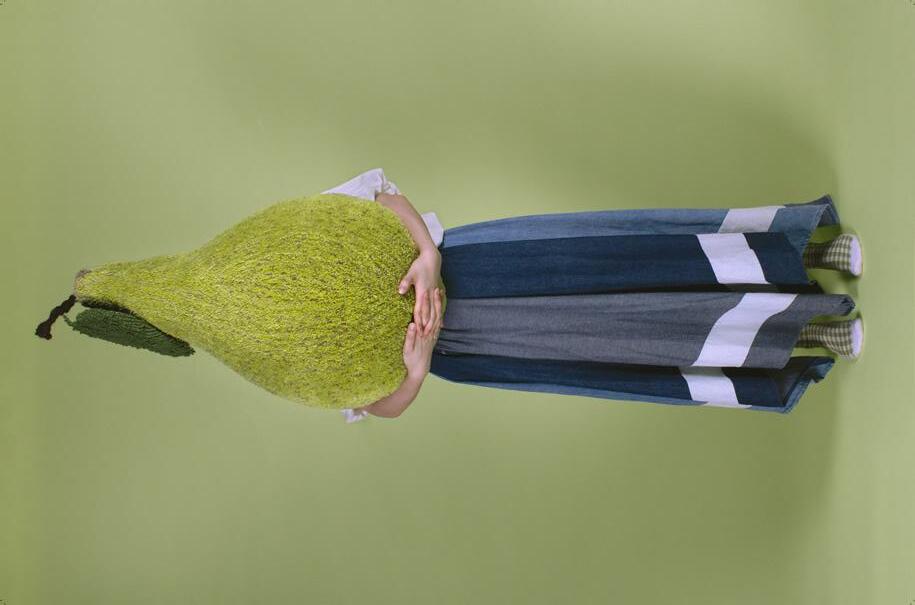
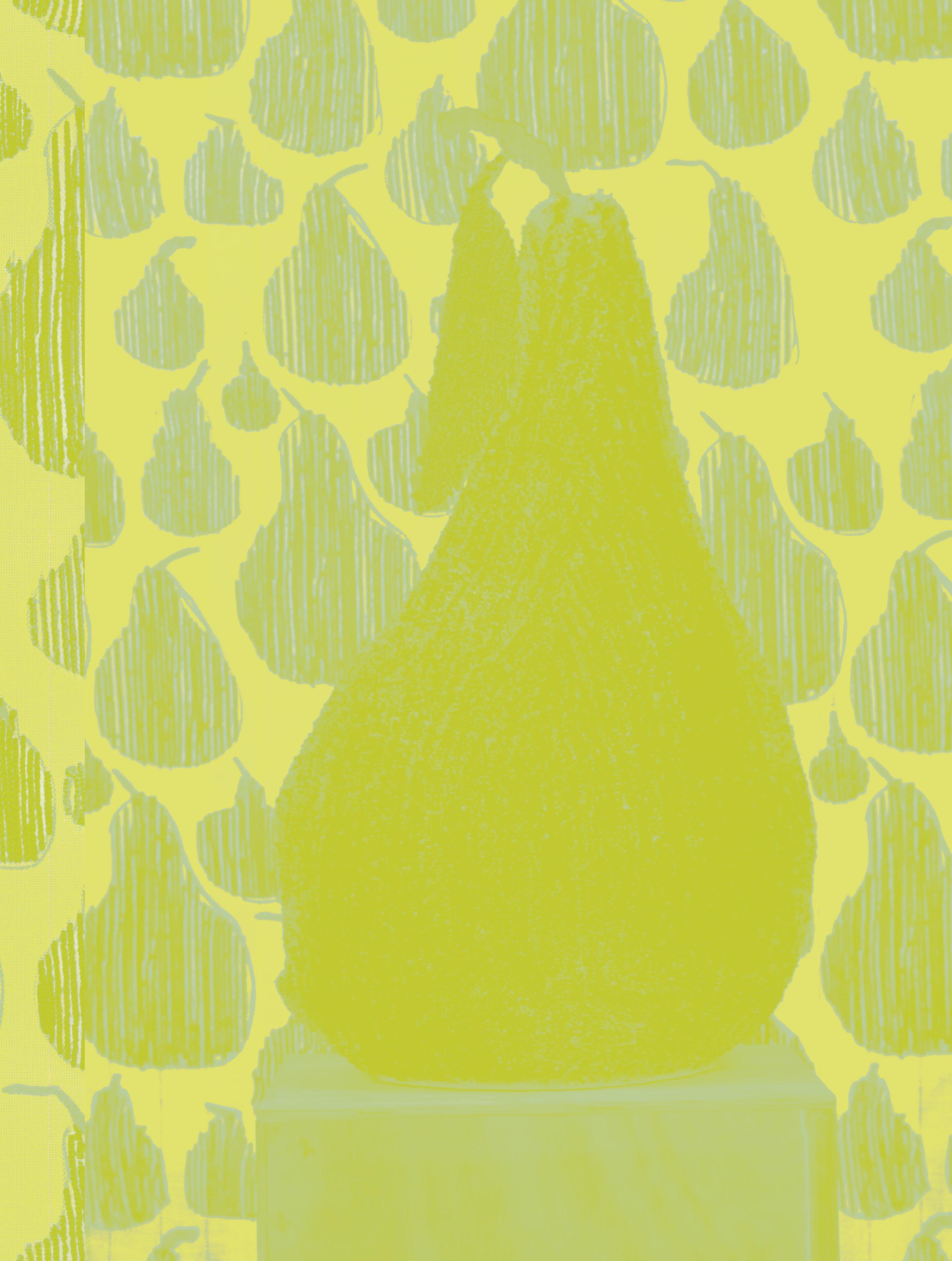
Massey University Textile Design student, Chantelle Tan, sought to make this possible. $700 of wool, 150+ hours of labour, and buying (at least) 30 pears later, she turned her dream into a reality—creating an entirely handstitched and rug tufted pear in a deliciously speckled shade of green.
This is how I found myself in Chantelle’s studio space with a seven-kilogram woollen pear on my lap. Around us, her space is dotted with mini felt fruits and strewn with numerous fruit decor.
“It’s very theraputic,” she says while cuddling a cat-sized felt mandarin in her lap.
“It feels like you’re holding onto something comfy. It emulates the feeling of a fluffy
teddy bear.”
Chantelle created her giant pear for the 2025 Exposure exhibition—the College of Creative Arts graduate show. To truly bring the pear to life, Australasian fragrance brand Ecoya sent Chantelle a pear fragrance to spray on her display.
“They sent me the pear diffuser and some spray, and I would spray the pear with their room mist, and it would smell like a pear during Exposure,” Chantelle says.
Her inspiration for this project came to her during a 2025 trip to Japan.
Here, Chantelle visited the Arashiyama bamboo grove which homes a shrine of ema tablets—small wooden plaques that are customised with wishes or prayers. One of these particularly stuck out to Chantelle.
It read: “‘I hope to see all of my struggles and hardships bear fruit this year. I wish to see it all be worth the wait.”
“It [the message] sat with me for a while,” reflects Chantelle. “I couldn’t shake away this feeling of how textiles are so laborious, and it’s so unseen.”
She decided to follow this reference to fruit in a literal sense. Over twelve weeks, Chantelle created her giant, woollen pear—fittingly naming her project ‘Fruits of Labour’.
The pear’s green exterior was created using a rug tufting gun. The crisp, soft green yarn was chosen to give the sculpture the appearance of a gently ripening pear. It was then speckled with brown woollen blemishes.
The leaf of the pear is hand-stitched closed, and the woollen stem is carefully wrapped around a wire to hold its shape.
All the materials used in the pear were natural or recycled, adding an extra message into Chantelle’s fruit.
She says, “Fruits tend to go back to the earth, so in that sense I wanted to make sure my project was 100% natural.”
The more she speaks about her work, Chantelle’s genuine care and appreciation for fruit and textile becomes beautifully clear. She hopes her pear will spark a new perspective of the textile world.
“Textiles, craft and indigenous arts are often devalued by the patriarchy. They tend not be held with the distinction as art or design,” she says.
“What if you took something like a rug that’s normally meant to be stepped on, and you make it unsteppable? She says, talking about her giant fruit sculptures.
“I just want people ... to celebrate the efforts and the labourers’ efforts that go into textile. To celebrate what’s often so invisible.”
For Chantelle, fruit has always had fond memories connected to it. From her mum cutting up mango for her as a child, to watching her auntie trade pomelos with her uncle.
Fruit has been a huge part of Chantelle’s life. Now, Chantelle says she sees herself as a fruit tree.
“A tree doesn’t bear fruit every season, the same way a designer like me does not create constantly,” she explains.
“For a tree to bear fruit, it rests, nurtures, blooms and nourishes in a seasonal cycle. As a maker, I take the time to learn digest and process the world around me.”
Whether it’s sewing fruit or sowing it, Chantelle’s unique perspective on the cycle of creativity is something worth remembering.
“With consumption and the way the industry works, it’s a privilege to be able to take your time.”
Chantelle says making the pear was just the start, and hopes to “make fruit for life”.
“It’s a start of a journey. It’s what always has been there all along under the surface.”
Looking forward, Chantelle is planning on creating a huggable mango. After hugging that pear? I’m first in line for this.
Chantelle’s niche art style is nothing short of impressive. The only thing more inspiring than her drive to create this difficult artwork is her refreshing perspective.
Perhaps the time spent waiting for fruit to bloom is just as valuable as the fruit itself.
Words by Kamaia Baibridge-Frost • SHE/HER
Ngā Puhi, Waikato Tainui, Fasito’outa
Art by Olive Bartlett • SHE/THEY
Breaking bread... more like breaking barriers (dry, but facts).
There are only a few things certain to bring people together —a lighter on a night out, a mutual opp, and kai.
While we’re all biologically wired to always be seeking a munch, there’s so much more to sharing kai. It’s human nature to crave connection and community. Whatever hapori you are rocking with, kai has always been that bridge for connection and the instigator to breaking barriers.
Growing up, kai wasn’t only at the function, it was the function. Sometimes I was just pulling up to places just to eat good—and boy can my whānau cook good.
For my people (chur my samāori’s), kai is a central aspect of our cultures. It not only serves as a vessel for cultural preservation, but is lovingly force-fed to you at every whānau function.
Every Christmas I was guaranteed pavlova and fried bread. Going home had a side of kinas or raw fish. Whānau celebrations meant heating up the hangi stones. Best believe I was showing up to all these gatherings, ready to eat.
It was never entirely about the food (I don’t even like kinas—don’t cancel me!), it was the company it encouraged.
The kōrero with nana while we put fresh berries on her pavlova while my brother picked at the fried bread pile. Diving with my stepdad and mum, gurgling enthusiastically when dinner swam past. Arguing with my cousins about who was peeling the potatoes and who was hiding in the bathroom for the next 20 minutes.
To me, kai is unity.
My 20 years of life experience have led me to discover that loving a good feed is not unique to my whānau. It is not even uniquely Māori or Samoan. The natural instinct to share kai and build community is universal.
Kai is at Diwali celebrations, community gardens, fiafia nights, school camps, Ramadan, wedding receptions, lunar new year dinners, Pakistani dawat, hall dinners, tangi, communion, every holiday meal ever, and even work-dos.
People are hungry for a feed with a side of connection.
Kai has always held a power to transcend most barriers —cultural, religious, language, and more. No matter where you’re from, it’s likely there’s some sort of function where everyone is expected to pull up a plate.
Religion, as I’ve experienced it, was church followed by a massive feed and yap with your whānau. I have sat across the table from people who I may not be able to otherwise understand and connected over the same sustenance in our bowls.
It is so humane to eat together.
I know. Hot take! People eat! Why am I writing an article about it?
Modern day is so riddled with division. Many of us have forgotten the simple beauty in sustaining our pukus and our villages. I reckon it’s about time we start returning to those OG animal instincts that used to guide us.
I’m not saying let’s sit all the fascists round a dinner table and talk it out over a bread bowl. But consider returning to our innate instinct to share kai. Whether that’s half a muesli bar crushed at the bottom of your bag, or a five-course meal among some new friends. It doesn’t matter what you’re eating, it’s the company that comes with it (this is someone’s mum’s Facebook bio and y’all need to start listening to her).
Scratch that instinctual itch and break bread with someone new. Pull up a chair and listen to their story. Share your own. Build connections.
We live in a time where it’s easy to feel isolated and cynical. The one thing certain to give us hope is having a full cup and puku.
Unity is power and kai is an extended hand. So shake that shit man.
When you walk into a cafe fiending for coffee and you’re greeted by a barista with earring stacks, a split dyed mullet and tattoo sleeves—you know you’re in good hands.
The stereotype of the ‘gay barista’ has circulated online, often with the expectation that any gay barista can make good coffee. While such generalisations flatten any nuanced conversation, this stereotype has deeper roots in queer expression, connection and identity.
Queer history has significant ties to cafe culture, especially in Wellington. According to Chris Brickell’s book Mates & Lovers, “references to the streets and ‘night cafes’ tied same-sex desires into an increasingly urbanised view of modernity’’ during the 1950s.
The flashing green silhouette of transgender icon, Carmen Rupe, on Cuba Street’s traffic light crossing is a reminder of Wellington’s queer cafe history.
In the 1970s, Carmen’s International Coffee Lounge was a place of refuge and community at a time when homosexuality was illegal. Patrons used a system of teacup positions to signal their sexual preferences without needing to speak out loud.
In the 1980s, transgender icon Chrissy Witoko created a safe space at her establishment, the Evergreen Coffee House. The cafe became a haven for the queer, transgender and sex worker community, particularly during the queer liberation movement.
Before the Evergreen opened at 10pm, it operated as a centre for sex and night club workers. Chrissy provided a safe, social space for Wellington’s LGBTQ+ community to seek help and express themselves.
Splattered across the cafe’s collage-covered walls were customer business cards, magazine clippings and various photographs hung up for all to see. These walls told a story about the cafe and its patrons.
Despite Carmen’s International Coffee Lounge closing in 1979, and the Evergreen in 1995, Wellington’s cafes continue to be safe spaces for the queer community.
For queer Fine Arts student and barista Cassie, she says that a cafe is “not just a coffee place. It’s a place to come and work and draw and be creative”.
Despite finding some sense of identity from the gay barista archetype, Cassie says they haven’t always been able to express themselves at work.
At one job interview, Cassie was told they’d only be hired if they dyed their hair a natural colour. So, Cassie dyed their hair black and took the job. However, they kept their shaved eyebrows and funky makeup—rebelling against a work culture that lacked character.
“I think I did already have the stereotype in my head of the cool barista. I’m already gay, and I’m a barista. Why can’t I be a cool one?” says Cassie.
For queer barista Jordan, they believe the ‘work-sona’ that hospitality workers take on often conflict with queer identity.
They say, “The one thing that will never get respected in hospo is they/them pronouns. I’ve just given up. I’m they/them outside of work. At work, I just have to be he/him, ‘cause nobody’s ever going to recognise that.”
Jordan sees these work-sonas as a link to the performative expression that’s embedded in queer culture.
Looking back at Carmen’s Coffee Lounge, her staff were largely drag queens, and were encouraged to sit down and chat with customers. Queer people use the cafe floor as their stage, with Wellington’s caffeine-loving patrons as their audience.
While the hospitality industry is known for strenuous hours and low wages, coffee culture has long been a source of community for queer people.
So, the next time you get your coffee and you’re greeted with blue hair and a septum piercing, know your drink will be good. It’s built on a legacy of care and community.
What to do if I hate my lecturer and I don’t want to go to lectures?
Hey darl!
One time I had a boxing instructor who used to scare the living bejesus out of me. He was tall, dark, handsome, and would always pick on me. But after a steamy one-on-one training session where we ended up going P-in-V style, my boxing classes were way more fun. Enemies to lovers vibe, y’know?
I’m not saying you should sleep with your lecturer, but you should find a way to showcase your skills. Are you a Film student? Start loudly critiquing the casting choices of Wuthering Heights. Are you a Design student? Shit on comic sans. Business student? Earn some money and then bring a money gun to class and shower your lecturer with your earnings.
Basically, feel yourself. Boost that ego. Show your lecturer who the real teacher is.
Soon enough, your lecturer will be scared of you.
Hope that helps!
XOX
Reporting live from the yeast infection trenches.
I know. I know. I’ve come in hot. But to be completely honest with you, there really is no other way to start this story.
My boyfriend and I have been getting into some freaky shit lately. We’re at that experimental phase where we just go balls to the wall, figuring out what we like. Now that I think about it, it’s kind of like instead of date nights, we have a kink night where we try something new.
We’ve ticked off a few classics. Some were surprising wins. Some were learning curves. But this week just might take the cake (no pun intended), because we decided to enter our MasterChef: Bedroom Edition.
The inspiration came from my boyfriend, who had seen something on porn where whipped cream was squirted into the chick’s pusswah and one of the dude’s licked it out. It really ticked a box for him. I’m not one to ruin a fantasy, so after a bit of foreplay, we got down to business.
He went to town, licking, sucking, fingers in the mix, all while I was enjoying that familiar feeling of a big-O bubbling up in my body. Before long, my legs were shaking, he was grinning, and we took it to the shower to clean up.
In the moment, it was absolute cinema. Zero complaints from either of us and we were already planning round two. Cut to the next morning, however, and something was off.
Sexcapade submissions provided by
For 20% off your next purchase, enter discount
There are intimate-safe versions of these products for a reason, and I have now learned that lesson the stinky, itchy, nasty way.
A quick Google and a silent moment of reflection in the pharmacy later, it turns out sugar and vaginas mix about as well as tequila and text messages to your ex.
So take this as your friendly warning from someone who has suffered for the plot: if you’re bringing snacks into the bedroom, make sure they’re made for the menu. As always, cream responsibly, queens.
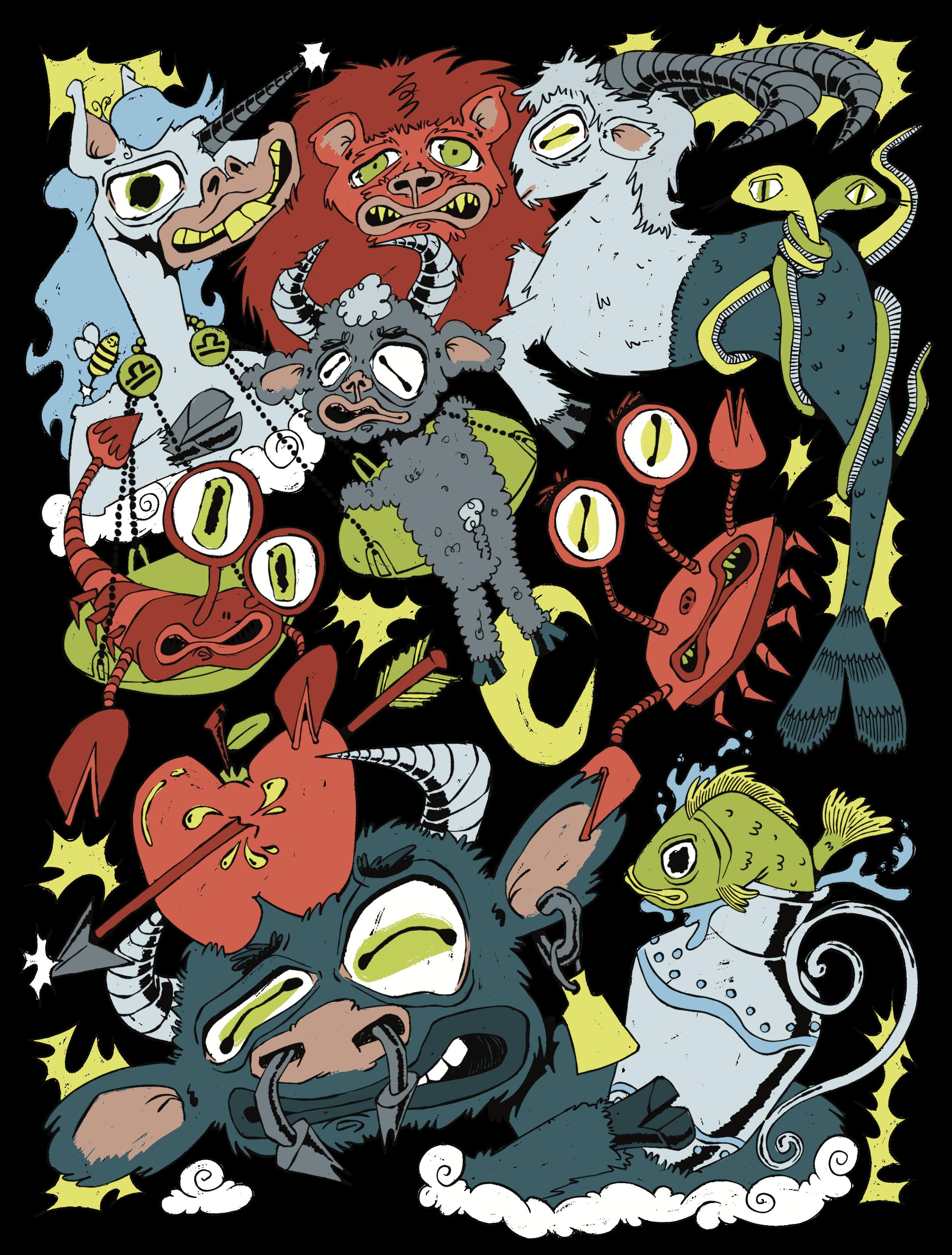
Avoid public toilets this week Aries. Someone you’ve wronged is seeking revenge, and they might lock you in one. Hold it in until you get home.
Someone you love needs flowers. Buy them some now and good things will come your way.
Stop apologising about the little things. No one minds when you accidentally drop their pen on the ground. Soon enough you’ll need a ‘Sorry Jar’.
You should hang out with a female relative this week Cancer. Connect with the women in your family. They know something you don’t know.
You will encounter prosperity and wealth this week Leo. But avoid cracks in the pavement. Your mother’s back is at stake.
Get some sleep this week Virgo. There’s something called work-life-balance, and you’re currently failing at it. Catch some Z’s before you crash out.
An AI bot is out to get you this week Libra, but you can outsmart them with pure charm. Practice your smoulder and smirk. Soon enough, you’ll seduce AI.
Bring a bottle of perfume to class this week Scorpio. You will be surrounded by smelly incels. Spray them down. Spray and walk away.
You’ll have a desire to let loose this week Sagittarius. Hit the clubs on a Tuesday. Dance in the rain. Light things on fire. Try not to get arrested.
A little birdy has told me you’re being annoying at the moment. Snap out of it diva! You aren’t being cunty, you’re being a cunt.
You keep learning things at the moment Aquarius! Turn them into bite-sized fun facts and spread the learning with your friend group.
You’re about to become a professional jet setter Pisces. But make sure your Euro-summer doesn’t become your personality. No one cares.
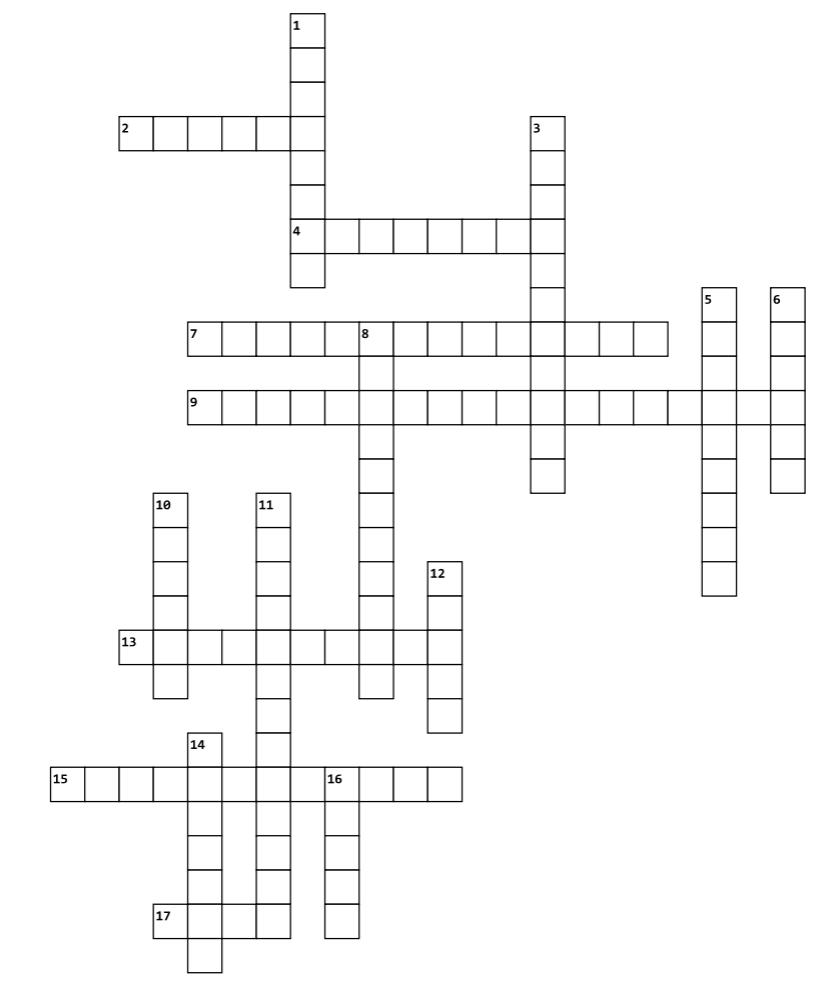
Edibles
Spices
Dishes
Fish and chips
Homemade
Meal plan
Barista
Nyotaimori
Sandwich
Cuisine
Takeaway
Nourishment
Savoury
Lollies
11.
12.
14.
1. Sabrina Carpenter’s most streamed song (8)
3. Movie with a cooking rat (11)
5. Influencer who gained fame for only eating meat (5, 4)
6. Hungry + angry (6)
8. Platter of cheese and crackers (11)
10. Italian city where pizza was invented (6)
Answer to Gordon Ramsay’s question: “What are you?” (5, 8)
Last week’s Massive theme (5)
Curious George’s favourite food (7)
16. Traditional Māori method of cooking food (5)
2. Expensive dairy product, often used in baking (6)
4. Sex and the City character who had sushi eaten off her body (8)