Massey Honours Students Outraged at Reduced Classroom Space
Words by Claire Taylor • SHE/HER
Arecent university decision, placing Design honours students in a small, shared space has sparked outrage.
Historically, Conceptual, Textile, and Industrial Design honours students have been allocated individual desks and workspaces to support their honours year.
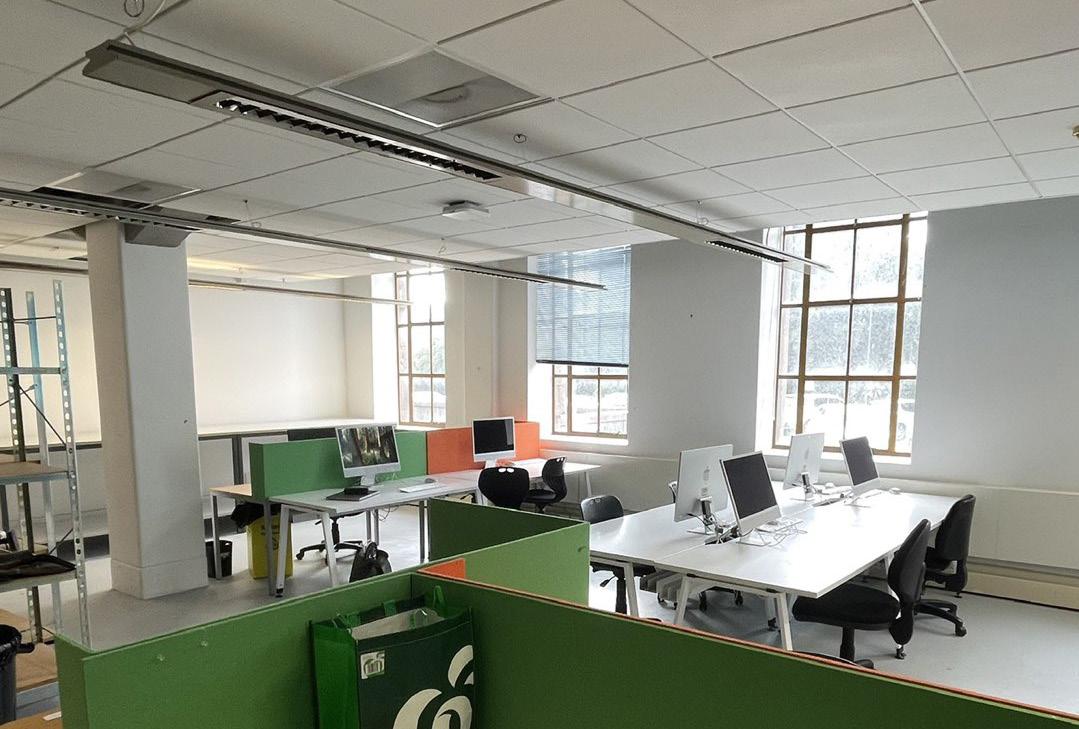
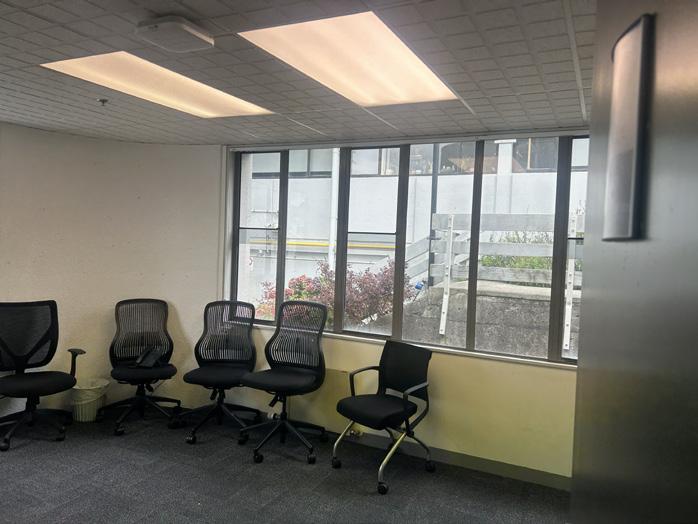
Now, these three majors have been placed in two rooms, expected to share limited desks, computers and equipment.
The decision and the lack of notice have caused frustration among these students.
Conceptual design student Lucie* said students were not informed of the change until a meeting on February 23rd.
“They emailed us to have a meeting with all the majors … It was pretty much to tell us that we have no actual spaces, and they were showing us slideshows of the spaces,” she said.
Lucie said teachers brought chocolates and tried to provide as much information as possible, stating the change was aimed at increasing collaboration.
“It has been spun off to us as a way to collaborate more within the Design majors, but it’s really just a way to ignore the issue. We can’t all fit in that room.”
According to Lucie, Photography honours students are now sharing a corner of a classroom with another course. Concept, Industrial, and Textile honours students were allocated two small rooms expected to hold a cohort of about 80 students.
Lucie claimed the new space contained just ten desks and four computers—one without a keyboard, and no tablets for Concept or Industrial students.
She continued, saying some of the computers provided did not contain the software Industrial students need to complete their work—such as 3D modelling programs.
Despite losing space and equipment, students are still paying the same fees as past honours cohorts.
“Concept needs wacom tablets, industrial and textile need lots of space to be able to work messily. We are paying the same as past years and getting less out of it,” Lucie said.
As of Wednesday, 4th March, Lucie claimed no formal plan for managing or booking the rooms had been provided. This is leaving many students unable to access the space when it’s full.
She said many other Design honours students shared her same disappointment, with many opting to not use the space at all.
“They keep telling us to use it or lose it because they really want us to use the space. But why would we? It sucks. And we already did lose ‘it’, and that wasn’t our fault?” She said.
Charlie*, an Industrial Design honours student, sent a formal email to James Coyle, director of technical and commercial services, to express their disappointment over the workspace.
The email—which has been shown to Massive—said the designated spaces given to honours students were “appalling”.
“Historically, fourth-year industrial design students have had assigned desks with dedicated PCs (not iMacs). We work with more than just a laptop, and having to carry materials, tools and resources between locations simply isn’t practical,” they wrote.
“Having a permanent workspace is essential to how we work and produce at this level.”
Charlie wrote that the lack of desk space, high student numbers, and limited technical equipment was “a disaster waiting to happen”.
Industrial honours students are normally situated with the rest of their major in the Industrial Design block. Charlie said in their email that Industrial students valued this environment and had expected to continue that experience in honours.
Charlie wrote: “To properly support our study, we need: Assigned desks for each postgraduate Industrial Design student, dedicated PCs at each desk (not iMacs), with appropriate software installed (Rhino, KeyShort), permanent storage for materials and ongoing project work, a shared industrial design workspace that allows collaboration over year levels.”
Charlie has since met with Massey student reps, with other Design students also contacting individual reps to express their upset.
In a response to Massive, Margaret Maile—pro vice chancellor of the College of Creative Arts—said the decision to change honours student workspace was due to a “revitalization”.
“The College of Creative Arts facilities are world-class and unmatched by any university or tertiary institute in New Zealand,” she said.
“The college has undergone a space revitalisation project in the past 18 months to ensure students have access to the highest quality resources, including ... the introduction of multi-disciplinary collaborative design studios.”
“All honours spaces across all majors have been regarded equally and we are excited about the quality and potential of the new multi-disciplinary honours’ hub closely located to areas of practice for concept, industrial and textile students.”
Maile said the collaborative space was in line with professional practices.
“Our refreshed approach to space facilitates and supports multi-disciplinary practice, creating spaces where students from different areas may work side-by-side or collaborate.”
These multi-disciplinary spaces “mirror the new masters and PHD hub in Block 10”.
When asked about why these students are still paying the same amount as previous years, Maile repeated herself and said: “The College of Creative Arts facilities are world-class and unmatched by any university or tertiary institute in New Zealand.”
“We are committed to providing all students with the resources they need to achieve at the highest possible level. To do this, we continually adapt to reflect professional environments and the best practice across the creative industries.”
Maile said all students have access to specialty spaces, such as workshops, studios, tools and technology required for their work. But as of March 4th, this is something Lucie said hasn’t happened.
“Academic and technical staff are refining our space and tech booking systems to ensure it is user-friendly and robust,” Maile said.
For students who are struggling to access equipment or specialised spaces, she encouraged them to contact their course coordinator or technical team.
Massey University did not comment on how the space used for previous honours students is now being used.
*Names changed
Past Residents Claim Maintenance at Kāinga Rua was Overlooked
Words by Ellice Lawrie • SHE/HER
Previous residents of Massey’s Kāinga Rua hall claim that maintenance requests were ignored or left for long periods of time during their stay.
Students approached Massive with these complaints after an article on Kāinga Rua closing down due to mould came out. In the article, previous residents claimed that they had mould in their rooms during their stay.
For Massey University student Bella*, she claimed there were multiple examples of the hall not responding to maintenance requests. In general, she found the hall was not maintained properly.
During mid semester break of 2024 Bella said the boiler broke. Around the same time, power was repeatedly turned off for residents due to maintenance.
“It was freezing cold and people who were still living in halls would be left without heating or lights and at one point the water got shut off for a day,” she said.
While students were informed about the times that power would be off at the hall, Bella said the outages would often last for longer. She claimed that the longest the hall went without power was 13 hours.
At the start of her stay at Kāinga Rua, Bella said the freezer broke in the Nui common room. While the hall told residents to take their food out of the freezer, items like chicken were left in the freezer. These went mouldy.
Using Fix-It—the system that Massey halls use for students requesting maintenance checks—both residents and RAs sent requests. But the fridge was left for a week and a half before it was removed.
The smell from the mouldy food in the freezer made residents in the common room nauseous. Bella said that residents were still told it was fine to cook in the kitchen, despite her and her friends falling sick.
“A lot of people who lived above the kitchen ended up throwing up for about two days and I know some people who cooked in the kitchen and were sick for a week,” she said.
Despite Bella sending in multiple Fix-It requests, no action had been taken. So, she sent an email to Massey Accommodation.
Within this email she attached photos and videos of the mould, and mentioned that Fix-It requests had been sent in. She wrote that the freezer “needs to be fixed and cleaned NOW, this is an unliveable situation” and if she did not hear back from them, she would “escalate” the situation.
Afterwards, Bella claimed the university sent a message to every house chat, saying that the freezer will be dealt with and not to contact staff directly. A direct message to her house chat was also sent. This message said threats to staff were not appreciated.
Bella said she was pulled aside by her RA, who told her off for contacting staff. She claimed she was told if she did it again, then the hall would look into “removing her from the premises because it’s unsafe”.
This experience left Bella feeling intimidated and shamed, and she felt scared to leave her room.
“I’d been sick for two weeks at that point. I’m living on my own for the first time. The point is, it made me feel scared. I felt a lot of shame ... I probably didn’t leave my room for a day and a half. I left to go to class and that was it.”
Bella felt she could no longer trust her RAs. This meant when other issues arose during the year, she was hesitant to ask for them to be fixed.
“I felt like if there was a problem with maintenance it wouldn’t get fixed and that was proven to me over and over again over the course of the year.”
A 2025 Kāinga Rua resident, Sophia*, had a similar experience with maintenance issues.
She said this lack of action from the hall surrounding maintenance requests meant that when issues arose, she would no longer report them
“They’re not really good at helping things… [it’s] more trouble than it’s worth to reach out, it’s a big process.”
In response to Massive, a Massey University spokesperson said that they were unaware about Bella’s claims about a broken freezer.
“The university was not made aware of these claims and there is no record of a Fix-It request in our system for a freezer breakdown in Kāinga Rua during Orientation in February 2024. If staff had been informed, it would have been responded to immediately,” they said.
Massey acknowledged that there were issues with the boiler system in Kāinga Rua in 2024.
“There were periods where the central heating system was not operating as intended while repairs were underway.”
During this time, Massey said that affected residents were given portable heaters to ensure their rooms remained warm while the boiler systems were being fixed.
In response to residents feeling as though maintenance would not get done at Kāinga Rua, Massey said that the fix-it requests system is a consistent and straightforward process.
“In 2024, Massey received 403 Fix-It requests, and these were all responded to promptly. A 2024 survey involving Wellington residents showed a majority had positive feedback around the helpfulness of staff and the time it took to respond to requests.”
“We believe current systems are working well. There are some aspects that are out of Massey’s direct control, as with all accommodation, and we believe these aspects are managed appropriately.”
*Names changed
Massive Has Moved!
Massive Magazine moved into a new office last Friday after getting the boot from their old office.
Luckily, this office is bigger! Which editor Jessie Davidson is very happy about.
“I love my big new office!” Davidson said.
Massive designer, Olive Bartlett-Mowat is also happy with the move, saying: “I’m excited.”
Massive only moved into their old office, 9C11, at the start of 2025. But Massey didn’t want them there and wanted their meeting room back.
So, Massive has taken over the old student rep office, 9C07. This also happens to be the old Massive office from years ago, and their sign still hangs over the door.
You could say, Massive is returning to their roots.
As the election rapidly approaches, I have begun to wonder– E te kawana, kei hea ngā pūtea? (To the government, where is the money?)
Words by Kamaia Baibridge-Frost • SHE/HER
The current coalition government has made some sketchy financial decisions during their time in office. Reflecting on a lack of financial investments in my communities, the pattern began to reveal itself. I began to wonder who was really suffering the consequences?
After investigating many of the government’s decisions, from bills to legislation to law, there was one consistent factor at play—Māori were often the victims of this government’s budget cuts.
The government decided to disestablish Te Aka Whai Ora (The Māori Health Authority).
Te Aka Whai Ora was created with the intention of improving equity of the health outcomes for Māori.
On 27th February 2024 the government released the Pae Ora (Disestablishment of Māori Health Authority) Amendment Bill. Under urgency, the bill passed into law on March 5th, 2024.
These cuts were not singular to one sector. My pātai developed from ‘if’ to ‘how much’ has the government defunded Māori?
While in office, the current New Zealand coalition government has made the following financial decisions, affecting these Māori sectors:
The government cut funding of Te Ahu o te Reo Māori programme (Te Reo Māori teacher training).
This was a nationwide initiative to support the te reo Māori development of teachers and staff who work in Aotearoa’s kōhanga reo, kura, wharekura, schools and early childhood education centres.
The 2025 budget revealed $30 million was taken from the programme.
Ngā Puhi, Waikato Tainui, Fasito’outa
Whai Kainga Whai Oranga (Māori housing programme) was disestablished by the government in May, 2025.
$80 million was taken from Whai Kainga Whai Oranga, and was instead given to the government’s flexible housing fund.
The government cut 45% of funding for Matariki events in 2024. This equated to a $2.5 million dollar decrease in funding for any Matariki events.
For many communities, this meant immediately cancelling or scaling back already established Matariki events.
The government decreased funding to Te Māngai Pāho (The government’s Māori media funding agency). This resulted in the end of The Hui, and a 64% budget cut for Te Karere.
Te Karere is the last remaining Māori TV bulletin.
This doesn’t even cover the overall defunding Māori have faced because of this government—Māori economic funds, Te Arawhiti, Māori trades training, and more.
ACT Party leader, David Seymour, reckons funding people based on their whakapapa should stop.
RNZ reported Seymour’s response to the criticism of decreasing Māori-focused funding in the 2024-2025 budget.
“I’m really getting tired of people trying to racially profile us, put us into categories based on our ancestry or whakapapa and then try and tag the budget funding for that, it’s just got to stop.”
Did you find it hard to read all that?
Yeah, imagine how tired we are.
“Their actions seem to portray their lack of experience with Māori people and Māori community.”
He says his students were directly affected by the government’s decision to cut funding for the te reo Māori teacher training.
“It’s really important that we have passionate kaiako who want to do the best in learning te reo Māori in front of our tamariki Māori,” he says.
Minister for Finance, Nicola Willis, also rejected accusations that the budget didn’t serve Māori. Reinstating ACT’s favourite rhetoric, she argued that if a decision is good for all New Zealanders, then it’s good for Māori.
Te Ra Moriarty, a Massey University Māori lecturer from Te Pūtahi a Toi, believes that the government’s choices are disproportionately impacting Māori.
He says, “We’ve already had so much taken from us, yet we are still continuously demonised.”
“I’ve noticed politicians use anti-Māori rhetoric to get votes… they [politicians] play on people’s fear of Māori.”
Moriarty believes it is “self-serving for individual politicians to embark on this pathway without acknowledging that it actually has a real impact on many Māori people”.
Funding and investing into Māori sectors and initiatives don’t just benefit Māori, but all individuals in Aotearoa.
For the government to fund more Māori initiatives, Moriarty says individuals need to encourage those in power, from a place of love.
“The only way we’re gonna get through all the problems that society faces, and the future problems is to love each other,” he says.
The money is not missing—the government has chosen to defund Māori and invest elsewhere. This isn’t independent to one single Māori sector. It reflects an attempted systemic shift in which Māori are not financially prioritised or acknowledged.
As the election approaches, we need to spread love and encourage unity as a form of political resistance.
This year, vote knowing next time we ask ‘Kei hea ngā pūtea?’—we already know the answer.
Becoming financially literate as someone who cheated their way through Year 11 Math has been no easy feat. I can barely tally the scores of a board game, and even then, flashbacks of my dad yelling, “WHAT’S TEN TIMES TWO?” pinch my tear ducts.
So, when a Van-Cleef-wearing-boss-lady on Instagram reels says: “I retired at 30 through investing.” I was all ears.
My explore page turned into a finance bro’s wet dream. Every scroll was drenched in filthy wealth and bad-bitch women explaining where I should put my money.
I was completely hooked.
Before long, I was a self-proclaimed expert in the field of financial literacy. I regurgitated facts from the internet and my dad’s mansplained explanations of Sharesies.
After trying to convince my ex-boyfriend’s mum to start investing her money, I realised I had a serious problem... I hadn’t even invested before. I was just another 20 year old with a Sharesies account on their phone waiting for the email verification code.
I thought I was going to dive headfirst into the world of investing and come out with gold doubloons for eyes. But my naivety had set me up for a nasty reality.
Scrolling through the list of companies in the high-growth fund felt like reading a list of the top ten most corrupt, hated, and evil conglomerate corporations. There was no way I was going to give my money to companies like Amazon, Microsoft, and Apple.
How can I invest my money ethically when all the ethical investments feel like giving a donation, but all the stocks that do well are funding companies that I don’t align with?
I felt hopeless and confused. I was struggling to understand all the different percentages and unexplained acronyms... EFT, GIC. I was so overwhelmed with the financial jargon, and all I could see were companies that directly oppose everything that I believe in.
The issue was that ethically sustainable funds had more red arrows pointing down than green pointing up. I don’t know much about investing, but I do know that an upside-down red arrow is a good marker for what not to put your money into.
I looked towards ESG (Environment, Social, and Governance) investments to help match my financial goals with my personal set of values. ESG is a sustainable approach to investing that assesses companies based on their sustainability and ethical practices, paired with their financial performance.
Speaking to Katie Beith, Head of ESG for the New Zealand Exchange firm Forsyth Bar, helped me bust some common myths that come with ethical investing.
Beith understands that making the first steps on your investment journey can feel daunting. She says that to decode the language of investing and understand basic concepts “curiousity will help you get underway”.
She speaks on the challenges that come with finding the right investments for you, particularly for people who want their investments to reflect their values.
Beith says, “There is a misconception that you have to give up returns [to remain ethical].”
Beith uses a system with new clients, which she calls a light green to dark green spectrum. Clients who sit on the light green spectrum are people who want to stay away from things like sunset industries (mature or declining businesses), the tobacco industry, and weapons.
Alternatively, clients who sit on the dark green spectrum are more likely to only invest in portfolios that explicitly invest in companies that are aligned with the Sustainable Development Goals (SDG).
“If you can really articulate those [your values] and get them down on paper, that’s a good starting point,” she says. Articulating what values are most important to you means that you are more likely to find funds that have companies that mirror your value system.
However, investing is all about diversifying. In other words, don’t put all your eggs in one basket because the market naturally ebbs and flows. The more you’re invested in, the more likely you are to keep building wealth during periods of underperformance in the market.
“The narrower you invest, the harder it is to create a well-diversified portfolio,” says Beith.
If making your first investment feels as daunting as choosing an elective, you are not alone. The number-word-combo transported me back to lessons in algebra. Much like math class, I was fighting my brain from turning off involuntarily instead of educating myself. If you’re like me, Beith says the best thing to do is ask a professional. Someone who has a “ full-time job spending 100% of their time living, breathing, dreaming, and analysing companies”.
There’s are also heaps of free resources online which teach people about investing.
If you’re aspiring to be a financially literate baddie who can afford a drink at Ascott’s without a guilty conscience, Katie Beith has your back. Instead of watching Becca Bloom’s latest Hermes haul, try doomscrolling “Friends that Invest” instead.
The first step towards being your own sugar daddy is just a simple list.
The rise and fall of NFTs
In the first few years of the 2020s, it felt like NFTs could actually become a respectable form of currency. These ugly little illustrations were everywhere and worth millions.
Basically, they’re Pokémon cards for adult babies with way too much money.
Until they weren’t.
NFT stands for ‘non-fungible token’ and are digital items presented usually through a small art piece. They can be verified, bought, sold, and traded. Before you ask why you can’t just screenshot them, there are coded identifiers in each NFT, which means they can be authenticated.
People thought this was the next big thing that would earn them bank. Even celebrities like Paris Hilton, Snoop Dog and Justin Bieber fell for the hype. But in the span of five months, the NFT industry went from being worth $42 billion to $1.6 billion (NZD). Three months later, it was official—trading value had declined by 97%. This decorated Bitcoin was dead.
It was as if we all woke up, and the apes became a shared fever dream.
The NFT hype started to build in 2020, just as COVID-19 hit. Three major elements of Covid pushed NFTs to the masses:
In early-covid Aotearoa, the government gave out $12.1 billion in subsidies for people who couldn’t work during the pandemic. Suddenly, people had disposable income coming in and nowhere to spend it except online markets. Why save for holidays you can’t go on when you could invest in your digital portfolio?
NZ’s commerce commission reported that internet usage went up by 37% during March 2020. As our lives became increasingly digital, our internet identities became the primary source of how we were perceived. How we presented online became the person that people could interact with. Funding your online self by buying NFTs would give you the clout you needed to enter an exclusive digital space.
We were bored out of our minds.
The early 2020s were the heyday of NFTs. It wasn’t just celebrities and rich investors getting in. Your average Joe was investing his life savings into what he thought would make him David Walliams’ Billionaire Boy.
The average Bored Ape token was worth $590,000. Arguably, this was the most recognisable collection, and there were 10,000 of these tokens overall.
But as soon as the hype died, the value died with it. Sure enough, it all came crashing down.
Just a year after its original $4.8 million purchase, the “just setting up my twttr” NFT was worth a measly $11,300. The news stopped covering it, so we stopped following it.
An NFT’s worth was determined by demand, rarity, status, the reputation of the creator, and the creator’s trading history. This meant that celebrity collections had inherently high prices because of their status. It also meant that friends could trade NFTs back and forth—falsely inflating their value.
This unstable metric was a recipe for disaster.
NFTs use the same niche marketing as other collectible products like sneakers or sports cards. Using easter eggs and NFT drops, creators targeted audiences who were looking for a digital community—especially during Covid, where a physical community was lacking.
While NFTs seemed like a one-time shocking stock moment, we’ve seen it before. From 1995 to 1998, little toy bears called Beanie Babies reached up to $500,000 each in value. But, as we know, what goes up must come down.
The Beanie Babies trading industry crashed by 90% in 1999 according to The Great Beanie Baby Bubble. When people stopped caring about Beanie Babies, the worth of each bear dissipated. It’s hard for me to write about the fall of NFTs without using sarcasm. As a working class, NFT-outsider, the idea of having hundreds of thousands of dollars to spend on something with a made-up worth is an absolute joke. Especially when you spend your days working a 12-hour shift.
The only reason these algorithmically generated images had any worth is because people said they did. But I can’t help but point out that this actually applies to every consumer item.
Every Stanley drink bottle, every Louis Vuitton plain white T, and every Labubu all have a made-up value that we placed on them.
For many, this isn’t the same—NFTs are intangible while a Labubu is physical. But the difference between a Nike hoodie and one from The Warehouse is just as intangible as an ape token. Their sweatshops are probably neighbouring buildings. Yet we still buy the Nike hoodie because of the value we convince ourselves—and each other—it has.
It’s easy to laugh at people buying dumb bitcoin shit (and boy, do I love taking the piss out of crypto guys). But I can’t do so without considering the made-up value of belongings that sit in my bedroom
To point the finger at the ridiculousness of NFTs is to point the finger at consumerist culture altogether. You don’t get one without the other. Capitalism has been playing this trick on us since the 16th century.
During the 1630s, the Netherlands experienced ‘Tulip Mania’. A single tulip could cost more than a luxurious Amsterdam home—10,000 guilders or roughly $9,300 NZD today.
At the time, the most prized flowers were diseased, which gave them a striped appearance. As usual, the tulip markets collapsed in 1637, and the flowers decreased to a tenth of their value.
From flowers, toy bears, and shitty images of monkeys, meaningless product phenomena are a result of an economic system that shelves innovation for quick cash. Get in and get out before people stop caring.
So, when the next remarkable never-seen-before merchandise rise comes, snicker with absurdism at capitalism—not the people falling for the same ruse you do.
On the 4th of February the sun finally shone in Wellington. The days leading up were windy, wet and miserable—but things were looking up.
Unfortunately, our summery joy was short lived. At 1am, a failure at the Moa Point wastewater treatment plant began pumping 70 million litres of raw sewage into Wellington’s south coast per day.
As bizarre as this was, it was a long time coming. Lack of investment into our critical infrastructure is a tale as old as time in New Zealand. Someone always ends up paying the price. This time it was Wellington’s turn.
Despite my warnings that swimming in raw sewage wasn’t a good idea, my flatmates were optimistic that the swimming ban was an exaggeration. They were set on going to Breakers Bay and lured me into the car under the pretence we were going to Oriental. My pleas were finally accepted when, upon arrival, the air around us literally smelt like shit.
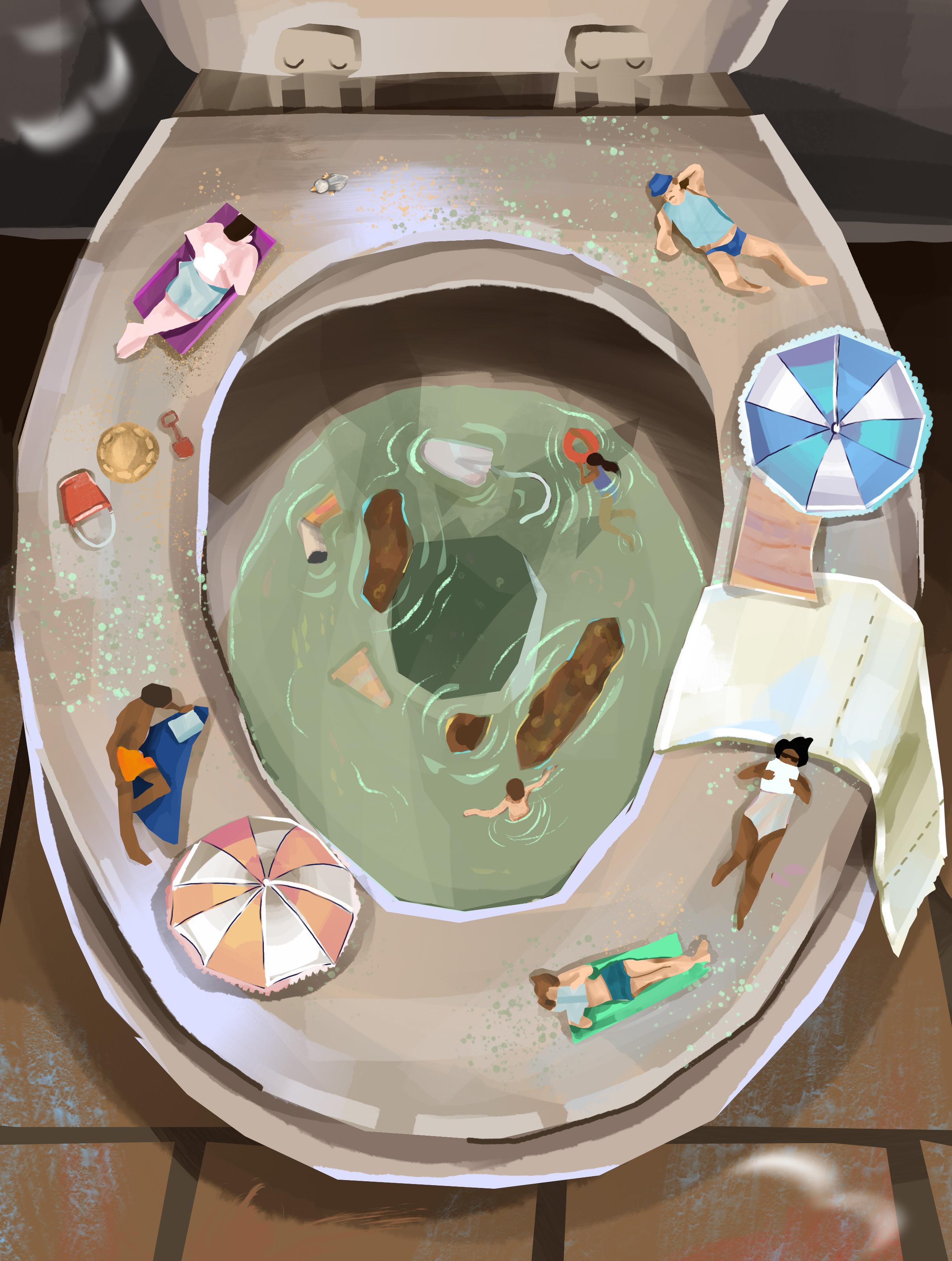
The events of ‘Poopgate’ or the ‘Poonami’ feel like a cruel trick from the universe. The second the sun comes out, our beaches become full of toilet paper, period products, and poo. But how did this even happen?
The simple cause behind the failure was heavy rain. The plant’s long outfall—a 1.8km pipe which carries treated wastewater to the Cook Strait—backed up. This flooded the plant and caused a power outage, making it completely inoperable. As a result, millions of litres of sewage were redirected into the ocean, just five meters from shore.
Now, the long outfall has been partially fixed, with sewage now being pumped 1.8km out to sea. While this is better than five meters from shore. It’s far from a perfect fix.
While heavy rain is an easy target to blame, the underlying cause of Poopgate is poor management and insufficient funding.
Moa Point’s wastewater plant is operated by Wellington Water, which contracts a multinational company called Veolia to handle operations.
An article published by The Spinoff says that this failure stems from Veolia, “after years of documented non-compliance and operational problems at the plant”.
RNZ reported that Veolia has had several overseas legal cases after maintenance failures at other plants resulted in raw sewage being discharged into the oceans.
The company is responsible for 3200 wastewater plants and 3800 drinking water production plants glovally. It has operated the Moa Point plant on behalf of Wellington Water since 2004.
Since then, it’s been the subject of numerous scandals including mismanagement, poor maintenance and risky cost-cutting. In 2021, Wellington Water commissioned a report on Veolia that highlights understaffing, inexperience, and lack of oversight.
The warning signs have been blaring for years.
Poop-gate is not a one-off incident. Wellington has a long history of underfunding our water systems. This is from Wellington City Council (WCC) wanting to save money. However, it’s led to leaky pipes, closed beaches, sea life harm, and shit everywhere.
In 2024, WCC, Hutt Valley City Council, and Porirua City Council announced their water system funding. It was only 48% of what Wellington Water recommended the councils should spend. At the time, it was noted this lack of funding for Moa Point’s electrical control systems would create high risks to the plant’s operations.
In a press release, the minister for climate, energy and revenue, Simon Watts, said: “As a nation, the need to invest more in our water infrastructure is clear as we fix the basics and build the future. We need to make sure ratepayers’ investment in water infrastructure is used wisely.”
Acknowledging the need for investment is one thing, but acting on it is another.
For years, governments and councils have put our water infrastructure into the ‘too hard’ box. Proposed plans of upgrades to this critical infrastructure are often looked upon as a waste of taxpayer money.
If this recent failure at Moa Point has shown anything, it’s that maintaining our water infrastructure should be a top priority. We aren’t going to forget what happened just because Andrew Little went swimming in poo-infested waters.
We are still months away from the plant being fully restored and Poopgate’s impact continues with no clear solution in sight. But perhaps change is on its way…
A new water organisation called Tiaka Wai will take over ownership and operation of Wellington’s water infrastructure. This is part of the Government’s new plan, Local Water Done Well (LWDW).
LWDW will address the history of underfunding of this essential infrastructure. While also meeting environmental, economic, and water quality regulatory requirements.
Hopefully, this will lead to proper funding in our water infrastructure. In the meantime, we will breathe in poo-stenched-air, swim in poo-filledwaters, and remember the ever-lasting impacts of Poopgate.
The Hillside w/
Kevin Le Pennec The Stomach
researchintospeed - ADCSR
Pining Radiata - So Confused LAUGHING STOCK - Sixk
MeanOwls - Everything is Fine
Tū ViBe - Tevolutionise truth here
Polaroids of Polarbears - the hinge, the hustler and the hyena
Menzies - Appy
King Hit - sap
Ripship - Bon Voyage (Alphabethead Remix)
Angel - Hive Mother
Tuesday 10th March: 11AM—1PM - Preeti, George, Either Eyether
Tuesday 17th March: 11AM—1PM
- Maeve, Emma Carter, Crass
My friend is dating a cult leader. He seems very nice, but he has some ritualistic habits. I’m afraid he will try reaching out to me to join his cult. What should I do?
Hey darl!
My third husband dated a witch once. I remember coming home from my twelve-hour shift at the diner to Phil sitting cross-legged on the carpet, attempting a money spell.
He remained unemployed for the rest of our relationship.
I always try to approach these situations with an ‘open heart, open mind’ attitude. Don’t be afraid to ask questions or even dabble in a cheeky ritual to understand what your friend is getting into. However, when the manifesting turns into a sacrifice, that’s your queue, babe.
In my experience, you can lead a horse to water, but you can’t make it drink.
While I advise you not tell your friend directly that their man is going to ruin their lives and steal their money. If he starts giving “I want to wear a vile of your blood around my neck” vibes, it might be a good time to set some healthy boundaries. You might need to gentle parent your friend into putting some space between their tealight candles and their boyfriend.
XOX
Tax returns are all fun and games until you realise you’ve spent $250 on sex toys and they’ve been delivered to your ex’s house.
Hey. Hi. Welcome to the most humbling experience of my adult life.
It’s been six months since the moment I quite literally screamed “NO” out loud in my bedroom, and I’m still not convinced I’ve recovered. So, in the spirit of healing (and peer pressure from my friends), I’m laying it bare.
It all went down a few weeks after my ex and I called it quits. We were textbook high school sweethearts, fully convinced we were endgame, until uni hit and we realised we were completely different people. Also, a single, slutty summer sounded hot... so we broke up.
I was sad for approximately seven business days, then I became aggressively infatuated
with a friend. He’s funny, pick-you-up-with-one-arm strong and dresses like he actually cares how he looks. I was catastrophically down bad.
Unfortunately, he did not feel catastrophic about me.
So, when my tax return landed, I decided if he won’t p-n-v me or DJ my clit, I’ll just have to find a toy that does.
Sexcapade submissions provided by
For 20% off your next purchase, enter discount
It was just my luck that he recognised the store name, got curious, opened the package and found one bright pink vibrator. Sadly, we were still very much in the “who’s winning the breakup” phase—reader, I was not winning.
What I forgot (and this is important) is that I had once ordered a spicy little Valentine’s gift to my ex’s address, and the website had savedit. Obviously, I realised this AFTER it had been delivered and he had texted me about it.
To his credit, he didn’t keep it. He passed it to a mutual friend to give to me, but the damage was already done. Now every time I use that little self-love investment, instead of thinking about my latest infatuation, I remember the day I lost the breakup to a tax return impulse.
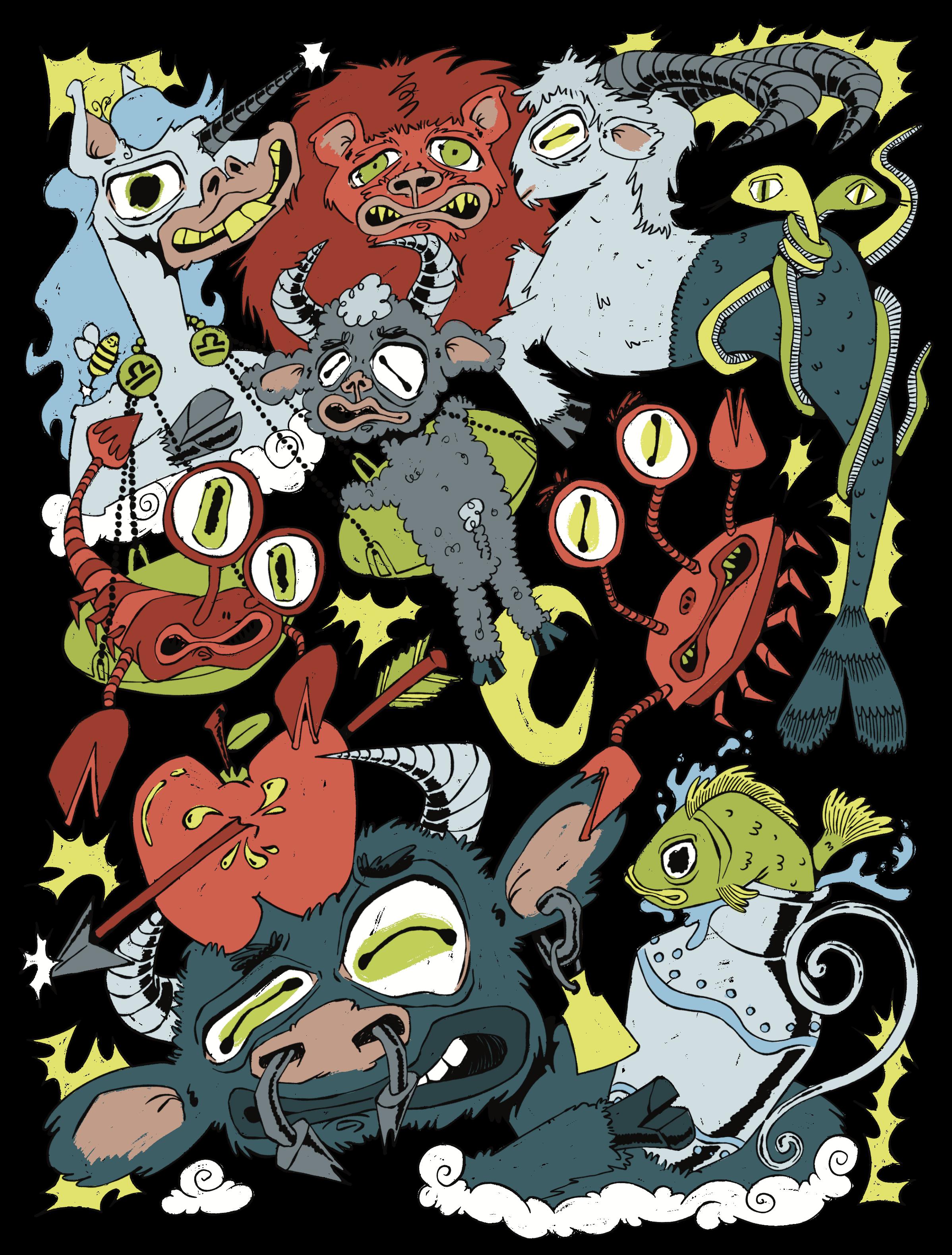
Chin up queen! Your crown is falling. Take an everything shower and regain your sparkle before you tackle your workload.
Your secret, sneaky link wants to take things to the next level this week. Are you ready to turn your Romeo and Juliet fantasy into something more concrete?
Everybody wants to be your friend Gemini, but don’t forget your OGs. Take note of who’s going to pick up your 3am crash-out call and who’s using you for your clout.
A big move is on the horizon, so keep a close eye on your money this week. Make sure your savings can support your future aspirations.
You’ve been crazy, and everyone’s sick of your messy behaviour. Stick to being a trailblazer instead of a bridge burner.
The universe has noticed extending your comfort zone recently and a reward is coming your way. Big moves will be made towards your career this week. Congrats!
Someone is sucking your energy like a vampire. As venus moves into Aries, it’s time to stop being a pushover. T ake back your power.
You’re being a real b-word, Scorpio. The gossiping isn’t giving Lady Whistledown... everyone knows who’s spilling the tea.
Stop flexing on the people around you. Your hard work is being recognised by your peers, so stay humble. Nobody likes a show pony…
With Mercury in retrograde, you might be hearing your name in the mouths of others. Let your actions reflect your values, and don’t lose your cool.
Babe, put your wallet away. Your savings are crying for help, and the iced coffee you just bought isn’t helping. Your student loan isn’t meant for shopping.
It’s time for some serious personal reflection. With mercury in retrograde, it’ll feel easy to make quick decisions. Understand yourself before making bold moves.
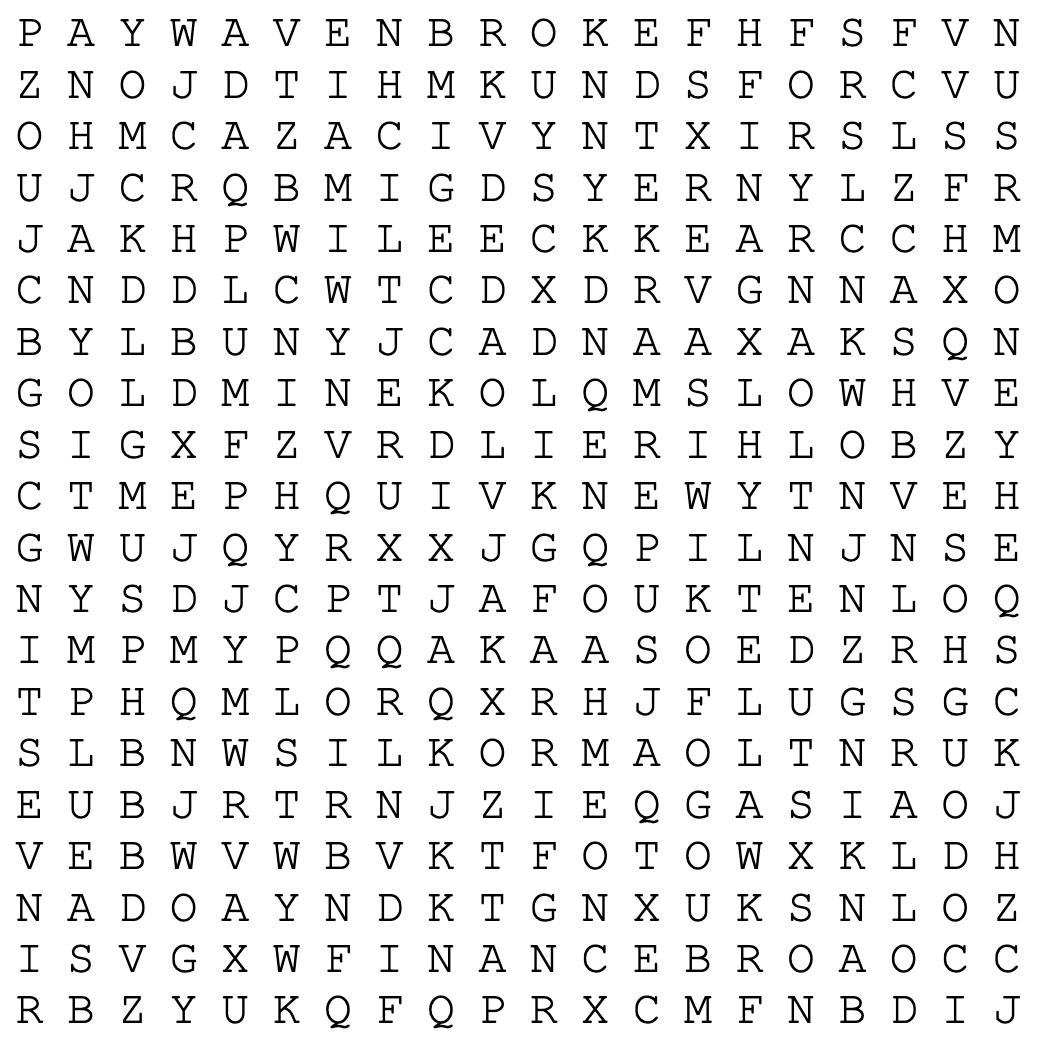
3. Polynesian island country that uses NZD (4, 7)
4. What ‘POS’ stands for (5, 2, 5)
8. Bird featured on the $5 note (5)
11. Name of the day NZ switched from pounds, shillings, and pence to dollars and cents (7, 8, 3)
13. Name of official currency in Samoa (6, 4)
14. What is ¥ (8, 3)
15. Richest country in the world in 2025 (9)
17. Slang word for money, more commonly used when baking (5)
1. Previous name of the supermarket chain who rebranded recently (9)
2. Largest NZ owned bank (8)
4. Last weeks Massive issue theme (3, 7)
5. “Why can’t we just print more money?” (9)
6. Which smelly Wellington beach did Andrew Little swim at? (5, 3)
7. Which mountain is in the background of the 50c coin (8)
9. Sound associated with making money (3, 5)
10. Most expensive property in Monopoly (7)
12. Cartoon mascot to advertise the change in NZ currency (2, 6)
16. What is € (4)
As a news reporter, you’ll be responsible for keeping students in the loop about what’s happening on your respective campus. You will:
Do you enjoy scouring news sites every morning or know all the latest gossip on campus? You’d fit right in as a Massive news reporter. We have our Manawatū news reporter role up for grabs!
Send your CV, cover letter, and examples of your writing to: editor@massivemagazine.org.nz with the subject line ‘Application for insert role here’.
Don’t be shy, any examples of writing will do from an essay from class or a poem from your note’s app.
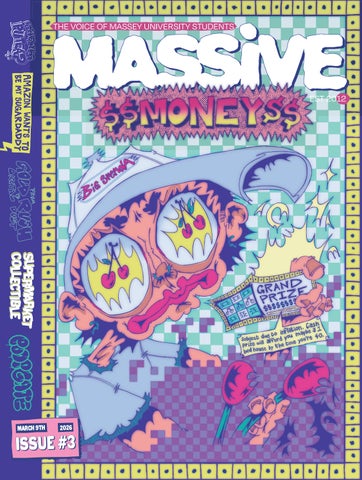
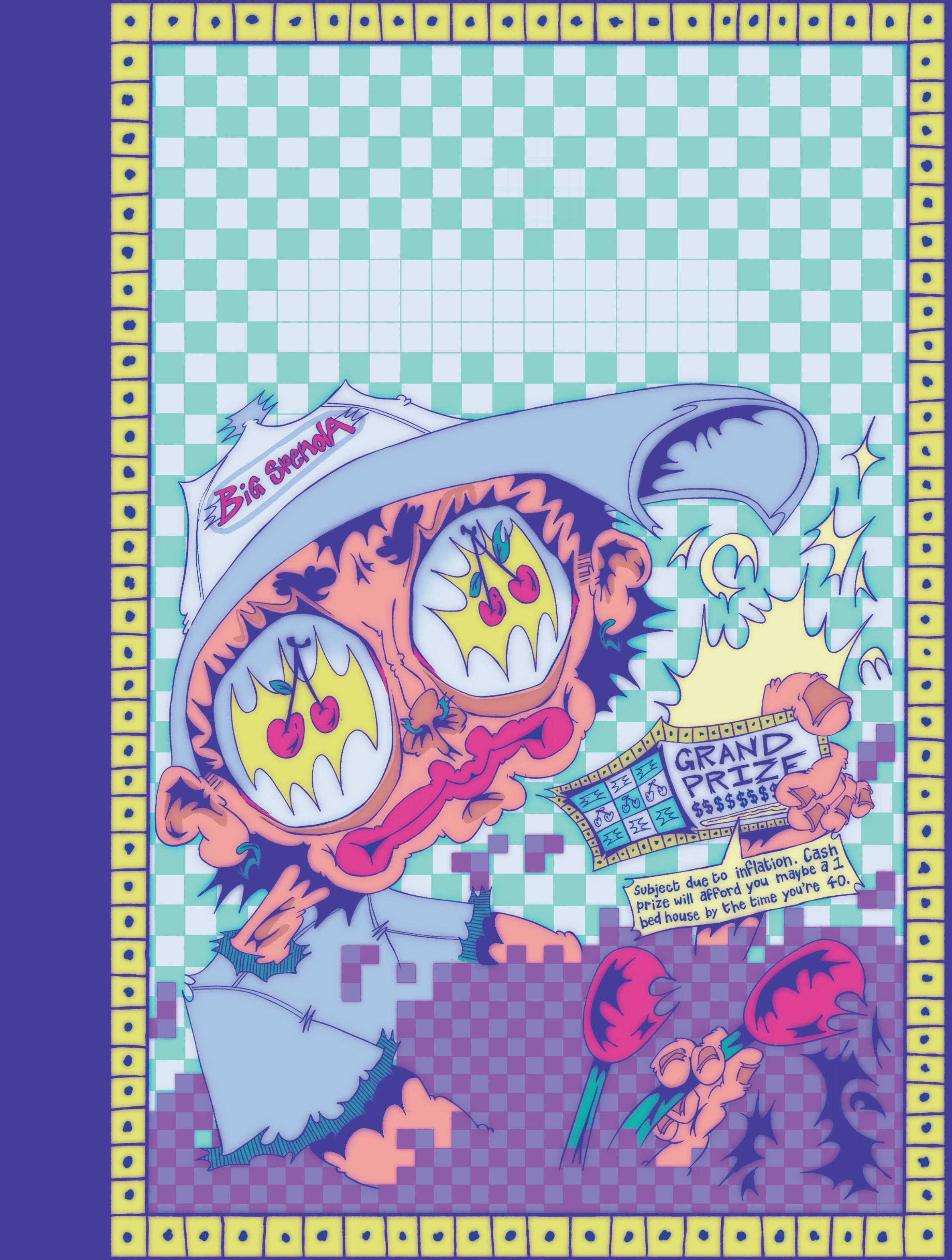
Cover by Olive Bartlett
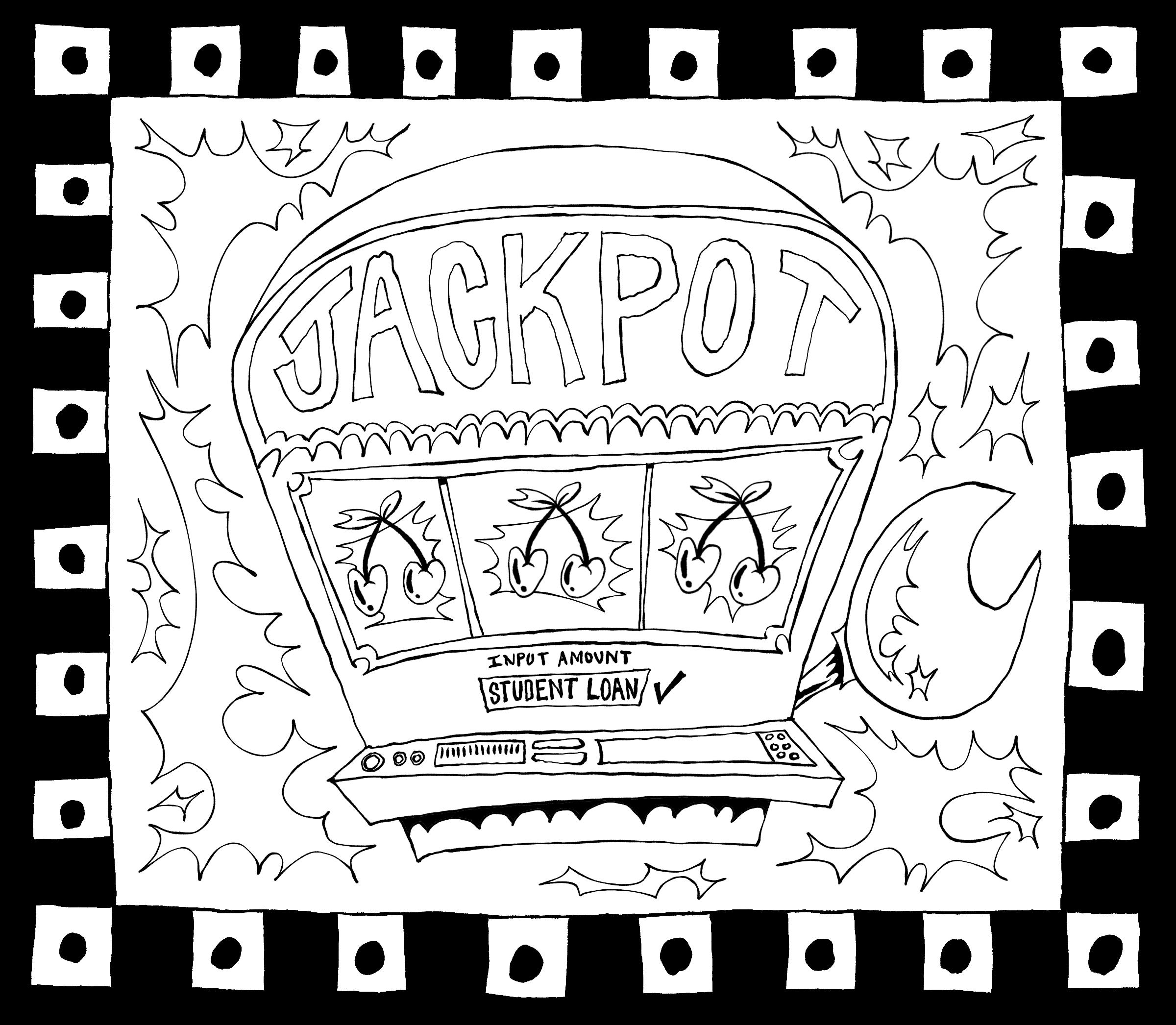
Centrefold by Brianna Grapes