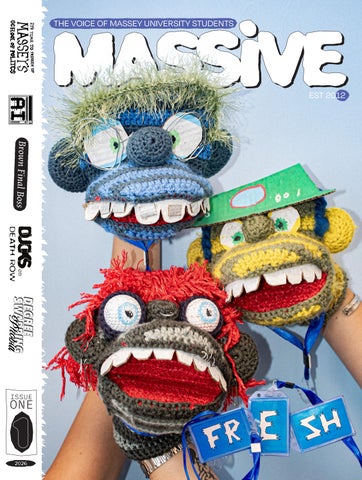
New Student Representation Model to be Presented to Students This Week
Massey’s hall fees increase for 2026
Brown Final Boss
I Didn’t Use AI in my Art Degree, Here’s Why You Shouldn’t Either Degree-Swapping-Phobia
Ducks on Death Row
It’s Time to Freshen Up Massey’s School of Politics (Before it Gives Me Pash Rash
Massive is largely funded by Te Tira Ahu Pae and the student services levy, however, remains editorially independent.
Disclaimer: The views presented within this publication do not necessarily represent the views of the editor.
Media Council:
If unsatisfied with the response, complaints should be made to the
When club days rolls around at Massey Wellington, the disappointment feels inevitable. I look to my left and see our lone sports offering: Massey Climbing. To my right? The Massey Earthworms... I’m not entirely sure what they do.
When I asked a friend if they knew anyone in Earthworms, they replied, “nah bro, don’t fuck with them... slimy.” Unsure whether I wanted to spend my spare time navigating an underground tunnel system (as worms do), I’d usually leave club day resigned to the fact I’d never get the full university club experience.
Given Massey’s seemingly sparse selection, you can imagine my surprise when a quick Google search revealed that Massey has over 100 clubs. So, why does club day on the Wellington campus feel so desolate?
It’s because Auckland and Palmerston North stole all the clubs.
Palmerston North alone boasts a hefty 50 clubs, ranging from alpine to anime, civics to primal (...someone explain). Auckland follows with 33 clubs, including aerial
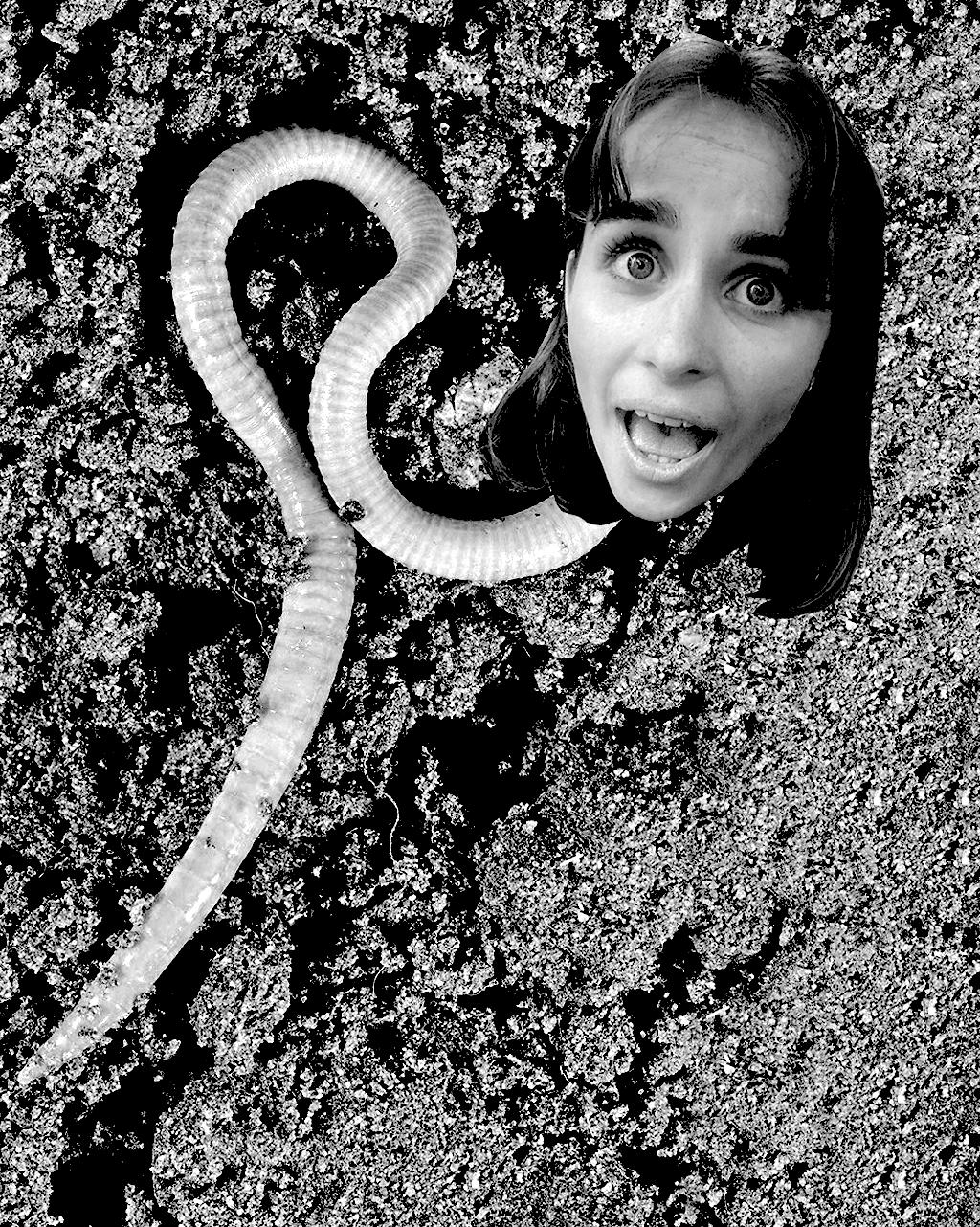
Would you still love me if I was an earthworm?
Compared to most universities, I’ve always believed that Massey’s clubs were... lacking. Otago and Victoria University both boast over 140 clubs; Canterbury has more than 160, and the University of Auckland has over 250—which, frankly, feels excessive.
arts, crochet, grappling, fencing, and even an investment club. This leaves Wellington with 15 clubs and distance students with only two.
Palmy and Auckland’s greed sickens me. They already have better campuses than Wellington, couldn’t they at least lend us a couple of their clubs? Instead, Wellington students are left with becoming an earthworm.
Okay, okay! I’ll stop the slander. The Massey Earthworms are probably a genuinely cool crowd — they garden! But seriously, Wellington’s club scene is in desperate need of a refresh. So, with crowds of club-thirsty freshers scurrying in, this is the perfect time for it!
Create a club! Any club! Preferably a non-worm related club. One that appeases the next alternative cohort of Massey University — jorts and carabiner making club!
Regardless of whether you join a club this year, welcome to Massey freshers! To those returning, welcome back to the pits.
Xoxo
Jessie Davidson
Correction: Two 2025 articles ‘Painting Fortunes on Tarot Cards’ and ‘Deep, Meaningful (and Masculine) Conversations’ did not meet standards of accuracy, transparency and honesty. This was a failure of our responsibility to publish fair, accurate work. These stories have been deleted online. Te Tira Ahu Pae and Massive Magazine remain committed to responsible student journalism, continual learning, and maintaining the integrity of our publication. A full statement can be found online.
Who Are We, When Things Go Wrong?
A message from Te Tira Ahu Pae’s new HR manager, Daniel Brown…
Kia ora, I’m HR Dan.
HR still feels like a costume I haven’t quite grown into yet. Not because it’s inherently cold or cruel. But because I once thought the job required hardness, distance and switching off the messy human side. That belief led to some genuine fuck ups over the years–ones that could have defined me if the people around me prioritised punishment over growth.
Recently an issue was identified with previously published work under our banner. It wasn’t a typo or a technical hiccup–it was a bad call. One of those moments where judgement slips and you’re left wishing you could rewind time.
The mistake was owned, addressed, and dealt with.
In te ao Māori, values like mana, pono, and whanaungatanga don’t vanish when someone screws up. If anything, they get louder, guiding how we rebuild trust. Accountability shouldn’t become public shaming. We back our kaimahi because people aren’t defined by their worst moments.
That doesn’t mean fuck ups don’t matter. But what also matters is the learning, humility, and changed behaviour that follows.
There’s always pressure to flatten complex situations into something easily judged – to pretend institutions should be flawless and the people inside them even more so. Te Tira Ahu Pae will make mistakes. We already have. The difference is we face them together, choosing growth over scapegoating. We aim to model a culture our students will inherit. Where accountability and compassion can co-exist, where learning continues after mistakes, and being human isn’t treated as a liability.
As an association, we understand integrity isn’t something you announce–it’s rebuilt together.
That’s who we’re choosing to be.
Submit your letters through our website: massivemagazine.org.nz
Talofa Lava,
O lo’u igoa o Ferina Muavae, and I’m your Pasifika Student Rep here in Wellington. My role is being the bridge between our Pasifika students and the uni. Making sure our voices aren’t just heard, but valued.
A big highlight from last week was being involved in the Pasifika Family Orientation. I met some new faces, reconnected with Pasifika staff, and welcomed new students into the Pasifika space—which felt genuinely special. I also helped promote Massey University at another Pasifika event alongside the amazing Sosefina Filo Masoe and Akanesi Polaulu. It was fun, vibrant, full of culture, music, dancing, and community all in one space. Mind you, the food was sooo delicioso.
As we step into 2026, I’m excited about what’s coming. Fun things are being planned where there will be lots of chances to connect, celebrate, and be around our people.
If you’re Pasifika and feeling a little shy—don’t be! I promise I don’t bite. Come mingle, meet new faces, and get to know your community. And yes, there will be free food. No Pasifika gathering is complete without it!
Submit a letter to the editor and your thoughts could be published for everyone to read – and for the editor to respond to. Go on… we’re listening. about something Massive published?
The Fale is your home. You’re always welcome, anytime. Whether you need a place to study, to rest, to laugh, or just to exist—that space is for you.
As the year gets busy, remember not to put too much pressure on yourself. Doing your best is always enough. We all move at our own pace, and that’s okay. Remember, it takes a village to raise a child and here at Massey, we are that village.
I’m here for you, our Pasifika staff are here, and your community is here. Let’s make 2026 one to remember. Faafetai lava.
Mould at Kāinga Rua Old News for Past Residents
Words by Ellice Lawrie • SHE/HER
Weeks before moving in, 95 residents of Wellington’s Kāinga Rua hall have been relocated after the discovery of black mould. But past residents claim the mould has been an issue for over a year now.
On the 4th of February, incoming Kāinga Rua residents were contacted by Massey University after independent testing found that parts of the hall weren’t suitable for living due to black mould.
In response, Massey has relocated the 95 incoming residents to other accommodation including The Cube and Victoria University’s Capital Hall. Students relocated to Capital Hall have no increase in fees, while those in The Cube have been offered a small reduction.
The same day, an email was also sent out to 2025 Kāinga Rua residents, claiming that the university was unaware of mould being an issue last year.
The email read: “We understand that as a former resident of this building, you may find this news unsettling. Finding mould in part of the building does not immediately mean that occupants have been exposed to allergens or toxins.”
Anna Wylie, a 2025 Kāinga Rua resident, told Massive that she spent most of her year getting sick and blames it on the mould.
“I wondered why I was getting so sick and not getting better. It’s not until I moved out that I felt like I could breathe again,” Wylie said.
“I spent so much money on doctors and inhalers.”
When Wylie moved in, she noticed black rings on her ceiling. However, she claimed staff said everything was fine.
Now, Wylie is upset nothing was done when she and other residents raised concerns about mould in 2025.
“They charge us so much for a room when it’s not even safe,” Wylie said.
Bachelor of Communications student, Katy, told Massive a similar story.
“I got sick and had visible mould growing in my room,” she said. “[I] am now wondering if that has caused a health issue I am now experiencing”.
When Katy brought up the issue of mould to the hall she said she was told to ventilate the room more.
After her experience with the mould, Katy decided not to return to Kāinga Rua this year.
In a response to Massive, a Massey University spokesperson said they carried out a full search of maintanence requests submitted for Kāinga Rua between January 1st, 2025, and 31st December 2025.
“Of the more than 300 requests recorded during that period, three included the word ‘mould’ or ‘mold’ … All three of these requests were addressed,” the spokesperson said.
None of the recorded maintenance requests indicated a widespread concern.
The spokesperson added, “Regarding the suggestion that action is ‘only happening now’, it is important to clarify that Massey initiated immediate action as soon as testing confirmed the presence of mould. This new information is materially different from any previous reports of mould by residents.”
While some past residents are left upset, many incoming Kāinga Rua residents are relieved by Massey’s quick response. First year student Lujain Alaswad was one of the residents
relocated from Kāinga Rua. While the sudden change caused some anxiety, Alaswad understands that this is a unique situation.
“I do understand that they [Massey] are dealing with a lot as it was quite sudden for them, as well as us residents,” Alaswad said.
“I am relieved and grateful that we have the opportunity to live in Capital without having to pay extra.”
It is unconfirmed when Kāinga Rua will be suitable for occupation.
For students with concerns, please reach out to your accommodation or wellbeing teams. Any former Kāinga Rua residents who would like to discuss their experience is welcome to contact the university directly.
New Vice-Chancellor Welcomed to Massey
Words by Maya Trotman • SHE/HER
Massey University welcomed Professor Pierre Venter as the seventh vice chancellor as Jan Thomas takes her leave.
Venter was appointed Massey’s seventh vice chancellor in October last year and began the role on February 2nd.
In his first week, Venter travelled the North Island, visiting Massey’s three campuses where he was welcomed with a pōwhiri and a staff meet-and-greet.
Talking to staff, Venter outlined his aspirations for Massey’s future.
“Massey has a proud history of service to Aotearoa New Zealand ... But, honouring our past does not mean repeating it unchanged,” he said.
“The challenge before all of us is to define what a nextgeneration university in New Zealand looks like—one that learns from its history, is honest about today’s performance, and is ambitious about who and what it wants to be going forward.”
After Jan Thomas stepped down from the role with a year’s notice in April 2025, a global search was conducted to find her replacement.
Originally from South Africa, Venter has a background in microbiology and sciences. He received a PhD and bachelor's degree from the University of the Free State.
In 2011, Venter moved to Palmerston North where he became a leading figure in New Zealand’s dairy industry as the Director of Research and Development at Fonterra.
Chancellor Alastair Davis said Venter’s experience will help Massey adapt to the future.
“Pierre is taking over at a time when we need to keep reshaping the university for the changing world,” Davis said.
The previous vice chancellor, Jan Thomas, had the role for eight years.
During her tenure, Thomas oversaw significant financial restructuring. In 2024, the university was forecast to face a $30 million deficit, but instead recorded a $3.7 million surplus.
Her time also included more than 500 course cuts, over 100 job losses, and the downsizing of university property.
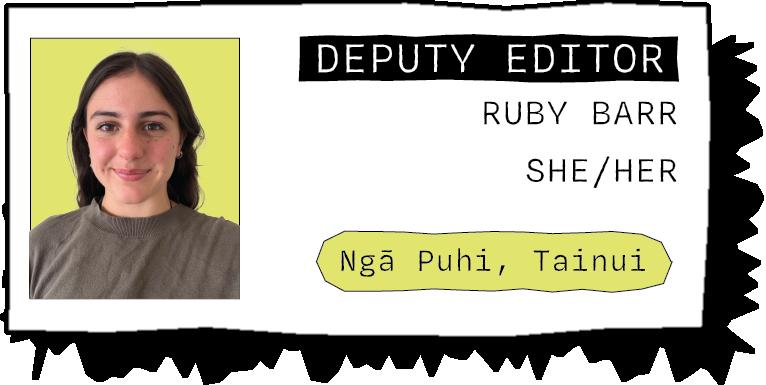
New Student Representation Model to be Presented to Students This Week
Words by Jessie Davidson • SHE/HER
After two years of delayed student elections and a year of restructure, Te Tira Ahu Pae will present its new student representation model at the Special General Meeting (SGM) this Thursday.
Last year, Massive reported that Massey’s student elections would be postponed to allow for the development of a new representation model. This followed the 2024 elections also being delayed after the existing model was deemed unfit for purpose.
Students voted in favour of a new model at a SGM in October last year. A working group has since finalised the updated structure, which will now be presented for approval at the upcoming SGM on Thursday, 26 February.
Two motions will be put forward at the meeting, including a motion to adopt the new representation model.
The most significant proposed change would see the Māori Students’ Association becoming an independent body.
The remaining structure refines the responsibilities of student representatives, clarifies working hours, and reduces the number of direct representatives. The proposed funding covers two presidents, eight general representatives and twelve community representatives.
Under the model, presidents will work 48 weeks a year, while non-presidential reps will work 44 weeks.
The model also creates opportunities for up to 76 students to participate in paid student voice roles across the university, including positions on Massey boards and committees.
Nominations for the general/distance president role will close at midnight on the 23rd February. Candidates will undergo a pre-screening process and interview before final nominees are presented in the wider student election. The eight general representative roles will be elected.
The 12 community representatives, along with the Māori Students’ Association, will remain independent in determining how representatives for their groups are selected.
Te Tira Ahu Pae aims to pass the new model at the SGM, which will be held at 12pm this Thursday in student lounges across campuses and online.
The full agenda is available on Te Tira Ahu Pae’s website.
SPLENDID
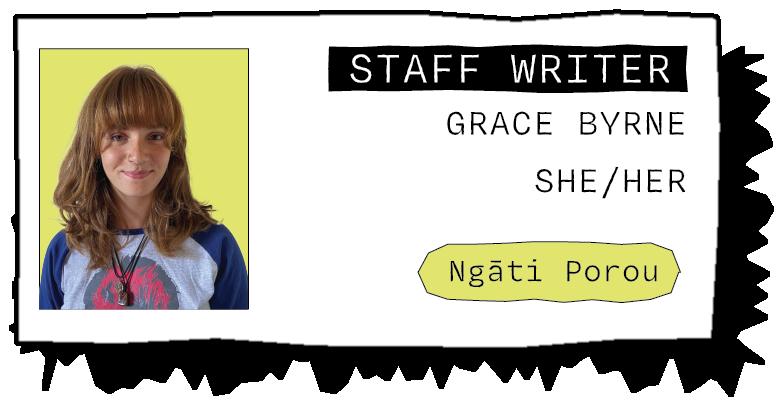
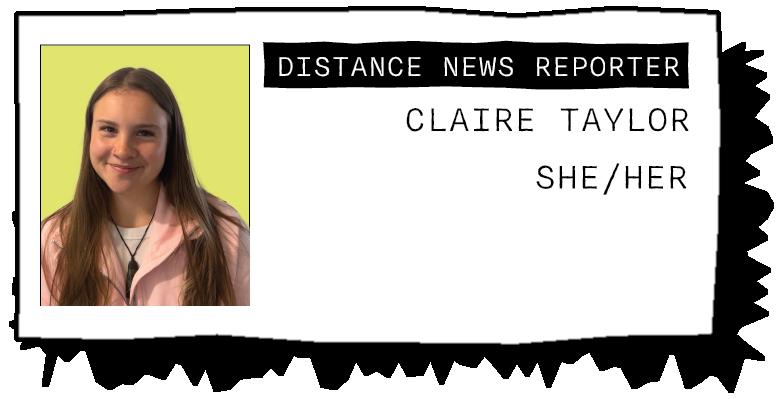
Massey’s Hall Fees Increase for 2026
Words by Claire Taylor • SHE/HER
Massey University has raised its hall accommodation fees for 2026, increasing costs for students by an approximate 2.8% according to Massey’s 2026 accommodation fee schedules.
This year, Massey students are paying between $11,000 and $18,480 for a self-catered room and about $18,400 for a catered room, according to Massey’s accommodation site.
The increase comes as students across New Zealand continue to face rising expenses in tuition, accommodation and student services.
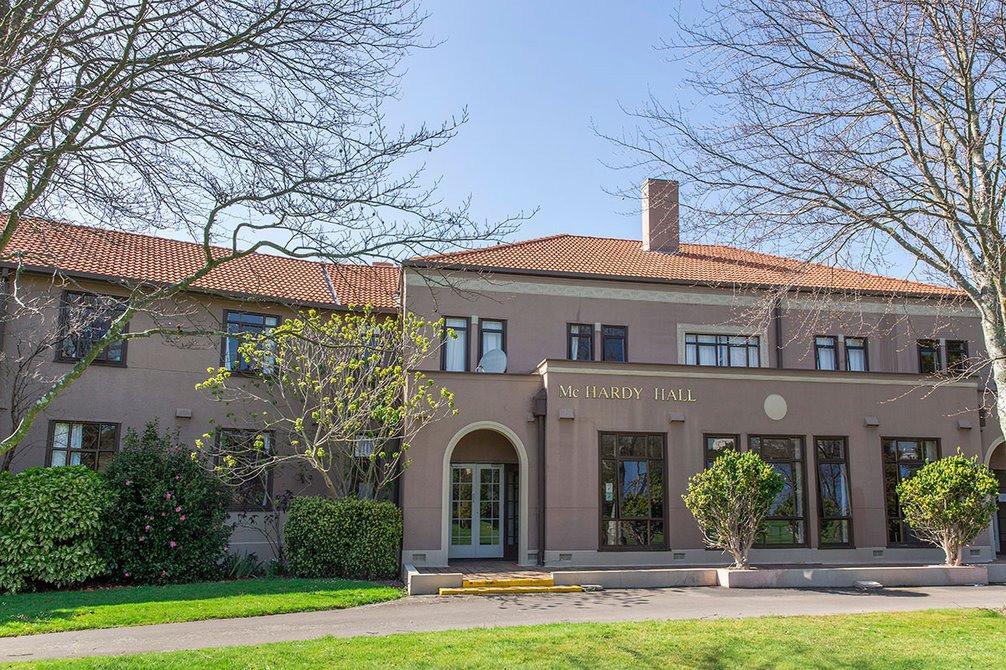
Students on Massey’s Palmerston North campus face the steepest increases. Kairanga and Rotary Courts increased by $15 per week ($600 annually) and McHardy Hall increased by $20 per week ($800 annually).
Massey’s other student accommodation has risen by $20 per week ($400 per year).
The smallest increase was at The Cube in Wellington, where fees rose by just $1 per week, or $42 annually.
By comparison, the University of Otago recorded an approximate 7% increase in hall fees, and the University of Auckland raised catered hall fees by 5.4%.
University hall fees typically cover basic accommodation, utilities, internet, facilities, and student support. However, costs vary by institution.
Massey’s official fee schedules for 2026 also show the additional costs that come with securing accommodation, including an initial deposit, bond, activity and processing fee, and mattress protector. On average, this adds around $800 on top of the standard accommodation fee.
A 2025 Re:News article showed that some student hall fees are climbing into the $30,000 range for a single academic year.
Students now rely on multiple jobs and larger student loans and financial support from parents to meet costs.
On average, catered halls are more expensive, averaging $15,000 per academic year according to 2022 university fee data. In comparison, self-catered halls averages $12,000.
Interestingly, Massey’s largest hall fee increase is at Palmerston North’s self-catered McHardy Hall.
In a response to Massive, a Massey University spokesperson said that the increase reflects the recent refurbishments at McHardy to enhance student living.
“The fee adjustment reflects a refurbishment that has improved the quality and condition of the facility and the increasing operational costs associated with maintaining the building,” they said.
“The revised fee also aligns McHardy Hall more closely with comparable self-catered accommodation.”
According to Massey, fee increases are reviewed each year and adjusted accordingly.
“The 2026 increases are primarily linked to rising operational costs, including utilities, insurance, maintenance, compliance obligations and staffing,” they said.
“These increases are not tied to the introduction of new services.”
For information on accommodation fees, students can find information on Massey’s accommodations webpage. Students seeking financial assistance can visit Massey’s financial and budgeting webpage.
McHardy Hall, Manawatū campus. Photo: Massey University
The culture shock of moving from Te Tai Tokerau to Te Whanganui-a-Tara...
Whangārei and Wellington are like distant cousins that you can’t tell are related.
The difference between what you can wear (bare feet, not the tahi in welly), how you can act in public (skip down Cuba, no one cares), and the food options (Uber Eats was a game changer) was massive.
But the biggest difference was at Massey University.
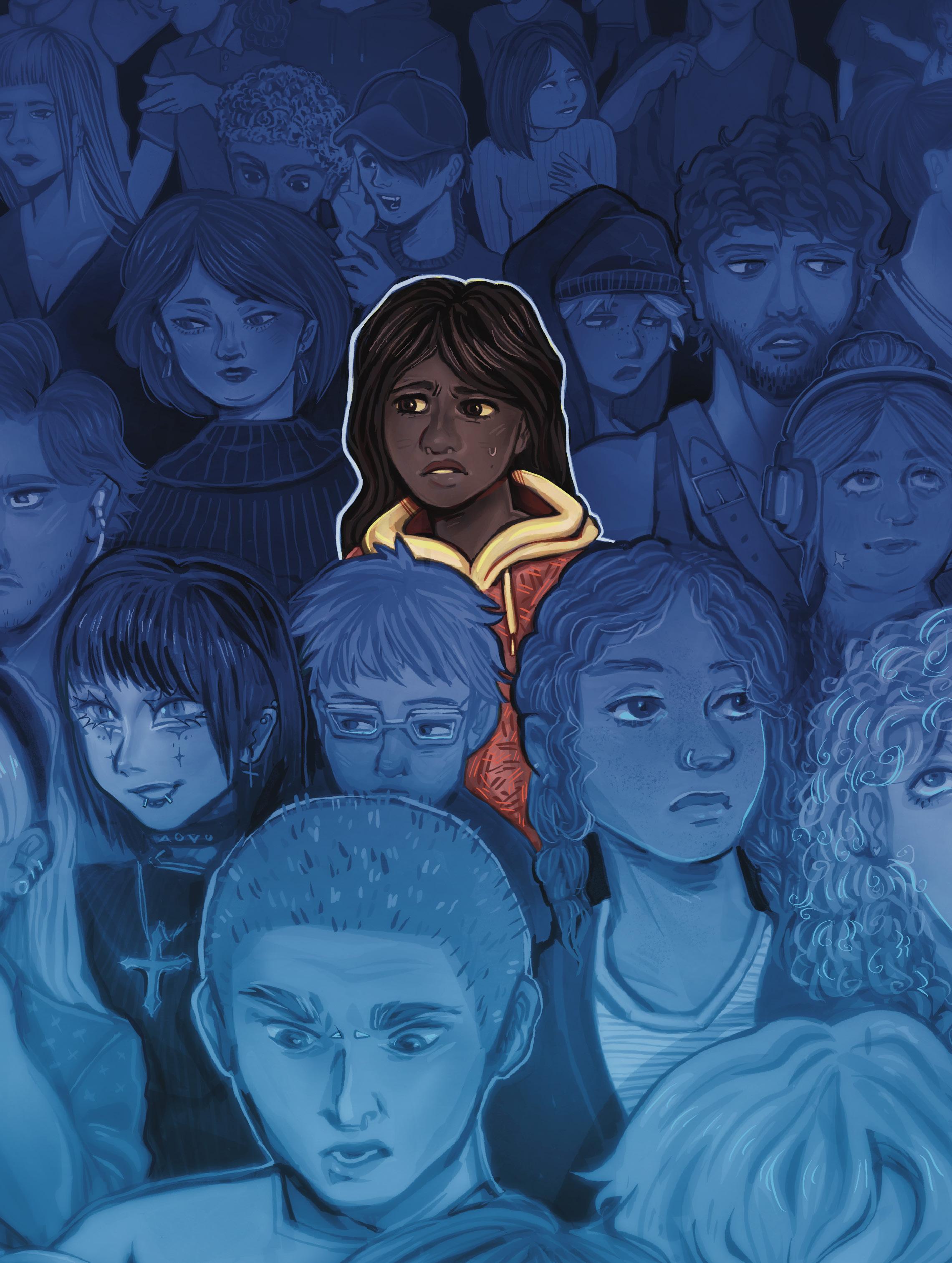
Moving into halls meant going through the stock standard motions of every first-year student—desperate smiles, awkward laughs, muttered “excuse mes”. I remember thinking it was strange that I couldn’t see any other brown people moving in.
Hei aha! I had a room to decorate.
After fulfilling every predictable fresher stereotype during O-Week, I walked into the lecture hall with my Communications cohort and was genuinely confused when I sat down. There were no other brown kids.
Weird. But I was desperate to make friends, so I brushed it off.
During the name games and ice breakers at halls that afternoon I realised once again—no brown people.
Everything started feeling a little sus. In every new space discovered I subconsciously took note of the brown people (or lack thereof) around me. In my lectures, my tutorials, even my online Māori class, I was alone.
Coming from Whangārei, being surrounded by brown people was a given. We were the majority in the spaces I was in. If I was ever in a pākehā space in Whangārei, I would always get to go home to my whānau to replenish my well of Māoritanga.
For the first time in my life, I was having to actively seek out other brown people. Wellington had turned into game of Where’s Wiremu that I was not winning.
I wasn’t the only one who noticed my minority position in my classes. Suddenly, I was indirectly deemed the brown final boss of first year Communications.
“Do you agree with that, Kamaia?”
“Is that right, Kamaia?”
“What do you think about that, Kamaia?”
My lecturers started to sound like a broken record whenever a Māori or Pasifika topic came up.
Embracing the space they had created for indigenous voices, occasionally I would choose to share my whakaaro with the class.
I recall walking into a 9am lecture, violently hungover, and having to involuntarily be the Māori Lorax—speaking on behalf of all brown people ever... for the fourth time that week.
I came to university to support indigenous voices. But being the only brown person in my classes began to feel like a burden
Slowly, I stopped sharing my whakaaro, stopped sitting in the front of class, and stopped eagerly answering questions. But this confused me. This was out of character.
In an attempt to recharge my Māoritanga battery, I returned to what a lot of Māori do when they feel disconnected: whenua, whānau and moana (Wellington CBD edition).
I marched to bunnings Tory Street and brought a fern that looked like the ones from home. I did the rounds calling my whānau on Messenger every day, harassing everyone to tell me about what I missed. I regularly went for hikoi to Oriental Bay to visit Tangaroa.
I admit, this was a downgrade from the full immersion experience at home. However, it managed to do the job.
During my recharge I realised that what I was afraid of most—misrepresenting my people.
The statistics have always told us brown people are a minority in tertiary education. This was a jarring reality to be confronted with.
How incredibly blessed I am to be one of the few.
I can now humbly acknowledge the privilege it is to confidently be brown and walk in these pākehā spaces knowing I represent so much more than myself.
I represent my hapori up north whose tautoko I carry with me always. I represent my whānau who have worked tirelessly to get me here. I represent those who have come before me, my tupuna who allowed me to be here. Finally, I represent those to come. My mokopuna who will know that they can be in pākehā spaces and be confident in their whakapapa.
Whāia te iti kahurangi, ki te tuohu koe, me he maunga teitei
Seek the treasure that you value most dearly. If you bow your head, let it be to a lofty mountain.
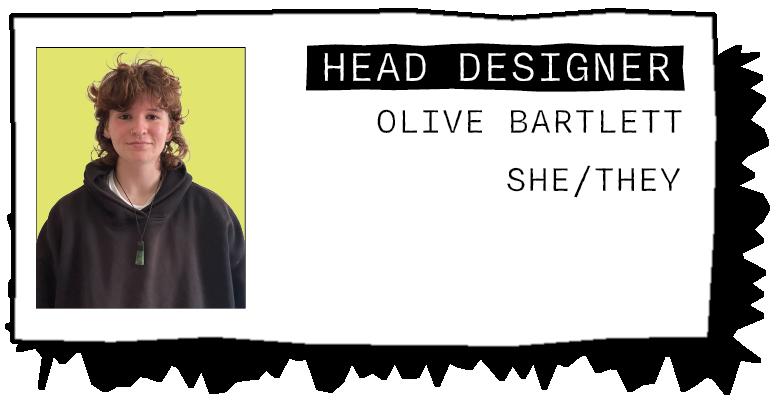
ART BY OLIVE BARTLETT • SHE/THEY
I Didn’t Use x o -
WORDS BY LEE JUDI • THEY/THEM
Iin my Art Degree, Here’s
Why You Shouldn’t Either x o -
n my first year of Art school, AI was in its golden age—or should I say dark age—for students. Everyone had access to ChatGPT, but Massey hadn’t implemented the tools to detect it yet. As I stressed about readings and upcoming essays, my peers would smirk and mutter,
“just use chat.”
My fellow College of Creative Art (CoCA) peers happily justified their AI use, claiming they were there to become great artists and designers—not writers or researchers. Why waste our time with readings when we could be perfecting surrealism and listening to Fiona Apple?
Even as the assignments piled up, this didn’t sit right with me. Education is a privilege I wouldn’t want to waste (not to mention the ethics of AI make my tummy hurt). I’m heading into post grad now, and made it here without the help of the earth-destroying tool, here to convince you to do the same.
Freshly graduated Fine Arts student and frequent AI user, Mae*, spoke to me about her recently arisen regrets. Mae finished her bachelors last October and couldn’t resist the loophole for her three-year degree.
She says, “I’ve always struggled with the academic side of uni and just wanted to focus on my studio practice.”
Now, three months post degree, Mae has done some reflecting.
“I lowkey robbed myself of so much learning. I didn’t need to go to uni to just work on my art for three years.”
Anyone can create art consistently, but Massey provides the intensive resources to back up that art. Without sinking your head into the books, your work can appear surface level and under researched.
Being an artist or designer isn’t just about making pretty pictures—it’s about visually communicating your inner and outer landscapes. Your work should project deep concepts and engage viewers with topics they wouldn’t otherwise. Learning these skills is impossible when you reject all resources through ChatGPT use.
A 2025 MIT study compared people using ChatGPT to help write an essay versus without. Time Magazine wrote that the study revealed the ChatGPT users had shockingly low brain engagement.
The article read, “Over the course of several months, ChatGPT users got lazier with each subsequent essay, often resorting to copy-and-paste by the end of the study.”
When using ChatGPT, you are actively turning your brain off. University provides you with the opportunity to completely turn it on. By spending years on end leafing through papers, articles, and books, trying to find that perfect source, you gain well-informed judgement.
Refusing to use AI won’t just make you a better practitioner, it’ll also make you a better person. University gives you the opportunity to stretch your mind and individually fight against an institutionalized ‘dumbing-down’.
Let’s not forget—this shit is political.
I rarely see practices and projects that aren’t inherently left leaning. After all, this is an art school. Using AI in the process of anti-establishment work is a complete oxymoron. None of us are strangers to the harms that AI does to our earth and communities. Why would you want your allegedly progressive art to contribute to it?
If your AI-fueled work explores climate action, don’t pick up your pencil until you consider the 765 billion litres of water that Digiconomist estimated AI systems burnt through in 2025.
If there’s even a tiny flicker of feminism in your next ChatGPT-drafted art piece, drop your brush and think about the 38% of women who have reported AI-powered violence against them, according to The Economist.
And don’t even think about using AI to make work about indigenous sovereignty before looking into the use of Māori knowledge and data by big tech companies.
If your creative process hurts the people or whenua you are attempting to liberate, what’s the point you’re really making? Every step in our concept development should respect the subject. Using AI turns a subject into an object you are exploiting for your own benefit.
I truly don’t see the point of studying at all if you’re going to use AI throughout. From missing out on knowledge and critical thinking, to hurting the entities you represent visually, AI use at uni is an unethical paradox.
Of course, there are more nuanced conversations about students with dyslexia, second language English speakers, and more. But if you aren’t a part of these groups, I strongly discourage you from the AI temptation.
For the new generation of CoCA freshers—think thoroughly about what your aspirations coming into campus are. I can confidently assume the effects of basic AI do not align with these goals. If they do, you might be in the wrong place. Don’t forget, Massey’s strategies for AI tracking are a whole lot better than they were in my first year. Getting caught for plagiarism is no joke.
Of course, no matter what year you’re coming into, you have the opportunity to reflect and reconnect with your practice. Rejigging your research methods to exclude AI may completely change your outlook on uni and expand what your art could be.
In our campus’s creative community, I believe we can turn our heads away from the billionaire funded, cataclysmically pollutive, and brain-rotting tech being shoved down our throats. In fact, I believe we should.
This rejection will undoubtably strengthen our minds, lives, and practices we are here to develop.
*Name changed for anonymity
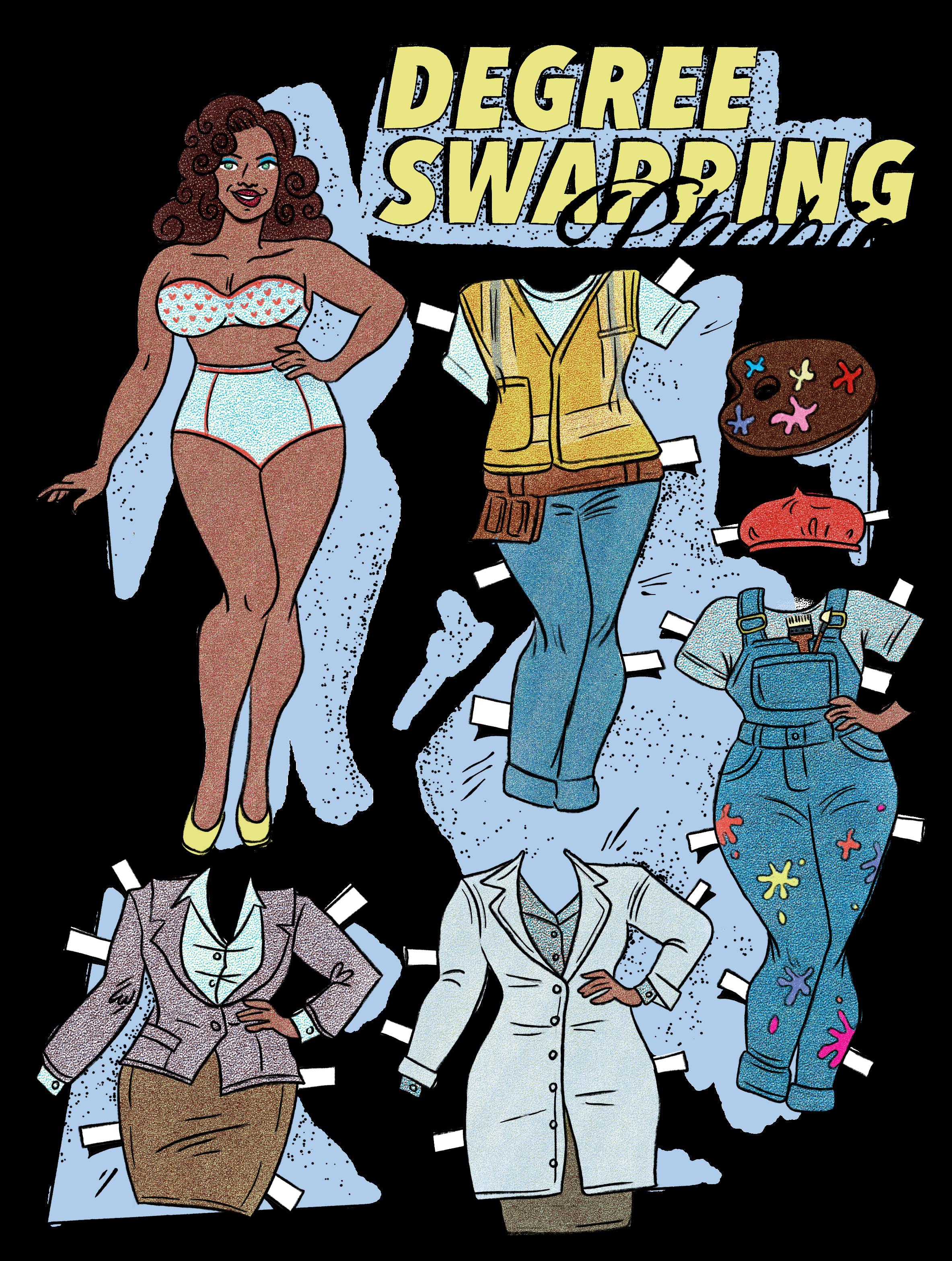
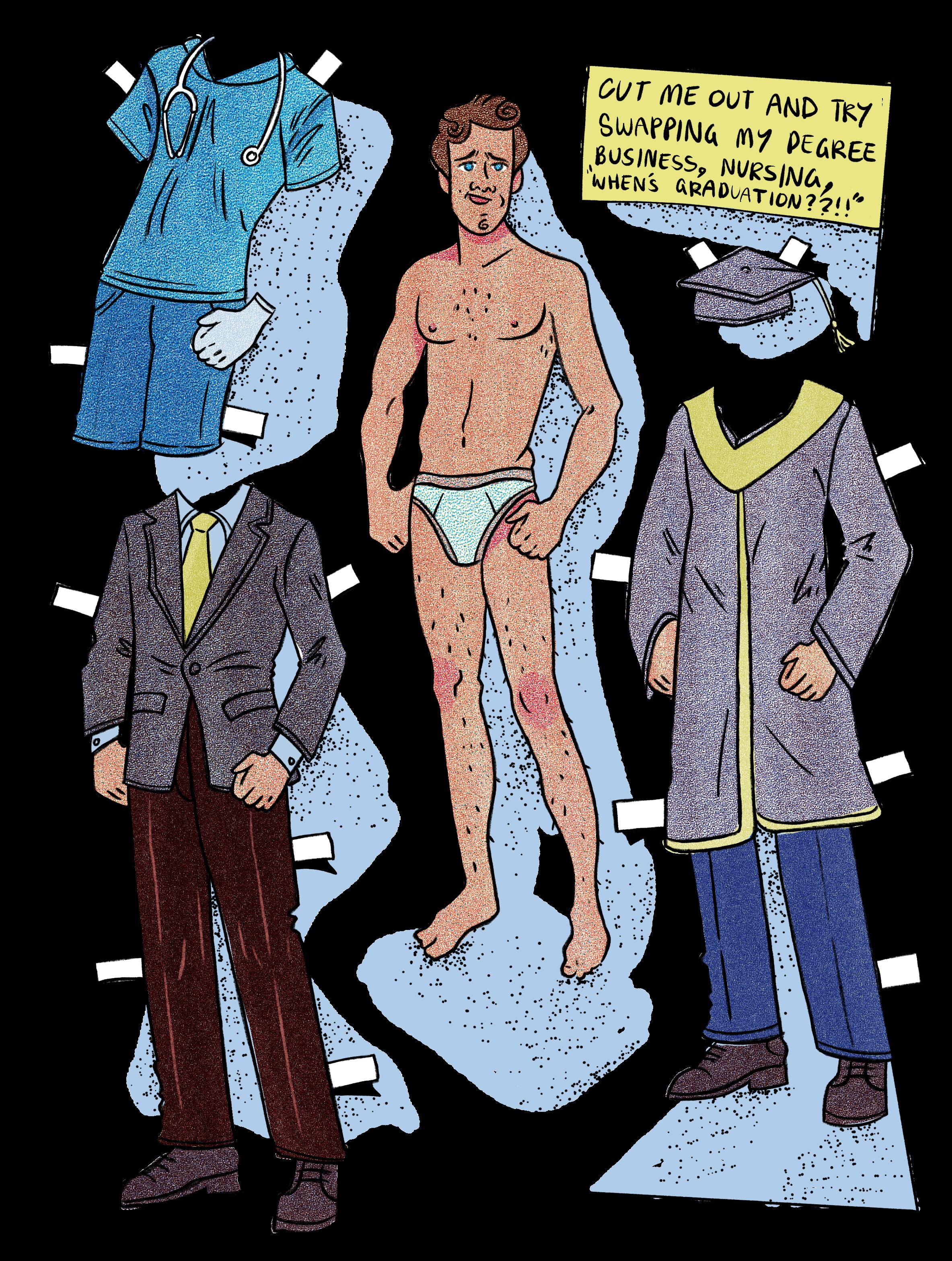
The unspoken fear (and blessing) about swapping degrees... UNIVERSITY: UNIVERSITY:
An institution where students go to follow their lifelong dreams of being a vet, psychologist, journalist, and more. The reality? It’s where you start off down one career path, decide you hate it, panic, and try out another three.
Switching majors or degrees can be scary, and often makes you feel like you’re falling behind. But switching degrees is actually more common than we think.
According to Universities NZ (UNZ), 34% of students in bachelor's degrees change qualifications during their studies, while 13.5% changed universities.
Within these statistics, is Victoria University student Caelyn Daughney, who moved from Massey to study her dream degree. After a year studying Massey’s Visual Communication Design degree, she still felt like something was missing.
“I met someone that said they were doing a double major in Biology and Design, which was my dream degree,” Daughney says.
“I remember sitting down on the street ... and sobbing because I didn’t know that was something that you could do.”
Determined to combine her passions of creativity and science, Daughney swapped to study a double major of Design for Social Innovation and Biology at Vic. She hasn’t looked back since.
“Massey is great if you only want to do the one thing or only want to be in the creative industries.” says Daughney. “There's not many campuses that offer both labs and creative spaces to work, which is where Vic is good.”
While New Zealand is lucky to have many universities with unique paths and choices, this freedom can almost make choosing your courses more difficult at times. Massey alone offers 2,700 courses and 170 qualifications.
According to UNZ, at least 17,000 students fresh out of high school go straight to university. Placing their interest into one degree and one university is a big decision and often ends up in people swapping degrees within their first year of university.
The National Party noticed this pattern, and in 2025, changed university first year fees free to final year fees free. The new policy aimed to encourage students to finish their qualification, rather than just starting them.
However, UNZ found that students under 20 are more likely to change qualifications before graduating compared to their older peers. Daughney feels the fees free change will put more pressure on these young students.
She says, “Last year fees free means you need to be somewhat sure before you go to uni because that is quite a big decision ... it’s a lot to ask someone to know exactly what they want to do.”
Realising you may not be in the right degree isn’t a nice feeling, especially when you figure out you dropped $8k on it. But Daughney believes being brave
“People will say ‘oh, your failed first degree,’ but actually, it's just the degree that was right for me at the time, and then I swapped to something else that was right.”
“So, neither of them were ‘failed’.”
Second year Massey student Nick Marra is also experienced in the art of uni swapping. Starting in 2020 studying Architecture at Vic, he’s swapped four times before finding the right fit studying Industrial Design at Massey.
“When I finished high school, I was really sure that was what I wanted to do,” says Marra. “But my first year was during the first year of Covid which meant that we weren’t getting that guidance of being there with tutors.”
Marra was far from alone in struggling starting university during Covid-19. Between 2019 to 2021, Education Counts found that course completion rates across NZ universities dropped from 87 percent to 81 percent.
ART BY BRIANNA GRAPES • SHE/HER
“The first time I switched I felt like I’d failed in a way,” Marra says.
However, while changing degrees can feel like a personal failure, Marra now knows how normal it actually is.
"I only know three people that went to uni and stuck with their original degree,” he says.
So, if the swap is normal, why does it feel like failure?
A 2025 study by the Organisation for Economic Co-Operation and Development found that only 33% of new entrants students complete their bachelor's degree within their qualification’s theoretical timeframe.
This means many students extend their time studying by changing or adding to their degree. Yet many still see this as taking one step forward and three steps back.
University success is about exploring unique opportunities and figuring out who you are beyond just majors and minors.
For Marra, the mistakes he made through doing all his courses helped him decide what he really wanted to do.
He says, “I’m really happy that I took the time to figure out what I wanted to do.”
"There's no rhyme or reason to keep doing something you don’t enjoy. It's completely in your hands to change it.”
What started as a trial and error ended up being the compass that pointed them in the right direction. The journey is less like a one-way-road to success, and is more like one step forward, two steps sideways, and a loop back to the beginning.
Swapping degrees isn’t as scary or humbling as it’s often made out to be. It’s an opportunity to pause, grow and reflect.
If you do anything (even failing) with passion, you can’t go wrong.
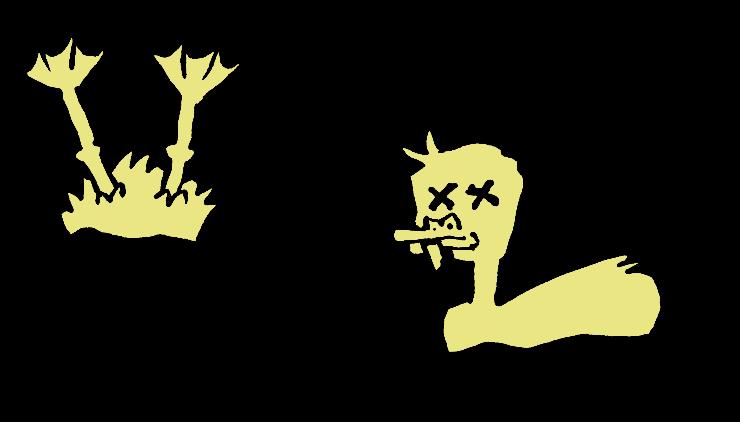
Uncovering the truth about what’s killing Palmerston North’s ducks...
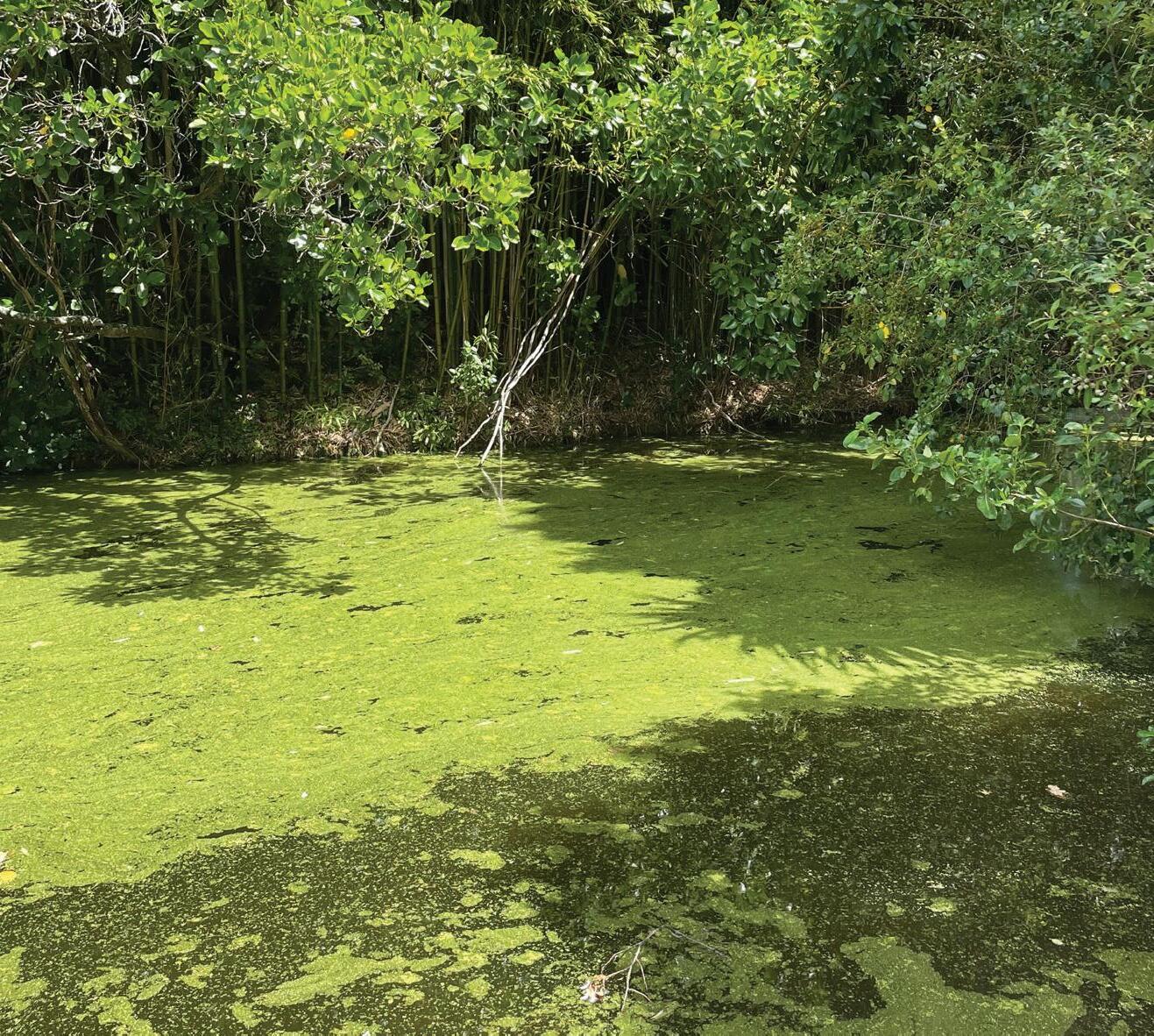
Pungent, putrid, and puke-like. The Manawatū campus pond is known to be anything but clean. But it’s time to add another adjective onto its sludgy waters—killer.
Palmy’s ducks were dying in the campus pond, and the reason remains conveniently hidden.
Following complaints made in 2024 about the pond’s pungent stench, Palmy’s pond was fenced off with a sign put up reading: “Water quality warning. High bacteria levels.”
At the time, one student told Massive that the thick layer of green sludge on top of the pond looked “radioactive”.
Massey responded by sending in a clean-up crew armed with an extractor pipe. The pond was drained and allegedly purified.
A team of avian specialists performed autopsies on the birds and found the cause of death was inconclusive, according to a Massey University spokesperson.
However, water samples taken from several sites in the pond found that the water and vegetation were potentially harmful to humans and animals.
“Over the past year, the university has worked hard to improve the water quality ... [recent] water tests showed the water quality has significantly improved,” the spokesperson says.
But a year has passed, and the dead ducks have gone too long without justice.
1The university hates ducks and is slowly killing them off via pond
As students began feeding them, dozens more flocked in. Before long, the campus was experiencing what experts (me) now call a ‘waterfowl surge’.
By 1997, the situation had escalated. According to Chaff, Massey staff spent up to an hour and a half each day hosing duck poo off the concourse.
What happened to our feather-tailed friends? Who wanted them dead? And why is the university keeping quiet?
The truth is being suppressed, but I’m on the case.
After exhaustive research and several (failed) attempts to morph into a duck, I have developed three theories.
The pond was originally built in 1967 with the intention of beautifying campus. Resulting in a new kind of prospective student, feathered ones
In response, Chaff reported that if students continued encouraging them to gather on campus, Massey would seek an end to the flock entirely.
Suspiciously, in 1997 Chaff reported that plans to transform the pond into a native fish sanctuary were cancelled. The reason? The environment was allegedly unsuitable for fish.
Unsuitable for fish... but perfectly lethal for unsuspecting ducks.
As the pond continued to get more toxic, the university turned a blind eye.
I rest my case.
2The vet students are using the pond for experiments
In 1988, Chaff reported the Loch Ness Monster had been sighted in the pond, prompting students to question what kind of genetic experiments Vet students were conducting in the water.
The reported sighting marked the first recorded instance of the pond being treated less like a peaceful habitat and more like a biohazard with ambitions.
The pond was nicknamed ‘The Vet Pond’ after the old Veterinary Tower was built beside it in 1971. The pond never lost its name despite its demolition in 2022.
Whatever unknown substances, specimens, or suspiciously labelled buckets are being tipped into that water today are almost certainly not helping the duck population.
The real hazard, however, isn’t what’s in the pond. It’s the university’s silence.
3The pond is turning the ducks evil and therefore the eels must intervene
This is, by far, the most probable explanation based on the twisted evidence uncovered during my investigation.
Things took a sinister turn in 2002, when Chaff published a claim that the pond was being used as a dumping ground for dead kittens operated on by Vet students.
According to the author, this was corrupting the pond’s swans:
Coincidence? Or evidence that the experiments never stopped.
“The swans that live in the vet pond are evil – everybody already knows that – the reason they are evil is because the feed on the souls of the poor tiny dead kittens.”
Both ducks and swans belong to the Anatidae animal family. If the consumption of kitten souls can turn swans hostile, it stands to reason the ducks would not be immune.
Not incriminating enough? Listen to this... speaking with our associates over at Radio
Control, I was shocked to learn that the pond’s resident eels may also be active participants in Massey’s anti-duck agenda.
“The eels in the pond often eat the ducklings and the legs off the adults,” they said.
With the pond’s waterfowl developing the ability to kill, Massey enlisted its last remaining line of defense – the eels. These fighters were tasked with brutally maiming any duck toying the line of wickedness.
The proof lies in the pudding – or rather, the pond. As the university refuses to quack, a conspiracy is condemning Palmy’s ducks to death row.
As Aotearoa’s election campaigns begin for the year, it’s time for Massey to move its School of Politics out of Palmerston North and into Aotearoa’s political capital...
Massey University’s Wellington campus is a hub of creative collaboration and practical learning, but Politics students have been cut out of the equation.
I took the ‘Introduction to Politics’ course in the first semester of 2025 to broaden my academic arsenal. Alas, the course felt
like dry humping someone for hours until you realise you’re never going to climax and have a serious case of ‘pash rash’.
In other
words, doing all the mahi and receiving no treats.
You’d think that studying Politics would teach me the science behind the debates and decisions of our country’s leaders. However, Massey’s current Politics papers are gearing distance students for careers as professional keyboard warriors, rather than future leaders.
I began the course in hopes of returning to my Year Seven highlighter girl self—armed with an attitude of severe political suave. I wanted to enter a Wellingtonian party geared up to engage in heated debates with Wellington’s most politically pretentious men.
Ready for my brain to grow three sizes larger, I opened Stream to find the course wasn’t based in Wellington, but in Palmerston North. It offered no in person tutorials, no recorded lectures, and an abundance of dense readings. I ended up in the scholastic trenches, wading through hours of dense readings.
Te Whanganui-a-Tara is the epicenter of Aotearoa’s politics. However, Wellington Politics students are forced to study completely online, left yearning for a field trip to the public gallery or (God forbid) a council meeting.
In all honesty, I did enjoy the material in this course. However, by week four, my notes were looking more like a toddler’s scribbles instead of Jacinda Ardern’s personal diary.
Massey University professor of Politics, Richard Shaw, says the challenges of Massey’s School of Politics boils down to a lack of funding. This, amongst other things, resulted in the loss of online workshops.
Shaw says, “The single most powerful thing to benefit distance students would be to get them together in person [attending online lectures]; it’s not listening to prerecorded stuff. The thing is getting people face-to-face. Kanohi ki te kanohi.”
“You can do a whole lot of stuff in a classroom that… you can’t replicate online.”
He explains that Massey’s School of Politics is not based in Te Whanganui-a-tara because they would be going into competition with Victoria University.
“It is unsound from a business perspective.”
While it might not be business-safe, it’s turning many Wellington Massey students away from expanding their political literacy.
Lee Judi, a Te Whanganui-a-Tara-based student, took a Political Philosophy paper in their first year at Massey. As a Bachelor of Design student, they chose the paper as an elective to balance their creative course with an academic literary paper.
However, they found the course daunting and underwhelming. This, alongside the long list of expectations the course demanded, left Judi feeling out of control.
“I could not for the life of me figure out what was expected from me”, says Judi.
Course hand-ins, exam dates and the schedule of the topics to be covered were lost within the shambles of Stream.
“Everyone in the forum on Stream was equally as confused.” Judi describes the workload of the paper as “ridiculous for an elective”, saying the workload was as demanding as a core paper.
On top of this, Judi felt that the price of the paper was not equal to the quality due to the lack of hands-on teaching. They say, “I could have learnt the same [material] by reading political philosophy books”.
If Massey isn’t going to start teaching Politics in person at the Wellington campus, then at least put student money to good use. Let me sit kanohi ki te kanohi with my lecturer at least once a year. Use my $890 I paid for the course towards a trip to Manawatū. Or at the very least, send me the link to the lecture (even if it will be skipped through at 1.5X speed).
Please, just stop giving me political pash rash.
Catch the fresher flu
Acquire a campus crush
Use Massive to decorate your room
Drink too much and get hangxiety
Cry in the library
Fall asleep during a lecture
Get homesick and consider dropping out
Ghost the friends you made during O-week
Drunk email your lecturer
Find a mysterious bruise on your shin
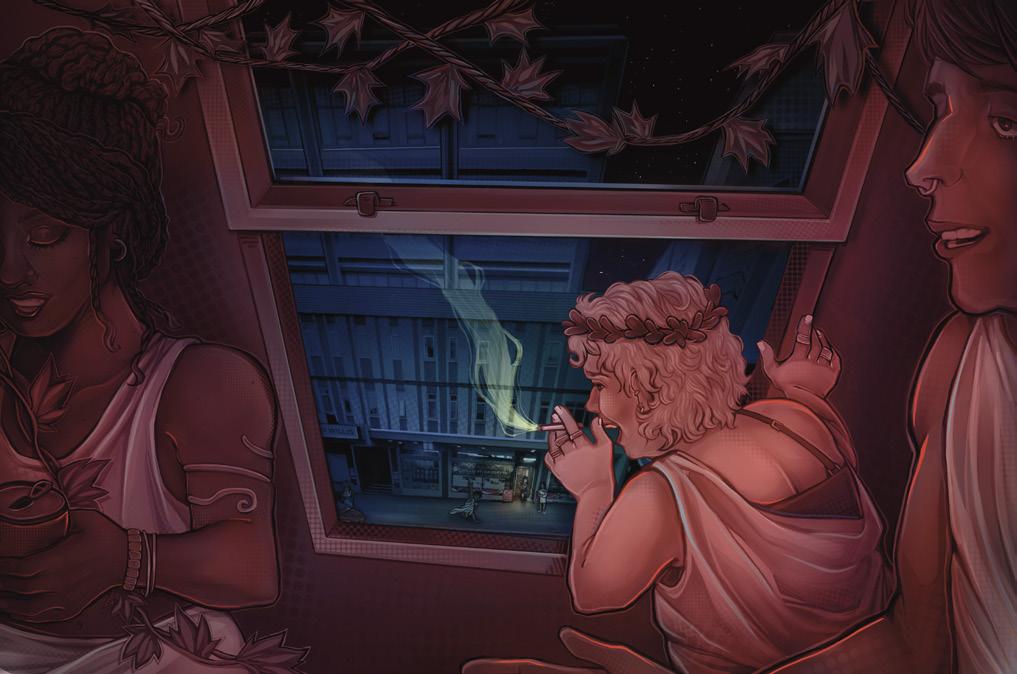
Sacrifice a bed sheet for toga night
Create a new 'university' persona
Vomit on your bed
Get kicked out of a club
Hook up with your hall neighbour
Hit the clubs on a Wednesday
Get rejected by your campus crush
Dry hump someone on the hall common room couches
Have a vending machine dinner
Sleep through your 9am lecture
Get wasted at a BYO
As Colour Fades, Amanaki, Chasing South, Take Hold All-Ages Hardcore
Community Hall, Auckland Sat, 28 February 2026
The Waratahs at the Globe Theatre
Sat, 28 February 2026
Home Alone Recs Presents: 20 Summers Fest
Secret Central Garden Location Sat, 28 February 2026
Eveline Breaker – Double Clover
Pining Radiata - Heaven
Emma Carter – Dancing Too Close To The Fire
Amamelia – Summerlong
Monty Hall’ Problem – JOI joyo de vision (demo)
DISPLEASURE – BEEFCHUMP
Polaroids of Polarbears – Couch Crashing (Feat. Horse Around)
RABBIT as King of the Ghosts shannengeorgiapetersen - 12
Zac Mclean (PN) – HE’S A LOAD
Polaroids of Polarbears – Palmy’s Best Band
How do I talk to my friends about their problems offendingwithout them?
You’ve brought me a delicate little dilemma for our first issue, haven’t you?
Now, I’m going to read between the lines (because I always do). What you’re saying is... your friends keep arriving at your doorstep, emotional baggage in tow. You’re stuck panicking that one wrong word will send the whole thing crashing down like a poorly assembled champagne tower.
First things first. Not all friendships are built the same. Some are for chaos, Jacobs Creek sav, and bad decisions. Others? For staring at the ceiling and dissecting the meaning of life until 2am. It sounds like you, my dear, have been cast as the Sigmund Freud of your friend group. A prestigious title, but an exhausting one.
But remember, your job is not to fix things.
I’ll let you in on a little secret... when people come to you with their problems, they don’t want solutions. They want validation. Someone to say, “Yeah girl, that was awful.” You don’t need to be wise. You just need to be on their side.
Friend got dumped? You’re a heartbreak analyst. Got rearended on the way to uni? Curse that infernal learner driver! Bad sex? Criminal.
Match. Their. Energy.
Obviously, there are exceptions. If your friend comes to you saying they want to commit a crime because they’re minorly inconvenienced, that’s when you step in. We’re supportive, not accomplices.
But remember, you aren’t an emotional landfill. If it’s getting too heavy and you’re absorbing every feeling like a sad little sponge, redirect your friend to someone trained, like a counsellor. A professional listener with boundaries and a paycheck.
This doesn’t make you a bad friend. It makes you someone who is setting healthy boundaries with a friend.
If you’re ever unsure what your friend actually needs from you, you could do something really wild and communicate with them! It’s not rocket science y’all.
All in all, you won’t offend your friend unless you’re intending to (which I doubt). You’ll only run into trouble when you say too much or try too hard. The best thing you can offer is a well-timed nod and a perfectly placed “that’s so fair”.
Now off you go. Be warm, be wise, and for god’s sake—stop trying to fix everyone.
Uni teaches you a lot about yourself. Like how one-night stands don’t need the cover of night to be hot as hell...
Let’s rewind to this time last year when I was a baby fresher experiencing life, freedom, and the absolutely feral realisation that no one can tell you what to do anymore. The lows were getting lost on campus every single day. The highs were discovering free will and immediately abusing it.
Sitting down in Psych 101, I parked myself next to a man who can only be described as Dom Dolla’s hotter, younger brother sent to personally derail my academic career.
Green eyes and a moustache screaming, “I’m bad for you, but you’ll risk it anyway.” Rizz that cannot be learned, and me, spiritually understanding what Sabrina Carpenter meant when she wrote the lyric:
“I’m so fucking horny”.
Obviously, I said hi. There was banter. There was eye contact that should’ve been illegal in an educational setting. By the end of the lecture, I’d learned nothing about psychology but everything about fanny flutters.
Lecture after lecture, we sat together. I free-fell into delusion, asking the universe for one thing only: love—or for him to ruin my life.
Sexcapade submissions provided by
For 20% off your next purchase, enter discount
We barely made it through the door before we were locking lips, and the clothes were coming off. He went down (9/10, moustache deserves its own credit line); I went down, the sun literally set, and before I knew it, I was walking home with a spring in my step and a scandalous story locked and loaded for the group chat.
Finally, after all my hard spiritual labour, it happened. He asked if I wanted to go back to his place after class. I said yes out of pure bravery, horniness, and a need to know what a man with a mo does when he goes downtown.
We saw each other a few times after, but from that day forward, I fully embraced daytime hookups and never looked back. So, cheers to Mo man. Happy one year. You changed my life.
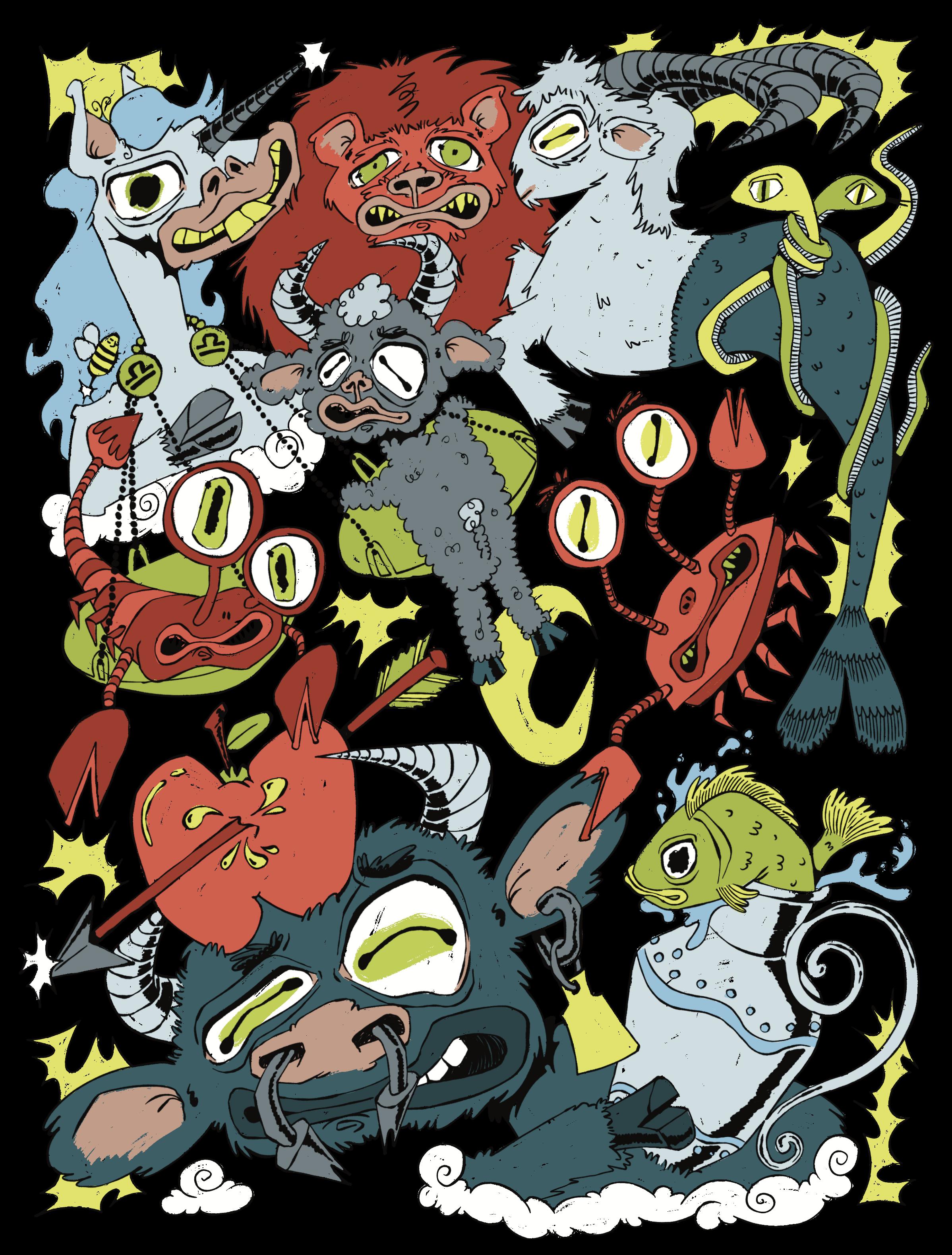
Saturn and Neptune connected with your Sun sign over the weekend, and it’s left you feeling inspirational. But be warned, not everyone likes to be lectured.
Don’t get bull-headed this week Taurus. Before you know it, you’ll be challenged to a duel in the middle of campus. You won’t win.
You’re seeking a new hobby this week Gemini, and I urge you to try something crazy like aerial acrobatics. You never know, the circus could be your calling.
Someone from your past is going to appear this week Cancer, and no matter how comfy their twin-bed looks, it’s important that you stay away from them!
You’re feeling a bit lost and lonely right now Libra. But don’t worry, things are looking up for you. Just stay away from the library this Tuesday. Trust me— it’s for your own good.
Last week’s eclipse is making you feel unloved... KIDDING! Who couldn’t love you? Strut your stuff on campus this week Leo. The world is your runway.
Your bank account is looking healthy this week Virgo! All those side hustles are paying off. Try not to spend it all on a shopping spree in Chemist Warehouse.
You’re giving crazy cat lady atm.
Hiding in bed, obsessed with knitting, and talking to your cat like it’s your therapist. Go outside and touch grass...before it’s too late.
Use your intuition and note that your opinions are more harmful than helpful. Take a step back and review before someone feeds you raw chicken ‘accidentally’.
Love is the theme for your 2026 baby! Admirers are hunting you from every direction. Pick carefully and background check your candidates (Please).
You’ve been super competitive lately Aquarius. While it was all fun and games to begin, it has started harming your relationships. Let someone else win pickleball for once.
It’s time to refresh your contact list Pisces. Your primary school music teacher is getting sick of answering your 2am drunk texts. Make new friends (preferably your age)
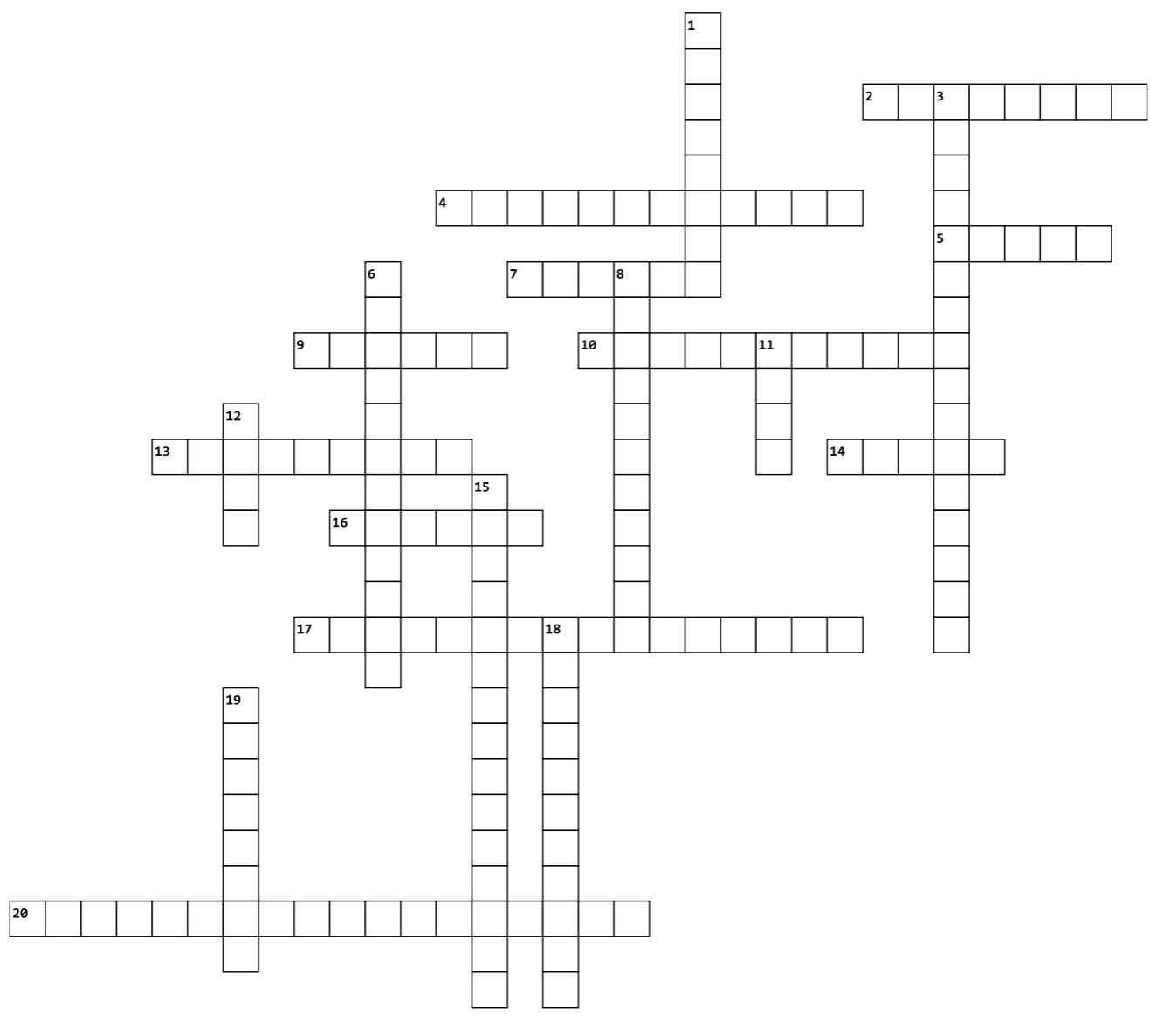
2. Iconic NZ ice cream van (2, 6)
4. Massey’s student radio station (5, 7)
5. Number of NZ universities (5)
7. Where in Auckland is Massey located? (6)
9. Massey University’s mascot (6)
10. The O in O-week (11)
13. Wellington’s mouldy hall (6, 3)
14. Who was Role Model’s ‘Sally’ at Laneway NZ 2026? (5)
16. What day of the week does Massive come out? (6)
17. NZ summer festival shutting down after this year (7,9)
20. Prequel to Monsters Inc. (8, 10)
1. Superbowl performer 2026 (3,5)
3. Recent movie with Margot Robbie and Jacob Elordi (9, 7)
6. Dog breed that herds sheep (6, 6)
8. What kind of college did Massey University originate as? (11)
11. An O-week theme which includes a white sheet (4)
12. A flavour of gum that shares its name with a herb (4)
15. Where was Massey’s original campus? (10, 5)
18. Supermarket franchise owned by Woolworths
19. First year uni students (8)
BEERS
BECAUSE YOUR KITCHEN SMELLS LIKE WET TEA TOWELS AND LYNX AFRICA.
DOWNLOAD TODAY
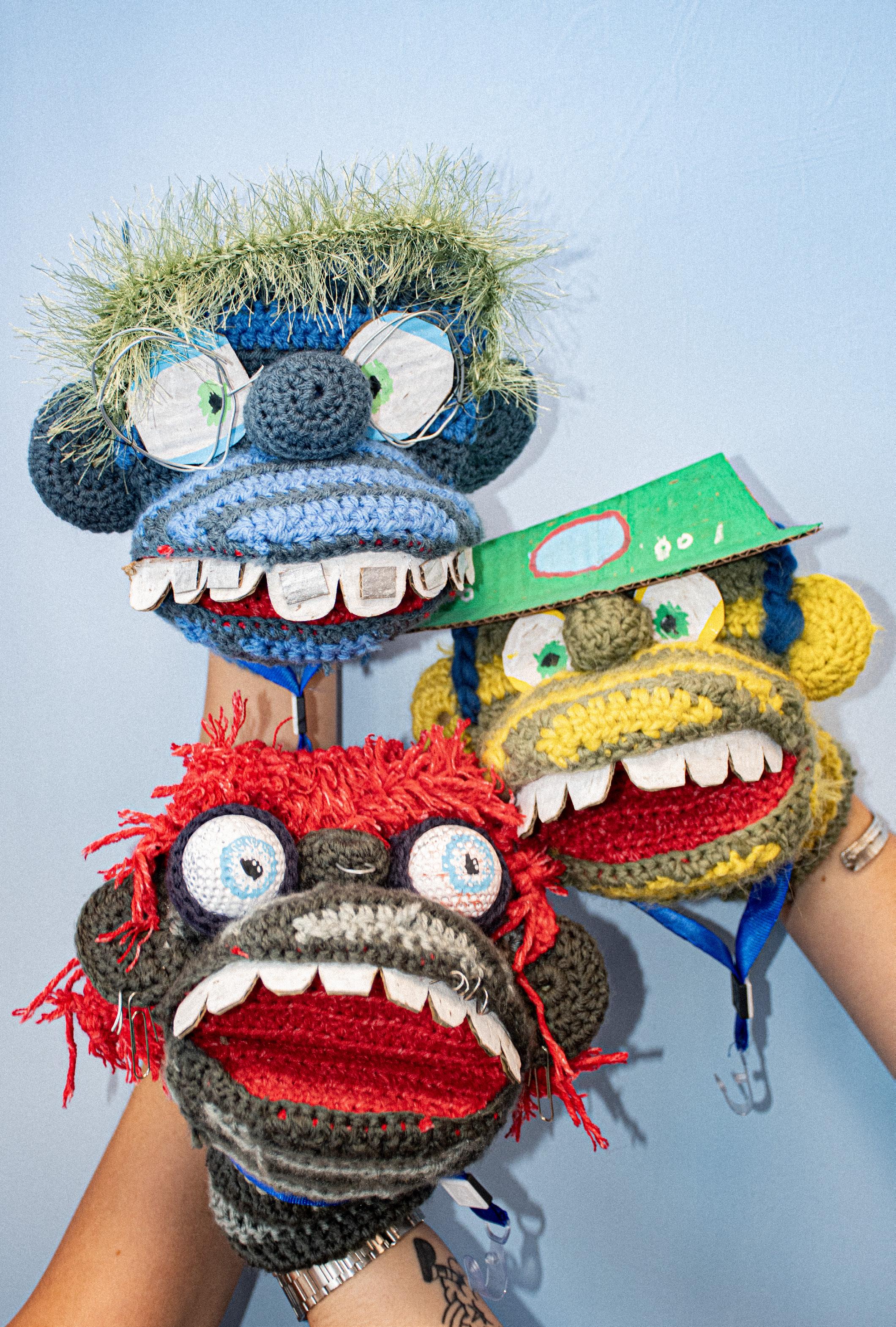
Cover by Eli Armstrong Centrefold by Māta Rose Geiringer