An event horizon alludes to a boundary around a black hole beyond which nothing, including light, can escape. Acknowledging the current climate crisis of our planet, the artists in Approaching Event Horizons: Projects on Climate Change by Atlantika Collective understand that we are headed toward a point of no return but resist the idea that an environmental cataclysm is inevitable.
Through sculpture, photography, video, and performative actions these seven artists address the growing consumerist culture and raise awareness about the consequences of the climate crisis. Consequences such as polluted and contaminated waters, intense variations in temperature, erosion, increasing deforestation, and wildfires are symptoms that show the complexity of the crisis in the world.
Over the past three years, these artists have collectively created a platform to share thoughts and exchange ideas on the environmental effort. They inspire actions to be in communion with the environment and help mitigate the critical consequences of climate change. Their works advocate for transformative and incremental actions that can positively impact the environment. Some shifts are more reflective and intangible, and others are more visible and tangible.
This exhibition weaves these actions together. Some works offer a more contemplative position, which reveals different aspects of the problem and leads to changes in behavior and reflective attitudes toward the environmental crisis. Others take a more active role, calling for proactive steps, such as reducing the consumption of single-use plastics, reusing and repurposing shipment materials, developing technologies that show the extent of the problem, and planting and caring for native trees.
These multiple positions complement each other to show that there is no single or simple response to climate change, but rather we all have to be accountable for our actions and contribute individually or collectively to create sustainable and creative approaches to face the crisis. Thus, Approaching Event Horizons not only illustrates the environmental emergency but extends an invitation to relearn our ways of relating with nature and rethink the impact of our activities.
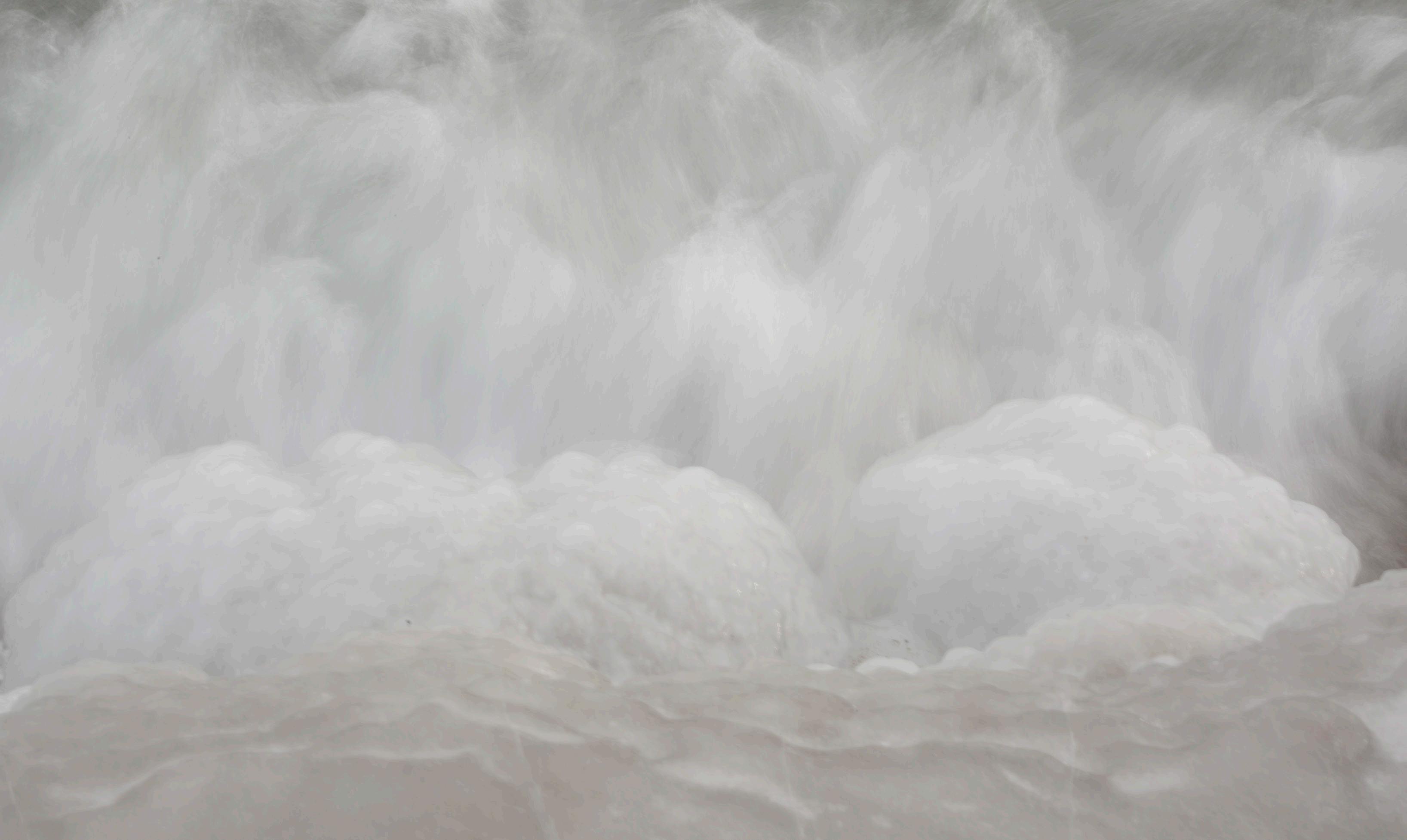
Untitled 2 (from the series The Second Fire), 2022, 24’ x 36’ Archival digital inkjet print
by Gabriela Bulisova and Mark IsaacGabriela Bulisova and Mark Isaac address the effects of global warming and the climate crisis on Lake Baikal—the world’s oldest, deepest, most biologically diverse, and voluminous lake, containing one-fifth of the world’s fresh water. Located in Eastern Siberia, Lake Baikal offers a geological time scale of planet Earth.
legend about the origin of the lake. The artists write, “According to this story, there was an enormous earthquake, fire came out of the earth, and native people cried ‘Bai, Gal!’ or ‘Fire, stop!’ in the Buryat language. The fire stopped, and water filled the crevice, creating the Sacred Sea, with its abundant, crystal clear water and uniquely diverse flora and fauna.”[1]
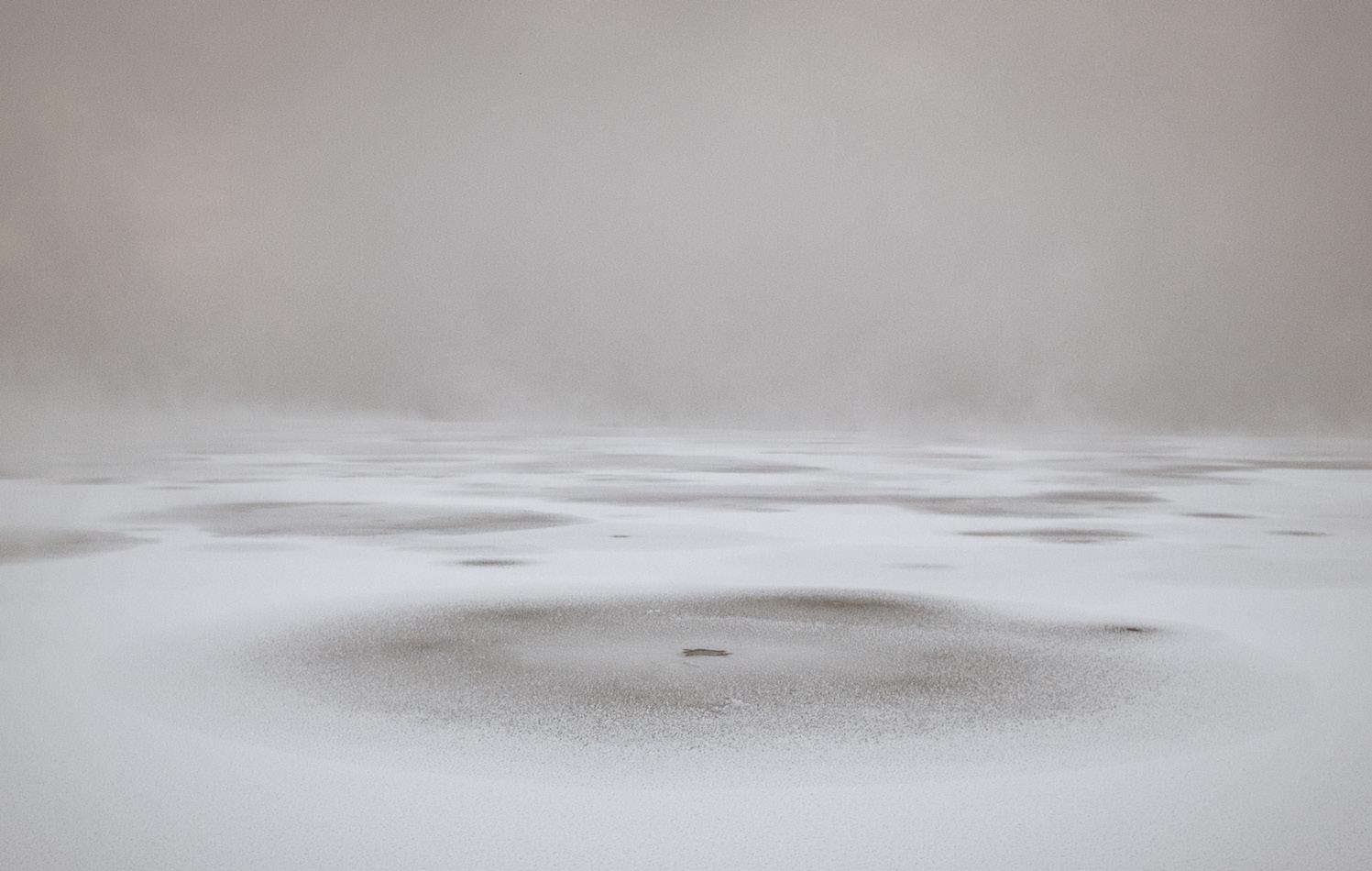
Bulisova and Isaac add poetic visual and sound interpretations to the many narratives and meanings that Lake Baikal holds. The Second Fire (2020), a series of experimental photographs, shows the beauty and vastness of this body of water and the human and natural elements that surround it.
Focusing on the images, some elements disappear and others emerge to reveal the multilayered world of Lake Baikal—the stories of native people, the non-human beings that inhabit the lake, the richness of its ecosystem, and the lake’s ecological fragility. The title of the work refers to the indigenous Buryat
As the environmental conditions of the lake change, so does its relationship with the native people. While some local people maintain a deep spiritual connection to the Lake, others have lost the traditional ways of relating to the ‘Sacred Sea.’ Some believe the lake is a living being, strong and resilient enough to heal by itself, but inevitably the lake faces the imminent and accelerated adversity of global warming and growing levels of pollution.
Untitled 4 (from the series The Second Fire)
Untitled 6 (from the series The Second Fire)
Untitled 6 (from the series The Second Fire)
2022, 24’ x 36’ Archival digital inkjet print by Gabriela Bulisova and Mark Isaac
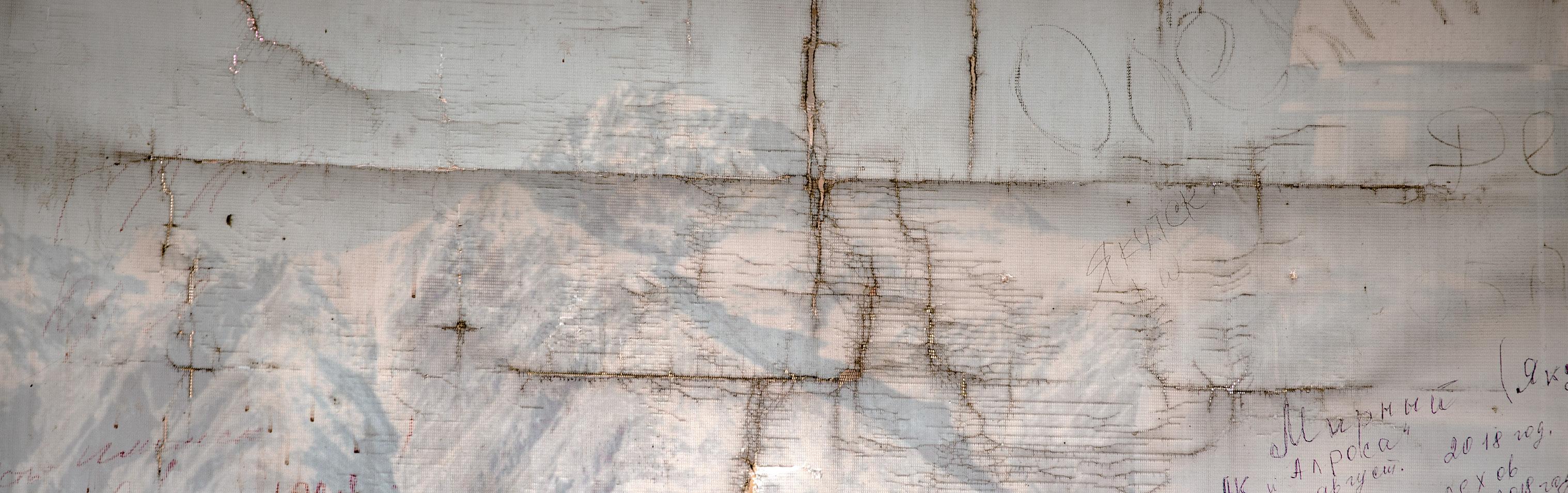
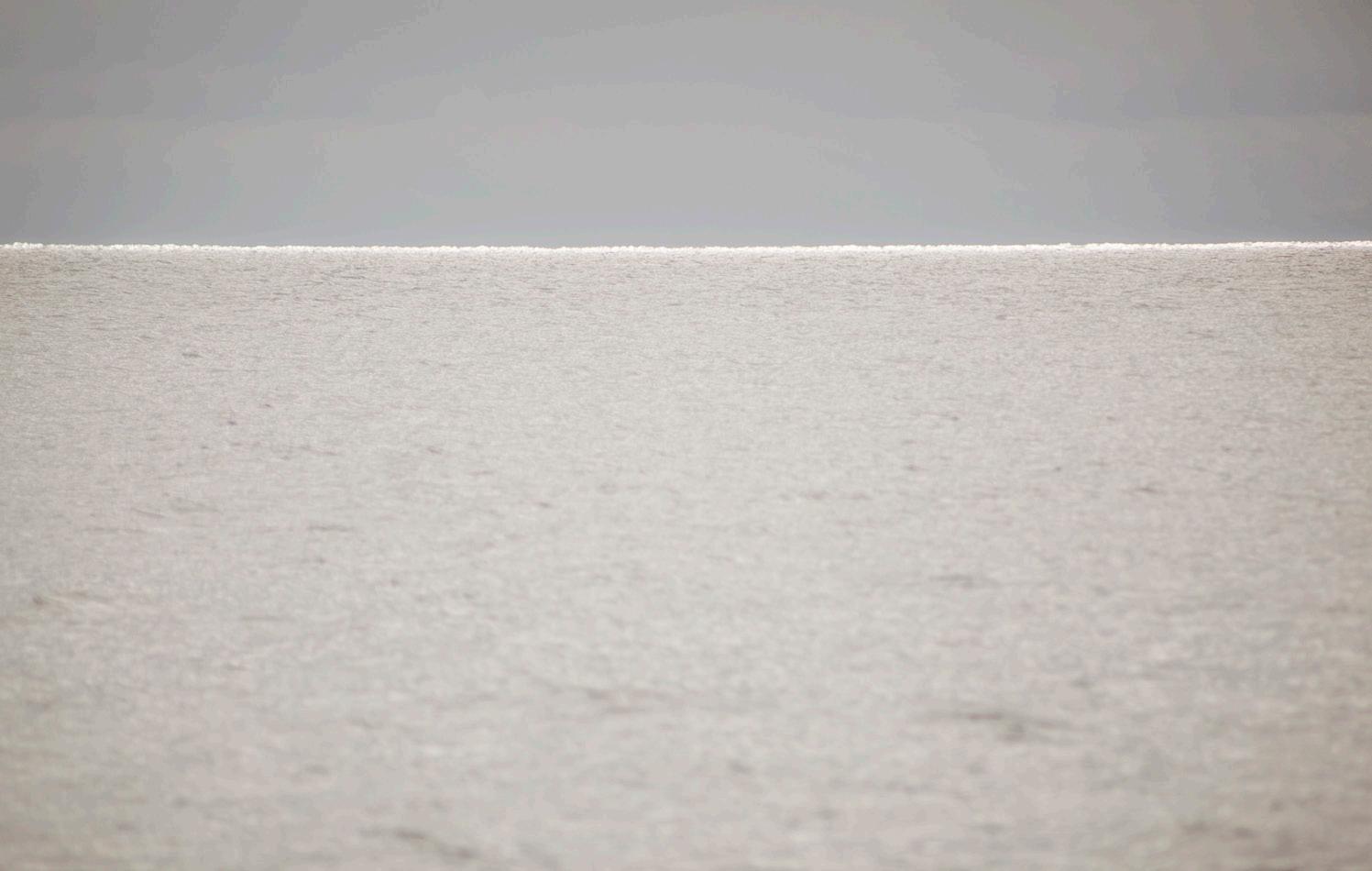
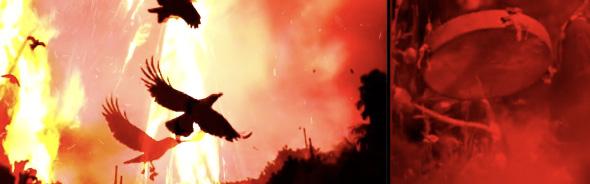
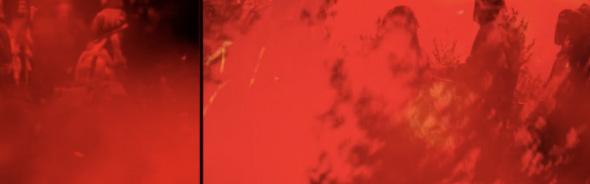
Accompanying the photographs is Embers and Effluents (2020), a three-channel video that expands on the pressing threats to the lake’s ecological health. This video focuses on the rapid environmental damage of Lake Baikal, as the organism experiences a drastic increase in temperature, anthropogenic pollution, deforestation, and floods that could lead to severe damage or even to a catastrophic ecocide. The interaction of three separate video channels creates a vivid interpretation of this situation. The abstract images are accompanied by original music based on scientific data about climate change on the lake.
Bulisova and Isaac’s work invites the layers to understand the sacred ecosystem. The artists kal’s climate emergency and of a ‘second fire’ on the lake world that are experiencing
invites the viewer to read attentively between the complex ecological degradation of this artists bring to the surface the urgency of Baiand place a special emphasis on the threats lake and many other bodies of water in the experiencing the consequences of climate change.
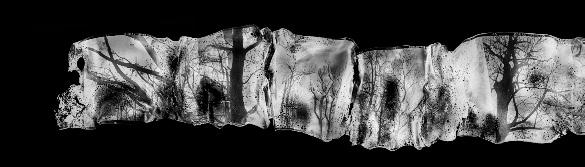
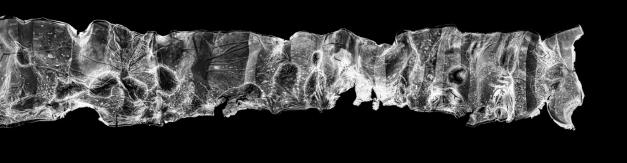
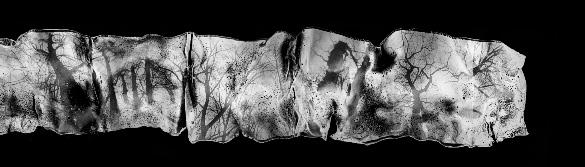
In A Tree for the Forest (2021-2022) Bulisova and Isaac address the role of trees in the climate crisis by showing images of trees located in Cyprus and the Czech Republic. This project acknowledges that many parts of the world are experiencing the worst wildfires in history. The fire season has become longer and is behaving in more destructive ways, with each fire releasing more carbon dioxide and worsening climate change.
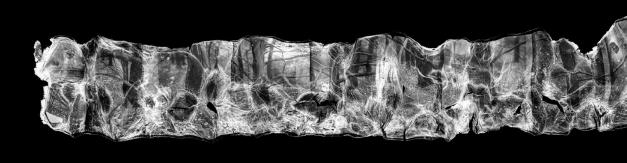
Calling attention to this devastation, Bulisova captures images of the scene of wildfires and develops a roll of film as one continuous landscape of a charred forest. To further emphasize the devastating impact of fires she burns the negatives, scans, and prints them as large-scale panoramas. This results in a series of striking photographs that resemble an x-ray image—the image of a burned forest that calls for help. By showing the dire reality of forests, Bulisova activates memory creating acts of remembrance that bring to mind images of healthy and unharmed forests, and underlines the urgency to act to mitigate climate fires.
The project further calls attention to the scientific discovery that trees communicate underground. Through their roots and fungal networks, they send alarms about danger, share nutrients like carbon and water, and provide help and assistance to younger trees. This stresses the im-
portance of avoiding clearcutting and maintaining the diversity of wooded areas.
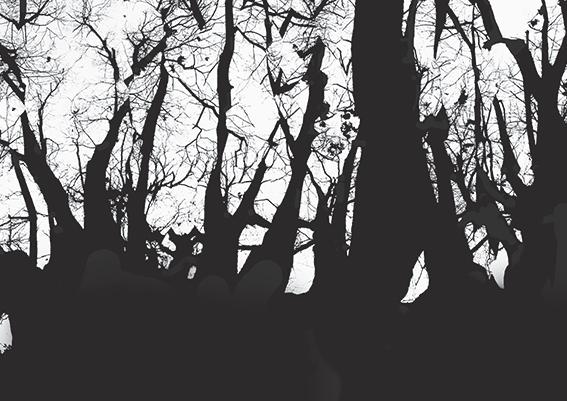
Responding to these findings, Isaac makes a series of panoramic photographs of tree canopies. Black silhouettes of trees stand out against a white background. His panoramas convey a sense of collaboration and unity—the system works better when it works together. For Isaac, these images render the ‘secret lives of trees’ and allow us to create a visual image of their underground network. In the words of Peter Wohlleben: “Under the canopy of the trees, daily dramas and moving love stories are played out. Here is the last remaining piece of Nature, right on our doorstep, where adventures are to be experienced and secrets discovered.”[2]
A Tree for the Forest conveys a hopeful message. To Bulisova and Isaac, although trees are victims of the climate crisis, they are also a path towards mitigating it. The title of the project reinforces this sense of hope by referencing how a tree can make a forest and each person can make a difference in fighting climate change. In the artists’ words, this work inspires people to act, to “stand tall, like [a] mother tree, connecting with those around us, providing support for healthy forests and a healthy planet.”




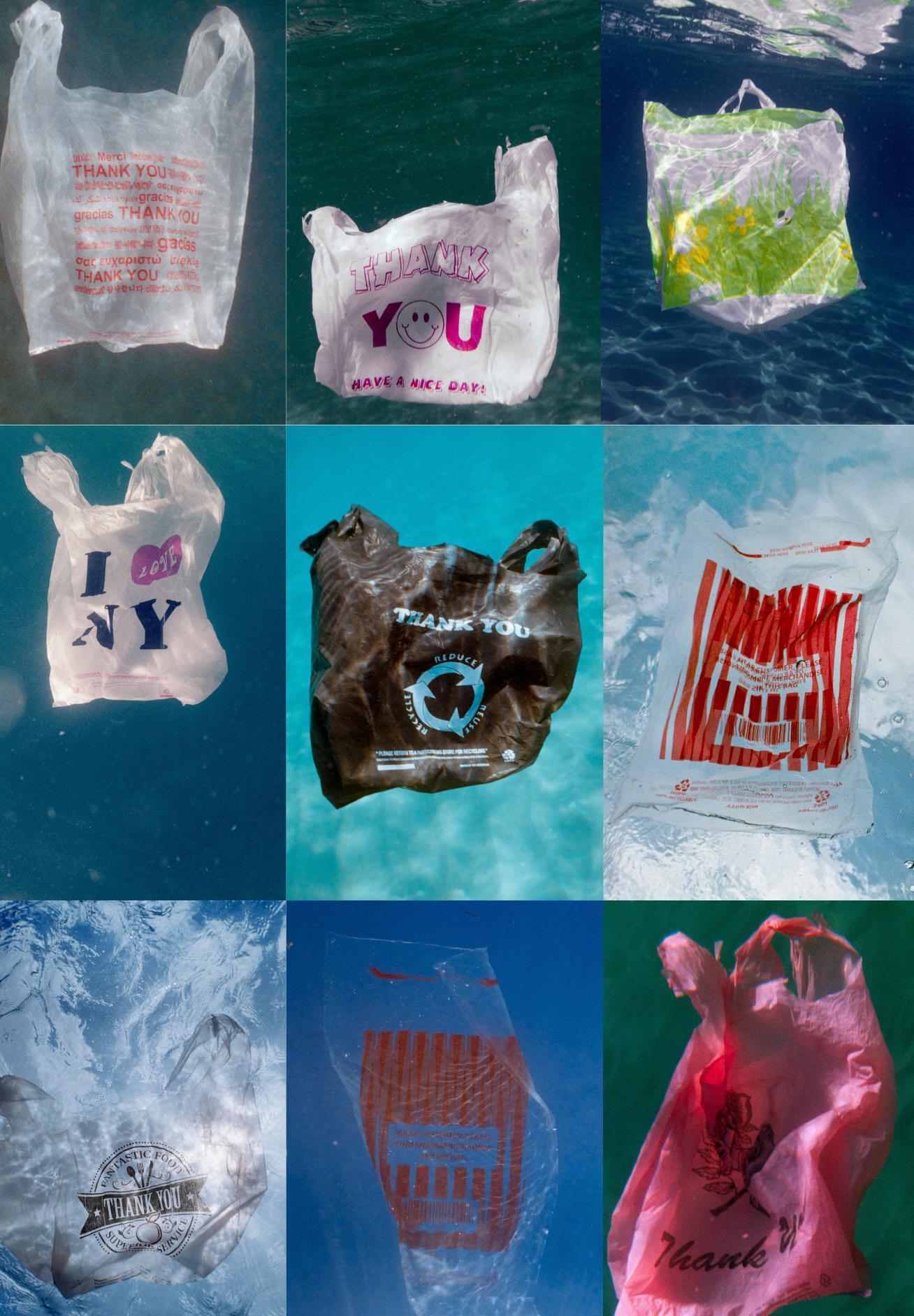
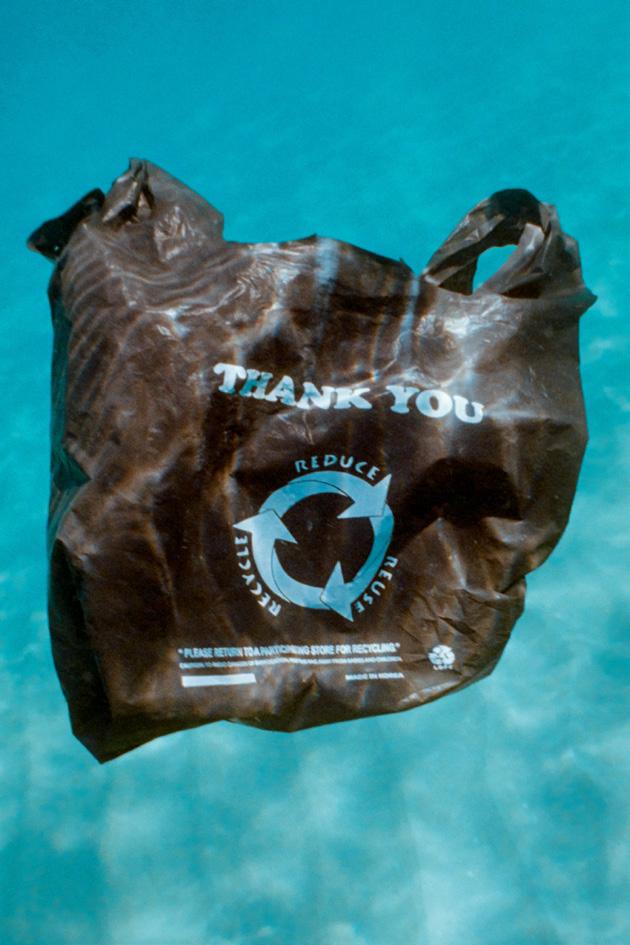
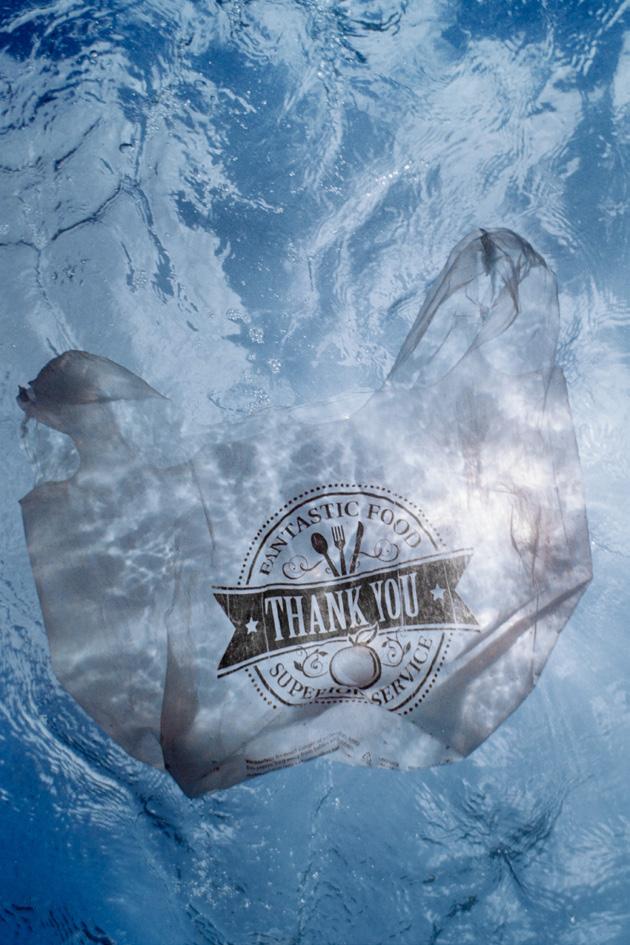
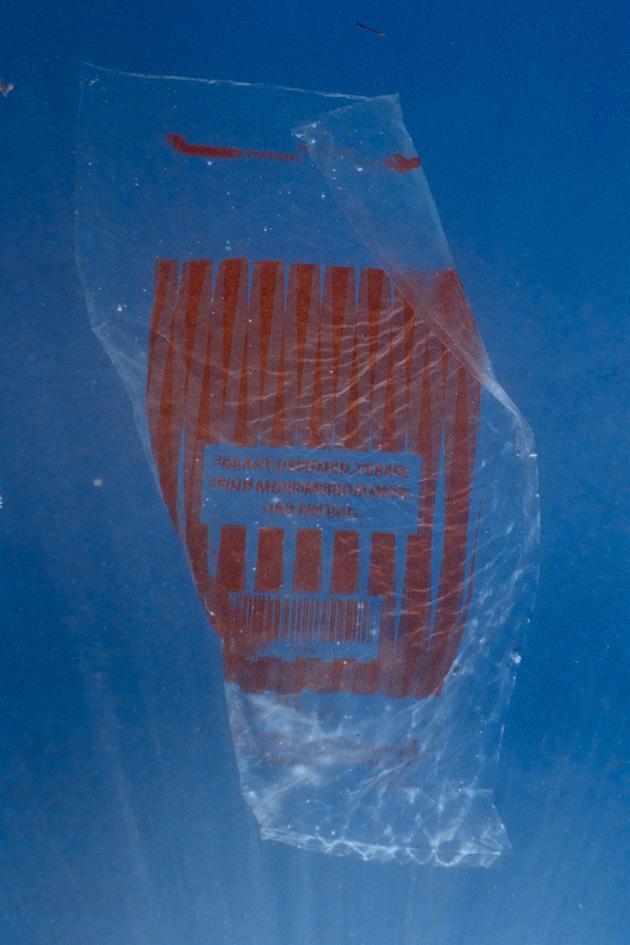
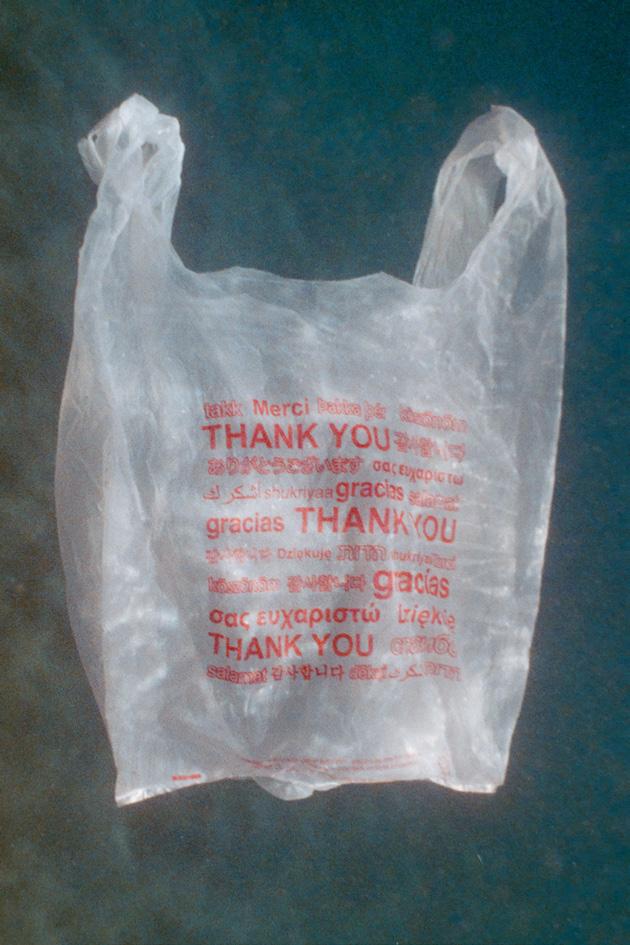
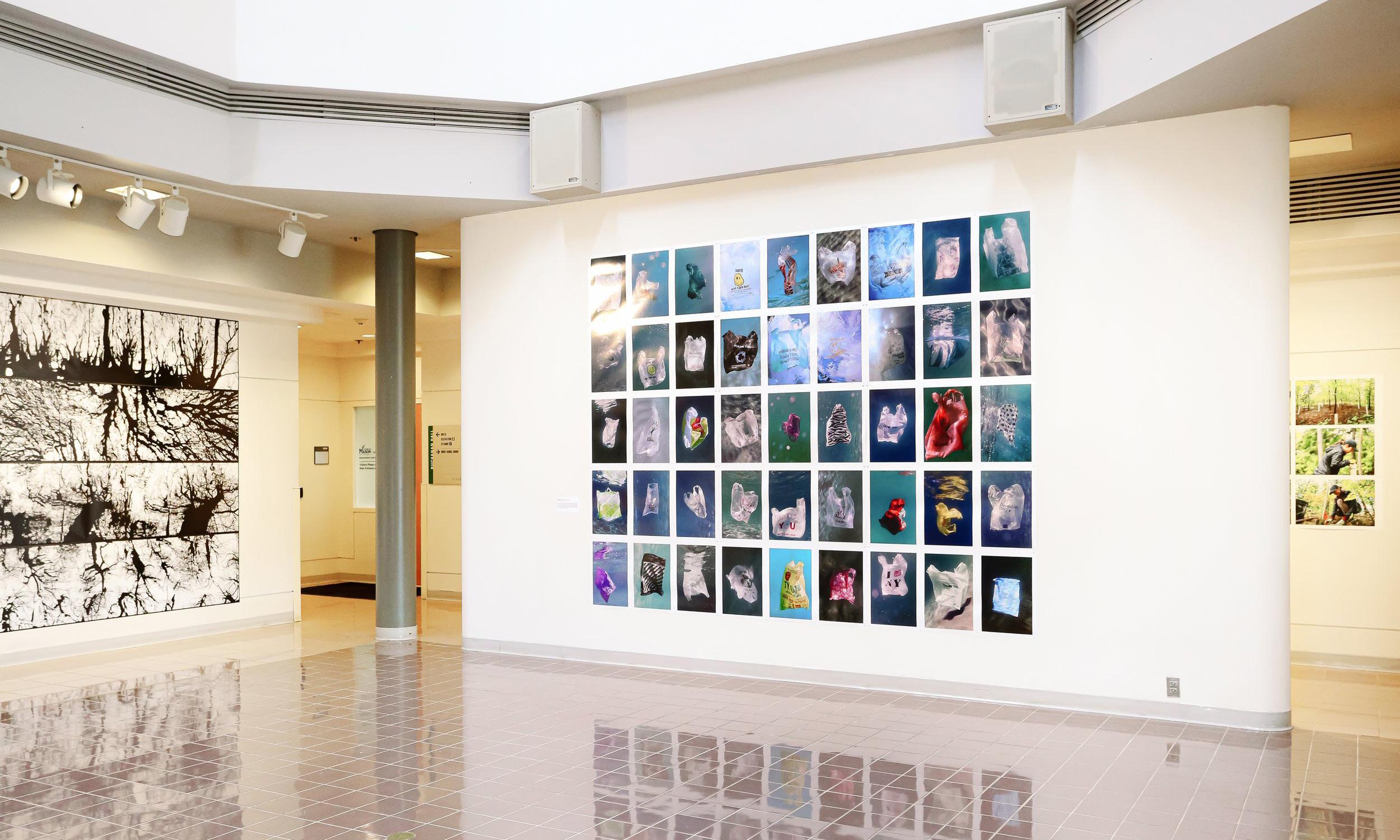
A Field Guide to Pelagic Plastic Bags, 2018-2022, Inkjet Prints,
In his five-chapter series Full Fathom Five , Todd R. Forsgren explores the negative effects that climate change and globalization have on different bodies of water. He reflects on the role of a scientific and a photographic specimen, by photographing oceans, seas, coral reefs, and waterways, as well as plastic bags, seafood, and collaborating with scientists using their photographs of ARMS (Autonomous Reef Monitoring Structures) growth plates.
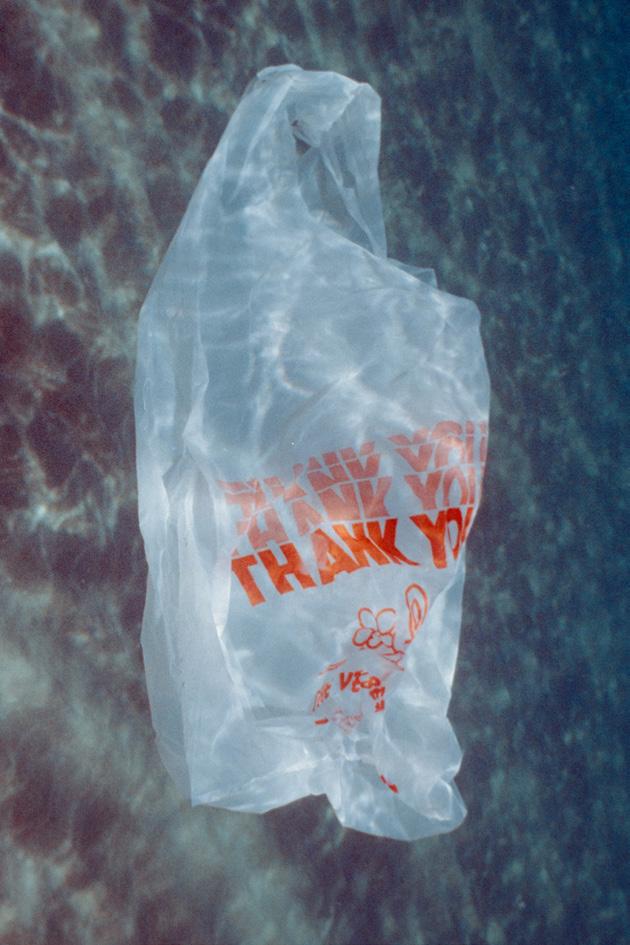
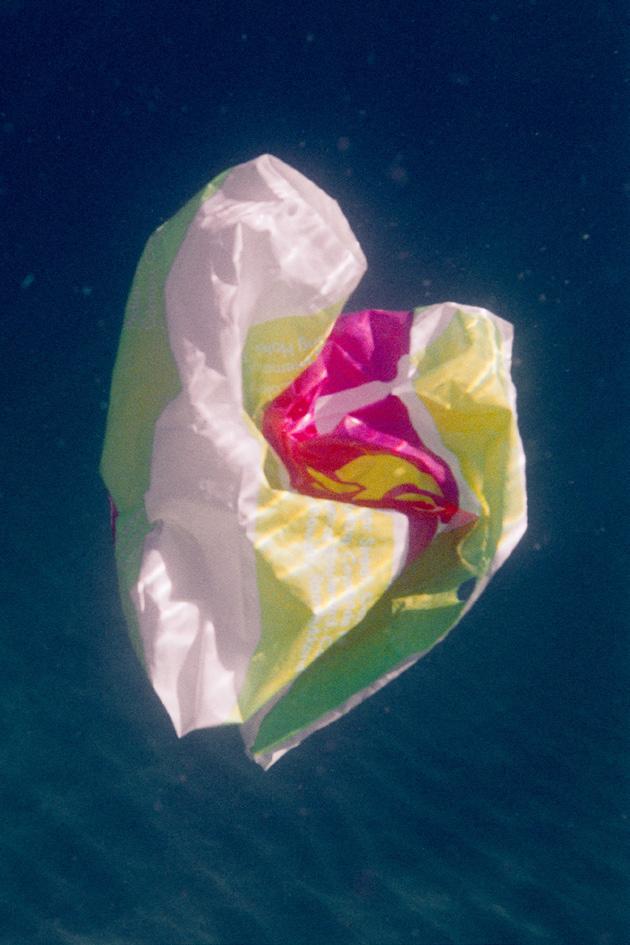
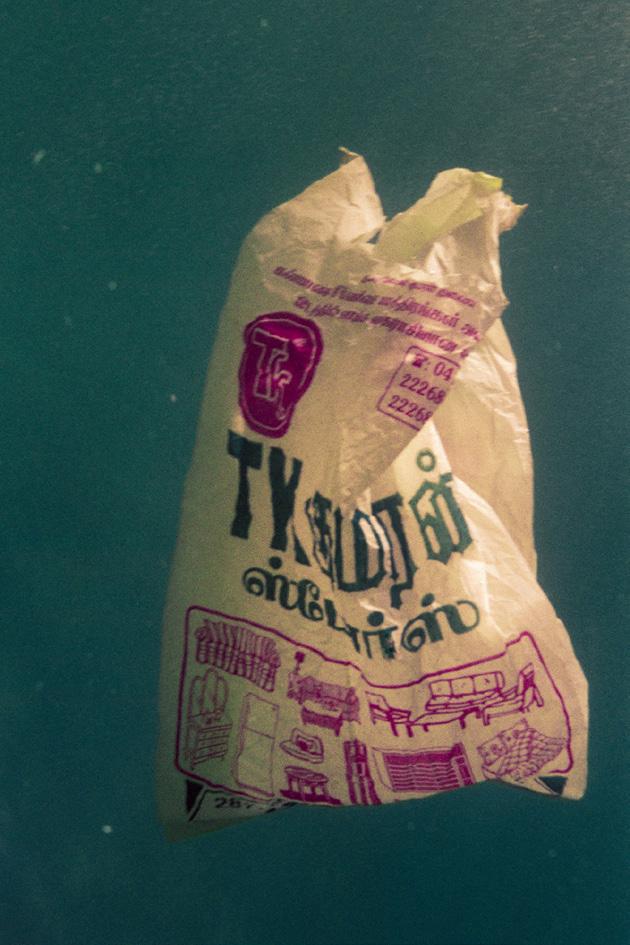
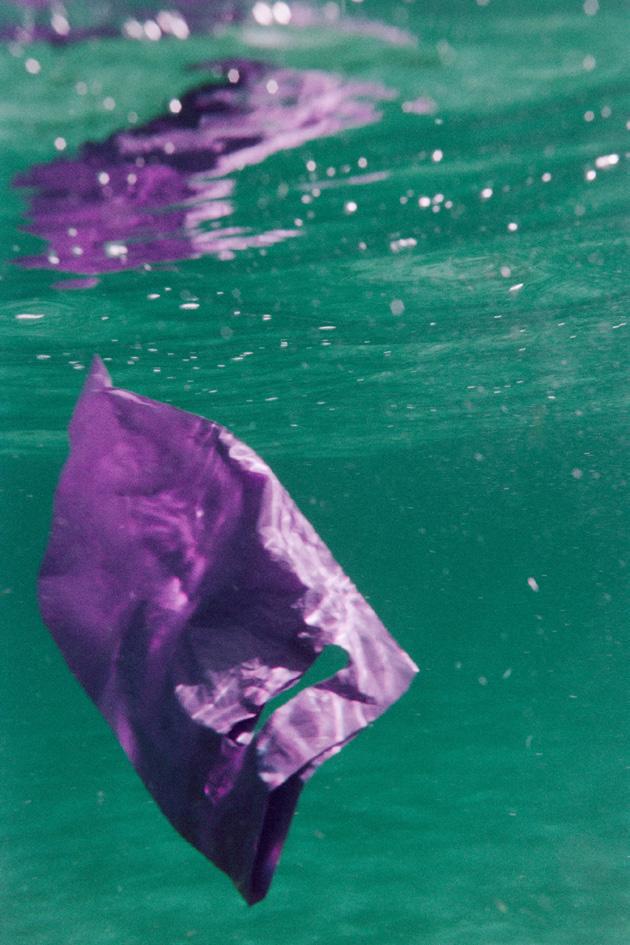
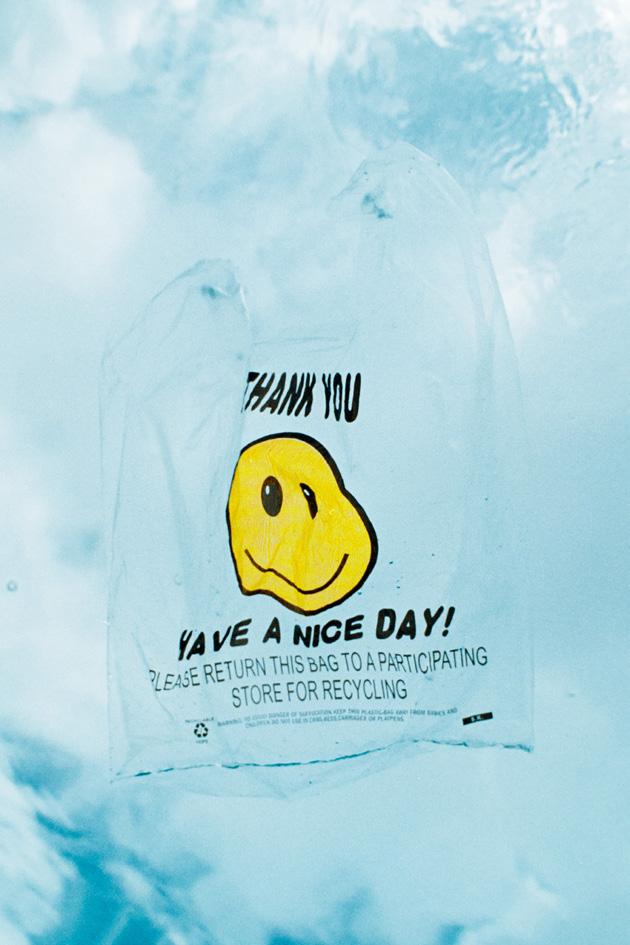
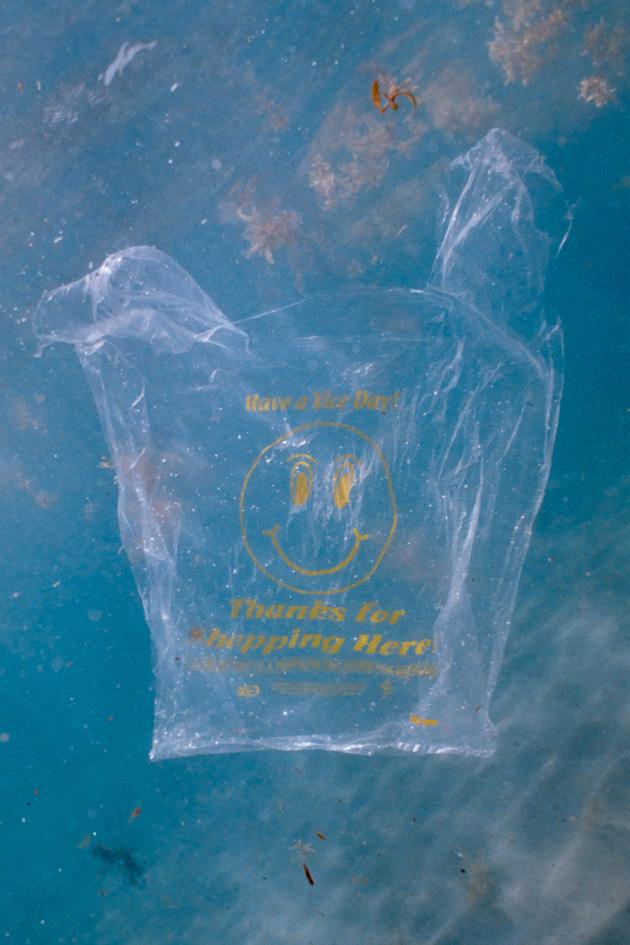
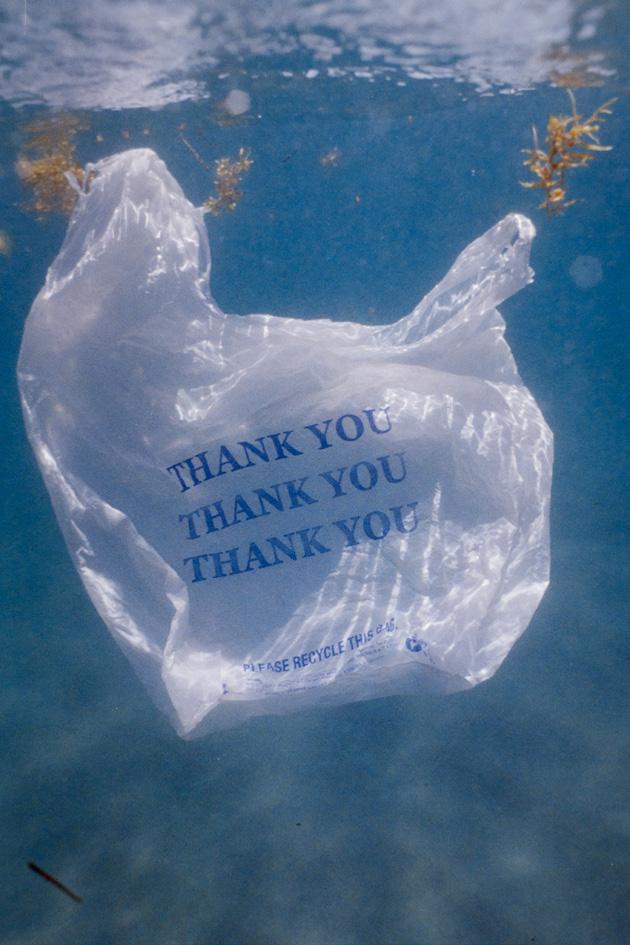
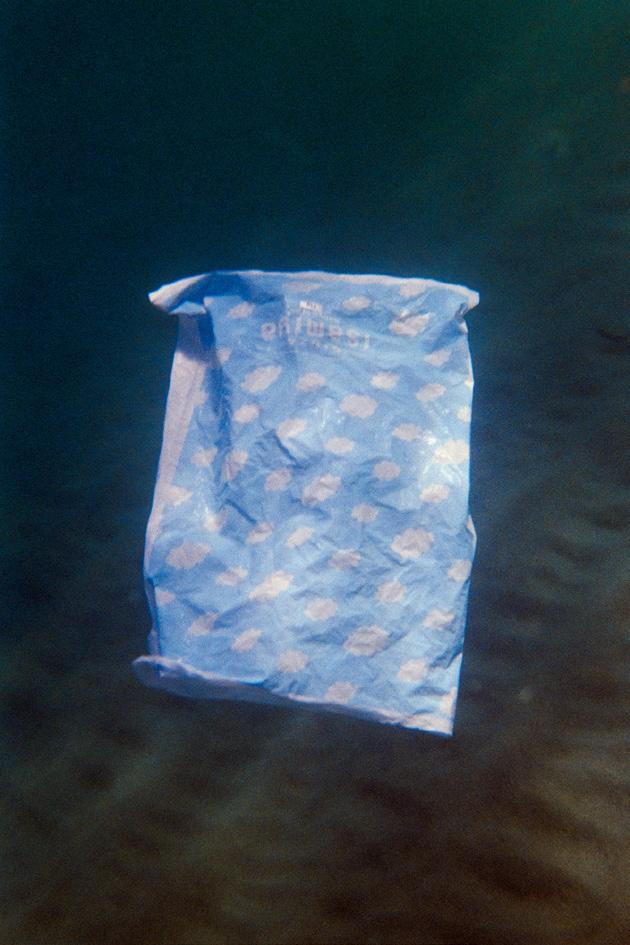
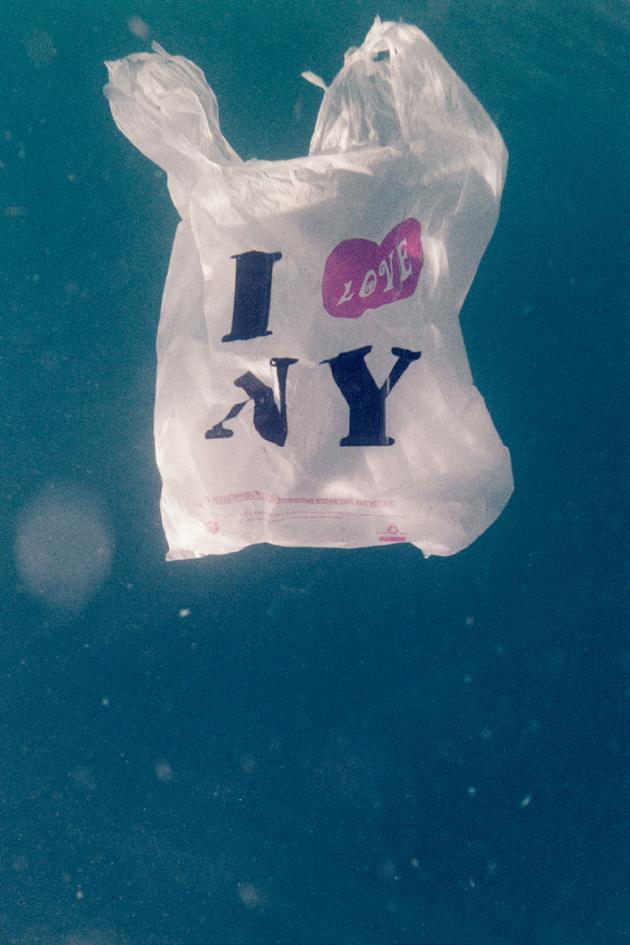
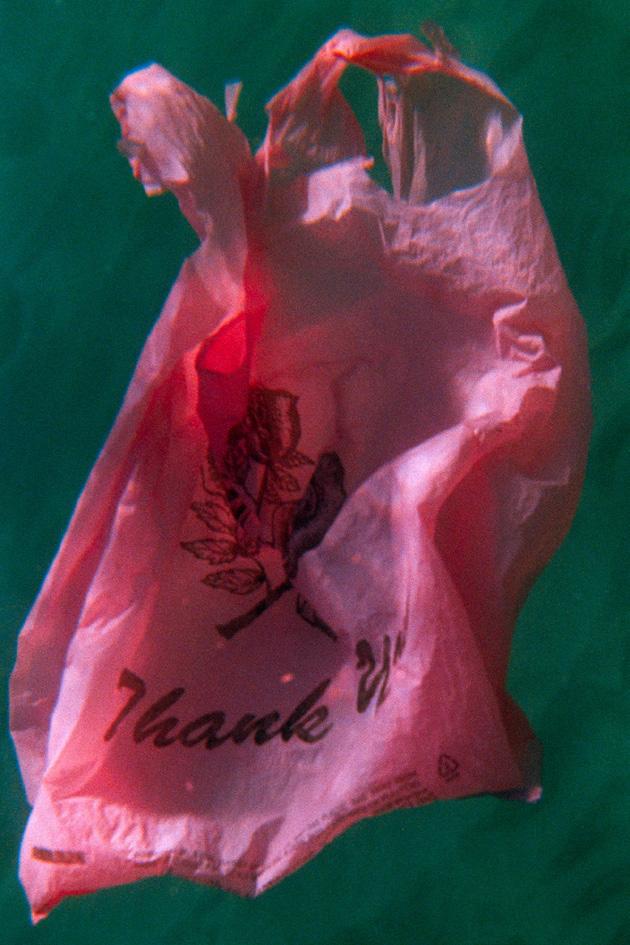
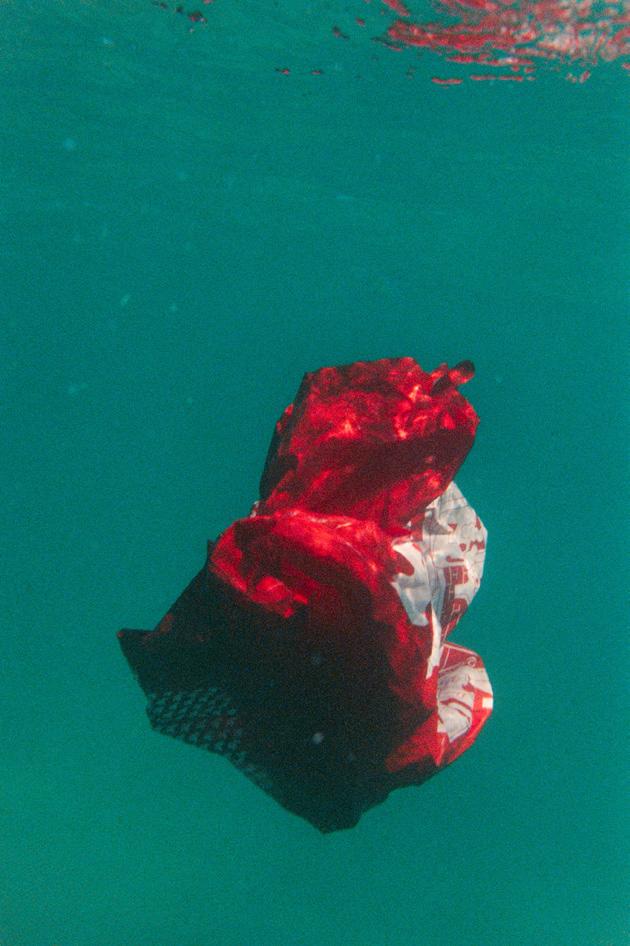
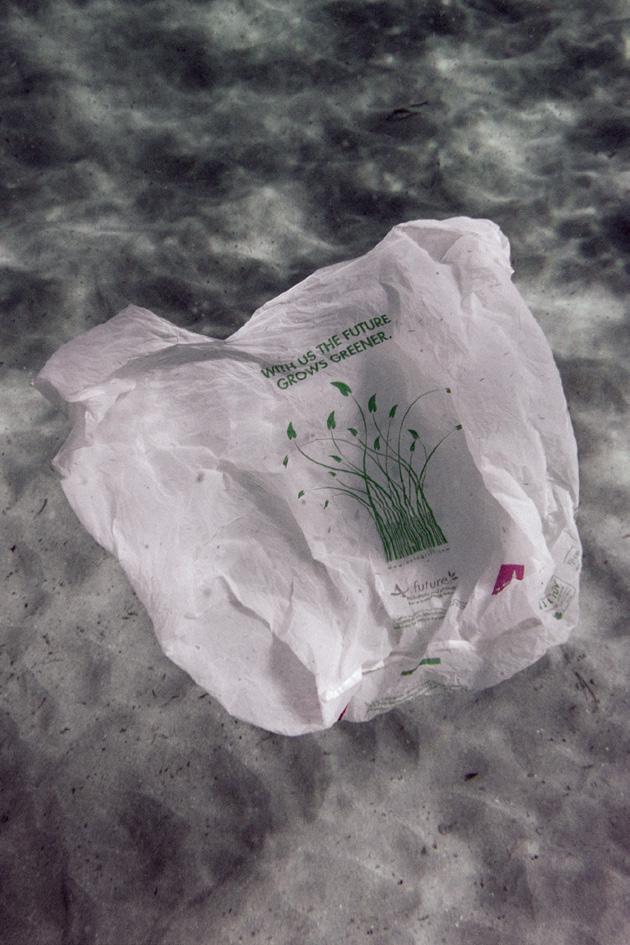
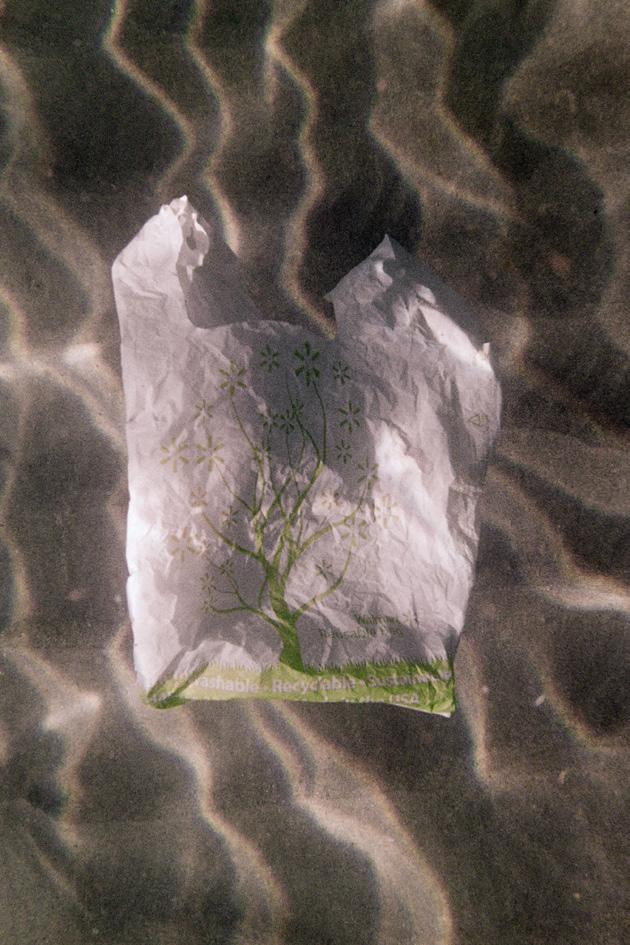
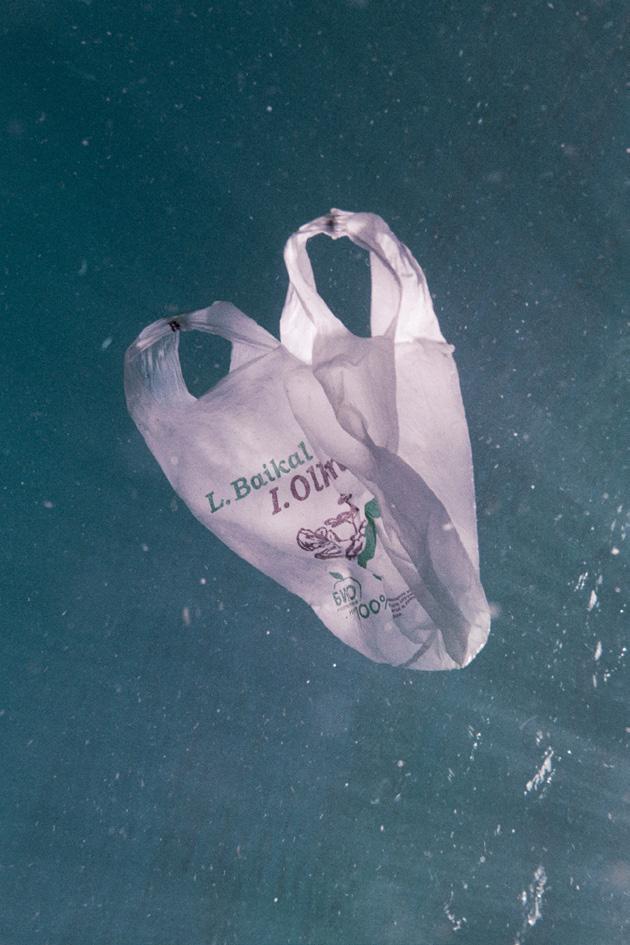
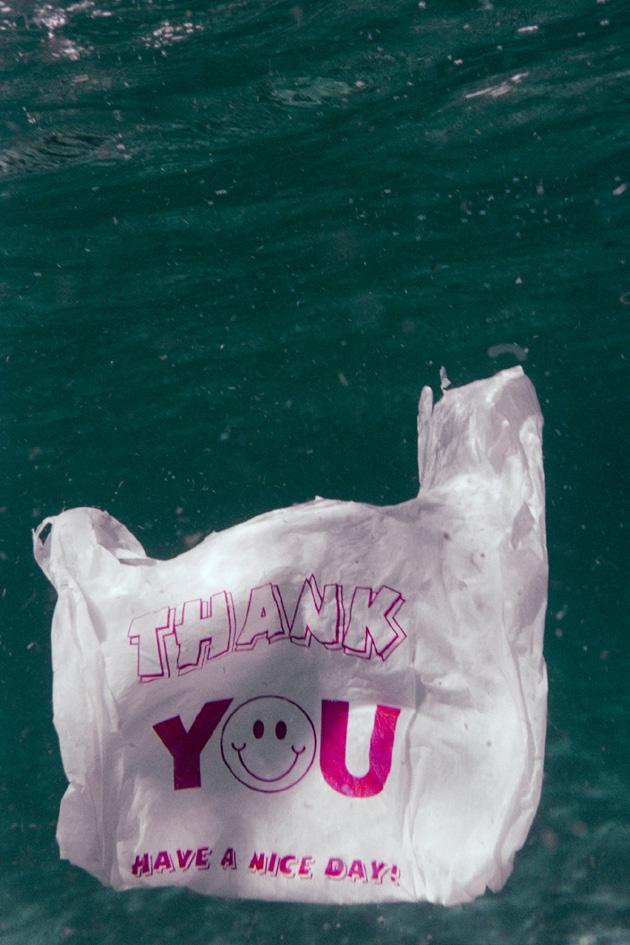
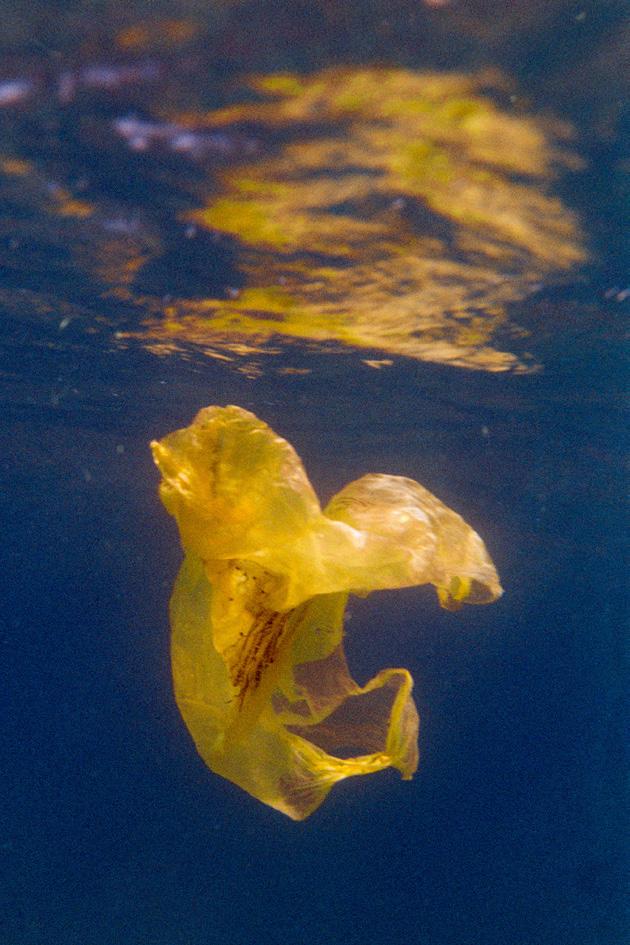
T he artist’s research on environmental degradation and the damage to marine life led him to A Field Guide to Pelagic Plastic Bags (2018-2022). In this chapter, he warns about single-use plastic contamination in the oceans by capturing numerous images of plastic bags adrift in the water.
19”x13” by Todd Forsgren.Forsgren presents forty-five photographs of floating plastic bags laid out in a grid. The decision of displaying them by grid singles out each bag and emphasizes our individual actions. To accentuate this more, the bags are printed close to life size, taking over 86” x 167” feet of wall space. The grid promotes the artist’s attempt to classify and categorize the different types of plastic bags that contaminate the oceans and suggests the likelihood of its progression. The viewer can imagine the grid becoming larger, to the point of filling up the entire space. With the grid only exposing forty-five bags, how much wall space would be needed to expose all the plastic bags that one person consumes in a lifetime?
These messages appeal to our consumerist side, which has probably more than once liked or admired a plastic bag’s design, resistance, or durability.
However, irony is followed by the contradiction in capturing these tangible pollutants through an aesthetic lens. After collecting the bags, Forsgren photographs them underwater. The result is a series of images that have a strange yet conflicting beauty. The translucent bags are adrift and float in the water while light passes through them. The way the light pierces through the bags creates a subtle halo effect attributing to each an almost divine or sublime presence.
The title of Forsgren’s work hints at the irony and contradictions that his work reveals. The irony begins in how these bags convey different messages; they greet us and express love and even gratitude. Most of them have printed words like “Thank you”, others have happy faces, and corporate slogans, while others even recommend reducing, reusing, and recycling plastic.
Forsgren voices his environmental concerns bringing to light the devastating impact of plastic pollution in the oceans, visible underneath the surface of the water. His work triggers feelings of anxiety and guilt, but most importantly, it raises awareness and makes us reflect on our role in this global crisis. As the artist states, plastic bags are “floating monuments to the single-use consumerism that has led us to the brink of environmental collapse.”
Yam Chew Oh ’s work, A convenient matter (2022), draws attention to the impact of single-use plastic bottles on the environment. Plastic pollutes the oceans, injures and kills marine life, and disrupts an already fragile ecosystem. The numbers are staggering. According to research, about 1 million plastic bottles are purchased across the world every minute with around 60 million ending up in landfills every day. It’s been estimated that in America, over 38 billion water bottles are sent to landfills yearly. This equates to 1,500 plastic bottles being thrown away every second. On average, it takes 450 years for a plastic bottle to completely decompose, with some taking up to 1,000 years to biodegrade.
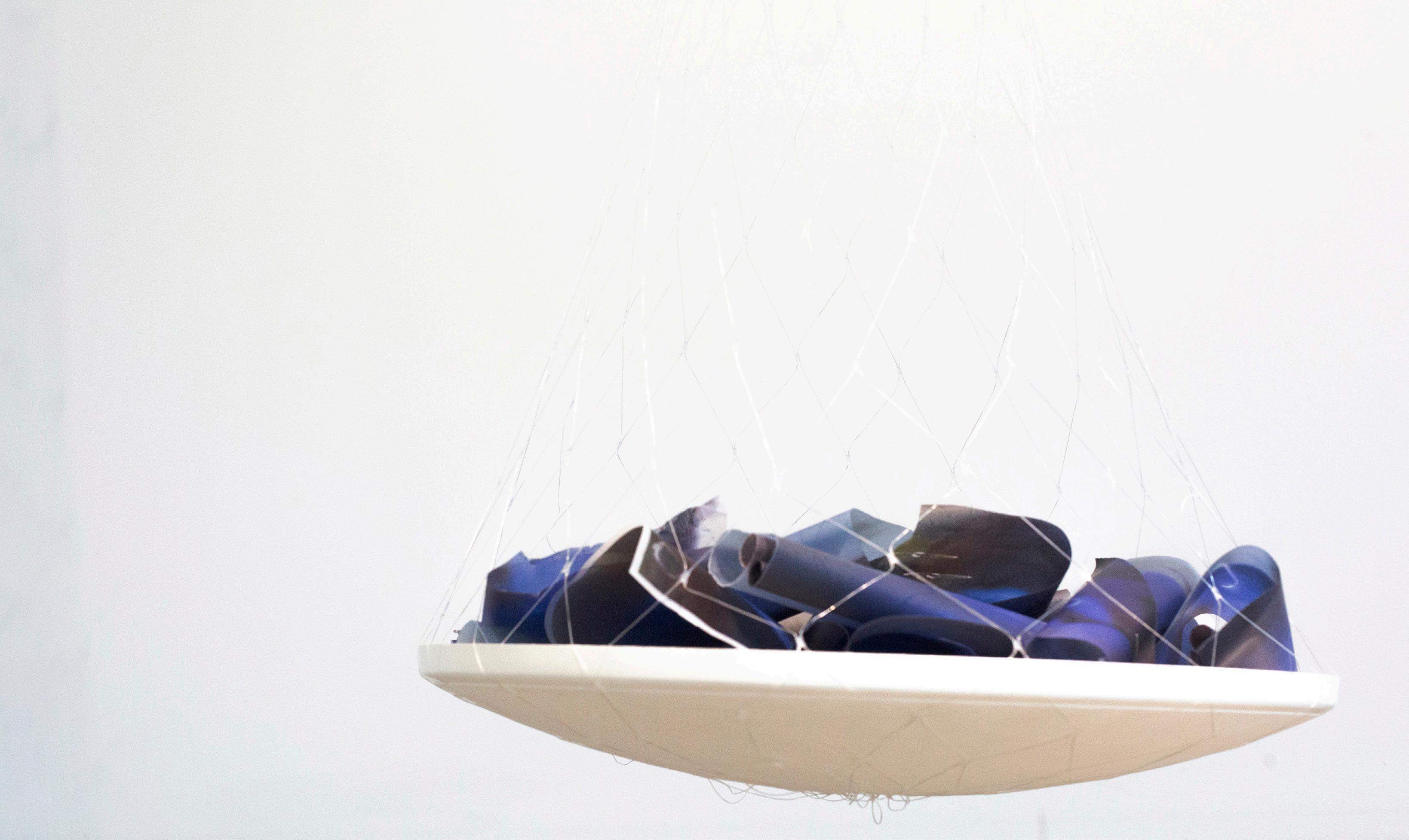
Oh’s work takes shape using found objects, reused and recycled materials, and photography. A convenient matter is a hanging sculpture that holds black and blue abstract photographs of a reused plastic bottle taken at night. These images, printed onto second-hand vellum, are contained in a used Christmas tree netting wrapped around a discarded plastic cap. The fragile net hangs from the ceiling and drops 13-foot toward the ground. This delicate sculpture evokes images of trapped water, while the net simultaneously references the impossibility of such containment. It symbolizes how water sustainability is getting out of (our) hands.
This process-driven work was conceived initially as a series of photographs that evolved into a sculptural piece. Oh allows the process to dictate the final result and the materials to take their shape without constraining them. The vellum bends and naturally curls into conelike objects, and the tear in the netting serves as an opening to fill it with the
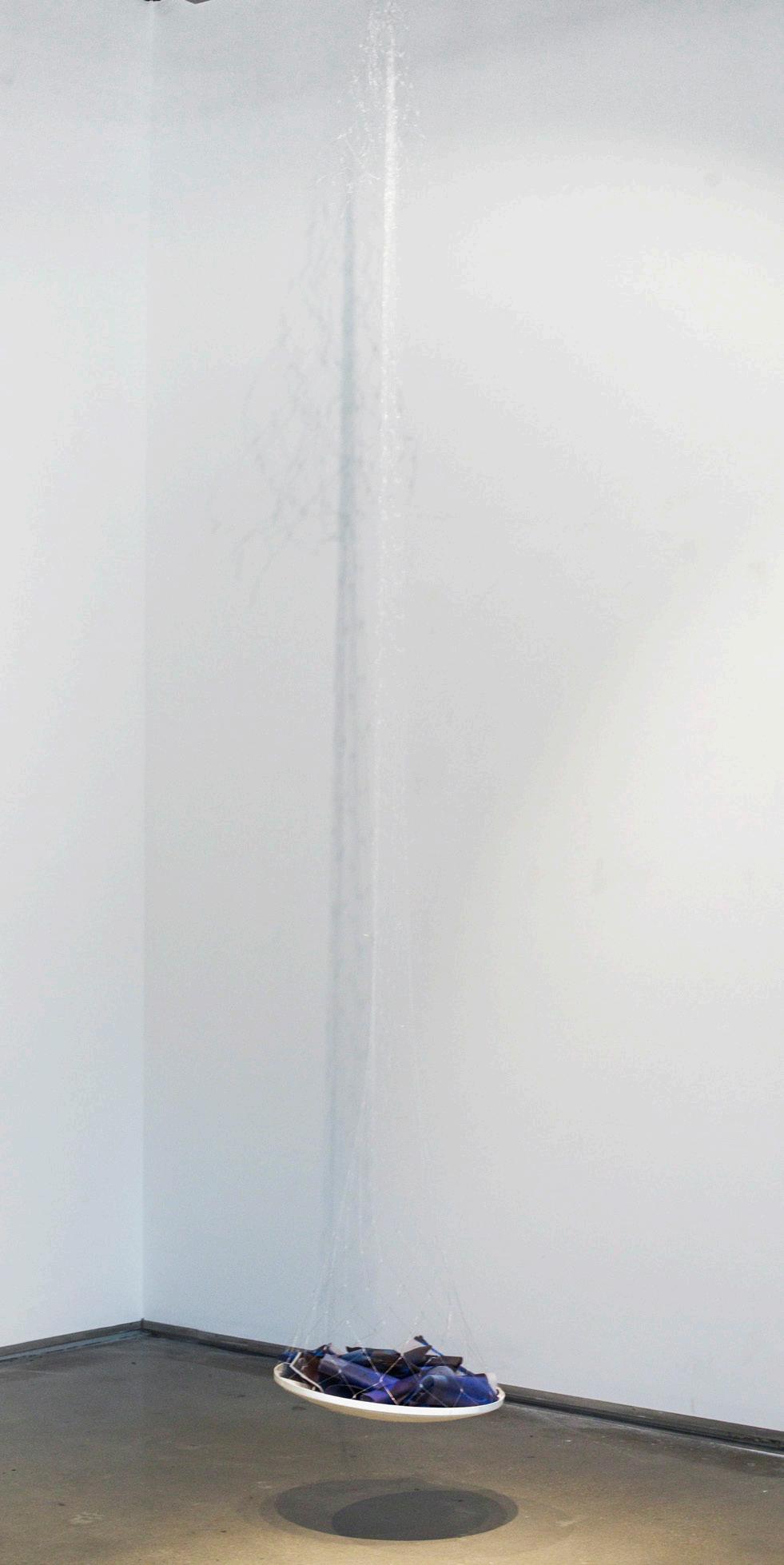
photographs. Mindful of the environmental impact of his work, the artist uses the words convenient and matter to point out the problem that working with plastic presents. He understands that working with reused and recycled plastic materials is convenient as it is archival material, but contradictory because of plastic’s slow degradation and long-term permanence on the Earth.
Oh’s work prompts a conversation about the ever-growing production of plastic bottles, which stems from a culture of convenience—bottling water for easy consumption. His work demonstrates that our complacent attitude must stop. Although some states in the U.S. have taken steps to reduce the consumption of plastic bottles, the scale of the problem requires more drastic actions beyond one state or one country. As Oh states: “there is no doubt that we are living on borrowed time on this Earth.”
Sue Wrbican ’s most recent work addresses the devastating climate emergency of planet Earth and questions today’s voracious cycle of consumer culture.
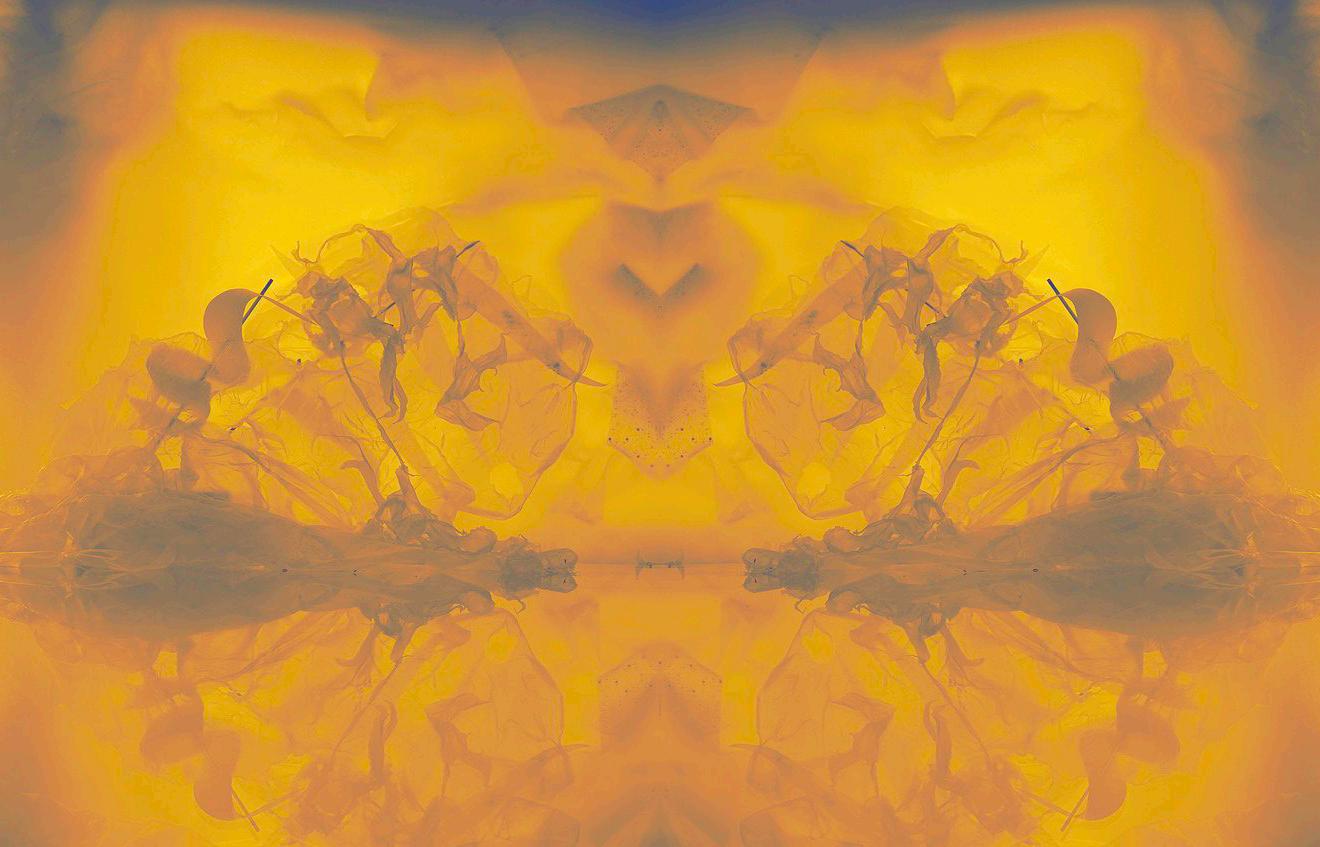
In Before the Ghost (2021-22), Wrbican visualizes an instant considered the moment of no return. As she recalls the film Melancholia , which presents the threat of two planets colliding, her two photographs imagine what might be the last thing visible to an inhabitant of Earth. In pursuit of manifesting her vision of the end of the world, Wrbican uses plastic film and coloration, resembling petrochemical flames, to create renderings of that last moment: a bang, a fire, an explosion. Blue, yellow, and orange tones combine in a collision that radiates numerous volatile mirrored shapes. In these kaleidoscopic configurations, the last picture of the Earth is reflected on the horizon, expanding its destructive
intensity, reach, and impact. Before the Ghost foreshadows an apocalyptic vision of the Earth, that prescient moment of extinction we all hope we can forestall.
Plastic peril is a human-created and catastrophic problem for the future of planet Earth. In Ocean Extrusion , a conceptual video that plays with the idea of animated garbage, Wrbican reflects on the impact that shipment detritus has on the oceans and waterways. Her continuous explorations with materials drove her to reuse and transform plastic and cardboard boxes, studio detritus, and little objects into a series of small sculptures and dioramas. Photographs of this series of sculptural objects navigate against a reflective background material creating and evoking mirrored futuristic seascapes.
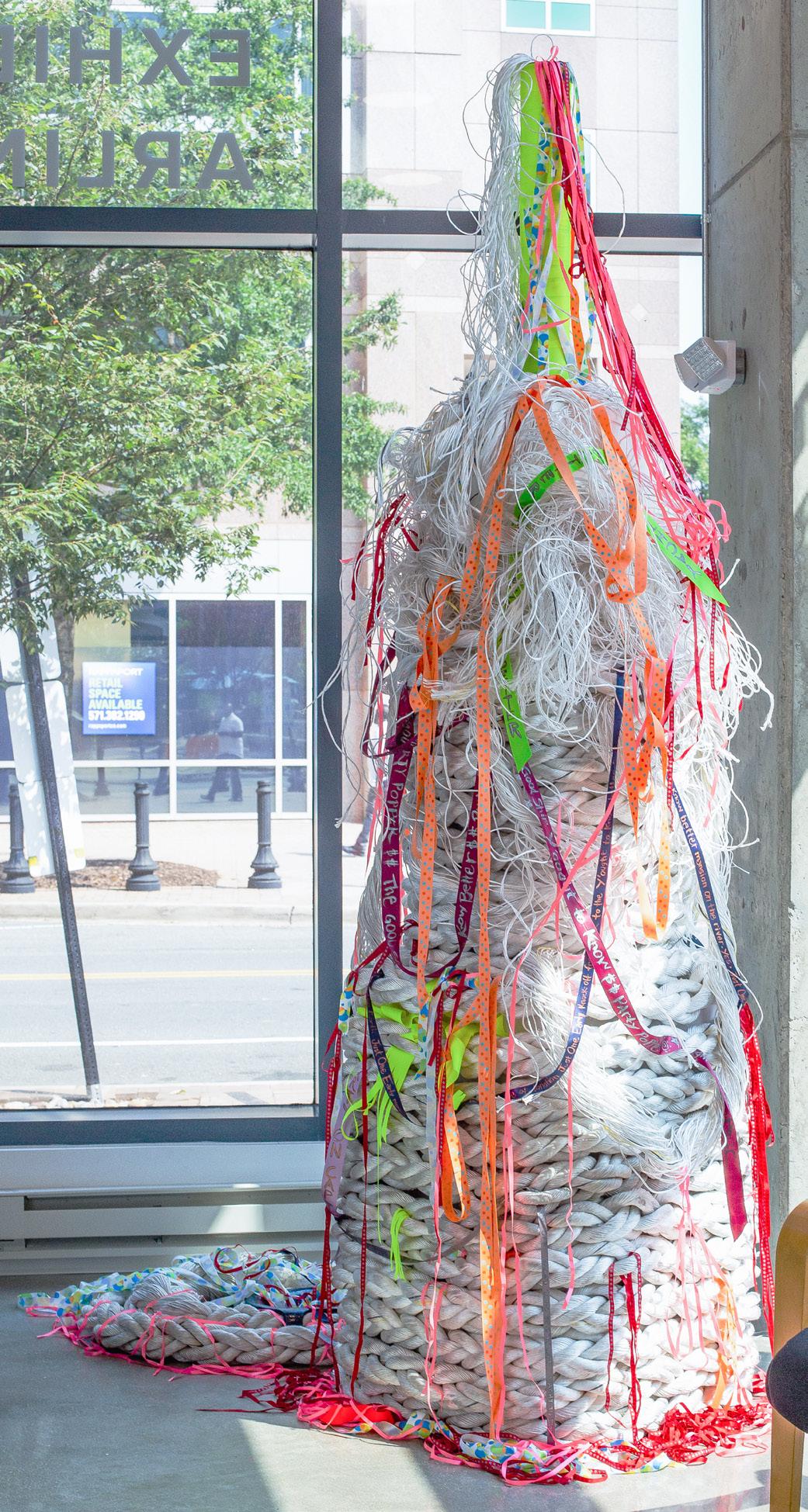
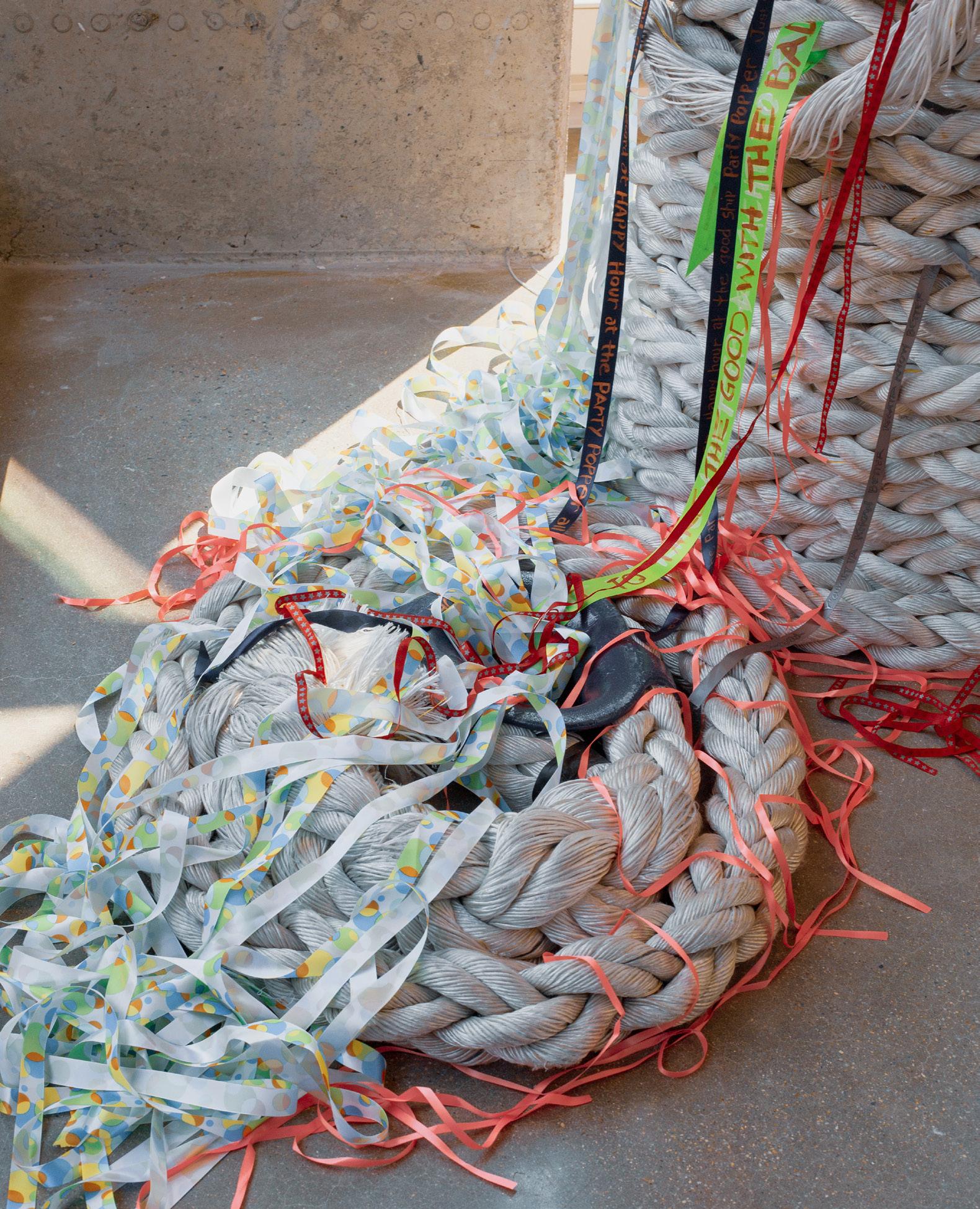
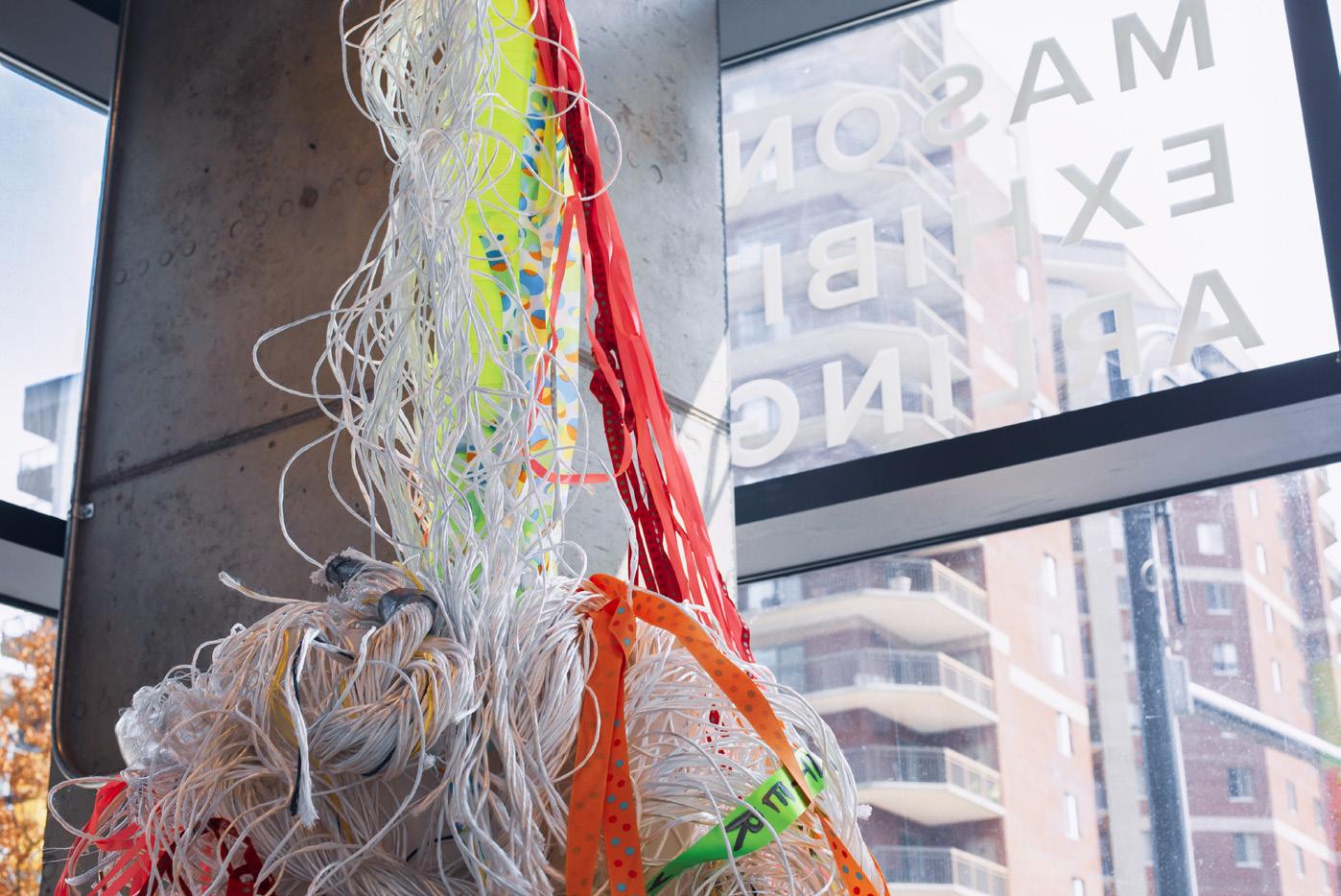
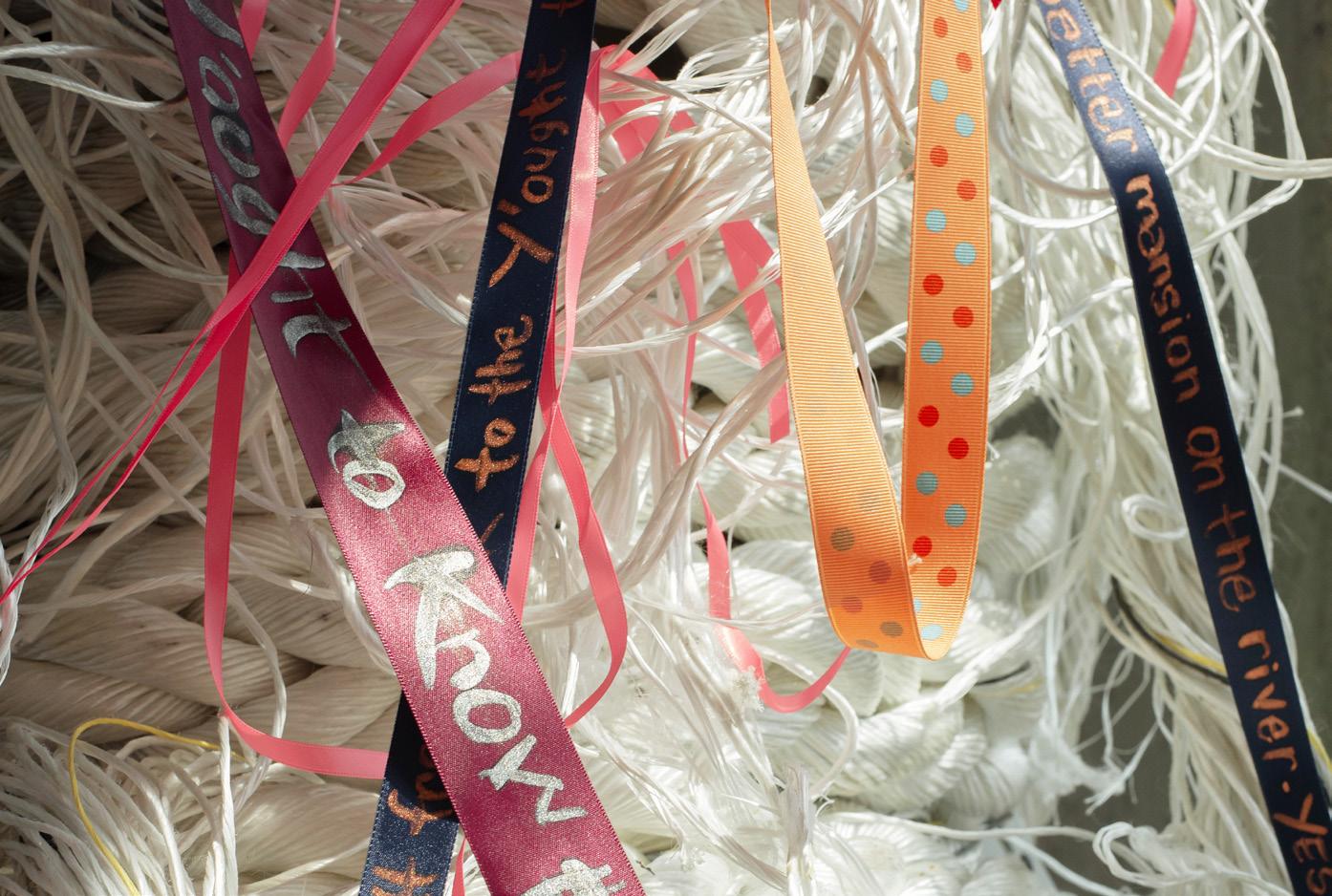
In Party Popper/Plague Tower (2022), Wrbican expands on how her environmental concerns became more pressing during the COVID-19 pandemic, as shipments increased worldwide, generating a suffocating overflow of plastic boxes, bags, wraps, bottles, and containers. This sculpture made out of a 150-foot nautical hawser, a thick braided line used to tow large container ships into port, adorned with colorful satin ribbons, references the shape of commemorative plague towers built in Central Europe in the 17th and 18th centuries. These towers were meant to ward off the plague and protect communities from future pestilences.
Wrbican’s work aims to denounce political schemes that negatively impact the environment. Her sculpture brings to mind a party popper with festive confetti bursting out. This visual reference criticizes the political situation in the U.S. with regard to environmental policy. The playful ribbons contain hand-written scripts that convey Wrbican’s response to political deal-makings regarding the climate crisis, such as the Inflation Reduction Act, a bill that seeks to promote climate solutions and environmental justice. Wrbican’s sculpture ponders on how we will be able to untangle the political schemes that hold back actions to mitigate the climate emergency.
In Inversion/Submersion (2021), Billy Friebele subtly shifts how we perceive the natural world. He brings to the surface the damage to the health of rivers by using technological interventions and digital tools to explore the interaction between technology, nature, and humans.
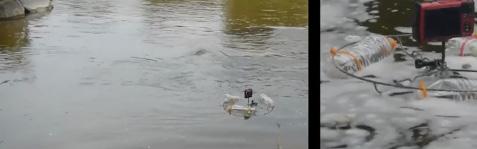
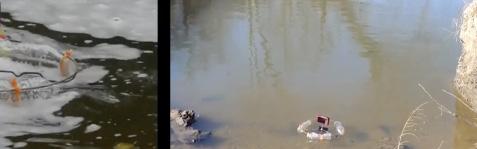
After experiencing a flash flood at his home, Friebele focused his research on the Anacostia River, a river threatened by erosion, toxins, and pollution. He uses a floating waterproof camera system to record a video that captures both above and below water surface. He then rotates the image 180 degrees so that the underwater view rests on top. The river, trees, roots, rocks, and leaves are all inverted and the surface of the water is the horizon line that divides both realities. Filtered by polluted water and the river’s underwater life, the amphibian scenes challenge our eyesight while the video’s soundscape combines the natural sounds above and below the water.
Inversion/Submersion goes slightly beneath the surface and inverts the image upside down, repositioning the ecological crisis of the rivers and showing the crisis from a different point of view. Friebele makes evident how the climate emergency affects the underwater ecosystem of waterways. His work instigates a dialogue on the importance of “submerged perspectives”[3] and the environmental pressures of other natural ecosystems, such as the subterranean environment, the rhizosphere, the mycelium network, and the deep sea. In Macarena Gómez-Barris’ words, “I believe we must attend to these unsettling times by addressing the urgency of submerged perspectives, archipelagic thinking, and oceanic knowledge. These forms of knowledge provide routes of grave planetary crises, away from the deadening of resource extraction.”[4]
Still from the three-channel video, Inversion/Submersion 1.2, 2022 by Billy Friebele
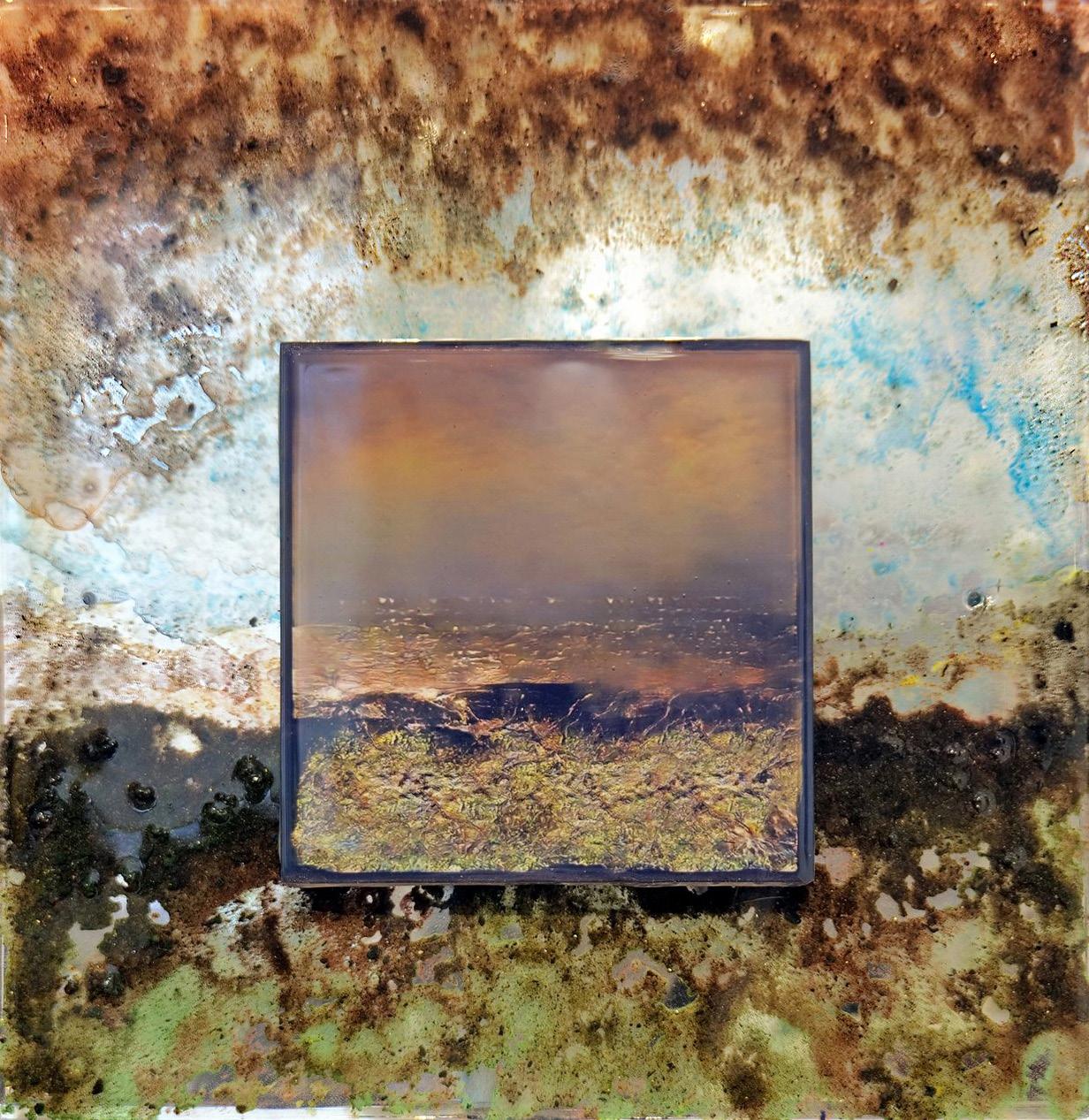
Machines Learn from the River 1.1, 1.2 & 1.3 2022, water, soil, algae samples from the Anacostia River, paint, mirror, Plexiglas, resin, digital print by Billy Friebele
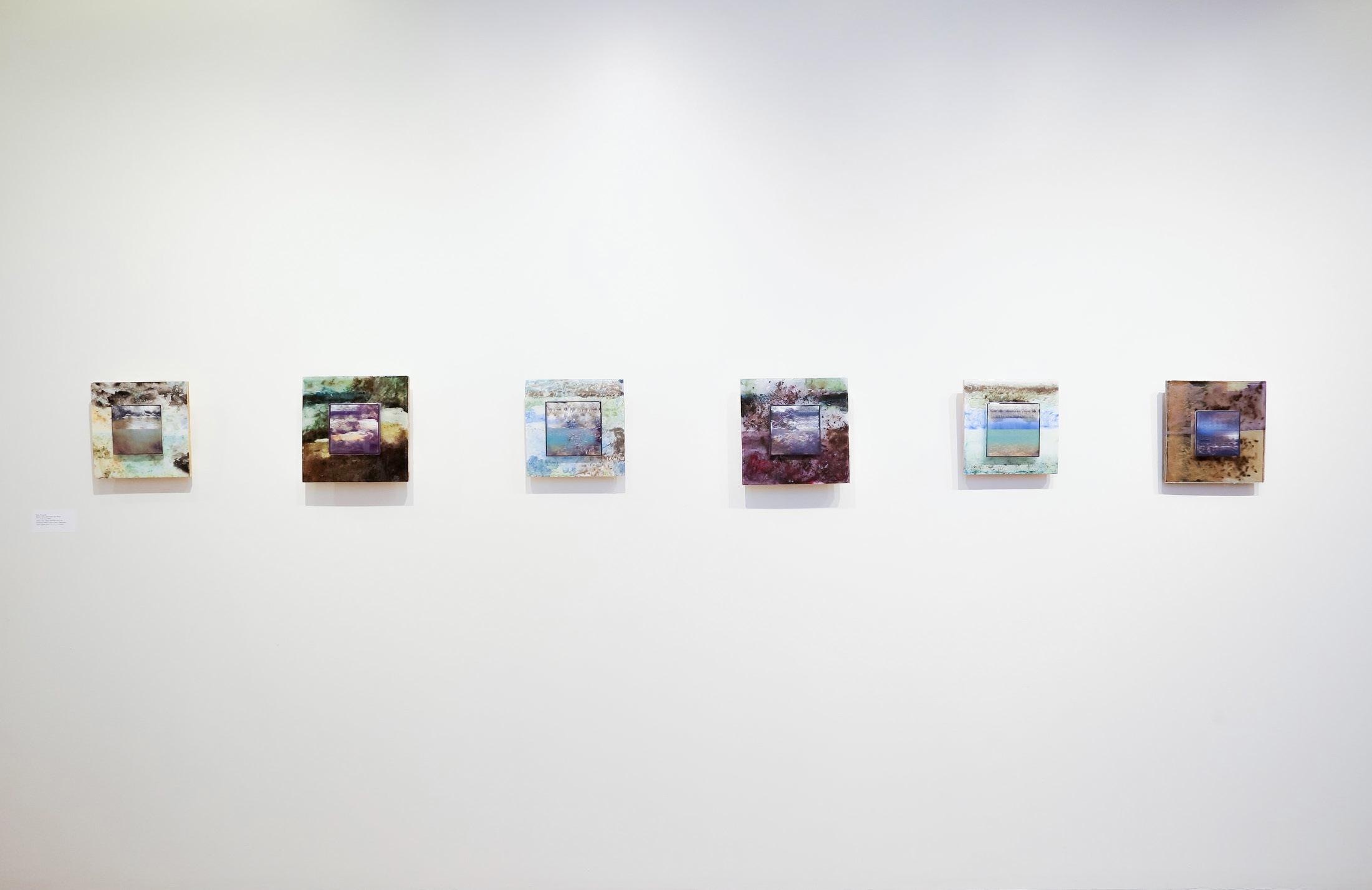
By training an artificial intelligence (AI) on screenshots from the Inversion/Submersion video, Friebele also presents Machines Learn from the River (2022)—a selection of AI-generated digital stills in which the AI attempts to generate images of this ecosystem above and below the water. The resulting images look like they depict beyond what can be seen by the human eye. Friebele was inspired by aqueous species that possess perceptual competencies that extend beyond a human’s range of vision. His explorations create images that challenge and expand our perceptions by presenting a world through another being’s visual field. The resulting images contain elements and textures from above and below the water. He then collects natural elements of the river trying to recreate the pictorial qualities of the AI images.
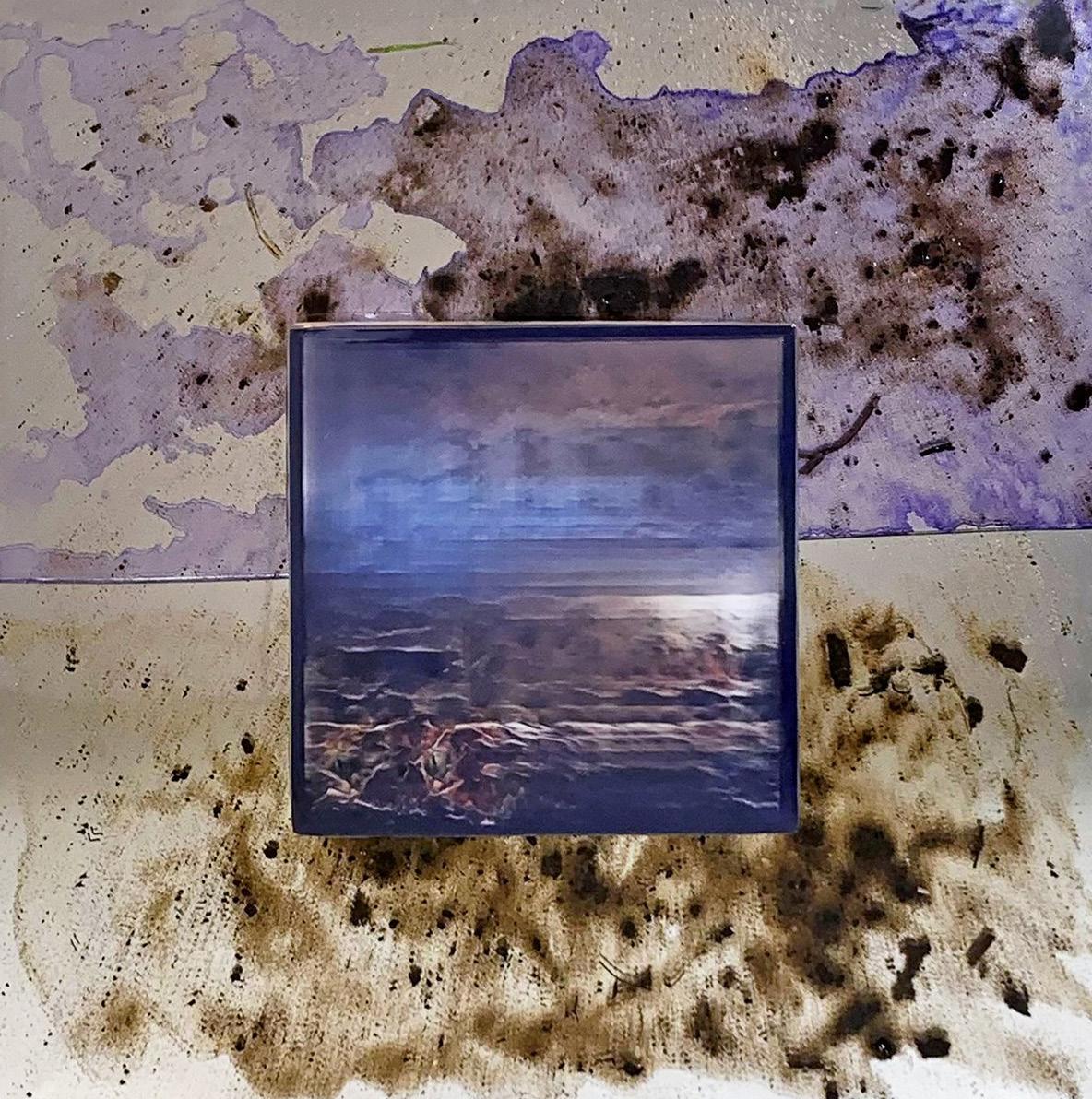
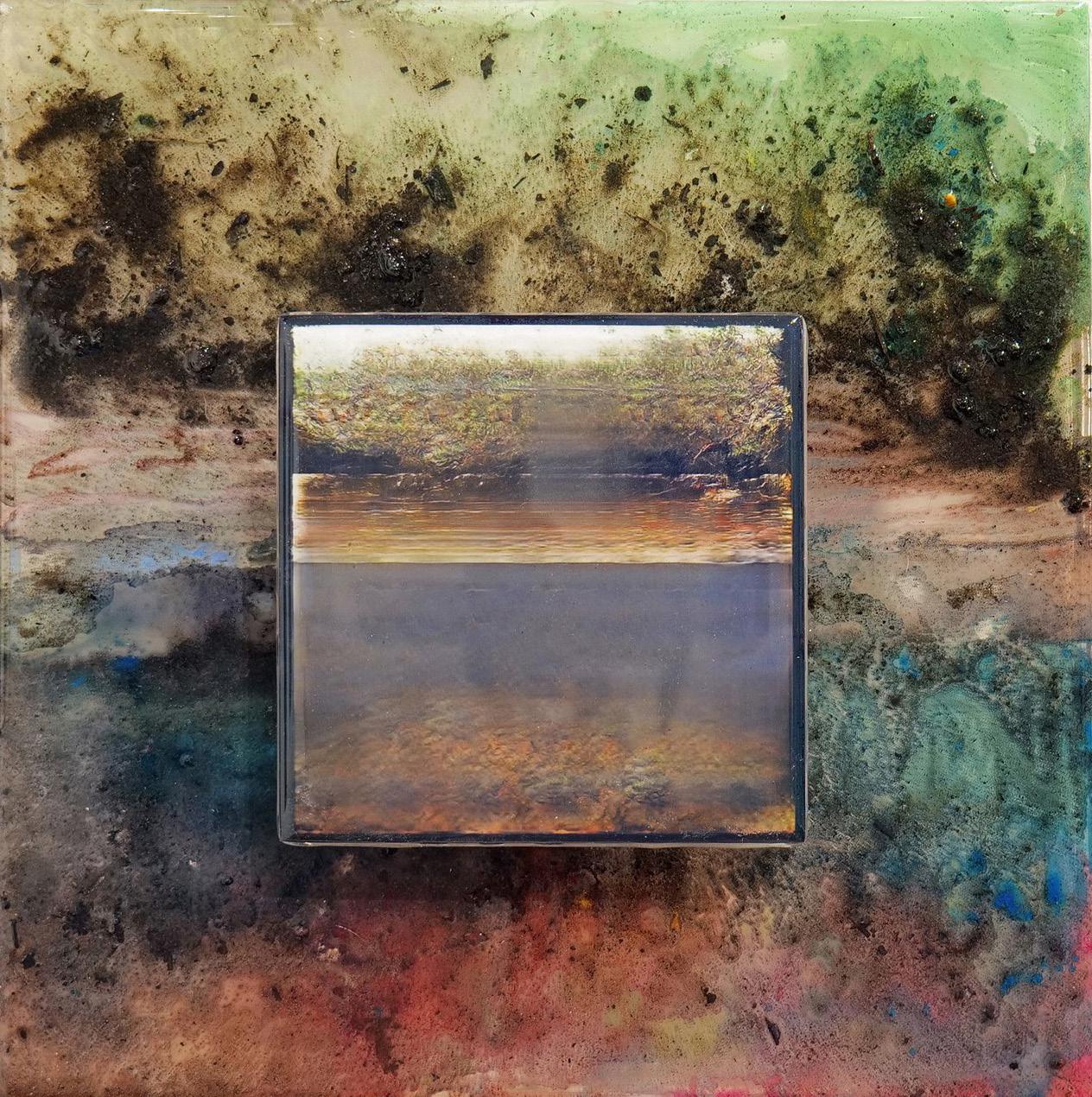
Friebele’s actions voice the river and subvert humans’ hierarchy and the oppressing colonial order over nature and landscape representation. As he states, “De-centering the human perspective through technological interventions questions our assumed superiority and asks what we might be able to learn from the creatures we co-habitat with.”
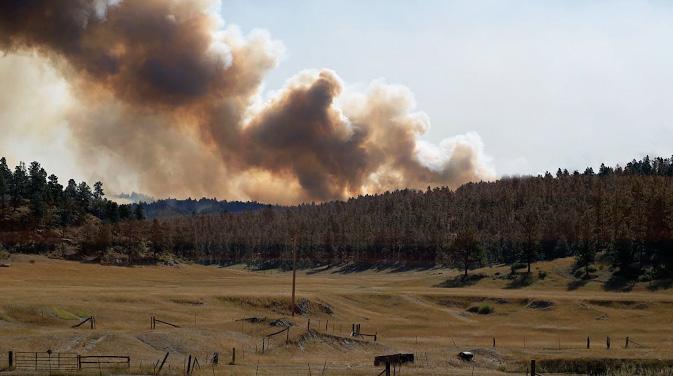
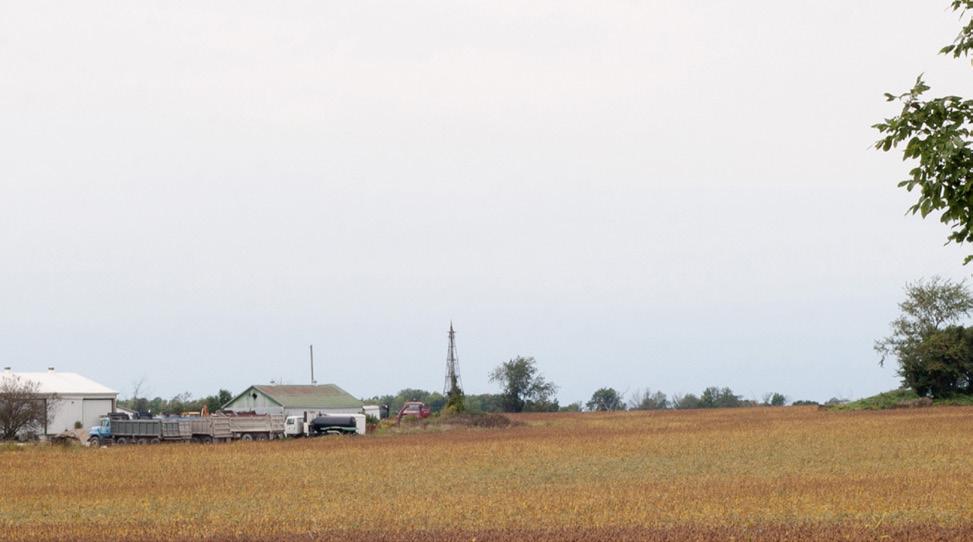
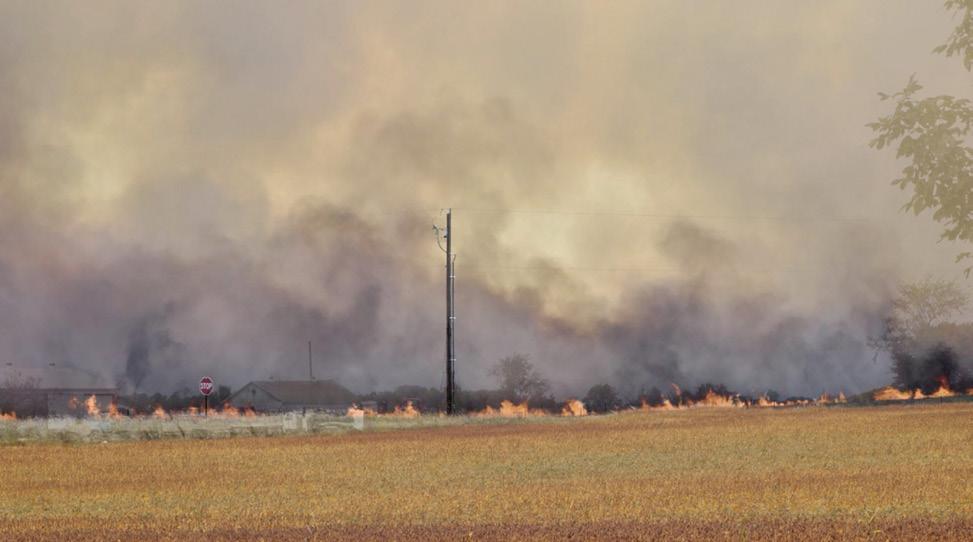
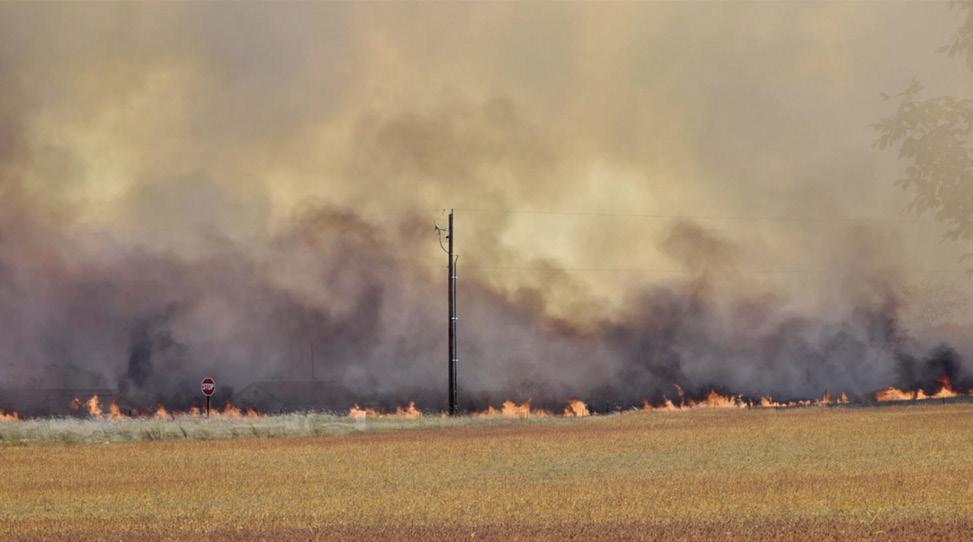
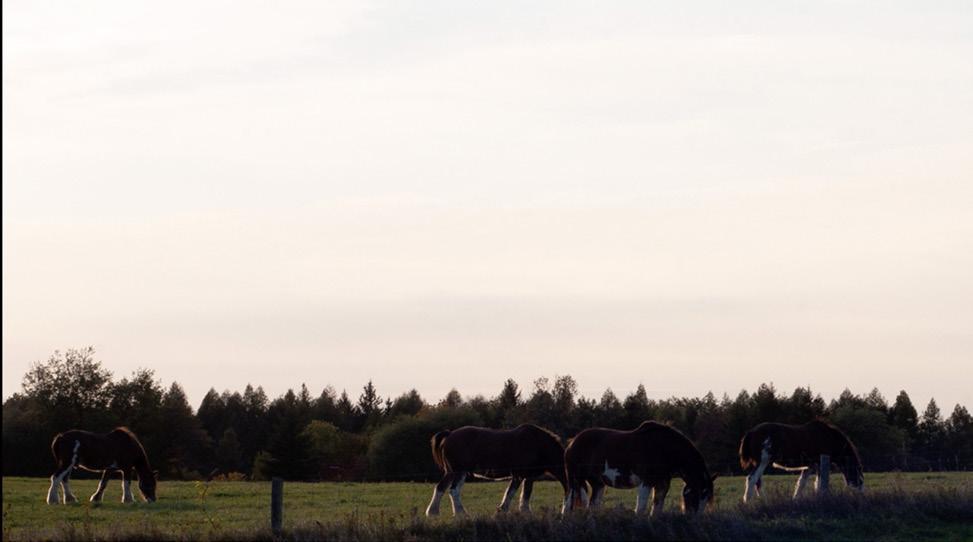
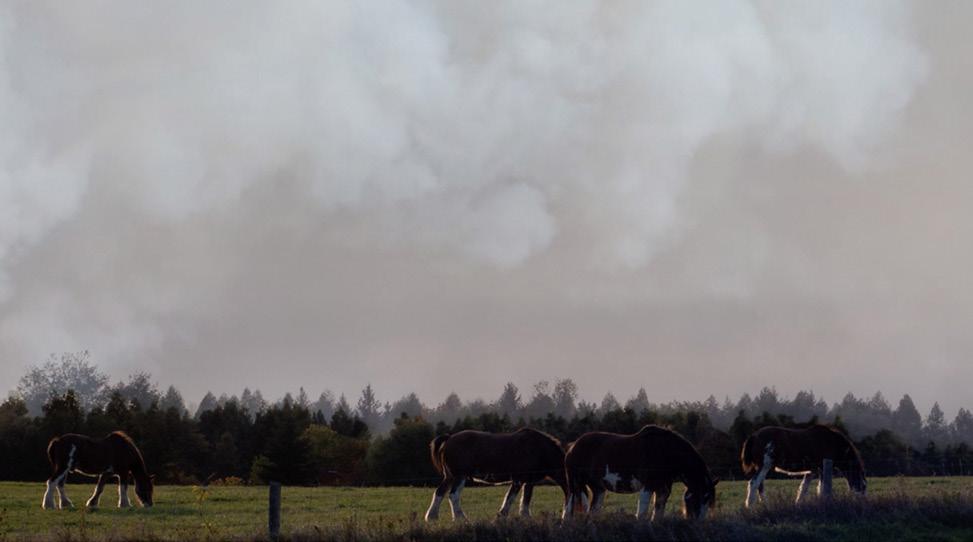

Katie Kehoe portrays and foresees the ecological emergency of climate fires in Superimpositions: Wildfires in My Landscape (2021). In her conceptual series of animated photographs, she stresses nature’s susceptibility to massive and imminent destruction. Kehoe brings the environmental crisis to our doorstep by superimposing documentary images of recent wildfires onto images she’s taken of places she’s lived in or has close connections to— which have not yet been directly impacted by fires.
As the animations unfold, vivid images of farms, cattle, woods, and open fields slowly fade away to reveal fires, dense smoke, and destroyed vegetation. As one image gradually disappears into the other, it is hard to recognize which is the burning landscape and which is the unharmed one. The subtle pace at which the photographs overlap allows a close and intimate dialogue for the viewer to recognize the possibility that these devastating fires may happen in familiar surroundings. The work provokes questions— Where did this wildfire happen? What if this wildfire happened close to me or my loved ones? What if a wildfire occurs in a place I have lived or visited?
In Superimpositions: Wildfires in My Landscape , fires are not seen from afar but experienced closely. As more of the world’s population lives in urban settings, for many the relationship with nature is very distant. Kehoe fights that distance by presenting the real and growing threat of climate fires. She defies the shortsighted attitude towards the current ecological devastation by immersing the viewer in these premonitory scenes. Kehoe’s work fosters a sense of empathy and kinship towards those who have been affected and impacted by an increase in climate fires.
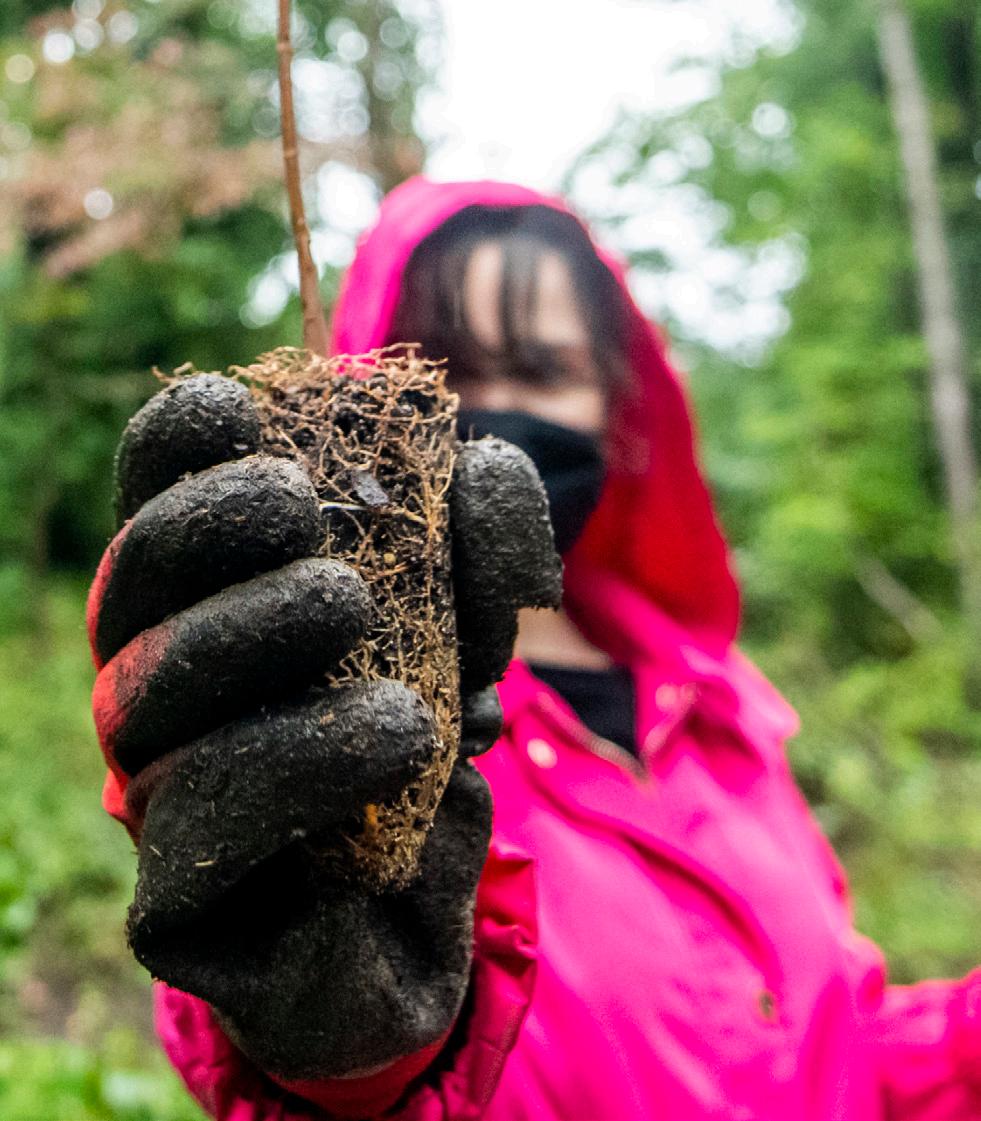
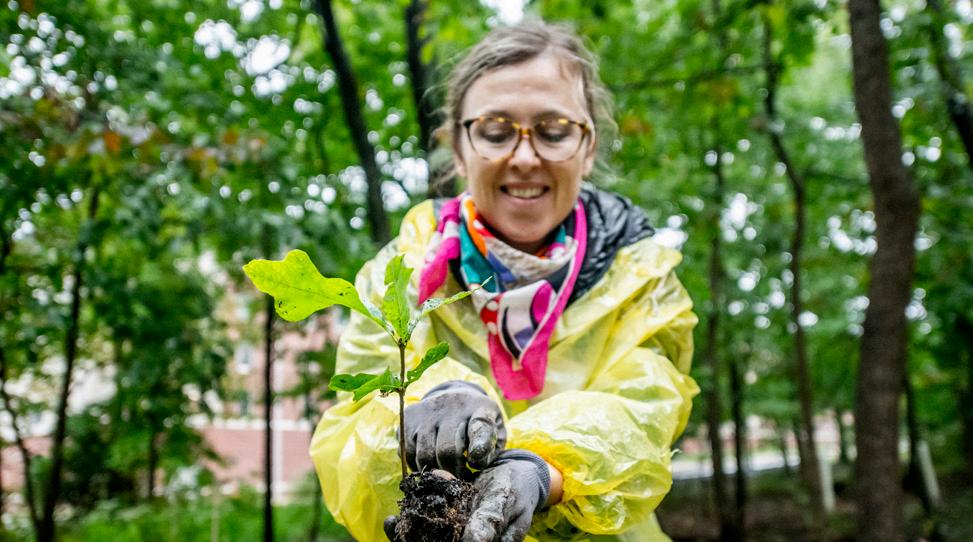
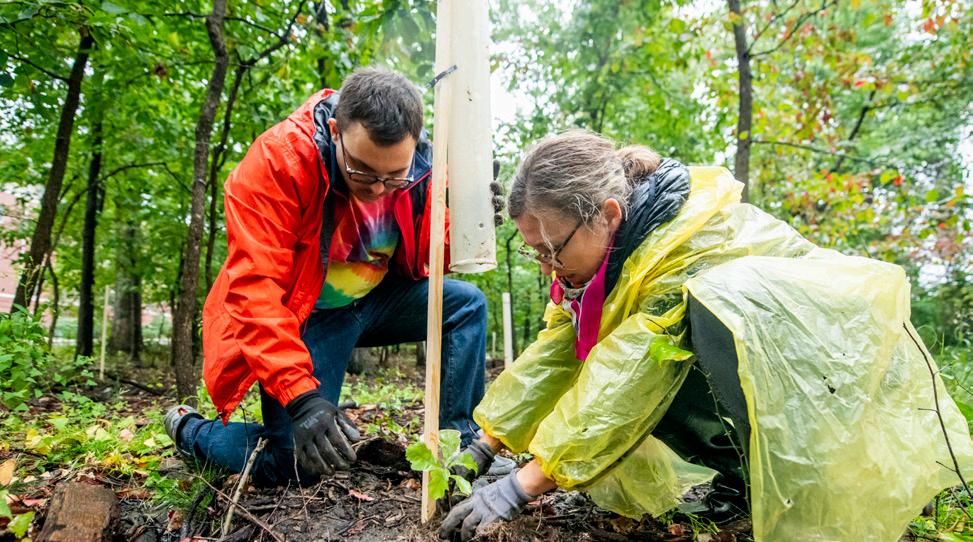
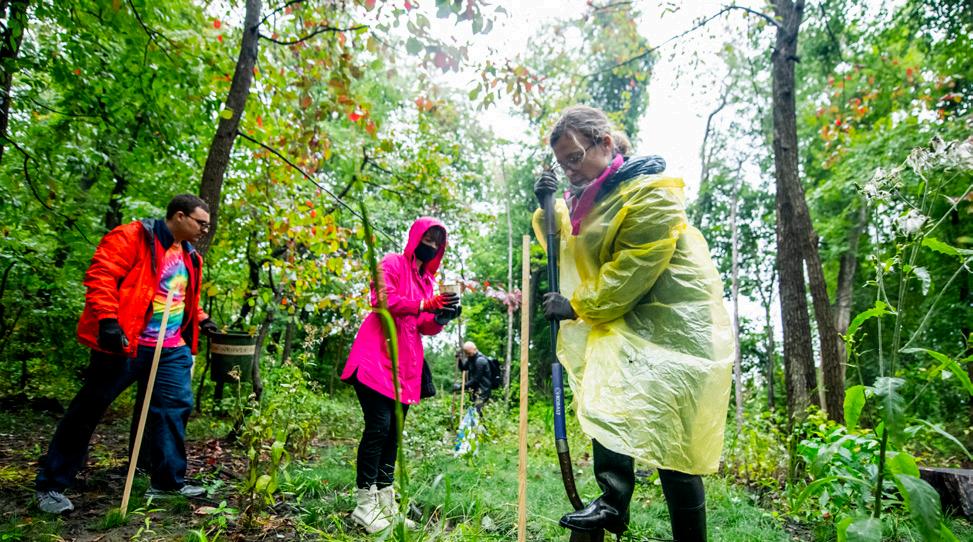
Inspired by her superimposition series, Kehoe invites us to take action in our own hands in 200 Trees (2022), a two-part piece that consists of a video projection and performance piece followed by a socially engaged tree planting action.
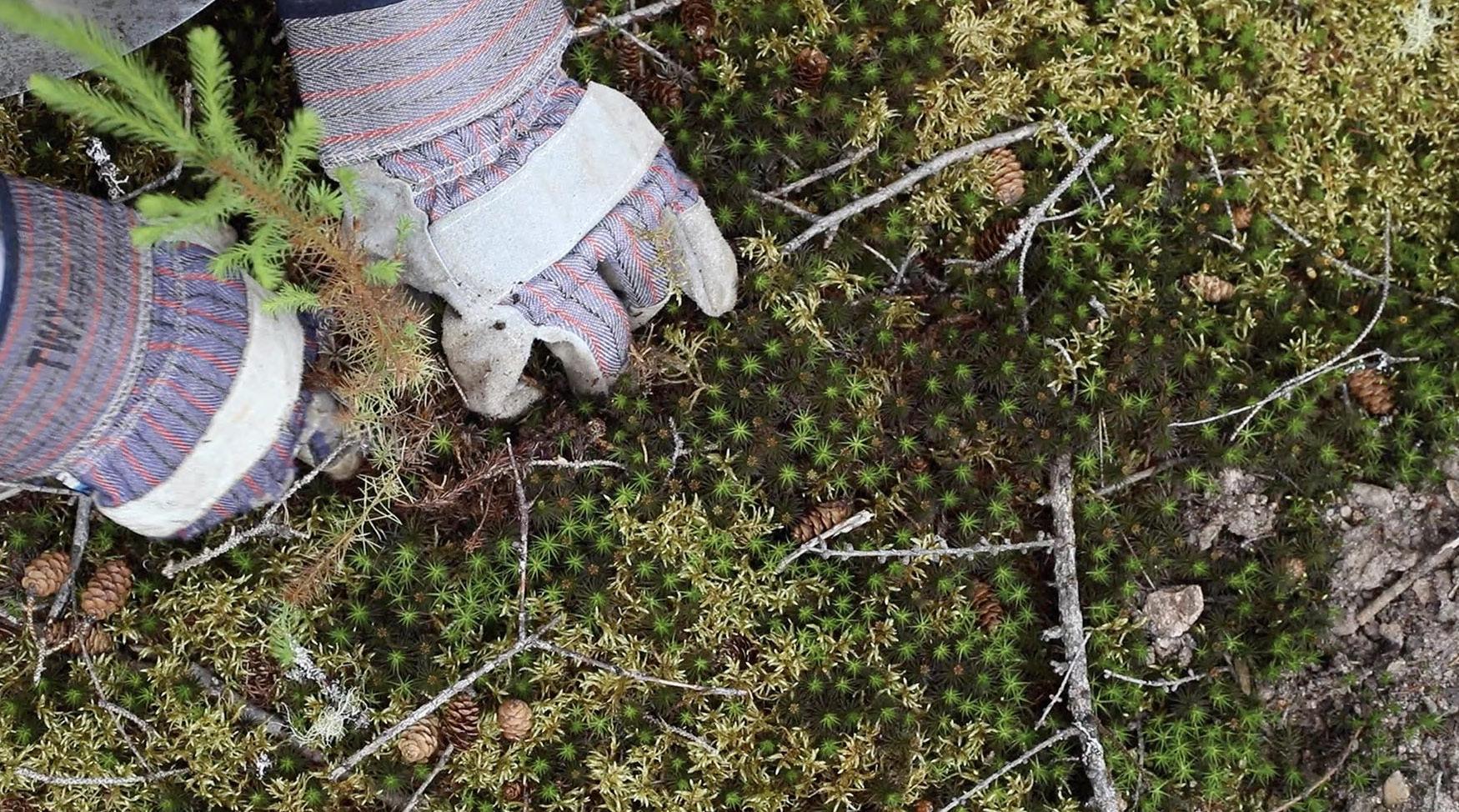
The video documents an action Kehoe performed in her hometown of rural Nova Scotia, Canada, where she planted 100 black spruce trees that are native species to that region. The video, shot from above, shows her hands planting trees with the natural ambient sounds of the planting. The up close and compelling image is projected on the floor, calling attention to the urban ground and its absence of trees. With almost three percent of the Earth’s land surface covered by urban areas,[5] the video reflects on how nature had previously covered the surface of the Earth. As Peter Wohlleben states: “If we want to use forests as a weapon in the fight against climate change, then we must allow them to grow old.”[6]
Kehoe presented a performance art piece inspired by the act of planting trees. Four performers stand, scrolling through their phones, while a sequence of news clips about forest fires is projected on a screen behind them, accompanied by Melancholia 11 by William Basinski. The music gets louder as the imagery intensifies with multiple, overlapping clips filling the screen with images of for-
est fires only to be replaced by billowing smoke that dissipates to reveal a ravaged landscape. As the music and projected imagery gradually shift to Kehoe’s 200 Trees video, accompanied by Basinki’s Watermusik 11 , the performers slowly begin to move forward, miming the action of planting trees and saying phrases like “to provide shade,” “to generate oxygen,” “to reduce erosion,” and “to help cool our planet.” This introductory performance was followed by a socially engaged tree planting action at the George Mason University Fairfax campus where 100 native trees of northern Virginia were planted.
By facilitating this performance and socially engaged action, Kehoe empowered the audience and created a platform for people to work together, learn and share knowledge about trees and express their concerns about the environmental crisis. Kehoe’s call to action is an invitation to be conscious and aware of our connection with the natural environment. Her actions encourage that awareness and connection and most importantly mobilize people and allow them to take agency over their actions.
Approaching Event Horizons: Projects on Climate
Change by Atlantika Collective recognizes that we are in the midst of the climate crisis and, with a sense of great urgency, insists that it is time to act. The works in this exhibition are catalysts for change and act as beacons that bring to light the possibilities for transforming our relationship to the natural world. As art historian T.J. Demos writes, “I’m convinced that art, given its long histories of experimentation, imaginative invention, and radical thinking, can play a central transformative role here. In its most ambitious and far-ranging sense, art holds the promise of initiating exactly these kinds of creative perceptual and philosophical shifts, offering new ways of comprehending ourselves and our relation to the world differently than the destructive traditions of colonizing nature.”[7]
The exhibition is a call to action to find ways to tackle environmental degradation to prevent us from approaching an event horizon. Although some actions might seem small, this group of artists reveals that it is in our everyday
life where we can make a difference by changing our routines, contributing with creative solutions, and presenting alternatives to habits and practices that harm the Earth. In the words of Suzanne Simard: “Making this transformation requires that humans reconnect with nature—the forests, the prairie, the oceans—instead of treating everything and everyone as objects for exploitation.”[8] Thus, Approaching
Event Horizons encourages us all to take steps forward to shape a more equitable relationship with our natural surroundings and calls for reimaging new horizons in search of a better ecological and sustainable future for the Earth.
BIBLIOGRAPHY
Demos, T. J. Decolonizing Nature: Contemporary Art and the Politics of Ecology. Berlin: Sternberg Press, 2016.
Gómez-Barris, Macarena. The Extractive Zone: Social Ecologies and Decolonial Perspectives. Durham and London: Duke University Press, 2017.
Obrist, Hans Ulrich and Kostas Stasinopoulos (Ed.). 140 Artists’ Ideas for Planet Earth. Dublin: Penguin Random House UK, 2021.
Simard, Suzanne. Finding the Mother Tree: Discovering the Wisdom of the Forest. Vintage, 2022).
Wohlleben, Peter. The Hidden Life of Trees: What They Feel, How They Communicate: Discoveries from a Secret World. Greystone Books, 2016.
Gómez-Barris in her book The Extractive Zone: Social Ecologies and Decolonial perspectives.
[4] Macarena Gómez-Barris, “Edge Times: A Decolonial Cuir View.” In 140 Artists’ Ideas for Planet Earth (Dublin: Penguin Random House UK, 2021).
[5] Wendell Cox, “How Much of the World is Covered by Cities?” New Geography, July 23, 2010. Available online at https://www. newgeography.com/content/001689-how-much-world-coveredcities
[6] Peter Wohlleben, The Hidden Life of Trees: What They Feel, How They Communicate: Discoveries from a Secret World (Greystone Books, 2016).
[7] T. J. Demos, Decolonizing Nature: Contemporary Art and the Politics of Ecology (Berlin: Sternberg Press, 2016), 19.
[1] “The Second Fire,” Gabriela Bulisova and Mark Isaac, accessed January 3, 2022. https://www.bulisova-isaac.com/the-second-fire
[2] Peter Wohlleben, The Hidden Life of Trees: What They Feel, How They Communicate: Discoveries from a Secret World (Greystone Books, 2016).
[3] Submerged perspectives is a term introduced by Macarena
[8] Suzanne Simard, Finding the Mother Tree: Discovering the Wisdom of the Forest (Vintage, 2022).