By Ali Robidoux, MASCA Board Chair & Conference Committee Chair
March is a unique time in education. While the calendar says it has thirty-one days, school counselors know it feels much longer. Since there are no holidays or long weekends to break up the weeks, it becomes a marathon of endurance. For educators, March is a month where the usual school rhythm slows down and the daily grind becomes the focus.
At the elementary level, this time of year is defined by the weather.
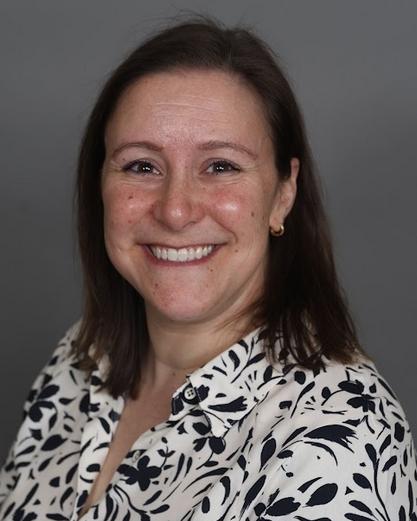
Ali Robidoux, Board Chair
The daily struggle of deciding between indoor and outdoor recess is a constant theme. It is often a period of recess purgatory where the ground is too muddy for the playground but the energy is too high for the gym. However, this lack of outdoor time is an advantage. With students staying in the building, there is a captive audience for classroom lessons. Without the interruptions of field trips or holiday celebrations, a counselor can finally find the time to connect with students.
For those in middle schools, March is a great window for career exploration. Because the calendar is clear of distractions, it is the best month to get into classrooms and help students map out their interests. This block of time allows for direct conversations about how their strengths connect to future goals.
Without a vacation to break the momentum, the lessons stay fresh in their minds, making it a productive season of discovery.
In high schools, the month is dominated by scheduling. The days are filled with one-on-one meetings, credit checks, and fitting elective requests into a master schedule. Because there are no breaks to reset the clock, the momentum remains unbroken. It is the one time of year where a major project can be started and finished in one continuous push. The length of the month allows for a level of focused work that is not possible during more frantic times.
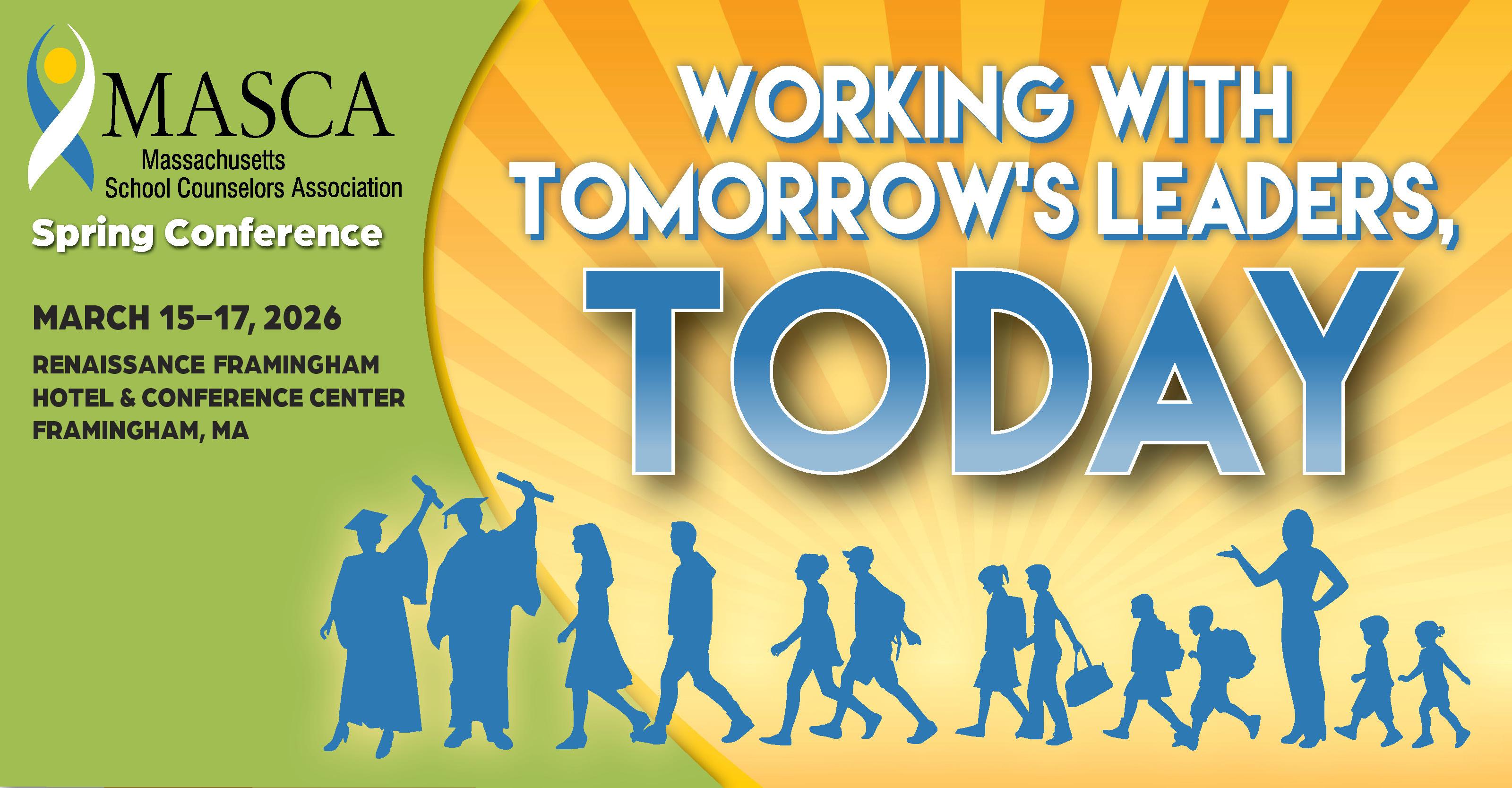
The turning point of this long stretch, if it is hard to keep going, is the MASCA Annual Conference from March 15-17. This event is the essential mental break of the season, arriving right when mid-month fatigue starts. It is a necessary escape from the scheduling office and the cafeteria. Stepping away to talk with colleagues who understand the highs and lows of this profession. This networking and professional development event offers the recharge needed to return to the building and finish the month with more energy. I hope to see you there!
Women’s History Month!
Director’s Message
2026 National School Counseling Week - A Huge Success!
By Bob Bardwell, MASCA Executive Director
School Counselors Amplify Success, the theme for the 2026 National School Counseling Week, is now in the history books. MASCA’s 2026 version included 17 events, seven virtual and 10 in person. There were also eight regional meetups from the Berkshires to the Cape. Hundreds of counselors, colleagues and family members attended one or more of these events. It is probably one of the most, if not the most successful celebratory week we have ever coordinated.
Personally, I attended 12 of the 17 events, and the only reason that I did not attend more was because they were happening at the same time and often in locations not near each other. I put on 705 miles on my car attending seven of the ten in-person events. Some folks thought I was crazy for all of that travel but I think it is important for me, the Executive Director, to be visible and seen as much as possible. Besides, at each event I met members and had great conversations and interactions.
As much work that the week required to plan, coordinate and execute, the end result was certainly worth it. Being able to celebrate our profession and provide professional development and networking opportunities across the state are the main goals of the week. And we certainly achieved that and then some.
Why is this week so important and worth all this effort? It is important because it helps amplify the role and importance of school counselors. Hearing from Henry Wan, the 2026 School Counselor of the Year at the State House and having legislators and staff show up to celebrate school counselors is super important. Being able to take part in professional development opportunities and highlight the critical role that school counselors play in a student’s academic, social emotional and career development is so valuable. Our virtual recognition gala not only provides the opportunity to announce our colleagues who are being honored this year, but also for friends and family to join the presentation to hear about all of the great colleagues being recognized. And finally, providing time for our colleagues to have fun, network and practice self-care is essential to support one another and not burn out.
A huge thank you is needed to recognize the many folks who helped make this week the huge success that it was. These people include:
• School mental health webinar panelists Sugeily Santos, School Counselor, Curley K-8 School Boston, Nyki Clark, School Adjustment Counselor, Gardner High School and Andrew Nickerson, Narragansett Regional High School, School Psychologist.
• Claudia Smith and Ryan Beck for virtually highlighting resources available to counselors at UMASS Amherst.
• Amanda Berg, Juliette Coatsworth, Fran Frederick and Craig Parker, members of the MASCA Government Relations and Advocacy Committee who brought back our Day on the Hill advocacy event at the State House.
• Attorney General Andrea Campbell, State Senator Jake Oliveira, and State Representatives Lindsay Sabadosa and Erica Uyterhoeven, MTA Vice-President Deb McCarthy, and 2026 School Counselor of the Year Henry Wan for speaking at the Day on the Hill event and providing inspiration and education about the advocacy process.
• Mindy Cripps for organizing and executing two sessions of virtual BINGO which
(continued next page)
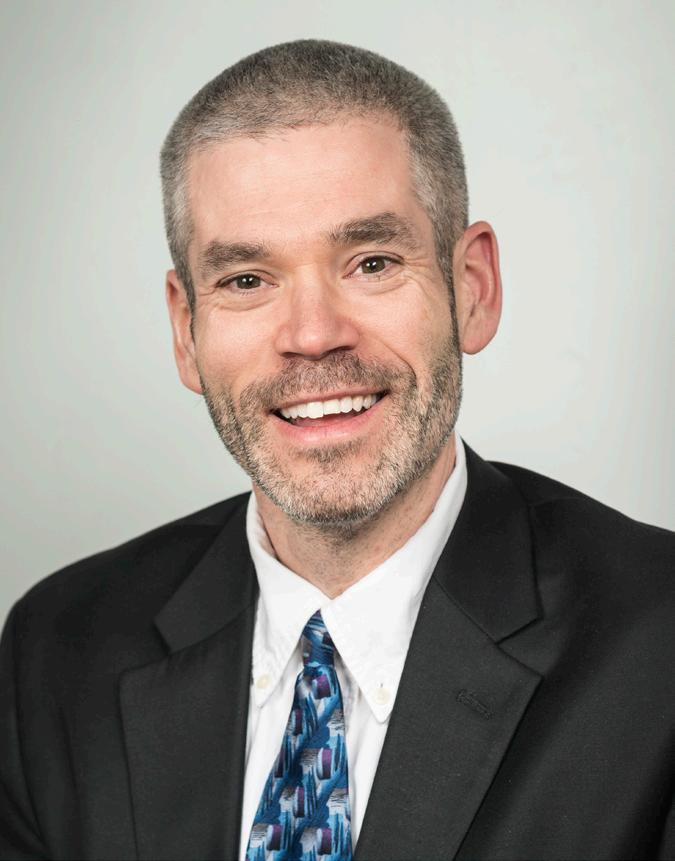
Bob Bardwell
(continued from previous page)
provided a chance to relax and have fun with clues all related to school counseling.
• Tama Lang and Dina Sibilia for organizing the annual Virtual Recognition Gala, when nine of our current and future colleagues were honored for their achievements in our field. (Don’t worry if you missed the gala as they will also be honored again at the spring conference during the Monday, March 16 luncheon.)
• Chris Soverow for sharing her time and expertise in supporting the well-being of our colleagues for conducting the Friday Mindfulness Reset.
• Jackie Lundstrum, Kathi Moody, Lauren Gee, Sean Kingman, Charlsey Penney, Josh Mendel, Tama Lang, Rani Gould, Lucas Correia-Covert, Jen McGuire, Ali Robidoux and Rashaun Martin for their help in organizing and executing the eight regional meetups throughout the week across the state.
As you can see, it takes a village to plan and execute these numerous events throughout the week. I am hopeful that you were one of the hundreds of folks who were able to participate in this annual celebration of school counseling. If not, then there is always next year, February 1-5, 2027, as NSCW is always the first full week of February.
If the idea of planning and implementing these types of NSCW events interests you, then perhaps you want to help MASCA ensure the 2027 edition is equally as exciting and enjoyable. Planning will start in October and will conclude by early February. Please let me know and I can add you the 2027 planning group.
I hope that you had a great NSCW and that you received lots of attention and praise for all that you do for your students, colleagues, families and the communities in which you work. You absolutely deserve to be the center of attention, at least during the first full week of February each year.
MARCH AWARENESS DATES
Developmental Disabilities
Awareness Month
Self-Injury Awareness Month
Gender Equality Month
Middle-Level Education Month
Music in Our Schools Month
Women’s History Month
1 Self-Injury Awareness Day
2 SEL Day
2 Read Across America Day
2–6 National School Breakfast Week
8 International Women’s Day
8–14 National Sleep Awareness Week
21 International Day for the Elimination of Racial Discrimination
21 World Down Syndrome Day
31 Transgender Day of Visibility
WON’T YOU JOIN US?
Just some of the Benefits of MASCA Membership:
• Networking Opportunities
• Professional Development Opportunities / PDP’s
• Annual Professional Conference
• Members-only Special Interest Groups
• Advocacy and Legislative Action
Go to https://masca.wildapricot.org/join-us
New MASCA Members
Tania Altidor
Brendan Amedio
Pauline Avery
Stephen Babbitt
Kelsey Barksdale
Kristie Borges
Isaiah Buster
Jeffrey Capuzziello
Andi Cerio
Bethanie Chandler
Nadia Cyprien
Debbie Cyr
Melissa Dawson
Alessandra Diamantis
Amanda Duffy
Tom Egan
Rahme Eldada
Lauren Enos
Katie Ertel
Jamie Farnham
Celeste Freeman
Hannah Gabriel
Kristen Gobiel
Lauren Griffin
Carrie Hamblin
Caryn Haskins
Lurena Hood
Amanda Huszar
Tanya Jamieson
Mary Kate Jones
Riley Keene
Olivia Keller
Jenny Kim
Deirdre Kinnane
Heather Kinney
Nicole LaRoche
Clare Markey
Simone Matthews
Rongina McClelland
Stacy McFadden
Matthew Medugno
Stephanie Michael
Arielle Mossberg
Claire Mullan
Liz Murphy
Mike Ng
Allison O’Donnell
Emily O’Neil
Abraham Orsorio
Frantz Paillant
Raya Qu
Martha Queenin
Sabrina Remache
Natalie Robinson
Ashley Rollins
Hannah Rutkiewicz
Scot Schaming
Sarah Shapiro
Maggie Shih
Matthew Small
Trevor Smith
Anita Smith
Cassie Smith
David Starr
Sydney Sullivan
Victoria Tynan
Linda Urban-Lyon
Caroline Uzenski
Aaron VanDeKoppel
Claudia Vanegas
Nathan Wilcox
Megan Willey
Kiyanna Wise
If you know or happen to meet any of our new members, please extend a very warm welcome!
Women’s History Month and Historically Women’s Colleges
By Julie Cahill-O’Shea, MASCA member, Governing Board secretary and School Counselor,Hamilton-Wenham Regional High School
I began writing with the intention of sharing ideas on how school counselors can promote and celebrate Women’s History Month. According to History.com, Women’s History Month is a time to reflect on the often-overlooked contributions of women to U.S. history. The idea which began in a school district in California, quickly gained momentum in communities and schools across the country. In 1981, the United States Congress passed a resolution establishing a national celebration. In 1987, the National Women’s History Project successfully petitioned Congress to expand the observance to the entire month of March.
With this history in mind, counselors may opt to coordinate the following ideas to recognize the month. It is essential that we intentionally celebrate individuals who identify as women across diverse races, abilities, cultures, and backgrounds to foster inclusivity. Numerous online resources are available to support and enhance these efforts.
● Host career panels featuring local female professionals
● Coordinate mentorship programs that connect girls with women leaders
● Highlight influential women through school announcements
● Create themed bulletin boards
● Write articles or produce podcasts for the school or local newspaper
● Share educational content on social media platforms such as Instagram
● Assign oral history projects focused on women in the community
● Promote library resources featuring works by and about influential women
● Host a virtual college fair featuring historically women’s colleges to inform students about these unique educational opportunities.
As I reflect further, I would also like to share the benefits of attending a women’s college, based on my experiences as both a graduate of a wom-
en’s college and as a public high school counselor advising students on postsecondary options. As society continues to examine the evolving role of liberal arts institutions, historically women’s colleges deserve thoughtful attention as well. https:// womenscolleges.org/history/. Women’s colleges educate students who identify as women and offer a range of institutional models, including traditional liberal arts colleges, historically Black women’s colleges, and women’s colleges housed within larger co-ed universities. Each provides students with a strong sense of identity, belonging and confidence in their academic abilities.
Graduates of women’s colleges have long been trailblazers across disciplines. Notable alumnae include:
● Virginia Apgar – Mount Holyoke College
● Stacey Abrams – Spelman College
● Pearl Buck – Randolph–Macon Woman’s College
● Benazir Bhutto – Radcliffe College
● Rachel Carson – Chatham University
● Julia Child – Smith College
● Hillary Rodham Clinton – Wellesley College
● Emily Dickinson – Mount Holyoke Female Seminary
● Betty Friedan – Smith College
● Gabrielle Giffords – Scripps College
● Katharine Hepburn – Bryn Mawr College
● Gwen Ifill – Simmons College
● Jhumpa Lahiri – Barnard College
● Margaret Mead – Barnard College
● Pamela Melroy – Wellesley College
● Nancy Pelosi – Trinity Washington University
● Frances Perkins – Mount Holyoke College
● Sylvia Plath – Smith College
● Diane Sawyer – Wellesley College
● Gloria Steinem – Smith College
● Alice Walker – Spelman College
(continued page 10)
Don’t miss MASCA’s Spring Conference. Register NOW ! Advance Registration available through March 11
LOOKING FOR pdps and/or CEs?
If you are attending the MASCA 2026 Spring Conference you can earn PDPs and/or CEs as a result of your conference experience.
PDPs - There is a $30 charge for PDPs. You must log into your MASCA account where you can register and pay online (or create an invoice). You will receive an email when the conference begins with the link to the form you complete. It is important to understand that applying for PDPs is separate from your conference registration and they must be done separately. Additionally, you will not be issued your PDPs until your invoice has been paid. You have to attend (or view virtual content) for a minimum of 10 hours but you can earn more if you watch the recorded content. The deadline to submit the PDP form is Friday, June 12, 2026.
CEs - There is a $80 charge to earn up to 8 PDPs. You will be given specific instructions at the beginning of every session/keynote as to what you do to get credit for that session. You can only earn CEs for in-person sessions. You will need to register and pay online (or create an invoice). It is important to understand that applying for CEs is separate from your conference registration. Additionally, you will not be issued your CEs until your invoice has been paid. The deadline to submit the CE form is Friday, March 27, 2026. Register here for the CE option. If you have any questions about the PDP or CE process, please email Ali Robidoux, PDP/CE Coordinator.
Creating Inclusive School Communities for All Students: Awareness of Antisemitism
By Amanda Berg, MASCA Diversity Fellow
As school counselors, we are often one of the first safe and trusted adults students turn to when they need support. As we continue working to build inclusive school communities, I wanted to share a course I recently completed that deepened my understanding of antisemitism and Jewish identity. Although I’m not Jewish, I gained a lot from this learning experience. It helped me ask better questions and think about how we can create a school where students feel supported and valued.
One resource connected to that learning is Reconstructing Judaism, a national Jewish movement and educational organization. Their website, https://www.reconstructingjudaism.org offers accessible background information and thoughtful perspectives that can help expand our understanding and better support Jewish students in our schools.
Antisemitism has existed for centuries and continues to evolve in modern contexts. Rabbi Mordechai Liebling, in “A Brief History and Update on Antisemitism” (March 12, 2021), notes:
“Antisemitism holds a central and essential place in the world view of contemporary American white nationalists. By contrast, antisemi-
tism that surfaces on the left is not essential, and can and should be addressed.”
This distinction is helpful for educators: antisemitism can emerge in different political or social spaces, but it should always be addressed clearly and consistently, regardless of where it appears.
Why This Matters in Schools
Schools play a critical role in:
● Creating safe and inclusive environments
● Responding promptly to bias incidents
● Educating students about historical and contemporary forms of prejudice
● Supporting students who may feel targeted or marginalized
Naming antisemitism clearly helps staff respond effectively and ensures students feel seen, protected, and supported.
Women’s History Month: The Rise of Women in School Counseling
By Cynthia Esielionis, Governing Board Member and, MA Comprehensive School Counseling Team Co-Chair.
Each March, Women’s History Month invites us to recognize the achievements, leadership, and resilience of women. For school counselors, this celebration holds particular significance. The field of school counseling, originally shaped by male leaders, has evolved through the influence of innumerable women whose advocacy, scholarship, and service have advanced educational equity and student well-being.
One foundational figure is Jesse B. Davis, often credited with establishing early school guidance programs in the early 20th century in Michigan public schools. As the profession evolved, leaders such as Norman C. Gysbers helped transform guidance from the early, reactive vocational focus for a few into comprehensive, developmental school counseling programs grounded in data and systemic support for all students. While pioneers like Gysbers shaped the structural framework of the profession, women increasingly became its backbone—serving not only as practitioners, but also as leaders, researchers, and policy advocates.
The American School Counselor Association (ASCA) has been significantly influenced by women leaders who helped develop national standards and comprehensive school counseling models that emphasize eq-
uity, access, and systemic change. Their leadership has strengthened industry professional standards and the focus on the school counselors’ role in closing opportunity gaps, promoting achievement for all students while expecting ethical excellence is maintained.
National leaders have elevated the importance of counseling-related work in schools. During her tenure as First Lady, Michelle Obama promoted college access and completion through the Reach Higher initiative, encouraging students—particularly first-generation and underrepresented youth—to pursue postsecondary education. Her advocacy aligns closely with school counselors’ efforts to expand college and career readiness and dismantle barriers to opportunity.
Women have historically comprised the majority of practicing school counselors in the United States (U.S. Bureau of Labor Statistics, 2023). Their leadership has been instrumental in advancing trauma-informed practices, culturally responsive counseling frameworks, and ethical standards. Scholars such as Carolyn Stone have contributed essential research on ethics and legal issues, strengthening professional practice and student protections.
Even on challenging days, it’s important for school coun-
selors to recognize the impact of their work. Success often shows quietly—in improved student confidence, academic persistence, and moments of connection—despite obstacles faced by students, counselors, and educational systems these achievements are evident!
Acknowledging these achievements isn’t self-congratulation; it’s reflection that reinforces our mission, highlights the power of advocacy, and reconnects us to our “why.” Celebrating progress, even small, sustains both student growth and our own professional resilience.
Women’s History Month reminds us that school counseling is both a profession and a movement— rooted in advocacy, shaped by visionary leaders, and sustained by the dedication of both the women and men committed to empowering every student.
Sources: American School Counselor Association (ASCA). (n.d.). ASCA National Model.
Gysbers, N. C., & Henderson, P. (2012). Developing and Managing Your School Guidance and Counseling Program.
Obama, M. (n.d.). Reach Higher Initiative.
Stone, C. (2017). School Counseling Principles: Ethics and Law.
U.S. Bureau of Labor Statistics. (2023). Occupational Outlook Handbook: School and Career Counselors and Advisors.
Career Development Quarterly, v57 n3 p248-258 (Mar 2009)
The Language of Hope: Dr. Anne Bodmer Lutz and the Power of Collective Support
By Nyki Clark, LMHC and MASCA SIG Leader
For Women’s History Month, we celebrate the amazing women around us, the ones that make up our family, our friends, our coworkers and the trailblazers who redefine their fields while lifting others as they climb. The power that amazing women have to continue to support and fix each other’s crowns in all aspects of our lives is invaluable. Having strong female mentors to provide encouragement, professional supervision, and a space to reach out is not just a benefit—it is a necessity. I recognize my immense privilege in being supported by an incredibly welcoming group of school counselors and psychologists, including a colleague, Karen McCrillis, honored as a Massachusetts School Counselor of the Year. The amazing women I work closely with for our SIG (Special Interest Groups), Anne Thidemann French and Kate Niedel, who both hold so much experience and knowledge. I am equally fortunate to count Dr. Anne Bodmer Lutz not only as a neighbor and friend, but as a profound mentor and teacher who embodies the spirit of professional support. Dr. Anne Bodmer Lutz, a psychiatrist, educator, and author whose career is a testament to the transformative power of Solution-Focused Brief Therapy and the importance of a supportive community.
Dr. Lutz’s path is rooted in a profound family history of courage. As the daughter of refugees from Nazi Germany, she carries a legacy of survival and determination. Her grandmother, a modern dancer and suffragette, and her mother—who left Nazi Germany for Switzerland, where she focused on her career as a figure skater, traveled to the United States with four young children to join her husband, a theoretical physicist. And she continued to be a leader in the world of figure skating, with coaching and judging the sport— providing the early blueprints for what it means to be a “loud and successful” woman.
During a quiet February break, I had the privilege of sitting down with Dr. Anne Bodmer Lutz. Our conversation began simply—catching up on a long, snowy winter and checking in on our families and animals. But as we spoke, the dialogue shifted toward the roots of her success: the strength of the women and the compassionate men who supported her goals from the beginning and continue to do so today. This interview served as a powerful reminder that the need for collective support isn’t just a personal luxury; it is a necessity in every aspect of our lives, especially within our places of work.
Anne’s own journey was not linear; she transitioned from the discipline of figure skating to the front lines of nursing, eventually finding her calling in child psychiatry. This diverse background allowed her to bring a unique perspective to mental health—one that prioritizes dignity and agency. Early in her medical school training, she was encouraged by a professor to reach out to Insoo Kim Berg, a woman, a refugee, a trailblazer in Milwaukee, who was making a difference. Insoo and her partner Steve, were developing a new way of supporting others, not focusing on problems, but rather hope. This phone call, that Insoo was not expecting, led Dr. Lutz, to solution focused brief therapy and additional mentors and support with Insoo and Steve. Having been trained directly by Insoo Kim Berg and Steve de Shazer, the founders of Solution-Focused Brief Therapy, Dr. Lutz dedicated over 30 years to bringing hope into clinical conversations. For decades, she operated as a “lone wolf,” advocating for a positive, hopeful approach in a medical field often strictly focused on pathology and problems. As a founder of The Institute of Solution Focused Therapy, she continues to teach, share and mentor others.
(continued next page)
Dr. Anne Bodmer Lutz
The Language of Hope
(continued from previous page)
Her perseverance paid off. A significant milestone for the field was reached when she authored the first-ever chapter on Solution-Focused Brief Therapy for the 11th edition of Kaplan and Sadock’s Comprehensive Textbook of Psychiatry. She also teaches this to Psychiatry students in their course work. Her work has since reached hundreds of organizations, from schools and healthcare systems to military settings, helping families navigate trauma and substance use with a focus on their strengths rather than their deficits, including MASCA. She has been a guest speaker on two occasions for the school social worker/ school adjustment counselor SIG meetings and last winter held a full day immersive training at Fitchburg State University.
Dr. Lutz’s success was not achieved in isolation. She often speaks of the “loud and successful” women who encouraged her along the way. She credits her mentor, Insoo Kim Berg, with not only introducing her to the solution-focused
model but also helping her navigate the rigid hierarchies of healthcare. She has a group of women Physicians whom she continues to meet with monthly for supervision, mentorship and support.
As we looked toward the future of education and mental health, our conversation kept returning to a single, vital necessity: the need for ongoing supervision and mentorship. In helping professions—”where women are often under-compensated and under-supported”—mentorship is the bridge that carries us through the most challenging seasons of our careers.
My own transition from private practice to school counseling taught me that while the school environment is deeply engaging, it can also be isolating. Coming into the system with established clinical skills, I was fortunate to be mentored by Karen McCrillis. Her guidance, along with the support of Anne Thidemann French and Kate Niedel SIG co-leaders, underscored that we cannot—and should not—work in a vacuum. Whether it is navigating the complexities of learning accommodations or providing mental health support in high-needs settings, having a “strong woman in your corner” is what transforms a difficult job into a sustainable calling.
Historically Women’s Colleges
(continued from page 5)
● Barbara Walters – Sarah Lawrence College
● Madame Chiang Kai-shek – Wellesley College
As noted in a LinkedIn article, Notable Women and their Alma Maters by Margaretta Colangelo “Many graduates of women’s colleges have been preeminent in their respective fields and many have been the first woman in their field. Women’s college graduates are twice as likely as female graduates of co-ed colleges and universities to earn a Ph.D., attend medical school, be involved in philanthropic activities, attain higher positions in their careers, and earn higher incomes. Only 2% of female college graduates attended a women’s college, yet 30% of female executives and 20% of women in Congress attended a women’s college. Women’s colleges produce disproportionately high numbers of alumnae who go
into male dominated fields such as STEM, business, medicine, law, and politics. 3/4 of the women’s college graduates are in the work force and over 80% have earned advanced degrees. In 1915 during women’s suffrage in the US, many of the marches were organized and led by students and alumnae of women’s colleges.”
CollegeWise offers a relevant guidebook on the topic: https://womenscolleges.org/wp-content/ uploads/report/files/main/guide_to_womens_colleges.pdf
And with that, I share my alma mater’s motto: Non Ministrari sed Ministrare — “Not to be ministered unto, but to minister.” It reflects a commitment to service, leadership, and making a meaningful difference in the world — the very ideals every school counselor I have met aspires to embody.
Christine Shaw Director School Counseling Program
Merrimack
College
Why are you a MASCA member?
connections to my peers, counselors and students
What makes you unique as a school counselor?
As an educator of future counselors, I think my passion for our field and working toward documenting our impact through research make me excited every day to teach and advise.
What inspires you about being a school counselor?
I am inspired by the thoughtfulness of the future counselors I get to work with, and then I am in awe of them when they enter the profession and I get to see their growth and involvement in MASCA and the community.
What career would you be doing if you were not a school counselor?
I also work as an EMT , so I would probably be doing more of that and volunteering with the American Red Cross more.
What is your favorite tool to use in your work as a school counselor?
As a school counselor educator, my favorite ‘tool’ so to speak is asking a question the invokes thought. What words do you live by?
Peace - It does not mean to be in a place where there is no noise, trouble or hard work. It means to be in the midst of these things and still be calm in your heart.
Why is it important to you to be part of a community of school counselors?
We help young people develop their resiliency to weather the bumps in life, discover their light & move toward the future with hope.
How
would you describe your job to a 5 year old?
I work at a college and help people who want to work in schools supporting you and your friends learn about yourself, the world around you and how to be healthy and happy.
How do you decompress/eliminate stress or refuel for the next day?
Get outside. “into the woods I go, to lose my mind and find my soul”
What brings you joy?
Hearing that someone saved a life, helped someone find their power. Also a good laugh is always uplifting.
Share an example of something that you learned from one of your students.
Oh my one lesson? That’s a tough question. I am constantly learning from my students. I am learning that there is always a new way to look at something, that curiosity allows us to come with an open mind, and that the future holds unknown promises yet to be discovered.
What is your favorite dessert?
chocolate mousse
What is your guilty pleasure? French fries
What superpower do you wish you had?
hum..... Im sort of impressed with people who have lots of patience. : )
What is your typical breakfast? coffee
What is one thing that you are really good at?
growing stuff that Im not sure is a plant or a weed.
What is your coffee order? favorite: cappuccino . But Ill settle for coffee with milk
What could you talk about for 30 minutes with no notes?
Just about anything.... though Mental Health First Aid is definitely a favorite topic
What is your favorite smell and why?
Eucalyptus - Got to smell this in the wild growing, such a clean and pure smell
Do you have any hidden talents?
I hope so, but they must still be hiding
What TV show are you currently binge watching? The PITT
What book are you currently reading? What is the author?
Lilith by NIKKI MARMERY
What is something you think people don’t know about you?
I lived in Germany for five years as a child.
MASCA Governing Board and Staff Directory
GOVERNING BOARD
Chair: Ali Robidoux
School Adjustment Counselor
New Bedford Public Schools
Assistant Chair: Cory McGann
School Counseling Department
Head
Ashland High School
Board Members
Mindy Cripps
Director of School Counseling
Billerica High School
John Crocker
Director of School Mental Health & Behavioral Services
Methuen Public Schools
Jessica Descartes
School Counselor
Tech Boston Academy
Andrea Encarnacao
School Counselor
Boston Latin School
Cynthia Esielionis
School Counselor
Ayer Shirley Regional Middle School
Lori Ford
School Counselor
Edgartown School, Martha’s
Vineyard
Amanda Ugrinow
School Counselor
Westborough High School COMMITTEES
Conference
Ali Robidoux
School Adjustment Counselor
New Bedford Public Schools
Ethics
Mindy Cripps
Guidance Director
Billerican High School
Fiscal Oversight
John Crocker
Director of School Mental Health & Behavioral Services
Methuen Public Schools
Government Relations & Advocacy
Juliette Coatsworth
School Counselor
Foxborough Regional Charter
School
Fran Frederick
School Adjustment Counselor
Belchertown High School
Inclusion, Diversity, Equity & Access
Vacant
MA Model
Jodi Then
School Counselor
Snowden International School, Boston
Cynthia Esielionis
School Counselor
Ayer Shirley Regional Middle
School
Member Services
Tama Lang
School Counselor
Litwin Elementary School, Chicopee
Nomination and Bylaws
Jessica Descartes
School Counselor
Tech Boston Academy
Professional Recognition
Dina Sibilia
School Counselor
West Springfield High School
Tama Lang
School Counselor
Litwin Elementary School, Chicopee
Publicity
Luz Mederos Dorleans
School Counselor
Boston Latin Academy
Chris Soverow
Retired School Counselor
Research and Evaluation
Tim Poynton
Professor
UMASS Boston
School Counselor Pipeline
Jessica Almeida
School Counselor
Quinn Middle School, Hudson
Jennifer McGuire
College & Career Information
Coordinator
New Bedford Public Schools
Strategic Planning
Kerry Bartlett
School Counselor
Hudson High School
Technology
Jennifer McGuire
College & Career Information
Coordinator
New Bedford Public Schools
APPOINTED POSITIONS
Executive Director & Member-
ship Coordinator
Bob Bardwell
Secretary
Julia Cahill-O’Shea
Counselors Notebook & Tech
Coordinator
Jean Atwater-Williams
Mentoring Coordinator
Maryanne Margiotta
Program Review Coordinator
Kari Denitzio
Diversity Fellows
Amanda Berg
ESP, Granby Elementary School
Roz Riggins-DesRuisseux
School Counselor
Snowden International School, Boston
Denise Evans
School Counselor
The Carroll School
JC Topete Martinez
School Counselor
Boston Latin School
PDP Coordinator
Ali Robidoux
School Adjustment Counselor
New Bedford Public Schools
LIAISONS
Affiliate Liaison
Christine Weissman
School Adjustment Counselor
Athol Community Elementary
School
Counselor
Educator Liaison
Megan Krell
Associate Professor
Fitchburg State University
DESE Liaison
Lisa Harney
MA Dept of Elementary & Secondary Education
Emerging Leader Liaisons
Cory McGann
School Counseling Department
Head
Ashland High School
Courtney Royal
School Counselor
Gloucester High School
Graduate Student Liaisons
Ryan Beck
Gradudate Student
UMASS Amherst
Rachel Flagg
Gradudate Student
Assumption University
Nicole Ward
Gradudate Student
Boston University
EMERGING LEADERS
Allison Brann
School Counselor
Athol-Royalston Community School
Charlsey Penney
School Counselor
Challenge & Reach Academy, Worcester
Jen Pinhal
Early College School Counselor
New Bedford High School
Sara Runkle
School Counselor
Kiley Prep Middle School, Springfield
Emerging Leader
Anthony Simmons
School Counselor
Atlantis Charter School
SPECIAL INTEREST GROUP (SIG) LEADERS
Career/Technical
Annie McCarthy
School Counselor
Franklin County Technical School
Maryrose O’Neil
School Counselor
Tantasqua Regional High School
Kaitlin Monahan
School Counselor
Greater Lowell Technical High School
Counseling Directors
Meg Clougherty
School Counseling Program
Director
Boston Latin School
Brynn Cooper
Director of Counseling
Weymouth High School
Elementary
Lori Ford
School Counselor
Martha’s Vineyard
Megan McShane
School Counselor
St Columbkille Partnership School
Maura Ricardi
School Adjustment Counselor
East Street School, Ludlow
Multilingual Learners
Priscila Anderson
School Counselor
Woburn Memorial High School
Matt Baione
School Counselor
Revere High School
Olivia Hull
School Adjustment Counselor
Brookline High School
Middle Level
Dawn Martin
School Counselor
Qualters Middle School, Mansfield
Jackie Saunders
School Counselor
Gibbs School, Arlington Retirees
Helen O’Donnell
Retired School Counselor
Anne Thidemann French
Retired School Adjustment
Counselor
School Adjustment Counselors/
School Social Worker
Nychele Clark
School Adjustment Counselor
Gardner High School
Kate Niedel
Retired School Adjustment
Counselor
Anne Thidemann French Retired School Adjustment
Counselor
Secondary
Karen McCrillis
School Counselor
Gardner High School
Anthony Simmons
School Counselor
Atlantis Charter School, Fall River
Rachael Weinhold
School Counselor
Winchendon High School
Urban
Rani Gould
School Counselor
The Academy at Kiley Middle School
Chase Grogan
Student Development Counselor
Community Academy of Science and Health
Sara Runkle
School Counselor
Kiley Prep Middle School, Springfield
AFFINITY GROUP LEADERS
Counselors of Color
Jessica Descartes
School Counselor
Tech Boston Academy
Andrea Encarnacao
School Counselor
Boston Latin School
Aaron Spencer
School Counselor
Nashoba Valley Technical High School
LGBTQ+
Jessica Almeida
School Counselor
Quinn Middle School, Hudson
Mindy Cripps
Director of School Counseling
Billerica High School
Denise Evans
School Counselor
The Carroll School
Mission Statement:
The mission of MASCA is to elevate and advance the school counseling profession in Massachusetts through leadership, collaboration, visibility, and professional development to optimize student success.
Vision Statement:
The vision of MASCA is to equip school counseling professionals with the knowledge and skills needed to implement a comprehensive school counseling program in their school community. Through an equitable lens, we advocate that all K-12 Massachusetts students have access to a school counselor and the opportunity to become their best selves in school, their personal lives, and their communities.
Core values:
Advocacy - Committing to center the school counseling profession by highlighting and advancing the core values of school counselors, both individually and as a profession.
Equity - Requiring inclusivity, diversity, and accessibility for all school counselors and the students and families they serve
Collaboration – Working together with all stakeholders allows school counselors to deliver the highest quality school counseling program for all students.
Excellence - Maintaining the highest level of professional standards and advancing the delivery of comprehensive school counseling programs (i.e.: MA Model) for all students.
Strategic Objectives:
Objective #1 - Advocacy - Position MASCA as a recognized, valuable, and respected voice at local, state, and regional levels by building the awareness of the importance and impact of the work and role of school counseling professionals.
Objective #2 - Equity - Position MASCA as a leading organization in dismantling racist, sexist, homophobic, gendered, ableist, ageist, religious intolerance and other oppressive policies and practices while emphasizing the need for diversity and inclusion in school counseling personnel and programming.
Objective #3 - Membership - Grow MASCA membership by retaining and engaging current members, and recruiting new members, with an on-going commitment to cultivate a more diverse membership.
Objective #4 – Professional Development - Create, provide and/or promote relevant, high-quality, accessible, and timely professional development to meet the needs of our members and support the implementation of comprehensive school counseling programs.
Objective #5 – School Counselor Pipeline - MASCA must address the increasing number of unfilled school counselor vacancies and reduction of candidates entering school counseling preparation programs.