Moving Beyond Resolutions: Practicing Intentionality in School Counseling
By Ali Robidoux, MASCA Board Chair
The start of a calendar year often brings a surge of New Year’s resolutions. In the field of school counseling, these goals typically focus on “giving things up” or adopting strict new habits. However, for professionals managing high-stress environments and emotional labor, these rigid goals can increase psychological pressure.
According to research by Polivy and Herman (2002) on “false hope syndrome,” the “all-or-nothing” nature of resolutions often leads to unrealistic expectations and subsequent failure, creating a cycle of self-blame. Instead of adopting temporary restrictions, school counselors can benefit from focusing on intentionality: the practice of making conscious, purposeful choices based on current capacity and professional values.
Traditional resolutions are often subtractive and binary. They focus on what a person should stop doing, such as “stop staying late” or “give up caffeine.” For counselors, whose schedules are dictated by unpredictable student crises and administrative needs, rigid resolutions are difficult to maintain.
Intentionality, by contrast, is an ongoing cognitive process rather than a fixed outcome. It involves evaluating actions in real-time to ensure they align with your needs and the needs of your students.
To implement intentionality this semester, consider focusing on three specific areas of your practice:
● Workload Evaluation: Before accepting a new task, evaluate your current caseload. Ask: Does this task align with my professional goals, and do I have the hours available to complete it?
● Cognitive Reframing: When a day does not go as planned due to a crisis, avoid the thought that you “failed” your schedule. Intentionally acknowledge that your priority shifted to meet a student’s immediate safety needs.
● Physical Boundaries: Instead of a resolution to “leave on time,” be intentional about your transition. This might mean spending the final 10 minutes of your day organizing your desk so that you can begin the next day with a clear environment.
By focusing on intentionality, we move away from the cycle of self-criticism and toward a sustainable method of professional and personal management. I wish you a successful January to practice.

Reference
Polivy, J., & Herman, C. P. (2002). If at first you don’t succeed: False hopes of selfchange. American Psychologist, 57(9), 677–689. https://doi.org/10.1037/0003066X.57.9.677
Director’s Message
A New Year with Kindness & Compassion
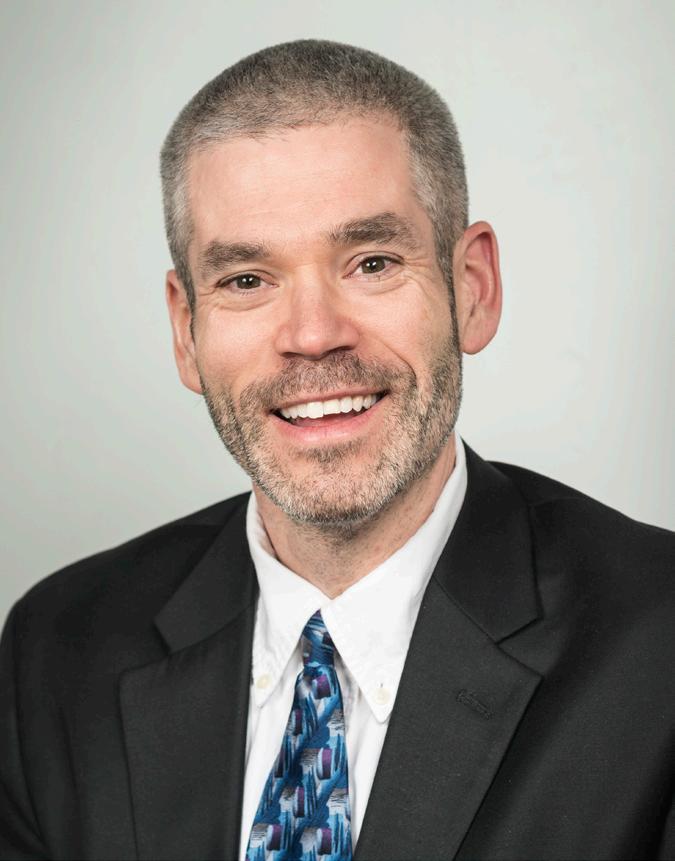
By Bob Bardwell, MASCA Executive Director
Happy New Year colleagues!
It does not seem possible that it is January 2026 already. A new year can mean many things. For some, it means a fresh start with new resolutions, new goals and changes to our previous routines. For others, it is just another flip of the calendar page or time off from work due to the holiday.
Whatever your connection to the New Year is, I hope that you have had a relaxing holiday break and return to work feeling rejuvenated, energized and excited. As you well know, our students and families need us now more than ever. Our work is very challenging, difficult and stressful. That is not debatable. As we enter the new year, be sure to take care of you first, for without a strong you, your students and families will not get your best.
A new year also means that MASCA recently concluded our 5th annual Kindness and Compassion Giveaway. In case you missed the email from late December, we announced six recipients. In the 14 days that we collected nominations, we received 49 nominations representing 32 school counseling colleagues from the Berkshires to the Cape and everywhere in between. Several of these colleagues received multiple nominations Thank you so much to all of our nominators.
The scorers found this task extremely difficult - to narrow the field from 32 to just a few. They wanted to give every nominee something for what they have had to deal with recently and will continue to deal with moving forward in 2026. Minimally each nominee has received an email letting them know that they have been recognized by at least one peer as part of this initiative.
Allow me to introduce you to Allison Harmon, Director of School Counseling, the Carroll School, Lincoln, who is our top honoree.
Here is what Allison’s nominators had to say –
Allison is an incredibly intentional, grounding, compassionate, and skilled counselor and human. She is a huge source of support, knowledge, and care for the Carroll community. Allison is always thinking about how best to support the students, families, and staff of the Carroll community and handles complex and sensitive situations with deep compassion, thoughtfulness, and skill. She sees the good in every individual that she comes across and has served as a model for kindness and how we can make each and every community a bright and loving place. Even during the hardest of times, she makes space to help others. I have always admired her ability to connect with people in a meaningful way. She truly makes this world a better place.
Allison was on medical leave for the first few months of the 2024-2025 school year because she was undergoing treatment for breast cancer, which included chemotherapy, surgeries, testing and so much more. Through all of this, she remained an integral part of our counseling team. Even while she was out, she was constantly checking in on her team and how we were doing. There was never a complaint, nor a word of despair. Even when things took an unexpected turn, she maintained her courage and her stalwart leadership.
When she returned back to work last winter she worked through the pain and difficult days, and is only now near the end and recovering. She came back in the midst of some very challenging counseling situations and she did not miss a beat - she jumped right back in and provided so much support and guidance to the students, families,
(continued next page)
Bob Bardwell
Kindness & Compassion
(continued from previous page)
counselors, administrators, and teachers involved in each situation.
Allison had an additional surgery at the beginning of the 2025-2026 school year and once again showed her immense dedication while navigating the medical and emotional challenges that come with breast cancer.
Before the diagnosis she was an unmatched manager. Throughout her personal battle, she demonstrated even greater strength and garnered admiration from everyone. She is a quiet warrior and everyone who has ever had any contact with her thinks the world of Allison. She faced it with determination while modeling to all of us the power of positive thinking.
As a counselor under her leadership, I learn from her style and expertise every day. She deeply embodies kindness and compassion and is so deserving of recognition and appreciation for all she does for our school community. Allison embodies what it means to be resilient. She never sought pity, never complained, and never allowed her circumstances to define her. Instead, she transformed adversity into strength and continued to uplift our entire school community with humility and courage.
What has inspired me most is the way Allison approaches her work—with authenticity, kindness, empathy, and a fierce commitment to doing what is best for the students. She never once allowed her own hardships to dim her passion for supporting others. Instead, she used her experience to deepen her connection, her insight, and her ability to meet every student exactly where they are. She remained steady, encouraging, and fully present for all of us, even during times when she had every reason to step back and prioritize herself.
Allison is truly one of the strongest, most inspiring women I have ever met. Her leadership has shaped me as a counselor and as a person, and I believe she wholeheartedly deserves this recognition. It would be a privilege to see her honored for all that she has given—to her students, to our team, and to the broader community.
MASCA has made a $200 donation in her name to The Healing Garden, in Harvard MA. She will also receive a free 2026 MASCA conference registration ($239 value).
We are also happy to announce five additional recipients -
• Heidi Bowen, School Counselor, Quinn Middle School, Hudson
• Nelly Carrasco, School Counselor, Advanced Math and Science Academy, Marlborough
• Laurie Dickstein-Fischer, School Counselor Educator, Salem State University
• Maria Maloney Barnes, School Counselor, Granite Valley School, Monson
• Sarah Spence, School Adjustment Counselor, Hopkins Academy, Hadley
They will each receive a $50 gift card and/or a free MASCA membership.
Regardless of your thoughts about the New Year and making resolutions, I want to thank you for your membership in MASCA and for making MASCA one of the top state school counselor associations in the country. MASCA is what it is because of you and for that I am most grateful.
Here’s to a healthy, joyful, stress-free and rewarding 2026!

New MASCA Members:
Jenna Amara
Nelly Carrasco
Katlin Chretien
Jessienyia Climes-Rivera
Angela Craig
Madelyn Cyr
Gulbanu Daniyarova
Scout Greenwood
Priscilla Grijalva
Alison Hannon
Taylah Henry
Dianna Ingersoll
Amber King
Nicole Lussier
Christine Lynch
Melisa MacDonald
Molly Matchak
Kristen McDonnell
Angelin Pena
Francesca Perez-Tyburski
Diane Pinney
Olivia Purdy
Georgia Roache
Ilene Rodman
Michelle Rodriguez
Caroline Sommers
Alexia Thomas
Brendaliz Velez-Figueroa
Lindsey Wilder
Eileen Williams
Emily Worden
If you know or happen to meet any of our new members, please extend a very warm welcome!
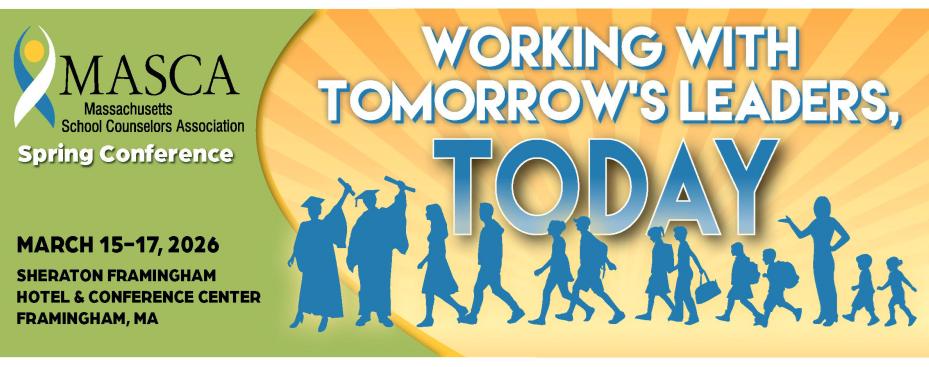
Don’t Miss MASCA’s Spring Conference! For more information or to register, go to https://ncyionline.org/conferences/mascac/.
School Counselors - the Gardeners of Education
By Chalsey Penney, MASCA Emerging Leader and School Counselor, Challenge & Reach Academy, Worcester
How are we doing? It’s January — the holidays are behind us, the days are still gray, and somehow we’re already halfway through the school year. Anyone else secretly counting down to February break?
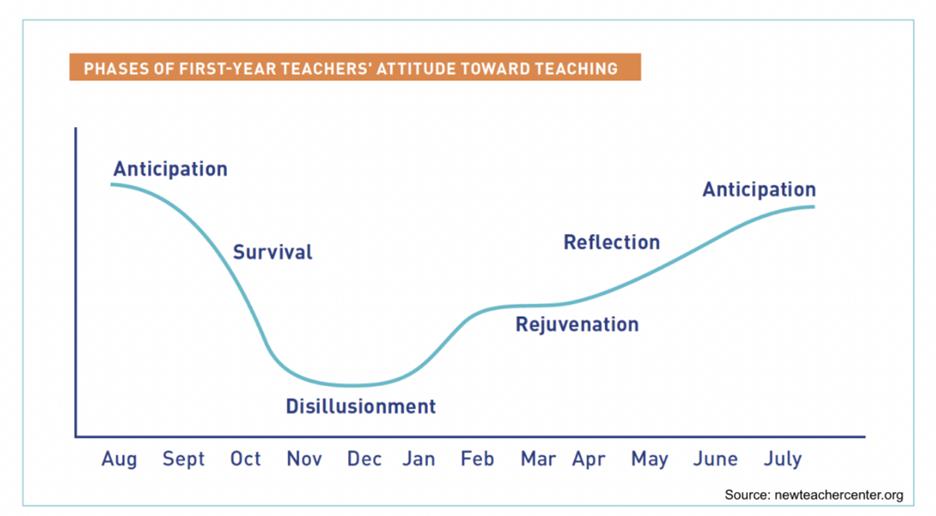
Jokes aside, this season can be both full of promise of the new year and exhaustion of the post-holiday season hustle and bustle. There’s a well-known graph showing that first-year educators often feel the most overwhelmed and disillusioned around this time — but let’s be honest, even veteran teachers aren’t immune.
Stick with me here — I love a good analogy, and over the years I’ve found myself returning again and again to one theme: plants and growth.
There are moments when I question whether what I’m doing is truly making a difference. In those times, I try to pause, take a deep breath, and remind myself of what I already know — that I/we are doing good work. Important work. Work that matters, even when we can’t immediately see its results, but I also try to remember other student’s success stories to ground myself.
Another quote that comes to mind is: “A person plants a tree under whose shade they may never sit.”
And that’s what you do every single day. Your work with students doesn’t always change lives
in the moment — it shapes their future, or helpful policies and procedures, resources, and opportunities for those who come after. You may never see the full impact of your efforts, but every lesson taught, every bit of care given, every moment of patience is an act of quiet altruism that ripples far beyond what you can see.
Recently, I came across a passage in Neurodharma by Rick Hanson, Ph.D., that deeply resonated with me:
“You could go get a seed and plant it carefully. As the seed becomes a sapling and then a tree, you could water and fertilize it, protecting it from pests and pruning it carefully. As the years go by, you can take good care of your fruit tree. But you cannot make it give you an apple”
This speaks so clearly to the heart of education. Sometimes, despite all our effort and care, a student doesn’t seem to “blossom” right before our eyes. But perhaps what we’ve done is kept them safe, provided structure, a warm meal, or simply a welcoming smile. That, too, matters deeply. We may not see the fruit yet — but we’re tending the roots in hope that one day the tree will blossom.
“You can take good care of your fruit tree, but you cannot make it give you an
apple.”
And so I’ll leave you with one final thought: “The day you plant the seed is not the day you see the fruit.”
As any good counselor or educator knows, growth takes time. The transformation you work toward may not unfold in your presence, but your influence is there — embedded in the soil of that student’s life. We live on hope, on faith in the human spirit, and on the quiet belief that our care will one day bear the fruit of our labors.
So take this as your gentle reminder: tend to your own soil, too. Rest, breathe, ground yourself, and remember — you are doing good and meaningful work every single day and making a difference.
Where’s Ollie?
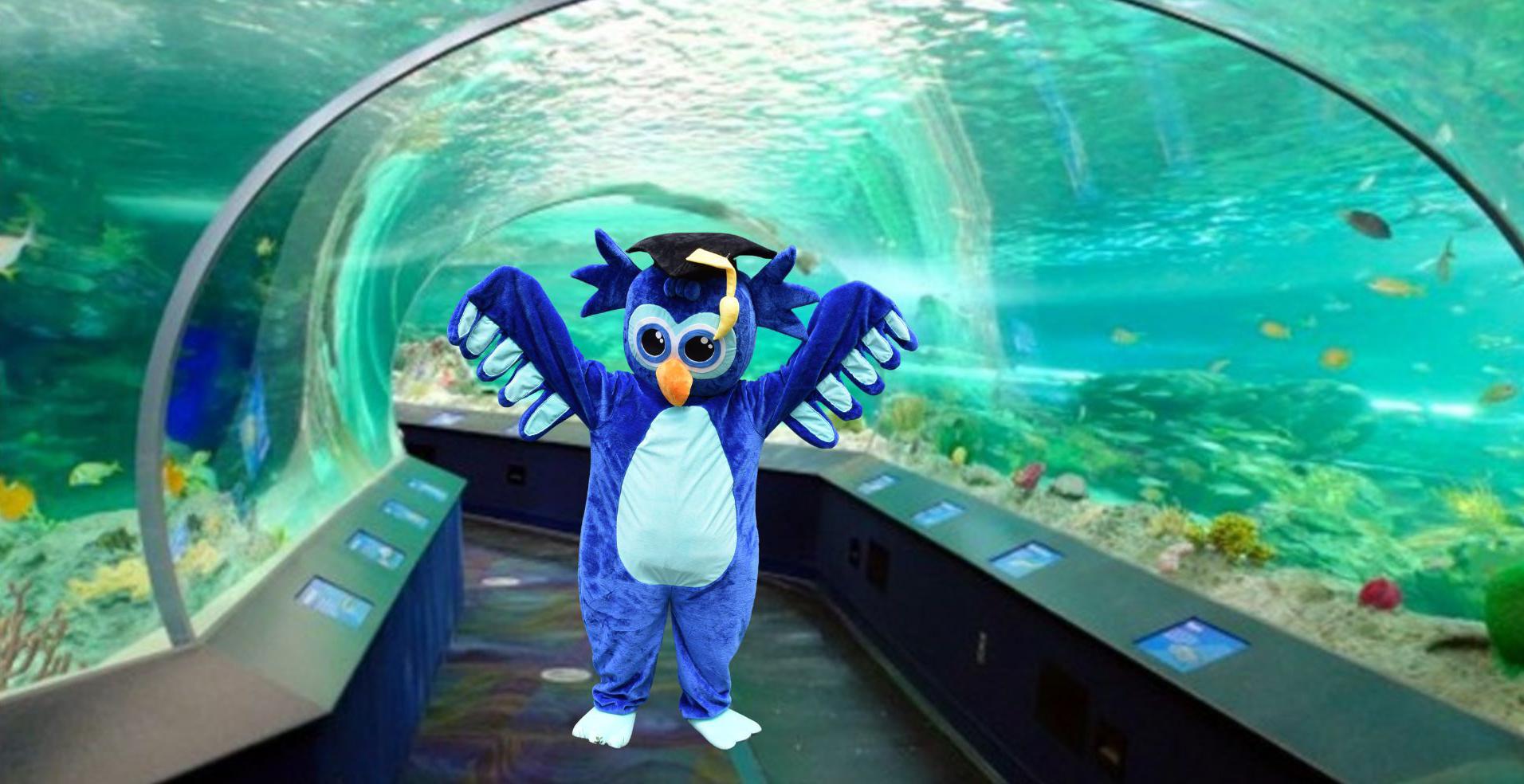
The correct answer to last month’s Where’s Ollie? challenge is: Dr. Seuss National Memorial Sculpture Garden. This Sculpture Garden in Springfield, Massachusetts, opened in 2002 on the grounds of the Springfield Museums. Designed by Lark Grey Dimond-Cates—Dr. Seuss’s own stepdaughter— the garden features beloved bronze characters like the Cat in the Hat, Horton, the Grinch, Sam-I-Am, and the Lorax. One of its most eye-catching pieces is a ten-foot tower of Yertle the Turtle, welcoming visitors from the corner of the quadrangle. Another charming sculpture shows Dr. Seuss seated at his desk, pen in hand, with the Cat in the Hat by his side. The garden weaves playful whimsy and heartfelt tribute together, celebrating both his stories and the man who created them.
Congratulations to Mike Penney (Abby Kelley Foster Charter) winner of the December Where’s Ollie? contest. Mike won a $10 Amazon gift card! Acknowledgement for PJ O’Toole (Walpole High School), Jennifer LaPoint (Agawam High School), Dana MacPhee (Maynard High School), Jenn Bullard (Dracut High School), Juliette Coatsworth (Foxborough Regional Charter School), Jennifer Pinhal (New Bedford High School), Nicole Shadeed (Bedford Public Schools), and Karen Stackow (Willie Ross School for the Deaf) for getting the correct answer. Awesome job!
Where is Ollie this month? Submit your guess and win a $10 Amazon gift card. Submissions are due 1/15/26. One entry per person. Send us your guess using this form or scanning the QR code.
Beyond Supervision: How Mentoring and Coaching Strengthen School Counseling Initiatives
By Christine Soverow, M.Ed, MBA, CAGS. Certified Life and Transformational Coach. Graduation Mentor and Coach. Retired School Counselor. Co-chair MASCA Publicity Committee
School counselors are being asked to do more than ever—support student mental health, lead MTSS and SEL initiatives, close equity gaps, and respond to increasingly complex student needs. Yet too often, the professional support available to counselors is limited to formal supervision alone. Imagine if districts offered more than supervision! What difference could it make to provide counselors with a layered support system that combines supervision, mentoring, and coaching?
Supervision: The Foundation
In this approach, supervision remains the foundation, providing the structure and accountability counselors need. Administrators conduct regular evaluations to ensure counselors meet DESE standards, maintain compliance, and align with district goals. These evaluations are documented, ensuring professional standards are met while also creating space for additional support and growth opportunities through mentoring and coaching.
both professional growth and long-term retention.
Coaching: Building Capacity Across the Team
Coaching complements supervision and mentoring by focusing on counselor well-being, sustainability, and professional clarity. Unlike mentoring, coaching is not limited to new staff. Certified coaches support counselors at any career stage, helping them strengthen programs, use data effectively, implement MTSS or SEL initiatives, and shift from reactive work to proactive, programmatic practice. Coaching allows counselors to refine skills, align practices across schools, and lead to systemic change without the pressures of evaluation.
Why the Layered Approach Works
Rather than asking one role to do everything, this model recognizes that accountability, induction, and professional growth require different kinds of support. By intentionally separating each role, districts create a structure that:
Mentoring: Supporting Induction and Growth
Mentoring builds on the foundation provided through supervision by offering new and transitioning counselors a supportive, non-evaluative relationship with experienced colleagues. Mentors help counselors navigate district systems, clarify roles, reflect ethical questions, and manage high caseloads. In Massachusetts, DESE strongly encourages mentoring as part of equitable educator support, especially for counselors working in isolation or stepping into leadership roles. By pairing new or promoted counselors with experienced mentors, districts promote
• Meets DESE requirements through clear, formal supervision
• Protects ethical boundaries by ensuring mentors and coaches are non-evaluative
• Improves counselor effectiveness through targeted, role-appropriate support
This layered approach strengthens counseling programs, promotes consistency across schools, and ultimately leads to better student outcomes.
(continued on page 12)
Chris Soverow
Sage Advice for National Mentoring Month
By Marianne Margiotta, MASCA Mentoring Coordinator
National Mentoring Month is a perfect time to reflect on those people whose words or actions have made a lasting impression on our careers. What piece of advice has stuck with you throughout your career? Whether it was from a professor, a colleague, an administrator, or someone else important to you, those gems help shape our interactions, our philosophies, and all that we value in education. I asked counselors, teachers, administrators, and veteran educators at all stages of their careers to find out what ideas have made an impact on them.
To no surprise, I heard from so many of them that relationship is KEY. “Build relationships with your students. Classroom management is a million times more successful when you have established positive relationships.” Whether you are working in a classroom with students, or one-on-one in your office, the time you take to build that relationship will be the key to your successful interactions. As another pointed out, “they won’t remember your lessons or specific content you worked with them on, but they will remember how you made them feel – valued and respected.” Another counselor pointed out she was reminded to “always remember the power of listening and allowing a student to feel heard.” Yes, we’re in a helping profession, and it’s all too easy to fall into the trap of “fixing” problems. But sometimes “fixing” isn’t what’s needed. Our students need a sounding board, our full attention, and someone to listen – really listen – to what’s on their mind. We can give the students who sit before us no greater gift than to let them understand that they matter.
It’s not always easy, as one former teacher pointed out – but, yes, it’s worth it. “Today they might be driving you to insanity . . but one day when they’re all grown up, they’ll remember those adults that never gave up on them.” Our students need us to always believe in them – even when they themselves do not.
Sometimes the things that meant the most to us in our careers were given to us from mentors
not in words, but in simple actions that showed they care. One teacher had a college professor who helped him with deadlines and extensions in grad school: “I always remembered that, and it inspired me to do the same for my future students. It doesn’t mean I don’t hold them accountable, but I always consider their lives beyond school.” Another reason for us to build relationships with our students and consider what factors may be impacting them outside the classroom.
One educator has always remembered being told that “the only time you fail is when you do not take the opportunity to grow.” We have all seen students who we know aren’t reaching their potential, who can do so much better if they stretch their horizons a bit. Staying on the sidelines might be the easy way, but it can cut off so many opportunities to venture out of our comfort zones and try something new. As another pointed out, “Sometimes you need to exceed your limits to know what they are.” As counselors, where can WE grow, learn, and see what our own limits are? We never know until we try!
Sometimes it’s the humor that stays with us. One world language teacher recalled a line he was once told: “It’s better to remain silent and be thought a fool than to open your mouth and remove all doubt.” While that made him laugh, there’s a message behind it that’s always stuck with him: “It’s OK to think before you speak and to process what you will say.” Another added that “there’s nothing wrong in saying, ‘I don’t know, but I will find out’ - as long as you do find out and get back to the person as promised.” Good bits of advice when we are meeting with students or parents! And more about parent meetings -- one counselor remembered this bit of advice: “If possible, sit next to the family in meetings. Sometimes it can appear or feel like an us-versus-them mentality.” She said she has followed this advice in her own parent meetings
(continued next page)
Sage Advice
(continued from previous page)
and says “it fosters a sense of partnership and collaboration, rather than an adversarial dynamic. Everyone is on the same side for the student’s success.”
Another counselor remembered that “you can always learn something from your mistakes. Use them to motivate you.” Her comment brought me back to the early days of my own career, starting out as a high school English teacher. A wise mentor saw my struggles, and her words were ones I remembered through each challenging day: “Be patient with yourself. Many days will go smoothly, and you will feel on top of the world. Then on other days you will make mistakes, fall, and wonder what happened.” Learning to be an effective counselor or educator is not linear. Don’t expect perfection of yourself because we are always learning. Just keep doing what you know, reach out for help when you don’t know, keep putting one foot in front of the other, and someday soon you will realize just how far you have come!
One educator found the advice given to her about organization was the most useful thing that has stayed with her: “When you have a conversation with a student, a parent or other staff member, make a record of the details, date it, and then set a date for when you will follow up, and file it in a ‘tickler’ file according to the date. Then when that day comes, follow up with everyone you need to.” Before she started using this plan, she said she was relying on her own memory or little notes written on pages of her notebook. “This plan allowed me to make sure I didn’t let important details fall through the cracks. I feel so much better organized now!” Whether you use a “tickler” file or some other method, develop organizational and follow-up plans that work for YOU.
Advice about the importance of self-care was paramount in the minds of several people. “Work smart and be sure you have a work-life balance,” said one. All mentioned the need to take care of yourself so you can give your best to
the students you work with. We often hear this advice – yet do we always follow it? One counselor told me that although it was hard, she learned from a wise colleague to “not feel guilty if you need to give yourself a day to reset.” And another said the best advice she received as a young counselor was that “your well-being matters. In a counseling role, you give so much of yourself to others, and burnout is very real. Never feel guilty for taking the time you need. Your body keeps the score. If you don’t listen to it early on, it may force you to listen later—when the impact can be much greater. Prioritizing your own health isn’t selfish; it’s essential.”
To conclude, the words of one professor left an indelible mark on one special education teacher – and are wise ones to remember whether we teach, counsel, or lead our schools: “There are plenty of average people in education, just like anywhere else. I want to inspire you to be extraordinary. I want to help mold educators that will go beyond, every day, and be the ones who make a difference.”
As we remember this month the important role that mentors play, think of all the inspiring people in your life who have helped shape who you are and what you value in your educational journey. Then go out and “make a difference!”
For more information about our MASCA Mentoring Program, check out our link on the website, or contact me at mmargiotta@stgrsd.org.
Supporting Jewish Students Amid Rising Antisemitism
By Denise Evans, MASCA Diversity Fellow
On a college campus in Northampton, the Star of David was covered by a swastika. In Boston, a college student is told that “Jews belong in the oven”. In Longmeadow, families in a Jewish Community Center watched as a man waved a gun shouting antisemitic threats outside. In Belmont, a Jewish family finds a swastika carved into their tree. These moments of intimidation and violence did not happen in another part of the world, but instead right outside our doors.
When we think of antisemitism, we should refer to the working definition from the International Holocaust Remembrance Alliance of it being “a certain perception of Jews” where criminal acts are antisemitic “when the targets of attacks, whether they are people or property – such as buildings, schools, places of worship and cemeteries – are selected because they are, or are perceived to be, Jewish or linked to Jews.” Across Massachusetts, the rise in antisemitism has affected Jewish students, families, educators and communities. According to the Anti-Defamation League, in 2024 alone, there were 276 acts of harassment, 157 acts of vandalism, and 5 assaults incidents reported, including the incidents shared above, making Massachusetts ranked 4th in the country for high rates of antisemitism. These experiences are impacting our students in places meant for learning, safety and protection. Students are apprehensive to display signs of Judaism or identify as Jewish for fear of judgement, bullying or violence. It’s affecting how
our students feel walking into our schools and wondering if they can trust the adults to protect them if an altercation occurs.
In July of 2024, Massachusetts became the first state in the nation to have created a Special Commission for Combatting Antisemitism. This commission has documented an escalation in antisemetic incidents, including harassment, bias, intimidation and threats throughout the K-12 school setting. In its’ final report on page 21, it states: “School counseling departments should: work to deepen their understanding of the effects of hate, bias or discrimination on the mental health of young people, including the impact of antisemitism on the mental health of Jewish and all young people; apply trauma informed interventions to incidents of antisemitism; and expand access to mental health resources for Jewish students targeted by antisemitic harassment or bullying.” As school counselors, we play a vital role in supporting Jewish students by addressing schoolwide responses and advocating for the safety and emotional well-being of our school community.
How School Counselors Can Support Jewish Students
Before school counselors can effectively support Jewish students, we must first identify them. It can often be difficult to know a student’s religious or cultural identity
beyond what is visible. Being mindful of privacy and safety, counselors can be proactive in identifying these students by reviewing data available to you, such as demographic information, school surveys and family-reported data. Additionally, we can utilize our professional relationships to reach out to staff and students that we know are being impacted to help us identify others in the school who may be struggling. This work is not about labeling students, but about ensuring that these students feel seen and are given the opportunity to discuss their concerns if they wish. Once we know who is being affected, counselors can take concrete steps to support these students.
1. Listen and validate
If a student reports an antisemitic incident, our response will matter. Listening without minimizing the behavior, validating the student’s experience, and identifying the behavior as unacceptable are simple but essential steps to take.
2. Provide a safe and supportive space
School counselors can provide individual and small group support where Jewish students can feel safe expressing their fear, anger or confusion. Creating an affinity space can provide a refuge for more conversations to happen. Additionally, if a staff member
(continued next page)
Supporting Jewish Students
(continued from previous page)
or counselor openly self-identifies as Jewish, then they may be able and willing to provide a sanctuary for students seeking additional support.
3. Advocate and report
If we are made aware of any antisemitic incidents, we can ensure they are reported, documented, and addressed according to district policies. We know that many times, these situations are significantly underreported because sometimes Jewish students are afraid of retaliation or retribution if they report antisemitic incidents to school staff, so building rapport with Jewish students in your school can open the lines of communication. We can also help schools distinguish between protected speech and speech that is discriminatory and hateful and creates a hostile learning environment. Refer to the statement from the Governor Healy’s office regarding guidance on schools’ legal obligations in preventing and addressing hate and bias incidents. If there is no specific policy in place to protect Jewish students, then advocate with school and district leaders to do so.
4. Address antisemitism schoolwide
We can work with administrators to ensure that antisemitism is included in anti-bias training, bullying prevention programs for K-12 grades, and professional development for all educators. When antisemitism prevention lessons are taught throughout the school year as part of an anti-bias and bullying prevention curriculum, not just as a one time lesson, there is a greater chance of success. Research shows that with any school subject, the greater number of times a student is exposed to a topic and learns the facts, the more likely we will see a shift in students’ antisemitic attitudes, feelings, beliefs, words and actions. Counselors can also collaborate with teachers to support inclusive efforts in the classroom by discussing Jewish American Heritage Month throughout May and participating in the discussions when the Holocaust is studied.
5. Utilize community resources
There are various organizations throughout Massachusetts that provide training opportunities, school consultations, curriculum resources and guidance, including:
● Center for Combating Antisemitism in Greater Boston
● The Jewish Community Relations Council of Greater Boston
● Jewish Federation of Western Massachusetts in Springfield
● The Antidefamation League of New England
This article represents one step MASCA is taking to open these conversations about antisemitism and its impact on students and school communities. MASCA is committed to continuing this work by creating additional opportunities for dialogue and learning so school counselors feel equipped with the tools and resources to support these students effectively. Counselors can also refer back to the Office Audit Checklist to ensure that their offices represent a safe and supportive space for all students and families.
Whether we realize it or not, antisemitism is present and affecting our students’ mental health, school environment and sense of belonging. In these challenging times, school counselors can help students feel seen and supported by making sure antisemitism is recognized and addressed appropriately while serving as a compassionate and trusted adult.
References
Anti-Defamation League, 2025. https://newengland.adl.org/resources/report/antisemitic-incidents-new-england-2024-break-all-previous-annual-records-fifth
International Holocaust Remembrance Alliance, 2026. https://holocaustremembrance.com/resources/working-definition-antisemitism
Office of the Governor, Commonwealth of Massachusetts, 2024. https://www.mass.gov/doc/guidance-on-schools-obligations-to-prevent-and-address-hate-incidents-september-2024/download
Special Commission on Combating Antisemitism, 2025. https://malegislature.gov/Bills/194/SD3416
Beyond Supervision
(continued from page 7)
Moving Forward
As expectations for school counselors continue to expand and increase, investing in a layered model should be viewed by district and school administrators as a strategic priority.
Aligning supervision, mentoring, and coaching honors the complexity of the counselor’s role, supports professional growth, and creates conditions where counselors can thrive, stay in the profession, and lead meaningful change for students.
When used appropriately, coaching complements DESE-required supervision and mentoring by providing confidential, non-evaluative support that promotes retention and long-term effectiveness. Coaches do not provide therapy, discuss student cases, or replace supervision. Instead, they help counselors stay grounded, effective, and engaged—strengthening both the counseling program and the support available to students.
Aligning supervision, mentoring, and coaching is not about adding more initiatives—it is about using each support intentionally and ethically. When districts invest in this alignment, they strengthen their workforce, protect professional standards, and maximize the impact of school counseling programs. When used appropriately, coaching complements supervision and mentoring by building capacity for leadership and implementation—without blurring professional boundaries or replacing counseling expertise.
Research Findings
By Tim Poynton, MASCA Research and Evaluation Committee
At about this time last year, MASCA undertook a research study to identify the experiences, motivations, and key decision points of current school counselors and school counseling graduate students. The goal of this study is to provide actionable recommendations for MASCA to increase awareness of and access to the school counseling profession. While we are still analyzing the data, I wanted to share some findings related to the impact of mentors, given that this is National Mentorship Month.
One of the open-ended questions we asked of the 150+ respondents was “What supports, if any, did you encounter in your decision making about school counseling as a career? Please include in your response the specific ways in which these things were supportive and how you used them.” In response to this question, the most frequently mentioned support was current, practicing school counselors. Sometimes, this was their counselor from high school, who they maintained a meaningful relationship with through undergraduate study and at least into the start of graduate study. At other times, the supportive school counselor was a counselor who took the time to participate in an informational interview or facilitate an undergraduate internship/ job shadowing experience. In all of these cases where respondents spoke positively of their interactions with a school counselor who supported their journey into the profession, the school counselor, one could easily say, was serving in a mentoring capacity.
While school counselors were the most often-cited source of support for choosing school counseling as a career, there were other mentors who were mentioned, such as a school administrator who supported a teacher in becoming a counselor, graduate school faculty members who helped incoming students’ confirm that they were in the right field, and higher education administrators who supported their employees to make use of their tuition benefits and earn a graduate degree in a related field, but with a different employer. In all of these cases, there was a mentor who was instrumentally supportive of the individual’s plans to pursue school counseling as a career.
To be transparent, not all of the counselors and graduate students who responded to the survey felt like they had positive experiences with their school counselor. In response to the question “Was there a particular or defining experience that led you to choose school counseling as a career to pursue?”, more people cited negative interactions with their school counselor than people who cited positive interactions with their counselor. In other words, one thing that led some people into the profession of school counseling is that they wanted to be the school counselor they never had. While that is frustrating and perhaps sad, it is some people’s truth – and I suspect counselors reading this entry in the Counselor’s Notebook are not the type to be someone’s negative defining experience.
SO, if you get an email from a random graduate or undergraduate student who is looking to participate in a practicum, internship, informational interview, or job shadowing experience, please strongly consider it – you could be the positive defining experience and mentor that student needs and deserves.

Be a Lifelong Learner and be Curious!
By Matt Baione, MASCA Multi Language Learner SIG Leader and School Counselor, Revere High School
What is a piece or pieces of advice you received from a mentor, supervisor, professor or colleague that has really stuck with you?
For me it was was:
“Be a lifelong learner & be curious!”
My first week as a school counselor at a high school in eastern MA, I met a social studies teacher who (upon first introduction) asked me if I wanted to be a part of Career Awareness Day in the school. I had no idea what a Career Day was or what it entailed, but I said yes mostly because the teacher (his name is Jim) was so excited about it and I wanted to be a part of that positivity. I soon became aware that saying yes to an event like this brings with it a level of commitment, but I was happy to follow through with my responsibilities because I saw the end results when the day came. Students learning about future careers from professionals in their community. For some students, this day provided them with opportunities that they had no idea about and a possible future pathway.
Decades later, Jim has been my friend and mentor in the field of education and personally. Even though we do not work in the same school district, we stay in touch and talk about our experiences and daily work in our schools. He continues to provide me with insight, feedback, and advice that has been extremely helpful and supportive throughout my career. Jim moved on to be a curriculum leader, Assistant Principal, and is currently a principal. He embodies the definition of a lifelong learner and he is a mentor and leader to so many people he worked with. Jim had a different perspective on the world of education and the background of students in our schools. Even though he was not a school counselor, I benefitted from hearing about Jim’s point of view.
His knowledge and words of wisdom helped me to be a better school counselor, good at making connections with colleagues, and an effective supporter for students.
Another group I received support from and was a member of was the North Shore Guidance Directors. Even though there was no director of guidance at the high school where I began my school counseling career, this group invited me in to learn more about the profession and to share tips of best practices from directors of school throughout eastern Massachusetts. All of the members were very helpful and provided mentoring to me in my journey to become a director of guidance.
I have taken numerous graduate courses, held leadership positions in multiple counseling-based organizations, gone on educational based trips to other countries, and made so many meaningful connections with people in the counseling field. There are so many opportunities available in the school counseling field to broaden your education and views on our profession. I remember years ago I heard about a study that showed the number of questions students ask decreases every year that they progress from in their schooling. I have always been a person who asks questions and is curious. This is the example I set for my child and this is part of being a life long learner. So, ask the question and be curious.
As school counselors, our positions are not totally understood by others we work with – teachers, administrators, and other colleagues. Often, we do not always know where to get the best information or advice. What I learned over the years is to be open to hearing what other people have to say, and to get involved in your school community and professional communities.
Governing Board Meeting Summary
The Governing Board met via Zoom on December 10, 2025. The agenda and the October 21, 2025 meeting minutes were both approved unanimously. Routine committee reports were submitted in advance and acknowledged, with no old business brought forward. Executive Director Bob Bardwell reported that organizational work is progressing well yet highlighted significant concerns about new Massachusetts graduation requirements unveiled on December 1, 2025. He emphasized uncertainty around implementation, the added burden on school counselors, and an ongoing school counselor pipeline shortage, noting that DESE data underrepresents the severity of the issue. Bob also shared updates on advocacy efforts, professional development sessions, conference participation, recognition awards, and several organizational needs, including planning for Leadership Day, National School Counseling Week, and operational support.
A financial update covering July–November showed MASCA in a stable position, with $14,000 earned in November from events and overall funds reduced from $24,000 in October to approximately $10,000 after expenses. Numerous committee reports were received, reflecting ongoing work across advocacy, research, member engagement, strategic planning, diversity initiatives, and professional recognition.
The primary action item involved a motion to rename the MA Model Committee to the Massachusetts Comprehensive School Counseling Team. Survey data revealed mixed familiarity and use of the MA Model, frustration with administrator understanding of counselor roles, and support for alignment with the ASCA model and a name change. The motion passed unanimously. Additional discussion addressed upcoming changes to graduation requirements, DESE reorganization, and implementation timelines. Announcements included dates for the 2026 Leadership Development Institute, board nominations, and conference registration details. The meeting adjourned at 5:09 PM.
Respectfully submitted,
Julia Cahill-O’Shea, MASCA Secretary


Nychele (Nyki) Clark
School Adjustment Counselor
Gardner High School
Why are you a MASCA member?
I am a MASCA member because staying connected with other counselors who work in school settings is essential to my professional growth and effectiveness. Through MASCA, I am able to advocate for and support all aspects of the counseling profession in schools, ensuring that the needs of students and counselors are recognized and addressed. Being part of this organization allows me to help foster and strengthen a professional community where counselors can easily access one another for support, share ideas, and seek guidance. ASCA member
What makes you unique as a school counselor?
One aspect where I find myself unique as school counselor is that I am a former student who has an IEP and a specific learning disability. Having gone through school with an IEP and the learning struggles and growth that go with that. I can connect I with students in a manner that many of them have not ever have. The connection and understanding of what learning is like with an SLD. Most of the students that I work with have not ever had a teacher or counselor who had an IEP, and we often discuss how it is not a barrier to success you just achieve it differently. What inspires you about being a school counselor?
Having the opportunity to support students who might not have any other trusted adults, or have limited adults who believe in them.
What career would you be doing if you were not a school counselor?
Before becoming a school counselor I started a private practice, I would likely continue to do that full time. But had I not become a LMHC and SAC, I would be a paleontologist.
What is your favorite tool to use in your work as a school counselor?
Building rapport and being real, which often means bringing humor to working with students.

Note: Nyki chose not to provide a photograph of herself. Instead she included her school mascot.
What words do you live by?
The truth without kindness is cruelty Why is it important to you to be part of a community of school counselors?
This is very important to me, nothing positive ever develops in a silo. Best clinical practices come from consultation and supervision, counselors and mental health staff are often the smallest department; knowing there is a community of counselors outside of your building/district that you can access for support for both you and students, new ideas, new curriculum can make a small department feel like the largest.
How would you describe your job to a 5 year old?
I talk with students who have really big feelings to help their feelings not feel so big.
How do you decompress/eliminate stress or refuel for the next day?
From April to October I am usually in the garden or doing something to get the garden ready to plant or to go to bed. In the winter months I cook, knit, and start seeds and plan out what I am planting. I’m also never far from my daughter and my three dogs, and I plan time with my friends and husband.
What brings you joy?
Being at the lake, floating with my friends and all the kids in the summer, and the Dahlias I grow.
Share an example of something that you learned from one of your students. One of my students taught me that you cannot teach a duck to drive, and that making a change can sometimes feel that difficult.
What is your favorite dessert? tiramisu
What is your guilty pleasure? tiktok
What superpower do you wish you had? to fly
What is your typical breakfast? some type of carb
What is one thing that you are really good at? gardening
What could you talk about for 30 minutes with no notes?
kniting, gardening, dahlias, fossils, MTSS, Counseling
What is your favorite smell and why? right before it rains or snows, I love the smell of the outside.
Do you have any hidden talents?
I teach a class on raising chickens at a local feed store.
What is something you think people don’t know about you?
It’s usually what I listen to fo music, I Love 90’s-00’s rap.
What is your favorite song or artist?
I have several Bad Bunny, Notorious, and Wu Tang songs on repeat.
MASCA Governing Board and Staff Directory
GOVERNING BOARD
Chair: Ali Robidoux
School Adjustment Counselor
New Bedford Public Schools
Assistant Chair: Cory McGann
School Counseling Department
Head
Ashland High School
Board Members
Mindy Cripps
Director of School Counseling
Billerica High School
John Crocker
Director of School Mental Health & Behavioral Services
Methuen Public Schools
Jessica Descartes
School Counselor
Tech Boston Academy
Andrea Encarnacao
School Counselor
Boston Latin School
Cynthia Esielionis
School Counselor
Ayer Shirley Regional Middle School
Lori Ford
School Counselor
Edgartown School, Martha’s
Vineyard
Amanda Ugrinow
School Counselor
Westborough High School
COMMITTEES
Conference
Ali Robidoux
School Adjustment Counselor
New Bedford Public Schools
Ethics
Mindy Cripps
Guidance Director
Billerican High School
Fiscal Oversight
John Crocker
Director of School Mental Health & Behavioral Services
Methuen Public Schools
Government Relations & Advocacy
Juliette Coatsworth
School Counselor
Foxborough Regional Charter
School
Fran Frederick
School Adjustment Counselor
Belchertown High School
Inclusion, Diversity, Equity & Access
Vacant
MA Model
Jodi Then
School Counselor
Snowden International School, Boston
Cynthia Esielionis
School Counselor
Ayer Shirley Regional Middle
School
Member Services
Tama Lang
School Counselor
Litwin Elementary School, Chicopee
Nomination and Bylaws
Jessica Descartes
School Counselor
Tech Boston Academy
Professional Recognition
Dina Sibilia
School Counselor
West Springfield High School
Tama Lang
School Counselor
Litwin Elementary School, Chicopee
Publicity
Luz Mederos Dorleans
School Counselor
Boston Latin Academy
Chris Soverow
Retired School Counselor
Research and Evaluation
Tim Poynton
Professor
UMASS Boston
School Counselor Pipeline
Jessica Almeida
School Counselor
Quinn Middle School, Hudson
Jennifer McGuire
College & Career Information
Coordinator
New Bedford Public Schools
Strategic Planning
Kerry Bartlett
School Counselor
Hudson High School
Technology
Jennifer McGuire
College & Career Information
Coordinator
New Bedford Public Schools
APPOINTED POSITIONS
Executive Director & Member-
ship Coordinator
Bob Bardwell
Secretary
Julia Cahill-O’Shea
Counselors Notebook & Tech
Coordinator
Jean Atwater-Williams
Mentoring Coordinator
Maryanne Margiotta
Program Review Coordinator
Kari Denitzio
Diversity Fellows
Amanda Berg
ESP, Granby Elementary School
Roz Riggins-DesRuisseux
School Counselor
Snowden International School, Boston
Denise Evans
School Counselor
The Carroll School
JC Topete Martinez
School Counselor
Boston Latin School
PDP Coordinator
Ali Robidoux
School Adjustment Counselor
New Bedford Public Schools
LIAISONS
Affiliate Liaison
Christine Weissman
Family & Community Engage-
ment Counselor
Ware Jr.-Sr. High School
Counselor
Educator Liaison
Megan Krell
Associate Professor
Fitchburg State University
DESE Liaison
Lisa Harney
MA Dept of Elementary & Secondary Education
Emerging Leader Liaisons
Cory McGann
School Counseling Department
Head
Ashland High School
Courtney Royal
School Counselor
Gloucester High School
Graduate Student Liaisons
Ryan Beck
Gradudate Student
UMASS Amherst
Rachel Flagg
Gradudate Student
Assumption University
Nicole Ward
Gradudate Student
Boston University
EMERGING LEADERS
Allison Brann
School Counselor
Athol-Royalston Community School
Charlsey Penney
School Counselor
Challenge & Reach Academy, Worcester
Jen Pinhal
Early College School Counselor
New Bedford High School
Sara Runkle
School Counselor
Kiley Prep Middle School, Springfield
Emerging Leader
Anthony Simmons
School Counselor
Atlantis Charter School
SPECIAL INTEREST GROUP (SIG) LEADERS
Career/Technical
Annie McCarthy
School Counselor
Franklin County Technical School
Maryrose O’Neil
School Counselor
Tantasqua Regional High School
Kaitlin Monahan
School Counselor
Greater Lowell Technical High School
Counseling Directors
Meg Clougherty
School Counseling Program
Director
Boston Latin School
Brynn Cooper
Director of Counseling
Weymouth High School
Elementary
Lori Ford
School Counselor
Martha’s Vineyard
Megan McShane
School Counselor
St Columbkille Partnership School
Maura Ricardi
School Adjustment Counselor
East Street School, Ludlow
Multilingual Learners
Priscila Anderson
School Counselor
Woburn Memorial High School
Matt Baione
School Counselor
Revere High School
Olivia Hull
School Adjustment Counselor
Brookline High School
Middle Level
Dawn Martin
School Counselor
Qualters Middle School, Mansfield
Jackie Saunders
School Counselor
Gibbs School, Arlington
Retirees
Helen O’Donnell
Retired School Counselor
Anne Thidemann French
Retired School Adjustment
Counselor
School Adjustment Counselors/
School Social Worker
Nychele Clark
School Adjustment Counselor
Gardner High School
Kate Niedel
Retired School Adjustment
Counselor
Anne Thidemann French Retired School Adjustment
Counselor
Secondary
Karen McCrillis
School Counselor
Gardner High School
Anthony Simmons
School Counselor
Atlantis Charter School, Fall River
Rachael Weinhold
School Counselor
Winchendon High School
Urban
Rani Gould
School Counselor
The Academy at Kiley Middle School
Chase Grogan
Student Development Counselor
Community Academy of Science and Health
Sara Runkle
School Counselor
Kiley Prep Middle School, Springfield
AFFINITY GROUP LEADERS
Counselors of Color
Jessica Descartes
School Counselor
Tech Boston Academy
Andrea Encarnacao
School Counselor
Boston Latin School
Aaron Spencer
School Counselor
Nashoba Valley Technical High School
LGBTQ+
Jessica Almeida
School Counselor
Quinn Middle School, Hudson
Mindy Cripps
Director of School Counseling
Billerica High School
Denise Evans
School Counselor
The Carroll School
Mission Statement:
The mission of MASCA is to elevate and advance the school counseling profession in Massachusetts through leadership, collaboration, visibility, and professional development to optimize student success.
Vision Statement:
The vision of MASCA is to equip school counseling professionals with the knowledge and skills needed to implement a comprehensive school counseling program in their school community. Through an equitable lens, we advocate that all K-12 Massachusetts students have access to a school counselor and the opportunity to become their best selves in school, their personal lives, and their communities.
Core values:
Advocacy - Committing to center the school counseling profession by highlighting and advancing the core values of school counselors, both individually and as a profession.
Equity - Requiring inclusivity, diversity, and accessibility for all school counselors and the students and families they serve
Collaboration – Working together with all stakeholders allows school counselors to deliver the highest quality school counseling program for all students.
Excellence - Maintaining the highest level of professional standards and advancing the delivery of comprehensive school counseling programs (i.e.: MA Model) for all students.
Strategic Objectives:
Objective #1 - Advocacy - Position MASCA as a recognized, valuable, and respected voice at local, state, and regional levels by building the awareness of the importance and impact of the work and role of school counseling professionals.
Objective #2 - Equity - Position MASCA as a leading organization in dismantling racist, sexist, homophobic, gendered, ableist, ageist, religious intolerance and other oppressive policies and practices while emphasizing the need for diversity and inclusion in school counseling personnel and programming.
Objective #3 - Membership - Grow MASCA membership by retaining and engaging current members, and recruiting new members, with an on-going commitment to cultivate a more diverse membership.
Objective #4 – Professional Development - Create, provide and/or promote relevant, high-quality, accessible, and timely professional development to meet the needs of our members and support the implementation of comprehensive school counseling programs.
Objective #5 – School Counselor Pipeline - MASCA must address the increasing number of unfilled school counselor vacancies and reduction of candidates entering school counseling preparation programs.

Layout & Design
Jean Atwater-Williams