

MARTLET THE


Iranian community rallies outside library to condemn Islamic Republic of Iran amid escalating US-Israel war effort
On Monday, March 9, a peaceful rally organized by the Persian Students Association (PERSA) gathered outside of the Mearns Centre for Learning — McPherson Library to promote awareness of the human rights atrocities facing many Iranian citizens at the hands of the Iranian government.
Demonstrators set up tables, waved both Canadian and Lion-and-Sun flags, and displayed printed signs of community members killed by the theocratic and dictatorial Islamic Republic of Iran.
Conflict in Iran has escalated in the past month, following a joint assault campaign on Feb. 28 by the United States and Israel, launched to topple the Islamic Republic.
Earlier this year, on Jan 8, Iranian authorities enforced a nationwide internet shutdown amid intensifying protests to suppress the spread of information by anti-government protestors.
Arshia Radaei, a fourth year music education student and co-president of PERSA, gave a speech during the rally, commemorating his friend who was shot and killed by Iranian police while attempting to save a young woman, who had been shot.
“He could not stand by and watch someone dying. He went to the front lines, risking his own life to save others,” said Radaei. “In the act of extraordinary courage, he was shot in the heart and killed.”
Estimates of those killed vary from
outlet to outlet. The Guardian reported in January the Iranian government has confirmed at least 3 000 have been killed, while the Human Rights Activists News Agency (HRANA) reported over 6 000 have been killed, and some physicians within Iran believe as many as 30 000 were killed by government forces. Iran International reported a death toll of over 36 500 after obtaining “classified documents,” while some at the rally suggested as many as 50 000 people have been killed.
PERSA demonstrators also began chants, and held signs featuring Reza Pahlavi, the son of Iran’s exiled shah, to be installed as Iran’s new leader.
Pahlavi’s father, Reza Shah Pahlavi, was made the shah following a CIA-backed coup in 1953 that overthrew Iran’s elected prime minister, Mohammad Mossadegh. The shah was criticized as autocratic and authoritarian throughout his rule, though outlets such as Al Jazeera have reported Pahlavi has been advocating for nonviolent change in Iran for over 40 years.
Iran’s previous Supreme Leader, Ali Khamenei, who has also been criticized for autocratic and authoritarian rule, was killed by a U.S. missile strike on Feb. 28. It was later announced that Khamenei’s son, Mojtaba Khamenei, would be the new Supreme Leader, and fear remains that he may be a more violent leader than his father was.
Kiana Zandi — a UVic economics alumna — spoke at the rally at the request of PERSA, though she is not a member.
“As an Iranian who has family in Iran, and who's in contact with people my age
and people older than me, who have lived under this Islamic region for 47 years, I can testify that most people are very glad that there is foreign intervention,” she said.
At the time of publication, the conflict between the US, Israel, and Iran has killed an estimated 1 500 Iranian civilians and injured almost 19 000, according to Al Jazeera’s live tracking reports. These casualties include the bombing of a girl’s school in Minab, southern Iran. Al Jazeera reported this strike killed “about 170” people.
"My concern is for the students... facing bad news"
PERSA members stated they’ve been in touch with the UVic administration to request financial accommodations for students and community members, as the continuing internet blackout in Iran has prevented some students from receiving financial support from family members in Iran.
Amir Sadra Kahkesh, a second-year student studying microbiology and member of PERSA, moved to Canada two and half years ago, during the “Woman Life Freedom” protests sparked by the killing of Jina Mahsa Amini, a 22 year old Kurdish-Iranian woman, at the hands of Iranian police in 2022.
“I was not able to get money from my parents,” said Kahkesh. “I used all the money that I saved during the summer,
and I also had to borrow some money from my cousin.”
Kahkesh said he has been in touch with his parents through regular telephone calls, however he reports the content of their conversations are limited, because of fear government officials are listening directly to phone calls.
“When I look around my own community, it feels as if almost every Iranian has lost loved ones during these years of repression,” said Nahid Pourdolat Safari, a sessional instructor in mathematics at UVic, who spoke during the rally.
“We know the danger, we know the situation,” Safari said during their speech.
“I know that military intervention is scary, it's terrifying, but being with the Islamic regime is more terrifying for us.”
Peter Scales, a former Master of History student at UVic, also spoke during the rally.
“My concern is for the students who are in classes here, facing bad news,” he said.
“It helps if Canadians understand what the war is and what the pressures are at home.”
UVic released a statement addressed to Iranian community members in January following the mass protests and nationwide blackouts. On-campus resources included in the statement refer to the International Centre for Students, Student Wellness Centre, as well as emergency financial support.
“As complex global issues like this continue to impact our community, we encourage compassion and care for one another,” the statement reads. “Please
exercise patience and understanding with Iranian students, staff and faculty as they navigate this very challenging time.”
Other students at the rally were seen holding up flags of the United States and the State of Israel, and were welcomed by members of PERSA to stand in solidarity with them while speeches were made.
Radaei says he hopes non-Iranian UVic community members can contribute positively by listening to the lived experiences of those from Iran, re-posting what they share on social media, as well as more discussion about Iran. Radaei said he feels pro- Palestine advocacy has seen greater engagement on campus compared to the plight of Iranians.
“We are in great need of supporting hands and volunteers. [PERSA] has been inactive for a few years, and we reactivated only in February. So please reach out to us if you have any ideas [or] any suggestions for us on what we can do to help [the] Iranian community on campus.”
PERSA reported that towards the end of the protest, a short outburst occurred, when a single person addressed demonstrators with an aggressive remark, approached an onlooker who was recording a video, and hit the phone out of their hand. Saanich News reported on the isolated escalation, but Zandi said the coverage was disproportionate to what actually took place.
“At the end of the day, I think universities are very important places to talk about what is actually happening around the world,” said Zandi. “You have to educate people about how people are feeling … how real Iranians are feeling.”
Photo by Sabina Mendoza-Brown.
UVIC MASTER IN MANAGEMENT
BUILD TECHNICAL SKILLS. LEAD HUMAN SOLUTIONS.
Fast track your career with a degree that builds technical, business and leadership skills. Complete your degree in 12-16 months, with optional work term. Choose your concentration:
Give your thumb a rest and check out these alternatives to endless doomscrolling
From fiber arts and ceramics to light exercise, there's always something you can do instead of scrolling mindlessly

you (not just what you think you should read). Then, carve out time to unplug.
PUZZLES
Many of the benefits of reading go for slower, low-pressure activities like doing a crossword, sudoku, or word search, too. These are simple, satisfying activities, and are a lot more engaging than passively consuming content. Plus, they are mentally stimulating (which is a nice change from online brainrot).
JOURNALING
For something more creative, try making mood boards or journaling. Whether you use a notebook or a digital tool like Canva
— collecting images, colours, and ideas can be a surprisingly fun way to reset. Scrapbooking is another option, if you want something more hands-on, as it gives you a tangible place to keep memories that would otherwise only live on your camera roll. Stationery and paper stores around Victoria make it easy to romanticize the process a little too.
EXERCISE
SOCIALIZING
For a more social option, consider activities that get you interacting with people in a low-pressure way. Board game cafes are a great alternative to scrolling alone, and they give you a reason to slow down and be present. Even something as simple as calling a friend, instead of texting or sending reels back and forth, can feel more meaningful.
If you’d rather get out of your room entirely, there are plenty of ways to move your body without committing to an intense workout. You could head to CARSA, check out a local recreation centre, or just go for a walk. Victoria’s walking paths — from waterfront routes to quiet neighbourhood streets — make it easy to get outside and clear your head. Even a 20 minute walk is still 20 minutes not spent scrolling.
Shirley Moorhouse combines textile art and new media in artist in residence program
UVic students can drop in for free to learn about her thought provoking wallhangings, and engage in the conversations her work inspires
is the newest artist in residence (AIR) at UVic’s Taqsiqtuut Indigenous ResearchCreation Lab (room A134 in the Visual Arts Building).
This residency is run by Canada Excellence Research Chair in Decolonial and Transformation Indigenous Art Practices, Dr. Heather Igloliorte, and provides the AIR with lab space, some project-relevant equipment, such as cameras, software, printers, and access to a computer, as well as connecting the artist to visual arts and Indigenous cultural events throughout campus.
Moorhouse was longlisted for the Sobey Art Award in 2025, one of the most prestigious art awards in Canada, for her wall-hangings — a type of textile art typically created through hand appliqué and embroidery, stitching cutouts and materials to a larger piece of cloth for display, a process that Moorhouse says can be “very simplistic” and can be done by anyone with a needle, thread, pair of scissors, and imagination. Moorhouse’s project is a time-lapse digital project based on her wall-hanging practice, and will transform “stitch movement into new media art.”
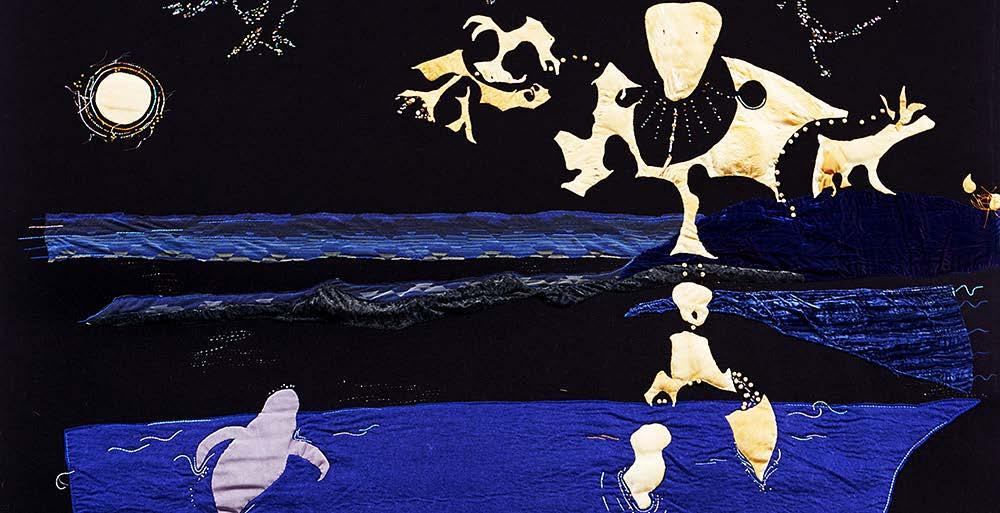
She said she chose this project because she wanted to go into the digital realm of art, and because she wanted people to see the time and effort it takes to make one of her wall-hangings. She called the process “meditative,” which she hopes translates through the piece and to the observer.
Through her art, Moorhouse hopes to create conversations. “Art is the conversation. The artist starts that conversation from the factors that come into their lives,” she said.
necessary.”
“I think it's quite important to keep the dialogue open between Indigenous people, all of the Indigenous peoples, but also all the non-Indigenous people [and] all of the other Canadians here…. I'm so proud to be here in the University of Victoria, because it opens up conversations that not very many students are aware of early Canadian history, because Indigenous history [and] Indigenous art [were] not one of those subjects that was deemed
“Every piece is a different conversation,” she said, and the materials help shape the narrative. “Every different material [has] a different texture, and every texture has a different tale.”
Moorhouse’s work is largely made through upcycled and repurposed materials, as she finds use and beauty in imperfect materials. “An imperfection is not an imperfection. It’s just life. Life is not perfect.” She crafts her pieces to have a level of ambiguity for observers to discover
the “multiplicity” of meanings. Her pieces are all hand made, without the use of any digital embroidery or beading. One piece, Pure Energy, took her almost a year to make.
Moorhouse’s current project, which you can see if you drop into the Taqsiqtuut Indigenous ResearchCreation lab, is a time-lapse piece, showing the process and effort that goes into making one of her wall-hangings.
Moorhouse told the Martlet she started this piece this past August, and that it will be the main piece of her PhD thesis.
“I try to offer gifts of spaces, of contemplation, and peace for yourself, because that's the frame of mind that I work in…. So when I create my piece, I feel whole with the world. I feel good with the world. I try not to take any negativity with me. I try to let people have a space to find their own way. And then move on to the next conversation.” Students and community members who wish to talk to Moorhouse about her art can drop into the Taqsiqtuut Indigenous Research-Creation lab from 10 a.m. and 4 p.m. Mondays through Thursdays until March 27. Moorhouse is also giving her Living Artist, Living Art talk at Sŋéqə ʔéʔləŋ
VicPD increases presence around Jewish community sites following recent synagogue attacks in Ontario
Views from the Jewish community in Victoria are divided as VicPD increases presence
ABIGAIL FISHMAN SENIOR STAFF WRITER
The Victoria Police Department (VicPD) has increased patrols around Jewish community spaces in the city following recent synagogue shootings in Toronto, Ontario, a move intended to both reassure local residents and address safety concerns.
In a social media post on March 8, the department maintained that there is “no known threat” to the community at this time. VicPD inspector Jan Malinowski said the increased presence came after members of the local Jewish community expressed concern following the attacks.
“There was a decision made on behalf of our department to do that, because there [were] members of the Jewish community that did call us that were concerned about their safety, specifically at synagogues,” Malinowski said. “We decided to do some proactive work in the two synagogues that are in our area.”
Malinowski said that these patrols will occur on regular shifts, and that there will be no overtime involved. “We only did it when time permitted. So that's what we would call a proactive patrol.”
“We get requests like this all the time,” she said, explaining that the department often increases visibility around communities when events elsewhere raise safety concerns.
Malinowski said that VicPD also did
proactive patrols recently during Ramadan in response to requests from community members.
Ed Fitch, chair of the Jewish Federation of Victoria and Vancouver Island’s community security committee, and a retired Canadian Armed Forces majorgeneral, said the stronger police presence reflects longstanding collaboration between local Jewish institutions and law enforcement.
“That’s huge,” Fitch said about the increased police presence, “It’s really the fruit of our labours in building relationships with the police.” Fitch said that local Jewish communities have also focused on strengthening their own preparedness in recent years, particularly following the Oct. 7, 2023, attacks in Israel and the global rise in antisemitic incidents that followed.
“People were concerned,” he said, describing reactions within the community after Oct. 7. However, Fitch also said fear itself should not dominate the response to hateful attacks.
“I don’t feel afraid,” he said. “If we feel afraid, then the terrorists win... Somebody who drives by even an empty synagogue building at night and fire shots into the building. They're pretty sure they're not going to hurt anybody, but what's their intention? It's to terrorize. I'm not falling for that.”
Instead, he encourages community
members to focus on vigilance and cooperation with authorities. “Take the fear or concern and turn it around and do something positive,” he said, urging people to both stay aware of their surroundings and report suspicious behaviour. Local synagogues and organizations have also developed their own volunteer safety initiatives. According to Fitch, trained volunteers help monitor events and facilities, serving as additional “eyes and ears” for potential safety concerns, while maintaining communication with police.
Rabbi Lynn Greenhough of Kolot Mayim
Reform Temple said security measures have increasingly become a reality for Jewish congregations, and shared the frustration that she feels from having to abide by these measures.
“What other religious institutions? What churches? What mosques even require 24-hour security, locked doors?” she asked. Greenhough said the increased security measures can feel at odds with the traditional openness of religious spaces.
“It kind of defeats the purpose of who you are to lock your door against the world, but that’s where we’re at,” she said.
While police presence is intended to signal support for Jewish safety, perspectives within Victoria’s Jewish community on the necessity of increased security are not uniform.
ilan Handelsman, co-chair of the
Congregation Emanu-El synagogue safety committee, said reactions to increased patrols vary among community members.
policing is the best response.
GSS fee referendum questions pass, cutting funding for WUSC UVic
Grad students file a formal complaint, arguing the GSS's referendum was 'substantially unfair'
RUBY HARRIS SENIOR STAFF EDITOR
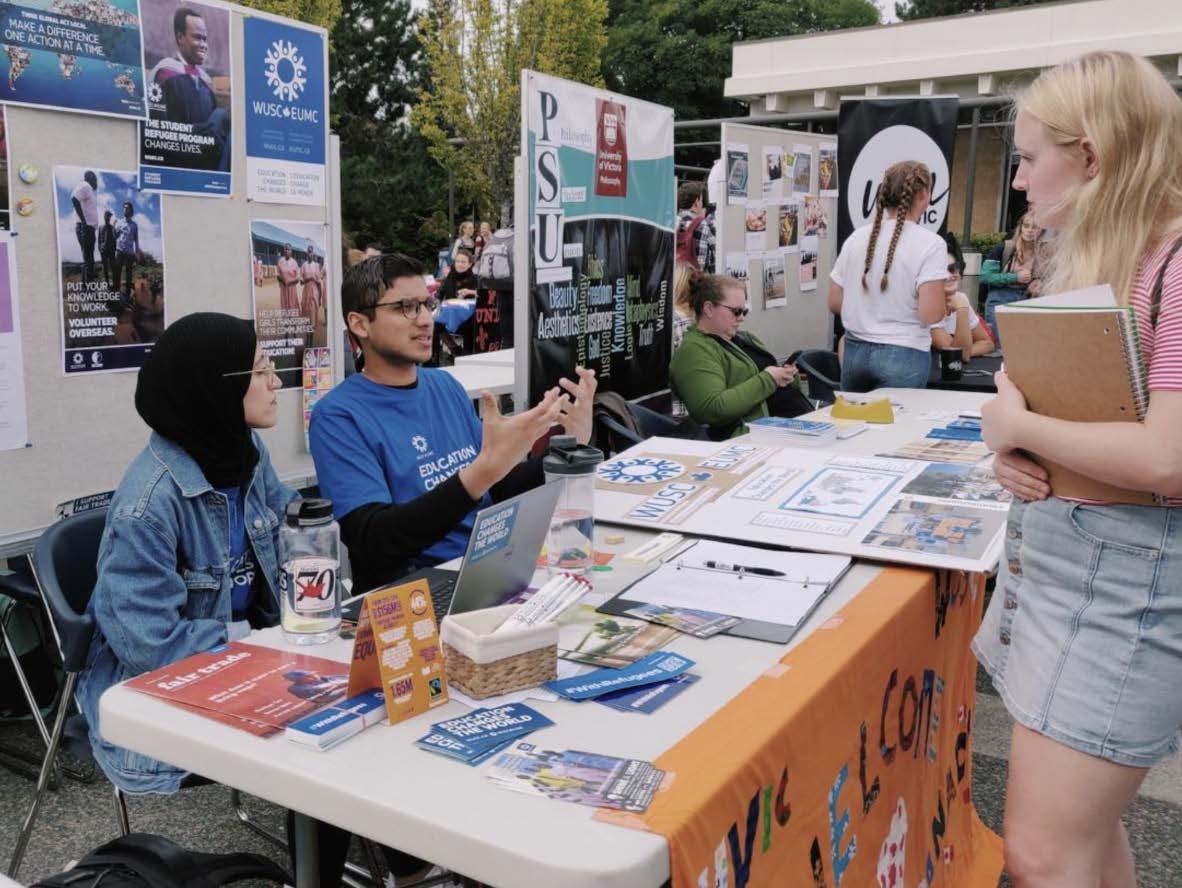
In the most recent Graduate Students Society (GSS) election, almost two-thirds of voting graduate students supported a referendum question to cut funding to World University Service Canada (WUSC) UVic — a student group that sponsors refugee students at the university — by $4 per graduate student.
their elections saw 15.3 per cent turnout last year, 16.0 per cent in summer 2024, 11.1 per cent in spring 2024, and 0.91 per cent in a 2023 referendum.
In a statement, Clarke said she does not believe the result reflects the views of students as a whole, citing the low voter turnout, and suggested many students may not have understood the referendum questions.
referendum FAQ that the students say framed WUSC negatively, and did not have any input from the “no” campaign.
“There are some members of our community who would feel safer [with increased police presence], and there are some members of our community who would rather not,” Handelsman said.
He said that in recent years, Victoria has seen antisemitism become more visible. “We have seen an increase in antisemitic and blatantly antisemitic graffiti on our building,” he said, noting that community members have also reported hateful comments online.
At the same time, he emphasized that he is not aware of incidents in B.C. where Jewish residents’ physical safety has been directly threatened.
Not all members of Victoria’s Jewish community, however, agree that increased
Cory Greenlees, a member of the Victoria chapter of Independent Jewish Voices Canada — a grassroots organization that advocates for “justice and peace for all in Palestine-Israel — told the Martlet that “increased police presence around synagogues or other Jewish centers concerns [him].” He questioned if the local Muslim community is also receiving increased protection against Islamophobia and the threat of anti-Palestinian attacks. Despite some concerns, many community leaders say Victoria remains a supportive place for Jewish residents.
“Victoria is a wonderful place for Jews to live,” Fitch said. For now, VicPD says the additional patrols will continue as a part of its regular policing efforts while the department monitors the situation closely.
Majority of Saanich Council vote against student advocacy resolutions during March 2 meeting
Councillor Colin Plant, with the support of majority of council, vote against considering student food bank grant and reduced ferry fares for post-secondary students
DECLAN SNOWDEN MANAGING EDITOR
Saanich city council will not be endorsing student advocacy resolutions — including a resolution to support a student food bank grant and $10 ferry fares for postsecondary students — following an objection that they fell “outside council's jurisdiction.”
On March 2 2026, Saanich city councillor Teale Phelps Bondaroff brought to council resolution suggestions to call for the Association of Vancouver Island and Coastal Communities (AVICC) and Union of British Columbian Municipalities (UBCM) to advocate to the province to support a student food bank grant, which would provide $1.50 per student to B.C. post-secondary student unions to support campus foodbanks, and $10 ferry fares for post-secondary students.
Both the student food bank grant and $10 ferry fares are initiatives of the BC3 Coalition — which includes the student unions from UVic, UBC, UBCO, and SFU — according to Michael Caryk, interim director of campaigns and community relations at the UVSS.
Councillor Colin Plant objected to the student food bank grant motion, on the grounds that it was “outside of council’s jurisdiction.” Dean Murdock, mayor of Saanich and chair of the council, said he believed the motion was appropriate, saying that, because it is an advocacy resolution it “does not necessarily have to be germane to the District of Saanich.” Plant then challenged the chair's ruling.
Councillors Susan Brice, Judy Brownoff, Mena Westhaver, and Karen Harper joined Plant in challenging the chair, overruling Murdock and stopping Phelps Bondaroff’s motion from being considered
by council.
In a statement to the Martlet Phelps Bondaroff said he supported the will of Council, but that he believed advocacy for provincial support for food banks is within the district's jurisdiction.
“This situation is a little puzzling, as the issues directly impact thousands of our residents, who are themselves clamouring for action. In my mind, the very least we could do is have a short discussion about the issues. It is doubly puzzling given council's history of adopting UBCM resolutions on a wide range of issues and given the fact that other municipalities have advanced these resolutions,” he said. After this challenge to the chair, Murdock said it set “a precedent about what shall be considered as appropriate in the chamber, even as it relates to resolutions.” Plant, however, said he “[does] not concur it sets a precedent. Any member of Council can 'object to the question' on any motion put forward.”
Phelps Bondaroff shared a similar sentiment to Plant, telling the Martlet that how council handles future motions and draft resolutions will be up to the chair and the council of the day, and that he is not aware of any precedent-based procedures that would prevent further resolutions from being discussed.
Following Plant’s objection to the student food bank grant resolution, Phelps Bondaroff presented the resolution suggestion regarding $10 ferry fares for post-secondary students. Plant again objected, and due to the previous challenge to the chair, Murdock ruled Phelps Bondaroff’s motion out of order. Phelps Bondaroff challenged the chair, but the majority of councillors did not support Phelps Bondaroff. Councillor Zac de Vries, however, voted in favour of Phelps
Bondaroffs challenge.
In the past, Saanich city council has supported advocacy motions for issues outside its jurisdiction. On June 9, 2025, council unanimously supported draft resolutions for the Union of British Columbia Municipalities (UBCM) to advocate for the province to adopt European elevator standards, and to declare housing a human right.
The Martlet asked Plant what distinguishes the student food bank grant and $10 ferry fares resolutions from other resolutions outside municipal jurisdiction that he has previously supported.
“When issues are largely regulated by other orders of government and will not directly impact Saanich operations and strategic initiatives [and] priorities, I tend to not support spending Council time debating such matters,” Plant said. Plant also told the Martlet that “one resident spoke asking us to not advance these motions,” with no one speaking in favour of them at the meeting.
He said that if "significant community input were to be received” he could change his perspective.
Solomon Yi-Kieran, vice president external affairs of the UBC Alma Mater Society (AMS) and Coalition of Progressive Electors Vancouver (COPE) candidate for a Vancouver city council nomination, told the Martlet there had been input from the community.
“We worked closely with Councilor [Phelps] Bondaroff, we also worked with the UVSS on this. And what I can definitely say is there has certainly been input from the community,” Yi-Kieran said. “The student union representing a postsecondary institution in your community is pushing for it…. That's a pretty big part of the community.”
Plant noted that the resolutions “were
already going to advance to the AVICC for debate and did not require Saanich's endorsement."
The resolutions have received support in other municipalities, such as the District of Oak Bay, which supported both. Phelps Bondaroff said he was “grateful to Oak Bay Councillor Carrie Smart, who working with student advocates, took the lead on drafting these motions,” and that he is “pleased to see the motions heading off to AVICC.”
He also told the Martlet that the goal for advancing these motions in Saanich, even though they had already been supported by Oak Bay, was to make them appear as “joint resolutions” on the AVICC agenda, claiming resolutions supported by multiple municipalities carry more weight.
Caryk told the Martlet he believes “municipal leaders” have the opportunity to help students advocate for their needs.
“As a Saanich resident myself … I believe our representatives need to make every effort possible to support students and student initiatives with affordability, with making the overall community a better place to access education,” he said.
Plant told the Martlet he is sympathetic to the challenges facing students and believes “our society needs fair and responsive provincial and federal taxation systems that provide the funding necessary to deliver services that meet the needs of the most vulnerable in society,” but he “believe[s] advocating to the province to fund a UVIC student food bank is something the UVSS and UVIC should advocate for, not the District of Saanich.”
The $1.50 food security grant BC3 is campaigning for is notably not specific to the UVSS foodbank, said Caryk, and would benefit institutions and students across the province.
Caryk acknowledged that ferry fares and food bank grants themselves are outside of municipal jurisdiction, but still believes municipalities have a role to play.
“I think a key part of municipal politics is to call out the province when they are not doing their job within things that [are] in their jurisdiction…. I just think it’s ridiculous if you don’t want to speak up when the province is falling short on supporting the people they need to support.”
Yi-Kieran shared a similar sentiment, stating that advocacy to the province is “a core part of what municipalities are supposed to do.” Yi-Kieran believes that Saanich advocating for reduced student ferry rates is within their jurisdiction, particularly as it is the municipality that houses UVic.
Phelps Bondaroff said that “as councilors, [they] have a job to bring forward concerns from residents,” and that when the solutions lay outside council's jurisdiction, they can turn to advocacy.
“I got my start doing student politics at the University of Calgary Students' Union … I am proud to stand in solidarity with students and student advocates, and to work with them to fight for [these] issues like improving transportation affordability and improving food security. I worry that too often the voices of younger people are not heard as much by Council, and this impacts the decisions that we make,” Phelps Bondaroff said. “I will be supporting these resolutions at AVICC this spring.” Plant said he would welcome the opportunity to talk to any UVic student about “issues that are important to them and are related to the District of Saanich.”
The 2026 AVICC convention will take place in Victoria from April 24-26.
The election period was held from March 4 to 6, where graduate students voted on a number of fee referendum questions to determine the allocation of graduate student fees. On March 6, Simply Voting Inc. verified the results; all referendum questions passed.
Graduate students voted to reduce the WUSC fee from $5 per term to $1 per term for on-campus members. The fee supports WUSC’s local UVic chapter in resettling refugees to study at UVic through its student refugee program.
According to Dr. Marlea Clarke, a political science professor involved with WUSC UVic, the result means the organization will be forced to reduce the number of refugees it can resettle by one or two, unless other funding is secured.
In a statement emailed to the Martlet a UVic spokesperson also said that the fee decrease will lead to fewer students being sponsored. They noted that WUSC UVic will be able to sponsor three students in 2026, down from the four students they sponsored in 2025.
WUSC UVic said in a statement on its Instagram that the fee decrease will result in an approximately 17 per cent reduction in the total funding obtained via student fees next year, or about $19 416. WUSC UVic also receives funding from the university, and $2.50 per full-time undergraduate student through the UVSS.
A total of 217, or 62.2 per cent of participants, voted in favour of reducing the WUSC fee, while 132 voters, or 37.8 per cent, voted against.
Eight voters, or 2.2 per cent, abstained, for a total of 357 votes cast. According to the election results, 2 921 graduate students were eligible to vote, but only 12.2 per cent cast a ballot.
Quorum for GSS referenda is five per cent of membership, which was met, although turnout was lower than the previous two elections. GSS told the Martlet
Notably, 11.5 per cent of voters opposed eliminating the University 101 fee — a fee collected to fund a free, non-credit program for community members that was discontinued by UVic in summer 2025. A similar referendum question at the UVSS election — which also saw low turnout — passed, with 4.7 per cent of undergraduates voting against it.
Clarke said she found the passing of the WUSC UVic fee decrease particularly disappointing, stating that graduate students should understand both the importance of education and their own privilege in accessing post-secondary education.
Dr. Scott Watson, another political science professor involved with WUSC UVic, expressed a similar view, saying he does not believe the result reflects general support for refugees on campus.
“The results show that if you have a group who is motivated to cut refugee funding, with an electoral model that produces very low voter turnout, you can pass measures that do not actually have broad support,”
he said in a statement.
In the statement, Watson stressed his belief in the privilege of pursuing postsecondary education at UVic and the importance of extending that opportunity to others.
Critics of the result, however, argue that the referendum was conducted in a flawed manner, in a way that may have advantaged the “yes” side.
Following the referendum, a group of graduate students filed a complaint against the GSS seeking to overturn the result, arguing the referendum process was “substantially unfair.” They argued the GSS Executive Board improperly took an official “yes” stance on the fee decrease question, despite no clear policy permitting this, creating an imbalance in power and resources between the two campaign sides.
The complaint also cited the board’s use of communication channels, including a
These students further argued that presenting the questions as a cost-neutral package — that the referenda would result in no increase in fees if all questions passed, emphasizing cost-of-living pressures — limited voters’ ability to assess each question independently and did not fully explain potential fee outcomes if some measures failed.
They argue these factors violated GSS policy requiring fairness and impartiality, and called for the WUSC referendum result to be invalidated.
In a statement, the GSS said all campaign rules were publicly available and “were enforced.” It said all campaigns were able to print posters at the GSS without cost. They said that according to the GSS’s campaign guide, their Electoral Officer maintained the right to monitor campaigning behaviours on social media by approving campaign materials that may be advertised to the public.
The GSS said the executive board formed a “yes” campaign for the referendum, but the GSS as an institution did not campaign.
They added that board members are elected students and are permitted under GSS policy to campaign.
They said the GSS’s communications coordinator regularly posted about the referendum and election in accordance with its bylaws, but that these posts — such as “vote now” and “nominations now open” — did not promote a specific voting outcome.
According to the GSS, the Electoral Officer is reviewing materials submitted during the appeal period, and the society cannot comment on ongoing appeals.
Though WUSC UVic will face challenges following the fee decrease, this is not the end of their work. Those involved with WUSC encourage students to continue getting involved through volunteering, supporting fundraisers, and staying informed about issues impacting refugees. Watson noted that volunteering for WUSC “is not always easy work, but it is extremely rewarding.”
Charlie Edgett, a co-coordinator with WUSC UVic, said the volunteer team plans to seek increases to the undergraduate and graduate levies in the future, while continuing to raise awareness among
At least two attacked on campus in February by aggresive owl
Students advised to be vigilant near
Jamie Cassels Centre following owl attacks

AMELIA WATSON CONTRIBUTING WRITER
A handful of owl attacks occurred on campus last month, prompting UVic to put up a sign outside of the Jamie Cassels Centre, warning students and staff about an aggressive owl.
On the UVic subreddit, — a sub community on the social media platform Reddit — some users have reported being attacked by the owl. “I just walked by Clearihue … and suddenly felt a blunt force hit/scratch the back of my head .… I turned around after getting my footing to see an owl on a branch just above me staring at me,” one user said.
“This happened to me yesterday. The owl's wing grazed my face. Right outside Clearihue,” another user said.
A UVic spokesperson told the Martlet that “Campus Security received two reports of an aggressive owl on campus in February.” At the time of publication, it is
not known how many individuals have been attacked by the owl(s) on campus, as some may have gone unreported.
On Feb. 26, UVic called BC SPCA’s Wild Animal Rehabilitation Centre (Wild ARC) to come to campus and remove an owl due to a window strike that occurred by the McPherson Library, a Wild ARC team member told the Martlet
The Wild ARC team member confirmed that the owl is currently still in the care of the rehabilitation center. However, they said that the owl taken in by Wild ARC is likely not the owl responsible for the attacks on campus.
“The barred owl that there are reports of being aggressive on campus seems to be a different individual. This time of year is mating [and] nesting season for barred owls. It is likely protecting a nest, which could appear like aggressive behaviour towards people passing underneath or nearby,” they said.
Mike Motek, coordinator for the Rocky
Point Bird Observatory’s Nocturnal Owl Monitoring project, also suspects it is a barred owl behind the attacks. Barred owl nesting season runs from March through June, Motek said in an emailed statement, and if a great horned owl — another species sometimes seen on UVic’s campus — were to attack, more serious injuries, and possibly a visit to the emergency ward, would be expected.
Motek told the Martlet that community members should avoid areas with posted warnings.
“We ask our community to stay aware, respect these animals, and help keep them healthy by never feeding them,” said UVic spokesperson.
A video provided to the Martlet showed three owls on campus by the Fraser Building, but it is unclear if any of them are responsible for the attacks, as the warning sign was posted near Clearihue and the Jamie Cassels Centre.

students about the organization’s work. In light of the fee decrease, Clarke suggested the university consider waiving fees for the first two years of degrees for students sponsored by WUSC.
In a statement to the Martlet UVic said it supports WUSC UVic through financial contributions, “leadership and administration of the program with staff and faculty advisor roles,” and that the Department of Continuing Studies waives the fees for WUSC students who are participating in their English language programs.
The university said its support reflects its values of shared global responsibility, equity, and access to education. It is unclear how this support may change in the coming years.
However, Clarke said “this referendum will definitely tarnish UVIC’s reputation in the WUSC national community.”
“I think the GSS executive should be ashamed of their recent work to defund the one group at UVIC that is working so hard to help increase the number of refugee students that Canada takes in,” she said.
“It’s hard to see this club that we all love, and the impact we make, be threatened for reasons that still don’t fully make sense to us. There is still a sense of confusion around the motivations for the referendum,” Edgett said.
She added that she views Victoria as a community grounded in respect, solidarity, and compassion, but said the referendum
has shaken that perception by reducing support for a cause she says does tangible and positive work. While she acknowledged the cost-of-living concerns highlighted in the referendum, she said it is disappointing not to use the privilege UVic students have to support others. However, she added that “this situation has rallied us in a way and has forced us to think about the future and how we can grow our club.”
WUSC UVic’s club co-ordinator, Oliver Hopewell, said in a statement that “our disappointment should not be mistaken for defeat. We are emboldened by the referendum results to continue promoting awareness of, support for, and engagement with WUSC on UVic campus.” While it remains unclear what the future of refugee support and resettlement will look like at UVic, WUSC remains committed to creating educational opportunities for refugee students at UVic.

Photo
Photo by Sabina Mendoza-Brown.
Choosing sobriety since Dry January
Whether you may have completed a sober month to begin the new year, evidence supports the reduction of alcohol
GABRIEL LUNN SENIOR STAFF
WRITER
For some of us, the anticipation and excitement at the beginning of the new year may have faded, and we are back to our regular habits. To push ourselves toward better habits and start the year strong, many adults participate in “Dry January.”
“Dry January” is a month-long foray into teetotalism, the practice of completely abstaining from alcohol. The commitment usually follows the booze-heavy wallop of New Years Eve, where many partygoers are known to enjoy themselves in excess.
However, a dry month does not have to be exclusive to the start of the year. Some people commit to a Sober October, while others can adopt their own variations, such as Maltless March, Austere August, or Just Juice July.
Whether you regularly partake or might have gone a bit hard recently, a dry month is a way to reset and reevaluate your relationship to alcohol — one of the most common and readily available intoxicants in our culture.
Alcohol is often thought of as the “social lubricant” that people rely on while getting together with friends and loved ones, or simply to “blow off steam.”. To an extent, the conscious consumption of alcohol can serve a purpose, and can be part of a reasonably healthy social life.
But in recent years, research on alcohol’s profound impact on the long-term health of even casual drinkers has begun to reveal its real costs.
The International Agency for Research on Cancer has classified alcohol as a Group 1 carcinogen — a substance that can cause or increase the risk of cancer — since 1987, placing it in the same category as tobacco, processed meats, radiation, and asbestos. Alcohol has been linked to causing at least seven different forms of cancer, including the colon, breasts, and multiple components of the gastrointestinal tract.
According to Statistics Canada, heavy drinkers were previously defined as men who consume more than five units of alcohol on a single occasion at least once a month, and women who consume more than four.
For context, a single unit of alcohol in Canada is defined as 1.5 oz of distilled spirit (40 per cent), 12 oz of beer/cider/cooler (5 per cent), or 5 oz of wine (12 per cent). Since January 2023, that number has been reduced to as few as two units per week, with higher levels linked to increased long-term health complications.
Heavy alcohol use results in poorer sleep quality, increased risk of anxiety and depression, as well as broader impacts on the body’s organs and its ability to process toxins. Any less alcohol in your regular diet will have health benefits for you.
It is important to note, however, that for anyone who consumes alcohol frequently or may be struggling with severe alcoholism, quitting abruptly can be dangerous and lead to immediate health complications. Dr. Eric Andrew Collins, an assistant professor in the School of Health Studies at Western University, wrote in an article on Dry
from our diets no matter the time of year
January and consumer willpower earlier this year that “attempting abstinence” for heavy or chronic users “is essentially asking the driver to stop their speeding car with worn-out brakes.”
Given how prominent drinking culture is, whether in North America or in our own city (Victoria News reported in 2021 that Victoria had the highest concentration of restaurants, pubs, and bars per 1 000 residents in Canada), many people remain reluctant to accept that consuming alcohol, even in “reasonable” amounts, can have serious consequences.
As a former liquor sales manager of mine said, “I’m here for a good time, not a long time.” Though many, if not most, don’t share this sentiment, it reflects the normalization of a certain attitude towards alcohol and health outcomes in drinking culture, where regular drinking is not just seen as reasonable, but preferable.
There has yet to be a significant cultural shift to convince most consumers to change their habits, but there is growing evidence that young people are consuming less alcohol than ever before. A 2024 Statistics Canada survey found that sales of alcohol declined by 3.8 per cent to 2 988 million litres in 2023–2024,the largest volume decline ever recorded since the agency began tracking alcohol sales in 1949. The same survey found that on average, Canadians of legal drinking age purchased the equivalent of 8.7 standard alcoholic beverages per week in 2023/2024, down from 9.2 the previous fiscal year.
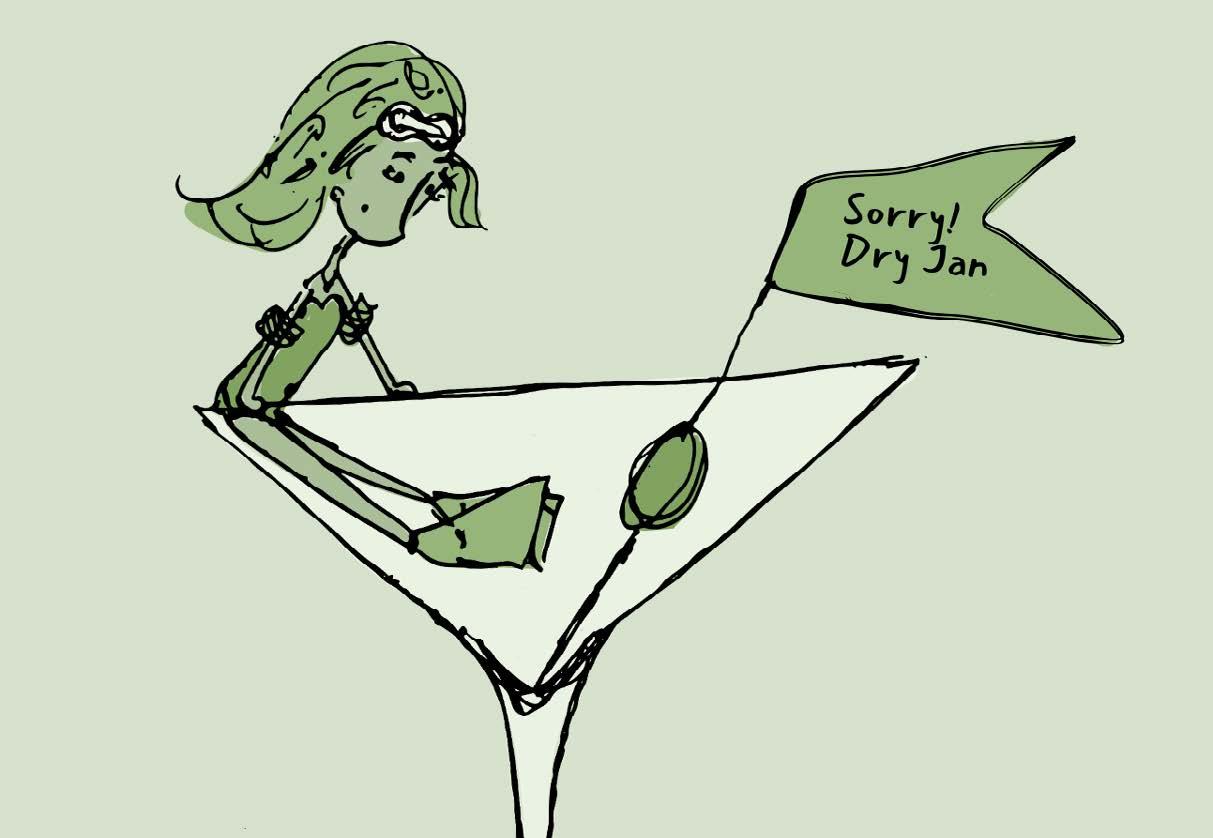
Similar trends were found by the UVic-based Canadian Institute for Substance Use Research (CISUR)’s BC Alcohol and Other Drug (AOD) Monitoring Project, which recorded a decline in per capita sales of pure alcohol (ethanol) for people aged 15 and older, for the third consecutive year, from 8.82 litres in 2022/23 to 8.0 litres in 2023/24 — a drop of 0.82 litres per person.
According to their report: “This represents the lowest level of per capita ethanol sales since we started monitoring per capita alcohol sales in BC in 2001/02, and also the largest single-year drop we have seen since beginning our monitoring.”
Even on our own campus, researchers at UVic are involved with promoting alcohol awareness and reducing the negative health impacts on Canadians. Recently published research aims to reduce alcohol
related cancers with a combination of methods such as minimum unit pricing and cancer warning labels on containers.
If you’re curious about cutting back your own intake, strategies include “zebra striping,” or alternating between non-alcoholic beverages and boozy drink throughout an evening. Many liquor establishments offer non-alcoholic beers as well as zeroproof wines, spirits, and cocktails, making this strategy a fairly accessible one. Ultimately, alcohol and its prevalence are unlikely to leave our culture anytime soon. In the meantime, it is important to recognize when drinking has gone from moderate to excessive, to support ourselves and one another in efforts to reduce or quit alcohol use, and to make choices that minimize its impact on our lives.
Attacks on access to information laws are attacks on democracy
Ontario is proposing changes to FOI legislation, which would keep the records of the province's most powerful offices secret
DECLAN SNOWDEN MANAGING EDITOR
Ontario is proposing a change to Freedom of Information (FOI) law — law which allows members of the public to request government documents, such as reports, emails, briefing notes, memos, and contracts — that would make the records of the premier, cabinet ministers, parliamentary assistants, and their offices, secret — and thus unobtainable by FOI requests.
This isn’t the first time provincial governments in Canada have changed legislation, making it harder to access their documents. In 2021, B.C. passed Bill 22, which introduced filing fees for submitting FOI requests and was criticized as posing barriers to accessing information.
Access to information is a crucial part of democracy. The ability to obtain government documents and understand the processes going on behind the scenes is an invaluable tool in holding them accountable.
Legislation like this, that seeks to make information less accessible — or even impossible for certain offices
— jeopardizes our ability as journalists’ to hold the government accountable and report on matters of public interest, and undermines democracy as a whole by making information less accessible to citizens.
As they stand, the processes for obtaining records via FOI request are already flawed, oftentimes taking several months to receive the documents you request; when you get them back, they are often heavily redacted, further drawing out the process of uncovering information that serves the public interest, while also racking up high processing fees.
In Ontario’s case, this proposed legislation risks normalizing government secrecy, and could set a precedent for other provinces to follow suit.
This legislation comes at a time when access to information, and the work of real journalists, is more important than ever. Across the globe, we are seeing constant attacks on journalism, the consolidation of media under corporate ownership, and rampant disinformation.
In Canada, threats to access to information often coincide with efforts to hide government scandals.
In 2015, the B.C. government, then under the BC Liberal Party, was caught in the “triple delete” or “delete, delete, delete” scandal, where a staffer for the transportation ministry, George Gretes, came under controversy for allegedly deleting emails and records surrounding the Highway of Tears — a 716 kilometre stretch of highway between Prince George and Prince Rupert, known for the large number of Indigenous
women and girls that have been murdered or gone missing on it. Gretes also, allegedly, lied under oath.
“Triple deleting” entailed moving an email to the computer’s “deleted” folder, deleting it from that folder, and then manually overriding a backup, which would allow the system to recover the deleted email for up to 14 days.
The issue was pervasive, with highpower individuals, such as Michele Cadario, the deputy chief of staff in the premier’s office, allegedly massdeleting emails on a daily basis, according to the privacy commissioner’s report. The scandal came to light after a whistle-blower, Tim Duncan, former executive assistant to the minister of transportation and highways, took the matter to the privacy commissioner after being told to “triple delete” emails he had related to the Highway of Tears. In Canada, governments are supposed to keep all “non-transitory” records — decision records, instructions, advice, and documentation of policy matters — but, according to the commissioner’s report, Cadario did not retain a single email she had ever sent from her government email address. Instances like triple delete are an affront to government accountability and transparency, and Ontario’s
Thank you for supporting our referendum question More than a thousand of you voted to approve our fee increase. Here's what comes next!
Afew weeks ago, our referendum question asking for a $2 fee increase per full-time student, and half that for part-time students left our hands, and was sent out via emailed ballot for undergraduate students at UVic to vote on. According to the now official results released by UVSS Elections, 2 156 students, or 11.9 per cent of the student body, turned out to vote. We at the Martlet want to extend a sincere thank you to everyone who turned out from March 4–6 to participate in the democratic process here at UVic. We are especially grateful, of course, to the 55.3 per cent of you, or 1 043 voters, who recognized the importance of independent student media on your campus and voted “yes” on our question. Through the campaign period, we received many heartwarming messages from students who understand and appreciate the work we have the privilege to do every day on the campus we love. We are also grateful to the 52 per cent of you who voted “yes” to the UVSS CPI adjustment question, tying student fees to the annual percentage change in the all-items Consumer Price Index for B.C. to a cap of 3 per cent per year. This referendum question passing will also make a huge difference for all the groups and outlets in the SUB, ourselves included, enabling us to keep up with rising annual costs due to inflation.
In a time and place like Victoria in 2026, where the costs of living and pursuing post-secondary education are so high, that extra $2 per full-time student will go right back into the pockets of the students you rely on to bring you reliable campus community news. Your votes have ensured we will be able to provide more, better-paying, on-campus jobs to students, deepen our reporting on issues that matter to students and the community, and lessen our reliance on non-guaranteed sources of income like ad sales and grants. As we approach our 80th volume, this result means the continued existence of the Martlet for many years to come.
As thankful as we are to the 1 043 of you who voted yes, we would also like to extend a thank you to the 44.7 per cent of you who voted “no,” both for participating in the process, and for showing us what we already know to be true that there’s always room for us to improve.
We’re choosing to take your vote as a challenge: to do better, more impactful reporting, and to tell more stories that matter. We hope we
and importance of independent journalism on your campus through our next volume, and and with many volumes to come. Our fee increase takes effect in September 2026. This means that, come September, we’ll be growing our team and making a number of big changes. So, thank
team. We’re very excited about this next chapter, and we can’t wait to share it with you all.
Vikes Women's Rugby is flipping the script on rival teams and setting a
new standard for success
The team capped off their season with a gritty win against UBC, elaving the ptich with a
13-2 record
ELLA BAIRD CONTRUBUTING WRITER
The Vikes women’s rugby 7s team closed their season by defeating their rivals, the UBC Thunderbirds, 26-5. This triumphant win was achieved on the very same field where the 15s team previously suffered a bitter loss to UBC in the U Sports championship in November 2025.
Finishing the Canada West 7s series with a 13-2 record over the span of three tournaments, the team secured the silver medal. The secret to their 5-0 tournament sweep was not just tactical — it was a team effort to let go of intense pressure, and play to enjoy the game together as a unit, according to Head Coach Brittany Waters and third-year Fly Half/Centre Maggie Mackinnon. Returning to the Thunderbird Stadium to face UBC carried emotional weight for the team.

newly proposed legislation isn’t any better. It’s just the latest in a long line of assaults on freedom of information, democracy, and journalism, and will make holding our elected officials accountable that much harder.
Ontario’s proposed changes come in the midst of the “Greenbelt” scandal — where the Ontario government attempted to open up protected areas to development, which allegedly favoured certain developers over others, potentially providing billions of dollars in increased property value for select land owners.
What’s worse in this case is that the proposed legislation would be upheld retroactively, meaning in-progress requests for the Premier’s and cabinet members’ records would
I find far too generous. This legislation is fascistic, dystopian, and abhorrent. Any restriction on access to information is an attack on our democracy as a whole. Weakening the freedom of information request — one of the most powerful tools in the public's arsenal — is an affront to democracy, accountability, and transparency, and it brings us one step closer to authoritarianism. Triple delete, Ontario’s proposed legislation, it’s all the same — an attempt to avoid any semblance of accountability for our elected officials, at the expense of our democracy.
Waters noted that revisiting the site of the previous loss for the 15s championship added extra motivation for the 7s team.
“There were some feelings going into that tournament, being on that same field … it's nice to have a chance to change the narrative,” said Waters. “It's always nice to win against your rival. We just tried to focus on what we are putting out on the field … and play for each other.”
Mackinnon emphasized that discarding stress prior to their games is a key to their success. “We play the best rugby when we are having fun … we might as well just give it our all and really enjoy it,” Mackinnon said. She said the team goes into every single game with a competitive mindset, aiming to “be brave.”
The team’s approach to view the game as an opportunity to play with joy and unity translated into a
dominant final match against UBC.
UVic’s standout performance across the final tournament resulted in Mackinnon, Ella O’Regan, and Vanessa Chiappetta being named to the Canada West Dream Team.
For players like Mackinnon, who have watched this team evolve, the program’s high expectations encourage them to battle for better results.
“We still feel like that is not enough … I express a lot of gratitude for the fact that we have such high standards for ourselves,” Mackinnon said regarding their silver medal.
“In those moments … we still want more and I think that keeps us pushing forward … even after amazing placements.”
With the Canada West 7s series concluded, the team’s groundbreaking performances have established a new legacy, as they look forward to the 15s season in the fall. “With 22

wins out of 25 games, we have never had that success before,” Waters said, adding that the incoming
Team mom and superfan Elena Cruz is fuelling basketball championships at UVic Cooking food for the men's team, and always showing up, she is a cornerstone in the team's success
ELLA BAIRD CONTRIBUTING WRITER
In the 2024–2025 season, the UVic Vikes men’s basketball team secured the national U Sports title.
After their celebration, the team members uplifted their greatest supporter, Elena Cruz, by gifting her a personalized national championship ring.
Cruz has been a dedicated admirer of basketball at UVic since her son, Shadynn Smid, joined the roster in 2022. The team says she shows unwavering support for all members, and that her passionate cheering can be heard in any gym that she steps into.
Going above and beyond her role as the team’s biggest fan, Cruz
prepares homemade food for the entire team after every game.
“They are working so hard for us, for the university. If I can make them happy … then I am happy too,” Cruz said. She noted that her culinary efforts take teamwork at home, adding, “My husband is so supportive … I would not be able to do it if it was just me.”
Fifth year forward for the Vikes, Ethan Boag, is one of the many players who have gotten to know Cruz over the seasons. He appreciates her presence — whether he is on the court battling for a championship, or with his team post-game, refuelling with Cruz’s comfort food.
“She is always the loudest fan out there,” Boag said. “It is awesome to
have a home-cooked meal … especially for guys who are far from home … every weekend.”
To show their appreciation for the work that Cruz does, the team got together and secretly designed a custom ring, engraved with her name and her son’s jersey number.
It was a unanimous decision to give her the ring, as a gesture of gratitude for the woman who provides the team with “constant support and constant love.” Love that, according to Boag, is “consistent, if we win or lose.”
“They appreciate me … and it meant so much to me that … they thought about me with this,” Cruz said. “I wear that ring every game.” For Cruz, her dedication to the team stems from a personal motherly promise that “no one will be hungry in [her] presence,” she said.

Illustration by Sage Blackwell.
players are
“stepping into a whole new standard.”
“This year, she always gives us fist bumps before the game with her ring on,” Boag said.
Photo via govikesgo.ca.
Photo by Ella Baird.
SPORTS
Graphic by Rae Dawson.















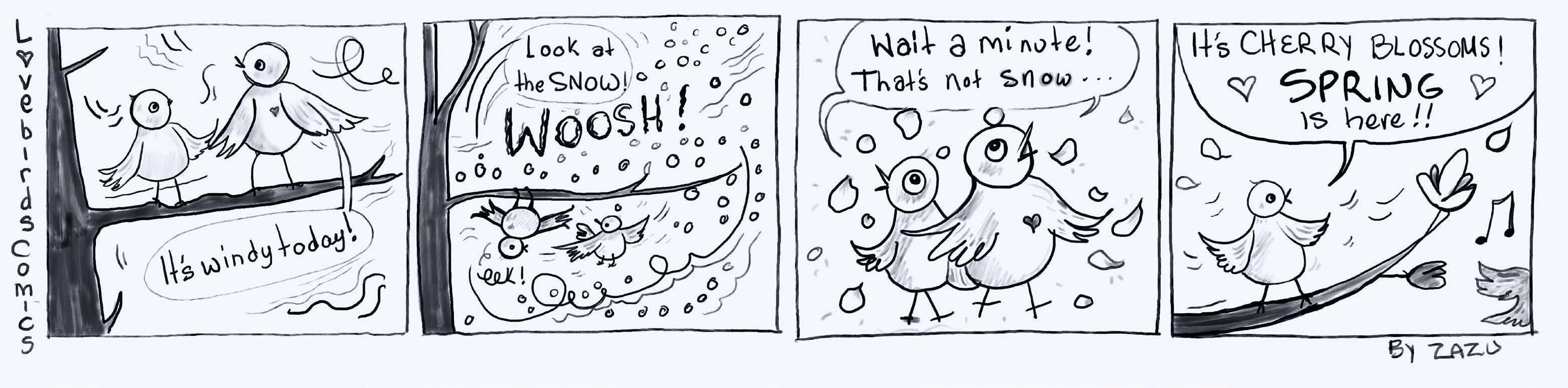


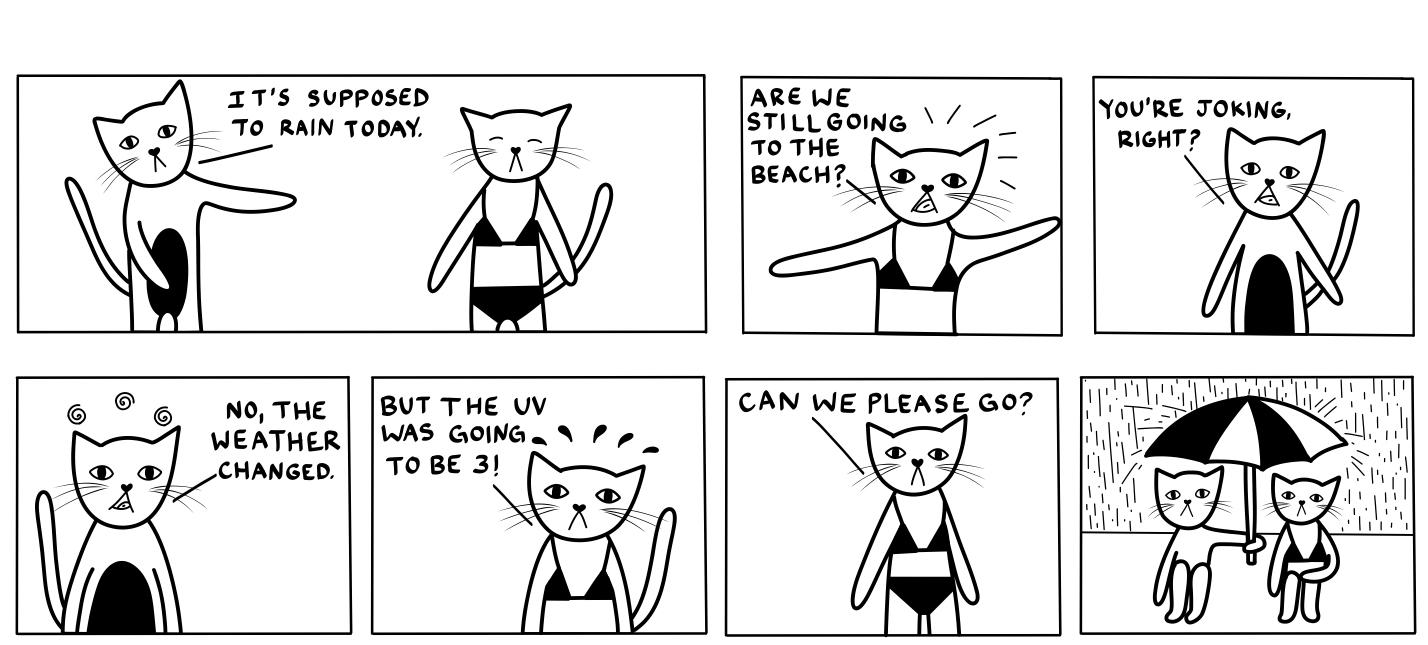
Comic by freyja zazu
weather warriar comic by sona eidnani
comic by kelstitch
ARTS & ENTERTAINMENT ARTS & ENTERTAINMENT
Two Rats Loving takes on Battle of the Bands finals
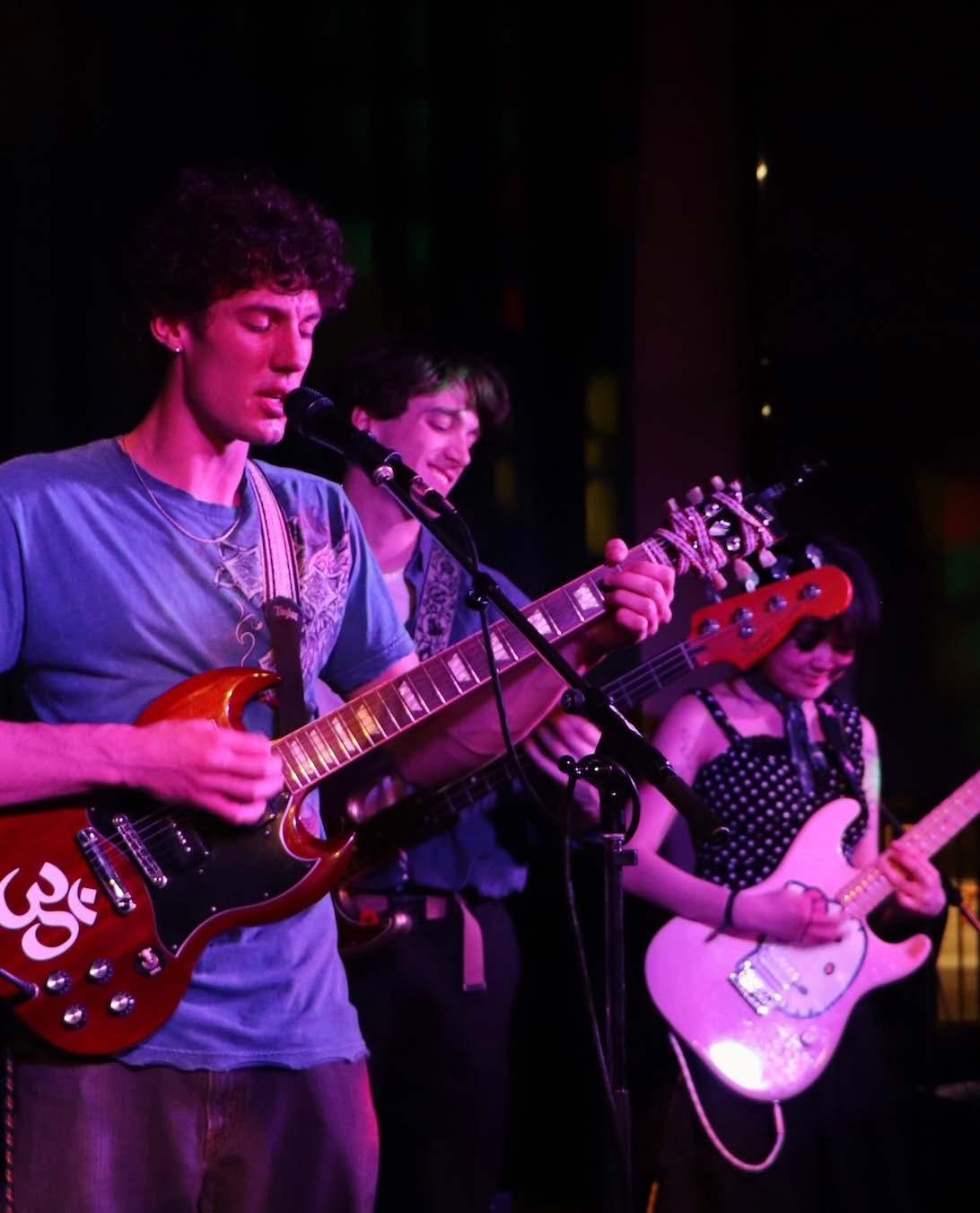
Macnaughtan is a second-year psychology student. Amidst their busy lifestyles, they still find time to practice and perform.
Two Rats Loving is a Victoria-based, multi-genre band, comprising three students, a tattoo artist, and a UVic alum. The members are Finlay Macnaughtan on keys, Cam Seward on bass, guitar, and sometimes vocals, Noah Jenkins, also on guitar, vocals, and bass, Will Ainscough on drums, and Erika Kim on guitar. While some members have been playing together since the beginning of the summer, the group of five officially began practicing in September. None of the current lineup was there for the coining of the name, which they told the Martlet a mutual friend came up with.
“We are quintessentially like a garage band, so we’re an amalgamation of a bunch of different genres,” Ainscough said in an interview with the Martlet
Two Rats Loving plays mostly indie rock; however, they draw inspiration from Latin, reggae, and jazz music. Jenkins takes online classes in music production and sound engineering at Point Blank Music School in Los Angeles. Kim was enrolled at UVic as a microbiology student, but now she tattoos at Ophidia Tattoo. Ainscough graduated from UVic with a Bachelor of Commerce and is navigating his life post-university.
Seward is a fourth-year civil engineering student, and

There are other worlds (They have not told you about): Seeing Run Ra in the Age of the Algorithm
BOWEN MACY CONTRIBUTING WRITER An Offbeat by CFUV review
Two Rats Loving made it past the first round of the Battle of the Bands, a competition for musical bands put on by Felicita's Pub, gaining them a spot in the semifinals and finals.
“We really pulled it together, pulled our socks up, and I think we delivered our best performance yet as a band,” Ainscough said. They’ve been working on their cohesion as a group for a while, and feel that their efforts paid off. The atmosphere at the Battle of the Bands helped Two Rats Loving to get into the performance as they played off the crowd’s energy and had a lot of fun.
“Even though it’s called Battle of the Bands, I don’t really feel like it was much of a battle,” Ainscough continued, noting that the music community is super supportive towards one another, and their audience that night was full of the other bands also competing.
The focus of the event, for Ainscough, was to watch each other jam out, rather than competing against each other.
For the semi-final round on March 6th, Two Rats Loving’s goal to “shake it up and deliver new stuff” paid off. They didn’t just regurgitate the same set; they played one of Kim’s original songs, the Phineas and Ferb theme song, and “Trap Queen” by Fetty Wap, to name a
few. The crowd went crazy for them, chanting “Two Rats Loving, Two Rats Loving” throughout their set. Everyone was on their feet, dancing and singing along.
Their electric performance advanced them into the final round of the Battle of the Bands, taking place on March 27th. Despite enjoying the competition, their favourite performance took place in the compact room where they practice. It was burning hot, and they were sweating, but they relished every moment of it because all the pressure was gone. Another core memory of the band was the first show they played all together. They were huddled under a tarp in a backyard amidst a rainstorm. Their hands were slipping, and MacNaughtan’s piano got soaked from rain pouring through a gap in the tarp. Regardless of the not-so-ideal setup, they put on a great show. “Everything that could have went wrong, did. But we managed it. It was so much fun,” said Ainscough.
As Two Rats Loving prepares for the finals, they are also planning ahead for future shows. On April 4th, they’re playing at The Coda with two other local bands, so if you want to check them out, make sure to buy tickets. They also hope to record some songs in the future, and you can follow their Instagram @tworatsloving to support these rats on their musical journey.
Local musicians Cree Dubreuil and Irvin Waskawitch share their passion for drumming
Get to know a local grandfather and grandson musical duo
GINA GAEBL SENIOR STAFF WRITER
The JUNO Awards will take place on March 29, and will celebrate dozens of talented musicians from across Canada.
meaningful experience for him, and that it was unusual for him to play outside of a powwow setting — a setting he has played at across B.C. and Canada.
with the bay windows and the front-yard stoop) when everything feels so expensive and unstable? When everyone is tired? When jobs are scarce, and the ground keeps shifting beneath our feet?
Still, I think imagining a future matters. Not in a hustle-culture, five-year-plan way, but more in a two-kids-on-a-swing-set way.
The Arkestra is currently led by Marshall Allen. He’s 101 years old, Black, and was born in the American South. When I think about the eras he’s lived through, the violence, the erasures, the constant narrowing of possibility, I can see why Sun Ra’s work was so committed to imagining other worlds. This act of imagination, which is a muscle that has to be trained, does not only serve as escapism, but as survival and an exercise in hope.
That muscle feels underused now, at least in me. It might take more than one spiritual jazz show to rebuild a vivid imagination. I still raise my eyebrows thinking about long-term plans, and staking too much on a future that feels uncertain. But I can start somewhere: what my apartment might look like by the end of the year, what the radio station work at could become, or what little trips my pals and I could take.
A couple of weeks ago, I shared with a friend that I was going to the Sun Ra show. His first response wasn’t about the music, but about how much he’d love to bring his kids to something like that someday. His comment reminded me that imagining futures isn’t something we do just for ourselves; imagined futures are something to be shared and carried forward.
The Arkestra concert also has me thinking about the stories, symbols, and myths that are used to make sense of our world today. I’m currently reading The Message by Ta-Nehisi Coates. In it, he talks about Egypt, and the
effort made by some in the West to whitewash its history, to erase the fact that there were African kings and queens, and to erase the fact that a systemically oppressed population could be descended from Pharaohs. Coates talks about how different stories lead to different lenses to view our current moment. In the chapter I’m currently on, he compares the story, claiming that the U.S. was founded on principles of freedom and democracy with the contrasting understanding that it was founded on genocide and slavery. I can’t help but think that if you believe the former, you might not question another warship in the Persian Gulf. To say the Arkestra moves in their own lane would be an understatement. They claim to be from another planet, and they invite us there! At the same time, they nod towards stories that have been swept under the rug. And did they ever look good doing it! Ripping sax solos in sequined headdresses. Stomping their feet through the crowd in a mix of striped platform oxfords, space boots, and open-toe sandals. Nothing about it was ironic. Nothing was assembled for an algorithm. Every pocket watch, every piercing — every detail felt like it carried a decades-old story. As someone perpetually trying to find my own style while wondering if such a thing even exists, I’ve since been looking to understand where the Arkestra got their taste from. What I’ve gathered is that it comes from a world they built themselves. It appears to be a kind of taste that takes time, that doesn’t try to conform, and also doesn’t perform its rebellion. Sun Ra do not just make music; they share a way of seeing, a sensitivity to patterns, and a belief that meaning lives in overlooked corners.
Sun Ra lived with his interests long enough to understand them; he lived with them long enough to let them change him and manifest from the inside out. Maybe that’s what taste is — understanding why you like what you like. This way of understanding taste is very different from the way I sometimes feel trained to ignore my own reactions and instead regurgitate whatever hot take I saw on Letterboxd, or from Anthony Fantano (no shade to my fellow needledroppers!).
As Sun Ra said in one of their songs: “There are other worlds they have not told you about.” Every day we’re offered different visions of the future. Is it one where we order BOGO Freshii to our apartments, or one where we sit outside Italian Food Imports with a panini, watching people pass by? Is it corporatism dressed up as convenience? Or is it something slower and stranger? Can it be the one we saw take centre stage at Bad Bunny’s halftime show, full of family, community, food stalls, and house parties at the 50-yard line? As I sit on the BC Ferry writing this on the way back from the Arkestra show, that’s what is sticking with me. It’s not the solos or the spectacle,
In light of the upcoming awards show centred around recognizing Canadian musical excellence, there is no better time to highlight up-and-coming talent from the local community — they’re not JUNO nominated, but they’re worth knowing anyway.
Cree Dubreuil, 17, has been playing at powwows with his grandfather’s drum group, Love Medicine, since 2024, but his drumming experience started long before that. He told the Martlet he started on the big drum — a large drum that sits on the floor and is played from a seated position — by sitting at it on his grandfather’s lap when he was younger.
Dubreuil belongs to the Moosomin Cree First Nation. I was first introduced to him and his grandfather — or “Mussom,” the Cree word for grandfather — Irvin Waskawitch, when they sang and drummed at a concert in December with Victoria’s young adult choir, Sing Your Joy.
Dubreuil told the Martlet that performing with the choir was a
Powwows are Indigenous events with roots stretching back centuries, featuring drumming, singing, and dancing. Modern powwows are celebratory community events that can be just for Indigenous folks, or open to the public.
“I have always liked music. It makes me feel good,” Dubreuil said in a statement. “It is part of my culture and I just like doing it.” Drumming is significant in Cree culture, and, according to the Canadian Encyclopedia, the beating of the drum represents the beating of a heart.
“It takes a lot of effort to sing and drum for a long time,” Dubreauil said.
“It can hurt your body all over. But I like being with everyone at the big drum. You can focus there, and it's quieter there than at the larger powwow around you.”
Cree’s Mussom, Waskawitch, has played music around the world with his drum group Red Bull. The group received a JUNO nomination in 1996 for their album Dancing Around the World.
Waskawitch now plays at powwows with Love Medicine.
When Dubreuil was around 16, Waskawitch started to notice his desire to sing. Now, whenever they see each other, they practice singing together.
“I want to inspire him,” Waskawitch said. “I’ve seen this little guy grow up all these years. I want him to experience what I saw with my own eyes. I want him on this trail — to sing. A beautiful life.”
In the past year, Dubreuil has taken on the important role of caring for the big drum that he plays at powwows.
“In June 2025, I was given responsibility for caring for the big drum between powwow nights,” Dubreuil said. “I keep it tuned by warming it up in front of our wood stove. I also care for twenty drum sticks.”
Dubreuil’s mother, Jane Miller, told the Martlet that Dubreuil enjoys seeing non-Indigenous people drum and dance at powwows as well. “Everyone is welcome at powwows,” Dubreuil said.
A blog post on the JUNO’s website quotes Raven Kanatakta, “one-half of the JUNO-winning husband and wife duo ‘Digging Roots’” as saying, “If you look at cultures around the world, music is such a big part of it. For us, in our home
JP Meldrum can't stop creating The Victoria based multidisciplinary artist released 13 musical projects in 2025
GABRIEL LUNN
SENIOR STAFF WRITER
Artists are often judged, fairly or not, through metric of “quality over quantity.”
While it’s up for debate whether artists who labour over a project for years at a time, or those who have a maximalist output are necessarily “more dedicated” or “more creative,” sometimes, an artist simply finishing a project — or multiple projects at once — speaks to their enthusiasm for the work itself.
JP Meldrum is a Victoria-based musician, multi-instrumentalist, author, and filmmaker who released thirteen musical projects in 2025.
“The idea was to do one per month, but I ran out of music,” Meldrum said in an interview with the Martlet “It was a way for me to finish all the half-baked things I have in my Google Docs.”
In anticipation of his 30th birthday, Meldrum knew he wanted to “own it as hard as possible,” while already working towards completing several projects at the beginning of the year. Over the course of 2025, he intended to finish and publish all the unfinished projects he had left around.
“I think around August I ran out of music. So in September, I didn’t release anything, and in October I released two [projects] and caught up.”
Besides releases under his own name, Meldrum has released music as part of multiple bands, including Perfect Match, Really Loud Free Jazz, and (formerly) SCHOOLGIRL.
Many of his other, independent releases are under monikers like Formidable Liquorice, Big Bird, or his rapper persona, Phillip Morris.

“I started playing in [SCHOOLGIRL] when I was 17 or 18. At the same time, I was making a lot of experimental music,” he said. “I got really obsessed with harsh noise and avant garde jazz — stuff that felt like it was more about expression and less about virtuosity.”
The diversity of Meldrum’s creative

projects shows an impressive creative range. His body of work varies from singersongwriter acoustic tracks, piano compositions, and instrumentals, to electronic hip hop.
Meldrum states that his music is definitively genre-defying. Nevertheless, he describes a persistent focus in noise and genre experimentation across his musical career.
“Who I am is very manic, in a general sense. I’m not a perfectionist. I find high volume output satisfying; it’s a dopamine rush,” he said.
Many of Meldrum’s releases are characteristically rough around their edges, and go through one round of mixing and mastering before being posted to one of the several Bandcamp pages he runs.
“I don’t need to listen to any noise that suggests … ‘you gotta labour over this.’ It’s nonsense, at least to me,” he said. “It’s just not how I’m ever going to work; it’s not how I live my life; I’m embracing this part of myself, warts and all.”
There is a striking range in the genres of Meldrum’s releases. down the line and at my expense two albums he released in 2025, exemplifies his skill for electronic production. down the line, which he completed in a single night, features floating ambient textures using samples and heavy layering of sound and glitch to create an evocative liminal soundscape.
Meldrum has compared the record’s sound to producers like Oval, and the subgenre of Intelligent Dance Music (IDM).
at my expense is a more accessible demo tape that touches on the realms of electronic and ambient music, each track drastically different from one another.
Meldrum describes it as “a true photodump of a record,” on the album’s bandcamp page liner notes and which is made evident by the more instrumental tracks on the latter half of the album.
Meldrum’s creative endeavours extend far beyond music. He is also an author and filmmaker. He released his debut novel, HOG in January.
“I just did it for me … it’s definitely hyper
idiosyncratic. I don’t need everybody to read it.”
Meldrum attributes his prolific output to what he describes as a practice of “pecking” at projects, or in simple terms, spending as little as five minutes on one creative task, before moving on to the next.
in the same night,” he said. “It’s just doing five minutes of work. That’s how I finished my book over the course of four years. I just pecked away.”

film he assistant directed and produced with filmmaker John Ledingham, was previously screened at Little Fernwood gallery. Meldrum is one half of Destroyed Cinema + Music — an events and film distribution company with a described focus on “DIY, underrepresented, and unconventional cinema” — along with his associate Nick Workman.
At the Victoria Film Festival in February, Destroyed hosted three multi-media shows for the films Foreigner Levers and Camp featuring local bands and artists like Niloo, Ghost Darling, and Pet Retina. Going forward, Meldrum says he will focus less on music and is instead turning his attention towards writing. Meldrum’s own advice for young creators is to have confidence in their work, while remaining flexible to inspiration when it arrives.

“I would say all ideas are equal, but some ideas take more time. Don’t discount the two-day idea in favour of the ten-year idea.”
As Meldrum poignantly asks of himself on his website, “Is variety the spice of life or have I spread myself too thin?”
Perhaps audiences and listeners will be the ones to judge, but Meldrum doesn’t seem concerned enough to slow down on his output just yet.



Photo courtesy of Mark Dusseault.
Photo by Brad Edwards Creative.
Photo by Savannah O'Heany.
FUN STUFF

ACROSS
1. Pokemon protagonist
4. Type of alpine resort
7. Time of expiry, in short
10. Delivery company
13. Drains nutrients from 15. Downloads illegally
17. 120 inches
18. Suffer extreme anguish
19. Best picture winner 2013
20. Greek symbol used for the golden ratio
22. "The ___" (name for Sault Ste. Marie)
23. Not close
24. Joined a revolt
28. Best picture winner 2020
32. Scandinavian wool carpet
33. Certain woodwind players
34. Domain commonly used by non-profits
35. A long one is hard to get through
36. One of John Lennon's middle names
38. Even, in points
39. ___ o' shanter (Scottish bonnet)
40. Worth extra attention
43. "Optimistically..."
47. "I took a punch right __ ___ ___!"
48. "All roads ___ __ Rome"
49. First word in a fairy tale
50. Where Drs. may work
51. Quirky
52. Best picture winner 2022
56. General idea of a story
60. Type of rice used in risotto
62. Best picture winner 1998
63. From a country in West Africa
64. Descriptor on a driver's license
65. Other name for a wildebeest
66. "A long time ___"
67. Grand ___ Opry


DOWN
1. Utah destination to 4-across
2. Crystal ball user
3. Put up, as a picture
4. Feminine pronoun
5. Stay in shape
6. "Oh really..."
7. Harmful chemical in plastic; abbr.
8. Mountainous area in California
9. Floppy, limp
10. Painful peeing problem; abbr.
11. Candy dispenser
12. Opposite of NNW
14. Head of money in a company; abbr.
16. Best picture winner 2025
21. Anger
23. Donkey
25. Copper and zinc alloy
26. "______ you must be joking..."
27. Pigment used during Easter
28. Service that went on strike last year
29. Remove body tissue surgically
30. Autonomous vacuum 31. Insurance company bailed out in 2008
37. Nation in the Iroquois Confederacy 38. Golf ball stand
41. Non-prescription pill, in short 42. Penultimate word in a fairy tale 44. Swelling that happens in the feet
45. Word with lights or quartet
46. Add, as a freebie
47. Word often missing an O 52. Swindle
53. Twistable cookie
54. ____- up (slow internet)
55. Steak sauce brand (spelt out)
56. OBAA director (abbr.)
57. Fix, as an outcome
58. Summer in France
59. Art school in Vancouver; abbr.
61. Highschool sci. class (in short)





ILLUSTRATOR
Sona Eidnani, Kelstitch
VOLUNTEER STAFF EDITORS Audrey Clark, Gillian Fung, Rory Haase
CONTRIBUTORS
Ella Baird, Atum Beckett, Bowen Macy, Neha Saxena, Becky Turner, Amelia Watson, Freyja Zazu
