


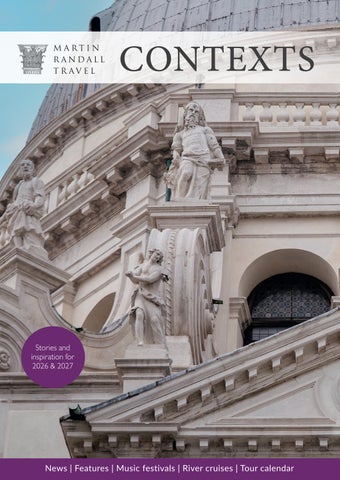

Stories and inspiration for 2026 & 2027

One of the privileges of being part of MRT is the chance to work with a great number of interesting and brilliant people – the experts who lead our tours, the participants who join them, and our talented staff who make them happen.
The intention of this magazine is to tell you more about the ideas and collaborations that underpin what we do; to share the personal stories and motivations behind our aspiration to create exceptional experiences. You can read about the places, too. In this edition we focus on rivers: Iberian revelations via the Douro/Duero, in both Portugal and in Spain; and the glorious Danube, whose richly historic environs can be enjoyed with ease and pleasure from the base of a luxurious ship.

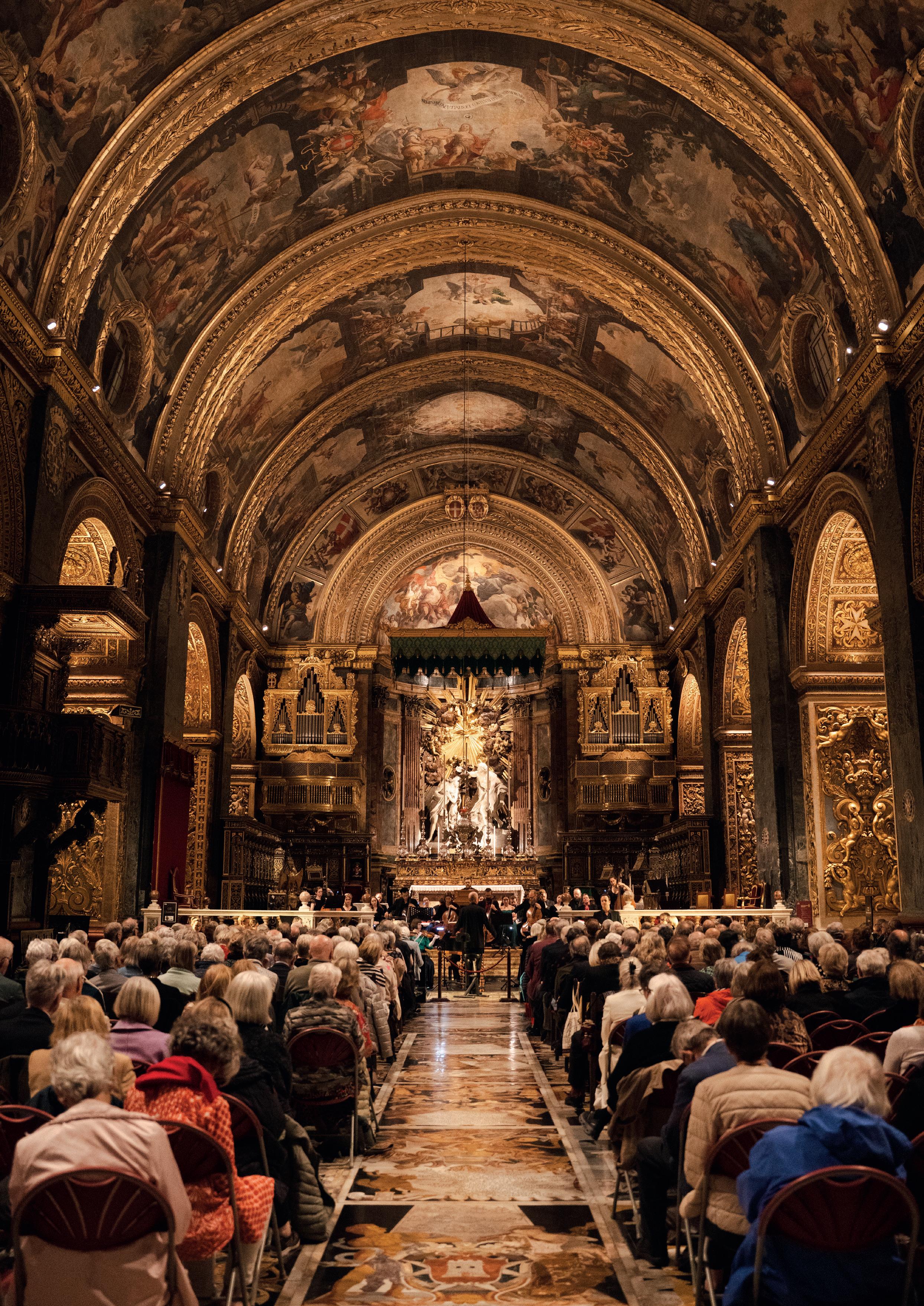
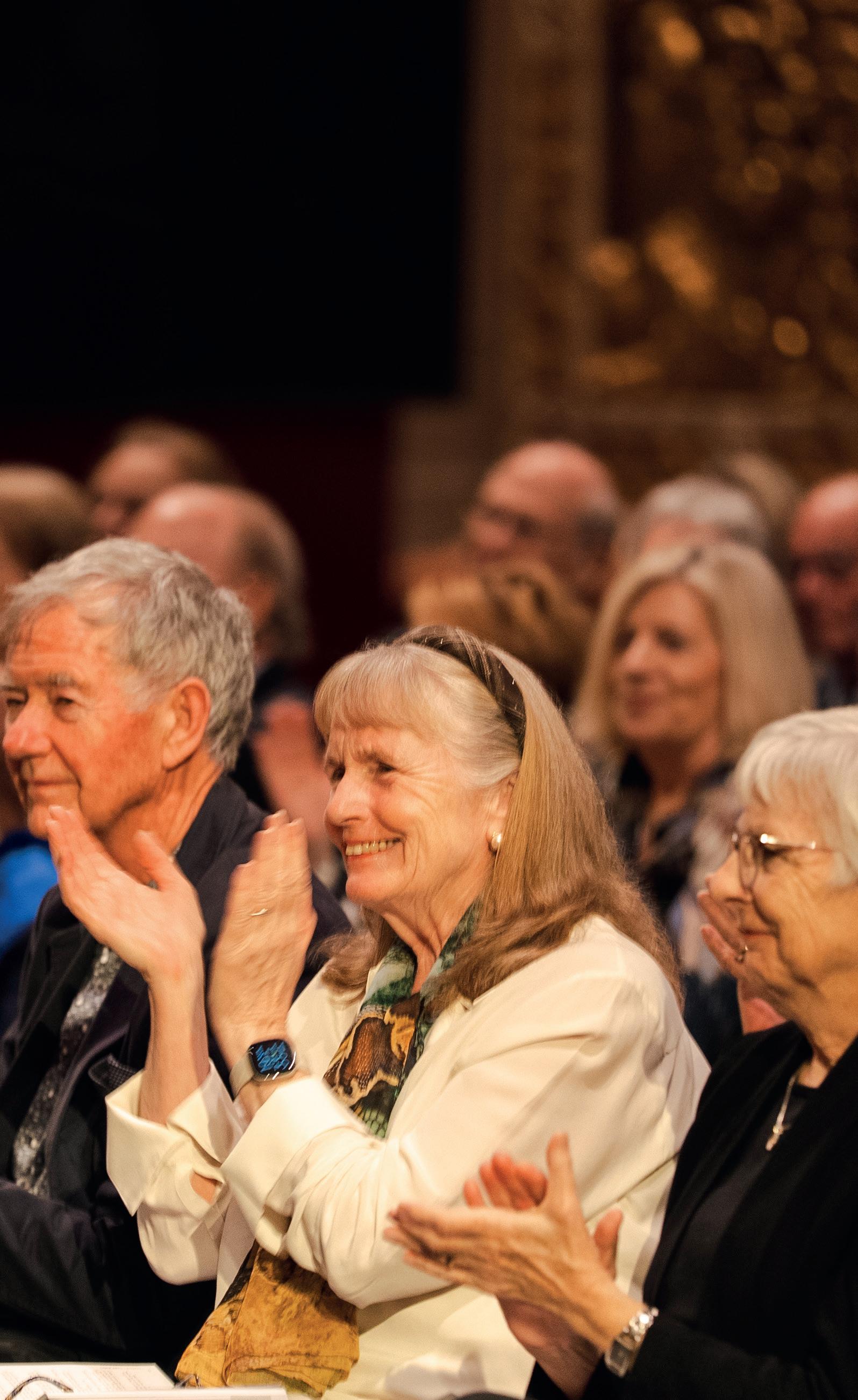
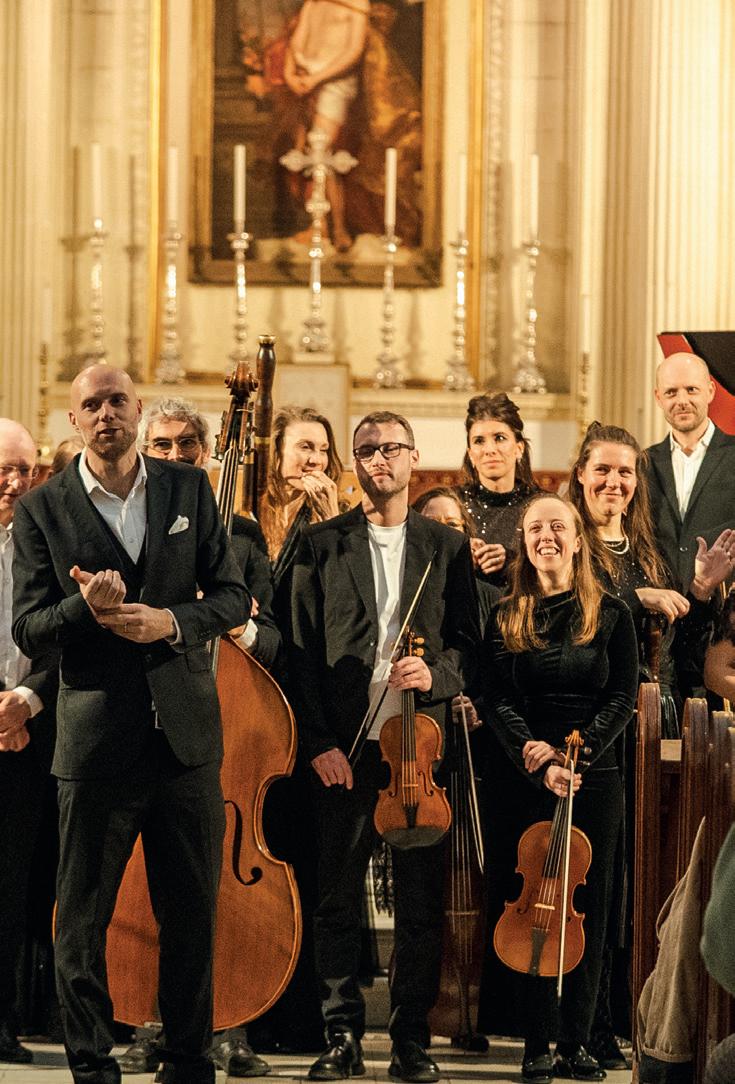
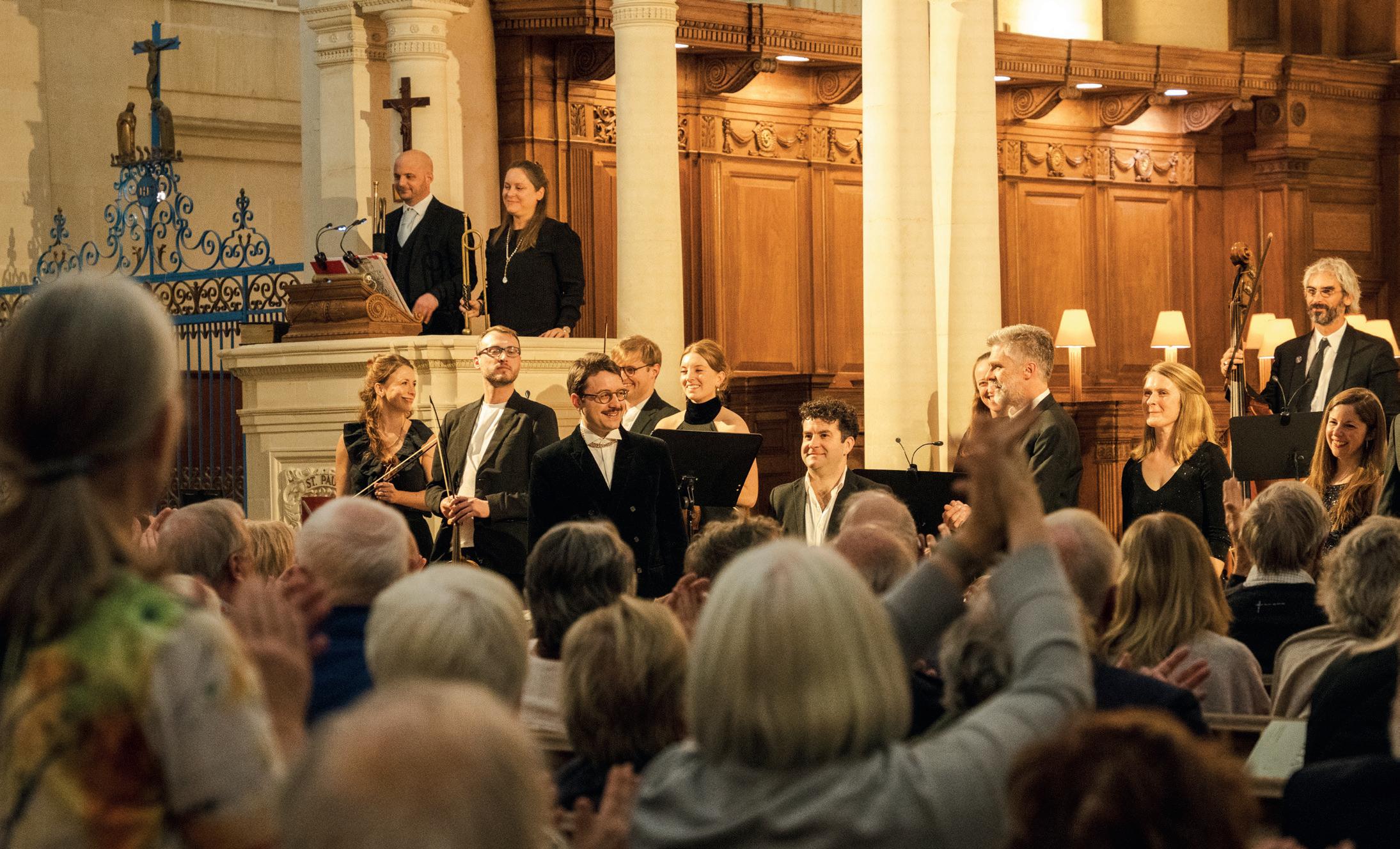
This is also an opportunity to air news of recent and forthcoming events. Our recent Handel in Malta Festival was attended by 200 clients who heard a series of exquisite performances by the likes of The English Concert, Solomon’s Knot and the Gabrieli Consort. The grand finale, with the Gabrieli performing The Messiah in St John’s Co-Cathedral will stay with me forever. You can see photographs inside and hear about the groundbreaking ambition of its leader and long-time friend of MRT, Paul McCreesh.
With best wishes,











Contributing Editor: Kent Pringle
Layout and design: Alice Bzowska Addtional contributions by Katharina Schramm




Senior Product Manager
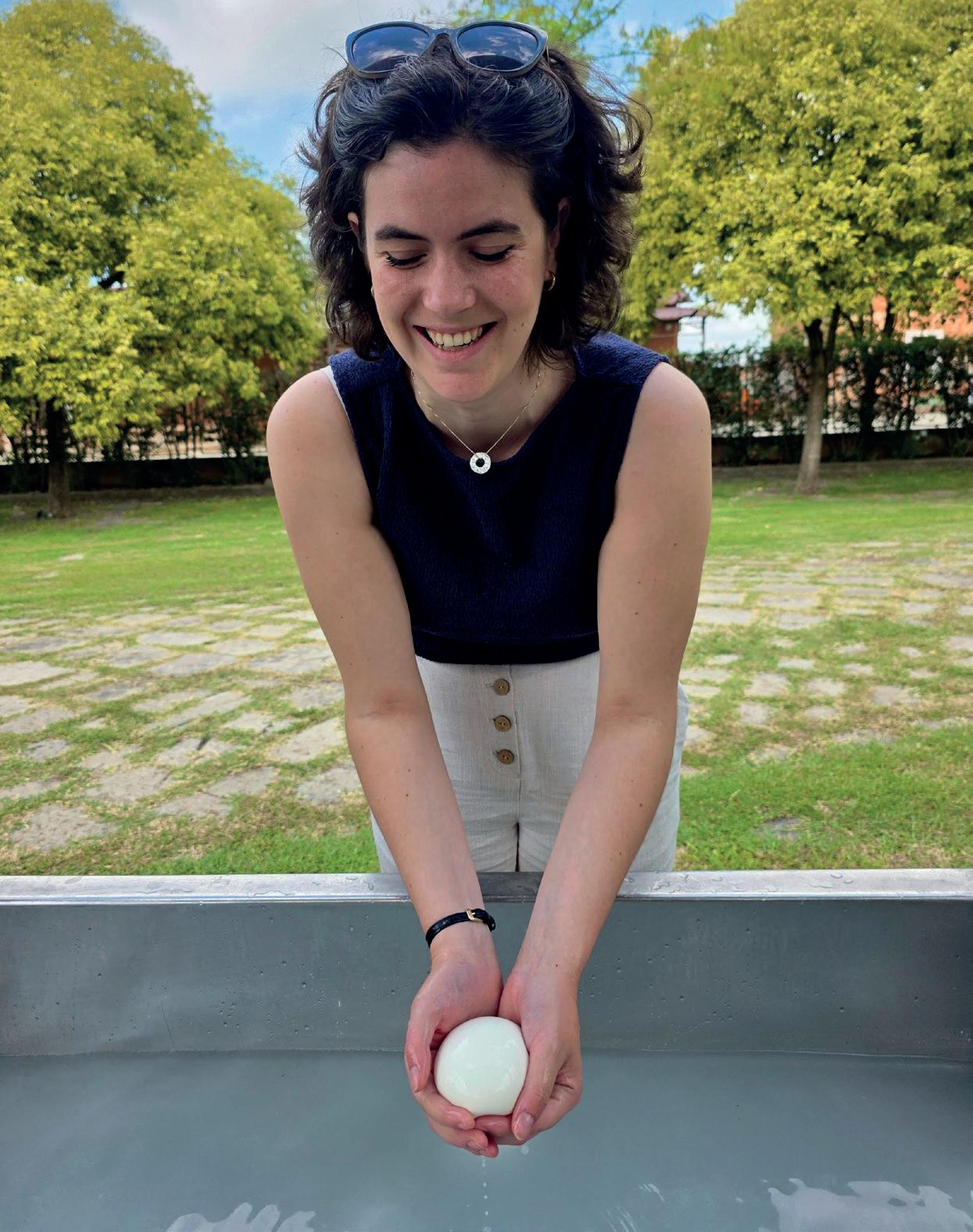
Margherita de Freja recently prospected our new tour, Gastronomic Campania, as she describes:
Here I am, concentrating hard, clamping my thumbs down to break off the piping hot ball of mozzarella I have shaped, to plunge it deep into the trough of cool milky water. We had just witnessed the transformation, in minutes, of that morning’s buffalo milk to wobbling curds and whey, the tipping point during


El Generalísimo by Giles Tremlett (Bloomsbury, 2025)


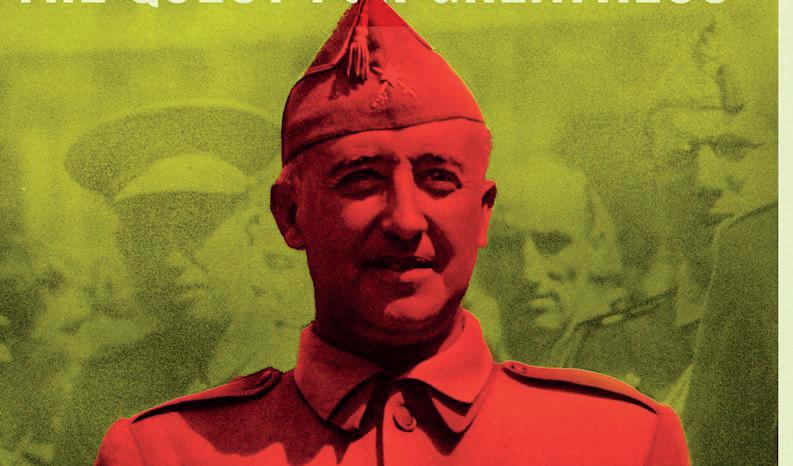
Madrid-based historian and journalist Giles Tremlett has published his latest book to coincide with the 50th anniversary of Franco’s death. Widely acclaimed by reviewers, it was described by Simon SebagMontefiore in The Telegraph as ‘an excellent biography – compelling, authoritative, even entertaining – of this highly dislikable creature’.
Giles leads our history tours: ‘Spain 1492: Isabella, Columbus and the Age of Discovery’ (11–19 March 2026) and ‘Two Spains: The Spanish Civil War & its Aftermath’ (14–22 October 2026).

vigorous stirring where the lumps homogenised into stretchy cheese. All in our host Manuela’s purposebuilt demonstration area in the garden of her beautiful villa. None of the hairnets and protective gear that are a necessary part of commercial production here. That side of the business she leaves to her husband Cesare, while her passion is to enable visitors to experience every part of the mozzarella-making process.
Nearby, the water buffalos basked in their pools as we sat down to a
‘light’ tasting: mozzarella, buffalo ricotta, a huge braid of provolone, cured buffalo meats and salamis, and produce from the garden. This was one of those magic touchstone visits of a Gastronomic tour we knew we must include. One that anchors the trip and roots us into the land and the wonderful Italian hospitality in the hearts and homes of people like Manuela and Cesare.
Marc Millon leads our new tour, ‘Gastronomic Campania’, from 21–28 October 2026.
A series of events across Britain marks the tercentenary this year of the death of the architect, Sir John Vanbrugh.
MRT honours him with a tour of his greatest houses to be led by his biographer Charles SaumarezSmith. He tells us: ‘One of the great pleasures of writing my recent biography of John Vanbrugh was that it gave me the excuse to re-visit all of his houses, and I am now looking forward to seeing them again in July. Years ago, I stayed at Castle Howard in the stables, while researching my PhD on Charles Howard, 3rd Earl
of Carlisle and the architecture of Castle Howard. On that occasion I was working in the archive in the basement of the private wing. More recently I was invited to give a talk there and was given a bedroom in the main house, with a view overlooking the North Yorkshire Moors. In the morning, it was a crisp day and I walked out to the Earl’s mausoleum. I have done this walk many times but I still find it one of the most moving experiences anywhere’.
Charles Saumarez-Smith leads ‘Vanburgh’s Great Houses’ from 3–9 July 2026.
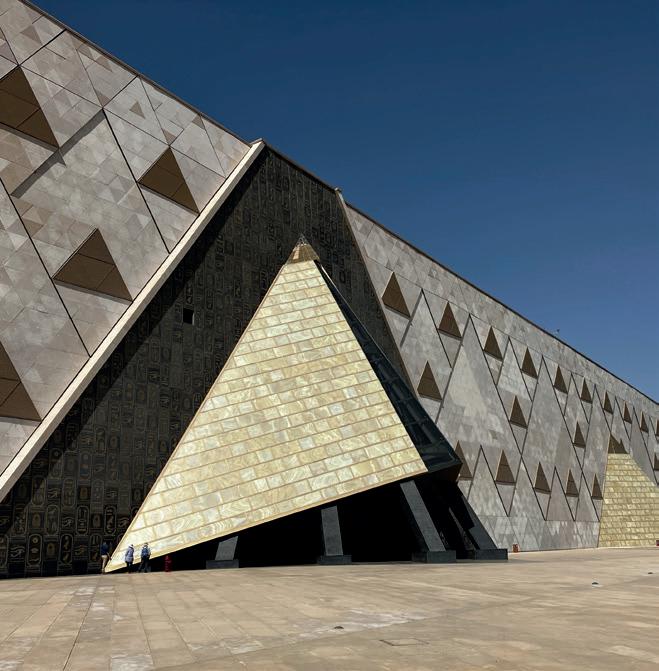
November marked the long-awaited opening of the world’s largest archaeological museum concentrating on a single civilisation. Designed by Roisin Heneghan and Shih Fu Peng, the sloping facade and triangular lines of the Grand Egyptian Museum are a clear echo of the pyramids nearby.
For the first time in history, the complete treasures of King Tutankhamun have been brought together under one roof. More than 5,000 artefacts from his tomb are showcased alongside thousands of other items from the pre-Dynastic period to the Roman period of Egypt’s ancient history.
Naturally we include a visit to the new museum on all of our Egypt itineraries. Our tours also include visits to the Tombs of the Nobles and Deir el-Medina, two of Egypt’s lesser-known sites that reveal the rich artistry of daily life beyond the pharaohs.
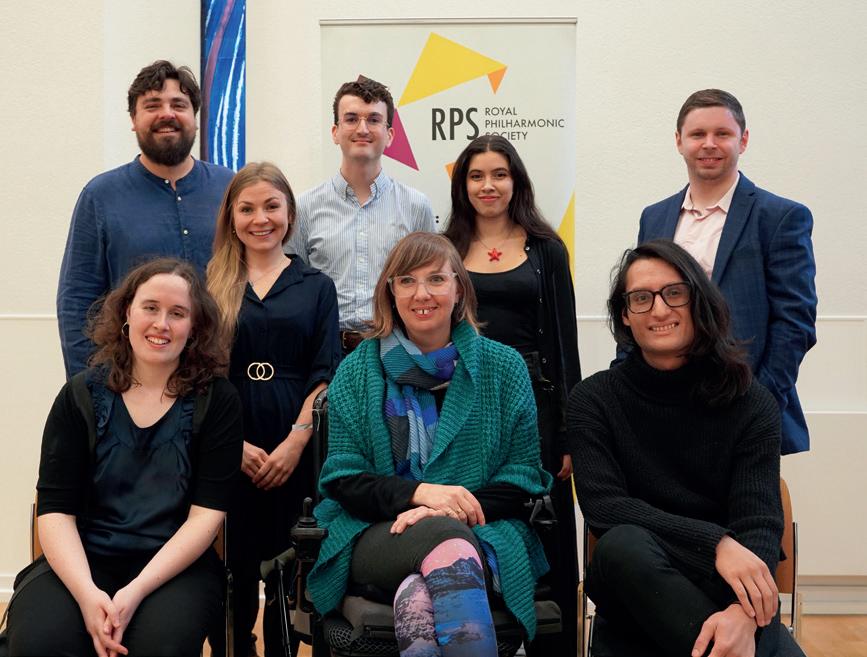
MRT continues to sponsor the Royal Philharmonic Society (RPS) and its work to to nurture greater support for music and musicians across the UK. Our Festivals & Operations Executive Sam Newton attended the Society’s autumn celebration in honour of its 2025 RPS Composers, eight composers who the Society has supported with the commissioning of a new piece. Each composer works closely with a group that will premiere their work. These included the Carice Singers and The Marian Consort, both of whom perform at MRT Festivals. Sam says: ‘This was a wonderful chance to hear more about RPS’ scheme, the composers’ works and inspirations, and for the composers themselves to connect with valuable contacts. The programme continues this year with a new cohort.
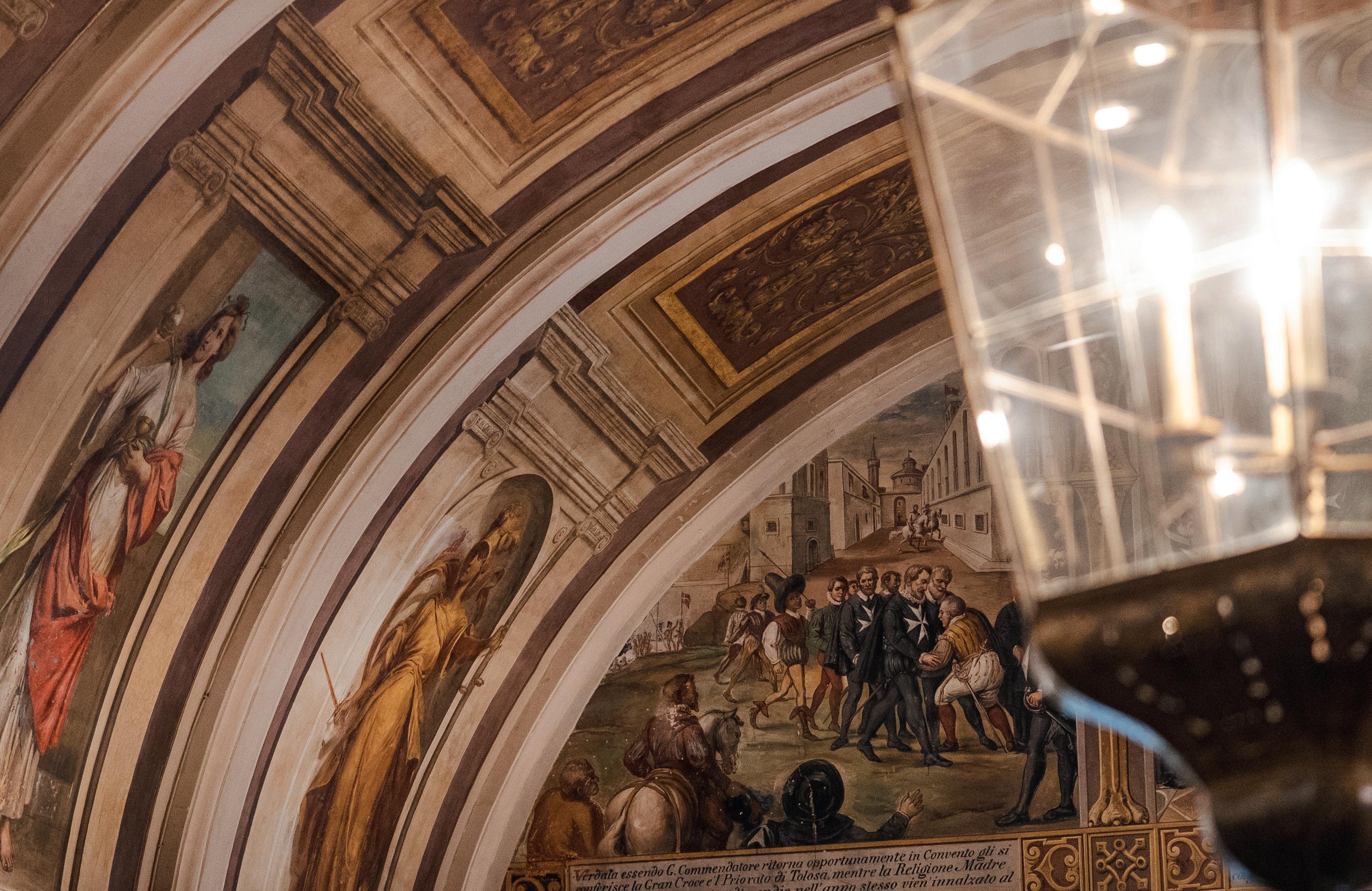
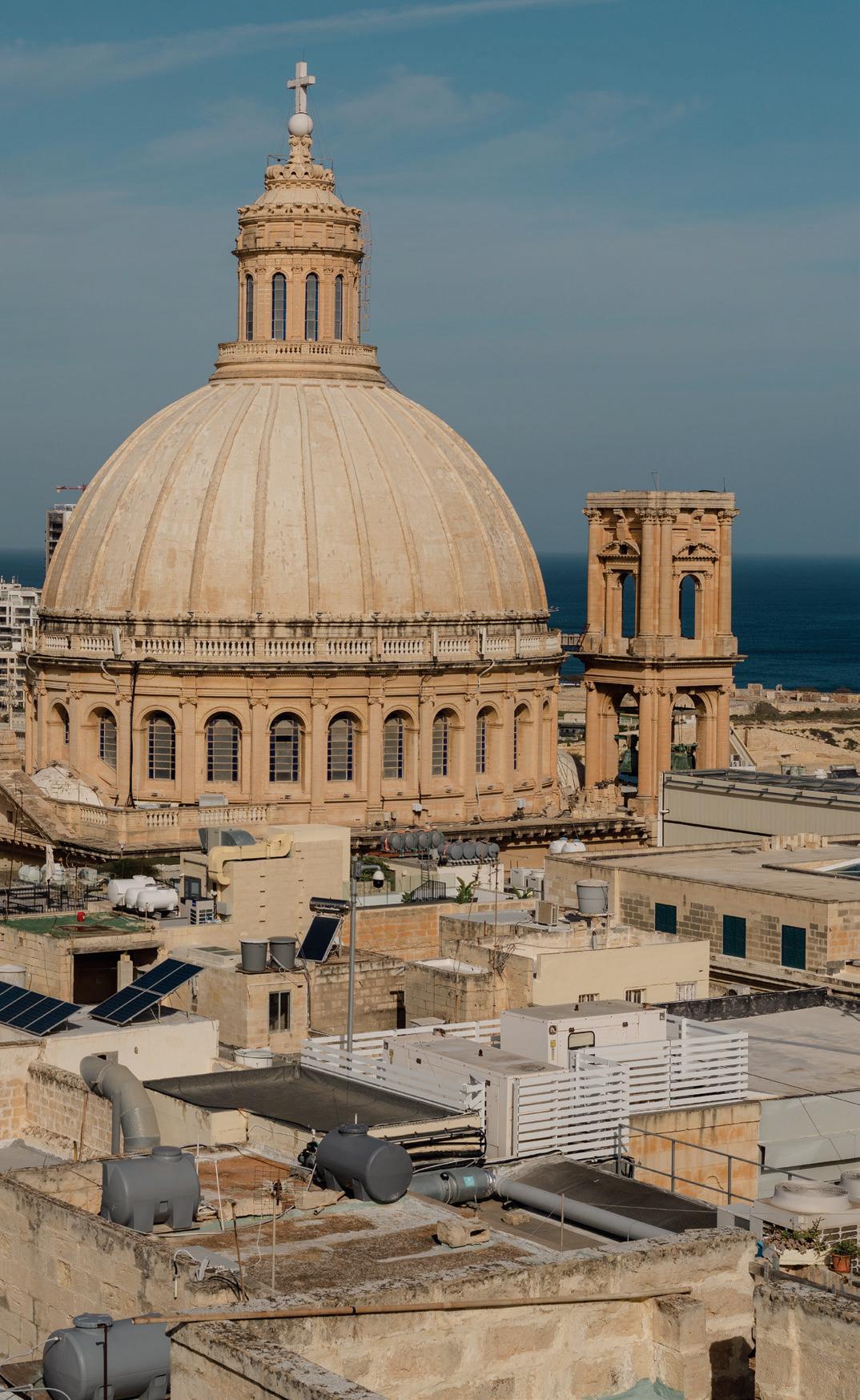
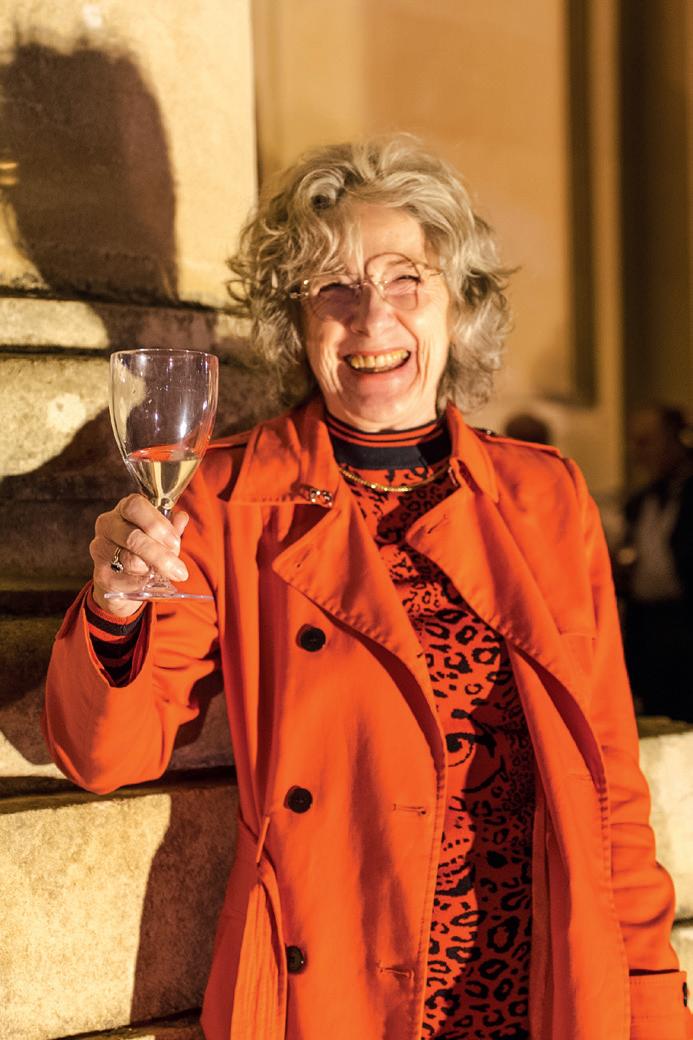
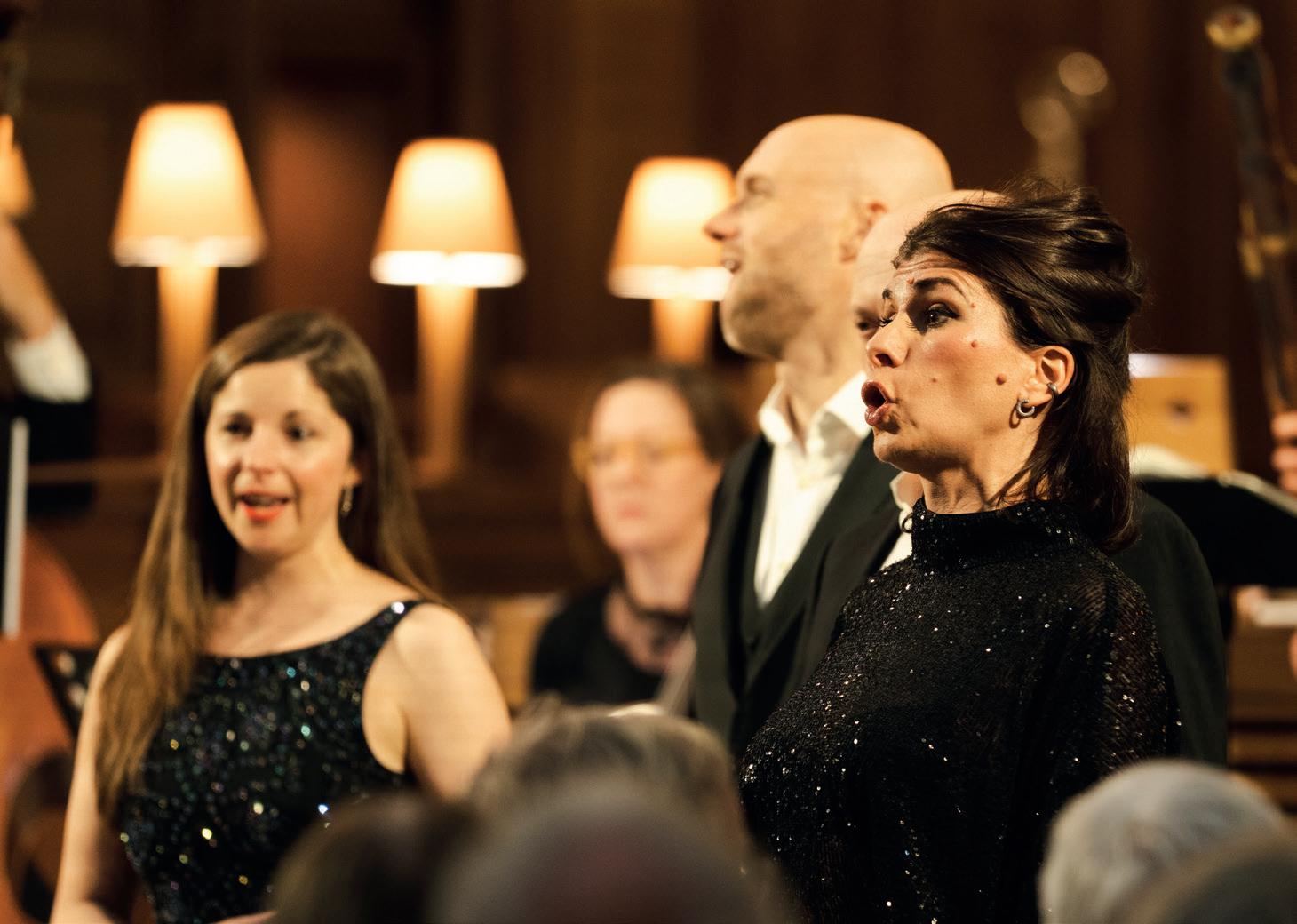
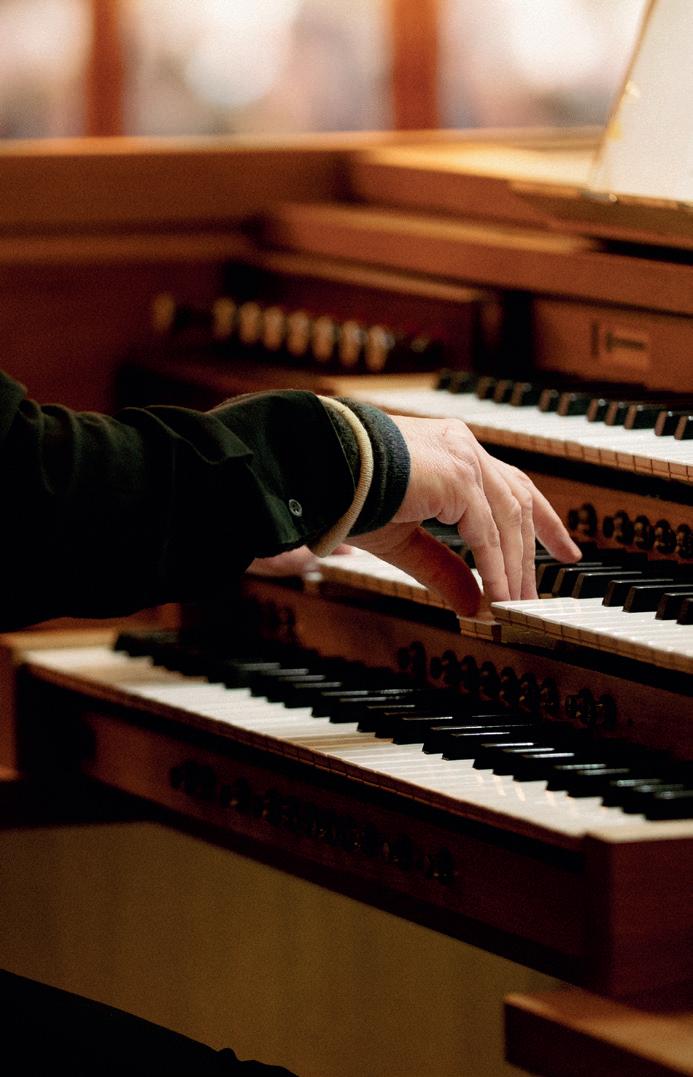
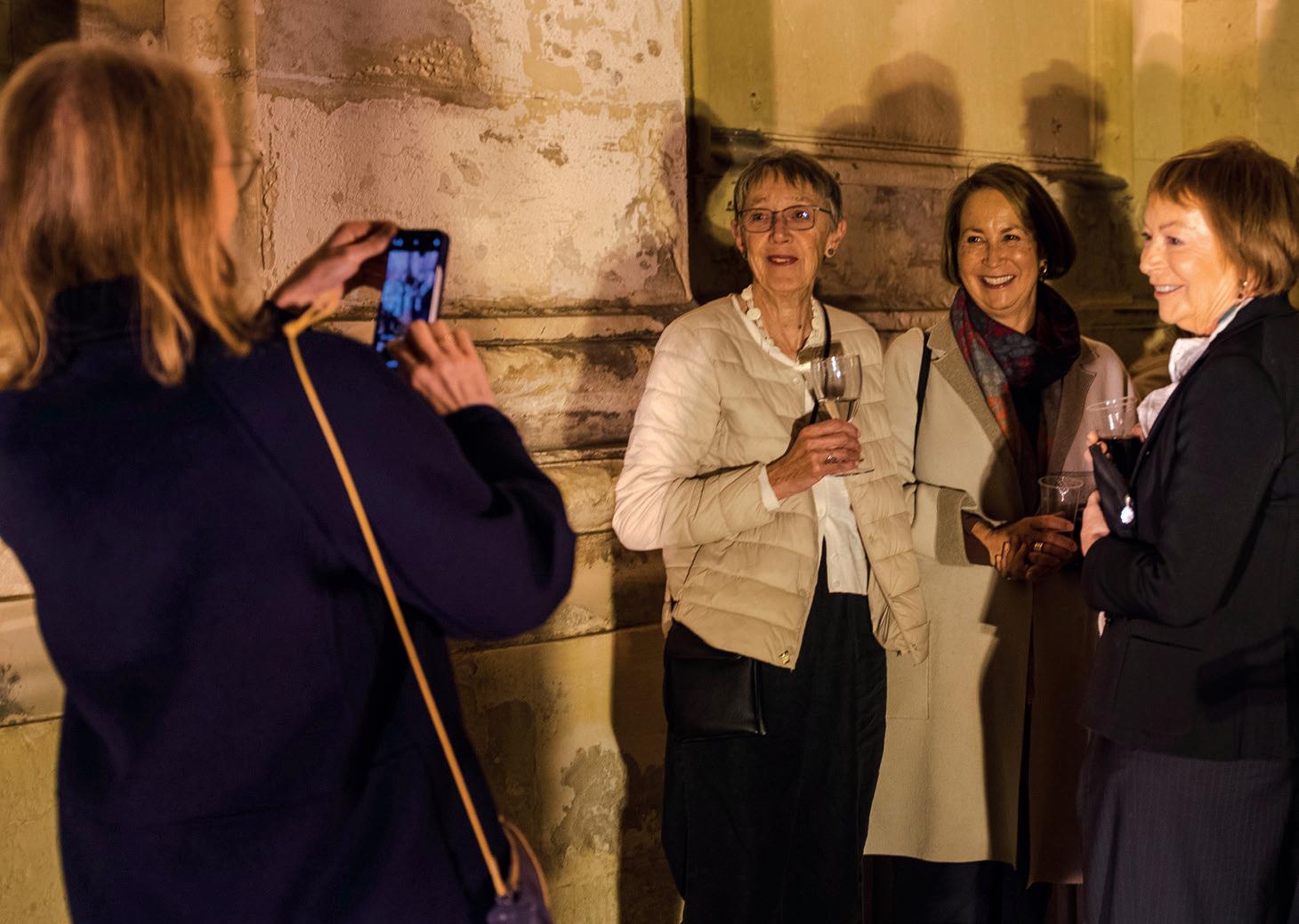
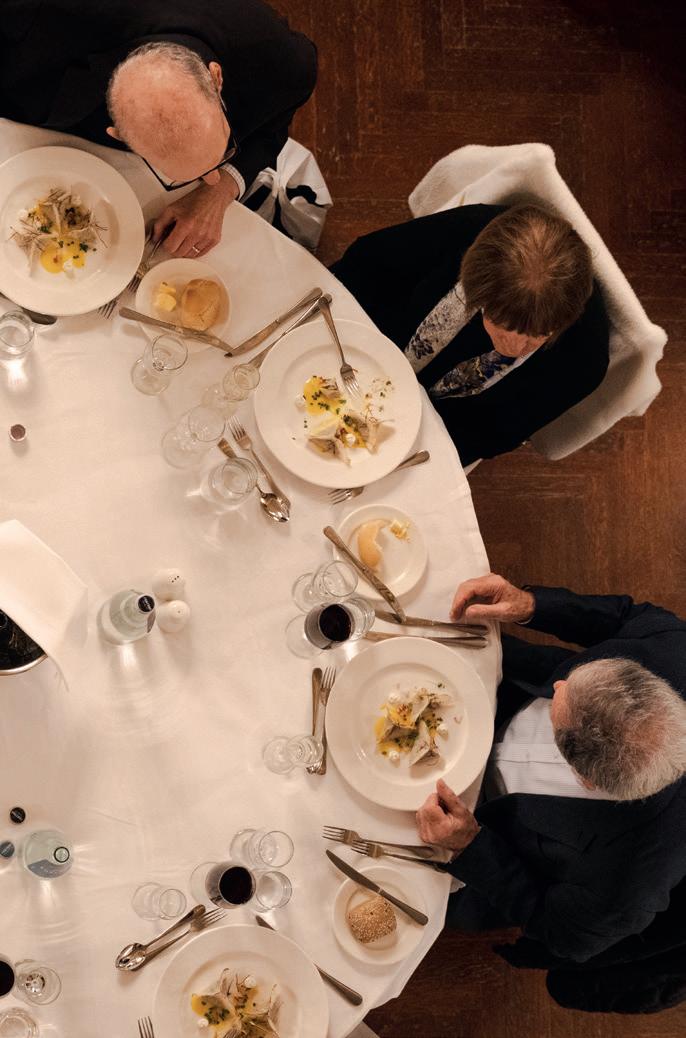
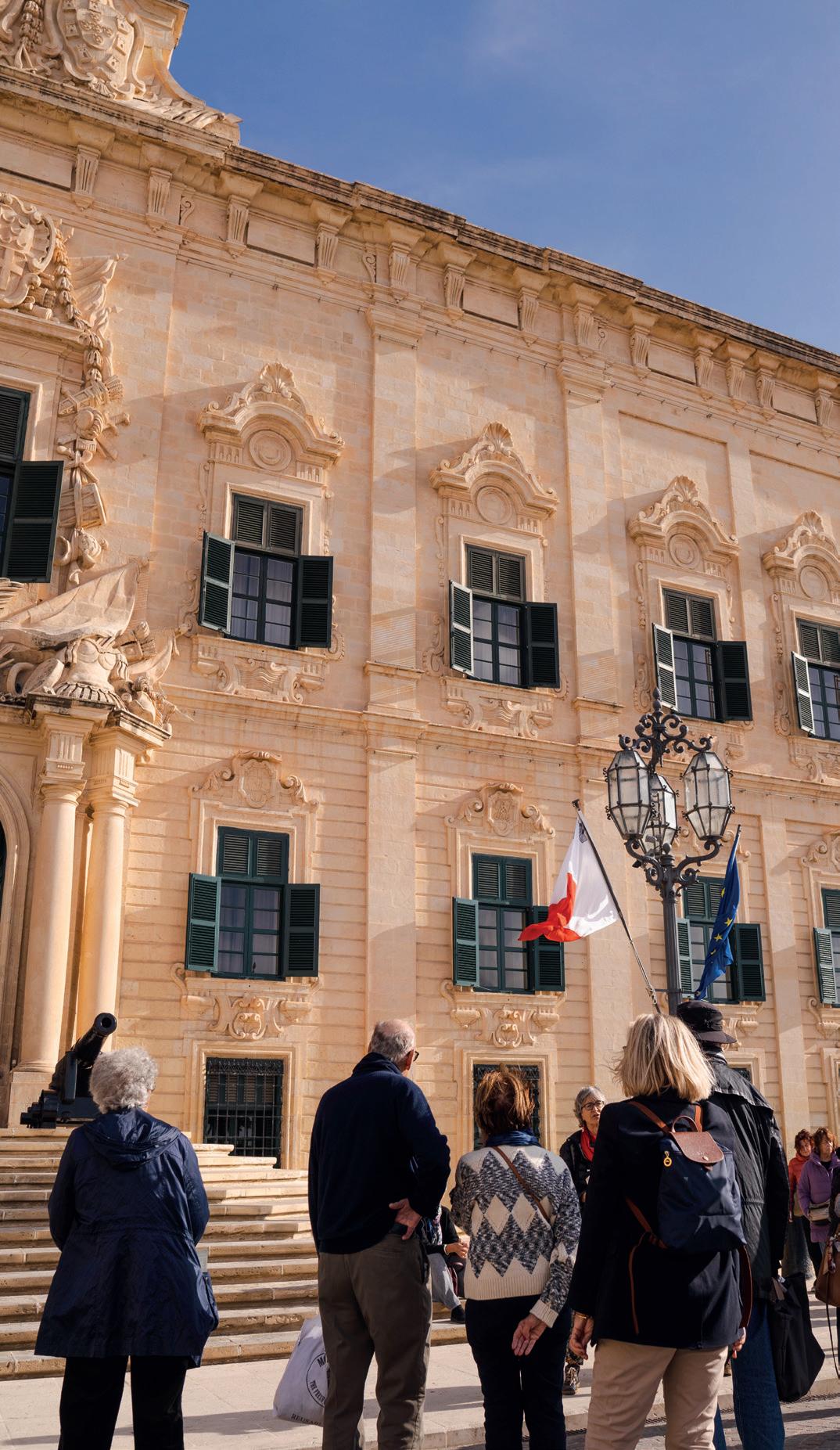
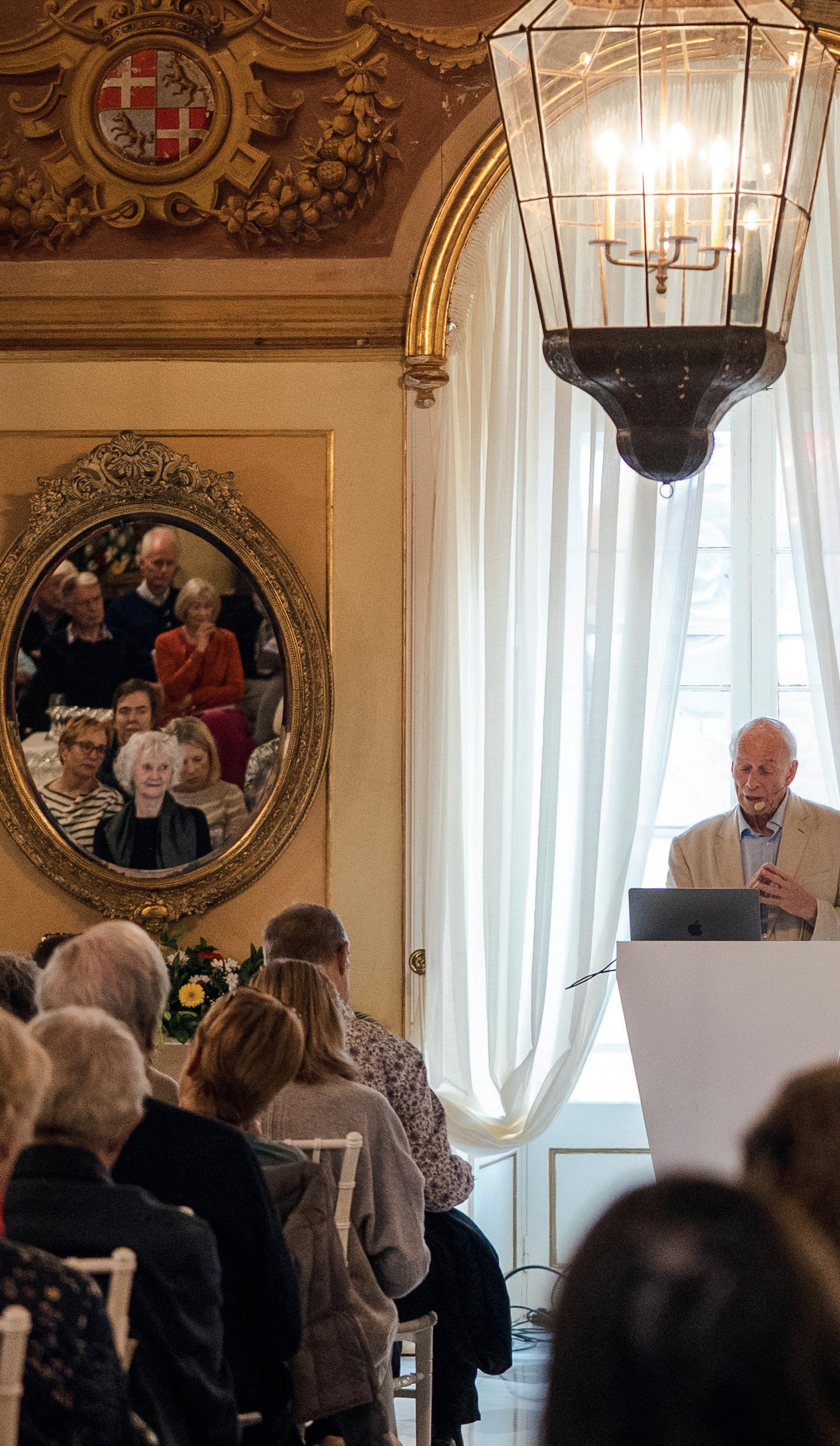
In November 2025, we descended on Malta’s diminutive capital, Valletta for our first ‘Handel in Malta’ festival. In venues ranging from the lavish Baroque cathedrals, to the summer palace of the President of Malta, we enjoyed performances from several world-class ensembles.

A selection for 2026
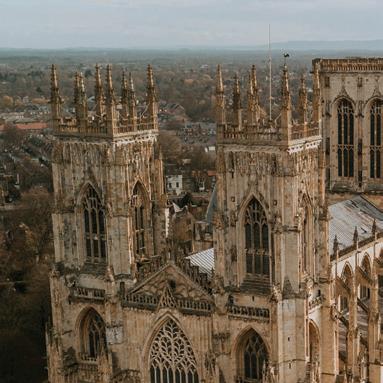
Early Music in Yorkshire
6–11 May 2026
Eight private performances on period instruments, in the rich historic centre of York and magnificent surrounding countryside.
The Rhine Piano Festival
22–29 June 2026
A celebration of the most versatile of all of the instruments along The Rhine – Europe’s artery for cultural exchange.
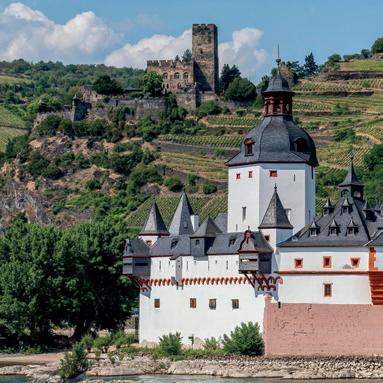
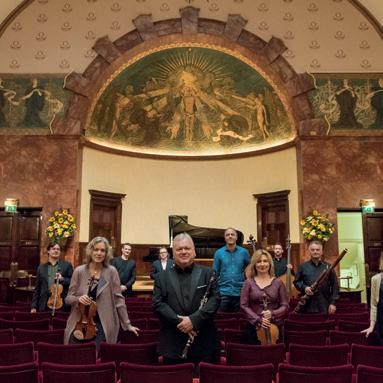
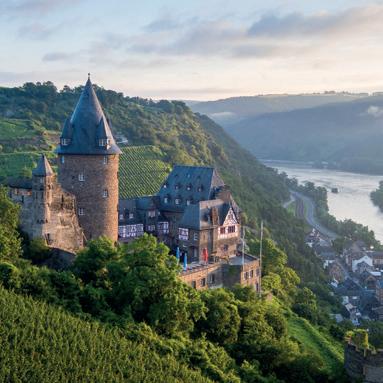
Music Along the Danube
15–22 August 2026
Eight private concerts in appropriate historic buildings, world-class artists, illuminating talks, and beautiful landscapes.
Music Along the Rhine
31 August–7 September 2026
Seven private concerts in beautiful and appropriate historic buildings, carefully chosen for their architectural appeal or resonance with the music performed.
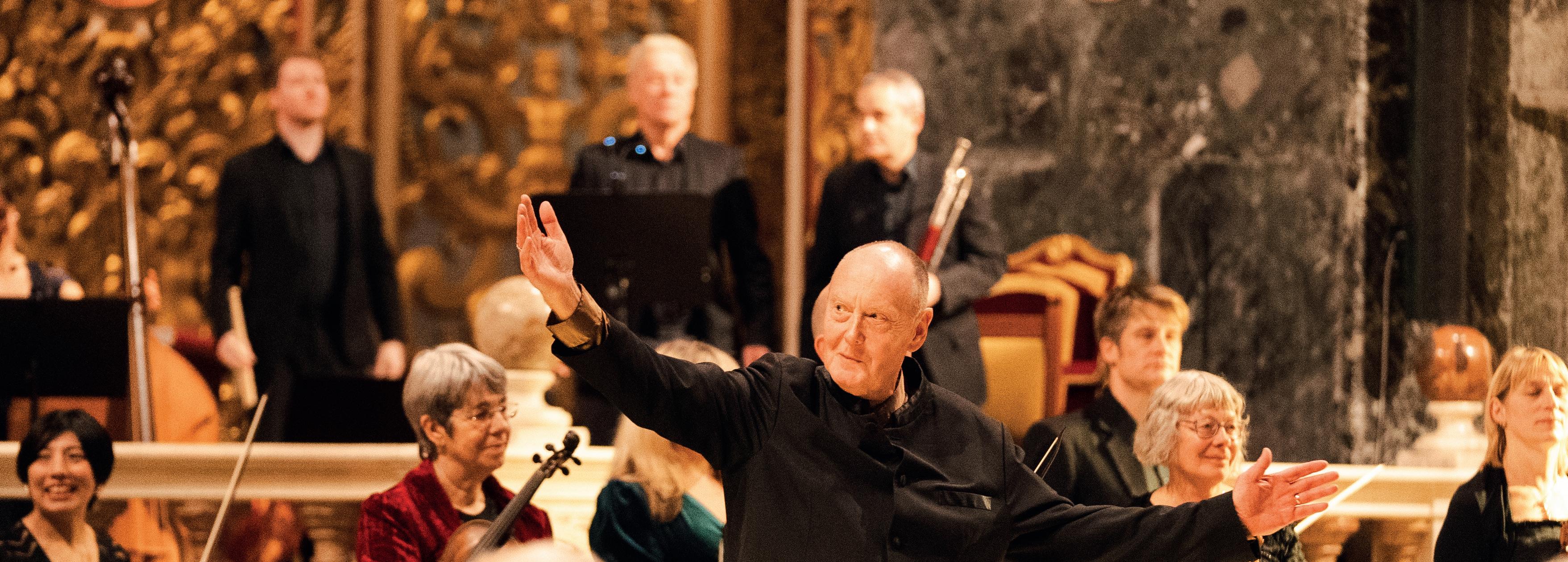
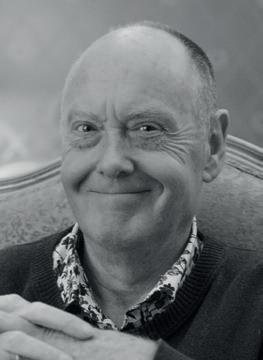
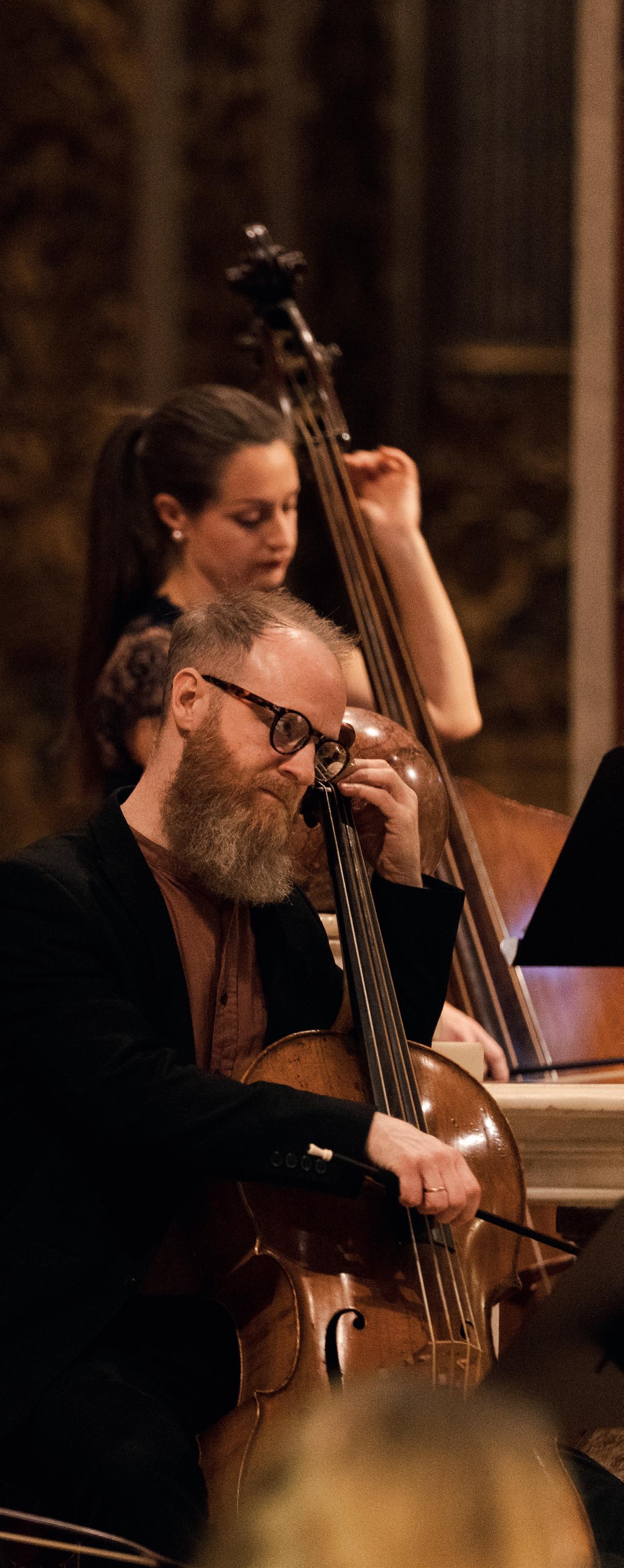
Conductor Paul McCreesh has shaped early music performance for over four decades. Before a performance by the Gabrieli Consort in Malta, he talked to our Artistic Director, Lizzie Watson.
LW: What are the origins of the Gabrieli Consort and what does it mean to you?
PM : I fell in love with Gabrieli’s music, the sonority of cornets and sackbuts very early on. The cornet is a beautiful instrument, quite unlike any other modern instrument. We formed Gabrieli Consort & Players in my last year at university. I had no idea where the world would take me. I thought maybe it would be a nice hobby, perhaps no more than that.
The Consort is very important to me. I lead a group of vastly committed, intelligent and enthusiastic musicians. They are pushing me all the time, really hard. I find the joy of sharing music and the wider culture deeply rewarding. It’s a fantastic honour to have worked with some of the greatest orchestras of the world.
The beginnings with Gabrieli saw us doing a lot of early music and we had quite a famous recording contract with Deutsche Grammophon. We’re not one of these rented Baroque bands where everybody plays on half modern instruments and half Baroque. We do it properly. We have different violins for
Monteverdi, different violins for Bach and Mozart and we string them historically in a way that few groups do, particularly in the UK. We’ve invested a huge amount of time, particularly in our Purcell projects, in things like learning to play with the French bore-oboe, which is appropriate for English music in the 17th century.
Education has also always been very close to my heart. I started off as a school teacher before becoming a professional conductor and reinventing myself as a symphony conductor in my forties, which is what I tend to be doing most of the time nowadays. But there is nothing quite like a young child saying “that’s the best thing I’ve ever done” and looking at you just glowing with joy. So as I’ve got older, I’ve deliberately disciplined myself not to work professionally more than half the year, and to concentrate a large part of my life working with young people.
It’s not unknown for me to get off the plane from conducting some famous orchestra and squeeze in a rehearsal with a group of teenagers. We work in areas of low cultural provision because all kids need music, and the ones with
more challenging b ackgrounds need it more than anyone else.
LW: Do you remember the moment you were first wowed by live music as a child?
PM: Absolutely I do. I would have probably been about eight or maybe nine. I was taken to see the local semi-pro symphony orchestra do a programme of classical music. I feel myself slightly welling up recalling the experience. Just the sheer thrill of an orchestra at full tilt. The second half was the New World Symphony, which is still one of my favourite symphonies today. And actually, when I conduct it, I’m so invested because it’s the piece that brought me to music. It was just completely amazing. The music was in this little boy’s head for days and weeks in quite a physical way. I got the bug.
It was absolutely not written in the stars that I would be a musician. And that’s why I feel I’ve got skin in the game when I do Gabrieli Roar. I want to find those kids who could easily avoid music – or rather, I should say, perhaps that music could easily avoid them.
LW: Tell me more about Gabrieli Roar. What is the aim?
PM: With Gabrieli Roar, we give people access to music through using the voice. We train our young people so they can sing alongside the consort. Much of the repertoire that we sing and play was originally music performed
by young people, in Renaissance polyphony. So, we’re bringing music back to the young. They’re getting the chance to stand on the stage alongside some of the world’s greatest musicians.
We view music as the door to a wider culture, something which nicely connects with the Martin Randall Travel experience, If you put music in a fantastic historic venue and you connect people to it through talking and lectures, then you get a different level of cultural engagement. And so it is with young people. Through music we give them the opportunity to think about history, to think about beautiful places; to think about the way music connects with society, both in its time and today.
I think one of the biggest challenges that education faces, particularly in the world of culture, is a tendency to dumb things down for young people. I feel passionately that if I have any skill at all, it’s to bring that slightly recondite world of choral singing and oratorio into the world of young people. It sounds terribly worthy. In fact, we have a hell of a lot of fun. We laugh a lot as well.
LW: Your recordings of King Arthur and The Fairy Queen are highly acclaimed. What made them such a success?
PM: Well, I think it’s absolutely our approach. We played this music before we recorded it for well over a quarter of a century. And it constantly changed. It constantly evolved, both in terms of the techniques of playing and historical approaches, but also our feeling for the music, which is very hard to describe, evolved a lot. It became immensely subtle.
The other very important thing was looking at the vocal style. I think the great advantage of Gabrieli is we came to Purcell knowing a lot of 17th-century music, particularly Italian music in the early years, but also doing a lot of Humphrey and Blow and
others. We sort of felt that music organically before we moved on to Bach and Handel. It’s much easier to do it that way around. Or even worse, if you’re a modern conductor and you start with Brahms, you’ve got to try and get back to Bach. You can’t do it. But if you feel things chronologically, things develop much more organically. So I think that’s part of it.
“
I had no idea where the world would take me. I thought maybe it would be a nice hobby, perhaps no more than that.
LW: What have you got coming up in the future that you’re excited about?
PM: Well, I mean, we have loads of things which excite us. The future is a very healthy emphasis on Gabrieli Roar, which is great because it means we are performing a lot of concerts, often in places that don’t get music, and particularly in places that don’t get much music. So, you know, it’s often to audiences who are not even really classical music goers. So I find that really quite exciting.
I hope we’re going to be able to do a little bit more work on Handel’s oratorios, which is something that is always quite difficult for us because touring large-scale Handel pieces that require reasonably large orchestras and large choirs is always a challenge.
We certainly hope to be doing more of the Handel pieces, particularly things like Theodora,
which I think is among the greatest pieces of 18th-century music ever written. Honestly, we should hear those pieces every week like we hear Beethoven or Brahms’ Requiem.
We’ve got a brilliant biannual Christmas tour, which, if we can fund it, needs to become annual because so many kids take part. This year we had about 6,000. We go to ten or twelve cathedrals with several hundred kids in each cathedral. It’s a massive undertaking. So we want to do that again next year again. And I’m really excited about that because I’ve made a new Handel oratorio for it: Mr Handel’s Christmas Story
We also want to do some more recording. We’ve got ideas in Berlioz. We just recorded Gerontius to huge acclaim, which was a massive statement of faith, a piece I just deeply loved and wanted to record. First time on period instruments, which is absolutely revelatory in Elgar’s music. I’d love to do more of that. But there are funding challenges.
We’ve had some of our most enjoyable and rewarding work as musicians under the Martin Randall Travel banner. We’ve been allowed to make music in fantastic historic venues that lift our souls as musicians, particularly when the music is well married to the historic places in which we play. One of the great things about MRT over the years is that it’s enabled us to put on projects which commercially would have been really difficult elsewhere. And the people who come on your fantastic musical pilgrimages, these great celebrations of the art, are really helpful to us because not only do they have a fantastic holiday and cultural experience, but it also enables musicians to work and to create projects that we can’t do elsewhere.
Find out more about Gabrieli Roar, the exciting partnership between Gabrieli and a network of diverse British youth choirs: https://www.gabrieli.com/roar/about-roar/
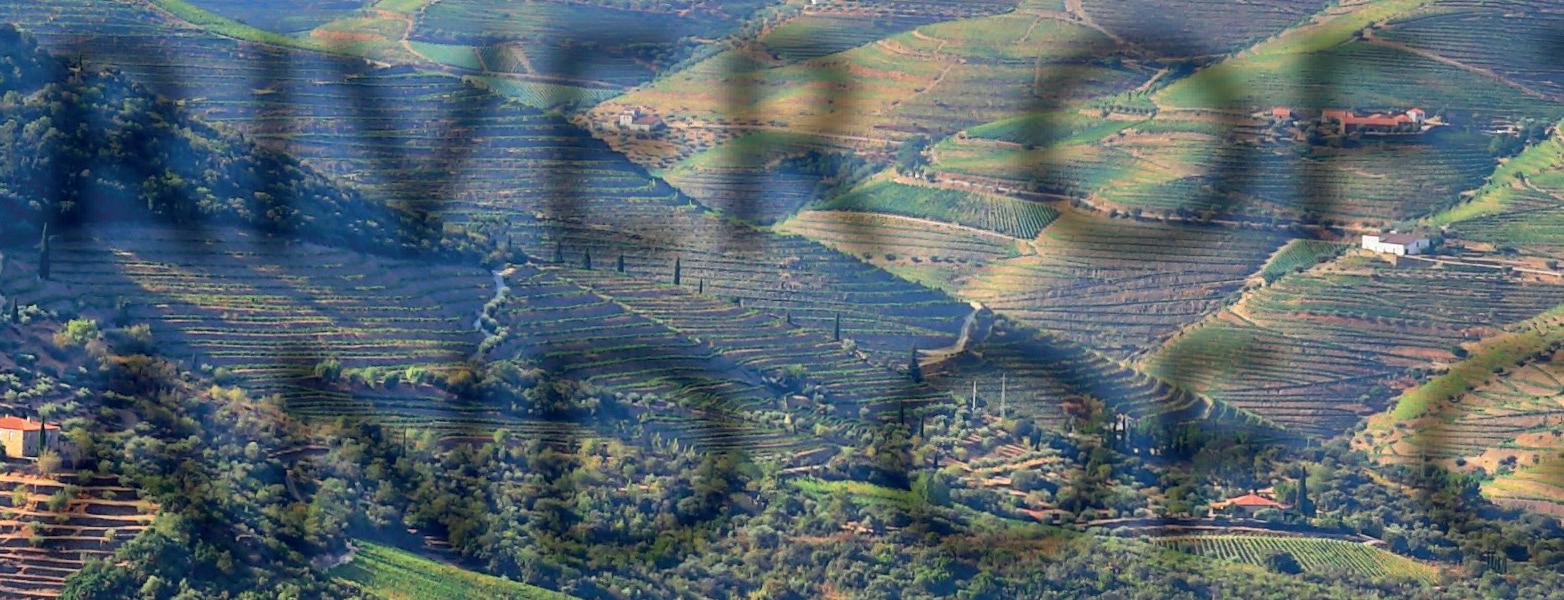
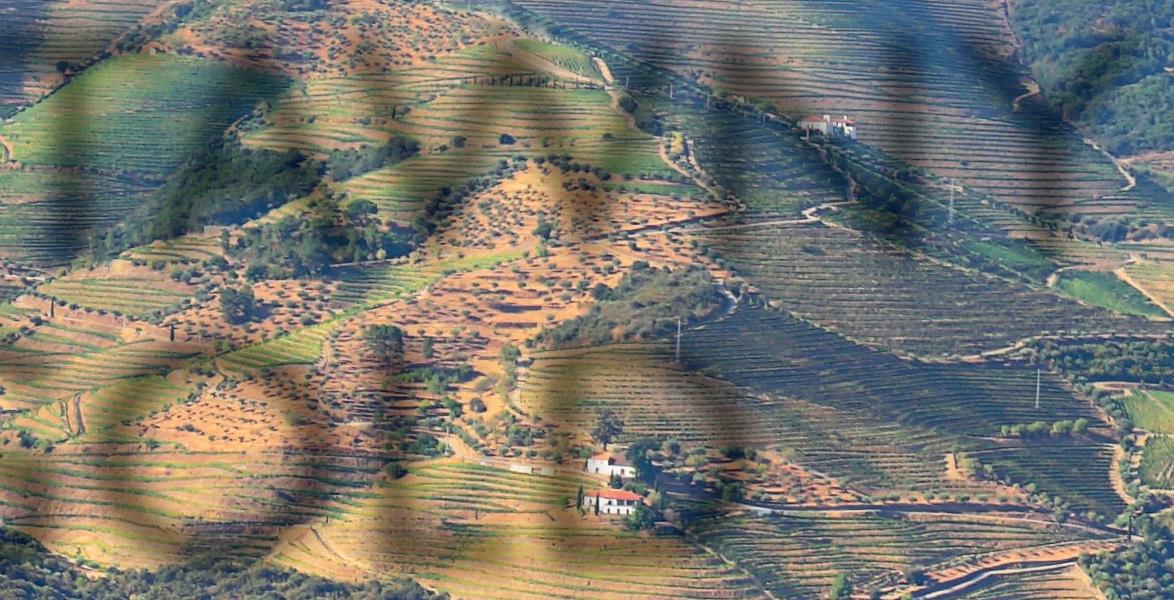
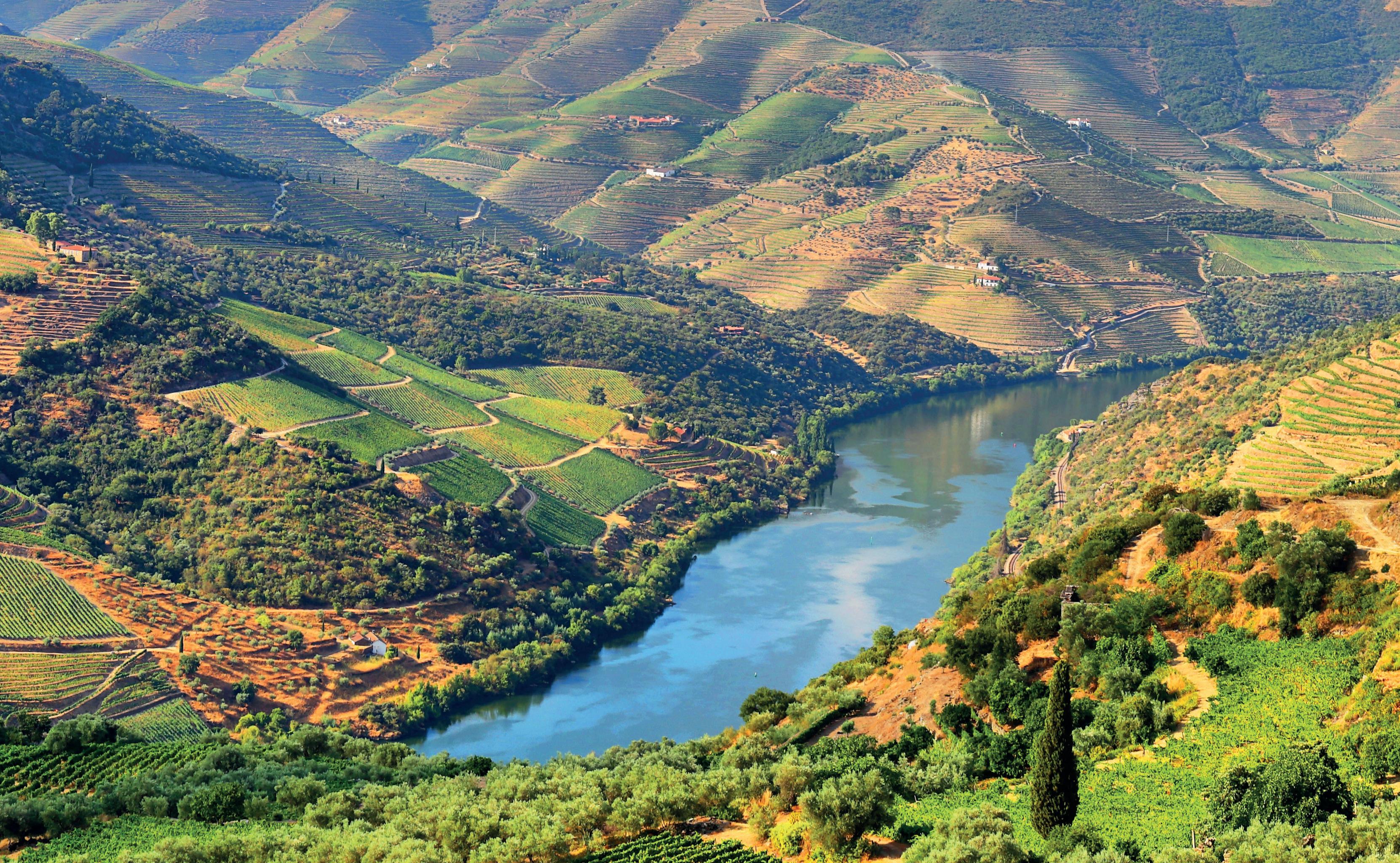
Author Martin Symington shares his lifelong connection with the Douro and explains why a river journey is the perfect way to appreciate the wider region.
Over the decades since my birth to a British port-shipping family in Porto, at the mouth of the Douro, I have witnessed astonishing changes to the river and the scenic mountains through which it flows.
In its natural state the Douro – or ‘river of gold’ to use its poetic Portuguese translation – used to rush headstrong between forbidding rocks and in torrents of white water in times of spate, especially in winter. Over the summer months the waters calmed to sparkling pools and sunbaked islands.
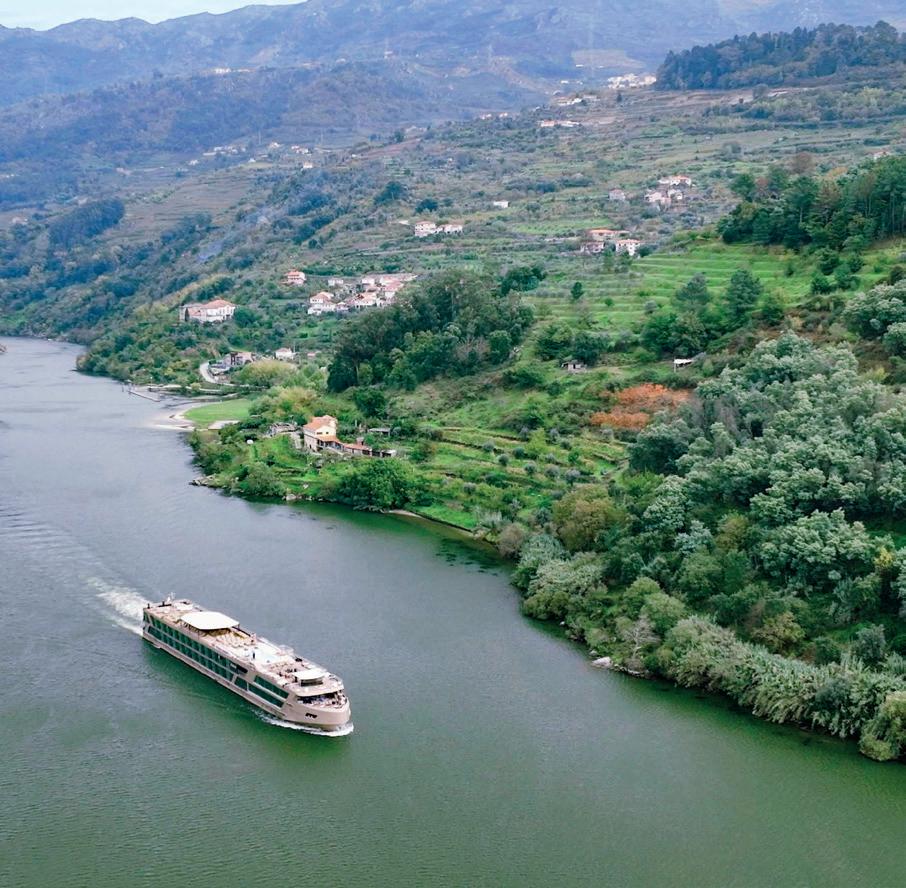
This was the Douro of my childhood. Then, in the 1970s and 80s, things took an extraordinary turn. I watched the building, one at a time, of five formidable dams. The resultant raising of the water level has made the Douro navigable, which is why our voyage aboard MS Estrela is possible. The purpose of the dams is to generate hydroelectricity and there is virtually no traffic on the river other than for leisure.
Dams notwithstanding, the upper reaches of the Douro remain wild and inaccessible. The further east
you venture, the wilder and more beautiful the landscape becomes. From a ship, this is spectacularly exciting. Sailing through a gorge little wider than the vessel. All around vineyards hewn and terraced out of mountainsides are interspersed with patches of dark maquis foraged by wild boar. These vineyards are on the quintas (wine-growing estates) which make the Douro valley one of the great wine-growing regions of the world. By wine, I mean of course port, that foremost of fortified wines. Port, and the history of
My ancestors are among the ground-breaking British merchants who braved their way into the upper Douro.
how it came about, are intimately entwined with the twin cities of Porto and Vila Nova de Gaia and their mountainous hinterland.
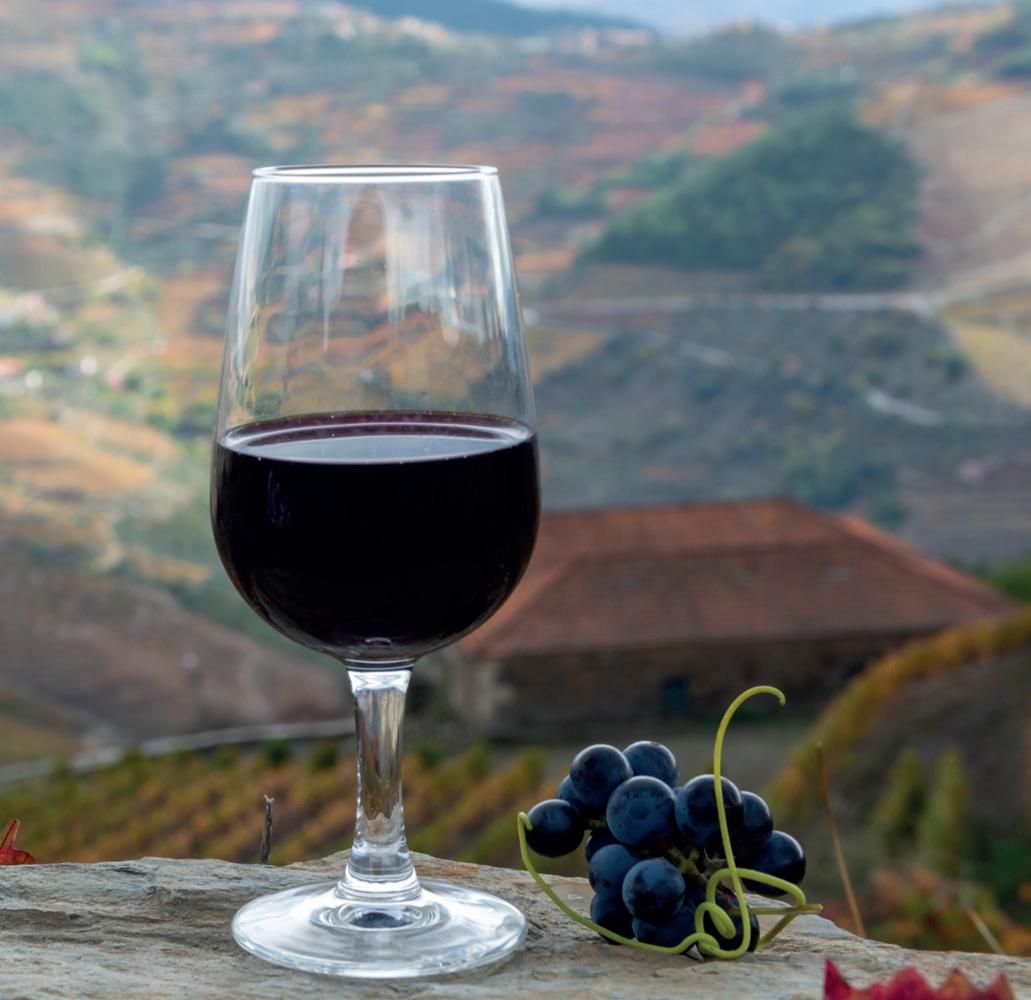
My ancestors are among the ground-breaking British merchants who from the 17th century braved their way into the forbidding upper Douro. The background to their arrival was England’s hostility with France, which cut off its supplies of wines from Bordeaux. Instead, these pioneers, looking for alternatives turned to Portugal, with whom England had an ancient alliance. In the upper Douro valley, they found the bold, alluring reds which by degrees evolved into the classic fortified port savoured by wine lovers around the world today.
One legacy of the British merchants – including many Scots as well as English, my Glaswegian great-grandfather among them – is the names of port shipping companies whitewashed in giant letters on the roofs of the ‘lodges’ of Vila Nova de Gaia: Graham’s, Cockburn’s, Warre’s, Dow’s.
Another remnant, with roots going back to the mid-17th century, is the so-called ‘Factory House’ association of port wine shippers (visited on the Porto tour extension). The misleading name refers to the ‘factors’ or British merchants who established a meeting place at which they represented their interests to the Portuguese authorities. (The better-understood word ‘factory’,
as in manufactory, dates from the later Industrial Revolution).
In its present form the sumptuous, Palladian-style Factory House dates to the 1780s. It remains a club and association for the independent, British-owned port shipping companies. Ancient traditions are upheld in the formal ballroom and dining rooms amid chandeliers, Chippendale furniture, Spode porcelain and port-related artefacts. It is an extraordinary setting in which to contemplate the singular history of the British in Porto and its hinterland.
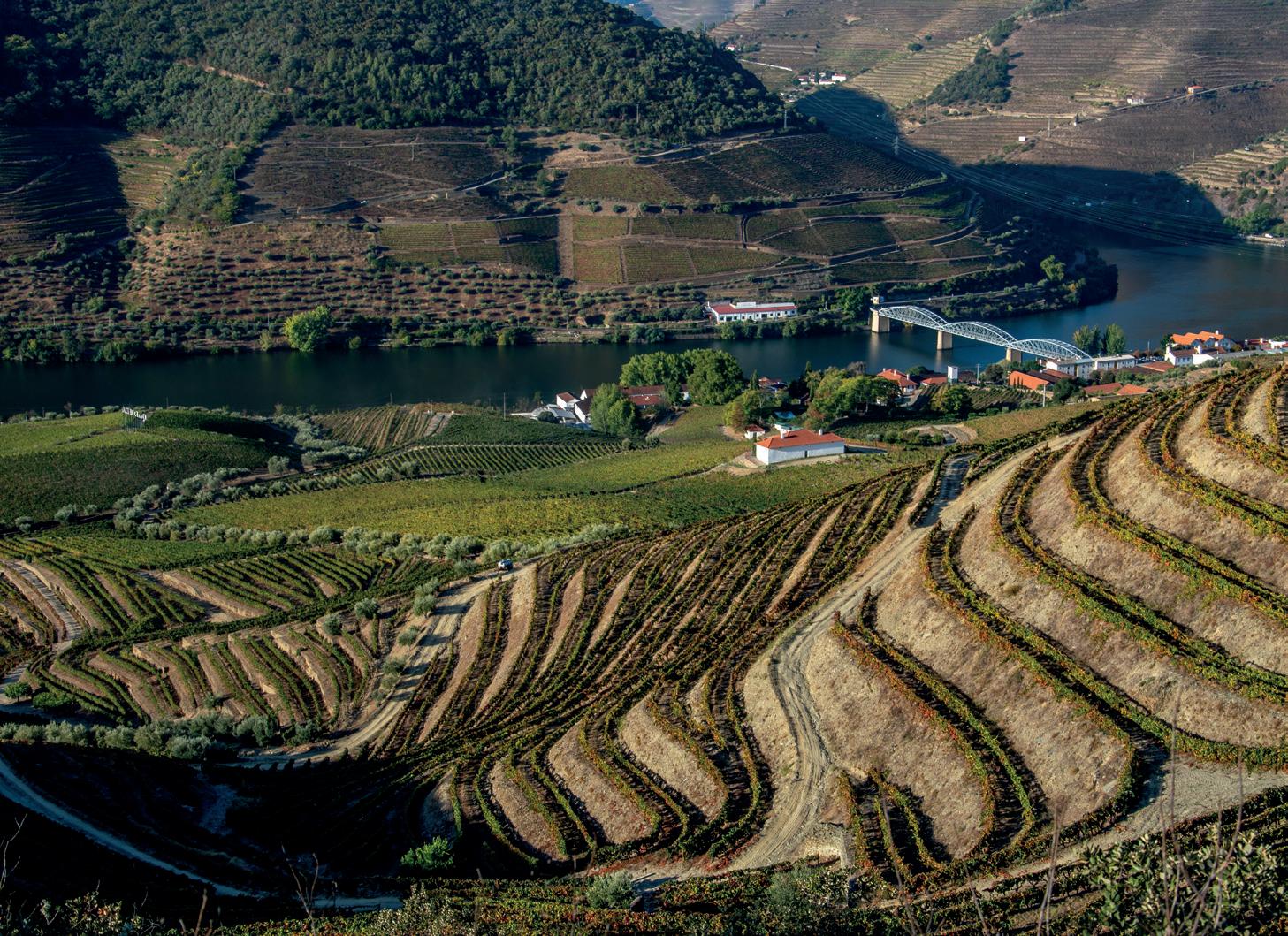
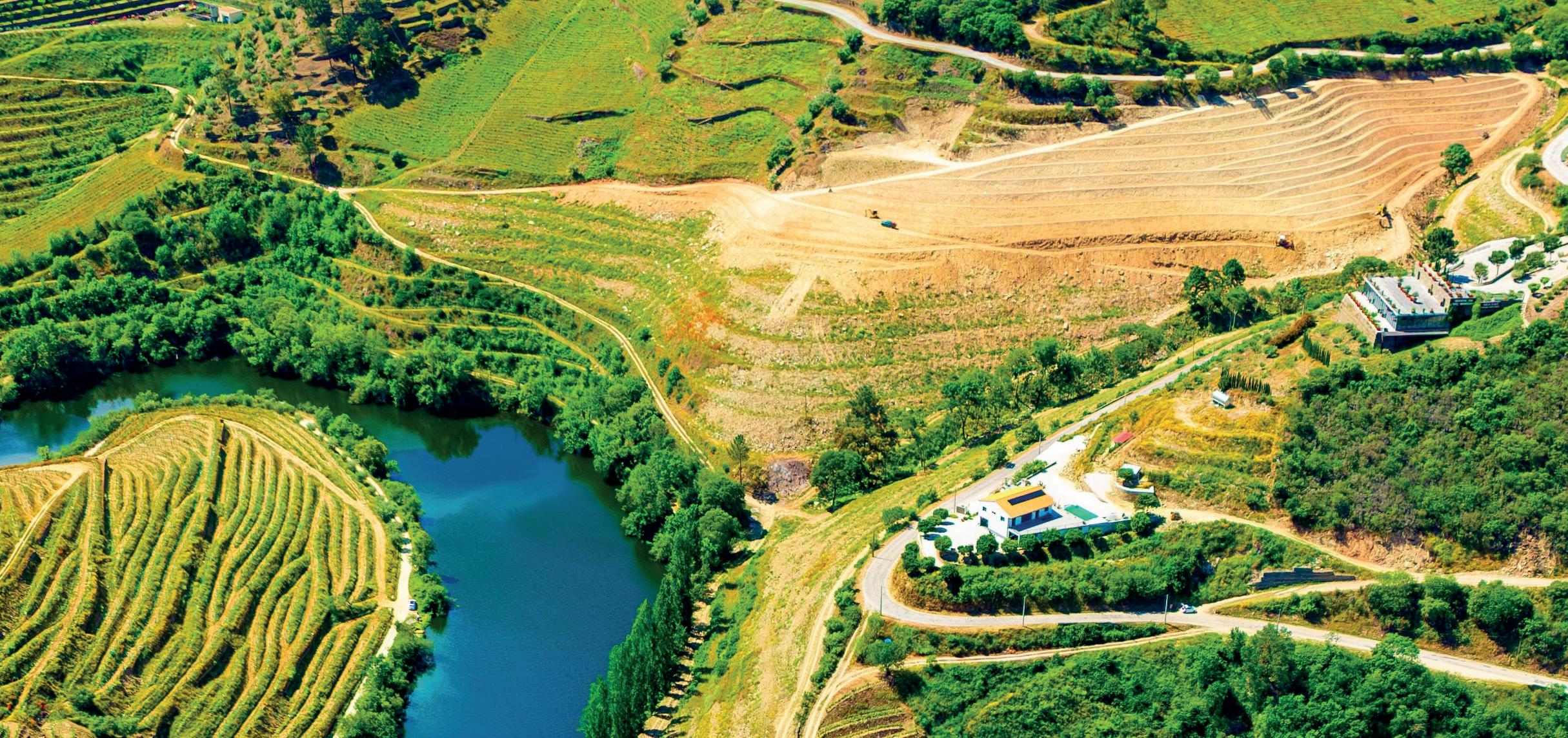
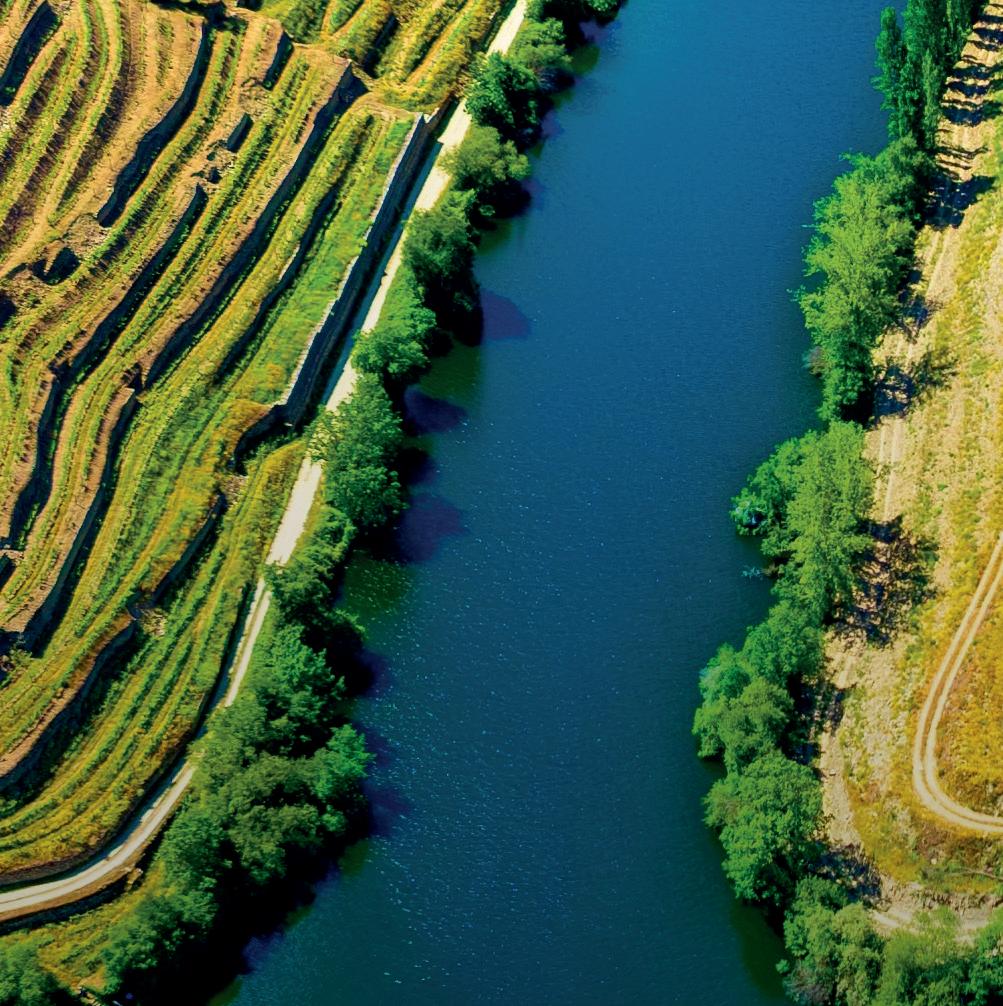
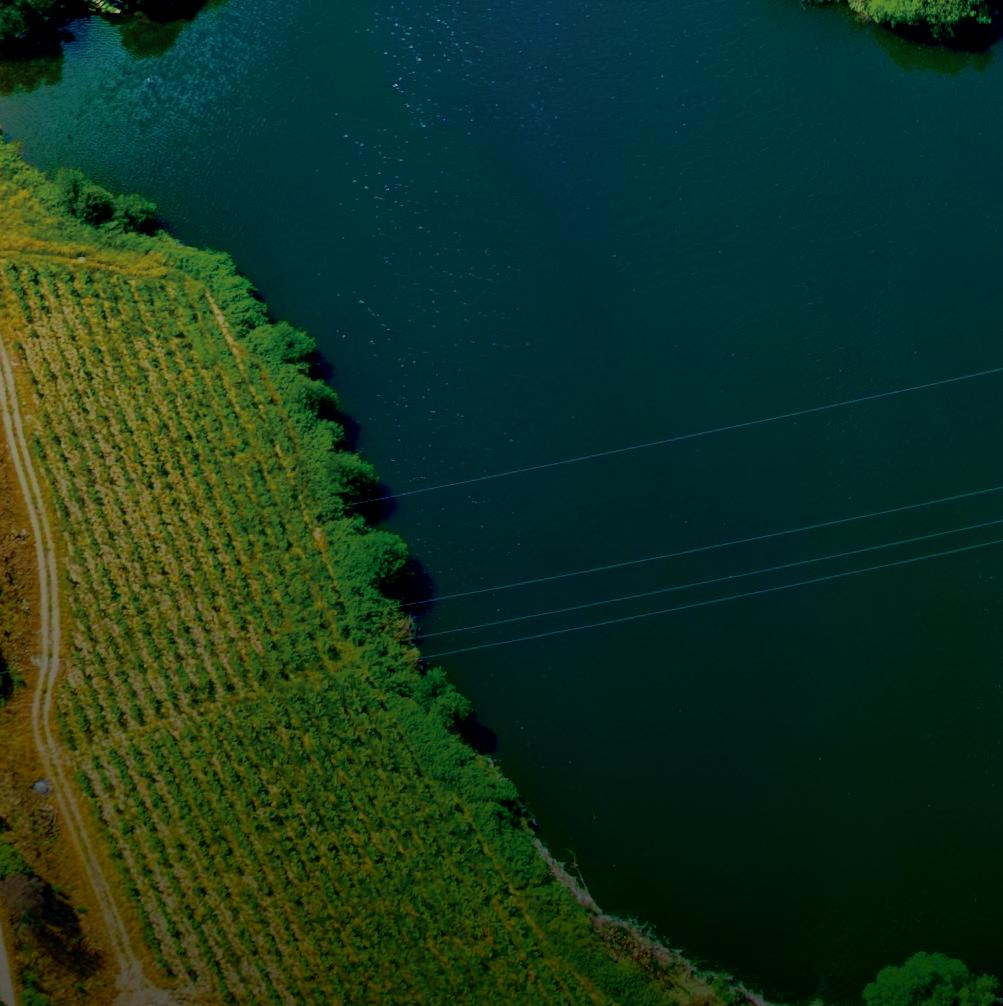
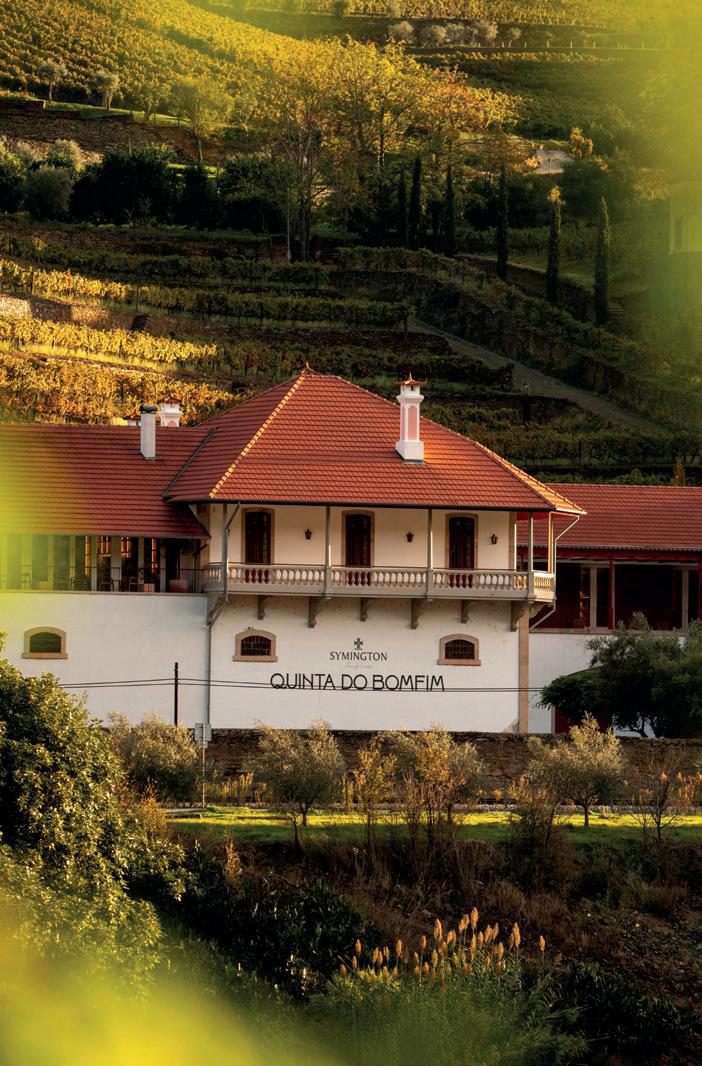
The upper Douro valley is the region demarcated in 1756 for the growing of grapes for port, putting in place a quality control system akin to the French appellation contrôlée which is the oldest of any wine-growing area of the world. Some of the Douro’s most prestigious quintas are around Pinhão including La Rosa, and Bomfim, which my greatgrandfather acquired in the 19th century and which is still part of the family business.
At the Bomfim winery, vineyards terraced out of the slatey ground remain much as they were in
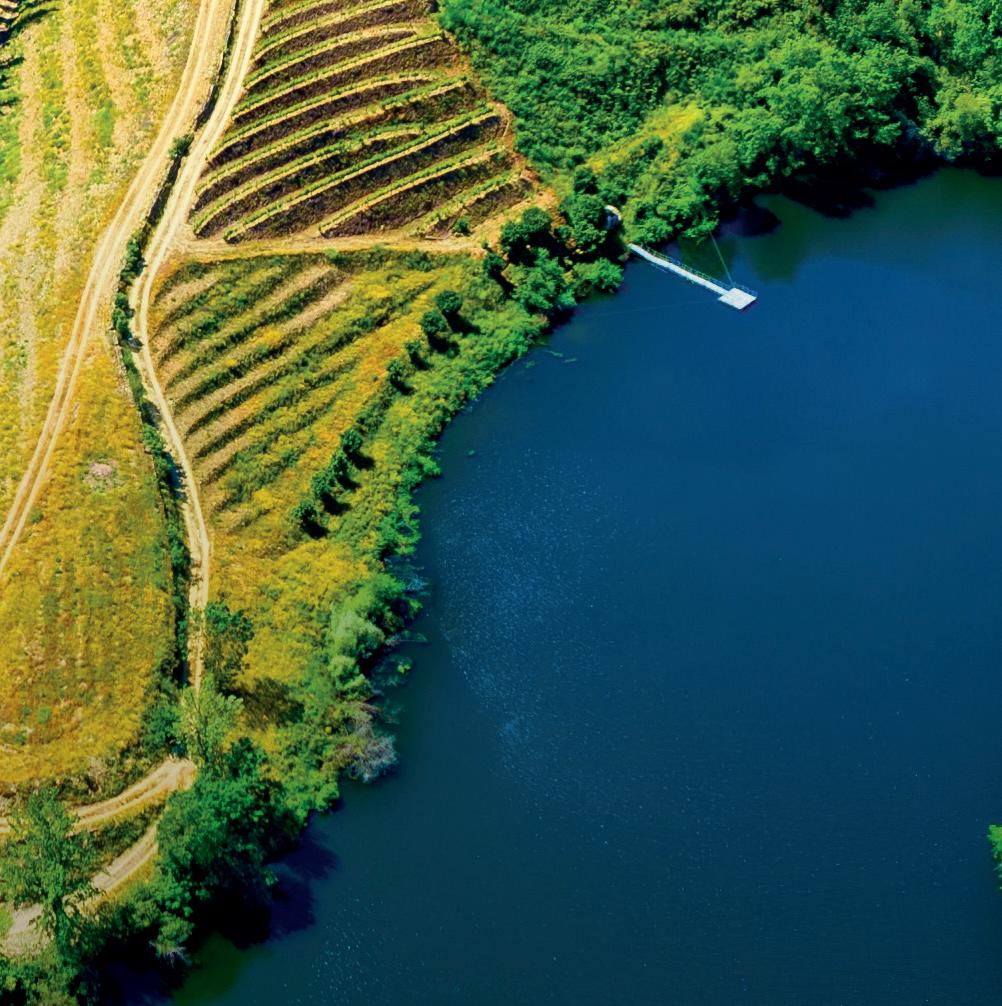
my childhood, although modern methods of wine-making are now artfully applied to traditional viniculture. In the year following the harvest, the newly-vinified port is transported down river to Vila Nova de Gaia. Here it ages in shippers’ ‘lodges’ – another misleading term, derived from the Portuguese word ‘loja’, or warehouse.
No visit to Porto or the Douro valley would be complete without sampling the produce. There are opportunities for tastings at La Rosa and Bomfim and also at the Factory House and in the deeply
atmospheric Graham’s lodge in Vila Nova de Gaia. Here, rich rubies mature in great vats; fine old tawnies ageing in smaller oak barrels; and peerless vintages spend decades in bottle, lining darkened cellars.
The river and region have undergone huge changes in my lifetime, but much of their heritage remains timeless.
Cruising the Douro runs for 8 days from 15–22 October 2026. Book now on our website.


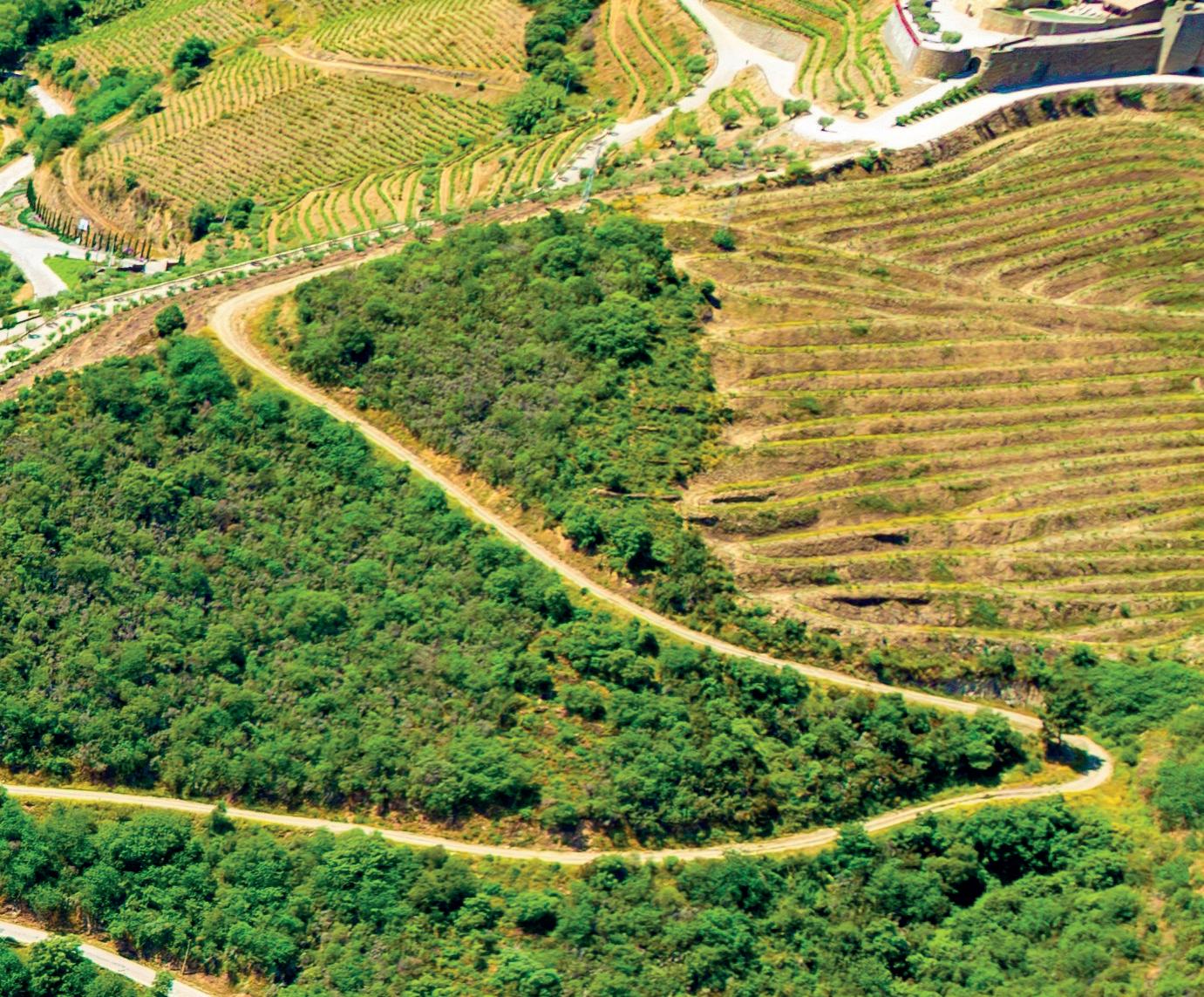
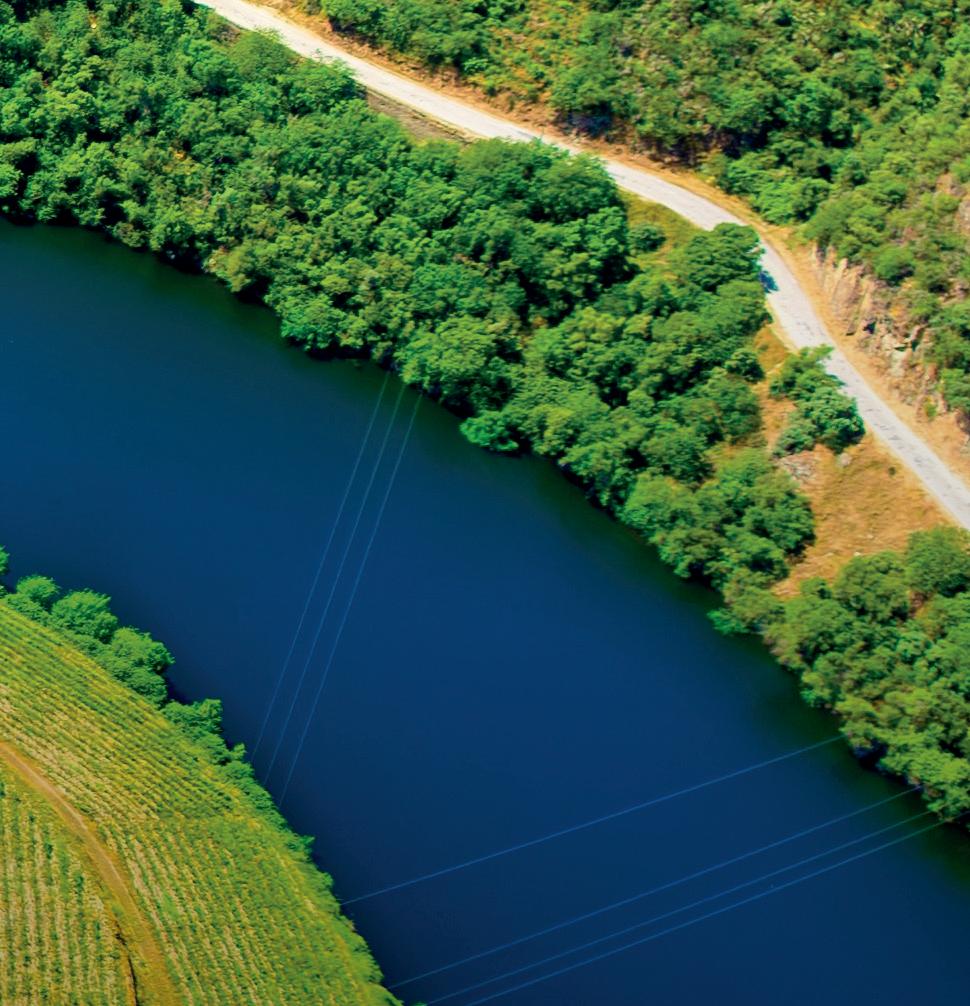


Wine, gardens, history and architecture from Porto to the Spanish border
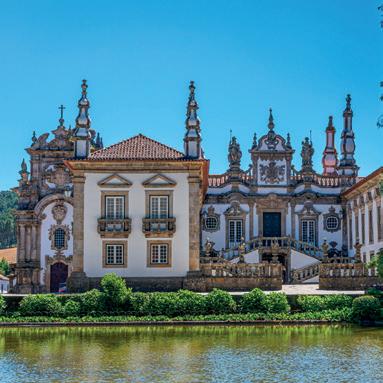







A cruise of immense beauty through the vineyard-clad Douro valley. We are accompanied throughout by two experts who give talks on the history, gardens and winegrowing heritage of the region: Dr Gerald Luckhurst & Martin Symington.





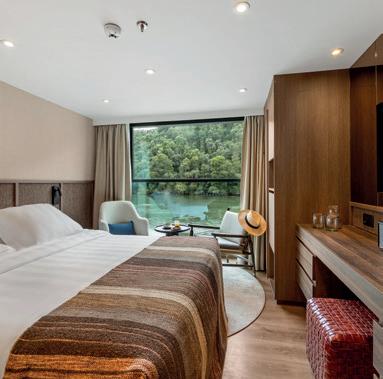

We have exclusive charter of a firstclass ship, the MS Estrela. A 60-cabin river cruiser, it launched in 2024. All cabins have windows and there is a swimming pool on the sundeck.
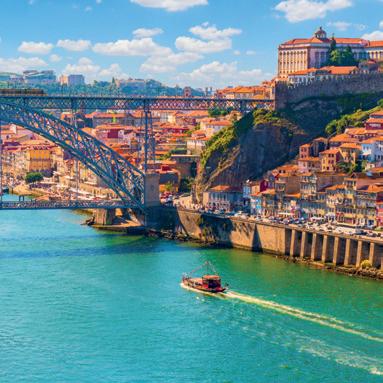
Porto extension






Extend your tour for three days before boarding the ship and explore the history, art and architecture of delightful Porto.


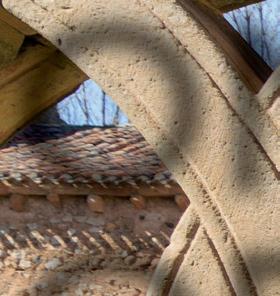
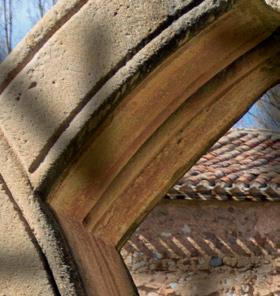
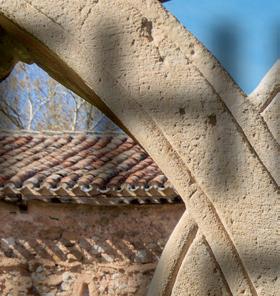
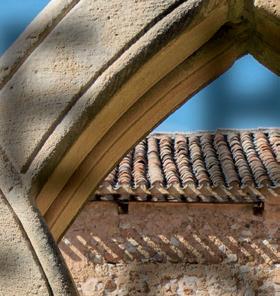
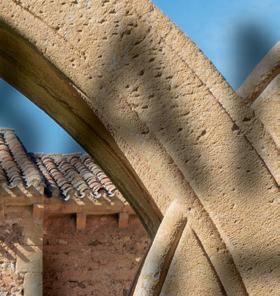
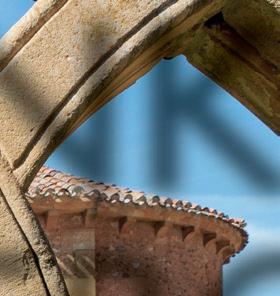
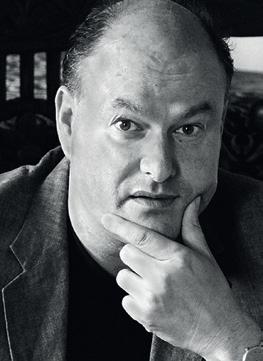
The historian and hispanist Gijs van Hensbergen, leads a tour of the River Duero region, on terra firma, from Soria to Porto. It’s a part of Spain he has long wanted to share.
Why is this region so important to you?
I’ve lived in the area for 40 years. I feel very much part of village life and the intellectual life here as well. It’s my habitat. The philosopher Miguel de Unamuno described the River Duero as the ‘Conscience of Spain’. There have been some extraordinary historical events that took place along its banks. And the landscape around it is stunningly beautiful. You can do the history of Spanish literature through the river. El Cid, El cantar de mio Cid is believed to
be written on the banks of the Duero. Yet, this whole area in the centre of Spain is little known. There are incredible, world-class masterpieces to be found in every town – art worthy of the Prado.
Tell us about the history of the region?
There is so much. Numancia, which we visit early on, is the site of the last stand of the Celtiberian tribes in 133 bc . Scipio Africanus who had just razed Carthage, surrounded the city walls and starved the inhabitants to death. Eventually the Celtiberian leader
Viriato set himself on fire and threw himself over the walls. It was a Pyrrhic victory – and its legacy is so important in the Spanish psyche that both the Republicans and the nationalists had a Numantine brigade during the Spanish Civil War.
For 300 years the Duero was a kind of barrier between the Christian world to the north and the Arab world to the south. After Berber revolts in the early 8th century, the Christian kings of Asturias came and laid waste to the whole area. There are towns
I remember years ago, going into that room of tapestries with Sir Roy Strong, former head of the V&A, and he just burst into tears.
and cities that passed between the Arabs and the Christians five or six times in a century. I’m thinking particularly of Zamora. We have this fascinating window into a millennial anxiety in this period, where the constant fear of the other side actually creates some amazing things.
There’s a wonderful romance and beauty to the landscape, too, that is well captured by the great 19th-century poet, Gustavo Adolfo Bécquer. His poems are full of stories about watching the moon across the Duero and the Mountain of Ánimas, where the dead souls of Templar knights guard the waters. We start off the
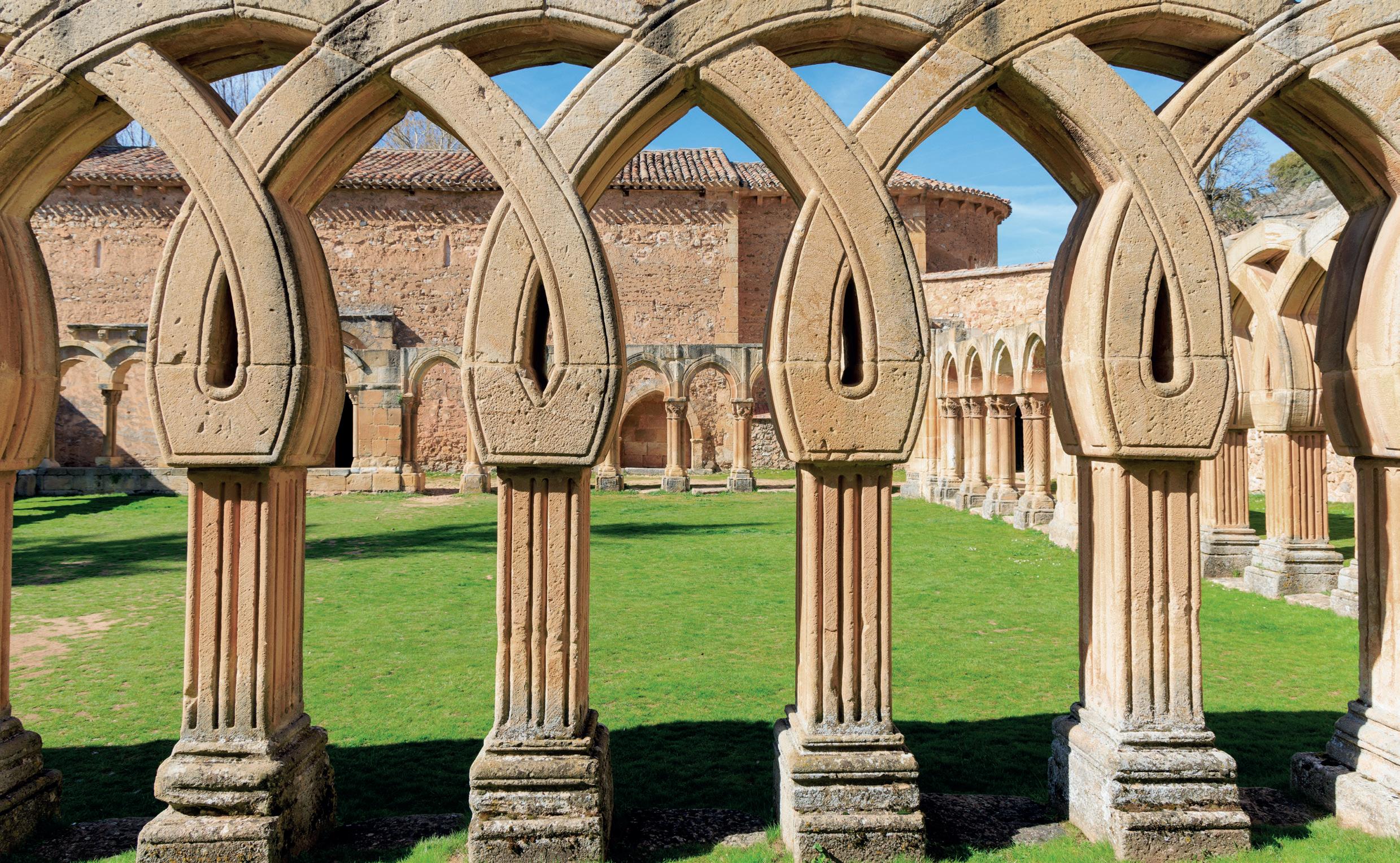
tour in the mountains, in Soria, not far from the river source. At San Juan de Duero, the amazing interlacing cloisters set the tone.
What unexpected sites will we encounter on the tour?
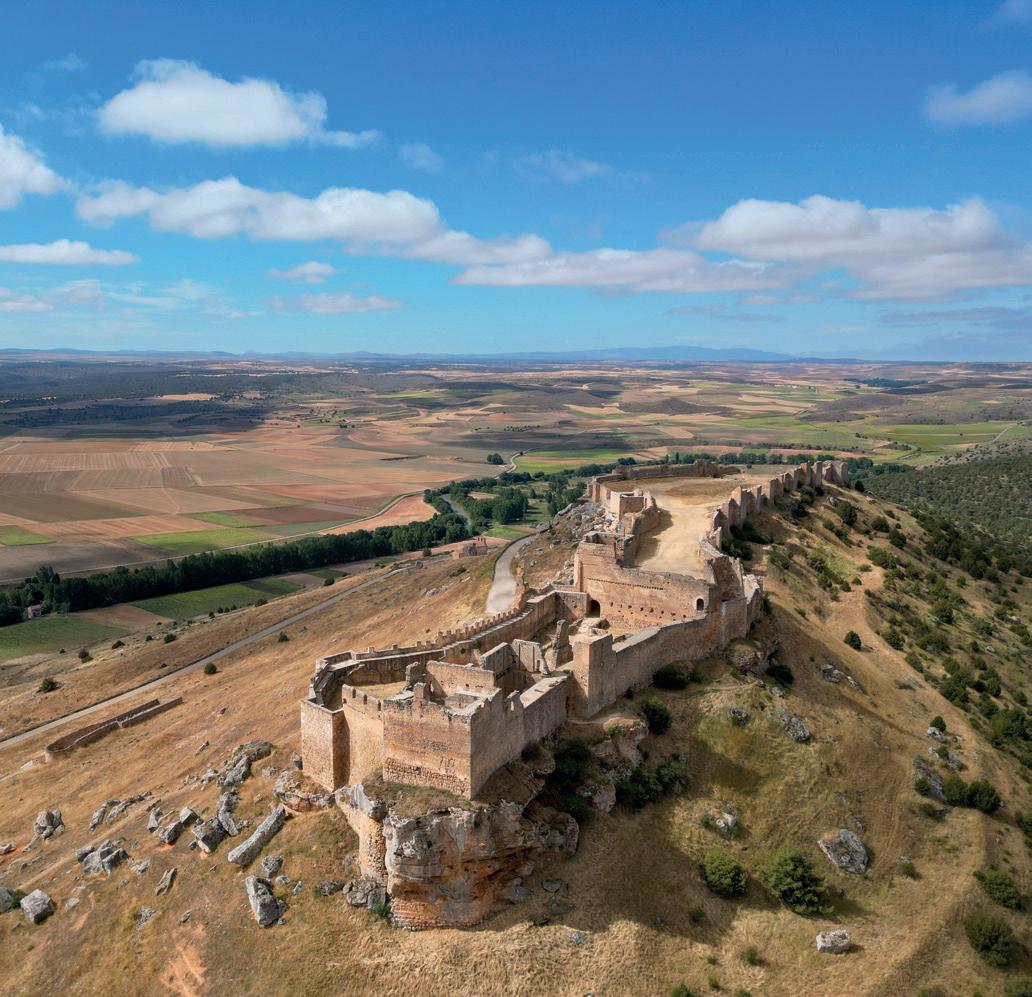
One surprising treasure is just outside the Arab castle of Gormaz, the largest castle in Europe, even larger than Krak des Chevaliers. In the castle footskirts, there’s a tiny little ermita. Inside, beneath flaking paint was discovered, only about 15 years ago, an incredible set of apocalyptic murals of Saint John’s visions. It’s as fresh as if it was painted yesterday.
The monastery at Santo Domingo de Silos, has in my view the most beautiful Romanesque cloisters in the world; I rate the master sculptor here as highly as I do Donatello or Michelangelo. But we don’t know who he was. Was he a Byzantine journeyman? Or the grandson of someone who’d been working in the Arab palaces in Córdoba? The quality is just utterly astonishing.
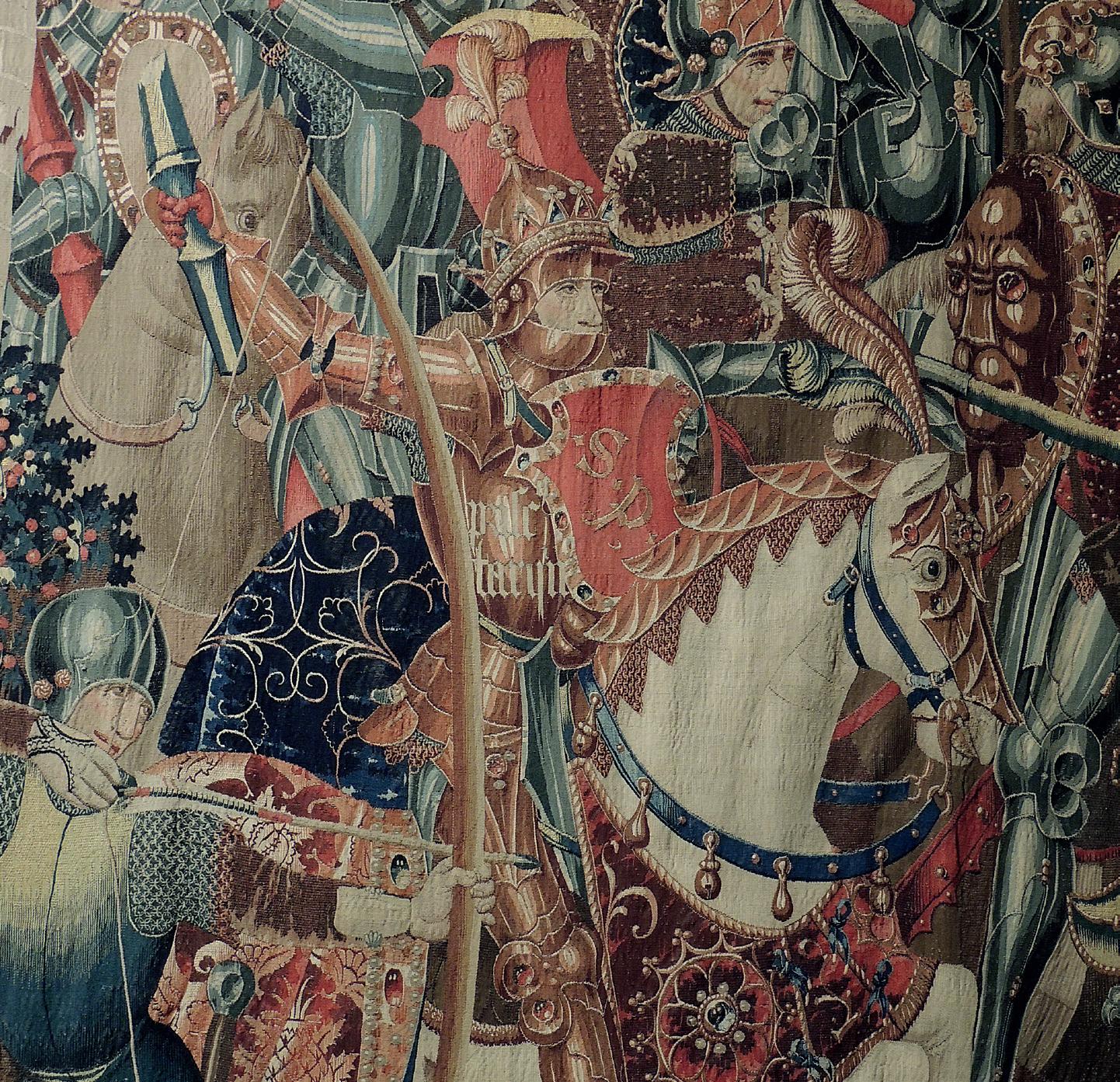
Then there is the exceptional full set of gold and silver tapestries at Zamora, made in the late 15th century by Willem de Pannemaker, the ultimate Antwerp producer (another set was bought by Henry VII of England and has largely disappeared). I remember years ago, going into that room with a client, Sir Roy Strong, former head of the V&A, and he just burst into tears at the sight of them.
And again, in very quiet, sleepy Zamora, my latest discovery is a mikvah and a beautiful synagogue within a Christian palace, which was clearly taken from the rabbi during the Inquisition.
As a gastronomist what can you tell us about the food?
We’re going to have the first wild asparagus barbecued, sprinkled with salt and fantastic olive oils, artichokes and lots of delicious egg dishes. Of course, there are the roasts, the great lamb and suckling pig-roasts and some heartier dishes. But we are on a river. So there will be some superb fish. We’re going to be eating trout. When we’re up in the mountains it’s game. We might have a little partridge salad. And once, of course, we get down to Porto, it changes totally again. And the food becomes far more exotic. It is all going to be delicious.
‘The Duero River: from source to sea’ runs for 10 days from 13–22 April 2026. Book now on our website.
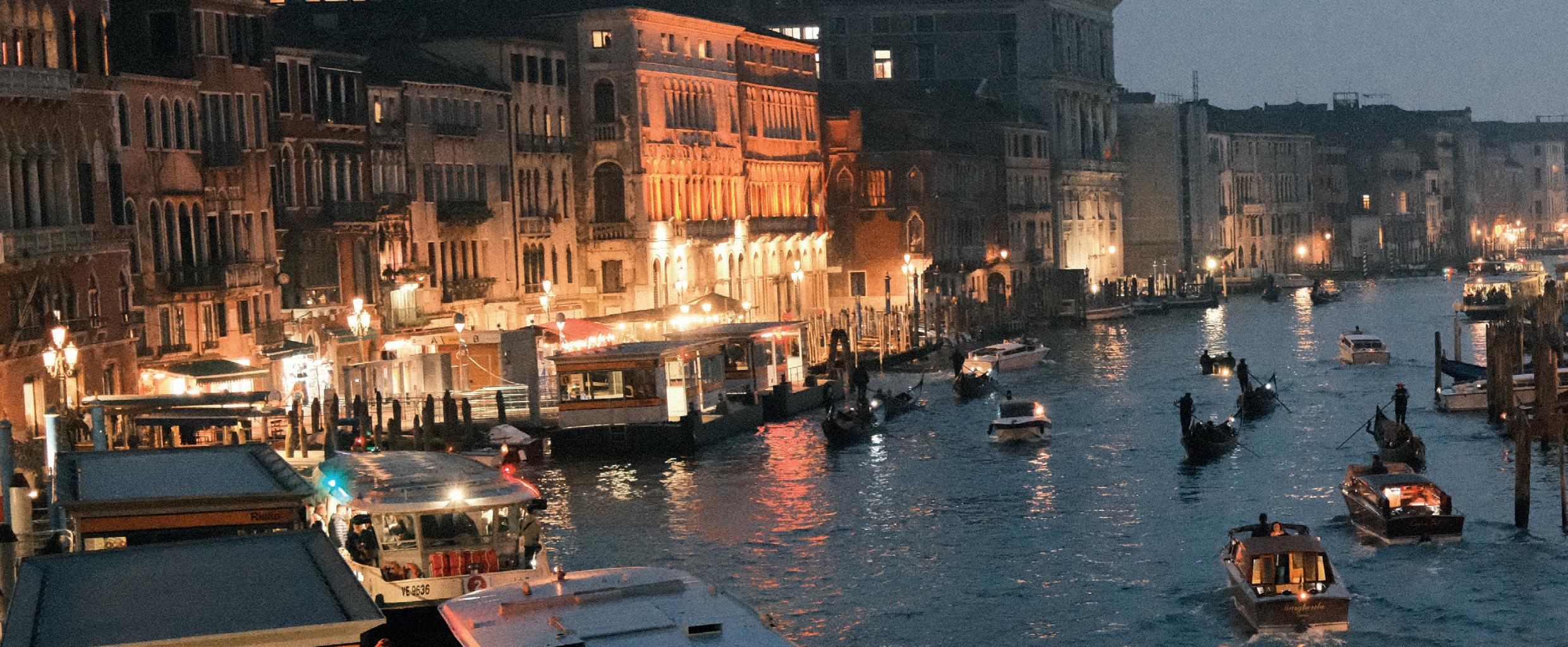
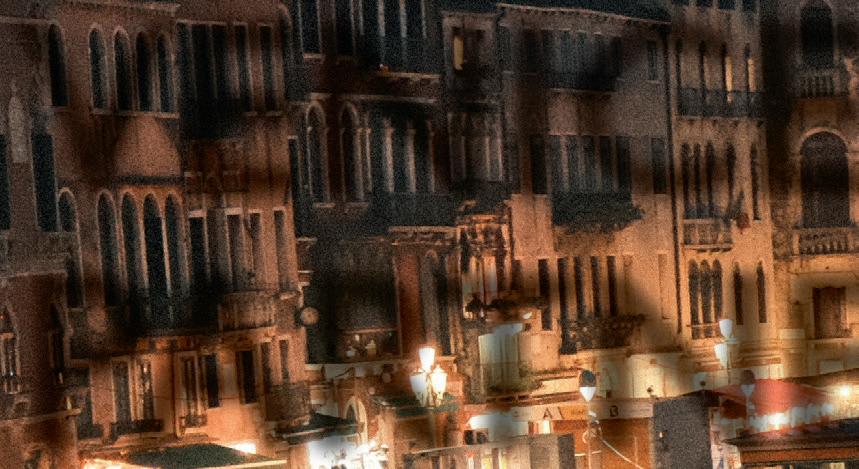
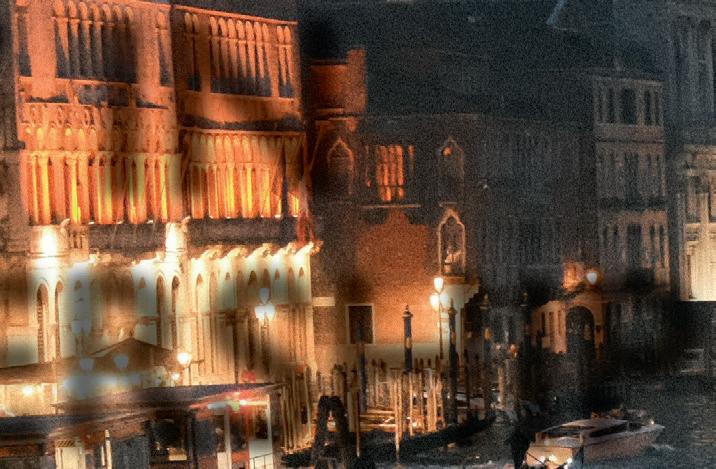
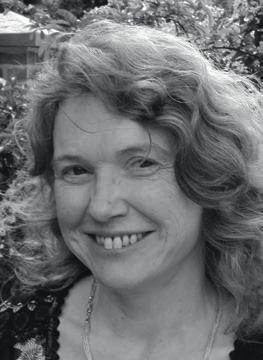
Susan Steer is an art historian based in Venice, where she is also the representative for the charity Venice in Peril. Here she describes its work and how MRT is contributing to its efforts to safeguard the future of the World Heritage site.
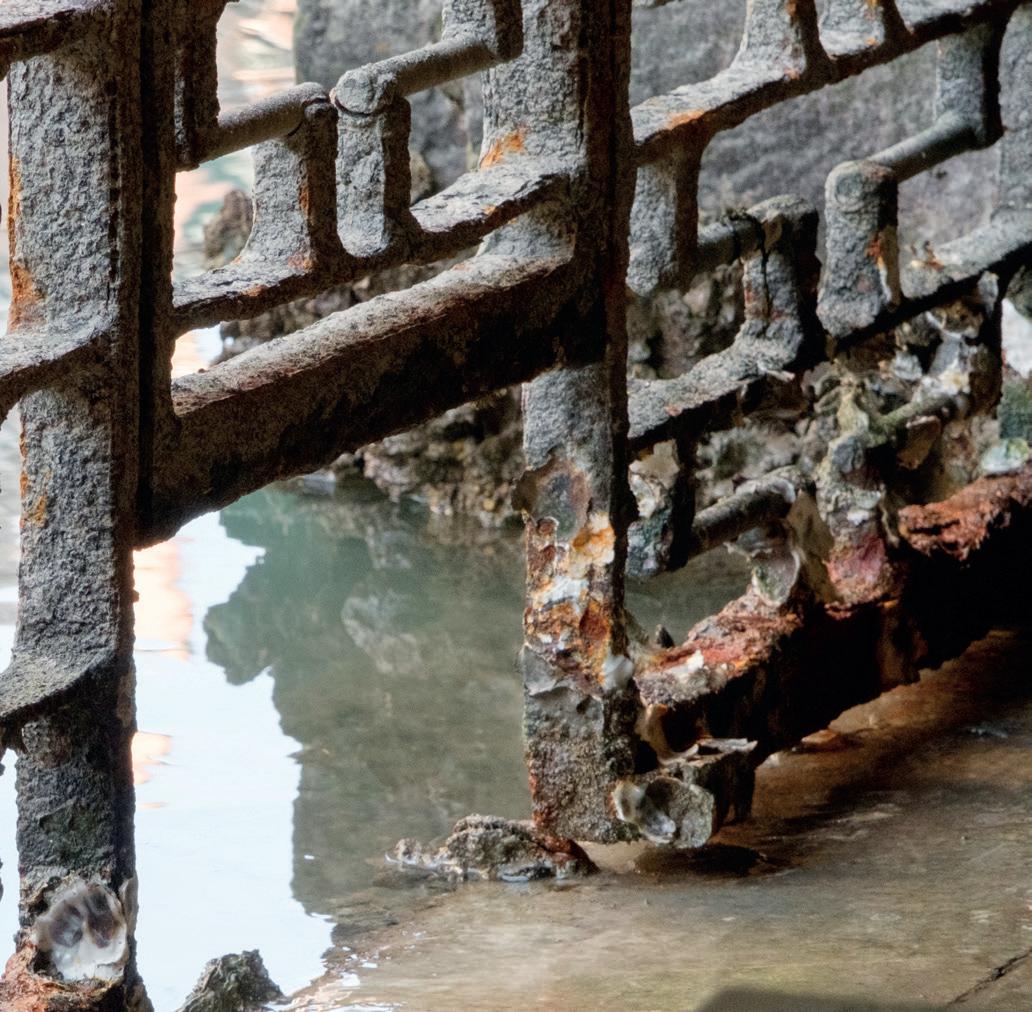
In 1966 Venice was devastated by a great flood. The catastrophe prompted an appeal by UNESCO and the Italian state for the world to assist in preserving this incredible city. The Venice in Peril Fund was the first of the international bodies established as a result, to safeguard Venice and its monuments and artworks.
The charity was founded in Britain by Sir Ashley Clarke, former ambassador to Rome. It began life as the Italian Art and Archives Fund and was renamed Venice in Peril in 1977, because Florence, which had also suffered from flood damage, had somewhat taken the limelight. The organisation needed to highlight Venice’s plight.
Not everyone will know that Martin Randall Travel has been a significant supporter of Venice in Peril over the years. Along with other funders, it has been an
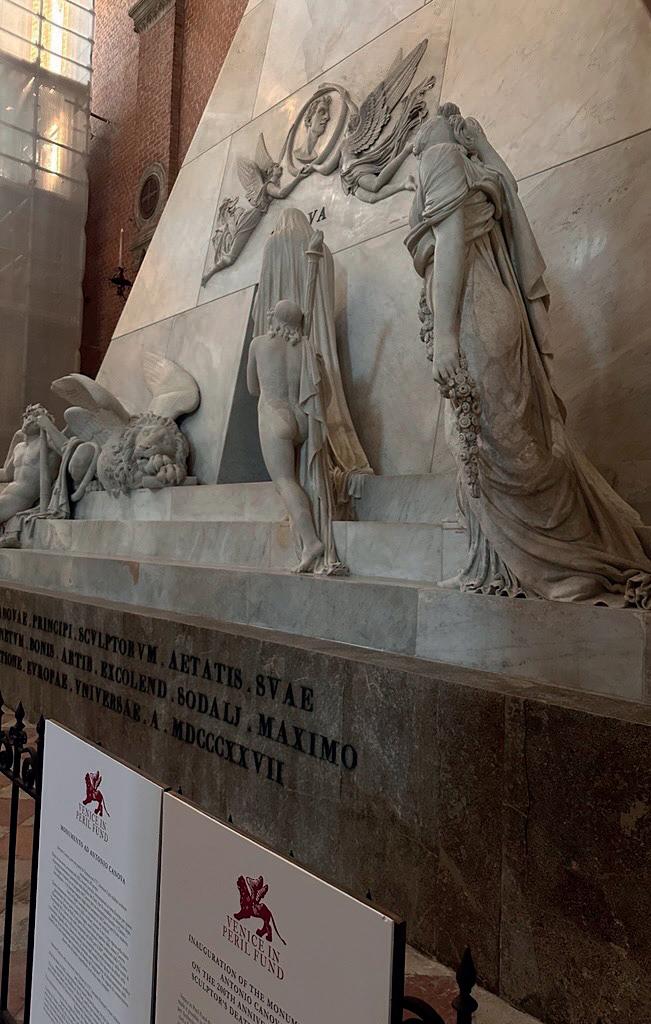
important donor to one of our most ambitious and high-profile projects – the restoration of the cenotaph of the celebrated sculptor and diplomat Antonio Canova (1757-1822). The Canova Monument, in the great Basilica of the Frari, had deteriorated over many years and was in danger of collapse. It required partial rebuilding with noncorrosive steel cramps and dowels because the internal iron metalwork had corroded due to the saline content in the water. Historic conservation treatments had further exacerbated the problem.
The half-a-million euro project to save this important Neo Classical monument was highly complex. It was also emblematic of the unique environmental conditions
that apply to Venice: the water, damp and saline levels are factors affecting all of the city’s fragile historic fabric and infastructure.
Both Venice in Peril, and MRT, are about valuing and making a really significant contribution to supporting cultural treasures.
With Martin Randall Travel, it’s about engaging in a really meaningful way with the culture of a place, whether the music, the gastronomy, or with my tours, the art and the architecture.
In a recent initiative that further cements our relationship, MRT has instigated a donation to Venice in Peril that pays a sum for each of its tours there, per person, per day. This is a direct contribution to the work of the charity.
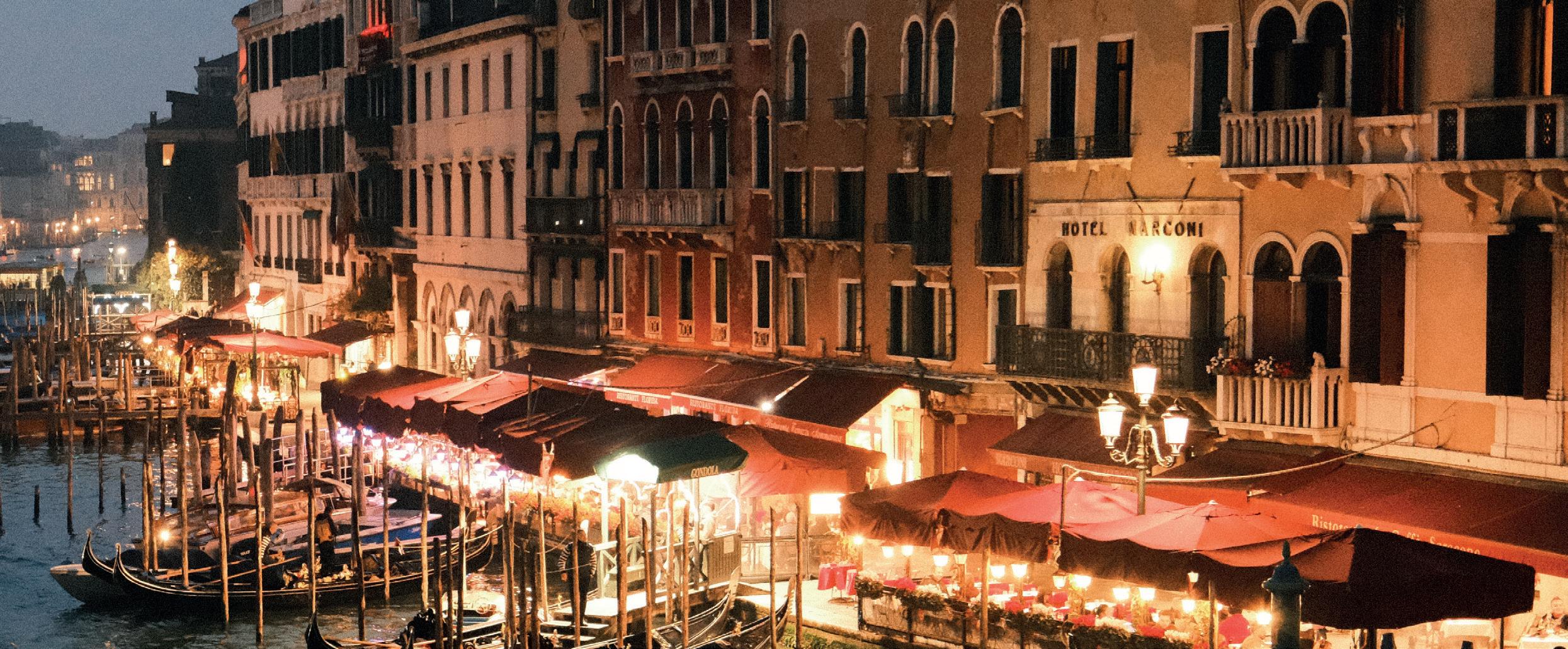
As well as focusing on particular sculptures, buildings, paintings and manuscripts, Venice in Peril also supports and funds research into the city. For example, it has supported the Venetian paintings research laboratory in various ways since the latter’s inception at San Gregorio in the late 1960s. In recent years, the charity has funded a research post at the laboratory which is now based at the Scuola Vecchia della Misericordia. For the last 14 years, it has also supported an internship for graduates of the London City and Guilds programme in
Conservation. This enables two postgraduates to come and work on the church of San Giorgio Maggiore as part of a larger coordinated project. This has beautiful synergies; the interns are getting experience and prestige in contributing to the study of this great Palladian monument. But they’re also learning about the particular challenges of the environment in Venice. So it’s about developing the next generation of stone conservators and experts on the city.
I’m hugely grateful to Martin Randall Travel not just for inviting
me to lead groups that have a really deep interest in the material culture of this city but who, in doing so, actually make a financial contribution to help support its future. I think that’s lovely.
Image far left: the ongoing project to repair the watergates designed by Carlo Scarpa and executed by Officina Zanon for the Fondazione Querini Stampalia. Courtesy of the Venice in Peril Fund.
Visit www.veniceinperil.org for more information on this important charity.




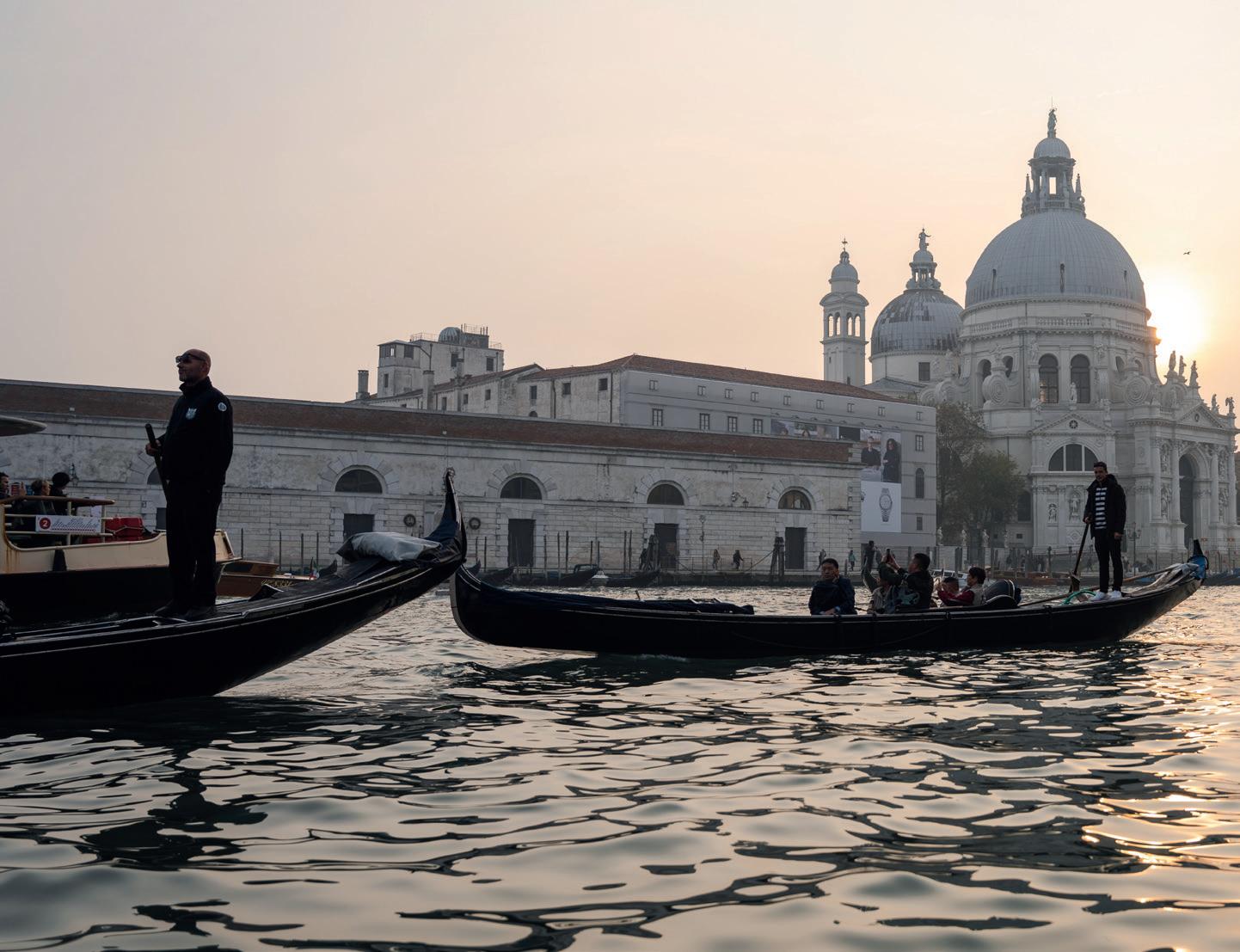
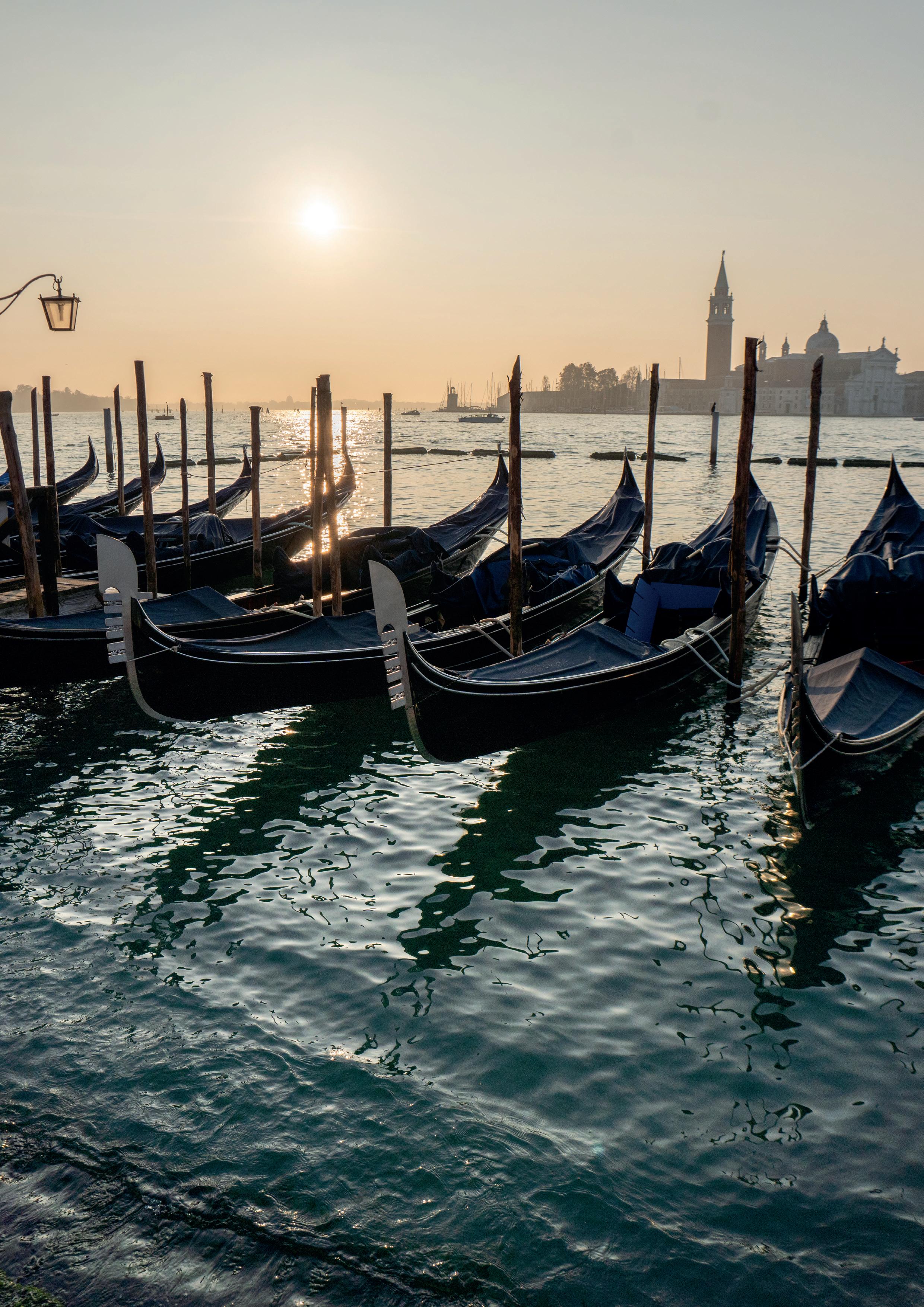










Few cities reward our detailed approach as well as Venice. We tread carefully-chosen, thoroughly-researched paths and visit the widest possible range of monuments. The enticing autumn light makes November a perfect time to survey La Serenissima , with quieter streets, museums and galleries, too.
Susan Steer
6–11 November 2026
A deeper exploration of Venice for the seasoned traveller; see lesser-known treasures and sites rarely accessible or simply o the beaten track.
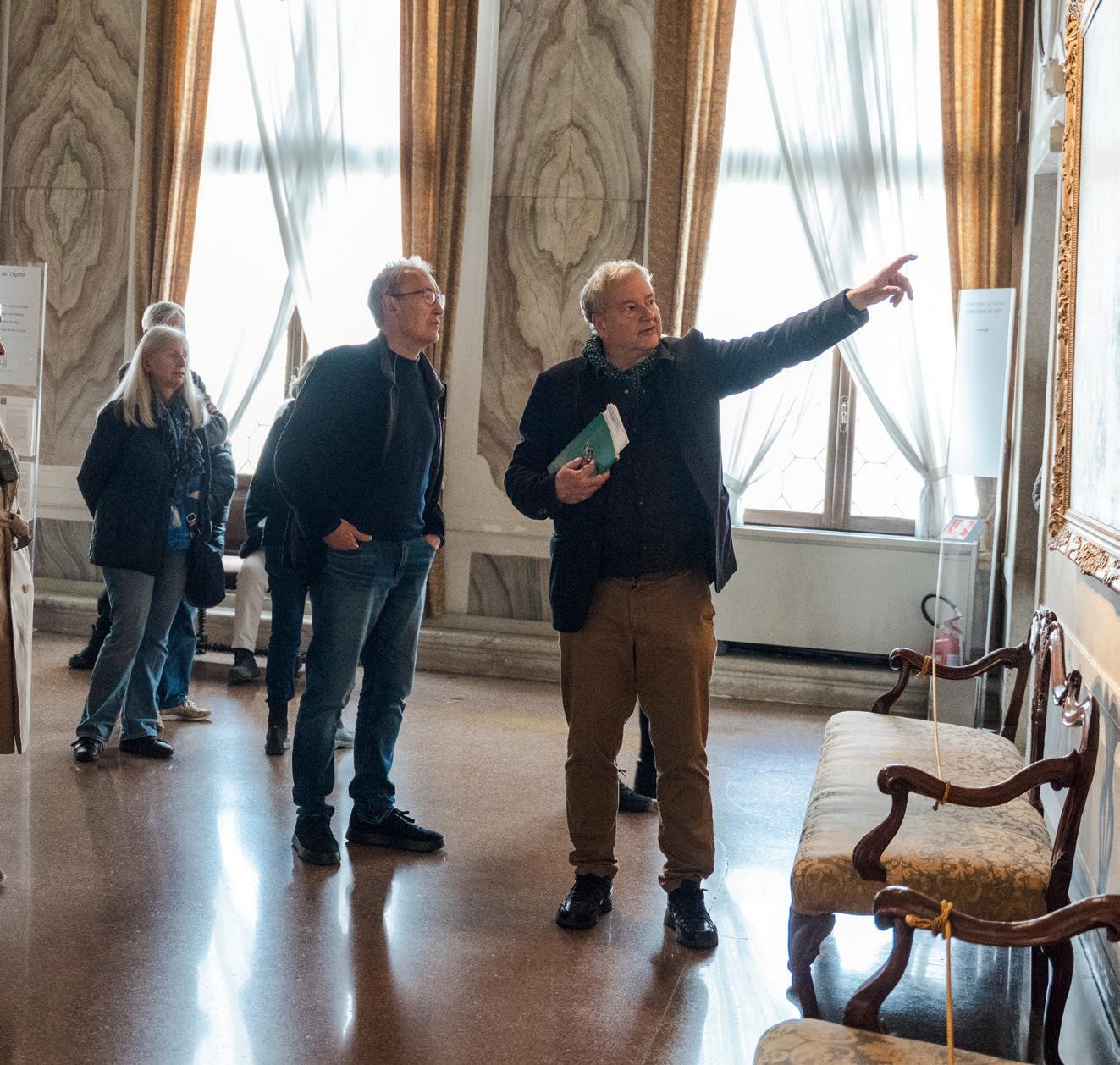
Dr Carlo Corsato
6–10 November 2026
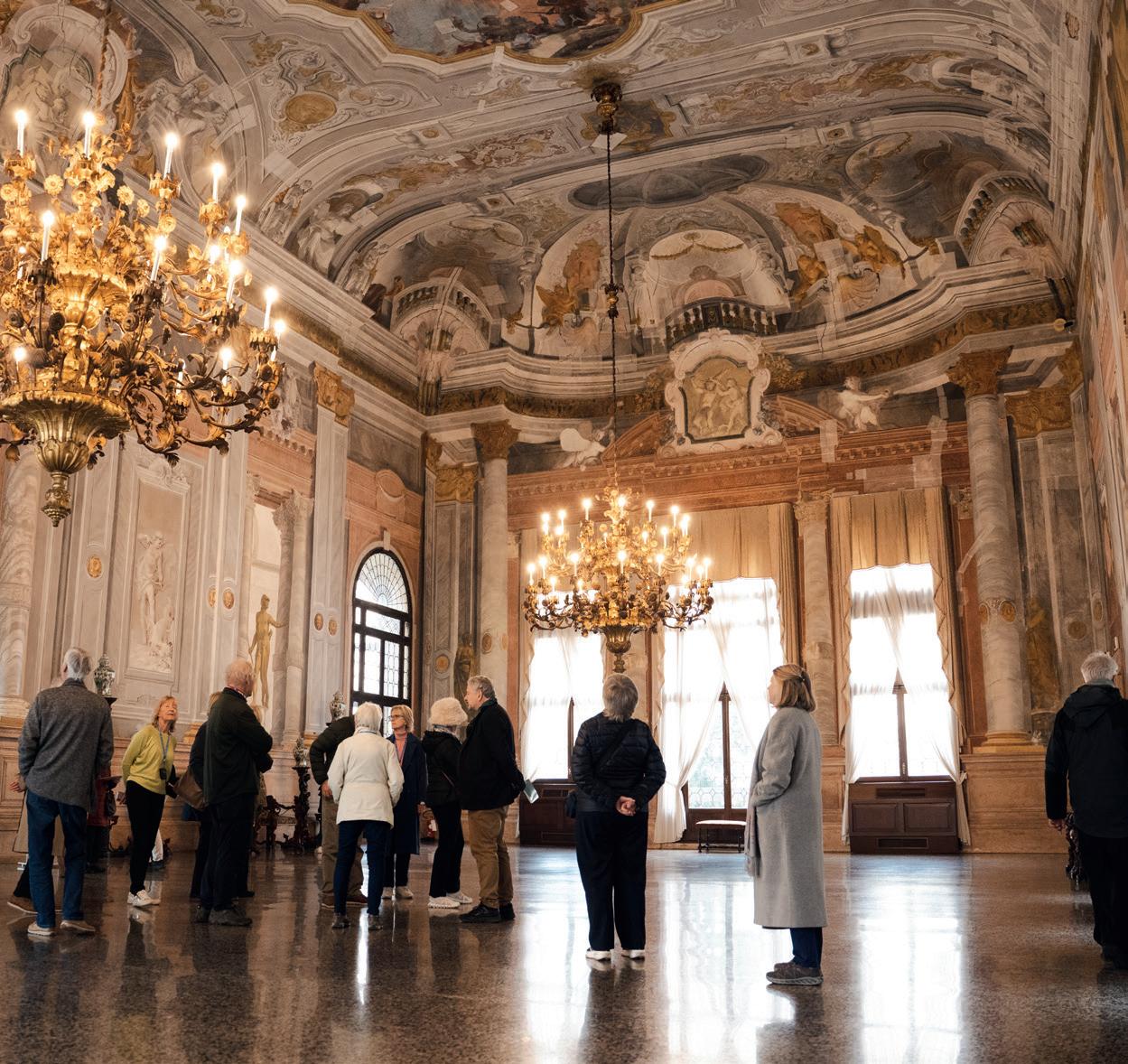
Explores many of the finest and best-preserved palaces, former homes of the wealthiest nobles and merchants of Venice.
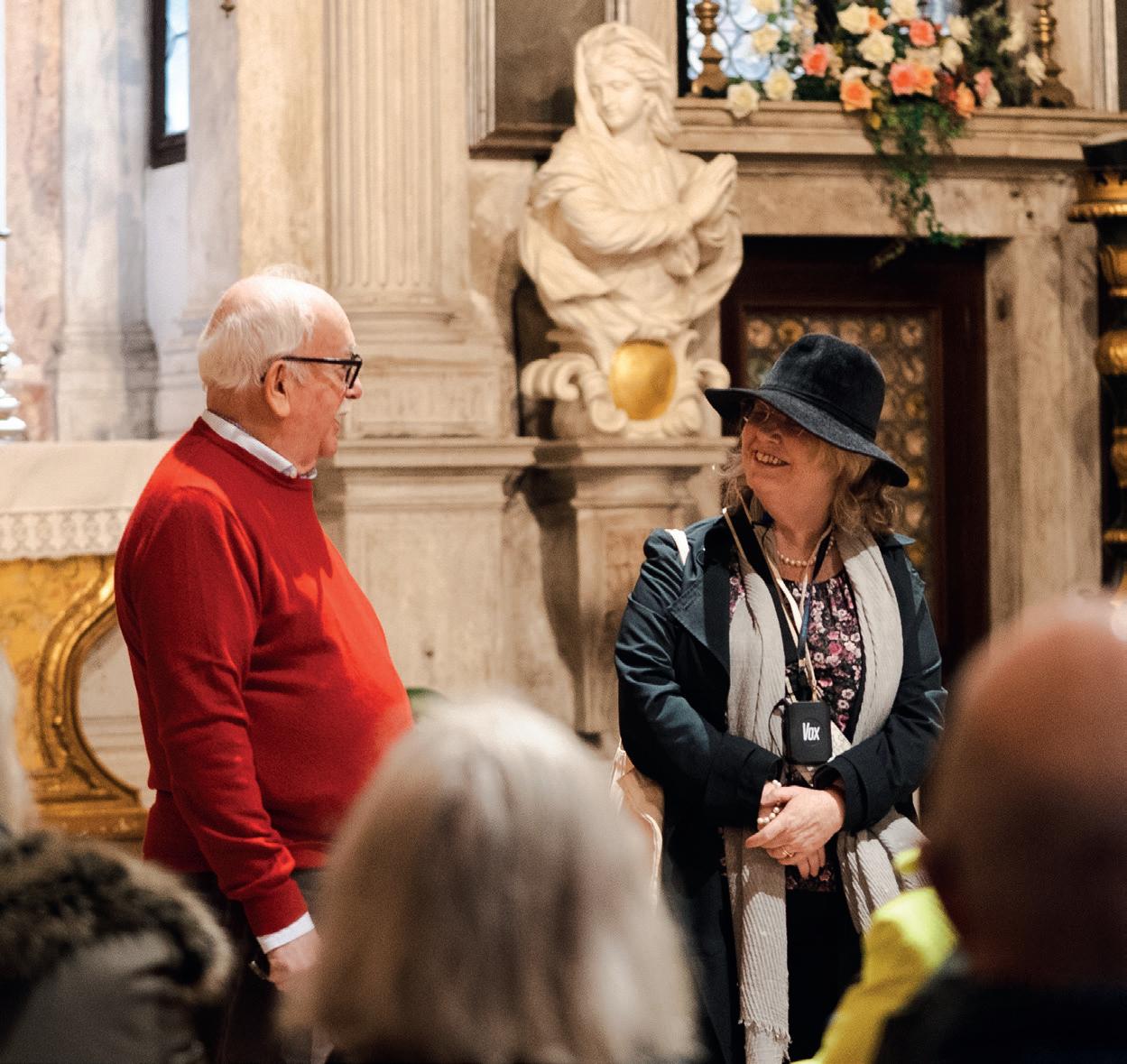
18–24 November 2026
Based in Venice throughout, home to the three masters for most their lives. We visit the churches and museums that commissioned their works and still house them.


Mazes, volcanos and fountains – or is it the plants and horticulture?
We asked our garden experts to tell us what excites them most in their favourite gardens on our tours.
Amanda Patton
Villa Barbarigo at Valsanzibio, Venice
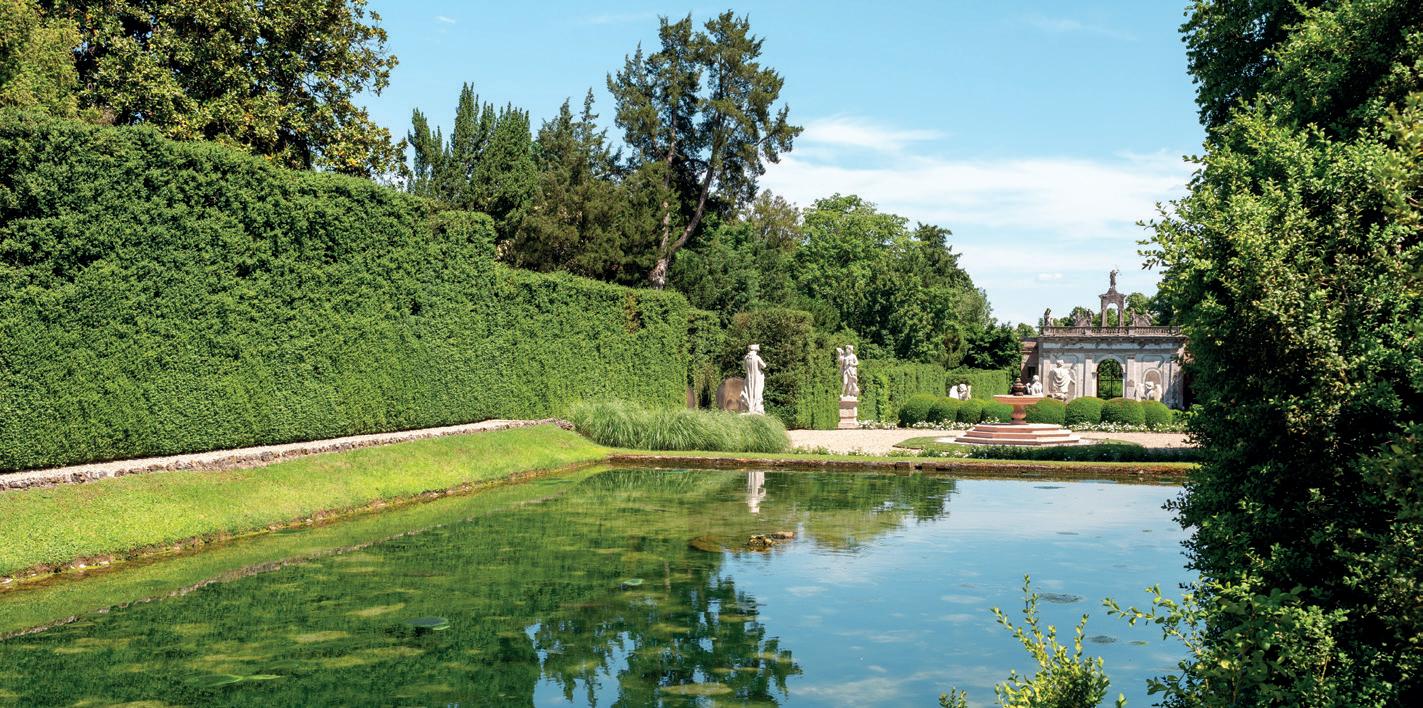
Created in the 1660s by Gregorio Barbarigo as a pact with God for sparing the remainder of his family from the plague that killed his mother, this garden takes us on an allegorical journey to salvation. A series of spaces is designed to purify our bodies and souls until we reach The Square of Revelations. As someone who loves conceptualism within gardens, this for me is one of the best of the Baroque-era gardens.
The original entrance through the great Diana gate (linked to Venice via the Brenta canal) hints that this is also a hunting estate with many delectable pleasures awaiting – if you pass the tests. I especially love the fiendishly difficult maze, designed around the seven deadly sins and containing six dead ends and one continuous looping path –that’s arrogance for you.
The impressive single main avenue is backed by six-metre-high original box hedging. Barbarigo’s humour remains evident throughout; the still-working giochi d’acqua will give you a soaking if you step on the wrong stone. These waterworks are reputed to have been designed by Bernini’s brother, Luigi, a water engineer who Barbarigo met in Rome while secretary to Pope Alexander VII.
Amanda Patton leads ‘Gardens & Villas of the Veneto’ from 21–27 April 2026, which visits Villa Barbarigo at Valsanzibio, and ‘Gardens of Normandy’ from 2–9 September 2026, which visits Jardins d’Etretat and Jardin Plume.
I especially love the endishly di cult maze, designed around the seven deadly sins. It contains six dead ends and one continuous loop –that’s arrogance for you.
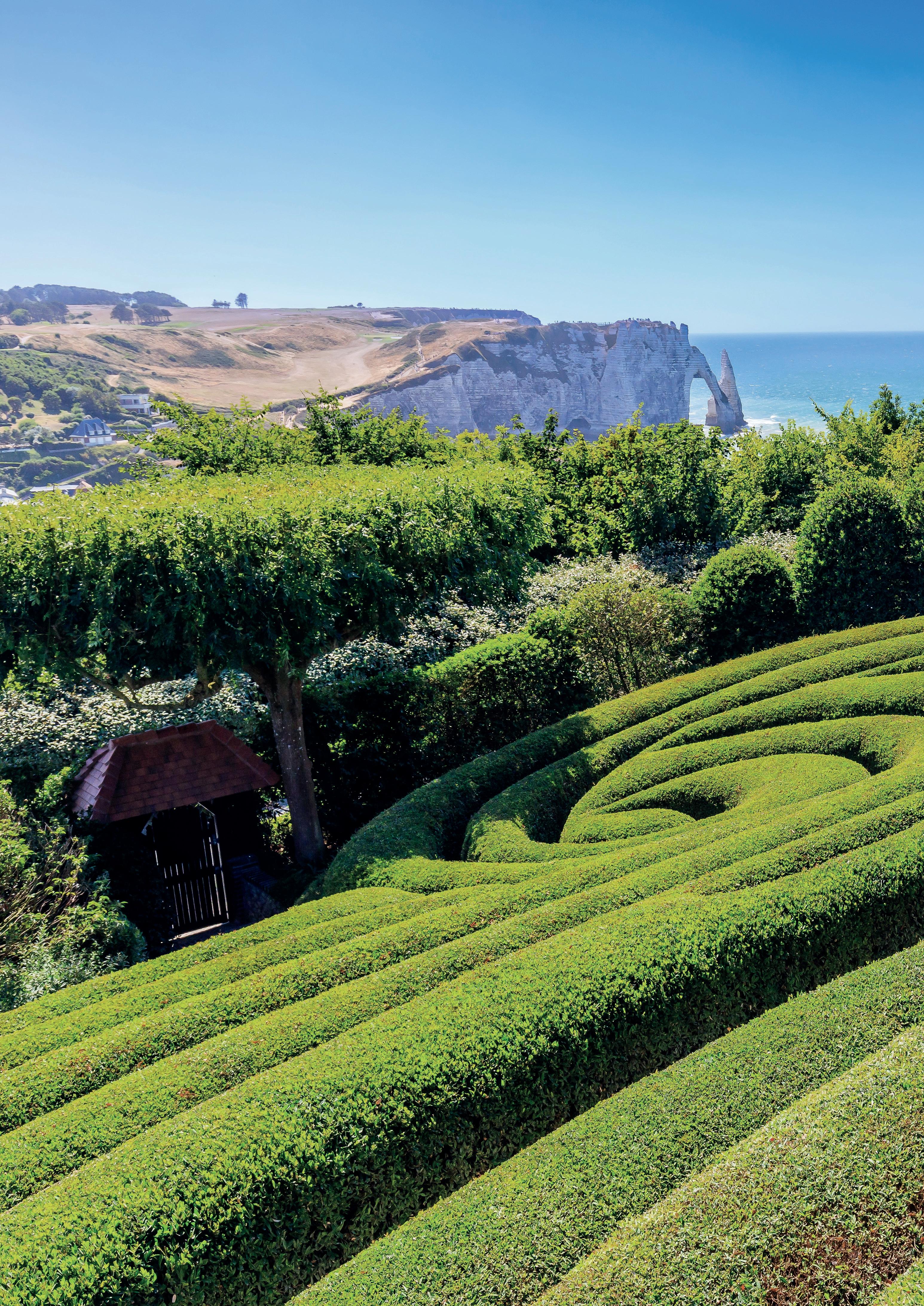
It would be difficult to find a garden in a more dramatic setting, sitting as it does high above the chalk ‘needle’ of Étretat, often painted by Monet and the Impressionists. But this is not a traditional garden, though it is very much of its place. Described as neo-futuristic, it evolved from the creative vision of landscape architect Alexandre Grivko to combine art, cutting-edge technologies and ethical values to create an experimental space.
Now listed within “Great Gardens of the World”, the steep cliff-side cascades with large-scale plants that reflect the location. Some are clipped to extraordinary shapes to echo the movement of the ocean, including Phillyrea angustifolia sculpted into wave shapes, whirlpools and vortices, while all are planted to trial resilience in a changing and difficult climate.
Created within the last 30 years by owners Patrick and Sylvie Quible, Jardin Plume has gained a reputation for its masterful planting which reaches a peak in early September. Inspired by Derek Jarman’s Dungeness garden for its planting and sense of place, and Henk Gerritsen’s garden of Priona, it is a beautiful and tactile garden full of movement and light from the use of grasses and perennials set within a formal French structure.
The success of Jardin Plume is due to its blend of whimsy and formality. For anyone unsure about grasses, I challenge you to have a change of heart after a visit here. There is much to learn from this garden; layer after layer of texture and colour, and above all a playfulness and joy. We never forget this is Patrick and Sylvie’s home and it feels a rare privilege to be allowed in to explore.
Louisa Allen
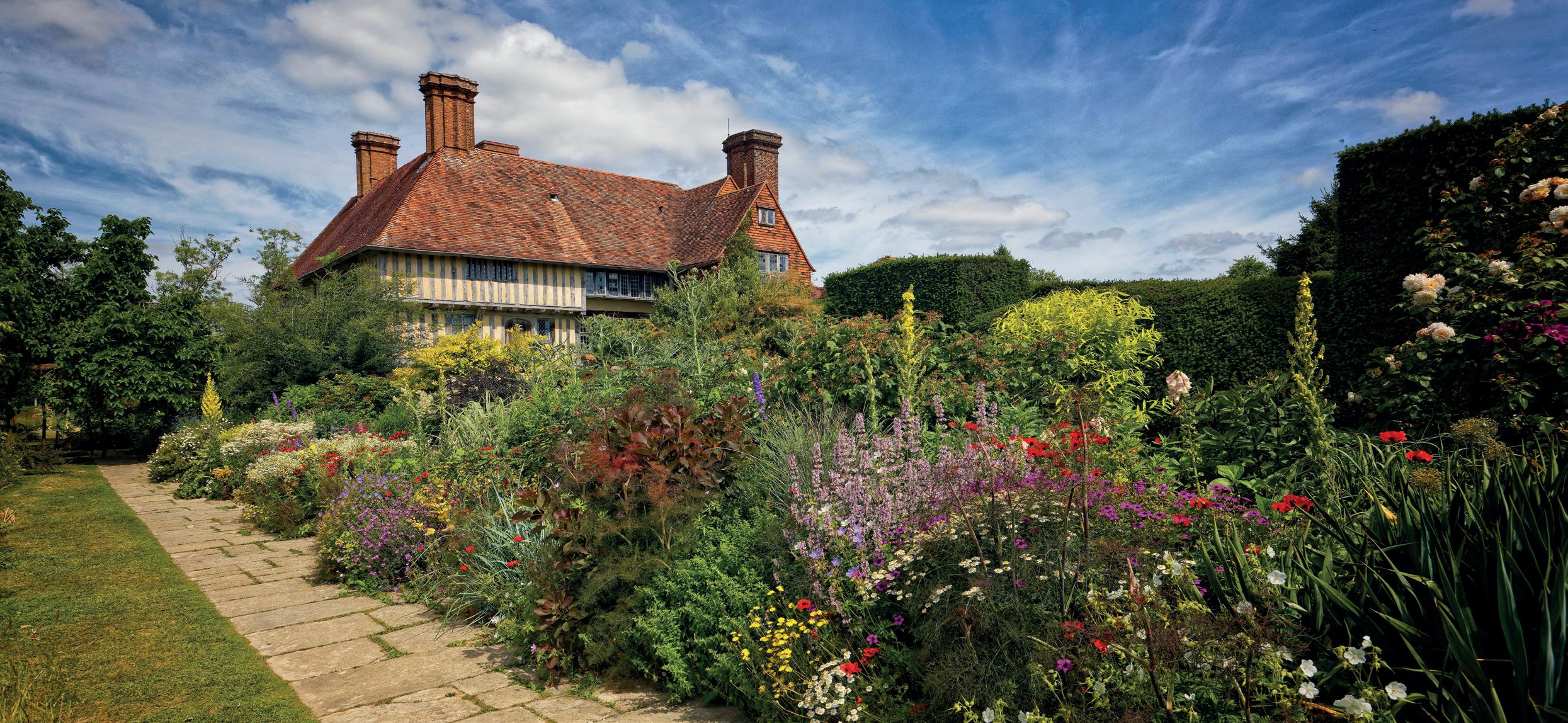
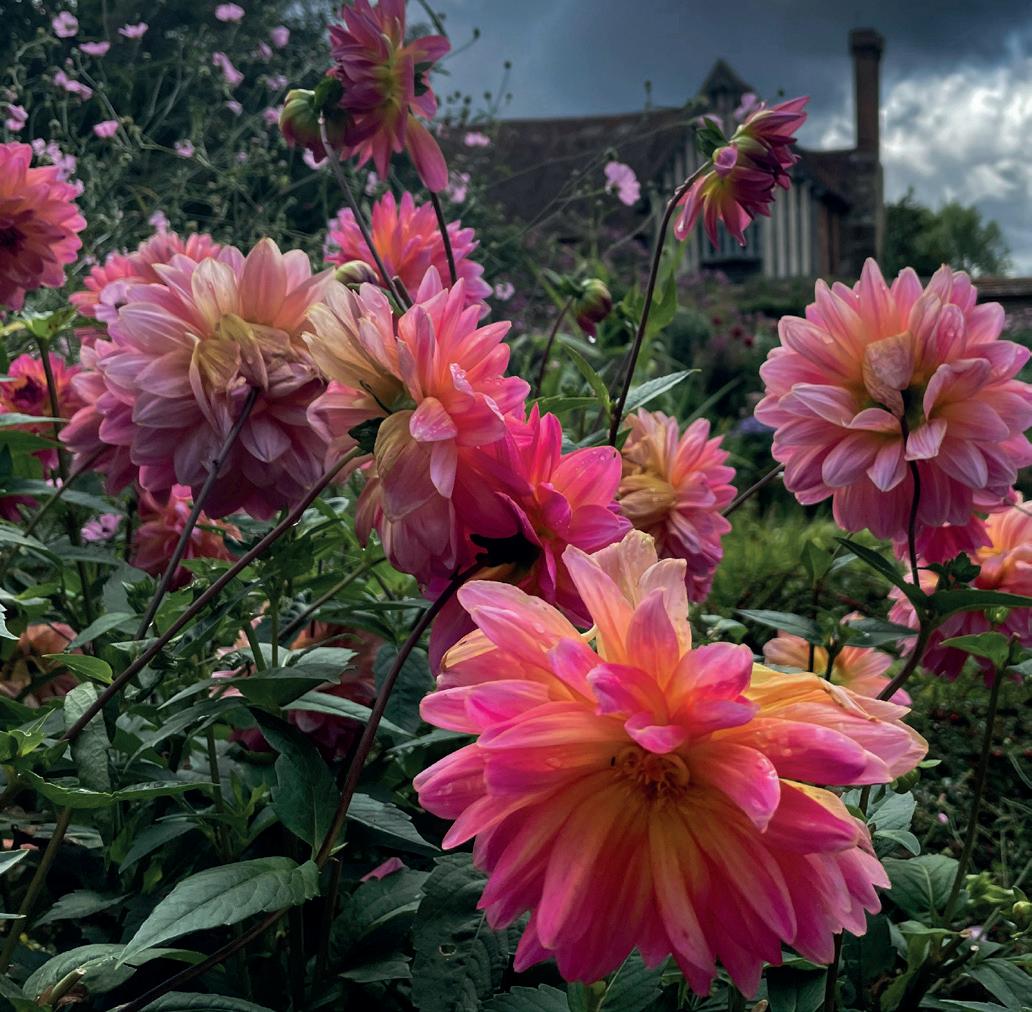
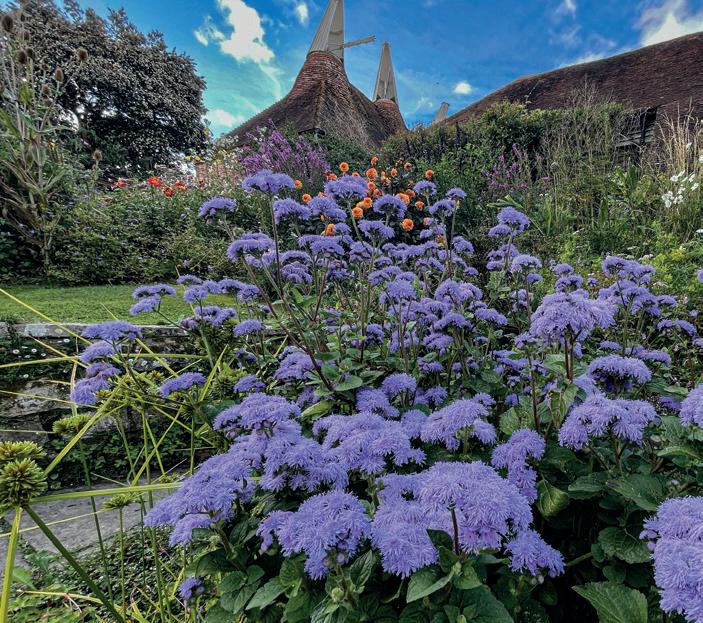
Not only is Great Dixter a fabulous garden, it challenges disciplines and is not afraid to experiment. It has excellent sustainability and biodiversity credentials and its managers have a forwardthinking philosophy that is shared generously.
This six-acre garden surrounding a 15th-century manor house in the Sussex Weald, consists of orchards, meadows, ponds, formal and informal borders and a mix of native and exotic planting. It is laid out as a series of rooms cleverly divided by buildings, archways, walls, hedging, topiary and avenues. Dynamic bold planting ensures seasonal interest throughout the year, challenging the norm, and it is both uplifting and inspiring for visitors – a perfect example of progressive gardening.
The garden was made famous by the visionary Christopher Lloyd, who was born at Great Dixter in 1921. The garden Lloyd first knew was commissioned by his parents, Nathaniel and Daisy, and designed
by Edwin Lutyens between 1910-12. Traces of it can still be seen – the laid-out York stone pathways, clipped Yew hedging and topiary. In more recent years since Lloyd’s death, the garden has been further developed by Fergus Garrett, his former head gardener.
The approach is to allow plants to follow their full natural habit and season; self-seeders are encouraged and little deadheading is undertaken, allowing seed heads to remain for both visual delight and to encourage wildlife. The result is riotous, dynamic borders overflowing on to well-worn paths and walkways.
After Lloyd’s death, Great Dixter became a trust with the aim to inspire and educate as well as preserve his gardening legacy. An active educational programme takes place offering live-in opportunities for new gardeners, as well as bespoke training days on various subjects.
Strong environmental and sustainability principles underpin the ethos of the garden. The
current managers have enhanced the flowering, tapestry-like meadows, as well as championing ‘chaos gardening’ in the use of self-seeders, naturalistic and ever-evolving plant communities inspired by Christopher Lloyd.
Louisa Allen leads ‘Great Gardens of Southern England’ from 3–10 June 2026, which visits Great Dixter.
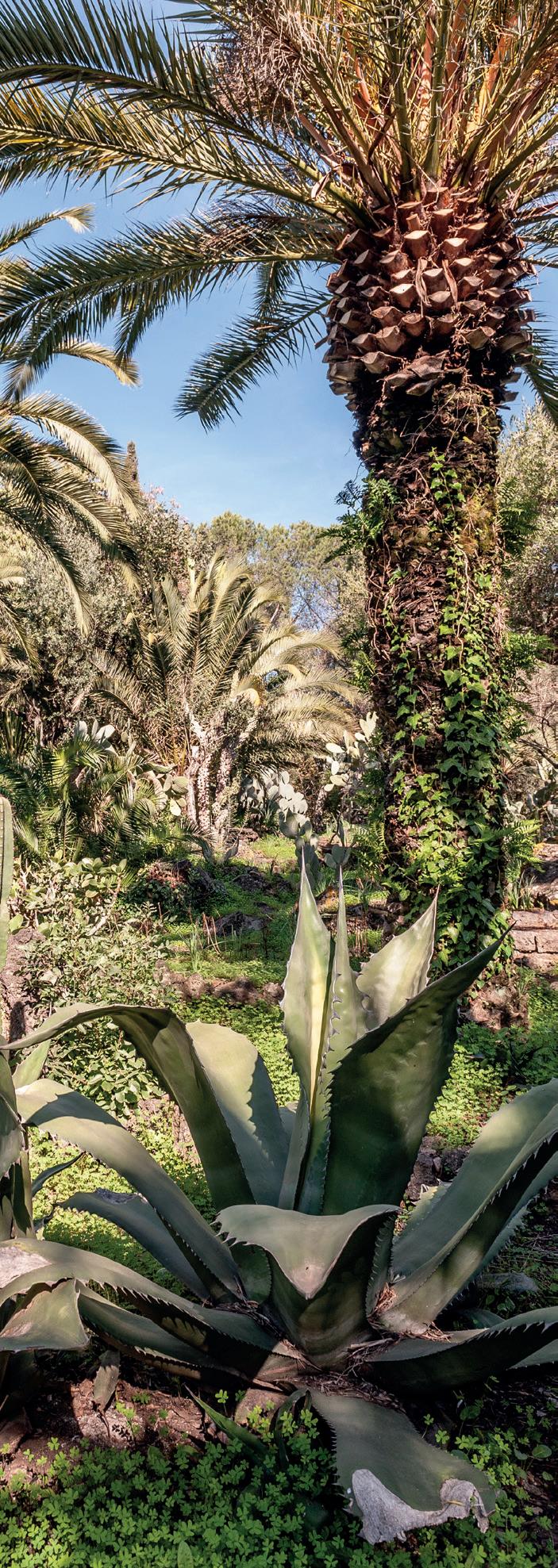
Etna’s soils are some of the most fertile in the world, and yet making a garden on a live volcano will always be a risky business. Of all the gardens in Sicily, Parco Paternò del Toscano on Mount Etna is my favourite. Perhaps that’s because I was lucky enough to meet Ettore Paternò years ago, and hear how he came to garden high on the slopes of Europe’s biggest and most active volcano. He was nearly 90 then, but his story began in 1943, when he sold the palace he had inherited in Catania, and bought a remote farm on Etna.
Paternò began by planting profitable citrus groves in the rich, volcanic soil, but he had a passion for plants, and soon he was begging seeds and cuttings from unusual, subtropical species growing in Catania’s botanic garden, and rescuing plants and trees from the gardens of abandoned villas and palaces. At first, he planted these treasures between rows of citrus trees, but before long he was grubbing up oranges and lemons to make space for the garden that now covers four hectares.
Paternò would become one of the most important landscape architects of his day, and he used the garden as his drawing board, the palette where he mixed his colours, and the nursery where he persuaded tender plants to thrive.
By the time of Paternò’s death in 2009, the garden was already descending into gentle chaos.
However, Stena Paternò, his granddaughter, was so determined to save the wonderful place she had known as a child that she gave up her job on the mainland and returned to Sicily to restore it.
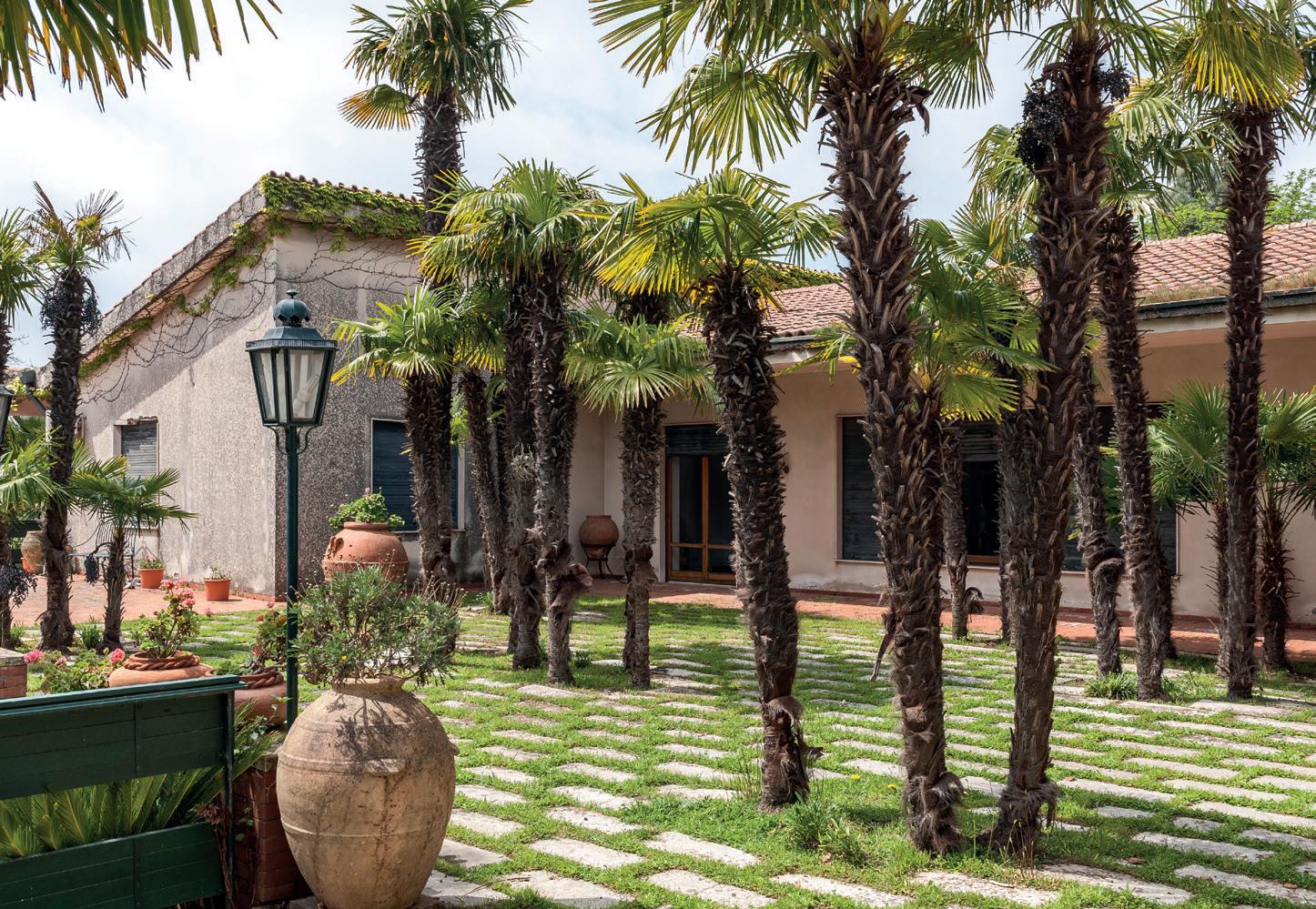
The ancient, lava-stone terraces of the old farm are now the backdrop to 20 different varieties of palm trees, agaves, yuccas, dasylirions, cycads and much more. Smooth lawns surround the modern house Paternò built at the heart of the site, where the swimming pool reflects Etna’s summit. The garden becomes wilder further down the hillside, where exotic trees and shrubs rub shoulders with typical, Mediterranean plants.
I love the tension that comes from gardening in a place where you never know what might happen next. Will Etna erupt and spread a suffocating layer of ash over those precious plants? Will she send a vicious frost or an over-generous gift of snowmelt rolling down her slopes? Who knows, but that’s the thrill of gardening on a volcano.
Helena Attlee leads ‘Gardens of Sicily’ from 12–18 May 2026, which visits Parco Paternò del Toscano in Sicily.
Colin Crosbie
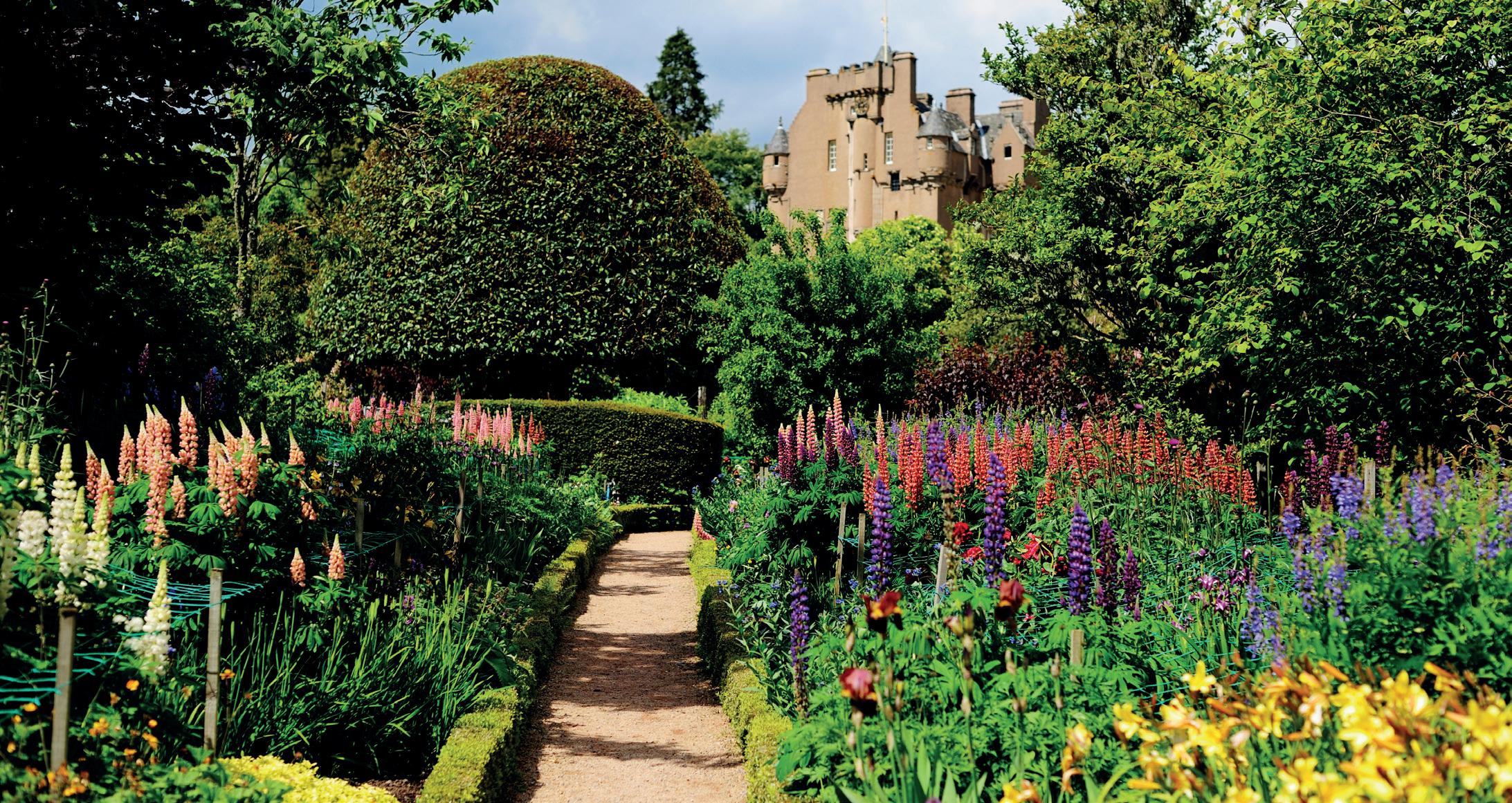
The walled garden at Crathes Castle, south of Aberdeen, should really be described as a garden of gardens, as it is divided into eight distinct rooms with each containing a particular theme. The walls at Crathes have created a uniquely sheltered environment that allows a wide range of plants from all over the world to flourish in this northerly part of the British mainland. The giant yew hedges planted in the early 1700s have developed in some places into incredible, playful architectural structures that delight visitors. One section contains an Arts & Craft style garden created in the 1920s by the Burnett family.
In spite of its historic roots, this is a garden that is not stuck in the past. It has been allowed to
develop and evolve. Just recently the rose garden was completely redesigned with the eight beds in the new design cleverly replicating a Burnett rose. Strong design, a wonderful range of colourful themed plantings, and a surprise around every corner make it one of my favourite gardens.
Privately owned Dundonnell House Garden, on the West Coast at the end of Little Loch Broom, is one of the hidden gems among Scottish gardens, and one not many get to see (we are honoured). Another walled garden, it sits behind a very modest Highland country house. On walking through the small garden gate, you enter a horticultural masterpiece.
The garden is anchored by wonderful hedges with an ancient yew located at the centre on the main vista. At fi rst glance the garden has the feel of a traditional Victorian garden. However,
following the paths through, you fi nd herbaceous borders overfl owing with colour and interest which inspire everyone who see them. There is a wonderful kitchen garden that is both aesthetically pleasing and highly productive. Then, in a small garden room surrounded by hedges, you come upon a small pond with a stunning William Pye water feature.
This garden overfl ows with colour, interest and surprise and you can almost lose yourself in its beauty. It is only when you raise your eyes above the walls and spy the vast mountains beyond that you truly appreciate the uniquely special nature of this Highland paradise in this most harsh and northerly part of the British Isles.
Colin Crosbie leads ‘Gardens in the Highlands’ from 24 June–2 July 2026, which visits Crathes Castle and Dundonnell House Garden in Scotland.
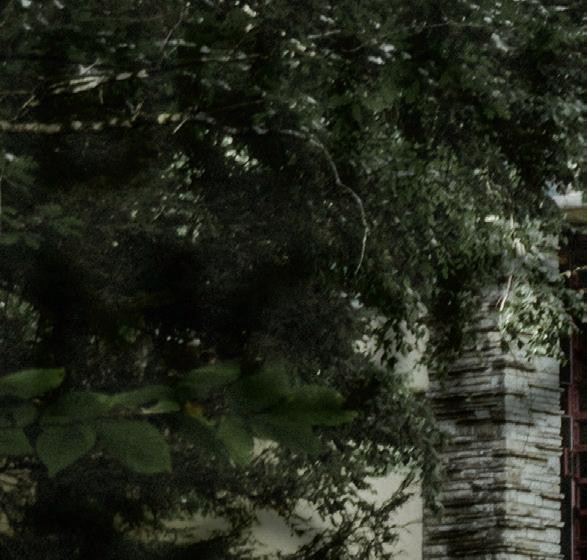
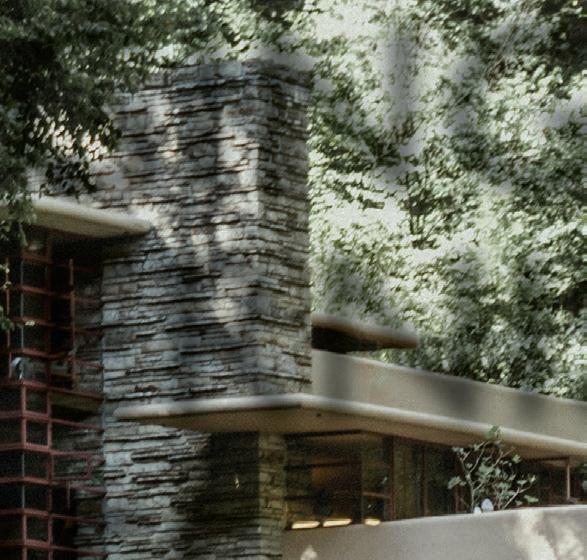


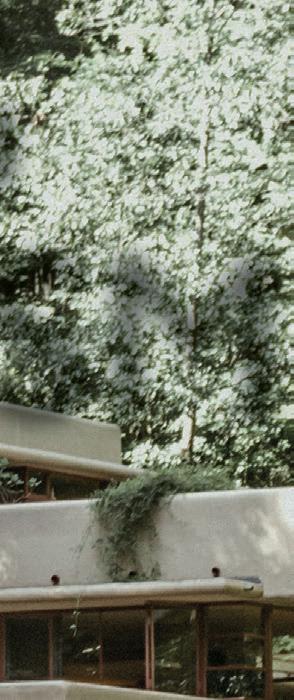
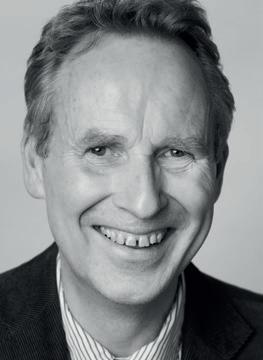
This year, professor of architecture Harry Charrington leads tours to the US, Finland and Italy, based on the lives and works of three exceptional architects at the forefront of modernism: Frank Lloyd Wright, Alvar Aalto and Carlo Scarpa.

The architects
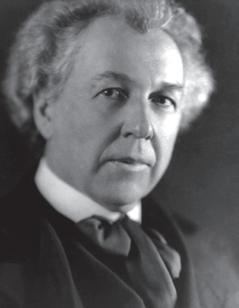
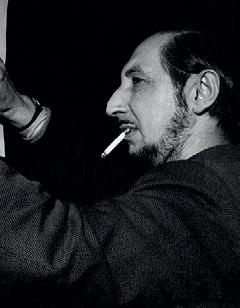
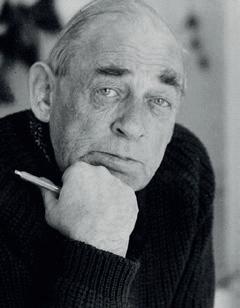
Frank Lloyd Wright (1867–1959) Alvar Aalto (1898–1976) and Carlo Scarpa (1906–1978) form a fascinating triumvirate, linked by mutual admiration and actual meetings. Aalto met Wright in New York, with the latter describing Aalto’s Finnish Pavilion at the 1939 New York World’s Fair as a “work of genius”. Meanwhile, Scarpa famously declared, “Other people imitate Gropius. I copy Wright.” Each took international modernism and reinterpreted it for their own locality: Wright in America, Aalto in Finland and Scarpa in Venice.
What ties the three together is their witness to an extraordinary trajectory of change. There’s an early photograph of Aalto aged two in 1900, sitting in a little sledge – a pram on runners in the snow, with a horse and cart beside it, like something from Doctor Zhivago. He died seven years after men walked on the moon. This compression of transformation, this speed of remaking how we live on the planet, makes the modern era uniquely vivid to visit. If you were transported to 1825, you would immediately feel you were in a radically di erent world. But drop into 1925, and much would feel recognisably modern, from the cars, to the emerging social fabric.
Modernism marks the settings of our own lives.
Frank Lloyd Wright and the domestic revolution
Wright’s work o ers something di erent to that of European modernists focused on postwar institutional reconstruction and social housing that sets him apart from the others: a journey through changing American domesticity. Most of his buildings are private houses. My tour reveals how he responded to evolving technologies, changing lifestyles, and dramatically di erent clients and budgets.
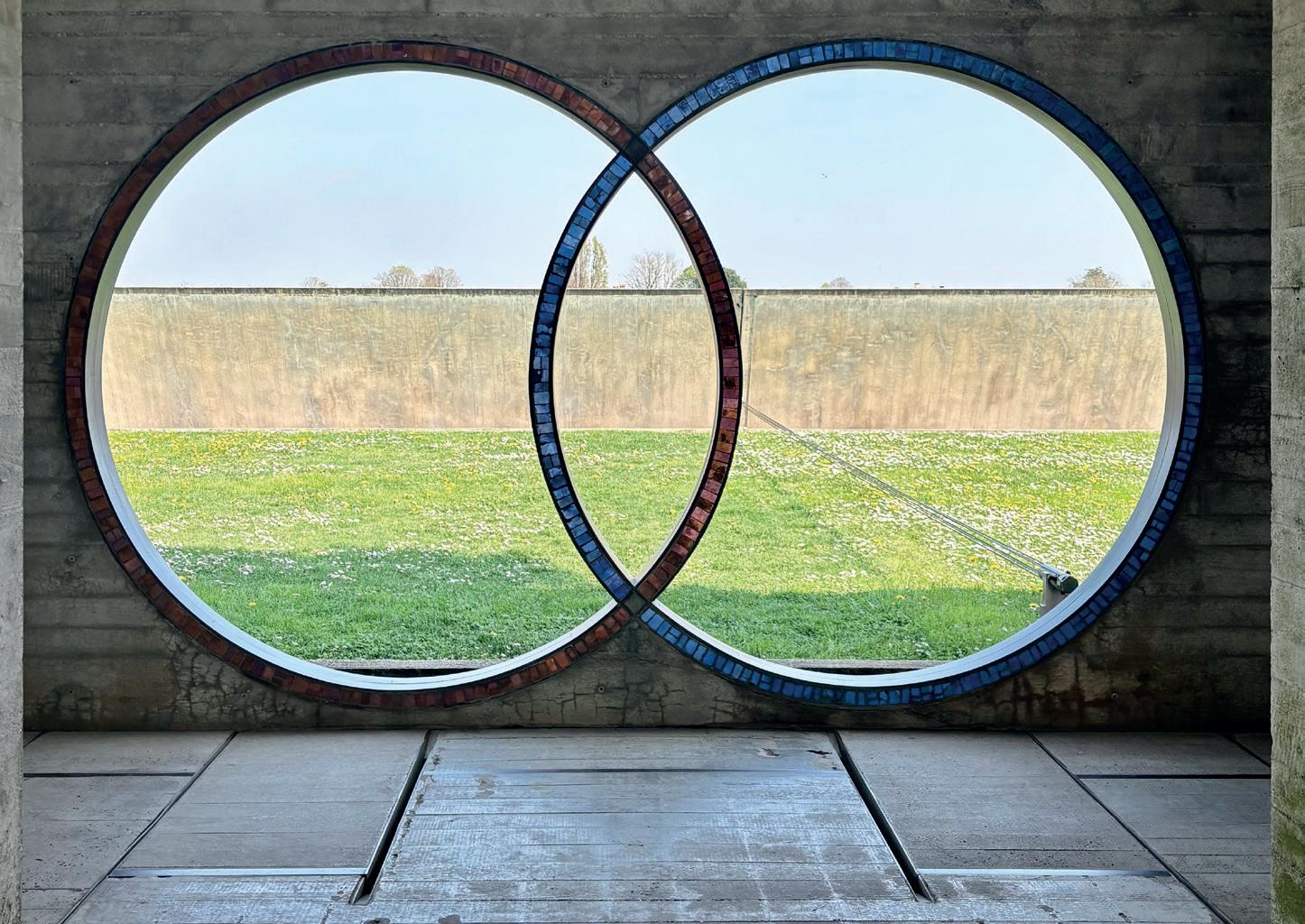
The contrasts are vivid. In the Edwardian-era Robie House in Oak Park, we see a world with servants and a particular social decorum that Wright gently subverts. By the postwar period, at Jacobs House in Madison, a three-bedroom house with what Wright called a “time and motion kitchen”, servants have vanished, and life centres around efficient domestic spaces. It’s the trajectory of America itself, from a class-structured society to a democratised, available-to-all dwelling culture.
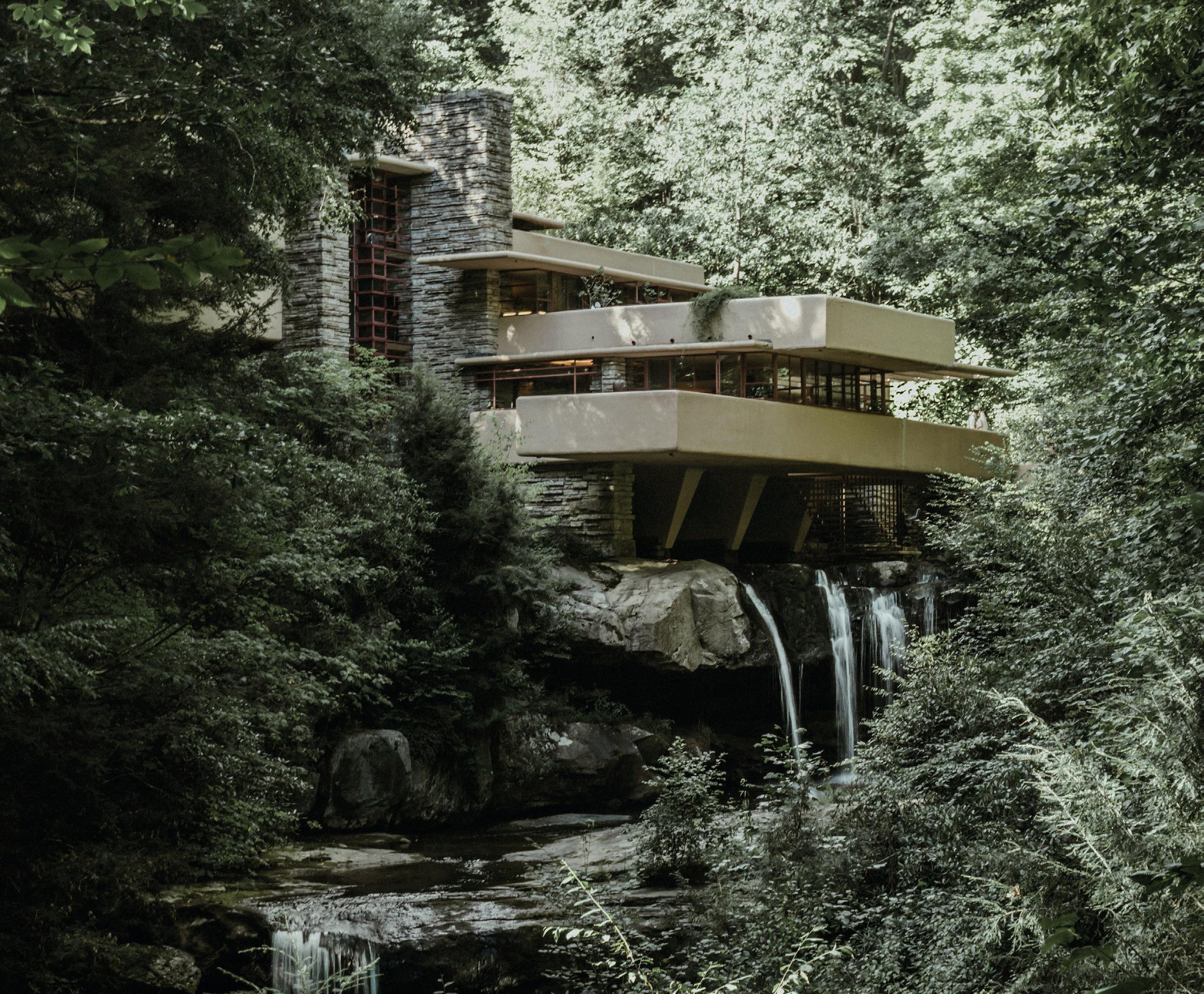
Fallingwater, built in 1936 for the Kaufmann family (whose son was an early curator at the Museum of Modern Art), remains breathtaking, a house impossibly cantilevered over a waterfall. And then there’s Taliesin, Wright’s own house, which burned down three times and which he continually evolved over 60 years, a place where you feel not just the presence of Wright himself, but his third wife Olgivanna and the whole valley of his Welsh Unitarian
ancestors who settled there in the 19th century. You feel this is where the 20th century came from.
Carlo Scarpa: The art of intervention in Venice
Scarpa’s genius lay in his ability to intervene in historic fabric without destroying it. After training and working for 20 years as a glass designer in Murano, he brought a craftsman’s sensibility to architecture. At the Castelvecchio in Verona he transformed a dusty monument into a living museum for citizens, carefully negotiating between old and new. Here, his approach to lighting was revolutionary – almost all exhibition pieces are naturally lit. For Scarpa, the risk of minor UV damage was worth giving extraordinary art back to the people.
The Querini Stampalia Foundation o ers another striking example. This palazzo on the Grand Canal has a poignant backstory: the Querini family’s son, the young architect Angelo Masieri, went to meet his hero Frank Lloyd Wright in America, but was killed in a road accident shortly after his arrival. Wright designed a memorial building for the family, but the
Venetian authorities rejected it –they didn’t want a modern villa on the Grand Canal. Scarpa, a devoted admirer of Wright, was then invited to convert the dilapidated palazzo into a foundation and exhibition space, creating a series of precise interventions that reanimate the historic structure.
Venice, often dismissed as a city frozen in the past, through Scarpa’s lens becomes a model for the future: a walkable city with local neighbourhoods and a local food economy, living sustainably on the edge of its relationship with water. This approach feels remarkably timely. Where early 20th-century futurists like Marinetti wanted to fill in the Grand Canal and build a motorway, Scarpa showed how you could evolve things through careful intervention and evolution, adding layers to existing fabric.
Alvar Aalto: in balance with society and nature
Aalto’s work embodies a particular vision of architecture as stewardship, for building a better society in balance with nature.
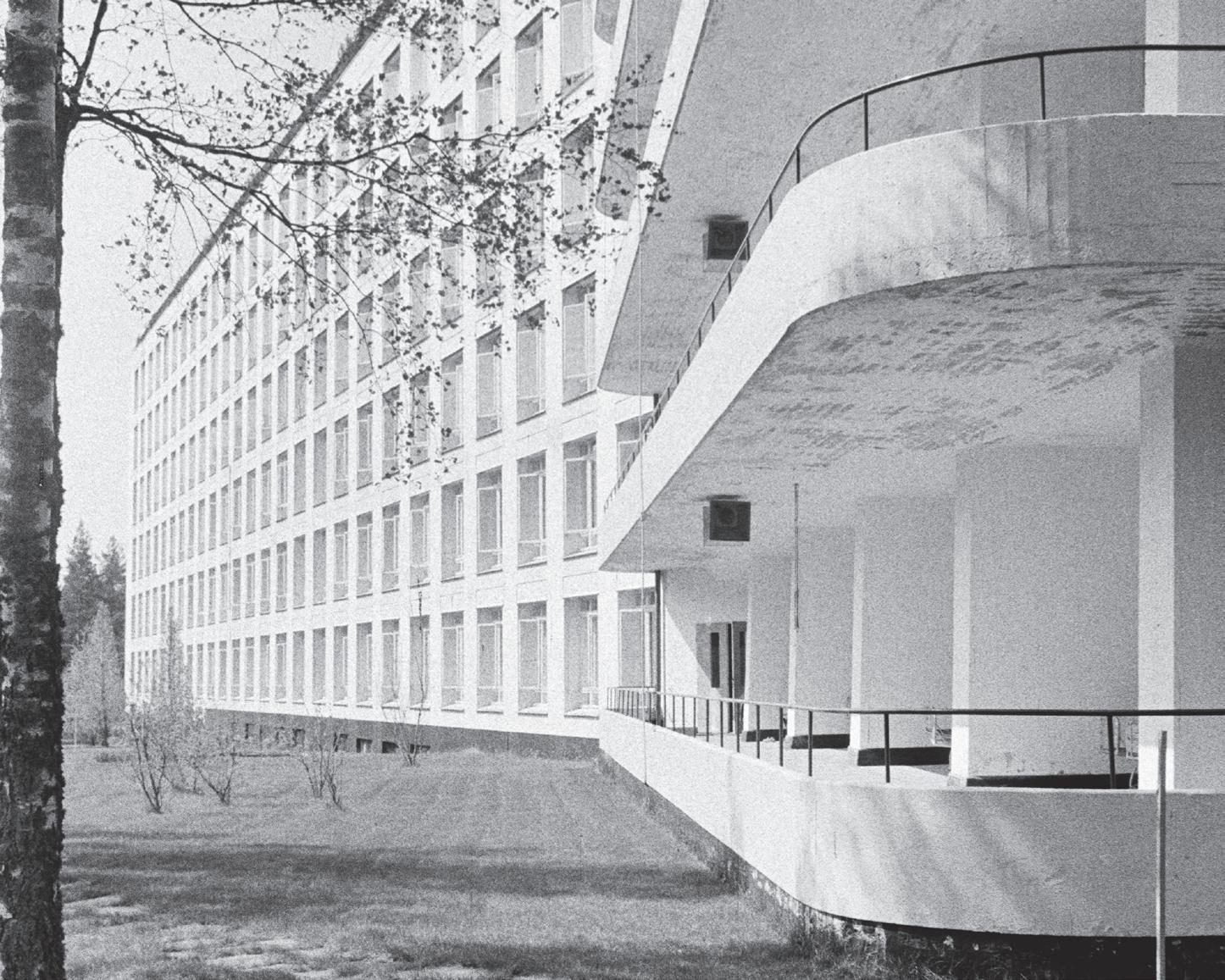
The National Pensions Institute in Helsinki demonstrates Aalto’s social democratic principles in built form. His Ministry of Social A airs from the early 1950s sits within a park and brings the park into its own three-sided garden. Originally, you could walk from the park through the ministry and out the other side – the building deferred to citizens, contributed to the cityscape and added an amenity. Even the canteen was open to the public. It is exquisitely detailed; Scarpa knew and drew inspiration from it.
What makes the Aalto tour especially moving is the presence of partnership. Aalto worked for 25 years with his first wife Aino, then married Elissa Aalto, who outlived him and died in 1994. These
is their
women have only recently been properly restored to the story, and their presence is palpable in the house and studio where they lived and worked together.
Their house, built in the 1930s, is remarkably modest – a deliberate choice. A sliding door connects the living room to the studio, where at times as many as 20 people worked. It’s an intimate vision of life and work intertwined, of collective endeavour in service to an idea.
My tours don’t follow a chronology. You don’t start with the architect at birth and progress through early to late works. Instead, you see projects that cut across each other in time, which creates its own revelation. You begin to see patterns; how these architects
absorbed influences and reacted to events, how they made things specific to climate, culture and circumstance. You understand the contingencies behind creativity.
And most crucially, you see it all in place, in three dimensions. That is what transforms understanding; not just reading about buildings, but walking through them, feeling them, seeing how they sit in their landscapes and cities, how they respond to light and use and the lives of those who made and inhabited them.
Harry Charrington worked in Alvar Aalto’s atelier in the late 1980s under Elissa Aalto. Currently, he is an architect and Professor of Architecture at the University of Westminster.
Harry Charrington leads the three tours discussed here, described further to the right.

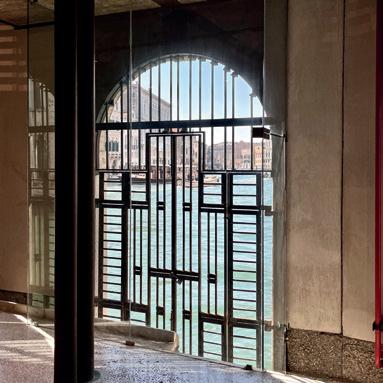
Venice: Scarpa & Others 19–24 May 2026
See Carlo Scarpa’s most acclaimed work alongside lesser-known projects, many visited by special arrangement.
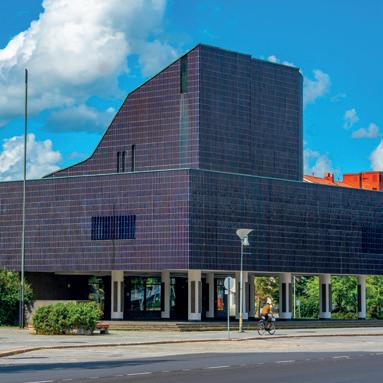
Finland: Aalto & Others 25 June–3 July 2026
Survey the works of Alvar Aalto, ‘the poet of International Modernism’ as well as major buildings by other 20th-century Finnish architects.
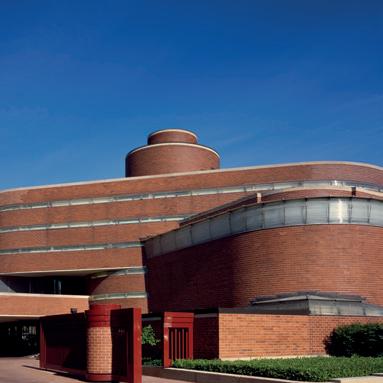
Frank Lloyd Wright 4–14 September 2026
Includes Fallingwater, Robie and Taliesin houses, Johnson Wax Building and numerous other of Wright’s works, many with private visits for MRT clients.


A river that linked the multiethnic and artistic tapestry of Central Europe, the Danube has never been a mere backdrop. Senior Product Manager Fred Gold explains how it takes centre stage in our new history and art cruise.
What was the idea behind this river journey?
For more than 30 years, Martin Randall Travel has taken travellers along the Danube for its celebrated Music Festivals, while dozens of land-based tours have explored the cities and landscapes along its banks. History & Art on the Danube marks a new venture: the first time the river itself – its shared culture, history and artistic legacy – takes centre stage.
We wanted to expand the narrative we have long told about the Danube. Whereas our Music Festivals traditionally focus on Austria, this cruise deliberately broadens the scope, starting further east in Budapest and tracing a wider, pan-Central European story. The river has long been the connective spine of the region, carrying empires, religious
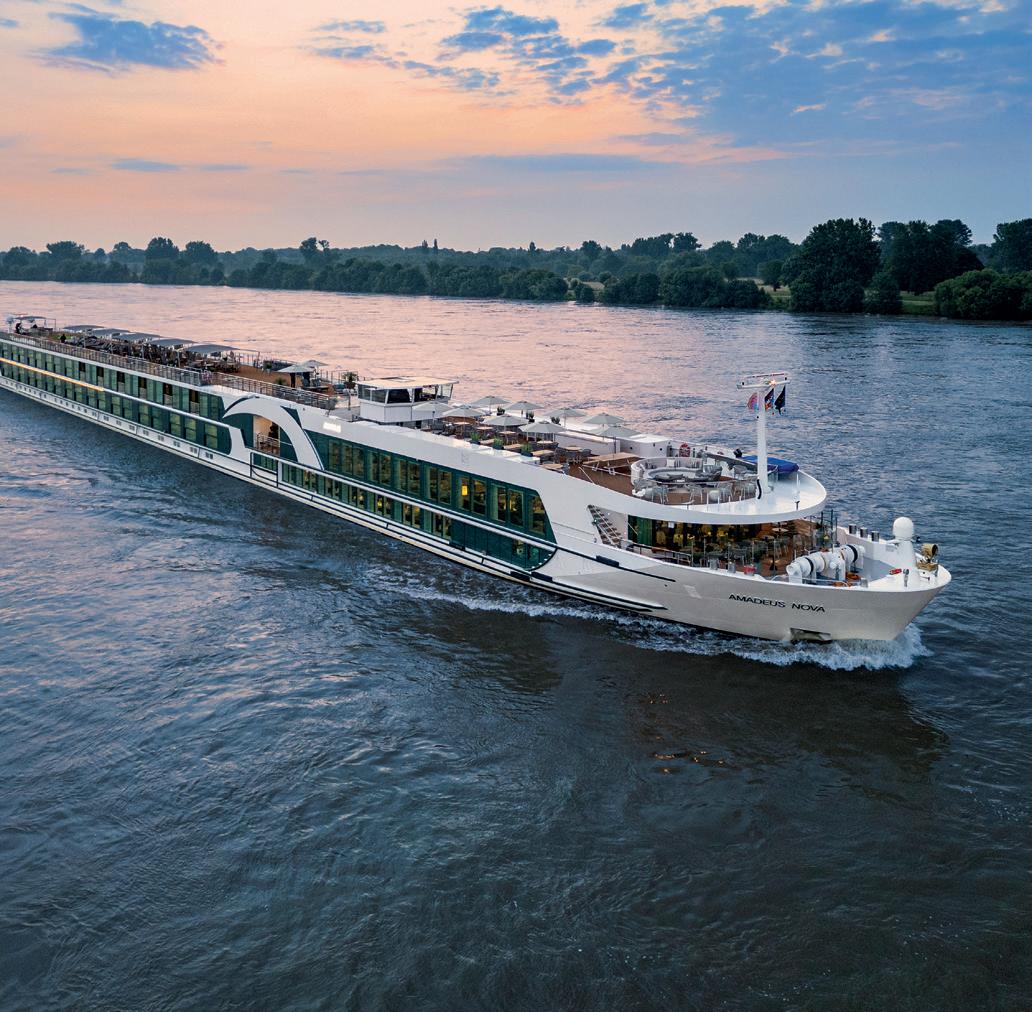
traditions and artistic movements. Our aim was to celebrate the Danube as both setting and symbol of the shared heritage that has shaped the heart of Europe.
We also sought to reimagine what river cruising can be when shaped by MRT’s own standards and sensibilities. While a cruise naturally allows for a larger group than our classic land tours, the hallmarks of MRT remain central: depth of content, meticulous organisation, and personal attention. The ship’s scale enables exceptional opportunities that simply aren’t possible for individuals or even small groups. Private or out-of-hours visits to major sites – including the Kunsthistorisches Museum and Upper Belvedere in Vienna –allow us to enjoy these great collections in calm, privileged settings, transforming major
cultural landmarks into intimate encounters.
Why is this an area of special interest?
The stretch of the Danube between Budapest and Passau is one of the most culturally resonant corridors in Europe. It flows through the historic heartland of the Habsburg Empire – a vast, multi-ethnic realm that for centuries bound together Austrians, Hungarians, Czechs, Slovaks, and many others in a dense tapestry of cultural exchange.
The artistic legacy of the Habsburgs remains everywhere. We see it in the imperial splendour and turn-of-the-century radicalism of Vienna, and in the interplay between deep-rooted Magyar traditions and the unmistakably cosmopolitan character of
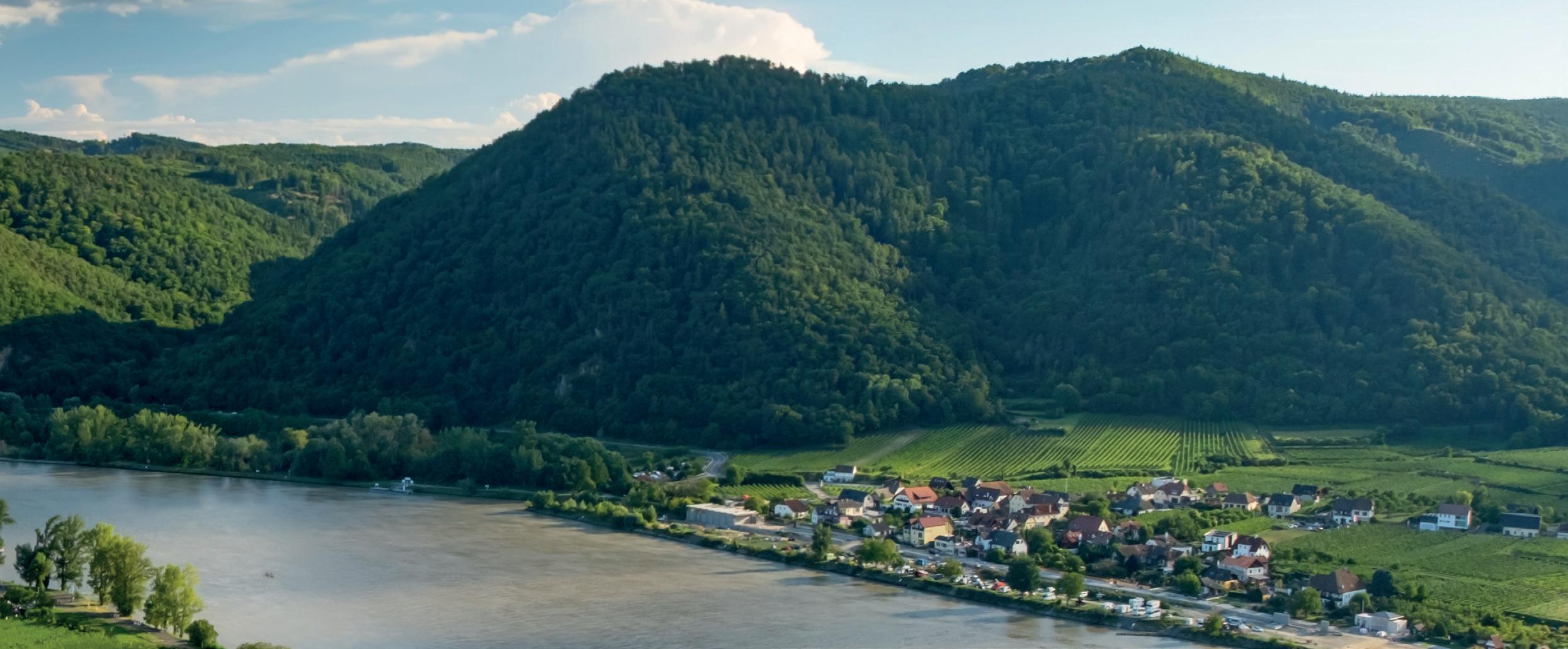
Budapest. Across the region, the landscapes and cities still reflect the ambitions and aesthetics of the dynasty that shaped Central Europe for centuries.
The river also reveals its quieter treasures in smaller towns such as Dürnstein and Melk, where abbeys, medieval streets and vine-covered hillsides speak to a more spiritual and rural heritage. To widen the narrative further, we offer an optional excursion
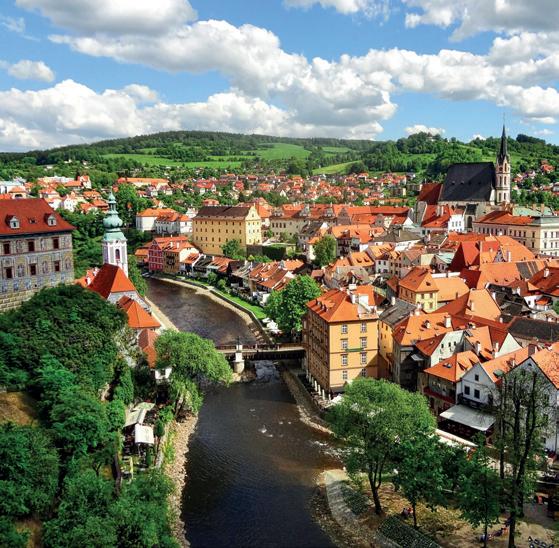
to Český Krumlov, an exquisitely preserved Bohemian town whose history allows us again to look beyond modern borders and recognise Bohemia’s significance within the Habsburg world. Taken together, the cruise represents a chance to see how centuries of creativity, faith and power have left their mark on this beautiful and historically layered region.
Who are the experts and what do they bring individually and collectively to the cruise?
We’re delighted to be joined by three exceptional speakers: Dr Philipp Blom, Veronica Buckley, and Gavin Plumley – each a
Join the optional excursion to the picturesque UNESCO town of Ceský Krumlov.
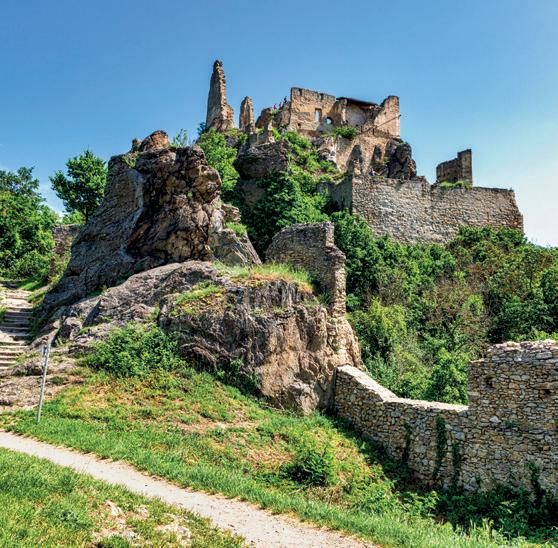
See the ruins of a castle in which Richard the Lionheart was imprisoned
specialist in the history and culture of Central Europe, and together a wonderfully balanced team.
Dr Philipp Blom is a historian, broadcaster and award-winning writer who brings a breadth of insight into the Habsburg Empire,
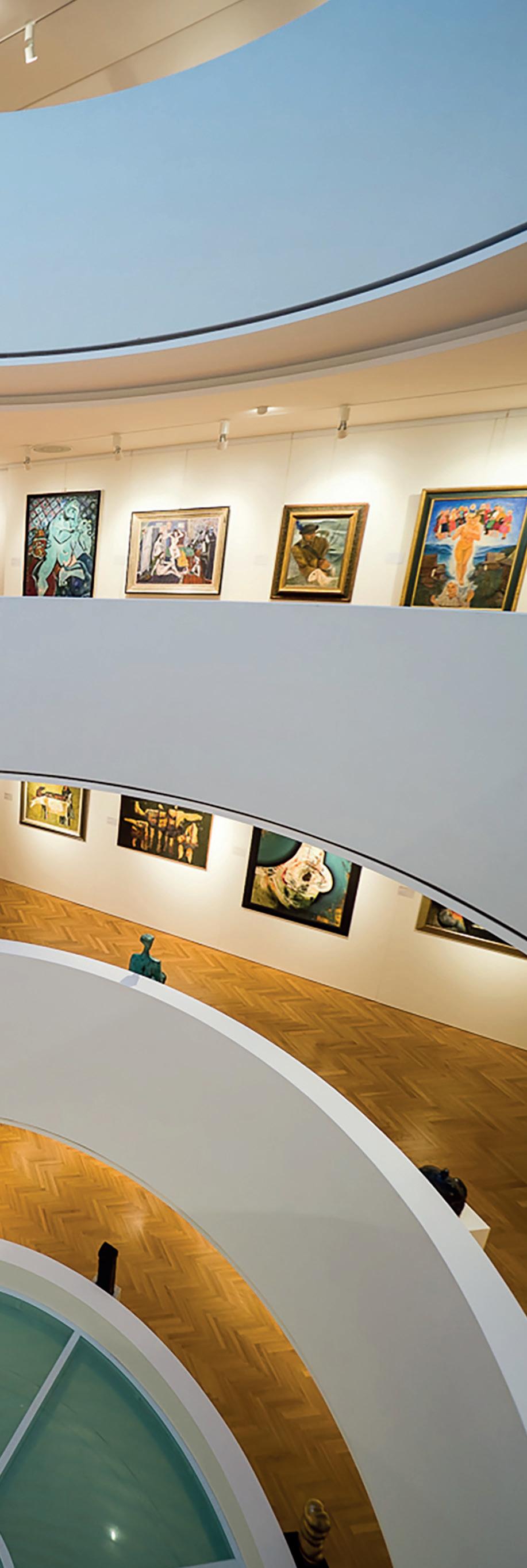
In Vienna, exclusive out-of-hours access to the Kunsthistorisches Museum allows for unhurried appreciation of one of the world’s greatest art collections. “
European political thought, and fin-de-siècle Vienna. Veronica Buckley is a historical biographer with a particular focus on the royal households of the 17th and 18th centuries.

Based in Vienna, Philipp and Veronica are also the co-authors of New Insights , an engaging reexamination of the masterpieces in the Kunsthistorisches Museum – a fitting companion to our private visit there.
They are joined by Gavin Plumley, a cultural historian specialising in the final years of the AustroHungarian Empire and the artistic and social transformations of the period.
Together, the trio bring both depth and dialogue to enrich what we will see ashore. Some talks will take the form of shared plenaries, allowing for lively

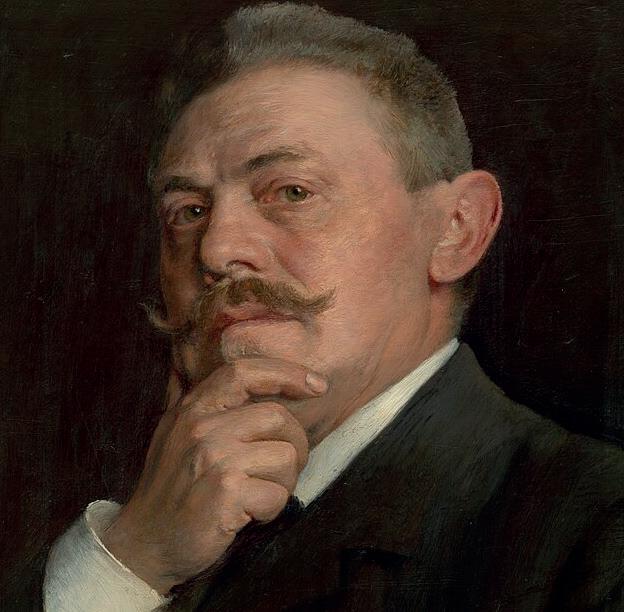

View the collection of 20th-century art at the Nedbalka Gallery.
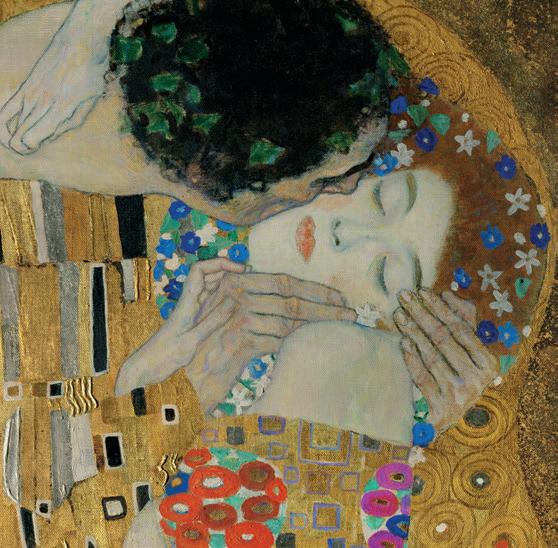
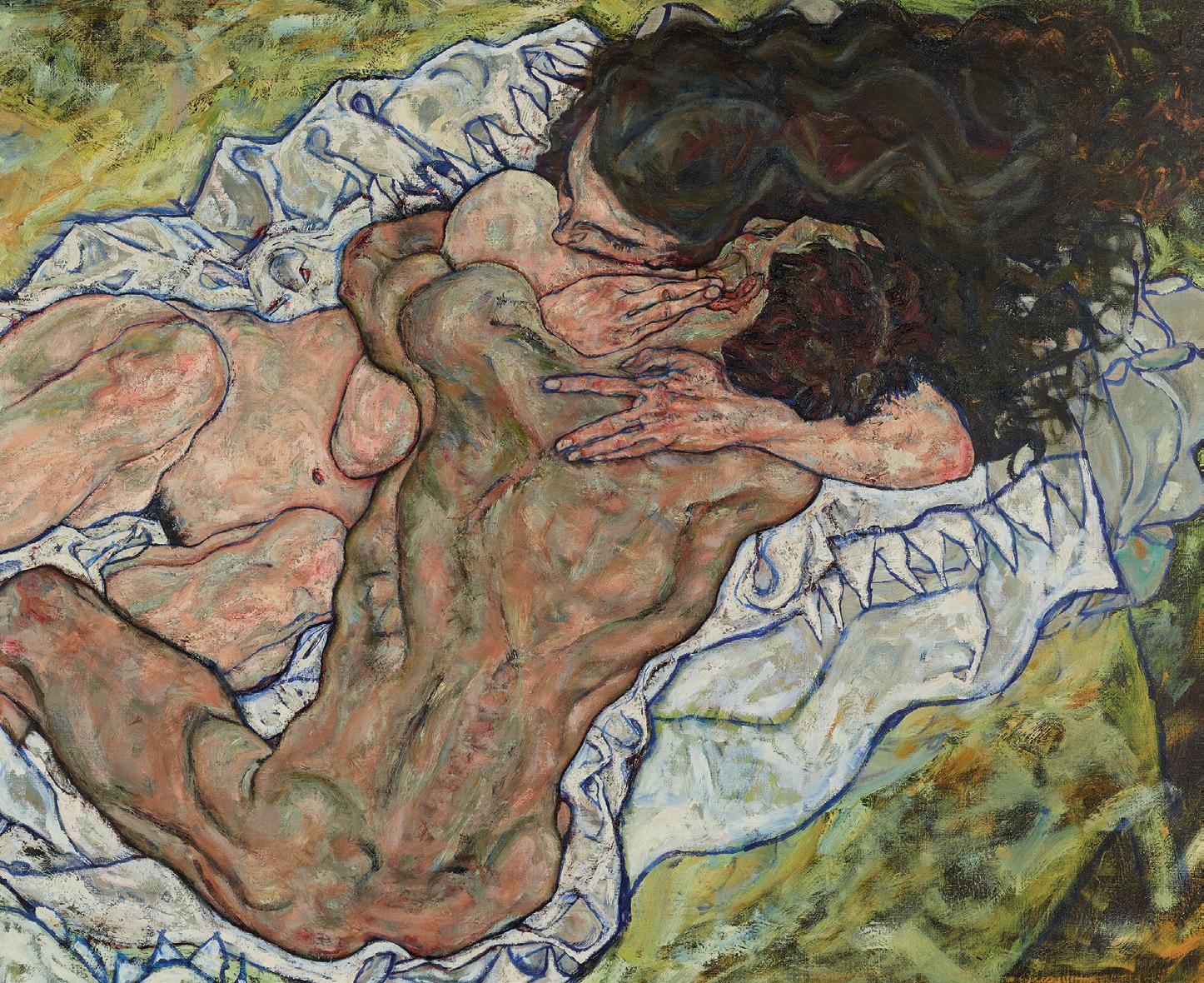
Appreciate Klimt’s The Kiss on an evening visit to the Upper Belvedere.
discussion between the speakers and audience alike. Collectively, they embody what Martin Randall Travel does best: bringing together scholarship, storytelling, and conversation in a way that transforms travel into cultural discovery.
What will we be seeing of particular interest and why?
Throughout the journey, the focus remains firmly on the art and history of the Upper Danube. In Budapest, a private visit to the Matthias Church on Fisherman’s Bastion brings us to the heart of Hungarian identity. In Vienna, exclusive out-of-hours access to the Kunsthistorisches Museum allows for unhurried appreciation
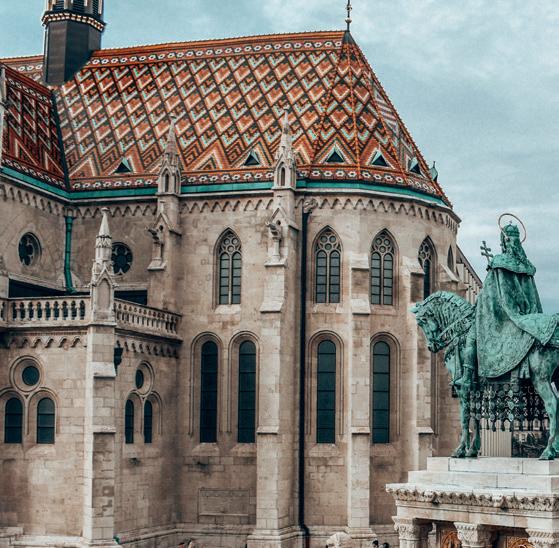
of one of the world’s greatest art collections, while an evening visit to the Upper Belvedere provides the perfect setting to appreciate Klimt’s The Kiss – an icon of Vienna’s fin-de-siècle brilliance.
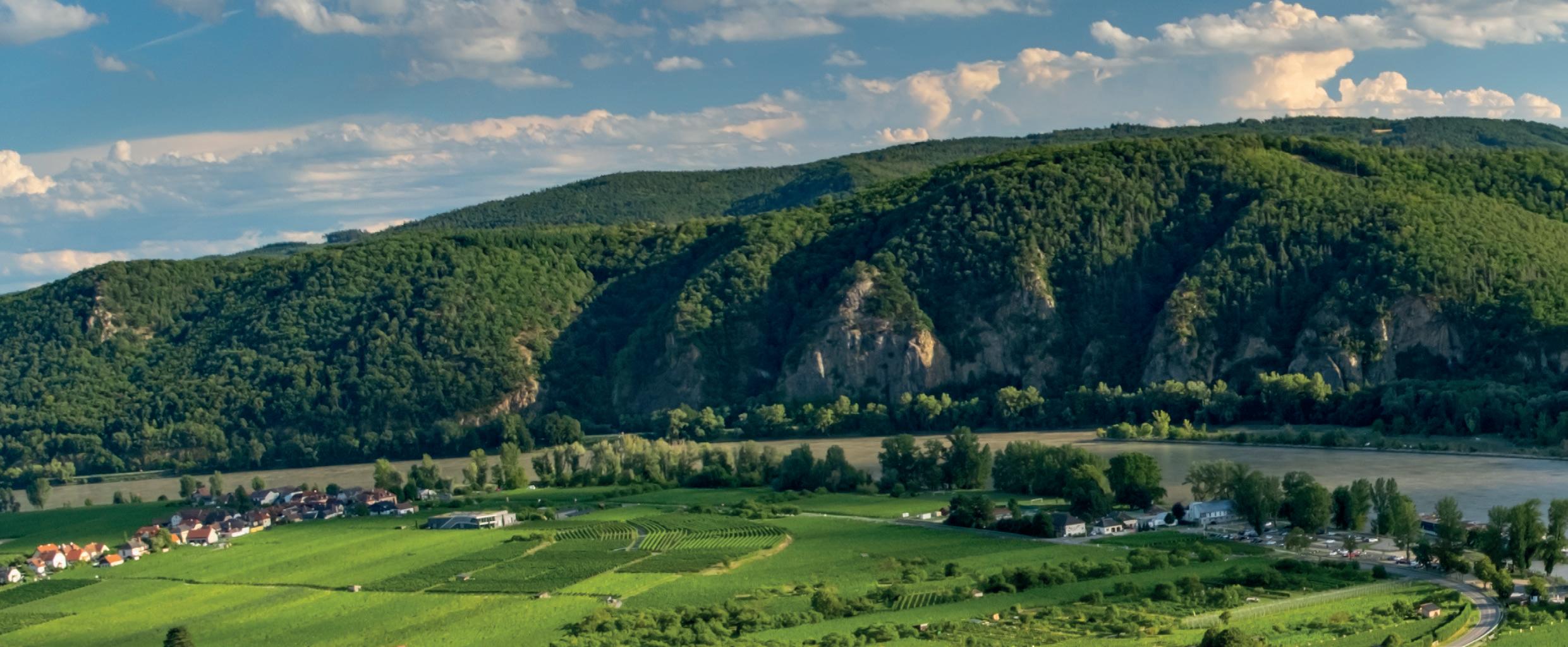
Beyond the cities lies the Wachau Valley, arguably the Danube’s most beautiful stretch. As the ship glides past vineyards, castle ruins, baroque abbeys, and riverside villages, we make time to step ashore and explore these landscapes more fully.
History & Art on the Danube is, above all, a celebration: of a river that has shaped Europe, of the cultures that co-habited and flourished along its course, and of the joy of travelling with insight,
Take an exclusive, private visit to the Matthias Church, the key Hungarian national shrine.

companionship and curiosity. It is an invitation to experience Central Europe as a living, interconnected world – its history written in stone, its art glowing in gilded galleries, and its story unfolding with the gentle undulations of the water beneath us.
‘History & Art on the Danube’ runs for 8 days from 6–13 July 2026. Book now on our website.
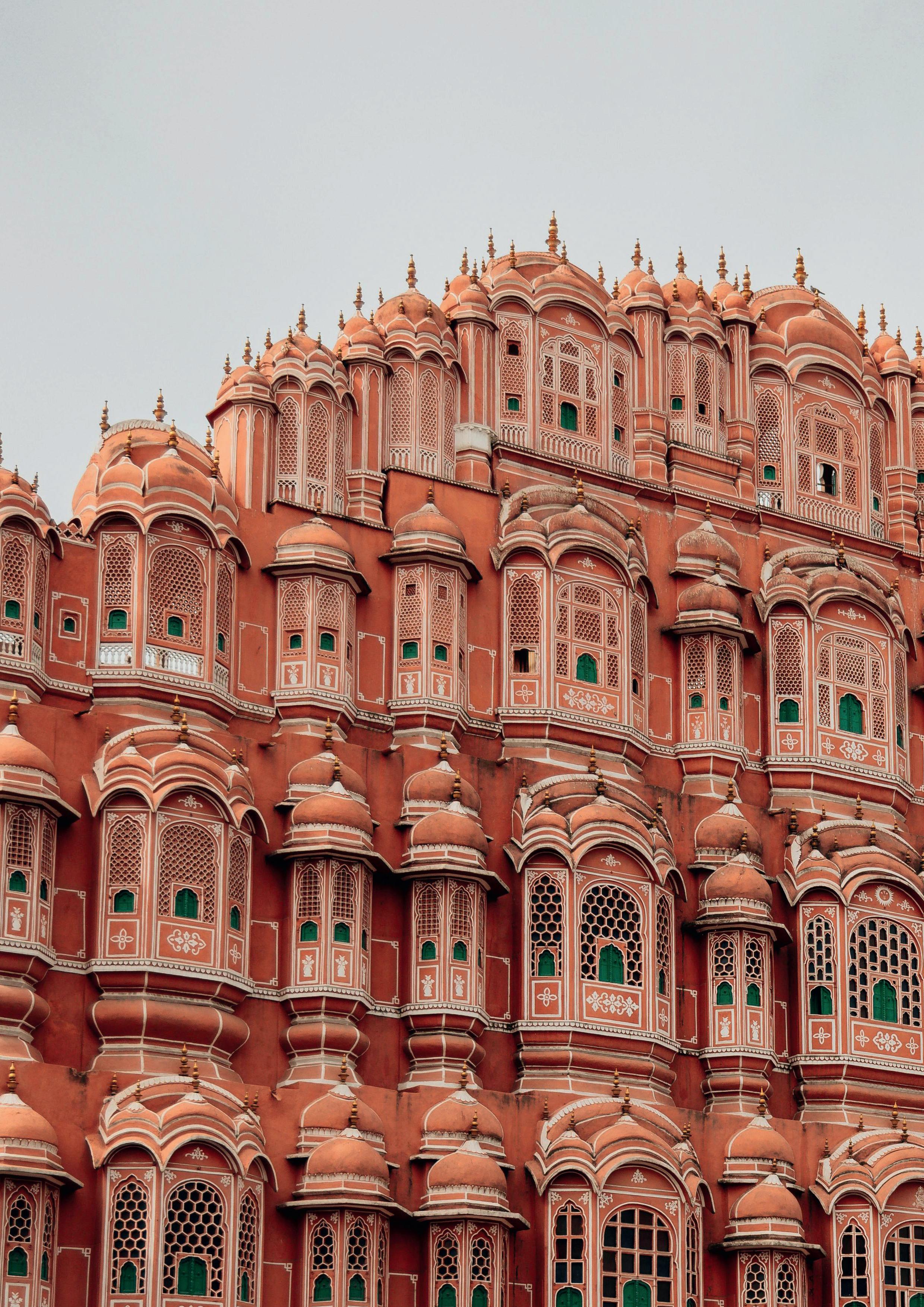
Our 10–17 day tours are carefully designed to uncover the full breadth of a region or country's cultural highlights. Covering multiple sites on comprehensive itineraries, these journeys provide the most complete introduction to a wealth of artistic, archaeological and architectural heritage.
16–28 March, 7–19 April, 7–19
September & 5–17 October 2026
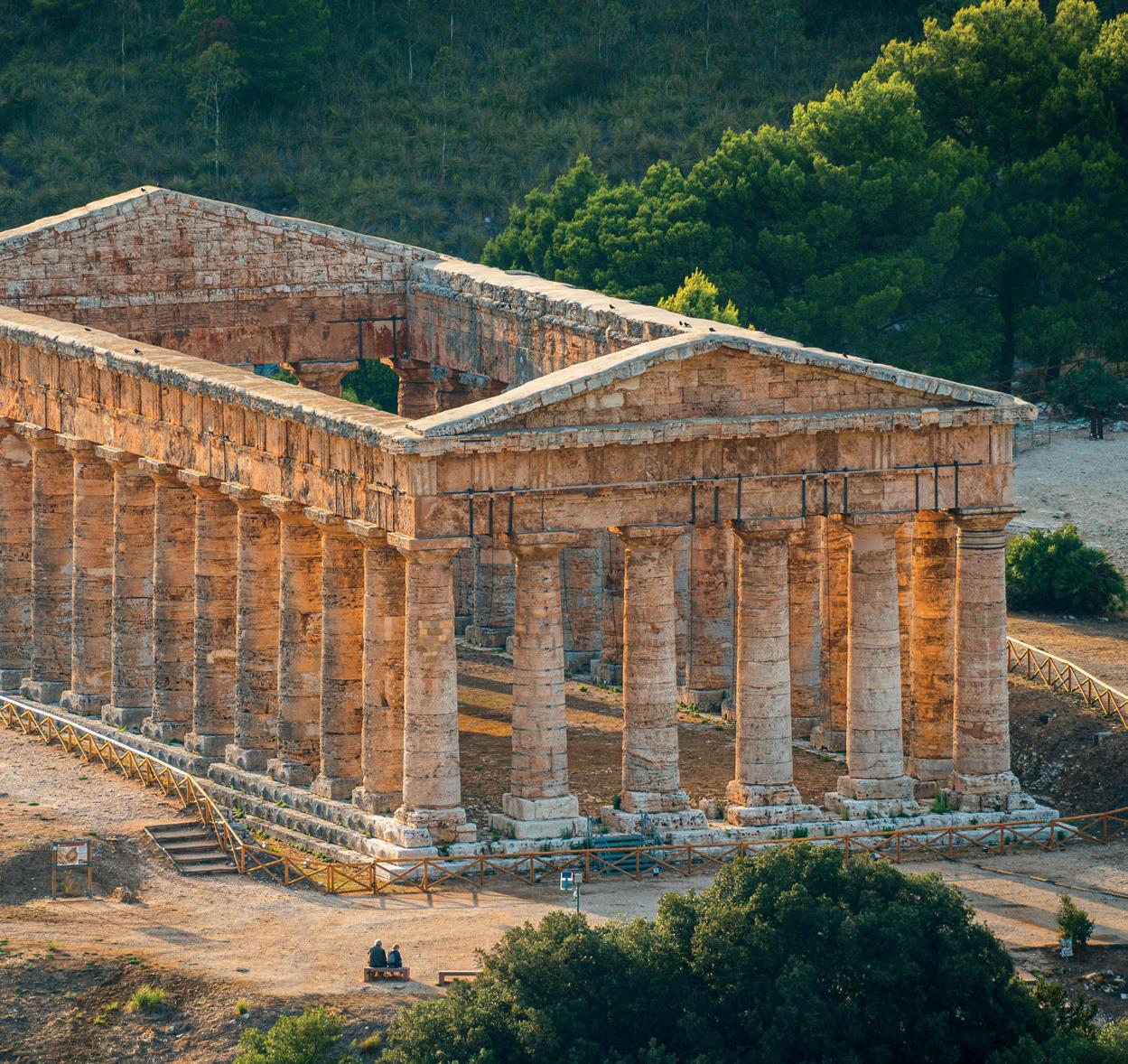
Spans the whole island and includes special arrangements in Catania to see a magnificent private palazzo and a Byzantine chapel.
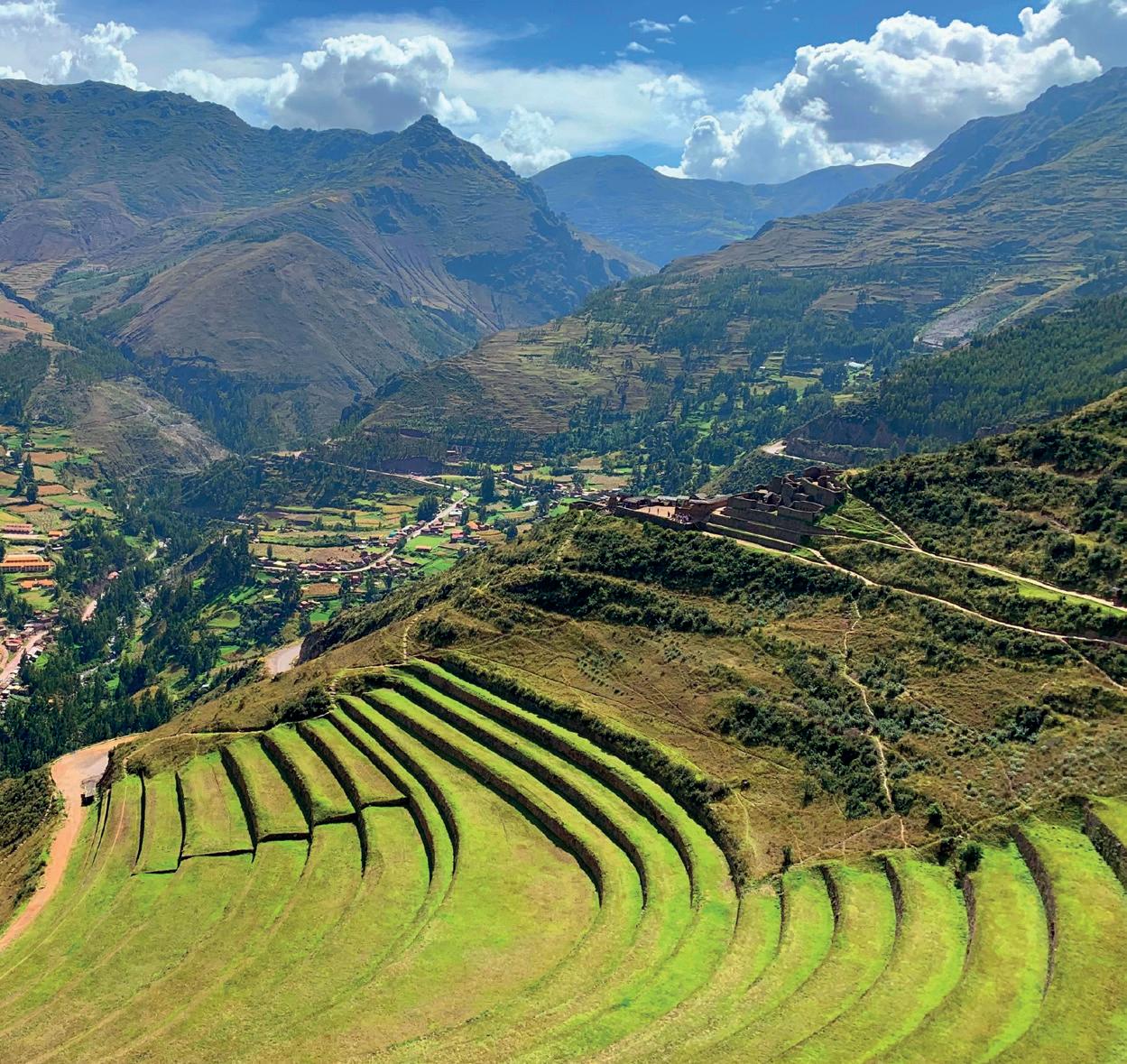
17–23 September 2026
Journey through Peru’s rich pre-Columbian and Inca heritage, from Lima’s museums to Machu Picchu, Cuzco and Lake Titicaca.
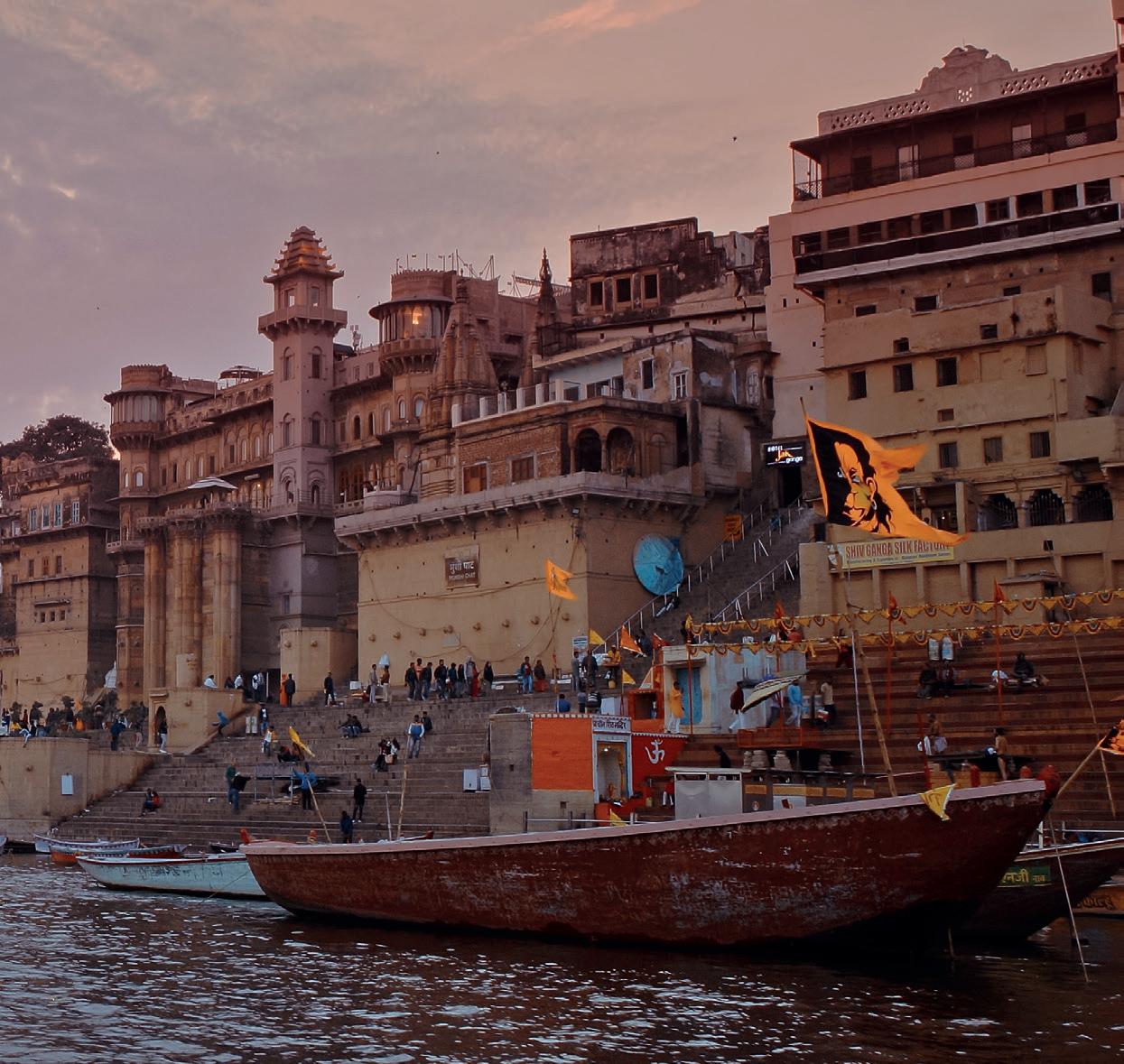
18 November–1 December 2026
Visits India’s most celebrated sites including Varanasi, one of the world’s oldest continuously inhabited and sacred cities.
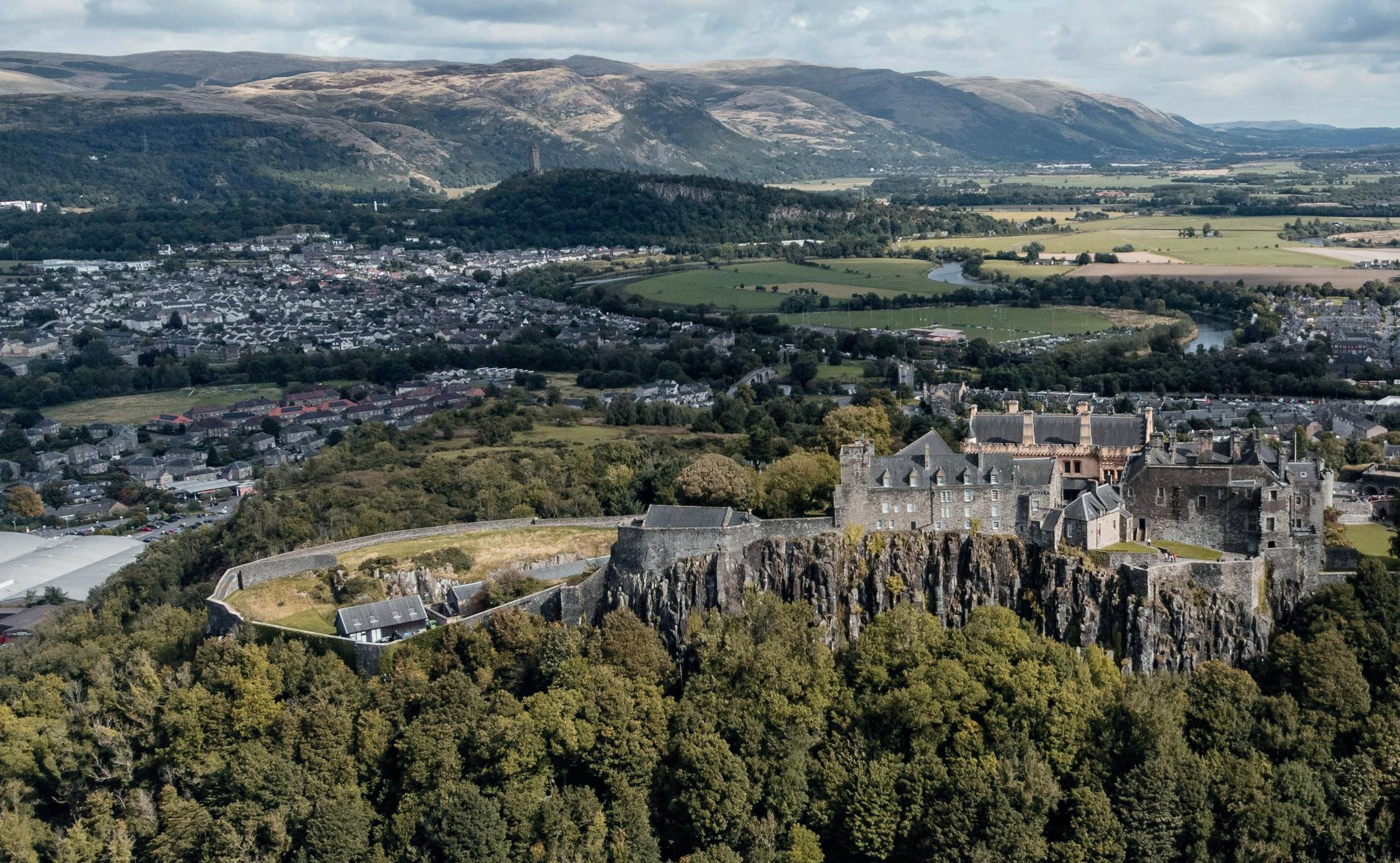

After 25 years behind the scenes at National Museums Scotland, David Forsyth leads a 10day journey celebrating Scotland’s history and heritage.
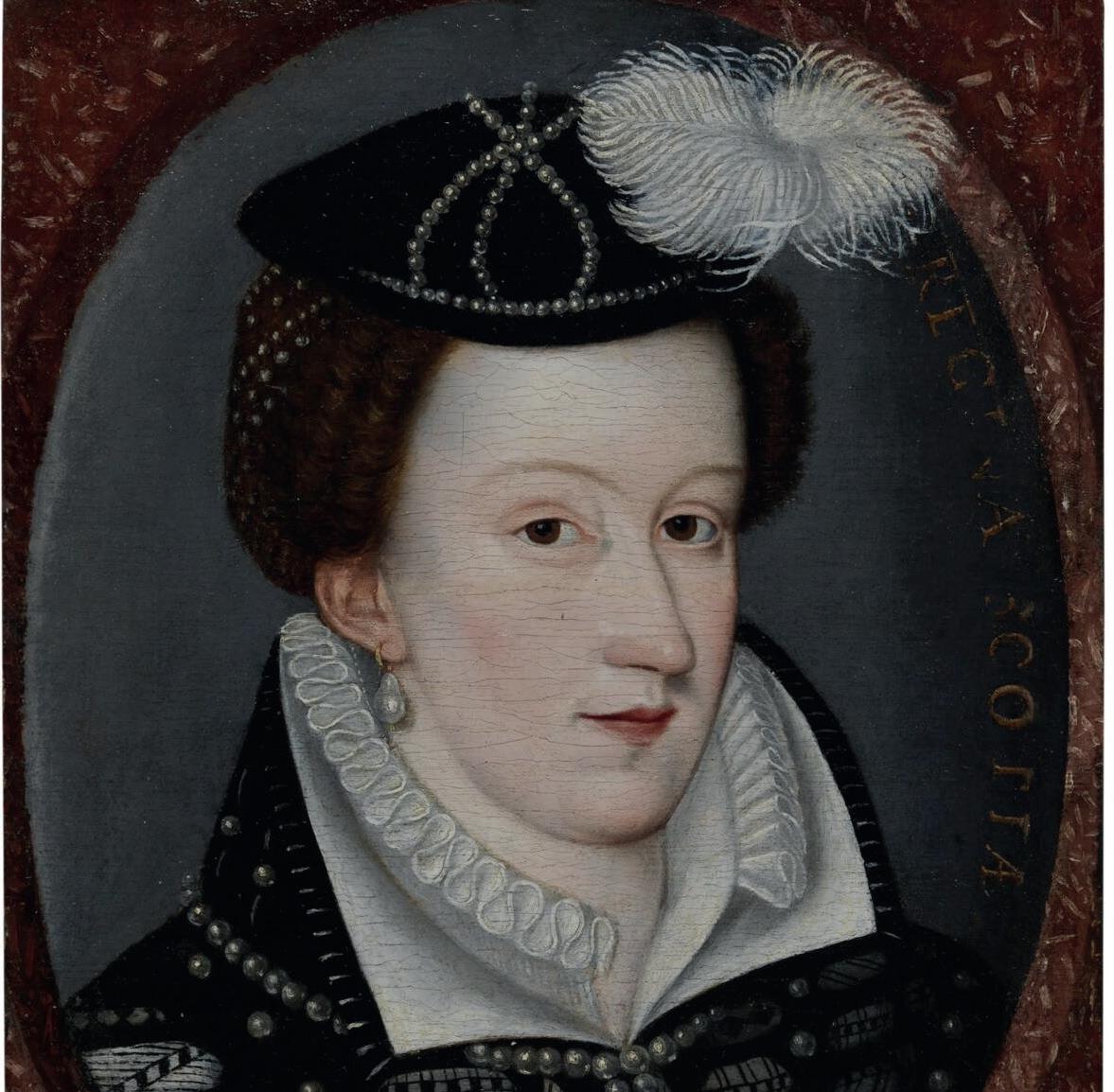
Scotland is a country that punches well above its weight in terms of size, beauty and achievement. Working within the Scottish history and art collections at the National Museum of Scotland, I have been privileged to study up close through many incredible objects the most momentous and watershed moments in Scottish history: Mary, Queen of Scots, the Jacobites, up to the Industrial revolution and the wars in the 20th century. Now, leading this journey, I look forward to sharing this intimate knowledge and taking it beyond the museum, to the places where events took place.
It is often forgotten that, until the early 19th century, the population of Scotland was evenly spread in the Highlands and Lowlands. It is not until the dawn of the industrial age that the Highlands emptied. As we look at some of the magnificent castles, the homes of the lairds and magnates, we begin to understand how the nature of the terrain in many ways made the country very difficult to govern.
The spectacular natural landscape has a lot to do with a sense of Scottish identity. Land and access to it are among the catalysts for migration. We will consider a
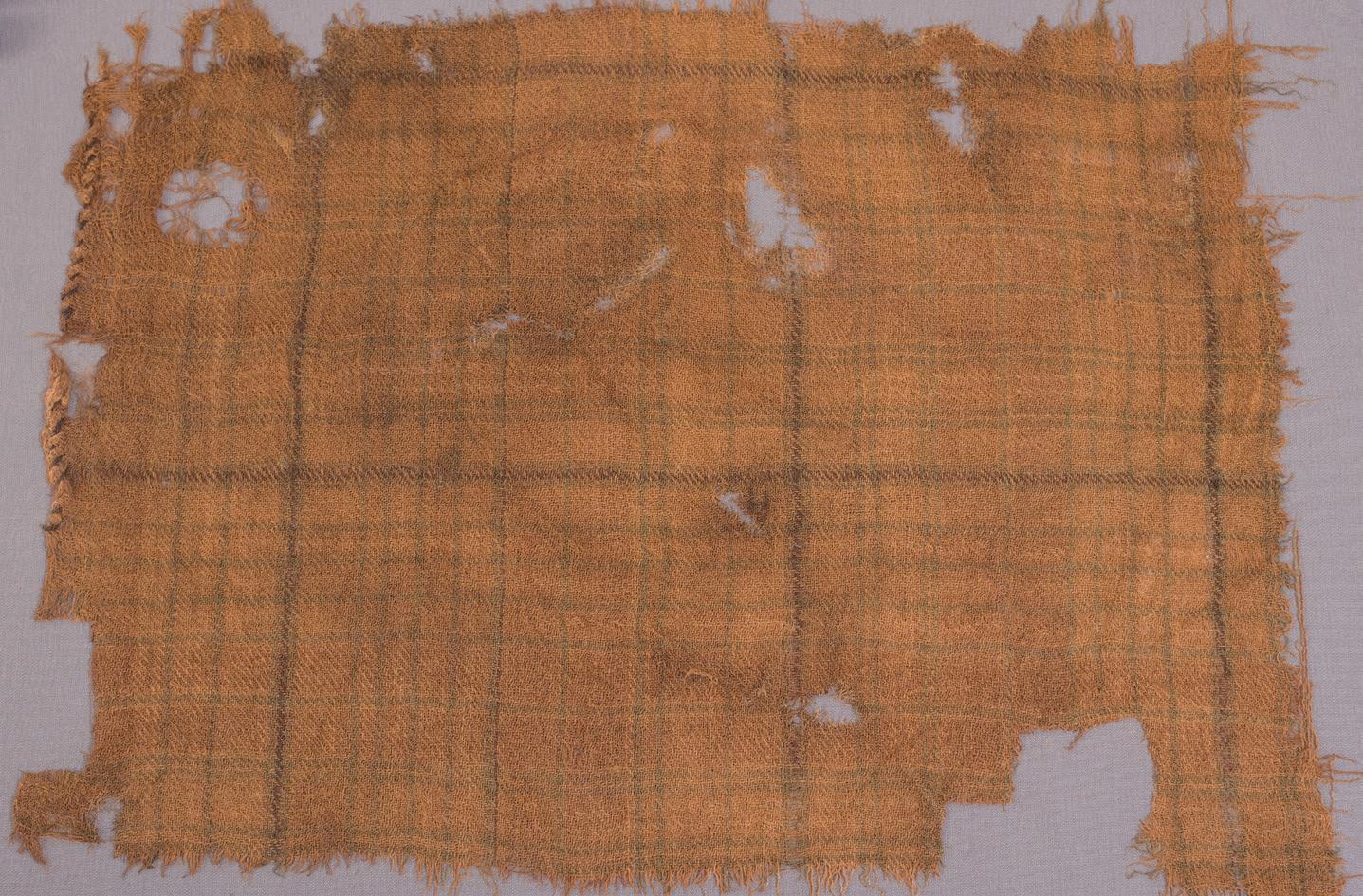
Scottish sense of belonging in relation to the land and the rich cultural traditions that are still resonant today. Tartan is not made up, in spite of what Hugh Trevor Roper says. We will discover, as we travel about the country, through tartan, through music, through poetry, that this is very much a living, breathing culture.
Intellectual inheritance
In the castles of Stirling and Glamis, we will have a glimpse of life in the Scottish court and one of Scotland’s most powerful landed
There’s an intellectual inheritance to explore here. As Voltaire said, ‘we look to Scotland for all our ideas about civilisation’.
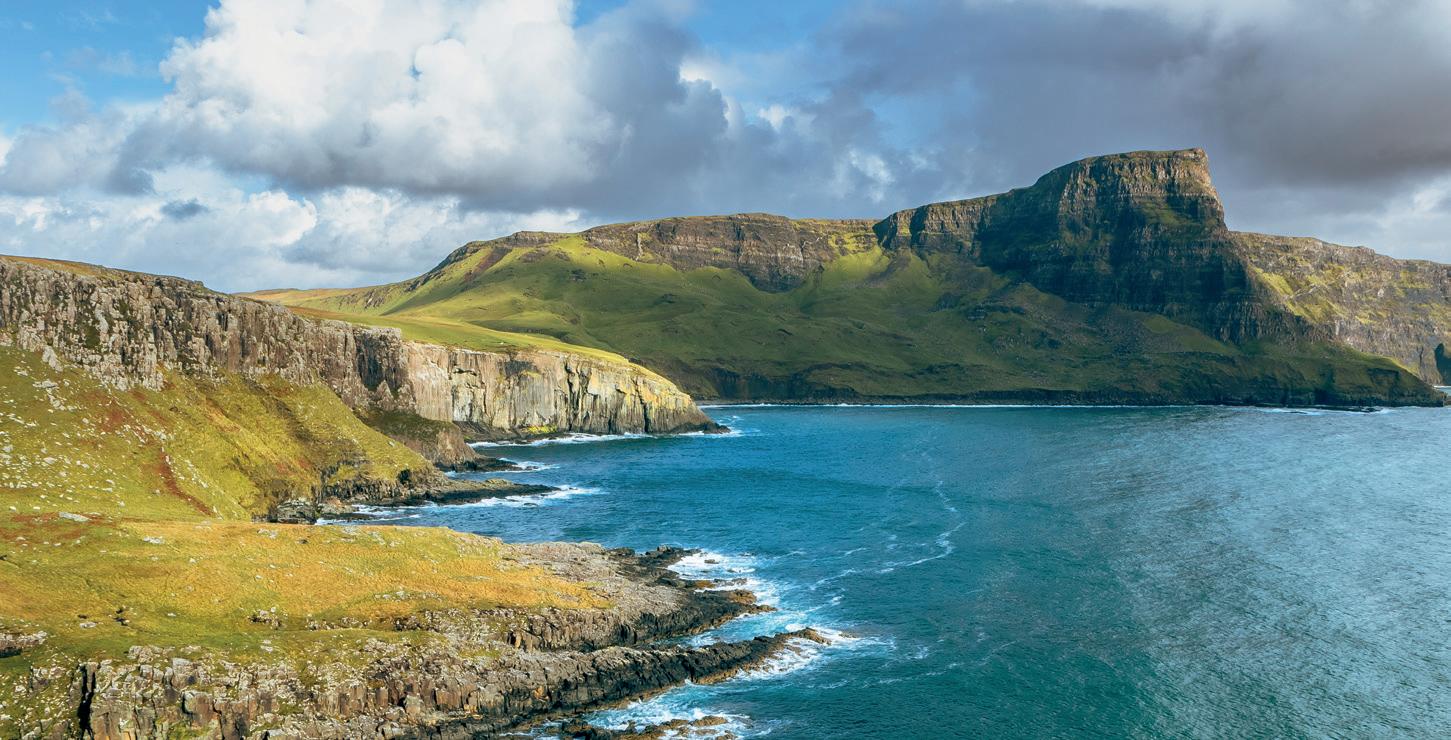
families. In these remarkable homes we uncover their interests, their art collections, libraries and richly decorated rooms. Edinburgh was a small but rich and vibrant capital city with its own crown. Europe was very much, the playground of Scots. And indeed, they in turn were very heavily influenced by and imbued with European ideals. There is an intellectual inheritance to explore here, that evolves into the Scottish Enlightenment. As Voltaire said, ‘we look to Scotland for all our ideas about civilisation’.
By contrast, as we move further north on our journey, the landscape shifts. From the rolling fields of the Lothians and Fife we motor towards the Highlands. Here the scenery becomes rugged and dramatic, with moor and mountains all around. We reach Inverness and Culloden, where the story is of how a people were defeated and depressed but still their spirit remained fierce and strong. And that will be a very reflective moment.
As we travel westwards down the coast towards Skye, we will start to see the sea. Scotland’s long shoreline reminds us how the sea was not seen as a barrier in the past, but as an express route between the shared Celtic worlds, of Scotland and Ireland. Later on, the Atlantic Ocean became the superhighway to North America.
Arriving in Glasgow, we’ll encounter a wonderful city with amazing municipal buildings and superb art collections. This is a city that called itself the Workshop of the World. It was born out of the tobacco trade and the famous tobacco barons who made huge amounts of money and profits which spent on the city. Here we see the architectural heritage of the Scottish Industrial Revolution, which was actually much more intense than in the rest of the UK.
Enlivening our journey will be a sense of the Scottish people: the words of Sir Walter Scott, Robert Louis Stevenson, and of course Robert Burns, who wrote the world’s most famous song, Auld Lang Syne . Together with some of the more modern Scottish writers, we will unpack myths relating to Mary, Queen of Scots, Bonnie Prince Charlie and others without spoiling people’s enjoyment. Mary, Queen of Scots is often seen as a tragic heroine. The victim. But, my goodness, she was the only Renaissance queen to lead her army in battle. And there are wonderful stories to be told about her, how she stood up to these regional magnates.
Scotland: History & Heritage runs for 10 days from 8–17 May & 18–27-September 2026. Book now on our website.


“Post-industrial” is already passé. It’s time to explore Britain’s most familiar, least understood historic county, says Chris Moss.
I returned to my native Lancashire in May 2021, after a break of almost four decades. It was a postpandemic urge, part of a bid to fly less, explore the UK more. Also a feeling that “home” (the idea, the reality) was worth some time and attention. I was born in 1966 in the south-west of the county. I moved back to the north-east. Not too close, then. On the day I made the move, a publisher emailed me out of the blue to propose a book about the “North-West of England”. My fate was sealed. Lancashire is long overdue a reevaluation, and not only by me. It’s a century since the Industrial Revolution really began to peter
out. Half as many years since administrative borders were redrawn and this once mightily powerful, populous region (more than five million in the early 1970s) was carved up.
Great shifts
Liverpool and Manchester were politically dislocated from the towns whose people built them, worked in them, fought in their regiments. The changes experienced by Lancastrians in recent times are almost as convulsive as the great shift of peoples from rural to urban settings between 1770 and 1850.
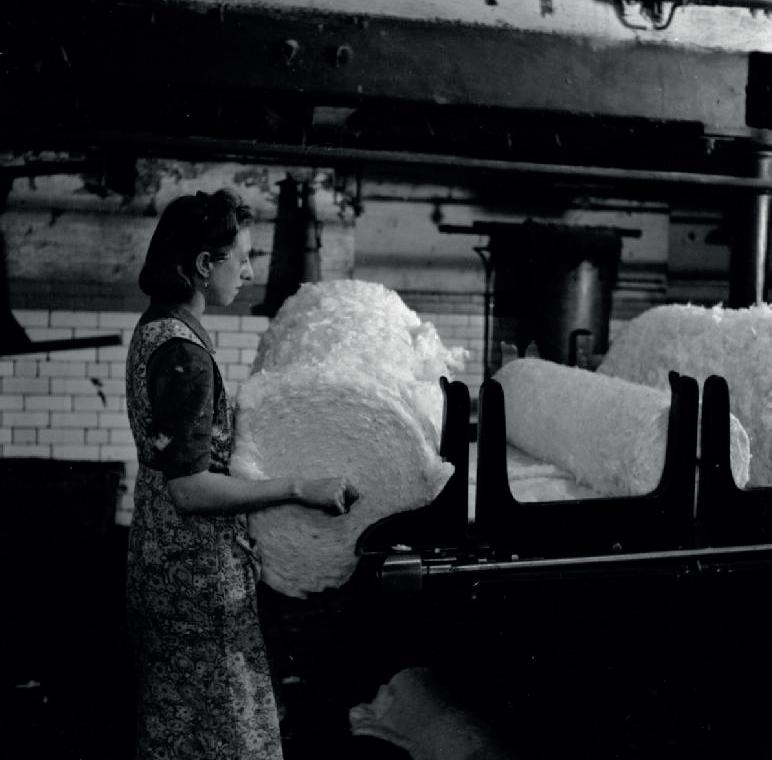
Today, those who worked in cotton mills, coal mines and heavy industrial factories are few – and they’re getting on; those with memories of Lancashire as a predominantly industrial county are hovering around retirement age. Poets and metropolitan pundits alike have played loose with the notion of the “postindustrial”, and I wanted to explore what that might mean. Did it denote decline or reinvention? Was the “clean-up” resulting from the closures and wind-
The greatest epiphany when you decide to visit what’s on your doorstep is how little you actually know it.
downs in any respects welcome? Was it even an accurate term for a diverse, complex, densely inhabited area that includes former textile nexuses like Blackburn and Rochdale, rugby and colliery towns like Wigan and St Helens, ancient Clitheroe and Lancaster, Blackpool and Warrington, as well as hundreds of hamlets and villages, estates and leisure spaces – where many thousands of people still work on shop floors, in overalls, and still build machinery and other manufactures?
As well as spending days in my local libraries, I visited as many places and landscapes as I could. After so many years away, I couldn’t help but experience Lancashire partly as a travel writer, as well as a homecoming native and a cultural historian. As someone raised on the West Lancashire Plain – the lowlands that lie between our two big cities – I am, anyway, on foreign
soil in the Pennine and Bowland regions. The greatest epiphany when you decide to visit what’s on your doorstep is how little you actually know it. I thank Lancastrians for welcoming me back and re-educating me. There’s still a quintessential warmth and tolerance here.
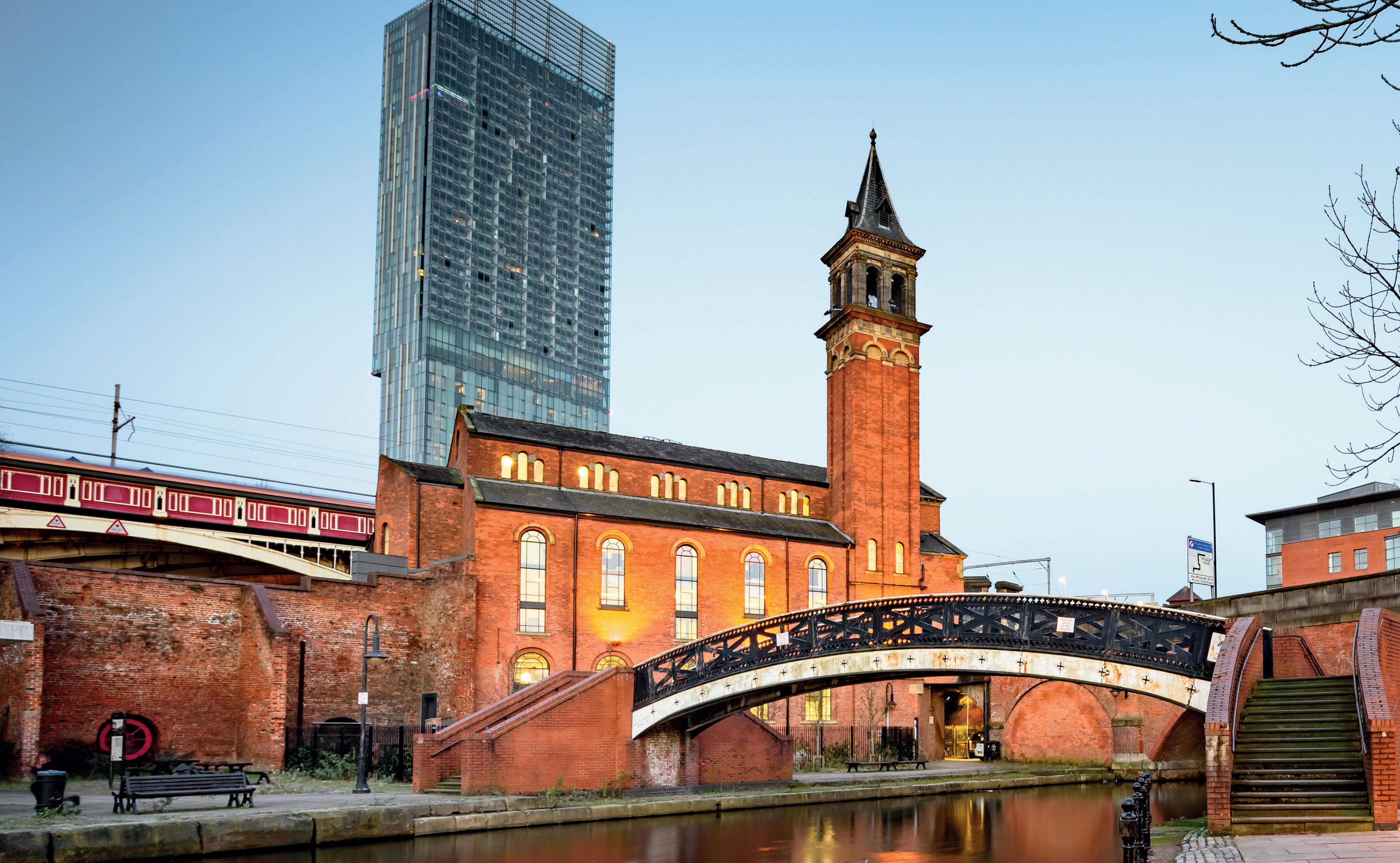
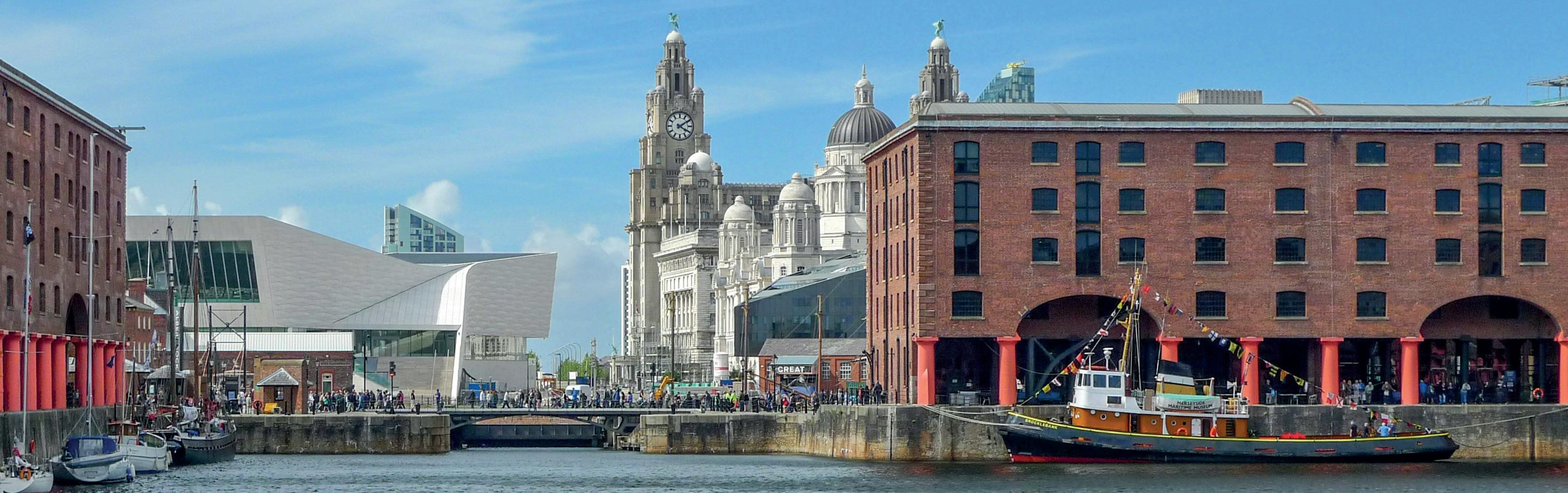
Now I am greatly looking forward to sharing these insights and knowledge with others. This new tour will allow me to air personal stories and show favourite landmarks – Pendle Hill, Liverpool’s docklands, Manchester’s Whitworth –as well as explore the broad sweep of history. Lancashire in the 21st century is a dynamic place. Its Michelin-starred food routinely attracts national press attention; its sports and popular music scenes are internationally influential. Manchester’s reinvention and Liverpool’s redevelopment divide local
opinion, but they show cities not willing to be merely “post”-places. The region’s thriving concert venues, theatres, literature festivals, art galleries and arts scene in general rival what’s on offer in London. But what all visitors immediately note here is a common sense of belonging. Lancashire came quite late to the historical fray – it isn’t named in the Domesday Book – but has had a seminal role in modern world history, its highs and lows woven into the fortunes of the UK and the rise and implosion of the British Empire. The drama binds people, through thick and thin.
I sometimes wonder if Lancashire isn’t too famous or, at least, familiar. Everybody assumes they know what it’s about, and I’d include residents there, as well as blow-ins and tourists. But it’s not what they think. This county used to make everything; now it is re-making itself. It’s time to take stock: reconsider, rediscover.
Lancashire: Exploring the Historic County that Made the Modern World by Chris Moss is published by Old Street on 17 February, 2026.
‘Lancashire: The Making of the Modern World’ runs for 7 days from 14–20 September 2026. Book now on our website.
‘The Cathedrals of England’ is an epic ten-day tour across England – north, south, east and west – to see some of the most glorious medieval architecture to be found anywhere. Jocelyn Simon, a participant on the tour who travelled from Queensland, Australia, shares some of the highlights from her diary.
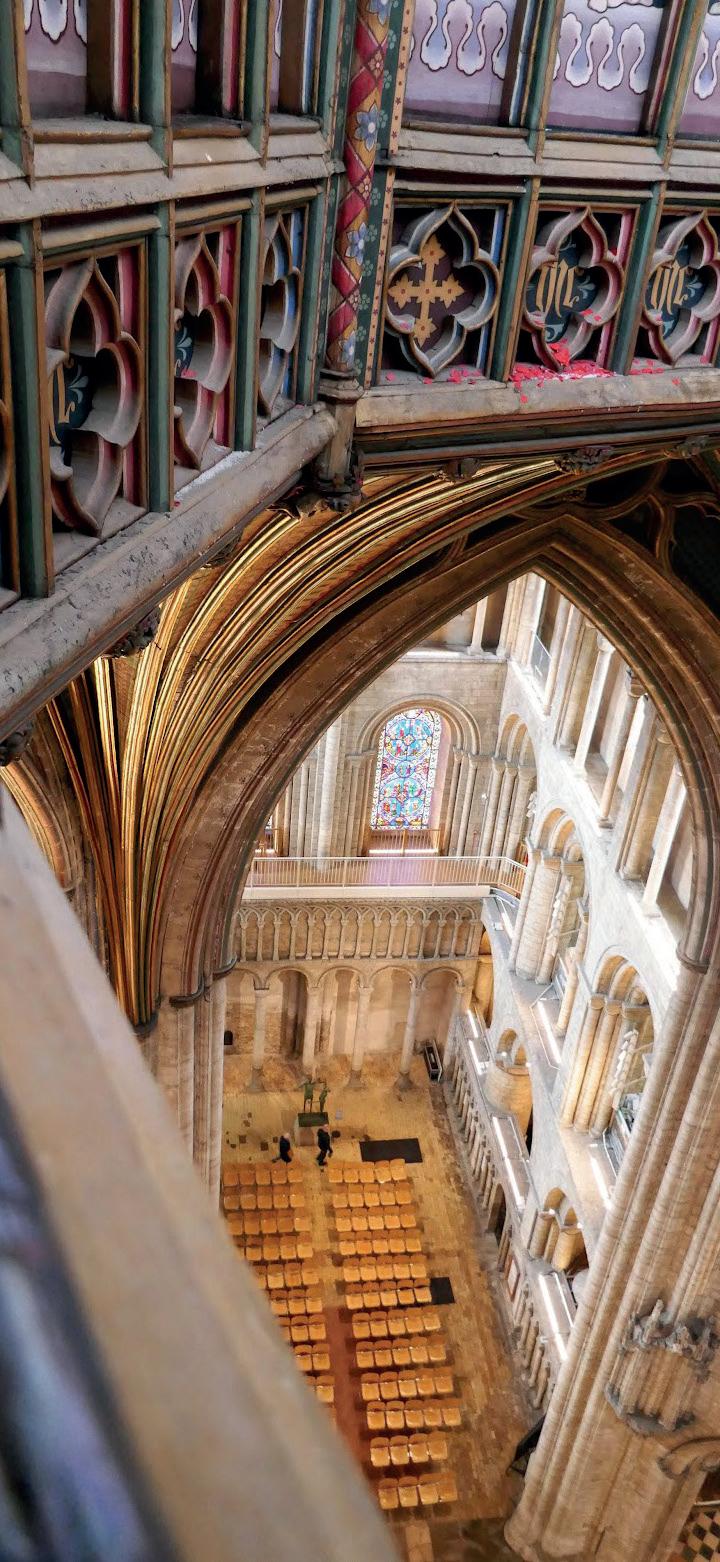
Day 1: Ely. When I first saw the Octagon Lantern Tower at the crossing in 1996, tears streamed down my cheeks. Standing beneath its towering beauty this time around, I immediately realised it was like no other I had seen, probably one of the most beautiful ecclesiastical sights to behold.
Our lecturer, Dr Hugh Doherty, greeted us at Ely’s ‘Ship of the Fens’, founded by Princess Etheldreda around 673.
With him we climbed 179 steps up impossibly narrow spiral stairs into the Octagon itself. Hinged panels
were opened so we could peer down into the crossing below. Breathtaking. On descent, we emerged onto walkways to view the landscape and nave roof.
Day 2: Lincoln . Victorian writer John Ruskin called Lincoln “out and out the most precious piece of architecture in the British Isles”. Standing in this vast interior, we understood why.
In the late 15th-century chantry chapel of Bishop Russell, Hugh revealed the 1950s murals by Duncan Grant, closed for 20 years due to their homosexual overtones. The Chapter House’s spectacular fan-vaulted roof spreading from a central column took our breath away.
Hugh helped us find the infamous 13th-century Lincoln imp (below), quietly hiding above a capital.
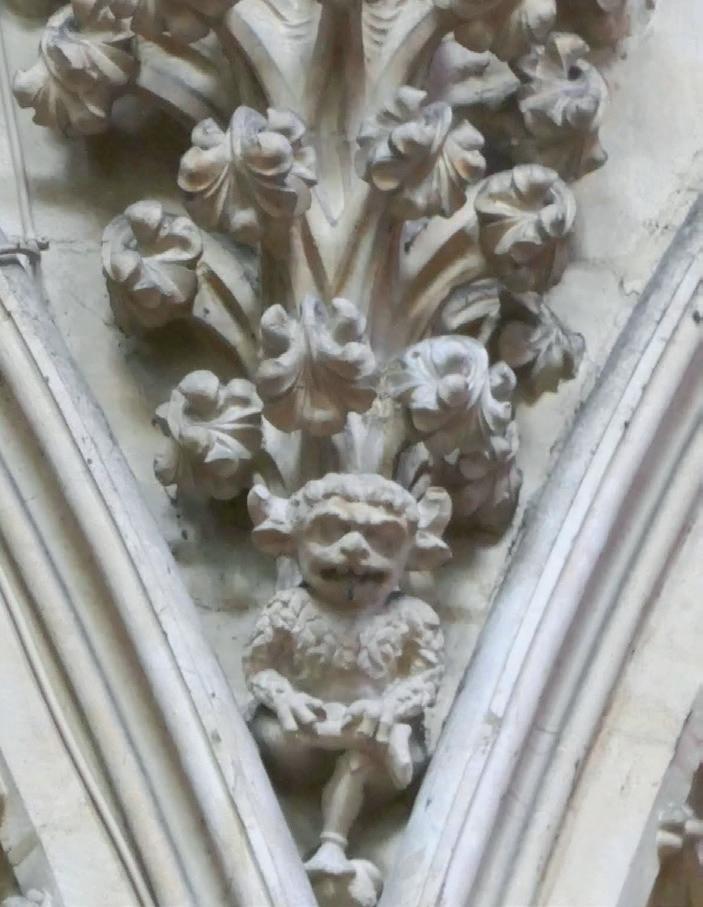
Day 3: Durham. Hugh suggested we “emulate paratroopers” leaping from the coach to race up the steep embankment. A special organ recital awaited us in the Quire. The vision of our cohort charging upward, makes me smile.
The organist performed Bach’s Prelude and works by William Byrd and Francis Jackson – the acoustics sent sounds soaring magnificently around us. The architecture of the nave, with six-foot-six-inch diameter cylindrical columns and unique engraved patterns perhaps constitute the finest Romanesque church in Britain.
Hugh explained St Cuthbert’s extraordinary journey: his undecayed body moved for years to escape Vikings, finally arriving in Durham when the cart became bogged, taken as a sign God wished him to remain here. His original 7th-century wooden coffin, pieced together from 6,000
fragments, is displayed in the museum. In the Chapter House, Hugh quickly rolled back a carpet revealing two ‘secret’ tombs, much to everyone’s amusement.
We arrived in York at dinnertime with wonderful views of the Minster bathed in sunshine as we pulled into the lovely Grand Hotel.
Day 4: York. York Minster is England’s largest medieval cathedral with the widest nave. Hugh showed us the 15th-century choir screen with English kings from William the Conqueror to Henry VI, and took us down into the crypt, the oldest part, to see Romanesque foundations and the 12th-century Doomstone depicting hell’s cauldron, warning what happens if you sin.
It was time for Evensong at 5.30pm, and we entered through the main southern door to the accompaniment of the bells chiming the so-called “Nelson Chime”, giving a carillon of 35 bells in total (three chromatic octaves).
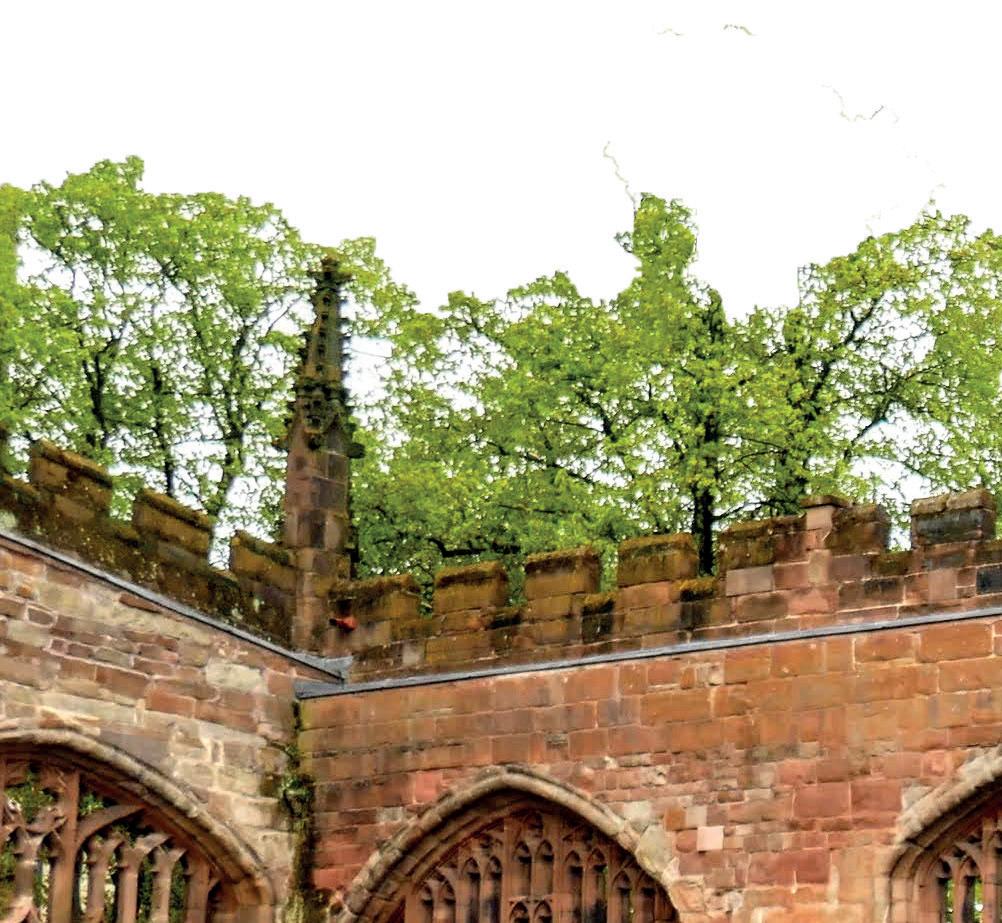
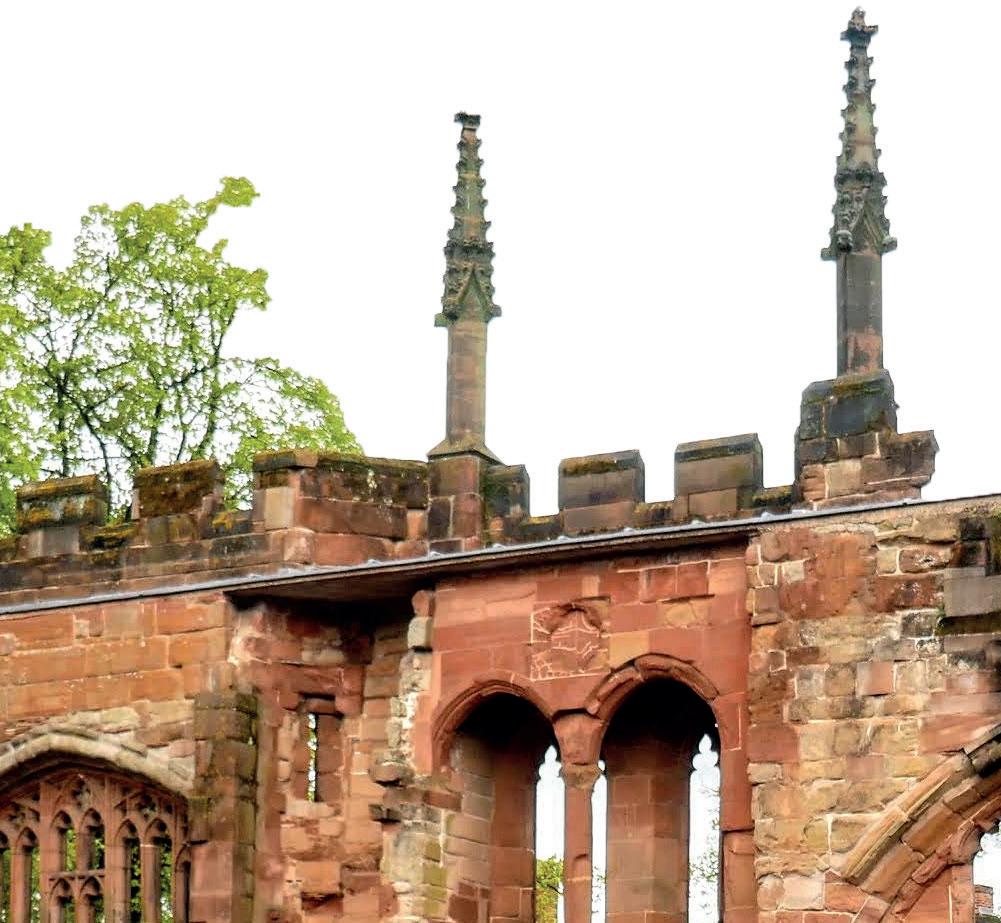
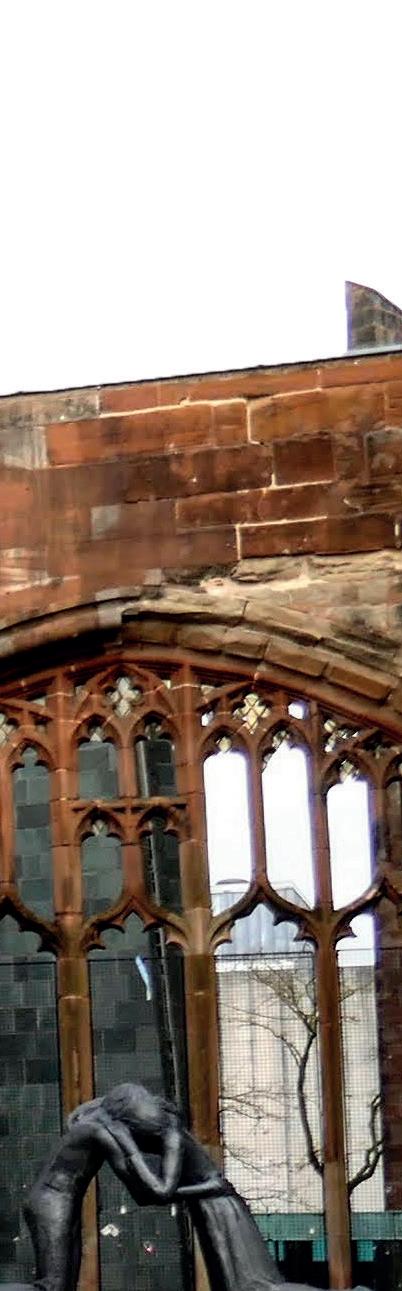
Day 5: Coventry. Today we farewelled The North, departing for Coventry. We began exploring the remains of the original Benedictine Abbey, the first of three cathedrals, utterly desecrated by Henry VIII’s troops.
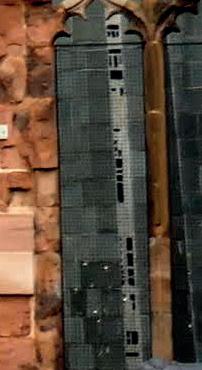
The bombed Cathedral Church of St Michael, destroyed by Hitler’s incendiary bombs on 14 November 1940, stands as a memorial to all war victims. Hugh explained how the new cathedral (consecrated in 1962) has moved many visitors emotionally. I wondered how I’d react to the modern architecture. I found it completely breathtaking.
Walking toward Sutherland’s enormous Christ the Redeemer tapestry was a journey from darkness to light. Engineers angled the stained-glass windows toward the altar, directing light onto the
tapestry, not the congregation. The Charred Cross was created from two wooden beams found after the bombing. A replica of the statue Reconciliation marks reconciliation between nations once in conflict.
Day 6: Gloucester. I was almost blown over photographing a gargoyle in Gloucester’s vicious wind. Inside, the mighty six-footsix-inch Romanesque pillars mirror Durham’s. Hugh quietly led us to see Robert of Normandy’s tomb, his effigy carved in Irish bog-oak.
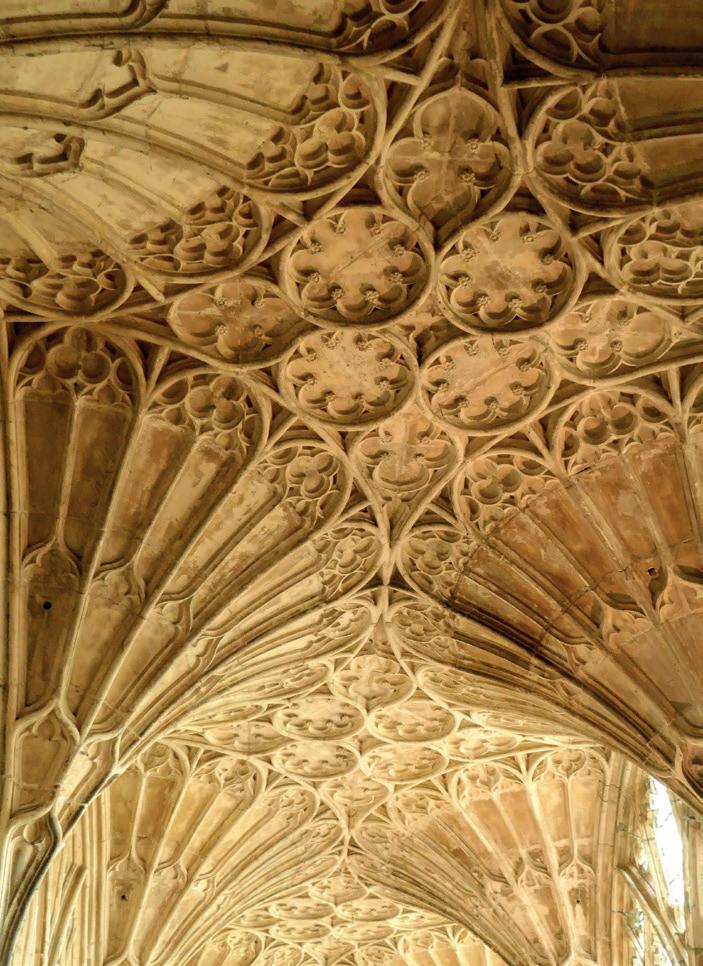
We followed him out into the beautiful cloisters, the first I’d seen with stained glass filling the arches. The most beautiful feature: extensive fan vaulting along the ceilings. This 14th-century ‘Great Cloister’ is the first and finest example of fan vaulting in the world (known as ‘Hogwarts’ to Harry Potter fans).
Day 7: Wells. Delightful Wells, England’s smallest city, is not
hard to fall in love with. The Vicars’ Close, dating from the 14th century, is Europe’s oldest continually inhabited street with all but one original building intact.
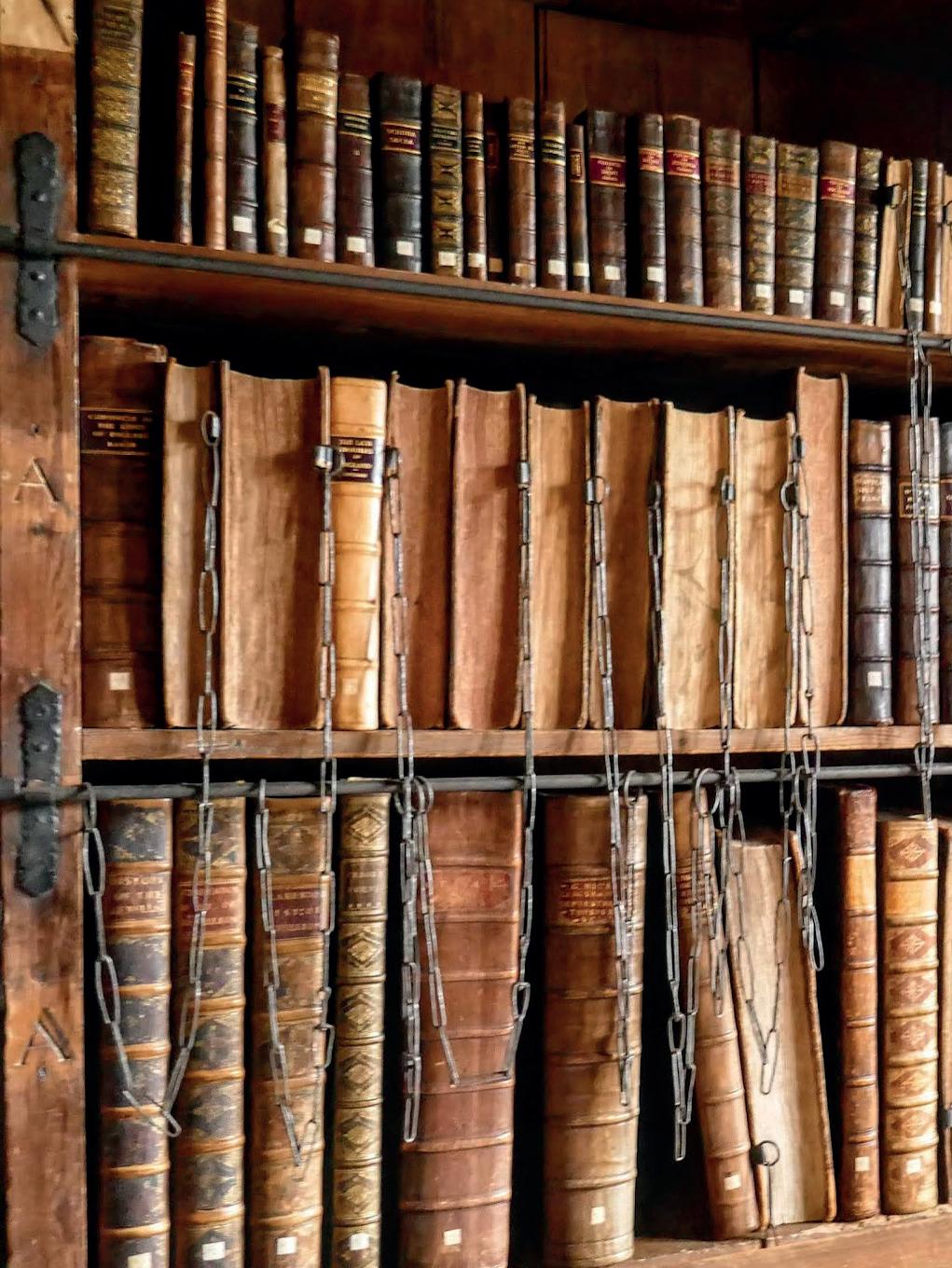
In the Chained Library, England’s largest medieval library when it
and works by William Byrd and Francis Jackson – the acoustics sent sounds soaring around us.
opened in the 1450s, we were led through sections closed to the public. Librarians showed us centuries-old volumes with much enthusiasm, including a bible translated into 47 languages.
Wells was among the first of the cathedrals built entirely in Gothic style. The unique scissor arches on each of the crossing’s four sides were constructed mid-14th century as an engineering solution to the tower’s partial collapse –among the more unusual creations of the Middle Ages.
At 5pm we watched one of the world’s oldest working clocks, perform its jousting knights display before Evensong.
Day 8: Old Sarum & Salisbury. Old Sarum – a layer cake of history from Stone Age hunters through Roman Fort to Norman stronghold. From the upper bailey, Salisbury Cathedral’s spire was visible just three miles south.
At Salisbury, Hugh drew our attention to The Cathedral in

Glass, Lawrence Whistler’s 1947 etching in memory of his brother Rex, who died in Normandy. As the glass slowly rotates, three cathedral images appear: the Spire, the Nave, and the Chapter House column. Light creates contrast: bright areas represent life and eternity, dark areas death and suffering.
The Chapter House holds Salisbury’s Magna Carta, the best preserved of only four surviving.
Day 9: Winchester. The huge west window, smashed during the English Civil War, was restored in a colourful mosaic pattern after horrified residents secretly collected and stored the glass. With the monarchy’s return 18 years later, glaziers couldn’t recreate the original design.
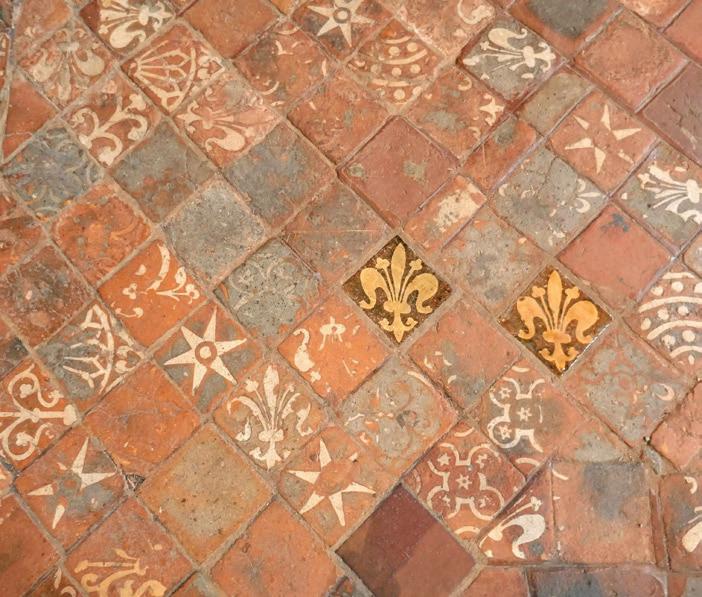
Throughout the east end we walked on gorgeous 13th-century floor tiles, the largest surviving spread of medieval decorated tiles inside any English building. High above, mortuary chests contain bones of early kings and bishops. We finished in the nave’s northern aisle, at Jane Austen’s tomb.
With thanks to Jocelyn Simon for her words and images. The Cathedrals of England departs 6–14 May & 2–10 September 2026. Register your interest for April, September & October 2027.
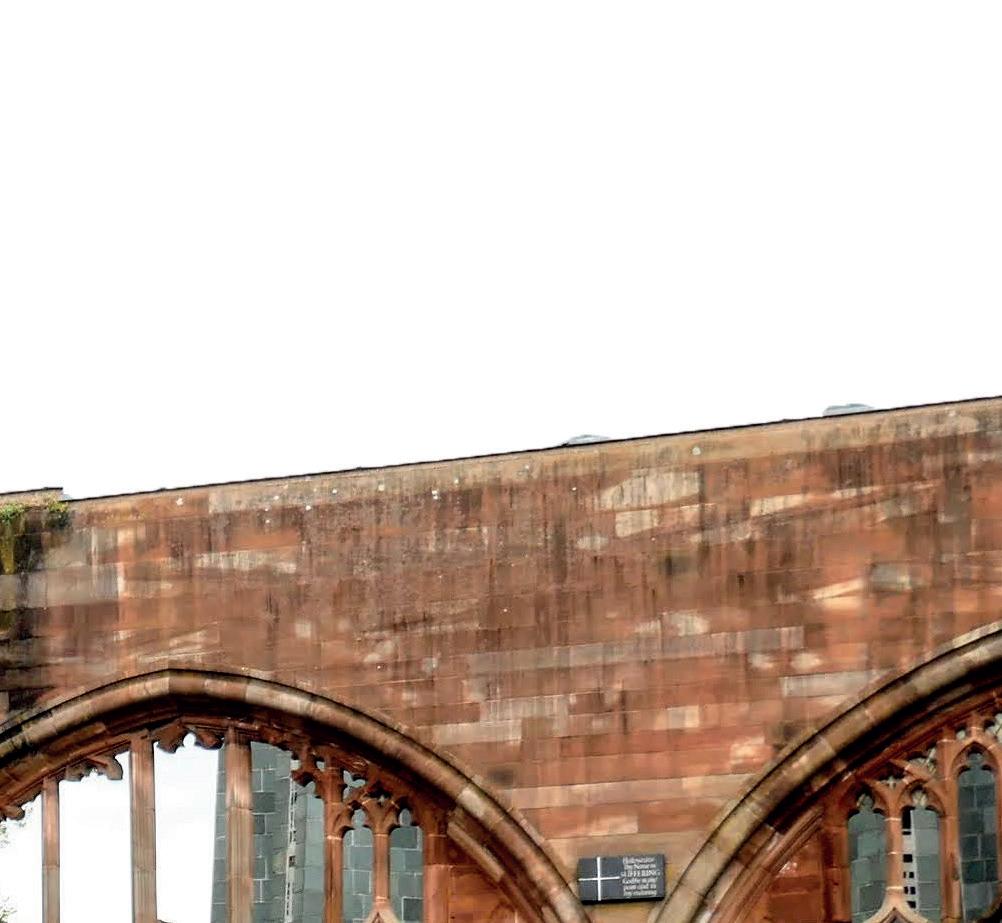
Image below: the ruins of the old Coventry Cathedral. Images on previous page: into the Octagon at Ely Cathedral; fanned vaulting at Gloucester. Images above: books in Wells' chained library; floor tiles at Winchester.




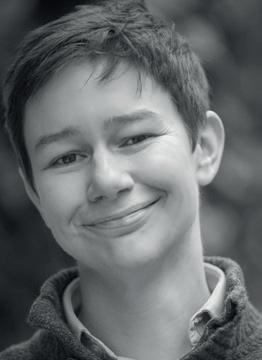
Katy Hamilton is one of the UK’s most sought after commentators on classical music. The musician, writer and presenter talks to Artistic Director Lizzie Watson, about her motivation and enthusiam for sharing music.
But I was quickly interested in the presentation side of things.
LW: What was your journey into the classical music?
KH: My first encounter with classical music was sparked by my grandmother’s old 1980s electric organ. I was very little and I used to go around and poke the keys. I found it very exciting because it made all sorts of strange noises. So for my fifth birthday, my parents gave me piano lessons. Mine wasn’t a house in which there was a lot of music played and my parents weren’t trained in classical music at all. It was really from learning music from the age of five and then arriving at senior school with a very good head of music and some really fabulous piano teachers that cemented it.
There were only two of us who did music A-level and by the time I finished school I had my grade eight piano. So I actually knew quite a lot about classical music without really understanding that I did. When I arrived at Nottingham University I suddenly realised I had a better sense of the classical
repertoire than I had thought. It was also a very supportive place.
LW: How did your career evolve after that?
KH: I went to university thinking that I would end up becoming a teacher; I knew Music is not a degree that pays well. I nearly did a sound engineering degree because I also studied maths and physics. But music was my joy. I did a Master’s at Nottingham, then spent a year in Germany doing some research for a PhD at the Royal College of Music.
University teaching was my career path. After completing my PhD I was offered a job as a history professor working with archive materials. I’d already been writing programme notes for some time. Then I found myself being asked to give museum tours. I was bringing visitors i nto the archive to talk to others, and so I began to be asked to interview them. I did my first on-stage interview with Roger Norrington, which was terrifying.
Initially, I imagined I would balance my career between the academic and the public fields. However, although I love university teaching, the chance to talk to people who know little about classical music, or who are uncertain of their knowledge, became increasingly of interest to me. I left the RCM and began to build relationships with venues and festivals, to write programme notes, give talks and conduct interviews. I was recommended to Radio Three and began working for Record Review and other radio shows.
Interviewing was not something I’d done much of at all. In the last five years I’ve had a lot people who have given me the opportunity to learn how to do these things. And I’m very aware of the importance of those who are 10, 15 years ahead in this industry, who have trusted me to try. It’s precisely the kind of richness of this ecosystem that makes careers like mine possible. I’m so grateful.
LW: What have you learned that has been most helpful?
KH: It’s going to sound very basic , but the biggest and most important thing I have learned around interviewing, is to give your whole attention to the person that you’ve asked a question of. I’ve found I’ve had the nicest feedback from people, when
they sense I’m truly listening and it becomes a genuine conversation. It’s not at all that the audience is irrelevant, but that if one can make a relaxed space in a kind of intimate way, that works much better in drawing in an audience.
LW: I’m very excited about our Rhine Piano Festival next year, MRT’s first piano festival. What are you most looking forward to as our Festival speaker?
KH: Well, first of all, the sheer list of superstar pianists that we’ve got. I mean, the fact that we start with Eric Lu, fresh from his great win at the 19th International Chopin Piano Competition in Warsaw, and the likes of Nelson Goerner and Elisabeth Leonskaja in the mix. There are some seriously eminent players alongside some younger musicians. And I think the mix of the two is going to be really interesting in terms of the listening experience, because pianists approach repertoire in different ways at different points in their career.
I also think the variety of programmes will be really nice. On the one hand we have monumental works where we can really get stuck in to what Bach or Chopin are doing. But then we’ve also got some programmes with lots of short pieces. And so, in terms of putting together the talks and the programme notes, the fun of it is being able to alternate the deep dives with the pulling together of themes. I hope in some cases we’ll be introducing composers whose music some may not have heard before. Through these kind of miniatures we can show how these pieces fit so well with more familiar repertoire.
LW: You have this amazing ability to engage with different audiences. How do you pitch your knowledge to their different needs?
KH: I think the big lesson for me has come from the only
teaching job I still do regularly – and completely adore. It is to teach daytime courses at City Lit, which is a further education college near Covent Garden. The students don’t necessarily have any particular musical training or theory knowledge. I began thinking differently about how to speak to audiences and started exploring a more focused way of finding analogues – versions of the same thing in popular music or in literature or in art or in other situations.
I really enjoy trying to find different ways of connecting with an audience base, because I don’t believe that just because you don’t have the technical knowledge means you’re incapable of understanding what the thing is. It’s then just a way of finding the correct formulation of words, or analogy, to allow somebody to find their own way of understanding what I’m talking about.
I think it’s very important to be able to speak to as wide an audience as possible about why this music can be enjoyed and is of interest. “
and how much this shapes people’s sense of what classical music means to an audience member, or to somebody who is engaging with it, either professionally or in an amateur capacity as a performer. And we are in real danger at the moment of classical music being viewed as an elitist thing, masking the importance of the democratic element of what it can mean to engage with it, either as a performer or a listener.
It is easy to get carried away with a certain kind of marketing blurb that says nothing really, but is all about grandiosity, so that it loses sight of the basic meaning of people making music for each other. And in that sense I consider myself a kind of ambassador because I think it’s very important to be able to speak to as wide an audience as possible about why this music can be enjoyed by many people, and is of interest – how it can be approached as a way of exploring, as a way of relaxing or becoming excited. All of these are valid ways of engaging with this kind of music.
LW: Finally, why do you think what you do matters?
KH: I think it’s important because it is so easy to overlook the extent to which what people feel about classical music stems from what they read in programme notes and in interviews and marketing texts,
I hope what I do is to allow the widest range of people to feel that they can be part of the conversation, and that it is inclusive. Even if they go to one classical concert – come to the talk, have a nice time, listen to the music and think afterwards ‘I don’t really love this, but I really like film scores by John Williams and maybe I’ll listen to that kind of music a bit more carefully now, because some of it sounded a bit like John Williams’. Great. Then I consider that a success. As much of a success as the person who wants to hear the complete Beethoven sonatas by Leonskaja next year at a major festival.
The Rhine Piano Festival runs for 8 days from 22–29 June 2026. Book now on our website.
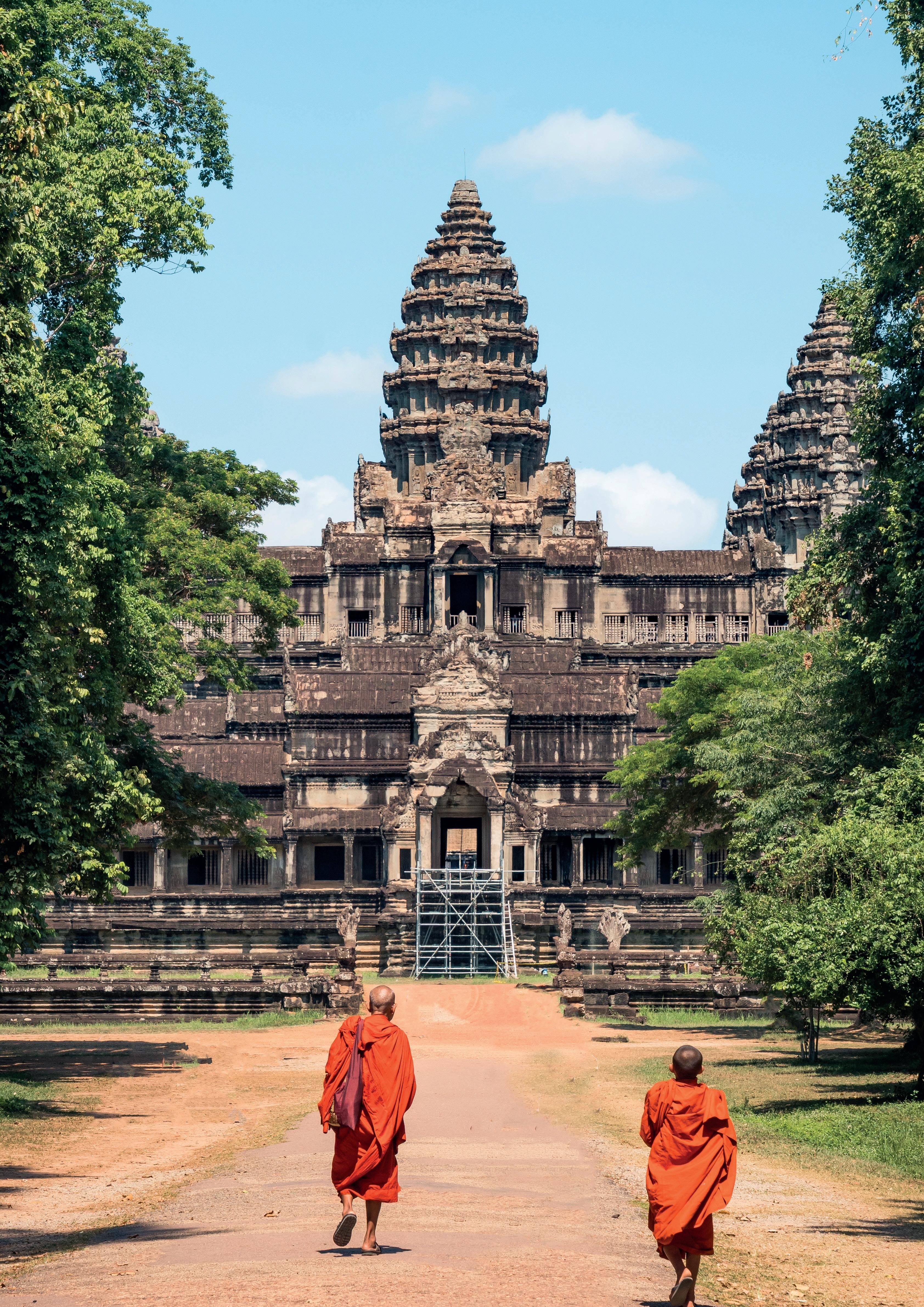


Our Asia programme continues to expand for 2027, with some of our departures now available to book.
16-30 January 2027
Explore a region few tourists see – the dramatic and rocky Deccan plateau. We visit fortresses, mosques and intricately-carved cave temples, as well as the UNESCO World Heritage Site of Vijayanagara – once a city of half a million inhabitants.
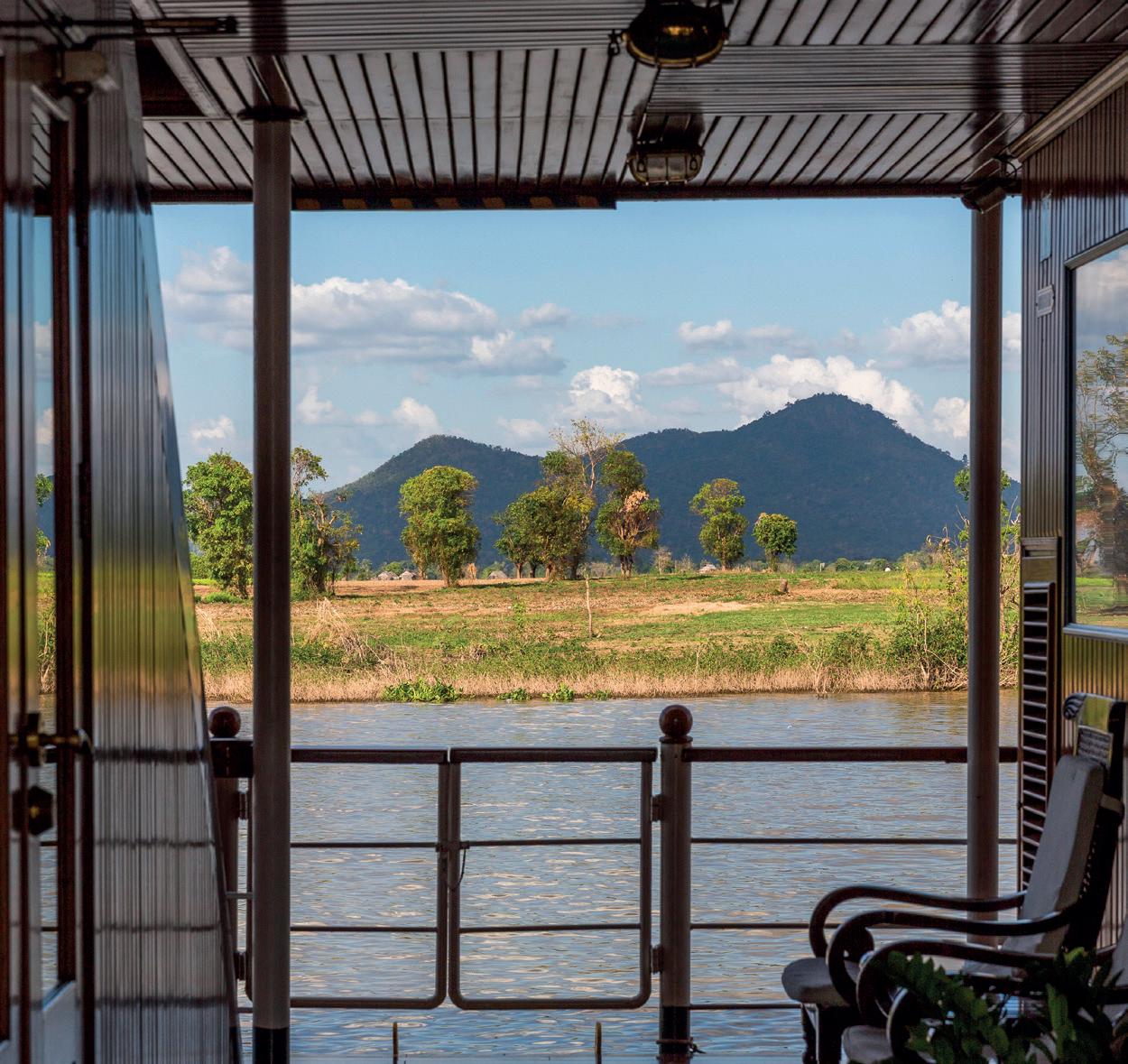
September 2027
A unique itinerary that takes in many of China’s most remarkable religious sites, from ancient temples in Beijing to the sacred mountains of Wutaishan.
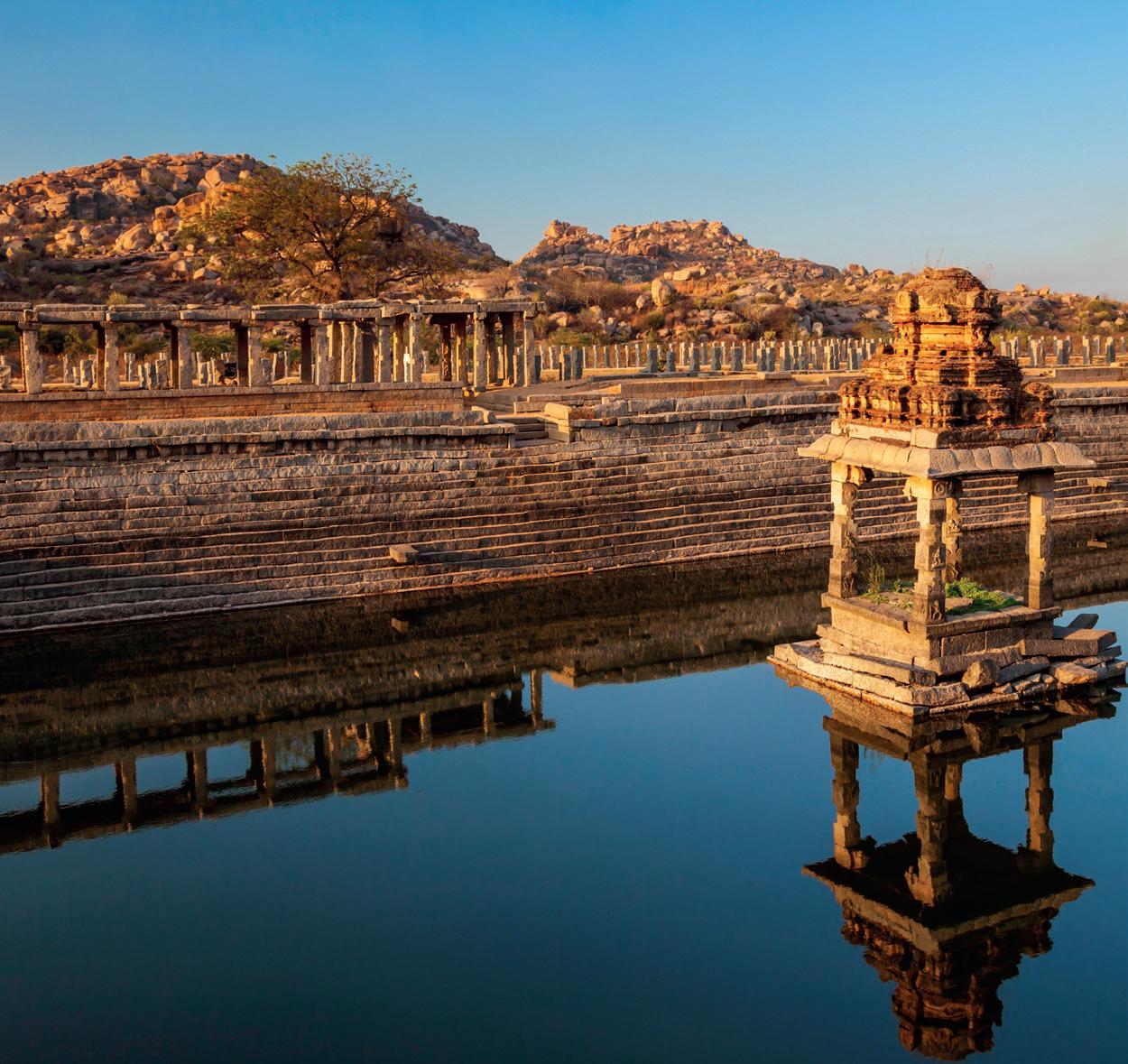
12-26 March 2027
Journey by river from the Mekong Delta in southern Vietnam to Siem Reap, the heart of the city of Angkor. Enjoy exclusive charter of a first-class river cruiser and spend six nights in a 5-star hotel in Siem Reap to see all the major sites of the Khmer empire.
Contact us at info@martinrandall.co.uk to register your interest in this tour.
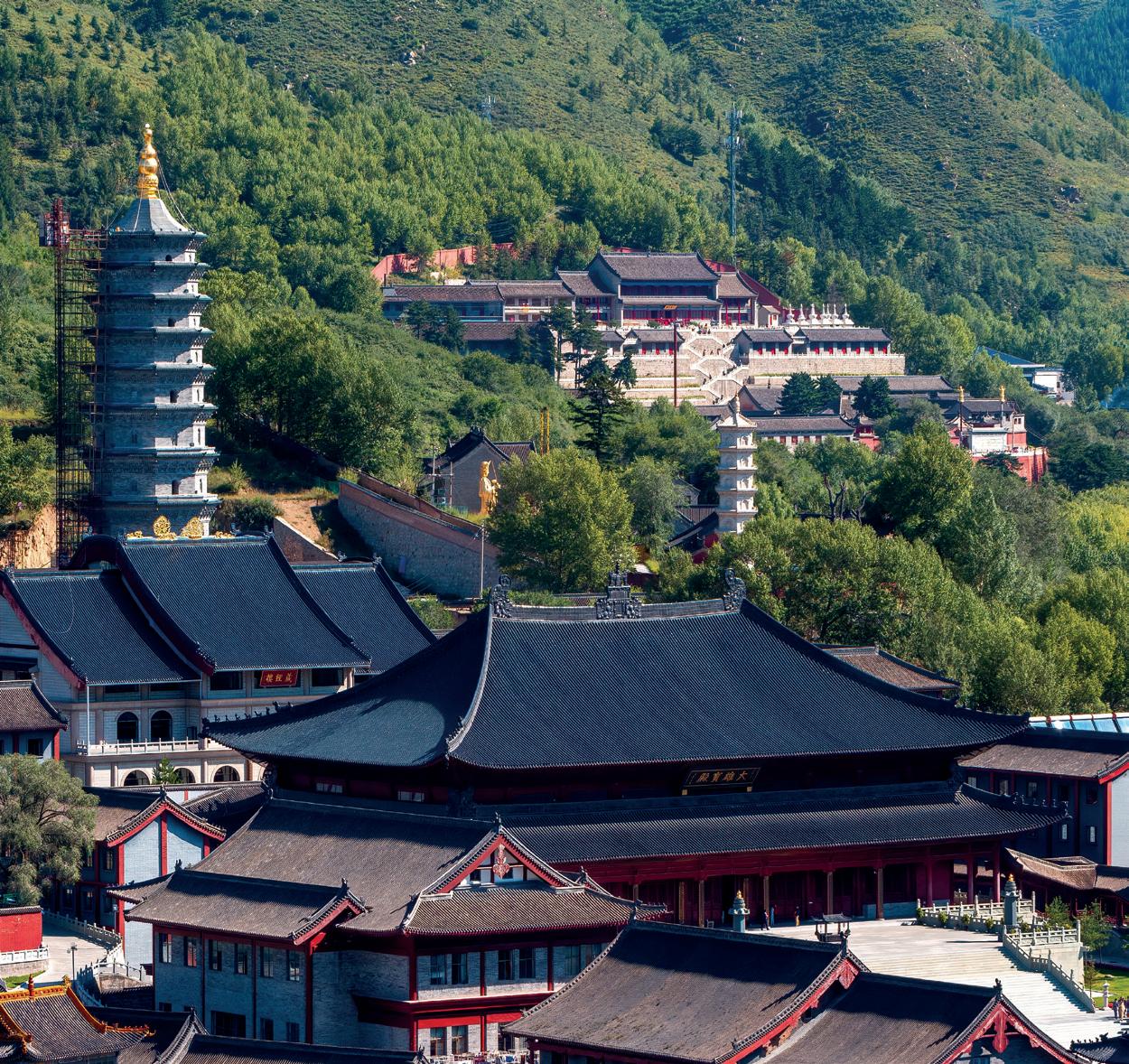
2–12 Essential Andalucía (mm 891)
Dr Philippa Joseph
5–8 Ancien Régime Paris (mm 902)
Prof. Glenn Richardson
7–12 Gardens of Madeira (mm 982)
Dr Gerald Luckhurst
7–21 Cruise: Cambodia by River (mm 893) Freddie Matthews
9–11 Symposium: America’s grand anniversary: the rise of the Indispensable Nation (mm 941)
9–13 Ravenna & Urbino (mm 894)
Canon Nicholas Cranfield FSA
9–16 Ring at La Scala (mm 895) Barry Millington
10–14 Venetian Palaces (mm 896)
Dr Michael Douglas-Scott
10–15 Opera in Vienna (mm 900) Dr John Allison
11–19 Spain 1492 (mm 878) Giles Tremlett
14–19 Essential Venice (mm 898) Dr Susan Steer
16–28 Civilisations of Sicily (mm 899) Dr Luca Leoncini
18–1 Great Cities of Italy (mm 901)
Desmond Shawe-Taylor, Dr Michael Douglas-Scott
19–21 After the Rain (mm 110) Dr Sally Butler
20–22 Chamber Music Event: Barbican Quartet (mm 940)
Dr Katy Hamilton
23–27 Viennese Modernism (mm 905) Gavin Plumley
23–30 Gastronomic Valencia (mm 947)
Gijs van Hensbergen
24–30 Modern Art on the Côte d’Azur (mm 904)
Mary Lynn Riley
25–1 Romans & Carolingians (mm 917)
Dr Hugh Doherty
27–4 Minoan Crete (mm 907)
Dr Christina Hatzimichael-Whitley
27–7 Morocco (Mmm 908) Dr Iain Shearer
30–10 Art in Japan (mm 909) Prof. Timon Screech
7–13 Lucca & vicinity (mm 913) Dr Flavio Boggi
7–19 Civilisations of Sicily (mm 916) Dr Philippa Joseph
8–17 Albania: Crossroads of Antiquity (mm 918)
Carolyn Metkola
8–20 Traditions of Japan (mm 911)
Reverend Prof. Lloyd Llewellyn-Jones
9–13 Opera & Ballet in Copenhagen (mm 912)
Dr John Allison
9–18 Extremadura (mm 919) Chris Moss
10–16 Val d’Orcia and the Sienese Hills (mm 938)
Prof. Fabrizio Nevola
12–19 The Early Christian Adriatic (mm 914)
Dr Meg Boulton
13–18 Pompeii & Herculaneum (mm 920)
Dr Mark Grahame
13–19 World Heritage Malta (mm 915) Juliet Rix
13–22 The Duero River: from Source to Sea (MM 924)
Gijs van Hensbergen
15–19 Art in Madrid (mm 939) Prof. Claudia Hopkins
15–20 Music in Berlin (mm 921) Prof. Jan Smaczny
16–23 Gastronomic Provence (mm 935) Victoria Daskal
16–28 Samarkand & Silk Road Cities (mm 922)
Dr Peter Webb
17–20
Chamber Music Event: Ensemble 30 & Elizabeth Watts –
A Schubertiade (mm 932) Richard Wigmore
17–28 Baroque Music in the Bolivian Missions (mm 927) Dr Barbara Hoos de Jokisch
18–24 Genoa & Turin (mm 925) Dr Luca Leoncini
19–24
20–27
21–27
Monet & Impressionism (mm 926)
Professor Frances Fowle
The Heart of Italy (mm 928)
Dr Michael Douglas-Scott
Gardens & Villas of the Veneto (mm 929)
Amanda Patton
21–29 Cornish Houses & Gardens (mm 930)
21–29
23–27
24–1
24–3
26–30
30–9
Anthony Lambert
Normans in the South (mm 931) Dr Richard Plant
Tom Abbott’s Berlin (mm 937) Tom Abbott
Madrid & Toledo (mm 936) Gijs van Hensbergen
Classical Turkey (mm 933)
Reverend Prof. Lloyd Llewellyn-Jones
Hamburg: Opera & ‘Elphi’ (mm 904)
Dr John Allison
Cruise: Sailing the Dalmatian Coast (mm 934)
Dr Dr Zoe Opačić
100th anniversary of Monet’s death: visit his house and garden at Giverny on Monet & Impressionism, 18–23 October 2026
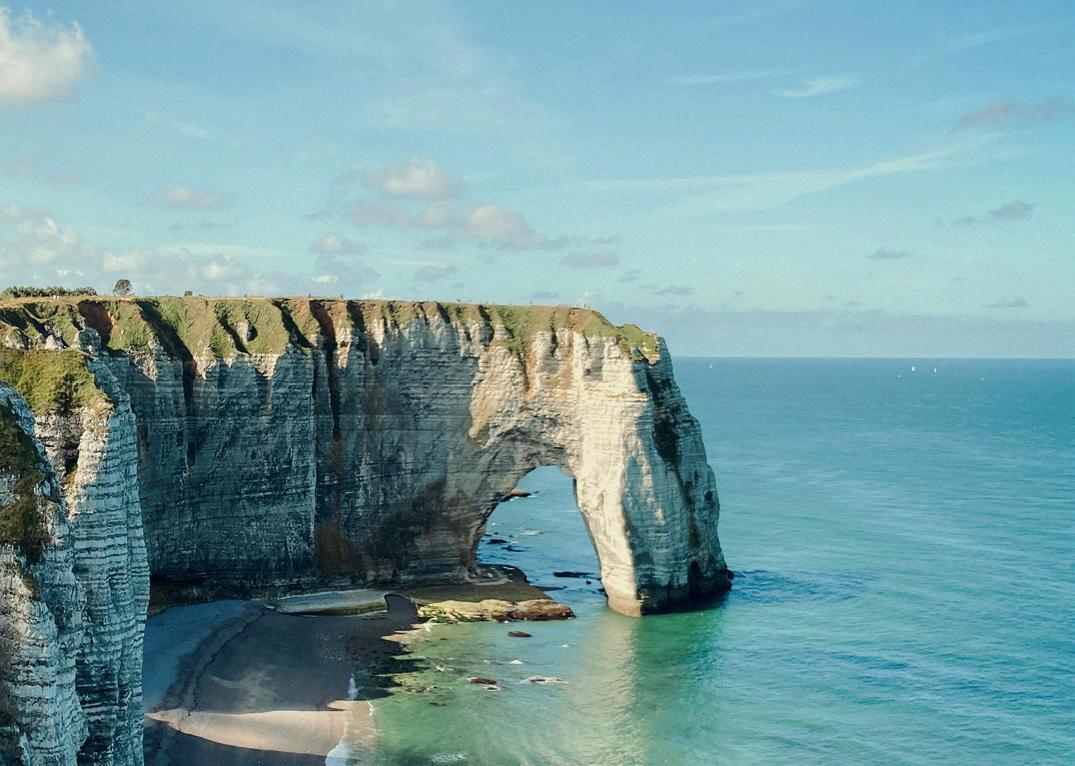
3–10 Istanbul Revealed (mm 943) Jeremy Seal
5–12
6–11
6–13
6–14
7–17
8–15
8–17
11–16
11–17
11–17
11–18
Great Houses of the South West (mm 944)
Anthony Lambert
EARLY MUSIC IN YORKSHIRE (mm 945)
Prof. John Bryan
Gastronomic Veneto (mm 949)
Cynthia Chaplin
The Cathedrals of England (mm 948)
The Medieval Pyrenees (mm 951) Dr Richard Plant
Courts of Northern Italy (mm 950)
Dr Michael Douglas-Scott
Scotland: History & Heritage (mm 952)
David Forsyth
Tuscan Gardens (mm 964)
Dr Katie Campbell
Walking Hadrian’s Wall (mm 954)
Dr Matthew Symonds
Yorkshire Houses & Gardens (mm 953)
Christopher Garibaldi
Gastronomic Le Marche (mm 958)
Marc Millon, Dr R. T. Cobianchi
Dates listed for tours which are not yet available to book (those listed without a code) are subject to change. Please e-mail info@martinrandall.co.uk to register your interest in these events.
12–18 Gardens of Sicily (mm 957)
Helena Attlee
12–18 Prague Spring (mm 956) Dr Michael Downes OBE
14–26 Samarkand & Silk Road Cities (mm 955)
Dr Peter Webb
15–22 Art in Scotland (mm 965) Desmond Shawe-Taylor
16–22 The Ligurian Coast (mm 959) Dr Luca Leoncini
18–23 Arts & Crafts in the Cotswolds (mm 961)
Janet Sinclair
18–31 The Western Balkans (mm 962)
Prof. Cathie Carmichael
19–24 Venice: Scarpa & Others (mm 960)
Prof. Harry Charrington
21–31 Moldavia & Transylvania (mm 963)
Dr Shona Kallestrup
22–29 Franconia (mm 968) Dr Ulrike Ziegler
26–2 Footpaths of Umbria (mm 972) Nigel McGilchrist
26–5 Ireland: History and Heritage (mm 973)
Dr John Brady
1–10 Venetian Land Empire (mm 977)
Dr Michael Douglas-Scott
1–16 Eastern Turkey (mm 975) Ian Colvin
2–6 Ravenna & Urbino (mm 976) Dr Luca Leoncini
2–7 Palladian Villas (mm 946) Dr Sarah Pearson
3–10 Gastronomic Belgium & the Netherlands (mm 978) Gijs van Hensbergen
3–10 Great Gardens of Southern England (mm 979)
Louisa Allen
5–13 Medieval Burgundy (mm 980) Dr Hugh Doherty
8–14 Gastronomic Friuli Venezia Giulia (mm 982)
Cynthia Chaplin
11–18 Leipzig Bach Festival (mm 986) Prof. John Butt OBE
12–20 Great Irish Houses (mm 989) Anthony Lambert
16–22 Art in the Netherlands (mm 990)
Desmond Shawe-Taylor
16–22 Leipzig Bach Festival (mm 987) Dr Ruth Tatlow
22–26 Lincolnshire Churches (mm 996)
Dr James Alexander Cameron
22–29 THE RHINE PIANO FESTIVAL (mm 100)
Dr Katy Hamilton
24-2 Gardens in the Highlands (mm 998)
Colin Crosbie
25–30 Walking to Derbyshire Houses (mm 999)
Christopher Garibaldi
25–3 Finland: Aalto & Others (mm 101)
Prof. Harry Charrington
30–5 Flemish Painting (mm 104) Dr Sue Jones
30–9 Medieval Anjou & Poitou (mm 103)
Dr Hugh Doherty
30 Renaissance Choral Day (mm 102)
300 years since Sir John Vanbrugh’s death: survey his career, from Castle Howard to Blenheim Palace, 3–9 July 2026
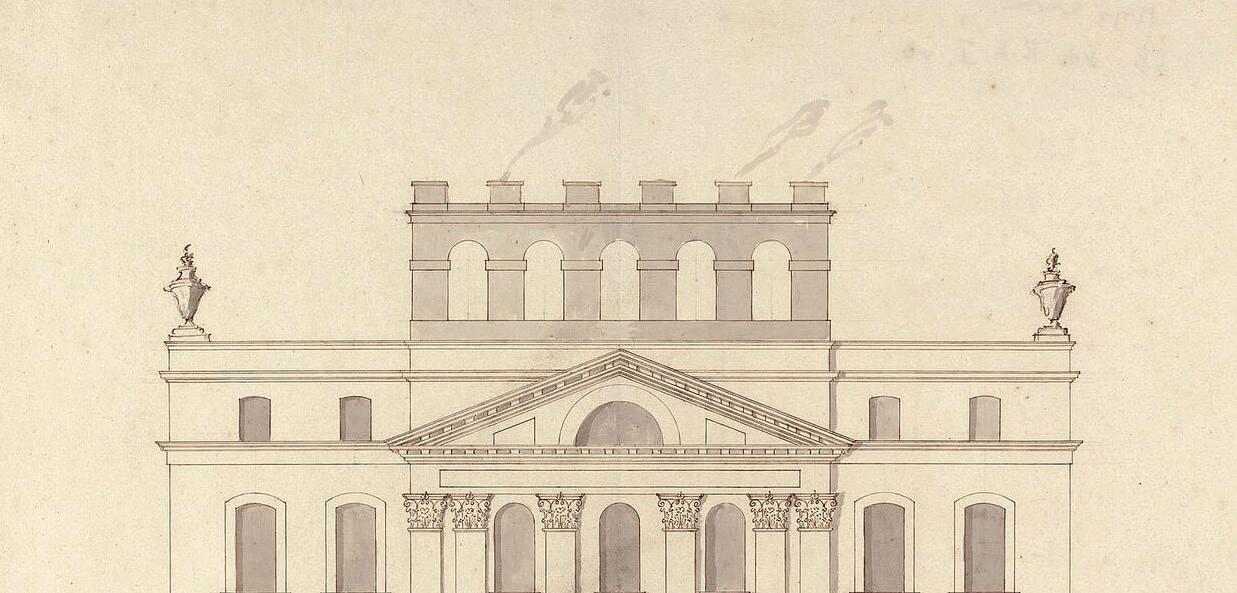
2–6 Budapest (mm 105) Gavin Plumley
2–10 Great Houses of North-West England (mm 106) Anthony Lambert
3–9
5–12
6–12
6–12
6–13
12–16
13–19
19–25
Vanbrugh’s Greatest Houses (mm 107)
Sir Charles Saumarez Smith
Lofoten Festival (mm 111)
Dr Michael Downes OBE
French Gothic (mm 108) Dr Jana Gajdošová
Gastronomic Devon & Cornwall (mm 109)
Marc Millon
Cruise: History & Art on the Danube (mm 110)
Gavin Plumley, Dr Philipp Bloom, Veronica Buckley
Savonlinna Opera (mm 112) Simon Rees
Lusatia: Germany’s Eastern Borderlands (mm 113) Dr Jarl Kremeier
Opera in Munich & Bregenz (mm 115)
Dr Bruno Bower
29–6 Estonia (mm 120) Dr Paris Pin-Yu Chen
30–6 The Hanseatic League (mm 122) Andreas Puth
3–10
5–13
6–12
15–21
15–22
17–21
20–1
22–27
27–31
31–7
Gdańsk & Eastern Pomerania (mm 125)
Dr Hugh Doherty
Baroque & Rococo (mm 127) Tom Abbott
Orkney: 5,000 years of culture (mm 128)
Julie Gibson, Tom Muir
Walking the Danube (mm 134)
Richard Wigmore
MUSIC ALONG THE DANUBE (mm 135)
Dr Paul Max Edlin
The Age of Bede (mm 136) Imogen Corrigan
Silk Roads of Central Asia (mm 140)
Dr Peter Webb
The Schubertiade (mm 137) Richard Wigmore
Art in Switzerland (mm 142) Mary Lynn Riley
MUSIC ALONG THE RHINE (mm 144)
Dr Katy Hamilton
2–9
2–10
3–15
4–11
4–12
4–14
5–14
5–16
6–10
7–13
Gardens of Normandy (mm 149)
Amanda Patton
The Cathedrals of England (mm 150)
Canon Nicholas Cranfield FSA
Samarkand & Silk Road Cities (mm 153)
Dr Richard McClary
Courts of Northern Italy (mm 155)
Prof. Fabrizio Nevola
Sardinia (mm 156) Dr R. T. Cobianchi
Frank Lloyd Wright (mm 154)
Prof. Harry Charrington
Classical Greece (mm 164)
Dr Christina Hatzimichael-Whitley
Armenia & Georgia (mm 165)
Ian Colvin
Châteaux of the Loire (mm 158)
Dr Sarah Pearson
Cave Art in Spain (mm 159)
Dr Paul Bahn
7–13 The Imperial Riviera (mm 167)
7–14
7–19
Dr Mark Thompson
Gastronomic Basque Country (mm 157)
Gijs van Hensbergen
Civilisations of Sicily (mm 161)
Dr Zoe Opačić
7–23 Peru (mm 160) Dr David Beresford-Jones
8–15 Trecento Frescoes (mm 163) Prof. Donal Cooper
9–14
Beethoven in Bonn (mm 174) Prof. Barry Cooper
9–18 Scottish Houses and Castles (mm 162)
11–17
Alastair Learmont
Gastronomic Emilia Romagna (mm 172)
Cynthia Chaplin
11–17 Piero della Francesca (mm 169)
Dr Michael Douglas-Scott
14–19 The Etruscans (mm 166) Dr Nigel Spivey
14–19 Vienna’s Masterpieces (mm 173)
Tom Abbott
14–20 Lancashire: the Making of the Modern World (mm 175) Chris Moss
16–25 Albania: Crossroads of Antiquity (mm 168)
18–27
Carolyn Metkola
Scotland: History and Heritage (mm 170)
David Forsyth
18–30 The Road to Santiago (mm 171)
Dr Richard Plant
21–26 Pompeii & Herculaneum (mm 179)
Dr Nigel Spivey
21–27 Walking a Royal River (mm 180)
Sophie Campbell
23–28 Organs of Bach’s Time (mm 181)
James Johnstone, Dr Jarl Kremeier
26–4 Gastronomic Navarra (mm 183)
Gijs van Hensbergen
28–2 Ravenna & Urbino (mm 187) Dr Luca Leoncini
28–4 THE J.S. BACH JOURNEY (mm 186)
Professor John Butt OBE, Sir Nicholas Kenyon
28–5 The Heart of Italy (mm 185) Leslie Primo
29–7 Normans in the South (mm 188)
Canon Nicholas Cranfield
1–8
Courts of Northern Italy (mm 190)
Dr Sarah Pearson
1–10 Cruise: Sailing the Dalmatian Coast (mm 200)
Dr Mark Thompson
2–8 Modern Art on the Côte d’Azur (mm 192)
Monica Bohm-Duchen
2–12 Bulgaria (mm 191) Dr Nikola Theodossiev
5–10 Martin Randall’s London (mm 189)
Martin Randall
5–11 Connoisseur’s Prague (mm 194)
Martina Hinks-Edwards
5–16 Art in Japan (mm 195)
Dr Monika Hinkel
5–17 Civilisations of Sicily (mm 196)
Dr Mark Grahame
8–16 Berlin, Potsdam, Dresden (mm 197)
Dr Jarl Kremeier
8–20 Central Anatolia (mm 198) Jeremy Seal
12–18 Raphael, in celebration (mm 199)
Dr Michael Douglas-Scott
13–19 Essential Rome (mm 202)
Christopher Garibaldi
14–20 Art in the Netherlands (mm 202)
14–22
Desmond Shawe-Taylor
Two Spains: the Spanish Civil War & its aftermath (mm 193) Giles Tremlett
15–22 Cruise: Cruising the Douro (mm 218)
Dr Gerald Luckhurst, Martin Symington
16–22 Roman & Medieval Provence (mm214)
Dr Alexandra Gajewski
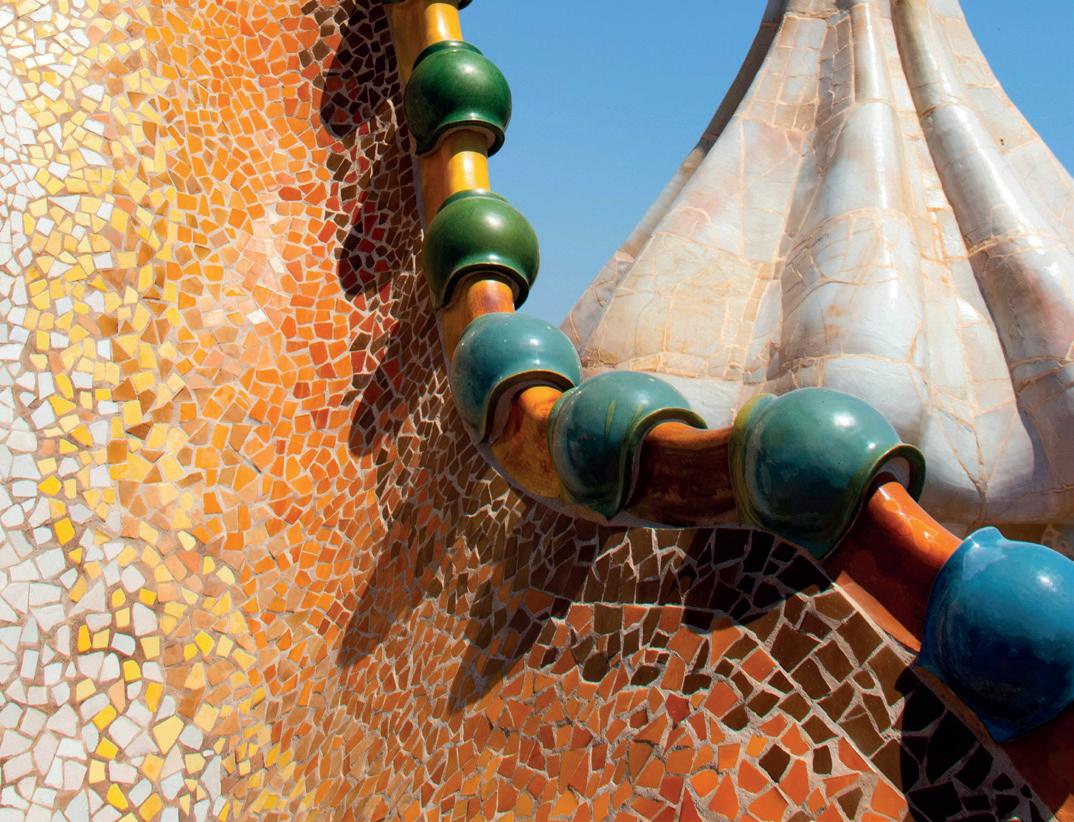
17–23
18–23
19–25
19–26
19–26
19–27
19–28
19–29
19–31
21–28
22–29
22–3
23–2
26–31
26–1
28–1
29–9
A selection of Gaudí’s finest works, coinciding with the centenary of his death, 16–23 November 2026
Gastronomic Piedmont (mm 203)
Cynthia Chaplin
Monet & Impressionism (mm 219)
Prof. Frances Fowle
World Heritage Malta (mm 204)
Juliet Rix
Footpaths of Umbria (mm 111)
Dr Thomas-Leo True
Masters of Milan (mm 216)
Dr Luca Leoncini
Cyprus: stepping stone of history (mm 212)
Ian Colvin
Castile & León (mm 205)
Gijs van Hensbergen
Essential Andalucía (mm 215)
Dr Philippa Joseph
Traditions of Japan (mm 206)
Prof. Timon Screech
Gastronomic Campania (mm 220)
Marc Millon
Istanbul Revealed (mm 208)
Jeremy Seal
Samarkand & Silk Road Cities (mm 213)
Dr Iain Shearer
Oman: Landscapes & Peoples (mm 209)
Dr Peter Webb
Palladian Villas (mm 210)
Dr Michael Douglas-Scott
Gastronomic Loire Valley (mm 227)
Victoria Daskal
Opera at Wexford Dr John Allison
Pharaonic Egypt (mm 217)
Reverend Prof. Lloyd Llewellyn-Jones
Eastern Turkey Prof. Graham Philip
3–8
3–10
4–6
4–8
4–9
5–16
6–10
6–11
7–14
12–17
15–26
16–23
Palermo Revealed (mm 221) Christopher Newall
Connoisseur’s New York (mm 222)
Gijs van Hensbergen
Autumn Symposium
Art in Madrid (mm 225) Dr Xavier Bray
Music of the Czech Lands (mm 223)
Prof. Jan Smaczny
Japanese Gardens (mm 224) Yoko Kawaguchi
Venetian Palaces (mm 228) Dr Carlo Corsato
Venice Revisited (mm 229) Dr Susan Steer
Ancient & Islamic Tunisia (mm 226)
Dr Zena Kamash
MONTEVERDI IN VENICE (mm 230)
Prof John Bryan
Morocco (mm 240) Prof. Alex Metcalfe
Caravaggio (mm 231) Dr Lucy Davis Winckler
16–23 Celebrating Gaudí (mm 239)
Gijs van Hensbergen
16–2 Patagonia (mm 223) Chris Moss
18–24 Titian, Tintoretto, Veronese (mm 237)
Dr Michael Douglas-Scott
18–1 Great Cities of Northern India (mm 232)
Dr Giles Tillotson
19–23 Early Music in Northern Italy (mm 238)
Professor Robert Adelson
20–22 Chamber Music Event: William Howard & the Carducci Quartet William Howard (mm 234)
23–29 Pompeii & Herculaneum (mm 235)
Dr Mark Grahame
23–30 The Art of Florence (mm 236)
Dr Flavio Boggi
30 Advent Choral Day
27–11 Lands of the Maya Dr Adrian Pearce
We usually o er around seven tours over Christmas and New Year.
5–17
Pharaonic Egypt (mn 261)
Reverend Prof. Lloyd Llewellyn-Jones
16–23 Early Christian and Medieval Rome
Dr Hugh Doherty
16–29 Kingdoms of Southern India Dr Peter Webb
18–30 Cruise: Cruising the Nile Dr Silvia Zago
19–25 Florence Revisited Dr Michael Douglas-Scott Mozart in Salzburg Richard Wigmore
Valletta Baroque Festival Prof. John Bryan
8–15 Granada & Cordoba Gijs van Hensbergen
22–28 Palaces & Villas of Rome Dr Michael Douglas-Scott
22–1 Florence & Venice Desmond Shawe-Taylor
27–11
Vietnam: History, People, Food (mn 284) Dr Dana Healy
Essential Rome Dr Thomas-Leo True Music in Paris
Pompeii & Herculaneum Dr Konogan Beaufay
6–11 Gardens of Madeira Dr Gerald Luckhurst
9–15 Modern Art on the Côte d’Azur Mary Lynn Riley
9–20 Indian Summer Raaja Bhasin
10–14 Art in Madrid Dr Akemi Luisa Herráez Vossbrink
12–26 Cruise: Cambodia by River (mn 292)
Freddie Matthews
31–6 Cities of al-Andalus
31–7 Romans & Carolingians Dr Hugh Doherty
Chamber Music Event
Great Cities of Italy
Renaissance Paris Prof. Glenn Richardson
Minoan Crete Dr Christina Hatzimichael-Whitley
Morocco
Opera In Vienna Dr John Allison
Ravenna & Urbino Dr Luca Leoncini
Spring symposium
The Art of Florence Desmond Shawe-Taylor
Venetian Palaces
Venice Revisited Dr Susan Steer
1–10
10–19
10–19
12–22
13–26
14–22
15–27
18–23
19–1
23–27
26–5
29–8
Extremadura Chris Moss
Cities of Catalonia Gijs van Hensbergen
Classical Greece
Essential Andalucía
Shōguns and Samurai
Reverend Prof. Lloyd Llewellyn-Jones
Two Spains: the Spanish Civil War & its aftermath Giles Tremlett
Samarkand & Silk Road Cities Dr Peter Webb
Monet & Impressionism Prof. Frances Fowle
Traditions of Japan Prof. Timon Screech
CAMBRIDGE CHORAL FESTIVAL
Medieval Saxony Dr Ulrike Ziegler
Cruise: Sailing the Dalmatian Coast
Dr Zoe Opačić
Albania: Crossroads of Antiquity Carolyn Metkola
Ancient Rome Dr Mark Grahame
Art in the Netherlands
Chamber Music Event
Civilisations of Sicily Dr Philippa Joseph
Classical Turkey
Reverend Prof. Lloyd Llewellyn-Jones
Gardens & Villas of the Italian Lakes Colin Crosbie
Gastronomic Provence Victoria Daskal
Heart of Italy Dr Michael Douglas-Scott
Heaven & Hell
Dr Michael Douglas-Scott, Stephen Parkin
Normans in the South
Pompeii & Herculaneum Dr Mark Grahame
The Cathedrals of England
Tuscany Revealed Dr Flavio Boggi
Val d’Orcia and the Sienese Hills
Prof. Fabrizio Nevola
World Heritage Malta Juliet Rix
Roman & Medieval Provence Dr John Merrington
5–12
10–19
13–25
14–26
20–1
24–31
31–6
BEETHOVEN ALONG THE RHINE
Castile & León Gijs van Hensbergen
Samarkand & Silk Road Cities
The Road to Santiago
Samarkand & Silk Road Cities Dr Peter Webb
Gastronomic Basque Country Gijs van Hensbergen
Abbeys & Organs Simon Williams
Art in Switzerland Mary Lynn Riley
Civilisations of Sicily Dr Luca Leoncini
Courts of Northern Italy Dr Michael Douglas-Scott
Essential China Prof. Oliver Moore
Footpaths of Umbria Nigel McGhilchrist
Gardens of Sicily Helena Attlee
Gardens of Sintra Dr Gerald Luckhurst
Gardens of the Campagna Romana Amanda Patton
Istanbul Revealed Jeremy Seal
Medieval Toulouse and Languedoc
Moldavia & Transylvania Dr Shona Kallestrup
Scotland: History and Heritage David Forsyth
The Gold Of Macedon Reverend Prof. Lloyd Llewellyn-Jones
The Western Balkans
Versailles: Seat of the Sun King
7–22 Eastern Turkey Ian Colvin
8–13 MUSIC IN THE VENETO
9–20 Galleries of the American Midwest Gijs van Hensbergen
18–26 Medieval Burgundy Dr Hugh Doherty
Aragón
Flemish Painting
Gardens & Villas of the Veneto Amanda Patton
Italian Design: Turin & Milan Dr Philippa Joseph Leipzig Bach Festival Prof. John Butt OBE
Medieval Alsace
Palladian Villas Dr Sarah Pearson
Ravenna & Urbino Dr Luca Leoncini
Sardinia
Venetian Hills Dr Carlo Corsato
Walking to Santiago Dr Rose Walker
Treasures of Moravia Martina Hinks-Edwards
1–8 German Gothic Dr Ulrike Ziegler
3–8 King Ludwig II Tom Abbott
8–15 MUSIC ALONG THE DANUBE
29–5 The Hanseatic League Andreas Puth
Asturias & Cantabria Dr Hugh Doherty
French Gothic Dr Jana Gajdosova
Orkney: 5,000 years of culture
Savonlinna Opera
Walking the Danube Richard Wigmore
3–9 Moving on: Architecture & Memory Tom Abbott
10–15 Bauhaus Tom Abbott
19–31
Silk Roads of Central Asia Dr Peter Webb
Budapest Gavin Plumley
The Schubertiade Richard Wigmore
1–6 Vienna’s Masterpieces Tom Abbott
1–8 Cave Art of France Dr Paul Bahn
2–14 Samarkand & Silk Road Cities Dr Richard McClary
6–13 Gastronomic Galicia Gijs van Hensbergen
8–15 Gardens of Normandy Amanda Patton
10–21 Frank Lloyd Wright Tom Abbott
12–19 Cruise: History & Art along the Rhine
17–21 Art in Madrid
21–26 TOLEDO MUSIC FESTIVAL
26–30
Gastronomic Madrid Gijs van Hensbergen
27–7 Essential Andalucía Dr Philippa Joseph
Albania: Crossroads of Antiquity Carolyn Metkola
Armenia & Georgia
Art in Le Marche
Art in the Netherlands
Basilicata & Calabria
Chateaux of the Loire Dr Sarah Pearson
Civilisations of Sicily
Classical Greece
Courts of Northern Italy Prof. Fabrizio Nevola
Duchy of Urbino
Gardens of the Bay of Naples
Gastronomic Loire Valley Victoria Daskal
Heart of Italy
Le Corbusier
Mitteldeutschland Dr Jarl Kremeier
Normans in the South
Pompeii & Herculaneum
Sacred China Freddie Matthews
Samarkand & Silk Road Cities
Scottish Houses and Castles
The Cathedrals of England
The Imperial Riviera Dr Mark Thompson
20th Century Czechoslovakia Martina Hinks-Edwards
5–16
7–16
Art in Japan Prof. Timon Screech
Cruise: Sailing the Dalmatian Coast Dr Mark Thompson
16–22 OPERA IN SICILY
20–28
23–31
Spain 1492 Giles Tremlett
Gastronomic Navarra Gijs van Hensbergen
Bulgaria Dr Nikola Theodossiev
Central Anatolia
Civilisations of Sicily Dr Zoe Opačić
Courts of Northern Italy Dr Sarah Pearson
Cyprus
Eastern Turkey
Essential Rome Christopher Garibaldi
Footpaths of Umbria
Gardens & Villas of the Italian Lakes Amanda Patton
Gastronomic Campania Marc Millon
Lisbon Dr Steven Brindle
Modern Art on the Côte d’Azur Monica Bohm-Duchen
Oman
Palladian Villas Dr Michael Douglas-Scott
Palermo Revealed
Pharaonic Egypt Reverend Prof. Lloyd Llewellyn-Jones
Ravenna & Urbino
Renaissance Rivals Dr Michael Douglas-Scott
Roman & Medieval Provence Dr Alexandra Gajewski
Samarkand & Silk Road Cities
Sicily: Greeks to Baroque Dr Mark Grahame
The Cathedrals of England
The Douro
World Heritage Malta Juliet Rix
November 2027
4–15
4–17
Japanese Gardens Yoko Kawaguchi
The Making of Argentina Chris Moss
8–14 Picasso in Spain Gijs van Hensbergen
Art History of Venice Dr Susan Steer
Art in Texas Gijs van Hensbergen
Chamber Music Event
Cruise: Cruising the Nile Dr Silvia Zago
Pompeii & Herculaneum Dr Nigel Spivey
Siena & San Gimignano Dr Michael Douglas-Scott Symposium
The Art of Florence
Tunisia Dr Zena Kamash
Venetian Palaces Dr Michael Douglas-Scott
Venetian Rivals Dr Carlo Corsato
December 2027
We usually o er around seven tours over Christmas and New Year.
Please note the details listed in our calendar are subject to change.
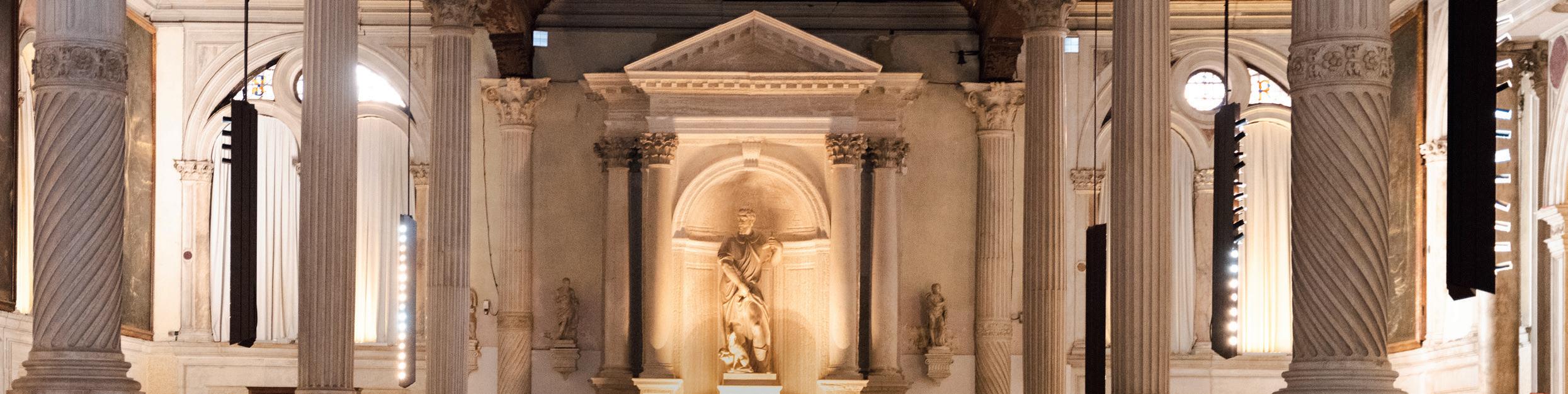
Either: on our website
Click ‘Book now’ on any tour page. Fill in your details, consent to the booking conditions, and pay the deposit (15% of the total booking price) or full balance if booking within 12 weeks of departure.
Or: by telephone or e-mail
Call or e-mail us to make a provisional booking, which we hold for up to 72 hours. Within that time, we require you to pay the 15% deposit, or full balance if booking within 12 weeks of departure.
Confirming your booking
Once you have completed the above, we will send a formal confirmation. Your deposit is then non-refundable except under the special circumstances mentioned in our booking conditions.
Booking conditions
It is important that you read these before committing to a booking. We will direct you to these when you book, but you can also find them online: www.martinrandall.com/terms
Fitness
Ensure also that you have read ‘How strenuous’ in the ‘Practicalities’ section of the tour description.
Martin Randall Travel Ltd
10 Barley Mow Passage, London W4 4PH
Tel +44 (0)20 8742 3355 info@martinrandall.co.uk
From North America:
Tel 1 800 988 6168 (toll-free) northamerica@martinrandall.com
‘Martin Randall Travel is a top level, and top quality operator. ey do what they promise, and usually much more.’
‘ e combination of the lecturer and the tour manager means that you can really relax and enjoy the holiday and be stimulated and inspired at the same time.’
‘Brilliant! It covered the obvious sites in new and wonderful ways but included less known gems as well.’