
Universidad de Guadalajara
Licenciatura en docencia del inglés como lengua
extranjera
Final Project- Passive voice around the world
Martha Angélica Jiménez Arias
215492937
English Grammar I
25 November 2024
International tourist in his 60s has leg amputated in dramatic 20-hour rescue after becoming wedged in rocks on Franklin River
A man in his 60s has had his leg amputated in a bid to save his life after becoming wedged between rocks on a river in Tasmania which sparked a frantic 20-hour rescue. A man has endured a dramatic rescue after his leg became stuck between rocks while he was kayaking with a group on a river in Tasmania.
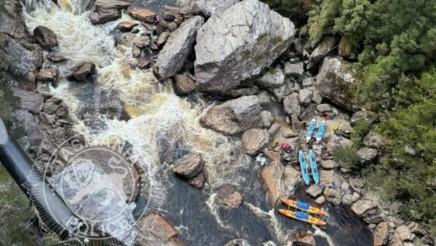
The man, an international visitor in his 60s, is in critical condition after the terrifying ordeal which began when his leg became wedged between rocks in an area of rapids on the Franklin River at about 2:30pm on Friday.
A call for assistance was made by a smartwatch at about 3.30pm, with the emergency response including paramedics, police, the fire service, SES, Surf Life Saving Tasmania and others. What followed has been described as a “complex and protracted rescue operation” by Tasmania Police, which went for more than 20 hours.
A man has endured a dramatic rescue of more than 20 hours after his leg became stuck between rocks while kayaking with a group on a river in Tasmania. Picture: Tasmania Police. Several attempts were made to extract the man on Friday, with efforts continuing into the evening and overnight, but crews were not successful. “The location on the Franklin River and the accessibility of the area added to the complexity of the response,” police said. The man remained partly submerged in the river but was made “as comfortable as possible” while a medical team remained with him the whole time.
A further extraction attempt was made on Saturday morning, which also proved unsuccessful. As his condition deteriorated, the difficult decision was made, in consultation with the man, to amputate his leg. This was carried out by a medical team with the aid of specialist equipment, and enabled the man to be winched from the area and airlifted to the Royal Hobart Hospital.
He is currently in a critical condition. “The man is an international visitor, and Tasmania Police is contacting his family,” police said. Acting Assistant Commissioner Doug Oosterloo described the rescue as “extremely challenging” but praised the “incredible” work of emergency crews to save the man’s life. “Every effort was made to extract the man before the difficult decision to amputate his leg,” he said.
“The professionalism and commitment of all emergency responders is to be commended.” “I'd like to thank everyone who contributed to this operation in the most difficult of circumstances.”
New Zealand
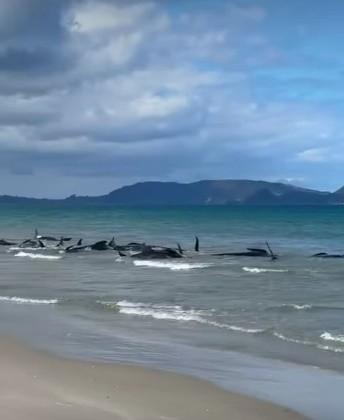
Rescuers race to help 40 whales stranded at Northland beach
Most of the 40 pilot whales that were stranded on a Northland beach have been refloated following a mammoth effort from volunteers.
Whale rescue organization Project Jonah received calls about 4.30pm Sunday that the whales were in trouble at Ruakākā beach, general manager Daren Grover said.
Initially the pod was in the shallows, and locals did their best to prevent stranding - but many of them had since stranded, he said on Sunday evening.0978
About 200 people raced to the beach to help, and the majority of the whales were refloated and were being monitored by 8pm, Project Jonah said on Facebook.
Four whales died in the stranding.
People at Bream Bay attempt to stop pilot whales from restraining after they have been refloated.
"We are hopeful that the whales remain in the ocean and will provide any updates if this situation changes," the Project Jonah post said.
"Thank you to our 30 Marine Mammal Medics who responded quickly, the members of the public who called for help and those on the ground."
Earlier, Grover said the aim of the refloating effort was to make the whales comfortable.
"They're a big social pod and they will be looking out for each other, they'll be calling out to each other as well, and it might be quite harrowing for people on the beach, but our aim will be to help get them comfortable and help calm them down and also meet their immediate needs."
That could involve pouring water over them to keep them cool, he said.
He asked anyone at the beach to follow the guidance of Project Jonah and DOC.
"Stranded whales are highly stressed and they can be very dangerous, and often injuries do happen to people where the advice isn't followed."
Canada
Second Cup closes Montreal franchise over hateful incident

Second Cup Café has closed one of its franchise locations in Montreal following allegations of hateful remarks and gestures made by the franchisee in a video that was widely circulated online during a pro-Palestinian protest on Thursday. The franchise was located at the Jewish General Hospital.
In a statement shared on its social media accounts, the coffee chain said the franchisee’s actions breached their agreement and violated the company’s values of inclusion and community. “Second Cup has zero tolerance for hate speech. In coordination with the hospital, we’ve shut down the franchisee’s café and are terminating their franchise agreement,” the company said.
The footage shows a woman wearing a keffiyeh, black sunglasses, and a medical mask, chanting “the final solution is coming your way.” The video also appears to show the same woman giving a Nazi salute during the protest.
Peter Mammas, the president of Foodtastic, Second Cup’s parent company, told CTV News that they were made aware of the video on Saturday afternoon. Mammas said several employees identified the woman in the video as Mai Abdulhadi, the franchisee of the Second Cup café at the hospital. “Right after I found out, I actually called the president of the hospital, and we had a discussion, and we assured them that we would do the right thing, and that's what we proceeded to do,” Mammas said.
In a statement to CTV News, the CIUSSS West-Central Montreal, which oversees the Jewish General Hospital, said they support Second Cup’s decision to terminate the franchise agreement. “We fully support Second Cup’s decision to take swift and decisive action in this matter.” The statement goes on to say that the organization is deeply committed to fostering a culture of inclusion and stands firmly against anti-Semitism and all forms of discrimination and hate speech.
On Sunday afternoon, Second Cup said it would retain and continue to pay the franchise’s staff until new management is in place at the Jewish General Hospital location. CTV News has been unable to reach Abdulhadi for comment. Her social media accounts have been disabled
Hundreds of protesters gathered outside Concordia University on Thursday after nearly 85,000 students across Quebec voted in favour of a two-day “strike” to demand that their institutions divest from companies they allege have ties to Israel and weapons manufacturers, and to call for an end to the siege on Gaza.
On Friday, three protesters were arrested after an anti-NATO protest turned violent, with windows being smashed and cars set on fire. An SPVM spokesperson confirmed the arrest of a 22-year-old woman for obstructing police work and assaulting an officer, as well as two men, ages 22 and 28, for obstructing police. All three were released and will appear in court at a later date. More arrests are expected. Politicians from the prime minister’s cabinet, opposition parties, and Quebec leaders condemned the violence during Friday’s anti-NATO demonstration.
United States
Bird flu found in sample of California raw milk: Officials
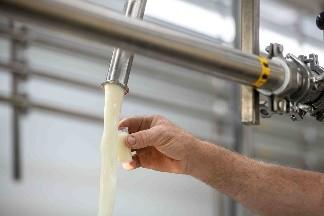
After bird flu was detected in a retail sample of raw milk produced and packaged by Raw Farm, LLC, the California Department of Public Health warned consumers on Sunday to avoid consuming any from the same lot.
At the state's request, the Fresno County-based company also issued a voluntary recall of the affected product: cream top, whole raw milk from lot No. 20241109 with a "best by" date of Nov. 27. Anyone in possession of the product will be able to pursue a refund from the location where the item was originally purchased
Retailers have also been notified to take affected products off of their shelves. The CDPH has also emphasized that pasteurized milk remains safe to drink.
Most cases of bird flu discovered in humans in the current outbreak are with people that worked directly with birds or cows. There are not any cases known to be associated with raw milk consumption, but the risks associated with raw milks have been long established.
The Food and Drug Administration has previously warned of the possible dangers of drinking raw milk. In a statement from May 2024, it warned, "Raw milk can carry dangerous germs such as Salmonella, E. coli, Listeria, Campylobacter, and others that cause foodborne illness, often called 'food poisoning.'"
Raw milk products do not undergo pasteurization, which is a heating process that kills bacteria and viruses. Pasteurized milk and dairy products, however, are safe to consume because the heating process kills pathogens that can cause illness -- including bird flu. However, raw milk does have its proponents, including Robert F. Kennedy Jr.
Last month, in a post on X, called the FDA's "aggressive suppression" of it part of the agency's "war on health." In November, President-elect Donald Trump selected RFK Jr. to lead the Department of Health and Human Services. The appointment requires Senate confirmation. As of Sunday evening, no illnesses had been reported in association with the finding of bird flu in the single lot of raw milk.
The contaminated sample was discovered as part of routine testing performed by the County of Santa Clara Public Health Laboratory, which tests raw milk products from retail stores as a second line of consumer protection. The finding was then verified by the California Animal Health and Food Safety Laboratory System.
In response to the positive test, the California Department of Food and Agriculture provided onsite testing at the Raw Farms facilities, which were negative for bird flu. CFDA will continue testing raw milk banks twice per week.
Papua New Guinea
Australians stranded on Kokoda track resume walk after protests shut down sections Australians walking the Kokoda track have had treks cancelled while others have been stalled for long periods on the historic route as protests by landowners closed sections of the trail.
A group of 64 walkers, including 52 Australians, were left stranded on Monday after frustrated landowners from Naoro village blocked off the track, demanding the Papua New Guinea government release funds earmarked for community livelihood development projects. Local police have since advised the group are safe and were able to resume walking on Wednesday. It was unclear whether all the hikers would continue with the trek or return. The Australian government updated its travel advice for PNG on Monday to warn landowner blockades may disrupt treks, advising travelers to check with their trekking company for the latest information. Mick O’Malley, owner and trek leader of Australian Kokoda Tours, told Guardian Australia those on the track have safe passage to walk around the blockade. But walkers not yet on the trail will be told to “turn around and go back”, he said, until negotiations with the government are finalized “It could be this week, it could be next week, it could be in three months,” he said, noting 18 walkers had their trips cancelled on Wednesday morning.
A spokesperson for Australia’s foreign affairs department said they were monitoring the situation on the track. “The Australian high commission in Port Moresby is supporting relevant PNG authorities to work with communities on a resolution,” the spokesperson said. The PNG commissioner of police, David Manning, said police were satisfied there had been no threat to the welfare of the hikers but investigations were continuing. “This is an illegal protest and there are better ways to air grievances than to prevent our mainly foreign travelers from completing this historic journey,” he said. “The Kokoda track is of great significance for the history of our nation and the countries that fought along it during [the Second World War]. “It must also be pointed out that the landowners who blocked the track also depend on income from trekking groups so they are only undermining themselves.”
Manning said police were in discussion with the landowners and were working to resolve the situation for the good of all parties so that walking the track could continue. According to the Mt Kodu Landowners chairman, Chillion Biloi, when the Mt Kodu mine was negotiated in 2007 and 2008 the government asked the landowners to accept the government’s offer of a socioeconomic development package of K50m (A$18.9m) to protect and preserve the Kokoda track. Biloi alleged only a fifth of that amount had been paid to landowners so far, between 2011 and 2012, with numerous submissions to the government for parts of the remaining K40m. “We have been patient and waited for almost 12 years but the government has turned a blind eye on our requests,” he said.
“We are now making our stance to shut down the track on our part indefinitely until the government respond to us by releasing our funds.” The former chief executive of the Kokoda Track Authority, James Enage, has called for an urgent stakeholders meeting to address the closure. Enage said the track is an important national asset and the government, through relevant agencies and stakeholders, must conduct an urgent meeting to address the issue. He said the shutdown was putting the country’s tourism industry at risk and the meeting should include other strategic landowners along the track.
Enage said action was needed to address the issue amicably for the long-term benefit of Kokoda track catchment communities and the wider PNG tourism industry. “Unless we handle both agendas strategically and make amendments within our scopes of operations to prioritise on agendas which will bring about significant change in the various communities along the Kokoda track and also amicably resolve the Mt Kodu issue right now, the issue of Kokoda track closure will be perpetual,”
he said. This article was amended on 19 September 2024. The Kokoda track campaign took place during the Second World War, not the First World War as an earlier version said.
References:
Crotty, G. (2024, November 23). Man’s leg amputated in frantic 20-hour rescue on Tasmanian river. Skynews. https://www.skynews.com.au/australia-news/international-tourist-in-his-60s-hasleg-amputated-in-dramatic-20hour-rescue-after-becoming-wedged-in-rocks-onfranklin-river/news-story/0d70bdcdbeb934a7609a612be7bcb4fb
Crimp, L. (2024, November 24). Rescuers race to help 40 whales stranded at Northland beach. RNZ.https://www.rnz.co.nz/news/national/534688/rescuers-race-to-help-40-whalesstranded-at-northland-beach
Amador, M. (2024, November 24). Second Cup closes Montreal franchise over hateful incident. CTV News Montreal https://montreal.ctvnews.ca/second-cup-closesmontreal-franchise-over-hateful-incident-1.7121663
Strauss, E. M., & Murphy, T. M. (2024, November 24). Bird flu found in sample of California raw milk: Officials. ABC News. https://abcnews.go.com/US/bird-flufound-sample-california-raw-milk-officials/story?id=116185808
Kuku,R.,&Thou,S.(2024,September19).AustraliansstrandedonKokodatrackresume walk after protests shut down sections. The Guardian
https://www.theguardian.com/world/2024/sep/18/kokoda-track-walkers-strandedtreks-cancelled-landowner-protests