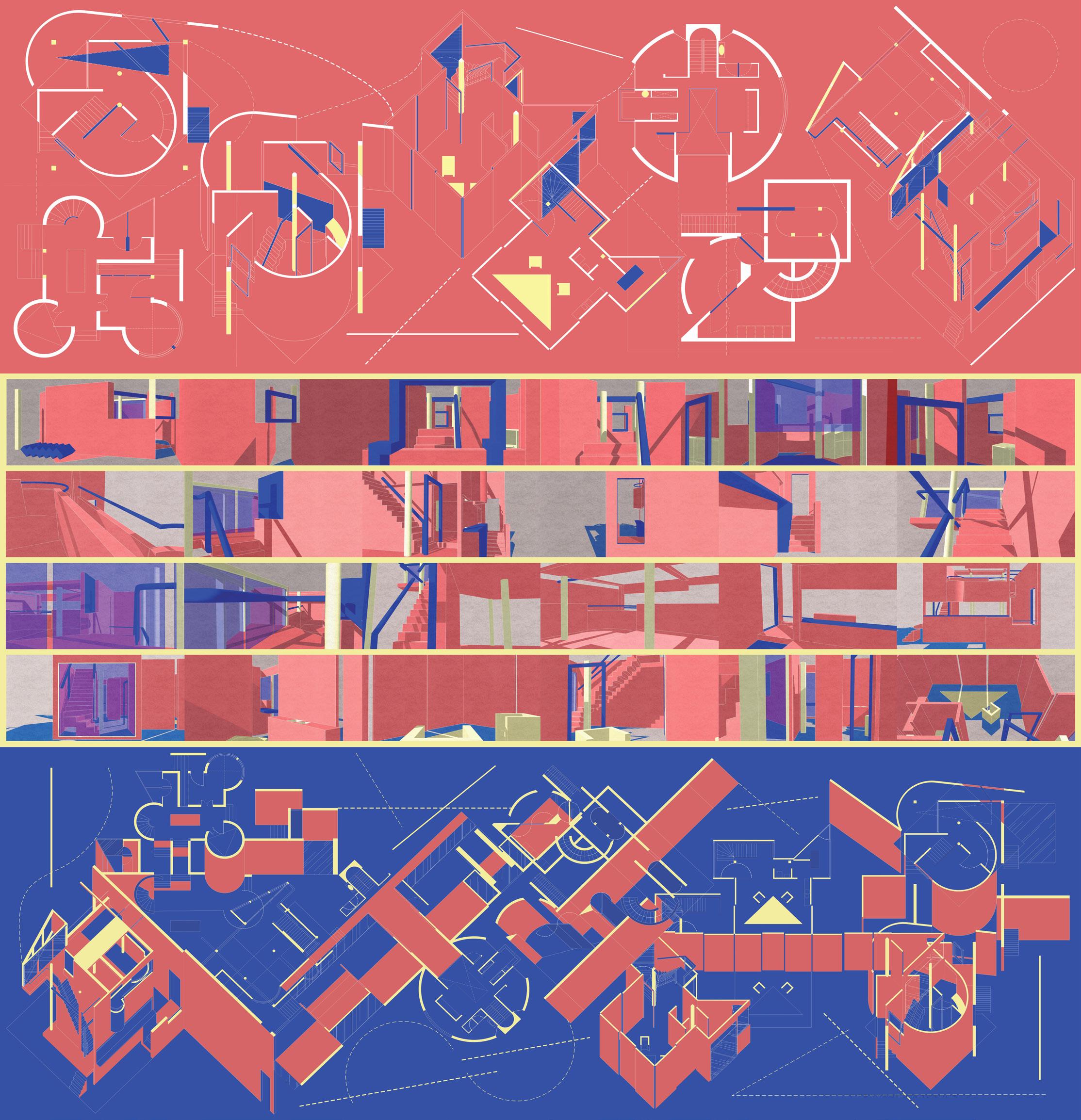
PEIYIN CHOU ARCHITECTURE PORTFOLIO
2014-2024
SELECTED WORKS
PEIYIN CHOU ARCHITECTURE PORTFOLIO
2014-2024
SELECTED WORKS
Education
2025 - 2022
University of California, Los Angeles
Master of Architecture
2014 - 2019
Shih Chien University Bachelor of Architecture
Awards
2015
Architecture Student Competition,
Shih Chien University First Place Award
2019
International Exhibition of Architecture Graduation Design (IEAGD)
Judges Awards
2023
John V. Mutlow Scholars Fund in Architecture & Urban Design
2024
WENDELL SCHOLARSHIP FUND
∙ Chinese (Native)
∙ English (Fluent)
∙ Japanese (Moderate)
Photoshop / llustrator / InDesign
Grasshopper / Sketchup / Blender
Revit / Rhino / Enscape / V-ray / Maya AutoCAD / BricsCAD / 3D Print / D5
Architectural Designer
MNOffice
Architectural Intern


1500 Granville Ave, Apt 210, Los Angeles, CA, 90025
(+1)424-440-3366
pzxcv0204@gmail.com
Los Angeles, CA Aug - Dec 2023
Architect studio - interior design, residential projects and competitions
∙ Participated in the GORIS Smart Center Design Competition.
∙ Created conceptual renderings, schematic design documents, and presentation materials to support project development.
IMO Architecture + Design
2D Architect
Taipei, Taiwan Feb - Aug 2022
Architect studio - commercial, residential projects and competitions
∙ Designed project concepts, managed project workflows, and coordinated itinerary planning.
∙ Developed construction documents, architectural drawings, and 3D models to support project execution.and rendering.
C.T.Chen & Partners Architects Office Designer
Taipei, Taiwan Mar 2020 - Jul 2022
Architect firm - high-rise and private luxury residences projects.
∙ Managed legal procedures, including applications for construction, usage, and demolition licenses.
∙ Performed on-site property measurements for accurate data collection and analysis.
∙ Prepared comprehensive construction documents and architectural drawings, including detailed and construction-specific plans.
∙ Developed draft plan models using BIM and Rhino for design visualization and analysis.
Atmospheric Design Consultants Project Exhibition Designer
Taipei, Taiwan July - Sep 2019
Consultancy firm - design, planning and promotion of architectural and art exhibitions.
∙ Contributed to the exhibition design of “Lost and Found: Re-Envisioning the Machine Age,” focusing on exhibition furniture and display lighting design, and coordinating with construction manufacturers.
SUEP Hirokazu + Yoko Suemitsu Architects Intern
Tokyo, Japan July - Sep 2016
Architecture office - architecture, interior design projects with environmental emphasis.
∙ Contributed to the interior design of “Fukosha Apartment,” with a focus on furniture design and spatial planning.
∙ Developed detailed models to support on-site construction and ensure design accuracy.
Soft Thresholds & Adaptive Dwellings in Urban Density
Shifting
Reimagining Courtyards: Fostering Community and Privacy
Endless
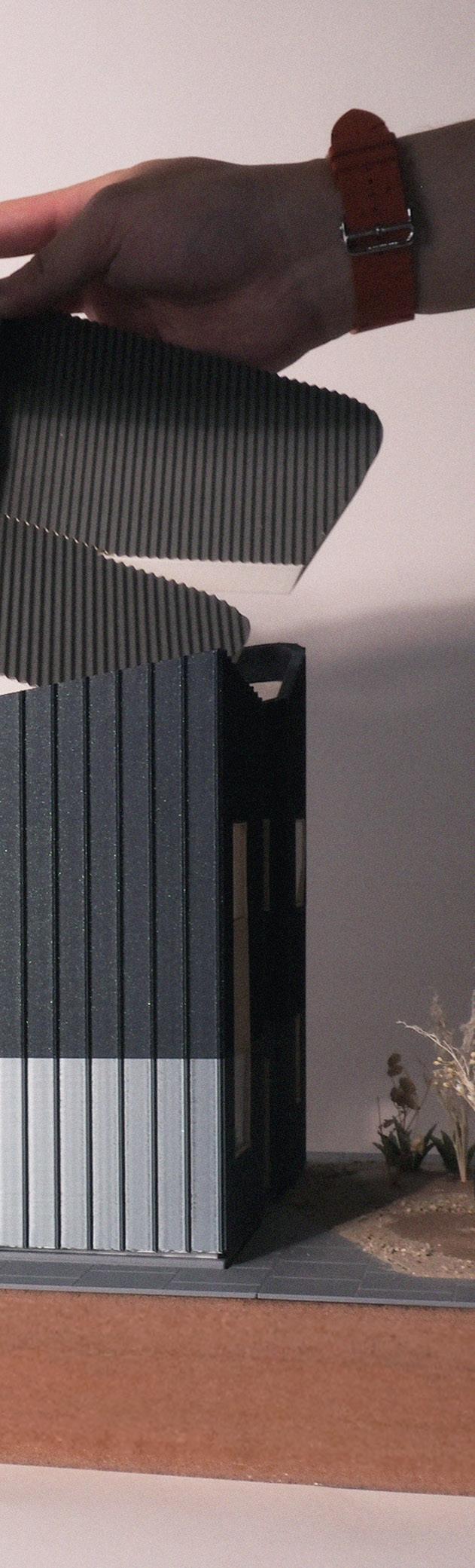
UCLA M.Arch 401.1 Advanced Topic Studio
Group Project with Fengqian Xing, Winter 2025
Instructor: Miroslava Brooks
Location: Santa Monica, Los Angeles, CA
"How can architecture respond to the blurred boundaries of contemporary life and offer new ways of dwelling within shifting spatial and social thresholds?"
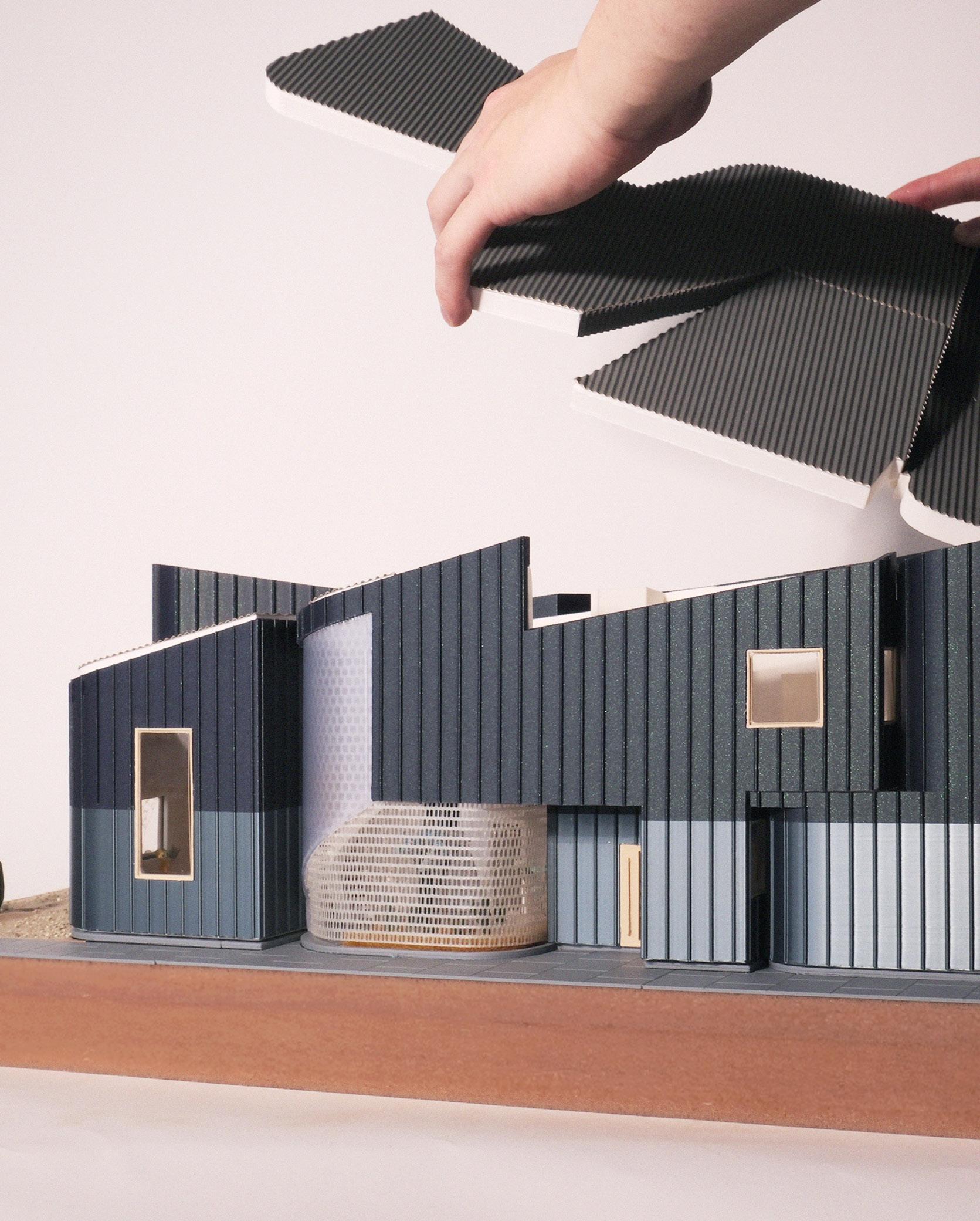
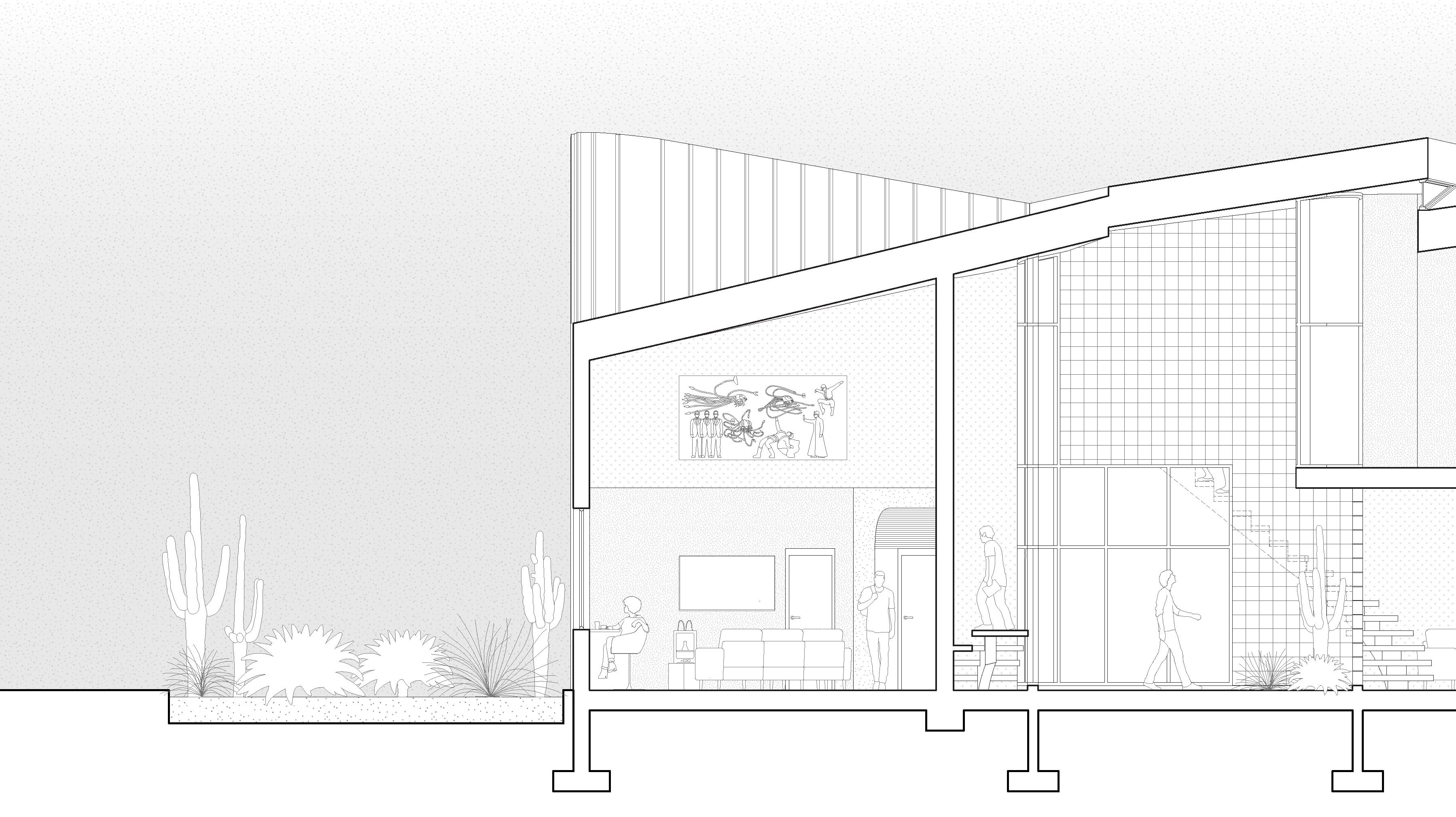
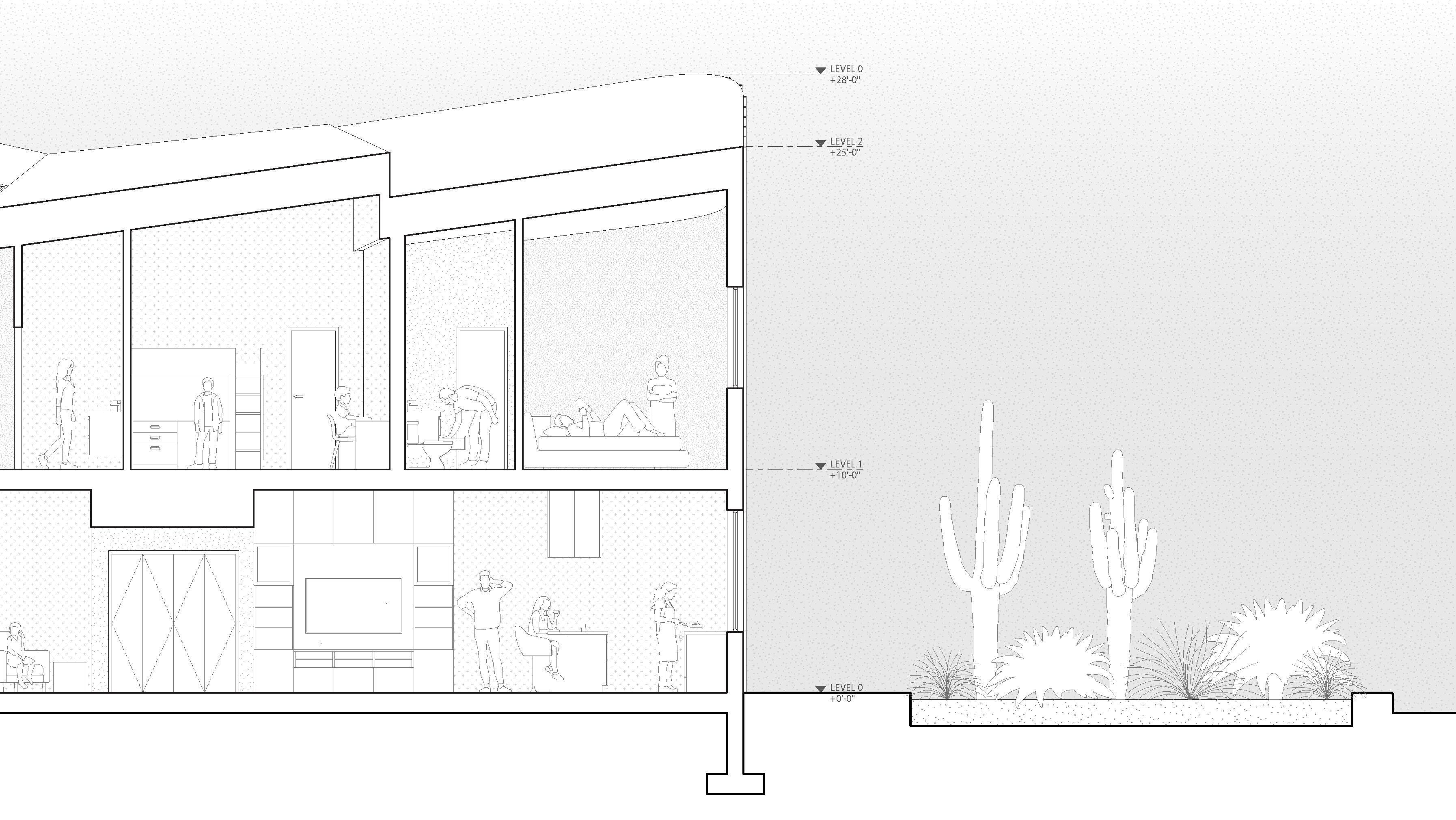
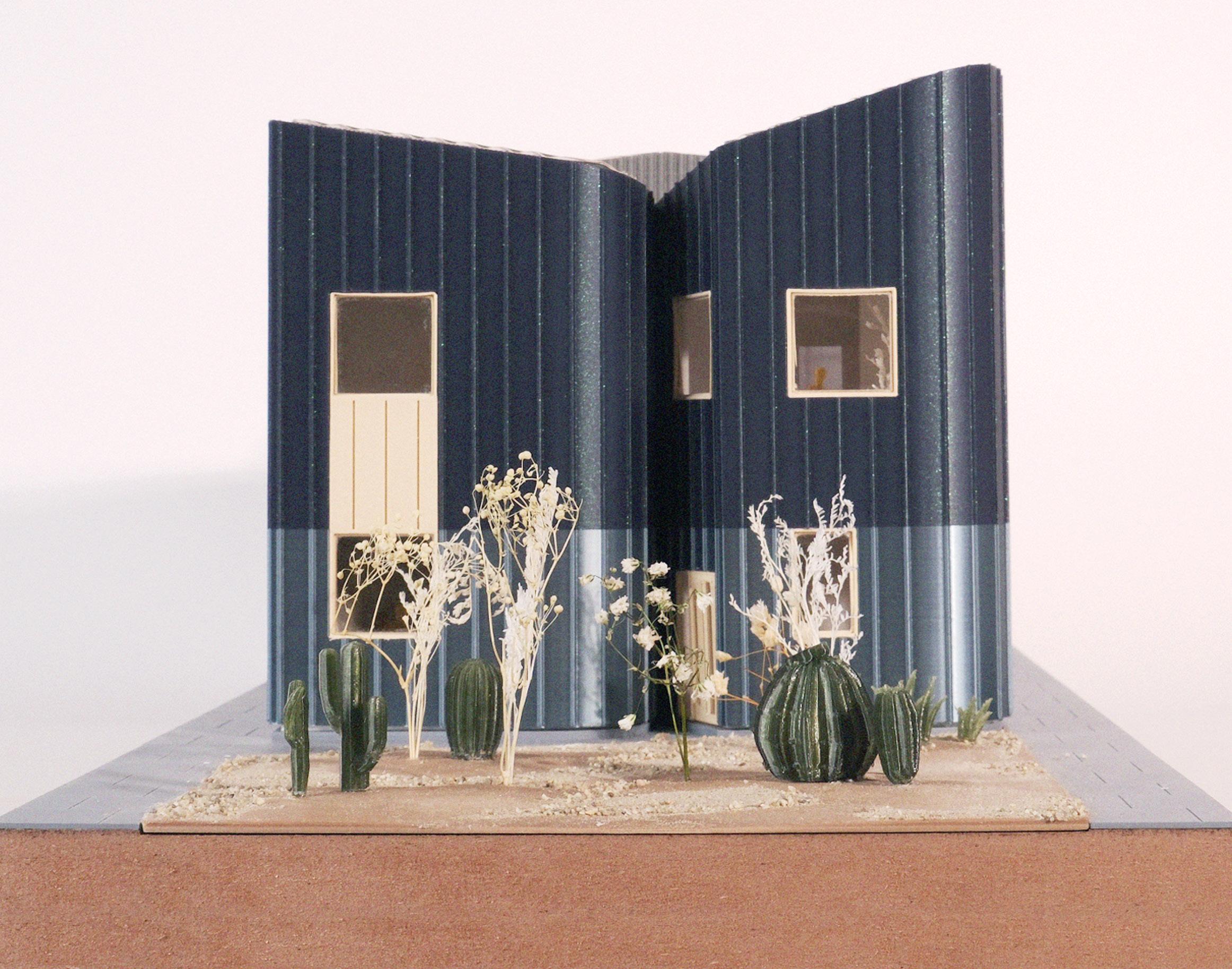
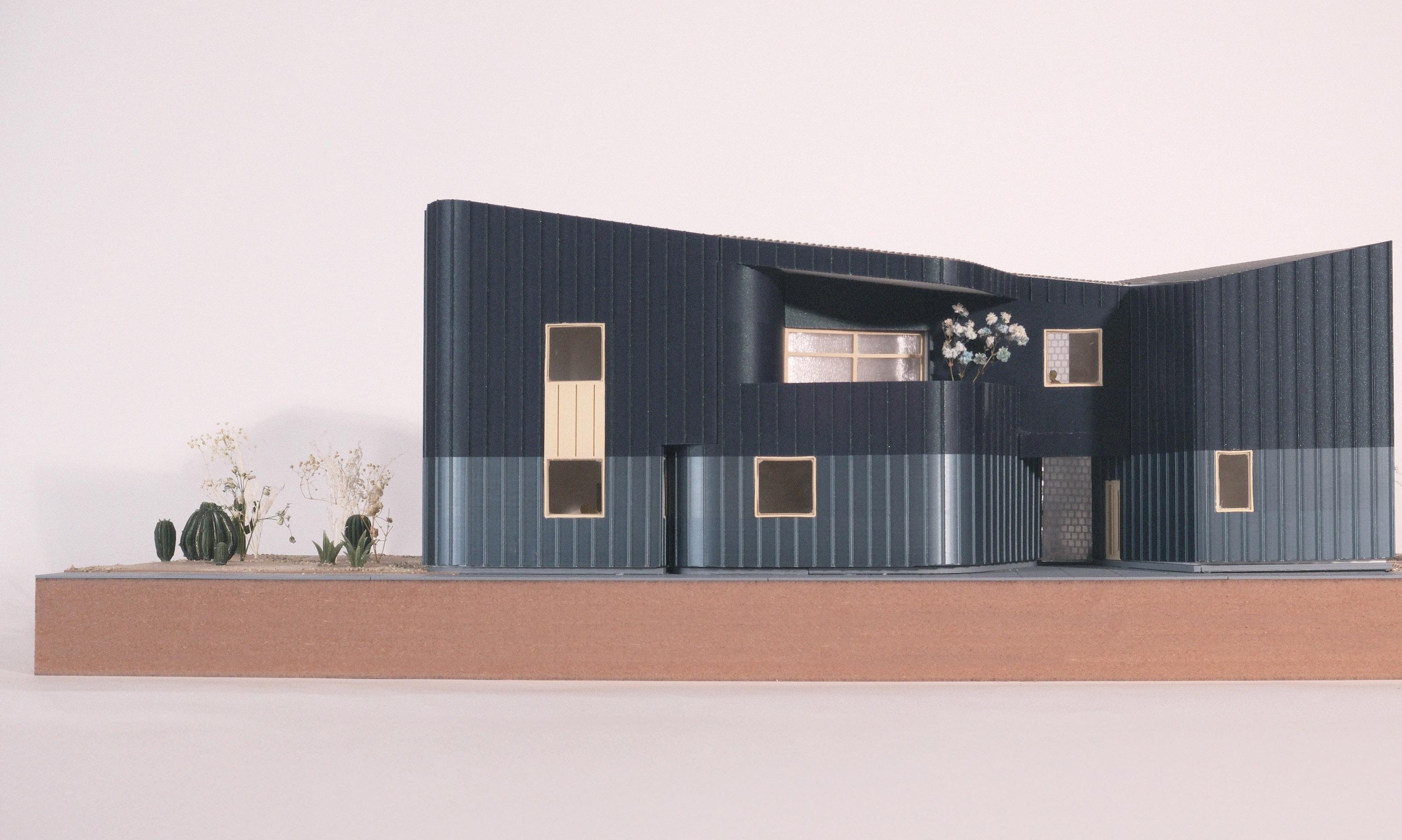
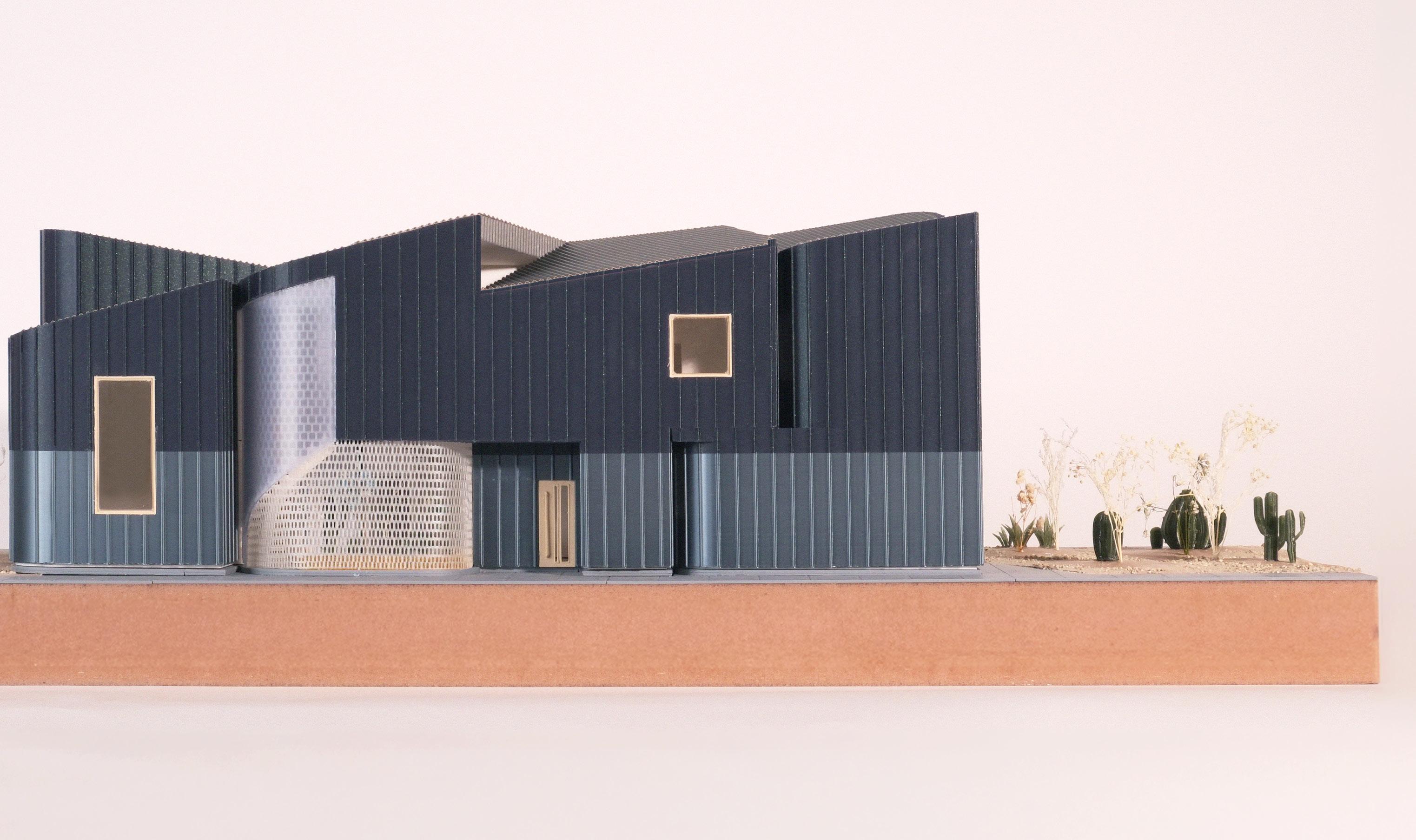
In response to recent devastating wildfires in Los Angeles, rethinking housing typologies has become imperative. This project introduces a new urban dwelling model that addresses both social fluidity and environmental volatility by reimagining the row house through the concept of the "feathered edge." This spatial strategy softens rigid boundaries—between interior and exterior, public and private— transforming them into layered, ambiguous, and responsive thresholds. Instead of fixed separations, the design employs transitional zones where divisions become dialogues, promoting interaction over isolation.
The row house typology is selected for its modularity and spatial economy, effectively addressing urban density challenges. Designed for single families, flatmates, and individuals, the model supports individual privacy while fostering communal life. Edge conditions such as hallways, porches, layered facades, and filtered courtyards serve as connective tissue, dynamically adapting to seasonal, social, and emergency scenarios like wildfire evacuations.
The organizational strategy emphasizes duality and circulation, alternating between centripetal spaces—quiet areas such as bedrooms and central courtyards—and centrifugal spaces that invite social encounters. Each edge functions as a hinge, capable of either separating or connecting spaces.
Ultimately, this dwelling transcends traditional boundaries, offering gradients rather than fixed divisions. It creates adaptive environments responsive to personal and climatic changes—a house of possibilities that is soft yet structured, open yet secure, designed for an era where constancy is increasingly uncertain.
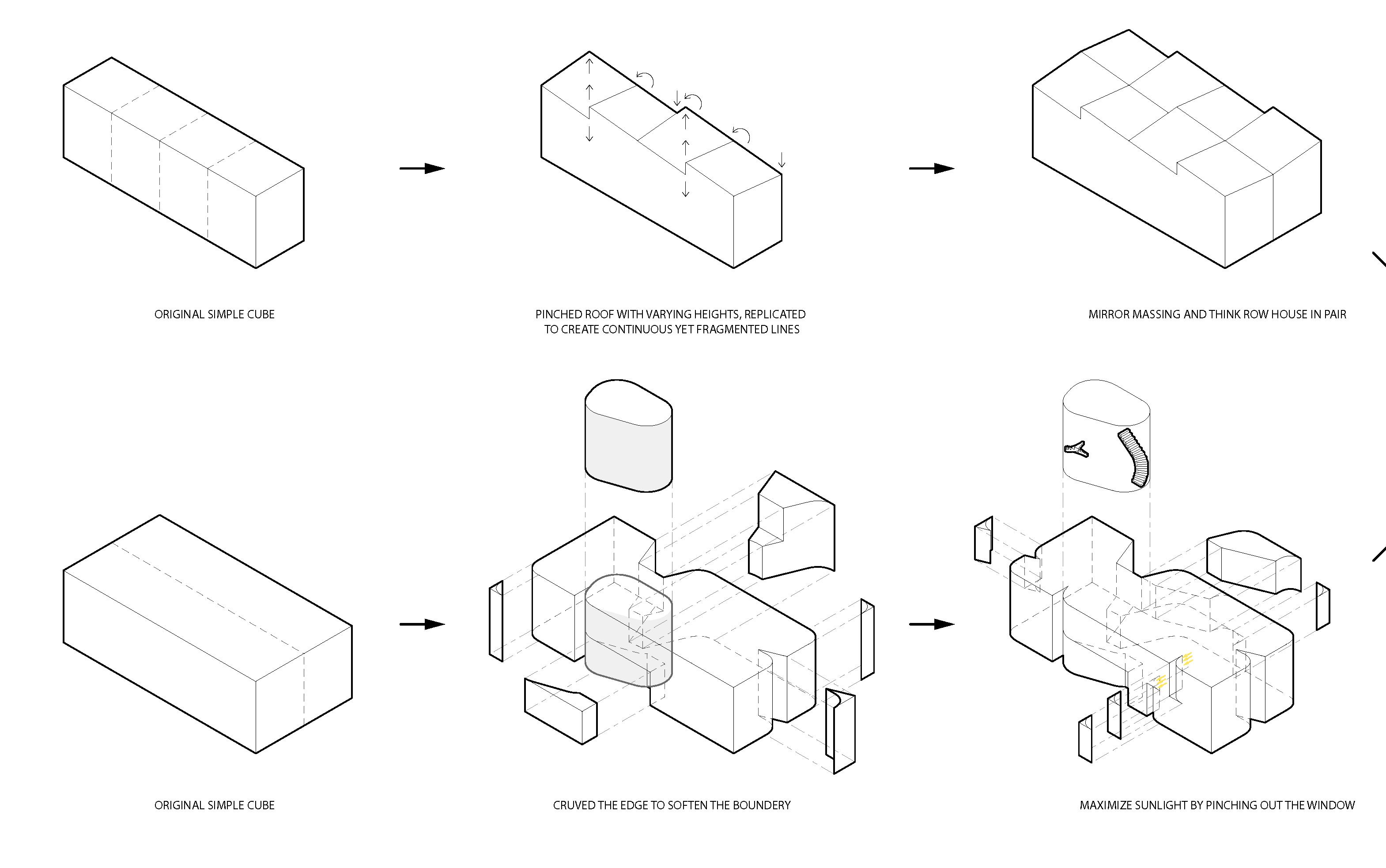
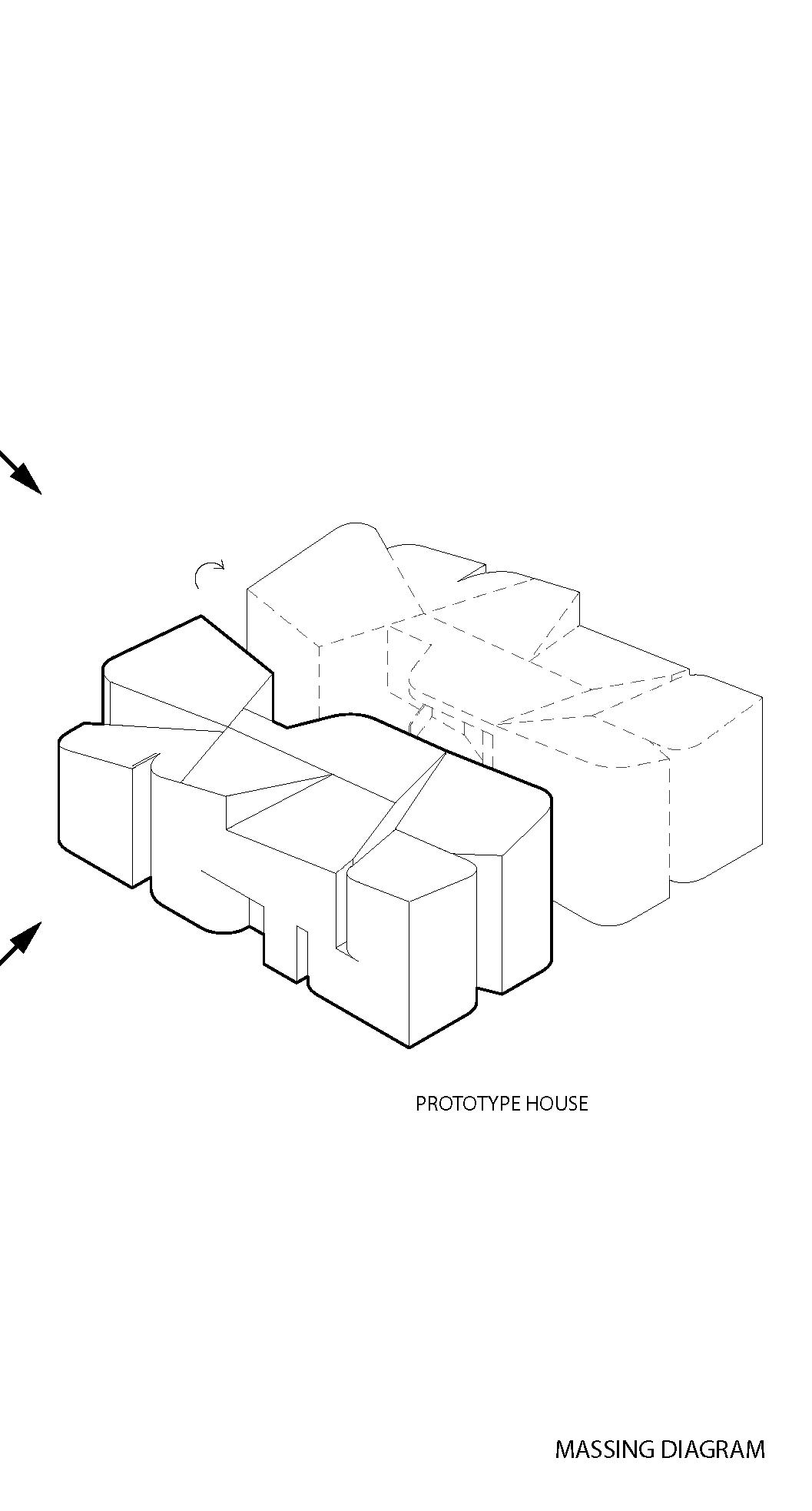
Massing Diagram - Housing Edges.
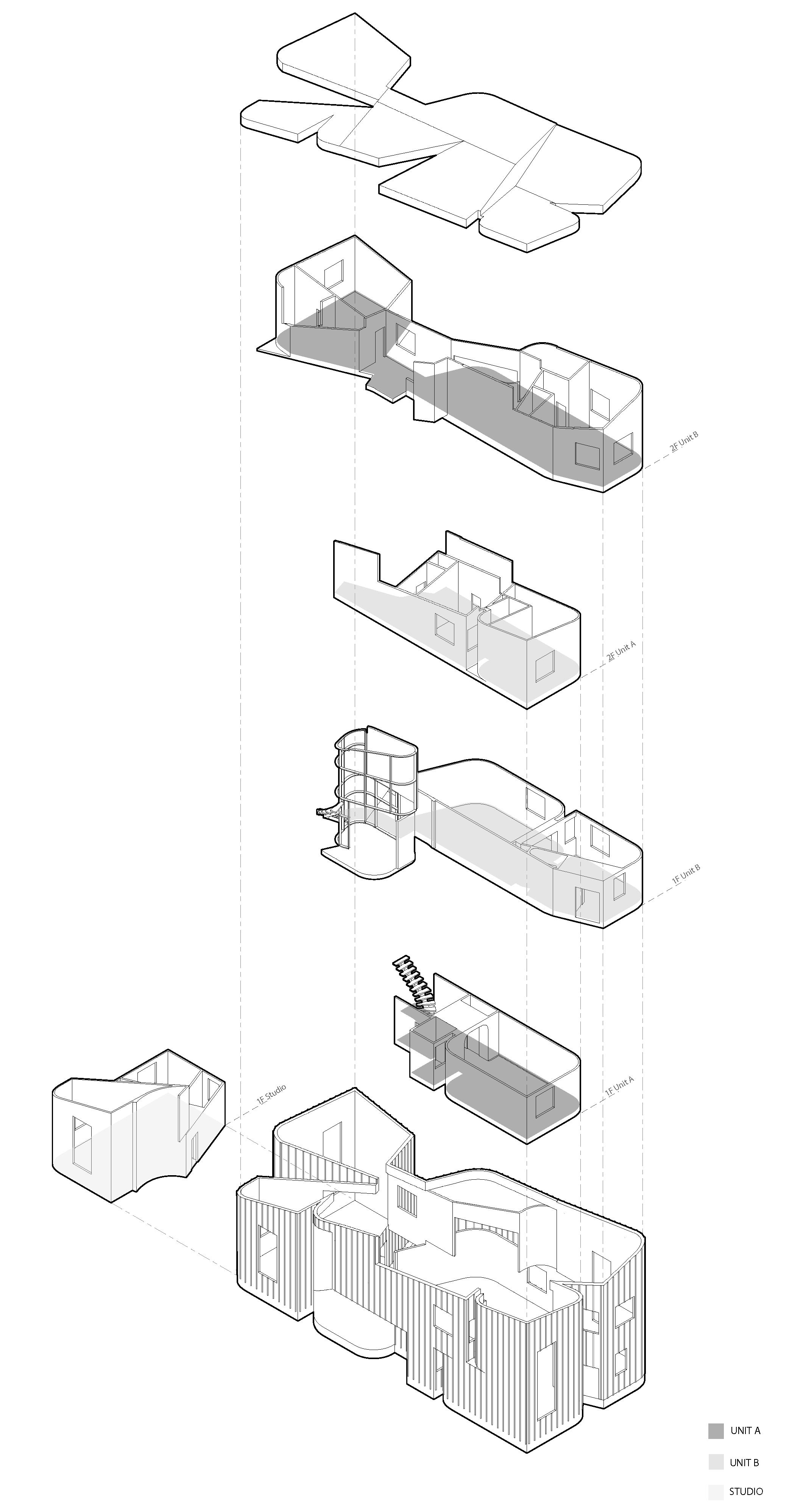
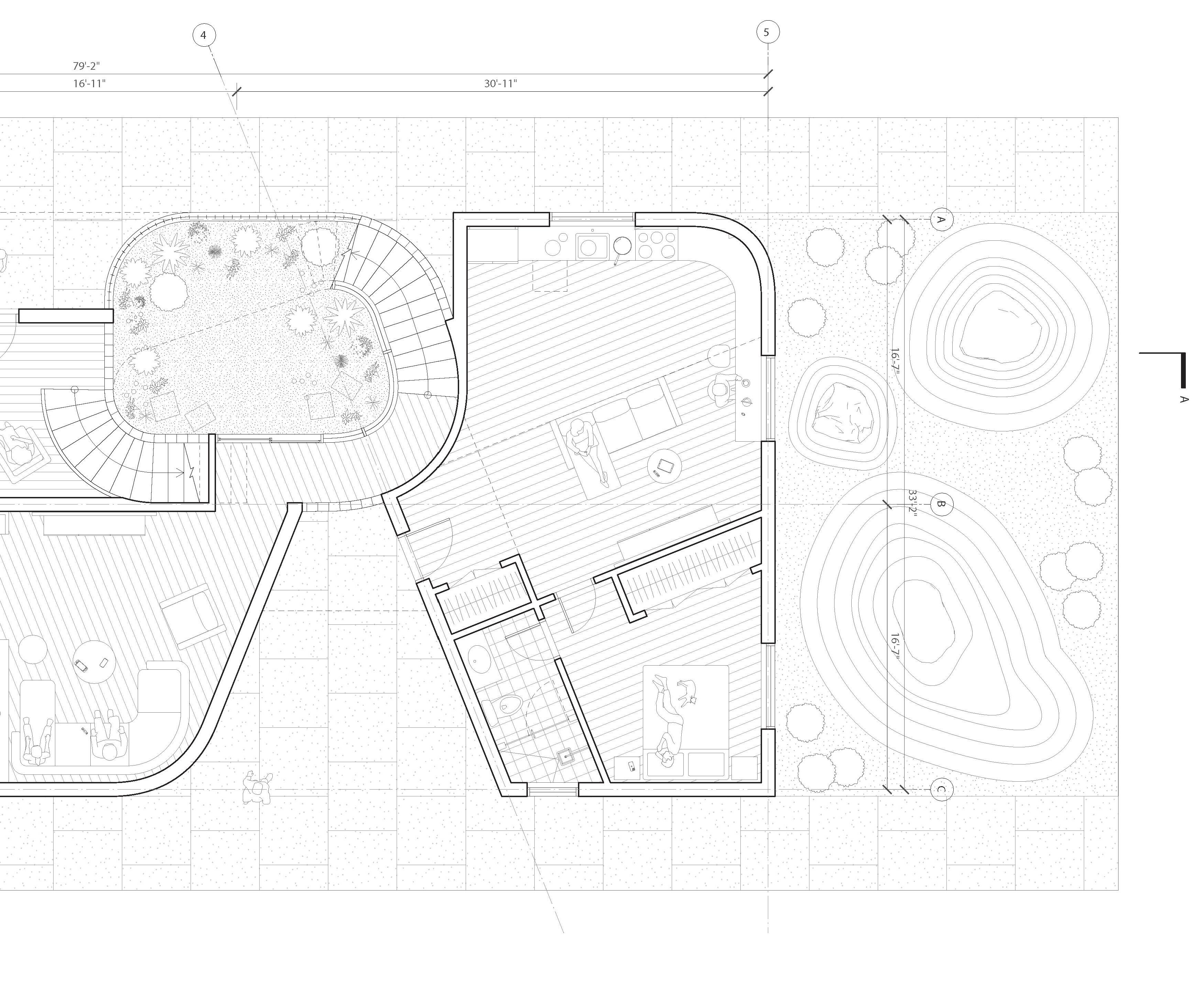
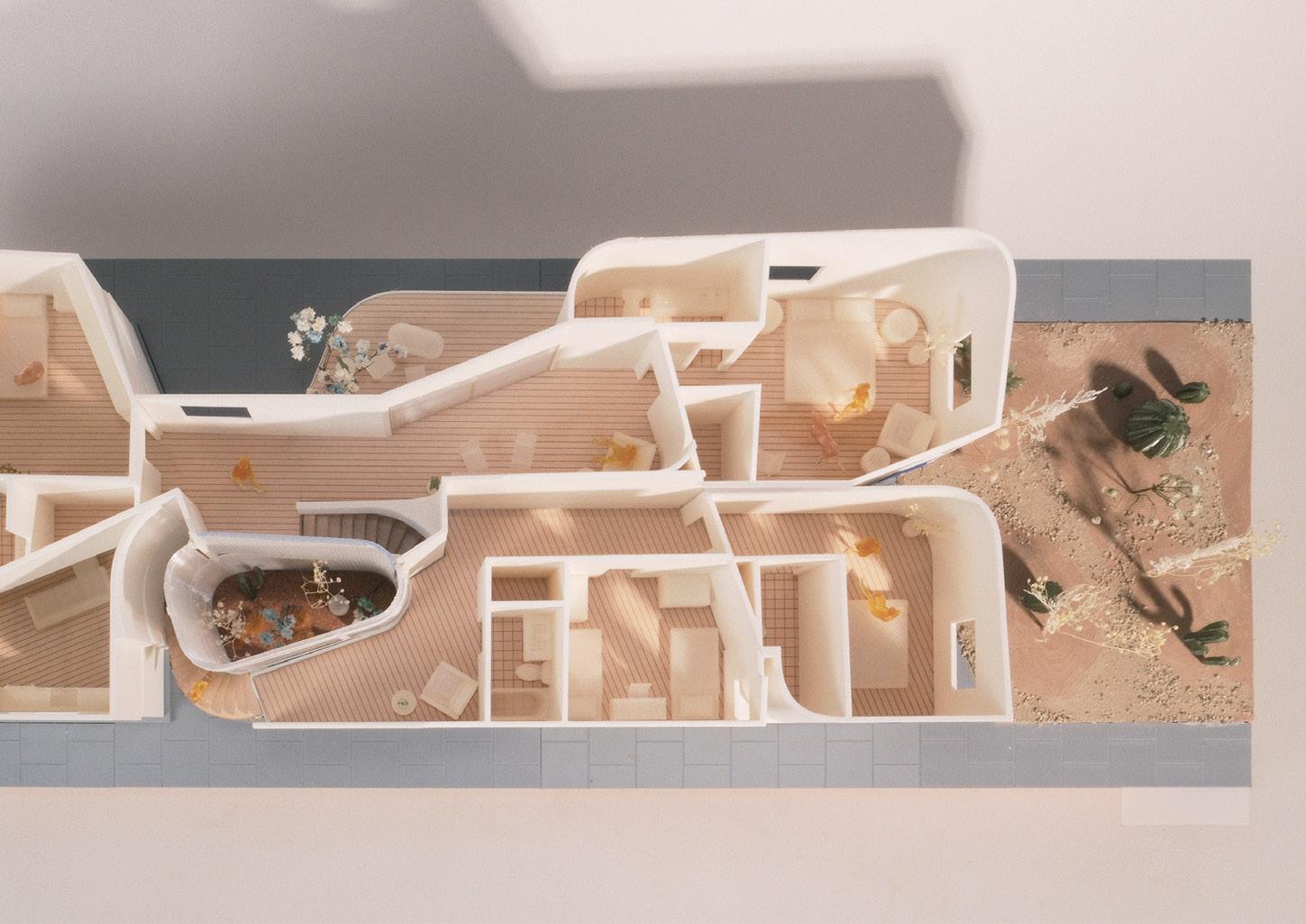
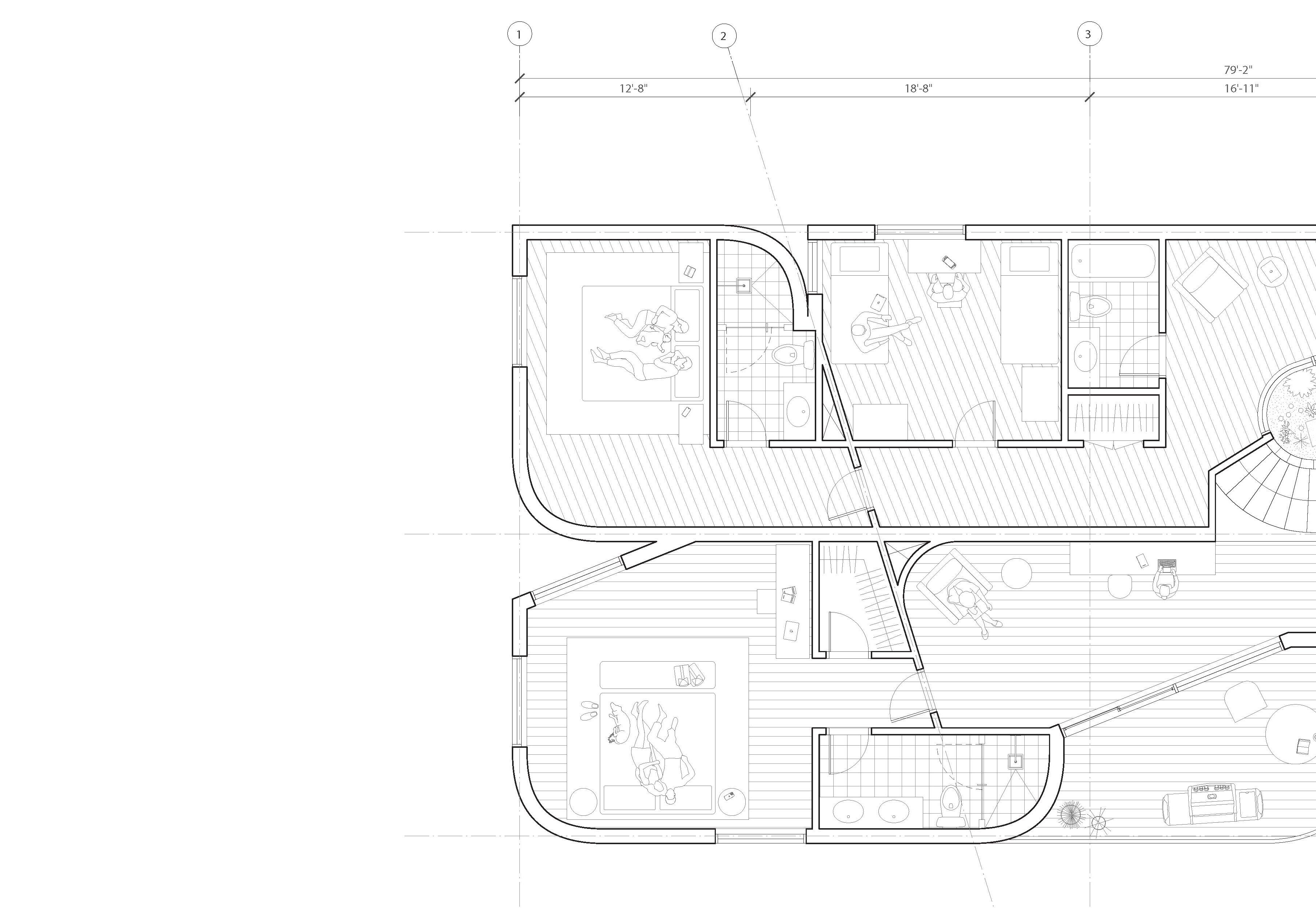
By inverting conventional stacking logic, this diagram explores the spatial and social implications of interlocked vertical dwelling units. Unit A on the first floor is positioned directly beneath Unit B on the second floor, while Unit B on the first floor supports Unit A above. This deliberate crossover disrupts the expected vertical continuity of individual units, generating a layered system of occupancy. Circulation paths are carefully choreographed to mediate between overlapping territories, thereby softening the threshold between levels. The interweaving of vertical access blurs boundaries between public and private, upending conventional notions of hierarchy and autonomy in multi-unit housing.
7.
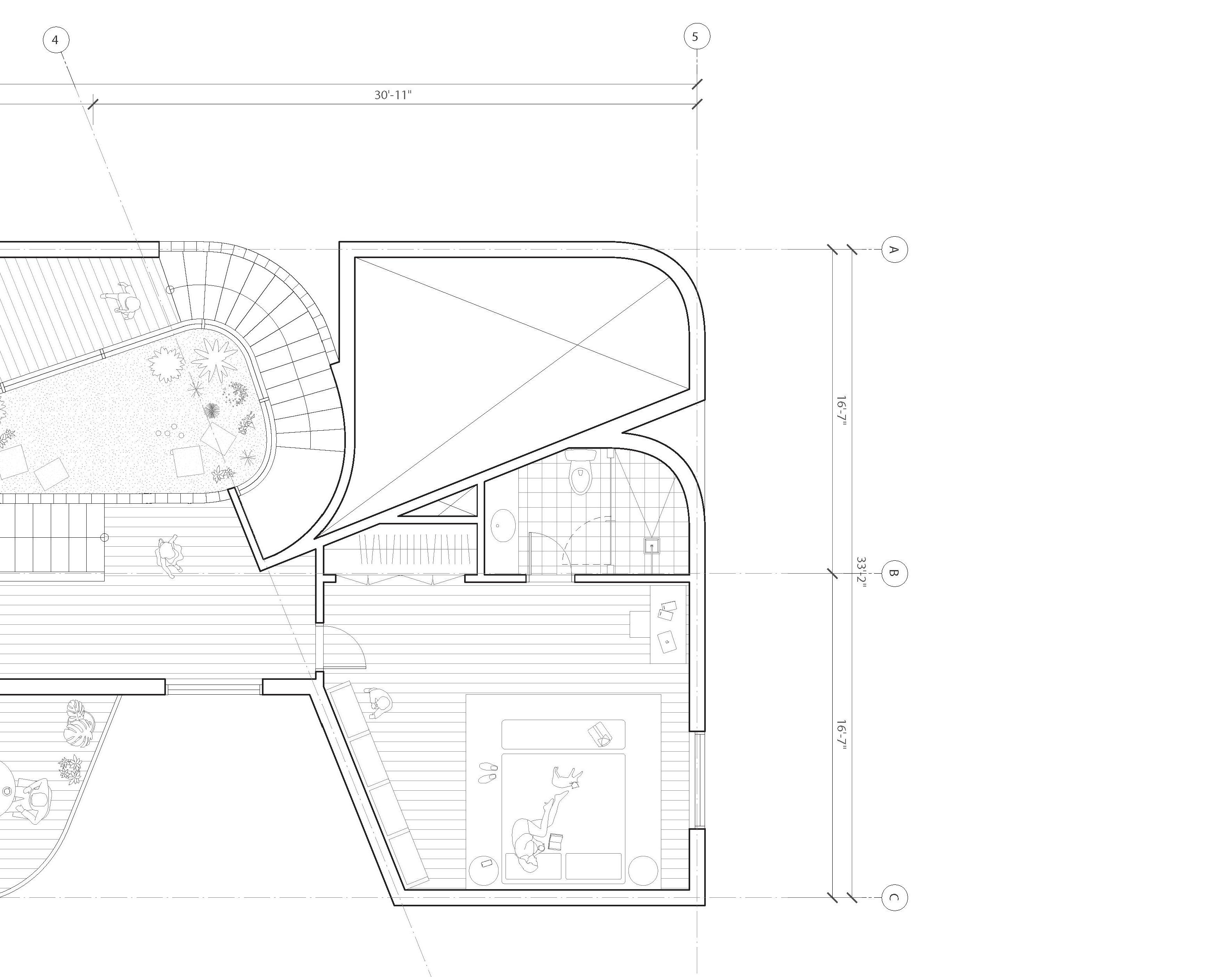
1. Unit B_Master Bedroom
2. Unit B_Bedroom
3. Unit B_Bathroom
4. Unit A_Master Bedroom 01
5. Unit A_Workspace
6. Unit A_Belcony
7. Unit A_Master Bedroom 02
Second Floor Plan
Shifting Cycle & Centripetal Force in Architecture
UCLA M.Arch 414-415 Comprehensive Design Studio
Group Project with Soe Naing Win, Winter - Spring 2024
Instructor: Miroslava Brooks High School for Design and Innovation
Location: 427-429-431 S. Hewitt St, Los Angeles, CA
"How do we generate an architectural imaginary that builds onto, next to, or with (any) existing architectures?"
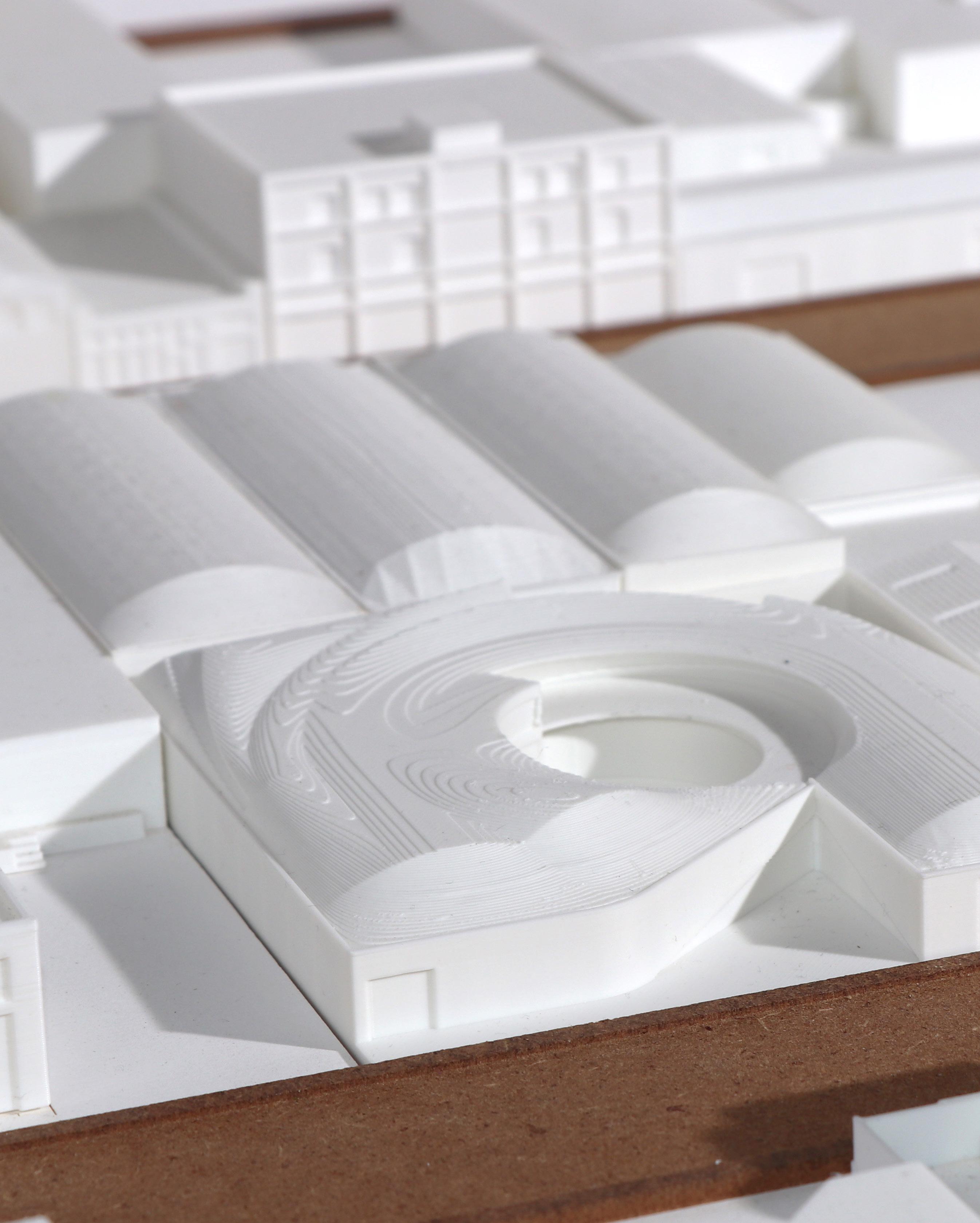
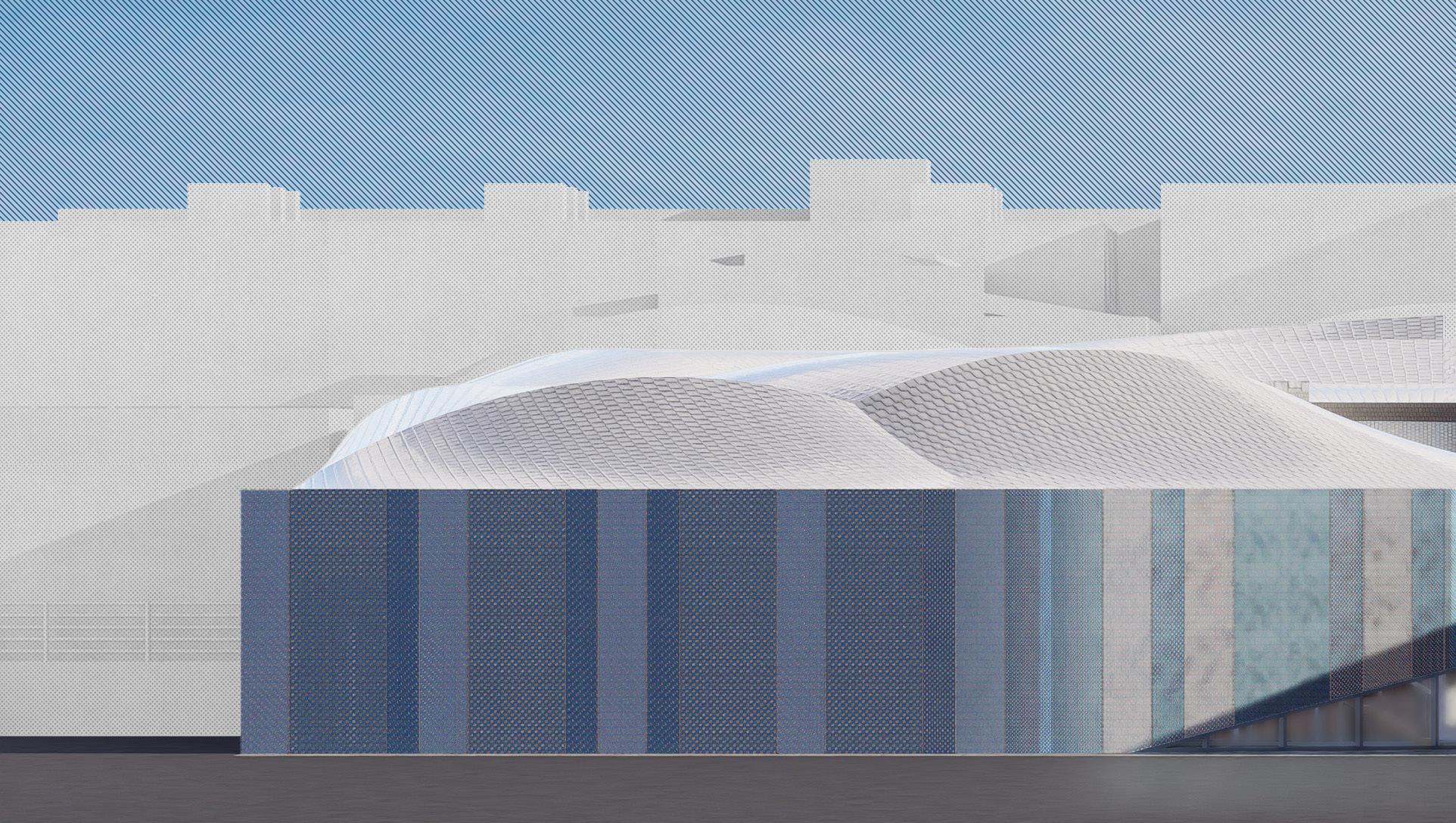
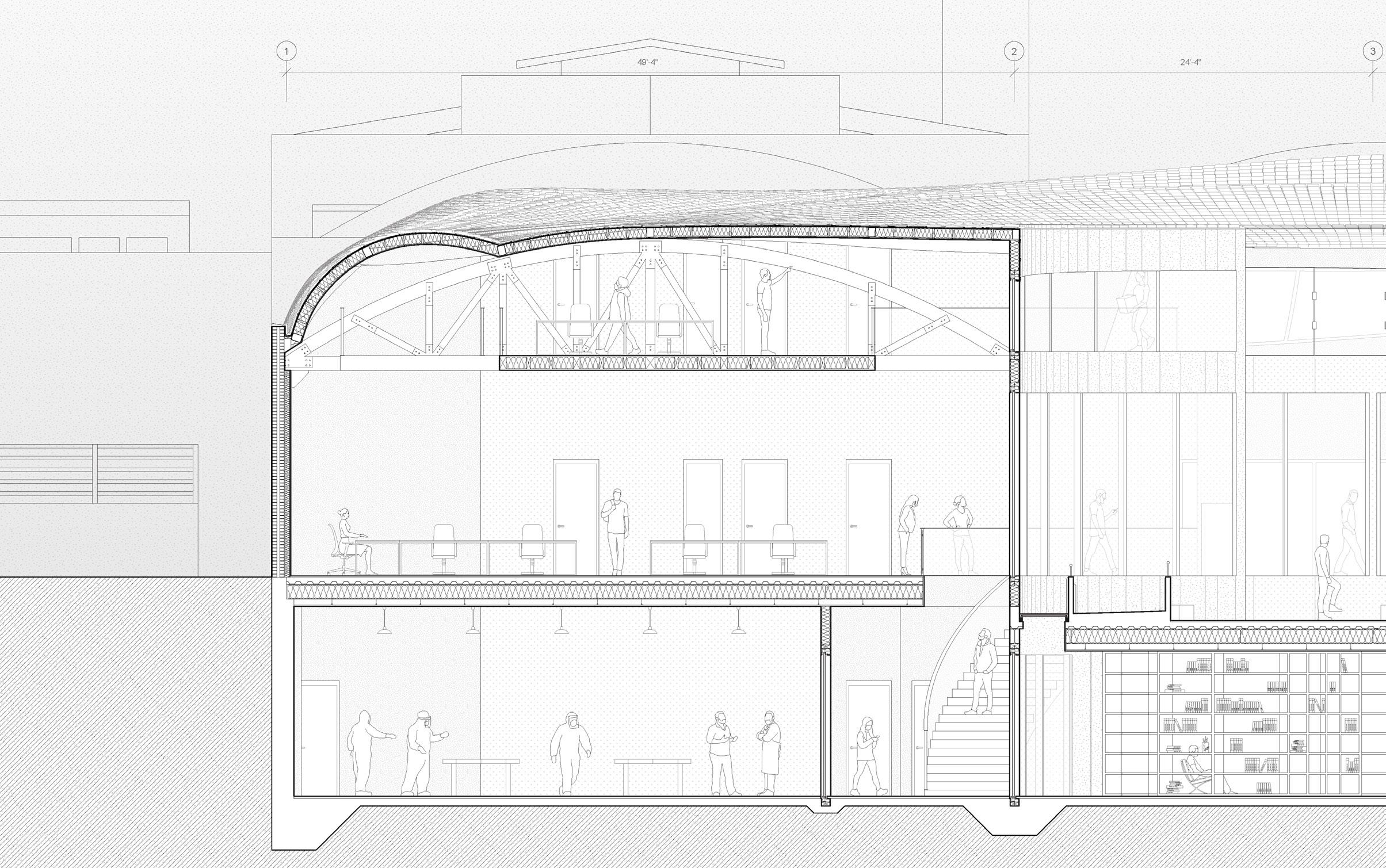
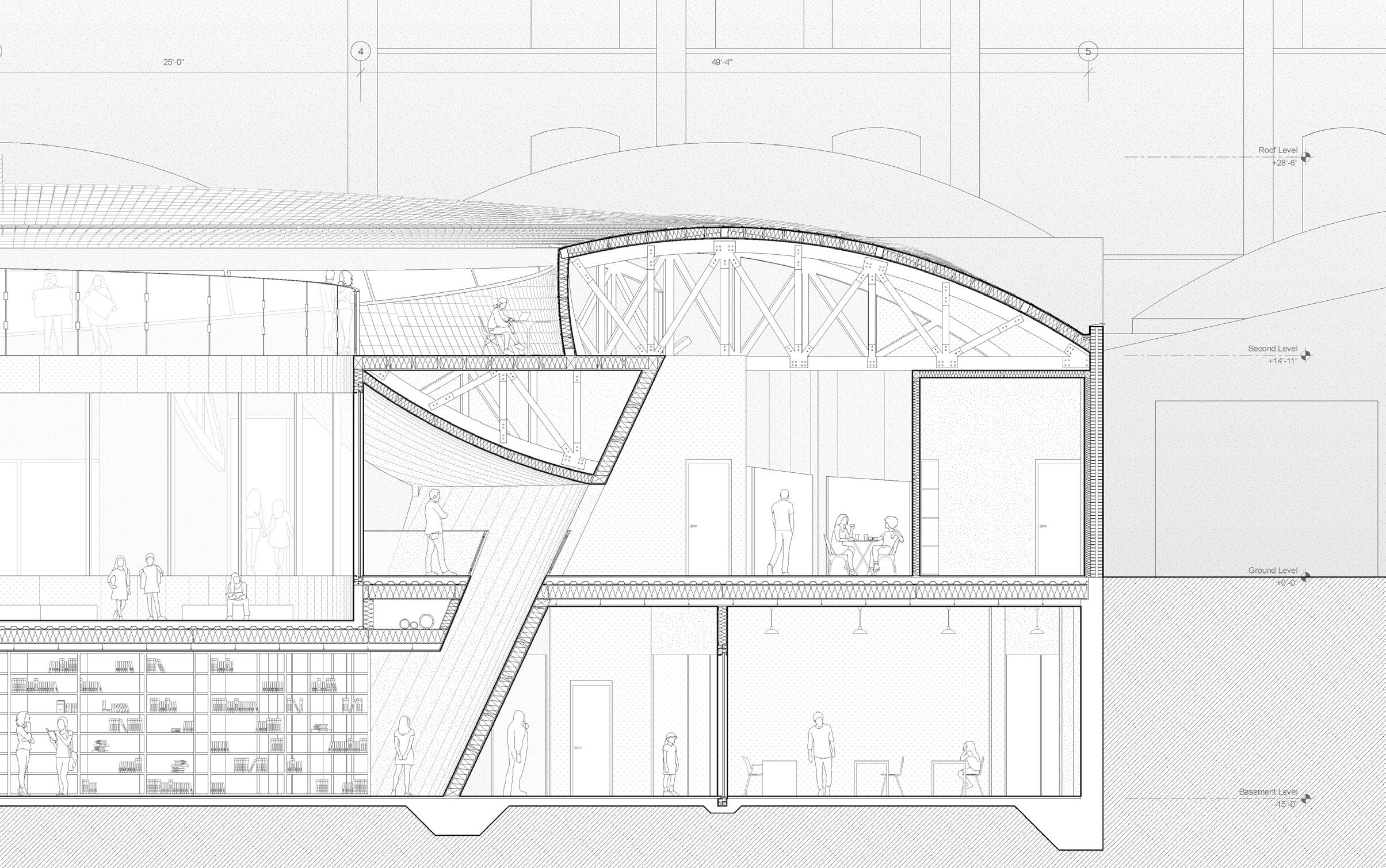
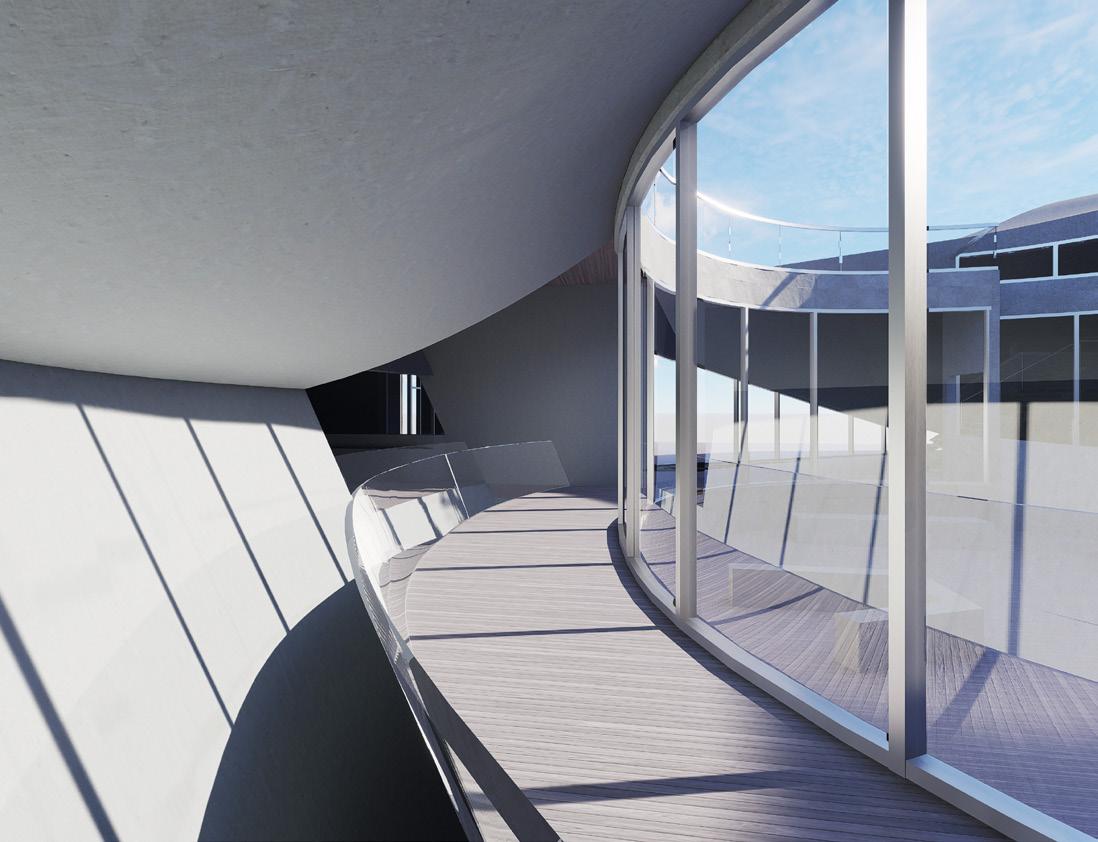
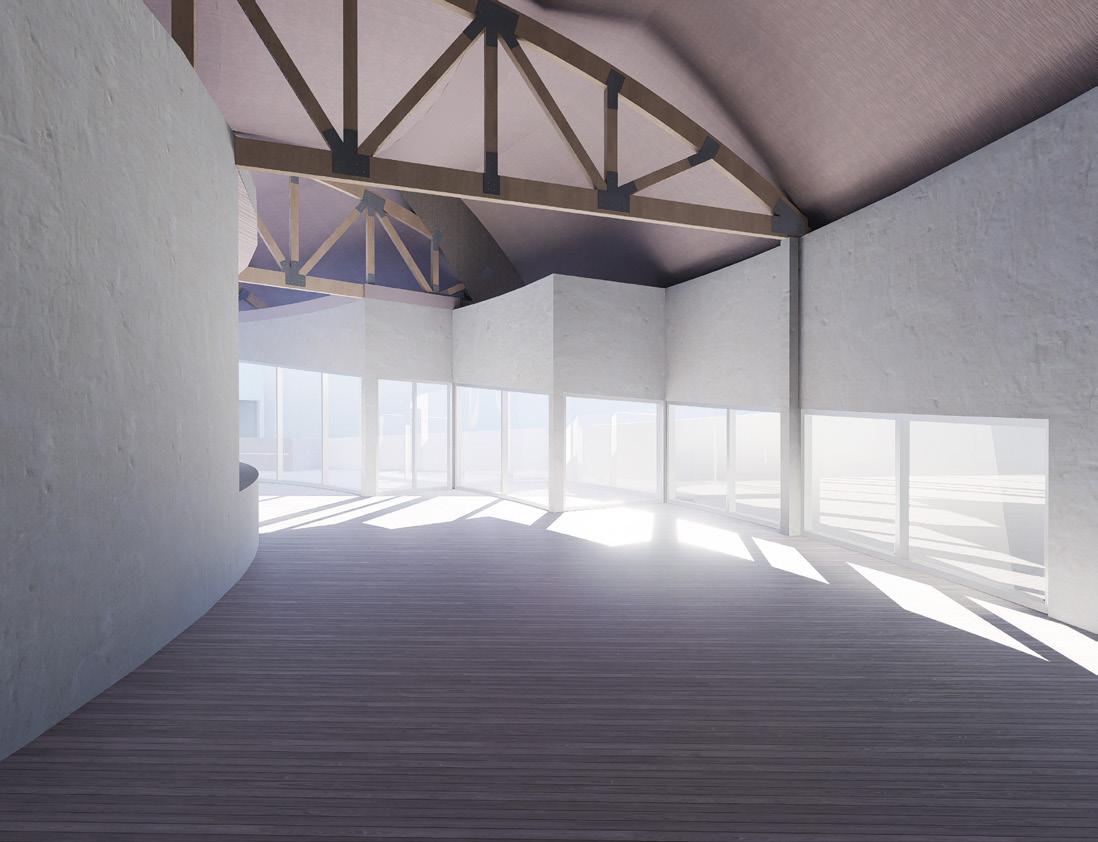
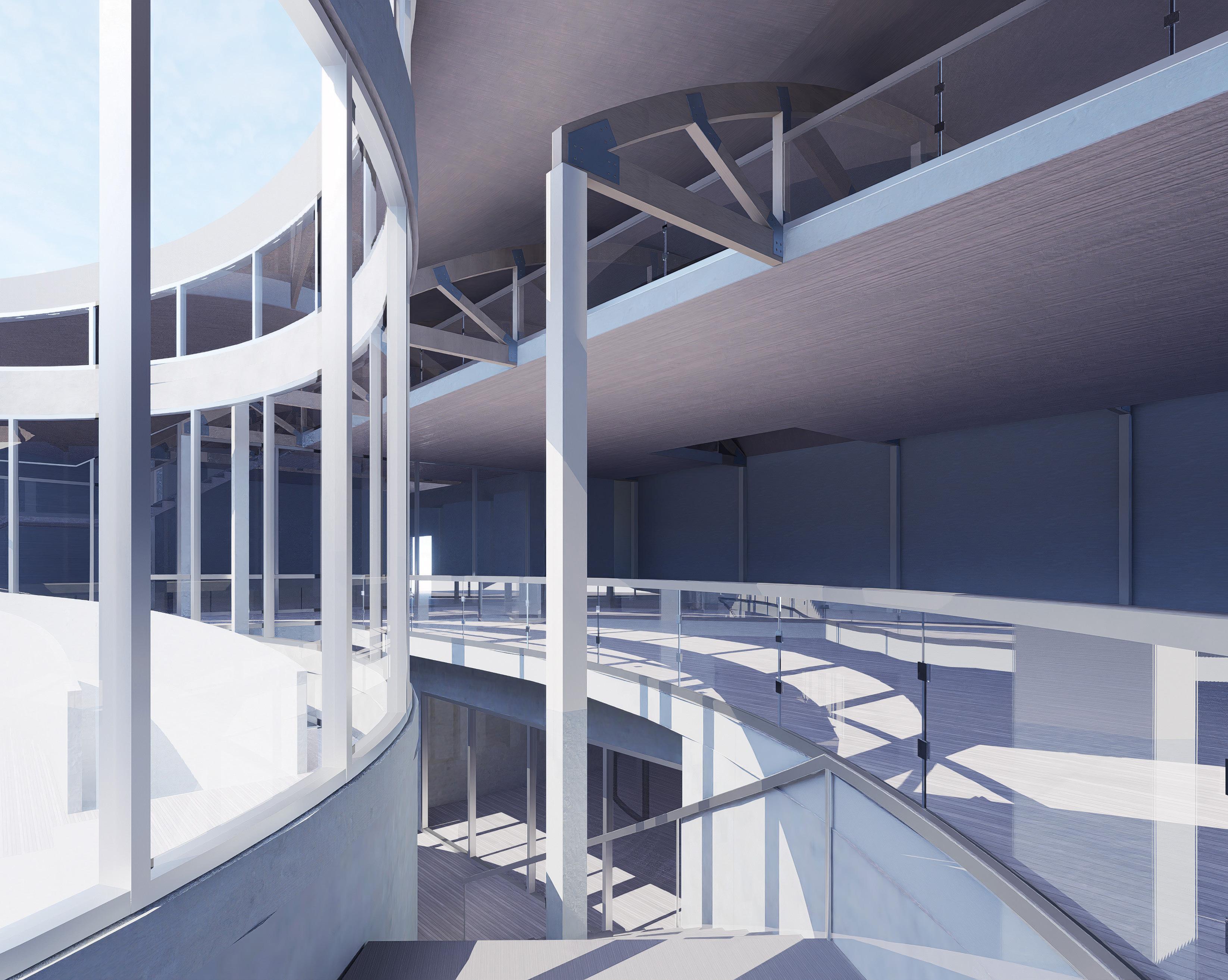
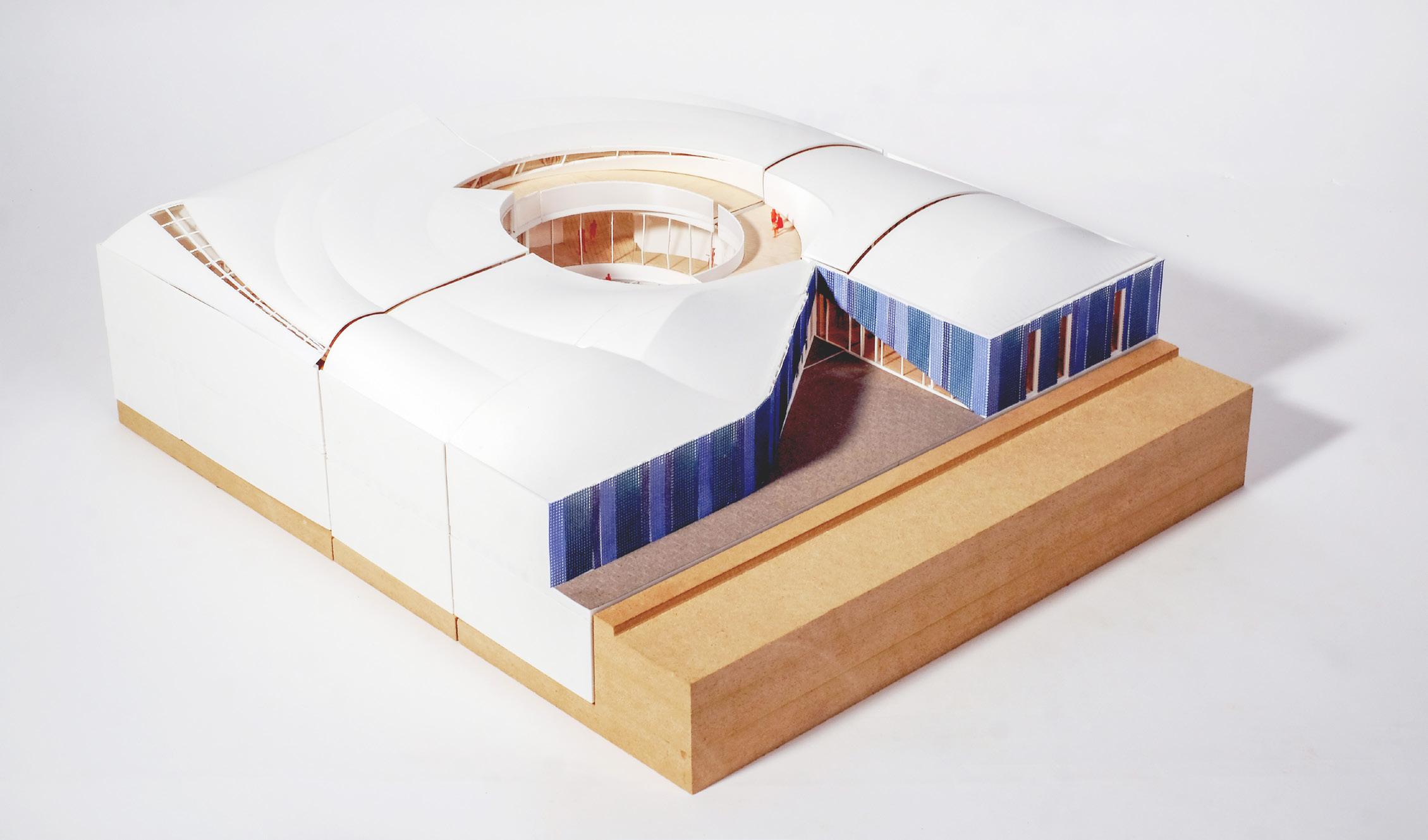
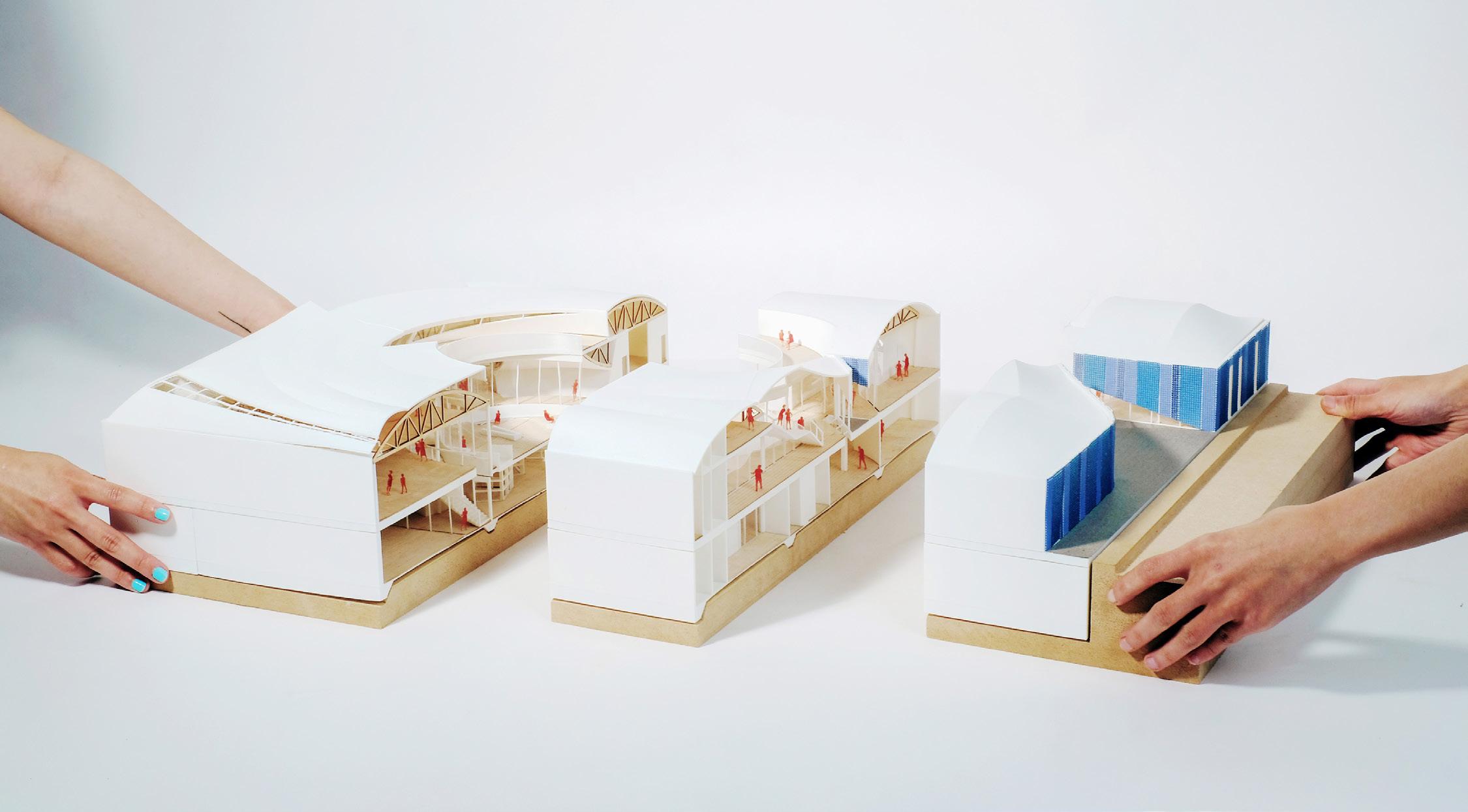
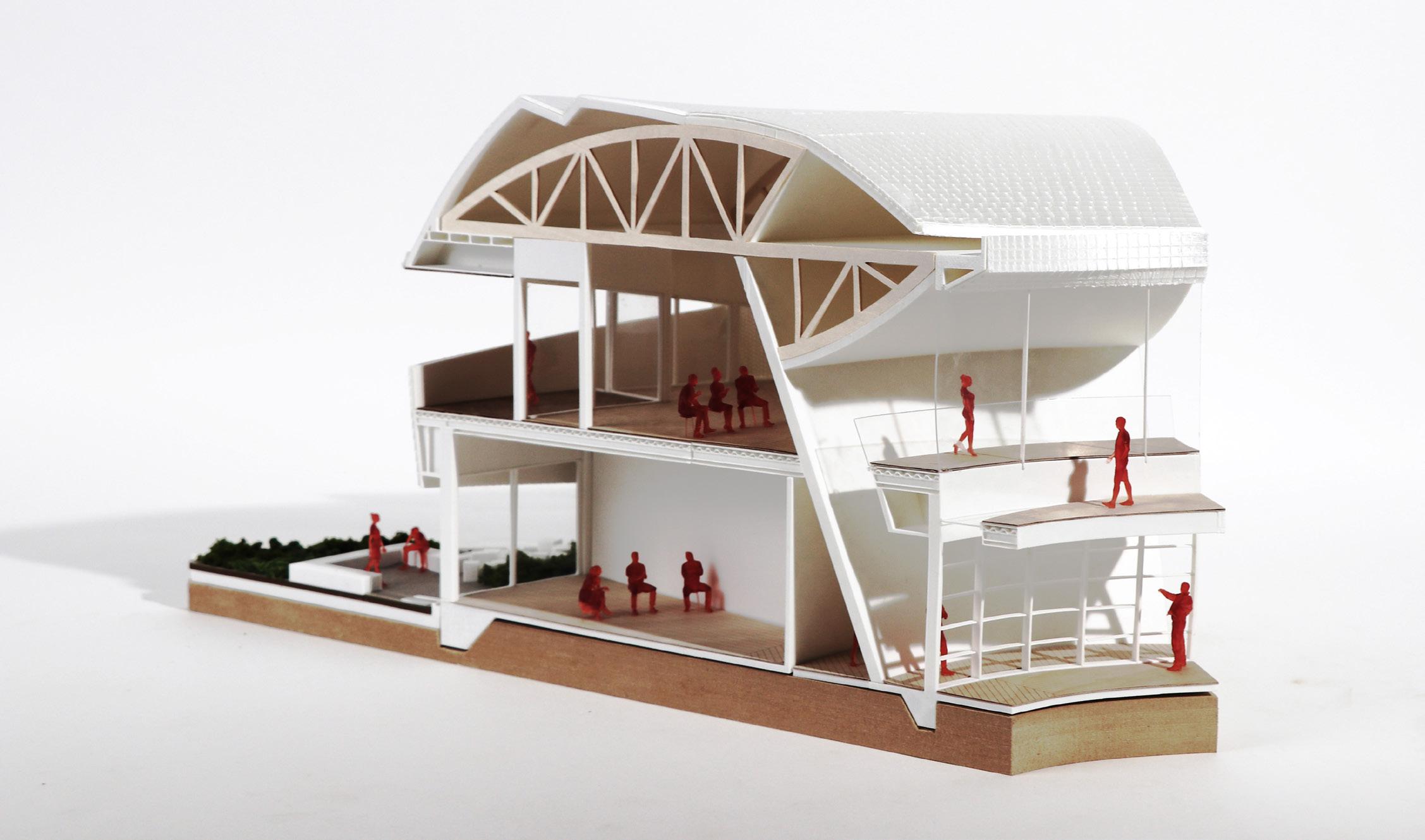
The objective of our project is to preserve the existing frontal facade and trusses situated on the north side while integrating new trusses to establish a seamless facade when viewed from the street.
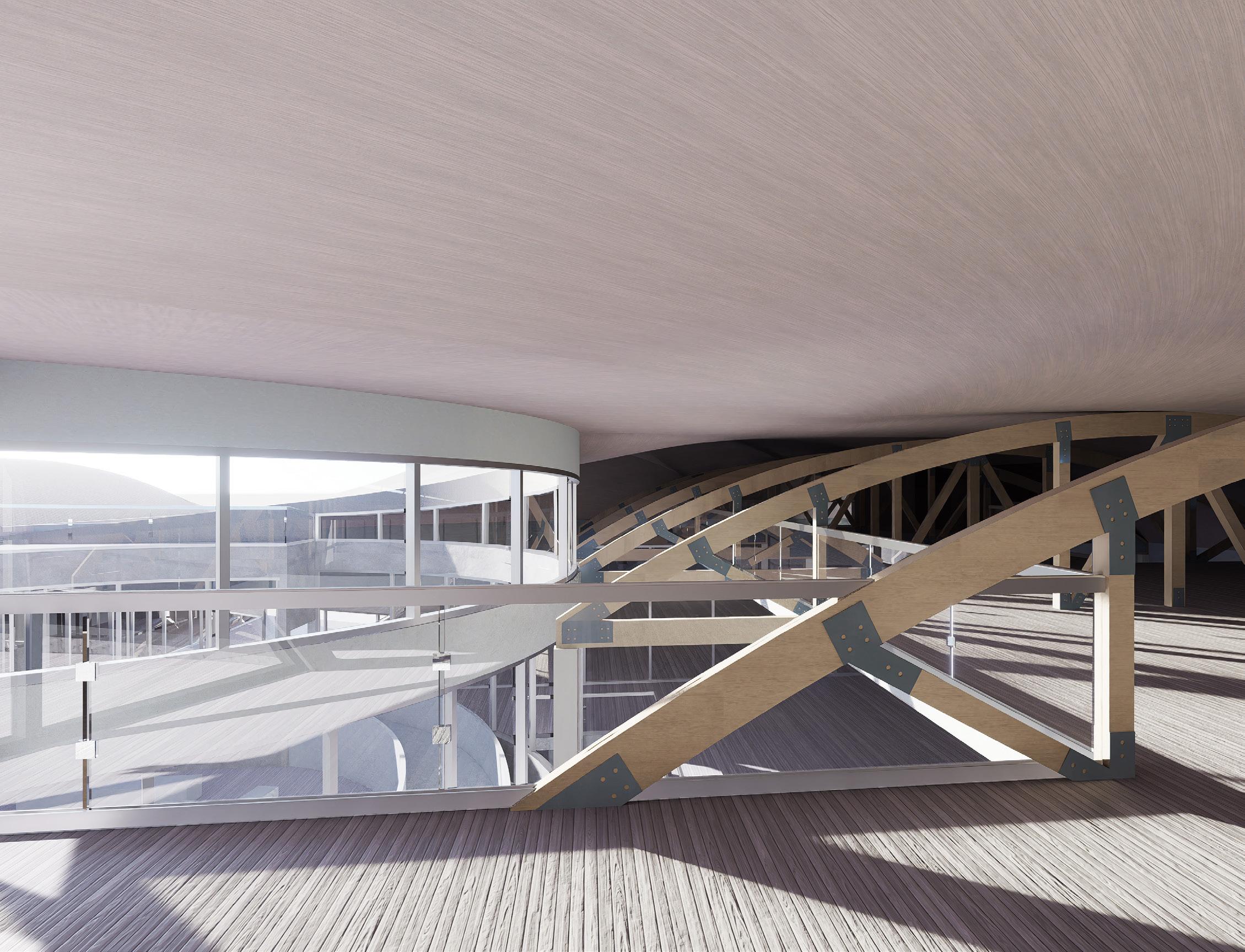
Modified truss profiles are initially used as outdoor terrace spaces and lighting devices, which are then transformed into a roof surface that peels off with hidden joists and structural HSS, creating an integrated system of trusses.
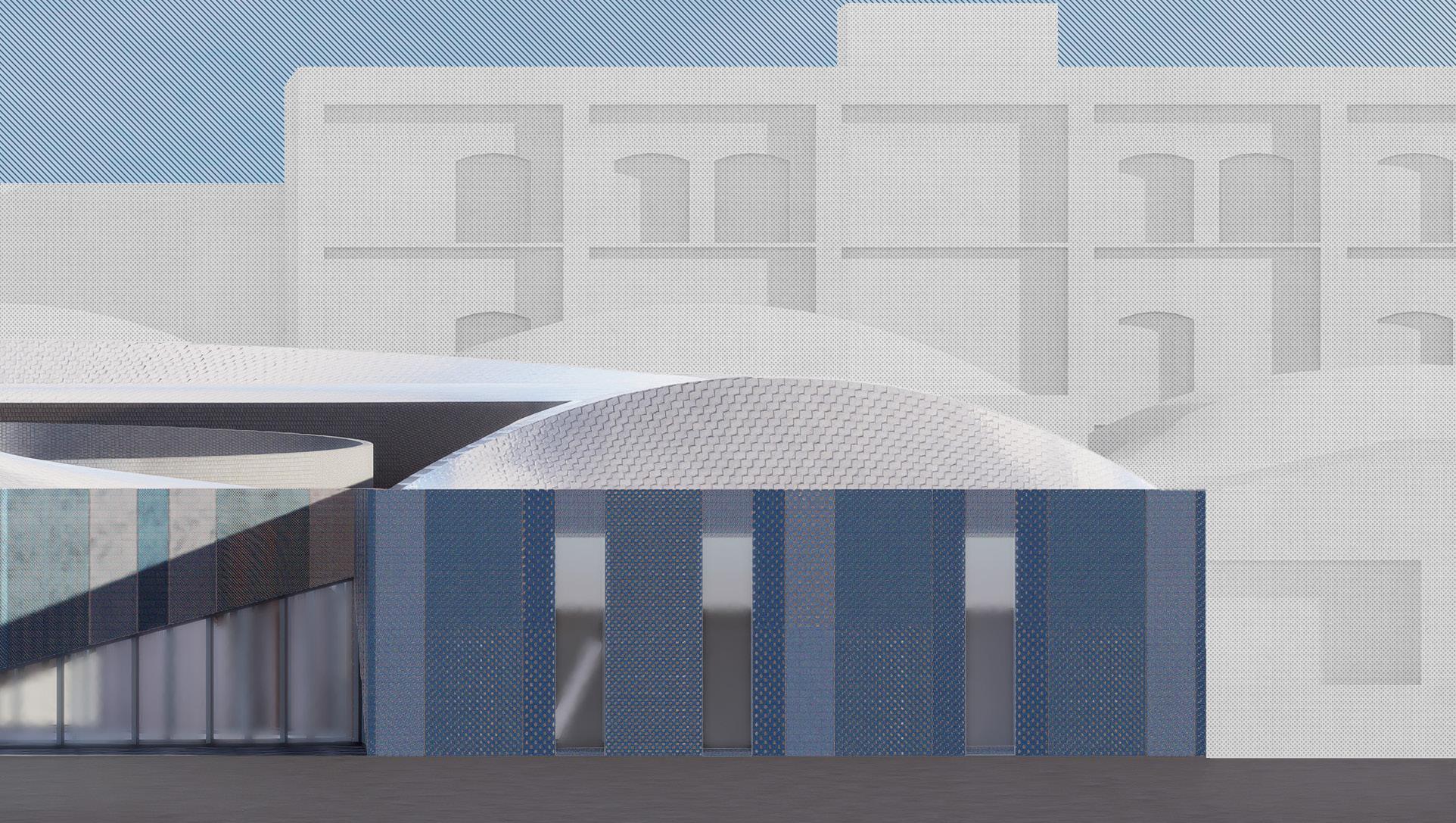
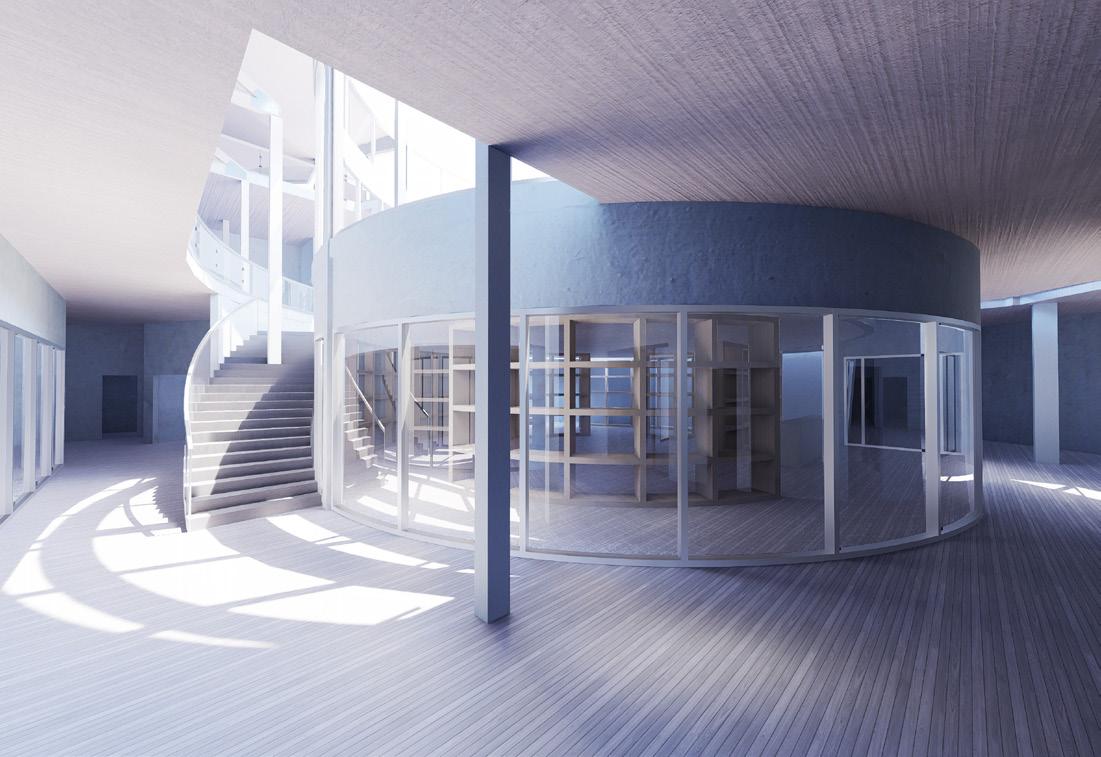
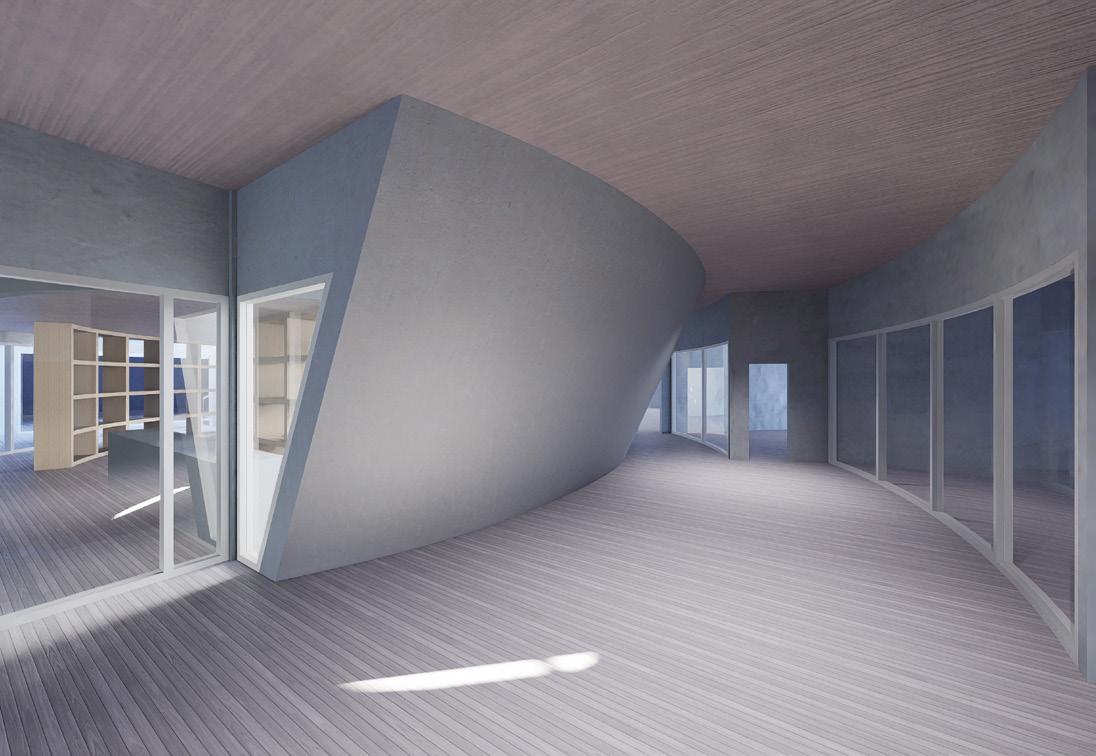
For the massing, a rotation is introduced, establishing a relationship between rotational and orthogonal lines. A new figure is added, and the smooth curve of this figure enhances the front area, creating an inviting space that guides both students and the public toward the main entrance.
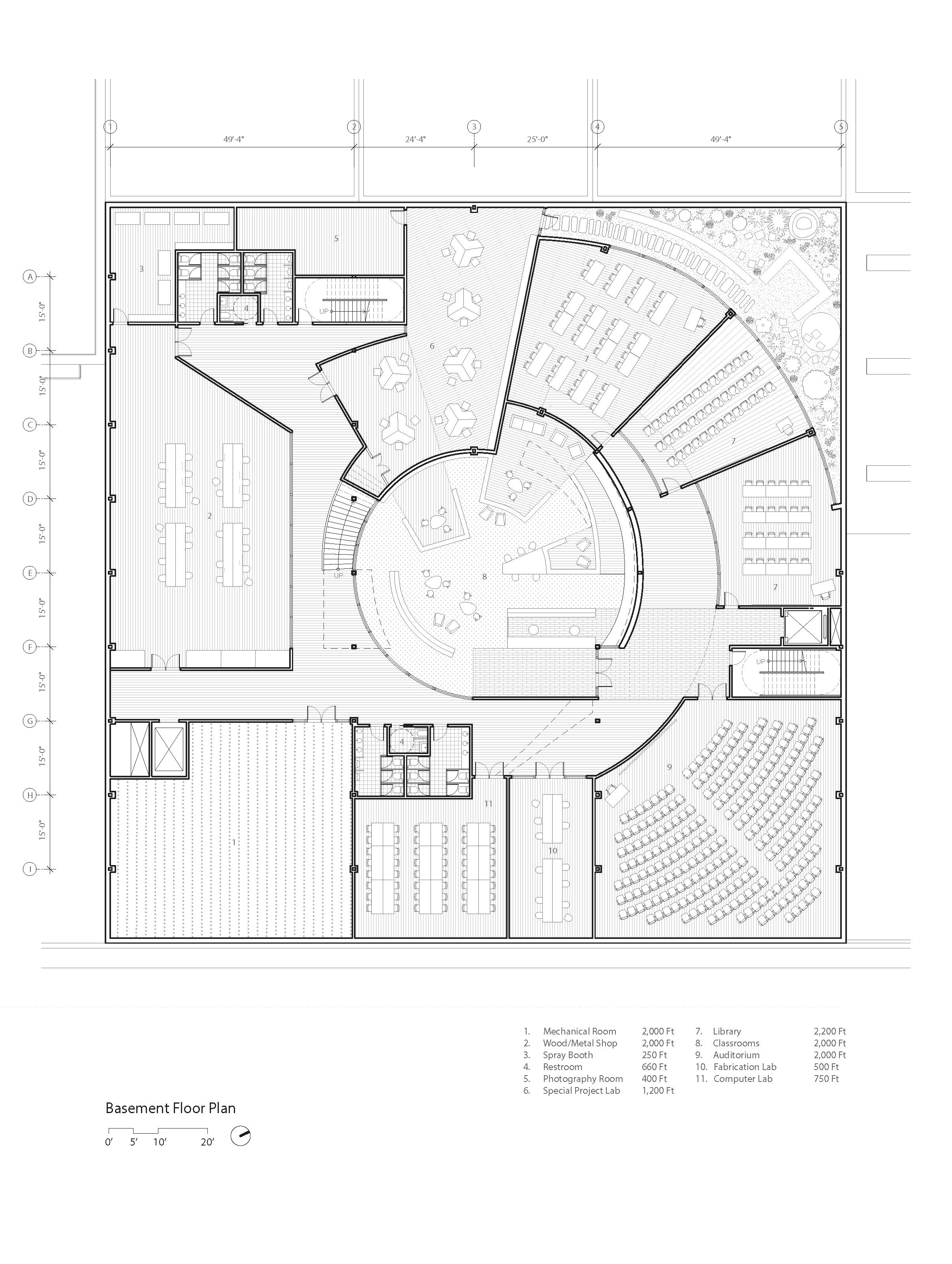
To prioritize student safety, access to the central private courtyard is restricted to the public. Everyone must pass through a sequence of secured interior entries and public interior spaces. Both the central courtyard and the rear courtyard are designed to maximize access to natural daylight and outdoor views.
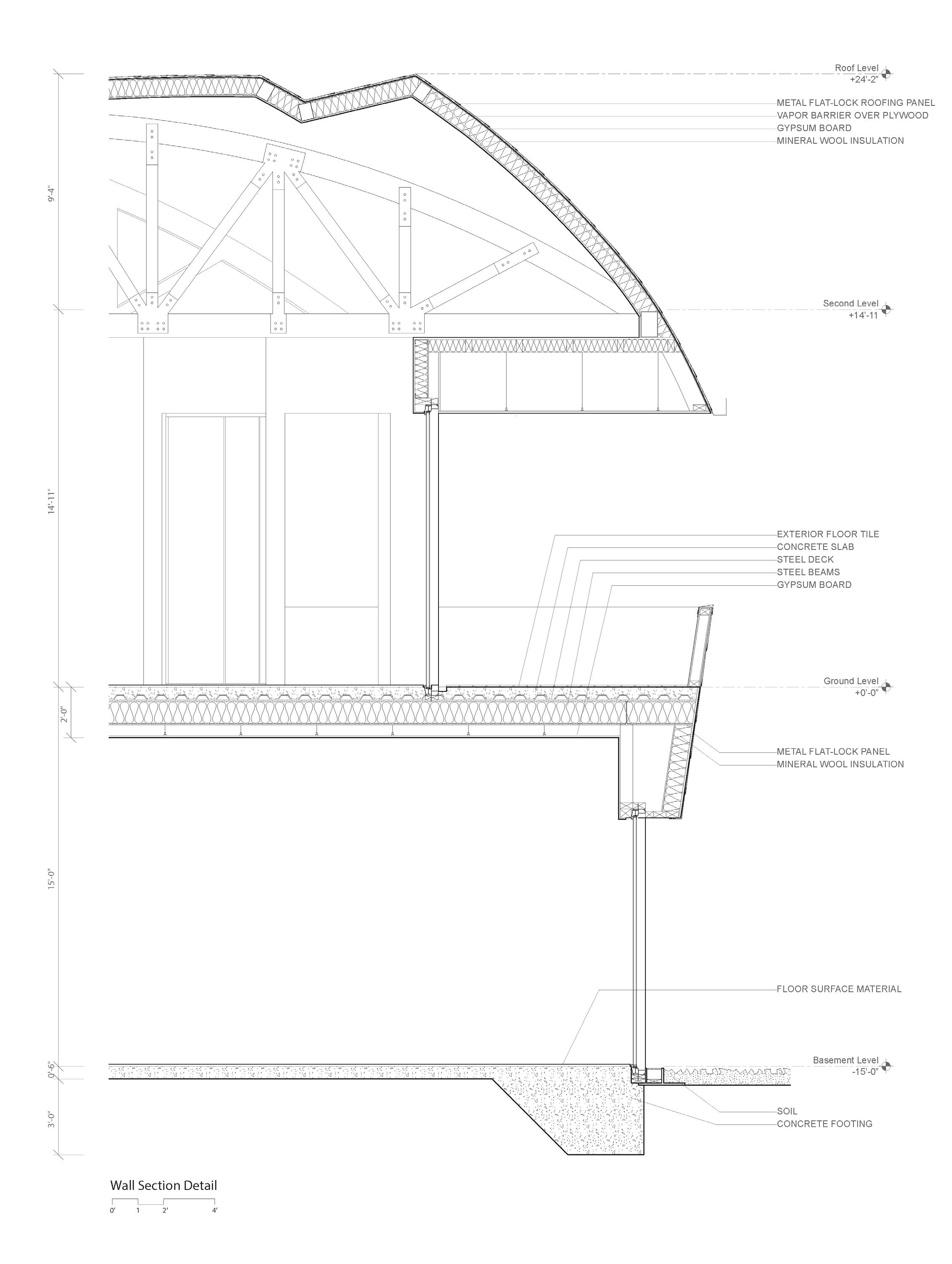
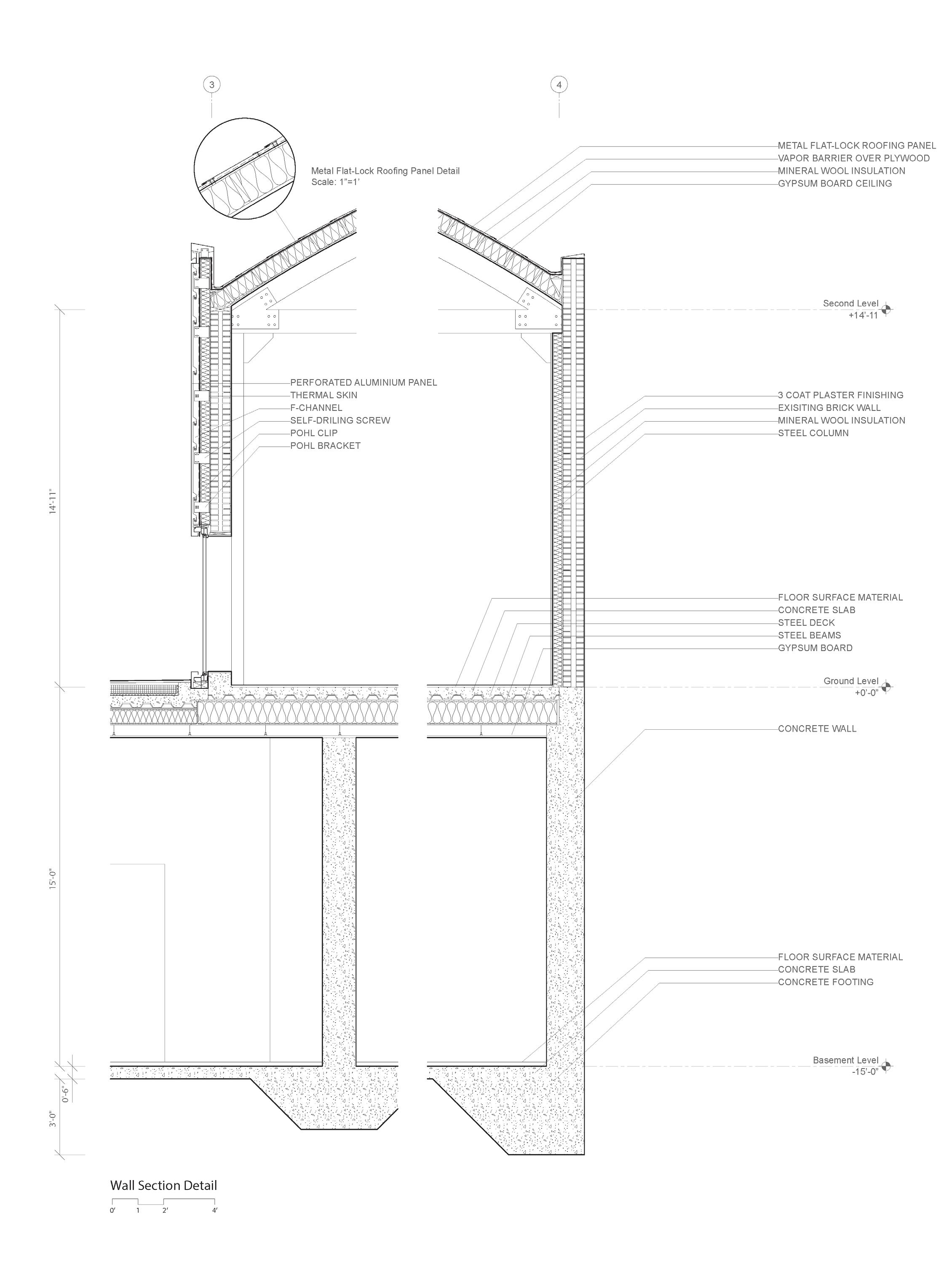
The facade uses a Pohl rainscreen system with pre-punched wall brackets. The hidden pin system facilitates the overall assembly. The roof features metal tiles, with a continuous transition from the roof to the wall and vertical surfaces, following the profile of the tiles.
The project employs centrifugal and centripetal movements to guide people through interior and exterior spaces, enhancing how we perceive and engage with our surroundings and ultimately extending the psychological dimensions of space itself.
Truss Diagram
Deconstructs the original truss and reorganizes its components, allowing structural elements to evolve into the form.
Massing Diagram
Two bars merge and transform into a single bent object, shaping the architectural form through structural adaptation.
Roof Line Diagram
New truss system intervenes solely through the connection of the two bars, establishing a structural dialogue between the old and the new.
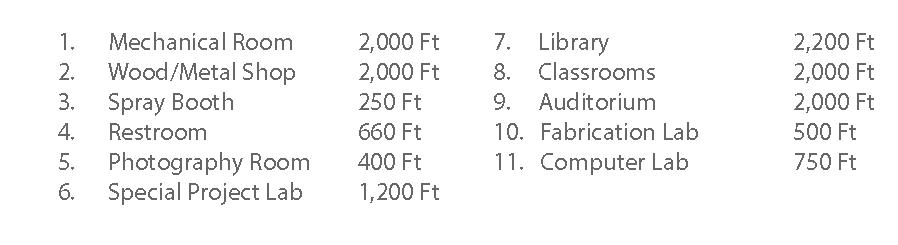
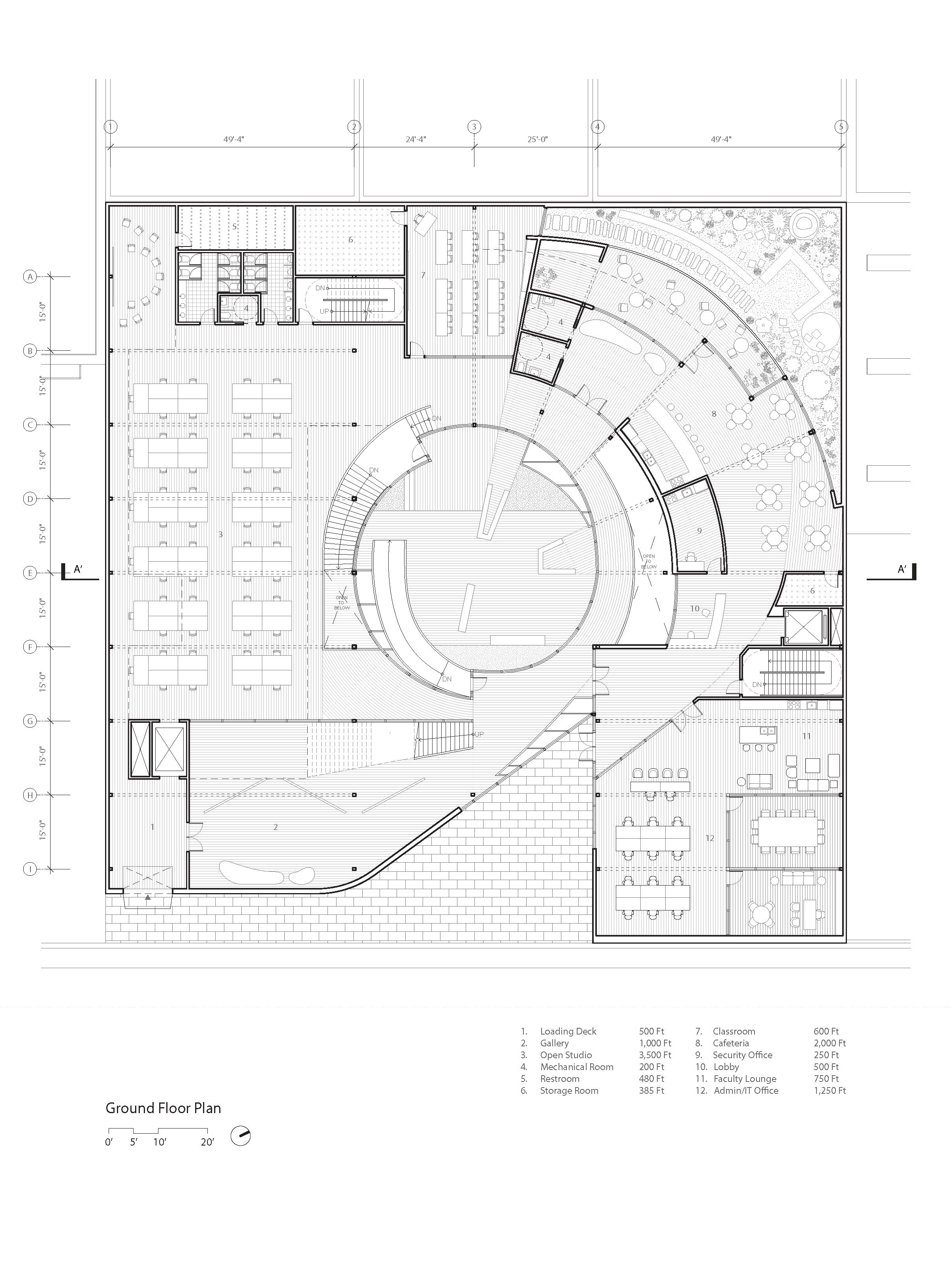
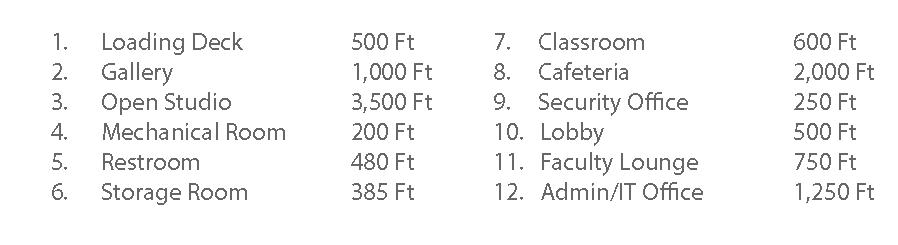
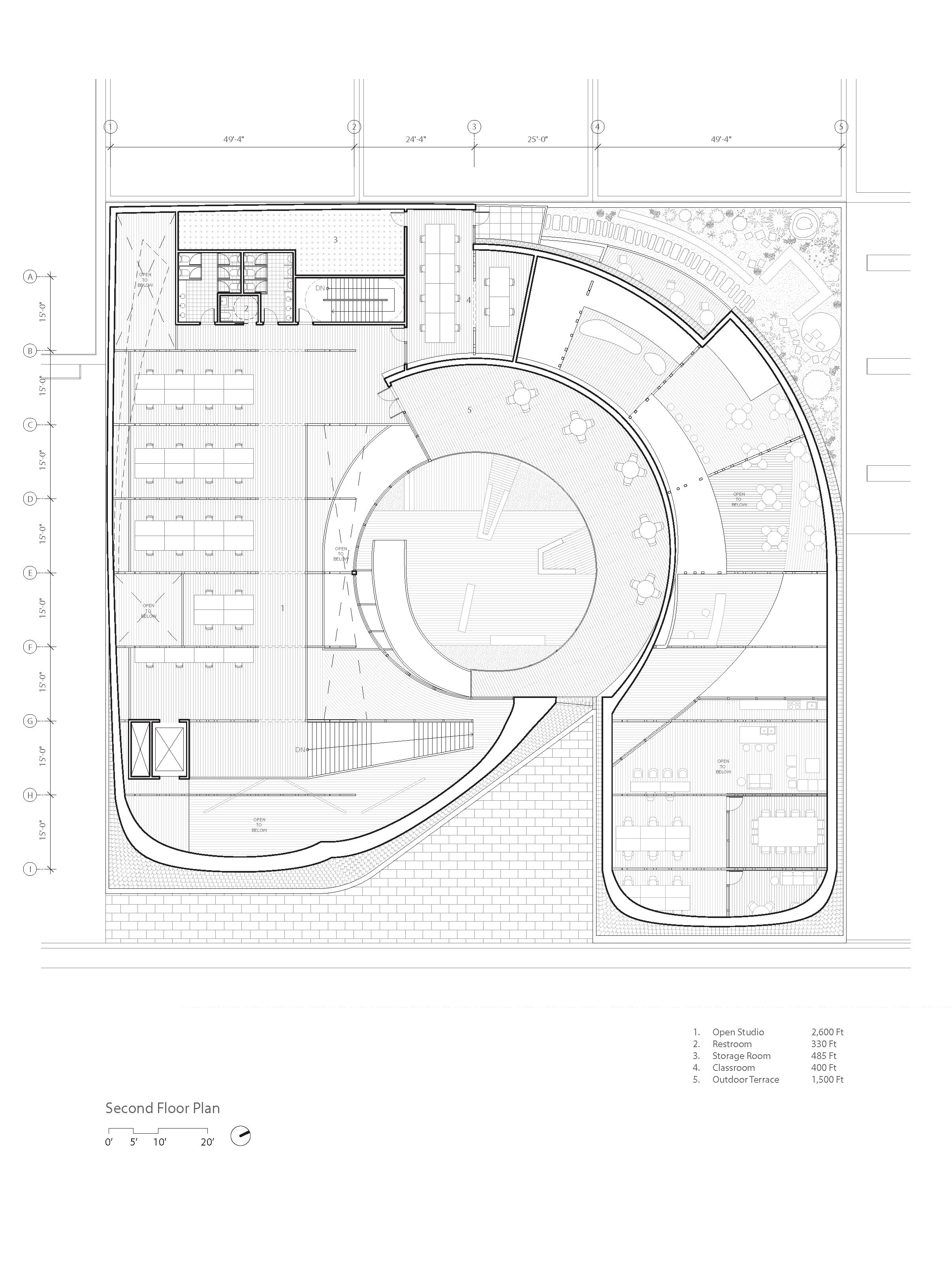
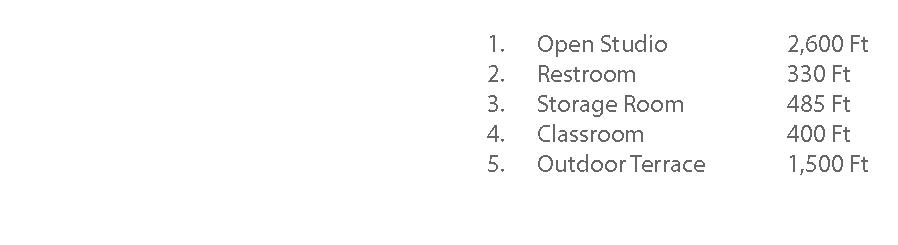
Second Floor Plan
Section Model 1’=1/8”
Section Model 1’=1/8”
Reimagining Courtyards: Fostering Community and Privacy
UCLA M.Arch 401 Advanced Topic Studio Independent Project, Spring 2023
Instructor: Yara Feghali
Single Family Housing for Urban Environment
"How do we reimagine single-family housing to foster connection and individuality within shared suburban environments?"
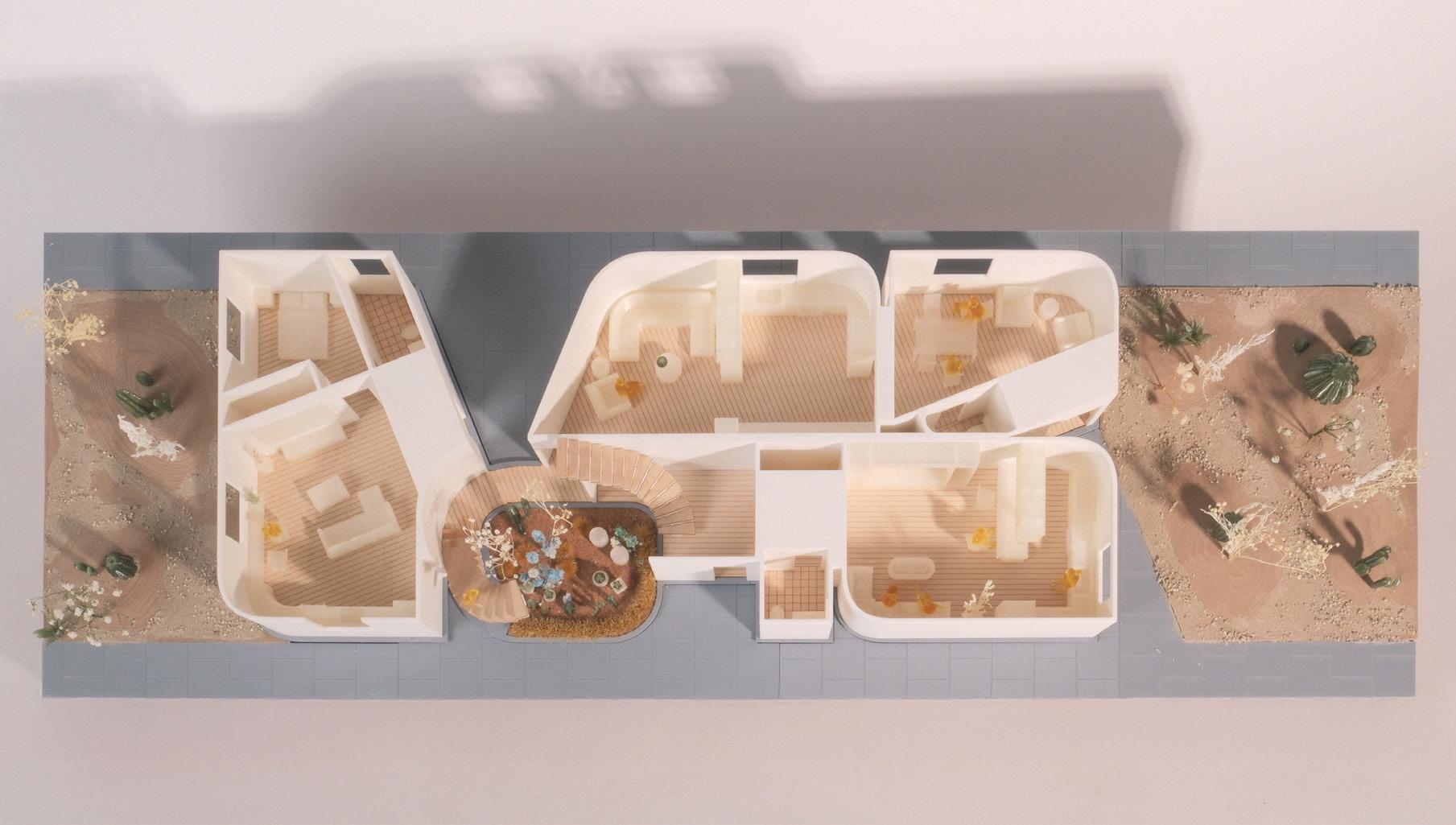
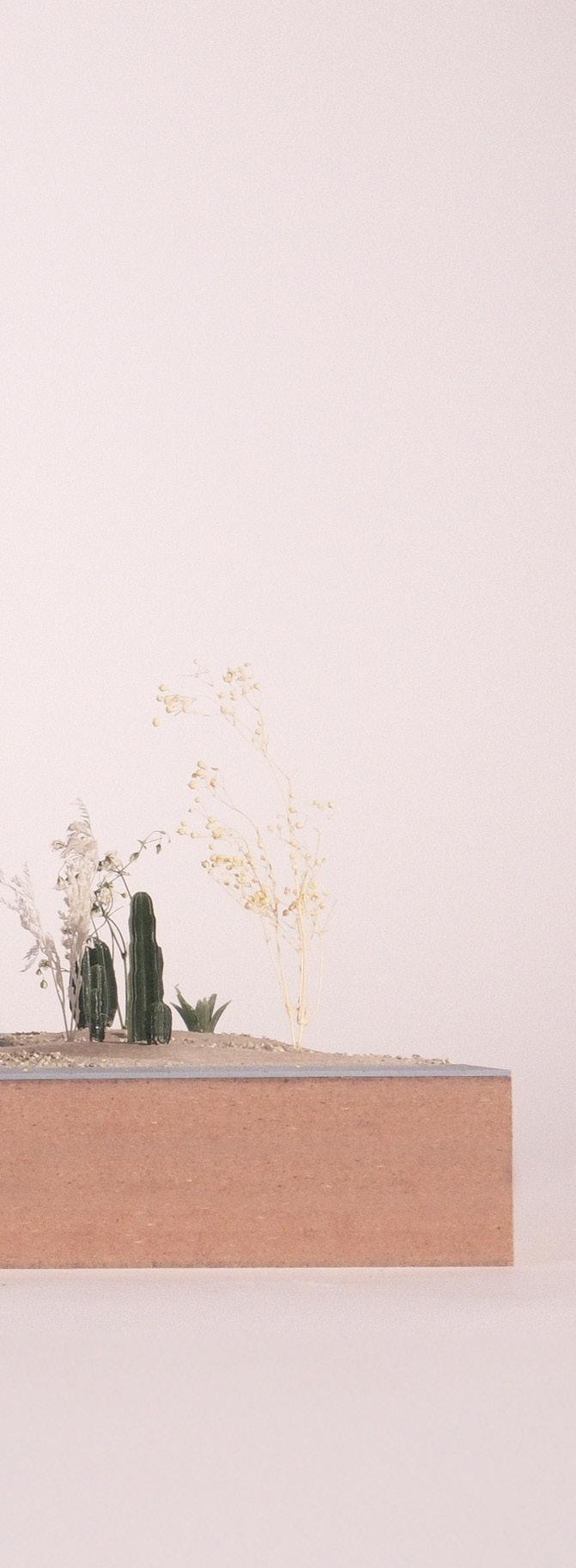
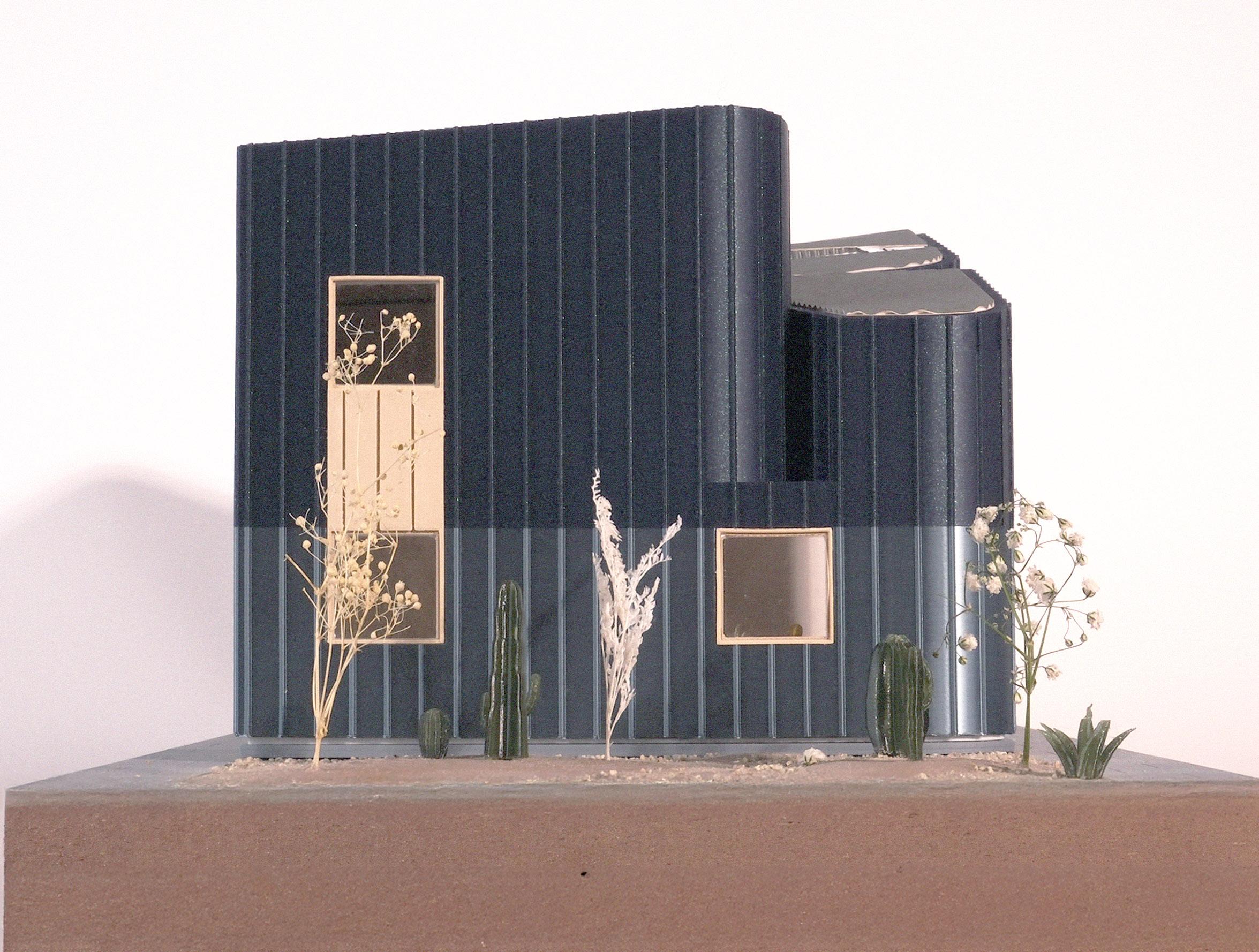
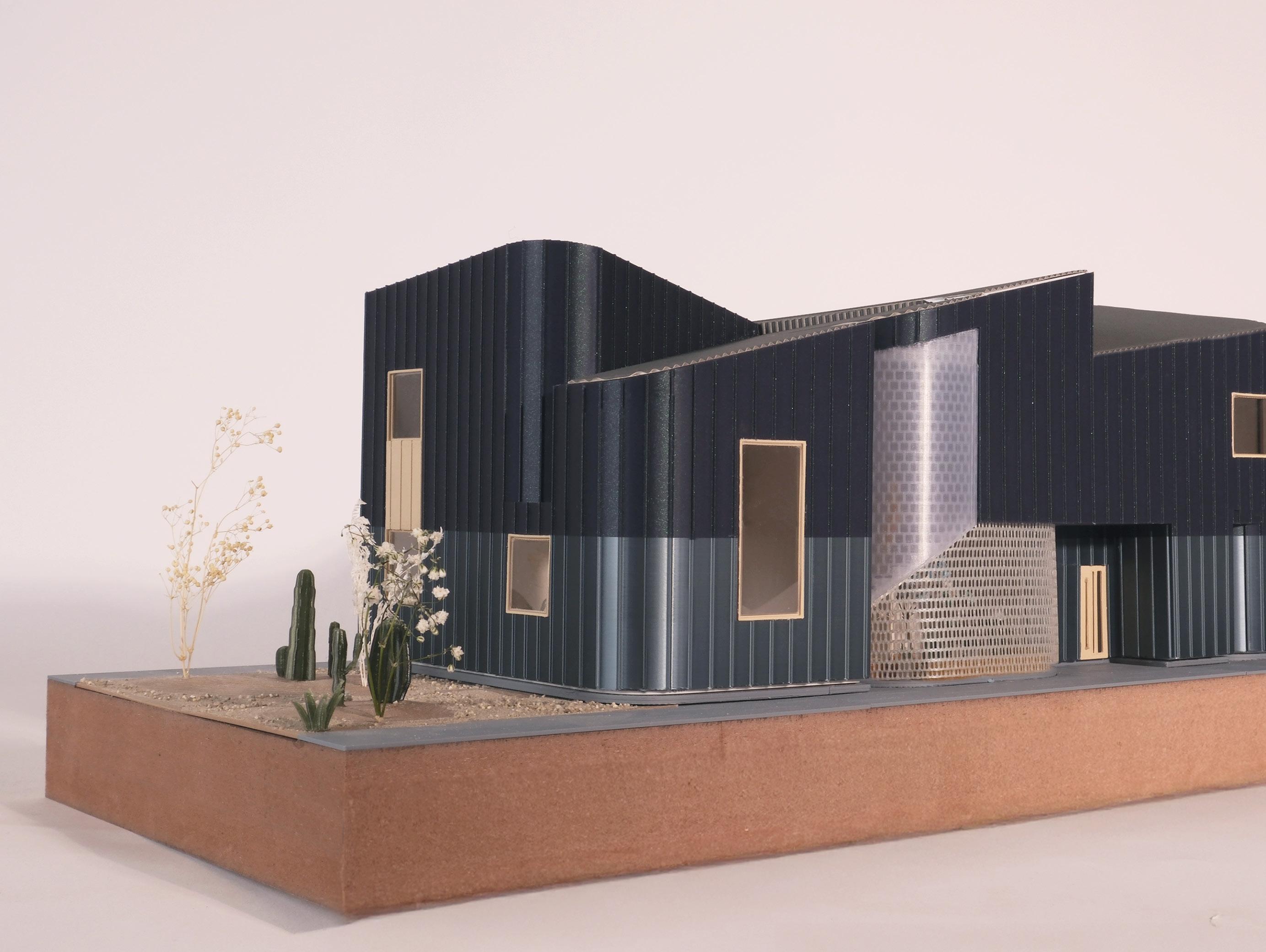
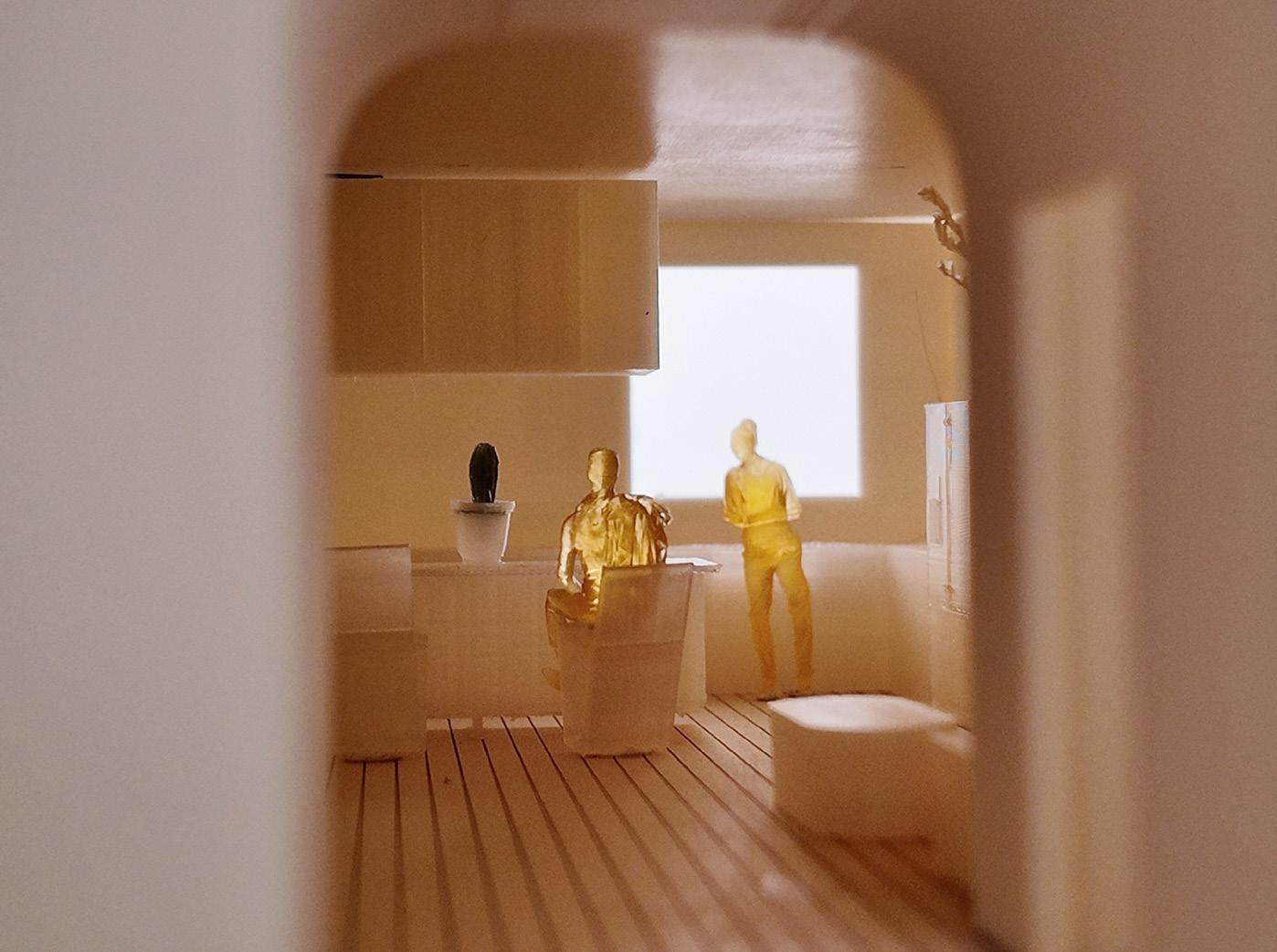
This project redefines single-family housing by integrating shared semiprivate courtyards that balance community interaction with personal privacy. Designed for 2–3 homes, these segmented courtyards are framed by the architecture, creating a “framed sensation” that enhances the spatial experience and fosters a sense of shared ownership.
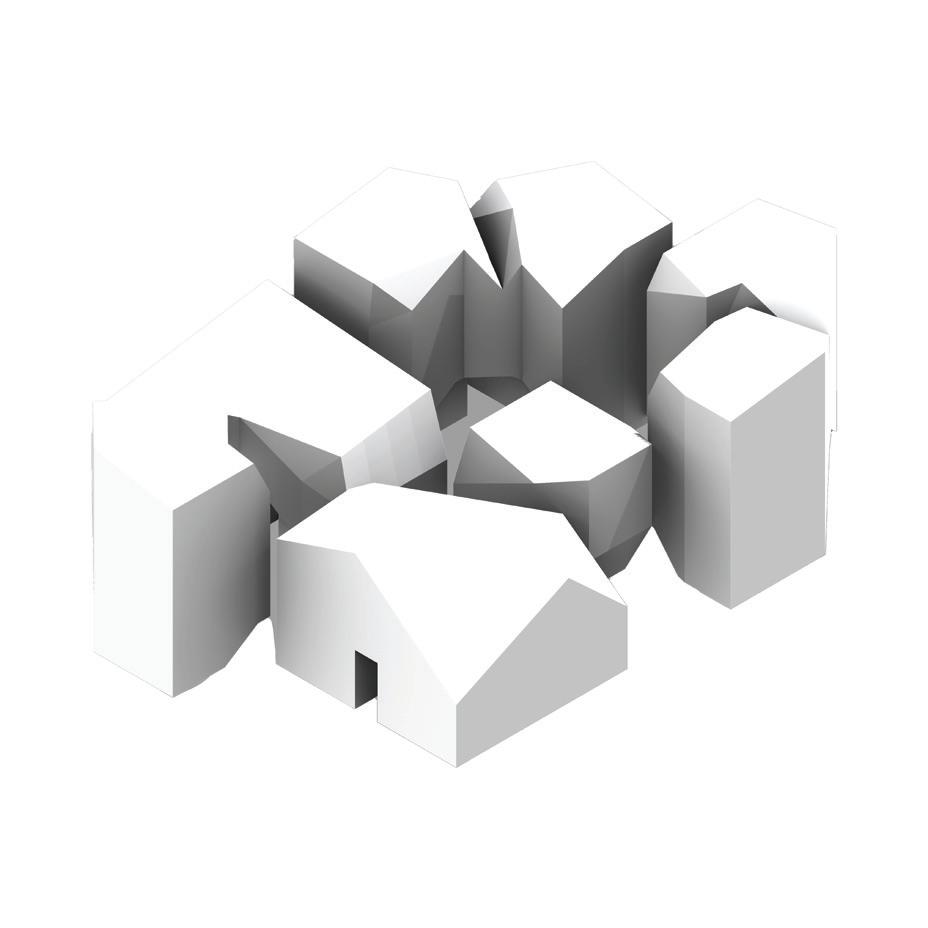
The massing strategy introduces a dynamic dialogue between solidity and openness. Staggered footprints and subtly rotated volumes create distinct living spaces while blending harmoniously with the landscape, giving each unit a unique architectural identity.
Circulation paths weave through the courtyards, encouraging casual encounters without compromising security or seclusion. These pathways connect private and public zones, fostering neighborly bonds while maintaining autonomy.
This approach transforms single-family housing into a living organism— one that nurtures social sustainability through intentional design. By repositioning housing as a framework for both connection and individuality, it enriches the physical and emotional dimensions of home life.
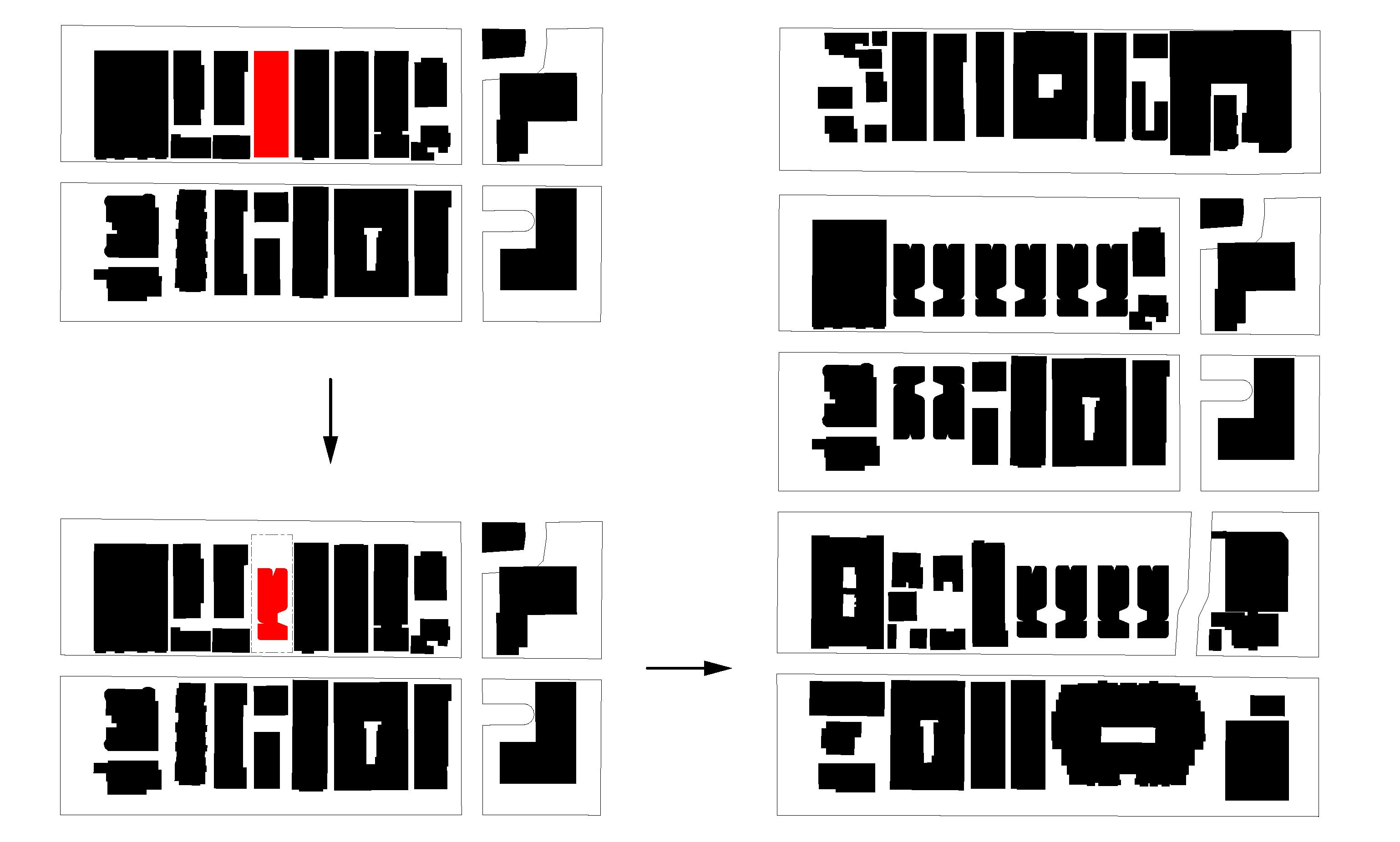
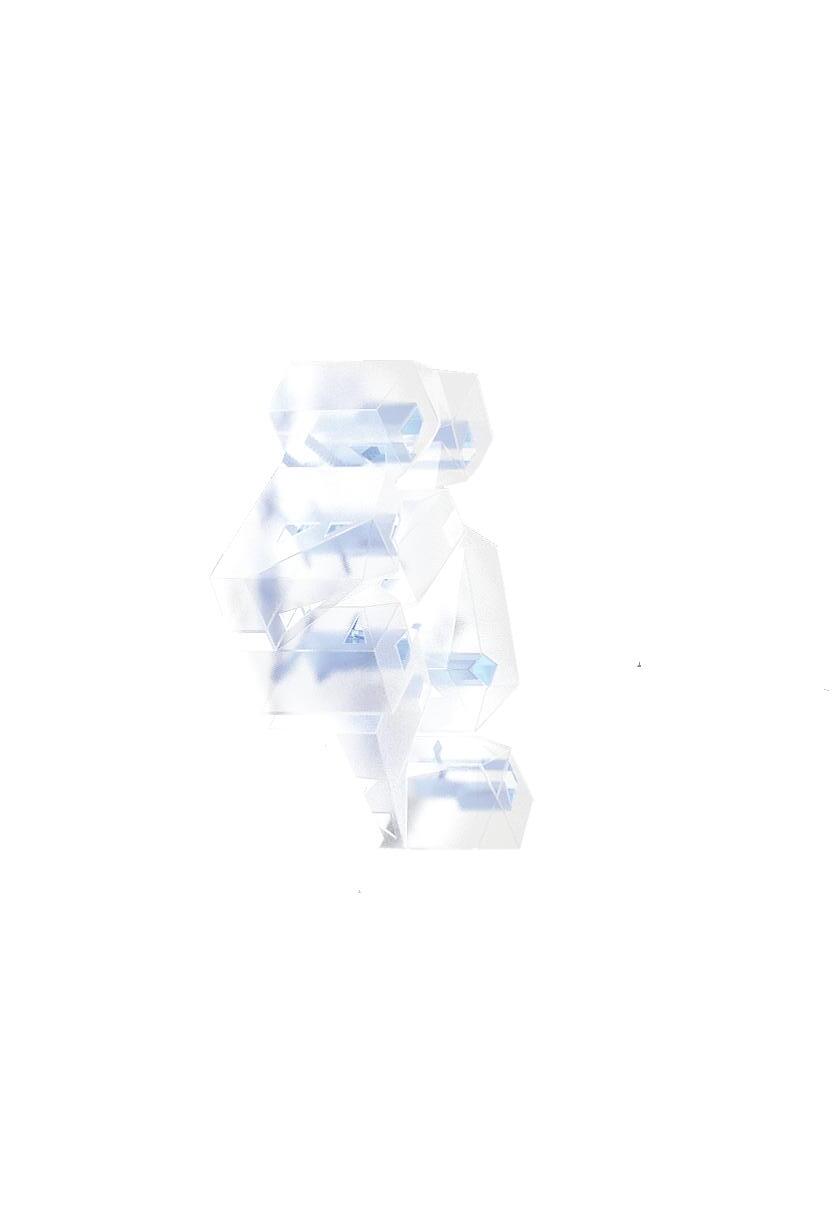
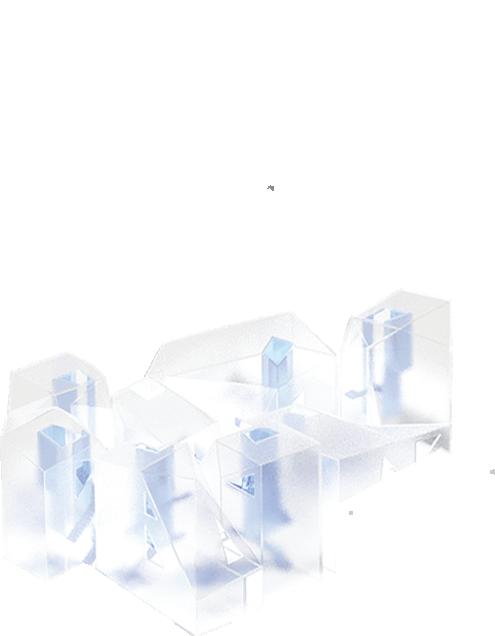
Conceptial Figure Ground Diagram
By breaking the traditional courtyard into smaller fragments and flipping the relationship between void and volume, the design creates dynamic spatial experiences and redefines connections between interior and exterior spaces.
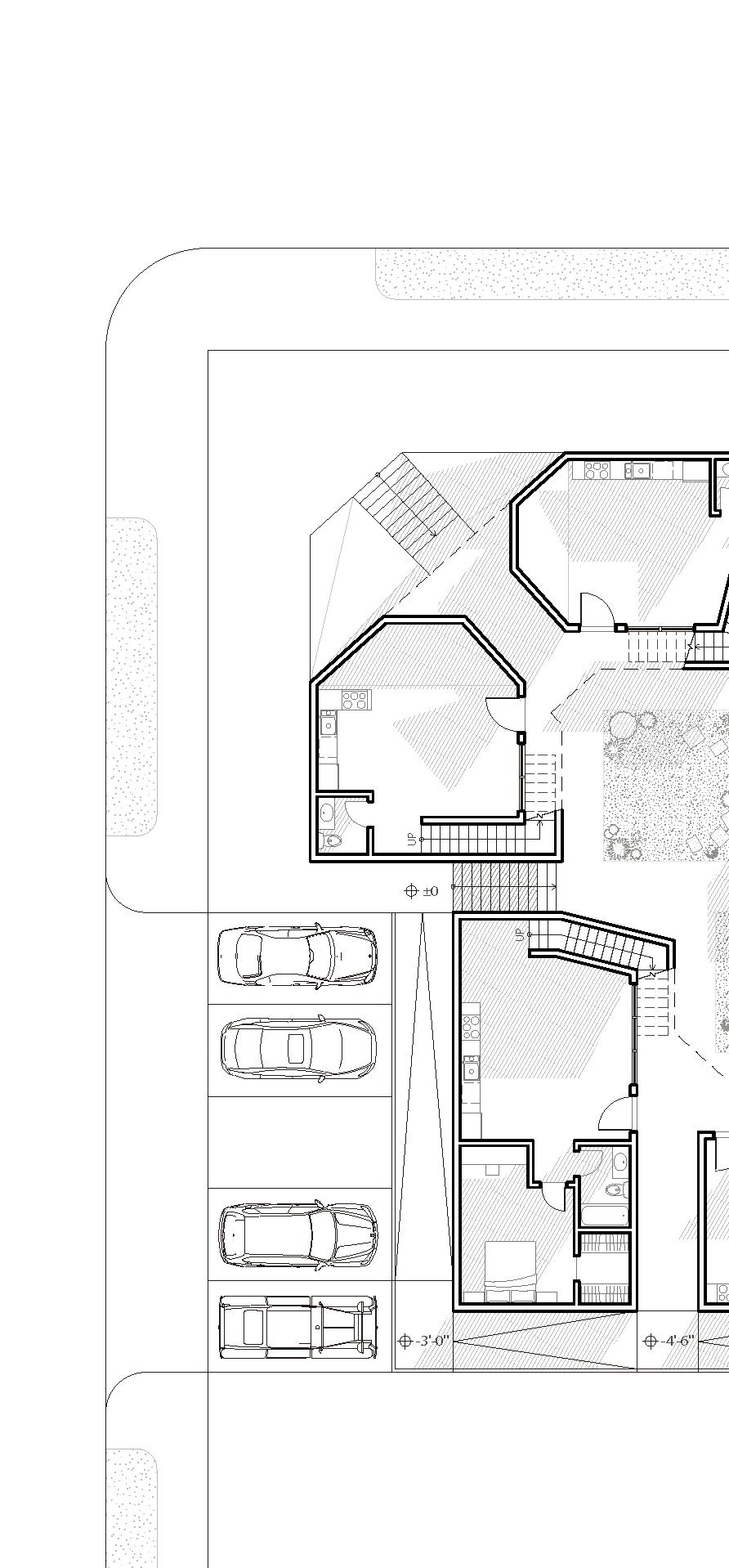
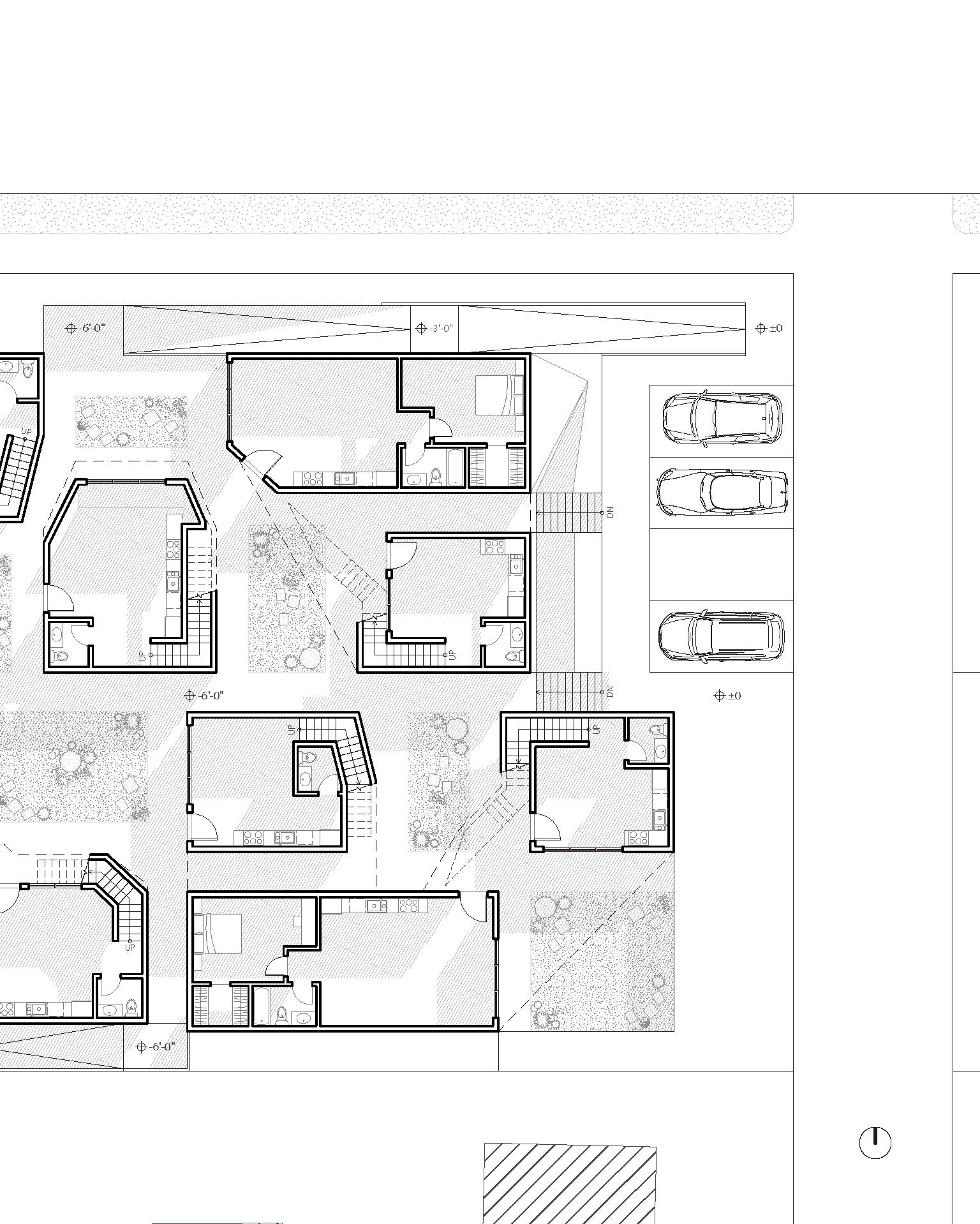
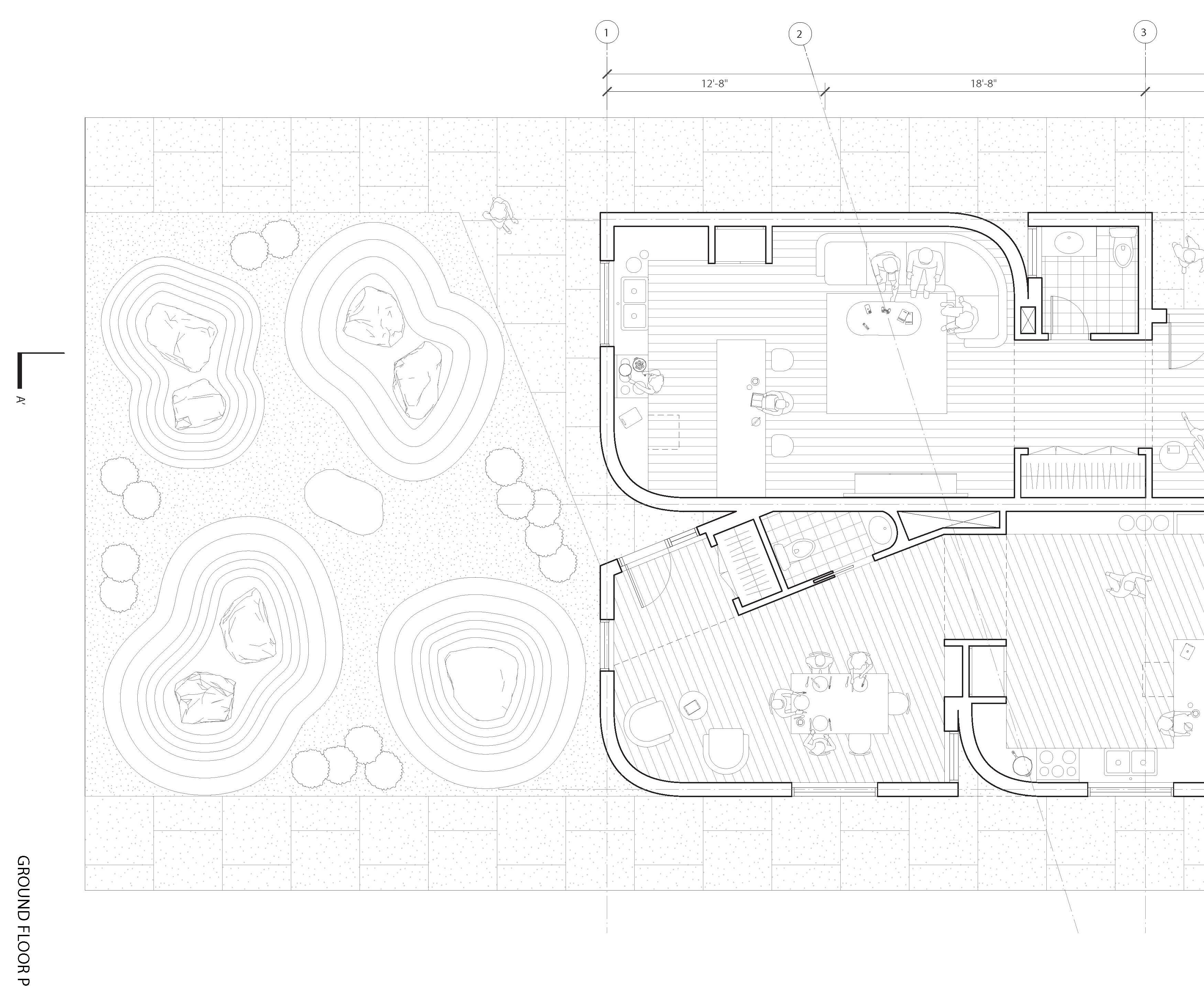
Ground Floor Plan Scale: 1/16"=1'-0
Second FLoor
Floor Area: 5,990.79 SF
Private Space: 5,269.25 SF
Semi-private Sapce: 721.54 SF
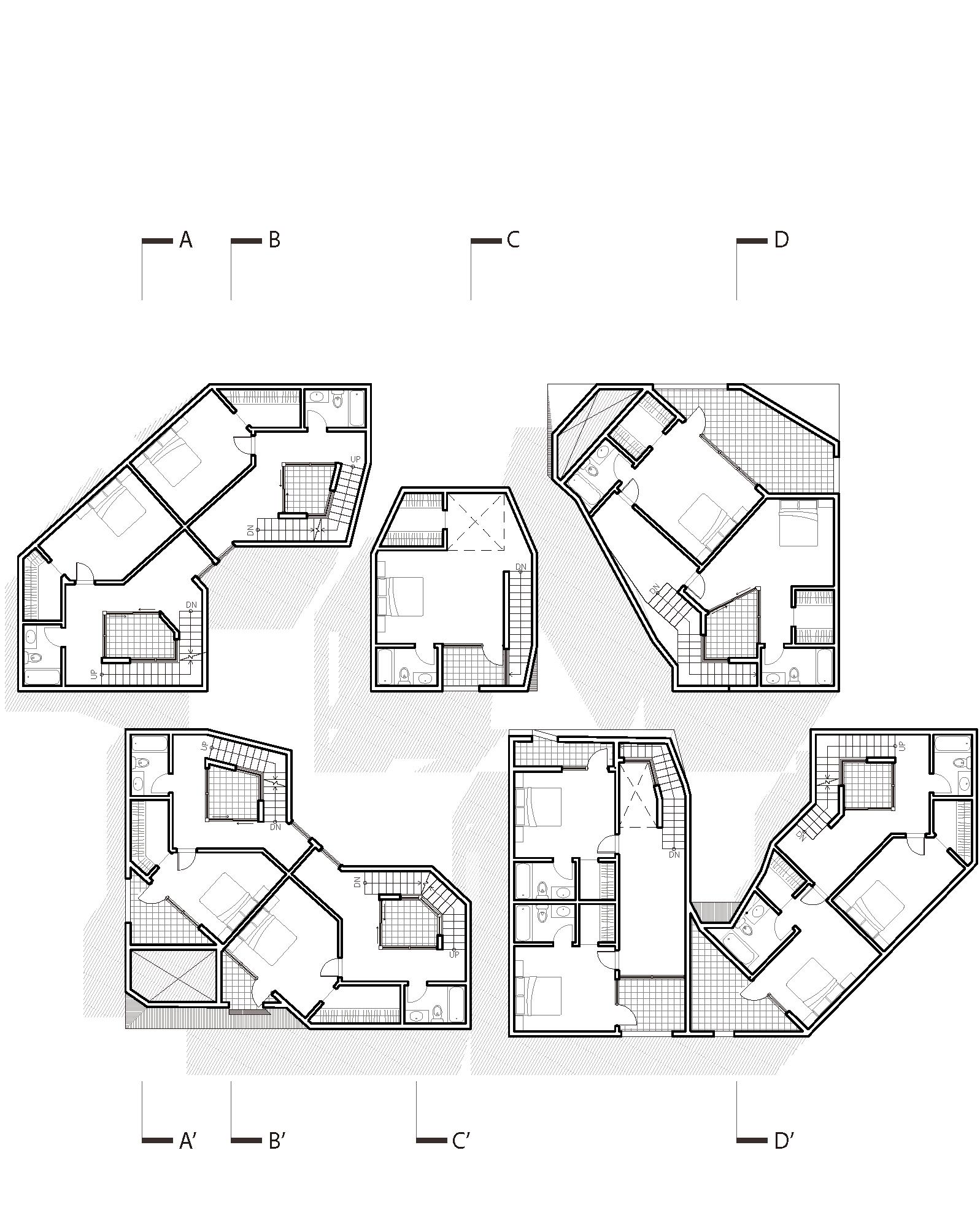
Second Floor Plan Scale: 1/16"=1'-0

Third Floor Floor Area: 2,949.45 SF
Space: 2,690.82 SF
Sapce: 258.63 SF
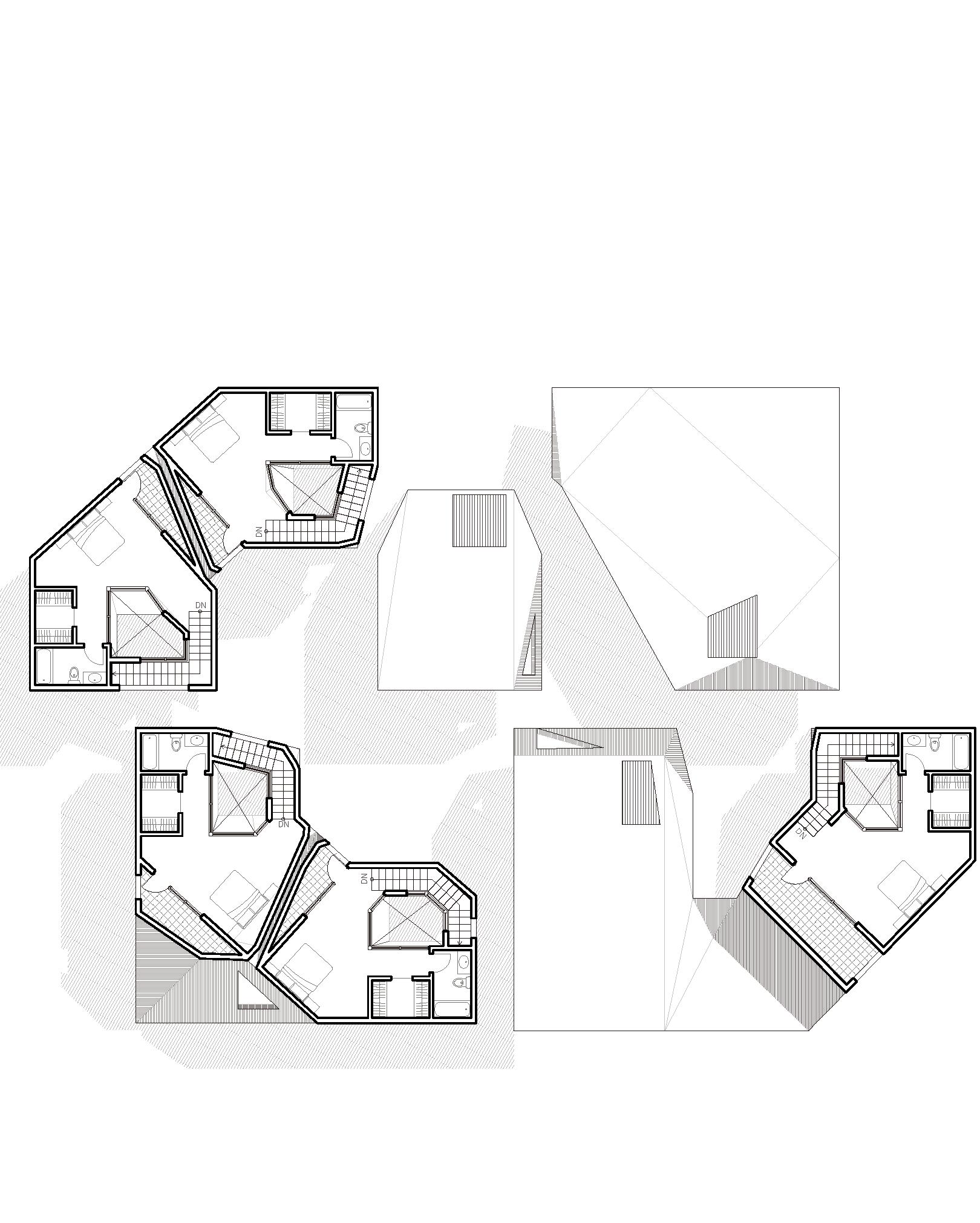
Third Floor Plan Scale: 1/16"=1'-0
Section Scale: 1/8"=1'-0
Section Scale: 1/8"=1'-0
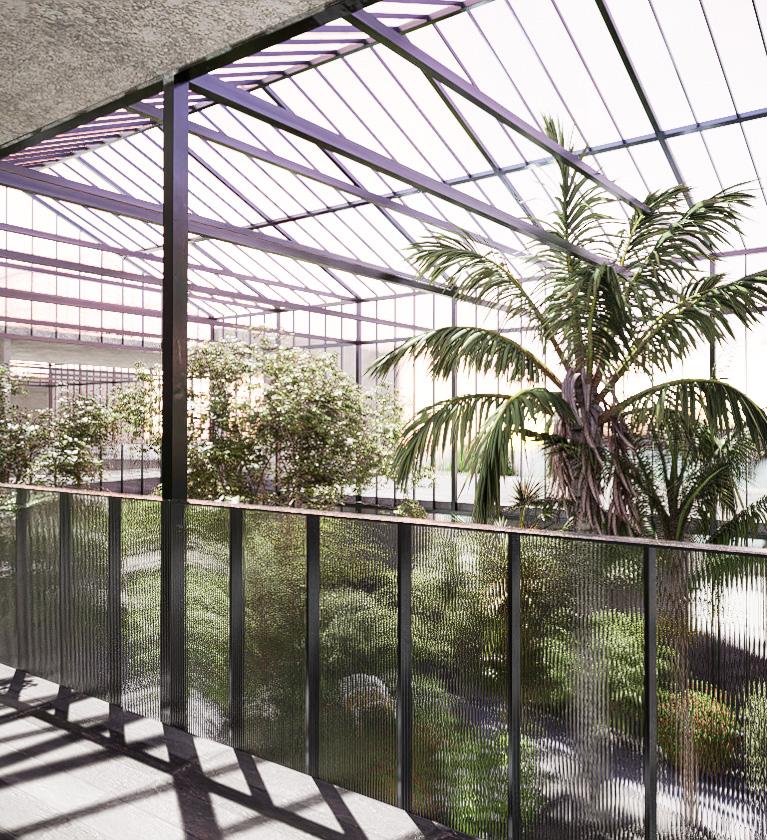
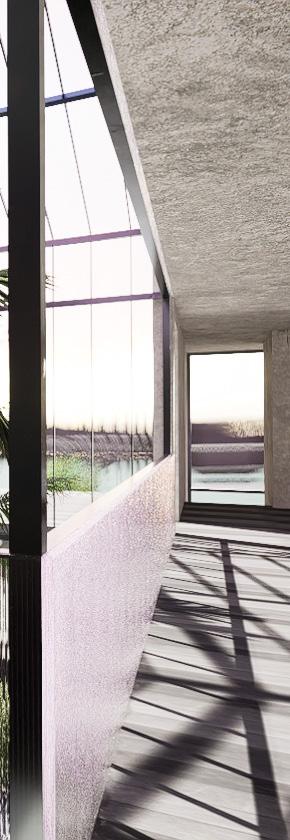
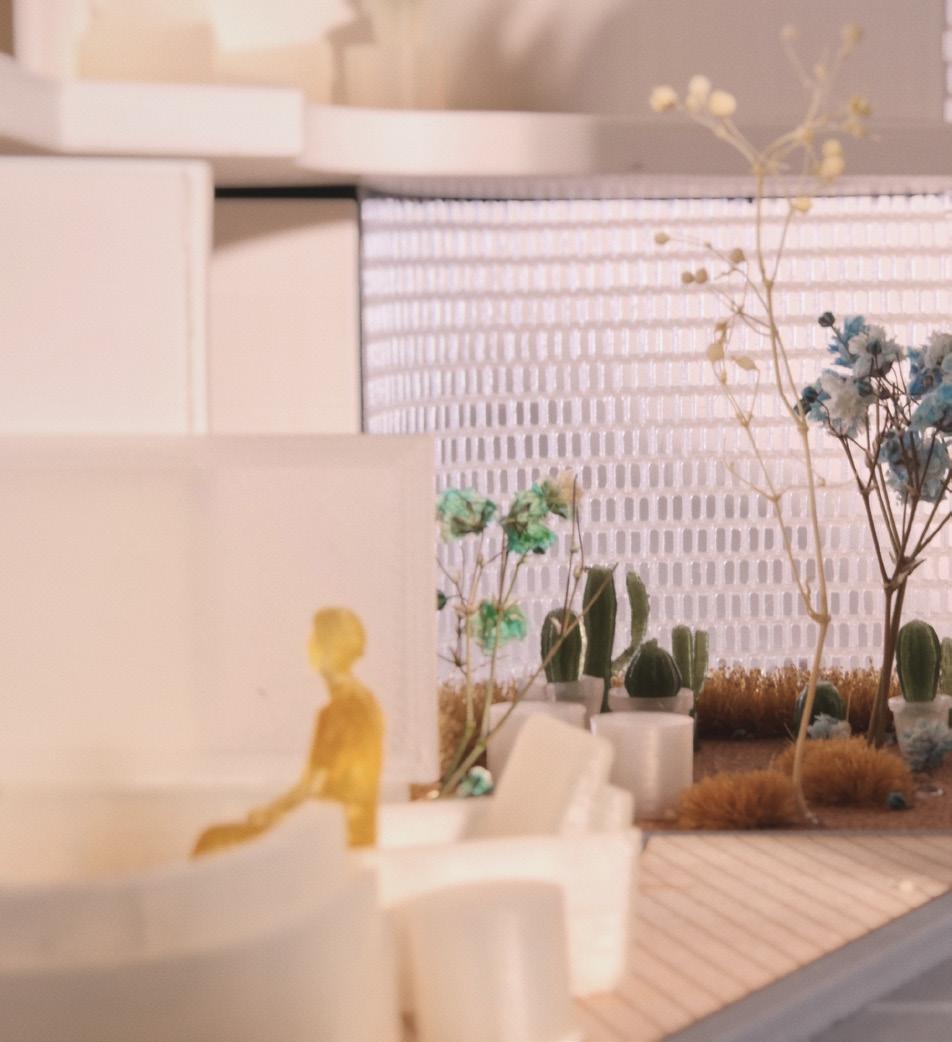
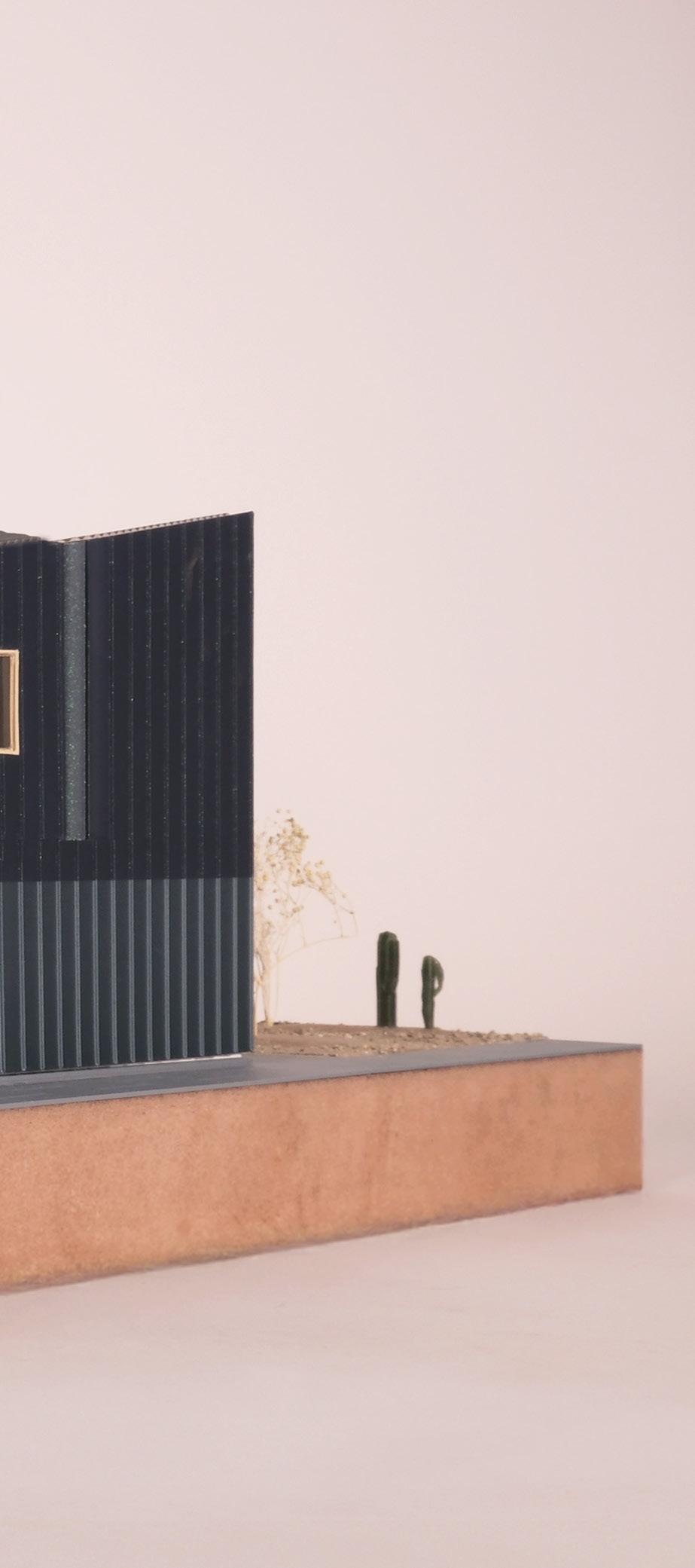
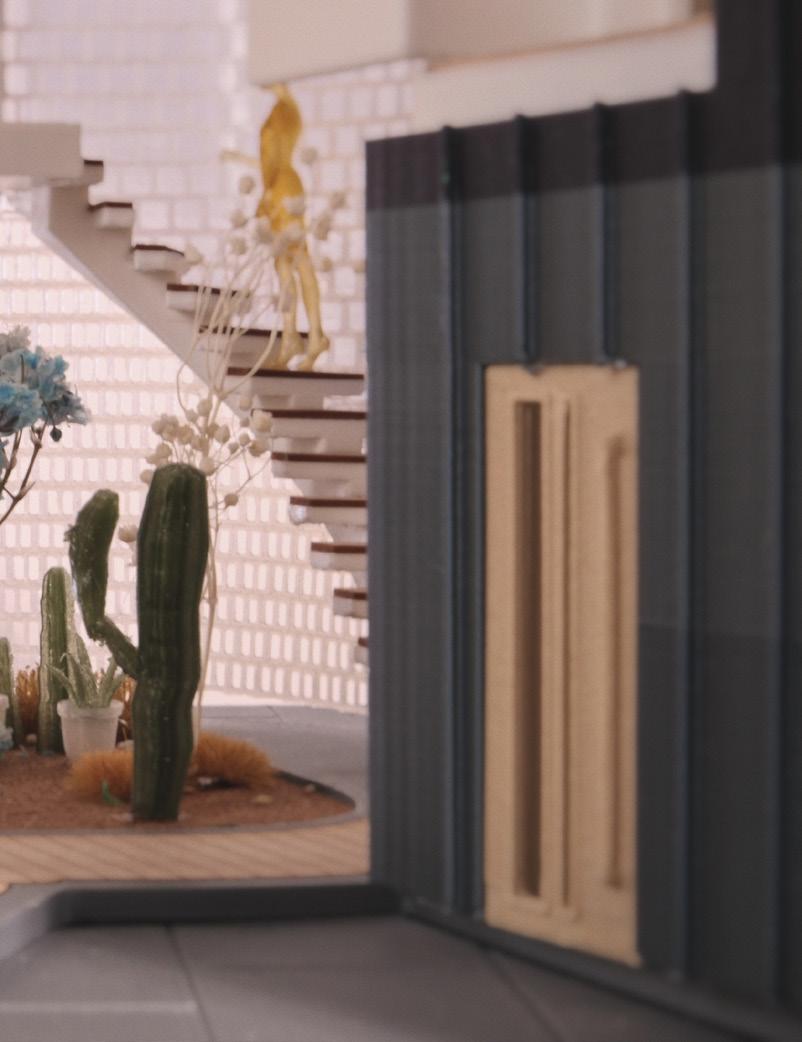
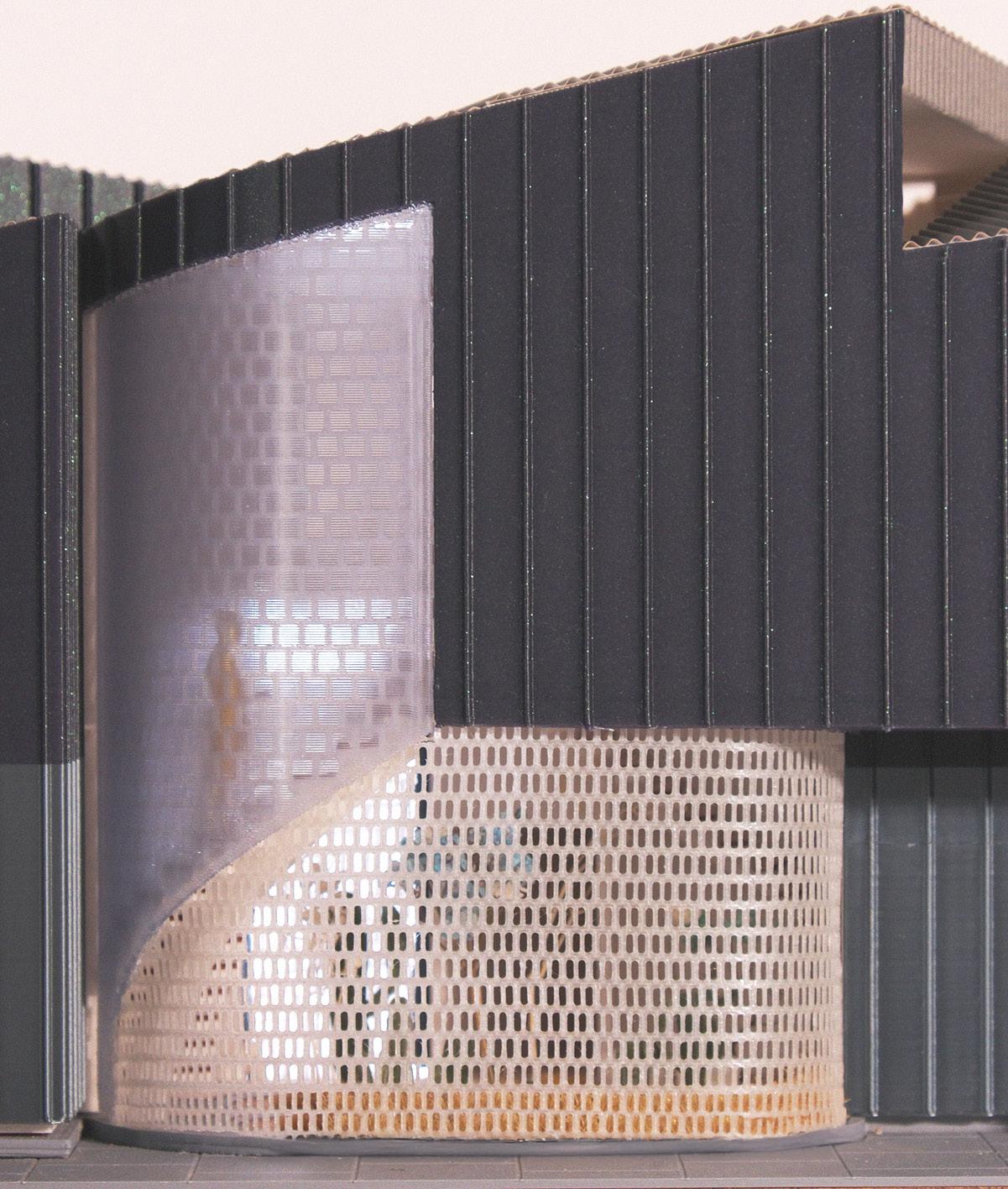
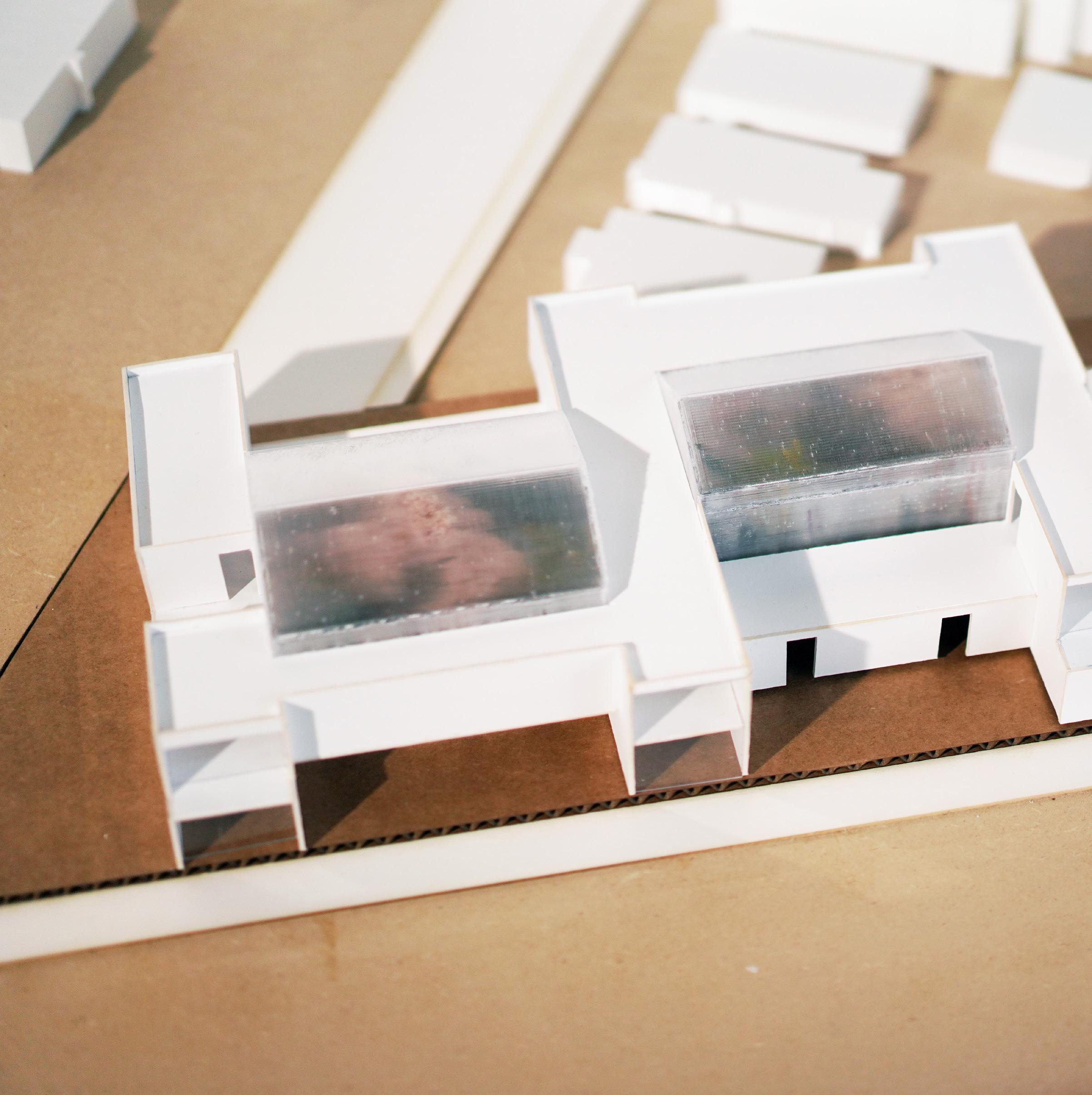
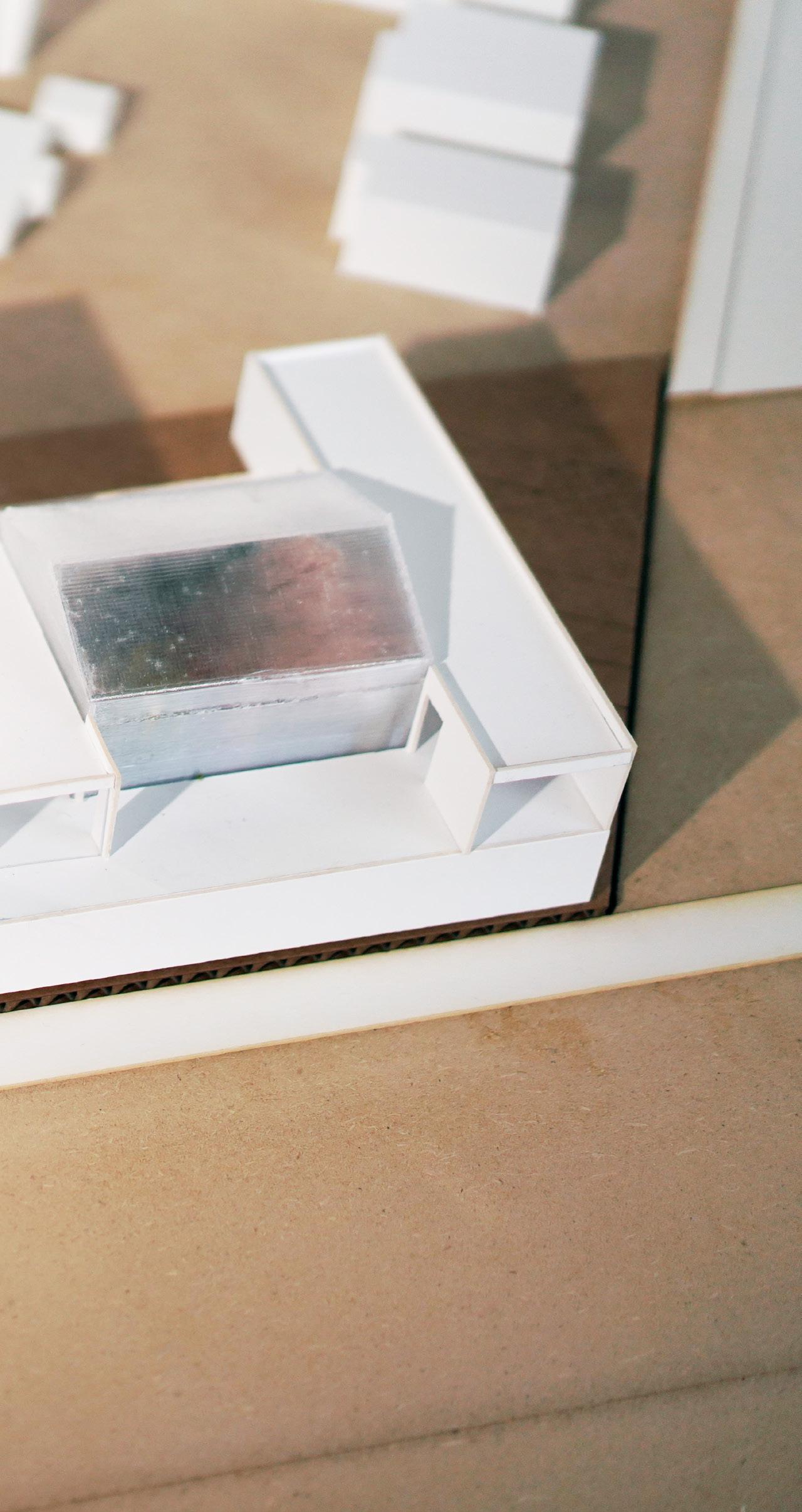
Endless Hallways: Navigating Between Nature and Discovery
Winter Project 2023
Instructor: Yara Feghali
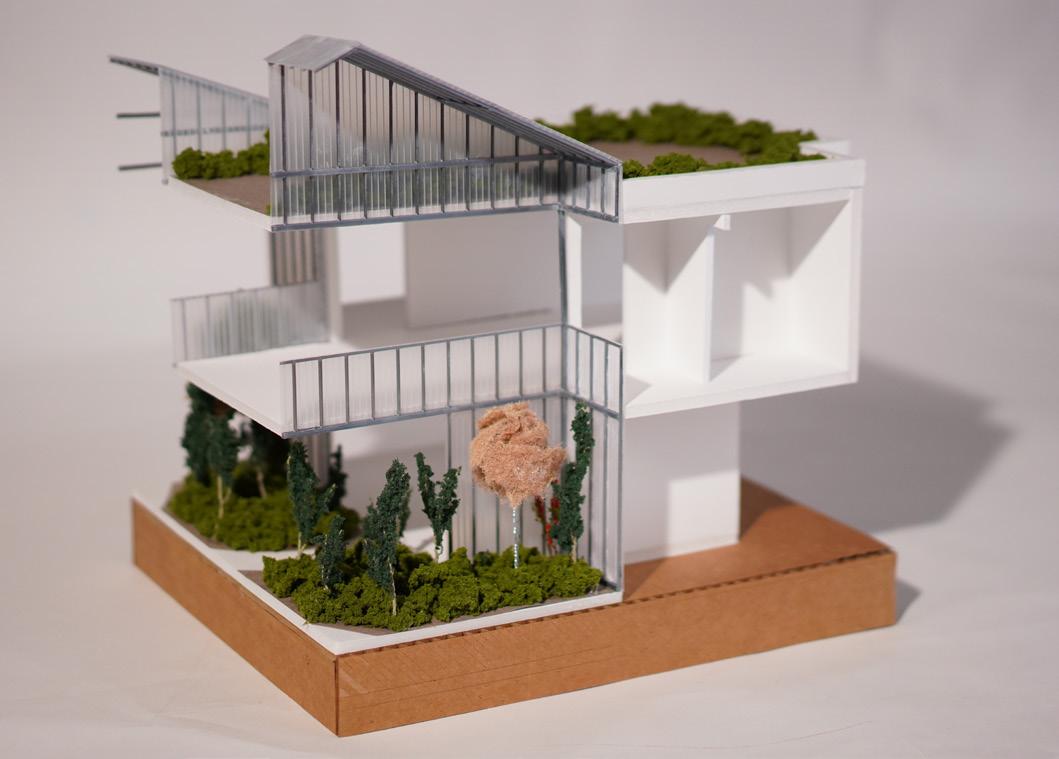
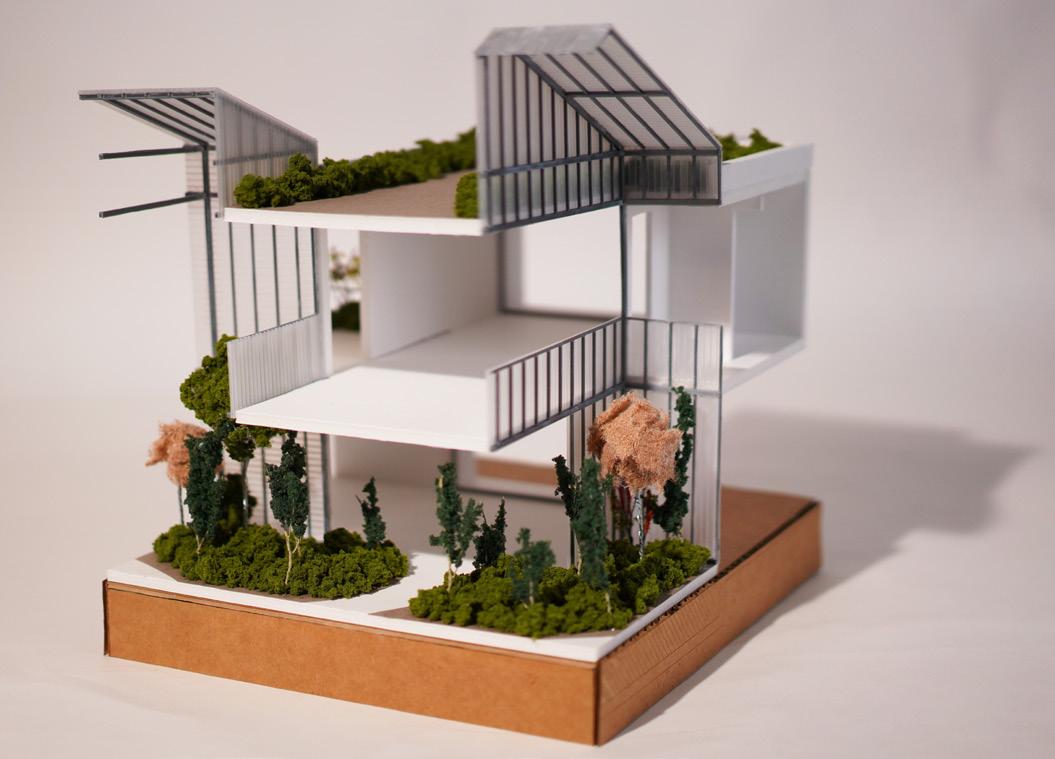
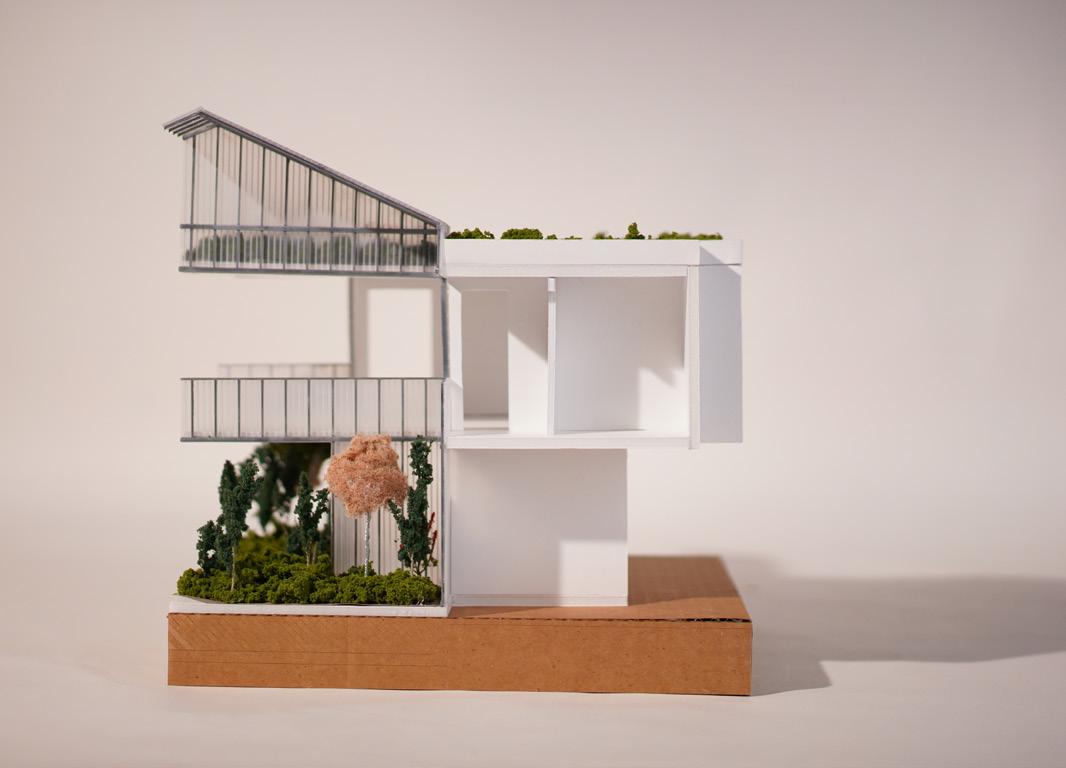
Materials: PLA / Cardboard
Focus on Endless Hallway and Greenhouse
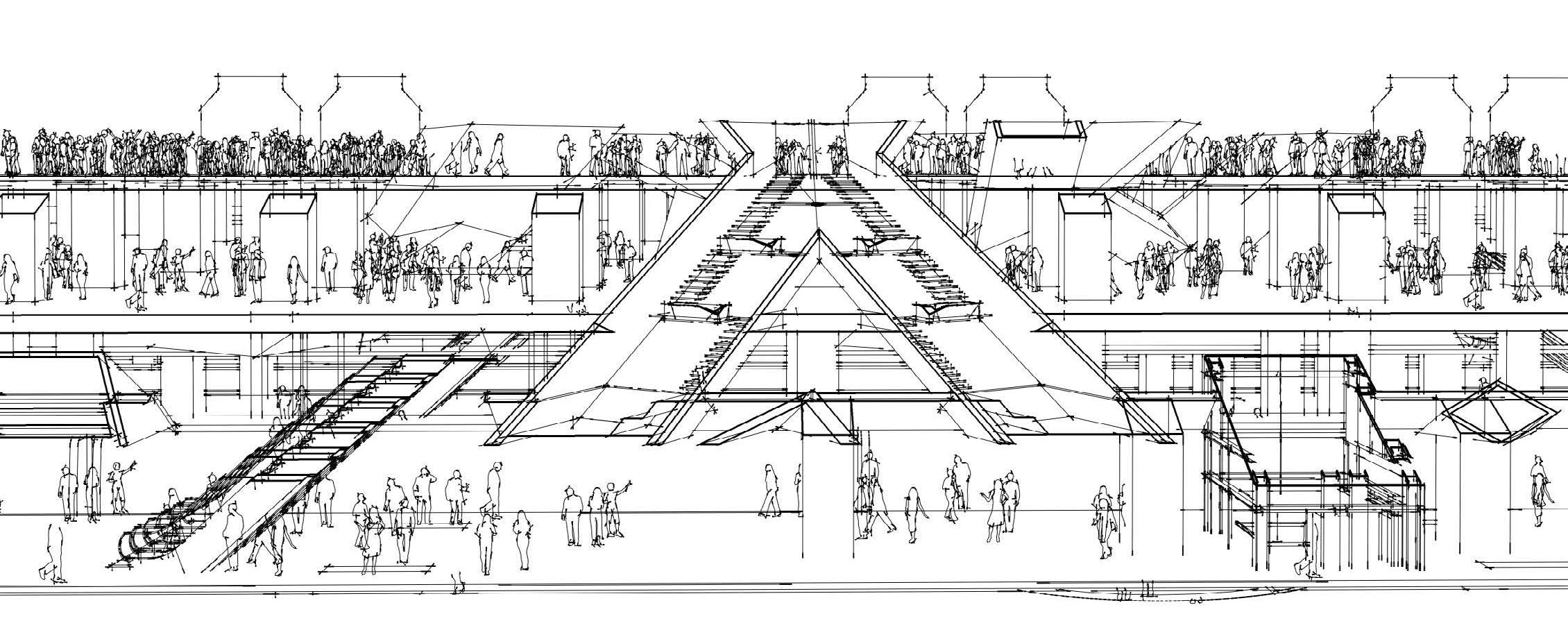
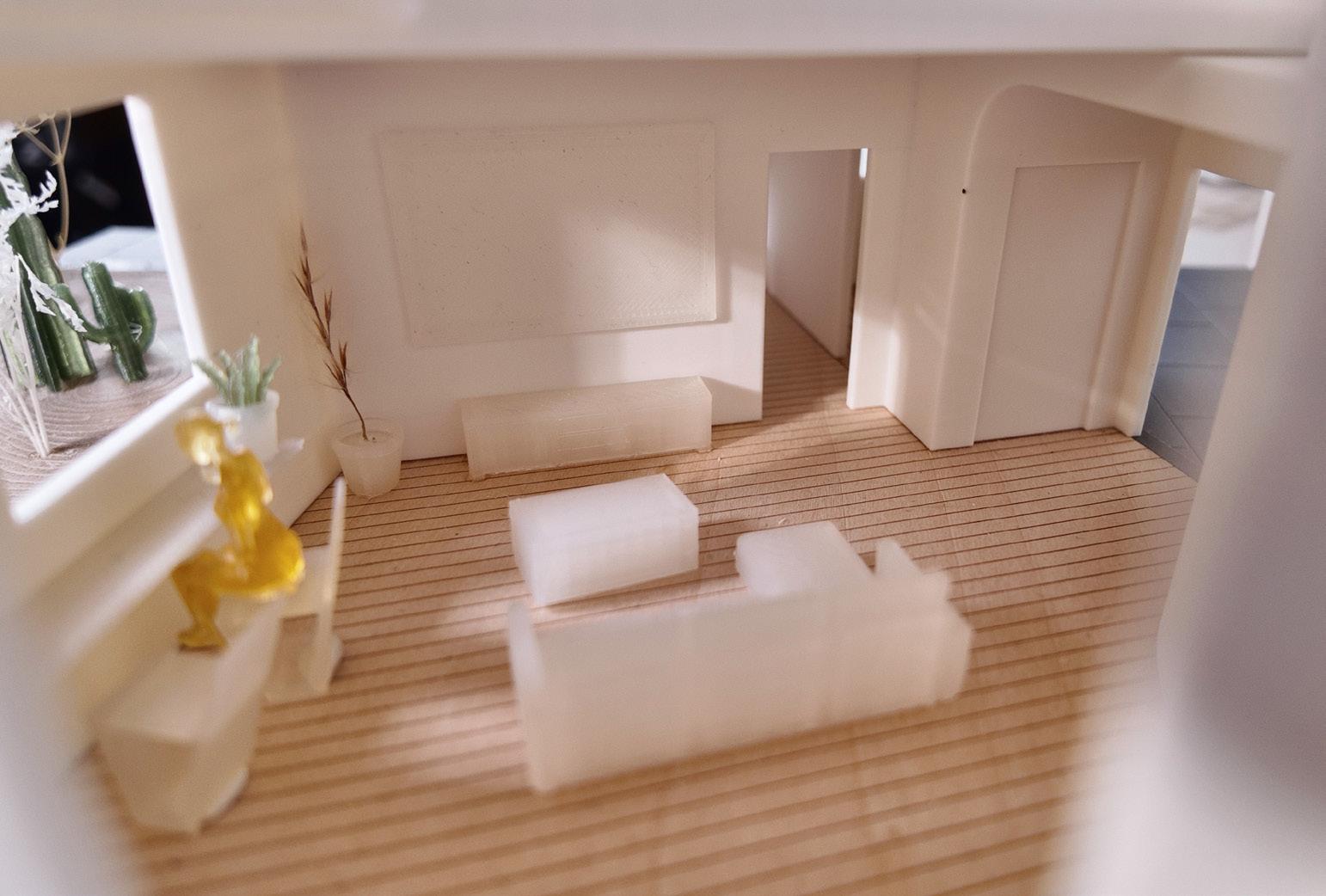
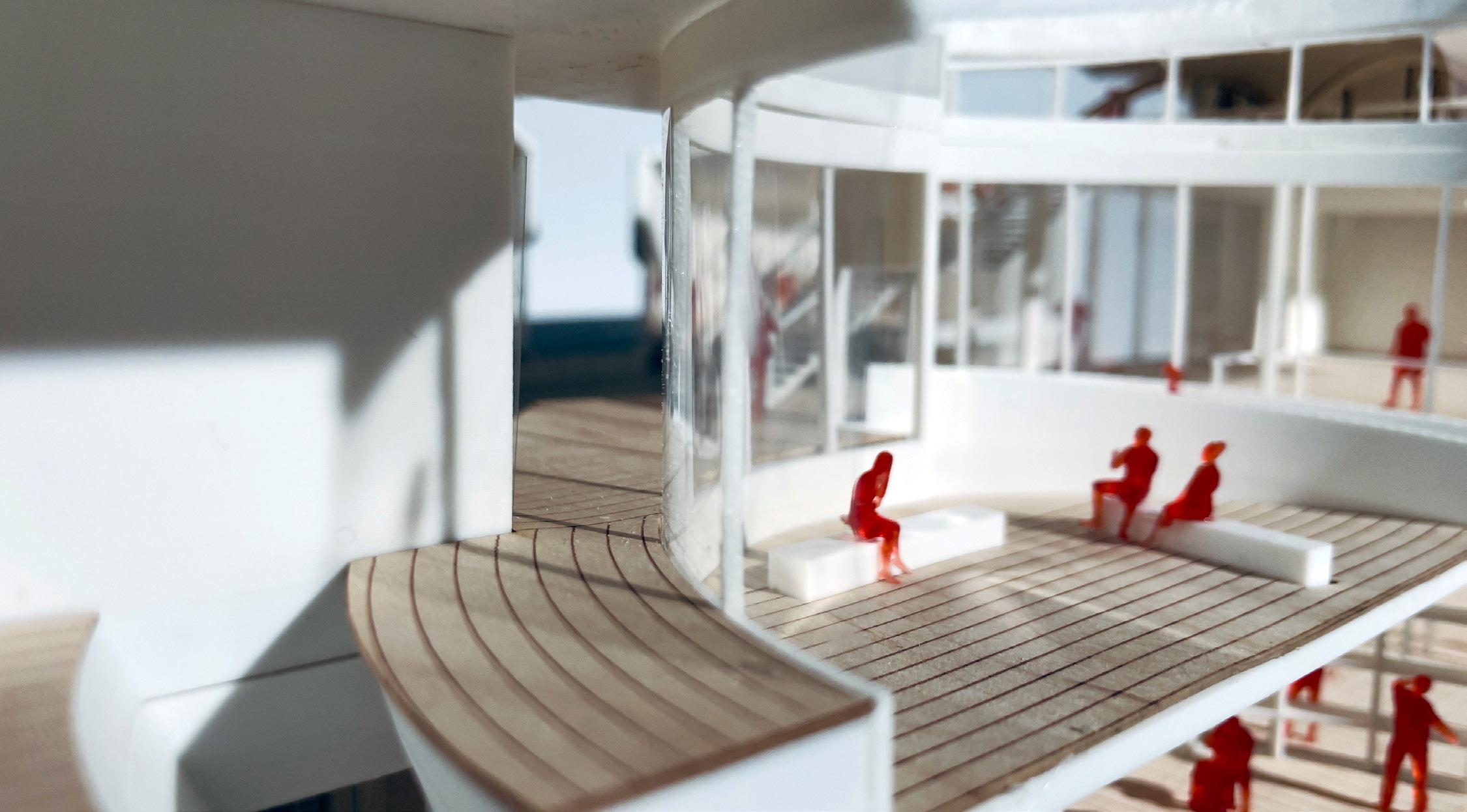
This project unveils an architectural marvel centered around an "endless hallway," guiding visitors on a continuous journey of discovery. At the heart of this journey is a greenhouse—a living symbol of growth and vitality—visible from every vantage point along the corridor. This design ingeniously positions the greenhouse as both a void and a focal point, encapsulated by the building's three-dimensional volumes.
The layout carefully delineates public and private spaces to foster a balanced environment. The ground floor buzzes with public life, hosting educational facilities, a herbarium, workrooms, and exhibition areas designed to be open and inviting. In contrast, the second floor retreats into privacy, housing the seed vault, research labs, and select exhibition spaces, offering a tranquil atmosphere for focused activities.
A cornerstone of this project is the omnipresent greenhouse, ensuring a perpetual bond with nature. Its constant visibility—no matter where one stands within the structure—provides endless perspectives and a continuous backdrop of natural beauty. This architectural technique not only highlights the greenhouse from multiple angles but also enriches the visitor's experience, making each interaction with the space unique and memorable. Through this design, the building transcends its physical form, becoming a conduit for ongoing exploration and engagement with the natural world.
Content Diagram - The modular system adapts to different functions, ensuring flexibility and efficient spatial organization.
Arrangement Diagram - Encased by bars, the greenhouses are visible from every interior, connecting nature with the built environment.
Structure Diagram - A light structure is surrounded by a heavy structure to emphasize the building's focal point.
BB' Section Scale: 1/32"=1'-0
the
the conditions its institutional and the over town with to rooted this windy
thriving legacy of the unique site conditions identity distinctively its lasting institutional of very local and proposal.
Everywhere one turns, the formations hovering over through the town settings strewn with layer upon layer to always, deeply rooted operates within this town, a rugged windy
programs as anchoring see the stadium and expanding the facet of the siting of public stair decent to delivers visitors to
portion of the program end.
stretch of site along allowing it to reflect adjacencies. To ground our by aligning to the a concealing and from the exterior. which views to the other. The stepped the length of the public thoroughfare, program spillover and
with the urban fabric profile of the roof strategically to further stands out using strategically against the back throughout the modular curtain material regimes elevation producing yet mirrored fritting printed façade. Some actual, fleeting, an abstracted changes of the hills
anchoring stadium the of to to program along reflect our the and exterior. the stepped the thoroughfare, and fabric roof further using back the curtain regimes yet printed actual, abstracted hills that the the
experience, one that constituents. Just as the gently probe the
Invited Architectural Design Competition Project
MNOffice Intern Project 2023
Reflective, Receptive, Projective - A Sensorial Education
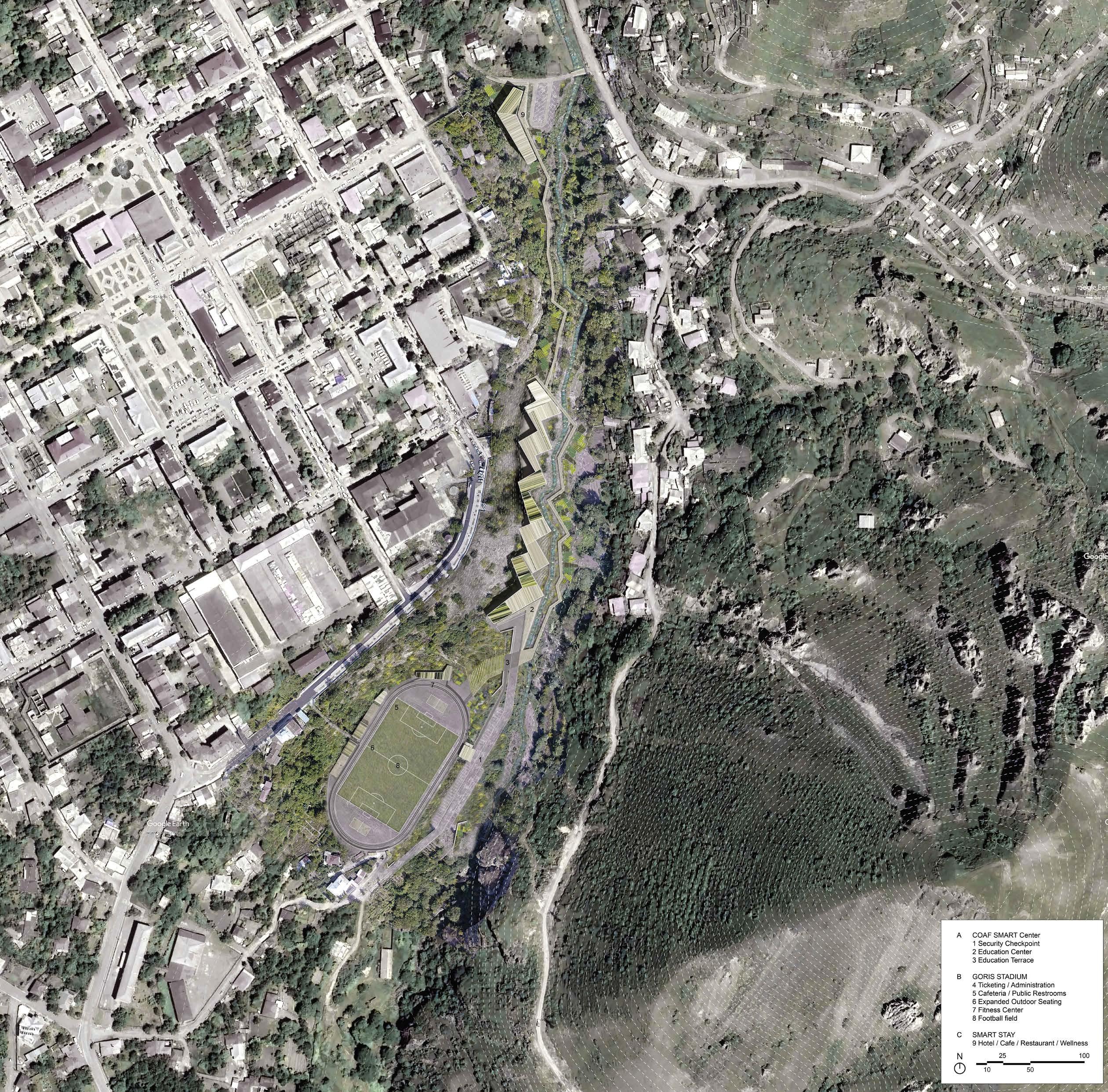
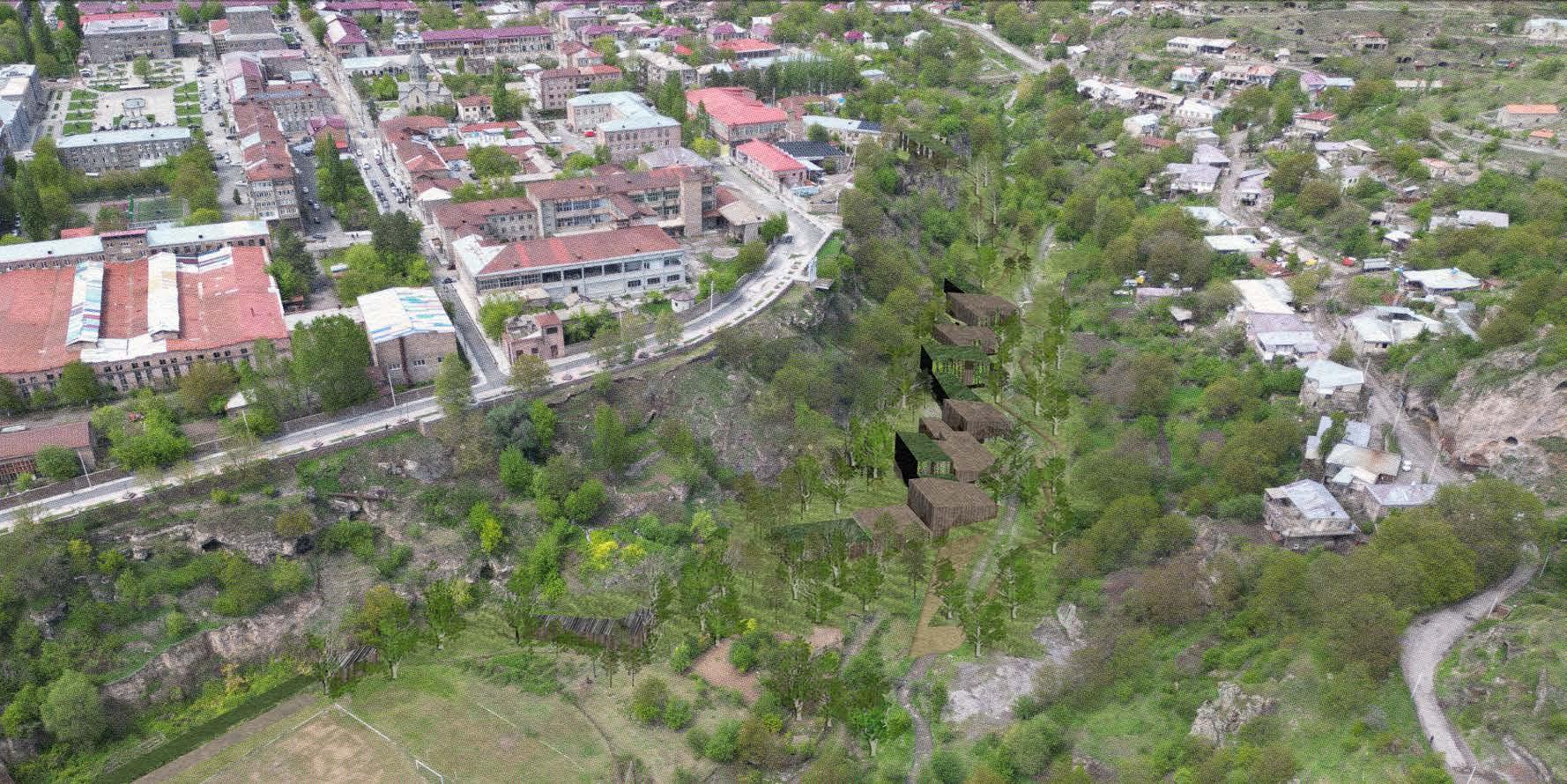
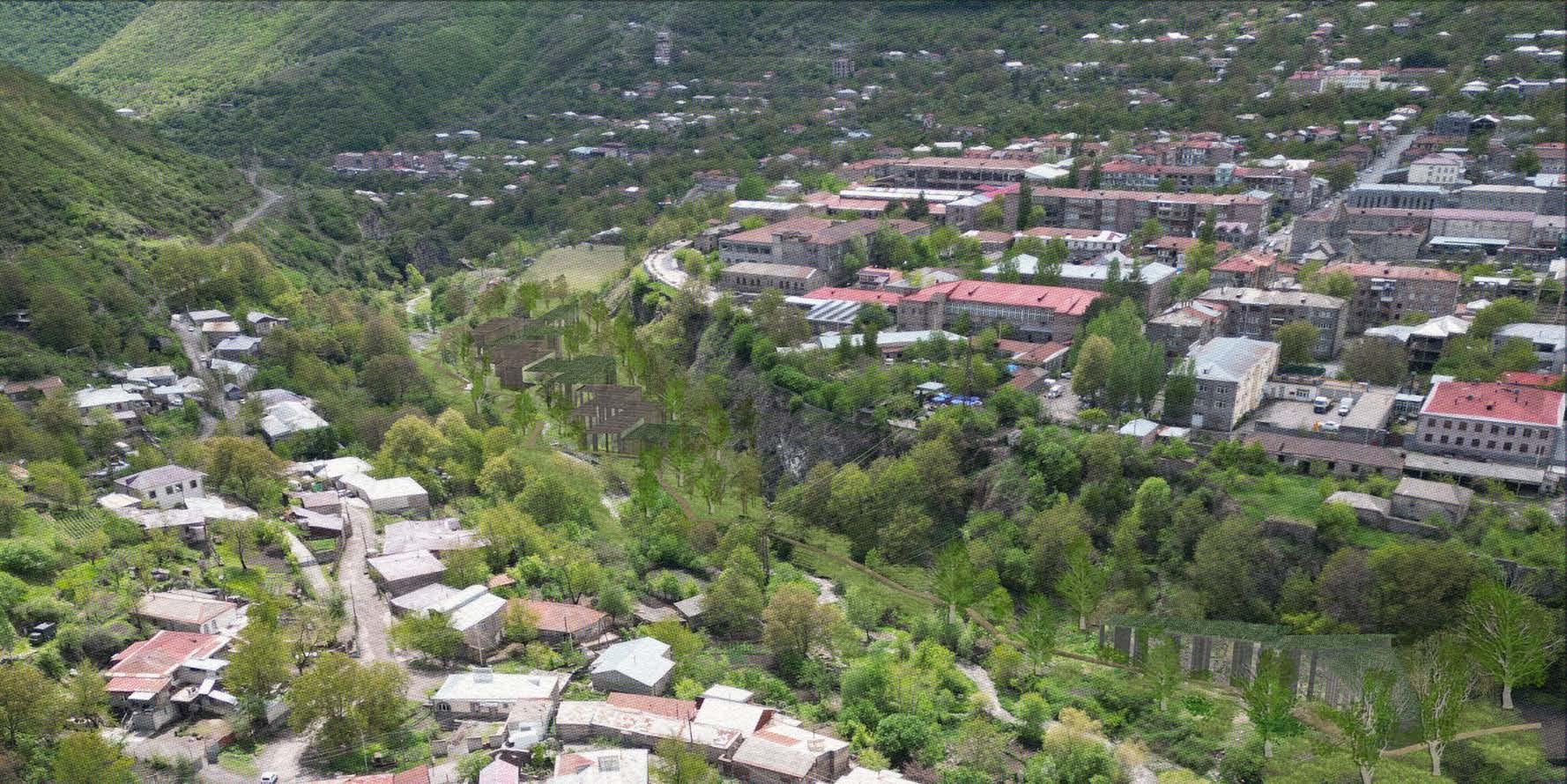
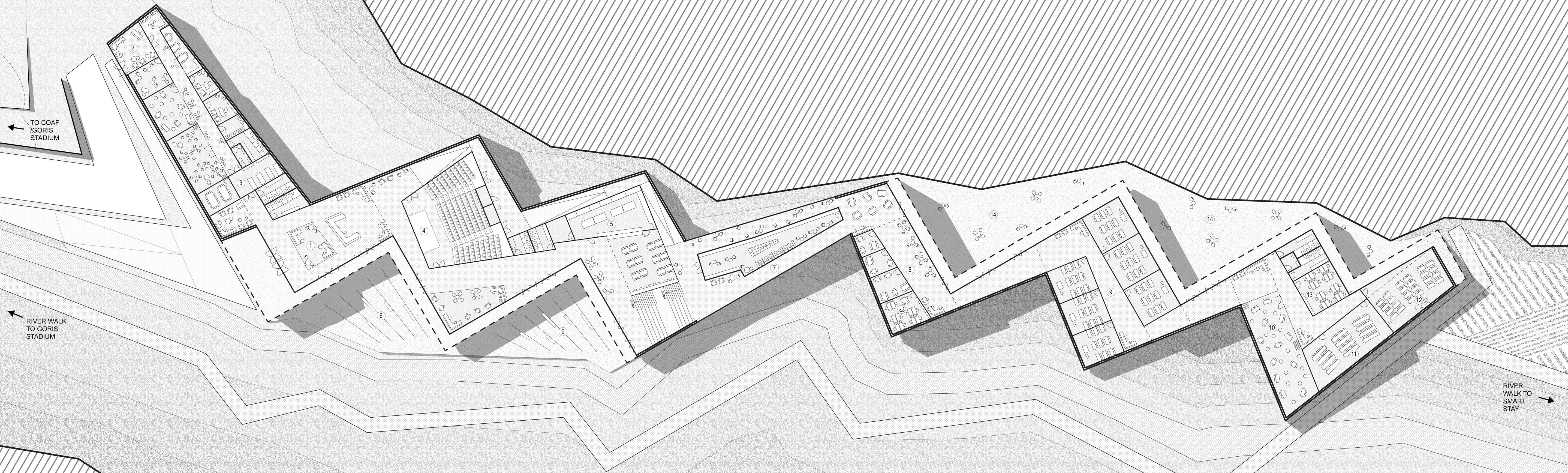
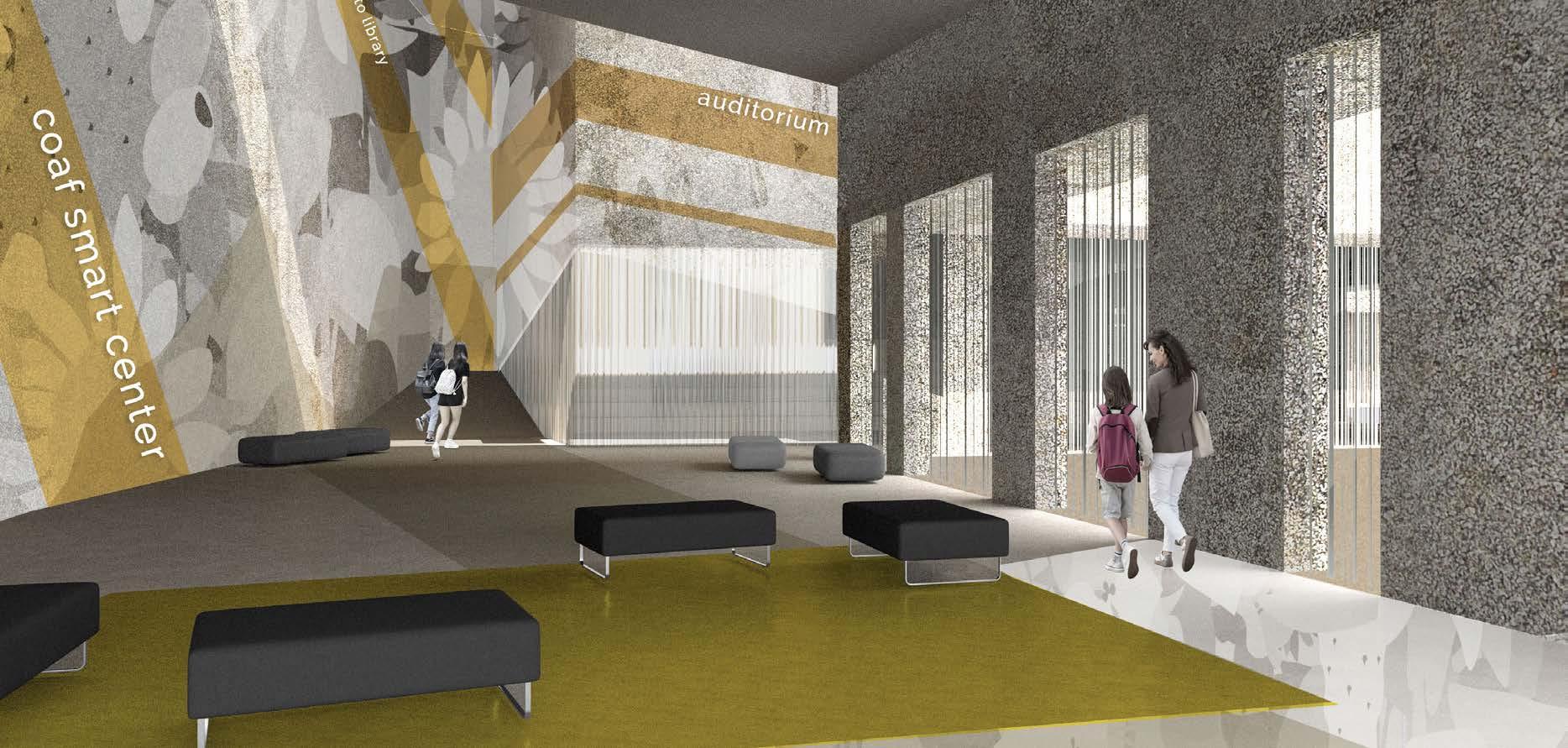
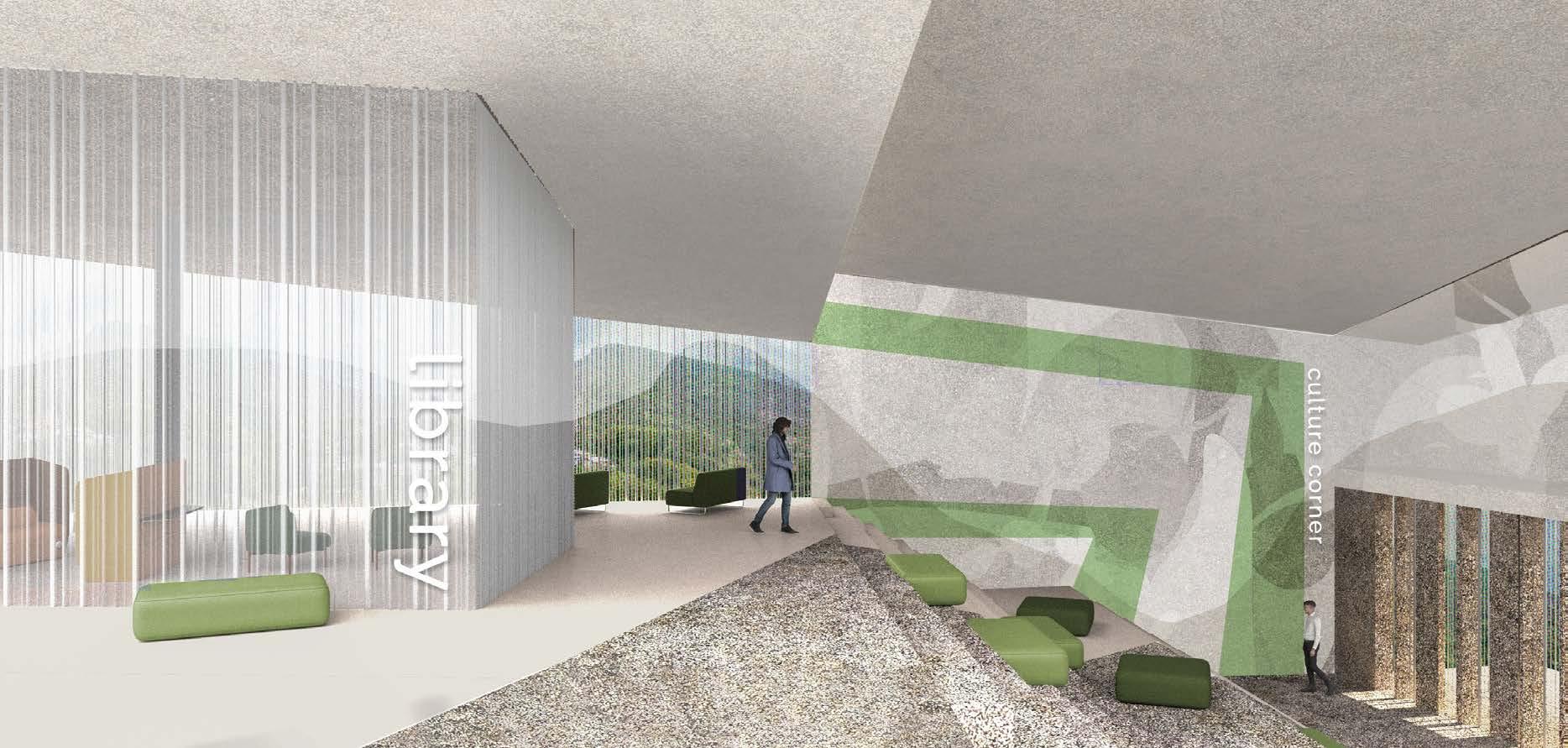
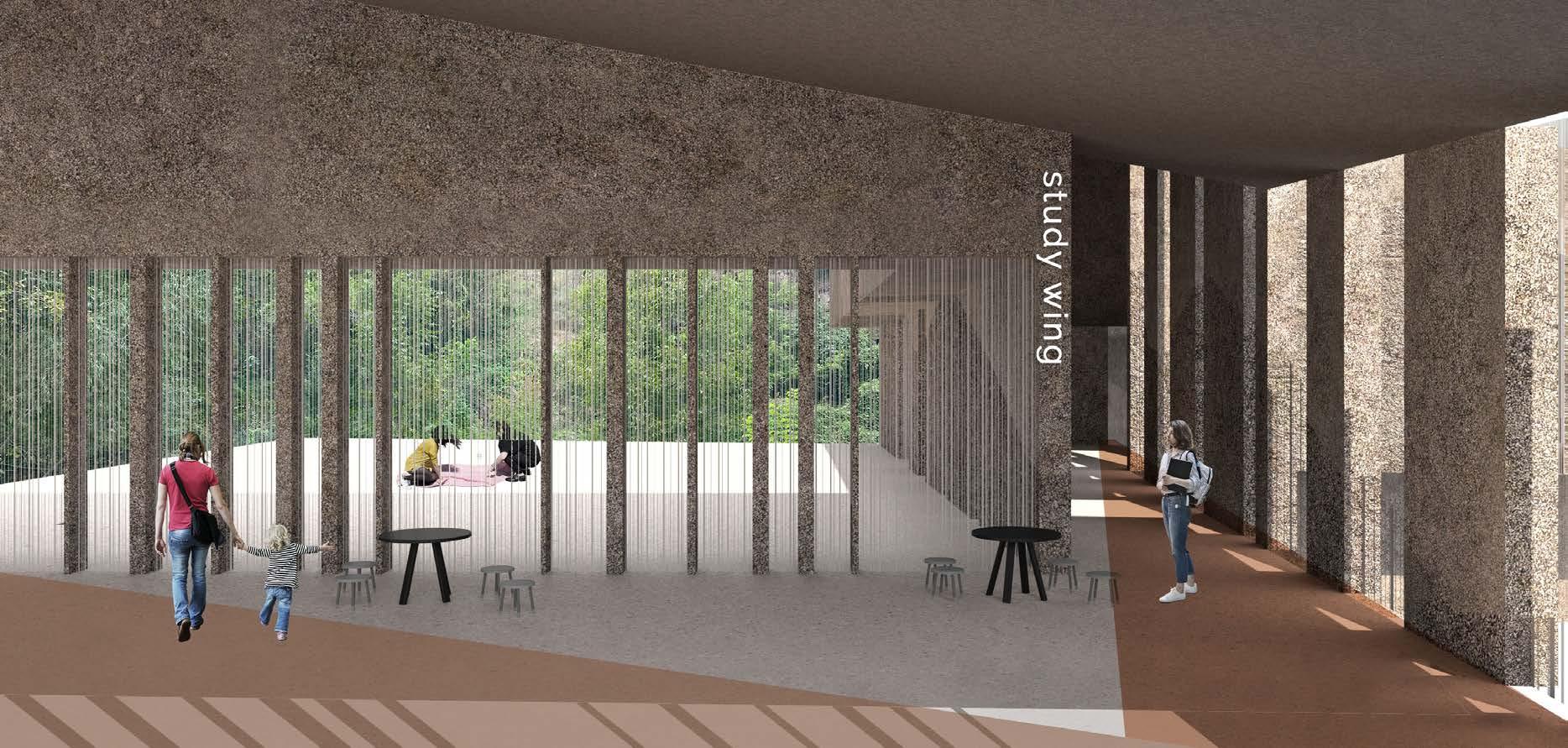
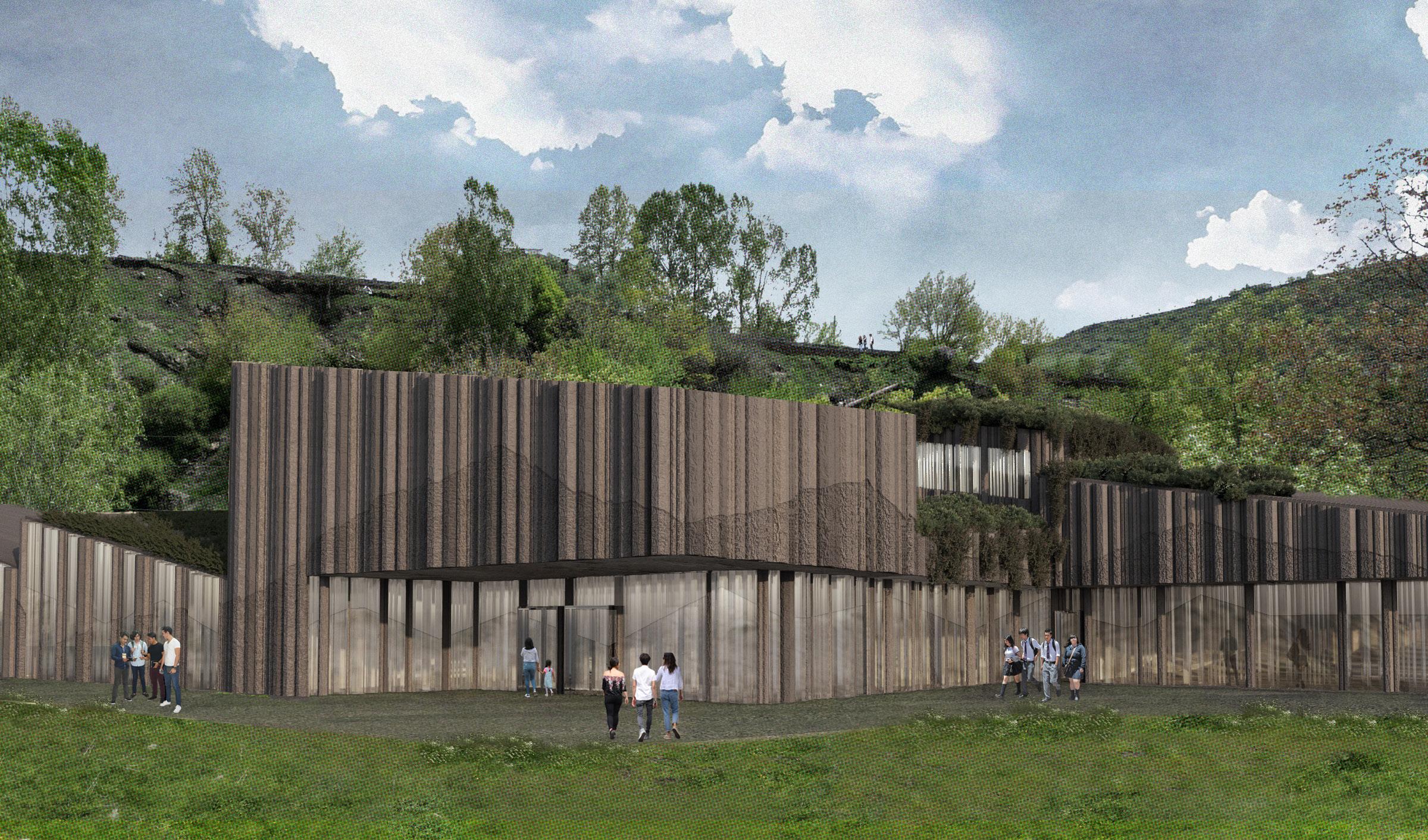
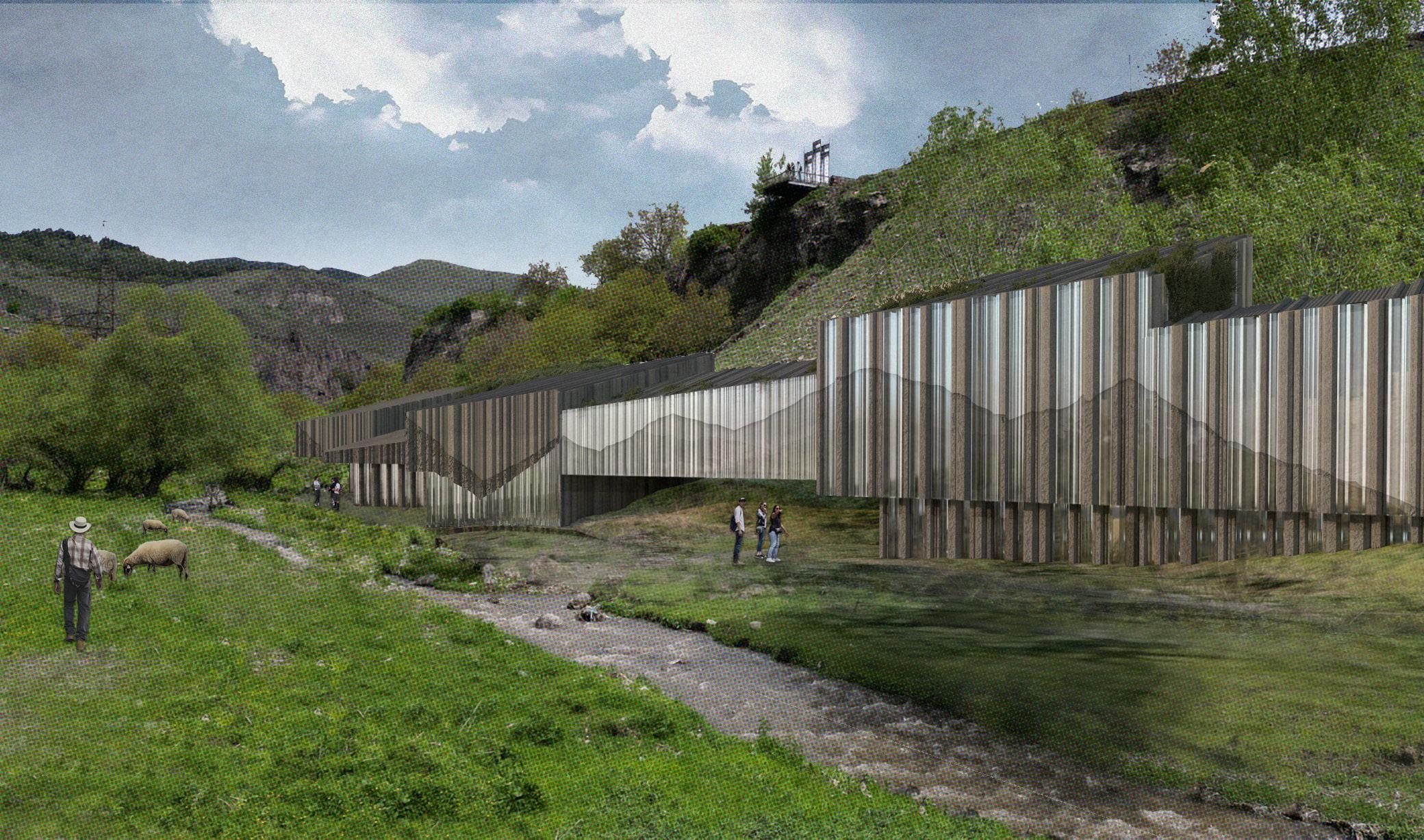
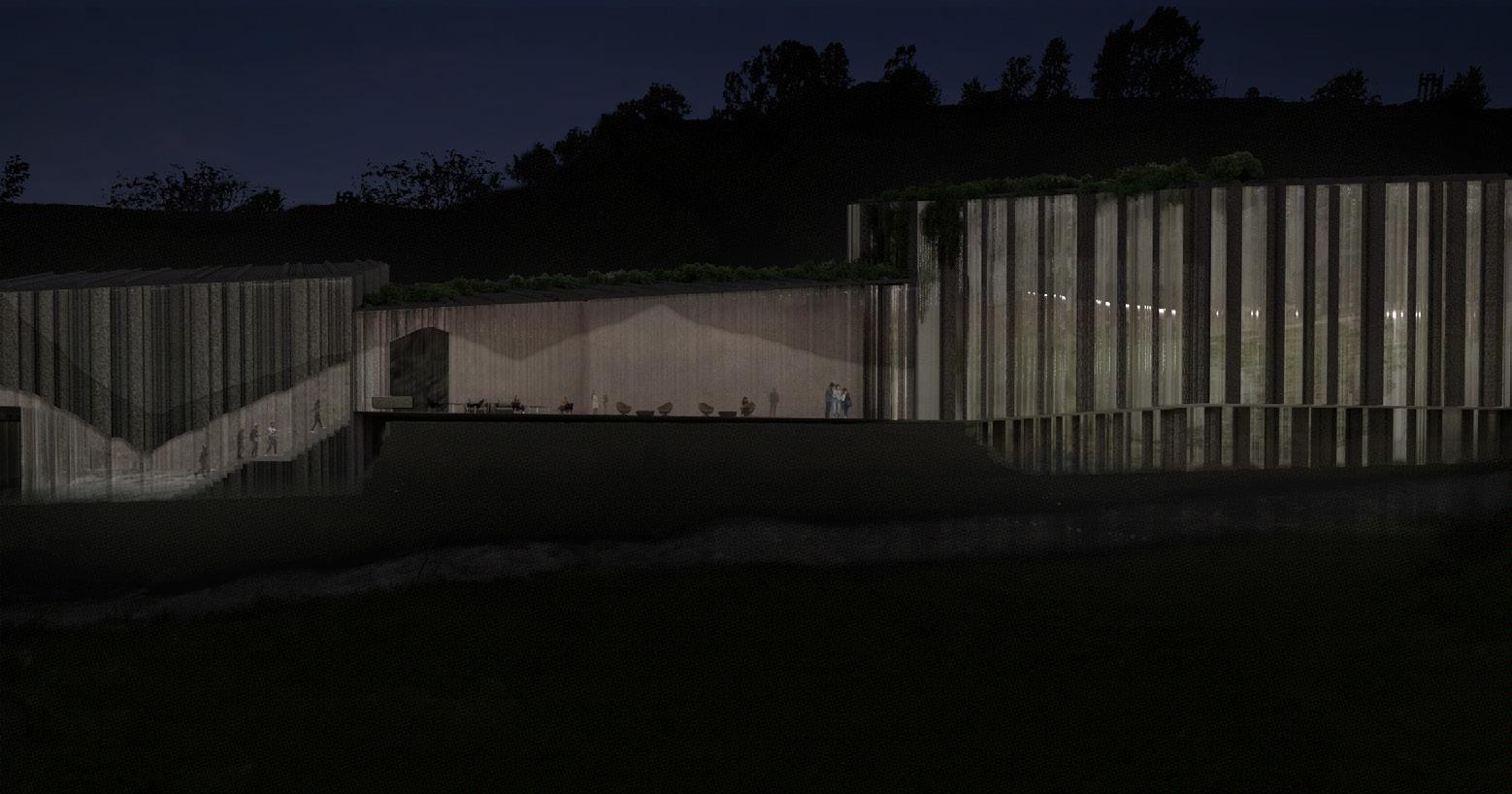
Our proposal for the COAF Goris Smart Center builds on COAF’s educational legacy while deeply embedding itself within the cultural and natural context of Goris. The aim is to create a distinctive identity that harmonizes the region’s rich architectural heritage with an innovative institutional framework.
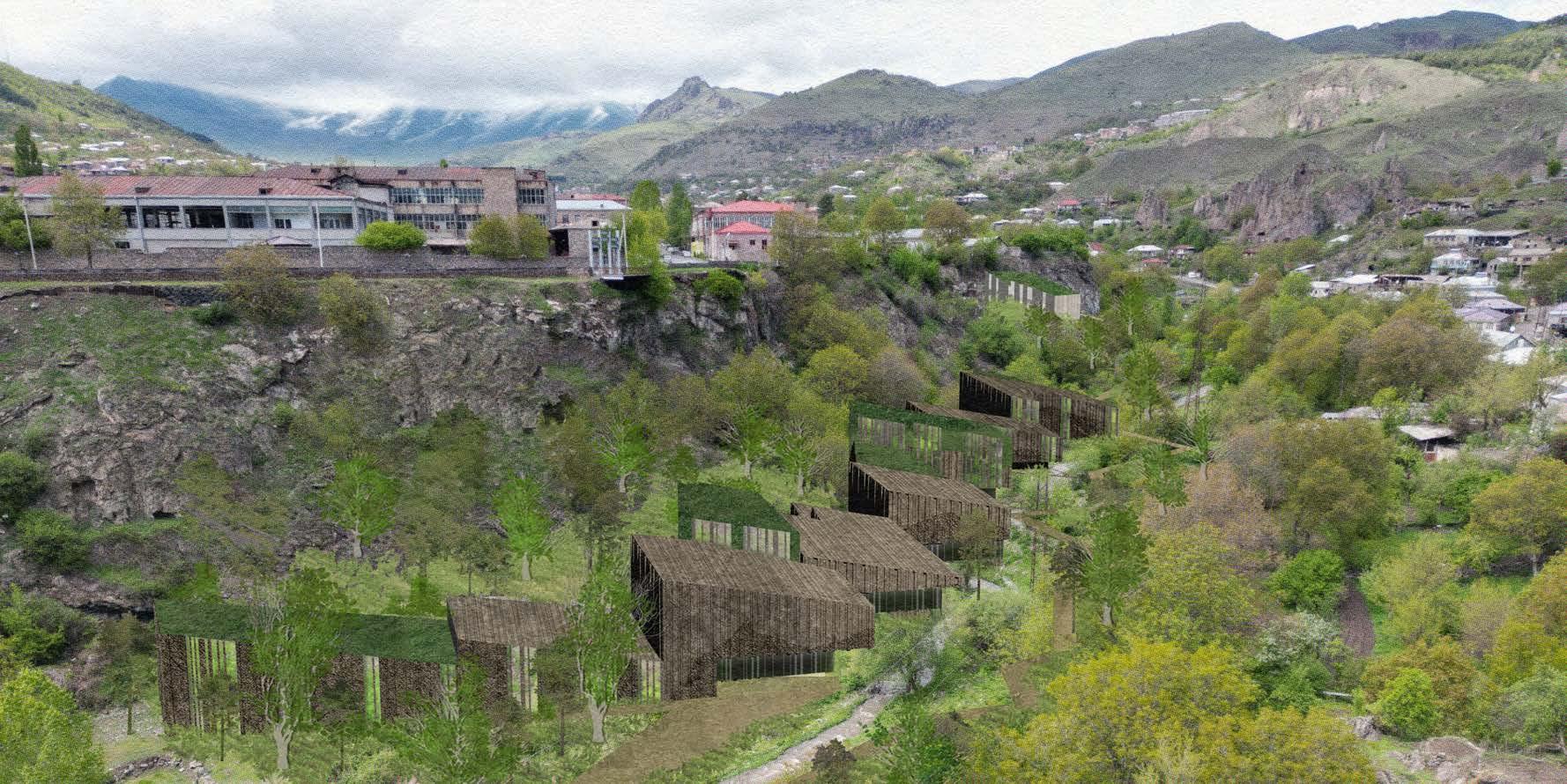
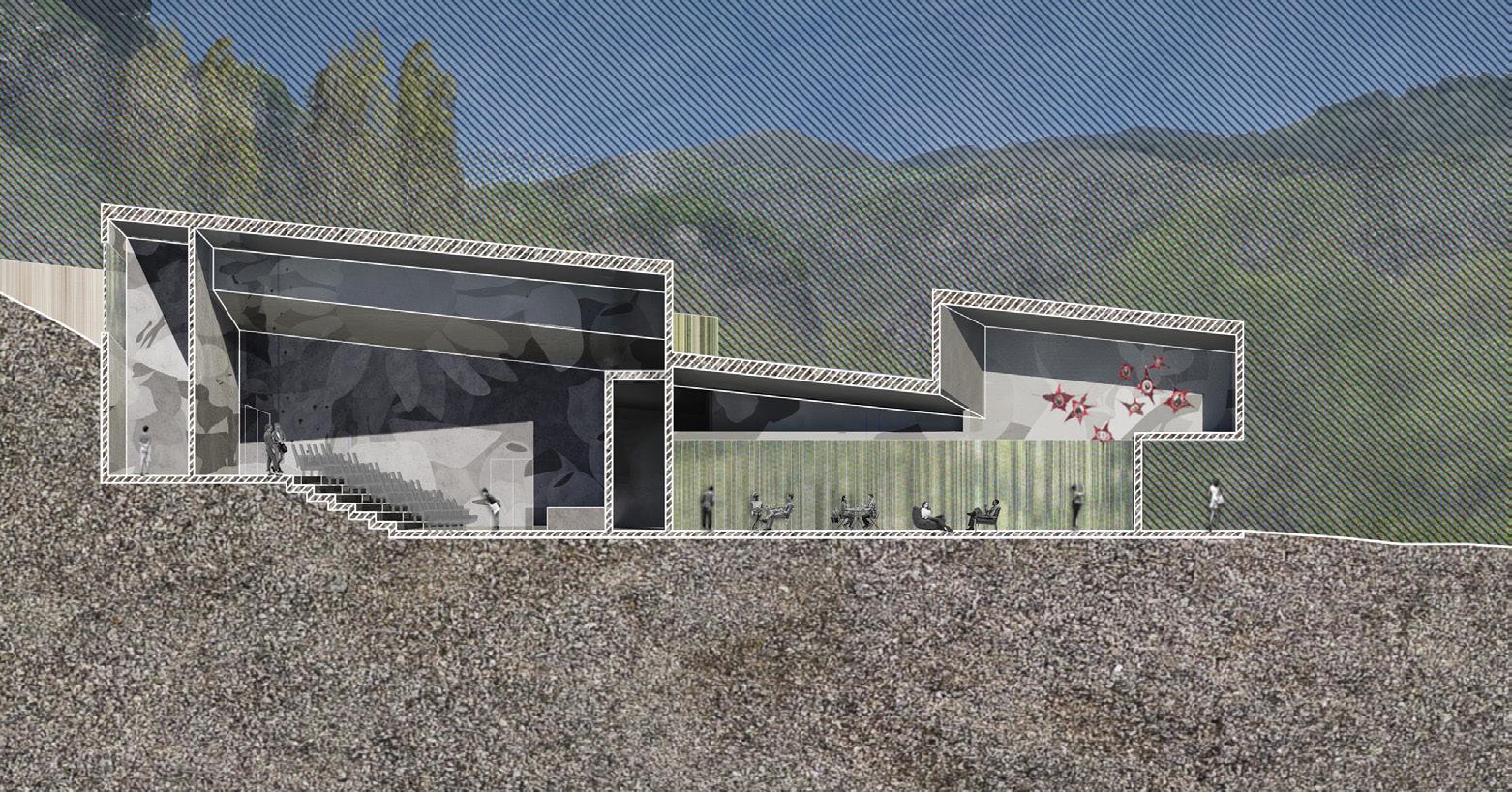
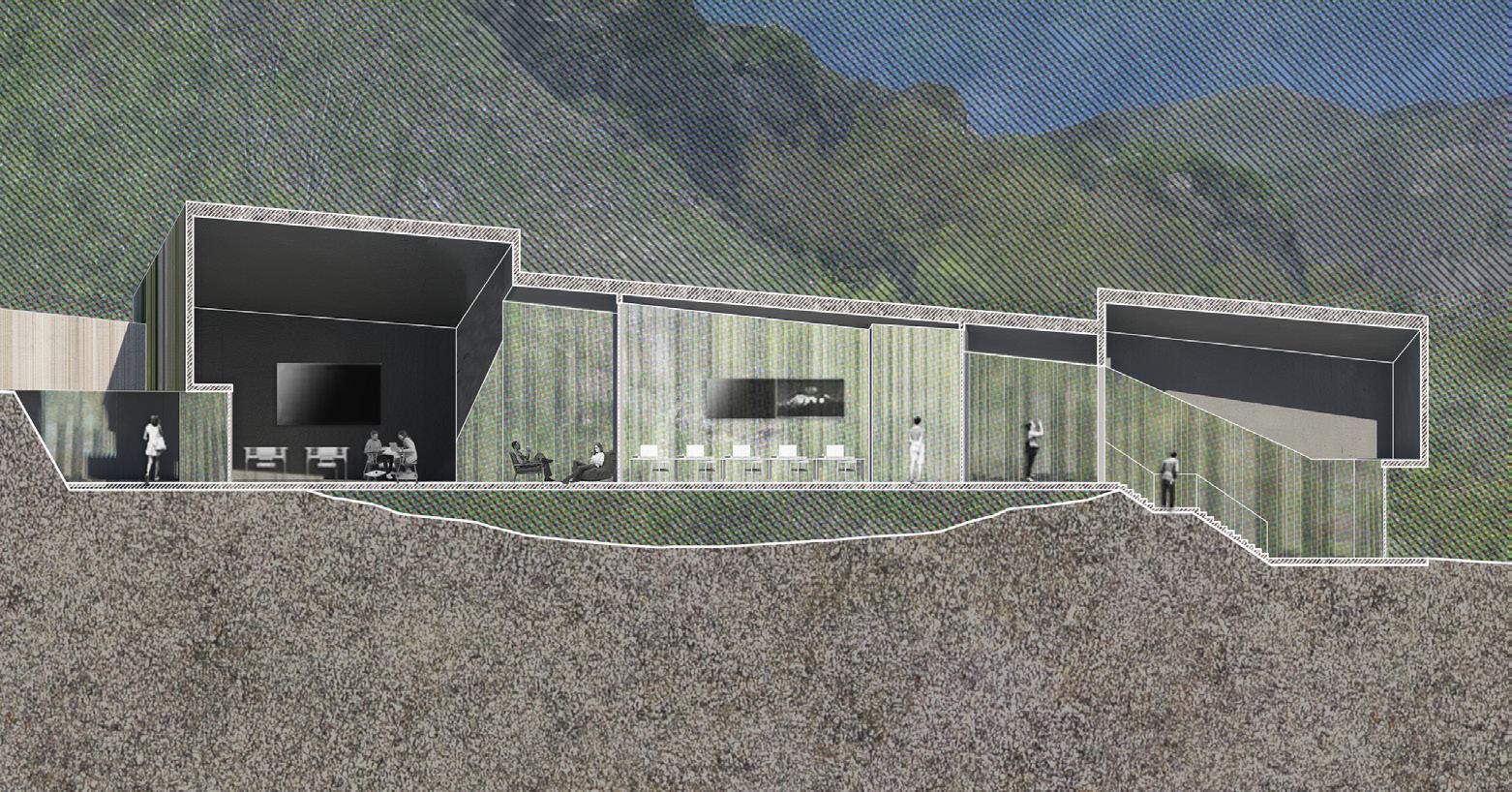
The design draws inspiration from the unique beauty of Goris, where geological formations and man-made structures intertwine. This layered context—rich in textures, patterns, and materiality—shapes the project’s spatial and material language. The southern end of the site is anchored by the existing stadium, repurposed as a gateway and community hub. A pedestrian promenade and riverwalk connect visitors to the educational and hospitality facilities, enhancing site connectivity.
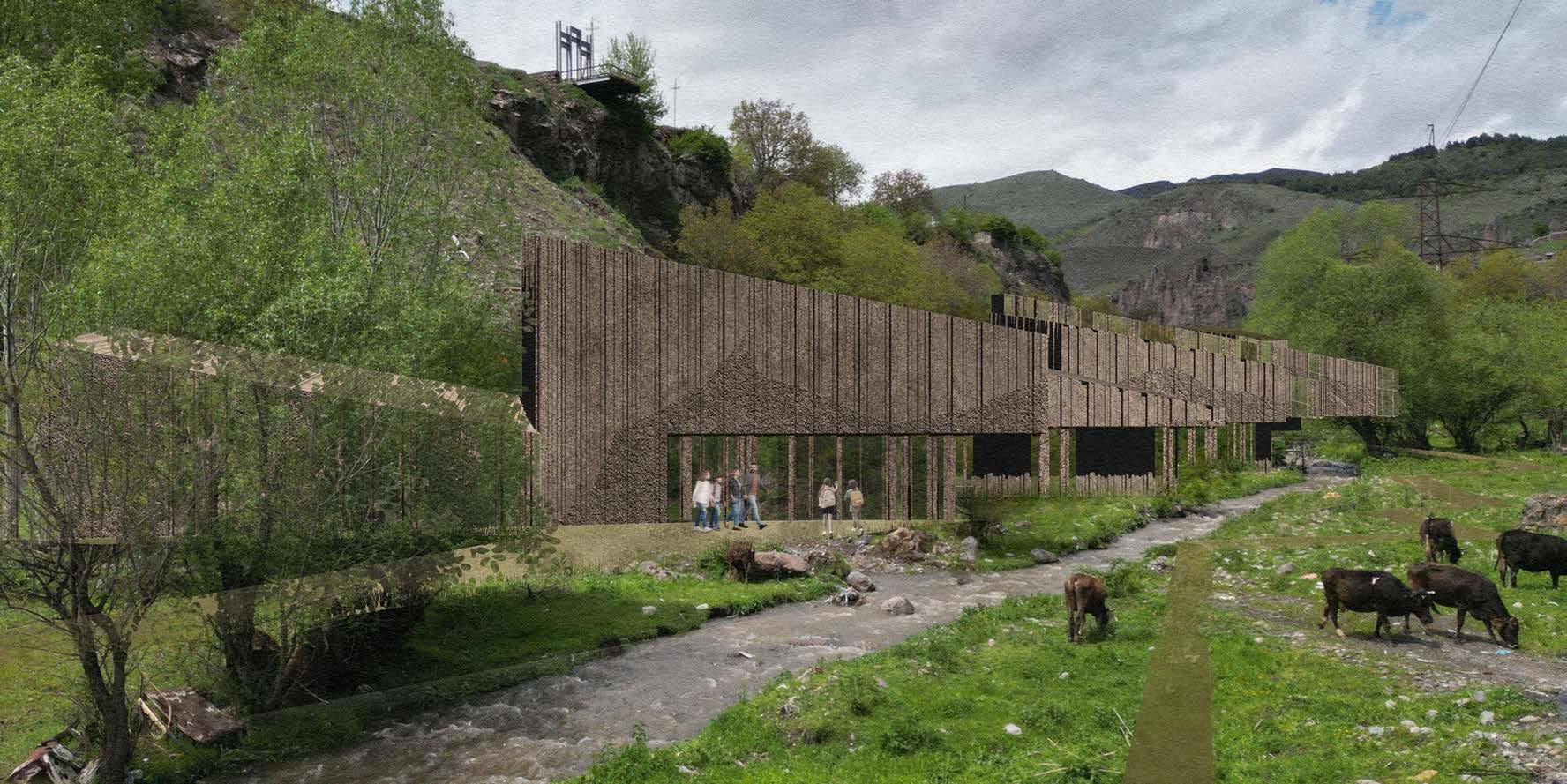
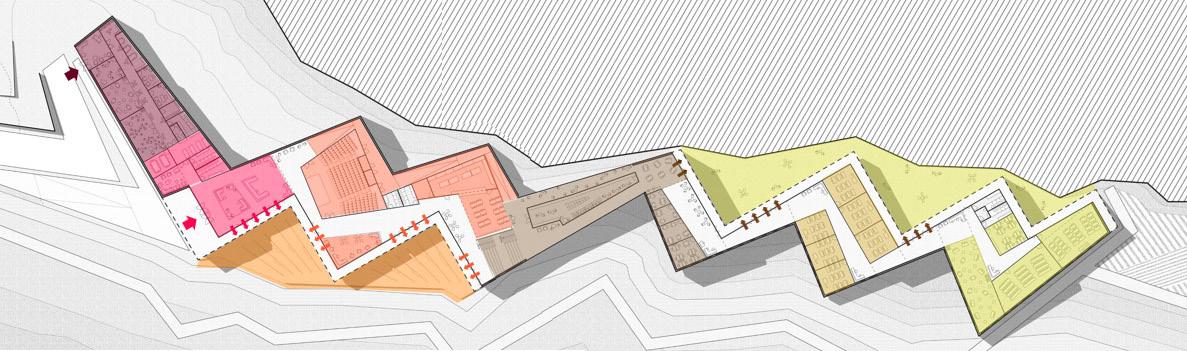
The boutique hotel anchors the northern end, while the educational complex follows a narrow strip along the river. This configuration inspires a stepped lenticular plan aligned with the city grid, creating a dynamic architectural presence. Externally, the stepped form conceals and reveals the building’s massing, while internally, it frames shifting views of the landscape. A central promenade threads the programmatic elements together, serving as circulation, gathering space, and exhibition hall.
The elevations echo this rhythm through varied extrusions and a stepped roofline that integrates seamlessly with the urban fabric. Composite stone materials and green roofs blend the project into the natural backdrop while establishing it as an iconic landmark.
Inspired by local geological features, the facade employs GFRC panels and glazing in alternating patterns. Speckled textures and mirrored fritting amplify reflections, creating an abstract narrative that shifts with the seasons. The COAF Goris Smart Center offers a sensorial experience that fosters curiosity and exploration, ensuring its lasting relevance within the community.

Diagram
Diagram
Diagram


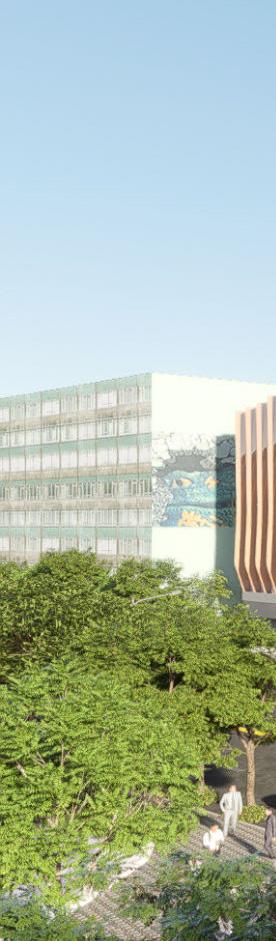
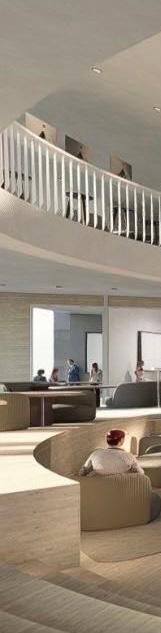
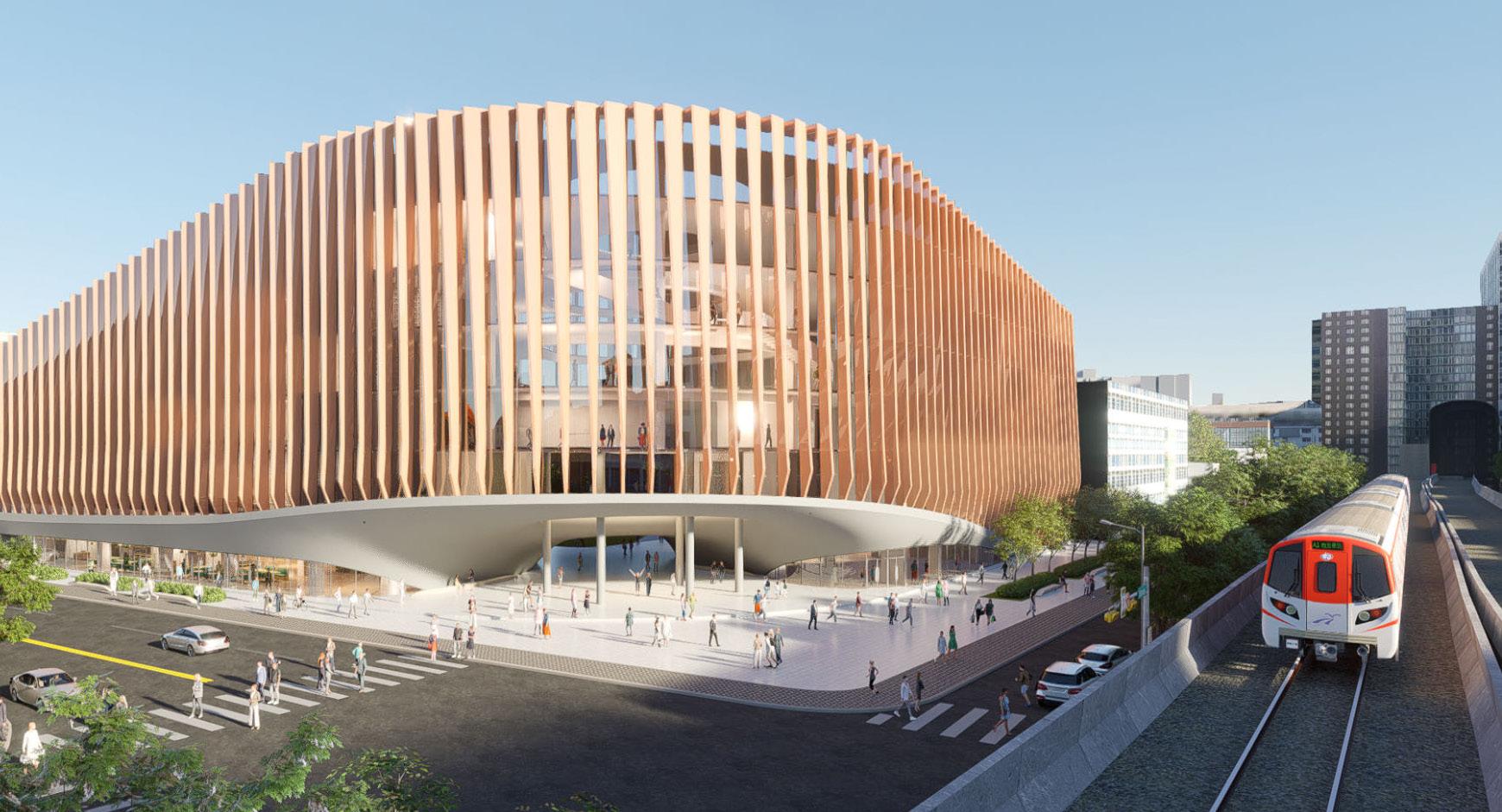
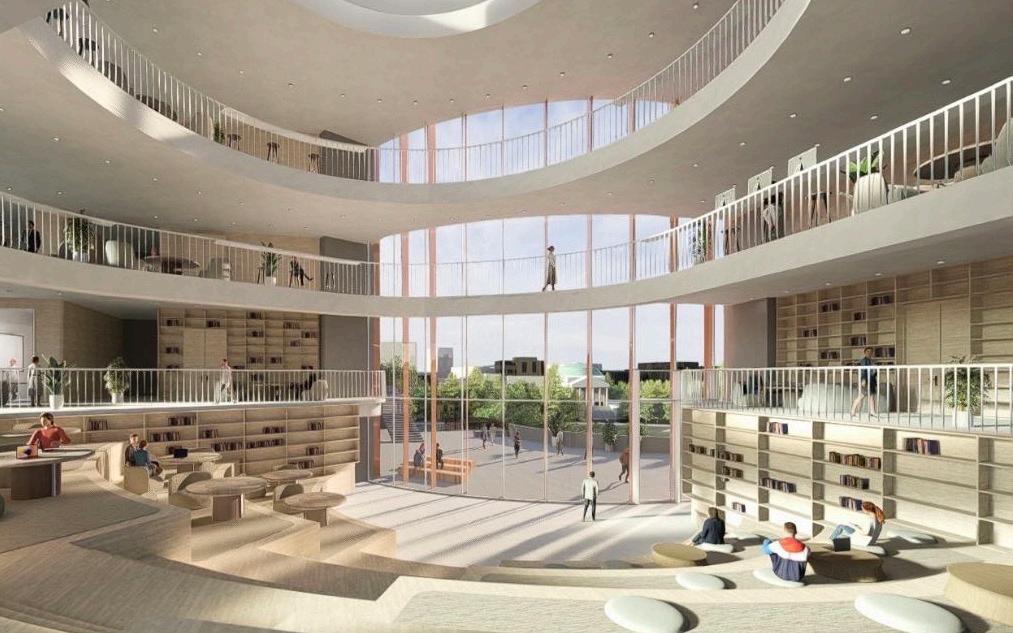
Tatung University, Project 2022
6 floors above ground, 2 floors below Responsible for floor plan and interior design
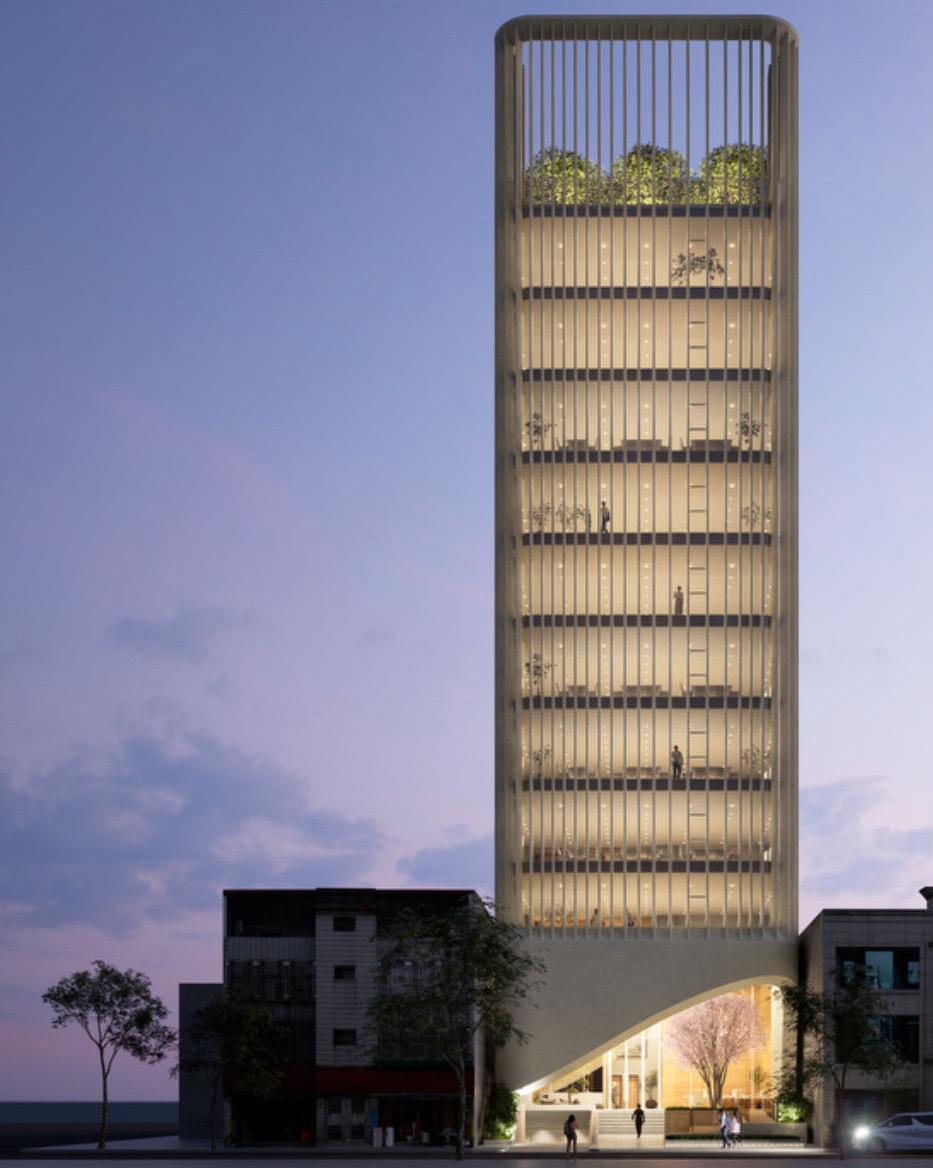
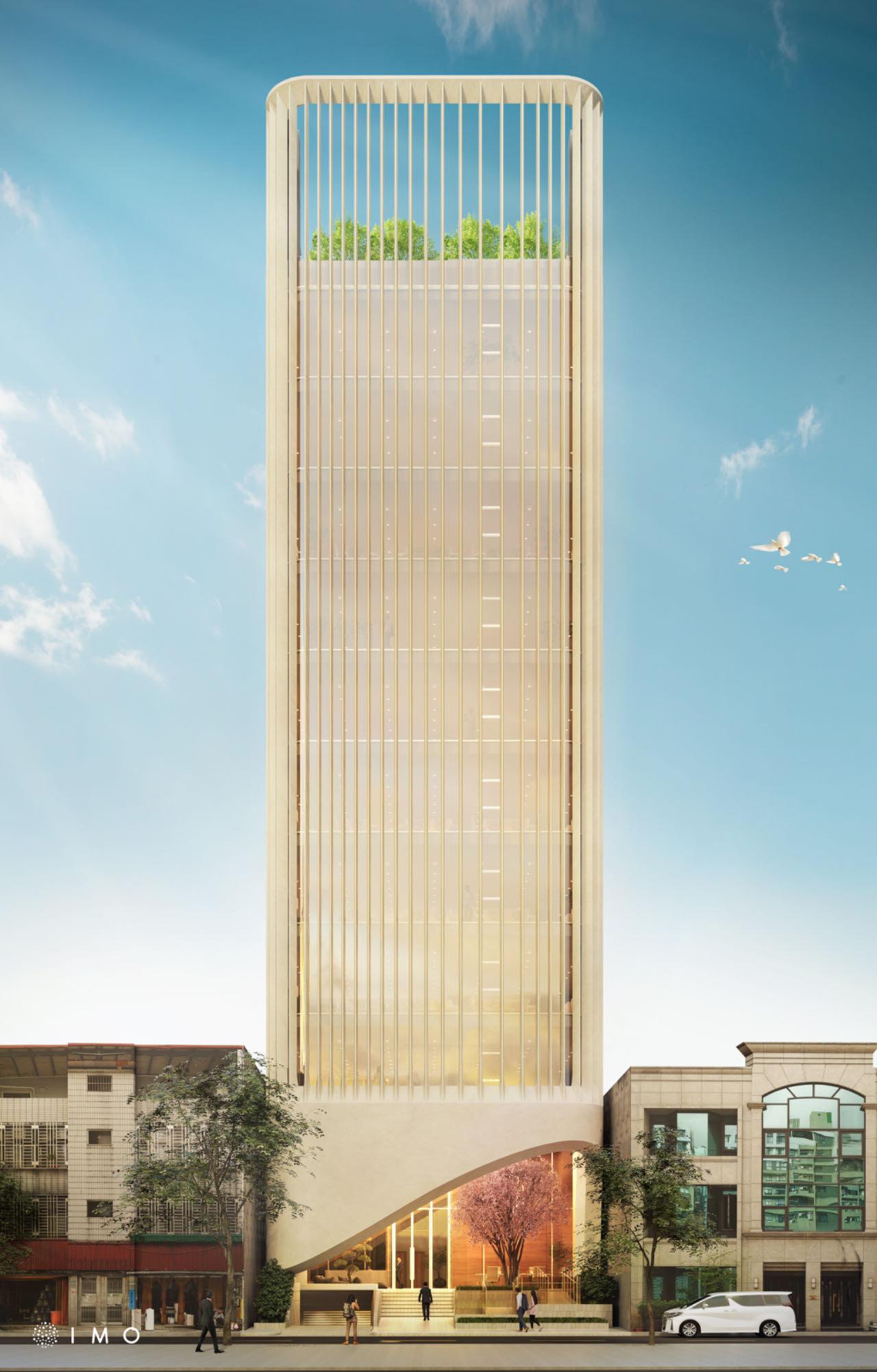
Commercial building, Project 2022
8 floor above, 2 floors below
Pesponsible for floor plan and interior design
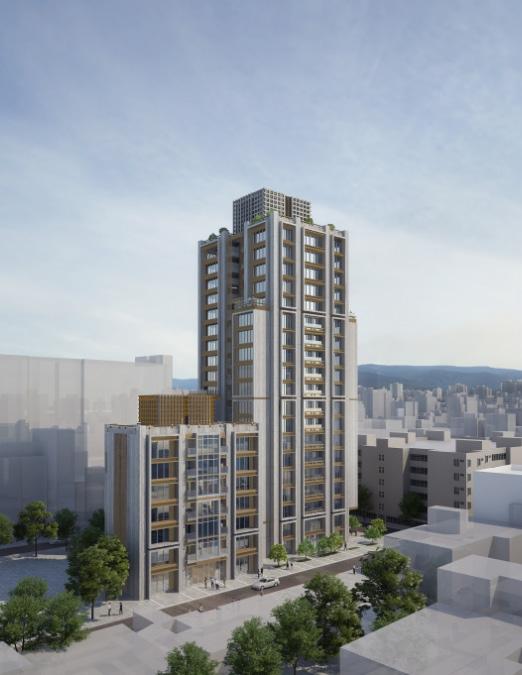
Wenzhou Institute, Project 2010-2020
19 floors above ground, 5 floors below Responsible for Detail drawings, material selection, elevation design
Throughout my architectural journey, I have had the opportunity to contribute to a diverse range of projects spanning residential, institutional, and educational design, each enriching my expertise across different facets of architecture.
At C.T. Chen & Partners Architect Office (2010–2020), I was actively involved in high-rise residential projects, responsible for detailed drawings, material selection, and elevation design. My work emphasized minimalism, coherence with the urban fabric, and adaptive aesthetics through the thoughtful integration of natural light and neutral tones.
In 2022, at IMO Architect + Design, I contributed to the Tatung University Competition Project, along with several housing and commercial developments. My approach focused on integrating natural elements and creating flexible, user-centered environments, enhancing both aesthetic appeal and functional performance.
These experiences have sharpened my skills in architectural detailing, material strategies, and spatial planning, while strengthening my ability to balance design aesthetics with functional requirements. They have prepared me to contribute meaningfully to diverse architectural contexts with creativity and precision.
Institute Project - Detail Drawings