Students, local community share fears surrounding ICE

As recent news has reported on confrontations between United States citizens and Immigration and Customs Enforcement (ICE) agents, people have begun protesting the presence of ICE in their communities.
On Jan. 28, local advocacy
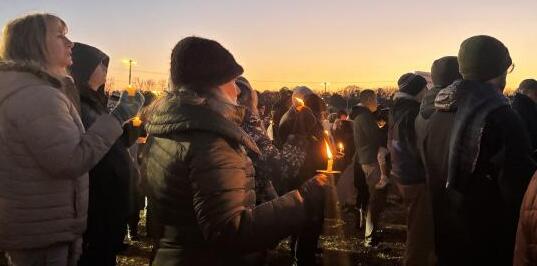
organizations COVA Coalition and South Hampton Roads Indivisible sponsored a candlelight vigil and rally in honor of Alex Pretti. Pretti was a nurse from Minneapolis, Minnesota who died in a confrontation with federal agents on Jan. 24. Alura Rose, a member of the South Hampton Roads Indivisible (SHRI) committee, organized
BY LILY RESLINK & BRENNAN BLACK lbreslink@vwu.edu & btblack@vwu.edu

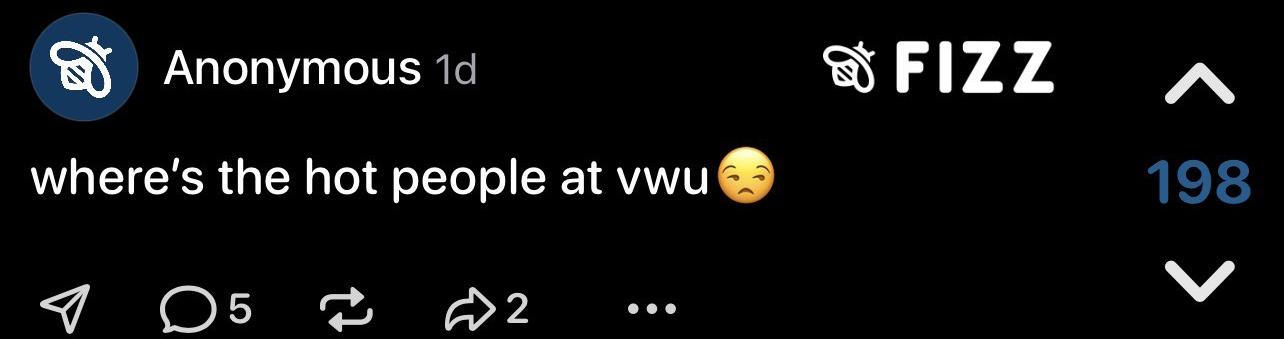
Fizz, a social media app for students to post and message under pseudonyms within their university’s private network, has climbed in popularity on campus since February.
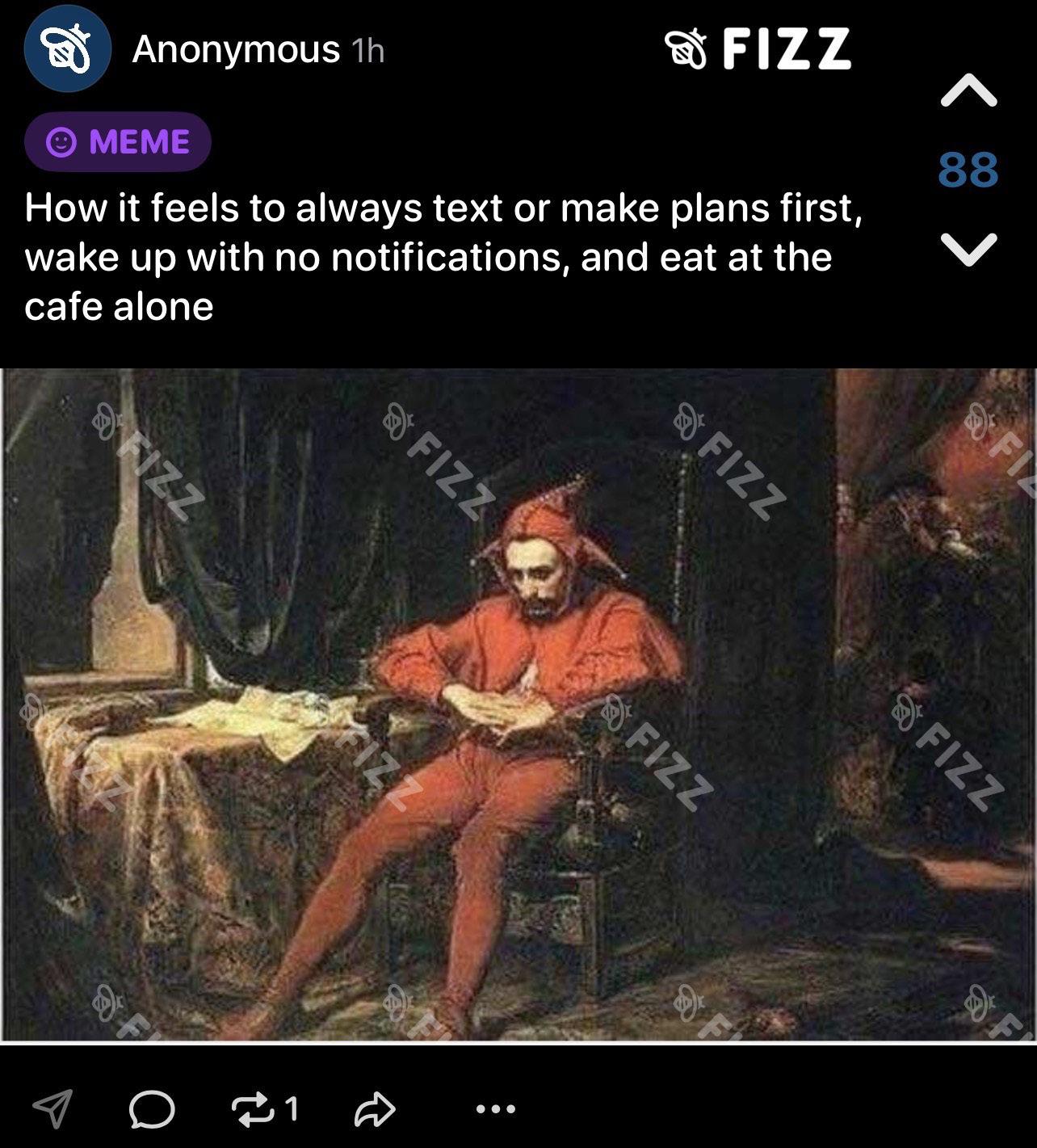
VWU’s network has accumulated posts that include general campus questions, commiseration over student experiences, inquiries about personal relationship status and memes about campus figures.
the event. Rose said SHRI is an organization that was founded to promote diversity and democratic values. “We are very concerned to see groups of federal agents violating the rights of Americans, violating people’s constitutional rights on camera, and getting away with it,” Rose said. Rose said safe ways for local citizens to react to ICE and recent
Junior and cheer team member Mikayla Bryant said her team was the subject of one of the first popular VWU Fizz posts. The prompt, “Thoughts on the cheer team?” was posted alongside a team photo.
“Really quickly, everyone just started saying a whole bunch of stuff like we dropped people on purpose, or we don’t have coordination,” Bryant said. This opened into comments on the cheer teams’ appearances.
Freshman Verity Downing said Fizz was originally for historically black colleges and universities (HBCUs). “I’ve been up there since August, but since it’s opened to all colleges, it can get really loose. I don’t think it’s being used for the reason it should be.”
“I’ve seen comments about my job up there,” Downing said. She works at the Grille on campus as a Sodexo employee.
“Someone was like, ‘Oh, I can’t believe they hired her up there,’ [...] and then said something about how we make the food, or how it better be sanitary […] just things that probably wouldn’t be said in real life.”
Professor of Media and Communication
Stu Minnis said social networks give anyone access for anyone to share content, and anonymity removes the “social
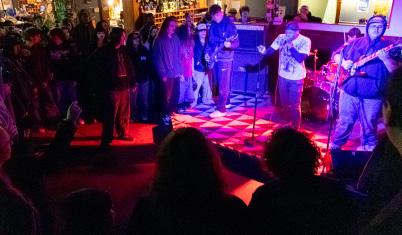
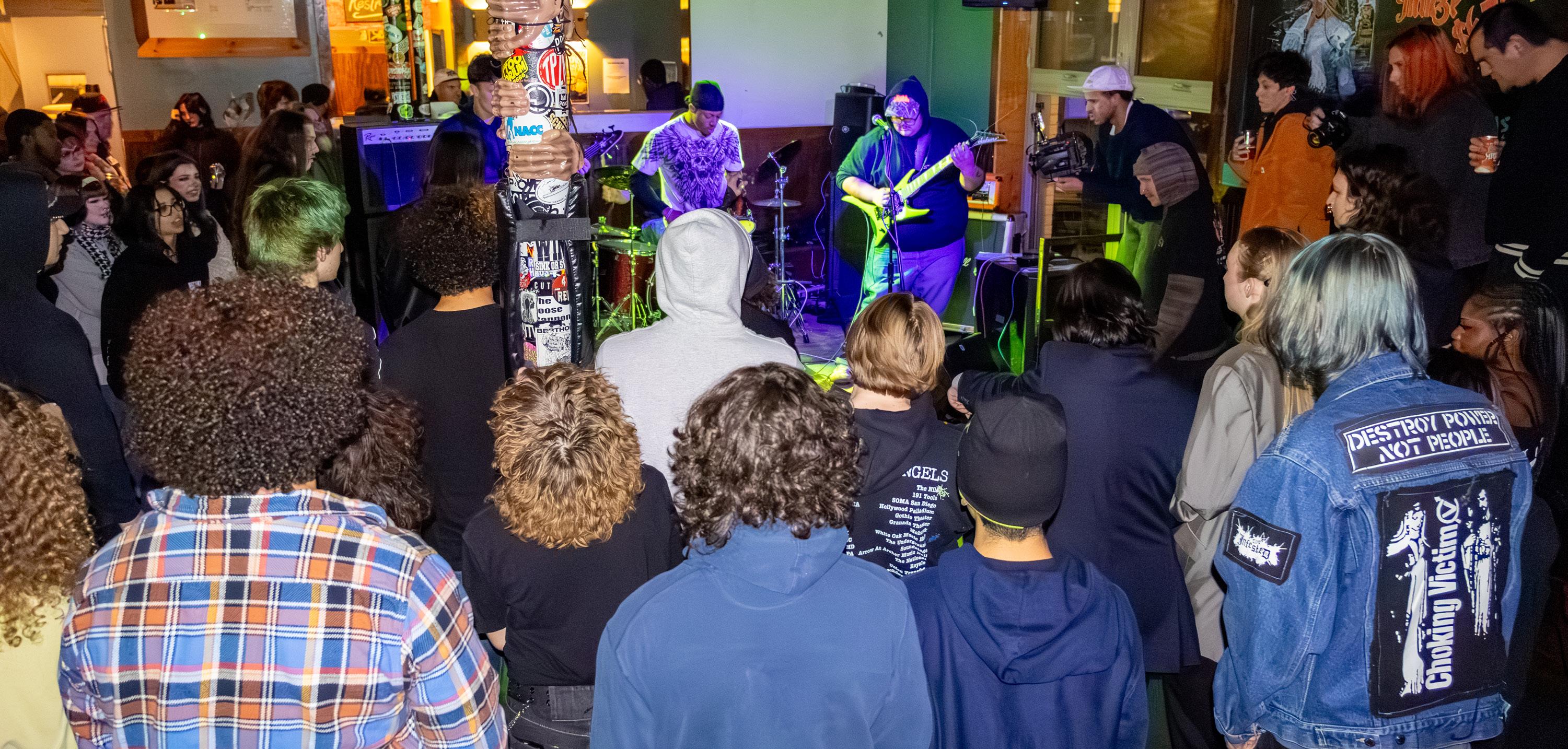
On Saturday nights, The Taphouse Grill rumbles with distortion. Lights flash, drums clash and rockers dash toward the stage to claim their spots in front of the amps. Since 1995, the venue has been a sanctuary for the local hardcore and metal community. It’s a place where
self-expression thrives and the unruly energy of the music is celebrated. Yet as foot traffic begins to slow down and the crowds grow less consistent, the future of the space feels uncertain. It may take more than distortion pedals and a loyal crowd of patrons to keep this scene alive.
events include raising awareness of community organization strategies and attending trainings, such as “Know Your Rights.”
“We have local patrols in the area that are watching neighborhoods and reporting so that at-risk communities are aware in advance of when ICE is in their neighborhoods,” Rose said. “Not getting ICE used to us cooperating is a huge part of how citizen allies can help our immigrant neighbors.”
barriers” of sharing information. “We can imagine an anonymous platform being a great place for people to ask questions and find resources about things that they’re not comfortable with or about,” Minnis said, listing sexuality, illness and political views as examples of question topics some may be afraid to ask publicly. “The problem is that anonymous spaces online inevitably become corrupted.

The event was outside of a Veterans Association clinic in Chesapeake and drew high attendance from the Hampton Roads community.
After losing the National Championship a year ago, Marlins softball looks to come out strong and finish what they started.
Fylstra|Marlin Chronicle Campus community members report that targeted Fizz posts create drama.
Mia Diehl|Marlin Chronicle
Jr.
Elliot Fylstra|Marlin Chronicle Fizz leadership says it creates “safe, authentic and inclusive” communities.
Student voices fuel their college funds
BY ISAAC FICK ihfick@vwu.edu
The Virginia Tuition Assistance Grant (VTAG), Pell Grant, Federal Work-Study, the Federal Supplemental Opportunity Grant, and other institutionallyfunded scholarships all benefit from advocacy, according to Beth Koroleski, assistant vice president for Student Financial Planning.
Koroleski said programs that students may assume are permanent rely on support.
“Advocacy is extremely important because tuition assistance directly affects students’ ability to attend college, remain enrolled and graduate,” she said.
When lawmakers hear from students and families about the educational access these programs bring, they are better prioritized during budgeting decisions, Koroleski said.
Advocacy plays an important role in continuing the VTAG, Koroleski said, because it is reviewed annually in the state’s budget.
The VTAG benefits Virginia residents who attend a private college in Virginia, awarding them $5,250 for the 2025-26 academic year.
Jana Cowan, assistant to the senior vice president, hosted a tabling event outside of the Boyd Dining Center, encouraging students to support the VTAG.
Cowan encouraged more students to send messages to state representatives. “The more that we can put it in front of their faces and they can see that this really does help a lot of students, even if it’s not just Virginia Wesleyan, that it’s just a big factor in if they’re going to keep supporting it and making space for it in the budget,” Cowan said.
Apart from the tabling event, the university also emails information to students. “It’s important to do multiple different things because you can hit a different array of audiences,” Cowan said.
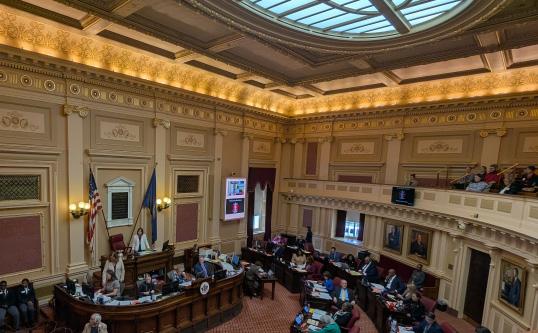
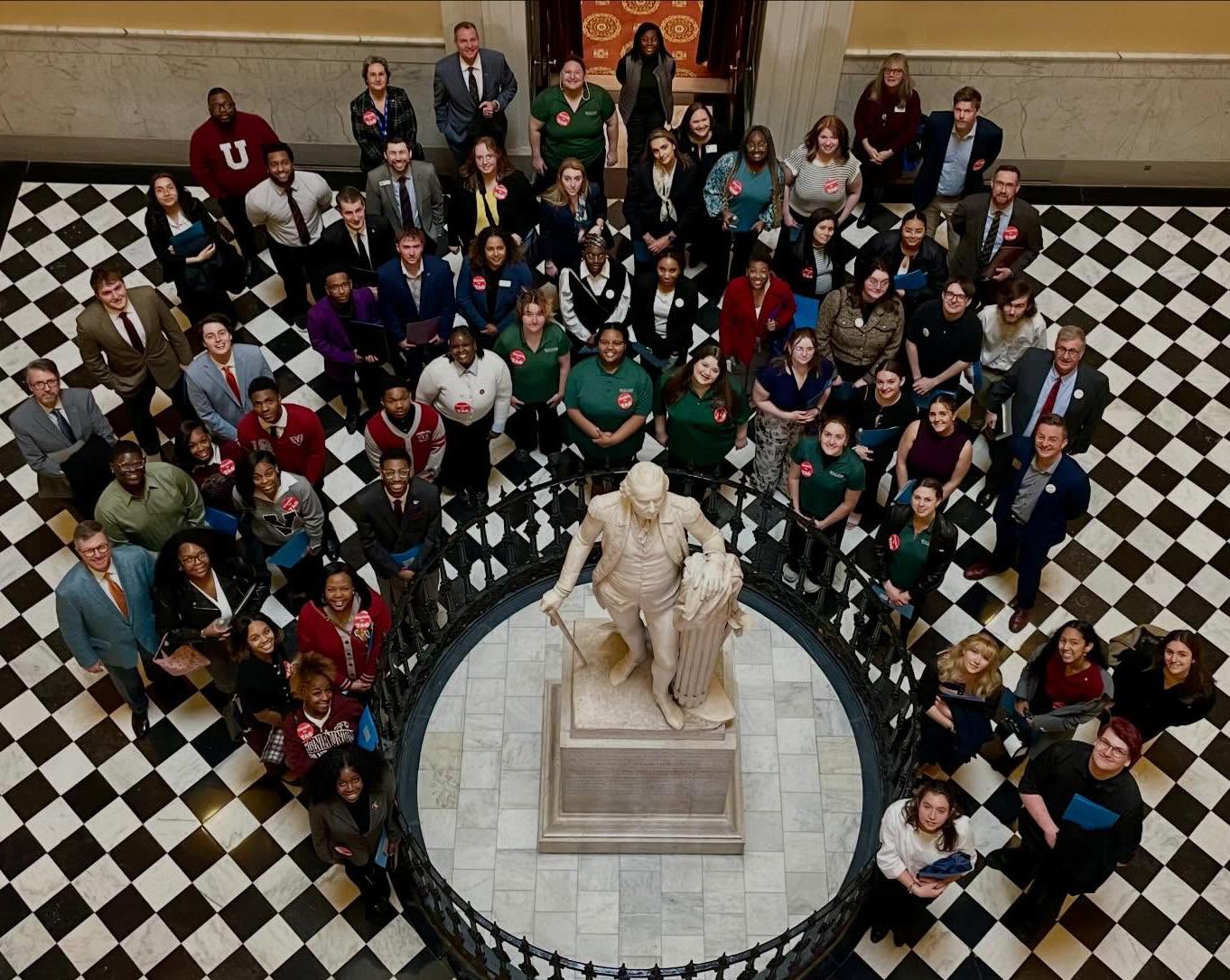
Virginia Wesleyan participated in “Thanks for TAG!” Day on Monday, Feb. 16. Students traveled to the Virginia General Assembly to thank representatives for their support of the program.
Cowan said, “going in person, knowing who your representative is, and just really taking control of what you’re doing is the best way you can do it.”
Breanne Bessette, senior Hispanic studies and political science major, attended the event. “For some people [VTAG] is really the difference between going to college and not going to college,” Bessette said.
Apart from participating in “Thanks for TAG!” Day, Bessette said she emailed her representative to explain its importance and shared VTAG’s existence with other students to let them know it’s an option.
“Everybody deserves to go where they want to go to get the education they want to get, despite the cost, and unfortunately that’s just not the
reality a lot of the time,” Bessette said.
“If the path forward is the best education possible, then we should make that as available as possible,” Bessette said.
Koroleski said it is important for students and families to be aware that the VTAG changes every year and is not guaranteed. She said students should stay informed, meet application deadlines and understand eligibility requirements.
“Advocacy ensures that student voices are part of the conversation when funding decisions are made,” Koroleski said.
“While advocacy doesn’t guarantee higher awards, it can influence how funding decisions are made and we’ve seen this hold true in regard to the Virginia
Virginia. They compile and share information regarding tuition assistance advocacy at https://cicv.org/advocacy/.

to their issue.
To commuters afraid of getting to class, Muniz suggested that they could contact their professors and Campus Life for solutions.
The LSA Public Affairs organizer said the Latino community has felt fear because of the belief that, because they have a certain accent or skin color, they are going to be targeted by ICE agents.
“Just because you don’t look a certain way, you don’t speak a certain language, or have an accent, you’re automatically a target,” the organizer said.
According to NPR Immigration Correspondent Jasmine Garsd, the U.S. Supreme Court decided on a ruling in late 2025 that allows ICE agents to consider factors such as race, language and employment in the decision to detain and interrogate someone.
According to Keith Moore, senior vice president of the University, there are procedures on campus should Customs and Border Protection or other government officials visit.
CONTINUED FROM PG. 1
“From my personal work as a food pantry supporter, people aren’t coming in to get their groceries like they usually do on a weekly basis anymore,” Ari, a fulltime volunteer for the LGBT Life Center, said. “Everyone’s just terrified to leave their homes, so it’s impacting Hampton Roads pretty severely.”
Event attendee Donny Brkic said people are definitely scared, “especially people who are immigrants or who just aren’t white, and I think that that’s really not okay.”
At Virginia Wesleyan, executive
members of the Latino Student Alliance (LSA) expressed concerns for the way personal impacts are addressed and handled by faculty. They also shared stories of how the recent ICE efforts have impacted their ability to focus on their studies.
Vanessa Luna-Ramirez, president of the LSA, said as the semester has just started, the alliance has been unable to meet and discuss the issue.
“I have seen a couple members post that these deportations have happened,” Ramirez said. “It’s a very unfortunate reality that we’re facing right now, and so we plan on soon coming out with a meeting and making sure we’re there for our members.”
An LSA officer, who asked that we not publish their name due to safety concerns, said there is a felt lack of support from
administration and student services regarding mental health. They said there is also added stress from increased responsibilities at home, especially as a commuter.
“I reached out to one of my professors, who’s also my adviser. I reached out to another professor and both of them ... talked to someone related to the dean, asking if there’s anything they could do for students like us who are being affected, and they said they couldn’t do anything,” the LSA officer said.
If someone was having issues with ICE, Associate Vice President for Student Success Crit Muniz said, “I would certainly be happy to talk to any student who has concerns about their classes and give them what my best suggestions would be.” He suggested they come talk to him so they could brainstorm solutions
“The University has protocols in place for instances when emergency responders or law enforcement visits campus, as well as procedures to verify the nature of their presence and jurisdictional authority,” Moore said. “University officials care deeply for our students’ well-being and interests and will protect them from unlawful activity in all its forms. As such, we are prepared to gauge the legality of the presence of government agencies, and to comply as necessary should the situation require.”
Luna-Ramirez opened the LSA meetings to anyone affected by recent events as a place for open discussion and support. She said students are welcome to attend meetings and reach out to the LSA for support, regardless of their cultural heritage.
Tuition Assistance Grant,” Koroleski said. Virginia Private Colleges represents nonprofit independent colleges and universities in
Kyla Robberecht|Marlin Chronicle @vaprivatecolleges|Instagram
Senior Breanne Bessette, senior Dani Poulsen, junior Gabrielle Barnett, junior Liam Castellano, Senior Vice President Keith Moore and Assistant to the Senior Vice President Jana Cowan joined other students, faculty and staff from Virginia private colleges in the Virginia State Capitol.
Mia Diehl|Marlin Chronicle
According to the Guardian, 32 deaths occurred in ICE custody in 2025, with the deaths of Renée Good and Alex Pretti occurring in early 2026.
University receives recognition for community engagement
BY MARS SMITH rssmith@vwu.edu
For the second year since 2020, Virginia Wesleyan University has received the Carnegie Foundation for the Advancement of Teaching Community Engagement Classification (CCEC).
Only 80 universities have earned this distinction. According to Arin Shatto, director of Civic Engagement and Service Learning, this recognition underscores the University’s effort to create opportunities for students to learn from and serve alongside community leaders and organizations to develop the skills and confidence needed to advance community engagement.
“The [CCEC] recognizes institutions that have demonstrated commitment to cultivating and maintaining community partnerships through scholarship and service,” Shatto said.
The CCEC is an elective classification, so it is based on voluntary participation by universities.
The application requires institutions to document community engagement both in and outside of the classroom. The The deadline to submit for the CCEC for 2026 was Nov. 4, 2024.
“Within the university, community is developed and
practiced through academics, social clubs, athletics, the arts, service and beyond,” Shatto said.
Additionally, Virginia Wesleyan has institutionalized structures that allow community engagement work to become more accessible to students and faculty.
These structures include Wesleyan Engaged: The Center for Civic Engagement and Service Learning and Campus Ministries, which arrange partnerships and provide resources to students and
or identity with,” Solomon said.
“Having an anonymous aspect makes [the app] 10 times worse,” Bryant said Bryant said popular media tend to rise and fall, which may comfort those negatively impacted by posts on Fizz.
“At the end of the day, it’s a stupid app,” Bryant said. She said the cheer team could joke about and brush off comments on them.
Freshman lacrosse player Keagan Hall said, “I think the lacrosse guys just take it as a joke.”
Another lacrosse player, freshman Miles Fuehler, said, “I think it makes the school more entertaining.”
Fizz Co-Founder Teddy Solomon posted on LinkedIn to announce that Fizz surpassed Reddit on app store charts five months ago. Amid what Solomon called a “social media revolution” in the post, he said the app’s success relates to Gen Z’s desire for “community over highlight reels, authenticity over fakeness, experience over interest, identity over entertainment.”
“On Fizz, you only see content from those you share a common experience
“It’s good and bad,” senior Jose Garcia said. Garcia said students could use it to incite positive changes they want to see on campus, but the freedom to express thoughts on the app turns sour when users talk negatively about others.
Garcia said that Fizz posts could help outsiders, including administration, understand what students go through.
Freshmen Jordan Hill and Kamasi Biggs said people post about others without considering the harm.
“They just think about, ‘I’m gonna get a couple laughs, a couple likes,’” Hill said.
“They don’t know they’re messing up someone’s career, because it’s a digital footprint,” Biggs said. Biggs said the ability to damage reputations makes Fizz dangerous.
“Somebody could end up being suicidal over some lie or just some false narrative put on them.”
Minnis said that users’ negative behavior does not reduce the marketability or enticement of social networking sites, but instead can enhance it.
“All of them have pursued business strategies that end
faculty.
“Community engagement is attractive for a university because it shows that the University is well-rounded,” senior Grace Harriman said. “Most universities are focused only on the classroom, but great universities focus on what they can bring students outside of the classroom.”
“A university builds community through collaboration. One example of this is having clubs co-host events,” Harriman said.
Additionally, the University builds community by acting in accordance with shared values and a collective commitment to creating opportunities for meaningful connection, Shatto said.
Dr. Wendy Scott, director of the laboratory school and assistant professor of education, heads the Tidewater Collegiate Academy (TCA). She said TCA contributes to community engagement.
“A former VWU student, Miles, formed strong bonds with the fourth and fifth graders, earning
up promoting anger and outrage, because anger and outrage drive engagement.”
“Gossip isn’t new, pornography isn’t new, hate speech isn’t new, but online tools, especially anonymous online tools, create environments where they just kind of explode,” Minnis said.
While YouTube used to hide names of users who disliked a video, which prevented engagement that would have amplified negativity, Biggs said Fizz encourages a hate “bandwagon” by pushing negative comments to the top instead.
“It makes our school look bad. It makes everyone else look bad, and it shows the type of character everyone is,” Biggs said.
Senior Opeyemi Kareem-Ojo said the app gives people a platform to act childish and “messy” without repercussions.
“If you’re over the age of 20 years old on that app, you might need to rethink a lot of things,” Kareem-Ojo said.
“The app is full of people who peaked in high school,” freshman lacrosse player Reef Krug said, adding that it is similar to Discord in that people with insecurities can hide behind a screen to say anything.
him the ‘Big Heart Award’ for his dedication,” Scott said. “During his wait for a student teaching placement, Miles volunteered at TCA daily, providing significant support to the students and reducing their stress.”
Volunteering and contributing to the community on campus is a great opportunity to grow professional capital, Scott said. Additionally, she said the surrounding community also benefits from active engagement.
Harriman said her favorite activity with Campus Ministries was the family service in collaboration with the Haygood United Methodist Church.
“All of us involved in Campus Ministries led the service, specifically directing our messaging to children. The best part about this experience was getting to see the interactions at the tables. Many tables were filled with family, but some included new faces, making it an excellent way to reach out to people,” Harriman said.
Biggs said engaging with the app distracts university students from academic priorities and causes meaningless drama.
“It serves you no purpose, and you’re not gonna gain nothing from it, besides peoples’ laughs. And those laughs are immature, and they don’t get you money. It doesn’t get you nowhere.”
Biggs said the app’s usage points to a need for a mandatory PSA at firstyear orientation that targets Fizz and the consequences of cyberbullying.
“There’s no way you’re ever going to make a positive app and not have negatives,” Biggs said.
Biggs said the negativity on VWU’s Fizz network is indicative of greater social problems that regulations would conceal, but not solve.
Minnis compared Fizz to an earlier app called Yik Yak, which also hosted private university networks. Yik Yak’s design grouped people by geographic location, whereas Fizz requires a university email.
Minnis said he thinks a purposefully anonymous platform is not sustainable.
“I’ll make a prediction now that Fizz will either have collapsed or will have radically changed its form within a year and a half.”
“My last notable example is the monthly worship Campus Ministries just started with ODU and NSU. We took students to ODU, where they got to collaborate on worship and messages among the local colleges,” Harriman said.
“Community engagement lends way to reciprocal partnerships and relationship building between university partners, including faculty and staff, students and community leaders, which creates opportunities for shared learning and problem solving,” Shatto said.
Community engagement is important for a university because it affords students the opportunity to expand their skillsets and apply their expertise in real-world contexts outside of the classroom, Shatto said.
Harriman said overall, community engagement is essential to universities because humans were made to live together, not alone.
Fizz operates on a leaderboard system that ranks the top 20 most engaged users within a campus network. As described within the app, “more engagement = more karma,” meaning users climb the leaderboard through “FizzUps” on posts and comments.
While some students say this structure encourages humor and participation, others argue that tying visibility to engagement may incentivise controversial or inflammatory posts.
Fizz’s leadership says safety is central to the platform’s design. In a statement outlining its moderation philosophy, the company said, "Overall, we at Fizz believe safety is the core of our platform. Any content moderation or user penalization is strictly to uphold our belief in safety and not to retaliate or silence individuals.”
The platform uses
what it calls “community norms and consensus moderation.” Moderators are recruited from active members within each campus community, and according to Fizz, no single volunteer moderator can unilaterally remove a post. The stated goal of moderation is twofold: preventing offensive content from reaching the feed and providing feedback to users about what is appropriate for their specific campus network.
“Content moderation and content regulation are both really thorny problems,” Minnis said.
Despite the platform’s stated safeguards, some students say harmful content is still present on the app and gains traction.
According to information provided by students and the Fizz app, VWU’s network saw its current highest engagement rate during the first week of the semester.
Fizz App|Courtesy
VWU|Courtesy
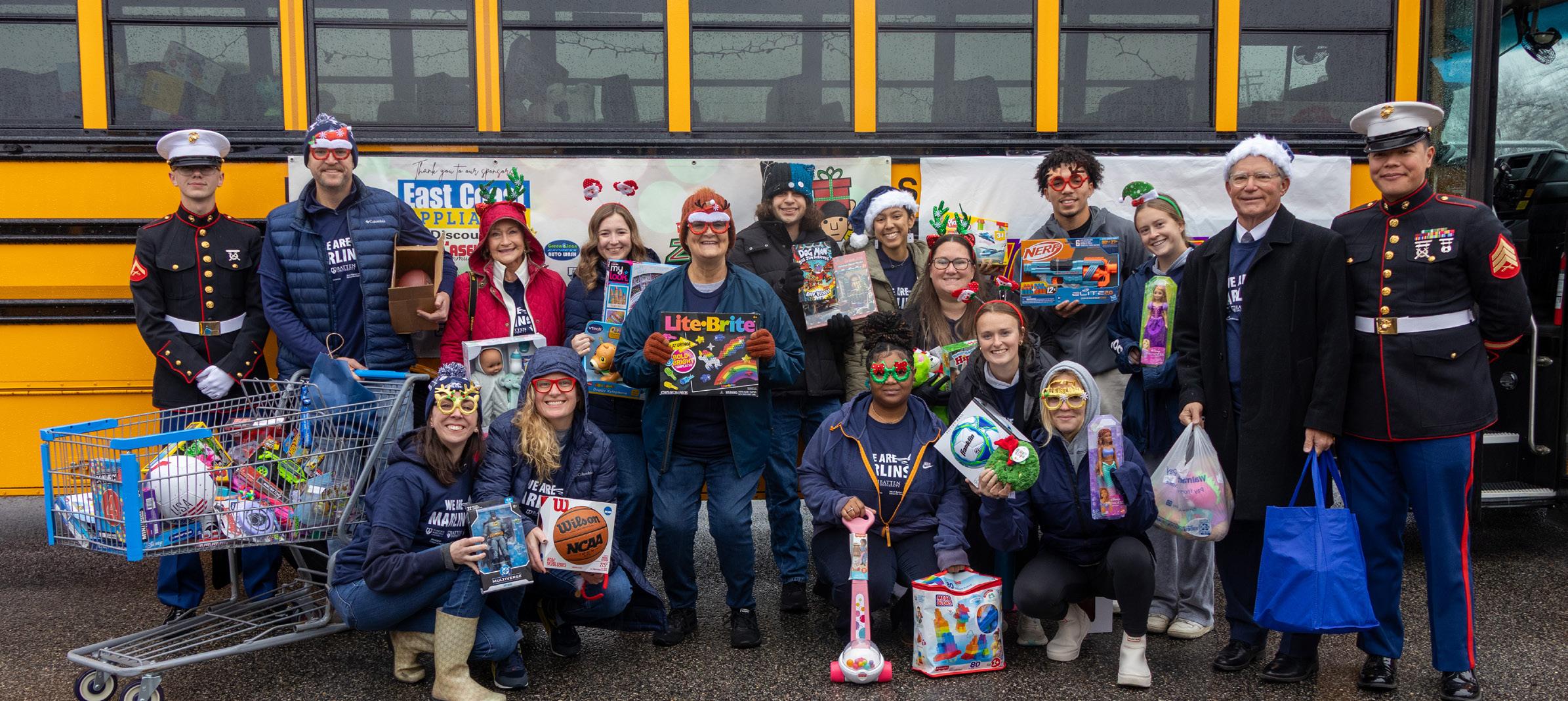
Arin Shatto and President Scott Miller in attendance at the 2025 Stuff the Bus event, a community toy drive that VWU participated in.
Aiden Croghan|Marlin Chronicle

The MARLIN CHRONICLE
Editor-in-Chief
Lily Reslink lbreslink@vwu.edu
Managing Editors
Victoria Haneline vfhaneline1@vwu.edu
Isaac Fick ihfick@vwu.edu
News Editors
Isaac Fick ihfick@vwu.edu
Aiden Croghan accroghan@vwu.edu
Community Editor
Kami Whisenhunt kjwhisenhunt@vwu.edu
Opinions Editors
Victoria Haneline vfhaneline1@vwu.edu
Elena Lichtenwalner eclichtenwalner@vwu.edu
Sports Editors
Coy Camiscioli clcamiscioli@vwu.edu
Eli Casey emcasey@vwu.edu
Bailey Gray bcgray@vwu.edu
Weekender Editors
Calee Lukowski crlukowski@vwu.edu
Gabrielle Barnett gabarnett@vwu.edu
Photo Editor
Laila Jones ljjones1@vwu.edu
Online Editor
Lillian Glenn adglenn@vwu.edu
Copy Editors
Victoria Haneline vfhaneline1@vwu.edu
Elena Lichtenwalner eclichtenwalner@vwu.edu
Julia Ware jpware@vwu.edu
Phoenyx Clifton tclifton@vwu.edu
PR Director
Isabella Grosswiler idgrosswiler@vwu.edu
Marketing Coordinator
Bryant Cotterell bccotterell@vwu.edu
Engagement Editor
Sarah Czapp sczapp@vwu.edu
Adviser Dr. Lisa Lyon Payne lpayne@vwu.edu

Community
Wesleyan Engaged continues thriving under new leadership
BY HANA MCCAIN hemccain@vwu.edu
Civic Engagement encourages students to develop life skills such as teamwork, problem-solving, effective communication and expertise in leadership through voting and volunteering.
Arin Shatto completed her first semester as director of Civic Engagement and Service Learning, providing voter education to advocate for non-biased active participation of citizens in public life, political processes and institutions to advance democracy.
They also connect students to local partners, such as Volunteer Hampton Roads, for volunteer work through their “Marlins Get Civic” movement.
“Civic Engagement is a much larger umbrella. It includes voting, it includes volunteering, but I
that they want to see,” Shatto said. Shatto said everyone has lived through different experiences and has different perspectives, so she tries to use that as a connecting point.
“One particular person might be really passionate about the environment, another might be really passionate about education or equity as it stands as a much larger umbrella,” Shatto said. With this, Shatto said it is important to recognize those interests and use them to enact change and make informed decisions.
To further advance their mission, Civic Engagement hosts a variety of volunteer opportunities for students and takes into account that their schedules differ.
Read and Share is an upcoming event in partnership with the Virginia Beach Public Library and Tranquility at the Lakes, a senior
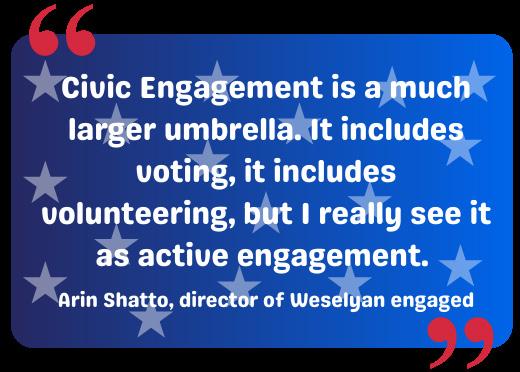
really see it as active engagement — making sure that students and young people are aware of the successes in their community, of the challenges in their community and how they can leverage their skills and talents and lived experience to be part of the change
residential home down the street from campus. It will take place on Feb. 19, Mar. 19 and Apr. 15.
Another upcoming engagement opportunity will occur on March 6 at Nauticus, a maritime discovery center located along the waterfront in downtown Norfolk, where
students will have the chance to clean and restore the Iowa-class battleship USS Wisconsin (BB64).
More of these opportunities are on flyers around campus, shared in email newsletters and posted on Instagram @wesleyanengaged.
Civic Engagement often collaborates with Career Development, the office dedicated to assisting students in discovering their academic and professional pathways.
Headed by Director Alice Jones, the office is launching a community service-type internship for students. For this, a student can volunteer or work at a non-profit organization.
“I love my job. I like working with students. I like helping them. I like making connections with people and helping them figure out that ‘aha’ for themselves. Like, ‘oh, I thought I was going to be an accountant, but really, what I love is this other thing,’” Jones said.
Jones said Civic Engagement and Career Development tie together because being involved in the community makes good practice for networking.
Jones said even a one-time volunteer opportunity helps people explore what they like. It’s exposure, which she said is really important because there are so
many opportunities, and people tend to only know about a little box of options.
Civic Engagement also hosts events with Counseling Services, which provides a safe place for students to come and talk about their problems. Director of Counseling and Student Health Michelle De Rosa said that together, Civic Engagement and Counseling help create self-aware and resilient members of our campus.
“I believe the campus departments of Civic Engagement and Counseling are closely connected through shared commitment to student growth, resilience and overall community wellbeing. When people engage in service and advocacy work, they strengthen their sense of purpose, belonging and their identity, which are all significant protective factors in mental health,” De Rosa said.
When students are involved with Civic Engagement, Shatto said they can improve their communication, planning and organizational skills. They can learn technology skills from creating social media content, designing websites or writing emails to solicit sponsors.
Shatto said the voices of young people are important, and the goal is to create opportunities for students to explore that for themselves.
New hires join Enrollment and IT
BY CARL SWORD cmsword@vwu.edu
From helping students with enrollment to strengthening campus technology, new hires on campus have joined multiple departments this semester.
Enrollment Counselor for the Sentara College of Health Sciences of VWU
Paige Evans is the new Enrollment Counselor for the Sentara College of Health Sciences of VWU. In this role, Evans’ responsibilities include assisting students with applications, campus tours, financial aid questions and enrollment decisions.
By connecting students to different campus resources, Evans said she makes students feel welcomed and prepared as they transition into the college experience and lifestyle.
“I like hearing their excitement about coming to Virginia Wesleyan and working with them and their parents. I also like seeing them fulfill their careers and where they are now, it’s very rewarding,” Evans said.
While attending James Madison University (JMU) for her bachelor’s degree, she worked as an enrollment counselor and was involved with the ‘SafeRides’ program, a free ride share service JMU provides for students.
After she finished her undergraduate degree, she moved back to Virginia Beach to continue to work with students. Evans worked for VWU from 2019 until 2022. Evans’ educational and professional journey led her back to a role she said she is passionate about.


Evans described her position as a guide and support system for students. Evans said she loves her job because she helps students feel more confident in the new world they are diving into.
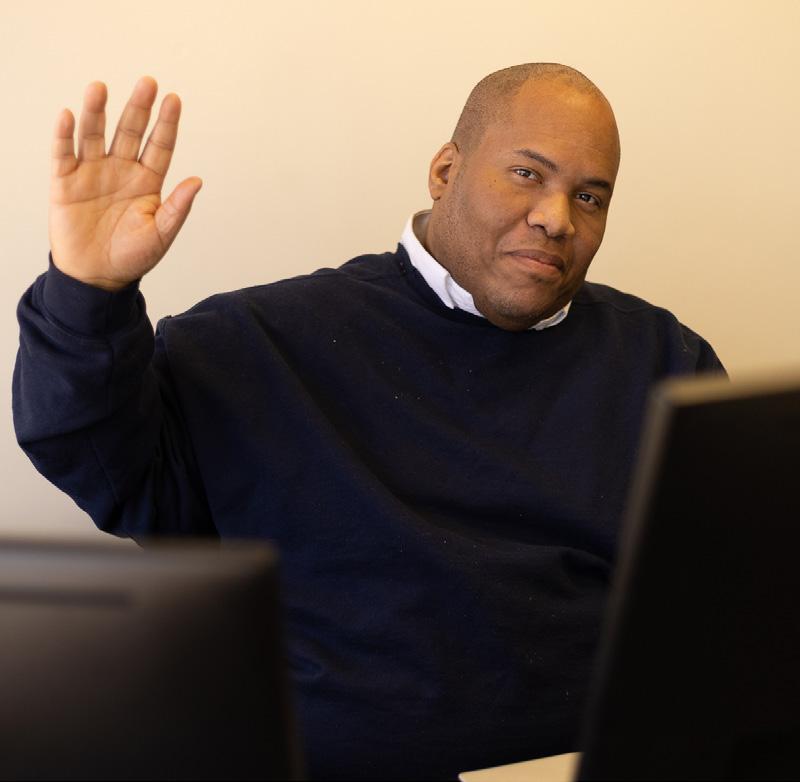
Instructional Technologist
Jerome White is a new instructional technologist at VWU. White attended East Coast Polytechnic Institute and Western Governors University for his degrees in computer/ information technology administration and management.
White brings 20 years of IT experience, including healthcare IT, to VWU. His contributions of academic technology support both faculty and students using complex systems.
“My role is pretty much just dealing with the technology, making sure that I can empower users, whether it be the students or faculty, to be able to be comfortable with it, use it efficiently and grow with the technology,” White said.
No two days are exactly the same, which is one of the things I enjoy most about this role,” White said.
He said a typical day begins with responding to faculty or staff questions about different tools, course setups or troubleshooting issues.
“A consistent theme throughout my career has been using technology not just efficiently, but purposefully,” White said.
Instructional technologists are responsible for creating a collaborative environment where technology supports learning rather than complicating it.
Chief Information Officer
Will McGuire is the new chief information officer of the Malbon Center for Technology. McGuire said he got into the field of technology in high school when his academic advisor enrolled him in computer programming without telling him.
This accident sparked his interest in technology. After high school, Will attended Old Dominion University (ODU) for a bachelor’s degree in computer engineering.
“I worked at a local business doing IT support; this job gave me a good understanding of many aspects of the IT profession,” McGuire said.
He also worked at Eastern Virginia Medical School’s (EVMS) help desk for nearly 20 years. While employed by EVMS, McGuire played many roles in the IT department, including system administration, network engineering and cybersecurity. McGuire said every day brings unexpected issues he may have to deal with.
“I believe in leading by example and modeling the work ethic I expect from my team,” McGuire said. McGuire said he’s excited to work here and for the future of it.
“It’s always fun seeing new technology as it continues to evolve. What I find most exciting are the practical uses for it in our daily lives,” McGuire said.
He said that he’s very proud of his team and their progress in strengthening the VWU infrastructure and cybersecurity measures.
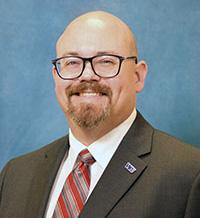
VWU|Courtesy
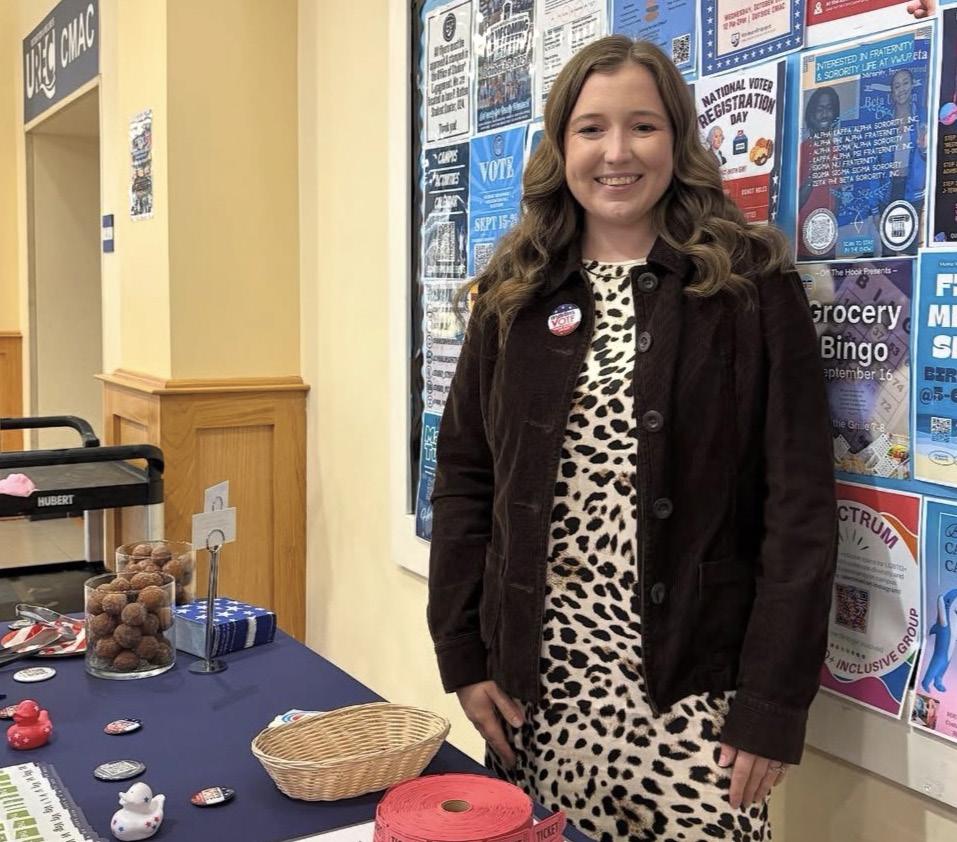
Arin Shatto, Director of Wesleyan Engaged as of August 2025.
Laila Jones|Marlin Chronicle
Jerome White, instructional technologist.
VWU|Courtesy
Paige Evans, enrollment counselor for the Sentara College of Health Sciences of VWU.
VWU|Courtesy Will McGuire, chief information officer.
Kami Whisenhunt and Eli Casey|Marlin Chronicle
Virginia Wesleyan University is more than a name, it is a legacy built on decades of academic excellence, community trust, Methodist values, and shared identity. Act now. Learn the truth. Share our cause. Stand up for Virginia Wesleyan before it’s too late.

SavingVirginiaWesleyan.org
Q: What is “Saving Virginia Wesleyan”?
A: Saving Virginia Wesleyan is a small group of alumni and stakeholders who formed an LLC to hold the university’s leadership accountable, reverse the Batten University name change, and restore transparent, mission‑driven governance at Virginia Wesleyan University. To memorialize and preserve the entire process for Alumni, current and future students, we created our website savingvirginiawesleyan.org.
Q: How did this cause begin, and how has it evolved?
A: This started when we discovered the board secretly approved the Batten University name change in a closed February 2025 session, with no meaningful input from students, faculty, alumni, or the wider community. As we dug into public records and board actions, the work evolved from a simple “stop the name change” effort into a broader campaign challenging donor capture, structural financial distress, and governance failures through regulatory complaints, media, and direct engagement with trustees.
Q: What has kept your passion and commitment to this cause?
A: We owe much of who we are to Virginia Wesleyan, the professors who knew our names, the lifelong friends, a liberal arts education with Methodist inspired values, and the sense of a school that wasn’t for sale to the highest bidder. What keeps us going is the conviction that if we don’t stand up now, the school’s identity and integrity may be permanently traded to line the pockets and egos of those who have no legacy or appreciate the value of VWU.
Q: Have you communicated directly with the university about the proposed name change? If so, how did they respond?
A: Yes, we’ve engaged through counsel, exchanged detailed agenda proposals, and requested a transparent, balanced meeting with specific trustees and representatives of the Batten family. The university and its legal counsel tried to tightly control the agenda, limiting who can attend, and keeping discussions behind closed doors and under attorney client privilege, which only reinforces our concerns about secrecy and conflicts of interest. A meeting did occur on Dec. 11. The details of what transpired are within the Legal section on the website.
Q: What is the most important thing current students should understand about this cause?
A: They need to understand that this cause is not anti-Batten and not anti-growth. It is a pro-Virginia Wesleyan, pro-integrity effort focused squarely on their long term interests: the value of their degrees, the school’s reputation, transparency in governance, and continued access to federal aid and accreditation.
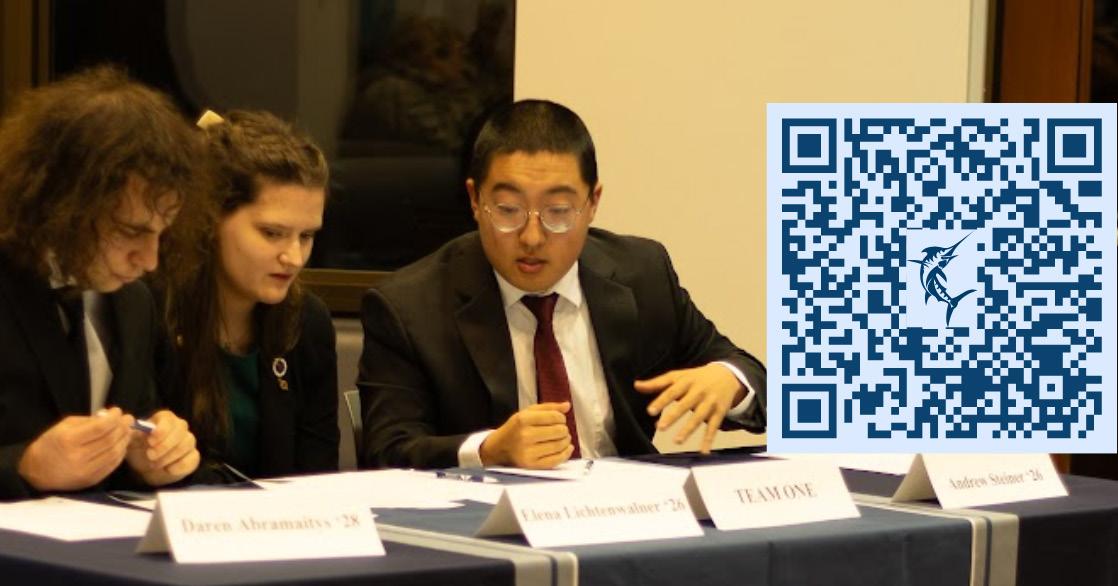
Many students have told us they do not want the name change, feel slighted that they were not even consulted, and don’t know how to challenge something that feels already decided. Responses by the administration have been dismissive. We’ve even heard from a student athlete that their team’s coach asked them not to vote on the petition or speak out—raising serious questions about where that directive came from. Some students and parents fear that speaking up could jeopardize their scholarships or other funding they receive. That fear is unacceptable, potentially unlawful, and fundamentally at odds with both Virginia Wesleyan’s stated values and core American principles of free speech. Perhaps this should be the next debate topic for VWU Let’s Get Ethical 2026 Ethics Bowl Team when they deliberate on the topic of “Ethics in Business”?
It is also worth noting that Greg Plummer, Virginia Wesleyan’s first All-American in soccer, and Bob Valvano, current ESPN college basketball analyst, were willing to give up their places in the VWU hall of fame rather than be permanently tied to Batten University; That’s how much the name Virginia Wesleyan matters. For current students, this is about protecting the value of your degree, your school’s identity, and the legacy you inherit — and pass on. If alumni were willing to sacrifice personal honors to defend the name, it’s worth standing up now to make sure it remains the one on your diploma.
Students should know they are not powerless. They should unite, visit our website, review the documented facts, and read the correspondence between our legal team and VWU in the Legal section. We even proposed a fair and generous compromise—Virginia Wesleyan Batten University—one that preserves 64 years of history and national recognition, keeps “Virginia Wesleyan” primary, and avoids reducing student athletes to the unfortunate acronym “BUMs.” This was soundly rejected by President Miller and the board. Sadly, recent billboards sited in Hampton Roads and media outreach announcing the new Batten University name as Tradition Transformed “make it clear that a small group is attempting to finalize this bad decision without broad community consent. As Joni Mitchell warned decades ago: “You don’t know what you’ve got till it’s gone.”
You chose to be a Virginia Wesleyan Marlin not a BUM.
Q: What resources or actions are most needed for your organization to achieve its goals?
A: We need four things: Vote on our petition at Change.org (Currently 6200 signatures the link is on our home page), more voices, more documentation, and more professional support. That means students and alumni willing to speak up, insiders willing to share information, and resources to sustain legal, regulatory, and communications work until the board reverses its decision on the name change. Please go to our website, where there is a contact us form. If you have any information you would like to share, action items to consider, or let us know any way we can help give you the voice you deserve.
If students don’t stand up now for the name and legacy of their own school who will?
TERRY SIVITER, Virginia Beach, VA
VWC Class of 1980
ICE is a symptom of the decline of the rule of law in America
“The tree of liberty must be refreshed from time to time with the blood of patriots and tyrants.” - Thomas Jefferson
BY VICTORIA HANELINE vfhaneline1@vwu.edu
At the time of writing this piece, we know of at least eight people that Immigrations and Customs Enforcement (ICE) and related agencies killed in January this year. According to US Congress:
Geraldo Lunas Campos, a Cuban immigrant, died on Jan. 3 in detention in Texas. His death was ruled a homicide by the coroner, as he was choked to death. ICE called it a suicide.
Luis Gustavo Núñez Cáceres, a Honduran immigrant, died in detention in Texas on Jan. 5.
Luis Beltrán Yáñez–Cruz, a Honduran immigrant, died in detention in California on Jan. 6.
Renee Nicole Good, a Minneapolis resident, was shot and killed by ICE agent Jonathan Ross on Jan. 7. Government officials have made false claims about her death.
Parady La, a Cambodian immigrant, died in custody in Pennsylvania on Jan. 9. His family had not been informed of his abduction and had been searching for him for days.
Víctor Manuel Díaz, a Nicaraguan immigrant, died in detention in Texas on Jan. 14. ICE ruled it a suicide. His brother said he didn’t believe it.
Heber Sánchez Domínguez, from Mexico, died in detention in Georgia on Jan. 14. He was found “hanging by the neck,” and Mexico’s requests for further information have not been granted.
Alex Pretti, Minneapolis resident, was shot and killed by Customs and Border Protection agents while recording on Jan. 24. Government officials have made false claims about his death.
That isn’t all. Thousands of people are missing from ICE custody, with no information forthcoming. Additionally, ICE has historically lowered its death in custody numbers by releasing people before they die, according to the American Civil Liberties Union.
The number of people in ICE custody peaked at 70,000, an unprecedented high, according to the Guardian. These people are being held in concentration camps (like the eponymous “Alligator Alcatraz”) across the United States, with no accountability and questionable legality. ICE has refused entry to people with a right to oversee them and has refused to release people who have been ordered released by judges. Credible accusations of abuse at these facilities are rampant, including neglect, physical abuse and sexual assault.
ICE has detained legal immigrants, green card holders, US citizens, both naturalized and born, and native Americans.
Taking advantage of the Supreme Court
decision in Noem v. Vasquez Perdomo, which legalized stopping someone based on their ethnicity, ICE has performed thousands, if not millions, of Kavanaugh stops, often holding on to people for hours or days at a time. A Kavanaugh stop, named for the Supreme Court Justice, allows police to stop people based on ethnicity, spoken language or occupation, in addition to other factors.
They are breaking into houses without a warrant, in flagrant violation of the Fourth Amendment. Given the government’s known ability to lie to us about what is on video (as has been seen in the Minnesota killings) and doctor images (like Nekima Armstrong, who had her arrest photo doctored to make it seem she was crying), who knows what’s happening that they aren’t telling us?
It’s easy to look at the government refusing to prosecute any of the powerful, famous people implicated in the Epstein files and wonder why. In the same breath, we wonder why ICE is being allowed to violate the Constitution without punishment, often so directly opposed to the wording in the constitution it seems it is being done intentionally.
The extrajudicial nature of ICE is not an accident. In fact, it is the whole point of ICE. They are not effective at deporting people here illegally, doing so worse than Obama, who did it legally and without the flagrant human rights violations that the Trump administration has made routine. Trump deported roughly 1.2 million people in his first term, while Obama deported 3 million people across two terms. Ironically, Biden, whose immigration strategies Trump has maligned, deported over 4 million people in his single term, largely due to COVID-19 expulsions and voluntary departure programs. This data is from the Independent. The inefficiency is the point. The cruelty is the point. ICE is staffed with former Proud Boys and current white nationalists, a decision ICE has made clear by referencing white nationalist and Nazi slogans and dog whistles in their ads, according to the Southern Poverty Law Center.
ICE has changed in front of our eyes from an immigration force with a history of abuse to a private army with a mandate for abuse and constitutional violations. They have publicly stated they don’t need warrants, and people who disappeared across the country are being shuffled around from place to place so quickly that their lawyers and family cannot locate them. The inability to find anyone arrested by ICE is the point of the rapid shuffling.
One might find themselves, as I find myself, asking the question that millions of people, previously confronted with a state antithetical to their beliefs and their
morals, ask: ‘What is to be done?’
There is, I’m afraid, no easy answer, at least not one I’m aware of. There are instead a lot of hard answers. I have gone to protests, which feel good. Protests are important. They tell the government what you want to see. Not only the federal government — clearly not concerned with the will of the people (trying to cancel the midterm elections does tend to paint someone as anti-democratic and autocratic) — but the state and local governments as well. Many of our local governments and police stations are cooperating with ICE agents, which they do not have to do, given a recent change from Governor Spanberger.
Just as, if not more important, is community organization. One can help their neighbors through mutual aid, through ICE observation and through many other vectors. In Virginia Beach, the LGBT Life Center is one of the major players, hosting regular “Know your Rights” trainings.
One can (and should) do their best to support businesses that are not associated with ICE. Given the rapid merger of the ownership class and the political elites, this is easier than ever to do. Some companies to avoid: Amazon and CitizensBank. See more at boycottcitizens.org/ice.
Yet, all these strategies are mitigation, not prevention. People in concentration camps, people killed, people disappeared, these all still happen. So, then, what is to be done? It worries me that I can’t think of anything.
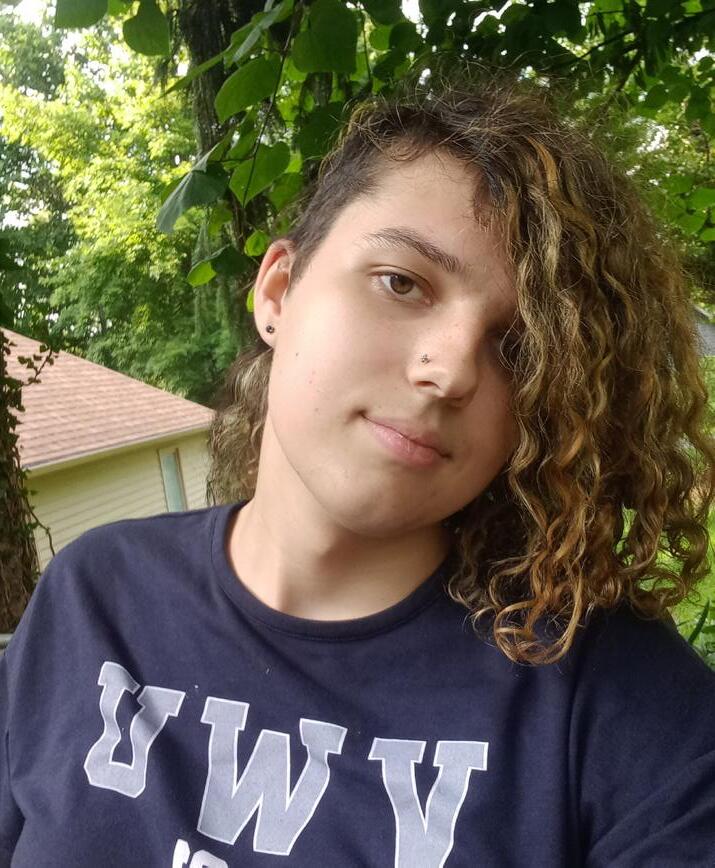


among other positions, for the Marlin Chronicle. She enjoys reading and is scared for the future of the country she grew up hearing was the freest country in the world. Her opinions do not neccesarily reflect the opinions of the Marlin Chronicle or its editorial staff.
Gen Z: weak, or something more?
BY MEGHAN ASHBURN mashburn@vwu.edu
Every few months, an all too familiar headline resurfaces: Gen Z is weak. They’re too emotional, too sensitive. They don’t want to work. The narrative is so common that it’s treated as an uncontested explanation for everything from labor shortages to classroom disengagement.
I’ve heard this story before. Every generation gets labeled as the problem when they’re young. Too soft. Too dramatic.
Too different. The language changes, but the script stays the same, replayed in group chats, news clips and social media feeds.
As a person who works closely with students at VWU, and as the parent of two young adults — one who attends this school — I have a different view. Far from fragile, this new generation may be the most resilient we’ve seen in modern history.
Gen Z practiced active shooter drills before they learned algebra. From an early age, they were taught to scan classrooms for exits and stay silent in the dark, with the quiet anticipation that they might one day need to defend themselves. Many spent their high school years isolated behind chrome book screens during COVID 19 — missing important milestones that older generations often take for granted. They entered adulthood not with optimism, but with an understandable uncertainty cemented into every step they take.
And yet, they show up.
They show up informed and engaged, deeply aware of the world around them. As the first
generation to come of age in a world of constant information and misinformation, they learned early how to navigate both. No other generation has had to take on a cognitive load that heavy. They care intensely. They care about social justice, climate change, mental health, equity and each other. That intensity is often mislabeled as weakness, when in reality it reflects their sense of emotional intelligence and moral clarity.
Gen Z students have had a first-row seat watching their parents struggle. They see rising housing costs, stagnant wages, burnout and systems that promise stability but rarely deliver it. Instead of buying into the myth that hard work automatically leads to security, they question it. They ask better questions: At what cost? Who benefits? What actually matters?
That questioning is often framed as entitlement. I see it as discernment. They don’t reject work. They reject work that demands everything and gives nothing back. They reject systems that normalize exhaustion, labeling
it as character building. They understand better than previous generations that resilience isn’t about enduring harm silently, it’s about naming it and pushing for something better.
What impresses me most is their capacity for joy. Despite everything — the anxiety, the instability, the constant stream of bad news on their feeds — they actively choose connection and hope. They build communities where institutions fall short. They advocate for themselves and for each other.
They aren’t apathetic. They’re intentional. If that makes them “too emotional,” maybe the problem isn’t their feelings, but our envy of a generation that learned to feel without apology.
My experience with Gen Z has served as a reminder that strength doesn’t always look like pushing through. Sometimes it looks like vulnerability, boundaries, and a refusal to accept broken systems. If this is the generation we’re calling weak, then we may be witnessing a new and inspiring version of strength. I can’t wait to see how they change the world.


Victoria Haneline|Marlin Chronicle
Victoria Haneline is a senior majoring in English and earth & environmental science. She is a co-Managing Editor,
Elena Lichtenwalner|Marlin Chronicle All images and headlines from the Marlin Chronicle in 2016. They can be found on our website at marlinchronicle.vwu.edu.
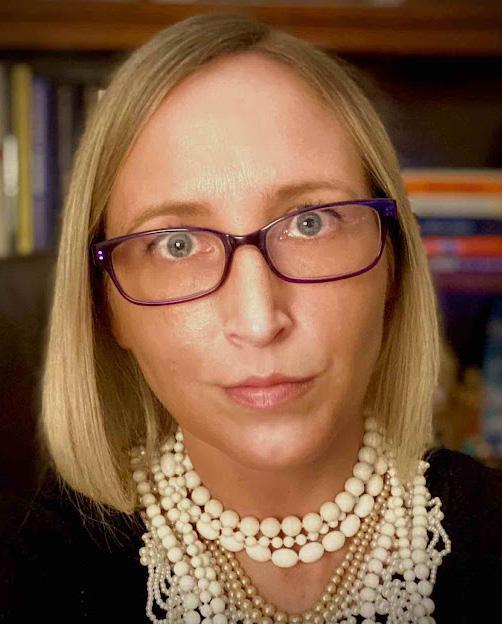
Meghan Ashburn|Courtesy Meghan Ashburn works in the VWU Center for Neurodiversity and Career Development. She is an ‘08 VWU graduate and she enjoys watching sunsets on the beach.
Softball eyes fourth banner
This season isn’t as much about redemption as it is completion.
BY CAMERON MAILLOUX
cjmailloux@vwu.edu
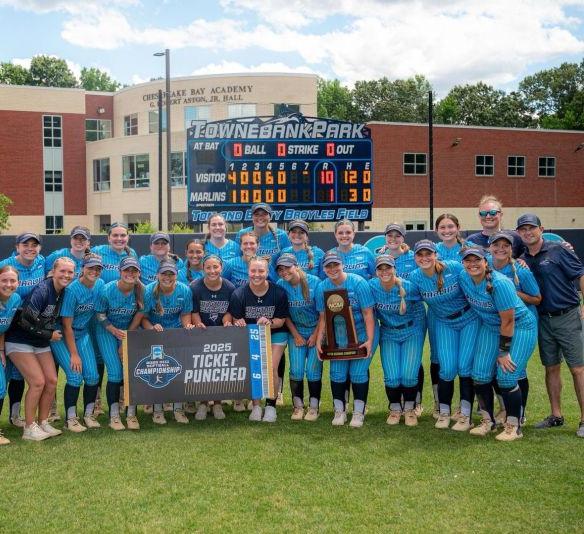
Last season ended in heartbreaking fashion for Virginia Wesleyan Softball when they lost both games in a best-of-three in the National Championship series to Trine University.
With a new campaign on the horizon, the team is looking to get off to a strong start and make another deep playoff run.
Going 36-3-1 in the regular season last year, they powered through the ODAC Conference Tournament, Regional Tournament and Super-Regional Tournament with a 10-0 record. They then found themselves in the NCAA Division III Softball Championship Tournament.
After winning their first two games, they fell to RandolphMacon University. Learning from the loss, they then beat RandolphMacon by two runs to send them to the championship series.
In the championship series, the high-powered offense managed to scratch two runs across the plate in two games, which was unusual for a team that scored 413 runs in the 54 games prior to the Championship Series.
With the loss in the back of their minds, the team got back to work toward the goal of going back to the Championship series. For the Marlins, this season isn’t as much about redemption as it is about completion.
Head Softball Coach Brandon Elliot led the Marlins to three national titles and several
National Championship Tournament appearances. Due to his championship pedigree, he is focused on getting the team to learn from the loss that ended their 2025 campaign.
“For returning players, just remember how you feel in this moment. Take it in and just know how close you were,” Elliott said. With this motivation, he is hoping that it will fuel the team to get back to the tournament.
Elliott emphasized the role of the pitching staff in the upcoming season. “I think it’s not only the pitching, but the depth of the pitching,” Elliott said. “We really haven’t been focused around one arm. We’ve had a staff, and that’s really benefitted us.”
With returning pitchers senior Emma Adams and sophomore Hannah Hearl expected to headline the staff, Elliot hopes to get great production from the freshmen class.
As a senior and leader for the Marlins, Adams said she understands the importance of her role this year.
“Leading by example is really how I and others on the team reflect the expectations of character in the softball program. Especially in the transitional times in the fall,” Adams said.
The team wants everybody to feel at home and feel like they aren’t alone, on or off the field.
Coming off a historic flurry of offense last season, Elliot knows how pivotal it is to get back to that form.
“I think we have a chance to
have more power and hit more home runs. We play at a big ballpark, so we typically don’t hit a ton of home runs,” Elliott said.
For a team that focuses on playing small-ball and hitting gap-to-gap, he said he hopes that the added power from sophomore Morgan Tucker, senior Ali Pollock and junior Taylor McQueen will round out the offense and help push them forward.
“I think the goal of a National Championship is always exciting,
but knowing that we can actually make it there and put up a fight makes me even more excited,” Adams said.
“The team is attacking this season through the term ‘out love.’ The team uses this term to remind them to be there for each other. ‘I’m going to love you more than myself, I’m going to celebrate you even when I may not succeed and I’m going to do everything with class and grace,’” Adams said.
The Marlins first taste of home action on Broyles Field will come versus Christopher Newport University on Mar. 3.
After a tough ending to the 2025 campaign, the Marlins are continuing to put in the work to get better and prepare for their season opener at Meredith College on Sunday, Feb. 22. With a goal that will require a close group of individuals, the Marlins are ready to get back to the top this season.
Marlins ‘kill’ competition
BY WILLIAM TURNER wjturner@vwu.edu
The Men’s Volleyball team is looking to continue a blazing start to their season. The Marlins are 8-1 to begin the year, with their only loss coming from Wisconsin Lutheran College during the Marlin Invitational Tournament.
Despite this loss, they have dropped only three sets in their eight wins, including five threeset sweeps. Director of Men’s and Women’s Volleyball Karissa Cumberbatch attributes this early success to new upperclass leadership as well as “the overwhelming physicality of both Siah Hall and JaMarhe Wills.”
This season’s success is a continuation of last year’s as
the Marlins finished 17-10 and reached the ODAC championship tournament semifinals, losing to the eventual ODAC tournament champions, Randolph-Macon.
The program’s mentality has completely changed since the start of last year. “We aren’t sure if we have the respect within the ODAC that we deserve, and we will do everything we can to earn it,” Cumberbatch said.
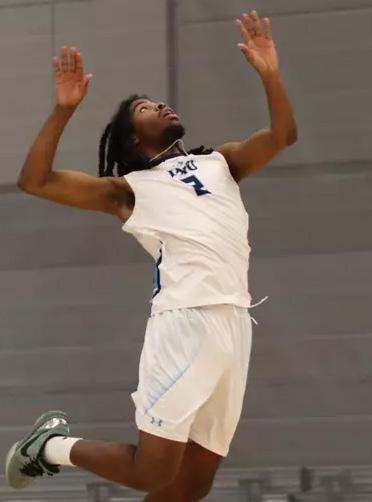
The focal point of the Marlin offense comes from senior outside hitter JaMarhe Wills, who leads the team in multiple stats this season, most notably in kills.
Wills is also the team leader in service aces with 14.
Wills has had help from sophomore setter Ajaye Davis, who leads the team in assists
with 321 so far this season. Cumberbatch complimented Wills, calling him “a freak of an athlete.”
Senior Siah Hall also spoke about the impact Wills and Davis have had on the team. “JaMarhe demands a lot from people, and it brings the energy and confidence up a lot for the team,” Hall said.
Wills said Davis has been imperative to his success early in the year. “Davis has done a great job of helping us find the court and has helped put a lot of pressure on other teams’ defense,” Wills said.
Wills had little time to prepare for the season due to his involvement with the Men’s Soccer team. “It was super important for me to work on my passing, so I was in the gym every chance I could get,” Wills said.
Wills said he looks to break a record he got close to last season with the single match kill record of 26. He got 24 in last year’s match against Randolph-Macon. “I’m looking to see if I can break it this year. I feel better than I ever have,” Wills said.
Hall, Davis and freshman Gavin Juhas have led the defense for the Marlins. All three have a dig per set rate of over 2.0, with Davis and Hall being 2.36 and 2.35 per set, respectively.
Wills said Juhas and Davis are “bringing in great new perspectives and challenges to the dynamics of the team.” Juhas and Danny Smith are new players for the Marlins, and according
“We aren’t sure if we have the respect within the ODAC that we deserve, and we will do everything we can to earn it.” Director of volleyball Karissa Cumberbatch
to Cumberbatch, have “huge upside.”
Hall said these two have been imperative in allowing him to switch to a new position and help him lead the team in the best way he can.
Hall has switched from libero to outside and opposite side hitter, and he said the team has gotten a lot better since he has left the role to the newcomers. “They are much better than I ever was, and are going to be a whole lot better than I ever was at it, so I’m glad I could pass on the role with confidence,” Hall said.
The Marlins look to continue their five-game win streak through the rest of ODAC play, with their next home game against Averett University on Feb. 26 at Townebank Arena.
Their next in conference game is at Randolph-Macon College on Feb. 21, a game in which the Marlins will want to keep their undefeated record in ODAC play and move to 4–0.
The Marlins will play their final match Apr. 4 against Eastern Mennonite University, with their final home match coming Apr. 1 against Randoph College.
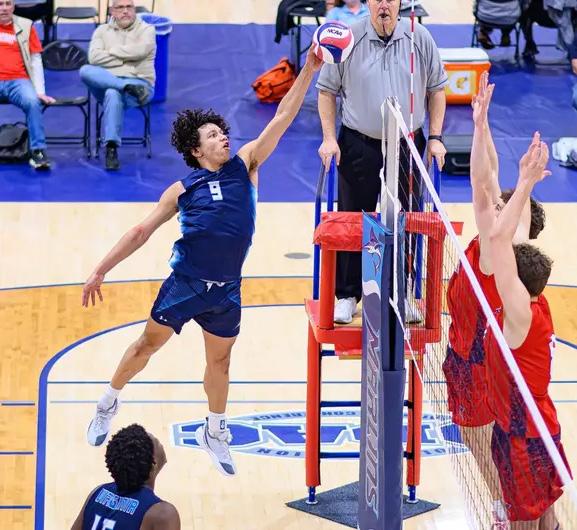
VWU Athletics|Courtesy
The Marlins pose after ‘punching their ticket’ to the National Championship last season.
VWU Athletics|Courtesy Siah Hall redirects the ball over the net for a point.
VWU Athletics|Courtesy
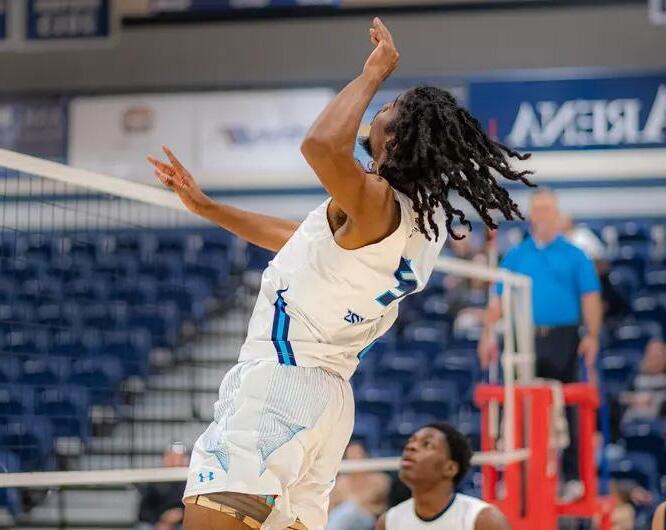
JaMarhe Wills rises from the floor to earn a kill.
VWU coaches adapt to AI
AI is changing how collegiate coaches work on a day-to-day basis.
BY CASTON CHRISTMAN cbchristman@vwu.edu
There is currently a debate on whether Artificial Intelligence (AI) is beneficial or detrimental. In athletics, AI is used to assist in recruiting, practice planning, scouting and statistics.
Some Division I programs, such as the Virginia Military Institute (VMI), have been a frontrunner in adapting to the use of AI in athletics. VMI Basketball has been using an AI program called PickandRoll AI.
According to Trevyn Gray from the Virginian-Pilot, the PickandRoll AI service is designed to save hours of coaches’ time studying film to only a few minutes.
It helps provide deeper insight into game film that most coaches might overlook and can create quick adaptations on the court through just a tablet.
AI has been a discussion topic in the collegiate world, with academic integrity concerns among the students regarding their homework and essays.
In the athletic community, debate surrounds who should be in charge of regulation, whether that be the NCAA, the conferences or the individual schools.
Executive Director of
Intercolliegate Athletics at VWU Andrea Hoover-Erbig attended a Division III NCAA Athletic Director convention that contained a panel on the use of AI in sports.
“We’ve heard of the idea of using it to help our athletic communication more than anything else,” Hoover-Erbig said. AI platforms can be convenient, but can also come with high subscription prices.
“Athletics is just ever evolving, and we’re in a different place now than we were five years ago.”
Women’s Basketball Coach
Megan Belo
“People wear a lot of hats. Coaches have a lot of responsibilities. How can we make their jobs easier? But I think financially, it still comes with a cost, maybe not the cost of an entire person, a salary and benefits. But AI still comes with a cost,” Hoover-Erbig said. Not all coaches prefer to use AI as a tool in coaching such as VWU Head Softball Coach Brandon Elliot. Some prefer
an “old school” coaching style, studying film, planning the practices and recruiting without the help of AI.
“What we do on a daily basis doesn’t use AI very much,” Elliot said. Many VWU coaches use scouting media that include an AI package add-on such as Hudl with its HudlIQ package, Fast Scout and many other platforms for film.
“[Fast Scout] actually does use AI a little bit, which is fascinating to me, and I like to read it.” Head Women’s Basketball coach Megan Belo said.
“Basically, it gives us the breakdown of all the players,” Belo said. The coaches write the entries, but the software calculates all the numbers and stats.
According to Belo, AI is just the next step for the world of athletics and it will keep moving forward.
“Athletics is just ever evolving, and we’re in a different place now than we were five years ago. In five years from now, we’ll be in a different place again,” Belo said.
Many coaches at VWU love their coaching jobs, even with the extra planning required of them.
“Yes, it’s exhausting, but I couldn’t imagine doing anything else, and what makes it fun is the people,” Belo said.
“I think sometimes AI can take

away from [the personal effect of coaching] a little bit, but if you can use it to your advantage, if I can get an edge using it, and it saves me 30 minutes to do something,” Belo said.
Brand sponsorships bring excitement beyond the biscuit
Bojangles
BY LORA YOUNG llyoung@vwu.edu
is the new face of VWU
At VWU, programs rely on brand partnerships and sponsors to benefit the campus community.
The Women’s and Men’s Basketball teams gained a new sponsorship for the student section in Townebank Arena: Bojangles.
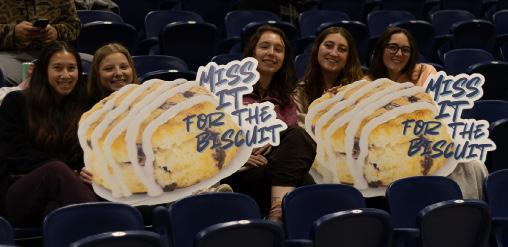
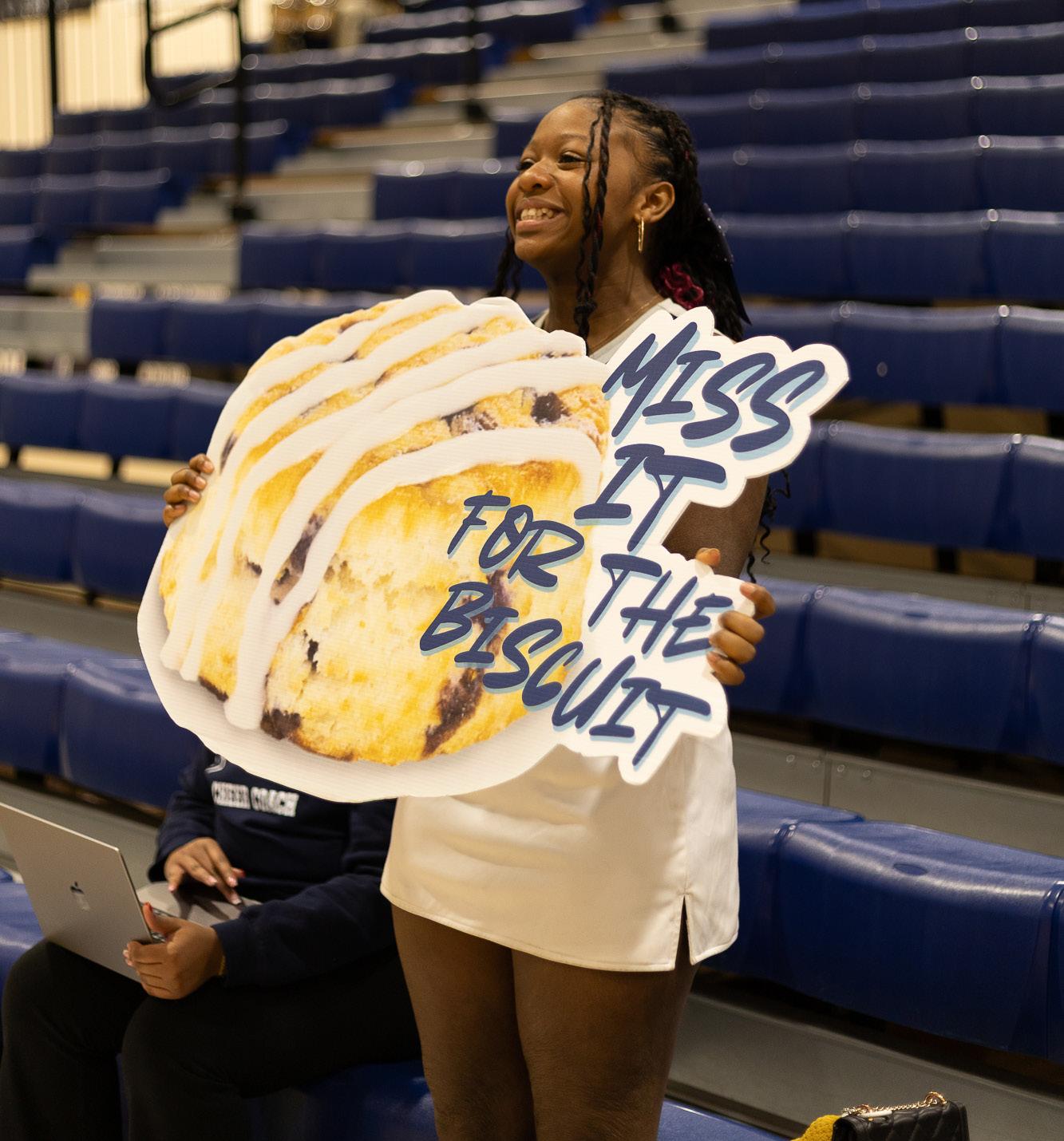
For a promotion called “Miss it for the Biscuit,” if the opposing team misses two free throws in the second half, the @vwu_marlins Instagram account will post a coupon for anyone to get a free biscuit from Bojangles the next day.
Most schools need collaborations to help boost their athletics teams and their campus activities. According to Minding The Campus, “NCAA data show that only a small number of athletic departments consistently generate enough revenue to cover their costs.”
Not only do Division III schools like VWU heavily rely on partnerships, but Division I and II schools do as well.
Money donations are used for game setup, marketing, food, equipment, travel, etc. Partnerships can also help fund student events, alumni events and more.
With these school partnerships, businesses get more visibility and build trust with the students that their dollars support.
The “Miss it for the Biscuit” promotion has impacted the players and atmosphere during home games this season. The promotion has increased the viewership of home games.
“It’s fun for the players too, we try to
get the other team to miss free throws to get everyone biscuits,” sophomore Men’s Basketball player Demeir Pollard said.
This has led to higher student engagement with basketball games. Pollard said that more sports teams have begun to come support the team.
“The lacrosse team was screaming and holding the biscuit signs; it just made the energy in the gym a lot better,” Pollard said.
“It’s nice to see students and athletes supporting each other, it makes everyone feel more like family and the community feels stronger.”
Sophomore Men’s Basketball player
Demeir Bird
“It’s nice to see students and athletes supporting each other, it makes everyone feel more like family and the community feels stronger,” Pollard said.
VWU has acquired a lot of sponsors over time, such as Moe’s Southwest Grill. Not only are they a sports sponsorship, but they also have a deal for the students.
Every Wednesday they hold “ Wesleyan Wednesday” where students can show their student ID and get 20% off of their order.
“It’s fun to go somewhere like Moe’s where they have Wesleyan Wednesdays and
Basketball.
get to have some quality time with friends or team bonding after golf practice,” junior Kaleigh Dean said. Moe’s has a sign on the window that includes the information for this promotion.
“I think it can get the school’s name out there in the community and interest people who have not heard about the school,” Dean said.
The VWU Marlin Business Conference, held at the end of each semester for students to demonstrate learned business skills in a simulated investor experience, is a school event looking for sponsors.
Business leaders come to speak about business opportunities and how to build resumés.
Sponsors sometimes donate gifts and money towards the conference. Without these partnerships, it would be harder to supply for these events.
“Without the support we might have
to reduce entertainment options, limit food offerings or cut back on interactive components,” senior Erin Beaudry said.
The athletic programs have a huge amount of brand partnerships. Some local businesses include The Dirty Buffalo, APEX Entertainment and Pops Diner Co.
Some national chain sponsors include Panera, Onelife Fitness, Chick-fil-A and Sentara.
“Instead of scaling down due to budget limitations, partnerships can help bring those ideas to life at a high quality level,” Beaudry said.
The “Miss it for the Biscuit” promotion will continue for the remaining Men’s and Women’s Basketball games. Beyond the promotions and funding, the partnerships and sponsorships give more to VWU by allowing the campus to branch out to new businesses and increase engagement at events.
Laila Jones|Marlin Chronicle Members of the field hockey team hoping for free biscuits.
Isaac Fick|Marlin Chronicle
Laila Jones|Marlin Chronicle
Marlins cheerleaders attempt to distract opposing free throw shooters.
The Ave-nuue on the block
REVIEW
BY GABRIELLE BARNETT gabarnett@vwu.edu
At the Virginia Beach Oceanfront, The Avenuue offers one convenient and cozy stop shop to peruse a multitude of small businesses. Finding small businesses to support when thrifting can be tricky to find, but The Avenuue makes it easy.
Located at 610 Norfolk Ave., The Avenuue is a relatively new addition to the Oceanfront that greets its customers with a retro style stall storefront that hints at the nostalgic vibes that fill the shop.
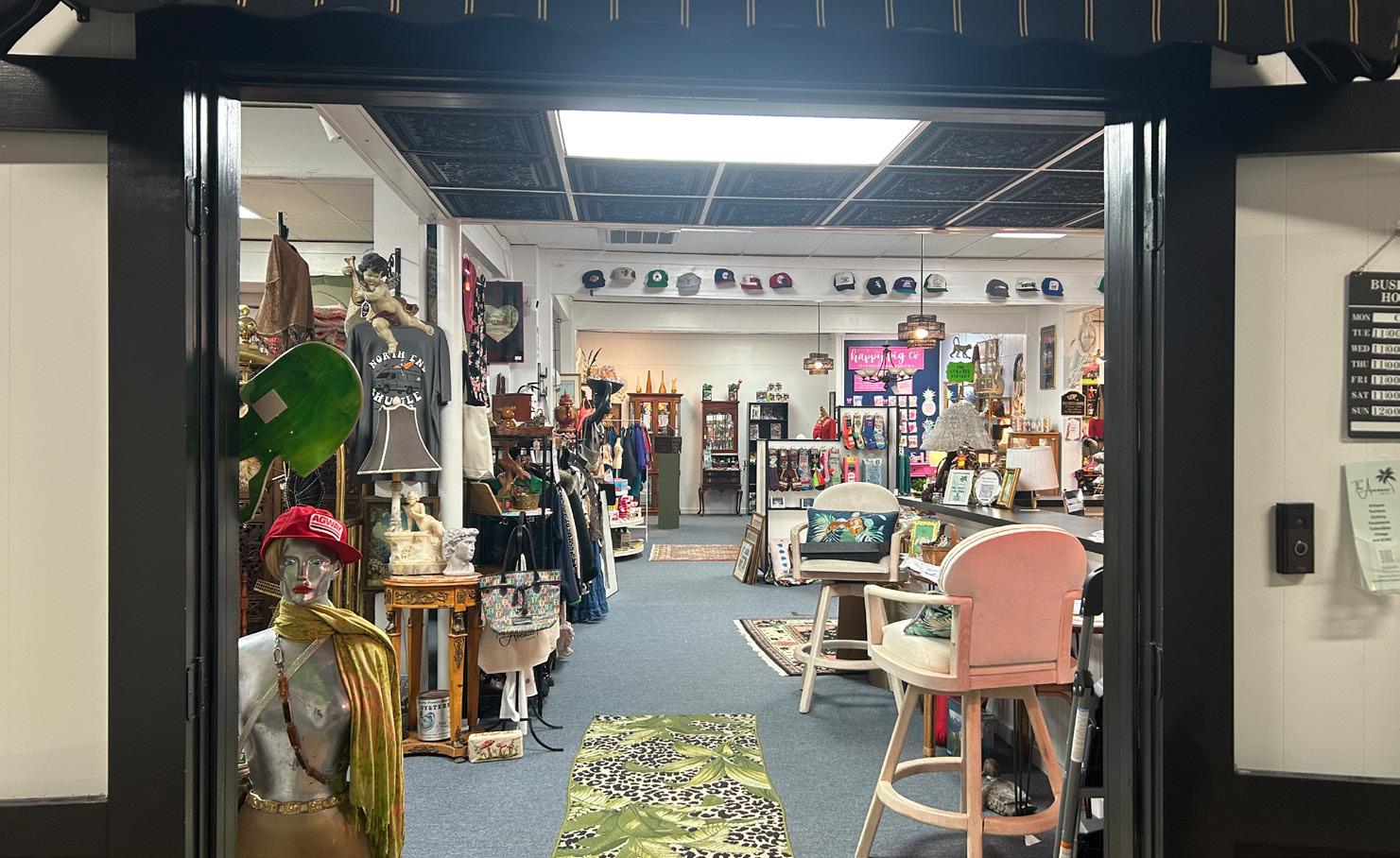
Unlike a traditional store, The Avenuue’s interior is styled more like a market, with booths covering every wall that showcase their variety of offerings. Music from the 80s and 90s plays quietly over the speakers.
Curated by the owner, the dozens of vendors have a range of clothing, skateboards, jewelry, knicknacks and more. Taking the winding path through the store is like walking through different eras.
“I think there’s around 50 vendors here,” said Ella Chambers, who has worked the front desk of The Avenuue for the past three months.
Chambers, a family friend of the owner, enjoys working at a place that closely aligns with her love for thrifting.
“I go all the time, maybe even once a week,” Chambers said.
Chambers uses her involvement with The Avenuue as an opportunity to stay updated on the inventory, particularly at the stall of Ice Cream Honey, which sells vintage goods and clothes.
“I look through it every day,” Chambers said, adding that she enjoys working at The Avenuue.
Other than its wide variety of items, The Avenuue also makes thrifting more convenient by not requiring vendors to constantly stay at their stalls. Customers are able to browse the stalls at their own leisure, sorting through the different small business offerings.
“You can find the kinds of gifts that are kind of individualized,” customer Michelle Johnson said, who had already picked up several items. “This is maybe a birthday gift for a friend.”
Graduate student at Old Dominion University Madeline Johnson brought her mother Michelle Johnson to The Avenuue.
“I’ve been here a few times,” Madeline Johnson said. “I wanted to bring my mom here because we like to do vintage shopping and thrifting, and this is a little more on the vintage side.”
“I like the vintage, original collection kind of items,” Michelle Johnson said, showing off the old-fashioned, embroidered
dish towels she was holding. “The notfound-at-Target stuff.”
Madeline Johnson found The Avenuue on accident when she was at the Oceanfront one day with her roommate. She enjoyed the variety offered, which has brought her back several times. Michelle Johnson appreciated that The Avenuue offered more than clothing.
“This is perfect for this neighborhood,”
Michelle Johnson said, adding that the retro vibes of The Avenuue complement
the old fashioned vibes of its location on the Oceanfront.
The Avenuue also has vendors for many small businesses such as Happy Pig Co. and The Hippie Club to offer homemade items for customers to explore and gather.
The wide range of products from small businesses are accompanied by easily legible price tags and a variety of sales. No matter what you might be looking for, The Avenuue can supply it.
Freshman runs New Store in Olde Towne
BY ABEE CASSIDY arcassidy@vwu.edu
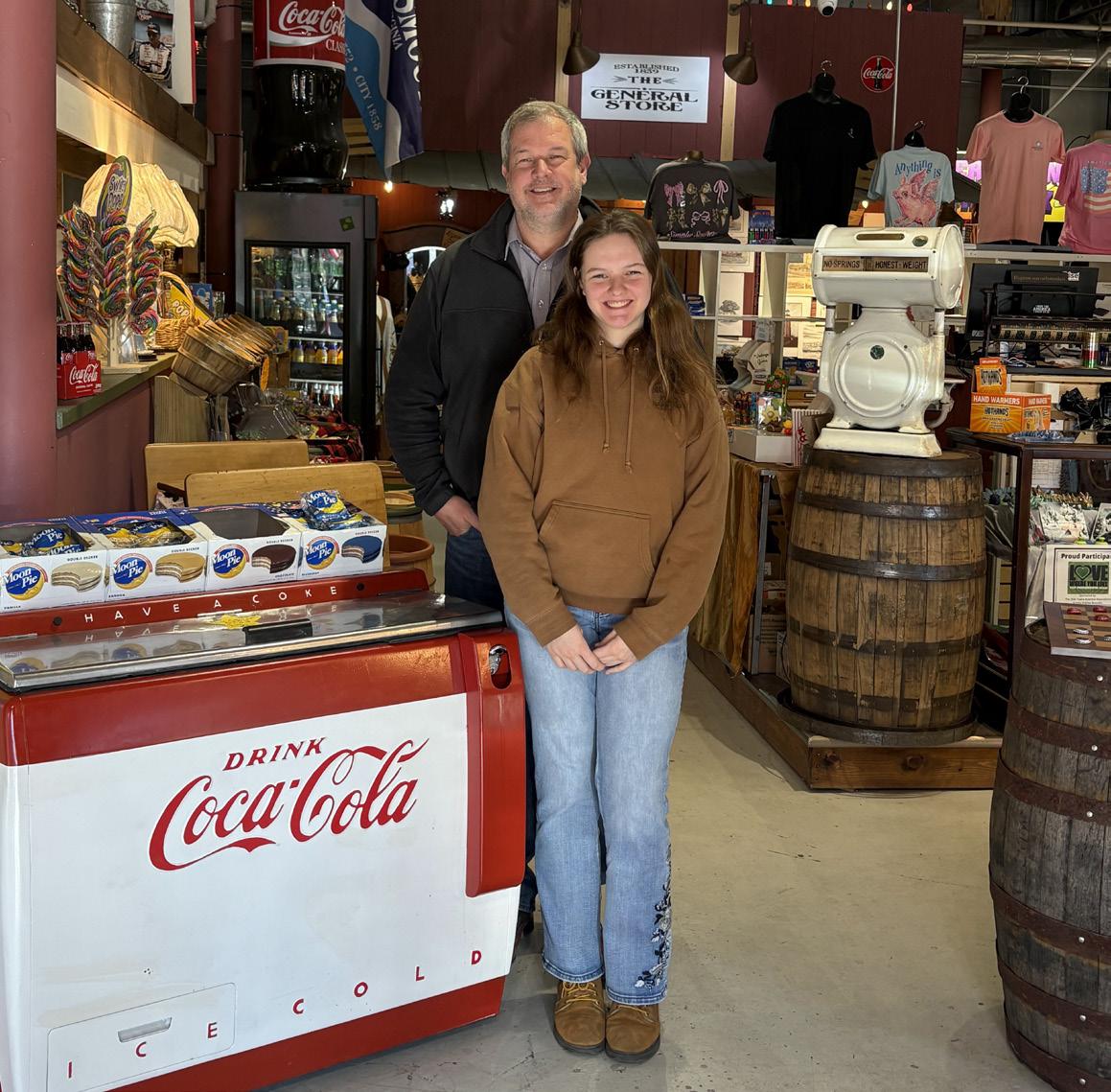
About a 30-minute drive from campus is a small business run by a VWU freshman and her father.
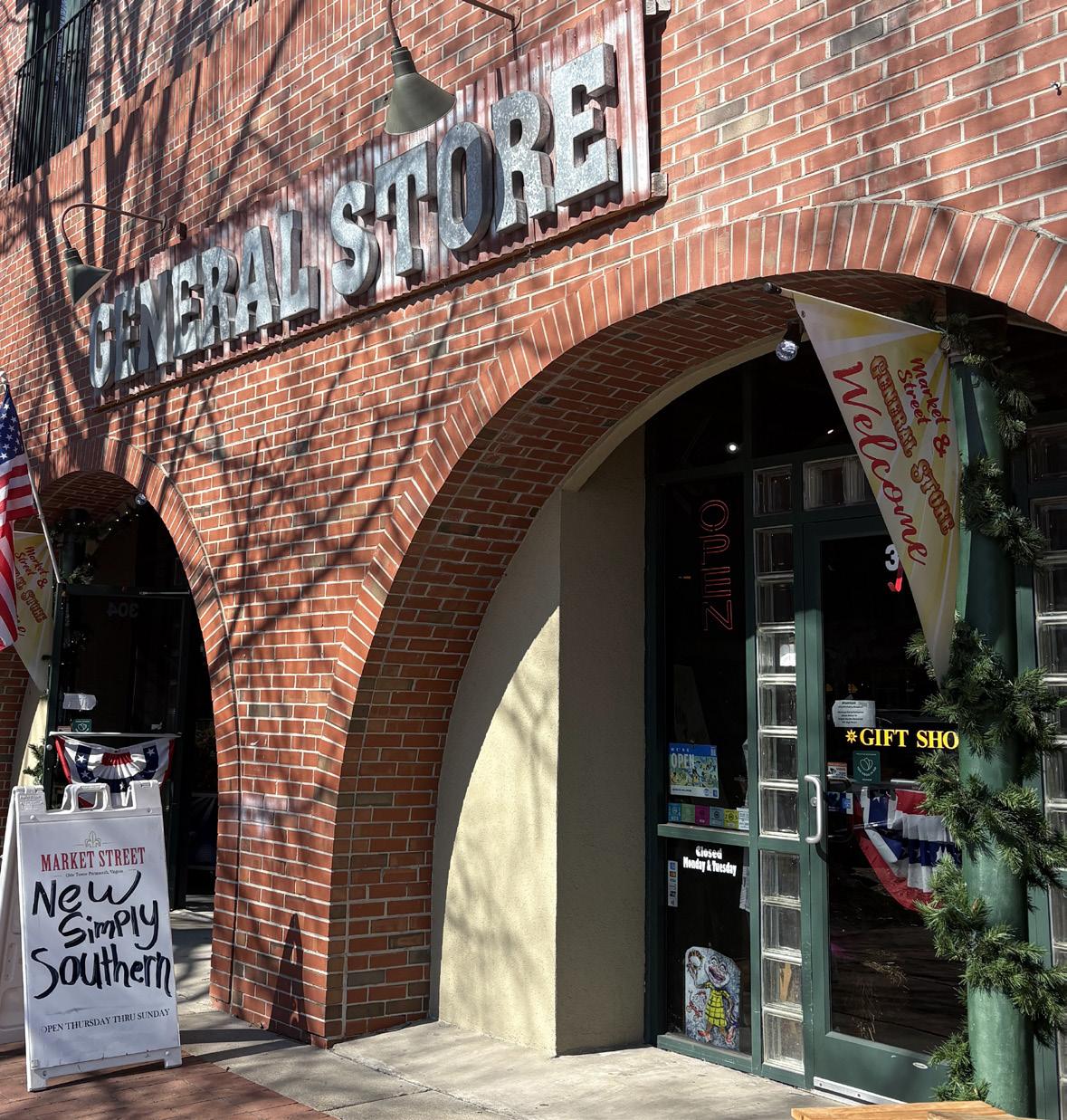
Located in Portsmouth, Market Street & General Store is a blend of everyday essentials and gift items, meant to provide a nostalgic version of the traditional general store.
Owned by entrepreneur Lindsay Goodwin, Market Street & General Store brings a mix of old-fashioned everyday items and goods to the community.
Lindsay Goodwin began the process of opening the store while she was still a sophomore in high school with the help of her father, Anthony Goodwin. He bought the
store after COVID-19 forced the previous owners out of business.
“My dad always said if there was ever going to be someone to open up a general store in Portsmouth, it would be my family, that’s for sure,” Lindsay Goodwin said.
The store now operates under Lindsay’s ownership. “When she did turn 18, we found it was a good time to make this transition, so she knows now she has legal ownership of it, and I’m here to support her,” Anthony Goodwin said. The store’s design is based on a general store in the mountains of North Carolina that the Goodwin’s visit every summer.
The shop offers nostalgic goods such as old-school
buttermilk pancake mix, old school raspberry jam, coffee roast, candles, jewelry, oldfashioned candy, soda and t-shirts from Simply Southern.
“We have our old-fashioned candy, and we constantly have people coming in saying, ‘oh I remember this when I was a kid,’ and so we really try to bring back those memories for those who have,” Lindsay Goodwin said.
The store setup and the large variety of products are designed to bring both convenience and character to this shopping experience. “We really work to bring that old-fashioned feeling to Portsmouth. We bring back that nostalgia,” Lindsay Goodwin said.
“During Christmas, we have the store covered in garland and Christmas trees,” Lindsay Goodwin said. “During special holidays, we’ll have different displays, and right at the front we have the market cart which changes very often to match the different holidays.”
The seasonal display provides a warm, welcoming and inviting atmosphere that reflects a sense of community compared to the faster pace of retail stores.
“We try and make our customers feel welcome, greeting them as they come in the door and always try to make sure that they know they can ask for help if they need it, but most importantly, we want to make sure our customers feel safe within our store,” Lindsay Goodwin said.
Anthony Goodwin also described how the store’s atmosphere changes throughout the year, especially during Old Towne Portsmouth busiest holidays.
“Olde Towne has had a very good time of the year between Oct. 1 right up to Christmas, with outdoor events like little festivals, we have a certain feel for a certain type of festival goer,” Anthony Goodwin said. “This year, we had one lady who had a lot of retired village houses, and so that whole wall over there was all village houses, they were all lit up and it really made a big impact for the look.”
“I think that Lindsay has a very intellectual mind, and she always is trying to advance and grow and see what the next thing is to add to the store,” Karen Wadhams, an employee at the store, said.
“She’s very open minded and ready to grow and expand and bring new people in.” Wadhams said Lindsay takes a goal-oriented
approach and is “very focused on making something big happen in the general store.”
Market Street & General Store in the future wants to expand into more businesses.
“It would be nice to turn around and look back, and we’ve got three or four different locations all around the Hampton Roads area,” Anthony Goodwin said. As Lindsay Goodwin’s vision grows, the possibility of seeing Market Street & General Store in Norfolk or Virginia Beach may not be too far away.
If you’re ever in Portsmouth during the weekends, the store has Friday arts and crafts night, and Saturdays have popcorn and hot dogs with the farmer’s market that you won’t want to miss.

Gabrielle Barnett|Marlin Chronicle
The Avenuue holds an eclectic inventory with plenty of space to browse.
Abee Cassidy|Marlin Chronicle
The brick facade of Market Street & General Store amplifies the nostalgia of the store.
Abee Cassidy|Marlin Chronicle Father-daughter duo Anthony and Lindsay Goodwin strive to create a welcoming store with something for everybody.
Located in Norfolk, Virginia, The Taphouse has designated itself as one of the city’s most welcoming homes for hardcore and alternative music. It serves as a gathering place for those who may not always feel represented in more mainstream nightlife spaces.
Behind the counter, bartender Veronica Hamilton describes the crowd as “all walks of life,” from neighborhood regulars to “hardcore kids” and punk rock fans looking for somewhere they can belong.
In a coastal area better known for its beach tourism, The Taphouse offers something heavier: a space where music, individuality and community come together.
For many patrons, The Taphouse is a part of their routine.
“This is my go-to spot,” James Lyons said. Lyons is a regular who credits the welcoming atmosphere and steady lineup of local bands as the reason he continues to
return. “Taphouse is really welcoming and it’s close by to me. I just love the bands.”
Ethan Williamson, another frequent guest, supported that idea, saying that he has been coming to The Taphouse since he first moved to the area.
“The community is very welcoming,” Williamson said. “I wouldn’t say you would get judged for what you do as long as you’re just acting normal, really.”
The venue’s reach extends far beyond the local scene. Bands from around the world travel to The Taphouse to share their music, with metal and punk acts arriving from countries like Germany, France and the United Kingdom.
On Feb. 7, the New York metal band Horse Grave made the trip down to Hampton Roads to perform. The group’s members first crossed paths in 2017 before officially forming years later, reflecting the camaraderie of the hardcore scene itself.
When asked what keeps them playing their music, the band kept it simple: “It’s just what we like. We grew up in that kind of stuff.”
Their willingness to make the trip south reflects the kind of draw venues like The Taphouse can have: a perfect place for
touring bands looking for passionate and high-energy rooms filled with dedicated fans.
Beyond the music, The Taphouse’s kitchen plays a role in keeping patrons around in between sets.
“I’ve never seen so much bacon on a cheeseburger, but I’m not complaining,” patron Ethan Johnson said about the smokehouse bacon burger. He also acknowledged the more casual options, saying, “The Chicken Nuggies were solid with a bunch of dipping sauces to choose from.”
Although the atmosphere may feel dominated by the loud music, the kitchen offers another reason for people to stick around, turning a night out for live music into a full evening experience.
Still, beyond the flashing lights and packed sets, the realities of operating a locally owned venue remain unavoidable.
Co-owner Parker Harrington acknowledged that business has slowed, attributing the change to broader economic pressures rather than any shift in the venue’s identity or support. “Times are tough right now,” Harrington said. “There’s not as much disposable income going around.”
On Jan. 20, The venue’s Instagram page announced, “our ABC license runs out at the end of June. If we don’t see some drastic change(s) in the next few months, we won’t be renewing it and effectively closing the business.”
Many locally owned businesses are facing similar challenges as customers become more cautious with discretionary spending. Like other restaurants, bars and entertainment spaces across the region, The Taphouse has had to work its way around an economic climate that makes nights out less frequent for some patrons.
Even so, Harrington expressed confidence in the loyalty of the community and the resilience of the scene that has sustained the venue for years.
At the end of the night, The Taphouse remains what it has always been: a home for live music, bar food and a community that emphasizes belonging as much as volume.
Even though broader economic pressures are testing locally-owned venues, the loyalty of its patrons and the steady stream of bands passing through its doors suggest that the spirit inside the room is still alive.
Un-Fathom-able Coffee
of customers.
OMARI JONES ozjones@vwu.edu
Right next to the Virginia Beach Oceanfront, Fathom Coffee started as a small idea built on the love of coffee. Owners Bob Werby, Jeff Werby and Lisa Denoia began by roasting coffee on a small scale and sharing it with the people around them. As more people showed interest, the idea grew into a full coffee business.
Fathom was built on the goal of slowing things down and bringing people together. This focus on community has helped the shop grow naturally and gain a loyal group
Walking into Fathom Coffee, the atmosphere made me feel relaxed and it was very welcoming. It wasn’t too loud or quiet, which makes it a great spot for students who want to get their work done. They have many tables and relaxing spots both inside and around the shop for studying or hanging out.
There were people talking while enjoying their drinks and one man who was reading a book at a table in the corner.
While I was there, I got a latte with whole milk, cookie butter and white chocolate syrup with a caramel drizzle. I will say that it was one of the best coffees I have ever tasted.
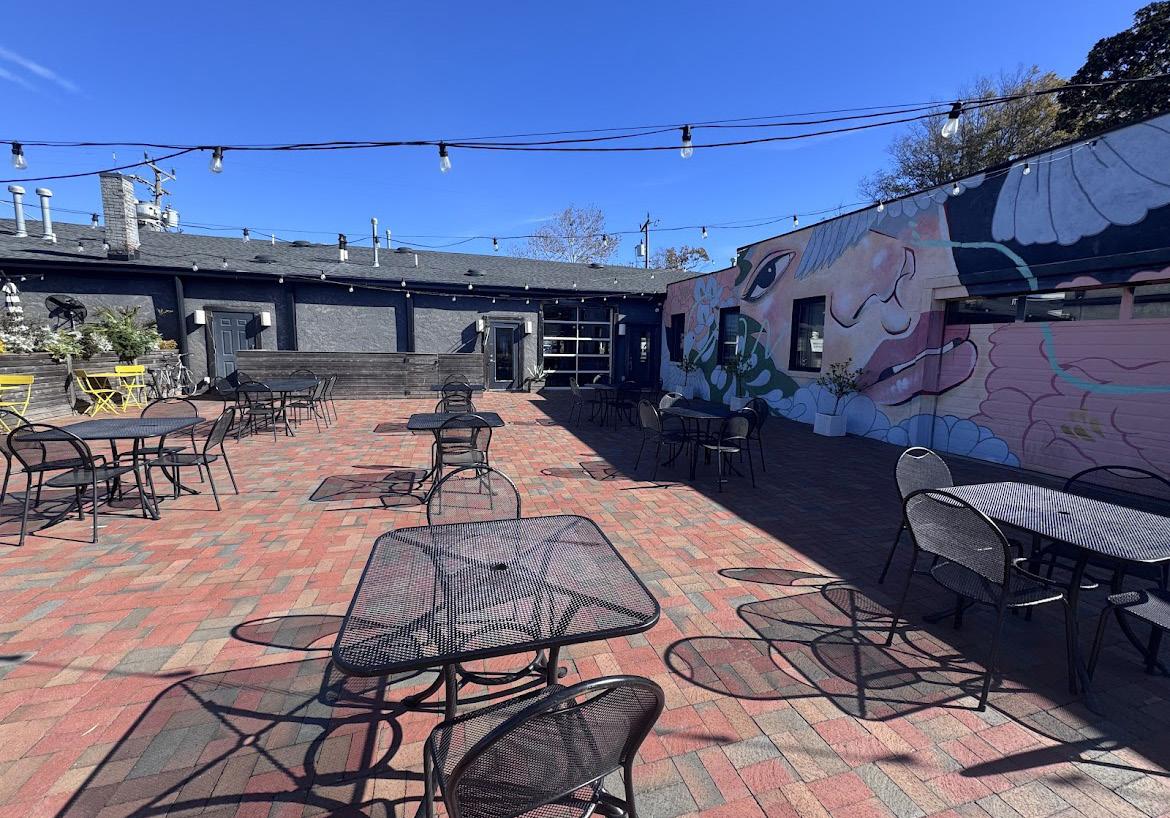
The coffee is one of the biggest reasons patrons keep coming back. Fathom offers a variety of drinks, from simple iced coffee to specialty lattes and pour-overs. There’s something for everyone, whether you like your coffee strong or sweet. One customer, Mattison Brown, describes Fathom as a “hidden gem.”
“I just discovered Fathom and I’m already obsessed,” Brown said. “I love that it’s dog friendly because now I can bring my dog with me anytime I visit.”
They even have a fun “dog wall of fame” where they display dogs that have visited the store. This fits closely with Fathom’s overall vision of being a welcoming and relaxed community space.
“I feel that allowing dogs helps create a friendly, laid-back atmosphere where people feel comfortable staying longer and connecting with others,” barista Jasmin Francia said.
What makes Fathom even more interesting is how it has grown over time. Instead of expanding too quickly, the business focused on building strong relationships with customers and creating a quality experience. “Our regulars always strike up conversations with us,” Francia said. “I really enjoy getting to talk with them.” This steady growth has helped Fathom become a well-known local spot while still keeping its original feel.
The shop highlights local artists and has a laid-back vibe that feels personal rather than corporate. Beautiful paintings of swans adorn the exterior of the building as well as a portrait of a young woman.
“This place has amazing coffee and an even better atmosphere,” regular Nathan
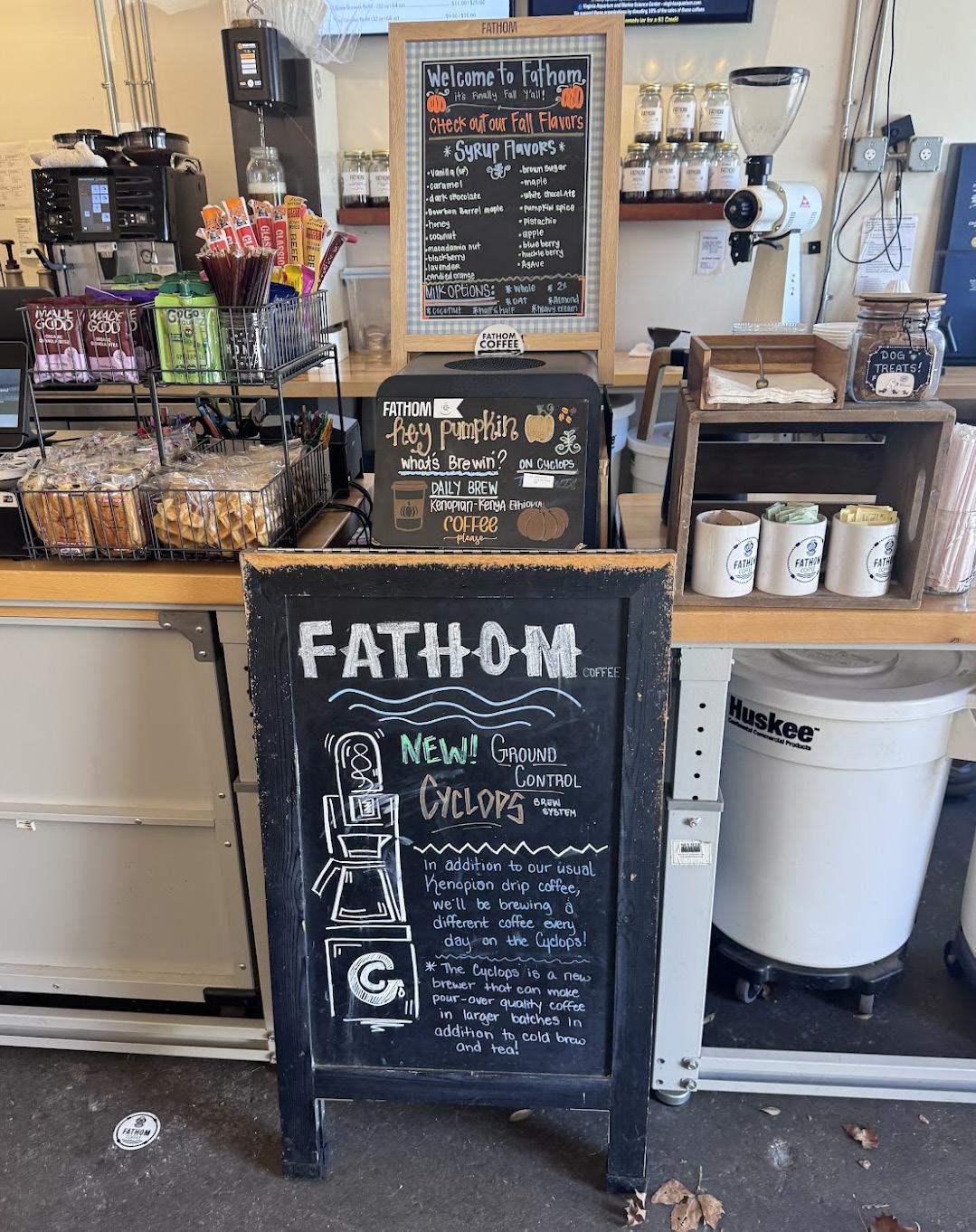
Cowfer said. They described the shop as having a “really chill vibe.”
Looking ahead, Fathom Coffee has the potential to keep growing. While the shop remains focused on its current location, they have interest in expanding, whether through additional locations or new offerings. Any future growth appears to be thoughtful and careful, with the goal of keeping the same welcoming atmosphere that customers love.
With good coffee, friendly staff and a comfortable environment, Fathom offers exactly what students are looking for. In a college life that can often feel stressful and fast-paced, Fathom Coffee provides a space to slow down, recharge and enjoy a great cup of coffee, one that keeps students coming back again and again.

Jordan Crallé|Marlin Chronicle
Liam Castellano|Marlin Chronicle
Four-person band Arm the Youth plays for a crowd at Taphouse Grill on Feb. 7.
Omari Jones|Marlin Chronicle
Omari Jones|Marlin Chronicle
An outdoor patio offers space for patrons to enjoy the weather and their coffee.