THE MILL








Dr. Jessica Harden



@ArtPopStreetGallery Jing Huang

a MTM
Farewell
PUBLISHER
SteelecroftMediaGroup
EDITOR IN CHIEF
TraceyRoman
COMMUNITY EDITOR
AubreyDucane
CONTRIBUTING WRITERS
ElleChristensen MiaPerkins
CandaceMattingly
Bearaby
AlexandraFuller
MeganMckeehan
TraceyRoman
PHOTOGRAPHERS
NataliyaMelnychuk
KatePoskochil
THANK YOU
MustafaTurhan
AlexTyson
FilippRomanovski
We are grateful for you — the fervent localist whose support for small business strengthened our community. It has been our honor and privilege to serve you for the past 15 years.






LOCATION, LOCATION, LOCATION
Discover Highpoint at Fort Mill, where location, luxury amenities and senior living intersect. Highpoint’s, proximity to historic downtown Fort Mill, vibrant arts community, outdoor recreation, and smalltown charm has singular advantage. Your “must-haves” such as chef-prepared meals, maintenance free living, abundant social activities and events, spacious, new residences make Highpoint your ideal choice. Elevated living when and where location matters.
Character
inspiring small town living

French Bulldog, Boomer

Editor in Chief Tracey Roman pictured with her daughter, Anastasia Roman, at a 2017 TMM launch event.

‘
when localism became more than a philosophy — it became the story of us. ‘
WHEN LOCALISM BECAME US
Text by Tracey Roman, Editor in Chief
When we began The Mill Magazine in 2010, we weren’t just starting a publication — we were planting a seed. At the time, “localism” was a term most people hadn’t heard before. It sounded like an idea, maybe even a movement, but we saw it as something much deeper — a way of living, a way of doing business, a way of belonging.

For the past 15 years, we’ve highlighted local, independentlyowned businesses alongside forward-thinking articles on selfimprovement, lifestyle, culture, and provisions.
We’ve always said that localism is more than buying local. It’s encouraging local businesses to grow deep — to source, hire, and sustain from within the community’s own roots. Because when local businesses thrive, communities thrive. When we invest in our neighbors, that investment comes back around — not once, but again and again.
For every dollar spent at a national chain, 87 cents disappears into a corporate office with no stake in our towns, no love for our main streets, no heartbeat for our people. But when you buy local, 45 cents stays right here — in local paychecks, local schools, and local hands. And when a community commits to growing deep through true localism, that same dollar keeps nearly 75 cents circulating at home. That’s not just economics — that’s resilience.
Community Editor Aubrey Ducane, whose blend of client engagement, social creativity, and web content management helped elevate TMM’s voice.


Publisher Louis Roman (left) alongside local business owners at a TMM launch party in 2017, marking a milestone in the magazine’s community partnerships.




small-town dreamers who believed their work could matter. ‘ ‘
We believed that from the very beginning: communities that are self-reliant and economically independent can weather any storm. We’ve seen it proven time and again. Through recessions, through pandemics, through the changing tides of industry — it’s the locally rooted who stand the tallest.
And so we told their stories. The bakers who open their doors before dawn. The craftspeople who turn reclaimed wood into something beautiful. The small-town dreamers who believed their work could matter. These are the people who showed us what localism really looks like — not a slogan, but a way of caring for one another.
Over the years, as we wrote about towns reclaiming their charm, makers restoring their worth, and families reclaiming their time, we realized something: localism wasn’t just what we covered — it’s who we became.
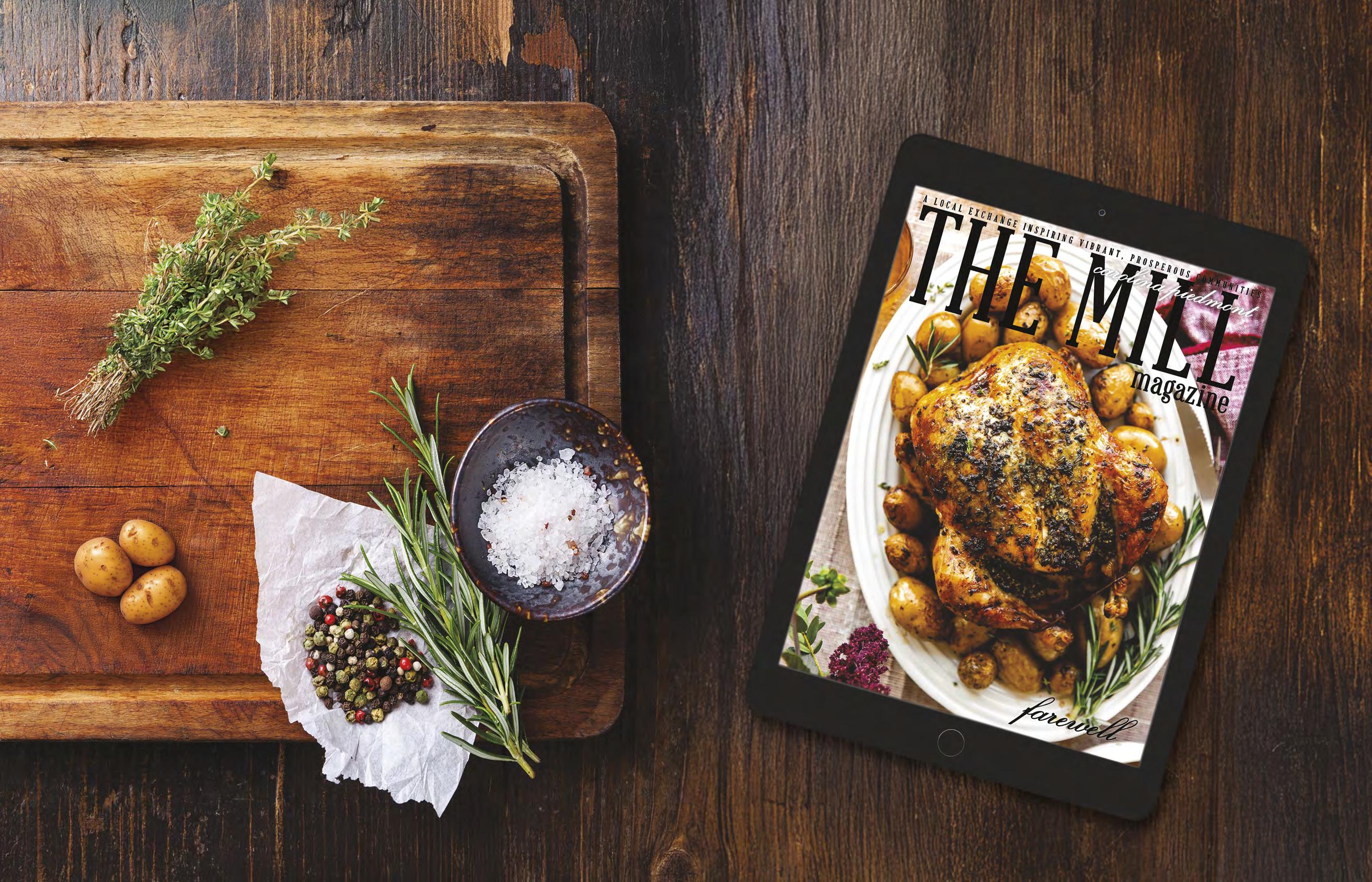
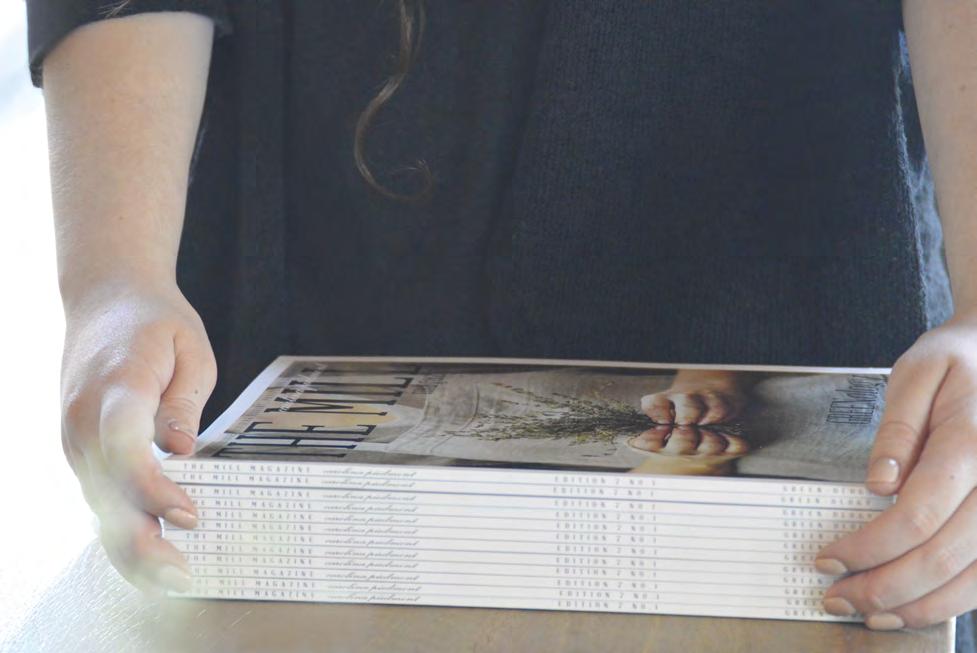
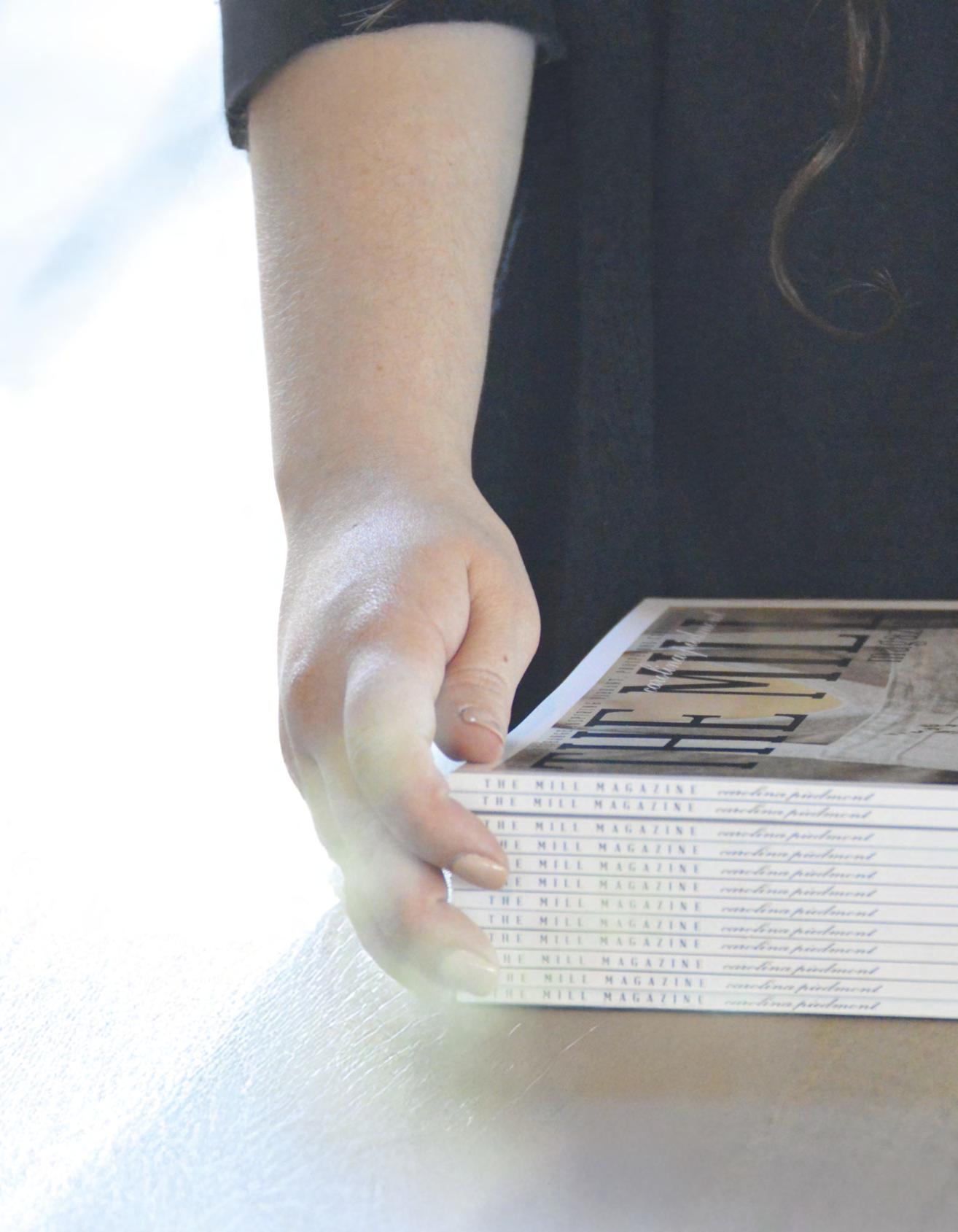
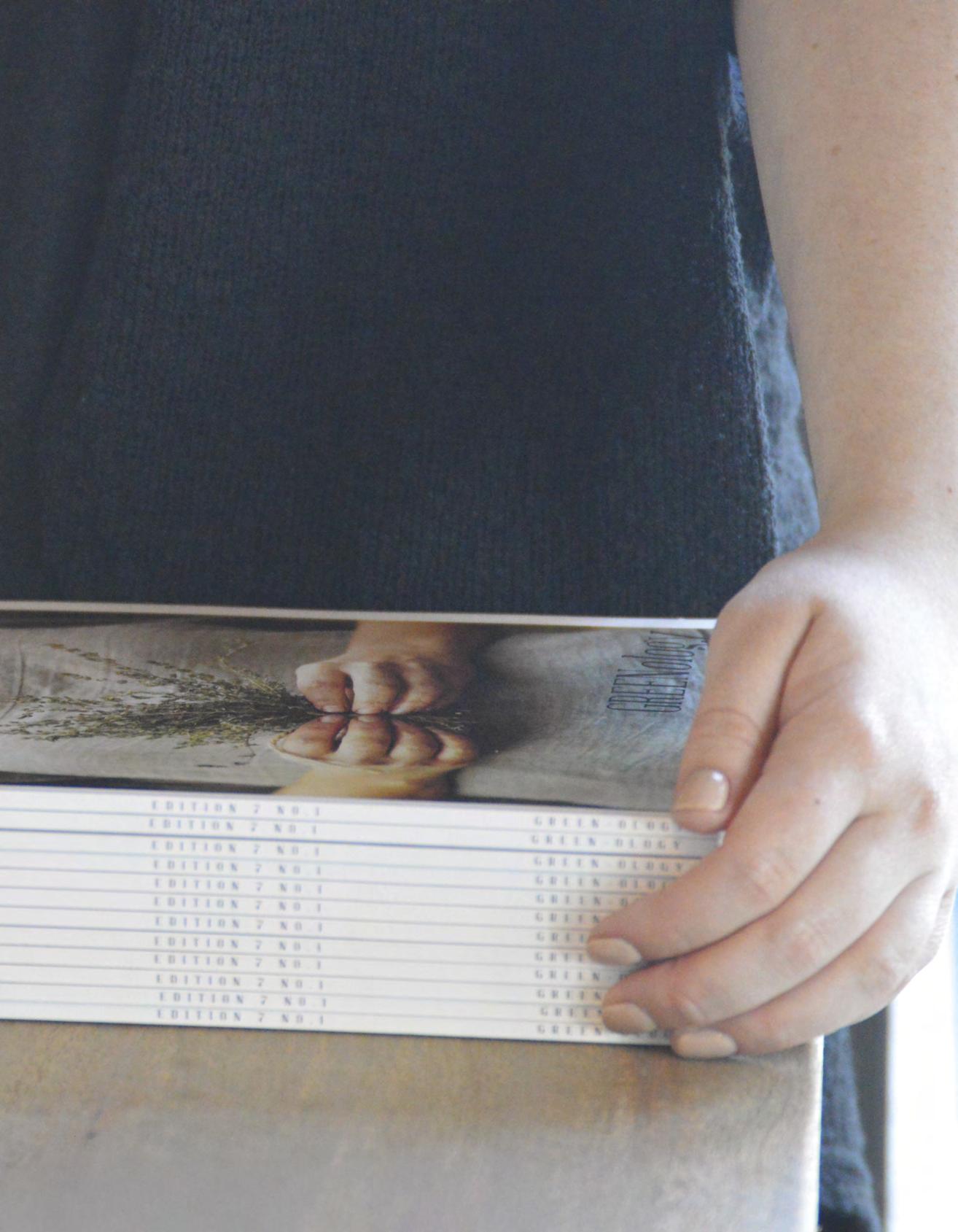
Two standout issues of TMM: Edition 11 No. 4 Finding Gratitude (Nov. 6, 2020) and Edition 10 No. 1 Travel + Leisure (Jul. 8, 2019).
a place for everyone who still believes in small-town charm
We learned that localism is about trust. It’s about knowing your butcher, your brewer, your barista — and them knowing you. It’s about walking into a store and being greeted by name. It’s about recognizing that what’s good for one of us can be good for all of us.
When national chains and cookie-cutter developments made small towns start to look the same, we wanted to remind people of what made theirs special. We wanted to spark pride in the distinct beauty of where we live. Because sameness may be efficient — but it’s never inspiring.
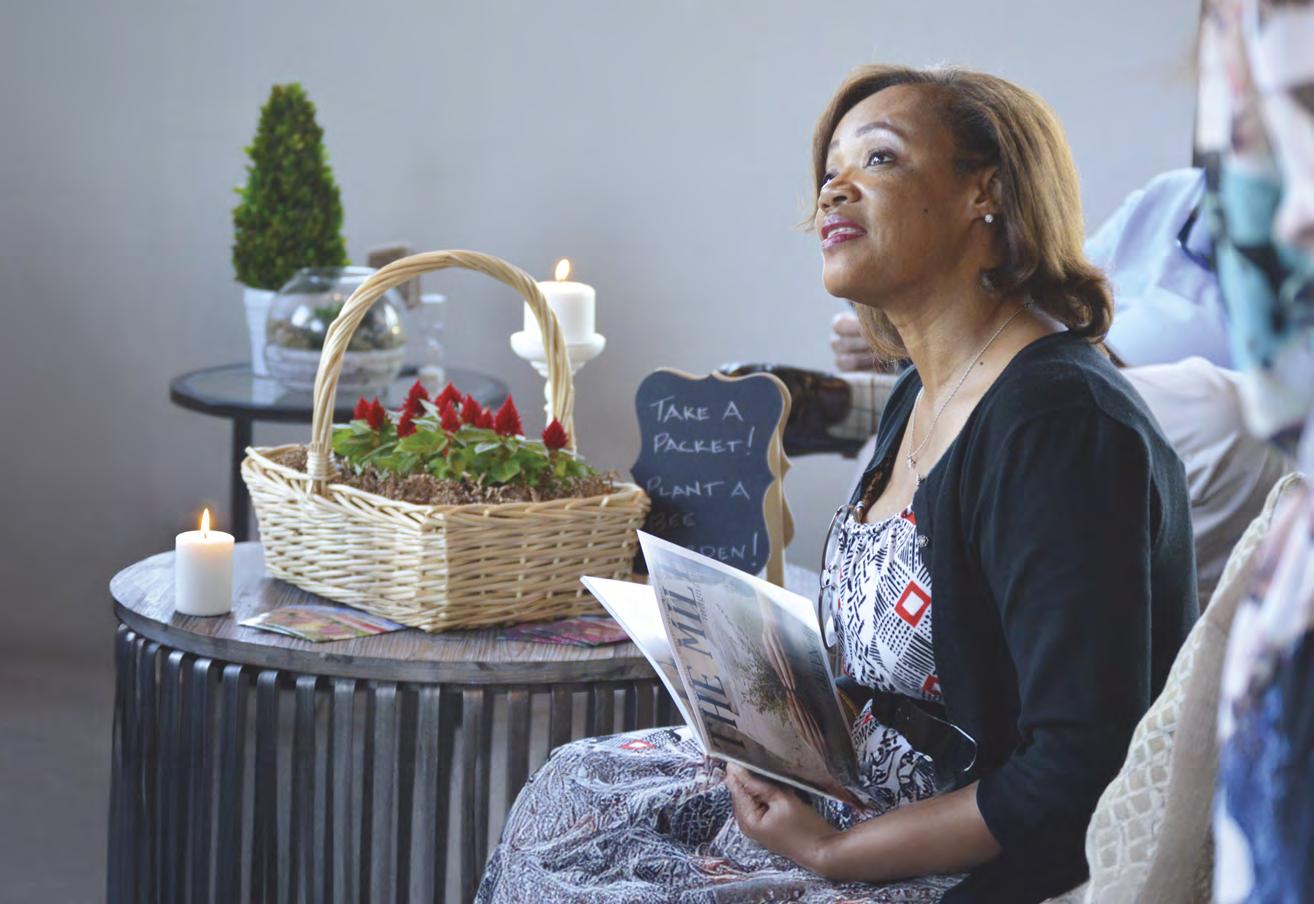
Now, as we publish this final edition, we’re looking back with gratitude. The Mill has been more than a magazine; it’s been a gathering place for everyone who still believes in small-town charm, craftsmanship, and community.
Two hallmark issues of TMM: Edition 13 No. 4 Nostalgia (Nov. 4, 2022) and Edition 8 No. 2 Backroads (Jun. 10, 2017), each reflecting the magazine’s enduring commitment to local stories, culture, and connection.


we’re looking back with gratitude. ‘ ‘

Edition 12 No. 1 Influencers + Creatives (Feb. 5, 2021), which highlighted local artists and creatives as part of TMM’s ongoing celebration of the arts, and Edition 11 No. 2 Family Garden (May 22, 2020), a milestone issue that marked The Mill Magazine’s 10-year anniversary.

We may be closing our pages, but the story of localism doesn’t end here. It lives on every time you choose a local product over a corporate brand, every time you show up for a neighbor, every time you believe your town is worth investing in.
Here’s to the makers, the growers, the shopkeepers, the dreamers. The work of localism was never just ours — it’s yours now. Keep tending it, keep believing in it, and let it keep shaping the places we call home.
inspiring small town communities
Backyard

FEATURED AGENTS






WOMAN FOUNDED. FAMILY OWNED.
LOCALLY OPERATED. SINCE 1975.
YEARS 1975
helenadamsrealty.com | @helenadamsrealty
HOLLY ACHENBERG MELISSA BROWNMARIE DEMARTINO
WHITNEY BRIDGES GAMBLE PATTERSON GROUP
MARCIA FOLNSBEE
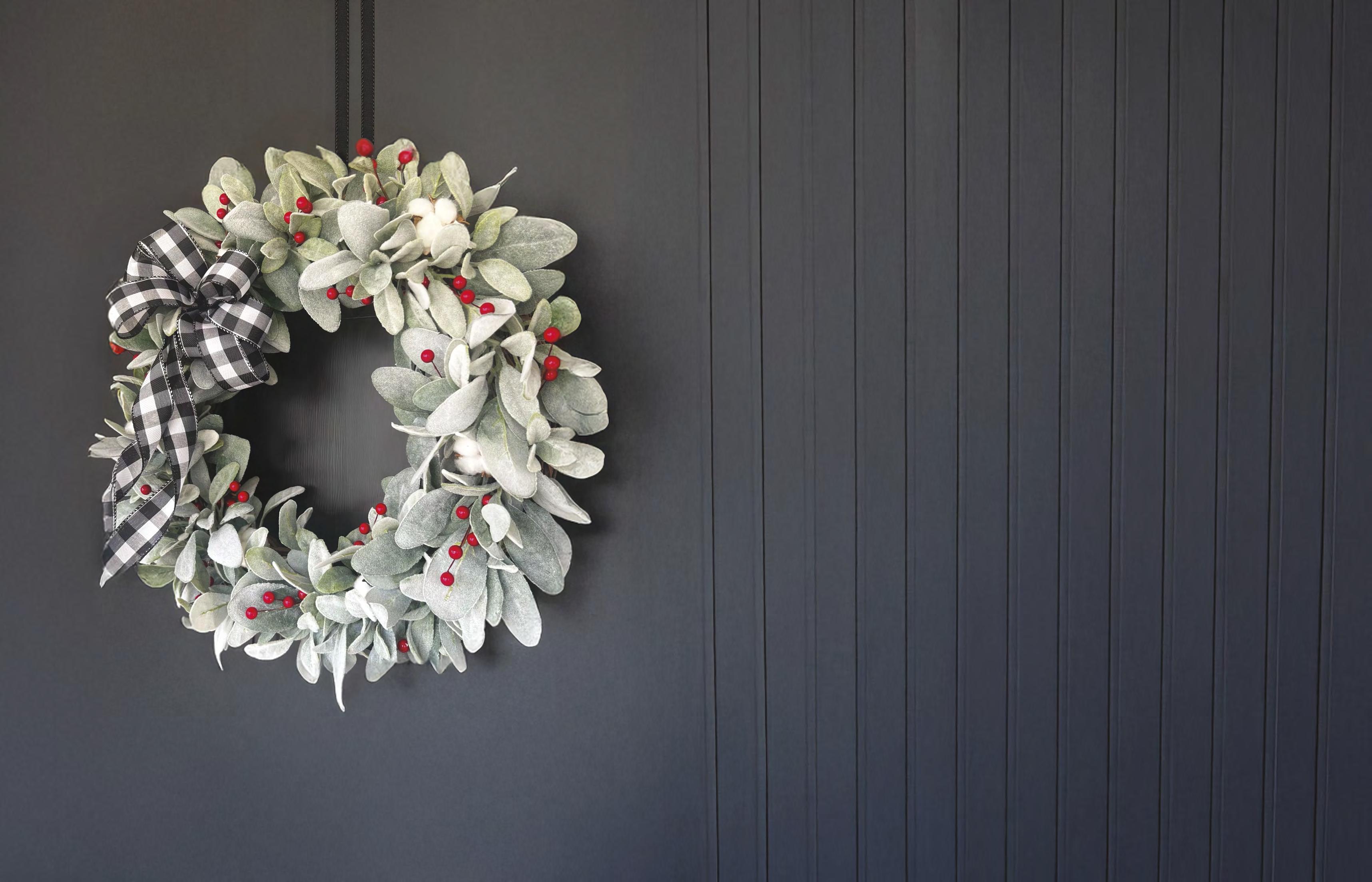
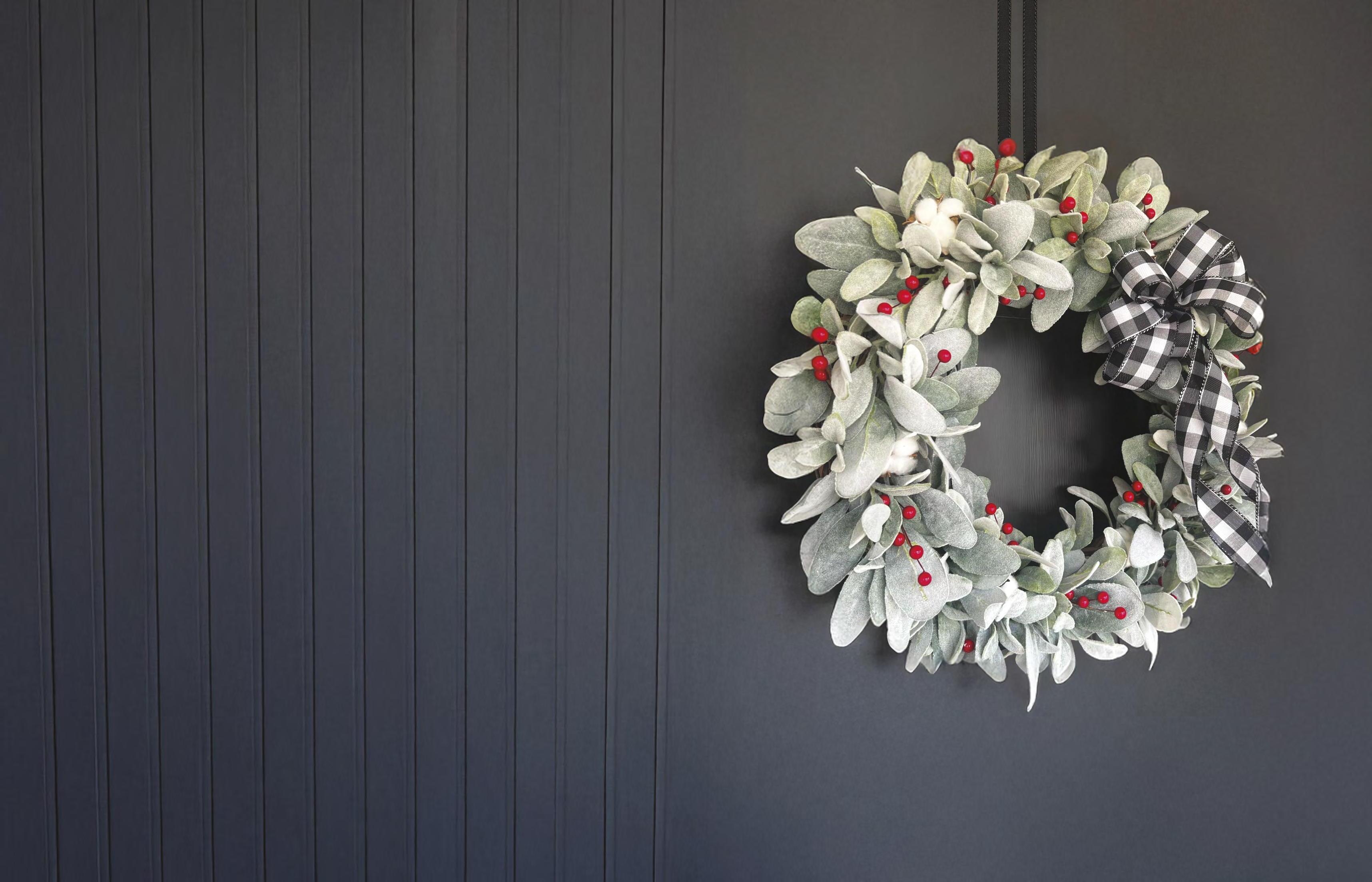
Christmas Farmhouse Wreath with lamb’s ear, buffalo check, and red berries by Sweet Carolina Wreath Boutique, Fort Mill, SC.
Winter invites us to step back, breathe, and see our community with fresh eyes. ‘ ‘
Winter’s Pause
The Quiet Season
The holidays have a way of sweeping us up. Calendars fill, lights go up, and our cities and small towns glow with the rhythm of celebration. From Uptown Charlotte—the Queen herself—to the small-town main streets that surround her, there’s a hum in the air — markets, music, movement everywhere.
Text by Candace Mattingly
But somewhere between the last community festival and the first quiet evening of January, something shifts. The rush slows. The lights dim. And if you listen closely, you can hear the collective exhale of a community at rest.
In the Carolinas, rest doesn’t always mean retreat. It might look like a late brunch with neighbors who have become family, or a walk through a park stripped bare of color but not beauty. It’s the small moments — the reset before the year ahead — that define this quieter season.
For the shop owners who’ve spent months preparing for holiday crowds, rest might come in the form of a closed sign and an early morning coffee enjoyed without hurry. For the artisans, it’s time to clean the studio, sharpen tools, and dream up new ideas. For families, it’s evenings without schedules — board games, leftovers, a fire that doesn’t need tending to be perfect.
Even in a place as connected and cosmopolitan as ours, this pause matters. The pace of Charlotte and its neighboring towns is quick — always growing, always creating. Yet winter reminds us that momentum needs meaning. That the new year deserves to begin from a place of clarity, not exhaustion.
‘ ‘
Winter reminds us that momentum needs meaning — that the new year deserves to begin from a place of clarity, not exhaustion.

In a season of stillness, we remember why localism matters: strong communities grow when neighbors choose one another. ‘ ‘
The quiet season is not about doing nothing — it’s about doing differently. It’s about letting the noise fade long enough to notice what’s working, what’s worth keeping, and what deserves to change.
So we pause. We gather. We take stock. And in those moments between one year and the next, we rediscover what ties us together — good food, shared space, a sense of belonging that doesn’t depend on busyness.
Because even in a thriving city region like ours, rest is still the heartbeat of community. It’s how we prepare for growth, for creativity, for all that’s next.
The quiet season won’t last long — it never does. But maybe that’s what makes it sacred.

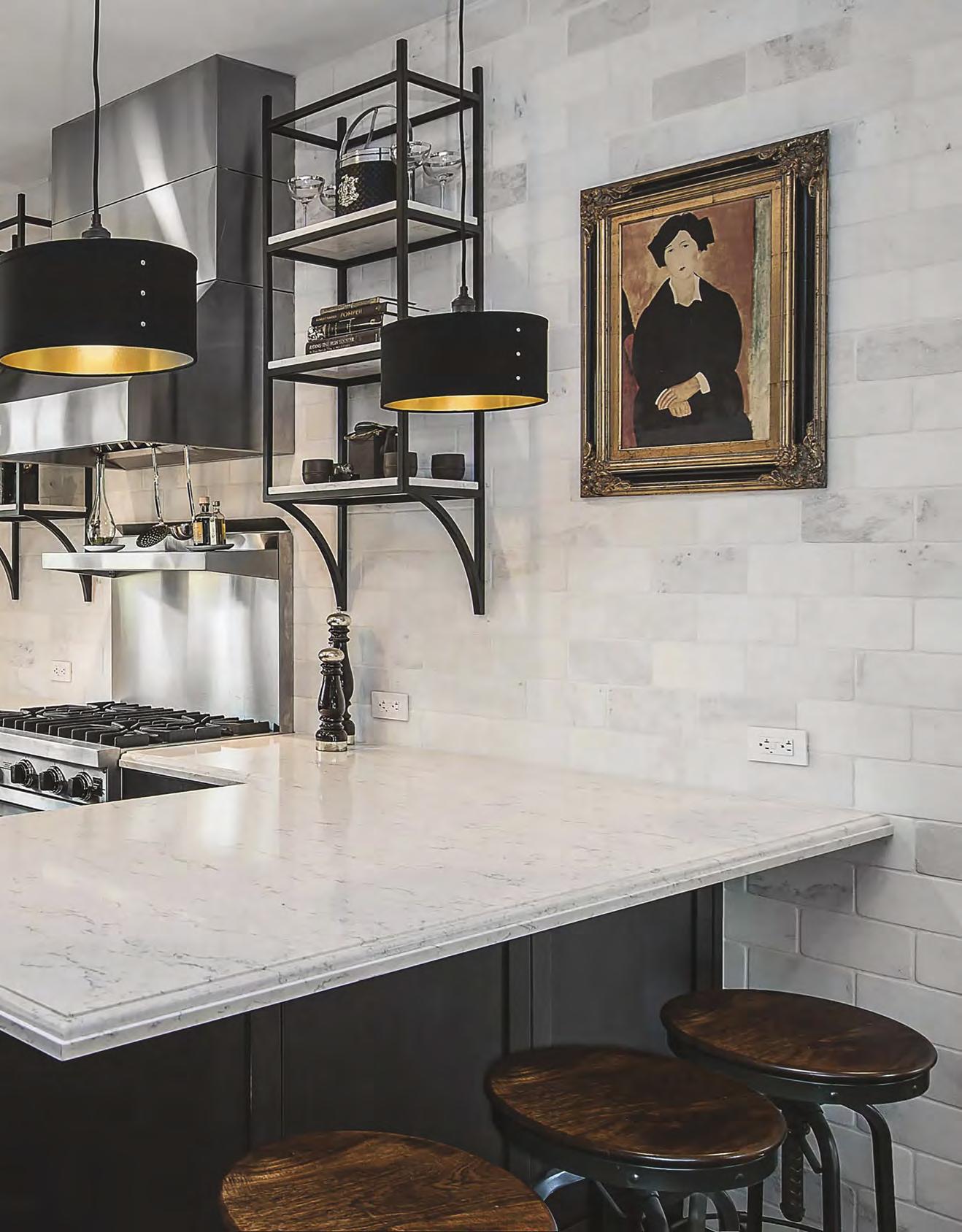
Designer Jean Stoffer’s laundry room (above) features a classic enameled cast iron Farmstead sink with integrated accessories and a Tournant semi-professional faucet while in her bath (right), a console table sink and brushed bronze finishes exude vintage charm. kohler.com


Texture
inspiring small town culture



Dr. Neha Taori, DDS
and

or
Soft, warm,
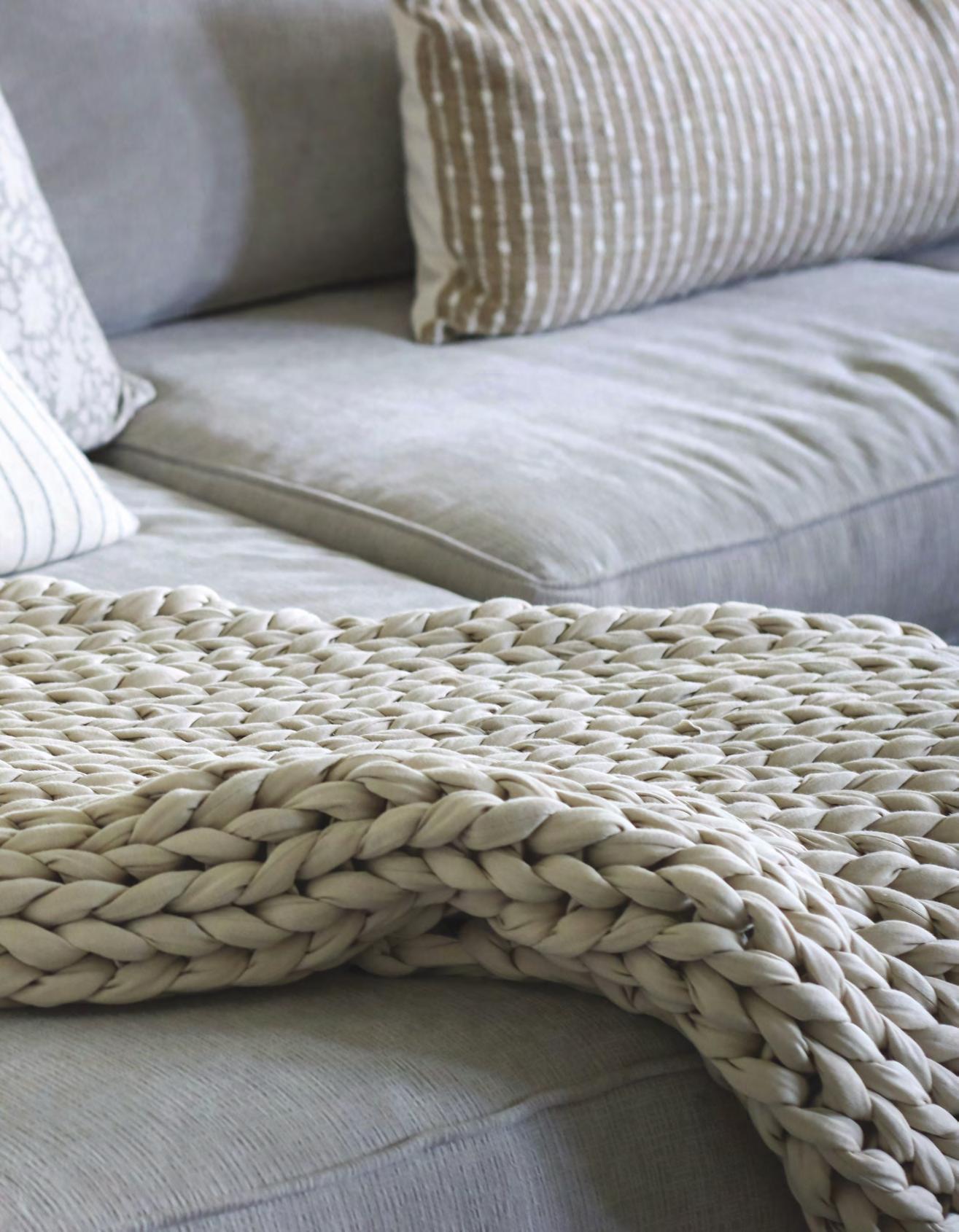
inviting, a cozy throw is the perfect companion for winter reading
evening conversation.. Photo by Bearaby.
Winter gatherings, intimate spaces, and the small details that make a house feel like home.
THE FEEL OF HOME
Text by Elle Christensen
There’s a certain comfort in a home that has grown into itself over time — where every corner tells a story, and every object feels like it belongs. Cozy interiors aren’t just decorated; they are curated over years of living, gifting, collecting, and making.
Winter invites us to embrace those cozy corners. A favorite armchair draped with a wool throw becomes a reading nook by the fire. Handmade ceramics carry the warmth of the hands that crafted them, whether holding a cup of morning coffee or a bowl of simmering stew. Old books, stacked or lined along shelves, offer quiet charm, and the faint scent of their pages evokes memory, history, and care.
Hosting in winter is about more than elegance — it’s about creating an atmosphere that draws people close. Think soft lighting: candles flicker on mantels, string lights glow behind windows, and lamps cast a golden hue over wooden tables. Layered textures — wool, linen, cotton, wood, and clay — invite touch, creating spaces that feel lived-in, tactile, and welcoming.
Layered textures invite touch, and touch invites belonging. Photo by Alex Tyson.


This season, consider the small details that make your gatherings feel intentional. Place a handmade dish on a well-worn wooden table. Fold napkins simply, but thoughtfully. Add a sprig of greenery from your backyard or local florist — something alive to counter the winter stillness. These subtle touches make every meal, every conversation, every moment feel rooted in place and meaning.
“The feel of home” isn’t about perfection; it’s about warmth, connection, and authenticity. It’s the kitchen table where neighbors swap stories, the window seat where a child watches the first snowfall, the shelf lined with objects that carry decades of life. It’s in these textures — tactile, visual, and emotional — that small-town culture lives.
Stacked or shelved, these pages carry the scent of memory and the comfort of quiet moments. Photo by Alexandra Fuller.
WINTER STYLING TIPS
¤ Mix textures: wool, linen, cotton, and wood for tactile warmth.
¤ Highlight objects with meaning: books, heirlooms, and handmade pieces.
¤ Layer lighting: candles, string lights, and lamps create depth and ambiance.
¤ Add seasonal touches: greenery, pinecones, or locally sourced décor.
¤ Arrange for connection: seating and tables should invite conversation, not just display.
As we close this final edition of The Mill Magazine, we hope to leave you inspired to celebrate your own corners, your own gatherings, and the subtle details that make a house a home. These spaces are more than decoration — they are vessels for memory, creativity, and the quiet rituals that bind communities together.
After all, the spaces we inhabit are reflections of the lives we lead, and in every cozy corner, there’s a story waiting to be told.
Golden glows, flickering candles, and soft lamps make winter interiors feel intimate and alive. Photo by Nataliya Melnychuk.

Provisions
inspiring small town flavors + shopping




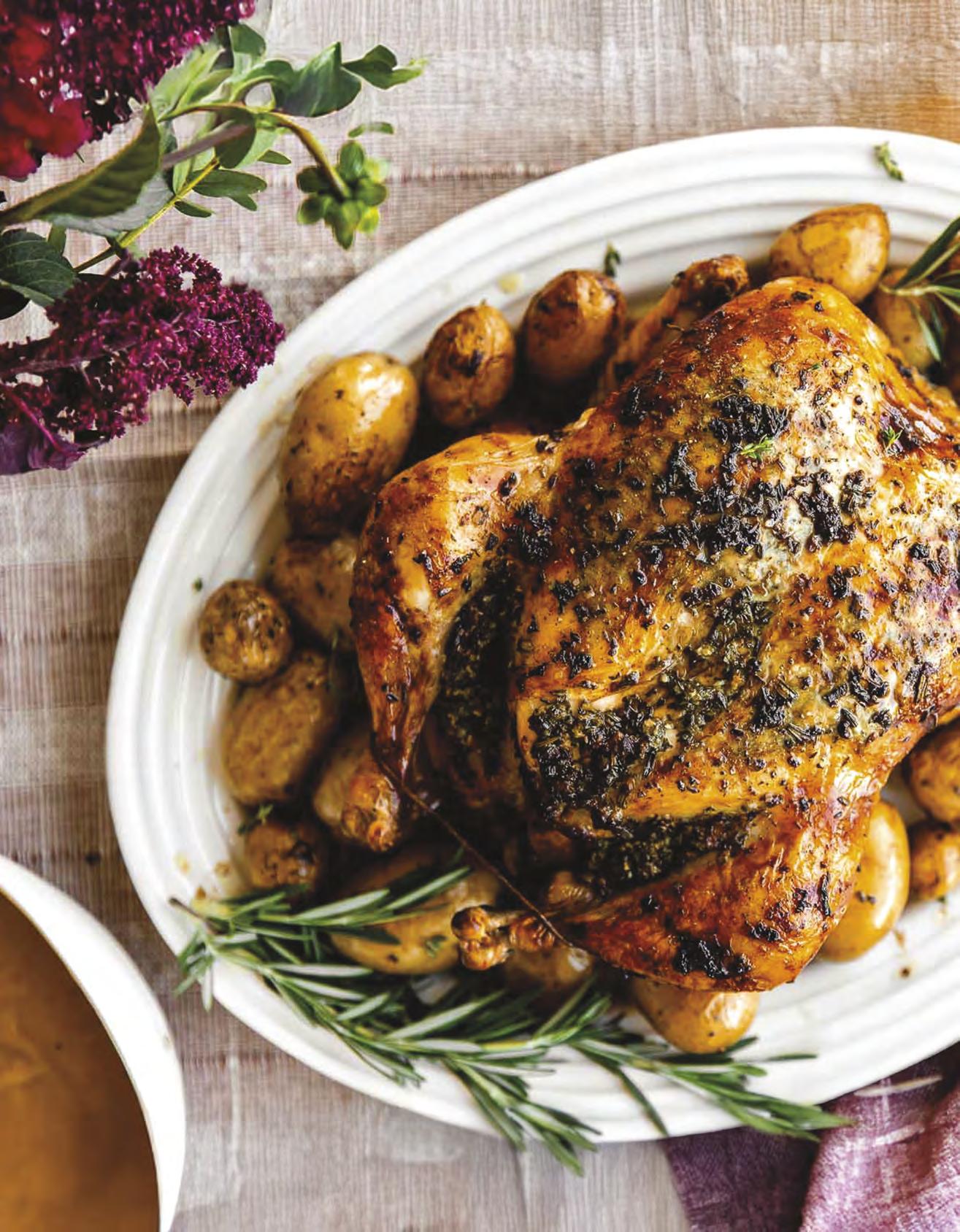
A winter menu inspired by local flavors, cozy gatherings, and the spirit of celebration.

the final feast
Text . by . Mia . Perkins
Winter invites us to gather, to slow down, and to savor the flavors of the season. For this farewell edition of The Mill Magazine, we’ve curated a menu that celebrates local ingredients, handmade touches, and the warmth of shared meals — a final feast to honor community, tradition, and the joy of being together.
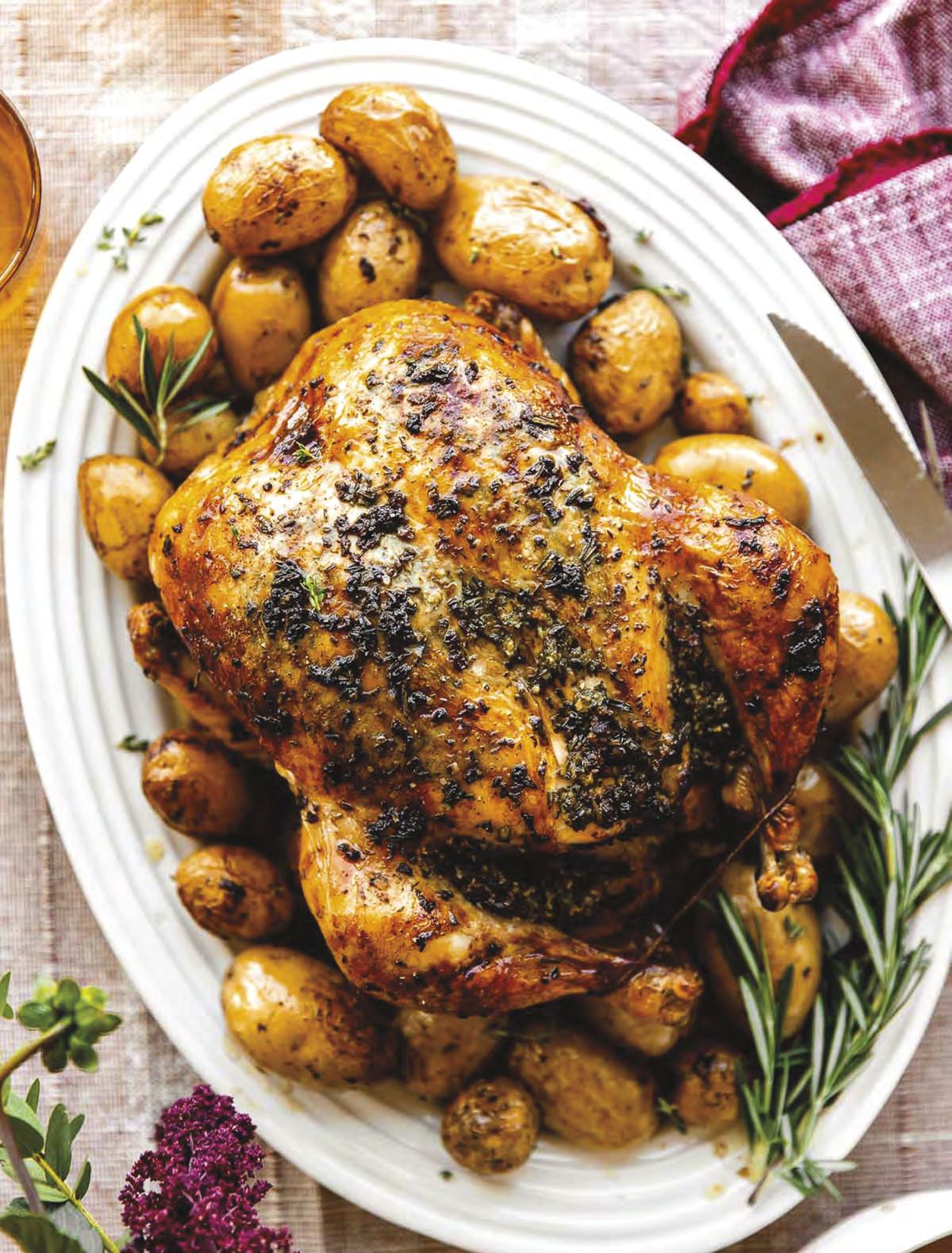
Herb-Crusted Roasted Chicken with Potatoes and Gravy
Prep Time: 40 minutes
Cook Time: 1 hour 30 minutes
Yield: 4 servings
INGREDIENTS
• one 4-5 pound whole chicken, trimmed of excess fat and thoroughly patted dry
• savory herb oil (below)
• herb butter (below)
• 1 tablespoon avocado oil or high-smoke-point oil of choice
• kosher salt and ground black pepper, to season
• 1 ½ pounds baby gold potatoes or mini creamer potatoes
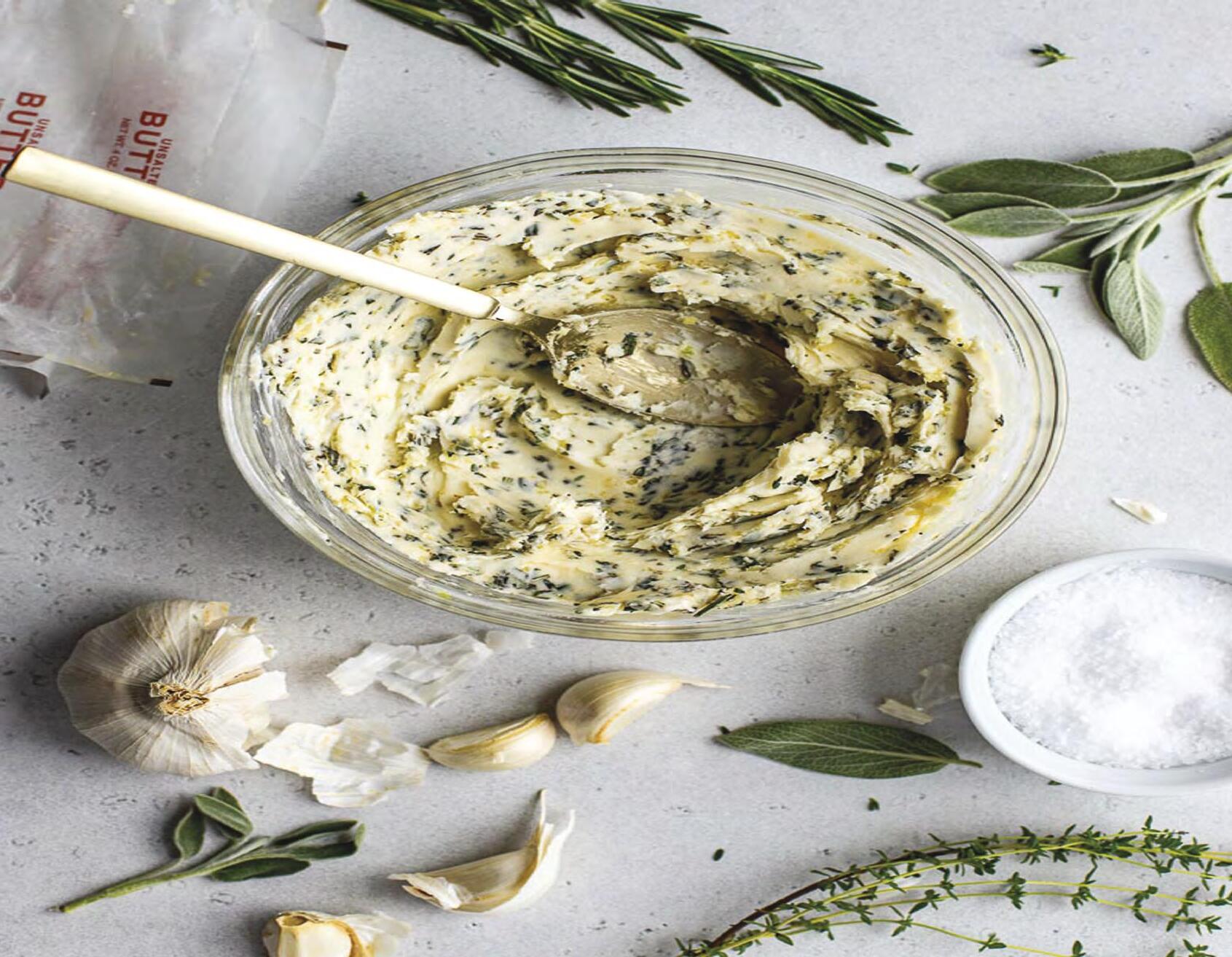
for the herb butter:
• ¼ cup unsalted butter (4 tablespoons or ½ a stick), softened to room temperature
• 4 cloves garlic, finely chopped or grated
• 3 tablespoons finely chopped fresh poultry herbs (fresh rosemary, sage, thyme)
• kosher salt and ground black pepper, to season
for the savory herb oil:
• 6 tablespoons Worcestershire sauce
• 3 tablespoons olive oil
• 2 cloves garlic, finely chopped or grated
• 2 tablespoons finely chopped fresh poultry herbs (fresh rosemary, sage, thyme)
for skillet gravy:
• 3 tablespoons all-purpose flour
• ½ cup dry white wine
• 1 ½ cups chicken stock or broth
• optional: 1 tablespoon heavy cream
• kosher salt and ground black pepper, to season
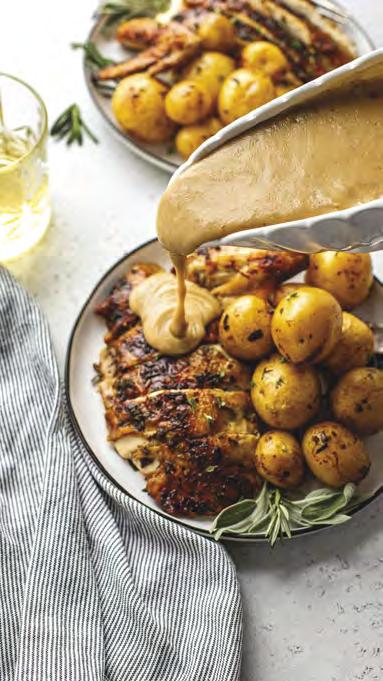
A main dish that honors the season, the land, and the care that goes into every ingredient. Recipe by Jess Larson. Photos by Megan McKeehan and Kate Poskochil.
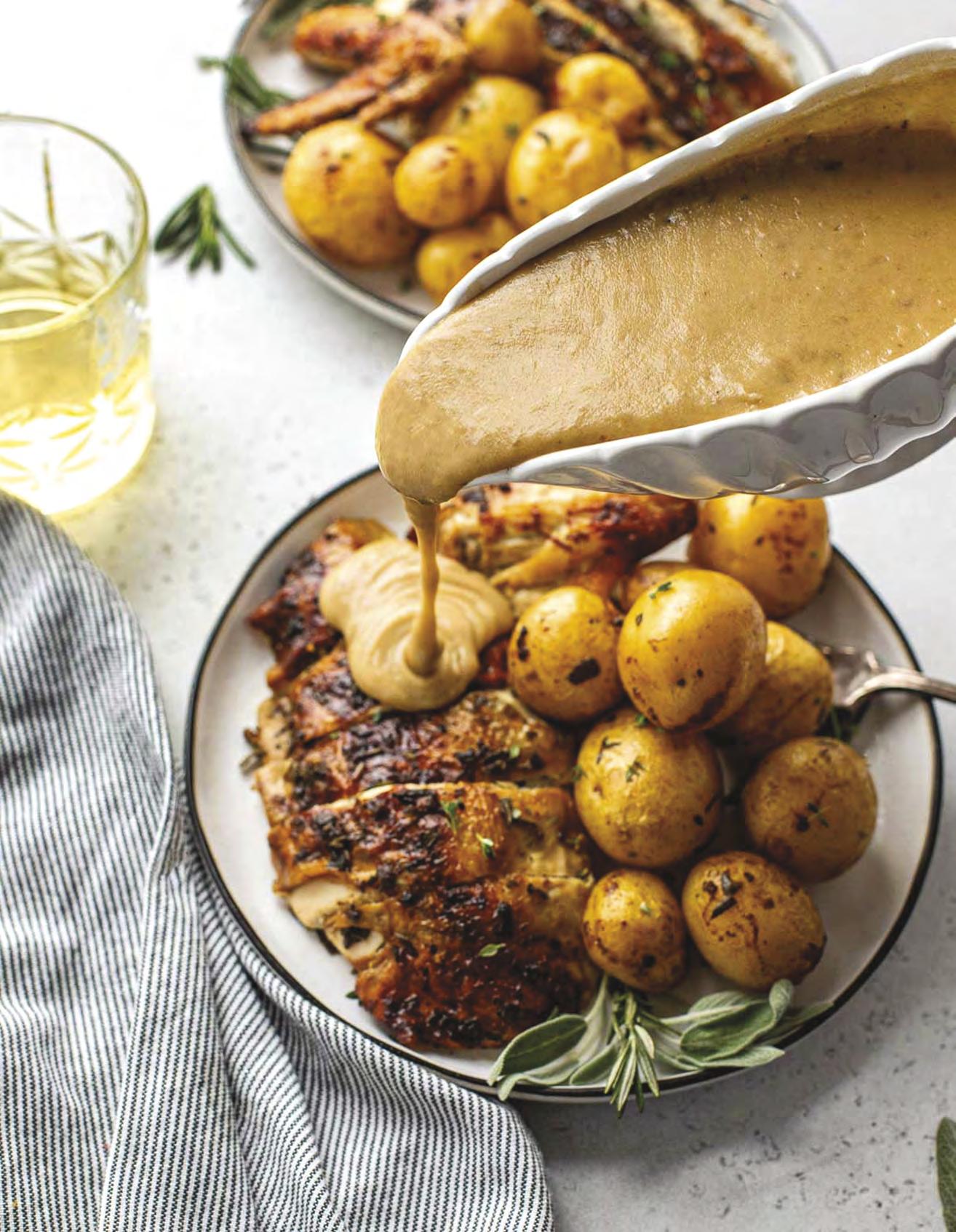
Seasonal herbs and roasted vegetables make every bite feel like home
INSTRUCTIONS
1. Mix the herb oil: At least one day before roasting the chicken, prepare the herb oil. Add the Worcestershire sauce, olive oil, garlic, and herbs to a small bowl. Whisk to combine. Cover and set aside to infuse at room temperature for 1 day.
2. Mix the herb butter: Add all listed herb butter ingredients to a medium bowl. Season with ½ teaspoon kosher salt and ground black pepper as desired. Mix to combine well. Set aside for immediate use, or store in an airtight container in the refrigerator for up to 1 week.
3. Prepare the chicken: Up to 1 hour before you’d like to begin roasting the chicken, pull it from the refrigerator to give it a chance to warm to room temperature for more even roasting. If you prepped the herb butter in advance, this is a good time to pull that from the refrigerator as well, so it has the chance to soften a little. If present, remove the neck and tail. Use kitchen shears to trim any excess fat or skin flaps from the chicken. Use paper towels to pat the surface of the chicken completely dry. Set it on a large plastic cutting board, with the savory herb oil and herb butter nearby for ease. Using kitchen twine, tie the chicken’s legs together, securing them tightly against the breasts.
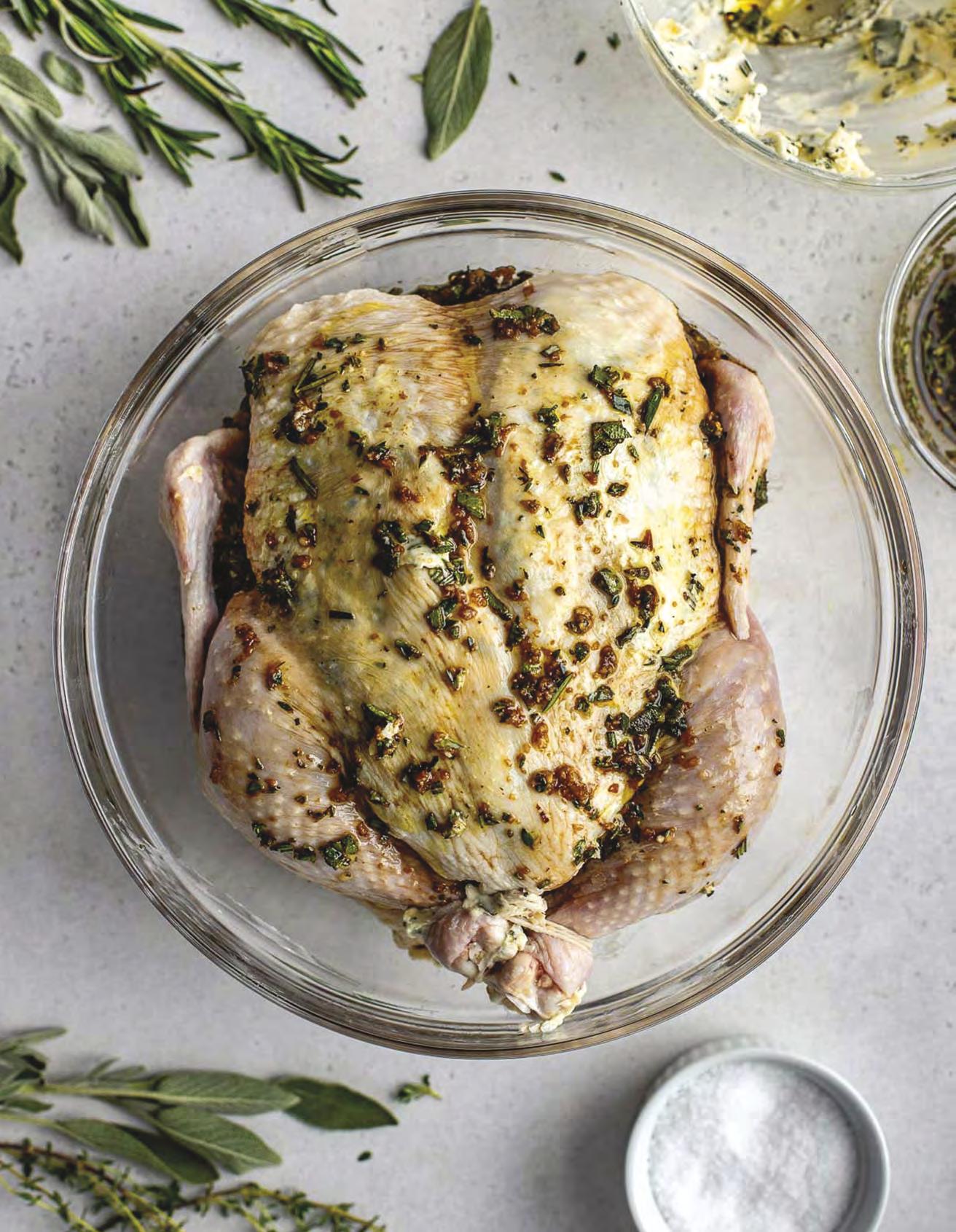
4. Season the chicken: Use your hands to spread the prepared herb butter from Step 2 between the chicken skin and meat. To separate the skin from the meat, work your hand gently under the skin over the breast, sweeping from side to side, tearing any tissue connecting the skin to the meat. Work your hand down the side of the chicken into the thigh and leg area. Do not tear or remove the skin from the chicken. Buttering the chicken meat directly helps keep it juicy and flavorful. Transfer the chicken to a large mixing bowl. Drizzle half of the prepared savory herb oil over the surface of the chicken, turning to coat the chicken in the oil. Set aside to marinate for 30 minutes while the oven preheats.
Recipe by Jess Larson. Photos by Megan McKeehan and Kate Poskochil.
The centerpiece of a winter gathering.
5. Preheat the oven: Meanwhile, as the chicken rests, preheat the oven to 425 degrees F, ensuring an oven rack is positioned in the lower third of the oven. Pour the avocado oil into an 11-inch cast-iron skillet, spreading it to coat the bottom of the skillet. Place the skillet on the oven rack, allowing it to preheat as the oven preheats.
6. Roast the chicken: Once the oven is preheated, lightly season the chicken with kosher salt and ground black pepper. Transfer the chicken to the preheated cast-iron skillet, shaking off any excess marinade. Reserve excess marinade. Roast the chicken for 30 minutes.
7. Add potatoes to the skillet: After 30 minutes of roasting, decrease the oven temperature to 400 degrees F. Move the skillet from the oven to the stovetop, then use tongs to transfer the chicken to a large plate. Place the baby potatoes in the hot skillet, then place the chicken on top of the potatoes. Pour the reserved marinade over the chicken, then carefully return the skillet to the oven.
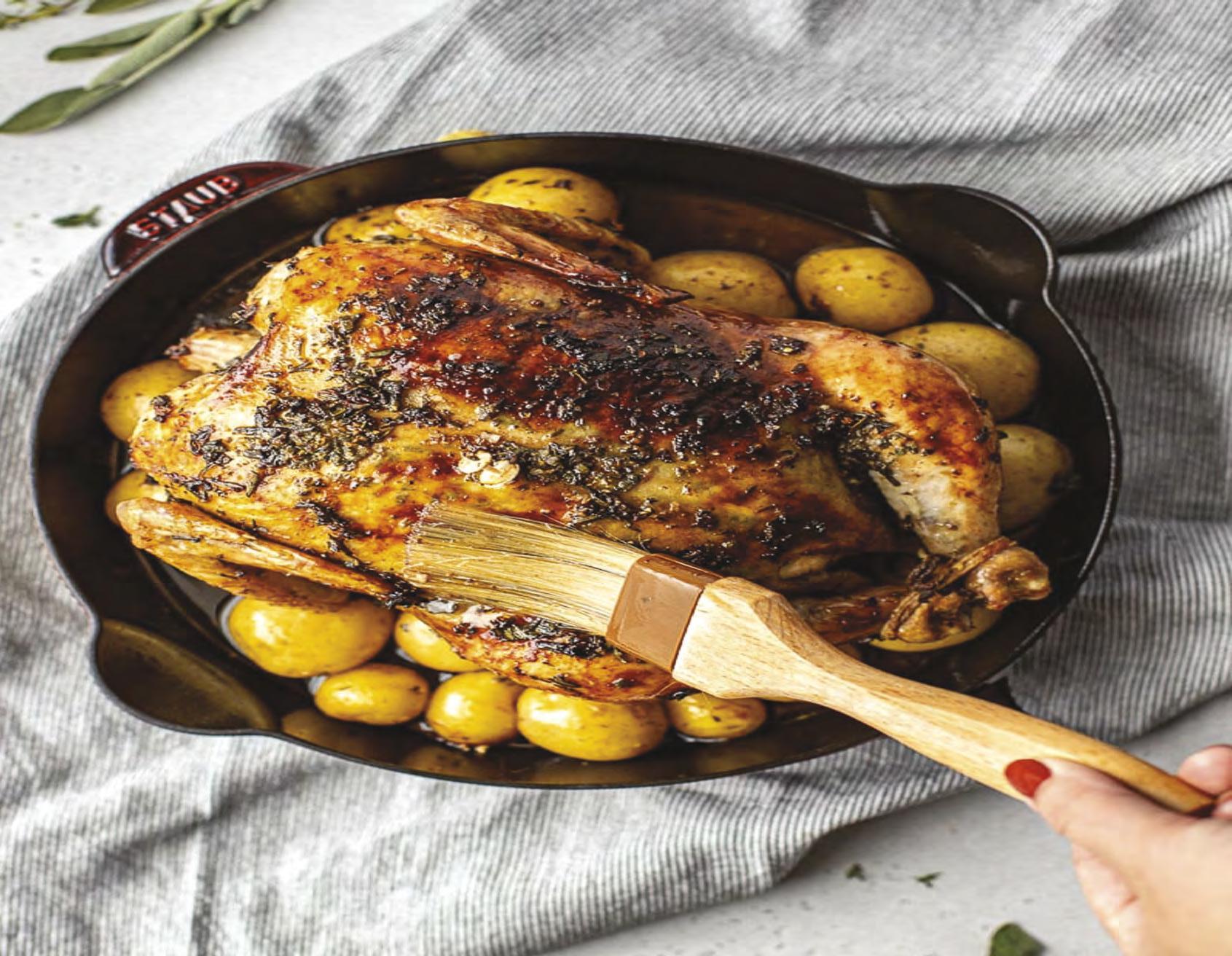
8. Roast & baste the chicken: Roast for an additional 45-60 minutes, removing the chicken from the oven every 15 minutes to baste in the drippings. To baste, simply spoon or brush the drippings in the skillet all over the surface of the chicken. If desired, rotate the skillet 180 degrees each time you place it back in the oven to promote even roasting and browning. Pull the chicken from the oven once an instant-read thermometer inserted in the thickest part of the thigh registers an internal temperature of 155 degrees F.
9. Rest the chicken: Very carefully transfer the roasted chicken from the skillet to a large flat surface and transfer the potatoes to a serving dish. Tent with foil and set aside to rest at room temperature for 10-15 minutes before carving. As the chicken rests, its juices will redistribute throughout the meat, and its internal temperature will continue to rise to a safe 165 degrees F.
Recipe by Jess Larson. Photos by Megan McKeehan and Kate Poskochil.
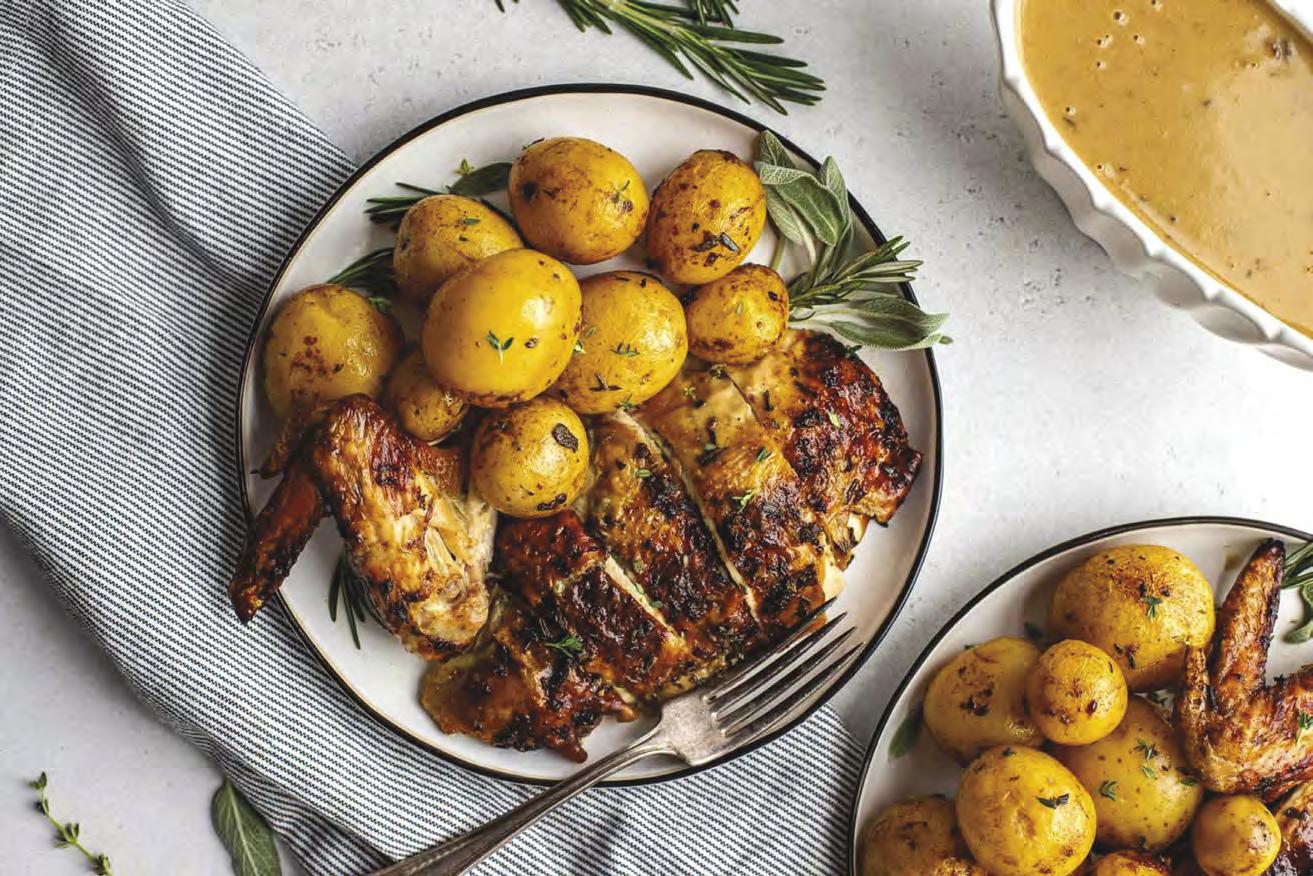
10. Make the skillet chicken gravy: Carefully pour the drippings in the skillet into a bowl or large liquid measuring cup. Skim off half of the oil and discard it. Pour remaining drippings back into the skillet over medium-low heat. Sprinkle flour over the surface of the skillet and cook, whisking constantly, until a darkened roux forms, about 2-3 minutes. While whisking constantly, slowly pour in the white wine. Let the mixture bubble and reduce slightly. Pour in the chicken stock. Continue to whisk until the gravy reduces to your desired thickness. Remove from the heat. If desired, stir in a little heavy cream (the gravy is otherwise very dark) and season with salt and ground black pepper as needed; this will vary based on the amount of salt in your drippings and your stock so use your judgement.
11. Carve, serve, and enjoy!
Recipe by Jess Larson. Photos by Megan McKeehan and Kate Poskochil.









Luke 2:10-14 AND THE ANGEL SAID UNTO THEM, FEAR NOT: FOR, BEHOLD, I BRING YOU GOOD TIDINGS OF GREAT JOY, WHICH SHALL BE TO ALL PEOPLE. FOR UNTO YOU IS BORN THIS DAY IN THE CITY OF DAVID A SAVIOUR, WHICH IS CHRIST THE LORD. AND THIS SHALL BE A SIGN UNTO YOU; YE SHALL FIND THE BABE WRAPPED IN SWADDLING CLOTHES, LYING IN A MANGER. AND SUDDENLY THERE WAS WITH THE ANGEL A MULTITUDE OF THE HEAVENLY HOST PRAISING GOD, AND SAYING, GLORY TO GOD IN THE HIGHEST, AND ON EARTH PEACE, GOOD WILL TOWARD MEN. ” “