Why acting early and choosing the right assets for your portfolio will be key to maximising returns and fueling property investment success in 2025. 12 21
LOCATION HOTSPOTS
Accrue’s new Membership Rewards Program is delivering thousands of dollars in prizes. Here’s how you can enter to win big. 13 03 20 16 22 04
Four hot locations with the right fundamentals for investors looking to build impressive wealth through real estate.
WHY WAITING TO BUY IS COSTING YOU THOUSANDS
Investors waiting for the right time to invest are losing out on some serious upsides. We explore why time in the market is a winning approach.
THE PROPERTY CYCLE
Accrue’s powerful analytical tool illustrates where our team believes the property landscape is positioned so you can make informed decisions for a better future.
BUILDING A PORTFOLIO
Michelle and Paul have utilised Accrue’s support and analytics to create a multi-property portfolio… and there’s more to come for this savvy couple.
WIN BIG WITH OUR NEW PROGRAM
PROPERTY CLOCK
Australia’s major markets are at various stages of the property price cycle. Check out our clock to see where your area of interest sits.
DATA DECK
A collation of some of the powerful data we utilise to dissect property markets and identify excellent opportunities.
At Accrue, our mission is to build a community of success while promoting positive change.
We believe this collective approach creates a win for many and a better world for all. That’s why we are proud to announce our most recent charity partnership with Drummond Street Services. Drummond Street is one of Victoria’s longest serving welfare organisations, and one of the first welfare services in Australia. Since 1887, Drummond Street has been directly assisting Victorian families and individuals. The organisation also promotes connected and inclusive communities and drives innovation and research into family support interventions.
To assist, Accrue is committed to:
• Providing a financial contribution directly to Drummond Street;
• Establishing a staff volunteer program to provide direct assistance to the charity. Drummond Street’s mission to promote wellbeing for life is an undertaking fully aligned with Accrue’s ethos.
YOU CAN VISIT DRUMMOND STREET TO MAKE A CONTRIBUTION OR VOLUNTEER TO SUPPORT THE INITIATIVE BY GOING TO
The new year is a prime opportunity to take stock and make plans, whether they’re about health, personal relations, professional growth or investment.
Of course, decisions about the future are usually informed by the past.
So, when I contemplate my predictions for property markets this year, I pay attention to the years previous. That’s why I believe 2025 will be a year of divergence.
During the first months of the pandemic, we saw an across the board pause on property market activity. Everyone waited in a panic, unsure of the likely fallout. Then, as time passed, most market sectors began to perform in unison. Locations across the nation saw property prices firming and it would result in one of the strongest universal market recoveries in recent memory.
However, market activity across different locations started to fray last year. Some regional centres saw values stagnate, while in others they flourished. Meanwhile, each of our capital cities cut their own path. While record gains were recorded in some jurisdictions, others (including Sydney and Melbourne) were hit with price softening.
I believe this divergence in market performance will amplify in 2025. Locations with the right fundamentals should enjoy a great year of value gains. Others will come well off their post-pandemic peaks and experience corrections.
I remain positive about property assets for smart investors who apply two key strategies.
First up, buy as soon as possible. That February rate cut by the RBA should see buyer demand increase and property prices rise in the near future.
Secondly, be strategic. Location and asset type will be critical. Only acquire real estate based on comprehensive analysis performed by experienced, well-resourced advisors.
In this issue of Accrue Magazine, our feature article explores why early investing will help deliver exceptional dividends in 2025.
We also get to spend time with Michelle and Paul – two Accrue members who’ve created an incredible portfolio by combining Accrue’s support
and guidance with their own market experience. Their story is truly inspirational and one not to be missed.
We share another four hotpots that exemplify exceptional investment opportunities too. Our regular property clock, market cycle and data deck are here as well and tell a story of positivity in today’s markets.
And don’t forget to check out details about our Accrue Membership Rewards Program. It’s your chance to gain even more from being part of the Accrue community.
While opportunities to invest wisely and see excellent returns are available throughout most market cycles, I believe those who act now will be timing their run to perfection in 2025. Your portfolio’s results are hinged to acquiring the right asset in the right location… and unearthing those prime prospects is what our team does best.
Please enjoy the summer issue of Accrue Magazine.
JASON NEVINS CEO
Why waiting to buy is costing you thousands
JASON NEVINS CEO
This time last year, regular readers of this magazine might recall our cover story outlining the reasons why property markets were in for a bumper year.
That piece analysed the latest research, data and metrics on buyer demand, vendor activity, construction supply, rental movements and economic indicators to paint a compelling picture of a year of opportunity.
Many savvy investors who read those words and acted strategically would now find themselves sitting on substantial capital gains and impressive rental returns.
Those who sat on their hands, unsure about everything from interest rates to supply levels, have nothing to show for their hesitation.
We hear the first kinds of stories from our clients, whom we help every single day to define their goals and achieve them through wealth creation with real estate.
And every now and then, we hear from those who fall into the second camp - those
who have to swallow a bitter pill of regret when they look back in hindsight and see what they could have had.
Just look at what those who failed to act in 2024 might have missed out on.
According to CoreLogic data, home prices nationally rose 4.9 per cent across the year, adding all out $40,000 to the median value of a property.
That in itself is capital growth not to be sniffed at, but that’s also the national average, taking in every market - both metropolitan and regional - across Australia.
In some centres, the lost growth potential is considerably higher, as you’ll read a little further on.
Those who bought a year ago in locations that wound up being hotspots are enjoying growth that’s equivalent to $100,000 or more.
So, broadly speaking, those
who failed to act out of fear or uncertainty have lost anywhere between $40,000 and $100,000 in a single year. How much could procrastination cost you in 2025?
GROWTH CAN HAPPEN FAST
I recall hearing a nervous investor remark a year or so ago that the heat was surely set to come out of roaring markets like Brisbane and Perth. That individual was looking at the big numbers being recorded and writing them off as simply too good to last, ignoring the underlying drivers of growth at play in both those cities. Population growth. Supply shortages. Rental market forces. Employment demand. Strong economies.
Those are the factors that a savvy investor examines - not just the headlines. Those who
Source: CoreLogic
In annual terms, Australian home values were up 4.9% in 2024, adding approximately $38,000 to the median value of a home.
Three of the capitals recorded a decline in values over the year; Melbourne (-3.0%), Hobart (-0.6%) and the ACT (-0.4%).
At the other end of the spectrum were the mid-sized capitals, with Perth values surging 19.1% higher over the year, Adelaide up 13.1% and Brisbane values 11.2% higher.
“With worsening affordability constraints and reduced borrowing capacity, we have seen buyer demand pushed towards lower priced markets, which has, in turn, supported stronger growth conditions in these areas,” Mr Lawless said.
INDEX RESULTS
Although the mid-sized capitals recorded double-digit annual growth in 2024, it is clear these markets have passed their peak rate of growth. The rolling annual change in Perth
Regional housing markets finished the year on a stronger note, with values up 6.0% over the year, compared with a 4.5% rise across the combined capital index. Like the capital cities, regional value growth was dominated by the regional areas of WA (+16.1%), SA (+12.5%) and Qld (+10.5%). At the other end of the spectrum, regional Victoria and the NT were the only ‘rest of state’ markets to record a decline in values through 2024, down -2.7% and -4.7%, respectively.
AS AT DECEMBER 2024
Index results as at 31 December 2024
Sydney
Melbourne
Brisbane
Adelaide
Perth
Hobart
Darwin
Canberra
Combined capitals
Combined regional
National
Media enquiries: media@corelogic.com
are well-informed, guided by expert advice, and do their due diligence are able to recognise opportunities and act with confidence.
And if they did this time last year, they would now be looking at a median home price that’s a staggering 19.1 per cent higher in Perth, 11.2 per cent stronger in Brisbane, and 13.1 per cent up in Adelaide.
Even the affordabilityconstrained mega market of Sydney, which has battled its fair share of challenges, saw home prices rise by 2.3 per cent over the year.
Melbourne’s median house price ended 2024 some three per cent flatter, but that figure takes in the entire city and has been dragged down by a woeful run in the prestige market.
Real estate agents active on the ground in key pockets, particularly booming city fringe suburbs, are still seeing solid growth thanks to strong demand.
Change in dwelling values
Month Quarter Annual Total return Median value
Across regional housing markets, median home prices rose by a very healthy six per cent during the year.
That figure was higher than the combined capital city annual growth result of 4.5 per cent, which was weighed down by some underperformers.
But, in all, that’s a pretty great result in a year underpinned by economic uncertainty, lower borrowing capacities, a cost-of-living crunch, and high interest rates.
Imagine you had defied all of the doom and gloom going in those early months of the Covid pandemic, when economies were set to crash and life as we knew it would never be the same again.
Let’s say you were one of the few investors who turned to a trusted advisor who had consumed all the research and available data they could, and made wise and strategic decisions to put their money
CoreLogic Home Value Index Released January 2nd 2025
into bricks and mortar.
Between then and now, you’d be looking at a home price growth rate of more than 38 per cent at a national level, almost 55 per cent across the combined capital cities, and 33 per cent regionally.
Almost five years on, you’d be laughing especially hard if you had bought in Perth, where prices have surged 77 per cent, Adelaide, where they’re up 72 per cent, or Brisbane, up 67 per cent.
In every single capital city market, there’s been solid growth since the start of the pandemic - and don’t forget how wild that ride has been thanks to interest rates, politics, global financial instability, and more.
Heck, even in Melbourne, which suffered through the world’s longest lockdowns and a ham-fisted economic recovery, you’d still be ahead by almost nine per cent.
There’s an old Chinese proverb that sums up nicely the smart way to look at property investment. It goes: ‘The best time to plant a tree was 20 years ago. The second best time is now.’
SINCE 1994
Or, put simply, just get in. The longer you wait, the more opportunity slips away, because the clock only starts ticking on growth when you hit the start button.
MORE RATE CUTS ARE COMING
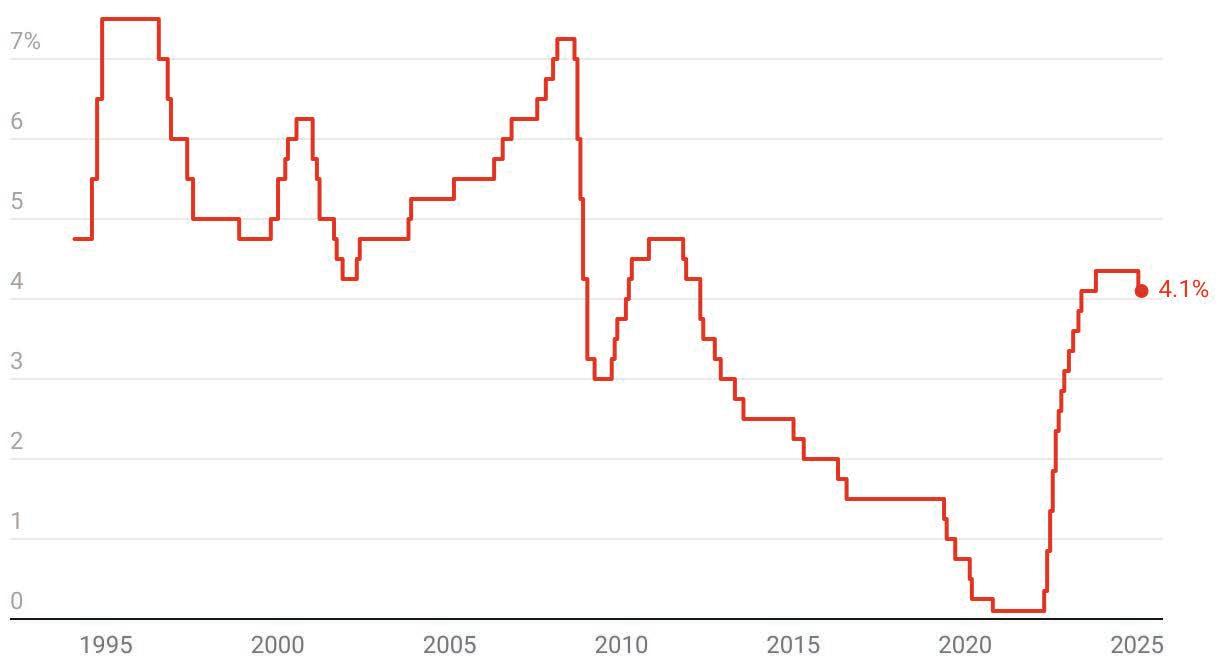
Finally, at long last, the Reserve Bank cut the official cash rate by 25 basis points to 4.1 per cent in February, and mortgage holders across the country breathed a collective sigh of relief. It came almost four years after the RBA board kicked off a painful run of hikes in a bid to quash red-hot inflation. That fight saw 13 rate rises hammer Australian homeowners.
And, it brought to an end the seemingly endless stream of lofty predictions from economists, commentators and other pundits about when rates would begin to fall again.
Bad news. Those talking heads will now keep themselves busy offering their forecasts on when the next rate cut will be.
If you’re sweating on their outlooks, whether they be gloomy or optimistic, it’s worth keeping something in mind.
This time last year, we were assured by all those boffins that the first cut was mere months away. We were set to get a few reductions across 2024, bringing much-needed relief to household budgets.
And then… nothing. The RBA board sat on its hands the entire year, as its war against inflation struggled to make decent enough progress.
It’s a reminder about just how important it is to have a solid, long-term investment strategy that aligns with your personal circumstances and goals and doesn’t rely on what direction rates are moving.
So, in offering the latest outlooks from economists at the major banks, there are undoubtedly going to be
some who are sceptical.
Instead, I’ll start with the expectations from those who have real skin in the game - financial traders. Money markets, which are essentially the trading place for major financial institutions to source and offload cash, tend to be a bit more targeted because their predictions come at a great cost. If they’re right, they benefit greatly. If they’re wrong, it’s expensive. So, it’s always interesting to see what they think the RBA is most likely to do.
Right now, those financial markets are fully pricing in three more 25 basis point cuts to the official cash rate by the end of the year.
As far as the big four lenders go, they are largely optimistic about where things will stand by the end of the year.
The Commonwealth Bank, Westpac and NAB each predict one interest rate cut each quarter, bringing the cash rate down to 3.35 per cent by the time we mark a close on 2025.
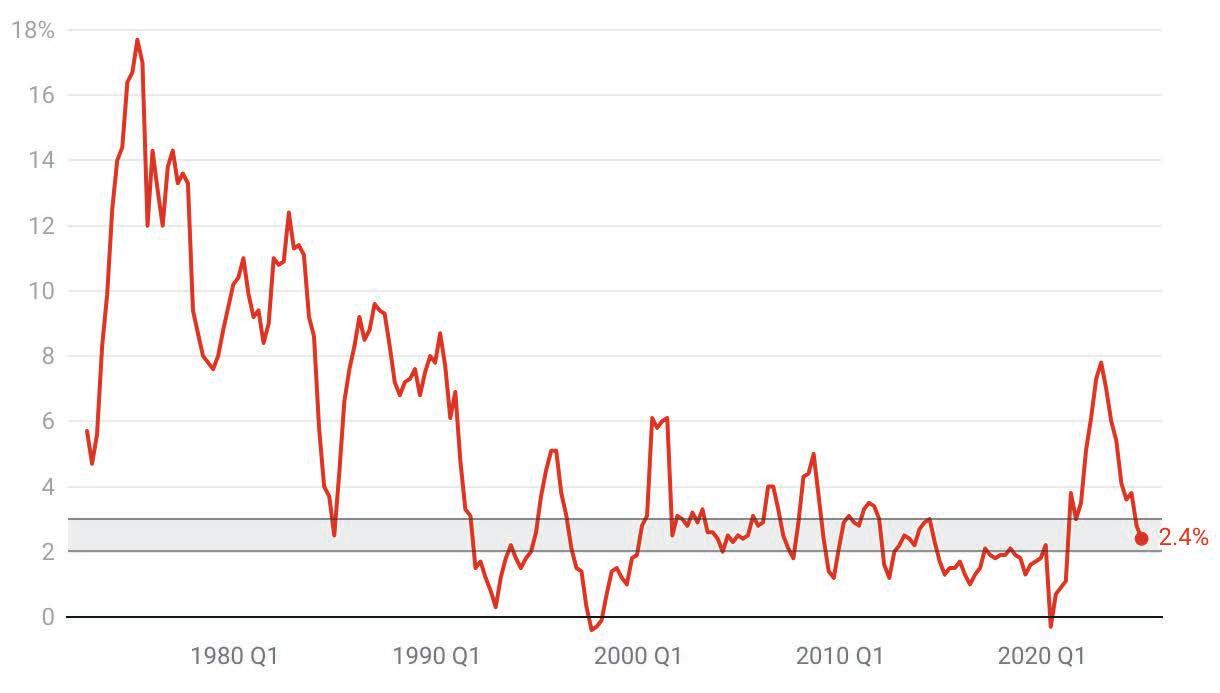
FIVE DECADES OF INFLATION AUSTRALIA
That’s a full percentage point down over the full course of the year - fantastic news for mortgage holders and would-be borrowers.
ANZ is a little more pessimistic, predicting just one more reduction in August of 25 basis points, bringing the cash rate to 3.85 per cent.
RBA Governor Michelle Bullock was very quick to pour cold water on speculation about imminent further reductions.
And there are some changes happening at the central bank as a result of a government overhaul. The current board met for the last time in February, to be replaced for its April meeting by a new monetary policy committee and a separate oversight board.
There will be an even more cautious approach to rates moving forward given all of that extra scrutiny.
In its statement accompanying the February rate reduction, the RBA said as much, saying it’s nervous about the “prospects for further policy easing”.
Or, in plain English, it’s not rushing into anything.
One thing is certain… now that rates have started to fall, economists expect a rush of confidence to hit housing markets as buyers regain their mojo, borrowing capacities improve, and repayment costs fall.
Supply is still somewhat constrained, especially so in those particularly hot markets, so high demand but low availability will
BIG FOUR INTEREST RATE OUTLOOK 2025
inevitably lead to price rises. Those would-be buyers who wait too long to act could pretty quickly find themselves facing stiff competition for a shallow pool of available homes and forced to pay top dollar if they want to seal a deal. Sound familiar? Those are the exact conditions that have sparked intense price growth over the past few years.
A MAJOR MORTGAGE SHIFT
A little-known feature of the Australian mortgage landscape is a regulatory quirk known as the ‘serviceability buffer’. Basically, when a lender assesses an application for a home loan, they must base their calculations on someone’s ability to repay based on the current interest rate plus an extra amount.
That amount is meant to factor in economic jitters, rate rises and other changes in circumstances beyond an individual’s control.
Feature Story
Pressure has been mounting on APRA to lower the buffer to around two per cent, which would give everyone a lot of breathing room.
There’s speculation that the regulator will have to act at some point in 2025. If they do, it will make securing a mortgage a whole lot easier for many people.
And on top of that, it’ll dramatically boost their borrowing power, meaning they can comfortably take out a bigger home loan than currently. It’s a development worth watching, as it could inspire a lot of people to enter the housing market.
THE IMMIGRATION FACTOR
Australia has been in the midst of a historic population boom for the past couple of years led overwhelmingly by immigration.
Hedonic Home Value Index
Hedonic Home Value Index
Hedonic Home Value Index
In the 12 months to June 2023, the country’s net migration rate was a whopping 536,000, and in
the year that followed, another 446,000 arrived on our shores.
Let’s round up a touch and call it roughly an extra million people. That’s a whole lot of folks looking for somewhere to live.
As a result, extraordinary strain was placed on housing markets right around Australia, given data indicates those new arrivals settled in all kinds of places.
Big cities, smaller capitals, major regional hubs and more far-flung places. Just about everywhere welcomed someone new over the past few years.
The government’s current projection for the 202425 financial year is for net migration to sit somewhere around 260,000. That marks a pretty sharp drop-off, thanks to a mix of policy changes and the end of a Covid-era catch-up sparked by the end of closed international borders.
Hedonic Home Value Index
The Australian Prudential Regulatory Authority sets the buffer and it’s been sitting at a hefty three per cent for some time now. It was hiked in response to the pandemic and hasn’t been reduced since.
Annual change in rents, Houses
For those borrowing, it’s a big barrier to getting their foot in the door of a new home, because their bank is looking at whether they can meet repayments on a fictional interest rate that’s potentially nine per cent or higher.
Hedonic Home Value Index
But that’s still a big number and well above the longrunning trend of about 150,000.
Annual change in rents, Houses
Annual change in rents, Units
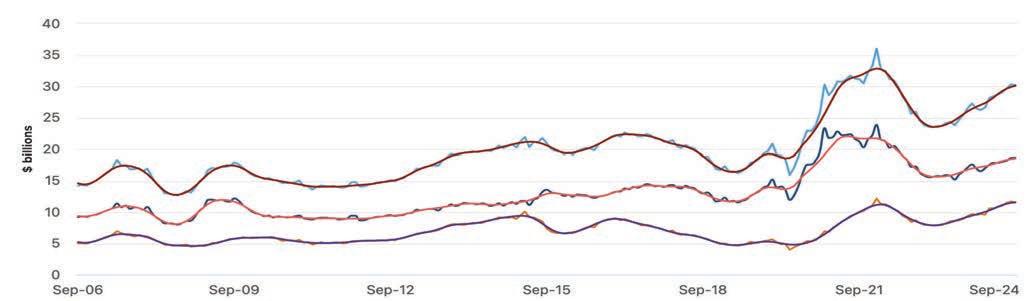
NEW LOAN COMMITMENTS
Source: ABS
property investor sell-off is speeding up in Victoria, with the state's rental falling at an increasingly rapid pace.
of government settings is the permanent migration intake.
number of active rental bonds (a proxy for the number of rental properties in a market) fell from 677,492 in September 2023 to 652,766 in — suggesting the state lost 24,726 rentals in the space of a year.
equated to a 3.6 per cent fall in total Victorian rentals.
The massive numbers seen in recent times have caused a bit of controversy, especially amid the costof-living crunch, and so the government is cracking down.
pursue the Great Australian Dream of homeownership.
So, many of those millionodd people who’ve come in recent times will also be in the market to buy fairly soon.
property investor sell-off is speeding up in Victoria, with the state's rental falling at an increasingly rapid pace.
This combination of skilled workers and families is predetermined, and the latest policy is for 185,000 permanent places to be offered each year from 2024-25 onwards.
A property investor sell-off is speeding stock falling at an increasingly rapid pace.
pace of the sell-off also appeared to be increasing, with total rental nds falling 4,315 in the three months to March 2024, by 7,820 in the three months to June, and 9,498 in the three months to September.
So, investors can be assured of one thing - at least 185,000 more people coming, and all of them needing somewhere to live.
THE TRUTH ABOUT ‘SOFT’ RENTS
number of active rental bonds (a proxy for the number of rental properties in a market) fell from 677,492 in September 2023 to 652,766 in — suggesting the state lost 24,726 rentals in the space of a year.
constituted the fastest falls in rental bonds since record keeping began in 1999.
Despite that, the fact remains that there are critical skills shortages across a number of industries, and sectors like higher education rely heavily on foreign students, so while the volume will ease, it won’t stagnate.
equated to a 3.6 per cent fall in total Victorian rentals.
An interesting thing to note is that the net migration figure encompasses all visa types, including working holidaymakers and international students. Those numbers fluctuate all the time, depending on various trends, but one component that remains solid because
The number of active rental bonds (a proxy properties in a market) fell from 677,492 2024 — suggesting the state lost 24,726
And history tells us that the majority of those who come to make Australia their home tend to rent for the first little while. They lease a home while they get their bearings, figure out their new communities, and start to put down roots.
That equated to a 3.6 per cent fall in total
pace of the sell-off also appeared to be increasing, with total rental nds falling 4,315 in the three months to March 2024, by 7,820 in the three months to June, and 9,498 in the three months to September.
The pace of the sell-off also appeared to bonds falling 4,315 in the three months months to June, and 9,498 in the three months
You’ve probably seen some commentary in recent months that rental markets in many parts of the country are slowing. It’s true. The rate of growth has subsided. In December, rent prices nationally nudged upwards by 0.1 per cent and were 0.4 per cent higher over the quarter.
constituted the fastest falls in rental bonds since record keeping began in 1999. active rental bonds in Victoria
That constituted the fastest falls in rental began in 1999.
Research shows that after a few years, they too seek to
The annual growth rate in rents across 2024 was 4.8 per cent, which is a fair bit lower than has been the case in recent years.
active rental bonds in Victoria
But there are a few important things to note.
The double-digit increases seen for a few years now occurred in crisis conditions, with incredibly high demand and historically low supply.
A rental vacancy rate - that is, the proportion of all leased dwellings currently available on the market - is considered by
economists to be ‘in balance’ when it’s about three per cent.
For some time now, it’s hovered at one per cent or less in most capital cities, pointing to some very serious problems. Strong price growth is good news for investors, for sure, but it’s unsustainable. A bit more balance is good for everyone in the long term.
Another important thing to keep in mind when you look at that so-called ‘softer’ growth rate of 4.8 per cent last year is that it’s more than double the decade average of two per cent per annum. So, price growth is still well above where it normally is.
Savvy investors are clearly confident about where the market is headed, with a surge in lending to landlords in the 12 months to September 24.
Nationally, new investor loans rose by 18.8 per cent, with the biggest growth recorded in Queensland, South Australia and Western Australia.
Data from the Australian Bureau of Statistics showed 212,500 loans in the year to September, which is a marked improvement on where things have sat for a long time.
One interesting trend to keep watch on is investor activity in Victoria. Or rather, the very active departure of investors from the market.
A raft of State Government changes to various taxes and levies has sparked something of a backlash, and so a growing number of landlords are getting out.
The number of active rental bonds in Victoria, which is an indication of the volume of currently leased properties, sat at 652,766 in September 2024 - almost 25,000 less than a year earlier.
That equates to a loss of about 3.6 per cent of this southern state’s total rental stock.
It’s inevitable that such a sharp drop in the number of available dwellings for rent will lead to price increases for those homes that remain.
Demand hasn’t shifted much in recent times, and broader efforts to improve housing supply in the state have faltered.
As a result, a whole lot of people looking for a rental, coupled with a rapid decline in homes to choose from, will put upward pressure on prices.
Those landlords who remain - or who enter the market - will benefit.
MORE BIG SHIFTS
There are some other important things to keep an eye on this year that could drive further activity in the housing market.
For one, Australia will head to the polls again within months to either re-elect Anthony Albanese and Labor or usher in Peter Dutton and the Coalition.
Politics aside, both outcomes will see housing remain a major policy focus for many years to come.
We don’t yet know much about Mr Dutton’s full policy approach to housing, but the Coalition is big on supporting property, particularly via incentives to make it easier to buy, and it’s mulling a proposal to allow early access to superannuation.
That would obviously drive demand in a big way.
Labor is sticking with its existing suite of housing reforms, which splash huge amounts of money to stimulate construction via help for buyers, perks for developers,
and changes to planning and development red tape.
Already, the Federal Government is spending tens of billions of dollars in an effort to boost housing supply across the country.
So far, it hasn’t made much progress, with the latest data showing a continued fall in the start of construction of new dwellings.
THE IMPORTANCE OF ADVICE
We begin the year with some unanswered questions about the economy, the longterm outlook for interest rates and housing markets.
But in the words of the great investor Warren Buffet, the billionaire founder of hedge fund Hathaway Berkshire, it’s wise to be greedy when others are fearful, and wise to be fearful when others are greedy.
What he means is that there’s often great opportunity when everyone else is sitting on their hands because they’re paralysed by fear.
It’s when everyone is confident - usually overconfident - and acting in a frenzy that it’s worth taking a moment to pause and survey the landscape more carefully.
Of course, opportunity is not without risk. That’s why it’s critical for would-be investors to make decisions now that are based on solid advice
from a team of experts and with their own circumstances and long-term goals in mind.
Going it alone is tough and prone to problems in the best of circumstances.
Surrounding yourself with experts who know property inside out, are active on the ground in markets every single day, and know the individual complexities and nuances at play, is how savvy investors achieve their dreams.
Those experts can help guide you through any potential minefields towards real opportunities for growth, which will propel you towards financial security and the kind of future you want.
They understand markets. And by markets, I mean all markets - not just a capital city, but the suburbs within them and their individual growth drivers and potential setbacks.
And not just regional areas, but the pockets within them that will perform better than others and have their own specific risks and rewards on offer.
My view is that 2025 will be defined by multi-speed markets. Some capital cities and certain regional areas will power ahead, while others will stagnate and plateau - and even decline.
You can take on the enormous task yourself of poring over data, conducting intricate research, making extensive
networks of contacts on the ground, hitting the pavement, and having endless in-depth conversations, but it’s a fulltime job - and then some.
And I’m not sure you would succeed given the enormity of the endeavour.
Instead, I urge you to build your expert team of investment advisors, buyer’s advocates, researchers, financial brokers and lawyers to do the grunt work for you.
Make use of their combined decades of experience and tap into their knowledge and networks. They are worth their weight in gold, especially at times like these when conditions make it easy to make a costly misguided misstep.
Those experts can also work with you to thoroughly understand your personal circumstances, your investment capacity and your long-term goals and dreams to devise the perfect strategy to make them a reality. No two wouldbe investors are the same. They are driven by different priorities, so a strategy shouldn’t be one-size-fits-all.
Leaning on a team of experts will give you the best chance of creating a solid plan based on thorough due diligence that will build you a growth-driven portfolio.
Australian Property Cycle
We believe that the market is in the seven to eleven o’clock range where it's currently experiencing growing confidence, price rises, undersupply and rising valuations.
At Accrue, we recognise the importance of understanding the current stage of the property market cycle to provide our clients with the most relevant and accurate advice. The property cycle, which comprises 12 segments representing different cycle stages, is a valuable tool for assessing market conditions.
Based on our analysis, we believe that the market is in the seven to eleven o’clock range
where it's currently experiencing increased confidence, rising prices, undersupply of stock and rising valuations.
This signifies a prime time to invest in property as it suggests we are in a growth period.
This is especially the case right now given the cash rate cut in February is likely to drive demand higher and push up property values in the near future.
If you are considering investing, now is the time before the surge.
As a trusted partner, Accrue is committed to helping our clients find the perfect investment property to suit their needs and goals.
Our team of experts has a deep understanding of the property market and can provide tailored advice and solutions to meet our clients' unique requirements.
Building towards an incredible retirement
One couple’s adventures in property have seen them establish an impressive portfolio that’s their foundation for travel, fun and financial security, both now and in the future.
In a time before swiping right on a phone app really took off, Michelle’s path to potential romance was via a once-famous dating site called RSVP. She posted her profile and picture and put it out to an online world of likeminded singles.
As it turned out, her future husband, Paul, was also looking for love on the site, and when he spotted Michelle, he knew it was time to take a chance – so, he messaged her.
“We hit it off from day one and have been together ever since 2012,” Michelle said.
Fast forward to today and this happily married Geelong
couple is loving life. They have an ideal blended family with three young-adult boys, and a future retirement that’s looking very exciting after several savvy investment decisions.
In fact, in just a few years (and with Accrue’s help) they’ve built a three-home portfolio worth an impressive value of approximately $1.85 million, and there’s more to come.
What’s even more inspiring is that they’ve done it all while working for decades in the industries they love.
51-year-old Paul has been an electrician at a major car manufacturer for 34 years now
– which shows his Olympiclevel commitment to long-term security. It’s a trait that’s serving him well in his investment journey too.
Not to be outdone, 46-yearold Michelle has been in the health industry for 29 years and currently works as a dispensary technician in a hospital pharmacy.
“I did work experience in one pharmacy at 15 years old and that’s where I got my first job. In fact, I worked there for 15 years. My interest has just grown from there,” she said.
When they’re not running their household and keeping the kids
in line, Paul and Michelle love to get away.
“Holidays are great,” she said.
“We love going on little trips up to Queensland and anywhere else there’s sunny weather. We might even end up living in Queensland one day.”
Their path to an impressive portfolio was founded on some early property experience, with Michelle having purchased two homes before she even met Paul.
“I bought my first property at 19. It was a unit, and I did well with that.
“Then at 21 I also bought something with my now ex-husband that was an opportunity to build our dream home, but that marriage didn’t last,” she said.
Michelle said the end of her first marriage saw the two assets offloaded, and while it was the right decision at the time, holding them for the long term would have proved profitable.
Michelle said she’s always been attracted to real estate as a vehicle for wealth generation.
“I knew I wanted to retire early, and I knew investing in property works.
“I don’t understand shares. To make money on the stock market you need a lot of knowledge about companies you buy into, so I’ve always stuck with property.”
Michelle continued her brickand-mortar acquisitions with Paul.
“After the divorce, I ended up buying a three-bedroom home. Then Paul and I ended up buying another home together and rented that out. We’ve enjoyed the value growth with all of them and it was all pretty smooth sailing. Our properties were set-and-forget. You’ve got a tenant in there who is paying off that house while it’s growing in value which is great!”
Michelle said selling both properties in the past few years allowed them to buy the home in which they now live in Geelong.
As you can see, the couple has had some experience and success already in the real estate space, but much of their activity had been about dayto-day opportunity rather than long-term planning. During a vacation, they had some time to stop and think seriously about their future.
“We were doing some travelling and that’s when we really thought about it. We wanted to be able to retire and travel the world and have all this property working in the background so we could actually live life to the fullest.”
They did some research and filled out an online questionnaire about their wants in the investment space. This was followed by a face-to-face meeting with a contact who talked about their numbers to work out if Accrue would be a good fit for them.
“They put us onto an Accrue representative – Jess – and
he’s been with us since day one. We think the world of him. He has been amazing with communication and answering all our questions. He’s helped immensely with our mindset too– he’s been like a mentor.”
Michelle said Jess’s guidance has been particularly valuable when their investing journey has hit the occasional rough patch as well.
“We’ve now got three homes that were successfully bought through Accrue. There were, however, two that didn’t happen because of land developers going bust. All through that time we had support from Jess and Accrue and didn’t lose any money at all. We were able to get our deposits back and Accrue helped us from beginning to end.
“There’s no way we would have been able to do that ourselves – we’d have lost money – we wouldn’t have known what to do and how to fight and where to go next.”
The three properties they own now are proving hugely successful, and all are in growth locations selected via Accrue’s comprehensive approach to research.
The first property is in Springfield, Queensland. They bought a three-bedroom townhouse for $433,000 just three years ago.
“Just the other day we had a phone call from an agent saying the next-door property had just sold for over $650,000.
“We keep getting phone calls about it. Agents saying they’ve got people, ‘who will buy it tomorrow’ and such, but we’re always saying no because we want to hold onto it.”
Michelle said Accrue’s impressive research and analysis was a huge tick for them when deciding to buy in Springfield.
“Accrue presented the growth numbers, the rental return and yield. They also discussed the number of owner-occupiers versus renters in the suburb. Then there’s the locational stuff like the rail line, and other infrastructure and it really caught our eye.”
Michelle said the Accrue representative gave them options, showing them three properties and they were able to choose the one that best suited their needs.
“The townhouse there is never vacant. We had the same couple there up until December last year,” she said.
When they’d had Springfield for around a year, it was time to go again. After a chat with Accrue, it was apparent they had the resources to look at adding their next asset to the books.
This time, Paul and Michelle signed on the dotted line for a three-bedroom apartment in Moonee Ponds, Victoria. Michelle said they paid $540,000 for it a year ago, but their most recent assessment suggested a value of $650,000. That’s a $110,000 equity gain in just 12 months.
“The third property we’ve bought is in Kalkallo, Victoria. It’s an off-the-plan three-bedroom townhouse that cost $549,000.
Construction only finished a few months ago so they’re just securing a tenant for it now.”
Despite their most recent purchase only being completed a few months back, Michelle said they’re hungry to get another, because the experience with Accrue has been exceptional.
“We’ve been really impressed with the support and the honesty. From all the team – Jess and John – and the knowledge behind them is excellent.”
The couple said Accrue’s factsbased approach to selecting investment options is the way to go.
“Having their comprehensive research has given us the confidence to take a leap of faith with Accrue.
“They’ve helped organise property managers and other professionals too. It’s all done through their connections – it works really well, and they make it so easy.”
As for how to enjoy the sense of freedom investing has given them, well… Travel! Travel! Travel!
“We’re doing a big trip through Europe in August. We’re going to London, Paris, Amsterdam and Rome.
“We haven’t fully discussed early retirement yet – we still enjoy working – but it’s going to be a whole lot better having built our nest egg through property investment.”
Michelle said they’ve enjoyed the process so much that they’ve already started directing friends and family to Accrue.
“We have recommended them to people – sent the link for Accrue to others we know.
“We’ll keep on recommending them to friends and happily giving them 5-star reviews.
“We just want to thank Accrue for everything.”
Property Hotspot
The centre of the suburb pays homage to its roots as a small country town way back when, charming locals and visitors alike with its historic buildings and wide tree-lined streets.
Everything Berwick residents could need or want is centrally located, from retail to recreation.
Berwick
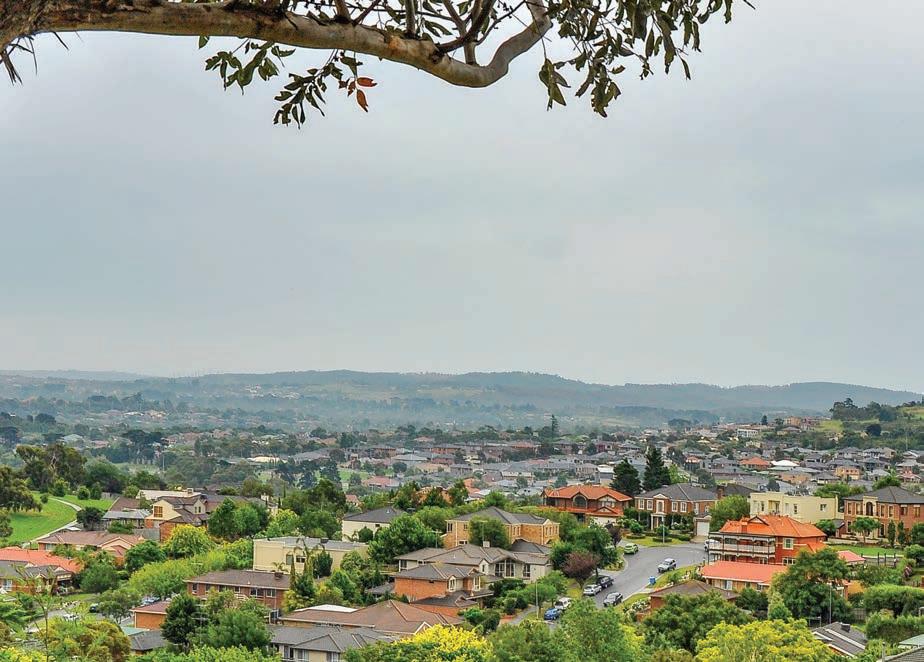
Forget the old adage and do judge this book by its cover, because the sheer beauty of Berwick is far from surface level.
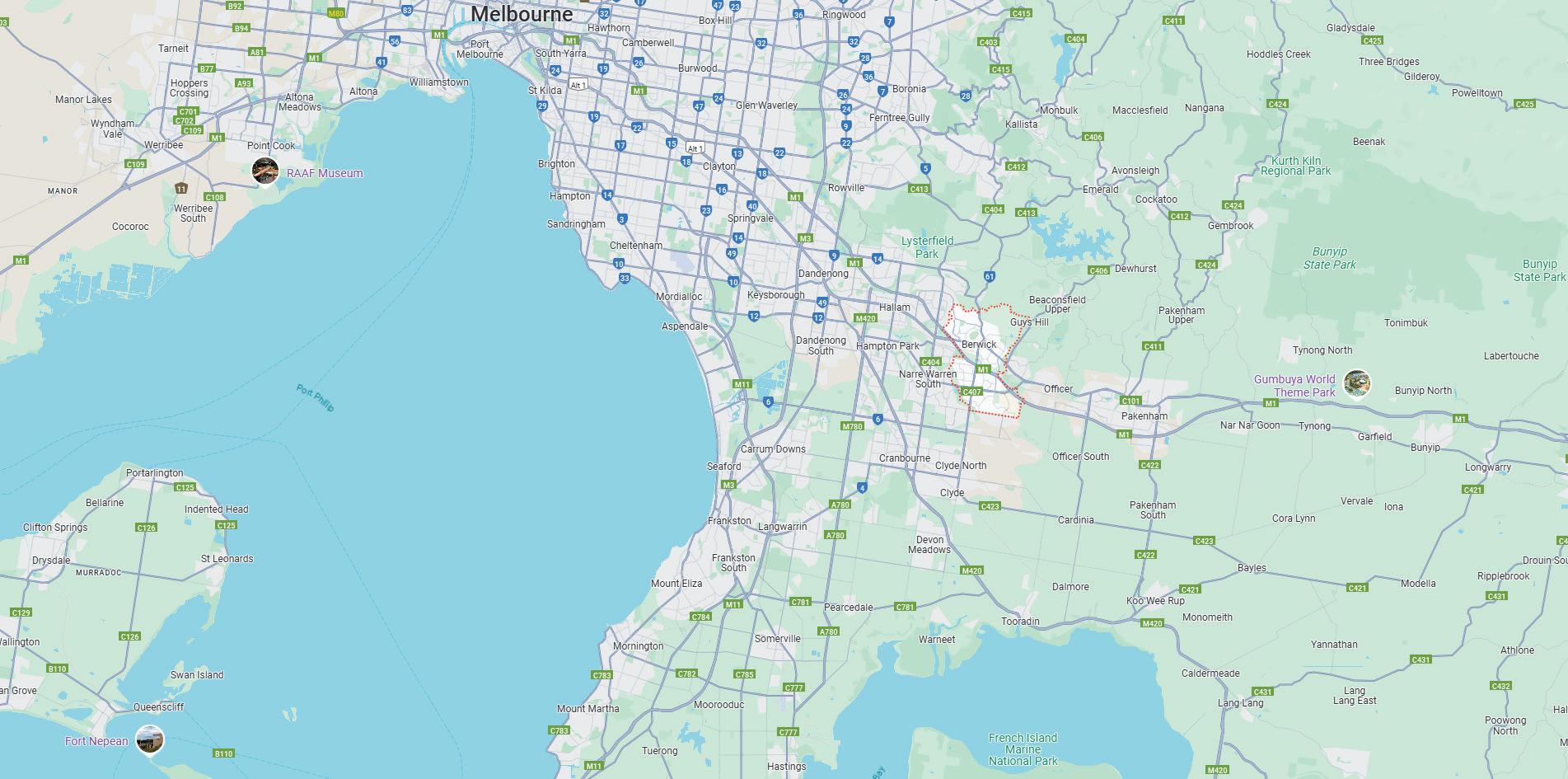
plonk commuters in central Melbourne in about 40 minutes, while there’s also a handy train line.
Victoria
Victoria 3806
Located about 40 kilometres southeast of the Melbourne CBD, this picturesque pocket ticks virtually every box a homebuyer could possibly have. Family friendly? Check. Stunning natural amenity? Check. A mix of sturdy heritage homes and modern marvels built to stand the test of time? Check.
The food scene here is excellent, with a whole host of restaurants and cafes ranging from fine-diners to cheap and cheerful eateries.
And Berwick suits growing families to a tee, with a range of fantastic schools and plenty of parks, sports grounds, walking trails and open green spaces.
The suburb’s popularity has skyrocketed in recent times, given it offers the opportunity to enjoy the best of both worlds.
sunny · 28° C 12:47 pm
Big city life feels a million miles away, but in reality, convenient road links will
Berwick is growing, with a number of brand-new estates popping up and allowing a new generation of locals to make this perfect patch their new home.
The median house price is currently sitting at $870,000 and has risen 2.4 per cent in the past 12 months, defying a broader slow-down across Greater Melbourne.
That in itself is a sign of how quality homes nestled within in-demand suburbs tend to always outperform their rivals.
But it’s unsurprising, given the strong level of of demand for Berwick houses and prices look set to strengthen further too.
According to the latest realestate.com.au data, there are a whopping 7540 serious buyers in the market right now.
Berwick
Property Hotspot
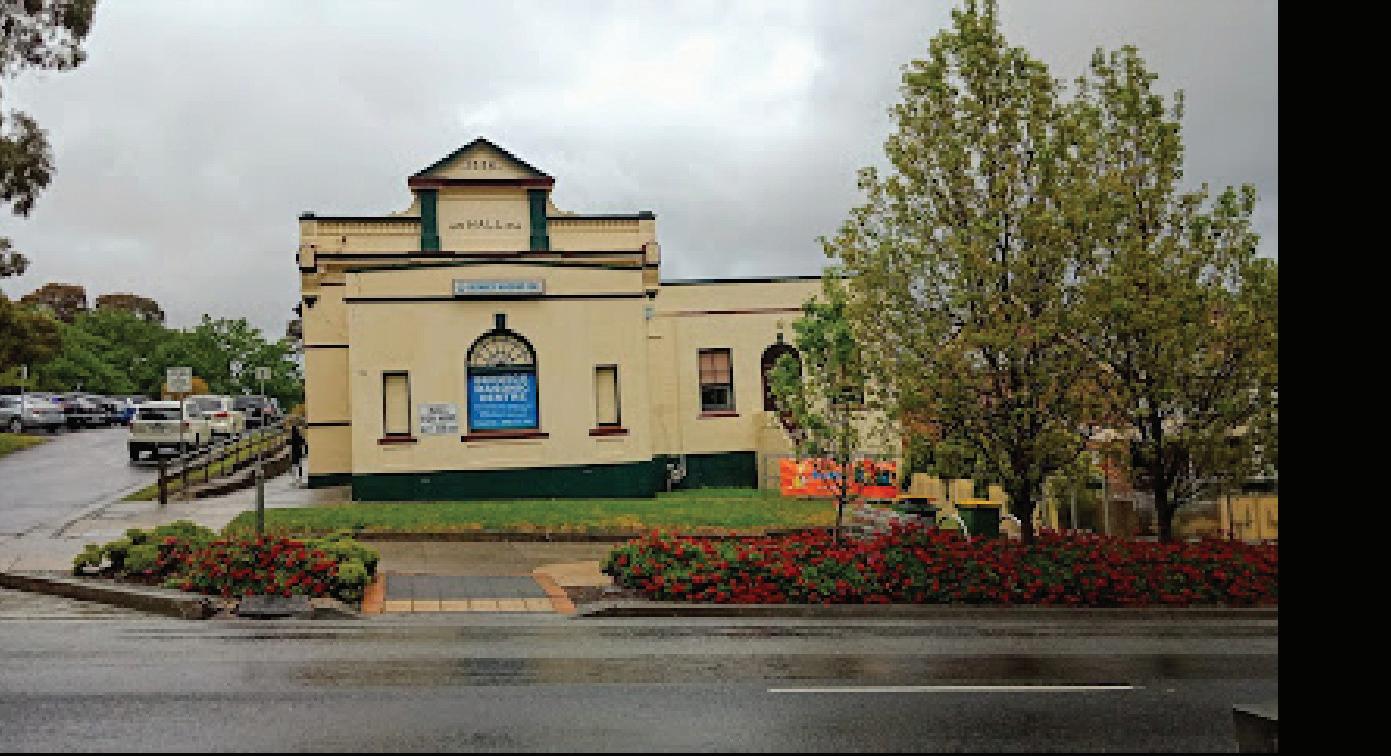
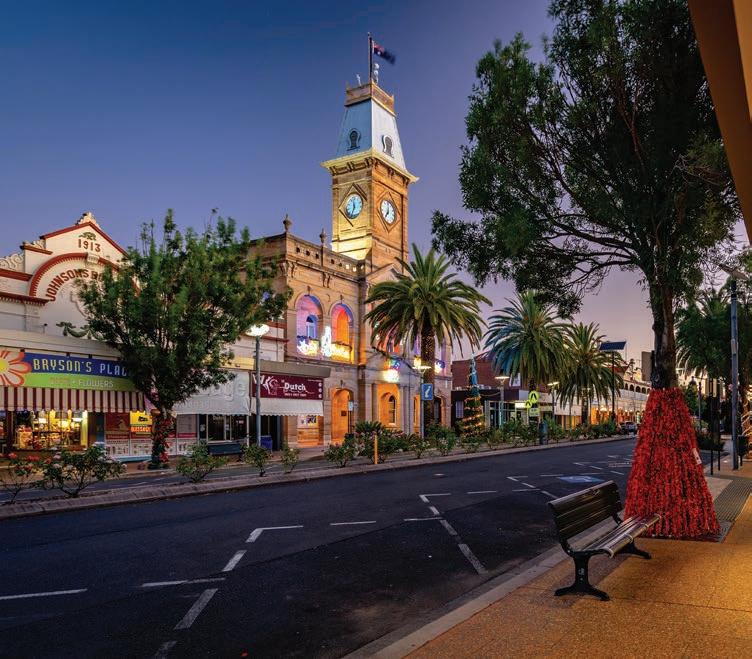
Aside from the beautifully preserved heritage, the main thing you’ll notice about this settlement is the proliferation of rose plots, in honour of Warwick’s status as a floriculture hub.
The town is big on horses, too. The annual Warwick Rodeo draws hordes of people from across the country each October.
Warwick
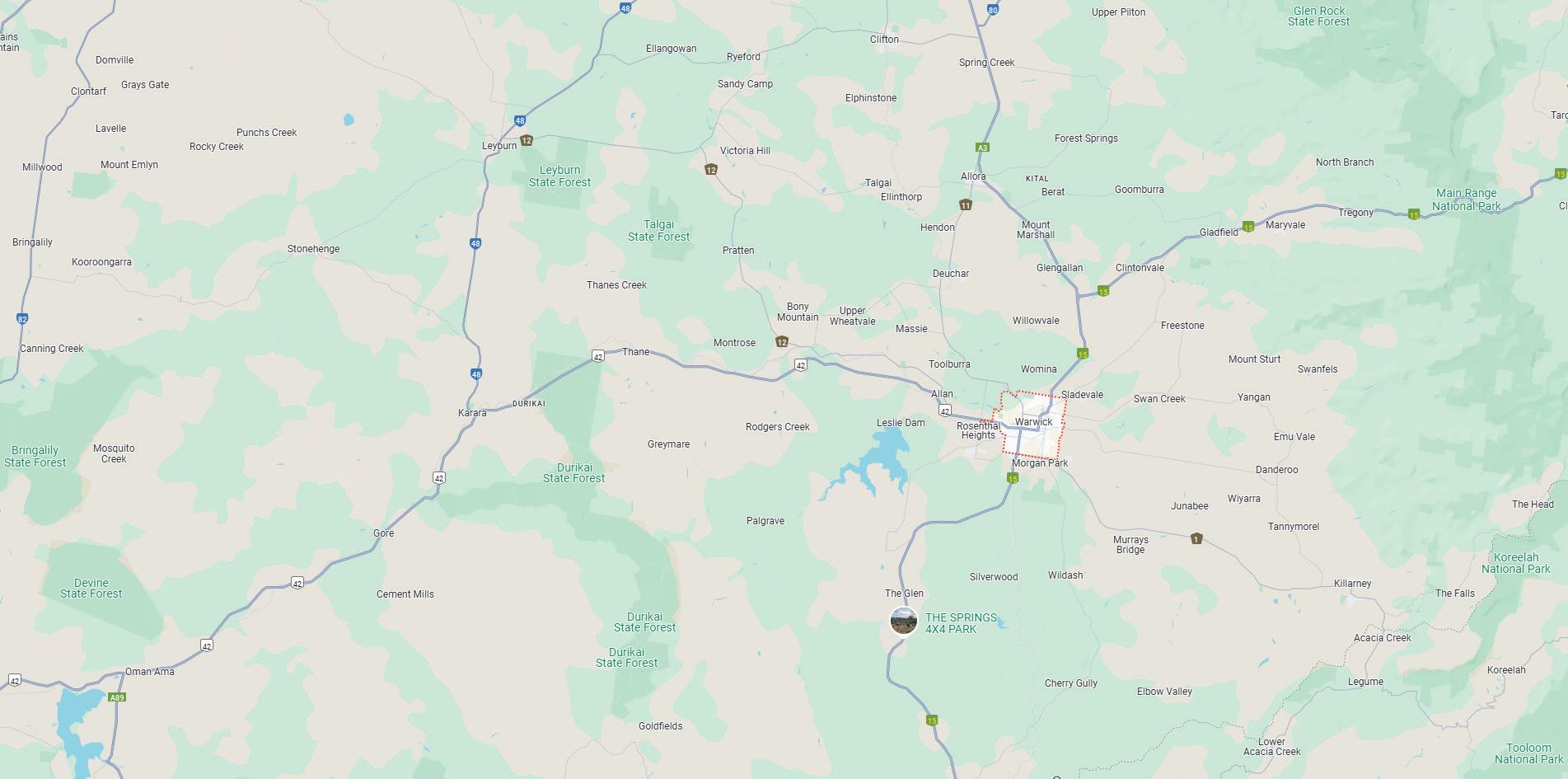
If you head about 130 kilometres southwest of Brisbane, you’ll arrive at a town famed for being both the rose and rodeo capital of Australia. Warwick was settled some 150 years ago and remains home to some of the finest examples of sandstone architecture in the country, making it one of the prettiest small towns around.
Its prospects as a property hotspot are a huge drawcard for investors too.
But don’t write off this thriving community as a kind of poor cousin to better-known Toowoomba, about an hour up the road. Warwick more than stands on its own two feet.
Firstly, the community is famously warm and welcoming, with the kind of small-town charm retained despite its recent growth. The current population of 14,110 has steadily risen over the past decade as new arrivals put down roots in search of a better life for them and their families.
The regional economy is strong, with Warwick being the
administrative services hub for the whole Southern Downs region.
Locals enjoy a range of convenient amenities, from a wide selection of shops to excellent healthcare.
Families are fond of living here, thanks to the array of well-regarded public and private schools, as well as an abundance of parks, playgrounds and green spaces.
There are loads of local groups covering every imaginable interest and a jam-packed calendar of events throughout the year.
Perhaps that’s why so many are choosing to ditch their frantic city lives in favour of a slice of country comfort – something Warwick delivers in droves to new arrivals.
The median house price of $450,000 has surged by a staggering 17.6 per cent in the past 12 months, owing to extraordinary demand.
Warwick
Property Hotspot
There’s a good selection of shops, cafes and restaurants, and families favour the peace and quiet on offer alongside quality schools.
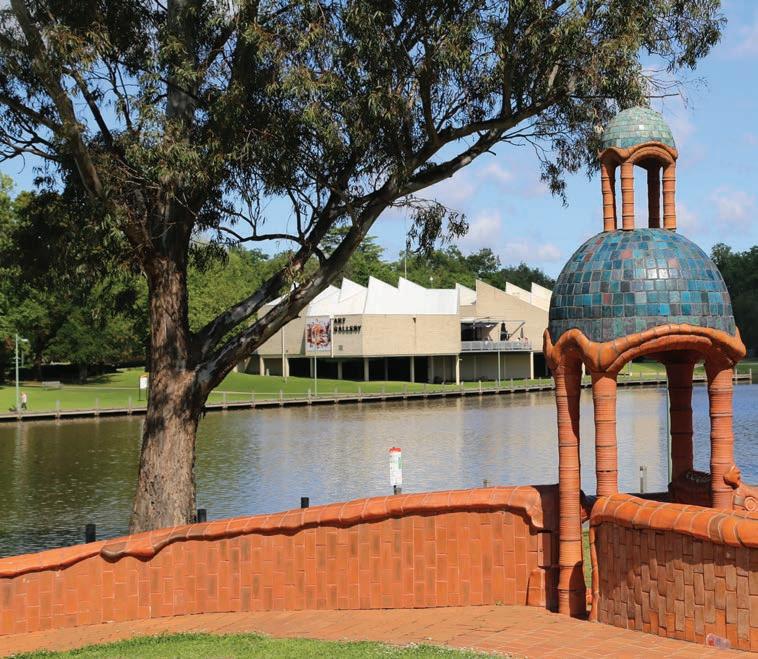
Benalla is also an arts hub, with the renowned Benalla Art Gallery drawing in visitors from near and far thanks to its exceptional collection and roster of stellar exhibitions.
Benalla
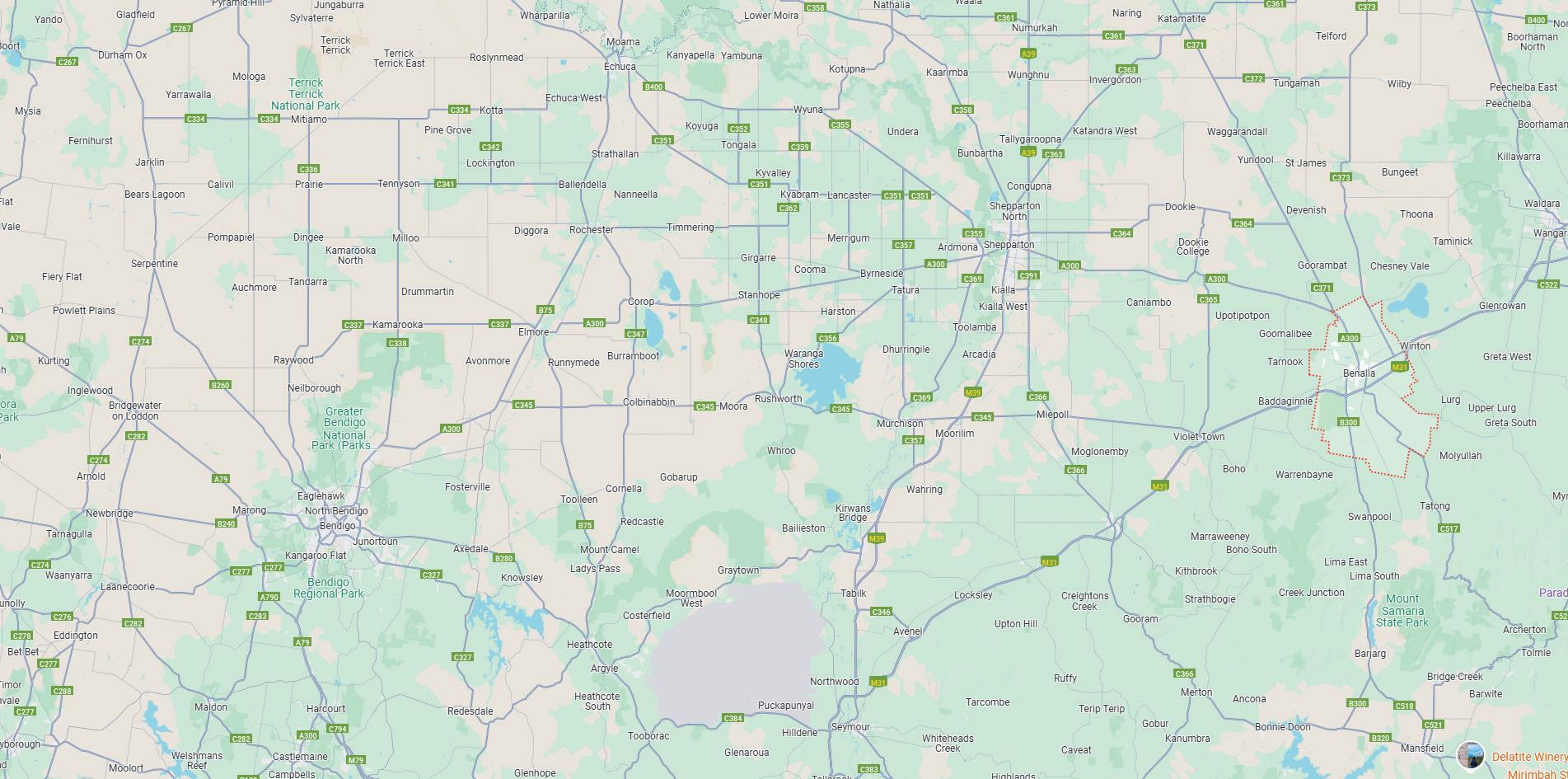
A boom is underway in Victoria’s picture-perfect Goulburn and sitting at the epicentre is the historic town of Benalla.
Located about 200 kilometres north of Melbourne and roughly an hour south of Albury, this community offers locals the chance to be a stone’s throw from every possible convenience of the big smoke without being too close.
The town also has an array of fantastic street art and hosts the annual Wall to Wall Festival, and it’s the starting point of the famed North East Victoria Silo Trail, with some beloved murals on show.
It was the first space of its kind outside North America to be awarded a distinction by the Society of Wetland Scientists.
Those new arrivals who want action will relish the nearby Winton Raceway too, one of the country’s largest permanent motorsport circuits and host to several events throughout the year.
All of the warmth you’d expect of a small town is on offer here, with friendly locals welcoming new arrivals with open arms.
Sunny · 29° C 12:48 pm
But arguably the crowning jewel is the Winton Wetlands - an environmental project of massive natural, cultural and scientific significance.
Sunny · 29° C 12:48 pm
Whether residents are keen to go for a bush walk or bike ride, camp and stargaze, eat a meal amidst spectacular natural surrounds, explore world-class art installations, learn about Indigenous culture, or do a
Visitors and new residents are often surprised by the cultural and economic diversity on hand in Benalla. Many coming from capital cities and larger regional centres expecting a sleepy country existence discover a vibrant centre with varied offerings of broad appeal.
The median house price has risen by 3.7 per cent in the past 12 months to hit $451,000, on the back of rising demand from buyers.
Benalla
Wellard
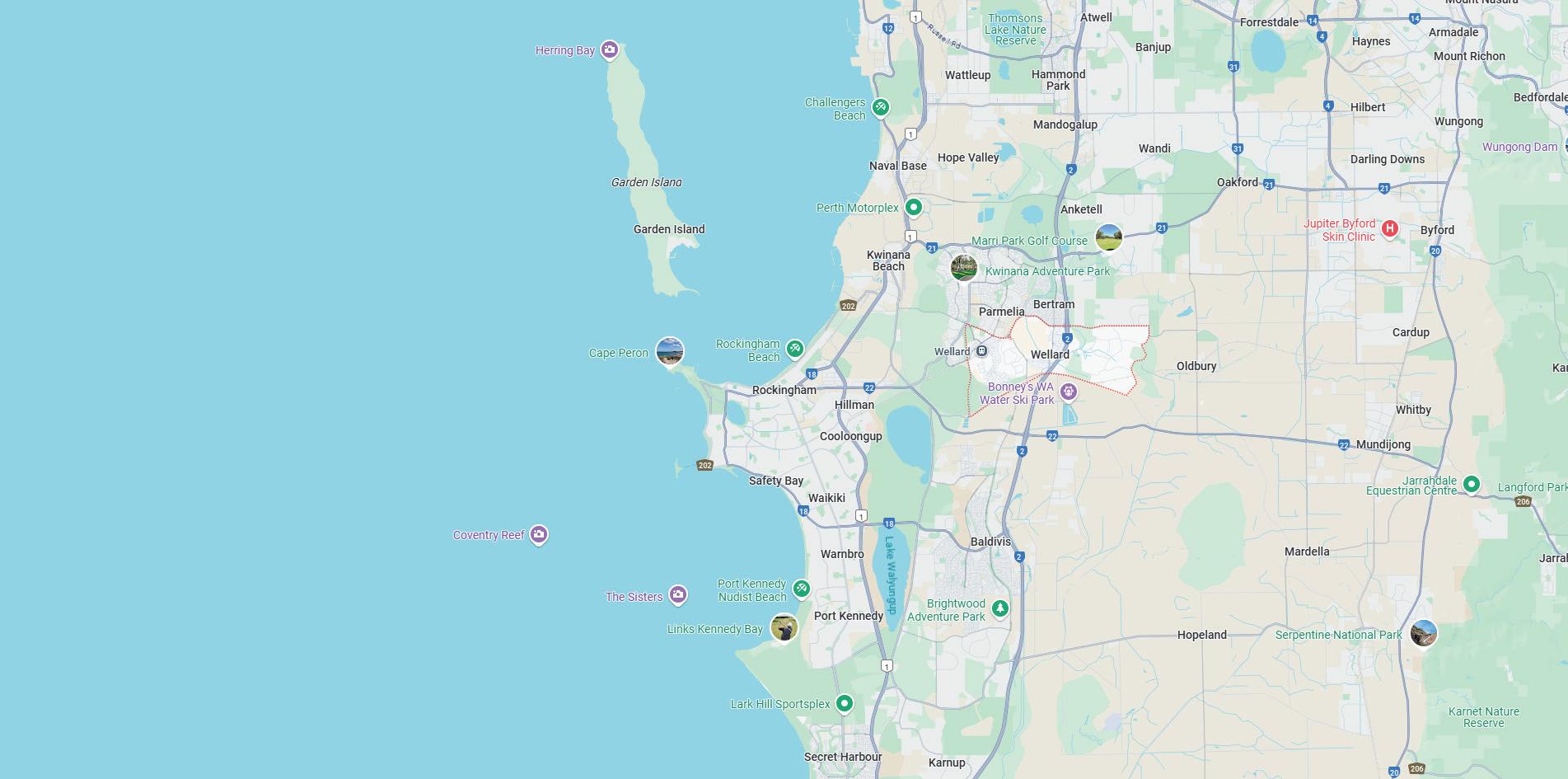
Wandering around this rapidly growing suburb, you could be forgiven for forgetting that you’re moments from a major capital city with a population of 2.3 million people.
Wellard
But a small town this isn’t. In fact, it’s one of the fastestgrowing pockets in the state, with the population of 14,127 soaring over the past decade. It’s not hard to see why.
This suburb is superbly located and well-connected to the rest of the city, offering an enviable level of convenience for locals, no matter where they need to get to.
include a range of expanded services, meaning that ease of life will only continue to evolve.
Families are flocking here thanks to the ability to live in a quality home with room to grow on a good-sized block, all in close proximity to parks, playgrounds and great schools. Young couples are also drawn by the relative affordability on offer, both in terms of sale prices and asking rents.
Nestled in Perth’s south, about 38 kilometres south of the CBD, Wellard has a unique and distinct country living vibe about it. It’s incredibly green and leafy, the streets are peaceful and safe, and the locals and welcoming and warm.
Western Australia 6170
Western Australia 6170
As well as great road links, there’s a local train station that has commuters in the CBD within about 30 minutes or in Mandurah in about 20 minutes. An integrated bus network also provides easy access to Rockingham and Kwinana.
Mostly cloudy · 24° C 9:49 am
As Wellard has grown, the number of amenities on offer, from shopping to cafes and restaurants, has also expanded.
Mostly cloudy · 24° C 9:49 am
Major masterplanned communities in development
Directions Save Nearby Send to phone Share
Directions Save Nearby Send to phone Share
Surging demand continues to put intense upward pressure on values. The median house price is currently $651,500 but has skyrocketed by a whopping 25.3 per cent in the past year, while the median unit price of $437,500 has exploded by 36.3 per cent. Despite the impressive numbers to date, there’s still plenty of upside for smart investors to enjoy.
Wellard
Membership Rewards Program
FROM INVESTMENT TO INDULGENCE WITH ACCRUE
At Accrue, we’re all about giving back to our loyal community of investors.
We’re thrilled to announce a fantastic initiative set to deliver incredible prizes to you, the committed members of the Accrue family.
The Accrue Membership Rewards Program is an exciting new era of rewards and recognition where members have the chance to win thousands of dollars in prizes simply by going to the rewards landing page and clicking the entry button. It really is that easy!
You can boost your chances of winning by inviting friends and family to join the Accrue community too.
Our first prize winner is already enjoying a $4,000 travel voucher... and you could be next.
WE’LL BE ANNOUNCING OUR NEXT WINNER SOON. Stay tuned for more exciting details and don’t miss your chance to win big!
Australian Property Clock
Our research and acquisitions team uses data and analytics to identify the nation's next property hotspots, keeping our clients ahead of the market.
Adelaide - South West
Albury
Cairns
Darwin
Sydney CBD
& Northern Sydney CBD
Sydney - Outer West
Perth CBD
Perth Regional
Sydney - South West
Newcastle
Coffs Harbour
Sunshine Coast
Brisbane CBD
Outer West Brisbane
South Brisbane
Gladstone
Outer West Melbourne
Hobart & Launceston
Townsville
Adelaide - North West
Melbourne CBD
Melbourne Southbank
Melbourne - Outer South East
Canberra
The Data Deck
SUMMER
Geelong
Ballarat
Bendigo
Gippsland Shepparton
Data Deck
Accrue is presented with thousands of property options across Australia each year.
Based on our extensive selection criteria, we narrow this pool down to less than 30 per cent which we consider worthy of presentation to our members.
We love statistics and data! Our acquisitions team utilises a wide range of available information to help unearth those locations most likely
to outpace the market. It’s this facts-based analysis that ensures we are choosing locations and assets that will maximise the benefits to our members.
Our borderless approach to property investment sees us study the numbers across the country to identify data-
CORELOGIC HEDONIC HOME VALUE INDEX
based trends, with a particular emphasis on capital growth and rental yield.
Property is a long game. Our quantitative approach coupled with years of experience ensure we keep ahead of the curve and deliver the best possible outcomes from the selected investments.
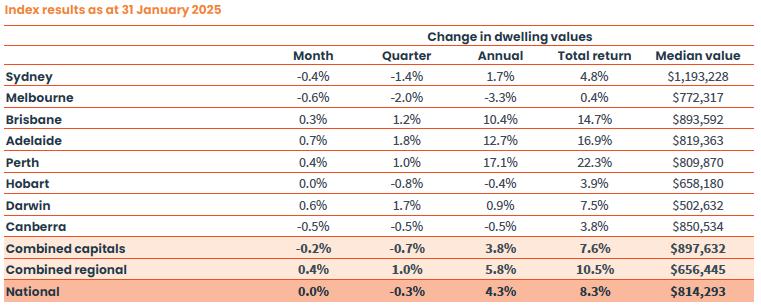
CoreLogic’s analysis to 31st January shows both total returns and annual capital gains continue the strong positive-growth story. Values have moderated in the short term, most likely a lag reaction to rate rises and reduced borrowing power.
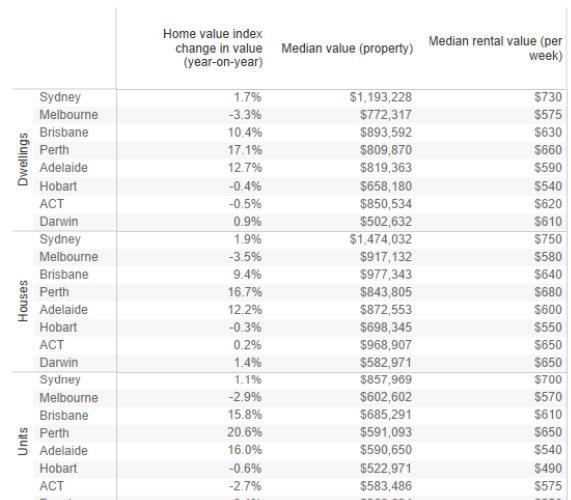
The annual total return on dwellings across the combined capitals was 3.8 per cent, down from 5.9 per cent at the end of October 2024. Perth once again led the field with an exemplary 17.1 per cent increase in dwelling values. Adelaide at 12.7 per cent and Brisbane at 10.4 per cent also delivered outstanding gains for investors.
Source: CoreLogic
Data Deck
VALUE CHANGE BY HOUSING TYPE – CAPITAL CITIES
A more detailed breakdown of monthly values by CoreLogic for January reveals that our midsize capitals remain dominant in terms of growth, with attached housing delivering some of the best returns to investors. Perth has seen a shift, with price growth for units now exceeding that of detached housing. The price growth differential between units and houses in both Brisbane and Adelaide has amplified in the past three months or so. There’s little doubt that affordability remains the main driver of market performance. The good news is that this looks set to continue, so those who acquire assets in this sector are likely to enjoy exceptional value growth for some time yet. Negative results for Melbourne, Hobart and ACT were modest but illustrate the importance of being locationally strategic.
VALUE CHANGE BY HOUSING TYPE –REST OF STATE
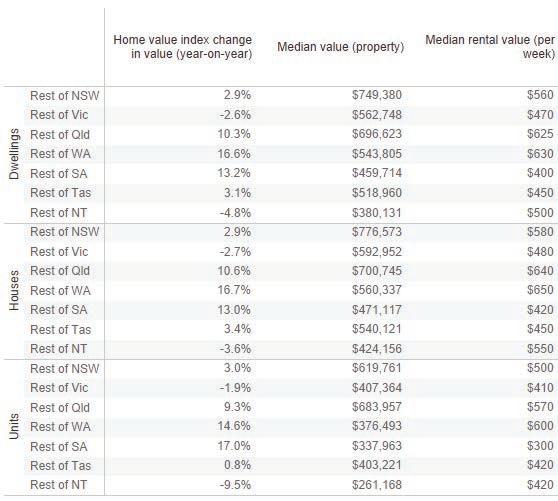
State-wide figures illustrate the diversity of property market performance across regional Australia. The vastly different performance in capital growth between the top three and bottom three jurisdictions is a testament to this. This table is extremely telling. The right regional areas can be a bonanza for savvy investors but choose poorly or based on the wrong metrics and your portfolio’s value is at risk of stagnating.
Source: CoreLogic
Source: CoreLogic
Data Deck
STRATIFIED VALUE CHANGE
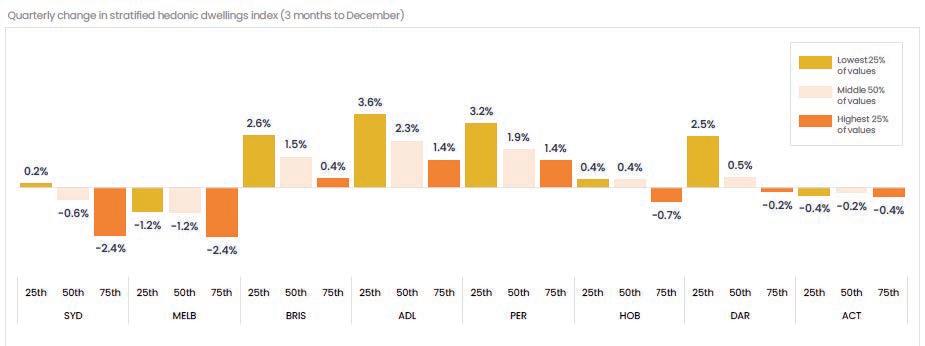
It is essential to understand not only how property prices are performing overall, but also which price points offer the best potential. This stratified analysis of quarterly price movements by CoreLogic shows that property in Perth, Adelaide, Brisbane, Hobart and Darwin priced in the lower quartile delivered greater value gains over the three months to the end of December 2024. Portfolios heavily weighted towards these more affordable buy-in price points would have significantly outperformed portfolios comprising fewer assets with high buy-in prices.
RESIDENTIAL REAL ESTATE VALUE
Source: CoreLogic
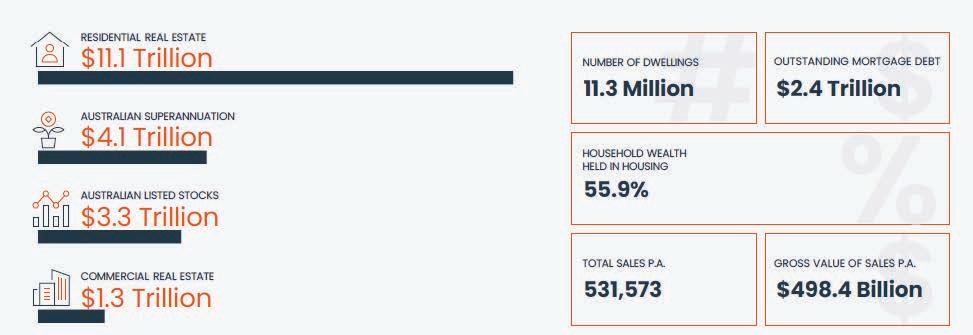
The value of Australian residential property is tracked by CoreLogic monthly. This data confirms that residential real estate is the largest asset class in the nation, being close to three times the size of superannuation, and almost three and a half times greater than listed stocks. According to the analysis, Australian residential real estate gained $100,000 million in total value between October 2024 and January 2025.
Source: CoreLogic
Data Deck
SHARE MARKET VOLATILITY AND COMPARATIVE PERFORMANCE
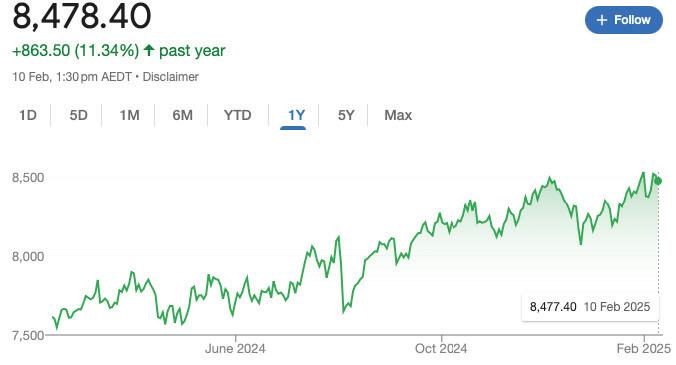
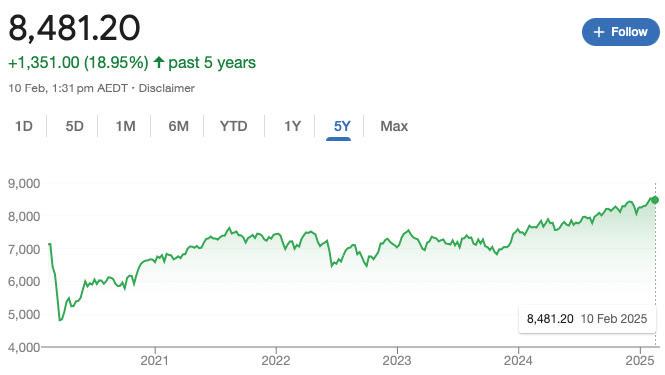
The two charts below track ASX 200 price movements over both a one-year and a five-year period. Both reveal share market investors have done reasonably well across these timeframes, but a deep dive demonstrates the risk investors take with this asset class.
There is extreme volatility with equities, and the risks versus returns over time don’t compare to the relative stability and long-term wealth opportunity delivered by real estate. For example, in the one-year chart, if you had invested $100,000 into the ASX 200 on 3rd December 2024, just 17 days later on 20th December, you’d have lost $5000 of your initial investment. While share investors were rewarded with 18.95 per cent in value gains over the past five years, well-selected property assets in prime locations in Perth, Adelaide and south-east Queensland have achieved this and more in two-to-three-year periods.
Source: Google Finance
POPULATION MOVEMENT
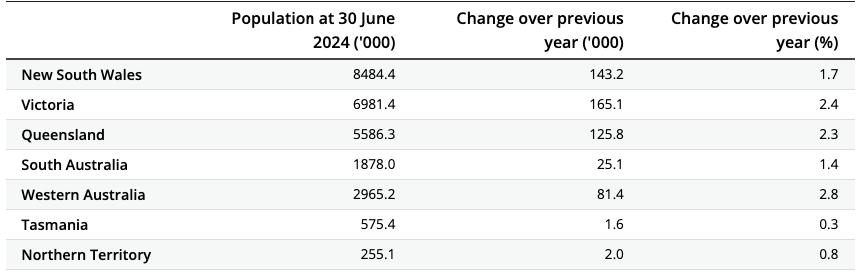
Total population change and net interstate migration figures are lead indicators of house price movements. Rising overseas migration to Australia continues to drive demand for housing. Jurisdictions with increasing populations often enjoy more buoyant property prices. Net interstate migration is also a compelling statistic which helps identify where people are moving from and where they’re resettling across the nation.
According to the latest ABS information, Australia’s total population grew by 2.1 per cent to reach 27.2 million people to the end of June 2024. The beneficiaries of population movements continue to be Queensland and Western Australia, with most residents moving away from New South Wales. According to the ABS analysis, the net 12-month immigration figure was 445,605 which is a decrease of some 50,000 compared to just three months earlier. Despite this fall, the net figure remains well above the long-term annual average of approximately 230,000 persons net per year.
Source: ABS
AUCTION CLEARANCE RATES
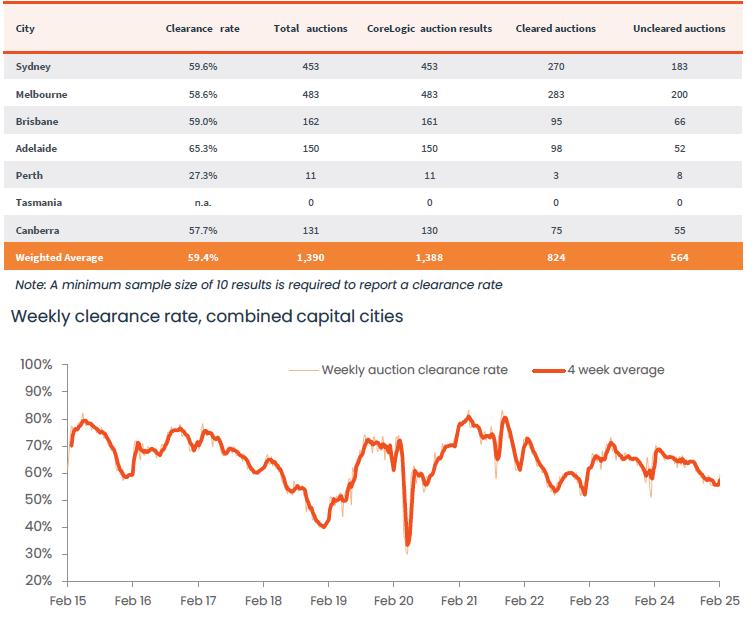
CoreLogic weekly data to 2nd February reveals auction clearances tracked between 57.7 per cent and 65.3 per cent across Brisbane, Perth, Sydney, Melbourne, Adelaide and Canberra. These are good outcomes and are a moderate firming on the results from around three months ago. This most recent data shows the weighted average of auction clearances is 59.4 per cent which is almost identical to results from three weeks previous. The number of auction events has plummeted compared to the October 2024 analysis we cited in our previous issue of the magazine. At that time there were 3135 total auctions across the selected cities compared to 1390 in the latest data. Auction volumes most likely rose as we progressed further into the traditional spring selling season, but have retreated since.
Source: ABS
RENTAL GROWTH
National rental growth rates are attenuating, although they do remain firmly positive in the latest analysis. CoreLogic’s numbers reveal a 4.8 per cent increase in rents Australia-wide which is down from its peak growth rate in mid-2022 and lower than the 6.8 per cent rate seen in September 2024. Perth remains out front as the capital with the strongest annual rental growth, although even its gains are slowing. It’s encouraging that as we see rental growth slow – which was inevitable in the long term – the falls are moderately paced meaning landlords can proceed along their investment journey with income certainty.
RENTAL RATES
The national rental index increased by 4.8% in the year to December, a notable decrease from the 8.1% rise observed in 2023 and the 9.5% growth recorded in 2022. With net overseas migration projected to normalise and the average household size expected to continue to trend towards pre-COVID levels, rental growth is anticipated to moderate further in 2025.
Annual growth in rent values slowed to 8.2% nationally, reflecting an incremental easing in the rate of rental growth at a high level. Growth in rents over the month of June slowed to 0.4%, which is the lowest rate of monthly growth rate since September last year. RENTAL RATES
Annual change in rental rates to December 2024 4.8%
Gross rental yields have remained reasonably stable since late 2022. This means that while rents have risen substantially in that time, median values have increased in a similar fashion. Rising rents help investors service their loans and meet other obligations even as their asset’s value increases.
At the national level, gross rent yields have remained relatively unchanged over the past two years at 3.7%. While stable at the national levels, yields rose across Hobart (+30 basis points), Melbourne (+29 basis points), Darwin (+21 basis points) and Canberra (+12 basis points) over the year.
RENTAL YIELDS
Gross rental yields, December 2024
Gross rental yields, June 2024
Source: CoreLogic
Source: CoreLogic
Gross rent yields have been fairly steady at the national level, hovering around 3.7% for the past 19 months. Rent yields are expected to compress slightly in the next few months, as the pace of capital gains has held slightly higher than the slowing monthly rental growth rate.
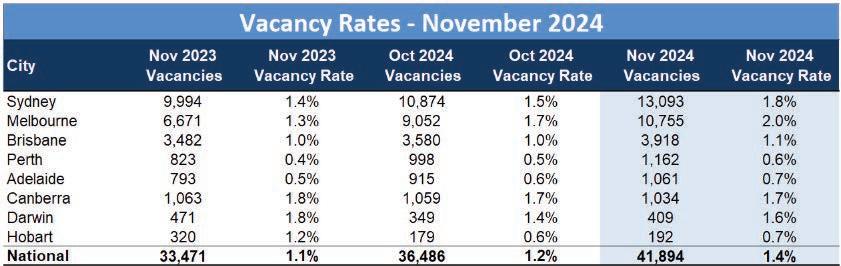
up from 36,486 in October. The rise was driven by higher vacancy rates in Sydney, Melbourne, and Brisbane, while other cities recorded stable or minimal changes.
Sydney’s rental vacancy rate climbed to 1.8%, with 13,093 rental dwellings now vacant. Melbourne also saw an increase, with its vacancy rate reaching 2.0%, representing 10,755 vacant dwellings. Brisbane recorded a modest rise to 1.1%, with 3,918 properties now available for rent.
PROPERTY LISTINGS
Canberra maintained one of the highest rental vacancy rates among the capital cities at 1.7%, unchanged from October. Perth continued to exhibit strong demand, with its vacancy rate holding at a low 0.6%. Darwin’s vacancy rate rose to 1.6% as the region enters its seasonal lull, while Adelaide and Hobart remained steady at 0.7%.
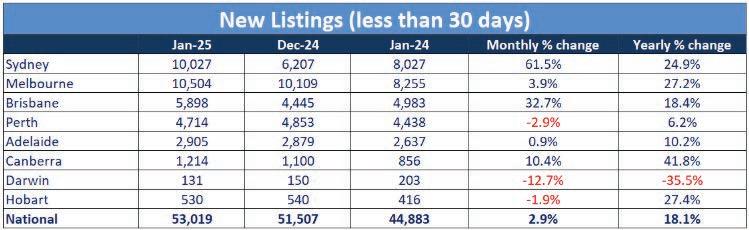
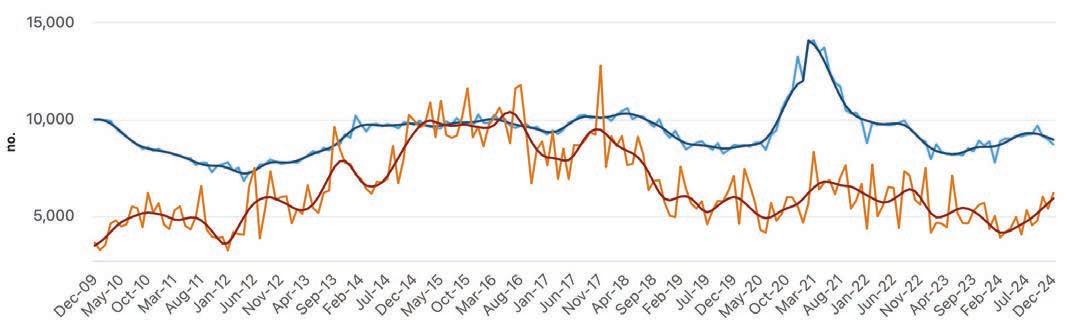
SQM Research data shows total monthly residential property listings rose nationally by 18.1 per cent this year, a figure that may have been even higher if Darwin were excluded from the analysis. Canberra, Melbourne and Hobart saw the greatest increase in listings, while Perth’s modest 6.2 per cent increase highlights its relatively tight market. Increased listings suggest sellers are feeling slightly more confident about taking their property to market. It will be interesting to monitor this metric now rate cuts have been announced.
Source: SQM Research
New Listings
Vacancy rates in the CBDs recorded subtle shifts, with Sydney’s CBD vacancy rate rising up from 4.7% to 6.4% same as Melbourne’s CBD witnessed a rise from 5.5% to 5.9% Brisbane’s CBD this month also recorded a minor raise from 2.3% to 2.4%.
Nationally
2025, reaching 53,019 properties nationwide. This represents an 18.1% rise compared to January 2024.
Sydney led the monthly increase with a significant 61.5% jump in 10,027 properties increase of 32.7%, with listings reaching 5,898, marking an 18.4% annual rise.
Melbourne recorded a more modest monthly increase of 3.9%, bringing total new listings to 10,504, while also showing a strong yearly increase of 27.2%. Canberra continued its upward trend, rising 10.4% in January and posting the highest annual growth among all cities at 41.8%.
SQM’s calculations of vacancies are based on online rental listings that have been advertised for three weeks or more compare d to the total number of established rental properties. SQM considers this to be a superior methodology compared to using a potenti ally incomplete sample of agency surveys or merely relying on raw online listings advertised. Please go to our Methodology page for more information on how SQM’s vacancies are compiled.
RENTAL VACANCY RATES
Rents
However, some cities experienced declines. Perth saw a slight monthly drop of 2.9%, despite a 6.2% yearly increase. Darwin recorded the largest monthly decline at -12.7%, with new listings falling to 131 properties marking a steep 35.5% drop compared to Ja nuary 2024. Hobart also saw a slight monthly decrease of 1.9%, though it maintained a strong 27.4% yearly increase.
Over the past month leading up to 12 December 2024, rental prices across Australia’s capital city asking rents showed varied trends
Low vacancy rates indicate a market where demand for rentals outstrips the available supply of rental housing, with any figure below two per cent deemed a tight rental market. SQM Research data shows the national residential rental vacancy rate remains exceedingly tight at 1.4 per cent. This is despite rental growth slowing as shown in the charts above. The vacancy rate has eased moderately compared to 12 months ago when it was 1.1 per cent. That said, any vacancy rate below two per cent suggests we are in for a continued period of demand outstripping supply.
The data highlights a resurgence in new listings nationwide, with significant growth in key cities such as Sydney, Brisbane, and Canberra, despite continued weakness in Darwin.
Source: SQM Research
In Sydney, combined rents decreased by 0.9% to $830 a week, reflecting a softening in rental demand. Melbourne saw a modest rise of 0.3%, with combined rents now at $629, driven primarily by an increase in house rents. Brisbane recorded a notable increase of 0.8%, with combined rents reaching $663, signalling continued demand in the market.
Perth stood out with a significant rise of 2.3% in combined rents, now at $732 a week, marking strong growth across both houses and units. Adelaide experienced a smaller gain, with combined rents rising by 0.1% to $610, showing steady market conditions. Canberra’s rental
Source: SQM Research
CONSUMER SENTIMENT
BULLETIN
Consumer
Sentiment Index
Consumer sentiment delivers a temperature check of the perceived economic strength of the nation. Positive confidence bodes well for property markets overall, although lower sentiment can highlight a counter-cyclical opportunity depending on other metrics. The January 2025 release of the WestpacMelbourne Institute Consumer Sentiment Index shows a 0.7 per cent decrease in sentiment. This slight short-term decline masks the fact that consumers remain less pessimistic than a year ago according to the report’s authors.
further 2.8% to 127.2 in January (recall that higher index reads mean more consumers expect unemployment to rise over the year ahead). At this level, expectations are only a little below the long-run average index read of 129. The index increased most for lower-income groups and those with non-managerial occupations. With employment growth outside the so-called ‘care economy’ of health, education and public administration having slowed considerably, consumers may be seeing the current state of the labour market as fragile.
Consumer sentiment towards housing improved in January. While price expectations continued to soften, the ‘time to buy a dwelling’ index rebounded by just over 10% in the month to 89.9, more than reversing the fall recorded in December. The increase could reflect a combination of the growing view that mortgage rate decreases are coming, and a recognition that housing prices have slowed or even fallen in most population centres. At this level, though, sentiment towards housing is still clearly below historical averages.
Sources: Westpac Economics, Melbourne Institute
CONSUMER SENTIMENT BREAKDOWN
The ‘time to buy a dwelling’ index improved across all state and regional breakdowns. In New South Wales, Western Australia and South Australia, the index is back above its November levels, while elsewhere the increase only partly reversed December’s decline. Likewise, the index increased across all age groups and for renters and homeowners with a mortgage. Sentiment among outright owners declined slightly in January but remains noticeably above the levels seen for most of the past couple of years.
Consumer
Sentiment – January 2025
The
Source: Westpac
Consumers continue to scale back their views about the outlook for house prices. Nationally, the Westpac–Melbourne Institute Index of House Price Expectations fell 5.9% to 134 in January, more than 15% below the year-ago level and a touch below the longer-run average. Falls were recorded in every state and territory except New South Wales, with sharp declines in Queensland, South Australia and Tasmania. Only in Western Australia does the state index remain above the 140 mark. This is consistent with the geographic differences in recent housing price developments, with prices falling in Sydney and Melbourne, softening in Brisbane, Adelaide and most other centres, but remaining resilient in Perth.
The Reserve Bank Board next meets on February 17–18. Recent communications indicate that the Board is becoming more confident about returning inflation to the 2–3% target band. However, the latest sentiment survey highlights some of the ‘mixed signals’ still coming from the consumer. In addition, the labour market appeared to stop easing in the second half of 2024. There is still a chance the Board moves in February or April, if inflation comes in below expectations for the December quarter. On balance, though, Westpac expects the Board to leave interest rates unchanged at its February meeting, with an easing expected to commence in May.
A breakdown of the sentiment analysis shows increased urgency among Australians around homebuying, and that consumers expect house prices to keep rising. According to the analysis, the Time to Buy a Dwelling Index rose 8.3 percentage points. Meanwhile the Index of House Price Expectations softened to 133.7, which is roughly in line with what’s been occurring in some of our larger housing markets.
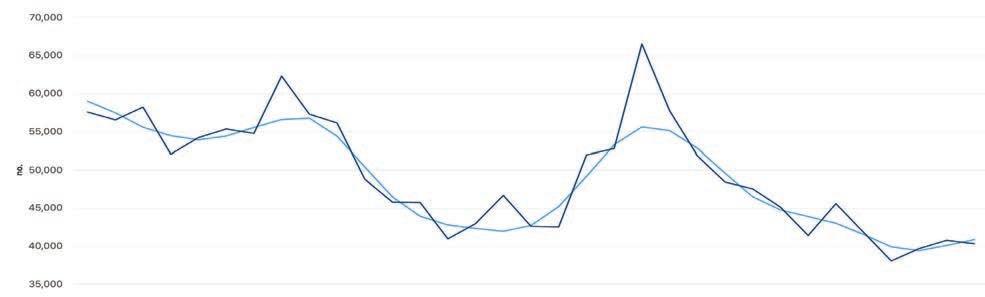
Building approvals help inform experts on the balance between supply and demand. The latest ABS data reveals there’s been an increase in overall construction, although building approval numbers remain well short of what’s required to meet demand. According to ABS analysis, total approvals rose 0.7 per cent in December 2024 (seasonally adjusted). While private sector house approvals fell 1.8 per cent across the year, dwellings excluding houses (i.e. attached housing etc.) rose by a staggering 42.7 per cent.
Source: ABS
Trend break added to 'Private sector houses' trend series for February 2021
ABS QUICKSTATS
ABS data helps pinpoint suburbs or regions with foundational price-growth potential based on a host of demographic data. To demonstrate, here is a very small portion of the available metrics in relation to one of this edition’s hotspots, Berwick in Victoria.
The information shows that the percentage of Berwick residents working full-time exceeds the state and national average. In addition, the average household income in the suburb is above both statewide and national figures.
Berwick’s resident demographic is dominated by two-parent family households. In addition, the percentage of households where both parents work exceeds the state and national average. Finally, the homeowner to renter ratio in Berwick is strong.
Just this small sample of ABS data shows Berwick is a family-friendly address with strong household employment and home ownership – all excellent metrics for ongoing property price growth