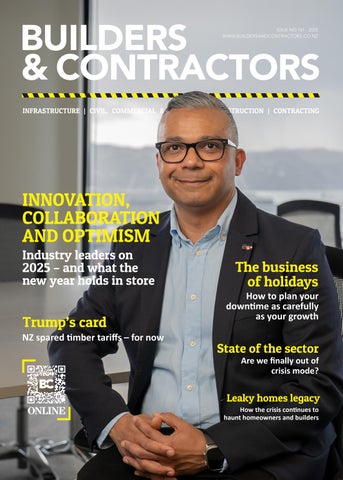
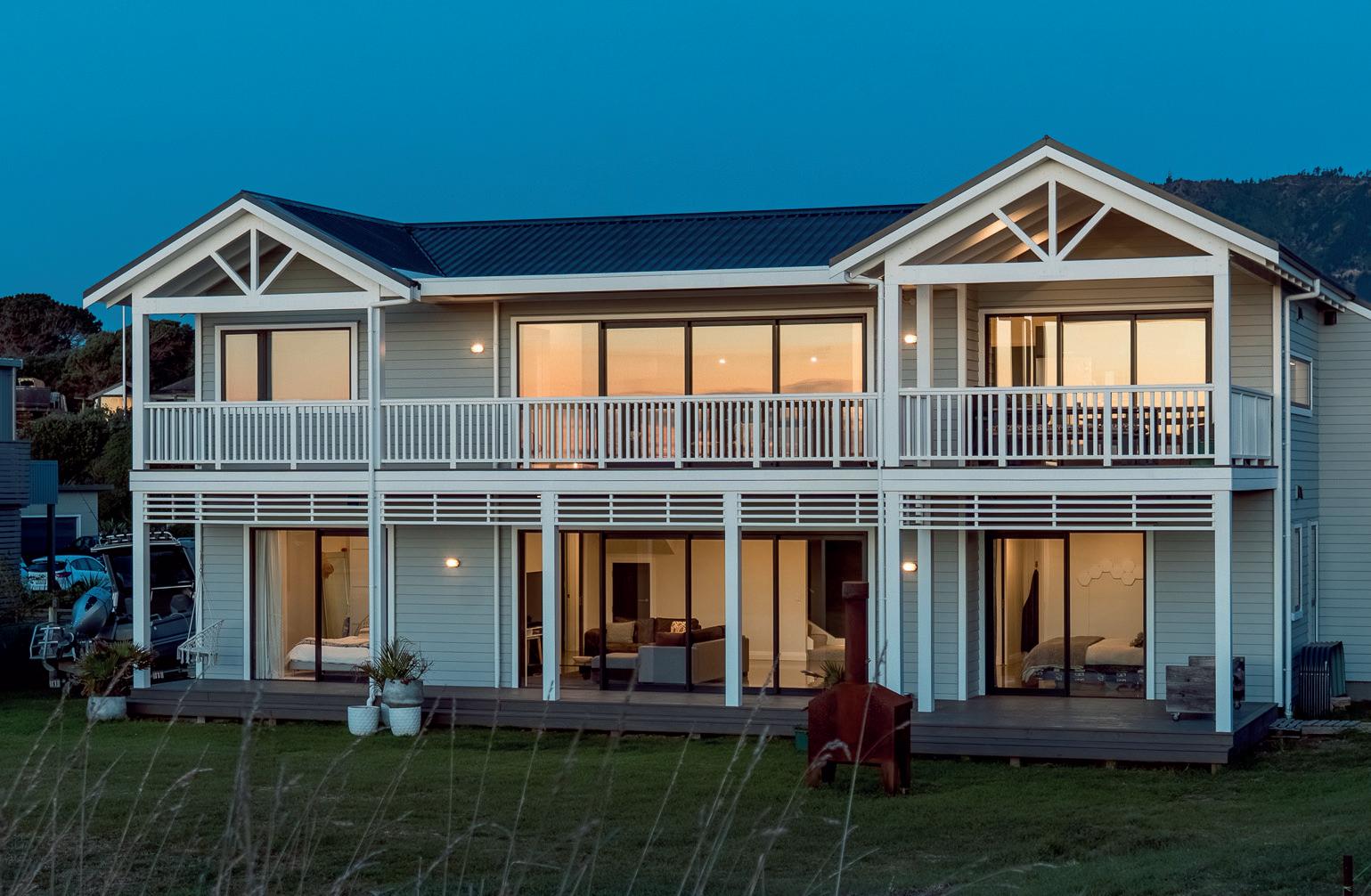
Industry leaders on 2025 – and what the new year holds in store
Trump’s card
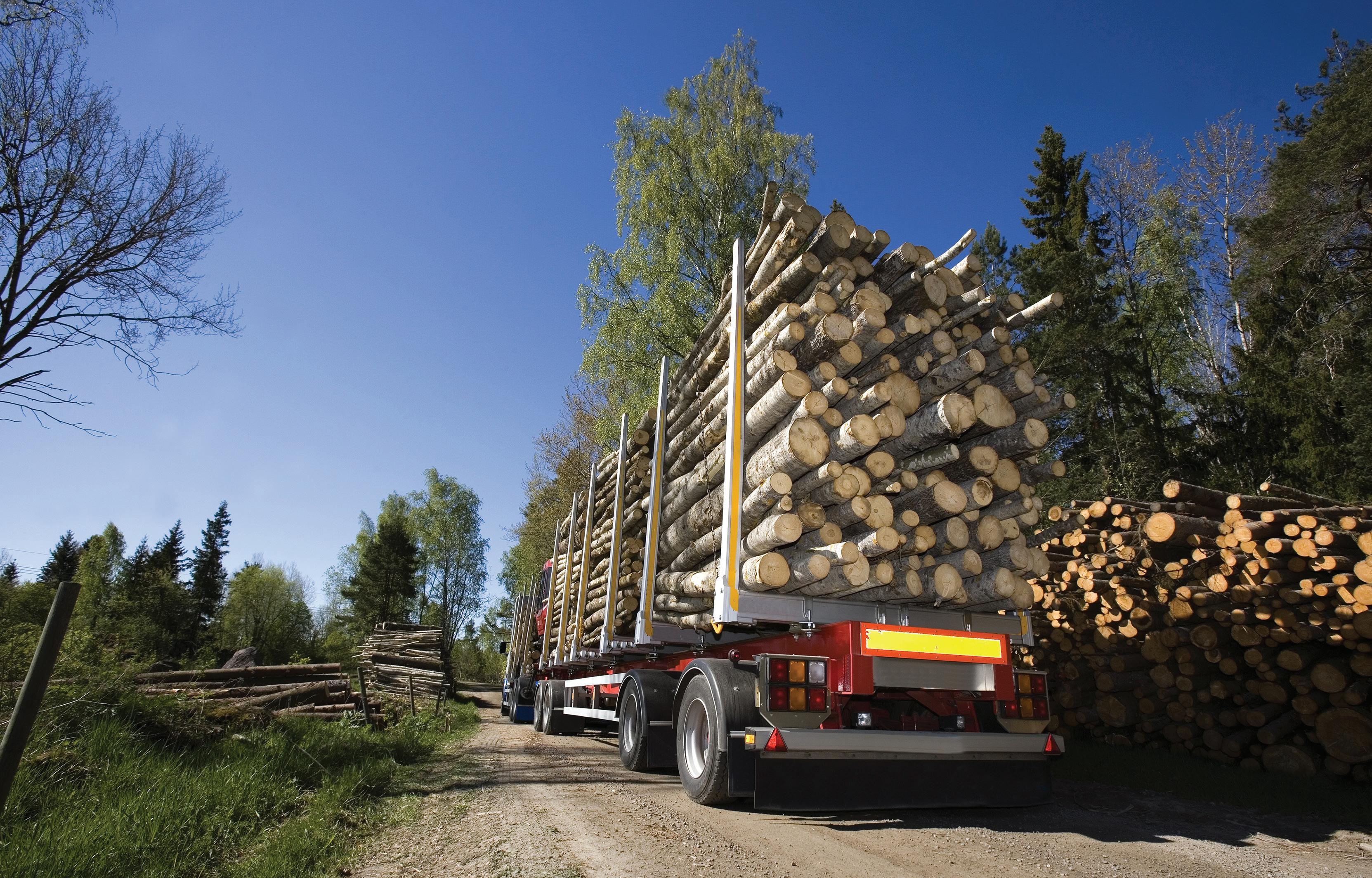
NZ spared timber tariffs – for now
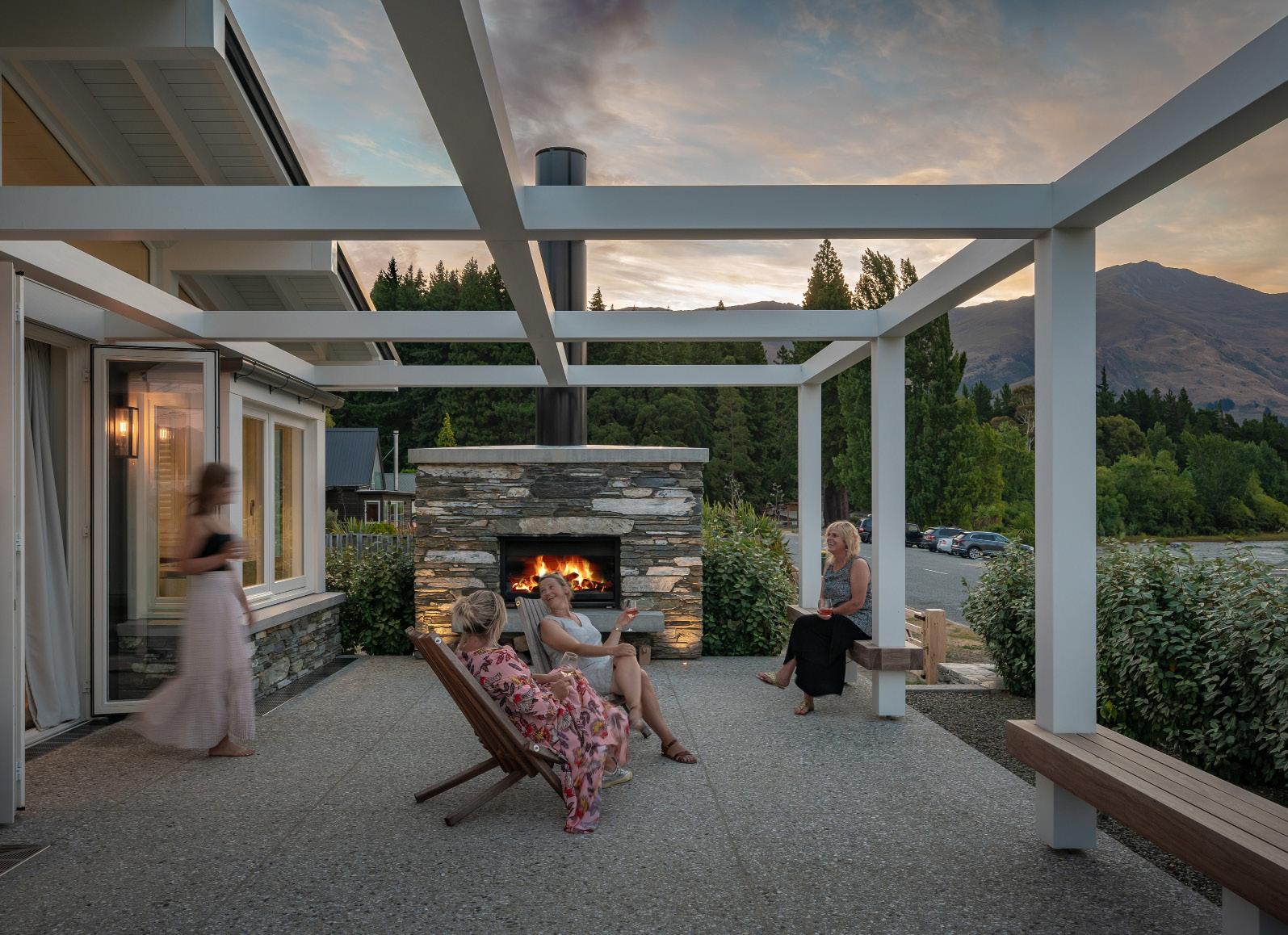
The business of holidays
How to plan your downtime as carefully as your growth
State of the sector
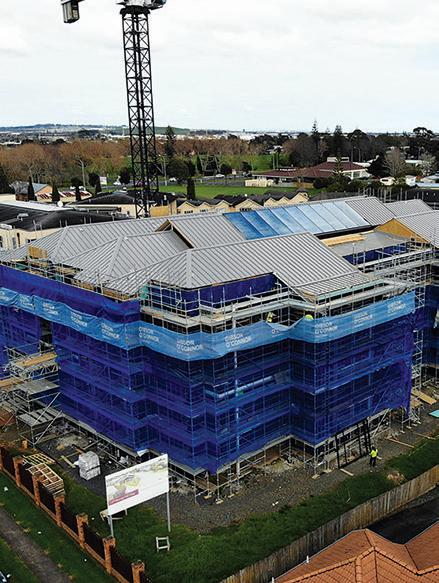
Are we finally out of crisis mode?
ONLINE
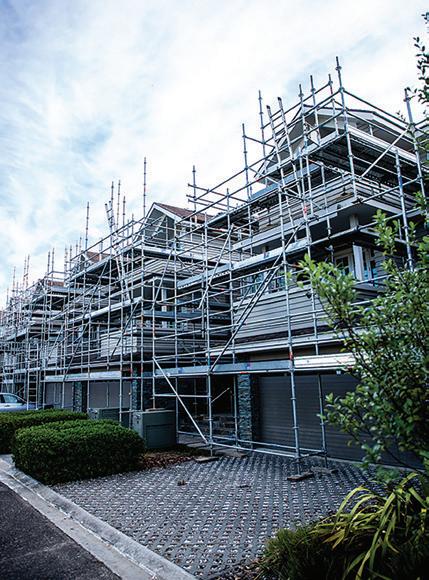
Leaky homes legacy
How the crisis continues to haunt homeowners and builders
PREVIOUSLY
3.95 GWP
1.89 GWP
0.485 GWP
Locally made, lower emissions.
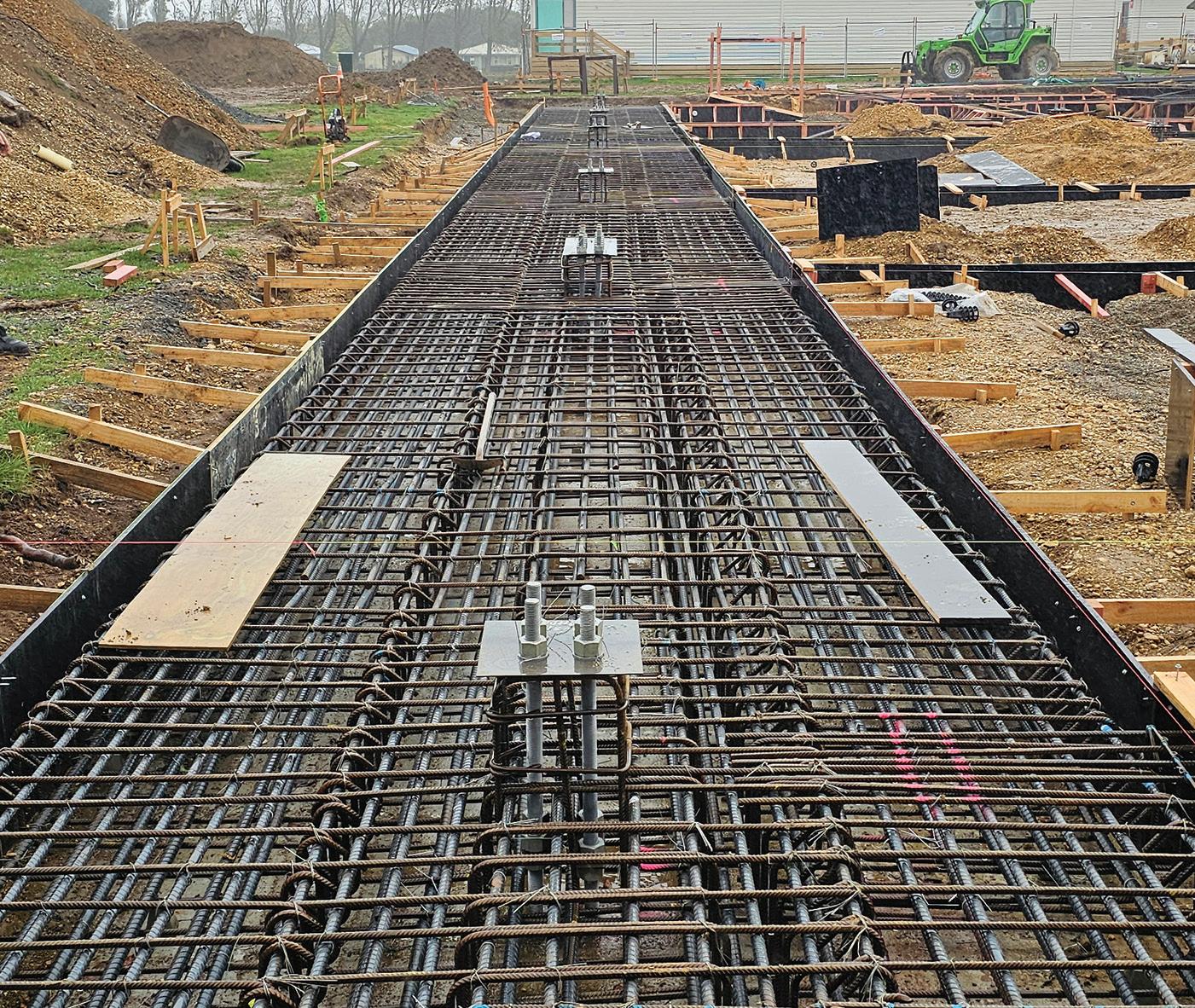
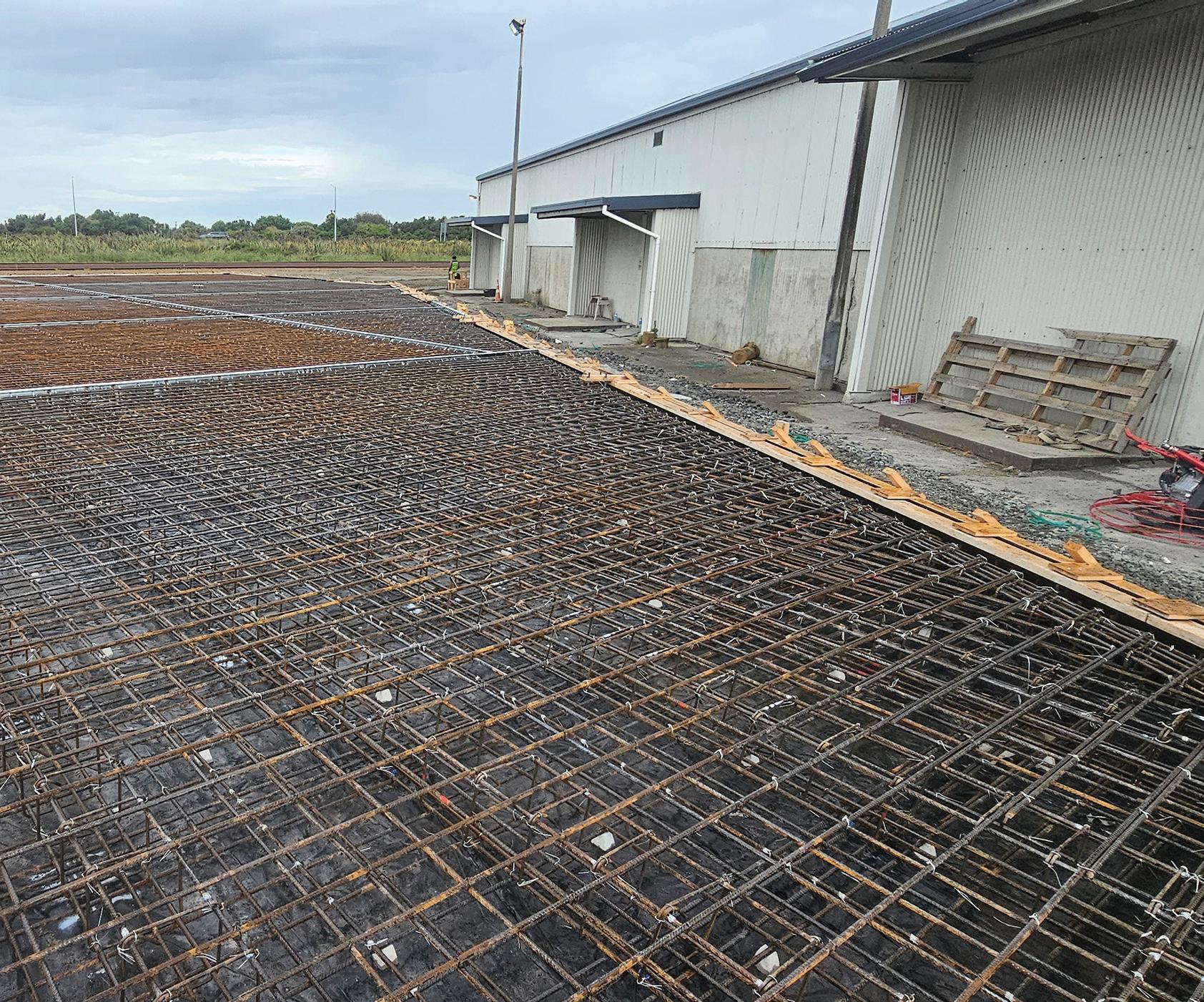
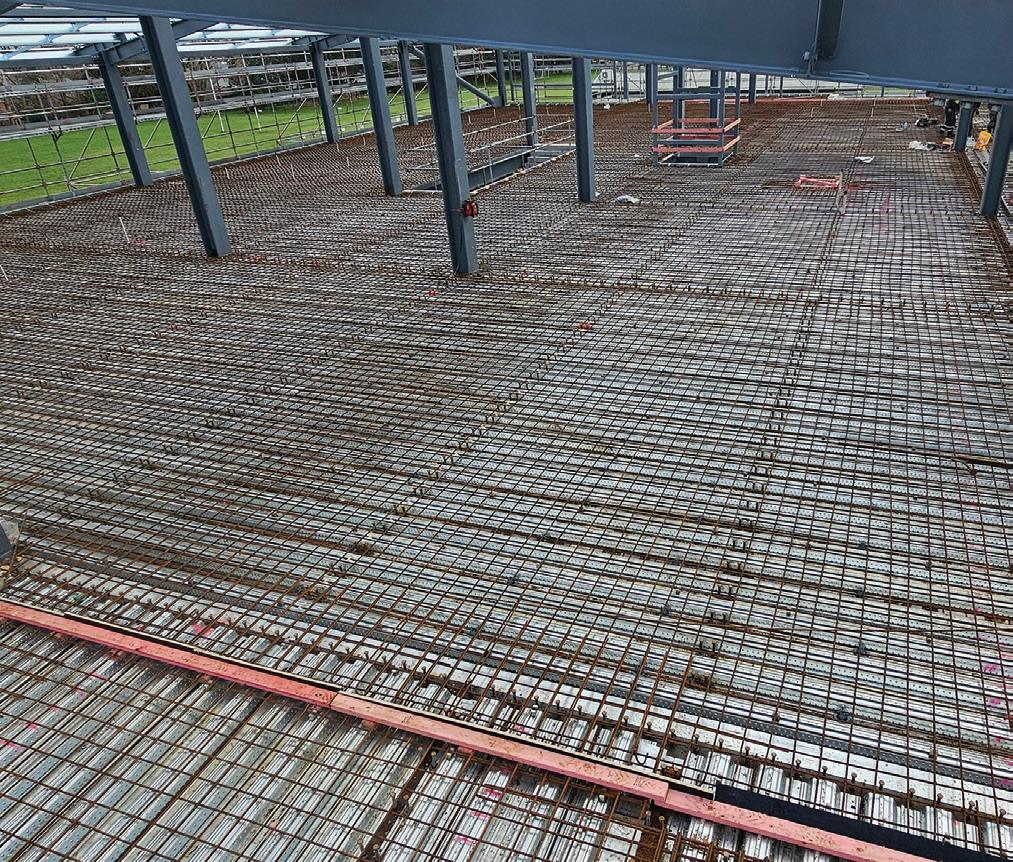
PACIFIC™ and PACIFIC DCRB™ are more than reinforcing steel, they’re the backbone of New Zealand’s next generation of sustainable buildings and infrastructure. Made locally to the highest standards, our lower-emission steel sets a new benchmark for construction. Building the foundations of a brighter, lower emissions future.
Coming to market in 2026.
pacificsteel.co.nz
RELIABILITY MEETS CIVIL CONSTRUCTION
We're a specialist civil contractor committed to building New Zealand's future through solid relationships with our clients.
100% Maori owned construction business that is based on fostering strong relationships and building challenging projects for New Zealanders. We deliver high-quality civil construction projects across Aotearoa. From complex infrastructure developments to environmentally sensitive works, our portfolio showcases a diverse range of projects that demonstrate our ability to deliver results that benefit our communities.
SERVICES
• Drainage • Earthworks • Civil Works • Utilities • Residential Works
• Heavy Haulage • Truck Hire • Landscaping
As we look back on 2025, one thing is clear: Aotearoa’s building and construction sector has proved its strength through a year of challenge and change. In this issue, we bring you insights from leaders across the industry who have navigated shifting regulations, cost pressures and persistent supply-chain hurdles — yet still found room for innovation, collaboration and optimism.
From apprenticeships and workforce wellbeing to digital tools, sustainability breakthroughs and sector-wide reforms, their perspectives reveal an industry not just adapting, but actively shaping its future. What emerges is a story of resilience: employers investing in talent, researchers driving smarter building, and associations championing safer, more sustainable practice.
As we head into 2026, this feature offers a thoughtful look at where we’ve been — and where the opportunities lie. I hope it informs, inspires and supports you in the year ahead.
Group Editor
Phone: 021 676 320
stuart@academygroup.co.nz
Contents
8: Workplace health and safety
Revealed – the region with the most accidents
12: Investment Boost Incentive
How to claim up to 20% off your company asset purchases
14: Road safety
Call for truck safety action after roadworker tragedy
15: Stuck in the ‘owner’s trap’?
Shift your business mindset for greater rewards
18: Innovation, collaboration and optimism
Industry leaders on 2025 – and what the new year holds in store
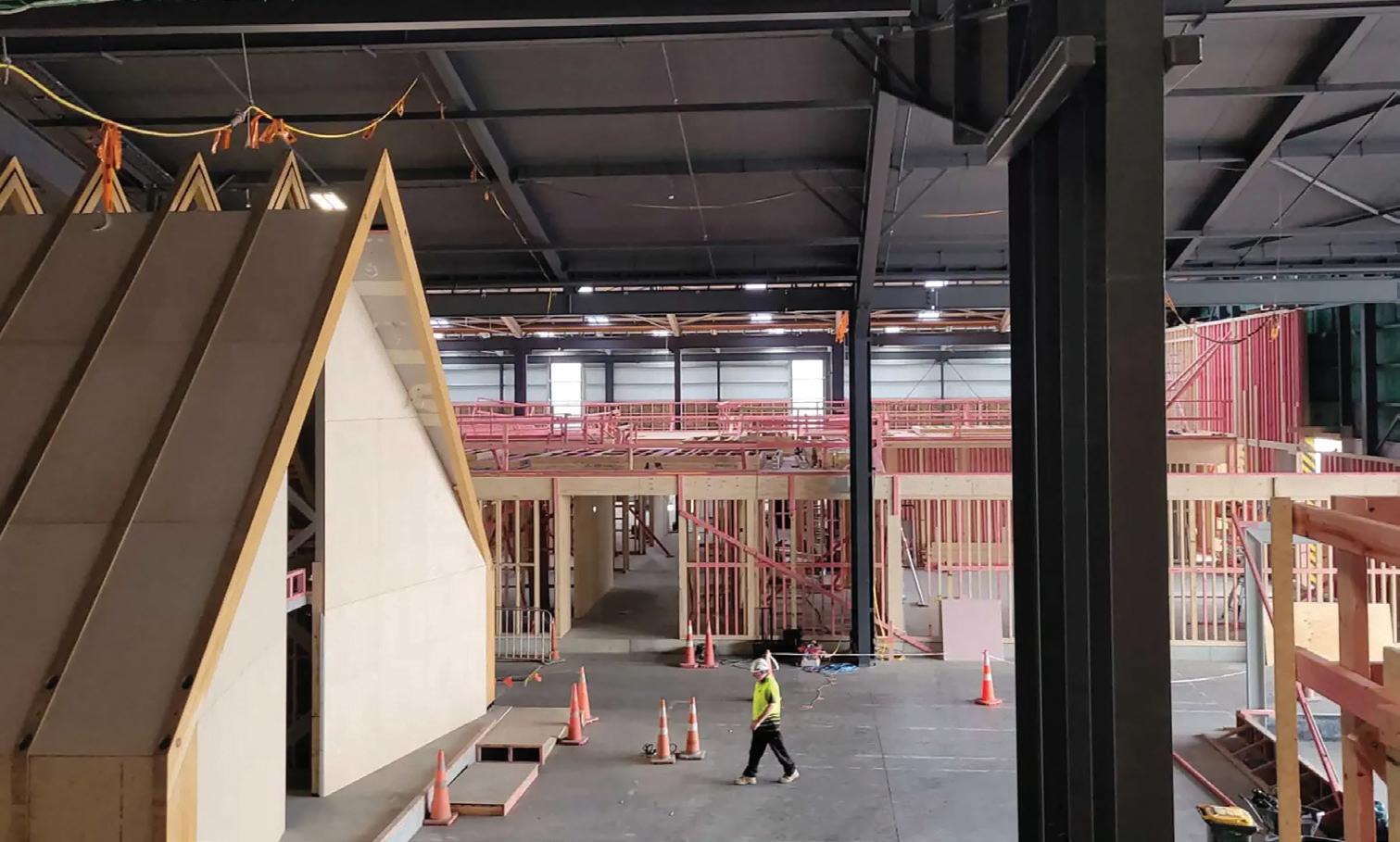
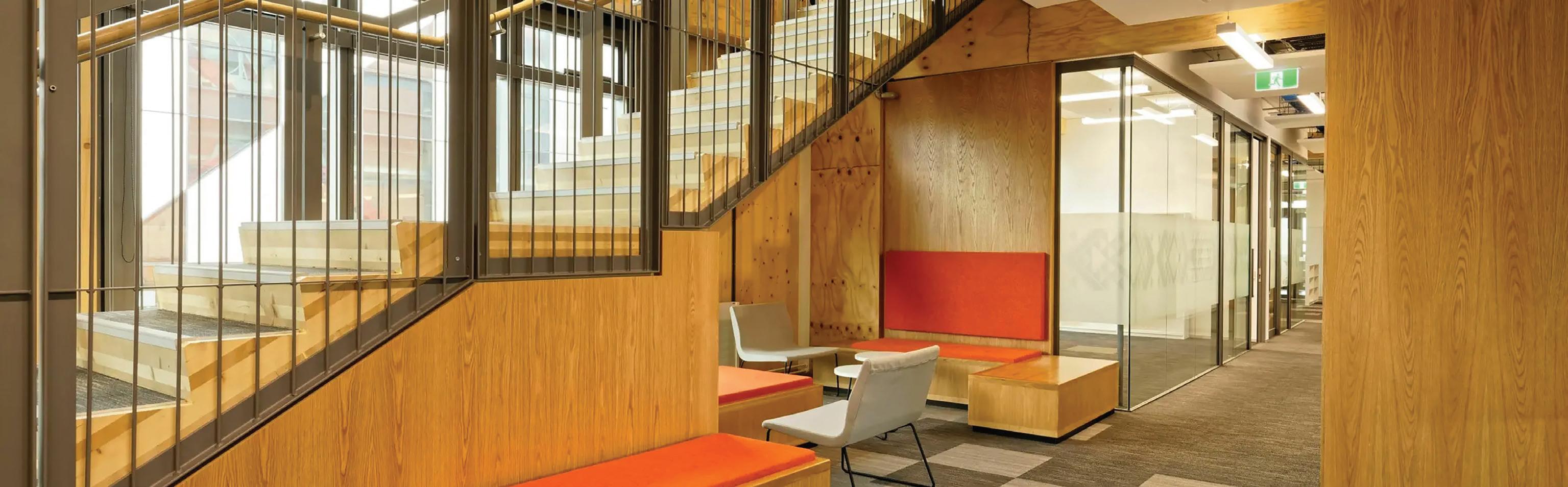
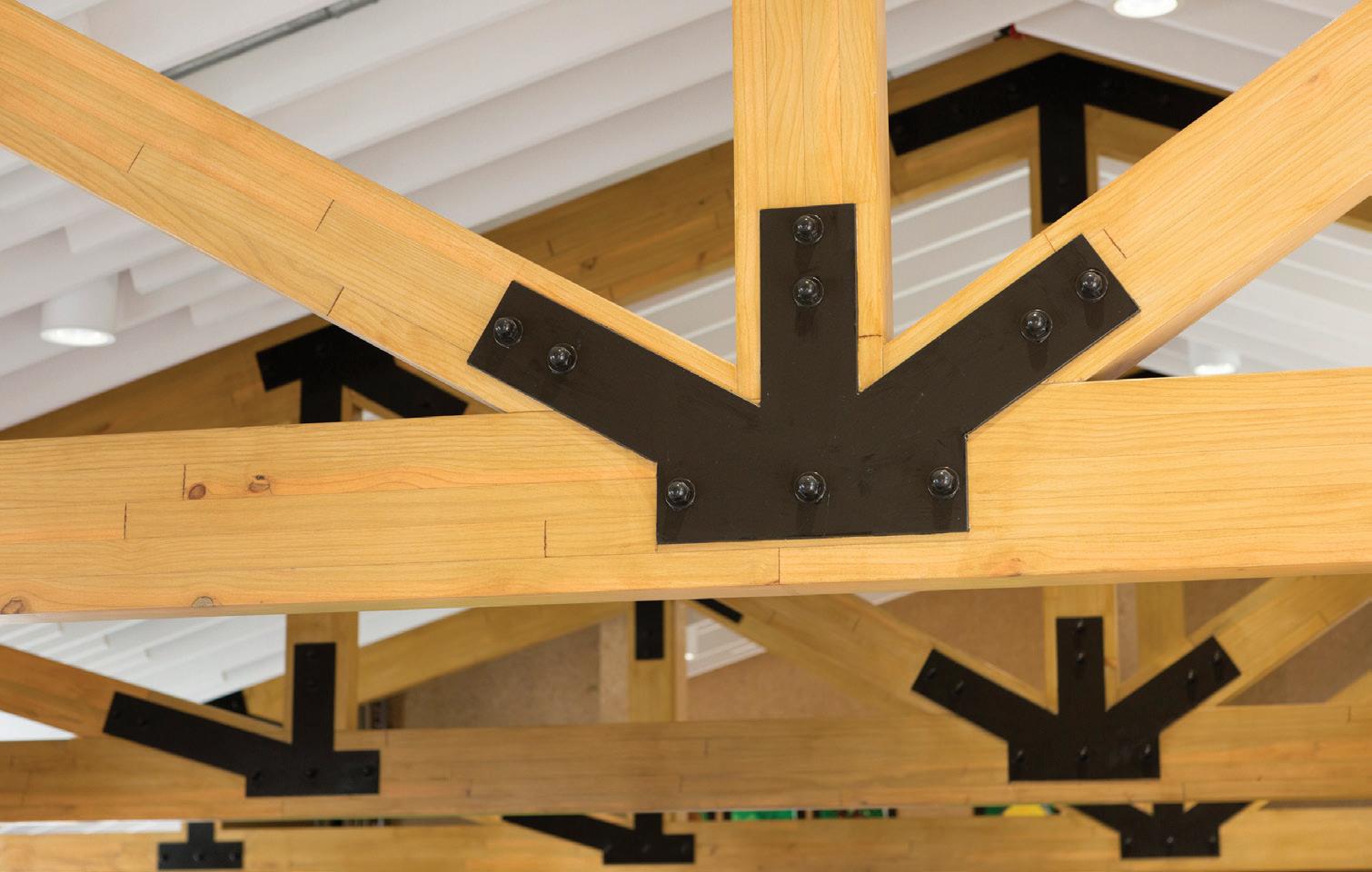
28: Building trust in timber Reshaping the future of construction
32: The business of holidays
How to plan your downtime as carefully as your growth
36: And the winner is…
Celebrating excellence in structural steel projects
44: Sustainability viewpoint What is carbon and why does it matter?
48: Trump’s card NZ spared timber tariffs – for now
56: Natural hazards risk Would you chimney withstand a quake?
62: State of the sector
Cautious optimism replaces crisis mode
66: In the spotlight Wahine thriving in engineering and trades
68: Haul or nothing NZTA push for towing safety
72: Building future Wellington How to best develop the NZ’s capital city
76: Live well, build well
Survey reveals how tradies are coping in challenging times
90: Showcasing the future
Nation’s best apprentice electricians named
94: Demolition by neglect
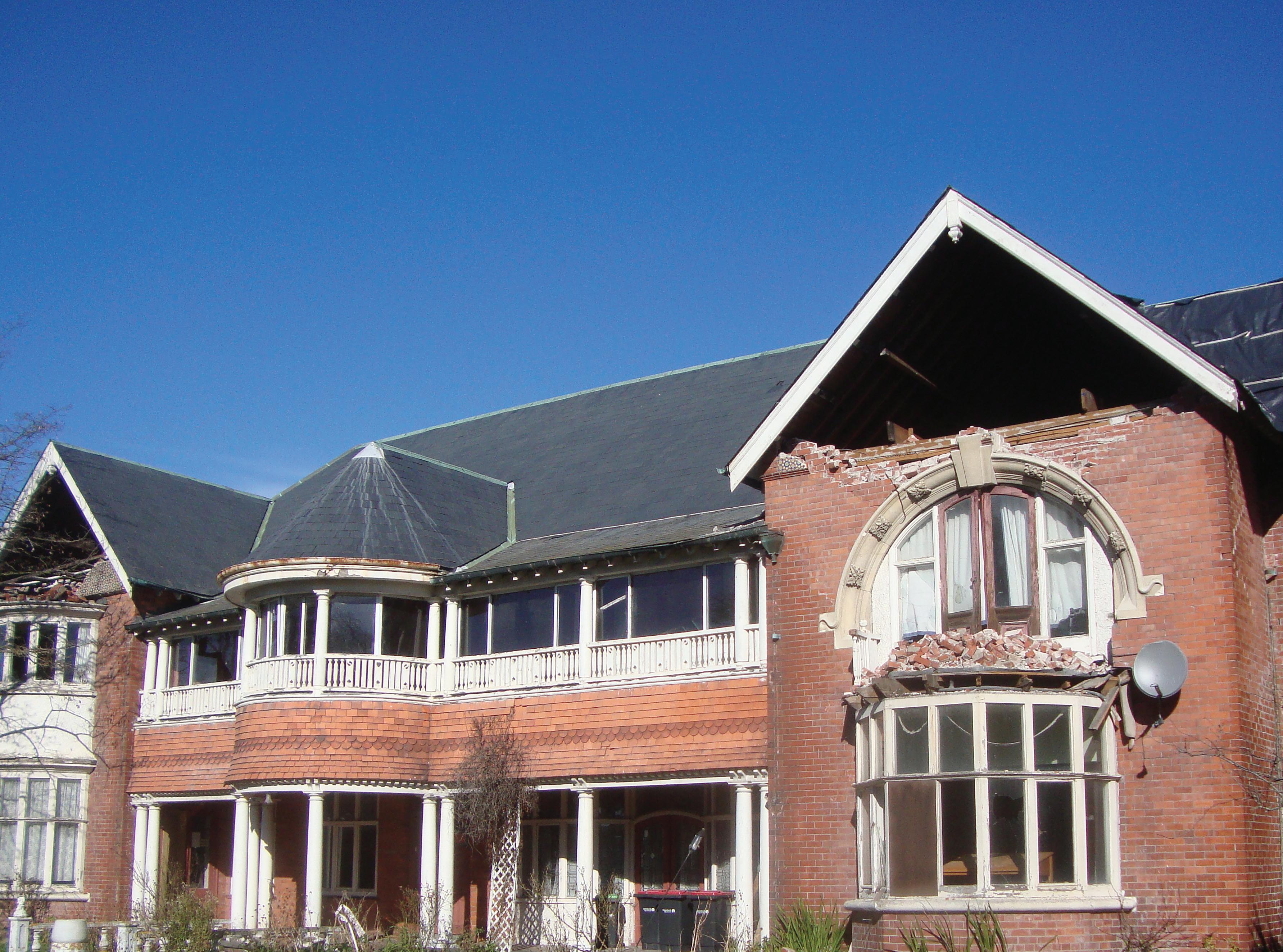
Historic Christchurch hall will finally face the bulldozers
96: Leaky homes legacy
How the crisis continues to haunt homeowners and builders
98: Cleaning with care
Turning challenge into opportunity in exterior cleaning
Readers: Construction/building industry leaders and decision makers: government & trade organisations, site safe members, business owners and professionals in the industry.
Nationwide Distribution: Mailed directly to a carefully maintained list of decision makers and subscribers for 25 years.
Builders and Contractors, a national trade newspaper targeted directly at New Zealand's building and construction industry. For some time we were aware that, although the building and related trades were generally covered individually by some trade journals, there was no amalgamated news link for trades as a whole, especially on a nationwide basis.
This void has been successfully filled by Builders & Contractors. Distribution is by way of various outlets: PlaceMakers, Mitre 10, Builders Hardware, Site Safe Members, timber companies, hire companies, together with our database direct mail drop to architects, draughting professionals, consulting engineers, building consultants, designers and local Councils. By these means we aim to reach one of the most powerful buying groups in the industry.
Are there any captivating projects or products within your company that you'd like to showcase in
www.buildersandcontractors.co.nz PO Box 1879, Christchurch, 8140
NZ Apprenticeship in Pipeline Construction and Maintenance
With strands in Drinking-Water, Stormwater and Wastewater, and Trenchless Technologies.
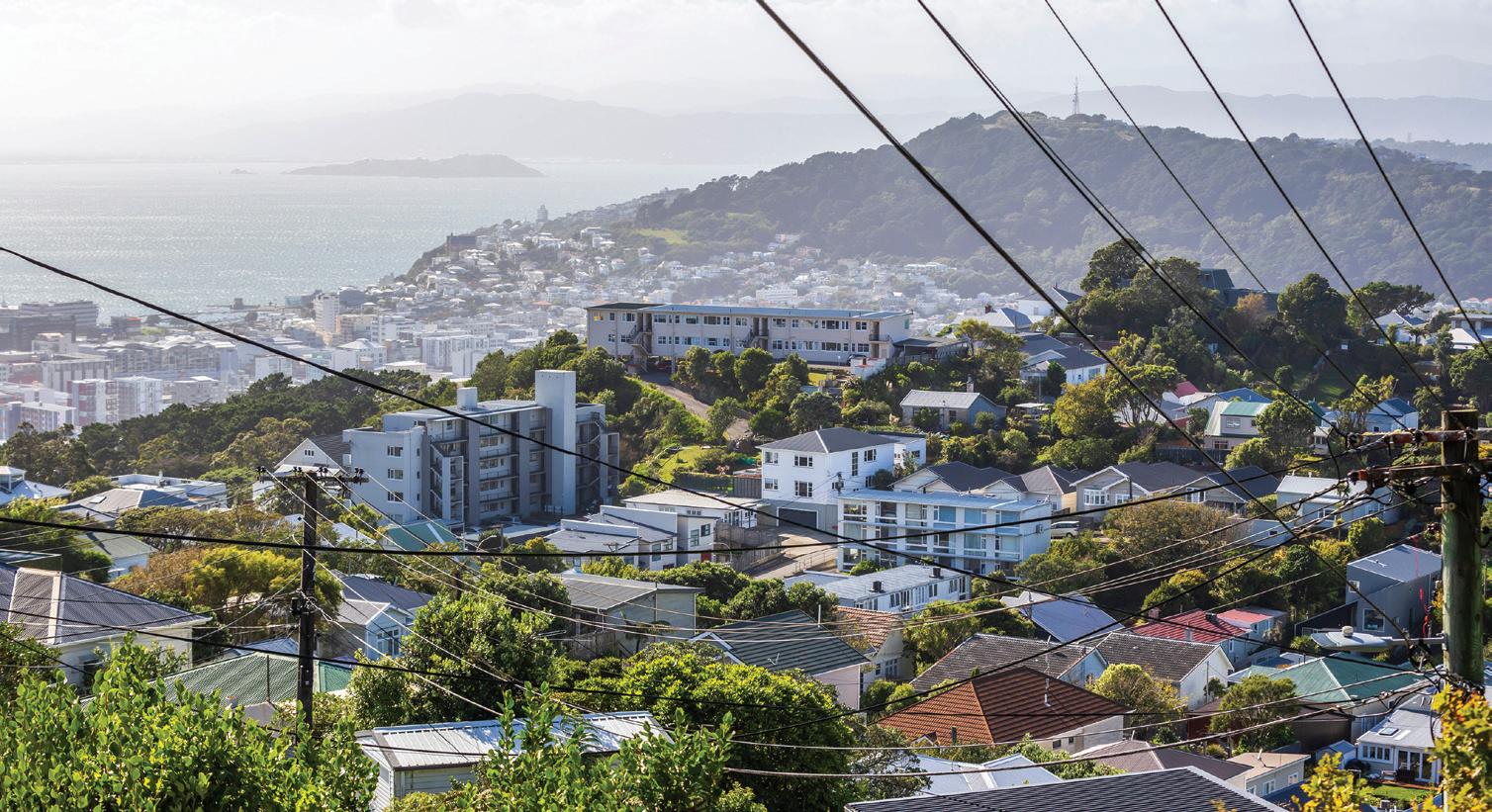
Developed with industry, for industry. Skill-up with New Zealand’s leading provider of infrastructure industry training.
Safe, reliable, professional
Looking for unparalleled electrical services in the Waikato region? Rivertown Electrical is your go-to, specialising in a wide range of electrical solutions.
Whether you need domestic, rural, commercial, or industrial services, our skilled electricians are ready to deliver toptier and unmatched customer care.
Superior service options
Rivertown Electrical provides an extensive array of services. From routine maintenance checks to complex installations and emergency repairs, our team ensures your electrical systems function flawlessly. Our expertise covers everything from rural installation and servicing to domestic installation, maintenance and servicing. No job is too big or too small for us.
Deep local roots and expertise
Located in Huntly, we are deeply embedded in the Waikato community and understand its unique electrical needs and challenges. Our local knowledge not only helps us deliver effective solutions but also
guarantees compliance with regional safety standards, giving you peace of mind that your electrical work is done right.
Customer satisfaction: Our core commitment
We prioritise our clients’ satisfaction above all else. Rivertown Electrical is dedicated to exceeding your expectations through our responsive customer service, punctuality, and commitment to solving your electrical issues swiftly and efficiently. We listen
to your needs and tailor our services accordingly, ensuring a personalised experience every time.
Safety and quality standards
Safety is number one to us at Rivertown Electrical. We adhere to strict safety standards, and all our work is compliant with national regulations. Our electricians are well-trained in the latest safety protocols and use only the best tools and technologies, guaranteeing the highest quality of workmanship.
Our expertise covers everything from rural installation and servicing to domestic installation, maintenance and servicing. No job is too big or too small for us.
Reach out for exceptional electrical services
Don’t compromise on quality and safety. Reach out to Rivertown Electrical for reliable, efficient, and high-quality electrical services. Let Rivertown Electrical power your home or business with skill, dedication, and professional integrity. Experience the best in the business –because when it comes to electricity, only the best will do.
Contact Information
Rivertown Electrical
07 828 7240
rivertownelectrical@xtra.co.nz
www.rivertownelectrical.co.nz
30 William Street, Huntly 3700
Hours of operation: 24/7, 365 days of the year
Rome wasn’t built in a day. But we’ll give it a good crack.
With one of New Zealand’s biggest ranges of building supplies, hardware, tools, kitchens and bathrooms, you can count on Mitre 10 Trade to have everything you need to nail the job.
Backed by a massive supplier network, we bring together the trusted brands you know, all under one roof.
Hawke’s Bay region sees most workplace injuries
By Ben O’Connell
The Gisborne and Hawke’s Bay region had the highest incidence rate of workplace injury claims in 2024, per Stats NZ data.
There were 120 claims per 1,000 full-time equivalent employees (FTEs). Yet the national incidence rate for work-related injury claims was 80 claims per 1,000 FTEs, the lowest rate since 2002.
Trades workers had the highest number of claims by occupation in 2024, with 34,400 claims.
A total of 209,400 work-related claims were made in 2024 (down 16,600 from 2023).
By body site of injury, the abdomen (including pelvis, kidney, lower back/spine) had the highest number of work-related injury claims in 2024, with 39,700 claims.
Five industries account for 42% of workplace claims costs: manufacturing, construction, agriculture, forestry, and fishing.
Injury statistics for work-related claims give information about claims accepted by ACC for work-related injuries.
Preventing workplace injuries should always be at the forefront of the industry’s mind. Maybe more than ever now, though, as new home consent figures signal an uptick in construction activity.
“September recorded the highest number of homes consented in more than two years,”
Residential construction has declined in recent years, but home consents have been trending up through 2025 and have strengthened in recent months, suggesting a possible lift in future building activity.
Excluding seasonal effects, 7.2% more new homes were consented to in September 2025 than in the month prior. There were 3,747 new homes consented nationwide in September 2025, a 27% increase compared to September 2024.
“Residential construction has declined in recent years, but home consents have been trending up through 2025 and have strengthened in recent months, suggesting a possible lift in future building activity.”
With construction activity expected to ramp up again, the sector faces a familiar challenge: maintaining safety standards while meeting demand. More workers on-site, tighter deadlines, and skill shortages can all heighten risk if not carefully managed.
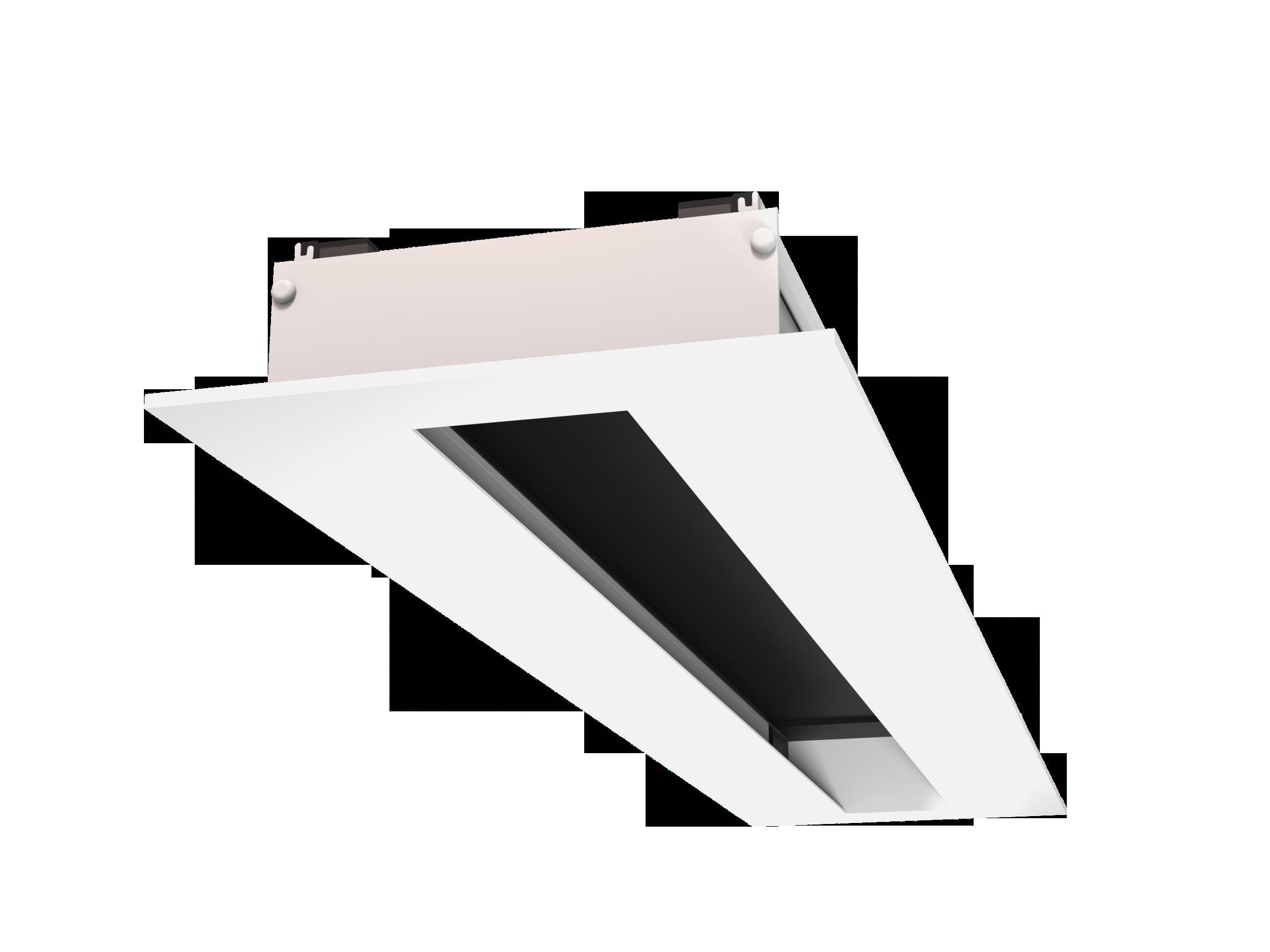
CUSTOM FLOW
Custom Flow linear slot diffuser is engineered for a large range of diffusion applications with performance to match. It’s capability of high airflow with low pressure drop and a greater throw make it suitable for all high ceiling applications, all while keeping noise to a minimum.
WHEN IT COMES TO EFFICIENCY, COMFORT, AND PERFORMANCE, CUSTOM FLOW SETS A NEW STANDARD FOR LINEAR SLOT DIFFUSERS.
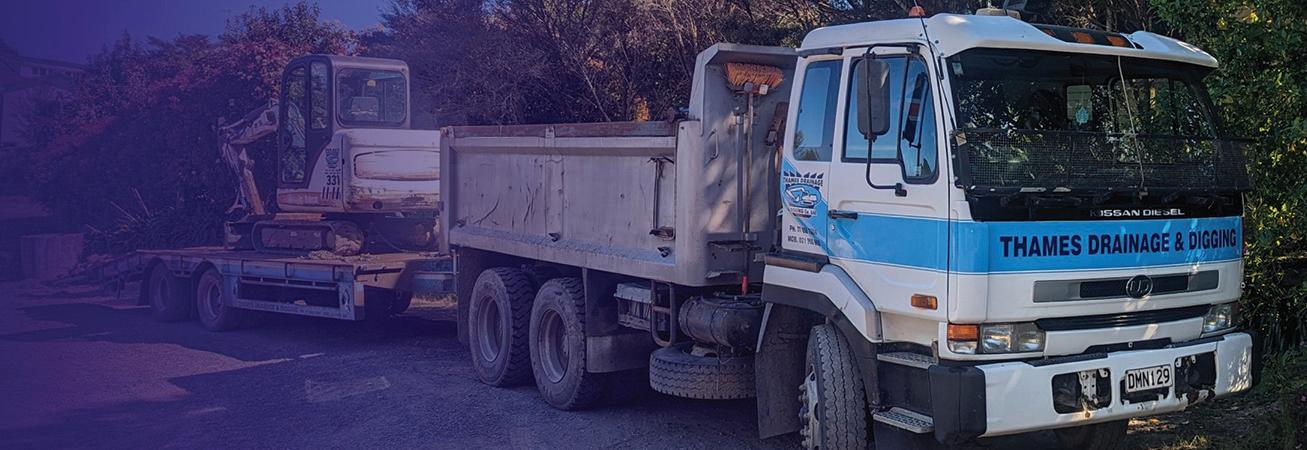
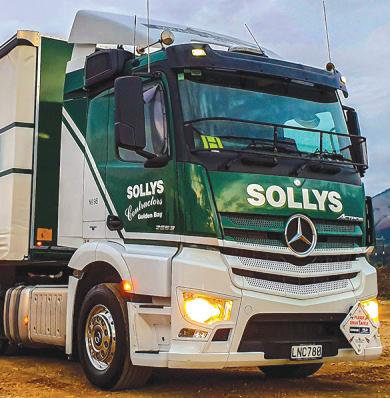
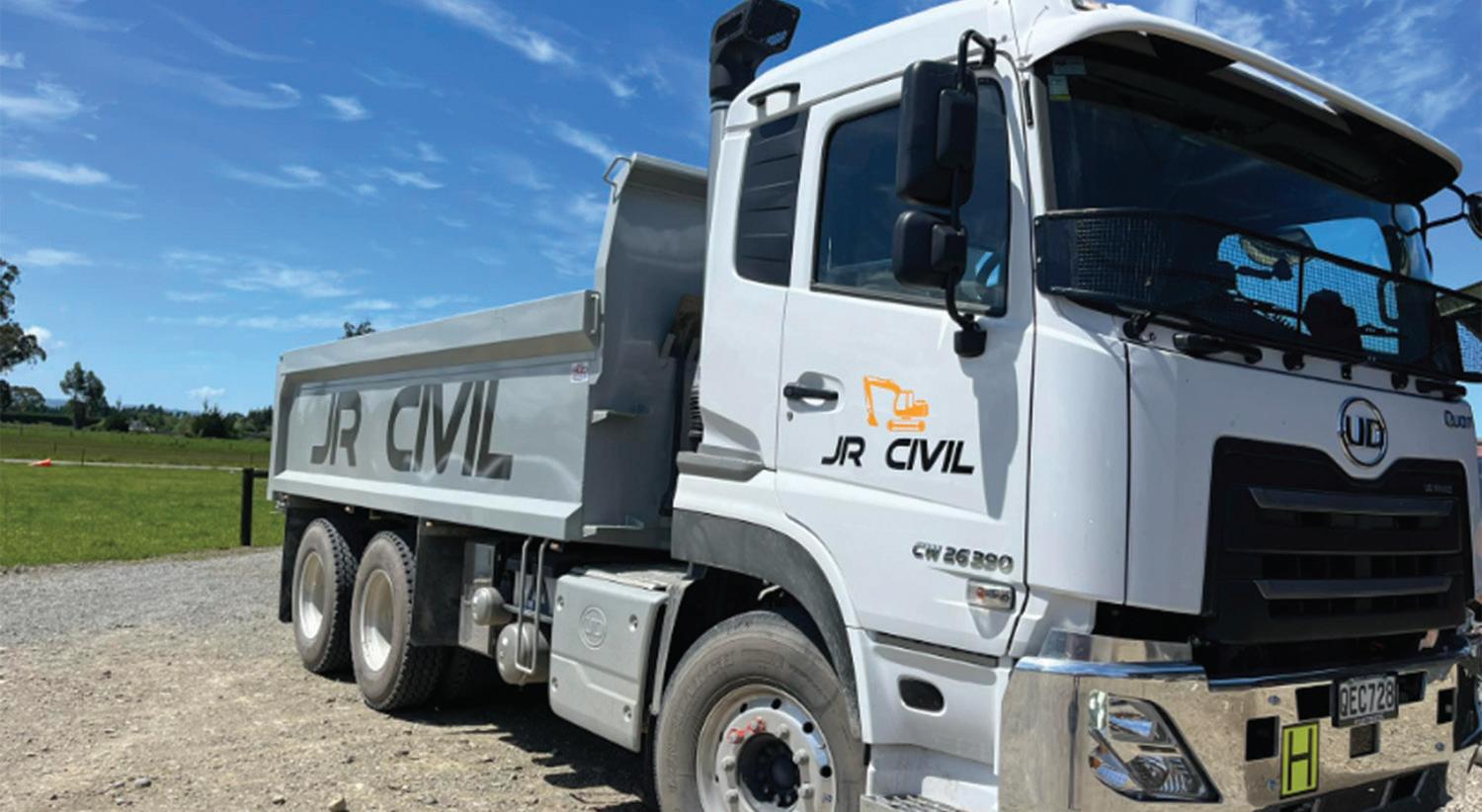
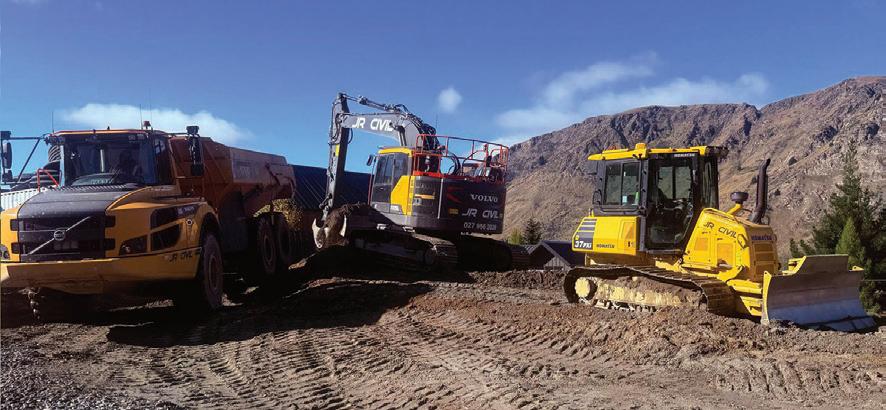
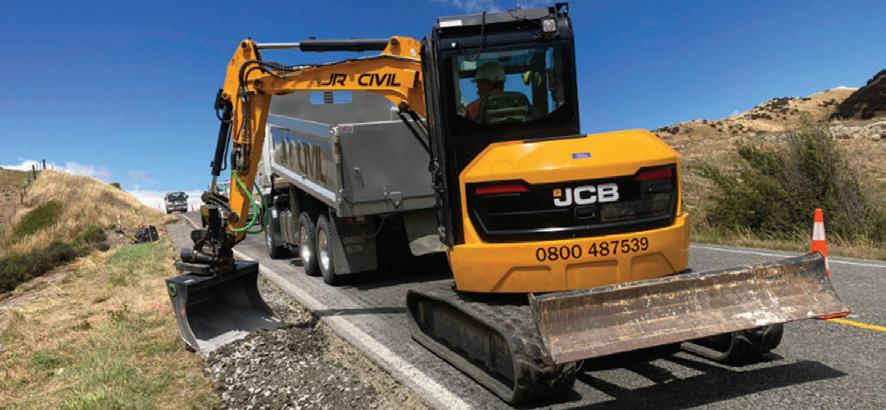
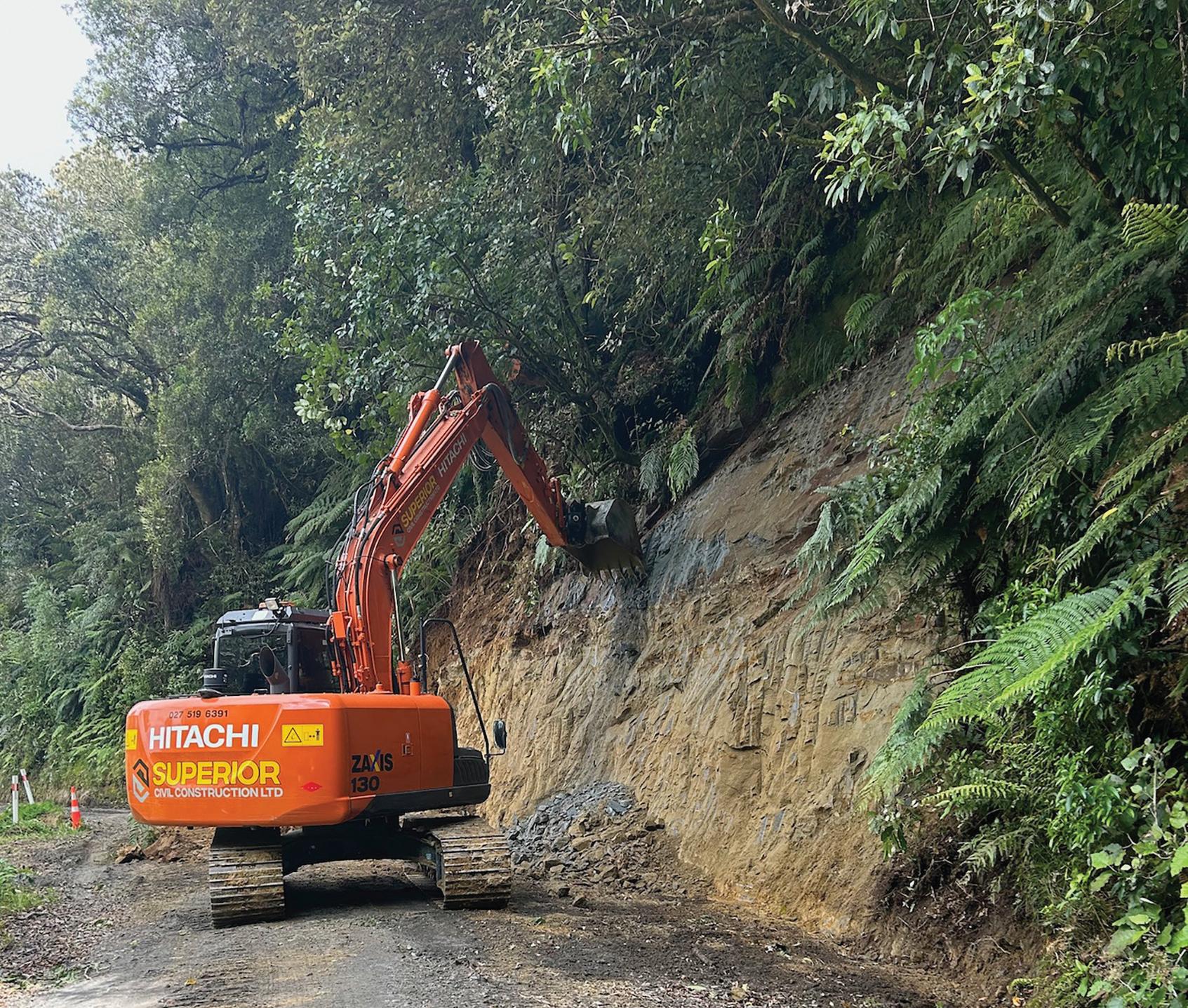
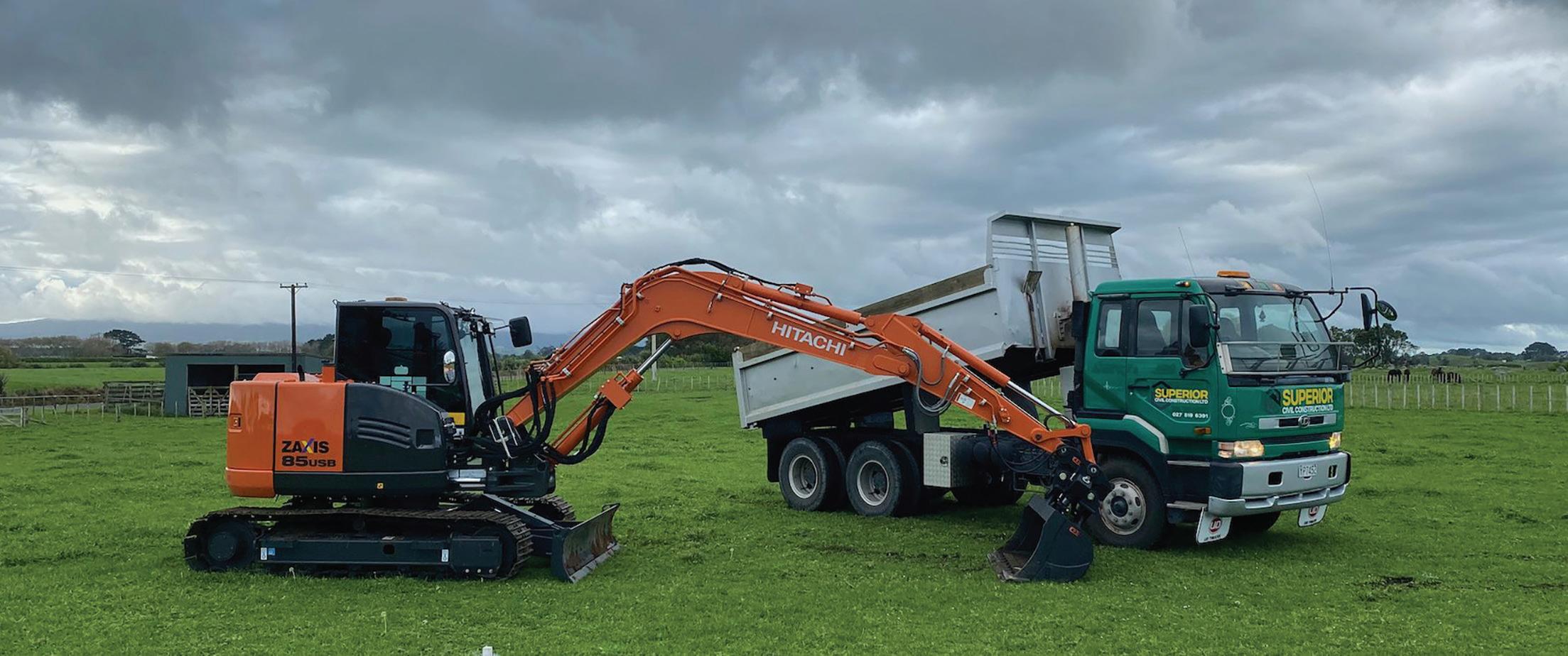
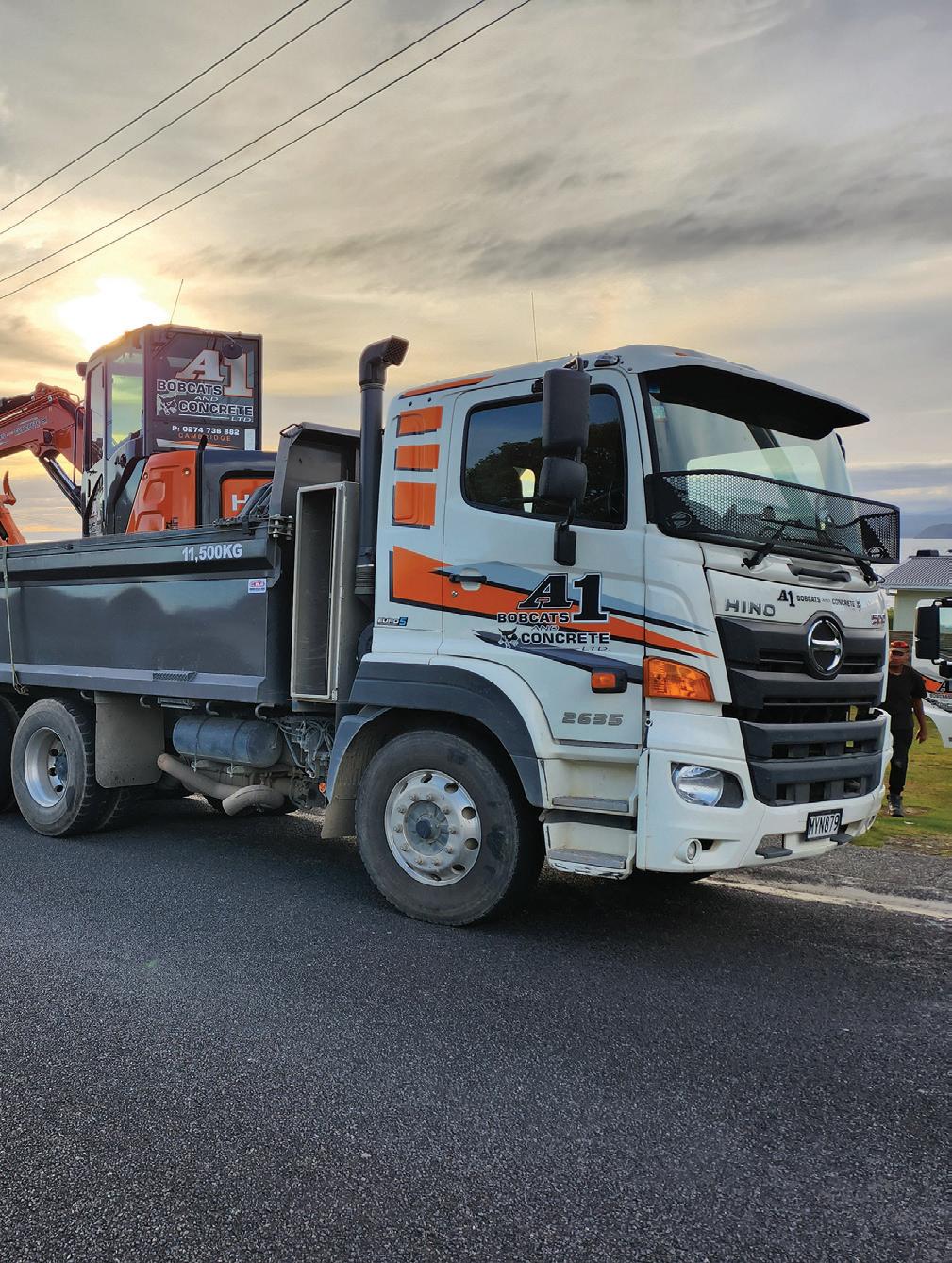
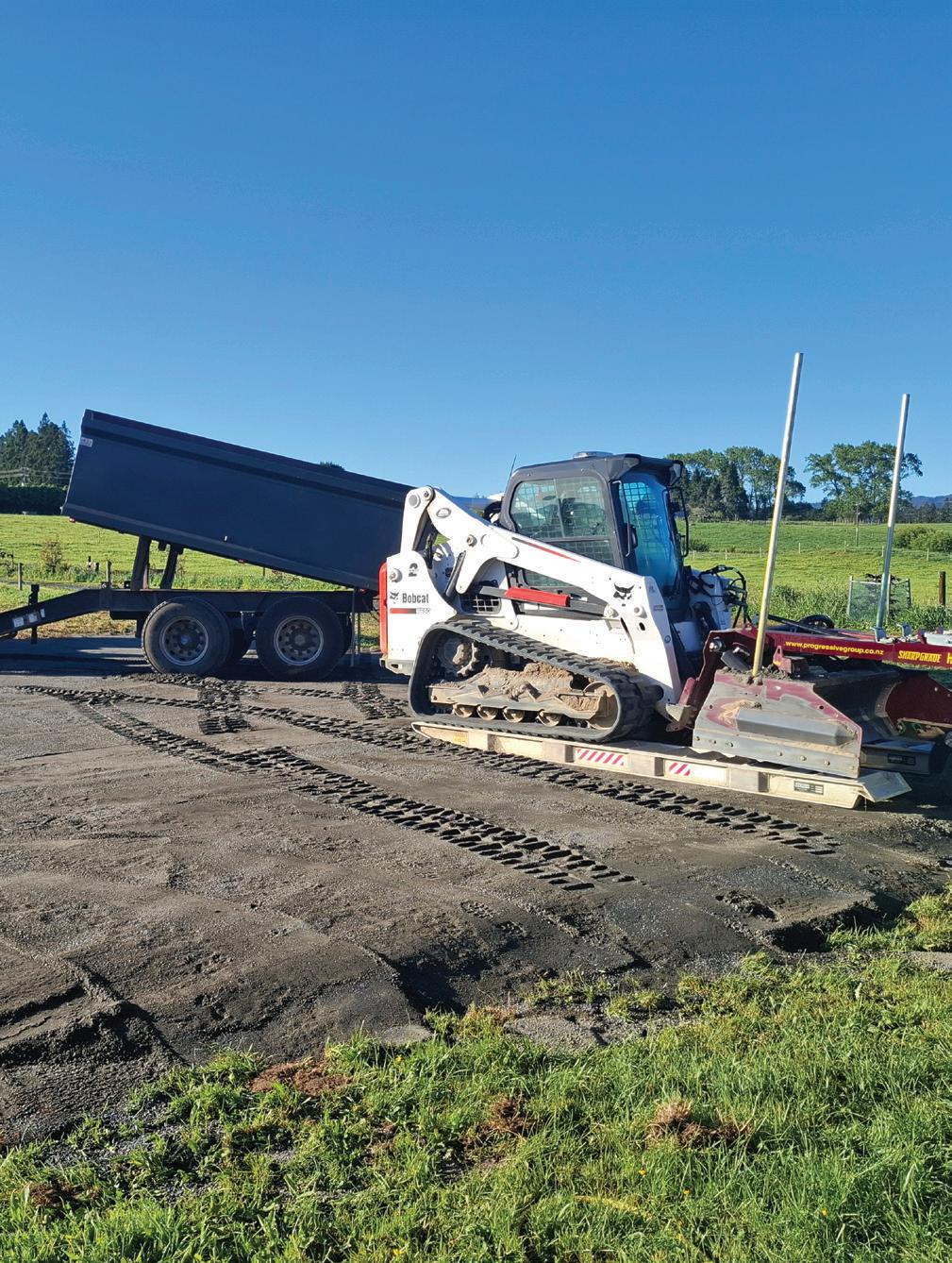
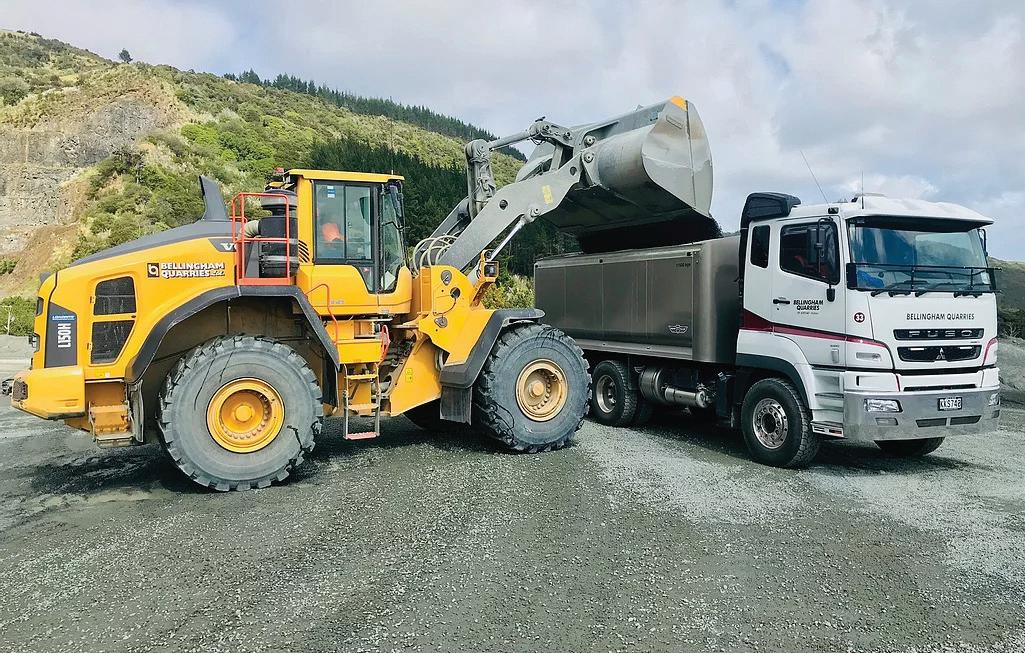
We have a complete range of trucks and machinery that can tackle anything.
Our modern fleet of trucks comprise of everything from Bulk Tippers, Curtainsiders, Flat Decks, Livestock units and more.
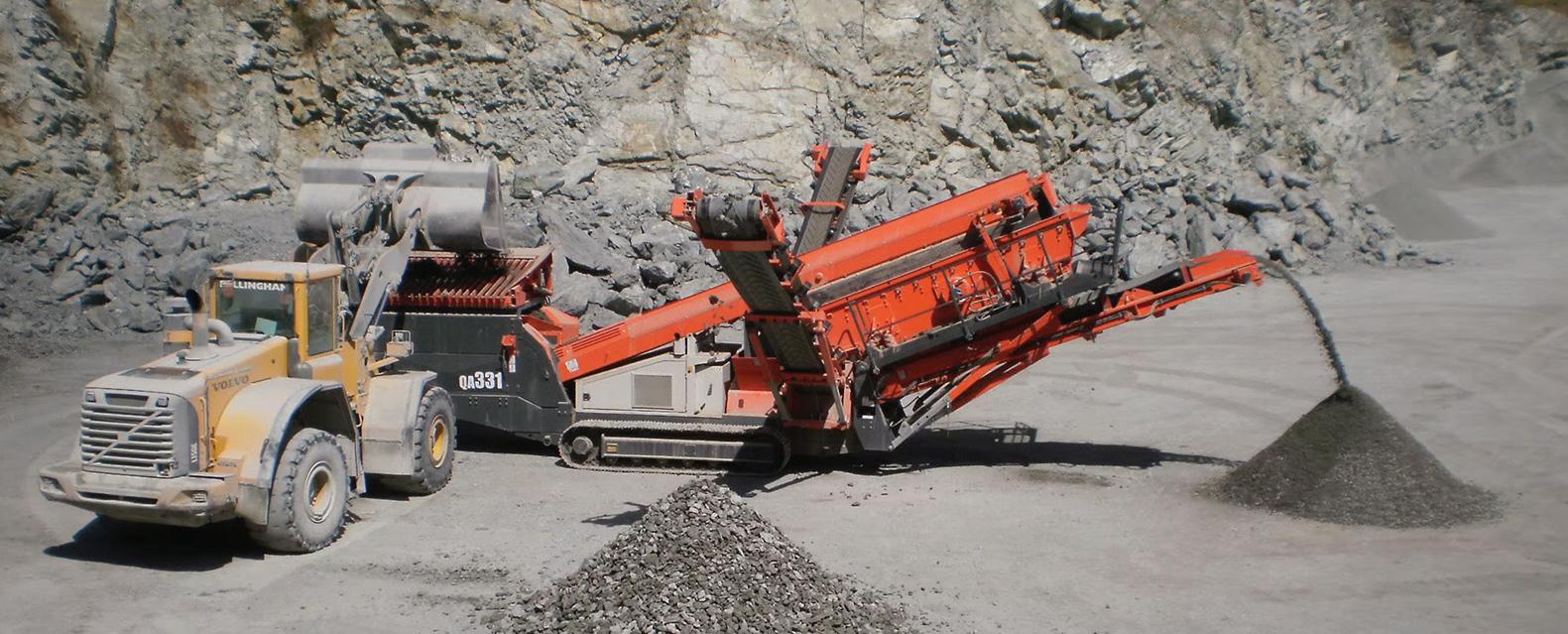
We have a complete range of Contracting Machinery that can tackle anything from Subdivisions to Quarry work.
We supply all types of Gravel, Aggregates, Agricultural Lime, Fertilisers and Dolomite.
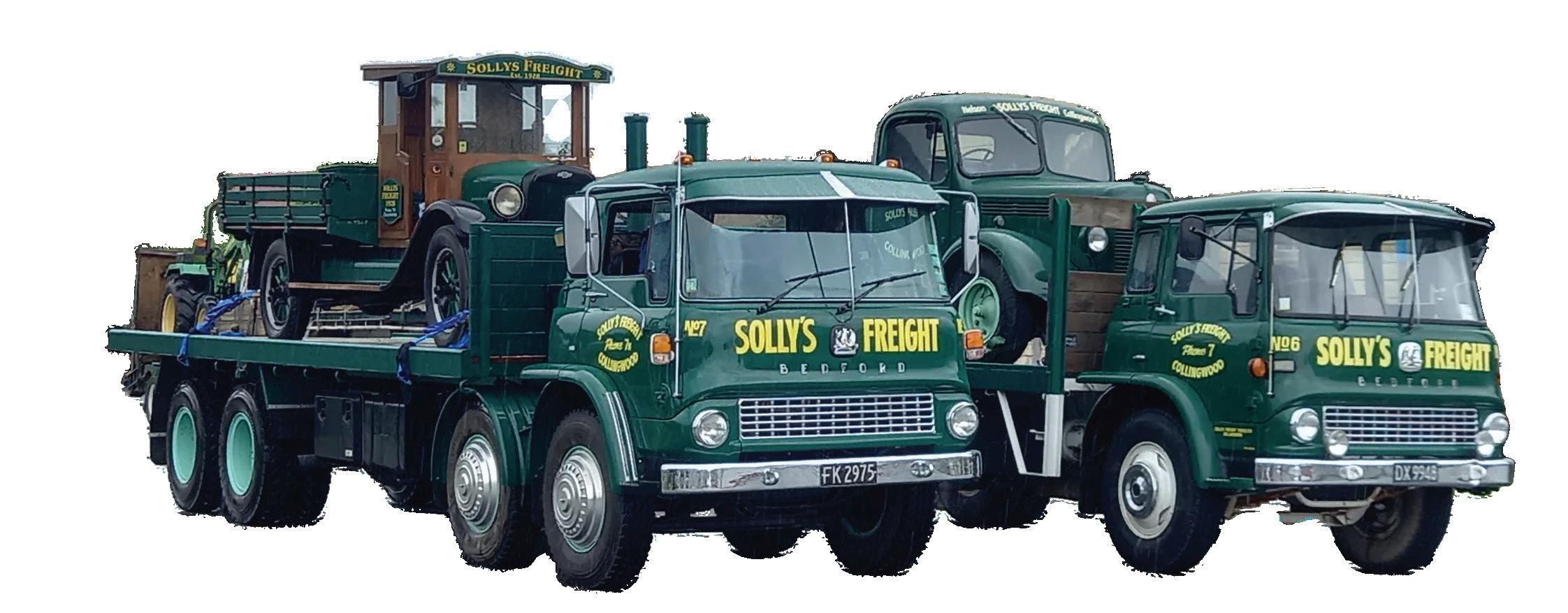
the South since 1928
We can do anything
Enabling the success of others by connecting people and products
Our Services
• General Freight
• Bulk Cartage
• Stockfeed
• Storage
• Fertilisers
• Livestock
• Dolomite
• DX50
New Investment Boost Incentive launched May 2025 to support business reinvestment and economic growth
During the Budget announcements in May 2025, the Government introduced an Investment Boost incentive allowing businesses to claim 20% off new asset purchases and claim depreciation on the remaining 80%. The incentive was introduced to encourage reinvestment and support economic growth.
Investment Boost is a form of accelerated depreciation. It does not change the total value of deductions you claim over the life of an asset. However, it does mean you can claim a greater deduction in the 1st year. This means you pay less tax in that year. Because money saved today is worth more than money saved later, this helps you save more overall.
Investment Boost Incentive example:
A transport company purchases 2 trucks for $200,000 to expand their fleet. This company can then claim 20% of this total cost as a deduction in that years tax return –that’s $40,000 to offset their profit (and tax bill). The company can still claim depreciation on the remaining 80% of the cost of the new asset ($160,000) as if that amount is 100% of the cost.
For more examples visit: ird.govt.nz
What you can claim for:
• new or new to New Zealand
• available for the business to use on or after 22 May 2025, and
• depreciable for tax purposes
• new commercial and industrial buildings
• improvements to depreciable property (but not residential buildings)
• primary sector land improvements
• assets arising from petroleum development expenditure and mineral mining development expenditure incurred on or after 22 May 2025 (except rights, permits or privileges)
• mixed-use assets.
What is not eligible:
• second-hand assets sourced in New Zealand
• residential rental buildings
• most fixed-life intangible assets (e.g., patents)
UDC has a team of finance specialists throughout New Zealand. Our finance specialists can help you arrange the most suitable finance option for your business.
Find your nearest UDC finance specialist at udc.co.nz or contact us on 0800 500 832.
For more information visit ird.govt.nz or search for “Investment boost nz” and refer to the Government Incentive Boost fact sheet.
Investment Boost
About UDC Finance:
For over 85 years, UDC Finance has been helping New Zealand businesses grow, turning entrepreneurs’ ideas into reality. As one of the country’s largest finance companies, we have an in-depth understanding of the industries and markets our customers operate in.
Our main expertise is in providing assetbased finance to New Zealand businesses for purchasing plant, vehicles and equipment,
helping them to grow and prosper. We do not rely on land or buildings as security, and we steer well clear of speculative property developments.
We’ve grown alongside the sectors that have built New Zealand’s economy – transport, forestry, agriculture, and manufacturing –and we’re proud to be the finance company that backs Kiwi business.
udc.co.nz | 0800 500 832
Source: ird.govt.nz
Six smart moves to keep cashflow and work rolling over Christmas
We know it’s been a hard-fought year across construction and related sectors. Margins are lean, workloads uneven, and confidence has been tested. As we head into the Christmas shutdown, many will feel the squeeze, cashflow is tight, holiday pay looming, and clients are closing their doors early. This is the time to take a breath, plan ahead, and make a few simple moves that will protect your cash and your headspace over the break.
1. Reconnect before you clock off
Before tools go down, if you don’t already have systems to do this, ring or visit a few clients from the past 12 to 36 months (and maybe take something with you). Ask if they need any last-minute repairs, servicing, or quoting for work in January. A couple of small jobs or forward bookings can smooth cashflow and keep your team visible when competitors go quiet.
2. Invoice early and chase politely
Send out all major invoices by Friday the 18th, with a quick mop-up of smaller ones by the 22nd. That still gives clients and finance teams time to pay before offices close. Where progress claims or retentions are due, follow up while people are still around. A friendly check-in (“just making sure our invoice reached you before the break”) often gets results faster than a formal reminder.
Cash pressure is part of the cycle but planning and communication take most of the sting out. Whether you are building, supplying, or servicing, stay visible, stay steady, and start the new year ready rather than reactive.
3. Forecast the dip
List every outgoing due before the break like wages, PAYE, GST, holiday pay, insurance, rent. Then project receipts through to mid-January. If the gap looks
tight, talk to your bank or finance partner now. Temporary overdraft extensions or invoice finance facilities are far easier to arrange before Christmas than during it, and it always looks better if you are organised.
4. Secure supply and support
Talk to key suppliers early about delivery dates, account terms, and holiday closures. For those in machinery, hire, or materials, confirm what stock or service you will need in the first weeks of January to avoid downtime if shipments are delayed.
5. Tighten, don’t stall Review spending. Pause non-essential costs, but don’t stop your quoting or marketing altogether. Even a short email or social post reminding customers you are taking January bookings keeps momentum going.
6. Look after your crew and yourself
Tired people make mistakes. Make sure your team know holiday pay dates, break policies, and return-to-work expectations. Encourage proper rest. A team that re-starts in January clear-headed will deliver far more than one that burned out in December.
Cash pressure is part of the cycle but planning and communication take most of the sting out. Whether you are building, supplying, or servicing, stay visible, stay steady, and start the new year ready rather than reactive.
We can help. Our strategic business advisory services can make running your business smoother and legitimately more tax efficient. If you’re after growth, or just need more certainty, but not sure what the next steps are, talk to us. Robust reporting and forecasting can make decision making clearer, reducing risk, and with our team’s experienced overview, we can find opportunities to optimise your business. We provide mentoring and support with the added benefit of access to our network of trusted Intermediaries, for specialist services.
Keeping our roads TruckSafe
By Ben O’Connell
The New Zealand Trucking Association is calling for action after a roadworker was fatally struck by a 20-tonne unroadworthy truck.
With the company boss of the Auckland business admitting to manslaughter, the association says the tragedy exposes wider systemic failures beyond the news media’s focus on the individual now facing justice.
The Trucking Association holds responsible the combination of an unsafe truck, an unfit contractor, and a she’ll-be-right culture. They point to facts in the court report and identify multiple opportunities that were missed to prevent this death.
• The truck was known to be defective.
• The operator had a track record of safety issues.
• The contractor was allowed on-site despite clear red flags.
• NZTA and other regulators had no effective mechanism to stop them.
• The current system has no teeth. No one is truly held to account until it’s too late.
“If you are contracting trucks into your business, it's no longer enough to take someone’s word that they’re compliant. A clipboard induction and a promise won’t hold
up when lives are on the line,” says David Boyce, chief executive of the NZ Trucking Association.
The association calls for the use of TruckSafe. This independently audited safety management system ensures transport operators have the necessary systems, training, and records in place to meet stringent safety and compliance standards. Certification under TruckSafe means that
fatigue and scheduling are actively managed, vehicles are properly maintained and roadworthy, drivers are thoroughly assessed, inducted, and trained, and health and safety are deeply embedded in the company culture.
Ensuring a truck is safe involves far more than a sticker on the windscreen. While a current Certificate of Fitness (CoF) confirms the truck met minimum safety standards at the time of
inspection, it doesn’t guarantee ongoing safety.
Businesses should look deeper by reviewing maintenance logs, confirming regular servicing, and checking that daily pre-start inspections are actually being carried out. Trucks must be routinely checked for wear and tear, with repairs documented and verified. But even the best-maintained vehicle can become dangerous in the wrong hands, which is why driver competency is just as vital. Drivers should be fully licensed, regularly trained, and empowered to speak up about safety issues.
Beyond the truck and driver, companies need systems and a culture that prioritise safety over convenience. Independent accreditation schemes like TruckSafe add a further layer of accountability, ensuring that a transport operator’s safety practices, from fatigue management to vehicle condition, are regularly audited.
For those contracting transport services, it’s not enough to assume compliance. Due diligence is essential: ask for audit reports, confirm safety protocols, and choose operators who can back up their promises with proof. A safe truck isn’t just one that looks roadworthy; it’s one that’s backed by robust systems, trusted drivers, and a company culture where cutting corners isn’t tolerated.
Are you stuck in the “Owners’ trap” in your building company?
There’s a dark side to growing a residential building company that no one talks about.
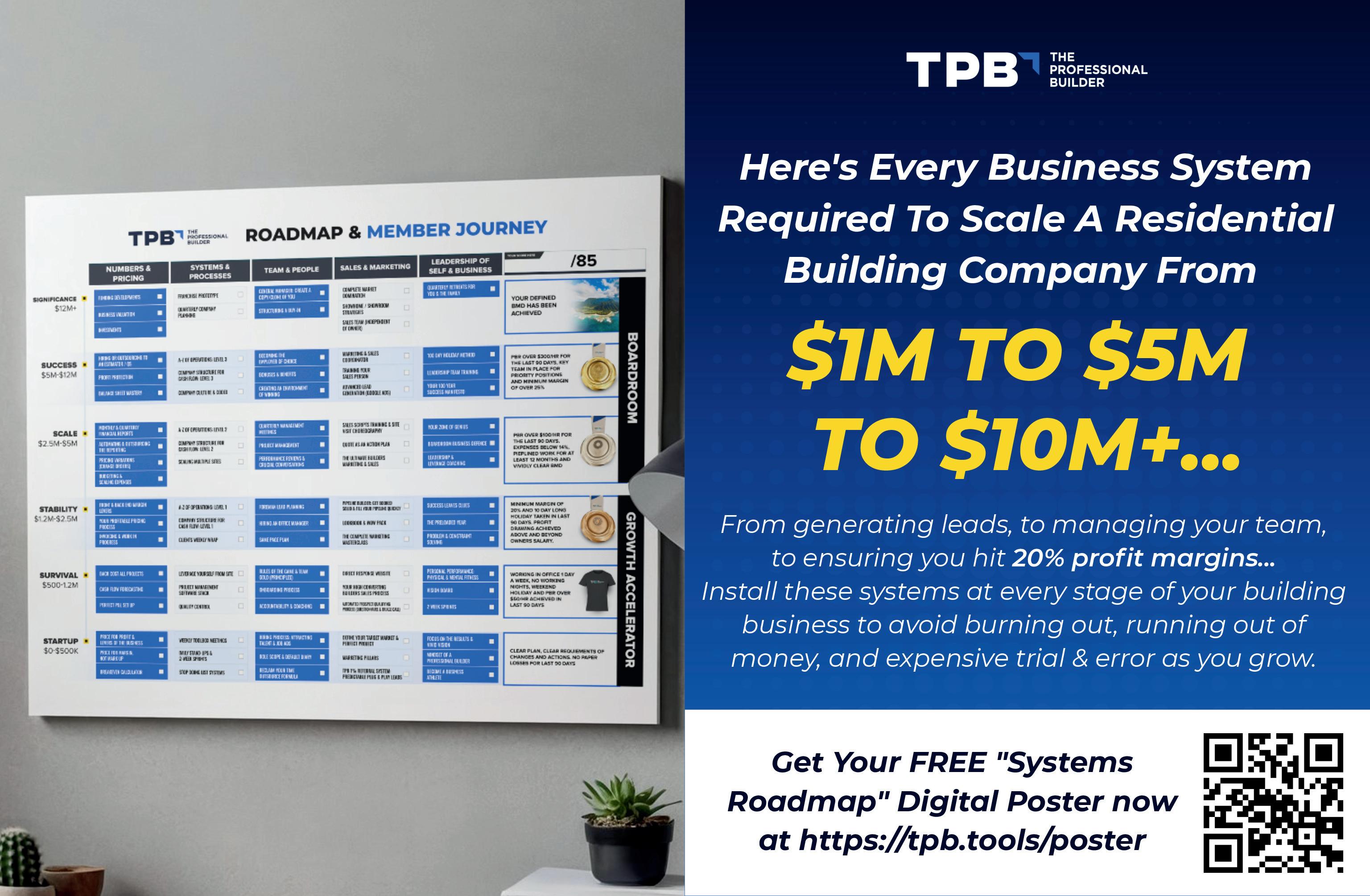
See, most building company owners get stuck in what we call “The Owner’s Trap”. This is the painful stage where you’re too big to do everything yourself, but not yet big enough to have all the right systems and people in place. Think about how you got here:
• Pure hustle
• Being everywhere at once
• Solving every problem yourself
• Making every important decision But here’s the painful truth we’ve learned from working with 3,100+ builders: Those exact qualities that got you to seven figures, they’re now your biggest obstacles to scaling up.
Let that sink in for a moment: Your greatest strengths have become your biggest limitations.
Why?
• Because you’ve built a business that relies on YOUR relationships.
• YOUR problem-solving.
• YOUR knowledge.
• YOUR decisions.
• YOUR constant attention.
The builders in our community making the most money and living the best lifestyles focus on improving their PEOPLE & PROCESSES, then it’s the PEOPLE & PROCESSES that actually grow the business.
But what you need to understand is:
• You don’t need to work harder.
• You don’t need more hours.
• You probably don’t even need more clients right now.
What you need is a complete shift from “I personally handle everything in the business” to “My team & systems handle everything in the business”.
See, growth requires moving from being the business to building the business. Each revenue level demands different changes:
$1-2M: Implement systems for consistent lead generation and a sales process beyond your personal relationships.
$3-5M: Create project management systems allowing your team to run jobs without constant oversight, plus pricing processes that maintain margins during growth.
$7M+: Establish a complete management layer and financial systems capable of managing multiple concurrent projects profitably.
The builders in our community making the most money and living the best lifestyles focus on improving their PEOPLE & PROCESSES, then it’s the PEOPLE & PROCESSES that actually grow the business.
(So the owner isn’t the bottleneck).
One member grew from $850,000 to $3.2M in revenue while taking a two-week European vacation without checking email.
Another freed up 20 hours weekly by implementing proper site management systems, redirecting that time from firefighting to business development. If they can do it, you can too.
The systems and strategies are out there. The real question is whether you are ready to let go and become the business owner you know you’re capable of becoming.
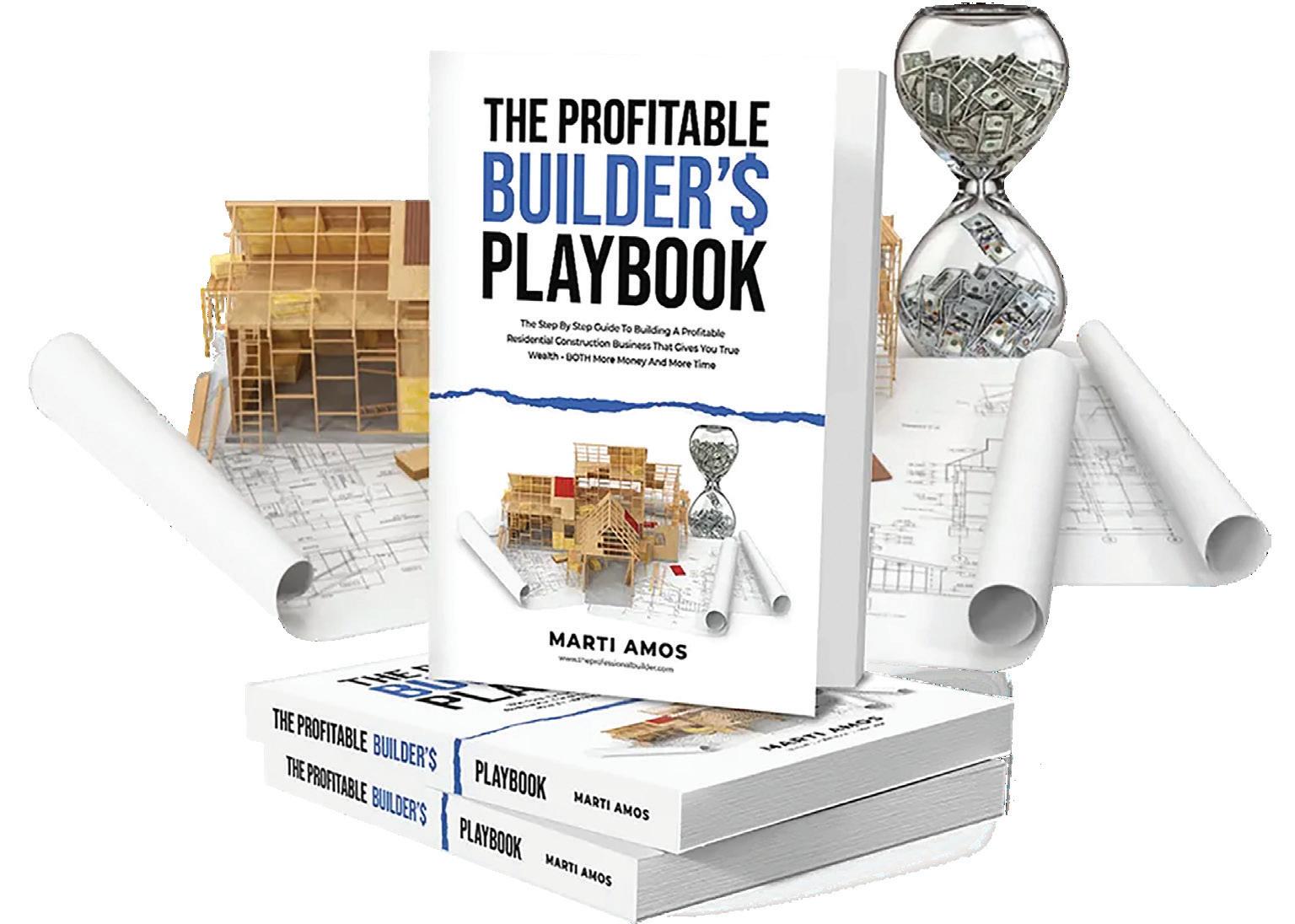
Marti Amos is the founder of The Professional Builder and author of The Profitable Builders Playbook. Get your copy at profitablebuilderbook.com
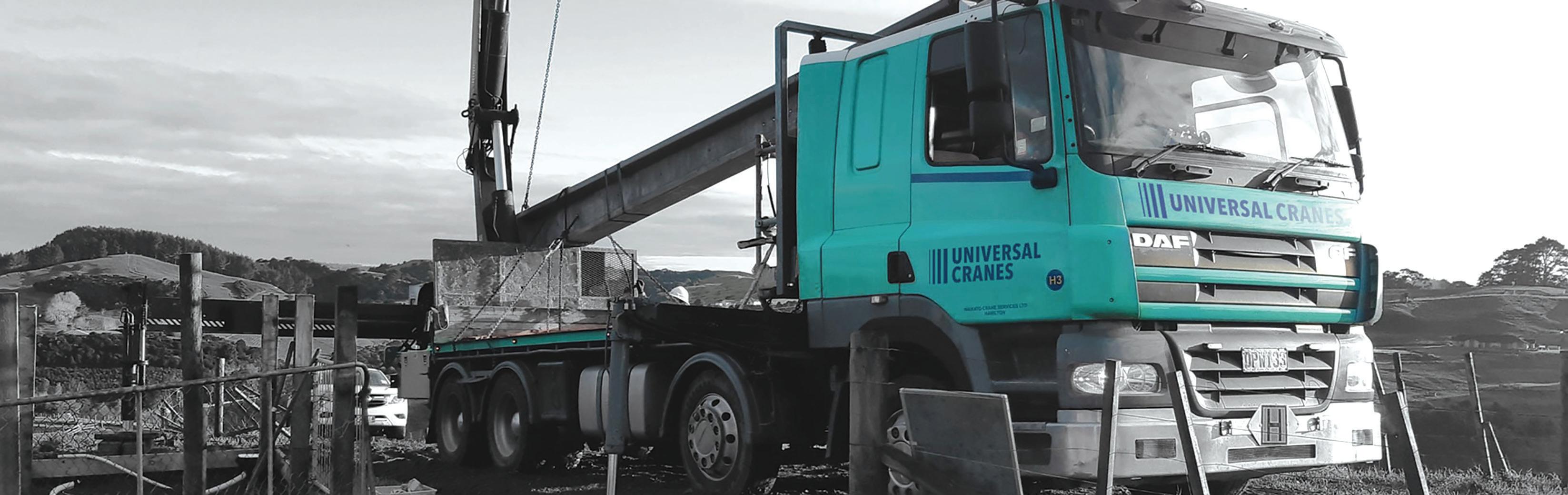
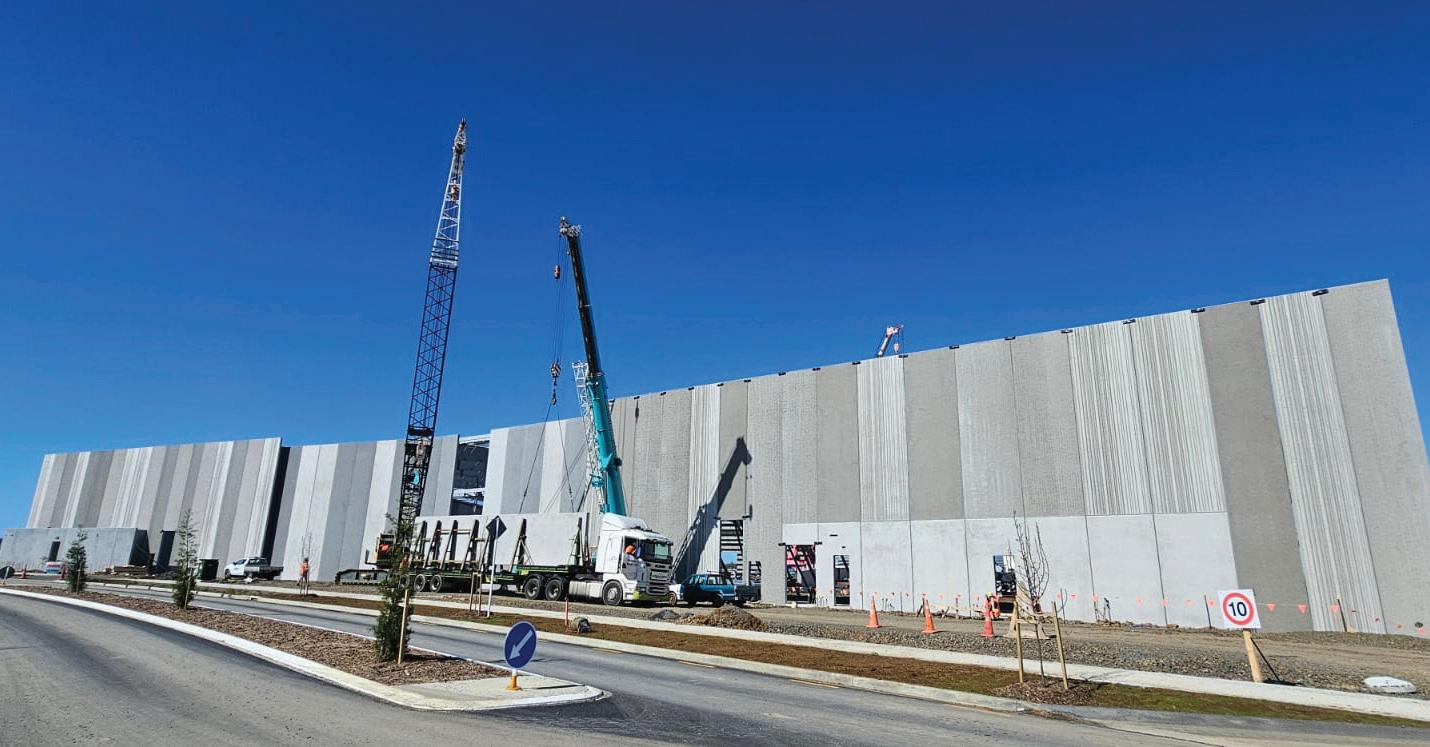
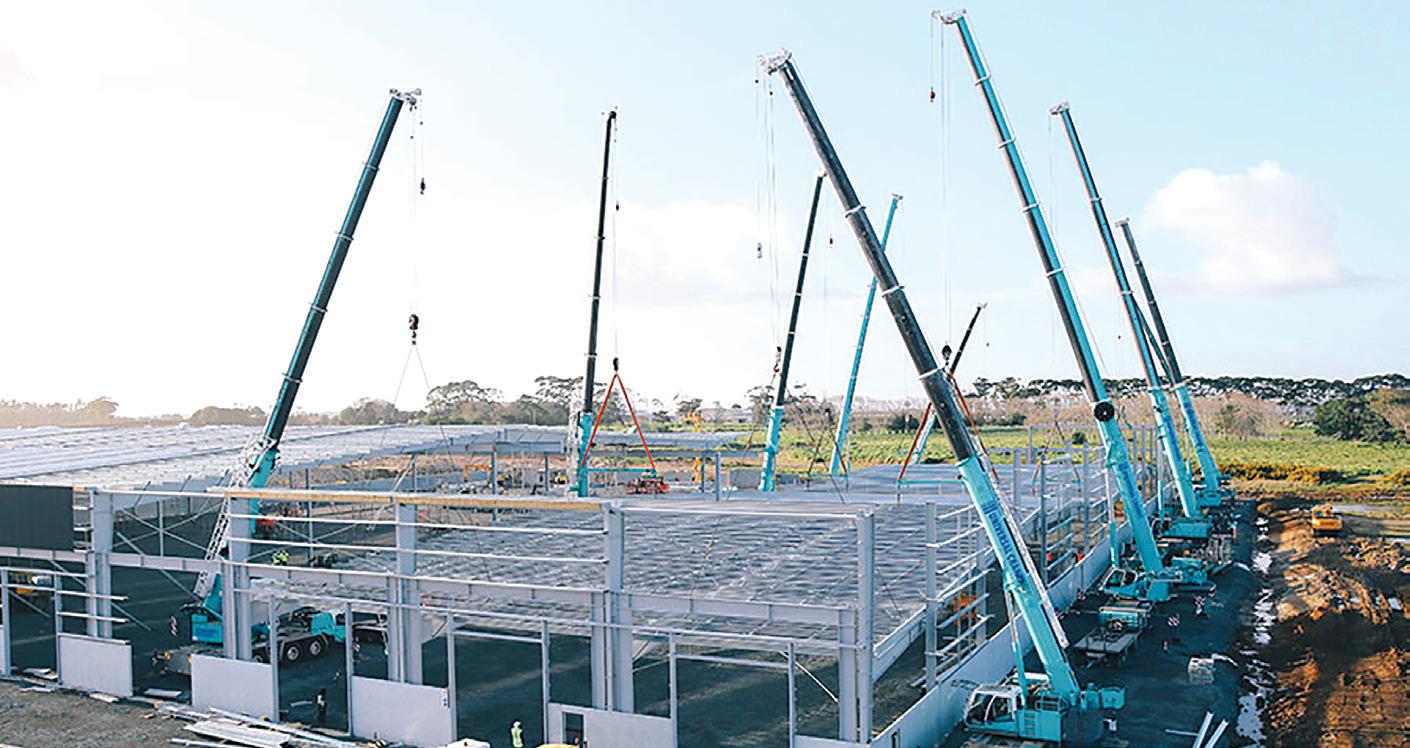
Formerly known as Auckland Cranes and now proudly operating as Universal Cranes, we’ve emerged as a trusted, leading brand in the industry, drawing on our legacy since 1970. Our track record speaks for itself, with a strong reputation for providing secure and highly efficient solutions for all your lifting and shifting needs.
With locations in Auckland and Hamilton, we offer comprehensive mobile crane rental services, serving diverse industries and businesses. Our commitment to delivering precision lifts remains unwavering, no matter how complex the task.
In collaboration with Smithbridge Group and Universal Cranes Australia, our trans-Tasman partnership enhances our service offerings across Australia and New Zealand. This cross-border collaboration leverages our expertise, resources, and knowledge, offering seamless solutions for clients in both locations.
Exciting times lie ahead as the next generation leads us into a new era. Contact us today to discover our extensive national and international fleet and dependable crane rental services.
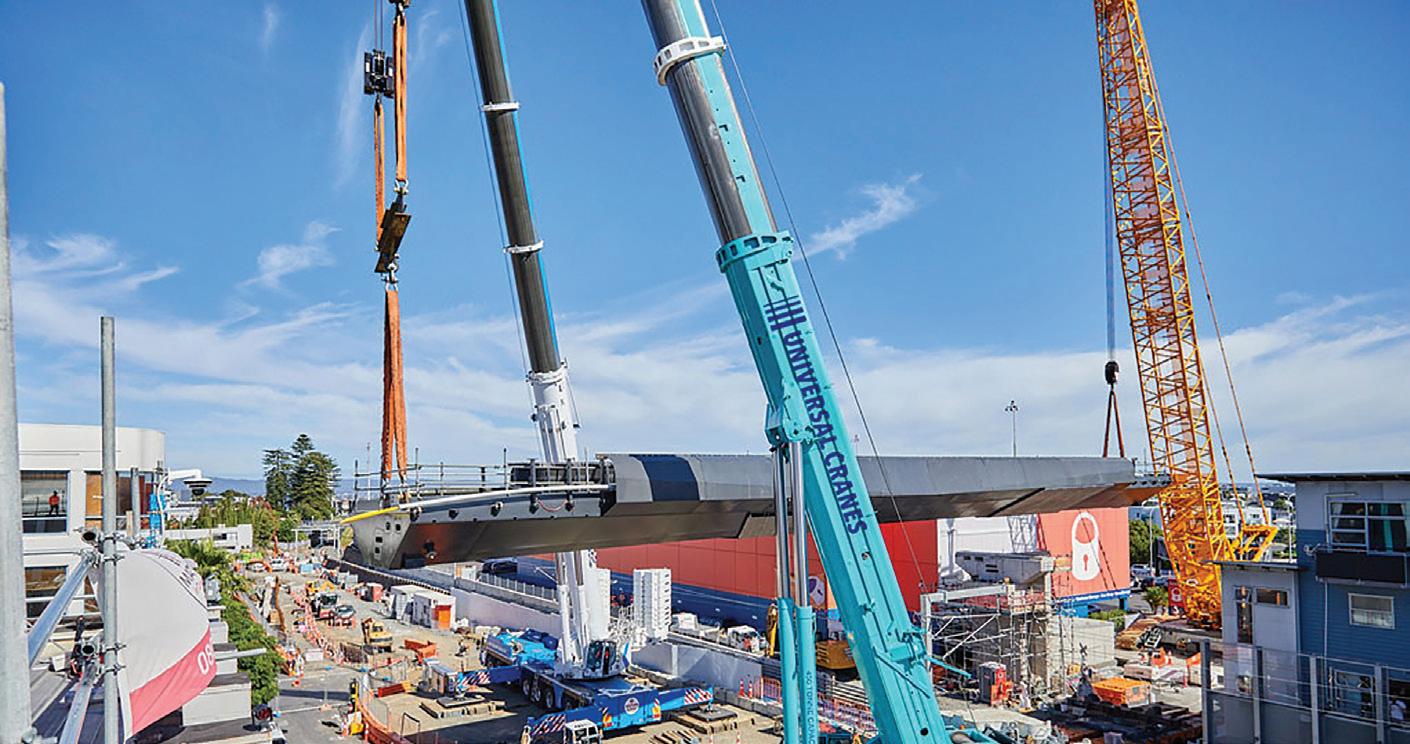
Universal Cranes New Zealand offer a diverse fleet ranging from 2.5T to 450T
Ensuring safety and reliability
A guide to MEWP inspections and maintenance
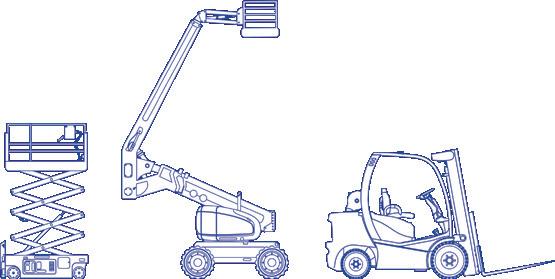
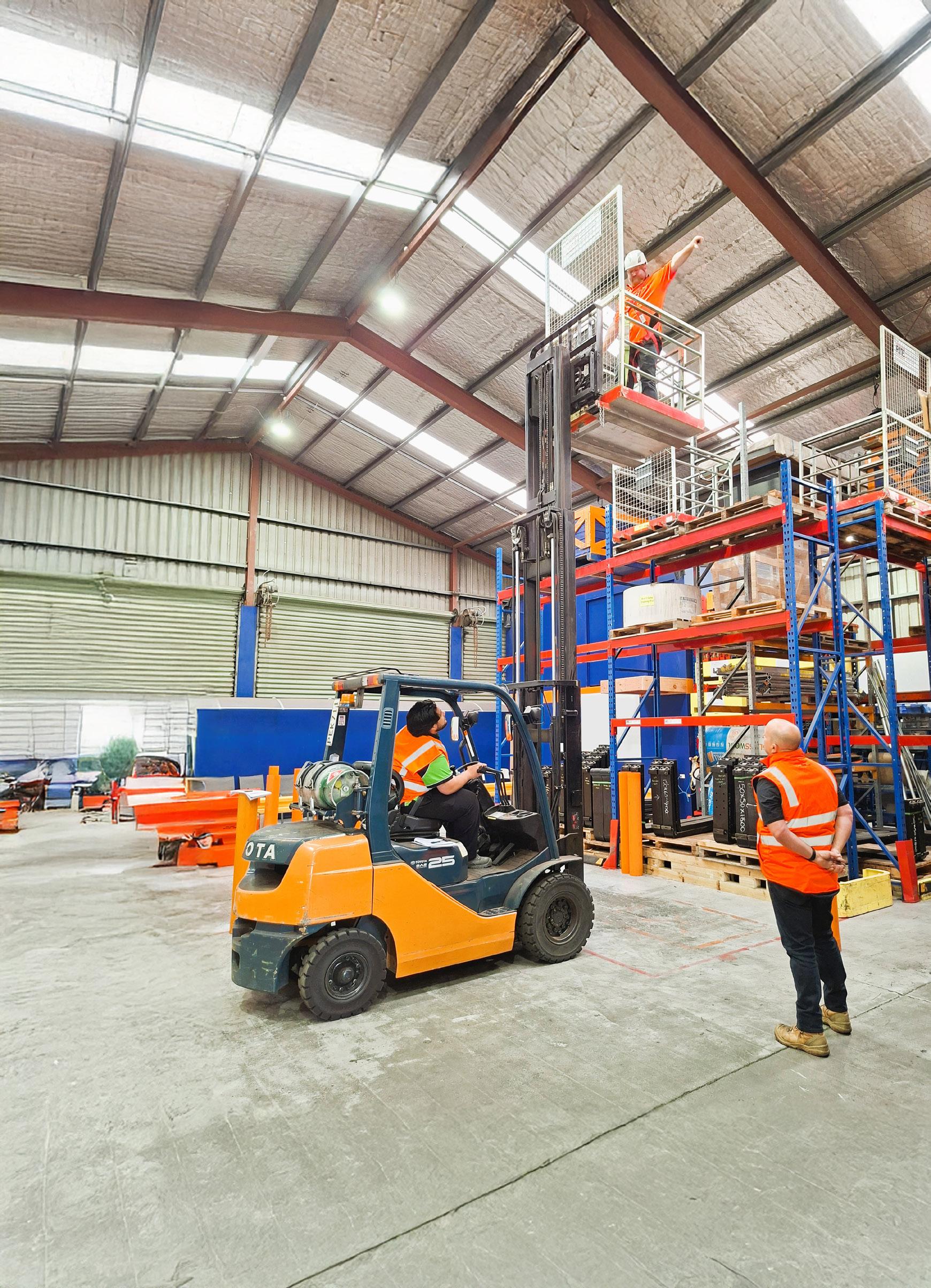
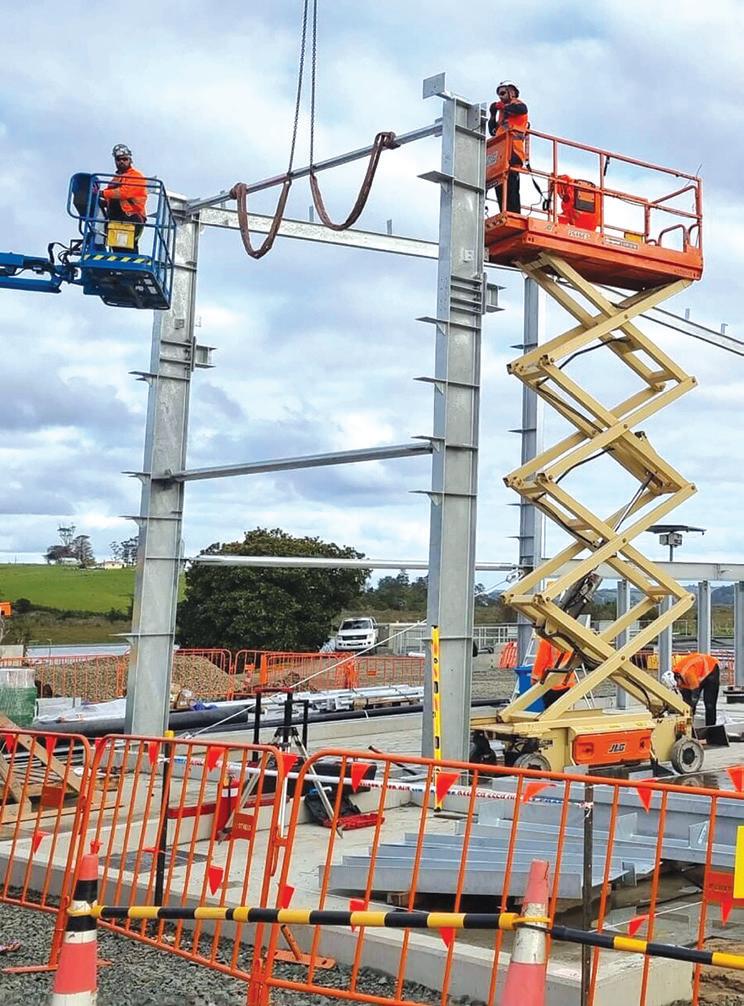
A Mobile Elevating Work Platform (MEWP) is a very safe and effective way to do work at height. Using a MEWP safely reduces risk and improves productivity.
However, there are steps that you should take to ensure the MEWP stays safe, this includes inspecting the MEWP.
Inspections on MEWPs are carried out to ensure the continued safe and reliable operation of the equipment by identifying faults, wear, or damage before they lead to failure or accidents. This proactive approach minimises risks to operators and others, extends the service life of the MEWP, and supports a safe and compliant work environment.
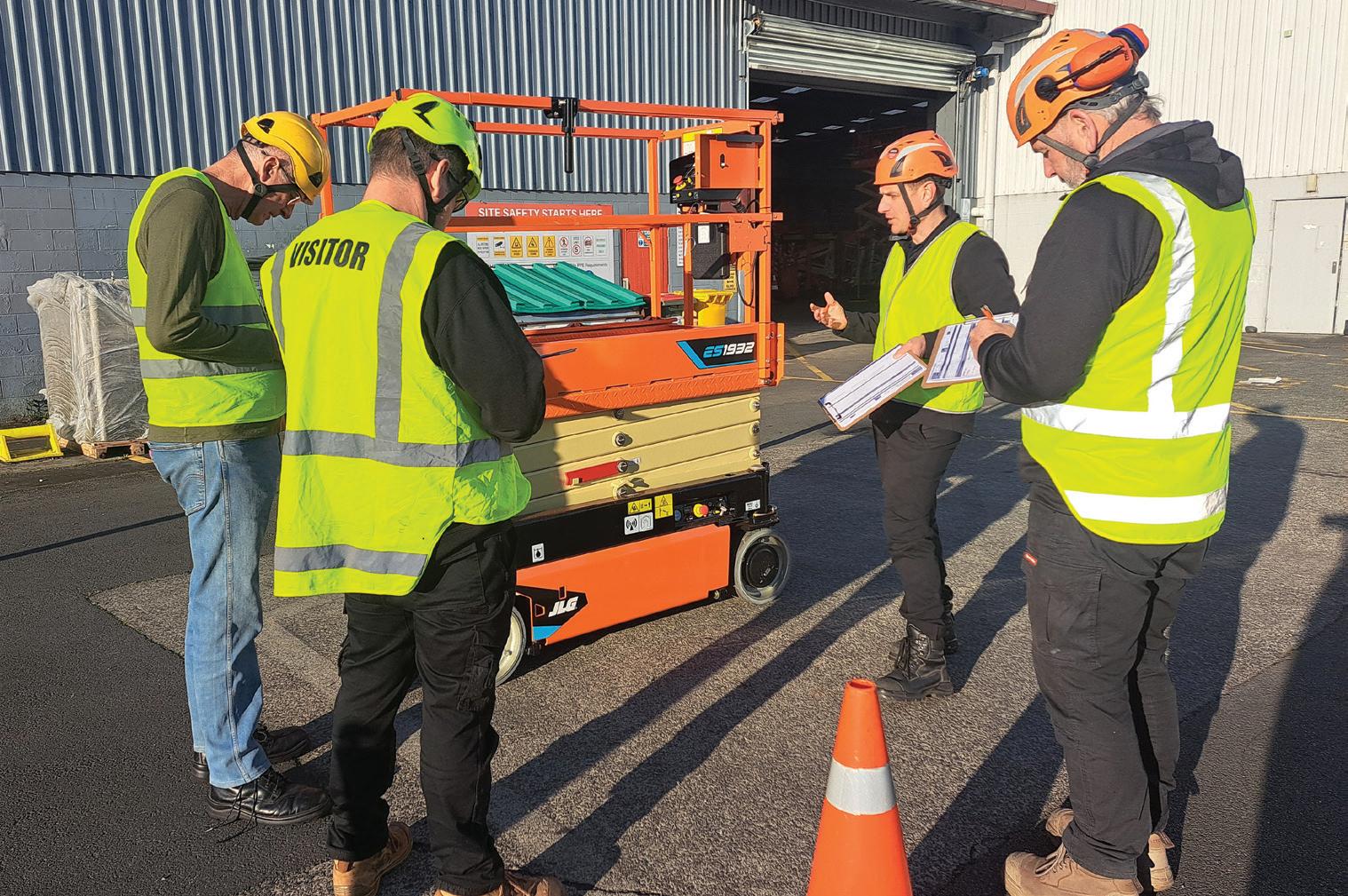
Inspections are to be carried out in accordance with manufacturer’s instructions guidance documents. All such work must be recorded in the orange logbook, located in the orange pouch on the MEWP. Section 1 is for preoperational checks, Section 2 for faults and remedies, section 3 for routine and periodic inspections.
Each person/entity has a varied inspection, at differing time periods, these are:
are
(a) Pre-operational inspection — conducted before the commencement of each work shift or change of operator. These checks should be carried out prior to first use of the day by an operator and again if someone else uses the MEWP prior to them during that day. Never trust another person that the MEWP is safe to use.
(b) Routine inspection (Pre-hire or 3 Monthly) — Carried out by the Hire Company or Owner of the MEWP, conducted at 3-monthly intervals to provide for orderly inspection programming. A Hire Company should carry out this inspection prior to any hire. Commonly called the “Pre-hire check”.
(c) Periodic inspection (Six-monthly inspection) — conducted at 6-monthly intervals. A more detailed visual inspection by a competent person. This inspection ensures that the infrastructure and critical components of the MEWP are checked.
(d) Major inspection — conducted by the end of the 10th year in-service. This inspection is commonly called “10 year rebuild” but may not be a complete “rebuild” of the machine. Typically, critical components are replaced to ensure continued safe use of the MEWP. Only a Competent person with the confirmed knowledge, skills and experience, can perform this inspection.
Each inspection may identify maintenance requirements. If maintenance is required for the MEWP, you are to Isolate (disable the MEWP so it cannot be operated), Tag (fit an out of service/lockout tag) and report the MEWP out of service. Reporting is carried out through notifying the owner/employer and recording the fault in the second section of the logbook. Only a competent person, training to carry out repairs should carry out
the maintenance and once completed, record the repair against the reported fault in the logbook.
Silvercard Competent Operator training covers this in detail to ensure you know the right inspection needed and when. If you need any support and assistance with is subject, find a Silvercard accredited Trainer near you on the Silvercard website.
Building Momentum for 2026
Aotearoa’s building and construction sector has shown resilience and adaptability in 2025, characterised by cautious optimism. From apprentice mentors and research groups to trade associations and professional networks, the industry has focused on workforce development, innovation, safety and sustainability. In the background, it’s been dealing with economic pressures, supply chain issues and complex, changing regulations. Despite these challenges, the sector continues to work together and plan for the opportunities the next year may bring.
To close out 2025, Builders and Contractors asked industry leaders to give a snapshot of the year that was – and a peek ahead to what 2026 might hold in store.
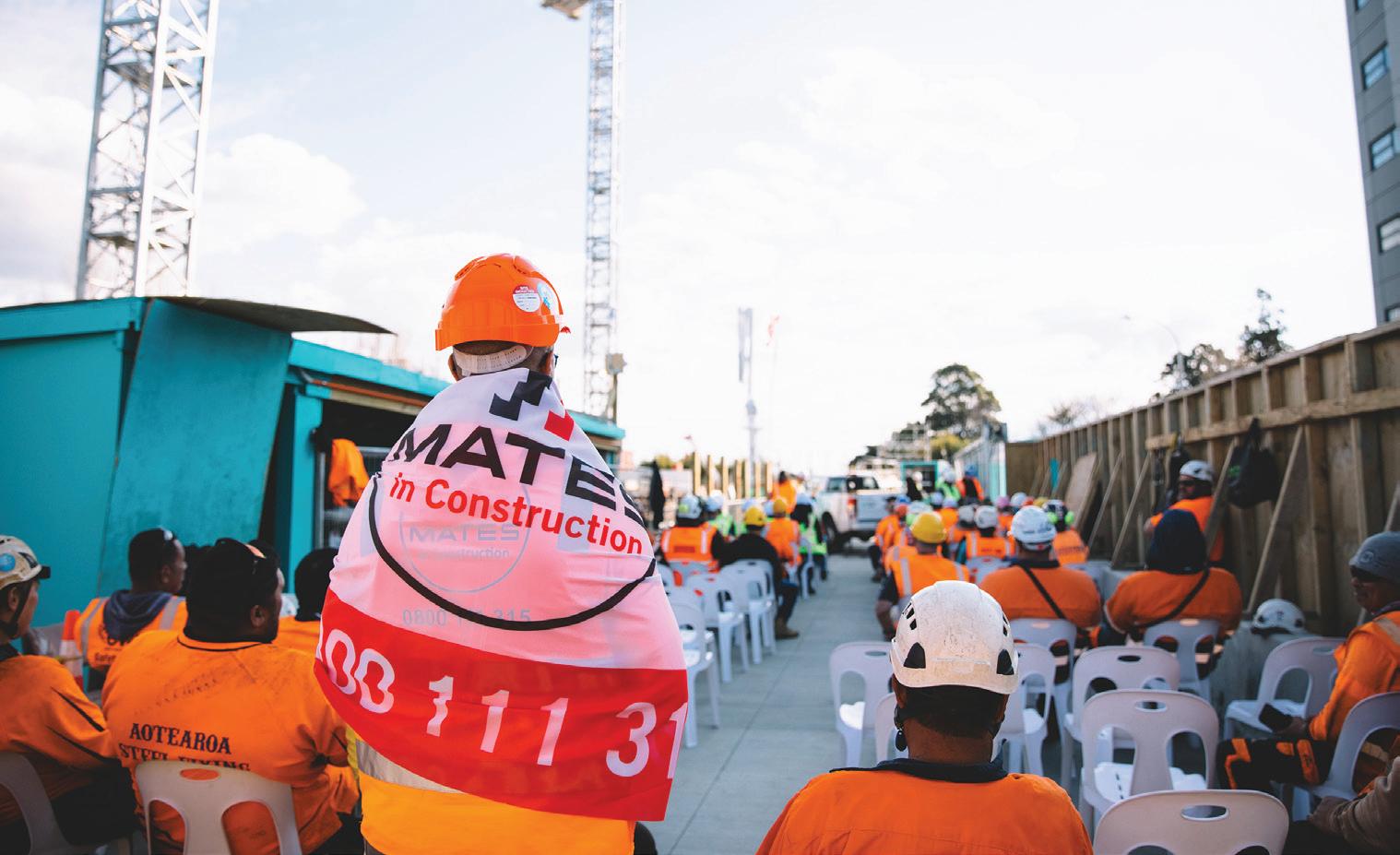
Workforce development sits at the heart of the industry’s recovery. BCITO highlights the value of apprenticeships, supporting over 13,000 active learners and nearly 5,000 completions this year. Employers play a key role in ensuring high-quality training and preparing skilled workers to meet the rising demand. MATES in Construction New Zealand reminds us that wellbeing, teamwork and connection keep morale high and retain talent across sites, offices and communities.
Innovation and technology keep helping the industry work smarter and safer. BRANZ has introduced AI-assisted tools, remote inspection apps, and fire-risk research that save builders time, reduce errors and improve safety on site. The Green Building Council is pushing sustainable building and energy modelling initiatives, showing that smarter design can lower costs while improving comfort, efficiency and long-term performance.
Builders and Contractors also hear from specialised sector leaders who report notable progress. Cranes NZ shows resilience despite economic pressures. The Demolition and Asbestos Association has released updated guidelines to standardise safe demolition practices. Metals NZ and HERA report improvements in steel production, low-carbon construction and structural guidance, demonstrating how collaboration
Cautious optimism returns to the building sector
If there’s one phrase that captures the mood across the construction sector in 2025, it’s cautious optimism. After several challenging years marked by economic uncertainty and shifting demand, the industry is beginning to find its footing again.
Master Builders’ 2025 State of the Sector survey tells a clear story. Nearly two-thirds of respondents (63 per cent) expect the economy to improve within the next year, and 62 per cent anticipate their own business will be stronger by the end of 2026. Order books are starting to fill once more, with 64 per cent reporting strong or steady workloads. The tide is slowly turning.
consents, a more predictable Building Code update cycle, and improvements to product access all point toward a system that is becoming more workable and less reactive. If these initiatives are embedded well, they will help unlock delivery and provide greater certainty for both builders and homeowners.
Challenges remain. Rising costs, inconsistent consenting practices, and constrained access to finance continue to hold back productivity. But 2025 feels like a turning point, a year when resilience met opportunity and the sector’s narrative began shifting from survival to delivery.
If we can maintain policy stability, invest in capability, and continue to back quality builders to succeed, then 2026 could mark the beginning of a confident and enduring recovery for New Zealand’s building and construction sector.
across research, fabrication and regulation strengthens the built environment and supports decarbonisation. RANZ continues to push for licensing reform and clearer regulations to protect trade quality and maintain public trust in roofing services.
Master Builders offers a broader perspective on the sector’s cautious optimism. Their 2025 State of the Sector survey found that nearly two-thirds of respondents expect the economy to improve and their businesses to grow in 2026, with workloads starting to pick up. Government reforms to building consents, product access and the Building Code are making the operating environment more predictable. While rising costs, inconsistent consenting and limited financing remain challenges, the mood is shifting from survival to delivery, pointing to a stronger recovery ahead.
Across the industry, a clear pattern is emerging: adaptation, collaboration and forward planning are vital to handling short-term pressures and long-term challenges. While 2025 tested budgets, wellbeing and operational efficiency, it also highlighted opportunities for innovation, new talent and a focus on sustainable, high-quality outcomes. Looking ahead to 2026, industry leaders focus on using technology wisely, improving practices, building skills and strengthening connections, all in the name of preparing New Zealand’s construction sector to deliver safe, sustainable and high-performing infrastructure for everyone.
The recovery, however, is uneven. Southern regions are bouncing back faster, while Auckland and Wellington still face headwinds. Yet the direction of travel is clear, confidence is returning, and builders are beginning to look ahead rather than just hold the line.
Encouragingly, government policy is playing a constructive role. Reforms to building
Ankit Sharma, CEO Master Builders
AI is presenting new opportunities
It’s been a year of challenge and change for building and construction. We’ve felt the impacts of an economic downturn and navigated a fast-changing environment. Whether it’s the pressure on housing affordability, tight margins or keeping up with new regulations, we’re being challenged on multiple fronts.
But as 2025 draws to a close, there’s a solid foundation for optimism. Emerging technologies and the advancement of AI is presenting new opportunities to streamline operations, reduce costs, and increase productivity.
A key opportunity is using AI to improve our complex and data-heavy consenting system. A BRANZ-funded study from the University of Auckland revealed consentrelated inefficiencies are costing us $500m in lost productivity every year. It will come as no surprise that Requests for Information and manual processes are clogging the system. It’s an area where AI could really shine.
It’s why we’ll be trialling an AI-assisted ‘precheck’ tool that could speed up approvals and improve accuracy. It could help you interpret and supply exactly what’s needed, cutting out the guesswork and making it easier for everyone. This is just one example of how we’re using the Building Research Levy to bring the academic world and industry together to find practical, realworld solutions for the issues that matter.
Right now, we know affordability is front and centre, and 60% of our research investment will be addressing that complex challenge in 2026. We have some of the most unaffordable homes in the OECD, and we need to forge new partnerships and find fresh ideas to move us forward.
But home builders don’t need to wait - there are tools available right now that can help lower costs and improve quality. Take BRANZ’s free Artisan app for remote inspections, a real-time record of compliance. It can save time and money with fewer costly delays and less requests for information and rework. Over the past year, 236 building organisations have used Artisan on more than 2,200 building projects – and home builders like Jennian Homes have saved six weeks per build on average.
Saving time could also be as simple as picking up the phone to BRANZ’s free building helpline (0800 80 80 85). We have experts standing by to help with everything from practical on-site instructions to technical advice on how to lower costs with smarter timber framing ratios and our tools to calculate H1 compliance.
Addressing affordability isn’t the only hot topic - fire risk is also a growing concern with building trending towards medium density housing, modular building and mass timber construction. It means understanding how building materials and systems perform in real-world, full-scale scenarios is more critical than ever. BRANZ’s new fire lab – which opened in May this year – is one of the only facilities in the Southern Hemisphere capable of operating at that scale and assessing fire risk in multi –story buildings. It works alongside our Structures and Materials Lab to help buildings last in our unique environments. So, look out for BRANZ Appraisals when you’re selecting your building materials. We offer independent product testing and assurance (like CodeMark and BRANZ Appraisals). It’s optional but product manufacturers and suppliers use these services to reduce risk, achieve compliance and build confidence in the products you use on site
From testing and assurance to practical tools and guidance, we continue to work with builders and for builders as we head into the new year. The pain-points persist, but we’re seeing signs of promise and progress that should give us all reason for optimism. We’re confident that, together, we can deliver the affordable, quality, sustainable and resilient buildings all Kiwis deserve.
Hope can be sparked in the smallest acts
In July 2025, MATES worked alongside the wider construction, manufacturing, and infrastructure industries, hearing from over 3,300 workers through the MATES Industry Well-being Survey, supported by ASB.
The 2025 survey revealed a workforce proud of what they do and deeply connected to the meaning in their mahi. While job satisfaction remains strong, the results also highlighted ongoing challenges to worker well-being — including exhaustion, workload, financial stress, and physical health issues.
At the same time, the survey reinforced what we know works: mateship, meaningful work, respect, and connection. These are real, tangible protective factors. The challenge now is for industry, employers, and systems to align — reducing risks and embedding these positive supports into the fabric of everyday site life.
Workers were clear about what helps keep them well: time with whānau (family), wairua (spirituality/faith), being part of a good team, access to trusted support when it’s needed, fair pay, and reasonable hours.
As one of Aotearoa’s largest industries, construction is uniquely placed to drive change — to build a safety net that supports workers every day. We all have a role to play in that net: it starts with igniting hope and creating connection — on site, in the office, and in our communities.
The question for each of us is: what can we do to ignite hope?
Hope can be sparked in the smallest of acts — a smile, a word of encouragement, a kind gesture, a call from a mate, a moment of learning, or the courage to ask someone how they’re really doing.
But hope can also be complex — found in bigger shifts like changes in workplace culture, leadership, policies, or legislation. Whether simple or structural, these actions build momentum. And with that momentum, we create not just safer workplaces, but stronger, more connected lives.
As we wrap up 2025, we acknowledge the courageous conversations that have taken place across our sites, offices, and communities — moments where workers opened up, supported each other, and stood together to say that mental health matters. These conversations take strength, and they are changing the culture of our industry.
Looking ahead to 2026, the challenge for the industry is to build on this momentum — to keep listening, keep learning, and continue creating a culture where connection, compassion, and hope are part of everyday working life.
If you would like to explore the findings of the 2025 MATES Industry Well-Being Survey, visit www.mates.net.nz/research
Claire Falck, CEO Building Research Association
Praneel Hira, Communications advisor, MATES in Construction
The roofing industry’s turning point
2025 has been a year of recalibration for New Zealand’s roofing sector. The postpandemic construction surge has eased, replaced by tighter margins, shifting demand, and a more competitive marketplace. While the wider economy shows early signs of recovery, our industry continues to wrestle with regulations that haven’t caught up with modern roofing’s complexity.
The biggest frustration remains the licensing gap. Roofing sits awkwardly under the
current Licensed Building Practitioner framework, leaving space for unqualified operators to slip through. Every time a cowboy cuts corners, it hurts all of us, members and non-members alike. It erodes public trust, drags down prices, and cheapens a craft that should be respected. RANZ continues to push for a licensing regime that reflects the technical, safety, and quality standards our trade deserves.
At the same time, the ongoing confusion around building-code requirements for ventilation and condensation is causing unnecessary grief. The technology has evolved, but the code hasn’t. Until that alignment happens, we’ll keep seeing the same moisture and performance failures that could easily be prevented with stronger guidance and consistency.
That’s why RANZ is changing direction. For too long, we’ve looked inward. Strategically, it’s time to look outward, to the public, to the market, and to the reputation of our trade. Our focus is on people: the families reroofing their homes, the homeowners building for the long term, and the developers demanding quality, durability, and pride in every roof and wall cladding.
Membership is how we drive that change. Being part of RANZ isn’t just a badge, it’s a signal: that you’re competent, qualified, and accountable. It shows clients and regulators that you stand for quality and integrity. The more members we have, the stronger our voice becomes with the government, suppliers, and the public.
So, if you’re already a member, stand tall in it — talk about it, use it, promote it. And
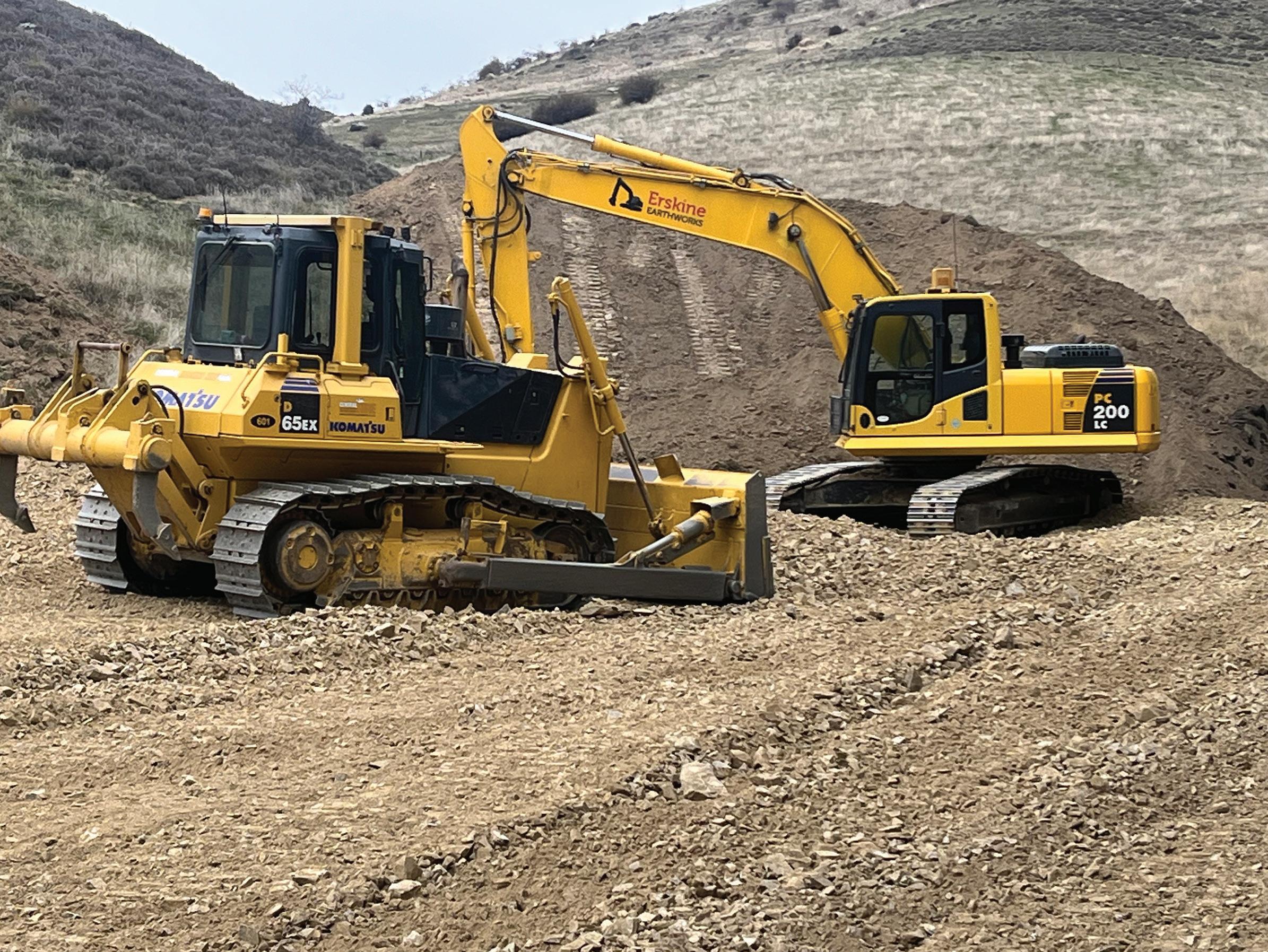
YOUR LOCAL EARTHMOVING
• House Pads & Site Preparation
• Driveway Construction
• Landscaping & Section Clearing
• Road Building
• Vineyard and Cherry Block Development
• General Earthworks
if you’re not yet part of RANZ, now’s the time. Join us. Help us build an outwardfacing, forward-thinking, and respected roofing industry. Because together, and only together, we can protect our trade, lift our reputation, and give New Zealanders the confidence they deserve in their homes and buildings.
YOUR TRUSTED LOCAL PARTNER
We combine local insight with top-tier equipment to deliver smooth, reliable earthmoving solutions every time.
> Local Expertise: Deep understanding of Central Otago soil and terrain
> Transparent Pricing: Honest quotes with no hidden fees
> Reliable Service: On-time starts and consistent communication
Luke Boustridge, CEO Roofing Association
Grit, resilience and determination
The past year has tested our industry more than any in recent memory. For many of our members, it has been a daily exercise in grit, resilience, and determination simply to keep the doors open. Yet, despite the economic headwinds and unprecedented challenges, not a single Crane Association of New Zealand member company has folded. That fact alone speaks volumes about the tenacity and professionalism that define our sector.
This downturn has been longer and harder than the Global Financial Crisis. Economic data shows that the slowdown in construction activity, combined with inflationary pressures and reduced public spending, has squeezed margins to the thinnest of levels. Many members have had to diversify, finding new ways to deploy their equipment and expertise — across utilities, infrastructure maintenance, energy projects, and even agricultural lifting solutions — to keep teams working and businesses viable.
Through these difficulties, there have been bright spots of collaboration and recognition. Certain parts of the government have listened and engaged meaningfully with us. They have echoed our messages about the vital role cranes and construction play in New Zealand’s economy. Even within tight fiscal
constraints and a broader program of austerity, there have been some measures to stimulate construction and infrastructure work — proof that advocacy and persistence do matter (or that an election year is coming…)
Amid the challenges, we also found reason to celebrate. This year marked the 50th anniversary of the Crane Association of New Zealand — a milestone that reflects half a century of progress, safety leadership, and contribution to nation-building. The celebrations reminded us of how far we’ve come, the people who built our industry, and the pride that unites us even in tough times.
Now, there are genuine green shoots emerging. A leading member listed five job vacancies on our jobs portal in just the past week — something we haven’t seen for
months. Our recruitment and immigration partners are also reporting increased international interest and placement activity, traditionally one of the earliest signs of economic revival.
While challenges remain, I’m optimistic. Our industry has weathered the storm before and will do so again — smarter, stronger, and more connected than ever. The resilience shown over the past 12 months is not just a survival story; it’s a foundation for renewal.
Sarah Toase, CEO Crane Association
More affordable pathway to quality housing
Shout out to New Zealand Certified Builders, which unveiled two new sets of pre-approved plans for Homestar- Ready homes, offering Kiwi families a faster, healthier, and more affordable pathway to quality housing.
There’s no doubt the past year has been a tough one for the building and construction sector – but the industry’s commitment to helping build healthier, drier and better quality buildings that appeal to buyers, investors and tenants, has continued despite challenging economic times.
That’s because it’s good for New Zealanders and it’s good for the economy, and we’re also seeing other market drivers such as financial incentives coming into play.
It’s been a busy year at the Green Building Council, with the Government recently announcing an expansion to the fast-track consent pathway, to include sustainable buildings, which will be defined in the Building Act.
This is a great step forward — I want to make sure this leads to the best possible outcomes for Kiwi homes, communities, and our climate. We will be working hard in 2026 to ensure this definition is endorsed with solid, independent certification.
It’s about more than designing and building comfortable and efficient homes. Banks are also getting involved with lower interest mortgages and developer finance, now available from most of the major banks. But you have to ask and know what you’re asking for!
Research released earlier this year revealed how building better could save New Zealanders tens of thousands in energy bills and mortgage costs. Leading economics consultancy Infometrics found that with a Healthy Home Loan through ANZ, homes built to a 6 Homestar standard can save New Zealand homeowners over $62,000 in electricity and mortgage interest over 30 years — the equivalent of helping them become mortgage-free two years earlier.
As we’ve travelled up and down the country, we’re hearing overheating is fast becoming one of the biggest issues in new homes. At our Housing Summit last May, Minister Chris Penk said New Zealanders are being “cooked alive” in their homes. As summer approaches, the voices are becoming louder as homeowners and tenants are beyond uncomfortable in their terraced homes and apartments.
When it comes to designing better, we’re delighted to see the move away from the older “schedule method” to more modern calculation and modelling methods.
This is driven in part by the announcement by Minister Penk in July of a common-sense approach to insulation. We’re actively working with industry partners to build awareness and understanding of the need and benefits for change through our Residential Energy Modelling training programme.
Embracing modelling-based design is a critical step toward future-proofing our housing stock and improving the liveability of our homes.
In 2026, we’ll be travelling across New Zealand, offering training workshops to share more on how the industry can benefit by incorporating energy modelling into their designs. I’d encourage you to contact us and come along to one of these sessions.
Shout out to New Zealand Certified Builders, which unveiled two new sets of pre-approved plans for Homestar- Ready homes, offering Kiwi families a faster, healthier, and more affordable pathway
to quality housing. They are designed and tailored to meet the needs of modern New Zealand households, with a clear road to consent that can have families ready to build in as little as eight weeks.
It’s a great example of what can be achieved when industry comes together with a clear focus on quality and sustainability.
In 2026, we’ll be celebrating our 20th birthday – celebrating two decades of better building by the sector. From humble beginnings, the industry has achieved a lot in this time, and we’re grateful to those who have supported us along the way.
Like you, I’m hoping for improved economic times for the sector in 2026. I’m also looking forward to working closely with the building and construction industry to continue this work of creating modern, efficient, healthy and sustainable buildings.
Andrew Eagles, CEO Green Building Council
Heavy Equipment Services Services
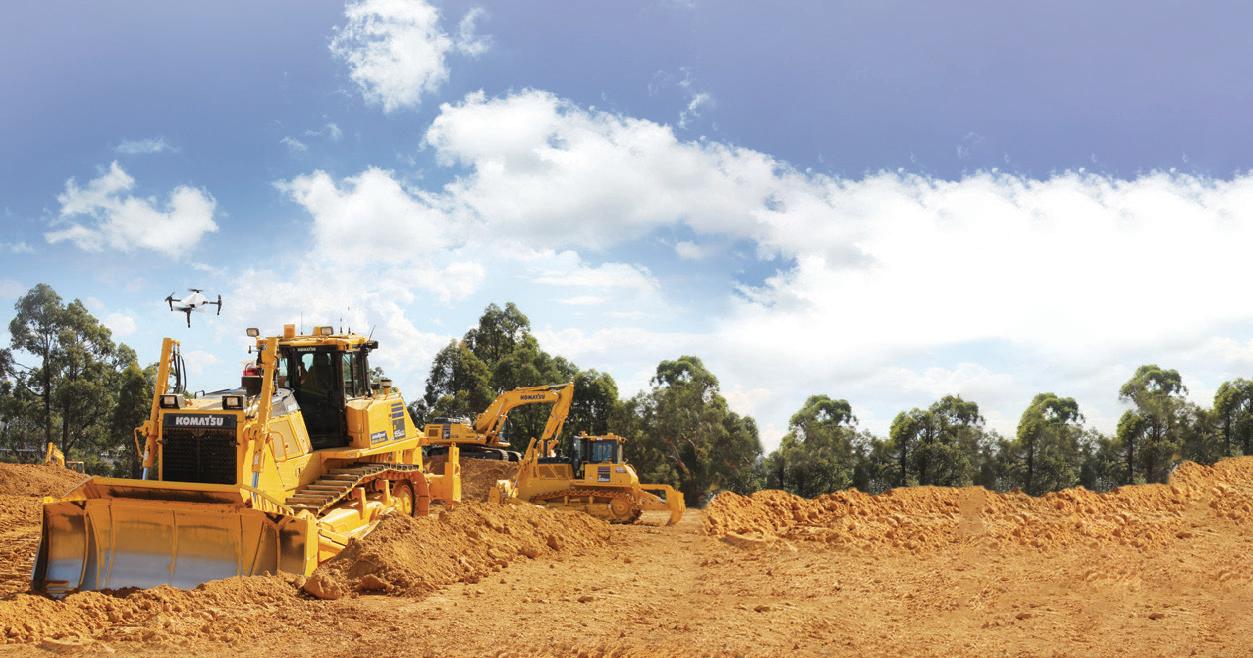
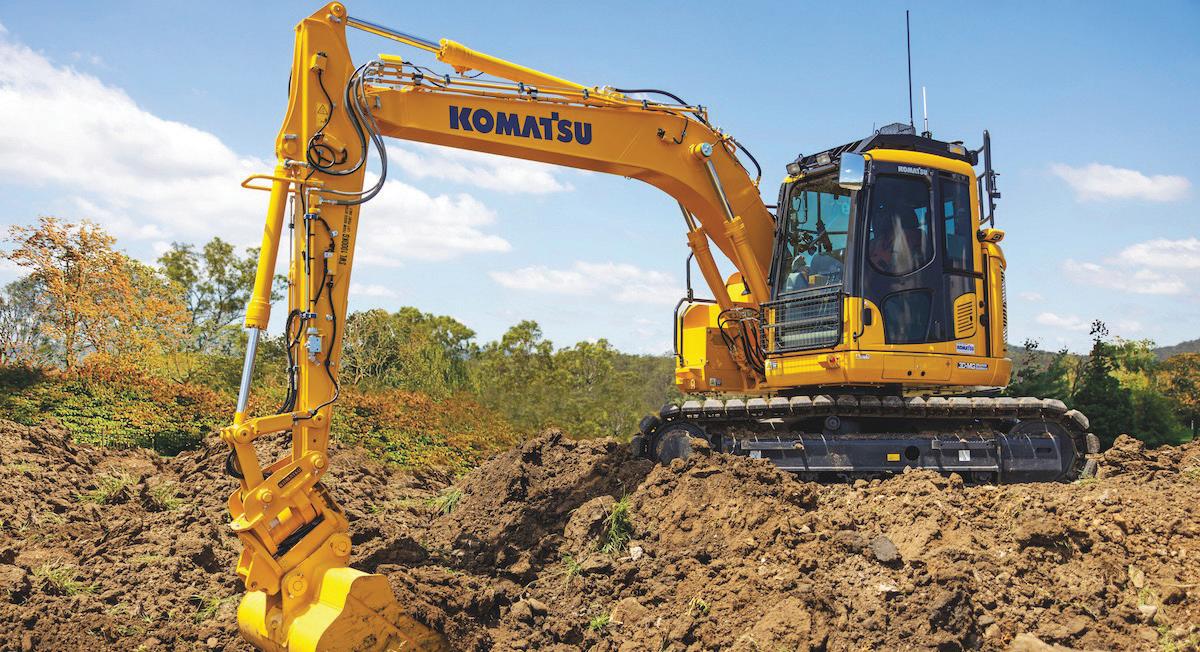
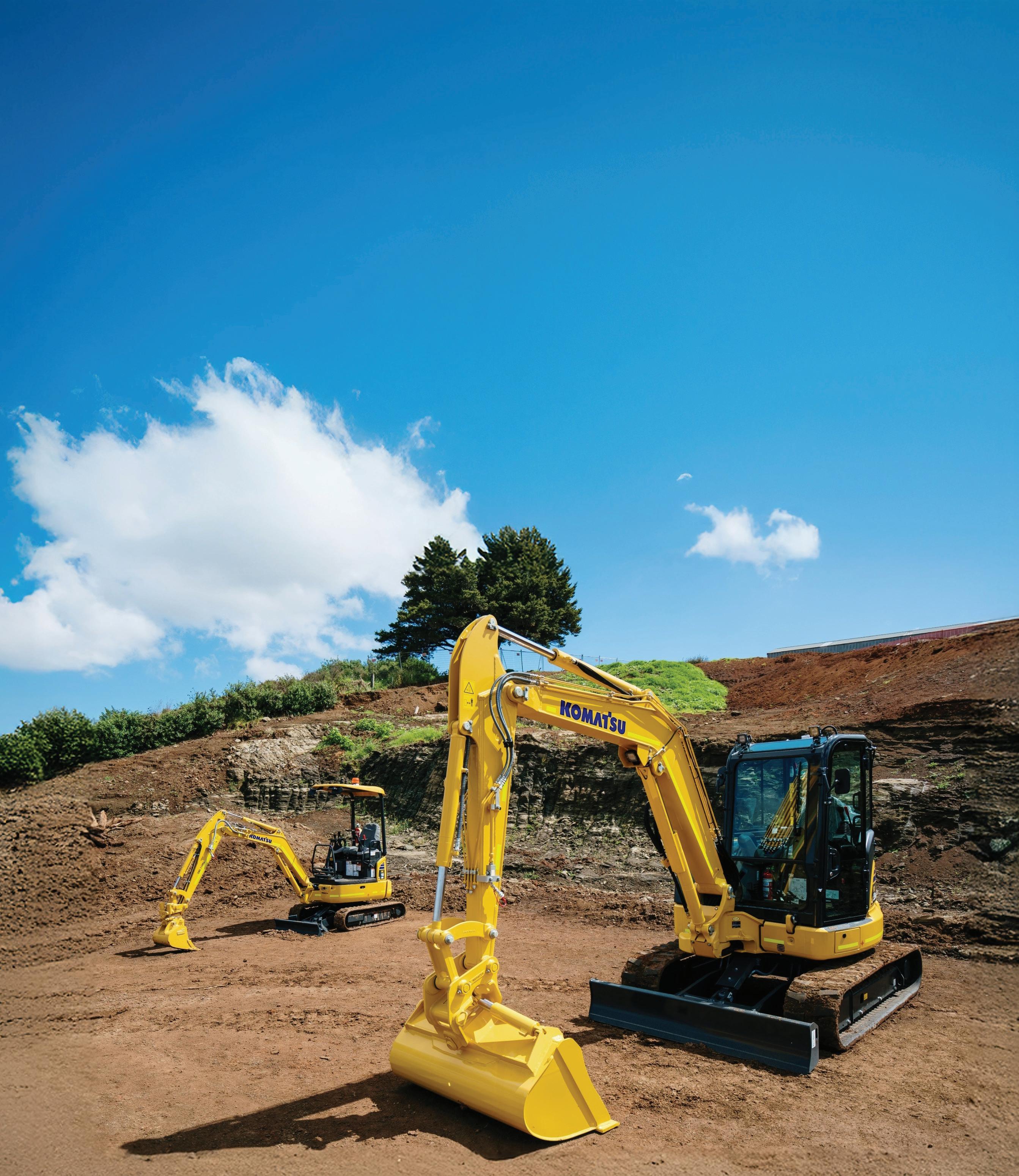
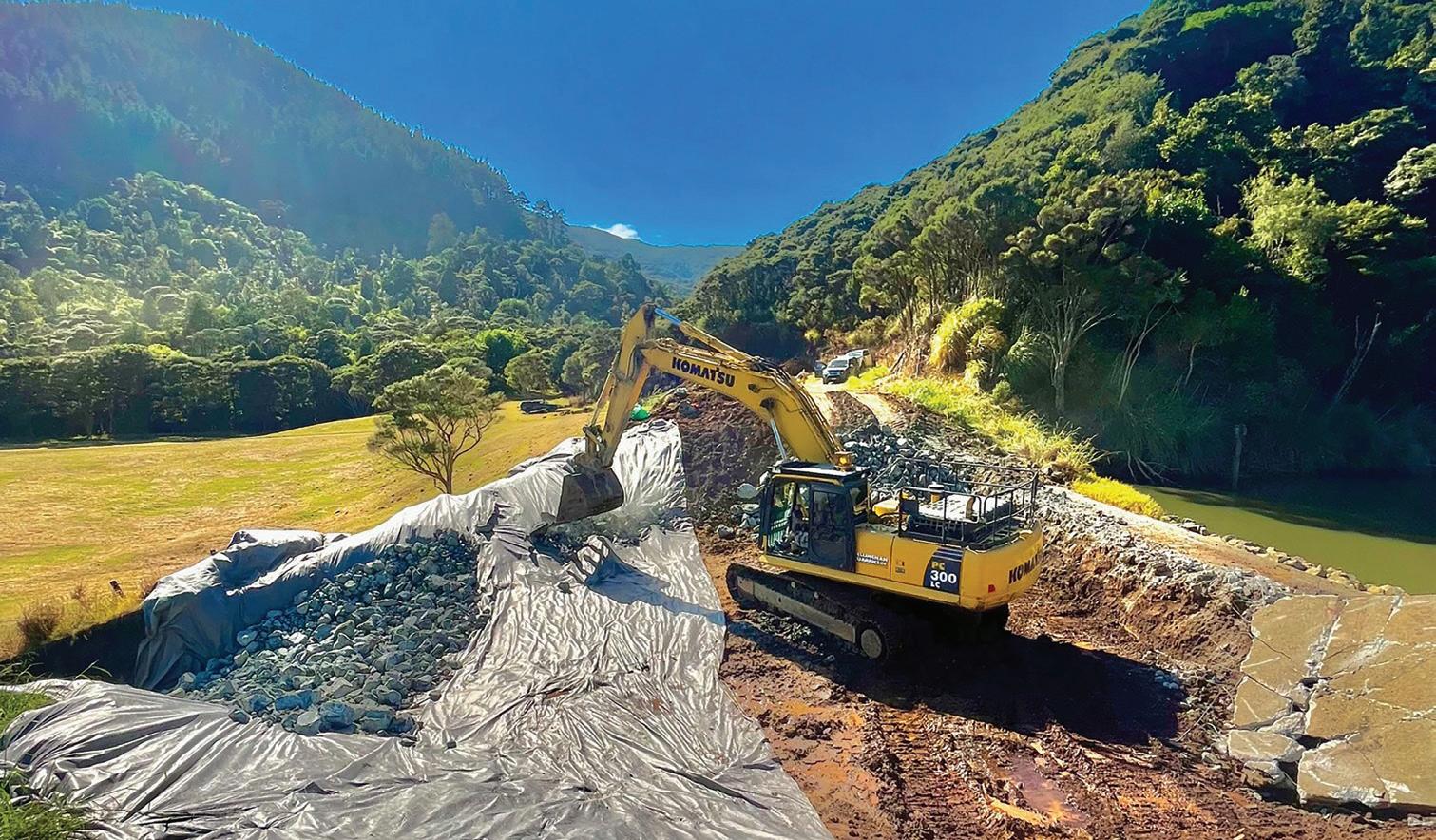
We are an approved Komatsu New Zealand Service Partner, offering a highly regarded service, support and parts facility. We supply fit for purpose Genuine Komatsu Parts and can draw on the support and expertise of Komatsu locally and globally. Komatsu Genuine Parts are fully covered by warranty and meet original factory specs, so they are the best option to ensure your Komatsu equipment continues to perform at its best.
Forging a stronger future
As we farewell 2025, New Zealand’s steel sector reflects on a challenging year as a result of rising input costs and weak construction demand.
Despite these headwinds, the sector remains optimistic for a better 2026.
In June, New Zealand Steel celebrated 60 years of producing steel at Glenbrook. What started as a bold idea — to make steel from our own iron sands — has helped shape the New Zealand we know today; from the buildings we live and work in to the bridges and roads that connect us.
Fletcher Steel’s Steel Outlook symposium, held in August, heard from a diverse group of
speakers. With a focus on lower embodied carbon steel, the symposium ignited crosssector discussions on specifying for lower embodied carbon steel, innovations in production processes and raw materials, and emerging supply options.
2025 saw growing collaboration between manufacturers, fabricators, researchers, and regulators. Metals NZ is working to ensure policy and research reflect a modern steel industry that values performance, affordability, and sustainability. Partnerships with BRANZ, MBIE, universities, and the wider construction sector are helping to build the required skills, products, and knowledge needed for the future.
In 2026, housing activity is expected to rise, major infrastructure projects are progressing, and the renewable energy
With steel remaining the backbone of New Zealand’s built environment, there is genuine cause for optimism about what lies ahead. We’ve faced challenging cycles before, and each time we’ve emerged stronger. New Zealand’s steel industry is not only adapting to change, it is leading it.
transition is gaining momentum – all areas that depend on steel.
The sector is advancing its decarbonisation plans, with a national roadmap under development and due for public launch by mid-2026. New Zealand Steel’s electric arc furnace project is set to be fully operational early 2026, and will reduce annual greenhouse gas emissions by up to a million tonnes. This project will be New Zealand’s largest-ever single-site emissions reduction initiative, and includes the launch of DCRBTM reinforcing and plate steel products, made from 100% scrap and with a low emissions profile.
It will do this by taking advantage of the infinitely recyclable nature of steel by providing the option for hundreds of thousands of tonnes of scrap steel to be repurposed locally.
The sector is expecting increased use of modular steel framework. Both lightweight and exceptionally strong, steel delivers efficiency in design, production, and construction. Somerset’s St John’s village, opened in 2025, makes extensive use of modular steel framework in its construction.
With steel remaining the backbone of New Zealand’s built environment, there is genuine cause for optimism about what lies ahead. We’ve faced challenging cycles before, and each time we’ve emerged stronger. New Zealand’s steel industry is not only adapting to change, it is leading it.
RIck Osborne, CEO Metals New Zealand
The economic situation is starting to brighten
Apprentice training across the construction industry has certainly had its ups and downs in recent years. Currently, BCITO is supporting over 13,000 active learners (apprentices). This represents a snapshot of the learners we work with in a year, which is approximately 20,000 for 2025. Central to the success of every apprentice is their employer, who may also be their trainer.
Currently, BCITO is proud to be working with 10,678 employers, each of whom is a
55,000 qualified apprentices to the building and construction sector in the 34 years we have been providing training.
We all know that economic conditions are challenging, with considerable pressure on many businesses across New Zealand. Not surprisingly, training volume has matched industry trends. While the volume of apprentices has decreased since 2023, the economic situation is starting to brighten. In some parts of the country, we are seeing a lift in apprentice volume, which is great news.
Looking ahead
We expect that in the coming months, demand for building and construction will continue to be steady with moderate improvement in 2026. It is essential that construction businesses continue to train. As the industry comes out of the downturn, your ability to undertake and deliver construction projects will rely heavily on the availability of people with the right industry skills. Training now through apprenticeships is the most effective way to ensure your firm can meet rising demand in a timely manner. Employers are reminded that the Government’s financial support for new apprentices is available, which provides $500.00 per month for the first year to support training.
In other great news, early in 2026, BCITO will be returning to industry ownership and governance. We will be updating the industry on this change soon. For now, please be assured that all BCITO apprenticeship training and great service will continue as normal. BCITO is here to support you. We are proud of our longstanding record of success as an industry partner to deliver skilled staff through apprentice training.
At BCITO, we are building people who are building people.
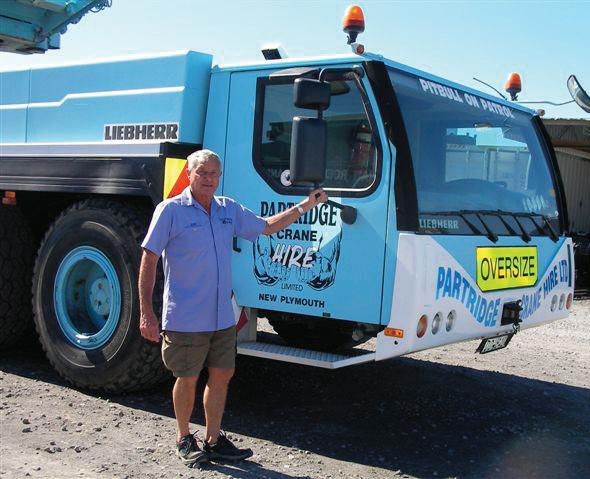
Taranaki’s locally owned & operated Crane Hire
Nothing too big or too small to have a go at (lifting) that is, after, 45+ years as Director of Ian Roebuck Crane Hire - Taranaki’s locally owned and operated Crane Hire - Ian still has involvement and pride in his company, fleet and staff. He is the essence of the building and has always been very hands on.
Over the years Ian was the first one to bring the biggest crane into New Zealand - 150t Crane followed by the 250t crane which was the biggest in New Zealand for a couple of months but now with the industry expansion bigger Cranes are hitting the roads for exciting massive lifting projects!
Ians time in business has seen some impressive lifts over the years, some with strategic planning and rigging, nothing scares him! Boat and Truck salvages Ian would be out there day or night clearing roads with rolled over trucks blocking the highway north, Taranaki’s only way north so getting the salvage completed fast and safely, he became a master at, each one different in their own way, either down the bank, in the river, or goods on board that had to be disposed of first. A different challenge each salvage! He touts his companies as being “safe, efficient, professional service, with the background to prove it.
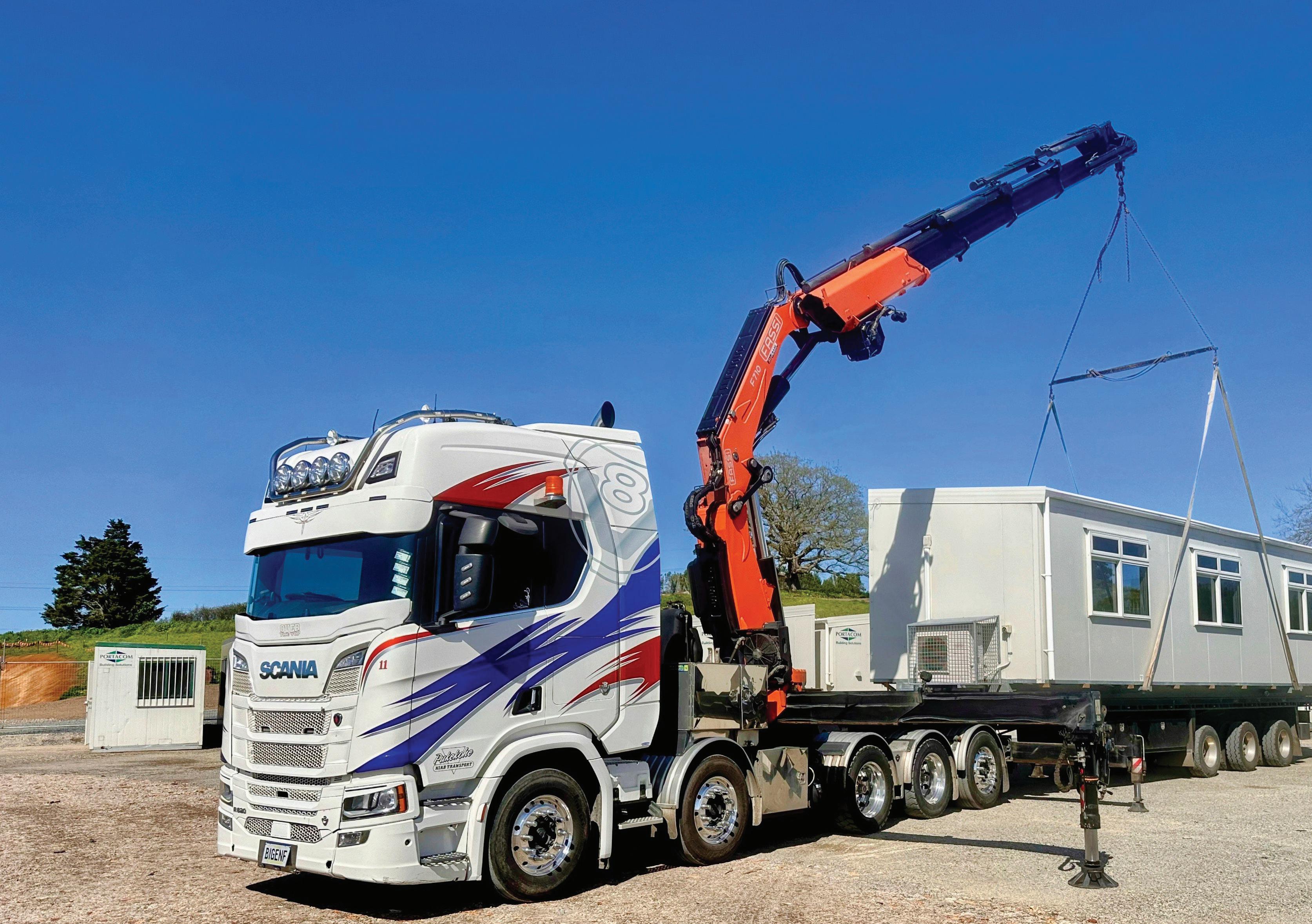
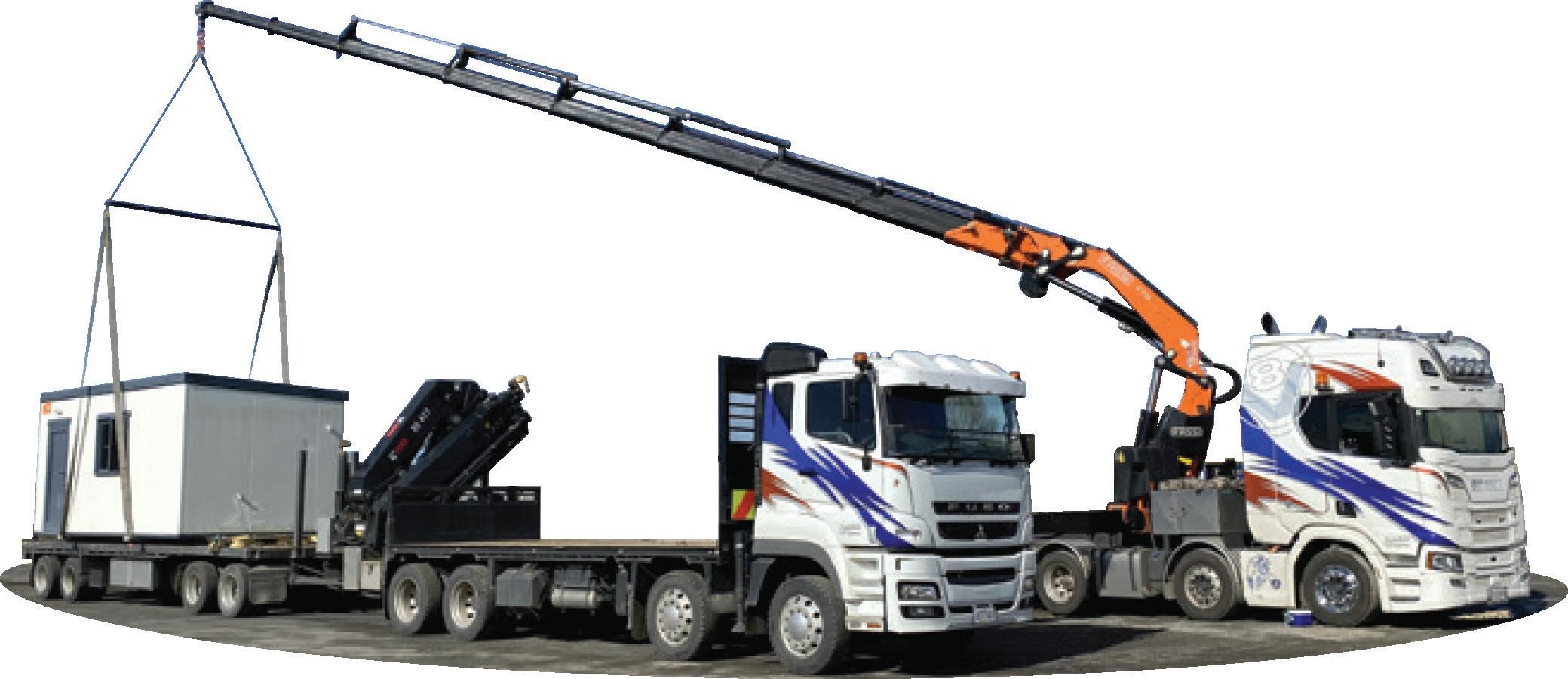
The company now being a one stop shop offering, Cranes, Trucks, Hiabs, Pilots, labour, and with full CAD Lift Plan Service all a 24 hour service. Services that include Drilling Rig maintenance and shifting, building removals and tiny home placements, site maintenance, truck and boat salvages, swimming pool placements, tree removal, structural steel placement, container carting and placing, precast panel lifting and erecting and over dimensional transport.
A later purchase of Todd McPhee Crane Hire based on Tokoroa , although a fair distance apart, the two companies offer various degrees of complementarity.
Being a proud life member of the New Zealand Crane Association and Totika Accredited.
Greg Durkin CEO BCITO
What 2025 meant for builders and contractors
2025 has been a year in which research and steelmaking marched toward lower emissions while the market coped with cost and demand pressures. For builders and contractors, the message is clear: expect more guidance, better low-carbon products, and continued demand for high-quality steelwork, but also plan for supply-chain and price volatility.
HERA (the Heavy Engineering Research Association) marked a productive 12 months, delivering applied research that directly affects everyday work on site. Key outputs in 2025 included new national guidance for low-carbon, circular design in low-rise buildings and practical tools to help specifiers choose lower-impact steel. HERA’s seismic and structural-fire programmes also produced findings that have been
fed into standards development, notably contributing to updated weld-sizing criteria appearing in draft updates to NZS 3404. These outputs are aimed firmly at making low-carbon, resilient detailing easier for engineers and fabricators to adopt.
On the supply side, New Zealand’s sole flat-rolled steel producer (New Zealand Steel) continued a major transition. The country’s move toward electric-arc-furnace (EAF) based production, supported by industry and government, advanced in 2025, with commissioning of a loweremission plant targeted for the end of the year. That shift promises more locally produced lower-carbon steel for building projects and, over time, greater price stability and security of supply.
Market indicators were mixed. Structuralsteel volumes were supported by infrastructure demand, even while the sector overall suffered from poor demand. Forecasts point to gradual demand growth across the next few years, making steelwork an attractive area for firms that invest in productivity and quality systems now.
Globally, the steel industry faces overcapacity and price swings, and the OECD warned that these factors complicate decarbonisation investment; a reminder that international dynamics will still affect local project costs and timelines.
What builders and contractors should do next: engage with HERA’s guidance and tools, ask suppliers for lower-carbon product information, lock in contracts where appropriate to manage price risk, and invest in fabrication quality and compliance to capture the benefits of improving standards. 2025 hasn’t solved every problem, but it has delivered practical steps that make low-carbon, resilient steel construction more achievable on Aotearoa New Zealand sites.
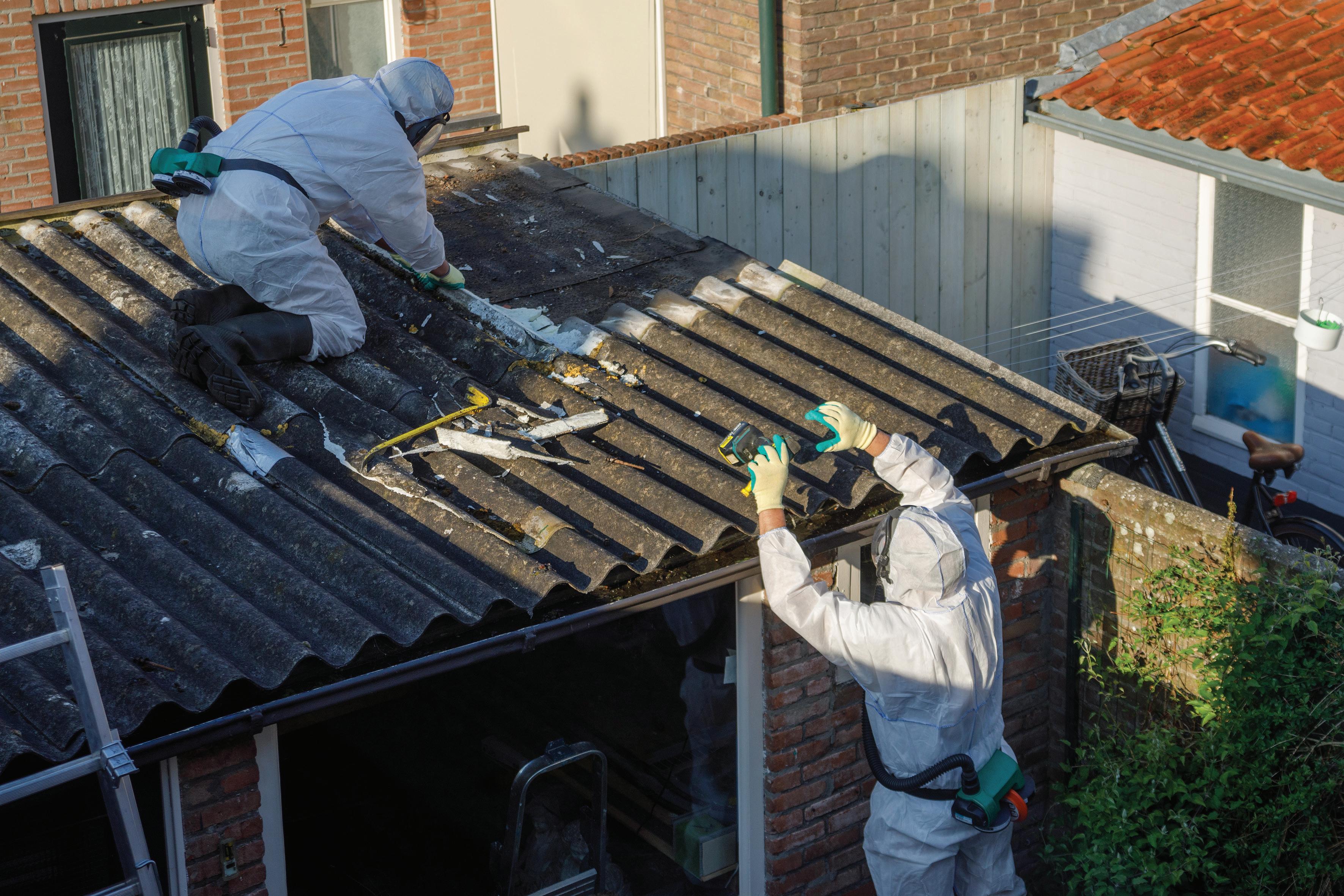
Raising the Bar for demolition in Aotearoa
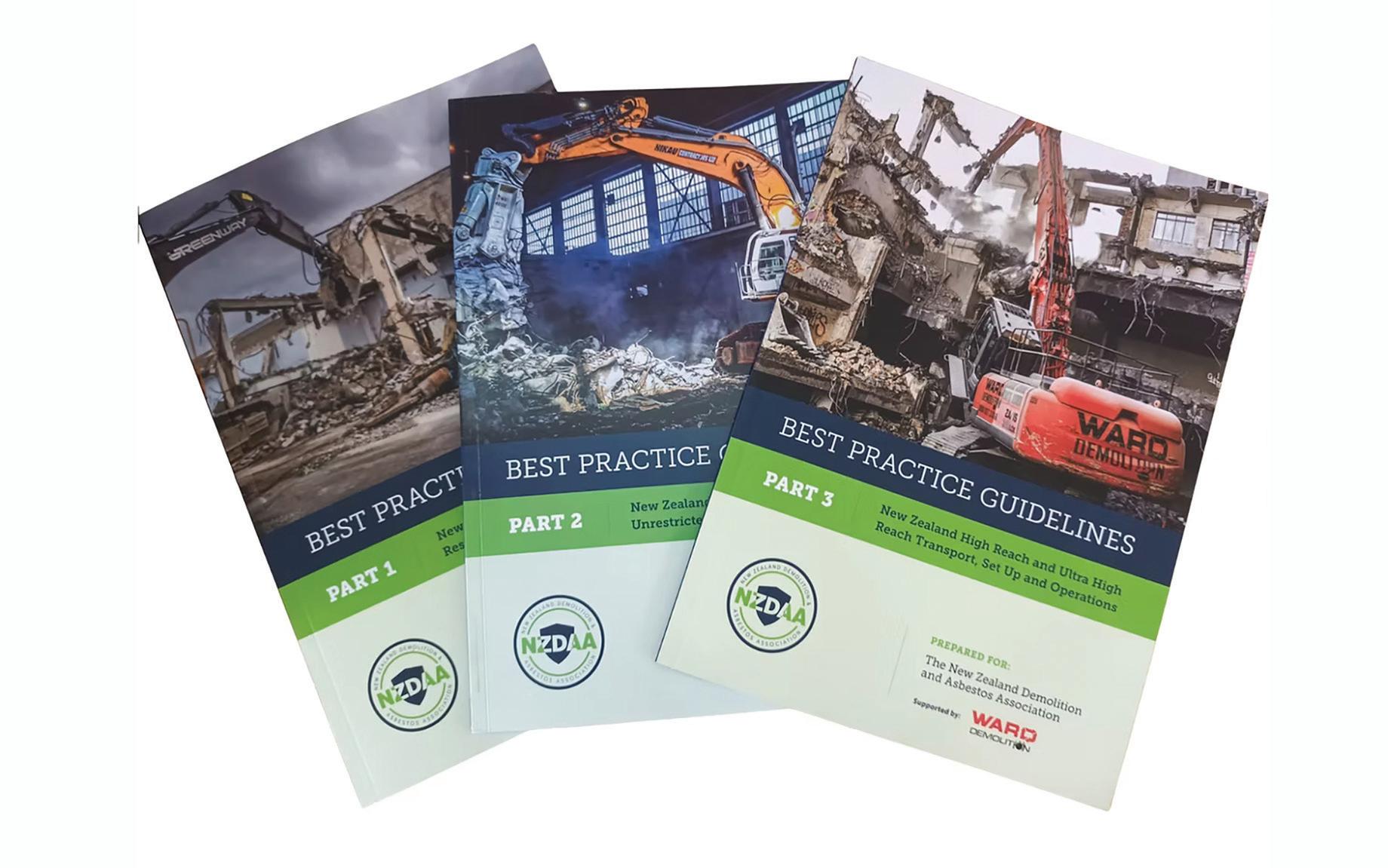
2025 has been a transformational year for the New Zealand Demolition and Asbestos Association (NZDAA). It marks a renewed focus on lifting industry standards, strengthening training, and fostering a more connected, forward-looking demolition community.
A key milestone has been the completion and release of the updated Demolition Guidelines — cornerstone documents that brings together expert insight, practical experience, and a shared commitment to safe, efficient, and professional demolition practices across Aotearoa.
Demolition is a complex and high-risk operation requiring careful planning, skilled execution, and a strong focus on safety. When carried out with precision and responsibility, it enables urban renewal and progress. These guidelines ensure that every project, regardless of scale, upholds the highest levels of safety, environmental protection, and regulatory compliance. The new guidance reflects the full scope of demolition work undertaken in New Zealand and is structured into three core
documents: Restricted, Unrestricted, and High-Reach Demolition.
• Restricted Demolition covers medium-tohigh-risk work involving structures up to three storeys (or 15 metres) that do not require consent.
• Unrestricted Demolition applies to large or complex projects — including dismantling or decommissioning structures over 15 metres, or those presenting significant technical or environmental challenges.
• High-Reach Demolition focuses on the specialised use of high and ultra-highreach machinery. As these machines become more common in New Zealand, the guidelines outline best practice for transport, assembly, operation, and maintenance to ensure both performance and safety.
Developed collaboratively by the NZDAA Executive Team, members, industry experts, and regulators, the new guidelines embody a collective commitment to continuous improvement and professional excellence. They stand as both a practical resource and a benchmark for the industry’s future direction.
As we look ahead to 2026, NZDAA remains dedicated to amplifying the voice of our sector, strengthening partnerships, and advancing global best practice.
Helina Stil. NZDAA President
Dr. Troy Coyle, CEO HERA
Building trust in Timber
How Timber Unlimited is shaping the future of construction in NZ
Timber is entering a new era in New Zealand’s construction landscape, one defined by innovation, collaboration, and a renewed commitment to sustainable, resilient building solutions. Leading the charge is Timber Unlimited, an initiative dedicated to empowering designers, engineers, and industry professionals with the resources, knowledge, and confidence they need to embrace timber’s full potential. Now, strengthened by a new partnership with the New Zealand Timber Design Society (TDS), Timber Unlimited is poised to accelerate its impact and extend its reach nationwide.
Founded in 2022, Timber Unlimited was created to promote greater use of wood in New Zealand’s built environment. In just a short time, it has grown into the country’s most comprehensive hub for timber design education, advocacy, and industry support.
As one of the initiative’s founding members, TDS has played a crucial role since the beginning, contributing deep technical expertise and a shared vision for a more sustainable future. Its decision to become the new home for Timber Unlimited represents a natural step, one that ensures stability, continuity, and strengthened capability.
“This partnership creates natural synergy,” explains Lisa Oliver, President of TDS. “TDS provides technical depth while Timber Unlimited drives broader adoption of wood in construction across New Zealand.” With their missions closely aligned, the partnerships signal a unified effort to enhance timber performance, confidence in timber, and timber literacy throughout the entire construction ecosystem.
From the start, Timber Unlimited has worked collaboratively alongside its founding members – BRANZ, SCION (now part of the Bioeconomy Science Institute), WPMA, and TDS – with early funding support from the Ministry of Primary Industries (MPI). This foundation has allowed for a series of successful, high-value projects that continue to advance timber understanding and uptake across the sector.
“Despite the relatively short tenure, Timber Unlimited has achieved significant outcomes that built on previous industry
initiatives,” says Daniel Scheibmair, Chair of Timber Unlimited. “We benefit from strong collaboration with our founding members… who continue to provide invaluable support.”
One of Timber Unlimited’s most influential contributions to date is its industry-leading website, now recognised as New Zealand’s go-to digital resource for timber knowledge. Designed to be practical, accessible, and inspiring, the platform offers a library of technical guidance, design case studies, research summaries, best-practice principles, and sector insights. Whether someone is looking to understand timber performance, explore engineered wood solutions, learn about structural systems, or access guidance on compliance and standards, the website brings it all together in one place.
Just as important is the initiative’s collaborative effort to work with SPEC Toolbox (formerly the CLT Toolbox). This freely available design tool supports New Zealand engineers and designers with advanced timber design calculations, helping users confidently navigate increasingly complex standards and methodologies. By providing access to tools like this, Timber Unlimited is removing one of the biggest barriers to timber adoption: the perception that timber design is complicated, timeconsuming, or difficult to get right. Instead, the initiative empowers professionals to innovate with assurance and accuracy.
But Timber Unlimited’s mission goes beyond tools and resources; it also aims to build a connected, curious, and future-focused community. One of the most anticipated
Whoever you are across the timber and construction value chain, and wherever you are on your timber learning journey, Timber Unlimited aspires to inspire you with the endless possibilities of timber in the built environment.
developments on the horizon is the return of the Timber Design Awards in 2026, a celebration of excellence and ingenuity that will once again spotlight New Zealand’s most remarkable timber projects. The awards will offer an opportunity to showcase timber’s possibilities in forms far beyond traditional housing, reinforcing the message that wood can deliver high-performance solutions across commercial, industrial, public, and large-scale construction.
Timber Unlimited continues to act as a connector, facilitating relationships between designers, builders, engineers, researchers,
and manufacturers. Through webinars, events, publications, and partnerships, the initiative nurtures a thriving network of timber enthusiasts who are eager to share knowledge and advance best practices across the industry.
For Daniel, this collaborative spirit is at the heart of the initiative’s purpose. “It’s about unlocking timber’s potential and building trust in its possibilities,” he explains. The aim is not only to highlight timber’s environmental advantages but also to emphasise its versatility, safety, performance, and aesthetic appeal. Timber Unlimited wants to inspire industry professionals at every point in the timber value chain, from students and emerging designers to experienced engineers and large commercial contractors.
“Whoever you are across the timber and construction value chain, and wherever you are on your timber learning journey, Timber Unlimited aspires to inspire you with the endless possibilities of timber in the built environment,” Daniel says.
As sustainability and resilience continue to become increasingly important across the sector, timber stands out as one of the most promising solutions today. And with Timber Unlimited continuing to drive education, innovation, and collaboration, the future of timber in Aotearoa looks more exciting than ever.
Marian College. Image from www.timberunlimited.co.nz
New Techlam pre-engineered truss packages are taking the wait out of structural approval
For most builders, getting engineered trusses approved represents a familiar bottleneck. Rather than engineering each truss system from scratch, Techlam has developed a suite of pre-engineered, building code-compliant truss designs that builders can specify directly from standardised sheets.
The system covers spans from 1.5 to 8 metres, with pitches ranging from 20° to 35°. Each design comes with a PS1 and clearly stated engineering assumptions, developed through a partnership with PTL Structural & Fire consultants.
Three ways to build with Techlam pre-engineered trusses
Trusses can arrive fully assembled and ready to crane into position which is ideal for tight timelines and limited site labour situations. Alternatively, they’re available as prefabricated kitsets for on-site assembly, or as glulam members only for teams who prefer complete site control.
Material specifications can be adjusted depending on the project. Trusses are manufactured from radiata pine or sprucelam glulam, with surface finishes ranging from smooth sanded options for exposed applications to utility grades for concealed
use. Connection hardware can be specified as stainless steel, powder-coated or hot-dip galvanised to suit architectural requirements or challenging environments.
Pre-engineered in New Zealand, for New Zealand
The pre-engineered designs account for very high wind zones, seismic zone 3, subalpine regions and both light and heavy roof claddings. This means the same truss design can be deployed across different geographical locations without performance compromises or engineering delays.
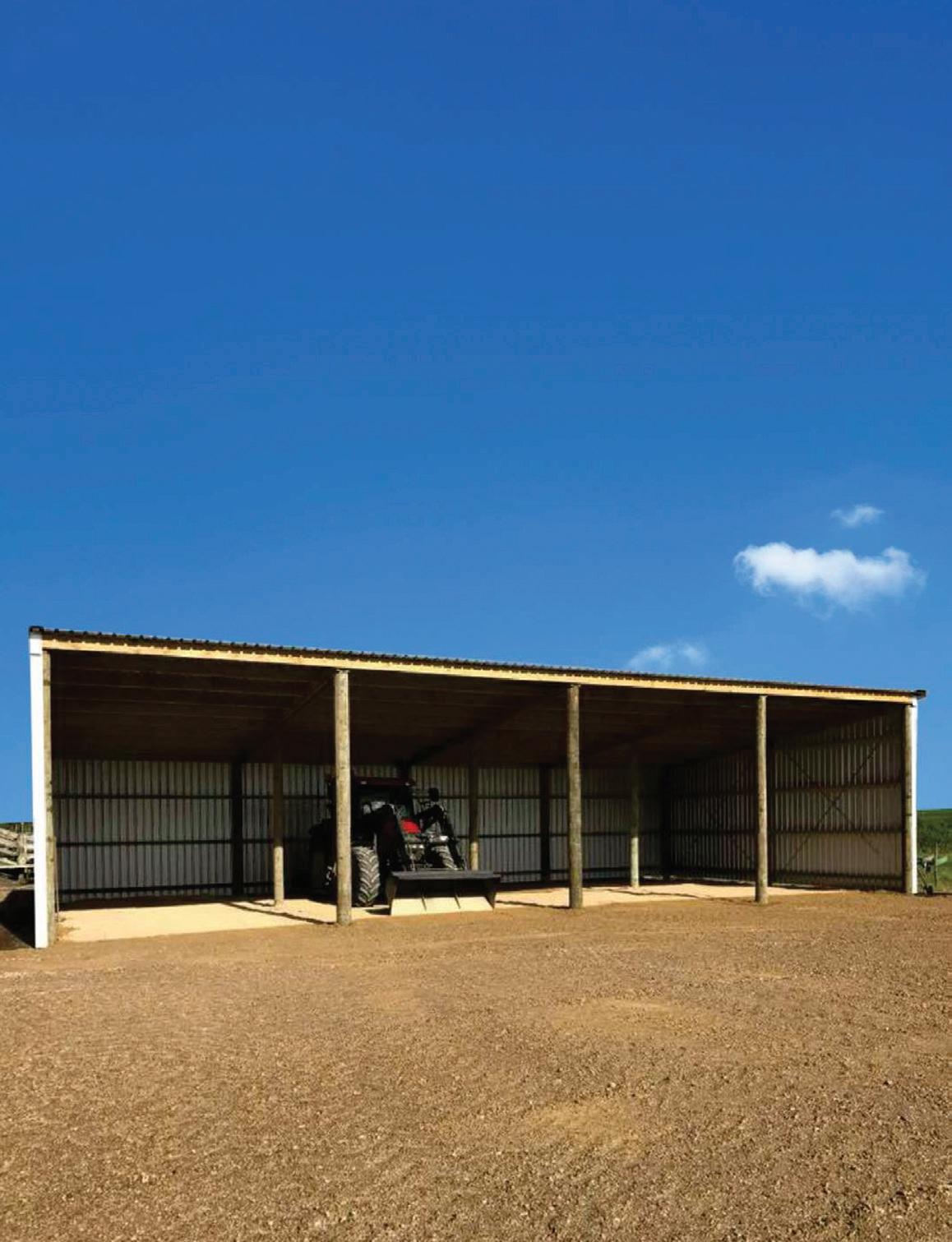
Applications span from open-sided structures like carports, verandahs and covered walkways through to fully enclosed buildings. For open-sided uses, trusses come with specified posts and fixings. For enclosed applications, builders integrate them with supporting wall structures using provided connection details.
Behind the pre-engineered designs sits over 30 years of manufacturing expertise at Techlam’s Levin facility. The advanced 6-axis CNC processing line handles members up to 1,200mm wide, 500mm thick and of unlimited lengths, supporting state-of-the-art pre-fabrication facilities that deliver great accuracy.
This precision manufacturing, backed by strict quality management systems and environmental certifications, aims to significantly reduce site time, labour and risk. Techlam provides integrated technical support
from concept through to assembly, helping builders manage accurate budgeting and build efficiency throughout the project lifecycle.
“The pre-engineered range covers most applications,” says Brett Hamilton, Techlam’s Managing Director, “but when projects need something unique, we can still design and manufacture custom trusses to specification.”
Innovative products to strengthen your projects
Beyond trusses, Techlam’s product range includes structural laminated posts and beams, curved elements for complex
architectural applications and structural flooring solutions. Recently, the company completed acquisition of the Woodspan brand, adding parallel laminated timber (PLT) panel systems to their offering through a manufacturing partnership with Taranakipine. These PLT panels provide engineered timber solutions for walls, floors and roofs.
For projects pursuing comprehensive mass timber systems, the combination of glulam, PLT and pre-engineered products offers an integrated solution from a single supplier.
More information at techlam.nz
How to run your business during the holidays
Why smart leaders plan their downtime as carefully as their growth
For many business owners, the idea of taking a proper holiday feels risky. What if clients are unhappy? What if operations falter? For entrepreneurs whose personal drive powers their company, stepping away can seem almost unthinkable.
But research tells a different story. Studies show that founders who take regular breaks make better long-term decisions and are more effective leaders. According to a Deloitte survey, 77% of executives experience burnout, and 70% say that time off directly improves their performance and strategic clarity. Taking a break isn’t indulgent, it’s a business investment.
In truth, there’s never a “perfect” time to step away. There will always be a looming deadline, an important client, or a project demanding your attention. The key isn’t finding a gap in the calendar; it’s building a company that functions effectively without you. With preparation, structure, and clear communication, you can protect both your business and your sanity during the holiday season.
Mastering digital communication
The first step in holiday-proofing your business is taming the most persistent source of stress: your inbox. Set up an automated email response that clearly states your return date and whether you’ll be checking messages intermittently. Include an alternative contact for urgent matters, someone who can manage client needs or escalate issues if absolutely necessary.
Pro tip: List your “official” return date as two or three days after you actually get back. This gives you valuable time to catch up on correspondence, review updates, and get back into rhythm before external expectations kick in.
This simple measure sets professional boundaries and manages client expectations, which helps preserve your credibility while protecting your peace of mind.
Delegation: The ultimate test of leadership
Handing over control can be daunting for entrepreneurs, but it’s also one of the most defining marks of a strong leader. Delegation isn’t about relinquishing responsibility; it’s about building trust, capability, and confidence within your team.
Before you leave, hold a comprehensive pre-departure meeting with key employees. Review ongoing projects, define clear decision-making authority, and outline escalation protocols. Identify which tasks require your oversight and which can be handled independently.
Most importantly, communicate trust. When employees know they’re empowered to lead, they rise to the occasion. This empowerment not only develops leadership skills within your organisation but also strengthens your company’s long-term resilience.
Build systems that work without you
The true test of a scalable business is whether it can operate smoothly in the absence of its founder. Use your holiday preparation as a chance to evaluate your systems and automation.
Audit your core processes: invoicing, customer onboarding, marketing campaigns, and client support. Can these workflows continue without manual input? Utilise
By Jonathon Taylor
Preparation is your best defence against holiday disruption. Before packing your bags, schedule your marketing content, newsletters, and client communications to be sent automatically. Most email and social media platforms allow you to pre-schedule content, ensuring your business remains visible and engaged even when you’re away from your computer.
automation tools such as CRMs, scheduling platforms, and project management software to streamline operations.
If you find gaps, address them before you go. Every process you systemise now reduces your future reliance and moves your business closer to genuine independence. Staying connected strategically Modern connectivity means you can technically work from anywhere. But just because you can doesn’t mean you should.
To maintain balance, schedule one or two brief, pre-arranged check-ins with your team during your holiday.
These sessions should focus on progress, not micromanagement. Resist the urge to dive into every detail or solve minor issues. Instead, use this time to demonstrate confidence in your systems and people.
Boundaries are vital here. Decide in advance what constitutes a true emergency and clearly communicate those parameters.
Your team should know when it’s appropriate to reach out and when to handle matters internally.
Remember: a business that depends entirely on the owner for decision-making is a bottleneck, not a success story.
Prepare like a pro
Preparation is your best defence against holiday disruption. Before packing your bags, schedule your marketing content, newsletters, and client communications to be sent automatically. Most email and social media platforms allow you to preschedule content, ensuring your business remains visible and engaged even when you’re away from your computer.
This approach also benefits your re-entry. The fewer loose ends you leave behind, the smoother your transition back into work will be.
You can also designate a senior team member as your “acting leader” while you’re away. Empower them to make decisions within defined limits, and clearly communicate who to contact for further assistance. This creates continuity and strengthens internal leadership pipelines.
Setting boundaries with clarity
Transparency is critical, both internally and externally. Let clients know what they can expect during your absence and who will be handling their queries. Communicate clearly that while your team remains available, your personal availability will be limited. Equally important are your personal boundaries. Decide in advance how and when you’ll check in, if at all. Avoid the temptation to “just peek” at emails daily; it rarely stops at five minutes. A clear plan will help you disconnect fully and make your break genuinely restorative.
Embrace the strategic power of rest
Taking a break doesn’t just benefit your mental health - it enhances business performance. Stepping away creates space for reflection, creativity, and perspective. Many leaders find their best
ideas surface when they’re removed from day-to-day pressures.
Downtime can also help you return with sharper focus and renewed motivation. You’ll make more strategic decisions and lead with greater empathy and clarity.
So, instead of viewing your holiday as a disruption, consider it an investment in your leadership effectiveness. The ability to step back and trust your systems is a hallmark of sustainable business growth.
After the holiday, review and refine Once you return, take time to debrief. Review how the business performed in your absence. What went smoothly? Where were the bottlenecks? Use these insights to strengthen systems, refine delegation, and adjust processes for next time.
This habit transforms each break into a leadership development exercise, helping you build a more autonomous, scalable organisation.
Pre-holiday business readiness checklist
• Delegate key responsibilities and define decision-making limits
• Hold a pre-departure team briefing
• Set up an email auto-responder with a buffer return date
• Pre-schedule marketing and client communications
• Establish “emergency-only” contact rules
• Schedule one mid-trip check-in (if needed)
• Assign an acting leader for continuity
• Conduct a post-holiday debrief to improve systems.
“Keep in mind that banks and lawyers are also busier in the run-up to the festive season, so it pays to get things arranged early to avoid there being any hold-ups.”
- Paula Lines, The Law Shop (New Zealand), in “Prepare your Business for the holiday season”.
“The worst thing that can happen is that a customer calls and doesn’t get an answer.”
- Julie Kirk, President of Path Forward International (small business consulting firm), in an article in AllBusiness.com.
“Taking the time to plan ahead ensures you can truly relax and enjoy the festive season, knowing your team, customers and cash flow are all under control.”
- Natalie Lennon, Founder & Director, Two Sides (online accounting/ bookkeeping firm) in the article
“A four-step checklist to prepare your business for the annual end-of-year shutdown”.
The bottom line
For many entrepreneurs, the fear of stepping away is rooted in habit rather than reality. With the right systems, communication, and trust in your team, your business can not only survive your absence—it can thrive because of it.
Taking time off isn’t a risk. It’s a strategy. A rested, re-energised leader sees the bigger picture, inspires confidence, and makes better long-term decisions. So go ahead, book that holiday. Your company, your team, and your future self will thank you for it.
List your “official” return date as two or three days after you actually get back. This gives you valuable time to catch up on correspondence, review updates, and get back into rhythm before external expectations kick in.
Building protection that lasts
A well-maintained house will last longer than one left to face the elements alone.
At Glamacote 2021 Ltd, we understand that caring for your home’s exterior isn’t just about looks; it’s about protecting your investment.
We are proud to be the main contractor in the mighty Waikato for the STO plaster system, a trusted European plastering method that delivers a strong, durable, and weather-resistant finish. With our commitment to excellence, we’ve completed 1000s of projects, have 10 sites currently in progress, and work alongside many business partners throughout the region. These figures reflect our ongoing dedication to quality workmanship and long-term relationships with our clients and industry partners. What we do
At Glamacote 2021 LTD, we offer a range of plastering and painting services designed to safeguard, restore, and enhance your property. Our experienced team handles both residential and commercial projects, ensuring every surface — from walls to roofs — is finished to the highest standard.
Exterior Plastering & Cladding Installation. We apply high-quality plaster over many different claddings such as AAC Panel/ brick, Lath, Fibre cement sheet and Polystyrene.
We use High quality plasters with Fibreglass mesh inserted in the layers to strengthen the structure. This process reinforces integrity, prevents cracking, and provides a protective outer layer that withstands the elements. The result is a durable, weatherproof finish that lasts.
Exterior plastering & painting
Our exterior systems create a solid barrier against the weather, while our painting services add the finishing touch. A fresh coat of paint enhances your home’s aesthetic and helps shield the surface from UV rays, moisture, and daily wear.
Roof painting
Your roof is one of the most exposed parts of your property, taking constant punishment from rain, wind, and sun. Our specialist roof painting services use coatings that are designed to withstand New Zealand’s conditions, ensuring your roof looks sharp while remaining resilient.
Interior painting & maintenance
Inside, our professional painting services refresh your living or working spaces. We use premium paints that not only look great but also protect against scuffs, stains, and damage, ensuring your interiors stay clean and bright for longer.
The importance of maintenance
Every day, mould, dirt, and harsh weather attack the outer coatings and sealants that protect your home. Left unchecked, these can degrade materials and lead to expensive
repairs. A regular maintenance programme is the smart way to preserve your property’s condition and value. Glamacote’s proactive approach ensures your surfaces remain in excellent shape, preventing deterioration before it starts.
Commercial & residential
From private homes to large-scale developments, Glamacote brings consistency, craftsmanship, and care to every project.
Whether you need a touch-up or a complete exterior restoration, our team delivers the same level of detail and professionalism on every job.
Contact & locations
If you’re ready to start your next project, request a free quote directly through our website. Simply submit your details, and we’ll be in touch to arrange a time that works for you.
Proud to be local. Proud to support One Mahurangi.
Composite Joinery are the longest standing, most successful aluminium joinery fabricators in Warkworth.
Specialising in a stylish and versatile range of aluminium windows and doors, Composite Joinery create bespoke results to meet your needs. We’re expert joiners with over 50 years’ combined experience.
Composite Joinery are proud manufacturers of Vantage Aluminium Products. 09 425 7510
Steel Construction New Zealand (SCNZ) is pleased to announce the winners of the 2025 SCNZ Excellence in Steel Awards. Close to 300 leaders and specialists from across the structural steel industry gathered in Auckland last night to celebrate the best of the best at an event that highlights the sector’s commitment to innovation, collaboration and best practice.
Each year, judging becomes increasingly challenging as the standard of entries continues to rise. In 2025, 20 finalists were selected from nearly 50 outstanding submissions spanning an impressive range of structural steel projects. Together, they showcase the versatility of structural steel and the exceptional results that can be achieved when it’s at the heart of design and construction.
“The projects submitted this year demonstrate the incredible skill and creativity within New Zealand’s structural steel industry,” said SCNZ Chair Malcolm Hammond. “From design to delivery, our industry continues to set the standard for innovation, collaboration and excellence in steel construction.”
“Judging this year’s awards was exceptionally challenging, reflecting the remarkable
quality of entries across the board,” said SCNZ General Manager Darren O’Riley.
“The calibre of work highlights the maturity, sophistication and forward-thinking approach of New Zealand’s steel sector.”
The 2025 Supreme Winner and Category Winners are:
Supreme winner and over $3M category winner
Eastbridge & Culham Engineering for Te Ara Pekapeka Bridge
This new traffic bridge provides a vital crossing over the Waikato River in Hamilton. Intricate Māori carvings and patterns transform the 180m-long structure into a sculptural landmark that reflects local heritage. Two 30m-high lattice Y-shaped piers support four lines of box tub girders and a composite concrete deck, delivering a resilient and practical asset for the community.
Eastbridge & Culham Engineering for Te Ara Pekapeka Bridge
$1.5M-$3M category winner
VIP Structural Steel for Mixed-Use on High Street
This six-storey mixed-use building makes a bold statement on a wedge-shaped site. With a 10-sided footprint, every floor is unique – demanding bespoke engineering and fabrication. Faceted façades, cantilevers and a complex roof with intersecting planes and folding glazed elements required millimetre precision to align steel framing with architectural geometry and façade systems.
$500K-$1.5M category winner
Eastbridge for Wai Kahua Waka Footbridge Fabricated in the form of a waka, this new footbridge commemorates 1,000
years of Māori navigation and arrival at Turanganui-a-Kiwa Poverty Bay. It’s a seamless integration of art, culture and engineering – with artistic intent embedded in every structural decision. The result is a powerful example of how structural steel can deliver technical excellence while shaping enduring cultural landmarks.
Under $500K category winner
DHC Consulting Group for Lot 43 Te Arai
This was a complex structural engineering challenge, made possible by the versatility and performance of structural steel. Featuring double-cantilevered roofs that appear to float with minimal visible support, the design was achieved using slender square hollow section columns and long-span steel framing.
Standalone residential category winner
VIP Structural Steel for Round House
Situated on a remote coastal site on the Banks Peninsula, the Round House is an architecturally ambitious circular home that resembles a cut-off totara stump. Structural steel enabled the concept and is the backbone of the building. The floor-to-ceiling glazing is bonded directly to the curved frame, demanding exceptional precision and innovation in the structure’s fabrication.
Earthquake strengthening category winner
MJH Engineering for Te Matapihi Wellington Central Library
Closed in 2019 due to seismic vulnerability, Wellington’s Central Library has been reborn as a resilient, sustainable and future-ready civic facility. The transformation involved tying new foundations into base-isolated
steel-braced frames. More than 1,000 tonnes of structural steel, including custom K-frames and column encasements, turned a flexible structure into one that moves as a single, earthquake-resilient unit.
About SCNZ
Steel Construction New Zealand Inc. (SCNZ) aims to advance the interests of New Zealand’s diverse steel construction industry by promoting the benefits of steel solutions in building and infrastructure projects. Members include manufacturers of structural steel and steel products, distributors, fabricators, designers, detailers, galvanisers, and paint and building supply companies. SCNZ provides its members with technical advice on the latest in steel design trends and standards, networking opportunities and a representative voice with key industry and government decision-makers. For more information please visit www.scnz.org.
Photo Credit:NASA
Eastbridge for Wai Kahua Waka Footbridge
DHC Consulting Group for Lot 43 Te Arai
The search for sustainable steel
How to find it, buy it, and use it
What is it?
What does sustainable steel actually mean? It’s both
1. A responsibly-sourced product (where the impact of the steel manufacture on the social and economical environment is considered), and
2. Steel with low embodied carbon – i.e. manufactured with lower emissions and hence a lower global warming potential.
Why does it matter?
Steel is a major contributor to embodied carbon in the built environment and so is in focus.
The demand for sustainable construction materials has been rising, with local and federal governments introducing decarbonisation initiatives, environmental impact goals, and carbon reporting. State governments have targets of 30-75% emissions reductions by 2030 (apart from WA).
NSW and Federal Governments have introduced mandatory decarbonising infrastructure project policies, and Ministers have agreed to include voluntary embodied carbon reporting in the National Construction Code (NCC) from 2025 for commercial
buildings, understanding embodied carbon measurement is more crucial than ever.
Ministers have also requested the ABCB investigate and potentially fund the inclusion of a minimum standard for embodied carbon in the NCC from 2028, further supporting Australia’s transition to net zero.
Who’s using it?
Many builders and developers today see sustainability as a key consideration, setting carbon reduction targets and other measures. As well as company commitments, they do this because for
1. Customers/asset owners – with ESG reporting mandates, internal carbon reduction targets, and social procurement targets
3. Third-party certification (e.g. Green Star and ISC)
How can you find it?
There’s a significant push for third-party verification of sustainability claims to ensure products are being fairly compared. Without these credentials, products – and the projects they are being used in – may face downgrading in environmental assessments.
Because unfortunately, with the rise in demand for sustainable products has come an increase in ‘greenwashing’ – claims of ESG standards without proof or accuracy.
Another challenge is establishing which product is actually ‘the most sustainable’ choice. This is complex thanks to the variety of methods used to measure ‘sustainability’.
Then there is the matter of traceability: you have to be sure there’s been no substitution of product – that the construction steels you ordered are what you received.
So builders are now looking for ways to measure and verify products’ ESG credentials. They are often turning to a premium, independent verification scheme.
How do you verify it?
There are a few schemes on the market, but wide variation in what they assess. When comparing them, it is crucial to consider what the criteria is, how it is being validated, and how that can be used for project reporting.
For example, if serious about carbon emissions, the carbon footprint through the whole downstream process from the mill to the site should be determined. This is something asked for in the industry today: major developers have said that when a product is delivered to their side gate, they
There’s a significant push for thirdparty verification of sustainability claims to ensure products are being fairly compared. Without these credentials, products – and the projects they are being used in –may face downgrading in environmental assessments.
want it to arrive with an accurate GWP. So it’s important to have consistent methods of calculation that are independently verified.
And not all certification schemes have the same level of rigour. While carbon emissions are important, the assessment must go beyond embodied carbon. Steel should be assessed against its impact on all of the supply chain, including human rights and
labour conditions. A good scheme should consider ethical business practices, modern slavery, fair supplier treatment, and the socioeconomic impacts of the value chain, as well as the expected environmental impacts.
It’s also essential that sustainability certification analyses the full lifecycle of a product. Product producers’ environmental impact may be quantified through a lifecycle assessment (LCA), quantifying the kilograms of CO2e (carbon dioxide equivalent) per tonne (i.e. the global warming potential or GWP).
Some steel makers get certification to management standards like ISO 14001:2016 Environmental Management. But these schemes focus on documented systems and management rather than actual product output, so by themselves they are increasingly considered not to provide adequate verification of sustainability.
Using Australia’s most rigorous certification
In 2021, the Australasian Certification Authority for Reinforcing and Structural Steels – ACRS – introduced its Sustainable Constructional Steel (SCS) Certification Scheme, to allow builders and developers to confidently source high quality constructional steels produced under high ESG standards. SCS ensures that construction steel entering New Zealand and Australia meets the UN guidelines on global environmental, social and ethical standards, by using independent certification of ESG criteria and performance indicators. The scheme is recognised internationally and has obtained “Best Practice” under the Green Building Council of Australia “Responsible Product” scheme for Green Star.
Designers, builders, and the industry use SCS to demonstrate compliance with sustainability frameworks, reduce project risk, and meet growing regulatory and investor expectations.
The SCS scheme provides the industry with a uniform and benchmarked approach to demonstrating a commitment to sustainable principles. Having an internationally recognised and independently certified scheme for the assessment of steel means sustainability data can be seamlessly passed forward in the value chain – providing significant efficiencies in gathering verifiable SGS data for projects.
The SCS Scheme provides everyone with confidence that the steel in our homes, high-rise commercial and residential buildings and infrastructure projects meets the highest global standards in terms of both quality and sustainability.
A digital solution
ACRS launched ACRS Cloud for digital traceability for steel products, allowing for better transparency through the supply chain journey to confirm compliance – this traceability is also essential for sustainability measurements. ACRS Cloud now can provide traceability down to batch level. Steel users can check steel’s sustainability certification in the secure environment of the ACRS Cloud app, just by scanning product QR codes.
What does the industry say?
SCS is globally recognised by international certification systems including BREEAM, LEED, and Singapore’s SGBP
The latest report from specialist global steel and metals intelligence provider, Kallanish, provides information on navigating the green steel landscape. The report notes the Sustainable Constructional Steel (SCS) Scheme* is “an accredited, third-party certification programme developed to assess and improve the sustainability performance of steel products and the organisations that manufacture and process them.” And the Scheme complements the global framework for measuring and managing greenhouse gas emissions.
The SCS scheme provides the industry with a uniform and benchmarked approach to demonstrating a commitment to sustainable principles. Having an internationally recognised and independently certified scheme for the assessment of steel means sustainability data can be seamlessly passed forward in the value chain – providing significant efficiencies in gathering verifiable SGS data for projects.
The report notes key elements of the scheme, including
• LCAs & EPDs: lifecycle assessment calculations and third-party verified environmental product declarations, ensuring transparency and consistency in environmental reporting
• Governance & stakeholder input: input from a wide range of stakeholders –including steel producers, construction contractors, green building councils and regulators – in the development and operation of the scheme.
• Certification Framework and Methodology: assessment against a wide-ranging set of environmental, social, ethical, and economic criteria, including audits covering 140 criteria, and a multi-level rating system.
Aus construction uses SCS for better outcomes
Australia stakeholders support the Scheme for its usability, traceability and transparency in delivering projects.
“John Holland, as a head contractor responsible for the delivery of projects across the built environment, tracks and reports on the embodied carbon of these projects to meet regulatory and client requirements.
“Typically, the traceability of construction materials’ embodied carbon concludes at the point of a published Environmental Product Declaration. For steel products that undergo further modifications by processors or fabricators, the embodied carbon from these additional stages cannot be reported with complete certainty.
“The ACRS Sustainable Construction Steel Scheme facilitates traceability and transparency of embodied carbon and other environmental indicators during these stages, establishing a “carbon chain of custody” from raw material through to the processor/ fabricator gate.
“This enables John Holland projects to, in turn, provide more certainty in steel embodied carbon data to our clients and for Scope 3 emissions reporting in future.”
- Patrick Campbell, Operations Sustainability Manager, Building/Infrastructure/Major Projects, John Holland
* *The Kallanish report refers to the CARES Sustainable Constructional Steel (SCS) Scheme, of which ACRS’ SCS Scheme is the Australian/New Zealand Standards version.
FICEP GEMINI Laser
The future of laser cutting
FICEP’s innovation is revolutionizing plate processing with unmatched precision, efficiency, and versatility.
The transition from GEMINI to GEMINI LASER marks a significant milestone in the industry, offering an integrated solution for laser cutting, milling, and drilling that enhances competitiveness and operational efficiency. With this innovation, FICEP reaffirms its leadership in steel processing technologies, opening new frontiers in industrial fabrication.
FICEP offers cutting-edge solutions that integrate advanced cutting and machining technologies, combining thermal cutting (plasma and oxy-fuel) with mechanical operations (drilling and milling using highperformance spindles). This allows for processing materials of varying thicknesses
and geometries while optimizing production times and minimizing waste.
The evolution of high-power laser systems and cost reduction has transformed the steel construction industry. Now, combining laser cutting with precision machining is crucial to achieving extremely accurate results. To meet this demand, FICEP has developed GEMINI LASER, a solution that merges laser technology with the outstanding performance of the renowned GEMINI range, the result of over 90 years of R&D expertise.
GEMINI LASER is an automatic CNC gantry machine for marking, milling, drilling, tapping, and beveling, now enhanced with a laser source ranging from 12 to 30 kW (or higher for specific applications), capable of cutting plates from 5 to 60 mm thick. The system delivers high-quality cutting, reducing kerf width and waste, while allowing for complex bevel cutting at ±45° for V, Y, X, and K cuts.
Safety is ensured by a mobile protective enclosure that contains the laser beams, supported by an exhaust system that removes gases, while an automated nozzle changer guarantees optimal performance
and extended tool life. Additionally, GEMINI LASER integrates high-speed milling and drilling capabilities (spindle up to 7000 RPM) and an automatic tool changer (up to 24 tools) to minimize downtime.
Its compact dual-beam structure reduces deflection and ensures superior stability without requiring special foundations. Smart clamping and referencing systems reduce setup times, optimize nesting, and minimize waste. The system can also be paired with an automatic part unloading system (4/6-axis robotic or Cartesian) for seamless component removal and storage, ensuring continuous production flow.
Finally, the Steel Projects software suite oversees the entire production cycle, from design to fabrication. It enhances communication, monitoring, and scheduling while significantly reducing production time and material usage.
Your Local Plumbing Company
Paul spent 21 years training and working in maintenance plumbing in Wellington before relocating to the Bay. We then began a new chapter by launching our plumbing business to serve the Western Bay area around Te Puke.
Our focus is to provide honest, quality workmanship.
What is carbon and why does it matter?
By
Carbon is one of the most abundant elements in existence and forms the basis of all known life. But you can have too much of a good thing and carbon is no different.
Let’s look at what we mean by carbon and what impact the construction and demolition (C&D) industry has.
The basics
Earth has a very well-tuned system for moving carbon between the atmosphere, oceans, soil, and living organisms – called the carbon cycle.
Carbon becomes a problem when this natural cycle is thrown out of sync. When we use fossil fuels, carbon combines with oxygen (becoming carbon dioxide, CO₂) and gets released into the atmosphere.
Construction and demolition creates significant environmental impacts globally, contributing to 38% of greenhouse gas emissions and 35% of global energy demand. Aotearoa New Zealand has committed to being zero carbon by 2050 –which means we all need to do our bit to reduce our emissions.
For around 100 years we’ve been creating more CO₂ than the earth can process. The CO₂ traps heat from the sun in the atmosphere, warming our climate on a global scale.
Carbon becomes a problem when this natural cycle is thrown out of sync. When we use fossil fuels, carbon combines with oxygen (becoming carbon dioxide, CO ) and gets released into the atmosphere. 2
It may not seem like much, but a shift of only a couple degrees in the global average temperature has dramatic consequences like more frequent and more powerful extreme weather events.
What about greenhouse gases?
Greenhouse gases, including carbon, are one of the biggest contributors to climate change and its ongoing effects on us and our environment. Cars, planes, power plants, and factories all emit greenhouse gases.
The Kyoto Protocol, an international agreement, defines six greenhouse gasses:
• Carbon dioxide (CO₂) – From burning things like fossil fuels, waste, and plant matter.
• Methane (CH4) – From landfills, livestock, agricultural activities, and the production of coal, natural gas, and oil. It’s also far more warming than CO₂.
• Hydrofluorocarbons (HFCs) – From solvents, refrigerants, firefighting agents, and propellants for aerosols.
What’s a carbon footprint?
A carbon footprint measures all the emissions (not just carbon) from an organisation, event, product, or person.
Not all gases are created equal – some have a more harmful effect than others – so a carbon footprint is calculated in equivalent tons of CO₂ (CO₂e). It adds together all the different greenhouse gases and consolidates it into one number, which is easier to understand and compare.
Once we have a measurement of the total carbon being produced, we can then work out ways to reduce our carbon footprint.
Carbon in C&D is typically split into two types – embodied and operational carbon.
Embodied carbon
This refers to the total greenhouse gas emissions from the production, transportation, and installation of materials, products, or infrastructure, right up until what is being built starts being used.
It also includes any emissions from demolition, and is measured in CO₂e. Understanding embodied carbon helps you choose materials and designs which minimise carbon emissions, improving your environmental sustainability.
Key stages of embodied carbon:
• Raw material extraction: Emissions from the extraction of raw materials (e.g. mining of metals, logging for timber).
• Transportation: Emissions from transporting both raw materials to manufacturing sites and finished products to their final destinations.
• Manufacturing and processing: Emissions from the energy and processes used to convert raw materials into finished products (e.g. steel production, cement manufacturing).
• Construction and installation: Emissions from the construction process, including energy used by machinery and vehicles on construction sites.
Operational carbon
Historically, measuring the environmental impact of buildings has focused on the construction phase, but that doesn’t capture the impact over its whole life cycle.
Operational carbon is all the carbon created while the building is being used – things like heating, cooling, lighting and maintenance. A typical building emits 60% of its total carbon after it has been built.
By reducing operational carbon, we get buildings which are better to live in and better for the planet.
• Nitrous oxide (N2O) – From sewage treatment and burning fossil, but mainly from fertiliser and agricultural soil management.
• Sulphur hexafluoride (SF6) – The electric power industry uses this man-made compound for insulation and current interruption. Over 24,000 time more potent than CO₂ at trapping heat.
• Perfluorocarbons (PFCs): There are relatively low amounts of PFCs in the atmosphere, but they’re hard to get rid of. The estimated atmospheric life of this solvent and component of aluminium production ranges from 10,000 to 50,000 years.
and
For
In my next article I’ll take you through ways of reducing your carbon footprint.
- This content is brought to you by 3R Group, in partnership with Mitre 10 Sustainability
Steve Nicholls
Steve Nicholls – 3R Group Innovation Projects Lead
Building better with Turton Builders
Turton Builders is a trusted name in the Waikato construction industry, known for its commitment to quality craftsmanship, hands-on leadership, and a familybased approach to building. Based in Hamilton, this multigenerational business is led by Bruce Turton and his son Brad, supported by their close-knit team and a strong focus on relationships, transparency, and construction excellence.
Bruce Turton brings over 40 years of experience in the building industry and has been running Turton Builders for more than 28 years. His deep understanding of all aspects of residential and commercial building is evident in every project. Bruce’s son, Brad, joined the business 16 years ago, and since then, the company has grown steadily in both capability and reach. Brad brings a strong design sensibility and practical skills, and together the father-son team creates a blend that is both creative and technically sound.
One of the key features that sets Turton Builders apart is the personal involvement of Bruce and Brad in every build. Unlike many construction firms, they are both on-site throughout the process, working directly with clients and trades to ensure everything runs smoothly. This hands-on approach means quality is never compromised and clients have direct access to the people making the decisions and overseeing every detail. Turton Builders has extensive experience in residential homes, renovations, light commercial projects, and architectural developments. They are just as comfortable working on multi-unit townhouse builds as they are creating warm, functional family homes. The team can be involved in every stage of the process, from the initial concept and feasibility stages, right through to project delivery. Their ability to work closely with architects, advise on buildability, recommend materials, and identify time or cost-saving measures early in the design phase makes them a valuable partner in any project. Their portfolio includes a wide range of styles and sizes. One example is The Stables House, a 4 bedroom, 500m2 rural home.
Architecturally designed to include a series of barn-inspired structures echoing traditional rural stables, linked by pavilions that create inviting spaces for gathering and connection. Recently featured on Season 2 of New Zealand’s Best Homes with Phil Spencer, this residence reveals its beauty subtly. A modest entry opens to a soaring main living space that frames sweeping rural views. Inside, the refined palette of warm cedar, wide-plank American Oak, and textured finishes creates a sense of understated luxury. Externally, pale chalky brick and more cedar strike a timeless balance, while the Zen-inspired landscaping with sculpted topiary and stone elements — enhances the home’s calm, enduring character.
For those seeking well-designed higherdensity living, Turton Builders has a strong track record in multi-unit projects — including a recent standout two-stage development on Tamihana Ave/Riverview Tce. This collection of homes combines two standalones and four duplex units, offering a mix of spacious single-level and doublestorey layouts.
Each residence features three bedrooms, internal-access garaging, and the signature Turton Builders attention to quality and detail.
Another impressive development is the Hamilton Lake Domain townhouses. This project comprises three high-end townhouses, each with unique architectural features and carefully considered layouts that maximise the spectacular lake views. One of the homes features a six-metrehigh atrium, a hydraulic lift, ducted air conditioning, a large designer kitchen, custom cabinetry, and top-of-the-line finishes, including Dekton benchtops and engineered timber floors. The exterior is finished with Oamaru stone, Eurostyle spanlok and elements of vertical cedar. Turton Builders operates on the principle that quality should never be compromised. Their work consistently demonstrates attention to detail, integrity in construction methods, and a commitment to perfection. Every project is treated as if it were their own. Bruce and Brad have built a reputation for being approachable, professional, and solution-focused. Clients repeatedly describe the team as highly skilled, respectful, and easy to work with. Interior design also plays an important role in the company’s offerings.
Bronwyn Turton from Turton Interiors provides design support for numerous
projects, bringing her flair for colour, texture, and layout to help clients create interiors that are not only beautiful but also highly functional. She collaborates with homeowners to ensure each space reflects their unique personal taste and lifestyle. Turton Builders places strong value on teamwork and collaboration. They have built trusted relationships with architects, designers, subcontractors, and suppliers throughout the Waikato region. This extended team allows them to deliver projects on time and on budget without compromising quality or communication. The company is fully licensed and stands behind every build they complete.
Clients who work with Turton Builders are assured of a builder who cares as much about the final product as they do. From the first meeting to the final walk-through, Bruce and Brad are there every step of the way, ensuring peace of mind and excellent results. Whether it’s a new home, a renovation, or a multi-unit development, Turton Builders offers expertise, transparency, and unmatched dedication.
Whether you’re dreaming of a commercial build, a charming family home or a contemporary masterpiece, our skilled team is dedicated to exceeding your expectations. Get inspired by our previous work, envision the possibilities, and let's embark on your own building journey together. A Hamilton based family-owned building company.
Think we would be a great fit for your next project? Get in touch today.
Bruce Turton: 021-987-570
Brad Turton: 021-357-700
E: brad@turtonbuilders.co.nz
W: www.turtonbuilders.co.nz
New Zealand timber spared US tariff pain – for now
By Jonathon Taylor
When US President Donald Trump unveiled a new round of import tariffs in April 2025, New Zealand wood exporters were relieved to learn their products had been spared. Timber and wood products were temporarily exempt from the initial 10% tariff due to a pending trade investigation into US lumber imports.
Although the exemption is only temporary, Mark Ross, chief executive of the Wood Processors and Manufacturers’ Association (WPMA), described it as a welcome reprieve. “We now wait for completion of the section 232 investigation as to what the future holds for imported New Zealand timber and lumber products entering the United States,” Mark said.
The United States remains New Zealand’s third-largest market for forest products, behind China and Australia, with about USD 215 million of radiata pine exported to the US in 2024. Overall, New Zealand exports to the US totalled $5.40 billion that year, with wood and wood products contributing $224 million, making timber a key component of the bilateral trade relationship.
Radiata pine is highly valued by American buyers for its consistent quality and appearance, serving both the home-building and DIY retail markets. “Although the $US215 million is minor when compared to the total global imports of $US2.3 billion of timber
and lumber products into the United States, this trade is valued by both the New Zealand producers and the American DIY customers,” Ross noted.
A tariff deferred — for now
The exemption stems from a Section 232 national security investigation, launched on 2 March 2025 under the US Trade Expansion Act of 1962. Overseen by Commerce Secretary Howard Lutnick, the inquiry aims to determine whether reliance on imported lumber poses a national-security risk. The final report is expected to be released in late November 2025.
Initially, timber and lumber products were listed for a baseline 10% tariff, part of a broader tariff package that included 25% duties on wooden furniture and cabinetry, as announced by the White House on September 30, 2025. However, the timber component was later deferred, and New Zealand products currently remain exempt, according to the New Zealand Ministry of Foreign Affairs and Trade’s April 2025 market update.
A range of US industry groups, including the National Association of Home Builders (NAHB) and the American Building Materials Alliance, publicly opposed tariffs on imported lumber. These groups argued that such measures would exacerbate the housing affordability crisis, drive up construction costs, and hinder rebuilding efforts in regions affected by wildfires. The NAHB, in its March 2025 submission to the Department of Commerce, warned that “tariffs on building materials, including lumber, would directly harm American homebuyers.”
The numbers tell a compelling story. In the July 2025 quarter, exports to the U.S. fell about three percent, while shipments to other destinations grew by nearly 11%. The message is clear: when one door narrows, others must open quickly.
Domestic timber prices had already surged by more than 30% in early 2025 amid strained US supply chains. For the American construction industry, access to high-quality, kiln-dried New Zealand radiata pine was considered too important to jeopardise. As Mark Ross put it: “It’s a growth market, and there’s a shortage of lumber and timber products here for the home construction and the do-it-yourself market, and that’s what we feed into.”
NZ industry cautiously awaits investigation outcome
Back in New Zealand, both government and industry leaders are adopting a wait-and-see approach. The WPMA has not submitted an official response to the US investigation,
following government advice. Trade and Investment Minister Todd McClay’s office confirmed ongoing discussions with US counterparts to clarify the scope of current exemptions and potential future conditions.
The US market remains strategically important as New Zealand’s forestry sector seeks to diversify away from China. Between 15 and 18 mills across New Zealand regularly supply lumber, clear pine boards, and primed products to American distributors, who prize the wood for use in framing and finishing residential construction.
The outcome of the Section 232 review will determine whether New Zealand timber retains tariff-free access to the US or faces new trade barriers. Possible outcomes include continued exemption, the introduction of delayed or conditional tariffs, or targeted restrictions based on perceived supply chain risks.
For now, New Zealand’s timber exporters enjoy a temporary reprieve, but uncertainty looms. As Mark Ross of the WPMA summed up, “We are just going to have to wait. We don’t know.”
Beyond
the
U.S.: The case for market diversification
The numbers tell a compelling story. In the July 2025 quarter, exports to the U.S. fell about three percent, while shipments to other destinations grew by nearly 11%. The message is clear: when one door narrows, others must open quickly.
The broader backdrop is encouraging.
The Food and Agriculture Organisation forecasts global wood consumption to
Initially, timber and lumber products were listed for a baseline 10% tariff, part of a broader tariff package that included 25% duties on wooden furniture and cabinetry, as announced by the White House on September 30, 2025. However, the timber component was later deferred, and New Zealand products currently remain exempt, according to the New Zealand Ministry of Foreign Affairs and Trade’s April 2025 market update.
increase by more than 6% by 2030, driven by urbanisation, green building and a global pivot to bio-based materials. For New Zealand businesses, the opportunity lies in supplying that demand, but doing so through multiple channels, not just the traditional giants of China and the U.S.
With domestic harvest levels stabilising and log supply unlikely to expand dramatically, growth will need to come from value addition and market reach. India, the Middle East and the wider Asia-Pacific region each offer fertile ground.
India: Rediscovering an old partner
Few markets illustrate untapped potential better than India. New Zealand’s forestry exports there peaked at NZ$326 million in 2019 but slumped to just $64 million five years later as trade in raw logs slowed. Now the trend is reversing.
Earlier this year, New Zealand Forest Managers (NZFM) resumed pine-log exports to India for the first time since 2020, signalling renewed confidence. Historically, shipments averaged between 40,000 and 50,000 JAS m³ per year; the company now aims to expand into higher-value products, such as structural and interior timbers, rather than focusing solely on industrial uses.
Government-to-government engagement has reinforced that momentum. In June 2025, New Zealand and India agreed to strengthen cooperation on sustainable forest management and processing. The result has been a surge in wood exports, from NZ$9.5 million in 2023 to an estimated
$76 million this year. Pulp exports have more than doubled.
India’s vast construction sector, alongside a population exceeding 1.4 billion, gives it unmatched scale. The government’s housing programmes increasingly specify sustainable building materials, creating a natural alignment with New Zealand’s brand of environmentally certified radiata pine.
To succeed in India, exporters must go beyond raw commodities. Certification under FSC or PEFC, strong carbon-accounting credentials, and partnerships with Indian processors or distributors are now prerequisites. Just as crucial is storytelling, positioning “New Zealand Radiata” as a sustainable, high-quality choice for modern construction.
The Middle East: Building on a tariff-free advantage
While India offers scale, the Middle East, particularly the United Arab Emirates, offers access. In September 2024, New Zealand concluded a trade agreement with the UAE that eliminated tariffs on all wood-product imports. Though the trade base is still modest (around NZ$10 million in annual exports), it is growing quickly.
UAE demand for timber tripled last year as developers embraced sustainabilitydriven design. Timber is becoming a prestige material in luxury interiors and lowcarbon architecture, a trend tailor-made for New Zealand producers of engineered or finished wood.
Duty-free status gives Kiwi exporters a clear edge over competitors from North America and Europe, many of whom still face import levies. More importantly, it provides a test market for premium lines such as engineered panels, acoustic timbers, and prefabricated components.
Success here will depend on local partnerships and attention to specification.
Distributors in Dubai and Abu Dhabi value consistency and certification, while buyers in the region’s high-end real-estate projects look for provenance and design appeal.
Carbon-neutral production and traceable supply chains can be decisive selling points.
“The Gulf is moving fast towards sustainable construction, and New Zealand wood fits that story perfectly,” says a Wellingtonbased trade consultant involved in the UAE
negotiations. “It’s not about volume, it’s about visibility, reliability and brand.”
Asia-Pacific and ASEAN: Quiet contenders Beyond the large markets, a quieter revolution is underway across Southeast Asia. Nations such as Vietnam, Malaysia, the Philippines and Thailand are investing heavily in housing and infrastructure. As their middle classes expand, so does the demand for furniture, flooring and interior timber finishes.
Many of these countries import a significant portion of their wood, but rising environmental scrutiny is prompting them to shift toward certified, sustainably sourced products. This is where New Zealand’s reputation, stable governance, transparent forestry practices, and highquality radiata pine come into play.
Forecasts from Treasury suggest forestry exports could edge back toward NZ$6 billion in 2025 after a modest dip last year. However, without fresh processing investment and new market penetration, growth is expected to plateau.
While China remains New Zealand’s dominant customer, accounting for approximately 57% of log exports in 2024, it is prudent not to treat that as permanent. Establishing a footprint in emerging Asian economies will require patient investment, including adapting products to local building standards, forming distribution alliances, and participating in trade missions to understand cultural and regulatory nuances.
The Ministry for Primary Industries and New Zealand Trade and Enterprise are already encouraging exporters to explore these opportunities, providing funding, market insights and buyer introductions. For smaller firms, such programmes can lower the cost of entry.
Moving from logs to brands
The shift from commodity logs to branded, processed timber is no longer theoretical—it is an economic imperative. Value-added wood products account for only about 15% of New Zealand’s export volume, yet they deliver roughly 40% of the sector’s revenue. The return on investment is evident.
Modern processing technologies, including kiln drying, machining, cross-laminated timber, and glulam production, enable exporters to move up the value chain. Coupled with a strong brand narrative around sustainability, this creates differentiation that tariffs cannot easily erode.
Investment in domestic processing capacity also strengthens the local economy. Every additional stage of processing supports regional employment and builds export resilience. The challenge lies in scaling that capacity while managing fluctuating log supplies and maintaining competitiveness with low-cost producers. Intelligence, flexibility and collaboration Trade conditions are fluid, and smart exporters treat policy shifts as part of the landscape rather than as shocks. Tracking tariff developments, non-tariff barriers and freight disruptions has become a core business discipline.
Firms that weather turbulence well tend to maintain flexible supply chains, able to redirect shipments, adjust volumes, and negotiate logistics on shorter cycles. They also diversify customer relationships, ensuring no single buyer or region accounts for a disproportionate share of revenue.
Sustainability credentials remain another critical differentiator. Environmental certification, traceability systems, and transparent carbon accounting not only appeal to buyers, but also often determine eligibility for government procurement or major private contracts overseas.
Government agencies and industry bodies are also pivotal. Collaboration between the Forest Owners Association, the WPMA and the Ministry for Primary Industries has helped secure market intelligence and organise trade delegations. Business owners who engage actively with these networks gain early visibility of emerging opportunities and risks.
Challenges and opportunities
Forecasts from Treasury suggest forestry exports could edge back toward NZ$6 billion in 2025 after a modest dip last year. However, without fresh processing investment and new market penetration, growth is expected to plateau.
Constraints on harvestable forest area, ageing stands and limited domestic mill capacity will cap output. At the same time, global demand for sustainable materials continues to rise, and the shift toward low-carbon construction offers long-term promise.
The medium-term picture is therefore nuanced: steady but unspectacular growth unless exporters innovate. Those who treat diversification as a strategic priority, rather than a contingency, will capture a larger share of that expanding global demand. The twin examples of India and the UAE illustrate what adaptation looks like in practice. NZ Forest Managers’ return to the Indian market, expanding from log exports into interior and structural timber, demonstrates that repositioning toward higher value is both possible and profitable. Meanwhile, the NZ-UAE trade pact’s tariff-free framework offers a blueprint for leveraging diplomatic advantage into commercial gain.
Both cases demonstrate that when trade winds shift, nimble businesses can still chart a profitable course, provided they read the horizon early and adjust their sails accordingly.
The way forward
The sector’s strengths, sustainable management, product quality and a global reputation for reliability, remain intact. What is now required is a willingness to explore, invest, and brand boldly.
Those who pivot from commodity exports to value-added, certified timber, who cultivate new markets in India, the Gulf and Southeast Asia, and who build strategic partnerships underpinned by strong branding and government collaboration will set the pace for the next decade.
The forests of New Zealand have long been a renewable resource. Today, they are also a renewable opportunity, one that will reward those business owners ready to look beyond old borders and plant new roots in the world’s fastest-growing markets.
Be part of NZ’s infrastructure story
With major infrastructure projects in the works around the country, there has never been a better time to train in pipeline construction and maintenance.
Training through Connexis toward the New Zealand Apprenticeship in Infrastructure Works Pipeline Construction and Maintenance (Level 4), sets trainees up for a career in an industry where their skills, hands-on experience and knowledge will be in high demand.
The 24-month PCM course focuses on ensuring apprentices are prepared to work on the construction and maintenance of large scale pipelines essential for the supply of freshwater and wastewater.
Skills covered by the Connexis-run programme include: Following and making plans to construct and maintain pipelines; coordinating materials, and operating tools and equipment needed to construct pipelines; meeting health and safety requirements while ensuring the safety of the learner and crew; and communicating well with the team while on-site.
Each PCM trainee chooses one of three strands to complete their qualification. The strands are: Drinking Water, Stormwater and Wastewater, or Trenchless Technologies.
The Drinking-Water, and Stormwater and Wastewater strands cover maintaining reticulation assets, including planned and reactive works. The Trenchless Technologies strand covers installing or rehabilitating infrastructure assets using appropriate trenchless installation methodology and technology.
PCM coursework is delivered via on-job assessment using workbooks as well as advanced portfolio assessment (APA) where relevant to recognise existing skills and
knowledge gained in a nationally recognised trade qualification. It’s recommended that trainees undertaking the PCM (level 4) programme have completed New Zealand Certificate in Infrastructure Works (Level 3) or are able to demonstrate equivalent skills and knowledge.
Once the New Zealand Apprenticeship in Infrastructure Works Pipeline Construction and Maintenance (Level 4) is completed graduates can go on to work towards Civil Trade Certification or other NZ Certificate programmes through Connexis including NZC in Infrastructure Works (Single Site Supervision) (Level 4), NZC in Infrastructure Works Projects (Level 5), or NZC in Infrastructure Works Contract Management (Level 5).
Building a career pipeline
Denay Cottam is a great example of the potential and flexibility available in a career built on infrastructure trade skills and training.
A qualified plumber, gasfitter and drainlayer with his family’s company OPS Plumbing and Pipeline, Denay Cottam worked for several years offshore in the oil and gas sector before returning to New Zealand.
In that time, Denay has extended his training to complete new qualifications in Infrastructure Works (Pipeline Construction and Maintenance) as well as a New Zealand Diploma in Infrastructure Asset Management, both through Connexis.
“OPS has grown from being a plumbing company to more of a civil company, so completing those pipeline qualifications aligned with that and gave me another thing to add to my CV,” he says, adding that as well as broadening his skillset the water maintenance training was a great refresher for some of the skills he learned while qualifying as a plumber about ten years ago.
These days I really enjoy the project management side of things, but one of the things I am lucky to have in my job is freedom to do different things.
Much of Denay’s work with OPS is as its Health and Safety Manager but his background means he takes on a variety of different roles and jobs within the business. He also works as Asset Integrity Technician with Verbrec Ltd.
When Denay broke his elbow in 2024, hampering his ability to work, he decided to turn the downtime into opportunity with more training, and successfully completed his NZ Diploma in Infrastructure Asset Management (Level 6).
The qualification teaches learners the essential components of good asset management practice in the infrastructure sector, including things like preparation and implementation of management plans for assets throughout their life cycle.
Ongoing training and adaptability have given Denay a flexible and varied career. “These days I really enjoy the project management side of things, but one of the things I am lucky to have in my job is freedom to do different things.”
About Connexis
As a national training provider, Connexis offers a wide range of other industry apprenticeships and ongoing training in infrastructure trades in civil construction, energy, telecommunications and water, as well as a suite of general qualifications that can help grow skills and careers across a range of different roles and industries. Find out more at www.connexis.org.nz
Komatsu’s first-fit tech bundle delivers integrated 3DMG + Payload at the point of purchase – no third-party installs, no retrofit delays. Just accurate, productive earthworks from day one.
Available on all new 13–50t excavators, this game-changing bundle includes: 3DMG + Payload – Real-time 3D Machine Guidance + load monitoring Smart Construction Fleet Lite – Payload reporting from the jobsite Smart Construction Remote – Remote access and updates
12-Month Gold Support – Dedicated support
48-month / 8,000-hour warranty – Peace of mind built in This is genuine Komatsu technology – built, fitted and supported by Komatsu.
0800 566 2878 | komatsu.co.nz Terms and conditions apply.
Utility Excavator Packages from $195/week*
Komatsu Utility Packages come equipped with essential attachments, ready to start work from day one. With tailored finance options and a 4 year / 4,000 hour Warranty*, you can take on every job with complete confidence.
Would your chimney withstand a quake?
By Ben O’Connell
Check that your chimney can withstand an earthquake or, if it falls, won’t cause serious damage. That’s the advice of the Natural Hazards Commission Toka Tū Ake (NHC), which is reminding people that unreinforced masonry chimneys can be a significant risk to people’s safety and the strength of our nation’s homes.
“Pretty much every major earthquake over the past 170 years has shown that crumbling chimneys pose a significant risk to people’s safety and to our homes”, says NHC Public Education Manager, Hamish Armstrong. “Brick and concrete masonry chimneys are particularly vulnerable as they can crack, shift or collapse, causing damage to people and property.”
Armstrong says that homeowners should pay particular attention if their home was built before 1970. If a chimney is found to be vulnerable, the safest approach is complete removal, which involves taking the structure down from the top to floor level, thereby fully eliminating the risk of collapse.
A more common choice is removing only the section above the roofline, as this is typically the most hazardous part. If the chimney is still in use, this portion can be replaced with a lighter metal flue.
For those unable to remove the chimney immediately, strengthening measures such as securing restraints at key points and adding plywood bracing in the roof space can reduce the risk of falling masonry reaching living areas.
Earthquakes are a fact of life in New Zealand, and while homeowners cannot control when or where the next one will strike, they can
Those past events have taught us a lot of lessons, including steps we can take to make our homes safer and stronger. Builders play a crucial role in this: helping ensure our homes, old and new, can best weather the challenges of future earthquake events.
take steps to reduce damage and danger. Chimneys, because of their height, weight, and rigid structure, are often one of the first parts of a house to fail.
Even small tremors can loosen mortar and create hidden weaknesses that only become apparent during a stronger shake.
What matters is understanding the natural hazard risks and taking action where we can, Armstrong says. “We recommend engaging a licensed building practitioner to assess your
chimney conditions and provide removal quotes if needed.”
New quake-proof resources
Two new seismic resilience modules have been made available on the Building Performance learning portal. Trades working on renovations or new builds now have further practical guidance on strengthening New Zealand homes against earthquakes. The modules were developed in a partnership between the Natural Hazards
Commission Toka Tū Ake (NHC), Building Research Association of New Zealand (BRANZ), the Ministry of Business, Innovation and Employment (MBIE) and the building industry.
“New Zealanders know all too well the damage that earthquakes can do to our homes,” Hamish Armstrong, NHC public education manager, says. “Those past events have taught us a lot of lessons, including steps we can take to make our homes safer and stronger. Builders play a crucial role in this: helping ensure our homes, old and new, can best weather the challenges of future earthquake events.”
Incorporating resilience measures into renovation projects can save both time and money. Renovations often reveal hidden structural issues, such as weakened foundations, removed load-bearing walls, or unconsented changes. One example project might be converting a basement or attic into a bedroom, which can make a home more vulnerable in an earthquake. Bringing in an engineer or builder early helps spot these risks and address them before work is finished, ensuring the home remains strong, safe, and ready to withstand future challenges.
“The new modules are based on the latest BRANZ research and real-world insights from the Christchurch and Kaikōura earthquakes”, says David Carradine, BRANZ structures team leader.
“When you’re renovating, it’s the perfect time to make your home safer. These tools give builders the know-how to include simple but effective earthquake resilience upgrades – helping to protect families and homes when it matters most”.
The modules are open to all, and LBPs earn one Elective activity point per module for professional development. They’re mobile-friendly, allowing builders to complete them anytime, and the content is available later for reference.
Experts in structural steel fabrication and engineering, MacWeld fabricate, weld and repair.
When precision and timing matter, we deliver the
Committed to quality workmanship
At MacWeld we draw on our depth of experience and highly skilled team to ensure quality workmanship on every project.
SERVICES
• Structural Steel Fabrication
• Aluminium Welding & Fabrication
• Stainless Steel Welding & Fabrication
• Full Service Design & Manufacture
• Residential & Architectural
• Commercial
Morgan Plumbing
Plumbing problems can quickly turn your haven into a hassle. Morgan Plumbing, based in and servicing the Marlborough and Blenheim region, should be your go-to to ensure your home’s plumbing system runs smoothly so you can enjoy your home stress-free. We offer a simple guarantee that we will get the job done properly the first time around.
For over 40 years, Morgan Plumbing has been the trusted name in Marlborough and Blenheim for all your plumbing, drain laying, gas fitting, and even roofing needs. Our team of fully licensed and experienced plumbers are the best in the business. They are not just skilled; they are dedicated to providing exceptional customer service, treating your home with respect, and ensuring your plumbing woes are a thing of the past.
Whether you have a leaky faucet, a burst pipe that demands immediate attention, or clogged drains that cause frustration, Morgan Plumbing has the expertise to handle it all.
We take pride in using the latest equipment and top-quality materials, guaranteeing a long-lasting fix on the go.
Our commitment to excellence goes beyond just repairs. We offer a comprehensive range of services to keep your plumbing system
functioning flawlessly. From drain laying and gas fitting to complete roof installations and maintenance, we are your one-stop shop for all things plumbing and roofing in Marlborough.
Here is why Morgan Plumbing should be your go-to solution:
• Unwavering Expertise: Backe by over 40 years of experience, we have tackled countless plumbing challenges in Marlborough and Blenheim homes, ensuring we are wellequipped to handle yours.
• A Team You Can Trust: Our plumbers are highly trained and qualified, and they are also committed to clear communication and honest recommendations.
• Comprehensive Services: We don’t just fix leaks – we offer a full spectrum of plumbing, drain laying, gas fitting, and roofing services to address all of your needs.
• Quality You Can Count On: We believe in using the best materials and equipment to deliver long-lasting repairs and installations, keeping your home worry-free.
• Marlborough and Blenheim’s Trusted Partner: We are not just a plumbing company; we are part of the Marlborough and Blenheim communities. We understand your needs and are committed to providing exceptional service.
Don’t let plumbing problems disrupt your life any longer. Contact Morgan Plumbing today at 03 578 0060 for a free quote, or visit our website at www.kjmorganplumbing.co.nz. We are available 24/7 for emergencies, ensuring your peace of mind. Visit our website or call us to experience the Morgan Plumbing difference.
Transform your deck for summer
By Shelley Sweeney
Summer is here, along with longer days, warmer weather and the perfect excuse to spend more time outside.
If you have a deck, now’s the time to think about how to make it more than just a bare expanse. With the right touches, your deck can become an outdoor room where you can relax, entertain and enjoy the fresh air year-round.
Here are some ideas to help you transform your outdoor space into a room you’ll love in every season.
Create zones for living
Think about how you want to use your deck. Whether it’s for family dinners, weekend barbeques, or quiet morning coffees, a good deck layout works a lot like an indoor living room. Arrange your space in zones.
Place your dining table near the barbecue or kitchen door for easy serving and keep your lounge seating separate to create a spot for relaxation. Adding an outdoor rug under each area defines the space with a textural element that invites relaxation.
Add louvres for shade and shelter
Summer weather can be unpredictable, so finding ways to weather proof your plans is
money well spent. Shade sails and screens are easy options to provide some shelter from the elements. A louvred roof provides more shelter and control over how much sun or shade you get. Open them up for light and airflow, tilt them for a bit of shade, or close them completely if rain arrives. Motorised systems make it even easier, turning your deck into a room you can use rain or shine. Pair louvres with outdoor blinds or screens and you’ll also block out wind and gain some extra privacy.
Stay warm on cool nights
Even in summer, evenings can cool off quickly. Outdoor heating is the key to making your deck enjoyable year-round. Options include freestanding gas heaters, wall-mounted infrared panels, or the ever-popular fire pit. A fire pit doubles as a centrepiece for entertaining, while a sleek built-in fireplace can make your deck feel like a true extension of your living room.
Choose comfy, weather-ready furniture
If you want your deck to feel like an outdoor room, the furniture needs to be just as inviting as your indoor pieces. Invest in modular outdoor sofas with deep cushions, just make sure the fabric is weatherresistant. Throw in some colourful outdoor
cushions, soft blankets and a couple of side tables and suddenly your deck is ready for lazy afternoons and evening catch-ups.
Layer in décor and greenery
This is where you can really make your deck your own. Add personality with string lights, lanterns, or solar-powered lamps for a cosy evening glow. Potted plants or a vertical garden will soften the space and bring a lush, natural feel. Herbs in planter boxes are a great idea too, they’re both practical and decorative.
Switch It up with the seasons
One of the best things about an outdoor room is how easily you can update it. In spring and summer, use bright cushions, fresh flowers and lightweight throws. In autumn and winter, switch to warmer colours, thicker rugs and extra blankets.
CREATE YOUR DREAM BACKYARD
Combine this with louvres and heating and your deck can stay in use all year round.
Don’t forget the fun extras
Think about the little touches that make outdoor living special. An outdoor bar cart is great for summer entertaining, a hanging egg chair adds a spot for lounging with a book and if you’ve got the space, an outdoor projector can turn your deck into the ultimate movie-night destination.
With the right mix of shelter, heating, comfortable furniture and seasonal styling, your deck can go from being a fair-weather space to one of the most loved rooms in your home. This spring, think of your deck as an extension of your living space. Your new outdoor living room can be a place to gather, unwind and enjoy no matter the season.
Keeping Central Otago moving safely
When you need temporary traffic solutions in the South Island, Aspiring Traffic is your trusted partner. Based in Alexandra, Central Otago, we provide Temporary Traffic Management (TTM) services for roadworks, civil projects, and events across Central Otago and beyond. Our mission is to facilitate smooth project delivery while protecting workers, road users, and the public.
Our team holds over half a century of collective experience on South Island roads and is fully versed in NZGTTM and CoPTTM regulations. We cover every phase of TTM so you can focus on your core work, from consultation through to completion. We pride ourselves on reliability, clear communication, and strict adherence to national safety standards.
We begin with customised Traffic Management Plans (TMPs), designing site-specific plans and submitting them to the relevant road controlling authorities for approval. Once approved, we manage full site setup and supervision, installing signage, cones, barriers, traffic lights, flashing beacons, stop/slow paddles, and safety vests, and provide competent staff to monitor
traffic flow and manage safety on site. At project completion, we remove and clean up the site, ensuring minimal disruption to road users and property owners.
For clients who already own or operate their own traffic gear, we offer dry hire of highquality, compliant equipment, including signs, cones, stop/slow paddles, traffic lights, flashing beacons, and vests. It’s an efficient way to maintain site safety and compliance without full-service costs or long-term storage commitments.
At the heart of Aspiring Traffic is founder Tama Gilbert, who leads with regional knowledge and regulatory diligence. Established in early 2022 with a twoperson team, the company has built strong relationships across Central Otago,
collaborating with NZTA, CODC, and QLDC to deliver safe, cost-effective, and wellcoordinated traffic management.
Aspiring Traffic values a supportive, family-style workplace built on honesty, teamwork, and respect. The company fosters professional development, encourages open communication, and maintains a strong health-and-safety culture.
Every project is adjusted to suit specific risks, locations, and timeframes. Whether your job is a short-term event closure or a multi-month infrastructure upgrade, our plans are scalable, site-specific, and always compliant. We combine the latest regulatory guidance with hands-on experience to ensure every road user, contractor, and pedestrian remains protected.
At its core, Aspiring Traffic believes that great traffic management enables great work. When access, flow, and safety are expertly managed, projects move forward efficiently and communities stay connected. Our vision is to lead traffic management beyond expectation — combining precision, care, and professionalism to support every client’s success.
Contact us today to discuss your traffic management requirements or to book our services.
Phone: 03 448 5323
Email: office@aspiringtraffic.co.nz
Address: 36 Centennial Avenue, Alexandra, Central Otago
The state of the sector
By Ben O’Connell
After several bruising years of disruption, the construction industry is starting to breathe again. The 2025 State of the Sector survey, which canvassed nearly 1,000 builders and homeowners, suggests that cautious optimism is replacing crisis mode.
72% of homeowners reported no significant delays with their builds. The most common causes of hold-ups recorded were largely beyond the builders’ control, namely delays in consent processing, supply chain constraints, subcontractor availability, and adverse weather.
“Homeowners are telling us that, even in challenging conditions, building in New Zealand can still be a rewarding experience,” Ankit Sharma, CEO of Master Builders, said.
He says the results show a sector that is resilient and professional, but still hindered by systemic issues. “These are promising results, and the sector should be proud.”
He noted that two-thirds had a positive journey, which speaks to the professionalism of Master Builders nationwide. “But we cannot be complacent, there are also areas where improvements can lift the sector further - faster consenting, clearer pricing, and stronger communication.
“If we get these fundamentals right, not only do projects move more smoothly, but trust and confidence in the whole sector grow.”
On budgets, the survey found that most projects were delivered on or under cost. Only 37% exceeded budget, typically due to changes in scope or design midproject, unclear early estimates, or rising material prices.
Homeowners pointed to more detailed initial pricing, clarity around optional upgrades,
Builders and homeowners are telling us the same story: when consenting works, communication is clear, and finance is accessible,
projects move faster, and experiences are better.
- Ankit Sharma
early discussion of escalation clauses, and regular budget updates as ways to reduce cost overruns.
Momentous momentum
From the builders’ perspective, sentiment is gradually improving. 63% of builders believe the overall economy will improve within a year. 62% expect their own businesses to be doing better at the end of 2026 than they are now.
64% of builders reported strong or steady order books, up from 51% the previous year, while those facing a critical decline in work have dropped from 11% to 15%.
Yet conditions are uneven across the country; the South is rebounding more robustly, whereas Auckland and Wellington continue to face pressure.
“There are signs we are entering a new phase of the economic cycle,” Sharma says. “One that still carries risk, but also real momentum.
“Whilst the recovery is patchy, and we cannot overlook there are building companies across the country who are still finding things tough, however, there is a general sense that the building sector is shifting from surviving to delivering at a scale that secures the future and the country’s growth trajectory.”
Nevertheless, deep structural challenges persist, threatening industry growth. Chief among these is the rising cost of construction, which remains the greatest
constraint on sector growth. Access to finance is another limiting factor.
More chronically, consenting delays seriously hamper productivity: many firms interact with more than one building consent authority (BCA), 72% say they’ve received “stop-the-clock” requests beyond statutory timeframes, and one in four have faced ten or more additional information requests before securing a Code Compliance Certificate.
“Builders and homeowners are telling us the same story: when consenting works, communication is clear, and finance is accessible, projects move faster, and experiences are better,” Sharma says.
“We’re ready to partner with Government, councils, and lenders to turn today’s cautious optimism into a sustained recovery.”
Harty Mechanical is Te Awamutu's heavy duty diesel mechanic. Our experienced team of diesel engine mechanics provide inspections, repairs, and maintenance on all diesel engines and moving parts. From full fleet servicing to COF pre checks, and engine inframe rebuilds to brakes, clutches and gearboxes - Harty Mechanical do it all.
Your agricultural engineering specialists
Doug’s Engineering, based in Woodlands, Southland, has earned a reputation as a reliable provider of design, manufacturing, and repair services for agricultural and general engineering needs. With decades of experience, the company combines practical know-how with technical expertise to deliver solutions that keep farms and firms productive and efficient.
Their specialist services range from designing and building new dairy yards and stainless steel dairy platforms to repairing and upgrading existing structures. Platform repairs and upgrades including precision milling of wear strips, and key implement repairs are all part of their day-to-day work. The team’s efforts are especially in demand during winter, when farms rely on essential maintenance and upgrades to operate smoothly. Booking well in advance in essential over this time!
Under new ownership, Doug’s Engineering still connects with Doug often. His business, A D McDonald Design, continues to lend expertise with CAD drawings and carefully planned designs to ensure every project runs efficiently by working across trades and keeping everyone aligned with clear processes to deliver results that are both practical and reliable.
Reputation is central to Doug’s Engineering. Every project reflects a commitment to hard work, collaboration, and quality outcomes. While the work is hands-on and physically demanding, the results— durable yards, precise platforms, and wellmaintained equipment—make the effort worthwhile. Clients know they can trust the team to handle complex engineering tasks with skill and dedication.
The company’s success also comes from its strong relationships with local farmers and businesses. Many clients have worked with Doug’s Engineering for years, valuing the team’s responsiveness, problem-solving ability, and honest communication. From emergency breakdowns to major infrastructure projects, the crew understands the realities of rural life and delivers solutions that stand the test of time.
Their attention to detail, combined with a practical understanding of how farms operate day to day, ensures every job adds real value. As the nation’s agricultural sector evolves, Doug’s Engineering remains committed to supporting growth, innovation, and longterm sustainability.
Looking forward, Doug’s Engineering aims to expand its network and service offerings further. The company is continually growing and expanding its capacity to take on more projects across Southland and beyond. By combining traditional engineering expertise with innovative design solutions, Doug’s Engineering continues to support
the region’s agricultural community in a meaningful and lasting way.
Whether it’s designing a new yard, repairing critical structures, or providing custom solutions for unique farming challenges, Doug’s Engineering demonstrates that careful planning, technical skill, and hard work can transform complex tasks into successful outcomes. Their vision combines traditional engineering know-how with innovative design. For Southland farmers, the company is more than just an engineering service; it’s a trusted partner in keeping farms running efficiently and safely.
Wintec event spotlights wahine thriving in trades and engineering careers
Secondary school students and guests from around the country gathered at Wintec’s Rotokauri Campus recently for the 2025 Wintec Wāhine in Trades and Engineering panel event. The campus lecture theatre was filled with eager attendees keen to hear the inspiring career journeys of seven accomplished women, each making their mark in trades and engineering.
Amy Opperman, event organiser and Wintec Team Manager for Plumbing and Industrial Measurement Controls, was delighted with the turnout at the event, which this year hit over 90 registrations.
“It’s an honour to spotlight so many inspiring wāhine and to share their journeys with others who are keenly looking to carve out their own career paths,” Amy said.
“The event continues to grow, year on year, and we’ve been blown away with another great turnout. This is thanks to the quality of our panellists, support from our amazing event sponsors, and a reflection of more wāhine considering careers in trades and engineering.”
Amy believes the event was an excellent opportunity for women to gain insight into different industries and build confidence in pursuing potential career paths.
“Events like this provide wāhine with valuable access to panel speakers, many of whom have come through our Wintec programmes and are now thriving in the industry.
“We had a wāhine travel from Kāwhia who was interested in the electrical programme, and another student from Hamilton Girls’ High School, keen on construction.
The annual event aims to clearly outline potential career pathways for wāhine in the trades and engineering space and provide real-world advice.
At school, McKenna Anne Lesley was unsure of what career path to go down, but that all changed when she found her passion for fabrication through Wintec’s Waikato Trades Academy in 2022.
She now works with Longveld as a Light Fabrication Apprentice, where she has the opportunity to work with a range of tools and machinery.
Now I wake up every day looking forward to going to work… Don’t let stereotypes hold you back. If you’ve ever thought about taking the leap, the answer is yes.
- Michaela Baucke
“One of my favourite parts of my job is the machinery I get to work with, like scissor lifts and mobile booms,” McKenna said. Her advice to others thinking about a career in the trades or engineering is, “always just give things a go, just got to give it a try”.
When she was younger, Michaela Baucke thought a career in the trades meant only hairdressing or beauty for women, she is now living proof that it’s not.
The mum of two recently made the switch from the dental industry to the trades. She wanted a hands-on role and now works as an Apprentice Plumber, Gasfitter, and Drainlayer with FB Hall & Co Ltd.
“Now I wake up every day looking forward to going to work… Don’t let stereotypes hold you back. If you’ve ever thought about taking the leap, the answer is yes,” Michaela said.
Wintec offers a wide range of courses and qualifications to help students achieve their career goals. To see what’s on offer, head to: wintec.ac.nz/study-at-wintec
60 years of expertise in protecting Kiwi living and working spaces.
Designed for New Zealand conditions, Dimond’s Advanced Roofing Systems offer the next generation in Dimond® warm roof technology. With our advanced condensation control system, complete with vapor barrier and vented rails, say goodbye to moisture concerns.
With our accelerated construction process, you can save both time and money without compromising on quality, providing lasting protection and peace of mind.
Contact your local sales representative on 0800 DIMOND.
About two people are killed and five are seriously injured each year in crashes where a trailer is the main contributing factor.
About two people are killed and five are seriously injured each year in crashes where a trailer is the main contributing factor.
Though relatively low compared to the overall road toll, these incidents highlight the importance of trailer maintenance, equipment compliance, and safe towing behaviour.
Meeting safety standards and legal requirements ensures proper braking, load security, and stable handling for both drivers and other road users.
Every light vehicle and trailer combination in New Zealand must stop within seven metres at 30 km/h; a legal braking benchmark that determines the maximum towing weight.
For unbraked trailers, their laden weight must not exceed three-quarters of the towing vehicle’s unladen weight, and only when the brakes and tyres are in excellent condition. Trailers with their own brakes may tow heavier loads, but must still meet the same braking performance standard. Unlike some countries, towing more than one trailer or vehicle at a time is strictly prohibited. Police data shows that nearly half of trailerrelated crashes involve equipment or load failures, such as loose cargo or broken couplings—most of which are preventable through simple checks.
Breakaway systems, which are common on caravans and boat trailers, automatically stop detached trailers, and NZTA data shows they’re involved in fewer than 5% of runaway crashes.
Proper load balance prevents instability. Uneven or poorly secured loads can destabilise vehicles, so weight should be evenly distributed and secured with tiedowns, straps, and chains. The load overhang behind the rear axle cannot exceed four metres, and anything extending more than one metre must display a visible white flag or warning device.
Breakaway systems, which are common on caravans and boat trailers, automatically stop detached trailers, and NZTA data shows they’re involved in fewer than 5% of runaway crashes.
Safety chains act as a secondary safeguard. Trailers under 2,000 kg require one chain unless fitted with breakaway brakes; those between 2,000 and 2,500 kg require two crossed chains unless fitted with breakaways. Over 2,500 kg, only breakaway braking systems are permitted. Chains must be rated at least double the trailer’s maximum mass.
Safe options for disposal of household and small power-tool batteries in Waimakariri District.
Household batteries deteriorate if not in use and need to be disposed of safely.
Batteries need to be disposed of safely once they are flat or show signs of deterioration – but they are hazardous, rechargeable batteries especially so.
If batteries, or items that contain batteries, end up in a collection truck, rubbish pit or recycling plant, they have the potential to cause fires in the trucks or facilities and harm people and the environment.
Damaged, leaking or rusty batteries can be dropped off for free at the hazardous waste drop-off area in Council’s Southbrook resource recovery park and Oxford transfer station.
Undamaged household and power-tool batteries can be recycled, saving valuable components for reuse. As New Zealand currently lacks the infrastructure to recycle batteries, we’ve partnered with Phoenix Recycling Group to collect undamaged batteries from our sites and ship them offshore under strict hazardous waste permits.
Phoenix works exclusively with approved facilities that are equipped to safely process the batteries, recover valuable materials, and minimise environmental impact.
Trailers must display current Warrant of Fitness stickers, registration labels, and illuminated number plates. They need functional stop, tail, and turn lights—trailers over 1.5 metres wide require two tail lights, while those over 2 metres need forward-facing white position lights. Reflectors are mandatory on both sides. Tow balls, sized at either 50 mm or one 7/8 inch, must match their couplings exactly to remain lawful and safe.
When towing, speed limits are critical. Heavy vehicles with trailers must not exceed
90 km/h on open roads, and school buses towing trailers must not exceed 80 km/h. Even within the limits, towing increases stopping distances—from about 40 metres to 60 metres at 100 km/h—and reduces manoeuvrability. Wind, passing trucks, or sudden braking add to the risk.
Checking your towing gear, ensuring correct tow ball sizing, and maintaining load balance all help prevent accidents. Complying with these standards ensures both safety and legal peace of mind for all road users.
Lead-acid and Gel car batteries can be dropped off at the Southbrook Resource Recovery Park and Oxford Transfer Station recycling area.
Move with confidence. Move with care. Gunn Removals
When it comes to moving, you deserve a team that treats your belongings with care and respect. At Gunn Removals (formerly Two Men and a Truck), based in Hawke’s Bay and servicing all of New Zealand, we’re committed to making your move as smooth and stress-free as possible. Whether it’s across town or across the country, we’ll take care of the heavy lifting — literally.
We’re proud to continue the trusted reputation built as Two Men and a Truck, now operating under new management but with the same principles: responsibility, honesty, and attention to detail. Our team is known for being reliable, conscientious, and genuinely dedicated to getting the job done right.
Moving Made Simple
We understand that every move is different. Maybe you’re relocating your family home, downsizing, or transporting a few special pieces. Whatever the case, we provide flexible moving solutions that fit your needs. Our trucks and teams are available seven days a week, including most public holidays, because we know moves don’t always fit into a Monday-to-Friday schedule.
From pianos and spa pools to fragile heirlooms and bulky furniture, our movers have handled it all. We’ll select the right truck and team size for your specific move, ensuring efficiency without wasted space or cost. With nationwide reach, we’ll move you anywhere in New Zealand — from Hawke’s Bay to the farthest corner of either island.
“Move My Mum” and Smaller Moves
Skip the hassle of trailer hire, rental contracts, and early-morning pickups. Forget worrying about whether your car has a tow bar, if the trailer lights connect properly, or whether that sofa will fit through the doorway. Our team travels with toolkits, ready for every moving-day challenge. We know emotions can run high when it’s time to move, so we handle the hard work with care and patience.
Estate Clearances
When managing a loved one’s estate, the process can be emotional and overwhelming. Gunn Removals offers complete home clearance services to help. If the items in the property have value, we’ll make you an offer and handle the removal from start to finish. It’s an efficient, respectful way to manage estate contents during a difficult time, ensuring everything is handled with care and dignity.
Moving Protection and Insurance
We take every precaution to ensure your belongings are safe, but we also believe in
transparency. All carriage and storage of goods are at the owner’s risk, as outlined on our website. We recommend you contact your insurance provider in advance to confirm cover during transit. If your insurer can’t assist, we’re happy to refer you to a reputable company that offers suitable moving insurance. Our goal is for you to have peace of mind every step of the way.
What Our Customers Say
Customer satisfaction is at the heart of what we do — and it shows in our feedback.
“They were so careful and helpful, and moved some fragile antiques with the utmost care. Couldn’t have done a better job.” — Julia, Napier
The three young men were professional, patient, and kind. They are a credit to your company, and I would have no hesitation in recommending you.
— Moira
“The three young men were professional, patient, and kind. They are a credit to your company, and I would have no hesitation in recommending you.” — Moira Clients frequently praise our movers for being polite, hardworking, and adaptable, even in challenging situations. Our crews show up on time, treat your home with respect, and leave you with confidence that your possessions are in good hands.
Join Our Team
We’re always looking for great people to join the team. If you’re a Class 1 or Class 2 driver, have a clean licence, good work ethic, and the right to work in New Zealand, we’d love to hear from you. Backpackers with valid visas are also welcome to apply.
Applicants must hold a valid NZ bank account, IRD number, phone contact, and provide references. Experience driving larger vehicles or towing trailers is an advantage. We offer steady work, competitive wages, KiwiSaver contributions (where applicable), and professional contracts. It’s a great opportunity to see more of Hawke’s Bay and beyond while working with a friendly, supportive team.
Contact Us
If you’re planning a move — big or small — call Brenda today at 027 668 3632 or email gunnremovals@outlook.co.nz to discuss your needs and request a quote. Simply tell us where you’re moving from and to, what you’re transporting, and any special requirements such as fragile items or limited access.
Our team will organise the right vehicle and movers, arrive on schedule, and ensure your possessions are delivered safely. We aim to respond to all enquiries within 48 hours.
Building future Wellington
By Ben O’Connell
Wellington has never been a city that settles. Wedged between harbour and hills, shaped by wind and weather, it has always demanded more from its buildings. As construction activity accelerates across the region, the question of how we build and who we trust to do it beckons a refreshed answer. The focus is no longer just on durability and compliance, but on pushing the boundaries of precision, efficiency, and technological capability.
Micah Rickards often hears that “Wellington is a bubble” because of its weather, varied and hilly topography, dense urban centre, and blend of strong universities and government sectors. The award-winning architect, whose practice Micah Architecture specialises in small-site, small-space projects, says all of these elements combine to form a unique building culture specific to the capital city.
He says Wellington’s density is part of its appeal. “It’s a space where there is a strong sense of community, depending on which valley, hill, ridge or pocket of bush you’re in.”
Adaptability is paramount. From advanced digital modelling systems to specialist maintenance experts and consultants who understand the capital’s quirks, Wellington’s construction sector is leaning harder than
We are your double glazing solution experts.
Get your home warm and cozy for winter.
• Retrofit Double Glazing
• Insert Windows
• Full Replacement Windows & Doors
• Floor Polishing
• Floor Preparation
• Waterproofing
• Epoxy Coating
It’s a space where there is a strong sense of community, depending on which valley, hill, ridge or pocket of bush you’re in.
- Micah Rickards
ever on those equipped with the best tools, the best technology, and the deepest local knowledge to meet this need.
“The sites are often tricky, both from the perspective of their slope, aspect, sun, and views, but most importantly, they are all unique,” Micah says. “Apart from four years in Europe, Wellington is the only New Zealand city I’ve lived in. I never tire of the
new streets, views, alleys and parks that I’m constantly discovering. This plays out in the architecture: the topography demands a unique response in almost every situation.”
Wellington’s growing emphasis on long-term building performance is another defining trend. With harsh winds, frequent rain, cold snaps, and coastal exposure, the region demands materials and installation methods that can truly withstand. Construction sites must be equipped to withstand all four seasons in one day, something industry experts fully understand.
Whether that’s digging out a hillside or facing a southerly on the south coast, supporting local just makes sense, because, as Micah puts it, nobody knows the trials and tribulations of the city they live in better. Local expertise also matters in less obvious ways. Wellington’s complicated access routes, steep driveways, and tightly packed suburbs can require specialists who understand the city’s logistics at a granular level.
Tailored technology that works for you
At Caduceus, we believe IT should feel less like a headache and more like a helping hand. For over 28 years, we’ve supported New Zealand businesses with tailored technology solutions designed to work the way you do.
We’re not just another IT provider. We’re a team of specialists: engineers, BIM/CAD experts, customer relationship professionals, and administrators—who take the time to understand your business before making recommendations. We ask the questions others don’t know to ask, looking beyond the surface to identify the root of an issue or the potential for improvement. By focusing on your people, your processes, and your tools, we can design smarter, more holistic solutions that genuinely support your growth.
Caduceus started in 1992, right as PCs and computer-aided design systems were transforming the architectural and building industries. Since then, we’ve grown to serve a wide range of sectors, including finance, legal, logistics, healthcare, hospitality, engineering, and manufacturing.
Our integrated IT and CAD/BIM teams provide support that most providers can’t match, from bespoke BIM management and consultancy to Autodesk® training, support, and content creation. Because we understand both your systems and your industry, we can make technology work for you in smarter, more meaningful ways.
Of course, technology isn’t just about implementation, it’s about long-term support. That’s why we offer both proactive and reactive maintenance and monitoring, cloud and server solutions, data backup, cyber protection, business continuity planning, and end-user training. Whether you’re expanding, upgrading, or just trying to get the most out of your current setup, we’re here to help.
What sets us apart is our approach. We don’t push products or follow a onesize-fits-all model. We work with you to uncover your unique needs and develop a roadmap that fits.
At the end of the day, our mission is simple: to support our clients and help them thrive. That’s why we put people before technology, always. When you work with Caduceus, you’re not just getting an IT provider, you’re gaining a partner who cares about your success.
Beneath this sits a deeper principle: building well in Wellington is about listening to the environment rather than forcing a form upon it. “In every possible way, building should be a response to the environment rather than an imposition,” Micah says. “Not only the immediate environment, but also in terms of using the environment responsibly.”
That ethos has roots in the city’s architectural history. From the timber villas still clinging to the hillsides to early concrete structures around the CBD, Wellington has always built with an eye toward resilience. Heritage collections in Thorndon, Aro Valley, Mount Victoria, and Te Aro tell a story of a city shaped by adaptation to climate, terrain, and community character.
Modern builds still honour this legacy but with sharper tools, smarter systems and contemporary materials. “Modern builds are a physical manifestation of where we have got to and of the imperatives of the day, in both an aesthetic sense and in terms of construction techniques,” Micah says.
“Wellington has tight, tricky sections abound, and it’s a pretty fertile place for great architecture.”
Wellington takes immense pride in recognising its past while forging its design future. They say that architecture, at its best, is public art, always on display for us to enjoy; changes in architectural style mirror New Zealand’s development. In time, our nation’s true vernacular style emerged.
Consider that some buildings may seem ordinary at first glance, but hold many layers of social history. “What may seem normal to the point of banality today could have been a revolutionary shift in building design at the time,” the Wellington City Council says of its heritage landscape.
Today’s industry leaders continue to reinterpret tradition through digital precision, sustainable materials, and site-specific design thinking, constructing in ways that both respect and evolve Wellington’s identity.
Superior Civil Construction
Delivering quality earthworks and civil solutions across Taranaki
Based in Taranaki, Superior Civil Construction Ltd is a trusted name in earthworks, drainage, roading, and civil infrastructure. With a highly skilled and experienced team, the company delivers results on time and within budget, whether it’s a rural farm track or a multi-lot subdivision.
Superior Civil Construction has earned a reputation for managing a broad range of civil construction services under one roof. This integrated approach minimises delays and reduces the complexity often associated with working across multiple contractors. Their capabilities include full site clearance, certified earth filling, water reticulation, sewer and stormwater systems, foundation preparation, roading, driveways, and more. From design to execution, the team ensures smooth delivery and high-quality outcomes at every stage.
One of the company’s key strengths is in subdivision work. Superior Civil Construction has successfully delivered a wide range of subdivision projects across Taranaki, from compact three-lot sites to large-scale developments with over 70 lots. Their expert handling of drainage, roading and
earthworks ensures that each site is finished to specification and ready for build or sale.
In addition to subdivisions, the team regularly undertakes rural works. This includes paddock drainage, farm track construction,
The team understands the challenges of Taranaki’s varied terrain and brings practical, cost-effective solutions that work in the real world.
Driveway construction and internal access roads are also part of Superior Civil Construction’s core services. Whether it’s concrete, chip seal, or asphalt finish, their roads and driveways are built to last, formed and finished to meet the needs of homeowners and developers alike.
Civil landscaping and concrete works round out the company’s extensive offering. From retaining walls and site shaping to hardscape finishes, the team can deliver complete, finished sites that transition seamlessly from construction to occupation
What sets Superior Civil Construction apart is their attention to detail, honest communication, and ability to get the job done without fuss. Clients appreciate their professionalism, practical approach, and the confidence that comes with working alongside an experienced contractor who understands the region’s land, rules, and expectations.
and other earthworks designed to withstand the demands of agricultural life. The team understands the challenges of Taranaki’s varied terrain and brings practical, costeffective solutions that work in the real world.
Superior Civil Construction is led by a commitment to quality workmanship, safety, and customer satisfaction. If you’re looking for a reliable partner to handle your next civil project, big or small, get in touch today. Call 027 519 6391 or email kendall@superiorcivilconstruction.co.nz You can also explore their services at www.superiorcivilconstruction.co.nz
Despite a challenging 18 months for the building sector, many tradies are “holding up well,” says programme lead Rafael Caso, a message backed by this year’s Live Well, Build Well survey.
15% reported that inconsistent or insufficient hours were a key challenge in their jobs, up from 8% in 2024. Of the 641 builders and tradespeople surveyed, 25% still say they are stressed always, or most of the time. Additionally, 25% reported struggling to find a work-life balance.
Job satisfaction and wellbeing scores were similar to those of the previous year. The most popular wellbeing activities for builders and tradies include connecting socially, exercising, maintaining a good diet, relaxing, helping others, and staying organised.
That growth in engagement indicates a positive shift toward open conversations about wellbeing in the trades, an area historically marked by stoicism and stigma.
While many builders and tradies still face long hours, physical strain, and fluctuating workloads, more are beginning to recognise that mental fitness is just as vital as physical safety on the job.
Industry leaders say initiatives like Live Well Build Well are helping to normalise discussions about stress, burnout, and balance, encouraging workers to look out for each other, and take small, practical steps toward better health.
Even modest changes such as taking regular breaks, staying connected with mates, or setting boundaries between work and home life can make a meaningful difference over time.
Awareness grows
Around 6,500 workers have engaged with the programme over the last year. Two and a half years on, programme lead Rafael Caso has seen Live Well, Build Well flourish as a community-driven initiative with a strong network of builders, firms, advocates, and supporters. Its message, which is centred on mental fitness rather than crisis, continues to resonate with the sector.
2025 saw Live Well, Build Well expand its reach with its champion programme, a
nationwide group of advocates who promote mental fitness in ways that best suit their own industries and communities. “We are so fortunate to have met so many passionate and authentic individuals who put mental fitness front and centre,” Rafael says. Listening to tradies share their mental health stories (from 32% to 38%) and tips on improving mental fitness (from 20% to 28%) were the two most reported means of engaging with the programme. Those reporting that the programme aided their emotional health doubled from 3% to 6%.
This partnership is about looking after the people who build New Zealand – our customers, our teams, and our communities, Live Well, Build Well brings practical, relatable support to the industry, and we’re excited to help amplify their impact.
More builders and tradespeople are discussing wellbeing, engaging with resources specifically designed for them, and taking proactive measures to support themselves and their peers.
Rafael encourages those facing unpredictability or financial worries to focus on their routine to minimise uncertainty and bring structure to their day. He also emphasises the importance of having supportive, communicative people around and of making time for healthy habits, such as exercise and eating well.
Injured tradies tell Rafael that maintaining a routine and staying connected to their community helped them to recover. “Things become pear-shaped when you get in a downward spiral, spending hours isolated, maybe doom-scrolling,” he says.
“It’s easy to fall into a pattern where one weak activity leads to the next. Instead,
if you’re facing difficult times, then find activities that can spiral you up that consciously feed into the next one. A good night’s rest means waking up well, so you’re more energised to treat yourself better.
“Support people to get back on track by getting them out of their immediate environment. Draw from wellbeing reserves and help them bounce back. Give them the confidence to know they can work their way through it, and that they’re not alone.
“If everyone is on the same page, then the message is more likely to stick, on-site and beyond. Community goes a long way in amplifying the Live Well Build Well message.”
The future of mental fitness
2025 also marked the successful launch of Live Well, Build Well’s free online mental fitness course, developed with SiteSafe and featuring wellbeing expert Dr Grant Schofield. The course has already reached tens of thousands across the construction sector, including apprentices through BCITO.
ITM also came on board as the programme’s foundational partner and sponsor.
ITM continues to uplift and extend the programme’s reach and ensure sustainability as its initial three-year pilot wraps up.
“This partnership is about looking after the people who build New Zealand – our customers, our teams, and our communities,” says Chris Booth, GM Sales and Marketing at ITM. “Live Well, Build Well brings practical, relatable support to the industry, and we’re excited to help amplify their impact.”
The ongoing challenge will be ensuring that support systems, conversations, and
resources continue to evolve alongside the industry, so that “building well” applies to both the job and the tradies completing it.
Looking ahead, Rafael and Live Well, Build Well’s focus is to secure new sponsors and sustain the programme’s future. “Mental fitness isn’t just for when times are tough,” he says. “It’s something we build every day.”
Visit https://livewellbuildwell.com/ for more information.
It’s easy to fall into a pattern where one weak activity leads to the next. Instead, if you’re facing difficult times, then find activities that can spiral you up that consciously feed into the next one. A good night’s rest means waking up well, so you’re more energised to treat yourself better.
Engineering with passion, pride and precision.
As a highly-skilled and experienced team of engineers – we live and breathe metal. We listen, advise and collaborate with you – bringing craftsmanship, innovation and problem-solving expertise to deliver solutions that really make a difference.
Based in the industrial heart of Mount Maunganui, our workshop handles metal rolling, forming, and fabrication for all kinds of projects—from small one-offs to large-scale industrial work. Precision, quality and reliability are at the core of everything we do, ensuring your projects are delivered on time and on budget.
Love a challenge? So do we. Whether you’re a backyard tinkerer, a large organisation or somewhere in between, we’ll tackle your project with smart thinking, engineering know-how, and a can-do attitude. Family-owned and
operated, we bring honesty, integrity and a down-to-earth approach to every job.
Whatever the size or complexity of your engineering project, we promise to take it on with passion, pride and precision.
Give us a call today on 021 638 251 to speak to our workshop manager.
OUR SERVICES
• Certified MIG welding
• Metal fabrication of one-off projects to high-volume runs
• Plasma tube cutting
• Rolling of pipe, RHS, angle, and more
• Design support and prototype fabrication
• CAD drawings to guide the fabrication process
Resilient and determined Bay of Plenty apprentice takes concrete industry honour
A Katikati based apprentice recognised for his determination, growth and commitment to mastering his trade has been named the 2025 Concrete Industry Apprentice of the Year.
Todd Maitland, of Brownmore Concrete, recently completed his Concrete Construction Skills (Level 3) qualification, emerging as a skilled and motivated professional with a strong future in the industry. His achievement reflects the value of perseverance, effective training and the supportive environment created by employers and mentors across New Zealand’s concrete industry.
Overcoming challenges, embracing opportunities
Todd’s journey into concreting began with school-based work experience, which developed into a full-time role at Brownmore Concrete. Despite significant challenges, Todd has embraced every opportunity to succeed in the trade. With the support of his employer Rex Podmore, BCITO training staff and his family, a tailored learning environment was created that made full use of visual learning aids and step-by-step guidance.
“Todd has proven to be a valuable apprentice who consistently demonstrates reliability, dedication and a strong work ethic,” says Brownmore Concrete owner Rex Podmore.
“From the outset of his apprenticeship, he has shown a clear commitment to learning and developing his skills, while also contributing positively to the team environment. One of Todd’s key strengths is his ability to work well with others. His approachable nature and positive attitude make him a valued member of the crew.”
Role model on and off the job
Todd’s commitment extends beyond the job site. He is vice-captain of New Zealand’s first Whaikaha men’s basketball team representing athletes with intellectual disabilities and has competed internationally. He also featured in BCITO’s “Building Abilities” campaign, helping to normalise learning differences in the trades and inspire others.
“Todd is a standout apprentice who has consistently demonstrated excellence across all areas of concrete work, from reinforcing and formwork through to placing & finishing,” says BCITO Training Advisor Sam Thomson. “His enthusiasm for the trade, resilience in overcoming challenges and commitment to continuous learning make him a role model for others in the industry.”
Recognising apprentice success
“BCITO is extremely proud to support the Concrete Industry Apprentice of the Year award again this year. The award celebrates apprentice success, the importance of trade training and the value of employer and family support. Training is vital for the concrete industry, and I want to acknowledge the significant contribution of all employers who train. What you do makes a real difference for the industry. Congratulations to all the finalists on their dedication and achievements; you are the future of the industry,” says Greg Durkin, Director BCITO.
Concrete NZ Chief Executive Rob Gaimster also offers his congratulations.
“Todd’s journey exemplifies everything the Concrete Industry Apprentice of the Year stands for,”
says Gaimster. “He has shown resilience, technical growth and leadership in the workplace while inspiring others through his sporting achievements. His story also demonstrates how supportive and rewarding the concrete industry can be for those who are willing to learn and grow.”
About the award
The 2025 award marks the ninth year of the Concrete Industry Apprentice of the Year, which is open to apprentices enrolled in or who have recently completed one of BCITO’s concrete qualifications.
Once again, the calibre of entries was extremely high, covering apprentices working across precast, production, construction and placing and finishing. The Concrete Industry Apprentice of the Year award is made possible thanks to major sponsors Concrete NZ and BCITO.
Todd Maitland receives his award from Paddy Kymbrekos (BCITO General Manager- Growth and Marketing) and Michael Miller (Concrete NZ Chair).
Todd Maitland celebrates with Mum and Dad (Tina and Chris Maitland).
Proud employers – Rex and Jennifer Podmore of Brownmore Concrete with Todd Maitland.
Rex Podmore (Brownmore Concrete) and his apprentice Todd Maitland.
GVM: 23,000kg
Tare: From 4,500kg (7m)
Deck Length: 7m or 8.5m
Coupling: Tow eye or pintle
Brakes: ABS
Ramps: 2000mm x 860mm spring assisted
Lights: Hella LED
Height: 911mm
Width: 2500mm
Shiplock Pockets: Suits 1x 20’ container
Suspension: Air
*Prices
Aquamax introduces robotic technology
Aquamax has expanded its infrastructure service offering with the addition of an Aquacutter hydro-demolition robot. Aquajet Systems, a Swedish firm, are the world leader in this technology.
Hydrodemolition is a process utilizing ultrahigh pressure (1450 bar or 20,000 pounds per square inch) water blasting to cut away concrete without impact to surrounding structure or damage to steel reinforcing. Engineers specify hydrodemolition particularly when remediating or modifying existing concrete structure. Concrete is stripped away prior to welding in repairs or additions to the existing rebar. The process ensures there is no damage or microcracking of the existing concrete that might weaken the structure or reduce the pull-out performance of the rebar.
Hydrodemolition robots dramatically increase the productivity and safety margins of the hydrodemolition process by taking the operator off the gun. The machine is mounted on a tracked crawler chassis and is electrically powered. The operator controls the machine remotely via a wireless controller.
The machine can handle significantly higher reaction loads arising from the jet lance and therefore much higher fluid flow
rates. There is a direct relationship between the flow rate and productivity. Doubling the flow rate will result in twice as much concrete removal.
The Aquacutter receives high-pressure water from a large, containerized pump delivering 95 lpm at 20,000 psi. The pump is contained in a purpose-built sound-proof container which can be located up to 150 metres from the robot if required.
Manual gunning can be very tiring and requires operators to take plenty of breaks during the work day. The robot never tires and is just as productive at the end of the day as the beginning of the shift.
Manual blasting can deliver productivity in the range of 0.2 – 0.3 cubic metres of concrete per day. A robot can easily cut one cube per day representing a four to five-fold improvement. Manual blasting still
Hydrodemolition robots dramatically increase the productivity and safety margins of the hydrodemolition process by taking the operator off the gun.
has a role, tidying up or reaching those hard-to-get places.
The robot is programmed to cut complex shapes with varying parameters depending on the situation. The waterjet lance is also ‘wobbled’ to simulate hand-gunning and reduce the likelihood of ‘shadowing’ –leaving uncut concrete behind rebar. The cutting head is mounted on an articulated arm that allows for blasting on horizontal, vertical and overhead surfaces.
In addition to hydrodemolition, the robot can also be fitted with a scabbling head with similar productivity benefits. The machine has been used to scabble large areas of sewer prior to re-surfacing. Weighing around a tonne, the robot is easily craned into tanks or onto upper floors of buildings.
Oli Australia supporting New Zealand infrastructure: Proven vibratory solutions backed by local expertise
New Zealand’s construction and infrastructure sector continues to expand at pace, with contractors, precasters, and project managers all seeking equipment that delivers reliability, consistency, and efficiency. In this environment, every process, from material flow to concrete consolidation, must perform flawlessly. Oli Australia, in partnership with its trusted network of New Zealand distributors, is meeting that challenge with vibratory solutions tailored to the needs of the Kiwi market.
Working closely with resellers across the country, Oli has established a strong reputation for providing end-to-end vibratory support. From keeping aggregates moving in bins and hoppers through to delivering high-frequency precision in precast yards and on-site concrete pours, Oli equipment supports every stage of the material and construction cycle. This holistic approach is helping New Zealand contractors maintain production targets, improve quality control, and minimise costly delays.
What truly sets Oli apart is not just the hardware, it’s the expertise behind it. Customers consistently highlight the value of having local support backed by a global manufacturer. Whether it’s guidance on product selection, assistance with installation, or troubleshooting on the ground, Oli’s New Zealand reseller partners ensure that contractors receive practical, timely, and knowledgeable support when it matters most.
Across the country, demand continues to grow for equipment that performs reliably under pressure. In sectors ranging from precast manufacturing and commercial construction to quarrying, batching, and asphalt production, Oli vibrators are recognised for their build quality, consistency, and adaptability. Their role in supporting uninterrupted material flow and producing dense, high-quality concrete makes them an essential tool for contractors working to tight schedules and exacting standards.
As New Zealand’s infrastructure programme accelerates, Oli Australia remains fully committed and prepared to support the market. With comprehensive product availability, strong technical backing, and a distributor network that understands local conditions, Oli stands ready to assist projects of every scale, ensuring better performance, smoother operations, and stronger outcomes across the industry.
Oli – Keeping New Zealand Construction Moving, From Supply to Structure
The new MAX ® TWINTIER™ RB443T Rebar-Tier can tie rebar faster and with more power than ever before!
This is a 7th generation tool from MAX® Japan and by far the best!
This new generation MAX® Rebar-Tier, the RB443T TwinTier™, was introduced with 3 new design features to provide the greatest efficiency and highest level of safety reinforcing ironworkers have ever experienced.
The TwinTier’s “dual wire feeding mechanism” increases tying speed by reducing the time needed to twist and feed the wire, consequently reducing the cost, and shortening the time required for construction. The tool’s dual-wire wrap ensures each tie is reinforced for maximum hold.
The TwinTier’s “wire pull back mechanism” firmly pulls the tie wire in to adjust the tie to the rebar’s size to maximize the strength of the tie. When forming a tie the tool makes a loop with the wire and then pulls the wire to tightly secure and lock the rebar in place.
The TwinTier’s “wire bending mechanism” feeds a precise amount of wire to match the thickness of the rebar being tied and cut down on the use of unnecessary wire. This bending mechanism consistently feeds, pulls
Overall, no matter the application, the MAX TwinTier™ reduces the time it takes to complete a job, saves businesses money by cutting man hours needed for each project and increases the productivity of its workers.
back, twists and releases the perfect sized tie for the each application.
This generation of the MAX® Rebar-Tier produces ties that are approximately 50% shorter in height, allowing for thinner concrete pours. Also, the ends of each tie are positioned downward to increase safety. Additionally, wire spools now produce up to 240 ties (when tying D12 x D12 rebar).
The TwinTier’s added features also include a jaw that is constructed to tie D10 x D10 up to D22 x D22 rebar. This wide jaw accommodates larger gauge rebar while its slim arm offers the freedom to work in tight spaces.
The TwinTier’s quick load magazine makes changing wire spools a piece of cake, and its frontward position provides improved balance/ergonomics, making flatwork easier.
A low “battery power consumption” design allows the tool to produce 5000 ties per charge using a 5.0Ah, 14.4volt Lithium-ion battery, which recharges in just 60 minutes.
The tool’s 6-step torque adjustment dial allows its user to adjust the strength of the tie based on the application. Steel, electrogalvanized and Stainless steel wire are all available for use with the MAX® TwinTier™.
The MAX® TwinTier™ works at double the speed and produces double the number of ties from a single roll of wire than the RB398 model and far exceeds that of any of its competitors.
Double the Speed - Double the Ties
Simple to operate - fast to use - wraps 2 x 1.0mm tie wires, tensions and ties tight, with a 50% shorter tie height than other models. Ties a combined size of 20mm, up to 44mm, approximately 240 ties per coil, 5000 ties per change, with the MAX® 60 minute fast charger. The MAX® RB443T TwinTier Re-bar tier is lightweight, with a compact body.
New 5.0Ah Lithium-ion battery.
Made in Japan.
Battery operated re-bar-tying tool for:
• Precast concrete products
• Floors and walls
• Building foundations
• Retaining walls
• Road and bridge construction
• Swimming pool walls
Overall, no matter the application, the MAX® TwinTier™ reduces the time it takes to complete a job, saves businesses money by cutting man hours needed for each project and increases the productivity of its workers.
For more information visit the SIFCO website - www.sifco.co.nz
Encapsulation solutions for commercial roofs
Many commercial buildings face challenges, including leaks, rust, and asbestos in older roofing materials. Yet replacing an entire roof can be costly and troublesome.
Asbestos roof encapsulation offers an alternative solution. The process involves applying a special sealant to an asbestos roof, creating a protective coating that traps fibres and prevents them from becoming airborne, thereby posing no health risks.
The process is generally less expensive and invasive than complete removal, providing a medium-term solution that also adds a waterproof, weather-resistant barrier. Still, this solution should be performed only by specialists to ensure compliance with national safety regulations.
The Roof Savers applies Rust-Oleum Noxyde, a flexible, anti-corrosive waterproof membrane. The company notes that it can be less than half the cost of replacement and comes with a 10-year pro rata warranty. It’s the only anti-corrosion waterproofing membrane on the market. It prevents rust from spreading and protects metal surfaces from aggressive environments.
Encapsulation can be considered a sustainable approach in certain contexts, particularly because it avoids the need to completely remove and dispose of old roofing materials, which generates large amounts of construction waste and can
release harmful asbestos fibres if handled improperly.
Extending the life of the existing roof reduces the environmental impact associated with producing and transporting new roofing materials.
However, while it is cost-effective and safer in the short to medium term, it may not always be the ‘best’ long-term solution. Encapsulation is essentially a protective bandage: it prevents fibres from escaping and stops corrosion, but doesn’t address underlying structural issues that may eventually require full replacement. Over time, the membrane may degrade, requiring maintenance or reapplication.
For truly sustainable outcomes, the ideal strategy involves a careful assessment of the roof’s condition, expected lifespan, and building use, combining encapsulation with long-term planning for replacement when necessary. In some cases, investing in a full removal and replacement with modern, nontoxic, durable materials may offer greater longevity and overall environmental benefit.
In New Zealand, the Health and Safety at Work (Asbestos) Regulations 2016 set strict requirements for handling, managing, and working with asbestos-containing materials.
Only licensed professionals with the appropriate training and equipment are legally permitted to apply encapsulation products, and all work must follow approved methods to prevent asbestos fibres from becoming airborne.
Only licensed professionals with the appropriate training and equipment are legally permitted to apply encapsulation products, and all work must follow approved methods to prevent asbestos fibres from becoming airborne.
Additionally, environmental regulations may require proper containment and disposal of any materials disturbed during the process, even if full removal is not undertaken.
Compliance also involves thorough documentation and ongoing monitoring. Property owners and contractors are expected to maintain records of inspections, encapsulation treatments, and maintenance schedules to demonstrate that the work meets national safety standards.
Failure to adhere to these regulations can result in significant penalties, including fines and legal liability. By following these rules, businesses can ensure that encapsulation not only extends the roof’s lifespan and reduces costs but also protects the health of workers, tenants, and the wider community.
Geothermal drilling in the Bay of Plenty:
How Barham United Welldrillers
sets the standard for safe, sustainable sevelopment
In the Bay of Plenty, where geothermal activity shapes the landscape and fuels opportunities, builders and developers are increasingly turning toward geothermal heating systems as a smart, sustainable solution. Behind many of these projects is Barham United Welldrillers, a company with more than 80 years of drilling experience and one of the strongest health and safety records in the industry.
Working in geothermal regions like Rotorua demands a level of care and competence far beyond standard drilling practice. Subsurface temperatures can spike unexpectedly, natural gas pockets can appear during drilling, and ground conditions can shift rapidly. Because of this, Barham United Welldrillers places health and safety at the centre of every geothermal job they undertake.
The company is fully certified with SiteWise Gold (100%), SHE Pre-Qual, and industryaligned safety systems that allow them to integrate smoothly into commercial building environments. For developers, this means they can bring the drilling component into their project knowing the safety requirements will be met without added complexity or delays.
Each geothermal job begins with a thorough pre-spud assessment — a detailed evaluation of hazards, ground conditions, potential gas pockets, access requirements, and environmental considerations. This planning phase ensures the team arrives on-site with clear procedures, control measures, and communication pathways already in place.
Rotorua is a major focus for Barham United Welldrillers, with both domestic and commercial clients seeking geothermal bores for heating, hot water, and sustainable energy solutions. Because geothermal conditions vary greatly across the region, their drillers rely on a combination of experience, monitoring systems, and realtime decision-making to respond safely as conditions change.
One of the most critical safety elements is well control management. Natural geothermal gases, including hydrogen sulphide, can appear rapidly during drilling. The team uses continuous gas monitoring at the wellhead, and if gas is detected, strict procedures come into effect immediately: the well is shut in, and well control procedures are undertaken. These procedures are standard practice for the team — not emergency improvisation.
Their crews bring experience not just from geothermal drilling, but from water well, geotechnical, and oil & gas operations. This blend of backgrounds builds a strong safety culture grounded in teamwork, hazard awareness, and professional discipline.
For developers planning new commercial builds, schools, hotels, or high-spec homes, geothermal heating is becoming a major
selling point — offering long-term cost savings, reduced emissions, and reliable yearround temperature control. Barham United Welldrillers supports these outcomes with drilling solutions that are safe, reliable, and tailored to the unique geothermal conditions of the Bay of Plenty.
With the region continuing to embrace sustainable building practices, the demand for geothermal bores is only growing. And with their robust safety systems, trusted certifications, and deep local knowledge, Barham United Welldrillers stands out as the partner builders and developers can rely on when it comes to geothermal drilling done right.
Water wells in the Waikato: Why builders and developers trust Barham United Welldrillers
As the Waikato continues to grow — with new subdivisions, rural developments, and commercial projects emerging across the region — access to reliable water sources has become a critical factor in project planning.
For many builders and developers, securing an independent water supply through a properly constructed bore is not just an option; it’s a necessity. And when it comes to drilling those wells, Barham United Welldrillers has become the preferred choice.
With a history dating back to 1937, the company brings decades of local knowledge, modern drilling technology, and one of the strongest safety records in the industry. Their certifications — SiteWise 100% and SHE Pre-Qual — reflect a commitment to health and safety that aligns seamlessly with the requirements of professional building sites and large-scale developments.
The Waikato’s geology is diverse and challenging. A single bore may pass through ash layers, clay, sand, pumice, and volcanic rock, demanding careful planning and adaptable drilling techniques. Barham United Welldrillers begins each project with a comprehensive site assessment, looking at ground stability, underground services, access constraints, environmental risk, and groundwater protection requirements.
For domestic water wells — supplying lifestyle properties, rural homes, and small farms — the team focuses on efficient drilling with minimal disruption. Tight access is common, so rigs are positioned with care, exclusion zones are clearly marked, and communication with the builder or
Each geothermal job begins with a thorough prespud assessment — a detailed evaluation of hazards, ground conditions, potential gas pockets, access requirements, and environmental considerations. This planning phase ensures the team arrives onsite with clear procedures, control measures, and communication pathways already in place.
homeowner remains open throughout the job. These projects often involve shallower bores, but the company applies the same level of safety and quality control used in their commercial operations.
Commercial drilling projects in the Waikato demand a higher scale of planning. Large dairy farms, orchard operations, industrial facilities, and subdivision developments require deeper bores and higher water yields. Barham United Welldrillers manufactures its own Waterflow slotted PVC well screens, ensuring quality control from production to installation and offering long-term reliability, where large volumes are required stainless steel wire mesh screens are installed.
Protecting groundwater is a major part of their work. The team follows strict procedures to prevent cross-contamination between aquifers, control drilling fluids, and ensure compliance with regional council regulations. Once the well is drilled,
it undergoes airlifting, development, and pump testing to confirm flow rates and water quality — giving developers clear data before water systems are designed or installed.
The company’s strong safety culture is a direct result of hiring drillers with backgrounds in geothermal, water well, and oil & gas operations. These are people who understand the importance of risk assessment, teamwork, and situational awareness — qualities that builders and developers value on any active worksite. As demand for reliable water infrastructure continues to rise across the Waikato, Barham United Welldrillers provides a dependable, professional solution that supports growth throughout the region. For developers, the combination of decades of experience, safety systems, and proven drilling performance offers the assurance that every well will be constructed safely, efficiently, and built to last.
Nation’s best apprentice electricians named
The annual Master Electricians Apprentice Challenge, the country’s showcase competition for apprentice electricians, has been decided in a thrilling display of talent at the national finals in Queenstown.
Winners of the competition were announced at the 2025 NZ Electrical Conference, attended by Hon Chris Penk, Minister for Building and Construction, at the Master Electricians Awards ceremony at AJ Hackett Bungie Centre, Kawarau Gorge, Friday, 31 October.
Three talented apprentices proudly lifted the Challenge’s titles after a hard-fought contest involving over 300 apprentices across seven regional locations and then national finals in Queenstown involving 10 finalists. The competition, which is backed by 105 employers, was battled out from Dunedin to Auckland in the preliminary regional rounds (July to September).
Apprentices across the country competed in two divisions, and the top five from each were selected for the finals. In the end, Hugo Carey from Nairn Electrical Ltd, Christchurch, was named the Industrial Apprentice of the Year 2025. Andy Cowan from Aotea Electric Canterbury was named the winner of Domestic/Commercial Apprentice of the Year 2025.
A third title – the Initiative Award – is evaluated on how the finalists present themselves, the initiative they apply to health and safety, and how they conduct themselves within a competition setting. The Initiative Award winner in the 2025 Apprentice Challenge is Aidan Hodgkinson from Kiwi Lumber Masterton.
This year’s showdown, held at the NZ Electrical Conference 2025 (themed Be Future Ready), had an inspiring historical backdrop. Electrical industry organisation Master Electricians is celebrating 100 years of representing electrical contractors and contributing to the electrical industry in New Zealand, which is undergoing transformative change as the New Zealand economy electrifies in the global energy transition.
100 years from now, electrical infrastructure will advance far beyond anything we can imagine – and electrical contractors need to upskill for this future. Across four modules, the 2025 Apprentice Challenge competitors were tested on real-world challenges such as motor starter wiring, fault diagnostics, and PLC programming – delivering high-pressure, hands-on learning experiences that reflect the demands of modern electrical work.
Hon Chris Penk, Minister for Building and Construction, commented: “These apprentices have demonstrated the skill, dedication, and professionalism that underpin a strong and resilient construction sector. Their success reflects the depth of talent emerging across New Zealand and the value of high-quality training supported by industry and educators working together.
“As they take the next steps in their careers, I’m confident the experience they’ve gained through the 2025 Apprentice Challenge will serve them well.
“It’s fantastic to see Master Electricians is fostering talent that strengthens the workforce, raises industry standards, and creates opportunities for growth.”
As Aotearoa’s infrastructure evolves and the need for skilled tradespeople grows, apprentices are more vital than ever. They’re not just learning a trade, they’re powering our communities, enabling innovation, and building a smarter, more sustainable future.”
The NZ Electrical Conference 2025 programme, organised by Master Electricians, incorporated transformative developments in the NZ Electrical sector. Master Electricians CEO Alexandra Vranyac-Wheeler is driving efforts to diversify the sector and expand opportunities across the trade, a role in which the competition plays an important part.
Vranyac-Wheeler says the Apprentice Challenge competition continues to grow in both size and significance at a time when the trade has never been more vital.
“The Apprentice Challenge is on an exciting trajectory of growth and transformation. With new technologies reshaping how we live and work, the role of electricians is becoming more creative, sustainable, and essential than ever. We’re proud to see a wider range of talent rising through the ranks and pushing boundaries in this competition.”
“As Aotearoa’s infrastructure evolves and the need for skilled tradespeople grows, apprentices are more vital than ever. They’re not just learning a trade, they’re powering our communities, enabling innovation, and building a smarter, more sustainable future.”
Trucks to lift and transport loads in and out of all sorts of situations!
Our hiab’s will Lift, Relocate and Transport your goods from A to B.
With safety and best practice in mind, we get your Load to where it needs to go!
Our skilled, trained drivers will handle your job requirements with expertise and care.
From lifting Containers, Cabins, Tiny Homes, sculptures as well as
Transporting on Flat deck Trucks / Piloted Loads .
We are a respected, honest and friendly team with over 20 years in the industry.
Pukekohe Hiab Transport understand your needs and will work out the best ways for our customers to achieve this.
Small enough to care, big enough to carry the load
Demolition ends long decline of historic Antonio Hall
After its heritage protection was removed, a neglected Christchurch mansion will be demolished and replaced with student housing.
Unoccupied since the 2011 earthquakes, Antonio Hall has since been the site of several suspected arson attacks.
The Christchurch City Council agreed to remove the property at 265 Riccarton Road from its heritage buildings schedule in September.
Mayor Phil Mauger, in a Facebook post, said the plan to replace Antonio Hall with student housing was great news.
“Gets rid of a long-standing eyesore and creates much-needed accommodation close to the University of Canterbury,” he wrote.
Though the site will finally be redeveloped and the valuable land in the heart of Riccarton will find a new purpose, the century-old building might have been restored into student housing itself had there been a clearer vision and investment. Instead, demolition by neglect has run its course. Years of neglect and deferred maintenance made restoration increasingly unfeasible.
Demolition by neglect refers to the slow deterioration of a heritage building due to a lack of maintenance, often to the
point where demolition becomes the only practical option.
While it is not officially recognised as a legal category under New Zealand legislation, it can occur when property owners allow buildings to fall into disrepair over many years.
Without legal obligations to maintain heritage buildings, neglect can continue unchecked. In some cases, vandalism, arson, or trespassing further accelerate deterioration, leaving heritage structures beyond feasible repair.
Neglect is not a ‘classification’ under the legislation that the Council administers, which allows for compliance action to be instigated, a Christchurch City Council spokesperson said.
“The assessment of building condition is against the Building Act – Dangerous and Insanitary.
“There have been very few instances in the Christchurch area where the buildings have been allowed to deteriorate to the extent that when assessed by an engineer, they have met the threshold of Dangerous under the Building Act.”
The current heritage protection measures under the Christchurch District Plan and the Resource Management Act control the alteration and demolition of heritage items.
Yet they do not require owners to undertake short- or long-term maintenance works, such
Maintenance of heritage items is often more difficult and costly than for nonheritage buildings, often requiring specialist trades and skilled workers, and occasionally dealing with hazardous materials such as asbestos and lead.
as repainting exteriors, repointing brick and stone facades, or reroofing.
The Council spokesperson said enforcing maintenance obligations is difficult because the Building Act does not require building owners to maintain their properties to a set standard.
“Maintenance of heritage items is often more difficult and costly than for non-heritage buildings, often requiring specialist trades and skilled workers, and occasionally dealing with hazardous materials such as asbestos and lead,” they said.
“Many heritage buildings include stone and brick elements, and these can be particularly difficult to maintain and secure in a seismically active region.
“There can be effective positive outcomes, and the Council has sought to support owners through, for example, free advice and grants to assist with the works.”
The Council says that assisting owners with the necessary works through advice and grants is generally effective, and that this approach has supported heritage maintenance in Christchurch and other New Zealand towns and cities.
Constructed in 1904 and 1909 for successful seed merchant Thomas Kincaid, the mansion was purchased by the Roman Catholic Church in 1946 and converted into a seminary.
The property was sold to the Luisetti family in 1980, who operated it as a boarding house and reception venue, renaming it Antonio Hall in honour of their late son.
In 1993, the property was sold to its current owners, Wellstar Co., a company owned by the overseas-based Chiu family, but plans to convert the building into a motel were repeatedly postponed.
Antonio Hall had 279 rooms and was once called one of the city’s finest buildings. Since the 2011 earthquakes, only a few dozen cats have called it home.
By Ben O’Connell
Image courtesy of Schwede66, Wikimedia Commons
The health of the homes we build
The leaky home crisis has been part of the Kiwi vernacular for decades, a lasting stain on New Zealand’s building industry that continues to shape the property market today. Although the issue primarily affects homes built between 1988 and 2004, its legacy continues to haunt homeowners.
In 2009, remediation costs were already estimated at $11.3 billion, and the problem has proven to be a slow-burning one. Even now, many New Zealanders are still discovering their homes are affected, the “boogeyman” of the housing market that, unfortunately, is all too real.
Often, the signs of a leaky home appear only once significant damage has occurred. By the time visible symptoms emerge, the cost of repair can be devastating. Families and business owners are suddenly faced with massive recladding bills, forcing many into debt they never anticipated and often cannot easily repay. For some, this financial strain becomes a long-term burden that affects every aspect of life.
While much of the public conversation focuses on the financial impact, the emotional toll is often overlooked. For most people, buying a home isn’t just an investment; it’s deeply personal. A home represents safety, stability, and a sense of
belonging; it’s where people unwind and feel secure. When that sanctuary becomes a source of stress, disappointment, and financial hardship, the sense of betrayal can be overwhelming.
The leaky home crisis is not just a construction or regulatory failure; it’s a human one. It has eroded trust in the housing system and left thousands of New Zealanders grappling with both structural damage and emotional fallout. Even years later, its impact continues to seep through the foundations of Kiwi life, reminding us that the true cost of this crisis cannot be measured in dollars alone.
The data’s in Weathertightness can impact the health of those who depend on us the most, such as children. With that in mind, BRANZ’s partnership with the University of Auckland’s longitudinal study Growing Up in New Zealand.
In the study, children were asked to record temperature and humidity readings at home during bedtime and at school over a two-day period.
After collecting data from study participants, researchers determined that approximately one in seven children participating in the
study lived in spaces that were either too cold or damp, which negatively affected their health.
Although the percentage of participants shakes out to be about 14%, it doesn’t include other people living in the home – in other words, more New Zealanders can be affected than represented in this study. The study also found that to maintain a healthy humidity level of 50%, bedtime temperatures should range from 19-25°C. There’s the saying ‘health is wealth’, so why wouldn’t we want to set up New Zealand’s children with a lifetime of wealth by providing them with the healthiest start possible?
Building a healthier future
As many readers already know, there are several factors that contribute to a home or building’s liveability.
Unnecessary moisture can harm the building and its occupants, and its consequences can grow in severity depending on how long the problem persists. Excessive moisture can cause homes and buildings to rot and deteriorate prematurely, increasing the likelihood of respiratory infections in building occupants.
Although there are immediate benefits to improving building standards, like increased building longevity and improved health outcomes for building users, there are also long-term benefits to addressing the lack of weathertightness in New Zealand homes.
Cleaning with care
Amidst the uncertainty of 2020, when tourism across the Southern Lakes region came to a halt, one Wanaka local turned a challenge into an opportunity. That year, Dan Hamilton founded Southern Lakes Water Blasting. The proudly Kiwi-owned and operated business has since become a trusted name in exterior cleaning across Wanaka, Queenstown and the surrounding areas.
A mechanic-turned-helicopter pilot-turnedskydiver, Dan brought the same precision and drive from his diverse career into his new venture. Determined to provide for his family and contribute to his community during the pandemic, he built a business grounded in reliability, care, and gratitude for local support.
Dan’s approach to customer service is simple yet effective. “We treat people like humans. Satisfying the customer is important to me, but I am doing this for my family. That is my why.”
While best known for their expert water blasting, Southern Lakes Water Blasting also excels in concrete cleaning and sealing, restoring driveways, patios, and paths to a fresh, polished finish. Their exterior washing services go beyond surface sparkle, protecting homes and buildings from grime, mould, and long-term wear.
Southern Lakes Water Blasting has since grown into a go-to service for both residential and commercial properties, offering tailored exterior cleaning solutions that enhance appearance and extend the life of every surface. Whether you’re sprucing up your home’s façade or maintaining a professional look for your business, the team handles the hard work.
Their comprehensive range of services includes exterior house and building washing, concrete cleaning and sealing, Ōamaru stone restoration, roof and gutter cleaning, moss and lichen treatment, solar panel and
window cleaning, deck cleaning and staining, and epoxy floor coatings. Each service is tailored to the specific needs of the property and its local environment, ensuring a safe and effective clean.
“We do it once and we do it right,” Dan says of the company’s work ethic. “We take pride in doing the best job possible.”
Environmental responsibility is at the heart of their approach. The team uses biodegradable cleaning solutions and refined techniques designed to achieve optimal results with minimal environmental impact. As Dan puts it, caring for properties and the planet go hand in hand.
Behind the scenes, safety and skill are key priorities. The crew undergoes extensive training in working at heights, chemical handling, and first aid, maintaining the highest standards of professionalism and workplace safety. They also keep pace with evolving industry trends, continuously upgrading their gear and processes to deliver the best possible results.
Built on strong relationships, local pride, and a commitment to quality, Southern Lakes Water Blasting continues to make a visible difference across the region—one sparkling surface at a time.
Visit southernlakeswaterblasting.co.nz to learn more or request a quote.
Association of Wall and Ceiling Industries
Honouring exceptional interior construction
The Association of Wall and Ceiling Industries (AWCI) has celebrated the pinnacle of craftsmanship and excellence in the interior fitout sector with its announcement of the 2025 AWCI Awards of Excellence winners.
The awards ceremony was at a gala dinner in October at Christchurch’s Te Pae events centre.
The Awards of Excellence serve as a platform to recognise and showcase the outstanding quality and expertise demonstrated by AWCI members in delivering residential and commercial interior projects.
This year’s award-winning projects reveal a common thread: extraordinary craftsmanship, technical mastery, and collaborative ingenuity. From complex heritage fitouts to sculptural timber ceilings and four-year construction programmes, each winner showcases the innovation driving today’s building and interiors sector.
Troake Interiors – Residential
Troake’s winning project is a masterclass in restraint, an architectural vision grounded in clean lines, refined materials, and flawless execution. Despite its minimalist aesthetic, the build demanded an exceptional level of technical accuracy.
High ceilings, recessed curtain tracks, plasterboard reveals, and negative detailing created a crisp, contemporary interior, while full-height glazing and seamless skim-coated surfaces achieved an almost gallery-like finish. With every element exposed, the margin for error was near zero. The project stands as a testament to the skill and coordination of all trades involved.
Tonic Interior Systems – SBS Bank Invercargill
Tonic Interior Systems revitalised the SBS Bank’s Invercargill head office, delivering a modern, people-focused workplace across two floors. Over a 12-month programme, the team collaborated seamlessly with Amalgamated Builders and Kensington Consulting, ensuring smooth inspections, design refinements, and efficient delivery. Strong relationships with suppliers, including CRS and Asona, were essential to achieving the Polyfon Mesh ceiling feature and maintaining programme certainty. The completed space is warm, professional, acoustically comfortable, and reflective of SBS’s brand and culture, a workplace designed for the future.
NZ Ceilings & Interiors – HNRY Fitout
Working within the iconic Kirkaldie & Stains building on Lambton Quay, NZ Ceilings & Interiors delivered an impressive range of specialist finishes within a modest budget. The project included Autex Quietspace panels fixed to the existing concrete slab, baffles above partitions, 300 m² of GIB on Rondo, Potters Rigitone perforated plasterboard, and Armstrong Optra ceiling systems. Its craftsmanship was recognised with a Gold Medal for Commercial
Fitouts —a significant achievement in a landmark structure.
Apex Interiors – Metro Sports Facility
Originally scoped as a nine-month contract, Apex Interiors’ involvement in the Metro project extended to more than four years, reflecting both the ambition and complexity of the development.
battens. Across the project, Apex delivered seismic works, acoustic solutions, specialist linings, FRP grating, hundreds of ceiling hatches, and an array of ceiling systems, setting a new benchmark for comprehensive interior delivery.
Pulse Interiors – St Patrick’s Church
At Dilworth School’s St Patrick’s Church, Pulse Interiors undertook the creation of a showstopping two-way raking, sawtooth ceiling formed from steel and timber composite panels.
Delivered in close partnership with Cassidy Construction, the project demanded intricate setouts, meticulous negative detailing, and careful navigation of international supply chains.
The result is nothing short of breathtaking, a ceiling that elevates the church into a work of architectural art, celebrating both craftsmanship and collaboration.
Hush Interiors – MCC Fitout
Approached during the tender stage to resolve a specific aesthetic and structural challenge, Hush Interiors engineered a suite of tapered acoustic fins that are lightweight, durable, and visually seamless.
Installed across multiple curved spaces, some incorporating up to six radii, the fins required custom steel plates with floor lugs to accommodate level variations. The result is an elegant fusion of acoustic performance, structural ingenuity, and architectural precision.
Brad McKinnon Plastering – Sharing a Lifetime of Craft
Rather than a single project, Brad McKinnon’s nomination celebrates his dedication to passing on decades of plastering expertise through digital education. With weekly YouTube tutorials and an active presence on Instagram, Brad is helping DIYers and professionals alike learn refined plastering techniques.
His recent appearance on The Drywall Podcast highlighted not only his career but the broader value of industry training organisations such as BCITO and AWCI. Through global engagement and knowledge sharing, Brad is strengthening the plastering community, one video at a time.
These award winners each demonstrate what is possible when design ambition meets construction excellence. From contemporary workplaces to heritage interiors and complex community buildings, their achievements reflect the highest standards of New Zealand’s building and interiors industry.
The facility showcases an array of specialist treatments: European Beech timber imported from Ukraine, Armstrong Metalworks baffles, custom battens, and intricate plasterboard detailing.
A highlight is the suite of five custom-built skylights in the main pool hall, assembled from Rondo battens, insulation, Hardie board, and precision-engineered alloy
Association of Walling and Ceiling Industries NZ - AWCINZ PO Box 45098
The Professional Series is a powerful set of technical resources providing comprehensive details for the design and installation of Rondo Ceiling and Wall Framing Systems. With over 60 years of collective knowledge and expertise, our Rondo Engineers have compiled expert knowledge, advice, and practical applications for Rondo Systems across different types of project requirements, in convenient product-based publications that are up to date with the latest New Zealand Standards, and a must for your technical toolbox. VISIT RONDO.CO.NZ/THE-PROFESSIONAL-SERIES
A legacy in stone
Based in the Far North is a family-owned and operated quarrying business with a lasting legacy: Bellingham Quarries. A key supplier of aggregates and agricultural limestone for the region, the company has grown over the decades to maintain multiple sites and a diverse product range.
Reliable and trusted, their materials are used across various sectors, including roading, construction, concrete, and readymix industries. Their network reflects this reputation, with key clients including the NZTA, the Far North District Council, contractors, farmers, and the general public. Bellingham Quarries operates nine quarry sites across Northland, comprising six blue stone and three limestone quarries. For a region like Northland, where infrastructure, farming, forestry and rural land-use all place demands on aggregate and lime supplies, Bellingham Quarries plays a vital role. Their base facility is on Larmer Road just south of Kaitaia.
Equipment-wise, the company now uses a mixture of fixed and portable crushing plants enabling flexible service across their sites, and wider Northland, contract crushing as far South as Wellsford. Excavators, dumpers and dozers, lend aid to the civil sector where Bellingham’s have recently decomissioned the Kaitaia Dam. The Bellingham family has been involved for generations, with former owners Brian and David Bellingham being hands-on for over 50 years, now retiring and advising Jarrod Bellingham, the 4th generation. At the core of their ethos are their community roots. They remain deeply connected to their community
At the core of their ethos are their community roots. They remain deeply connected to their community through their devoted support of local groups and businesses.
“At the core of their ethos are their community roots. They remain deeply connected to their community through their devoted support of local groups and businesses.”
Through their devoted support of local groups and businesses. Known for their highquality products, they play a key industry role for the top of the country and beyond. Their operations spread across Kaitaia, Te Hāpua, Fairburn, Otangaroa, Whangaroa, Te Kāo, Umāwera, Panguru and Paranui. In addition to aggregate, Bellingham Quarries produces high-quality agricultural lime processed to a fine grade suitable for soil improvement and aerial application. Their limestone raceway agrregates help reduce footrot in dairy herds,
Operating multiple quarries across remote Northland presents logistical, environmental and community-relations challenges. But Bellingham Quarries is ahead of the game, a fine example of a regional quarry operator that has grown from humble beginnings to a multi-site enterprise.
With this combination of product diversity, advanced machinery, and local commitment, Bellingham Quarries continues to strengthen its role as a vital supplier, supporting both rural productivity and regional infrastructure development throughout Northland and beyond.
Call 09 408 1340 and visit https://www.bellinghamquarries.com/ for more information.
with popular products being carted South of Whangarei. Bulk delivery services ensure accessibility across the Northland.
Leading with safety Understanding the duties under the Health and Safety at Work Act
New Zealand’s workplace health and safety space underwent a massive transformation with the introduction of the Health and Safety Work Act 2015. This legislation marked a change from a reactive approach to a proactive, riskbased framework, aiming to prevent harm before it occurs. For businesses and workers, understanding the Health and Safety at Work Act (HSWA) is essential to maintaining a safe and compliant work environment.
In 2013, the Independent Taskforce on Workplace Health and Safety highlighted failures in New Zealand’s health and safety practices. This then led to the adoption of HSWA in 2015, representing the most notable revamp of the country’s health and safety laws in two decades. The Act, influenced by Australia’s model, highlights the importance of participation, leadership and accountability across all levels of the workforce.
Key groups under HSWA
HSWA lays out responsibilities among a number of different parties to make sure there is a proper approach to workplace safety:
• Person Conducting a Business or Undertaking (PCBU): This term covers businesses, organisations, and sole traders. PCBUs hold the primary duty of care, as far as reasonably practicable, to ensure the health and safety of workers and others impacted by their operations.
• Officers: Individuals in senior positions, like directors or partners, are expected to exercise consistency to make sure their PCBU complies with its health and safety obligations.
• Workers: Employees, contractors, and volunteers need to take reasonable care of their health and safety as well as others, by complying with any appropriate instructions, policies, or procedures.
• Other Persons: Visitors and customers also have duties to make sure that their actions don’t affect the health and safety of others.
Principles of HSWA
According to WorkSafe, HSWA is built upon a number of principles:
• Proactive risk management: The Act strongly encourages identifying and managing risks before they result in harm, moving the focus from compliance to active prevention.
• Worker engagement: Understanding and recognising that workers often have the best insights into potential hazards, HSWA includes their involvement in health and safety matters, using a collaborative technique.
WorkSafe New Zealand works as the main regulator, making sure compliance with HSWA and its regulations. The Act outlines a number of different offences and penalties, with some more serious breaches resulting in imprisonment.
• Shared responsibility: Health and safety are shared responsibilities. HSWA highlights that everyone in the workplace, from employers to visitors, has a role to play in maintaining a safe environment.
Supporting regulations
To provide clarity and more detail to HSWA’s framework, a number of regulations have been implemented, which can all be found online:
• General Risk and Workplace Management Regulations 2016: These outline the requirements for managing workplace risks, such as first aid, emergency plans, and personal protective equipment.
• Worker Engagement, Participation, and Representation Regulations 2016: These regulations detail the tools needed for effective worker participation, including the roles of health and safety representatives and committees.
• Hazardous Substances Regulations 2017: These set out controls for the use and management of hazardous substances, including labelling, storage, and worker training requirements.
Enforcement and penalties
WorkSafe New Zealand works as the main regulator, making sure compliance with HSWA and its regulations. The Act outlines a number of different offences and penalties, with some more serious breaches resulting in imprisonment.
Steps for compliance
1. Understand your duties: Familiarise yourself with the responsibilities and roles outlined in HSWA and its regulations.
2. Engage workers: Get employees involved in health and safety discussions, and make
sure their insights are included in risk management strategies.
3. Put strong systems in place: Develop and uphold thorough health and safety policies, procedures and training programs.
4. Regularly review practices: Continuously assess and, if needed, improve health and safety measures, adapting to new risks or changes in operations.
Following New Zealand’s health and safety laws needs a deep understanding of HSWA and its supporting regulations. By welcoming the principles of proactive risk management, worker engagement, and shared responsibility, businesses can make sure their workplaces are as safe as possible, while also working towards continuous improvement.
Whether you need workplace drug testing, pre employment testing & medicals, drug testing & training classes, substance policy design services, annual health monitoring, DL9’s and flu vaccinations, TDDA goes where you need us, when you need us.
Your complete solution for workplace drug testing & occupational health needs.
Visit tdda.com or healthtick.com or call 0508 3784 8378 to learn more.
Developing extensive knowledge during years of recruitment and sales, both in the UK and New Zealand, we wanted to bring this platform and provide a service to help and develop your recruitment needs.
NZ Recruit is offering services to help reach and fill your current vacancies by advertising your current jobs on Seek , Trademe and Myjobspace, also by expanding your reach through social media.
Not only can NZ Recruit offer advertising services, we will ensure applicants are
contacted accordingly. Communication is key. We can help write your advert, screen and prepare for interviews. What takes your time and puts pressure on you; we can help manage. Building longterm working relationships is essential to us both, understanding your business and your recruitment needs.
We understand that sometimes you need an extra pair of hands to help for a few days or a few weeks; not a problem, we can provide both short and long term solutionsto help your company during those busier times.
Building excellence across Northland
Everyone wants their dream home or ambitious project to be built to the highest standard, which calls for a builder who takes pride in every detail. Based in Mangawhai and serving the wider Kaipara, Kaiwaka, Waipu, and Northland regions, Ashwood Construction delivers a full range of building and renovation services with craftsmanship, reliability, and local knowledge at the core of everything they do.
Founded in 2017 by Lee Branford, Ashwood Construction brings over 20 years of experience from both the UK and New Zealand. Lee’s international background combines the planning and precision demanded on British construction sites with the creativity and adaptability needed for New Zealand’s varied terrain and coastal conditions. This combination ensures that every build benefits from technical skill, practical solutions, and attention to detail.
Ashwood’s philosophy begins from the ground up, literally. Strong foundations and concrete work are central to their approach, and their licensed builders have worked across every corner of the trade, from groundwork and concrete pours to full-scale residential builds and finishing carpentry. This breadth of expertise ensures every home or structure begins with a solid, lasting base built to endure.
“I have had Ashwood do three pieces of work for me on two separate properties, and in both cases it was a pleasure to deal with them,” one satisfied client says. “The work was completed to an excellent standard, within budget and on time. Lee and his crew are also excellent at communicating throughout the length of the project, so you are never in the dark. They are my go-to builders and I wouldn’t hesitate in recommending them to anyone.”
Ashwood’s team manages every stage of construction, covering earthworks, demolition, framing, decks, outdoor living and fine carpentry. By coordinating all aspects with a single, experienced team, clients enjoy a smoother, more streamlined building process. Clear project planning and open communication are standard practices, ensuring that expectations are realistic, timeframes are achievable, and materials are suited to local conditions—a vital
Ashwood’s philosophy begins from the ground up, literally. Strong foundations and concrete work are central to their approach, and their licensed builders have worked across every corner of the trade, from groundwork and concrete pours to fullscale residential builds and finishing carpentry.
advantage in Northland, where soil types, coastal weather, and rural terrain can complicate construction.
“Lee and his team are reliable, hard-working, and get the job done right. His communication was impeccable, and he did an awesome job on our deck,” another happy client attests.
The Northland lifestyle is all about enjoying open spaces, natural light, and the outdoors, and Ashwood Construction’s designs embrace this at every opportunity.
Ashwood also offers complementary services often requiring separate contractors, including paving and driveways, renovations and extensions, window and door installation, and home automation setups, making them a true one-stop shop for property projects. They also provide heritage and restoration services, landscaping, and fencing.
This versatility enables them to work on a wide range of residential and light commercial projects, from sleek modern concrete features to traditional timber and stone textures, always maintaining the highest standard of workmanship. Some clients prefer sleek, modern concrete features, while others opt for traditional timber or stone textures; Ashwood caters to all.
Recent projects showcase a diverse portfolio, including the creation of a striking underground ‘bunker bar’ at Te Arai Links Golf Course, meticulous heritage restoration of the historic Waipu Bank building, and the design and construction of bespoke homes across the region. Each build is designed to be structurally sound, visually appealing, and practical, homes and spaces built to stand the test of time. From new builds to detailed restorations and exterior enhancements, Ashwood combines creativity with technical skill to meet every client’s vision.
From concept to completion, Ashwood Construction manages every project with a focus on delivering a stress-free experience while ensuring results that stand the test of
time. Every build reflects the homeowner’s style, lifestyle, and long-term goals. Built on trust, transparency, and a reputation for reliability, the team has earned ongoing client confidence and established itself as one of Northland’s most respected and dependable builders. Their expertise creates homes and outdoor spaces that are both functional and beautiful, cohesive from foundation to fence, and crafted to endure for years to come.
As Ashwood Construction continues to grow, the company remains committed to the values that guided its founding: building with integrity, forming strong client relationships, and delivering projects to an excellent standard. Every home, renovation, or outdoor improvement reflects technical expertise combined with personal care, ensuring clients receive results tailored to their needs and built to last for years to come.
They’d love to hear about your project. You can email us at admin@ashwoodconstruction.co.nz or call +64 22 340 8353.
Visit: www.ashwoodconstruction.co.nz/ for more information.