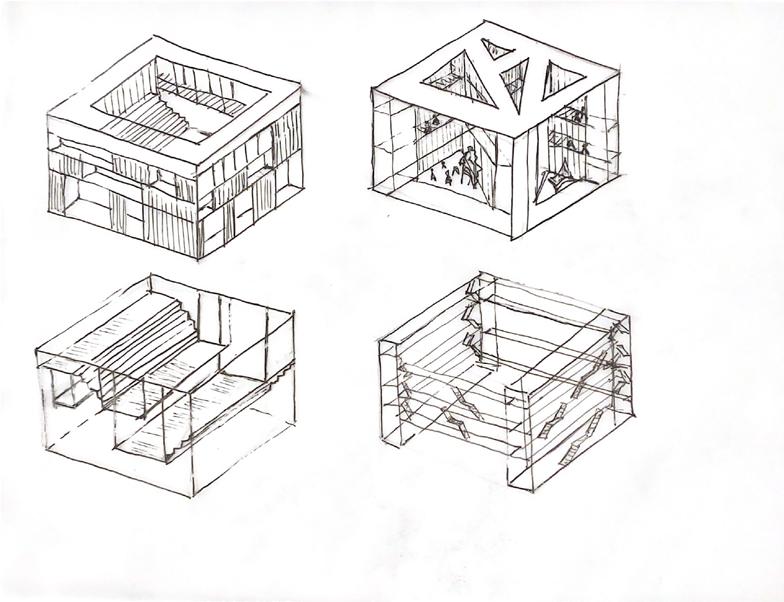
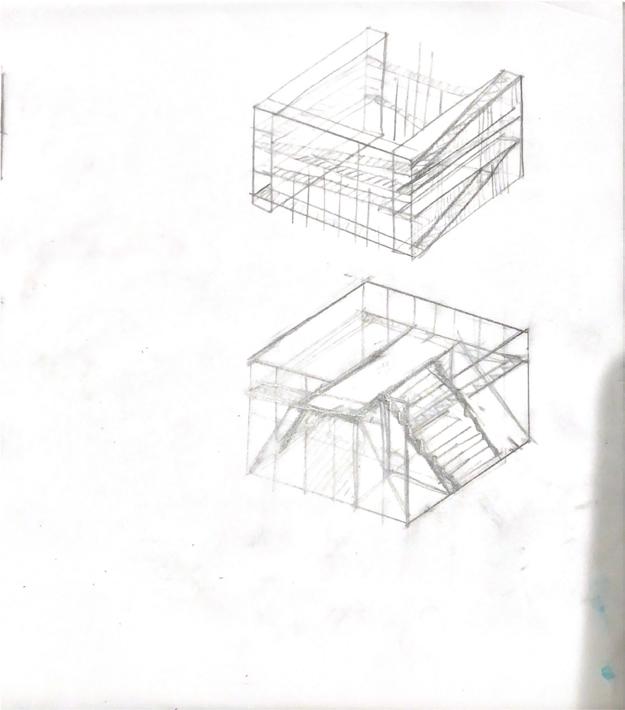
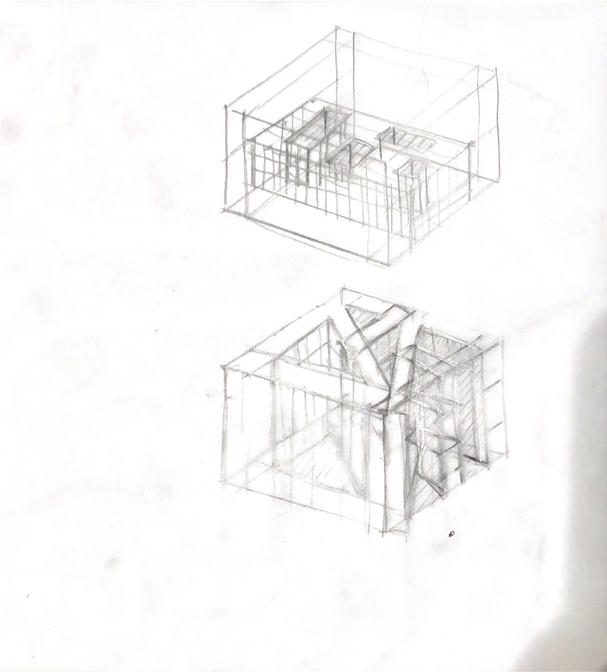
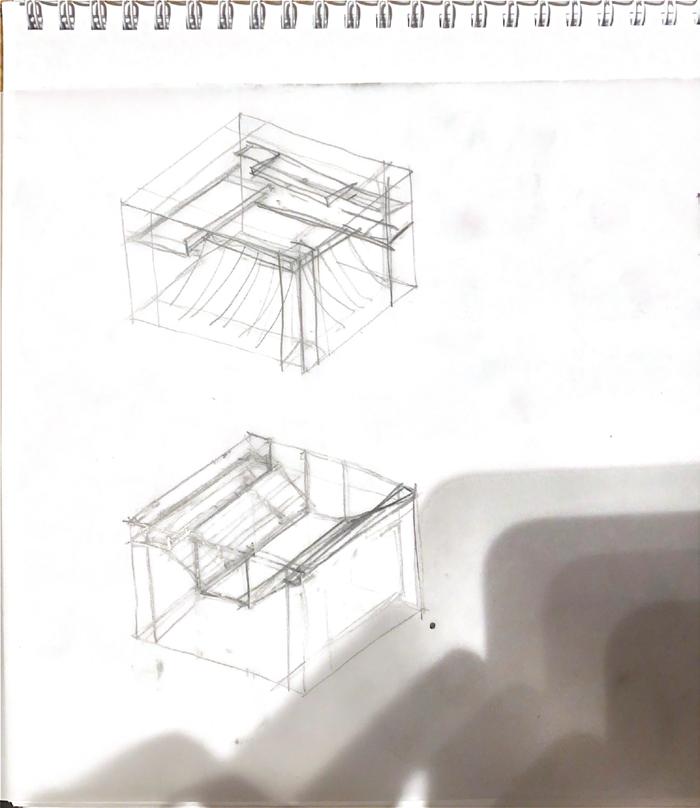
The exploration of movement, temporality, and flexibility through the lens of performative practices
Renaturing
Severodonetsk
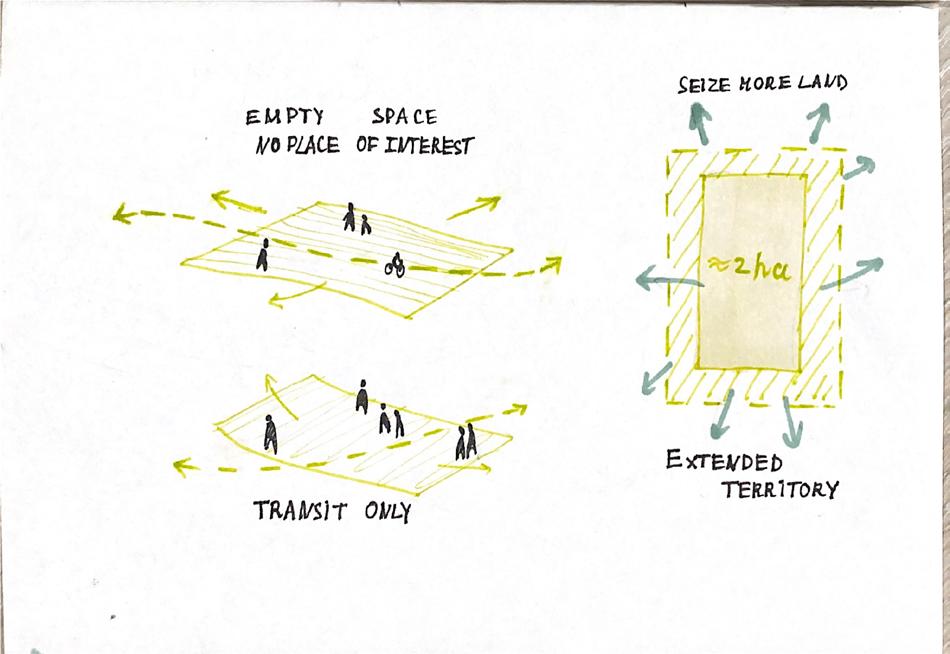
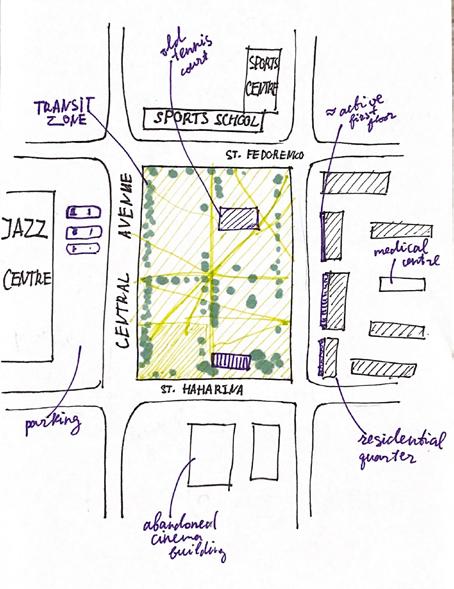
Finding a way to revive site in a former industrial city while creating a new identity for the place
Cooperative house: ways of connecting people under one roof O2 Residence
Experiments with materiality, form, feeling, and space Labyrinth
Assemble Studio Churchill Road
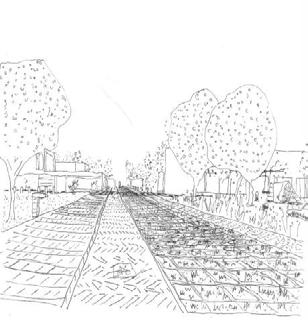
Competition in transforming service road into pedestrian and community oriented series of spaces
David Chipperfield Architects
Selected work from a variety of projects ranging from mixeduse developments to interior design proposals, contributing to both long-term projects and competition entries
2022/23
Individual project – Diploma
Prof: O. Kolesnikov, M. Shevchenko
Location: Dnipro, Ukraine
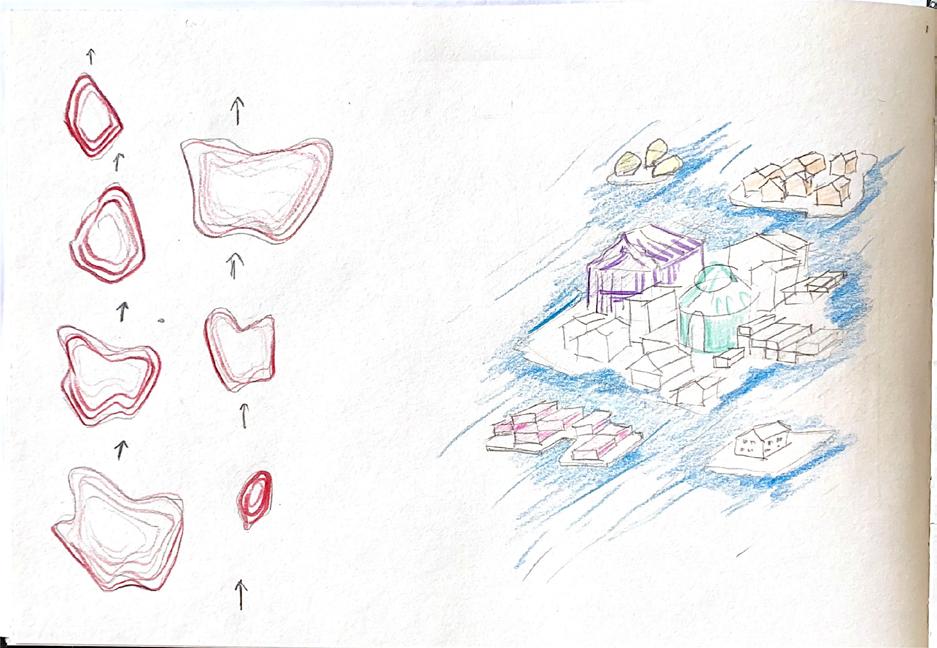
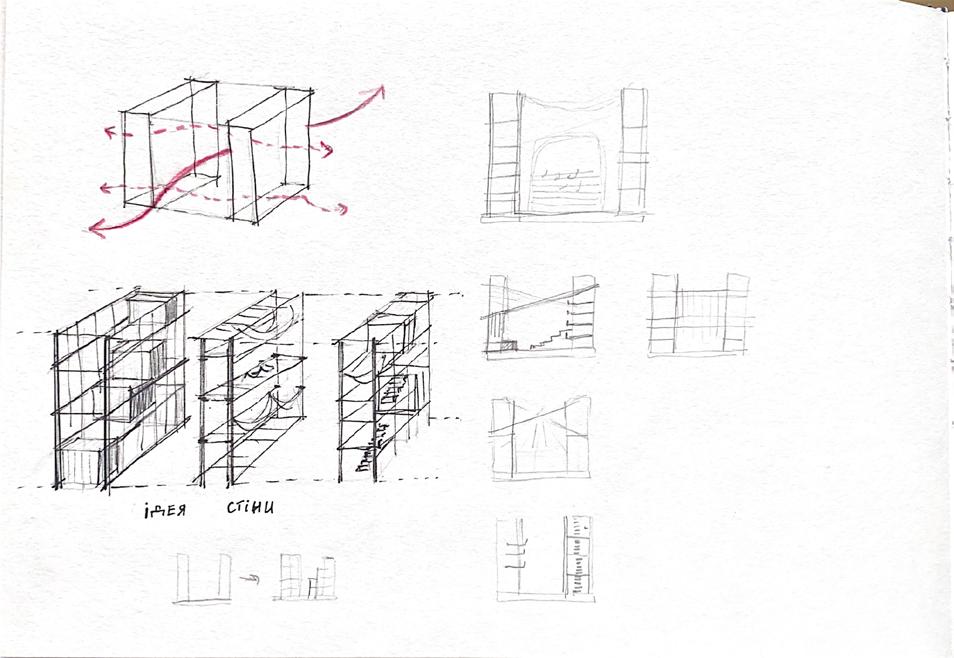
At the start of the studio semester we explored memory and personal experiences to define our topics. The questions that resonated with me the most included: What does a new way of living look like? How can a building embody flexibility and foster engagement? How can experimental spaces extend beyond the confines of the structure, creating unique interactions between spectators and performers?
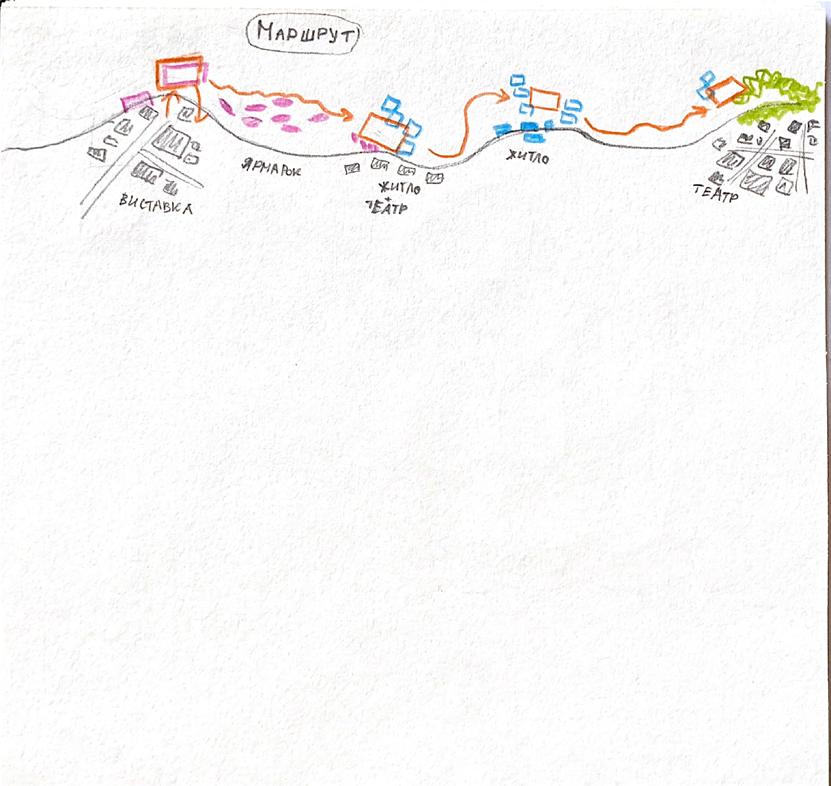
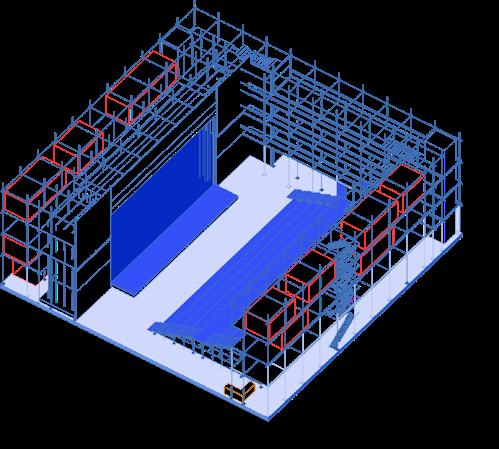
The project—a floating pavilion that merges living spaces with performance—began during my third year of study in Ukraine, coinciding with the start of the war, and evolved across various locations and countries where we were settling. The design process became the focal point, driven by themes of temporality, nomadic living, and flexible spaces for creative industries. This project challenges the traditional monumentality of public architecture by reinterpreting movement as an experiential journey rather than merely a simple act of transit.
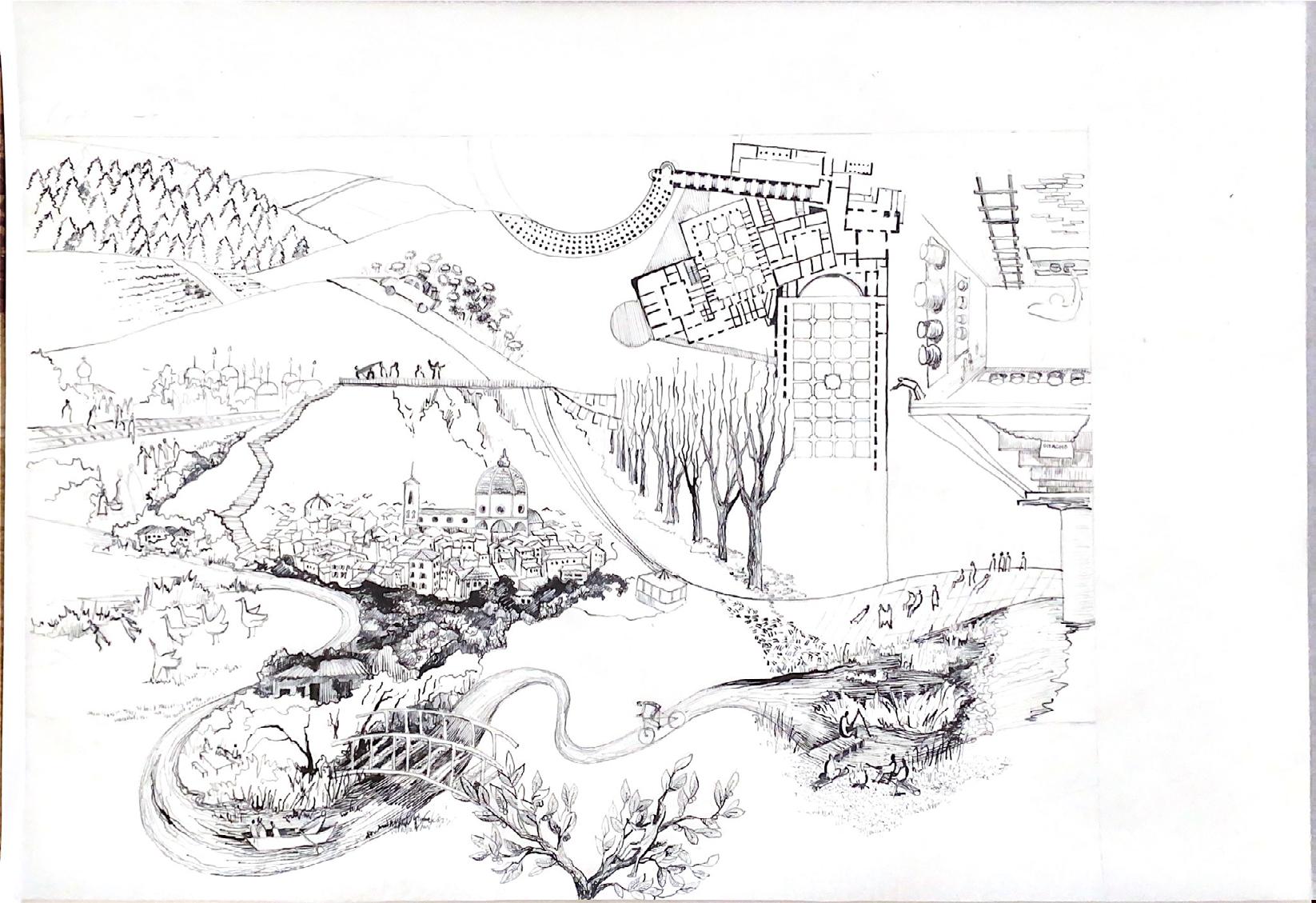
Map of memories – finding the theme for the project
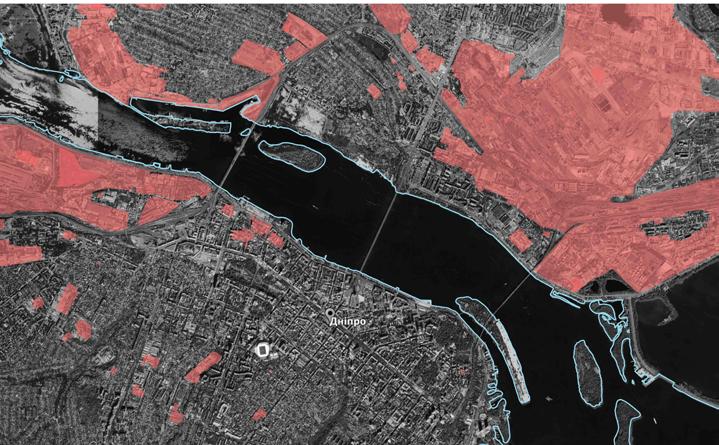
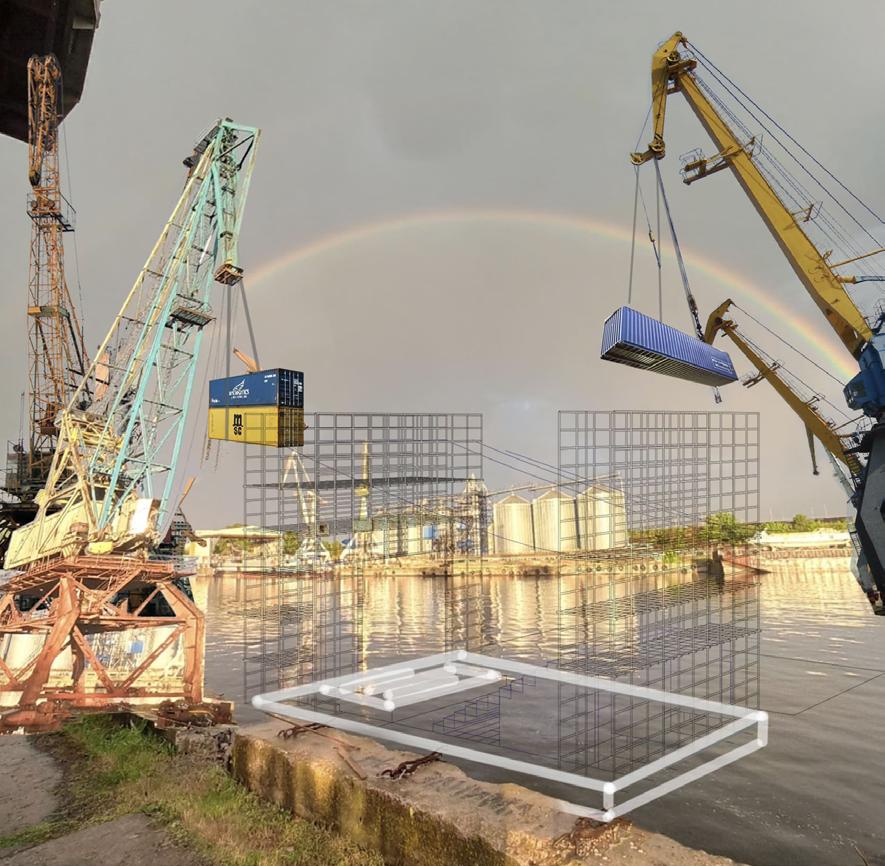
Situated in Dnipro, a post-industrial city in Ukraine, the pavilion engages with abandoned industrial sites and the underutilized Dnipro River. Once a vital social and cultural asset, the river has been commercialized and lost its public significance. This project proposes a floating pavilion that reactivates the river as a social space, temporarily inhabiting
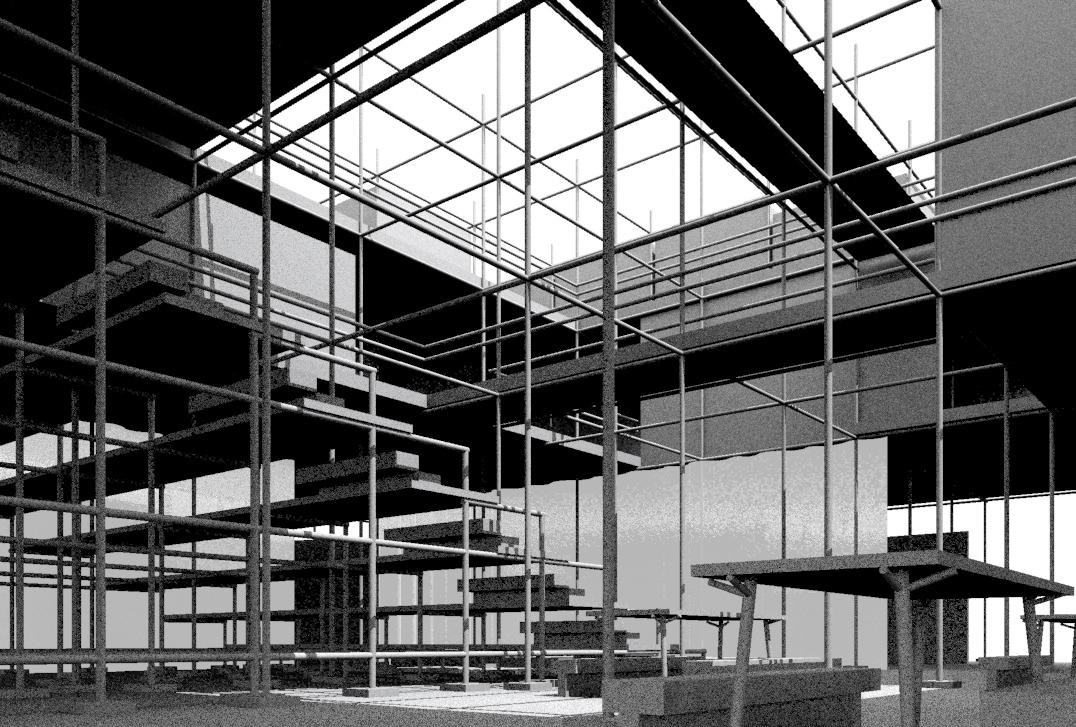
industrial sites to host diverse events, particularly in the performing arts. Inspired by the backstage and the hidden life behind the scenes, I chose to reveal its processes in a literal sense, creating a structure which can be seen through.
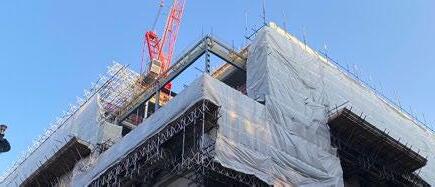
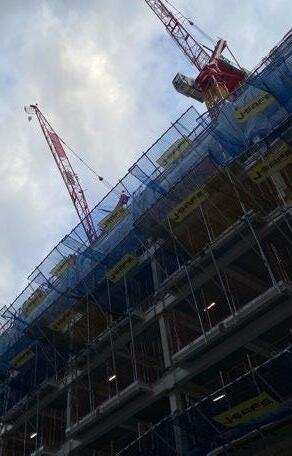
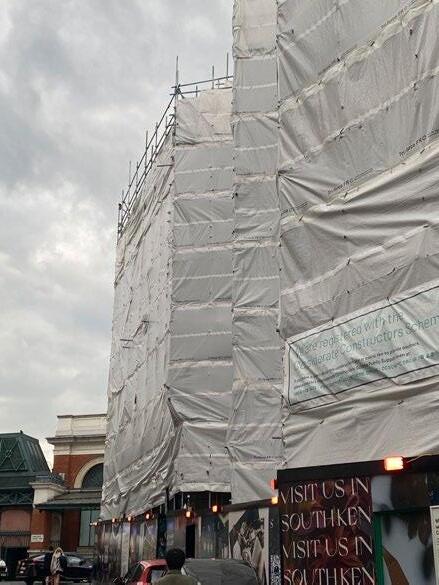
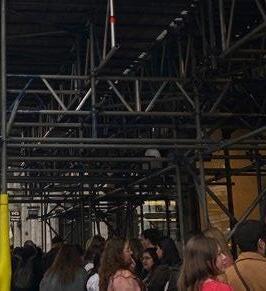
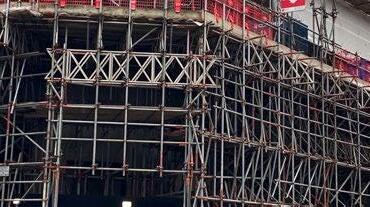
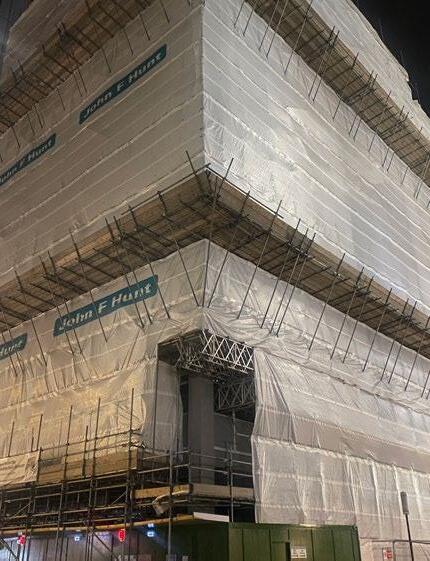
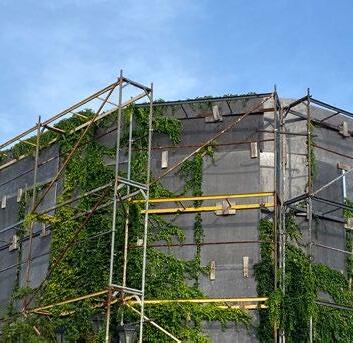
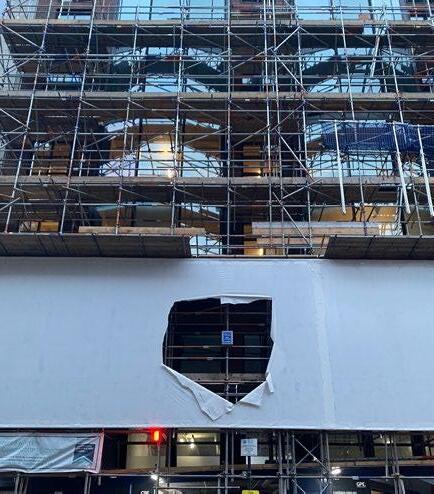
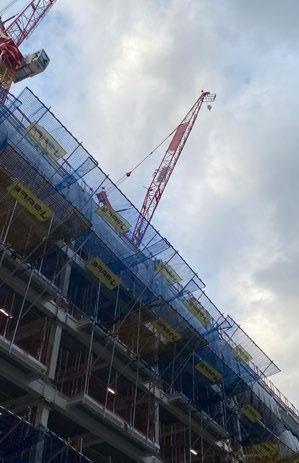
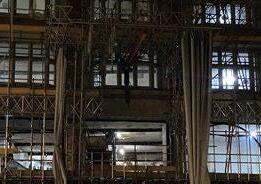
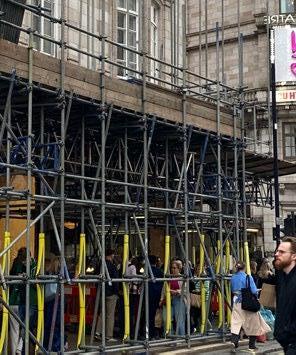
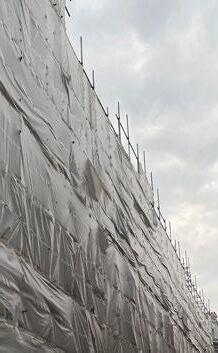
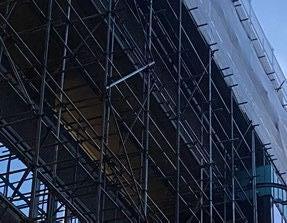
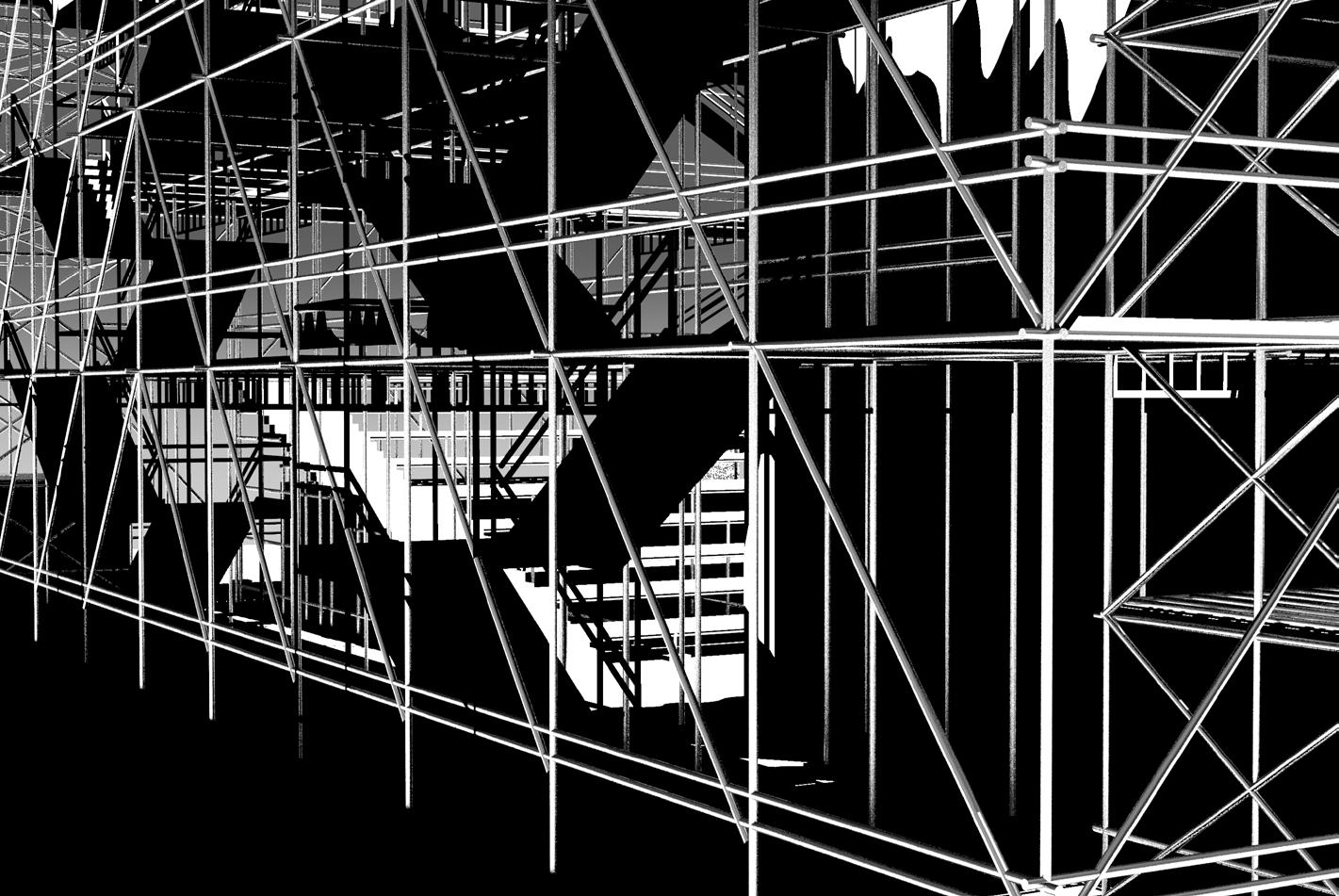
Scaffolding - liminal fabric of the city
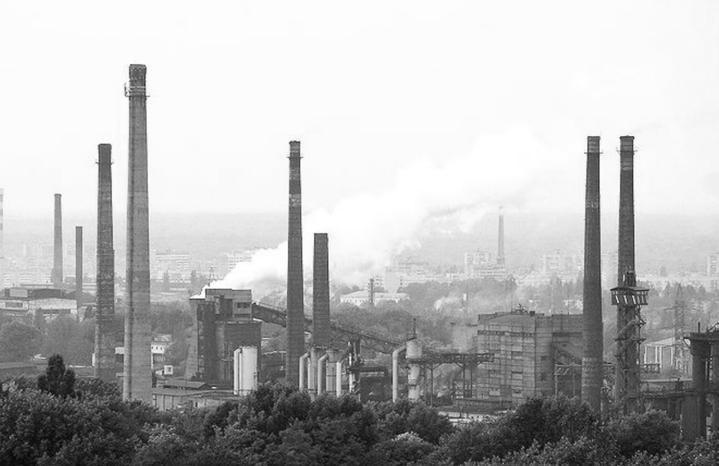
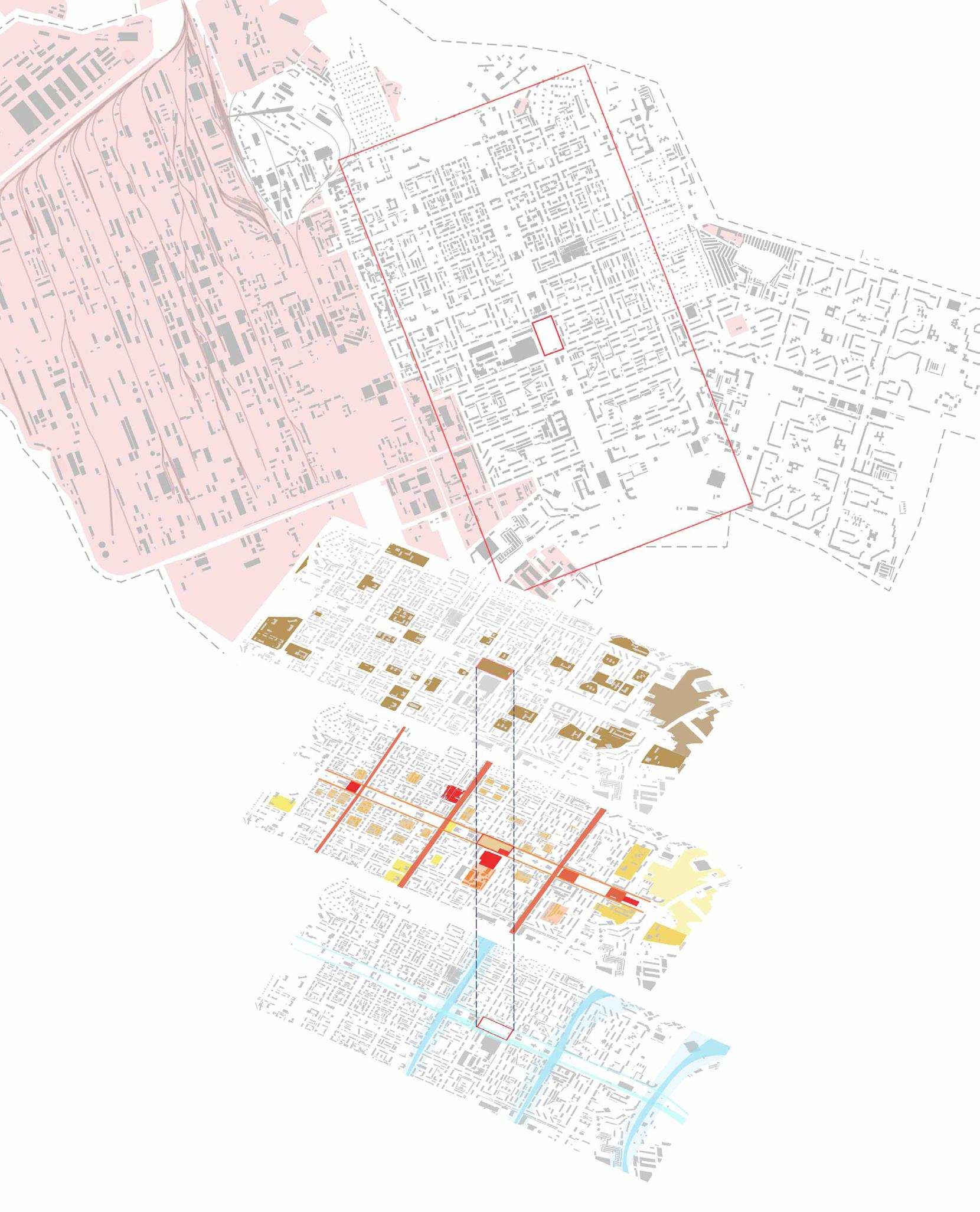
The left bank of Dnipro city – predominantly an industrial zone
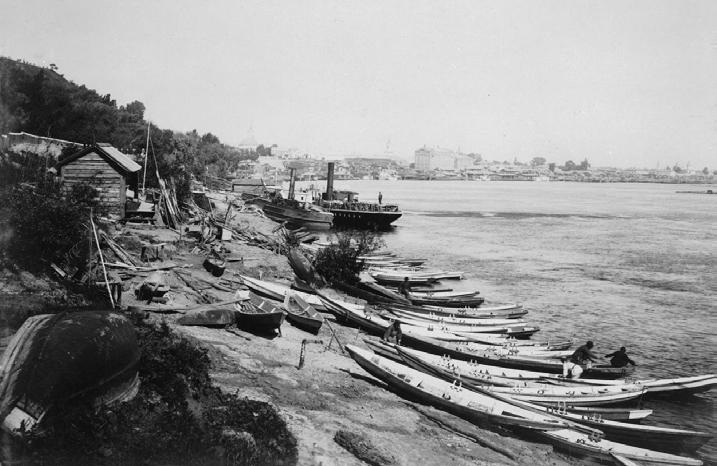
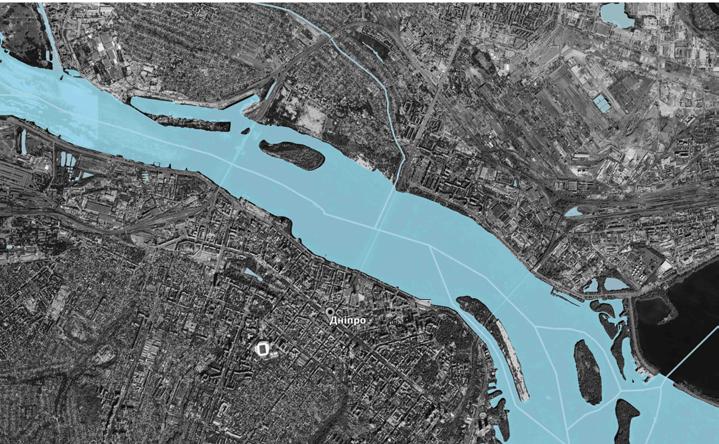
Dnipro river – major resource for the city
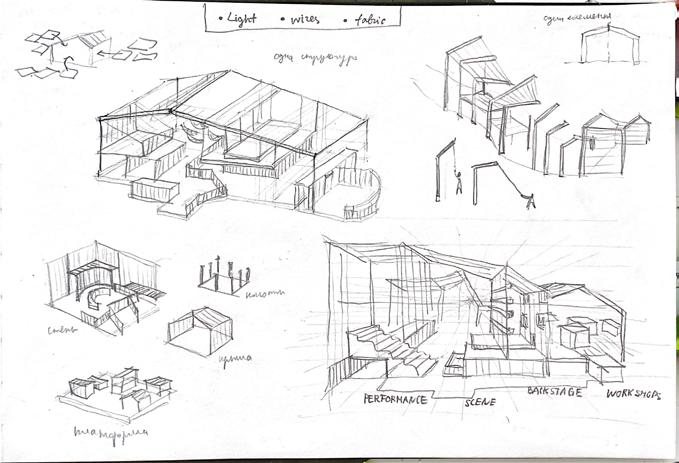
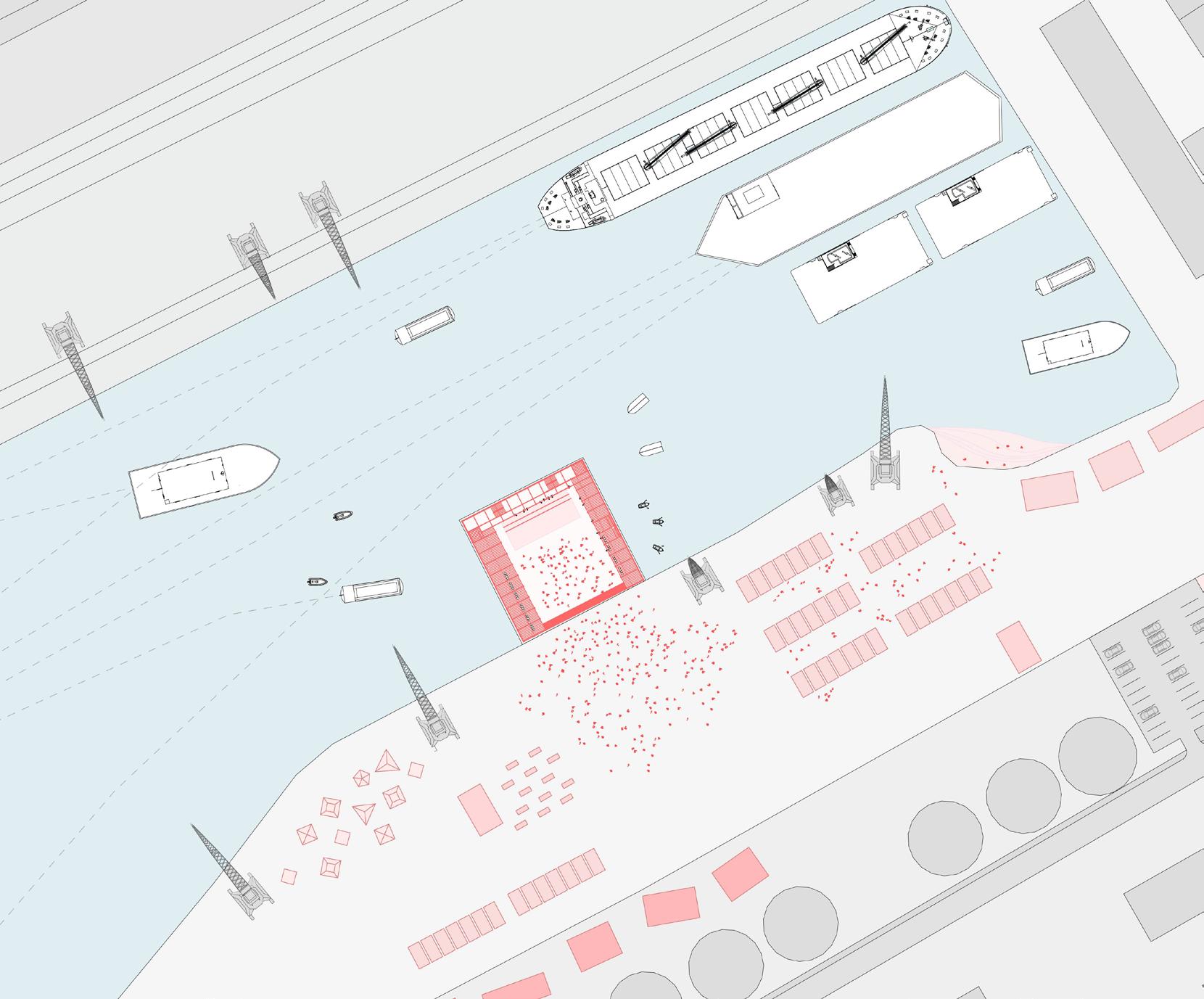
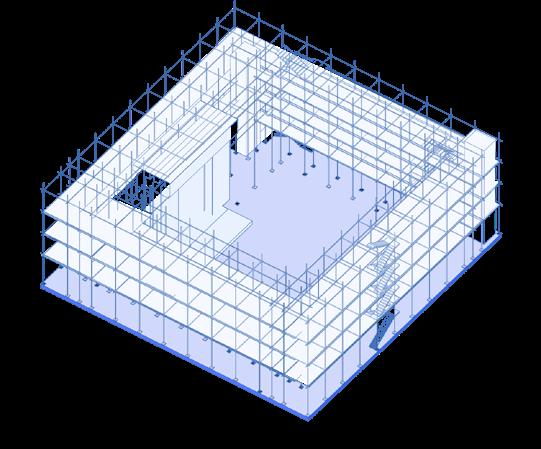
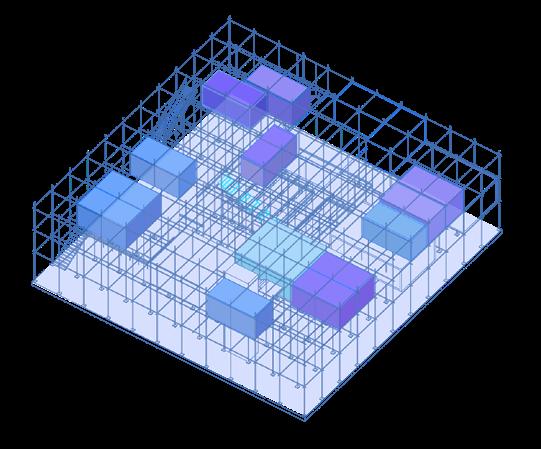
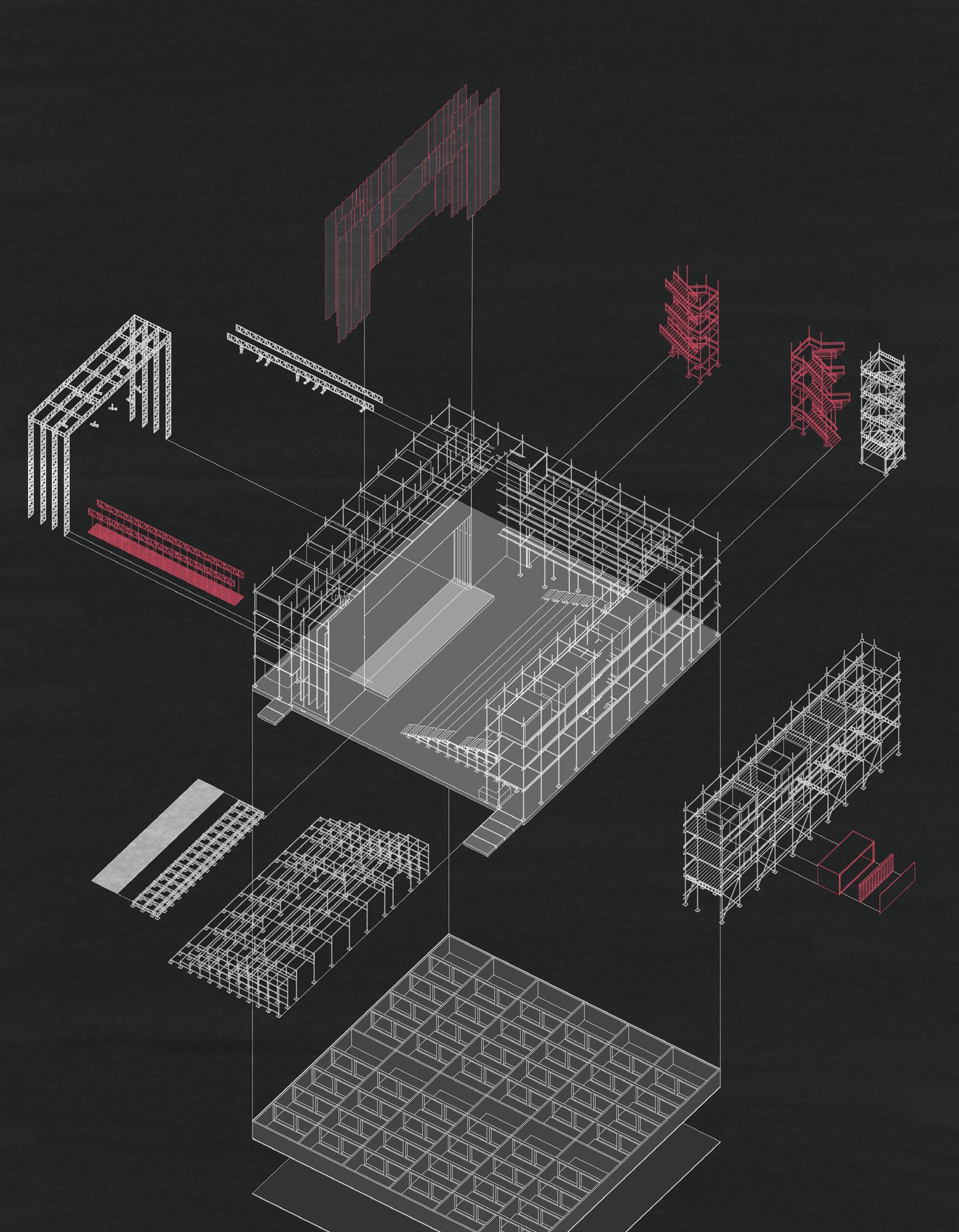
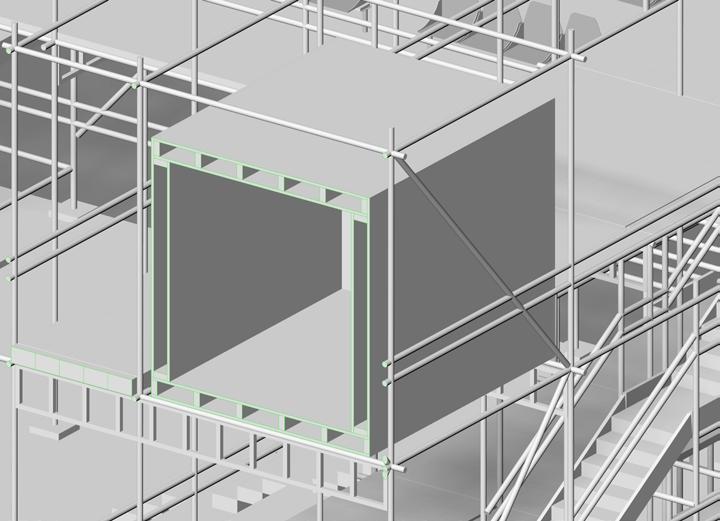
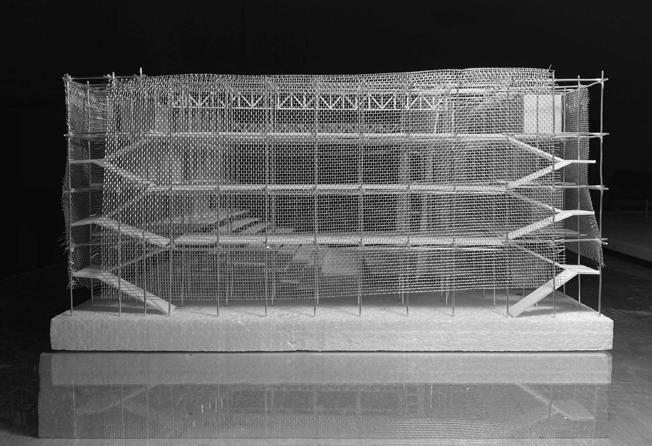
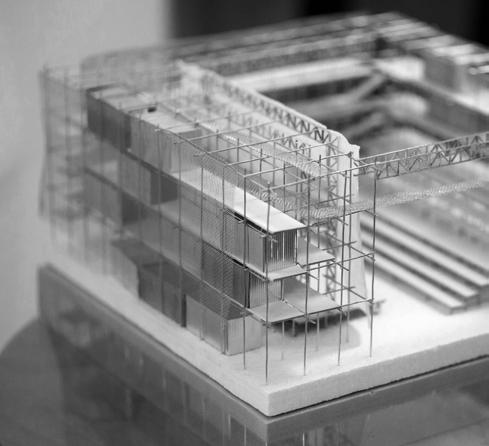
The pavilion is constructed on a simple yet flexible principle: a floating platform (pontoon) serves as the foundation, while a scaffolding structure evolves during performances. Each assembly creates a unique setting using mesh, fabric or theatre curtains as dividers, while living units help zone the space, reflecting the dynamic nature of performances. After each event, the structure is disassembled and relocated, bringing new life and functions to disconnected areas of the city.
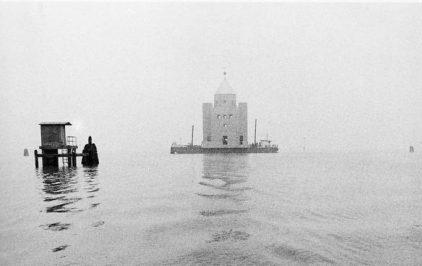
Aldo Rossi, Teatro del Mondo
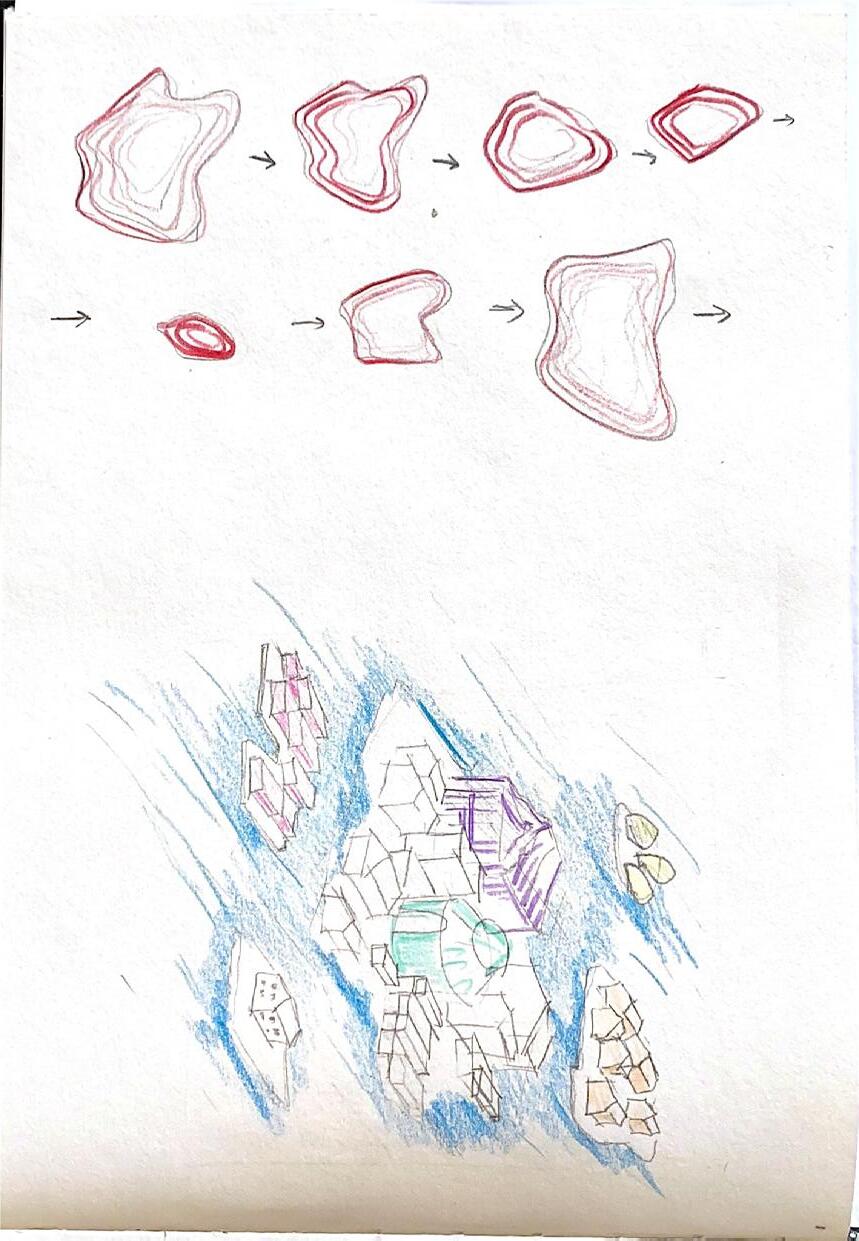
Chain of processes of assembling and disassembling the structure for the move
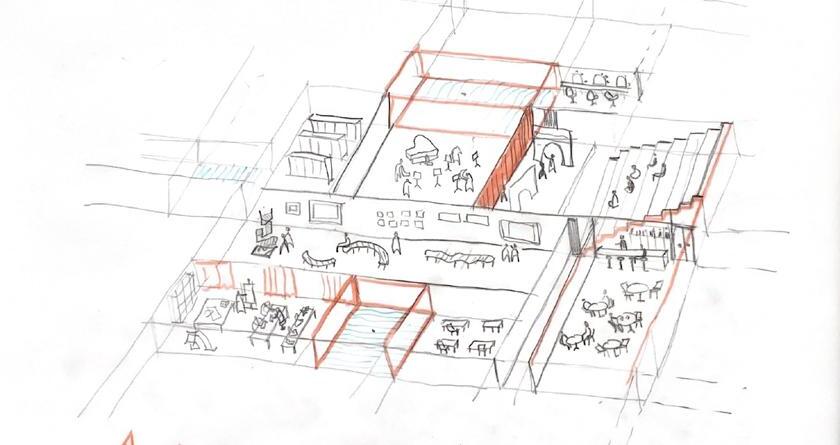
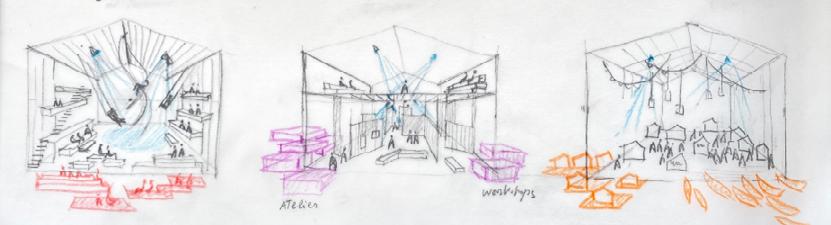
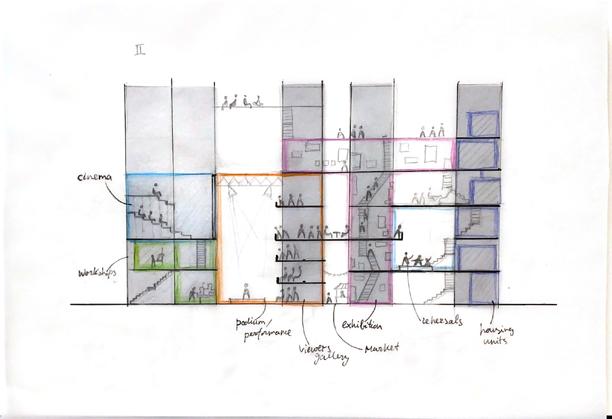
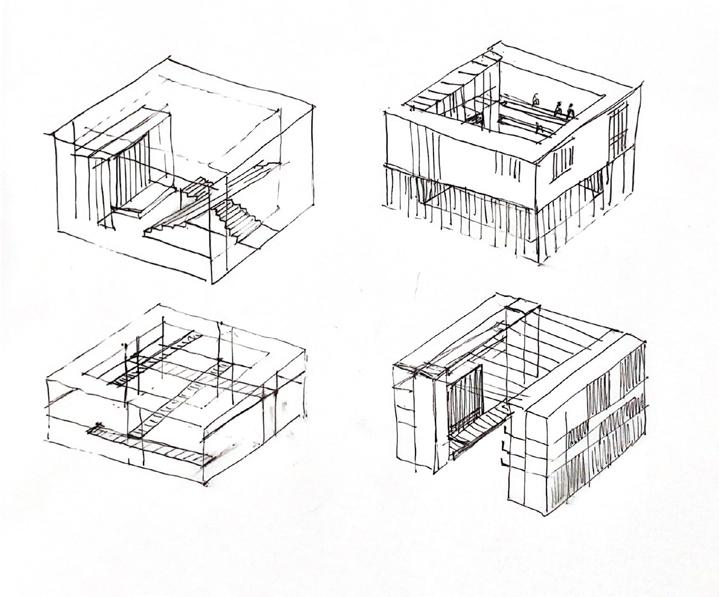
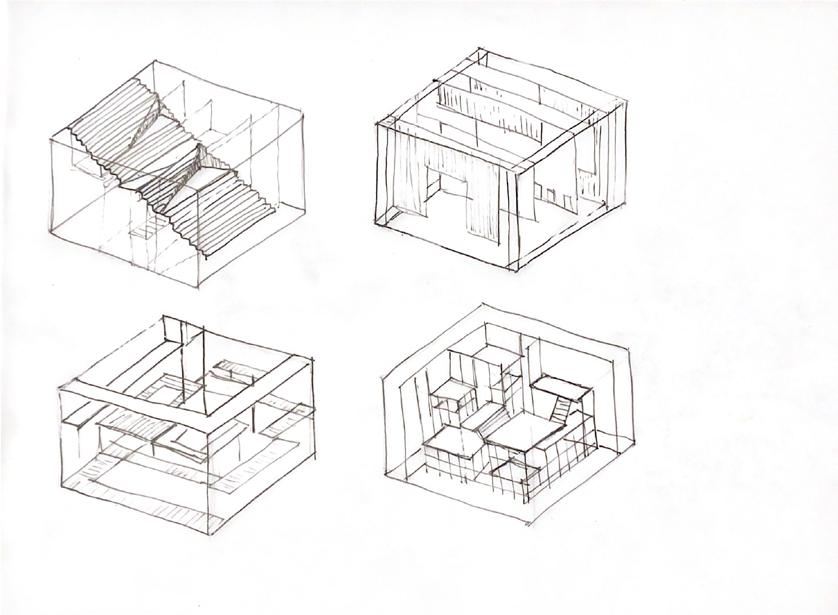
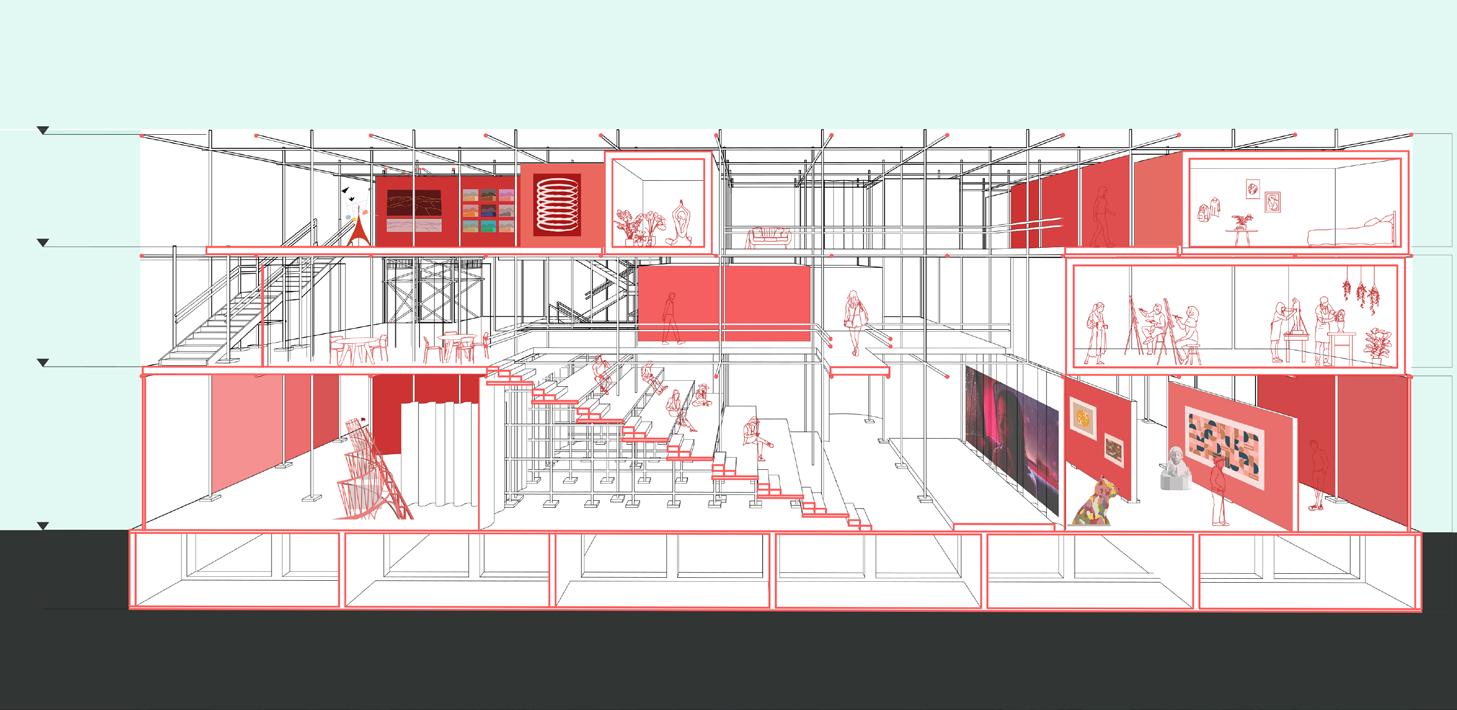
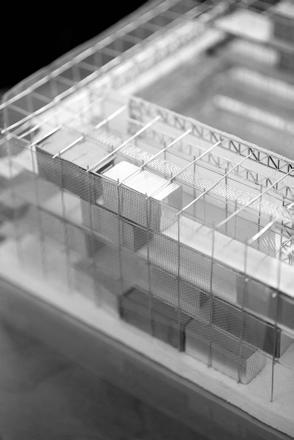
In terms of spatial exploration, the pavilion draws on three primary typologies: a traditional theater arrangement, a gallery with a central courtyard, and a maze-like structure. These configurations enable the creation of both intimate, programmed spaces and open public areas. The design envisions various uses, including exhibition spaces, amphitheaters, temporary artist accommodations, creative hubs,
and performance venues, all within the confines of a 3x3 meter grid on a 30x30 meter pontoon platform.
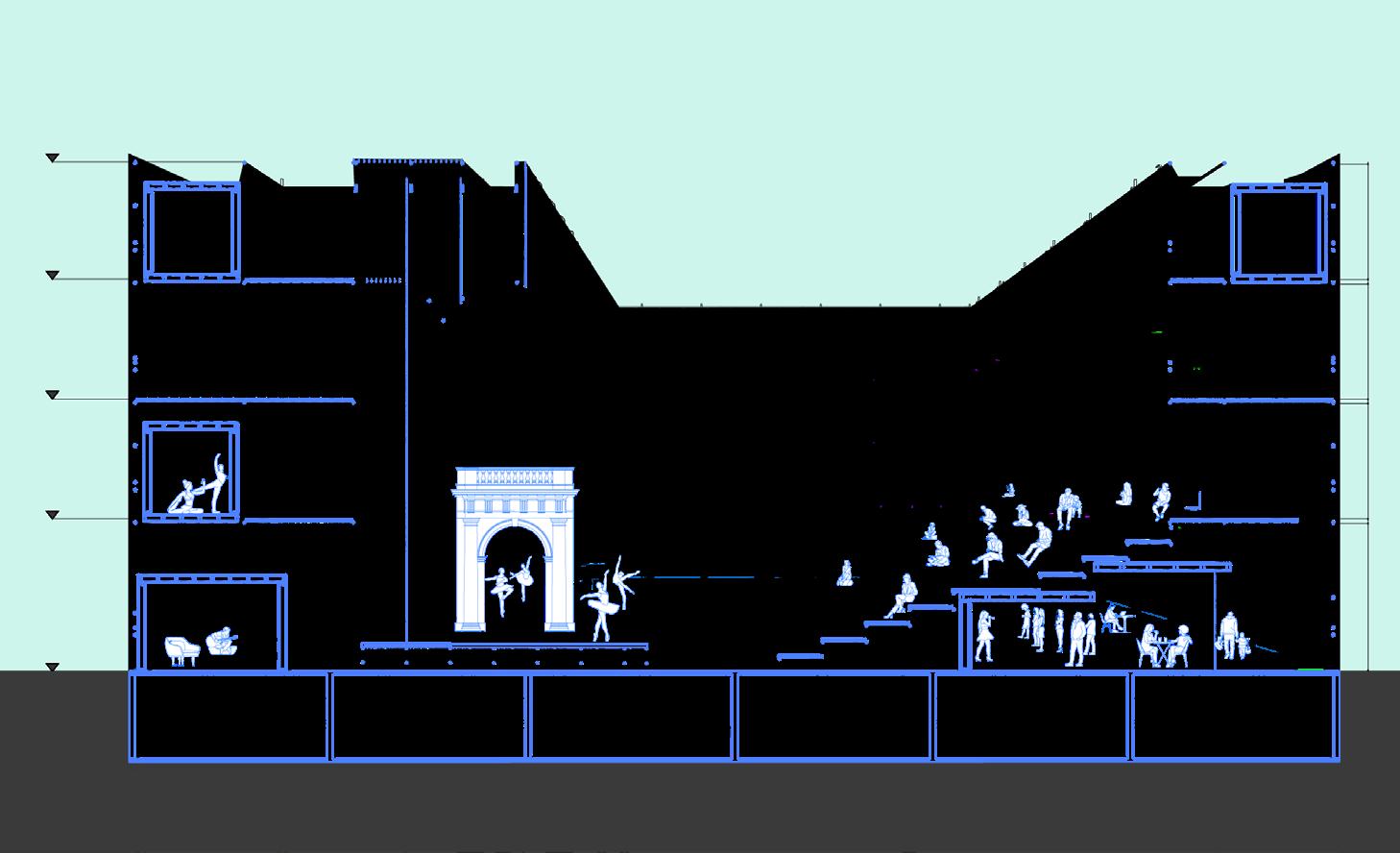
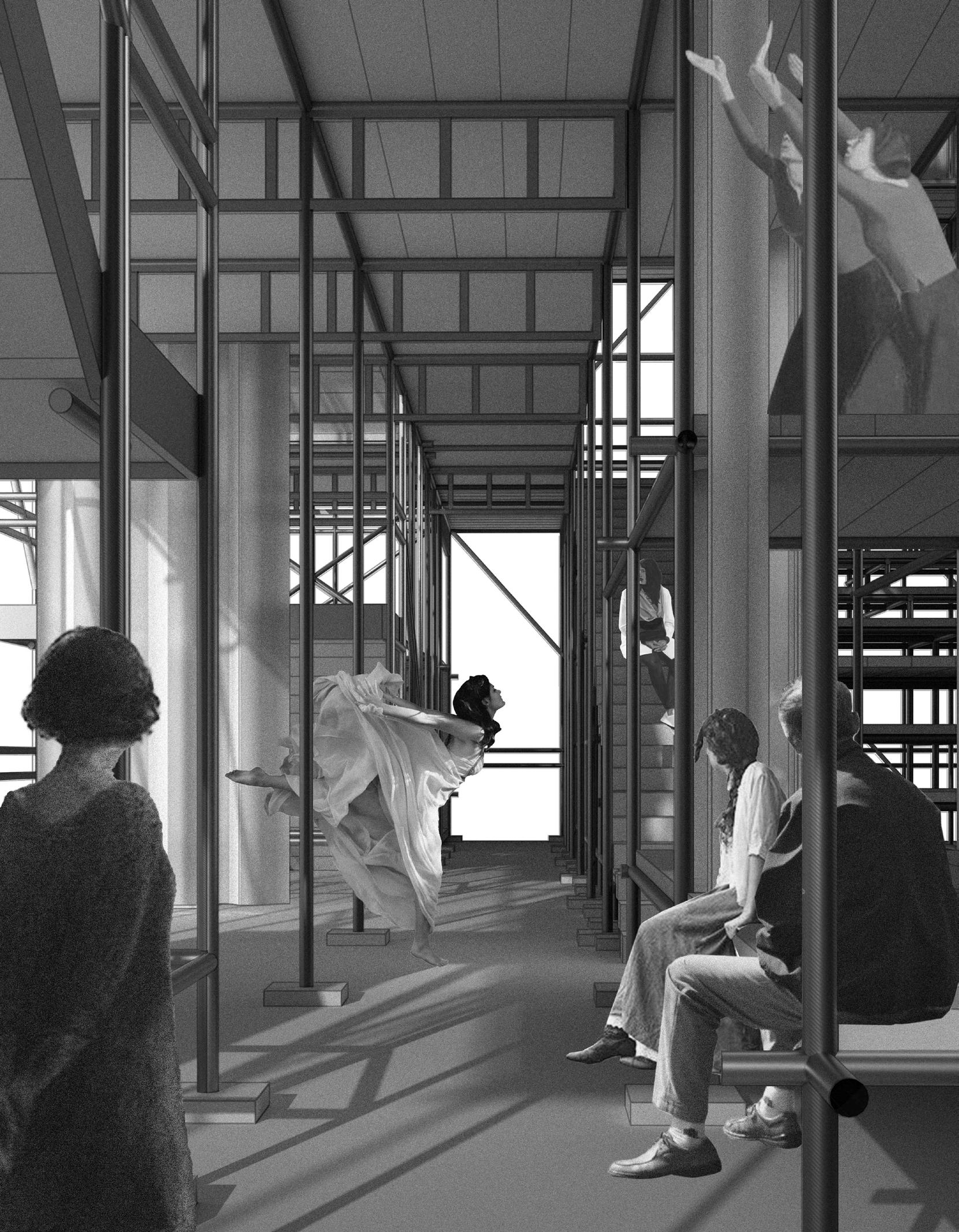
Through this adaptive approach, the project blurs the lines between performance and audience, raising the question of when spectators become active partici pants in the space.
Perspective section in the total grid scheme, depicting diverse scenarios of use
Perspective section into the theatre front of house and backstage life
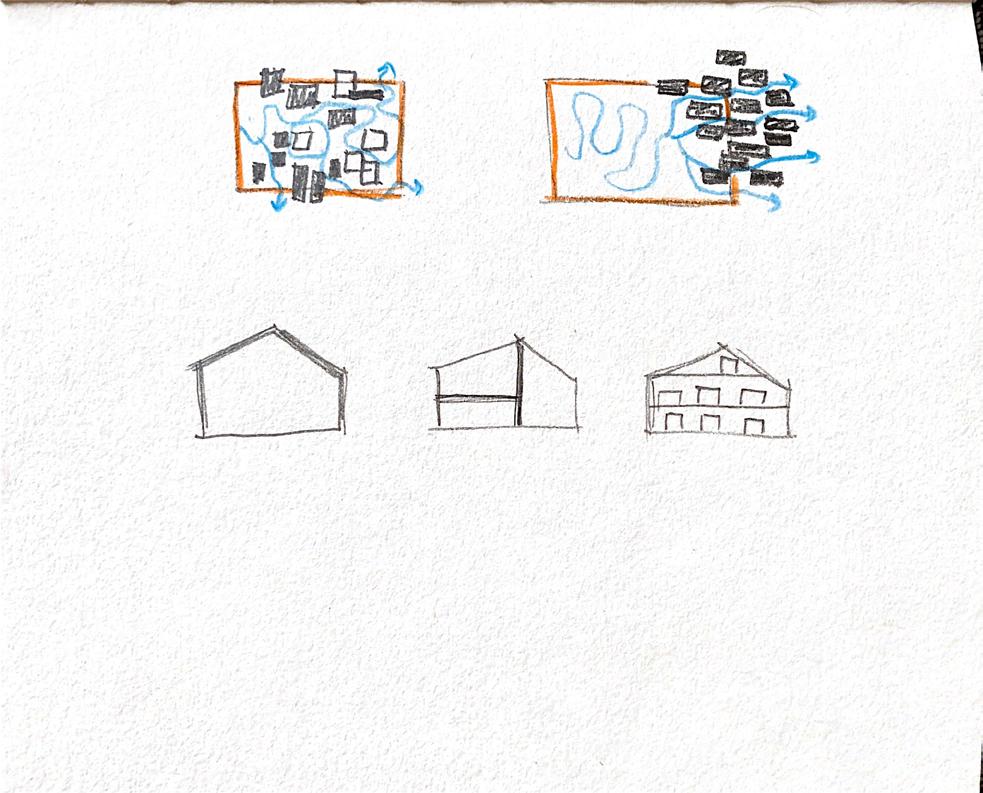
Variation of plans per different structure arrangements
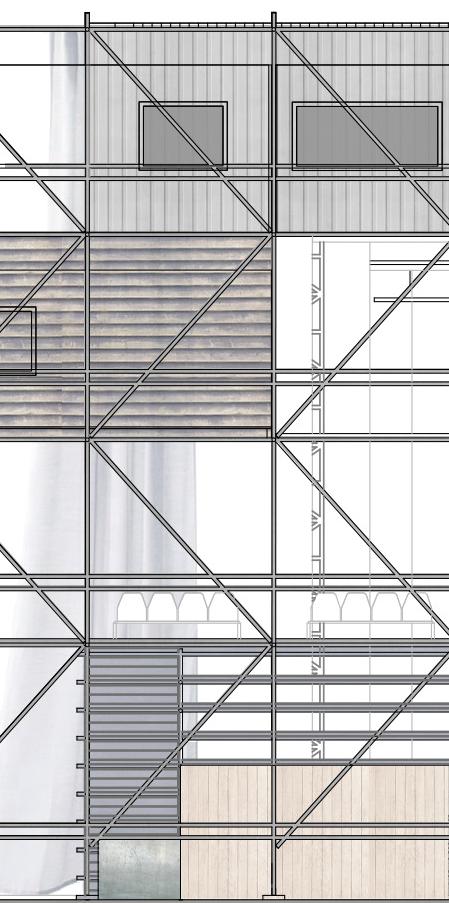
Facade cladding, repurposed from the performances, or salvaged from the site
Modules define the facade, constantly evolving
Front Elevation
Side Elevation
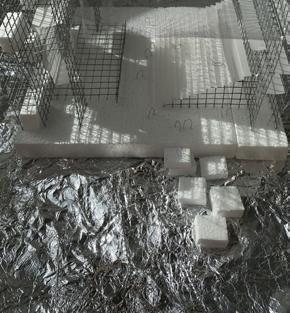
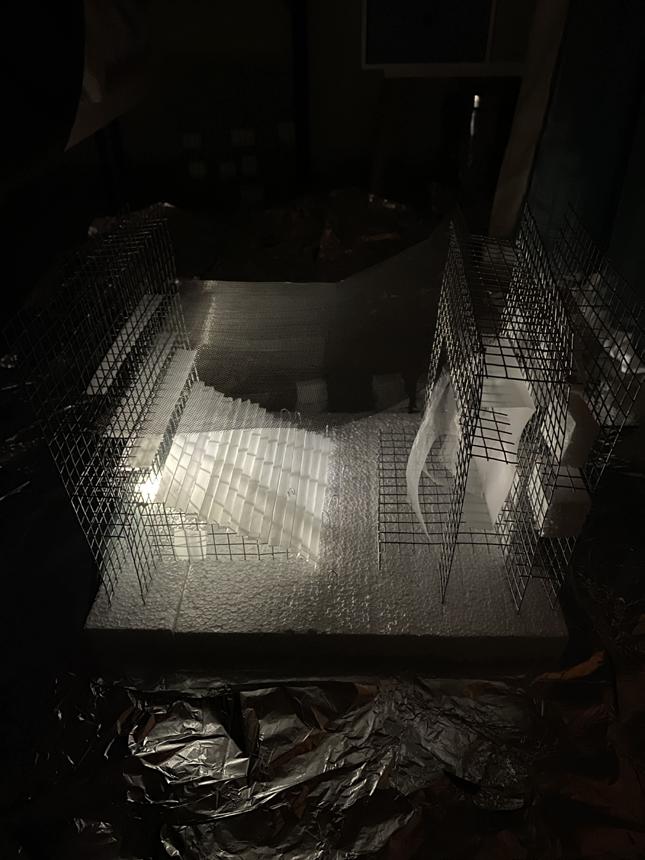
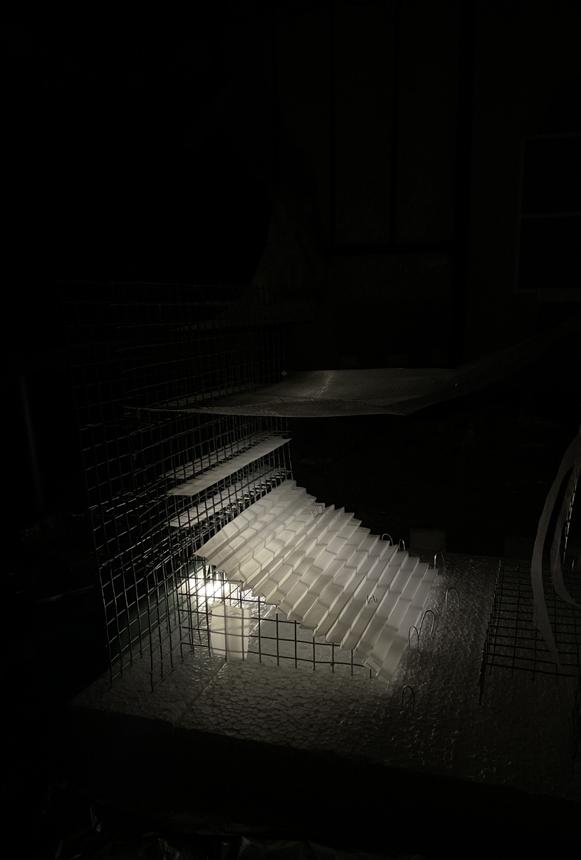
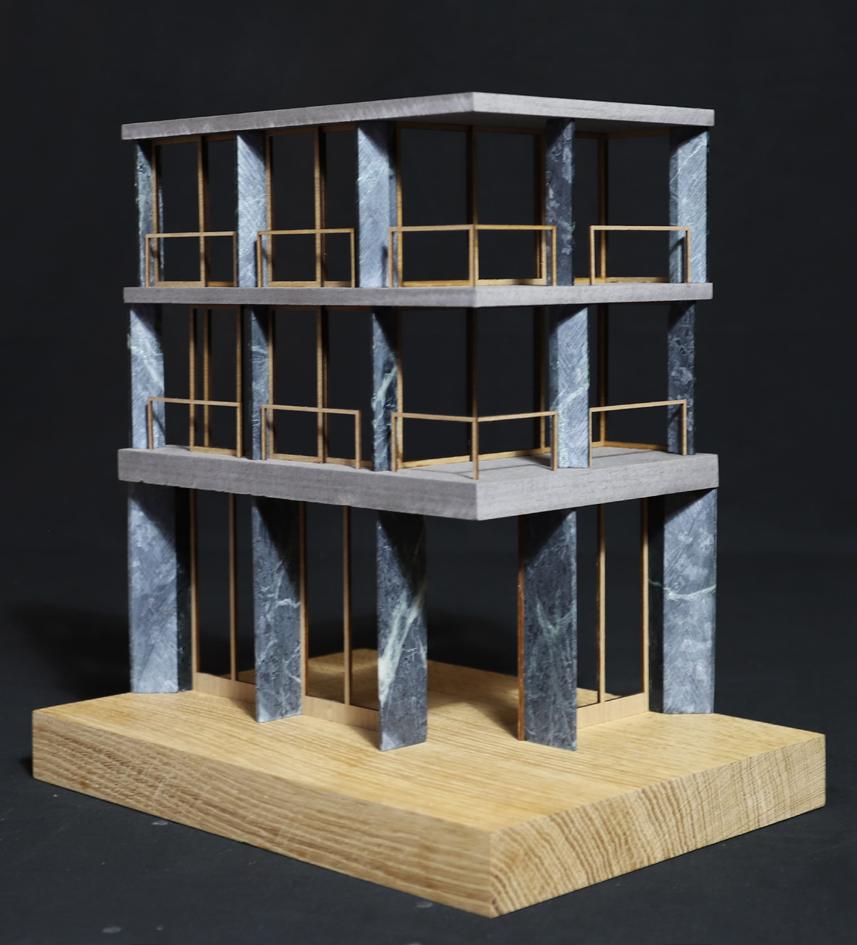
1:100 physical model
Concept collage
Scenography, interplay between light abd fabric
Renaturing Severodonetsk
Autumn 2021
Individual project
Prof: F. Treffers, N. Kozub
Location: Severodonetsk, Ukraine
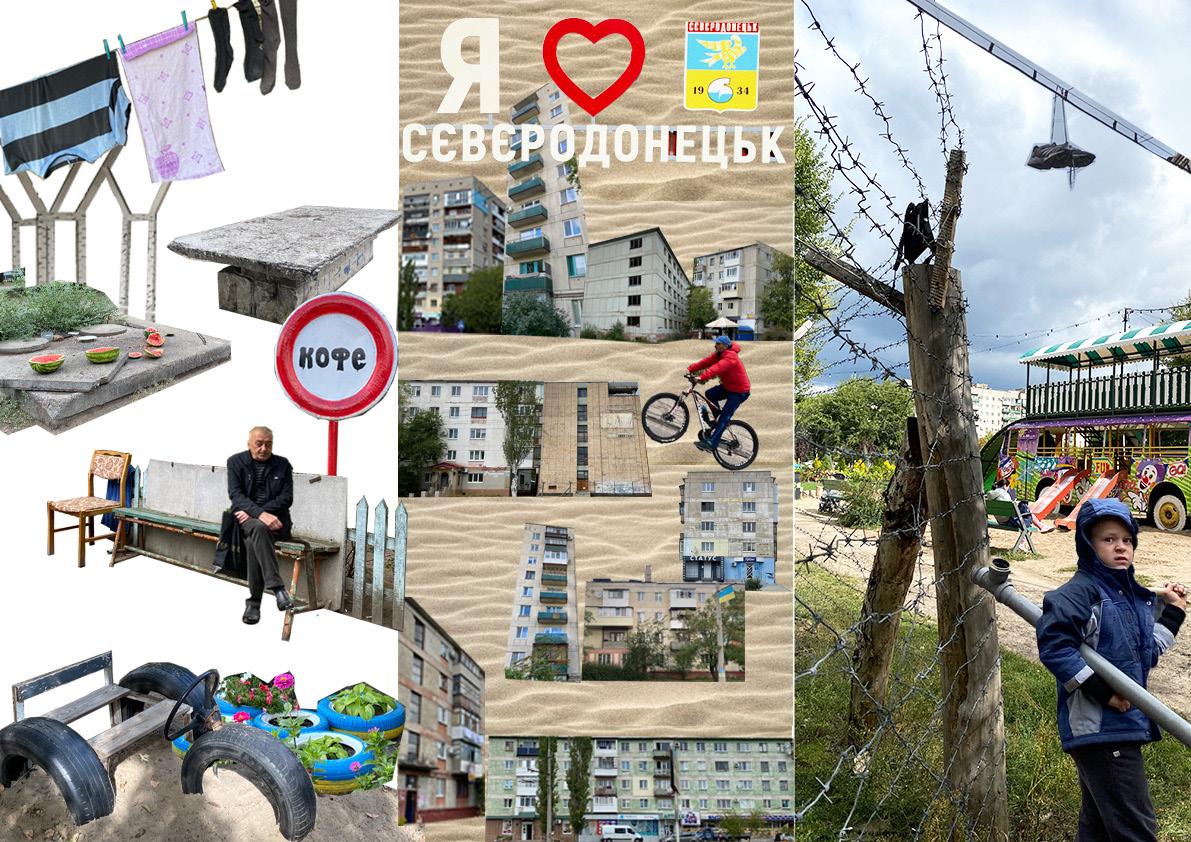
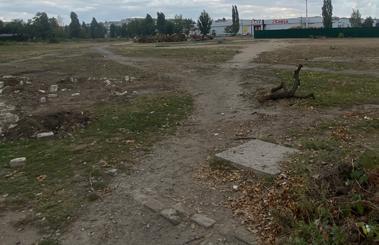
The city of Severodonetsk started as a small village, patronized by the chemical factory “Azot” – the main source of work placements and the reason why the city was established here after the WW2. After the factory’s closure, the city began to fade gradually, but after the events of 2014 all the main institutions of the region moved to Severodonetsk together with the new people, ideas and resources. Therefore, the main goal of the project was to create an alternative way to develop future for the city that was gradually shrinking and establish steps in creating a new identity for a monotown.
Field trip to Severodonetsk - first impressions
Site analysis
empty sandy fields the risk of sand dunes forming
heat islands
flooded areas during the raining season
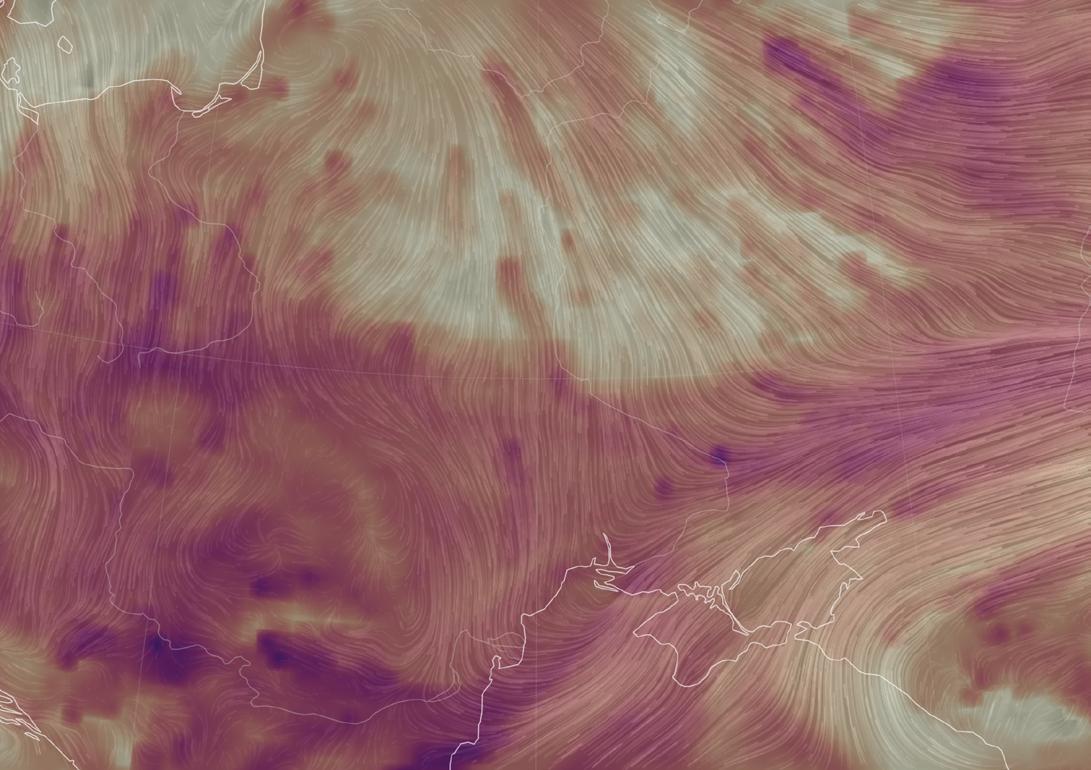
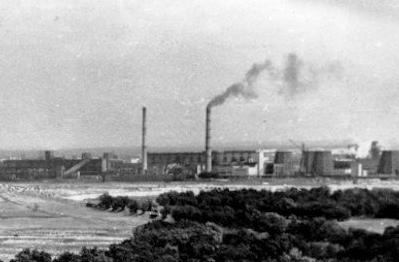
Severodonetsk was established as a homogeneous city, with its primary source of employment stemming from the major chemical plant “Azot,” which occupies nearly half of the entire footprint of the city. This close proximity significantly impacted air quality, that contributed to high pollution rates in the region due to constant emissions.
Locally, the city is sometimes referred to as a “small Venice,” particularly during heavy rainstorms when impermeable surfaces and excessive stormwater runoff frequently lead to flooding on main streets. While Severodonetsk may
appear to be a green city at first glance, many of its green spaces are either poorly designed or inadequately maintained.
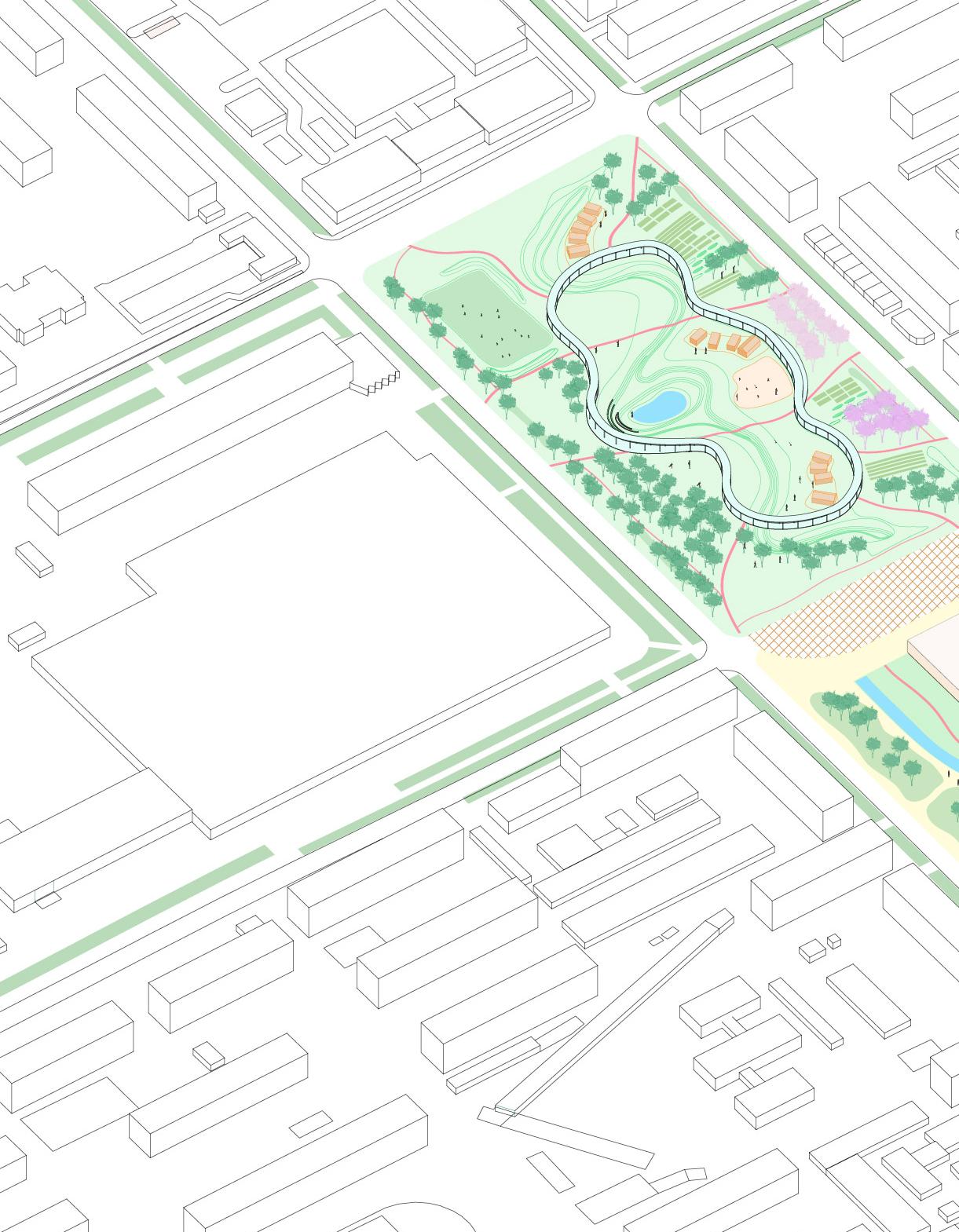
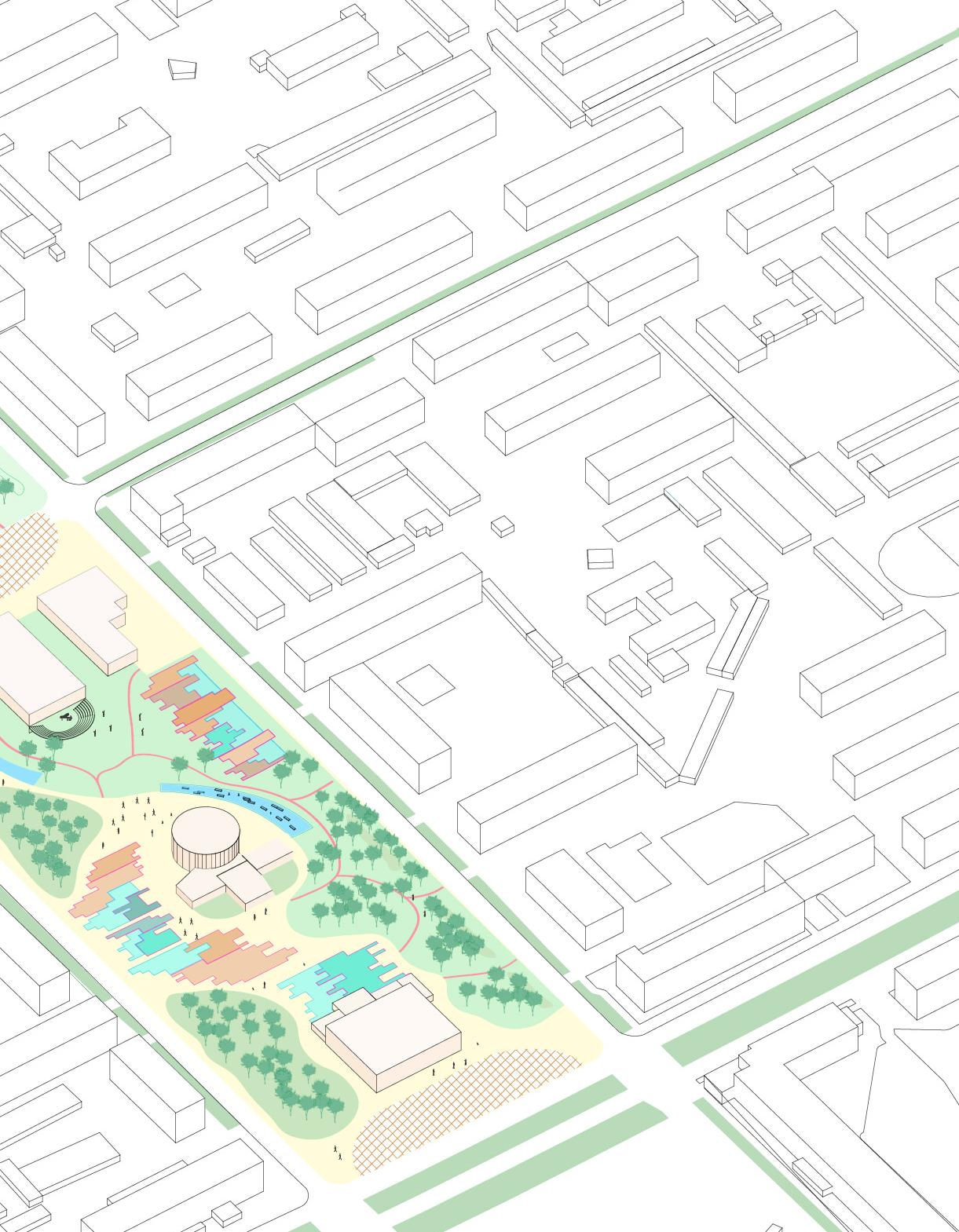
In my project, I aimed to promote sustainable practices as a way to address Ukrainian post-industrial cities by fostering active community involvement. My goal is to foster a sense of ownership among locals, encouraging them to take pride in and maintain the spaces they help create. The scheme promotes activism and engagement among various user groups throughout the extended renaturation process of the site.
1951, Chemical plant “Azot”, Severodonetsk
Severodonetsk
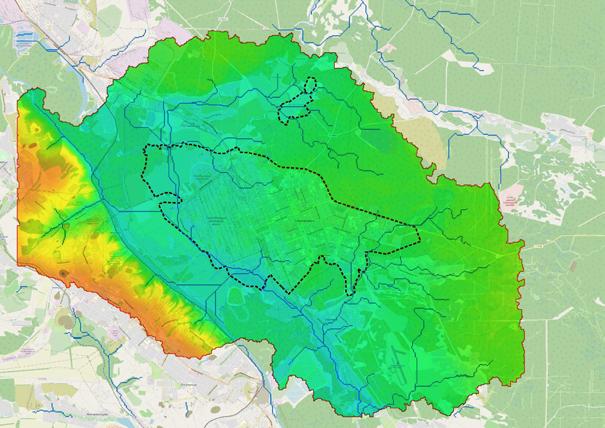
DEM model of the natural stream flow in SD
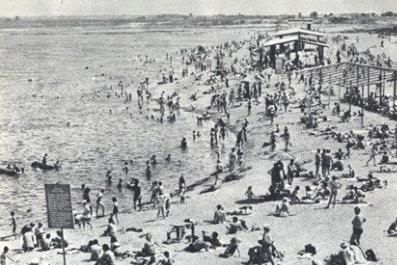
Lake “Chyste” as an important part of citizen’s leisure
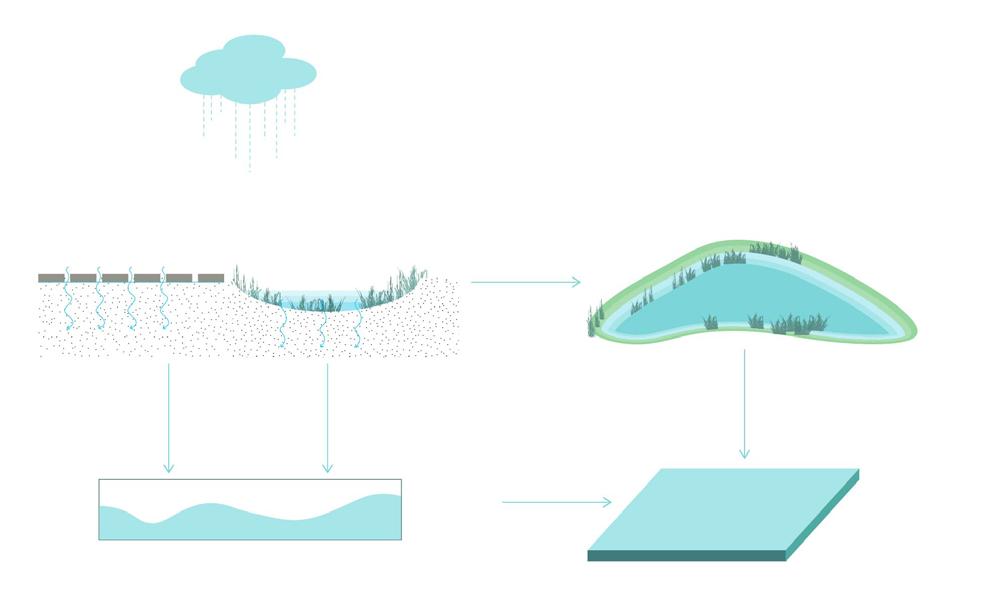
Absorbation and
water storage after treatment - water feature
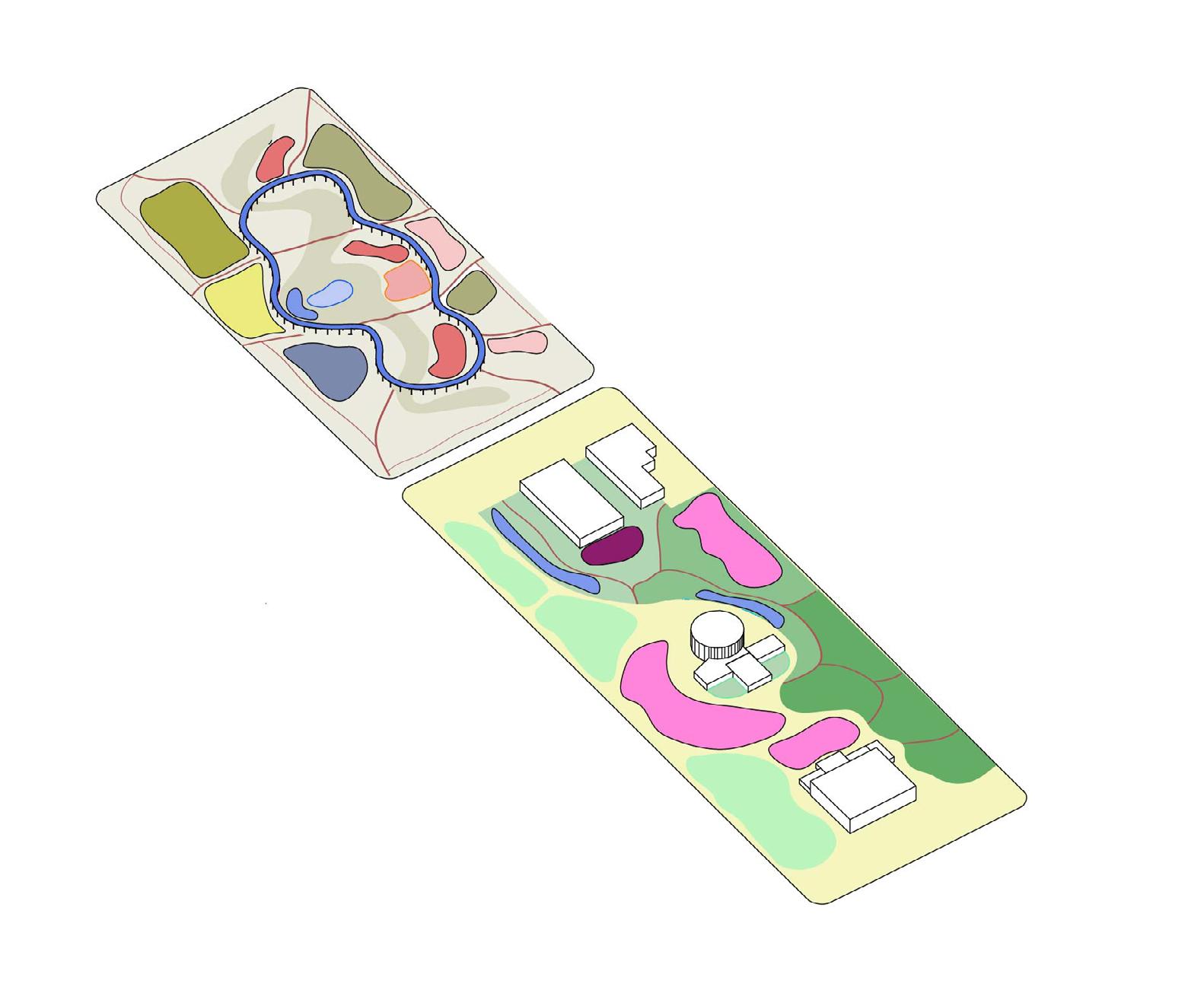
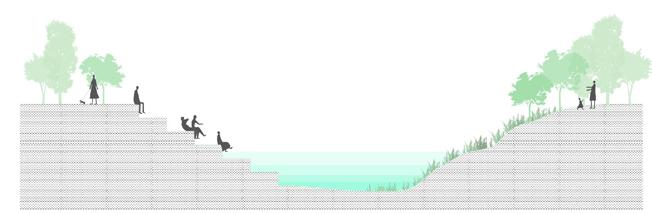
Two conditions for the recessed parts of the masterplan serving as water retention pools
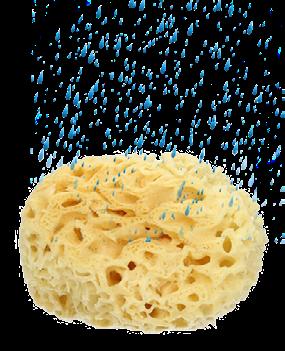
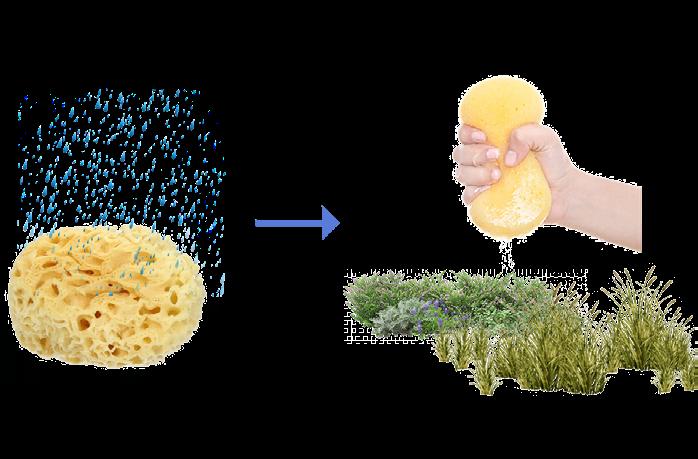
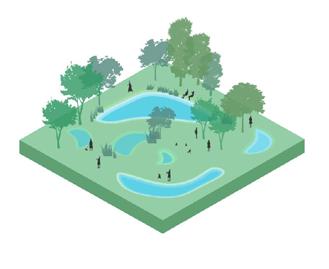
The concept was to apply a simple principle: treat the city like a sponge. By collecting water in rain gardens and bioswales, I aimed to focus on the regenerative forces of water sources, revitalizing the sandy land and creating interconnected natural zones.
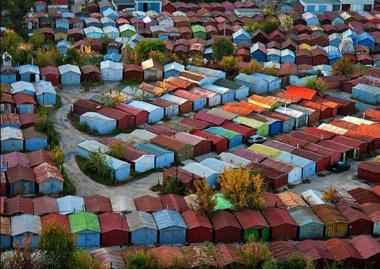
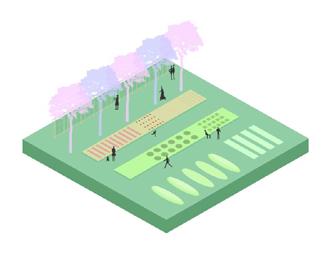
The natural areas would be combined with repurposed garage containers for crafts and workshops, in addition to sports areas, walking paths, and urban farming (allotments) and fruit gardens.
studio
recessed football field
garages for workshops
amphitheatre
gallery pavilion
filtered water playground
woodland
representatives of biotopes of Ukraine
orchard meadow
grove retention pond
meadow
market square
wild - organic
civic - linear
O2 Residence
Spring 2021
Individual project
Prof: O. Kolesnikov, M. Tselik
Location: Kyiv
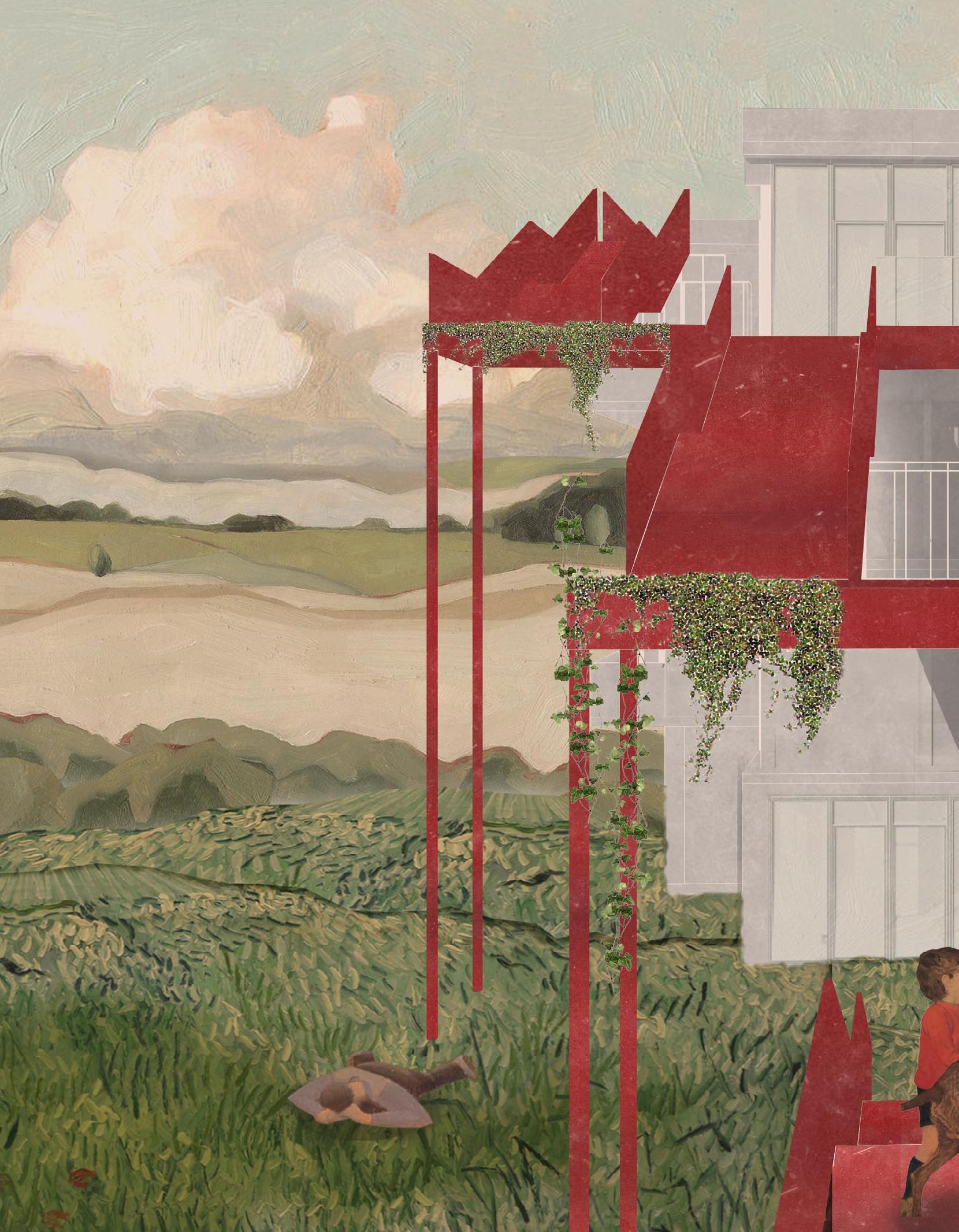
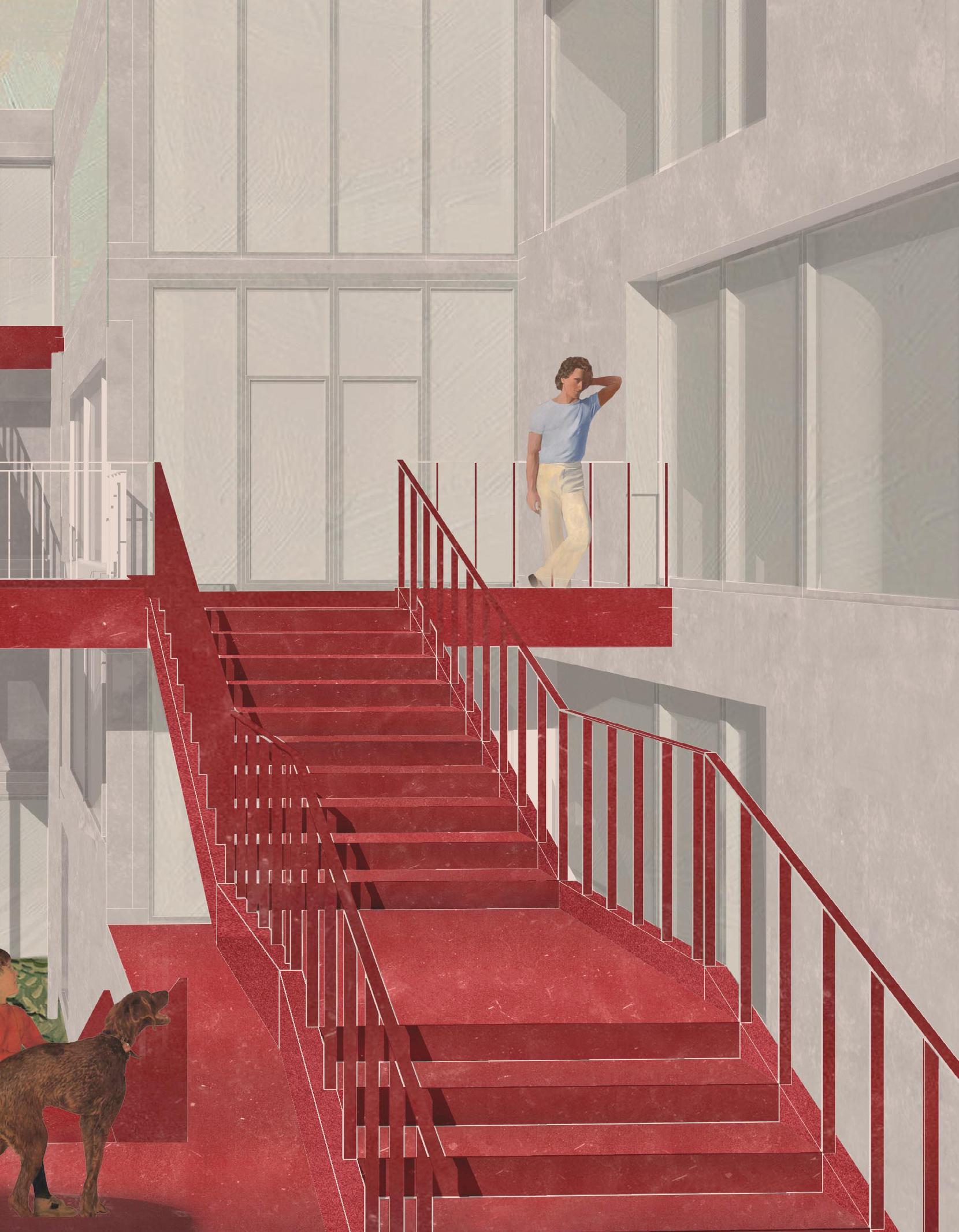
In 2019, 11 million square meters of housing were built in Ukraine. However, the average living space per person is only 22 square meters, which is half of that in Western Europe. There is an ongoing debate about the quality of these new houses from both technological and social perspectives, as they are primarily designed for sleeping rather than living. My project addresses this issue by challenging the traditional concept of apartment blocks in Ukraine. It aims to create a stronger bond among inhabitants and introduces a new type of family living.
roof winter garden and rooftop farming
units
1-2 bed apart guest rooms
common space for play
2-3 bed apart
1 bed units with shared living spaces
laundry study area
terrace
communal kitchen
sloped surface as a gathering point
co-working area
external circulation
stairs
common living room
parking and storage
main entrance
climbing wall
Project site for the cooperative house is located within the O2 Residence complex in the suburbs of Kyiv.
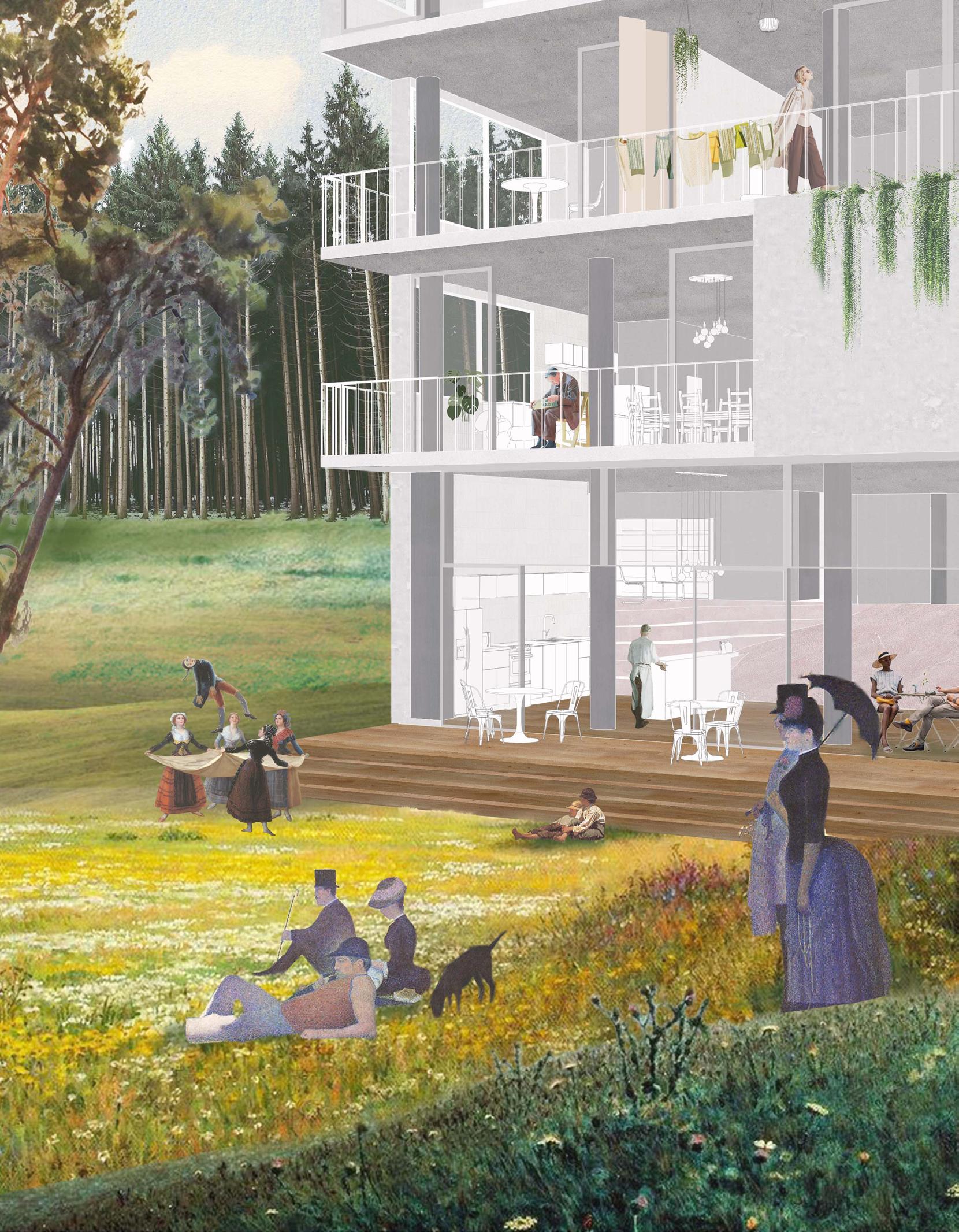
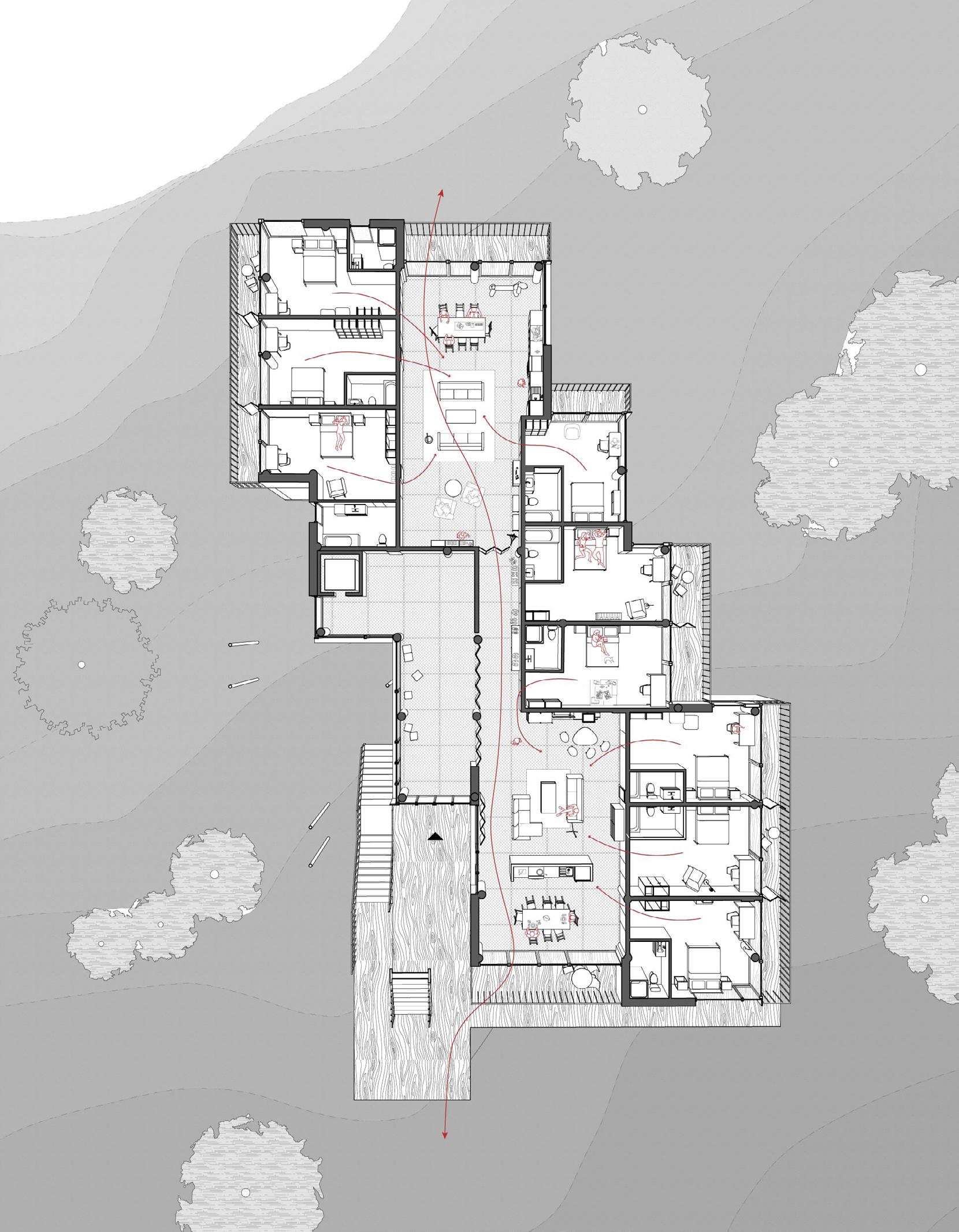
The concept of my house extends beyond the focus on traditional nuclear family, accommodating a foster family in a cluster housing typology on the second floor. Each child has a private space that opens into a main living room shared between two clusters. As the children grow up and move out, the space can be transformed into a shared co-living. Orphaned children are integrated not only with their new parents but also with the whole community of the building.
Communal spaces include a kitchen, a living room, a co-working area, a playroom, and an external staircase that serves as the main circulation path, connecting all the floors with the street and creating a continuous route to the rooftop. First floor serves as a multifunctional space, converting into a communal kitchen, cinema, or a place for learning and entertainment. Each apartment has a terrace or a balcony enhancing a seamless connection with nature.
studio
Ground floor
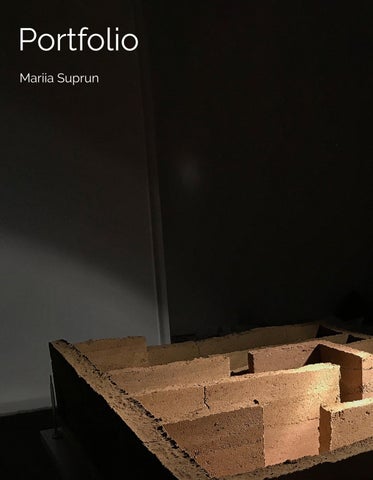
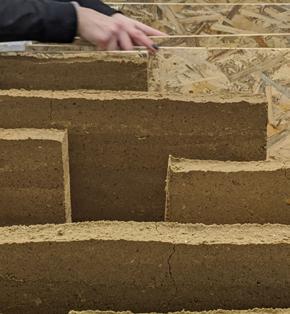
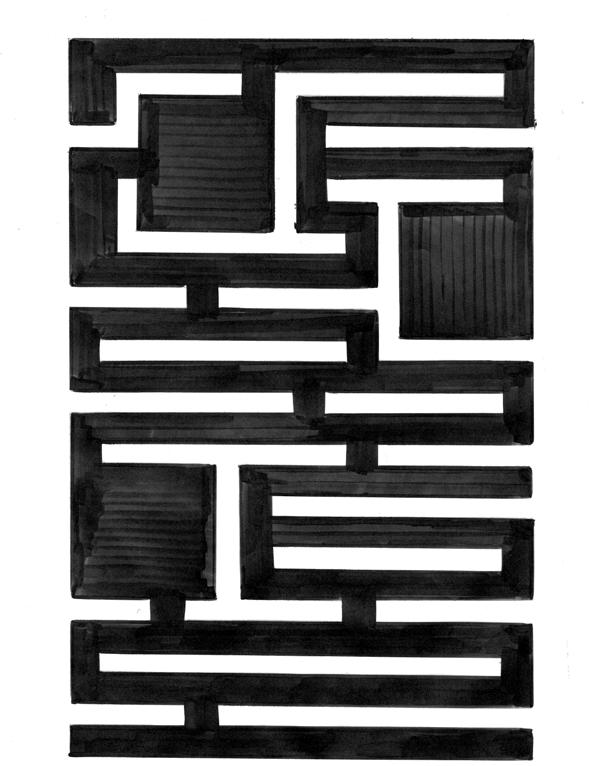
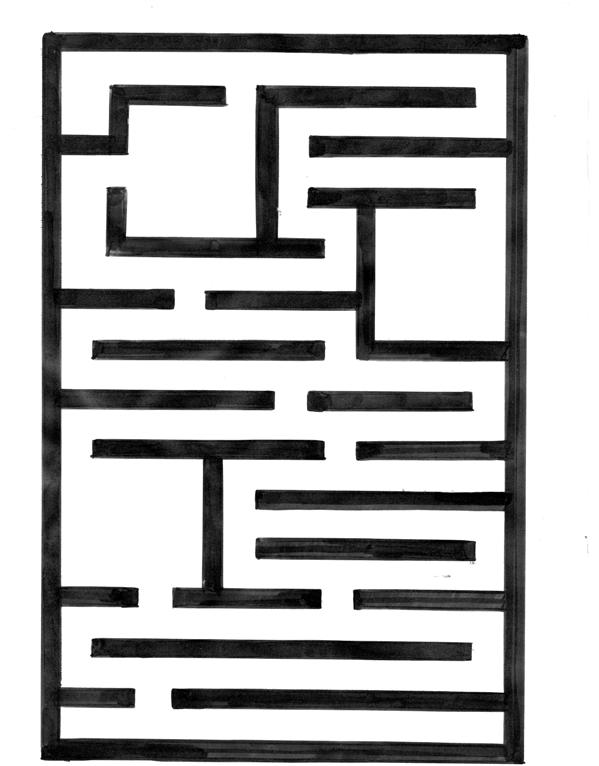
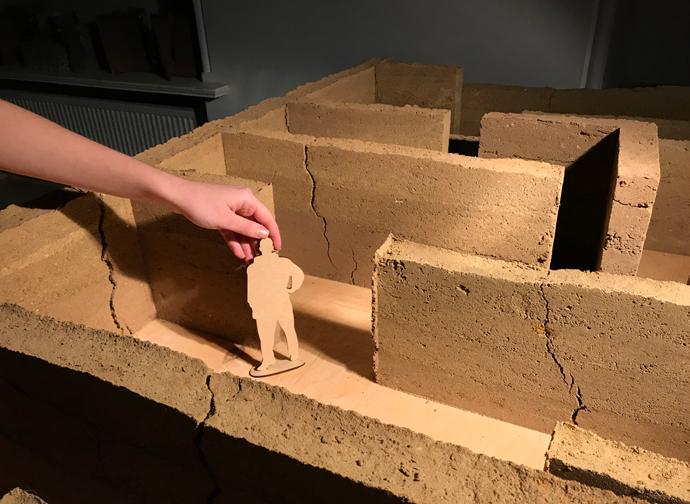
Material exploration Labyrinth
2020 - 2021
Individual project
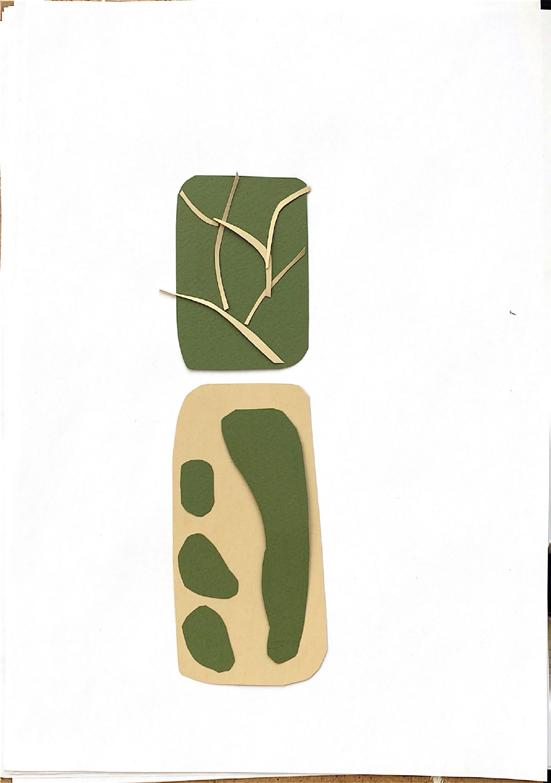
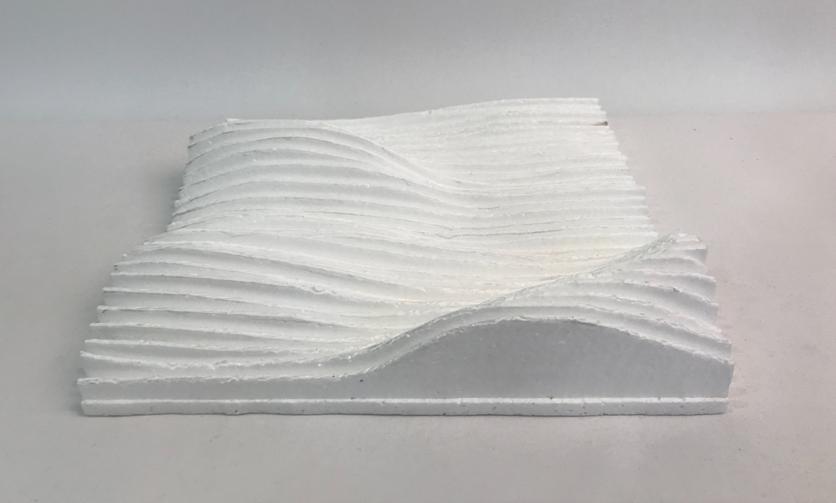
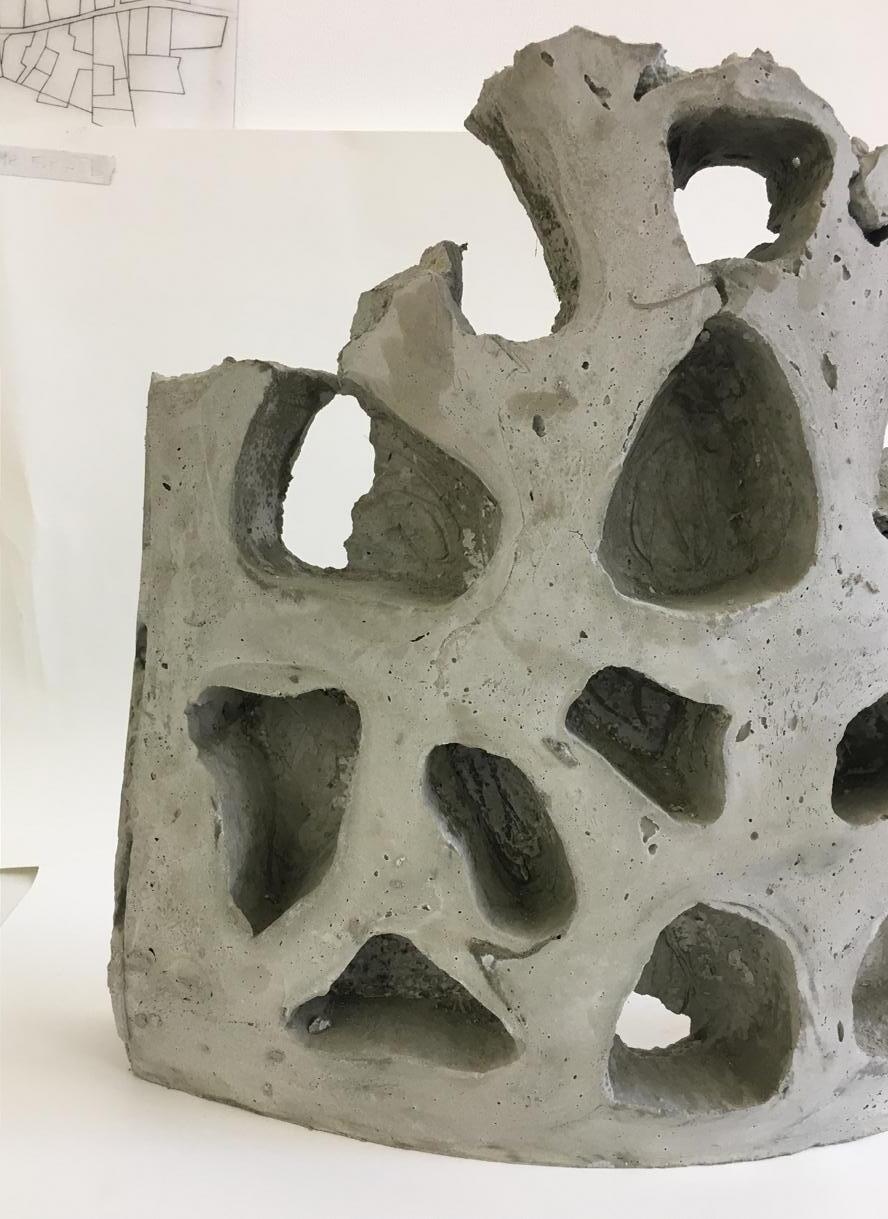
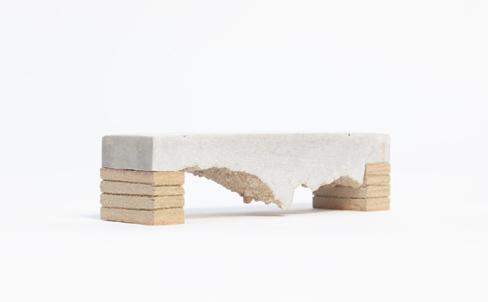
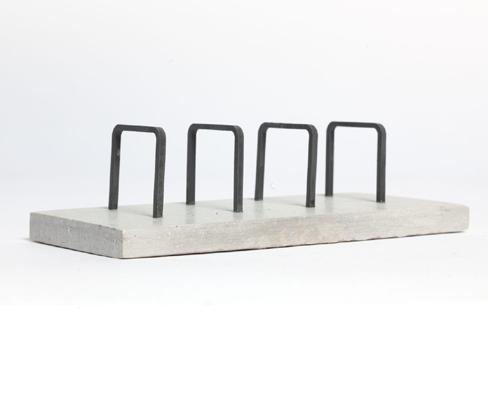
Search for the right material and form through physical modelling of the wall
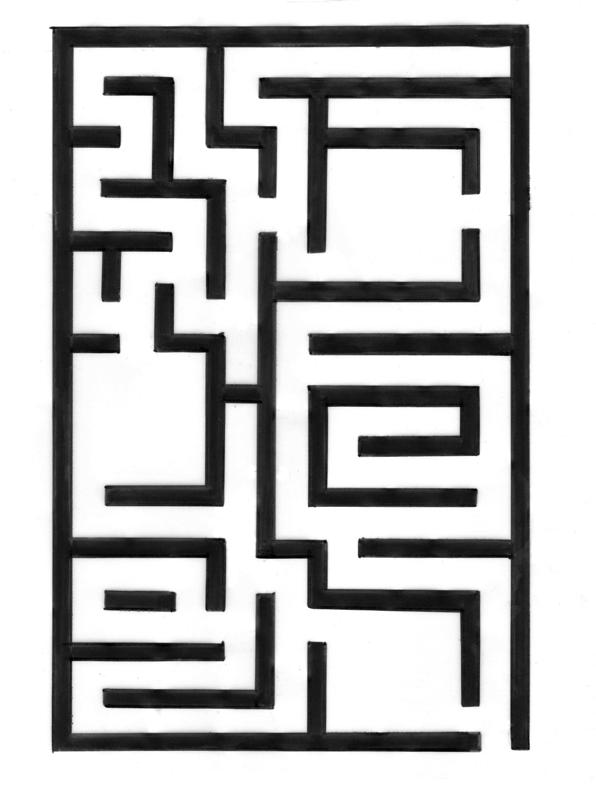
labyrinth
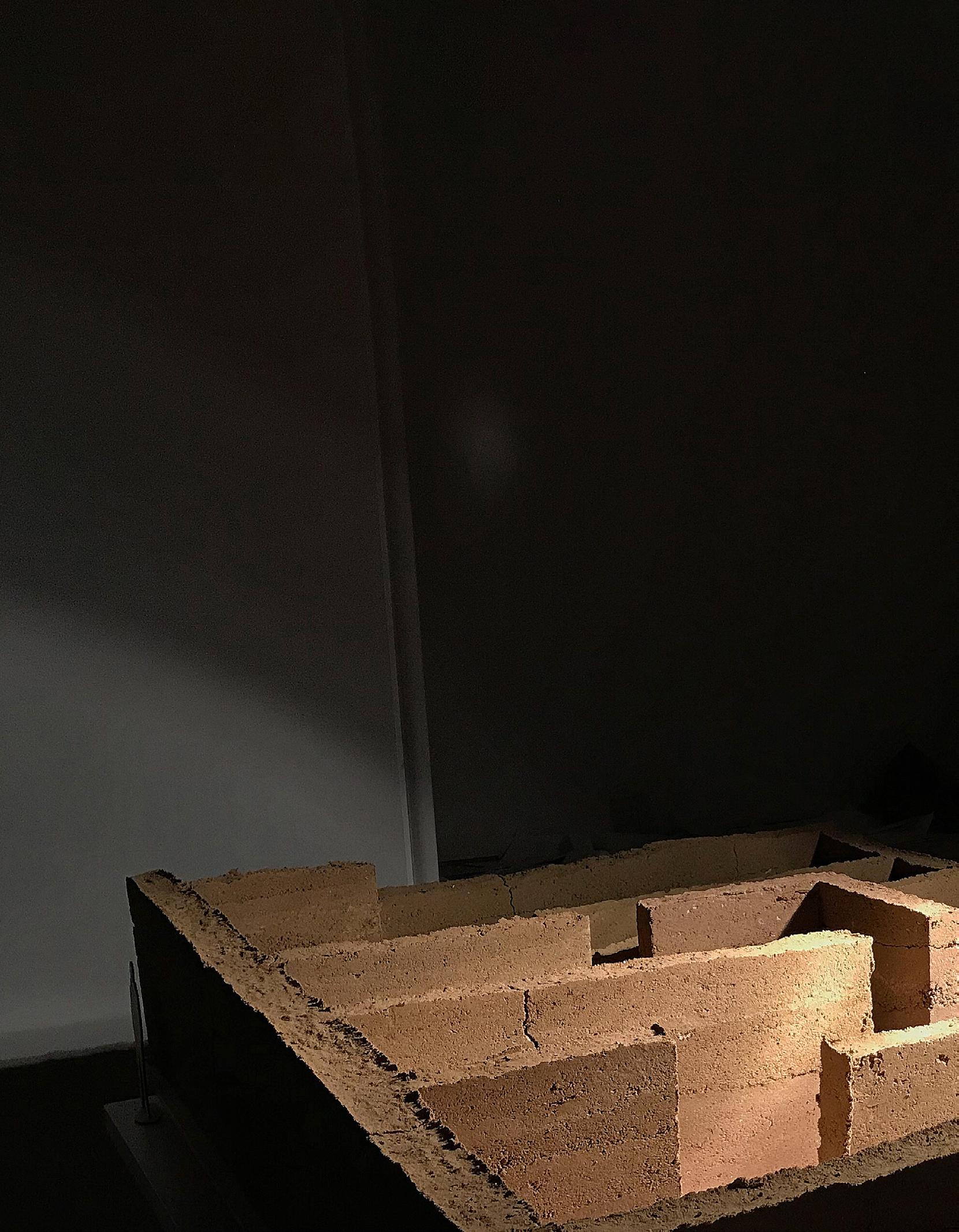
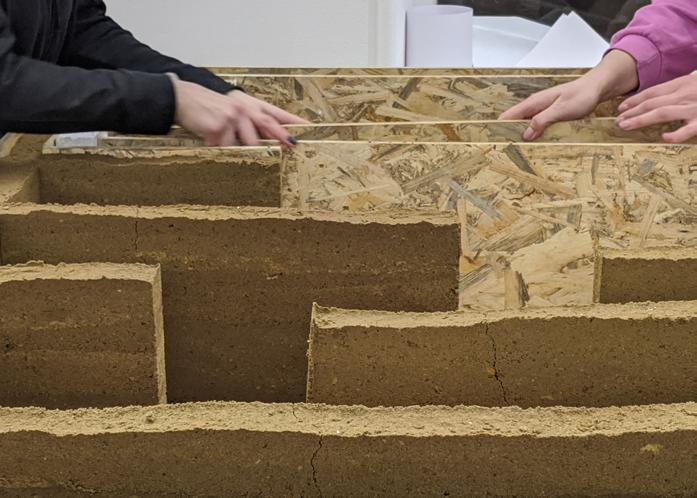
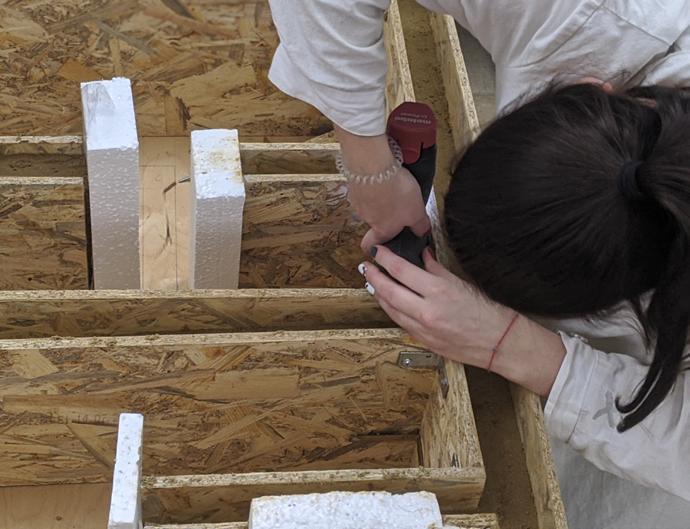
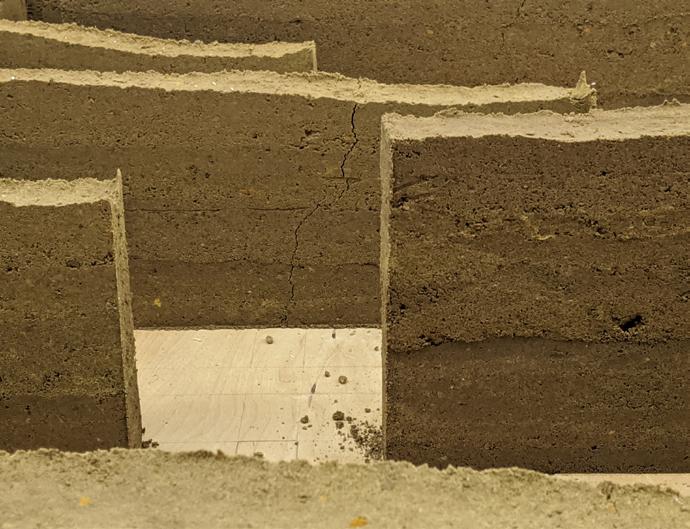
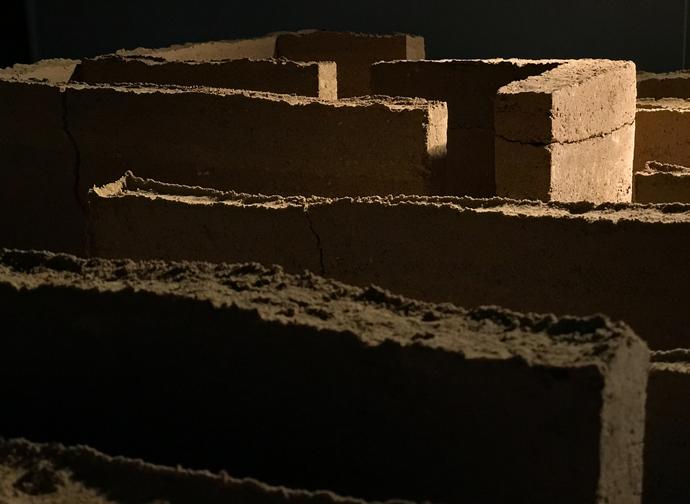
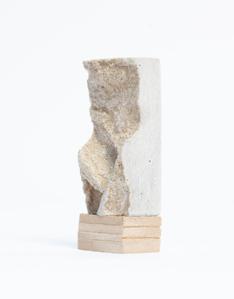
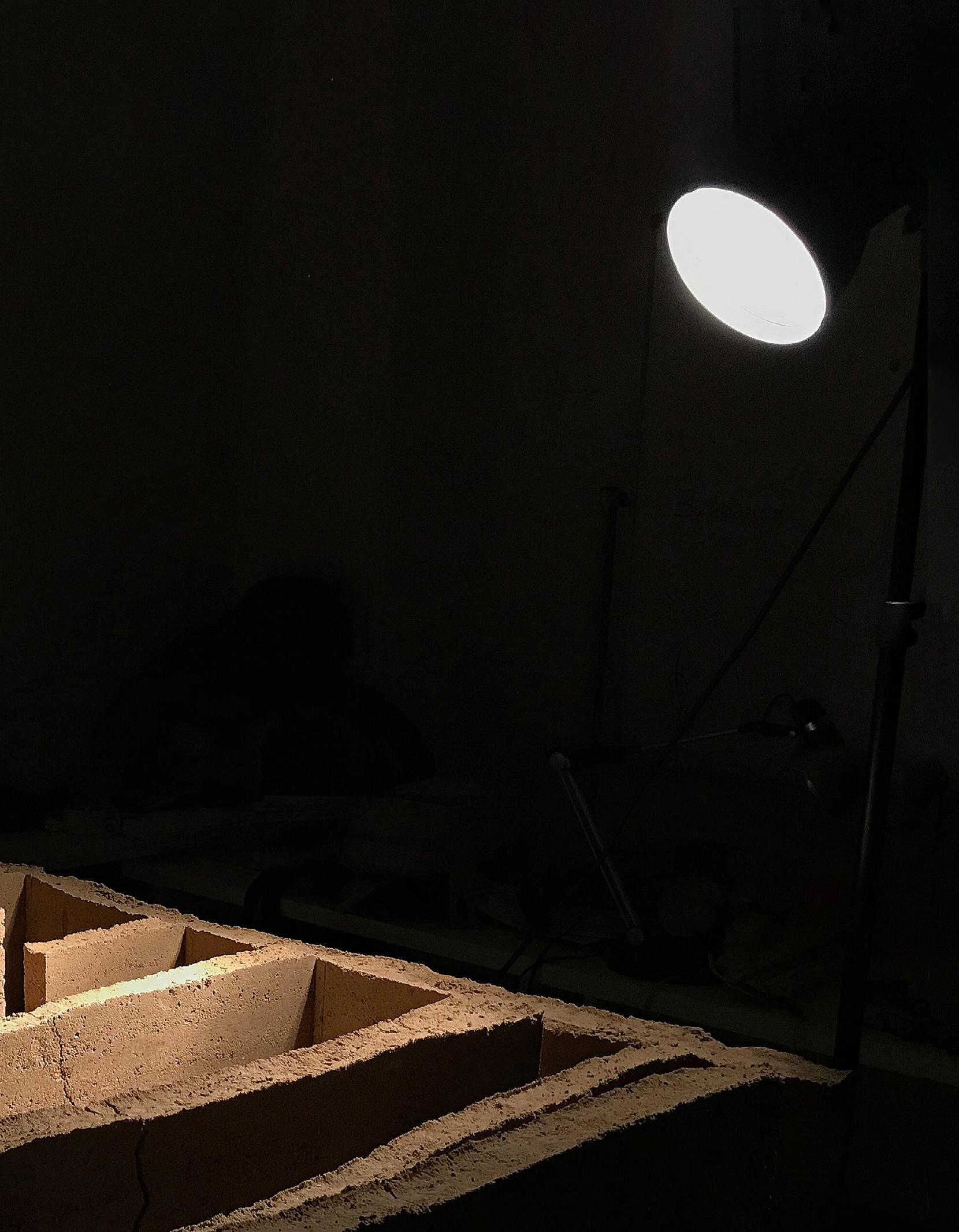
In my project, clay served as the primary component for building the wall within the technical unit. It involved creating formwork from osb panels and experimenting with different rammed earth mixtures.
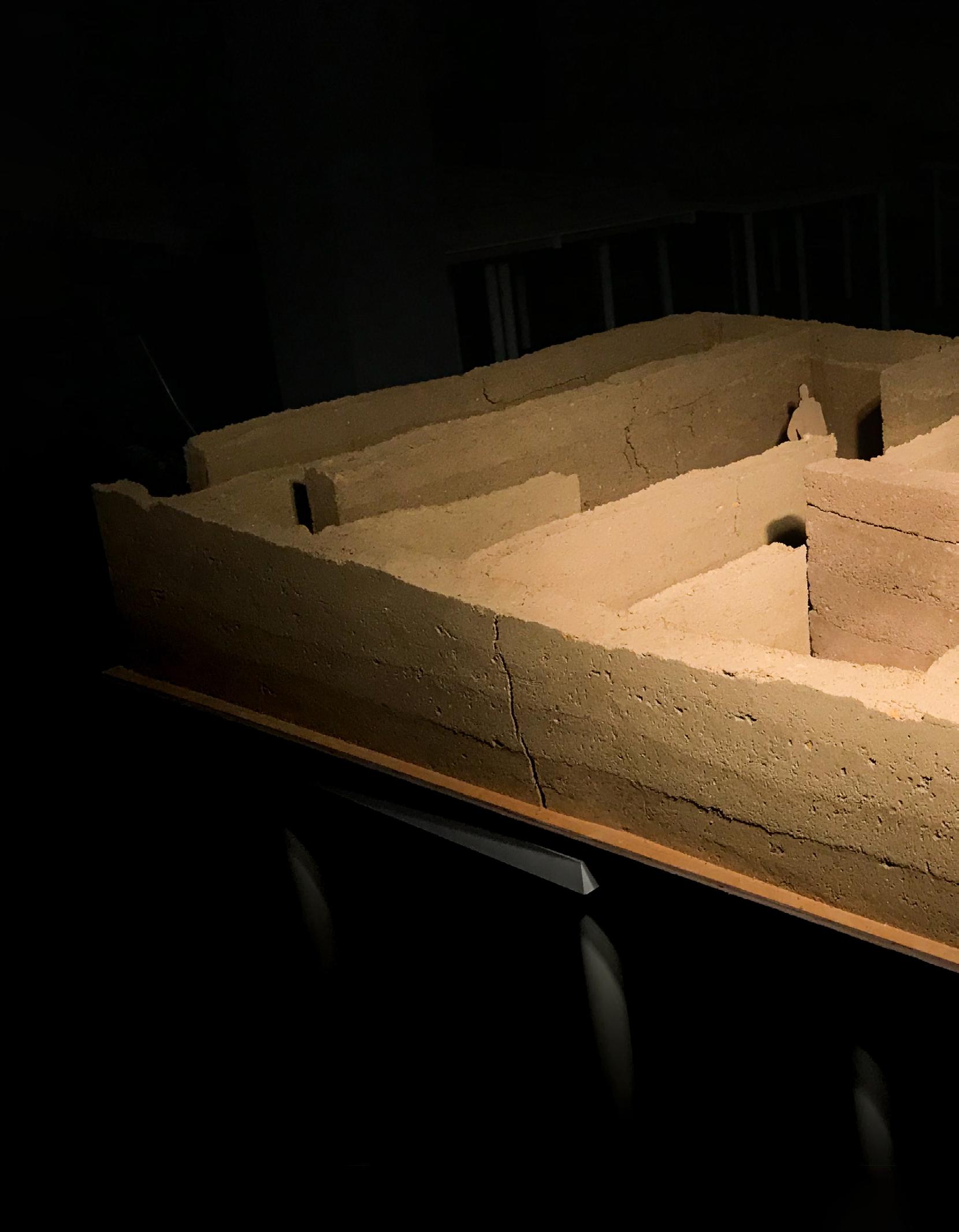
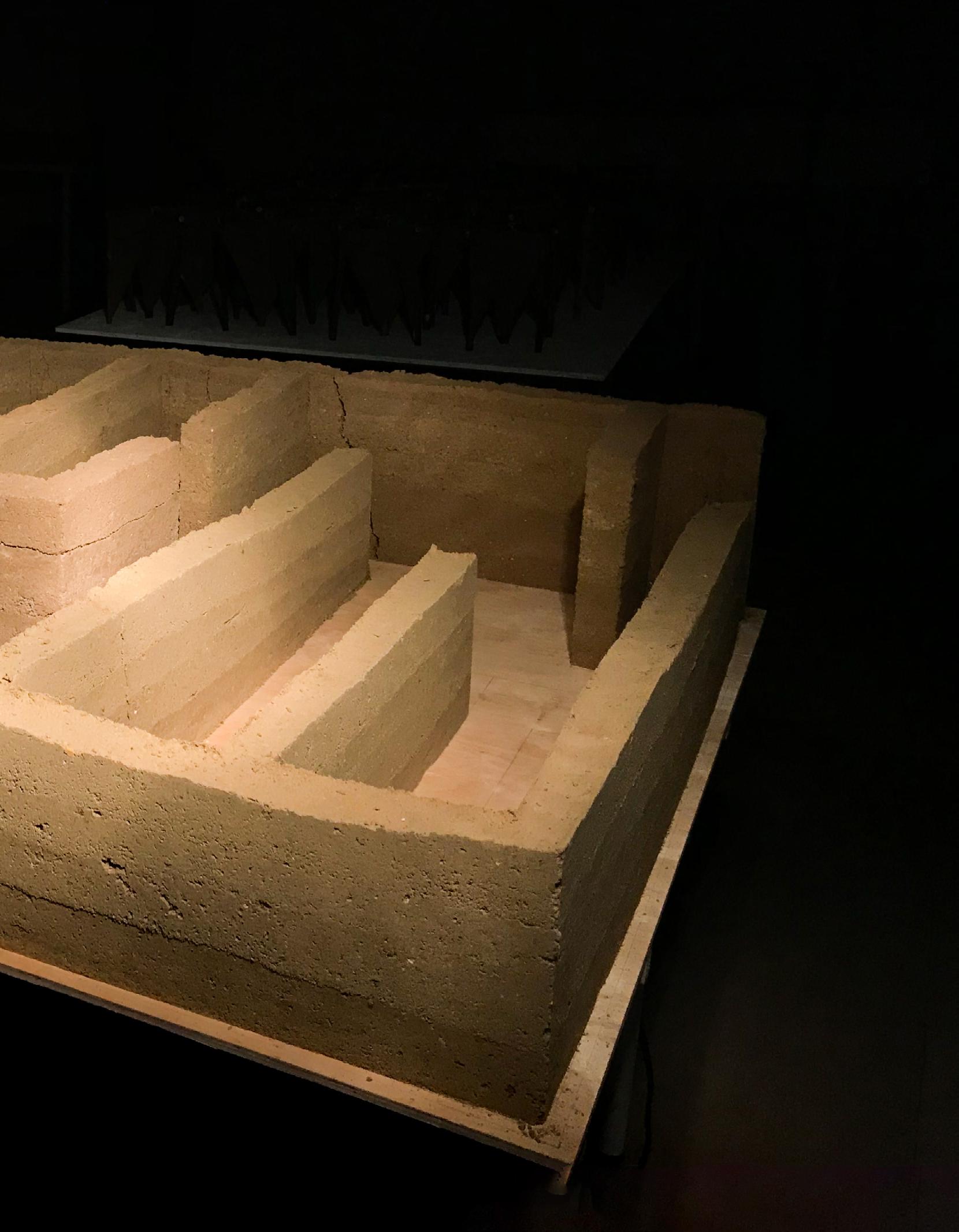
The subsequent stage was designing a maze scaled 1:10. Its was rooted in the contrasting experiences of individuals moving from expansive rooms to narrow corridors.
As users navigate the labyrinth, they traverse seemingly similar rows of walls, only to unexpectedly discover pockets of inviting open space. Rammed earth technique was chosen not only to evoke a sense of monumentality but also to introduce a delicate contrast—one where the structure feels robust yet vulnerable to the natural elements, as over time wind, rain, and snow will gradually erode the form.
Materials: clay, soil, sand, water
Dimensions: 1500 x1000 mm
Churchill Road
Autumn 2022
Group competition
Completed during internship at Assemble Location: Churchill College, Cambridge
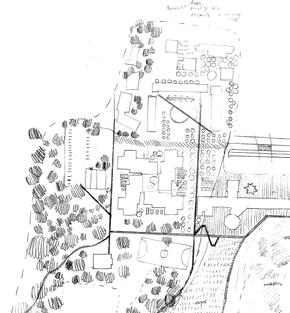
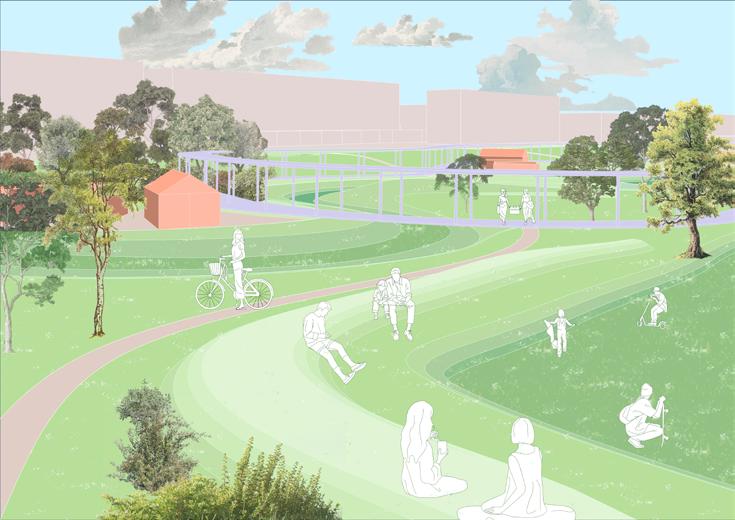
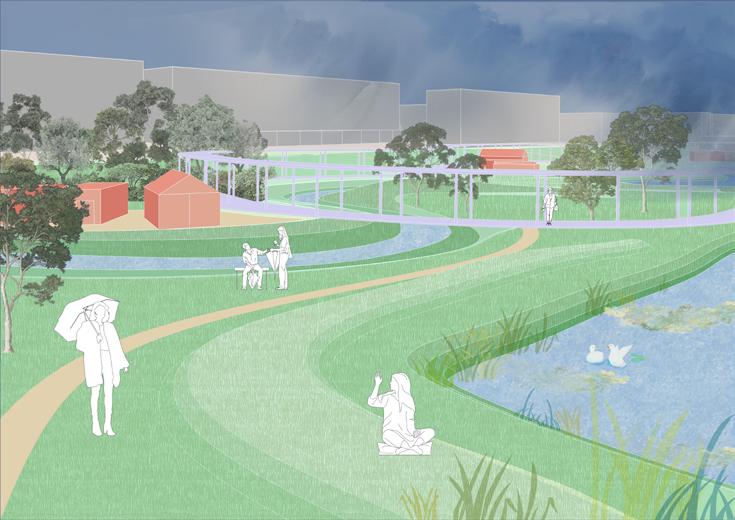
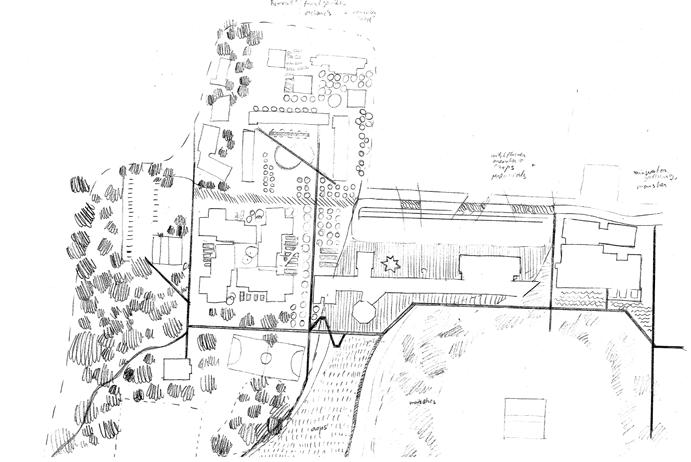
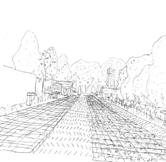
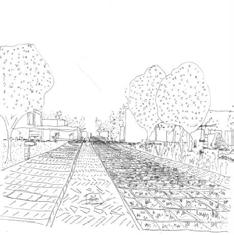
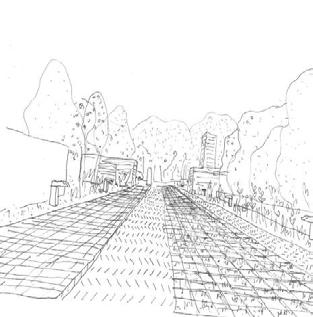
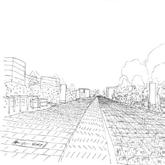
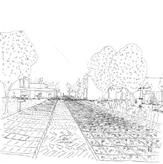
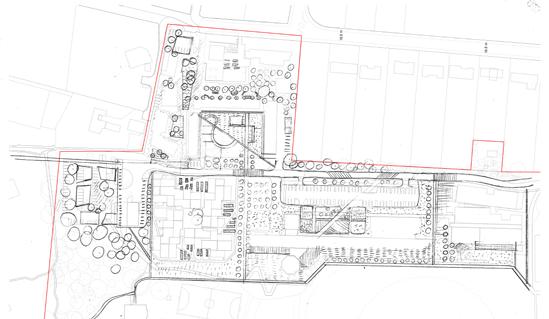
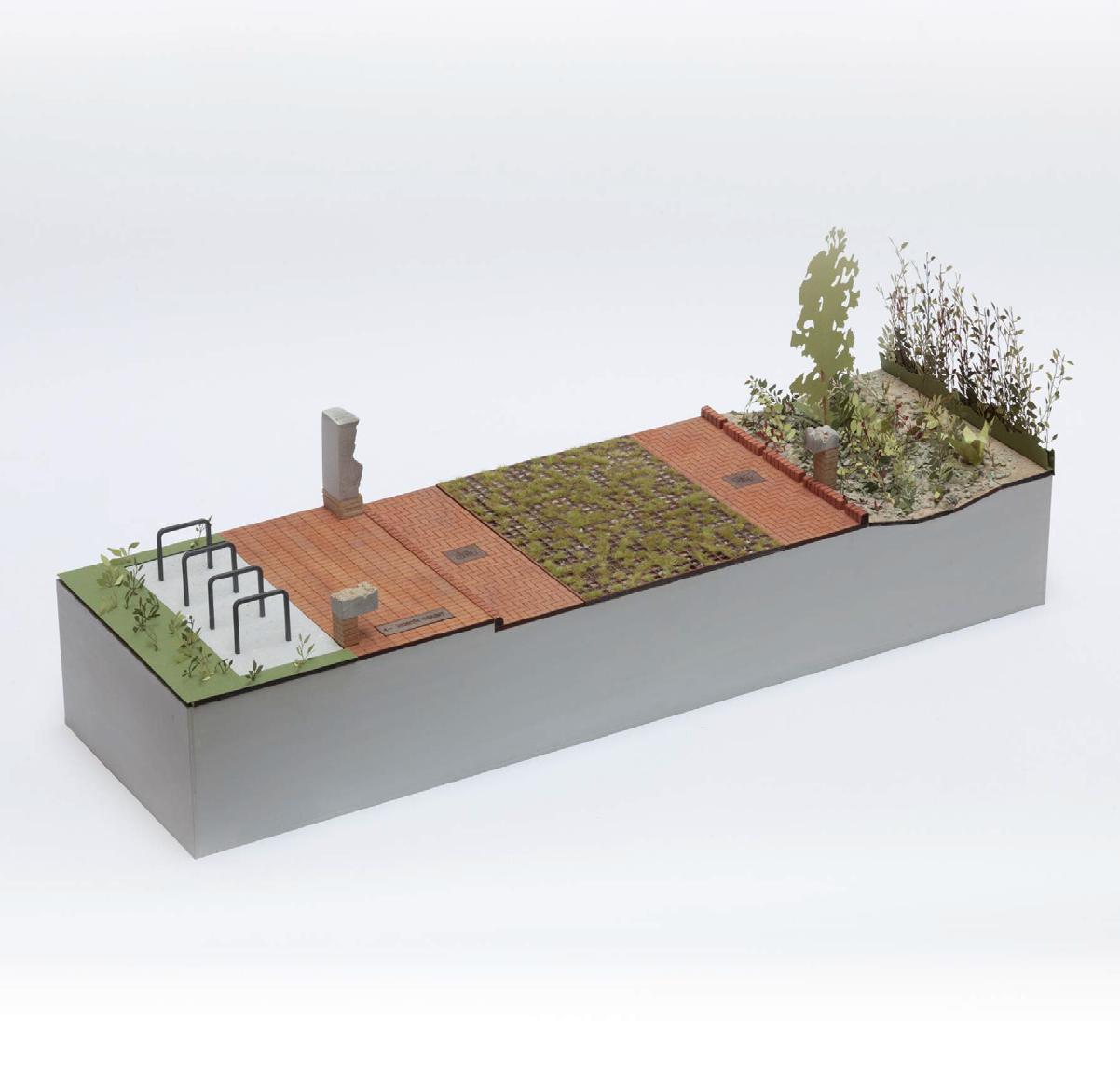
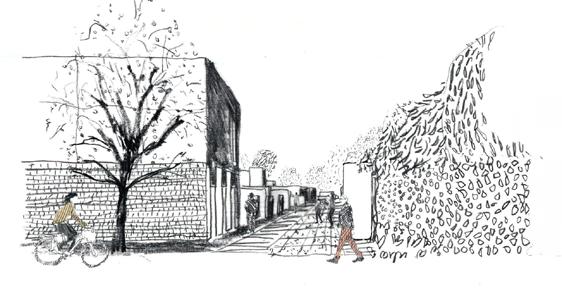
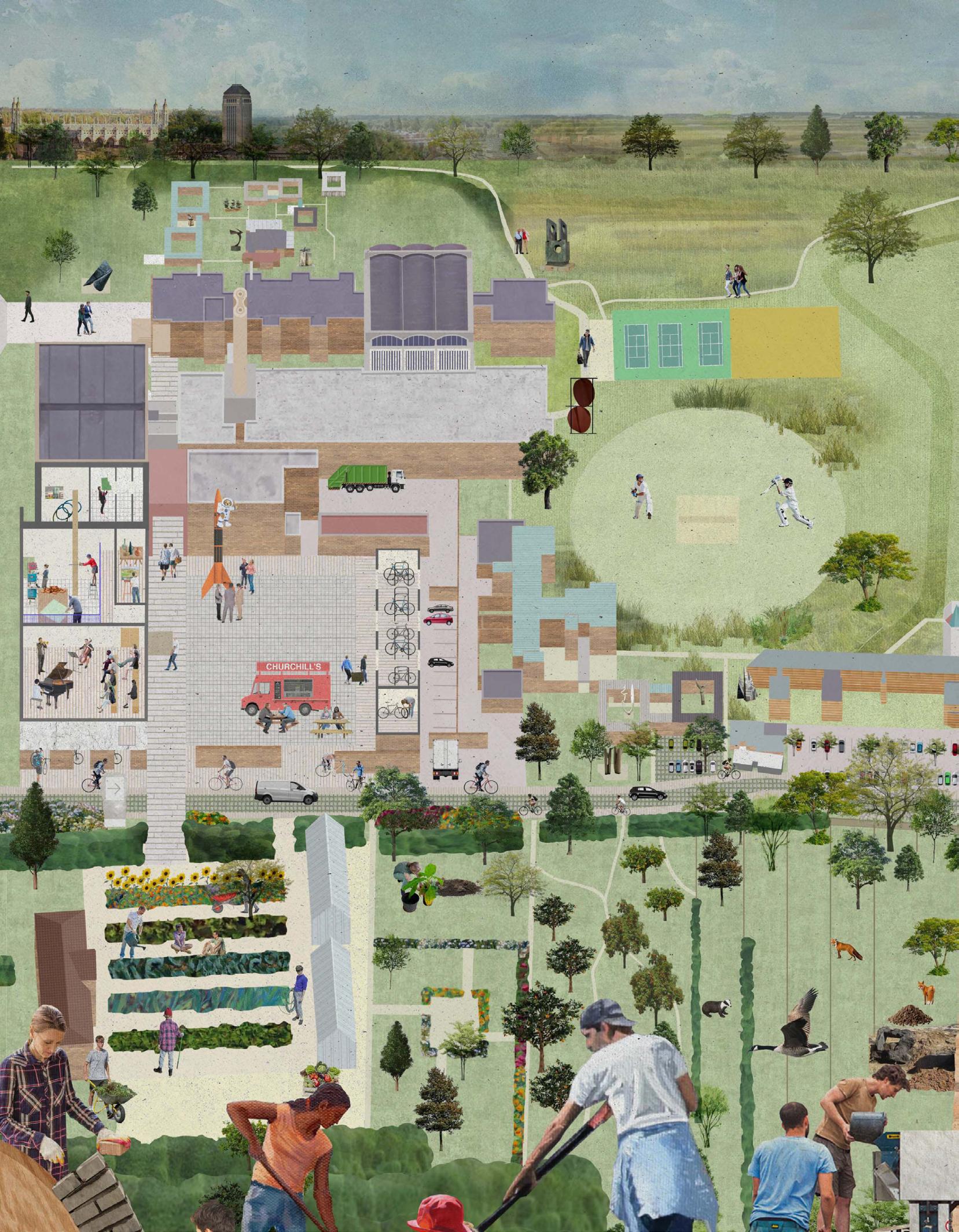
The competition focused on redesigning Churchill Road. Initially pictured in Sheppard Robson’s masterplan as a service road behind the college, it has since become increasingly central as the college expands to the north and west. The new design proposal enhances existing ‘mat’ of courtyards, transforming Churchill Road from a corridor into an enfilade.
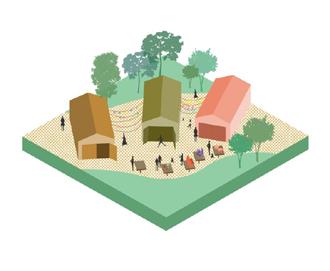
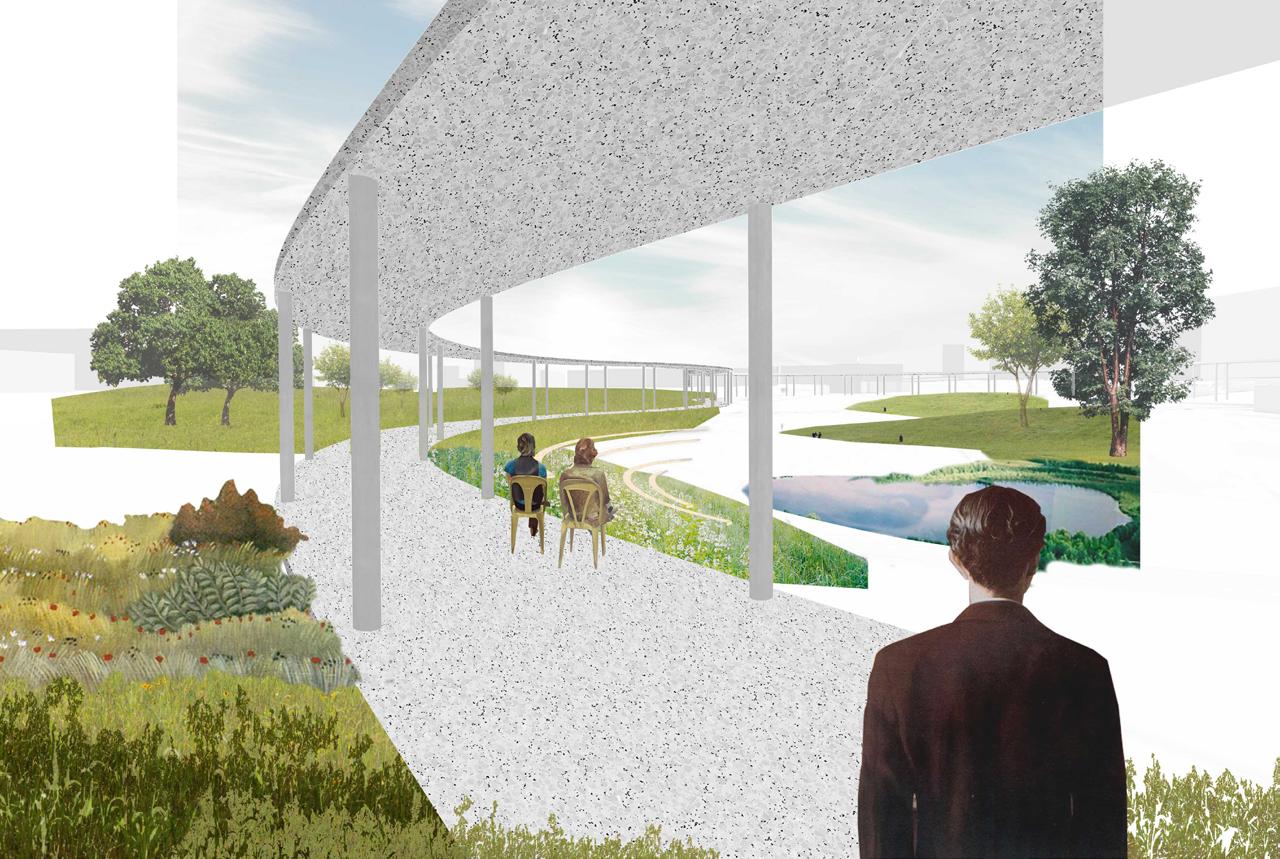
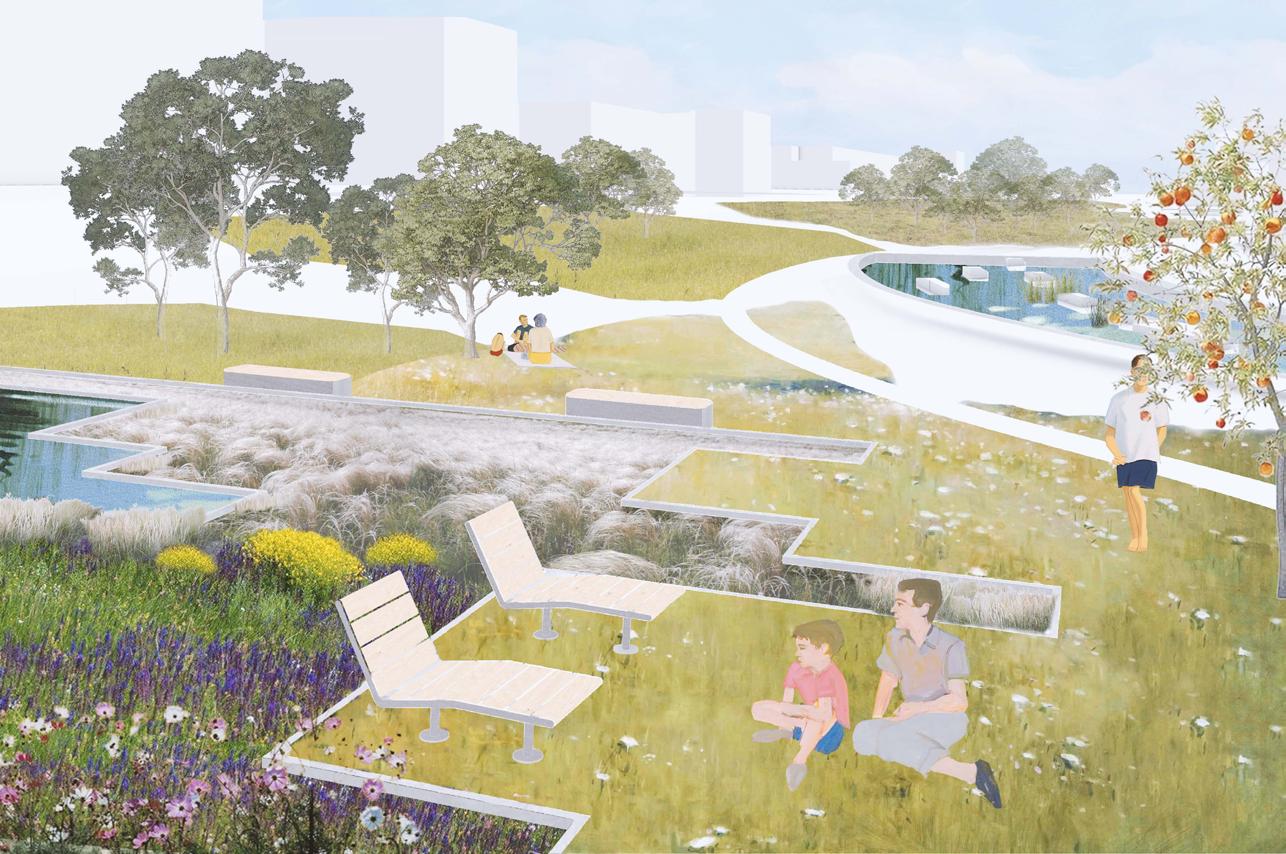
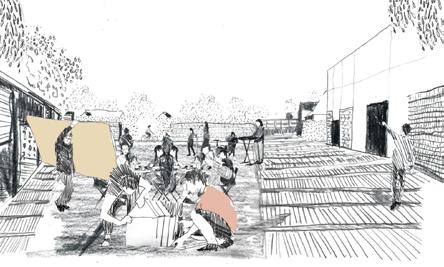
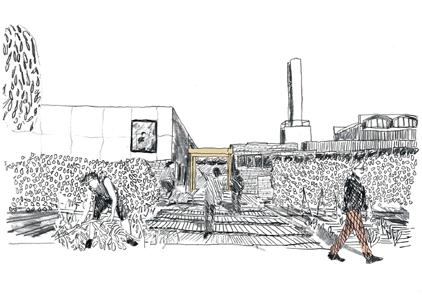
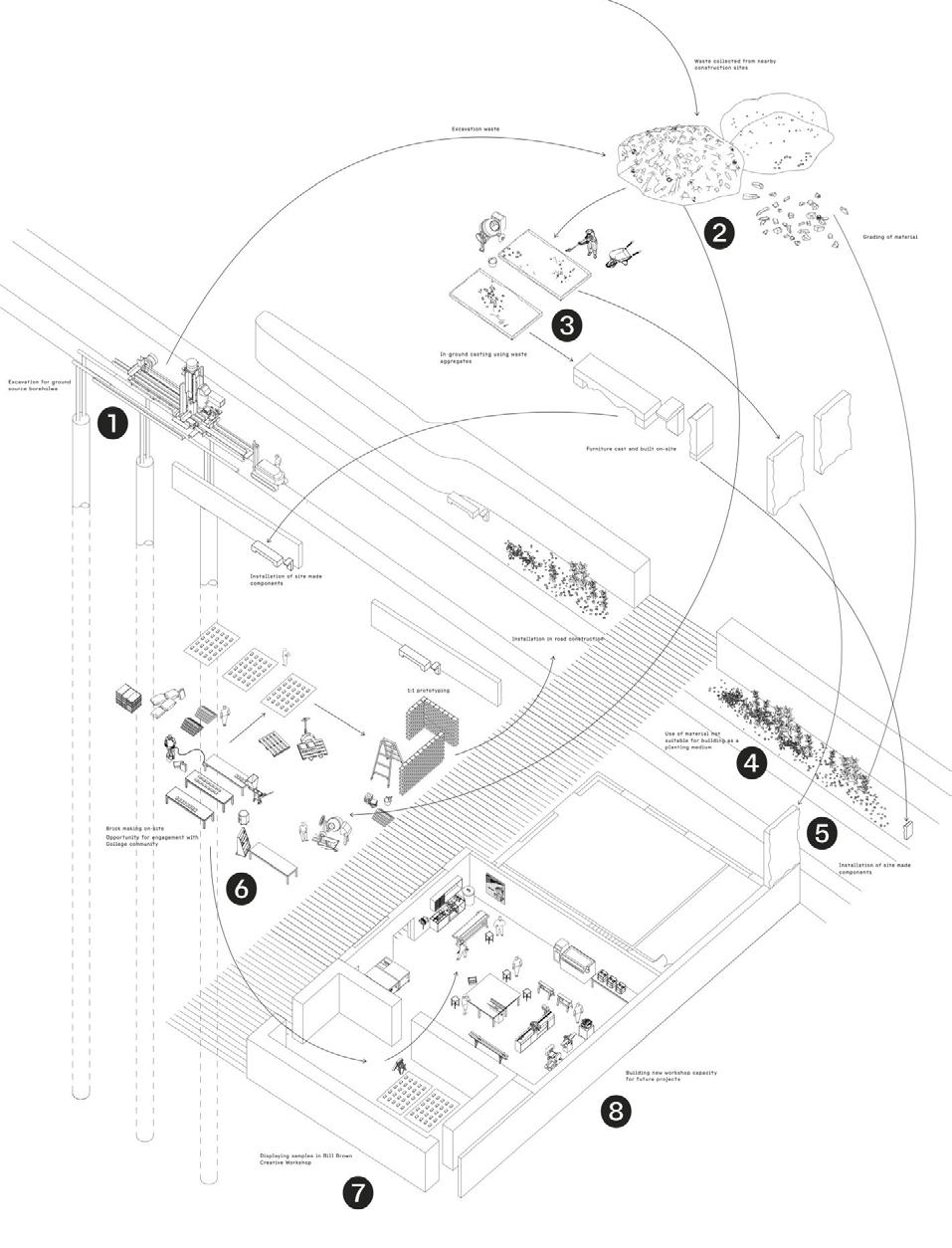
At the east end of the site, we proposed a new ‘Productive Court’ for experimentation, growing, and the arts, while the west end features a court for play and socializing. The design prioritizes pedestrians and cyclists, maintaining access for services and deliveries.
Construction and Performance
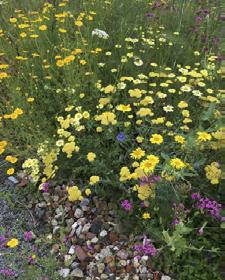
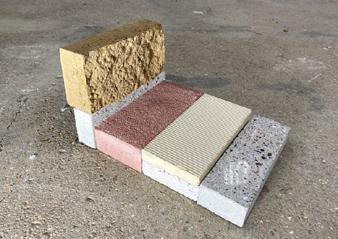
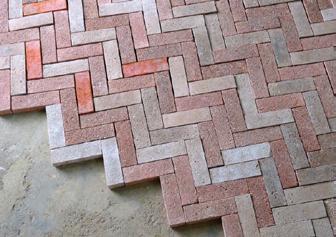
The spaces are carefully crafted to be porous and lush with plants, whilst a cohesive family of furniture complements the original college buildings. Key project elements will be delivered on-site to minimize waste and foster collaboration with the college community.
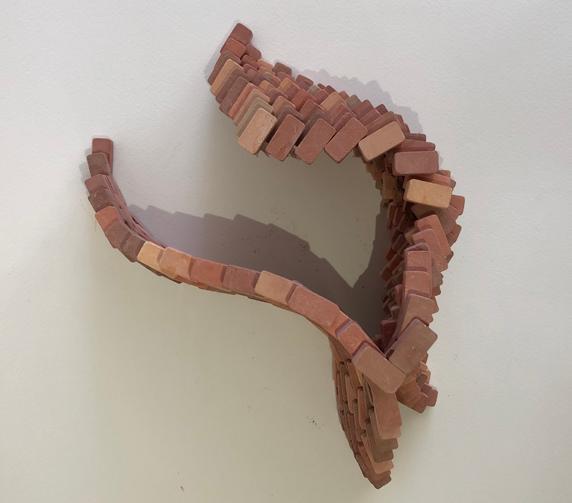
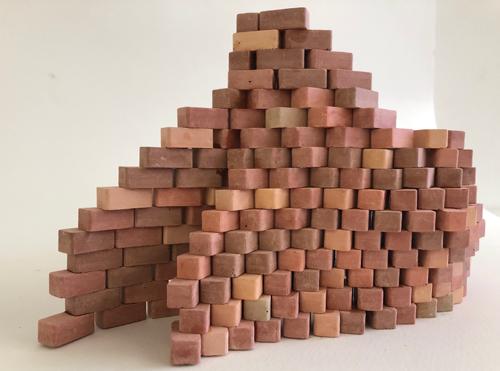
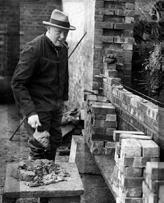
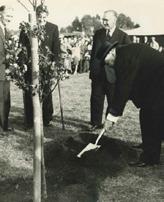
Thinking with the hand: Churchill laying bricks
Jess
The
David Chipperfield Architects
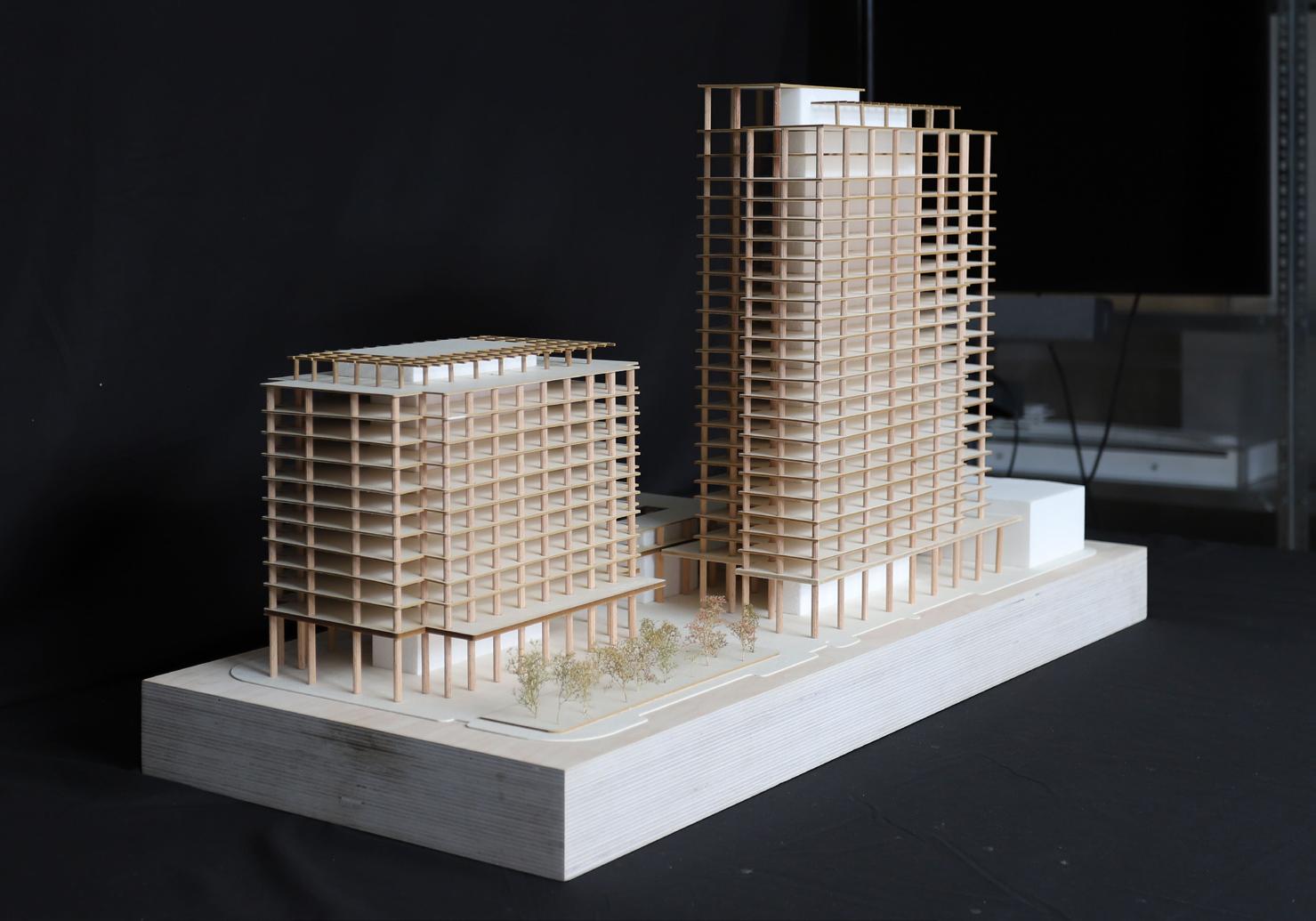
1:200 Physical Model
Miami Design Gardens
2023-
Location: Miami, USA
Programme: mixed-use development including residential, hotel, retail, amenities, and public spaces
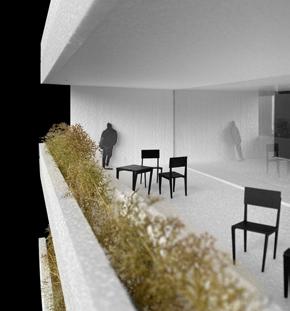
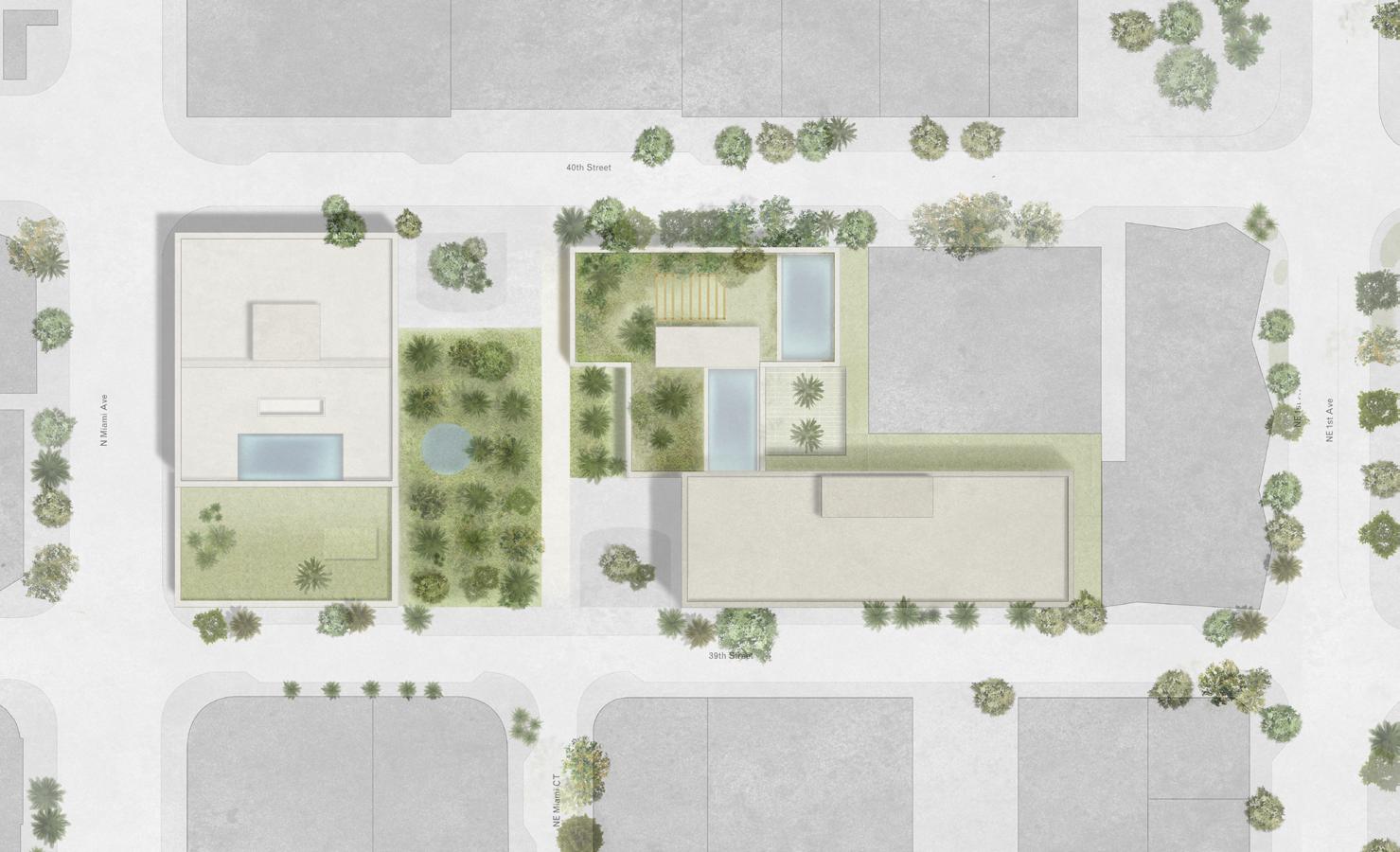
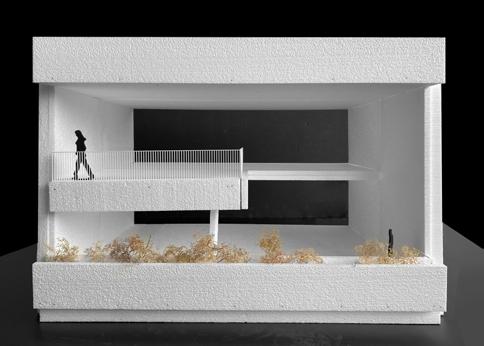
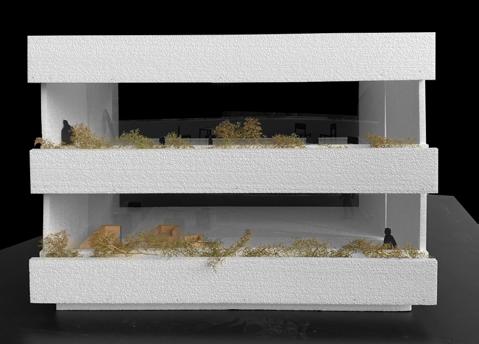
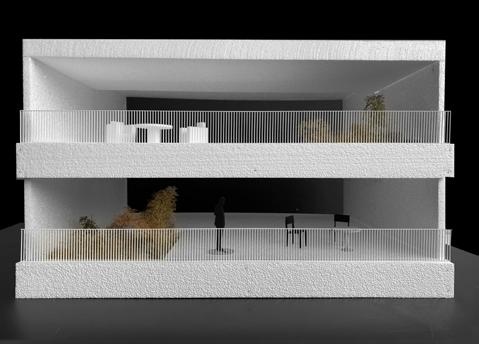
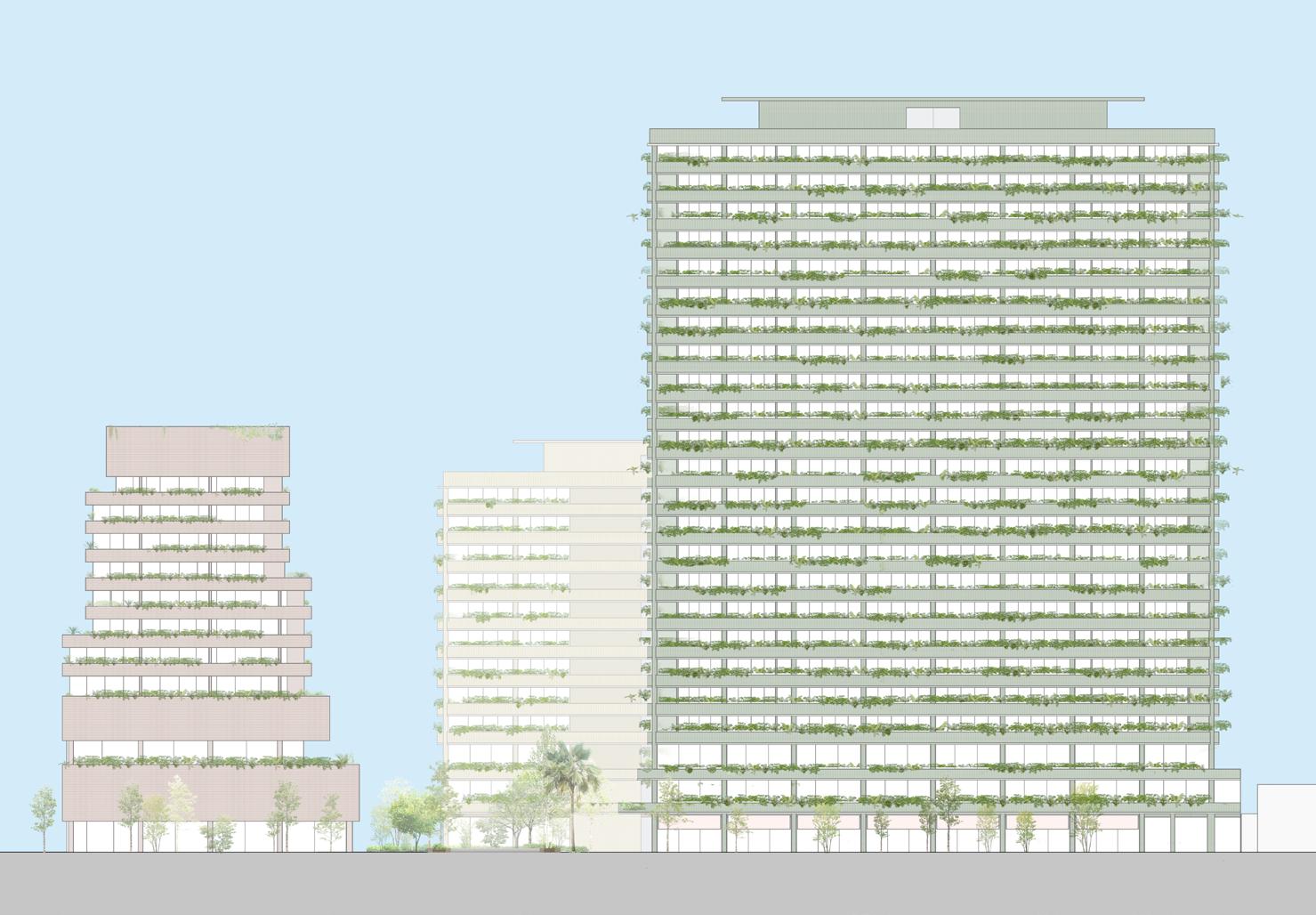
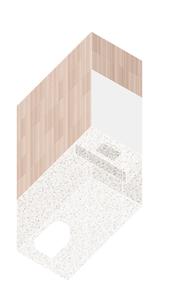
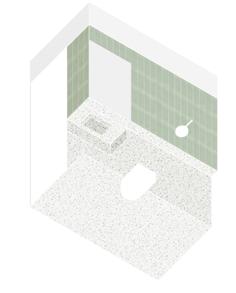
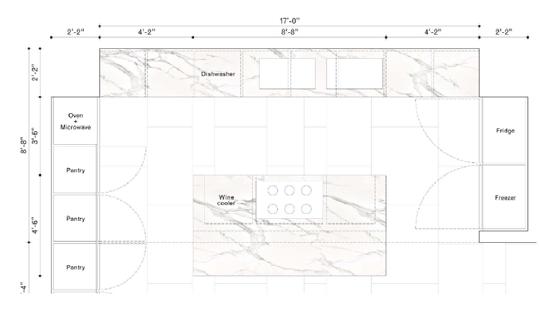
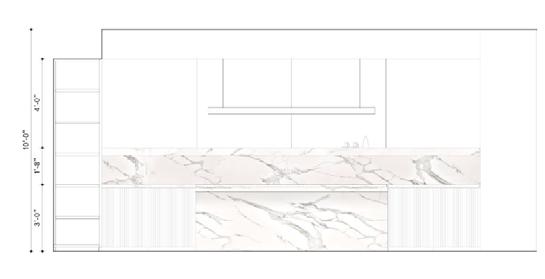
During 2 years in practice I was involved in a high-end mixed-use development in downtown Miami, contributing from initial concept to schematic design. I began with early-stage masterplanning—translating client requirements into a
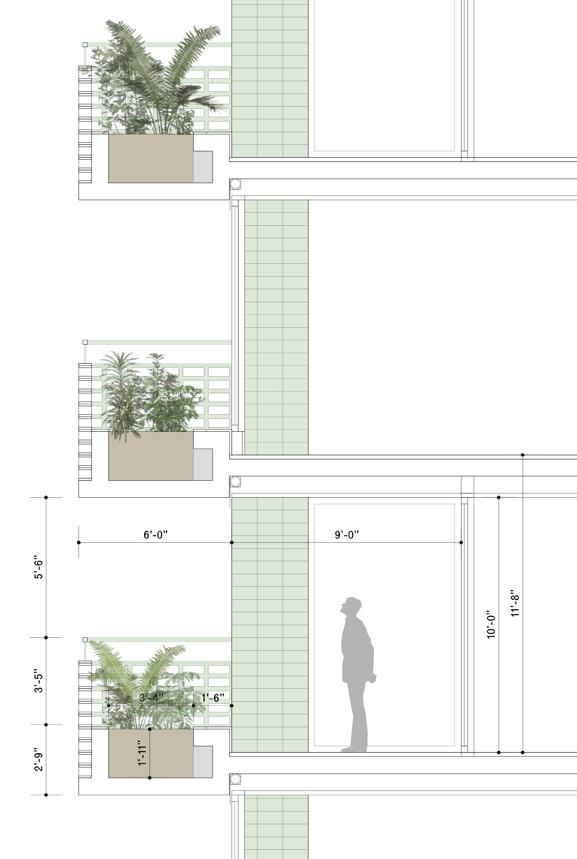
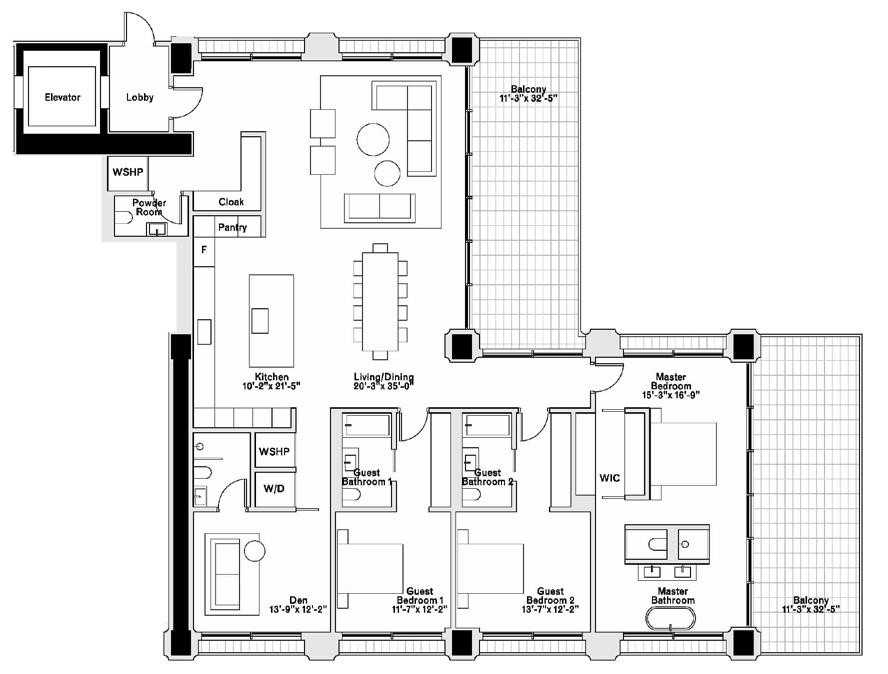
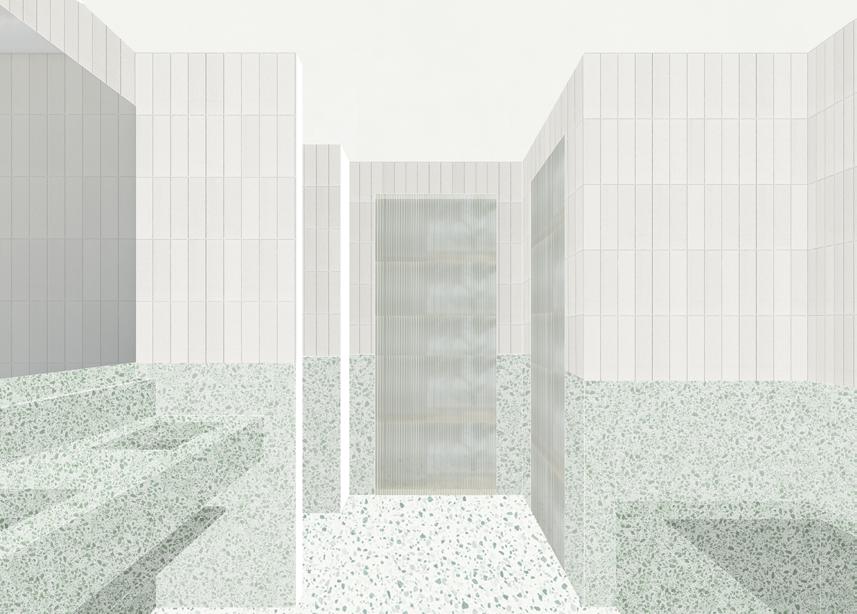
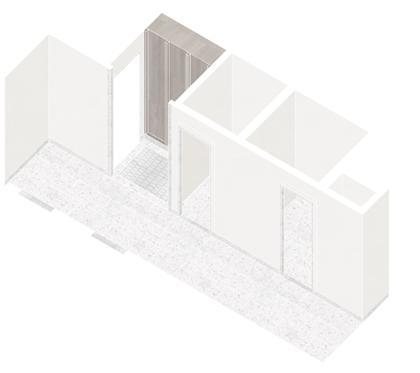
site strategy that balanced retail, hotel, residential, and public space. The Miami climate inspired an architecture that blurs the boundary between inside and out, with layered balconies, landscape integration, and a garden-centric arrival experience. Later, I was a part of the interiors team, developing residential layouts and a ‘case-study’ apartment that informed all typologies. This involved rationalising spatial sequences, designing fixed elements like kitchen and bathroom, and coordinating with façade, structure, and MEP. Material clarity and spatial flow were integral to achieving a sense of luxury, where architecture and interior merge into a cohesive response
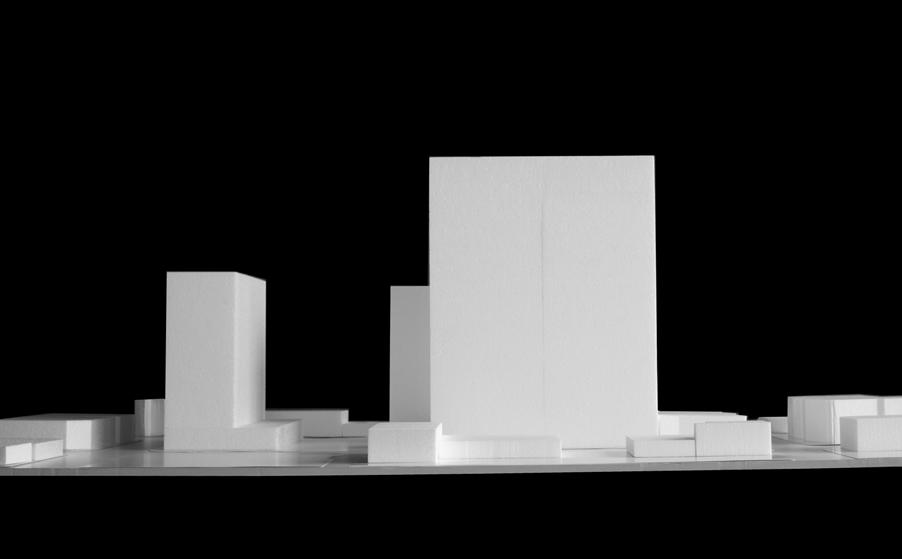
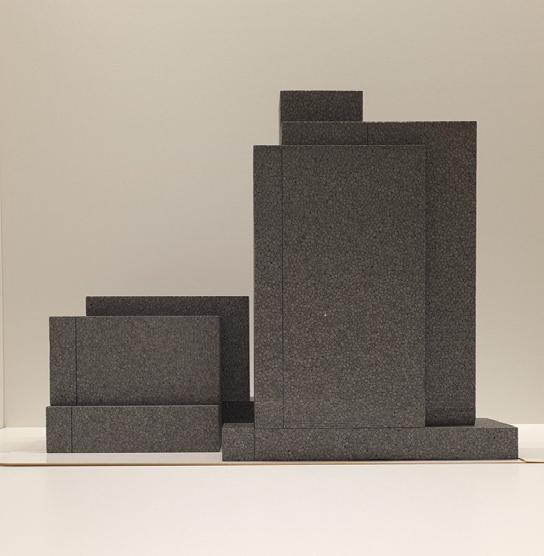
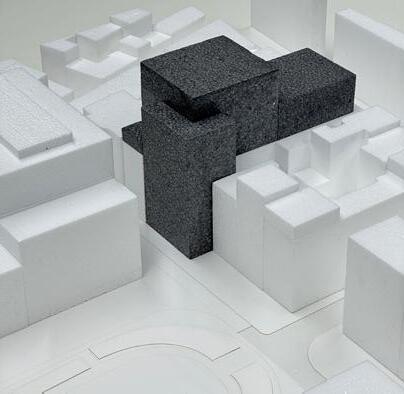
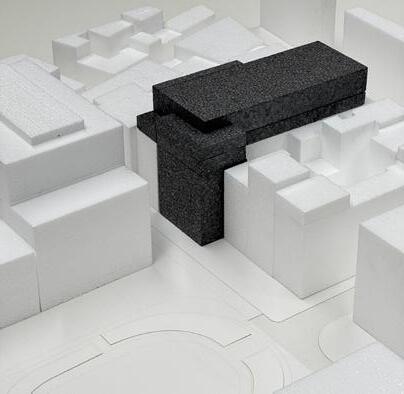
Volumetric studies through model-making
Masterplanning and landscape proposal – stage 0
South elevation
Residences interior concept for a case-study apartment
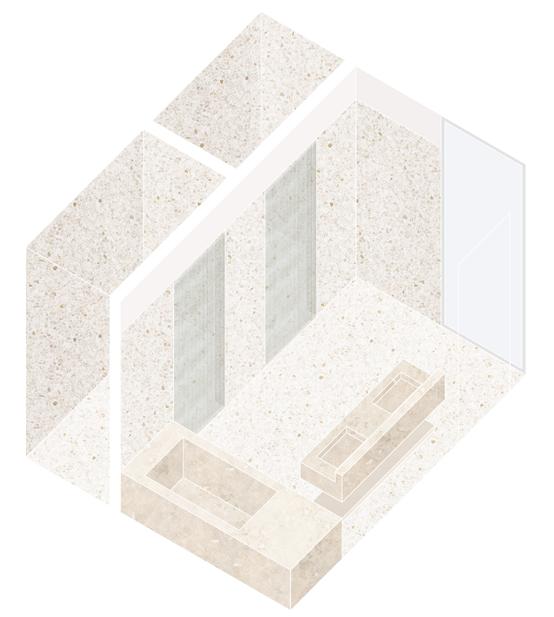
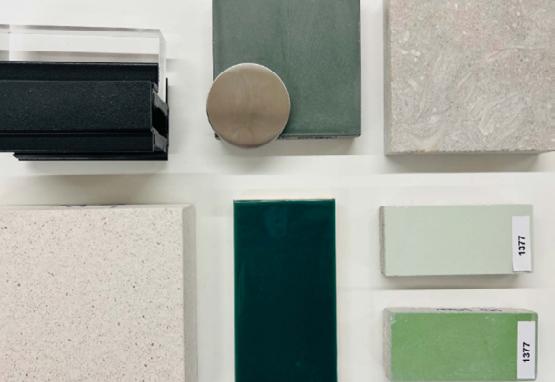
Master bathroom material study
Typical corner unit planning
Kitchen elevation
Kitchen plan
Master bathroom axonometry Material
Office redevelopment in Westminster
2025
Competition
Location: London, UK
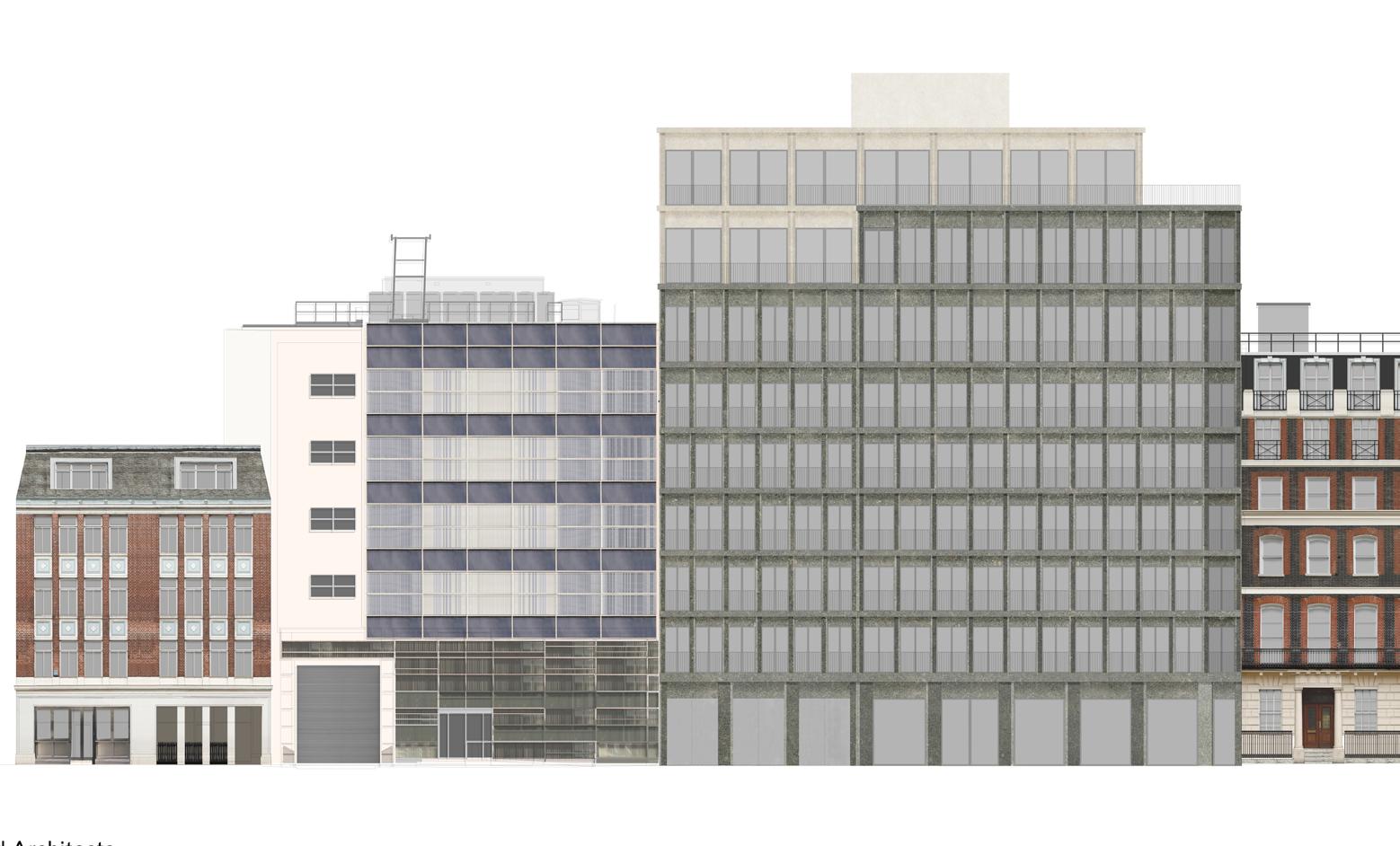
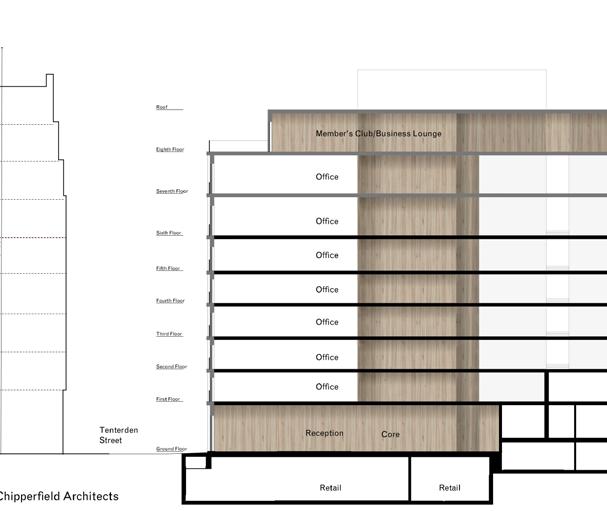
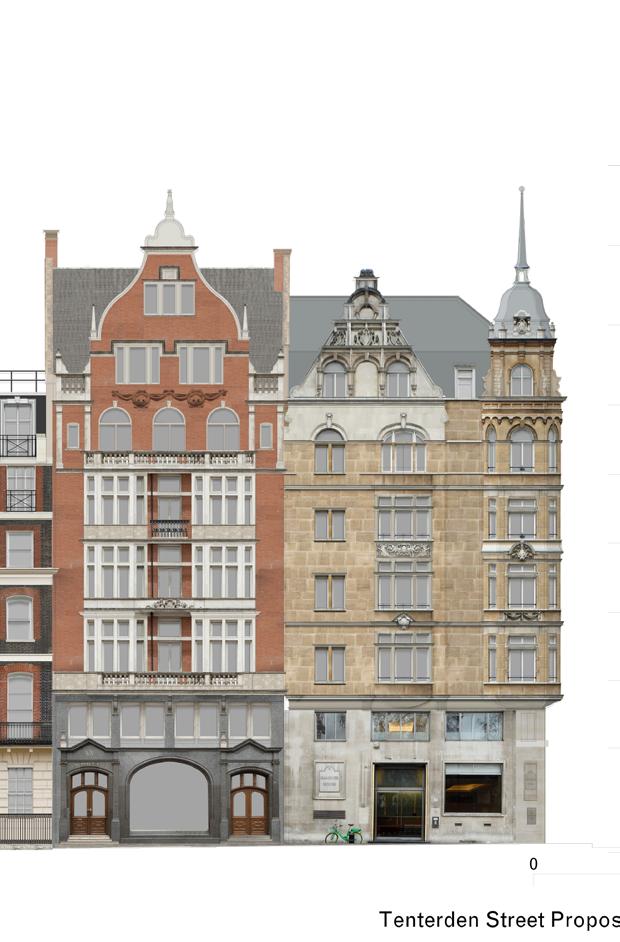
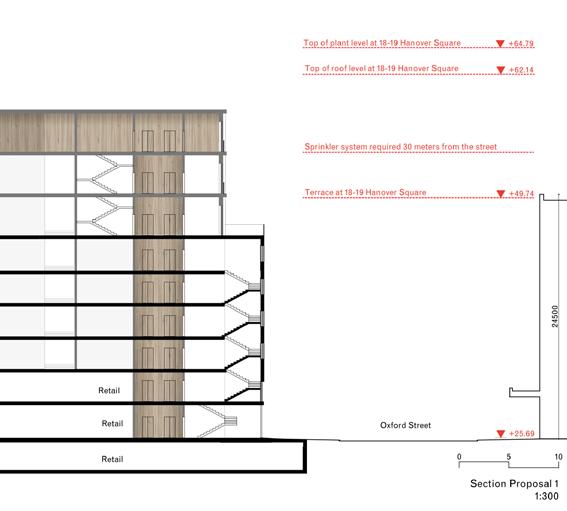
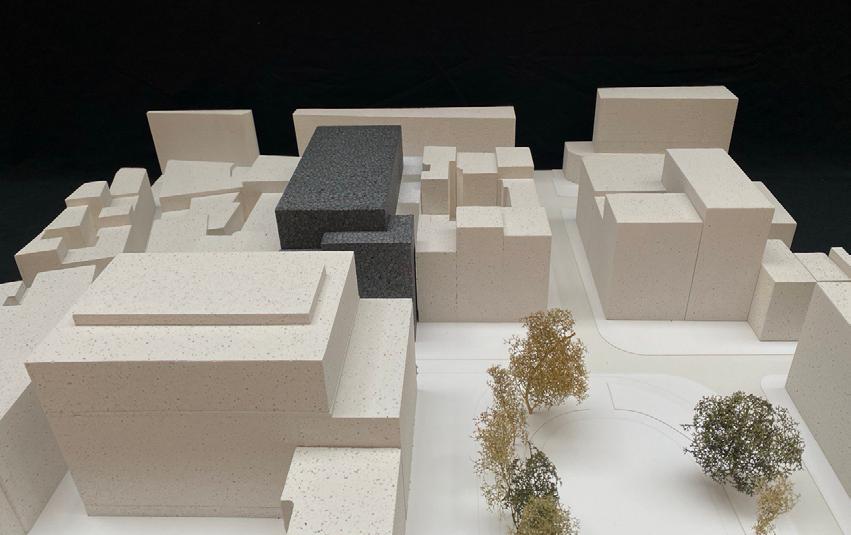
The competition involved the renovation of two existing office buildings to enhance rentability and spatial efficiency. Working within significant physical constraints— a central substation, misaligned floor levels, and inefficient circulation with scattered cores—we explored strategies ranging from minimal internal reconfiguration to more substantial interventions. Our preferred approach centralized the core, aligned critical slab levels, and introduced compliant vertical circulation while retaining as much of the existing structure as possible. We proposed removing the outdated façades, adding two additional floors, and designing a new, more transparent envelope, using fins made from local stone. While the interiors are unified, the façades respond individually to the surrounding urban rhythm.