PORTFOLIO
MARIE MARTINUSEN
PORTFOLIO 2024
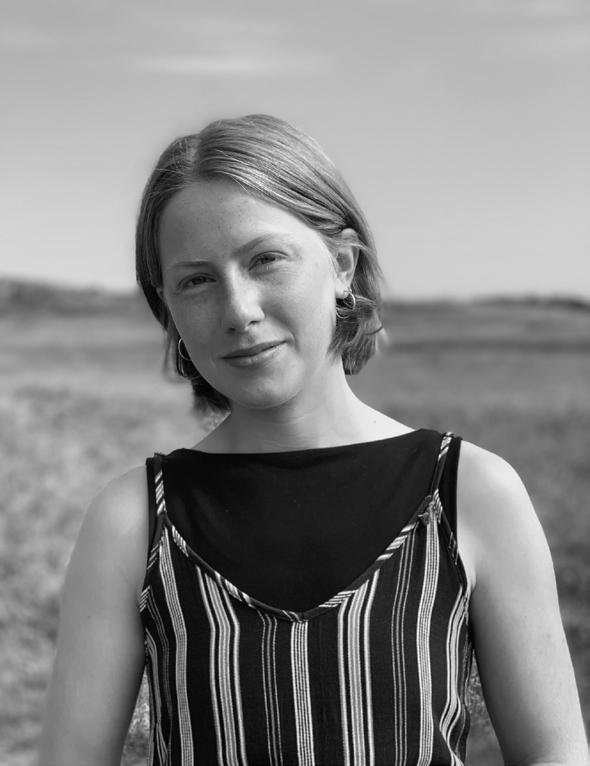
Marie Martinusen
Bachelor in Architecture mariebtm@hotmail.com + 45 23986607
Born 10 . 21.1997
Eckersbergsgade 32 8000 Aarhus C
EDUCATION
Sep 2020 - Jul 2023
Aarhus School of Architecture
Masterprogramme
Atalier 1F Emerging Landscapes
Bachelorprogramme
Unit 2/3 A Transformation
Courses:
Digital fabrication: cnc-milling, knife-cutter, lasercutter, 3D-printing, scanningworkshop, drawing workshop, walling 1:1, course in construction landscape registration, Sustainable architecture, architecture history
Student counselors:
Ann Aloy Kilpatrick, Cand.arch., Ph.d.
Anders Søren Damgaard Nielsen, Cand.arch.
Andriette Ahrenkiel, Cand.arch., Ph.d.
Sine Kilde, Arkitekt MAA
Jan - Jul 2020
Aarhus Tech
Building Carpenter, Basic course
Jul - Nov 2018
Civil Training Ship, Georg Stage Maritime education, Ordinary Seaman
Jan - Jun 2017
Ry Højskole
Danish Folk High School
Main subjects: Ceramics, Outdoor Life
Aug 2013 - Jul 2016
Haderslev Katedralskole
Upper Secondary Education
Main Subjects: Music, English, Biology
WORK EXPERIENCE
April - May 2024
Tegnestuen Stedse Intern
Oct - Dec 2023
Studio M
3
Student employee
Jan - Jul 2023
Anna Mette Exner Arkitektur Intern, Student employee
Apr 2019 - Mar 2020
Spejdersport Aarhus
Store employee
Guidance on outdoor equipment
Sep 2019
The Triangle Regions Festival Week
Art communicator
Numen For Use - ’Tape’
Jan - Apr 2019
Fanølinjen, Ferry shipping company
Ordinary Seaman
Handling of passengers, manual mooring, maintenance tasks
Okt 2017 - Apr 2018
Oset Høyfjellshotel
Waiting, bartending & housekeeping
Sep - Jan 2016 - Sep - Okt 2017
Lokalhistorisk Arkiv for Haderslev Kommune Office employee organization and registration tasks, training of other student assistants
1 Work experience
2 Klostermølle
Transformation assignment: Klostermølle drying barn
3 The Yellow Brick Transformation assignment: The Museum of Ancient Art at Aarhus University Campus
4 Concrete Brutalism
Transformation assignment: Brandbjerg Højskole
5 Drawing, Moddeling and Craftsmanship
06 - 07 08 - 15 16 - 21 22 - 27 28 - 31

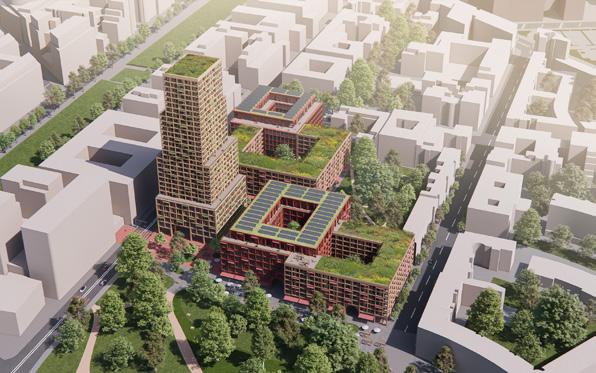
Studio M is a Berlin architecture office, part of a multidisciplinary internationally active planning office, with great consideration for the urban context. During my time at MLA+ I continuously worked on parts of different projects in the larger scale, which strengthened my sense of understanding when it comes to contextual analysis in urban environments. I mainly worked on a competition proposal for a building complex near Potsdammer Platz which includes both housing, offices and cultural facilities. I worked on conveying the design-concepts of the project through diagrams as well as modelmaking and site analysis.

In July of 2023 I completed my five-month internship at Anna Mette Exner Arkitektur. The studio works with renovation and transformation of listed buildings and buildings worthy of preservation. I worked on many different projects including several on site measured surveys, where I subsequently drew the floor plans, sections and elevations in AutoCAD. I also worked on a preliminary study where thorough sight analysis, sketching and several meetings with clients and developers resulted in a report on how the buildings should be used in the future. For another project I collected and organized a large number of cases, of which around 20 became part of a case study on shared housing. During my internship at Anna Mette Exner Arkitektur, I learned the value of attentiveness and reflection when it comes to preserving cultural heritage in architecture.
KLOSTERMØLLE
TRANSFORMATION ASSIGNMENT: KLOSTERMØLLE DRYING BARN
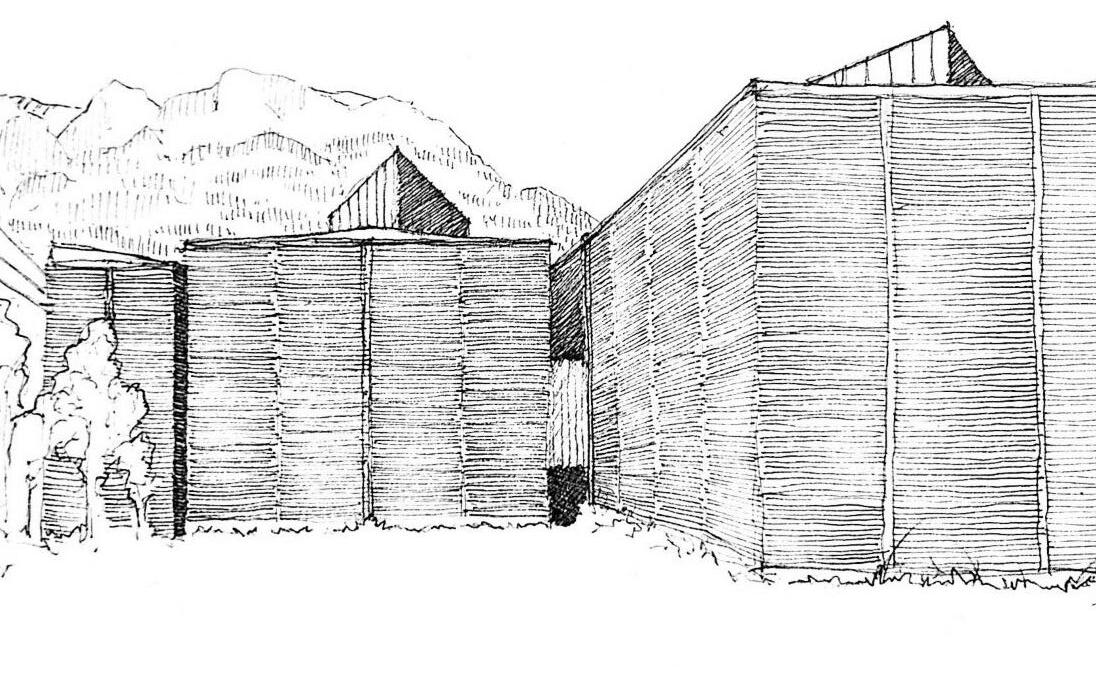
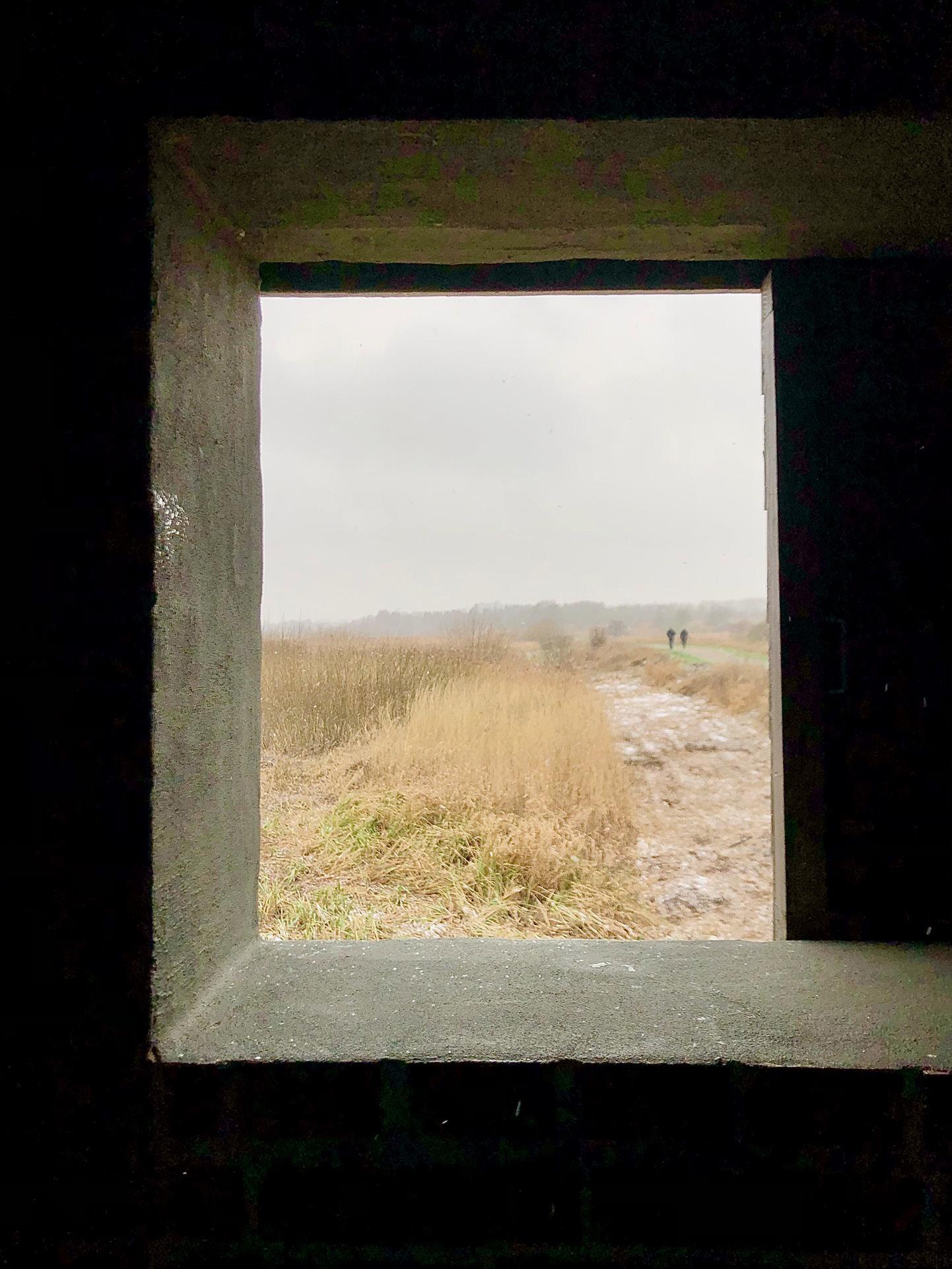
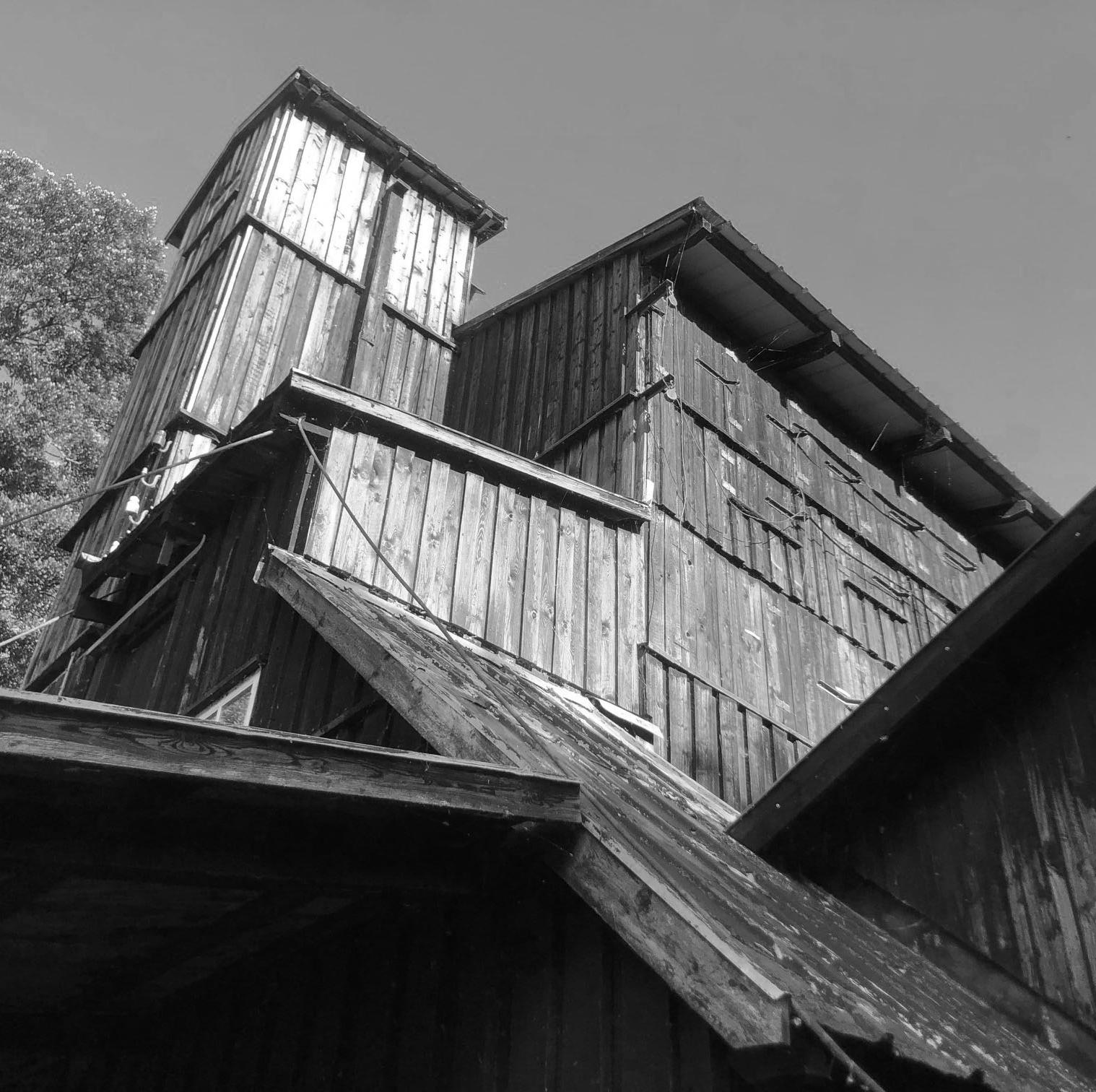
This project deals with a 90 meter drying barn located in Gammel Rye in the center of Jultand. The assigment was to make the building more relevant to possible future users and visitors.
Klostermølle drying barn is placed as an enormous mass in the flat and open landscape. By standing in contrast to the surrounding nature, the characteristics of both the building and the landscape are emphasized.
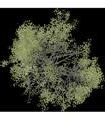
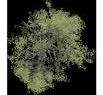
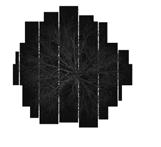
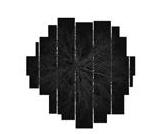
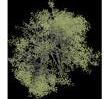
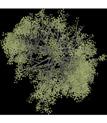
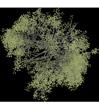
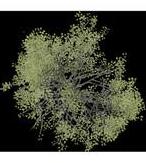
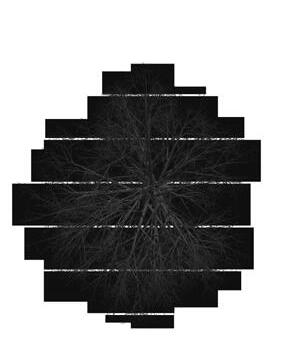
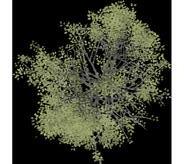
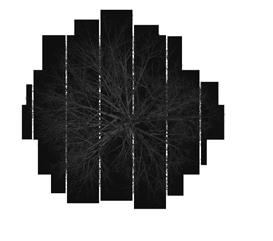
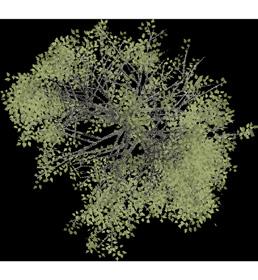
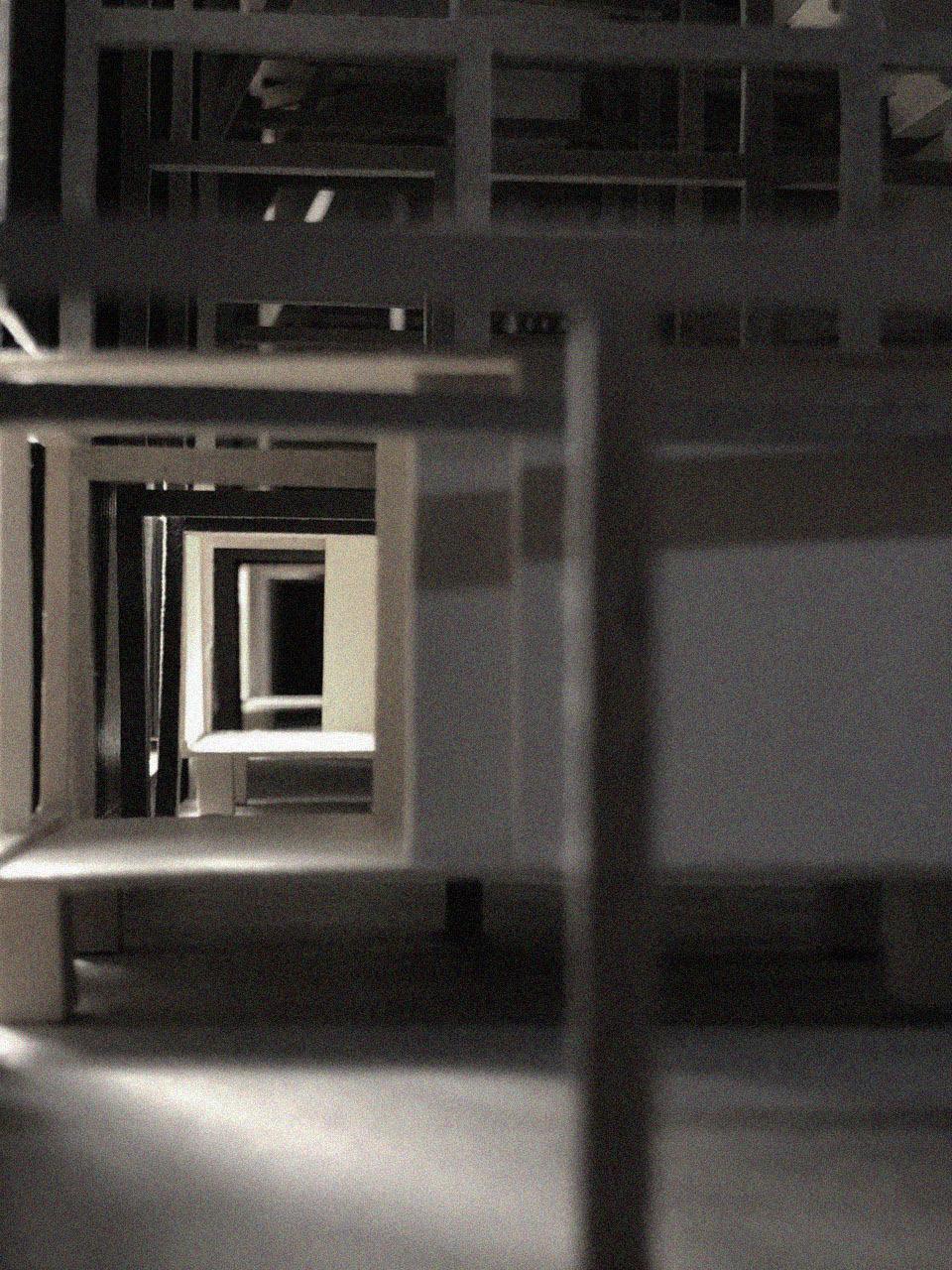
On the inside, the impressive wooden contruction reminds you of the crown of a tree, where glimpses of sunlight penetrate the dense mass of leaves and branches.
Today the barn has become an accidental monument, representing another time where there was a clearer connection between tradition, craftsmanship and architecture.
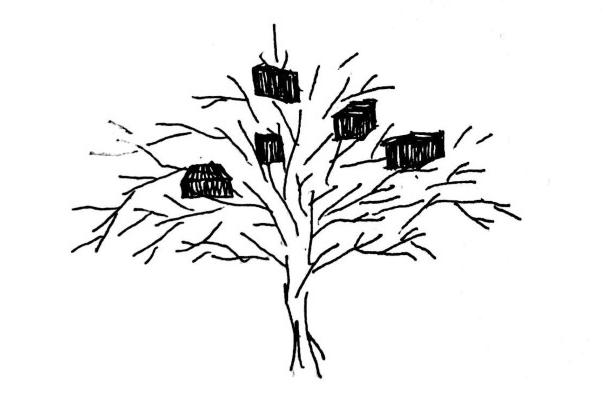
In this transformation i strove to preserve the existing athmosphere meanwhile making it possible for the visitors to explore the space both horizontally and vertically, much like climbing a tree.
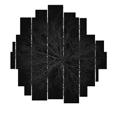
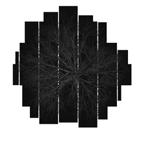
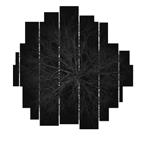
I used the bird tower staircase built in the northern end of the barn as a template, and examined how it could be extended further into the barn. the extended staircase functions stucturally as a supportive crutch for the old and decaying building, while taking the visitor through the barn and letting it tell its own story.
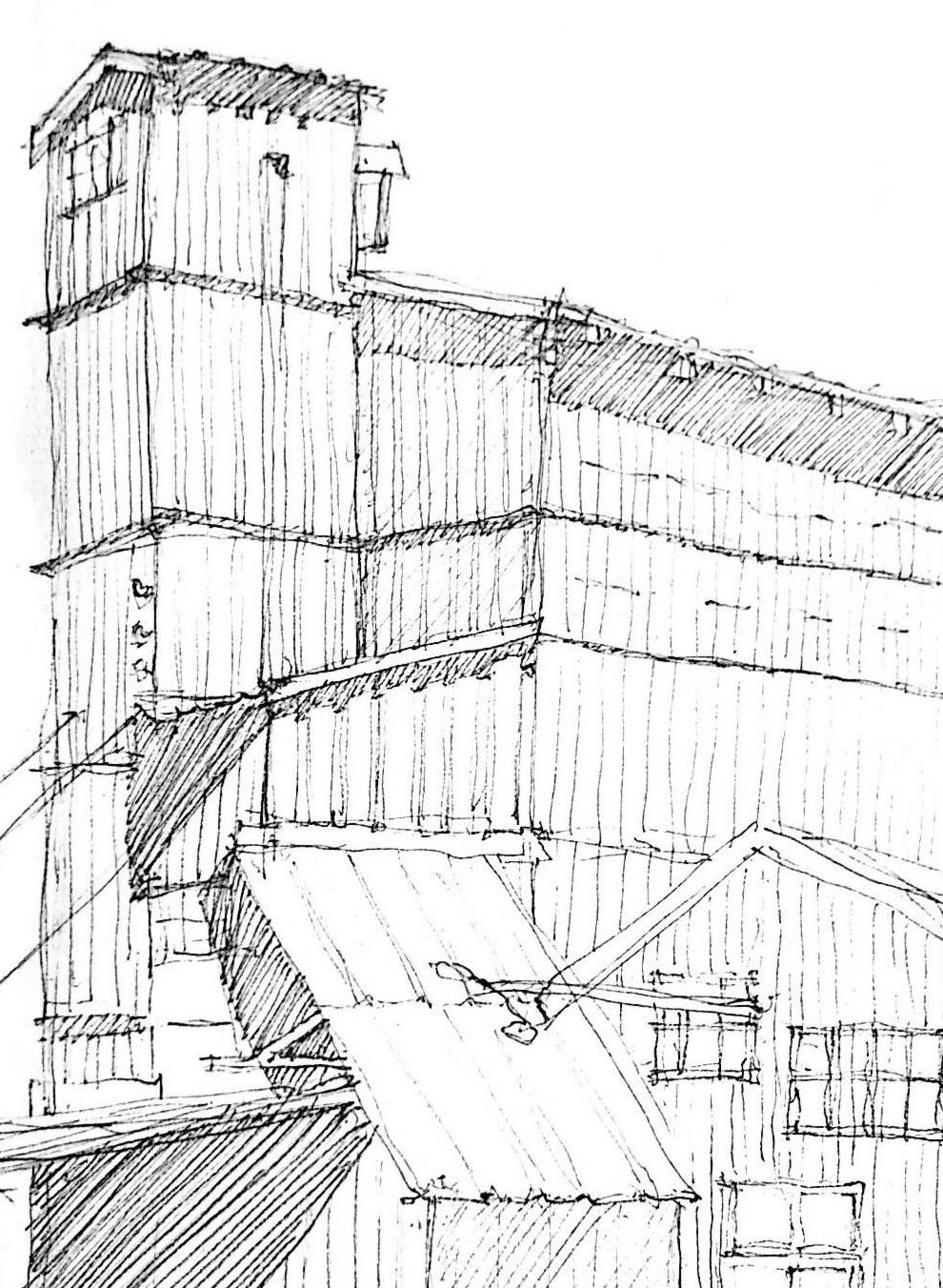
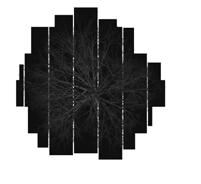
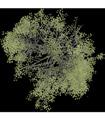
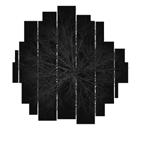
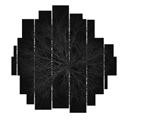
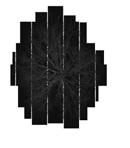

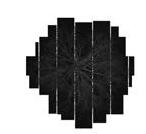
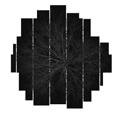



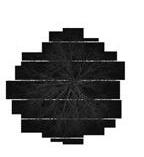
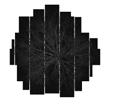
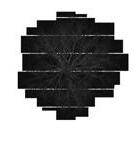

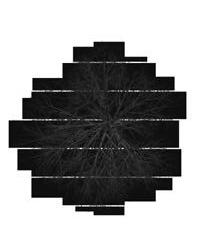

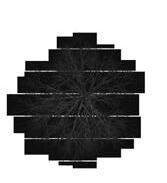
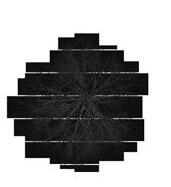

The barn was built alongside a canal, which was dug by hand when the monastary still existed, to force water to the mill
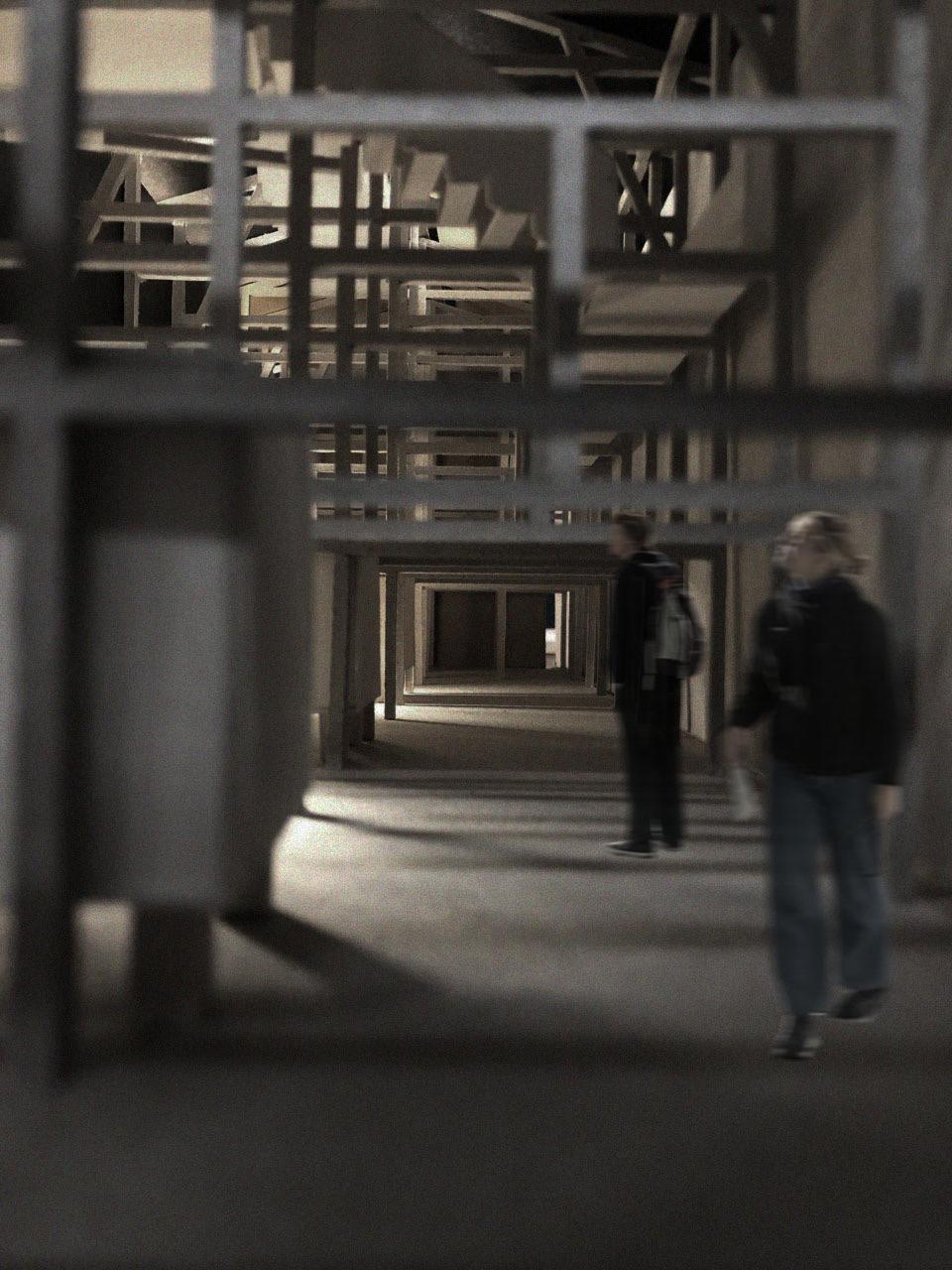
Openings in the facade daws in secions of daylight, to enhance the lenght of the barn
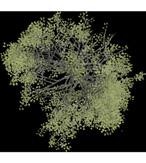
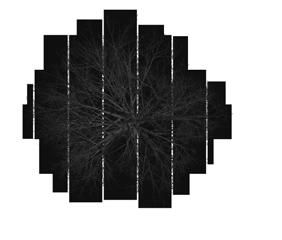
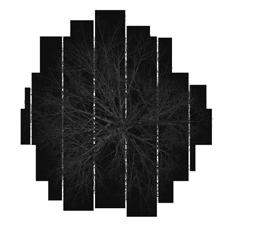
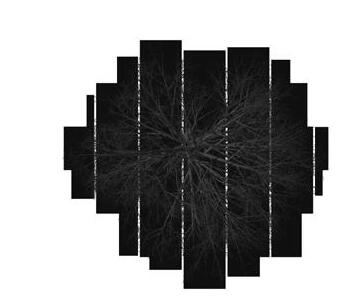
The shelters are dynamic in their function, working both as a closed private space and as more open and inviting campsides for visiting groups
Another part of the assignment was to create the possibility of overnight stays. This was solved by creating small camp sites on the ground floor under the staircase. The existing barn construction is used as a guiding grid, where primitive shelters are placed between the subdivisions in the construction. The shelters are placed up against the western facade, wich makes it possible for the overnighter to open up the shelter directly to the outside with a view over the water and the fields. The shelters are accessed from the inside of the barn, where it is also possible to open up the sides to draw in additional daylight. This creates smaller, intimate zones which makes overnight stays safe and enjoyable.
The shelters open up towards the canal where visitors can enjoy the quet, calming flow of the water and the view of the pastures
THE YELLOW BRICK
TRANSFORMATION ASSIGNMENT:
MUSEUM OF ANCIENT ART AT AARHUS UNIVERSITY CAMPUS
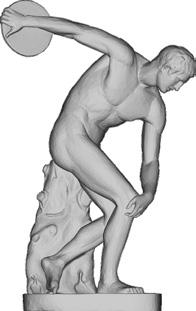
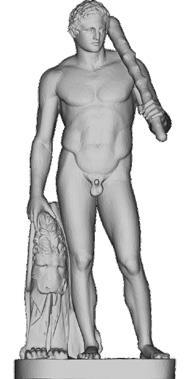
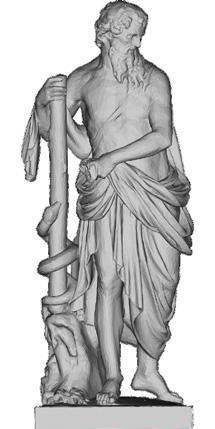
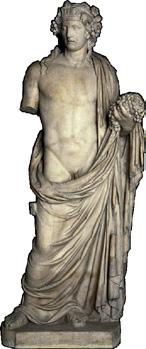
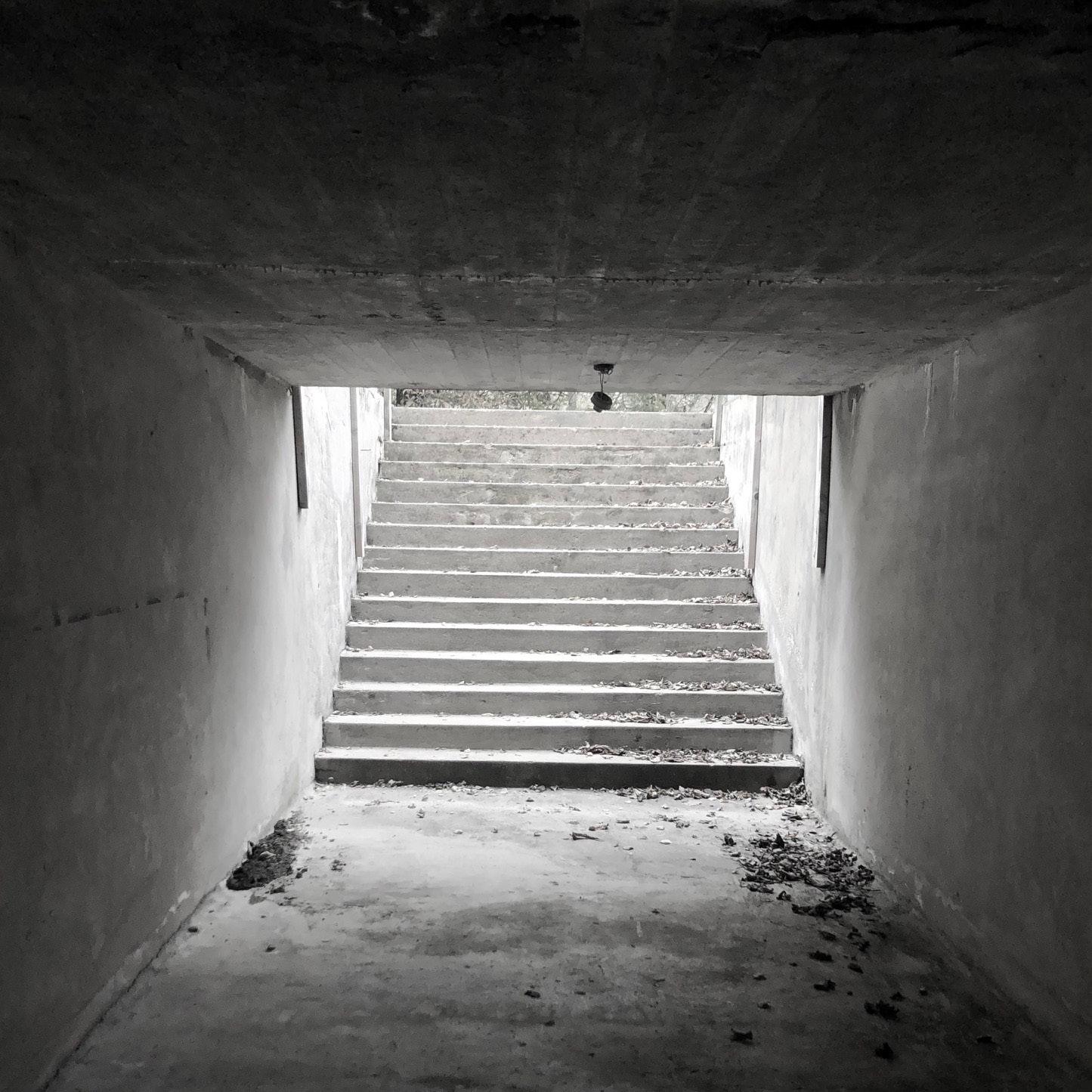
The Museum of Ancient Art is placed partly underground in the northern part of Aarhus University Campus. It was originally used as storage room for a collection of plaster sculptures belonging to Classical Archeology studies. Daylight, movement and curation of exhibitions have therefore not been considered architecturally.
The assigment was to try and make the museum function on a higher aesthetic level - focusing especially on using the yellow brick wich is one of the key characteristics in the architecture of the University Campus.
To do this, I found it natural to use the same method seen in other parts of the campus, where elements of the exterior architecture are used on the interior. Meanwhile I wanted to preserve the qualities that make it a place for immersion and tranquillity. The movement through the building is changed to create flow between the different exhibitions. Additionally dayligt is introduced to both illuminate the exhibitions and to guide the visitors thought the museum.
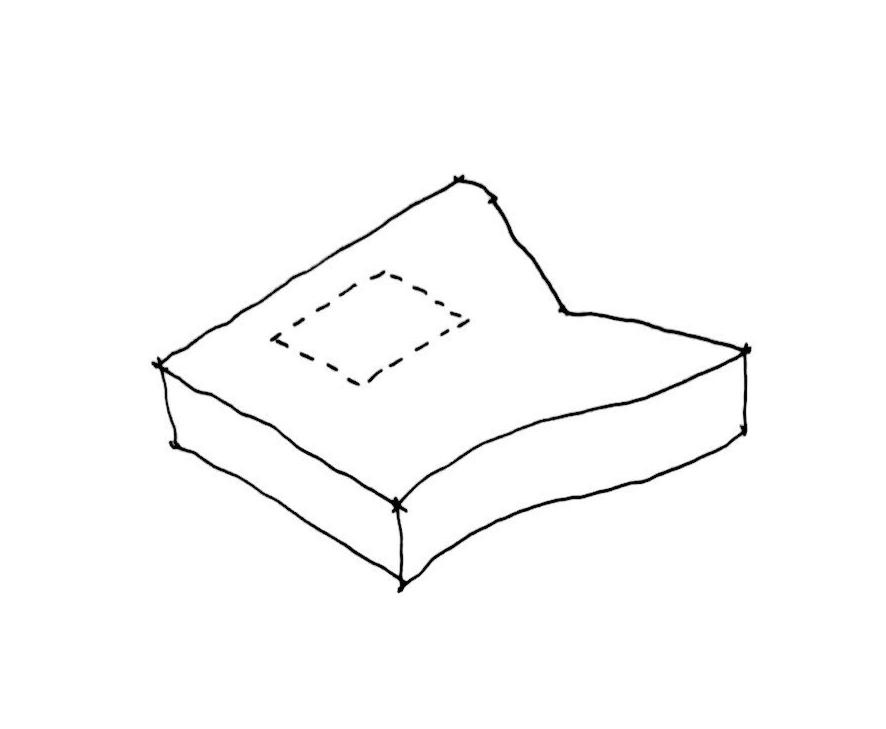
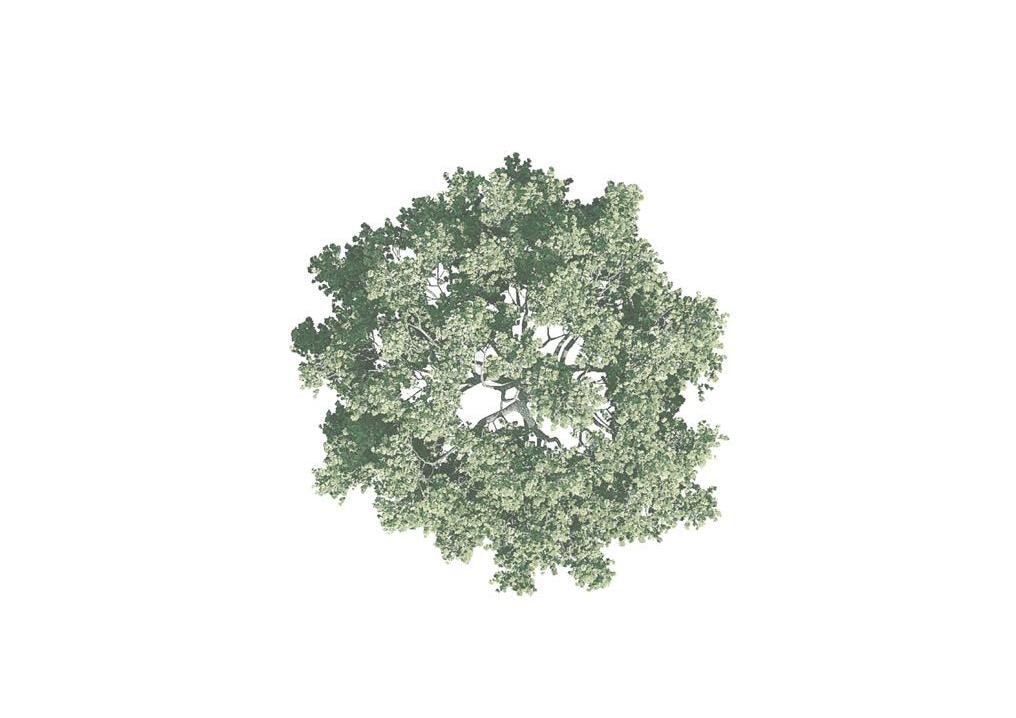
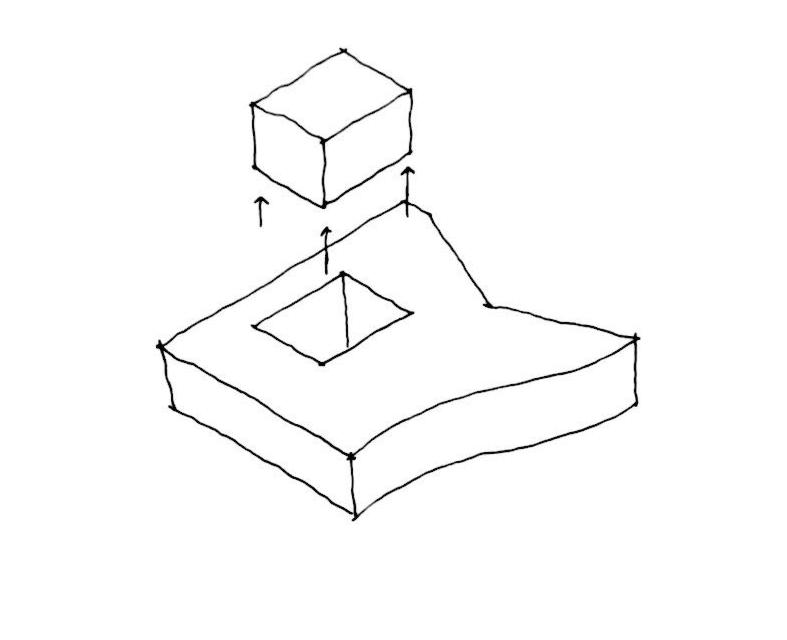
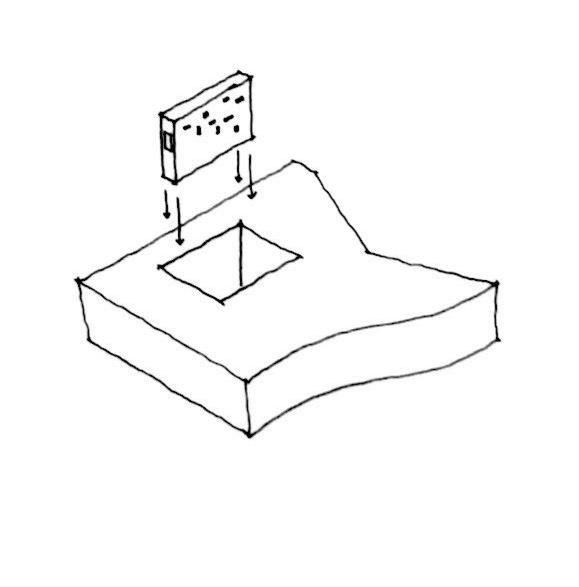
The current central staircase is replaced by a new core of yellow brick functioning as a staircase as well as a room-dividing element. A hole is cut out next to the brick-core to pull the exterior elements, both daylight and vegetation, through both levels of the museum.



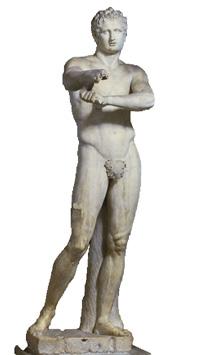
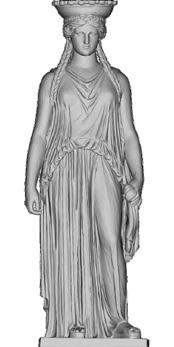
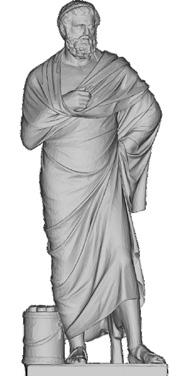


The brick is used to filter light inside and through the core, by letting small amounts of daylight pass through the cut-out openings in the brick wall. The cut-out part of the courtyard is replaced by a small outdoor atrium on a lower level. the atriums glass walls allow daylight into the upper level of the museum. The atrium is accessed from the basement level of the museum.


CONCRETE BRUTALISM
TRANSFORMATION ASSIGNMENT: BRANDBJERG HØJSKOLE
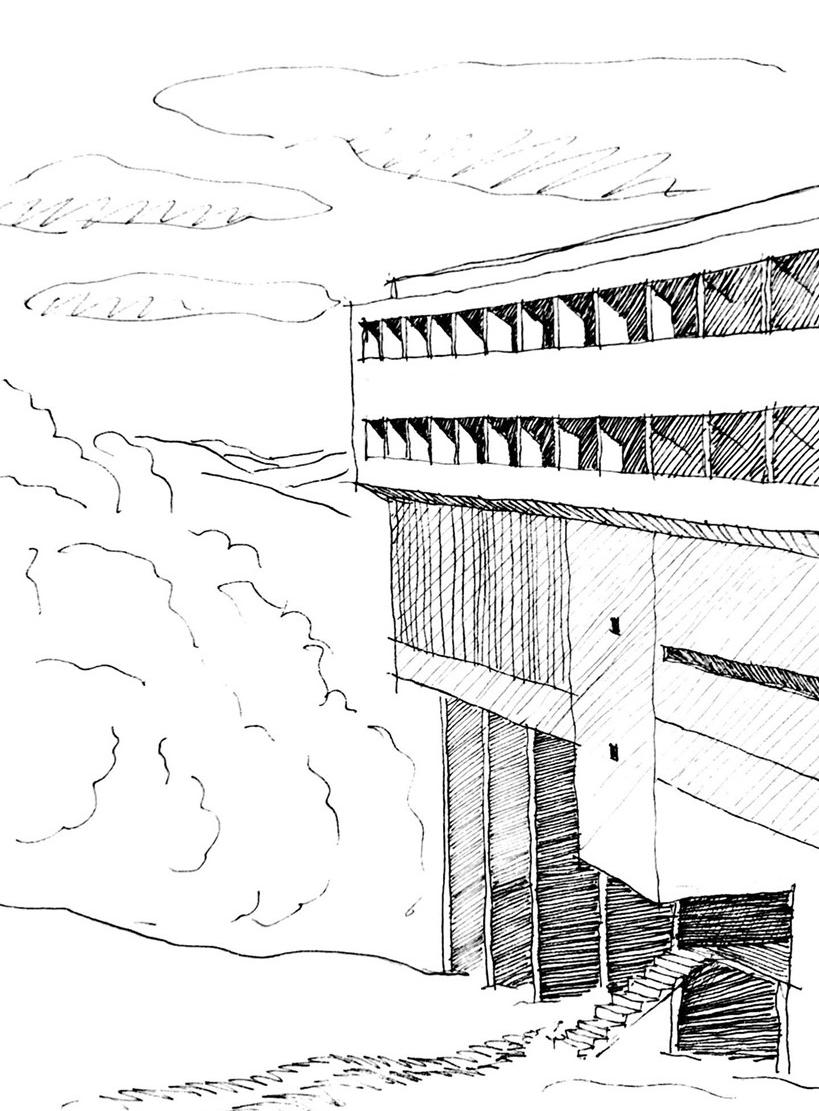
Brandbjerg Højskole is a Danish folk high school situated in eastern Jutland. The school is placed near Grejsdalen which is one of the deepest valleys in Denmark. From the main building created by Friis og Moltke in 1970, the terrain drops about 50 meters to the bottom of the valley - an area which is used by the students daily. The assignment was to accommodate the problem of the lack of rooms for short term students, meawhile maintaining the integrity in the architecture of the brutalist main building. This was a group project with fellow student Thor Kluge Søndergaard
We firstly wanted the school buildings to reflect their surroundings. We wanted to create a better balance between the old and new, in a way that would also lead the attention toward Grejsdalen and the beautiful nature which surrounds the school. We added a new student wing south of the main building, to create a better flow between the old and new buildings on the site. The use of wood both in construction and cladding stands in contrast to the rough concrete used in Friis og Moltkes building. However the rhythm and basic principle of the wooden construction carefully follows the brutalist architecture of the main bulding. The use of wood is also to indicate that this new wing is closer connected to nature both in terms of material and location. A building that is shaped by the landscape and that reflects the values of a Danish folk high school: Openness, curiosity and a connection.
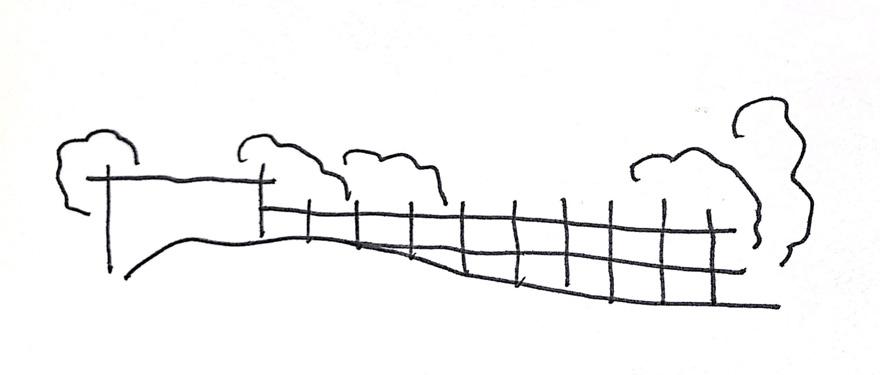
An addition to the south side of the facility will create harmony between old and new and open up the school to its surroundings
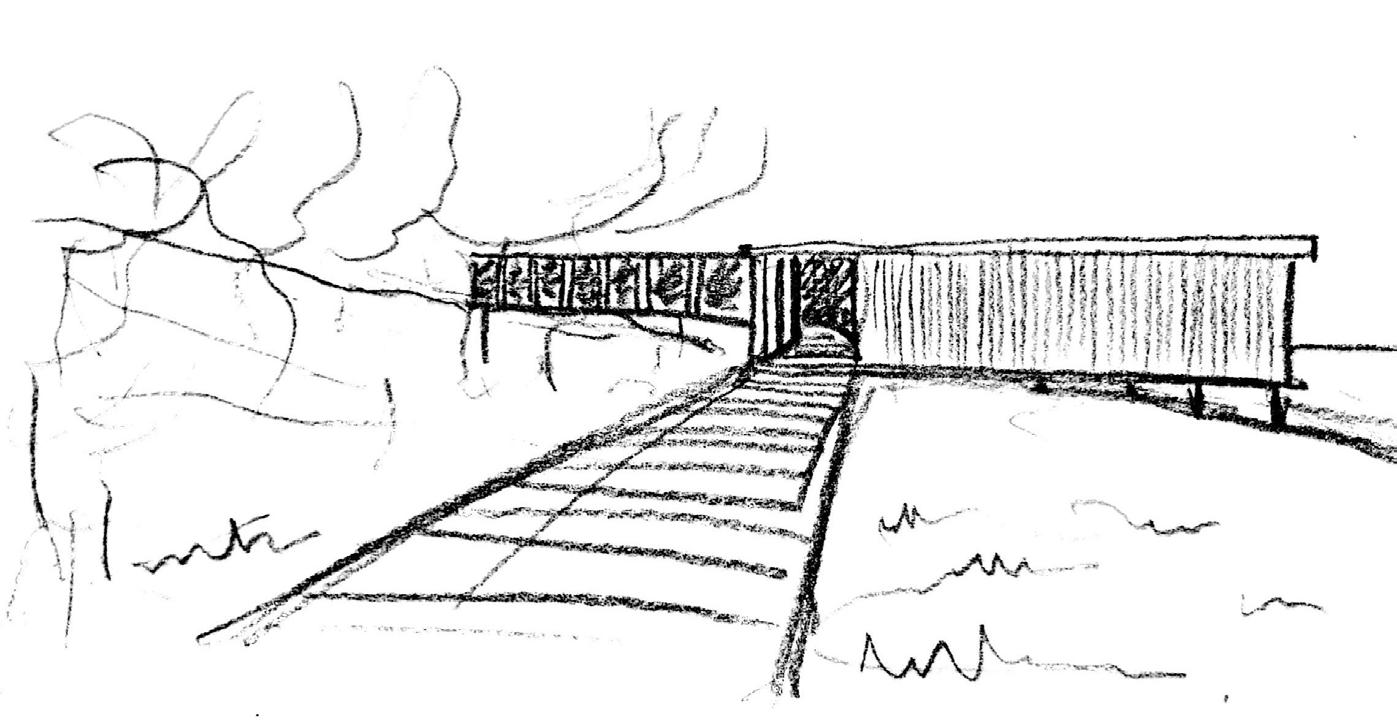
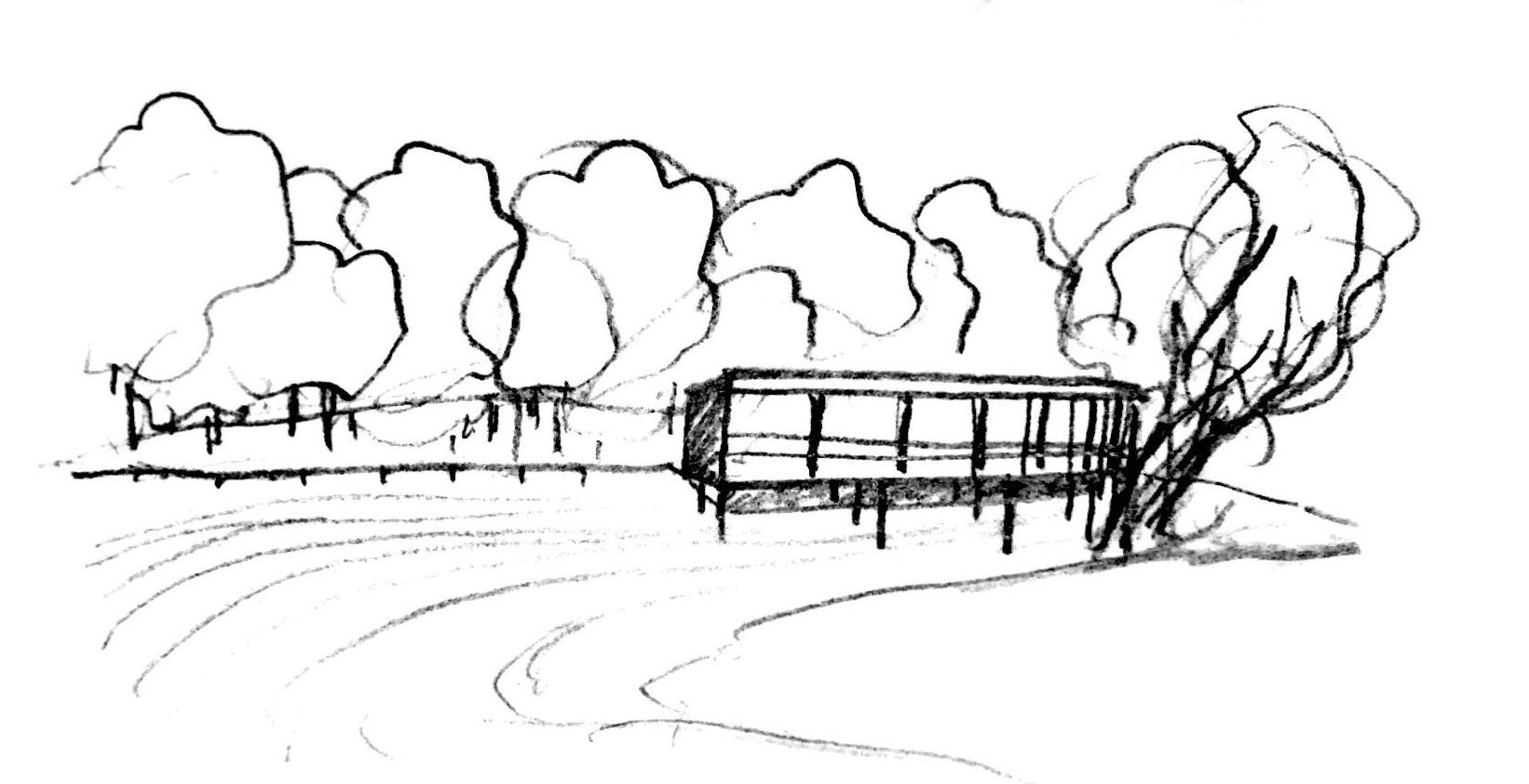
Arrival at Brandbjerg Højskole from the countryroad
Location of the new student wing which follows the landscape elevations
Transition from the amphitheater in the atrium to the ’backside’ south of the main building
The beautiful nature of Grejsdalen completes the walk from the main building
A path in continuation of the new building directs the attention further down towards the valley