I’m a designer on a mission to make the world better and more inclusive for all. I believe design is the tool that drives change by connecting people. What I love about it is that I can co-design with people for people to impact their lives in a meaningful way. On another note, I’m a yoga and nutrition enthusiast, and my dream is to find a creative way to connect those two disciplines to accelerate positive change.
Work Experience Work Experience
Service Design Consultant | Koos Service Design, Amsterdam, Netherlands
Apr 2022 - Present
Helping organisations in a variety of industries to amplify their impact and growth by rethinking services and building transformative human experiences. Partnering with passionate leaders and stakeholders to develop innovation strategies and create new business models.
Yoga Instructor | Koos Office & Online
Netherlands & Italy
May 2022 - Present
Teaching yoga at the Koos Service Design office and online after having completed my 200h YTT last year in Mexico.
Business Strategist Intern | UNStudio
Amsterdam, Netherlands
Sept 2021 - Feb 2022
Researching into the social, cultural and environmental context to find new business opportunities and developing a Growth Strategy for the Design team.
Artedomus | Design Intern
Sydney, Australia
Sept 2018 - Dec 2018
Drafting creative solutions to support existing and new service propositions.
MSc Strategic Design
Politecnico di Milano, Italy
2020 - 2022
BA Exchange year
University of NSW, Australia
2018 - 2019
BA Design Honours
Lancaster Univesity, UK
2017 - 2020
Hard Skills
Adobe Creative Suite
Microsoft office
Figma
Apple (Keynote)
MIRO
Soft Skills
Uncovering user needs through design research
Analysing using diverse methods
Ideation and concept development
Workshops Facilitation
01. Wallapop
Understanding Zillennials’ shopping motivations
02. Elsevier
Improving the librarains’ renewal journey
03. Felicia
A strategy for sustainable physical and digital packaging solutions
04. Precious plastic
Research and strategy project to add value to the business’ product offering
Work. A lot of the clients is confidential, only shows little the projects I have
the work I do for
hence, this portfolio
little information of been working on.
Wallapop
Understanding Zillenials’ shopping motivations
Spain, 2022
Wallapop is the online marketplace leader in Spain, expanding to other European countries. We collaborated to get a better understanding of the motivations and behaviors of Zillenials (GenZ + Millennials) towards shopping, and their approach to sustainability, Secondhand, and Online vs In-store.
Goal
Understand the shopping motivations, needs, and behaviors of Zillenials (GenZ + Millennials) in general and specifically on Sustainability, Second-hand, and Online vs In-store.
Approach
In-depth interviews in Spain, Italy, and Portugal, analysis and data modeling in tension model and need-based personas, quantification of needs and behaviors in the previously mentioned countries plus Greece and France.
Key insights
People look for reliability and safety in the purchasing process and product they buy. These are the most important decision-makers across countries and generations.
Even though people can apply some conscious actions in their lifestyles and when buying fast-moving goods, when buying objects, sustainability becomes less of a priority
Results
Communication and marketing strategy developed based on projects’ insights.
Project challenge
How might we understand the motivations of Zillennials towards shopping in Italy, Spain, and Portugal
Project approach
Kick-off and scoping
Zillennials user needs research
Data analysis and modeling
Quantitative analyisis
Report and recommendations
1. Kick-off and scoping
The kick-off consisted of a workshop of two hours to which all the relevant stakeholders and the whole Koos design team were invited. The goal of the session was to introduce our company’s way of working, aligning on the scope of the project, and deciding together on the participants and research criteria.
2. Zillennials user needs reserach
More than 35 in-depth interviews were conducted across Spain, Italy, and Portugal. Each participant was given a context mapping booklet to fill in before the interview, with the aim to prepare them for the coming questions. Booklets were first prepared in English and then required to be translated into each language.
3. Data analysis and modeling
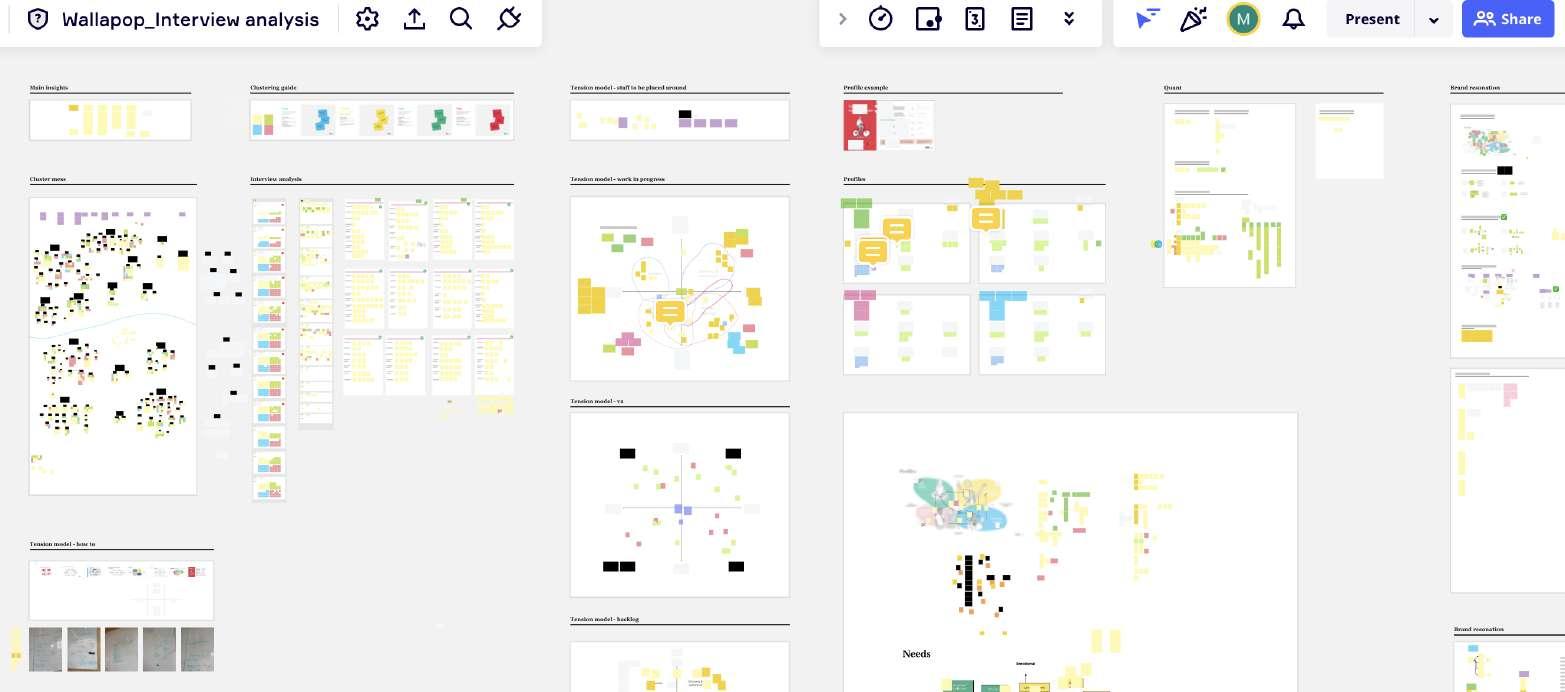
Based on the qualitative analysis, two tensions were found on zillennials consumption, then all the needs were plotted in a tension model and 4 profiles with different characteristics derived from it.
Data modeling intomodeltension
Analysis of interviews
4. Quantitative analyisis
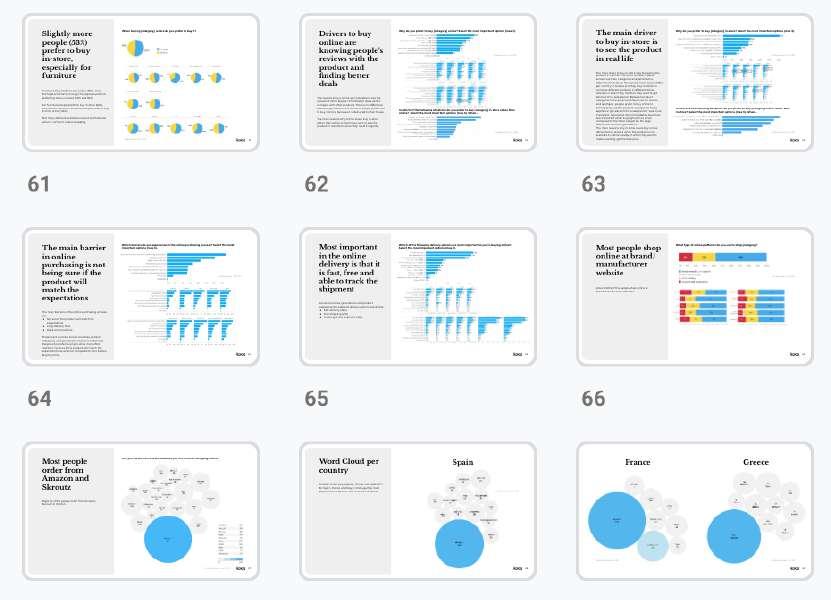
Based on insights from the qualitative research, it was possible to draw an adequate method of approach for the quantitative research. We conducted a survey to which 1804 participants from five different countries responded. We randomly attributed to each participant a product category, additionally, the survey was divided into five sections: demographic information, needs, online/in-store shopping, buying behavior, second-hand shopping, and sustainability. The quantitative analysis also involved validating the personas and quantifying the identified needs. The results gave insight into the most important needs, which set the focus when developing new innovations for this target group.
Quant research approach
1. Survey setup and translations
2. Recruitment of participants and launch of the survey
3. Analysis of the first results and setup of the data visualisation
4. Data crunching and cross-analysis
5. Presentation and report of results
A lot of quant analyisis and there’s much more
5. Report and recommendations
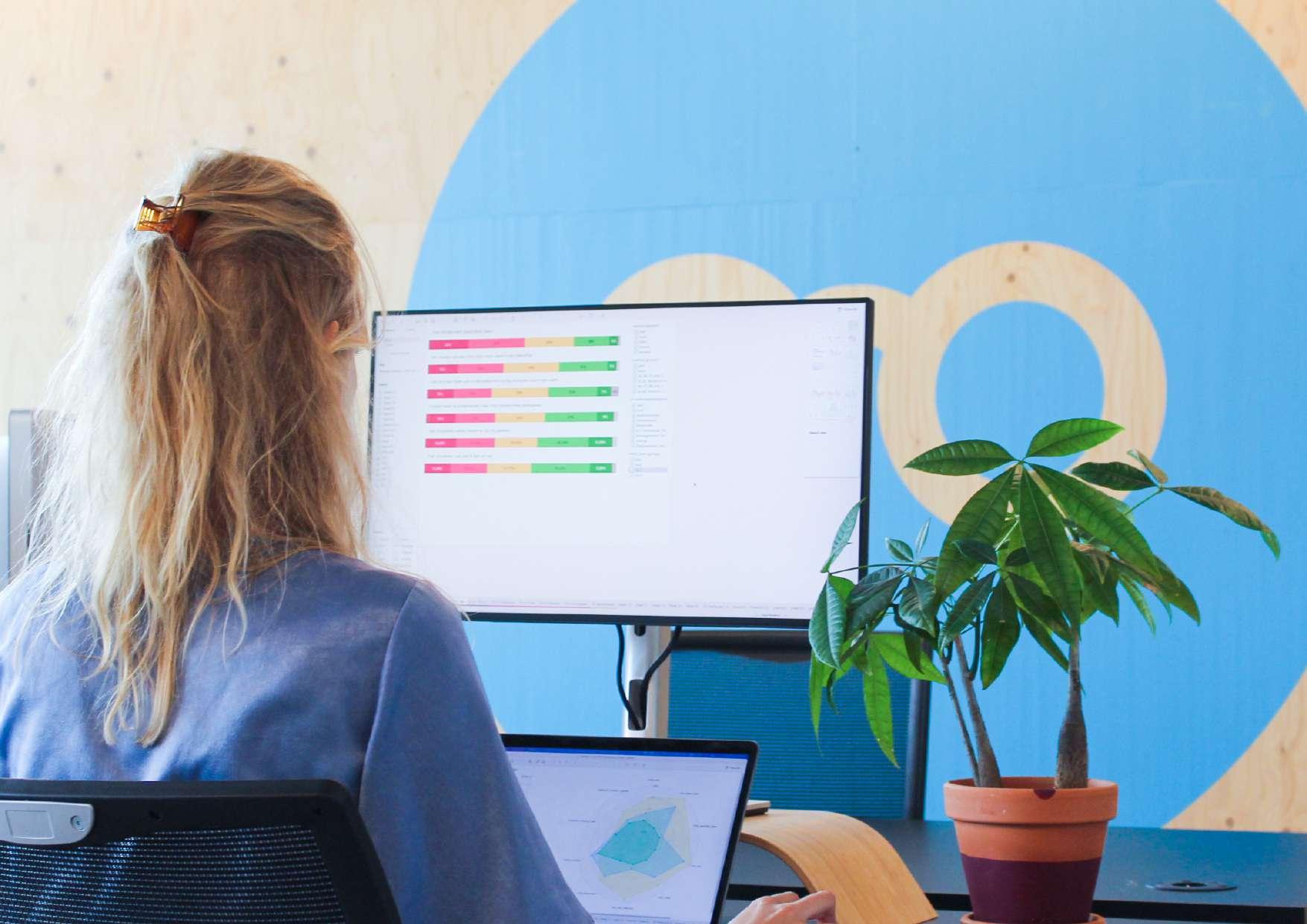
The final step of the research consisted in building a report of more than 100 pages. We accumulated a giant amount of data and thanks to Tableau- interactive data visualisation softwarewe were able to do data crunching and cross-analysis that allowed for more precise and detailed results. The final presentation was delivered to a large audience made of different stakeholders from a variety of departments and the report subsequently helped Wallapop build its communication and marketing strategy.
02
Elsevier
Improving the librarains’ renewal journey
Netherlands, 2022
Elsevier is a Dutch academic publishing company specializing in scientific, technical, and medical content. We collaborated with them in order to improve the renewal journey of librarians when renewing specific Elsevier digital products.
Goal
The goal of the project is to create a better service experience for librarians’ who deal with purchasing Elsevier products, increasing retention and reducing dropouts.
Approach
In-depth interviews across Europe and the U.S., analysis and data modeling into a user journey, and identification of user needs and triggers for renewal. Subsequent identification of service innovation opportunities and testing of one concept into a design sprint.
Results
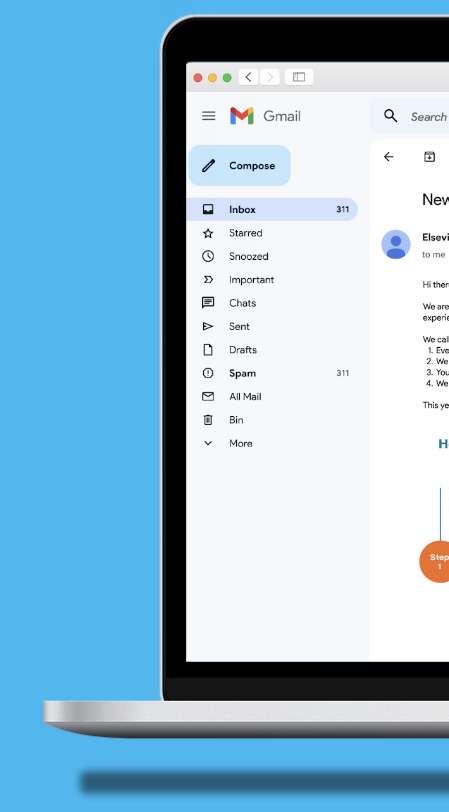
Delivering eight service innovation concepts of which one will be tested in a design sprint.
Project challenge
How can we uncover the triggers that lead to the decision to renew Elsevier products and improve Librarians’ renewal experience
Empathize Define Ideate Prototype & test Understand Imagine
Project approach
Kick-off and scoping
Qualitative research
Mapping the librarinas’ journey and triggers for renewal
Define innovation opportunities
Design Sprint
1. Kick-off and scoping
The kick-off consisted of a workshop of two hours in which seven stakeholders belonging to different departments participated. The goal of the session was to introduce our company’s way of working, aligning on the scope and openly discussing expectations, goals, and metrics.
2. Qualitative research
A total of 13 librarians participated in the interviews, which were all conducted in English and of a duration of 60 minutes each. The participants were based across the US and Europe and before the interview, they were asked to fill out an exercise with the goal to unlock thoughts and reflections on the topic of the conversation.
3. Mapping journey and triggers for renewal
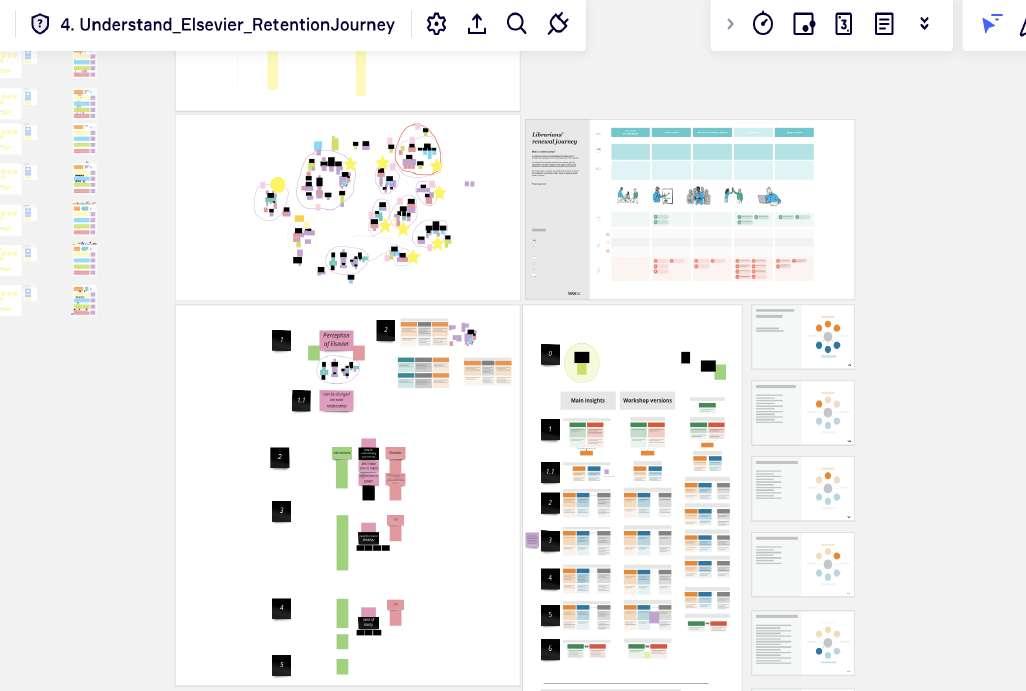
We started off with the intention to build a journey and map all our insights there but after analysis and discussion with the Elsevier team, we decided that the journey wasn’t representative of the full picture. Hence we mapped the research insights into 3 models.
1. The main insights lead to the main needs of librarians based on the customer interviews
2. The customer journey describes the holistic experience of librarians going through the renewal process and the triggers that motivate them
5. The factors that affect the renewal decision show different triggers that play into the decision making process
Analysis and mapping of insights into three models
4. Define innovation opportunities
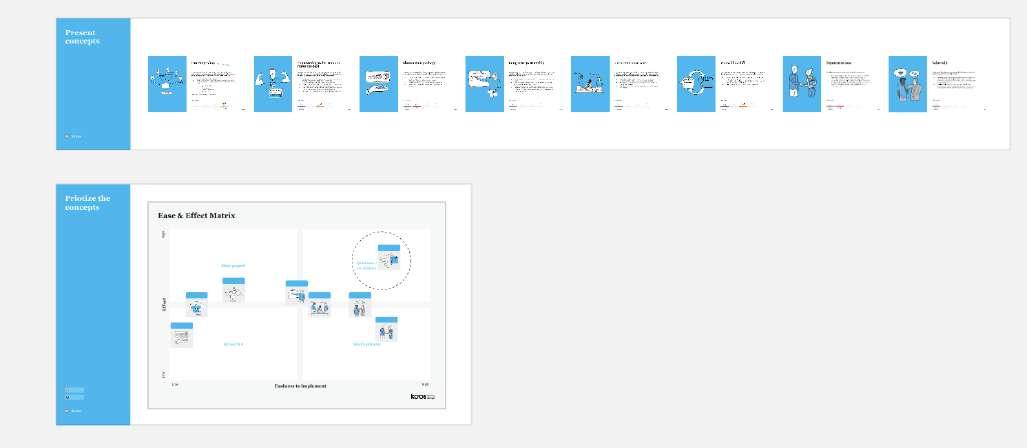
Together with the Elsevier team, we gathered in a workshop, and we looked into areas that we can improve in the journey and in the experience-related triggers, always keeping the main needs in mind. And eventually, we collaboratively agreed on 6 opportunity areas. Based on those, we created 8 concepts in another collaborative workshop.
After creating the concepts we had another session in which we selected one concept for us to test in order to do that we used an ease and effect matrix to evaluate two factors:
Impact on the customer
Easiness to implement
5. Design sprint
When in a Design sprint we test Feasibility, Viability but mostly desirability. At the end of it, concept development recommendations have been given to the client.
Day 1. Mapping our riskiest assumptions and benchmarking to see examples from different industries
Day 2/3. Building a testable prototype
Day 4. Testing with users
Day 5. Assessing findings from the user tests, reflecting back on assumptions
Of these concepts only one was tested into the design sprint
Felicia
A strategy for sustainable physical and digital packaging solutions Italy, 2021
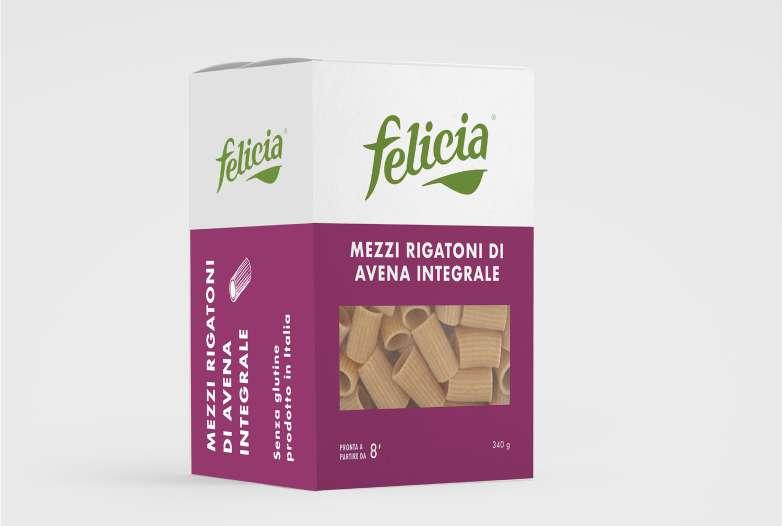
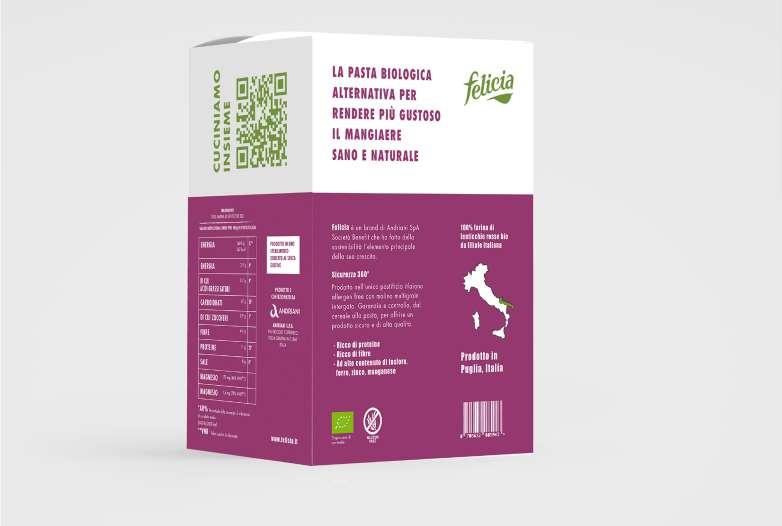
Felicia is an Italian revolutionary brand of pasta that made sustainability the cornerstone of its growth. Felicia produces its products in the only Italian allergen-free pasta factory equipped with an integrated multi-grain mill, which guarantees the control of the entire manufacturing process, for a safe and high-quality product.
Goal
Creating a new strategy to make Felicia (Italian brand of pasta) grow in the Italian GF pasta market by exploring two main assets and emerging trends in the packaging design industry: sustainability and smartness.
Approach
Leveraging the partnership between All4Labels one of the world’s leading label companies and pioneers of sustainable packaging solutions, and Andriani, one of the most important businesses in the field of innovation in the gluten-free food market of which Felicia is the main brand.
Key insights
The majority of people (83%), aged between 18 and 34 have tried gluten-free and other pasta alternatives and are satisfied with their experience. The main reason to try alternative pasta is curiosity and the perception of it is that it is a healthier alternative to traditional pasta. However, a gluten-free label gives the idea of a less tasty product only aimed at celiac people.
Results
Communication and marketing strategy developed based on projects’ insights and additional packaging improvement suggestions based on target needs and perception of the brand.
Project challenge
How might we help Felicia becoming the number one brand of GF pasta in Italy by building a digital strategy and improving its packaging
Project approach
Knowledge sharing from Felicia
Desk research and competitors’ analysis
Data analysis and modeling
Strategic concept development
1. Knowledge sharing with Felicia
The project started with a long meeting with Felicia’s representatives where we learned about what kind of values Felicia is already trying to portray through their go-to-market strategy. This process allowed project teams to draw a SWOT analysis for the brand.
2. Desk research and competitors’ analysis
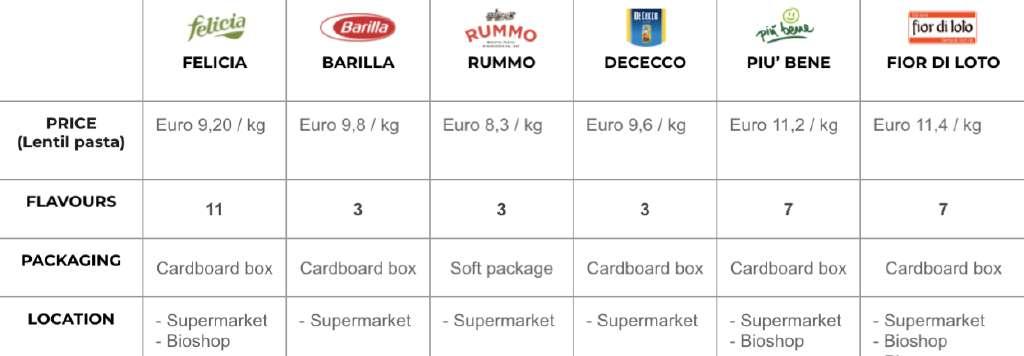
We conducted desk research on the health and Gluten Free trends globally, in Europe and Italy. Followed by an accurate analysis of the main brands of pasta present in Italy, compared based on price, flavors, packaging, and distribution centers.
3. Quant researh
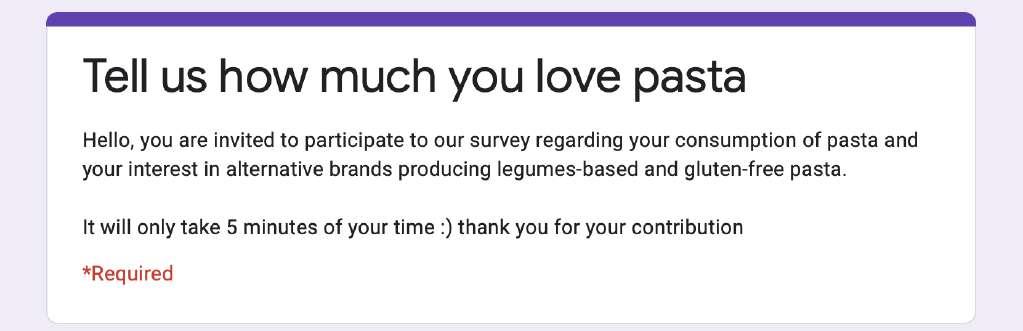
Additionally, a survey to which more than 50 people responded was created, the latter was helpful to gain more insights into the perception of alternative pasta in Italy and how this varies depending on age, background, region of origin, education, and other factors.
4. Data analysis and modeling
Based on desk research, competitors’ analysis, and the survey we were able to identify user personas that we mapped into a tension model. Those insights informed our strategic concept development.
5. Strategic concept development
With the new strategy, we would like, on one hand, to increase people’s curiosity about alternative healthy choices of pasta and on the other hand, develop peoples’ awareness about this brand and the health topic. Unique value proposition: Pasta is not a commodity, it is a stimulus that sparks creativity in the kitchen, it has to create an experience that is exciting and memorable.
Packaging Innovation
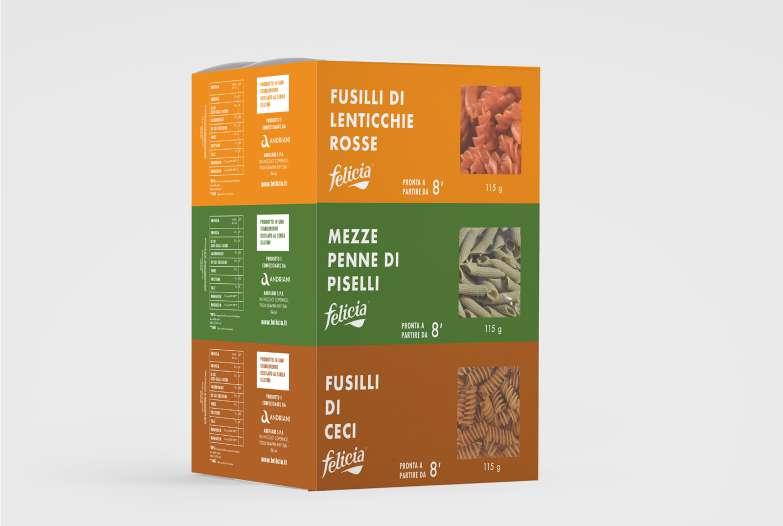
Type 1. This type of packaging is conceived for those people that might have never tried the brand Felicia but are curious to test it. Therefore, through this special packaging, they can try three different flavors of pasta at the same time, without having to buy three diverse boxes.
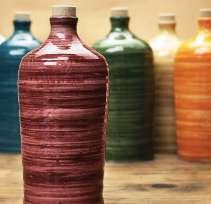
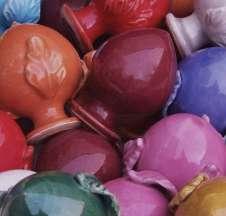
Type 2. The eleven colors correspond to the eleven different flavors of pasta that Felicia offers to its customers. Moreover, the choice of bald colors is inspired by the roots where the brand is coming from, Puglia.
Digital strategy
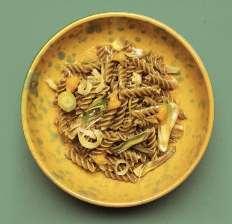
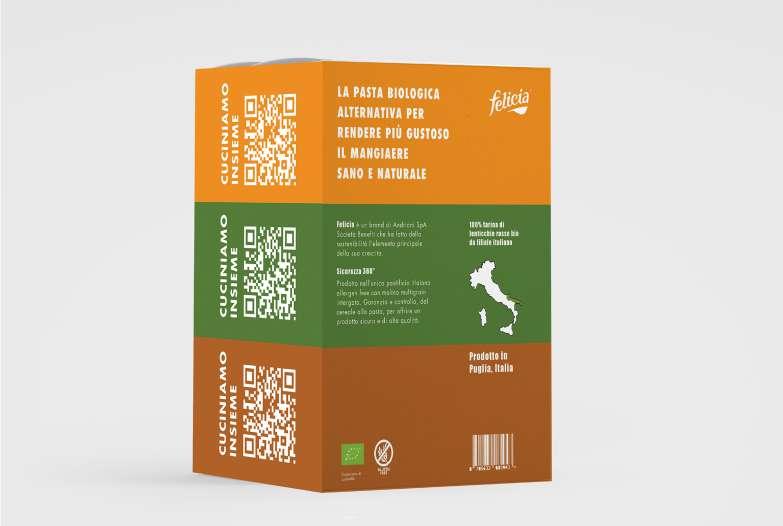
Each pasta box has a different QR code depending on the flavor of pasta contained in it. This QR code will land you on a page where you will discover new exciting recipes according to the type of pasta that you buy. The main aim is to trigger curiosity about the brand and inspire people with exciting recipes divided by categories on the website.
Packaging type 1
Packaging type 2
Precious Plastic
Research and strategy project to add value to the business’ product offering UK, 2020
Precious Plastic Lancaster, is a small start-up that is part of the Precious Plastic community, that sees plastic waste as an opportunity. The founders, together with the production team created a very special concept; making 100% recycled plastic products with the entire process under one roof. They not only offer material products but also try to educate the local community on topics like recycling and sustainability through collaborative workshops.
Goal
Creating a strategy in order to add more value to the product offering of PPL, raising more interest in the brand and on topics like plastic recycling and sustainability, within the local community.
Approach
Conducting qualitative research through observation and focus groups. Idea development, testing, prototyping, and strategy development followed.
Results
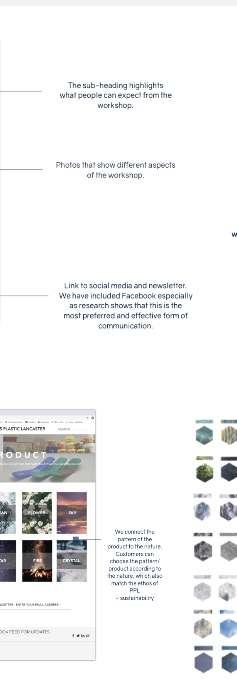
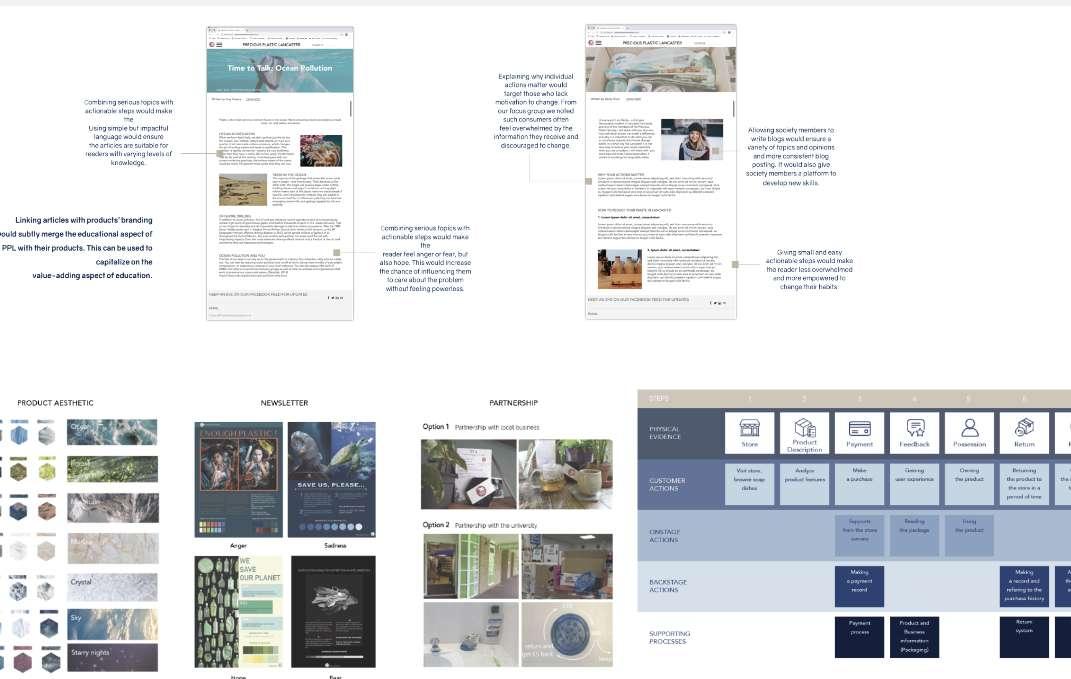
The strategy consisted in building a website aiming to add value to the core product, making it more accessible, strengthening educational benefits, and educating diverse target groups.
Project challenge
How might we help Precious Plastic Lancaster to add value to their product offering and raise awareness about their brand and recycling
Project approach
Kick-off and scoping
Research and focus groups
Analyse, prototype and test
Strategy development
1. Kick-off and scoping
The kick-off consisted of a session of one and a half hours with the whole design team together with the founders of PPL. The goal of the session was to introduce our team, learn more about the business we were going to collaborate with for the next half year, and align on the scope of the project.
2. Research and focus groups
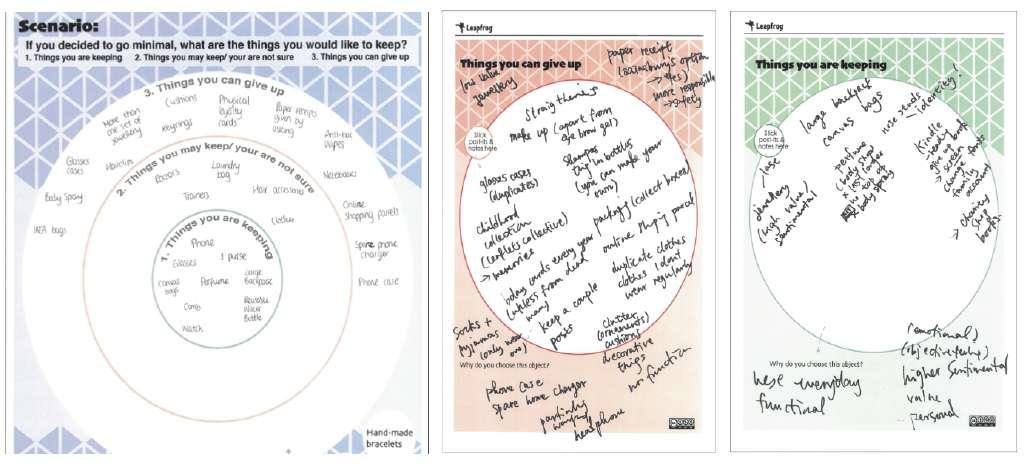
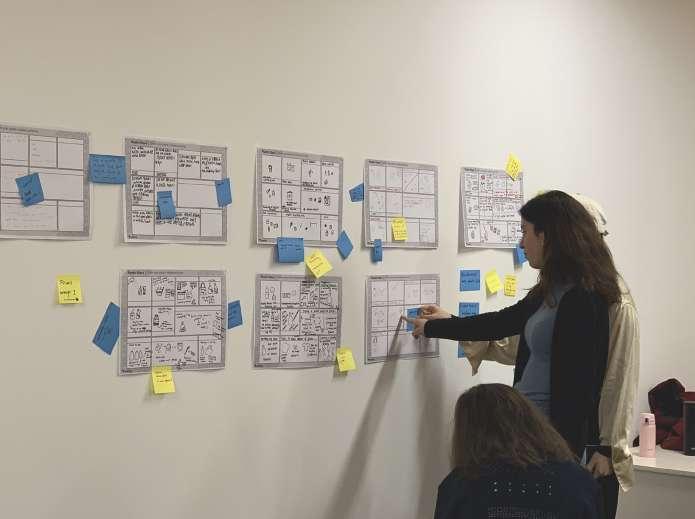
To better understand PPL’s back-stage production process, we visited our client’s workshop to conduct fieldwork observations. Additionally, to gain an initial understanding of PPL’s customers and their attitudes towards sustainability we used a variety of research methods during the Christmas market in which they participated: behavioral mapping, observation, interviews, and time-lapse video.
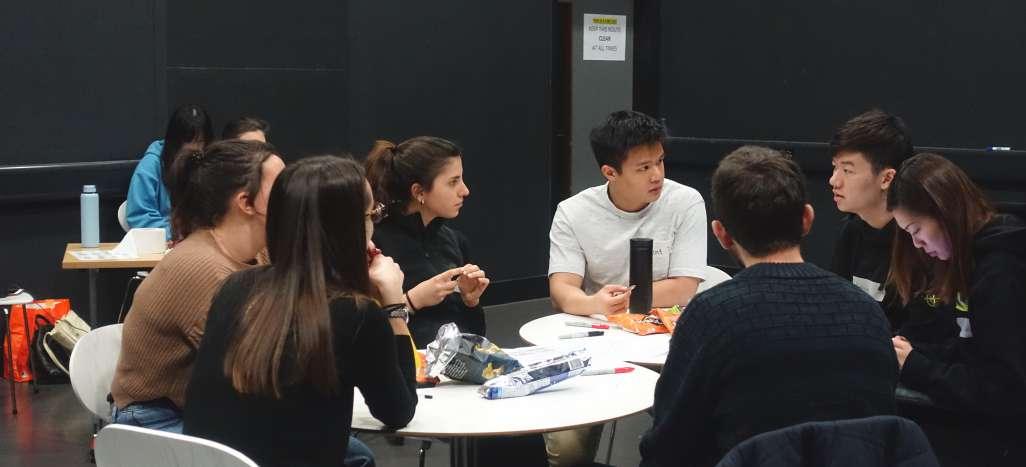
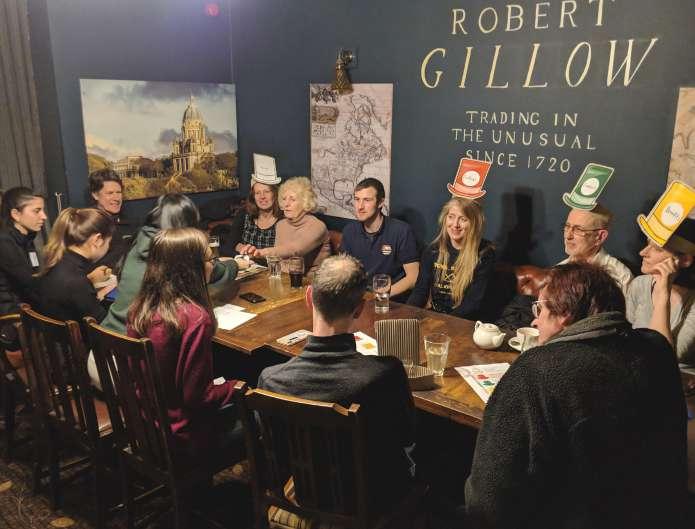
After engaging with the audience in Morecambe, we wanted to conduct research with university students to understand younger consumers’ attitudes toward PPL’s offerings. We conducted two focus groups:
Sharing opinions during a focus group
Some activities during the focus groups
1. Precious Plastic Society members who are very knowledgeable on sustainability.
2. Regular students who are less knowledgeable on sustainability.
3. Analyse, prototype and test
The research part of this project was very extensive, we gathered a lot of inisghts that allowed us to start building a prototype based on our findings. In this same phase We conducted a third focus group to gain feedback on the initial ideas we generated. We decided to invite a more knowledgeable audience from a different demographic, thus, we conducted the focus group with the Green Party of Lancaster.
4. Strategy development
After testing our ideas with the Green Party of Lancaster we finalised our concepts. And we came up with the idea of building a website to: