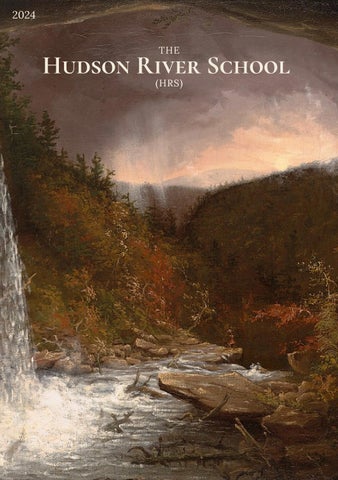
Hudson River School
“The thoroughly American branch of painting… is the landscape. It surpasses all others in popular favor, and may be said to have reached the dignity of a distinct school.”
James Jackson Jarves, 1864
1 2 3 4 5 6 7 8 9 10
FOREWORD (p. 4)
THE FOUNDING (p.5)
HISTORY & DEVELOPMENT (p. 6)
BELIEF & IDEOLOGY (p. 7)
LEADERS AND THEIR WORKS (p 8-13)
THE WOMEN OF THE HRS (p 14)
INFLUENCE & RELEVANCE (p 15-18)
THE HRS TODAY (p 19)
COMING TOGETHER (p 20)
REFERENCES (p. 21)
The Hudson River School
11 FOREWORD
The Hudson River School (HRS) was the first true major American artistic movement and fraternity. Embodied by a group of New York City-based landscape painters roughly from 1825-1870 under the influence of Thomas Cole, it became a style of art that became part of the American identity—something distinct from Europe. This movement was instrumental in the development of national parks and helped establish the idea of conservation as a national value. Along with literary and political movements all across America, the HRS helped shape a fondness and appreciation for its scenic landscape. The movement has been a source of scholarly interest and is also relevant in the conversation surrounding modern environmentalism, especially in and around New York State.
The Hudson River School
THE FOUNDING OF A SCHOOL
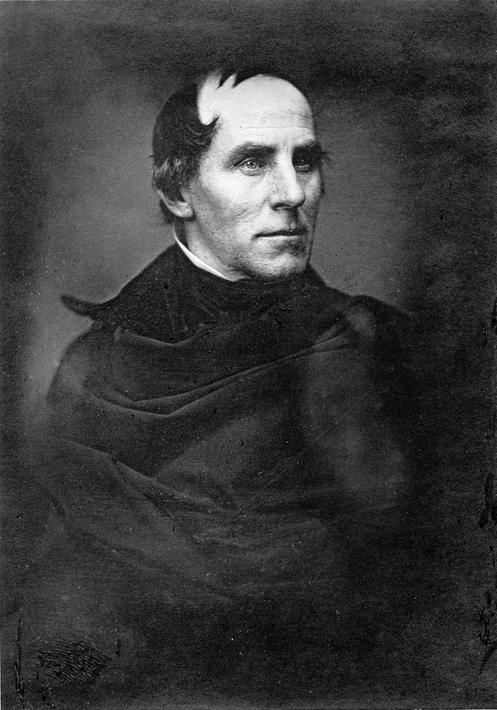
Daguerreotype of Cole by an unknown photographer, c 1845 (Archives of American Art)
Prior to the 1820s, artists rarely attempted landscape painting, instead focusing on portraits and depictions of several events.
Thomas Cole popularized the landscape painting genre around 1825. Alongside his followers, he came to be part of the Hudson River School (HRS) and is regarded as its father.
Nature soon became idealized and celebrated over artificiality, with artists utilizing allegories and art as a vessel to express a concern over the fragility and exploitation of it.
Their artworks sought to represent the spirituality and beauty behind landscapes and the natural world to inspire appreciation and awe.
The HRS was a significant part of emerging changing attitudes towards nature and an evergrowing conservation movement that is still relevant today.
The movement evoked the idea that natural landscapes were worth preserving as artists depicted them and city dwellers hung them on their walls.
The Hudson River School
HISTORY & DEVELOPMENT
TWO GENERATIONS, TWO TECHNIQUES, ONE NATURE
After the death of Cole, Asher Brown Durand took over as the leader and one of the most prominent figures of the HRS. His work continued as part of the school’s First Generation, setting forth the idea that nature should be depicted exactly as it is in landscape painting. Cole adopted a technique that relied on dramatism, applying the idea of the sublime, religion and spirituality, and the exploration of national identity. His imaginative elements relied on moral and religious allegories. The ideology behind the HRS was inscribed in the 1855 inaugural volume of the art magazine The Crayon, which contained Durand’s “Letters on Landscape Painting” and a story by William James Stillman, “Wilderness and its Waters.”
In later stages, other artists like Frederic Church and Albert Bierstadt expanded these ideals yet challenged some of the conventions used by Cole. They became known as the Second Generation. Most artists throughout the movement belonged to the National Academy of the Art. The Second Generation brought with it a more realistic approach that focused more on softness and less on religion or identity. This included an interest in Luminism, which involved the playing with light and atmospheric effects to create a landscape portrait. Though the HRS was primarily focused in the Hudson River Valley area in the American northeast, the HRS reached the crevices of South America and other continents at this time through Church and other artists.
The artists were influenced by ideas that were in like with Romanticism and Transcendentalism. The HRS was unified not based on accuracy or geography (since it transcended state barriers and rapidly expanded), but rather by shared belief and appreciation of nature, albeit the specific techniques varied. It relied on the input and patronage of figures of the New York City area.
Avery,KevinJ "TheHudsonRiverSchool"TheMetropolitanMuseumofArt,Oct 2004,https://wwwmetmuseumorg/toah/hd/hurs/hd hurshtm
Howat,JohnK "TheHudsonRiverSchool"TheMetropolitanMuseumofArtBulletin,vol 30,no 6,1972,pp 272–83 JSTOR,https://doiorg/102307/3258969
NationalParkService HudsonRiverSchool NationalParkService,nd,https://wwwnpsgov/museum/exhibits/landscape art/hudson river schoolhtml Strazdes,Diana WildernessandItsWaters:AProfessionalIdentityfortheHudsonRiverSchool EarlyAmericanStudies,2009,https://wwwjstororg/stable/23546622 Accessed10Dec2024
The Hudson River School
BELIEF & IDEOLOGY
NATURE ROMANTICISM SUBLIME
Romanticism championed an attitude of appreciation towards nature that transcended the aesthetic. Nature was praised as bringing calmness and serenity, as well as awe.
The concept of the “sublime” of nature as something fearful and inciting reverence, respect, and praise. This was different from beauty in the sense that it is not exactly pleasing to the senses but instead evokes an overwhelming sense of vastness, majesty, and grandeur and provokes strong emotions.
TRANSCENDENTALISM
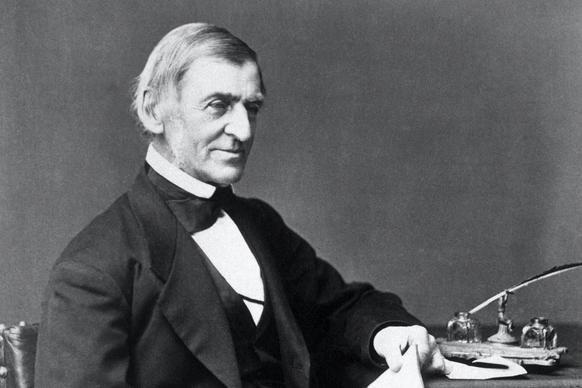
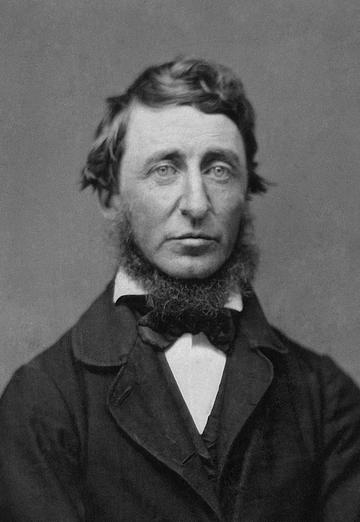
During the HRS, writers such as Ralph Waldo Emerson (left) and Henry David Thoreau (right) revered nature through their written work. This simultaneous philosophical and literary movement influenced much of the work of the HRS, becoming intertwined with it as artists revered nature for its spiritual qualities.
Howat,JohnK "TheHudsonRiverSchool"TheMetropolitanMuseumofArtBulletin,vol 30,no 6,1972,pp 272–83 JSTOR,https://doiorg/102307/3258969 Strazdes,Diana WildernessandItsWaters:AProfessionalIdentityfortheHudsonRiverSchool EarlyAmericanStudies,2009,https://wwwjstororg/stable/23546622 Accessed10Dec2024 Cole,Thomas AmericanScenery TheCollectedWritingsofThomasCole,editedbyChristopherO Luetz,PrincetonUniversityPress,2006,pp 211-235 RomanticismandtheHudsonValley BardCollegeOMEKA,https://omekalibbardedu/exhibits/show/scenery/romanticism-hudson-valley Avery,KevinJ TheHudsonRiverSchool TheMetropolitanMuseumofArt,https://wwwmetmuseumorg/toah/hd/hurs/hd hurshtm
HENRY DAVID THOREAU
RALPH WALDO EMERSON
Photo by © Hulton-Deutsch Collection/CORBIS/Corbis via Getty Images
“[Nature]…is in fact the exhaustless mine from which the poet and the painter have brought such wondrous treasures —an unfailing fountain of intellectual enjoyment where all may drink and be awakened to a deeper feeling of the works of genius…” (Cole, Essay on American Scenery, 2)
Thomas
Cole, 1836
5 THOMAS COLE
First generation, 1801–1848
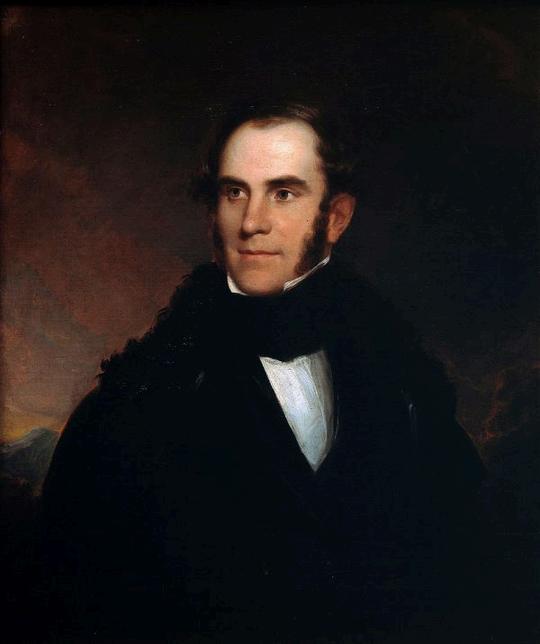
THOMAS COLE was a painter and essayist. He was born in Lancashire, England, in 1801. His family emigrated to the United States in 1818.
Due to his inspirational work, he is deemed the “founder" or “father” of the movement after his arrival in New York in 1825, where he discovered the beauty of the Catskills. Despite having no direct role except being the teacher of HRS painter Frederic Church, he soon became the leader of the movement.
His paintings depicted a majestic view of nature that was unlike anything ever seen before, contrasting with the gentle depictions of nature and creating dramatic effects in line with the sublime and the divine.
He died suddenly in 1846 and was succeeded by his close friend Asher B. Durand as the leader of the HRS through the rest of the First Generation.
THOMAS COLE Portrait by unknown
The Hudson River School
NOTABLE WORKS: COLE
First generation, 1801–1848
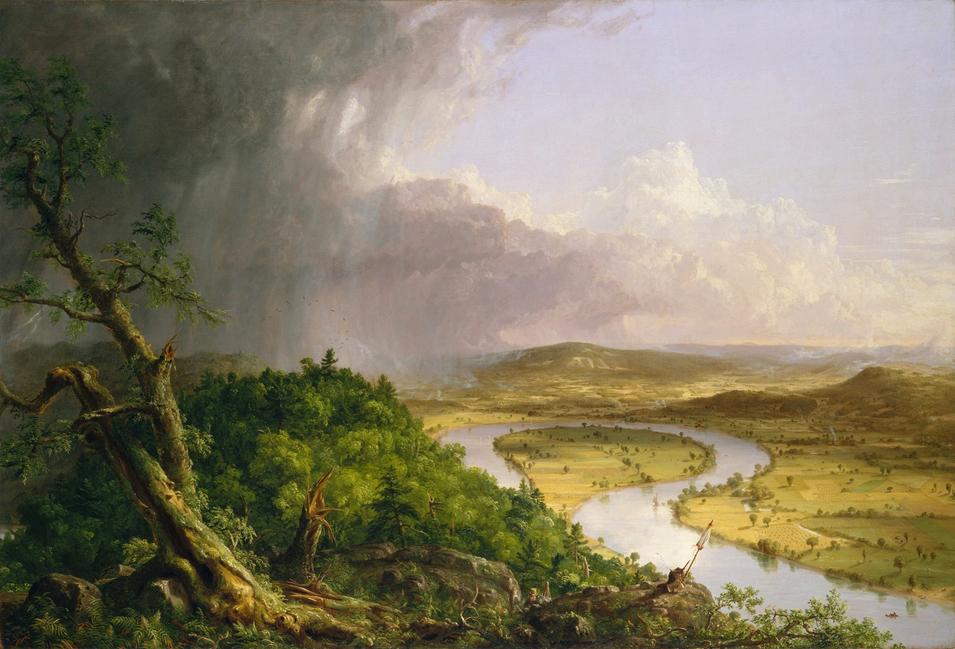
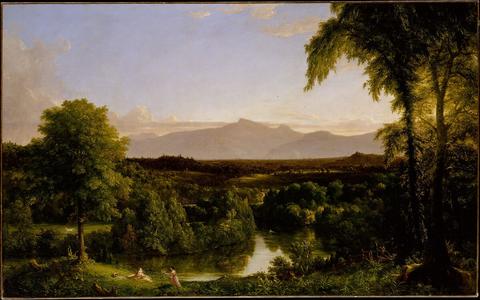
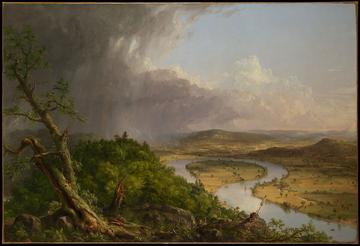
VIEW FROM MOUNT HOLYOKE, NORTHAMPTON, MASSACHUSETTS, AFTER A THUNDERSTORM
c 1836
Thomas Cole (American, Lancashire 1801–1848 Catskill, New York)
Oil on canvas 51 ½ x 76 in Metropolitan Museum of Art Gift of Mrs Russell Sage, 1908, 08 228
Known as “The Oxbow,” this painting is considered a masterpiece of American art and is one of the most celebrated artworks of the HRS. It was created in response to criticisms of inattentiveness to American scenery and “lauds the uniqueness of America by encompassing ‘a union of the picturesque, the sublime, and the magnificent’” (Metropolitan Museum of Art) It features a romantic panoramic view of the Connecticut River Valley, depicting a broad sky and detailed background with attention to light, weather, and color Cole juxtaposes the wilderness and a pastoral settlement as an emphasis of the American landscape potential
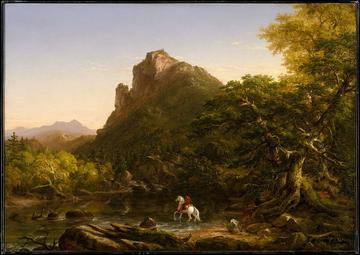
THE MOUNTAIN FORD
Painted two years before his death, this painting appears to record an imagined vision with symbolic meaning The mountain appears at the center, dominating everything else around it and marking the absence of civilization on “pure” nature The horseman below hesitates as he plunges into the depths of the ford, representing the confrontation of man and wilderness and the state of awe that nature inspires
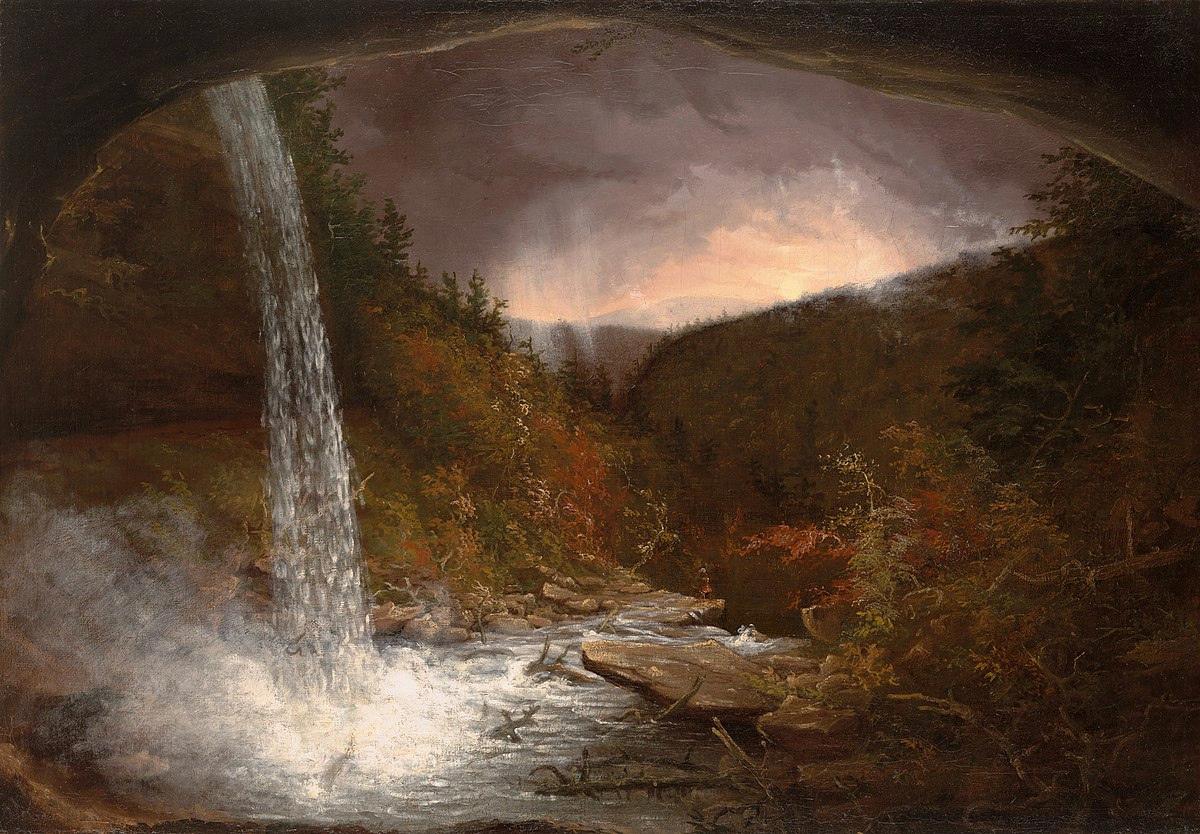
VIEW ON THE CATSKILL EARLY AUTUMN
c. 1836
This painting depicts Cole’s fascination with the valleys in upstate New York, specifically Catskill Creek, where he owned a house By 1837, this landscape depicted on the canvas existed no longer due to the construction of the Canajoharie and Catskill Railroad The imagery presented in the painting, including the misty mountains, the light on the water, and pastoral figures, makes up a scene that he mourned as lost, along with his essays on this developmental sacrifice
Thomas Cole. The Metropolitan Museum of Art, https://www.metmuseum.org/toah/hd/cole/hd cole.html
Thomas Cole (American Lancashire 1801–1848 Catskill New York)
on canvas, 39 x 63 in (99 1 x 160cm) Metropolitan Museum of
Gift in memory of Jonathan Sturges by his children, 1895
c. 1846
Thomas Cole (American, Lancashire 1801–1848 Catskill, New York)
Oil on canvas, 28 1/4 x 40 1/16 in (71 8 x 101 8 cm) Metropolitan Museum of Art Bequest of Maria DeWitt Jesup, from the collection of her husband, Morris K Jesup, 1914 15 30 63
“That is a fine picture which at once takes possession of you—draws you into it—you traverse it—breathe its atmosphere—feel its sunshine, and you repose in its shade without thinking of its design or execution, effect or color.”
Asher B. Durand, 1855
The Hudson River School
5 ASHER B. DURAND
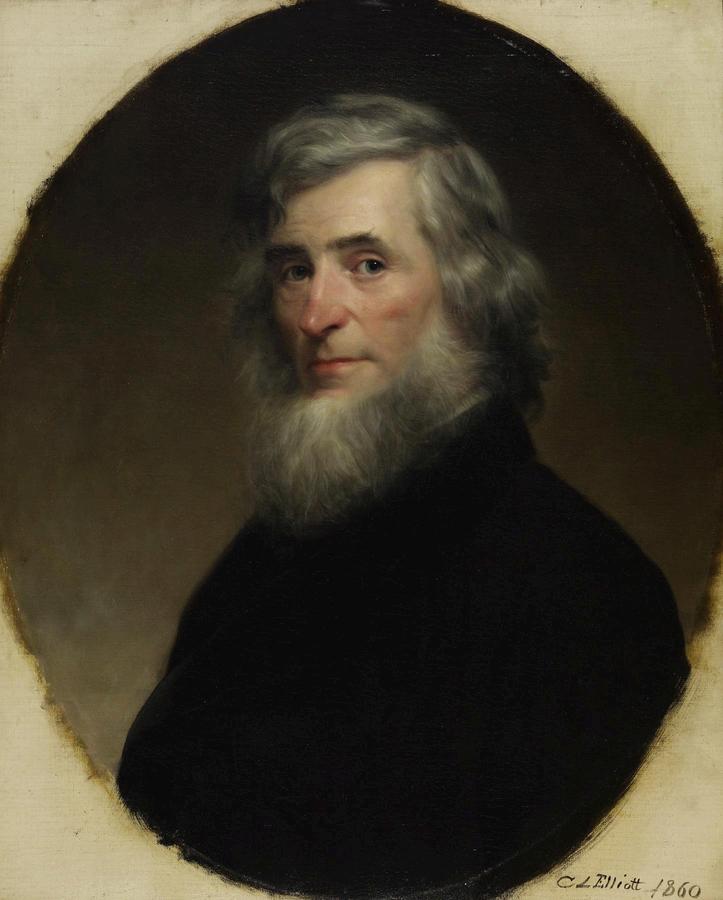
ASHER B. DURAND
ASHER B. DURAND was an engraver, portraitist, and, in the Second Generation of the HRS, its acknowledged dean.
In 1825, he bought one of Cole’s paintings. He maintained a close friendship with him, connecting on their mutual involvement in American art and culture. He was later persuaded by him to begin landscape art. Together, they took trips to the Catskill, White, and Adirondack mountains in the Northeast.
In 1845, he helped found and became president of the National Academy of Design.
In 1855, he published the “Letters on Landscape Painting” series, in which he codified the standards and ideas surrounding idealized naturalism of the HRS. He increasingly used outdoor sketching in oils as a foundation for studio landscapes, used a lot of plein airism techniques, and loosened the authority of the sublime, paving the way for the Second Generation and focusing more on light and air.
Portrait by Charles Loring Elliott, 1860 Oil on canvas
The Hudson River School
NOTABLE WORKS: DURAND
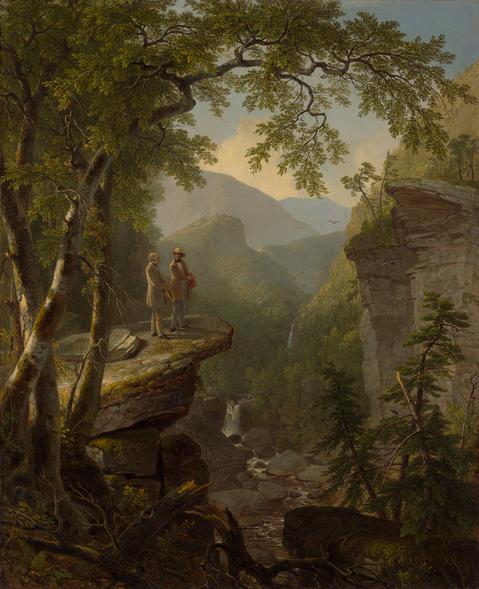
c. 1849
Asher Brown Durand (American, Jefferson, New Jersey 1796–1886
New Jersey) Oil on canvas 44 x 36 in (111 8 x 91 4 cm)
Painted at the request of Jonathan Sturges, this is a quintessential HRS work. The painting memorializes Durand’s friendship with poet William Cullen Bryant and Thomas Cole, who are the subjects of the painting, after Cole’s death The men are standing on a gorge of the Catskill Mountains, Cole’s main source of inspiration Durand depicted rocky ledges and tree limbs as a way to reference John Keats’s poetry “to nature’s observatory” The painting symbolizes a marriage between naturalism and idealization that is a central aspect of the aesthetic of the HRS
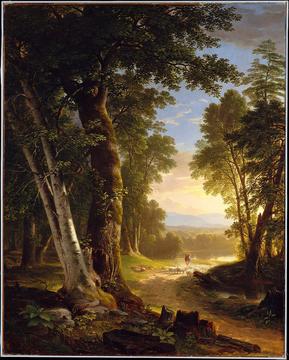
c 1855
Asher Brown Durand (American, Jefferson, New Jersey 1796–1886 Maplewood, New Jersey) Oil on canvas 60 3/4 x 48 in (154 3 x 121 9 cm) Metropolitan Museum of Art Gift in memory of Jonathan Sturges by his children, 1895 95 13 1
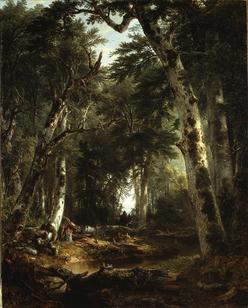
THE BEECHES
c 1845
Asher Brown Durand (American, Jefferson, New Jersey 1796–1886 Maplewood, New Jersey) Oil on canvas, 60 3/8 x 48 1/8 in (153 4 x 122 2 cm) Metropolitan Museum of Art Gift of Mrs Russell Sage, 1908, 8 228
Painted for New York collector Abraham M Cozzens, the painting represents a new trend that focuses less on the dramatic, sublime effect and more on naturalism and tranquility. This work is Durand’s first plein air oil sketch, a method on which he later greatly relied, to reproduce conditions of light and shade
This painting represents a departure from a pastoral image that was featured in Durand’s first works, transitioning into a celebration of shadows and darkness of the deep woods. It, too, features the pleinair method
The Hudson River School
THE WOMEN OF THE HRS
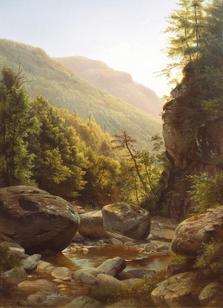
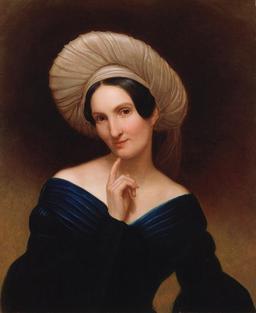
Female artists made significant contributions to the HRS. Among them are Susie M. Barstow and Harriet Cany Peale:
S
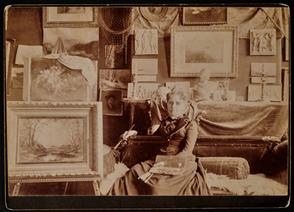
U S I E M . B A R S T O W
SUSIE M. BARSTOW was a painter who worked from the mid-19th into the early 20th century after receiving her training and education at the Rutgers Female Institute and the Cooper Union. She gained recognition in the growing post-Civil War art market after exhibiting her work alongside other respected artists She was a person of the outdoors, enjoyed hiking, and traveling. She painted various compositions of the Catskills, the White Mountains, Yosemite, the Alps, Venice, Mount Fuji, and Cairo, Egypt Barstow was an active member of the Appalachian Mountain Club and the Cosmopolitan Art Association. She also taught as a member of the faculty at the Brooklyn Institute of Arts and Sciences and also served on the committees that established the Brooklyn Museum of Art.
H A R R I E T C A N Y P E A L E
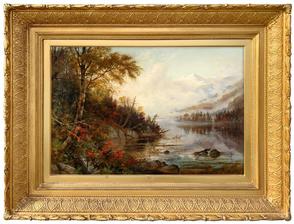
HARRIET CANY PEALE was primarily a portrait and sTill life painter. She exhibited her work at the Pennsylvania Academy of Fine Arts throughout her life, in the 1840s, 50s, and 60s. Though she did not engage a lot in landscape art, she was a masterful landscapist
Loughran, Patricia. "The Grand Women Artists of the Hudson River School." Smithsonian Magazine, https://www.smithsonianmag.com/arts-culture/the-grand-women-artists-of-thehudson-river-school-1911058/ "SusieM.Barstow:RedefiningtheHudsonRiverSchool."ArtHerStory,https://artherstory.net/susie-m-barstow-redefining-the-hudson-river-school/
KAATERSKILL CLOVE c 1858
Harriet Cany Peale
HARRIET CANY PEALE
Portrait of a Lady (Harriet Cany Peale), ca 1840 In the collection of the Chrysler Museum, Norfolk, Virginia
SUSIE M. BARSTOW
Susie Barstow Skelding, Photograph of Susie M Barstow in her Brooklyn Studio, 1891, 5 x 7 in Private Collection
SUSIE M. BARSTOW
Susie M Barstow, Looking Up the Clove, ca 1865, pencil on paper, 9 1/8 x 11 ½ in, Private Collection, Photograph: Dennis DeHart
“National character often receives its peculiar cast from its natural scenery.”
Benjamin Stillman, 1818
The Hudson River School
8 INFLUENCE & RELEVANCE
A RESONANT, NEW AMERICAN IDENTITY
The HRS was the start of a self-conscious American movement that emerged in what was then an infant nation. At that time, there had been pressures from cultural critics to produce an artistic culmination that could affirm the nation’s distinctive identity after the period of unity and independence that followed the War of 1812.
The HRS came at the perfect time. The depiction of nature through the school in the United States contributed to a merging of national and Christian identity. Specifically, it had an undeniable link to New York, which is recognized as the contemporary artistic and cultural center of the United States. The success of the artists of the HRS was magnified due to the patronage in the city that allowed them to promulgate their artistic visions.
The artists drew on the discourse of America as a “Promised Land,” creating an American wilderness that was projected onto a future Golden Age as a Garden of Eden, supported by ideas of chosenness, grandiosity, and the Divine that had been passed on by its English precedents. Cole himself was an immigrant and a Christian, and his background undoubtedly contributed to this new image of American identity, constituting an enduring imagery of the “homeland” and its roots in the dynamic Christian pioneer-pilgrim figure. Through his work “Wilderness and its Waters,” Stillman created a novel artistic profile that melded the personalities of an explorer and a minister of God, mirroring the American values and attractive, collective self-image, political identity, and desire for universal moral and religious truths that have been defined by Americans since the beginning of the nation, which acted as the mouthpiece for the school.
The riverscapes depicted by the HRS embodied this merging of the pioneer with the entrepreneur in a magisterial and future-oriented way that was easy for prosperous patrons to identify with and that carried on an American legacy and instilled a deep sense of patriotism.
Timothy
Strazdes Diana "WildernessandItsWaters:AProfessionalIdentityfortheHudsonRiverSchool"EarlyAmericanStudies
8 INFLUENCE & RELEVANCE
ART HISTORY, SCHOLARSHIP, & SOCIALITY
The study of the HRS significantly increased with the rise of “the new art history” in the 1980s, expanding beyond the realm of the postCold War era’s art-historical “orthodoxy.” This study has required the work of several generations of experts, from academics, museum professionals, art curators, and art dealers.
The sheer amount of study and scholarship on the HRS and its many artworks, artists, critics, and institutions since the 1980s is staggering. Yet, a critical history of the movement has not been attempted, and its social history must be considered.
According to Alan Wallach (Art and Art History, College of William and Mary), we must not stop at its history in terms of growth and decline. Instead, we must also consider the history of New York City’s “bourgeois factions” and bourgeoisie, the class that has dominated the political, cultural, and economic landscape for many decades. Looking into class formation is a way to consider how the work of the HRS contrasts with the work that succeeded the school, including that of John Frederick Kensett, such as Passing Off of the Storm. These works might offer a more personal, subjective experience that does not rely on teaching lessons of patriotism.
INFLUENCE & RELEVANCE
TOURISM
The HRS, which once relied on early tourist amenities in the Catskills, Lake George, White Mountains, and Mount Desert Islands that its artists took advantage of, has had a profound impact on contemporary tourism. The long-lasting influence of the HRS on an appreciation of nature and the wilderness has led to the building of new tourist amenities and has attracted the attention of thousands seeking not just leisure, but emotional connection, discovery, and renewal in the natural landscape of New York State and beyond.
Today, tourists are invited to journey across several points that have been depicted in works of the HRS through the Hudson River School Art Trail. It includes twenty different hiking trails and sites across the Hudson River Valley, New York, New Hampshire, Connecticut, and Massachusetts, which encompass various levels of difficulty, including the home of Thomas Cole in Catskill, New York. The trail is a project in partnership with the National Park Service and the state government of New York.
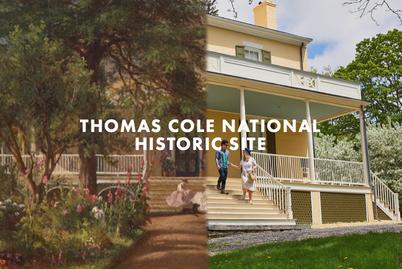
HUDSON RIVER SCHOOL ART TRAIL
The Hudson River School
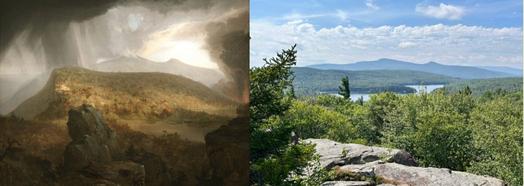
The Catskill Mountain House Sunset Rock Today Today, the landscapes depicted by the artists of the HRS remain, albeit they have been altered by human development, time, and conservation projects or interventions.
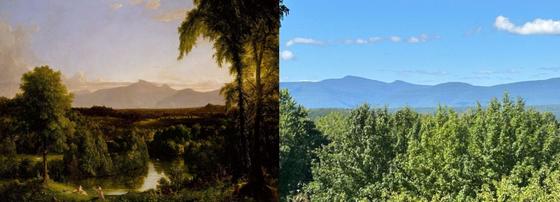
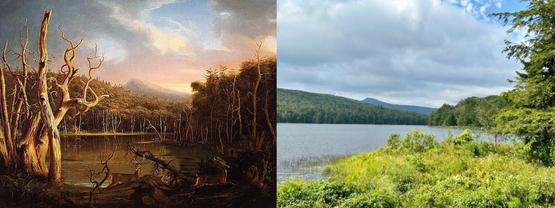
Vlasak,Aaron September10,GEO356:EnvironmentalIdeasandPolicy,SyracuseUniversity
View on the Catskill, 1836
View from Cole house today
Lake with Dead Trees
South Lake today
9 COMING TOGETHER
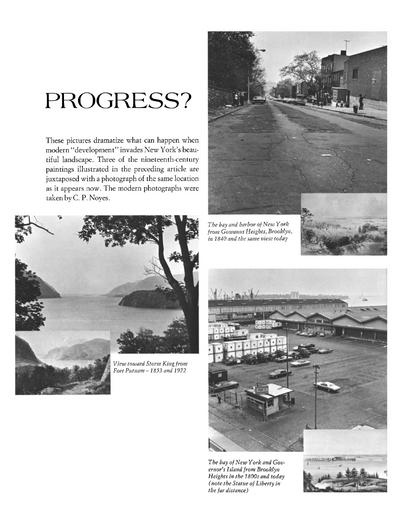
The HRS was a revolutionary movement, spanning several prolific artists and changing attitudes towards nature, shaping American identity and cultural dynamics, and significantly contributing to art history scholarship through several religious, philosophical, and technical ideologies. Further, the ideas set forth serve to question how landscapes can become damaged and exploited by the human encroachment.
Below is the work of John Howat, which compares these landscapes then versus now and how it relates to the development of New York State through modern photographs. Today, it is our responsibility to care for the spiritual and irreplaceable landscapes and natural beauty that the HRS thought worthy of preservation and appreciation. Their work should serve as a warning against heavy industrialization and destruction as we consider natural landscapes not of inferior but of equal or greater value than certain economic priorities. As we connect with and appreciate the work of the HRS, it is imperative to connect to our own humanity and acknowledge something that is bigger than us when shaping environmental policy and taking action.
REFERENCES
Artists TheHudsonRiverSchoolArtTrail,https://wwwhudsonriverschoolorg/artists
AsherB Durand TheMetropolitanMuseumofArt,https://wwwmetmuseumorg/toah/hd/dura/hd durahtm
Avery,KevinJ "TheHudsonRiverSchool"TheMetropolitanMuseumofArt,Oct 2004,https://wwwmetmuseumorg/toah/hd/hurs/hd hurshtm
Cole, Thomas Essay on American Scenery Thomas Cole National Historic Site, https://thomascoleorg/wp-content/uploads/Essay-on-AmericanScenerypdf
Cusack, Timothy "The Chosen People: The Hudson River School and the Construction of American Identity" Review of International American Studies, vol 14, no 2,2021,https://doiorg/1031261/rias11804
Gassan, Robert H The Birth of American Tourism: New York, the Hudson Valley, and American Culture, 1790-1835 University of Massachusetts Press, 2008 JSTOR,http://wwwjstororg/stable/jctt5vk26z
Howat,JohnK "TheHudsonRiverSchool"TheMetropolitanMuseumofArtBulletin,vol 30,no 6,1972,pp 272–83 JSTOR,https://doiorg/102307/3258969
Inness,George "TheHudsonRiverSchoolofPainting"TheQuarterlyJournaloftheNewYorkStateHistoricalAssociation,vol 4,no 2,1923,pp 99–103 JSTOR, http://wwwjstororg/stable/43564605
LearnAbouttheHudsonRiverSchool ThomasColeNationalHistoricSite,https://thomascoleorg/learn-about-the-hudson-river-school/ Loughran, Patricia "The Grand Women Artists of the Hudson River School" Smithsonian Magazine, https://wwwsmithsonianmagcom/arts-culture/thegrand-women-artists-of-the-hudson-river-school-1911058/
Mann, William A "The Hudson River and America’s Love of Natural Landscape Scenery" Parkways, Greenways, Riverways: The Way More Beautiful, edited by WilliamS.Bousquet,ThomasE.Rash,andMichaelH.Suggs,AppalachianStateUniversity,1989,pp.72–86.JSTOR,https://doi.org/10.2307/j.ctt1xp3mr6.14. Mather,F J "TheHudsonRiverSchool"TheAmericanMagazineofArt,vol 27,no 6,1934,pp 297–306 JSTOR,http://wwwjstororg/stable/23932227
NationalParkService HudsonRiverSchool NationalParkService,nd,https://wwwnpsgov/museum/exhibits/landscape art/hudson river schoolhtml RomanticismandtheHudsonValley BardCollegeOMEKA,https://omekalibbardedu/exhibits/show/scenery/romanticism-hudson-valley
Strazdes, Diana "Wilderness and Its Waters: A Professional Identity for the Hudson River School" Early American Studies, 2009, https://wwwjstororg/stable/23546622 Accessed10Dec2024
Stuhr, James J "Expressions of Nature: Refashioning the Hudson River School" Pragmatic Fashions: Pluralism, Democracy, Relativism, and the Absurd, Indiana UniversityPress,2016,pp 116–149 JSTOR,http://wwwjstororg/stable/jctt17t758j10
"SusieM Barstow:RedefiningtheHudsonRiverSchool"ArtHerStory,https://artherstorynet/susie-m-barstow-redefining-the-hudson-river-school/
TheHudsonRiverSchoolArtTrail nd,https://wwwhudsonriverschoolorg/hudsonrivervalley
ThomasColeNationalHistoricSite LearnAbouttheHudsonRiverSchool ThomasColeNationalHistoricSite,nd,https://thomascoleorg/learn-about-thehudson-river-school/
ThomasCole TheMetropolitanMuseumofArt,https://wwwmetmuseumorg/toah/hd/cole/hd colehtml
Vlasak,Aaron September10,GEO356:EnvironmentalIdeasandPolicy,SyracuseUniversity
Wallach,Alan "ForaSocialHistoryoftheHudsonRiverSchool"AmericanArt,vol 31,no 2,2017,pp 43–45 JSTOR,https://wwwjstororg/stable/26556790
Zimmer, William "Hudson River School Just Keeps on Rolling; Artists Over the Years Have Taken Up the Mantle of the Founders of an American Genre, Landscape Painting" The New York Times, 17 Oct 1999, https://wwwnytimescom/1999/10/17/nyregion/hudson-river-school-just-keeps-rolling-artistsover-years-have-taken-up-mantlehtml