ARCHITECTURE | PRIVATE HOUSING
Brunel Walk | Residen!al
Stage: Planning Applica!on for 45 new homess
Loca!on: London, U.K
Architect: KC+A
Client: Haringey



Site Area: 9981m² (1Ha)




This project describes the proposal to redevelop a site within the Turner Avenue estate, that will provide a scheme of high quality new Council homes. The proposal is to replace some of the exis!ng houses in the southern part of the site with 5. It will provide a total of 45 new homes with 39 apartments and 6 2-storey mews houses. Landscape improvements are also proposed to the remaining part of the Estate.
The proposal aims to improve access, to improve street frontages, to increase natural surveillance and to improve communal gardens.

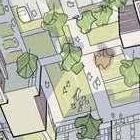
The proposal has adopted a fabric first approach with efficiently designed building envelopes and improved u-values and a high air !ghtness. Renewable technologies including PVs and air source heat pumps are proposed. The scheme is designed to be net zero carbon in use.
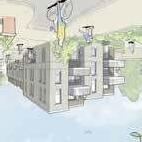
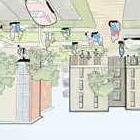
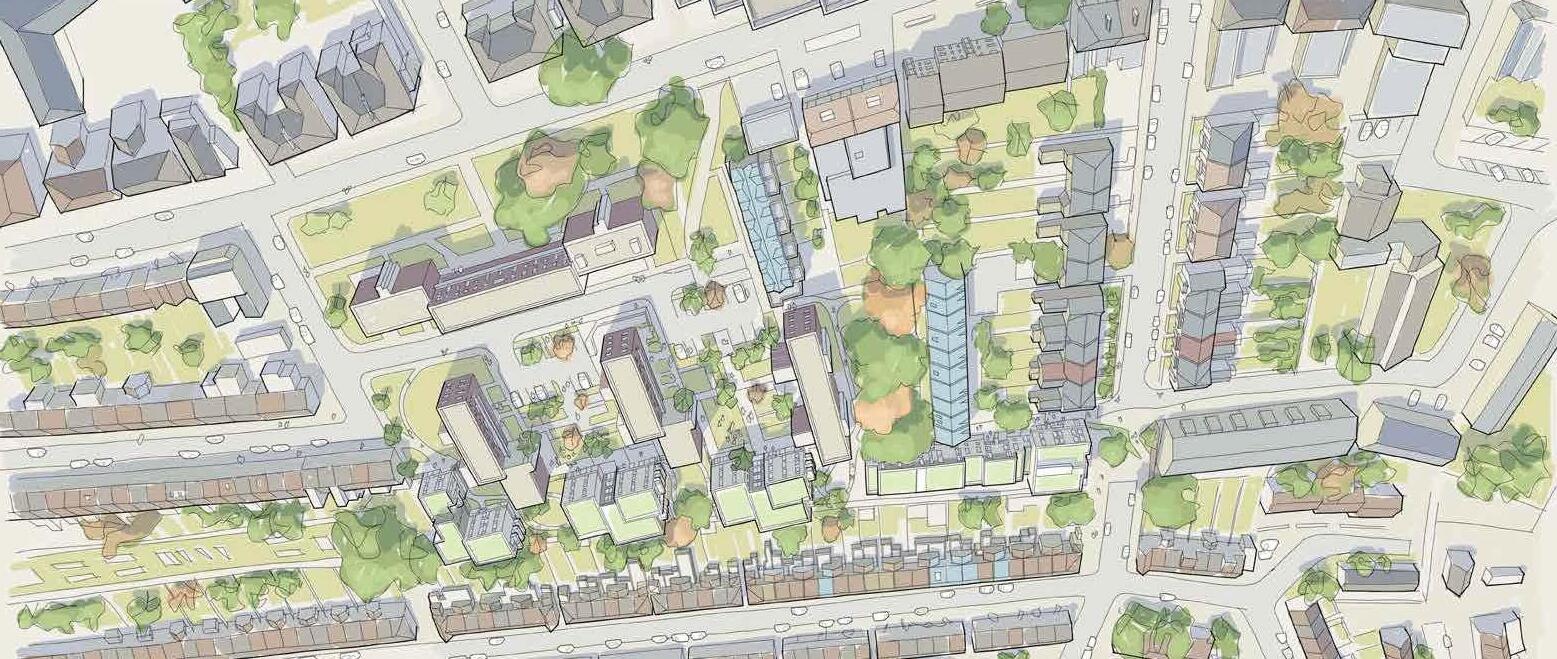
_Birds eye ar!st impression of the proposal (By others)
Birds eye artists impression of the proposal


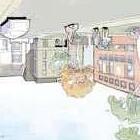
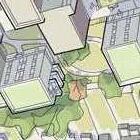
_Opportuni!es and Achievements of the proposal



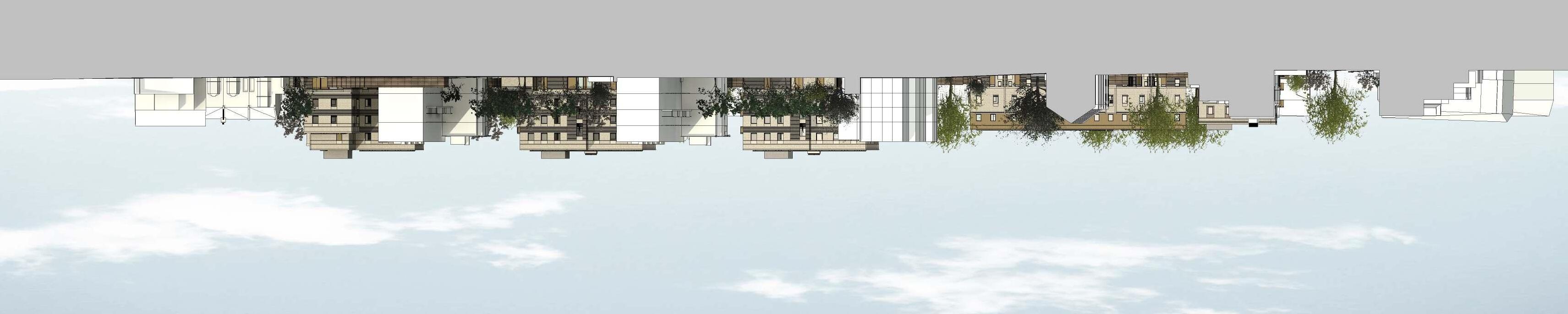
_Northern Eleva on of the Site showing the proposed buildings
_Southern Eleva on of the Site showing the proposed buildings

 Proposed Building D Shared garden Proposed Maissone!es with flats on topProposed Building CProposed Building BProposed Building A
Proposed Building AShared private gardenShared private gardenShared private ga Proposedrden Building BProposed Building CProposed Maissone!es with flats on topProposed Building D
Amenity courtyardAmenity courtyard
Proposed Building D Shared garden Proposed Maissone!es with flats on topProposed Building CProposed Building BProposed Building A
Proposed Building AShared private gardenShared private gardenShared private ga Proposedrden Building BProposed Building CProposed Maissone!es with flats on topProposed Building D
Amenity courtyardAmenity courtyard
Step 1.
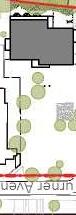
Proposed area of built form with separa on distance to neighbouring proper es on Seaford Road.
Step 2. Break built form area down into sec ons, preserving outlook from Turner Avenue.
Step 3. Create shared private gardens and enhance exis ng private gardens.
Step 4. Create amenity courtyards within Turner Avenue, complete streets with building line and ac ve frontage.

PROPOSED BUILDING A
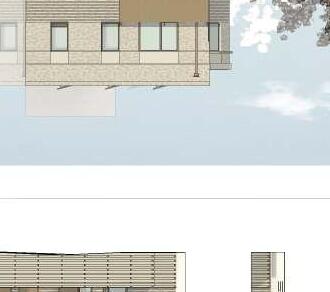
TOTAL No of DWELLINGS = 9 (25 hab rooms)




Mix: 5x1B2P (55,5%). 1x2B4P (11%). 3x3B5P (33,5%)
Parking: 18 No. secure Bicycle Spaces
_Proposed Typical Floor Plan

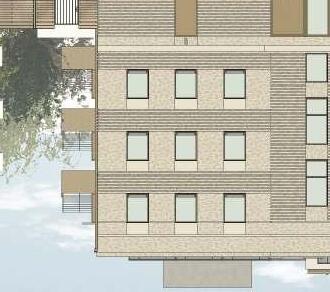
1Brick type 1 - facing brick in stretcher bond
2Decorative brick panel with everyother course protruding by 20mm, in brick type 1
3Brick type 1 - facing brick in soldier course

475 mm reconstituted lime stone strip, 40 mm projecting course to form horizontal banding (with drip)
5300 mm reconstituted lime stone strip, 40 mm projecting course to form horizontal banding (with drip)
6Facing brick type 1 in vertical stretcher bond, in set by 20mm panel over windows
7Reconstituted lime stone in set by 20mm panel over windows
8Double glazed window with full brick 225 reveal. PPC Aluminum, sill & sofit in match colour
9PPC Aluminum louvre panel with glazing window system for night ventilation, RAL to match window scheme
10Metal railing with flat sections - PPC colour to match window frame colour scheme
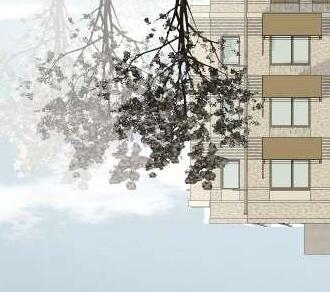
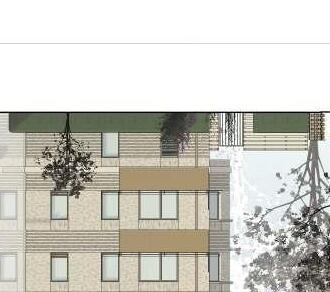
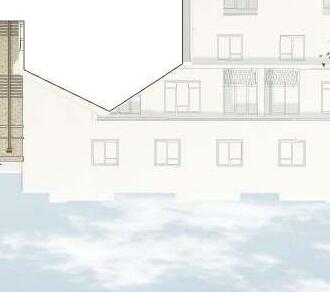
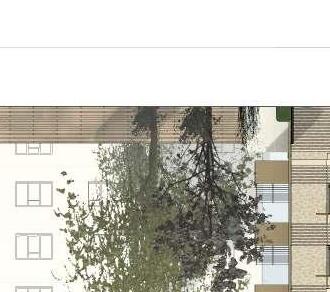
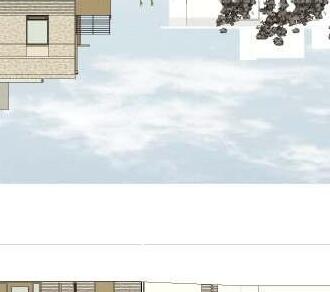
_Proposed West Eleva on


Proposed Site Elevation -Block A -West 1
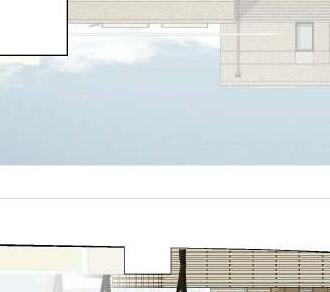
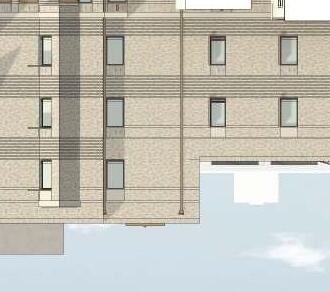
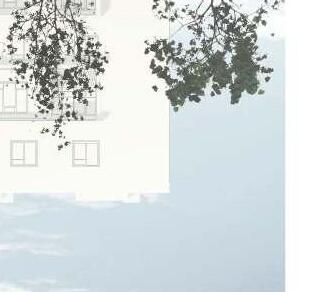
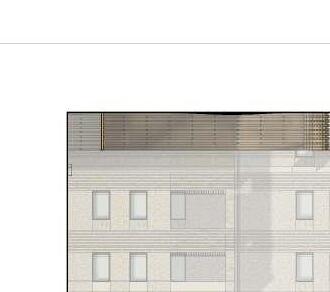
_Proposed East Eleva on

11Privacy screen sections to match hand balustrade- PPC colour to match window frame colour scheme
12Balcony panels in stretched metal sheet - PPC colour to match window frame colour scheme
13Double glazed window with full brick 225 reveal and spandrel bottom panel. PPC Aluminum, sill, spandrel panel & sofit in match colour
14Glazed entrance doors with PPC aluminium frames and matching ironmongery
15Rain water goods, RAL to match window RAL
16Wall mounted external light, case colour to match windows and doors colour
1775 mm facing brick type 1 strip, 20 mm projecting course to form horizontal banding
18Timber fence with vertical hit & miss
19Reconstituted stone canopy with external lighting under soffit
20Solar shading formed with stretched metal sheeting- PPC colour to match window frame colour scheme
21Brick type 2 - facing brick in stretcher bond, 20mm recessed
28 Plant enclosure clad in stretched metal sheet to match RAL elsewhere
33 External doors finished in stretched metal and RAL to match metal work elsewhere
PROPOSED BUILDINGS B & C

TOTAL No of DWELLINGS = 11 (37 hab rooms)




Mix: 1x1B2P (10%). 5x2B4P (45,5%). 5x3B5P (45,5%)
Parking: 20 No. secure Bicycle Spaces
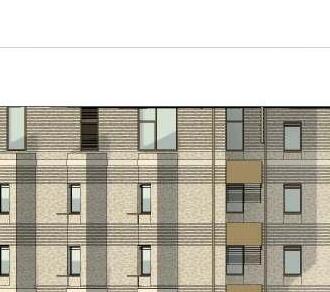
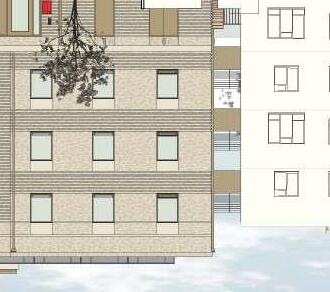
1Brick type 1 facing brick in stretcher bond
2Decorative brick panel with everyother course protruding by 20mm, in brick type 1
3Brick type 1 facing brick in soldier course 475 mm reconstituted lime stone strip, 40 mm projecting course to form horizontal banding (with drip)
5300 mm reconstituted lime stone strip, 40 mm projecting course to form horizontal banding (with drip)
6Facing brick type 1 in vertical stretcher bond, in set by 20mm panel over windows
7Reconstituted lime stone in set by 20mm panel over windows
8Double glazed window with full brick 225 reveal. PPC Aluminum, sill & sofit in match colour
9PPC Aluminum louvre panel with glazing window system for night ventilation, RAL to match window scheme 10Metal railing with flat sections PPC colour to match window frame colour scheme
11Privacy screen sections to match hand balustrade- PPC colour to match window frame colour scheme
12Balcony panels in stretched metal sheet PPC colour to match window frame colour scheme
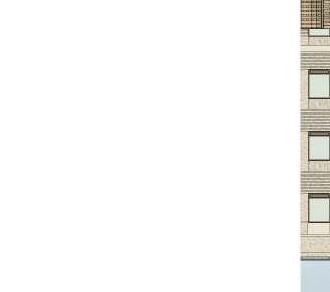
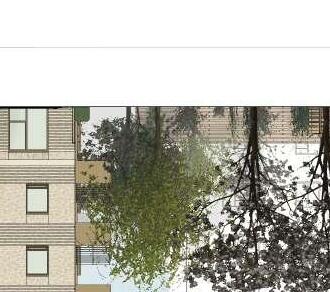
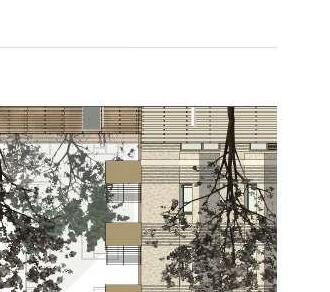
13Double glazed window with full brick 225 reveal and spandrel bottom panel. PPC Aluminum, sill, spandrel panel & sofit in match colour
14Glazed entrance doors with PPC aluminium frames and matching ironmongery
15Rain water goods, RAL to match window RAL

16Wall mounted external light, case colour to match windows and doors colour
1775 mm facing brick type 1 strip, 20 mm projecting course to form horizontal banding
18Timber fence with vertical hit & miss
19Reconstituted stone canopy with external lighting under soffit
20Solar shading formed with stretched metal sheeting- PPC colour to match window frame colour scheme
21Brick type 2 - facing brick in stretcher bond, 20mm recessed

28 Plant enclosure clad in stretched metal sheet to match RAL elsewhere
33 External doors finished in stretched metal and RAL to match metal work elsewhere
_Proposed Typical Floor Plan
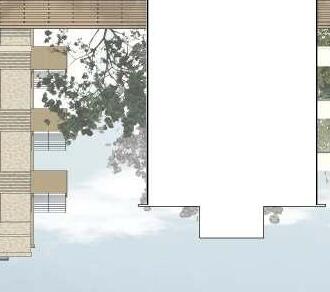
PROPOSED BUILDING D1 - FLATS
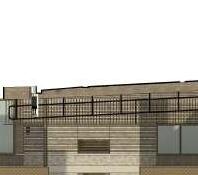
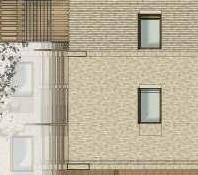
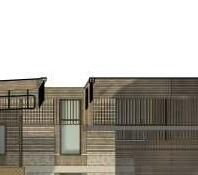
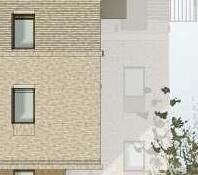
TOTAL No of DWELLINGS = 5 (17 hab rooms)







Mix: 3x2B4P (60%). 2x3B5P (40%)



Parking: 17 No. secure Bicycle Spaces
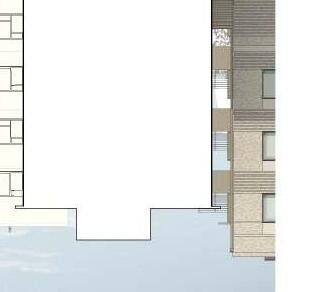
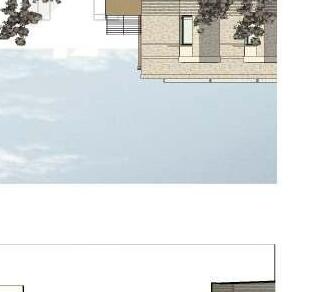
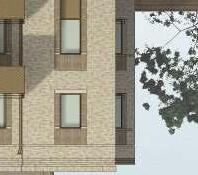
_Proposed North Eleva!on








_Proposed Typical Floor Plan

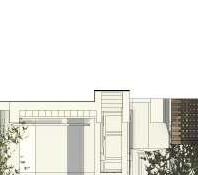
_Proposed West Eleva!on











PROPOSED BUILDING D2 - MAISSONETTES AND FLATS
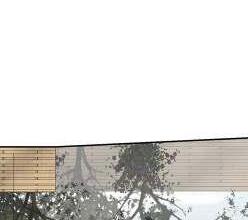
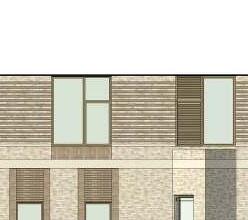
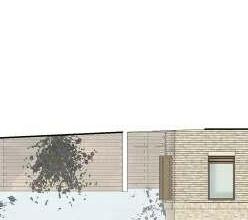
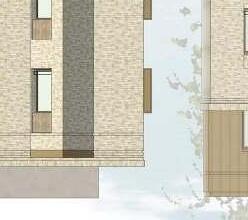
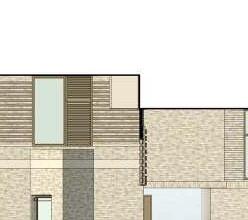
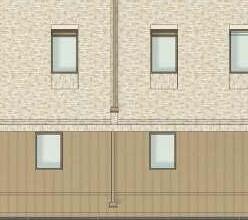
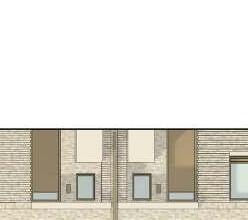
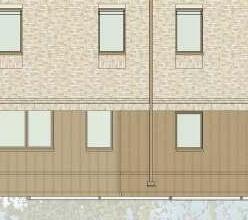
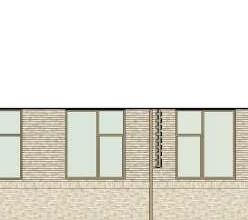
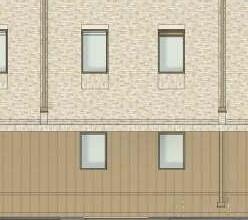
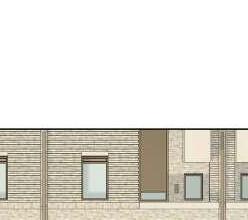
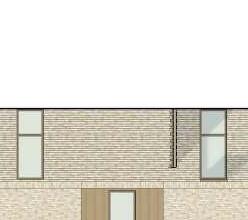
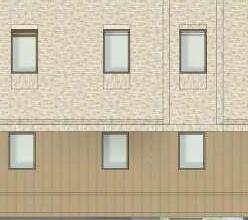
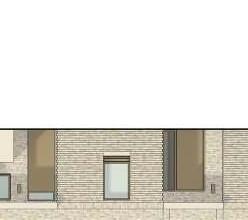
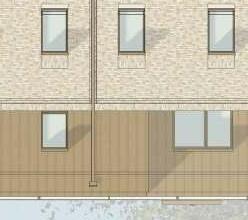
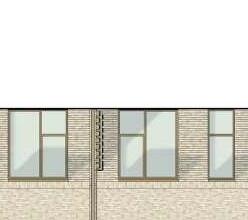
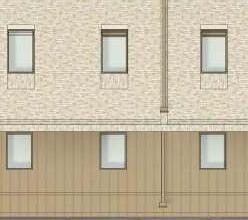
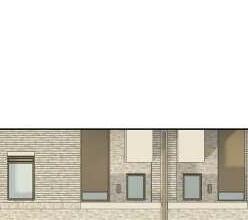
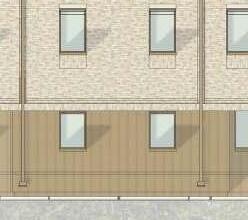
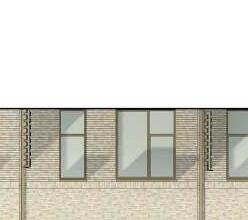
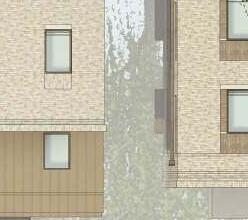
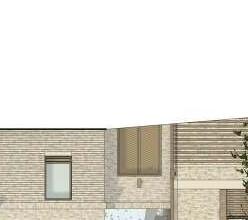
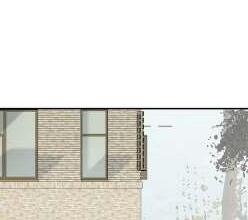
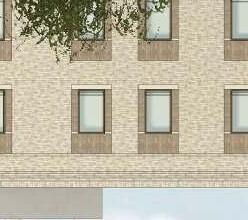
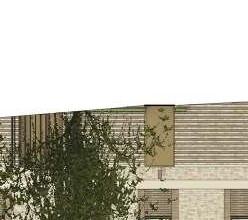
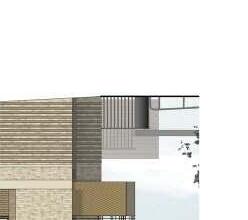
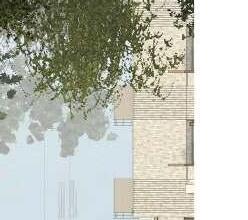

TOTAL No of DWELLINGS = 9 (32 hab rooms)
Mix: 1x1B2P (11,5%). 2x2B4P (22%). 6x3B5P (66,5%)



Parking: 12 No. secure Bicycle Spaces
_Proposed Ground Floor Plan
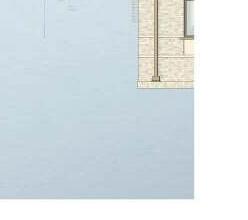
_Proposed North Eleva!on








_Proposed First Floor Plan
_Proposed Second Floor Plan
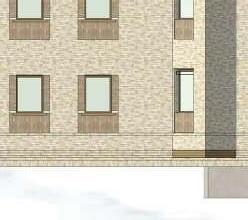
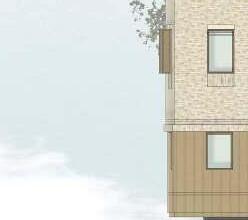
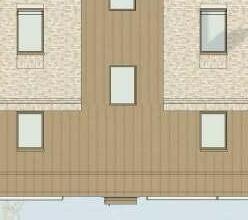
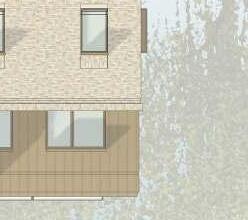
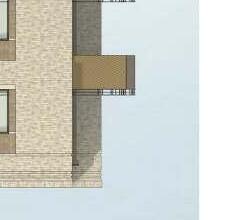
_Proposed South Eleva!on








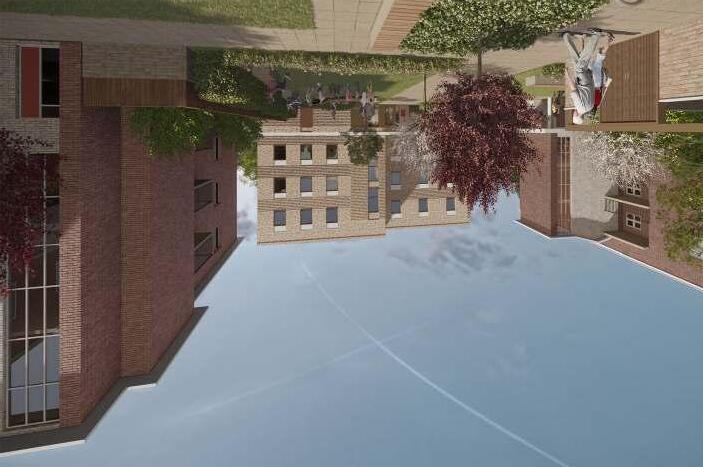
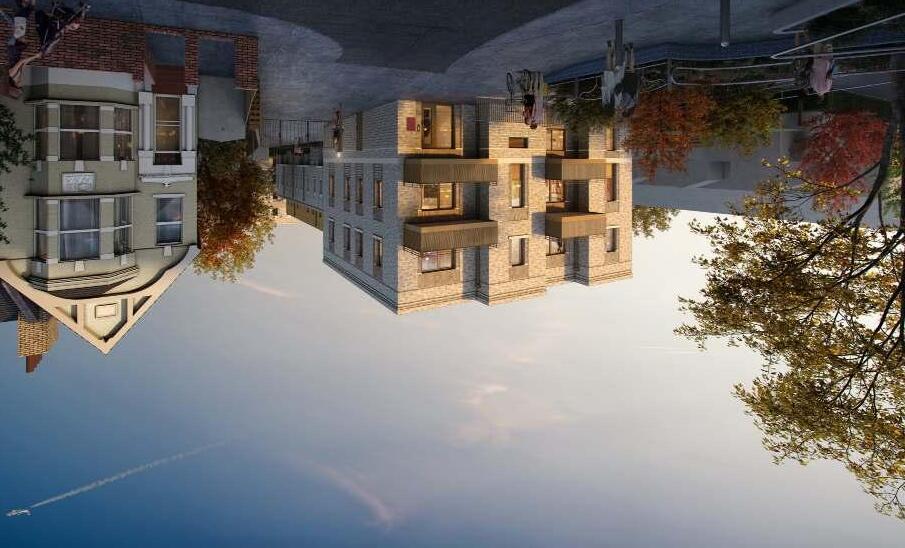
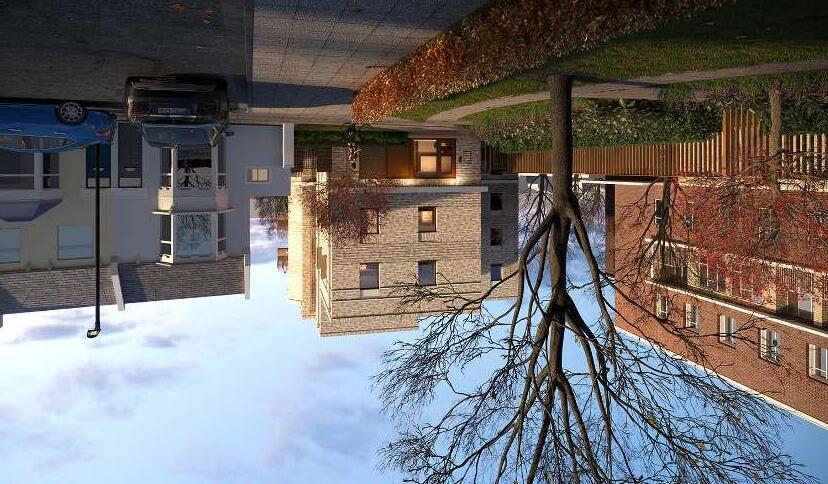
CampsbourneRoad
Eas ieldRoad


Boyton Road | Residen!al


Stage: Planning Applica!on for 15 new homess
Loca!on: London, U.K
Architect: KC+A
Client: Haringey


Site Area: 641m² (0.0641Ha)
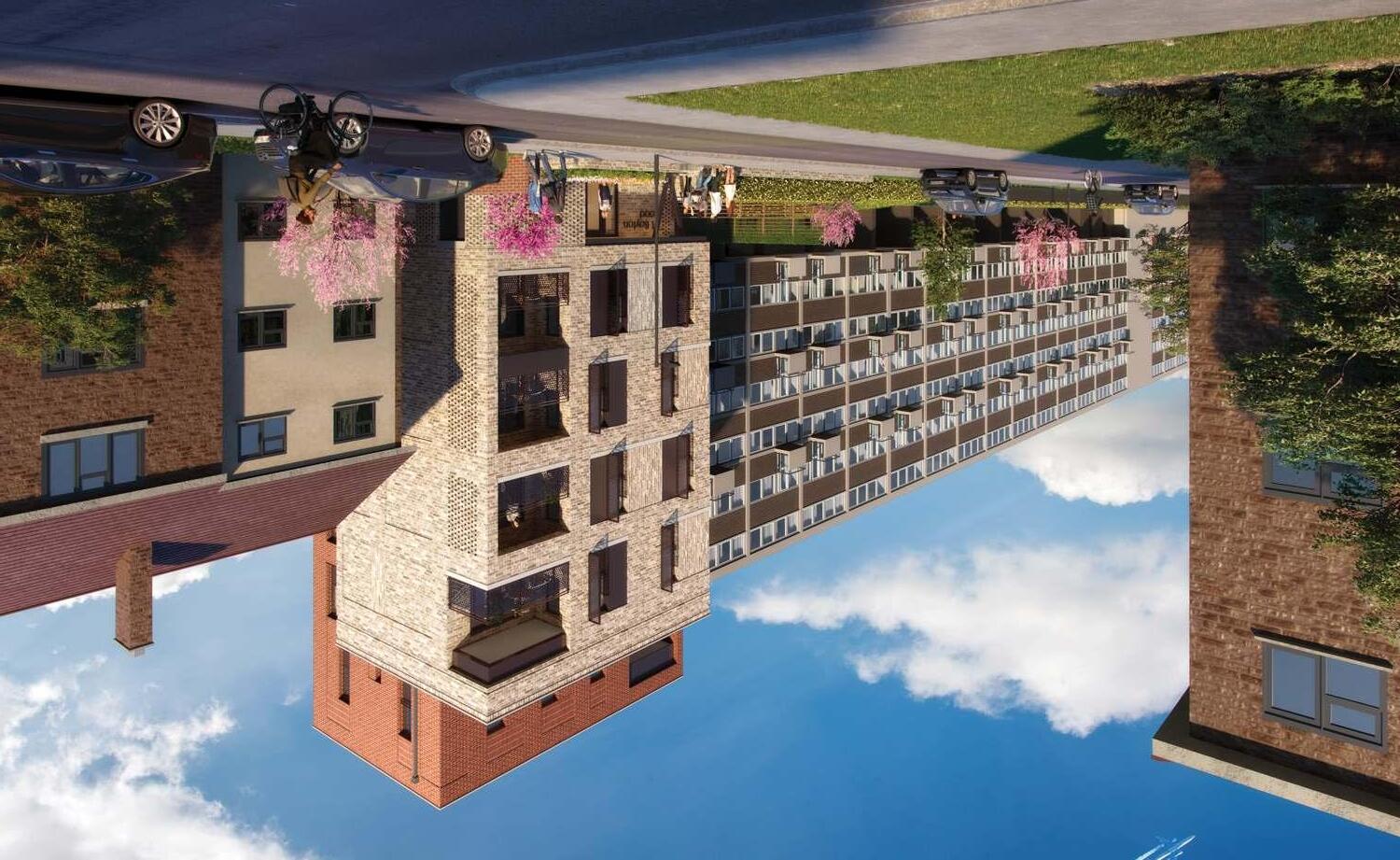
The proposal is for the redevelopment of the car park adjacent Wat Tyler House to provide 15 new homes in a part-4, 5 and 7-storey building.
Opportuni!es
. To use brownfield land to provide a mix of high quality dual aspect new homes with good natural daylight.


. Op!mise security and natural surveillance to surrounding areas.
. Promote pedestrian dominated streetscape rather than a hard landscaped car park as street frontage.
. Enhance communal garden to the rear of Wat Tyler house with new plan!ng, trees and street furniture.
. Refurbish the communal play ground that is currently asm a loca!on of an!-social behaviour and gatherings.
. Enhance local alley way routes to ensure greater safety and community feel.
. Provide addi!onal passive surveilance from the new homes over the public realm.
_CGI of the proposal
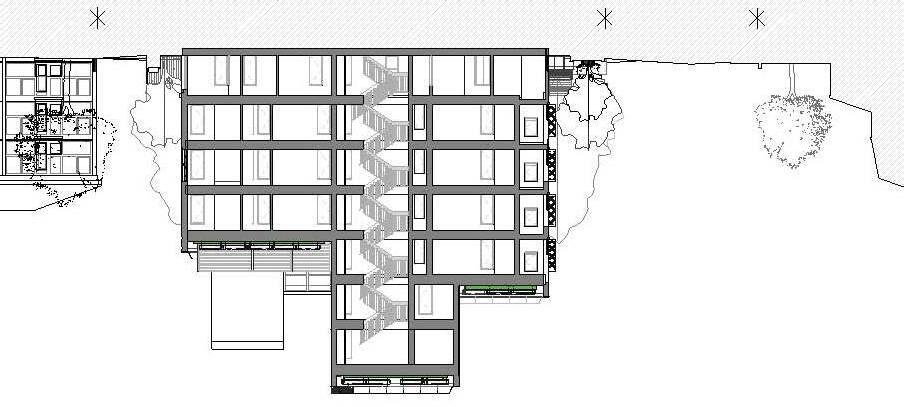
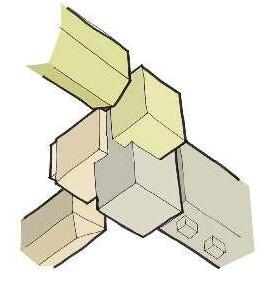
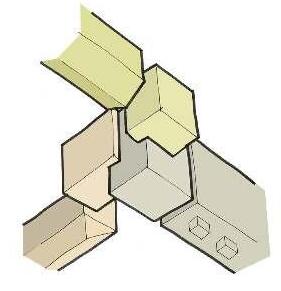
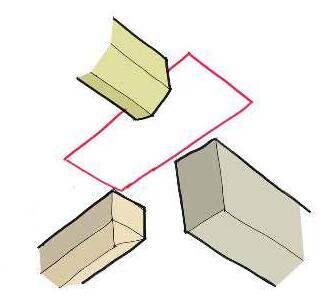
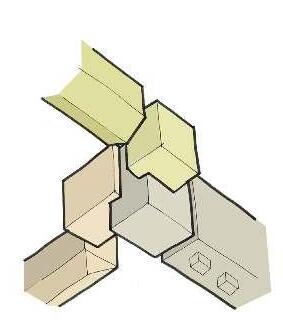
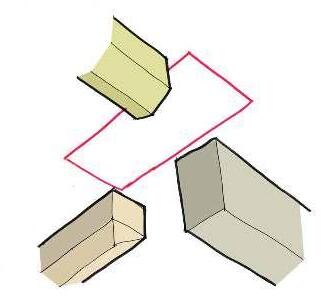
3. Heights of each element adjusted to suit the context. The tallest sec on of the building rises up to form a book end to Wat Tyler House and at the rear the third part of the building relates in scale to Campsfield House and steps down subservient to the rest.




2. New building composed mof 3 elements where each part responds to the plan depth of the adjoining buildings. Facing Boyton Road the building takes on the building line of Wat Tyler house and Tennyson House crea ng a step in the street frontage.
1. Exis ng Site and surrounding buildings. The layout and massing design approach addresses the main site constraints: Varying heights of surrounding buildings, broken building line on Boyton Road and blank flank walls with no natural surveillance.

_Proposed Site Plan and long Sec on _Design Approach: Form and massing


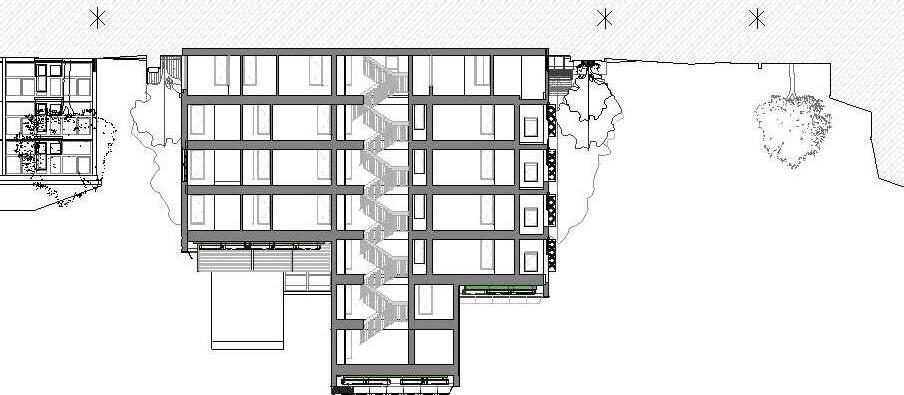












TOTAL No of DWELLINGS = 15 (40 hab rooms)
Mix: 6x1B2P (40%). 5x2B3P (33%). 3x2B4P (20%). 1x3B4P (7%)
Parking: 1 No. Vehicle Parking Spaces (for wheelchair userS) & 28 No. secure Bicycle Spaces
_Proposed Ground Floor Plan
_Proposed Typical Floor Plan
_Proposed 6th Floor Plan

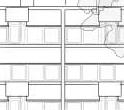
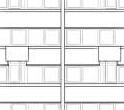
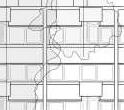
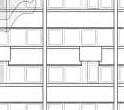
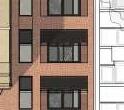
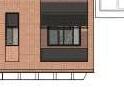
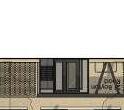
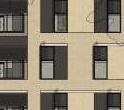
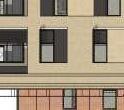
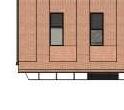
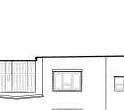
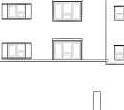

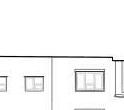
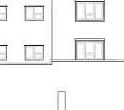


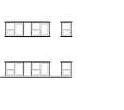

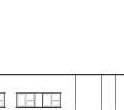
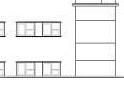

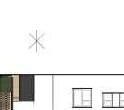

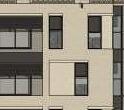
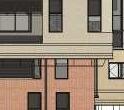
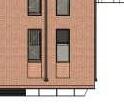
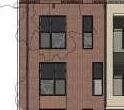
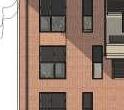
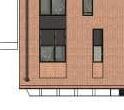
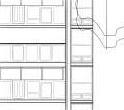








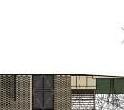

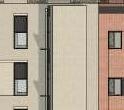
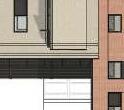
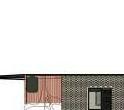
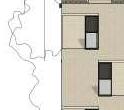
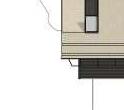

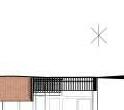
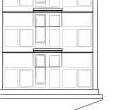





_Proposed West Eleva on


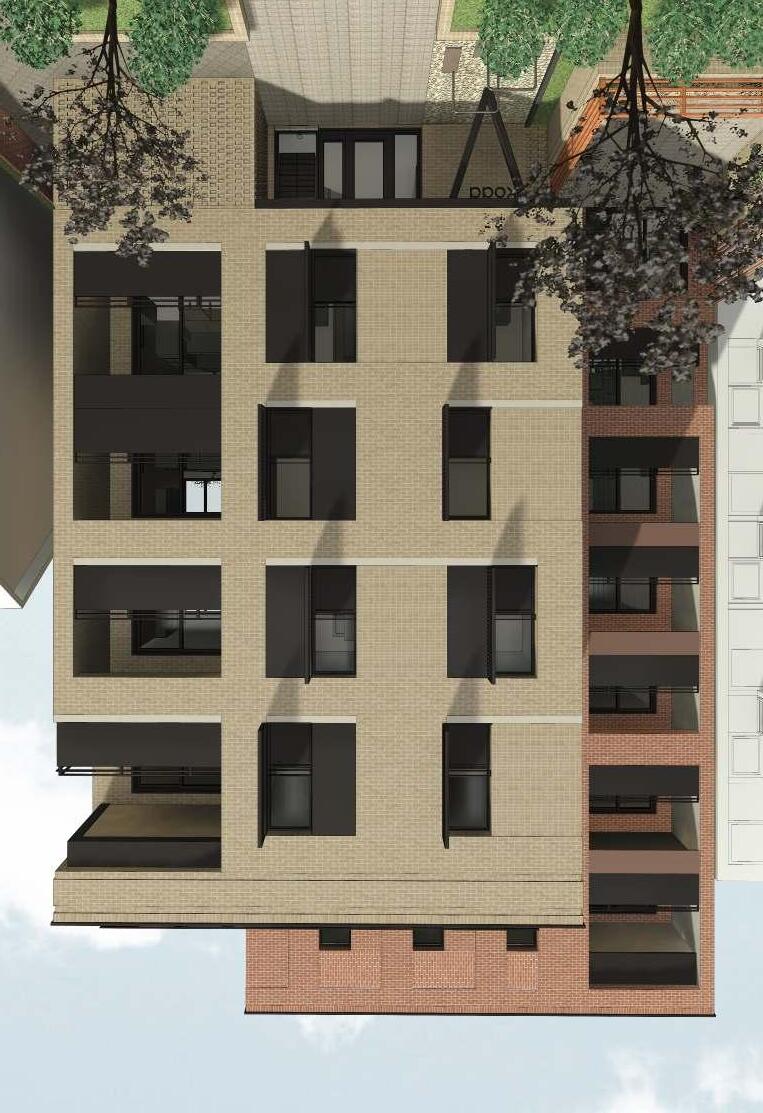
_Proposed East Eleva on
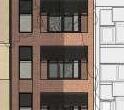
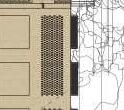
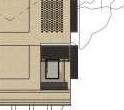
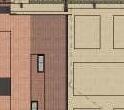
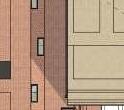
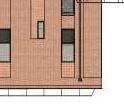
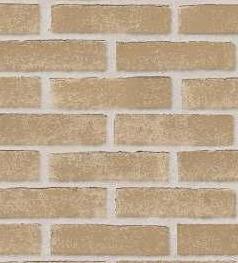
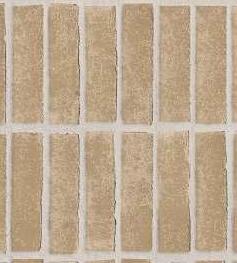
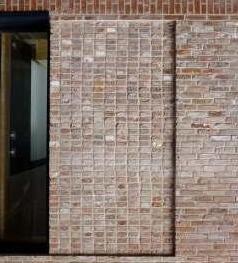
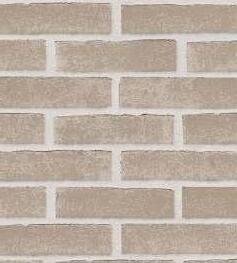
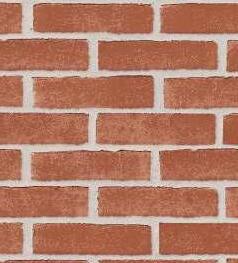
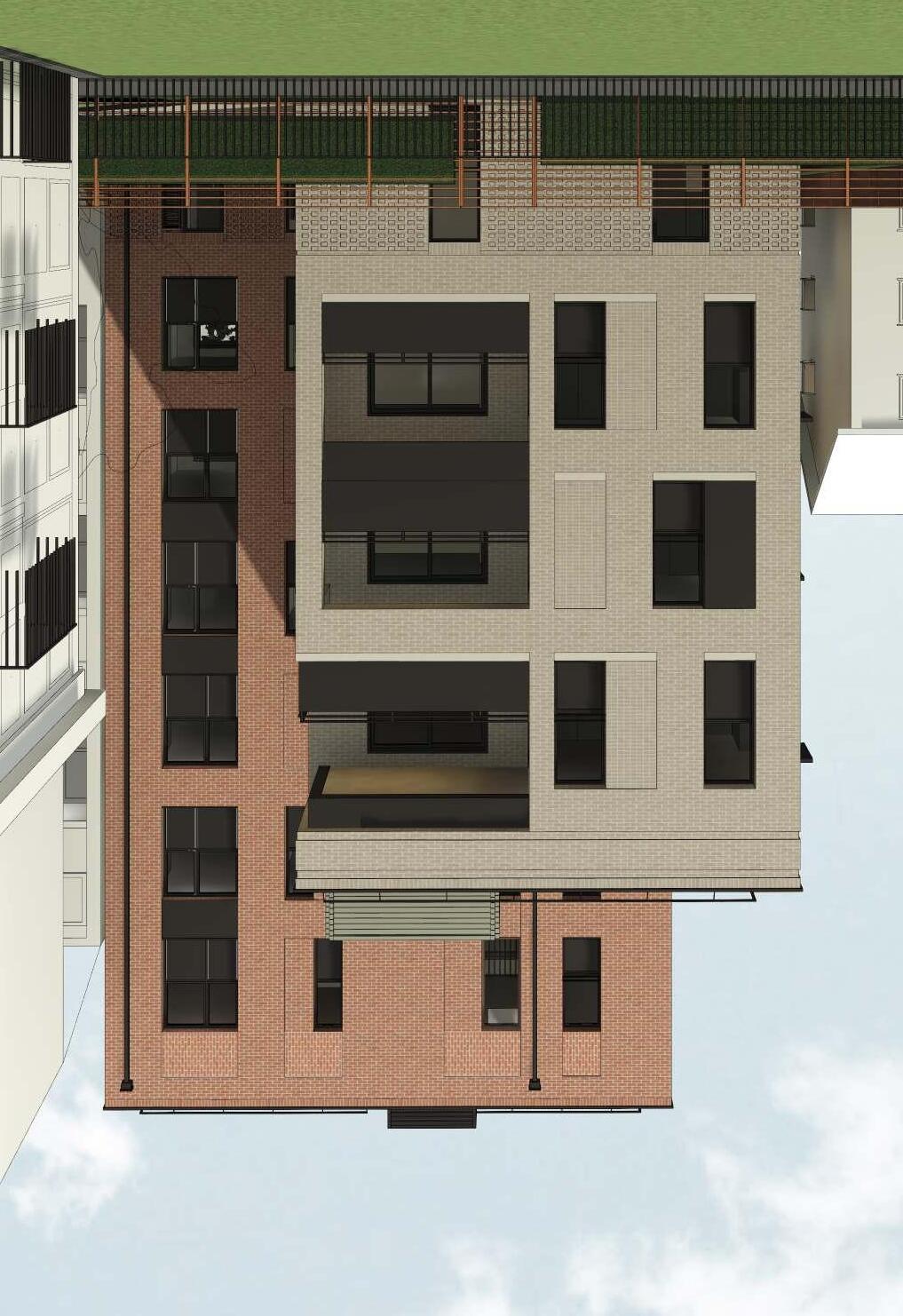
_Proposed Materiality: The 3 sec ons of the building are expressed in 3 different types each with a matching mortar colour. The colours which include, red and two shades of buff relate to the red brick found on Wat Tyler House and the buff shades of brick found at Tennyson and Campsfield Houses and in the wider neighbourhood.
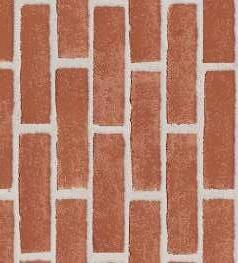
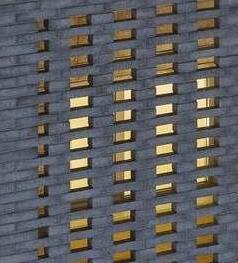
To add a layer of detail, recessed panels of brick work linking windows either horizontally or ver cally are highlighted with contras ng brick bonds. Recons tuted stone bands form a sill where windows are linked

KEY:


1 Powder coated mild steel balustrade, colour TBC
2- Aluminium capping colour to match brickwork
3 - Soldier course in brick
4 - Stretcher bond brickwork
5 - IG Lintel preformed lintel clad in brick slips in stretcher bond with brick soffit
6 - Vertical stretcher bond brickwork
7 - IG Lintel preformed lintel clad in brick slips in vertical stretcher bond with full brick soffit/reveal
8 - Thermal broken aluminium window exact colour tbd
9 - Insulated aluminium spandrel panel, set flush with outer face of window frame, colour to match windows
10- Aluminium sill to match colour of windows
11 - Sika sanafil single ply membrane with 150mm upstand to manufacturer's detail
12 120mm depth min. green roof
13 Aluminium external louvres in colour to match windows
14 - Reconstituted stone sill
15 Aluminium cladding/soffit panel, colour to match windows
16 - Thermally broken aluminium glazed front door colour to match windows
17 ACO slimline threshold drain
18 - External paviours
Ven la on and overhea ng.
The proposed building also takes into account overhea ng, access to good levels of daylight and sunlight within homes, natural ven la on and security.
The design proposals follow the cooling hierarchy and use passive design measures to reduce poten al overhea ng set out in the London Plan.
. The amount of heat entering the building has been reduced using balconies and external louvres to provide shading, careful sizing and orienta on of windows specified to have low emissivity, high levels of insula on and air ghtness, and the provision of green roofs at all levels to reduce energy absorbed by the roof.
. Internal heat genera on will be minimised through specifica on of energy efficient ligh ng and minimising hea ng pipe runs.
. Heat within the building will be managed through use of the exposed internal thermal mass of concrete staircases and 2.5m high ceilings.
. Passive ven la on is enabled through the design of the apartment layouts and posi oning of windows. Secure ven la on louvres are provided to the ground floor apartments so that ven la on at night is possible.
. Mechanical ven la on is provided which can make use of free cooling when outside temperature is below inside in summer months.
. It has been possible to avoid the need for ac ve cooling systems.
Results from modelling indicate that the scheme is compliant with the overhea ng requirements as set out in Building Regula ons Part O using the current Design Summer Year weather file 2020 DSY1 which is for a moderately warm summer defined by CIBSE.
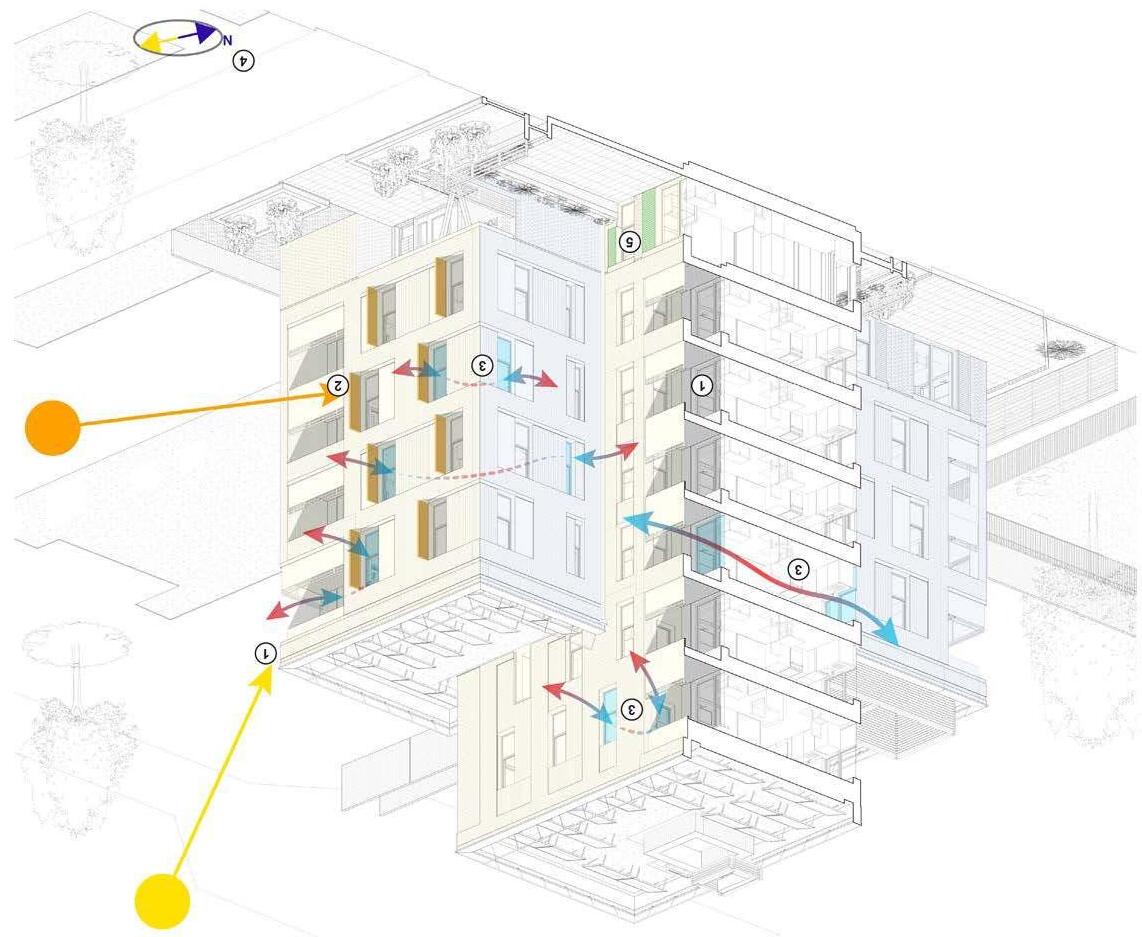
Overhangs over balconies provide shading.
Ver cal louvres provide effec ve shading against evening sun at the end of a hot day.
Addi onal windows to allow cross ven la on.
Careful considera on of the orienta on of the building ensures appropriate measures have been taken to control the thermal gain at all mes of the day, as the sun moves.
Secure louvres ensure ven la on at night; cooling
_Diagram of proposed measures to prevent overhea ng
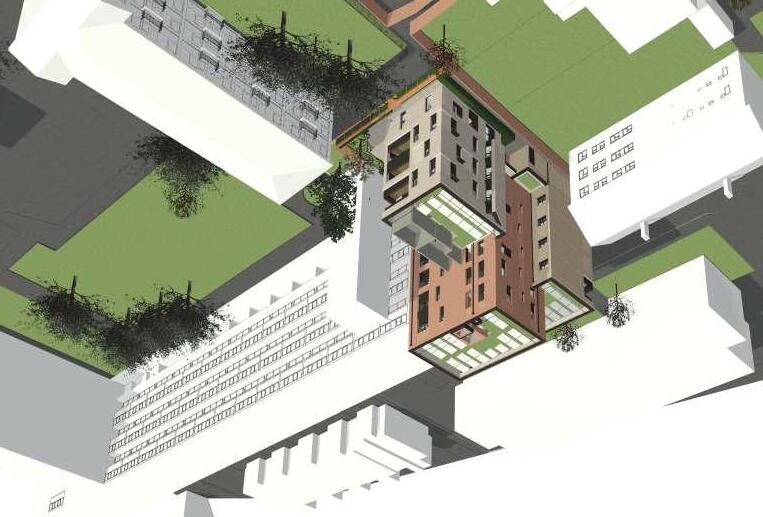
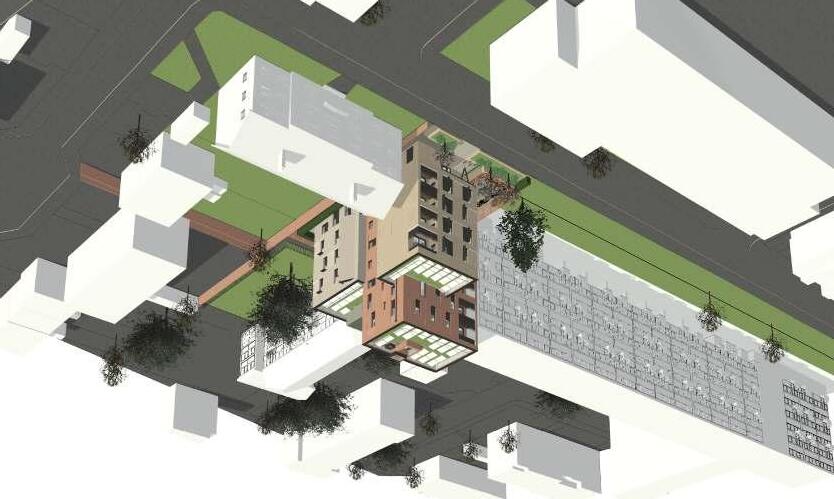 Proposed Aerial View from the Revit model
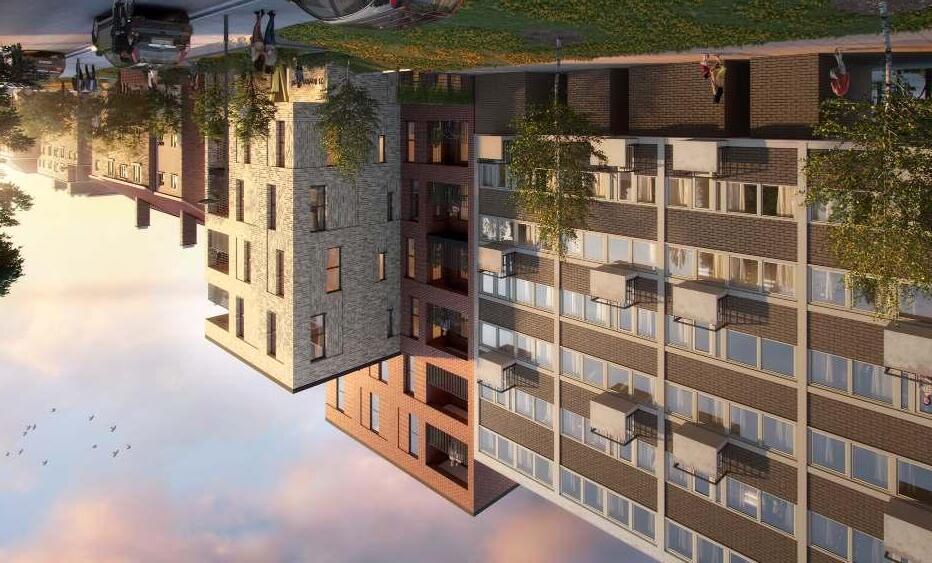
Proposed Street View from Boyton Road looking South- CGI
Proposed Aerial View from the Revit model
Proposed Aerial View from the Revit model
Proposed Street View from Boyton Road looking South- CGI
Proposed Aerial View from the Revit model
Summerhill Road | Residen!al
Stage: Planning Applica!on for 8 new homess
Loca!on: London, U.K
Architect: KC+A
Client: Haringey






Site Area: 1271m² (0.1271Ha)


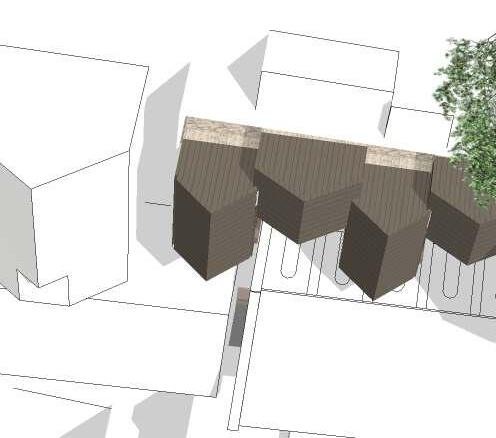
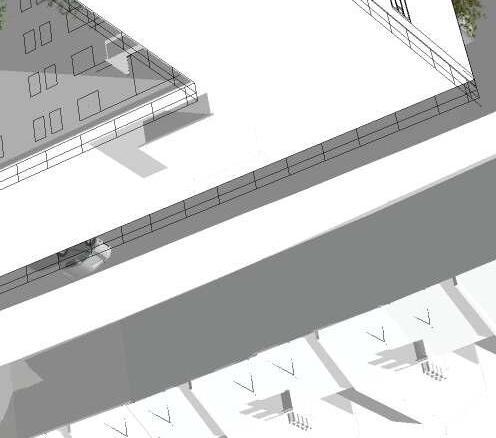
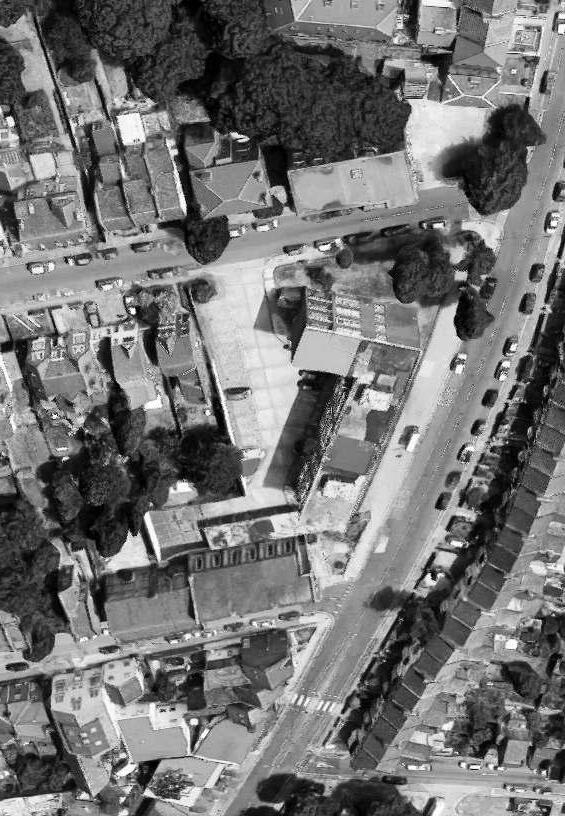
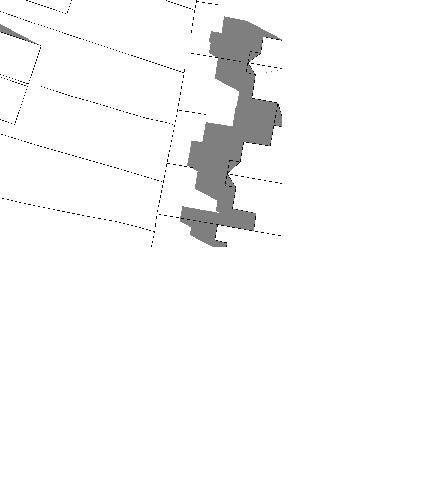
This project describes the proposal to redevelop a site that will provide a small scheme of high quality new Council homes. It has its main access from Summerhill Road as well as frontage to West Green Road.
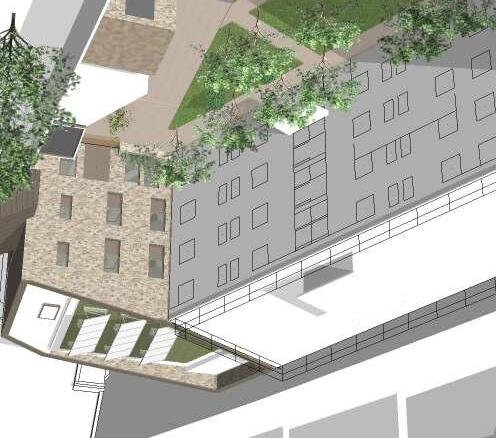
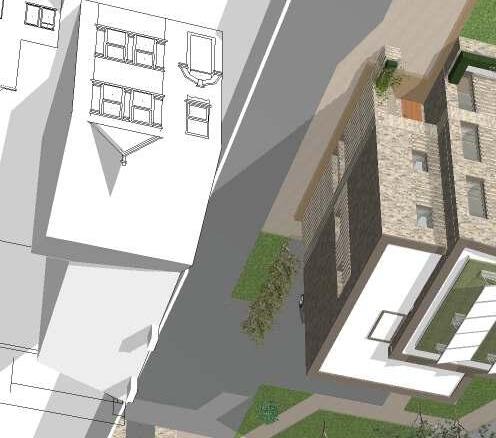
It will provide a total of Eight new homes with 6 apartments over 3 floors, and Two 2-storey mews houses.
The proposed built form closes the ‘frontage gap’ and bare flank wall of 1-20 The Redlands facing Summerhill Road. The new massing fron!ng West Green Road covers a bare flank wall whilst introducing an a#rac!ve ac!ve frontage that acknowledges the juxtaposi!on of building line with that of West Green Bap!st church.
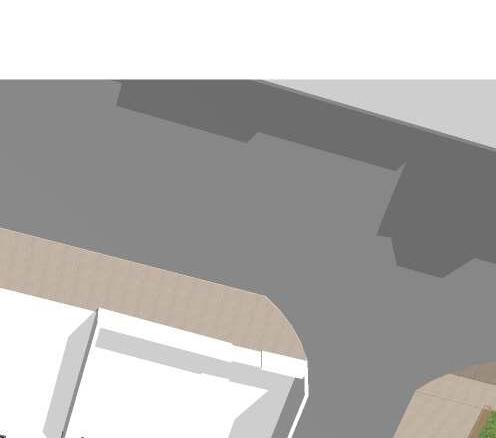
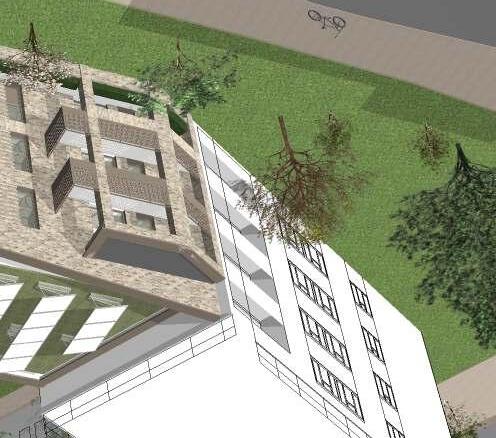
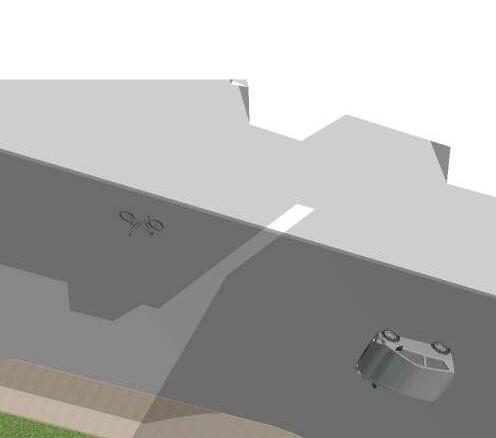

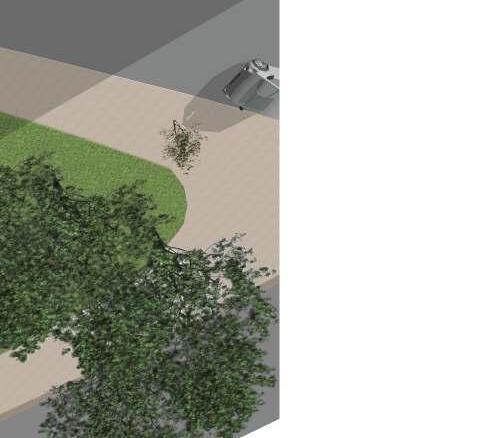
The communal open space to the rear of Redlands will be enhanced to be provided as communal gardens.
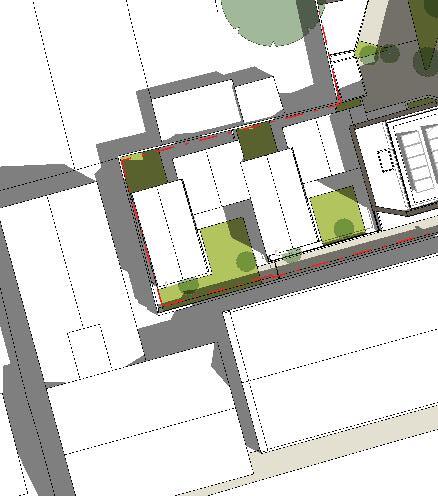
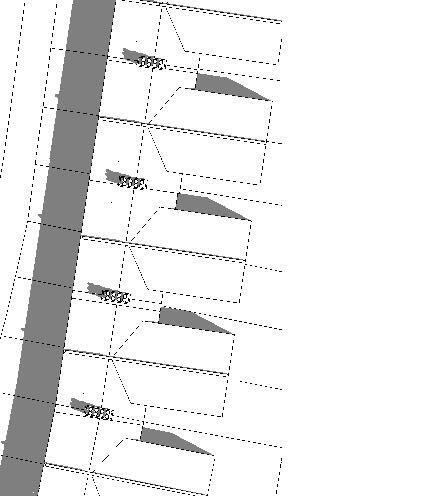
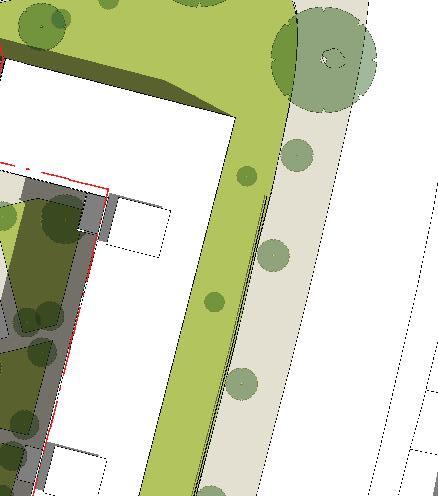
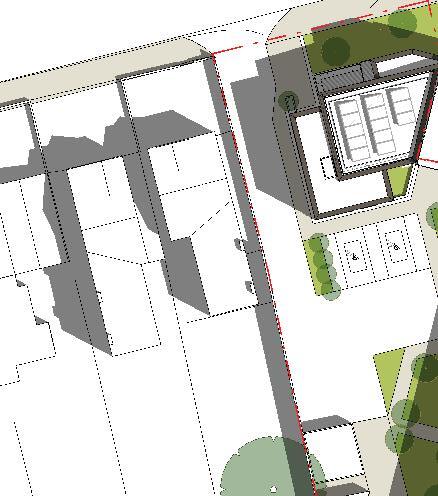
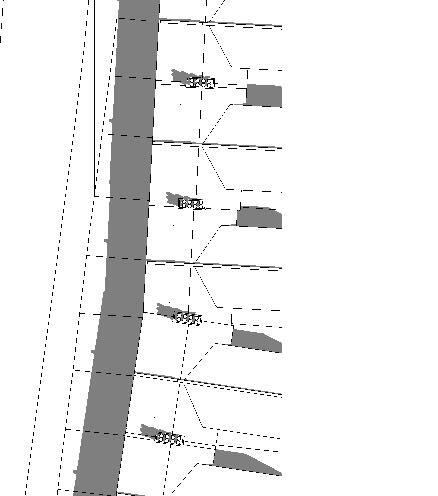
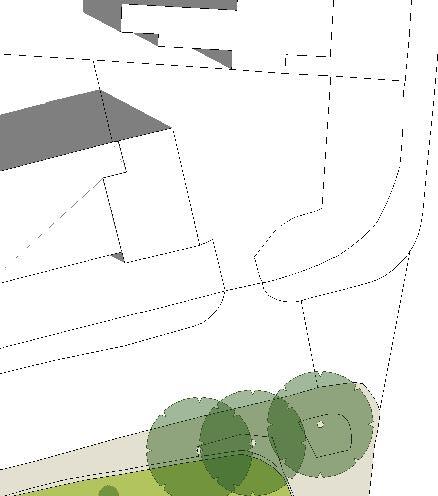
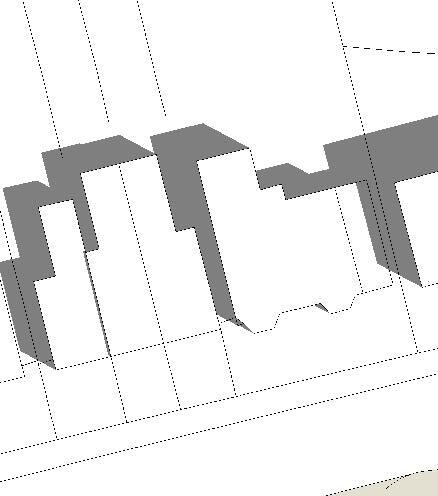

















TOTAL No of DWELLINGS = 8 (24 hab rooms)
Mix: 2x1B2P (25%). 4x2B4P (50%). 2x3B5P (25%)
Residen!al communal garden: 600 sqm
Parking: 2 No. Vehicle Parking Spaces (for wheelchair users) & 15 No. secure Bicycle Spaces
_Proposed Ground Floor Plan
_Proposed 1st Floor Plan
_Proposed 2nd Floor Plan
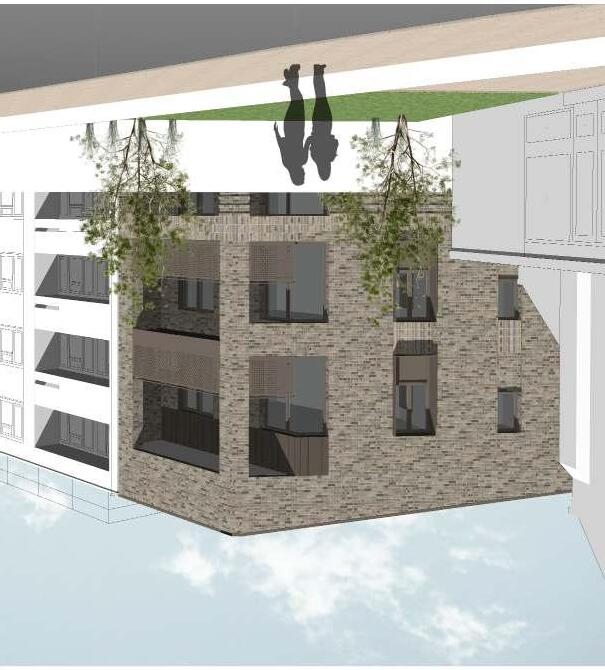
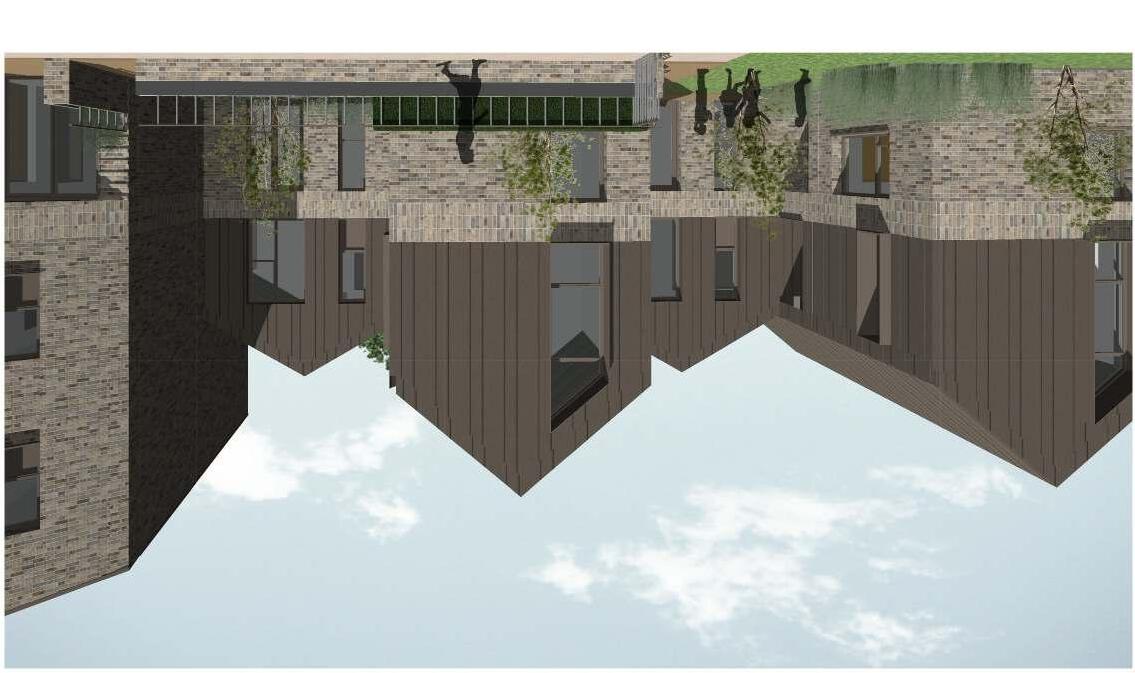
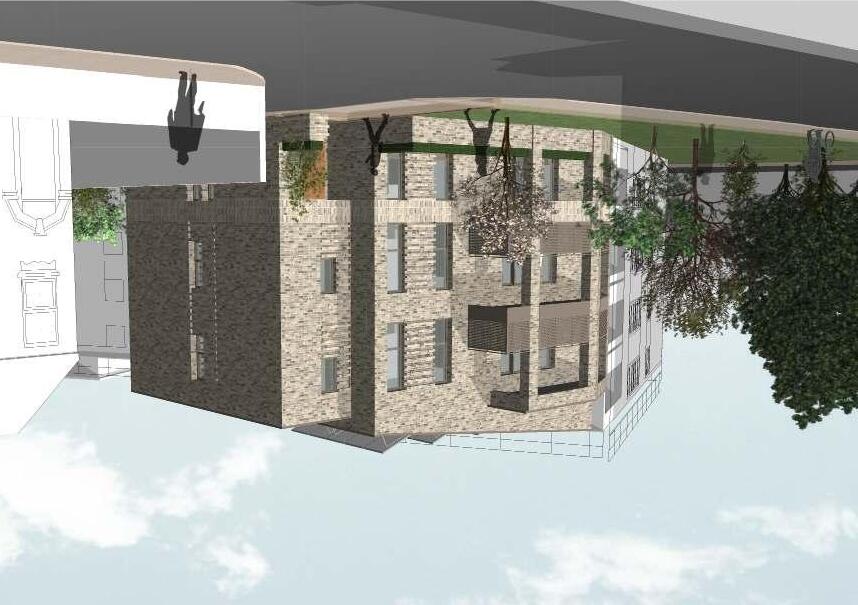 _Proposed Street Views from Revit model
Proposed Block B - View from West Green Road
Proposed Mews Houses - Front Facade and Private Gardens
Proposed Block C - View from Summerhill Road
_Proposed Street Views from Revit model
Proposed Block B - View from West Green Road
Proposed Mews Houses - Front Facade and Private Gardens
Proposed Block C - View from Summerhill Road
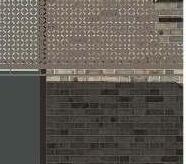
Brick Type 1: Petersen Tegl D190, Flemish bond.
Decorative brick banding of vertical soldier coursi
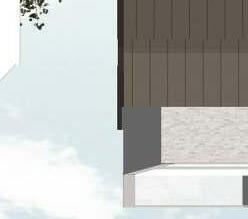
VMZINC Pigmento Standing Seam wall/Roof panels























































PPC Aluminium composite windows and balcony doorsPPC Aluminium composite windows with 200mm projecting metal reveal, colour to match zinc PPC Aluminium window with spandrel panel inset as part of window system to match colour of
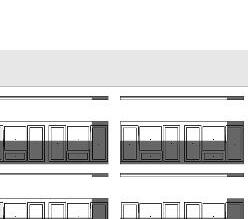
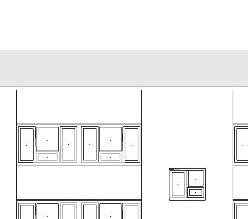

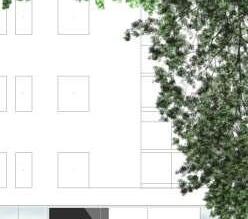




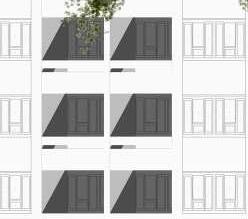
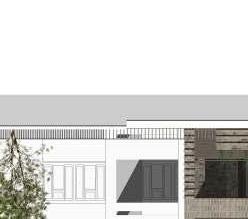
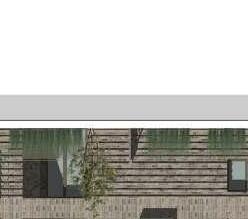
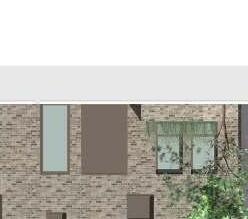

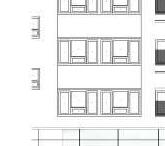
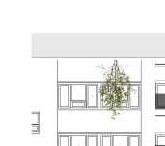
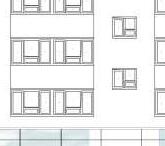
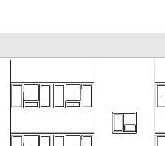



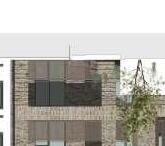

Decorative brick panel 2: 25mm recessed brick panel to create shadow line in brick work Laser cut metal balustrading with decorative pattern fixed to proprietary concealed fixing brackets onto primary steel guarding frame fixed down to str
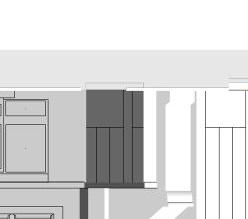

Communal entrance doors to be PPC Aluminium composite units with glazed panels
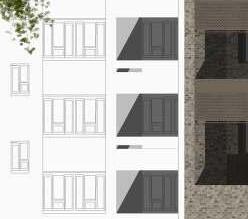
Pressed PPC Aluminium coping, colour to match windo
Decorative brick detail: Extruded horizontal brick banding with one course extruded and two
Decorative brick detail: Extruded horizontal brick banding with one course extruded and one

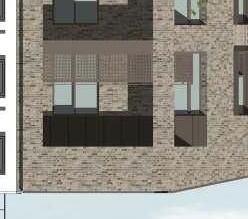
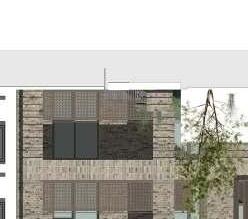
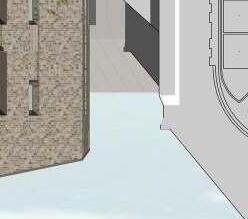

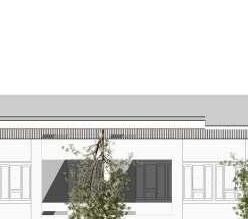

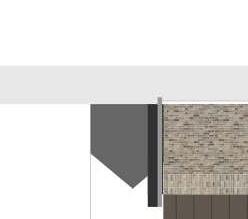
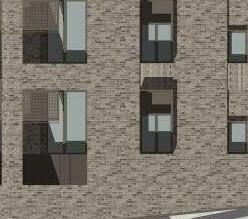
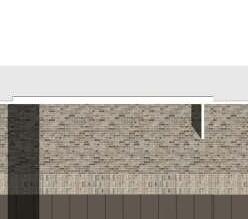


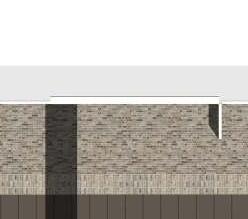

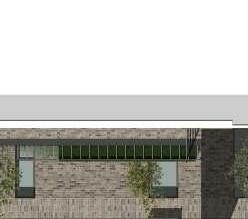
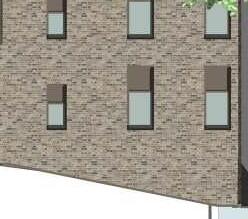




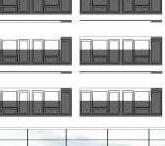
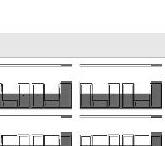
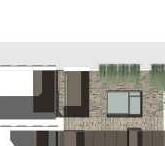
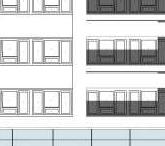

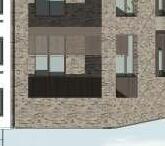
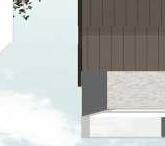
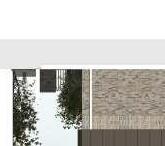

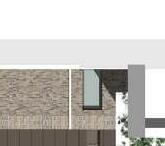
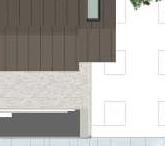

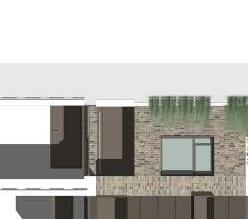

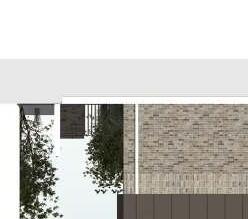
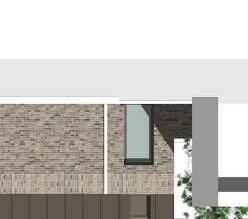
Brick Type 1: Petersen Tegl D190, Flemish bond.

Decorative brick banding of vertical soldier coursi
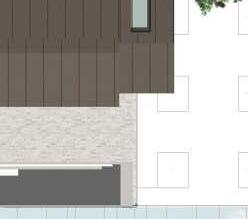
VMZINC Pigmento Standing Seam wall/Roof panels









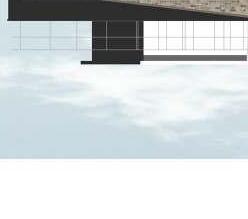
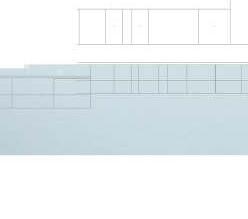

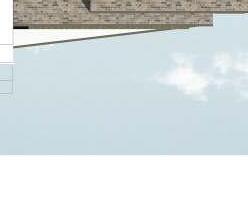




PPC Aluminium composite windows and balcony doors - colour to match zinc

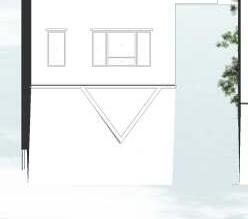
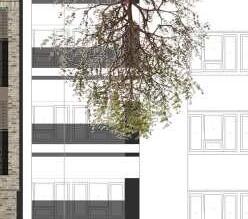
PPC Aluminium composite windows with 200mm projecting metal reveal, colour to match zinc PPC Aluminium window with spandrel panel inset as part of window system to match colour of zinc standing seam
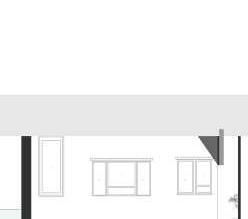
Decorative brick panel 2: 25mm recessed brick panel to create shadow line in brick work Laser cut metal balustrading with decorative pattern fixed to proprietary concealed fixing brackets onto primary steel guarding frame fixed down to structure.
Communal entrance doors to be PPC Aluminium composite units with glazed panels Pressed PPC Aluminium coping, colour to match window colour scheme.
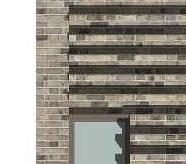
Decorative brick detail: Extruded horizontal brick banding with one course extruded and two courses recessed.

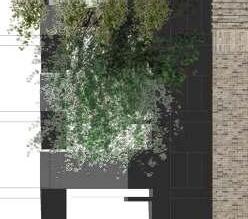
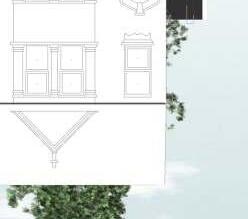
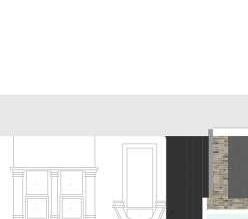
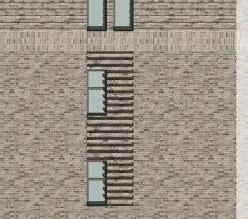
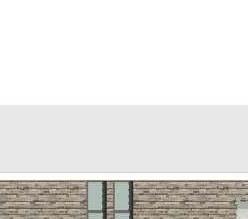
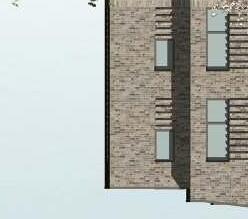

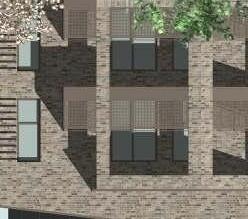
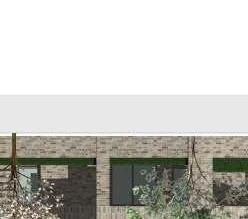
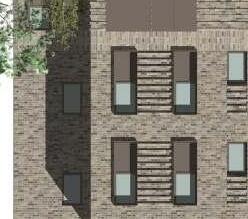
Decorative brick detail: Extruded horizontal brick banding with one course extruded and one recessed.

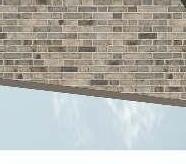
Primary material of brick work
Zinc cladding used to !e Block B in with the mews houses behind and so crea!ng a consistent and a$rac!ve language to the architecture.
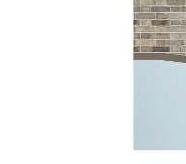
Inset balconies giving depth to the facades
Zinc standing seam cladding to first floor of mews houses, helping to propor!on the facade and ‘descale’ ones experience of moving from the main road into the mews.
Extruded window reveals to animate facade, create shade from west facing sun in warmer months and to relate to pitched
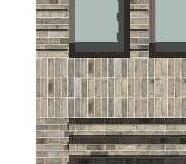
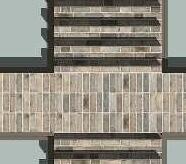
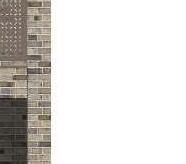
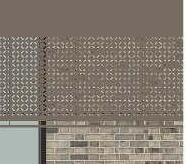
Laser cut pa$ern to panelling of balcony balustrades. Colour to match in with zinc cladding and window frames.
Consistent banding of ver!cal brick coursing across development, which scales the facades and !es the development together.
Brick work to ground floor of houses ac!ng as a visual plinth to the mews and development.
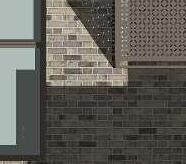
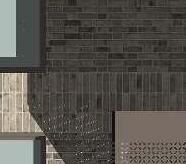
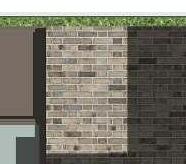
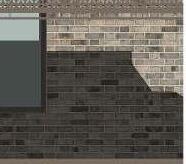
Simple ppc aluminium coping sec!ons to parapet to match colour of cladding and window frames.
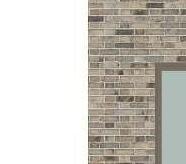
Primary material of brick work
Primary material of brick work
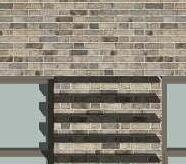
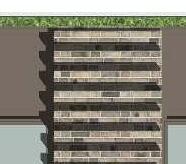
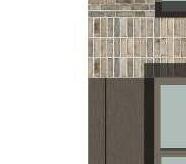
Extruded horizontal brick coursing between windows to add propor!on and ver!cality to facade and animate / add interest
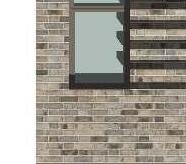
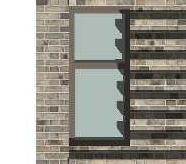
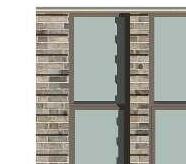

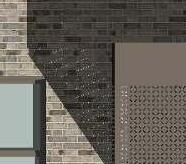
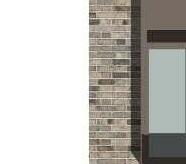
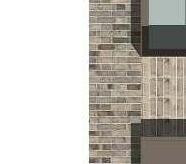
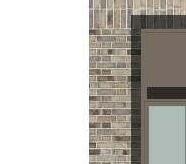
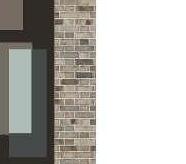
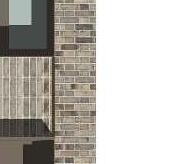

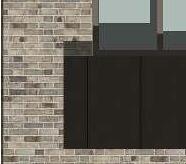
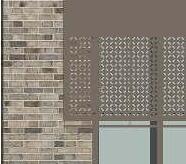
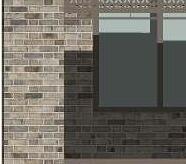
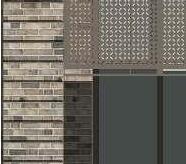
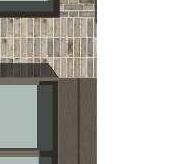
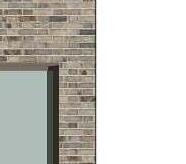
Ver!cal coursing panel between first and second floor to add propor!on and ver!cality to facade and animate / add interest




Extruded window reveals to animate facade, create shade from west facing sun in warmer months
Laser cut pa$ern to panelling of balcony balustrades. Colour to match in with zinc cladding and window frames.
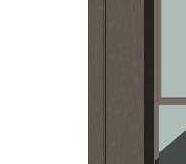
Consistent banding of ver!cal brick coursing across development, which scales the facades and !es the development together.
Window propor!ons to the ground floor to be taller and emphasised by the brick banding above
Brick work to ground floor of block B to incorporate extruded horizontal brick coursing,
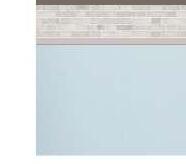
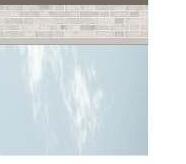
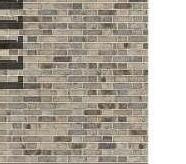
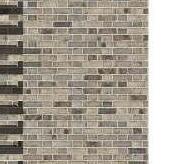
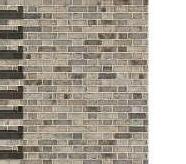
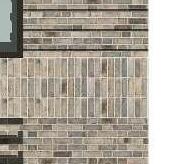
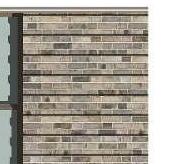
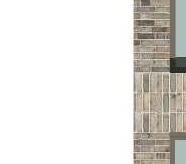
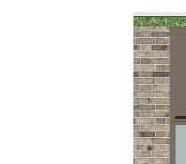
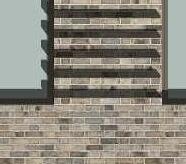

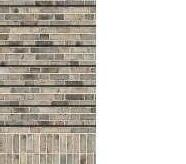
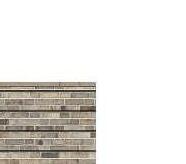
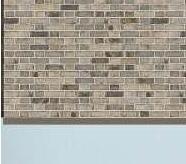
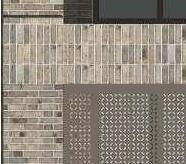
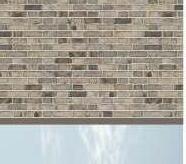
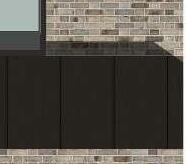
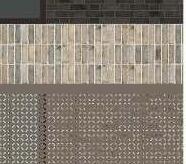
Simple ppc aluminium coping sec!ons to parapet to match colour of cladding and window frames.
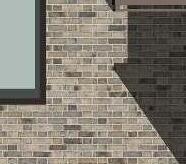
Primary material of brick work
The northern wall of Block C is ar!culated with panels of fenestra!on and horizontal extruded brick banding to create interest to the flank of the building
Consistent banding of ver!cal brick coursing across development, which scales the facades and !es the development together.
Extruded horizontal brick coursing wrapping around the ground floor to visually highlight the entrance within the street scene
1-LowprofilePPCaluminium copingsectiononproprietaryfixing systemovercavitywall-colourto match window frames and panels.
2-BrickType1:PetersenTegl D190.
3-Thermallybrokenstructural supports such as lintel beams.
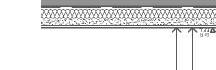
4-Pre-formedextrudedmetal surroundtowindowincorporating topandbottomfallstohorizontal pieces-Anodisedcoatedfinishto match zinc.

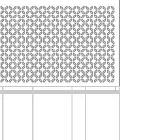
5-Thermallybrokenaluminium PPCcompositewindowsystemCoating to match zinc.
6-Thermallybrokencavitycloserto allopenings,withstructuralsupport tosupportextrudedrevealsurround sill.



7-Schemedesignisbasedona traditionalformofconstructionwith externalcavitywalls,andprecast floor planks and screed topping.
8-ZincstandingseamcladdingVMZINC'Pigmento'StandingSeam systemfixedbacktoaventilated rigidboardandbattensover continuousinsulationboardsand structure.
9-Coatedmetalframingfixeddown tothermallybrokenjointwitha sealed membrane over fixing plate.
10-Lasercutbalustradepanels fixedwithconcealedcleatsbackto main frame.
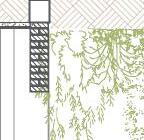
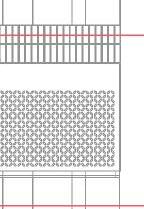
11-Terracetoachievelevel threshold between flat and terrace.
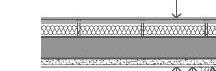
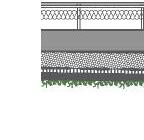
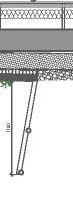
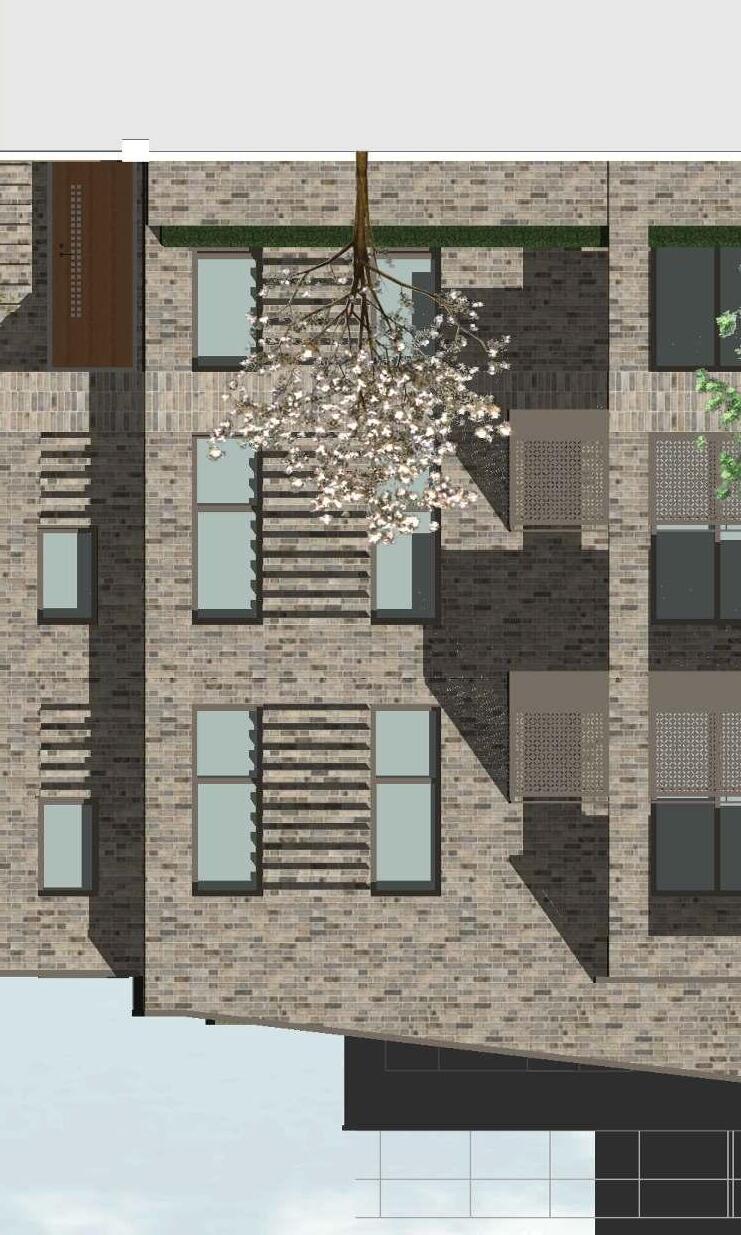
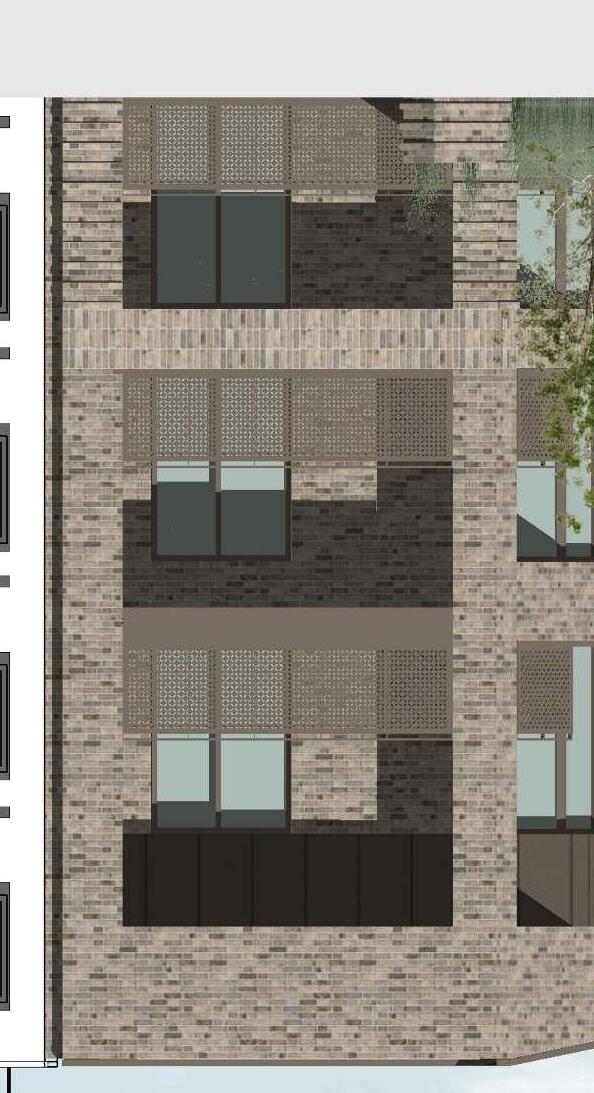
12 - Non slip paving tiles.
13-3no.soldiercoursevertical brick banding.

14-Externalnonslippaversto entrance walk ways.
15-Decorativebrickpanelsof extrudedandrecessedFlemish bond set at 25mm.
187 Ewell Road | Residen!al

Stage: Planning Applica!on for 59 new flats


Loca!on: Surbiton, Kingston Upon Thames, U.K
Architect: KC+A
Landscape: KC+A
Client: NHS Property Services


Site Area: 3703.7m² (0.3703Ha)


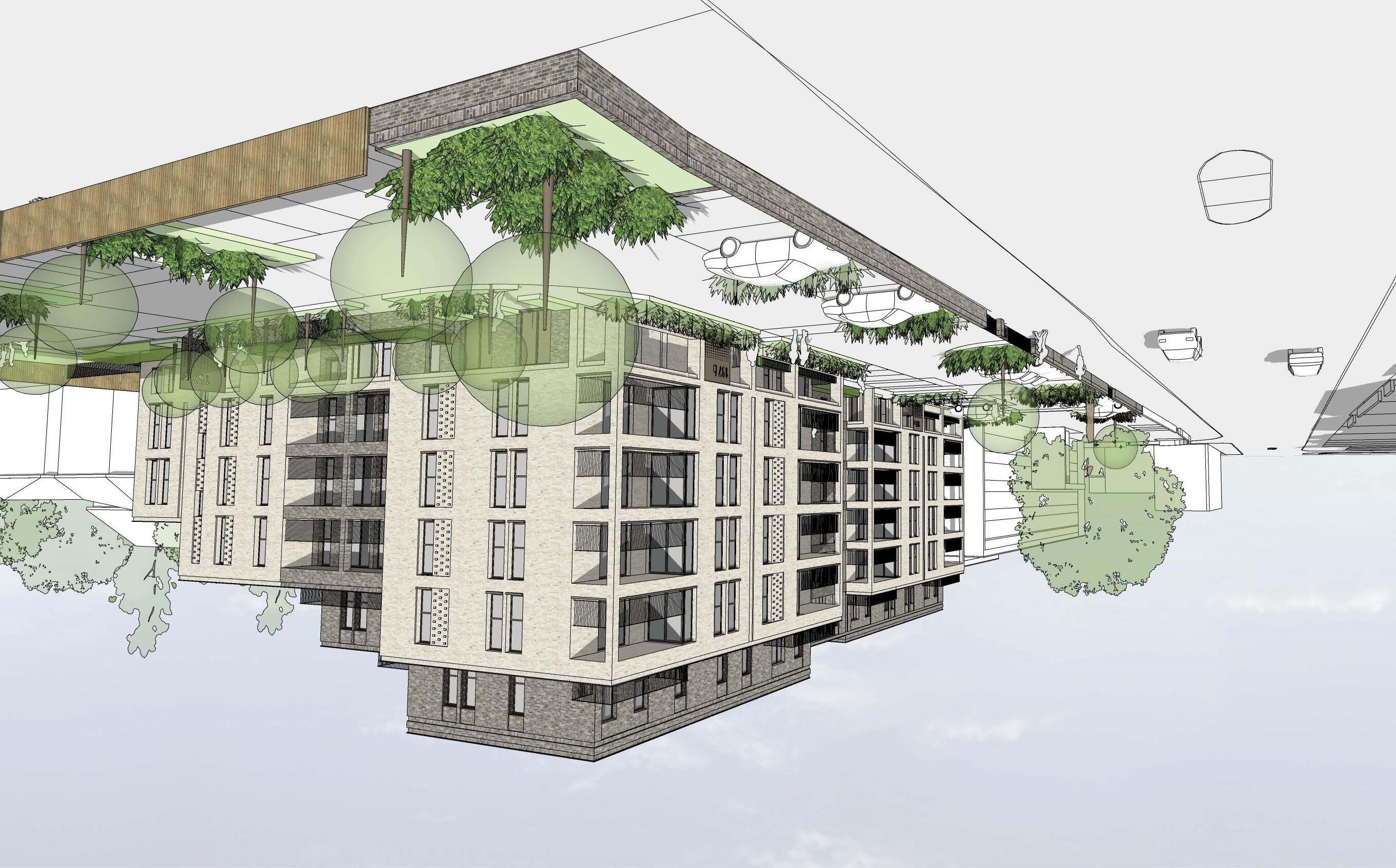
This project describes the proposal to redevelop the site at 187 Ewell Road in Surbiton, Kingston. The proposal involves the demoli!on of exis!ng office building and erec!on of a 5 storey new residen!al scheme of 59 new flats with generous communal garden and on site parking area. The scheme will include a percentage of affordable homes.
TOTAL No of DWELLINGS = 59 (174 hab rooms)


10% of the dwellings to be wheelchair users. 90% to be adaptable.
Mix: 37% 1B. 42% 2B. 20% 3B


Residen!al communal garden: 600 sqm


Parking: 39 No. Vehicle Parking Spaces (10% of which are wheelchair users)
110 No. secure Bicycle Spaces
The scheme is divided into three cores, accessed directly from the internal road/shared surface. Cores A and B are accessed via the west of the site and Core C to the south via the internal access road.




Each of the wheel chair accessible dwellings are located at ground floor level and are accessed via internal protected corridors.
Two communal bin store are located within the proposed building and accessed externally. One serves Core A and another one serves cores B and C.


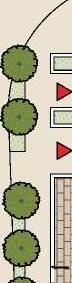
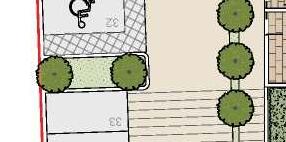
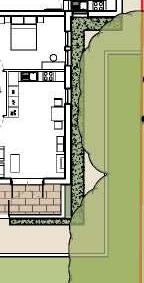
The cycle store is a communal facility located within the proposed building. It is shared by all residents and is easily accesible.
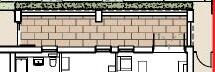
Windows from the flats within the proposed scheme have adequate separaÅon distances from exisÅng adjacent properÅes.






















































































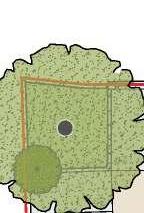
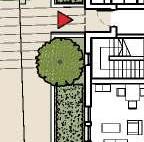
To the rear of the development (eastern boundary), the exisÅng trees form a buffer with Kingfisher Court (to the East) as well as with Millbanlk House (to the North). These trees are to be retained.
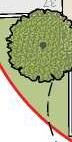
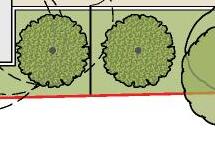









 _Proposed 1st & 2nd Floor Plan _Proposed 4th Floor Plan
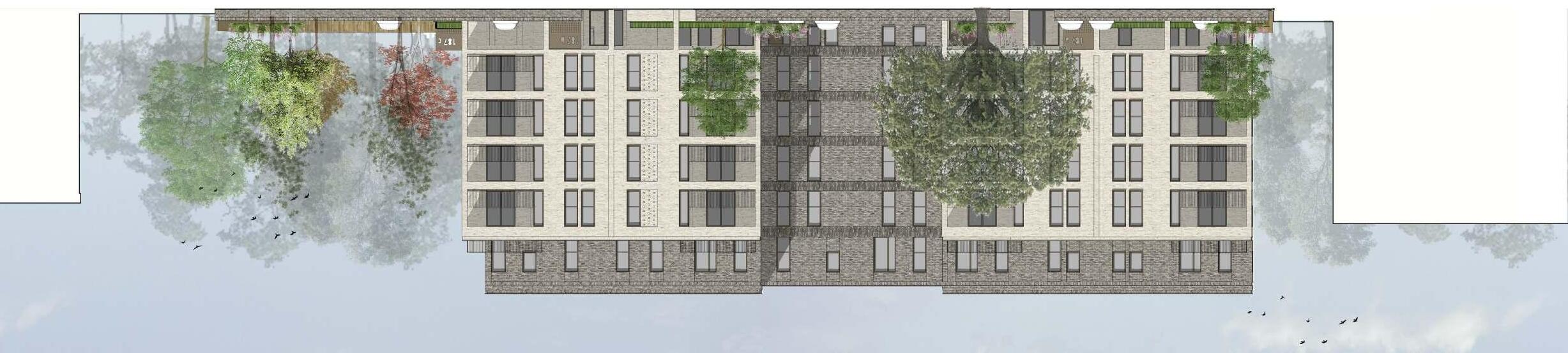
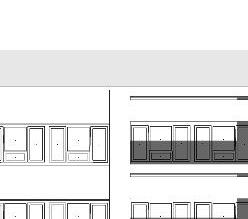
 _Proposed Front Eleva on to Ewell Road
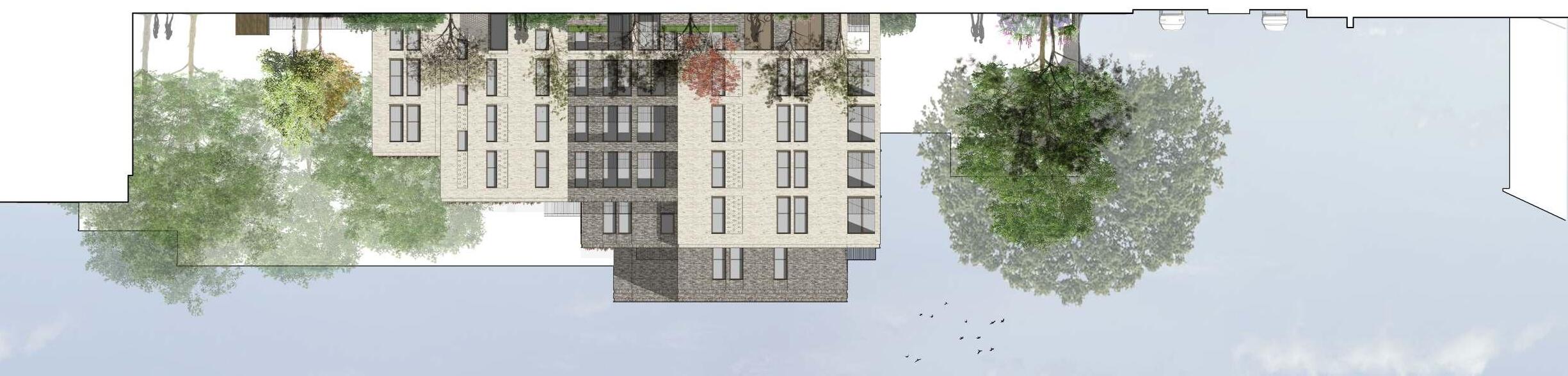
_Proposed Side Eleva on
_Proposed Front Eleva on to Ewell Road
_Proposed Side Eleva on
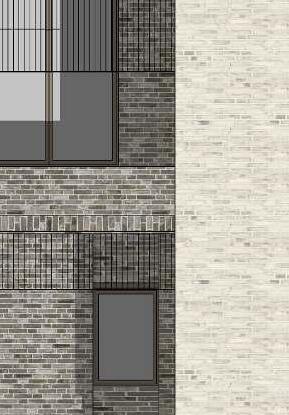
_Appearance: Massing / Facade Ar cula on & Brick Details
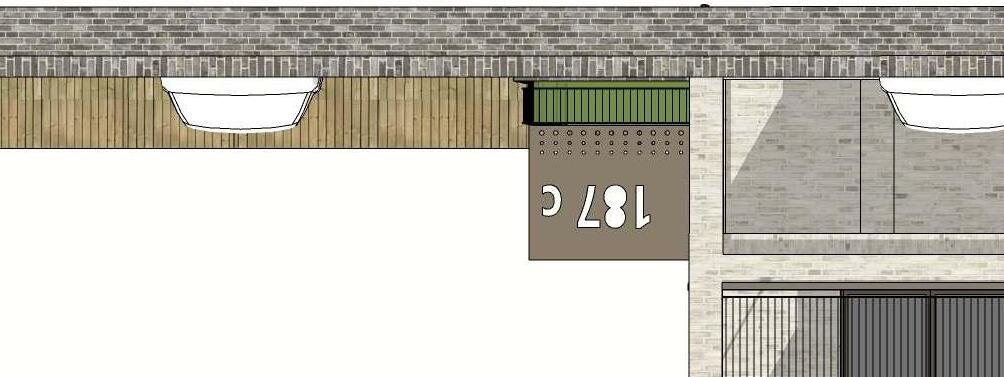
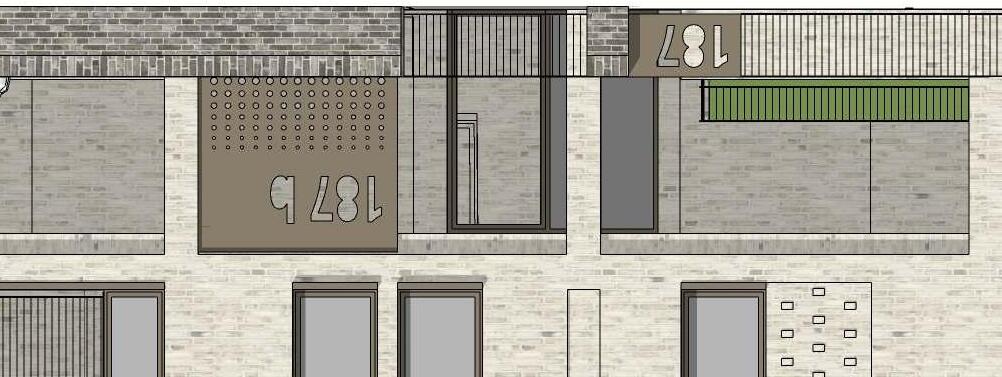
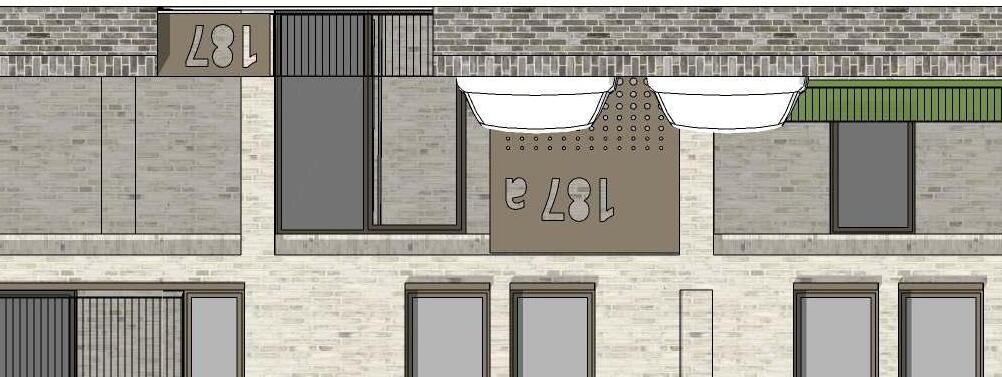
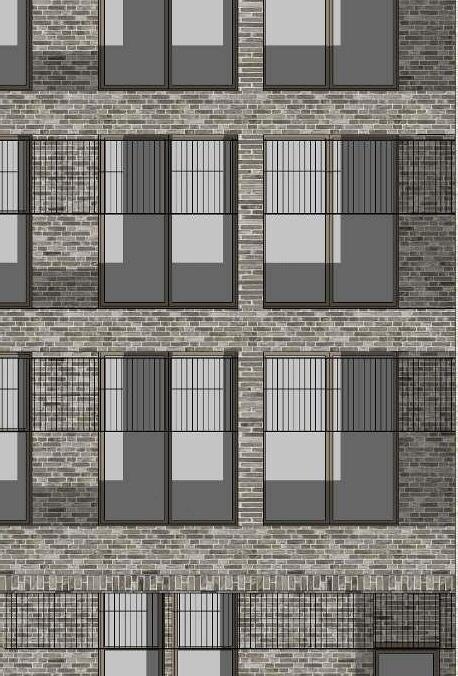
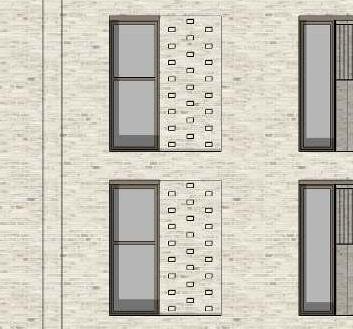
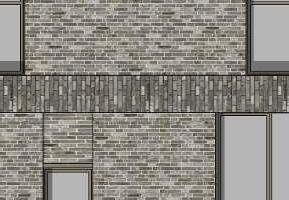
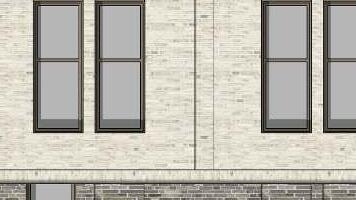
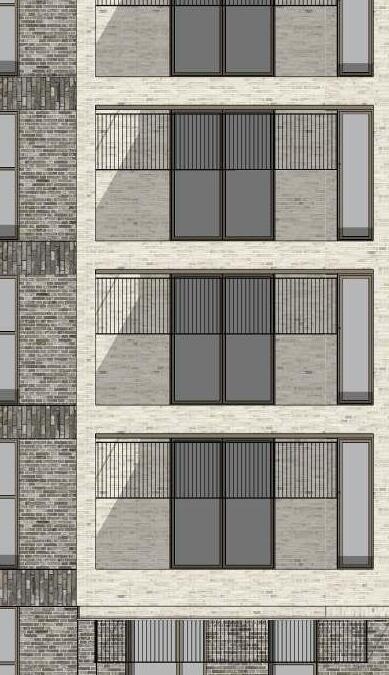
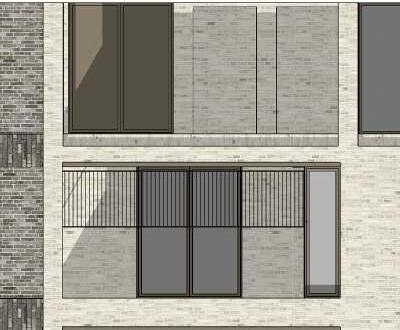
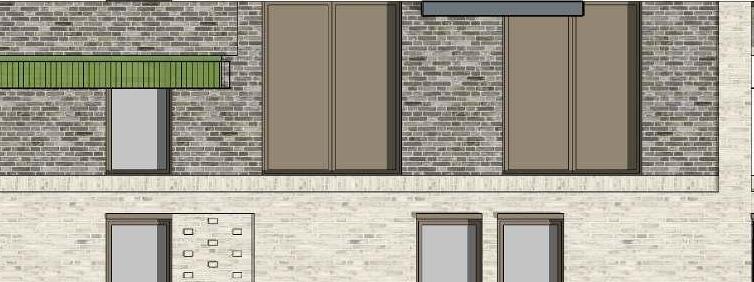
_Appearance: Access to Site & Signage design
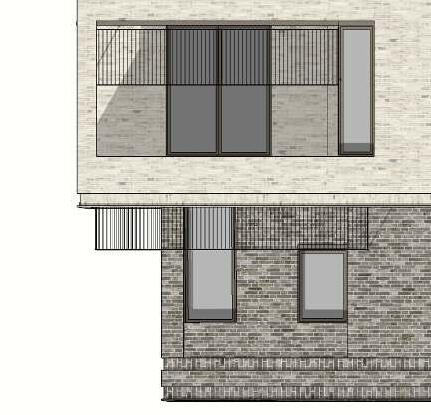
_Proposed Landscape


• Landscape & Outdoor Space Strategy
- Promote good Health and Wellbeing for the residents and neighbours

- Create communal spaces that have good surveillance



- Promote biodiversity in retaining exis ng trees
- Provide high quality landscaping








- Provide private amenity spaces at ground floor level to maintain privacy and ownership
• Communal Amenity Strategy


1.- Proposed extensive lawn area with the poten al of specimen trees to add height and interest to the amenity space.


2.- Majority of exis ng trees to be retained on eastern and northern boundaries.

3.- Private gardens create landscaped defensible spaces to include mixed hedge and ornamental shrubs.
4.- Landscaped defensible perimeter for apartments windows on the ground floor to include shrubs and ornamental shrubs.
• Private Amenity
Strategy
5.- Private gardens at the ground floor with a landscaped defensible space and with direct views to the proposed communal amenity space. To include mixed hedge and ornamental shrubs.
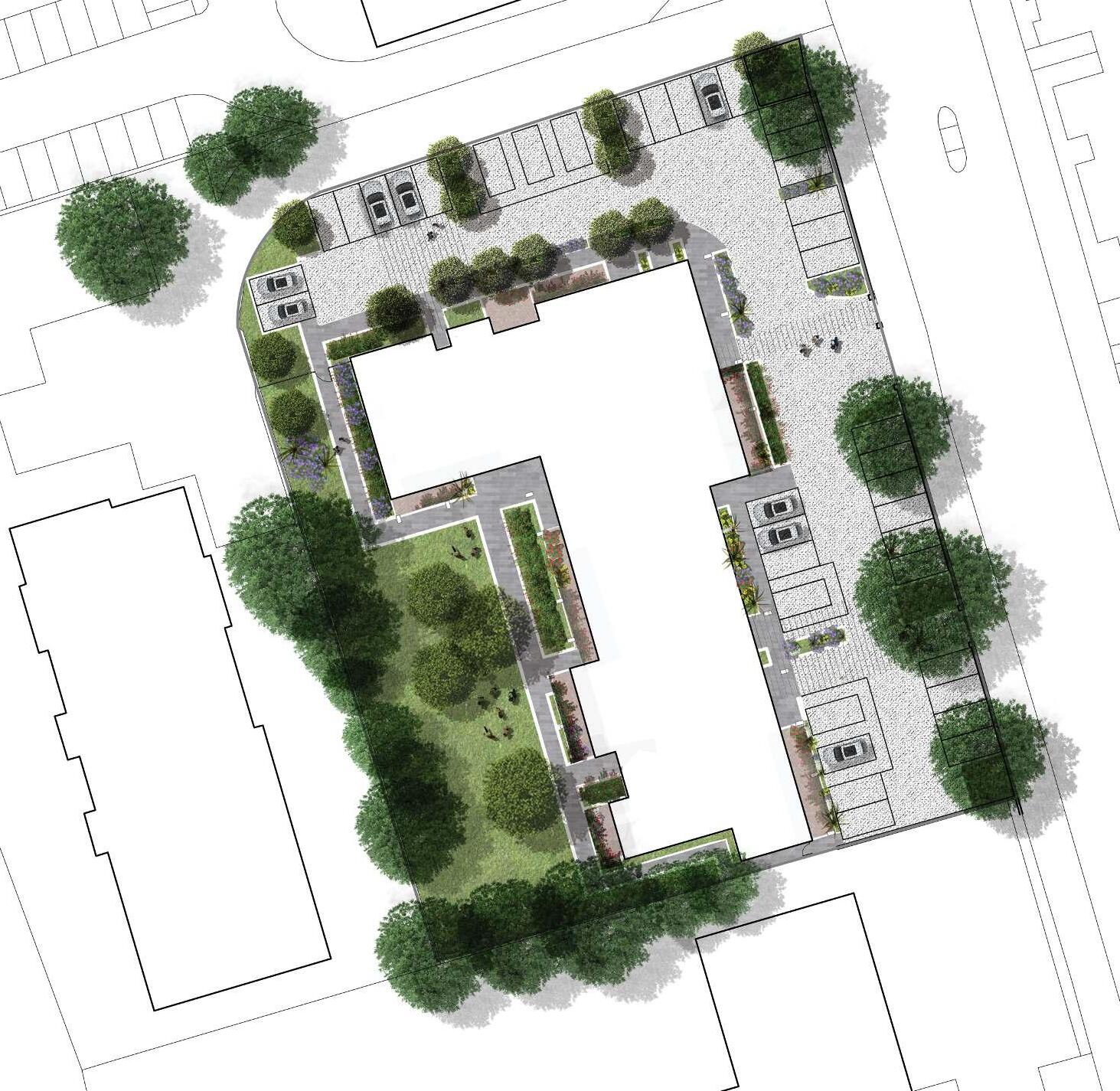
6.- Addi on of plan ng between parking bays which reinforce the general green aspect of the development but it also visually reducesthe presence of cars.
7.- Addi on of new trees to the front of the site to create an aÅrac ve ‘green aspect’ to the site frontage and the streetscape
8.- Shared surface vehicle/pedestrian/cycles to provide texture and reduce speed on site.

_Open Space Strategy


Public road
Parking for vehicles
Shared Surface (pedestrian/cyclist & vehicles)
Pedestrian/Cyclist dominant
Pedestrian only
Pedestrian access to building
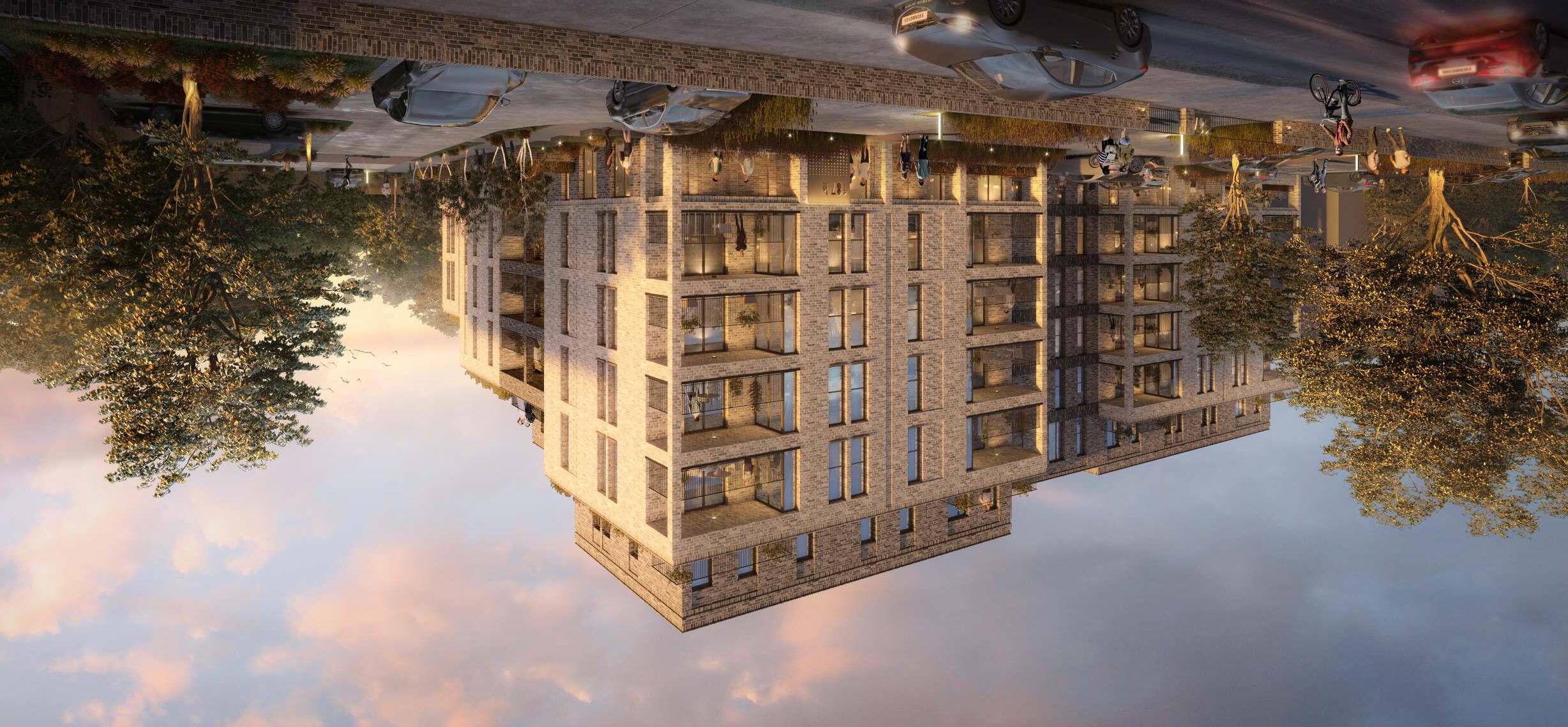 *Visualiza on by others
EAST BAY | Residen al
Stage: Planning Applica on Loca on: Colchester, UK






Architect: KC+A
Client: Regent Land
Site Area: 3742m² (0.3742Ha)
Development of a Residen al Scheme in Colchester, with the proposal to restore the exis ng grade II listed granary mill and to provide a total of 20 new family dwellings with private and communal amenity spaces as well as associated car parking.
The process has involved two pre-applica ons and members feedback following a presenta on mee ng. Prior to the detailed planning applica on, a public consulta on was also carried out.
Site characteris!cs:
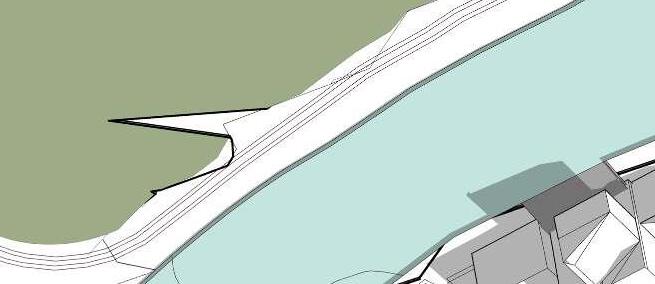
- The northern p of the site falls within the Colchester no 1 Conserva on Area


- The site falls with an area of flood risk









- Town Centre Loca on
- Exis ng cycle route currently dissects the site.


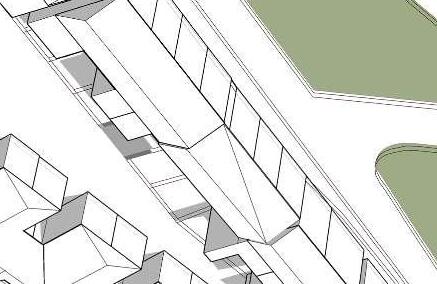
- Exis ng TPO trees within and neighbouring the site. _Aerial View from Revit model



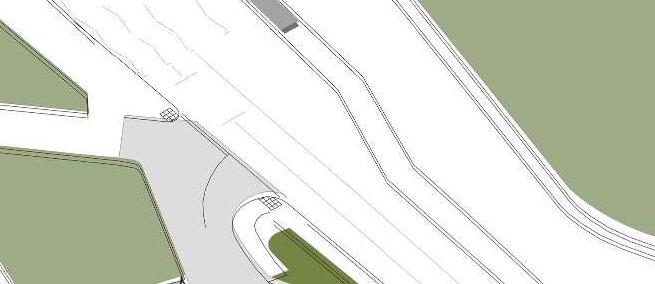
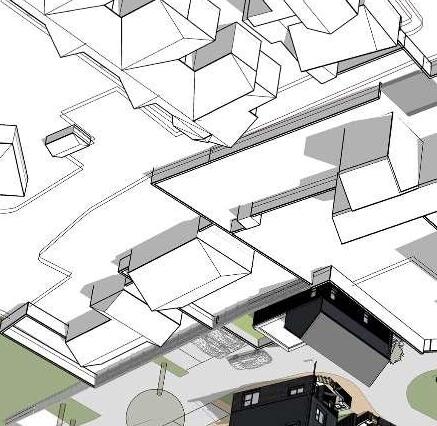
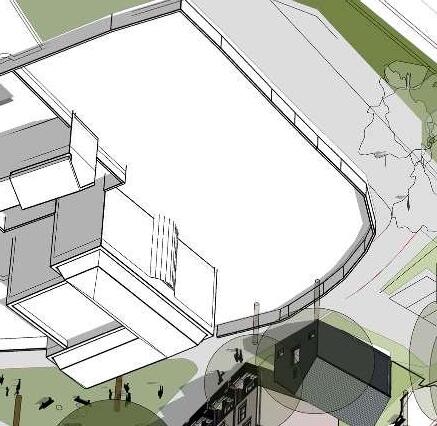
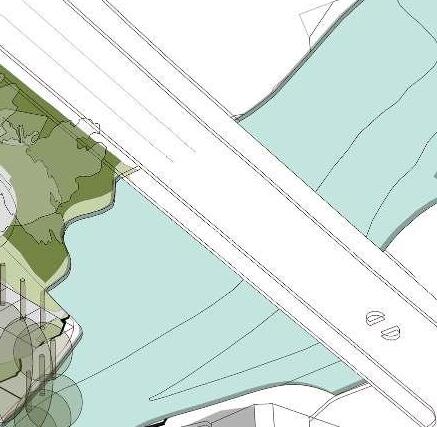
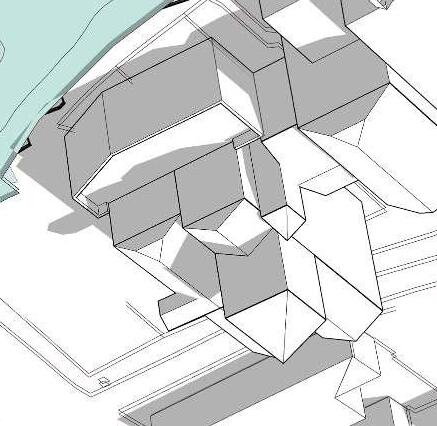
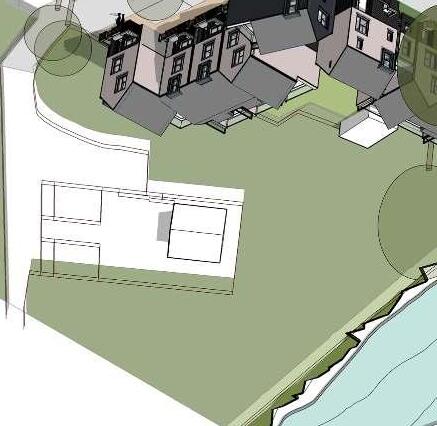
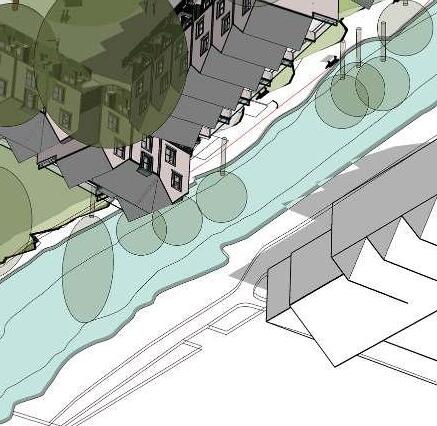
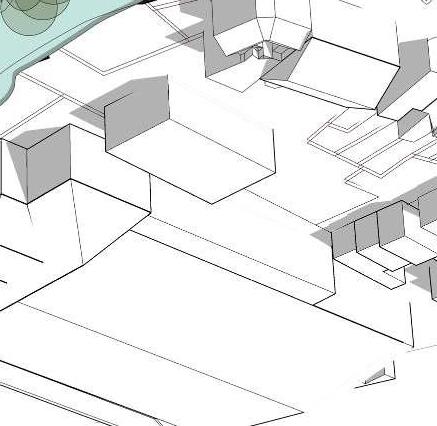
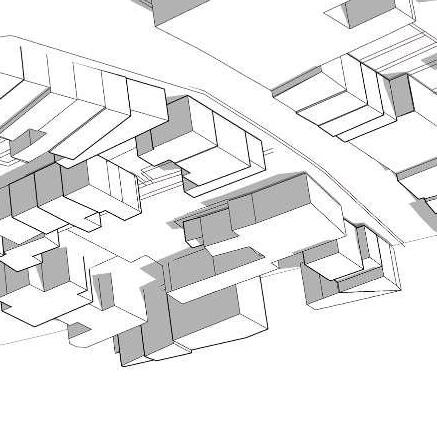
Site Strategy: The analysis of the site’s local context provides an opportunity to create an a racÅve riverside development. The development generates a built form that addresses the natural features of the site and its riverside seçng.

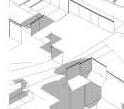
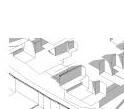
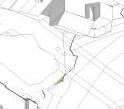
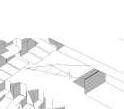
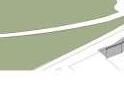
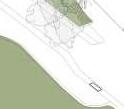
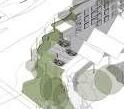
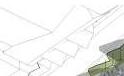
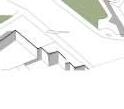
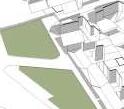
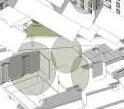
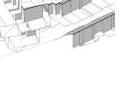
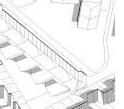









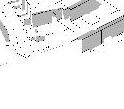

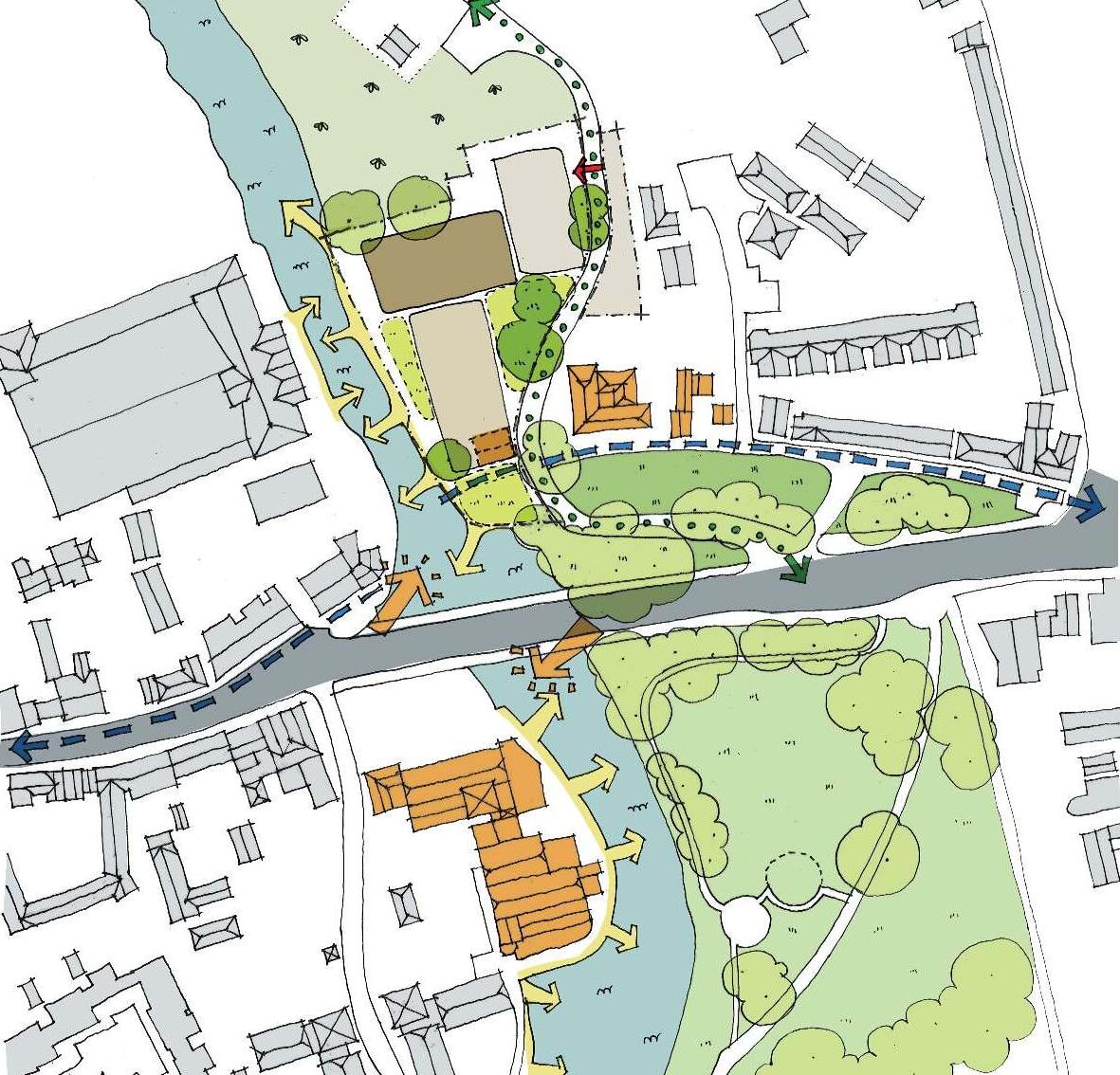
The development principles are highlighted along the river’s edge to the east (areas 1 and 2) and a secondary area along the southern boundary adjacent to the allotments (areas 2 and 3). The proposed perimeter form on two boundaries also define a green central space where a communalamenityarea is located (area 4) and highlights the protected tree at its centre. This strategy also provides car parking access, which is hidden where possible. The locaÅon of the terraces also makes the development visually permeable, helping to re-instate a local listed asset, create a sense of place and also give the river a presence from the cycle route.


The proposed terraces are sensiÅvely posiÅoned and orientated away from the neighbouring properÅes on the western boundary so that their direct outlook is kept as clear and open as possible.










This results in a considered with a careful approach in order to protect the enjoyment of neighbouring amenity on what is a unique and constrained piece of the land.




The primary trees on site are retained and conÅnue to make a valuable contribuÅon to the green aspect and feel of the its seçng. This ulÅmately helps the neighbouring residents to conÅnue to enjoy their private amenity and outlook and also allow cyclists ho enjoy what will be an a racÅve cycle route through the site.
Pre-Applica!on 1: Proposal for a fla#ed scheme of 48 flats












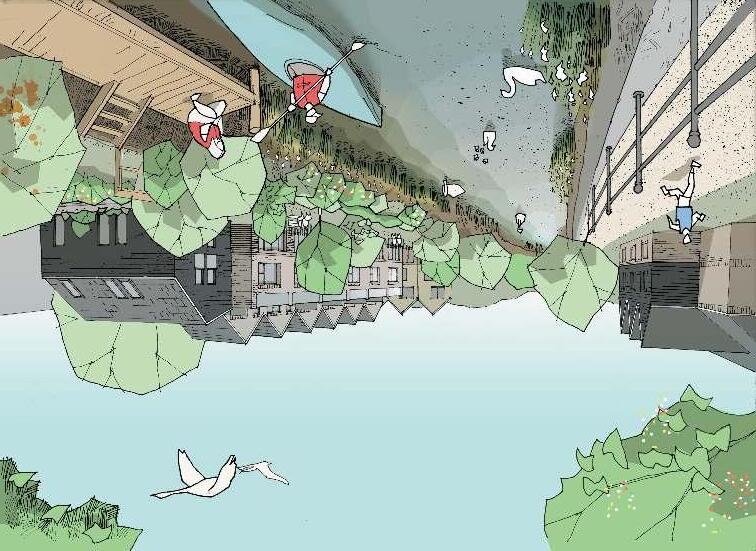
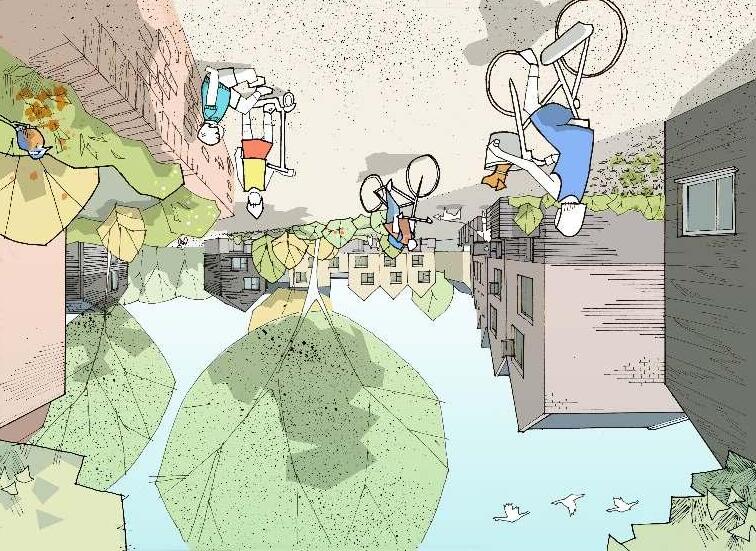
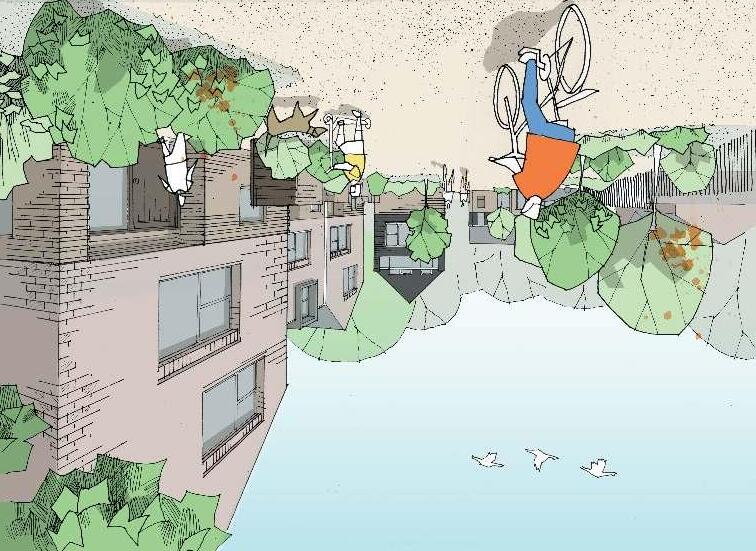 View of the North area of the development form the access road and cycle route *Ar
EVOLUTION DIAGRAMS
Proposed Building Line: Main Frontage & Organiza!on of Open space:
• Proposed dwellings along cycle route to create a more ac ve frontage
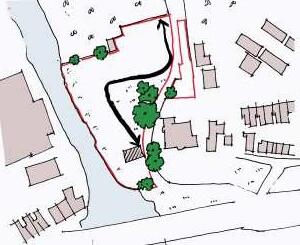
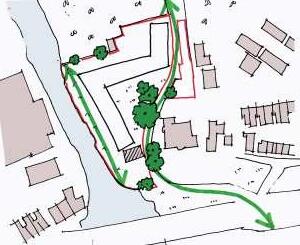
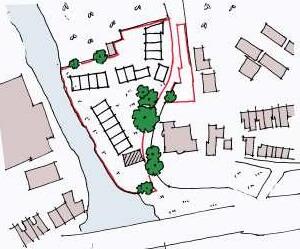
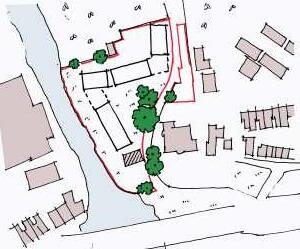
• Green central space where a communal amenity area is located and highlights the protected tree at its centre.
• Green strip to receive new trees / shrubs at Riverfront.
• SoÅ landscaping to rear garden boundaries
Proposed Footprint & Enhanced landscaped vistas towards the Site
• Access via an un-adopted surface track off East Hill, part of Na onal Cycle Route No 1
• Flood risk zone 3.

• Requirement of 5m acces zone to riverfront by the Environmental Agency

• Car parking broken up by soÅ landscaping in between further contribu ng to the ‘green feel’ of the cycle route


Proposed access to Site & Permeabillity of proposed footprint:
• Space has been introduced between the listed barn and the eastern terrace, crea ng a be"er rela onship with the barn.


• Visual links betwen the cycle path and the river. Internal access road within the site to accommodate servicing and fire access
Building frontage and outlook:
• Careful posi oining to the new built form to create an a"rac ve building line within constrained site.

• Exis ng and proposed privacy is maintained through careful considera on of window posi ons at upper floor levels.


• Surveillance, which promotes safety aspects of the area.


Access junc!on to be upgraded to serve vehiclar access as well as an improved experience for cyclists
Refuse
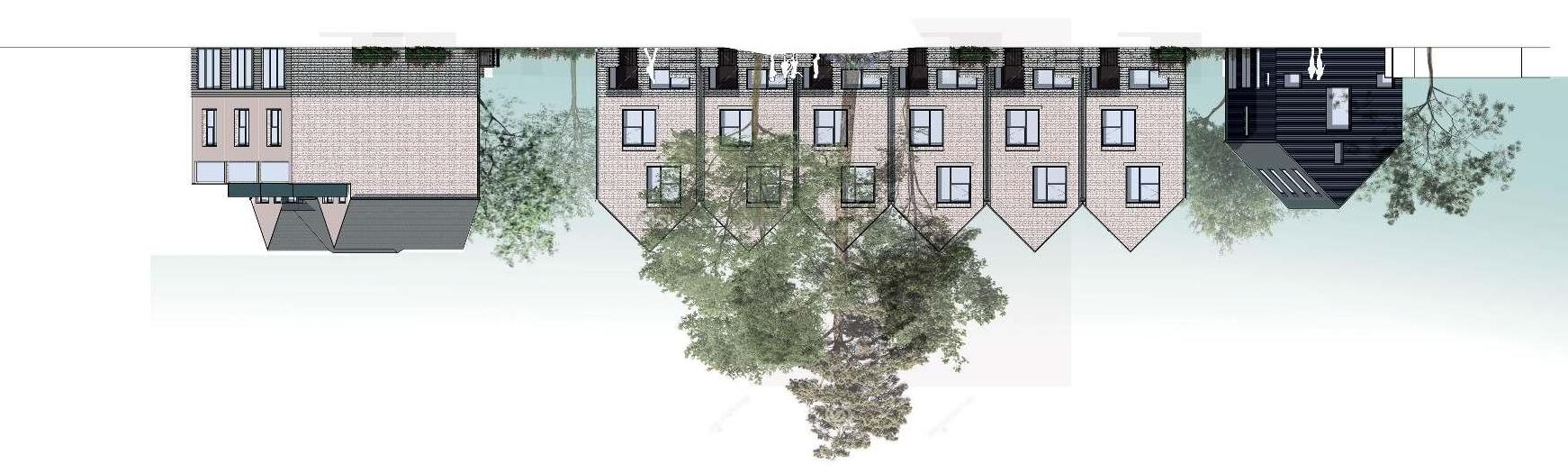


HOUSE TYPE 1HOUSE TYPE 2HOUSE TYPE 3HOUSE TYPE 4



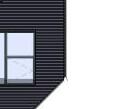
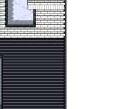

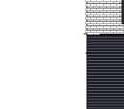



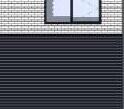








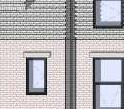

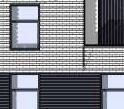

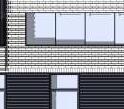

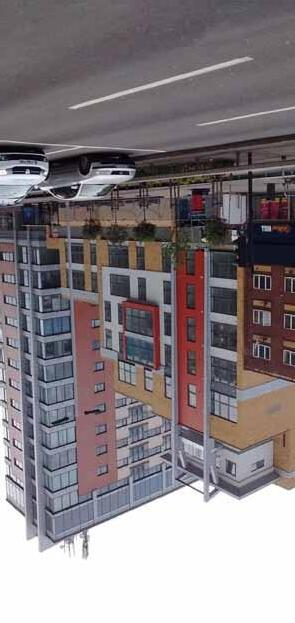
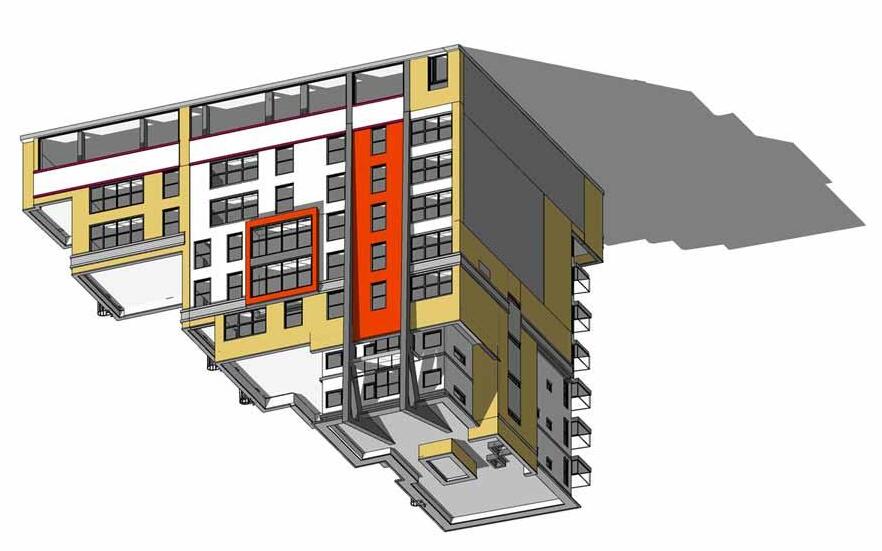







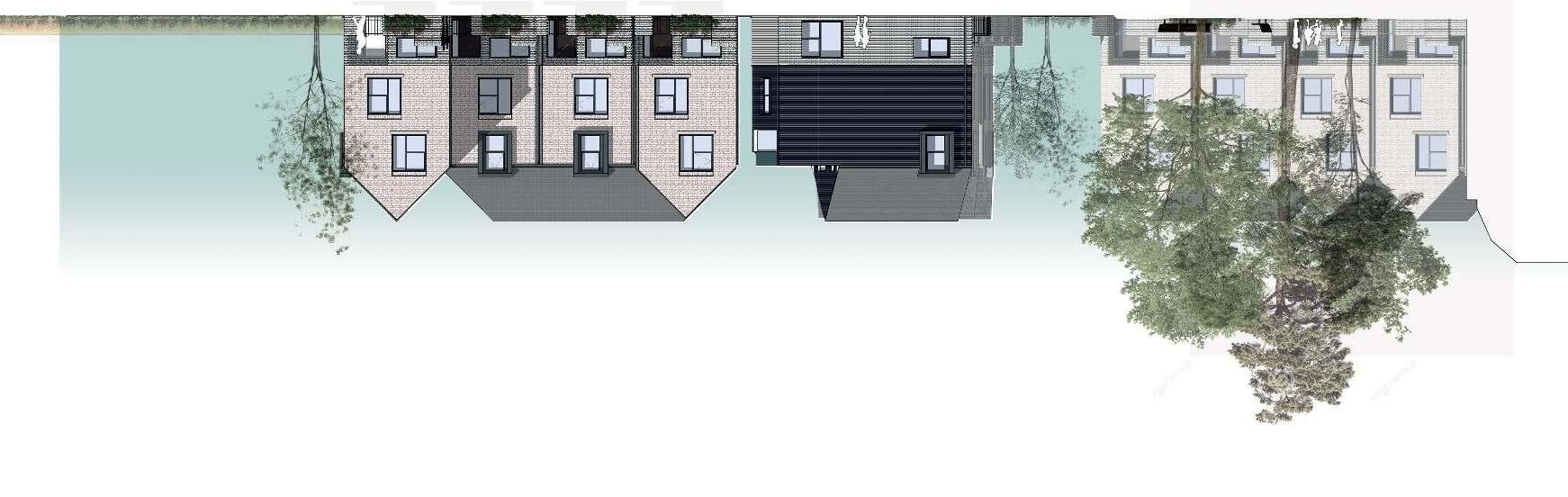
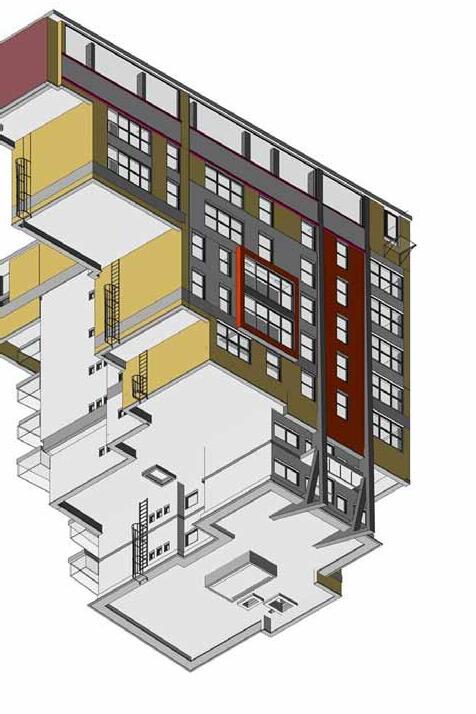 _Revit Model: Rear ast levaton
_Revit Model: Front ast levaton
_Revit Model: Rear ast levaton
_Revit Model: Front ast levaton