Motoring in Qatar
MOTORING

MOTORING
Feature – Advancing Qatar’s Automotive and Transportation Sectors
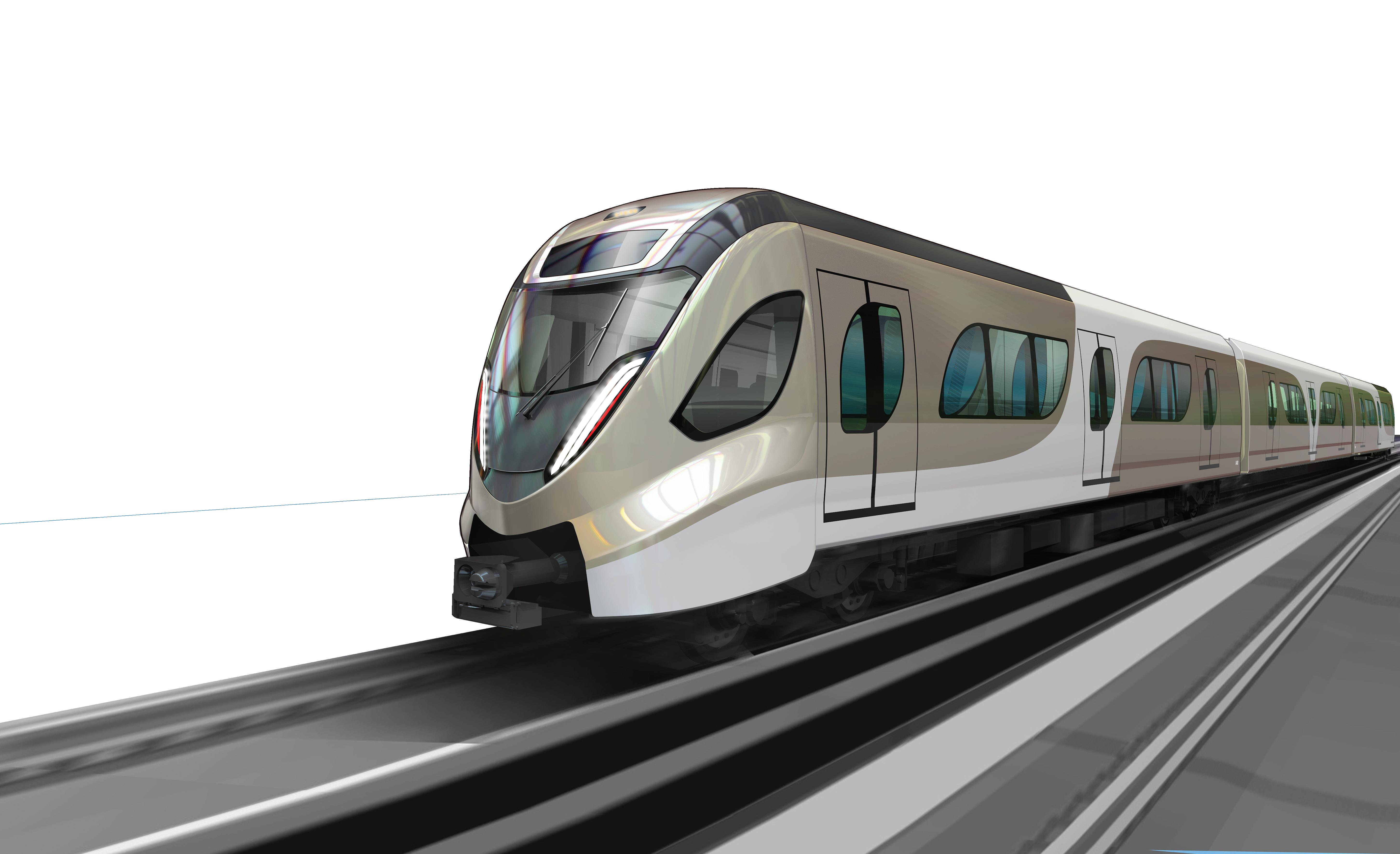
The sectors are accelerating at full speed with the Ministry of Transport’s (MOT) plans for the country’s public transportation system.
Useful Numbers
New and used car centres, the Traffic Department, car leasing, and more.
Motoring Essentials
• Obtaining a Qatari Driving Licence
• The Driving Test • International Driving Licences • Licence Renewals
• Getting Your Car or Motorcycle Tested for a Road Permit
• Metrash Service • Driving Conditions
• Violations • Traffic Accidents
• Car Insurance• Weather Conditions
• Petrol Stations and Other Services
Review: Mitsubishi
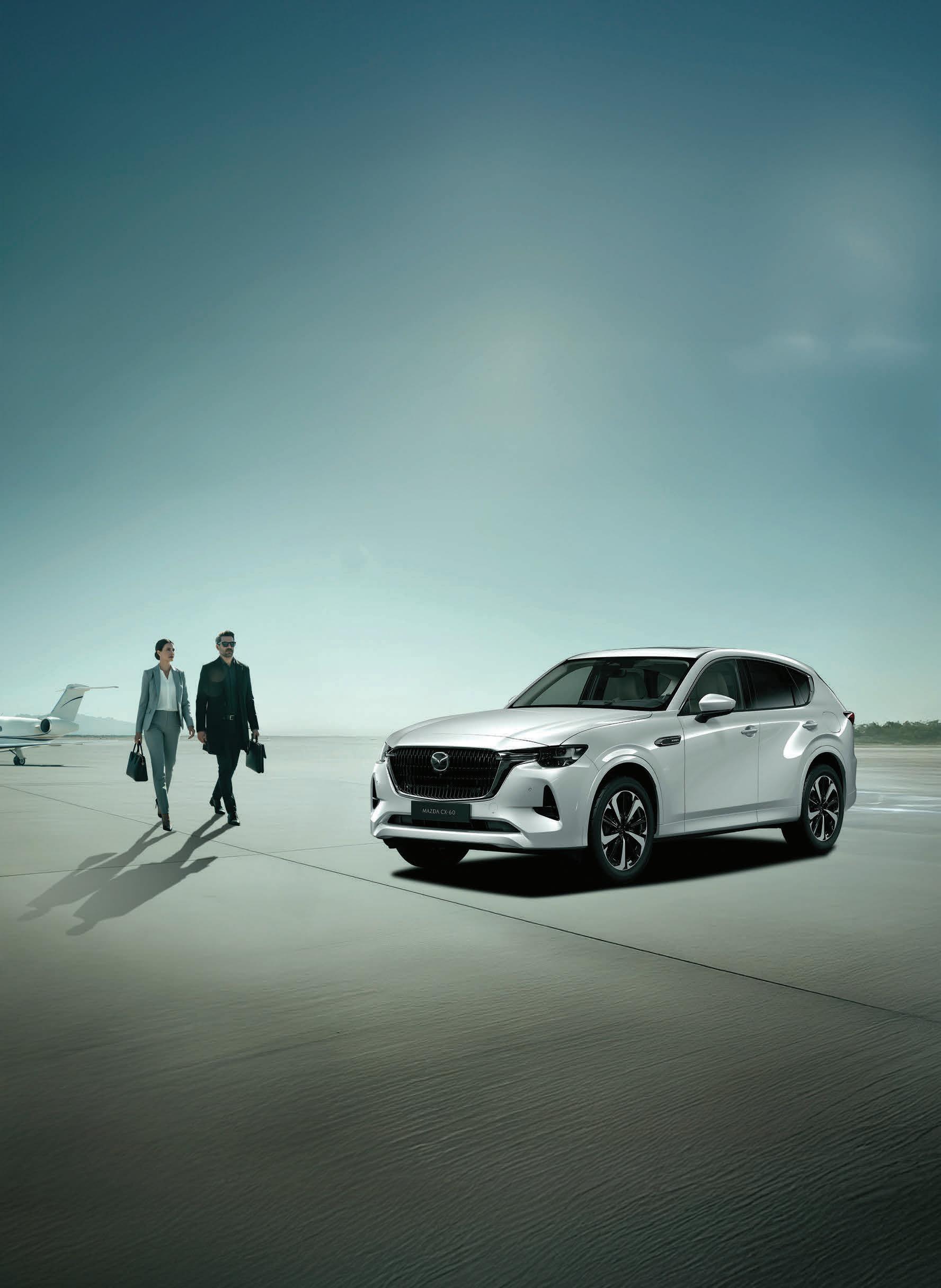
Review: Mazda
Review: Lynk & Co
Review: MG
Map of Industrial Area
Locations of major service centres and other entities.
Founder & Managing Editor
Hilar y Bainbridge
Editorial
Sarah Palmer (Editor)
Ola Diab (Deputy Editor)
Terr y Sutcliffe
Adver tising
Howard Bainbridge
Marrian Magtira
Retail Sales
Ayen Molina
Online/Digital
Weslee Dizon
Patrisha Manzon
Char lotte Wright
Juggy Gill
Khaled Emad
Design and Ar twor k
Dick Tamayo
Mar Principe
Marhaba endeavours to quote accurate information and updates each of its sections ever y issue. However, the company accepts no responsibility or liability for any false, inaccurate, inappropriate or incomplete information presented, whether in print, on the website, or on social media channels.
© 2025/26 Marhaba Information Guide. All Rights Reser ved. No par t of this magazine may be reproduced, in any form, without written permission of the publishers.
Dana Public Relations PO Box 3797, Doha, Qatar Tel (+974) 4465 0083, 4465 5533
General Information
marhaba@marhaba.com.qa
Follow us
See also our maps Al Khor and the Northeast Coast
See also our maps Al Wakra, Mesaieed and the Southeast Coast
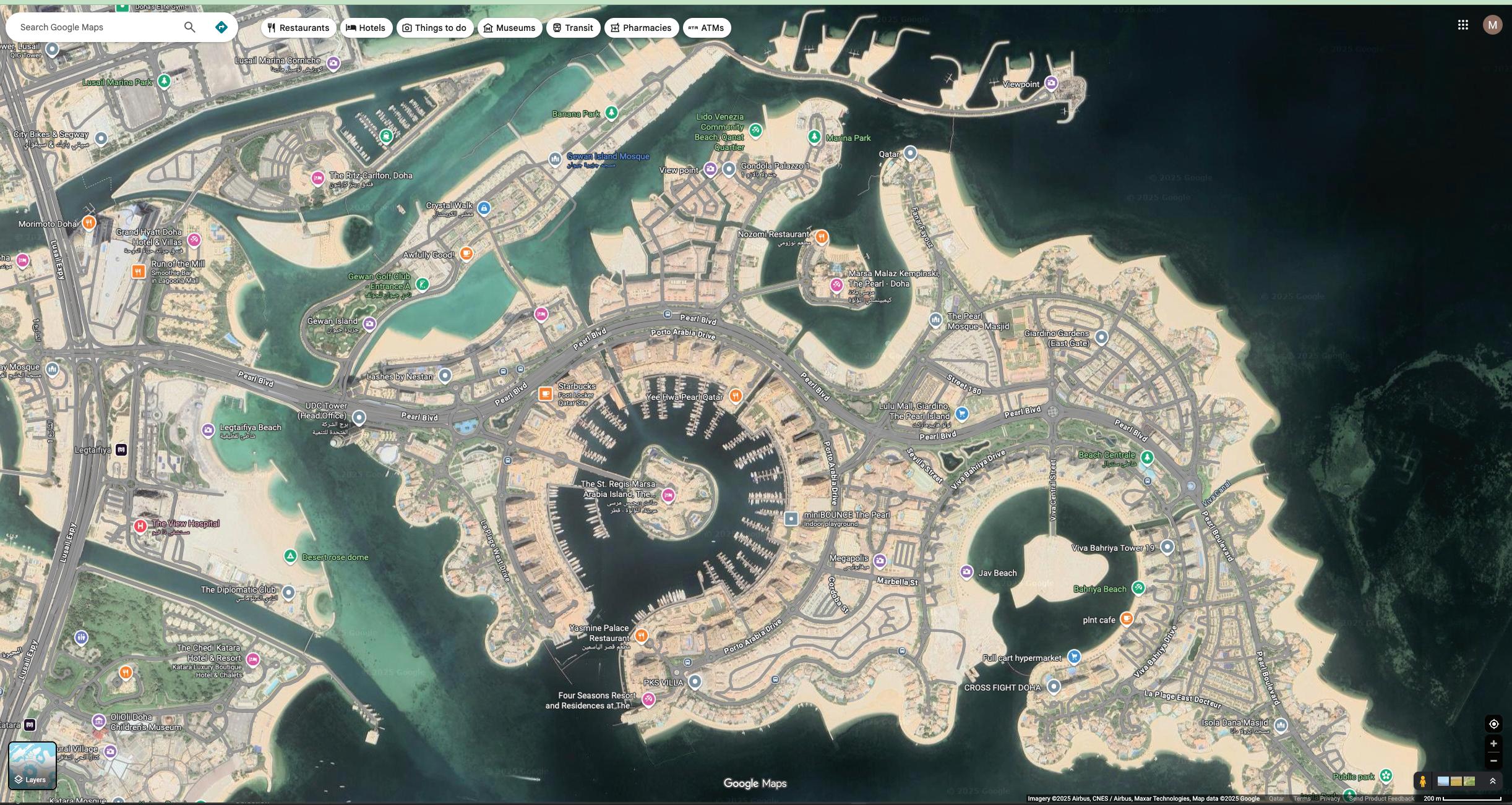




See our detailed
• Bentley 4411 4411 • BMW, MINI 4420 8888 • BYD 800 1808
• Cadillac, GMC, Opel, Subaru 4455 8000 • Changan 4407 7000 • Chery 4492 9200
• Chevrolet 800 0100 • Citroen 4436 1811 • Dongfeng 4463 7400 • Exeed 800 1115
• Ford, Lincoln 4448 9922 • GAC, Honda 800 0231 • Geely 800 7117 • GMC 4455 8053
• Hyundai, Genesis 800 0231 • Infiniti 4460 0167 • Jaguar 4440 8490 • Jetour 4041 3636
• KIA 4403 9444 • Lamborghini 4411 4411 • Land Rover, Jaguar 4447 7566 • Lynk & Co 4040 1499
• Maserati 800 0003 • Maxus 4040 1444 • Mazda 4443 5965 • McLaren 4411 4411
• MG 4040 1444 • Mitsubishi 4422 7555 • Nissan 800 0505 • Porsche 4459 9666
• Skoda 4468 8894 • Suzuki 4462 0967 • Toyota 4462 9321 • Volkswagen 4445 2365
Madinat Khalifa Traffic Department
HQ building on Khalifa Street C3 234 4444
Open Sunday to Thursday 6 am – 7 pm
Closed Friday/Saturday
Traffic Investigation Department
Madinat Khalifa (24/7) C3 234 4499
Other locations: Al Rayyan, Al Thumama, Al Wakra, Dukhan, Education City, Industrial Area, Maamoura, Mesaimeer Umm Slal, and some insurance companies. Visit Hukoomi for online services, gov.qa
Vehicle Inspection
FAHES 4021 8800
Al Khebra (also offers VIP courses) 4032 4444
Gulf Driving School 4465 2822
Karwa Driving School 4458 8865
United Driving School 4468 1003
Al Futtaim Vehicle Rentals (AVR) 800 0225
Avis Rent-A-Car (Head Office) 4466 7744
gulfcar 800 0881
National Car Rental (Head Office) 4474 0666
Oasis Rent-A-Car
Prestige Cars
4413 0011
5547 4242
Regency Fleets 4032 5301
Al Abdulghani Motors (Toyota/Lexus) 800 1800
Al Boraq Automobiles Co 4459 9666 (Porsche Approved)
Auto Class (Maxus, MG, Lynk & Co) 4422 7555
Domasco (Honda, Volvo, GAC) 800 8123
Oasis Cars 4431 2828
Qatar Automobiles Co (Mitsubishi) 4422 7555
Saleh Al Hamad Al Mana 800 0505 (Exeed/Nissan)
See Banking and Finance in the Business and Economy section for a list of banks.
Al Khaleej Insurance 4404 1111
Doha Insurance Company 4429 2777
General Takaful 4449 9999
Libano-Suisse Insurance Company
4466 4406
Qatar Insurance Company (QIC) 800 0742
Qatar Islamic Insurance Company 4465 8888
Arabian Automobile Association 4481 0400/0500
Other breakdown services are available from smaller entities around town – however, be aware that they may not be insured to provide this service. Breakdown assistance may be part of your insurance policy or can be added – check with the insurance company.
EMERGENCIES – AMBULANCE, FIRE OR POLICE – 999
Checked & Updated November 2025
Qatari nationals and residents with a valid residence permit (RP) are eligible for a driving licence. You must be at least 18 years of age for light vehicles or motorcycles, or 21 for heavy vehicles, physically fit, and demonstrate a certain level of driving proficiency, meaning that some residents will need to take a driving test at an authorised testing centre.
In an effort to reduce traffic congestion, certain professions (approximately 240) will preclude you from getting a licence. However, if you have the personal sponsorship of a Qatari national, or your spouse, then your profession is not important.
Holders of driving licences from some countries, eg the UK, the US, France and Canada, as well as residents of the Gulf Cooperation Council (GCC) countries, can get a Qatari driving licence without a test. If your country isn’t on the list, you may need to undergo a road test or enrol in a training course at an authorised driving school, as per new licence applicants.
Those people coming to Qatar for work holding a driving licence in another country must visit a driving school to be tested by the Ministry of Interior (MOI) on their ability to drive a vehicle. The licence will be issued upon passing the test; in the event of failure, there is another opportunity to test after which the applicant is enrolled in a full learning course through a driving school.
Persons with a disability are referred by the Traffic Department to the Medical Services Department after identifying the type of disability, if it is visible. Depending on the medical report, applicants are granted a licence as per the terms defined in the report, with a label added to the driving licence to clarify the type of vehicle they are permitted to drive, as well as a badge on the vehicle.
Driving without a licence of any kind is a criminal offence. Violators may be imprisoned for up to three years and face a fine of up to QAR50,000.
To check if you can use your current driving licence in Qatar, visit the Traffic Department at Madinat Khalifa. You may then either change to a Qatari licence, or if your home country's licence is not considered valid by the authorities you will have to take a road test or enrol in a short training course.
The list of approved countries can change, so check first with the Traffic Department. Note that if your RP is still being processed, you will need to wait until it is complete before applying for a driving licence. You must also take an eye test at the Traffic Department.
The following documents will be required:
• Completed application form – this will be in Arabic, available at the Traffic Department.
• The original licence.
• A letter of no objection from your sponsor, in Arabic.
• A copy of your sponsor's company’s trade licence.
• A copy of your sponsor’s RP.
• Your own RP.
• Your passport and copies.
• Three colour passport photos.
Fees: QAR250 for the card, valid for five years.
Holders of valid driving licenses issued by another GCC country, obtained by a foreigner staying in a GCC country and coming to Qatar for a visit or tourism, may drive for no more than three months.
You are allowed to drive with your national driving licence (if it is recognised by the State of Qatar) for one week only (seven days from arrival), and may be used for rental cars only.
You can alternatively use an international driving licence for up to six months, after which it is compulsory to have a valid Qatari licence. To use an international driving permit issued by your country of origin, you must also hold a valid driving licence that is recognised by the State of Qatar.
Residents or visitors who wish to drive for between one week to six months will need a temporary licence. You will need your valid national driving licence and passport along with copies, and three passport-size photographs.
Fees: QAR10 for the card, QAR150 for the application.
You will also need to take an eye test, usually available at the driving school, and you may have to do a half course.
Temporary Qatari driving licences are valid for three months, but may be extended on application, and may be used for rental cars only.
For more information, visit hukoomi.gov.qa, or the Madinat Khalifa Traffic Department Open Sunday to Thursday 6 am – 7 pm, closed Friday/Saturday
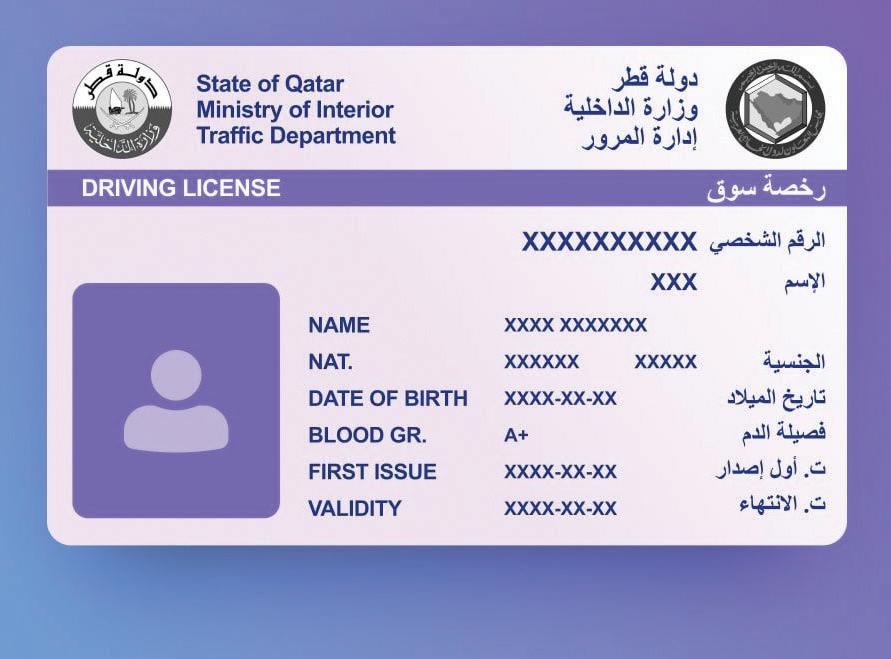
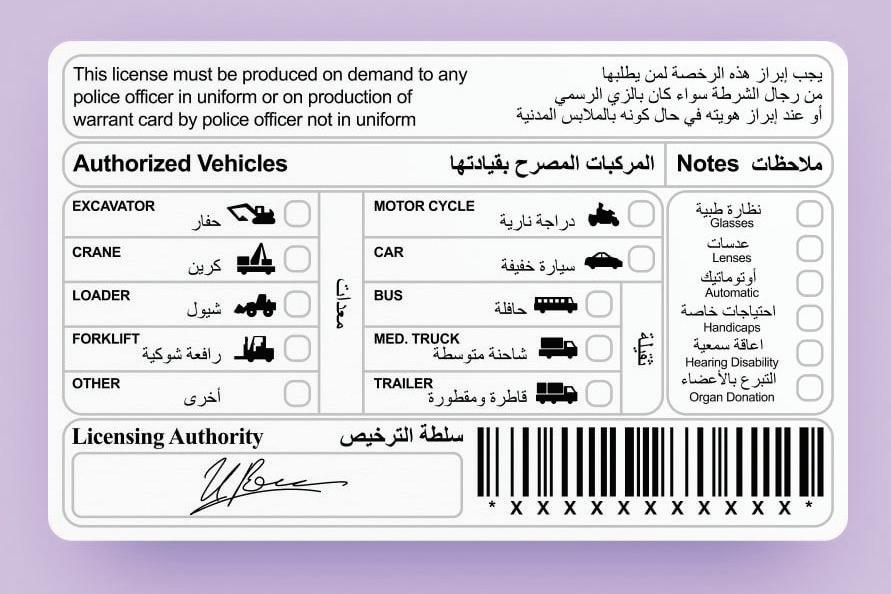
For a new driving licence, or If your country is not under the list of exempted countries, the following documents are typically required:
• Original and a copy of the RP (for Qataris and expat residents).
• Original and copy of the passport with visa or immigration document (for expats).
• Eye test certificate from a driving school, the Traffic Department at Madinat Khalifa, or a licensed optician.
• Four passport-sized photos. If you need to wear glasses while driving you must be wearing glasses in the photos.
• Course fee receipt.
A full course can take around three months to complete, with these requirements:
• Theory course: Qatar traffic laws, driving ethics, road signs and more, using guidebooks, audio files or apps.
• Theory test: After completing the theory course, there is a 40-question online test. A maximum of three errors are permitted. If successful, the practical phase is next.
• Parking training: Parallel and perpendicular parking with a driving instructor.
• Parking test: The applicant must pass both L (perpendicular) and P (parallel) parking tests. The results are instant.
• Driving practice: City driving practice with an instructor.
• Final driving test: An officer from the Traffic Police will assess your knowledge and practical skills during a road test. If successful, you’ll receive your Qatar driving licence the same or the following day. Two attempts are allowed, with retraining required if both attempts are a fail.
There are separate courses for heavy duty vehicles and for motorcycles. No fees apply when passing the test or resuming other tests, but there is a charge of QAR50 for a failure and retest. Licences are for manual or automatic cars – if you hold a manual licence you may drive an automatic, but not vice versa. There is a unified driving curriculum and contract used by all driving schools.
The light vehicle licence fee for non-Qataris is QAR250, QAR300 for heavy vehicle, and QAR150 for motorcycles, valid for five years. Permits to drive taxis and public transport vehicles is QAR250, valid for one year. All transactions at the Traffic Department must be paid for using a credit/debit card, or the MOI eCASH card (see Day-to-Day Qatar in the Living in Qatar section for more information about eCASH cards).
To obtain an international driving licence you must be in possession of a valid Qatari driving licence. Take this along with your RP , two passport-size photos and QAR150 to any travel agency or driving school.
A driving licence may be renewed six months prior to or upon its expiry date. Renewal for civilian light vehicle driving licences is easy and can be done via the Metrash app or online:











• Log in to the MOI e-services portal.
• Select 'Traffic Services', then 'Driving License', choose 'Renew Driving License'.
• Select whether to renew your own driving licence or that of another sponsored person.
• Review the driving licence information.
• Specify the new driving licence delivery option.
• Pay fees.
Fees: QAR250, valid for five years, plus QAR20 for delivery, if choosing to have the new licence delivered by QPost.
You must disclose any changes to your health that may affect your ability to drive since your last licence application. For example, if you have been prescribed glasses, you should apply through the Traffic Department to retake the eye test.
New private vehicles are issued with a registration valid for three years, known as istimara. Vehicles more than three years old must pass an annual inspection before the Traffic Department will renew the road permit. Mandatory periodical vehicle inspections must be at a Fahes testing site. For a map of stations and inspection tips visit fahes.com.qa, call 800 3835, 4021 7777. To make appointments, use the WOQOD app.
Timings: Permanent stations: Al Egda/ Al Mazrooah/Al Sheehaniya/Al Wakra (appointment only)/Al Wukair Sunday to Thursday 6 am – 5:45 pm
• Industrial Area Sunday to Thursday 6 am –5:30 pm
• Mesaimeer/Wadi Al Banat 6 am – 8:30 pm (appointment only)
Mobile station: Madinat Al Shamal Wednesday/ Thursday 7 am – 1:45 pm
Fees: Cars QAR150, motorcycles QAR100, by card only; remember to take the expiring istimara. There is one free reinspection if the first fails. If this is also a fail, the subsequent reinspection is a paid inspection at the normal rate. Thereafter there is one paid and one free inspection if they are within 30 days of the original inspection date. If a vehicle does not pass within these 30 days, a new inspection will take place, ignoring any previous reports or repairs.
Insurance: Renew prior to inspection, as there must be a full year's insurance on the vehicle before taking it for the istimara.
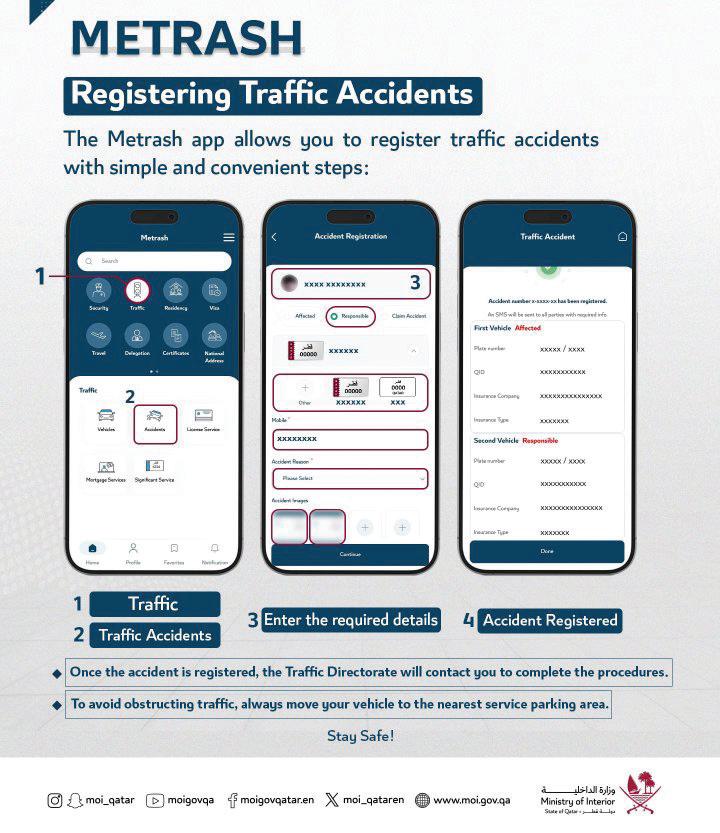
Metrash is a free electronic service provided by the Ministry of Interior (MoI), recently updated for a more user-friendly experience and available for iOS and Android. The mobile phone number must be registered under the applicant’s name. Users can then receive an SMS alerting them to traffic violations, driving licence expiry, car registration expiry, and inspection pass/fail.
All traffic services are now available on the new app, including insurance, accidents, vehicle exit permits, licence plate services, violation images and payment, and accessible parking permits. It is also possible to send photos of traffic violators directly to authorities on Metrash via ‘Communicate with us’– only if safe to do so.
234 2000, moi.gov.qa
Traffic Law No 19 of 2007 introduced a system of tough penalties for traffic offences. They include points and fines for speeding, parking violations and using a hand-held phone while driving.
These, and other measures for road traffic safety, have been a priority for the government as part of Qatar National Road Safety Strategy 2013–2022, and will continue to reduce the death and injury rates under the second version of the strategy, running from 2023 to 2030.
The main causes of road accidents continue to be reckless and negligent driving, dangerous overtaking, illogical lane changing (especially at intersections), and using the phone while driving. Motorists should be aware of drivers tailgating and flashing their lights to force the driver ahead to move out of the way, even if there is no space to safely move into. Road users often change lanes without signalling and weave through the traffic at high speed, or will overtake from the right to encourage other drivers to move out of the way. Be aware of your own safety first.
Traffic lights flash on green before changing to amber and red. At the few roundabouts remaining in the country, signals will often flash amber for a short period of time to allow the flow of traffic –drivers should only pull out if it is safe to do so.
Cameras and radars are installed at intersections to catch those who race through red lights. The installation of many more is planned, including sophisticated advanced radar systems which allow for the recording of accidents and booking of reckless drivers. There are also police cars fitted with mobile speed radars – difficult for motorists to locate, unlike permanent roadside speed radars.

The Ministry of Interior (MOI) stresses that its aim in deploying these mobile radars is to reform bad driving practices, thereby saving lives, and not simply to punish offenders.
The General Directorate of Traffic has started automated monitoring for two traffic violations –not wearing a seat belt and using a mobile phone while driving – with effect from September 2023. This also includes using any other visual electronic device while driving which distracts the attention of the motorist. The two violations will be detected through the unified radar system and will be completely visible, even if the motorist is wearing clothes of the same colour as the seat belt. The violations will be on Metrash and there is no discount available for mobile phone usage fines.
Qatar's authorities are also being more vigilant against those who flout the law regarding tinted windows and loud noises. The General Directorate of Traffic regulates the percentage of darkness permitted for glass tinting and issues approvals. Private car owners are allowed to tint windows, and front and rear windscreens at a maximum level of 10% darkness. However, permission may be given for up to 100% for rear windows and up to 20% for others in certain circumstances – check up to date information at hukoomi.gov.qa and on Metrash.
The traffic police has started issuing violations against motorists for loud noises made by their vehicles. The Traffic Department has started a campaign against drivers who modify their vehicles to create loud noises and enhance speeds; this will now attract a fine and lead to the seizure of vehicles.
The Ministry of Commerce and Industry also issued Circular No 3 of 2023, which specifies the obligations of car and motorcycle dealers and maintenance service providers regarding the noise levels generated by vehicles – noise levels must conform to the Qatari standard specifications issued by the Qatar General Organization for Standards and Metrology. These regulations apply to both gasoline and diesel engines, and the noise level must be measured while the engine is on and the vehicle is in motion. Violations entail a fine of no more than QAR1 mn or imprisonment for up to two years and closure of business for no more than three months.
Traffic Law No 19 of 2007 introduced a demerit point system to ensure safe driving by curbing reckless driving and to reduce traffic related accidents, deaths and casualties. Drivers convicted of certain driving-related offences will have 'black points' recorded on their records.
The MOI website moi.gov.qa lists the violations, which include paperwork, registration and driving offences, wrongful parking or obstruction, and those dealing with commercial vehicles. Some of the fines are hefty, like running a red traffic light. In some cases, if you pay within a month you may get a 50% discount – visit the Traffic Department or use Metrash to check if this is applicable.
The points system means that your licence can be suspended or revoked, depending on the number of points accrued. In this situation, a new driving licence may be issued only after passing a new driving test after a minimum three months of suspension.
Always carry your driving licence and RP/copy of your passport with you while driving, as well as the vehicle registration, insurance documents, and car rental agreement (as appropriate). There is a zero-tolerance policy on drink driving in Qatar – the legal limit is 0 mg. Drivers who are found to have alcohol in their system when breathalysed face fines of between QAR10,000 and QAR50,000, with a chance of a jail sentence and deportation.
Some of the more common violations include:
• Running a red light – QAR6,000 fine, 7 points
• Driving in the wrong (opposite) direction –QAR6,000 fine, 6 points
• Driver and/or front seat passenger not wearing seatbelts – QAR500 fine
• Using/holding a mobile phone/other device while driving – QAR500 fine
• Allowing children under 10 to occupy front seats – QAR500 fine
• Exceeding the maximum speed limit –QAR500–1,000 fine, 4 points
• Obstructing traffic at intersections –QAR500 fine, 3 points
• Parking/waiting at places reserved for persons with special needs – QAR300 fine, 3 points
• Driving a vehicle without carrying driving licence – QAR500 fine, 1 point
• Driving a vehicle without a valid permit (istimara) – QAR1,500 fine
• Driving a vehicle without number plates –QAR3,000 fine, 3 points
• Not moving vehicle to nearest safe area in case of an accident not involving injury, or not informing police immediately – QAR1,000 fine, 3 points
• Applying tint to glass or windows of vehicle without permission – QAR1,000



From September 2024, traffic law violators cannot leave Qatar through any borders (land, air, sea) without paying all outstanding fines and dues. This also applies to vehicles with pending fines and dues. Payment can be made through the Metrash app, MOI website, traffic offices or unified service centres. To check violations, visit moi.gov.qa, and receive SMS alerts via Metrash.
If you are involved in a minor traffic accident within Doha city limits, you must move the vehicles involved to a safe place. Get the information of the driver of the other vehicle(s), ie name, RP number, car registration number, insurance details and mobile number, and take photos if necessary.
Drivers can go to the Traffic Department, visit one of five traffic investigation offices at insurance companies, or choose the much easier method of reporting the incident via the Metrash app. Any of the car owners involved can report the accident, giving the above information.
If anyone is injured, do not move the vehicles and notify the police immediately (dial 999). You must report to the relevant traffic department with your documentation, as advised by the patrol officers.
For assistance after a car accident, or if stranded in the desert, call 999
with a valid Qatar driving licence can drive the vehicle. Check the policy to ensure you are sufficiently covered in the event of an accident. See the list of insurance companies in Day-to-Day Qatar in the Living in Qatar section.
Breakdown cover may already be included on the insurance policy or can be added at an extra cost. If your car is in the garage for more than 15 days after an accident, it is mandatory for insurance companies to provide a substitute car; this rule only applies to those cars waiting for genuine imported parts.
Dust storms occur due to shamal, dust-laden winds that can suddenly appear between March and August. They can compromise visibility on the roads, making driving extremely hazardous. Switch on dipped headlights – not fog or hazard lights – and drive slowly.
Fog may occur between November and January and can drastically reduce visibility. Slow down and use dipped headlights and fog lights, if necessary.
Rain and thunderstorms can happen during the winter months, especially December and January. Downpours may limit visibility, cause flooding on some roads, and make sandy areas muddy. Be especially vigilant during the first rainfalls of the season as any oil spills on the road make driving particularly treacherous.
Beware of drivers using their hazard lights while driving in adverse weather conditions.
Qatar Fuel (WOQOD) releases the fuel prices each month, as determined by QatarEnergy.
In addition to providing fuel, WOQOD stations offer a wide range of services like car washing, oil change, brake repairs, car batteries, and tyre checks/purchases. There is usually a convenience store (Sidra), ATM, Ooredoo payment machine, and fast food. Stations widely cover the country, and you can pay for fuel and services by card or cash.
The terms and conditions of Comprehensive and Third Party insurance policies vary depending on the insurance company and underwriter. Note that it is the car that is covered, not the driver – anyone
A few non-WOQOD stations may only provide fuel, although many of the independent petrol stations are situated within complexes with food and beverage options, laundries, pharmacies, etc. Other small independent companies can easily be found for services such as checking tyre pressure and oil and water levels, repairing tyres (aptly named 'punctury'), and car wash facilities. m






























By Ola Diab
Qatar's automotive and transportation sectors are accelerating at full speed with Ministry of Transport's (MOT) plans for the country's public transportation system.
Qatar’s automotive Internet of Things (IoT) sector is accelerating at full speed, with revenue forecasted to reach QAR1.3 bn (USD369.93 mn) in 2025, according to a report from Statista, a German online platform that specialises in data gathering and visualisation.
The market is expected to maintain strong momentum, recording a compound annual growth rate (CAGR) of 7.20% from 2025 to 2029, ultimately hitting QAR1.7 bn (USD488.51 mn) by the end of the decade. This growth comes as Qatar doubles down on its smart city and digital transformation strategies, aiming to integrate advanced connectedcar solutions into its urban mobility ecosystem. While the US is projected to continue dominating the global automotive IoT market, which is expected to generate a staggering USD98.86 bn in 2025, Qatar’s trajectory is notable for its speed and strategic focus.
Industry leaders say that Qatar’s plans for smart cities such as Lusail City and Msheireb Downtown Doha (MDD) are a major catalyst for automotive IoT adoption. From vehicle-to-infrastructure (V2I) communication to predictive maintenance systems, the country is prioritising technologies that make roads safer and traffic more efficient.
The Ministry of Transport (MOT) has been vocal about using IoT to enhance road safety, reduce congestion, and prepare for autonomous vehicles. Recent pilot projects include smart traffic corridors equipped with IoT-enabled sensors, as well as real-time traffic monitoring integrated into navigation apps.
According to local dealerships, buyers now routinely enquire about connectivity features alongside horsepower and fuel efficiency.
With approximately QAR 1.8 bn in market volume projected by 2029, Qatar’s automotive IoT industry is on track to become a vital pillar of its diversification agenda.
As the country positions itself as a regional hub for smart mobility, experts highlight that the fusion of cars and connectivity may soon be as commonplace as smartphones in everyday life.
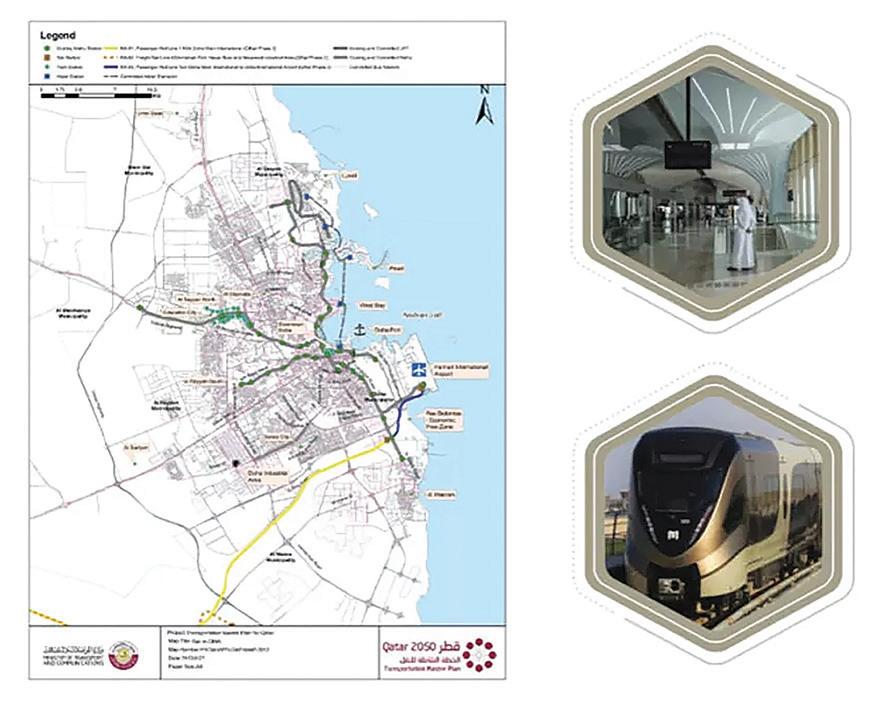
Transportation Master Plan for Qatar (TMPQ) 2050
In April 2025, the MOT higlighted the progress of the Transportation Master Plan for Qatar (TMPQ), also known as the Qatar Public Transport Master Plan (QPTMP), aimed at creating a more efficient and competitive public transportation system and striking a balance between Qatar’s rapid urban growth and its commitment to sustainability, leading ultimately to a more efficient and future-ready public transit system.
Launched in 2022, the TMPQ also aims at improving accessibility and coverage, raising service reliability, and exploring innovative mobility solutions that keep pace with latest advancements. The TMPQ will strategically guide the evolution of the transit system to address challenges associated with escalating vehicular dependency, congestion, and environmental impact. The TMPQ will study the status quo of traffic congestion of both private vehicles and public transportation and carbon emissions and their impact on Qatar’s climate quality with a view to suggesting suitable solutions.
Among the TMPQ’s top priorities is promoting advanced, efficient, and eco-friendly public transportation systems to reduce Qatar’s carbon footprint and enhance climate quality, in line with Qatar National Vision (QNV) 2030’s environmental development pillar. The plan also serves policymakers, developers, and other stakeholders by providing practical frameworks and guidelines for the effective planning, design, and operation of sustainable transit services.
The TMPQ will also encompass prescriptive policies, laws and regulations, accompanied by a robust monitoring programme for integrated and comprehensive solutions through harnessing innovation to meet the growing needs for a coherent, advanced, and sustainable national public transportation system. This aligns with the MOT’s endeavour to achieve the goals of the Third National Development Strategy 2030 (NSD3) and QNV 2030.
The TMPQ aims to make public transport a key driver of economic, social, and environmental development. It promotes sustainability by reducing carbon emissions, encouraging healthier lifestyles, and supporting economic growth, ultimately strengthening Qatar’s resilience and commitment to a sustainable future.
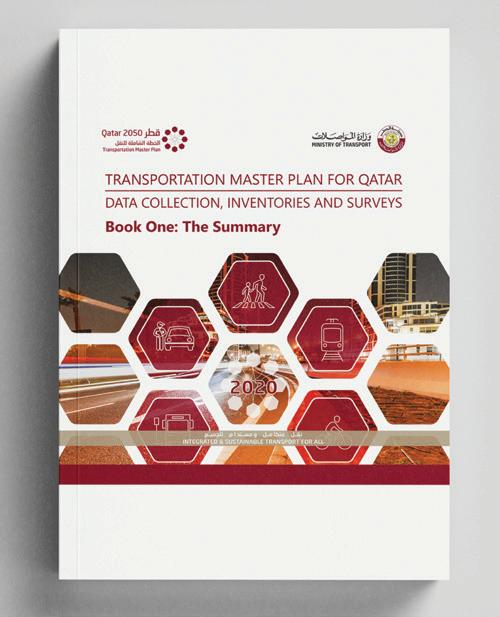
The MOT conducted public surveys from April to August 2025 as part of its Data Collection: Inventories and Surveys initiative to update the TMPQ and the Qatar Strategic Transport Model. The surveys aim to collect information on people’s mobility preferences and opinions on public transport. They took place at metro, tram, and bus stations, as well as public markets and malls. The MOT encouraged public participation, assuring that all data remains confidential and used solely for transport planning and analysis.
The project also included establishing the Transportation Data Management System (TDMS) that consists of a geospatial database supported by a web-based platform and a user-friendly interface to facilitate retrieving, visualising, analysing, and extracting data from the geospatial databases. The TDMS will be accessible to government entities and consulting firms working in transportation studies.
The Qatar Activity Based Model (QABM) is a reliable national transportation planning tool that will assist decision makers in implementing transportation projects and policies in Qatar. It is characterised by its ability to simulate the populations activities based on demographic and socioeconomic characteristics, while taking into account joint activities and trips made by the same family members, thus offering a paradigm shift in terms of transportation modelling and planning.
To facilitate accessing the QABM, the MOT developed a web-based platform with an interactive users’ interface to visualise the components of the model, and access the key inputs, data and maps without the need to use the model directly or the need to acquire commercial licence to the software.
For the first time in Qatar, the Qatar Trip Generation and Parking Rate Manual (QTGPRM) project provides trip and parking rates for various land uses in Qatar. The rates were derived from vehicle surveys and in person interviews at over 7,000 sites across Qatar. These rates are key input for traffic analyses as part of transportation studies, in addition to traffic impact studies for development and urban projects across the country.
As part of the QTGPRM, Updating the Guidelines and Procedures for Transportation Studies (GPTS) will help improve the current procedures for performing transportation studies, promote the guidelines for the different types of transportation studies, and correlate them with the QTGPRM. Furthermore, the QTGPRM will fulfil the requirements of government professionals, developers, private consulting firms, and researchers.
The Qatar Parking Master Plan (QPMP) provides a modern, sustainable framework for the efficient planning, developing, and managing of parking supply and demand across all types of parking spaces. The QPMP comes in four volumes, supported by integrated technical reports that contribute to the implementation of the QPMP over the coming years, and smart applications to keep pace with technological advancement in the field of planning, managing and operating parking facilities.
Key achievements can be summarised as follows:
• Developing parking policies, regulations, and legislative laws necessary to regulate vehicle parking in Qatar.
• Launching more than 150 parking strategies on how parking policies should be carried out.
• Developing uniform and comprehensive parking.
• Design a manual in step with best international practices, thus improving efficiency and safety of the parking system. This manual will be used by government entities, developers, and consulting firms.
For more information, visit mot.gov.qa m
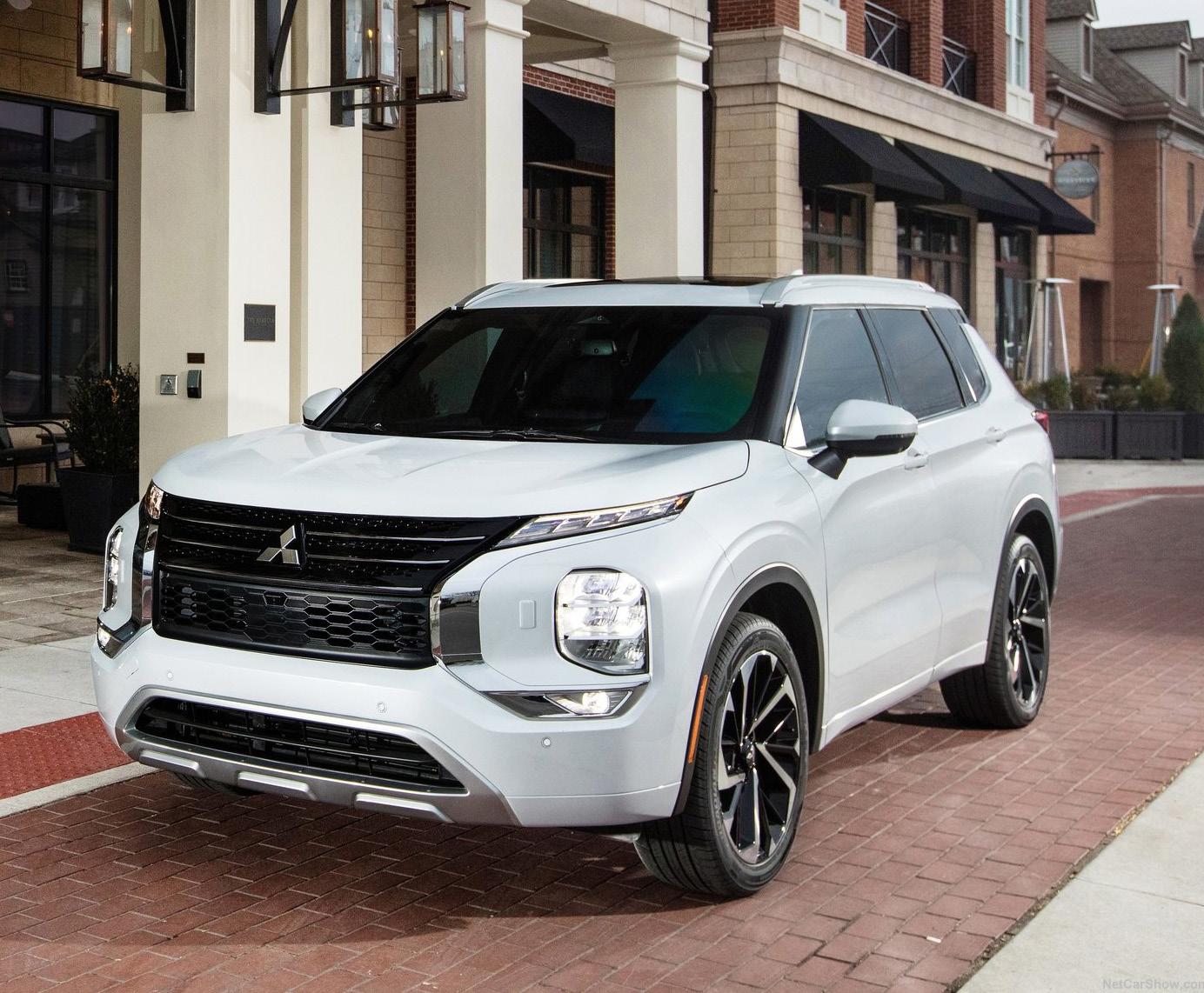
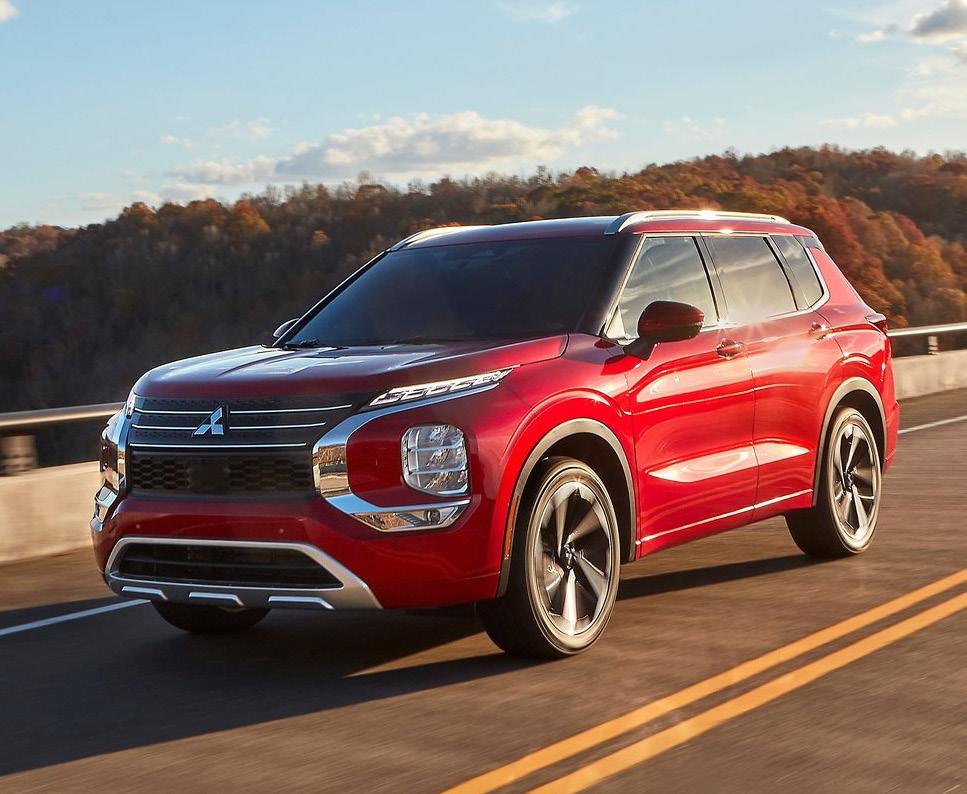
EXTERIOR The all-new exterior with its flat roofline is stunning; it gives the Outlander a confident, dynamic stance which is underpinned by the new stronger and safer chassis offering enhanced stability and performance; dominant yet smooth front grille design; obvious top-quality build; large 20” alloys
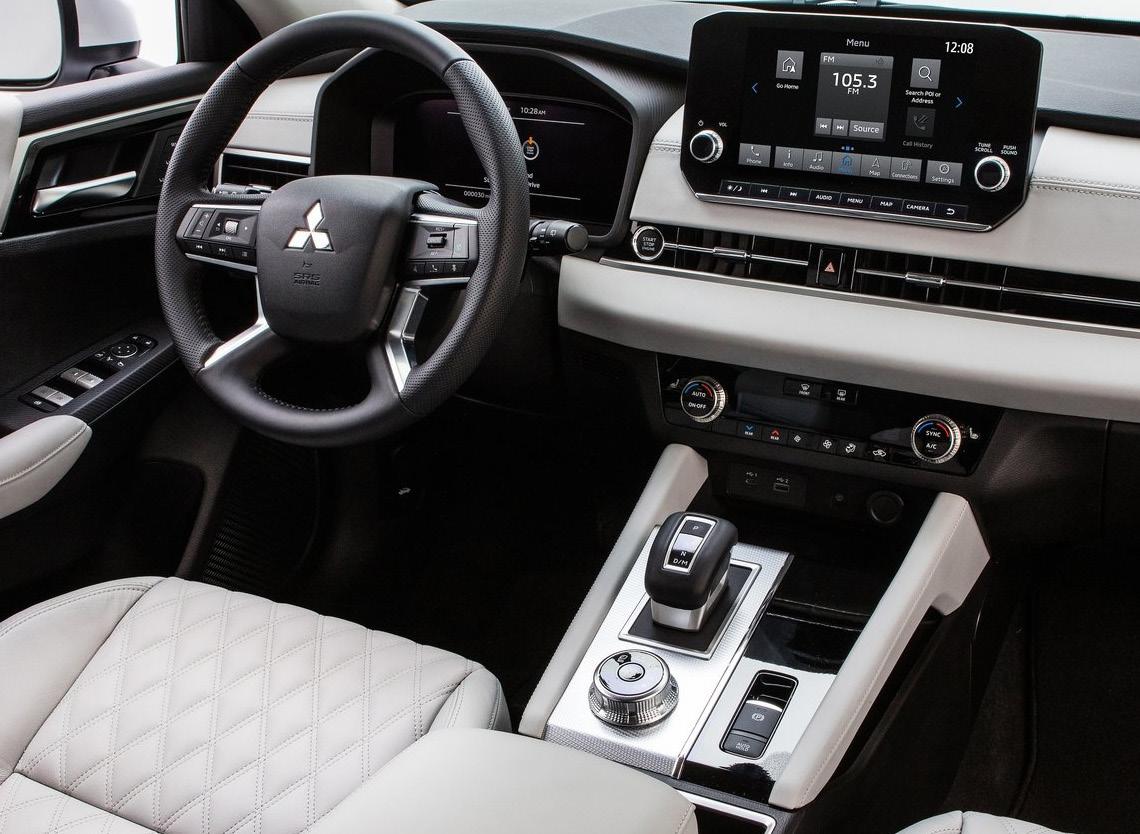
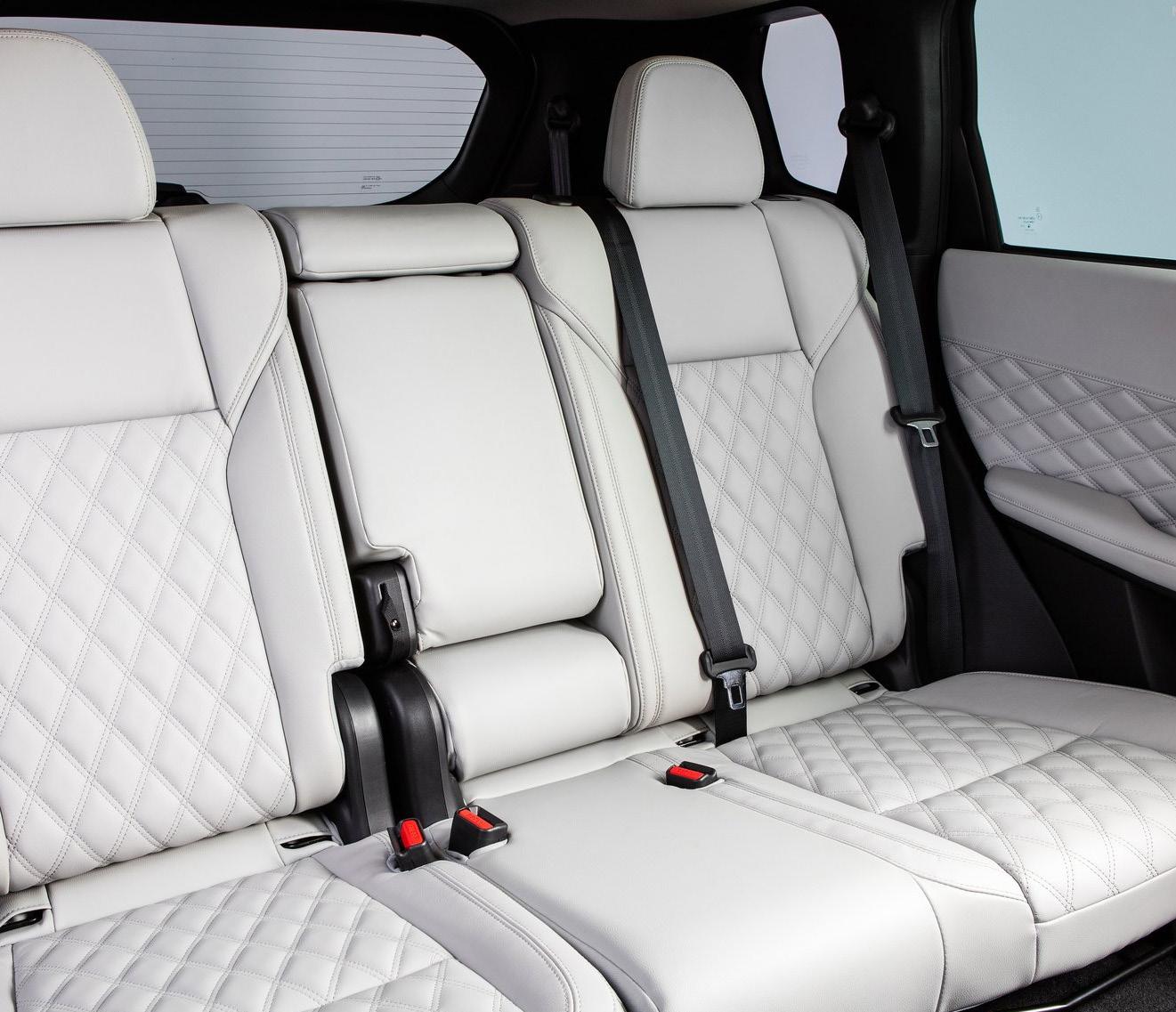
INTERIOR Superior quality materials make for a very welcoming environment; there’s plenty of space (up to 7 seats); the seats are very comfortable and supportive, trim is upscale and soft to the touch; vision is panoramic; driving and infotainment controls are just right with sensible physical knobs for volume and tuning; large 12.3-inchtouchscreen is bright and clear (AND there’s a HUD!). Apple CarPlay and Android Auto, wireless charging for phones, charging ports and super 10-speaker sound system – it’s all there.
ENGINE Powerful 2.5 litre 16-valve DOHC MIVEC with electronic direct fuel injection
MAX POWER 181 hp (135 kW) @ 6,000 rpm
MAX TORQUE 245 Nm (181 lb-ft) @ 3,600 rpm
TRANSMISSION Continuously variable automatic; also with steering wheel paddle gear shift
SAFETY/SECURITY Mitsubishi is a leader in safety technology: comprehensive front, side and curtain airbags; forward collision mitigation; blind spot warning; lane departure warning; rear cross traffic alert and many other assistance systems; tyre pressure monitoring system; keyless operation; engine start button; vented disc brakes all round
Mitsubishi is one of Japan’s most admired companies and has been building tough SUVs and cars for over a century; the brand name and agency QAC are also well liked and respected in Qatar. The market is always evolving – nowadays more and more people want small SUVs as their family vehicle, which is where Mitsubishi excels. The all-new Outlander is a fantastic family SUV and even has three seat rows. It’s great to look at and the same applies when you are inside. The quality is obvious both on the outside and the inside – just look at the elegant diamond stitching and feel the interior trim! I feel I’d be proud to own one.
The new Outlander drives with a youthful agility and composure; it’s enjoyable with the light, nicely weighted steering and a sense of stability and balance which is reassuring on the wide highways.
The driving position puts you in command; everything outside is in view and everything inside comes easily to hand. I loved the head-up display (HUD) and the paddle shifters on the steering wheel and you have two large screens, the one directly in front of you focussed
on driving data and the one in the centre more on infotainment.
The new, more spacious Outlander is best in class in terms both of seating space and cargo-carrying capability. It’s thoroughly modern as regards connectivity with its user-friendly infotainment system and its respectable fuel economy.
The new Outlander is right in the middle of the booming market segment for compact SUVs and has better specifications than other big automotive names. It also brings Mitsubishi’s reputation for durability and economy; I was certainly reassured by the feeling of well-made quality and being wellplanted safely and securely on the road.
Mitsubishi with the all-new Outlander has made a strong commitment to the future with a sharp focus on providing excellent quality and value for money. It’s pleasant to drive, has a top quality finish, has a luxury-esque interior, great (and great sounding) audio system, a wealth of safety features and a large cargo area and/or seven seats.
It’s a good compact SUV no matter which way you look at it: practicality, pleasure, prestige even!
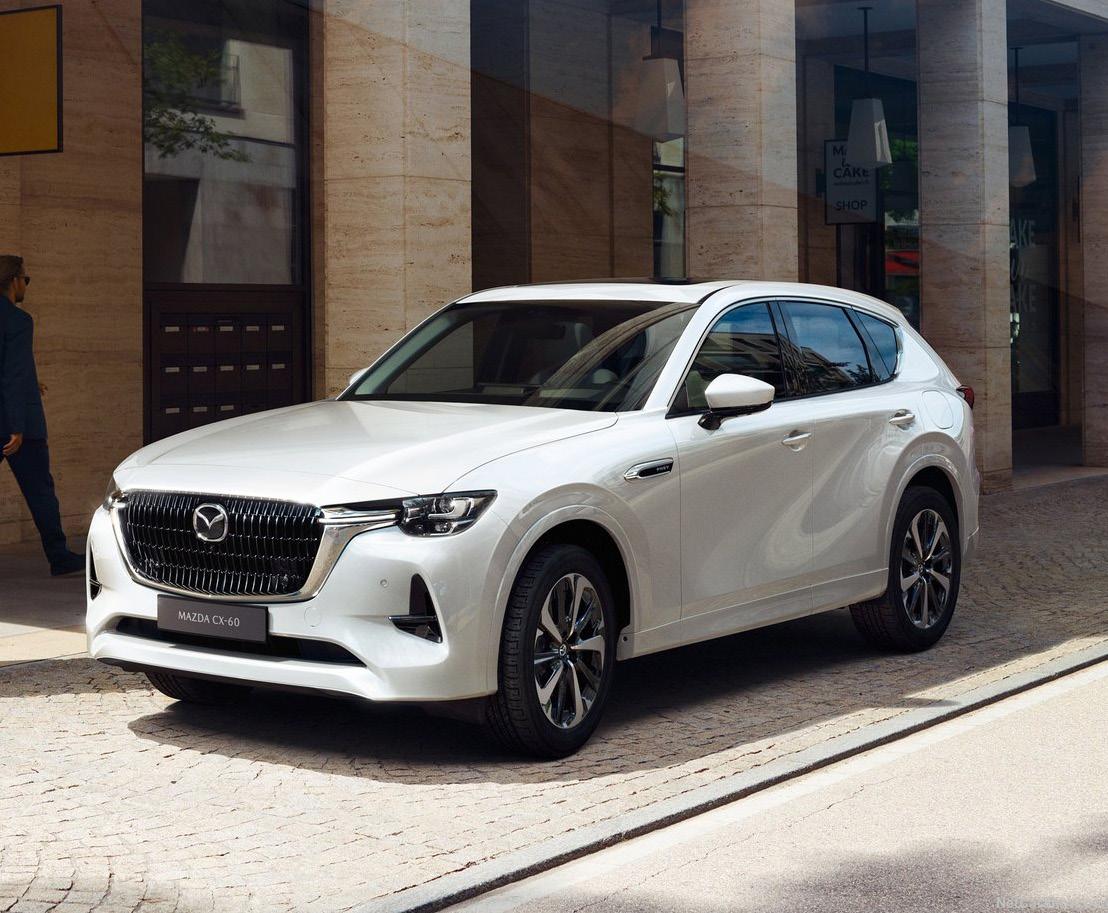
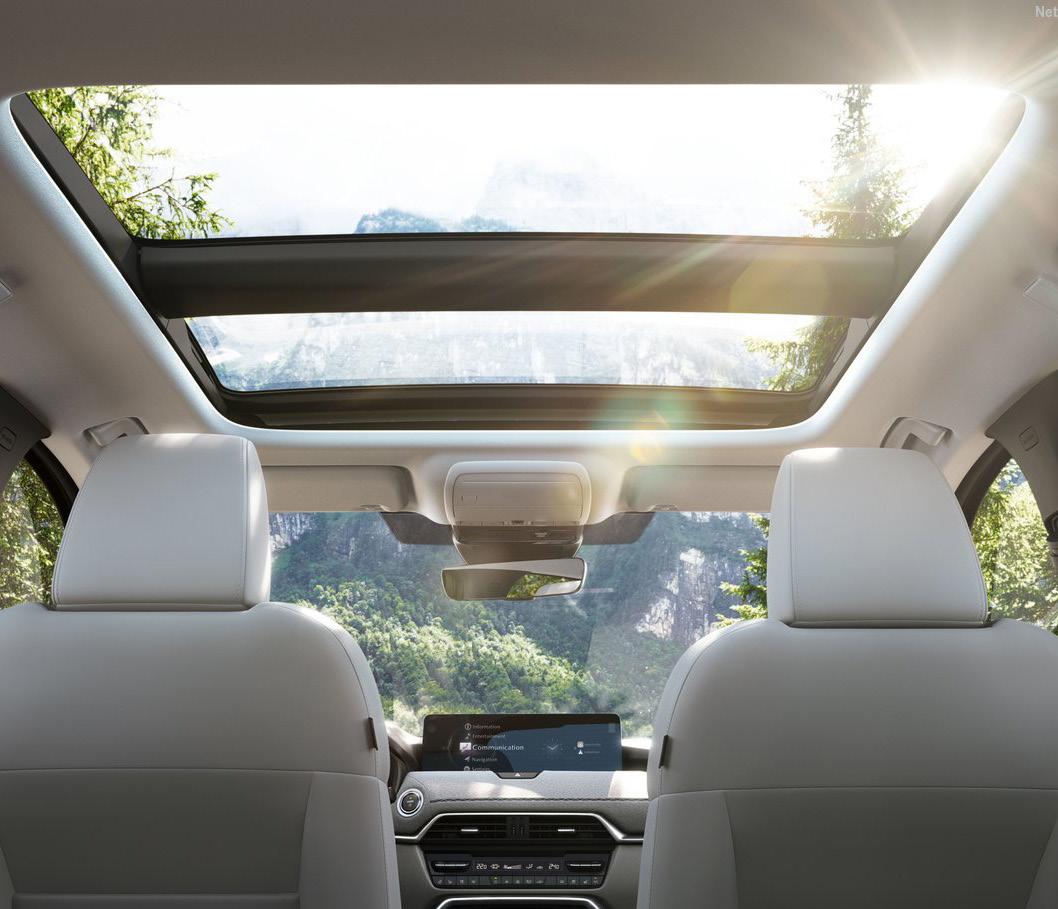
EXTERIOR The new Mazda CX-60 is impressive in the premium SUV market; it has a strong, solid yet sleek look and an obviously top quality build so you’re going to feel comfortable and safe in this car on the highway or in the city; four exhausts, 20-inch alloy wheels, sporty grille, large panoramic sunroof, hands-free rear power door
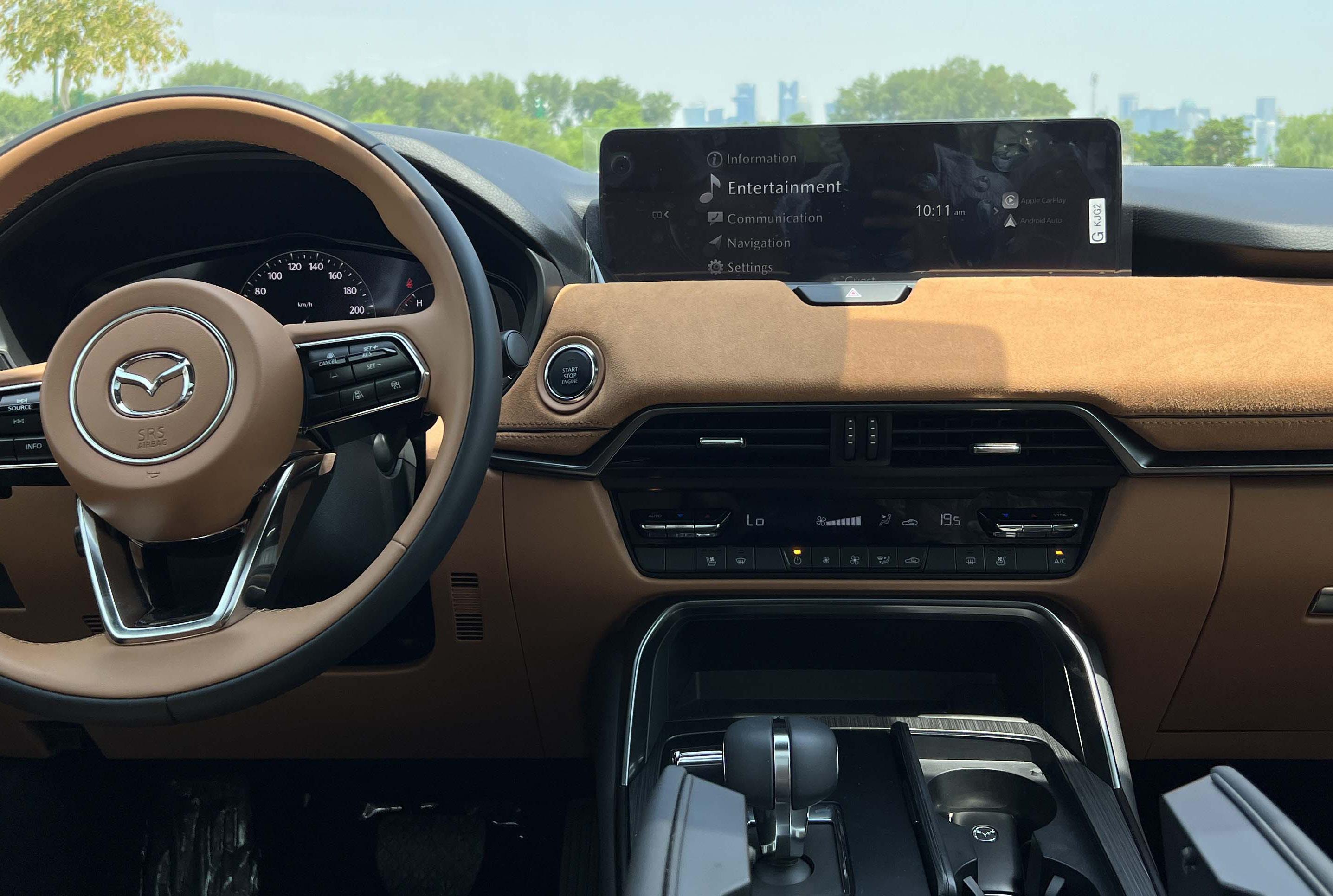
INTERIOR Driver Personalisation System automatically sets your driving position; gorgeous high quality interior trim with leather and soft touch velvet-like material; visibility is great; parking is easy, thanks to front and rear parking sensors and 360° cameras; comprehensive infotainment system with two bright 12.3-inch screens with great colour contrast and sharp graphics; physical switches; head-up display; Apple CarPlay and Android Auto, fabulous Bose Audio system with 12 speakers; two USB-C points
ENGINE 3.3 litre e-Skyactiv G, six cylinders MHEV
MAX POWER 280 hp (209 kW) @ 5,000 rpm
MAX TORQUE 450 Nm (332 lb-ft) from 2,000 rpm
TRANSMISSION i-Activ All-WheelDrive (AWD) with smooth eightspeed automatic
SAFETY/SECURITY This built-for-safety Mazda has many systems: electronic brake-force distribution; dynamic stability control; traction control system; smart brake support; tyre pressure monitoring system; lane departure warning; lane keep assist; blind spot monitoring; rear cross traffic alert; Mazda radar cruise control; and many more
The impressive new Mazda CX-60 represents everything that Mazda has built into its DNA over the last 100 years: the great design and top quality, both inside and out; the trusted Japanese craftmanship and new technologies, all focused on creating a fantastic experience for the driver and their passengers. One example is that Mazda CX-60 is designed to be an extension of the driver; the Mazda Driver Personalisation System recognises individual drivers and automatically adjusts the seat and mirrors to optimised positions, putting the driver at the centre of the experience each and every time.
Perfect for comfort in the harsh desert climate, the all-new Mazda CX-60 has a highly efficient inline 6-cylinder, 3.3-litre mild hybrid engine and, with Mi-Drive, gives drivers the ability to switch between distinct driving modes, ie Normal, Sport and Off-Road. These modes optimise grip, traction, performance, handling and safety for you and your passengers in a range of driving environments.
I found driving the CX-60 to be such a pleasure. The power is plentiful, vision is panoramic, the comfort is luxurious, driving position is commanding, steering
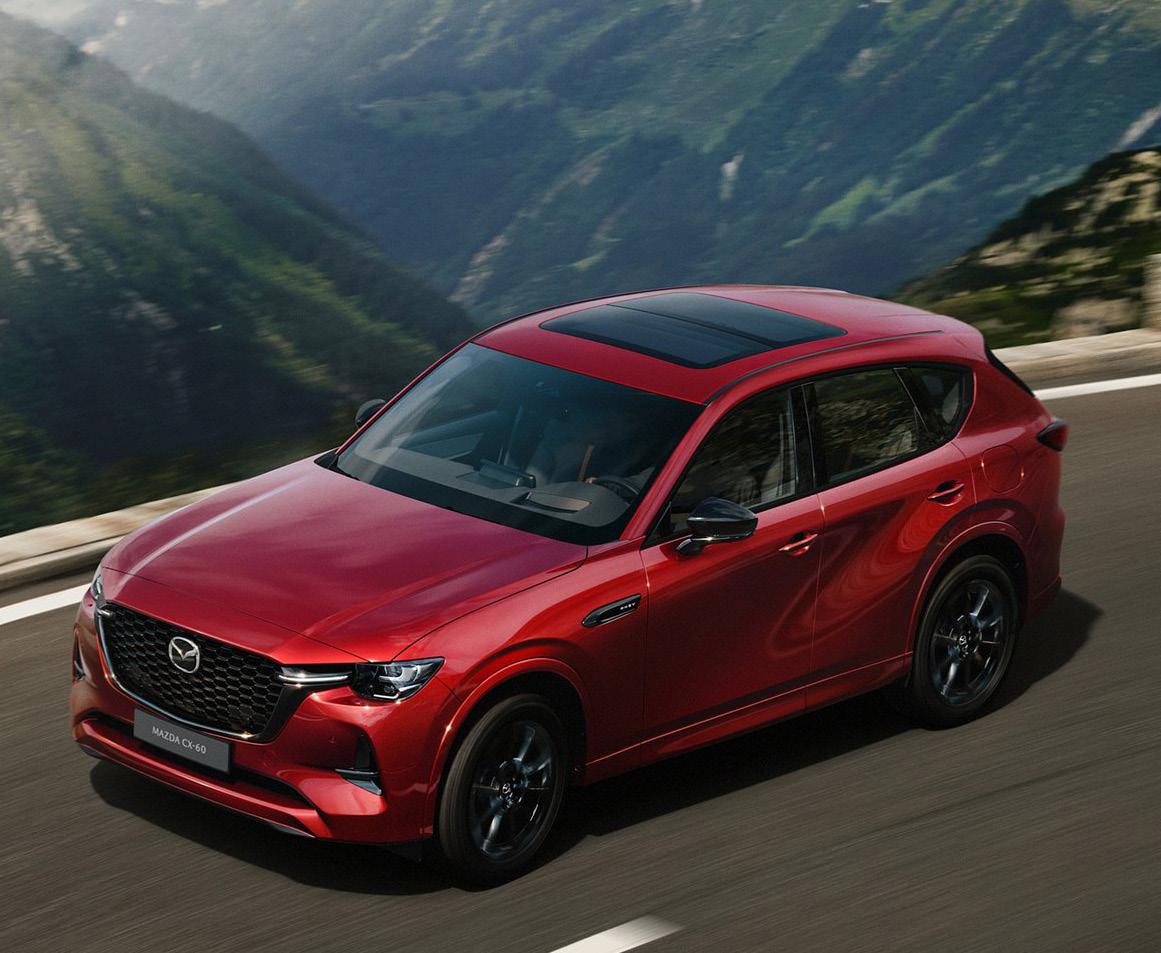
is light and self-centring, instruments are an ergonomic delight; the centre stack is beautiful, the dash and screens are wide, bright and clear – everything is state-of-the-art and seems like it’s been designed with you in mind, like the USB-C ports and wireless charging for your phone. Safety is paramount; for example, the new Smart Brake Support (SBS) is an advanced safety system that is always ready to help drivers if they lose concentration or control. It helps prevent traffic accidents by alerting the driver to an impending impact or, if necessary, it can even apply the brakes to avoid or minimise an impact.
360º View Monitor uses four exterior cameras to provide a ‘see-through’ view of the surroundings. It provides the driver with a glimpse through the front, rear and side of the car to make low-speed manoeuvring and parking safe and simple. The beautiful lines, a powerful and responsive engine plus the gorgeous cabin and infotainment system, backed by the peace of mind from multiple safety systems, means that every trip in the new CX-60 is there to be enjoyed.
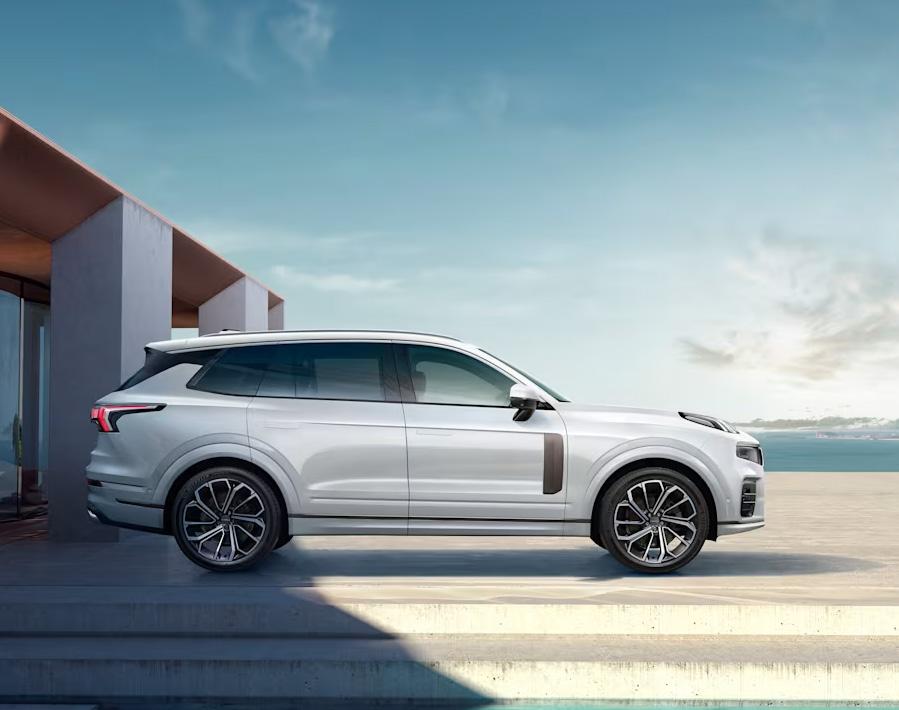
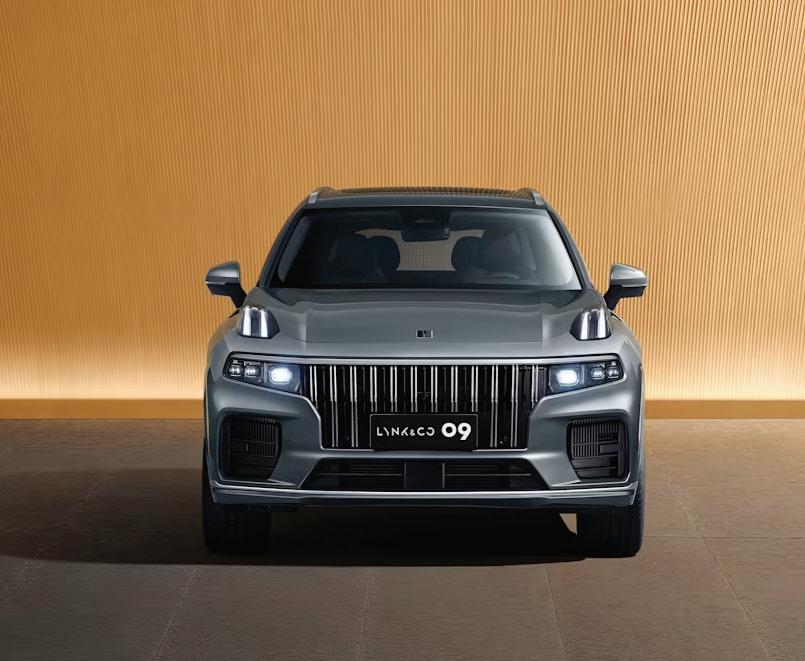
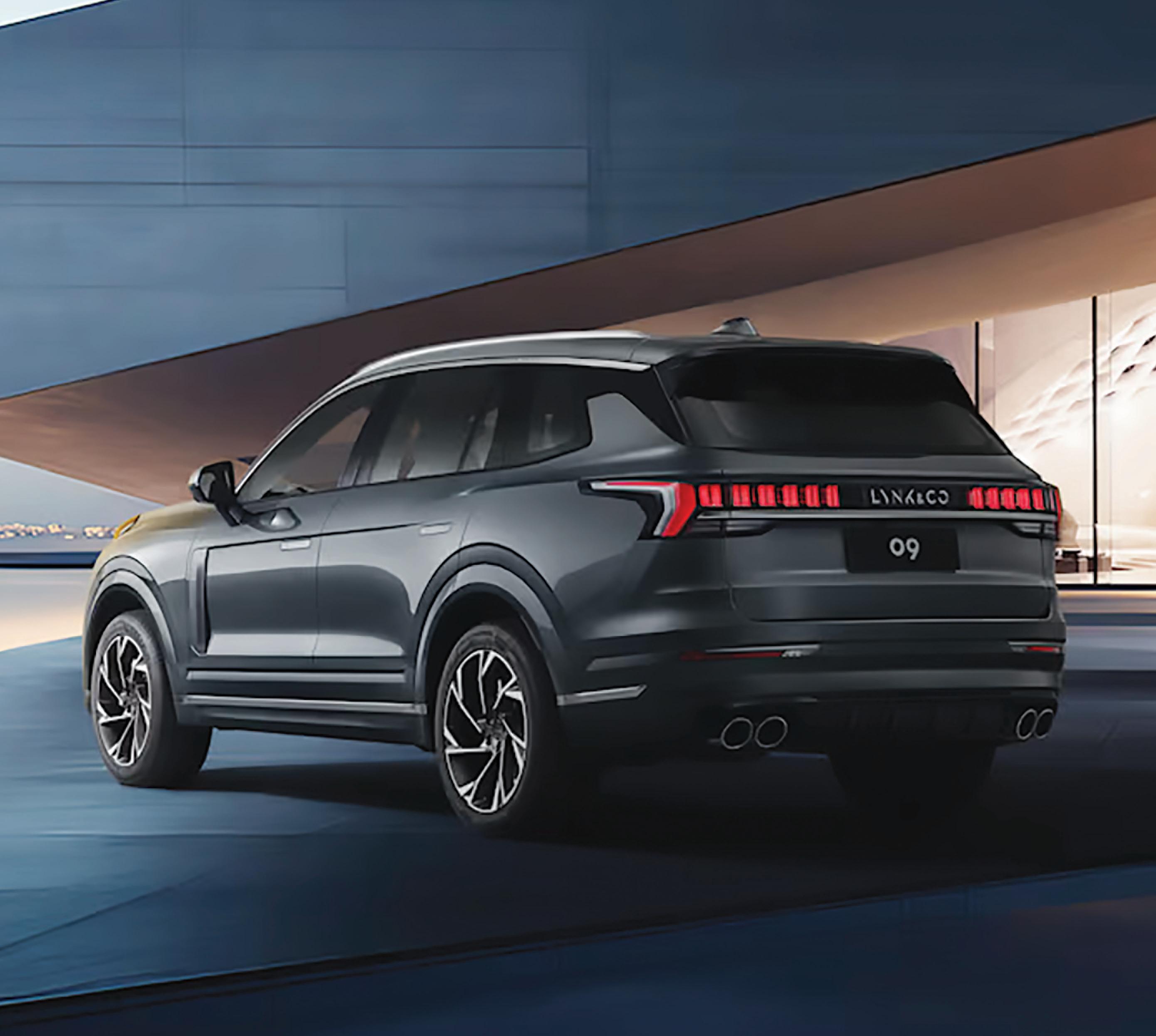
EXTERIOR Very impressive design and presence, the three-row, seven-seat 09 SUV merges both European and Chinese atyling tastes, quite busy but also positively distinctive; floating roofline, raked rear screen, flush door handles, distinctive upper headlights, large strong grille with vertical lines, llarge 20-inch alloy wheels, with split-level LED headlights and intricate LED taillights design, together with deft touches of colour, give the 09 a more unique and classy look, especially at night. Lynk & Co is obviouly targetting a more youthful audience for this car
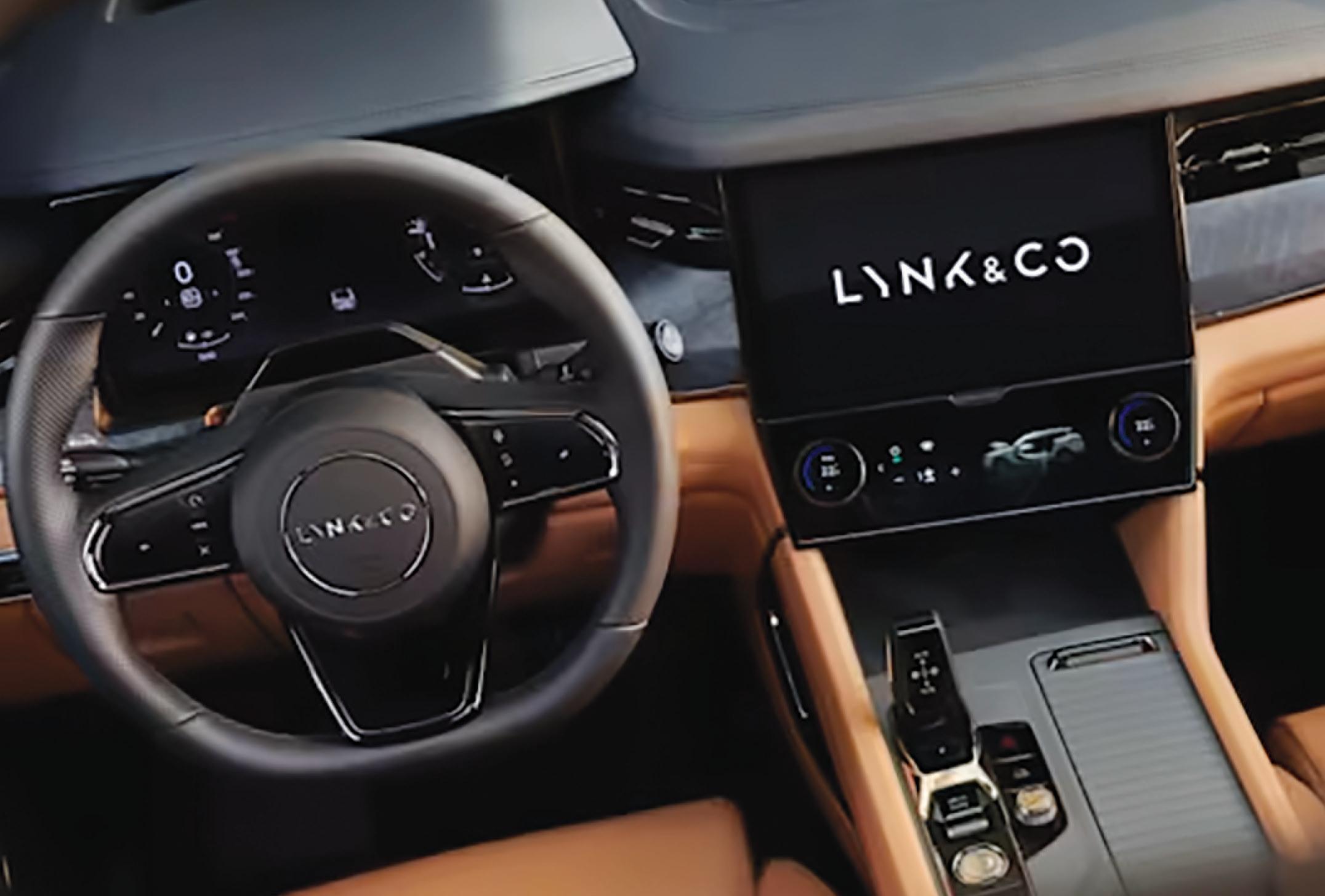
INTERIOR The 09 is spacious and practical. With its three-row seating configuration, it’s really one of the roomiest SUVs in its segment; high driving position for more comfort and control, second and third rows offer room for up to seven people (and third row is power folding); two large touchscreens provide clear, bright information for your driving and also for general infotainment; Apple CarPlay, Android Auto, 14-speaker premium Bose sound system, wireless charging, 4-zone aircon, air purifying system – you name it, this car has it!
ENGINE Turbocharged 2.0 litre Drive-E four cylinders paired with 48V BSG mild hybrid system MAX POWER 254 hp (160 kW) @ 5,000 rpm
TORQUE 350 Nm from as low as 1,800 rpm
TRANSMISSION Smooth eightspeed automatic with Economy, Sport and Comfort drive modes LYNK
SAFETY/SECURITY Lots of high-tech driver-assist systems,including forward collision warning, lane keeping assist, 360° panoramic cameras, pedestrian detection and many more to complete a very long list
Lynk & Co is not just a car company. Founded relatively recently, it brings together Geely, one of the most progressive private Chinese companies and Volvo Cars, and therefore combines the strong safety and quality culture of Sweden and Europe with Chinese prowess in design and manufacturing.
Built on Volvo’s advanced SPA architecture and standing as the brand flagship, the 09 embodies the spirit of Lynk & Co’s philosophy to bring a new and more modern approach to automotive luxury.
It is luxurious, it is stylish and it performs well but, in addition, Lynk & Co wants you to enjoy your car more than you may have done in the past. The latest Lynk & Co 09 invites you to immerse yourself in a refined but also modern and youthful interior, designed to deliver a striking visual and sensory impact on every drive.
The interior is wonderful. In addition to the luxurious and supportive seating, with the 12.8” central display and 12.3” full digital cluster, the driver and passengers enjoy vibrant and accurate colours with a wide and bright display, enhancing
your infotainment experience. Luxury used to mean simply leather and double stitching. Lynk & Co has all of this but it is now backed up by the latest technology. It’s ahead in the technological game with new chip technology; the electronic architecture has been completely overhauled with a new central processing unit and the new Snapdragon high-end chip; all this means that reaction times on your Apple CarPlay or Android Auto and on the two large screens are superfast and which provide crystal clear driving information and infotainment for a faster interactive experience. The interior ambient lighting is so beautiful and engaging, the Bose premium sound system is magnificent and the advanced air filters and purifying system will reassure even the most health-conscious.
The 2.0 litre turbocharged engine powerplant means acceleration and traffic situations pose no problem, highway driving is a relaxing breeze especially with the advanced lane-keeping technology, and even if the heavy traffic does slow you down, you couldn’t have a more healthy, pleasant and engaging environment to spend your valuable time in.
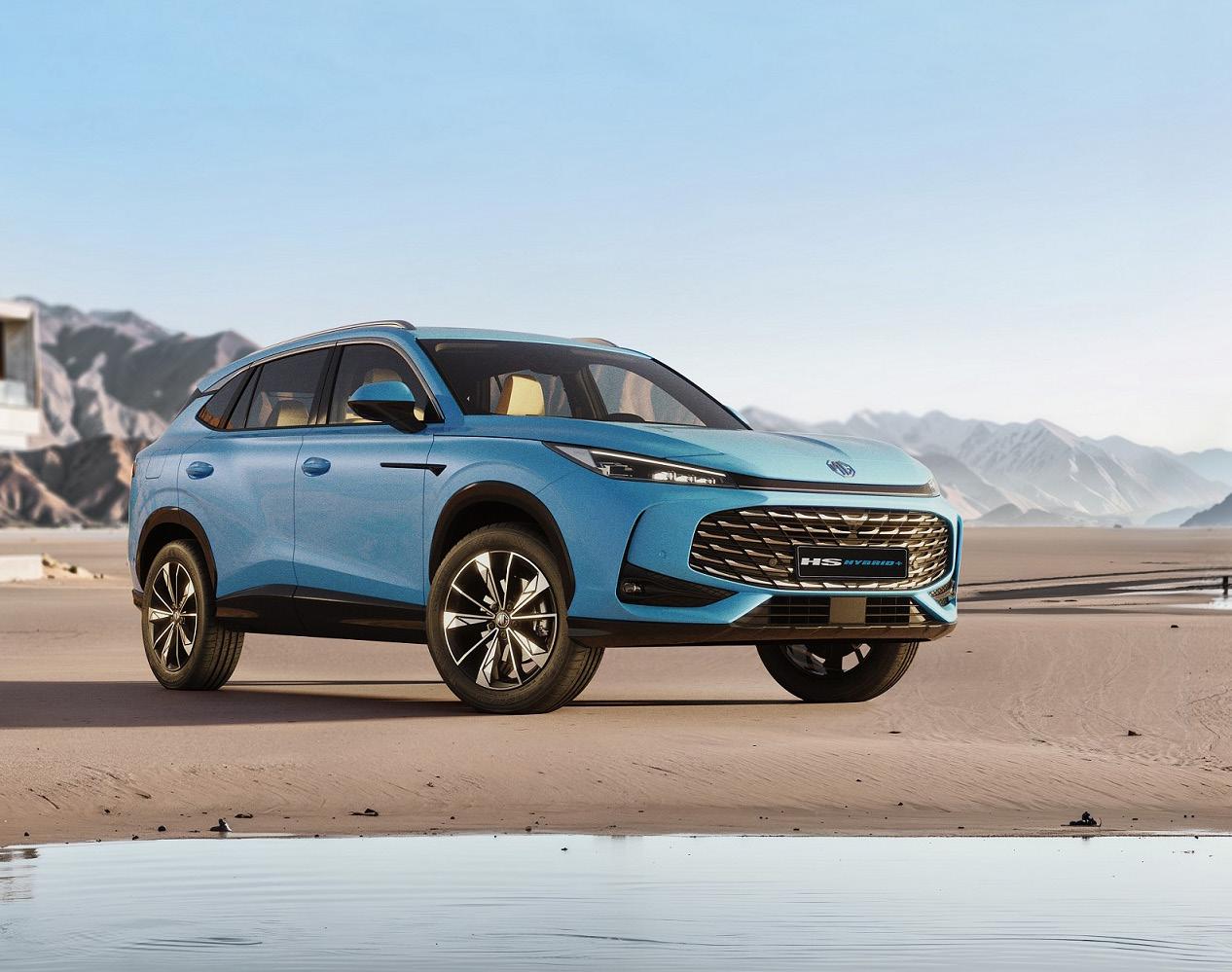
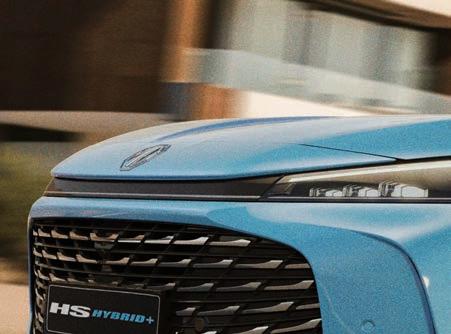
EXTERIOR The HS Hybrid+ stands out with its black grille and chrome accents, slimline LED headlights, taillight bar, silver roof rails, and a sporty rear spoiler that are sure to turn heads. Its premium 19-inch alloys and dynamic lines give it a sporty yet sophisticated appearance. The attention to detail in the exterior design reflects MG’s commitment to solid quality and stylish aesthetics
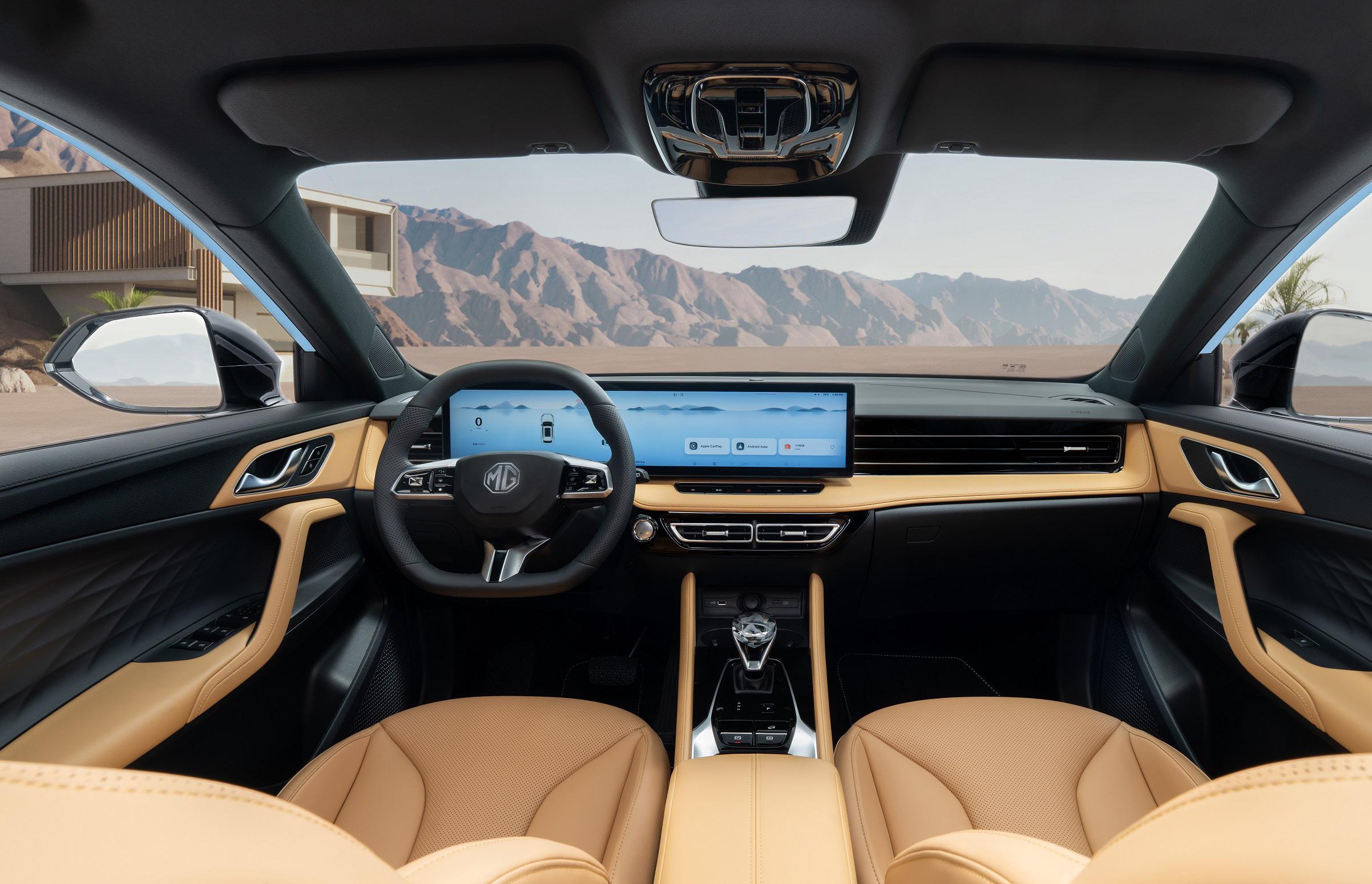
INTERIOR Spacious cabin, quality materials and premium leather seats ensure a comfortable ride for driver and passengers; the 27-inch dual digital display system (infotainment and driver display) provide style with practicality, supported by phone charging and satellite navigation for a connected driving experience; BOSE audio system with eight speakers delivers crystal-clear sound; convenience features like dual-zone air con, rain-sensing wipers, seamless Apple CarPlay and Android Auto integration enhance the driving experience;
ENGINE 1.5 litre high-efficiency, turbocharged engine
MAX POWER 173 hp (165 kW) @ 5,000 rpm
TORQUE 340 Nm (251 lb-ft) from 1,700 rpm
TRANSMISSION Effortless transitions between EV and petrol modes
SAFETY/SECURITY Equipped with MG Pilot, the brand’s suite of advanced driver-assistance systems, the HS Hybrid+ ensures safety and peace of mind; features include Adaptive Cruise Control, Active Emergency Braking, Forward Collision Warning, Lane Keep Assist, Blind Spot Detection, and Rear Cross Traffic Alert — all contributing to its 5-Star Euro NCAP safety rating.
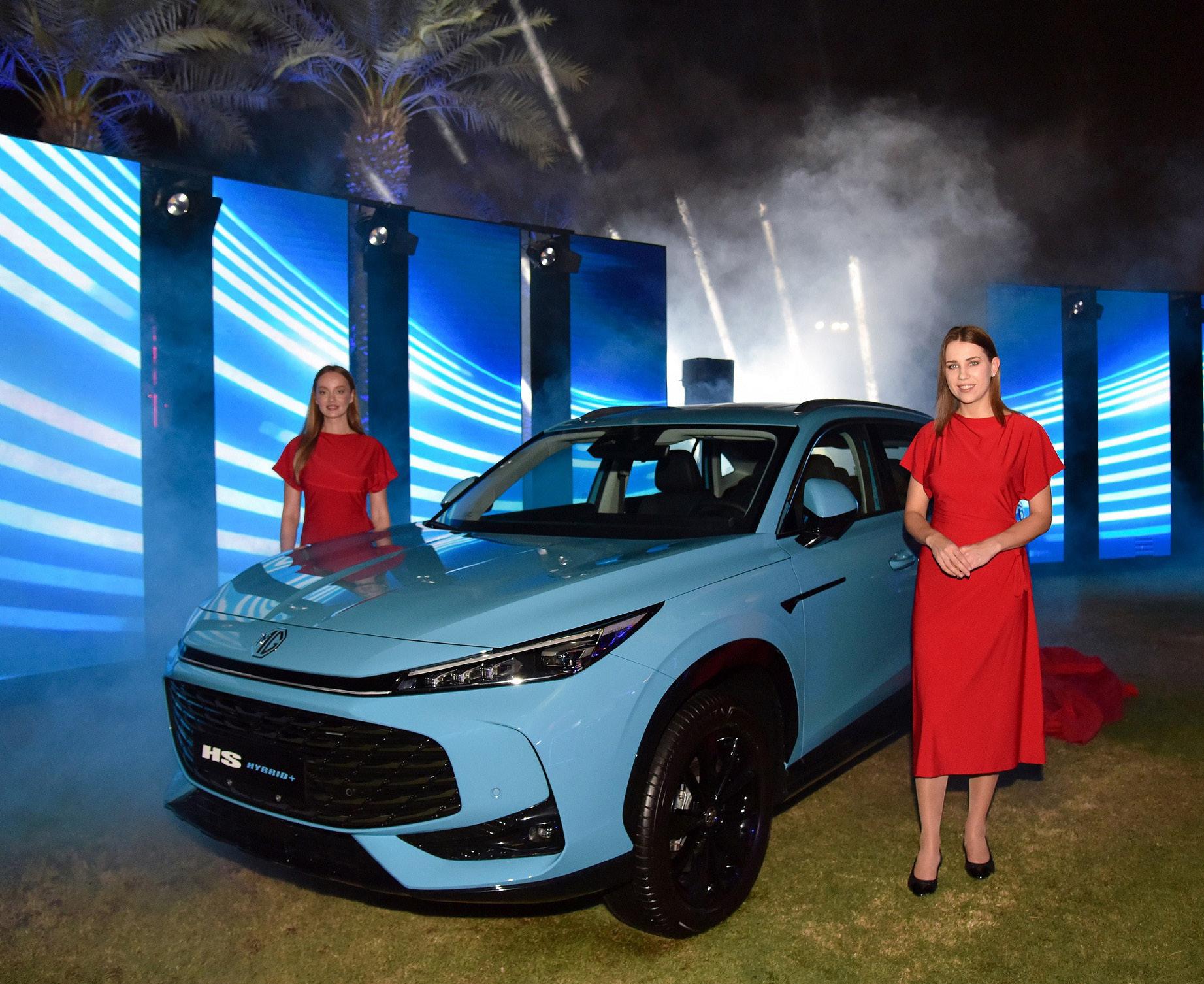
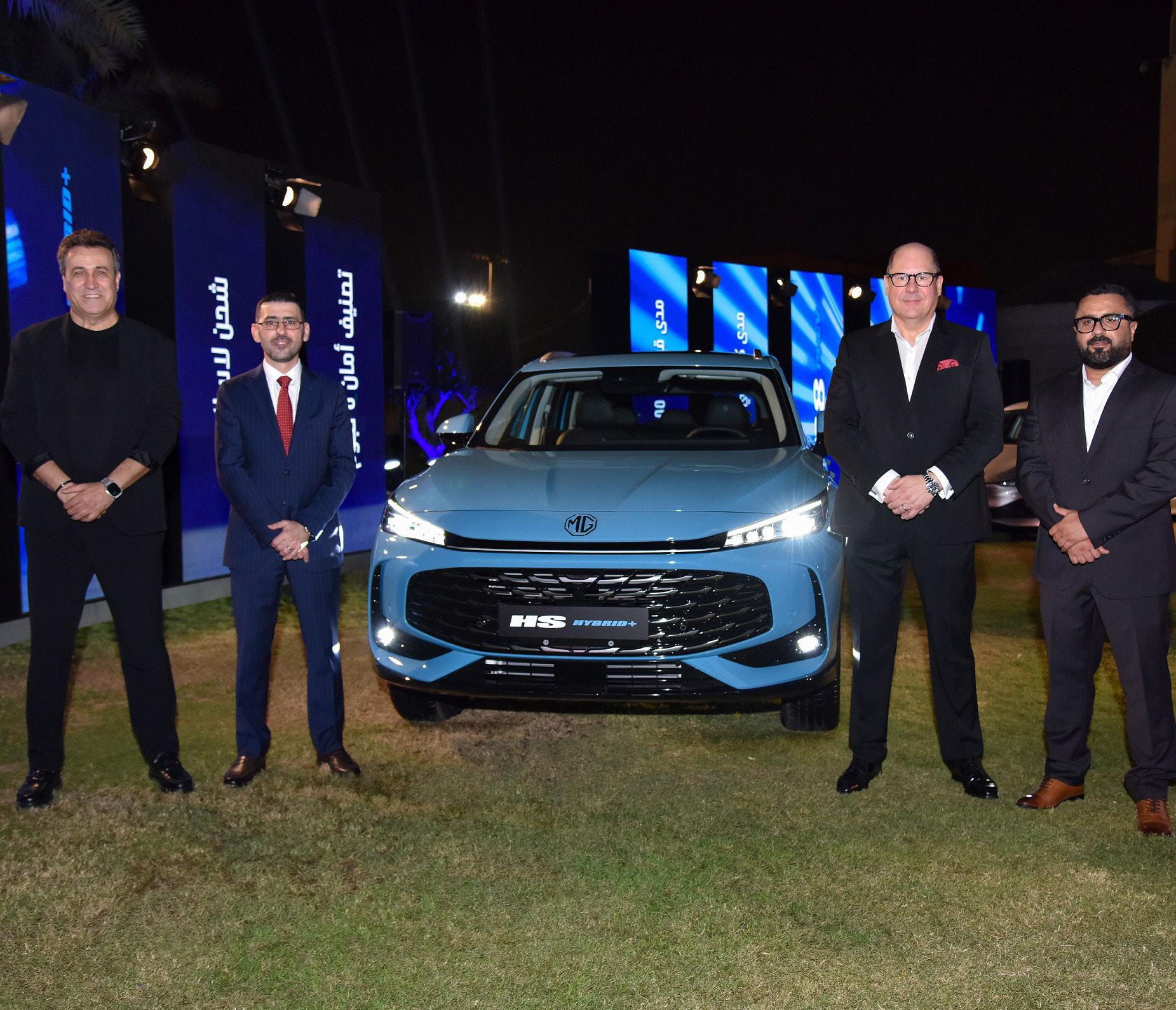
Auto Class Cars has launched the all-new MG HS Hybrid+ in Qatar, offering a combination of advanced hybrid performance, efficiency, striking design, and premium comfort for drivers seeking a smarter and more versatile SUV. The MG HS has always been a beautiful blend of performance, style and comfort and the latest Hybrid model has again made a huge step in the midsized SUV segment, offering the very latest technology and poerformance.
The all-new MG HS Hybrid+ is the brand’s second hybrid model to be launched in Qatar, following the recent arrival of the MG 8 Plug-in Hybrid.
The all-new MG HS Hybrid+ combines a responsive petrol engine with a powerful electric motor for an intelligent hybrid driving experience. Its powertrain seamlessly switches between Electric and Petrol modes, ensuring smooth acceleration, lower fuel consumption, and reduced CO2 emissions. With a combined range of up to 1,287 km, the HS Hybrid+ offers the freedom to go further with confidence. The 1.5T hybrid engine delivers plenty of
power for highway cruising and rapid acceleration when needed, combining power and efficiency with effortless transitions between EV and petrol modes.
The MG HS remains one of the brand’s most popular models, ranking as MG’s second bestselling car in Europe in 2024. In the UK, the brand’s birthplace, it has consistently appeared among the top 10 best-selling cars. The firstgeneration HS was also named Middle East Car of the Year in 2020.
Across all versions, the MG HS offers luxury, refined performance, precise handling, and enhanced ride comfort. And don’tforget those special MG touches like the crystallised gear knob and sporty three-spoke squaricle steering wheel that most definitely add chic to the modern, driverfocused appeal of the MG HS Hybrid+.
MG customers also benefit from the very generous 6-year/200,000 km manufacturer’s warranty and now with an eight-year 200,000 km battery warranty. With so many features you should check out the MG HS Hybrid+ at Auto Class Cars, Salwa Road or at their showroom in Lusail City.
By Ola Diab and Terry Sutcliffe
As we drive around Qatar, whether on our own or using navigation apps such as Waze or Google Maps, we can’t help but notice the unique names of streets, roads, expressways, underpasses, and other public road infrastructure. Many of these are named after notable individuals, some familiar and others less so. Let’s take a closer look at some of these road names and the people they honour.
Note: Bin, which can also be written as ibn means 'son of,' and Abi, which can also be written as Abu or Bu, means 'father of.'
Streets with Qatari names (ordered by date of reign)
Jassim Bin Mohammed Street
Location: Between the Amiri Diwan and Msheireb Downtown Doha (MDD) on one side and Souq Waqif on the other.
Who is it named after?
Sheikh Jassim bin
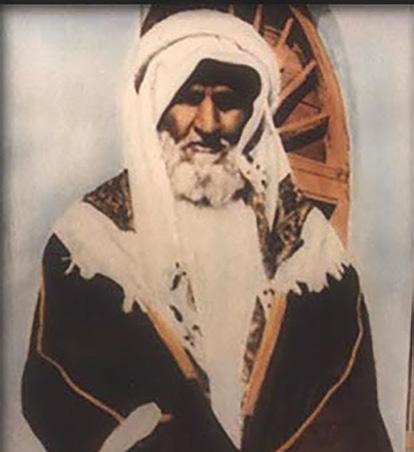
Mohammed Al Thani was the founder of modern Qatar who resisted the increasingly intrusive rule of the Ottomans and finally broke the rule of the Ottoman empire over Qatar at the battle of Wajba in 1893. His accession date as Amir was 18 December 1878, which is now celebrated every year as National Day. He was both a successful military leader who united his people behind him and a strategic statesman who made Qatar a power in the region. He also improved the infrastructure of the country and the standard of living of its people, was a wise judge and a respected poet of vernacular ‘Nabati’ poetry. He passed away in 1913.
Abdulla Bin Jassim Street
Location: Also known as the blue street, Abdulla Bin Jassim St is parallel to Al Corniche Street, between Souq Waqif and the seafront.
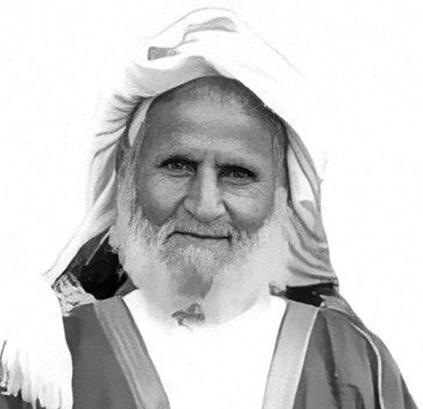
Who is it named after? Sheikh Abdullah bin Jassim bin Mohammed Al Thani (1913–1949) was the third ruler of the State of Qatar. During his rule, oil was discovered in Qatar for the first time in 1938 (but not exploited until after WWII). Sheikh Abdullah passed away on 25 April 1957.
Mohammed Bin Jassim Street
Location: In Msheireb Downtown Doha (MDD), leading towards Msheireb Mosque and his former residence, now part of Msheireb Museums.
Who is it named after? Sheikh Mohammed bin Jassim Al Thani, the son of the founder of modern Qatar. He was born in 1881, reigned for only 10 months and abdicated in favour of his brother, Sheikh Abdullah bin Jassim Al Thani. His house was renovated by the order of HH Sheikha Moza bint Nasser, and turned into a museum, Mohammed Bin Jassim House, which is one of the four historical houses within Msheireb Museums. The house demonstrates Msheireb’s traditional values as the foundations for the future development of Doha and introduces the transformation of Msheireb over time through recalling memories of its past, including Qatar’s first hotel, first bank, first pharmacy and first cafés, showcasing its present and engaging visitors in the plans for the future.
Thani Bin Jassim Street
Location: In Al Gharrafa Zone 51, between Al Shamal Road and the northern end of Sabah Al Ahmad Corridor as it joins Al Shamal Rd at Umm Lekhba Interchange.
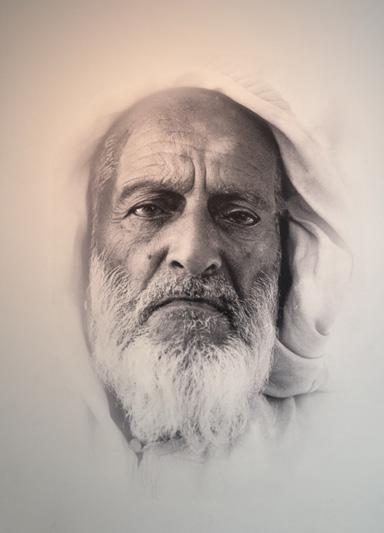
Who is it named after: Thani bin Jassim bin
Mohammed Al Thani (1856–1943) was appointed the sheikh of Al Gharrafa by his father, Jassim bin
Mohammed Al Thani, who was the ruler of Qatar at the time. In addition to the Thani bin Jassim Street,
there is also the Thani bin Jassim Stadium, also known as Al Gharrafa Stadium, which is a multipurpose stadium in Al Gharrafa where Al Gharrafa Sports Club and Umm Salal Sports Club play. Mostly used for football matches, the stadium holds 21,175 people and was built in 2003.
Suhaim Bin Hamad Street
Location: An extension to C Ring Road, at Radisson Blu Hotel Doha intersection, Suhaim Bin Hamad Street is between Bin Mahmoud and Al Sadd districts, reaching Al Rayyan Road at White Palace Intersection next to Hamad Medical City.
Who is it named after?
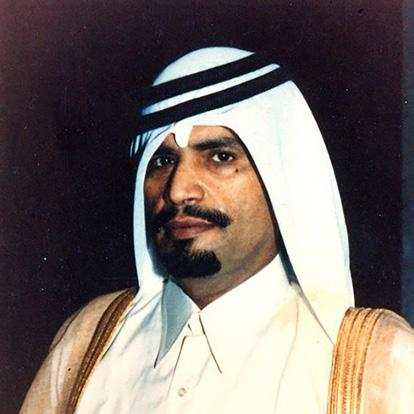
Suhaim bin Hamad bin Abdullah bin Jassim bin Muhammed Al Thani (1933–1985) served as the country's foreign minister from his appointment in 1972 until his death in 1985. He was the brother of HH Khalifa bin Hamad Al Thani, the former Amir of Qatar (1972–1995), and The Father Amir, HH Sheikh Hamad bin Khalifa (1995–2013), and grandfather of The Amir, HH Sheikh Tamim bin Hamad bin Khalifa Al Thani (2013–present).
Streets with non-Qatari names (in alphabetical order)
Ali Bin Abi Talib Street
Location: In New Slata, off C Ring Road, parallel to Salwa Road, as far as D Ring Road/Doha Expressway.
Who is it named after? Ali ibn Abi Talib (600 – 661 CE) was the fourth Rashidun caliph who ruled from 656 CE until his assassination in 661, as well as the first Shia Imam. He was the cousin and son-in-law of Prophet Muhammad (PBUH).
Ibn Abi Sulma Street
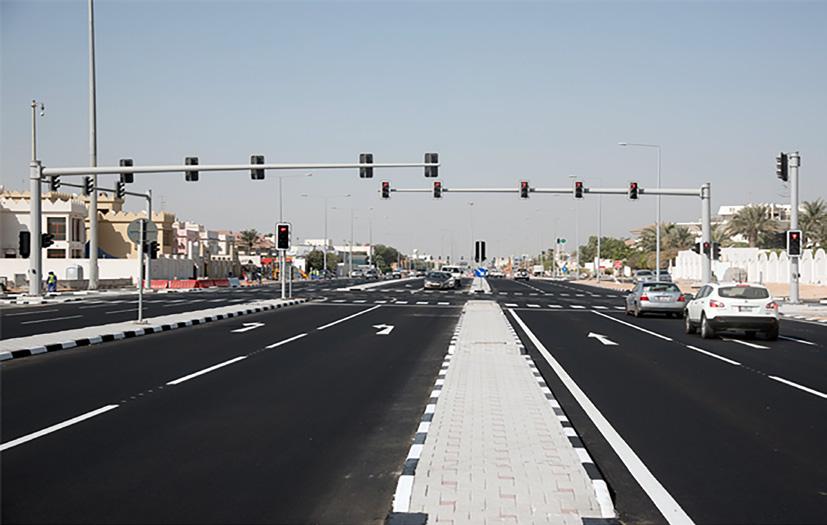
Location: Off C Ring Road, next to Holiday Villa Hotel & Residence Doha.
Who is it named after?
Zuhair bin Abi Sulma (520 – 609 CE) was a pre-Islamic Arab poet who lived in the 6th and 7th centuries CE. He is considered one of the greatest writers of Arabic poetry in preIslamic times. His father was a poet and his elder son Ka'b bin Zuhair also became a poet, reading his work to the Prophet Muhammad (PBUH).
Omar Al Mukhtar Street

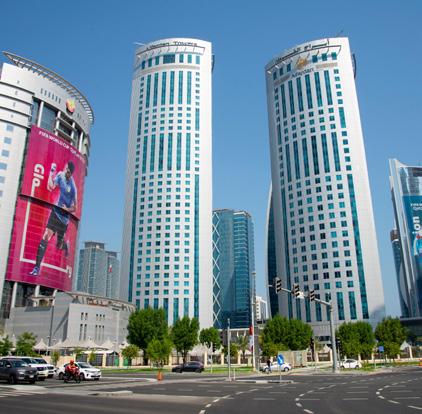
Location: Between University Street and City Center Doha shopping mall, crossing Onaiza and Lusail Streets at the iconic Al Wahda Arches Interchange.
Who is it named after?
Omar Al Mukhtar, full name Omar Al Mukhtar Muhammad bin Farhat Al Manifi (1858–1931), called The Lion of the Desert, known among the colonial Italians as Matari of the Mnifa. He was a Libyan revolutionary and imam who led the native resistance in Cyrenaica under the Senussids against the Italian colonisation of Libya. He is considered the national hero of Libya and a symbol of resistance in the Arab and Islamic worlds.
Omar Bin Al Khattab Street
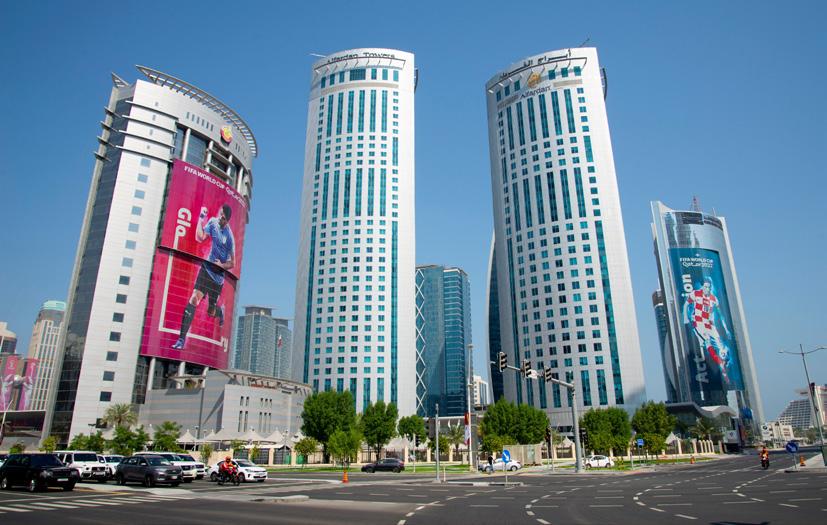
Location: In Madinat Khalifa (South) between the Doha Expressway (at Omar Bin Al Khattab Mosque) and Jassim Bin Hamad Street (old Arab League Street).
Who is it named after? Omar bin Al Khattab was the second Rashidun Caliph from 634 to 644 CE. A caliph is a religious jurisdiction and title given for the reigns of the first caliphs such as Abu Bakr, Omar, Uthman, and Ali collectively, believed to represent the perfect Islam and governance who led
the Muslim community and polity from the death of the Islamic prophet Muhammad. Al Khattab was a senior companion of the Prophet Muhammad (PBUH), ruling after Abu Bakr. Initially an opponent of Muhammad, Omar converted to Islam around 615 CE and became one of his chief advisors, eventually embracing the faith and supporting the new community. As caliph, he established the diwan, a register of warriors' pensions, and oversaw a significant expansion of the Rashidun Caliphate. He was assassinated in 644 CE and is buried in the Prophet's Mosque in Medina.
In addition to the street, there is also a mosque and a health centre named after him: Omar Bin Al Khattab Mosque in Madinat Khalifa (South) –along Omar Bin Al Khattab St – and Omar Bin Al Khattab Health Center in New Slata.
Sabah Al Ahmad Corridor
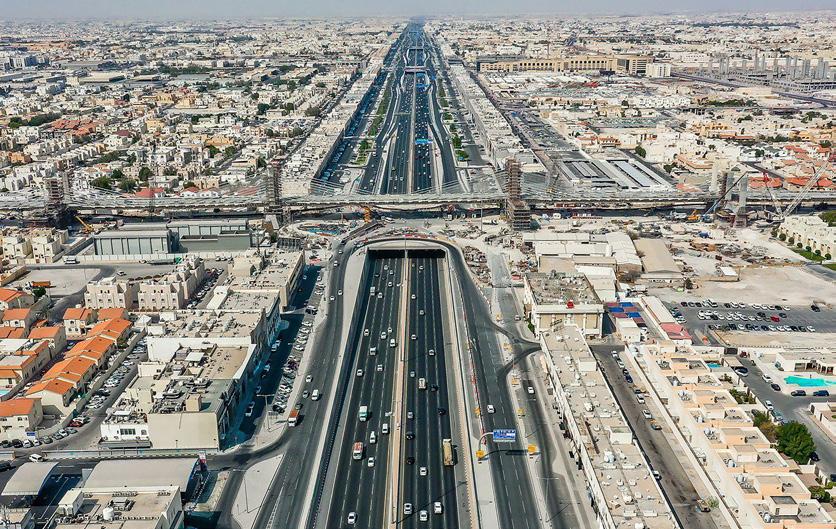
Location: Extends approximately 25 km from Hamad International Airport (HIA) to Umm Lekhba Interchange (at Landmark Mall) on Al Shamal (North) Road.
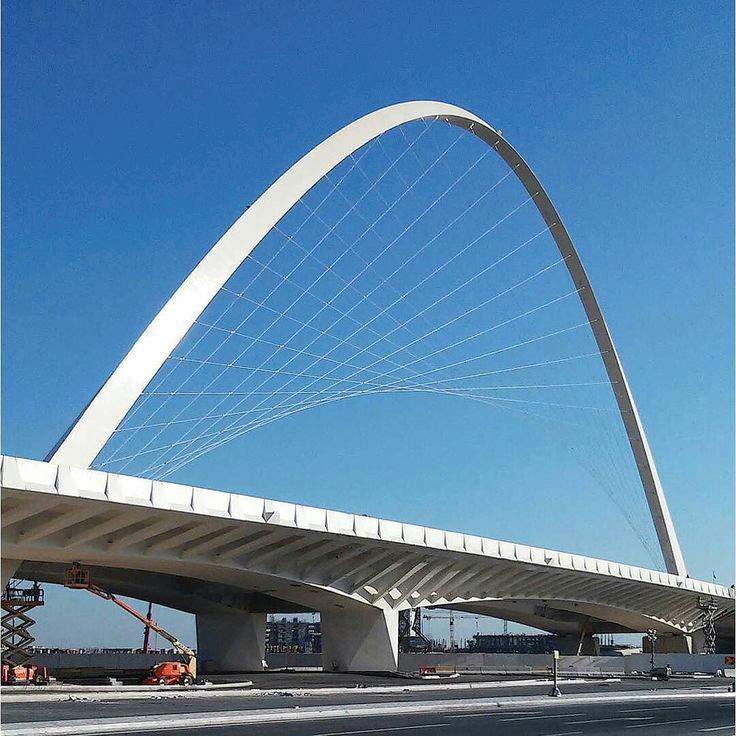
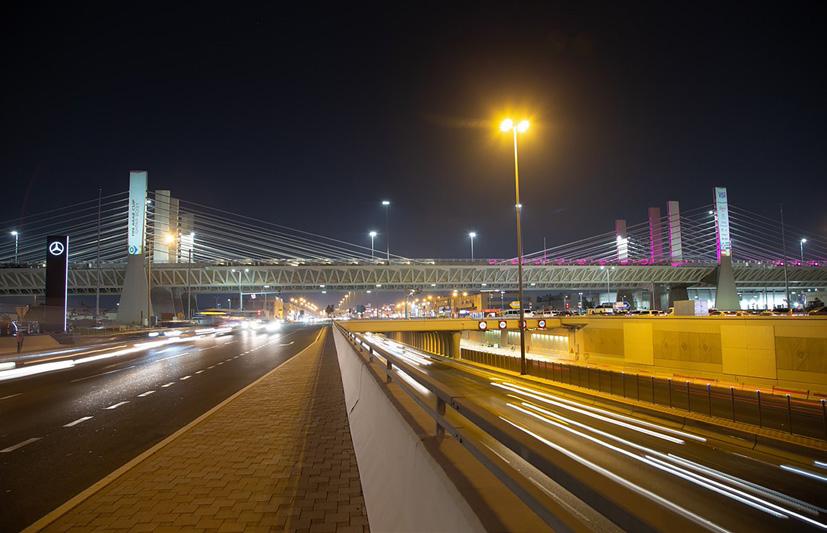
Completed in 2021, Sabah Al Ahmad Corridor represents one of Qatar’s most complex infrastructure projects. Unlike a new highway built across virgin desert, this new urban highway upgrades seven key roads: the E Ring, the old F Ring, the old Mesaimeer Road, the old Al Bustan, Bu Erayyen and Lebday Streets, and sections of Al Markhiya Street with a total of 37 km of roadworks, including enhancements to 12 km of local and connecting roads. Running from HIA to
Al Shamal Road, the corridor crosses the other major inner Doha expressway, features a striking suspension bridge over Salwa Road, and then becomes Doha’s longest tunnel beneath Al Rayyan Road/Al Rayyan Al Jadeed Street.
This ‘corridor without traffic lights’ improves access to major areas such as Education City and connects directly to Al Markhiya St and then towards the Corniche, completing a seamless route around central Doha. With a capacity of around 20,000 vehicles per hour, the corridor has reduced travel time between north and south Doha by up to 70%, significantly easing congestion on the Doha Expressway, especially 22 February Street.
The project includes 17 interchanges, 32 bridges, and 12 underpasses, enhancing connectivity across 15 main roads serving 25 residential areas. It also features several national firsts: the first cable-stayed suspension bridge, the longest flyover, largest interchange, and longest, deepest bi-directional tunnel.
In addition, Sabah Al Ahmad Corridor provides access to five of the 2022 FIFA World Cup stada and complements the Doha Metro network, offering commuters integrated road and rail travel options.
Who is it named after?
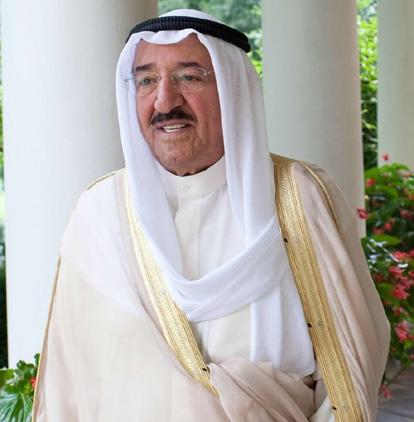
Sheikh Sabah Al Ahmad, full name Sabah Al Ahmad Al Jaber Al Sabah (1929–2020), was the Amir of Kuwait from 2006 until his death in 2020. His support for Qatar during the blockade (2017 –2021) was hugely significant, inspiring the name of one of the most important roads in Qatar.
Across Qatar, many roads, streets, and landmarks are named after influential figures from both Qatar and around the world. As you drive around the country, take a moment to notice these names, and discover the people behind them and the legacies they left behind.
In Qatar, street naming is overseen by the Ministry of Municipality (Baladiya), specifically through its Center for Geographic Information Systems (CGIS) and the Addressing and Naming Committee.
The Addressing and Naming Committee, which includes representatives from key government bodies (such as the Ministry of Interior, Ashghal, and Qatar Post), is responsible for approving names for streets, zones, and areas. The committee ensures that names reflect Qatari heritage, culture, and geography, and that they are clear, appropriate, and non-duplicative. Street names are then integrated into the National Addressing System, which provides every building in Qatar with a unique building number, street name, and zone number – the details you see on the blue address plates on (almost) every house and building all over the country.



Experience a signature lineup of cultural, lifestyle and entertainment events from football celebrations and sweet activations to a live music concert, outdoor cinema and more.

Arab Cup Activations 2025
Qatar National Day
Sweet Sikka
Baraha Cinema
Baraha Musical Concert
Hosh Msheireb
2025 1 - 18 DEC 2025 18 DEC 2025 18 - 27 DEC 2025 25 DEC 2026 3 JAN 2026 15-16 JAN 2026 1-31 JAN