India’s Warehousing and Logistics Sector Rebounds Strongly Driven by Mumbai’s Robust Uptake
08 10 16 34 35 38
Disclaimer
New Momentum for the Dadri–Greater Noida–Jewar Logistics Hub
Hon’ble Minister Inaugurates MMCT’s State-of-the-Art Campus
India Eyes Air Cargo Expansion as Minister Calls for More Freighters and Cargo-Focused Airports
Southeast Asia: The Rising Tide of Air Cargo
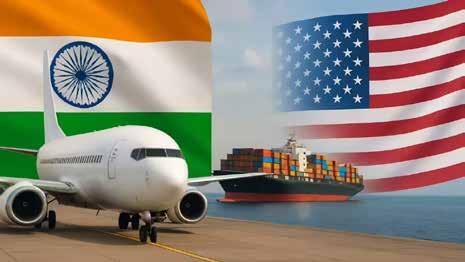
India–US Air Cargo Load Falls to 9-Year Low: Trade Corridor Faces Turbulence
Global Air Cargo Demand Surges to Record High as Middle Eastern and African Carriers Lead October Growth
A Lady in a Man’s World 19 Cover Story
Rapid Growth Propels India’s Air Cargo Industry to New Heights
Shipping AssetsThe Indian Chapter
Dr Deepti Mankad –Newly Appointed Head, Women’s Wing, MUI
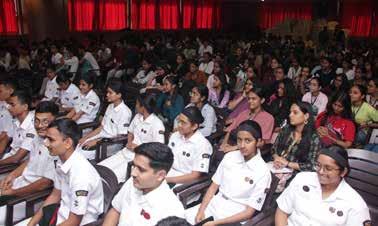
Mumbai Hosts Youth Maritime Career Conclave, Empowering Tomorrow’s Seafarers – 29 November 2025
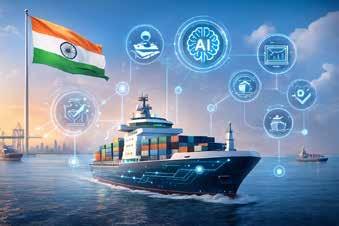
How AI Can Propel India’s Maritime Edge
All advertisements in this magazine are placed with no liability accepted by the publisher for the material content therein. No responsibility is accepted by the publisher for omission or error or non-insertion of any advertisements. All advertisements and material in this magazine are subjected to approval by the publisher and are not necessary the opinion of the publisher. No liability is accepted for advertisements that are placed or any information that might be criminally connected. All information is checked to the best of our knowledge and is reliant upon the material submitted not being in contravention of all relevant laws and regulations and within the provisions of the Trade Practices Act.
Reproduction Prohibited
Maritime Matrix Today will not be responsible for the views expressed by contributors in their personal capacity. All rights reserved. Reproduction in part or whole without the permission of the Editor is prohibited.
Readers are recommended
To make appropriate enquiries before sending money, incurring expenses or entering into any commitment in relation to any advertisement published in this publication. Maritime Matrix Today does not vouch for any claims made by the Advertisers of Products and Services. The Printer, Publisher, Editor and Owner of Maritime Matrix Today shall not be held liable for any consequences, in the event such claims are not honoured by the Advertisers.
RNI: MAHENG/2013/50159
Published by Marex Media Pvt Ltd C-209, Morya House, New Link Road, Andheri West, Mumbai 400058 Email: info@marexmedia.com
Air Cargo’s New Era — India, Asia, and the Global Outlook
Air cargo has emerged as one of the most telling indicators of global economic health. As freight volumes reach record highs and supply chains reorganize, the sector is undergoing a pivotal transformation. India, Asia, and the global market each reflect different facets of this shift, collectively shaping the future of international logistics.
India’s air cargo sector, once characterized by slow growth and infrastructure gaps, is now showing signs of real momentum. Government reforms—including the PM Gati Shakti initiative, improvements in customs processes, and investment in airport modernization—are helping unlock long-stalled potential. Major hubs like Delhi, Mumbai, and Bengaluru are expanding capacity, while secondary airports are joining the cargo network through growing pharma, fresh produce, and e-commerce shipments.
Asia remains the backbone of global air cargo. Robust manufacturing ecosystems in China, Vietnam, South Korea, and other regional economies continue to fuel strong cargo demand. Cross-border e-commerce expansion is transforming expectations for speed and reliability, pushing airlines to deploy more freighters and technology-driven solutions.
At the same time, Asia faces disruptions. Geopolitical tensions, tariff adjustments, and supply chain diversification are reshaping trade routes. Some production
CORRIGENDUM
is shifting out of China, while emerging economies like India, Malaysia, and Indonesia are gaining attention. This rebalancing creates both challenges and opportunities, positioning Asia to broaden its leadership if it invests in automation, sustainability, and regional connectivity.
Worldwide, air cargo continues to display resilience. Industrial production and trade indicators are improving, and key corridors—especially Europe–Asia and Middle East–Asia—are seeing double-digit expansion. But the industry is not without stress. Fuel costs remain elevated despite softening crude prices, airspace fragmentation complicates routing, and demand growth is uneven across regions, with the Americas lagging behind.
The present issue of Maritime Matrix Today brings forward the Air Cargo developments in India,Asia and the world.
The air cargo industry stands at a defining moment. For India, it is a chance to rise as a competitive global logistics player. For Asia, it is an opportunity to cement its leadership in a shifting trade landscape. For the world, air cargo remains the backbone of high-value and timecritical commerce—and the gateway to future economic resilience.
Kamal Chadha
The article titled “SPNM’s Mumbai Gathering a Resounding Success” (Page 30) published in the November 2025 edition of Maritime Matrix Today, carried an incorrect name, printed as “Advaith Memon.”The correct name is “Advaith Menon.”
Jagdamba Pandey Manager, Business and Promotion jagdamba@marexmedia.com
Bhavna Pimpale Coordinator bhavna@marexmedia.com
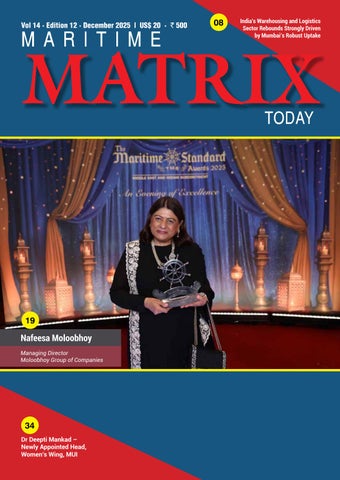
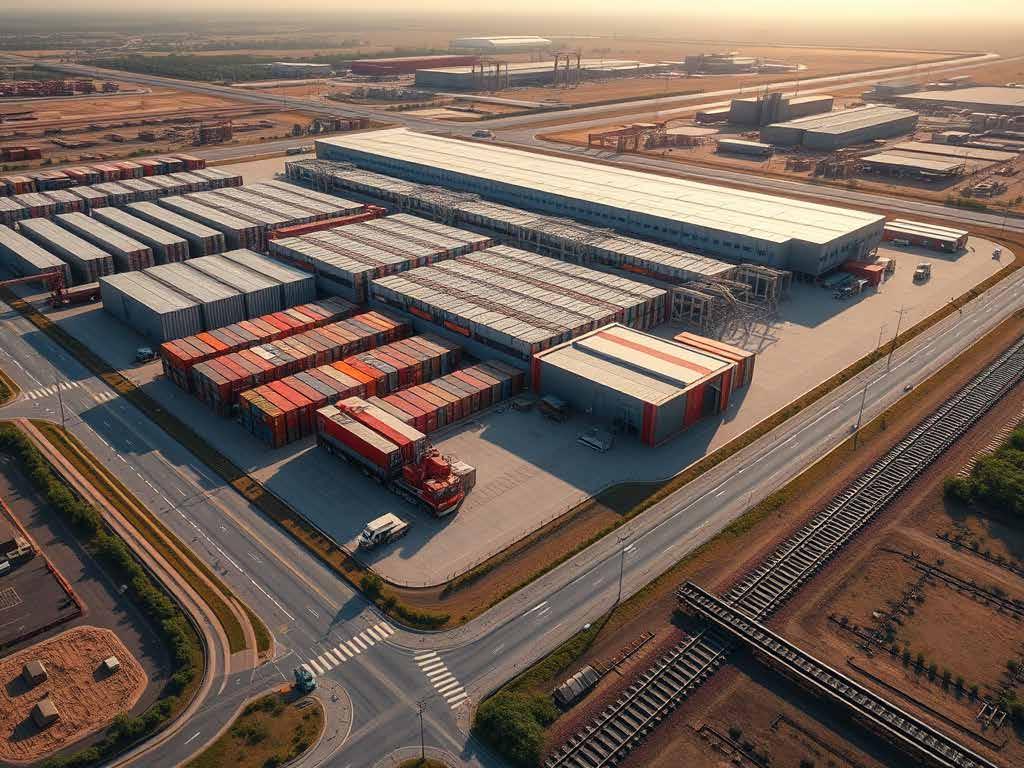
India’s Warehousing and Logistics Sector Rebounds Strongly Driven by Mumbai’s Robust Uptake
India’s warehousing and logistics sector staged a notable recovery in the third quarter of calendar year 2025 (Q3 CY2025), signalling renewed momentum after several subdued quarters marked by economic uncertainty and fluctuating demand patterns. According to research data, national absorption reached 9.2 million sq ft during the quarter, reflecting a 64% rise over the previous quarter (Q2 CY2025). This rebound underscores the resilience of India’s logistics ecosystem and highlights the sector’s gradual stabilisation in response to improving domestic activity and an uptick in consumption-led demand.
Despite the sequential improvement, the sector’s performance remained 36 % lower year-on-year, compared with Q3 CY2024, which had recorded a historic peak in warehousing absorption. Last year’s exceptional numbers were largely driven by post-pandemic expansion cycles, accelerated supply chain reconfiguration, and large-scale commitments from e-commerce, retail, and third-party logistics (3PL) operators. In contrast, the transition into 2025 has been more measured,
with occupiers focusing on consolidation, cost optimisation, and selective growth.
Nevertheless, the strong quarter-on-quarter jump is being viewed as a positive pivot. Industry analysts believe it reflects the beginning of a new phase of recovery, supported by improving business confidence, enhanced infrastructure readiness, and increasing investments in Grade A warehousing spaces.
Mumbai Emerges as the Bright Spot with Nearly Half of India’s Total Absorption
Among all major logistics hubs, Mumbai emerged as the strongest performer in Q3 CY2025 ,significantly outpacing other cities in terms of fresh absorption. The region accounted for 47% of pan-India warehousing activity , translating to around 4.29 million sq ft —by far the highest share of any market.
This stunning surge represented a 377% jump from Mumbai’s absorption levels in the previous quarter and an impressive 10 % increase year-on-year , defying the broader national trend of
moderated annual activity. This robust performance primarily to two sub-markets: Bhiwandi and Panvel .
These zones have long been recognised as crucial logistics corridors due to their superior connectivity, availability of large-format warehousing spaces, and proximity to key consumption centres. In Q3 CY2025, Bhiwandi and Panvel together accounted for almost all of Mumbai’s warehousing absorption, reaffirming their position as preferred destinations for 3PL firms, e-commerce players, FMCG companies, and industrial occupiers seeking operational efficiency.
Why Mumbai Is Leading India’s Warehousing Revival ?
Several structural factors contributed to Mumbai’s exceptional quarter:
1. Strategic Location and Port Connectivity -Mumbai—and the adjoining Navi Mumbai region—is home to Jawaharlal Nehru Port (JNPT) and is well integrated with upcoming multimodal logistics infrastructure, including the Mumbai Trans-Harbour Link (MTHL) and the Dedicated Freight Corridor (DFC). This makes the region ideal for companies looking for rapid movement of goods between ports, production units, and consumption markets.
2. Availability of Grade A Warehousing Supply -Developers in Bhiwandi and Panvel have consistently upgraded offerings to meet the demands of global-standard occupiers. With large parcels of land, scalable parks, and modern facilities, these micro-markets attract businesses looking for futureready warehousing solutions.
3. Surge in 3PL and E-commerce Activity -A renewed uptick in domestic consumption, driven by retail expansion and festive-season stockpiling, boosted demand from 3PL players. E-commerce companies, too, have resumed network expansion after a period of optimisation, contributing significantly to short-term take-up.
4. Consolidation and Repositioning -Many occupiers relocated operations from smaller, fragmented facilities to modern, centralised hubs in Bhiwandi and Panvel to improve operational efficiency and reduce long-term costs.
Northern Region - Delhi-NCR continued to record healthy activity, though growth was more modest compared with Mumbai. Markets such as Sohna, Luhari, and Ghaziabad saw increased inquiries from 3PL and electronics firms. However, the region was affected by delayed decision-making among large occupiers, who adopted a more cautious approach due to economic volatility and changes in global supply chain strategies.
Southern Region - Bengaluru, Chennai, and Hyderabad witnessed steady leasing but did not experience major spikes.
Demand was largely driven by e-commerce and retail, with some traction from manufacturing companies seeking longterm facilities. Infrastructure improvements like the Peripheral Ring Road (Bengaluru) and the Chennai-Bengaluru Industrial Corridor are expected to support future absorption.
Western Region (Beyond Mumbai) - Pune and Ahmedabad reported stable but moderate leasing. Pune remained attractive for auto, engineering, and industrial players, while Ahmedabad benefited from manufacturing-led demand. Both cities are expected to see stronger absorption in coming quarters as new supply becomes operational.
Eastern Region - Kolkata showed subdued activity, reflecting slower industrial momentum. However, improved investments in logistics infrastructure could support long-term prospects.
Comparing Q3 CY2025 with Past Trends
The warehousing sector experienced significant turbulence over the past two years. After the pandemic-led boom and the historically high absorption levels of 2023–2024, the market entered a consolidation phase. Occupiers focused on rebalancing supply networks, streamlining large footprints, and navigating cost pressures from rising land and construction prices.Q3 CY2025’s performance, therefore, marks a meaningful shift. The 64 % QoQ jump suggests the market is now entering a new growth cycle—one that is steadier, more rational, and driven by sustainable long-term occupier strategies rather than short-term expansion bursts.
The Way Ahead
With India’s macroeconomic fundamentals remaining stable and infrastructure projects advancing rapidly, analysts expect warehousing demand to strengthen further in CY2026.The festive season, upcoming policy incentives, and continued growth in manufacturing and retail will likely accelerate leasing activity.
Mumbai is expected to remain one of the most active markets, particularly as the Navi Mumbai International Airport progresses and logistics connectivity improves. Other hubs such as Bengaluru, Chennai, and Delhi-NCR are also poised for healthy growth as new supply pipelines become available.
The sector’s long-term trajectory remains exceptionally positive. Increasing formalisation, rising investor participation, and adoption of advanced warehousing technologies are set to transform India’s logistics landscape into one of the most dynamic in Asia.
New Momentum for the Dadri–Greater Noida–Jewar Logistics Hub
The Dadri–Greater Noida–Jewar belt continues its transformation into a strategic freight and logistics powerhouse, with major infrastructure developments underway to leverage the region’s multimodal connectivity. The area is being fasttracked as a “rail-road-air” cargo triangle combining Dedicated Freight Corridors (DFCs), an upcoming airport, and large-scale logistics facilities.
Progress
on the Multi-Modal Logistics Hub (MMLH)
A key component of this push is a ₹5,881 crore MultiModal Logistics Hub (MMLH) being developed by DMIC Integrated Industrial Township Greater Noida Limited (DMIC IITGNL) on 311 hectares in Dadri. The project is structured under a PPP (Public-Private Partnership) model via a DBFOT (Design-Build-Finance-OperateTransfer) approach, in three phases. Once complete, the hub is expected to handle 1.44 million TEUs of container traffic annually , plus around 7.9 million tonnes of bulk cargo . Infrastructure plans include modern warehousing, cold storage, bonded zones, container repair workshops, packaging and labelling units, and dedicated office spaces for logistics operators. In Phase 1, the hub will have 3
million sq ft of warehouse space and 0.3 million sq ft of cold storage , which can scale up as demand grows.
Strategic Location & Connectivity
The logistics hub sits at the junction of the Eastern and Western Dedicated Freight Corridors (DFC) , making it ideal for high-capacity rail freight operations. Its proximity to the Noida International Airport (Jewar) is a major advantage: the MMLH will serve as a feeder hub to the air cargo complex. To improve road connectivity, a 3 km link road is being planned between Greater Noida and Jewar Airport. This will bridge a gap between existing wide roads and ease traffic flow once the airport becomes fully functional.
Land Acquisition and Social Assessment
A Social Impact Assessment (SIA) has been completed for the project, following the Right to Fair Compensation Act. The SIA identified around 888 families across 166 hectares (in Tappal, Aligarh) that will be affected. The assessment emphasises fair compensation, livelihood restoration, and equitable resettlement as part of the project’s social mandate.The hub is projected to generate around 10,000 jobs when operational, spanning warehousing, transport, and commercial operations.
Supporting Infrastructure and Policy Backing
The Western Dedicated Freight Corridor (WDFC) is crucial here: its rail network is designed to connect Dadri (near Delhi) through to Mumbai, adding rail freight capacity. On the air connectivity front, Noida International Airport (Jewar) is expected to start domestic operations soon, which would significantly enhance the logistical value of the region. To further ease freight movement, the Delhi–Jewar expressway has been approved. This 30 km route will provide direct road access from Delhi to Jewar Airport, bypassing congested corridors. There’s also a Regional Rapid Transit System (RRTS) planned between Ghaziabad and Jewar, which could improve passenger and goods connectivity in the longer term.
Strategic & Economic Implications
The logistics hub is expected to become a significant freight gateway for Western Uttar Pradesh and the National Capital Region (NCR), potentially lowering logistics costs and transit times for industries. It also aligns with India’s broader infrastructure and industrial goals under the Delhi-Mumbai Industrial Corridor (DMIC) , bolstering the region’s capacity to serve export-oriented
manufacturing. With land, rail, air, and road connectivity coming together, the Dadri–Jewar region is poised to become a logistics backbone that could catalyze largescale industrial development.The planned infrastructure may also attract investment from logistics firms, 3PL providers, and high-growth sectors like e-commerce and manufacturing.
Challenges & Risks to Watch
Land acquisition remains sensitive: displacing nearly 900 families requires careful resettlement planning and community engagement to avoid social backlash.
• Execution risk : Large infrastructure projects of this scale (311 hectares, multi-phase) often face delays, especially in the PPP model. The success will depend on timely tendering, selection of a concessionaire, and sustained financing.
• Demand risk : The projected capacity (1.44 million TEUs, ~7.9 million tonnes) is ambitious. Achieving full utilization may require strong demand from importers/exporters, which in turn depends on global trade and domestic manufacturing growth.
• Connectivity dependency : The hub’s value hinges on the success of associated transport projects — if the expressway or freight corridors get delayed, it could undercut the hub’s attractiveness.
• Regulatory risk : Coordinating clearances between rail (DFCs), civil aviation (Jewar Airport), and land authorities (state government) could be complex.
Overall, the Dadri–Greater Noida–Jewar logistics hub is gaining renewed momentum in 2025, backed by strong policy support, multi-modal planning, and significant capital investment. If executed on schedule, the hub could become a transformational freight node, enabling efficient cargo flows across North India and beyond. Importantly, the combination of rail (via DFCs), road (new expressway), and air (Jewar Airport) infrastructure positions the region to serve as a national-level logistics gateway. For businesses in e-commerce, warehousing, and manufacturing, this could be a major strategic play: lower transport costs, faster turnaround times, and proximity to the fast-growing NCR consumer base.
India’s Adani Ports and Special Economic Zone (APSEZ) expects revenue from its logistics division to grow sharply by fiscal 2029, supported by expansion into port-adjacent services such as warehousing and feeder logistics. The company aims to broaden its portfolio beyond core cargo handling to reduce exposure to global economic slowdowns and fluctuations in trade activity.
APSEZ projects its logistics revenue to reach 140 billion rupees ($1.59 billion) by 2029, up from 28.81 billion rupees in fiscal 2025. The segment’s revenue jumped 79% in the second quarter, contributing 11.5% to overall earnings, compared with 8% a year earlier.
The port operator also reported a 27% rise in quarterly profit to 31.09 billion rupees, driven by strong cargo movements fueled by domestic commercial activity and consumption
demand. Revenue from operations increased 30% year-on-year to 91.67 billion rupees, while total cargo volumes grew 12% to 124 million metric tonnes.
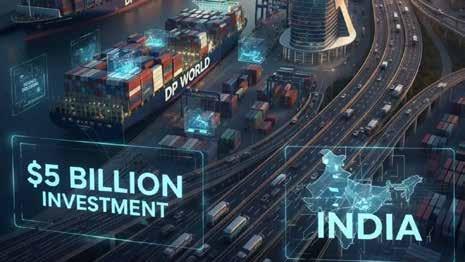
DP World to Infuse $5 Billion More into India’s Logistics and Maritime Infrastructure
Dubai-owned ports and logistics major DP World has announced an additional investment of $5 billion in India to strengthen its integrated supply chain network. The commitment, revealed at India Maritime Week 2025, comes on top of the $3 billion the company has already invested in the country over the past three decades.
The fresh capital infusion will boost both export capacity and domestic trade, supporting India’s growing role in global logistics. Group Chairman and CEO Sultan Ahmed bin Sulayem said the investment, along with new strategic partnerships, underscores the company’s long-term commitment to India.
DP World currently operates across
200+ locations in India, offering services spanning ports, terminals, economic zones, and logistics hubs. The new investment will enable the company
to significantly expand its footprint and enhance multimodal connectivity, further integrating India into global supply chains.
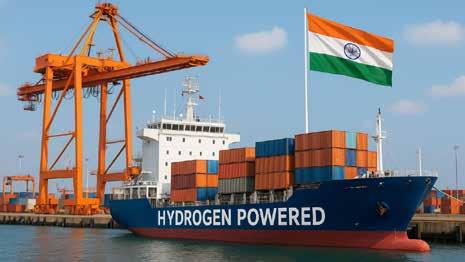
India’s Green Hydrogen Push: Transforming Ports into Clean Maritime Hubs
India is advancing a major clean maritime transformation under its National Green Hydrogen Mission , backed by an initial investment of ₹19,744 crore. Three major ports — Deendayal (Kandla), Paradip, and V.O. Chidambaranar (Tuticorin) — have been formally designated as hydrogen hubs. At Kandla, 3,400 acres have been allocated to companies such as Reliance, L&T, AM Green Hydrogen, and Welspun to build facilities expected to produce a combined 5.5 million tonnes per annum (mtpa) of green hydrogen and ammonia by 2030–31.
A shore-power policy is also in the works: under Maritime India Vision 2030, ships plugged in at berth could reduce fuel use by ~20 metric tons per visit.In addition, the Green Tug Transition Programme (GTTP) has
been launched with a ₹1,000-crore budget.By December 2027, four major ports (including Deendayal, Paradip and Tuticorin) are to charter or buy at least two green tugs each , initially battery-electric, later scaling to hybrid,
methanol, or hydrogen.Together, these measures could help India produce up to 5 MMT of green hydrogen by 2030, attract over ₹8 lakh crore of investment, and significantly cut port-related emissions.
Nashik Airport Sees Massive 250% Jump in International Cargo Traffic
Nashik Airport has witnessed a remarkable 250% surge in its international cargo volume during the first half of fiscal year 2025–26 (April–September). Between these months, the airport handled 4,058 tonnes of international cargo, compared to just 1,519 tonnes in the same period last year. This growth was driven by 229 cargo flights, significantly more than the 91 flights recorded in the prior year, validating Nashik as an emerging export hub.
Exports included agricultural goods like grapes, poultry, industrial and defence products, while pharmaceutical shipments have also recently begun.
Cargo operations at Nashik are handled by Halcon, a joint venture of Hindustan Aeronautics Ltd (HAL) and Concor.
Halcon aims to reach 7,000 tonnes of exports by the end of the fiscal year — they’ve already hit 57% of that target in just six months. Industry insiders say the airport’s low handling charges give it
a competitive edge over major hubs like Mumbai, especially for perishable and industrial exports.
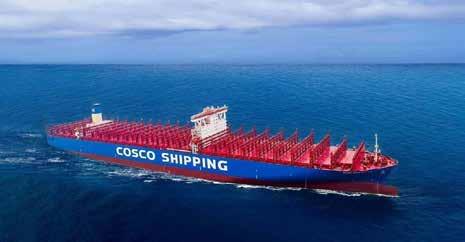
COSCO Leads Green Shipping Push with New Clean-Fuel-Ready Bulk Carrier Order
COSCO Shipping Bulk, a subsidiary of China’s maritime giant COSCO, has placed a landmark order for four 210,000-DWT bulk carriers with Dalian Shipbuilding Industry Co. (DSIC), part of China State Shipbuilding Corporation. Scheduled for delivery beginning in 2028 , each vessel comes at a price of US$ 77 million , making the confirmed contract value US$ 308 million. COSCO has also secured an option for ten more ships , potentially raising the total investment to US$ 1.08 billion if all fourteen are ordered.
What makes this deal especially significant is the vessels’ “clean-fuel ready” design . They will be equipped with engines that can be converted to run on ammonia and/or methanol ,
two alternative fuels gaining traction in decarbonising maritime transport. This flexibility could help COSCO cut greenhouse gas emissions and pollutants like NOx, SOx, and particulate
matter. With this move, COSCO is not just expanding its fleet — it’s doubling down on sustainability and positioning itself for a greener future in shipping.
India Makes First Jet Fuel Shipment to U.S. West Coast Amid Regional Supply Tightness
India has exported its first-ever jet fuel cargo to the U.S. West Coast, according to traders and shipping data.
Some 60,000 metric tons (about 473,000 barrels) of aviation fuel were loaded onto the Panamax tanker Hafnia Kallang in October at Reliance Industries’ Jamnagar refinery. The shipment, chartered by Castleton Commodities, is bound for Chevron and is expected to reach Los Angeles in early December.
The move comes after a fire at Chevron’s El Segundo refinery in southern California in October forced several units offline, tightening jet fuel supply on the U.S. West Coast.
Despite this landmark export, sources say such shipments may remain rare , as fuel from Northeast Asia remains
cheaper to ship to the U.S. West Coast.
Shipping Industry Deploys AI System to Detect Hazardous Cargo and Prevent On-Board Fires
The World Shipping Council (WSC) has launched a groundbreaking Cargo Safety Program leveraging artificial intelligence to curb the rising number of shipboard fires linked to undeclared or misdeclared hazardous cargo. Using technology developed by the National Cargo Bureau (NCB) , the system scans millions of container bookings in real time.It employs keyword searches, trade-pattern recognition, and AI-driven algorithms to flag potentially risky shipments — especially those involving lithium-ion batteries and other flammable goods. Suspicious cargoes are then vetted by carriers and, where necessary, subjected to targeted physical inspections. At launch, over 70% of global containershipping capacity has signed on to the program. The initiative also introduces common inspection standards and a
feedback loop, so lessons from real incidents feed back into risk-detection algorithms.
Allianz’s 2025 Safety and Shipping Review noted that misdeclared dangerous goods accounted for more
than a quarter of all cargo-related fire incidents. According to WSC CEO Joe Kramek , while AI boosts safety, accurate cargo declaration remains a legal necessity.
Hon’ble Minister Inaugurates
MMCT’s State-of-the-Art
Campus
- Jagdamba Prasad Pandey
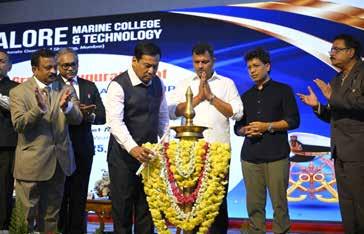
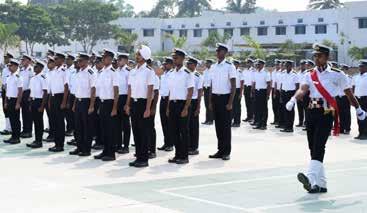
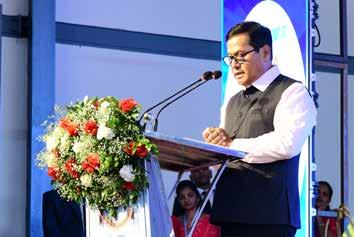
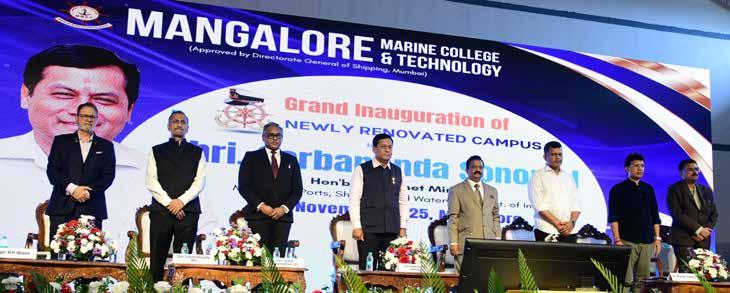
Hon’ble Minister, Port, Shipping and Waterways, Shri Sarbananda Sonowal, inaugurated the newly renovated campus of Mangalore Marine College & Technology (MMCT) on November 13, 2025. The event marked a significant milestone in MMCT’s journey toward maritime education and excellence.
Established in 2010, MMCT holds the distinction of being Karnataka’s first and only DGS-approved Marine College, dedicated to shaping competent maritime professionals for the global shipping industry. The MMCT 2.0 campus is a symbol of the institution’s commitment to continuous growth and technological advancement.
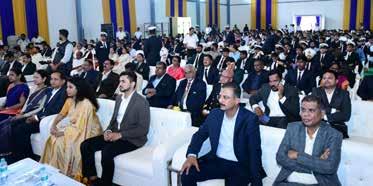
The inauguration ceremony was attended by distinguished dignitaries, including Capt. Brijesh Chowta, Dr. Bharat Shetty, Shri Shyam Jagannathan, IAS, Shri Sushil Mansingh Khopde, IPS, Dr. Venkata Ramana Akkaraju, and Capt. M.P. Bhasin.
Shri S.I. Nathan, Founder and Chairman, CMC Group of Institutions, stated, “The launch of MMCT 2.0 marks a new chapter in our journey to elevate maritime education in India. With modern facilities and global training standards, we aim to create future-ready seafarers who uphold India’s maritime legacy
with pride and professionalism.”
Hon’ble Minister Shri Sarbananda Sonowal said, “India is aiming to become the third largest economy in the world by 2029 under the leadership of Prime Minister Narendra Modi.” “The government has given two visions: India Maritime Vision 2030 and India Amrit Kaal Vision 2047.” “We will invest at least 80 lakh crore rupees in the maritime sector for modernization, mechanization, and digitization.” “India has the solution to every problem of the world, and we need to harness our maritime power.”
A formal ceremony was held to launch the ‘Sagar Mein Yog’ Wellness Programme, graced by Minister of Ports, Shipping and Waterways, Shri Sarbananda Sonowal.
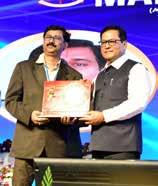
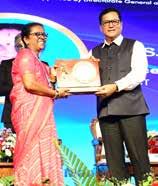
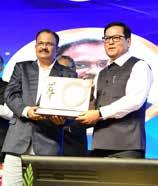
On this occasion, the Minister felicitated 13 dedicated staff members of CMC & MMCT, recognizing their tireless service and commitment to the organization.
Capt. Brijesh Chowta, Member of Parliament, said, “Mangalore is a hub for education, and this institution will contribute to the region’s growth.” “We want to make Mangalore a hub for maritime education and technology.” “I thank the Hon’ble Minister for blessing this occasion and starting a new chapter in Mangalore’s journey of education and growth.”
Dr. Bharat Shetty, Member of Legislative Assembly, said, “Mangalore has more than 10 medical colleges, 30 engineering colleges, and 8-9 dental colleges, making it an education hub.” “The newly renovated campus will contribute to the educational hub
and produce quality students.” “I wish the institution all the best and hope it will make Mangalore proud.”
Shri Shyam Jagannathan, IAS, Director General of Shipping, said, “India is emerging as a leading maritime nation, and we are working towards achieving the milestones of Maritime India Vision 2030 and Vision Amrit Kaal 2047.” “We aim to increase India’s share in global shipbuilding and become a global leader in sustainable, safe, and smart shipping.” “The Mangaluru Port Authority is playing a significant role in the economy and export-import growth story of the region.”
Shri Sushil Mansingh Khopde, IPS, Additional Director General of Shipping, said, “Yoga is essential for mental wellbeing, and we have launched a course on Yoga for seafarers.” “The course will help seafarers develop intuition, intellect, and consciousness.” “I hope the cadets will take advantage of this course and progress in their future life.”
Dr. Venkata Ramana Akkaraju, Chairperson, New Mangalore Port Authority, said, “The Hon’ble Prime Minister has given a clear vision to increase maritime ratings and seafarers to 20% by 2047.” “We need to encourage female power in the maritime sector and create research and skilling opportunities.” “I wish the institution all the best and the young boys and girls a bright future.”
Capt. M.P. Bhasin, Managing Director, MSC Crewing Services Pvt. Ltd., said, “MSC has a vision to develop professionals who can navigate seas and lead the global maritime economy.” “We aim to create skilled seafarers who understand sustainability and technology.” “MSC has a huge workforce from India, and we are proud to employ Indian seafarers on our vessels.”
The ceremony concluded with a Vote of Thanks by Mrs. Clarissa I., Managing Director, CMC Group of Institutions, and a token of appreciation presented to the Hon’ble Minister and other dignitaries.
The evening event was part of a heartwarming gettogether at The Ocean Pearl Hotel, bringing together staff, faculty, family members, and management staff. It also marked the inauguration of the renovated MMCT 2.0 campus, making it a memorable evening of celebration.
Spread over 1,50,000+ sq. ft., the MMCT campus integrates world-class training infrastructure, including fully functional Ship-in-Campus training, world-class simulators, advanced marine workshops and laboratories, smart classrooms, computer labs, digital library, and fully renovated hostel accommodations.
MMCT offers a range of Directorate General of Shipping (DGS)-approved programs that prepare students for rewarding maritime careers: Graduate Marine Engineering (GME), Electro Technical Officer (ETO), Diploma in Nautical Science (DNS), and General Purpose (GP) Rating Course.
MMT
Jagdamba Prasad Pandey of Marex Media had the opportunity to sit down with S.I. Nathan, Founder and Chairman of CMC Group of Institutions, to discuss...
How did you think of having a Maritime institute in Mangalore?
I was inspired to start this institution due to my personal connection with Mangalore, where I began my career as a chief engineer in 1993. The city’s rich maritime history and infrastructure, combined with the lack of a maritime institute, motivated me to take the initiative. Mangalore has a coastline and is one of the oldest ports in India, making it an ideal location for a maritime institute.
Can you tell us the placement criteria and the percentage of CMC Group of institutions?
We’re proud to have 100% placement for our students, thanks to our partnership with MSC. They select students through online exams and interviews, and we train them as per DGS norms. We’re looking to collaborate with other companies to provide specialized training and enhance our infrastructure. We want to increase our course strength and intake strength to support the growing maritime industry.
Expansion plan of CMC Group of Institutions
We’re committed to providing quality education to our students, and we’re planning to expand our programs to meet the growing demand of the maritime industry. Building on our existing MBA and BBA courses in shipping and logistics, we’re introducing new courses to cater to the industry’s evolving needs.
What assurance and support are you getting from the authorities?
We’re getting support from the authorities and ministries, and we’re grateful for their encouragement. We’re looking forward to expanding our programs and collaborations to benefit the maritime industry.
Any motivational words for the aspirant looking for career in marine industry?
As per our Prime Minister’s vision for the Maritime sector and as per the Hon’ble Minister, we are the fastest-growing nation in terms of manpower supply. An institution like this can help build the skills required, so students should choose their institute wisely and opt for a reputed institute. I can see huge opportunities waiting for them.
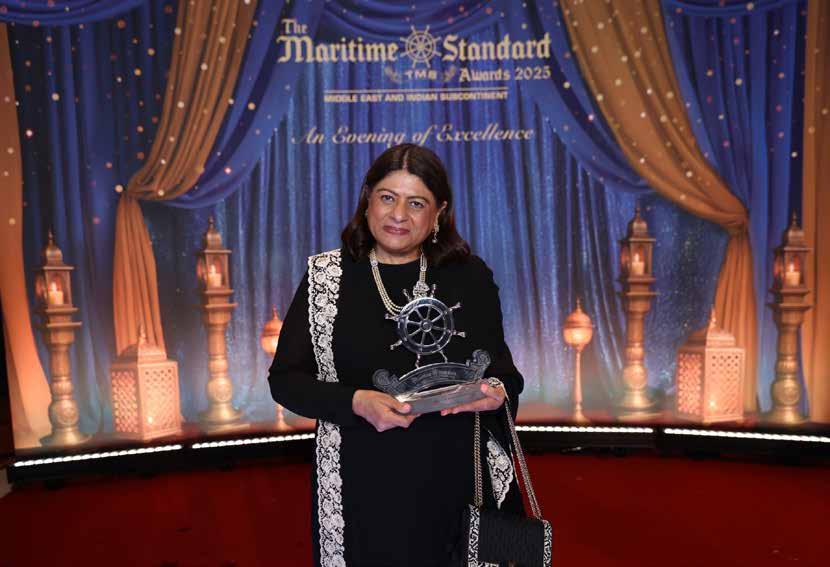
A Lady in a Man’s World
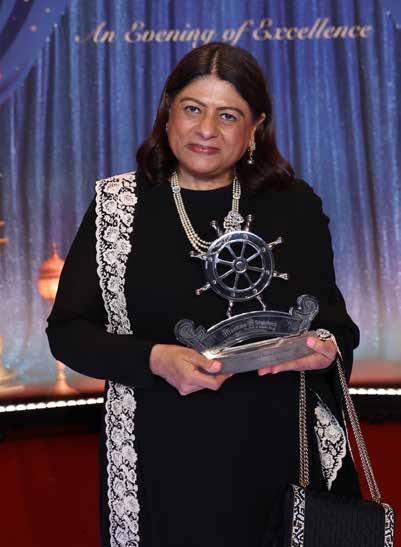
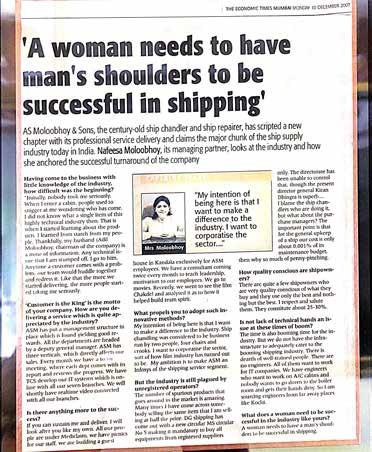
In an industry famously referred to as a man’s world, Nafeesa Moloobhoy, Managing Director, Moloobhoy Group of Companies, has forged a truly distinctive identity. Hers is a story defined by uncompromising leadership, an exceptional adversity quotient and tremendous resilience.
With decades invested in the maritime sector, she is unapologetically forthright about the realities that shaped her journey. Her foundational philosophy remains clear: “Behind every strong woman is a story that left her no choice,” a powerful mantra that guides her through both the successes and inherent challenges of her professional life.
Beyond the demands of steering a 120-year-old enterprise, Nafeesa finds fulfilment in family life, particularly spending time with her grandchildren. She draws motivation from documentaries and true stories, maintaining a pragmatic perspective blended with deep passion—a continuous underscore of the importance of professional excellence and a strong personal foundation.
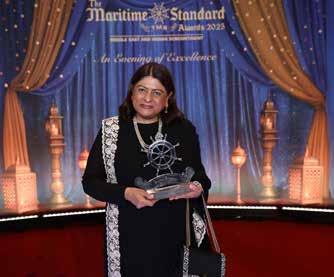
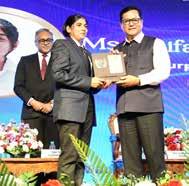
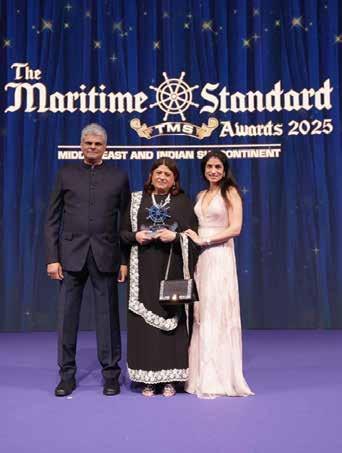
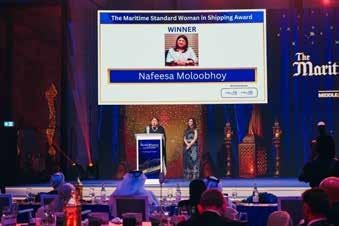
Nafeesa’s stature was recently affirmed with a major international award. While expressing deep gratitude for the recognition received at The Maritime Standard Awards’ Ceremony in the UAE, she candidly noted the surprising lack of similar acknowledgment within India’s own maritime community.
For her, the accolade was more than a personal milestone; it was a powerful reminder of the imperative for greater visibility and celebration of Indian women’s achievements on the international maritime stage.
Nafeesa Moloobhoy
Managing Director Moloobhoy Group of Companies
“When someone outside India acknowledges you, it is definitely validating; but it is equally important to have that recognition at home, amongst colleagues and friends who have witnessed the journey first hand,” she emphasized.
In conversation with Ms Delphine Estibeiro of Marex Media, Nafeesa, who has a strong digital presence, with over 12,000 followers on LinkedIn, reflects on her identity, the measure of success, the role of family, and the profound importance of recognition, offering an intimate glimpse into the values that continue to shape her pivotal role in the maritime industry.
Recognizing Maritime Service Providers…
Receiving the Maritime Standard Woman in Shipping Award 2025 was an honour which serves a wider purpose: it highlights the critical, often-overlooked role of service providers in the maritime sector. This segment of service providers, who focus on essential life-saving equipment and electronics—is frequently eclipsed by industry heavyweights like shipbuilders, OEMs, and large shipping companies. “Our work is critical; without these services, vessels simply cannot operate. This
Cover Story
recognition reaffirms that our sector is an important cog in the maritime wheel.”
Award Brings Visibility to Women Leaders in Maritime…
Winning the award has significantly boosted the visibility of women leaders in the maritime industry, particularly across the GCC region where women are still limited by the Islamic dress code.
It is first, an acknowledgement that women are not only present but are contributing meaningfully.
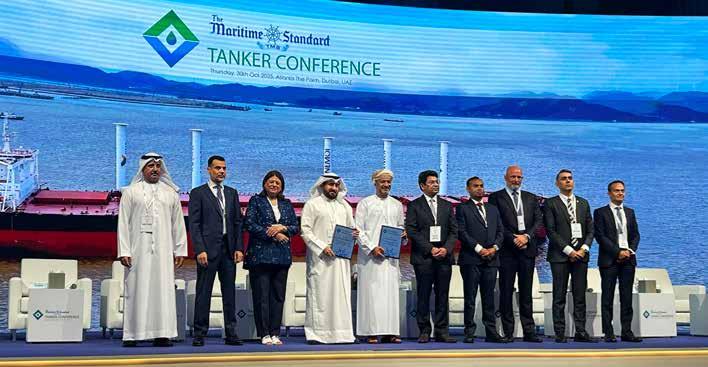
This was vividly underscored at the subsequent Tanker Conference held the next day. As the only woman on the dais in the first session, amongst eight versatile speakers, addressing an audience of 400, predominantly male members, her inclusion in this prestigious panel, highlighted the progress women have made.
“I don’t believe in gender differentiation—excellence speaks for itself.” While in shipping, it may take longer for a woman to gain initial acceptance, once competence and commitment are demonstrated, the industry responds with respect and inclusivity.
The future of women in maritime leadership is one of growing visibility and merit-based acceptance. “Shipping is ultimately gender-agnostic—what matters is delivery and competence.” Moloobhoy’s journey affirms this: initial surprise over a woman Managing Director quickly gives way to respect once expertise is demonstrated.
“I have never felt that being a woman either helped or hindered me; it has always been about merit, passion, and capability... Performance dissolves barriers, and women leaders will increasingly be recognized for their contributions.”
120 Years of Resilience and Expansion…
This recent honour is deeply rooted in the legacy and unwavering resilience of a 120-year-old company. Being at the helm of such a long-standing institution is a true privilege. Moloobhoys are proud to share that, apart from the mandated COVID shutdown, the company has never recorded a loss quarter—a testament to sustained profitability and consistency.
Equally critical has been their expansive growth: moving from modest beginnings to a substantial turnover today, with multiple verticals and a presence across nearly every segment of maritime supply and service, including public and private shipping companies, shipyards, oil and gas, and the defence segment.
“We have positioned ourselves as a true one-stop supplier and service provider, delivering a rare combination of a suite of services with reliability. This comprehensive role within the maritime ecosystem is something we value deeply and take pride in, and I believe it was central to receiving this recognition.”
Heritage Meets Innovation…
The operational success hinges on a careful balance between tradition and innovation. The core values—
integrity, customer-first approach, and commitment to heritage—remain sacrosanct.
Simultaneously, the Group embraces change. New technologies, including AI integration into processes and SOPs, are welcomed. The product and service lines have evolved dramatically from traditional hardware to sophisticated electronics and software-driven turnkey solutions exemplified by the establishment of Maritime Rescue Co-ordination Centre’s (MRCC) in Chennai, Port Blair, and Mumbai—projects requiring software capabilities and specialized execution skills beyond the traditional scope.
“Where once engineering was defined by ‘touch and feel,’ today it demands software expertise and digital
specialization. It is indeed a careful walk between legacy and technology—but one that keeps us relevant, resilient, and future-ready.”
India’s Potential as a Global Shipbuilding Hub… I firmly believe India is emerging as a genuine and viable option in global shipping and shipbuilding. With capacity constraints in China and Vietnam, and high costs in Korea and Japan, India offers shipowners an economical and strategic alternative.
Shipbuilding is a national priority, and over the next 5–10 years, India has the potential to become a major shipbuilding hub. The sector’s labour-intensive nature will generate significant employment, leveraging the country’s abundant talent pool. “With the right
Cover Story
harnessing of skills and resources India can strengthen her role in global shipping and contribute meaningfully to the industry’s future growth.”
Mentorship Through Opportunity…
I believe in creating a platform where talent can thrive.
As the company transitions from a family-run enterprise to a professionally managed organization—with a CEO, COO and expanded leadership—her focus is on strengthening the foundation, adding manufacturing to the portfolio (aligned with the Prime Ministers’ “Make in India” vision), and planning for succession.
Crucially, the Group prioritizes job creation. “Our company has always provided a platform for ordinary people to deliver extraordinary results.” Unlike large corporations that hire solely from elite institutions, Moloobhoys provide opportunities for simple people to grow and build livelihoods.
“This, I believe, is mentorship in action—empowering individuals through opportunity, guidance and trust, while ensuring the maritime industry benefits from a diverse and resilient workforce.”
The Influences Behind My Maritime Journey…
Her journey was mentored by versatile stalwarts. Her mother provided the emotional strength and moral
backbone. Equally influential was Jit Paul of the Swaraj Paul Group, her husband’s godfather, who mentored her during the most challenging times. His encouragement was a vital source of courage.
Nafeesa vividly recalls a framed Economic Times article in his office which during the interview had described her as “a woman with a man’s shoulders.” Though he is no longer with us, she continues to draw strength from his faith in her and her vision.
From Rock Bottom to Market Ascendancy…
My journey was ignited by a fierce sense of responsibility to preserve a legacy. When I took the reins, the nearly 96-year-old company was facing closure due to family separation and her husband’s health challenges. “I felt it would be wrong to let such a historic institution disappear before reaching its centenary.”
She quotes JK Rowling “And so rock bottom became the solid foundation on which I rebuilt my life”, in her case the company. With initial reluctance and scepticism from those around her, she stepped in. What began as an effort to simply keep the company afloat has become a 26-year narrative of leadership, resilience, and now transformation and subsequent succession.
MMT
ClassNK is a major supporter of the Digital Era
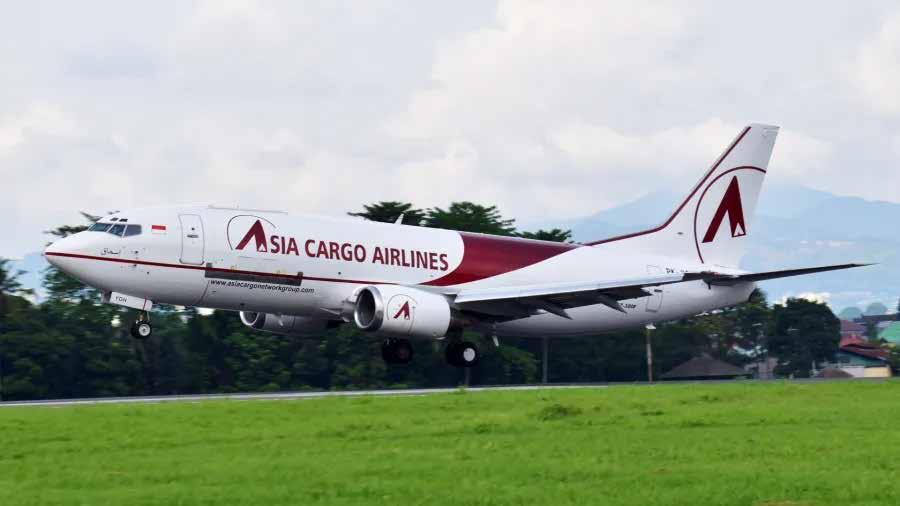
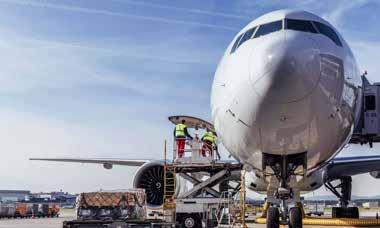
India Eyes Air Cargo Expansion as Minister Calls for More Freighters and Cargo-Focused Airports
India’s civil aviation sector is poised for substantial growth, and the country must act swiftly to harness its emerging potential in the global logistics market, Union
Minister Shri K. Ram Mohan Naidu emphasized on Tuesday speaking at the Global Aviation & Air Cargo Conclave 2025.
Highlighting the tremendous opportunities in air logistics, the minister called for the development of more dedicated freighters and cargo-centric airports to strengthen India’s position as a major air cargo hub in the region.
Shri Naidu noted that India has one of the fastest growing aviation markets in the world, supported by rising trade volumes, a rapidly expanding manufacturing sector, and increasing participation in global supply chains. Despite this upward trajectory, the minister observed that the share of air cargo in India’s overall freight movement still remains relatively low compared to developed markets. “If India is to position itself as a global logistics powerhouse, our infrastructure must adapt to handle higher cargo volumes with greater efficiency,” he said.
Currently, only a handful of Indian airports handle the bulk of cargo movement, and most airports remain heavily passengerfocused. Shri Naidu urged policymakers, private investors, and aviation stakeholders to explore new business models that prioritize the cargo segment. “Cargo-focused terminals, specialized logistics parks within airport premises, and dedicated freighter operations can dramatically boost India’s air freight capabilities,” he said.
The minister pointed out that many major international logistics hubs—such as those in Dubai, Singapore, and Hong Kong—rose to prominence due to early investments in cargo
infrastructure. As global supply chains shift in the postpandemic landscape, Shri Naidu believes India has a window of opportunity to capture a larger share of international freight movement. “Indian airports must evolve from being mere transit points to becoming fully integrated logistics ecosystems,” he added.
One of the key bottlenecks facing the industry today is the limited number of Indian freighter aircraft. While several airlines have expressed interest in expanding cargo services, dedicated freighter fleets remain small compared to global competitors. Shri Naidu proposed encouraging Indian carriers to introduce more operated or leased freighters, ensuring reliable and regular cargo lift capacity independent of passenger schedules.
In addition to aircraft, the minister said that infrastructure upgrades are crucial. He recommended building cargo-specific airports or converting underutilized airstrips into dedicated cargo nodes. Such dedicated facilities could enable quick turnaround times, modern warehousing, automated logistics
Shri Kinjarapu Ram Mohan Naidu Minister of Civil Aviation of India
systems, and efficient multimodal connectivity through railways, highways, and inland waterways.
Emerging segments within e-commerce, pharmaceuticals, fresh produce, electronics manufacturing, and high-value specialty goods are expected to drive rapid growth in air cargo volumes. India is already the world’s largest vaccine producer, and with better cold-chain infrastructure at airports, the country could significantly increase its export capacity in temperaturesensitive products. Similarly, India’s booming e-commerce sector has created urgent demand for faster logistics cycles, particularly in metro and tier-2 cities.
Shri Naidu also emphasized the importance of policy reforms to support private investment in air cargo facilities. Streamlining regulatory clearances, improving customs processing times, offering incentives for cargo terminal development, and encouraging public-private partnerships could help accelerate infrastructure creation. “We must ensure that our systems are not just physically capable but also business-friendly,” he said.
Digital solutions will also play a key role in modernizing India’s cargo sector. Technologies such as integrated logistics tracking, digital documentation systems, automated warehousing, and
predictive demand analytics can reduce costs while improving reliability and transparency across the supply chain. According to the minister, seamless digital integration between airlines, airports, customs, and freight forwarders will be critical to achieving global competitiveness.
The push aligns with the government’s broader National Logistics Policy and Gati Shakti initiative, which aim to transform India into a globally competitive logistics market. With cargo volumes expected to rise multifold in the coming years, the minister stressed that now is the ideal moment for the country to act. “India’s aviation story is taking off, and cargo can be a major growth engine,” he concluded.
If India successfully expands its freighter capacity and builds the next generation of cargo hubs, it could emerge as a central player in the global movement of goods, creating new opportunities for industries, exporters, logistics providers, and workers across the country.
MMT
Southeast Asia
The Rising Tide of Air Cargo
Market Overview & Recent Growth
• The air freight market in Southeast Asia was valued at around USD 11,957 million in 2024.
• It’s projected to grow at a compound annual growth rate (CAGR) of about 5.7% between 2025 and 2033, reaching nearly USD 19,692 million by 2033.
• Within the broader ASEAN freight & logistics market, air freight is expected to register one of the fastest growth rates: Mordor Intelligence estimates air freight forwarding in ASEAN to grow at a 7.71% CAGR from 2025 to 2030.
Key Data & Trends: Air Cargo in India
Total Volume & Growth
• India’s air cargo volume is projected to grow from ~3.7 million tonnes (current) to 5–5.8 million tonnes by 2029.
• That implies a 6–9% annual growth rate over the next 5 years.
• According to ICRA, for FY 2024-25, air cargo volumes are expected to rise 11% YoY to 3.6–3.7 MT.
Domestic vs International Cargo
• In recent data, international freight accounts for a large portion of total air cargo volume. For example, between
April 2024 – January 2025, 62% of cargo handled at Indian airports was international.
• Domestic cargo is also growing: for Jan 2025, domestic freight was ~113,662.9 tonnes, up 6.9% vs Jan 2024.
Airport-wise Cargo Traffic
• Four major airports Delhi, Mumbai, Bengaluru, Chennai — handle roughly 75% of all air-cargo movement in India.
• Bangalore’s Kempegowda Airport (BLR) has a cargo handling capacity of ~715,000 metric tonnes.
• Delhi International Airport handled 59,669 tonnes in January 2025, a 9.3% year-on-year increase.
Market Size (in Monetary Terms)
• According to IMARC, the India air freight market was valued at USD 10.54 billion in 2024.
• They project it to grow to USD 17.47 billion by 2033, at a CAGR of ~5.18%.
• Another source (Expert Market Research) estimates a market size of USD 13.44 billion in 2024, growing to USD 23.62 billion by 2034 (CAGR ~5.8%).
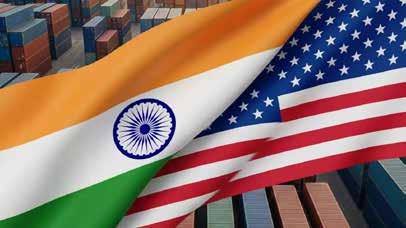
India–US Air Cargo Load Falls to 9-Year Low: Trade Corridor Faces Turbulence
Air cargo movement between India and the U.S. has plunged to a nine-year low, marking one of the sharpest declines in bilateral trade logistics since 2016.
India’s air cargo shipments to the United States have fallen dramatically, reaching their lowest point in nearly a decade. Between January and June 2025, India exported 4,319 tons of goods to the U.S., down from 7,152 tons during the same period last year — a drop of nearly 40%. The last comparable low was recorded in 2016, when air cargo volumes stood at 3,750 tons. The decline reflects growing friction in trade relations, persistent tariff issues, and evolving global logistics patterns.
Historical Context: From Growth to Grit
For years, the India–U.S. air cargo corridor has been a symbol of dynamic trade, connecting industries ranging from pharmaceuticals and textiles to engineering goods and technology hardware. The route saw rapid expansion between 2010 and 2019 as India emerged as a key manufacturing base for high-value, time-sensitive exports. However, cracks began to appear with the tariff hikes imposed by the Trump
administration in 2018–2019, which introduced new layers of complexity for exporters.
Five Key Reasons Behind the Decline
• Lingering Tariff Barriers: Many tariffs on Indian goods remain in place, discouraging exporters and raising costs.
• Soaring Fuel and Freight Costs: Rising aviation fuel prices have inflated air freight rates globally, prompting a shift to sea freight.
• Weakening Global Demand: High inflation and interest rates have curbed U.S. consumer spending on imported goods.
• Global Supply Chain Shifts: Multinationals are diversifying supply bases to Vietnam, Mexico, and Eastern Europe, disrupting established trade routes.
• Infrastructure and Regulatory Bottlenecks: Congestion at airports, limited cold-chain capacity, and outdated processes continue to hinder efficiency.
A Comparison: 2016 vs. 2025
The current decline mirrors the situation in 2016, but with a crucial difference. Back then, India’s industrial output was weak. Today, India’s economy is strong while exports to the U.S. are falling due to external, policy-driven headwinds rather than domestic weakness.
• Pressure on Exporters: SMEs are disproportionately affected due to high logistics costs.
• Airlines Feel the Strain: Underutilized cargo capacity is leading to route consolidation.
• Trade Balance Concerns: A slump in high-value exports affects foreign exchange inflows.
• Diplomatic and Policy Signals: Unresolved tariff disputes continue to affect bilateral trade.
Policy Remedies: How to Revive the Air Cargo Corridor
• A Renewed Bilateral Trade Framework to address tariffs and streamline customs.
• Infrastructure Modernization through new cargo hubs like Jewar International Airport.
• Green and Digital Logistics using AI and sustainable aviation practices.
• Incentives for High-Value Exports in biotech, semiconductors, and clean energy equipment.
Looking Ahead: Signs of Recovery and Opportunity
Despite short-term pain, the India–U.S. air cargo relationship has the potential to rebound. E-commerce expansion, defense and tech cooperation, and regional cargo hubs point toward gradual recovery. If policy reforms and infrastructure upgrades align, shipments could surpass pre2024 levels by 2027–2028.
Conclusion: A Wake-Up Call for Trade Policymakers
The 9-year low in India–U.S. air cargo volumes is a strategic signal of shifting global trade dynamics. It highlights vulnerabilities but also opportunities for India to strengthen logistics, policy, and sustainability. If both nations act decisively, the air corridor could emerge stronger, faster, and more resilient than ever.
Global Air Cargo Demand Surges to Record High as Middle Eastern and African Carriers Lead October Growth
Global air cargo markets continued their upward trajectory in October, reaching their highest volumes on record and signalling renewed momentum in worldwide trade. The latest figures from the International Air Transport Association (IATA) show the sector delivering its eighth consecutive month of year-on-year demand growth, even as geopolitical uncertainties, shifting trade patterns, and rising fuel costs pressure airlines.
According to IATA’s report, global cargo demand grew 4.1 % compared with October last year, a performance driven by expanding industrial activity, strengthening manufacturing sentiment, and robust regional growth in key markets. The expansion highlights the industry’s ongoing resilience and its central role in helping global supply chains adjust to new economic dynamics, including the continued effects of US tariffs on trade flows.
Middle East and Africa Set the Pace
Among the regions monitored by IATA, Middle Eastern carriers posted a strong 5.7 % year-on-year increase in demand during October. Their performance reinforces the region’s growing importance as a logistics hub linking Asia, Europe, and Africa. Capacity in the Middle East expanded by an impressive 10 % , the highest increase recorded across all regions. This growth is especially notable given the complex geopolitical environment, including airspace restrictions and conflict-related disruptions that have forced airlines to adjust routing and scheduling strategies.
Even more striking was the surge in Africa, which delivered the strongest cargo growth worldwide . African airlines recorded a 16.6 % increase in demand compared with the previous year, supported by a substantial 20 % rise in capacity. Africa’s performance reflects strengthening intra-regional trade and improving connectivity with Asian markets, especially along the fast-growing Asia–Africa corridor.
Asia-Pacific Maintains Momentum
The Asia-Pacific region , long a powerhouse of global manufacturing and trade, also reported solid gains. Airlines based in the region saw cargo demand rise 8.3 % , while capacity increased 7.3 % . Asia’s strong showing mirrors the acceleration in industrial production and the continued recovery of export-
driven economies across East and Southeast Asia. IATA noted that several major Asian trade lanes delivered near double-digit growth, contributing significantly to the global record.
High-performing routes included those within Asia , between the Middle East and Europe , and between Europe and Asia, each benefiting from shifting supply chains, re-routed shipments, and increased demand for time-sensitive goods.
Europe Shows Stable
Gains While the Americas Lag
European carriers reported steady improvement, with demand rising 4.3 % year-on-year, matched by an identical 4.3 % increase in capacity. The region’s performance reflects stabilising economic conditions and strengthening industrial indicators, although European airlines continue to navigate challenges related to airspace fragmentation and uneven consumer demand.
By contrast, both North America and Latin America experienced declines. North American carriers saw a 2.7 % drop in cargo demand, the weakest performance globally alongside Latin America, which recorded an identical decline. Capacity in North America edged up 0.1 % , while Latin
Air Cargo-Global View
American carriers increased capacity by 2.8 % despite the fall in demand. Analysts suggest that persistent economic softness, muted export orders, and shifting sourcing strategies may be weighing on cargo flows across the Americas.
Industrial Activity and Manufacturing Indicators Strengthen
The robust air cargo performance comes amid encouraging signs in global economic activity. In September, worldwide goods trade increased 5.3 % , while global industrial production rose 3.7 % , marking its fastest pace since March 2025. These indicators suggest that global supply chains are recovering and adapting despite persistent macroeconomic uncertainties.
Manufacturing sentiment has also improved. The global Purchasing Managers’ Index (PMI) climbed for the third consecutive month to 51.45 , pushing it further into expansion territory. However, new export orders remained weak, sitting in contraction at 48.31 , signalling that external demand remains uneven across major markets. Still, the overall rise in sentiment has provided a supportive backdrop for air cargo operators, many of whom rely heavily on industrial and manufacturing sectors.
One area of concern for airlines continues to be fuel costs. Despite crude oil prices trending lower during the month, jet fuel prices rose 2.5 % in October . The increase was driven in part by tight diesel supplies, which pushed the crack spread— the difference between crude oil and refined product prices—to nearly double its level from the previous year. Elevated jet fuel costs are likely to squeeze airline margins, particularly for cargo
carriers operating long-haul routes where fuel accounts for a significant portion of operating expenses.
Key Trade Lanes Show Strong Growth
IATA’s latest data reinforces the importance of major international corridors. The Europe–Asia trade lane remained the standout performer, expanding 11.7 % year-on-year. Traffic between the Middle East and Asia also posted strong results, rising 11.5 % , while the Asia–Africa corridor grew 10.9 % . These high-growth lanes highlight the shifting geography of global trade, as companies explore alternative supply routes and diversify away from traditional manufacturing centres.
Supply Chains Continue to Adapt
Commenting on the results, IATA Director General Willie Walsh said the shifting pattern of global growth reflects how air cargo has allowed supply chains to adapt to the changing trade environment. “Air cargo is enabling global supply chains to adjust to the impact of US tariffs,” he noted, adding that October’s figures were bolstered by strong growth across several major Asian and inter-regional routes.
As the sector moves into the final months of the year, the record-setting performance underscores the growing reliance on air transport for high-value and time-critical goods. Whether this momentum will carry into 2026 will depend on global economic resilience, fuel price stability, and the ability of airlines to navigate an increasingly complex geopolitical landscape.
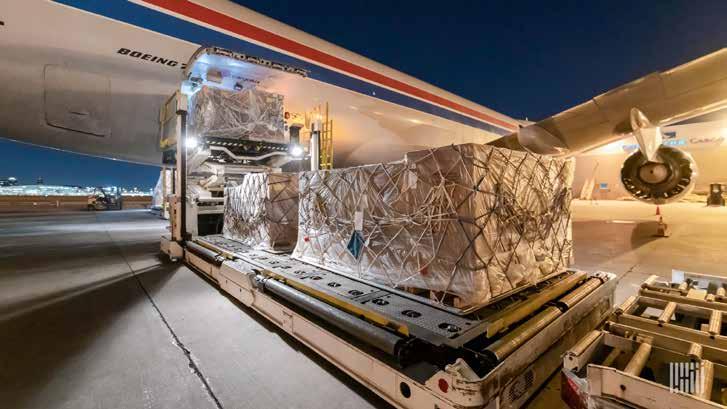
Rapid Growth Propels India’s Air Cargo Industry to New Heights
India’s air cargo industry is experiencing a remarkable upswing, fueled by surging exports of high-value, timesensitive goods such as pharmaceuticals and smartphones. Exporters are increasingly prioritising speed and reliability over cost amid global trade uncertainties.
Between April and September of FY 26, India saw its international freight traffic grow by 4.1%, while domestic freight rose 5.9%, with total freight up 4.8% year-on-year. This comes at a time when unpredictable tariff regimes and geopolitical tensions are reshaping trade flows across the globe.
Pharmaceuticals
Lead
the
Charge
India’s pharma exports—especially of vaccines, injectables, and speciality formulations—are increasingly being air-shipped because of their sensitivity and need for rapid delivery. Between April and August 2025, pharmaceutical exports climbed 7.3% year-on-year to reach US$ 12.76 billion , driven by key markets like the United States, United Kingdom, and Brazil. Sea freight may still be used for bulk drugs and raw materials, but for critical-care medicines such as cancer injectables, air freight has become the dominant mode. Air transport can deliver these consignments in 48–72 hours, compared to up to two months via sea.
Smartphone Exports Soar
On the electronics front, smartphone exports are fueling a massive surge in air cargo demand. According to the Economic Times, electronics exports grew 41.9% YoY to US$ 22.2 billion in April–September 2025, with smartphones alone jumping 58% to US$ 13.38 billion . Apple, Samsung, and Motorola are among the top exporters, particularly to the US.
Notably, Apple now manufactures most US-bound iPhones in India. Faced with impending US tariffs, the company rushed some shipments by air. An industry executive said that although air freight is costlier than sea transport, it cuts lead times to just 3–4 days from over a month.
Resilience in Trade Routes & Growing Capacity
Global trade patterns are shifting. While demand on North America–Asia routes has weakened due to tariff policies, India is seeing faster cargo flows between Asia, Europe, Africa, and the Middle East. According to IATA data, Asia-Pacific airlines saw a 6.8% increase in cargo demand in September 2025, while capacity grew 4.8% .
On the home front, India’s air cargo capacity is also expanding. A report by Trade Data Service cited in air cargo news noted that India’s air freight volume reached 3.7 million tonnes last year, growing 19% YoY—well ahead of the global average. Projections suggest this could rise to as much as 5–5.8 million tonnes by 2029 , driven by strong global demand, infrastructure investments, and trade policy tailwinds.
Building for the Future
Industry experts argue that India’s shift toward sophisticated, high-value air exports presents a strategic opportunity. With more dedicated cargo hubs, better cold-chain and logistics infrastructure, and streamlined customs processes, India could further solidify its role in the global freight ecosystem.Moreover, as trade barriers continue to evolve, the flexibility and speed of air cargo give Indian exporters a powerful edge. Executives and trade bodies say this structural transformation could reshape how the country participates in global supply chains — not just relying on cost-competitive manufacturing, but offering agility, quality, and speed as key differentiators.
If these trends continue, India’s air cargo sector may well become a central pillar of its export-led growth strategy, helping businesses reach the world quickly and reliably in an increasingly unpredictable global trade landscape.
Shipping AssetsThe Indian Chapter
Disclaimer: This note adapts material from my work-in-progress paper, Valuation Approaches for Handymax Ship-Owning Companies: An M&A Perspective. Views are personal; none of this is investment advice. Do your own research.
The LNG thought experiment: efficiency vs. subsidy
A recent chat with a gas-industry colleague sparked the note below. Consider two stylised LNG newbuild cases (15-year tenor):
• Case A (market finance): Vessel price $250–270m (last done $260m). Debt 4–10%. Breakeven ≈ $95,000/day.
• Case B (subsidised finance): Vessel price $230m. Debt <1% (rumoured ≈0.2%). Breakeven ≈ $65,000/day.
What follows if Case B scales?
• Long-run TC optimism meets reality. With Power of Siberia 1 & 2, keeping 15-year TCs averaging ~$95k/day looks challenging.
• Artificial cost suppression. Under-market finance enables predatory pricing (earning $65k breakeven in a $95k market).
• Share capture and concentration. Competitors exit, trade lanes consolidate, and pricing power shifts—potentially with geopolitical leverage.
• Strategic risk to maritime diversity. Over-reliance on one bloc’s fleet hollows out others’ shipbuilding, technical, and commercial ecosystems and erodes jobs and safety culture.
Signal vs. noise in lower prices.
If we plot freight (price) on the Y-axis and quantity (competition) on the X-axis, the consumer surplus is the area under price and left of equilibrium. Prices can fall for two very different reasons:
• Real efficiency (design, operations, innovation) → both shippers and the maritime system gain.
• State-sponsored subsidies → short-term cheapness, longterm erosion of expertise, quality, safety, and competition.
True efficiency strengthens the system. Artificial subsidies weaken it.
Where does that leave a fast-growing India?
“Predatory pricing is bad—so what about a developing nation that needs tonnage?” For India, the answer is targeted selfsufficiency, not price dumping.
India’s trade is set to expand sharply. Example: If steel output
rises from ~150 mtpa to ~270 mtpa in 8–10 years, incremental steel alone implies +224 mt of iron-ore and **+98 mt** of coking-coal flows. India will likely import more 60% iron-ore needs and ~90% of coking coal of it needs.
These volumes will come on baby capes/capes for imports and modern handies for exports. Building domestic fleet capacity across these sizes is strategic, not optional.
Chartering pathways: the bridge before ownership
Until India’s ship-owning ecosystem fully matures, bareboat charters with purchase options (BBCHP) remain a practical middle ground.
Japanese yards and leasing houses often extend such structures— effectively “own now, pay gradually.” But they demand proven operational competence: disciplined maintenance, transparent management, and reputational reliability.
At present, only a handful of Indian operators meet those thresholds. Most yards or head owners hesitate to take Indian companies as counterparties until the local ecosystem— technical management, classification compliance, crewing standards, and financial governance—earns global confidence.
That gap highlights why policy, training, and reputationbuilding matter as much as capital. BBCHP deals can accelerate fleet growth, but only if India couples financing access with world-class operational credibility.
Ownership – indirect IPO’s route
Investor lens: why “parent-listed, shipping-enabled” can work
Indian public markets have historically favoured steady ~12%+ returns over the cyclicality of pure-play shipping IPOs. A parent company listed in financial services/trade finance can:
• Raise equity at scale on a diversified narrative;
• Fund group entities (including shipping) with disclosure flexibility;
• Strengthen freight positioning indirectly without launching a volatile shipping IPO.
This structure gives investors a stable base return while preserving optionality on shipping upcycles.
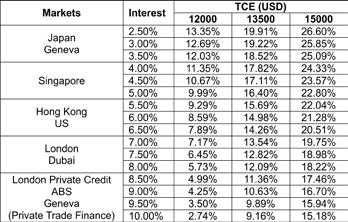
IRR sensitivity (illustrative)
Assumptions (illustrative): 42000 mt dwt modern handymax with a price tag of $35 million and 70/30 debt–equity; 6% debt;
equity via parent at 9%; effective WACC ~6.7%; TCE base cases $12k / $13.5k / $15k with 6.5% TCE and 2% OPEX CAGR over 15 years.
• Shipping IRR swings with TCE and rates—excellent in upcycles, thin in downcycles.
• Parent-capital IRR is steadier—driven by lending spreads and product mix.
Note: All in financial cost for various markets is not accurate and updated and for reference only. Spread would vary depending upon credit ratings of borrower.
Sensitivity table is taking into consideration that the above TCE would be for 15 years to calculate IRR.
IRR and DCF are for resale ex yard and not taking into consideration of any balloon payments.
If the parent funds the group directly (say 9–12% pass-through), WACC won’t be static; it will depend on:
1. project-level leverage,
2. funding market (domestic/GIFT City vs. offshore),
3. internal transfer rates.
Takeaway: For many Indian investors, parent-listed + shipping exposure offers predictable core returns with strategic upside— without taking full freight volatility on the chin.
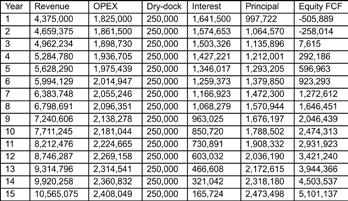
A simple DCF sketch (illustrative)
An example 15-year cash-flow path (growing revenue, OPEX, and scheduled dry-docks; decreasing interest/principal) shows equity FCF turning positive by year 3 and compounding thereafter, with residual value critical to overall IRR. This is illustrative, not advice; actuals hinge on TCE paths, capex timing, and financing terms.
Policy design: support the muscle, not the crutch
For India, the objective isn’t undercutting others; it’s capacitybuilding:
• Targeted shipbuilding support (local yards, standards, lifecycle quality).
• Prudent, time-bound concessional finance (e.g., via GIFT City) that crowds-in private capital rather than distorts trade lanes.
• Fleet mix aligned to import capes/baby capes and export handies.
• Human capital: technical/commercial training to rebuild the operating edge.
Conclusion.
List the parent for stability; use it to enable shipping growth across the group; and deploy smart, finite policy support to build sovereign freight capacity—not to fuel a subsidy race. That way, investors keep the steady yield, India gains tonnage depth, and the maritime system keeps its diversity and safety.
Will talk about dry bulk growth drivers in the next article.
About the Author
Nikhil Modak (FICS, EMBA (Finance), PGCSCM) is a shipping professional with over 25 years of experience, starting from ship management and later transitioning into shipbroking. He contributed to the management of K-Line vessels with K-Steamship (J.M. Baxi Group co) and shifted focus to commercial roles over the past 20 years. His expertise includes working with commodity traders and dry bulk ship owners, serving as General Manager of Chartering for ship owners and commodity trader, and also acting as a competitive shipbroker.
He has experience from Handy size to Panamax vessels, with most recently managing part cargoes and parcels with the Clipper Group, specializing in steel, pipes, fertilizers, and agricultural products in the Red Sea, Persian Gulf, and Indian Ocean regions. Presently he is running his own ship/freight brokerage and consultancy company www.templarshippingservices.com out of Singapore and focussing mostly on agri commodities and steel cargoes.
MMT
Dr Deepti Mankad –Newly Appointed Head, Women’s Wing, MUI
Following her recent appointment as the Head of the Women’s Wing of the Maritime Union of India (MUI), Dr. Deepti Mankad speaks with Maritime Matrix Today about her vision for empowering women in maritime, her plans for the future, and the challenges she intends to address in this new role.
Congratulations on your new role. What does this appointment mean to you personally and professionally?
Thank you. This role is both an honor and a responsibility. Personally, it is a milestone in my journey of advocating for gender inclusion in maritime. Professionally, it gives me a platform to influence policy, support women seafarers, and contribute to shaping a more equitable maritime workforce in India.
What is your vision for the Women’s Wing of MUI?
My vision is to build a maritime ecosystem where women feel represented, supported, and empowered at every stage of their professional journey. I hope to transform the perception of maritime as a male-dominated industry and encourage more women to see it as a viable and rewarding career choice. Ultimately, I aim for equal opportunity, fair treatment, and meaningful representation in decision-making roles.
What are the key initiatives you plan to introduce as the new head?
Some of the initiatives we are planning include:
• Structured mentorship programs pairing new cadets with experienced women seafarers.
• Career awareness drives in schools and colleges to expand maritime visibility among young women.
• Policy advocacy for enhanced shipboard safety, maternity provisions, and anti-harassment frameworks.
• Skill development and leadership workshops to build confidence and professional competency.
• Networking platforms where women in maritime can share knowledge, experiences, and support systems.
These programs aim to strengthen not just individual careers, but the industry as a whole.
Maritime remains one of the most gender-skewed sectors. What challenges do women still face?
While progress has been made, several challenges remain:
• Limited acceptance of women on board ships.
• Stereotypes and bias regarding women’s capabilities in technical and leadership roles.
• Safety concerns, both practical and psychological.
• Lack of adequate facilities, policies, and support systems in some organizations.
• Smaller peer groups, leading to isolation.
These challenges are not insurmountable, but they require consistent effort, policy change, and mindset transformation across the industry.
How do you see organizations and regulatory bodies contributing to positive change?
Collaboration is key. Shipping companies, regulators, training academies, and unions need to work together to:
• Strengthen gender-sensitive policies.
• Improve training facilities and onboard provisions.
• Conduct sensitization programs for all ranks.
• Promote success stories of women in maritime to normalize their presence.
When all stakeholders take proactive steps, change becomes sustainable rather than symbolic.
What message would you like to give young women aspiring to join the maritime sector?
Do not let stereotypes define your ambition. Maritime is challenging, but it is also rewarding, dynamic, and full of opportunities. If you are dedicated, disciplined, and passionate, the industry will open doors for you. And remember—you are not alone. There is a growing network of women and allies ready to support your journey.
Finally, what impact do you hope to create during your tenure?
I hope to leave behind a stronger institutional framework for women in maritime—one that provides better representation, equitable opportunities, and a safe working environment. If by the end of my tenure, more young women feel inspired and confident to join maritime careers, and existing women professionals feel more supported in their growth, I will consider it a success.
With leaders like Dr. Deepti Mankad at the helm, the future of women in maritime looks brighter than ever.
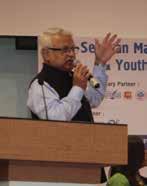
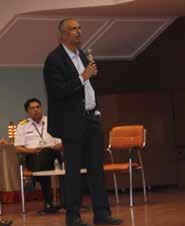
Mumbai Hosts Youth Maritime Career Conclave, Empowering Tomorrow’s Seafarers – 29 November 2025
- Dr. Radhika Vakharia
As an educator, I have seen countless young minds searching for purpose, passion, and direction—yet one remarkable path remains largely obscured from their vision: the Merchant Navy. In most schools, maritime careers are rarely discussed. Career-counselling sessions skim the surface of mainstream professions, overlooking the vast world that exists beyond our shores. Consequently, many students remain unaware of the opportunities, adventure, discipline, and global exposure that the maritime sector can offer.
It is time to change that narrative.
The Youth Maritime Career Conclave , held on 29th November in Mumbai, was an inspiring step toward bringing this dynamic and essential field into the spotlight. The conclave served as a gateway for young boys and girls—standing at the threshold of their undergraduate journeys—to discover the real possibilities awaiting them in seafaring and allied maritime domains. It was not merely about informing; it was about igniting ambition and shaping the next generation of navigators, engineers, logisticians, innovators, and global citizens.
A
Grand Inauguration
The event commenced with an energising inaugural session, setting the tone for a day dedicated to learning, collaboration, and maritime excellence. Dr. Deepti Mankad opened the session with a warm welcome, emphasising the significance of maritime awareness in shaping India’s youth. This was followed by an insightful introduction to Sea Gyan by its Founder, Mr. Sanjay Tiadi, who spoke passionately about the platform’s mission and contributions to maritime education.
Capt. Vivek Bhandarkar then delivered a formal welcome address, acknowledging the esteemed guests, dignitaries, and participants who had come together to celebrate knowledge, leadership, and professional growth.
The ceremonial lighting of the lamp —a symbol of wisdom and enlightenment—was performed by the Chief Guest, Shri Gopal Shetty, Member of Parliament (Mumbai North) , along with other distinguished dignitaries.
Mrs. Pallavi Shrivastava-Trustee of Divyaj Foundation shared how this event was a meaningful attempt for the youth of today.
Felicitation
and Special Announcements
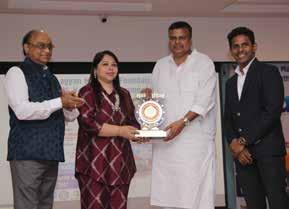
A heartfelt gesture of appreciation followed, with felicitation
of dignitaries byCapt. Vivek Bhandarkar, Capt. Savio Ramos, Capt. Kamal Chadha, and Capt. Shoukat Mukherjee .
The event also witnessed two significant highlights:
• The announcement of the proposed Advisory and Executive Committee of the Women’s Wing of the Maritime Union of India (MUI)
• The unveiling of the new logo of MUI’s Women’s Wing
• These initiatives marked a progressive step toward empowering women in the maritime sector.
Knowledge Sessions and Powerful Dialogues
The formal proceedings transitioned into impactful technical sessions:
• IMU Session by Mr. Sunil Chand Panigrahy
• MUI Session led by Dr. Deepti Mankad
A dynamic panel discussion on “Sagar Mein Samman” brought together diverse viewpoints on respect, safety, and dignity within the maritime profession.Motivational talks by Capt. Dr. Apandkar and Capt. Rohan Sabnis infused the audience with enthusiasm and clarity about maritime life and career pathways. Further enriching the conclave were expert presentations by
• Prof. Ananth Wuppukondur (IIT Bombay)
• Ms. Puja Rawat , who captured the audience with her engaging and relatable insights.
The day concluded with a thoughtful and inspiring address by Shri Sanjay Upadhyay, Member of the Maharashtra Legislative Assembly , followed by a vibrant Q&A session that allowed students to interact directly with industry veterans and experts.
With over 500 students from Thakur College of Commerce and Science, Mumbai in attendance, the conclave was a resounding success. It became a powerful convergence of maritime professionals, educators, policymakers, and aspiring students—celebrating knowledge, leadership, inclusivity, and the collective pursuit of maritime excellence.
Events like these illuminate career paths that remain hidden, guiding young minds toward oceans of opportunity. The Youth Maritime Career Conclave has set a strong foundation for shaping India’s next generation of maritime leaders.
AI Technology
How AI Can Propel India’s Maritime Edge
In the maritime world, the global race isn’t about building bigger ships anymore; it’s about building smarter ships. AI is changing how ports, ships, and logistics work, and India has a great chance to get ahead of the rest of the world by becoming a leader in AI-driven maritime innovation.
Starting a National “AI-in-Maritime” Mission
India’s space and defence sectors have national programs. The maritime sector needs its own AI-in-Maritime Mission, too. This would bring together government agencies, research centres, startups, and shipyards to work toward a common goal: using AI to make ships safer, navigate more efficiently, optimize cargo, and be more sustainable as well. A mission of this size would give India the vision, money, and coordination it needs to become a global centre for AI-based marine systems.
Making partnerships between the public and private sectors
India needs to create consortia that bring together shipyards, startups, universities, and research institutions in order to make this vision a reality. Think about shipyards testing robots that use AI to check the hulls of ships while new companies create systems that can predict when equipment will break down. India could set the standard for smart shipbuilding and port operations around the world if these new ideas are tested, certified, and used in partnerships supported by the government.
Learning Skills for the Future
People who can combine data science, naval architecture, and maritime domain knowledge will be the future leaders in the maritime industry. India needs new training programs that show how AI models can mimic how ships work, look at ocean data, and identify issues affecting maritime traffic. Institutes such as IITs, IMU, and NITs might offer specialized courses in “AI for Ocean Engineering” or “Smart Port Analytics.” This would train a new group of engineers who know how to use both algorithms and anchors.
Giving funds and other incentives to encourage breakthrough concepts
Support is needed for innovation to happen. India should give shipyards, ports, and startups that are making AI-embedded systems tax breaks, grants for innovation, and preferences for AI procurement. “Make in India” changed the way products are produced. A similar policy could help “Think AI, Build Maritime.” For efficiency, safety, and environmental monitoring, the government can give priority to ships and port systems that have AI modules.
Establishing guidelines and standards for safety around the world
AI on ships needs to be safe, easy to understand, and accepted all over the world. India may establish the standard for AIpowered ships, autonomous navigation, and digital twins of ports by creating standards and certification systems. Partnering with bodies like the IMO (International Maritime Organization) would help India have a say in international rules, making sure that its technologies meet the highest safety and moral standards.
The Future: A Smarter Ocean
India can build a self-sustaining maritime AI industry if it puts together the right ecosystem, institutions, and incentives. AI can give India’s maritime sector a strategic edge by making things like smart cargo routing, predictive maintenance, and autonomous surveillance vessels that protect the coastline. India can not only modernize its ports and shipyards by being the first to use AI solutions today, but it can also shape the future of global sea trade. ISRO made India a leader in the space industry, and the maritime AI revolution can make India the captain of the digital ocean.
Srivastava Managing Director Yodaplus Technologies Pvt Ltd
If you have any questions or would like to discuss how AI can support India’s journey toward maritime leadership, please feel free to connect at vishrut@yodaplus.com.