ARCHITECTURE PORTFOLIO
MARA APATACHIOAE A
design
research
collection of
and
work
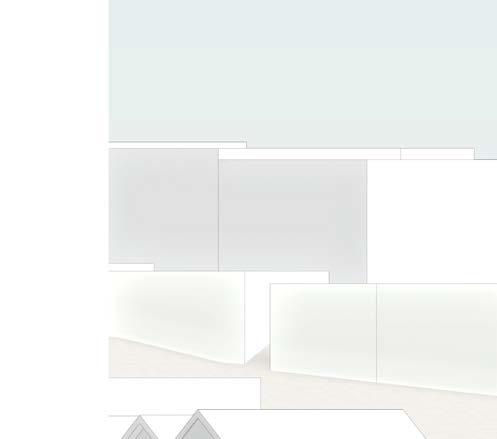
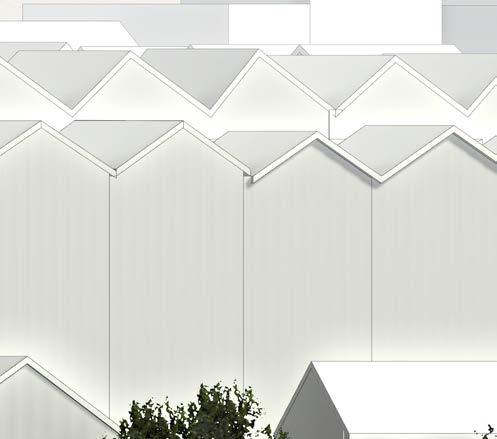
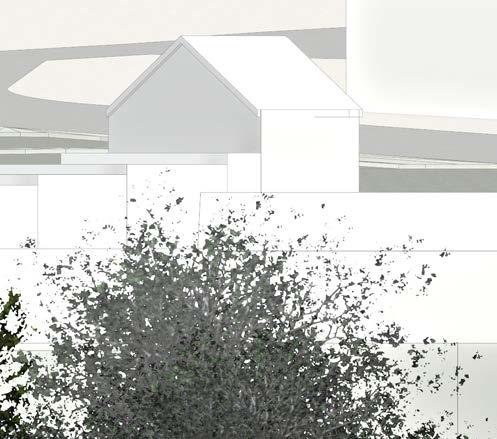
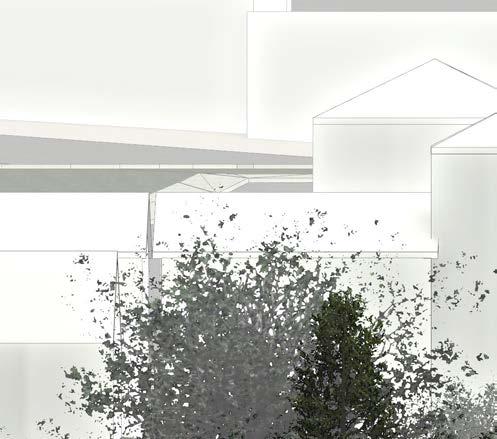
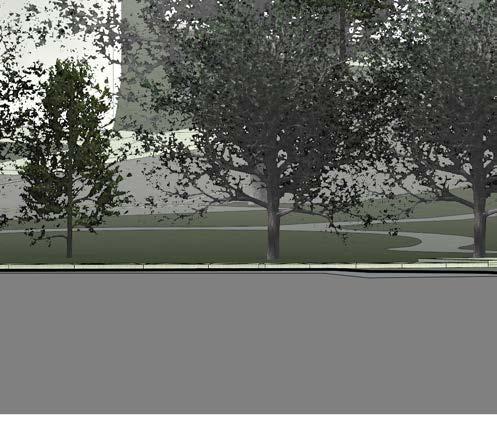
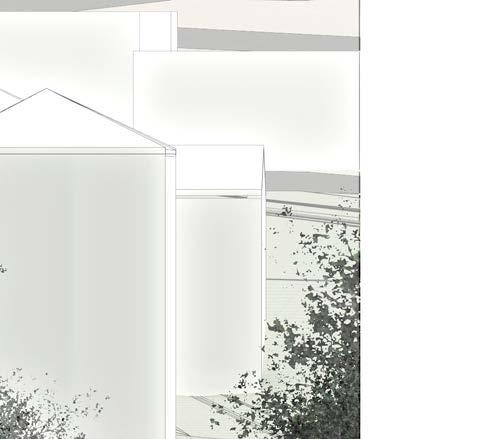
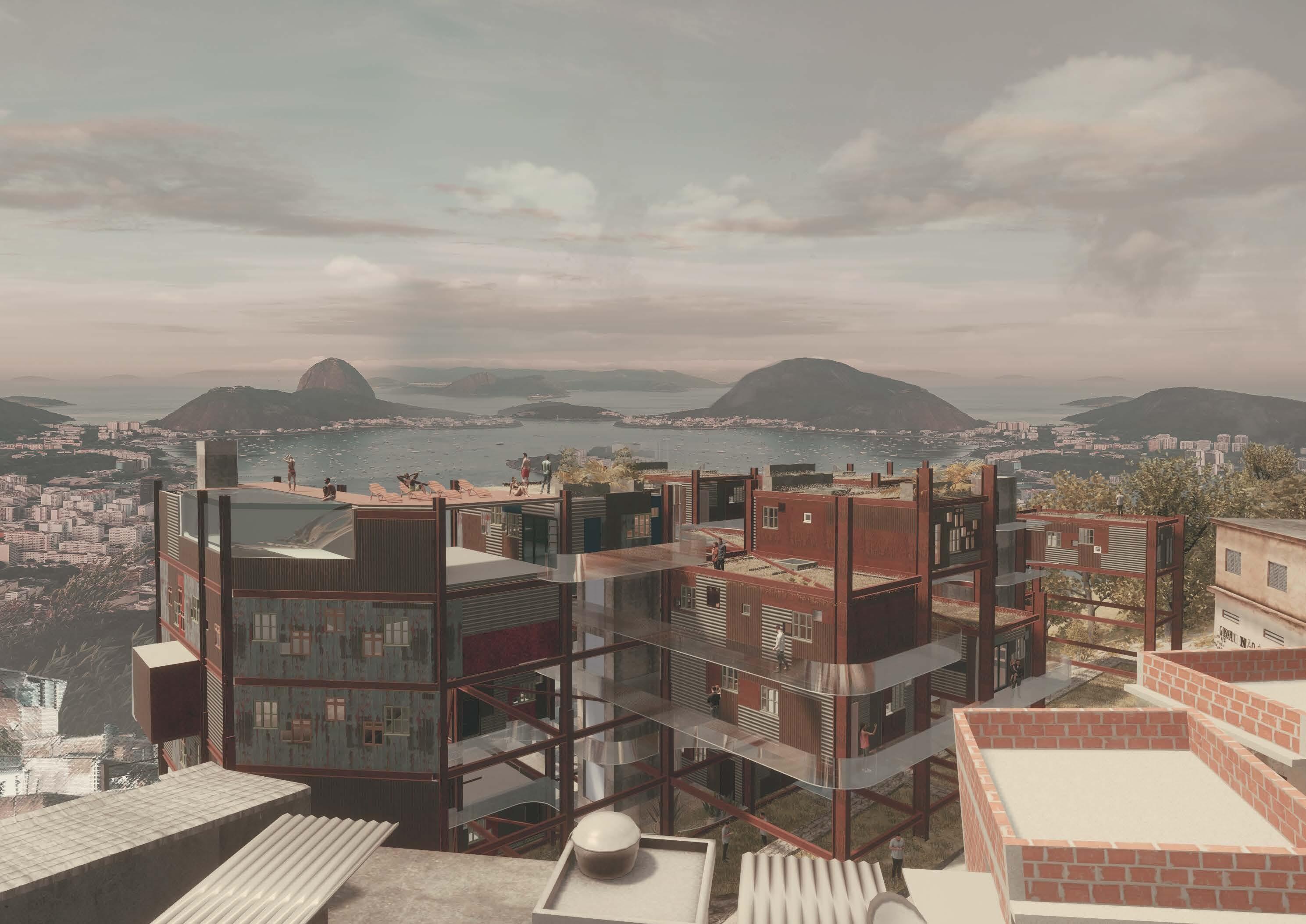
Back View of the Modular Favelas proposal in Context
Generative Formfinding
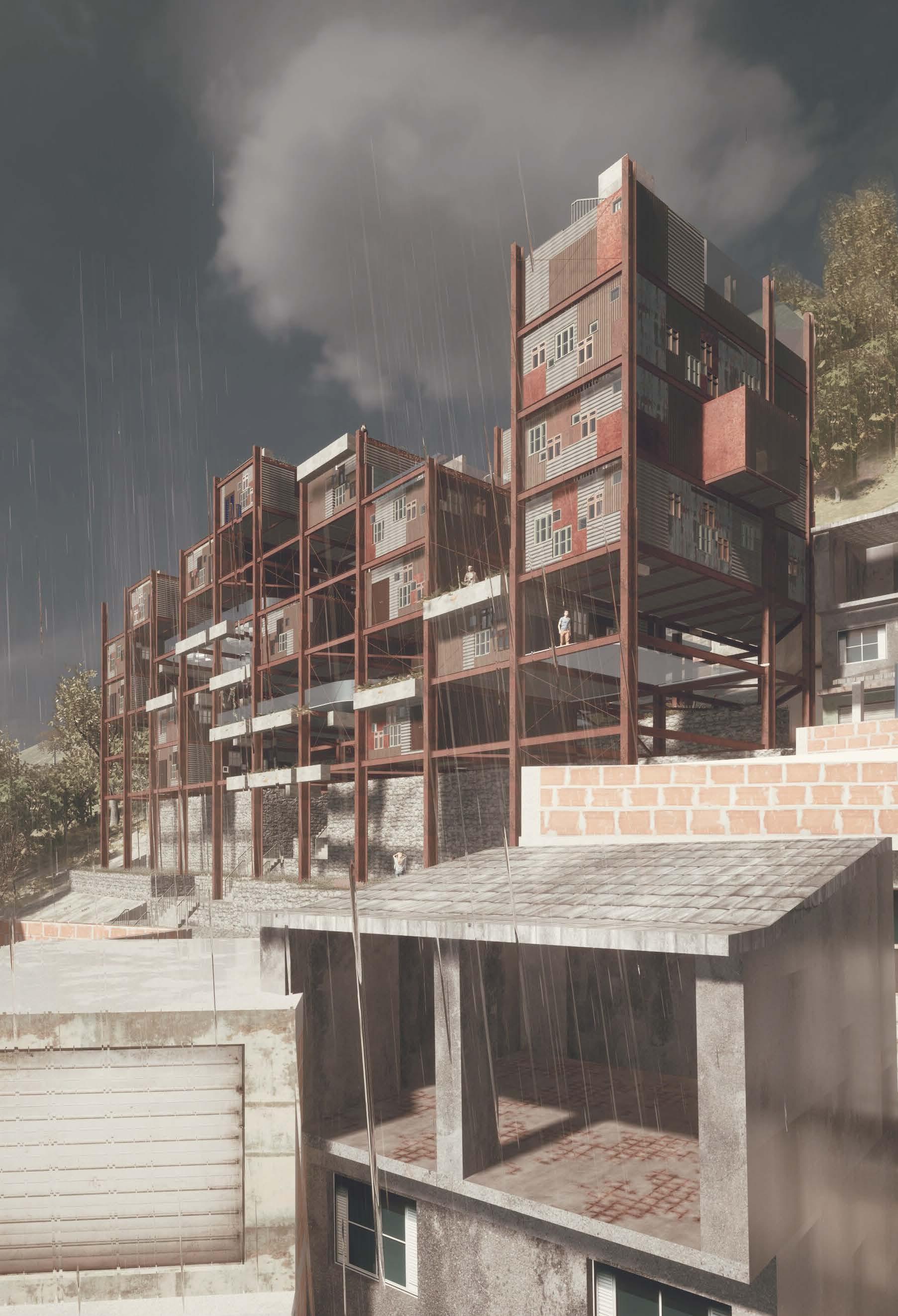
As part of my thesis project, I investigated the urban form and development of favela expansion in Santa Marta, Rio de Janeiro. The project was split into two sections; research into generative formfinding patterns that can improve the layout of favelas in terms of ventilation, daylight and access and the development of the massing into a mixed-use proposal with a landslide mitigation strategy.
The first section focuses on the complex urban ecosystems, often arising organically without formal planning, resulting in unique growth patterns with each unit tailored to the resident’s needs, but also with shortcomings such as restricted access, ventilation and access.
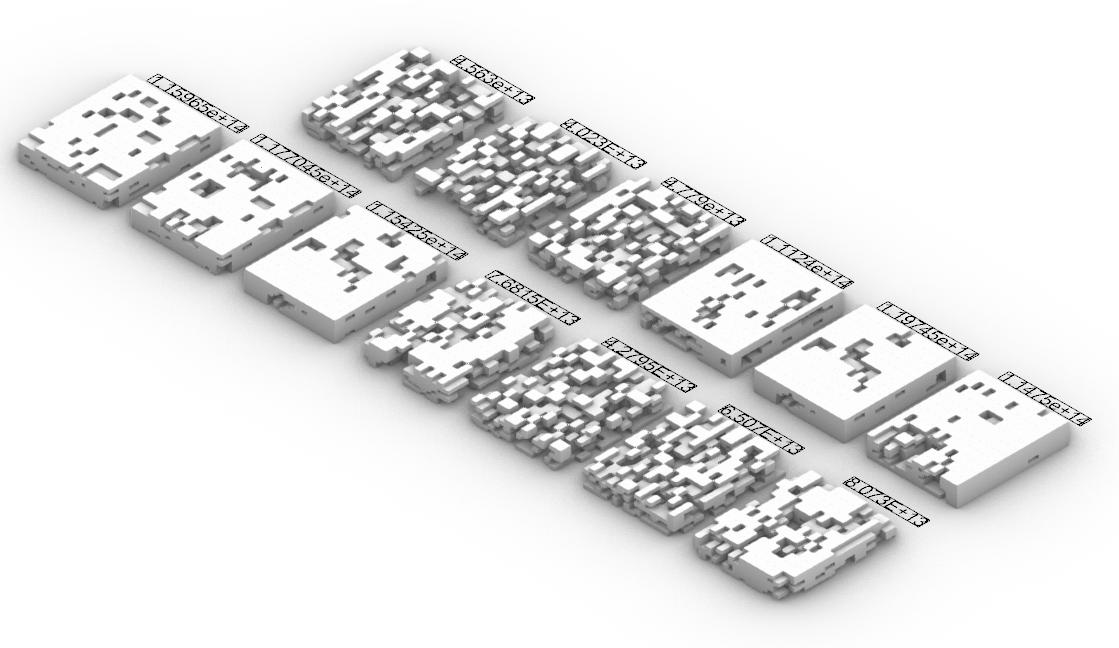
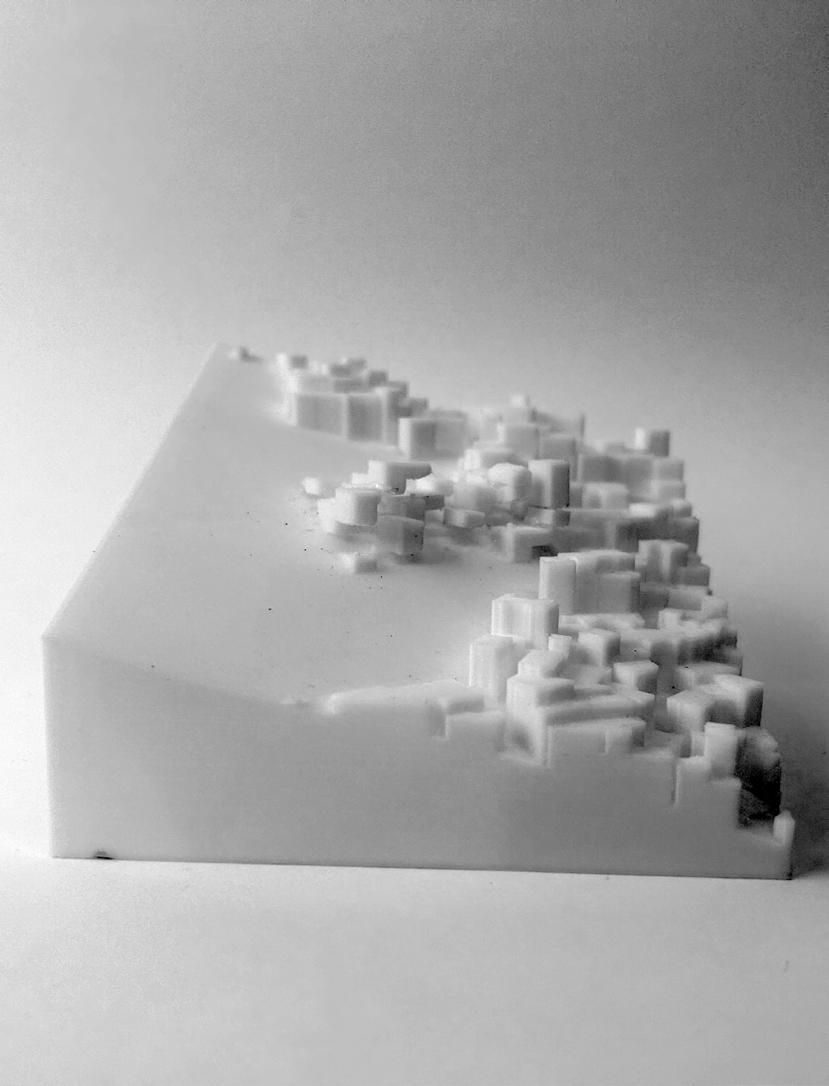
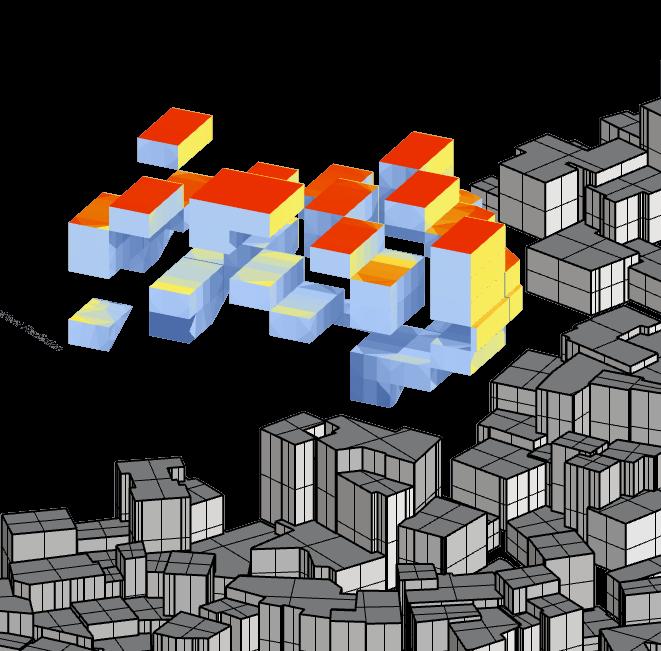
Generative form finding, leveraging computational tools and algorithms, offer a systematic approach to understanding and reorganizing these intricate urban fabrics while not taking away the identity of these settlements. By analyzing factors such as topography, social dynamics, and infrastructure networks, multiple computational models have been tested, and the most suitable model found was Cellular Automata 3D.



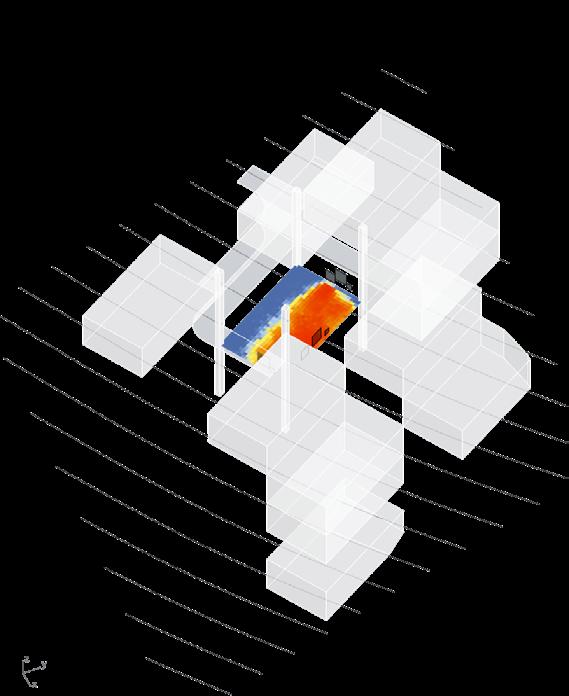
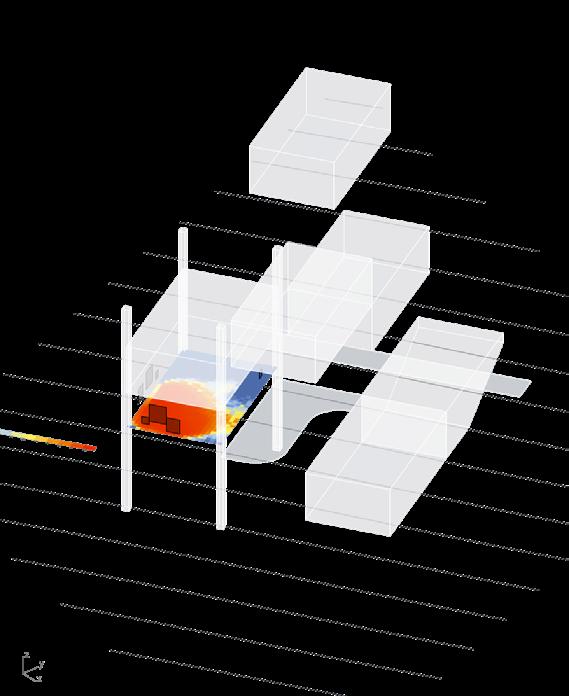

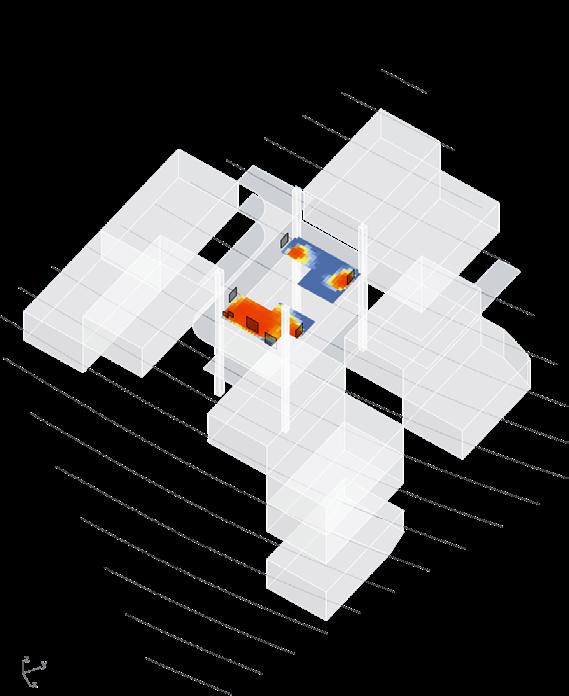
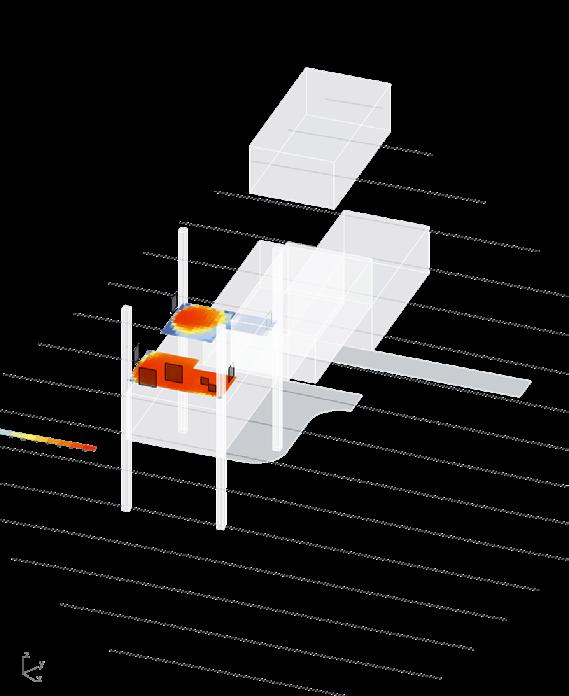
Daylight analysis on the most exposed module in the arrangement and the least exposed based on two facade options.
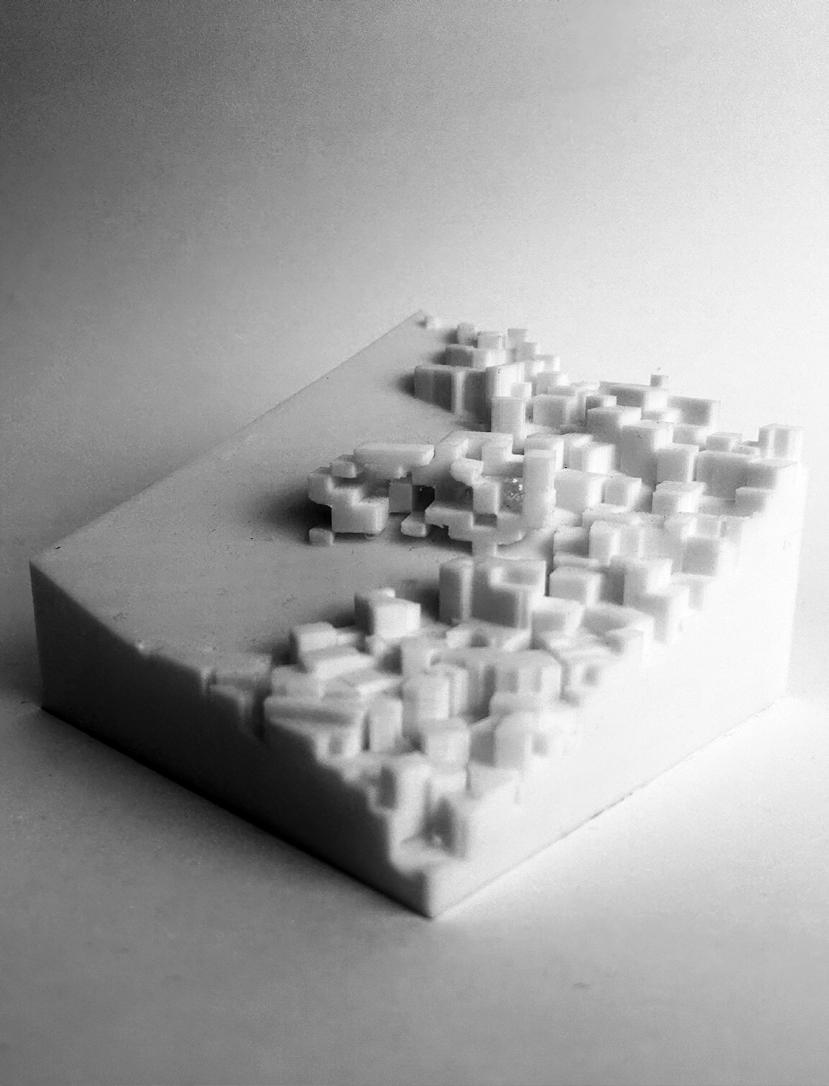
Solar Optimisation based on values received through Ladybug QR code for exhibition video Above: Biomorpher volume optimisation ran on the Cellular Automata neighbour rules and starting arrangement parameter Below: 3D printed massing models of the reduced arrangement that will be design further before the solar optimisation (left) and after (right)The second section of my thesis focuses on the design of the Cellular Automata arrangement found in my research.
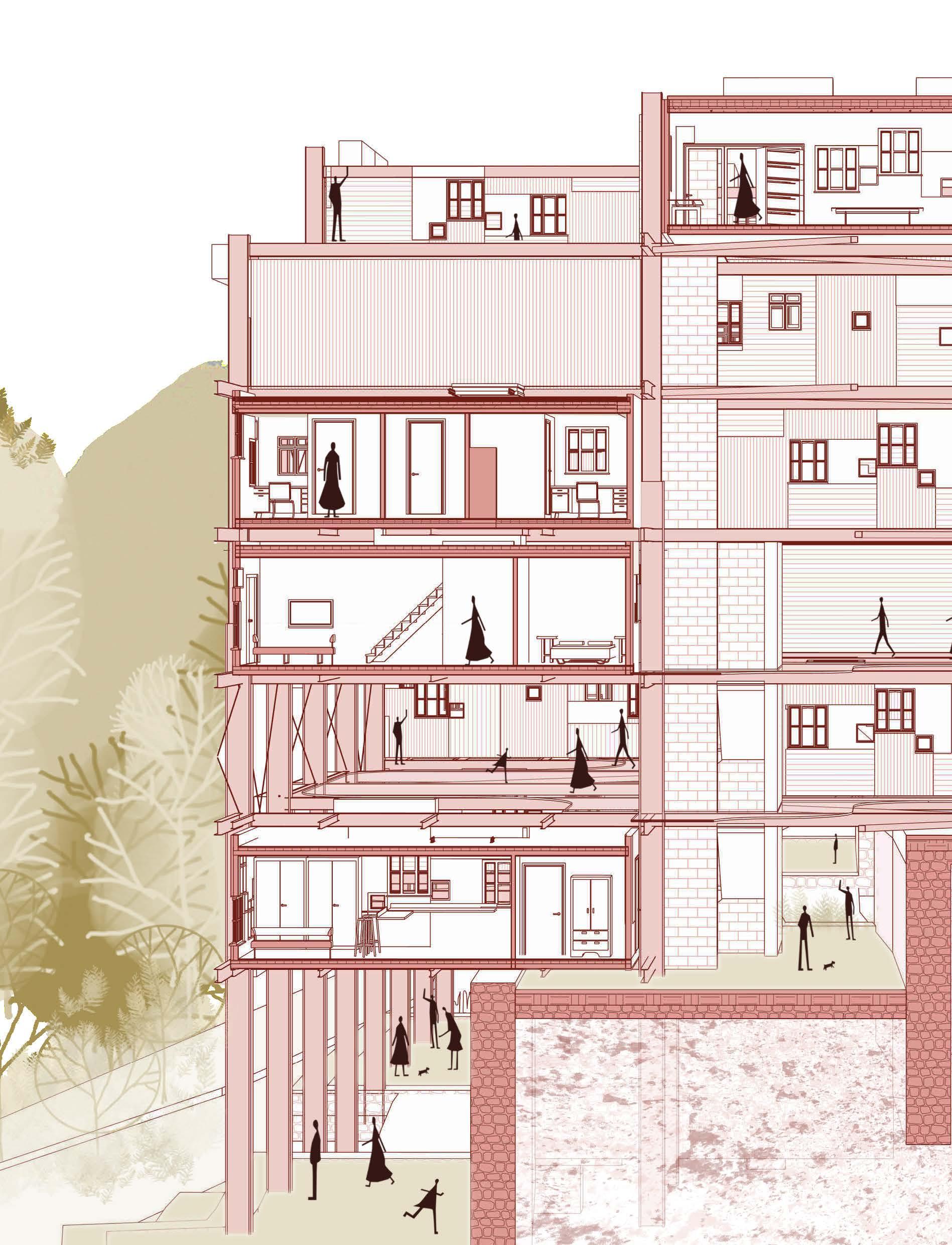
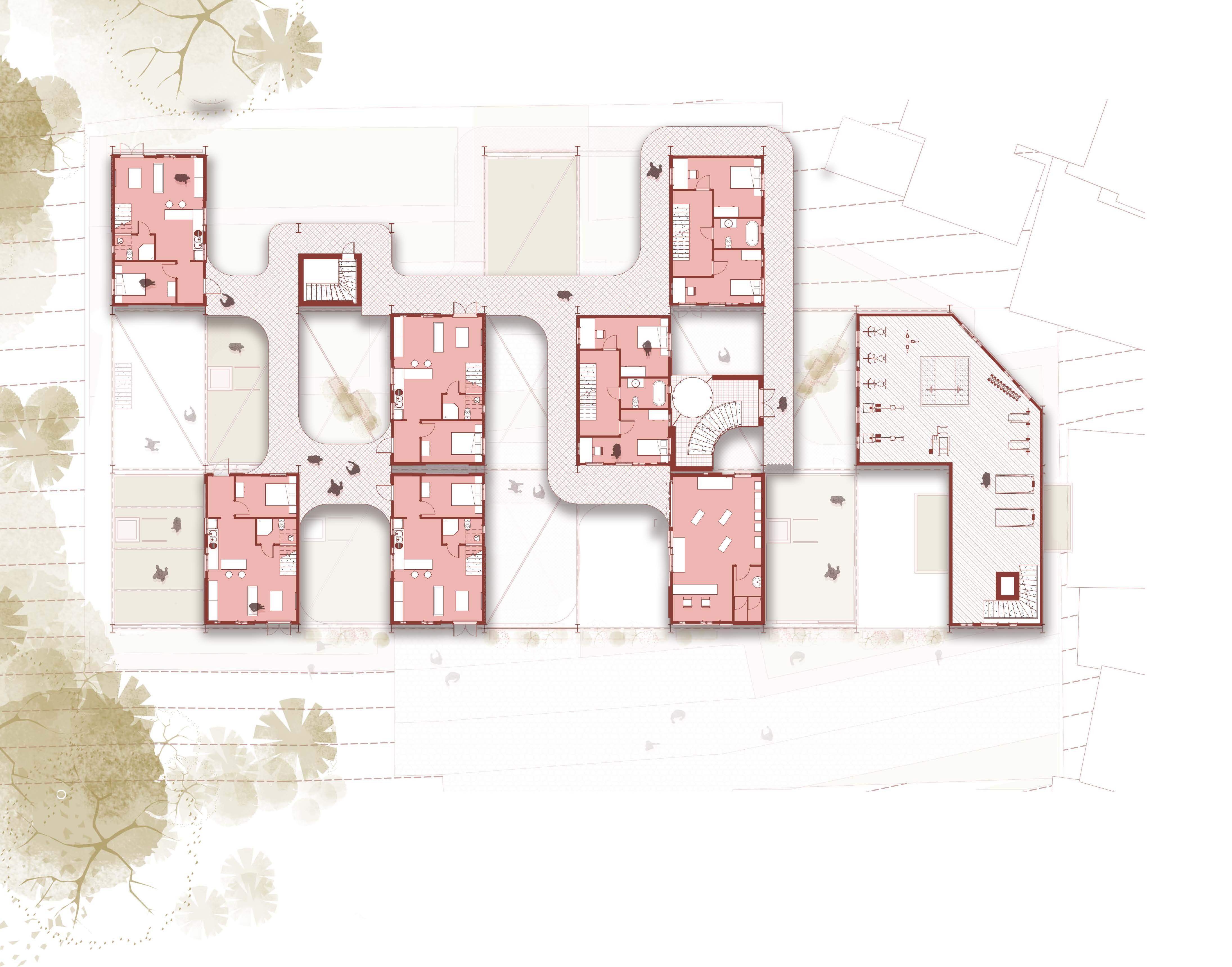
The design strategy offers a sustainable alternative to the current building practices in Santa Marta. Limitations such as lanslide risks, access for construction and time efficiency determined the choice for 5 by 9m modules organised into 4 typologies depending on orientation, access, privacy and use.
The programme is determined by residents’ needs; housing takes priority, followed by small scale commercial spaces that financially sustain the community. Additionally, a new martial arts school and leisure center is proposed to replace the existing school and cater to the community.
To complement the scheme and improve the outdoor space quality and terrain, a series of landscape strategies are employed (gabion boxes, existing trees retained, additional planting, removal of non-permeable ground materials), the modules are analysed for daylight and the vertical walkways feature a high light transmittance material for improved natural daylight.

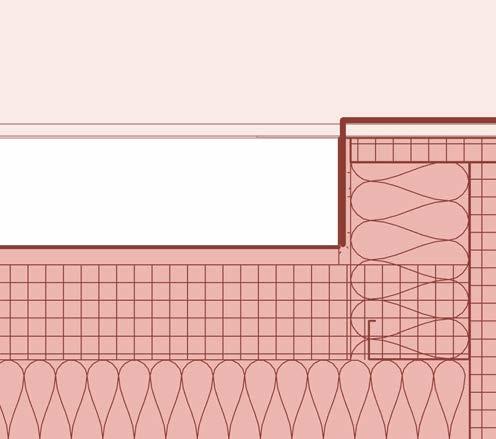

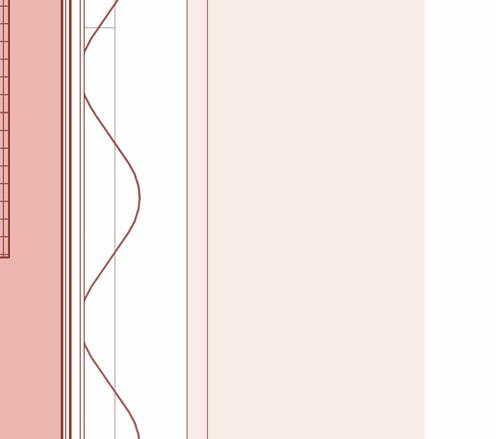
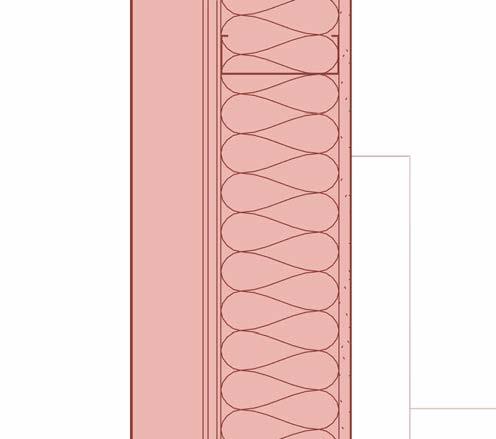
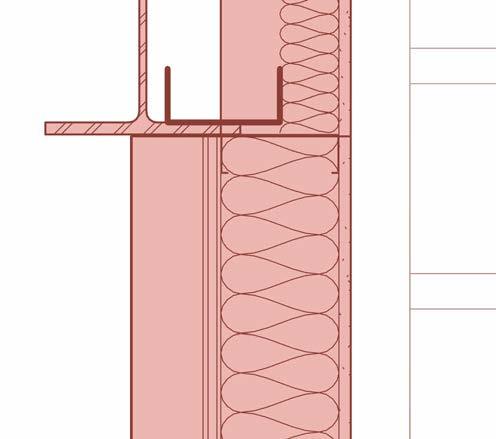
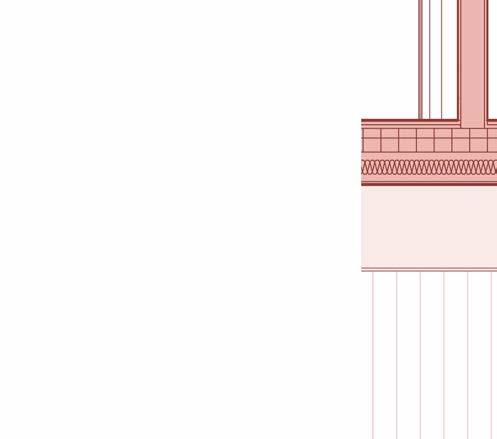
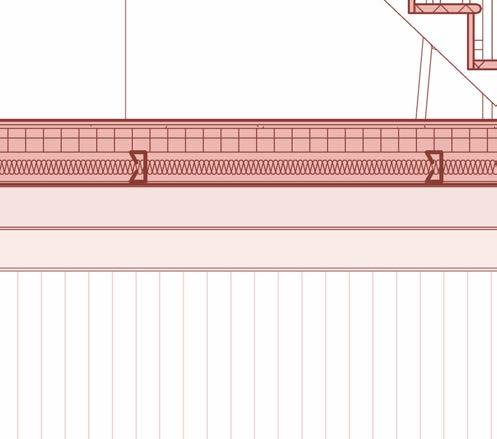
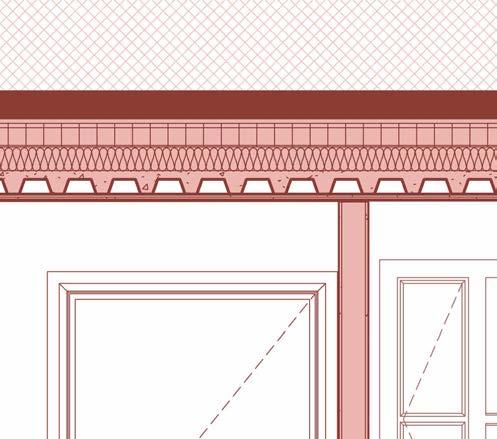
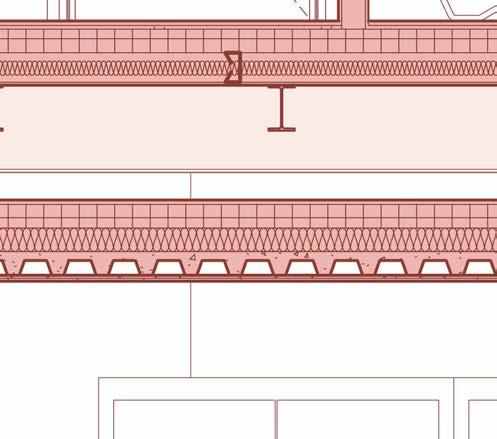
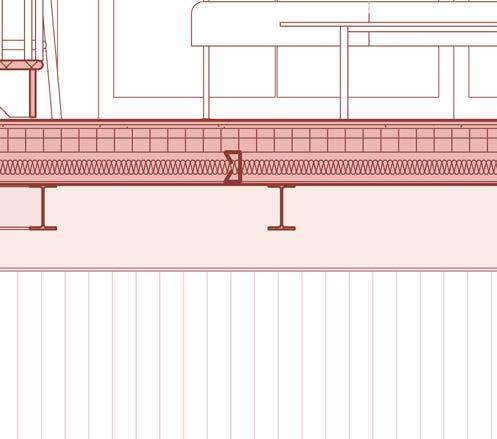
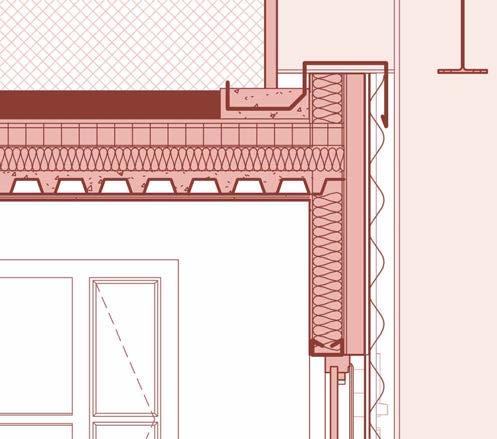
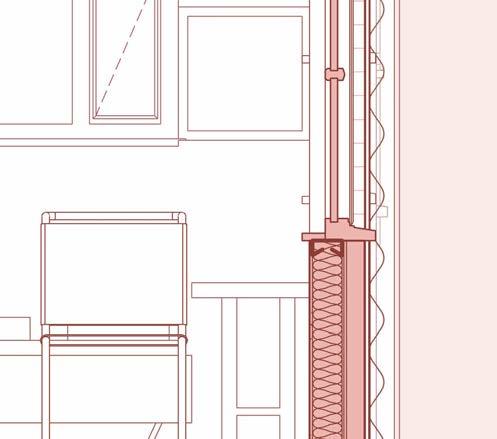
Wall - 0.16 W/m2K
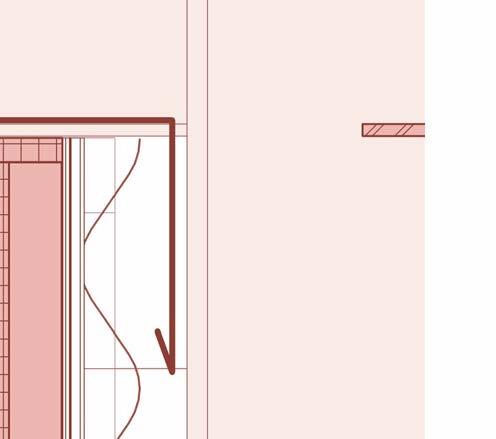

- 5 - 130mm New and Recycled metal cladding
- 50mm Services Gap
- 20mm Corkboard Insulation at roof junction for cold
- 15mm OSB board
- Damp Proofing
- 100mm Vacuum Insulation Panels A2 Fire Rating
- Vapor Control
- 2x10mm Insulated Plasterboard
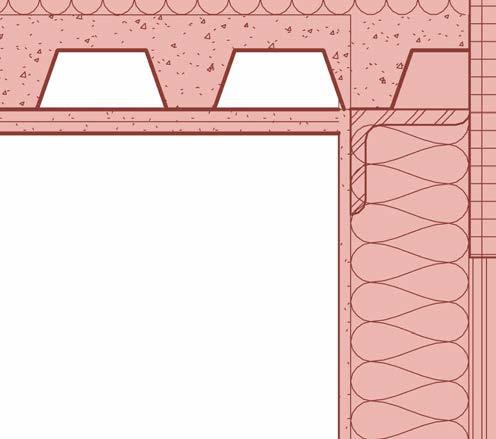
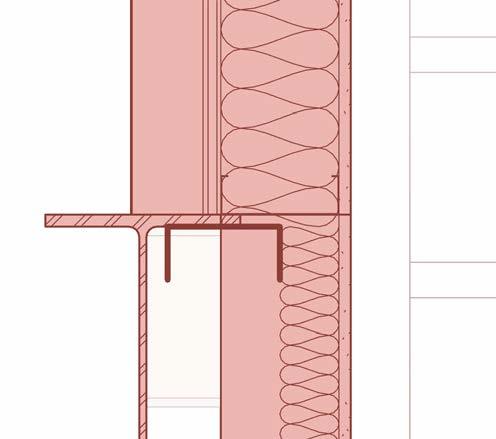
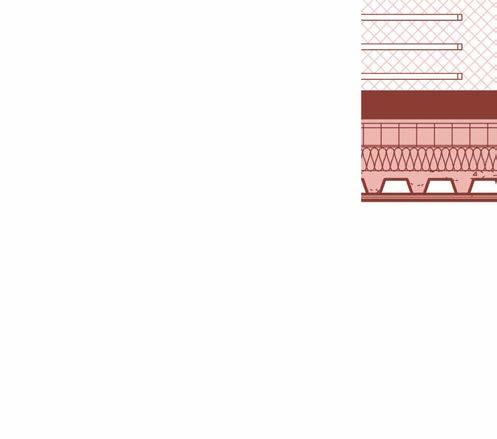
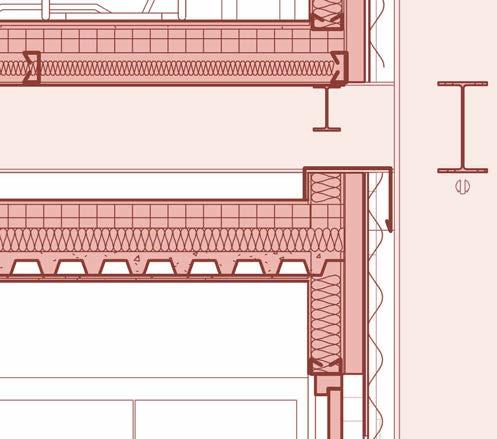
Roof - 0.18 W/m2K
- Roofing Felt
- Weatherproofing Membrane
- 80mm Corkboard

Vacuum Insulation Panels A2 Fire Rating
- Composite Roof Deck Supported by Steel L-Angle to support green roof where necessary
- 2x10mm Insulated Plasterboard







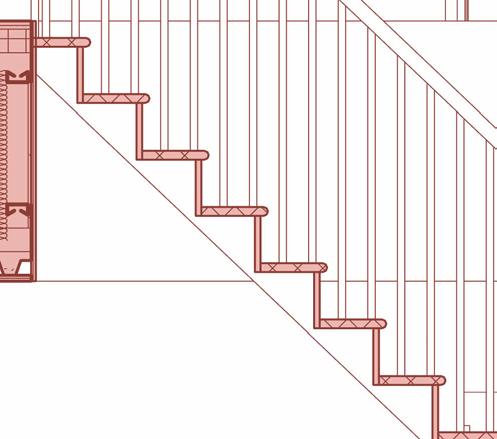
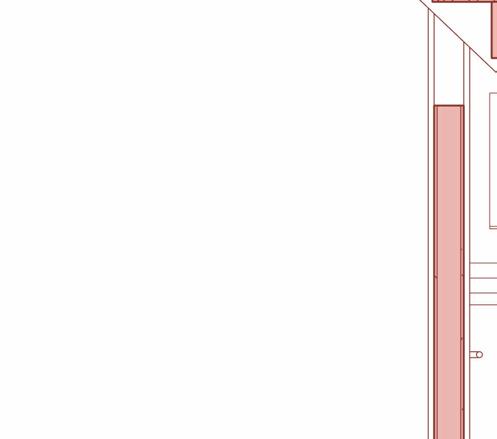
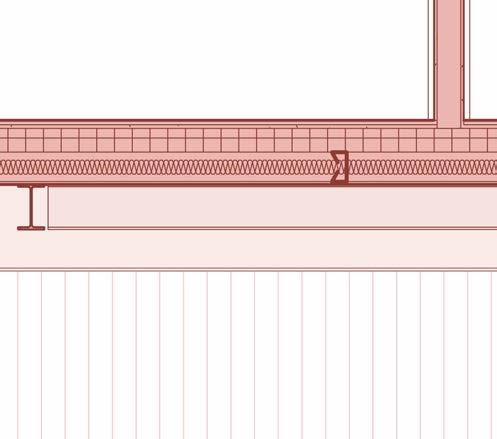


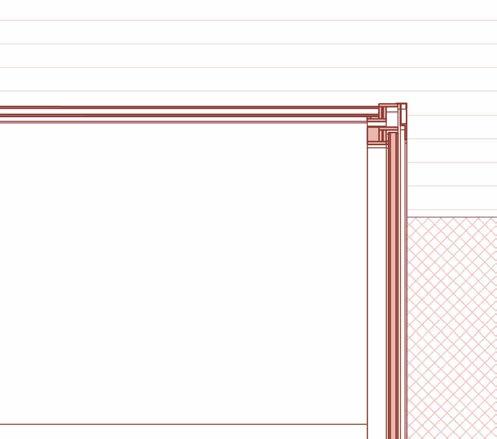












Material Selection: The proposal seeks to celebrate the unique Aesthetics of favela buildings and make use of as much of the demolished buildings as possible. The existing windows and rusty tin roof covers will be reused and supplemented with new materials where needed.
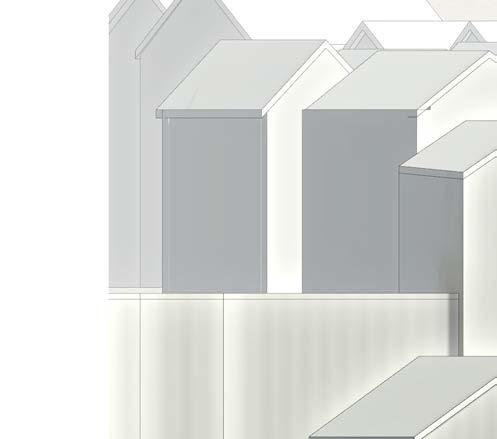
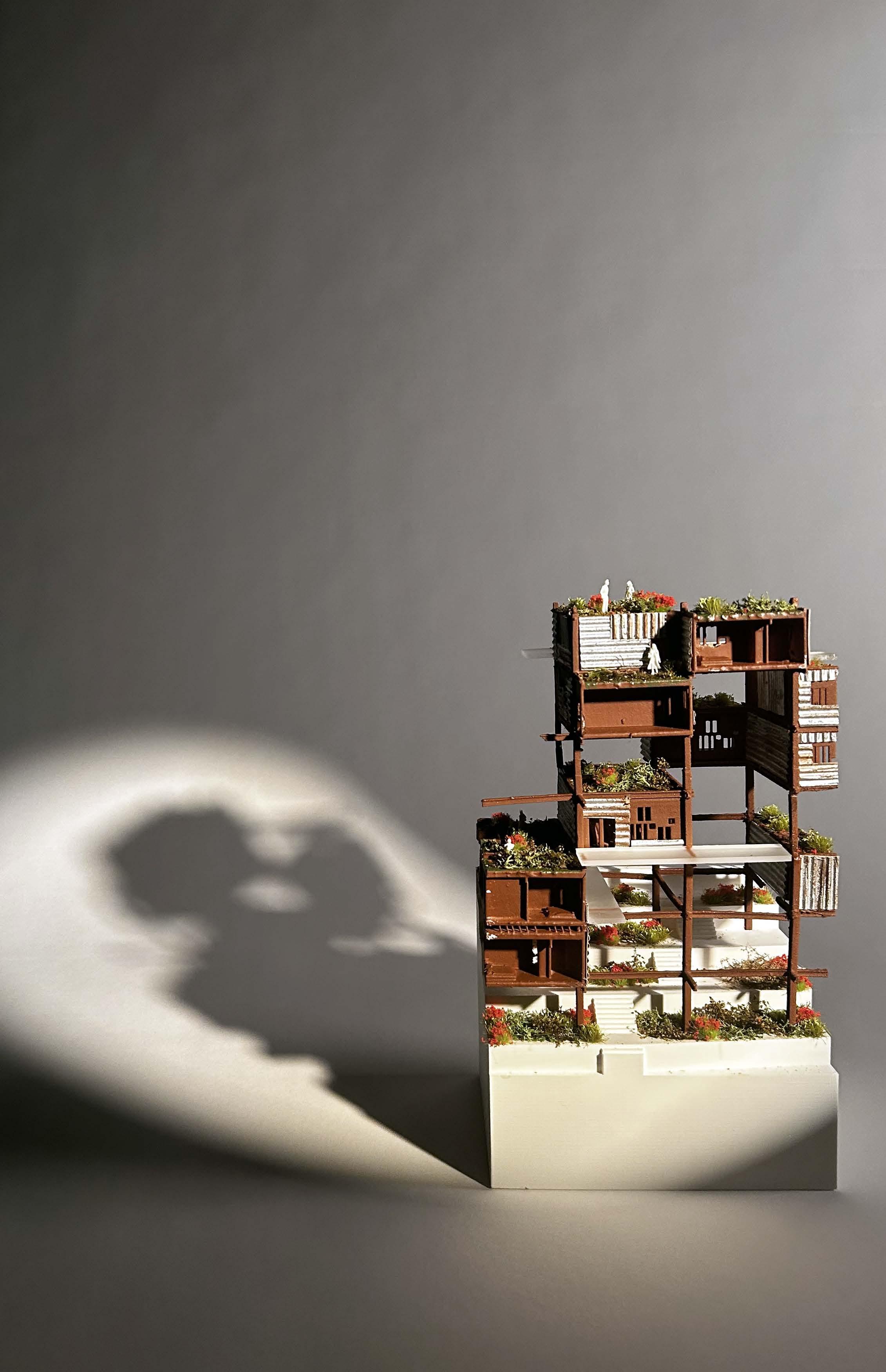 Front view of 1:100 sectional model of the proposal showing inhabitation and access walkways
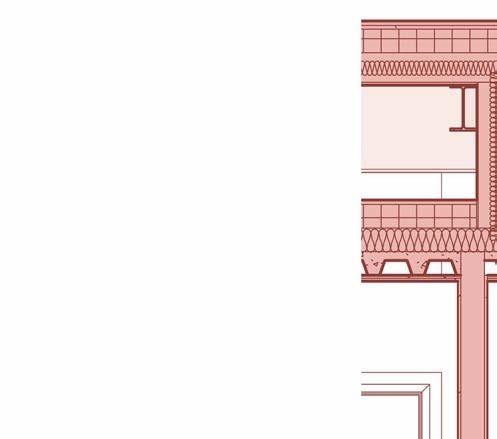
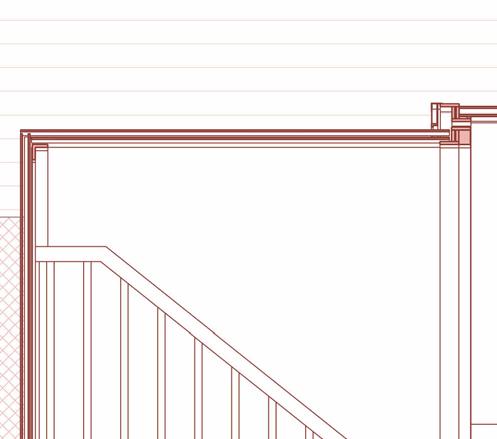
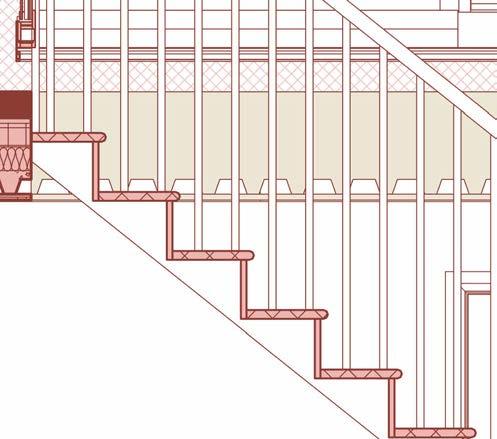
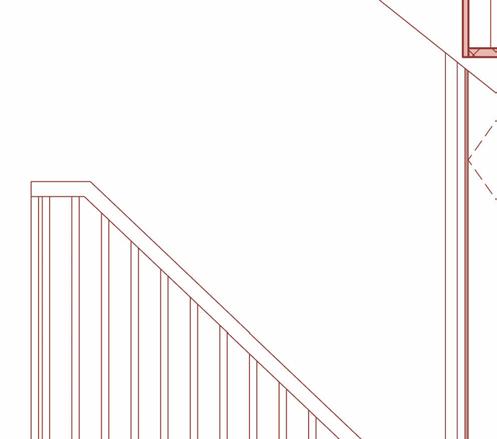
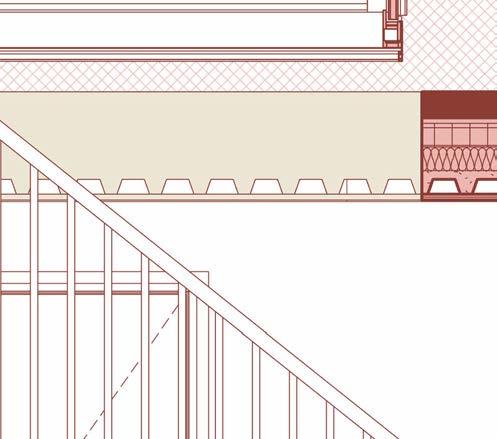
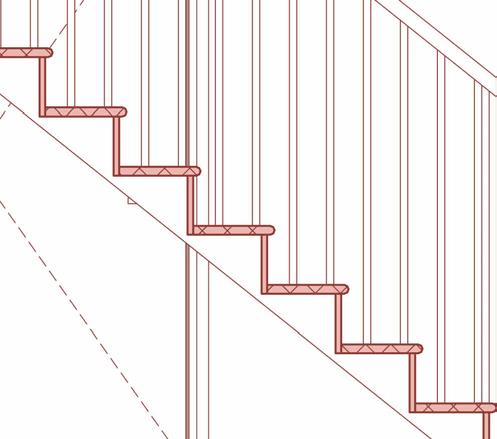
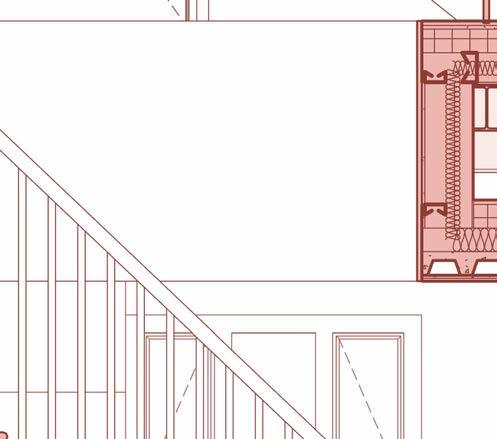
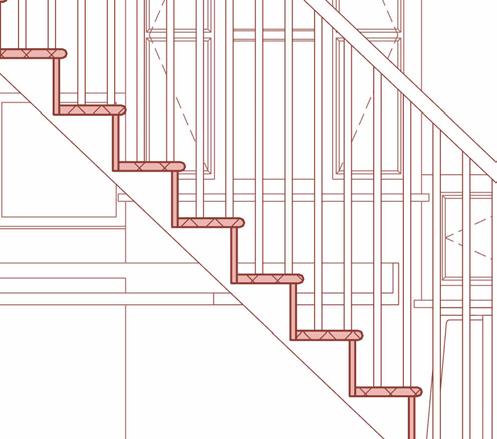
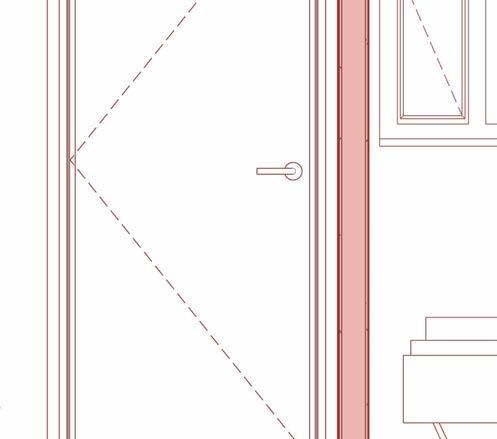
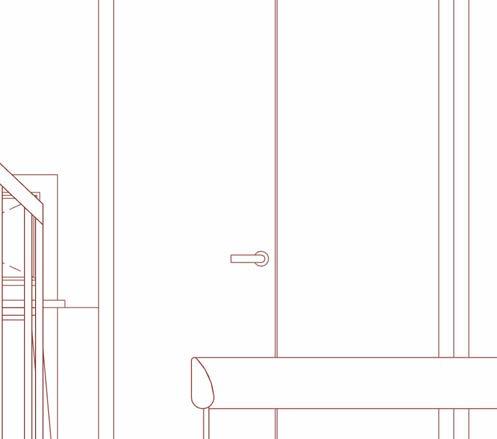
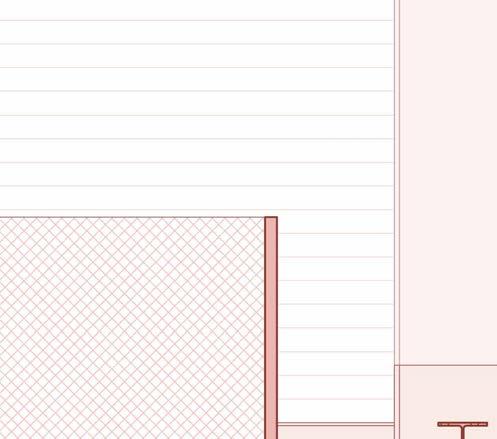
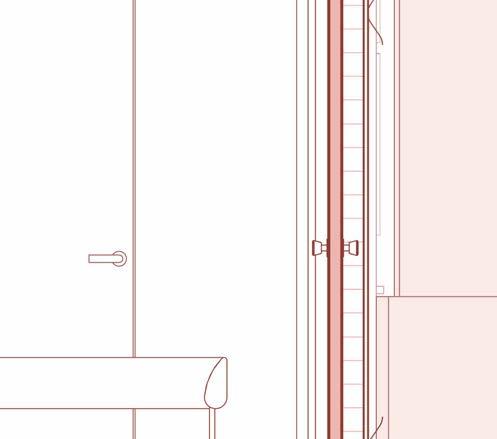
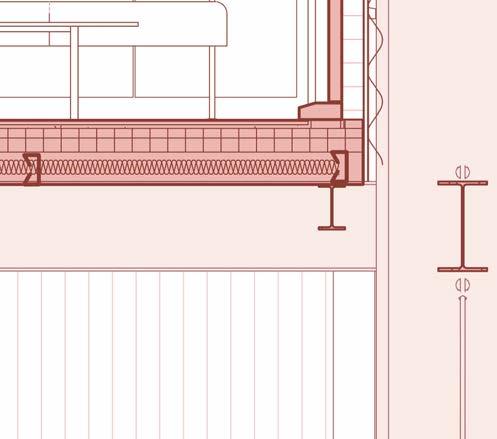
1:20 Section showing module wall, roof and floor build up along with relation to superstructure
Front view of 1:100 sectional model of the proposal showing inhabitation and access walkways
1:20 Section showing module wall, roof and floor build up along with relation to superstructure
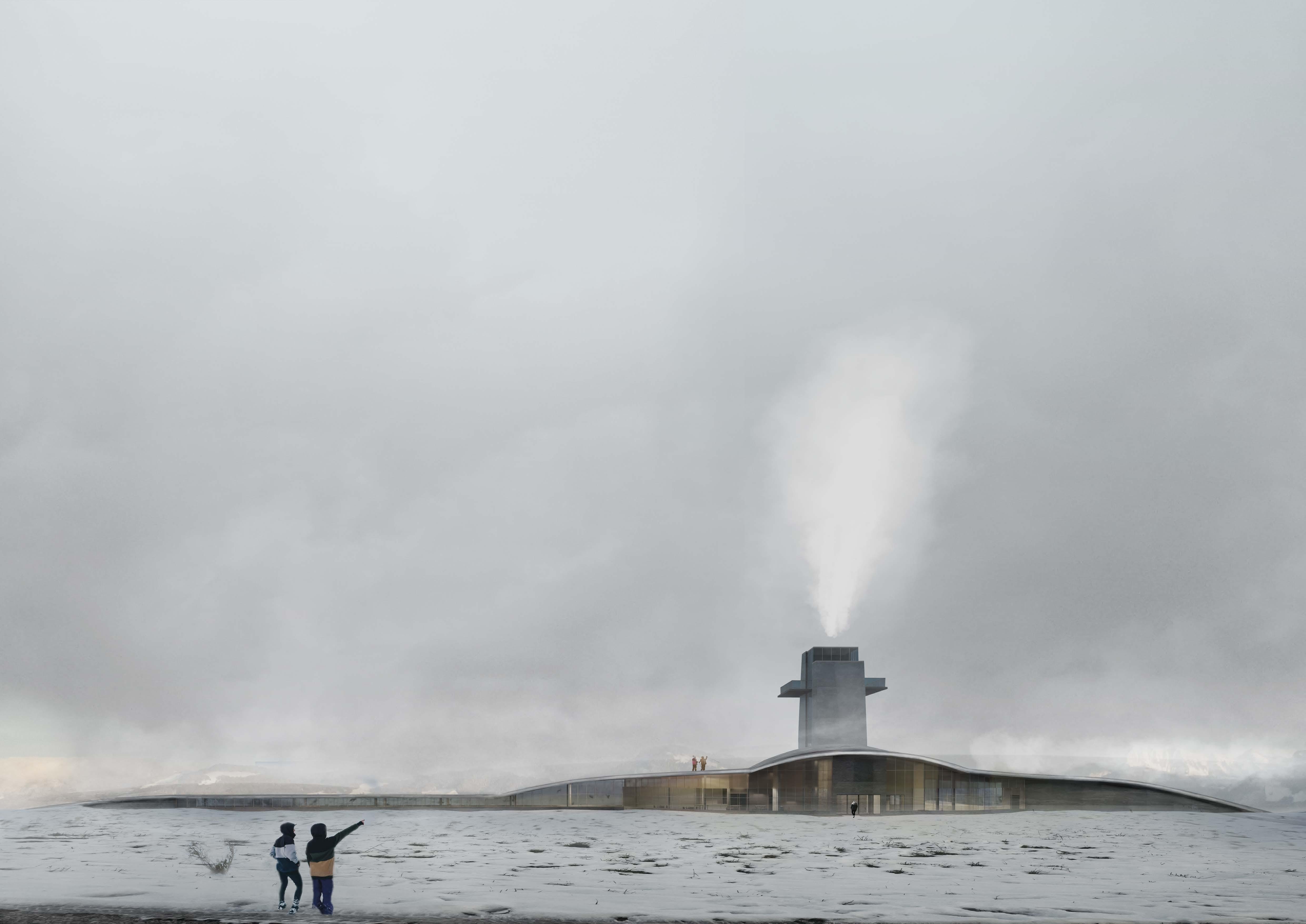
Teamed with a fellow BSc Architecture student, I developed a proposal for BeeBreeders’ Iceland Cave Tower competition, enhancing skills in visualization, Revit, and Lumion. Situated at the mid-Atlantic ridge, our observation tower integrates with Iceland’s landscape, guiding tourists to the Grjótagjá caves while fostering conservation through designated walkways. Inspired by the dynamic geological formations and moss-dappled scenery, our design emerges as a beacon amidst the rugged terrain, inviting exploration of the natural wonders shaped by water veins and tectonic activity. This project provided a novel challenge, diverging from previous work and enriching my architectural repertoire.
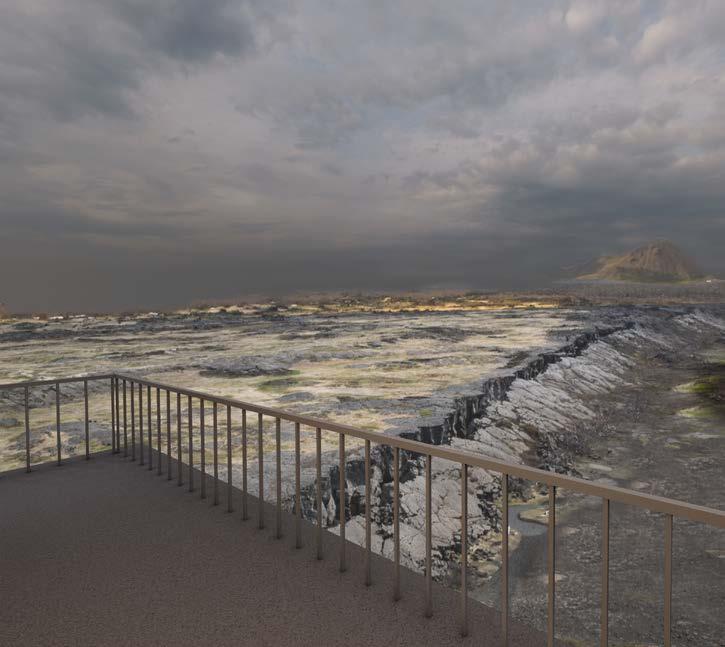
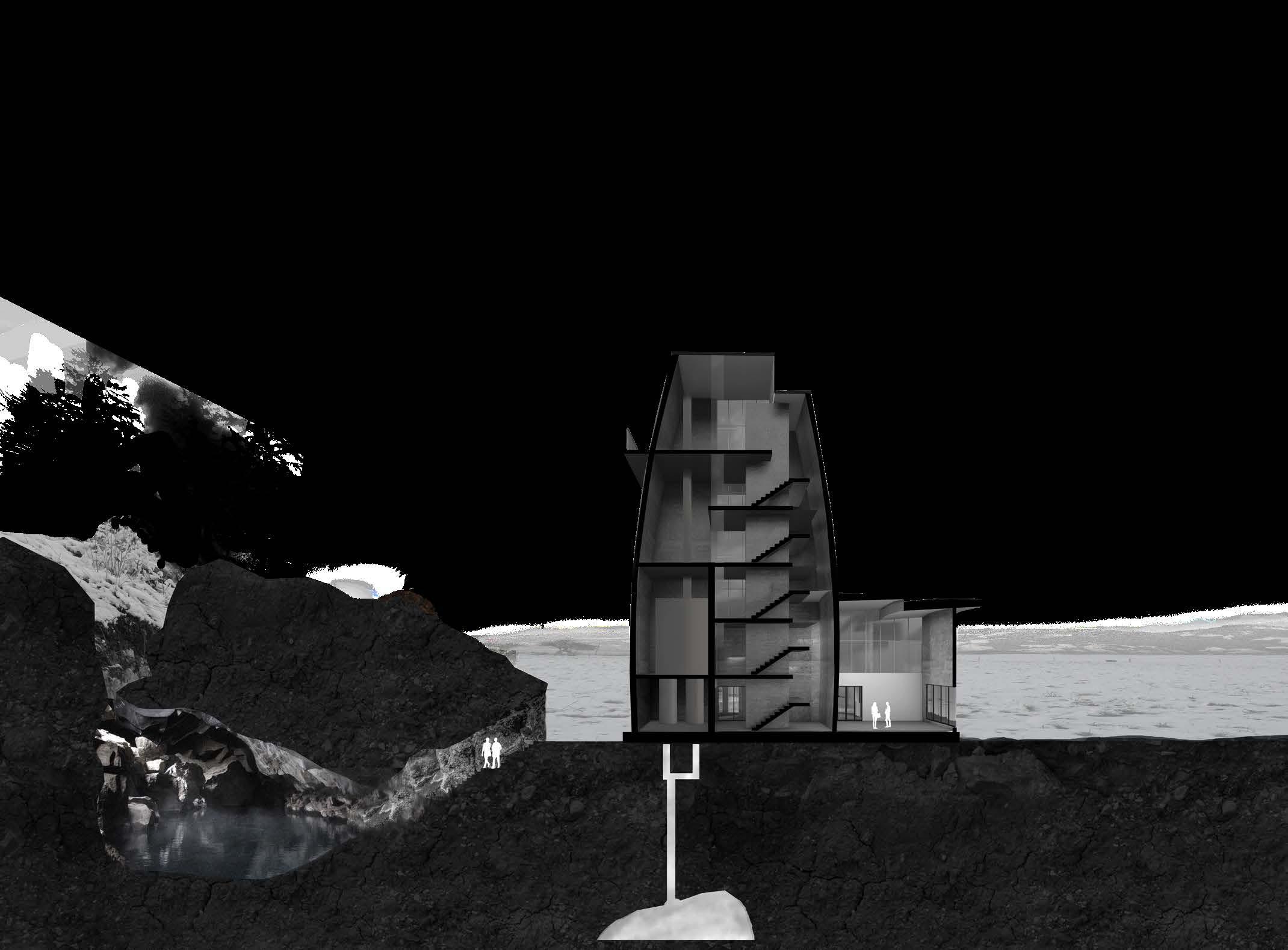 Enscape render of the Competition entry, edited using matte painting technique
Sectional perspective
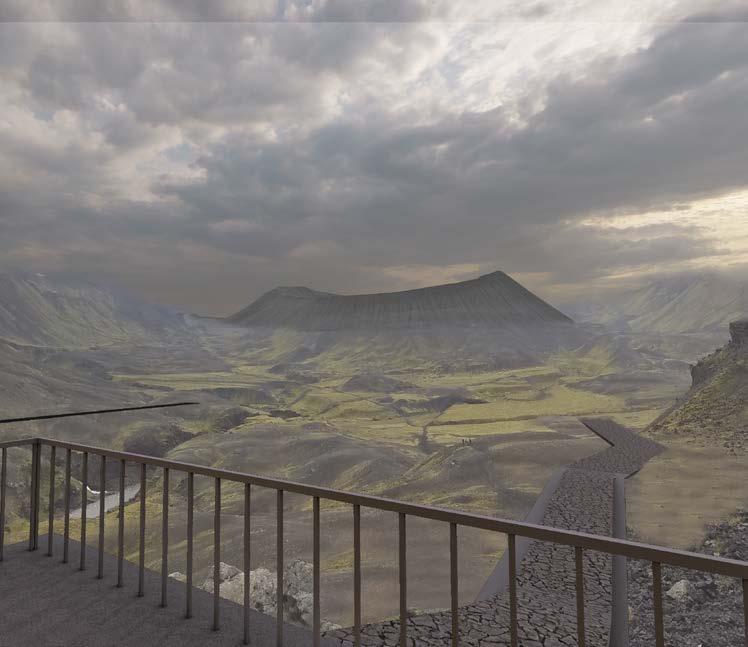
Views from the viewing platform
Enscape render of the Competition entry, edited using matte painting technique
Sectional perspective
Views from the viewing platform
The final undergraduate year studio brief envisions a responsive Spike Island by 2030, proposing an interdisciplinary research center for biomaterials and technology near Bristol Marina. It fosters collaboration between artists and scientists, paralleling cellular division, while design considerations mirror organic patterns within the site’s constraints for a unique architectural solution.
The cell and its division are the conceptual foundations of my proposal. This process references the environment in which people from different backgrounds and with different skills come together and innovate.Additionally, physical conditions such as context, sun angle and structural possibilities shaped my proposal.
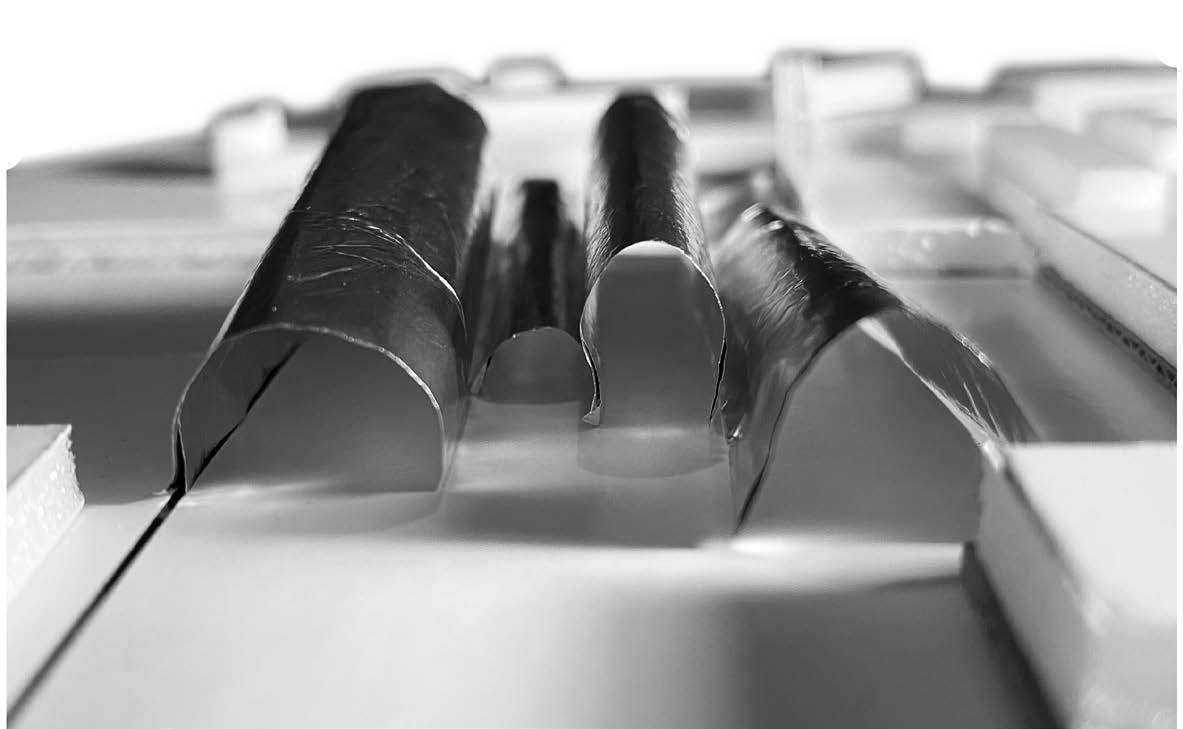
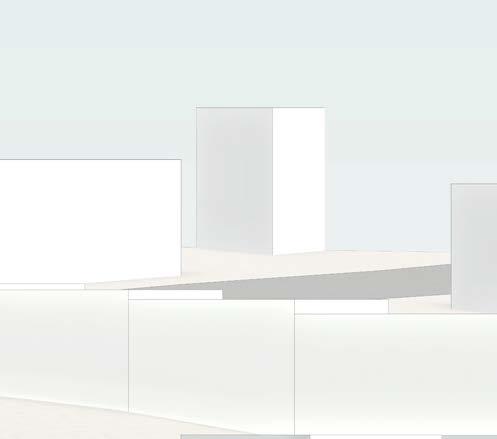
Massing models that explore the juxtaposition of the building sections andd thewir relation to the surrounding context; a vital step for the formfinding process in sensitive sites like this one
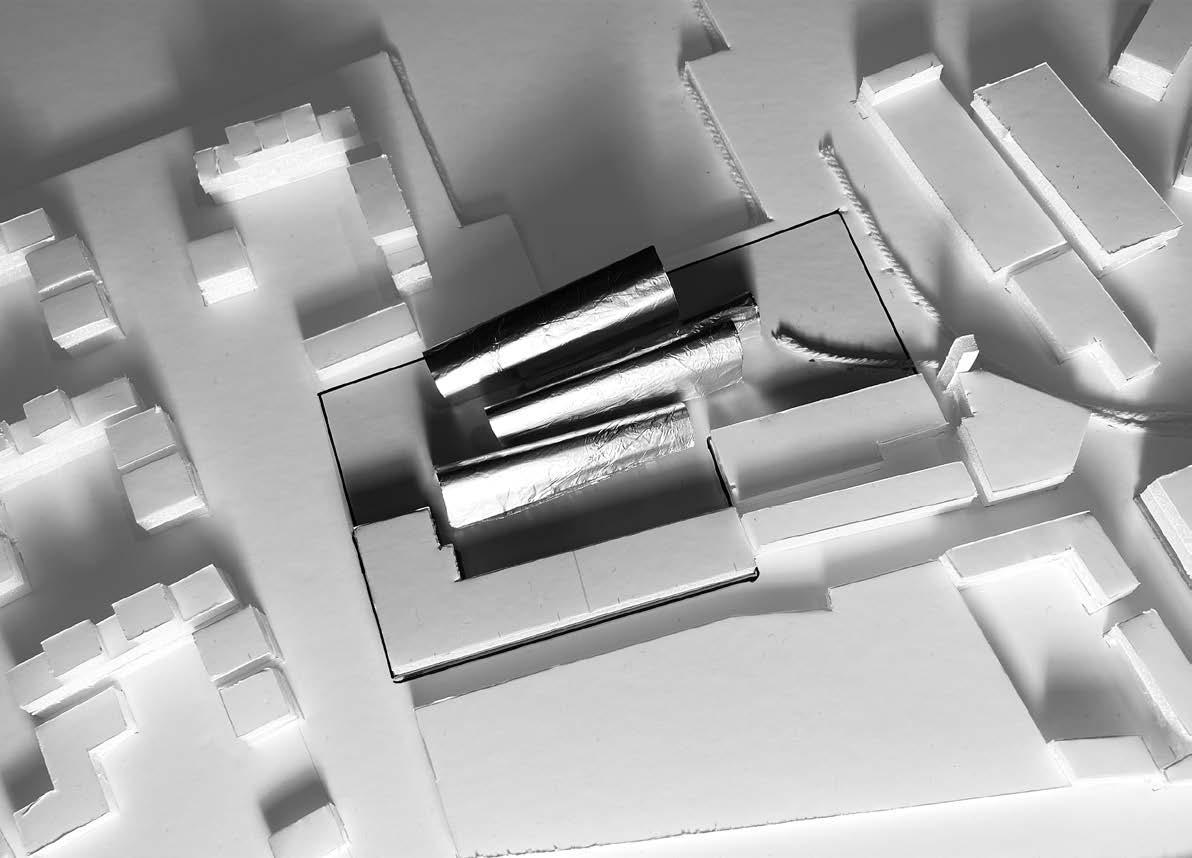
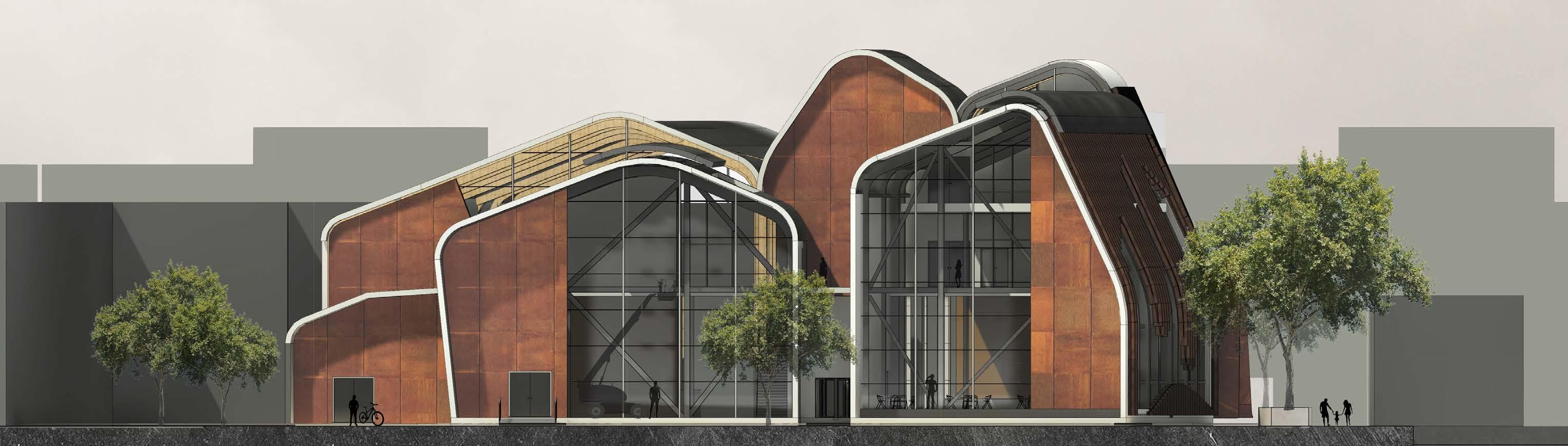
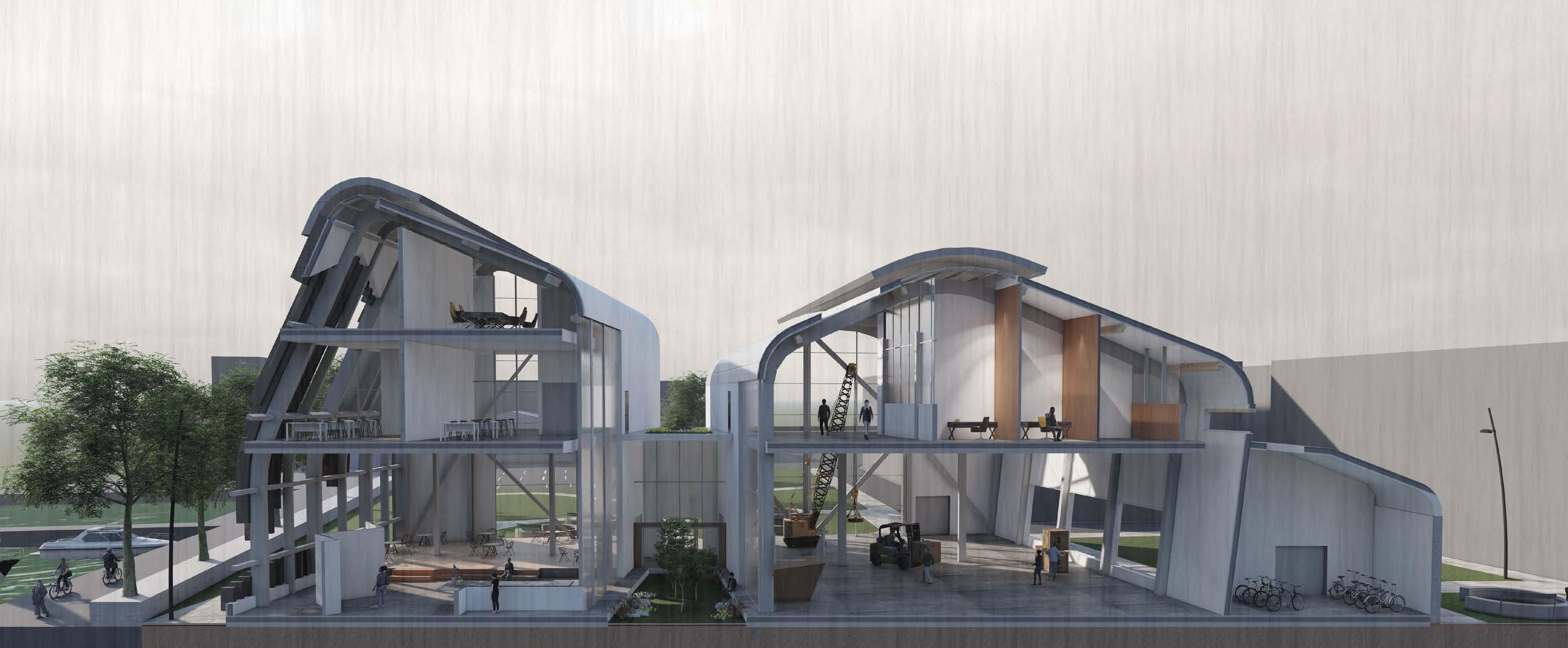
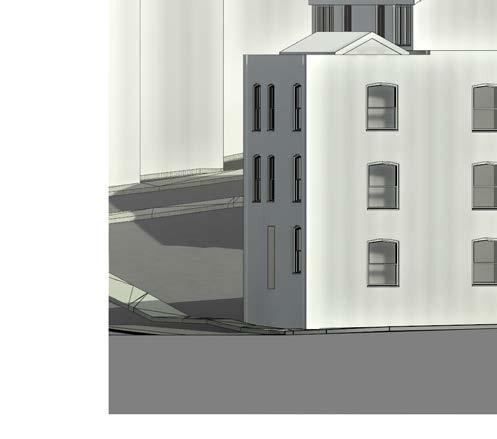
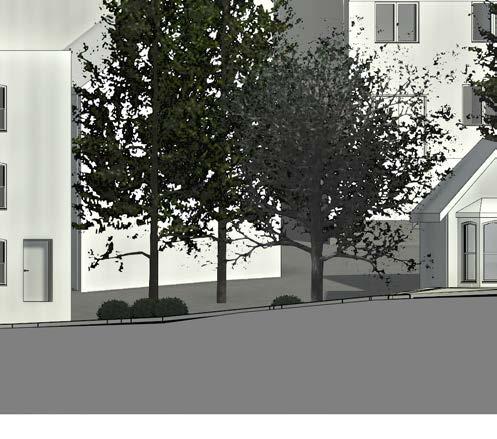
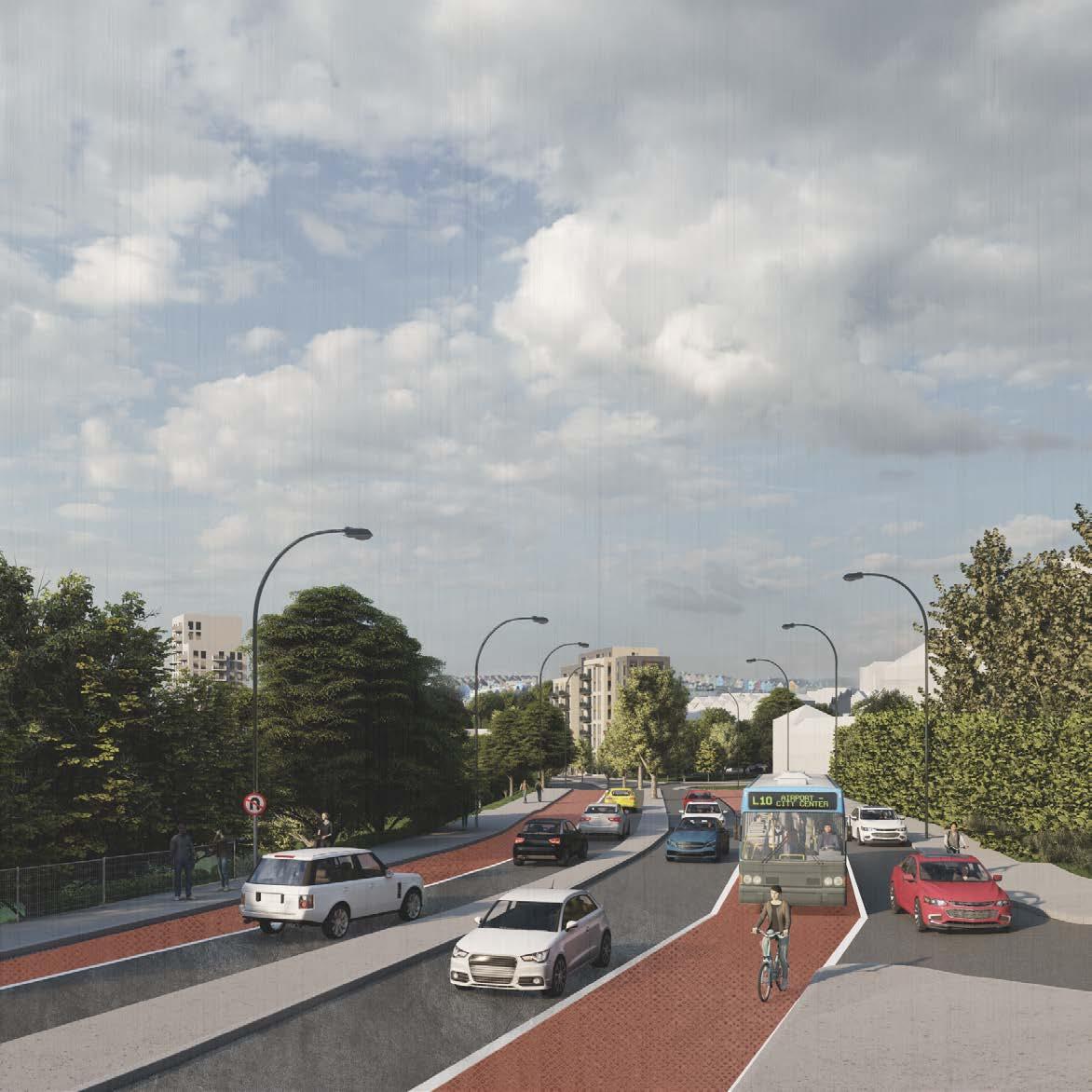
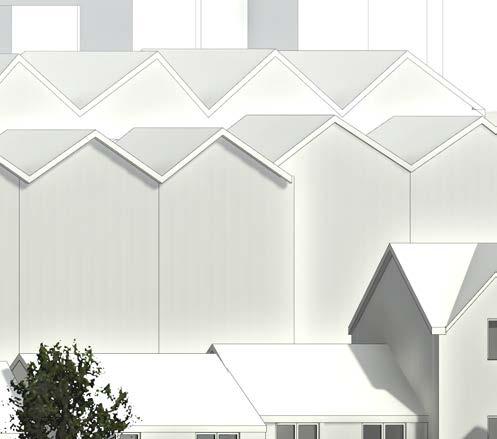
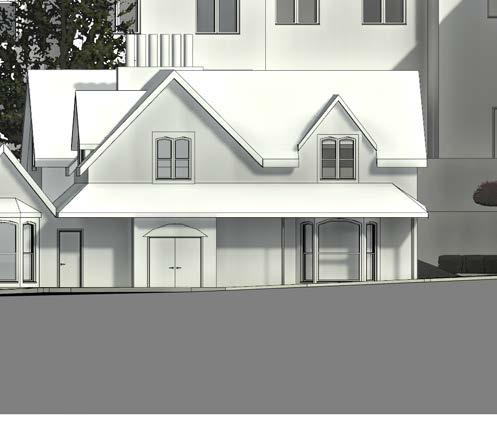
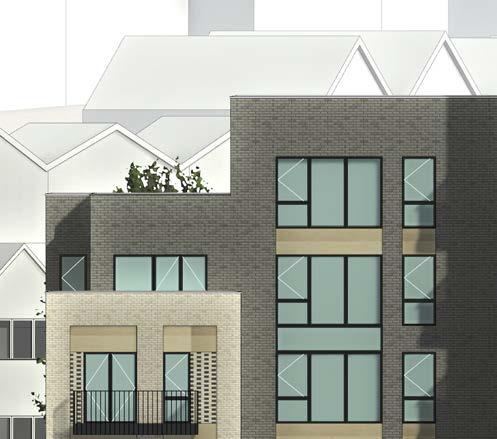
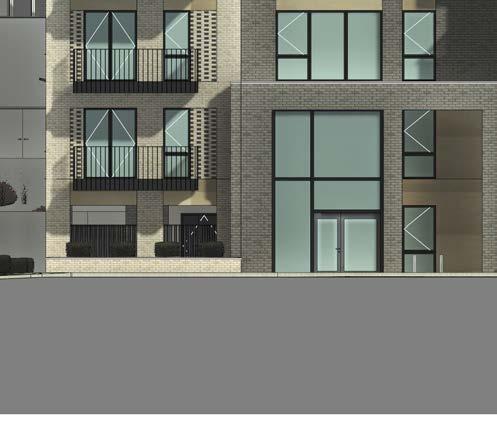
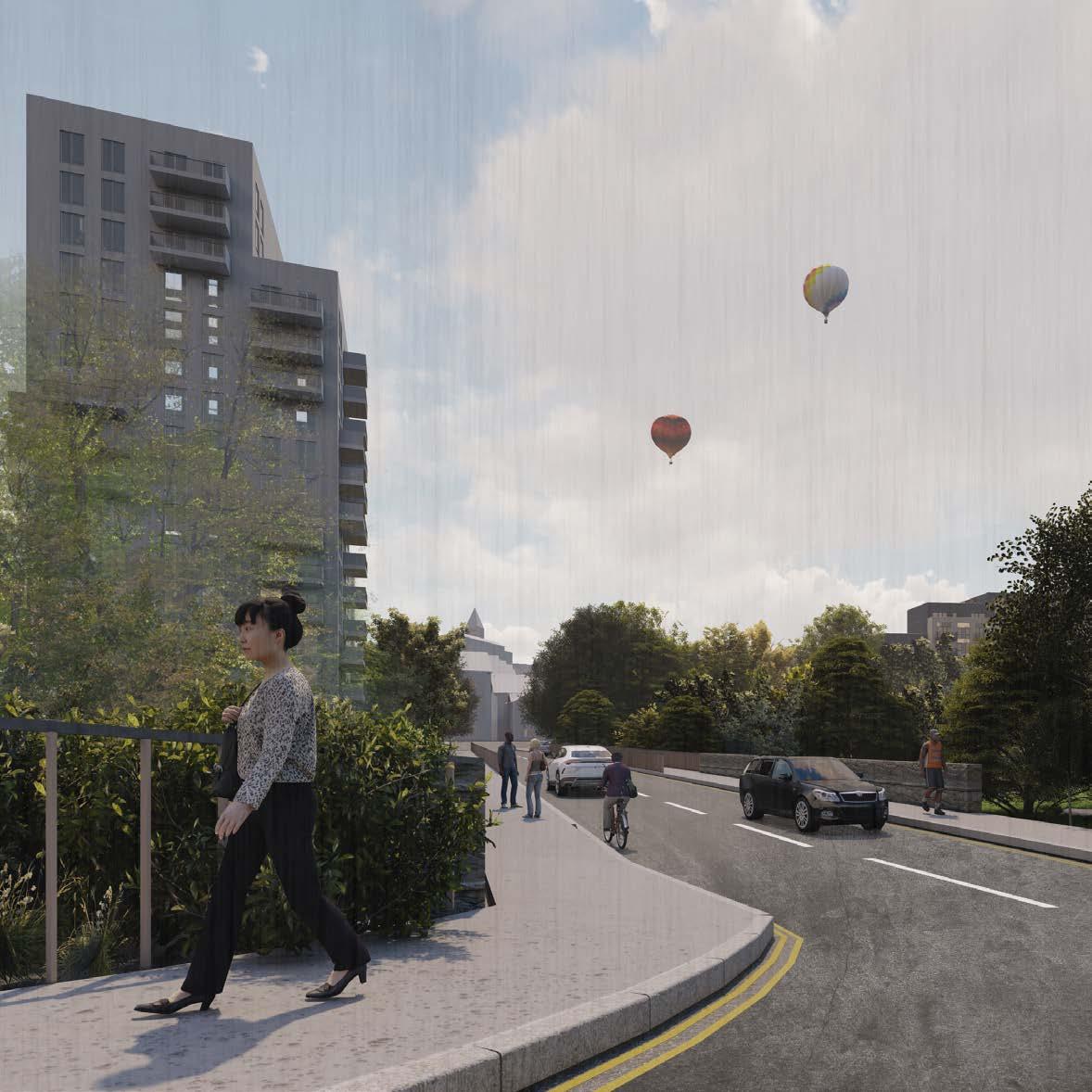
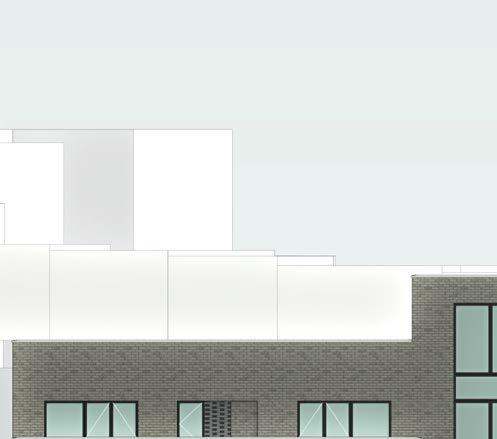
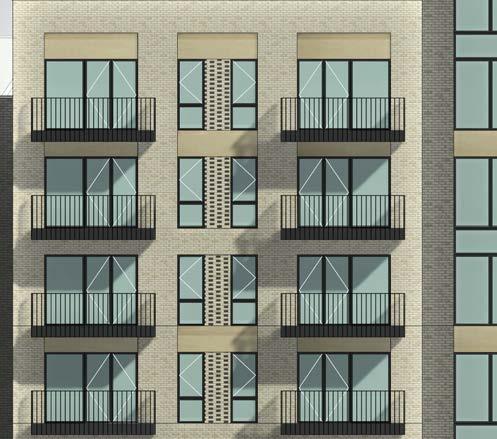
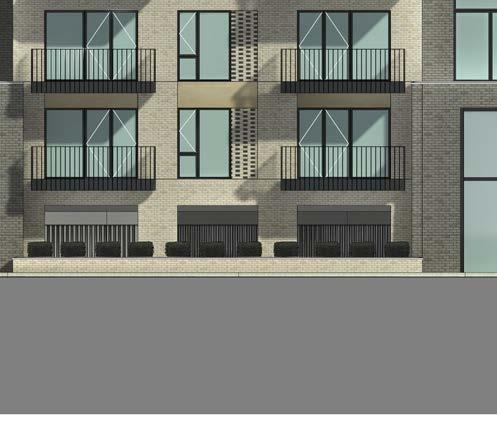
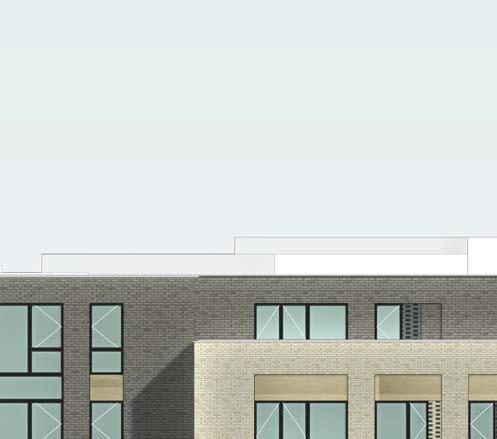
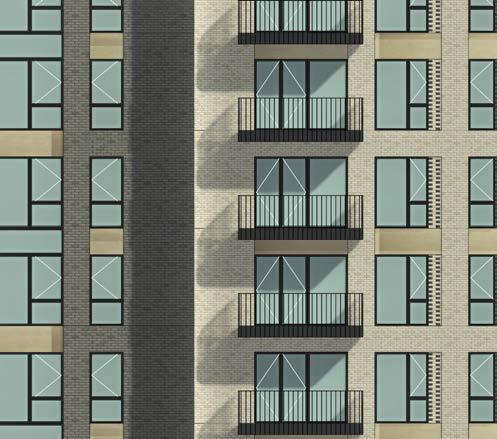
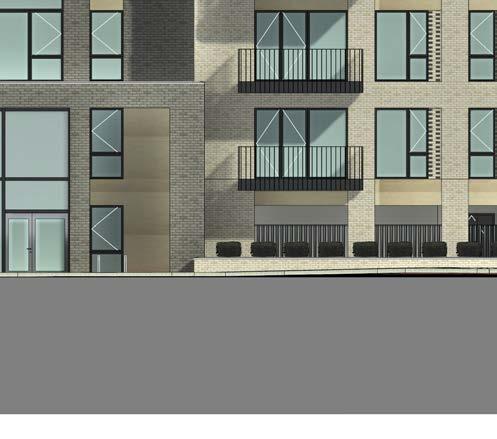
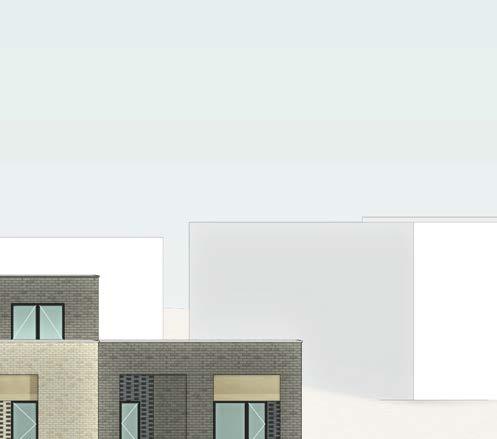
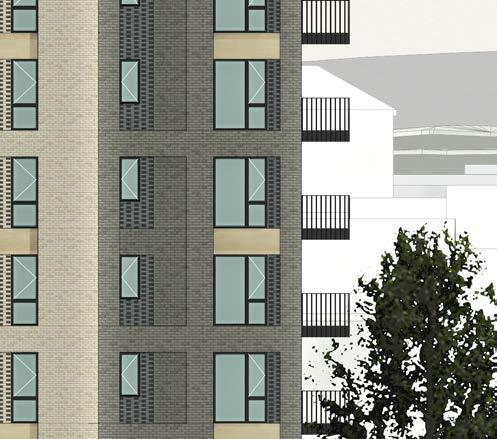
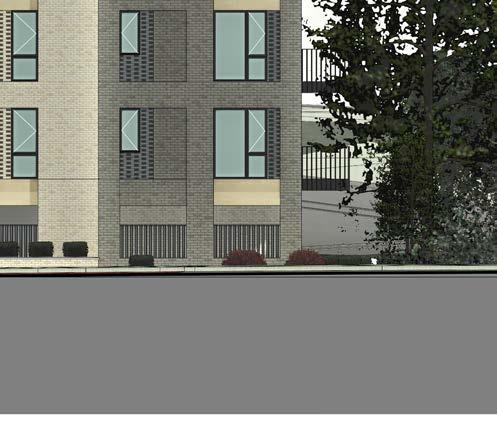
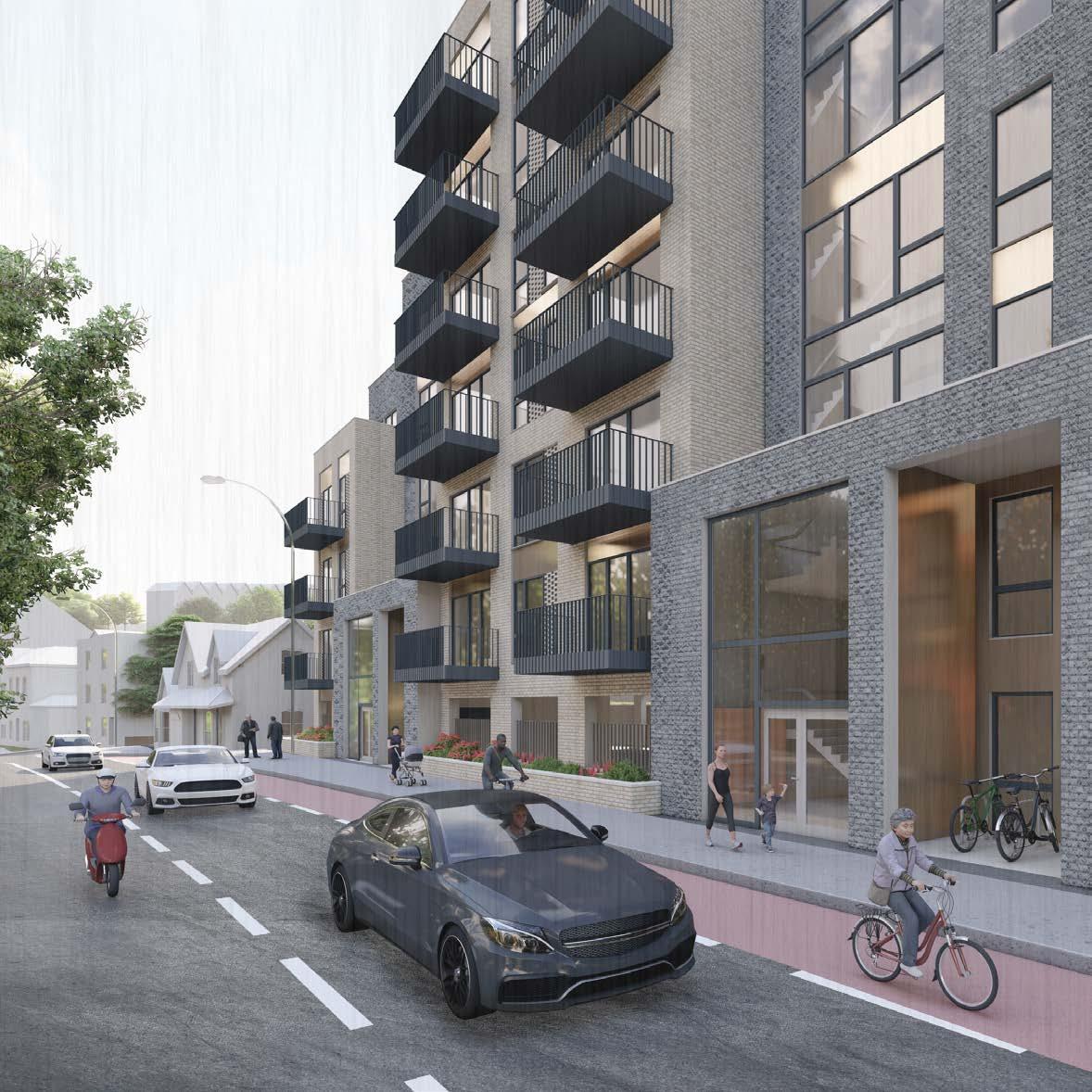
I was involved in the planning stage of a housing development at 122 Bath Road to provide 31 new housing units in a desireable area in Totterdown. The site was especially sensitive due to its location, some of the main concerns being obstruction of views, the listed pub next door and the general scale of the building.
To support the public consultation meetings, I produced an extensive site model of Totterdown, along with a series of renders that show the sensitivity of the scheme in context. To support this, I contributed tot he Design and Access Statement.