


resonant histories
india and the arab world
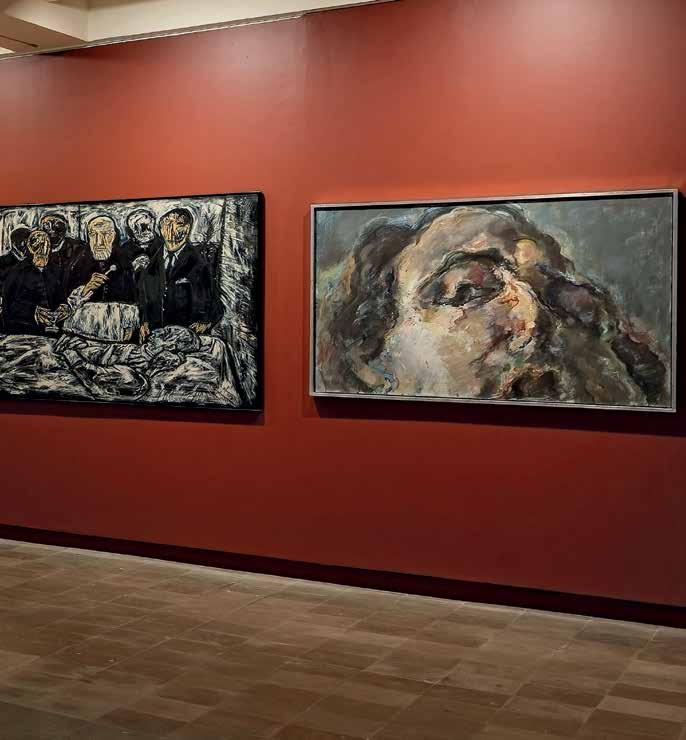
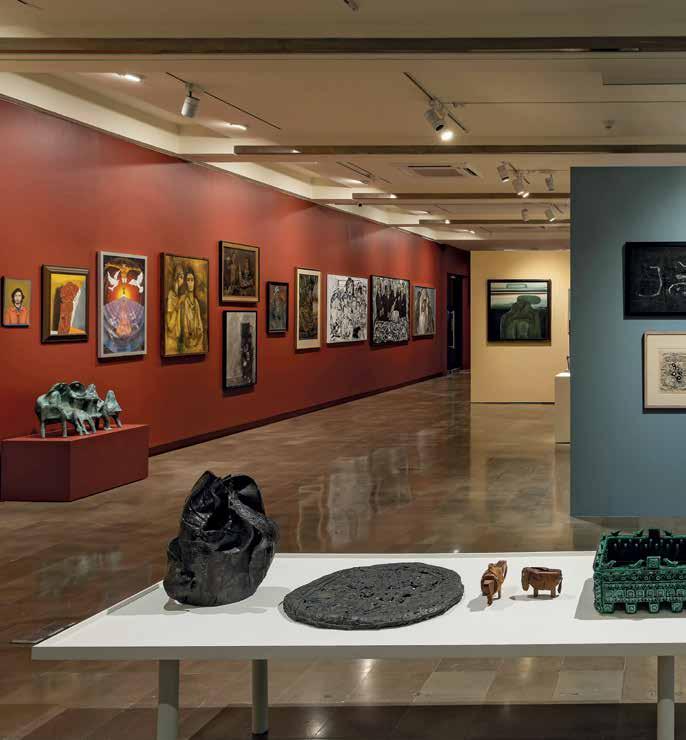
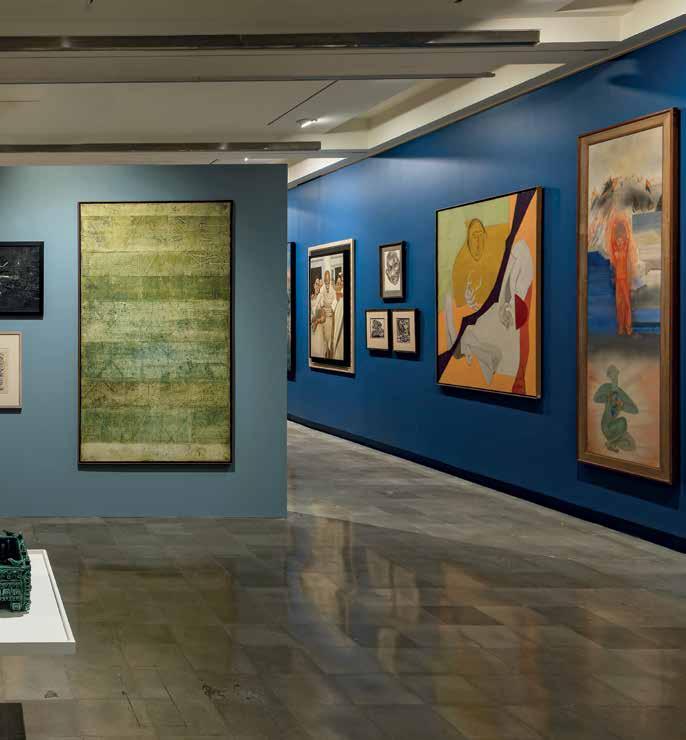
Resonant Histories is an invitation to revisit encounters between India and the Arab world in the 20th century that continue to shape artistic and intellectual discourse today. By bringing the collections of the Barjeel Art Foundation and the Jehangir Nicholson Art Foundation into dialogue, the project aims to situate artistic practice within broader transnational frameworks of exchange and mutual influence. This publication explores the story of modern art as not a singular narrative, but a network of voices shaping one another across time and place.
With 187 illustrations.
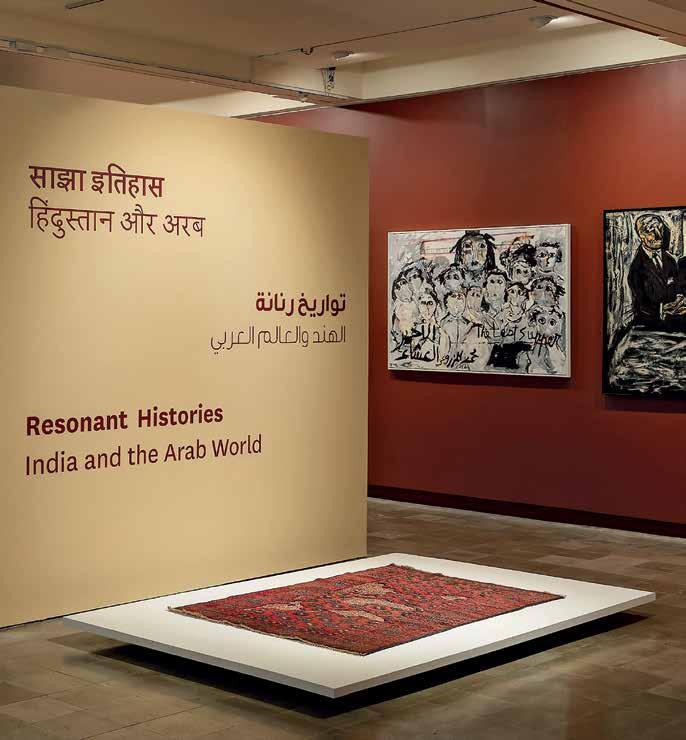
Published on the occasion of the exhibition ‘Resonant Histories: India and the Arab World’
Curated by Suheyla Takesh and Puja Vaish 14 November 2025–15 February 2026
Jehangir Nicholson Art Gallery, CSMVS Museum, Mumbai, India
A project by the Barjeel Art Foundation, Sharjah; Chhatrapati Shivaji Maharaj Vastu Sangrahalaya, Mumbai and Jehangir Nicholson Art Foundation, Mumbai
Edited by Puja Vaish, Suheyla Takesh and Sultan Sooud Al Qassemi
Barjeel Art Foundation, Sharjah
Jehangir Nicholson Art Foundation, Mumbai & Chhatrapati Shivaji Maharaj Vastu Sangrahalaya, Mumbai in association with
First published in India in 2026 by Mapin Publishing Pvt. Ltd 706 Kaivanna, Panchvati, Ellisbridge Ahmedabad 380006 INDIA
T: +91 79 40 228 228
E: mapin@mapinpub.com www.mapinpub.com
in association with Barjeel Art Foundation, Sharjah, Jehangir Nicholson Art Foundation & Chhatrapati Shivaji Maharaj Vastu Sangrahalaya, Mumbai.


This volume is published on the occasion of the exhibition ‘Resonant Histories: India and the Arab World’ on view from 14 November 2025 to 15 February 2026 at the Jehangir Nicholson Art Foundation (JNAF), Chhatrapati Shivaji Maharaj Vastu Sangrahalaya (CSMVS), Mumbai. The exhibition is co-organised by the Barjeel Art Foundation, Sharjah, Jehangir Nicholson Art Foundation (JNAF) & Chhatrapati Shivaji Maharaj Vastu Sangrahalaya (CSMVS), Mumbai, and is co-curated by Puja Vaish and Suheyla Takesh.
Text © the individual authors, unless otherwise noted.
Illustrations © the individual artist or artist’s estate, unless otherwise stated. Every effort has been made to trace and credit all known copyright or reproduction right holders. We apologise for any errors and welcome these being brought to our attention.
The moral rights of Cyrus J. Guzder, Sultan Sooud Al Qassemi, Suheyla Takesh, Puja Vaish, Nadine Nour el Din, Patrick Kane, Vivek Gupta, Neha Vora, Amal Allana, Iaroslav Volovod, Rasha Alduwaisan, Deepak Unikrishnan and Bhoomika Ghaghada as authors of this work are asserted.
All rights reserved under international copyright conventions. No part of this book may be reproduced or transmitted in any form or by any means, electronic or mechanical, including photocopy, recording or any other information storage and retrieval system, without prior permission in writing from the Barjeel Art Foundation/ Jehangir Nicholson Art Foundation/Mapin Publishing.
ISBN: 978-93-94501-44-7 (SC)
ISBN: 978-93-94501-92-8 (HC)
Project Coordinator: Tamara Rasquinha / Jehangir Nicholson
Art Foundation
Copyediting: Eyad Houssami / Barjeel Art Foundation, Neha Manke and Marilyn Gore / Mapin Editorial Design: Bhavana / Mapin Design Studio
Production: Mapin Design Studio
Printed in India
Note to the reader: The transliteration of Arabic and Indian names and terms into the Latin alphabet varies significantly across regions and national conventions. As this volume includes artists and references from throughout South Asia, West Asia and North Africa, a single, consistent system of romanisation could not be uniformly applied. Instead, spellings have been adapted to reflect the most widely recognised or commonly used forms in English-language sources. Readers are encouraged to remain mindful of these variations and, where precision is necessary, to consult the original terms or contextual references.
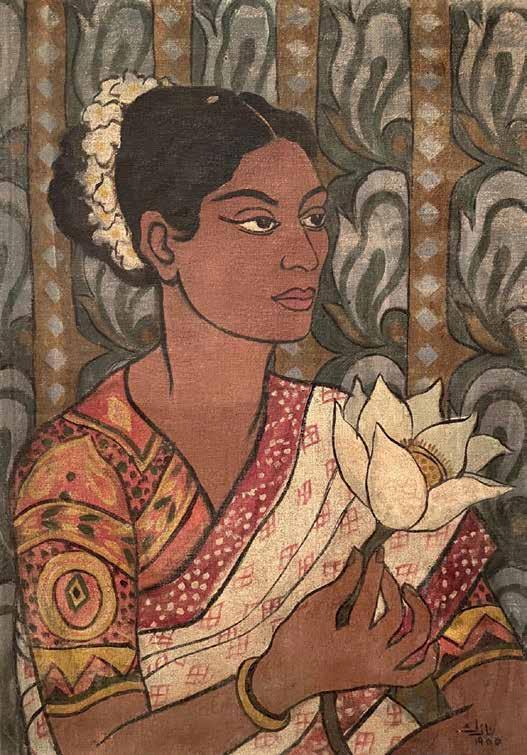
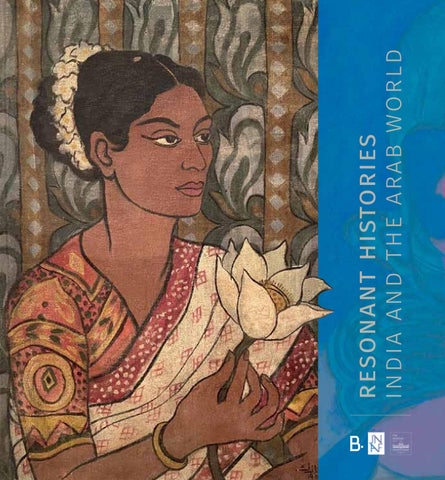
Frontcover: Nazek Hamdi, The Lotus Flower, 1955 (See p. 203)
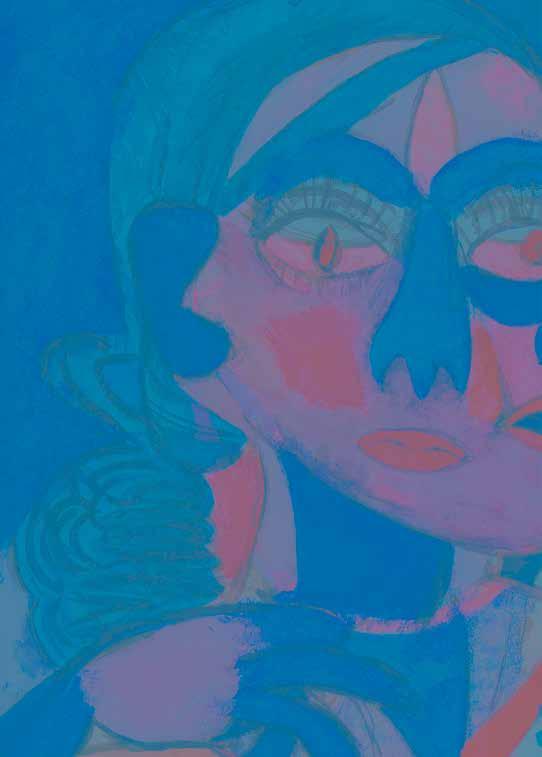
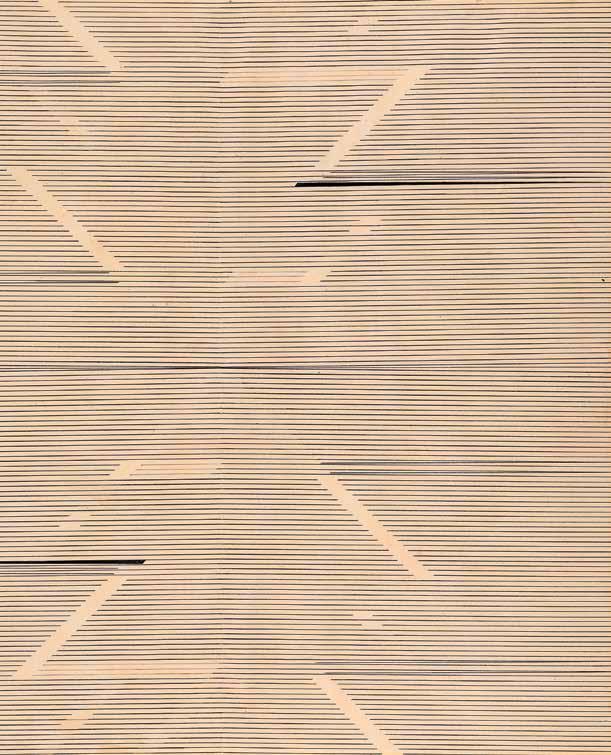
Backcover: Nasreen Mohamedi, Untitled, c. 1970s (See p. 185)
6 foreword
Cyrus J. Guzder
7 preface
Puja Vaish, Sultan Sooud Al Qassemi, Suheyla Takesh
8 exhibition views
26 a young boy’s journey from sharjah to bombay
Sultan Sooud Al Qassemi
30 between cairo and delhi egyptian women artists and afro-asian solidarities
Nadine Nour el Din
44 to grasp one’s entire heritage nasreen mohamedi: abstraction across continents
Puja Vaish
58 ali hassan an egyptian artist’s tribute to mahatma gandhi
Patrick Kane
63 makers of cities mohammed kazem’s dubai and sudhir patwardhan’s mumbai
Vivek Gupta
70 inside to outside a conversation with emirati artist dr mohamed yousif
Neha Vora
75 munira alkazi meditations on the female self
Amal Allana
91 the right to not mind my own business
iaroslav volovod in conversation with artist vikram divecha
98 confronting the void suheyla takesh in conversation with artist jafar islah
108 from the arab world to india tracing trade, culture and the movement of people over time
Rasha Alduwaisan
114 kisumu
Balan K Menon as told to Karuna Nandan
124 simmering ( un ) pleasantries that bind us ( 1962 & 2024 )
Bhoomika Ghaghada
134 artworks
We are honoured to present Resonant Histories: India and the Arab World, a publication accompanying the exhibition of the same title, developed in partnership with the Barjeel Art Foundation, Sharjah; the Chhatrapati Shivaji Maharaj Vastu Sangrahalaya (CSMVS) and the Jehangir Nicholson Art Foundation (JNAF), Mumbai.
This publication breaks new ground by bringing together scholarly, autobiographical, and creative texts that examine the cultural and artistic connections between India and the Arab world throughout the 20th century. Through the prism of modern and contemporary art practices across both regions, these diverse voices illuminate shared histories, aesthetic dialogues and enduring relationships that have long deserved deeper consideration.
Artworks drawn from the seminal collections of the Barjeel Art Foundation in Sharjah and the Jehangir Nicholson Art Foundation in Mumbai form the springboard for the essays included here.
The JNAF and Barjeel Art Foundation—both private, non-profit organisations—have built publicly accessible collections of modern and contemporary art of their regions. These distinctive collections showcase the diversity of mediums and artistic philosophies that emerged during transformative periods of cultural reinvention and exploration. Staging these collections together expands the scope of art discourse beyond national boundaries, inviting fresh perspectives on shared colonial legacies and postcolonial narratives expressed through art.
Many individuals have been instrumental in seeing this project to fruition. This landmark project has been made possible by the vision of Sultan Sooud Al Qassemi, Founder of the Barjeel Art Foundation, and Sabyasachi Mukherjee, Director-General of the CSMVS. We are indebted to Sultan’s generosity and Mr. Mukherjee’s commitment to fostering cultural exchange, which has inspired this unprecedented collaboration. The initiative took shape following discussions exploring the possibility of introducing modern and contemporary Arab art to Mumbai audiences for the first time. This project exemplifies our museum’s ongoing commitment to encouraging meaningful partnerships with cultural institutions globally, creating platforms for dialogue that transcend geographical boundaries. I laud the efforts of the curators and editors Suheyla Takesh, Director of Barjeel Art Foundation, and Puja Vaish, Director of JNAF, as well as the teams of all three institutions involved in realising this unique project. We are happy to partner with Mapin Publishing to produce this substantial book.
By sharing our collections through collaborative projects, we aim to open new avenues of research. We hope this serves as a valuable resource not only for future scholars of art history but also for those interested in cultural exchange between the regions.
cyrus j. guzder
Chairperson, Chhatrapati Shivaji Maharaj Vastu Sangrahalaya Trustee, Jehangir Nicholson Art Foundation
It is our pleasure to introduce Resonant Histories: India and the Arab World—an exhibition and accompanying volume that grew out of, for some of us, a personal connection and enduring interest, and for others, an intellectual curiosity about the artistic and cultural exchanges that have linked these two regions throughout the 20th century.
Conceived as a collaboration among three institutions based in Sharjah and Mumbai, this project invites audiences to view the modern histories of India and the Arab world as not separate, but as resonant and reciprocal. Texts presented here—from scholarly essays to personal reflections, interviews and bold fictional narratives—speak to the enduring dialogues between artists, thinkers, writers and moments that shaped modernity in both contexts. Oral histories of diasporic and multicultural identities expand the discipline of art history to include understudied regions and their interlinkages.
Multiple threads weave India and the Arab world together: a shared colonial past and independence struggles; post-independence aspirations for cultural sovereignty; the Non-Aligned Movement’s radical reimagining of global power; and the constant flow of people across these geographies. The works featured in the exhibition and included in the book stage together a diversity of pioneering art practices, revealing intersections of form, philosophy, and cultural imagination. A majority of these artists exhibited at the Triennale–India in New Delhi from the late 1960s onwards, while others trained at the same institutions and engaged in shared discourse around international practices and distinct visual languages of their newly independent countries. Liberation movements and social changes are chronicled in many of the artworks, often blending local traditions with modernist forms. Here, a constellation of voices from India, Bahrain, Egypt, Iraq, Kuwait, Lebanon, Palestine, Syria, Tunisia and the United Arab Emirates come together. Through paintings, sculptures, prints, ceramics, textiles and works on paper spanning the 20th century and beyond, the featured works highlight practices that converge around questions of identity, modernity, and belonging.
By bringing these perspectives into conversation, Resonant Histories aims to situate artistic practice within broader transnational frameworks of exchange and mutual influence. This presentation explores the story of modern art as not a singular narrative, but a network of voices shaping one another across time and place.
At its heart, this exhibition and publication aspire to celebrate the fluency of artistic exchange that has long connected India and the Arab world. By bringing the collections of the Barjeel Art Foundation and the Jehangir Nicholson Art Foundation into dialogue, we hope to contribute to the ongoing research around shared modernities, and to offer a resource for further scholarship, inquiry and reflection. Resonant Histories is both a culmination and a beginning—it is an invitation to revisit encounters that continue to shape artistic and intellectual discourse today.
puja vaish, suheyla takesh, sultan sooud al qassemi Editors
Sultan Sooud Al Qassemi
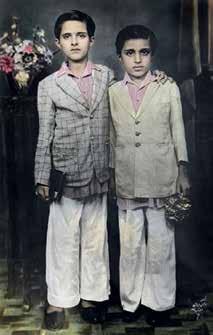
The historic ties between India and the Arabian Gulf stretch back centuries, forged through trade, migration, necessity, and ambition. Yet, it is the human connections that have proved most enduring. For generations, individuals have traversed the Indian Ocean, some for months, others for their lifetimes. Among them was a young boy named Saud bin Khalid, born in Sharjah on the Trucial Coast on March 23, 1939—an approximate date recorded thanks to a scribe who chronicled his greatgrandfather’s lineage. However, an official document states that he was born a month earlier, on February 23. Saud’s maternal grandfather, Mansour Al Rukhaimi, was a judge and merchant from the Najd region in central Saudi Arabia. Born around 1890, he divided his time between Dubai and Bombay (now, Mumbai). Known as Sheikh Mansour, he married a Sharjah native, Maryam Al Mulla, a woman revered for her piety. Together, they had a daughter, Fatima, who at the age of 14 was wed to Sheikh Khalid bin Khalid (1906–82), a member of Sharjah’s ruling family, around 1938. Fatima bore two sons—Saud in 1939 and Faisal in 1941. However, her marriage to Sheikh Khalid was turbulent and ended within a few years. In 1946, during a fateful meeting in Jeddah, she encountered Mohammed Hassan Mohammed Al Ansari, a trader bound for Bombay. The two married, and Fatima left with Faisal, the younger of her sons, to begin a new chapter of her life in 1944, and Saud followed in 1948.
With his father remarrying a woman named Maryam Al Shamsi, young Saud was left in the care of his grandmother, Maryam Al Mulla and her first cousin, Ahmed. She devoted herself to providing him with a loving and nurturing home—something she would continue to do for the rest of her life. Yet, the years spent apart from his mother and younger brother, Faisal, weighed heavily on him. His grandmother, too, longed for her daughter Fatima and her grandson Faisal. A turning point came when, at the age of seven, Saud suffered a severe injury to his right leg after clinging to the back of a truck in an
attempt to save money. He narrowly escaped death, prompting a series of events that led to the urgent decision to travel to India. Overwhelmed by pain, he was first taken by his father, Khalid bin Khalid, to a doctor stationed at the British-operated airport in Sharjah. The doctor, fearing gangrene, recommended an immediate amputation. Saud’s distress turned to horror when his father, without hesitation, handed the doctor his dagger to carry out the procedure on the spot. Upon hearing of the incident, Maryam Al Mulla resolved to take Saud to India, renowned for its advanced medical care and expertise, in search of a less drastic outcome. Time was of the essence, and the journey to Bombay in 1948 was both costly and arduous.
independence. The ships that ferried passengers to Bombay often carried more than just hopeful travellers— they were integral to the smuggling trade, as India’s high import duties on gold inspired ingenious methods of illicit transport. Smugglers would drop their contraband into the Arabian Sea as the boats neared the port or conceal gold beneath young girls’ clothing. Beyond its economic significance, Bombay was also a major religious crossroads. Since 1927, it had served as a key hub for pilgrims from South and West Asia embarking on the sacred journey of Hajj, overseen by the Haj Committee.1 For many, the city was more than just a stopover—it was a gateway to both spiritual and economic aspirations.
Maryam and Saud embarked on their journey to India aboard the steam-powered MV Dwarka, a voyage that spanned 15 days from the Gulf to the port of Bombay, with stops in Muscat and Karachi along the way. (Their return journey in 1952 would be aboard the ill-fated MV Dara, which tragically caught fire and sank off the coast of Umm Al Quwain in 1961, claiming the lives of 283 passengers.2) Upon their arrival in Bombay, they navigated the bustling port as Maryam Al Mulla sought directions to Mohammed Ali Road, the heart of the city’s Arab community. There, Saud and his grandmother settled near Dalal Street with her daughter Fatima, her husband Mohammed, and her son Faisal, who recalled seeing a 10-rupee note for the first time in his life with his grandmother. Also part of the household was Saeed, the family’s loyal housekeeper who had accompanied Fatima from Sharjah.
For many in the Arabian Gulf, India represented a land of opportunity, especially in the wake of its recent
Bombay could not have been more different from Sharjah. The city’s paved roads, sidewalks, and streetlights stood in stark contrast to the quiet simplicity of the Trucial Coast. Beyond its modern infrastructure, Bombay was a sensory feast—bursting with colour and alive with a constant hum, even in its quietest moments. Despite these contrasts, Saud found a sense of familiarity in the city’s substantial Arabian Gulf community, which according to researcher Saif Al Bedwawi comprised around 500 individuals and included families from Kuwait, Bahrain, Dammam, and the
Nadine Nour el Din
A beautiful woman, dressed in a vibrant, patterned sari of deep red, white, yellow, and accents of green, holds a large, billowing lotus flower in her hand—its wide, rounded, white petals unfurling around a radiating yellow centre. Her fingernails are painted a matching red, and a yellow-gold bracelet circles her wrist. Her dark hair appears to be swept up into a coif, adorned with a crown of lotus blossoms. Behind her, the patterned background features a lotus motif, repeating across the length of the composition. The painting, aptly titled The Lotus Flower (The Lotus Girl), is the work of Egyptian artist Nazek Hamdi (1926–2019), painted while she was studying in India in 1955 (see p. 199). The lotus flower holds deep symbolic meaning in both Indian and Egyptian mythologies. As Hamdi herself wrote, it has been revered in both countries, “representing the rise to and spread of spiritual enlightenment”; it is considered sacred in both Hindu and Buddhist belief systems, while in ancient Egypt it signified divinity and rebirth.1 The lotus flower and this painting by Nazek Hamdi thus emerge as both subject and symbol—linking Egypt and India in a shared visual language. Both the artwork and the artist herself serve as a bridge between the two nations, reflecting the artistic and diplomatic ties forged in the mid-20th century.
Links between India and Egypt and the wider region have long been a subject of inquiry, explored through the findings of archaeology, the study of art, religion, language, trade routes, and political history.2 While there is evidence that points to the historic relationship between the two countries, reflected in similarities across their artistic traditions, their relationship in the modern period is well documented and marked by significant cultural collaboration. Under the leadership of Egypt’s President Gamal Abdel Nasser and India’s first Prime Minister Jawaharlal Nehru, both key figures in the NonAligned Movement, Egypt and India shared a vision of non-alignment and anti-imperialism, which encouraged economic and cultural cooperation between the two nations.
Over the course of India and Egypt’s cultural exchange during the modern period, supported by government initiatives and policies, several Egyptian artists travelled to India, exhibited their work there, and engaged with Indian colleagues at exhibitions, film festivals, and academic events. While many participated in this exchange and connected with a population with whom they shared deep affinities, Nazek Hamdi stands out. Having pursued her postgraduate studies in India, her artistic practice became deeply influenced by her experience there. Traces of her education and sources of inspiration from India are evident throughout her multifaceted body of work.
This essay looks at the cultural exchange between Egypt and India during the modern period, focusing on Hamdi’s engagement with India as a lens through which to explore the artistic and diplomatic ties between the two countries. It traces how her time studying in India shaped her practice and outlook, both as an artist and educator. Alongside Hamdi, the essay reflects on wider cultural collaborations between Egypt and India, particularly a number of group exhibitions organised by the All India Fine Arts and Crafts Society (AIFACS) and the Lalit Kala Akademi, which featured artists such as Mariam Abdel Aleem, Menhat Helmy, and Gazbia Sirry, as well as Inji Efflatoun’s solo exhibition held there. Together, these moments speak to the ways cultural exchange was made visible and how artists responded to and moved within this shared space. While postcolonial art histories often focus on East-West dynamics, this essay foregrounds SouthSouth exchange, specifically, the cultural entanglements between Egypt and India, as central to rethinking modernism from a decolonial, feminist perspective.
respective independence movements, who shared the same goals of liberation “from foreign domination”.4 Their newfound independence—in 1947 for India and 1952 for Egypt—paved the way for cultural and artistic movements shaped by the search for a visual language to articulate a sense of nationalism and modernity.
Under the leadership of Abdel Nasser and Nehru, both nations developed a strategic partnership, championing liberation movements worldwide and fostering industrial, military, and cultural collaboration as well as development initiatives beyond political solidarities and decolonisation.5 The two leaders were among the founders of the Non-Aligned Movement, which fostered Afro-Asian unity, reflected in policies that established cultural collaboration between nations, in direct response to the “cultural imperialism” of the West.6
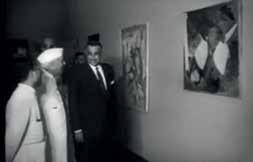
A key aspect of Egypt and India’s post-Independence relationship was the formalisation of cultural exchange, supported by state-led initiatives. Nasser and Nehru were both celebrated as “messengers of peace”, and they worked to cultivate ties between the two nations, most visibly through their widely publicised state visits, where they were each welcomed by cheering crowds.7
When President Nasser visited India in 1960, he attended
modern parallels: egypt and india Egypt and India, both former colonies that struggled to gain their independence from British rule, share intertwined histories. The British Empire connected India and Egypt to Britain through the Suez Canal.3 Mahatma Gandhi and Saad Zaghloul were central figures of their
Puja Vaish
A sense of mystery surrounds the life and work of Nasreen Mohamedi (1937–90). She passed away at the untimely age of 53, and her practice began to be studied as a distinctive modernist expression largely after her death. Mohamedi remains one of the only Indian women artists of her time working with abstraction. As she rarely signed or dated her works, her oeuvre has been organised into broad phases in art discourse; though, establishing a precise chronology remains difficult, and in some cases even the intended orientation of the work is uncertain. In recent years, Mohamedi has gained international recognition for her small-format, monochromatic, geometric works on paper, a pareddown aesthetic that she devised in the last two decades of her life, roughly from the 1970s onwards.
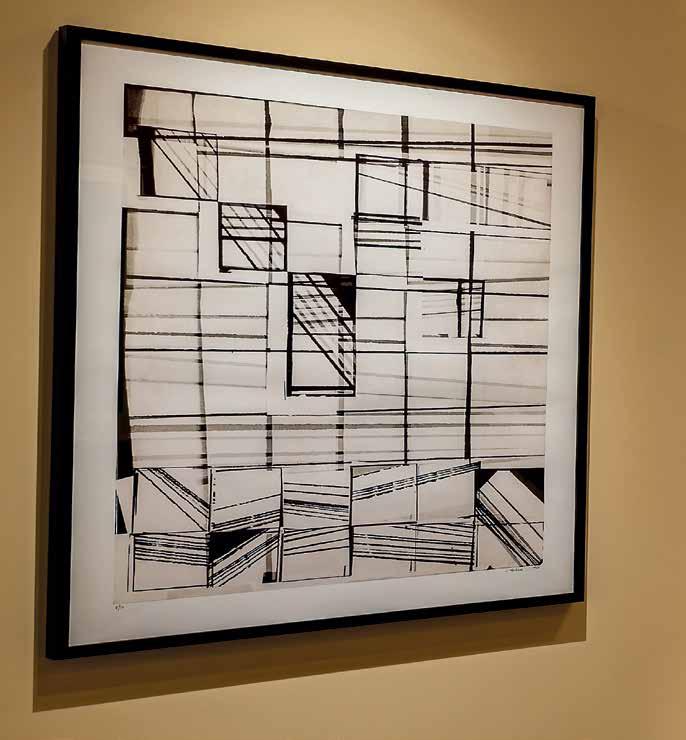
There are several complexities one encounters in trying to position Mohamedi’s practice in Indian art history, especially since her works sit uneasily within postcolonial accounts of Indian modernism and similarly evade the established taxonomies of abstraction in Indian art. While her work has been read through comparisons with renowned artists of European and American abstraction, the focus of the exhibition, Resonant Histories: India and the Arab World, presents an opportunity to read her work alongside non-figurative work from Arab countries as well as from India. Such readings aid not only in understanding Mohamedi’s aesthetic journey within a wider frame of reference but also in expanding the contexts of modernist abstraction, which has maintained a predominantly Western focus in art history. This essay examines how Nasreen Mohamedi’s artistic practice negotiated tensions between identity, modernity, and tradition within India’s post-Independence transformations and, specifically, networks of alliance between India and West Asia. It analyses Mohamedi’s own transnational connections and cultural circulation, particularly through the Arabian Gulf, via three primary sources that provide insights into her thought process: her photography, materials that she collected (found in
her studio after passing), and her haiku-like diary entries. By connecting Mohamedi’s personal reflections to the broader realities of her time, this study reveals how her artistic consciousness engaged with wide, complex, cultural dynamics.
Nasreen Mohamedi was born in 1937 in Karachi (British India, now Pakistan) to a liberal and progressive Suleimani Bohra family. Her father spent long periods in the Arabian Gulf, where he had started a business and would visit his family back home every year. In 1944, at age seven, after her mother passed, Mohamedi’s father moved the family to Bombay (now Mumbai). Three years later, the Partition of India would draw new national borders, making Mohamedi’s birthplace across the divide. Mohamedi’s formal education in art began at the Central Saint Martins School of Art in London (1954–57), from where she earned a degree in design. After graduating, she travelled in the Arabian Gulf with her father and brother. She returned to India in 1958, securing a studio at the multidisciplinary Bhulabhai Desai Memorial Institute in Mumbai, where she met and worked alongside some of the influential artists of the time. From 1961 to 1963, Mohamedi was in Paris on a French government scholarship to study at Monsieur Guillard’s atelier. In 1969, Mohamedi participated in the
Vision Exchange Workshop (VIEW), a multidisciplinary studio set-up by artist Akbar Padamsee, where she worked with photographic processes. She moved to Delhi for a couple of years before settling in Baroda (now Vadodara), where she became a teacher at the Faculty of Fine Arts at Maharaja Sayajirao University of Baroda in the early 1970s. Mohamedi succumbed to Huntington’s Chorea, a neuromuscular disease in 1990.
To grasp one’s entire heritage with intuition, vision, and wisdom—with total understanding of the present.
Nasreen Mohamedi, diary entry, 3 March 1971, Delhi1
The “heritage” that Mohamedi invokes suggests something more complex than singular cultural inheritance. Her understanding of belonging and her aesthetic preference drew from a broader spectrum of references, shaped by her itinerant experience of straddling different cultures, maintaining family connections across continents, and internalising varied art histories through formal education and artistic practice.
Mohamedi’s work has been compared with renowned artists such as Agnes Martin as well as Russian Suprematists and Constructivists like Kazimir Malevich, among others. Like many Indian artists of her time, she was drawn to Paul Klee and Wassily Kandinsky, and her oil paintings during her Paris years were influenced by the mark-making of tachism. Mohamedi’s travels in the Gulf countries in the late 1960s have been read as a turning point, after which her works began to shift to the unique visual language which define her legacy.2 Her notes include observations made in Isfahan, Türkiye, Shiraz, Bahrain, Kuwait, and also in several places in India. Mohamedi would often visit Kihim, on the coast of Maharashtra, where her family had a holiday home. Her diary entries ruminate on the fleeting configurations of nature. She was drawn to the vastness of landscape—the beaches of Maharashtra as well as the deserts of Rajasthan and in the Gulf. Patterns and rhythms
Patrick Kane
In a tribute to Mahatma Gandhi, the Egyptian artist Ali Hassan’s 1948 painting conveys a sense of urgency and compassion. The painting is signed and dated 6 February 1948 (see p. 139). Barely a week had passed since the assassination of the 78-year-old Gandhi as he was leaving the Birla House mansion, where he was the resident guest of a wealthy Indian businessman. The Birlas supported many of Gandhi’s social and political initiatives, and he stayed at the house several times, usually when he came to Delhi for meetings with British officials or Indian leaders.
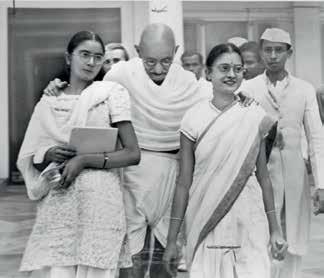
In his painting, Hassan uses earth and natural tones, reflective of Gandhi’s otherwise simple, ashram village life, in which he practiced a communal sense of self-reliance, weaving and wearing homespun crafts and clothes; their rhythmic folds enshroud the three main characters of the foreground, Gandhi and his two granddaughters on an evening walk. These strolls were a ritual and daily routine. According to contemporary journalists, such walks occurred in the evening around 7 p.m., when Gandhi would leave his ashram village home to address his fellow villagers. Hassan depicts Gandhi not with the frailty shown in other contemporary photographs and films but as a bold and guiding figure. Whereas in other images his leaning on the shoulders of his family members indicates his physical vulnerability, here he appears as one bestowing a spirit or blessing upon his family members.
The composition is centred on Gandhi and the two young women. These are the only figures whose full faces are shown. The scene shows him in his later years, long removed from his days as a young practicing lawyer and active leader of protest marches and political organisation for the Congress Party. In his late seventies, Gandhi was increasingly reliant upon these well-educated and capable
women members of the family. Gandhi is shown here as a leader of Swadeshi principles, which he defined as follows as early as 1916:
If we follow the Swadeshi doctrine, it would be your duty and mine to find out neighbours who can supply our wants and to teach them to supply them where they do not know how to proceed, assuming that there are neighbours who are in want of healthy occupation. Then every village of India will almost be a self-supporting and self-contained unit, exchanging only such necessary commodities with other villages where they are not locally producible.1
Gandhi’s posture in the painting is identical to that in a 1947 photograph by the ACME/ United Press International (UPI)2 photographer Bert Brandt (Fig. 1). The painting duplicates the number of characters in Brandt’s image and maintains a similar framing and aspect ratio. Even the folds and draping of Gandhi’s clothing and that of his two companions are meticulously rendered in concordance
with the photograph. While Brandt’s photograph leaves off the lower legs and feet, the image is even more closely clipped and re-modelled in Ali Hassan’s painting. The painting centres on the relationship between Gandhi and the two women members of the family, who—according to a caption by the Library of Congress and contemporary UPI records—are Gandhi’s granddaughters. The location where Brandt’s photograph of Gandhi was taken is not known: it may have been near his ashram village home or a different location, such as the Birla House—the place of his assassination in January 1948. It is not known where and in which periodical Hassan may have found this image, but the Egyptian press of the late 1940s regularly gave space to international news and photojournalism in its daily newspapers and notably in the weekly society news magazine al-Musawwar (The Photographer).
Gandhi had earned esteem and fame worldwide for not only assuming leadership of the Indian National Congress in 1920 but also for his 1930 Salt March against the British-imposed salt tax and for calling upon the British to leave India in 1942. He was outspoken against the British partition of India in 1947, although his stance on nonviolence was not absolute.3
What does Ali Hassan’s rendering of this image as a painting represent? Hassan’s painting is devoid of any overt political alliance. Notwithstanding his affiliations as a court painter for the Egyptian monarchy, there is neither evidence nor inclination of any political orientation. One may assume there was a restrained, conservative, or monarchist orientation to his politics. Here, however, he is externalising the international reputation of Gandhi as both an anti-colonial figure and proponent of popular and nationalist non-violence. Given the date of the painting, rendered only a week after the assassination of the Indian leader, we must assume this piece presented a sense of catharsis, both emotional and intellectual, for the artist.
Hassan may also have seen and made use of Margaret Bourke-White’s 1946 photograph of Gandhi leaving
How to bridge the gap between a South Asian labouring body in Kazem’s Dubai and Patwardhan’s Mumbai?
As Resonant Histories brings artists like Kazem and Patwardhan together, filling the space between the two not only requires a sensitivity to the contexts from which their practices emerged, but also to how their works address each other now. For Kazem, one typically turns to his close ties with the conceptual artist Hassan Sharif (1951–2016), a founding member of the Emirati Fine Arts Society. For Patwardhan, one speaks of a group of painters invested in capturing the everyday life of Mumbai, including Bhupen Khakhar (1934–2003) and Gieve Patel (1940–2023). While I hold these formative contexts in mind, the aim of Resonant Histories is to explore how these works generate meanings beyond their inception. Instead of locking works into the milieu of their making—where they inevitably never stay—I let them speak to each other.
At the time of writing this, neither Kazem nor Patwardhan had knowledge of the other’s practice, nor were they part
of the same constellation, and the cities that they inhabit remain worlds apart. And yet, it is an intimate thing to put works in the same room to produce new affiliations. Here, I plant the seeds of a conversation centred on the urban environment, social relations, and everyday lives of the workers of the city. Comparison allows me to better understand difference, and the transformation of makers, labourers, and artists.
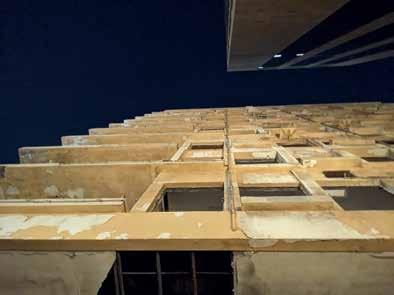
At the outset, it is worth stating that Dubai and Mumbai weave together different “spatial stories”, to deploy a concept from Michel de Certeau.1 While both are metropolises of wealth and commerce, Dubai is home to the world’s tallest skyscraper whereas Mumbai has one of the world’s largest slums. Dubai enables detached gazes, whereas Mumbai—the “maximum city”—tends to swallow one up. It is thus telling that Kazem’s Windows first emerged from looking out of the window of his apartment. In 2002–03, Kazem wrote:
While shooting the building, the owner refused to allow me to shoot the interior of the room facing the window. I was forced to photograph only from the outside, and in the process my attention was drawn to another thing that infuriated him. There was a hierarchy, a chain of command that started with the owner, the manager, and finally the workers constructing the building.
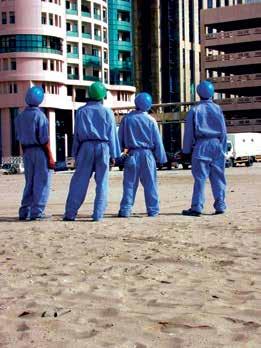
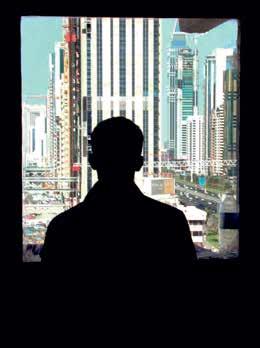
The documentary mode of Kazem’s early photographs enables us to reanimate his strategies of walking in the city. He carries us on his journey as he negotiates complex power relationships with which he deals from behind a camera. For instance, two examples from Kazem’s early Windows (2003–05) (Figs 2 and 3) mirror each other. In one, Kazem captures his own silhouette against the rising skyscrapers looking out over the city; in another, we see the backs of the men who make the city. Their blue uniforms and hardhats conceal their identities, but their hands and necks reveal their brown skin. The anonymity of these figures heightens the placeless-ness of the capital that they build.2
In his more recent Windows, Kazem takes us in and out of the anonymity of the figures he encounters. Based on a photograph found online, Kazem conjures a deeply intimate scene in the painting with which I began this essay (see p. 165). The orange, red, and brown washes deepen the tones of the labourer’s skin and pull us further into his corner. Every object tells a story of this man’s life. The hanging clothes conjure Kazem’s longstanding commitment to investigating how objects like clothes hangers transform when they move from commercial to domestic spaces. Whereas, in another series from Windows (Fig. 4), Kazem contrasts the painted expressions of moving bodies with the blank outlines of the infrastructure that they inhabit, to move in and out of personal registers. He draws our focus away from the
grids of steel buildings, bricks, and streets and forces us to consider skin. Fragments of these men can be personally felt, even if in passing.
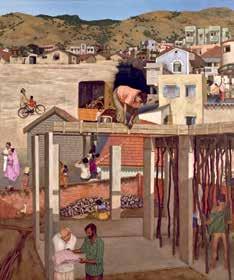
While Dubai spends its dollars on ambitions of clean modernist grids, Mumbai’s chaotic clamour refuses to be contained. As such, in the charcoal drawing Dying City (1999), in the collection of the Jehangir Nicholson Art Foundation, Patwardhan piles up agglomerations of architecture (Fig. 5). By stitching together many fragments of memory, Patwardhan elicits multiple spatial stories in a single frame. One cannot fully understand where one building starts and the other ends. Some appear as slums, whereas one spots a cluster of multi-storey buildings in the distance. This preoccupation with the
suheyla takesh in conversation with artist jafar islah
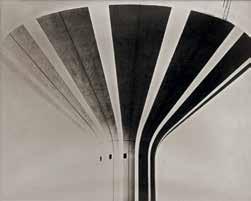
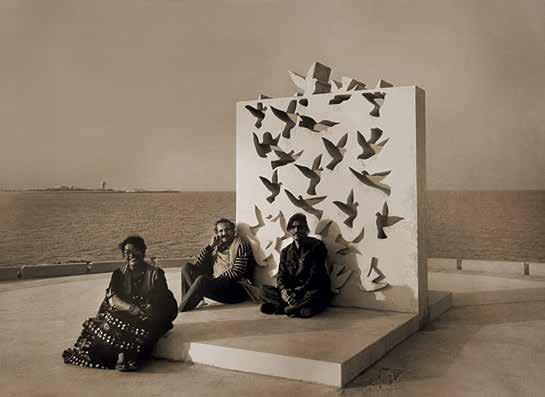
Between the late 1970s and the 2010s, Kuwait-born Jafar Islah made frequent visits to India, with stays ranging from a few weeks to two months at a time. His practice was impacted by India’s cultural and spiritual heritage, its materials, and the modernist artists and skilled craftsmen he encountered in cities and villages across the country—people he came to regard as his teachers. One of his most recognised public sculptures, Wall of Peace (1985), installed at Al Shaab Water Seafront in Kuwait City, was created in Udaipur from locally sourced marble and subsequently shipped to Kuwait. In this conversation, we look back on the beginnings of his relationship with India, his lifelong engagement with the metaphorical “void”, and the ways India in which has left a lasting mark on his practice.
Suheyla Takesh: Jafar, you are often referred to as a citizen of the world. You were born in Kuwait in the 1940s but have lived and worked in nearly 10 countries around the globe throughout your adult life, including Egypt, Denmark, France, Italy, Indonesia, Türkiye, and the United States. For many years, you have also spent periods of your life in India, both travelling through and practising there.
To begin our conversation, I would like to ask: under what circumstances did you first come to India? Was there a family connection to South Asia, as is the case with many trading families in the Gulf?
Jafar Islah: Not really. Kuwait, of course, had a significant Indian community. However, when I went to India for the first time as an adult, I did not have any connections there. In fact, the decision to travel there was taken when I was in Paris, preparing for my solo exhibition at Gallery Hervé Odermatt in October 1976. Just before that, I had been in Rome with a German artist friend. We spent long hours in conversation about mysticism, metaphysics, and the nature of existence. At one point, he asked me
Balan K. Menon, as told to Karuna Nandan
My mother’s name, Indira.
That’s the name you want.
Her name wasn’t Kisumu. That was her signature. She went to school in Kisumu.
Before she left us, if there was anything that made sense, it was Kisumu.
Have you been to Kenya? Drive through Nairobi, all the way up to the Rift Valley viewpoint, where the land looks like what land would look like if a thousand gods jumped from the sky at the same time, earthbound. Take it all in, the dip in the earth, how fecund everything looks and feels. Monkeys were put on earth to swing past the trees in the distance. Birds were put on earth to land here. Buy a few Maasai blankets, carved figurines, have some tea drowned in milk, and once again, take in the view. The vendors say Jambo; you say Jambo. Then get back on the bus and drive to Kisumu. If you are from our neck of the woods, Kisumu feels like Kerala, in India. Like Kerala, Kisumu has three syllables. But the only time I went, after our mother disappeared, I found myself back in my grandmother’s garden. Insane. Damn, I told my sis, this feels, even smells, like home. That’s when that word, feels, made sense for the first time in my life.
My maternal grandparents passed by the time I turned five. I don’t remember much about them, except the house, built in a little town called Irinjalakuda. My grandfather, trained as an accountant, drew the house on a piece of paper. And when you are as young as I was, grandparents operate like butlers. Ask for stuff, get stuff. There’s no time for deep conversation, except for standard rhetoric about etiquette: listen to your parents, avoid strangers, God is good, more candy?
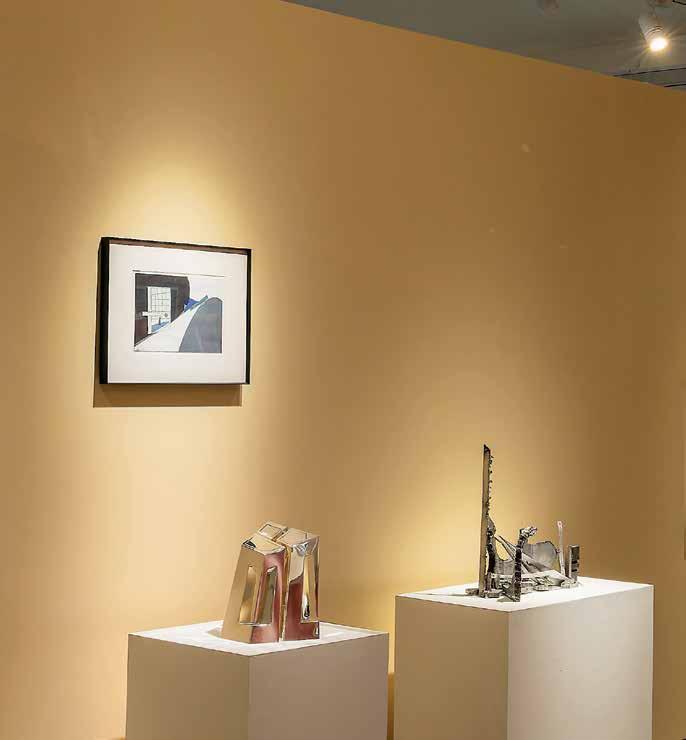
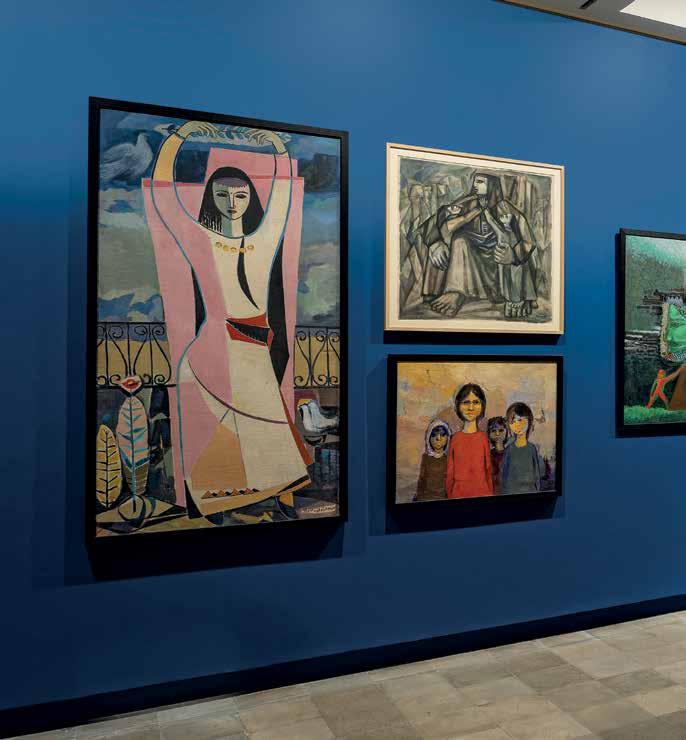
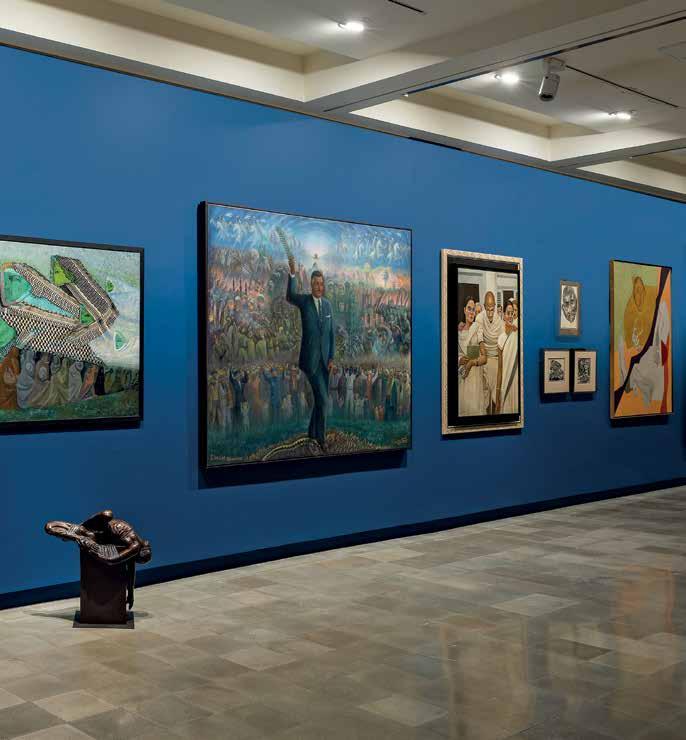
This section explores the political ideals and solidarities reflected across Indian and Arab art during the 20th century. Works portraying figures like Mahatma Gandhi and Gamal Abdel Nasser embody global liberation movements, while others evoke the broader histories of decolonisation, the Non-Aligned Movement (NAM), the partitions in the Indian subcontinent, the Gulf War, and the Palestinian struggle. Together, they express shared aspirations for sovereignty, dignity and self-determination.
Egyptian artist Ali Hassan memorialised Mahatma Gandhi shortly after his assassination, Indian artist Vivan Sundaram used charcoal and engine oil for his work made in response to the global turmoil sparked by the Gulf War in the early 1990s, while Syrian artist Said Tahsin’s portrait of Gamal Abdel Nasser depicts people of India, Africa, South America, and the Arab world converging through the NAM. Akbar Padamsee’s portrait of Gandhi is from 1997, a year that marked 50 years of India’s independence. Mona Hatoum transforms a traditional handwoven carpet into a ghostly world map, suggesting histories of erasure, migration and colonial mapping. Nouri Al Rawi depicts a stylised female figure standing, holding a laurel branch, evoking a sense of peace and cultural pride. Mahmoud Hammad paints a visual tribute to the short-lived political union between Syria and Egypt under the United Arab Republic. Artist Naim Ismail merges oil painting with textile collage, depicting cloaked figures in procession beneath monumental heads wrapped in keffiyehs, honouring those who fought for the liberation of Palestine. Sami Mohammed and Abdul Qader Al Rais also depict the Palestinian struggle, with a bronze human figure collapsed over a blocklike plinth reflecting the Sabra and Shatila massacre and four Palestinian refugee children in Kuwait, respectively. Painted in the early 1970s, during the Bangladesh War, Tyeb Mehta’s canvas is sliced diagonally, reflecting redrawn borders. Krishen Khanna’s work from the same period is a near black-on-black painting of a General in argument, strategising for the war. Indian artist Chittaprosad Bhattacharya used printmaking as reportage to document the marginalised, child labour, and the man-made Bengal famine under colonial rule. The two figures in Nilima Sheikh’s painting manifest the dual realities of Kashmir as a landscape of strife as well as of longing and hope. Through depictions of land and people through war, shifting borders, displacement and refugee experiences, these works reveal how art became both a language of resistance and a chronicle of nations in transition.
Featured artists: Mona Hatoum, Nouri Al Rawi, Mahmoud Hammad, Naim Ismail, Sami Mohammed, Abdul Qader Al Rais, Said Tahsin, Ali Hassan, Akbar Padamsee, Chittaprosad Bhattacharya, Tyeb Mehta, Nilima Sheikh, Krishen Khanna, Vivan Sundaram.
Born 1952, Beirut, Lebanon
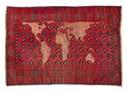
Bukhara (tribal), 2007
Wool rug, 106 × 157 cm
(41.7 × 61.8 in.)
Collection of Barjeel Art Foundation, Sharjah
Born in Beirut to a Palestinian family, Mona Hatoum settled in London in the mid1970s, where she studied at the Byam Shaw School of Art and the Slade School of Fine Art. Her early performances and videos questioned systems of control, gender, and surveillance, while her later sculptural works often reconfigure familiar objects—such as furniture, wire or textiles—into forms that evoke both intimacy and unease. Across her career, Hatoum has continually redefined the relationship between the personal and the political, transforming everyday objects into meditations on global tension and vulnerability. She has exhibited her work internationally, including in India, where it was featured in a number of exhibitions and the Kochi-Muziris Biennale 2014.
In Bukhara (tribal) (2007), Hatoum transforms a traditional, handwoven, wool rug into a meditation on power and geography. The work looks as if in a state of disintegration as large patches of the weave appear to have been moth-eaten or somehow worn-out. The apparently random patches come together to form a recessed world map where the continents have been created by painstakingly plucking out the pile of the carpet. The act of erasure creates a ghostly cartography that is both present and absent. The rug, typically a domestic object symbolising warmth and home, becomes instead a site of displacement and reorientation. In this work, the handmade and the geopolitical intersect, turning a traditional craft into a quietly radical statement on identity, power, and belonging.
Nouri Al Rawi
Born 1925, Rawa, Iraq
Died 2014, Baghdad, Iraq
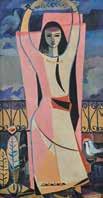
Radiance of Joy, 1957
Oil
Collection of Barjeel Art Foundation, Sharjah
Born in the riverside town of Rawa on the upper Euphrates, Nouri Al Rawi’s early experiences of rural life left a lasting imprint on his artistic vocabulary. After completing his training at the Teachers’ College in 1941, he returned to study art formally, graduating from Baghdad’s Institute of Fine Arts in 1959. His practice blended memory with imagination, drawing on the architecture, textures, and landscapes of Iraq. Al Rawi was also a key institutional figure: he founded the National Museum of Modern Art in Baghdad in 1962 and played a major role in shaping Iraq’s cultural infrastructure through his leadership in artist syndicates, state institutions, and televised art programming. He was also a prolific writer and critic, publishing essays, books, and art reviews throughout his career. In 1968, he was one of the artists representing Iraq at the First International Triennale in New Delhi.
Radiance of Joy (1957) depicts a stylised female figure standing frontally, framed by a balcony railing and a cloudy sky. Her arms are raised above her head, holding a laurel branch—an ancient symbol of victory and peace—while birds flank the composition, some perched beside her, another shown as a ghostly silhouette above. The figure’s elongated form and angular garments are rendered in flat planes of pastel pink, cream, and lavender. Al Rawi draws on the visual rhythms of traditional Iraqi architecture and textile motifs, embedding them within a modernist framework. The composition evokes not only a sense of celebration, as the title suggests, but also national aspiration and cultural pride.
Works in this section explore the human body as a site of work, rest and renewal. Figures appear in spaces of labour, leisure, and ritual—migrant workers’ quarters, street benches, bathhouses and at home—moving between exertion and repose. Labour movements across the 20th and 21st centuries in India and the Arab world created new forms of collective identity and solidarity. Ahmad Nasha’at Al Zuaby depicts an interior scene of an underground bathhouse in Hama. Early modernist Indian artist Kattingeri Krishna Hebbar evokes cubist structural compositions, the art of Paul Gauguin and Amrita Sher-Gil in his rendition of sweepers in a moment of rest. Mohammed Kazem offers an intimate glimpse into a South Asian labourer’s living space in Dubai, while Sudhir Patwardhan presents a labourer in Mumbai in a temporary, makeshift home, as a reflection on the existence of the migrant in the city. Indian artist Altaf, who involved himself in labour unions and worker rights, depicts daily wage workers as faceless bodies synchronised in movement, in a set of four works.
Other artworks are portrayals of the body as a vessel of intimacy, endurance, and dignity. Marked by class and gender divisions, these figures bear witness to the shared struggles of everyday life. Known for his honest portrayals of queer intimacy at a time when homosexuality was outlawed in India, Bhupen Khakhar’s watercolour features two nude male figures facing each other. Anju Dodiya references urban realities and women’s negotiation of domestic space. Nalini Malani’s reverse painting on mylar, S/he, is inspired by a transgender character from the Hindu epic Mahabharata.
Artists featured: Ahmad Nasha’at Al Zuaby, Kattingeri Krishna Hebbar, Mohammed Kazem, Sudhir Patwardhan, Altaf, Bhupen Khakhar, Anju Dodiya, Nalini Malani.
Born 1939, Hama, Syria
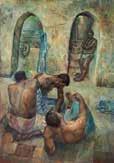
The Bathers, 1964 Oil on canvas, 218 × 151 cm (85.9 × 59.5 in.)
Collection of Barjeel Art Foundation, Sharjah
Born 1911, Udupi, India
Died 1996, Mumbai, India
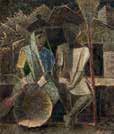
Sweepers, 1960
Oil on canvas, 91.5 × 76.5 cm
(36.2 × 30.1 in.)
Collection of Jehangir Nicholson Art Foundation, Mumbai
Ahmad Nasha’at Al Zuaby is a Syrian painter whose work is rooted in memory, spiritual introspection, and the quiet rhythms of daily life. Born in Hama in 1939, he was among the first graduates of the Faculty of Fine Arts in Damascus in 1964 and later pursued further training in Cairo. Al Zuaby’s approach to painting is meditative: he allows his subjects to emerge gradually from contemplation, painting only after the memory of a scene has softened and begun to fade. In 1956, he founded the Circle of Artists of Hama and, in 1969, co-founded the Group of Ten for Modern Art, alongside figures such as Naim Ismail, Elias Zayat, and Nazir Nabaa. His practice explores both rural and urban settings, often drawing from the architecture and atmosphere of his hometown. Al Zuaby’s work has been exhibited widely, including at the Eighth Alexandria Biennial in 1970 and the Second International Triennale in New Delhi in 1971.
The Bathers (1964), created as part of his graduation project at the Faculty of Fine Arts in Damascus, depicts an interior scene of an underground bathhouse in Hama. The composition is anchored by four male figures—seated and standing—rendered with anatomical precision and painterly softness. Arched entrances and thick stone walls enclose the scene while diffused light filters through the domed ceiling, mixing with the warm haze of steam. Painted in muted tones, the work evokes a sense of quiet communion. More than a portrayal of bodily cleansing, the scene suggests a kind of spiritual renewal. With its blend of academic rigour and emotional subtlety, The Bathers reflects Al Zuaby’s attunement in capturing the intimacy of shared space.
Kattingeri Krishna Hebbar was a painter, sculptor, educator and dancer. He obtained his diploma in painting from Sir J.J. School of Art in 1938 and later taught at the J.J. School from 1940 to 1945.
Hebbar went on a one-year educational tour to Europe in 1949–50 and studied at the Académie Julian, Paris. He learned the Indian classical dance form of Kathak to better understand rhythm and movement. Hebbar served as the chairman of the Lalit Kala Akademi in 1980 and President of the Bombay Art Society in 1990. Hebbar represented India internationally at the 1955 Venice Biennale, the 1959 São Paulo Biennale, and the Fourth Triennale–India in 1978. Among his many honours, he was awarded the Padma Shri (1961), Padma Bhushan (1989), and Maharashtra Shasan Gaurav Puraskar (1990).
From his student days at the Sir J.J. School of Art, Hebbar developed an affinity for impressionism, later blending impressionistic and expressionistic techniques as well as neo-impressionist technique of pointillism. Hebbar’s travels to Europe, and then Japan as well as Indonesia, shaped his sensibilities; yet his art remained deeply rooted in Indian folk traditions. Hebbar’s practice also drew from Jain manuscript illustrations, Mughal miniatures, and the Ajanta murals.
Evocative of cubist structural compositions and influenced by Gauguin and Amrita Sher-Gil, Sweepers (1960) draws its subject matter from contemporary Indian life. The artist frequently depicted market scenes, agricultural labour, and community gatherings in his works.
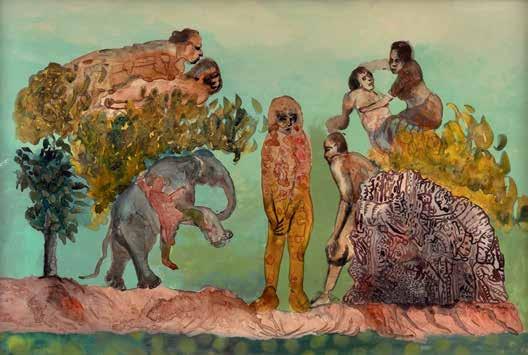
Artists turned to landscape as a space for reflection, contemplation, and memory. Instead of depicting nature realistically, they used line, colour, and form to express inner states and poetic readings of the land. Deserts, mountains, cityscapes and horizons appear abstracted— suggesting allusions rather than specific places. Through these gestures, the landscape becomes both intimate and universal: shaped by the artists’ own surroundings, yet resonant with viewers elsewhere. Created by artists from India, Iraq, Syria and Tunisia, these works reveal how the natural world continues to shape modern artistic imagination, offering landscape as a site of shared human experience.
Soft earthy tones are used in works by Hedi Turki and Narayan Shridhar Bendre, creating an atmospheric effect of desert landscapes and agricultural fields, respectively. Ram Kumar reflects the ancient city of Varanasi on the riverbank as a floating mass of abstracted form. Saadi Al Kaabi depicts the city as an aerial grid, while Fateh Moudarres renders a dense urban space, layered with windows and domes, within which stylised human forms emerge. Layla Al-Attar features organic forms with linear marks, resembling veins or root systems, reminiscent of anatomical contours.
Featured artists: Hedi Turki, Narayan Shridhar Bendre, Ram Kumar, Layla Al-Attar, Saadi Al Kaabi, Fateh Moudarres.
This section brings together works exploring emotion, psychology, and the unseen dimensions of human experience. Through expressive portraits and symbolic forms, artists turn inwards to confront questions of identity, faith, mortality, and transformation. Emirati/Egyptian artist Mohamed Al Mazrouei, who discovered his part-Christian lineage, and Indian artist Francis Newton Souza both engage with complex associations with religious identity—offering views of Biblical themes and the ritual practices of church clergymen through gestural interpretation and caricature, as seen in Al Mazrouei’s Last Supper and Souza’s Death of a Pope. In another work, Al Mazrouei paints himself with a halo around his head in the manner of Byzantine art. Self-portraiture takes a distinct, introspective dimension in the work of Syrian artist Marwan Kassab-Bachi, whose ‘facial landscapes’ reveal psychological tension, and Indian artist M.F. Husain, who approaches the self-portrait as a mask-like, theatrical construct. Iraqi artist Dia al-Azzawi places his own handprint among cryptic symbols and forms, evocative of ritual masks, while Indian artist Ganesh Pyne evokes masks and puppetry in his depiction of a Hindu deity that personifies the river Ganga. Sudhir Khastgir depicts a female figure inspired from Indian rural life, which finds resonance in Egyptian artist Inji Efflatoun’s rendition of an old sailor. Intimacy and emotional kinship among individuals is addressed by artists such as Suad Al-Attar, who shows a moment of embrace between two sisters, as well as Kuwaiti artist Khazaal Awad Qaffas, whose sculptural work depicts a group of imprisoned women huddled together, conveying a sense of closeness and solace. A work by Kuwaiti artist Ibrahim Ismail shows a human figure in meditative transition, arms outstretched among white doves, possibly suggesting rebirth. These works by artists from India and the Arab world reveal personal introspections to navigate collective upheaval—transforming private struggle into meditations on existence and the search for meaning.
Artists featured: Mohammed Al Mazrouei, Maqbool Fida Husain, Khazaal Awad Qaffas, Ibrahim Ismail, Suad Al-Attar, Ganesh Pyne, Dia al-Azzawi, Inji Efflatoun, Sudhir Khastgir, Francis Newton Souza, Marwan Kassab-Bachi.
Mohamed Al Mazrouei
Born 1962, Tanta, Egypt
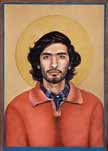
Portrait, 2011
Mixed media on wood, 37 × 26 cm (14.6 × 10.2 in.)
Collection of Barjeel Art Foundation, Sharjah
Collection
Art Foundation, Sharjah
Maqbool Fida Husain
Born 1915, Pandharpur, India
Died 2011, London, United Kingdom
Mohamed Al Mazrouei is a multidisciplinary artist whose practice encompasses painting, poetry, and photography. With a background in ancient languages and philosophy, Al Mazrouei has long been drawn to the expressive power of both word and image. His artistic language blends expressionism with a deeply personal symbolism. Throughout his career, he has exhibited widely across the Arab world and Europe, and participated in the Tenth International Triennale in New Delhi in 2001, representing the United Arab Emirates.
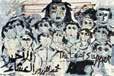
The works Portrait (2011) and Primitive Last Supper (2012) reveal two distinct registers of Al Mazrouei’s practice. The former is a self-portrait rendered in the style of an icon, with the artist presenting himself frontally, framed by a golden halo and backed by a luminous, minimal background. By adopting the visual language of religious icons, the portrait blurs the line between the secular and the sacred, proposing the self as a site of contemplation. In contrast, Primitive Last Supper offers a raw, gestural reinterpretation of the iconic biblical scene. Crowded with mask-like faces and scrawled text, the composition conjures a chaotic, almost ghostly gathering. Here, Al Mazrouei draws on collective memory and spiritual tradition but filters both through a vocabulary of urgency and disquiet.
Maqbool Fida Husain is India’s most widely known artist. He enrolled at the Sir J.J. School of Art in Bombay in 1934, but financial constraints forced him to leave. Returning to Bombay in 1937, he supported himself by painting Hindi film billboards, an experience that sharpened his ability to render large-scale figures with bold clarity. In 1947, he won an award at the Bombay Art Society annual show. He met artists F.N. Souza, S.H. Raza, and S.K. Bakre and together they co-founded the Progressive Artists’ Group (PAG). Unlike many PAG members who left India, Husain remained and became a major public figure. He depicted popular culture, history, and mythology in vivid colour and bold form, adapting cubist style to Indian themes across oil, acrylic, watercolour, serigraph, and film. Honoured with the Padma Bhushan and Padma Vibhushan, the latter half of his career was marked by court cases from fundamentalist factions who deemed his work controversial. Husain lived his final years between London, Dubai, and Qatar.
Biographies of Nazek Hamdi and Mariam Abdel-Aleem were authored by Nadine Nour el Din and have been adapted from Stranieri Ovunque – Foreigners Everywhere, 2024, commissioned by the Barjeel Art Foundation for the exhibition catalogue of the 60th Venice Biennale. Dia al-Azzawi’s biography was supplied by the artist’s studio. Menhat Helmy’s biography was adapted from a text supplied by the artist’s estate. Other biographies of artists from the Barjeel Art Foundation’s collection were either adapted from the foundation’s previous in-house publications, and have been reprinted with permission, or authored specifically for Resonant Histories: India and the Arab World, 2025, courtesy of the Barjeel Art Foundation. The text on the work of Francis Newton Souza was adapted from the exhibition note by Ranjit Hoskote, written for the exhibition FN Souza: The Power and the Glory, at the Jehangir Nicholson Art Foundation (JNAF), 2021. Texts on all other artists from the JNAF collection were authored especially for Resonant Histories: India and the Arab World, 2025. Biographies of artists have been compiled or rewritten from JNAF’s exhibitions and publications.
Barjeel Art Foundation
Barjeel Art Foundation is an independent, Sharjah-based initiative established by Sultan Sooud Al Qassemi in 2010 to manage, preserve and exhibit an extensive collection of over 2,000 pieces of modern and contemporary art from North Africa and West Asia. The foundation’s guiding principle is to foster critical dialogue around modern and contemporary art practices, with a focus on artists with Arab heritage internationally. The foundation strives to create an open-ended inquiry that responds to and conveys the nuances inherent to Arab histories beyond the borders of culture and geography. Since its inception, the foundation has held 40 art exhibitions both locally in the United Arab Emirates and internationally in cities like Singapore, Paris, London, Berlin, Toronto, New York, Boston, Tampa, New Haven, Amman, Kuwait, Alexandria, Dammam, Baku and Tehran—allowing global audiences to gain first-hand access to Arab art. It has also loaned artworks to over 150 institutions globally, including museums like Tate Liverpool and Tate St. Ives, MoMA PS1, The Art Institute of Chicago, Mori Museum, and others.
Jehangir Nicholson Art Foundation (JNAF)
The Jehangir Nicholson Art Foundation is a nonprofit organisation committed to preserve, document and update the seminal collection of modern and contemporary Indian art, acquired by Jehangir Nicholson, one of the earliest art collectors in India. The JNAF collection reflects crucial phases of modern Indian art history from the 1940s to 2000s.
With over 800 artworks, procured by Jehangir Nicholson across five decades till 2001 and by the foundation since then, the JNAF presents a diversity of post-independence art practices in the country. In 2008, the JNAF entered into a collaboration with the Chhatrapati Shivaji Maharaj Vastu Sangrahalaya, Mumbai (formerly, the Prince of Wales Museum), where it functions as the museum’s modern and contemporary art wing.
The JNAF seeks to build a connected research-based framework for its exhibitions and programming, bringing Indian art into conversation with relevant local and global art-historical discourses, onsite and online. Through collaborations with national and international institutions and professionals, the JNAF has created a platform for critical dialogue and diverse interdisciplinary cultural exchange.
Chhatrapati Shivaji Maharaj Vastu Sangrahalaya (CSMVS)
Chhatrapati Shivaji Maharaj Vastu Sangrahalaya (CSMVS) is one of the premier art and history museums in India. The Museum came about as an initiative of prominent citizens of Mumbai, having completed in 2022 a centenary in service of society. Situated on the southern tip of Mumbai on the ‘Crescent Site’, it is the heart of the Kala Ghoda art district in Mumbai, the building itself done in an interesting architectural style called the Indo-Saracenic, an amalgamation of several artistic styles that is unique to India. The Museum opened to the public in January 1922 and has since built a diverse collection of more than 70,000 objects. Today, its building is listed as a Grade I Heritage Building, is a Platinum certified Green Building, and has been awarded the highest Award of Excellence 2022 UNESCO Asia Pacific Heritage Award for “the heroic restoration of the CSMVS Museum Building”, and the 2010 UNESCO Asia Pacific Heritage Award for Cultural Heritage Conservation. It has also been awarded first place for Heritage Building Maintenance by the Indian Heritage Society. CSMVS is part of the splendid Victorian Gothic and Art Deco Ensemble of Mumbai inscribed as a UNESCO World Heritage Site in 2018.
The Museum is today a dynamic space located within the heritage city of Mumbai, widely visited by a diverse range of audiences, offering curated exhibitions, academic and cultural programmes, publications, and unique in-person and online experiences in multiple
Indian languages. The Museum also houses an eco-cultural hub for children — the CSMVS Children’s Museum nestled in a grove of trees, enabling a noncompetitive environment for children to engage with the Museum’s collections and the arts. It also houses an advanced Conservation and Research Centre that undertakes the preservation of its iconic art objects. Its Museum on Wheels buses travel to several states offering museum exhibitions to students and communities in rural India. The CSMVS Museum is run on the principle that it is by the people, for the people, operating entirely autonomously through the support of a legacy of sensitive donors, patrons, and institutions.
Resonant Histories is an invitation to revisit encounters between India and the Arab world in the 20th century that continue to shape artistic and intellectual discourse today. By bringing the collections of the Barjeel Art Foundation and the Jehangir Nicholson Art Foundation into dialogue, the project aims to situate artistic practice within broader transnational frameworks of exchange and mutual influence. This publication explores the story of modern art as not a singular narrative, but a network of voices shaping one another across time and place.
With 187 illustrations.
contributors
Sultan Sooud Al Qassemi, Founder, Barjeel Art Foundation.
Nadine Nour el Din, writer, art historian, and cultural practitioner.
Puja Vaish, Director, Jehangir Nicholson Art Foundation.
Patrick Kane, art historian and educator.
Vivek Gupta, British Academy Postdoctoral Fellow, University College London, and Research Affiliate, Fitzwilliam Museum, Cambridge.
Neha Vora, Professor of Anthropology at the Department of International Studies, American University of Sharjah.
Amal Allana, theatre director, Director of Art Heritage, and Lifetime Trustee, Alkazi Foundation for the Arts.
Iaroslav Volovod, Curator, Guggenheim, Abu Dhabi.
Suheyla Takesh, Director, Barjeel Art Foundation.
Rasha Alduwaisan, oral historian and writer.
Deepak Unnikrishnan, Associate Arts Professor of Literature and Creative Writing, NYU, Abu Dhabi.
Bhoomika Ghaghada, writer and facilitator.
Published on the occasion of the exhibition ‘Resonant Histories: India and the Arab World’
Curated by Suheyla Takesh and Puja Vaish
14 November 2025–15 February 2026
Jehangir Nicholson Art Gallery, CSMVS Museum, Mumbai, India
A project by the Barjeel Art Foundation, Sharjah; Chhatrapati Shivaji Maharaj Vastu Sangrahalaya, Mumbai and Jehangir Nicholson Art Foundation, Mumbai
Edited by Puja Vaish, Suheyla Takesh and
Al Qassemi
256 pages, 187 illustrations
9.65 x 10.24″ (245 x 260 mm)
ISBN: 978-93-94501-44-7 (SC)
₹1950 | $40 | £30
ISBN: 978-93-94501-92-8 (HC)
₹2950 | $65 | £45
Spring 2026 | World Rights
Sultan Sooud
contributors
Sultan Sooud Al Qassemi, Founder, Barjeel Art Foundation
Nadine Nour el Din, writer, art historian, and cultural practitioner
Puja Vaish, Director, Jehangir Nicholson Art Foundation
Patrick Kane, art historian and educator
Vivek Gupta, British Academy Postdoctoral Fellow, University College London, and Research Affiliate, Fitzwilliam Museum, Cambridge
Neha Vora, Professor of Anthropology at the Department of International Studies, American University of Sharjah
Amal Allana, theatre director, Director of Art Heritage, and Lifetime Trustee, Alkazi Foundation for the Arts
Iaroslav Volovod, Curator, Guggenheim Abu Dhabi
Suheyla Takesh, Director, Barjeel Art Foundation
Rasha Alduwaisan, oral historian and writer
Deepak Unnikrishnan, Associate Arts Professor of Literature and Creative Writing, NYU Abu Dhabi
Bhoomika Ghaghada, writer and facilitator
Barjeel Art Foundation, Sharjah
Jehangir Nicholson Art Foundation
Chhatrapati Shivaji Maharaj Vastu Sangrahalaya, Mumbai
www.mapinpub.com
“I am partisan to the task of rethinking Third World solidarities (Indo–Arab, Afro–Asian, the Non-Aligned Movement) beginning in the 1950s, active until the late 1960s, and, with some persistence, lasting till today as South–South solidarity. Modernity and internationalism in the post-colonial world, politically redefined within the contemporary, still offer an exemplary paradigm in a world overrun by triumphant capitalism and devastating wars. Every gesture that sidesteps this historical overdetermination is a reminder: that there was, and is, a modernity at stake within the South that is empathetic to democratic and progressive cultures. And that contemporary aesthetics will be enriched if we engage with diverse art-historical discourses. I write this in the context of the generous project, Resonant Histories: India and the Arab World.”
geeta kapur
“Refreshingly and remarkably, Resonant Histories decentres the expected comparative model of art history to present an open dialogue between the Arab world and India, exploring the seemingly obvious but less investigated connections despite the geographic proximity, historical contexts, and relations. Significantly, conversations between the two speak of overlaps and parallels in their negotiations of modernism that are as interconnected as they are rooted in their localness. Resonant Histories effectively forces us to change perceptions, expectations, and conversations through considering new alliances and affinities beyond Europe.”
nada shabout