Raja Ravi Varma
Painter of Colonial india revised edition
Rupika Chawla
P C i Raja aint Ra
ero v f i o V lo a ni r al m ndi a a
Raja Ravi Varma (1848–1906) was among the first Indian painters to successfully adapt academic realism to the visual interpretation of Indian mythology and adopt Western painting techniques of portraiture. His genre of paintings, which eventually led to chromolithographs (oleographs), has maintained a lasting effect on the Indian sensibility, making him the best-known classical painter of modern times.
This book is an account of Ravi Varma’s traditional background and environment in the context of colonial India, and the relationship of this milieu with his profession as an aristocratic itinerant painter. Many royal families of India and several rich and powerful personalities were patrons of Ravi Varma, whose portraits he painted in large numbers.
His range of Puranic and religious paintings, reflecting his deep understanding of Sanskrit and Malayalam literature, have deeply influenced the forms of gods and goddesses in 20th-century visual culture of India. Ravi Varma’s fascination for feminine beauty and the ability to capture it masterfully is abundantly evident in his numerous portrayals of Shakuntala, Sita and Damayanti, and of the Indian woman. His lingering influence on the Indian mindset is also seen in the works of Indian contemporary painters and artists, who continue to be inspired by his art.
The lavishly illustrated fourth revised reprint, updated with additional artworks and corresponding text, brings together paintings from royal and private collections, and museums. It presents many works that have never been seen before, along with previously undisclosed maps, letters, photographs and other archival material. It traces the sources used by Ravi Varma, examines the techniques and methodology of his paintings, and discusses their conservation and the problem of fakes and copies, much to the advantage of historians, collectors, curators and art aficionados.
With 462 colour illustrations and 6 maps
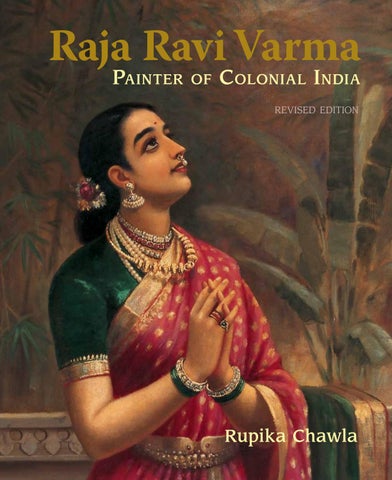
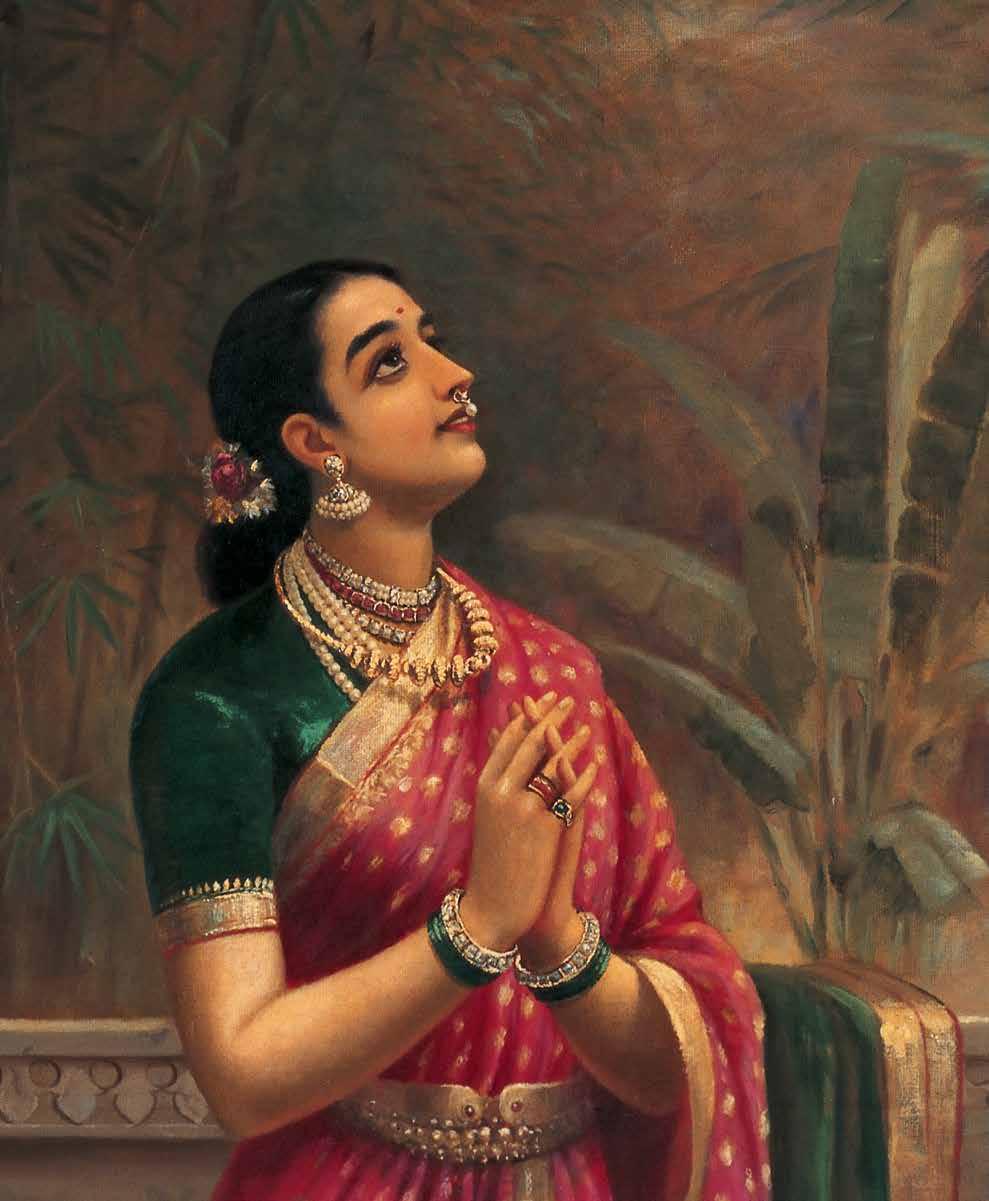
Front cover
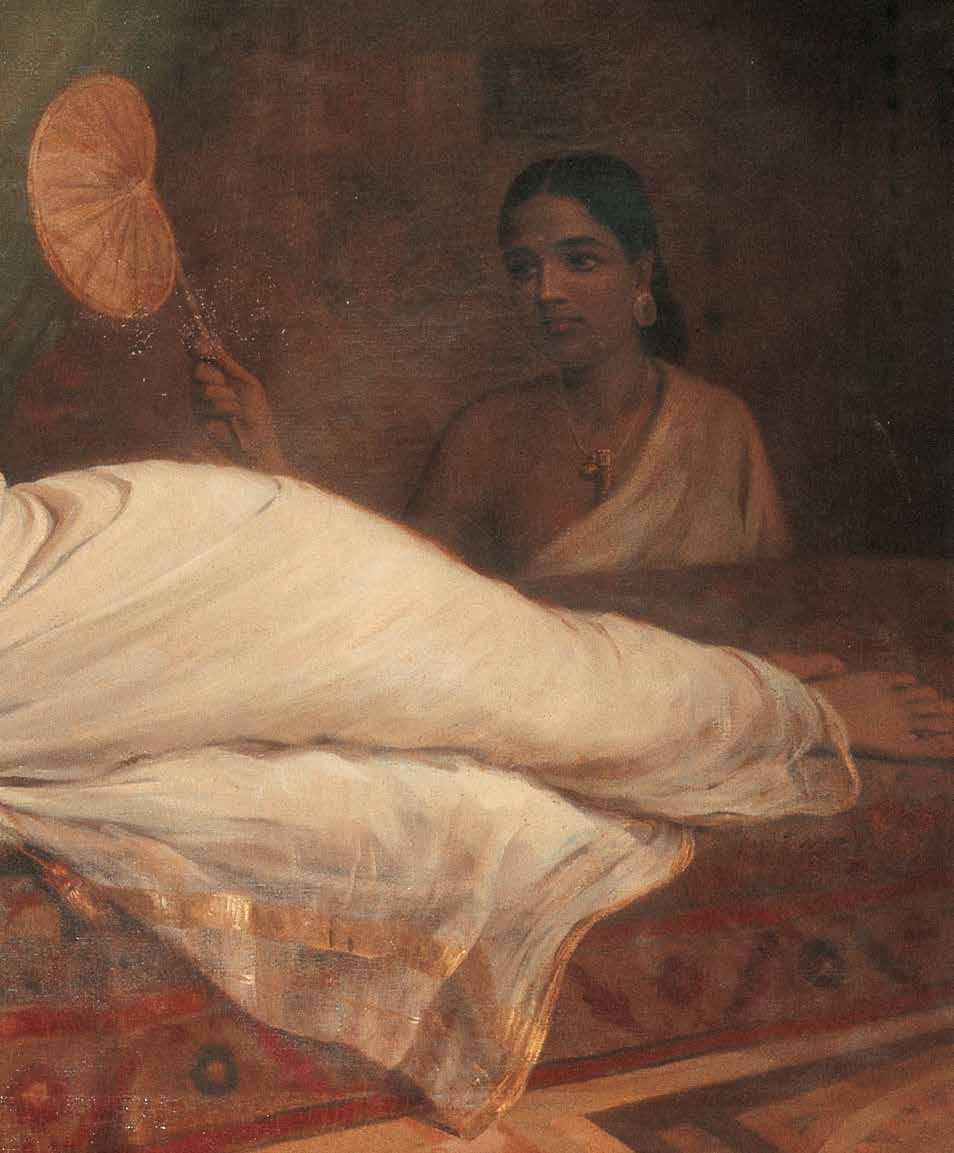
The Swan Messenger, (detail), oil on canvas. See page 124
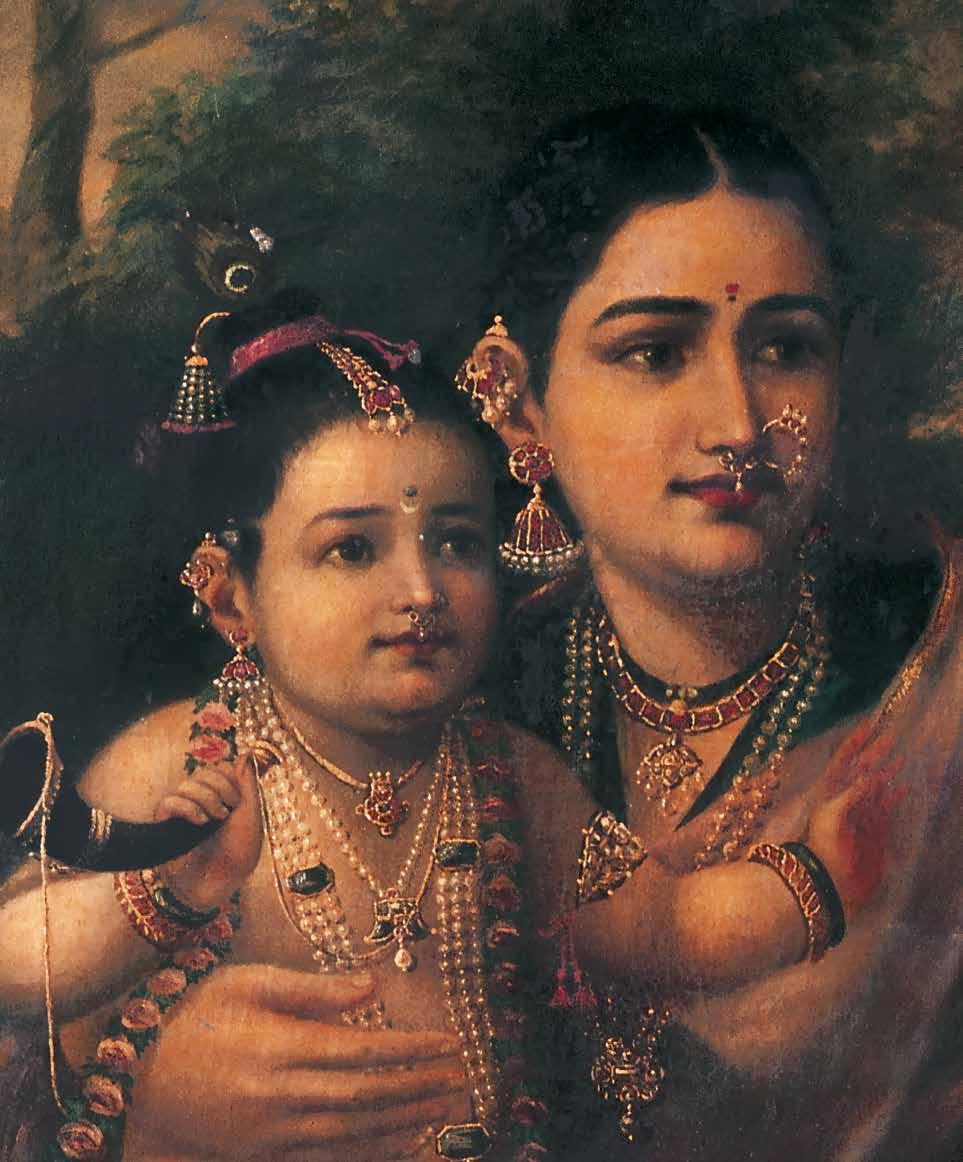
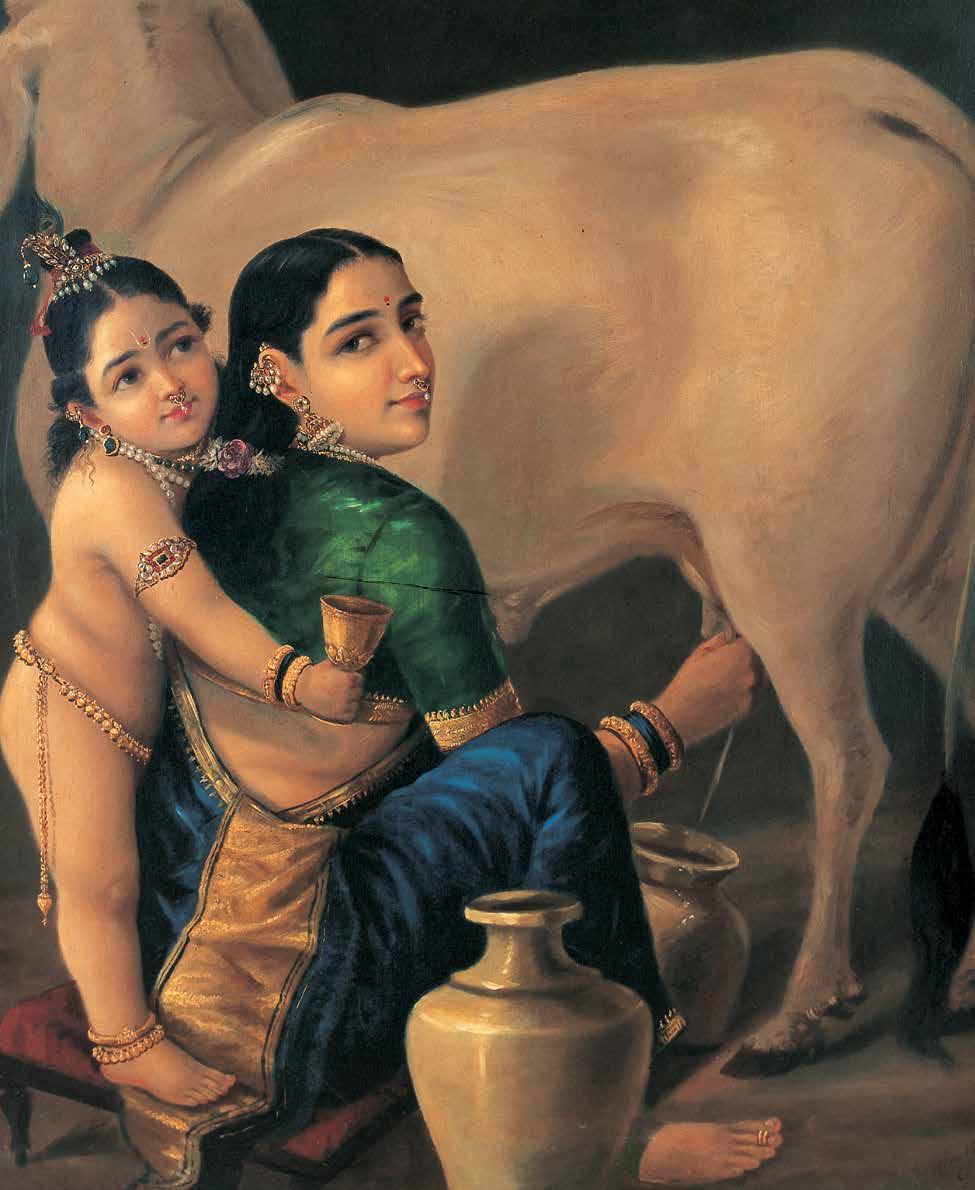
cover Yashoda and krishna, oil on canvas. See page 278
Raja Ravi Varma
Raja Ravi Varma
painteR of Colonial india
Rupika Chawla
Revised reprint in 2026 by Mapin Publishing Pvt. Ltd
706 Kaivanna, Panchvati, Ellisbridge, Ahmedabad 380006 INDIA
T: +91 79 40 228228
E: mapin@mapinpub.com www.mapinpub.com
© Mapin Publishing 2010, 2013, 2017, 2019
Text © Rupika Chawla Illustrations © as listed.
All rights reserved under international copyright conventions. No part of this book may be reproduced or transmitted in any form or by any means, electronic or mechanical, including photocopy, recording or any other information storage and retrieval system, without prior permission in writing from the publisher.
ISBN: 978-93-94501-30-0
Designed by Amit Kharsani / Mapin Design Studio
Edited by Diana Romany / Mapin Editorial Processed at Reproscan, Mumbai Printed in India
A Note to the Reader: Titles of Raja Ravi Varma’s original paintings and sketches appear in bold in the captions. The titles in brackets, where they appear, are the variant names, different from what the painter specified, but those that are more prevalent and often used in museums and publications.
Page 1
Yashoda and Krishna (detail), oil on canvas, 28 x 35”. Collection: Travancore Royal Family, Kaudiar Palace, Thiruvananthapuram (See page 176)
Page 2
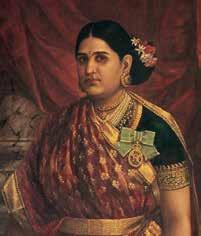
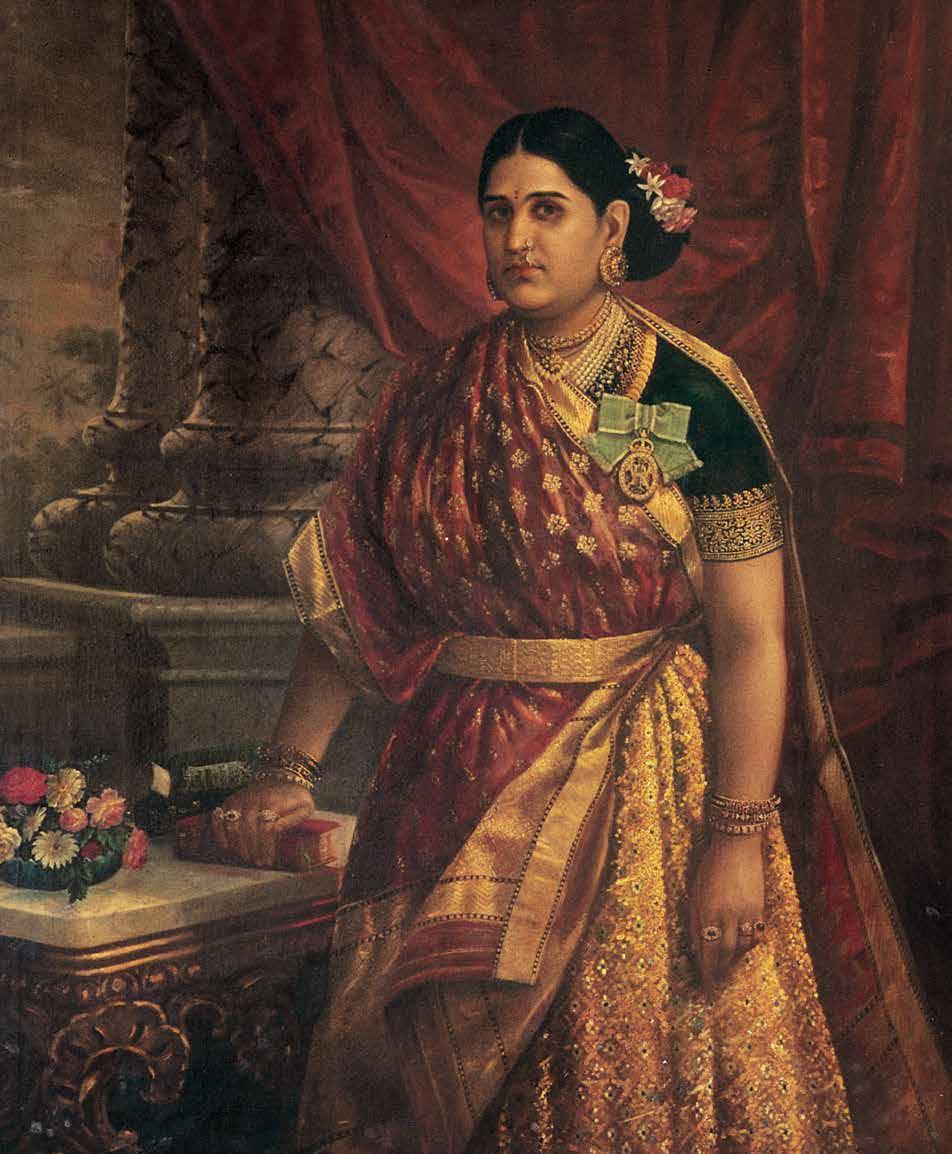
The Raja and Rani of Kurupam (detail), portrait, oil on canvas, 67.5 x 93.5”, 1902. Private collection (See page 339)
Page 8-9
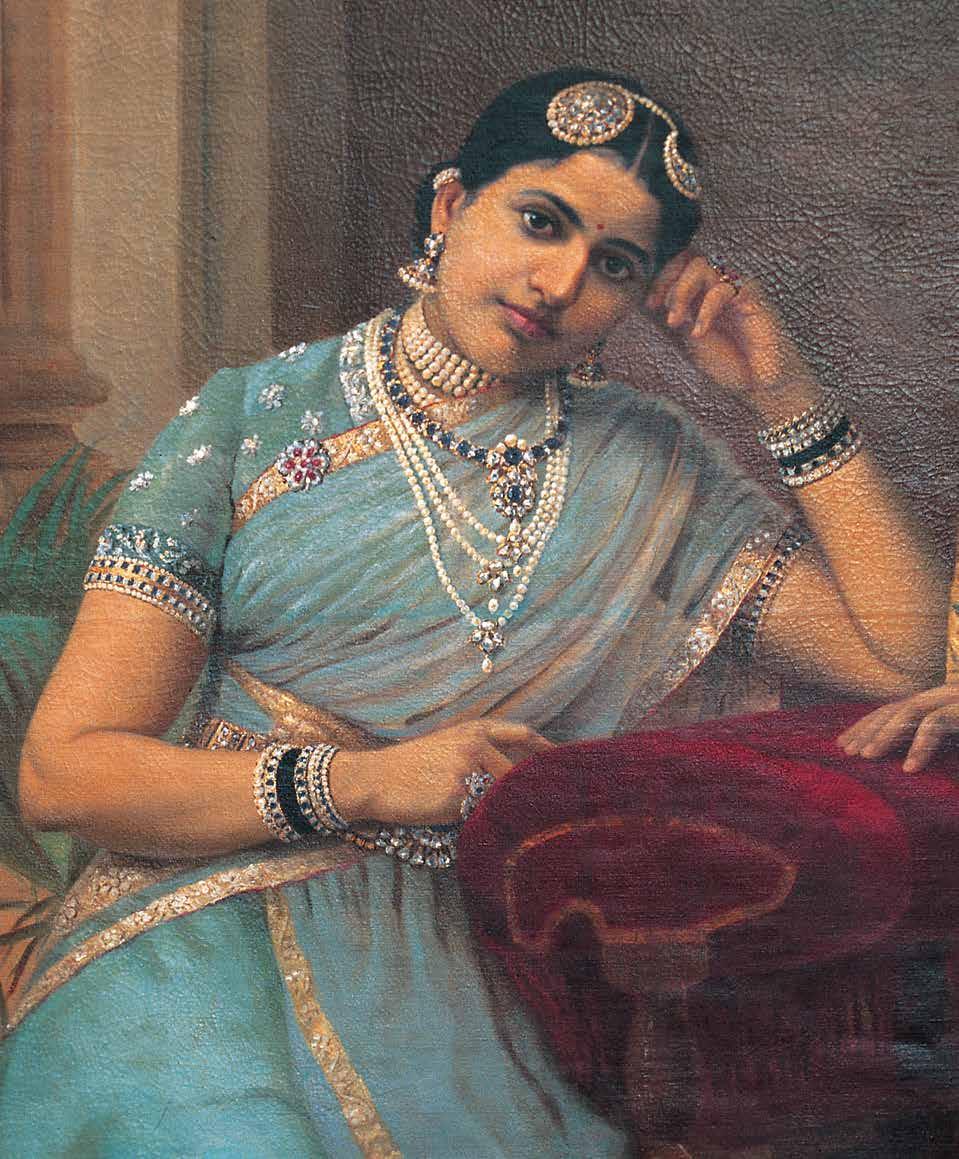
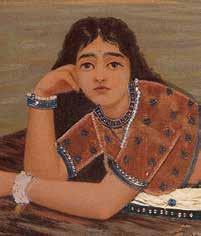
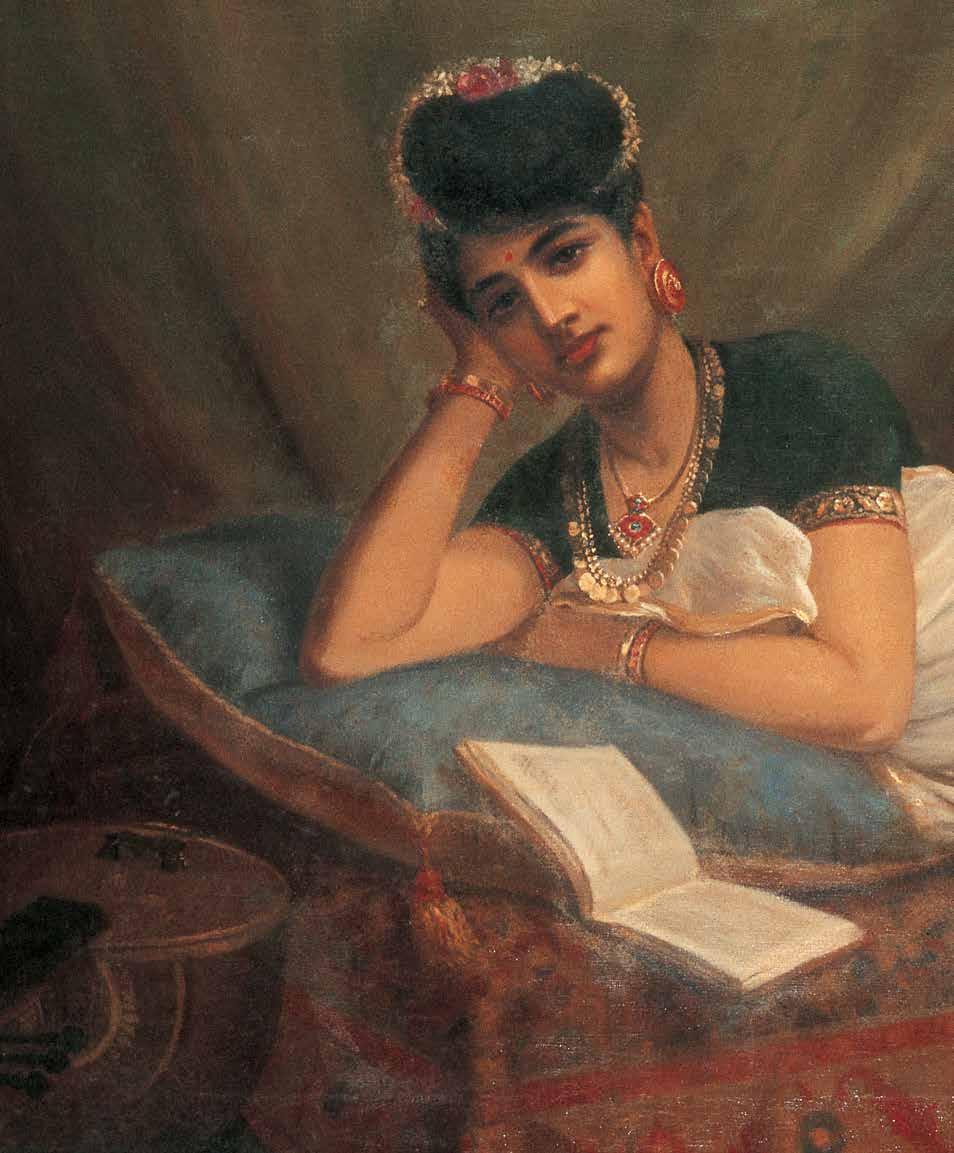
Reclining Nair Lady, oil on canvas, 29 x 41”, 1902. Private collection (See page 236)
This book is dedicated to Raja Ravi Varma whose life and works demand that such a book be written.
It is also dedicated to C. Raja Raja Varma, younger brother of Raja Ravi Varma, whose diaries and observations propelled it into the course it has taken.
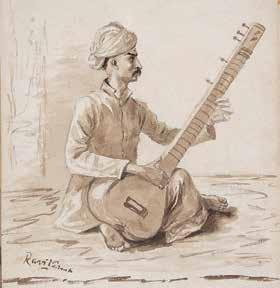
A drawing of a musician from Ravi Varma's sketchbook
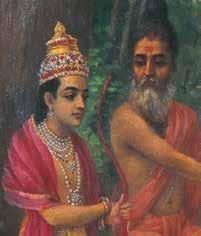
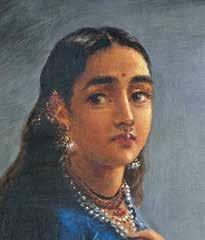
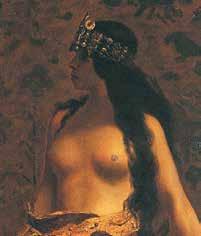
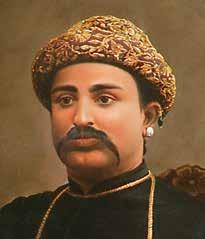
Author’s Note
Overthe years I have often pondered over the enigma of Ravi Varma, the man who painted portraits and mythological paintings, who spawned the beginning of popular visual culture and unbeknown to many Indians past and present, influenced their visual perception down the century. Who was this man who had breathed life into these mythology-based paintings, moved with his times and ahead of them as well, taken a farewell bow in the prime of his life and reluctantly left the sphere of living beings with so much yet to accomplish? He had proved to be both provocative and elusive, yet had beckoned, wanting to be known and discovered. I had to seek him out, pursue his trail and unravel something of this man whose quicksilver thoughts and rich emotional reserves guided his actions and his creativity for fiftyeight years.
I have not been able to track down every source or run every bit of information to the ground; neither do I believe it possible to do so. After a hundred years there is so much that has vanished with time’s merciless sweep and the indifference of unwilling custodians of tangible evidence. Yet, there was much that was retrieved—a fact this book bears testimony to.
I followed Ravi Varma’s fading footsteps, discovered his environment and family, heard anecdotes, unearthed his friends and their present families, exhumed period letters, newspapers and photographs, and correlated him with the India of his times. Slowly I found him as he emerged from the mists of nothingness, conjured up
The Swan Messenger (detail), oil on canvas, 26 x 73.6”, 1906.
Collection: Srikanta Datta Narasimharaja Wadiyar, Chairman, Sri Jayachamarajendra Art Gallery Trust, Jaganmohan Palace, Mysore
through the information I had gathered and through my reflections that willed him into manifestation. I will never fully know him but I found much to admire in this bright-eyed charismatic man of easy laughter, so capable of balancing the traditional with the avantgarde, gifted with well-honed senses and sensibility, energetic, enterprising and entrepreneurial, a man indeed, of the twenty-first century.
Sources in Mysore and Bangalore
It was a rainy September in 2003, and as usual, Mysore was overflowing with people who had converged for the Dasara celebrations. They were crowded into the palace gardens, lit up by the lights that chased the contours of this vast structure, impervious to the rain that fell well into the night. Central to the festivities was Srikanta Datta Narasimharaja Wadiyar, the erstwhile Maharaja of Mysore, resplendent in his regalia. With everybody preoccupied with the celebrations this was perhaps the wrong time to be in Mysore but Sunny, who photographed a large part of the paintings for the book, was emigrating to Australia. It was vital that he photograph the fabulous Mysore collection before he left, leaving the remainder to his assistant Pratap to finish.
In the midst of his multiple preoccupations essential for this time of the year, the former maharaja, Mr. Wadiyar, most graciously opened up his private rooms for us to photograph his personal collection. Among them was the impressive portrait of Maharaja Chamarajendra Wadiyar, that forms the cover of this book. Large parts of the palace lay in darkness as the electricity had been diverted to illuminate the extensive exterior. With the rain and the darkness, the walk through
the vast areas was almost an adventure. We loped over electric wires temporarily fixed on the roof and hunched under umbrellas in order to reach inaccessible parts of the palace, guided by a man with a lantern.
Mr. Wadiyar did manage to speak with me between crowded, hectic moments, and was kind enough to direct M.G. Narasimha, Superintendent of the Jayachamarajendra Art Gallery, to steer us through our visit, which also included the Mysore Archives located in the palace complex. The archival findings from the Department of Archaeology were rich in information, Museum and Heritage, where I was assisted by the very capable Dr. J.V. Gayathri, the Deputy Director. I am grateful to Kamal Kumar for introducing me to Mr. Wadiyar.
We would not have found a room during this busy festival season but for the sanctuary offered to my daughter Rukmini, who was accompanying me on this trip, our photographer Sunny and me, by the Lalitha Mahal Palace Hotel, thanks to Amitabh Kant, Chairman and Managing Director of ITDC at that time.
Anjolie Ela Menon’s sister-in-law, the late Lily Parameshwar who lived in Bangalore, introduced me to V. Damodaran Nair, who translated from Malayalam the obituary of Ravi Varma, unearthed from the archives of Malayala Manorama by Philip Mathew, the Managing Editor.
Lily Parameshwar also introduced me to the Bangalore based Rukmini Varma, who was of great importance for my research. While at Rukmini’s house I met her sister Lakshmi Raghunathan, author of the book on her grandmother that I consulted often while writing my own. They are both granddaughters of Setu Lakshmi Bayi, one of Ravi Varma’s two granddaughters who were adopted into the Travancore royal family (See Chapter 1). What I should have calculated earlier struck me forcibly now: four to five generations divide us today from Ravi Varma and his contemporaries. This is a detail that I kept well in mind as the research proceeded and as I looked around for lost material. The charming and very informative Rukmini helped further my research by introducing me to Dr. R.P. Raja and Dr. R.K. Varma, other descendants of Ravi Varma’s children who lived in Thiruvananthapuram and in Kilimanur.
In Kerala
Kilimanur, Ravi Varma’s ancestral home and the place where he died, caught the tangential light of limpid gold as the sun dipped behind the trees. I walked through his palace with Principal R.K. Varma of the Raja Ravi Varma Central School in Kilimanur. Ravi Varma’s studio, which was his sanctuary, now appeared to be a demystified space—just four walls and a large room. Books from his library are locked in a cupboard in another part of the building, with Dr. R.K. Varma as their custodian. Most of them are stamped with Ravi Varma’s insignia, and offer an insight into the kind of books he enjoyed and where he bought them.
The person to give me the correct perspective on Ravi Varma, his milieu and the norms that governed it, was the knowledgeable Dr. R.P. Raja, Ravi Varma’s greatgrandson who lives in Thiruvananthapuram. Without Dr. Raja’s help I would perhaps not have understood the complexities of Ravi Varma’s environment; so essential for a book of this nature.
I am much obliged to the late Maharani Karthika Thirunal Lakshmi Bayi of Travancore, her brother, the erstwhile Maharaja Sri Padmanabha Martanda Varma, (great-grandchildren of Ravi Varma) and Karthika Thirunal Lakshmi Bayi’s daughters, Princess Gouri Parvathi Bayi and Princess Gouri Lakshmi Bayi, of the erstwhile Travancore royal family, for allowing me to photograph their formidable collection. (It was Rukmini Varma who related to me, while in Bangalore, the anecdote about the brocaded fabric gifted to Ravi Varma by the Maharaja of Mysore, later made into the wedding skirt for Rukmini’s grandmother; and it was Gouri Parvathi Bayi who showed me the wedding photograph reproduced in Chapter 1. I am thankful to Hormese Tarakkan, the former DGP of Kerala, and K. Jayakumar, (IAS) for introducing me to Gouri Parvathi Bayi and for making it possible to meet the family at Kaudiar Palace.
While at Thiruvananthapuram, I photographed the extensive Sri Chitra Art Gallery collection with the permission of T. Balakrishnan, who was then Secretary, Tourism and Culture, and C.S. Yalakki, Chief Conservator of Forests and Director of the art gallery in 2003. Mr. Balakrishnan also gave me permission to photograph

KABUL


PESHAWAR






















SRINAGAR

Lahore Amritsar

Simla Ambala Patiala Saharanpur Meerut Multan Bahawalpur
Bikaner






Jodhpur Alwar Delhi JAIPUR Ajmer Bundi Tonk
Muttra Agra


LACCADIVE ISLANDS


Rampur Aligarh




Gorakhpur
KATMANDU


Ahmadabad Udaipur INDORE
Baroda Surat Bhavnagar


Nova Goa

BOMBAY Poona



Bhopal

Lucknow Cawnpore
Benares Gwalior
ALLAHABAD Barelly


Kolhapur



Mirzapur Rewah



NAGPUR Amraoti







Darbhanga

Patna Gaya Bhagalpur





Cuttack Jabbulpore



Sholapur


HYDERABAD


Mangalore Hubli MYSORE Bangalore Bellary
Calicut Coorg

Cochin Trivandrum

Madura Coimbatore Trinnevelly

Howrah






MADRAS
Pondicherry (Fr)
Negapatam Tanjore Cuddalore Salem Trichinopoly

















ANDAMAN ISLANDS


NICOBAR ISLANDS
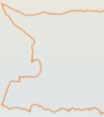
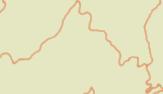
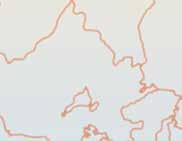
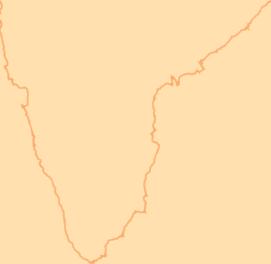
Map created by Mapin Publishing, 2010; Source: Imperial Gazetteer of India, Volume 26, Atlas 1909 edition (Oxford University Press) p. 20
Political Map of British India contemporaneous with Ravi Varma’s time, till 1947
Political Map of British India contemporaneous with Ravi Varma’s time, till 1947
The India of that period was divided between what was British India [orange] and princely states [green]. Hyderabad, Mysore, Baroda, Udaipur, Pudukkottai, and Travancore were incorporated into the Indian Union. Bombay acquired the nomenclature of Mumbai, Madras of Chennai and Baroda of Vadodara.
The India of that period was divided between what was British India [orange] and princely states [green]. Hyderabad, Mysore, Baroda, Udaipur, Pudukkottai, and Travancore were incorporated into the Indian Union. Bombay acquired the nomenclature of Mumbai, Madras of Chennai and Baroda of Vadodara.






some paintings at the Tripunithura Palace in Kochi (Cochin). S. Raimon, who was the Director of the Kerala State Archives, helped me locate a cache of Ravi Varma correspondence, which placed several incidents in perspective and which became the backbone of the sub-chapter on Travancore (See Chapter 3). I thank them all.
In Hyderabad
There is no connection between the crowded Chudder Ghat in Hyderabad today and its more spacious environs of a century ago. I was trying to locate the haveli built by Raja Bhagwan Das, court jeweller to Mahbub Ali Khan Asaf Jah VI, Nizam of Hyderabad. Ravi Varma had moved in with Bhagwan Das after his misunderstanding with the celebrated photographer Raja Deen Dayal, during his unsuccessful visit to Hyderabad in 1902 (described in Chapter 3). I had no precise address for Bhagwan Das’s house but finding it was meant to be, and so I did find it, squeezed tightly into a narrow street and not visible from the busy main road. Miraculous still, as though awaiting my arrival, was a middle-aged gentleman leaning against the gate, who happened to be Gopaldas Bhagwandas Shah, the great-great-grandson of Raja Bhagwan Das, and who welcomed me into the haveli. This connection led to the discovery of the Nizam’s portrait and a set of letters exchanged between Ravi Varma and Raja Bhagwan Das, presently in the possession of Satish G. Shah, the uncle of Gopaldas Shah. The letters helped me develop the narrative about the discovery of the Nizam’s portrait made during the Varmas‘ stay in Hyderabad. My many thanks to Satish Shah, Gopaldas Shah, to Mohamed Safiullah, a collector of old photographs with special interest in those of Deen Dayal, and to our friend S. Anwar, (IAS), who facilitated the transparencies at the Salar Jung Museum and who clarified some details in the text.
In Tamil Nadu
It seems almost ordained that my many trips to Tamil Nadu made since 1979 which had resulted in my travelling and meeting people in this state, should abundantly come to my assistance when I started the
narrative of this book. Rani Rema Devi Tondaiman and Vijendra Tondaiman of Pudukkottai opened up Ravi Varma’s Pudukkottai, while over our many trips to the Chettinad area I slowly discovered the many ways Ravi Varma’s oleographs had influenced this part of Tamil Nadu, highlighted in Chapter 6. It seemed almost natural for me to chance upon the sculptures at a Trichy temple inspired, yet again, by Ravi Varma’s oleographs. Similarly, a drive to the Courtallam Falls in the company of Mahita and Suresh Jaganathan years before I had even thought of the book had, unknown to me, helped me later invoke the famous waters which Ravi Varma sadly enough had thought would heal his diabetes. There is a whiff of poignancy in his faith in the Courtallam Falls during the last few months before his death as narrated in Chapter 7.
A long interchange with historian and writer S. Muthiah led to the discovery of George Moore’s portrait in the Ripon Building and that of Lord Ampthill’s portrait at the Freemasons Lodge, both in Chennai. Ravi Menon, the present Grand Master, connected me further with Rustom Dastur, ‘Dusty’, and grandson of Aloo Kharegate who is the subject of Ravi Varma’s Going Out. Dusty evoked his grandmother’s personality and unravelled the story behind the portrait, for which I am exceedingly thankful. I acknowledge my debt to N. Ram, the Editor- in-Chief of The Hindu newspaper and its meticulously maintained archives, and for Ravi Varma’s obituaries; to Meenakshi Meyyappa, Mahitha Suresh, Sheila Priya (IAS), and Mr. and Mrs. K.K. Varma.
I am indebted to Dr. R. Kannan for being able to photograph the Ravi Varma paintings at the Government Museum, Chennai and for being able to examine and photograph the portrait of W.A. Porter hanging high inside Porter Town Hall in Kumbakonam. It was covered with cobwebs and the painter’s identity had long since lapsed into the past. Porter had been a man of some consequence who had helped to further Ravi Varma’s career in Mysore. While in Kumbakonam I sought out J. Jaishankar, descendant of Seshaiah Sastri, the Dewan of Pudukkottai and friend of Ravi Varma, who informed me that I had come too late as his ancestor’s palace had only recently been pulled down.
In Mumbai and Pune
The Mumbai to Pune stretch proved to be the matrix for several concepts and areas of information that fitted into the general jigsaw puzzle of the book. As in Tamil Nadu, each trip here was never a disappointment; so provocative were the findings in these places. `Bombay’ had to be seen de nouveau through Ravi Varma’s eyes, mainly the geography of the Girgaum/Opera House area frequented by him because of the press and because of the voice of Anjanibai Malpekar, a well known exponent of the Bhendi Bazaar Gharana in Bombay, who lived in this area. I recall with appreciation the many conversations with Suhasini Koratkar, whom I met through S. Kalidas. Suhasini is one of Anjanibai’s disciples who introduced me to Malpekar’s grandchildren Vijay, Sadhana, Vidya and Deepak Ved. They gave me the Hindi translation of the last interview given by Malpekar to a Marathi magazine in 1972, aged 89. It has been reproduced with all its nostalgia in the section on Bombay in Chapter 3.
In Pune, it was from Dr. S.D. Gokhale that I heard of Anand Madgulkar, who knew about the Marathi autobiography of Balasaheb, the Raja of Aundh, a friend and admirer of Ravi Varma, who wrote extensively on the artist in his book. Anand Madgulkar went through the autobiography and sent me the relevant pages that pertained to Ravi Varma, for which I am very grateful. Anjali Nargolkar, introduced to me by D.N. Mishra, my yoga instructor, graciously translated the text for me. I thank them all as the extracts proved invaluable, allowing me an extraordinary insight into Ravi Varma’s art practices, discussed extensively in Chapter 8. Also translated by Anjali Nargolkar were excerpts from the Marathi newspaper, Kesari, with contemporary references to Ravi Varma. Rajender Thakurdesai, who has a special interest in Ravi Varma, researched these at the Pune Archives. He also investigated into the rumoured defamation suit against Ravi Varma by delving through legal gazetteers of the Pune High Court without finding anything sensational. I greatly appreciate the generosity of The National Film Institute with its great archives at Pune; and for allowing me to see how the Magic Lantern operates. The relevant visuals from the National Film Institute archives have truly enriched Chapter 6.
The railway line that connects Pune and Mumbai goes past Malavli, the station for Ravi Varma’s Fine Art Lithograph Press. Fritz Schleicher, who bought the press from the brothers in 1903, lived there till his death in 1935. I thank Patrick Bowring for introducing me to Robert Phillips Sandhu, Schleicher’s grandson. Robert provided me with a perspective to Malavli during Ravi Varma’s time that made the narrative quicken with authenticity. The day spent in Schleicher’s cottage in Malavli’s forest with Robert and his late wife Lisbeth was quite unforgettable.
In Manipal
I started to accumulate the material on Ravi Varma’s press when I met Vijaynath Shenoy, the TrusteeSecretary of the Hasta Shilpa Trust in Manipal, again introduced to me by Anjolie Ela Menon. It was only a couple of years later that I was able to meet with Robert Sandhu, Fritz Schleicher’s grandson. All the surviving lithostones, pigments and oleographs of the press were handed over to Shenoy by Sandhu some years ago and are now displayed in a museum at the Hasta Shilpa Trust in Manipal. It is because of Shenoy’s cooperation that a great deal of this material has been used in Chapter 6.
In Vadodara and Ahmedabad
My special thanks to B.N. Doshi who accompanied me into the Girgaum district of Mumbai, where I evoked the time when Ravi Varma had stayed there. He was equally a great help in Vadodara and Ahmedabad for the days that I was there. I cannot forget G.V. Shah, Superintendent at the Archives in Vadodara and his staff, who were very cooperative. I thank the Sarabhai Foundation and Gira Sarabhai for completing the reference on Ambalal Sarabhai, her father. I am grateful to her sister, Gita Mayor for her insights on Anjanibai Malpekar, and to the painter Amit Ambalal for introducing me to Gita Mayor.
In Udaipur
Ravi Varma and Raja Raja Varma saw the beauty of Lake Pichola from Amet Haveli that stands on the opposite side of the lake from Udaipur’s famous palaces. I was at Amet Haveli with my daughter Rukmini, under a
luminous sky and a soft drizzle standing in the chatri that hangs over the water, the same chatri from where Ravi Varma painted the extraordinary view. My many thanks to the erstwhile Maharana Shriji Arvind Singh Mewar for the photography of his paintings, and to Nina Singh for introducing me to him, as well as to the family at Amet Haveli for allowing me to spend time there.
Museums and Archives
I am indebted to the following museums and archives for enhancing the diversity of visuals in the book: Hill Palace, Thripunithura, Kochi; Madhavan Nayar Foundation, Kochi; Krishna Menon Museum, Kozhikode; Sri Chitra Art Gallery, Thiruvananthapuram; Kerala State Archives; Jayachamarajendra Art Gallery, Mysore; Mysore State Archives; Government Museum, Egmore, Chennai; Fort Museum, Chennai; Salar Jung Museum, Hyderabad; Victoria Memorial Hall, Kolkata; Birla Academy of Art and Culture, Kolkata; National Gallery of Modern Art, New Delhi; National Railway Museum, New Delhi; National Museum Laboratory, New Delhi; Pudukkottai Museum; Directorate of Archaeology and Museums in Mumbai for the Ravi Varma images at Shree Bhavani Museum, Aundh; Bombay Art Society, Mumbai; Merchant Ivory Productions, Mumbai; Maharaja Fatesingh Museum Trust, Vadodara; Gujarat State Archives, Vadodara; National Archives, New Delhi and the Director General, Mr. S.M. Baqar, and Dr. Gautam there.
In Delhi and elsewhere
The strangers, family and friends who have helped me through the book, its narrative and the journeys undertaken while writing this book are innumerable. I am grateful to A. Ramachandran, Dr. R.P. Raja, Mala Marwah, Ranesh Ray and Chanda Singh for their invaluable help. I also wish to acknowledge Sudha Gopalakrishnan, K.K. Gupta, Madhu Jain, K. Jayakumar, Ranbir Kaleka, Suhasini Koratkar, M.G. Narasimha, M. Safiullah, Robert Sandhu, Shobha Deepak Singh, and Gayatri Sinha for patiently sifting through the text in
varying degrees; Priya Bhasin and Vidita Singh for their sustained help on the computer. I am equally obliged to Rakesh Aggarwal, Vijay Aggarwal, Ashish Anand, Sharon Apparao, Kishore Babu, Nishajyoti Bahadur, Sonia Bellani, Shobhana Bhartia, Shobha Bhatia, Shaupon Bosu, Suma and the late John Chakola, the late Urmila Chathli, Tunty Chauhan, Sita Chidambaran, Avanish Chopra, Kukie Choudhrie, Atul Dodiya, Urmila Dhongre, Professor Dhumal, Ritu and Alak Gajapati Raju, Manisha Gera Baswani, Namita Gokhale, V. Krishnamoorthi, Seth Vijay Kumar, the late Madhavan Kutty, Adithya Lakshma Rao Jatprole, Ashok Mehta, Rakesh Mohan, Kiran and Shiv Nadar, Ritu and Rajan Nanda, Peter Nagy, Karan Singh Pawar, Mr. Perumal, Jyoti M. Rai, Mariam Ram, Chameli Ramachandran, V. Ramesh, Poonam Bevli Sahi, Rajiv and Roohi Savera, Gyanendra Seth, Dilip Shankar, Kavita and Jasjit Singh, Nina Singh, the late Tejashwar Singh, Ujuala Singh, Siddharta Tagore, Faredum Taraporwala, Shikha Trivedi, Neville Tuli, Sunita Vadehra, Amol Vadehra and Madhu and Chander Verma.
My conservator friend Dr. Clare Finn in London introduced me to Dr. Nick Eastaugh who provided me with two important connections: one with Sally Woodcock, who had worked extensively on the Roberson Archives at the Hamilton Kerr Institute at Cambridge, and the other with Sarah Miller, the UK Education Manager at Winsor & Newton. It is the valuable information they generously made available that gave an extra punch to Chapter 8.
My many thanks are for Navin, my husband and steady-constant, and his reflections on the narrative of the book; to my elder daughter Rukmini for her editorial help since I began writing it, and to my younger daughter Mrinalini for burning CDs late into the night! All of them too, for their concern and constant inquiry.
I am extremely grateful to Pavan Morarka for his support. Without his sponsorship I would not have been able to explore Ravi Varma’s world to the extent that I did.
I am indebted to everyone at Mapin for the meticulous work done in the making of the book.
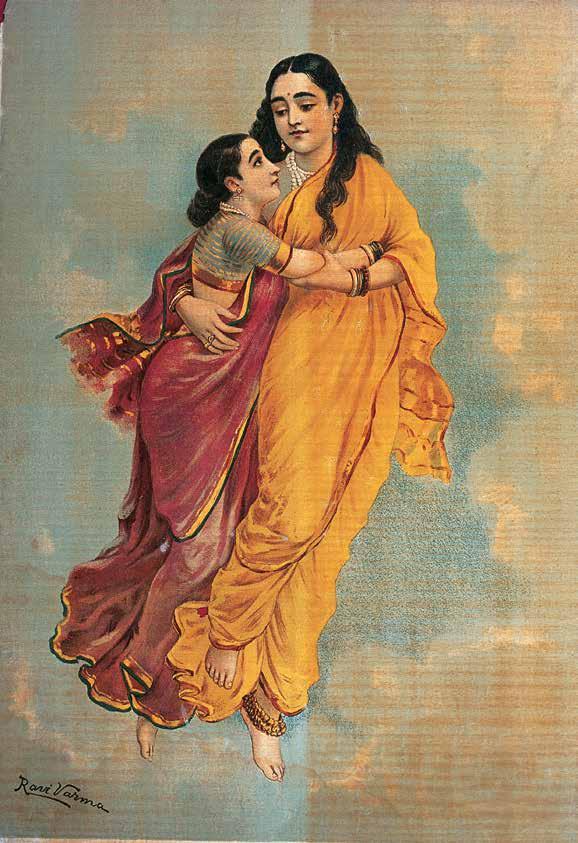
Oleograph of Shakuntala and Menaka, based on the original by Raja Ravi Varma (See page 203)
Private Lives and the Turn of the Century
Memories of a Rare World Thiruvananthapuram, the capital of Kerala, has always been known by that name except for the time when the British referred to it as Trivandrum. There was no single state but three separate regions—Travancore, Cochin and Malabar—till they were amalgamated in 1956 to form Kerala. Trivandrum, which had earlier been the capital of Travancore, continued to be the capital of Kerala after the merging of the three states. In 1991, the city’s original name, Thiruvananthapuram, was reinstated and Trivandrum, as it was known during Ravi Varma’s time, disappeared into history.
About 40 kilometres out of Thiruvananthapuram is Kilimanur, Raja Ravi Varma’s birthplace, which during his lifetime was a prosperous estate inhabited by about 200 members of the Kilimanur clan (Fig. 1.2). It is today almost desolate, and a bleak, shuttered air hovers over the place. Some family members continue to live in Kilimanur, while most of them have scattered in different directions.
The Kilimanur clan originally descended from the rulers of Beypore (near Kozhikode on the northern coast of Kerala), who, for their valorous defense of
Fig. 1.1 Maharani Lakshmi Bayi (1848–1900), oil on canvas, 41.6 x 53.6”, 1883. Collection: Sri Chitra Art Gallery, Thiruvananthapuram
The older sister of Ravi Varma’s wife, Mahaprabha Thampuratty, Lakshmi Bayi was adopted into the Travancore royal family and became the Senior Rani of Travancore.
the Travancore royal family were rewarded with the large estate of Kilimanur. They were known as the “Koil Thampuran,” which was a great honour, as only the Koil Thampurans were permitted to make endogamous marriages with the Travancore royal family. The prefix of “Raja” to Ravi Varma’s name does not connote kingship even while it finds a connection with his royal antecedents. It is perhaps more strongly linked with the recognition and acknowledgement he received as a painter, from the British and also the Indian elite. For a socially mobile person like Ravi Varma, it would have been of a greater advantage to adopt the more familiar Raja than the unfamiliar “Koil Thampuran” while outside Travancore. Ravi Varma inscribed Koil Thampuran together with his name on paintings whenever he wished to communicate his status. C. Raja Raja Varma, (Fig. 1.3) Ravi Varma’s younger brother, who chronicled their lives for several years, testifies to the importance of this title when he writes in his diary in 1903: “We—the Koil Thampurans of Kilimanur—went first to settle in Travancore for marriage alliances with the royal family.” His own name, Raja Raja Varma, is a proper noun particular to men in Kerala. The initial “C” has no specific relevance. It was attached to Raja Raja Varma’s name in order to differentiate him from other Raja Raja Varmas in the family.
“Varma” is a caste name of the Kshatriyas, who are the warrior class and second in the four-tier caste system in India. Strict codes of behaviour and a rigid hierarchic system had bound the social structure of this
Raja Ravi Varma
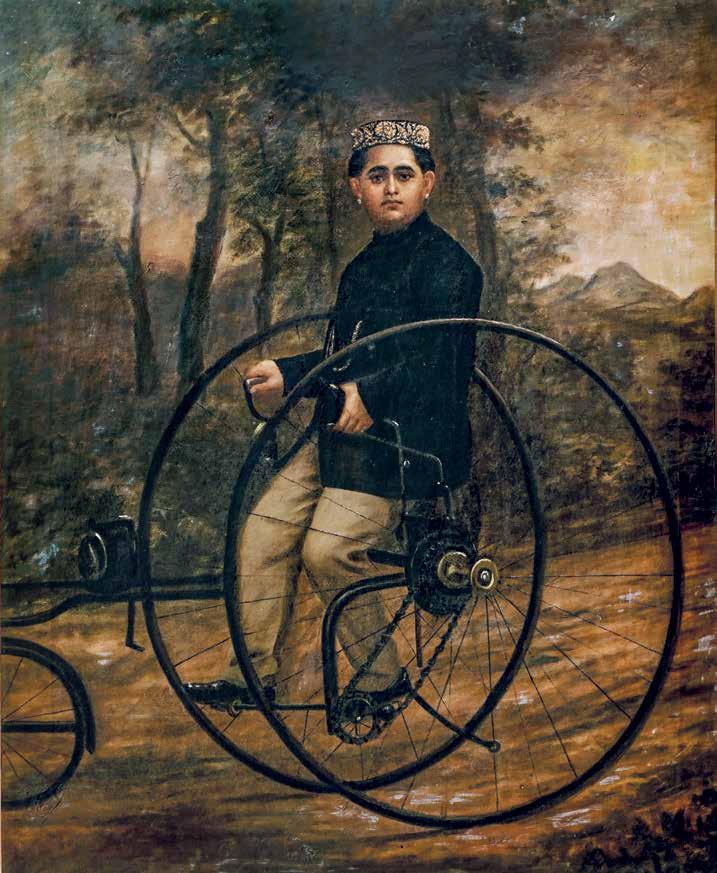
Fig. 1.43 Asvathi Tirunal Marthanda Varma (1871–1900), oil on canvas, 34 x 27”, 1887.
Private Collection. Courtesy: Raja Ravi Varma Heritage Foundation
innovations that the West introduced, painted the young prince trying out his unique vehicle (Fig. 1.43).
Ravi Varma would have considered such an invention as evidence of change and modernity that he greatly appreciated.
Marthanda Varma was among the very few royals of Travancore to be educated, for which reason he was known as “B.A. Prince”. He was also a keen photographer and loved dabbling in theatre. In 1894, he was escorted by Ravi Varma and his brother on a tour of north India. Being rather overweight and gradually becoming diabetic, Marthanda Varma had an early death.
Despite Ravi Varma’s status there is no evidence that he acquired a motorcar, opening the possibility of
his acquiring one had he lived long enough to make it possible. But he did ride a car in early 1906 when he requested the Maharaja of Mysore’s secretary, Raghavendra Rao, for a palace vehicle as he wished to go out sketching. This visit to Mysore, which commenced in September 1905, was the same occasion that he saw electric lights and made the Dasara Durbar watercolour mentioned earlier. It was also the time that the Maharaja organized the Khedda, a hunt in honour of the Prince of Wales, the future George V, documented by Ravi Varma in his paintings of the Khedda Camp. The Maharaja’s Fiats, with the Prince of Wales ensconced in them during the hunt, were painted in by Ravi Varma in these canvases, unfinished still at the time of his death (Fig. 1.42).
All inventions become more accessible over time and lose their rarefied aura. So it was with the motorcar, especially when the Valiya Koil Thampuran, Ravi Varma’s brother-in-law and one of his mentors, died in a bizarre accident in 1914. “Near Kayamkulam a dog tried to jump in front of the car. In those days, two pageboys would stand on either side of the car on boards provided for the purpose. One of them tried to kick the dog away and the movement overturned the car. The Valiya Koil Thampuran was badly injured. Immediately a palanquin was brought and he was carried to Mavelikkara. In spite of the best possible medical help and nursing, he succumbed to the injuries and passed away two days later.”32 Ravi Varma was never to know that one of the important people in his life would become a victim of the modernity that had so fascinated him during his lifetime.
In Ravi Varma was not the clash but the assimilation of civilizations, emerging as he did from a long established, highly developed culture into the first great rush of information technology. The turn of the century was the heady period of great change, symbolized by the languid boat gliding on Kerala’s calm waterways carrying its passenger, Ravi Varma, to the smoke-belching, cacophonic new miracle, the railway train. It was through such journeys that the journey of Ravi Varma’s life was to be written: itinerancy and creativity subsumed into a life of aspirations and action.
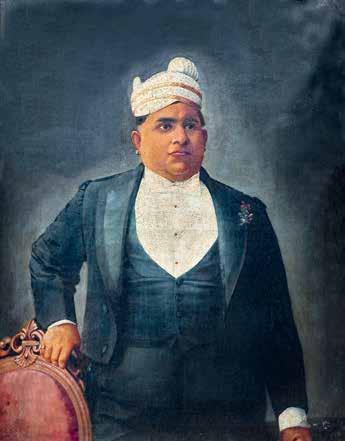
Fig. 1.44 Asvathi Tirunal Marthanda Varma (1871–1900), unsigned, oil on canvas, 26 x 33.5”. Private Collection. Courtesy: Raja Ravi Varma Heritage Foundation
The Itinerant Varma Brothers
It is impossible today to quite understand the remoteness of Travancore that existed for centuries. Had Ravi Varma not taken the road least travelled but rather continued to play out his life in Travancore he would not have become the Ravi Varma that we know. Neither would his fame have been any more impressive than those of his contemporaries at the court in Trivandrum, prominent in their state but barely recognized outside it.
The wanderlust that was so manifest in Ravi Varma would only have found an incomplete outlet in the slow boats on Kerala’s waterways and in bumpy carriage rides, had the railways—accompanied albeit by their own discomfort—not made their timely appearance. He was never destined to find release in the alluring proposition of ocean liners sailing between India and remote, distant shores, as his childhood environment with its rigid and regulated systems forbade it. Ravi Varma’s community was dominated by the Namboothiri Brahmins who set the rules and declared the beliefs that the Kshatriyas were conditioned to listen to and abide by.
One of these beliefs had a direct bearing on Ravi Varma and his inability to cross the waters that bordered his state. Prevalent in Kerala in those days was the notion that immersion in a river would remove all forms of pollution. It was believed that the physical and spiritual purification of Kshatriyas and Brahmins was incomplete without such a ritual. The same concept of purification—
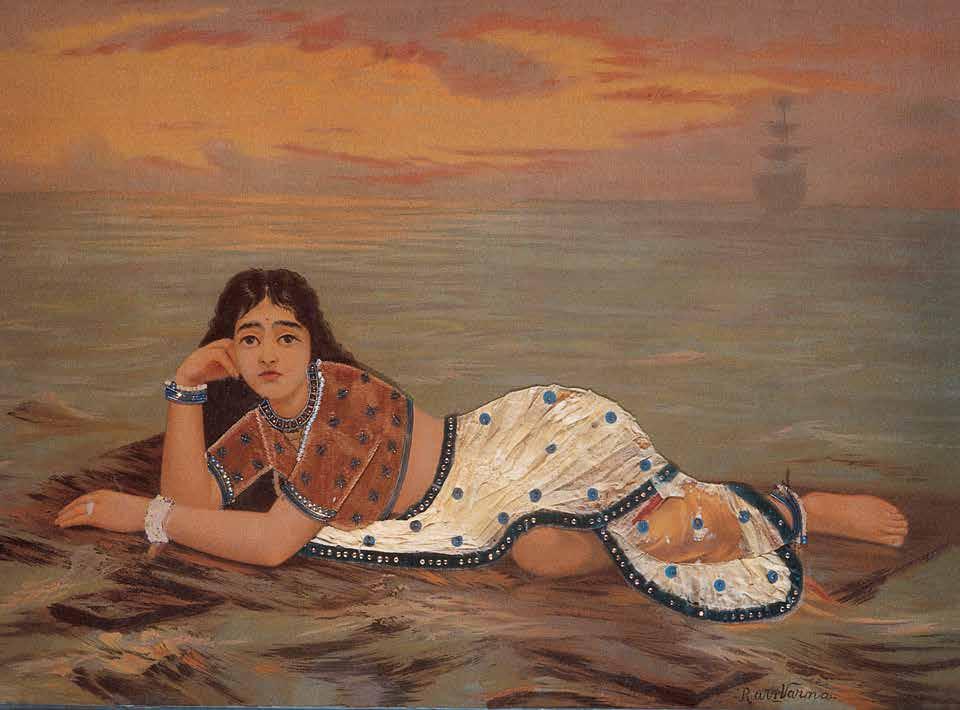
2.1 Woman Reclining on the Waterfront, oleograph, 14 x 10”, undated Collection: Madhu Jain
An evocative image to be viewed as a response to Ravi Varma and Raja Raja Varma's unfulfilled desire to travel overseas in an ocean liner.
the notion of being shuddha or pure—also carried with it the idea that travel outside the country was not possible. It was widely accepted that other countries and places, with their strange customs and beliefs, would render impure those members of the community if they ventured to travel abroad.1 They would then have to be excommunicated from the system that had nurtured them. This prohibition on overseas travel was another way of ensuring that no one would be swayed by external influences, whereby they would acquire independent beliefs that would be at variance with what the Brahmins dictated, and as a result of which these Namboothiris would lose their influence and their raison d’être
What Ravi Varma and Raja Raja Varma were never able to satisfy in their lifetime was their desire to travel to the West. The yearning to encounter and experience other people and places remained continually with them, for even though they were sincere to many of the rules that their environment imposed on them, they still questioned those they did not find convenient.
Raja Raja Varma explains it best in A Narrative of the Tour in Upper India of His Highness Prince Martanda Varma of Travancore. He wrote this narrative after a journey that the brothers undertook in the company of the prince in 1894. While at Bombay in December of the same year, Raja Raja Varma wrote the following: “One fine afternoon, we paid a visit to the P. and O’s S.S. Caledonia [sic], one of the largest and finest of their steamers, which had arrived with the overland mails and anchored off Apollo Bunder… The spacious dining saloons, music
Fig.
Cities and States
MADRAS
By the time Ravi Varma was fourteen years old, Kilimanur could no longer contain his youthful energies. This was the appropriate time for his uncle, Raja Raja Varma, to take him to Trivandrum [now Thiruvananthapuram], introduce him to a larger sphere of existence and provide him with the opportunities to pursue his artistic inclinations.
By 1874, the twenty-six year old Ravi Varma felt confident enough to send Nair Woman at her Toilette to the Fine Art Exhibition being held in Madras [now Chennai]. Among the many works close to the theme of this painting, it is very difficult to ascertain the exact one that he had sent. The exhibitions at Madras and Bombay [now Mumbai] were important social events attended by the cultural elite with great enthusiasm. These exhibitions were necessary for artists and painters because the publicity they derived from it provided them with contacts and commissions. Ravi Varma received a gold medal for this work and, with this exhibition, also commenced a long relationship with Madras.
Since the reforms of British India had opened up the avenues of travel, Ravi Varma made his first visit to Madras in 1878. It was here that he sent his first Shakuntala1 painting, that of her writing a letter, to the
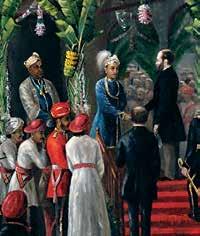
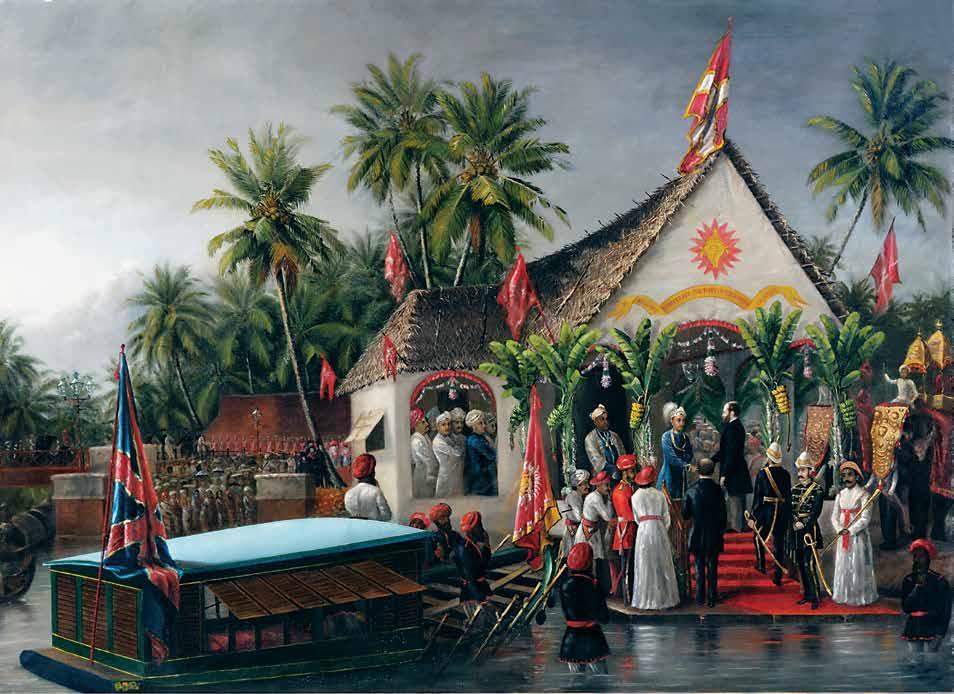
Fig. 3.1 The Maharaja of Travancore welcoming the Duke of Buckingham and Chandos on his official visit to Trivandrum, 1880, oil on canvas, 67 x 42”, January 1881. Collection: Osian’s Library and Archival Collection
By 1880, Ravi Varma had already quite perfected the balance between a convincing visual image and a swiftness of execution that would soon complete an image. Buckingham made the observation that he was amazed at the rapidity with which Ravi Varma worked Madras
Fine Art Exhibition again. This work was the first of the numerous Shakuntala paintings that Ravi Varma was to eventually make, paintings that today can be arranged sequentially to narrate the Shakuntala story (See Chapter 4). Shakuntala Patralekhan won another gold medal for Ravi Varma and was soon acquired by the Governor-General of Madras, the Duke of Buckingham and Chandos. Sir Monier Monier-Williams, the Sanskrit scholar, used this image of the reclining Shakuntala writing her letter, for the cover of the first English translation of Kalidasa’s celebrated work in Sanskrit, Abhijnanasakuntalam, the recognition of Shakuntala. There is a certain communion in the way Ravi Varma and Monier-Williams come together. The same literary work written by Kalidasa that provided the source material for the Shakuntala paintings also inspired Monier-Williams to translate it. Ravi Varma would have, of course, read Kalidasa in the original. Again, the translation and the paintings would have a lasting effect on the visual and poetic imagination of the late-nine-teenth century elite and thereafter as well. Shakuntala Patralekhan was later painted in a smaller format to be used for making oleograph prints (Fig. 3.2). Two years later, Buckingham sat for his portrait, which now hangs in the Raj Bhavan at Ooty (Fig. 3.3).
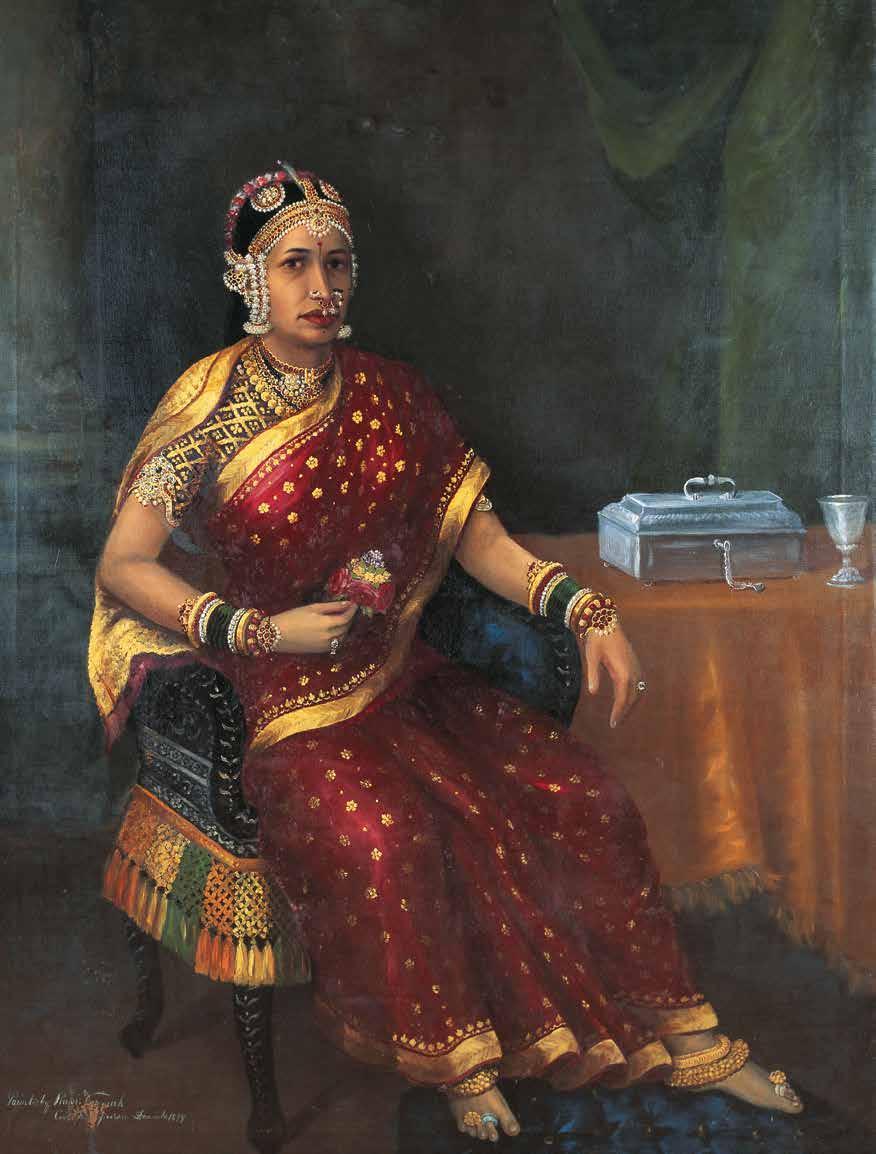
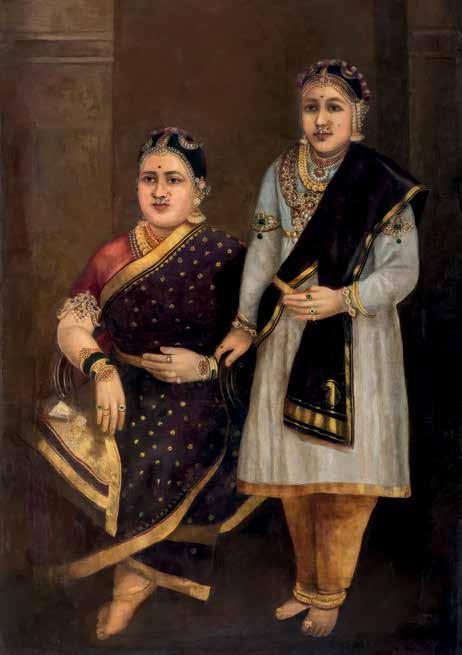
Fig. 3.10 H.H. Janaki Subbamma Bai Sahib, Rani of Pudukkottai, oil on canvas, 40 x 52.6”, 1879. Private collection Janaki Subbamma was the beautiful Rani of Pudukkottai. Her formidable adversary Seshaiah Sastri was appointed Dewan of Pudukkottai by Governor-General of Madras, the Duke of Buckingham.
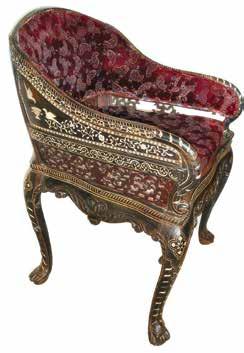
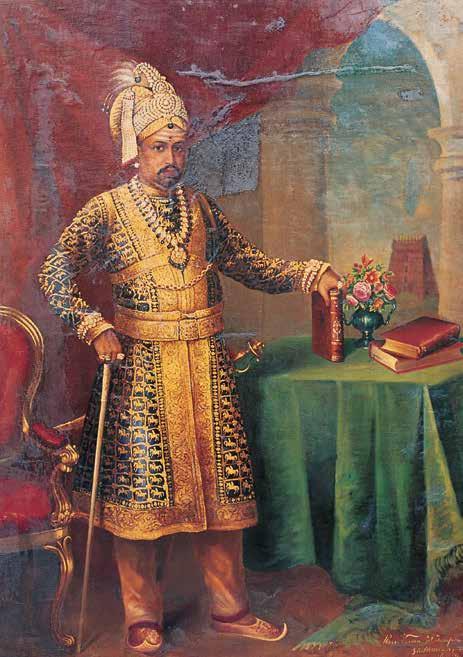
Fig. 3.11 The mother-of-pearl inlaid chair in which Janaki Subbamma sat for her portrait. Private collection
Fig. 3.12 Brihadamba Raja Ammani Sahib and Minambal Rajayee, oil on canvas, 38.5 x 60”, c 1886. Private Collection The seated lady is Brihadamba Raja Ammani Sahib (also seen in Fig. 3.15), and her daughter Minambal Rajayee stands beside her. Brihadamba was the daughter of Janaki Bai (Fig. 3.10) and mother of Raja Marthanda Tondaiman (Fig. 3.14), successor to the throne of Pudukkottai. Her status at court, naturally, would have been greatly elevated with her son become the king of Pudukkottai.
Fig. 3.13 H.H. Raja Ramachandra Tondaiman, oil on canvas, 69 x 78”, 1879, “Ravi Varma Coil Tampuran of Killimanoor, December 1879” inscribed in white, bottom right. Collection: Pudukkottai Family Collection
Ramachandra Tondaiman wearing a splendid tunic, in which he was cremated at his death in 1886. The painting has yellowed and has a horizontal damage.
Sita in Ashoka Grove, The Coronation of Rama (Fig. 4.8), and Pregnant Sita Abandoned in the Forest (Fig. 4.9).
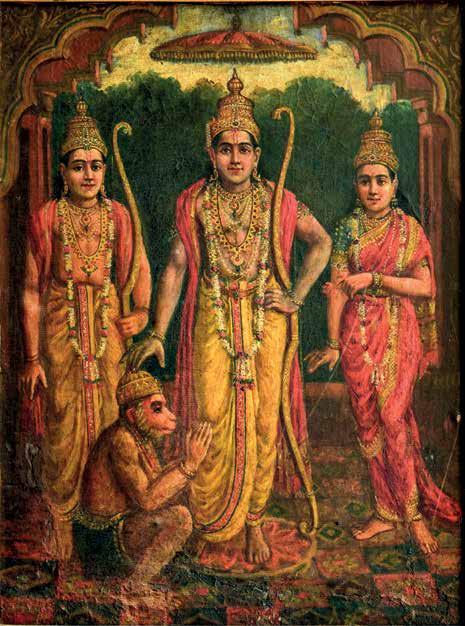
Not all the Ramayana paintings made by Ravi Varma are illustrated in this book. But taking the illustrated Puranic and religious paintings together we discover to what extent the two interwoven concepts push the story forward: Release of Ahalya, Rama breaking the Sacred Bow, Rama, Sita and Lakshmana Crossing the Sarayu, Ravana Dressed as a Mendicant Arrives with the Intention of Abducting Sita, Ravana Carrying off Sita and opposed by Jatayu, Sita in Ashoka Grove, Rama Threatens the Ocean God Varuna on his not Making Way for Him, The Coronation of Rama, Pregnant Sita Abandoned in the Forest and Sita Bhumipravesh (See in sequence: Figs 4.1–4.10). A painting termed as iconic is Rama, Sita and Lakshmana with Hanuman (Fig. 4.11). With the gods looking frontally, their still, majestic quality has the purpose of making worshippers revere the image, the reason why it is considered iconic. The god-like stillness of this tableau was deliberately painted in this manner by Ravi Varma for its transfer into oleographs. His intention was that such an image would flood and permeate the entire country, enter temples and puja rooms. Its remnants are still to be found today in other mediums (not by Ravi Varma), making this small exemplar a valuable one.
Hanuman’s Discourse (Fig. 4.12), also in the category of religious images, provides an interesting point of discussion with The Coronation of Rama (Fig 4.8). When Ravi Varma painted Hanuman’s Discourse, he was still under the influence of the Tanjore style of painting, a school that he had closely studied during his residency at the Travancore court in Trivandrum. The ornate, parabolic-shaped crowns worn by gods and goddesses in Tanjore paintings find continuity in the crowns of Rama and his brother Lakshmana in Hanuman’s
Fig. 4.11 Rama, Sita and Lakshmana with Hanuman, oil on canvas, 20 x 28”. Private Collection Exemplar for oleographs.
Fig. 4.12 Hanuman’s Discourse, oil on canvas, 16.75 x 20.5”, c. 1870. Private Collection. Courtesy: Raja Ravi Varma Heritage Foundation
Discourse, in the Lakshmi painting (see Fig. 3.35) and in that of Saraswati (see Fig. 3.36), among several others. Within this small but tightly structured painting, all four personages contribute to the meaning of the narrative. As Hanuman reads from the palm leaves, Rama, who occupies central position, explains and instructs, his teaching mudra indicating that he is doing so. Sita and Lakshmana listen on intently. Such a composition is later elaborated in The Coronation of Rama (Fig. 4.8), which has more figures and the space has opened out to accommodate them. The structure has now shifted and a more imposing sense of grandeur introduced. Hanuman still reads the text, Rama still
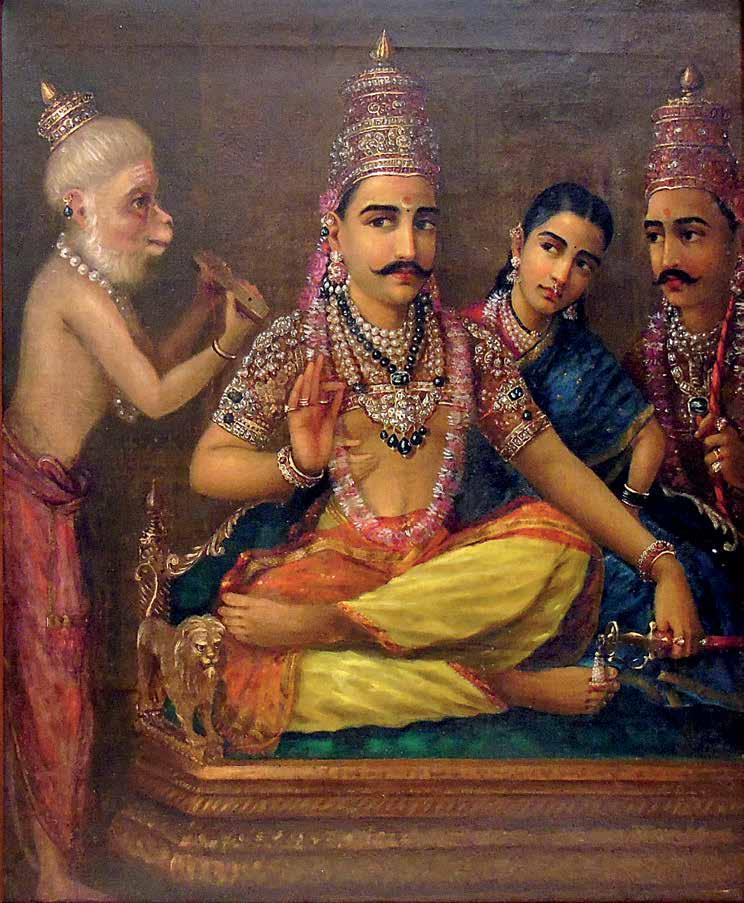
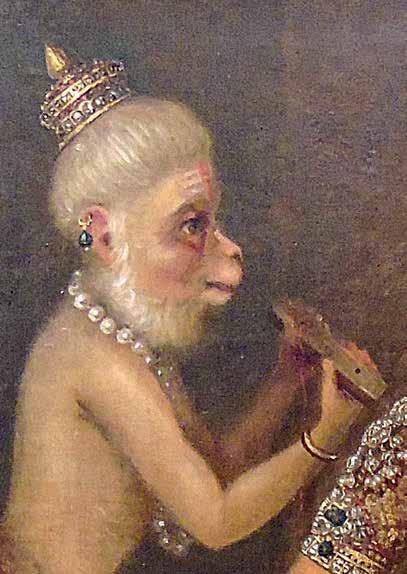
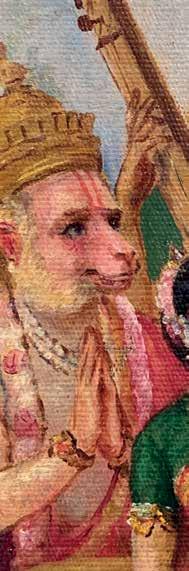
Fig. 4.13 Hanuman’s Discourse (detail), oil on canvas, 17 x 20”, 1870. Private Collection. Courtesy: Raja Ravi Varma Heritage Foundation
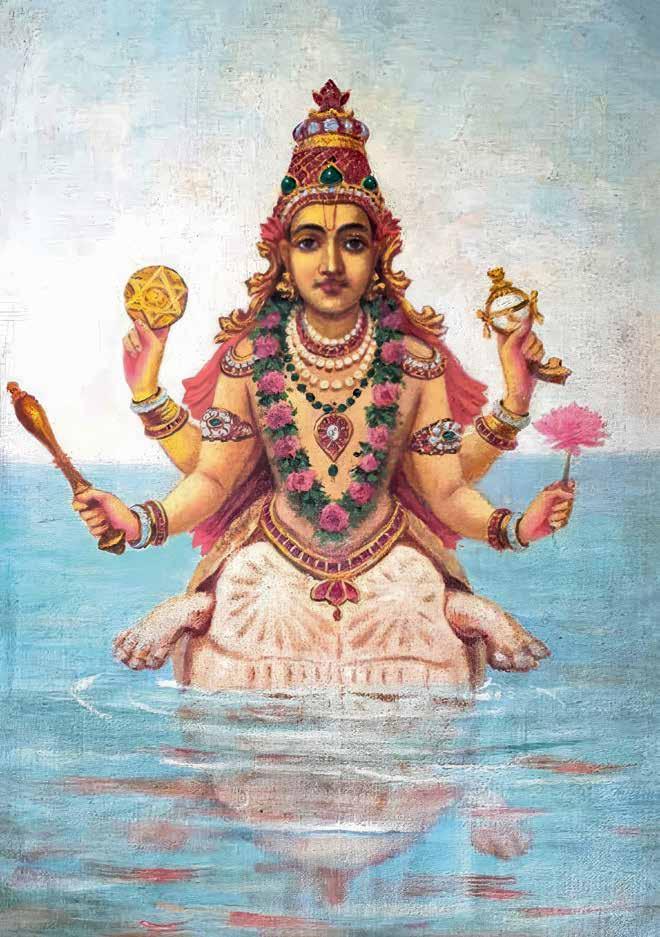
Fig. 4.14 Vishnu and Lakshmi on Shesha Naga (detail), an exemplar, oil on canvas, 10 x 14”, 1895. Private Collection
Fig. 4.15 The Coronation of Rama (detail), an exemplar, oil on canvas, 15.6 x 20”, undated. Private Collection
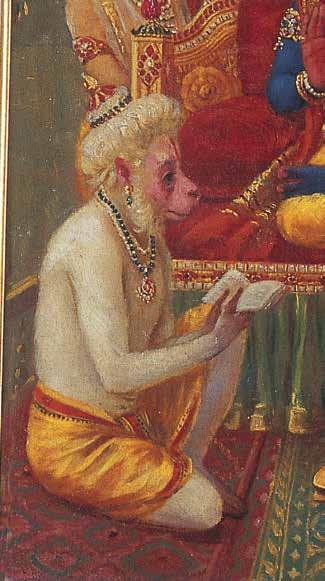
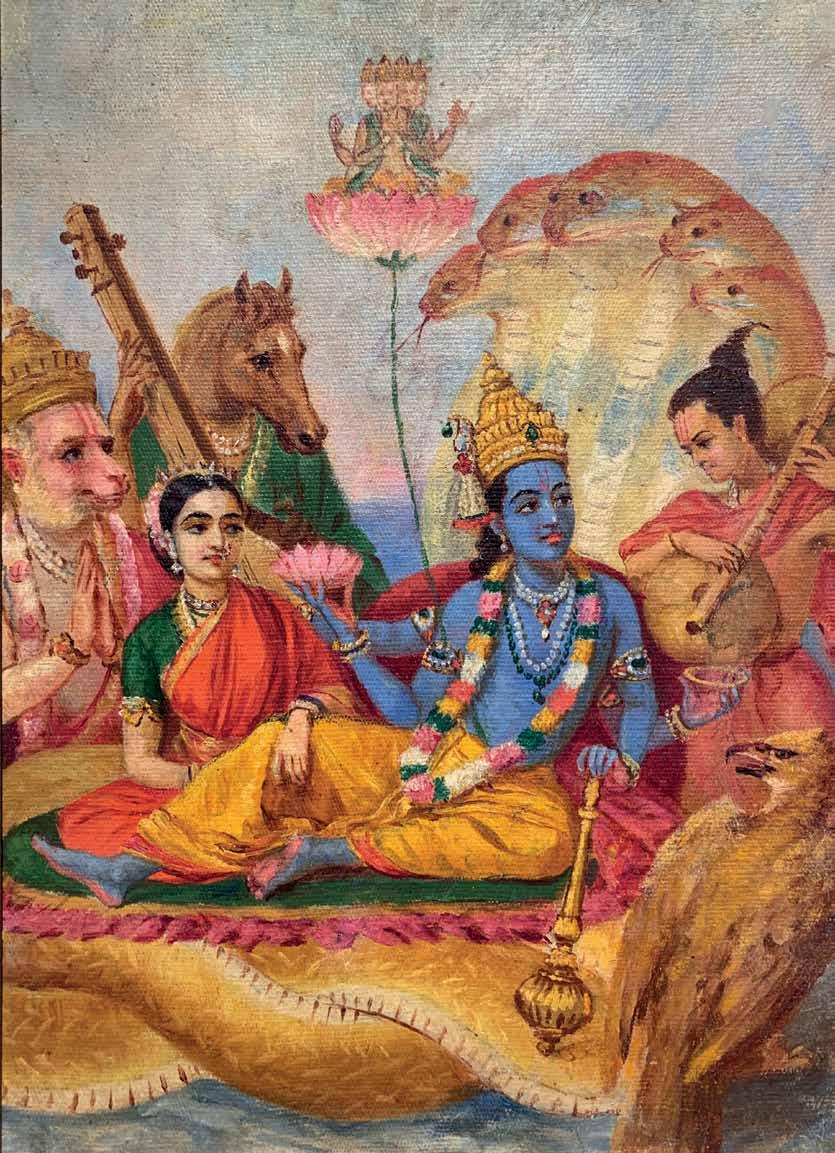
Fig. 4.16 Vishnu and Lakshmi on Shesha Naga, oil on canvas, 10 x 14”, 1895. Private Collection
Seated on Shesha Naga over the calm, cosmic waters, Lord Vishnu is surrounded by personages associated with him: Goddess Lakshmi, his wife; Hanuman, his companion during his later avatar as Lord Rama; Garuda the eagle, his loyal carrier; Narada, the great musician with his veena who sang the wonders of Vishnu; and, finally, Hayagriva the celestial horse.
sits in his frontal position and Sita and Lakshmana still stand reverentially to his left. But the meaning is more sacred and appropriate, since the battle with Ravana is over and the great victory coronation ( pattabhishekam) is now being held.
Hanuman is depicted in several paintings, appearing also in Vishnu and Lakshmi on Shesha Naga (Fig. 4.16). Hanuman is devoted to Lord Rama, who is an incarnation of Vishnu. All three images of Hanuman shown in the text have the same stylisation and facial expressions.
Shifting away from the still, aloof iconic paintings are the religious paintings showing the informal family background of certain gods. In Siva Parivar (Fig. 4.18), the popular god is shown in a benign mood in the company of his family and those closest to him. The god is shown with his ash-smeared ghouls in the background while he sits in familial togetherness with his wife Parvati and son Ganesh. Penetrating deep into mythology, Ravi Varma depicts all those who are closely linked with Siva and Parvati, and around whom many stories resonate. Siva’s topknot elegantly supports the quiescent snake, the river Ganga and the crescent moon symbolising time. The cuddly Ganesha is perfectly stylised, while Siva’s mount Nandi, the bull, and Parvati’s lion rest tranquil on both sides. Ravi Varma’s oleographs are one of the major sources of visual information of Hindu mythology throughout the country.
An equally popular narrative used by Ravi Varma is that of Krishna and Draupadi, derived from stories
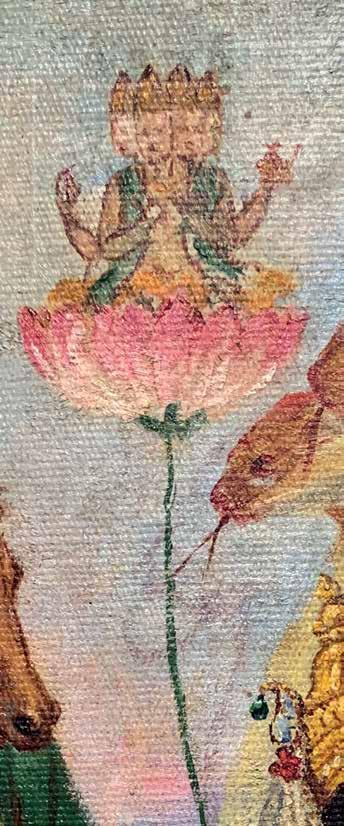
Fig. 4.17 Vishnu and Lakshmi on Shesha Naga (detail)
In Vishnu and Lakshmi on Shesha Naga, the artist originally gave Shesha Naga seven hoods, which would then have left no space for Brahma. Brahma was integral to this scene of divine creation and therefore two of Shesha Naga’s seven hoods had to go. The shadowy image of the extra hoods that have emerged over time from within the paint layers are faintly discernible—a “ghost image” near Brahma on his lotus. Brahma the Creator is seated on the lotus that sprang from Vishnu’s navel. (See page 352 for more on “ghost image” or pentimenti.)
Fig. 4.18 Siva Parivar, exemplar, oil on canvas, 10 x 14”, 1895. Private Collection
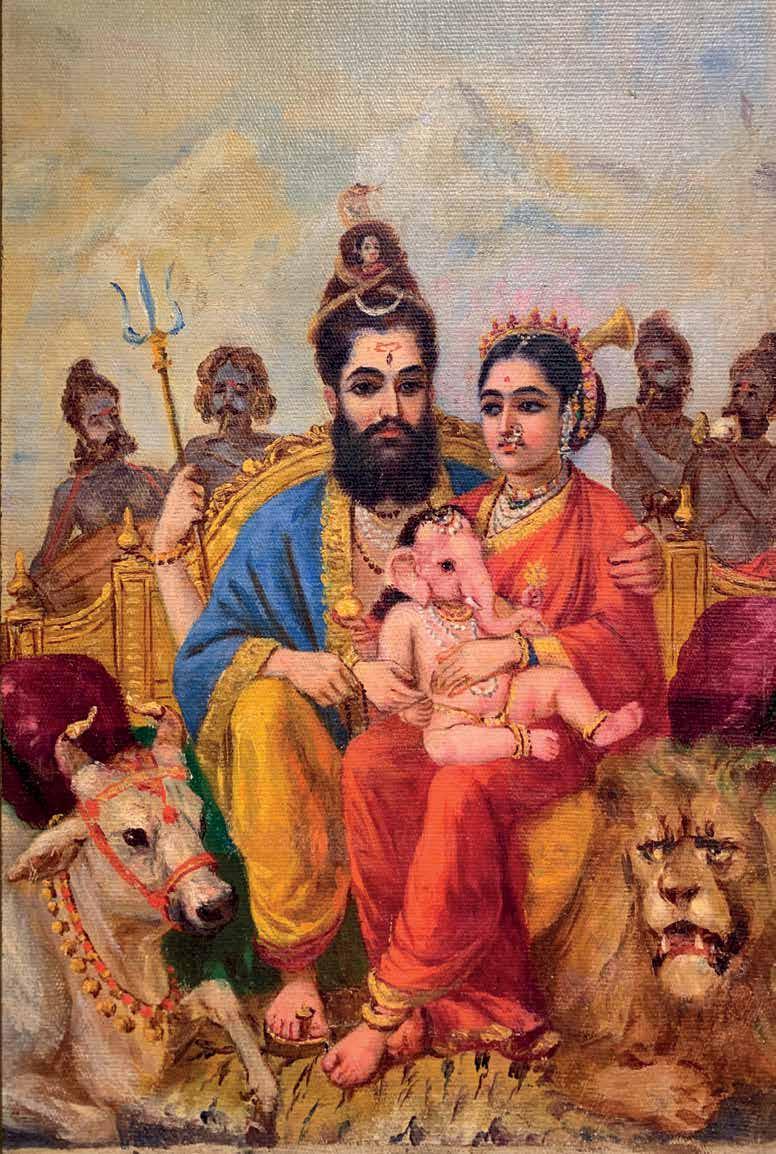
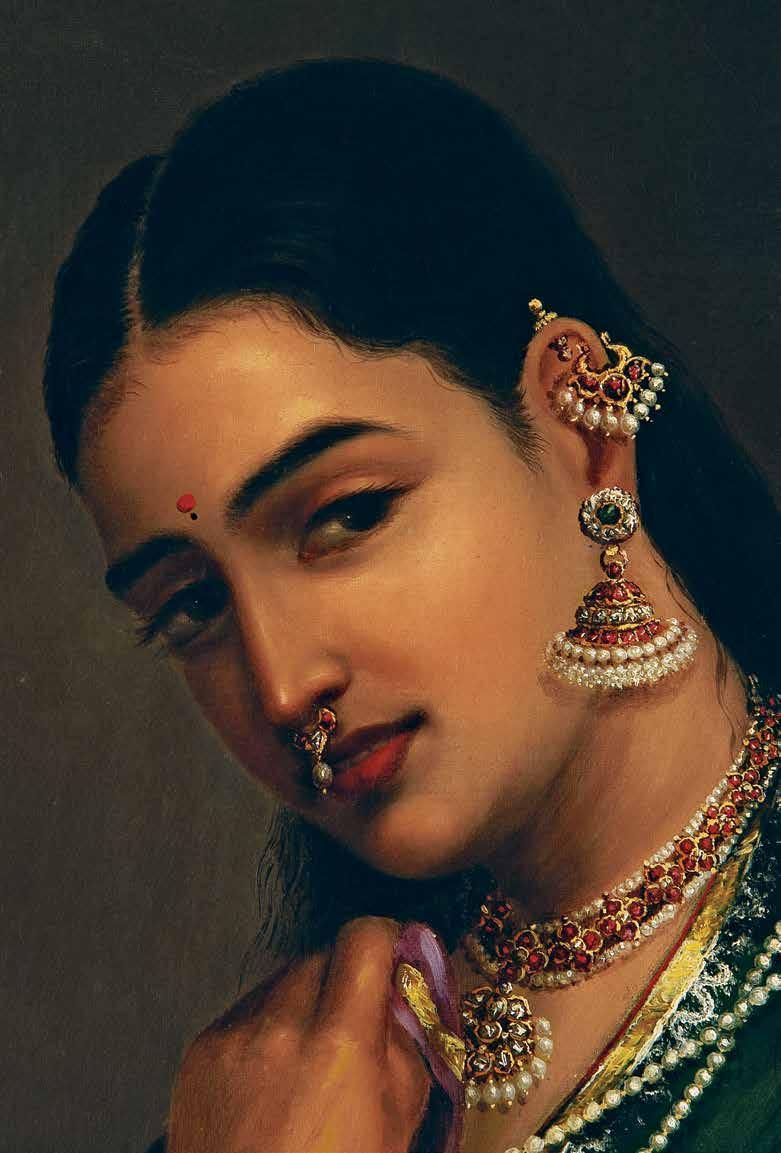
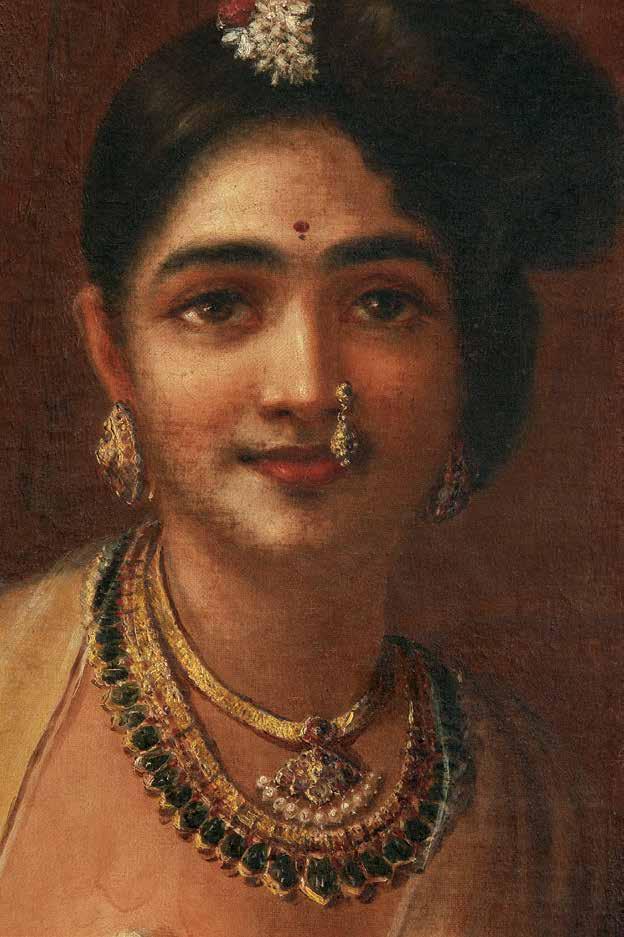
See full image on page
See full image on page 24
Fig. 5.18 Veena Player (detail), oil on canvas, 34 x 43”, undated. Collection: Travancore Royal Family, Kaudiar Palace, Thiruvananthapuram
Fig. 5.17 The Coquette (detail), oil on canvas, 23 x 29.5 , undated. Private Collection
260
The Image Moves On
Aconglomeration of images and visual language, other than those rising from indigenous sources drove Ravi Varma into continuous experimentation. European paintings dealing with historical and sacred subjects, together with the ones depicting dramatic scenes and grand gestures, influenced Ravi Varma’s representations and commenced their journey into a wholly Indian context by being assimilated into his mythological paintings. The conventional European image of the Madonna and Child was converted into the many permutations of Yashoda and Krishna; the Reclining Nair Lady despite an altered pose is reminiscent, nonetheless, of Manet’s Olympia. An unknown painting of a flying angel from one of his picture books at Kilimanur could just be the inspiration for Jatayu in Jatayu Vadha or the origin of the flying apsaras, Menaka and Urvashi.
At Kilimanur, Ravi Varma and Raja Raja Varma housed a large collection of art books, catalogues, postcards and photographs, accumulated while on their many travels, and which served as their constant source material. The major part of this collection is now scattered among private collectors. When required, Ravi Varma did not hesitate to incorporate Western classical postures or heroic stances into his own works. One such example may be observed in the figure of Sachi,
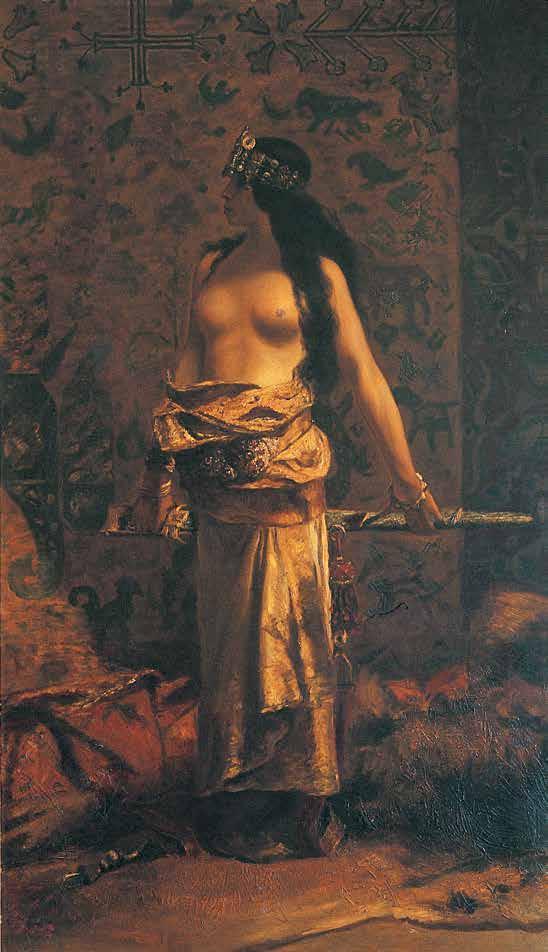
Fig. 6.1 Judith, oil on canvas, 32 x 55”, undated.
Collection: Sri Chitra Art Gallery, Thiruvananthapuram
Painted after Benjamin Constant’s Judith, 1886, which may be viewed at the Maharaja Fatesingh Museum, Baroda.
an Indian version of the many portrayals of nymphs in distress in Western art, represented in her pink sari, to the left of the painting, Victory of Indrajit (Fig. 5.44).
There is perhaps one known example of Ravi Varma copying a European painting in its entirety instead of a partial adaptation, as a means of practicing with the genre of Western academic painting (Fig. 6.1).
On his visit to Baroda in 1888 Ravi Varma had seen Judith, painted by Benjamin Constant in 1886, which is now in the Maharaja Fatesingh Museum in that city. Among the many European paintings that he had consistently noticed in palaces and wealthy homes that he visited, this painting had obvious reasons for capturing his attention. Judith was a forceful theme and a popular motif with European painters for centuries because it justified the painting of a scantily dressed “temptress” while reinforcing the notion of patriotism and courage. The story relates the assassination of Holofernes, general of the Assyrian army, who had invaded the town of Bethulia where Judith lived. In the original story, Judith avenges the invasion of her town by killing Holofernes while he slept. Ravi Varma recalled this theme when he painted Padmini, the Queen of Chitor, who chose to die for her country rather than face dishonour. Several sketches made by Ravi Varma reflect the theme of Judith/Padmini, with the figure in shifting degrees of standing in a frontal position, dagger in hand.
As part of his art practices, Ravi Varma made duplications of his own creations, repeating them mainly
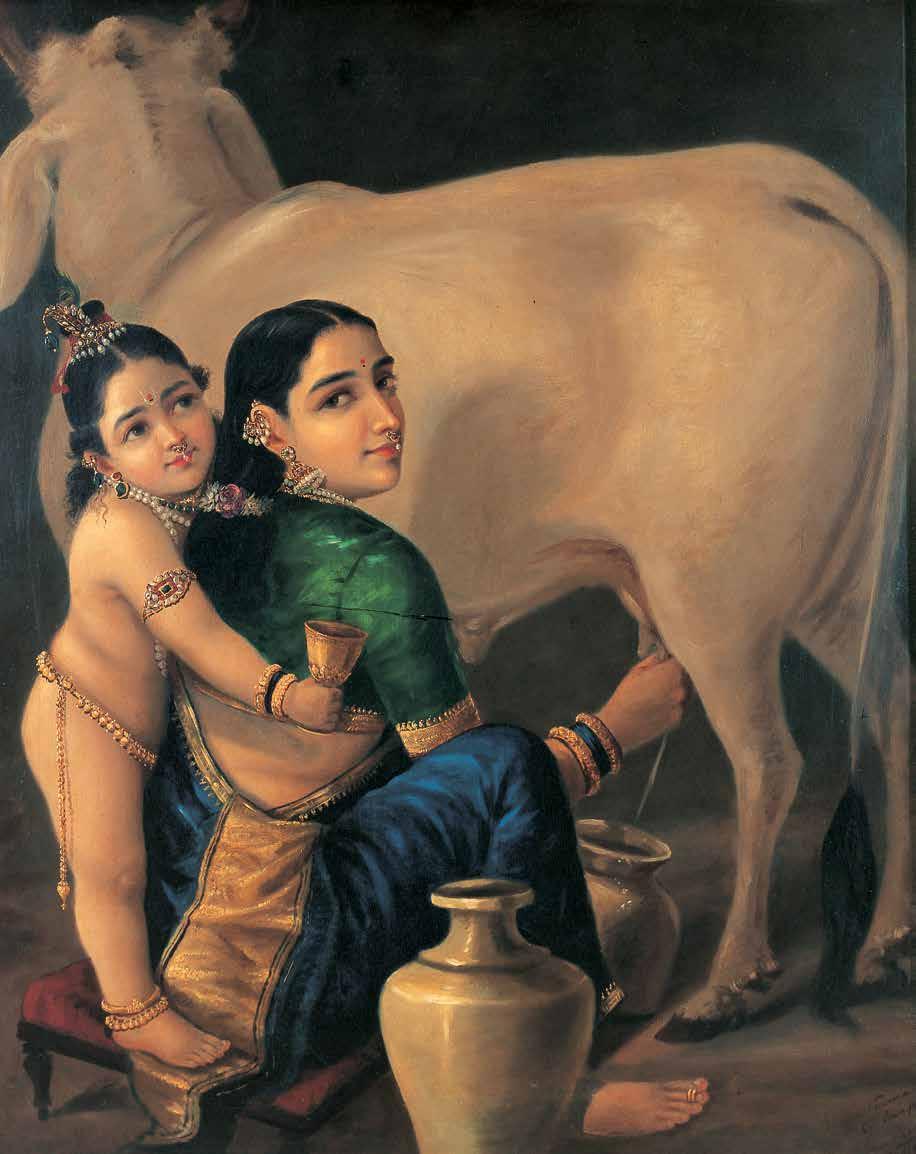
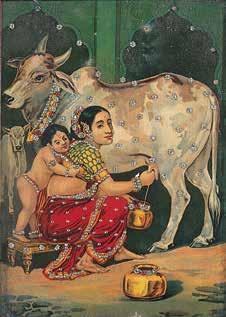
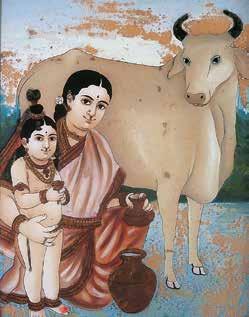
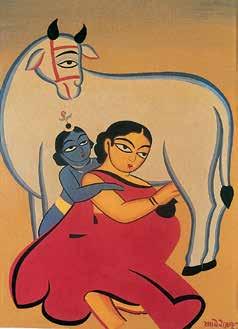
Fig. 6.41 Yashoda and Krishna, oil on canvas, 29 x 36”, undated, signed “By Ravi Varma, Coil Tampuran, Travancore, India”. Collection: Dr. Cyrus S. Poonawalla
Fig. 6.42 Yashoda and Krishna, with embroidered sequins and tinsel on oleograph, 14 x 10”, c. 1900. Private collection
Fig. 6.43 Artist unknown, Yashoda and Krishna, Tanjore glass painting, Tamil Nadu, 17 x 19”, c. 1950. Private collection
Fig. 6.44 Tile of Yashoda and Krishna, made in Japan, 5 x 5”, c. 1930s. Private collection
Fig. 6.45 Jamini Roy, Yashoda and Krishna, tempera on board, 20 x 29”, undated. Private collection
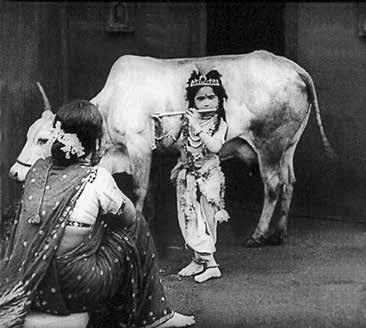
Fig. 6.46 Still from Shri Krishna Janma, directed by Dadasaheb Phalke, 1918. Courtesy: National Film Archive of India, Pune
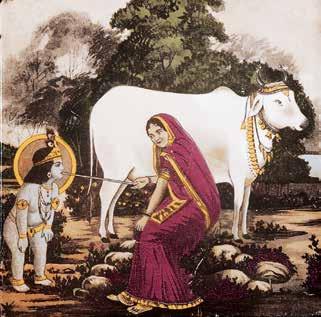
Raja Ravi Varma
Painting the Canvas
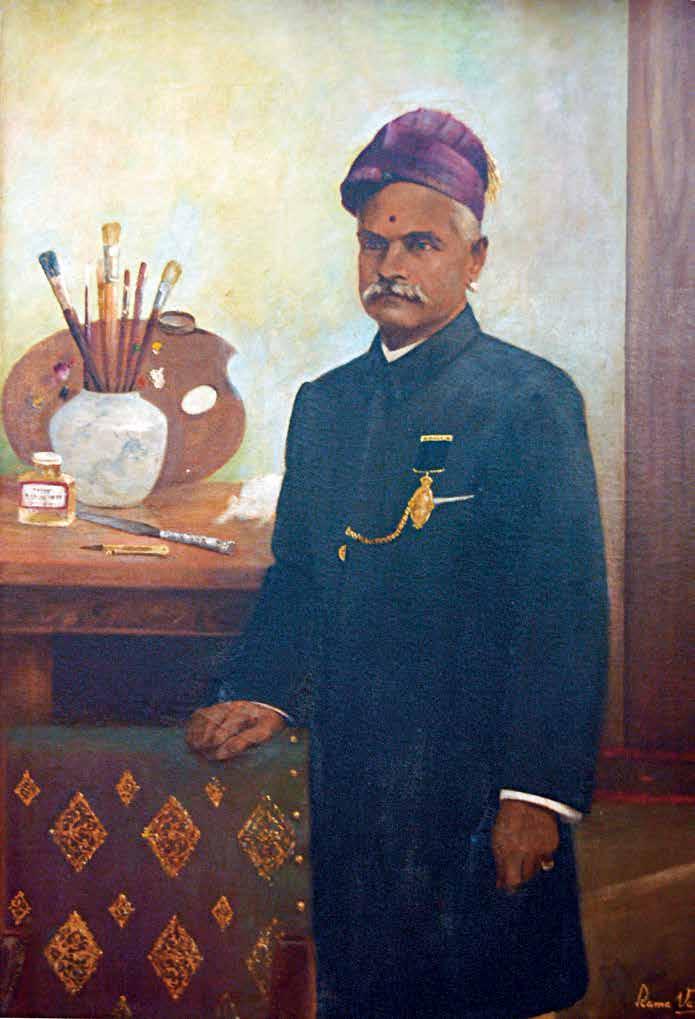
There hangs a painting at the Egmore Museum in Chennai, of Ravi Varma with brush in hand standing near the tools of his trade—paints, brushes, turpentine, palette and palette knife. His son, Rama Varma painted it in 1952, the way he painted a similar one in 1960, always so compulsively drawn to the memory of his father who had died decades earlier (Fig. 8.1).
When Ravi Varma and his contemporaries began painting with oil paints, technically advanced artists’ materials were still novelties in British India. It was just a short while earlier that the great industrial breakthrough of mid-nineteenth century Europe had made available to artists readymade canvases, mass-produced brushes and oil paints that were packed into collapsible tin tubes.1 This was a fairly new innovation which commenced around 1840 and which dramatically changed the way artists in the West looked at their lives and their work patterns. This new age of readymade goods liberated them from being forcefully bound to their studios and from wasting time in having to prepare their painting material.
During the earlier centuries, Western artists had to mix and grind their own pigments, as was being done anywhere else in the world. In the seventeenth century a pouch made from animal membrane, interestingly called the “bladder”, became the packaging for artists’ colours, thus removing the need for the laborious preparation of
paints. But the “bladder” which now provided readymade paints, had to be used immediately once opened since did not have a long shelf life, placing certain constraints on the activities of painters.2 But the new collapsible tin tubes of the nineteenth century preserved readymade pigments for long periods and brought about changes more far–reaching than had ever been imagined before. It now became possible for the Impressionists to toss paint tubes, brushes, linseed oil and turpentine into a bag and walk outdoors to paint, canvases in hand. This was the same technical advancement which made it feasible for England to send painting materials to its colonies. It is therefore not too far-fetched to state that the same series of events that permitted the Impressionists to catch their impressions directly from nature, also provided Ravi Varma the freedom to become the itinerant painter that he was; painting and travelling from place to place, carrying his boxes and brushes.
Bright and exciting colours were now available commercially in Europe, ready to be used. Modern synthetic paints were first introduced in the early eighteenth century with the discovery of Prussian blue in 1704. This was followed by the introduction of the Cobalts and the Chromes at the close of that century. Cadmium yellow made its appearance in 1817, artificial ultramarine in 1824 and viridian in 1838. These and other pigments that came into the market were in addition to the earlier pigments that had existed for centuries; which included the earth colours and other natural pigments like azurite, malachite and ultramarine.3
Fig. 8.1 Rama Varma, Portrait of Ravi Varma, oil on canvas, 25 x 35.5”, 1952. "Rama Varma, 1952" in red, bottom left. Collection: Government Museum, Chennai
Taraporevala 99
telegraphic system 44
tempera 159, 160, 279
Thacker & Co. 34, 332
Thacker Spink & Co. 332
The Hindu Archives See Archives
The Hindu See Newspapers
The Mail See Newspapers
The Miser (The Old Jew) 73, 74, 108, 340
The Modern Review 322, 324, 326
The Times of India See Newspapers
The Times See Newspapers
themes 31, 100, 105, 157, 161, 233, 265, 280, 282, 329
There Comes Papa 22, 23, 115, 210, 232, 252, 319
Thiruvanaikaaval 271, 273, 274
Thiruvananthapuram 4, 12, 17, 19, 21, 23, 25, 26, 32, 38, 40, 42, 54, 77, 85, 101, 102, 107, 120, 128–130, 135, 140, 142, 145–149, 151–155, 167, 176, 182, 189, 191, 198, 200, 205, 210, 216–218, 221, 223, 228, 232, 233, 237, 245, 247, 252, 254, 255, 259, 262, 287, 290, 319, 327, 336, 338, 343, 345, 346, 354, 358, 362, 369, 370, 373, 374
Thurston, Edgar 74, 76, 108
Tilak, Bal Gangadhar 45, 304
Tiruvanakavu 63
tiruvasi 271, 280
Travancore 4, 12–14, 19, 21–23, 25, 26, 28–32, 35–37, 41, 44, 47, 49, 51, 54, 63, 65, 69, 71, 77, 80, 86, 88, 96, 98–100, 106–109, 127–129, 131, 140, 142, 145–148, 151, 154, 155, 157, 167, 168, 176, 183, 192, 194, 198, 200, 202, 207, 210, 217, 218, 221, 223, 232, 234, 242, 252, 254, 257, 260, 265, 279, 298, 301, 302, 308, 317, 327, 332, 336, 342, 343, 348, 353, 355, 359, 361, 362
Travancore Administration Report 157, 374
Travancore Royal Family, Kaudiar Palace, Thiruvananthapuram 4, 21, 23, 25, 26, 107, 167, 176, 200, 210, 217, 218, 221, 223, 232, 252, 254, 336, 343, 362
Travancore State Manual 96, 371, 374
tribhangi 224, 229
Trichinopoly 60, 61, 63, 69, 77, 109
Trichur 46, 52, 54, 56, 69
Trichy 14, 98, 273, 274
Trivedi, Shikha 17, 294
Typical Costumes, Ramaswamy Naidu 290
UUdaipur 13, 15, 61, 69, 71, 109, 122, 125, 128, 129, 130–137, 139, 145, 146, 155, 373
Udaipur Durbar 131, 137, 146
Udaipur Palace 131, 134, 135, 136, 146, 155
Udaipur Procession, Raja Raja Varma 129, 131, 146
Uma Amba Bai Thampuratty 25
Unity in Diversity 291, 375
Unnayi Varier 191–194, 374
Urvashi 259
Usha’s Dream 355
uttama nayika See nayika
V
Vadehra Art Gallery 297
Valmiki Ramayana See literary sources
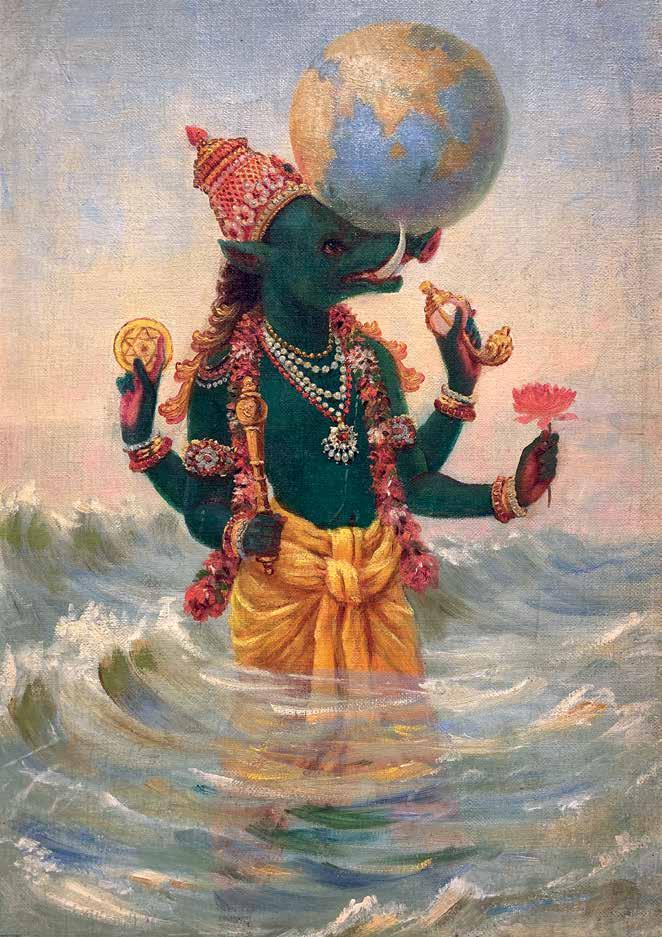
Varaha Avatar 304
Varasiyar at the Bathing Ghat 26, 29
Varma, C. Raja Raja 5, 19, 20, 38, 54, 102, 129, 157
Varma, Goda 25, 28, 30, 319, 343, 345, 376
Varma, K.K. 14, 269
Varma, R.K. 12, 34
Varma, Rama 23, 30, 32, 36, 41, 42, 75, 96, 115, 119, 122–127, 136, 155, 157, 183, 189, 211, 265, 270, 319, 327, 331, 335
Varma, Rukmini 12, 22
Varmah 167, 355
Vasantika 215
vasikasajjika nayika See nayika
Veena Player 25
veena-playing 233
Vegetable Seller 237
Verma, Madhu and Chander 17, 247, 263
Vibhishana 241
Victoria Memorial Hall, Kolkata 17, 37
Victoria Terminus 109
Ved, Vijay 212
Vijaynath Shenoy, Hasta Shilpa Trust, Manipal 15, 277, 281, 311, 314, 315
Visakham Thirunal 29, 37, 72
Vishnu 101, 159, 170, 172, 174, 223, 242, 245, 304
Vishnu and Lakshmi on Shesha Naga 170, 172
Viswamitra 96, 197, 198, 202, 207, 271, 274, 329
Viswamitra and Menaka 96, 198
Vyasa 96, 174, 194, 375
W
Wadiyar Royal Family
Chamarajendra Wadiyar X, Maharaja of Mysore 11, 109, 112, 113, 116, 127
Jayachamaraja Wadiyar 122
Krishnaraja Wadiyar III 109
Krishnaraja Wadiyar IV 34, 43, 112, 113, 114, 116, 127, 250
Srikanta Datta Narasimharaja Wadiyar 11, 109
Yuvaraja Kanterava Narasimhraja Wadiyar 31, 76, 115, 116, 362
Waiting for the Train 58
Water Carrier (or Water Bearer), Raja Raja Varma 29, 73, 74
waterways 49, 51, 54–56, 72
Western 41, 83, 100, 115, 161, 209, 241, 259, 323, 326, 327, 331, 340
Western academic 200
Whiteway and Laidlaw 100
Wife of Kunjaru Raja 28
Winsor & Newton 17, 34, 332, 377
Woman in Red 218, 224, 227, 264, 265, 276
Woman in Red near Green Curtain 264, 265
Woman Reclining on the Waterfront 51
Woman with the Veena 210, 211
World Columbian Commission 113
X
X-ray 348, 350, 352, 353, 354
Y
Yamuna 174
Yashoda 4, 174–176, 178, 181, 209, 247, 250, 257, 259, 260, 265, 279, 280, 285
Yashoda and Krishna 4, 176, 178, 247, 250, 257, 259, 265, 279 (Jamini Roy), 280
Yashoda Feeding Krishna 250, 280, 285
Yashoda Ornamenting Balakrishnan 250
Yashoda, Krishna and Radha 175, 178, 260
Yashoda Pointing Out to Balakrishna His Cows 250
Yuvaraj Kanterava Narasimharaja Wadiyar in Hunting Dress 116 See Wadiyar Royal Family
“Rupika Chawla’s lavishly produced book is not a heavy academic tome. In style and substance, it is hugely engaging, carrying its scholarship with a remarkable lightness of grace.”
—India Today
ART
Raja Ravi Varma
PainterofColonialIndia
Rupika Chawla
384 pages, 462 colour illustrations 6 maps
9.5 x 11.5” (241 x 292 mm), hc
ISBN: 978-93-94501-30-0
₹5500 | $70 | £55
5th Revised Reprint in 2026 | World Rights

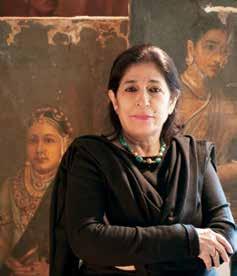
Rupika Chawla is a conservator of art and an author, based in Delhi. She has restored several Ravi Varma artworks. Together with artist A. Ramachandran, she had organized the seminal exhibition on Raja Ravi Varma in 1993 at the National Museum, New Delhi, which brought about a strong revival of the artist and his work. She has written extensively on contemporary Indian art, both in books and articles and is the author of Surface and Depth: Indian Artists at Work (Viking), A. Ramachandran: Art of the Muralist (Kala Yatra & Sistas) and Icons of the Raw Earth (Kala Yatra). She also maintained a column in The Indian Express from 2001 to 2004.
Other Titles of Interest
The Planetary King
Humayun Padshah, Inventor and Visionary on the Mughal Throne
Ebba Koch
Ellora
Cross-Fertilization of Style in Buddhist, Hindu and Jain Cave Temples
Deepanjana Klein and Arno Klein
Devotion and Splendour
A Story of the Caves at Ajanta
Rupika Chawla
“In this sumptuous feast of a book, one of India’s finest art conservators, Rupika Chawla, takes out all her scholastic implements to bring us a sprawling investigation of the works of 19th century artist Raja Ravi Varma. Chawla locates Ravi Varma in the productive world of salon art shaped by Victorian aesthetics but in the very localised template of India.”
Hindustan Times
“Coming armed with awe-inspiring research and studded with gem-like details, Raja Ravi Varma: Painter of Colonial India is surely a long overdue opus …Rupika Chawla’s lavishly produced book is not a heavy academic tome. In style and substance, it is hugely engaging, carrying its scholarship with a remarkable lightness of grace.”
“…with this sumptuous, well-researched and deeply written volume, Chawla has performed a much needed art-historical task by restoring the artist himself back into contemporary national consciousness…There is a racy time-line running through the narrative which makes it most accessible to the scholar as well as the layperson.”
—Sadanand
Menon, Outlook
—S. Kalidas, India Today