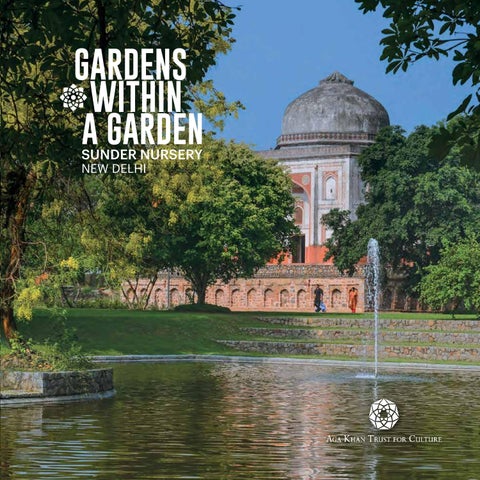
GARDENS WITHIN A GARDEN
SUNDER NURSERY
NEW DELHI
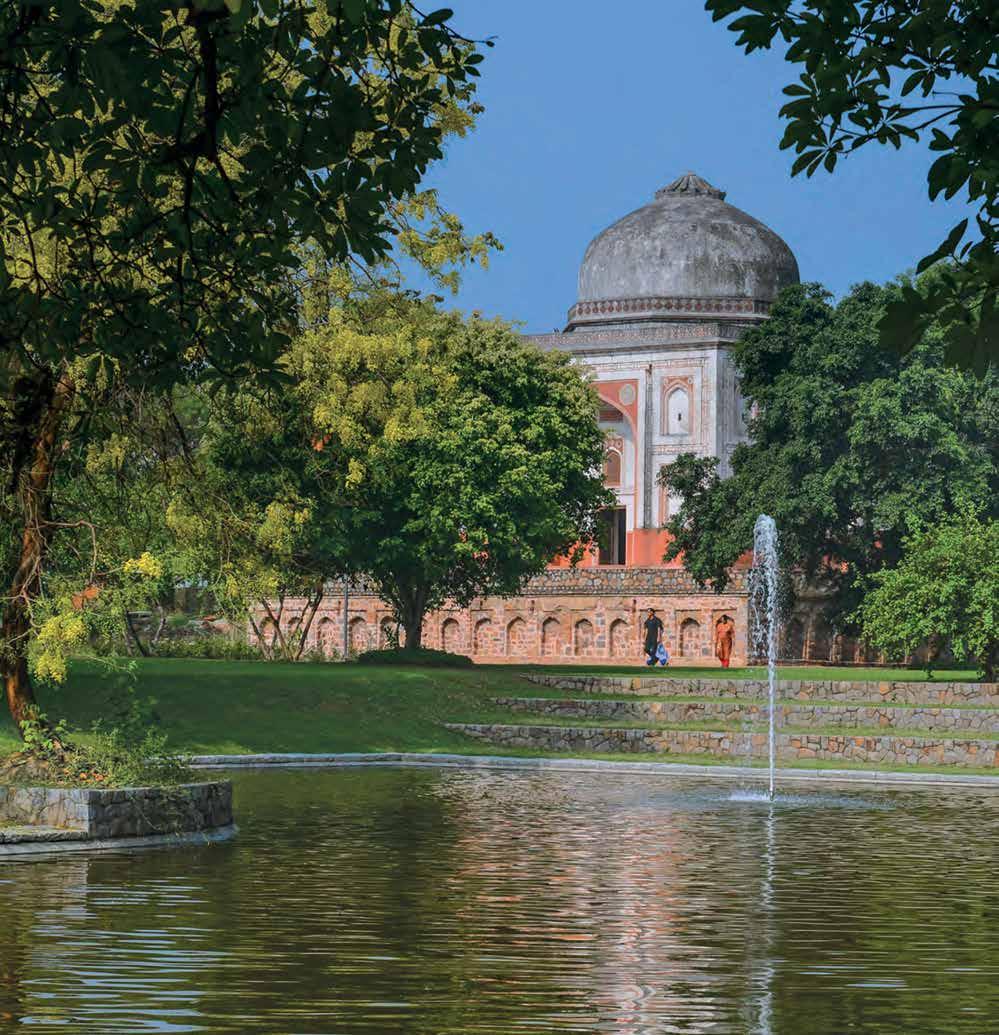
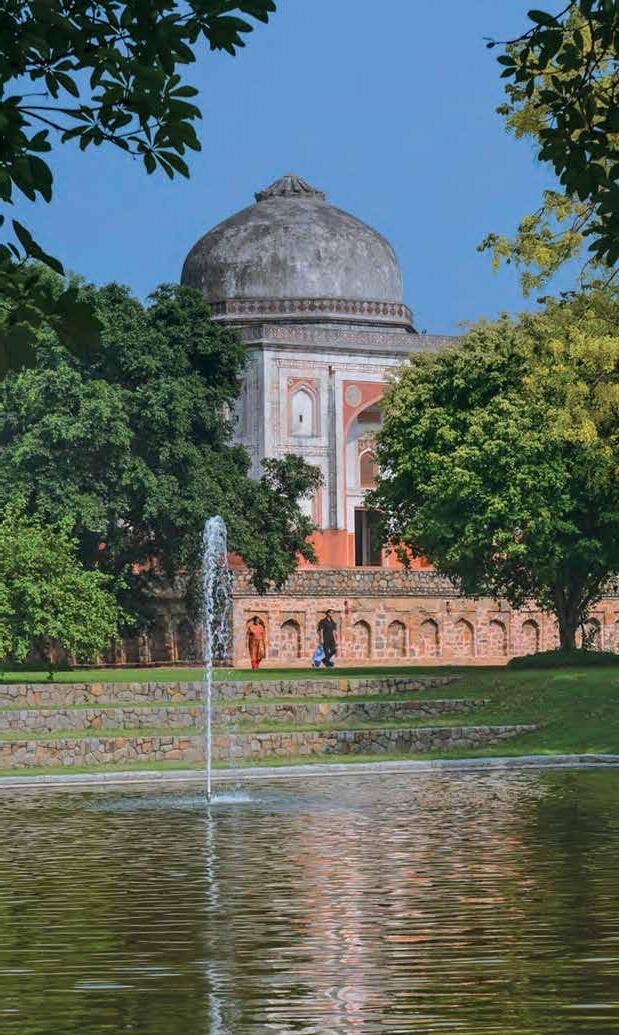
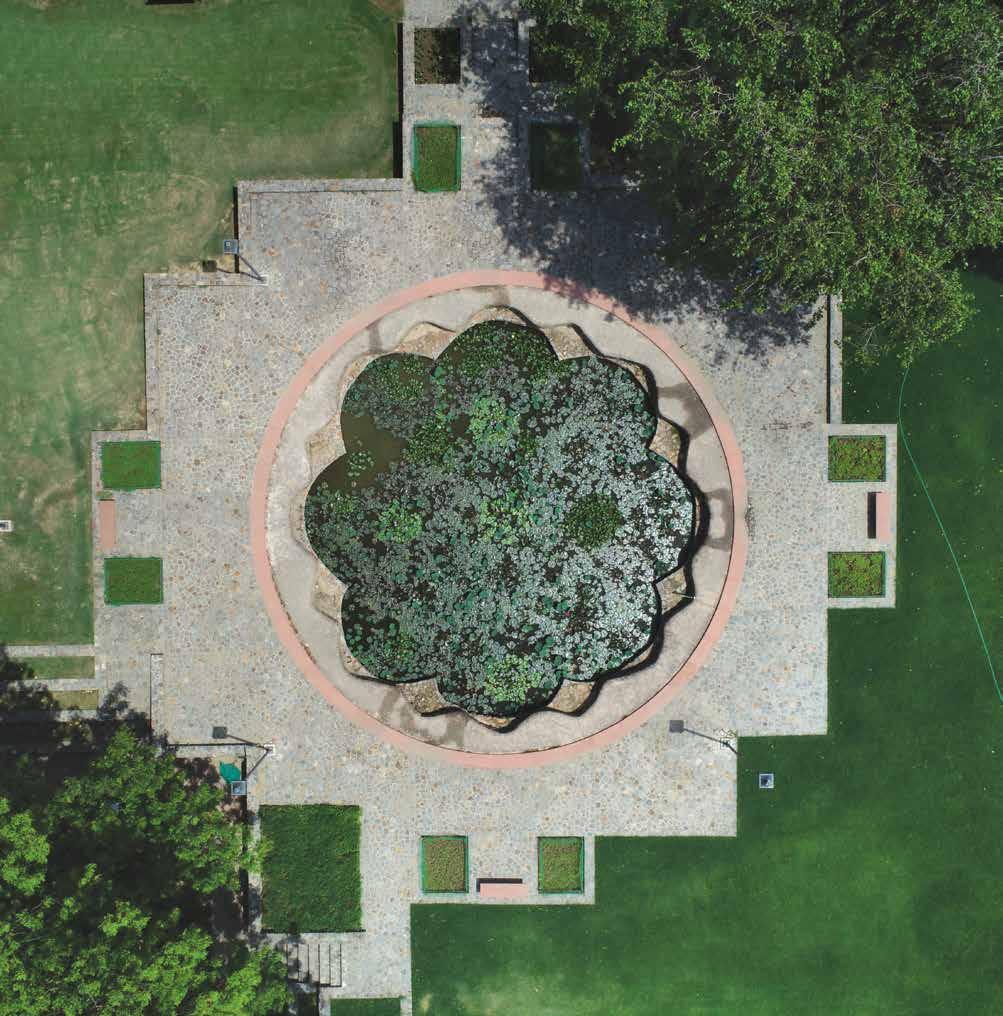
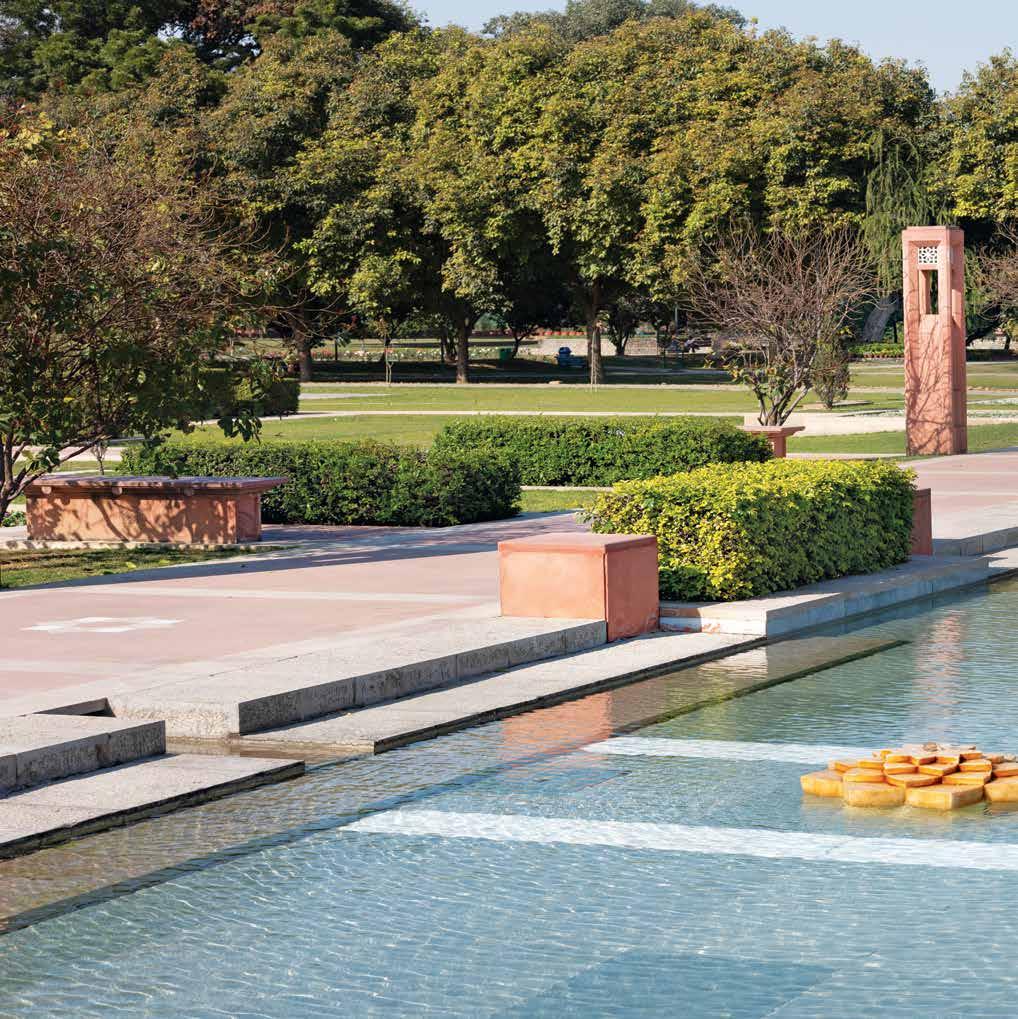
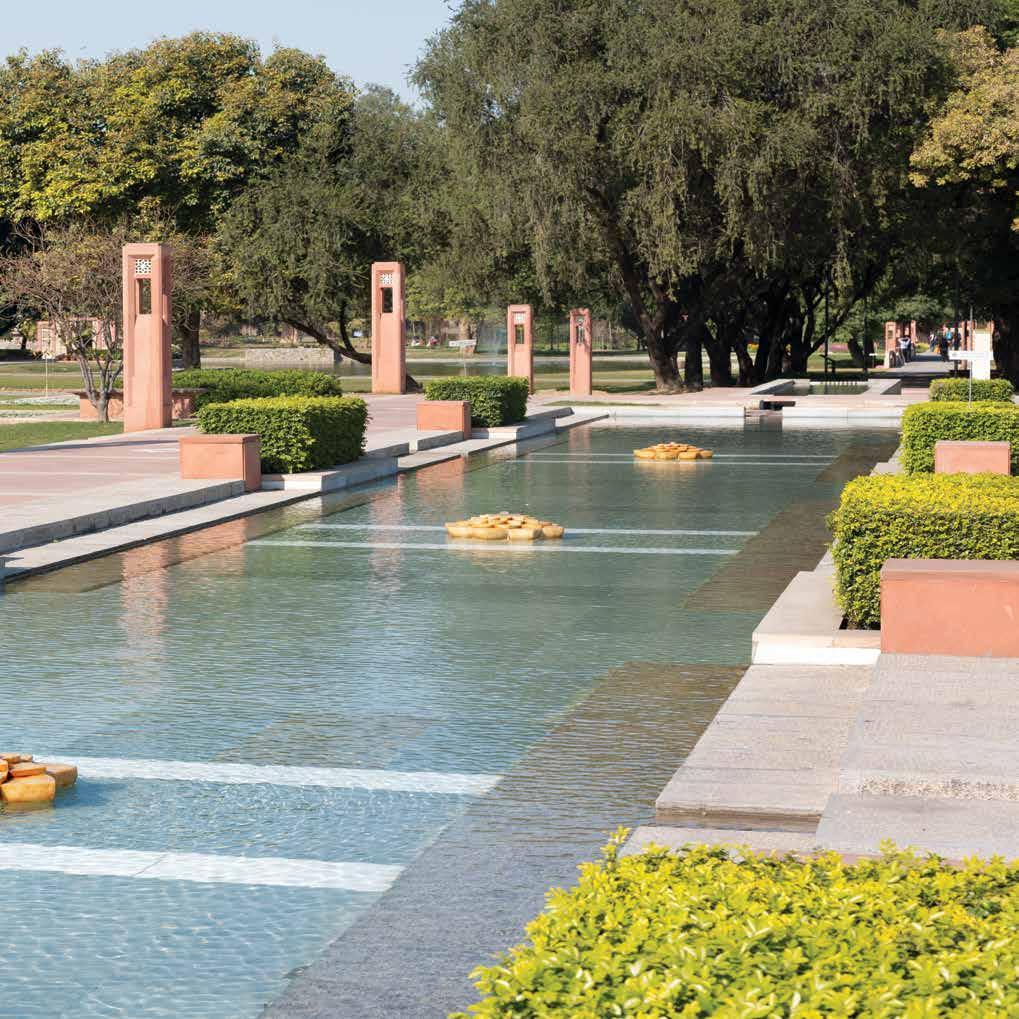
Nestled between the World Heritage Site of Humayun’s Tomb and the sacred precinct of Hazrat Nizamuddin Auliya, Sunder Nursery is a landscape shaped by centuries of history, culture, and nature. Originally a Mughal-era ensemble of tombs, pavilions, and gardens, it served as a British nursery for the new Imperial capital in the early 20th century, before evolving into a thoughtfully designed public space in 2018, where heritage, ecology, and urban life converge. Guided by Indian garden traditions, Sunder Nursery’s restoration and transformation honour its past while embracing a vision for the future. Its tree-lined avenues, reflective water channels, and gardens seamlessly integrate native biodiversity with layers of history. The development plan weaves together ecological, cultural, and historical assets to create a significant public space –symbolic, aesthetic, experiential, and functional.
Today, Sunder Nursery stands as a dynamic and evolving landscape that continues to shape the cultural fabric of Delhi. This book introduces Sunder Nursery and its surroundings, exploring its rich history and distinctive natural and cultural features. It traces the journey of its revival over the past years, documenting the site’s original conditions, the restoration of its built heritage, the renewal and enhancement of its ecological character, and its emergence as a vital urban space in New Delhi.
S under Nursery is part of the Nizamuddin Urban Renewal Initiative, launched in 2007 by the Aga Khan Trust for Culture (AKTC), in collaboration with the Archaeological Survey of India (ASI), the Central Public Works Department (CPWD), the Municipal Corporation of Delhi (MCD), and the Aga Khan Foundation (AKF). Over the past 18 years, the urban-scale project has encompassed more than 200 individual projects, including conservation works on nearly 75 monuments, improvements in the quality of life of over 20,000 residents of Hazrat Nizamuddin Basti through various socio-economic and urban improvement initiatives, and the landscape design of over 81 hectares across the Humayun’s Tomb complex, Sunder Nursery, and the neighbourhood parks of Hazrat Nizamuddin Basti.
With 565 photographs and 50 drawings.
GARDENS WITHIN A GARDEN
SUNDER NURSERY
NEW DELHI
GARDENS WITHIN A GARDEN
SUNDER NURSERY
NEW DELHI
Concept Ratish Nanda
Editors Geeta Wahi Dua Archana Saad Akhtar
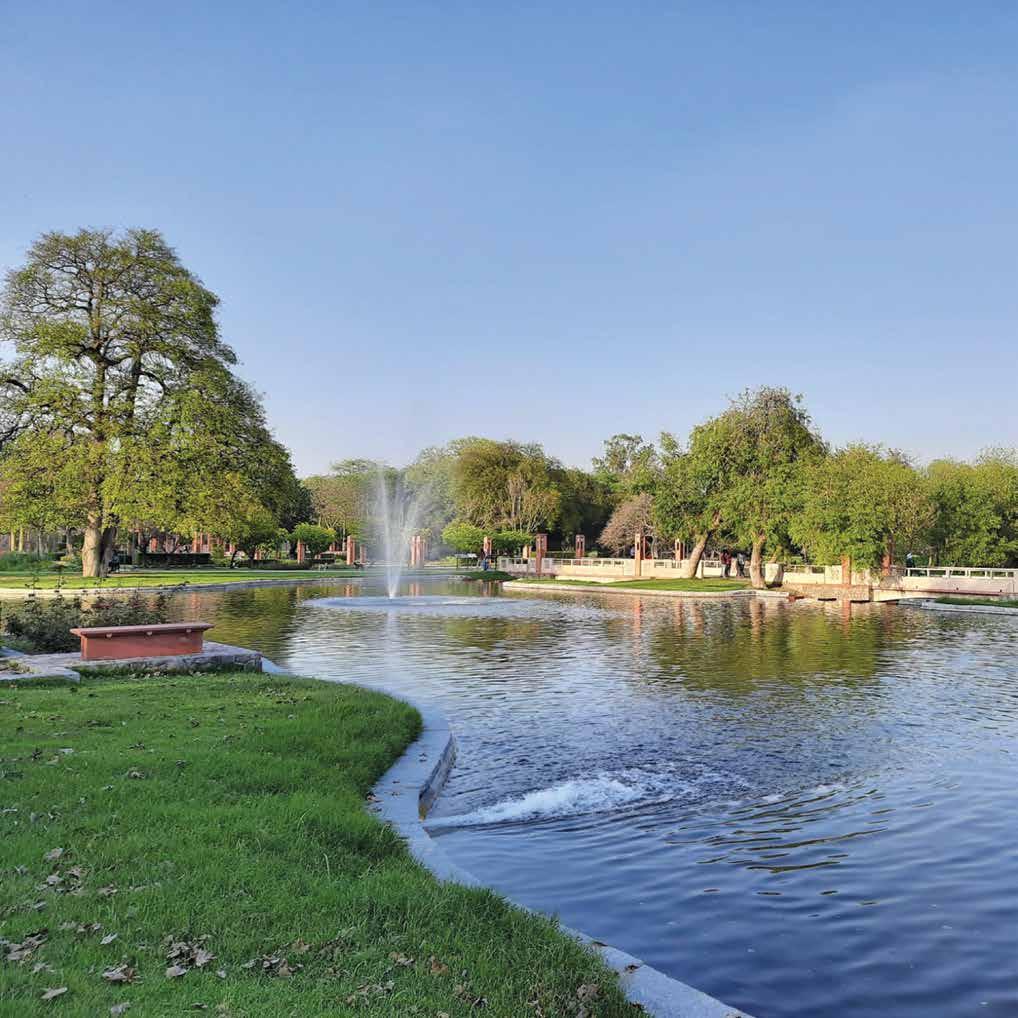
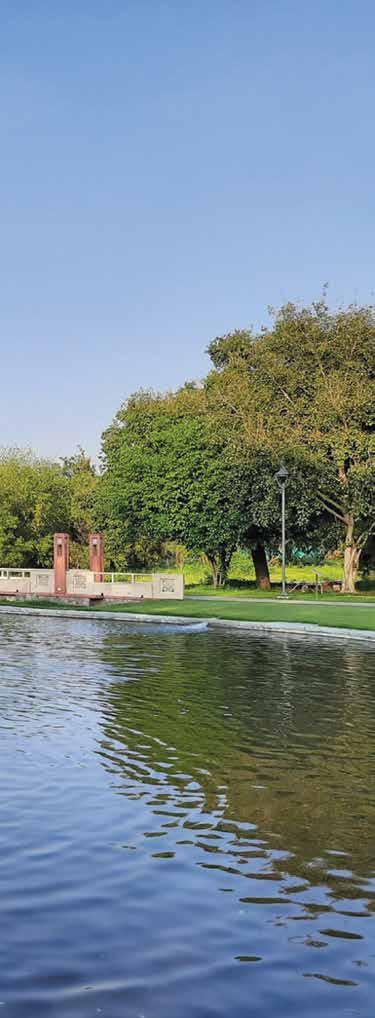
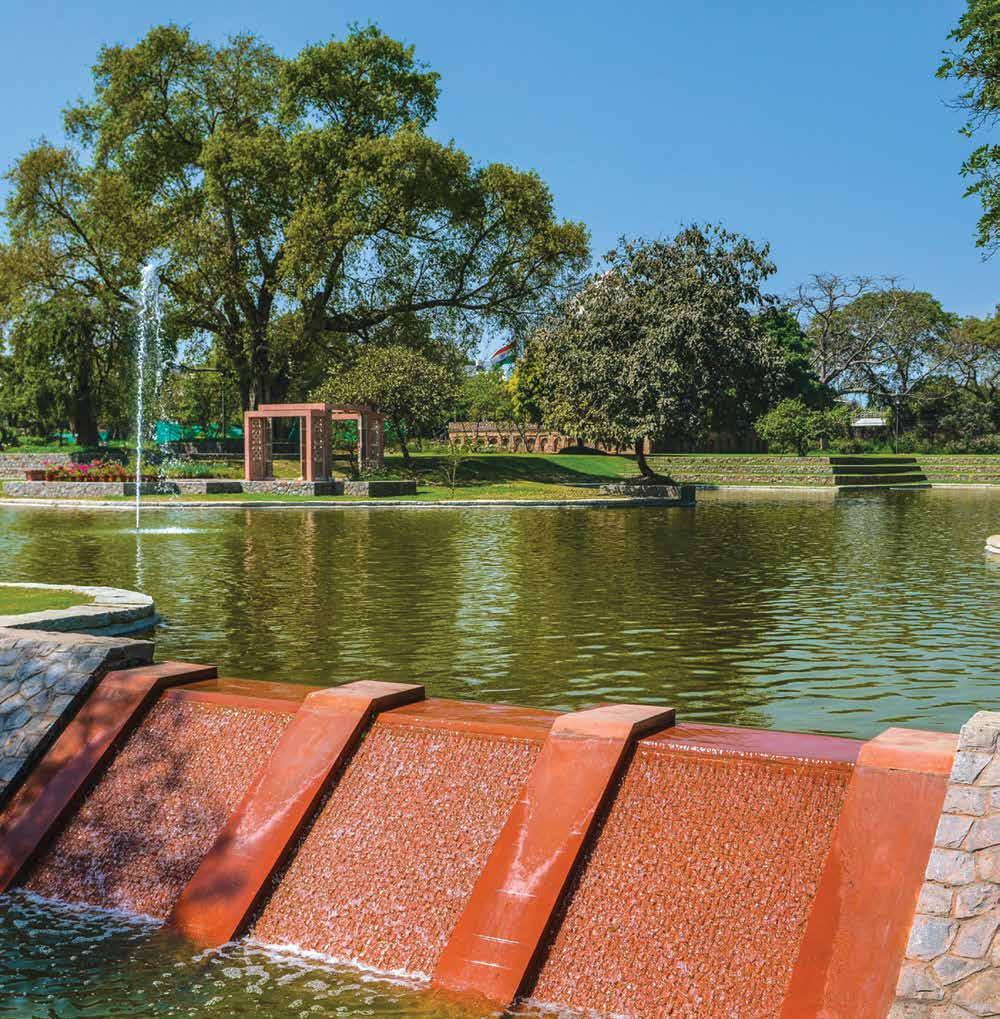
The garden of ancient tradition, like the garden here today, is a place where—whatever difficult moments may come our way—we can always find, in the flow of refreshing water, a reminder of divine blessing.
—His Late Highness Prince Karim Aga Khan IV
Ratish
Hardeep
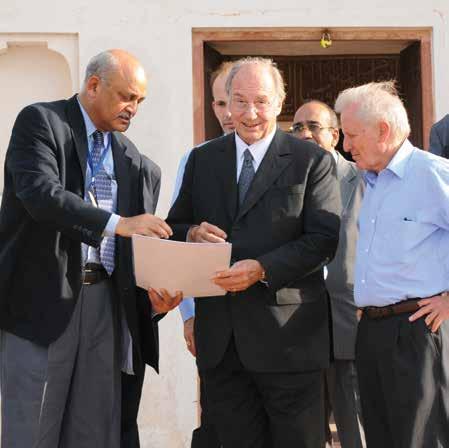
FACING PAGE |
His Late Highness Prince Karim Aga Khan IV reviews the landscape works at Sunder Nursery with the project landscape architect late Mohammad Shaheer and Luis Monreal. November 2011
Foreword
Luis Monreal General Manager, Aga Khan Trust for Culture
Located in the heart of New Delhi, the Nizamuddin area encompasses the World Heritage Site of Humayun’s Tomb and Garden, the vibrant seven-century-old settlement of Hazrat Nizamuddin Basti, and the surrounding 90-acre Sunder Nursery. Aga Khan Trust for Culture’s (AKTC) urban renewal project has successfully integrated conservation, socioeconomic development, and environmental development objectives, and unified the three segregated sites into a thriving cultural district for New Delhi.
In 1997, to celebrate the 50th anniversary of India’s independence, His Late Highness Prince Karim Aga Khan IV, offered the services of the AKTC to rehabilitate and restore the Gardens of Emperor Humayun’s Tomb in Delhi. This represented the first privately funded restoration of a World Heritage Site in India. Following significant research, the work entailed the revitalization of the gardens, pathways, fountains, and water channels of the chahaar bagh, or four-part paradise garden surrounding Humayun’s Tomb according to the original plans of the builders. Work was completed in March 2003 through the joint efforts of AKTC and the Archaeological Survey of India (ASI), under the aegis of the National Culture Fund.
While the garden was painstakingly restored, the Tomb and the gates to the complex were in a state of decline. Building on the success of the garden restoration, His Late Highness Prince Karim Aga Khan IV envisioned a flagship project that would highlight how the conservation of cultural heritage could improve quality of life, be a catalyst for training, create employment opportunities, and become an engine for social and economic development. A list of fifty monuments around India was developed by ASI. I had the pleasure of visiting many of these beautiful structures to assess their potential to fulfill His Highness’s wish.
After studying these monuments, looking at the possibility of community engagement, and predicting possible impact, I remained unconvinced. Thus, I returned to Delhi and studied plans, maps, and satellite images of Humayun’s Tomb. Looking from a bird’s perspective, what became very apparent was the contiguous connection between Sunder Nursery, the dargah of Hazrat Nizamuddin Auliya, and the Humayun’s Tomb Complex. This area holds a rich heritage of gardens, tombs, pilgrimage, and music that embody the pluralistic Sufi cultural traditions which have shaped Hindustani culture for over seven centuries.
What has emerged since 2007 through an agreement with the Archaeological Survey of India (ASI), the Municipal Corporation of Delhi (MCD) and the Central Public Works Department (CPWD) is further intervention in Delhi through the restoration of the entire Humayun’s Tomb Complex, the creation of Sunder Nursery, and the urban regeneration of Nizamuddin Basti.
Azimganj Serai
Sunder Nursery
Humayun’s
World Heritage Site Museum
Nila Gumbad
Sabz Burj
Tomb
Humayun’s Tomb Complex
Nizamuddin Basti
Proposed Amir Khusrau Park
Abdur Rahim Khan-i-Khanan Tomb
Dargah of Hazrat Nizamuddin Auliya
Arab Serai & Bazaar
Nizamuddin East
Nizamuddin West Mathura Road
Lodi Road
Barapullah
The Trust has shown how culture can be a catalyst for development. The Trust’s support to historic communities demonstrates how conservation and revitalization of cultural heritage can provide a springboard for social development. We have also seen how such projects can have a positive impact well beyond conservation, promoting good governance, the growth of civil society, a rise in incomes and economic opportunities, greater respect for human rights and better stewardship of the environment.
—His Late Highness Prince Karim Aga Khan IV
FACING PAGE |
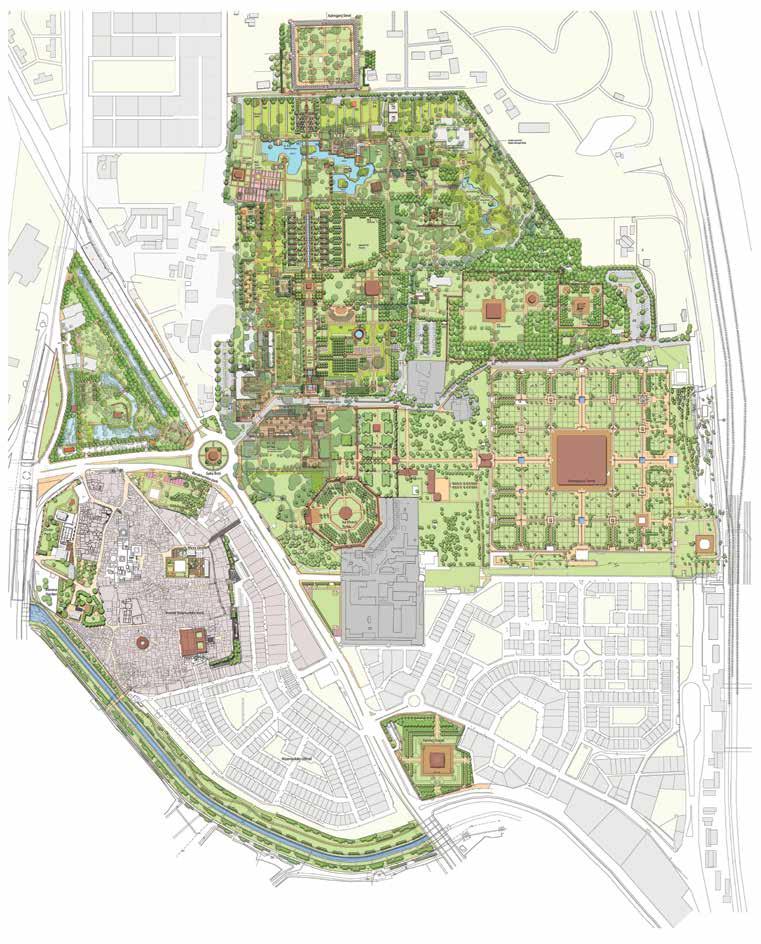
SUNDER NURSERY AND ENVIRONS
The site of Sunder Nursery, with its historic structures and monuments, is part of a larger cultural landscape that includes the dargah of Hazrat Nizamuddin Auliya, the historic settlement of Nizamuddin, the World Heritage Site of Humayun’s Tomb, and numerous tomb gardens and historic precincts associated with Mughal emperors, princes, nobles and poets. This region boasts a rich and vibrant tradition of architecture, music, poetry, and cuisine, celebrated for over seven centuries.
AKTC’s intervention covers over 300 acres and comprises the restoration of 65 monuments. It has created 170 acres of green space, rehabilitated over 20 acres of public open space that had been encroached upon, established a major rainwater harvesting system that has significantly raised groundwater levels, planted over 25,000 trees, and brought significant direct benefit to the residents of Nizamuddin Basti through building education and health infrastructure, landscaping urban parks, waste collection and providing vocational training and establishing women’s self-help groups.
The revival of Humayun’s Tomb, Sunder Nursery, and Nizamuddin Basti underscores how heritage can catalyse economic growth, social progress, and ecological resilience. We have seen how the conservation activities in Delhi—in many cases the most obvious asset to stimulate the local economy at the disposal of the community—have provided a springboard for social development and have made a positive impact well beyond conservation, promoting good governance, the growth of civil society, a rise in income and employment opportunities, greater respect for human rights and better stewardship of the environment.
His Late Highness Prince Karim Aga Khan IV, in all the gardens he has created, restored, or rehabilitated, always pursued a singular purpose which is very summed up in this following quote:
As we walk through this place, we can feel a deep sense of connection with those who walked through similar gardens centuries ago. And, by renewing our connection with the past, we can also connect more effectively with one another—and, indeed, with those who will walk these paths in the future.
The transformation of the Nizamuddin area stands as a testament to the power of cultural heritage in shaping vibrant, inclusive urban spaces. Through meticulous restoration, environmental revitalization, and community-driven development, this initiative has not only safeguarded Delhi’s rich past but also laid the foundation for a sustainable future. I hope that besides enjoying this publication, you will find the time and opportunity to walk through Sunder Nursery and enjoy its flora and fauna, its programmes, and its rich connection with Delhi’s past as it fulfills the city’s ambitions for the future.

The River, the Saint and Sunder Nursery
Gillian Wright
fQ+jnkSl cj :, t+eha vLr] geha vLrks] geha vLrks] geha vLr
If there is a paradise on earth, it’s here, it’s here , it’s here.
—Hazrat Amir Khusrau FACING PAGE |
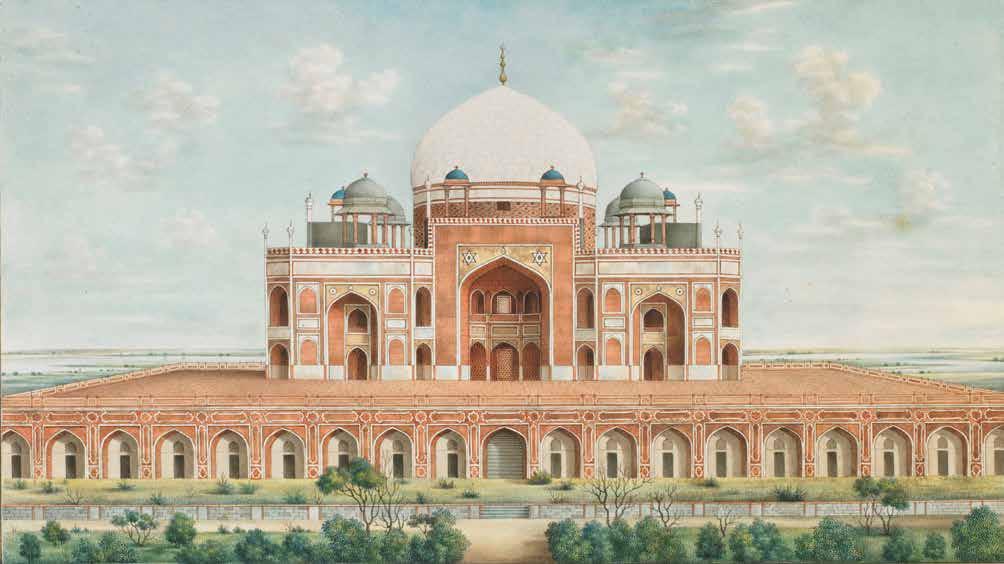
HUMAYUN’S TOMB, 19th CENTURY Watercolour on paper
Sunder Nursery is today one of New Delhi’s leading attractions. Its monuments and gardens are an integral part of the UNESCO World Heritage site of Humayun’s Tomb. However for many years, for many of us in the locality of Nizamuddin, it was just our sleepy neighbourhood nursery.
Few of us were aware of even the nursery’s recent history. We assumed it had been part of the great horticultural experiment of greening the new capital of British India that was formally inaugurated in 1931. Then, in nurseries large and small saplings and shrubs were nurtured to ensure the city became the ‘sea of foliage’[1] it was designed to be.
By 1947, the sea of foliage had become a reality and the trees cooled the sparsely populated capital of newly independent India. Driving into the city along the Mathura Road from the countryside, the Central Government’s chief horticulturist, Alick Percy-Lancaster, felt the temperature drop as soon as he reached the old settlement or basti of Nizamuddin[2] on the city’s outskirts. Alick is particularly significant to the story of Sunder Nursery, located just across the road from the basti, as he was the one who established it. An incorrigible enthusiast, in the years following independence he oversaw far more than the maintenance of New Delhi’s leafy avenues. These were years when the city transformed. Partition had brought a flood of refugees and Humayun’s Tomb had become a refugee camp. By 1951, the population had nearly doubled (at 1.7 million) over the previous decade, with more than one in four residents being refugees—mostly from West Punjab, now part of Pakistan.[3]
Mausoleum of Abdur Rahim Khan-i-Khanan 16th century 14th century
17th century
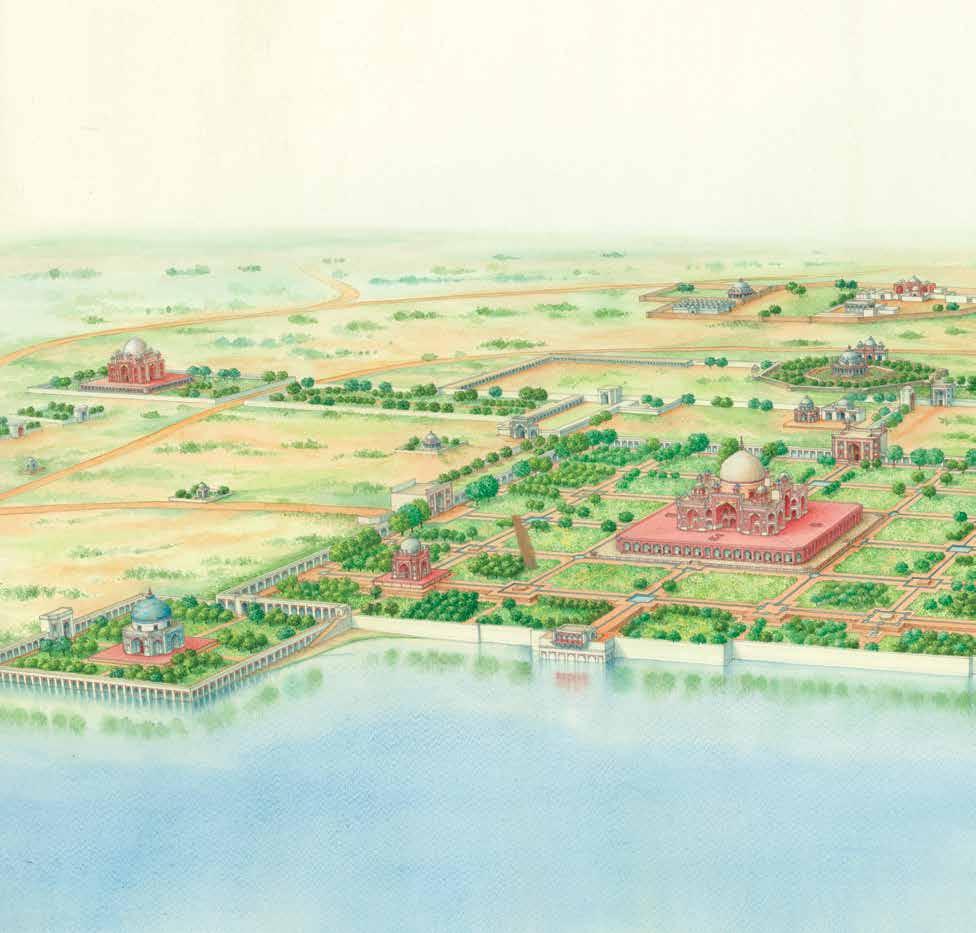
Tomb of Khan-i Jahan Tilangani Kalan Masjid
Barber’s Mausoleum
Dargah Hazrat Amir Khusrau Dehlvi
Nizamuddin Basti
Humayun’s Tomb Afsarwala’s Mausoleum
Isa Khan’s Mausoleum
Arab Serai
Jama’atkhana Mosque
Atgah Khan’s Mausoleum
Dargah Hazrat Nizamuddin Auliya Begum Jahanara’s Mausoleum
Chausath Khamba
Muhammad Shah Mausoleum (18th century)
Nila Gumbad (16th century)
RIVER YAMUNA
Bu Halima Garden and Mausoleum
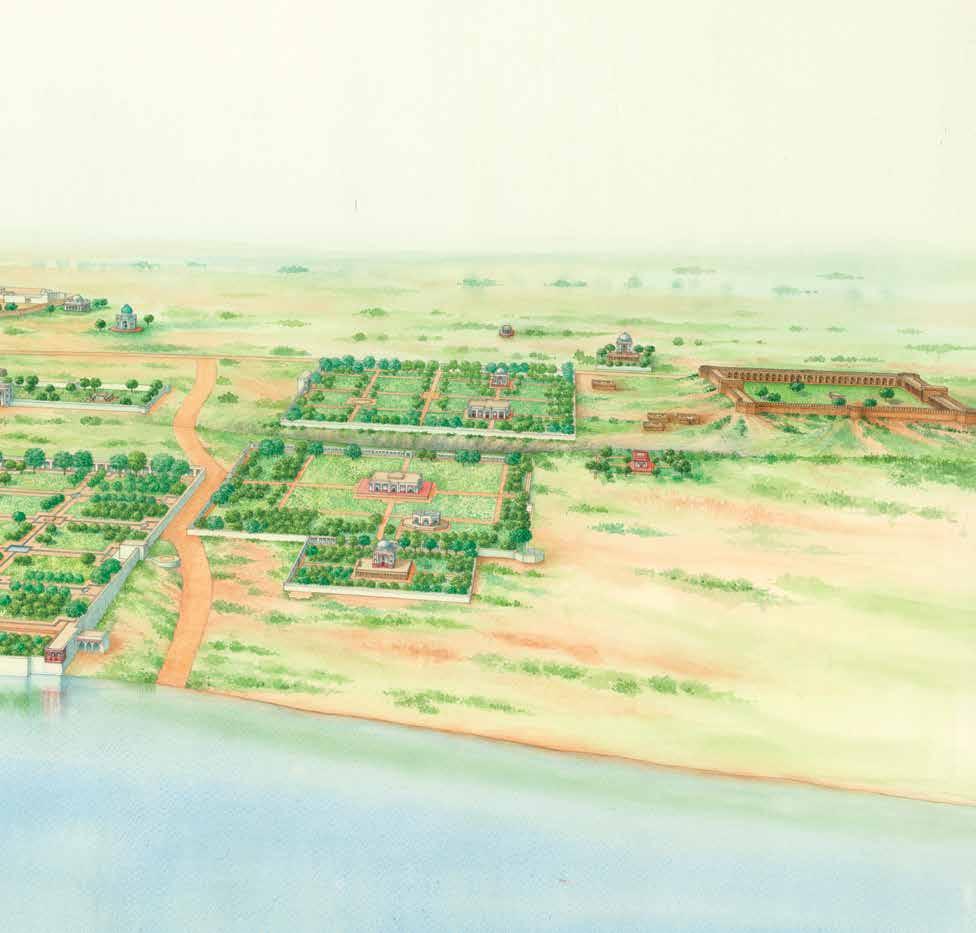
Barah Khamba Mausoleum (15th century)
Grand Trunk Road Sabz Burj
Mirza Muzaffar Hussain’s Mausoleum
Sunder Nursery
Chhota Batashewala
Sunder Burj
Lakkarwala Burj Sunderwala Mahal
THIS SPREAD | THE
Neeli Chhatri
Mughal Pavilion
Mosque Chilla Hazrat Nizamuddin (14th century) Mughal Mausoleum (14th century)
Azimganj Serai
Purana Qila towards north
CULTURAL LANDSCAPE Watercolour illustration by Himanish Das

Conserving the City Green
Gautam Bhatia
We are always ‘reading’ our environment. That is how we are able to use it, how we are able to find our way around it. There is a visual language involved, and its understanding conditions our responses.
—Mohammad Shaheer
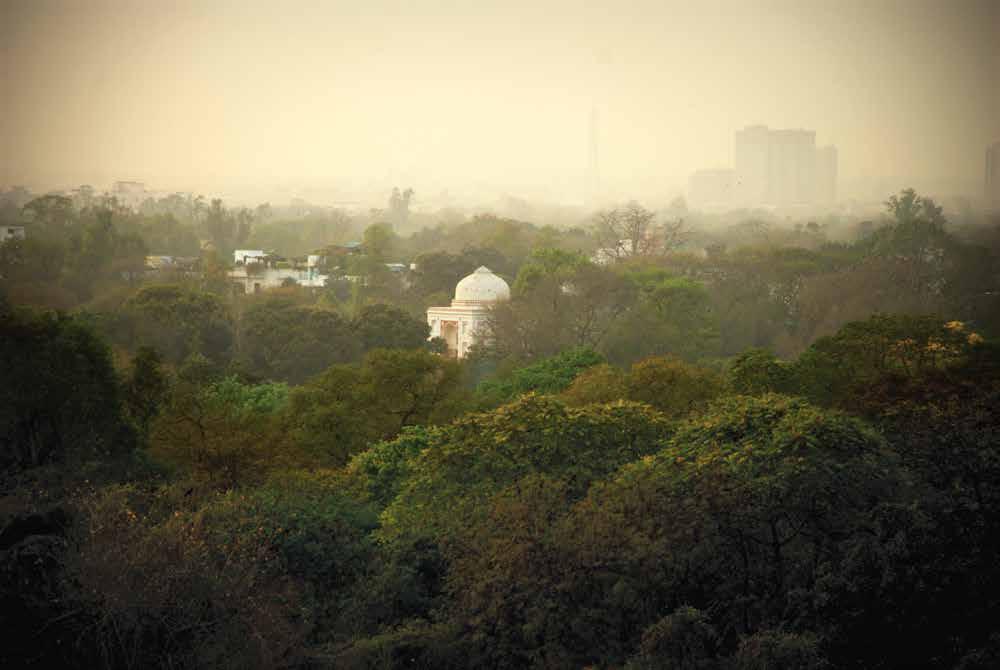
The culture of green space has forever fought a losing battle with the Indian city. In the 70 years of New Delhi’s growth since Independence, the capital’s loss of tree cover has significantly altered its visible characteristics, changing what began as a forested habitation with hidden and obscure architecture, in a frighteningly rapid reversal, into a canvas of ramshackle concrete with a random smattering of green.
What then is the value of open space in a city of over 20 million people? With depleting tree cover, and high pollution levels, a deliberate intrusion of nature as an environmental counterpoint is both a healthy necessity as well as a humane imperative. When people live in a severely malformed jumble of concrete, their social, cultural, and recreational life needs constant replenishment; nature’s organic growth demands a presence against the growing complacency of city life. How do you increase vegetation in dense and overbuilt pockets of urban habitation? In a city starved of green space, how indeed do you transform neighbourhoods into active biological reserves?
One of the obvious civic advantages of landscape conservation is the benefit it confers on city profiles and immediate neighbourhoods, transforming the overbuilt environment into a less threatening balance of the natural and the man-made. Its most prolific statement exists in cities that place enormous value on diversity, combining dense conglomerations of buildings with open spaces dedicated to ecological and recreation diversity. London preserves 40 per cent of its city space for parks; its large parks appear with an accidental suddenness that is wholly gratifying, giving surrounding residents opportunities for exploration in a variety of garden types—the deep forest, the flower garden, the formal stretch of walkways, minor orchards, water enclosures, and shallow mazes—all spread over an undefined acreage that deliberately disorients and allows the visitor a complete refuge from the city. It says a great deal about the value of urban life when green areas are given the space they deserve. Greater London has 300 parks; among them, Richmond Park, the largest, is almost 2,400 acres. The park’s scale is ordered to obliterate time and space, enclosure and orientation, and so provide relief from the exactitude of urban profiles.

Gardens of Design
Yogesh Kapoor
FACING PAGE |
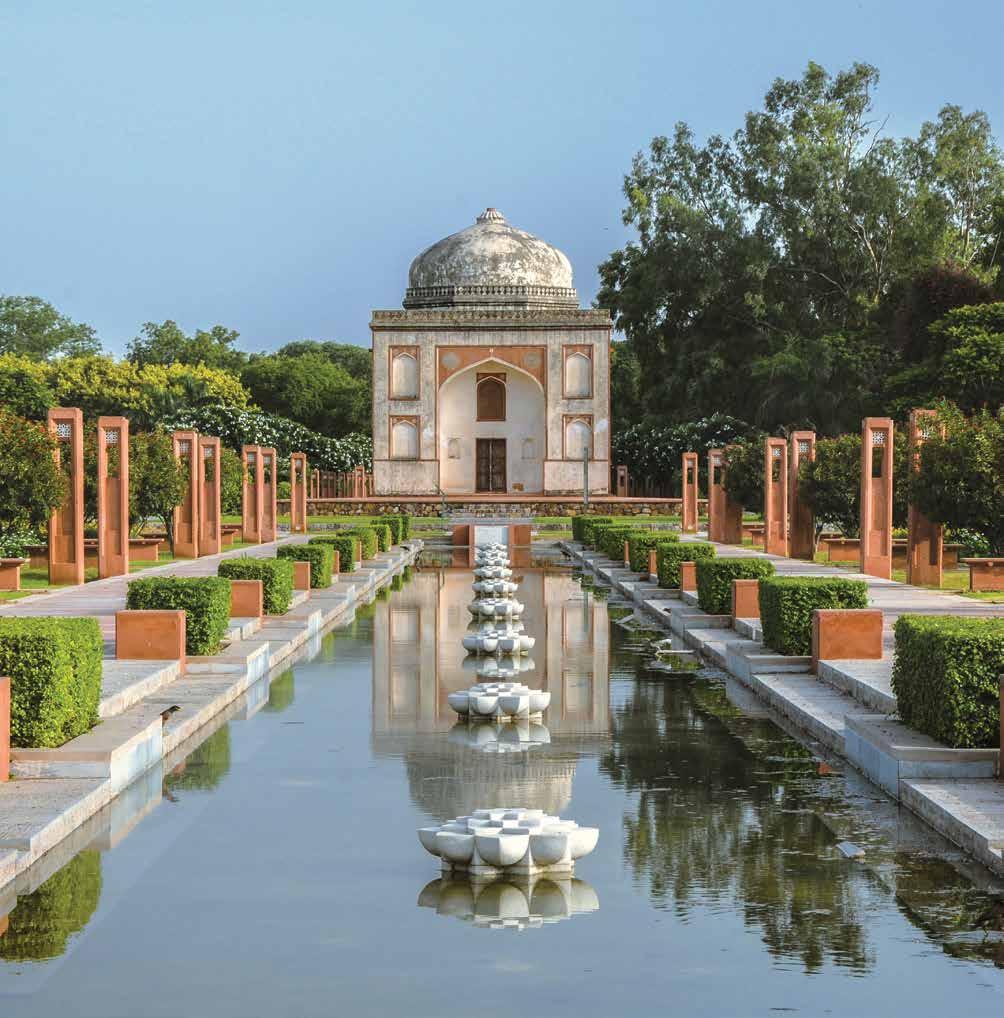
Viewed from the higher plinth of the Sunder Burj, with the sun behind the visitor, the garden appears to be spread like a carpet, a fascinating foreground to the massed vegetation behind.
Note
The article is also informed by various writings of Mohammad Shaheer on the concept and landscape design of Sunder Nursery at different forums.
The making of gardens and landscapes has an ontological purpose. They exist as abstractions as well as actualities, and in both incarnations, they tell us something about our place in the universe.
—Mohammad Shaheer
Sunder Nursery, located at the southern edge of Lutyen’s New Delhi, lies at the heart of the city of Delhi. Located to the north-west of the World Heritage Site of Humayun’s Tomb, and about half a kilometre east of the dargah of the renowned 14th-century Sufi Saint Hazrat Nizamuddin Auliya, the 90-acre Nursery occurs at the intersection of two historic axes—the first aligned northwards to the Red Fort, by way of Purana Qila and Ferozshah Kotla, and the mausoleum of Abdur Rahim Khan-i-Khanan defining its southern extent. The other axis extends westwards along the tree-lined Lodi Road to the picturesque late Mughal period garden enclosure of Safdarjung’s Tomb, in between which are located significant cultural and recreational landmarks, namely, the Delhi Golf Course, the Lodi Garden, India Habitat Centre, and India International Centre.
The Site
Originally established in the early 20th century, during the planning and construction of the capital city of New Delhi, the Nursery was used for propagating trees and other plants, and for testing species brought from other parts of India and overseas, to select those which successfully thrived in Delhi’s harsh climate. A large number of trees, some of which are only occasionally seen in the city, are still flourishing here. A few unsuitable ones are only to be found within the Nursery, as rare specimens. In 2008, only about 10 acres was being used for nursery functions—propagation beds, shed like structures, stores, rose beds, and display areas for potted plants among others.
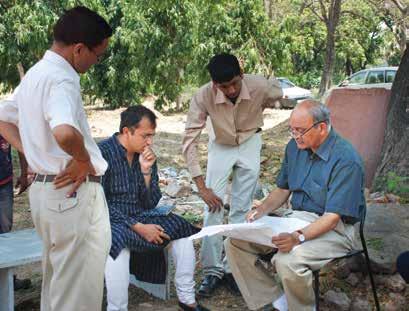
What should be the design approach to such an urban space?
Should it be conceived as another extension of the somewhat romantic ‘picturesque’ aesthetic so widely accepted as the norm in landscape design, evocative of an English pastoral, or as an alternate, hard-edged contemporary vision, a post-modern rendering (using the abstractions of 20th-century art) of the seemingly global aesthetic of landscapes designed as abstract art that we see in vogue now? There is a distinct possibility here of creating a major landscape space of truly urban scale, deriving inspiration from the traditional Indian concept of congruency, not division, between nature, garden, and utility, and environmental conservation, to provide for public recreation, functions and patterns of urban behaviour characteristic of metropolitan cities, or to be even more specific, to Delhi.
Mohammad Shaheer
|
ABOVE
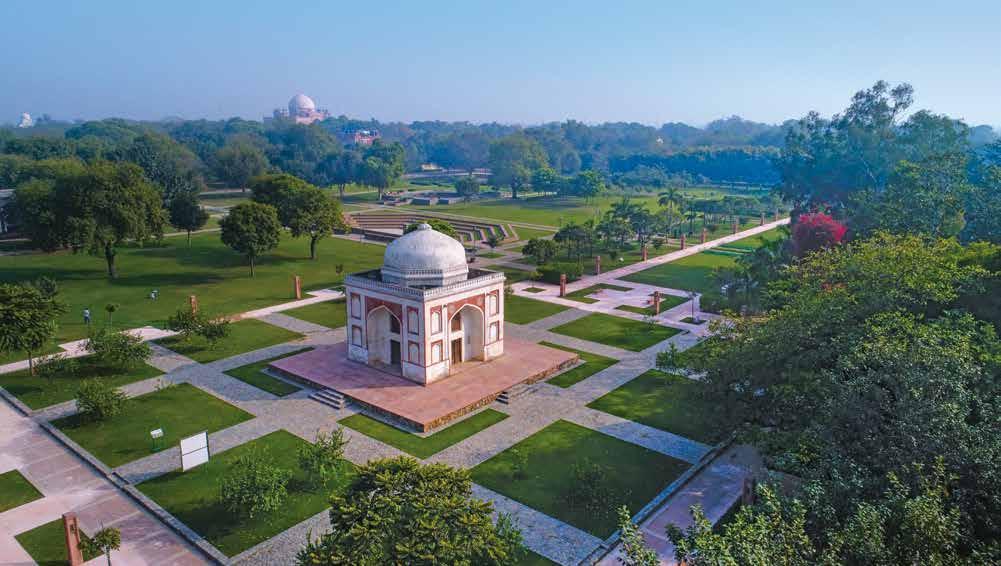
View of Sunder Burj with Humayun’s Tomb in the background. Six of the Sunder Nursery monuments stand within the Humayun’s Tomb World Heritage Site

Conserving Built Heritage
Ratish Nanda and Archana Saad Akhtar
FACING PAGE |
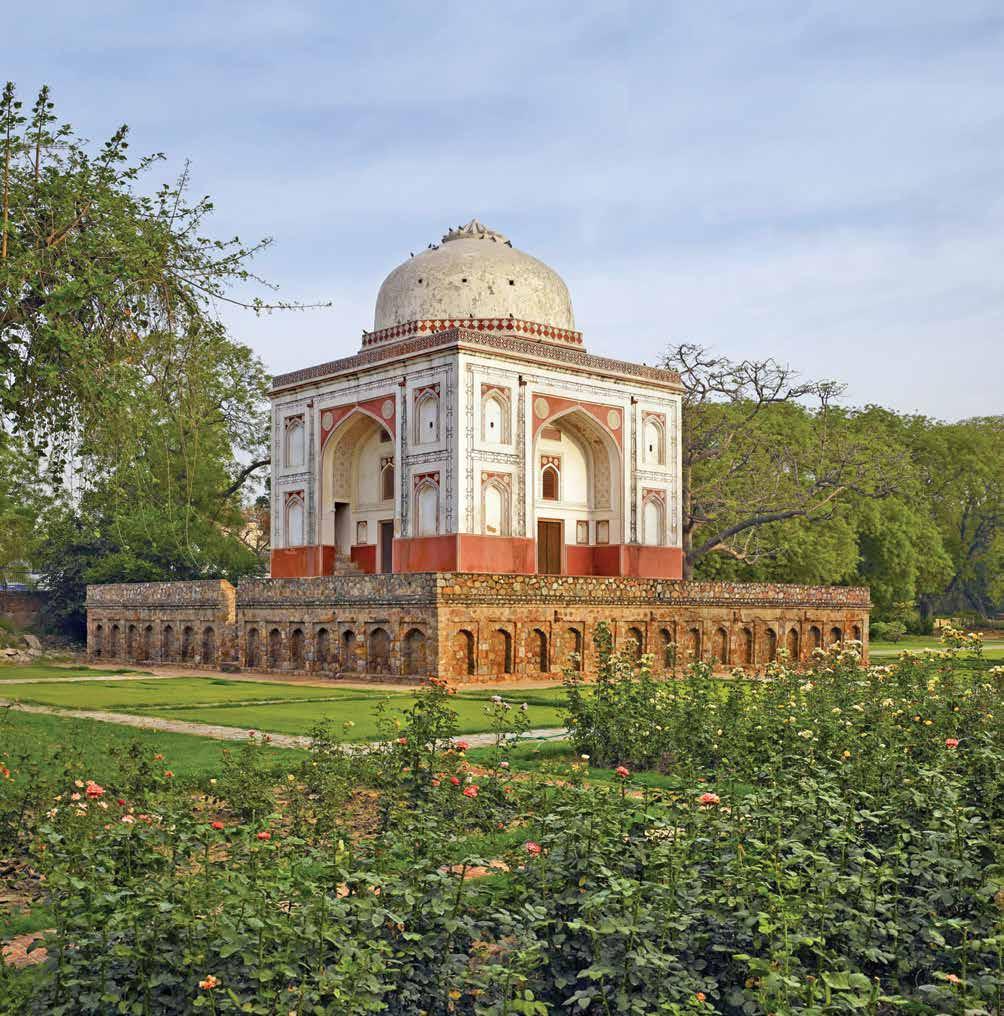
LAKKARWALA BURJ, AFTER CONSERVATION IN 2018.
A Mughal period monument, it is now part of Humayun’s Tomb World Heritage Site. It is set amid a rose garden and overlooks the park and lake.
In 1997, on the occasion of the 50th anniversary of India’s Independence, the Aga Khan Trust for Culture undertook the restoration of Humayun’s Tomb gardens on the request and invitation of ASI and as a gift from His Highness the Aga Khan. This effort led to a 1,000 per cent increase in visitor numbers to the World Heritage Site which has only continued to grow.
On the completion of the restoration, the Hon’ble Prime Minister of India requested His Highness the Aga Khan for further support for heritage conservation as a non-profit public–private partnership. The Ministry of Culture, Government of India, followed up the request by providing, in 2004, a list of 50 potential sites from countrywide locations. In shortlisting potential projects, the Aga Khan Historic Cities Programme identified three criteria: a major heritage site—preferably in an urban area—whose conservation could serve as a model for India; the opportunity to create a significant urban park; and the potential to link conservation efforts with a socio-economic development programme to significantly improve the quality of life for the local population. Based on these criteria, the Aga Khan Trust for Culture (AKTC) chose to return to Humayun’s Tomb to build upon the earlier garden restoration project.
To undertake such a project that preceded the UNESCO resolution on the ‘Historic Urban Landscape’ approach, a single agreement was signed with three public agencies—ASI as the nodal agency, CPWD, and MCD. Signing a single agreement with these agencies— with diverse mandates—was essential to implement a project that has since spread over 500 acres of land and included the conservation of 60 monuments. This 100+ hectare project area has stretched from Azimganj Serai on the north to Rahim’s mausoleum in the south; from the Nizamuddin Basti/Golf club monuments to the west to the Nila Gumbad in the east.
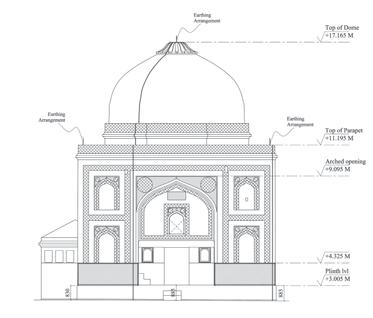
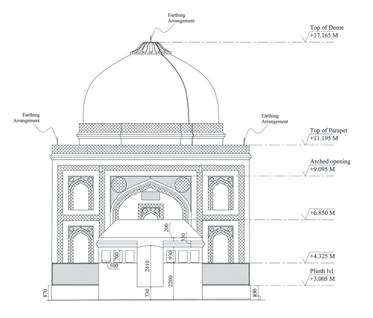
EXTERNAL ELEVATION
(ABOVE) SOUTH | (ABOVE RIGHT) WEST

Ornamentation in plaster
Conjecture panelling
Evidence of jali in earlier times
4 8 m 0 6
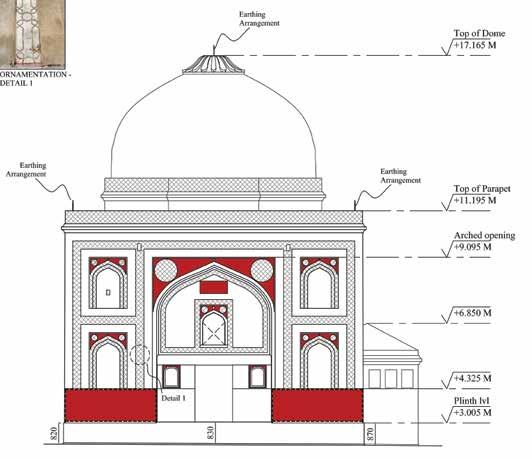
(RIGHT) EXTERNAL ELEVATION | NORTH

Ornamentation in plaster
Conjecture panelling
Evidence of jali in earlier times
1 2 4 m 0 3
THIS PAGE | ARCHITECTURAL DOCUMENTATION OF LAKKARWALA BURJ
2
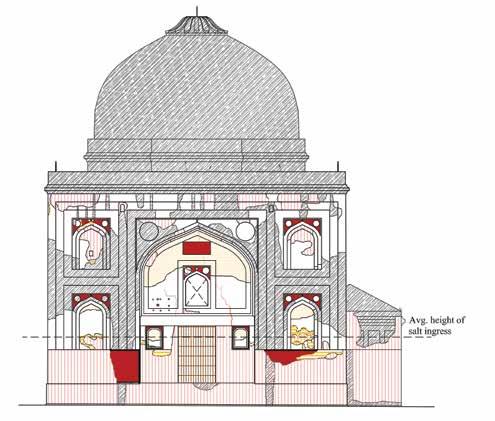
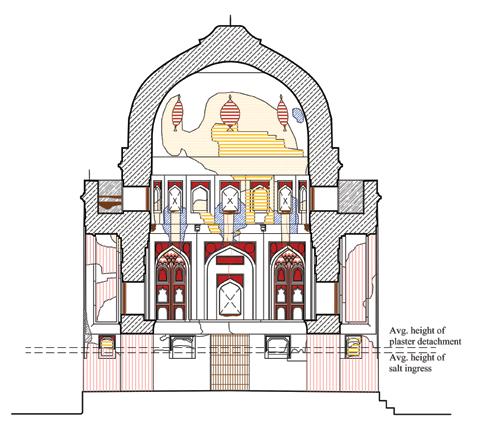
CONDITION MAPPING
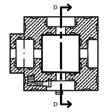
(ABOVE) EXTERNAL ELEVATION [NORTH] (RIGHT) SECTIONAL ELEVATION DD

Cracks: Structural
Cracks: Non-structural/shrinkage
Masonry: Missing
Plaster: Missing/Damaged surface
New works: Surface finish/Re-plastering
Flaking of original plaster due to salt ingress
Flaking of new works due to salt ingress
Surface discolouration
Surface discolouration: Water seepage
Ornamentation in plaster: Missing
Blackened weathered surface
Debris, pigeon droppings and others
New works: Gates for openings
1 2 4 m 0 3


Creating a Sustainable Future
Hardeep Thakur, Kiran Pal Singh, Rajpal Singh, Somak Ghosh, Deepak Padhi, Archana Saad Akhtar, and Ratish Nanda
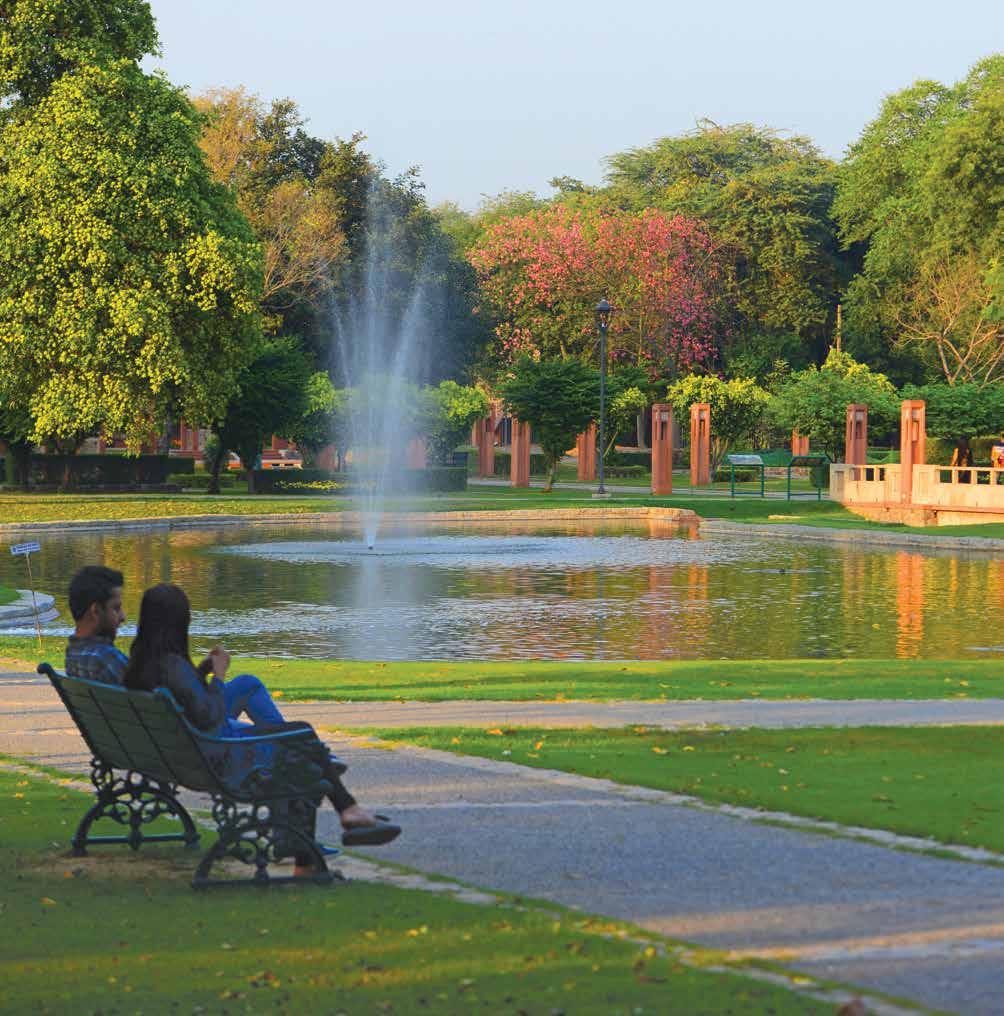
Creating green spaces in urban areas constitutes a significant improvement in the quality of the environment and people’s living conditions. They are leisure spaces and meeting places for all ages and all social categories, encouraging different sectors of the population to mix and integrate. And they have proved to be catalysts for economic activity and a source of employment, both directly and indirectly, particularly through the services provided for visitors.
—His Late Highness Prince Karim Aga Khan IV
The Aga Khan Development Network’s emphasis on environmental concerns and the need to create green spaces in urban areas to significantly improve the quality of the environment and people’s living conditions led to landscaping the Government Sunder Nursery as a key component of the decade long Nizamuddin Urban Renewal Initiative. With AKTC experience in creation and of urban parks across several historic cities—Kabul, Edmonton, Zanzibar, Cairo, Chantilly and Mali, among others—it had been known that the creation of a the park was only half the work done and it would be essential to invest equally in ensuring management of the park to both provide the desired visitor experience but also have a required impact in fulfilling multiple government objectives for historic Delhi. This was required to ensure the fragile ecosystem created received the required care. AKTC’s global experience was key to planning an effective management programme at Sunder Nursery.
Late Highness Prince Karim Aga Khan IV provided the fundings required to create the 90-acre park, install the required underground and above ground infrastructure, conserve the monuments as has already been detailed in this book. Grants were also received from the Norwegian Ministry of Foreign Affairs and the US Ambassador’s Fund for Cultural Preservation. A primary objective of post-project operations and management is to achieve financial sustainability within a decade, covering costs for utilities, hundreds of gardeners, cleaners, security personnel, and equipment—across the museum and park—and, more recently, to support other project components, including the Humayun’s Tomb gardens and socioeconomic development initiatives in Nizamuddin Basti.
Following its inauguration in February 2018, Sunder Nursery was named by Time magazine among the 100 Greatest Places in the world.
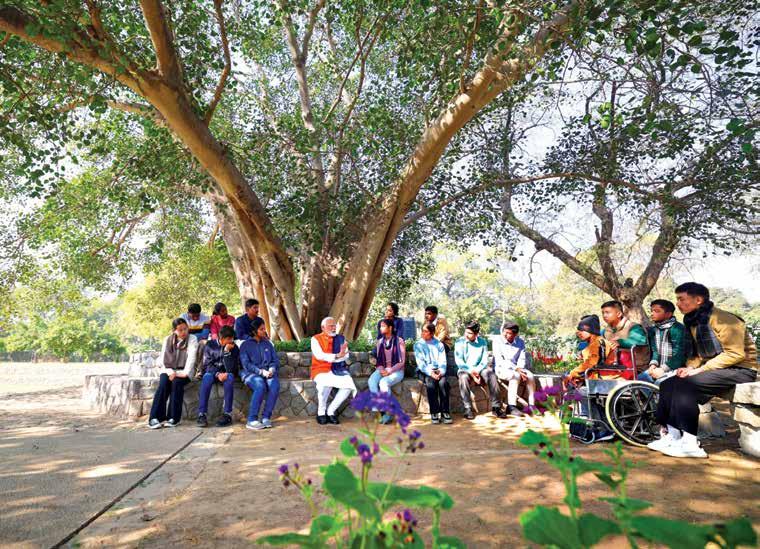
Prime Minister Narendra Modi at Sunder Nursery, on the occasion of 8th Pariksha Pe Charcha on 10 February 2025
Prime Minister Shri Narendra Modi at Sunder Nursery
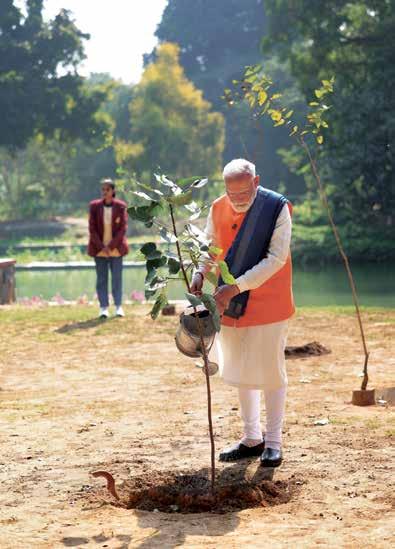
Today, I remember the contribution of His Highness Karim al-Hussaini Aga Khan in developing Sunder Nursery. The work has become a blessing for all the culture lovers.
Today, I am extremely happy to come here. Today, with music, it feels like the season of spring, which Hazrat Amir Khusrau celebrated in all its glory.
This traditional verse captures the vibrant arrival of spring (basant) in the Braj region, with mustard blooming, mango buds sprouting, the flame of the forest (tesu) in bloom, and cuckoos calling, painting a sensory-rich picture of seasonal joy.
—Prime Minister Narendra Modi at Sunder Nursery, on the occasion of Jahan-e-Khusrau 2025 Sufi Music Festival on 28 February 2025

Nurturing Nature
Geeta Wahi Dua
The design has evolved from what is available on the site and it has been fortunate to have an existing landscape of dense vegetation and very interesting trees—some almost 100 years old and hence a great site asset. Sunder Nursery also has the asset of heritage—World Heritage Monuments and the design needed not to harm anything, but to create a movement pattern, a series of spaces among these beautiful assets, so that the design or what is designed does not really overpower what exists.
—Mohammad Shaheer
Sunder Nursery’s location within a green corridor—bordered by the National Zoological Park to the north, the walled garden of Humayun’s Tomb to the south, and the reclaimed floodplains of the River Yamuna to the east—establishes it as a distinctive and significant site. It also serves as the culmination node of the east–west green avenue of Lodi Road, further enhancing its importance within the urban fabric.
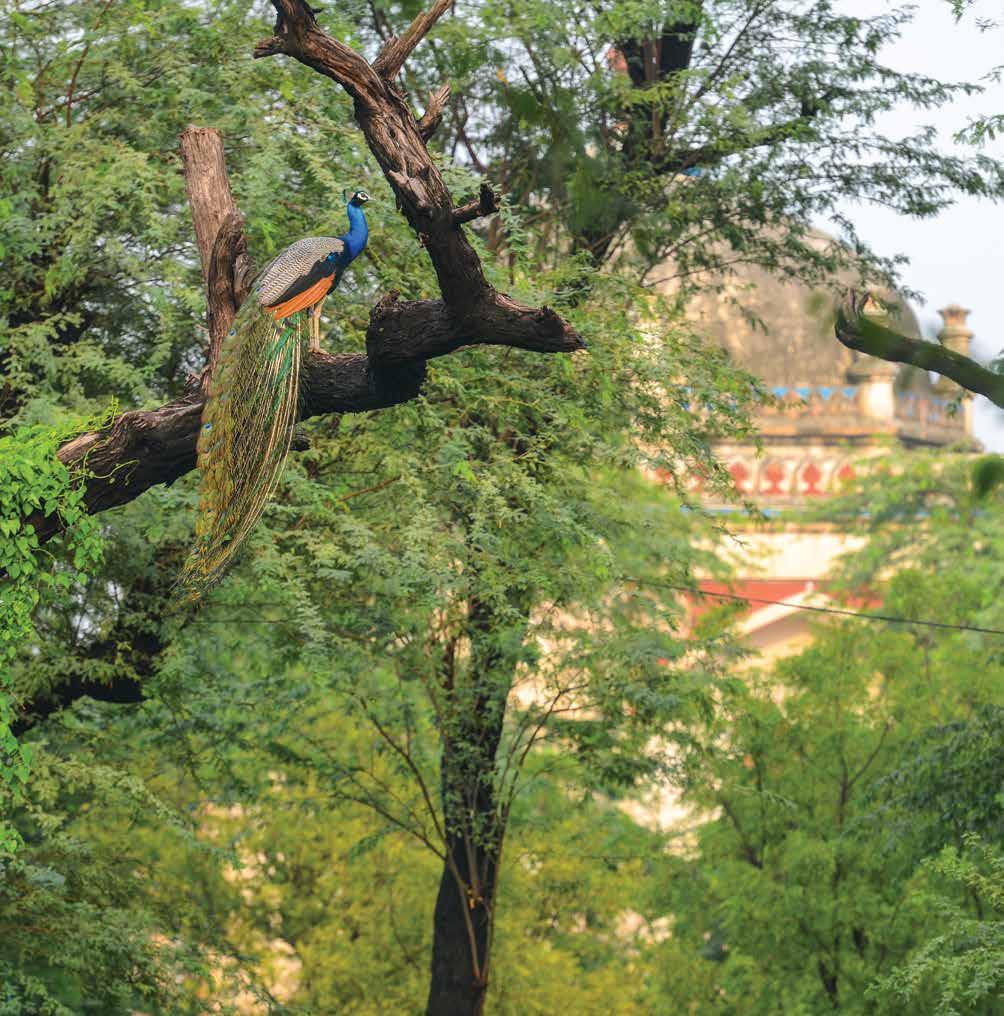
In addition to its integration into the region’s cultural landscape, marked by scattered monuments and historic and spiritual structures, the site holds a unique natural heritage. Its contemporary history dates back to the early 20th century when it was developed by the British as an experimental plant nursery to meet the planting needs of the new capital, New Delhi. Native species were cultivated alongside exotic varieties, particularly trees introduced from British colonies such as Mexico and South Africa. These specimens were reared and later transplanted to various locations in the capital, including gardens, roadways, and residential areas.
Post-Independence, Sunder Nursery transitioned into a government-operated facility, primarily as a plant nursery. Over the decades, it evolved into a diverse and vibrant landscape, blending wild and cultivated species. This organic transformation has enriched the site’s ecological and aesthetic character, creating a fascinating mosaic of natural and introduced vegetation that defines its identity today.
Contributors’ Biographies
Luis Monreal
A conservationist and cultural heritage expert, Luis Monreal is the General Manager of the Aga Khan Trust for Culture. With extensive experience in archaeology, museum management, and heritage conservation, he has led global initiatives integrating cultural preservation with sustainable development.
Gillian Wright
A writer and translator specializing in Indian history and culture, Gillian Wright has authored several books on India and worked on translations of Hindi and Urdu literature.
Ratish Nanda
A conservation architect, Ratish Nanda is the CEO of the Aga Khan Trust for Culture in India. He has led several landmark heritage restoration projects, including Humayun’s Tomb and Sunder Nursery in Delhi, integrating conservation with urban renewal.
Gautam Bhatia
An architect, writer, and critic, Gautam Bhatia explores architecture’s intersection with social, political, and cultural issues. He has authored books, essays, and satirical works that challenge contemporary architectural discourse in India.
Yogesh Kapoor
A landscape architect, Yogesh is partner at Shaheer Associates, the design consultancy firm for Sunder Nursery. He has contributed to many urban and environmental projects that balance development with conservation including Bagh-e-Babur, Kabul (for AKTC).
Archana Saad Akhtar
An architect and New Media design professional, Archana is working as Programmes Director for Design & Outreach with AKTC. She has contributed on several publications, exhibitions, and supervises the AKTC Delhi and Hyderabad projects.
Hardeep Thakur
As Chief Operations Officer for Sunder Nursery, Hardeep oversees the day-to-day management and maintenance. He also supervises the long-term sustainability with the help of active programming, governmental and private linkages, innovative and upgraded facilities.
Kiral Pal Singh
Kiran Pal Singh has over four decades of experience in horticulture design for public spaces. He has been working with AKTC since 2012 and has been responsible for creating planting scheme and maintenance at the various open spaces in Nizamuddin Area, especially Sunder Nursery. Under his watchful and keen supervision, several thousand plants have been planted and flourishing in the park.
Rajpal Singh
Rajpal Singh has been working as a Chief Engineer at AKTC since 2007 onwards. Following two decades of working with the CPWD, at AKTC he has been instrumental for the conservation Babur’s Tomb in Kabul (Afghanistan), over 60 monuments in the Nizamuddin Area, Golf Club, and Qutb Shahi Heritage Park in Hyderabad (Telangana). He has also worked on the creation of civic infrastructure like lake, roads, pathways, Wilderness Zone, offices etc. in Sunder Nursery.
Somak Ghosh
Currently heading Finance and Office Operations at AKTC, Samak oversees the sustainability and financial feasibility. With deep experience in donor engagement and government coordination, he brings a sharp focus on impact, transparency, and long-term sustainability.
Deepak Padhi
Deepak Padhi is responsible for programme monitoring, evaluation, and research for the AKTC Delhi project, and plays a key role in overseeing the annual visitor experience exercise at the Sunder Nursery. Feedback collected from visitors is consistently utilized by the management team to ensure the smooth and effective operation of the Park.
James L. Wescoat Jr.
A distinguished landscape historian and geographer, James L. Wescoat Jr. specializes in South Asian water systems, cultural landscapes, and Mughal gardens. His research bridges history, policy, and design in landscape conservation.
Geeta Wahi Dua
A landscape architect, Geeta Wahi Dua’s work spans academia, journalism, and collaborative projects that emphasize cultural and ecological narratives.
Rakesh Gupta has been observing, learning and passionately interacting with diverse species of bees for more than two decades. He brings with him new concepts for beekeeping and is always willing to be associated with any bee conservation initiative.
Mayank Austen Soofi
A writer, journalist, and photo-documentarian, Mayank Austen Soofi is known for chronicling Delhi’s everyday life, history, and marginalized communities. His deeply personal narratives capture the city’s evolving cultural and social landscape.
Narendra Swain
Narendra, Swain, the documentation officer with AKTC has been the professional photographer on the Nizamuddin Urban Renewal Initiative since 2008. Since then, he has been keenly documenting the various project components ranging from conservation works on the monuments, socio-economic initiatives in the Basti, and landscape development at Sunder Nursery.
Photos & Illustrations Credits
Code
t: top
m: middle
b: bottom
l: left
r: right
Aga Khan Museum, Toronto 31
Aga Khan Trust for Culture Cover Photo, 2, 4, 8, 10, 39, 40–41, 42, 52–53, 56, 59, 61, 62, 63, 74, 75, 78r, 80–81, 82–83, 84, 85, 86, 87b, 88, 89, 91, 92–93, 94, 95, 96–97, 98–99, 101r(t), 101r(b), 102–103, 104–105, 106–107, 108, 109, 113, 115, 120, 121r, 123, 124, 125, 126–127, 128–129, 130, 133, 135, 136, 137, 139, 140, 141, 142, 144, 145, 147, 148, 149, 150, 151, 152, 153, 154, 155, 156–157, 158, 161, 164, 165, 167, 168, 170, 172, 173, 174, 175, 176, 177, 178–179, 180, 181, 182, 183, 184, 185, 186, 187, 188, 189, 194, 197, 198, 200, 201, 203l(t), 204, 205, 206–207, 208, 211, 212(b), 213, 216, 217, 218, 219, 220, 221, 222, 223, 224, 225, 226, 227, 228, 229, 230–231, 242–243, 244–245, 246–247, 248, 249, 250, 251, 252, 253, 254, 255, 256–257, 275, Back Fold and Back Cover Photos
Archana Saad Akhtar 87(t)
Narendra Swain
Ratish Nanda 133m(t)
Archaeological Survey of India 19, 22, 23, 25, 30, 32, 33, 36, 37, 38, 44–45
Arthur M. Sackler Gallery 34
Ashok B. Lall Architects 169 British Library 20, 24
Carol M. Highsmith, Library of Congress, Prints and Photographs Division 46(r)
Getty Images, Hulton Collection Archive. Presently on display at Humayun’s Tomb World Heritage Museum 18
Gift of Charles Lang Freer Collection, Freer Gallery of Art, Smithsonian 16
Himanish Das 28–29, 48
James L. Wescoat Jr. 203l(b), 203r(t), 203r(b)
Mayank Austen Soofi 232, 235, 236, 237, 239, 240, 241
Metropolitan Museum of Art 77(r)
Mohammad Shaheer
66, 67, 68, 69, 70, 71, 72, 73, 77, 116, 117
National Museum
27. Presently on display at Humayun’s Tomb World Heritage Museum
Ram Rahman
6–7, 101l(t), 101l(b), 143
Shaheer Associates
12, 60, 65, 73, 78, 79, 110, 111, 112, 114, 119, 122, 196, 214
Studio Earth
32, 35, 46(l), 100, 121(l), 163, 166, 178–179, 190–191, 197l(t), 197r(t), 199, 210, 212l(t), 212r(t)
Victoria and Albert Museum, London 33 (Humayun’s Tomb)
Victoria Memorial Hall, Kolkata 21
William K. Ehrenfield Collection, Asian Art Museum
32 (Tomb of Nizamuddin Auliya)
Aga Khan Trust for Culture
The Aga Khan Trust for Culture (AKTC), a cultural agency of Aga Khan Development Network (AKDN), focuses on leveraging cultural assets to achieve physical, social, cultural and economic revitalization of communities in cities across the world.
It includes the Aga Khan Award for Architecture, the Aga Khan Historic Cities Programme, the Aga Khan Music Initiative, the online resource ArchNet.org and the Aga Khan Program for Islamic Architecture at Harvard University and the Massachusetts Institute of Technology.
The Aga Khan Historic Cities Programme has shown how creation of parks and gardens, conservation of heritage buildings, improvement of the urban fabric and revitalization of cultural heritage—in many cases the only asset at the disposal of the community—can provide a springboard for social development. These projects have demonstrated that they can have a positive impact well beyond conservation, promoting good governance, the growth of civil society, a rise in incomes and economic opportunities, greater respect for human rights and better stewardship of the environment, even in the poorest and most remote areas of the globe.
The experience of the Aga Khan Historic Cities Programme in creating city parks in the historic cities of Cairo, Kabul, Aleppo, Mali, Zanzibar, has been instrumental in planning for Sunder Nursery and working towards its future management and self sustainability.
AKTC’s project, the Nizamuddin Urban Renewal Initiative follows an Urban Landscape approach in undertaking conservation works on monuments standing across 300 acres in the heart of New Delhi. Conservation works are coupled with major socio-economic initiatives and landscaping over 200 acres of green space—all aimed at improving the Quality of Life for the inhabitants of the national capital.
The creation of the 90-acre Sunder city park is part of a larger urban development initiative wherein the Aga Khan Development Network has implemented conservation of 50 monuments across the 300 acres of project area, including the Humayun’s Tomb.
For information on AKDN, please visit: www.akdn.org

akdn.org
#agakhantrustforculture #AKTC #akdn #agakhanmuseum
First published in India in 2026 by Mapin Publishing Pvt. Ltd 706 Kaivanna, Panchvati, Ellisbridge Ahmedabad 380006 INDIA
T: +91 79 40 228 228
E: mapin@mapinpub.com www.mapinpub.com
in partnership with Aga Khan Trust for Culture
An agency of the Aga Khan Development Network and
Government Sunder Nursery Management Trust
Text © the authors 2026.
Photos and Illustrations © as listed on page 273.
All rights reserved under international copyright conventions. No part of this book may be reproduced or transmitted in any form or by any means, electronic or mechanical, including photocopy, recording or any other information storage and retrieval system, without prior permission in writing from the publisher.
The moral rights of authors of this work have been asserted.
ISBN: 978-93-94501-32-4 (SC)
ISBN: 978-93-94501-46-1 (HC)
Concept: Ratish Nanda
Research, Compilation & Coordination: Geeta Wahi Dua and Archana Saad Akhtar
Design & Layout: M. Shah Alam and Brijender S. Dua | Studio Earth, New Delhi
Proofreading: Marilyn Gore / Mapin Editorial Production: Mapin Design Studio
Printed in India
Sunder Nursery Nizamuddin New Delhi 110013 India
info@sundernursery.org


#sundernursery #sundernurserygardens #SunderNursery #SunderNurseryPark
HERITAGE & CONSERVATION, LANDSCAPE, GARDENING
Gardens Within A Garden
Sunder Nursery, New Delhi
Edited by Geeta Wahi Dua and Archana Saad Akhtar
276 pages, 565 photographs and 50 drawings
9.85 x 9.85″ (250 x 250 mm, softcover with gatefold
ISBN: 978-93-94501-32-4 (SC) ₹1950 | $40 | £30
ISBN: 978-93-94501-46-1 (HC) ₹3950 Spring 2026 | World Rights
Each generation must leave for its successors an enhanced and sustainable social and physical environment.
—His Late Highness Prince Karim Aga Khan IV