“Receive the child in reverence, Educate them in love, Let them go forth in freedom”
The philosopher and educator, Rudolf Steiner was one of the most original thinkers of the twentieth century. His writings cover a wide range of subjects and he made valuable contributions in many fields, including education, science, medicine, agriculture (Bio-dynamics), the arts and social reform. The basis of his research was the scientific investigation of the spiritual world, which he called Anthroposophy.
In 1919, Steiner was invited to establish a school for the children of the workers of the Waldorf Astoria factory in Stuttgart, Germany. He took this opportunity to demonstrate how a school curriculum and teaching method might develop clarity of thought, sensitivity of feeling and strength of will.
TABLE OF CONTENTS
SCHOOL VALUES 04
SCHOOL STRUCTURE 05
STAFF 07 EARLY CHILDHOOD 09
CLASS 1 - 6 Class Teacher Period 14 WHOLE SCHOOL INFORMATION 16 YOUR CHILD AT SCHOOL 19 POLICY AND PROCEDURES 24
RECOMMENDED READING 28
FREQUENTLY ASKED QUESTIONS 30
PRINCIPAL’S WELCOME
A warm welcome to Mansfield Steiner School
Our schools mission is to support students to ‘become free-thinking, globally minded individuals who can design their own lives with initiative and purpose.’ To become free-thinking, our students, teachers and parents need to be able to reflect on how our own thoughts and feelings guide our lives. The school relies on a strong partnership with our parents to work towards this mission and to enact these values. Steiner Education asks that teachers and parents remain cognisant of the fact that who we are and how we approach our lives, has a deep impact on our children, more so than our words and actions alone. In choosing to send your child to our school (your school) you have chosen to enter a partnership with many dedicated staff, students and fellow parents. Our interactions together will shape the way your children learn to be in the world.
The vision for the school is that we are all working to make the world a better place. This must start with us as individuals, in our families, our community and of course the school. The school’s values are listed in many places, but they can be summarised by three words that capture the essence of Steiner Education; Goodness, Beauty, and Truth. These words capture the three main stages of development that Steiner recognised. In the first 7 years, Goodness and oneness with the world and education through imitation, from 7-14 years Beauty where we engage children through their feeling life and 14-21 years where their intellect is awakened and abstract thought and the awareness of complexity demand Truth. These words also capture ideals that we can wish to aspire to as individuals and instill in our children, namely the idea that you are good, you are enough, the world is good and full of beauty, and you can make positive contributions based on your considered actions.
Open and honest communication is the linchpin of any organisation; any concerns need to be voiced to the person who can assist with the issue. Any educational matters need to be discussed with the Class teacher and/or Head of Faculty, wellbeing issues with the Head of Wellbeing, any financial matters with our Operations Manager, and any other issues with me.
Please ensure you are connected to the ‘Sentral’ app as this is our main tool for sending you information and see the office if you are having difficulty with setting it up.
We are very proud of our school, its history and our vision for the future. At Mansfield Steiner School we work hard to honour the importance of childhood, ensuring that everyone can experience a joyful, nourishing and imaginatively rich foundation to life.
We look forward to a long, happy, and honest relationship with your family.
Glenn Hood PRINCIPAL
“ “
It is only wholesome when In the mirror of the soul of humanity
The whole community takes shape
And in the community
The strength of the individual soul lives
RUDOLF STEINER
Love is higher than opinion. If people love one another the most Varied opinions can be reconciled.... This is one of the most important tasks For humankind today and in the future; That you and I should learn to live together And understand one another.
‑‑RUDOLF STEINER
MANSFIELD STEINER SCHOOL
Mansfield Steiner School was founded in Maindample, near Mansfield, in 1985 by a group of parents and teachers wishing to have a Steiner education for their children in a country environment.
In 1996 the school relocated to Mansfield, to a purpose built, rammed earth building, to become more accessible to the wider community.
Over the years the school has continued to grow and flourish with many beautiful purpose built learning spaces being added. Now in the 40th year from Kindergarten to Year 12, we look forward to many years of a complete Steiner Education for our children in the future.
VISION STATEMENT
Our Vision is a School Community of free, responsible, and ethical contributors to our contemporary world.
MISSION
Mansfield Steiner School aims to awaken and inspire students’ critical thinking, emotional intelligence, and artistic expression on a global scale, supporting their development to become open-minded and ethical individuals who can design their own lives with initiative and purpose.
VALUES
Rudolf Steiner contended that the fundamental purpose of education lies in the cultivation of students’ capacities for thinking, feeling, and willing. These essential human qualities find expression in society through the enduring principles of goodness, beauty and truth. Furthermore, they manifest in the various forms of science, art, ethics (or belief systems) and the search for meaning.
GOODNESS is the inherent moral quality that arises from understanding, empathy, and the pursuit of actions that contribute positively to the wellbeing of oneself, others, and the world.
BEAUTY is the reflection of harmony and balance in the natural world, nurturing our senses and inspiring our creative spirits.
TRUTH is a living, evolving concept that unfolds through direct experiences, personal development, and a deep connection to the natural world.
GLOBAL EDUCATION
Mansfield Steiner School is part of the world-wide educational movement known as “Steiner” or “Waldorf” schools, comprising some 800 schools to date. Since the inception of the first school for children of the workers in the Waldorf-Astoria factory in Stuttgart in 1919, Steiner schools have been established all over the world. In Years 11 &12 we offer the International Baccalaureate (IB). The IB values its hard-earned reputation for quality, for high standards and for pedagogical leadership and Mansfield Steiner School is proud to be a part of this global community. The IB promotes intercultural understanding and respect, not as an alternative to a sense of cultural and national identity, but as an essential part of life in the 21st century. It provides a balanced education for the ‘whole’ student and provides excellent preparation for both university and adult life.
PHILOSOPHICAL UNDERSTANDING
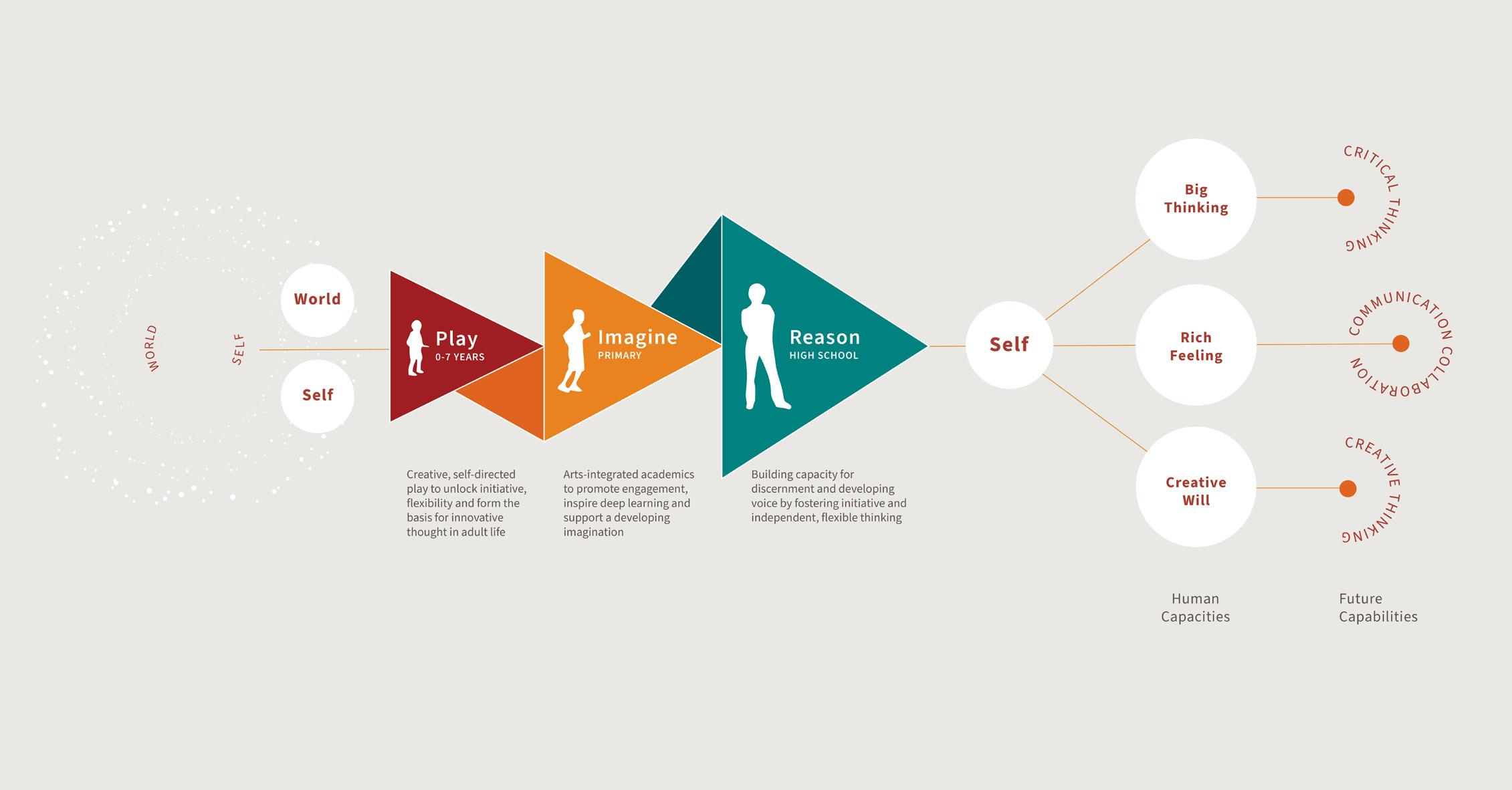
Steiner or Waldorf Schools share a common philosophical foundation in Anthroposophy arising from the work of the Austrian philosopher Rudolf Steiner (1865 – 1923). Anthroposophy views the human being as multi-faceted including spirit, soul and body and outlines the stages of human development from birth through phases of approximately seven years (e.g., from ages 1 to 7, 8 to 14, 15 to 21). The curriculum is designed to reflect and strengthen these phases.
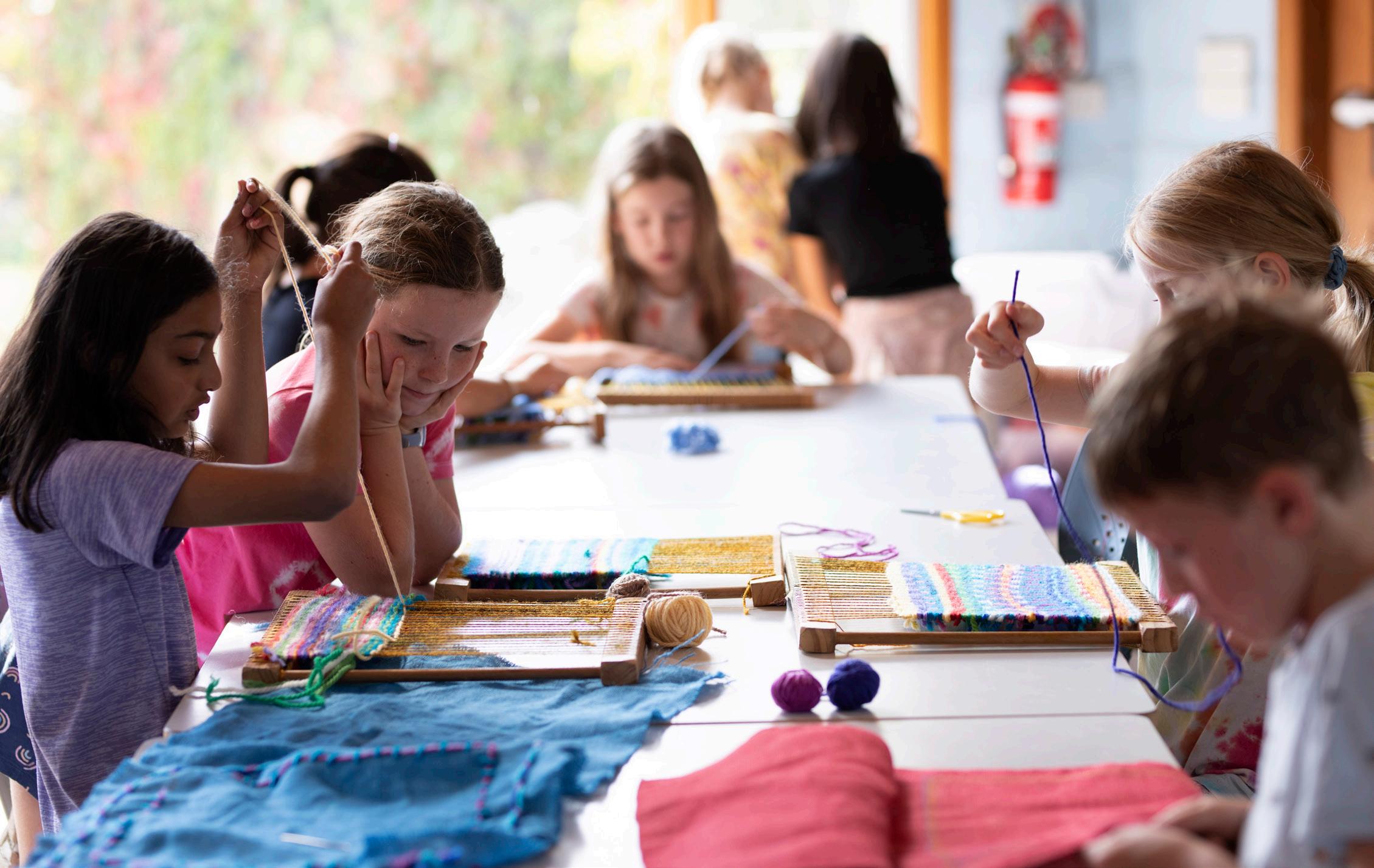
Wellbeing is based on educating the whole person: an academic curriculum that gives substance to educating the heart and the hands as well as the head. In addition to the academic program, students are challenged to grow in multiple ways through: * the creative arts (Aesthetics), they grow in their inner creative expression, * soft and hard crafts (Artisan), they are educated to be practical and technical, *sport and Outdoor Education (Active Wilderness), they are stretched to be strong, resilient and have grit, * relationship experiences (Altruistic), they learn to live for and with others. In this age of increasing technological intrusion into our very humanness, the goal is to educate our students to find all that is within them, to be full and successful human beings.
SCHOOL STRUCTURE
SCHOOL STRUCTURE
Collaboration and communication are guiding principals for the organisation
GOVERNANCE
The Governance Committee holds the legal responsibility for the activities of the School and meets regularly to set and monitor the strategic direction of the school. Management of the school is delegated to the Principal and the School Leadership team. If you would like to be involved in School Governance, please contact any of the existing members or the school office. Elections are held at the AGM in May each year.
ADMINISTRATION
The Principal is responsible for the effective and values-based management of the school. The Principal oversees the educational programs and implementation of the strategy and policy set by the Governance Committee within the agreed budget. The Operations Manager is responsible for the efficient planning and day-to-day running of the school. This includes dealing with government agencies, funding, school fees, legal matters, and capital works. The Administration Team provides support for all staff and ensures the smooth running of the school.
SCHOOL LEADERSHIP TEAM
The school Leadership Team comprises the Heads of Early Childhood, Primary School, Secondary School, IB, Music, Wellbeing, Operations Manager, Deputy Principal and Principal and conduct weekly management meetings.
FACULTIES
Early Childhood, Primary, Secondary, IB, Music, Wellbeing & Learning Support faculties are led by the Head of that faculty and meet weekly
COLLEGE OF TEACHERS
The College of Teachers meets weekly and is led by the Deputy Principal. It aims to reflect on the intent and purpose of Steiner Education through Child Studies, readings, reflection, and artistic activities.
PARENT & FRIENDS COMMITTEE
Facilitates craft group, social activities and fundraising.
If you are interested in joining P&F please email: admin@mrssk.vic.edu.au
THE STEINER LEARNING JOURNEY
LEARNING CARE
ADMINISTRATION
The Principal is responsible for the effective and values based management and day to day operations and business of the school. The Principal oversees the educational programs and implementation of the strategy and policy set by the Governance Committee within the agreed budget.
The Operations Manager is responsible for the efficient planning and day to day running of the school. This includes dealing with government agencies, funding, school fees, legal matters and capital works.
The Admin team are responsible for supporting the Principal and College with administration tasks.
THE COLLEGE OF TEACHERS
The College of Teachers and all staff are committed to providing an education for children in the light of Rudolf Steiner’s philosophy. Our philosophical aim is to educate the whole person in preparation for the future by providing the appropriate nourishment at each stage of physical, emotional and intellectual development as outlined by Rudolf Steiner. These indications can be imbued with the results of our teachers’ own spiritual educational research and life experiences. Mansfield Steiner School is a cultural learning community in which the economic sphere serves the cultural life creatively and is governed by educational needs of our children. Our aim is to foster a culturally rich community, beginning in each classroom and then encompassing the whole school, including families, friends of the school and ultimately sharing our warmth with the whole community.
It is a policy of the School that all staff members have appropriate training and qualifications as required by Department of Education and Early Childhood Development and/or Victorian Institute of Teaching. Most staff also have further formal training specific to Steiner Education.
The teachers strive to create an environment: in which young children feel secure, cared for and are recognised as individual beings. The child’s security arises out of being surrounded by beauty and goodness and by experiencing the certainty of a predictable and rhythmic life. Daily, weekly, and yearly rhythms help to instil a healthy habit life. The teacher and his or her assistant endeavour to provide order and purpose in practical activities, to set boundaries and help to bring harmony between the children in their group.
Now is not time for the harvest.
Now is the time to plant seeds that will bear fruit at a later time….
EARLY CHILDHOOD
– enjoying an unhurried childhood
In the Early Childhood, education is centred upon meeting the needs of the child’s developing motivation or will. A young child’s work is play. The Early Childhood program is focused around activity and play in a colourful environment equipped with natural, basic materials, and is broken into two parts: Morning Star 3 & 4 Year Old Kinder and Rosa Mundi Prep.
MORNING STAR KINDERGARTEN
3YO HONEY BEES
Children need to be turning 4 in this school year.
4YO ECHIDNAS
Children need to be turning 5 in this school year.
Smaller children are just beginning to socialise and to be comfortable away from their parents. The session is largely devoted to free play, inside or outside. Activities such as painting, baking or simple handcraft are offered. Morning tea is shared at the table and the session finishes with songs and a simple story, perhaps acted out with props or puppets. Opening and closing verses and the mealtime grace are repeated throughout the year and the children feel secure with their familiarity.
ROSA MUNDI PREP Children need to be turning 6 years of age in the year they are enrolled in Prep. This is a preparatory program, offering more extended activities over five days. The focus of this year is the continuing development of skills. Foundations of reading and language skills are being laid through the verses, songs and rich language of storytelling.
SESSIONS 2025
MORNING STAR KINDERGARTEN
Honey Bees 3 year old Kinder Monday, Tuesday and Thursday
Echidnas 4 Year-Old Kinder Wednesday and Friday (full Echidna cohort) and then one day in a small composite group with the Honeybee kinder.
The State Government funds 15hrs of Kindergarten for all kinder children, 8.45am – 1.45pm. We offer an extended program for both kindergartens of 8.45am –3.15pm.
Rosa Mundi Prep Five days per week. 9.00 am – 3.20 pm
THE FIRST SEVEN YEARS
The young child experiences the world, both physically and emotionally, in a fundamentally different way from an adult. Sensory input is all important. They are totally immersed in what they hear, see and experience, unaware of themselves as an independent being. Physically the body is going through constant growth and maturation. In the education of the young child, the approach of a Steiner Early Childhood program is underpinned by several fundamental philosophies.
Steiner describes the child’s life forces, particularly in the first seven years, as being primarily engaged in the development of the physical body. He suggests that they should not be prematurely diverted into early intellectual activity at the expense of healthy physical development.
IMAGINATION The young child experiences their ‘self’ as being at one with the world. The process of self-realisation and awareness of their self as an individual, is slow and gradual. Steiner describes the first seven years as being the Age of Imagination, in that the child is “thinking in pictures”, imaginatively, rather than abstractly, in concepts. Steiner education describes the child of kindergarten age as having a ‘dreamy consciousness.’ We aim to meet this consciousness by avoiding intellectual explanations or instructions in favour of creating imaginative pictures.
Plenty of time is allowed for imaginative free play, both inside and out. The child is encouraged to create their own play scenarios independently of adult intervention. We provide a variety of relatively unformed playthings of natural materials such as shells and pebbles, logs and blocks, cloths, handmade dolls, wooden animals etc. that allow for open-ended transformation into imaginative play. Teachers choose to tell, rather than read, traditional fairytales or nature stories thus calling on the child to create internally their own imaginative pictures.
IMITATION The young child learns primarily by example, by watching, listening and endeavouring to copy those around her. To ‘teach’ a small child the most appropriate way is to ‘do’ what you would like the child to do, whether it is walking and talking, or tying shoes and tidying away the toys.
And to ‘be’ what you want the child to be…. caring, polite, helpful...rather than intellectual explanations or detailed requests, in Early Childhood the Steiner teacher will ‘do’, maybe with gentle prompts and allow the children’s natural tendency to join in and copy to achieve the aim. We try to be worthy ‘role models’ for the children.
RHYTHM AND ROUTINE Steiner saw rhythm, routine and repetition as key factors in supporting the development of the Will.
Children are carried along by the rhythms of the world in which they live and flourish when their daily activities are arranged rhythmically to reflect the natural order of life.
Kindergarten activities flow with a sense of “breathing in” and “breathing out”, for example, from the quiet moments of mealtimes and story time and rest time, to the active moments of vigorous work and play. Circle time, a whole class together time, flows between the polarities of quiet voices and finger games, to whole body movement, singing and verse, in a rhythmic and balancing way, bringing the child from stillness to movement and back again. All transitions between the activities are accompanied by singing, or carefully chosen phrases that enable the child to follow the daily routine without needing much instruction or explanation. Each room will have on display a more detailed schedule of the daily timetable, mealtime menu and weekly activities.
REPETITION Repetition allows learning to consolidate, ‘practice makes perfect.’ In Early Childhood we choose to build up familiarity and to repeat experiences many times rather to provide a variety of constantly changing, new ‘stimulations’. We tell the same story, for example, every day for a week or more. The same Morning Circle is presented for a three week period. The rhythm and the routines are repeated.
Rhythm, routine and repetition develop will-power, the capacity to complete tasks and the inner strength and confidence to undertake initiative based on thoughts and feelings, by providing the child with regular opportunities to do things in a familiar way again and again. The child begins to develop habits that can be of lifelong value.”
RUDOLF STEINER
OUR ENVIRONMENT The Early Childhood spaces provide warm, nurturing surroundings. Colours, furnishings and materials and equipment are chosen with care and for specific qualities. The warm and life-enhancing forces of peach blossom pink were recommended by Steiner as most appropriate for little children. This is reflected in the choice of colour for walls and curtains.
Simplicity, beauty and practicality are inherent in the furniture, much of which has been lovingly made especially for us. Natural materials and play things from the natural world are used whenever possible. Baskets of logs, blocks, shells, gumnuts, stones and crystals inspire and support creative play.
Cloths of all sizes and colours lend themselves to cubbies and dress-ups and all manner of props. Play stands, tables and stools are available to create ships and castles, a tractor or a stable as play requires. Wooden dishes, handmade dolls and animals are all familiar to the children. The kitchen corner provides a homely atmosphere, and the wood fire is a cosy spot to gather around on chilly days.
FOOD Children attending full days in Morning Star or Rosa Mundi need to bring a healthy lunch from home in a container. Please do not send pre-packaged foods, plastic wrapping or a lunch box with commercial characters on it. Do not send lollies or highly sweetened items thank you.
Morning Tea is prepared in Morning Star and Rosa Mundi each day, following a weekly rhythm in the choice of food. Participation in food preparation and the shared experience of eating together enhances social skills and fine motor skills, and enables the children to develop an appreciation for a diversity of grains, fruits and vegetables, tastes, textures and cooking methods.
Where possible organic or biodynamic foods are used, eggs are free range or from the hens at school. Each child’s special needs are considered. If your child has allergies, please speak to his/her teacher.
Each day a different grain is featured to encourage variety in our diet.
TOYS At school, our rooms are filled with beautiful, imaginative play equipment for your children to use at school; toys from home are best left at home. If your child brings a special treasure home in their pocket that belongs to the Kindergarten, please return it. It’s enough to say to your child, “This belongs to your classroom, let’s take it back tomorrow”, rather than discussing the issue with the child.
‘Treasures’ from the natural world (a nest, unusual leaf, stone, feather, etc.) are welcomed for our ‘Nature Table’ If there is something special (a holiday souvenir, tooth-fairy gift) which your child is wanting to show us, please check with staff first so that it can be taken care of and brought in at an appropriate moment.
CLOTHING Clothing is extremely important. Play clothes from natural fibres, cotton or wool are most durable and most comfortable for children to wear because they breathe. Sturdy shoes are highly recommended. In the warm spring and hot summer weather children need to wear loose, comfortable clothing. Cooler autumn and winter months require several layers of clothing, with singlets and socks to keep children warm. A sturdy pair of outdoor
shoes is required for our natural play environment. Children will enjoy themselves more if they have safe, non-slip, covered shoes.
During indoor play, the children and staff wear soft-soled shoes or no shoes. A change of footwear for indoors helps children change behaviour for indoors.
In Term 1 and 4 broad-brimmed hats need to be worn for outside play, and for cold days, a beanie is also needed. Plain coloured school hats are provided and can be personalised with your child’s name and decorated at home. For convenience, it may be left in the rooms. Please ensure that your child is dressed in a sun safe manner, no bare shoulders, thank you.
The following is a list of clothes we would like each child to maintain in her/his school bag: two pairs of socks, two pairs of underwear, a shirt, pants and a jumper. The items should be clearly labelled with your child’s name. Wet or dirty clothing will be sent home at the end of the day.
In the winter, jackets and warm hats are often necessary; ensure your child has something extra to put on when going outside from the warmth of the kindergarten room. In term two and three please leave a pair of waterproof boots and a raincoat at school as we play outside in all weather.
While Mansfield Steiner School does not have a uniform, we ask that you do not send your child with commercial or movie character images printed on clothing, school bags and slippers as this will affect the imaginative play of little children. At the teacher’s discretion, inappropriate clothing will be changed to more appropriate clothing for your child and the benefit of others.
BIRTHDAY CELEBRATIONS The teacher regards your child’s presence in the class as a blessing and is grateful for the opportunity to express his/her appreciation on his or her birthday. Every child’s birthday is celebrated. Children whose birthday falls in a holiday period will share their birthday usually in the weeks following the holidays. During the celebration, there will be singing and a special gift given by the teacher and the class. Your child’s teacher will provide more information about this celebration as the birthday approaches.
Rosa Mundi Children enjoy celebrating their birthdays with their friends. The children usually help to make a birthday cake during the morning and “stir in their birthday wishes”. Parents are invited to come and share afternoon tea and a special birthday story told by the Prep teacher and the parent together.
In the Morning Star room (Kinder) we make a special cake together, and parents are invited to share our morning tea. Talk with your child’s teacher about the birthday celebration the week before your child’s special day.
PLAY "Play is to the child as work is to the adult". A large portion of the day is given to free play. Children teach themselves almost everything they need to learn through free play. Play extends the child: the imagination (the basis of creative thinking in adult life) is developed; body and mind are integrated, the body learns co-ordination, spatial orientation and sensory acuteness; social skills are continually challenged, and emotional growth takes place.
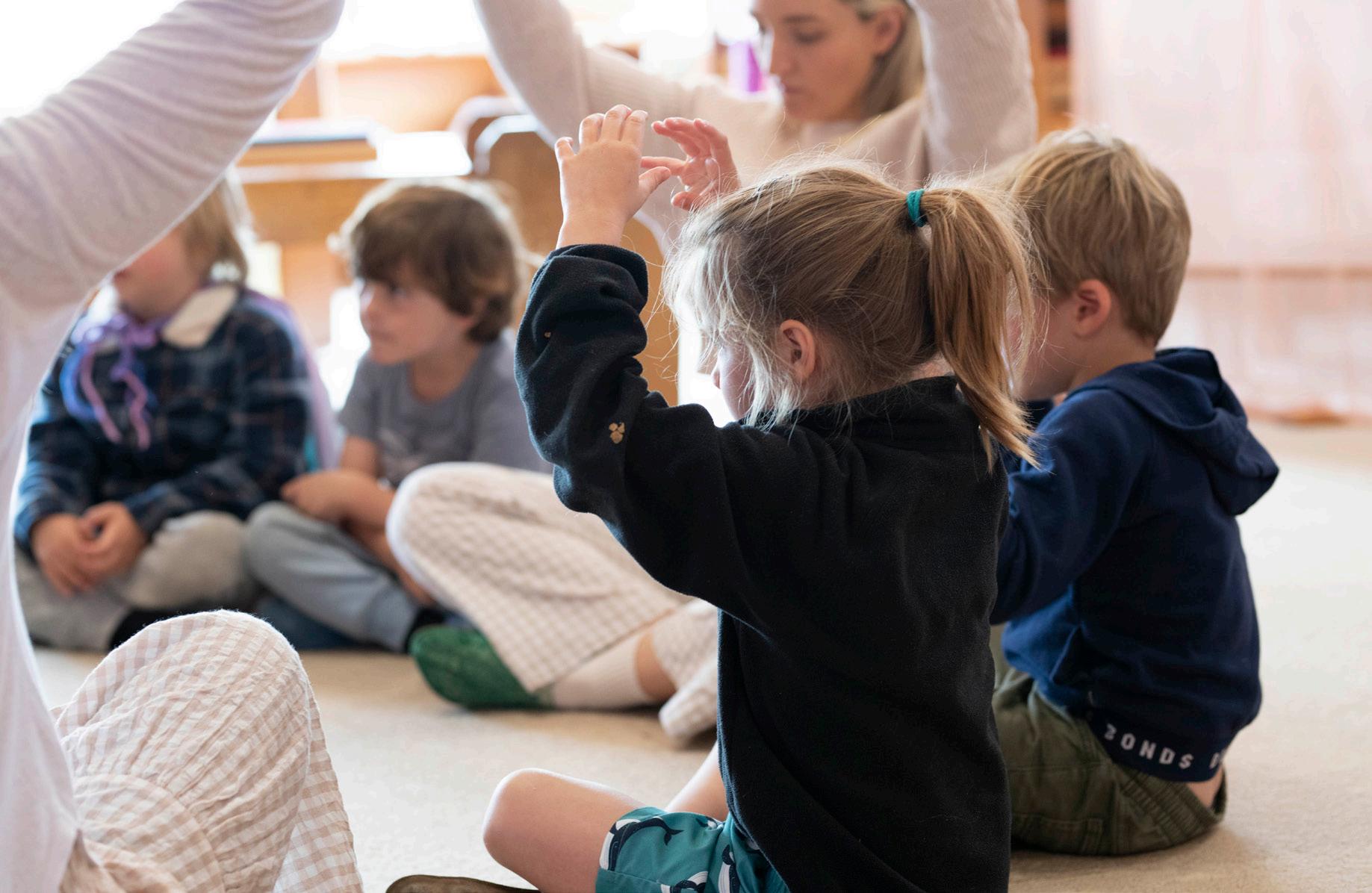
MORNING CIRCLE Our circle each day is an opportunity to come together as a group to share songs and verses. We commence and conclude with the same verses each day, acknowledging the earth and building a sense of identity amongst us. The same morning circle, generally relating to the season or approaching festival, is usually repeated for three weeks. This daily repetition enables the children to learn poems, songs and action plays by heart, stimulating memory, sequencing ability, vocabulary and clarity of speech. Gesture and movement, as well as finger plays, are incorporated into songs and verses. Care is taken to choose material with rich imagery and intrinsic value.
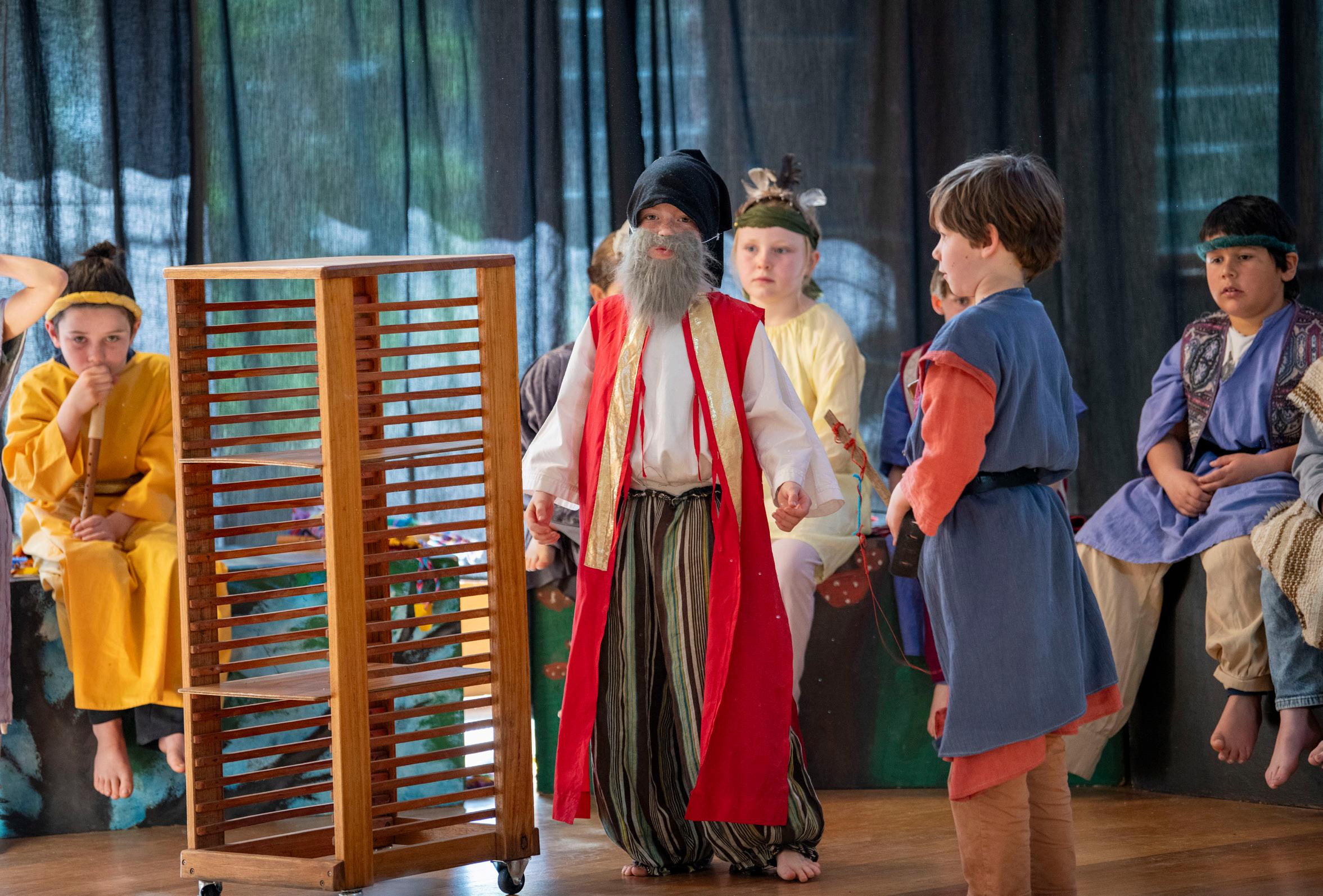
STORY TIME The children gather quietly together at the end of the morning, and again at afternoon rest time, to listen to a story. Morning stories are told rather than read. The stories chosen are often traditional fairytales, or those based on the natural world or seasonal themes. Stories are sometimes created by the teacher to address a difficulty or introduce a change or new experiences. The same story is retold each day for one or two weeks. In the Rosa Mundi class if the children know the story well we may dramatise it. Each child may have a turn at acting and also being a member of the audience.
PRIMARY 1 - 6 CLASS TEACHER PERIOD
Primary schooling commences at age seven when the first phase of growth and development is complete. Emerging independent capacities of memory and imagination are now ready to be called upon and exercised. Children at this stage access learning through their feeling life. Teachers emphasise rhythm and routine. Rhythms in lessons within each day, week and year, various artistic activities, stories of nature, mythologies and metaphors concerning life, all work to strengthen the child’s feeling and imaginative nature. They are nourished with knowledge that “lives” for them. The class teacher moves with the students from Class 1 - 6, and develops an in-depth understanding of the class as individuals and as a group. Teachers engage classes in movement, speech, drawing, painting, modelling, storytelling, writing, and singing as to bring the curriculum to life.
THE MAIN LESSON Main Lesson is held at the same time each day for two hours and concentrates on subject/topic for a block of three weeks allowing for an in-depth and holistic exploration of the content. The teacher works creatively, always seeking to find a fresh connection with the topic and to recognise readiness for learning and strives to bring artistry and imagination to each lesson.
DAILY RHYTHM Each day in the classroom is carefully balanced through daily rhythms, which help to keep children fresh and receptive. Seasonal content and festivals help students connect with the broader rhythms of nature. Sleep is now well-recognised as a key element in memory and learning. Anything that parents can do to promote adequate sleep for their children will help them at school
AN ENRICHING CURRICULUM
Mansfield Steiner School follows the ACARA approved national Australian Steiner curriculum framework.
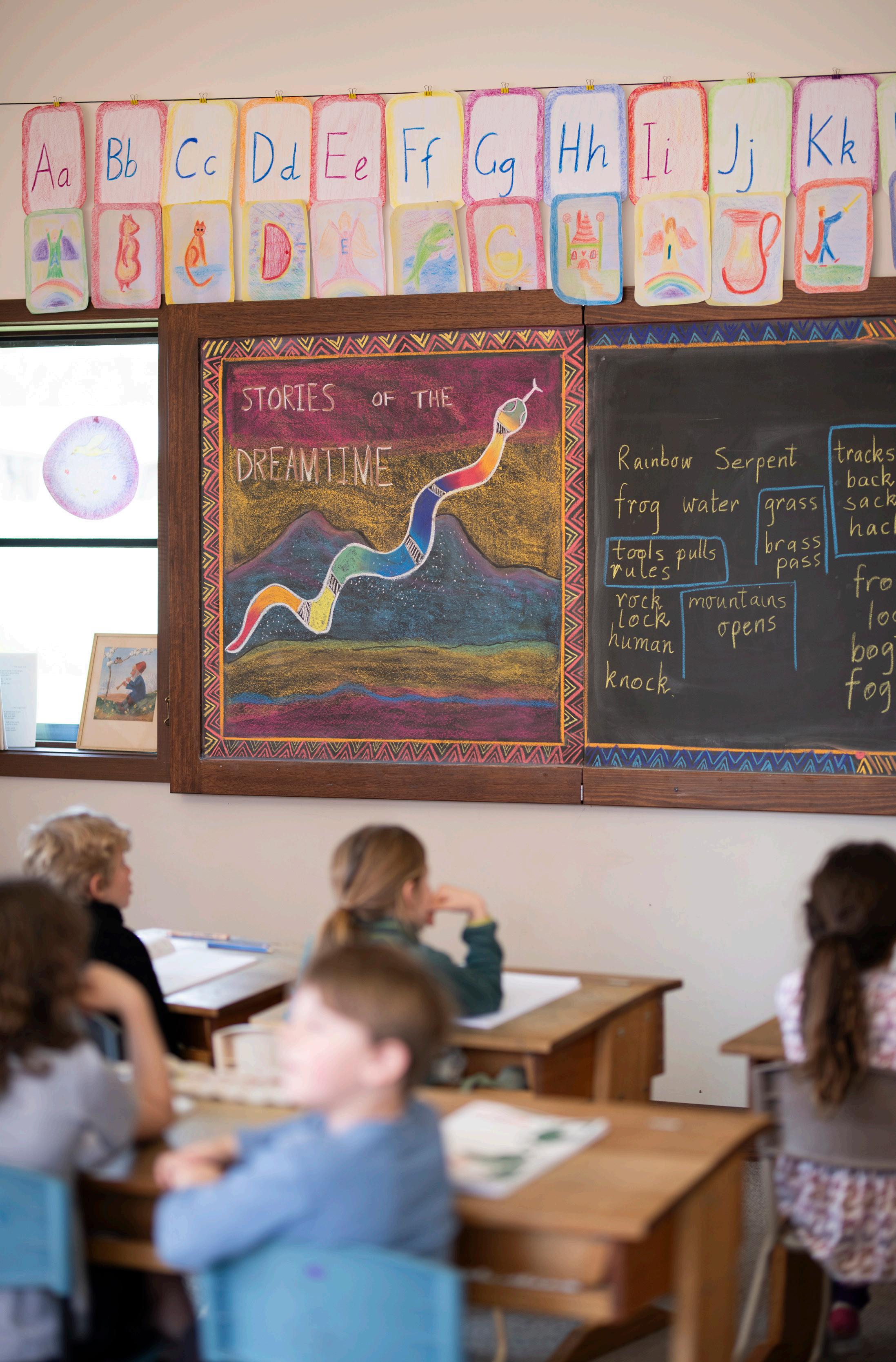
In the Curriculum, writing comes before reading. The alphabet letters are introduced individually through imagination, story and beauty. Arithmetic and the experience of number are grasped through counting, chanting, clapping, stepping and skipping. The physical relationship to numbers, which the children develop works powerfully and prepares them for fractions, sums and measurement.
Stories from the epochs of the past nourish the children’s love of language and strengthen their imagination. Every class level responds and relates to the stories of a particular epoch. The consciousness of the class finds relevance, comfort and nourishment in the content of the stories.
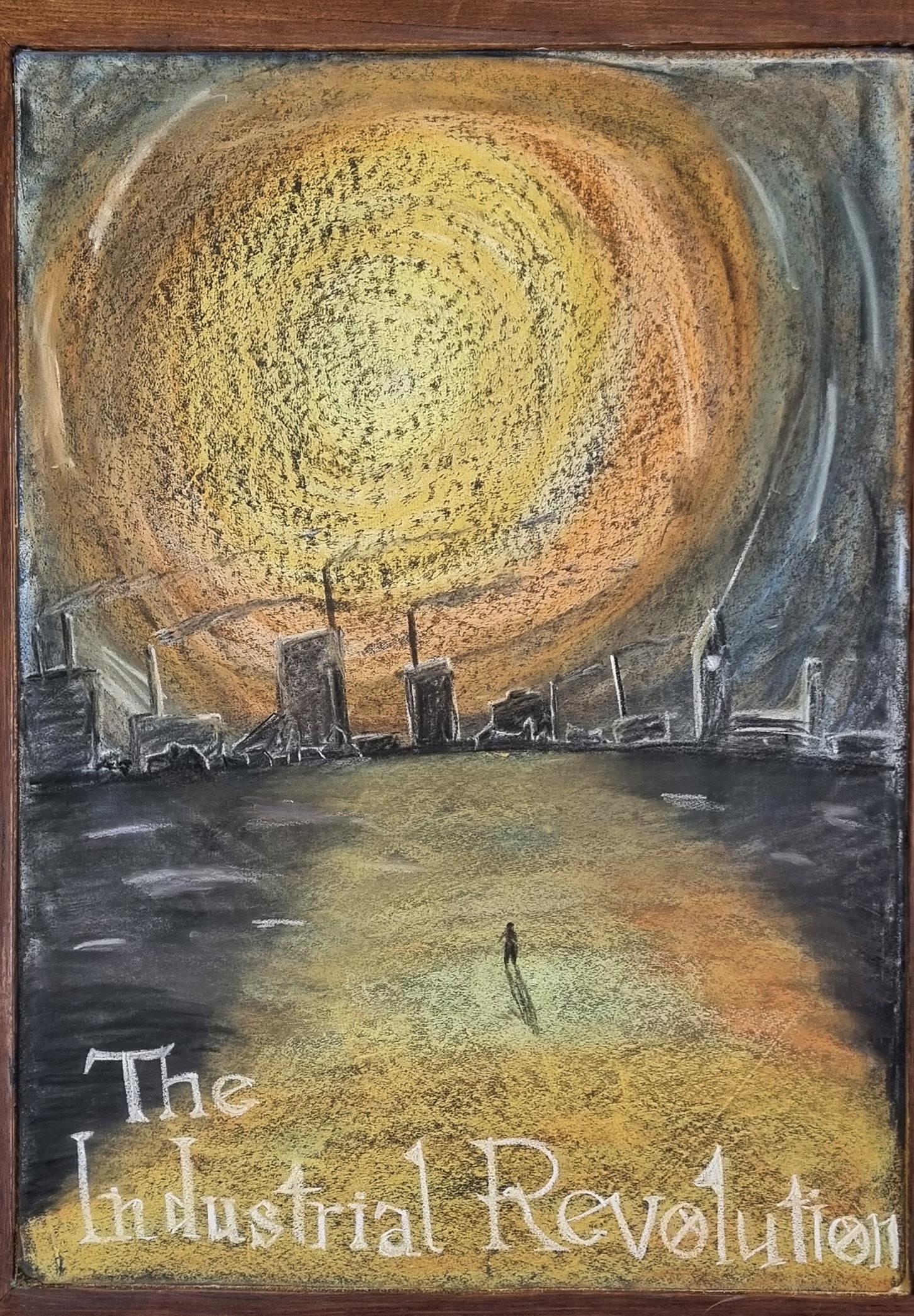
Eg: Class One - Fairy tales, Class Two - Fables and Celtic Legends, Class Three - Old Testament, Class Four - Norse Myths, Class Five - Indian, Egyptian and Greek Myths, Class Six - The stories and achievements of the Romans. Year Seven – The Middle Ages and Age of Discovery. Year Eight – The Renaissance and Enlightenment, through to the Industrial Revolution.
Through story, the groundwork is laid for the study of history, geography and science.
MUSIC
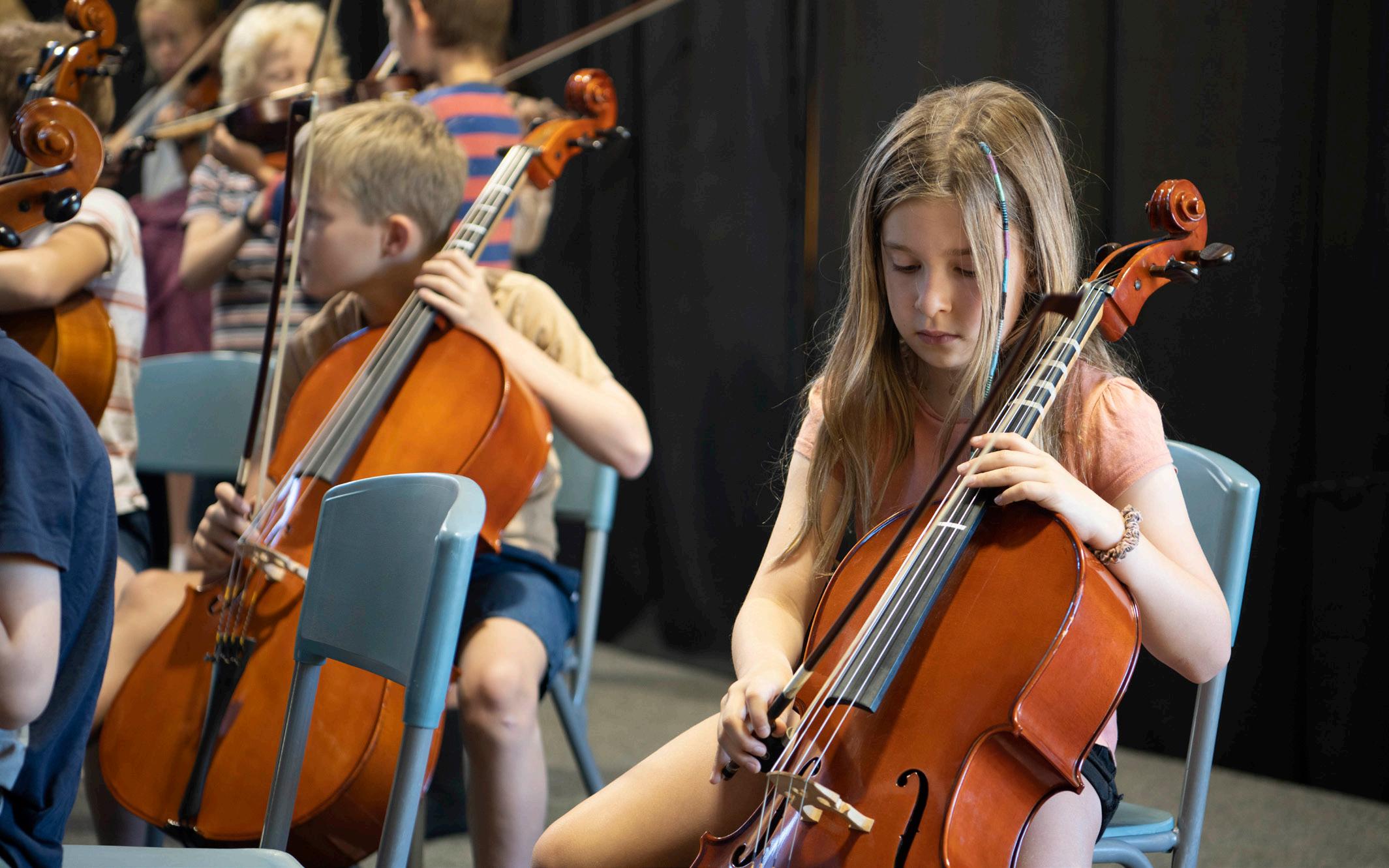
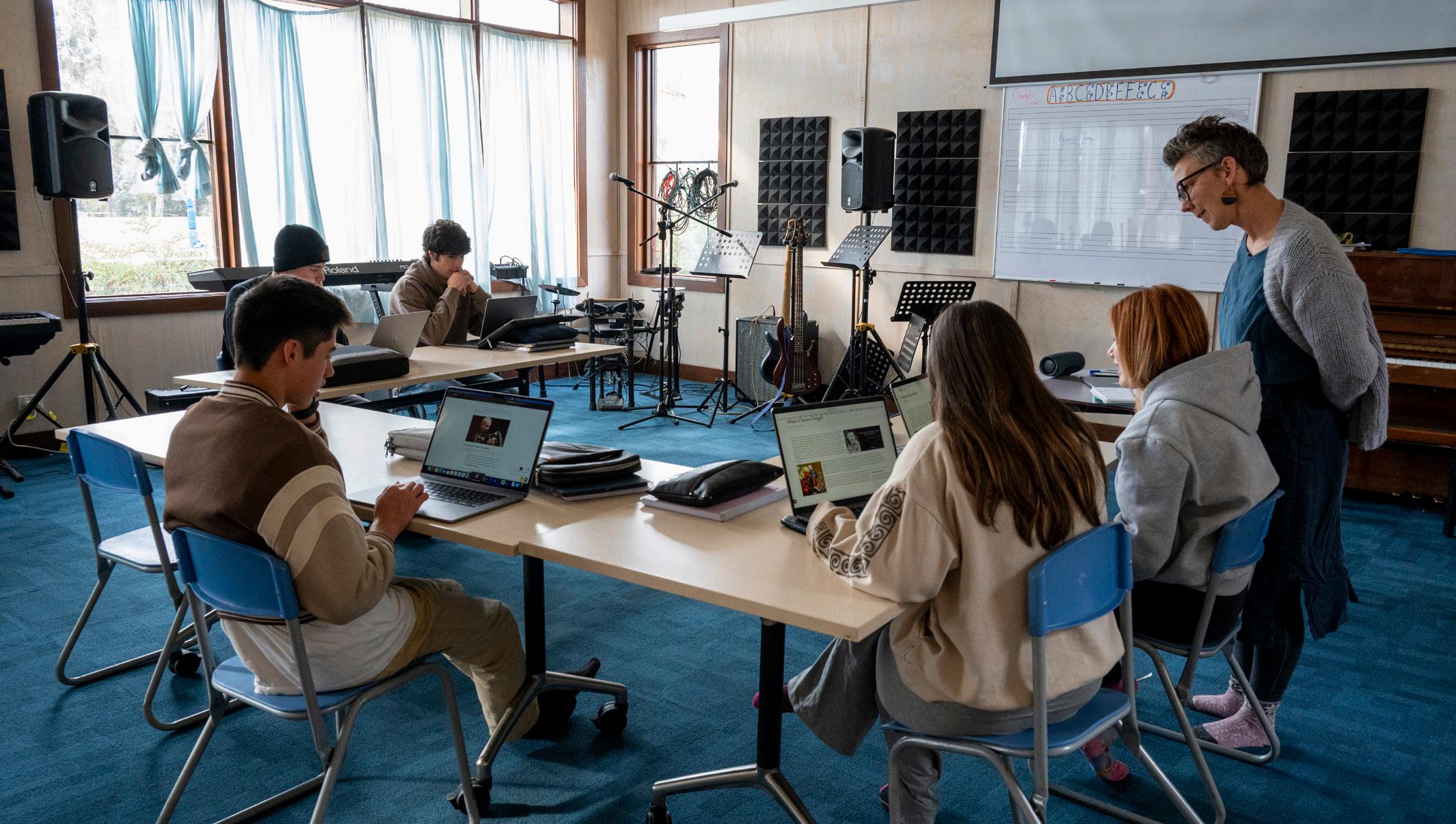
The school offers an extensive music program. Classroom Music is offered at all year levels. Students learn either violin or cello from Class 3, from Year 7 students may choose a different contemporary instrument. Each student has a 30-minute individual or small group lesson each week and practising their instrument is part of the school’s homework policy. Regular practice is vital to student progress. Recommended daily practice times are as follows:
Class 3 Ten minutes
Class 4 Fifteen minutes
Class 5 Twenty minutes
Class 6 Twenty five minutes
Year 7 - 10 Thirty minutes.
IB Music Forty-Five Minutes or more
Primary students participate in Class orchestras from Class 3 to Class 6 and Secondary students participate in a cross-cohort ensemble program.
Students can participate in our many extracurricular ensembles which rehearse before and after school. Students are either invited or audition for these ensembles. Current ensembles are:
Wattle Orchestra (junior)
Melliodora Orchestra (secondary)
Candlebark Strings (senior)
Lyrebird Singers (primary choir)
Celestial Voices (senior vocal ensemble)
Deceptive Biscuit Tin (band)
Petrichor (band)
The music program follows the ASCF (Australian Steiner Curriculum Framework) and there is also an opportunity for those students wishing to be extended to sit AMEB (Australian Music Examinations Board) exams. We encourage our music students to be involved in local orchestras such as MAD (Mansfield And District), The String Group and MMuds (Mansfield Musical and Dramatic Society Inc).
SECONDARY YEARS 7 - 10
YEAR 7
In Year 7, students reach 13 years of age, and become teenagers. This period of inner development resonates with key themes of the chapter in world history of the great voyages of discovery and the renewal of culture that took place during the Renaissance. Teachers support students to discover new perspectives that direct their attention towards the exploration of the outer world and away from the newly experienced unrest in their inner life. Students are given many opportunities for active learning and group interaction.
YEAR 8
The Year 8 program is designed to meet the needs of approaching adolescence in a time that is itself challenging. When new inner forces are emerging in the growing young person, a healthy series of appropriate challenges provide a stimulus to balanced development. In this period of change, initiation marks the movement from one stage of life to another, from one state of consciousness to a higher one. Thus, we offer a broad program of academic, aesthetic, social and physical courses that will stimulate and inspire students as they leave childhood and prepare to enter the new world that lies ahead.
YEAR 9
Year 9 students are at the height of adolescence in all its polarities, the best and the worst. It can be a time when they become lost in their own personal inner world and yet they are also capable of compassion, endurance and intellectual prowess. They can be carried away by their own impulses and yet they have high aspirations. Our balanced programme aims to both challenge students academically, and ground them in practical tasks that build a broad base of service, resilience and leadership skills. In Year 9, all students undertake an extensive outdoor program aimed at learning outside the classroom and building an appreciation of place and the natural environment.
OUTDOOR PROGRAM
Each year we extend the time and distance away from home reflecting their growing independence. Unique to Mansfield Steiner School, the Year 9 Outdoor Education Program is an intentional, sequenced outdoor education learning journey. Designed to give the students a yearlong adventure, the program works to round out their skills for independent travel, preparing them for their Year 10 cultural exchange.
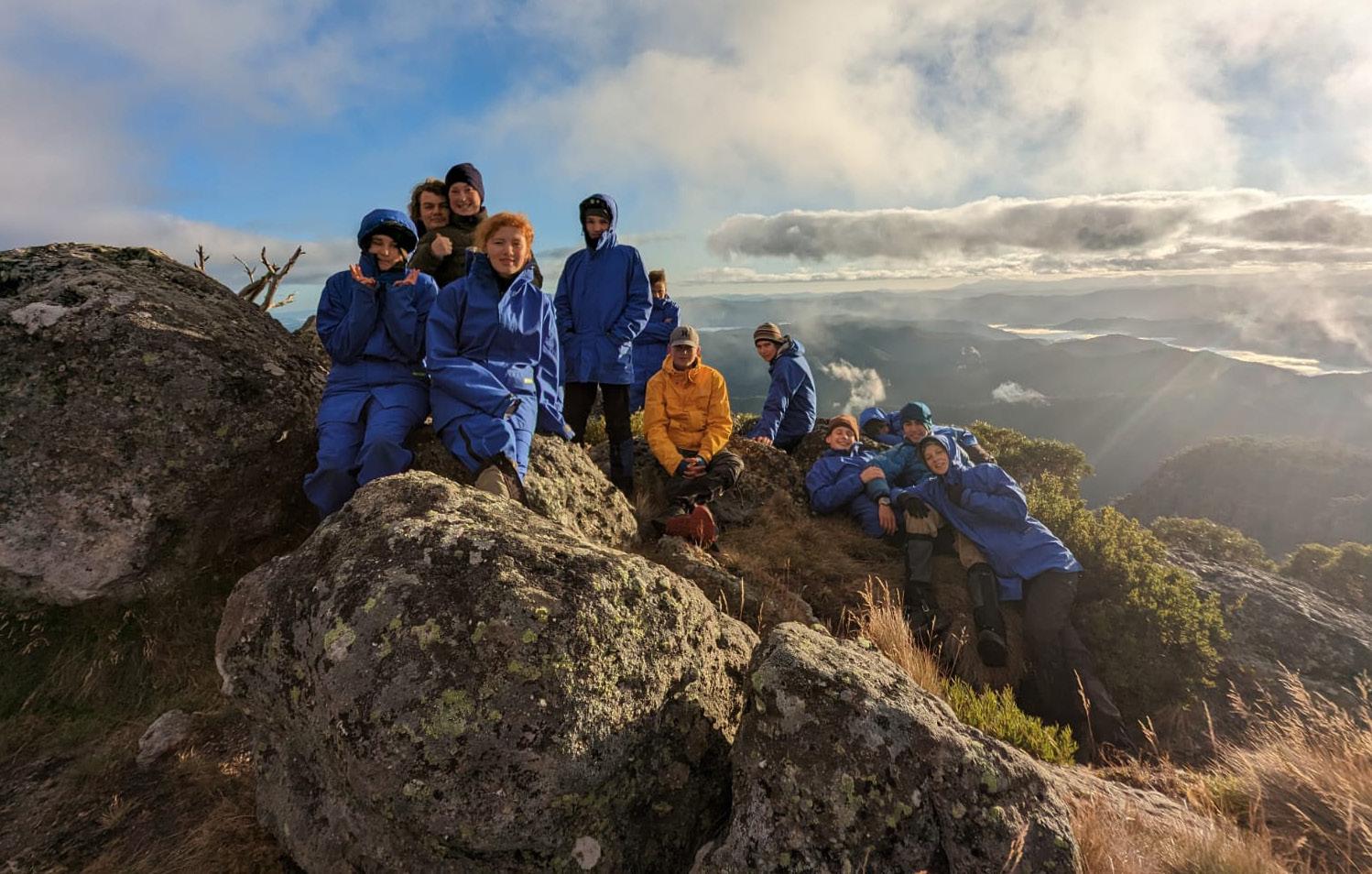
Built to work with the natural environments that surround Mansfield, the students will spend 55 nights out in various Australian landscapes, hiking,
paddling, riding bikes and completing Main Lessons relevant to the associated environments and places, whilst immersing their growing beings and awareness in the area’s unique landscapes, culture, tradition, and history.
These outdoor experiences will provide opportunities to gain perspective of themselves and their place in the world. The program is shaped to give students a chance to build first aid skills, participate in a volunteer organisation and take on real responsibilities. They will learn water safety and radio communication skills, which are helpful skills to continue to navigate the outdoor program.
On each trip, the area they visit is chosen, above all, as a beautiful natural place. This is part of a continuing theme of appreciation for and empathy with nature. An important part of achieving this aim is the intentionally uncomplicated nature of each trip: the less gear you carry and the less impact you make.
As students mature and grow, the program meets the students at the different transitional points of their development, helping to prepare them for the responsibilities of adulthood.
YEAR 10
In Year 10 students continue to learn through the Main Lessons, now in a broad and rich curriculum of wide ranging topics. Searching questions, which are a prerequisite for philosophical thought, now begin to be asked. The students’ level of judgement becomes more analytical and a deeper level of
responsibility can be expected. Suitable themes for this age are those that provoke thoughts that question the human condition. The imperative at this point is to grapple with the issues and questions raised with an inner confidence that answers can be found. This confidence comes through a synthesis of deepening knowledge and inner experience, combined with a sense of wonder that has been cultivated since Class 1. The students realise that issues and ideas need to be explored from many sides and from many levels of experience, before any judgements can be made. The Year 10 students focus on community service; the students will go out into the community and share the many skills and talents they have acquired during their years at the school.
INDEPENDENT JOURNEY
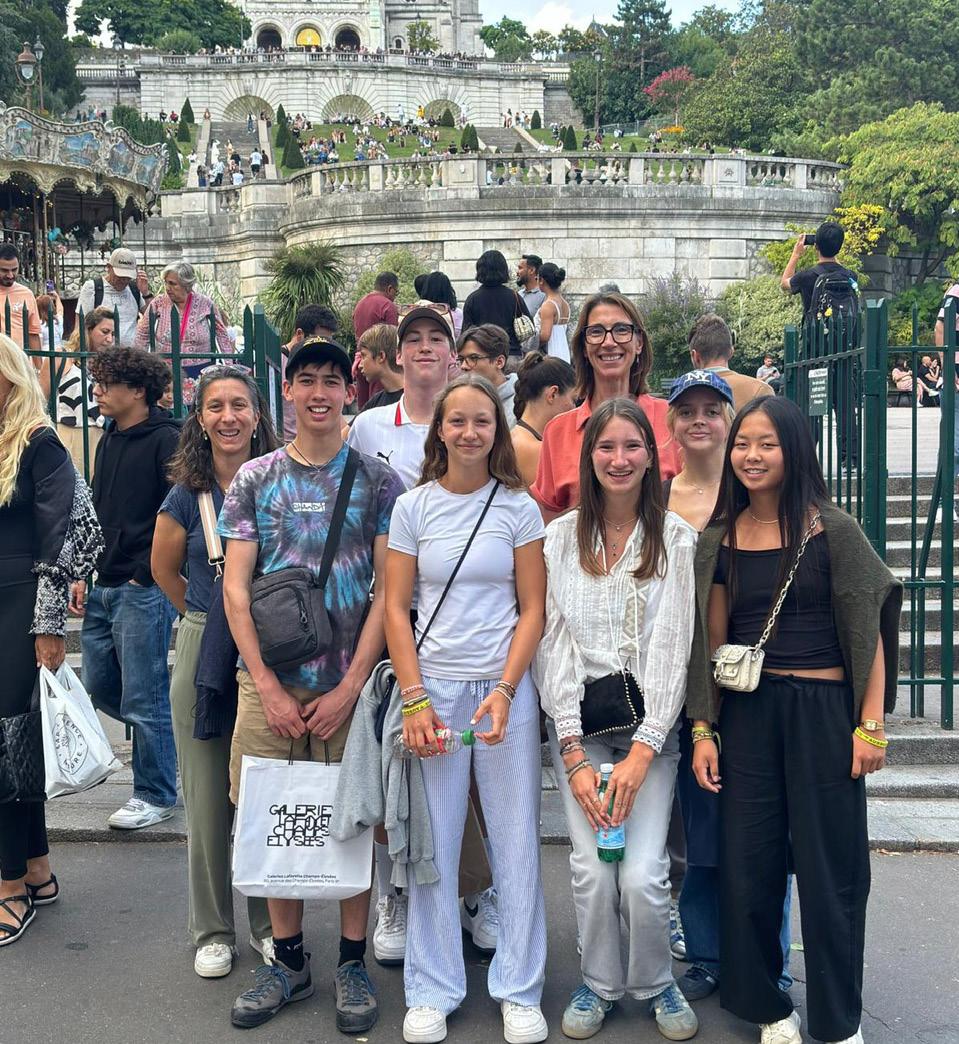
In Year 10 , students move out of adolescence in the most powerful of ways, experiencing their own independence in the world. The intention is that students will return from their journey having discovered inner strengths of resolve and purpose, ready to succeed in the challenges that follow in the coming years. Previous travels have included Slovenia, Wadeye, Northern Territory, Sailing in the Whitsundays and Cairns and Bordeau, France.
IB DIPLOMA YEARS 11 - 12
THE IB DIPLOMA PROGRAM IS WIDELY RECOGNISED BY THE WORLD’S LEADING UNIVERSITIES.
The program is unique in that it is based on no particular national education system but is a deliberate balance between breadth and the specialisation which is required by many universities.
The IB values its hardearned reputation for quality, for high standards and for pedagogical leadership and Mansfield Steiner School is proud to be a part of this global community. The IB promotes intercultural understanding and respect, not as an alternative to a sense of cultural and national identity, but as an essential part of life in the 21st century. It provides a balanced education for the ‘whole’ student and provides excellent preparation for both university and adult life.
The Diploma Programme prepares students for university and encourages them to develop:
» Critical thinking and analysis skills
» An international mindedness necessary to live and work in a global community
» An understanding of global issues and a concern for others in our community and the broader world
» A strong sense of their own identity and culture
» A balanced education for the ‘whole’ student
» An extensive knowledge and skill base in preparation for university and adult life
Follow this link for more information about the IB Diploma: https://www.ibo.org/programmes/diplomaprogramme/
TEACHING AND LEARNING IN THE IB PROGRAM
Challenges which stimulate student motivation and learning.
High level learning – critical thinking and openended questions.
Balanced development of the whole person –academic, creative and cultural socially and culturally aware with global understanding. Effective use of information technology to enhance learning.
Attributes fostered for success in the Diploma Programme:
» Active responsibility for one’s own learning
» Organisation and time management
» Research skills
» Cooperative learning and open-mindedness
THE IB DIPLOMA CURRICULUM
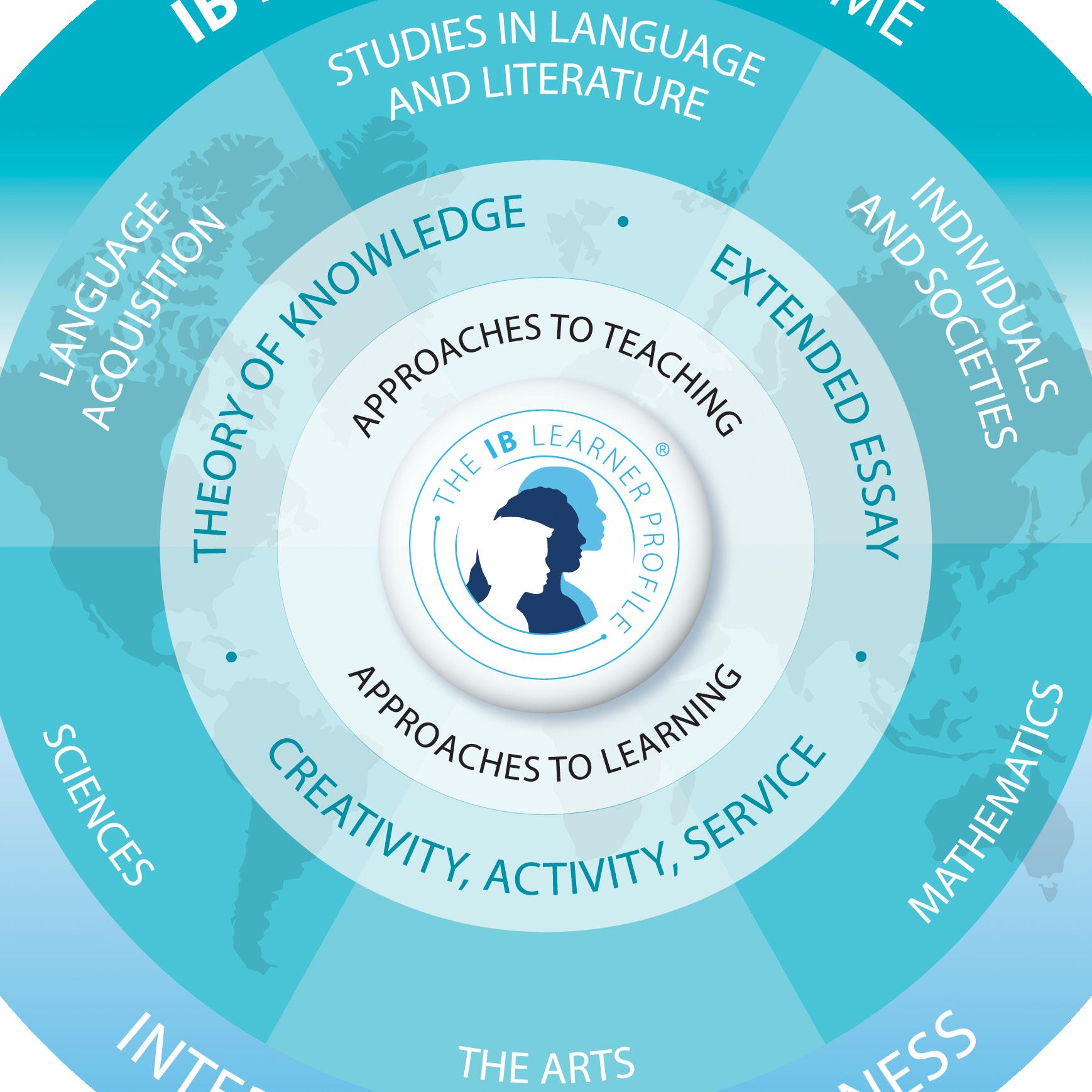
The curriculum is modelled by a Diploma Curriculum Framework with six academic areas surrounding the three core requirements. Over the course of the two-year program, students’ study loads comprise six academic subjects.
Three of the six subjects are studied at (HL) Higher Level: courses representing a minimum of 240 teaching hours over the two-year period.
The remaining three subjects are studied at (SL) Standard Level: courses representing a minimum of 150 teaching hours over the two-year period.
We will deliver the following subjects in 2024 –2025
English Literature (HL)
French Language (SL)
Social and Cultural Anthropology (HL)
Chemistry (SL)
Mathematics (SL)
Visual Arts (HL)
Music (HL)
CORE
Theory of knowledge
Extended Essay
Community Activity and Service (CAS)
As part of their Core studies students undertake:
» Complete an Extended Essay: a substantial written work of up to 4,000 words, that enables students to investigate a topic of special interest that they have chosen themselves. It also encourages students to develop the skills of independent research that will be expected at university.
» Follow a Theory of Knowledge course (TOK) that encourages students to think about the nature of knowledge, to reflect on the process of learning in all the subjects they study as part of their Diploma Programme, and to make connections across the academic areas.
» Participate in Creativity, Activity, Service (CAS) that involves students in experiential learning through a range of artistic, sporting, physical and service activities.
Mansfield Steiner School strongly aligns with the Diploma’s emphasis upon international-mindedness. This stands firmly in line with our vision for our graduates to have an understanding of global issues and a concern for others in our community and the broader world. IB Diploma graduates, with the range of subjects they have studied, have a greater choice of undergraduate programs. Many colleges and universities have developed their own recognition policies. Individual policies vary greatly, but they all have one thing in common; through their policies, these institutions make it apparent that they understand and appreciate the Diploma Programme graduate and the rigour of the Diploma Programme itself.
http://www.ibo.org/en/university-admission/
WHOLE SCHOOL INFORMATION
PLEASE DOWNLOAD THE SENTRAL APP & ENABLE NOTICICATIONS
We use Sentral to send messages and updates. It is essential for our communications. Download from the app store and enable notifications.
HEALTH Please ensure all health information on record is current and notify the office of any changes or email admin@mrssk.vic.edu.au
IMMUNISATION Morning Star and Rosa Mundi children need to present a Certificate of Immunisation status issued by Shire Council Health Departments.
INFECTIOUS DISEASES The school must be notified immediately if your child is diagnosed as having any of the following conditions: COVID-19, Chickenpox, Measles, Whooping Cough, Ringworm, Hand-Foot-and-Mouth, German measles, Mumps, Conjunctivitis and Impetigo. Students with these conditions must be kept at home until they are no longer contagious. The office has a list of exclusion periods for each of these illnesses.
EMERGENCIES In an emergency we will use the information you have provided regarding contact numbers, physician’s name and phone numbers, and specific instructions. In the event that parents or guardians cannot be contacted, your signed consent will allow us to give the medical attention your child might need.
HEAD LICE Students found to have head lice are required to have treatment to eliminate the infestation as quickly as possible. Parents will be contacted and asked to collect their child from class. Please be diligent in checking your child’s head for lice/eggs and treating them thoroughly to prevent repeat outbreaks.
ILLNESS AND ACCIDENTS If your child is hurt or becomes ill during the day we will contact you. After an illness, children often appear healthy in the morning but are still not up to the vigorous activity of the day. Please allow at least one full day of rest after an illness. Please report the absence through the Sentral App.
MEDICATION It is preferable that students are given medicines at home. If medication must be taken during the day, it must come in its original
container with the physician’s instructions. Parents must also fill in the medication register, providing full instructions, signed and dated and hand the medication directly to the office. Students are not to have medication kept in their lunch boxes or school bags. Vitamins and cough drops are treated as medication.
MEDICAL CONDITIONS Please advise admin and your teacher of any special medical conditions such as asthma, epilepsy, severe allergies or anaphylaxis that your child may have and provide a Medical Action Plan signed by your doctor to help staff take the appropriate care for your child.
ABSENCES If your child is absent for any reason, please advise the school via the SENTRAL APP, giving reasons for the absence, as it is a legal requirement of the school to maintain a register. If longer periods of absence are anticipated - holidays or illness - please notify in advance this is helpful in planning programs etc.,
EXCURSIONS Excursions take place during the year for all classes and are not optional as they are an important part of the students social development, curriculum and Main Lesson work. We will inform you at least one day before the excursion as to where and when your children will be, and if any special items of clothing etc. should be brought to school.
At the beginning of each year parents of students are required to sign a blanket permission form for school excursions to various locations in and around Mansfield over the school year. The excursions covered by this permission will be less than a full day and will not interfere with bus arrangements.
SKIING: CLASS 1 - YEAR 8 The school has a Cross Country Skiing program at Mt Stirling during the winter months for Class 1 to Class 6. Qualified skiing instructors teach the children in groups according to their skiing ability. The program is dependent on snow and conditions. Details of skiing are sent out during the year and parent helpers are required. Year 7 & 8 go to Mt Buller for a three day downhill ski camp.
SWIMMING In addition, the school has a Swimming program during the summer months at the Mansfield Swimming Pool. This program is conducted by qualified AUSTSWIM instructors.
PARENT AND VISITOR PARTICIPATION
If you join us as a volunteer, worker, an observer, or to settle an anxious child, we would ask that you contribute in the same way as the teacher and assistant do. In the classroom please speak to your class teacher to become familiar with the help
required and to have a clear understanding of your role.
A Working With Children’s Card is required for volunteers at www.workingwithchildren.vic.gov.au It is a legal requirement under the Child Protection Act that all staff and volunteers working with children have a working with children card to protect the safety of our students.
We ask that you are respectful and supportive in creating an environment that is safe for all children at our school.
All visitors must sign in and out via the admin office. We appreciate your understanding of these requirements.
YOUR CHILD AT SCHOOL
PUNCTUALITY AND ATTENDANCE
Greeting students and the morning verse are significant aspects of our school day. Ensure that your child is at school 10 minutes before starting time. A teacher is on duty from 8.30am
PLEASE NOTE: Teachers mark the class roll at the beginning of the school day, all students arriving after 9.00am must receive a late pass to take to their class teacher. This late pass is important for our legal attendance register.
PRIMARY
8.50 - 10.40 Main Lesson
RECESS 10.45 - 11.15
Period 3 11.15 - 12.05
Period 4 12.05 - 12.55
LUNCH 12.55 - 1.50
Period 5 1.50 - 2.25
Period 6 2.25 - 3.20
SECONDARY
8.50 Guardian Time
9.00 - 10.45 Main Lesson
RECESS 10.45
Period 3 11.05 - 12.05
Period 4 12.05 - 12.55
LUNCH 12.55 - 1.35
Period 5 1.35 - 2.25
Period 6 2.25 - 3.10
Homeroom 3.10 - 3.20
For the teachers to bring continuity to lessons it is considered a priority that parents are committed to their child’s regular attendance. Most Main Lessons continue for 3 weeks and if a child is away for a week or two it is possible that he/she would miss a very important area of the curriculum.
Students are expected to attend after hour’s school functions such as – music concerts, festivals, Class plays and camps. These events are an integral part of the curriculum and the social fabric of the school community.
BULLYING & DISCIPLINE No form of bullying is tolerated at school. We are committed to providing a safe caring environment and each student, staff member and parent is responsible for ensuring that this occurs. Our discipline policies relating to students are based on principles of procedural fairness and do not permit corporal punishment.
Being bullied or harassed means that someone is subjected to ongoing behaviour which is hurtful, threatening or frightening by an individual or a group.
Incidents of bullying or harassment will be investigated by the class teacher and/or other designated teacher. The bullied student has a right to expect support, fairness and action to remedy the situation.
All students have the right and responsibility to report any incidence of bullying or harassment which they have experienced or where they have seen it happening to any member of staff (preferably the Class teacher of the person/persons involved). All students involved in the incident will be spoken to individually and measures to resolve any disputes and rectify the hurt/damage to the victim will be outlined using Restorative Practice techniques. Where repeat offences by the same individual occurs, the parents will be informed, and a formal meeting with the parents, student and class teacher may take place. In some instances counselling for the perpetrator and/or the victim may be recommended.
SCHOOL CLOTHING
The school code of dress is as follows:
» Plain coloured clothing made of natural fibres is preferred.
» Children must not wear clothing with printed pictures or messages/slogans. Plain clothing only.
» No shoe string straps or singlets. All tops worn must be sun smart and cover shoulders. Shorts/ skirts-mid thigh length.
» Students not adhering to this policy will be given a replacement article of clothing. Their clothing will be kept at school until school clothing is
returned.
» Strong and protective shoes are necessary in winter. In summer, sandals are acceptable but thongs are not. Shoes must provide the proper support to allow physical movement during outdoor activities.
» Shoes are left outside the classroom door. Slippers may be left at school, for indoor wear.
» Hats are essential in Term 1 & 4 and must provide adequate protection for face, ears and necks. Sun hats are available at the school office and must stay at school. Cost of 1 hat per student is included in fees.
Click HERE to read our dress and appearance policy
NAME TAGS Label everything brought to school - footwear, lunchboxes, bags, jumpers, coats, hats and anything else that comes to school regularly. Please check the lost property baskets in the foyer and the kindergarten at regular intervals. Currently all unclaimed lost property is given away at the end of each term.
LIMIT SCREEN TIME Regular watching of television, computer games is discouraged for children of kindergarten and primary school age. To benefit fully from a Steiner education, children need every opportunity to develop their own creative play, to learn to occupy themselves independently, to enjoy interacting with family and friends and to learn about the world through active exploration and participation.
Children are very vulnerable to the conditioning effects of television and computerized devices. The teachers find that regular watchers tend to expect to be constantly “entertained”, find it hard to lose themselves in imaginative play, take a superficial and short lived interest in creative activities and have difficulty settling down to concentrate on stories and songs. T.V. shows and computer game characters often dominate their conversation and games.
This is not to deny the role of technology in our modern society but to ask you to seriously consider its pervasive influence on your child and on family life.
Please consider strictly regulating its use while the children are young. There are many books and articles available on this subject and many families in the school who have become “screen conscious”. If you would like information, advice or support, please ask!
TECHNOLOGY At Mansfield Steiner School we aim to educate students wholistically without a reliance on the use of technology. Early childhood and primary school classes use no digital devices in their learning. We suggest that parents wait until at least the
conclusion of Year 8 before allowing their children to have a smartphone. We recommend that students do not have access to social media before the age of 16.
In alignment with Victorian government legislation, students must have their devices switched off and securely stored during school hours.
Primary students
If they have a device, students must leave this at the office for the entire duration of the school day. Primary students are not permitted to wear smartwatches to school.
Secondary students
Phones and smartwatches are not to be used at school or during school days. If a student needs to contact a parent (or vice versa) this is to be done via the front office. Smartwatches can be worn but only to operate as a watch. If a student is found using a phone while at school, they will be asked to hand it over, it will be stored at the office, and they can collect it at the end of the day. If the use is repeated or deemed to be causing harm, then a phone call will be made to parents to discuss. Phone use with teenagers is a parental responsibility and we will communicate with you about inappropriate use if required. If a watch is being used as a phone, then the same policy applies.
We introduce computers into our classroom learning in Year 7 and this is in the form of class sets of computers. Students are not required to access technology from home but by Year 9 having the ability to do some word processing of essays and emailing teachers is expected.
All camps, excursions, and sporting trips are technology-free. This allows for the development of strong prosocial skills, clear communication with the adults involved and, in our experience, a greater enjoyment of the adventure.
LUNCHES Morning tea and lunch needs to be brought to school each day. The children eat together in their class groups and although they do not share their lunches, lunchtime is very much a social and community activity.
Please keep lunches simple and healthy. We suggest: sandwiches/rice cakes/ a piece of fruit or two. Do not include lollies or other highly sweetened items. (No chewing gum at school!)
The school places great importance on environmental awareness, so please be conscious of minimising the amount of throw away packaging eg. Yoghurts, cardboard drink containers. Many parents have successfully transitioned to a rubbish-free lunch every day for their child.
Hot lunches may be brought to school in an unbreakable thermos. Teachers cannot heat food in the classroom.
Classes 1-5 also prepare a nourishing, cooked meal
once a week using fresh produce from the school garden. Please do not send a lunch on this day as we strongly encourage the children to share the meal and expand their range of foods and flavours.
BIRTHDAYS Primary student birthdays are celebrated in the classroom. You are welcome to bring in a birthday cake to school to be shared at morning-tea on your child’s birthday. Please do not use colourings or lollies on top as per our food policy. For particular details please speak to your child’s teacher.
TOYS Toys from home are not permitted at school as these usually cause social difficulties and may lead to problems if lost or damaged.
MONEY If, for some reason, you need to send money to school please place it in an envelope marked with child’s name, amount and purpose. Please do not send cash for fees to school with your child.
CAMPS Camps commence in Class 3. All students are expected to attend camps as these play a vital role in the building of positive dynamics in the classroom. Students in Class 3 attend an overnight camp while older students may be away from home for several days. Camp costs are included in school fees.
AFTER SCHOOL Students waiting for parents must wait with the duty teacher at the designated area at the waiting tree. Students who have not been collected by 3.35pm will be escorted up to the school courtyard to await collection and sign out by their parent/carer. Students who walk home must do so as soon as dismissed. We encourage students to walk to and from school if possible. It is our school policy that students may not play on the school grounds after school, on weekends or during holidays. If parents are working at the school, it is preferable that their children play in the designated play areas at the back of the school. Secondary students are encouraged to make their own way home if possible.
CAR PARK RULES
The following are some traffic rules which we ask you and your children to follow:-
» Students must use the footpath at all times.
» Students awaiting pick up must wait at the Waiting Tree.
» Students must not play in the car park area or near the road.
» Parents are to park in parking bays provided.
» The turning circle is only for dropping off students and is not for parking.
Cars in car park area to travel at maximum speed limit of 10 km per hr.
ARRANGING BUS TRAVEL If you would like to use the State Bus Service an application form is available from the office. If there is a place available on the relevant bus you will receive confirmation and a timetable
Please email admin@mrssk.vic.edu.au
CONVEYANCE ALLOWANCE If the distance between your home and the nearest school bus route is more than 4.8 kms, then you may be eligible for a conveyance allowance to that bus stop. For further details enquire at the office.
BIKES Bikes must be walked along the footpath from Highett Street to the bike rack.
ITEMS NOT TO BRING TO SCHOOL For reasons of security and safety, various products are not permitted to be brought to school. Please note that if any of these items are brought to school they must be forfeited and held at the office until the end of the day.
What not to bring to school:
» Mobile phones
» Toys from home
» All electronic devices
» Scooters or skateboards
» Computer games
» Aerosol products
» Drugs (except for prescribed medication)
» Alcohol
» Glass, knives or other dangerous items
SCHOOL COMMUNICATION
SENTRAL APP All communication from the school to parents is through the Sentral APP. Here you can notify absences, check messages, view the school calendar, student reports and see invoices. Please turn on notifications.
‘THE MESSENGER’, The Messenger is distributed to hte eldest child in each family on a three week basis. It can be downloaded from the school website www.mansfieldsteiner.vic.edu.au. In it you will find important news and notices relating to each class or to upcoming school events.
OFFICE HOURS
The school office hours are between 8.30 am and 4.30 pm Monday to Friday during Term Time. The office number is (03) 5779 1445) and the email is admin@mrssk.vic.edu.au Teaching staff are often not available throughout the day but can be emailed or messages left for them through the office.
SPRING FAIR The Spring Fair on the last Saturday in October. This is a very exciting day for all students and families in the school. It showcases all of the things that happen at our school, with work on display, performances, lovely foods, great market stalls and activities for all ages. As a not for profit organisation this is an important event on our school calendar and a great one for you to be involved in and share with your friends and family from the wider Mansfield community.
Spring Fair is also a great social gathering for all. We look forward to your involvement and enjoyment.
There is an expectation that all parents will make every effort to attend school working bees, class parent meetings and major fundraising events such as the annual Spring Fair.
PARENT INFORMATION EVENINGS are an important time for community and relationship building between adults. Throughout the school year, your child’s teacher will schedule class meetings. These meetings are your opportunity to hear regularly from your child’s teacher how things are going in the class and to learn more about child development and Steiner education. There is also an important social aspect to these occasions in that they help build the circle of loving adults around the children. A parent of each child is expected to attend the parent evenings. Plenty of notice is given for you to organize your time. Please make every effort to attend your class parent evenings, and advise the teacher if you cannot attend a scheduled meeting.
PARENT TEACHER INTERVIEWS Held near the end of Term Two. Parent-Teacher interviews provide an opportunity for sharing impressions, concerns, progress and goals for your child. Through these conversations we are able to deepen our understanding of your child as well as strengthen our work together. Please make time to attend your child’s interview and hear of their individual progress.
The teacher is always grateful for communication from you about significant circumstances or changes in your child’s life. You need not wait until interview time to discuss your child with his or her teacher. Please feel free to arrange an appointment when you feel one is needed.
THE SCHOOL JOURNAL The Journal is the school magazine publishing articles and items of interest to parents and friends of the school. It offers insights into many aspects of Steiner Education, parenting and other initiatives of Rudolf Steiner. Copies are available from the office.
BOOKS ON STEINER EDUCATION Books are available from the parent library (in the school meeting room). Some books may be on display in your child’s classroom.
SCHOOL POLICIES Available on the website. For information regarding policy, or for financial matters please speak to the Operations Manager.
SCHOOL FESTIVALS Festivals are held to celebrate cultural and spiritual events, the harvest, solstice, equinox and seasons. Festivals bring the school community together in shared purpose and highlight the supportive cycles of life, adding meaning to human existence. Students sense joy and gratitude in the community around them. They experience diverse cultural festivals and a historical continuum, celebrating the earth, humanity, the cosmos and their connections. This fosters reverence, through acknowledging something greater than oneself, allowing a deep experience of gratitude and harmony. All parents are invited to the school festivals; Easter, Autumn, Winter, Spring and Christmas.
WORKSHOPS, TALKS AND ART Various workshops, discussion groups, craft evenings and picnics will be offered throughout the year. These are advertised in The Messenger and on the website.
POLICY AND PROCEDURES
The policies of the school are available to read on our website: mansfieldsteiner.vic.edu.au
If you have a belief or suspicion that a child is being, or has been, subjected to any form of abuse you must contact the Department of Families, Fairness and Housing (Child Protection).
Where you need guidance on making a report or have questions regarding child safety and wellbeing, contact a Child Safety Officer.
Whenever there are concerns that a child is in immediate danger, call the Police on 000.
THE CHILD SAFE PROGRAM
The Child Safe Program is made up of work systems, practices, policies, and procedures designed to maintain a child safe environment and to embed an organisational culture of child safety within the school community. The Program deals specifically with creating and maintaining a child safe organisation, including – but going further than - child protection issues. It is designed to ensure compliance with:
» the Victorian Child Safe Standards
» Ministerial Order No. 1359, made under the Education and Training Reform Act 2006 (Vic)
» child safety and wellbeing (including but not limited to child protection) laws and regulations in Victoria.
Broader child safety and wellbeing issues arising from our common law duty of care are dealt with through our Student Duty of Care Program
CHILD SAFE POLICY
Our Child Safe Policy demonstrates the school’s strong commitment to child safety and wellbeing and to creating and maintaining a child-safe and child-friendly environment. It provides an overview of the policies and practices that we have developed to keep our students safe, including from abuse or other harm.
Our Child Safe Policy outlines the key elements of our approach to implementing Ministerial Order 1359 (which sets out how the Victorian Child Safe Standards apply in school environments) and to the School as a child safe organisation.
It informs the School community about everyone’s obligations to act safely and appropriately towards students and guides the policies, processes and practices for the safety and wellbeing of students across all areas of our work, which are set out in the School’s Child Safe Program. (1)
Mansfield Steiner School’s Child Safe Policy is to be read and understood in conjunction with, the Victorian Child Safe Standards and Ministerial Order 1359.
The Child Safe Policy provides the framework for:
» the implementation of the Victorian Child Safe Standards and Ministerial Order 1359
» the development of work systems, practices, policies and procedures, consistent with PROTECT Four Critical Actions for Schools: Responding to Incidents, Disclosure and Suspicions of Child Abuse (PROTECT Four Critical Actions) and PROTECT Four Critical Actions for Schools: Responding to Student Sexual Offending (Four Critical Actions: Student Sexual Offending), that promote child protection, safety and wellbeing within the School
» the creation of a safe and supportive School environment and a positive and robust child-safe culture
» the promotion and open discussion of child safety issues within the school
» compliance with all laws, regulations and standards relevant to child safety and wellbeing, including child protection in Victoria.
SCOPE The School’s Child Safe Policy applies to all adults in the school community, whether or not their work involves direct contact with students, including:
» Staff and Direct Contact Contractors (including External Education Providers) who are “school staff” within the meaning of Ministerial Order 1359
» other types of Contractors
» Volunteers
» Visitors
This Policy applies in all physical, virtual, and online School environments used by students during or outside of school hours, including all locations provided for a student’s use For example on-site and off-site School grounds, sporting events, camps and excursions and environments provided by External Education Providers and other Contractors.
STATEMENT OF COMMITMENT TO CHILD SAFETY
Mansfield Steiner School is committed to the protection of all children from all forms of child abuse and demonstrates this commitment through the implementation of a comprehensive Child Protection Program designed to keep children safe. Child abuse includes sexual offences, grooming, physical violence, serious emotional or psychological
harm, serious neglect and a child’s exposure to family violence
At Mansfield Steiner School we have a zero tolerance for child abuse and are committed to acting in children’s best interests and keeping them safe from harm. The School regards its child protection responsibilities with the utmost importance and as such, is committed to providing the necessary resources to ensure compliance with all relevant child protection laws and regulations and maintain a child safe culture.
CHILD SAFE PRINCIPLES
The school’s commitment to child safety is based on the following overarching principles that guide the development and regular review of our work systems, practices, policies and procedures to protect children from abuse.
» All children have the right to be safe
» The welfare and best interests of the child are paramount
» The views of the child and a child’s privacy must be respected
» Clear expectations for appropriate behaviour with children are established in our Child Safety Code of Conduct and Staff and Student Professional Boundaries Policy.
» The safety of children is dependent upon the existence of a child safe culture.
» Child safety awareness is promoted and openly discussed within our School community.
» Procedures are in place to screen all staff, Direct Contact Volunteers third party contractors and external education providers who have direct contact with children.
» Child safety and protection is everyone's responsibility.
» Child protection training is mandatory for all Governance Committee members, staff and Direct Contact Volunteers.
» Procedures for responding to alleged or suspected incidents of child abuse are simple and accessible for all members of the School community.
» Children from culturally or linguistically diverse backgrounds have the right to special care and support including those who identify as Aboriginal or Torres Strait Islander.
» Children who have any kind of disability have the right to special care and support.
**Direct Contact Volunteers are those volunteers that are involved in providing support, guidance and supervision directly to students and could potentially have direct unsupervised contact with students during the normal course of providing the volunteer service.
Examples of Direct Contact Volunteer activities may include volunteers involved in school camps and excursions, coaching sporting teams or assisting
in learning activities.
SCHOOL REGISTRATION AND AFFILIATIONS
Mansfield Steiner School is:
» A school for Rudolf Steiner Education and is affiliated with Steiner Education Australia.
» An incorporated Non-Profit Association.
» Funded on a per capita basis by the State and Commonwealth Governments.
» A member of the Independent Schools Victoria (ISV).
» Registered and accredited with the Victoria Registration & Qualifications Authority for Prep to Year 12.
» Registered as a Standard Service Preschool.
» An accredited IB World School
» An ESmart School
» Resource Smart School
FEES As an Independent School, Commonwealth and State funding subsidises some of the school’s running costs and Mansfield Rudolf Steiner School and Kindergarten acknowledges the support of the Victorian Government. However, it is necessary to augment this with a fee structure. Fees are kept as low as possible to enable families of all circumstances to attend. A fee sheet is available from the office. Family discounts apply. In cases of genuine financial hardship, please approach the Operations Manager. (There are limited bursaries available.) All Bursaries and applications are confidential.
COMPLAINTS
HANDLING POLICY This summary should be read in conjunction with the Child Safe Complaints Management policy located on the school’s Policy Connect portal. https://mansfieldrudolfsteiner.policyconnect.com. au/module/262/page/3a0ac18c-9b63-4759-9b8956398cebb2cc.md
Policy Summary Statement: Mansfield Steiner School is committed to providing a safe and supportive learning environment for all members of the school community, including students, families, staff, volunteers, contractors, and visitors. We recognize the importance of addressing and resolving complaints in a fair, timely, and respectful manner. This Complaints Handling Policy outlines the process for making a complaint, the roles and responsibilities of individuals involved, and the steps to be taken in responding to complaints or concerns, including those relating to child abuse. We envisage that most complaints can be dealt with at the ‘local level’ and strongly encourage parents, students, and the community to openly communicate with each other as issues arise. In
most instances, issues can be resolved by the parties involved by respectfully discussing and listening to the concerns of the other and reaching an appropriate outcome or course of action. Most often this will involve Parents, Class teachers or Guardians, Heads of Faculty, Head of Wellbeing, where this is not possible or the gravity of the complaint is exceptional, such as any allegation of abuse, the following process should be followed.
MAKING A COMPLAINT
Any individual who wishes to make a complaint about the school or any person within the school (staff, volunteers, contractors, families, children, or students) may do so by following the procedure outlined below.
» Complaints can be made verbally or in writing to the principal, who will ensure confidentiality and impartiality throughout the process.
» Complaints may also be submitted anonymously; however, please note that it may limit the school’s ability to fully investigate and address the complaint.
ROLES AND RESPONSIBILITIES LEADERSHIP
The school leadership will ensure the implementation and adherence to the Complaints Handling Policy.
» They appoint the principal to oversee the complaint-handling process and ensure the proper resolution of complaints.
» Leadership will provide appropriate resources and support to facilitate the handling of complaints effectively.
» If the complaint involves the Principal, the Chair of the Governance Committee should be contacted.
STAFF AND VOLUNTEERS
All staff and volunteers have a responsibility to create a safe and supportive environment and to report any complaints or concerns they become aware of to the Principal. They should cooperate fully with the investigation process and maintain confidentiality.
PROCESS FOR DEALING WITH COMPLAINTS
» All complaints will be taken seriously and treated with respect and confidentiality.
» The Principal will promptly acknowledge receipt of the complaint and inform the complainant of the anticipated timeframe for resolution.
» The Principal will conduct a thorough investigation, including gathering relevant information and speaking with the relevant parties involved.
» Once the investigation is complete, the Principal will provide a written response to the complainant, outlining the findings and any actions taken or recommended.
» If the complainant is not satisfied with the response, they may request a review of the decision by submitting a written request to the school leadership.
» The school leadership will conduct a review, ensuring a fair and impartial assessment of the complaint, and provide a final written response to the complainant.
PROCEDURE FOR RESPONDING TO COMPLAINTS OR CONCERNS RELATING TO CHILD ABUSE
» Complaints or concerns relating to child abuse will be addressed with utmost priority and sensitivity, considering the diverse characteristics of the school community.
» The procedures for responding to child abuse complaints or concerns will be outlined in a separate document, the Child Protection Policy, which aligns with the requirements set forth by relevant authorities and legislation.
» The Child Protection Policy will be made publicly available, easily accessible, and communicated to all members of the school community.
» Staff members will be assigned specific roles and responsibilities in responding to child abuse complaints or concerns, including reporting to relevant authorities when necessary.
» The Child Protection Policy will not discharge any other obligations arising if a person reasonably believes that a child is at risk of child abuse, and it will clearly describe the actions the school will take to respond to such complaints or concerns.
REPORTING AND COOPERATION WITH LAW ENFORCEMENT
The Complaints Handling Policy and procedures for responding to complaints or concerns relating to child abuse will address the reporting of complaints to school leadership and other relevant authorities, in line with legal requirements. b. The school will cooperate fully with law enforcement agencies during the investigation of child abuse complaints or concerns.
APPROVAL, AVAILABILITY, AND IMPLEMENTATION
» The Complaints Handling Policy and procedures for responding to child abuse complaints or concerns will be approved by the school leadership.
» The policy and procedures will be made publicly available on the school’s website and other appropriate platforms.
» The policy and procedures will be accessible to all members of the school community, ensuring they are easily understood and culturally safe.
» The school will ensure compliance with recordkeeping, reporting, privacy, and employment law obligations when responding to complaints and concerns.
» The Complaints Handling Policy and procedures for responding to complaints or concerns relating to child abuse will be effectively implemented and regularly reviewed to ensure their ongoing effectiveness.
This Complaints Handling Policy aims to provide clear guidance on the process for making complaints, the roles and responsibilities of individuals involved, and the procedures for responding to complaints or concerns, including those relating to child abuse. It is our commitment to address complaints promptly, thoroughly, and in a manner that upholds the safety and well-being of our school community.
NB Where a complaint involves the School Principal it should be directed to only members of the School Leadership Team or the Chair of the Governance Committee.
FREQUENTLY ASKED QUESTIONS ABOUT STEINER EDUCATION
WHAT IS SO SPECIAL ABOUT STEINER EDUCATION?
Shared by the fastest growing independent school movement in the world, our curriculum is based on the teachings of Rudolf Steiner. The education aims to give each new generation an education entirely free from bias, political, economic, sectarian or racial influences. From Early Childhood throughout the child’s education right up to Year 12, our curriculum is integrated to fully prepare each child for adulthood. We recognise that each child is unique and through focussing on enhancing each child’s attributes and sensitively addressing their challenges we strive to develop unprejudiced, wellinformed, confident and creative young people who are valuable contributors to society.
HOW IS STEINER EDUCATION DIFFERENT FROM MAINSTREAM EDUCATION?
The stated goal of Steiner Education is “to develop individuals who are able out of their own initiative to impart purpose and meaning to their lives.”
The aim of Steiner schooling is to educate the whole child, “head, heart and hands.” The curriculum is as broad as time will allow, and balances academic subjects with artistic and practical subjects. Steiner teachers are dedicated to creating a genuine love of learning within each child. With an emphasis on the arts and practical, students are more motivated to learn.
Some features of Steiner Education
» Academics are de-emphasized in the early years of schooling. There is no academic content in the Steiner early years (i.e. pre-class 1) experience (although there is a good deal of cultivation of pre-academic skills). The letters are introduced artistically, with the children learning to read from their own writing in Class 1.
» During the primary school years (Classes 1-6) the students have a class teacher who ideally stays with the same class for their full primary schooling.
» Certain activities which are often considered extras at mainstream schools are central at Steiner schools: art, music, gardening, and foreign languages to name a few. In the younger grades, all subjects are introduced through artistic mediums, because the children respond better to this medium than to dry lecturing and rote
learning. All children learn to play recorder and to knit.
» All children have “main lesson books”, which are their own workbooks, which they fill in during the course of the year. They essentially produce their own “textbooks” which record their experiences and what they’ve learned. Upper grades may use texts to supplement their main lesson work.
» All children learn a stringed instrument from Class 3 onwards. This includes small group tuition as well as orchestra.
» Learning in a Steiner school is a non-competitive activity. There are no grades given in the early primary years; the teacher writes a detailed evaluation of the child at the end of each year.
» The use of electronic media and screens, by young children is strongly discouraged in Steiner schools.
WHY IS THERE NO FORMAL ACADEMIC IN EARLY CHILDHOOD?
An unhurried Childhood is the over arching theme of our Early Childhood. The children learn through imitation in a safe, nurturing environment that will foster children’s physical, social, emotional, creative and cognitive development. We offer a play-based curriculum, in a homelike environment where daily work in the kindergarten takes place with a strong predictable rhythm providing the child with a sense of security, anticipation and expectation. The children learn through active exploration and investigation of their physical and social environment. Self directed creative play in the Early Childhood provides opportunities for children to work actively and physically together to plan, create, and build. They are learning to work together as a team - problem solving, negotiating, transforming, imagining, inventing, organising, taking turns, sharing equipment, making suggestions and listening to each other.
MY PREP AGED CHILD IS ALREADY READING/WRITING/COUNTING. WILL S/HE GET BORED?
Our experience is that this isn’t the case. Although there is no formal academic work in Kindergarten, it is a very busy and structured place with a predictable routine or rhythm to each day. Learning takes place through self directed play and teacher lead activities. Children are engaged in creative play, cooking the morning tea, singing, listening to stories, learning to finger knit, digging in the sandpit, learning to work cooperatively and much more.
Some children in the Kindergarten on occasion have already spontaneously learned to read or to count. This is generally not an issue and they may well continue to practice these skills in an informal way at home. Next year in Class 1 they will enjoy the
pictorial introduction of what to them are familiar letters because it is done in such an artistic way that it feels like something new.
WHY DON’T THE STUDENTS WEAR UNIFORMS?
We encourage students to express their own personality through dress. As the school is a place of learning and culture, they are expected to respect this fact and to wear clothing that is appropriate to the activity and season and is free from advertising.
WHY THE SAME TEACHER FROM CLASS 1 TO CLASS 6?
Between the ages of seven and fourteen, children learn best through acceptance and emulation of authority, just as in their earlier years they learned through imitation. In primary school, particularly in the lower grades, the child is just beginning to expand his or her experience beyond home and family. The class becomes a type of “family” as well, with its own authority figure “the teacher” in a role analogous to parent.
With this approach, the students and teachers come to know each other very well, and the teacher is able to find over the years the best ways of helping individual children in their schooling. The class teacher also becomes like an additional family member for most of the families in his/her class.
HOW ARE PERSONALITY CONFLICTS BETWEEN STUDENTS AND TEACHERS HANDLED?
This is a very common concern among parents when they first hear about the “Class Teacher” method. However, in practice, the situation seems to arise very rarely, especially so when the teacher has been able to establish a relationship with the class right from the first class. Understanding the child’s needs and temperament is central to the teacher’s role and training. When problems of incompatibility do occur, the teacher and the family, work together with the support of school mentors, to determine and undertake whatever corrective action would be in the best interests of the child and of the class.
WHAT ARE THE COMMON THEMES TEACHERS WORK WITH?
» Connect the subject themes to the human being
» First experience then understand
» Work from the whole to the parts
» Work from an imaginative picture
» All activity needs rhythm
The education of our children is enhanced when our teachers work closely and harmoniously with parents to deepen each other’s understanding of the child.
WHAT IS THE CURRICULUM AT A STEINER SCHOOL LIKE?
The Steiner curriculum is designed to be responsive to the various phases of a child’s development. We follow the Australian Steiner Curriculum Framework approved by ACARA.
HOW IS READING TAUGHT IN A STEINER SCHOOL?
Steiner education is deeply bound up with the oral tradition, typically beginning with the teacher telling the children fairy tales throughout the early childhood years and first class. The oral approach is used all through Steiner education: mastery of oral communication is seen as being integral to all learning.
Reading instruction, as such, is slightly deferred. Instead, writing is taught first. During the first grade the children explore how our alphabet came about, discovering, as the ancients did, how each letter’s form evolved out of a pictograph. Writing thus evolves out of the children’s art, and their ability to read likewise evolves as a natural and, indeed, comparatively effortless stage of their mastery of language.
WHAT TRAINING DO STEINER TEACHERS HAVE?
Our teachers must have State Qualifications and be registered with the Victorian Institute of Teaching. There are many postgraduate courses in Steiner Education. All of our teachers attend the Gleneaon Intensives in January as well as undertake courses throughout the year to deepen their understanding. Most of the teachers have attended the Melbourne Rudolf Steiner Seminars.
Rudolf Steiner, speaking in Oxford in 1922, defined “three golden rules” for teachers: “to receive the child in gratitude from the world it comes from; to educate the child with love; and to lead the child into the true freedom which belongs to man.”
Melbourne Rudolf Steiner Seminar offers courses in Rudolf Steiner Education for prospective and practising teachers, as well as parents and others seeking to deepen their understanding of Rudolf Steiner education. Courses include the Advanced Diploma in Rudolf Steiner Education, as well as part-time courses in Early Childhood, Primary, High School education, and also Physical Education (Bothmer Gym). http://www.steinerseminar.com
ARE STEINER SCHOOLS RELIGIOUS?
In the sense of subscribing to the beliefs of a particular religious’ denomination or sect, Steiner schools are not religious. Steiner schools, however, tend to be spiritually oriented and are based out of a generally Christian perspective.
The historic festivals of Christianity, and of other major religions as well, are usually observed in the classrooms and in school festivals. Classes in religious doctrine are not part of the Steiner curriculum, and children of all religious backgrounds attend Steiner schools. Spiritual guidance is aimed at awakening the child’s natural reverence for the wonder and beauty of life.
HOW DOES STEINER DEAL WITH STUDENTS THAT ARE NOT SO STRONG ACADEMICALLY?
Steiner schools hesitate to categorise children, particularly in terms such as “slow” or “gifted”. A given child’s weaknesses in one area, whether cognitive, emotional or physical, will usually be balanced by strengths in another area. It is the teacher’s job to try to bring the child’s whole being into balance.
A child having difficulty with the material might be given extra help by the teacher or by parents; tutoring might also be arranged. Correspondingly, a child who picked up the material quickly might be given harder problems of the same sort to work on, or might be asked to help a child who was having trouble.
Some children needing more support attend Extra Lesson sessions with Jane Nelson.
WHAT IS EXTRA LESSON?
Extra Lesson or Three Fold Therapy is an assessment and intervention program for children, and adolescents with learning and behavioural difficulties. All practitioners are professionally trained and accredited and work with a holistic approach combining movement, speech, rhythm and painting. The Extra Lesson program is based on the premise that learning difficulties are often due to disruptions in the developmental stages of the first seven years of life. This can result in poor spatial orientation and body awareness, sensory processing challenges, retained early movement patterns and co-ordination difficulties. Research supports the connection between learning difficulties and early childhood development and shows that regular movement and physical activity can help develop neural pathways in the brain.
HOW WELL DO STEINER HIGH SCHOOL GRADUATES DO IN TERTIARY EDUCATION?
To the best of our knowledge, no controlled studies have been done on these questions, but anecdotal evidence collected from various sources would seem to suggest that Steiner graduates tend to score toward the high end on standardised examinations. As far as higher education goes, Steiner graduates have been accepted as students at, and have graduated from, some of the most prestigious colleges and universities in Australia.
DO YOU DO SPORT?
“… We can give children back a childhood – and one of the most potent ways is to re-teach them a forgotten, but once much-loved language, the language of games.” Kim Brooking-Payne
Through our Physical Education programme, we provide the child with experiences that will contribute to a healthy body, strong self esteem, positive relationships, the ability to make appropriate choices and a sense of connection to their world. The climate and open spaces at the school encourage our children to be physically active with the delivery of outdoor games, sport, swimming and camp programs on a weekly, termly or yearly basis, depending on the activity.
A child’s relationship to games and play is important. Children need to become ‘lost’ in the joy of the game. This inward activity gives meaning to the vast array of important physical skills that are needed for successful learning and for balanced physical development.
At Mansfield Steiner School, each day starts with physical activity in the form of the Morning Circle. In the younger classes the children play weekly outside games with their teacher. These are of a collaborative nature and are designed to build social skills as well as physical stamina and gross motor skills. The older classes play sport once a week. All classes have structured swimming and water activities at the local pool in Term 1. Classes 4 to 6 are in involved in inter school swimming events. Classes 7 and 8 compete in Interschool Sport in the Hume Region. All classes from Prep to 10 are included in our Cross Country Skiing programme at Mt Stirling. Classes 6 to 8 also have several days at Mt Buller downhill skiing or snowboarding.
ANTHROPOSOPHY
Anthroposophy is a spiritual philosophy; not a religion. It is a pathway to developing a conscious awareness of one’s humanity and to developing deeper connections with ourselves, others, and our natural world.
Rudolf Steiner’s understanding of child development, upon which the curriculum is based, grew out of Anthroposophy, and staff are expected
to consider this understanding in the planning of their material.
Anthroposophy is not taught to students, but staff are expected to be open-minded about being reflective in their personal and professional lives with the view to bringing their best selves to the children.
WHAT IS BIODYNAMIC GARDENING AND WHAT RELEVANCE DOES IT HAVE TO OUR COOKING PROGRAMME?
Biodynamics is a holistic, ecological, and ethical approach to farming, gardening, food and nutrition. Biodynamic agriculture has been practiced for nearly a century, on every continent on Earth. Biodynamic principles and practices are based on the spiritual insights and practical suggestions of Dr. Rudolf Steiner, and have been developed through the collaboration of many farmers and researchers since the early 1920’s.
Biodynamic farmers strive to create a diversified, balanced farm ecosystem that generates health and fertility as much as possible from within the farm itself. Preparations made from fermented manure, minerals and herbs are used to help restore and harmonise the vital life forces of the farm and to enhance the nutrition, quality and flavour of the food being raised. Biodynamic practitioners also recognise and strive to work in cooperation with the subtle influences of the wider cosmos on soil, plant and animal health.
WHY DO WE SAY VERSES?
Routine reverence and rhythm are very much the three R’s of Steiner education. Children beginning the day with a verse, is a mindfulness activity, they centre the class and allow everyone to practice gratitude. All verses have a moral base. The same verse is said by every Steiner School around the world and is powerful way to connect our international system of Education.
WHY DO WE HAVE FESTIVALS?
As in times past, festivals are held to celebrate cultural and spiritual events, the harvest, solstice, equinox and seasons. Festivals bring school communities together in shared purpose and highlight the supportive cycles of life, adding meaning to human existence. Students sense joy and gratitude in the community around them. They experience diverse cultural festivals and a historical continuum, celebrating the earth, humanity, the cosmos and their connections. This fosters reverence, through acknowledging something greater than oneself, allowing a deep experience of gratitude and harmony.
WHAT ABOUT DISCIPLINE IN STEINER SCHOOLS?
All Steiner schools have Behaviour Management Policies which state clearly their approach to discipline which is neither rigid in the traditional sense nor free in the progressive sense. Each school day is clearly structured. There are clear expectations and clear boundaries.
Children learn best when they feel secure and when they know what to expect. A warm, well structured environment gives them essential support in finding out about the world and themselves in an ageappropriate fashion.
In addition our school has an anti-bullying policy in place and takes bullying very seriously. If parents feel that bullying is not being addressed or the school is failing in its statutory and moral requirements, we would recommend that parents use the appropriate channels to complain and hold the school to account.
WHY OFFER THE DIPLOMA OF INTERNATIONAL BACCALAUREATE IN YEARS 11 AND 12?
The IB Diploma Programme is a natural continuation for Senior School which has been underpinned by a rigorous and creative Steiner pedagogy in Primary and Secondary Years, and enables the school to provide an education of international recognition.
The International Baccalaureate’s Diploma Programme is a challenging two-year pre-university course, which leads to a qualification that is widely recognised by the world’s leading universities. With its emphasis on providing a balanced and broad based curriculum with relevance to the youth of today, students learn to live in society rather than learning a collection of facts.
For students at Mansfield Steiner School the transition from a Steiner pedagogy to that of the IB is an easy transition given the depth and breadth of our curriculum up to Year Ten.
Understanding Waldorf Education
Jack Petrash
You Are Your Child’s First Teacher
Rahima Baldwin
Lifeways
Gudrun Davey & Bons Voors
The Incarnating Child
Joan Salte
Festivals with Children
Brigitte Barz
Simplicity Parenting
Kim John Payne
The Hurried Child
David Elkind
Children at Play
Heidi Brits-Crecelius
Festivals, Family & Food
Diana Carey & Judy Harpe
Conception, Birth and Early Childhood
Norbert Glass
Phases of Childhood
B. Lievegoed
Who’s Bringing Them Up?
Television and Child Development
Martin Large
A Guide to Child Health
M. Glockler & W. Goebel
The First Three Years of the Child Karl Konig
Natural Childhood: a practical guide to the first seven years
John B Thomson
Waldorf Schools
Kindergarten and Early Grades
Ruth Pusch
Happy Children
R. Dreikus
Steiner Education
Gilbert Childs
Healing Stories for Challenging Behaviour
Susan Perrow
Work and Play in
Early Childhood
Freya Jafke
The Waldorf Parenting Handbook
Lois Cusick
The Education of the Child
Rudolf Steiner
Mothering with Soul
Joan Salter
Beyond the Rainbow Bridge
B Patterson & P Bradley
Story Telling With Children
Nancy Mellon
Ready to Learn
Martyn Rawson & Michael Rose
The Challenge of the Will
Margaret Meyerkort
Raising a Family
J Elium & D Elium
The Genius of Natural Childhood
Sally Goddard Blythe
Endangered Minds
Jane Healy
“Free to Learn” Lyn Olfield
Why Children Don’t Listen
Monika Keil-Hinrichsen
The Way of the Child
A C Harwood
creativelivingwithchildren.com
Susan Laing’s resourses for understanding children www.steinereducation.edu .au
Many of these books are available for borrowing from the School library, or purchase from: www.steinerstore.com.au