




































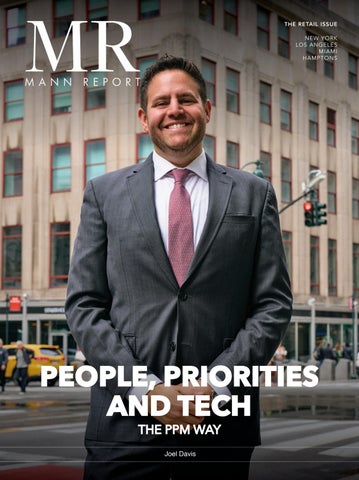




Joel Davis








For decades, we have built a real estate practice unparalleled in the US. Now, as the global legal powerhouse HSF Kramer, we are so much more. As the only law firm ranked in Chambers Band 1 on three continents, we continue to transform skylines and reshape landscapes. Please visit our website to learn more. Kramer Levin is now HSF Kramer














TO BENEFIT:
Golf • Tennis & Pickleball • Cards & Games
Shopping & Lunch • Cocktails & Dinner
Join Us To Celebrate Two Decades of Bringing Joy to Children with Cancer & Their Siblings!
MONDAY, AUGUST 3, 2026
The Seawane Club | Hewlett Harbor, NY
Rockaway Hunting Club | Lawrence, NY
Hempstead Golf & Country Club | Hempstead, NY
Brian Diffendale, M&T Bank
Christopher Hagen, Green Art Plumbing Supply
Carl Oliveri, Grassi Advisors
RECOGNIZING
Rich Schaffer
Plumbing Contractors Association of LI with the Joe Weksler Memorial Community Service Award
LUNCHEON HONOREE
Joan Copell Grant
For further information, please contact Deborah Lom at 516.634.4171 or deborah.lom@sunriseassociation.org Scan the QR code or visit our website to learn more! www.levinegolfouting.org
GOLF OUTING SPONSOR
Sunrise Day Camp–Long Island is a proud member of the Sunrise Association, whose mission is to bring back the joys of childhood to children with cancer and their siblings worldwide. Sunrise accomplishes this through the creation and oversight of welcoming, inclusive summer day camps, year-round programs and in-hospital recreational activities, all offered free of charge. Sunrise Day Camp–Long Island is a program of the Friedberg JCC, a beneficiary agency of UJA-Federation of New York.




























EDITORIAL
Editor
Debra Hazel
Director of Communications and Marketing
Penelope Herrera
Director of
Newsletter Division
Kristen Pooran
PRESIDENT/CEO
Jeff Mann
ART
Art Director
Virginia Sanchez
Cover Photography
Isaiah Gill
Carlo L. Batts
Dominic Butler
Frank DeLucia
Justin Di Palo
Kris Kiser
Bob Knakal
Stuart Saft
Abe Schlisselfeld
Carol A. Sigmond
Alan Stalcup
David Weissman
Technology Consultant Eric Loh
Distribution Mitchell’s Delivery Service
DIGITAL MEDIA
Designers
Virginia Sanchez
Editors
Debra Hazel
Penelope Herrera
Rose Leveen
Web Developer
CS Designworks
West Coast Office: 578 Washington Blvd., Suite 827
Marina Del Rey, CA 90292 866-306-MANN (6266) mannpublications.com


East Coast Office: 450 7th Ave, Suite 2306
New York, NY 10123 212-840-MANN (6266)

The Mann family has been in the real estate business for a long time, and I’ve been privileged to know many of the greats in our industry, who have run multigenerational companies. But it’s even more exciting to watch the beginning of a company’s journey, as we do with this month’s cover story on Peninsula Property Management.
After working in hospitality, then applying the training skills he learned there to property management, Joel Davis launched PPM with Ernest Rrika a year ago, with the idea that systems support the human touch, not the other way around. Read more to find out how the two have built a 43-property portfolio in less than a year.
The Mann history on the fashion and retail side has also extended for decades, and that’s why we’re a proud co-sponsor of CBIZ’s Consumer Product & Retail Symposium, held in Los Angeles last month. You’ll see some great highlights and observations from Ron Friedman, Robert Krieger and Marshal Cohen in our Events section.
We’ve all felt the first wisps of summer, but don’t forget, we still have the June/July double issue coming up. Send us all your events and news to kick off the season of sun!

“No matter how brilliant your mind or strategy, if you’re playing a solo game, you’ll always lose out to a team.” — Reid Hoffman






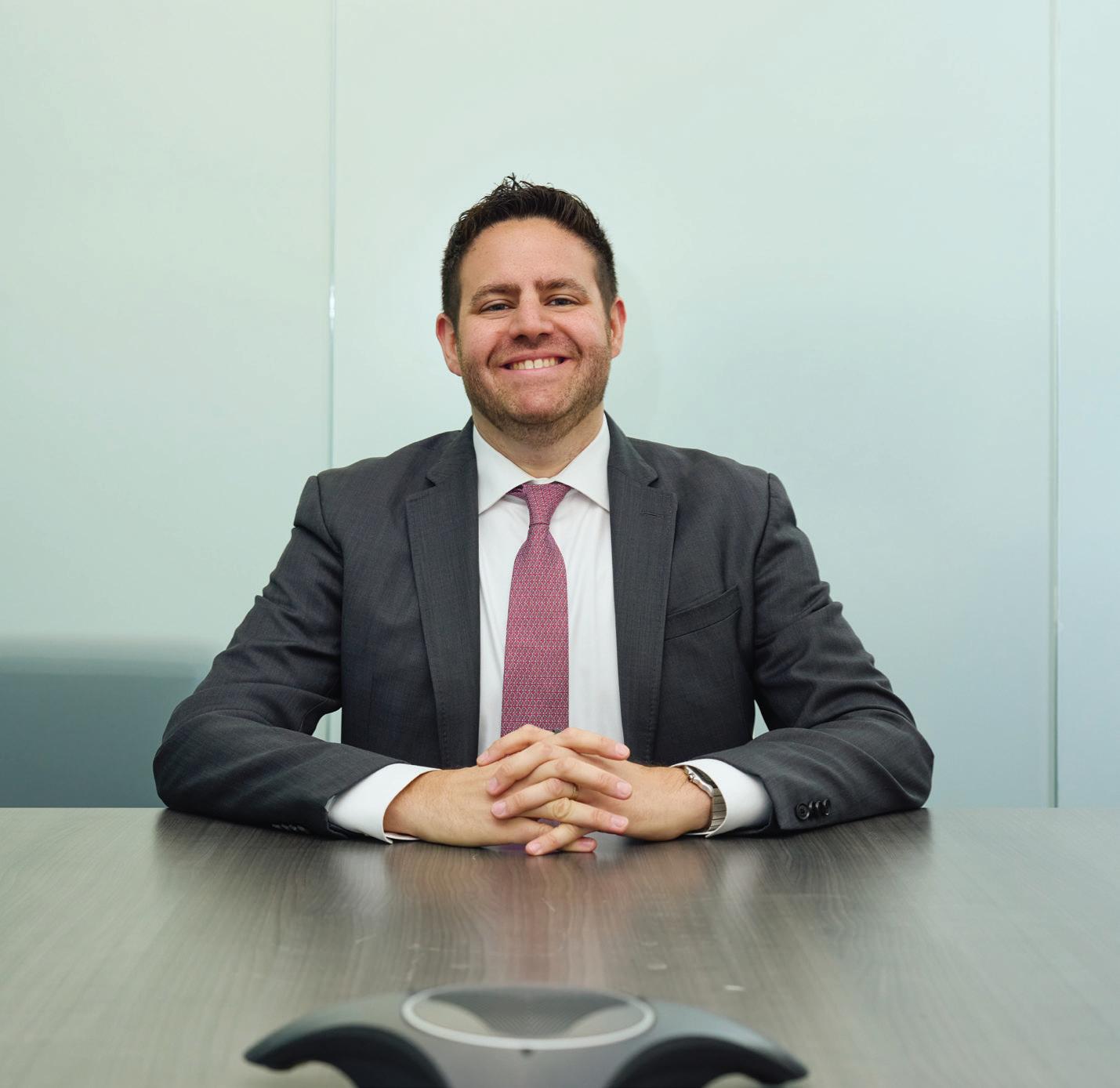






At Peninsula Property Management (PPM), we do more than manage properties—we elevate them. With a leadership team that is deeply involved, hands-on, and responsive, PPM is redefining the standard for property management in New York City. Our mission is simple: deliver results with integrity, precision, and a hospitality-first approach.

Proactive Management
Stop issues before they start — from Local Law 97 to vendor oversight.
Financial Clarity
Clean, timely financials. No surprises –just strategic planning and transparency.
NYC Compliance Expertise
DOB, HPD, LL88, LL97, FISP we navigate every regulation so you don’t have to.
New Development Services
Schedule B, TCO phasing, hiring of staff, punch-list, insurance implementation.
Smart Cost Control
Energy savings, bulk contracts, vendor negotiations we cut waste, not corners.
Track requests, tasks, and reports live through our integrated digital platform.
This may be the Retail Issue because of the ICSC conference this month in Las Vegas, but as you’ll see, we still have a lot of technology to discuss.
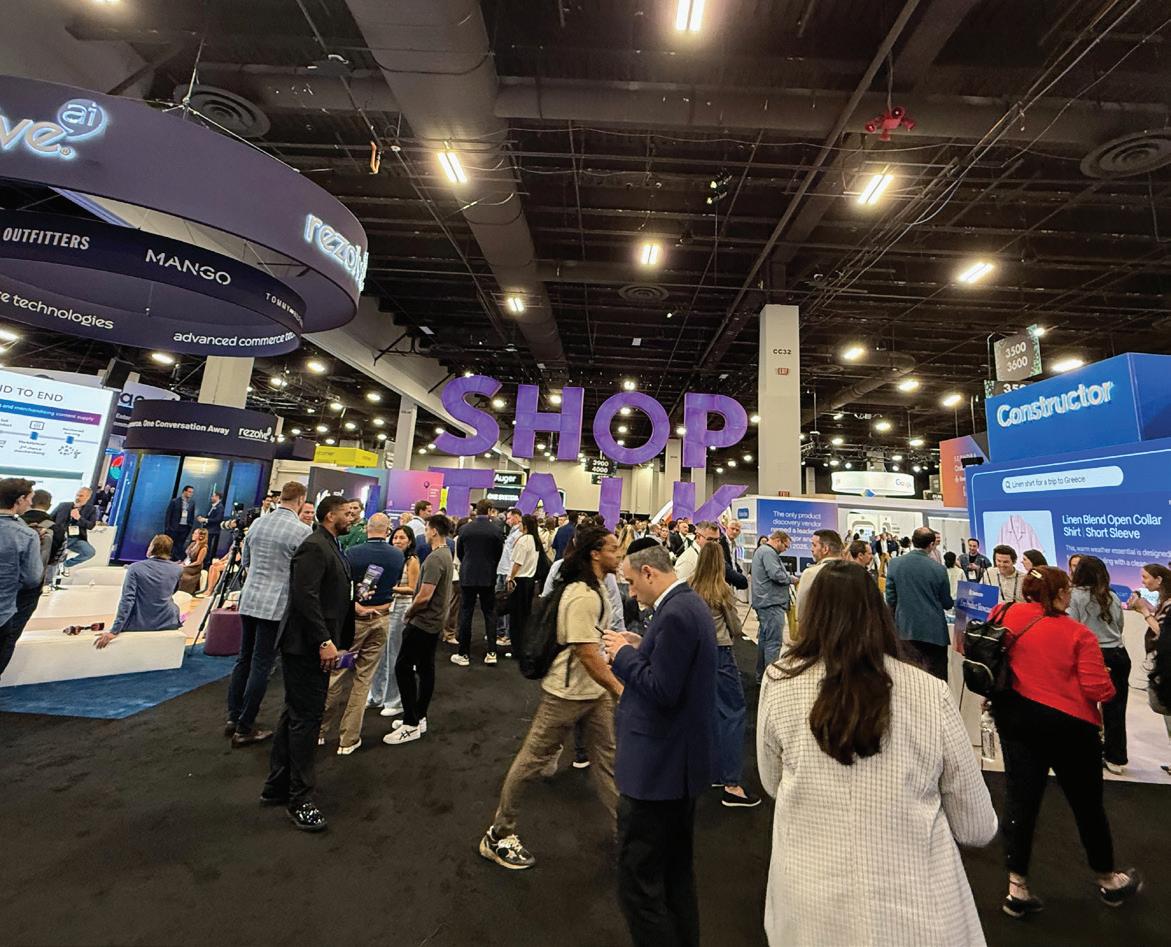
My annual visit to Shoptalk showed that tech was on the mind of retail developers, with parking a particular focus. Transit-oriented mixed-use is profiled with The Crossings in East Orange, N.J. Syska Hennessy’s Dominic Butler and consultant Justin Di Palo tell us how new tech can help energyand water-guzzling data centers become more eco-friendly. And learn how Howard University is teaching the future of construction and design, thanks to the generosity of Autodesk.
Our columnists, too, remain tech- and law-oriented. Reduxx Group’s Carlo L. Batts warns that AI can overvalue our properties, as Greek Real Estate Partners’ David Weissman teaches us to look for the little things in maintaining warehouses. And, as always, we have great legal and insurance viewpoints from Carol Sigmond, Stuart Saft and Frank DeLucia.
I’ll be at ICSC @ Las Vegas with the issue – looking for your stories to tell. Email me at dhazel@mannpublications.com to set up a meeting.




An engaging and vibrant art exhibit by Dyann Klein took place at the Gallery in the Kaufman Arcade Building, located at 139 W. 35th St. The event brought together guests who enjoyed an evening filled with creativity, conversation and artistic expression, complemented by food and drinks. Attendees had a great time experiencing the dynamic energy of Klein’s work in an inviting and lively atmosphere.
Dyann Klein’s art is deeply rooted in emotion, movement, and imagination. As she beautifully expresses, “When I meditate I empty my mind, when I paint, I fill it.” Her creative process allows her to transcend time and space, where each brushstroke evolves intuitively from her subconscious. Influenced by Asian art and Abstract Expressionism, her work reflects a

fusion of cultures, experiences and visual storytelling shaped by her extensive travels.
With a background in art therapy, Klein brings a unique psychological depth to her creations. Her paintings are visually compelling and designed to evoke emotional connection and engagement. Inspired by nature, fantasy and moving imagery, her ever-evolving style invites the audience to experience rhythm, movement and moments of meaningful connection through her art.
The exhibit was a true celebration of creativity, leaving guests inspired and immersed in the expressive world of Dyann Klein. The exhibition will remain on display through July 28.













































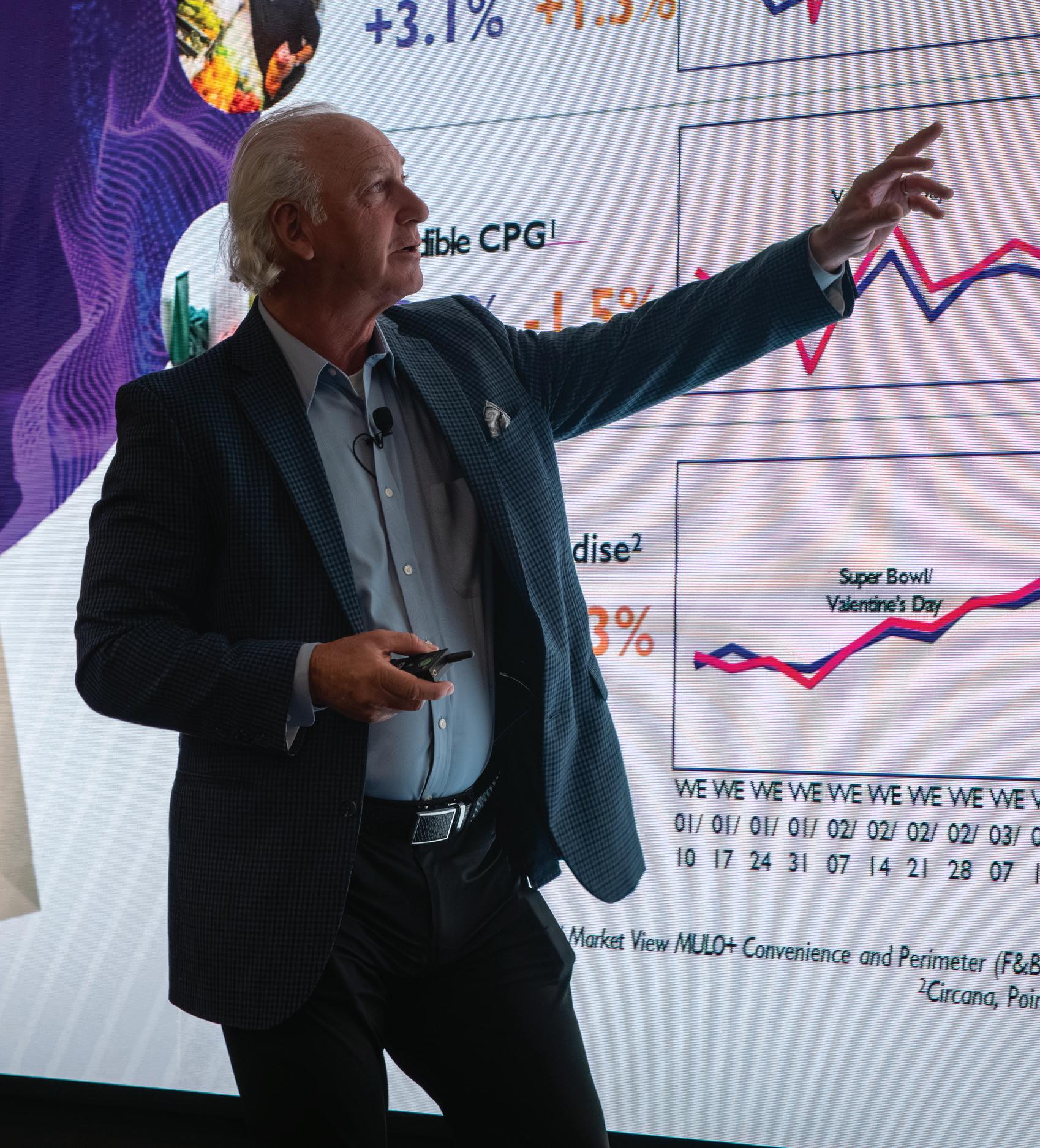
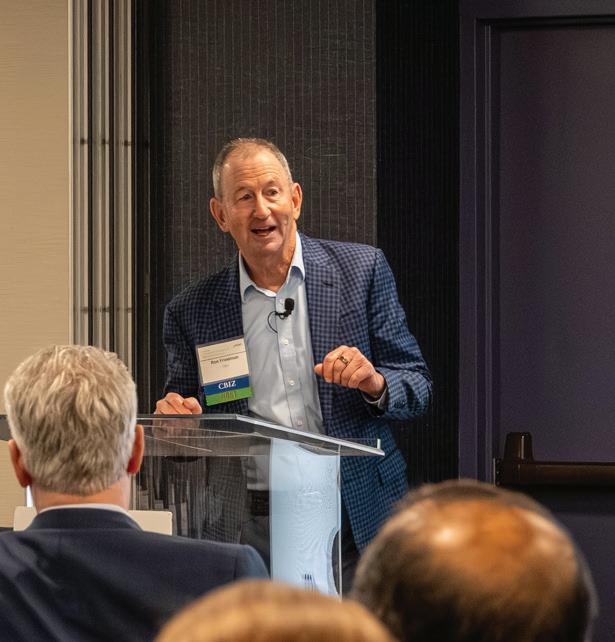
Fashion and retail executives gathered at the eighth CBIZ Consumer Product & Retail Symposium, held in Los Angeles, discussing the cost of moving goods and consumer behavior, both of which “are changing faster than any of us can remember, said Ronald S. Friedman, CPA, an advisory and assurance managing director in the Los Angeles office of CBIZ and a practice leader in the firm’s Consumer and Industrial Products group.
Robert Krieger, president and CEO of Krieger Worldwide, noted that there is good news on tariff refunds, but it’s wrapped in a very complicated package. The return of hundreds of billions of dollars in tariff refunds will require intense scrutiny, with U.S. Customs looking closely at valuation, classification, country of origin and any red flags in a company’s history before approving a single check.
On the retail side, Marshal Cohen, chief retail advisor at Circana, punctured a myth many observers had heard all year: that retail just came off a blockbuster holiday
season. While traffic was strong and Black Friday parking lots were full, food and beverage sales are up about 3%, largely driven by roughly 3% price increases rather than consumers putting more units in their carts.
CPG (Consumer Packaged Goods) sales increases are running around 2%, again in line with modest price inflation. General merchandise, where fashion lives, is up slightly under 2%. Add in holiday shifts, and weatherrelated comps from 2025, observers should be cautious about touting “record weekends.”
Upper - income consumers are still spending, though at a slower growth rate, Cohen reported, while middle - income shoppers are flattening out.
Lower - income households took a noticeable hit in October and again in January, coinciding with political changes and resumed student loan payments. A continuing issue: the consumer is “bored to death,” Cohen said. Shoppers are being asked to spend more of a squeezed wallet on products that too often look and feel exactly like last year’s.










A team of caped, comic book–inspired heroes from JLL helped raise an impressive $600,850 for the American Heart Association and its American Stroke Association division during the annual CycleNation event, held at Terminal Warehouse at 261 11th Ave.
Led by Director of Workplace Experience Keith Piro, JLL’s team earned Top Fundraiser honors, contributing $132,837 to the total. Their efforts will improve heart health, fund critical research and save lives.
JLL’s New York Region Chairman Peter Riguardi is serving as the Executives with Heart chair, helping mobilize a growing coalition of companies in support of the American Heart Association’s Nation of Lifesavers initiative. The nationwide effort aims to double cardiac arrest survival rates by 2030 by equipping more people with CPR and AED training and the













confidence to act in emergencies.
CycleNation brought together more than 200 participants from across the real estate and business communities, including JLL, Fried Frank, JRM, CSS Building Services, Cushman & Wakefield, Empire & Co., Fidelity National Title Insurance Company, Newmark, Related Companies, Salesforce, Viatris and Viking Restoration Services.
Dressed as iconic do-gooders and larger-than-life characters, riders took part in a high-energy stationary cycling experience that combined fundraising, awareness and community engagement.
For JLL, CycleNation is one part of an ongoing commitment to the American Heart Association. That momentum will continue in May, when more JLLers will participate in the Wall Street Run & Heart Walk to further support the Nation of Lifesavers initiative and expand its impact across the city.





















































Insurance solutions-focused asset manager 42 AM LLC (42 Asset Management) announced a partnership with MP Real Estate Capital LLC (MP), a mortgage origination and servicing platform, to deliver high-quality commercial real estate mortgage loans to the annuity insurance market.
The partnership brings together complementary platforms to address growing insurer demand for well-structured, investment grade commercial mortgage loans. MP provides tailored origination
capabilities and loan servicing, delivering institutional-quality mortgage loans to lenders.
42 Asset Management’s insurance-focused investment platform serves as the conduit to the annuity-insurance market, aligning these mortgage loan assets with insurers’ long-term liability structures and portfolio construction objectives.
“Our partnership with MP Real Estate Capital is a natural extension of our platform’s mission to source differentiated, high-quality fixed income assets for annuity-focused insurers,” said Bryan Robertson, managing partner at 42 Asset Management. “By working with experienced operators in the commercial real estate space, we can deliver wellstructured mortgage assets that meet the credit quality, duration and yield requirements of our insurance clients.”
The partnership reflects the broader trend of annuity-focused insurers seeking specialized asset managers with direct access to high-quality origination channels. By combining MP Real Estate Capital’s origination and servicing infrastructure with 42 Asset Management's insurancefirst investment approach, the firms said that they are positioned to deliver a scalable pipeline of commercial real estate mortgage assets that support resilient, risk-adjusted returns for the insurance market.
“MP Real Estate Capital is built to deliver institutional-quality origination and full-cycle servicing,” said Ricardo Alburez, managing principal for MP Real Estate Capital. “Our infrastructure, loan production platform and consistent asset performance are all geared toward delivering relative-value commercial real estate debt investments for insurerfocused portfolios.”
courtesy of CIM Group



In the largest non-mall retail transaction in South Florida since 2017, the lifestyle center at Miami Worldcenter in Downtown Miami has sold for $210 million.
Newmark Group’s Head of Retail Capital Markets, North America Conor Lalor acted as strategic advisor to his longtime client CIM Group, while Senior Managing Director Eric Williams represented the seller, a joint
venture led by CIM Group and Park West Ventures, the master developer of the $6 billion Miami Worldcenter project, along with Co-Head of U.S. Capital Markets Adam Spies. The buyer is a joint venture between Falcone Group, The Davis Companies and Jamestown.
“Miami Worldcenter represents one of the most significant retail investment opportunities ever brought to market in South Florida,” said Lalor. “Institutional investors continue to target large, irreplaceable retail assets located in dynamic urban districts, and Miami Worldcenter stands at the center of one of the fastest-growing downtown markets in the country.”
Located at 1010 NE 2nd Avenue and completed in 2024, the property’s retail component comprises approximately 272,966 square feet of upscale shopping within the development, which upon completion will include approximately 12,000 residential units, more than 600,000 square feet of office space and 850 hotel rooms.
“Assets of this scale and quality continue to command outsized interest from institutional buyers,” said Williams. “This transaction reflects both the depth of capital targeting high-performing retail and the increasing velocity of large-scale trades as conviction returns to the market.”
Anchored by a flagship Apple store, Miami Worldcenter features a roster of national and international retailers including Club Studio, Maple & Ash, Ray-Ban, Sephora, Lululemon, Lucky Strike and Museum of Ice Cream, among others. Newmark has played a long-standing role in the project’s evolution, including representing several tenants within the development.


equity, representing 49% of the project’s total equity, through the SFMH Club Fund.
“Sixteenth and Mission is one of the most storied intersections in San Francisco, and one of the most in need,” said Mieke Holkeboer, director, affordable housing finance, Western Alliance Bank. “Mission Housing and MEDA have designed a community that offers more than housing. It offers stability, dignity and support. It has been a privilege to work alongside this team on a project that will have a lasting impact in the Mission.”

Western Alliance Bank is providing $77.9 million in construction financing and Low Income Housing Tax Credit equity for The Marvel in the Mission, the largest affordable housing development in San Francisco’s Mission District. The 136-unit permanent supportive housing community will serve low-income families and formerly unhoused residents at the intersection of 16th and Mission Streets.
Western Alliance Bank’s Affordable Housing Finance Group is providing a $56.3 million tax-exempt construction loan, which will convert to a $5.6 million permanent loan at stabilization. The bank is also investing $21.6 million in Low Income Housing Tax Credit (LIHTC)
Phase 1 will deliver 136 units for households earning 30% to 50% of area median income. When complete, the multi-building development will provide nearly 400 deeply affordable homes across the Mission district. Permanent supportive housing, which combines long-term affordable housing with on-site services, will be delivered by Mission Housing and Lutheran Social Services to support resident stability.
The Marvel in the Mission marks a return partnership for Western Alliance Bank and Mission Housing, following their Scattered Sites project, which renovated 69 public housing units across five San Francisco buildings. That project reinforced a shared commitment to complex, community-driven deals that go beyond the typical. With The Marvel in the Mission, Western Alliance serves as both senior lender and, through a partnership with LIHTC syndicator Merritt Community Capital Corporation, as the project’s largest equity participant.
Construction is underway, with completion expected in December 2027 and leasing anticipated to begin in March 2027. Future phases will include 134 units of family housing on Mission Street and 121 units on Capp Street.
million square feet), this creates the full master-planned AVCC project — marketed together as AVCC East and AVCC West — for a combined total of up to 9.4 million square feet, spanning approximately 510 acres and exceeding $1.2 billion in cost.
AVCC represents the “next ring” on the regional industrial pricing map, providing cost relief for companies facing record-high sale and lease rates across Greater Los Angeles. A signature feature of the development is the potential for a single building spanning up to two million square feet.


The project’s broad building size range will be able to accommodate small, mid-sized and large users, creating opportunities for a diverse tenant mix — from emerging regional operators to major national and international companies.
Planned specifications include up to 42-foot clear heights, ESFR fire sprinkler systems, expansive truck courts and abundant trailer parking, dock-high and grade-level loading and build-to-suit office configurations.
The area’s emergence as a premier logistics hub accelerates with adjacent developments. The City of Palmdale is advancing a major onemillion-square-foot (approximate) Trader Joe’s facility near AVCC.
The development of the AVCC project is led by Covington Group Inc., a privately owned, fully integrated real estate investment and development company specializing in value-add light industrial, warehouse and bulkdistribution investments across the United States.

Holland & Knight’s New York Real Estate Practice Group and Real Estate Capital Markets Practice Group successfully closed deals worth more than $11.35 billion in 2024. From acquisitions, dispositions, development, condominium and cooperative formation and operation to hospitality, financing, leasing, land use and real estate capital markets, our attorneys do their utmost to deliver clients with exceptional results across all sectors.
Acquisitions and Dispositions: $1.93 billion
Financing: $4.1 billion
Leasing: $3.2 billion
Land Use: $290 million
Defaulted Loans, Workouts and Liquidations: $1.83 billion

www.hklaw.com
Stuart M. Saft, Partner | Real Estate Practice Group
Keith M. Brandofino, Partner | Real Estate Capital Markets Practice Group New York, NY | +1.212.513.3200









The move comes at a time of change in the residential real estate industry, as brokerages respond to consolidation among major firms, evolving compensation structures and increasing demand for marketing and technology support.
“After 18 years in a franchise system, we made the decision to build something that actually works for New York,” said Joseph T. Hamdan, principal of MYNY.



Coldwell Banker Reliable Real Estate, formerly the largest Coldwell Banker franchise affiliate in New York City’s five boroughs, has launched a new independent brokerage, MYNY, following 18 years under the franchise brand.
The group is now in its 20th year in business. The firm has offices in Brooklyn, Manhattan and Long Island, and serves clients across all five boroughs, Long Island and the Hamptons.
MYNY — short for MY New York — is focused on agent development, local market expertise and modern marketing, providing agents with access to leadership, training and resources designed to support longterm business growth.
MYNY has expanded its reach through Leading Real Estate Companies of the World (LeadingRE), a global network of more than 550 firms and 135,000 sales associates across 70 countries.
“We’re shaping the company to better reflect how this market actually works, and to give serious agents a platform that fits how they operate,” Hamdan added.
Ombelle Fort Lauderdale, a luxury residential development taking shape in the heart of Flagler Village, has secured $50 million in initial financing from Dwight Mortgage Trust, representing a portion of the anticipated $350 million construction financing. Developed by Dependable Equities, the project is part of a 1.4 million-square-foot mixeduse development shaping one of Fort Lauderdale’s fastest-growing neighborhoods.
The transaction was arranged by The SHB Group, led by Steven Hersko, managing director.
The financing follows a series of major capital markets transactions by the developer, including the recent $765 million refinancing of The Rocklyn, a 1,100-unit multifamily development in Brooklyn.

“This financing marks an important milestone at Ombelle and positions the project for continued success,” said Isaac Schlesinger, principal at Dependable Equities. “We are seeing solid engagement from buyers and a high level of interest in the overall vision, which continues to reinforce confi dence in the project.”

The financing was secured amid strong early sales activity and continued progress across pre-construction efforts, positioning the development for the next phase of execution. Development continues to advance through pre-construction, with site preparation activities underway, including initial groundwork and geotechnical investigations and site preparation work.
The approach refl ects a broader emphasis on thoughtful, intentional development from the earliest stages of the project.
“Ombelle has generated strong and consistent demand from buyers looking for a well-rounded lifestyle offering in downtown Fort


Lauderdale,” said Kenny Drysdale, director of sales for Ombelle Fort Lauderdale. “From design and amenities to fl exibility in how residents can live and use their homes, the response has been consistent and continues to build.”
Designed by ODA Architecture, Ombelle will feature two 44-story towers at 300 NE 3rd Ave., forming part of a large-scale, mixed-use development that integrates residential, wellness and retail experiences within an urban setting.
The project will include ground-fl oor retail, dining and service-oriented offerings designed to complement the surrounding neighborhood, alongside fully finished and furnished residences ranging from studios to four-bedroom homes and penthouses, with pricing starting in the $400,000s.
More than 100,000 square feet of indoor and outdoor amenities will join a 35,000-square-foot Equinox Fitness Club, marking the brand’s first location in Fort Lauderdale. Residents will have access to a comprehensive wellness offering that includes a curated spa experience with treatment rooms, sauna and steam, experiential showers and cold plunge pools, alongside fi tness and lifestyle programming designed to support a health-focused approach to living.
Located in Flagler Village, Ombelle is positioned within one of the city’s most active growth corridors, with access to Brightline, Fort Lauderdale-Hollywood International Airport and Port Everglades. The development is surrounded by a mix of residential, retail and cultural destinations contributing to the area’s continued growth.
Construction is expected to be completed in 2028. Douglas Elliman Development Marketing is the exclusive sales and marketing partner for Ombelle Fort Lauderdale.









Northwind Group, a Manhattan-based real estate private equity firm and debt fund manager, announced the closing of a $50 million construction loan for the development of an 18-story luxury residential condominium building located at 10 West 17th St. in Manhattan’s Flatiron submarket.
The loan upsizes an $11 million acquisition loan on the property provided by Northwind in 2025.
Prosper Property Group, a vertically integrated real estate firm, is leading the development of the project located on 17th Street between Fifth and Sixth Avenues. The building will feature 34 boutique luxury residences ranging from one to four bedrooms. Foundation and excavation are underway, with completion anticipated in mid-2027.
The loan was originated by Northwind Debt Fund III, Northwind’s latest flagship closed-end fund focused on real estate credit investments across major U.S. gateway markets. Upsizing the existing acquisition loan refl ects Northwind’s continued conviction in the development and its ongoing commitment to supporting experienced sponsors through the full lifecycle of their projects.
“We are excited to deepen our commitment to this project and to expand our relationship with Prosper Property Group as the development moves into its construction phase,” said Ran Eliasaf, founder and managing partner of Northwind Group. “The Flatiron District continues to exhibit strong fundamentals and robust demand for boutique luxury residential product, and we have confi dence in the team’s ability to execute on this vision. This upsizing is a natural continuation of the trust and partnership we have built since originating the initial acquisition loan, and it refl ects our broader focus on supporting experienced sponsors through the full lifecycle of their projects.”
“Northwind’s willingness to upsize and support our construction financing needs is a testament to the strong partnership we have built together,” said Eddie Bender, principal of Prosper Property Group. “Having a lender that understands our vision and can move effi ciently through the process has been invaluable, and we look forward to delivering exceptional residences to the Flatiron neighborhood.”
Northwind was represented by John Vavas of Polsinelli. The financing was arranged by Andrew Iadeluca of New Development Capital.
Douglas Elliman Realty announced its expansion into Northern California’s Wine Country, establishing a strong presence across the Napa and Sonoma markets. The move is cemented by two globally renowned real estate advisors, Christine Krenos and Joseph Zichelle, who join the firm following nine years together at Compass.
“Expanding into California’s Wine Country represents a strategic and highly anticipated step in Douglas Elliman’s continued growth across California,” said Michael S. Liebowitz, president and chief executive offi cer of Douglas Elliman Inc. “This is a globally recognized luxury market, and with Christine and Joseph leading the way, we are exceptionally well-positioned to deliver best-inclass service and reach to the region.”
An internationally recognized real estate advisor, Krenos brings deep ties across the United Arab Emirates, New York, Silicon Valley and California Wine Country, all of which actively funnel high-networth buyer and seller relationships into her practice. She has lived in and transacted across Northern California and the Middle East.



Early in his career, Zichelle quickly rose through the ranks as a topperforming agent in Miami, building a business that spanned both commercial and residential sectors.
Driven by a sharp understanding of value and market positioning, he went on to lead a top-producing team at One Sotheby’s International Realty before expanding his reach to the West Coast, recognizing early the importance of cross-market connectivity between luxury hubs. His
successful career in South Florida luxury real estate has made him a trusted advisor to a client base now increasingly considering re-migration from Miami to California.
Nine years ago, Zichelle formally aligned with Krenos, establishing a strategic relationship that continues to capture business across key feeder markets, from Southern to Northern California and across national and international channels.
Together, they operate with a global perspective, bridging relationships and opportunities across the country and beyond, an approach that directly informs their positioning in Wine Country today.
“Wine Country offers something rare: privacy, land and architectural beauty within reach of San Francisco. When you compare that to legacy markets like Aspen, Malibu, Palm Beach and The Hamptons, the value proposition becomes undeniable. It’s not just compelling, it’s inevitable,” said Krenos.
“When you combine proximity to Silicon Valley, year-round livability and the increasing quality of design-driven estates, it becomes clear: this market isn’t catching up, it’s just getting started. And perhaps most importantly, the wealth is already here,” added Zichelle.
Krenos and Zichelle have closed more than $70 million in sales volume in 2025 alone, including two off-market Wine Country transactions each valued at over $20 million. The duo is poised for a strong spring market, with close to $100 million in luxury residential listings expected to come online across Napa and Sonoma Counties.










Global boutique project and cost management consultancy MGAC has launched a specialty Luxury Living brand focused on the delivery of distinctive, high-end residences and luxury home projects worldwide, the fi rm announced.
The new MGAC Luxury Living brand will focus on complex, architecturally distinct residences across the globe. MGAC’s Luxury Living team delivers the discipline and rigor of commercial
construction and project management to the specifi c design, engineering, building, security and planning needs of ultra-high-end homebuilding.
“Our Luxury Living specialty brand refl ects the broader growth and evolution of our fi rm as a truly international resource for clients,” said Mark Anderson, president and chief executive offi cer, MGAC. “We understand that these homes are legacy assets for our clients and we take our role as stewards of that seriously. We treat these homes with the planning and attention to detail that we would bring to any other complex project.”
Combining the bespoke services of a boutique fi rm with the reach and resources of a global team across three continents, MGAC specializes in high-caliber project management from initial concept through completion and move-in. At every stage, MGAC’s Luxury Living team offers white glove stewardship and a seamless experience aligned with the work and lives of the fi rm’s rarefi ed clientele.
Services include project management; executive fi nancial oversight; comprehensive project controls encompassing cost, risk and schedule management and advanced technology solutions, such as the complex integration of building operational systems, security protocols and essential smart-home technology for properties where effi ciency, privacy and reliability are paramount.
Services are further supported by furniture, fi xtures and equipment procurement, relocation management, art collection management and installation and the highest level of security solutions.

professional remediation solutions as property owners face increasing issues related to moisture damage and indoor air quality.
“Mold problems often start silently and spread quickly, especially after water damage,” said a spokesperson for the company. “Our priority is to respond immediately, contain the issue and restore the property safely and efficiently.”

The company provides a full suite of remediation and restoration services, including mold inspection, black mold removal, water damage restoration, leak detection, structural drying and post-damage reconstruction. Each project is handled using advanced industry equipment such as HEPA air filtration systems, commercial-grade dehumidifiers and moisture detection technology to ensure thorough remediation and prevent future recurrence, the company said.
Mold growth can begin within 24 to 48 hours following water exposure and may lead to structural deterioration, unpleasant odors and potential health concerns if not addressed promptly. By offering same-day inspections and rapid intervention, SoCali Mold Remediation helps clients minimize damage and avoid costly repairs.
Serving both residential and commercial properties, the company works with homes, apartments, office buildings, retail spaces and multi-unit complexes across Los Angeles. Every project is performed by trained, licensed and insured professionals.


















































Bluon, an AI and data company for HVAC contractors, has launched PartsConnect, a feature within Bluon’s app and fi eld service management (FSM) plug-in that is designed to help technicians and contractors quickly locate and purchase compatible replacement parts sold by their preferred local suppliers.
Powered by Bluon’s equipment intelligence, PartsConnect delivers a solution to the historically time-consuming and frequently inaccurate process of fi nding and buying compatible replacement parts for specifi c HVAC equipment.
With its database of more than 30 million unique model numbers across 240-plus OEMs, including original manuals, detailed specifi cations and complete parts lists with specs, Bluon is HVAC’s top provider of technical data and technical support, the company said. The launch of PartsConnect means that technicians can identify and purchase replacement parts quickly and confi dently, eliminating much of the research, frustration and guesswork that has historically led to delays, wrong part installs and callbacks.
“Our customers have been asking for this feature for years,” said Peter Capuciati, CEO of Bluon. “Identifying compatible replacement part options is hard enough, but trying to determine if a local distributor carries any of those compatible options has historically been a massive friction point for HVAC shops. We believe we have fi nally cracked the code to this enormous challenge.”
PartsConnect addresses several problems that are well-known to HVAC techs and contractors, including frustrations with sourcing parts that are no longer manufactured, uncertainty about whether a substitute part will work properly and dependence on a supplier’s counter staff to do the research to help identify compatible options.
“Enabling contractors to go straight from a scan of a unique model number being worked on to instantly see what compatible parts are sold by their local distributors is a game changer for HVAC,” said Capuciati. “PartsConnect is a huge step forward in the pursuit of helping contractors and their technicians making each job as profi table as possible.”

a lot of modern jobs don’t: stability,” said Michael Petri, owner of Petri Plumbing, Heating, Cooling & Drain Cleaning. “These are essential services people will always need, and that makes this path especially appealing in today’s uncertain job market.”

That much-discussed shortage of skilled tradespeople needed in New York City construction may be easing, according to observations from Petri Plumbing, Heating, Cooling & Drain Cleaning, a family-owned home service provider serving Brooklyn and the surrounding New York City area for over 100 years.
As industries across the country face layoffs and increasing disruption from artificial intelligence, Gen Zers and other workers are turning to hands-on professions like plumbing, electrical work and HVAC, which are less susceptible to automation and continue to see consistent demand.
“More people are realizing that careers in the trades offer something
A recent national report found that the United States could face nearly 1.4 million unfilled skilled trades jobs by 2030, highlighting a significant workforce shortage across industries, including plumbing, HVAC and construction. As a result, home service companies are seeing rising demand for technicians and renewed interest in the career.
While many office-based and digital roles face uncertainty, skilled trades careers remain largely resistant to automation due to their physical, onsite nature and the level of skill and problem-solving required. Beyond job security, skilled trades careers offer a range of additional benefits that are attracting a new generation of workers: immediate earning potential through apprenticeships without the burden of student loan debt; opportunities for advancement through specializations, new certifications and potential business ownership and consistent demand regardless of the economy.
For local communities like Brooklyn and Manhattan, this trend is especially important as demand for reliable home services continues to grow alongside aging infrastructure and housing.
“Closing the skilled trades gap is critical not just for our industry, but for the communities that rely on these services every day,” Petri said. “Encouraging more people to enter the trades helps ensure homeowners continue to get the reliable service they depend on while creating longterm career opportunities.”









technology teams to deploy AI-driven tools across the enterprise, enabling domain experts to extend their knowledge and judgment through structured, secure AI systems.
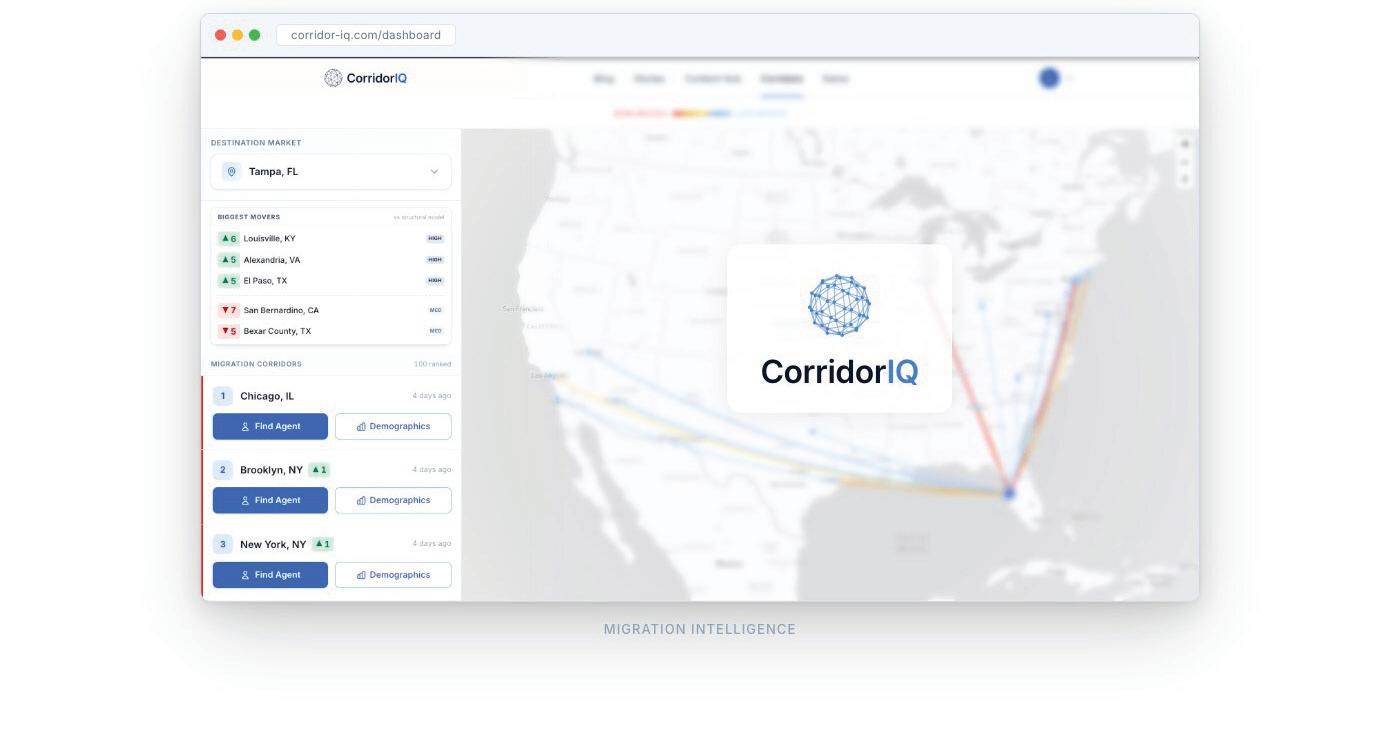
Second, CorridorIQ will bring its migration intelligence technology directly to Bonaventure’s ecosystem, providing data-driven insights into where renters and buyers are moving and why — before those trends register in traditional market data and enabling the firm to position capital ahead of demand, not behind it.

CorridorIQ, an artifi cial intelligence (AI)-powered migration intelligence platform, and Bonaventure, a vertically integrated real estate investment firm managing $2.8 billion in assets, announced a strategic partnership to deploy AI systems across Bonaventure’s portfolio of companies. CorridorIQ co-founders Zave Greene and Luke Anderson will serve as AI Entrepreneurs in Residence beginning this month.
“We’ve spent 25 years building a platform precisely so we could move fast when the right opportunity presented itself. AI is that opportunity,” said Dwight Dunton, founder and CEO, Bonaventure. “Partnering with CorridorIQ isn’t about adopting technology for its own sake — it’s about putting real intelligence behind every decision our teams make, from asset management to acquisitions to operations. We expect this partnership to generate tens of millions of dollars in measurable enterprise value, and we’re just getting started.”
CorridorIQ will work alongside Bonaventure’s leadership and
“Dwight’s entrepreneurial experience, discipline and willingness to innovate make this partnership incredibly exciting,” said Zave Greene, co-founder, CorridorIQ. “We look forward to building CorridorIQ’s migration intelligence technology under his guidance and working with the team to deploy AI systems for Bonaventure’s ecosystem.”
“I am thrilled to learn from Dwight and the Bonaventure team as we bring our AI and engineering experience with CorridorIQ into a new environment,” added Luke Anderson, co-founder, CorridorIQ. “We are excited to see the innovation that results as our ideas mesh and evolve as we deploy AI alongside a team that’s been pushing the boundaries of innovation for years.”
Dunton is a graduate of the University of Virginia’s McIntire School of Commerce, where Greene is currently a third-year student studying finance and IT Systems.
Anderson is a first-year student in The University of Virginia’s School of Engineering, studying mechanical and aerospace engineering with a business minor through McIntire. Greene’s and Anderson’s in-house residency will be based at Bonaventure’s headquarters, located in Alexandria, Va.


Marking another major step in the company’s strategy to infuse AI technology across the home buying and renting journey, Realtor. com announced the launch of the Realtor.com app in ChatGPT. The new conversational experience brings Realtor.com’s home search capability into one of the most widely used AI platforms, making the often-overwhelming “pre-search” phase of the home buying and renting process simpler. Users can then transition to Realtor.com to connect with a local expert, schedule a tour and explore the site’s full suite of advanced search tools.
MLSs and professionals remain at the center of a connected consumer experience, the company said. Every listing remains fully secure, and MLS data is protected with a strict prohibition on model training.
“For 30 years, Realtor.com has led every major technology shift in
how Americans search for homes, while staying true to our mission of connecting them with the professionals who will help them,” said Damian Eales, Realtor.com CEO. “Today, AI represents the next transformational opportunity to simplify the home journey and deliver greater clarity and confi dence to consumers. The combined strengths of Realtor.com, REA Group and News Corp give us a unique competitive advantage, uniting world-class tech and talent, global insights and deep industry partnerships. With OpenAI, we will meet home buyers wherever they are, keeping the real estate professional central to the experience.”
Tailored prompts support first-time buyers during the pre-search phase. Users can engage conversationally to establish initial budget parameters based on their savings and income. The app supports discovery by comparing and pinpointing specifi c areas based on criteria like commute times, lifestyle amenities or school boundaries.
Realtor.com said that it sees an opportunity to accelerate its strong traffi c momentum by reaching consumers earlier during what it calls the “pre-search” phase, when they are asking foundational questions about affordability, neighborhood discovery and whether to rent or buy. By giving them intuitive tools to start their pre-search, it can then ultimately transition them to Realtor.com and a professional who can best assist them.
“We brought real estate listings to the internet,” said Mickey Neuberger, Realtor.com chief consumer and marketing offi cer. “Now we’re bringing them to AI. As the most trusted site among real estate professionals, we see this as a win for buyers, agents and the broader industry.”
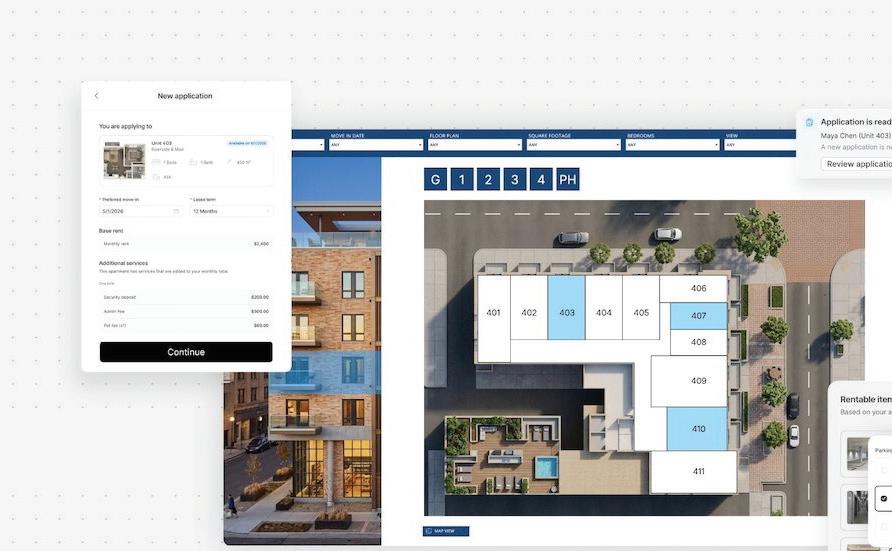
selection disappeared. The data reset and momentum died. Now the system remembers. Unit selection, move date, lease terms, pricing and required fees flow from the map-based search into the application.
“Our integration with Venn removes a long-standing industry disconnect,” said Brent Steiner, founder and CEO of Engrain. “By passing unit-level data and mandatory fees directly into Venn, we’ve finally bridged the gap between searching and signing. We’re providing the seamless, one-click experience that modern renters expect.”

Engrain, a provider of map-based data visualization for rental housing, and Venn, the AI-first multifamily resident intelligence platform, announced a deep integration between SightMap and Venn’s digital leasing platform. Already deployed at select Kairoi communities, it connects the apartment search experience directly to online leasing, screening and move-in — without ever asking a renter to start over.
For over a decade, multifamily operators have faced the same invisible leak in their leasing funnel. A renter would find a unit, choose a movein date and select their lease term. The moment they hit Apply, every
For leasing teams, the experience is equally clean. When an application comes in, a notification surfaces in the Venn hub. The team reviews the summary, checks the documents and approves in one click. Every selection flows automatically into the lease and move-in costs, removing the manual calculation and data entry that has always left room for error.
“Every time a renter moves between disconnected systems, you lose data and you lose the thread of who that person is,” said Or Bokobza, CEO and co-founder of Venn. “When selections and pricing flow into one platform without friction, you don’t just eliminate duplicate entries, you capture the first signal of a resident relationship. The operators who start building that relationship on day one are the ones who know what it takes to keep it.”
The integration is currently available to all mutual Engrain and Venn clients, with fee data syndication powered by Engrain’s SightMap license. Rentable item selection and closed-loop attribution are next.
their CMBS offering creates a powerful perspective on an increasingly important investment vehicle, removing much of the fog and guesswork that had previously been a limiting factor in this segment, and replacing it with objective and reliable metrics.”
The report enables users to benchmark property performance across sectors, identify early signals of asset-level deterioration or outperformance and make more informed underwriting and trading decisions — all within a single, integrated view.




CRED iQ, a data analytics and infrastructure platform focused on commercial real estate (CRE) finance, announced a new partnership with Placer.ai, the foot traffic analytics platform, that has launched a new commercial mortgage-backed securities (CMBS) Report, which is now available on the Placer.ai platform.
The report layers Placer’s high-fidelity foot traffic data directly onto the underlying property assets within CMBS portfolios — powered by CRED iQ’s CRE finance dataset. The integrated data gives lenders, investors and asset managers a more precise and actionable view of market and asset health, the companies said.
“Location analytics presents a critical lens to identifying opportunity and managing risk in the physical world,” noted Ofir Lemel, co-founder and chief product officer of Placer.ai. “Partnering with CRED iQ on
“We at CRED iQ have long respected the Placer.ai platform and are thrilled to announce this new collaboration,” said Michael Haas, founder and CEO, CRED iQ. “This path-breaking solution continues CRED iQ’s commitment to data innovation and the transformation of CRE risk measurement.”
The CMBS Report is designed to address three core use cases for CRE market participants:
1. Performance benchmarking allows users to compare assets across property sectors to uncover hidden buying opportunities.
2. Early signal detection surfaces shifts in property-level visitation trends before they are reflected in financial reporting, helping clients stay ahead of market moves.
3. Smarter underwriting empowers investors and lenders to use realworld visitation data to de-risk portfolios and improve the precision of trading decisions
“CRED iQ and Placer.ai have shared clients – including a number of longstanding advocates of this integrated experience,” noted Chris Aronson, chief commercial officer, CRED iQ.
The CMBS Report is available now on the Placer.ai platform.

With over 75 years of experience and deep understanding of industry challenges, IDB’s Commercial Real Estate team supports property owners, developers and builders across every type of financing requirement. We can help you keep pace with changes in the marketplace, while maintaining high credit quality levels and providing the personalized service, efficiency and flexibility to fit your specific needs.
For more information about financing solutions that meet your specific needs, visit idbny.com.






averaging 901 square feet. The Ellison stands apart from its competitors with wrap construction that offers eight levels of direct-access structured parking and an expansive rooftop featuring a heated resort-style pool and spa with a Jumbotron screen, clubhouse lounge, spin room, Pilates studio and indoor-outdoor fitness center.

The Bascom Group LLC has acquired The Ellison, a 294-unit apartment community located at 9235 West Russell Rd. in the Summerlin/Spring Valley submarket of Las Vegas. The purchase price was $103 million or $350,340 per unit.
Lee Redmond, Nicholas Schroeder, Vincent Punzi and Lowell Takahashi of Newmark arranged the debt financing for the acquisition, while AXA Investment Managers US Inc. provided the acquisition loan. The Newmark Investment Sales team led by Jonathan Merhaut, Doug Schuster and Curt Allsop represented the seller on the transaction. Cushman & Wakefield has been engaged as property manager.
Completed in 2024, The Ellison is a Class A, five-story apartment community offering studio, one-bedroom and two-bedroom floor plans
“Opportunities like The Ellison do not come around often,” said Tom Gilfillan, vice president at Bascom. “This is a brand-new, institutionalquality asset acquired at a basis significantly below what it would cost to build today, in a submarket with one of the strongest long-term growth stories in Las Vegas. We are excited to get to work.”
The Ellison is situated along Interstate 215 in “The Curve,” a stretch of southwest Las Vegas with direct access to Summerlin, the Las Vegas Strip and Harry Reid International Airport. The surrounding area is home to several major developments underway, including the Athletics’ new MLB stadium, Intermountain Healthcare’s Children’s Hospital and expansions of the Roseman Nursing School and the University of Nevada Las Vegas Harry Reid Research & Technology Park.
Bascom plans to complete lease-up of the property and implement institutional-grade management through Cushman & Wakefield to optimize operations and enhance the resident experience. Since 2013, Bascom has been one of the most active buyers in Las Vegas, having acquired 37 properties totaling 9,959 units across the metro area, representing over $1.4 billion in total acquisition cost. The firm currently owns nine communities in the market and has previously owned two properties within half a mile of The Ellison, including Spectrum Apartments, which is located directly across the street.

gelato, hot chocolate and freshly baked brownies.
The New York locations will blend a retail destination with a warm, caféstyle experience. Guests can explore curated selection boxes, fresh truffles, single-origin bars and a loose chocolate counter designed for personalized gifting, alongside a rotating seasonal collection featuring signature couvertures including 47% Colombia milk chocolate and a 72% Ecuador dark chocolate, both Great Taste Award winners.

British artisan chocolatier Chococo is making its U.S. debut this spring with the opening of two New York City Chocolate Houses. The first location is now open on the Upper East Side at 1293 Third Ave., followed by a landmark flagship set to open at 500 Madison Ave. on May 2, 2026.
Founded by husband-and-wife team Claire and Andy Burnet on England’s Jurassic Coast, Chococo has grown from a small shop challenging massproduced chocolate to a respected independent chocolatier. The brand is celebrated for its direct-trade, single-origin chocolate sourced from Ecuador, Colombia and Madagascar, as well as its use of fresh, local and seasonal ingredients. Over the past two decades, it has won more than 130 national and international food awards and ensures full traceability from cocoa farm to finished products, supporting the communities that grow its chocolate. Chococo makes handcrafted chocolates, small-batch
The New York Chocolate Houses will also feature a specialty coffee program in partnership with Abbotsford Road Coffee, artisan pastries from Smor, and premium gelato by Il Laboratorio del Gelato, each crafted to complement Chococo’s chocolate.
All chocolates are freshly made from bean-to-bar and shipped directly to the store. Chococo’s full range, including seasonal gift assortments and signature hot chocolate, will also be available for nationwide shipping across the U.S.
“Launching Chococo in the United States is an exciting new chapter, and New York felt like the perfect place to begin,” said Claire Burnet, a co-founder of Chococo. “Our Chocolate Houses are an invitation to experience what chocolate can be when craftsmanship and sourcing are never compromised. That’s what Chococo has always stood for. Chocolate inspires us every day and we’re ready to share that with New York.”
Chococo also plans a location in San Marino in Europe.





non-profits and other business entities. With a practice spanning both litigation and transactional matters, Contos counsels clients through all phases of real estate projects, from contract negotiation and project planning through dispute resolution.

Tarter Krinsky & Drogin announced that Michael T. Contos has joined the firm as a partner in its nationally ranked Construction Practice, further strengthening the group during a period of sustained expansion for the firm and continued growth in client demand across its core practice areas.
Contos advises clients in the commercial real estate and construction industries and serves as outside general counsel to cooperatives and condominiums. He represents a broad range of clients, including commercial, institutional and residential real estate developers, owners and operators; condominiums and cooperatives; construction management firms and general contractors; hotel owners and operators;
Contos represents clients in state and federal courts as well as before alternative dispute resolution bodies and administrative agencies. His experience includes prosecuting and defending construction and real estate-related matters such as complex construction and design disputes, delay and acceleration claims, consequential damages claims, surety bond claims, lien and trust fund issues, lease and ownership disputes, access disputes, claims under the New York Lien Law and Prompt Payment Act and a range of general contract matters.
“Michael is a highly regarded construction and real estate lawyer whose practice reflects practical, business-oriented counsel combined with strong dispute capabilities,” said Alan Tarter, managing partner of Tarter Krinsky & Drogin. “His arrival builds on our continued growth and enhances our ability to serve clients navigating complex matters.”
“Spanning the full life cycle of construction, from contract structuring through high-stakes litigation, Michael’s experience makes him a natural fit for our team and our clients,” said David Pfeffer, chair of the firm’s Construction Practice. “As we continue to grow a nationally recognized practice, his addition further strengthens the depth of our firm’s capabilities.”









Auctions aren’t just for estate sales — they’re for commercial real estate, too, according to CRE data platform and marketplace Crexi’s Auction Q1 2026. The results revealed significant year-over-year growth, robust transaction volume and continued momentum in auction-based sales, particularly across hospitality and retail assets. The quarter saw 173% year-over-year growth in transactions, with assets brought to auction up 131% and sold volume increasing 165%, signaling expanding market adoption, increased platform utilization and early indicators of broad market recovery.
The first quarter featured six auction events featuring 98 properties, with significant activity across hospitality, retail, industrial, office and land asset classes and $130 million in closed transactions.
Properties averaged 11 bidders per property, demonstrating sustained buyer demand, while an average listing-to-close time of 77 days underscores the efficiency of the auction-driven process. Hospitality led the quarter, though activity spanned multifamily, retail, industrial, office and land assets.
“Our Q1 performance reflects both the growing adoption of auction-based sales and the strength of buyer demand when assets are priced and positioned effectively,” said Sonya Bokano, vice president of transactions at Crexi. “We’re seeing strong buyer conviction, particularly in assets with clear repositioning or recovery potential, alongside growing interest from institutional sellers. As we move into Q2, we expect increased activity across retail and multifamily assets, where auctions continue to offer a compelling path to price discovery and efficient execution.”
Hospitality emerged as the standout asset class in Q1, accounting for 72% of total volume sold and achieving an 80% sell-through rate. The sector also generated the highest bidding intensity, averaging 21.1 bids per deal, as buyers pursued assets with clear operational upside and recovery potential.
Institutional sellers played a major role in Q1 performance, accounting for more than 77% of total volume sold and achieving a 72.7% sellthrough rate, the company reported. Buyer behavior also evolved, with investors showing increased willingness to pursue both stabilized and value-add opportunities, including vacant assets, provided pricing and upside potential aligned.
Notable transactions during the quarter included the sale of Piney Shores Resorts – Lakefront Presidential ($8.16 million), among other recently closed deals, underscore the platform’s strength in managing complex, non-core assets such as healthcare campuses, resort properties and receiver-led multifamily portfolios.
In addition to hospitality assets, retail is one of Crexi Auction’s most established verticals, with strong historical performance across both stabilized, income-producing properties and vacant or value-add opportunities. To date, 728 retail assets have been brought to auction, generating $441 million in total transaction volume.



It’s hardly news that artificial intelligence (AI) has taken over the property management space, with companies using it for everything from customer relations to staff management. And while Peninsula Property Management (PPM) is not shying away from advancements in technology, its founders, Joel Davis and Ernest Rrika, are committed to preserving their luxury property management company’s inimitable human touch.
While other firms have adopted standardized models in the name of efficiency, Davis and Rrika built PPM to offer the opposite: high-end management grounded in real field experience and guided by a deeply engaged leadership team.
“We’re redefining the industry because other companies are replacing people with AI, whereas our company is using it as a tool to save time for our employees so that they can engage more with the community and the staff,” said Davis, president of PPM.
Today, surveying PPM’s spacious and modern glass office, complete with a staff of 17, it’s hard to believe that the company was founded just under a year ago, in April 2025. Davis and Rrika were the company’s sole employees, working from a cramped office in Midtown. The circumstances were far from the luxury they aspired to engage with: the space, which they rented from a bead and button merchant, was tiny. Moreover, it was improbably and entirely pink, down to the lighting fixtures, the radiator and the ceiling tiles. Needless to say, it made a less than ideal venue for visits with clients. Davis and Rrika, scrappy and ambitious, made it work anyway, and soon were able to find more suitable headquarters.
“We truly feel like we’ve made it in the last year given where we came from,” said Davis.
their dual commitments to personalized hospitality and cuttingedge technology. Davis’s expertise is in the former, Rrika’s the latter category.
Davis began his career in the hotel industry, training with Starwood Hotels & Resorts after graduating from George Washington University with a degree in business administration. He then managed the front office of the W Union Square Hotel. He brought his knack for hospitality over to real estate, managing various residential and commercial properties around New York City.
Rrika, a Pace University graduate with a degree in finance, serves as the director of operations at PPM. He has co-founded The Carbon Shield, and has years of experience at property management firms before teaming up with Davis.
Rrika’s strong background in technology — he created an app focused on Local Law 97 compliance — allows him to oversee the technical aspects of PPM. PPM’s fully cloud-based platform delivers real-time tracking of action lists, work orders, compliance items and capital projects. This has uniquely enabled the boutique firm to perform at the level of much larger companies.
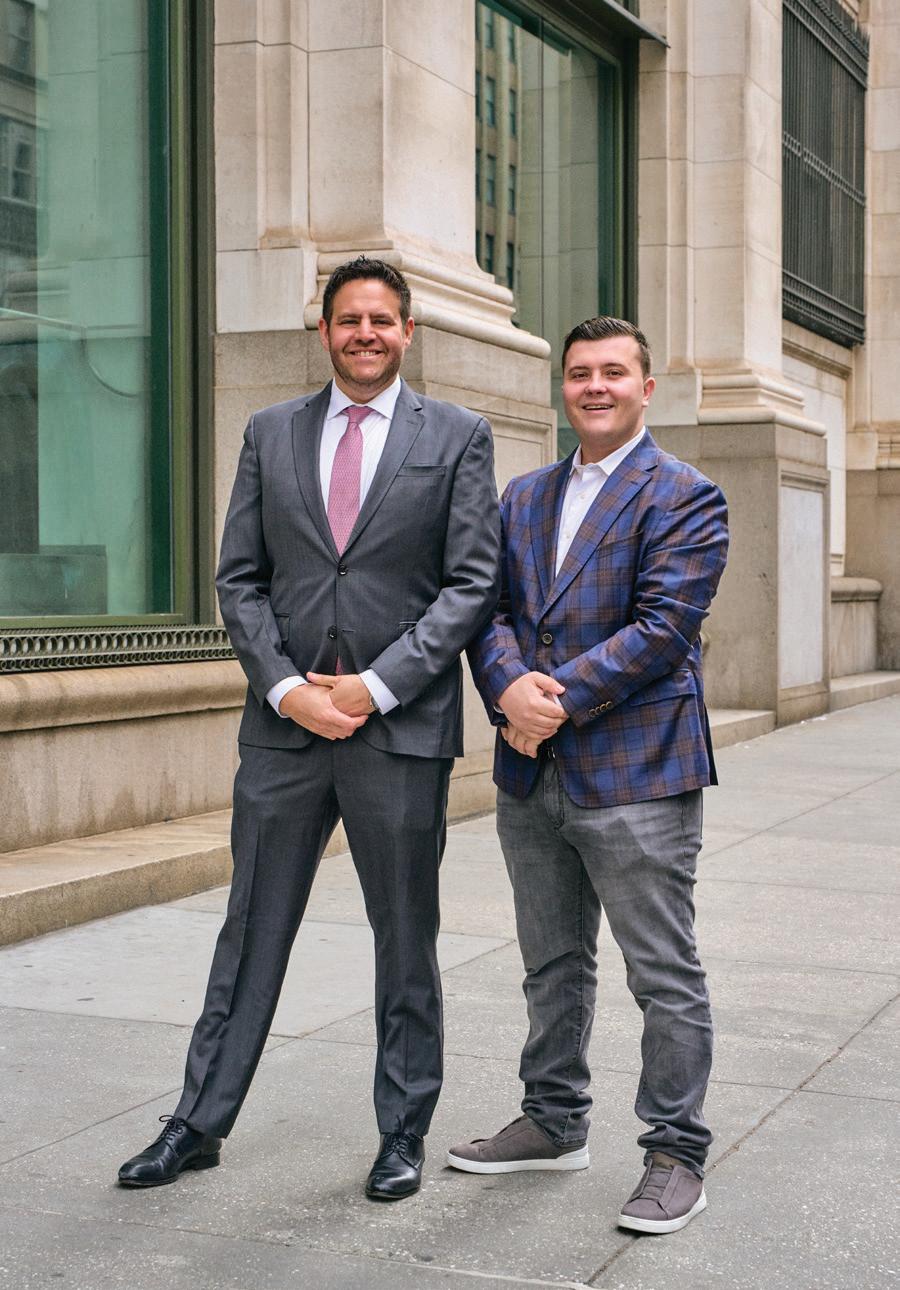
In that first year, Davis and Rrika’s goal was to acquire between 15 and 20 buildings. Ever the over-achievers, they more than doubled their vision. Today, PPM manages a 43-property portfolio in the greater New York City area, complete with a staff of 17. The properties include condominiums, co-ops, commercial properties, new developments and hotels. Among the services it offers are property management, capital project oversight, development advisory, commercial asset management and energy strategy to help ownership groups operate efficiently, maintain compliance and enhance long-term property value.
This fast ascent, Davis and Rrika say, can be attributed to the PPM leadership’s collective 25 years of experience, as well as
“A lot of small companies don’t have the infrastructure to support a lot of buildings,” Rrika said. “From day one, we built a system that can handle multiple properties.”
This technology has proved especially helpful in managing the commercial properties, most of them office buildings, which comprises 50% of PPM’s portfolio.
Though technology can be useful in standardizing procedures and reporting, PPM uses it to permit more customization after a thorough and personalized onboarding process. That allows for consistent communication with residents, boards and staff — and emphasizes that PPM is only a phone call away. And that begins with the first day of onboarding a new building.
“We have a complete item list including finance, leasing, operations and compliance,” Rrika said. “We examine best practices and make sure they are being updated, that a lot of information isn’t being lost in the shuffle or prone to human error. There is a single source of information that everyone uploads.”
The timing and opportunity to launch a new company were right, Davis explained. Within four weeks, the two had signed
“We’re redefining the industry because other companies are replacing people with AI, whereas our company is using it as a tool to save time for our employees so that they can engage more with the community and the staff,”
— Joel Davis







two buildings, and business took off from there.
“Our name was out in the industry, and we were known for providing excellent service,” Davis said. “We did have to start from scratch, but attorneys, engineers and architects all knew us.”
PPM’s portfolio ranges from buildings erected in the 1910s to those just a few years old, requiring very different procedures and plans, especially since energy strategy has become a critical component of building management in New York City.
PPM provides data-driven energy strategy and sustainability advisory services that help buildings reduce costs, navigate compliance requirements, and implement long-term efficiency initiatives that strengthen operational performance and asset value.
More immediately, Davis is using his hospitality training to improve the lived experience of both tenants and employees. With every new building, Davis personally trains the on-site team, visiting multiple times a week in the first two weeks, while Rrika examines all the building systems.
The existing staff is given 60 days to adopt the new system, with assessments after that period. The two remain on call for assistance.
“It’s not micromanaged,” Davis said. “It’s managed properly. We’re there to support them.”
For some clients, even the basics of hospitality can feel novel. PPM’s training has involved training doormen to greet tenants at the door by standing up and
encouraging them to remain attentive and focused.
“It’s about empowering employees to want to feel connected to their tenants,” Davis said.
Similarly, though PPM maintains a relaxed and friendly office culture, accessibility to clients is, in Davis’s eyes, nonnegotiable. He maintains a strict policy whereby his employees must respond to customers on the same day, or, if an email comes in after three p.m., by 10 a.m. the next day. This ensures that clients feel heard and that the property management experience remains personal and deeply human.
It is this same desire to ensure quality experience to tenants and employees alike that has occasionally curbed PPM from expanding its portfolio too rapidly.
“As we grow, we want to do it with purpose and do it meaningfully,” Davis said. “We’re not saying no to business, but if we have too many projects in one month, we’ll scale back. We want to give our work a personal touch and to make sure the clients and the community are happy. It’s never easy changing managements, and we want to make it as easy as possible.”
Like any modern business, PPM is considering how to implement AI as it expands, and given Rrika’s background, new technologies are a natural fit for the company. Still, at the end of the day, PPM’s emphasis is on taking care of people.
“We have a passion for real estate and a passion for excellence,” Davis said. “We’re trying to make a difference as we build really long-term relationships.”




Zetlin & De Chiara LLP, one of the country’s leading law firms, has built a reputation on counseling clients through complex issues. Whether negotiating a contract, resolving a dispute, or providing guidance to navigate the construction process, Zetlin & De Chiara is recognized as a “go-to firm for construction.”




The idea of a transit-oriented development really isn’t new — just look at Brick Church Station in East Orange, N.J., which began when a local lawyer decided to build a depot near a pioneering rail line that launched in the first half of the 19th century.
In the 21st century, that location will be home to The Crossings at Brick Church Station, a $500 million live/work/play/shop destination now being developed by Triangle Equities and Incline Capital directly adjacent to the much more modern station.
“From the beginning, Triangle’s vision for The Crossings at Brick Church was rooted in placemaking — creating a true neighborhood center that gives East Orange residents a reason to live, shop and invest in their own community rather than driving to the next town,” said Josh Weingarten, executive vice president at Triangle Equities. “Working alongside [East Orange] Mayor [Ted] Green and our project partners, we’ve assembled a curated mix of retail, dining and housing that functions as a single, cohesive place. This means not only developing retail space but ensuring that more dollars are earned and spent inside this community, ultimately leading to larger economic growth for the city. We believe this project can serve as a

blueprint for transit-oriented placemaking in cities across the country.”
Rail service through East Orange began in 1836 as the Morris and Essex Railroad. Matthias Ogden Halsted, a local lawyer who used the railroad to get to New York City, provided a station for commuters. A new depot was built in 1880 and used until the current station opened on December 18, 1921, after the Delaware, Lackawanna and Western railroad elevated the tracks. The station is named for the nearby Temple of Unified Christians Brick Church, which was designed with brick architecture. The brick headhouse was added to the National Register of Historic Places in 1984.
The Crossings at Brick Church Station will transform a single train stop into a vibrant, mixed-use neighborhood center for downtown East Orange, ultimately delivering approximately 1,000 new
residences, co-working spaces and over 200,000 square feet of retail. Situated directly at NJ Transit’s Brick Church Station, which is just 25 minutes from Midtown Manhattan, the development offers regional connectivity while also serving as a long-term catalyst for economic investment and community development in East Orange.
At the project’s heart is a central promenade, which serves as a connector between Main Street and Brick Church Station, said Bohler Engineering, which is providing land development consulting, site design and landscape architecture for the project. The pedestrian-oriented space, which will feature decorative pavers, brick-clad seatwalls, shade trees and ornamental lighting, can be adapted into a public space for farmers’ markets, art displays and street vendors.
All will contribute to keeping retail dollars in a city that has been losing them to its

neighbors for decades. An analysis by The City of East Orange’s Office of Policy, Planning & Development found that the city was losing more than $1.4 billion in local consumer spending to surrounding regions due to a lack of retail options.
Nearly 75,000 square feet of retail was recently signed to The Crossings, including Burlington, which will occupy a 48,900-square-foot space; specialty discount store Five Below, occupying 9,600 square feet; women’s clothing store, Rainbow, which is taking 6,400 square feet and Verizon, which will occupy 1,424 square feet. Healthcare provider Newark Community Health Center and Angel Nails will occupy 4,500 square feet and 3,400 square feet, respectively. All of the deals were brokered by Jake Frantzman, a vice president of Ripco Real Estate, the project’s commercial leasing partner.
“The Crossings at Brick Church Station sits at the intersection of great highway and transit access, population density and pent-up retail demand — exactly the fundamentals strong tenants look for,” Frantzman said. “We’re thrilled with the lineup we’ve assembled and the momentum this project is carrying into
its next phase.”
They join a previously announced Shoprite supermarket, which will anchor the retail. ShopRite has operated on this site for a number of years and will remain operational at its current location until its new home is complete this summer. The new ShopRite location will include an additional 10,000 square feet of shopping space as well as a larger offering of fresh produce and additional features set to improve shoppers’ experience and access to healthy food options. Other existing tenants at The Crossings at Brick Church Station include Dunkin’ Donuts and Rita’s Italian Ice.
In addition to providing shopping, healthcare and housing options to residents of East Orange, the slew of new retailers will also generate job opportunities and economic impact. In partnership with The Office of Mayor Ted Green, Triangle Equities is working with all retailers located at The Crossings at Brick Church to prioritize hiring local talent.
In tandem with ensuring that the new job openings are prioritized for local residents, Triangle Equities has also partnered with
The Mayor’s Office to develop the East Orange Career Accelerator (EOCA), a program designed to assist local residents in getting job opportunities. EOCA takes a three-prong approach to job skill training offering soft skill development, interview prep, and resume review.
“Programs like EOCA are critical for the economic development of the city, and as we catalyze these opportunities for local residents, we must also ensure that those jobs are prioritized for our constituents,” said Mayor Green. “We are proud to partner with Triangle Equities and look forward to utilizing this program to ensure our workforce is properly trained to compete in the modern job market. We hope to use our partnership with Triangle Equities as a framework to expand on this program going forward.”
The development has been recognized by the Northern New Jersey Chapter of The Urban Land Institute, which awarded the project the organization’s first Transit-Oriented Development Award, as well as from the New Jersey Chapter of the American Planning Association, which awarded the project its Outstanding Project Award.






By Debra Hazel
Photos by Debra Hazel


Physical stores are more than just locations for transactions – they can and should be places where culture and commerce meet community. Ensuring that remains true was the topic of one panel at Shoptalk 2026, held in Las Vegas in March.
“Malls have always been the third place,” said Lee Sterling, chief marketing officer at Simon Property Group. “Since 1960 and into the ’80s, ’90s, 2000s, this wasn’t about people going for a transaction but for going to places and making memories.”
Today’s shopping centers still aim to provide something for everyone — Sterling noted that the company

works with more than 300 brands “from Apple to Zara and everyone in between,” and that Gen Z shoppers “love the mall pretty much as much as their parents did.”
That doesn’t mean that the experience hasn’t changed. Young consumers are seeking connection, and retailers can provide that, said Emily Lewis, general manager of retail for Glossier. The cosmetics company has tested multiple retail formats, from apps to physical stores.
Each of its three international flagships reflects its location, from London’s Covent Garden, which resembles a stately home; Los



Angeles’ Melrose Avenue, with references to movie studio lots, and New York City’s Soho, which feels like an apartment, with a living room, dining room — and even offers a nod to subway stations.
“Two strangers meet in our flagship around a testing table, and that leads to conversation and laughing,” she said. “Eventually they exchange Instagram handles and come to all our Glossier events together as friends.”
Acknowledging that the three physical stores are geared as much to tourists as everyday shoppers, Lewis noted that each of the flagships incorporate design elements for selfies, as well as local merchandise that become souvenirs.
“It’s retail as a destination,” she said. “As a retail team we talk all the time about traffic and conversion, but the retailers that will win will be the ones the customers choose to be in because they belong.”
That same philosophy of belonging is “at the heart of Target,” said Cephas Williams Jr., its senior vice president of stores.
“[They’re] not just a place to shop. It’s where the connection hub of commerce and culture come together,” he said, adding that in April, all 350,000-plus associates were scheduled to undergo a massive training on community building.
Target started referring to shoppers as guests in 1991, he said. The challenge is to take that sense of community and scale it over a 2,000-store portfolio. Some event, such as a Taylor Swift album launch party, can be nationwide. But each store in April was charged with hosting an event every Saturday. The goal — for shoppers to consider an individual store “their” Target.
“We want our guests to feel delighted,” he said. “Our team members are our biggest brand ambassadors.”
Similarly, Simon’s centers also host community events and have local leasing teams as well as national professionals to create personalized tenant mixes, Sterling noted.
That said, retail remains challenging. Glossier was in the process of downsizing a portfolio of 12 stores to the three flagships, Lewis acknowledged.
Yet organized retail remains key to a company ’ s expansion. Sterling noted that Simon ’ s centers at King of Prussia, Pa. hosted the first Netflix House in the country, and a second has since been opened.
Immediacy is one advantage of the physical store — a shopper doesn’t have to wait for delivery, Lewis observed.
And rewarding loyalty is important. Glossier’s Lewis noted that the company has explored loyalty programs over the past year, while Target’s Williams observed that “Loyalty starts with the guests and listening to the guests.”
In November 2025, Simon introduced Simon+, a new loyalty program that rewards members with cash back, points and perks for shopping nationwide at Simon malls and Premium Outlets physical locations and online at ShopSimon.com or the ShopSimon app.
“Simon+ is the future of shopping rewards – and there ’ s truly nothing else like it,” said Sterling in the announcement. “As we continue to merge the best of in-store and online experiences and make shopping more convenient, Simon+ engages customers where they are and creates more reasons to shop, stay and return.”
“Our new loyalty program is our third pillar – value,” Sterling said at Shoptalk. “Everybody likes a good deal. Our new program is meant to connect.”
But it all starts with the physical store.
“The store is where you become immersed in a brand and where the brand story comes to life,” Simon’s Sterling said. “You can’t do that online in the same way. There’s a place for online and always will be. But people want that connection — they want to see it come to life in a physical space.”











In conjunction with the opening of Howard University’s College of Engineering and Architecture Makerspace, Software manufacturer Autodesk and Howard announced an expansion of its longstanding partnership through a $1.95 million unrestricted donation to support the development of a construction engineering and management program in Howard’s College of Engineering and Architecture (CEA).
The program will help prepare students to lead complex construction projects across
the entire project lifecycle, combining engineering expertise, design thinking and digital construction skills.
“Our partnership with Howard University is rooted in a shared belief: that talent is everywhere, but opportunity isn’t yet,” said Dara Treseder, CMO of Autodesk. “We’re committed to supporting Howard students and neighboring communities with the tools and technology they need to step into the jobs of the future. Howard’s unwavering commitment to excellence, service and truth
is what makes this partnership possible. They are turning academic excellence into economic possibility, and Autodesk is proud to stand beside them. This is what happens when we stop talking about expanding opportunity and start building the spaces where it lives.”
The CEA Makerspace is a collaborative space focused on artificial intelligence (AI)powered design and digital fabrication where students can transform ideas into prototypes using the same technologies as industry
professionals. Through coursework and experiential learning, students will graduate with the interdisciplinary knowledge needed to oversee modern construction processes that increasingly rely on digital tools and integrated project delivery.
“This investment reflects the strength of our partnership with Autodesk and our shared commitment to preparing students to lead in a technology-driven world,” said Wayne A. I. Frederick, M.D., MBA, interim president and president emeritus of Howard University. “At Howard University, we are grounded in a longstanding tradition of intellectual rigor and a commitment to innovation, ensuring our students are not only learning, but doing, with the tools and experiences to make an immediate impact.”
The program arrives at a pivotal moment for the construction industry, the organizations said. In the United States alone, the sector represents nearly $2 trillion in economic activity and faces a growing workforce shortage, with hundreds of thousands of open roles projected annually over the next decade, according to research from the Associated General Contractors of America.
The opening marks an important milestone in a partnership that has been years in the making. In 2024, Autodesk donated $5 million to the CEA, the largest unrestricted philanthropic gift in the college’s history, to help bring the vision for a state-of-theart makerspace to life. That investment helped fund the equipment, technology and educational programming for the makerspace, so that students can more readily access the tools and expertise needed to prepare for an increasingly digital workforce.
“The Makerspace builds on a longstanding collaboration between Autodesk and Howard faculty, who have integrated Autodesk software into coursework. Autodesk shares our goal of educating a prepared workforce ready to contribute immediately in engineering, design, construction and advanced manufacturing jobs,” said Kimberly L. Jones, Ph.D., BCEEM, F. AEESP, dean of the Howard University CEA.
The Makerspace will serve students across CEA and other disciplines, creating a collaborative environment where students from multiple disciplines can explore engineering, design and advanced manufacturing technologies.
The 3,400-square-foot space, which houses a digital fabrication and advanced manufacturing area, a computer and design lab, and a collaboration zone, will also support outreach efforts designed to introduce younger students to science, technology, engineering and math (STEM) education.
The Makerspace will integrate SAE International’s A World in Motion (AWIM) PreK12 STEM program, expanding hands-on learning opportunities to inspire the next generation of engineers and innovators.
In the facility, students will have access to AIpowered tools and environments designed to support collaborative, interdisciplinary learning.
The Makerspace will serve as a true collaboration hub that will enhance collaborations across engineering, architecture, computer science, business and other disciplines through collaborative projects for all classes, as well as senior capstone projects including Formula SAE and Aerodesign.
Advanced prototyping equipment, industrygrade computer-aided engineering (CAE) software and virtual reality (VR) capabilities will be available to students from various disciplines, inspiring young students to explore STEM activities through partnerships with foundations, industry partners and local schools.
land a job, 70% say they want more classes focused on solving real-world problems and fewer than 40% feel they have access to the industry-grade tools they will be expected to use in their careers.
Howard University’s CEA Makerspace and proposed construction engineering management program are uniquely designed

to give students access to the same tools, workflows and collaborative learning environments used in industry.
As technology rapidly reshapes design and engineering industries, the need for a workforce equipped with both digital and hands-on skills continues to grow. Yet many students say they don’t feel prepared for the jobs ahead. Autodesk’s recent Career Readiness Report found that nearly half of U.S. college students don't believe that they are learning the AI skills they will need to
The university is preparing graduates to step into AI-powered jobs across architecture, engineering, design and construction. Industry-academia partnerships such as Howard/Autodesk can be critical to helping build a stronger and broader pipeline of top-tier professionals from a wide range of backgrounds, ensuring the next generation has the skills needed to succeed.
In the latest office-to-residential building conversion in Lower Manhattan, the Moinian Group announced the transformation of Building A at 17 Battery Place.
The project will convert some 150,000 square feet across five floors of the historic office property into a modern residential building with 220 units. Construction is underway, with completion anticipated in the first quarter of 2027.
“The transformation of 17 Battery Place represents a significant step in reimagining Lower Manhattan’s built environment, as we convert a historic office property into muchneeded housing,” said Larry Bremer, senior vice president of development at The Moinian Group. “By thoughtfully repositioning this building, we are preserving its legacy while delivering modern residences, including meaningful affordable housing, in one of New York City’s most dynamic neighborhoods.”
Originally completed in 1904 and designed by renowned architect Henry Hardenbergh, best known for the Plaza Hotel and The Dakota, the five-story landmark building boasts a storied history along New York City’s waterfront. Once used by towing companies to monitor harbor activity using telescopes and megaphones, the property will now be reimagined to meet the growing demand for high-quality housing offerings in Downtown Manhattan.
The conversion will yield 220 residences, including 55 permanently affordable units representing 25% of the total, delivered under New York State’s 467-m tax incentive program. The program, enacted in 2024, is designed to encourage the conversion of underutilized office buildings into housing. As one of the early projects advancing under
the program, the development team worked closely with city agencies and zoning counsel as the framework was implemented.
The units will feature in-unit washer and dryers, panelized appliances and sweeping views of the Statue of Liberty and the Hudson River. The building will also offer a suite of amenities, including a shared rooftop deck, a new recreation space and a fully redesigned lobby. A Lifetime Fitness facility will anchor the lobby, while retail space at the property is fully leased, including to Terravita, a modern American restaurant with global influences.
“This project exemplifies our commitment to adaptive reuse and innovative housing solutions,” said Alex Aghravi, senior project manager of development at The Moinian Group. “Following the successful completion of the initial phase of the conversion, which delivered over 90,000 square feet and 138 residential units, we are continuing to build on that momentum by transforming additional underutilized office space into high-quality housing, contributing to New York City’s housing supply while demonstrating how existing assets can be efficiently repositioned to meet evolving demand.”
The project is being executed by Arborcon Construction Corporation, The Moinian Group’s general contracting affiliate, with AECOM Tishman supporting field operations.
With an abundance of office space, and a growing neighborhood feel, Lower Manhattan has seen a population boom, surpassing 70,000 residents last year, reports The Alliance for Downtown New York in its “Lower Manhattan Q4 and Year in Review” report.
“This milestone is indicative of the district’s changing character, which for much of the 20th century centered around business and midday–midweek foot traffic,” the report said. “In 2000, the resident count sat at 22,900. Ten years later, that figure had more than doubled to 56,000. The surge of interest in repurposing underperforming office buildings as much-needed new housing since the pandemic has led to renewed growth in the district’s residential population. In 2025 alone, the population increased by 3,900 residents, 3,700 of whom live in conversion projects — 55 Broad St. and 25 Water St.”
Last year, more than 1,800 units in conversion projects came online downtown. Of the 8,987 planned or under construction units in Lower Manhattan, 68% are office-toresidential conversion projects.
Such conversions also are taking place elsewhere in the city, including 5 Times Square, the former Pfizer headquarters at 219 East 42nd Street and 1633 Broadway.





Other office-to-residential conversions planned in Lower Manhattan include:
64 Fulton St.: Flatiron Real Estate Advisors is looking to convert the 125-year-old 64 Fulton St. into 49 residential units spanning floors 3 through 11.
222 Broadway: GFP Real Estate and Texas Pacific Group are converting the 31-story, 756,138-square-foot office building into 798 apartments. The project is estimated to cost $43.6 million.
111 Wall St.: Metro Loft Management and InterVest plan to convert the 1.2 millionsquare-foot office tower at 111 Wall St. to 1,500 rental units.
77 Water St.: The Vanbarton Group is converting the 26-story office building into up to 600 residential units.
80 Pine St.: Bushburg has bought the 1.2 million-square-foot office building, and will convert some of the space into 713 rental apartments.
40 Exchange Place: GFP Real Estate plans to convert 240,000 square feet to mixed-use, including 382 residential units.
100 William St.: Bushburg will create approximately 430 residential apartments.
1 Maiden Lane: Wharton Properties is looking to convert The Cushman Building at 1 Maiden Lane into 12 apartment units.
75 Maiden Lane: CSC is planning a partial office-to-residential conversion at 75 Maiden Lane.
14 Maiden Lane: Nine floors of 14 Maiden Lane are being converted to residences and a retail space.
101 Greenwich St.: Quantum Pacific Group and Metro Loft Management filed plans to convert the building into 614 units of housing.
40 Fulton St.: Blue Fin will convert the building into a 30-story residential tower with 169 units and some commercial space.
Source: Lower Manhattan Real Estate Year in Review | 2025





By Bob Knakal



















don’t understand the ultimate objective. In
Over the course of my career, I have appeared on the cover of 20 magazines, including four appearances on the Mann Report. The most recent one pushed the total to that milestone. People often react to that number with surprise and sometimes assume it refl ects some kind of personal quest for recognition, fame and a giant ego. Those people are misguided and don’t understand the ultimate objective. In reality, it refl ects something very diff erent.
What it really represents is a career-long strategy built on a very simple belief: it is not who you know
— it’s who knows you. From the very beginning of my career in the late 1980s, I understood that brokerage is fundamentally an information and relationship business. The brokers who consistently produce the best outcomes for their clients are the ones who are closest to the fl ow of information in the market. And the closer you are to that information, the more value you can create for the people you represent.
Very early in my career, I started keeping lists of every reporter who wrote about real estate in New York City. Whenever a new journalist appeared on the beat, I added them to the list. If someone moved publications, I updated it. If a new trade publication launched, I studied it and reached out. I would not only call them but would have coff ee and always make sure to





say hello at networking events. Over time, those relationships compounded in ways that I could not have fully anticipated when I started.


For many years, I was quoted in the New York press more than 2,000 times per year. That didn’t happen because reporters were doing me favors. It happened because I made it easy for them to get information quickly and accurately. When news broke in the market, they knew they could call me and get context, perspective and reliable data. And we would routinely help reporters with their biggest challenge: what to write about. We routinely held press conferences and fed reporters ideas about trends and events that stimulated story ideas. We made their jobs a bit easier.
The media exposure that followed those eff orts was never the objective. It was simply the byproduct of participating in the information ecosystem that surrounds the real estate business. When reporters are covering a story, they need knowledgeable people who are willing to help them understand what is really happening in the market. Over time, being part of that process naturally leads to visibility.
Participating in that ecosystem ultimately benefi ts clients. When your broker is deeply embedded in the fl ow of information, opportunities appear earlier and more frequently. Important shifts in the market are detected faster. Buyers, sellers, lenders and advisors are encountered more often. All of that improves the probability of achieving better results.
Today the landscape is even more powerful because the world has become dramatically smaller. Social media platforms, podcasts, digital publications and video content have expanded the reach of information far beyond local markets. As a result, commercial real estate professionals who were once known primarily in their own cities can now develop national visibility. That visibility has real value.
Over the past several years, I have increasingly found that people across the country recognize my name, my content or my work in the market. Sometimes it’s from an article someone read. Sometimes it’s from a podcast or a speaking appearance. Sometimes it’s simply from seeing a piece of content on social media. Regardless of the source, that recognition creates something incredibly valuable for my clients: market presence.
But media coverage is only one piece of the puzzle. A truly robust market presence campaign is a mosaic made up of many activities that reinforce each other. Prospecting calls, emails, text messages, meetings, networking events, public speaking, content creation and social media engagement all contribute. Each of these actions expands the circle of people who know who you are and what you do.
The more people who know you, the more opportunities you create for your clients. Think about it from a seller’s perspective. When a property is marketed, the objective is to reach the largest possible universe of qualifi ed buyers and make sure the right people are aware of the opportunity. Exposure and awareness are critical ingredients in achieving the best possible outcome.
A broker with limited market presence might know a few dozen or a few hundred potential buyers. A broker with expansive market presence may have relationships with thousands of investors, developers and decision makers. That diff erence can directly translate into value for the client. If one additional buyer enters the process who is willing to pay more than everyone else, the result can change dramatically.
Market presence also increases the probability of discovering opportunities that might otherwise be missed. Because I speak with so many people across the market — developers, investors, lenders, attorneys, architects, engineers and fellow brokers — I am constantly exposed to new ideas, strategies and tools. Sometimes it’s a fi nancing strategy. Sometimes it’s a development approach that increases value. Sometimes it’s simply learning that a particular buyer is aggressively pursuing a certain type of asset because of a recently acquired equity source.
Those insights often emerge from conversations that happen because people already know who you are. When someone recognizes your name or is familiar with your work, they are more likely to pick up the phone, respond to a message, or share information. That dynamic dramatically expands the amount of information that fl ows toward you. And in a brokerage business built on information, that fl ow is incredibly valuable.
Contrary to what some people assume, building market presence is not about ego. It is not about “look at me,” and it is certainly not about collecting press mentions or magazine covers. Those things are simply artifacts that occur along the way. The real objective is to dramatically increase the probability of delivering better outcomes for my clients.
Every article, interview, speech, podcast appearance or social media post is another small signal sent into the marketplace that says: this is what I do, and this is how I help people. Over time, those signals accumulate. They expand the network of people who recognize your name. They increase the number of conversations you have and the amount of information that fl ows through those conversations.


For a broker, that is extraordinarily valuable. Brokerage is not









best possible outcome. A robust market presence simply increases the probability that those






relationships and timing about.

At the end of the day, nothing matters more than helping clients achieve the best possible outcome. A robust market presence simply increases the probability that those outcomes will occur. And in a business where information, relationships and timing drive value, increasing those probabilities is exactly what great brokerage is all about.





about publicity — it is about results. If a strong market presence helps one client fi nd a buyer willing to pay more, helps another discover a strategy that increases value, or helps yet another connect with the right partner for a project, then every bit of that eff ort has served its true purpose.
For a broker, that is extraordinarily valuable. Brokerage is not about publicity — it is about results. If a strong market presence helps one client fi nd a buyer willing to pay more, helps another discover a strategy that increases value, or helps yet another connect with the right partner for a project, then every bit of that eff ort has served its true purpose.












By Dominic Butler, Sustainability Specialist, Syska Hennessy and Justin Di Palo, Decarbonization Consultant
Data centers are making the rapid growth of cloud computing and artficial intelligence (AI) possible, making them a coveted asset class in commercial real estate. But there’s a downside to these facilities: their large environmental impact, requiring enormous amounts of water and electricity to function — equivalent to that consumed by small cities.
Fortunately, with greater attention to clean energy sourcing, advances in chip cooling techniques and thoughtful engineering design practices, it is possible to shrink the energy and water footprint of these critical facilities. To take advantage of such opportunities, property owners and design teams should consider the following approaches:
Consider factors beyond financial incentives in site selection. Although geography and grid capacity should be fundamental factors in site selection, the lure of tax incentives sometimes overrides their importance. But development teams that neglect to engage in initial conversations with local power and water utilities may face serious complications. Some local grids and water utilities simply do not have the requisite capacity to serve both a data center and the community.
We’ve all heard the unfortunate stories about new hyperscale facilities gobbling up the energy and water resources of a nearby small town. Early coordination with utilities on present and forthcoming resource capacity is a critical first step to avoid putting local communities at risk.
The local climatic context of the site can make a big difference in energy, water and carbon performance, and it should guide engineering decisions about mechanical cooling. The two biggest decisions center on how heat gets removed from the server racks (forced-air or liquid-cooled) and how that heat gets rejected to the atmosphere (air-cooled, water-cooled or through evaporative equipment).
While evaporative cooling and water-cooled chiller systems are more energy-efficient, they can consume millions, if not hundreds of millions, of gallons of water for new hyperscale facilities. On the flip side, air-cooled systems save water but operate at lower energy efficiencies.
There’s no one-size-fits-all. Take the case of the California desert. There, air-cooled data centers would be a sustainable approach because they use no water and because California’s power generation consists of 60% carbon-free sources, on average, with a target of 100% carbon-free by 2045.
The reality is that fewer data centers are being built in California due to construction costs and regulations, and those that currently exist are typically cooled with evaporative coolers (requiring tons of water use). In places like West Virginia, where rainfall is sufficient and the largest source of grid electricity is from coal, water-cooled systems may be a better choice. That said, as we’ve seen in the news, water-cooled facilities are having negative environmental and community impacts even in historically wet regions.
A heat rejection solution that design and engineering teams should consider at the start of any project is the notion of recovering and reusing “waste” heat to limit or even eliminate rejection to the environment.
For data centers, this solution potentially means colocating near facilities that require a great deal of heat, such as hospitals, wastewater processing facilities and certain types of industrial and manufacturing plants. Proximity allows the waste heat from data centers to be recycled and used in the neighboring facility. The heat could even be used for surrounding residential communities that are served by district heating systems.
That type of colocation, where data centers within urban areas power district heating systems, has met with success in Europe. But due to urban sprawl and limited district heating infrastructure, as well as the desire to build data centers far from potential disturbances, this strategy has yet to be implemented in a meaningful way in the U.S.
Apply new strategies and technologies. Advances in new cooling strategies and technologies are emerging nearly as quickly as AI adoption. The traditional method of simply and blindly forcing cold air into a room is waning in popularity, and it is impractical for the power density of hyperscale facilities.
A more effective and efficient approach is to bring chilled water directly to the server cabinet via hot-aisle and cold-aisle containment. This setup prevents mixing to ensure only cold air reaches the intake side of servers and directs hot exhaust air to the room’s return ductwork, maximizing cooling effectiveness and limiting short-circuiting of heat within the space.
For hyperscale applications specifically, an even more effective technique is direct-to-chip cooling, in which the majority of heat from the chip is captured directly via chilled water (a much better heat-transfer fluid than air).
When coupled with high temperature cooling — effectively using 85F water in lieu of typical 45F water — this strategy can significantly reduce the amount of compressor energy used by the data center. Liquid cooling isn’t replacing air — it’s replacing air at the chip, while air and water still handle heat rejection at the facility level.
Another new technique that design teams are exploring is direct submersion. Here, racks are placed within a mineral oil bath to capture heat directly. But because this process is complicated and expensive, it is less popular than direct-tochip cooling.
In addition to the impact of good engineering on data center energy use, there is also a blossoming, and slightly ironic, notion of leveraging AI to optimize AI. This can be theoretically employed in two layers: real-time and predictive optimization of chillers, pumps, fans and heat rejection equipment, in addition to ongoing optimization and scheduling of the computing work performed by the chips themselves (though this is outside the influence of mechanical, electrical, and plumbing engineers). Google, for instance, recently made headlines by spearheading an AI-driven facility operator in one of the company’s Midwest data centers.
Leverage alternative sources of power. Although this article focuses on how to best utilize energy once it flows onto the site, it’s important to note that some owners are exploring the possibilities of on-site generation through small modular reactors (SMR), hydropower and geothermal energy. It’s hard to find examples of these uses in the U.S. these days, partly because of strict regulations, but they represent great potential for grid-energy savings.
Retrofit existing facilities. Few owners seek retrofits of existing facilities, but it may be worth pursuing. For example, replacing typical servers with units that utilize liquid-to-chip technology and high-temperature cooling can allow for the liquid-to-chip systems to use the condenser water (rejected heat) from the existing cooling system. This method effectively expands capacity without a need to purchase new chillers.
Take advantage of energy modeling. Once a site is selected, energy modeling can help owners and design teams choose the most energy-efficient cooling methods and save money on eventual operations. Models can project how a data center will use energy in the future, help right-size generators and battery storage systems, and calculate power usage effectiveness (PUE).
This information can help owners decide
between air-cooled and water-cooled systems and understand the trade-offs between the two. The models take location and utility costs into account while illuminating ways to mitigate waste in the design.
Learn. Generally, the most important thing that owners can do is to learn how data centers operate and how operation affects sustainability. It’s valuable, therefore, to bring in mechanical engineers and high-performance design consultants early on — even as early as the site selection process. These consultants can develop the energy models that educate the owners and inform decision-making.
Furthermore, the consultants can be available to speak to communities about how a new data center will affect the local grid and utilities and what methods an owner plans to employ to reduce the data center’s carbon footprint. In many cases the fears of community members can be allayed with communication and education.
Some communities don’t like the idea of nearby data centers because residents believe that data centers will limit access to electricity and water in their region. This has been a legitimate concern. But today, thanks to many new and emerging technologies, these concerns don’t have to be used to limit development. Instead, they present opportunities for talented designers to craft designs that account for geographic location, access to utilities and efficiency.
Owners can also utilize carbon-minded rating systems like LEED (Leadership in Energy and Environmental Design) specifically for data centers to demonstrate to future tenants and community stakeholders that sustainability is paramount.
Furthermore, companies like Microsoft have pledged to achieve high levels of sustainability and minimize any negative impacts on local communities while supporting initiatives that benefit residents. You can read more about Microsoft’s Data Center Community Pledge on the company website.
In summary, data centers provide a plethora of opportunities for innovative design despite being significant users of energy. In the coming years, we will see more and more examples of critical facilities that offer the high reliability that tenants expect but with low to no carbon footprint!
Owners and developers who adopt some of the strategies identified above can help us get to this future more quickly.



Please contact Neil B. Garfinkel, Managing Partner, to see how AGMB can assist you.

Efax: (646) 778-3710 ngarfinkel@agmblaw.com www.agmblaw.com









Carol A. Sigmond Partner Nossaman LLP
12 East 49th Street
22nd Floor
New York, NY 10017
On March 18, 2026, the New York State and New York City Bar Associations adopted a standardized agreement for alterations in New York City. The agreement is designed for cooperative buildings, not condominiums, but is being pushed at condominiums as well. This is a major weakness, and condominium boards and managers should be cautious using this agreement. Condominium boards and managing agents should not attempt to use this agreement as it will not comply with the condominium declarations and by-laws.
None of the terminology in the Standardized Agreement, such as “shareholder,” applies in the condominium. The assumptions on transfer of alteration agreements, which are based on ownership of shares, not real property, are not applicable to condominium unit owners. Condominiums have real property deeds — there are no shares to register. If there is a document that needs to transfer, it must “run with the land,” not be registered with the shares.
Ownership remedies in the Standardized Alteration Agreement are based on breach of lease, additional rent and eviction from rental property. None of that applies in a condominium. Condominiums are governed by a declaration and by-laws. Condominium owners are entitled to demand the rights contained in their condominium documents. The board does not hold leases and evictions are based on the condominium documents, not a breach of the lease.
“Additional rent” does not exist in a condominium.
Another example relates to access to units. In many cooperative buildings, board members may enter shareholder apartments uninvited at any time. That is not the case in a condominium. Board members who enter units without permission or do so by coercion of unit owners are in breach of their fiduciary duties and are guilty of trespassing. Inspection rights in condominiums are set forth in condominium documents, and the board is powerless to alter those provisions absent a modification of the declaration by a two-thirds majority vote of the unit owners.
Condominium boards and managing agents have less authority over interior renovations, particularly finishes, than in a cooperative apartment. Any dispute over work must be addressed by injunctions or liens for common charges, not eviction or breach of a lease. That specifically means that “additional rent” is not available in a condominium. If the condominium is not using the applicable building code as the standard or lacks a basis for its position in condominium documents, it will not obtain judicial relief.
Condominiums must ground all positions vis à vis a unit owner in the condominium declaration and bylaws. Terms such as “additional rent” are meaningless. There are common charges, that must be proportional. Condominium boards may not seek “deposits” for “additional rent” and retain the money for common use — that violates the proportional requirements for common charges in condominiums.
Condominium documents typically contain provisions giving the board control over the common element mechanical systems and allow the board to ensure that connections to common element systems are approved by the board and be consistent with the applicable provisions of the building code. This control does permit boards in condominiums to prohibit so-called “wet over dry” installations.
Insurance is another area that is governed by condominium declarations and by-laws. Unit owners are required to carry certain insurance in condominiums at levels specified in the declaration and by-laws. Boards should ensure that all units have the required insurance. Condominium boards should not be imposing insurance obligations without it being spelled out in the declaration or by-laws.
Likewise, the indemnification provisions in the Standardized Agreement are not workable in a condominium. The concept of indemnified parties based on shareholders is not applicable. The indemnified parties in a condominium would be the board of managers, the managing agent and condominium association. This cannot be varied by fiat by the “Corporation’s Designated Engineer.” However, any licensed professional retained by the board of managers to review drawings may be an indemnified party.
Before any use is made of the Standardized Agreement in a condominium, it would need to be substantially revised and redrafted to account for the following: removal of all references to leases, lease provisions and lease based mechanisms and replaced with provisions grounded in the condominium’s declaration and bylaws; change the parties to condominium and unit owner; ground all fees, insurance and indemnification in the declaration and by-laws; ensure that obligations run with the land and any plan review must be grounded in either the building code or the declaration and by-laws.
This column presents a general discussion. This column does not provide legal advice. Please consult your attorney for specific legal advice.












Frank DeLucia Executive Vice President
Hub International Northeast
frank.delucia@hubinternational.com (212)338-2395
For real estate owners and operators, assault and battery (A&B) coverage has quietly become one of the most challenging lines of insurance to secure. Rising crime rates, growing claim costs and a retreating insurance market have left many property owners either uninsured for this risk or paying far more than they expected. Understanding why this shift is happening — and what you can do about it — is essential for anyone managing commercial or residential properties today.
Why the Market is Pulling Back
Assault and battery coverage was once a standard feature of general liability (GL) policies. That is no longer a safe assumption. Underwriters have been quietly scaling back A&B provisions — excluding it from renewals, raising deductibles or placing sub-limits that significantly reduce the practical value of the coverage.
The driving force is simple economics. Crime has risen at multifamily properties in recent years, producing a wave of claims that has outpaced the premiums insurers collect. Jury awards in A&B cases can reach into the millions, and underwriters are using geospatial analytics to identify highcrime areas and restrict coverage accordingly. The math no longer works in favor of broad, affordable A&B coverage under a standard GL policy.
Workplace violence has added another layer of pressure. According to the U.S. Department of Labor, roughly two million people are victims of workplace violence each year, making it the leading cause of fatal workplace injuries. That figure is likely an undercount, as an estimated 25% of incidents go unreported annually. For property owners who host tenants, employees or members of the public, this represents a very real and growing exposure.
Compounding these dynamics are external compliance requirements. The Occupational Safety and Health Administration (OSHA) mandates that employers maintain a safe environment for workers and visitors. Lenders frequently require evidence of A&B coverage as a condition of financing. The combination means that going without coverage is rarely a viable option — even when the market makes it difficult to find.
Before engaging the insurance market, the most impactful step a property owner can take is to reduce the underlying risk. Underwriters pay close attention to the safety culture and security infrastructure of the properties they insure. Owners who can document a proactive approach to violence prevention will find far more favorable terms than those who cannot.
Effective risk mitigation typically includes a combination of policy, training and physical security measures:
• A formal workplace violence policy, with documented training for property
management staff or, in the case of residential properties, for tenant-facing employees.
• Employee and tenant background screening to reduce exposure before a potential threat ever enters the property.
• A threat assessment and reporting process, so that warning signs are identified and escalated before an incident occurs.
• An emergency action plan that is regularly reviewed and communicated to all relevant staff.
• Physical deterrents such as dedicated security personnel, monitored surveillance systems, secured and well-lit parking areas and access control measures that limit unauthorized entry.
Periodic audits of these systems help demonstrate that your safety infrastructure is not just in place on paper but is actively maintained. When you bring documented evidence of these practices to an underwriter, it changes the conversation — and can meaningfully lower premiums and reduce retentions.
Even when traditional GL policies no longer include A&B coverage, there are alternative paths worth exploring.
One increasingly common approach involves active-shooter policies. Many insurers that are offering active-shooter coverage have begun adding A&B endorsements to those policies, specifically designed to bridge the gap left by GL carriers that have dropped the coverage. For properties that already carry active-shooter insurance, this can be a cost-efficient way to restore meaningful protection.
Standalone A&B policies are another option, and they do not have to be one-size-fits-all. By narrowing the scope of coverage to the exposures that matter most — such as legal defense costs or property damage following a violent incident — it is possible to structure a policy that delivers genuine protection at a fraction of the cost of comprehensive standalone coverage. Customization is key.
The thread connecting all of these options is the importance of working with an experienced broker who specializes in real estate risk.
A knowledgeable broker understands not only the insurance marketplace but also the specific risk profile of your properties. They can help you identify gaps, structure a security program that resonates with underwriters and assemble a coverage tower that addresses your most significant exposures without breaking the budget.
Assault and battery insurance may be harder to find than before, but it is not out of reach. For real estate owners willing to invest in prevention and work with the right advisors, affordable, meaningful coverage remains achievable.


Kris Kiser
Outdoor Power Equipment Institute
TurfMutt Foundation Equip Expo
1605 King St. Alexandria, VA 22314 turfmutt.com opei.org (703)549-7600
For more than 15 years the TurfMutt Foundation has championed a simple yet transformative idea: our connection to green space is not only nice to have, but rather a fundamental requirement for healthy, vibrant living. As the nature of how we live, work and play continues to evolve, the residential real estate industry is facing a new reality.
Valuable square footage isn’t just found under a roof. It’s found under the canopy of trees above our heads and in the grass beneath our feet.
The TurfMutt Foundation has coined the term “backyarding” to reflect this shift, where our yards are now outdoor living spaces and where activities like dining, working and exercise are being taken to that green space.
For real estate agents, understanding this trend is key to unlocking higher property valuations and securing faster closings. Whether it’s a private suburban lot or a community park in an urban center, green space is the ultimate amenity.
Research conducted for the TurfMutt Foundation by The Harris Poll proves Americans universally value green space:
• 76% of Americans who have a yard say it is one of the most important parts of their home.
• 72% say that a spacious yard would be at the top of their wish list if they were looking for a new home.
• 89% say that a good public park system is a top community amenity.
• 74% find public green spaces to be more valuable than other community amenities, such as an indoor pool or fitness center.
The financial justifications of green space are equally compelling. According to the U.S. Forest Service, our nation’s urban canopies — home to an estimated 5.5 billion trees — provide roughly $18 billion in annual benefits. This includes $5.4 billion in improved energy efficiency for buildings and billions more in carbon sequestration and pollution removal.
The appeal of green space has a documented “halo effect” on local commerce. Research from the University of Washington indicates that in welllandscaped, tree-lined districts, people shop more frequently, take longer shopping trips and spend 12% more on goods. For mixed-use residential developments, this increased commercial vitality
ensures that ground-floor retail remains occupied and profitable, which in turn bolsters the overall value of the residential units above.
A community’s value is also tied to its safety, and green space is a proven tool for crime prevention. Findings published by the “Proceedings of the National Academy of Sciences” show that landscaping vacant lots and maintaining green zones can reduce overall crime by more than 13%, cut burglary rates by as much as 22% and decrease nuisance reports by 30%.
The health benefits of green space are equally powerful. People who visited urban parks for just 21 minutes showed a reduction in cortisol (stress hormone) levels and reported increased wellbeing, according to a study conducted in Alabama. Researchers from USDA found associations between urban green space exposure and decreased mortality, heart rate and violence.
Visits to parks, community gardens and other green spaces may lower city dwellers’ use of medications for anxiety, insomnia, depression, high blood pressure and asthma, according to the Finnish Institute for Health and Welfare.
The health of the environment is also impacted by green space. Increasing urban tree coverage to 30% can lower temperatures by as much as 32 degrees. Oxygen production, carbon sequestration, pollinator support and runoff reduction are just a few of the other environmental superpowers of green space.
The TurfMutt Foundation encourages communities to take inspiration from the city of Louisville, home to the Foundation. Projects like the TurfMutt Great Lawn in award-winning Waterfront Park and Mulligan’s Bark Park in the city’s downtown core demonstrate how intentional urban greening can galvanize a community. More than just looking pretty, these spaces function as a community backyard for thousands of residents, their families and pets.
By investing in the “living” part of our communities, cities like Louisville aren’t just planting trees. They are planting the seeds for more profitable, sustainable and joyful living.
To learn more about the many benefits of the green space around us, check out the International Backyarding Fact Book at turfmutt.com.














North Las Vegas, NV
(201)618-5247
You can take the retail maven out of the U.S., but you can’t keep her out of a good shopping center. Case in point: with a free morning before a conference began in suburban Rome, I did what any tourist/real estate observer would. I went outlet shopping. What I found at Castel Romano Designer Outlets (a McArthur Glen Group project) was both very familiar — and a huge lesson for domestic properties.
Opened in 2003 and expanded in 2006 and 2013, Castel Romano was the second outlet center in Italy for McArthur Glen, which also has projects outside Milan, Naples and Venice. The company is widely considered to have opened the first U.S.style outlet center in Europe, with the 1995 debut of Cheshire Oaks Designer Outlet in England, and now operates 22 designer outlets across eight countries. Simon Property Group, which owns Simon Premium Outlets (with 70 outlets in the U.S. and internationally) formed a joint venture with the company in 2013.
The metro Rome center boasts a familiar racetrack oval layout to house its 150-plus tenants and is home to many of the names found in fine outlets in North America, including Armani, Karl Lagerfeld, Michael Kors, Nike and Skechers.
But Castel Romano has some serious diff erences, including one idea that borders on revolutionary: Men like — and need — outlet shopping, too.
Yes, the center has many of the usual global designers best known for womenswear, including Alberta Ferretti, Blumarine and Dolce & Gabbana and Italian designers less well-known across the Atlantic including Class and Coccinelle. But Castel Romano also had what seemed to me a much larger ratio of menswear brands, from those known to U.S. shoppers to European brands Corneliani, Anthony Morato, Bottega del Sarto, David Naman, David Saddler, Gutteridge, Il Lanificio, Pal Zileri and Spada. And I saw men shopping alone and carrying bags.
The center also seemed to boast a higher percentage of children’s shops, with some interesting lines including Harmont & Blaine Junior, Liu Jo Kids, Petit Bateau, Primigi and Kids Around (which carries multiple designers). Entire families were walking the center together on a Friday morning.
On a personal note, however, what I liked best
was the amount of good dining at the property, including white tablecloth restaurants. It’s a huge difference from most U.S. centers, where you’ll find a food court and perhaps one sit-down restaurant, probably based on the old idea that shoppers are there for deals, not dining experiences. The model would make sense, given that in the early days, most centers were built far from local malls so the brands wouldn’t cannibalize the department stores that sold their full-price goods.
But in recent decades, outlet centers started opening closer to the city — Premium Outlets has centers just north and just south of the Las Vegas Strip, for example. Castel Romano was different. There were the inevitable Starbucks and McDonald’s, but also a food market and six, yes six, actual restaurants from bakeries to a poke specialist to, of course, Italian cuisine.
My lunch was great.
A visit to the center’s website post-trip showed that the project does market to tourists, but it really felt like a local property. Shoppers greeted each other as they would at their neighborhood center. It simply felt more integrated into the local community. Perhaps that’s because the center is located just a half hour from central Rome, about the same from Fiumcino Airport, and just minutes from a business area with multiple hotels.
The U.S. outlet sector has matured, but the European is still experiencing some limited growth. The industry had been highly concentrated in Western Europe, especially in Britain, France, Italy and Germany. But projects have opened in Poland and Greece in recent years and in 2025, Savills reported that “In countries such as Germany, France, Poland and Spain, there remains significant untapped potential for profitable outlet development.”
Even so, lessons from these newer projects can be applied as outlet centers in the U.S. and elsewhere are redeveloped or retenanted. Some are planned, with my much-missed Woodbury Common Premium Outlets in Central Valley, N.Y., in the approval process for a $250 million expansion that will add a hotel and 155,000 square feet of new retail and restaurant space.
Just remember the men, the kids and some really good, local food. Your shoppers, both from far away and down the road, will thank you.
Langsam Property Services Corp. is a Bronx-based real estate management company. These buildings are located in the Bronx, Manhattan, Queens, Brooklyn, and lower Westchester County.
Langsam is designated as an Accredited Management Organization (AMO), a standard of excellence in management conferred by the Institute of Real Estate Management (IREM).
1601 Bronxdale Avenue
Bronx, New York 10462
Tel: 718. 518. 8000
Fax: 718.518. 8585


Abe Schlisselfeld
CPA, EA
Real Estate Industry Leader
CBIZ
abe.schlisselfeld@CBIZ.com (212)201-3159
Don’t pop the champagne on tariffs just yet. Some trade duties have been repealed, but the bigger picture remains unsettled. Legal challenges continue, and policies keep shifting.
For retailers and real estate professionals, the real issue isn’t the tariffs themselves — it’s uncertainty about what’s coming next. That unpredictability drives up costs, disrupts supply chains and complicates planning.
What Just Changed — and What Hasn’t
Repealing certain tariffs might offer short-term relief, but victories on paper rarely translate into immediate benefits. Litigation could delay or modify the impact, and even if tariffs remain lifted, costs could reemerge in other forms, such as taxes, regulations or policies aligned with an “America First” approach. Whether importing consumer goods, fixtures or specialty materials, retailers still face higher costs. Tariff relief is temporary; volatility remains the biggest challenge.
Even when tariffs are lifted, businesses often face hidden cost pressures. Domestic alternatives can be more expensive, shipping schedules remain unpredictable and supply chain disruptions linger. Companies that rely on tariff relief as a permanent solution may find themselves scrambling if policies shift again.
Managing direct refunds linked to past tariffs is nearly impossible. Relief typically comes through future pricing strategies or margin adjustments, not through retroactive rebates. Even after tariffs are lifted, domestic sourcing often remains more expensive than imports, which limits the potential for significant price cuts. Retailers must strike a delicate balance: setting competitive prices while safeguarding margins against future policy shifts.
Fragile consumer confidence amplifies this challenge. Hesitant shoppers slow sales, curb discretionary spending and complicate forecasting. Even when tariffs are reduced, the benefits might not fully materialize if shoppers remain cautious. Retailers are managing an environment where both costs and demand fluctuate unpredictably.
For retail developers and landlords, tariff uncertainty creates unique challenges in construction and tenant improvements. Materials once subject to duties — steel, aluminum and specialty fixtures — could become more affordable if tariffs remain lifted, but domestic alternatives often come with higher costs. What looks like savings today can quickly be wiped out if policies shift again.
Construction schedules, design choices and tenant improvement budgets all feel the impact of policy whiplash. Developers must recalibrate timelines,
secure flexible procurement arrangements and anticipate cost fluctuations in the most trade-sensitive categories. Financing assumptions shift as well: lenders and investors increasingly factor tariff-related volatility into budgets, tenant improvement allowances and ROI expectations.
Broader redevelopment decisions are also impacted. Renovations, retrofits or store expansions might be delayed or scaled back if costs rise unexpectedly. Even tenant product choices can change, affecting space requirements or build-out plans. Policy volatility can ripple through the entire retail real estate ecosystem, influencing both strategy and execution.
The Bigger Picture: Persistent Pressure
Even with short-term tariff relief, the administration’s effort to cut reliance on imports signals ongoing pressure on certain sectors. Domestic alternatives often have higher costs, keeping input prices high and unpredictable. Retailers and developers must contend not only with current tariffs but also with the broader shift toward “Made in the USA” sourcing requirements.
Rapid changes in trade policies, import duties and supply incentives force companies to adapt their sourcing, pricing and expansion strategies quickly. For businesses operating on thin margins or managing large portfolios, these fluctuations can be more disruptive than stable, predictable costs. Companies that do not account for these shifts risk overspending or misallocating resources, impacting both short-term profits and long-term growth.
Weak consumer confidence amplifies the impact of policy changes. Cautious shoppers slow down store growth, suppress spending and make forecasting more difficult. Modest tariff relief alone won’t produce real benefits if demand remains fragile. The combined effect of policy uncertainty and hesitant consumers creates a drag that no single policy shift can eliminate.
Repealed tariffs make headlines — but those headlines rarely reveal the whole picture. For retailers and real estate professionals, the emphasis is less on immediate savings and is more on navigating an uncertain policy environment. Planning and budgeting must account for future volatility in materials, supply chains and project schedules. Until clarity is restored, cost pressures will persist.
In today’s climate, uncertainty is the new surcharge. Companies that adapt, build flexible strategies and anticipate policy changes will be best positioned to maintain margins, meet project deadlines and manage risk. Those that ignore volatility may pay a premium, not just in materials but in missed opportunities, delayed projects and operational challenges.
























Carlo L. Batts MAI
Principal & CEO
The
Reduxx Group
1800 John F. Kennedy Blvd., Ste. 300 Philadelphia, PA
Artificial intelligence (AI) is the hot, new technology promising to transform virtually every endeavor, including commercial real estate valuation and taxation. AI is purported to improve the accuracy of data assessment, analyze large data sets to identify patterns, streamline processes and reduce administrative costs.
Recently, as the federal government disconnects from many state and local funding programs and grants, it is leaving many state and local governments scrambling for revenue to make up for shortfalls while they continue to provide services. Property taxes are a major component in state and local revenue calculations. Some states, like New Hampshire, New Jersey, Connecticut, Maine and others, obtain at least 25% of their funding from property taxes. Many municipal governments receive over three-quarters of their revenue from property taxes. Is AI the solution to commercial property tax accuracy and efficiency?
Over the past few years, valuations of commercial real estate are at odds with governments’ voracious appetites for collecting more tax revenue. Due to economic volatility, property management standards and market demand, as well as rising interest rates and increased costs of capital, there has been a loss of value in commercial real estate in many markets, throughout the United States. Although market trends and valuations have been upended, assessments have not. Potentially, AI’s growing influence may only serve to exacerbate this incongruence, increasing the potential for owners to overpay property taxes.
In a perfect world, bringing AI into the process seems to simplify the process because artificial intelligence learns from a body of available knowledge, analyzes the data and identifies trends. However, in the real world, there is not often a direct correlation among property types, markets, market conditions and other factors. As well, AI’s foundational learning process becomes challenged when affected by privacy limits, look-back relevance, market volatility, legislative activity and other influences, as well as the complexity of factoring in exceptions potentially leading to overemphasizing trends.
We have identified several areas where AI can misjudge and overvalue properties causing overpayment of commercial property taxes. They include:
1. AI may not accurately portray individual properties or markets.
Not all data centers, warehouses, office buildings, etc. are alike. Identifying unique features of properties, location, condition, vacancies, demand and other factors have a significant influence on value. AI may not accurately pick up the nuance. As well, in many states’ and local governments’ zeal to raise revenue, many commercial properties continue to be assessed on government tax rolls higher than the true valuations, creating inaccuracies in the data base AI
utilizes to determine accurate value.
2. AI is based on past knowledge, which may be flawed.
Assessment and valuation of commercial properties are not always based on linear trends. Although recommending ever-increasing tax revenue might work in governments’ favor, it may not be accurate and can affect commercial property owners negatively.
3. Lack of transparency in understanding the AI decision-making process.
Viewing the logic behind AI’s conclusions can be challenging because it is not usually visible. Without the ability to double-check assumptions, costly errors can be made.
4. Overall lack of standardization in valuation methodologies.
AI thrives with universally accepted trends and framework for valuing properties. For new commercial real estate such as data centers, for example, the lack of history, standardization and trends can result in inaccurate assessments.
5. Limited availability of local information available to AI.
There is often limited public or private valuation information available to AI from which to analyze.
6. Many local taxing authorities can’t afford advanced technology.
Low tech usage by many local taxing authorities could result in data not being digitally available for AI to consider.
7. Limited availability of AI training in government tax departments.
Local and state governments have not yet prioritized budgeting and training for use of AI in tax operations in order to provide professional human oversight over AI usage and analysis, especially regarding property evaluation and taxation.
8. Privacy issues limiting the important information available.
Rents, occupancy rates, tenant information, operating costs, etc. are often kept private, limiting the accuracy of machine-based knowledge.
Although governments are eager to standardize the assessment and property tax process, utilizing AI may not be the panacea people imagine. AI has the potential to play a valuable role in streamlining research, but it does not have the capacity to assess the valuation nuance in quite the manner an experienced human can.
Care must be taken to maintain the depth and accuracy of commercial property valuations in order to minimize the likelihood of organizations overpaying property taxes on their portfolios.


















Stuart M. Saft Partner and Real Estate Practice Group Leader Holland & Knight LLP
787 Seventh Avenue, Suite 3100 New York, NY 10019
stuart.saft@hklaw.com (212)513-3308
There is a new threat to every New York homeowner: Governor Hochul’s “Pied-à-Terre” (PAT) Tax bill would be added to the budget, which would tax the owners of homes valued at $5 million or more if they do not use the home as their primary residence.
Although the PAT Tax is described as a way to tax wealthy nonresidents owning expensive second homes in New York City, the PAT Tax will not just fall on billionaires. It will impact all homeowners regardless of whether they are co-op shareholders, condo unit owners or single-family homeowners. This tax will apply to homeowners even if they have lived in their homes for years but decide to spend six months a year elsewhere, so it would also be payable by retirees whose homes have appreciated in value. Worse for NYC’s economy, the PAT Tax would be a disincentive on purchases of second homes.
The PAT Tax is particularly troublesome for co-op shareholders because it places a tax burden on the owner of every co-op apartment if even one apartment is subject to the PAT Tax. This would include those owned by full-time resident New Yorkers regardless of their wealth, their residence or the value of their apartment.
The problem arises from the fact that the tax cannot be placed on a single co-op apartment, only on the whole building because there is only one tax lot for a co-op building. There is no method for the co-op to pass along the PAT Tax to the shareholder using the apartment as a PAT, because all costs in a co-op must be based on relative shares and not relative value. So even full-time residents on fixed incomes would have to pay the PAT tax as part of their maintenance.
The legislation would require the Department of Finance (DOF) to create a new valuation system for single-family homes, cooperative apartments and condominium units based on their market value in order for DOF to determine whether the home might be worth more than $5 million and keep track as the market changes. The PAT Tax would have to provide for homeowners to be able to challenge the city’s estimate of the homes’ value. This would be costly for the homeowners to review the basis for the city’s estimate of appraised value, how DOF determined the fair market value of the home and then challenging the
valuation and appealing the process. This cost would be high and would fall on the homeowner.
Moreover, if enacted, DOF would have to create a database of homes worth more than $5 million and determine whether each is the homeowner’s primary residence. In essence, co-op, condo and single-family homeowners would be subject to surveillance by the New York City government so DOF could determine where the owner is sleeping. Worse still, DOF would be incentivized to give high appraisals to every home in order to increase the number of taxpayers to whom the PAT Tax could be subject. An entire new bureaucracy would have to be established to monitor homeowners because the PAT Tax would be payable annually. It also would be a bonanza for lawyers challenging the assessments and whether the owner resides in New York City.
The proposed PAT Tax will impact the housing market because of the loss of buyers seeking PAT units or buyers of homes for full-time residence who might possibly want to use the home as a PAT in the future. In either event, there would be a reduction of potential buyers for the homes, causing prices to go down.
Regardless of how much money the proponents of the PAT Tax claim would be paid to New York in taxes, the value of all homes would be reduced by a far greater amount because no one would buy a second home in New York City and subject themselves to a special tax.
Furthermore, anytime New York City or New York State was looking for additional tax revenue, the PAT Tax rate could increase, or the amount of time owners would have to stay in their homes each year would increase. This is exactly what has happened with every other tax that the city or state has imposed; taxes only go up.
It makes more sense for DOF to examine the city’s expenditures because the 2013 budget (Michael Bloomberg’s last year as mayor) was $70.2 billion and the current budget is $127 billion while the population is lower. With wealthy people leaving New York City in droves and the population shrinking, it is time for the city to tighten its belt. The shrinking population of taxpayers cannot pay for all the programs City Hall can envision.



More than 35 years of real estate, condominium & cooperative experience
WilkinGuttenplan uses expert industry knowledge in accounting, audit, and tax services to assist New York City real estate owners, developers, and investors of commercial and residential properties identify opportunities and guide them on implementing strategies to stay ahead of changing times.









Alan Stalcup Founder and CEO
GVA Real Estate Group
9601 Amberglen Blvd, Ste. 140 Austin, TX 78729
(512) 948-7302
Many investors are watching the distressed real estate market waiting for the moment to buy. That moment isn’t here yet.
But the debt market? That’s a different conversation.
Over $600 billion of multifamily debt matured across 2024 and 2025 — the largest two-year concentration on record. Lenders extended roughly $400 billion of those loans over the past several years. Most of them are coming due again. Same assets. Same problems. Higher rates, deflated values, limited options to refinance or sell.
Now, the can has been kicked down the road as far as it will go.
When lenders can’t extend anymore, they have two choices: either take the property back or sell the loan at a discount.
Both are happening now. The first camp is foreclosing. Most of these lenders aren’t operators. Those assets will eventually hit the market as real estate-owned properties (REO) — and if you’re on any broker lists, you’re already starting to see it trickle through. The second camp is selling loans at meaningful discounts rather than risk operating a deteriorating asset.
That second camp is where the opportunity is.
New York shows you both camps at once.
When the state passed the Housing Stability and Tenant Protection Act in 2019, it rewrote the business plan for value-add multifamily across the five boroughs overnight. Vacancy decontrol was gone. The rent increases that justified peak-cycle pricing were gone. Operators who borrowed against projected rent growth had no path forward. The math stopped working. The debt didn’t.
Then Signature Bank — one of the largest commercial real estate (CRE) lenders in New York City — collapsed in March 2023. The FDIC inherited a $33 billion CRE loan portfolio, the majority of which was New York City multifamily. Roughly $15 billion was tied to rent-stabilized buildings that were already underwater before the bank failed. The FDIC sold it in pieces at significant discounts. Blackstone picked up $16.8 billion in market-rate and commercial loans for $1.2 billion — a 20% equity stake. That’s note buying at institutional scale.
They saw the opportunity. They had bigger checks.
Distressed Debt Offers Optionality
Distressed debt — loans discounted below the
unpaid principal balance and in default — is trading at 50 cents to 85 cents on the dollar. At that pricing, discounted notes can generate 7% to 11% current yields, with total return potential in the high teens to low twenties. Loans in the 70 cent to 85 cent range still give you good real estate underneath them. Bigger discounts mean tougher assets. But tread carefully.
What makes debt different from a direct acquisition is optionality. You can hold the note at a discount and collect income. You can modify terms with the borrower — your lower basis gives you flexibility they can’t get anywhere else. You can foreclose and take the property back at a discounted cost basis. Or you can exit the position as the market recovers. No direct purchase gives you that many ways to win. You’re sitting senior in the capital stack, generating current income, with multiple exits available.
From a portfolio standpoint, it complements direct real estate well. Core real estate is generating mid-to-high single-digit yields with tax efficiency. Debt is generating low double digits with hard collateral underneath it. Together they produce a higher blended yield without leaving the world of real estate.
Look at the Great Financial Crisis for the reference point. Peak pricing in 2005. Best direct buying in 2011 and 2012. This is roughly a seven-year lag. This cycle peaked in 2022. That puts the best direct acquisition window somewhere around 2029.
The deals that got bought in 2021 and 2022 at peak pricing — the ones with floating rate debt at 60%, 70%, 80% loan to value — are not coming back. Those cap rates are not going back to three. Those interest rates are not going back to zero. And the operators who have been feeding bad projects, putting good money after bad, are starting to recognize it. You’re going to see a lot of those deals fold in 2026 and into 2027. That’s not speculation. The math doesn’t work and there’s no version of the future where it does.
We’re in the second or third inning of this reset. A lot of equity has already been wiped out. A lot of debt still needs to be.
Between now and the direct acquisition window, distressed debt is one of the better ways to stay productive.
The yield is real. The collateral is hard. And you’re buying into a position where time works in your favor — not against you.
That’s why until at least 2029, distressed debt is the smart trade.











David Weissman
Managing Partner
Greek Real Estate Partners
1 Kimberly Road, Suite 105
East Brunswick, NJ 08816
For years, the industrial real estate market has focused on delivering newer, larger and more advanced facilities to meet the demand for logistics. Now, as that new generation of Class A product matures, the focus is shifting from delivery to performance. These buildings may be smarter, but they are also more complex and less forgiving when disruptions occur.
Many of these facilities are now entering their first meaningful maintenance cycle, and the learning curve is significant. While newer buildings are often easier to operate day-to-day, they are also less forgiving when something goes wrong. That makes preventive maintenance more important, not less.
This shift is happening as demand continues to concentrate on newer products. Buildings delivered after 2022 have driven more than 200 million square feet of positive absorption, while older buildings have experienced more than 100 million square feet of negative absorption. Tenants are moving into newer facilities, and those buildings are now carrying a greater share of logistics activity, according to CBRE’s 2025 Industrial Outlook.
Industrial leasing has remained near record levels, with demand increasingly focused on large-format buildings designed for high-throughput logistics. These facilities support larger, faster-moving operations with more sophisticated supply chains. However, as buildings scale, so does the impact of even minor disruptions.
This is where preventive maintenance becomes central to property management. In a modern warehouse, small failures can have immediate operational consequences. A dock door issue is no longer a minor repair if it prevents products from moving in or out of a facility. A power interruption can affect refrigeration, automation systems or tightly scheduled distribution flows. As more technology is layered into these buildings, maintenance needs expand accordingly.
There is also an important distinction between tenant systems and building systems. Property management teams are not responsible for maintaining a tenant’s robotics or operating equipment however they are responsible for the infrastructure that supports those operations, including power, roofing, dock equipment, HVAC, paving and life-safety systems. When those systems fail, the impact is immediate, regardless of where responsibility is assigned in the lease.
Tenants expect buildings to perform consistently, and operational reliability is not negotiable. For ownership, that means fewer disruptions, more predictable costs and greater confidence in longterm asset performance. Reactive maintenance
works against that goal, introducing variability in both cost and tenant experience. In fact, industry benchmarks reinforce the financial case: reactive repairs can cost three to five times more than planned maintenance, driven by emergency labor, expedited parts and operational downtime, reported the U.S. Department of Energy Federal Energy Management Program.
Regardless of portfolio size or ownership structure, the pattern is consistent. Small, unaddressed issues accumulate quietly until they become visible in tenant relationships, operating costs or asset performance metrics. At that point, the cost of correction is almost always higher than the cost of prevention would have been.
A more disciplined approach to maintenance starts with visibility and consistency. Regular site inspections, clear documentation, recurring service schedules and early intervention are often what separates stable performance from avoidable disruption. It also means enforcing maintenance obligations in leases and verifying compliance, rather than assuming they are being handled.
Preventive maintenance also plays a direct role in tenant retention. In industrial space, tenants are not just leasing square footage; they are relying on a building to support throughput, staffing, delivery schedules and customer commitments. When ownership and property management stay ahead of issues, tenants experience fewer disruptions and fewer cost surprises. That builds trust over the life of a lease.
Maintenance is also part of protecting tenant relationships, supporting renewals and strengthening long-term asset performance and not just about preserving the physical asset.
Cold storage facilities make this dynamic especially clear. In those environments, uninterrupted power, system redundancy and consistent performance are essential, not just for operations, but for protecting products. Even short disruptions can have immediate consequences. But the same principle increasingly applies across the broader industrial market. As buildings become more advanced and as supply chains become more complex, they also become less forgiving.
The industrial sector has spent the last several years redefining what modern logistics space looks like. The next phase is ensuring those buildings perform as intended over time.
For owners, that means treating preventive maintenance as a core operating discipline, not a line item. The buildings that hold their value will be the ones backed by teams who see maintenance as part of how the asset performs, not just how it is preserved.







Honoring FEDERICO CHECO
Chief Executive Officer
Prestige Wellness Group Inc.
Gala Chair
JENNIFER L. WIDAY
Kaback Service, Inc.
Chairs Emeriti
KATHY A. CHAZEN, CLU, ChFU
Trustee, National Jewish Health
ROGER A. SILVERSTEIN
Silverstein Properties, Inc.
Trustee, National Jewish Health
BENEFITING




Thursday May 7, 2026 | 6:30 p.m.
Ascent Lounge New York
Register at njhealth.org/NYAir or contact Mattie Shepheard: ShepheardM@njhealth.org or 212.297.0857 @ nyair society




Athletic facilities construction, design and maintenance specialist
The LandTek Group, a TenCate company, has completed a new phase of athletic facility upgrades at Hofstra University, enhancing both Bill Edwards Stadium and James M. Shuart Stadium with modern, high-performance field systems. The projects build upon a more than 30-year partnership between LandTek and Hofstra Athletics, focused on delivering championship-caliber environments for NCAA Division I studentathletes.
“Hofstra has made a clear commitment to providing its student athletes with top-tier athletic facilities and we wanted to ensure what we delivered lived up to that standard,” said Steve Kuzmiskas, regional vice president of construction for The LandTek Group. “Our focus was on providing facilities that are fully equipped to support Division I competition, both now and into the future.”

James M. Shuart Stadium, one of Hofstra’s most prominent athletic venues and the home of the Pride men’s and women’s lacrosse programs, is now outfitted with TenCate Pivot Performance Turf, making Hofstra the first NCAA Division I university in New York State to adopt the nextgeneration synthetic turf technology.
Developed through extensive biomechanical research and athletecentered testing, Pivot is a synthetic turf system engineered to replicate the cleat release, feel and playability of highquality natural grass, without the use of traditional performance infill such as sand or rubber.
The dense fiber construction and advanced system design support predictable footing, consistent ball response, durability and all-weather performance, while also reducing maintenance demands and minimizing microplastic dispersion.
The system’s extended



lifecycle and 12-year warranty —50% longer than the industry standard — further contribute to a more environmentally conscious surface solution.
At Bill Edwards Stadium, home of Hofstra softball, The LandTek Group led a comprehensive renovation aimed at enhancing performance and long-term durability.
The project included new outfield fencing with padding, upgraded tension-system backstop netting and extended protective padding from dugout to dugout to improve both player safety and the fan experience.
The field features upgraded drainage infrastructure and a new Allsport XPS Turf surface by TenCate throughout the outfield, warning track and foul territory.
Manufactured using a patented extrusion process and developed for multi-sport athletic fields, Allsport XPS Turf utilizes advanced slit-film fiber technology to deliver a durable, resilient surface with reliable traction, enhanced comfort underfoot and a natural grass-like playing experience.
“These upgrades represent another important step in the evolution of Hofstra’s athletic facilities,” said Rick Cole Jr., vice president and director of athletics at Hofstra. “From President Poser and the University’s leadership to our outstanding partners at LandTek, this work
reflects our continued commitment to providing our student-athletes with first-class resources. Our relationship with LandTek has been exceptional for many years, and their expertise continues to help us maintain facilities that reflect the pride and excellence of Hofstra University.”
LandTek’s work at Bill Edwards Stadium and Shuart Stadium builds on a long history of athletic facility enhancements across Hofstra’s campus, which include recent renovations at Hofstra Soccer Stadium with the installation of TenCate Ironturf (the first woven synthetic turf field in New York State).
The company also upgraded the Field Hockey Complex and Baseball Complex with advanced synthetic turf systems, improved drainage, netting and playing surfaces.
This latest collaboration with The LandTek Group reflects Hofstra University’s continued commitment to advancing its athletic facilities in support of NCAA Division I excellence, according to The LandTek Group.
“For decades, we have worked closely with Hofstra to deliver high-quality athletic facilities that support performance, safety and durability,” said John Sulinski, chief operating officer at The LandTek Group. “These new fields continue that legacy, and we’re honored to play a role in enhancing the athletic experience for the Hofstra community.”

JUNE 2,



From financing considerations, to property performance metrics, today’s real estate business is inundated with both challenges and opportunities.
PKF O’Connor Davies has decades of experience working with a variety of assets including industrial, office and residential sites. Our experience in this complex field gives us the expertise to deliver strategic advice that drives real value.
With the PKF O’Connor Davies Real Estate Team, our clients know greater service, know greater insights, Know Greater Value.

Edward O’Connor, Partner 201.712.9800
eoconnor@pkfod.com

When fueling a gas auto, the refill usually is done in a matter of minutes, allowing the driver a quick experience. Recharging an electric vehicle, on the other hand, takes at least 20 minutes and even longer, leaving the driver with one question: What do I do while I’m waiting?
One answer has just opened at 2666 Harbor Blvd in Costa Mesa, Calif., where Driver Special Projects Group (Driver SPG) has opened a large-scale Rove EV charging station that is as much a retail experience as a service area.
The project is Driver SPG’s second with Rove, which incorporates a hospitality model to accommodate the charging time for all electric vehicles. Rove’s 55,384-square-foot Costa Mesa location brings much-needed EV infrastructure, a mini Gelson’s market, lounging and free Wi-Fi that addresses an evolving need for innovative charging stations.
“The demand for more charging stations across Southern California is high,” said Mike Sosa, vice president at Driver SPG, an affiliate of builder C.W. Driver Companies. “Rove ’s charging stations provide a hospitality experience that keeps drivers safe, satisfied and engaged.”
Rove Costa Mesa blends a variety of construction types. New construction was completed on the charging station through the implementation of 40 DC fast chargers with North American Charging Standard (NACS), Charging Combined System (CCS) and Charge for moving (CHAdeMO) plugs, which serve all types of battery electric vehicles.






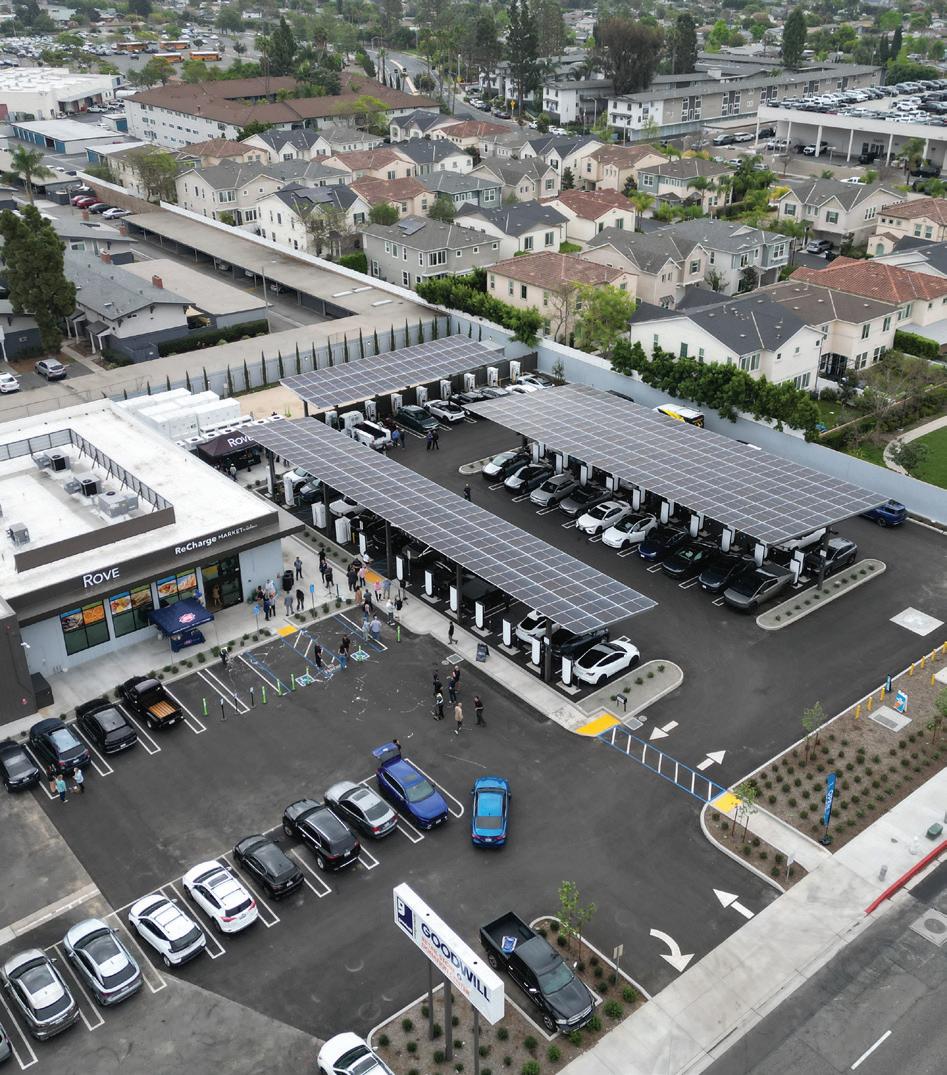
Aside from the charging station, Driver SPG retrofitted an existing 5,384-square-foot building into an active retail experience, including a ReCharge by Gelson’s mini market featuring a high-quality grocery selection. The space also includes a comfortable lounge, clean restrooms and free Wi-Fi, with the goal of creating a great experience for all visitors.
“At Rove, we are on a mission to offer the best charging experience in one of the most discerning regions in the country — Southern California,” said Bill Reid, CEO. “Developing public fast charging centers of this immense scale is no easy feat, and we required the help of expert builders to execute our vision. We are proud to have worked with Driver SPG for a second time to ensure our Costa Mesa center is one of the most reliable and accessible charging stations in the community.”







In what it said “will redefine the Manhattan skyline, standing as a beacon of excellence in the heart of Midtown,” Rolex announced revealed design plans for The Rolex Building, a 30-story office tower at 665 Fifth Ave. The new building will open in fall 2026.
Designed by Pritzker Prize-winning architect David Chipperfield, The Rolex Building presents a graceful and modern silhouette that integrates shape, structure and service into a visible statement about timeless elegance. The 165,000-square-foot building is envisioned as a testament to high performance and a reflection of the brand’s core values through design and construction, environmental sustainability and ultimate user experience.
“New York City and Fifth Avenue, in particular, have long been crucial to Rolex in the United States. The Rolex Building at 665 Fifth Avenue is a clear expression of our enduring commitment to this city: a beautiful example of modern architecture that will serve our team and tenants, as well as welcome clients for decades to come,” said Luca Bernasconi, CEO, Rolex Watch U.S.A. Inc. “Sir David Chipperfield’s design captures the excellence, precision and longevity that define Rolex, while setting a new standard for an exceptional workplace experience in the heart of Midtown.”
“In a city of towers, we have enjoyed the challenge of designing the new Rolex tower,” Chipperfield said. “With this project we hope to make our own contribution embodying Rolex’s values of precision, quality and innovation as fundamental principles integrated into every aspect of the building — from its form and silhouette to its structure, materials and the way it is built.”
Rolex’s commitment to




responsible development is solidified by the numerous sustainable features incorporated into the building, which is targeting LEED and Well Platinum certifications.







A novel double-skin façade system optimizes daylight and views while reducing energy needs, which boosts thus







requiring significantly less power. These features, along with the building’s allelectric operations and on-site rainwater and greywater recycling, reflect a holistic
A novel double-skin façade system optimizes daylight and views while reducing energy needs, which boosts thermal performance. An advanced heating and cooling system utilizes the circulation of temperature-controlled water through ceiling pipes, thus reducing the circulation of dust or pollutants while keeping temperatures steady across interior spaces and requiring significantly less power. These features, along with the building’s allelectric operations and on-site rainwater and greywater recycling, reflect a holistic approach to sustainability.



The appearance of this 165,000-squarefoot tower was inspired by the Rolex fluted bezel, and its stacked architecture features five volumes and four terraces at each step-back.





Positioned on the outer edge of the Southeast corner of Fifth Avenue and East 53rd Street, natural sunlight penetrates into open and versatile floor plates, which supports energy efficiency and user comfort while maximizing the views along Fifth Avenue.




Positioned on the outer edge of the building a Rolex retail space, as well as with office floors for Rolex and other corporations. The tenants will have access to amenity spaces including a restaurant and event
The building will house a multi-level Rolex retail space, as well as with office floors for Rolex and other corporations. The tenants will have access to amenity spaces including a restaurant and event space, Rolex said.









The selection of materials used in makes up the core of the building, delivering strength, durability and highperformance with an architecturally refined finish. Terrazzo flooring and artisanal pyrolave accents offer beauty, longevity and craftsmanship. Walnut



The selection of materials used in the building is both innovative and intentional. A bespoke concrete makes up the core of the building, delivering strength, durability and highperformance with an architecturally refined finish. Terrazzo flooring and artisanal pyrolave accents offer beauty, longevity and craftsmanship. Walnut and soft materials reinforce the quality of the workplace environment. Pavarini McGovern is serving as construction manager on the development.




















Stephen Siegel • Gadi Peleg • Yale Stogel • Philip Altheim Beth Miller Eidman • Yoav Oelsner
COMMITTEE (in formation)

Adan Elias Kornfeld • Jonathan Friedman • Brad Gerla
Laura Gilbert • Bradley Hamburger • Karl Held • Daniel Kaplan
James Orphanides • Jason Rohlman • Ron Roman • Uzi Saban Andy Sachs • Robin Thompson • Glenn Tolchin


A. Mitti Liebersohn • Stephen Siegel • Warren Diamond • David Schwartz
Beth Miller Eidman • Robert Sorin • Richard Chera • Michael Frain • Bess Freedman
Gary Jacob • Magalie Laguerre Wilkinson • Mitchell Moinian • Bruce Mosler
Mitchell Rudin • Harrison Sitomer • Phyllis Trobman • Philippe Visser


















Latham & Watkins LLP announced that Kaila Sergent has joined its Los Angeles office as a partner in the Real Estate Practice and member of the firm’s interdisciplinary Data Center Team.
Sergent joins Latham from DLA Piper. She is recognized for her deep experience on data center transactions, ranging from the leasing and development of data center campuses to the purchase and sale of data centers.
“Her track record advising on a range of high value commercial real estate transactions, combined with her deep expertise in data center leasing and development, will be of tremendous value to clients both in California, nationally and globally,” said Jeff Bjork, managing partner of Latham’s Los Angeles office. “Kaila’s practice and collaborative approach to client service perfectly complements the highend, sophisticated transactional work happening here in California.”
Sergent represents owners, operators, developers, investors and other entities in a broad range of commercial real estate transactions across asset
classes, including industrial, life sciences, healthcare, office, multifamily, hotels, retail, student housing and senior housing. Her data center experience spans large scale data center campuses, powered shell and build-to-suit structures and multijurisdictional portfolios.
“Kaila brings to Latham one of the most important skill sets in today’s real estate market — a deep understanding of data center leasing and development,” said Hilary Strong, global vice chair of Latham’s Real Estate Practice. “As data centers continue to represent a significant market opportunity for the foreseeable future, Kaila’s arrival reinforces our ability to deliver comprehensive solutions to clients navigating this rapidly evolving asset class. Her addition underscores Latham’s status as the premier firm for data center and other complex real assets transactions.”
Sergent is the second data center-focused partner to join Latham’s Real Estate Practice in the past year. She received her J.D. from the University of California, Davis School of Law and her B.A. from the University of California at Berkeley.
MetLife Investment Management (MIM), the institutional asset management business of MetLife Inc., announced that Andrea Drasites will join the company as global head of real estate and agricultural finance, effective October 1, 2026. She will report to Brian Funk, president of MIM.
“We are excited to bring on board Andrea’s significant expertise in real estate and extensive leadership experience,” said Funk. “She is wellpositioned to lead our real estate team as we continue to accelerate growth and further scale our global capabilities for clients following the acquisition of PineBridge Investments.”
Drasites will lead the company’s commercial mortgage and equity real estate portfolio, as well as its agricultural investments portfolio.
MIM’s real estate portfolio represented $108.9 billion in gross real estate and agricultural assets
under management as of December 31, 2025.
Drasites joins MIM from Blackstone, where she held several leadership positions during her 13 years with the firm. Most recently, she was senior managing director in the Real Estate Group. Prior to Blackstone, Drasites held senior roles at Equity One Inc. and Woolbright Development.
She succeeds Robert Merck, who retired in 2025 following a 40-year career.
Drasites earned her Bachelor of Arts in international business from Rollins College and an M.B.A. with honors from the University of Florida.
In December 2025, MIM acquired PineBridge Investments (PineBridge), combining MIM’s institutional strength and scale with PineBridge’s global footprint and specialized investment capabilities.



Extell Development Company announced that Andrew Chung has joined the company as president and co-chief executive officer, partnering with Gary Barnett, Extell’s founder, chairman and CEO.
“Andrew is a highly respected leader with a rare combination of development expertise and institutional investment experience,” Barnett said. “I’ve had the opportunity to work with Andrew over the years and have long admired what he built at Innovo, as well as his track record at Carlyle. I’m confident his strategic perspective will be invaluable as we continue to grow and enter Extell's next chapter.”
Chung is the founder of Innovo Property Group, which he established in 2015. Prior to founding Innovo, he was a partner at The Carlyle Group, where he was a senior
member of the U.S. Real Estate Fund and served as head of the New York office for a decade.
His experience spans large-scale development, institutional investment and complex capital structures across leading real estate platforms.
In his new role at Extell, Chung will work closely with Barnett to oversee the company’s strategic direction, development pipeline, capital relationships and longterm growth initiatives across its residential, commercial, and mixed-use portfolios.
Chung currently serves on the Advisory Board of the NYU Schack Institute of Real Estate. He holds a Bachelor of Science in economics from The Wharton School at the University of Pennsylvania.
Global development and construction firm Skanska has announced a leadership transition in its U.S. building operations. Brian Best, general counsel of Skanska USA Building, retired effective April 10, 2026. Stefani Bonato transitioned into the role of senior vice president–general counsel, effective March 30, 2026. Bonato now serves as the business unit’s primary internal legal advisor, overseeing its legal, ethics and compliance and insurance and bonding functions.
During his 17-year tenure, Best advanced from corporate counsel to general counsel, playing a critical role in guiding complex legal matters and contributing deep institutional knowledge to the organization.
“For nearly two decades, Brian has played a critical role in guiding our legal strategy and supporting the growth and success of our company,” said Clay Haden, president and CEO of Skanska USA Building. “We are thankful for his leadership and contributions. We are also glad to see the role transitioning into Stefani’s capable hands.”
Bonato, who reports directly to Haden and has joined the company’s senior leadership team, brings 20 years of legal experience to the role. She previously served as a regional corporate counsel for Skanska USA Building, providing legal guidance and support to the company’s operations in metro New York City, Pennsylvania, New England, Ohio and Maryland.
She also oversaw the central services group within the legal function that focuses on contracting, corporate compliance, data analysis and e-discovery.
Prior to joining Skanska in 2019, Bonato served as general counsel and chief compliance officer at E.E. Cruz & Company, where she oversaw the legal and compliance functions. She also served as a compliance consultant on one of the largest private real estate developments in the United States.
Bonato holds a J.D. from the University of North Carolina School of Law.
Facility Solutions Group (FSG), one of the nation’s largest electrical contractors, lighting distributors and electrical service providers, has appointed Jason Zipprian as its next chief executive officer, effective immediately.
Zipprian, a 30-year FSG veteran, began his career with the company as an apprentice electrician. Over three decades, he advanced through field operations, sales, project management, regional leadership and executive leadership. He most recently served as chief operating officer of FSG’s construction division.
Bill Graham, who has served as CEO of FSG since its
founding, will transition to the role of chairman of the board and chief financial officer, continuing to serve in a senior leadership capacity.
“I have every confidence that Jason has both the capability to lead the business and the character to protect the heart of the institution — the part that makes FSG what it is,” Grahan said.
FSG will maintain its corporate headquarters in Austin, Texas. The company has announced plans to construct a new corporate office on FSG-owned land south of downtown Austin.

































Christina Cassotis is CEO of Pittsburgh International Airport (PIT). Under her leadership, PIT has been transformed from a hub into a origin-and-destination airport with record growth. She has recruited multiple new domestic and international carriers, including passenger and cargo service. Cassotis has been a champion of keeping the organization’s vision at the heart of decision-making — to transform the airports to reflect and serve the community, inspire the industry and advance the region’s role as a world leader.
She led the new terminal program, completed in November 2025, that made PIT the first airport in the U.S. to be designed and built from the ground-up postpandemic. Recently PIT became the first major airport in the world to be completely powered by a microgrid fueled by natural gas and solar energy.
How long have you been in aviation?
For more than 25 years. I started at Boston Logan Airport and then spent 17 years consulting for airports across the U.S. and internationally. I came to Pittsburgh International Airport (PIT) in 2015, at a time when the airport was struggling as a former hub and very much in need of reinvention. Since then, I’ve focused on spearheading the completion of our $1.7 billion new terminal, transforming PIT into an industry-leading origin-and-destination airport, growing destinations, restoring international routes and creating an airport experience that serves both travelers from all over the world and the Pittsburgh community.
What brought you into the business?
Aviation was always a part of my life because
of my father. He flew for Pan Am and later United, and I grew up fascinated by the world of aviation and the stories he would share when he traveled back home. I never wanted to be a pilot, but I was curious about the industry itself and was drawn to its fast-paced (and sometimes unpredictable) nature.
I realized that airports are complex, dynamic places where you can make a real difference for travelers, but also broader communities and regions. That combination of challenge and impact is what has kept me in the business for all these years.
Who inspires you?
My family, my colleagues and everyone who wants to make global aviation better.
Why must airports evolve?
Airports are the first and last impression travelers have of a city and region. Improving travelers’ experiences is about care, convenience and making people feel supported, especially when things go wrong. Modern airports have an opportunity to combine efficiency with empathy and offer services that meet the needs of travelers, whether it’s shorter walks, better signage or thoughtful spaces.
How are you achieving eco-friendliness?
We built a microgrid powered by natural gas and nearly 10,000 solar panels so we can operate independently of the electric grid. We were the first airport in the world to do this. We also support biodiversity through our on-
Christina Cassotis CEO
site apiaries and wildflower fields and plan to capture rainwater from our new terminal roof to water the four new outdoor terraces.
Airports are critical infrastructure, so sustainability isn’t just about appearances. It’s about creating systems that are reliable, efficient and responsible for the people and communities we serve. Our new baggage system alone has reduced power consumption by 74% compared to the previous system.
Another cornerstone of our energy strategy is developing on-site Sustainable Aviation Fuel (SAF) production with outside partners. We’re currently exploring several pathways to produce SAF on site here at PIT.
Will U.S. airports compete with Asia?
U.S. airports can compete, but it takes focus and vision. At PIT, we’ve expanded destinations, improved service and opened a new terminal last fall, built without local taxpayer money. It’s designed to be welcoming, easy to navigate and reflective of our region. Competing isn’t about size or flash. It’s about understanding travelers, building strong partnerships with airlines and creating an experience that people remember long after they leave.
What keeps you up at night?
I worry about outside impacts on the aviation ecosystem — those we cannot control — because they ultimately affect the people we work with and who rely on us. We are constantly working to mitigate risk.



The financial backing of a global bank, and the streamlined structure and agility of a boutique bank that will keep your business moving forward.
BHI offers full commercial banking services that combine the personal attention of a prestigious boutique bank with the expertise and financial strength of Bank Hapoalim – the leading financial institution in Israel.
With a footprint in the largest U.S. metropolitan areas, we are committed to creating innovative funding solutions for your short– and long-term needs and providing convenient banking and liquidity products for your everyday business needs.
www.bhiusa.com
The retail sector began 2026 fairly strongly — space remains tight, as new construction remains limited due to high costs and cautious financing, so leasing is strong. But geopolitical events have a way of interfering, and skyrocketing oil prices are eating into consumers’ discretionary budgets.
In a volatile year, it will be hard to predict just where retail will end 2026, but for now, the sector remains one of commercial real estate’s healthiest, as we can see by the numbers.

400
e basis point increase in overall retail vacancy in suburban-oriented markets in the Western U.S. (including Phoenix, Reno, Nev. and Sacramento) from 2019 to 2025. (Kidder Matthews, “Market Forecast 2026, Retail Outlook”)
24%
e percentage of retail-focused real estate organizations that said they expected to be able to pay o their upcoming maturity in full, compared with 26% of housing organizations and 21% overall. (Deloitte, “2026 Commercial Real Estate Outlook”)
4.4%
U.S. retail vacancy rate at the end of 2025, expected to remain essentially stable throughout 2026. (CoStar Group)
37%

e projected decline in new retail construction in 2026. (Colliers, “2026 Retail Outlook”)
7,900
e estimated number of store closings in the U.S. in 2026, compared with 5,500 new store openings. (Coresight Research)



2.0%
e increase in total retail sales for the rst 10 weeks of 2026. (Circana)


















































Looking for clarity in a market filled with trade-offs — growth, risk, and profitability?
CBIZ turns complexity into opportunity with integrated insights and solutions. From strategy to operations, we help you protect margins, navigate change, and unlock growth.

Abe Schlisselfeld National Real Estate Leader