















LAUNCHES NOSSAMAN LLP CONSTRUCTION PRACTICE IN NEW YORK



For decades, we have built a real estate practice unparalleled in the US. Now, as the global legal powerhouse HSF Kramer, we are so much more. As the only law firm ranked in Chambers Band 1 on three continents, we continue to transform skylines and reshape landscapes. Please visit our website to learn more. Kramer Levin is now HSF Kramer















6:00 PM at Gua stavino’s
One of the industr y’s most anticipated nights, this celebration brings together the biggest names in NYC residential brokerage.
The evening honors leaders, dealmakers, and rising stars while supporting colleagues through the Member in Need Fund.






























EDITORIAL
Editor
Debra Hazel
Director of Communications and Marketing
Penelope Herrera
Director of
Newsletter Division
Kristen Pooran
PRESIDENT/CEO
Jeff Mann
ART
Art Director
Virginia Sanchez
Cover Photography
John Yuhas
Steve Brodsky
Molly Dee-Ramasamy
Frank DeLucia
Etrit Demaj
Michael DiGiorgio
Merilee Kern
Maz Khan
Kris Kiser
Bob Knakal
Ira Meister
Stuart Saft
Carol A. Sigmond
Technology Consultant Eric Loh
Distribution Mitchell’s Delivery Service
DIGITAL MEDIA
Designers
Virginia Sanchez
Editors
Debra Hazel
Penelope Herrera
Rose Leveen
Web Developer
CS Designworks
West Coast Office: 578 Washington Blvd., Suite 827
Marina Del Rey, CA 90292 866-306-MANN (6266) mannpublications.com


East Coast Office: 450 7th Ave, Suite 2306
New York, NY 10123 212-840-MANN (6266)

Let’s be honest: New York City is not an easy place to build in. That’s why it’s so necessary for developers and managers to have a top-notch team of attorneys focused on construction law to guide them through the opportunities and pitfalls of creating and renovating our buildings.
And that’s why I’m proud and personally pleased to feature Carol A. Sigmond, parter at Nossaman LLP and her team on our cover. As our Carol’s Corner columnist, she shares her knowledge with us monthly on topics ranging from tariff effects on construction to board obligations. Here, she discusses her new firm, her concerns about AI’s effect on the industry and more. It’s a great read about a great friend.
This month, I’m also proud that Mann Publications is a sponsor of Cbiz’ Consumer Products & Retail Symposium, being held in Los Angeles. Another dear friend, Marshal Cohen, chief retail advisor at Circana, will once again share his observations of the never-dull retail business. You’ll see more coverage and photos in our May issue, dedicated as always to the exciting retail sector.
Other events we highlight this incude OFfit Kurman’s very timely roundtable on Navigating Market Cycles and the art-filled opening of the Wright Gallery in New Jersey. They’re a testament to the diversity of our industry.
As we proceed through spring, let us know your news and opinions!

“It is necessary for us to learn from others’ mistakes. You will not live long enough to make them all yourself.” — Admiral Hyman G. Rickover













At Peninsula Property Management (PPM), we do more than manage properties—we elevate them. With a leadership team that is deeply involved, hands-on, and responsive, PPM is redefining the standard for property management in New York City. Our mission is simple: deliver results with integrity, precision, and a hospitality-first approach.

Proactive Management
Stop issues before they start — from Local Law 97 to vendor oversight.
Financial Clarity
Clean, timely financials. No surprises –just strategic planning and transparency.
NYC Compliance Expertise
DOB, HPD, LL88, LL97, FISP we navigate every regulation so you don’t have to.
New Development Services
Schedule B, TCO phasing, hiring of staff, punch-list, insurance implementation.
Smart Cost Control
Energy savings, bulk contracts, vendor negotiations we cut waste, not corners.
Track requests, tasks, and reports live through our integrated digital platform.
Happy Spring! As the season of rebirth gets under way, it seems appropriate that we focus on Hospitality, with a strong side serving of more traditional Residential topics.
New York is soon to welcome two spectacular new hospitality developments, both offering nods to the past — the Highball Ltd. speakeasy, which brings us from the 2020s back to the 1920s, and The Wolseley, the first hotel from the famed London restaurant, occupying the historic Lambs Club space.
On the technical side, Cbiz’ Steve Brodsky helps us to determine when a short-term rental turns into a hotel for tax purposes. BKREA’s Bob Knakal and Holland & Knight’s Stuart Saft offer two their views on the housing shortage in the city. And in a unique column, Jaros, Baum & Bolles’s Molly Dee-Ramasamy gives us advice from the Stoics on how to handle New York City Construction. I admit I didn’t have Marcus Aurelius on my Mann Report 2026 Bingo card, but it’s a positive take on how to cope with the ins and outs of our very challenging industry.
Next month, as always, is our Retail issue, which will be with me at ICSC Las Vegas. Send us your stories, columns and more. See you there.

Nearly 600 professionals gathered at the Financial Industries Dinner to honor Frank Grimaldi, senior managing director, North American sales manager at Gordon Brothers and recent “Mann About Town.” Grimaldi was recognized with the National Jewish Health Humanitarian Award for his professional, civic and philanthropic accomplishments.
The event raised more than $830,000 for National Jewish Health, a record for this dinner, now in its 48th year. Funds support groundbreaking research and medical treatment at the leading respiratory hospital in the nation.
and said the Behind the Scenes tour was life-changing.
“It was absolutely amazing seeing science and medicine working together as intended,” he said.
Christopher Carmosino of Gordon Brothers was dinner chair, and Richard Stehl of Otterbourg P.C. was treasurer.
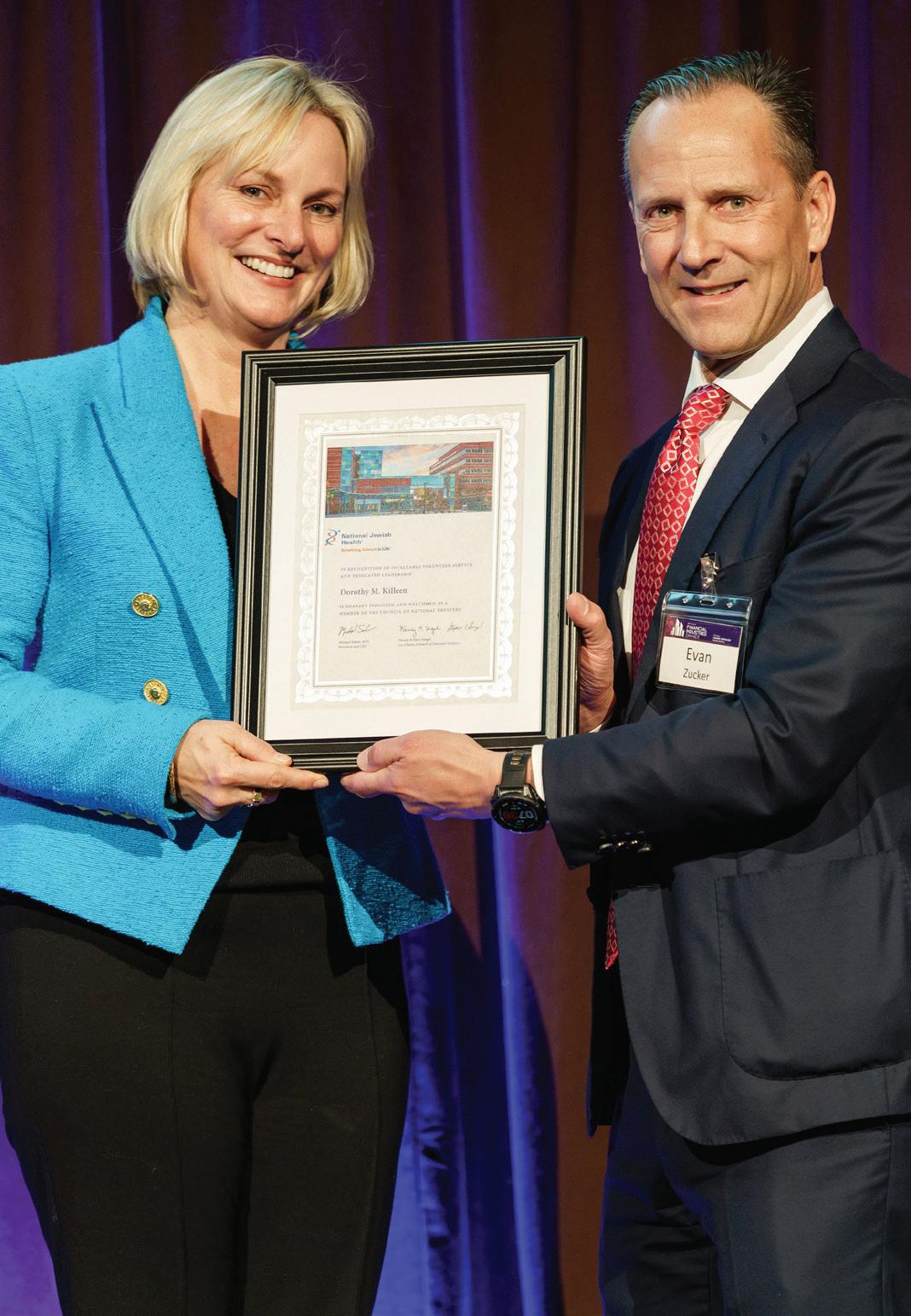
Evan Zucker, board chair of National Jewish Health, spoke at the event and welcomed Dorothy M. Killeen of Wells Fargo Bank as a member of the National Jewish Health Council of National Trustees. Cyntra Trani of TD Bank








In a market defined by shifting conditions and cautious capital, commercial real estate leaders gathered at Offit Kurman’s New York office for “Navigating Market Cycles: Building Strength in Uncertain Times,” a roundtable focused on a central question facing owners and investors today: how to maintain deal momentum when certainty remains elusive.
The event was convened by Faith E. Miros, a commercial real estate attorney at Offit Kurman, who brought together a deliberately structured panel representing the core disciplines behind successful transactions. Miros also contributed her perspective on legal structuring and business strategy, including how thoughtful planning and alignment can preserve control, flexibility and value, and position owners to act as opportunities emerge.
She was joined by Genessy Jaramillo of BKREA, Alicia Mynarska of Withum, Elizabeth Roy of New York Life Investments, Nicolette Repaci Sinatra of Fidelity National Title Insurance Company and Janet Stelz of ALC Environmental. Each panelist offered insight from their role advising owners and investors, collectively providing attendees with a comprehensive view of the capital, advisory, accounting, title and environmental considerations that influence transactions throughout their lifecycle. Repaci Sinatra emphasized the critical role of clean title and proactive due diligence during periods of market disruption, noting that unresolved liens,
ownership changes, or documentation gaps can significantly delay or derail refinancing and disposition strategies.
Moderated by Bob Knakal of BKREA, the discussion emphasized that while market cycles cannot be controlled, preparation, discipline and the right advisory team can significantly influence outcomes. Panelists shared perspectives on navigating volatility, identifying opportunity within uncertainty and the importance of staying engaged rather than waiting for conditions to stabilize.
More than 80 industry professionals attended, reflecting strong demand for substantive, cross-disciplinary dialogue grounded in real-world dealmaking. Attendees gained insight not only into market conditions, but into the practical collaboration required behind the scenes to advance transactions in complex and evolving circumstances long before they reach the headlines.
The roundtable reflects a broader commitment to fostering meaningful industry dialogue and a cross-disciplinary conversation within the commercial real estate community. By intentionally convening the professionals who collectively influence every stage of the deal, the event created a forum that mirrored how transactions unfold. This provided owners, investors and advisors with the insight needed to navigate evolving market cycles with clarity and confidence.




























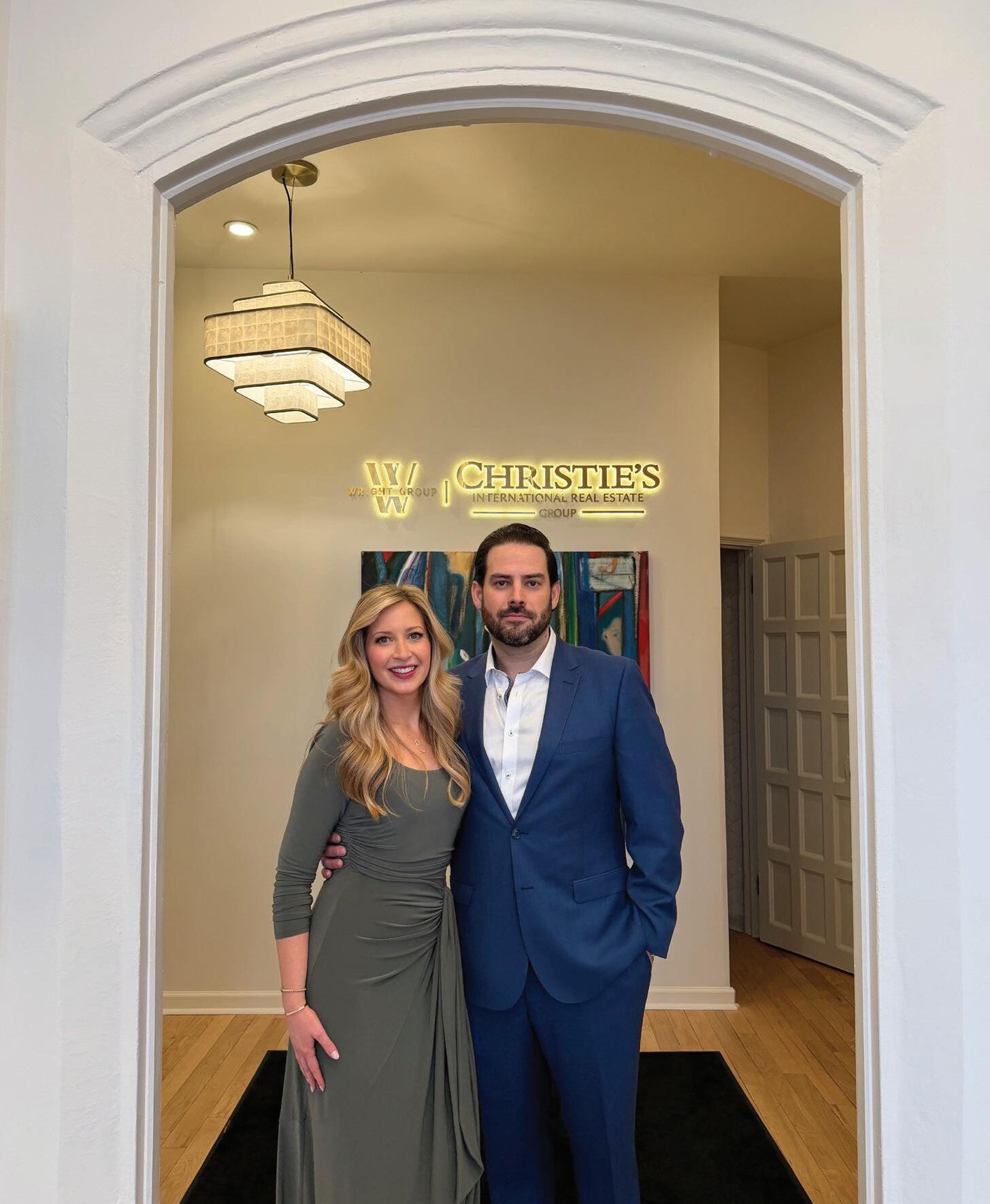
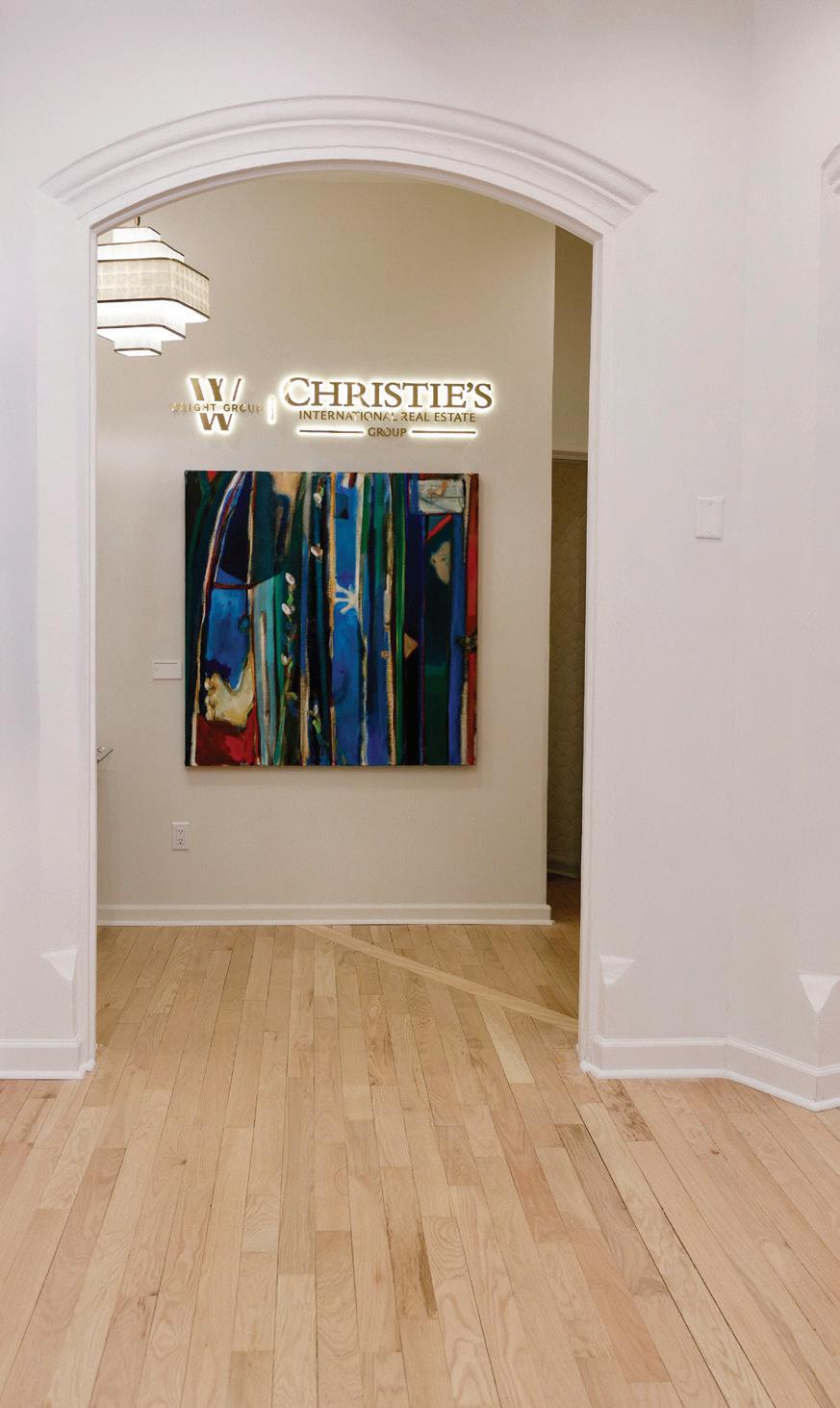
Christie’s International Real Estate Group’s Wright Group Art Gallery held its official ribbon-cutting in the 1920s Hall Building at 46 Church St. in historic Montclair, N.J. Gallery owners Curtis and Erica Wright, both awardwinning brokers with Christie’s brokerage firm, selected internationally recognized contemporary artist John Ransom Philips for the inaugural exhibition.
The event hosted the global premiere of Phillips’ series, “Born to Remember,” which was inspired by New Jersey icon Bruce Springsteen’s autobiography “Born to Run.” A portion of art proceeds will benefit the Bruce Springsteen Center for American Music in West Long Branch, N.J.
The Wrights’ mission is to bridge the worlds of fine art and

luxury real estate in this renovated space. Not only brokers, but also selected as Brand Ambassadors for Christie’s, the Wrights are liaisons to the auction house and work with clients on both their real estate portfolios and personal collections. The collegiate Gothic-style Hall Building is exclusively represented by The Wright Group with the gallery on the street level. The Wrights partnered with designer Rachael H. Grochowski of RHG Architecture + Design to create a space that provides an elevated atmosphere for both the fine art gallery and their luxury real estate services.
Attendees included Montclair Mayor Dr. Renee Baskerville, Christie’s International Real Estate Group’s Executive Vice President Sonja Cullaro and Executive Director of the Montclair Center BID Jason Gleason.










































“This acquisition is a significant step forward for both of us, bringing to the global investment community a much-needed choice of leading advisory partner to deliver a comprehensive suite of investment banking, strategic, financial, development, leasing and other ‘boots on the ground’ property solutions,” said Simon Shaw, group chief executive of Savills. “By acquiring a leading REIB provider, the improved breadth of our services and enhanced global footprint will create significant growth opportunities for the combined group’s staff and significant
value to our clients and shareholders alike.”
Eastdil Realty was founded in 1967 by Benjamin V. Lambert in New York, pioneering an investment banking approach to real estate advisory. In 1978, Roy H. March joined Eastdil Realty and over time, the firm expanded globally. In 1999, Wells Fargo acquired Eastdil Realty, strengthening the platform with the resources of a leading financial institution. In 2006, Eastdil Realty and Secured Capital Corp., the real estate investment banking firm co-founded in 1990 by D. Michael Van Konynenburg and other former executives of Drexel Burnham Lambert, merged to create Eastdil Secured.
In 2019, Roy H. March and the firm’s management team led Eastdil Secured’s recapitalization, in partnership with Guggenheim, Temasek and Wells Fargo.
Eastdil Secured will continue to maintain its headquarters in New York, Santa Monica, Calif. and London, and has a total of 20 offices, including Atlanta, Boston, Charlotte, Chicago, Dallas, Miami, Orange County (Calif.), San Francisco, Seattle, Silicon Valley and Washington, D.C. in the U.S. and Dubai, Dublin, Frankfurt, Milan, Paris and Hong Kong. The Eastdil Secured leadership team and Eastdil Secured’s senior employees will become shareholders in Savills.
Eastdil Secured CEO Roy H. March has been appointed executive chairman of Eastdil Secured, responsible for client advisory, execution and long-term strategy. D. Michael Van Konynenburg, currently president, will take on the role of CEO of Eastdil Secured, overseeing day-to-day operations, with James McCaffrey becoming president of Eastdil Secured, spearheading international growth from London. Van Konynenburg and James McCaffrey will join the Savills Group executive board.
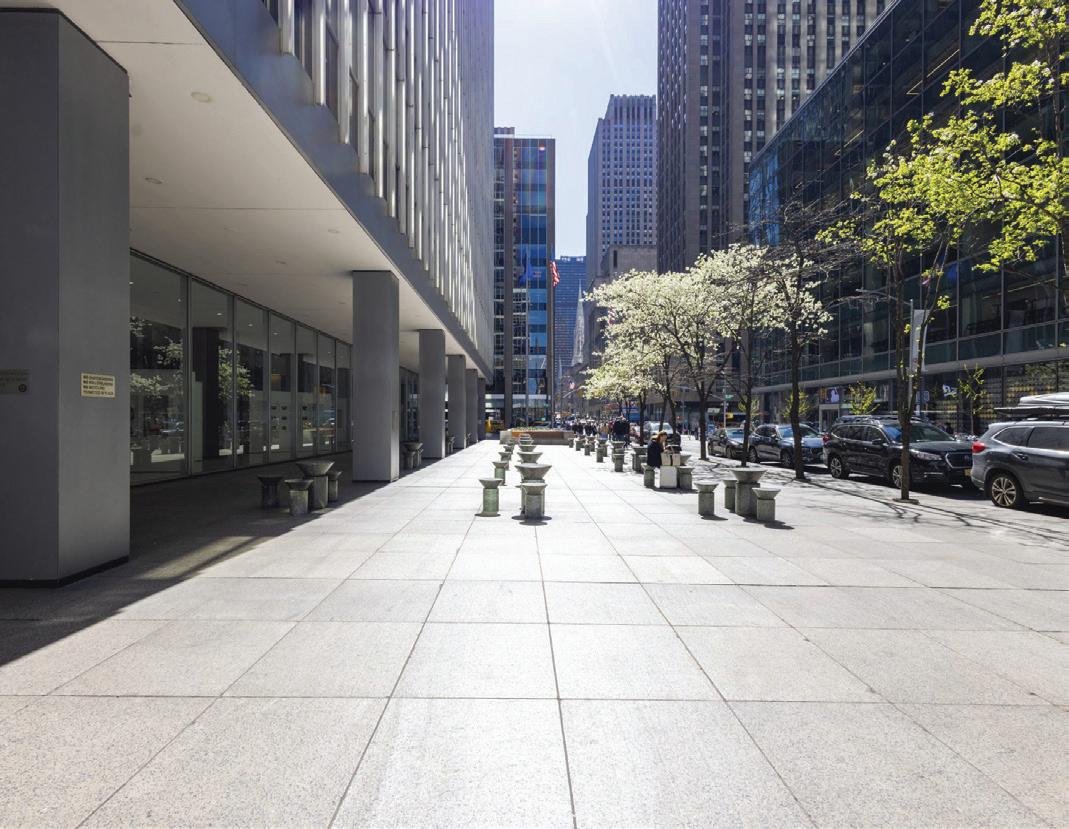
Americas totals approximately 251,000 square feet, including a 120,000-square-foot lease signed in July 2025.
The new lease is part of the firm’s New York expansion, adds to its footprint at 1271 Avenue of the Americas and reflects strong growth.
“New York is home to the firm’s largest office and has consistently been one of our fastest-growing markets,” said Marc Jaffe, managing partner of Latham & Watkins’ New York office. “Expanding our New York footprint marks another major milestone for our elite practice, as we remain focused on being the premier destination for the best talent and clients’ most sophisticated legal matters.”

Latham & Watkins was represented by Scott Gamber, Craig Reicher and Emily Chabrier of CBRE in the transaction. RXR was represented in-house by William Elder and Daniel Birney; Robert Alexander, Ryan Alexander, Taylor Callaghan, Alexander Benisatto and Walter Graham of CBRE and Patrick Murphy of JLL.
Latham & Watkins is expected to move into the building in stages, starting in spring 2026.
“We are pleased that Latham & Watkins has expanded its tenancy at 1285 Avenue of the Americas. RXR remains committed to delivering a best-in-class office experience,” said Elder, executive vice president and managing director of RXR’s New York City Division.


Chimera, an internally managed real estate investment trust, is primarily engaged in investing in a diversified portfolio of residential mortgage assets, both for owned accounts and third parties through its investment management and advisory services. Chimera has declared approximately $6.4 billion in common and preferred stock dividends.

Chimera Investment Corp. has signed a 15-year lease for 22,000 square feet on the 32nd floor and portions of the 33rd and 34th floors of 1 Rockefeller Plaza, announced building owner Tishman Speyer. Chimera was previously in 15,000 square feet at Rockefeller Center’s 630 Fifth Avenue.
Built in 1936 and formerly known as the Time & Life Building, 1 Rockefeller Plaza is a 34-story Class-A office building located in the heart of Midtown. The Chimera team benefits from Tishman Speyer’s global amenity program, Zo, which offers global access to high-end lounge and work spaces, wellness services,and experiences at Tishman Speyer properties around the world. Customers also enjoy access to the Zo Clubhouse on the 33rd floor of 1 Rockefeller Plaza as well as Radio Park, a destination to relax, collaborate or socialize.
“We’re thrilled that Chimera has decided to make Rockefeller Center their headquarters after getting to know the campus,” said EB Kelly, senior managing director at Tishman Speyer and head of Rockefeller Center. “This lease underscores the enduring appeal of Rockefeller Center to New York’s investment industry, and we’re proud to continue to provide a setting that supports their long-term growth at one of the world’s most iconic addresses.”
Chimera was represented by Conor Denihan and Connor Desimone of CBRE. Tishman Speyer was represented in-house by Blythe Kinsler and Kate Walker.
Cafe Exchange, a two-story social café offering premium coffee, food and an evening wine bar, with a special emphasis on community, books and the arts; Prime IV Hydration & Wellness, a modern spa that will provide customized IV vitamin infusions; Dogtopia, offering daycare, overnight and holiday boarding and premium spa services for dogs and Greatness Wins, an elevated athletic apparel brand founded by Chris Riccobono, Derek Jeter and Misty Copeland.



The Park, a 185-acre mixed-use campus in Berkeley Heights, N.J., announced that six new retailers that will occupy The District at The Park in July 2026. The District at The Park is a 60-acre downtown area for shopping, dining and entertainment, anchored around a walkable Main Street slated to open this year.
The Park, formerly Connell Corporate Park, is undergoing a $500 million redevelopment from a traditional office campus into a destination neighborhood. The new tenants are Four Spoons Ice Cream Company, a family-owned ice cream shop with more than 30 super-premium flavors and froyo; Doner Shack, a Mediterranean-inspired concept serving street-food favorites and flavor-packed kebabs, originating from Europe;
“After years of working on The Park’s transformation, seeing these diverse retail additions come to fruition is incredibly exciting,” said Shane Connell, executive vice president at The Connell Company. “We couldn’t be more thrilled to welcome these new concepts to The District at The Park and expand the campus’ offerings. The mix of wellness, dining and lifestyle brands reflects the momentum behind what we’re building, and each one brings something fresh, energetic and inviting to the neighborhood.”
Capricorn Retail Advisors serves as The Park’s exclusive retail leasing consultant, overseeing all leasing activities for the project.
The District at The Park will also feature approximately 60,000 square feet of entertainment and dining concepts, with openings anticipated to begin in Fall 2026. This includes Emberside Brewery, Mexican restaurant Rosa Azul, and a speakeasy style venue called Bash, featuring a woodfired steakhouse, event spaces and multiple bars including a hi-fi listening bar, as well as 14 of New Jersey’s first duckpin bowling lanes and gaming area including pool tables, dart boards, shuffleboards and more, owned and operated by Table & Banter Hospitality.
The Park also offers a 176-room Embassy Suites Hotel, a Life Time Fitness Center, Starbucks, Grain & Cane, Fieldhouse and over 1.5 million square feet of work resort offices.

2026 Florida Realtors President Chuck Bonfiglio, broker-owner of AAA Realty Group in Plantation. “Closed sales and new listings are up, and pending sales saw a significant year-over-year jump – all encouraging signs for a sustainable market. Inventory is improving, especially for single-family homes, giving buyers more options while reinforcing the importance of pricing and preparation for sellers. In a shifting market, working with a knowledgeable Realtor makes all the difference.”



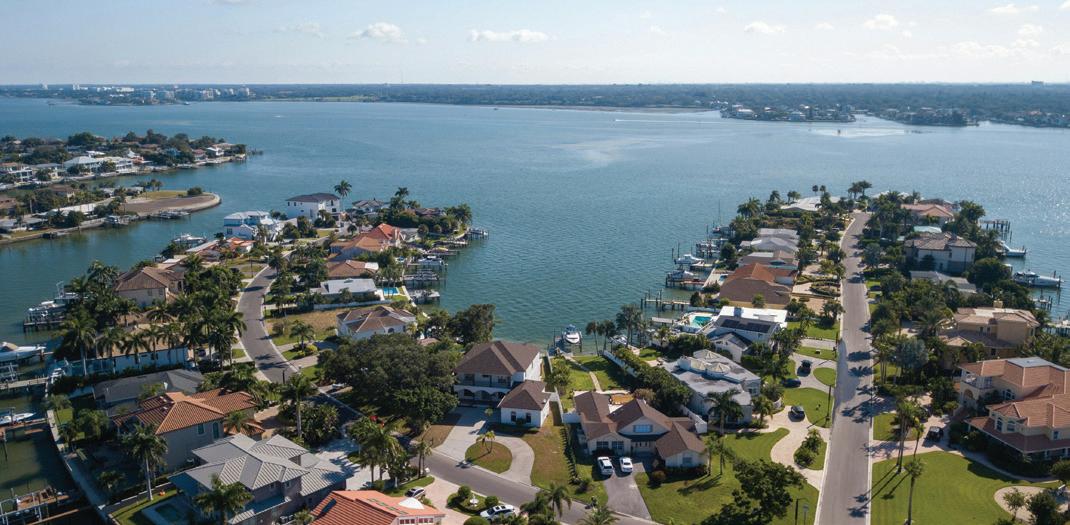
Florida’s housing market started 2026 on an upswing, with more closed sales, more new pending sales and more new listings in January compared to a year ago, according to Florida Realtors’ latest housing data.
“Florida’s housing market opened 2026 with solid momentum,” said
Closed sales of single-family homes statewide last month totaled 16,298, up 5.9% over January 2025, while existing condo-townhouse sales totaled 6,084, up 5.1% year-over-year, according to data from Florida Realtors Research Department in partnership with local Realtor boards/associations. Closed sales may occur from 30- to 90-plus days after sales contracts are written.
In January, the statewide median sales price for single-family existing homes was $405,000, down 1.2% from a year ago; for condo-townhouse units, it was $305,000, down 2.4% compared to January 2025.

The initiative includes a digital portal supporting homeowners throughout the rebuilding process by providing a library of home designs that can be filtered based on lot size, zoning requirements, homeowner preferences, and price range. By entering their address, property owners can view homes suited to their specifi c parcel and better understand potential rebuilding timelines and costs.

Six families from Altadena, Calif.’s La Viña neighborhood who lost their homes in the Eaton Fire have begun rebuilding together, working with Brookfi eld Residential in a coordinated effort designed to make the rebuilding process more manageable while helping control costs and move construction forward more effi ciently.
By selecting from a collection of turnkey home designs matched to their homesites, the homeowners are able to move through planning, permitting, and construction in a more streamlined way than if each rebuild were pursued independently. Trenching and early site work are now underway for all six homes in the La Viña neighborhood, and the families expect to return in fall 2026.
La Viña is a gated neighborhood of approximately 272 homes that Brookfi eld Residential developed between 1997 and 2003. The Eaton Fire destroyed 52 homes within the community, leaving many residents facing the complex process of rebuilding. By coordinating several rebuilds in close proximity and progressing through the process together, the homeowners benefi t from shared planning and construction effi ciencies that manage costs and simplify approvals.
These six families are among the first homeowners rebuilding through the Builders Alliance, a not-for-profi t organization created in response to the January 2025 Palisades and Eaton Fires. The alliance brings together homebuilders working collaboratively to help fire survivors rebuild more effi ciently while reducing both time and cost.
Brookfi eld Residential President and Chief Executive Offi cer Adrian Foley co-founded the Builders Alliance. He also co-conceived the Builders Alliance portal and is a leading member of the Alliance.
“We’re proud to cooperate with the other founders of the Builders Alliance and to demonstrate how innovative technology can support families as they rebuild and regain stability,” said Foley. “As homebuilders, our resources and expertise are essential to this effort, and with that comes a responsibility to help.”
Brookfi eld Residential has uploaded over 40 home designs to the digital portal, which covers both Altadena and Pacifi c Palisades. Homeowners can match their address to home choices that include pre-designed residences at costs equal to or below average insurance proceeds. This effi ciency also signifi cantly shortens the time needed to rebuild. Outside of La Viña, prices for Brookfi eld Residential's Altadena rebuilds range from $619,300 to $706,300 per home. Brookfi eld Residential offers a parallel turnkey approach for people who lost their homes in the Palisades Fire. Pricing for these Pacifi c Palisades homes range from $847,700 to $1,271,081.
The no-charge Builders Alliance Portal is a digital representation of every residential parcel in the Palisades and Eaton Fire areas. Powered by proptech company Canibuild, the portal uses available site and zoning information to show homeowners which home designs fi t their lot, along with estimated costs and timelines. Property owners enter their address and can filter options by preferences such as square footage, bedrooms, bathrooms and price. Many builders offer pre-approved plans with low set costs and shortened timelines, while others specialize in fully custom homes. This vast database, combined with user-friendly navigation, allows homeowners to align rebuilding with their personal needs and the character of their neighborhood.







PenFed Credit Union, one of the nation’s largest federal credit unions, has launched PenFed Home, which brings together mortgage solutions and a trusted network of real estate agents to help homebuyers find, finance and save. PenFed recently commissioned a new survey conducted by Atomik research that found nearly (36%) of homebuyers say finding a home and working with a real estate agent is their top worry.
“The launch of PenFed Home marks a signifi cant development for prospective homebuyers nationwide, offering timely solutions at the onset of the busiest homebuying season,” said PenFed EVP Residential and Commercial Real Estate and President of PenFed
Mortgage Winston Wilkinson. “By offering mortgage options with a network of seasoned real estate agents, PenFed is directly responding to the pressing affordability challenges and complexities facing today's buyers. We are thrilled to introduce PenFed Home as a comprehensive resource to empower homebuyers on their journey. Our goal is to make the process of purchasing a home more streamlined and accessible, ensuring homebuyers receive exceptional value and support every step of the way.”
PenFed Home offers rates priced up to $10,000 lower than the nation’s largest lender, based on data from Rocket Mortgage; support from a network of real estate agents and loan offi cers and a Very Important Buyer (VIB) program, providing buyers the benefi t of paying no origination or appraisal fees when they choose to combine real estate agent services and mortgage.
Borrowers are not required to use PenFed’s network of real estate agents as a condition of obtaining products or services from PenFed. Very Important Buyer (VIB) members are eligible to receive a lenderpaid closing credit if they refinance the original VIB loan with PenFed within three years of the origination date of their original VIB loan. Lender-paid closing cost credits include loan origination fee, appraisal fee, tax service fee, fl ood certifi cation fee, credit report fee, soft credit report fee and escrow waiver pricing adjustment, if applicable.
The same fees are eligible to be waived as the original VIB loan. The refinance benefi t can only be redeemed one time.
The recent study also found 38% of potential homebuyers say price is their biggest concern while 26% say securing a mortgage is their biggest concern.







For homeowners planning a move this year, choosing the right two weeks could be worth thousands. Sellers who listed their home for sale in the last two weeks of May earned the highest sale prices, according to a new Zillow Best Time to List analysis of 2025 home sales in the nation’s 35 largest metro areas. Homes listed in late May sold for 1.7% more nationally, or about $6,000 more on a typical U.S. home.
Why late spring? Buyer demand typically peaks before Memorial Day. Families want to move during the summer and settle in before the new school year. More buyers shopping at once can spark competition and lift prices.
“Late spring is when motivation and momentum meet,” said Zillow Senior Economist Kara Ng. “Buyers are eager to move before summer vacations and the new school year, and sellers who hit the market at that moment can benefit from heightened competition. But the best week to list ultimately depends on what is happening in your local market.”
While the national sweet spot falls in late May, the financial upside varies widely by city and price point. In some of the country’s most expensive markets, timing can unlock tens of thousands of dollars.
Sellers in San Jose, Calif. who listed in the first two weeks of February saw a 3.1% sale premium — a $53,800 boost on a typical home there. In Boston, listing in the last two weeks of May netted sellers 3.4% more or $25,300 on average, while Seattle sellers maximized profits by listing in the first two weeks of April, earning an additional 2.9% or $22,600.
Midwestern markets showed some of the strongest seasonal price swings. Sellers in Cleveland, Columbus, Kansas City and Minneapolis saw premiums at or above 3% during their peak listing periods. In Texas, the ideal listing windows arrived earlier in the spring. Sellers in Dallas, Houston and San Antonio all saw the strongest returns in the last two weeks of April. In Austin, the sweet spot came even earlier, in the last two weeks of March. By contrast, Baltimore’s market peaked the latest, with sellers earning a 2.0% premium, about $8,000, when listing in the last two weeks of June.

by automatically draining the shower pipe and shower hose after each use, supporting proactive water management strategies without compromising the durability required in high-use clinical settings.

Chicago Faucets, a Geberit Group company and maker of commercial plumbing fi ttings, will introduce +Healthcare products to hospital planners, architects, engineers and construction professionals. The +Healthcare is a portfolio of clinical-grade plumbing solutions engineered for healthcare environments.
“Specifi ers and contractors working in healthcare environments are making decisions that will impact a facility for decades,” said Richard Nortier, director of marketing, Chicago Faucets. They need products they can trust to perform reliably, meet healthcare requirements, and support their reputation with owners and facility leaders.”
Key products include:
Auto-Drain Shower System, which reduces stagnant water in showers
HyTronic TempShield Touchless Faucets, which deliver safe, tempered water in a touchless fi tting, helping design teams balance infection prevention goals with patient safety considerations. The patented integrated ASSE 1070 certifi ed thermostatic valve in the touchless faucet body eliminates contamination by leaks below the deck while supporting compliance with scald prevention standards. A wider gooseneck HyTronic faucet is available to meet the latest FGI Guidelines and ASHRAE 514.
CF Connect app for Water Management, a water intelligence platform that brings data visibility to HyTronic touchless faucets, enabling facility managers to automate fl ushing, download usage logs and support water safety programs proactively. This helps hospitals comply with the Joint Commission Water Management Standard EC.02.05.02, Veterans Health Administration Directive 1061 and ANSI/ASHRAE Standard 514.
8450 Series Emergency Eyewash and Faucet, a compact, deckmounted emergency eyewash with faucet solutions designed for healthcare and laboratory environments where emergency response capability must integrate cleanly with clinical workspaces. The series, designed to save space, is certifi ed to ANSI/ISEA Z358.1.
Ligature-Resistant ELR Faucet and SLR Shower Solutions — Engineered specifi cally for behavioral health settings, these fi ttings support patient safety without sacrifi cing durability and serviceability. They are designed to meet the unique specifi cation challenges of psychiatric and behavioral care units and meet the New York Mental Health Guidelines.







In the first multifamily commercial property assessed clean energy (C-PACE) deal completed in New York City, North Bridge ESG LLC announced the closing of $8.5 million in C-PACE financing to support infrastructure upgrades at Herald Towers.
The three-tower apartment complex, located at 50 West 34th St. in Midtown Manhattan, measures nearly one million square feet.
C-PACE will enable upgrades to enhance operational efficiency, reduce energy consumption and align the property with New York City’s longterm sustainability and carbon-reduction goals under Local Law 97. The financing will help modernize energy systems across the residential portion of property, which comprises 690 residential units.
North Bridge’s C-PACE financing brings long-term, fixed-rate capital into the structure at a significantly lower cost than other forms of subordinate financing, enabling the sponsor to pursue critical infrastructure upgrades.
Building owner JEMB Realty is deploying C-PACE to replace aging heating and cooling systems with electrified, high-efficiency equipment that reduces carbon emissions and operating expenses while improving long-term building performance and increasing collateral value. In 2019, New York City enacted Local Law 97, establishing some of the nation’s most comprehensive building emissions standards. C-PACE helps owners integrate energy efficiency and decarbonization upgrades into their capital plans by financing up to 100% of eligible hard and soft costs.
“This transaction signals the growing institutional acceptance of C-PACE as a credit solution that supports long-term asset value,” said Laura Rapaport, founder and CEO of North Bridge. “This financing demonstrates how New York City’s C-PACE program can meaningfully contribute to the city’s electrification and retrofit goals and support significant building improvement projects.”










































More than one million elevators are in use across the United States and Canada, including many that are at least 20 years old — posing a risk of operational challenges and frustration for building owners and passengers in the event of an unplanned shutdown.
As a result, Otis, the global elevator and escalator manufacturing, installation, service and modernization company, is introducing its new fl exible Arise Mod Prime and Arise Mod Plus solutions in North America to modernize and refurbish low- to mid-rise residential and commercial buildings.
“Modernizing elevators is one of the most effective ways to enhance safety, elevate the passenger experience and improve energy performance,” said Joseph Armas, president, Otis Americas. “With our new Arise Mod packages, customers can tailor their modernization approach and phase upgrades over time in alignment with operational needs, long-term goals and budgets.”
In the Arise MOD Prime solution, elevator control systems are brought up to the latest elevator safety standard. Common tripping hazards are reduced with a new frequency variation electronic drive that precisely controls elevator speed for accurate fl oor-leveling. The Otis One IoT platform collects and analyzes data from elevators’ smart sensors to deliver performance information, proactive communication and predictive insights to Otis’ customers and the fi eld professionals servicing their units. Energy consumption is reduced with the Otis ReGen drive, which recaptures energy generated by the elevator and returns it to the building’s grid.
In the Otis Arise Mod Plus solution, all Otis Arise Mod Prime upgrades are included and more. An Arise Mod Plus solution includes a new geared machine and cables for smoother and more comfortable rides. A new car door system is designed to reduce shutdowns and repairs by precisely controlling elevator door opening and closing.
Other options include new landing fi xtures and hall signage, in-car control panels, modern cab designs to match style and budget, Braille and voice announcements for elevator calls to improve accessibility for people of all ages and abilities.





Construction prices are rising, borrowing costs remain high and labor is in short supply — all are conspiring to constrict growth in the sector, even as activity is strong in some real estate categories, according to Skanska’s “Winter 2026 Construction Market Trends Report.” The report delivers in-depth analysis and critical insights into the current state of the construction industry, highlighting the impact of tariff exposure, labor shortages and sector performance.
“As we begin 2026, the U.S. construction market is navigating a period of cautious transition, with modest overall growth expected amid high borrowing costs, material inflation and persistent labor shortages,” said Steve Stouthamer, executive vice president of project planning at
Skanska USA Building. “While high-growth sectors such as data centers, semiconductor and life science projects continue to drive activity, traditional residential and commercial markets remain softer, highlighting the uneven momentum shaping the year ahead.”
Total construction starts were up 2.6% in December 2025 to a seasonally adjusted annual rate of $1.24 trillion, driven by a 16.3% increase in nonbuilding starts, with substantial gains in highways and bridges and miscellaneous non-building projects. Year over year, nonresidential building starts are up 4% by dollar volume but are down about 6% by square footage.
Construction costs remain volatile. Hot-rolled and cold-rolled coil prices are up nearly 45% since mid-2025. Metal studs experienced 10% to 15% price increases in January following November adjustments, while wide flange steel is $100 per ton higher than October 2025, fueled by tariffs and strong demand from data centers and manufacturing.
Copper futures reached above $6 per pound in early January before easing as global inventories rose. Copper wire pricing is up 25% to 30% from January 2025, reflecting continued demand from electrification, renewable energy and AI-related projects. Like both steel and aluminum, imported fabricated copper products are subject to a 50% tariff rate.
The Midwest Premium, a regional surcharge (including tariffs) added to the London Metal Exchange (LME) base price for aluminum delivered to the U.S. Midwest, surged from $500 to $2,200 per ton, prompting manufacturers of aluminum products to announce price increases in late 2025 and early 2026. Aluminum wire prices, for example, are up nearly 20%.









Commercial real estate data platform and marketplace Crexi has announced a strategic partnership with Dwellsy, the rental marketplace with comprehensive residential and multifamily data and listings.
Crexi Intelligence now integrates Dwellsy rental data directly into the Comps & Records experience, delivering granular unit, property and market-level rental insights for multifamily assets. The result is expected to empower commercial real estate professionals to value properties, underwrite transactions and validate investment assumptions more effi ciently.
With over 6.9 million historical units and 4.4 million matched rental listings across 620,882 multifamily properties, this integration provides one of the most comprehensive rental datasets available in the market, the companies said.


“Multifamily analysis has historically relied on fragmented workfl ows that force teams to move between platforms to assemble rental comps, unit details and market benchmarks, limiting speed, accuracy and confi dence,” said Michael DeGiorgio, founder and CEO of Crexi. “By integrating Dwellsy’s detailed rental data alongside ownership, sales comps and market intelligence, Crexi enables a more complete and effi cient approach to multifamily decision-making, improving pricing, underwriting and portfolio strategy.”



This launch consolidates property-level rental intelligence, including
unit mix, rent levels, deposits and amenities, with sales comparables, ownership records, mapping and export capabilities into a single, integrated experience, the companies said.
By embedding rental insights into maps, comps and property records, Crexi now provides the unifi ed sales and rental workfl ow that commercial real estate professionals have needed, eliminating the need to toggle between multiple tools.
“Multifamily purchase and sale decisions are only as strong as the rental data behind them,” said Jonas Bordo, CEO and co-founder of Dwellsy. “We’re thrilled that Crexi users will have access to the very best rent price and comparable data alongside the other rich resources that Crexi provides. By integrating Dwellsy’s unit-level rental intelligence directly into Crexi’s workfl ow, we’re giving professionals access to comprehensive, source-verifi ed rent data at the moment they’re underwriting, pricing or evaluating a deal.”
By providing unit, property, and market-level rental insights across pro forma development, broker’s opinion of value (BOV) preparation and rent validation, Crexi equips CRE professionals with intelligence delivered fully integrated into the workfl ows they rely on every day.
This integration supports investors, brokers, appraisers and lenders alike, giving each persona the specifi c rental insights they need for pricing, underwriting and market benchmarking.

















Creekstone Energy LLC has executed a long-term solar lease with the State of Utah’s School and Institutional Trust Lands Administration (TLA) encompassing approximately 13,000 acres of state trust lands in Millard County. Concurrently, Millard County has granted zoning approval for utility-scale solar development on the first phase of the leased acreage. Creekstone plans to develop more than one gigawatt (GW) of solar generating capacity over the next 18 months to support the growing power demands of its Delta Gigasite — one of the largest artifi cial intelligence (AI) hyperscale data center developments in the western United States.
Securing this lease represents a signifi cant milestone in Creekstone’s strategy to co-locate dedicated renewable energy generation alongside its hyperscale data center campus in Delta, Utah. Revenue generated from the lease will directly benefi t the Utah public education system.
Creekstone’s Delta Gigasite campus sits on more than 1,100 acres in central Utah’s Millard County adjacent to the leased land and is master-planned for more than 10GW of total capacity. The campus benefi ts from access to contracted firm natural gas supply and a favorable regulatory environment. Creekstone is actively advancing power generation and data center infrastructure to support deliveries beginning in 2027.
“This solar lease is a defining moment for Creekstone and for Utah,” said Ray Conley, chief executive offi cer of Creekstone Energy. “We are building more than a data center campus — we are building an energy ecosystem. By pairing over a gigawatt of dedicated solar generation with our hyperscale data center infrastructure, we are positioning the Delta Gigasite at the forefront of the AI revolution while creating lasting economic value for Utah’s schools and communities. This is what responsible development looks like at scale.”
Site preparation and permitting activities are beginning immediately, with the first solar generation expected to be online next year.

tours, accessibility-aware navigation, operational planning, delivery and location-based insights, all from the same map.
Routing information can be added to existing or new property maps, based on architect plans or on-site surveys. Operators and on-site teams can then share the routing with anyone visiting the property, and provide distance data for revenue management, marketing and operations use cases.
Routing data is used to:
• Build a navigable graph that supports accurate routing and consistent experiences across platforms.
• Solve the “last 100 feet” delivery problem for gig drivers and vendors providing services, food delivery and packages to residents.

Engrain, a provider of interactive touring technology and map-based data visualization software for rental housing, announced the release of Pathfinding, a new feature within SightMap, that enables real-time navigation and distance-based insights within apartment communities. Pathfinding transforms property maps into guided experiences, helping renters, guests and teams move through properties.
Operators and technology partners can generate accurate routes between apartments, amenities, parking and entrances from within SightMap or in third party applications. The feature powers prospect
• Guide people through properties with real-time routing between units, amenities, entrances and parking.
• Route optimization for maintenance, resident services, operations and sub-contractors, saving time for users who are visiting multiple apartments.
• Leverage distance data to train AI models on how far each apartment is from valuable amenities and points of interest.
• Create location-level data that connects physical space to digital experiences, including unit-level search and AI-driven recommendations.
“Pathfinding unlocks the full potential of visual maps, connecting geospatial insight to real-world navigation,” said Brent Steiner, founder and CEO of Engrain. “It helps people get where they’re going — whether that’s a prospect on a tour, a resident moving in or a sub-contractor navigating the property. It gives operators better insight into how location and distance impact the renter experience.”









Global financial and risk advisory solutions provider Kroll announced the launch of the Kroll Real Estate Valuation Solution (REVS), an AIenabled platform that it said will enable commercial real estate investors, asset managers, sponsors and owners in the U.S. to rapidly manage the valuation process of their real estate portfolios from end-to-end.
“Kroll valued more than $25 billion in institutional real estate across more than 15,000 commercial properties (all types and classes) in the U.S. last year and understands first-hand how fund structures are evolving,” said Ross Prindle, managing director and global head of Kroll's Real Estate Advisory Group. “Perpetual life funds, net asset value (NAV) vehicles and private wealth structures now demand more frequent, transparent and data-driven valuations, which present challenges to many institutional investors.”
The new Kroll REVS platform combines the firm’s portfolio insights, benchmarking tools, workflow automation and appraisal management with metrics derived from Kroll’s market indicators. This enables commercial real estate investors and sponsors to:
• Reduce valuation cycle time while maintaining audit-ready documentation and regulatory compliance.
• Achieve portfolio-level transparency with standardized assumptions, consistent methodology and clear attribution across assets and periods.
• Ensure independence and integrity through objective, conflict-free analysis.
• Scale operations without adding operational complexity.
The result is a faster valuation process, clearer decision-making and the audit-ready documentation that institutional investors in commercial real estate require, the company said.

With over 75 years of experience and deep understanding of industry challenges, IDB’s Commercial Real Estate team supports property owners, developers and builders across every type of financing requirement. We can help you keep pace with changes in the marketplace, while maintaining high credit quality levels and providing the personalized service, efficiency and flexibility to fit your specific needs.
For more information about financing solutions that meet your specific needs, visit idbny.com.












Prologis Inc. and global institutional investor GIC have formed a joint venture to develop and own build-to-suit logistics facilities across major U.S. markets. The new venture includes $1.6 billion in combined capital commitments, which includes an initial portfolio of approximately 4.1 million square feet with additional capacity for future investments. Prologis is the world’s largest logistics real estate company, with 1.3 billion square feet of properties in 20 countries and $230 billion of assets under management.
“Build-to-suit activity continues to be one of the clearest signals of customer conviction across our business,” said Daniel S. Letter, chief
executive officer of Prologis. “This joint venture with GIC builds on that momentum by pairing our platform and development expertise with a partner that shares our long-term perspective.”
The venture combines Prologis’ development and operating platform with long-term institutional capital and will operate within Prologis Strategic Capital, the company’s asset management business. It is designed to scale with demand as customer commitments are secured.
“With strong e-commerce growth, the re-shoring of supply chains and resilient consumer spending, industrial remains a strong longterm investment theme in North America,” said Goh Chin Kiong, chief investment officer of real estate, GIC. “Our partnership with Prologis, a best-in-class operator, reflects our shared conviction in the sector and like-minded approach to deploying capital with discipline across cycles.”
Build-to-suit development has become a larger share of Prologis’ pipeline as customers make long-term commitments to distribution networks and operations. In 2025, the company started $3.1 billion in development projects, with build-to-suit accounting for more than 60% of those starts.
Build-to-suit has proven resilient as customers prioritize certainty around location, functionality and long-term occupancy. Facilities are increasingly designed to support automation, high throughput and proximity to end markets. For institutional investors, build-to-suit also offers a distinct risk profile. These projects are typically pre-leased and built for long-term use, often supported by customers that view the facility as mission-critical to their network.


The move expands the firm’s advisory platform following more than $1 billion in completed New York City investment sales transactions.
The new division will provide debt brokerage services and capital advisory for real estate owners and sponsors throughout the United States, delivering comprehensive financing solutions across the full
capital stack. Together with Raven’s investment sales business, the platform enables the firm to advise clients on both transaction execution and capital strategy.
The Capital Markets division of Raven was launched by Ben Daniels and Scott Kummings, who bring extensive buy-side investment, development and capital markets experience to the firm. Daniels and Kummings have built and scaled fund-backed real estate businesses and developed high-end residential projects in New York City, providing Raven’s clients with an ownership-oriented perspective on capital structuring and deal execution. Sobel now joins the leadership team as the platform continues to expand.
“I’m thrilled to expand our capabilities into capital advisory and have Jared join the team,” said Rich Velotta, founder of Raven Property Advisors. “He’s an incredibly intelligent and talented real estate finance professional, and his addition further underscores our commitment and ability at Raven to provide a complete service for our clients. The capital markets division now allows us to provide a full set of capital markets services.”
Sobel joins Raven after six years as senior managing director at Walker & Dunlop and five years as executive vice president at CBRE.
Raven Property Advisors currently carries approximately $250 million in active investment sales listings and has sold over $1 billion in transactions, while the firm’s capital markets team has already secured more than $100 million in debt mandates since launching at the start of the year.













JLL Capital Markets announced that it has arranged a $370 million refinancing for Society Brooklyn, a 517-unit, two-tower residential development positioned along Brooklyn’s Gowanus Canal.
JLL worked on behalf of the borrowers, Property Markets Group and The Carlyle Group, to secure the three-year bridge loan from Brookfield Asset Management.
Society Brooklyn features two complementary towers spanning 455,666 square feet of rentable space across 517 units, including 385 marketrate and 132 affordable apartments. The development also includes 57,288 square feet of retail and commercial space to serve residents
and the broader community. The property addresses growing demand for family-sized housing with nearly 40% of units designed as two- and three-bedroom apartments.
Located at 500 Degraw St. and 504 Sackett St., Society Brooklyn capitalizes on its waterfront positioning along the Gowanus Canal at the intersection of the Gowanus, Carroll Gardens and Park Slope neighborhoods. Residents can enjoy Manhattan skyline and Brooklyn views and direct access to the Gowanus waterfront esplanade.
The luxury development offers amenities including fitness centers, yoga studios, screening rooms, co-working spaces, rooftop terraces with Manhattan skyline views, multiple pool decks with barbecue areas, pet washing stations, bicycle storage and on-site parking. Individual units feature premium finishes such as custom white and black oak cabinetry, Caesarstone countertops, stainless steel appliances, in-unit laundry and private outdoor space in select residences.
The financing comes as the Gowanus area continues its dramatic transformation following comprehensive rezoning initiatives. The neighborhood has attracted more than $7.8 billion in private investment alongside substantial public infrastructure funding.
JLL Capital Market’s Debt Advisory team representing the borrower was led by Senior Managing Directors Christopher Peck and Peter Rotchford and Senior Director Nicco Lupo.







Jonathan Rose Companies has acquired The Caroline Apartments, a 126-unit affordable housing community in New York City, from Related Companies for $53 million. This transaction marks the eighth acquisition for the Rose Affordable Housing Preservation Fund VI.
Located at 210 Sherman Ave. in Manhattan, The Caroline Apartments were originally built in 1980 and first renovated in 2008. The property includes 126 units, 125 of which are subsidized through a Section 8 Housing Assistance Payment (HAP) contract. Jonathan Rose Companies will preserve the property’s long-term affordability by renewing the HAP contract for an additional 20 years and extending the building’s tax abatement for 60 years through the 420-c program.
Following the acquisition, the firm also plans to undertake a comprehensive $19.7 million rehabilitation of the property. Planned improvements include upgrades to building systems and unit interiors, enhancements to the community center and energy efficiency upgrades targeting Enterprise Green Communities (EGC) certification. The project will also leverage incentives through the New York State Homes and Community Renewal (NYSHCR) Weatherization Assistance
Program and the New York State Energy Research and Development Authority (NYSERDA) Affordable Multifamily Energy Efficiency Program.
“This investment reflects our ongoing commitment to preserving the affordable communities that families across New York City depend on,” said Max Jawer, managing director of acquisitions at Jonathan Rose Companies. “By extending long-term affordability, reinvesting in meaningful property upgrades and prioritizing resident services, we’re helping ensure that residents continue to have stable, high-quality housing to call home as the surrounding neighborhood continues to evolve.”
In addition to physical improvements, Jonathan Rose Companies will implement new resident-focused initiatives designed to strengthen stability and opportunity for residents. These efforts include the addition of a full-time resident services coordinator and the introduction of free broadband access for all residents through the Liberty Link program administered by the New York City Department of Housing Preservation and Development (HPD). Resident services will be delivered in partnership with Connected Communities, supporting programs that promote economic mobility, access to resources and community engagement.
"For decades, we’ve partnered with public agencies and local stakeholders to protect existing housing while reinvesting in communities so they can thrive over the long term,” said Brandon Kearse, president and chief investment officer at Jonathan Rose Companies. “This acquisition continues that legacy, demonstrating how thoughtful preservation strategies maintain affordability, strengthen neighborhoods and expand opportunities for residents across the city.”
The property will remain fully occupied during renovations, ensuring that no residents are displaced. The project team also conducted an agingin-place survey to help ensure the renovation plan reflects resident needs and supports long-term stability for the community.

When attorney Carol Sigmond and a friend visited the then-new Yankee Stadium more than a decade ago, she saw that something wasn’t right. After decades of specializing in construction law, she realized that a potential problem was looming.
“I noticed that they didn’t have an expansion joint in one place,” she recalled.
Without that buffer, the results would be cracks in the concrete from heat, cold and moisture (freezethaw). Sigmond didn’t represent anyone involved in the project, but she kept a close eye on the property. Sure enough, cracks developed, and the Yankees and eventually the city began investigating the cause.
“Eventually, I talked to someone in the District Attorney’s office,” she said, quite possibly helping to avert a criminal prosecution over what was a basic mistake.
It’s that kind of expertise that she and her colleagues Joshua Deal, partner, and Christopher T. Luehs, associate, are now bringing to law firm Nossaman LLP, becoming their own construction-focused sub-specialty within the larger Infrastructure Group, in January of this year. The team handles construction and real estate industry-related matters including construction defect litigation, arbitration, appeals, bid protests, contract preparation,

mediation, litigation, receivership and suretyship and litigates construction disputes for public works and private buildings.
More than four decades into her legal career, Sigmond focuses her practice on construction and real estate matters, including arbitration, appeals, bid protests, contract preparation, mediation, litigation, receivership and suretyship. She represents clients in construction litigation relating to issues that arise when adjacent owners develop their properties, as well as expediting a builder’s construction project by ensuring that the proper contracts are in place.
She also is an experienced mediator and arbitrator handling construction and real estate cases for the New York County Supreme Court Commercial Division Roster of Volunteer Mediators and the American Arbitration Association’s Roster of Construction Industry Arbitrators.




By Debra Hazel
by





























An experienced litigator in state and federal courts in New York and New Jersey, Deal represents owners, developers, general contractors, subcontractors and suppliers in litigation and transactional matters relating to construction. He represents construction industry clients on contract disputes, construction defect claims, delay claims, payment and performance bond claims, mechanic’s lien claims and adjacent property damage claims.
“Carol and Joshua are best-in-class litigators with extensive experience in the construction litigation field and deep relationships in the New York market and nationally,” said Elizabeth Cousins, chair of Nossaman’s Infrastructure Group, in the announcement. “Their practice builds on the strength of the litigation arm of our Infrastructure Group further enhancing our ability to advise clients through all aspects of the construction project lifecycle, while adding a robust presence in New York.”
Law wasn’t part of Sigmond’s original plan as an undergraduate at Grinnell College in the 1970s.
“I actually started out planning to be a demographer and was thinking about applying to Princeton to go to grad school,” she recalled. “But I had an adviser who said, ‘You’re going to law school. You’re the only one I’m advising who’s going to like it and do well.’”
He was right, even though there were relatively few women pursuing law back then. After earning her juris doctor degree from Catholic University’s Columbus School of Law in 1975, she joined a small firm but quickly found her specialty.

“I successfully worked on a case involving an accident at the Washington Metropolitan Area Transit Authority in Washington, D.C.,” she said. “That brought me to their attention at a time when they were under pressure to hire women. I started with accident work then shifted to government contract work.”
Aiding in that shift was a relatively rare ability — without any formal training, Sigmond can understand drawings and visualize those two-dimensional images in three dimensions. Among her cases there was a design flaw regarding, yes, a missing expansion joint on a D.C. metro station.
A move to New York in the 1990s provided even more opportunity, with older buildings packed even more closely together.
“D.C. was a government city, New York was a private party city,” she explained. A particular specialty became the effects that construction work on one building would have on those adjacent.
After working with several firms in the city over the years, she became a partner at Greenspoon Marder, a Fort Lauderdale, Fla.founded national firm with 20 offices around the country, but with a real estate practice based more on transactions than construction.
“Greenspoon’s emphasis is on cannabis, hospitality and entertainment, less on the nuts and bolts of construction,” she said. “I was concerned that we were too isolated at Greenspoon. We were the only people doing that kind of work.”
Nossaman’s Infrastructure Group, meanwhile, has handled the

nation’s first multi-modal design-build project, developed the nation’s first availability payment contract and the world’s first fully automated toll road using electronic transponders to collect tolls. It also negotiated the first toll concession agreement in Texas history, the first procurement under California’s P3 (public-private partnership) law and is currently helping Colorado revolutionize safety enforcement on its express lanes network.
Nossaman’s expertise and reach, and Sigmond’s focuses were complementary.
“Nossaman has a very successful model on the West Coast, and in Washington, D.C. and Texas,” Sigmond observed. “They represent a lot of government agencies and P3, while we operate much more in the private sector. We bring different dimensions. At the same time, I see real opportunity to structure Nossaman in New York to do the same things, such as advising government agencies and working on vertical P3 projects.”
Infrastructure Group members, including Partner Youju Min, have extensive local and global experience planning, procuring and financing and litigating claims on award-winning transportation, public building, water and wastewater projects.
“Now, we are part of the Infrastructure Group, part of the claims side and the litigation side,” Sigmond explained, adding that while building codes may vary by state, dirt, brick, mortar and steel are pretty much the same everywhere. “We’re part of the bigger group and the claims subgroup, so we have marketing and discovery people in house, people who know how to look at drawings in house. We went from three people to 60.”
Nossaman also benefits from Sigmond’s profile and work outside the office. A frequent author and speaker on topics such as contractor obligations, the challengers of construction in a dense city and, more recently, tariffs, Sigmond also is active in philanthropy, sitting on the Lawyers’ Advisory Council.
She is a past president of the New York County Lawyers Association and former Vice President of the New York State Bar Association (First Judicial District), serving on its Executive Committee and House of Delegates and participating in committees including the President’s Committee on Access to Justice.
And word about her expertise have gotten around even outside the legal community.
“The most interesting part of my life is the calls I get from regular people,” she said. “Apparently, there is some kind of community information system in Brooklyn and people call all the time about homeowners working on some property attached to their own.”
That has led her to think about the structure of the New York City Department of Buildings, and how it could be changed to better serve communities and keep construction teams safer.
“The span for the Building Commissioner is too broad,” she said. “It covers zoning, worker safety and building safety. Should we separate zoning completely, and isolate it from the building? Should worker safety be isolated from building safety? I don’t think the reorganizations fit together well structurally.”
City planning mostly revolves around paper and codes, she said,
while building safety focuses on structural engineers, architects and properly trained inspectors. Meanwhile, the federal Occupational Safety and Health Administration (OSHA) is engaged solely in worker safety.
“Based on my engagement with community, we don’t pay enough attention to building safety,” she stated. “Think of all the roads, the rights of way for utilities, tunnels including railroad tunnels. There’s a lot going on, all of which has to be looked at and looked at differently. There are some 30,000 buildings in Brooklyn and Manhattan that are cracked.
“And who’s paying the price? Everybody through their property insurance.”
And yet another area to pursue is artificial intelligence (AI).
“Artificial intelligence is moving rapidly, and adapting to AI in the practice of law is a fun challenge,” she said.
Lupa Technology out of Serbia has created data management solutions that will consolidate all the data in a project and turn it into concise reports that will “change construction,” she said.
Just three months into the new firm, Sigmond, Deal and Luehs have yet to meet many of their colleagues from other offices face-to-face but have been in regular contact via Zoom and Teams.
“We’re forming teams from different projects,” she said. “We’re already interacting with other members at Nossaman and will meet many of them in person at our May retreat.”





Zetlin & De Chiara LLP, one of the country’s leading law firms, has built a reputation on counseling clients through complex issues. Whether negotiating a contract, resolving a dispute, or providing guidance to navigate the construction process, Zetlin & De Chiara is recognized as a “go-to firm for construction.”






Marx Realty Partners, Please Don’t Tell to Launch Prohibition-era Speakeasy in Midtown
By Debra Hazel



A little bit of the 1920s is returning to the 2020s, as Marx Realty announced a partnership with downtown Manhattan speakeasy Please Don't Tell (PDT), to introduce Highball Ltd. at 10 Grand Central in Midtown Manhattan.
Highball Ltd. is the newest project from Jeff Bell, managing partner of the iconic East Village speakeasy PDT, and his partners Apres Cru Hospitality. The partnership with Marx Realty brings the PDT team to Midtown for the first time.
“Highball Ltd. represents the next chapter in our mission to provide an exceptional experience that blurs the lines between

Photos by Eric Medsker

workplace and luxury hotel,” said Craig Deitelzweig, CEO of Marx Realty. “By partnering with Jeff Bell and Apres Cru, we are creating an authentic, design-forward speakeasy experience that pays homage to the architectural history of the building and its location near Grand Central Terminal.”
The concept — a place where unlicensed liquor sales took place — existed long before the passage of the 18st Amendment, better known as Prohibition, which banned the manufacture, sale or transport of alcoholic beverages in the United States from 1920 to 1933. The term “speakeasy” dates from at least the 1830s in Australia and the 1880s in the U.S. in a newspaper article
Pittsburgh, where the first U.S. speakeasies were opened.
But the 20th century law resulted in a proliferation of the speakeasy bars. According to the Mob Museum in Las Vegas, by the late 2020s, there were 32,000 speakeasies in New York City alone, ranging from dives in the Bowery to high-end establishments including the Stork Club and the legendary Cotton Club in Harlem. Secrecy was key: passwords were required for entry — and spoken quietly — to avoid law enforcement, and elaborate construction hid the forbidden merchandise.
“At the 21 Club on West 52nd Street … the owners had the architect build a custom camouflaged door, a secret wine cellar behind a false wall and a bar that with the push of a button would drop customer liquor bottles down a shoot [sic] to crash and drain into the cellar,” the Museum writes on its website.
The repeal of Prohibition with the passage of the 21st Amendment to the Constitution ended the secrecy — but inspired the design of Highball Ltd.
After finding the hidden entrance on Third Avenue (look for the red light), and proceeding through layered wayfinding and the freight elevator, guests will be transported to a 6,000-square-foot cocktail oasis on the 11th floor. Highball Ltd. fuses the timeless glamour of the building’s 1930s-era Beaux Arts design with distinct design nods to the golden age of luxury train travel. Highball Ltd. will tap the demand for a simple, yet upscale, cocktail experience in a part of Midtown long defined by office towers and now increasingly energized by new food and beverage openings.

Beginning with a repositioning at 10 Grand Central that added a sophisticated lounge and terrace amenity in 2018, Marx had added a 11,000-square-foot space known as The Meeting Galleries on the 11th floor. Highball Ltd. is now part of that space and celebrates craft cocktails and elevated food.
“The proximity to Grand Central is an exciting entry to Midtown for us,” Bell said. “The beautiful space reminds me of a luxury Pullman car and provided a lot of inspiration for the menu. There is such a rich history to draw from with the overlap in the golden age of cocktails and the golden age of train travel.”
The name, Highball Ltd., has a double meaning: a nod to the classic whiskey cocktail and the historic “highball”
railroad signal, by which a ball raised to the top of a pole indicated that the track ahead was clear, allowing the train to proceed at full speed. The concept complements the luxury train-inspired design of the space and will appeal to a diverse audience while addressing the rising demand for social experiences combining a tightly focused food menu with thoughtfully crafted cocktails.
Highball Ltd. will be nestled discreetly within The Meeting Galleries space, an amenity suite featuring four distinct spaces: Highball Ltd. (formerly known as The Bar Car), a dramatic pre-function space appointed with Baccarat barware, sophisticated artwork and a floor-toceiling bronze fireplace; The Grand Gallery, a 200-person town hall space; The Podcast Gallery, a recording studio equipped with state-of-the-art technology and The Screening Gallery, a plush theater with stadium seating and a 150-inch screen beneath a constellation-inspired ceiling reminiscent of Grand Central’s celestial dome.
Cheers!
By Debra Hazel
From London culinary legend to one of New York’s newest hotels: The Wolseley Hotels brand announced its global launch, with its inaugural property set to open in New York City in early 2027.
Located steps from Bryant Park at 130 West 44th St. in Midtown Manhattan and previously The Chatwal New York, The Wolseley Hotel New York will mark the brand’s first hotel worldwide and establish New York as the flagship destination for The Wolseley Hotels, a brand from Bangkok-based Minor Hotels. The opening will also introduce The Wolseley restaurant and bar to the United States for the first time, bringing a celebrated London dining institution to an international stage.
“The launch of The Wolseley Hotels marks an exciting new chapter for Minor Hotels. Inspired by the enduring success of The Wolseley in London, our vision is to create hotels anchored in culinary excellence, architectural character and a genuine sense of occasion,” said Dillip Rajakarier, group CEO of Minor International, parent company of Minor Hotels. “The Wolseley Hotel New York establishes our first flagship and sets the standard for the brand’s global expansion.”
Wolseley’s history in London starts, in fact, with a failure — the creation of a car showroom for Wolseley Motors Limited at 160 Picadilly in 1921. But by 1926, the firm went into bankruptcy, and the building was acquired by Barclays Bank.
The original architect, William Curtis Green, redesigned the space, adding counters and managers offices that today serve as the tea salon and bar. Decades later, in July 2003, restaurateurs Chris Corbin and Jeremy King acquire the building and converted into The Wolseley, what many consider London’s first grand café, open all day and retaining its Art Deco design.
The upcoming hotel has an even longer and more colorful history. The landmarked building was originally constructed in 1905 as the clubhouse for The Lambs Club, the first professional theatrical club in the United States. Members included such luminaries as Maurice, Lionel and John Barrymore, George M. Cohan, Douglas Fairbanks and Fred Astaire.
Designed by Stanford White of architectural firm McKim, Mead & White as a six-story, neo-Georgian brick building, The Lambs Club boasted a billiard room, grill room, banquet hall, theater, offices and sleeping quarters for members. It was doubled in size in 2015 and designated a landmark by the New York City Landmarks and Preservation Commission.

In the 1970s, the building was acquired by the Church of the Nazarene, which often used its theater space for off-Broadway shows. It was converted to a hotel and opened under The Chatwal brand in 2010.
In 2027, The Wolseley Hotel New York will feature 76 generously proportioned guest rooms and suites, combining classical elegance with modern restraint, the announcement said. The design brings together refined interiors, thoughtfully considered layouts and bespoke craftsmanship, expressing the brand’s distinctive identity while delivering an effortless, contemporary luxury experience.
At the heart of the property will be The Wolseley New York restaurant the brand’s first United States location and its North American culinary flagship. Serving as the social center of the hotel, the restaurant will carry forward the grand café tradition and polished European sensibility established by The Wolseley on Piccadilly, offering all-day dining, signature cocktails and a vibrant yet refined atmosphere.

“Introducing The Wolseley restaurant and bar to the United States through our New York flagship is a defining moment,” said Aviv Laurence, CEO of building owner BJGH, a private investment group that acquires, repositions and operates hospitality and mixed-use real estate in major global markets. “Together with Minor Hotels, we are creating a destination that celebrates heritage, hospitality and the enduring appeal of classic European luxury.”
Complementing the restaurant will be an intimate cellar-level speakeasy bar designed to provide a more discreet and atmospheric setting, along with a reimagined wellness center.
As the inaugural property under The Wolseley Hotels brand, The Wolseley Hotel New York represents Minor Hotels’ entry into the United States luxury hotel segment. Minor is a global hospitality company with more than 560 hotels and resorts across six contents, a portfolio of F&G businesses and luxury transportation services.
The company was founded in 1967 by American-born businessman
and entrepreneur William E. Heinecke, who was 17 — a minor at the time. It opened its first hotel in Thailand in 1979 and launched its luxury flagship brand, Anantara Hotels & Resorts, in 2001. In the years that followed, he expanded Minor across multiple industries by creating innovative brands and strategically acquiring companies and now leads one of the largest hospitality holding companies in Asia.
Current brands include Anantara Resorts & Hotels, Avani Hotels & Resorts, Colbert Collection, Elwana Collection, IStay Hotels, Minor Reserve Collection, NH Collection, NH Hotels & Resorts, NHOW Hotels & Resorts, Oaks Hotels, Resorts & Suites and Tivoli Hotels & Resorts.
As the inaugural property under The Wolseley Hotels brand, the New York flagship establishes the foundation for a selective and deliberate global rollout, the company said, with future properties planned for some of the world’s most cosmopolitan cities across Europe, North America, Asia, and the Middle East.

By Merilee Kern
Artifi cial intelligence is rapidly reshaping the real estate sector, with developers, brokerage networks, property managers and institutional investors directing signifi cant capital into tools to optimize pricing, streamline construction and asset management and generate predictive portfolio insights. Yet quantifying the fi nancial return remains diffi cult.
Industry data underscores the disconnect. McKinsey fi nds that while nearly nine in 10

companies are investing in AI, only about four in 10 can trace measurable EBIT impact, and most of those gains account for less than 5% of profi t. Gartner has similarly warned that most AI initiatives fail to deliver sustained business value without disciplined governance and operational integration.
For a sector built on capital effi ciency and long-term asset performance, the implication is direct. AI must translate into measurable
McKinsey fi nds that while nearly nine in 10 value across development, operations and investment returns.
In a recent interview, Mamatha Chamarthi, a former Goodyear digital transformation leader and Stellantis software growth executive, framed the issue in operational terms. Having scaled a $23 billion-dollar global software business across 14 brands and delivered $100 million in measurable value within 90 days through AI initiatives, she approaches enterprise transformation from the standpoint of execution.
“Transformation is not PowerPoint. It is operational. It is fi nancial. It is behavioral,” Chamarthi said. “AI without cost savings is just another tech investment.”
According to Chamarthi, many AI programs fail before they begin because leadership teams misplace their focus.


“Leaders chase activities rather than outcome. They fund pilots without defi ning where cash will surface.
They discuss models without rewiring operating systems. When the board asks for measurable impact, the story collapses,” she explained.
Her perspective centers on fi nancial accountability.
“If AI is not moving the P&L, it will not scale. In every enterprise transformation I have led, we started with one principle. AI must be decisively profi table,” she said.
Chamarthi organizes her approach around four operational quadrants: effi ciency, process reimagination, product intelligence and business model evolution. Each is tied to measurable outcomes across customer experience and enterprise performance. As she describes it, the goal is simple: “Cost out. Revenue in. Risk down.”
Rather than layering AI onto legacy systems, she emphasizes redesigning how work fl ows, how products learn and how value compounds over time.
At Goodyear, she applied AI across supply chain and commercial systems to reduce waste and improve pricing precision, generating nine fi gure impact within months. At Stellantis, she scaled software defi ned vehicles tied to connected services, infotainment, electrifi cation and autonomous systems, while helping build software ecosystems that generated recurring revenue across global brands.
Her model centers on outcome-based contracts tied to measurable savings. Operational value is unlocked, converted into cash and reinvested into modernization.
“Cost savings fund digital systems. Digital systems enable new revenue streams,” she said. “Revenue streams reinforce resilience. The fl ywheel compounds.”
Chamarthi also emphasized the evolving role of AI itself.
“Agentic AI gives you the ability to reimagine, not just automate. It thinks with you. But human judgment stays central. Responsible AI is a board issue, not a tech issue,” she said.
Governance, in her view, is where many organizations fall short. With regulatory scrutiny increasing under frameworks such as
the European Union AI Act and expanding U.S. oversight, companies face growing compliance exposure. She advises boards to approach AI with the same rigor as capital allocation and cybersecurity.
Chamarthi’s role at the board level refl ects a focus on execution as well as oversight. She positions herself as an operator capable of delivering digital P&L outcomes, industrial modernization and risk-aware leadership rather than serving in a ceremonial capacity. Her leadership perspective is also shaped by personal experience.
“I came to this country with two suitcases. Everything else, I built. I was not born here. I was not bred here. I had to earn every opportunity,” she said. She described frequently entering executive environments where she was underrepresented. “When I walk into a room, I see 99% of people who do not look like me. I am used to being underestimated and over delivering.”
That experience has informed a leadership style grounded in discipline and results. Her broader mission extends beyond enterprise performance. Inspired in part by her mother, who founded India’s fi rst daycare center, Chamarthi is committed to building systems that create societal value and longterm impact. Through T200, the nonprofi t she founded, she mentors and advances women in technology leadership.
“You can do well and do good. I have done it repeatedly,” she said. “If we do not shape how AI rolls out in this decade, we will live with the consequences for the rest of our lives. This is a moral obligation. I am not just transforming companies. I am transforming people’s futures.”
Her emphasis on ethics reinforces, rather than detracts from, her commercial focus. She argues that governance fi rst frameworks protect enterprise value, reduce reputational risk and strengthen board confi dence, making AI initiatives sustainable rather than speculative.
Chamarthi’s strategy for building infl uence has centered on what she describes as authority grounded in measurable outcomes. High credibility platforms, governance-focused thought leadership and documented case studies replace narrative driven positioning. The objective, she
noted, is to ensure that leadership is defi ned by operational impact.
“AI is not magic. It is method,” she said, emphasizing her focus on measurable business transformation, human-centered AI leadership, industrial reinvention through data and purpose-driven governance.
That perspective informs her broader ambition to create practical frameworks for enterprise leaders.

“Let us bottle an approach with real world tools and frameworks. I want to show leaders how to lead when everyone else is hiding,” she said, describing a playbook built on disciplined AI-driven reinvention, structured case studies, governance and practical architecture.
Her industry focus remains rooted in automotive and connected ecosystems, particularly the transition from software defi ned to AI-defi ned systems. This shift, she explained, requires architectural redesign, with data as the core asset, continuous learning embedded into product lifecycles, predictive intelligence integrated into supply chains and aftermarket models generating recurring revenue.
experimentation toward execution.
“We have to drill down to what matters. That means profi t. Risk management. Resilient supply chains. Ethical deployment. It means turning complexity into cash generative systems without breaking today’s P&L,” she said.
For real estate leaders navigating this moment, her message is a call for recalibration. Unlock the value already embedded in operations, reinvest with discipline and govern what is built with the same rigor applied to capital.

Her advice to executives in any industry: “Be AI native, people fi rst. Start by quantifying the value. Tie outcomes to real cost savings or revenue growth. Reinvest those gains into sustainable operational change. Maintain governance from the outset, and align incentives to measurable performance.
“Innovation matters. But measurable impact delivered through AI that empowers people rather than replaces them is what boards and operators ultimately trust,” she said.
Looking ahead, Chamarthi sees the next phase of enterprise AI leadership defi ned by discipline and accountability.
“The companies that win with AI will be disciplined, outcome-driven, accountable. They will balance machine intelligence with human judgment. They will treat governance as a strategic lever. They will convert cost out into growth fl ywheels that compound,” she said.

As she put it, “If you cannot trace AI to enterprise performance, you are funding a story. Not a strategy.”
Merilee Kern advises CEOs, C-suite executives, business leaders and both business and personal/ executive brands.


Her perspective refl ects a shift away from



By Michael DeGiorgio, Founder and CEO, Crexi
For much of the past decade, proptech has been defi ned by one word — “disruption.” New platforms promised to digitize an analog industry, unlock transparency and fundamentally change how commercial real estate operates. Some succeeded in modernizing parts of the transaction process and improving access to information, while others struggled to gain traction in an industry where relationships, trust and market nuance still play a defi ning role.
Through that evolution, one truth became clear — technology alone does not transform real estate, intelligence does.
Today, proptech is entering its second act and it looks very diff erent from the fi rst.
This phase is not about replacing legacy players or chasing novelty, it is about embedding intelligence through realtime market signals, behavioral data and predictive insights into how real estate decisions are made, how transactions move and how markets function.
The fi rst wave of proptech focused on access to listings, market data and digital workfl ows. Marketplaces moved online, information became searchable and transactions became more effi cient. That progress was essential, but access alone is no longer a diff erentiator. In today’s environment, information is abundant, but what separates leading professionals is the ability to interpret signals, identify patterns and act with conviction.
Real estate professionals are no longer asking where to fi nd deals, they are asking which opportunities matter and why. The platforms that are shaping proptech’s next chapter will not simply store information,
they will surface intelligence that helps users move from data to insight and from insight to action, increasingly informed by live marketplace activity including capital movement, demand formation and pricing shifts in real time.
For years, proptech companies competed on how much data they could aggregate, but volume is no longer the challenge. Clarity is. Owners, brokers and investors operate in a market shaped by capital volatility, shifting demand and evolving asset fundamentals. They are inundated with inputs including listings, comps, pricing signals, buyer activity, debt availability and macroeconomic change. The real value lies in fi ltering noise and delivering meaningful insight in context.
Artifi cial intelligence is accelerating this shift, not as a replacement for human judgment, but as a force multiplier that helps professionals process complexity, recognize patterns across vast datasets and identify opportunities faster than traditional workfl ows allow. In more competitive and margin-sensitive environments, clarity becomes a strategic advantage.
The industry is moving toward systems that actively support decision making across the lifecycle of a transaction from sourcing and underwriting to marketing and execution. Technology should not be passively waiting to be used — it should operate continuously in the background, identifying signals, highlighting risk and enabling faster, more informed action.
As intelligence becomes further embedded into platforms, they begin to function less like software and more like market


infrastructure shaped by real-time activity across the ecosystem. Platforms positioned at the center of transaction fl ow gain a unique advantage, allowing them to surface insights individual participants cannot see on their own.
The commercial real estate market today is defi ned by higher capital costs, tighter spreads and greater uncertainty. In this environment, innovation is no longer about disruption for its own sake, it is about enabling better execution. Real estate professionals need platforms that reduce friction, increase transparency and help deals move forward with greater precision.
Intelligence appears in practical ways including clearer pricing signals, stronger buyer and seller alignment, improved market visibility and more effi cient diligence and marketing processes. These improvements may not feel disruptive, but they materially improve outcomes and over time consistent execution compounds into meaningful competitive advantage.
Commercial real estate has always been relationshipdriven and technology should only reinforce that trust. When platforms deliver reliable insight, reduce uncertainty and increase transparency, they strengthen confi dence across the marketplace, which results in buyers acting faster, sellers reaching more qualifi ed audiences and brokers operating with greater precision. Markets function more effi ciently when participants operate with better information. At scale, this improves not only individual outcomes, but the overall health and liquidity of the market.
The future of proptech will not feel separate from real estate, it will feel native to it. Intelligence, increasingly powered by artifi cial intelligence, will be embedded directly into workfl ows and transactions rather than layered on as a standalone tool. The distinction between real estate and technology will continue to fade, replaced by an integrated ecosystem where digital infrastructure quietly powers the market. As platforms unify marketplace activity, transaction workfl ow and behavioral data, they evolve beyond software into something more powerful, a living intelligence layer for the market itself.
Proptech’s fi rst act was about possibility; its second is about maturity. The question is no longer whether technology belongs in commercial real estate — that debate is settled. The real question is who will build the intelligence layer that helps the industry navigate complexity, make better decisions and operate with greater precision in an increasingly data-driven world.
The future of proptech is not about changing real estate, but about making real estate smarter. The platforms that do that best will not just support the market, they will defi ne it.
By Etrit Demaj, Co-founder, Kode Labs
New energy and utility mandates now affect over 50 jurisdictions across the United States. And that number is growing.
Rapidly evolving regulation across the United States is putting increasing pressure on enterprise portfolios to provide accurate sustainability reporting, identify where cost efficiencies are generated and ensure data transparency.
Staying compliant is one of the most challenging operational hurdles that these portfolios face as they scale, especially if they comprise hundreds of assets spread over thousands of miles.
Today, they face a very basic challenge that threatens compliance: the tools they use to manage and report utility data are no longer useful.
Utility operations teams at large real estate firms are increasingly facing a daily struggle to manage their data. The software most companies use was designed for a simpler time, where portfolio size and tech integration were commensurate.
Data is being pulled manually from a fragmented constellation of utility portals that each require a separate login. Bills arrive as PDFs, processed by hand or through basic optical character recognition (OCR), then
copied into spreadsheets for reconciliation.
Tenant consumption data is generated via email chains or secure file transfer protocol (SFTP) drops. Accounting platforms like SAP, Oracle or property management systems such as Yardi and MRI — built for financial management, not utility intelligence are being stretched to fill gaps they were never designed to cover.
Without an integrated system of record, the consequences extend well beyond operations. From the CFO to finance teams or asset managers, it’s more likely that rough estimations at budget time will be made, billing errors and duplicate charges go undetected for months, and forecasting becomes an exercise in educated guesswork.
This unreliability has a direct line to capital allocation decisions and investor reporting. The result is a workflow built on patchwork methodology rather than architecture.
Data lives in a dozen disconnected places and pulling it together is itself a time-consuming task before sharing it with third parties, let alone beginning to analyze it.
And the problem isn’t always a lack of data. Operators managing multisite portfolios consistently report the opposite: plenty of data, scattered everywhere with no reliable mechanism to consolidate it, and as a result,

report quickly or accurately.
Using outdated, outmoded software couldn’t happen at a more critical juncture as artificial intelligence (AI) begins to fundamentally reshape how operators in our industry do everything from forecasting energy use, flagging billing errors or mapping out carbon-reduction measures realistically and transparently.
Globally, however, there has been an eagerness to jump onto the AI bandwagon without having the requisite data foundations for these systems to work properly.
According to Salesforce’s State of Data & Analytics report, 84% of data and analytics leaders believe that their strategies need to be overhauled for effective AI implementation; systems need clean, organized inputs — operating or utility data — from all stakeholders, otherwise that AI cannot access it to process it.
But accessibility alone is not enough; data from different systems also needs to speak the same language.
This shared ontology — or common data structure — creates a normalization layer for the system to draw meaningful conclusions from.
To start, you have to build tools to scrape this data, verify it and feed it back into a unified data system. Only then will operators see the benefits of AI-powered tools fully.
Alongside a compliance imperative, real estate companies must upgrade to a unified intelligence layer to enable AI-driven forecasting that drives
sharper financial decision-making, and offers greater portfolio-wide visibility — while also satisfying investor expectations and the compliance demands, which come with operating at scale.
This is why Kode Labs launched EnerG AI-Powered Utility Intelligence.
EnerG replaces manual spreadsheets and multiple disconnected portals with one centralized system. It organizes utility data so teams can easily use AI to improve communicating daily operational performance in real time, between all departments.
By placing data integrity at its core, platforms such as EnerG eliminate manual utility data collection and validation; offer portfolio-wide visibility of all performance metrics (energy, water, waste, carbon, cost); enable alignment of sustainability targets with budgets, capital planning and efficiency initiatives and deliver audit-ready reporting for regulators.
For real estate organizations to succeed in this rapidly changing landscape, there needs to be a fundamental mindset shift in how we view and value data management.
Utility data, when properly unified and activated, is one of the most powerful strategic assets a company can have. It can enable real estate owners and operators to decrease costs, enhance equipment performance and lifespan and increase ROI.
The companies that seize this opportunity over the next five years will take data management from being viewed as a back-office task to a central part of the executive conversation.
And they will be rewarded handsomely for that foresight. For those that don’t have it, the world leaves you behind entirely.



By Debra Hazel



“It’s about meeting what the visitor needs and taking them away from their screen,”
—Jay Richard-Yu


The shopper journey has changed in retail, and landlords through the strategic use of technology are playing an ever-growing role in their path, said speakers at the “Retail Reimagined: Crafting Spaces that Captivate and Connect” panel at RetCon, the proptech conference held in Las Vegas in March.
Ironically, at a time when technology such as e-commerce could have posed unsurmountable challenges to the sector, retail remains one of the strongest in commercial real estate, with national occupancy rates hovering 96%.
“The death of retail has been widely reported, but it’s one of the most resilient asset classes,” said panel moderator Lee Jackson, cofounder of Bridgeline Partners, a real estate and retail tech advisory group. “There’s been a lot of innovation.”
Tenant mixes have evolved to include services, food and beverage and fi tness. Meanwhile, retail landlords, he observed, have multiple components, and two customers — the shopper and the tenant, Technology can help each with their journey, especially in what might appear to be the most mundane of places — the parking lot.
“Some conversions of retail space into new use types have driven some of the tech adoption,” Jackson added. “The customer journey starts before the visit because of technology.”
The journey starts with the on-site property team, with operations, marketing and leasing in constant communication to better understand the shopper and what they are looking for, said Tim Murphy, senior director, marketing technology at Newmark Merrill, which operates open-air, largely grocery-anchored centers in the Western U.S.
“Our marketing is a hands-on approach, utilizing a lot of data from Placer.ai,” a provider of location data and analytics, Murphy said. “We were one of the first customers to use it in 2017.”
When the shopper arrives, they must have an experience, said Jay Richard-Yu, vice president of tech and innovation at Jamestown, with projects including One Times Square, Industry City in Brooklyn, and Ghirardelli Square in San Francisco. That requires tech, but also a real understanding of the human touch, even as they’re driving in and leaving.
“When you arrive at a shopping center, parking is your first and last impression. It’s our job to make parking a seamless experience,” he said. Similarly, “the last thing you want when you exit after dinner or an event, is to sit in traffic.”
Even visuals can help. Changing the paint color to a brighter, more welcoming shade in a garage can make a huge difference, he added.
“For us it’s really about identifying the right partners,” RichardYu added, especially in luxury properties. “When you valet your vehicle, they’ll put in a note and a branded water bottle to thank you for spending time in our centers.”
“When your property is clean and well-lit, it goes a long way,” Murphy said.
Tech is also helping with sustainability, Richard-Yu observed. Jamestown achieved zero net operational carbon at its Levi’s Plaza in San Francisco and is committed to achieving that goal company-wide by 2050.
“We’ve seen tremendous savings in this program and are excited to take this on the road for East Coast properties,” he said.
The best sources of information about any property are the shoppers and the tenants, suggested Ryan Byler, senior vice president of property management at Stoltz Management, an owner/operator in multiple real estate sectors.
“If you haven’t started using Google guide, that’s a good place to start,” said Byler.
Locals will let management know if a center has sufficient parking, sufficient ADA parking and if the lot or garage are bright enough
at night. Other tenants are quick to report, as well.
“We are at the properties so much we can miss something, but Publix will tell you when your parking is not up to snuff,” Byler added.
Strong tenant relationships are absolutely critical.
“We rely on our tenant partners and listen to them,” Byler said. “We really do value them. If they’re a pain to you it’s because something is painful for them.”
Parking lots can also be the source of additional income, including EV chargers and even parking and charging drones.
And it may become even more high-tech and exclusive, based on ideas from other sectors. Mercedes-Benz installed the first highperformance charging up at its headquarters in Sandy Springs, where Jamestown has several properties, Richard-Yu said
“It’s about meeting what the visitor needs and taking them away from their screen,” Richard-Yu said.
That’s not all.
“Premium parking is growing for luxury shopping centers. There are people willing to pay a premium for parking,” Jackson said. “I do see a future where if you want to park at a premium center, you may have to register your vehicle, which you can then sync with purchase data.”
Newmark Merrill uses cameras and license plate recognition to count cars and see if guests who have attended events return at other times. But those cars could also be there for business.
“We have to set up parking to be a fulfillment center,” Byler observed. “It's interesting to see how many people are repeating visits, including DoorDash picking up from restaurants. It does inform decisions about leasing.”
Cameras can serve other purposes, as well, especially if they are bolstered with AI, which can help keep properties safer.
“After mortgage and insurance, security is our next biggest line item,” Murphy said.
Installing cameras and connecting them to a AI-based system that can notify police, the on-site team and property management of problems, and compiling data into reports to track patterns could be extremely helpful.
“This is where AI can really help you,” Byler said. “For example, you have a slip/fall on your property and get sued months later. No, there are AI cameras trained to record slip and fall. When I’m sued, I have the video. We all got slammed with insurance premiums going through the roof last year. This can help negotiate your premiums.”




Please contact Neil B. Garfinkel, Managing Partner, to see how AGMB can assist you. Abrams Garfinkel Margolis Bergson, LLP is a full-service law firm dedicated to smart, practical and cost-effective counsel.

B. GARFINKEL, ESQ.
Broker Counsel to REBNY Abrams Garfinkel Margolis Bergson, LLP (212) 201-1173
Efax: (646) 778-3710 ngarfinkel@agmblaw.com www.agmblaw.com

Carol A. Sigmond Partner
Nossaman LLP
12 East 49th Street
22nd Floor
New York, NY 10017
For New York City cooperative and condominium boards, Mayor Zohran Mamdani’s proposed 2026 budget is concerning. To fund this expansive budget with significant increases in City spending, the mayor is seeking tax increases. He has threatened a 9.5% increase in the property tax rates if New York State will not approve a 2% “Wealth Tax.” Either tax option poses a risk to the city’s economic base.
New York City residents pay among the highest state and local taxes in the nation, by a factor between 46% and 79%. This burden is driven by high personal income taxes, as well as business and property taxes, all heavily impacting middle- and high-income residents.
The 2% “Wealth Tax” appears to be dead on arrival. Governor Kathy Hochul, who is running for reelection in 2026, has stated she has no intention of raising New York State’s already-high income tax rates.
There are legitimate concerns that the city’s personal income tax base may have reached the point of exhaustion, even with the partial restoration of the SALT deduction.
New York City property taxes are not necessarily a viable source of additional revenue. The City’s property taxes are under a judicial microscope. See Tax Equity Now New York v. City of New York, New York Supreme Index No. 153759/2017 (TENNY Litigation).
There are issues about the fundamental fairness of the property tax in New York City. For example, cooperative and condominium units pay not less than four times the amount of property tax as a similarly valued townhouse.
There are also valuation issues. Some older, so-called “White Glove” buildings on Fifth and Park Avenues have substantially lower tax valuations than newer buildings, including some occupied by moderate income owners, without any economic justification. There is evidence that minority communities are unfairly burdened financially as a result.
While the TENNY litigation appears to be stayed while the various government actors involved consider solutions, the unfairness to certain minority communities and to all cooperative and condominium owners in post-1974 buildings continue.
Significantly, a proposal dated December 29, 2021, which addresses many of the issues noted above, languishes. The core recommendation is to tax all properties based on fair market value and fix the rates for all residential properties at the same level.
Against this backdrop, Julie Menin, speaker of the New York City Council, has rejected the mayor’s call for a 9.5% property tax rate hike. She has called upon the Mayor to reduce his budget significantly.
The mayor is also looking to add a mansion tax surcharge on residential properties sold for $5,000,000 or more. There are other tax increase efforts addressed to so-called high-income earners, those with New York State adjusted gross income (AGI) of more than $110,000 (married/filing jointly or $75,000 for single filers). These include reducing the childcare tax credit.
There are other proposals to reduce the Unincorporated Business Tax credit for those with City taxable incomes of more than $142,000. Finally, for taxpayers with a New York State AGI of more than $142,000, there is a supplemental tax that mandates all income be taxed at 8.82%. If these efforts raise 20% of the $5.5 billion budget shortfall, the mayor will be lucky.
The foregoing is taking place at a time when there are reports that California has lost $1 trillion in wealth in face of a proposed wealth tax. Over the last five years, New York City has lost approximately $14 billion in income to Florida.
This suggests that NYC is exhausting its tax base. The governor may agree. As recently as March 18, 2026, she was quoted as saying that she wanted New Yorkers who had left the state for tax reasons to return and she mentioned that other states provide lower tax alternatives to New York.
At this point, condominium and cooperative boards have limited options, providing that their buildings are applying for the cooperative-condominium property tax abatement program, ensuring that qualified unit owners benefit and continuing to press for meaningful property tax reform, which would enhance the property values in four-plus-unit cooperative and condominium buildings.













Frank DeLucia
Executive Vice President
Hub International Northeast
frank.delucia@hubinternational.com (212)338-2395
A catastrophic fire. A burst pipe flooding multiple floors. A structural failure that displaces dozens of residents overnight. Few events are more disorienting for a property owner or manager than a large-scale building loss. The insurance claim process is unfamiliar to most people, and when it is layered on top of the trauma of the loss itself, the path forward can feel overwhelming. But with the right framework in place, the process, while never easy, can be navigated with clarity and confidence.
Step One: Safety First, Then Your Broker
The first call after any threatening event must go to first responders — fire, ambulance or police, depending on the situation. Once the scene is secure, your second call should be to your insurance broker. This critical step is often underestimated. A broker does more than open a claim: they help engage a qualified insurance adjuster, can recommend vetted restoration contractors and begin coordinating the moving parts of a complex loss.
In some municipalities, emergency social services will be activated for catastrophic events, providing displaced residents with temporary shelter, transportation, clothing and meal vouchers while longer-term solutions are arranged.
Know Who Will Be in the Room
One of the most confusing aspects of a large loss is the number of professionals who suddenly appear on site. Understanding each party’s role will reduce friction and help everyone work toward the same goal.
• The insurance adjuster acts as the central coordinator of the claim, liaising between all parties and managing the process from initial assessment to resolution.
• Cause and origin experts are retained — particularly for fires — to independently determine what caused the loss. The scene must be preserved until all parties have completed their investigation, as this may affect whether third-party recovery (subrogation) is possible.
• Restoration contractors begin mitigation and cleanup. The property owner chooses the contractor, but insurers typically require estimates from two to four established firms, at least two of which come from their preferred network. Not all general contractors are equipped to manage projects of this scale.
• Construction consultants and engineers may be retained by insurers to plan demolition, develop scopes of work and administer the tender process. The strata or condo corporation may retain independent experts as well.
• The municipality is primarily involved in issuing work and occupancy permits, which can significantly affect project timelines.
The Repair Process: Phases and Priorities Large-loss restoration is typically divided into
phases: initial mitigation (stabilizing the site and preventing further damage), demolition, expedited repairs to restore critical systems like the roof or fire separations and final full repairs. Each phase may be tendered separately depending on the damage, weather risk and permit logistics. Throughout this process, the scope of work must be understood and agreed upon by all parties — the strata corporation, the adjuster, the appraiser and the insurers — before work begins.
Clear, proactive communication is an operational necessity. In the first 72 hours, key stakeholders including the property manager, adjuster and restoration firm should meet on site. By days four through seven, regular site meetings or conference calls should be underway. Between days seven and 14, a broader stakeholder meeting should be held to review status and process. After that, progress is measured in milestones — demolition complete, scope agreed, contractor selected, occupancy regained — with scheduled calls every 15 to 45 days to track each.
For residents, town hall meetings play a vital role. Ideally held at key milestones throughout the process, they give displaced owners and tenants a direct line to the people managing their recovery. The first meeting will likely be emotionally charged and relatively vague on details; subsequent meetings will grow more technical as the restoration plan takes shape. Recording meetings or distributing written summaries afterward ensures that those who cannot attend still receive critical updates.
One of the most important distinctions in any building loss is the boundary between what the building’s insurance covers and what falls to the individual. The strata or condo policy typically covers the physical structure, original finishes and common areas. Owners and tenants need their own personal insurance to cover contents, unit upgrades or betterments, additional living expenses while displaced and rental income loss. Residents without personal insurance should notify the adjuster promptly — some policies include contingent additional living expenses coverage for uninsured unit owners. Vehicles damaged in or around the building are not covered by the strata’s policy and must be claimed through individual automobile insurance.
No property owner wants to face a catastrophic loss. But having a clear understanding of the claim process, the professionals involved and the communication expectations that come with a large loss can transform an overwhelming experience into a manageable one. The most effective recovery efforts are built on transparency, early engagement with qualified professionals and a consistent commitment to keeping all stakeholders informed.


Kris Kiser
Outdoor Power Equipment Institute
TurfMutt Foundation Equip Expo
1605 King St. Alexandria, VA 22314 turfmutt.com opei.org
(703)549-7600
For today’s urban and suburban dwellers, the concept of “home” has expanded. We are no longer content to stay within the four walls of our residences; instead, we are reclaiming the green spaces that are right outside our doors. The TurfMutt Foundation calls this “backyarding” — the act of moving indoor activities including dining, working and entertaining into the fresh air of our family yards and neighborhood parks.
Research shows that Americans are more committed to their outdoor connections than ever before. A recent study conducted by The Harris Poll for the TurfMutt Foundation indicates 53% of Americans use public green spaces for socializing activities like picnicking or dining and 43% of respondents identified “picnicking facilities” as a top priority for community spaces.
Our backyards and neighborhood parks are not just patches of grass; they are vital outdoor living spaces that enhance our health and well-being. Here are the TurfMutt Foundation’s tips for mastering the art of outdoor entertaining this season:
Identify Your Personality Type to Plan with Purpose
Spending time outside has a different purpose for each person, so you must first consider how you use your green space. Identifying your backyard or park’s role in your family’s health and happiness is key. Perhaps you have many friends who own dogs and want to set up a backyard that’s perfect for a puppy party, featuring strong turf grass and plants that are safe for pets. Or maybe your home is the neighborhood kid hangout, so zones designated for lawn games or shady outdoor study sessions are important. Identifying your personality type is the first step in planning with purpose.
Bring the Outdoors In
Think of ways you can make your outdoor space as inviting as your indoor living room. String lights, outdoor rugs and comfortable cushions can transform the backyard. If you’re heading to the park, portable comforts like fluffy blankets, battery-powered lights and a great cooler can elevate your experience.
Plant for the Occasion (and the Planet)
A thriving landscape is the best backdrop for any occasion. Follow TurfMutt’s “right plant, right place” principle and use native plants that support
local pollinators like birds and butterflies. This not only helps the environment, it also connects local ecosystems. The Harris Poll shows 60% of Americans visit green spaces specifically to connect with nature, and 51% enjoy observing wildlife. A yard teeming with live plants provides built-in entertainment for your guests.
If your personal outdoor space is limited, remember that the neighborhood park is your extended backyard. With the Harris Poll showing that 74% of Americans find public green spaces more valuable than indoor fitness or recreation centers, these areas are the heartbeat of your community. Why not host your next birthday party or book club under a park pavilion? Data shows your neighbors are likely looking for reasons to spend more time there, too.
A backyard vacation can be a fun and affordable way to spend time together and build new memories as a family while enjoying time in nature. Make a backyard staycation plan by putting together an easygoing schedule of activities that your family will enjoy like dining, camping and games.
Think about how you can use your existing outdoor set up creatively. Lounge chairs can become part of an amazing obstacle course, and the wheelbarrow used for gardening can be used for a family field day. Let your imagination run wild!
Our green spaces — whether private or public — are essential environmental and social assets. Living landscapes sequester carbon from the atmosphere, reduce runoff by capturing and filtering rainwater, mitigate heat islands, improve air quality, control soil erosion and produce oxygen. Additionally, our landscapes have been shown to boost property values, reduce crime and help people live a healthier, happier life.
As we move further into 2026, the TurfMutt Foundation expects this trend of purposeful, high-performance landscapes will only grow. By embracing “backyarding,” you aren’t just hosting a party. You are also investing in your well-being and the health of your community and the planet.
For more tips about caring for and utilizing the green space around us, go to turfnutt.com.






Debra Hazel
Debra Hazel Communications
North Las Vegas, NV 89084 (201)618-5247
Another tech giant, another retail store.
Vornado Realty Trust announced the New York fl agship location for Meta Lab at 697 Fifth Avenue. Meta (parent of Facebook) has signed a 10-year lease agreement with Vornado for Meta Lab New York to occupy the entire five-level, 15,000-square-foot townhouse building adjacent to the base of the St. Regis Hotel. This marks the first flagship retail location for Meta in Manhattan, following its initial flagship store opening in Los Angeles in 2025.
Like any flagship, this new store is a brand statement. Meta Lab is an experiential retail space that invites visitors to experience Meta’s AI glasses and virtual reality headsets, to make it easier to understand how the technology works and imagine how it fits into everyday life.
“We’re proud to make a long-term commitment to Fifth Avenue, the heart of U.S. retail,” said Matt Jacobson, vice president and creative director, wearables, at Meta. “Our people-first approach to experiential retail is rooted in culture, creativity and self-expression, and it’s driving meaningful sales and awareness of our products. Placing our flagship store alongside the brands that help define culture, will distinguish Meta Lab from traditional consumer electronics retail. There’s no better home than New York City to innovate on retail, and we’ll continue to celebrate the community while making our products easy to see, try and understand.”
In addition to the Meta Lab Los Angeles flagship, the company also operates a store in Burlingame, Calif. It recently launched pop-up boutiques in Las Vegas and Honolulu and plans to open additional retail locations throughout 2026.
This is great news — I love new chains debuting, especially in high-profi le locations. And the idea of trying out technology before making a massive financial commitment — as well as having a place to repair said tech — is appealing. But the history of technology brands opening physical stores is one of mixed success.
Take Sony, for example. In researching this article, I was surprised to learn that its fi rst U.S. showroom opened in New York City in 1962, a time when Japanese electronics were new to this country. By the 2000s, Sony operated more than 50 “Sony Style” stores. But faced with competition from big boxes, Amazon and Apple (more about them shortly), it had shuttered all of those locations by 2015.
Microsoft’s venture into brick-and-mortar retail also stumbled. After launching in 2009 to sell its software and Surface tablets, it closed nearly all its 110-plus physical stores in 2020 due to the pandemic and a preference to sell via larger retailers. As of early this year, just the New York City Fifth Avenue store remains.
For most, the key to success may be keeping the store count small so that these “experiential” stores are unique experiences. Samsung tested physical retail with in-store boutiques in Best Buy more than a decade ago, opened a showroom in 2016, and launched its first “Experience Store” in 2019. Today, it has seven units around the U.S., where people can test products, book an appointment for advice and even meet K-pop artists.
Dyson has a handful of Demo stores around the country. Google opened its first retail location in Chelsea in 2021, and now has a several stores in New York, California, Boston and suburban Chicago, with plans for more.
The one exception — Apple, which opened its first stores in 2001, and now has approximately 272 stores in the U.S. alone. So, why has Apple scaled in a way others have not?
Because it’s a club, led by people who understand the product but care more about the customer.
“The staff isn’t focused on selling stuff, it’s focused on building relationships and trying to make people’s lives better. That may sound hokey, but it’s true. The staff is exceptionally well trained, and they’re not on commission, so it makes no difference to them if they sell you an expensive new computer or help you make your old one run better so you’re happy with it,” wrote Ron Johnson, who led the development of Apple’s stores, in the Harvard Business Review in 2011.
Apple’s Genius Bar’s services have saved more than one business relationship, including one of mine. With a major project due in less than four hours, I spilled coffee into my laptop (might have been a combination of late hours and too much caff eine working on said project). A quick appointment and a mad dash to the Short Hills, N.J. store gave the expected bad news that the motherboard needed replacement. With my deadline looming, the resident genius removed my hard drive, hooked it up to a display model, and let me work. The result was a fully proofread, completed project and my undying loyalty to Apple.
If Meta can pull that off, this could work.
Langsam Property Services Corp. is a Bronx-based real estate management company. These buildings are located in the Bronx, Manhattan, Queens, Brooklyn, and lower Westchester County.
Langsam is designated as an Accredited Management Organization (AMO), a standard of excellence in management conferred by the Institute of Real Estate Management (IREM).
1601 Bronxdale Avenue
Bronx, New York 10462
Tel: 718. 518. 8000
Fax: 718.518. 8585


Steve Brodsky
CPA, JD, LLM Managing Director CBIZ
1065 Sixth Ave, 11th Floor
New York, NY 10018
(212)790-5700
Short-term rentals (STRs) are no longer just a side strategy. In many markets, they’re now a core part of real estate portfolios.
As urban development shifts and traditional office and retail models change, many real estate leaders have embraced hospitality-inspired concepts. Flexible lodging, mixed-use residential properties with transient components and platform-based rentals are now intentional parts of broader portfolio strategies.
The appeal is evident: higher nightly rates, dynamic pricing and access to travel demand that remains strong even as other asset classes change.
However, the regulatory environment has caught up. Across the country, jurisdictions are redefining the line between residential rentals and taxable lodging. What looks like a simple revenue stream can quickly become something materially different.
New York City offers a clear example of how quickly definitions can shift. Recent rulings and guidance clarified that some short-term units can be considered hotels for tax purposes. The determining factor was usage, not the presence of traditional hospitality services. Units rented repeatedly for short stays were categorized as transient lodging based on their function in the marketplace.
Once considered hotel inventory, units may be subject to hotel occupancy taxes, sales taxes and local fees. In high-demand markets, combined assessments can reach or surpass 10% to 15% of gross rental revenue. For assets underwritten with narrow margins, this represents a significant change in net operating income.
The broader takeaway isn’t about one city. It’s about how classification is being interpreted across markets.
Function Is Winning
Regulators are increasingly emphasizing economic reality. If an asset operates like a lodging business, it may be taxed accordingly. Being in a residential building alone doesn’t determine the tax treatment. The absence of a front desk isn’t decisive. Marketing language, turnover rate and occupancy patterns can influence classification.
This function-driven approach is gaining traction. States are expanding hotel tax laws to cover short-term rentals, and municipalities are boosting registration requirements and enforcement authority. Short-term rentals compete with traditional hotels and have scaled rapidly; revenue systems are adapting to this activity.
For those active in real estate, the implication is clear. The regulatory environment is evolving, and administrative interpretation alone can materially alter exposure.
The Platform Illusion
A persistent misconception is that booking platforms
handle compliance in full. While some platforms collect specific state-level taxes, that coverage doesn’t necessarily extend to every local occupancy tax, assessment or registration requirement.
In many jurisdictions, responsibility ultimately rests with the asset owner.
When gaps appear, they often emerge during audits. Back taxes, interest and penalties can follow. In strongperforming markets, retroactive exposure can erase months of expected cash flow and create unexpected balance-sheet pressure. This is an operational risk that warrants deliberate oversight.
It’s
The impact extends beyond annual tax expenses. Compliance is increasingly embedded in underwriting. Buyers and lenders are scrutinizing registration status, tax treatment and reassessment risks during their due diligence. An unresolved issue can delay refinancing, influence pricing negotiations or complicate disposition strategy.
Layered occupancy taxes also influence revenue modeling. Passing costs to guests impacts competitiveness; absorbing them reduces margins. Both options alter projections.
As hospitality and residential uses converge, regulatory exposure has become another variable in performance forecasting. For portfolio managers, it now ranks alongside occupancy assumptions, expense ratios, and capital expenditure plans.
Treating STRs as lightly regulated residential inventory is an increasingly flawed assumption.
Short-term rentals remain attractive assets. Travel demand remains resilient, and flexible lodging will stay a key part of urban real estate plans. Capital isn’t retreating from the sector.
What has changed is the level of scrutiny.
As institutional capital and private capital flow into hospitality-related assets, clarity around classification and compliance becomes essential for disciplined asset management. Monitoring marketing practices, assessing local tax frameworks and stress-testing underwriting assumptions should be standard procedures.
The New York City example illustrates how quickly perception can shift. An asset that looks to be residential in a lease abstract may actually be considered hotel inventory in practice.
For those who are investing in short-term rental assets, understanding the relevant state and local tax laws before purchasing is essential. Regulatory risks should be weighed alongside revenue prospects and operational assumptions.























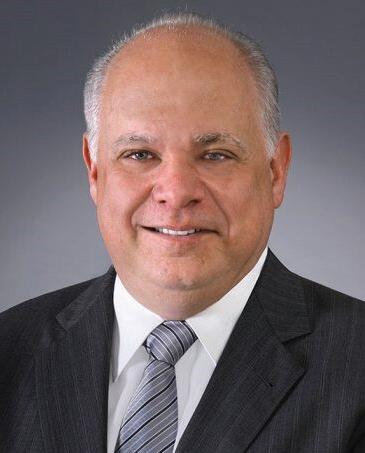
Ira Meister
President and CEO
Matthew Adam Properties, Inc.
375 Pearl Street – 14th Floor
New York, NY 10038
212-699-8900
imeister@matthewadam.com
Skeptics abounded when E-Z Pass and the Metro cards were introduced by the Metropolitan Transit Authority. They were a tough sell to the public. People were reluctant to change their comfortable habits — even suffering long lines at toll booths and pockets full of tokens for the subway and buses —to adopt a new technology until they were forced to.
Eventually, though, authorities discontinued tokens and made going through barriers much easier, and the public adapted and liked the changes.
We are seeing something similar with the city’s recent efforts to fight the rat population and increase recycling. The efforts require the cooperation of the city, building management and residents.
I’ve written about some of these new regulations — putting out garbage at a later time and requiring curbside containers for trash. Now, the city is pushing composting, and I’ll be the first to admit that the public response is more positive than I anticipated. I have been surprised by the acceptance and some of the innovative ways buildings are attacking the issue.
The skepticism and opposition were especially high in Manhattan with its proliferation of high-rise residential buildings. Composting is easier in single and multifamily houses where storage bins can be kept in garages, eliminating the need to store the food waste in the living quarters.
A 2023 law established procedures for composting, requiring buildings to have separate bins for composted materials. This includes food such as meat, bones, shells, dairy, cooked foods and even greasy uncoated paper plates and pizza boxes as well as yard waste (grass, branches, soil). Material collected in the curbside composting program is either turned into finished compost for parks and gardens or into renewable energy.
The Sanitation Department collects yard waste and food scraps curbside and brings it to a central composting facility. Previously, organic waste would be taken mainly with the other trash to landfills where it would decompose and produce copious clouds of methane, a short-lived yet potent greenhouse gas.
The legislation imposed stricter requirements for collecting and picking up organic waste. It started in 2024, and in April 2025 the city was scheduled to
impose penalties for buildings failing to comply. The Adams administration postponed that date for smaller buildings until January 1, 2026.
So, how is the city doing?
Since the beginning of the year, 425 summons have been issued through late in February. The impact of the city’s crackdown is showing. In April 2025, when enforcement began for larger properties, the city collected 3.6 million pounds during a week in April, more than three times the reported amount collected in the same week in 2024.
By November 2025, the Department of Sanitation reported residents smashed composting records, separating and setting out more than six million pounds of food and yard waste in one week. Roughly eight million pounds of waste are produced daily.
The Sanitation Department picks ups leaf and yard waste, food scraps and food-soiled paper on recycling days. In buildings larger than 10 units, the city requires the waste matter to be put in containers as large as 55 gallons with a secure lid.
Contributing to the improvements have been the city’s efforts to publicize the program and the desire of residents to increase recycling and reduce global warming as well as enforcement.
Residents can purchase small closed-lid containers or even use large jars to store the waste in their apartments before dumping it in the building’s large containers. Some residents keep it in the freezer or refrigerator and some buildings supply composting bags. A number of buildings have purchased freezers to hold the composting material until pickup.
The city has also placed 400 bins throughout the boroughs for individuals to bring their waste. Information on these is on the Department of Sanitation website.
We’ve also seen advances in collecting recyclables. Some properties now collect electronics, such as batteries, laptops and printers. Some have bins for clothing. An issue is one of space. As the city picks up recyclables only once a week, buildings have switched to private carters, primarily for recyclables, rather than using the Sanitation Department. The private carters pick up four or five days a week at a reasonable cost.

















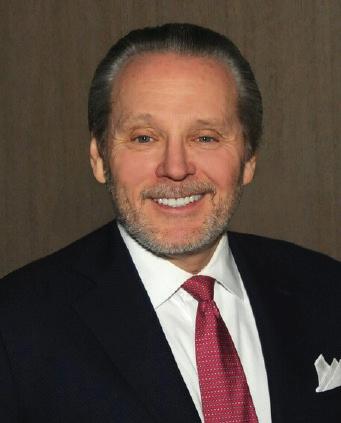
Bob Knakal Chairman and CEO
BKREA
New York City
(917)509-9501
New York City has long relied on tax incentive programs to produce rental housing — without them, the economics of building rental apartments at scale rarely work. Land costs, construction costs, financing costs, taxes, insurance and regulatory requirements add up quickly. Without some form of tax relief to close the gap, most projects cannot justify their investment.
For decades, programs like 421-a played that role. They were not perfect, but they worked. Large buildings were built across the city and significant housing supply was added.
Today, that role is supposed to be filled by the 485-x tax abatement program. Unfortunately, the program in its current form is struggling to achieve its central objective. Instead of encouraging the construction of large rental buildings, it is pushing developers away from them.
The reason is not politics — it is math.
The wages mandated under 485-x for larger projects simply do not work economically. When developers run the numbers on buildings above the program’s labor threshold, the costs overwhelm the revenues that buildings with an affordable component can support. As a result, many of these projects cannot move forward.
Developers respond to incentives. Today, those incentives are directing developers toward one very specific outcome — the 99-unit building.
Across New York City, developers are spending time and money figuring out how to keep projects just under the 100-unit threshold. Architects are redesigning buildings. Lawyers are restructuring tax lots. Planners are slicing projects into phases, all with one goal: stay at 99 units.
This behavior is not driven by a desire to build smaller projects. It is driven by survival. The economics of buildings above the threshold do not work under the current wage structure. So, developers then adjust their plans accordingly.
But even as developers are redesigning projects to stay under 100 units, the Carpenter’s Union is attempting to stop the proliferation of 99-unit buildings. Their argument is that developers are intentionally avoiding the wage requirements that apply to larger projects. From their perspective, that outcome is unacceptable.
But stopping 99-unit buildings will not produce more large buildings. It will just produce fewer buildings overall. If the only projects that work economically are under the threshold, eliminating those projects does not magically make larger projects viable.
Instead, it stops development entirely.
Developers do not control construction costs, interest
rates, property taxes or rent regulations. They do control whether to build. If the economics do not work, they will not move forward. They won’t invest their own capital in a money-losing opportunity or won’t be able to raise the capital from someone else. And that is exactly what we are beginning to see.
Sites that should be producing housing are sitting idle. Projects that once would have delivered hundreds of apartments are being redesigned downward. Developments that might have produced 300 or 400 units are being fragmented into smaller buildings to make the numbers work.
And for the first time in my 42 years selling development sites, developers are not using all of their allowable density. I have never seen that before!
This is not good housing policy. It is not good for the unions (fewer jobs), not good for developers (who go to other cities they may not know as well to build) and especially not good for the city (fewer jobs, lower real estate and income tax revenue) and, most importantly, fewer units. Only the politicians, who can point to their support of labor in order to get more votes, benefit.
New York City does not have a shortage of small buildings. It has a shortage of large-scale housing production. If the city wants to see meaningful increases in supply, it must create incentives that support large projects.
That means acknowledging economic reality and recalibrating the wage requirements embedded in 485x. The goal should be to design a program that allows buildings to be built — not one that unintentionally prevents them.
This does not mean abandoning labor. It means designing a system where labor, developers, lenders and the city can all participate in projects that move forward. More jobs are better than fewer jobs.
No one is satisfied with the current outcome. Labor groups are frustrated by developers avoiding the threshold. Developers are frustrated by numbers that do not work. Policy makers are frustrated that housing production is falling short of expectations.
But the solution is relatively straightforward.
Fix the program. Align the economics with the policy objective. If the goal is to produce housing — particularly large-scale housing — the incentive structure must support that outcome. Markets, and particularly the private sector, always respond to incentives.
Right now, the incentives are directing developers toward 99-unit buildings. And if those buildings are stopped without fixing the economics of larger projects, the result will not be more housing.
The result will be no housing at all.








Stuart M. Saft Partner and Real Estate Practice Group Leader Holland & Knight
LLP
787 Seventh Avenue, Suite 3100 New York, NY 10019
stuart.saft@hklaw.com (212)513-3308
For eight decades, New Yorkers have complained that there is never enough housing and the rents are too high, and ignore the cause: well-intentioned but counterproductive laws that have distorted the housing market. New York’s housing crisis is not the product of greed, but of policies that consistently ignore basic economics while punishing the developers and owners.
The last time New York effectively addressed a housing shortage was in the 1920s under Governor Al Smith, who enacted legislation exempting new housing from real property taxes for a decade. In 10 years, New York City added 729,000 new homes. The result was falling rents and a growing population.
Crucially, the state did not micromanage construction, dictate profit margin or impose layers of regulation. It simply removed barriers and let builders build. Interestingly, the 729,000 new apartments built in just 10 years as a result were more than the total built from 1970 to 2020.
Today, profitable development has become nearly impossible, and developers have redirected their investments to states that welcome new housing. The consequence is stagnation: New York’s population is shrinking.
A central driver of the crisis is the web of rent control and rent stabilization policies first enacted after World War II and repeatedly expanded. Instead of being temporary post-war measures, these laws became permanent fixtures, most recently tightened by the 2019 Housing Stability and Tenant Protection Act (HSTPA) and the Good Cause Eviction Law (GCE). These measures dramatically limited rent increases, removed rent decontrol, restricted evictions and eliminated incentives for renovation.
Rent regulation functions as a massive subsidy, but one that is distributed without regard to need. Over one million apartments are effectively locked out of the market indefinitely. Tenants rarely move, even when they no longer need large units, because downsizing would cost them more. Apartments are passed from one generation to the next regardless of income. Many tenants use regulated apartments as pieds-à-terre while avoiding New York taxes or sublet them at a profit.
The system not only freezes supply but also shifts costs onto unsubsidized renters, who pay higher rents and higher taxes to support the shortfall created by regulated units.
The HSTPA worsened the situation by prohibiting landlords from recapturing renovation costs and by making co-op and condo conversions virtually
impossible. This eliminated a longstanding gateway to middle-class homeownership and trapped hundreds of thousands of units in rental status.
Meanwhile, critics who claim to support affordable ownership overlook that many of them live in buildings converted decades ago under rules they have now blocked for others.
Other policy failures compound the shortage. Programs like 421-a, which successfully incentivized affordable housing in market-rate developments, were eliminated because legislators wanted even more affordability, resulting in none being produced. Efforts to replace it, such as 485-x, added costly union labor mandates that make large projects economically unviable.
Zoning, landmarking, environmental review and community-driven obstruction have also made approval difficult to obtain. Even when a developer purchases a site, one or two remaining tenants can delay or derail an entire project, often in hopes of a large payout. Litigation is easy in New York. Building is hard.
The result of all these policies is too little supply, rapidly rising market rents and the departure of developers who could otherwise help solve the crisis. Yet politicians continue to blame landlords because it is politically expedient.
Some straightforward steps could help.
One alternative rent-regulation model would set rents at the lesser of fair-market value or 30% of the total income of all occupants of the apartment thereby eliminating the ability to game the system. Subsidies would go only to those who need them. Apartments would return to the market when they no longer meet household needs. Enforcement of tax-residency laws would curb widespread abuses that siphon resources from the city.
New York must also accelerate development by reducing regulatory barriers, limiting local veto power, allowing more conversions of commercial and hotel properties and restoring incentive programs that actually produce housing. If policymakers truly want affordability, they must treat developers as partners rather than adversaries. History proves that increasing supply is the only way to lower rents.
New York once led the nation in population, economic dynamism and housing construction. Today, it trails states that have embraced policies encouraging development rather than stifling it.



More than 35 years of real estate, condominium & cooperative experience
WilkinGuttenplan uses expert industry knowledge in accounting, audit, and tax services to assist New York City real estate owners, developers, and investors of commercial and residential properties identify opportunities and guide them on implementing strategies to stay ahead of changing times.










Molly
Dee-Ramasamy
Director – Deep Carbon Reduction Group
Jaros, Baum & Bolles
55 Water Street, 38th Floor
New York, NY 10041
212.530.9300
Becoming a mom of two in the last two years has taught me many things, like how to function on four hours of broken sleep and how to negotiate with a toddler who believes ketchup can, and should, be an entire meal.
But more profoundly, entering my mom-era has made me view the world and my work in the New York energy and real estate sectors with new perspective. It’s hard to bring new humans into a world that feels like it’s perpetually on fire (literally, metaphorically or both). Between anxiety about the volatility of the New York City decarbonization scene and toddler tantrums from my two-year-old, I’ve found myself reaching for an unlikely source of comfort: Stoicism.
Yes, Stoicism — the ancient philosophy that says, “You can’t control the chaos, but you can control your reaction to it.” This is perfect, because New York’s energy landscape right now feels like chaos with a capital “C”. It’s easy to get frustrated and angry about all the ups and downs.
But recently, I’ve chosen to do something a little bit different – to have some fun and channel a touch of Marcus Aurelius into how I think about New York City’s energy roller coaster.
Let’s start with Local Law 97’s first compliance year. Navigating compliance has been a bureaucratic escape room. Building owners and their consultants continue to face shifting deadlines, overlapping mandates and a maze of reporting requirements. The frustration across the industry is palpable.
But the Stoic does not curse the maze. They walk it with intention.
Stoics do not see the complexity of LL97 as a flaw — they see it as a reflection of the scale of the challenge. Decarbonizing 50,000 buildings in the nation’s largest city was never going to be simple. The law’s iterative rollout, grace periods and extension options, while admittedly jarring at times, indicate that the administrators of this law are listening to our feedback and adjusting requirements to move things forward. The Stoic building owner or service provider doesn’t seek perfect clarity. They seek progress and a lot of progress has been made.
Next, let’s discuss some of the halts to New York’s clean energy initiatives, most notably its offshore wind transmission plans. Federal permitting uncertainty and political reversals have forced the state to hit pause.
It feels like a significant setback. But in the Stoic tradition, setbacks are not failures. They are simply events, neither good nor bad, until we assign them meaning.
From this lens, the cancellations are not the end of clean energy progress, but a recalibration. The Public Service Commission’s decision to pause transmission planning was made to protect ratepayers from premature costs.
Some might call that prudence rather than retreat. The Stoic doesn’t mourn delay. They prepare for the moment when action becomes possible again.
Now, after a period of uncertainty, New York’s offshore wind projects are regaining traction. In mid-2025, the state announced the revival of several key initiatives, including the reissuance of contracts for previously stalled projects and new commitments to transmission infrastructure. Developers have resumed work on major installations off Long Island and the Rockaways, buoyed by updated federal guidance and renewed state support. These aren’t just signs of recovery — they’re reminders that progress often requires pause.
Then there’s the repeal of §179D and other IRA energy tax credits. The One Big Beautiful Bill Act (OBBBA) of 2025 accelerated their sunset, leaving developers scrambling. But the Stoic doesn’t cling to incentives. They adapt. They build with purpose, not just subsidy. And they recognize that windows — like §179D’s construction start clause — are meant to be used before they close.
And finally, Con Edison’s rate cases: a thicket of filings, confidential negotiations and proposed double-digit increases for electric, gas and steam. The process behind coming to these numbers? A labyrinth of filings, confidential settlement talks and public comment deadlines. It’s easy to feel powerless. But the Stoic knows that power lies in participation.
The rate case process is not designed for speed or simplicity. It’s designed for scrutiny. Every line item — property taxes, infrastructure upgrades, pension obligations — is debated, dissected and weighed.
The Stoic ratepayer doesn’t rage at the increase. They examine it. They ask: Is this investment necessary? Is the burden shared fairly? They submit comments to the Public Service Commission and testify on behalf of their fellow ratepayers.
And if the outcome feels unjust? The Stoic doesn’t despair. They organize. They educate. They prepare for the next cycle. Because participation isn’t passive, it’s persistent.
So yes, the New York energy world is messy. But so is parenting. And both require patience, humor and the occasional existential scream into a pillow. Stoicism won’t fix the grid or lower your utility bill, but it might help you stay sane while trying.











40 SW 13th St., PH3
Miami, FL 33130
For decades, real estate professionals have understood the economic importance of physical infrastructure: HVAC systems, roofi ng, elevators and electrical. These systems are monitored, maintained and budgeted for with precision. Yet another critical infrastructure layer runs through modern buildings, but with far less strategic oversight: connectivity.
High-speed internet has quietly become the fourth utility. According to the National Multifamily Housing Council, it now ranks among the top three amenities renters prioritize when choosing a property. For homeowners associations and condominium boards, the quality and cost of connectivity directly affect monthly assessments and property marketability.
And yet, most communities approach telecom procurement as an administrative afterthought rather than a strategic financial decision.
The fundamental challenge facing property managers and board members is information asymmetry. When negotiating with telecom providers, most communities are flying blind. They do not know what market terms are achievable because they negotiate these agreements once every five to 10 years. The providers, meanwhile, negotiate thousands of contracts annually.
This disparity shows up in the economics. We regularly encounter communities locked into outdated bulk video contracts while residents pay separately for internet, a double-payment scenario that benefits no one but the incumbent provider. We also see properties with aging coaxial infrastructure when fiber-to-the-home has become the standard for competitive communities. Then, of course, there are agreements with automatic renewal clauses and above-market annual escalators that compound silently year after year.
The result is millions of dollars in unnecessary costs and communities stuck with subpar service while their competitors upgrade.
One of the most eff ective strategies we have seen involves aggregating demand across multiple properties. When a single 100-unit community goes to market for connectivity services, they have limited negotiating power. But when five, 10 or 20 communities combine their procurement, even across different markets, the economics shift dramatically.
Providers value scale and certainty. A portfolio representing thousands of units creates competitive
tension that simply does not exist in singleproperty negotiations. We have seen this approach deliver fiber upgrades, six-figure signing incentives, extended complimentary service periods and rate structures that would be impossible for individual properties to achieve on their own.
This is not theoretical, and the financial impact can be substantial. A 324-unit condominium community in Palm Springs, Fla. recently leveraged a formal RFP process to secure a new fiber agreement that delivers over $200,000 in annual savings, representing more than $5 million in total value over the contract term. The board had no idea these terms were achievable until they saw competitive proposals side by side.
Even the most capable property managers and board members can face limitations when navigating telecom procurement. It requires specialized knowledge that includes understanding technology roadmaps, evaluating provider financial stability, structuring service level agreements and knowing which contract terms are negotiable versus standard.
A dedicated advisor brings market intelligence that individual properties cannot access. They know which providers are expanding in which markets, what competitive pressures are shaping pricing and where there is room to negotiate. They can run a proper RFP process, manage provider relationships and ensure that the community understands the trade-offs between different service models.
Most importantly, an advisor can do the work that busy property managers and volunteer board members simply do not have time for: analyzing current contracts, identifying inefficiencies, managing the transition process and providing ongoing advocacy throughout the agreement term.
The cost of that expertise is typically off set many times over by the value it unlocks.
The properties that treat connectivity as core infrastructure, rather than a commodity service, are pulling ahead. They are delivering better resident experiences at lower cost. They are future-proofi ng their buildings for the next wave of technology, from smart building systems to AIpowered amenities. And they are capturing the economic value that others leave on the table.
For real estate professionals, the question is no longer whether connectivity matters. It is whether your community is capturing its full value — or quietly giving it away.







Honoring FEDERICO CHECO
Chief Executive Officer
Prestige Wellness Group Inc.
Gala Chair
JENNIFER L. WIDAY
Kaback Service, Inc.
Chairs Emeriti
KATHY A. CHAZEN, CLU, ChFU
Trustee, National Jewish Health
ROGER A. SILVERSTEIN
Silverstein Properties, Inc.
Trustee, National Jewish Health
BENEFITING




Thursday May 7, 2026 | 6:30 p.m.
Ascent Lounge New York
Register at njhealth.org/NYAir or contact Mattie Shepheard: ShepheardM@njhealth.org or 212.297.0857 @ nyair society




























































































Southern California’s future champion water athletes now have a new home for training: the $19 million Aquatics Center at Torrey Pines High School, which is home to one of California’s most decorated high school swimming, diving and water polo programs.
Financed primarily by the San Dieguito Union High School District (SDUHSD), the 7,099-square-foot facility delivers the school a competition-grade training and competition environment for the swimming, diving and water polo teams from multiple SDUHSD high schools.
“Building a functional Aquatics Center on-site is essential to supporting the wide range of needs of athletes and their supporters,” said Andrew Hansen, senior project manager at C.W. Driver Companies, the general contractor that oversaw the project. “We are grateful to contribute to the continued success of San Dieguito Union High School District swimming, diving and water polo teams.”
The centerpiece building houses a 25-yard by 37-meter competition pool designed to NCAA and USA Swimming standards, featuring a 12foot deep end with two diving boards for competitive diving, as well as infrastructure to support water polo practices and competition play. The pool features three shallow water lanes to serve as an instructional swimming area and support adaptive aquatics programming for students with disabilities and those needing therapeutic physical activity.
The Aquatics Center reflects a deep understanding of what
competitive programs need to succeed. The adjacent main building houses expanded locker rooms with quick pool access and space for gear and school supplies; team rooms to build culture; centralized coaches’ offices and storage, eliminating off-site equipment runs and allowing staff to focus on athletes and five ADA-accessible restrooms throughout the facility. The center will be utilized for both boys’ and girls’ teams and community groups.
Despite working on an active high school campus, C.W. Driver completed the Aquatics Center in under 19 months by prioritizing construction during off-peak hours and coordinating closely with school leadership to minimize disruption to academic and athletic schedules.
"This new Aquatic Center will be a great asset to the District for many decades to come," said Rick Mortazavi, executive director of planning services at SDUHSD.
The Aquatics Center marks the latest milestone in the San Dieguito Unified School District's multi-year Athletics Facilities Project, a comprehensive modernization of Torrey Pines' sports infrastructure to serve over 2,600 students.
Thus far, additional completed work on new facilities includes a new baseball field, two softball fields, two multipurpose sports fields, four new post-tensioned concrete tennis courts, resurfacing of four existing tenant courts and modernized locker rooms with new roofing, ADA-compliant wheelchair lifts as well as updated plumbing, lighting and ceramic tile.





From financing considerations, to property performance metrics, today’s real estate business is inundated with both challenges and opportunities.
PKF O’Connor Davies has decades of experience working with a variety of assets including industrial, office and residential sites. Our experience in this complex field gives us the expertise to deliver strategic advice that drives real value.
With the PKF O’Connor Davies Real Estate Team, our clients know greater service, know greater insights, Know Greater Value.

Edward O’Connor, Partner 201.712.9800
eoconnor@pkfod.com



The New York Landmarks Conservancy has announced the winners of the 2026 Lucy G. Moses Preservation Awards, the Conservancy’s highest honors for excellence in preservation. The Awards Ceremony will take place on April 16 at The Cathedral of Saint John the Divine in Manhattan.
Supported by the Henry and Lucy Moses Fund, the Lucy G. Moses Preservation Awards recognize individuals, organizations, architects, craftspeople and building owners for their extraordinary contributions to preserving the city.
“The Lucys introduce you to great preservation work, and the amazing people who made it happen. It’s an uplifting celebration — and a great party to boot!” said Peg Breen, president of The New York Landmarks Conservancy.
Warrie Price will receive the 2026 Preservation Leadership Award in honor of her work to restore The Battery. Price founded The Battery Conservancy and served as its president for 31 years, retiring in 2025. Sarah Carroll will receive the 2026 Public Leadership in Preservation Award. In 2025, Carroll retired from the City’s Landmarks Preservation Commission after a 31-year career, which culminated in her tenure as chair of the commission, the largest municipal preservation agency in the nation.
The 2026 Preservation Organization Award goes to the Central Park Conservancy for decades of restoring and maintaining one of New York’s largest landmarks, Central Park, and the many historic buildings within the Park.
611 West 112th Street has been meticulously restored and adaptively reused as a student residence, the first all-electric and LEED Gold (tracking) residential building in the Columbia University portfolio. The seven-story apartment building was built in 1903–04 and was later converted into an SRO hotel. After it closed in the early 2000s, the property sat vacant and deteriorating for nearly two decades. Columbia acquired the property in 2022. Beyer Blinder Belle Architects and Planners oversaw the project.

The renovation included full replacement of floors, windows and the roof structure. The brick, limestone and terracotta facade was cleaned, and missing or damaged materials were replaced in kind to match the original fabric. Decayed wood pilasters were replaced in mahogany and profiled to match historic precedent.

This year ’ s project award recipients are:

Dating to 1894, 867 Madison Avenue is a rare example of the neo-French Renaissance revival style of architecture favored by New York’s social elite at the end of the 19th century. It is constructed of limestone with a picturesque red slate roof defined by tall, ornamented copper ridge caps and finials and ornamental copper gutters.
Gertrude Rhinelander Waldo commissioned architects Kimball & Thompson to design and build the five-story mansion styled after the great 16th century chateaux of the Loire Valley. She never moved in, but in 1985 Ralph Lauren selected the mansion for his flagship men’s store in North America. A multimillion-dollar restoration and adaptive use project transformed it into elegant retail spaces.

Double-glazed, aluminumframed windows that match the original windows were installed, even though the original windows had been removed prior to project start and historic records were limited.
The building has also been made fully accessible for the first time. A fully electric building systems strategy eliminates on-site fossil fuel use while a green roof enhances insulation, reduces the heat island effect and contributes toward the LEED Gold certification target.
The Ralph Lauren Corporation (RLC) receives an award for restoration of the former Gertrude Rhinelander Waldo mansion, home to one of its flagship stores.
Forty years later, the red tile roof and limestone façade needed repair and restoration. Architecture firm HLZAE Inc. installed a new 100-year red slate roof that matches the original, including replacement of a section of faux slate slate tiles installed in the 1980s. The copper drainage system was replaced as needed, but ornamental elements were















conserved and reinstalled. Historic wood windows were rebuilt and reinstalled with new copper cladding to match the historic appearance. The limestone façade was cleaned and repaired, and long-missing decorative details were replaced.
New York City’s biggest street reconstruction project has brought 26 blocks of streets and sidewalks within Brooklyn’s DUMBO and Vinegar Hill Historic Districts up to date, while keeping their historic charm.
During much of the 19th and 20th centuries, DUMBO was home to large industrial businesses. Today, homes and businesses have replaced manufacturing. The adjacent Vinegar Hill Historic District, which is comprised of three small groups of brick, GreekRevival row houses, is a residential remnant of an early 19thcentury neighborhood. As these neighborhoods evolved, the streets and sidewalks retained original granite Belgian block paving, bluestone sidewalks, historic granite crosswalks and a network of train tracks, running along the streets and into buildings. These features contribute to the districts’ unique sense of place, but after decades of intensive use, they were in poor condition.


When underground utilities needed to be renewed, all historic street surfaces were removed. The design team, which consisted of engineering firm AECOM, the New York City Department of Transportation and the New York City Department of Design and Construction, ensured that historic materials were returned to their original locations when possible, that new materials matched the old, and that new features, such as bike lanes and a central plaza, used historically sympathetic designs and materials. Even the tracks of the long-defunct Jay Street Connecting Railway were salvaged, stored and reinstalled.

into galleries. Preservation of ceiling murals, elaborate woodwork and marble fireplaces, provide a setting for showing significantly more of the collection, while lighting systems through both floors of galleries have been upgraded.
An addition to adjacent Frick Art Research Library increases space and connects museum and library spaces. The limestone façade matches the historic mansion. The City of New York contributed to this project with support from the New York City Council and Manhattan Borough President Gale Brewer.
Constructed in 1921 as St. Gregory the Great School by New York City architects Helme & Corbett, this vacant building in the Crown Heights North Historic District has been converted to 40 marketrate and affordable apartments.
In 2018, after over a decade of neglect, developer GEMA conceived a plan to restore and redevelop the landmarked schoolhouse into rental apartments. Executed by PKSB Architects, the redevelopment converted the 41,900-square-foot structure into a multifamily residence, with 30% of its 40 units dedicated to affordable housing.

This award recognizes the first comprehensive upgrade of The Frick Collection in nearly 90 years. Founded by industrialist and art patron Henry Clay Frick, The Frick Collection is housed in his 1914 mansion, designed by Carrère and Hastings. The residence was converted to a museum by John Russell Pope and opened to the public in 1935. Simultaneously, the Frick Art Research Library, established more than a century ago by Helen Clay Frick, daughter of the museum’s founder, was reopened in an expanded building also designed by Pope.
In 2016 the Frick selected Selldorf Architects to design a plan to introduce new space and tapped Beyer Blinder Belle Architects & Planners as executive architect. The firm collaborated on this renovation and enhancement, while the Frick’s curators and conservators led the interior restoration of the mansion. The endeavor’s scope was expanded to include a façade restoration by Walter B. Melvin Architects.
Throughout the first-floor galleries, architectural woodwork, stone, plaster and bronze have been carefully conserved. Textiles and wallcoverings were recreated by Prelle, the firm in Lyon, France, that served the Frick family a century ago. Second-floor offices, once private living quarters of the Frick family, were converted

The scope of the project included a complete structural overhaul and full façade restoration, including reconstruction of a missing gabled parapet. Salvaged façade materials were cleaned, stored and reused wherever possible, reducing carbon emissions and construction waste. Sensitive additions at the rear and rooftop complement the scale and materiality of the historic schoolhouse and respect the adjacent St. Gregory the Great Church. The gut rehabilitation of the interior created apartments that recall the building’s original sense of grandeur, with 13-foot-high ceilings and expansive windows.










Among the first buildings that the NYC Landmarks Preservation Commission designated in 1965, the Hamilton Fish House is a rare, surviving Federal Style townhouse. Now serving as the President’s House for Cooper Union, it has been restored and made watertight, with many historic elements returned.
The house was built on land the Dutch West India Company granted to Peter Stuyvesant in 1651 and was commissioned for Peter’s great-great-granddaughter Elizabeth in 1803. Elizabeth’s husband Nicholas Fish served in the Revolutionary War

and was close friends with Alexander Hamilton and the Marquis de Lafayette. The house was donated to Cooper Union in the 1990s.

After addressing immediate water infiltration and completing life safety repairs, historic features were restored. Flemish bond brick facades were repointed and the deteriorated brownstone repaired. The brownstone stoop was rebuilt in cast stone and tinted to match the historic brownstone and its traditional tread profiles, much of which had previously been lost.
The new slate roof features arched dormers, windows reconstructed with copper roofs and painted wood trim that matches the original. Non-original windows in poor condition were replaced with new, energy-efficient wood windows, detailed to match the historic dimensions and operation. New, painted wood shutters with historic detailing and cast-iron shutter dog hardware complete the improvements.


This 1877 Gothic Revival church near the Brooklyn Navy Yard was designed by Thomas F. Houghton, a former chief draftsman for Patrick Keely, the leading Catholic church designer of the era.
The church exemplifies late 19th-century Gothic Revival religious architecture with robust brick masonry walls, limestone accents, clerestory windows, decorative wood framing and stained-glass windows.
By 2023, it faced typical age-related deterioration. The parish engaged Zaskorski & Associates Architects AIA to undertake this critical work.
The deteriorated front façade and side brick masonry parapets were rebuilt. Inappropriate paint was removed and the bricks repointed. Demolition and reconstruction included removal of original bluestone/limestone copings and replacement with matching cast stone.




Victorian Gothic façade has secured the building’s envelope and brought back decorative details lost over time. Renowned architect Calvert Vaux designed the six-story, asymmetrical façade when he combined two houses owned by Samuel J. Tilden, the former governor of New York, circa 1881. It is clad with red sandstone, brown sandstone and black granite, and features carvings and sculpted reliefs celebrating nature and prominent writers, artists and philosophers.
In 2015 new leadership at the club brought in Bone/Levine Architects for an assessment of the exterior and to oversee basic repairs and waterproofing. The work called for cleaning and removal of bio-growth from the existing façade, extensive masonry repairs and repointing. When stones could not be repaired, they were replaced with units sourced from quarries in Canada and Scotland that match the original stone. The replacement stones were cut and worked by laser, and finished by the hands of skilled artisans to exactly replicate the original carvings.
Failing bronze railings were transported to a metal restoration shop, where they were disassembled. Missing components, such as floral finials and rails, were replicated in cast bronze. The bronze was cleaned and polished to the desired level and left uncoated to allow for natural aging and simple maintenance methods.

All elements of the historic church were improved. Wood frame, clerestory and stainedglass windows were repaired and rebuilt. The monumental rose window was reconstructed with mahogany, and the conserved stained glass was reinstalled.
Failing roofs were replaced and made watertight. The 150-year-old wooden doors at the front entrance were restored.
Wood windows which had been damaged by water infiltration were replaced along with the top floor studio metal windows. All replacements upgraded these windows to energy-efficient units. A comprehensive waterproofing system was installed.

The Poppenhusen Institute in College Point dates to 1868, constructed by German immigrant and philanthropist Conrad Poppenhusen as a cultural and educational anchor for the surrounding community. Among the defining features are the series of tall, arched window openings that culminate in the Grand Hall’s monumental 20-foot-tall windows.
Over time, weather exposure and material aging resulted in deterioration to the building envelope. In response, this project comprised comprehensive, building-wide exterior restoration and targeted interior finishes, with a focus on historically accurate repair and replacement. All 97 windows were replaced with custom, double-hung wood windows that replicate original profiles, brickmolds, proportions and historic finish. Decorative wood elements at all dormers were rebuilt in-kind, and new flashing was installed to improve long-term performance.

The restoration of The National Arts Club’s grand

Historic masonry openings were restored by removing later brick infill. Wood door surrounds and transom frames were painted. At the south façade, a deteriorated rear wood door was replaced with a historically accurate, barrier-free entry that matches the original configuration and detailing, incorporating an automatic door operator and required signage.
Interior work included plaster repair and repainting of wood window trim to ensure continuity between exterior restoration and interior character.

CTA Architects worked with the City’s Department of Design and Construction to complete the work.















An epic stained-glass project has restored more than 70 historic windows and secured the limestone façade of The Riverside Church, one of the most recognizable religious buildings in New York City. Built between 1927 and 1930, Riverside was modeled on French Gothic structures, particularly the 13th century cathedral at Chartres, France.
There have been few alterations to the wellbuilt and well-maintained building; however, by 2019, years of natural weathering had taken its toll. The church retained stained glass consultant Julie Sloan and Walter B. Melvin Architects to oversee the restoration and protection of the monumental stained-glass windows at the church nave. An analysis showed that windows were suffering from soft and deteriorated lead, bowed panels and missing and broken glass.
The design retained the building’s defining elements — 3.2 acres of brick masonry, 756 intricate multi-light arched windows and 338 pairs of iron shutters, alongside a rare heavy-timber structure with some pieces dated to 1512.


Several defining features that had been lost, such as brick corbeling, fire shutters and corner towers, were re-established. Others that were too deteriorated to be reused or no longer extant were replicated for full-unit replacement. These included bronze scupper covers, decorative terra cotta spandrel panels, cast iron tieback plates and metal building numbers and letters. At the ground floor, unsympathetic storefronts were removed, restoring prominence to these monumental openings. Metal awnings and marquees were restored at side street façades.

The Waldorf Astoria New York’s rehabilitation recaptures its original splendor, revitalizes its interior public spaces and transforms its upper floors into a boutique hotel and residences. The 1931 hotel was designed by Schultze & Weaver. But years of alterations had changed the look and feel of the original Art Deco design. In 2017, the hotel closed its doors to prepare for its next chapter.
Stained-glass windows were removed and repaired at five studios across the northeast U.S. The studios dismantled the windows, replaced the lead came and repaired or replaced broken glass. Complex patterns were replicated in new blackened stainless steel protective glazing frames. In total, 30 monumental lancet windows, 32 smaller lancet windows and 12 rose windows were restored.
The grand limestone façade was cleaned and repaired while cracked limestone tracery was treated with surgical micro-grout injections, stainless steel staples and hand-crafted stone patches.

In one of the largest adaptive reuse efforts in New York City’s recent history, West Chelsea’s Terminal Warehouse was converted from storage space into a work and retail destination. The massive, fullblock building opened in 1891, arranged around a rail line that ran through its center. Later years saw the structure become commercial storage, self-storage and, memorably, the Tunnel nightclub.
In 2019, architecture firm CookFox presented a plan to reactivate the structure as a work-and-shopping destination while preserving and restoring defining industrial elements — brick, timber beams, arched windows and iron.

The former freight facility was rehabilitated while integrating new and rebuilt office floors above ground-level retail and public spaces. Selective demolition carved out a new central courtyard, and the historic “tunnel” was reactivated as a public-facing retail corridor. A six-story addition has a steel structure that evokes the historic rail network.
Nearly a decade later, it has reopened. The rehabilitation, led by Skidmore, Owings and Merrill, peeled back layers of the hotel’s history, reinstated the historic character of the building, and introduced contemporary amenities and infrastructure. Working from primary source materials, including Schultze & Weaver’s original specification book and drawings, and early photographs, missing design elements were reinstated throughout the building.
Extensive public spaces on the lower floors have all been restored and improved, including the grand entrance lobbies at Park and Lexington Avenues, gathering and circulation spaces such as Peacock Alley and the East Arcade, and the Main Lobby, notable for its 1893 World’s Fair clock. Some 25,000 historic light fixtures were salvaged, repaired and restored off-site and reinstalled in their historic locations.


Landmarked interiors upstairs received similar treatment. In the glamorous Silver Corridor, layers of damaging varnish were meticulously removed from 19th-century murals. Once darkened by decades of smoke, the walls of mirrors were restored and the chandeliers refurbished.
In the Basildon Room, the colorful walls and ceiling had been painted over and murals, salvaged from an English estate, had faded. The murals were fully restored offsite and reinstalled, and the original polychrome color scheme was reinstated. At the Grand Ballroom, modifications to improve performance and acoustics were married with the restoration of the original décor. In all of these spaces, new systems were thoughtfully integrated, to bring the building up to code and support modern hotel use.
Outside, the limestone façade was cleaned and repaired, and nearly 5,600 new windows precisely match long-lost originals. At the top of the building, mechanical equipment was removed from the setbacks, and the copper-domed cupolas were fully restored.




























Wyndham Hotels & Resorts Inc. has named Amit Sripathi as chief financial officer, effective immediately. Sripathi, who most recently served as the company’s chief development officer–North America, succeeds Kurt Albert, who served as interim chief financial officer since November. David Wilner, a 30-year franchise sales veteran, succeeds Sripathi in the development post. Both will report to Geoff Ballotti, president and chief executive officer.
“Amit’s combination of deep finance and capital markets expertise coupled with first-hand operational leadership at Wyndham make him the ideal candidate to lead our finance organization. Amit is uniquely qualified to deliver on our shareholder expectations and has proven himself a champion of owners, as evidenced by Wyndham’s record openings, executions and development pipelines both here in the U.S. and internationally,” Ballotti said. “We are confident in his ability to build on our sustained successes and capture opportunities that will drive increased profitability for our franchisees, while returning excess capital to shareholders in a consistent and sustainable manner."
Sripathi joined Wyndham in 2021 and has served in a variety of leadership roles. During his tenure, he helped Wyndham achieve 20 consecutive quarters of
organic net room growth and oversaw the divestiture of the Company’s owned hotels. Previously, Sripathi was with RLJ Lodging Trust, responsible for capital markets and corporate finance. He also served in the Real Estate, Lodging and Gaming investment banking group at Deutsche Bank.
In his new role, Wilner will lead the company’s North American franchise sales and architecture design and construction teams. During his nearly eight years at the company, he has helped franchisees tap into Wyndham Advantage and the company’s brands. Under his leadership Wyndham created and launched Echo Suites Extended Stay by Wyndham. Previously, Wilner spent 20 years as part of the franchise sales leadership team for La Quinta.
“From leading development at La Quinta prior to Wyndham’s acquisition of the brand to driving growth across our new construction prototype brands including La Quinta, WaterWalk, Hawthorn Suites, Echo Suites and Microtel, David has tremendous expertise translating owners’ needs into strategic growth,” Ballotti said. “Owners and team members view him as a sincere and trusted partner who is most focused on our owners’ success, while helping our teams accelerate domestic net room growth across all of Wyndham’s brands.”

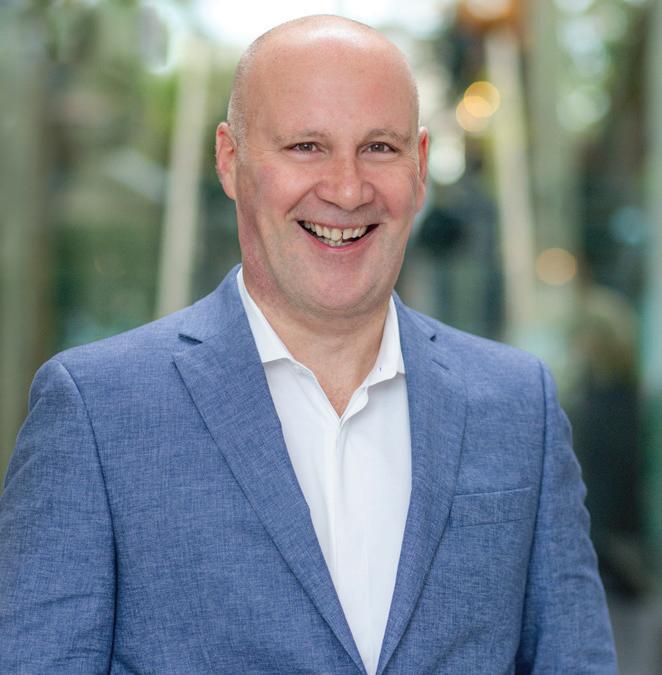
FirstService Residential has promoted Isadora Badi to chief marketing officer at what it called a pivotal moment of expansion and growth for the company.
“Community management has entered a new era,” said David Diestel, CEO of FirstService Residential. “Boards are making higher-stakes decisions and developers are delivering more sophisticated communities. Marketing has become a strategic advantage for our business. It connects customer insights to action as we invest in creating and elevating products and services to meet the needs of residential communities in today’s world.”
Badi joined FirstService Residential in May 2022 to lead the company’s brand evolution. By bringing together associates across the organization, she unified the company around “Life, Simplified,” a brand promise shaped by its people and reflected in how FirstService Residential serves boards, residents and developers.
Under Badi’s leadership, marketing at FirstService evolved into an enterprise capability focused on insight, education and advisory support. Leveraging the company’s extensive footprint across the United States and Canada, her team expanded board education and thought leadership initiatives designed to turn real-world data into actionable guidance and tools for clients. These efforts include the company’s Benchmark budget reports, a robust program of educational events and forums, and the launch of innovative new technology such as HODA, FirstService’s Homeowner Digital Assistant.
Badi brings extensive brand and marketing leadership experience across hospitality and real estate, with prior senior roles at Sotheby’s International Realty and Wyndham Hotels, two globally recognized organizations with robust presence across the United States and Canada, aligning a unified brand message and service experiences while supporting the distinct needs of local markets.


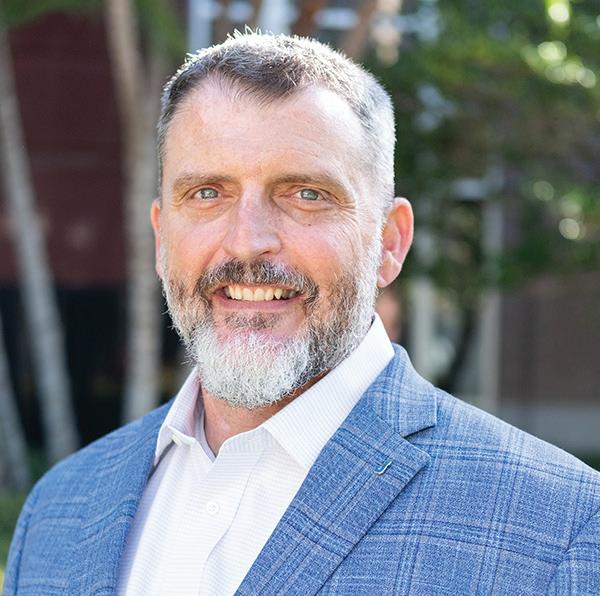
G4 Capital Partners, a New York City-based real estate investment firm, announced that industry veteran Larry Grantham has joined the firm. Grantham will lead its capital formation and West Coast expansion as senior managing director.
Grantham brings decades of experience in commercial real estate lending and investment management, having built longstanding relationships across institutional and high-net-worth capital partners globally. He has collaborated with pension systems, insurance companies, endowments, RIAs and asset managers.
Most recently, he served as co-founder and portfolio manager of Calmwater Capital, where over 15 years he oversaw $4 billion in commercial real estate credit investments. Prior to that, Grantham held senior investment roles at a Fortress credit joint venture and a large single-family office.
“Larry’s decision to join G4 represents a unique moment for our firm,” said Jason Behfarin, co-founder and co-managing partner of G4. “He is a seasoned credit
investor, and we appreciate his approach, judgment and institutional perspective. His leadership significantly enhances our ability to scale thoughtfully, deepen relationships with institutional limited partners, and continue building on the momentum we’ve established since we launched the G4 platform in 2005.”
In his role at G4, Grantham will oversee new investor relationships, working closely with the firm’s partners on continued growth and diversification of G4’s investors. His expertise with both institutional and high-net-worth investors is poised to strengthen G4’s ability to expand its investor base and support new product development.
Grantham will be based in Los Angeles, where he will establish G4’s first West Coast office, extending the firm’s national footprint and enhancing its originations efforts. He will be joined by Andrea Tescon, a director with over eight years of relevant experience, who will support investor relations initiatives.
Over its two-decade history, G4 has completed $5.8 billion in transactions.
TPG Architecture LLP announced the appointment of Matt Beriloff as chief technology officer (CTO). Beriloff’s new position formalizes TPG’s long-time investment in aligning technology, people and process to best support collaboration, scalability and client service across all phases of design and delivery, the firm said.
“For over 45 years, we have continued to embrace opportunities to innovate how we engage with our clients, empower our people, and move creativity forward. This newly established CTO role will define how TPG is positioned in an increasingly tech-forward future with value-driven intent,” said Jim Phillips, founder and managing executive. “Matt’s deep understanding of our business, workflows, and culture makes him uniquely suited to guide this next phase of digital transformation for our practice. He has worked alongside our teams for decades, and he brings a thoughtful, pragmatic approach to technology that strengthens our offering as a firm.”
Beriloff joined TPG Architecture in 2004 as a systems engineer and has grown from providing IT and desktop support to becoming a trusted technology leader embedded in the firm’s daily operations. As CTO, he will focus on evolving firm-wide workflows, modernizing technology infrastructure and ensuring that new tools, robotics, BIM, VIM and digital twins are implemented thoughtfully and responsibly.
He will also be responsible for managing education and training programs, including expanding internal testing and learning environments to help staff explore new technologies with confidence. Over time, these efforts will extend to client-facing demonstrations.
Based in New York City, Beriloff will serve as a liaison between firm leadership and staff, reinforcing TPG’s team-of-teams culture while helping position the firm for continued growth and long-term success.
Ripco Real Estate announced that Brian Callahan has joined the firm as a director in its Tampa office. In this role, Callahan will focus on retail leasing, representing both landlords and tenants, as well as owner-user sales throughout the Tampa Bay region.
Callahan boasts more than eight years of commercial real estate experience in the Tampa market, where he has advised a wide range of local, regional and national clients. His work has included retail leasing, tenant representation and investment and owneruser transactions across a variety of retail and serviceoriented properties.
Prior to joining Ripco, Callahan was a senior advisor at a Tampa-based commercial real estate firm where he completed hundreds of lease and sale transactions on behalf of both landlords and tenants.
Earlier in his career, he worked in surgical device sales, collaborating with neurosurgeons and orthopedic surgeons, where he developed the relationship-driven approach that continues to define his brokerage practice.
Callahan earned a Bachelor of Science degree in real estate and finance from Florida State University.

































Bentley Zhao is the chairman and CEO of New Empire Corp., a New York City-based development and construction management firm. Since becoming CEO in 2004, Zhao has overseen the completion of over 120 New Empire Corp. projects, including condominiums, hotels and mixed-use properties, adding over 2,000 units to its portfolio.
Under Zhao’s leadership, New Empire handles every aspect of real estate development — from property sourcing to unit marketing — ensuring efficient, highquality results. With a background in architecture from CUNY New York City College of Technology, Zhao is dedicated to delivering innovative designs and value.
Zhao is also a committed community leader, with a focus on education and sustainable city initiatives. He serves on the board of directors for Sing Tao Daily USA, is an honorary professor at Huali College, and founded the Asian Commercial Real Estate Association to promote housing attainability and diversity in real estate leadership.
During the pandemic, Zhao made significant contributions to local hospitals and charities, earning recognition from the America-China Hotel Association.
He has been honored with numerous awards, including Outstanding 50 Asian Americans in Business and recognition as an Outstanding Business Leader by the New York State Assembly.
How long have you been in the business?
I’ve been in the business for 29 years.
What brought you into the business?
It started as a family business, but what truly drew me in was my passion for architecture and design, combined with a strong interest in finance and investment. Real estate sits at the intersection of all three.
Who influences you?
My father has been my greatest influence. He worked incredibly hard building a business in a foreign country, and his resilience, discipline and long-term mindset shaped how I approach both life and business.
There’s always a need for residential development in Brooklyn and Queens, but it isn’t easy. How are these projects getting done?
A successful project requires careful planning, strong execution and vertical integration. Having control over development, construction, design and capital allows us to manage risk and move efficiently in complex urban environments.
What areas are the busiest or most in demand?
Transit-oriented neighborhoods in Brooklyn and Queens remain the most active — areas with strong transportation access, growing job centers and evolving communities continue to see the highest demand.
In fact, within the past four years, Long Island City has seen about a 20% increase
Bentley Zhao
Chairman and Chief Executive Officer
New Empire Corp.
in demand. Location-wise, it’s only one stop away from the middle of Manhattan.
Our Long Island City condo development, Radiant, offers buyers the luxury of Manhattan living at a lower price. Another up-and-coming Queens neighborhood with major potential is Sunnyside/Woodside, where our condo development, Centric, will offer residents unparalleled amenities and Manhattan skyline views.
Given today’s constraints and costs, are these still good investments?
Yes, but only if approached with discipline. You need realistic underwriting, efficient construction and a long-term view. Welllocated residential assets in New York still offer strong fundamentals when executed properly.
What trends are you seeing?
Expectations are higher, and buildings must offer more than just square footage. Residents are placing much greater emphasis on thoughtful design, high-quality common spaces, work-from-home flexibility, wellness and entertainment areas, smart-home technology and customized interiors.
What keeps you up at night?
Managing risk — whether it’s construction costs, interest rates or market timing — and making sure every project delivers longterm value for residents, investors and the surrounding community.



The financial backing of a global bank, and the streamlined structure and agility of a boutique bank that will keep your business moving forward.
BHI offers full commercial banking services that combine the personal attention of a prestigious boutique bank with the expertise and financial strength of Bank Hapoalim – the leading financial institution in Israel.
With a footprint in the largest U.S. metropolitan areas, we are committed to creating innovative funding solutions for your short– and long-term needs and providing convenient banking and liquidity products for your everyday business needs.
www.bhiusa.com


In good times and bad, we all want to get away for a bit — keeping the hospitality industry humming. As with other real estate sectors, technology is helping margins by increasing efficiency, but some issues linger, including tariffs’ effect on prices, financing vehicles coming due and perhaps a projected flat performance this year. It’s never dull in this sector, as we can see by the numbers.
$85.1 billion

e local, state and federal taxes generated by hotels in 2025, up $1.7 billion from 2024. (American Hotel & Lodging Association, “2026 State of the Industry”)
0.3%
e year-over-year decline in RevPAR (revenue per available room) at year-end 2025. (CBRE, “U.S. Hospitality Report Q4 2025”)

$1.08 trillion
e projected value of the U.S. hospitality market in 2026. (Mordor Intelligence)
6% to 8%
e estimated reduction in abandonment rates at hospitality call centers due to AI implementation. (PwC/ULI, “Emerging Trends in Real Estate 2025”)




$48 billion
e amount of hospitality-related CMBS maturities in 2026. (Crexi)
22%
e increase in investment volumes in the sector compared with 2023. (JLL, “Global Hotel Investment Outlook 2026”)
































































Looking for clarity in a market filled with trade-offs — growth, risk, and profitability?
CBIZ turns complexity into opportunity with integrated insights and solutions. From strategy to operations, we help you protect margins, navigate change, and unlock growth.

Abe Schlisselfeld National Real Estate Leader