BY ANGELA LOVELL
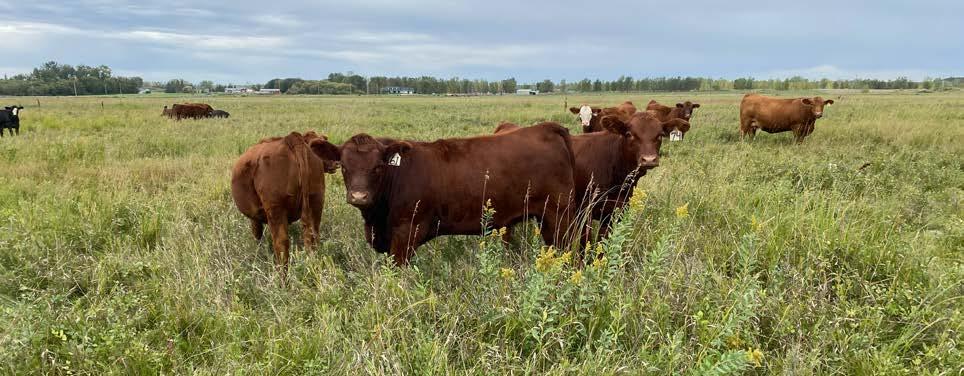
Before installing predator resistant fencing last fall, Dale Myhre was losing up to 10 calves a year to predation from bears, coyotes and the occasional wolf. This past calving season he didn’t lose any.
“The fence was 100 per cent effective,” says Myhre, who farms along the shores of Lake Manitoba about 45 minutes north of Ste. Rose. “Our fence is fairly large so we were able to keep the cows in there for most of the calving season. Then, once the calves were bigger, and were not so prone to being attacked, we let them out into a relatively safe area and didn’t have any problems all summer.”
Myhre had tried different predator management strategies over the years, like bear traps, but none had proven effective, so when he found out that Manitoba Agriculture was offering a program to assist with the construction costs of predator resistant fencing, he decided it was worth a try.
Program provided funding and guidelines
The provincial Predator Resistant Fence Construction Program provided funding to producers to assist with the cost of building predator resistant fencing around calving areas, pastures, extended grazing areas and deadstock compost pens. The program funded two types of fence construction – either a high-tensile electric fence or net-wire fences with an optional apron for de-
terring burrowing. The program had strict construction guidelines for the fence and gates, and installations were inspected to ensure they met the minimum standards. To be eligible, producers must have had a paid claim under the Wildlife Damage Compensation Program sometime since 2021. The program cap was increased for 2026 to $40,000 to reflect changes to the program that required producers to construct either a 9 or 11-wire electric fence or add an apron to all net-wire fences.
“The goal of the program was to encourage the adoption and uptake of some on-farm non-lethal measures that can reduce the risk of livestock predation,” says Elizabeth Nernberg, Forage and Livestock Extension Specialist with Manitoba Agriculture. “These solutions came out of the Livestock Predation Prevention Project that Manitoba Beef Producers did in collaboration with the Manitoba Sheep Association in 2020 where they tested various livestock risk mitigation strategies that offered some options for producers.”
“We were grateful that the Province came up with this kind of solution, and are thankful to all the people involved, especially Manitoba Agriculture and Manitoba Beef Producers for being proactive on this issue,” Myhre says.
A foolproof method to keep calves safe
Myhre’s fence is a seven-wire, high tensile electric fence that surrounds 40 acres, big enough to keep his
400 cows and their calves confined during the calving season in April/May.
“We built the fence bigger because we wanted to be able to keep the cows and calves in there longer and not have issues with mud or wet corrals,” Myhre says. “Then you have the side benefit of a foolproof fence that you can put animals in at other times of the year. No predators were able to get into the fence so I would highly recommend to do it.”
Although the fencing construction must adhere to strict guidelines, Myhre says it wasn’t hard to construct.
“We are familiar with building fences so we made sure that we built a fence with strong corners and tried to do a good job and use high quality materials, and an electric fencer with plenty of power,” Myhre says. “And when you build it right from the start there’s not much that can go wrong with it so there’s little maintenance. I estimate it’s going to be there for at least 30 years.”
The program, at the time, covered $10,000 of the cost of Myhre’s fence construction, and although he spent a total of around $19,000, he has no regrets.
“The biggest thing is the peace of mind it gives me,” he says. “I don’t go to bed at night thinking about how many coyotes are going to be eating a calf while I am sleeping.”



While it’s hard to believe we’re nearing the end of another year, what a roller coaster year it has been. While specific to the cattle industry, we are definitely in a more favourable price cycle, one that was long overdue, and a welcome reward for those who have toughed it out for many years. While overall it has been positive, it has been a volatile and action-packed year.
Obviously, early in the year, we were looking at the possibility of some pretty significant tariffs and we even had a few days with those tariffs in place and saw just how costly it was to our sector. We knew that there was the potential for this to happen and I would say that the associations representing the cattle sector were ahead of many others in a few ways. At a national level, we had commissioned studies on what the potential impacts would be on the cattle industry at various different tariff levels. This information could be shared with government as they worked on trade negotiations to help them better understand the effects of tariff scenarios on our sector. As well, should we need to reach out for support, we had those industry impact numbers in hand. National and provincial cattle associations also ramped up their existing strong efforts to further strengthen relationships with our industry counterparts to the south at the state and national level. I believe it was incredibly beneficial to have us all singing from the same songbook about the mutual benefits that our open trade provides.
From there, we started into a year of quite unusual weather, with some very patchy drought conditions throughout the province, leading to very low forage yields on a lot of hay stands and pastures, along with a bunch of producers struggling to access good quality and/or enough water. We are very thankful the provin-

MATTHEW ATKINSON President’s Column
cial government helped with a change to MASC’s crop insurance program criteria to allow for those lower yield crops to be used for livestock feed. We also successfully advocated for the reopening of the program that provides cost-shared funding to help offset some of the costs associated with water source development, as well as for measures to maintain the quality of existing water sources, that being cost-shared funding for aeration systems.
On the topic of MASC, we are very pleased and thankful to see the province open two new MASC offices in Virden and Shoal Lake. These offices are definitely needed to support producers in the western side of the province, as previous closures saw them travelling extremely long distances to do any in-person business at an MASC office. MBP had been advocating for more MASC office locations and welcomed this coming to fruition.
Through this, we continued to work away in the background on advancing towards the implementation of an expanded livestock inspection service in Manitoba, following the strong mandate of support shown for this at Manitoba Beef Producers’ AGM in February. I was really happy and proud to see that on November 18 in the Speech from the Throne to open the new session at the provincial legislature that there was a spe-
cific commitment to “develop the legislative tools for a new livestock inspection program that will improve the financial stability of beef operations and expand their access to capital.” We continue our discussions with the provincial government about what it will take to make this happen.
To round out the year, I think whether impacted by price fluctuations due to trade action or news headlines, or the weather challenges, it is important to appreciate the position we are in. We saw a lot of our province impacted by terrible forest fires, and we have seen many sectors of agriculture and industry, like mining, forestry and steel, in terrible positions due to some of those trade actions with a lot of layoffs and closures. I think it is important for us to remember this and even if those feed purchases costs or cattle markets at times led us to not have the profits we’d hoped for, that we should be thankful that our sector is still very far ahead of many others. All the best to you and yours as we head into 2026!



DISTRIC T 1 TYLER FEWINGS Boissevain-Morton, Brenda-Waskada, Grassland, Deloraine-Winchester, and Two Borders
DISTRIC T 2
MARK SCHRAM
Argyle, Cartwright-Roblin, KillarneyTurtle Mountain, Lorne, Louise, Pembina, and Prairie Lakes
DISTRIC T 3 ANDRE STEPPLER
Cartier, Du erin, Grey, MacDonald, Portage la Prairie, Rhineland, Roland, Stanley, Thompson, Montcalm, Morris, and Ritchot
2ND VICE-PRESIDENT
DISTRIC T 4 BYRON FALK De Salaberry, Emerson-Franklin, Hanover, La Broquerie, Piney and Stuartburn, Montcalm, Morris, Ritchot, Spring eld, Ste. Anne, Taché, R.M. of Piney and Reynolds
DISTRIC T 5 STEVEN MANNS Cornwallis, Elton, Norfolk-Treherne, North Norfolk, Oakland-Wawanesa, Glenboro-South Cypress, and Victoria
DISTRIC T 6 BRIAN ENGLISH Pipestone, Riverdale, Sifton, Souris-Glenwood, Wallace-Woodworth, and Whitehead
DISTRIC T 7 T YLER FULTON
Ellice-Archie, Hamiota, Prairie-View, Riding Mountain West, Rossburn, Russell-Binscarth, and Yellowhead
DISTRIC T 8 MATTHEW ATKINSON Clanwilliam-Erickson, Glenella-Lansdowne,
Greetings friends,
I hope you are all wrapping up lots of fall work and were able to sell come calves for a decent price. Lots of geopolitical issues and market dynamics have impacted cash and futures prices in recent weeks, but overall, the price is still favourable compared to previous years.
Over the past few years, environmental sustainability has become a key industry and societal focus. In Canada, the beef industry is a real champion in this space as it provides ecosystem services that benefit society. An example would be maintaining natural grassland habitats that have a multitude of benefits. Governments have been focused on encouraging adoption of best management practices (BMPs) through cost-shared funding to improve the environmental sustainability of agriculture. However, the economic benefits of these BMPs are not fully understood and it is important that they are studied to help inform policy development.
Economic barriers can limit the ability and/or willingness of producers to take on the risk to adopt and implement new technologies and BMPs, including those that will reduce the environmental footprint of the sector. According to the Canadian Roundtable for Sustainable Beef’s National Beef Sustainability Assessment: Economic Assessment only 27.1% of cattle ranching and farming businesses were profitable in 2020, compared to 53% of all businesses in the agriculture, forestry, fishing and hunting sectors in the same year.
Further, increased and more volatile input markets and rising land prices have resulted in greater financial risk for producers across the beef sector. Climate change, including the increased risk of drought and flooding, have threatened feed supplies. These challenges are heightened due to inequities in business risk manage-

CARSON CALLUM General Manager’s Column
ment (BRM) tools like Livestock Price Insurance and forage and pasture insurance when compared to crop insurance offerings. Therefore, it is imperative to identify management practices, programs and policies that simultaneously enhance both the economic and environmental sustainability of cow-calf operations in Canada.
Manitoba Beef Producers, Manitoba Beef & Forage Initiatives, Manitoba Agriculture, and the University of Manitoba have been working to establish a research chair in Beef Cattle Economic Sustainability in the Department of Animal Science. This collaborative approach involving research, extension and government will provide important analysis to help develop the programs and policies necessary to incentivize producers. Through funding provided by various partners, including a major investment by Farm Credit Canada (FCC), MBP is excited to see significant progress on this initiative. The University of Manitoba has narrowed down the list of prospective candidates through an open competition, and I am looking forward to seeing the successful candidate being announced in early 2026. Having this new Chair’s position presents an important opportunity to lead a team of researchers, producers, extension specialists, and government program and policy specialists to help drive profitability in the beef sector. Stay tuned for further information about this, as well as a Cattle Country feature on the successful candidate.
I’m excited to share news related to the upcoming Canadian Beef Industry Conference scheduled for August 17-20, 2026 in Winnipeg. Arvid Nottveit, District 11 Director and MBP 1st Vice-President, along with Kristine Tapley, Director, Sustainability for Cargill and co-owner of Old Shore Cattle Co., will be the event co-chairs. They will be terrific ambassadors for the Manitoba cattle industry as we welcome delegates from across North America. Information about the conference will become available in late winter/early spring – be sure to watch for updates on the MBP social media channels, the E-Newsletter and of course, Cattle Country
Before I wrap, I want to wish everyone a happy holiday season. With all that is going on in the world, it’s a time to slow down and enjoy time with family and friends. I look forward to connect with many of you in 2026, including at our 47th Annual General Meeting taking place February 11-12 at the Victoria Inn in Brandon.
Merry Christmas!
Carson


One resolution for potential debate at Manitoba Beef Producers’ 47th Annual General Meeting came forward from MBP’s fall district meetings which were held in even-numbered districts where director elections were required.
Resolutions will be debated at MBP’s 47th AGM which is taking place February 11-12, 2026 at the Victoria Inn Hotel & Conference Centre at 3550 Victoria Avenue in Brandon.
MBP’s board of directors is also accepting in writing suggested late resolutions for potential debate at the AGM. Details on how to submit those can be found later in this article.
Resolution Arising From District Meetings
District 2 – Crystal City, October 1
2.1 Whereas wildlife such as deer and elk can cause irreparable damage to stockpiled feed and to a variety of crops, as well as to farm infrastructure such as fences; and Whereas elk and deer populations have been rising in different areas of agro-Manitoba in recent years, with large herds congregating on farms and ranches, and there is strong agricultural producer interest in the provincial government more regularly conducting surveys to accurately determine population numbers; and
Whereas the Wildlife Damage Compensation for Crop Damage program currently limits compensation for extended grazing forages to 45 per cent of the value of loss on swathed or baled crops or forage, and suitable standing annual crops (e.g. corn) that are intended for grazing, which is not sufficient to meet the needs of affected producers; and
Whereas there are concerns about the potential for disease transmission between wildlife and livestock, which could be very detrimental to the beef industry, as seen with past experiences in Manitoba related to bovine tuberculosis.
Be it resolved to recommend that Manitoba Beef Producers continue to lobby the provincial government to conduct a thorough analysis of elk and deer populations in agro-Manitoba to determine if there are areas of over-population and if additional management strategies are needed, such as increased hunting opportunities; and
Be it resolved to recommend that Manitoba Beef Producers continue to lobby the provincial government to provide financial assistance for fencing initiatives or other risk mitigation practices to help reduce the risk of wildlife eating stockpiled feed; and
Be it resolved to recommend that Manitoba Beef Producers lobby the provincial government and MASC to make changes to the Wildlife Damage Compensation for Crop Damage program to increase the level of compensation for extended grazing forages so that it is more reflective of the costs producers incur related to the loss of feeding resources.
Submitting a Late Resolution for Consideration
MBP’s board of directors is now accepting in writing suggested resolutions for potential debate at its 47th AGM.
If the resolution is deemed to be in order by MBP’s Resolutions Committee it will be considered for debate at the AGM. In consultation with the resolution’s author,
for clarity and to ensure consistency of formatting across all resolutions.
Please note: If the resolution covers off matters on which MBP is already conducting advocacy work, it may be deemed to be redundant and not taken forward for debate. As well, it is also important that proposed resolutions deal with something that is potentially achievable and clearly state the actions you are asking MBP to consider taking.
A sample resolution template can be found on MBP’s website at https://mbbeef.ca/our-news/resolutions-suggestion-form-for-47th-manitoba-beef-producers-agm/.
Send the proposed resolution and your contact information to info@mbbeef.ca to the attention of General Manager Carson Callum and Policy Analyst Maureen Cousins. Or, you may fax it to 1-204-774-3264 or mail it to 220-530 Century Street, Winnipeg MB R3H 0Y4. Late resolutions will be accepted for consideration until 9
a.m. Monday, January 5, 2026. All resolutions for debate will be posted on MBP’s website.
We look forward to your participation and ask that you register in advance for the 47th AGM. For more details visit: https://www.mbbeef.ca/events.

Resolutions Suggestion Form for 47th Manitoba Beef Producers AGM
MBP’s board of directors is now accepting in writing suggested resolutions for potential debate at its 47th Annual General Meeting set for February 11-12, 2026 at the Victoria Inn at 3550 Victoria Avenue in Brandon
If the resolution is deemed to be in order by MBP’s Resolutions Committee it will be considered for debate at the AGM. In consultation with the resolution’s author, proposed resolutions may be subject to editing by MBP for clarity and to ensure consistency of formatting across all resolutions.
Please note: If the resolution covers off matters on which MBP is already conducting advocacy work, it may be deemed to be redundant and not taken forward for debate so as to ensure there is time to debate resolutions on emerging matters. As well, it is also important that proposed resolutions deal with something that is potentially achievable and clearly state the actions you are asking MBP to consider taking. The sample resolution format s below and two examples are on the second page.
Send the proposed resolution and your contact information to info@mbbeef.ca to the attention of General Manager Carson Callum and Policy Analyst Maureen Cousins. Or you may fax it to 1-204-774-3264 or mail it to 220-530 Century Street, Winnipeg MB R3H 0Y4 They will be accepted for consideration until 9 a.m. Monday, January 5, 2026. All resolutions for debate will be posted on MBP’s website. Whereas Whereas
Be it resolved to recommend that Manitoba Beef Producers Your name:
Address: (include MBP District number if known) Phone Number:


As a reminder, voting on MBP resolutions is restricted to producers who are members in accordance with MBP’s bylaws. As per the Section 1(1) (b) of the bylaws, membership refers to “Every person who is determined by the Board of Directors to be actively engaged in the raising of cattle in Manitoba, and who pays all fees to the Association in the manner and in the amount imposed on sellers of cattle pursuant to regulations made by the Board of Directors from time to time.” What does this mean? It means that if you have requested a refund in the last 12 months you have not paid all fees to the association as set out by the regulations and are not considered a member in good standing. MHC’s Grasslands
“What the beef industry means to my family, my community and Manitoba.”
Each year MBP offers six $1,000 scholarships to members, or the children of members, who are attending university, college or other post-secondary institutions or pursuing trades training. The six recipients of the MBP bursaries for 2025 are Kathryn Gillis, Ffion Devonald, Mae Fulton, April Steppler, Lainie Muir, and Addison Bruce. Three of their essays are in this edition, and the remainder were previously in the November edition of Cattle Country.
BY LAINIE MUIR
While collecting my thoughts on this topic, I considered several approaches. I considered writing about how the beef industry serves as a critical component of our province’s economy, or the resilience of production among challenges such as drought. However, the focus that resonated with me was this. The meaning of the beef industry for my family, my community, and Manitoba is supporting the next generation. It is providing the tools young people need to continue the work that has already been done and sustain the sector in years to come.
In my family, beef production is our business, but the lifestyle is also our way of shaping strong people. My grandparents, my parents, and now my siblings and I have been raised to understand hard work, connection to the land, and the responsibility of caring for animals. We have all experienced the lessons that come from getting through the winter, chores coming first, and seeing our calves grow into their full potential. The skills that come from growing up on a farm aren’t just farm skills; they are life skills. The beef industry teaches adaptability, empathy, patience, and pride in doing meaningful work. To my family, the beef industry is a powerful way

BY APRIL STEPPLER
I grew up on a cattle, grain and honey bee farm. All my life I have been involved in agriculture. Recently I have been driving machinery on the grain farm, and the past four years I have been working full time in the summers on the bee farm. But I am especially involved in the cattle industry. I have helped with the cattle ever since I can remember. As a kid I would be at the barns every day, bottle feeding and caring for our orphaned calves. I would be up early, even on weekends, so I could spend as much time as I could with the calves during calving season.
Although it may seem boring to some, I was a kid who loved watching all the animals come through the head gate to get shots and other assessments. I was overjoyed whenever I was asked to help with something. I would help with health checks, fencing, and
BY ADDISON BRUCE
To most people, the beef industry means steaks and burgers cooked on the barbeque, packaged and purchased at the grocery store. What many do not realize is the hard work, responsibility, and commitment that goes into producing their favourite food. As someone who has grown up on a farm involved in beef production, I have seen firsthand what it takes to raise healthy animals and produce quality food. For me and my family, the beef industry is more than just food—it is a major part of my family’s life, the heart of my rural community, and an important industry for Manitoba’s economy.
Growing up on a grain and cattle farm exposed me at a very early age to the importance of agriculture and food production. My great-great grandfather who started our family farm began with just one cow. Now, over a hundred years later, our farm has grown to over 70 cow-calf pairs. Every day I see the hard work that is needed to raise healthy animals and produce high quality beef. My dad spends countless hours feeding the cows, cutting and baling hay, cleaning out pens and getting up several times in the night during calving season. Our family really cares about our animals. No matter what the weather is or what the plans are for the
to raise the next generation with values that matter. Our community of Glenella shares the same spirit. Our town and municipality are filled with families who earn their living through the beef industry, caring deeply about the cattle, land stewardship, and the children who are being raised in it. Whether it’s neighbours buying a bull from the ambitious teenager establishing their herd or placing bids on the locals’ steers at the annual 4-H sale, there’s no shortage of support for the next generation.
Across Manitoba, the beef industry provides a foundation for raising capable, grounded young people. I am now 21 years old, which means I am at the age where I move past the junior category for many events and organizations. From a young age, I was encouraged by my parents and individuals all across the province to partake in junior organizations and pursue every travel and award opportunity I could. I’ve loved the entire experience but did not understand the significance of its impact on me until recently. As I’ve started to spend more time in the workforce, I can confidently say I would not have the problem-solving, communication, or common sense skills I have without my junior experiences. Programs like 4-H and junior breed associations, and events like Manitoba Youth Beef Round-Up or the
cleaning out trailers.
Through 4-H I have raised and sold six market steers. I enjoyed halter training them and competing in shows. Now that I’m older I help with bedding barns and running equipment. Agriculture is something I fell in love with over my years of working. I have known since kindergarten that I wanted to work with animals as a career. And now my goals are coming to life as I further my education in agriculture. The beef industry is very important to my family. We have raised cattle for generations, me being the fourth generation. My great grandfather had Shorthorn cattle. When my grandpa took over the farm at 21, due to my great grandfather passing away, he sold all of the Shorthorn cattle, and he bought a small herd of purebred Charolais cattle. He was the first farmer in his area to have Charolais cattle. All of his neighbors thought he was crazy, they would tell him right to his face that his farm would go bankrupt. From his small herd, the farm started to grow. He slowly got into the bull selling business and started experimenting with the genetics within the herd. Their high performance, growth rates and uniqueness from other cattle herders made his cattle desirable. In the ‘80s the cattle kept
day, our cows take priority on our farm. I have learned that beef production takes dedication, perseverance, responsibility and hard work. I value these life skills and try to apply them in everything I do – whether it is school, work, 4-H, or dance.
The beef industry plays an important role in not only my life but also in my community. Agriculture is the heart and soul of my little town. Many of our neighbours are either beef producers or work in industries that support beef production such as feed suppliers, equipment dealers, transport companies and veterinarian clinics. These farm families support local businesses, schools and recreation programs. They volunteer their time and resources at local events such as 4-H cattle shows and our annual fair and rodeo. They also support community fundraisers and are always willing to lend a hand to their fellow neighbours when needed.
Beyond my community, beef production is an essential part of Manitoba’s economy. There are many cattle producers throughout our province who supply beef to not only local stores but also to markets all across Canada and the world. Just
Royal Manitoba Winter Fair give young people the chance to learn and develop skills. Skills that one day set us apart in the workforce and allow us to continue finding success in the business of putting beef on the plate for consumers.
Many moments in farming make it all worth it, but I believe a lot of them stem from seeing the younger generation embrace the same passion the generation before them did. This is one of the many reasons I love agriculture. The universal excitement we share for passing our lifestyle onto the next generation places incredible reason and meaning behind the work we do.

To my family, my community, and Manitoba, the beef industry means investing in the next generation who will carry on our values and our passion for producing quality beef. I can say I am proud to be a part of the up-and-coming generation, and I couldn’t be more excited to see what we accomplish.
our farm afloat, the grain business wasn’t bringing in enough income, so the cows are what they relied on.
The farm was passed down to his four sons. My one uncle took over running the cattle business and his other sons managed other areas in the farm but still helped with the cattle. We now calve 550 calves and put on one of the biggest bull sales in Canada. My dad started his own bee business, and now we seed 4,000 acres of land and manage 1,800 bee colonies. The diversity of our farm helps to support us and gives us security during bad years.
Cattle mean a lot to our family because of how hard we have worked to achieve what we have today.
Agriculture is a huge part of my community, it brings people together. Everyone in my community is either involved in agriculture or is surrounded by fields, cattle pastures, and beehives. Every year the community puts on a big fair, the event is all about celebrating agriculture. There are 4-H cattle shows, horse shows, and a rodeo. The community comes together to compete in the events and watch each other succeed. Raising cattle has taught me so many important skills such as work ethic, time management, how to deal with and save money, and how to properly care for animals.
like in my community, the beef industry supports jobs in food processing, marketing, transportation and retail. It also helps the environment. Grazing cattle throughout the summer months keeps grasslands healthy by controlling weeds and preventing overgrowth, allowing native grasses and plants to thrive. Also, the manure produced by cattle fertilizes the soil, providing essential nutrients that improve plant growth and support long-term soil health. This is important for ensuring that the land will be there for future generations to farm.
Agriculture is a very important part of my life and has shaped me into the person I am today. Living on a farm has given me many life skills such as dedication, perseverance, responsibility and hard work. It has also given me a greater appreciation for food because I see firsthand how hard my dad and other farmers work to produce the food I eat. I am proud that my family plays a vital role in feeding our world with great quality beef. Agriculture is a part of who I am, and I know that no matter where my future takes me, I will always stay connected to my roots, and the agricultural community.

It is December, and the fall run is all but over, but what an emotional roller coaster it was for cattle producers in the month of November! Producers were enjoying record prices for the feeder cattle, and the cattle industry looked to be on solid footing. As I mentioned in many previous articles, the cattle market looked to have stability for the next few years unless there was another drought, or the dreaded “Black Swan” made an appearance.
Well, that is exactly what happened. Rumours became more important than facts. The cow-calf producers and cattle feeders became collateral damage as rumours, sparked by the Trump tweets and media’s uneducated speculation on the effects of the tweets, caused market chaos. A Black Swan cast a shadow on the cattle industry which caused confusion, uncertainty and chaos in the market. The traders at the CME don’t react well to confusion, uncertainty or chaos involving any commodity!
The collapse in the cattle prices started when President Trump announced that he was going to drive down the price of beef to help the consumer. He did not say what his plan was or how he would accomplish the end result. That was the start of the confusion. When he didn’t get the support and praise from the public that he was expecting, he scolded the ranchers, telling them that he and his tariffs were the reason that the current prices were high, and that ranchers were making money. This resulted in a backlash from cattle producers across the country, including those who had voted for him in the election. That was the start of chaos! Trump then said that he would import more beef from Argentina.
The chaos was fueled by the media, who transformed any comments from Trump into front page news. There were daily reports that the USA would open the border to live Mexican cattle, despite no definitive dates set for the opening. The money men in Chicago don’t know much about the fundamentals of the cattle industry or the meat trade. All they heard was, more supply and lower prices, which in turn prompted them to sell off their positions in the cattle futures, driving the prices lower. This was the start of uncertainty!
All of this clearly showed that President Trump and the media are not very knowledgeable about the inner workings of the cattle and meat industry. Each time the media released an uninformed story about beef, the traders panicked, and the futures dropped - some days to the limit (over nine cents) per pound US.
For example, the Americans were already importing beef from Argentina! If Argentina sent all of their exportable beef to the USA, it would only increase amount of beef by slightly over 2%.
This meat from Argentina would be lean grinding meat, which the US currently needs. The consumer prefers their ground beef to be 85% lean. The trim off the fed steers and heifers is referred to as 50/50, has to be mixed with lean meat, normally sourced from cull cows. With reduction of the cow herd, the packers are short of cull cows. It takes approximately seven pounds of lean trim

The Bottom Line
to make one pound of 50/50 into 85% lean ground beef. If the packers can’t mix the 50/50, they have to process it further and value decreases considerably, lowering the carcass value and prompting lower carcass bids. The imported grinding meat is needed and will help keep the fed-cattle market from falling.
Trump also announced that he was reducing the tariffs on Brazilian beef as well. The packers will be ones that will be purchasing this tariff-free beef at a reduced price. However, there is no guarantee that they will drop the prices of the ground beef when the demand is still there at the current price. Furthermore, the imports from South America will not influence the remainder of the beef cuts enough to drive the retail prices lower. Now folks, that is the news story!
As for the Mexican cattle, the US imports around 1.2 million cattle from Mexico per year. That may sound like a lot, but that would be about 3% of the beef herd in the USA. The Texas cattle feeders are pushing for a quick reopening of the border. The USDA and many producer groups are not in a hurry. The New World screwworm is still very active, and there have been more cases reported closer to the US border. The American cattle industry does not want to chance bringing the screwworm to the USA. There may be a border opening in January when the temperatures are lower and the flies less active. Once again, the media made a mountain out of a molehill to get a story, which in turn caused confusion and uncertainty which resulted in a further drop in the cattle futures.
Last week there was talk about the Canadian feeder cattle imports as well. The fact is that Canada will be a net importer of feeder cattle again in 2025. Canada might be guilty of causing some of the shortage of feeder cattle in the USA. The US cow-calf operators south of the border should be happy for the extra competition on their calves from the Canadian feeders.
Recently, in an effort to win back the support of the US cattlemen, Trump announced that he had directed the Department of Justice (DOJ) to investigate the Big Four packers for market manipulation, price fixing and a number of other illegal activities. The media has a short memory, as the packers have been investigated in one way or another for over 50 years. When they get caught, they pay the fines, are allowed to admit no wrongdoing and carry on! The packers will not lower the price of beef products until the consumer stops purchasing at the current prices. The demand for beef is strong; consumers may be changing the cuts of meat they buy, but they still want beef.
Someone must have whispered in Trump’s ear that the ranchers are not the ones who set the beef prices, so
Trump then accused foreign-owned packers of keeping the price of beef artificially high, winning back some of the ranchers’ support. The packers have a full-time staff of high-powered lawyers who deal with these investigations on a regular basis, so don’t expect anything new in the near future. These investigations take time and tend to drag on.
In closing, I stand by my original predictions. The fundamentals have not changed since the first of October. There are no more producing cows than there were earlier. There is not a significant increase in heifer retention this fall. The cost of feeding the cattle has not increased, and the demand for beef remains strong. The drop in the markets in November were driven by rumours that created uncertainty, chaos and confusion. As usual, the futures market overreacted. The prices were high, and a slight correction was in order, but not the limit drops that were common in the first two weeks of November. Even with the drop, the prices were still higher than last fall. No one could have predicted the fallout from Trump’s tweets and how the media could influence the traders in Chicago. I still predict strong beef markets for the spring of 2026. Until then, enjoy the Christmas break. Rick
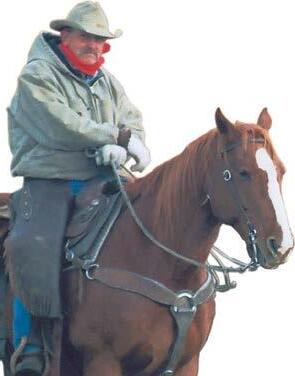





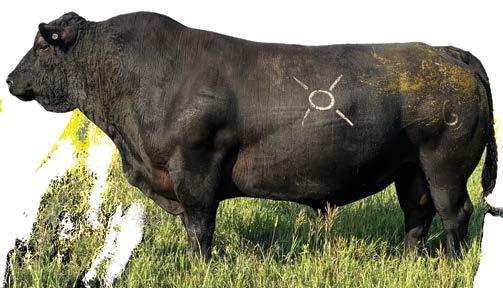
We sell allsummerborntwo year oldbulls.Webelieve they arethe idealage andwecan developthemtomaintainsoundness andlongevity
We sell allsummerborntwo year oldbulls.Webelieve they arethe idealage andwecan developthemtomaintainsoundness andlongevity
•Calvesare born mid-Mayuntil thefirstweek of July -grass calved -checked taggedand weighedonlyonceper day. No nightchecks, camerasorcalving barn.(with this system problems eliminatethemselves.)
•Calvesare born mid-Mayuntil thefirstweek of July -grass calved -checked taggedand weighedonlyonceper day. No nightchecks, camerasorcalving barn.(with this system problems eliminatethemselves.)
•WeweaninNovember, bull calves arebackgroundedinbig groups till spring on asilage basedgrowing ration
•WeweaninNovember, bull calves arebackgroundedinbig groups till spring on asilage basedgrowing ration
•Byspringour bulls arewellgrown outbut notfleshy just perfecttotake advantageofour grass.
•Byspringour bulls arewellgrown outbut notfleshy just perfecttotake advantageofour grass.

•Bulls aresortedbybreed andsizeintogroupsof30-50 bulls
•Bulls aresortedbybreed andsizeintogroupsof30-50 bulls
•Bulls go to ourmanagementintensive grazingpaddocksfromlateMay or June untillateOctober
•Bulls go to ourmanagementintensive grazingpaddocksfromlateMay or June untillateOctober
•Water is provided by solarsystems or surfacepiped freshwater
•Water is provided by solarsystems or surfacepiped freshwater
•Wemovebulls to freshgrass everytwo days allsummerlong.
•Wemovebulls to freshgrass everytwo days allsummerlong.
•The pastureisa good quality, everyday,itensures they grow well allsummer. Arealbonus here is that they areusedtoaman on foot andconstant checking
•The pastureisa good quality, everyday,itensures they grow well allsummer. Arealbonus here is that they areusedtoaman on foot andconstant checking
•Assummerprogresseswesupplementthe bulls with alow energy,high proteinpelletmadespecifically to ourspecs andmadeofpea andlentilhulls No starch,highfibrewithaddedmineralsand vitamins.(aboutthe nutrient contentofgood alfalfahay)
•Assummerprogresseswesupplementthe bulls with alow energy,high proteinpelletmadespecifically to ourspecs andmadeofpea andlentilhulls No starch,highfibrewithaddedmineralsand vitamins.(aboutthe nutrient contentofgood alfalfahay)
•Inlatefallthe bulls arebrought to ourbulllotsand placed on oursilage basedbulldevelopment TMR(totalmixed ration). This is idealbecause every mouthful thebulltakes he hasthe rightproportionofall nutrients, no bingeing on just grain. No barley or coarse grainisfed,justour bull development pellets


•Wemaintaina largecowherd managedunder commercial conditions to minimize cost andtime, everycow is aregistered purebred
•Wemaintaina largecowherd managedunder commercial conditions to minimize cost andtime, everycow is aregistered purebred
•Cowscalve in Mayand June on stockpiledgrass -wedonot feed ourcowsduringcalving they rustle!
•Cowscalve in Mayand June on stockpiledgrass -wedonot feed ourcowsduringcalving they rustle!
•Theyare grasscalvedingroupsof200 or so checkedbyone man once perday to tagand weigh.
•Theyare grasscalvedingroupsof200 or so checkedbyone man once perday to tagand weigh.
•Nonight checks,cameras or calvingbarns (withthissystem problemseliminatethemselves)
•Nonight checks,cameras or calvingbarns (withthissystem problemseliminatethemselves)
•Cowsare sorted (pairedout on horsebacktohavea good look at feet,udders,milk etc.)inlateJunetoour breedingpastures.
•Cowsare sorted (pairedout on horsebacktohavea good look at feet,udders,milk etc.)inlateJunetoour breedingpastures.
•Our pastures arespreadover150 milessonearlyevery onegoes on aliner goingsomewhere
•Our pastures arespreadover150 milessonearlyevery onegoes on aliner goingsomewhere
•Weuse allnatural service. Bulls go outAugust1 for60days.
•Weuse allnatural service. Bulls go outAugust1 for60days.
•Calvesare weaned starting midOctober to midNovembergroup by group.
•Calvesare weaned starting midOctober to midNovembergroup by group.
•Cowsare left on grazingfor as long as possibleintofall.
•Cowsare left on grazingfor as long as possibleintofall.
•Cowsmovehomeand arewinteredonstandingcorningroupsof 200 perquarter controlledwithelectricfence.Our objectiveis200 cow/days peracre, they licksnowfor water.
•Inlatefallthe bulls arebrought to ourbulllotsand placed on oursilage basedbulldevelopment TMR(totalmixed ration). This is idealbecause every mouthful thebulltakes he hasthe rightproportionofall nutrients, no bingeing on just grain. No barley or coarse grainisfed,justour bull development pellets
•Our rationsand protocolshavebeen developedoveryears of experience to bringyou thebest, most durablebulls possible.
•Our rationsand protocolshavebeen developedoveryears of experience to bringyou thebest, most durablebulls possible.
•Cowsmovehomeand arewinteredonstandingcorningroupsof 200 perquarter controlledwithelectricfence.Our objectiveis200 cow/days peracre, they licksnowfor water.
•Our cows go from thecalving pastures to summergrazing and breeding, make ashort stop at thehomeranch forweaning, then on
•Our cows go from thecalving pastures to summergrazing and breeding, make ashort stop at thehomeranch forweaning, then on to thestanding



•Wewill



•Most important. WE DON’TWANTYOU TO PAY FOR THEBULL UNTILYOU HAVE SEEN HIMYOURSELF in theflesh at your ranch. Then and only then do you make settlement.
and only then do you make settlement.
•You can callanytimeatyour convenience to talkbulls.
•You can callanytimeatyour convenience to talkbulls.



Juanita Kopp PhD, PAg Livestock Specialist – Beef Manitoba Agriculture
Juanita.Kopp@gov.mb.ca
Testing Feed for Mycotoxins – What are they and how do we test for them?
Each year, weather challenges our ability to harvest feeds in prime condition. Hay may get rained on or put up with more moisture than we think. This can result in mould growth which can lead to toxins being produced. Mycotoxins are toxins that are produced by moulds. Even if you can see mould in your feeds, that doesn’t mean that mycotoxins are present. The only way to be sure is to have your feeds tested for potential toxins.
The presence of mycotoxins in feed is common, but toxic effects are generally only apparent above a certain threshold concentration in the total ration. Mycotoxin toxicity also depends on the type of mycotoxin and the stage of development of the animal. Younger, stressed or sick animals are more susceptible to mycotoxins.
The mycotoxins commonly found in feedstuffs are aflatoxins, ergot alkaloids, fumonisins, vomitoxin and zearalenone. Finding out if your feeds have mycotoxins can help you minimize the risk of adverse health effects in animals who consume mycotoxin-contaminated feed. For accurate results, it is essential to take a representative sample and submit it to an appropriate lab.
Sampling Guidelines
Feed may be stored in bags, bins, bales, and in silos of various shapes, sizes, and storage location. Additionally, their densities and moisture contents may vary. The objective is to safely collect a representative sample from as many parts of the feed as reasonably possible.
For mycotoxin analysis, correct sampling is critical since the toxin levels can be very high in some areas (‘hot spots’) and low or zero in other areas of the feed as they are not uniformly distributed throughout the feed. It is important that the sample accurately reflects the entire lot. If the feed is thoroughly mixed, it is assumed that all particles are evenly distributed, whereas a lot that has been contaminated (e.g., due to moisture leaks) may only be contaminated in isolated pockets. It is important to not miss these pockets, but you should not only sample the very bad looking areas, as they are not a good representation of the whole lot.
Safety first
Use disposable gloves and a protective mask when handling potentially contaminated feed. Some mycotoxins are carcinogenic, and mouldy feeds can be very dusty. The dust will likely contain mould spores which you should also avoid inhaling.
Representativeness
Each bulk ‘lot’ of feed may need to be tested. Generally, a ‘lot’ is the amount of feed that was put up on the same day, or from the same field, and stored under similar
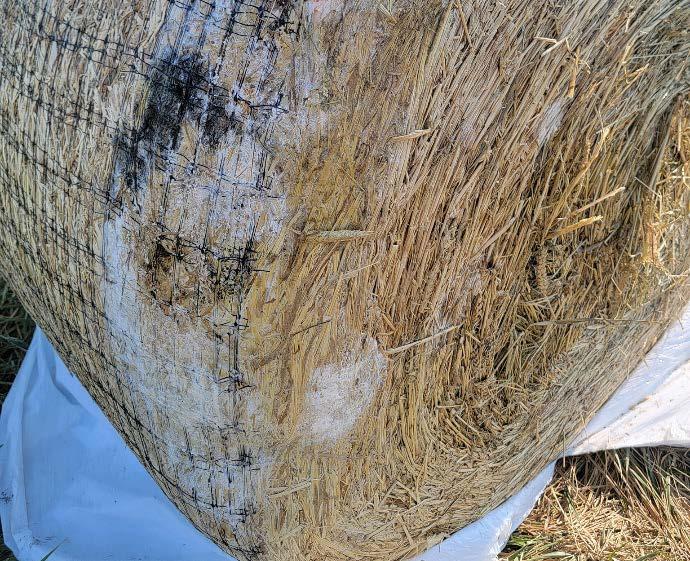
conditions. For example, if you put up 50 bales before it rained and 50 bales after it rained (from the same field), you would have two lots of bales. A representative sample should be collected from each lot. Use clean sampling equipment and containers to avoid cross-contamination.
When sampling from stored feed, use a probe to take sub-samples from multiple locations throughout the lot. Collect eight to 20 samples (depending on the feed type) reaching the depth, width, and length of the feed package.
If you are unloading grain, a total mixed ration or supplement that flows, take multiple samples across the entire cross-section of the moving stream.
Sample Size
The minimum sample size that is required for toxin analysis is 200 g (0.44 lb.), with a maximum of 1.0 kg (2.2 lb.). A combined sample (of multiple subsamples from one lot) that is too large should be well mixed and a representative subsample of about 1.0 kg taken for submission.
If you submit a large unground sample, one that is over 1.0 kg (2.2 lb.), the lab will subsample the feed and only grind that amount. However, you can request that the entire sample be ground, but they will charge you additional fees to do so.
Package the feed samples in large, clean, air-tight plastic bags like Ziplock freezer bags. Label each sample clearly with your name, date, type of feed, and the lot or area where it was stored. Preserve the sample to prevent changes in mycotoxin content from occurring after collection. Mycotoxin content in dry samples is more stable than in wet feed samples. Mould growth may occur in wet samples and may continue to produce mycotoxins after collection. Generally, samples that have no more than 13 per cent moisture store well, but freeze wet feed samples (e.g., silage, haylage, wet grains).
Contact the lab, or look on their website, for any paperwork that needs to be filled out before submitting the feed samples. They may also want the submission forms to be placed in a separate plastic bag to keep them clean and legible. Then, attach the submission form to the feed sample bag.
Shipping
Feed samples can be shipped by courier or mail. However, if the sample is wet/ frozen, you should likely ship it by the quickest means. Make sure it is well packed to prevent leaks during transit and avoid shipping on days when your samples will be in transit over weekends or holiday periods, which can delay delivery. The longer the time between shipment and arrival at the lab, the more likely changes in specimen mycotoxin content will occur.
And Finally
Some labs will include an interpretation of the results in the report they send you. If you need help understanding what the report says, either call the lab, or contact one of our Manitoba Agriculture Livestock Specialists.
For more information on mycotoxins, please visit the Beef Cattle Research Council’s website using the QR code on the right.
In the next issue of Cattle Country, a Manitoba Agriculture forage or livestock specialist will answer a selected question. Send your questions to Elizabeth. Nernberg@gov.mb.ca.
StockTalk for Cattle Country is brought to you by Manitoba Agriculture. We encourage you to email your questions to our department’s forage and livestock team. We are here to help make your cattle operation successful. Contact us today.
Kristen Bouchard-Teasdale Beausejour 431-337-1688 Kristen.BouchardTeasdale@gov.mb.ca
Cindy Jack Portage 204-768-0534 Cindy.Jack@gov.mb.ca
Juanita Kopp Beausejour 204-825-4302
Juanita.Kopp@gov.mb.ca
Elizabeth Nernberg Roblin 204-247-0087 Elizabeth.Nernberg@gov.mb.ca





Manitoba Agriculture is offering a series of interesting livestock and forage presentations, packed with information and featuring innovative leading specialists, aimed at helping Manitoba beef producers best manage their cattle operations. Find out the latest news on research and production for beef and forage management by participating in these virtual sessions
Manitoba Agriculture is offering a series of interesting livestock and forage presentations, packed with information and featuring innovative leading specialists, aimed at helping Manitoba beef producers best out the latest news on research and production for beef and forage management by
Date(s):
Time:
Date(s): Time: Place: Dec.11, Jan.8, Feb.5, March 12 & April 9 12:30 –1:30 p.m.
Place: Dec.11, Jan.8, Feb.5, March 12 & April 9 12:30 –1:30 p.m.
Your computer, smartphone or tablet
Register for StockTalk webinar:
Your computer, smartphone or tablet
Register for StockTalk webinar:
https://us06web.zoom.us/webinar/register/WN_Hlm-PWqFSJelloMpy5H5zg
https://us06web.zoom.us/webinar/register/WN_Hlm-PWqFSJelloMpy5H5zg


Please add the webinar series to your calendar once you are registered.
Please add the webinar series to your calendar once you are registered.
Presentations and topics will cover Cattle Nutrition & Rations, Beef Cost of Production, Agri-Stability, Cattle Marketing, Beef and Forage Days Highlights, Ask the Vet, Forage Production & Management, Pasture Forage & Water Survey Results & a chance to ask questions to the speakers and Livestock & Forage Specialists.
Presentations and topics will cover Cattle Nutrition & Rations, Beef Cost of Production, Agri-Stability, Cattle Marketing, Beef and Forage Days Highlights, Ask the Vet, Forage Production & Management, Pasture Forage & Water Survey Results & a chance to ask questions to the speakers and Livestock & Forage Specialists.
For more information, call Manitoba Agriculture 1-844-769-6224
Or visit our website at manitoba.ca/agriculture/online-resources/stock-talk.html
For more information, call Manitoba Agriculture 1-844-769-6224
Or visit our website at manitoba.ca/agriculture/online-resources/stock-talk.html
WRITTEN BY NOLAN DYCK AND MARCOS CUNHA CORDEIRO, DEPARTMENT OF ANIMAL SCIENCE, UNIVERSITY OF MANITOBA.
In recent years, there has been increasing global attention to the role of biodiversity as a key indicator of conservation within landscapes and ecosystems. As a result, practices and policies to promote and/or protect biodiversity in various public and private sectors have also increased. In Canada and many other parts of the world, the extensive and intensive systems that make up the beef industry impact and interact with habitat biodiversity across a wide range of natural and agricultural landscapes with grasslands standing at the forefront of these interactions.
and least protected biomes in the world. In Canada, over 70% of native temperate grasslands have been lost to human-caused activities, with the largest driver of habitat loss being the conversion of grasslands for annual cropping systems. The fact that only 6% of remaining temperate grasslands are under protection highlights the
sure the impacts of the beef industry as a whole. To better illustrate the role of the beef production system in improving biodiversity, a full comprehensive approach must be taken to capture the wide breadth of species that make up the Canadian prairies and quantify the influence that beef production has on them.
The fact that only 6% of remaining temperate grasslands are under protection highlights the key role that Canadian beef producers as landowners and stewards of grasslands have in maintaining grasslands and managing biodiversity within their livestock systems.
The role of grasslands on the prairies
Temperate grasslands are a critical component in biodiversity conservation on the prairies. Biodiverse grasslands provide numerous ecosystem services such as food production, carbon sequestration, protection against soil erosion, and nutrients, energy and water cycling. Moreover, grasslands provide habitat for various beneficial species that manage pests and pollinate crops, and aid in resisting invasive species. Despite these benefits, temperate grasslands are one of the most endangered
key role that Canadian beef producers as landowners and stewards of grasslands have in maintaining grasslands and managing biodiversity within their livestock systems.
Connecting grasslands to beef production
To understand the positive and negative of beef production on plant and animal species and their habitats, reliable data is required. Previous studies have focused on small scale efforts for conservation, such as preserving habitat for endangered species such as the Burrowing Owl or Baird’s Sparrow and have not attempted to mea-

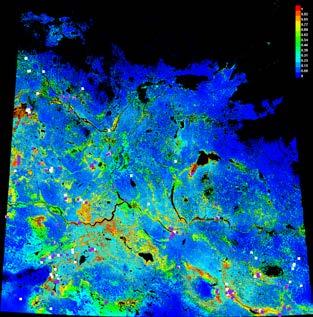
To address this gap, a research project carried out by Nolan Dyck, a master’s student in the Department of Animal Science of the University of Manitoba (UM) under the supervision of Drs. Marcos Cordeiro (UM) and Gabriel Ribeiro (University of Saskatchewan), characterizing the impacts of beef cattle production on biodiversity in southern Saskatchewan is underway. The project is funded by Saskatchewan’s Agriculture Development Fund.
Pasture grasslands used for grazing support biodiversity
Using computer modeling, the project aims to map distributions of numerous plant species and link them to agricultural activities such as crop and beef production. The first step in this process was to map the land-use footprint of the Saskatchewan beef industry based on feed demand for the entire production system including cow-calf, backgrounding and feedlot operations. This was accomplished through the collection of various federal and provincial data on cattle populations, feeding practices, and crop production statistics for the province. Next, computer models for over 200 species were created using species occurrence data, land-use maps datasets, and soil and environmental information for the biodiversity assessment. The outputs from these models were then used to estimate the occurrence for each species across the entire agricultural region of Saskatchewan.
While the model outputs are still being analyzed, preliminary results suggest that areas dominated by pasture grasslands used for grazing support biodiversity more effectively than other agricultural land uses. As expected, human activities reduced biodiversity intactness across the province, but areas high in pastureland and grazing activity were shown to have fewer negative effects on biodiversity compared to areas high in cropping or urban development. These findings highlight the positive role that grazing systems play in maintaining habitats for plants and plant biodiversity.
Overall, these results suggest that the beef industry positively contributes to the conservation of biodiversity in grassland habitats in Saskatchewan. Given the similarities between grassland areas in Saskatchewan and Manitoba, it could be expected that these beneficial effects are also true in our province. The UM research team is applying for funds to expand the analysis into Manitoba and quantify biodiversity under the physiography, climate, and management practices prevailing on the east side of the border.
BY: ANNA HYMERS, MBP FOOD EXPERT
As I approach my four-year anniversary of developing recipes for MBP, I realized something surprising — I’ve never once used beef tenderloin. That changed after a recent chat with my mother-in-law, who’s been cooking her way through her newest Jamie Oliver cookbook. When she mentioned Beef Wellington, I couldn’t get the idea out of my head. Jamie’s version uses ground beef for an approachable twist, but with the holidays fast approaching, I felt drawn to the real deal — a recipe worthy of a special occasion and a beautiful cut of tenderloin.
Appetizers have always been one of my favorite foods to make and eat. There’s something satisfying about crafting small bites that deliver big flavor. They can range from effortless (a few cheeses and crackers) to intricately layered creations. These Mini Beef Wellingtons land somewhere in the middle, elegant and impressive, but completely doable with a bit of patience and a couple of dedicated hours in the kitchen.
The recipe keeps things streamlined, focusing on three main components: seared beef tenderloin, a rich Mushroom Duxelles, and flaky puff pastry. Together, they create a scaled-down, party-friendly version of the traditional full-sized Wellington. The Mushroom Duxelles alone is worth making. It’s a deeply savory mushroom mixture that’s delicious on crostini or mixed with cream cheese for a quick spread. But pairing it with tender beef and embraced by golden pastry, it transforms into a truly show-stopping bite perfect for a New Year’s Eve party or holiday gathering.
A few tips: if you want to add an extra layer of flavor, wrap each piece of seared beef in a thin slice of prosciutto before assembling. These Wellingtons also freeze well. Simply prepare them up to the baking step, freeze, then brush with egg wash, top with flaky salt and bake straight from frozen. Leftovers reheat perfectly in the air fryer until just warmed through and pastry becomes crispy again. If your steak cooks a little more than planned, don’t worry, that’s exactly why I chose beef tenderloin. Its buttery texture stays tender and juicy even when well done, so every bite is still rich and so flavorful. And don’t skip the horseradish cream, it’s an ideal dipping sauce for these little bundles, but it also doubles beautifully as a spread for roast beef sandwiches or an addition to a festive cheese board. I’ve even used it as a sauce to elevate roasted root vegetables! Just keep the ratio 1:1 and make as much or as little as you need.
Rich, savory, and perfectly portioned — these Mini Beef Wellingtons might just become your new favorite holiday appetizer. Enjoy!





(Makes about 18-22 pieces)
Ingredients:
Mini Beef Wellington
340 g Tenderloin Steak, 1.5” cubed
2 Tbsps Canola Oil (divided)
1 pint or 227g Cremini Mushrooms
1 Shallot or ½ small Onion, minced
1 tsp Garlic, minced
3 sprigs Thyme, fresh, minced
¼ Cup White Wine, Sherry or Vermouth
1 tsp Dijon Mustard
2 sheets Puff Pastry
1 large Egg, whisked (for egg wash)
To taste Salt and Pepper
Horseradish Cream Sauce
¼ Cup Horseradish, extra hot
¼ Cup Sour Cream, full fat
METHOD:
Mini Beef Wellington:
1. Pat cubed steak chunks dry with paper towel and generously season with salt and pepper.
2. Heat a large non-stick pan or cast-iron skillet over medium high heat.
3. Add first half of oil, and once oil is hot (it’ll be shimmering), add seasoned beef chunks to pan, searing all sides (about 15-20 seconds per side, leaving steak about 80% uncooked).
4. Transfer steak chunks to a plate and place in fridge to chill.
Mushroom Duxelles:
5. In a food processor, blend mushrooms until they’re fine, like a paste. Scrape sides as necessary so there are no large pieces remaining.
6. Using the same pan as the steak, heat over medium heat and add second portion of canola oil. Once hot, add mushrooms and finely minced onion. Cook for about 5 minutes, stirring occasionally. Add garlic and thyme and a generous pinch of salt and pepper.
7. Continue cooking for another 3-4 minutes. If bottom of the pan appears to be burning, add the alcohol to release the burnt bits from the bottom of the pan. Continue to cook until the mixture seems quite dry and almost crumbly. Transfer mixture to a small plate and place in fridge to chill. (This should yield about ½ cup.)
8. Once cooled, mix in Dijon mustard until evenly combined.
Assembly:
9. Using a knife or a pizza roller, slice puff pastry into roughly 2” x 3” squares. They should be just big enough to wrap around the chunks of steak.
10. Spread a thin layer of the Mushroom Duxelles in the center of one square of puff pastry, leaving about ½ cm around all edges bare. Using your finger or a pastry brush, wash the top edge of the square using the egg wash.
11. Place one piece of steak in the top half of the square, and grabbing the bottom edge, roll up and over the steak, sealing where you’ve egg washed. Use your fingers to crimp all edges closed. (Tip: You can use more egg wash to seal or cut off any excess trim).
12. Repeat with remaining chunks of steak.
13. Once all wellingtons are assembled, egg wash all sides and place on a parchment lined sheet pan and season the tops with a pinch of salt. Chill while oven preheats.
14. Heat oven to 400F.
15. While oven is preheating, mix the horseradish and sour cream. Cover and chill until required.
16. Once oven is hot, bake Wellingtons for about 1416 minutes until puff is golden brown.
17. Allow Wellingtons to cool for 5 minutes and serve with the Horseradish Cream Sauce.