Inside the Special Children’s Center’s Beautiful All-New Vicki & Joseph Safra Brooklyn Center
Happy Purim from Rambam!
Taanis Esther Mon March 2 8:00am-4:00pm
Purim Tue March 3 Closed
Zissy didn’t just build a wig brand — she redefined what luxury should cost. Our new wigs are fresh from the factory. No middlemen, no markup. Up to $2,500 less. Because high fashion shouldn’t come with a high price.
ASK ABOUT ZISSY’S KALLAH HOURS AND PACKAGES
NYC FR EE TAX PREPARATION
Personal income tax preparation for eligible taxpayers with incomes up to *$97,000 in 2025 by IRS certified VITA/TCE volunteer preparers
• • Original Social Security Cards for all members of household • 2024 tax return Photo ID for all filers
• All tax forms (W-2, 1099, 1098, etc.)
• Bank account information (voided check)
• All tax-deductible receipts • Day care information
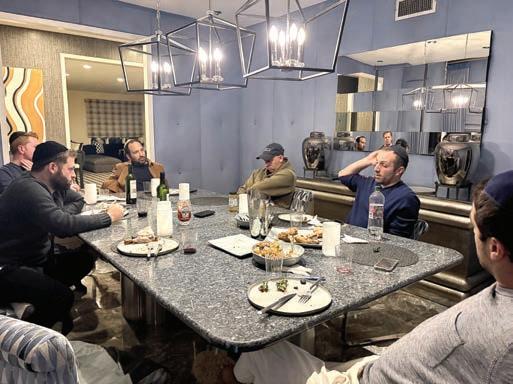
Building Connection, Conversation, and Strength Men’s Mornings at SBH
Going for the Gold MDY Kindergarteners Take on the 2026 Winter Games!
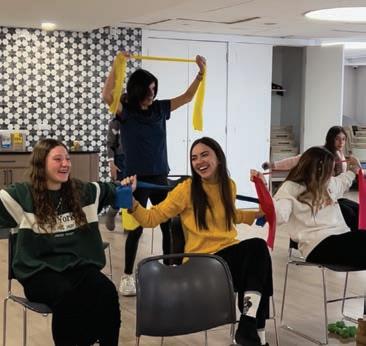
Parkinson’s Programs at the Sephardic Community Center
Linda J. Eber, LCSW
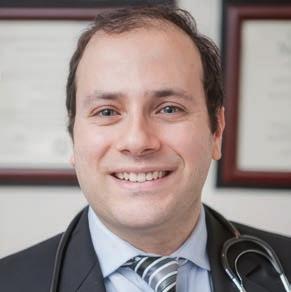
The Peptide Moment Separating Medical Progress From Internet Promises
Choosing Joy This Purim 10 Ways to Increase Happiness In the Chaos
Devora Levy
Stronger in Body, Stronger in
Julian Brass
Jacqueline Saper
Purim & The Longest Hatred By Rabbi Lord Jonathan Sacks zt”l NUTRITION
102 Preparing Your Body for Spring Without Detoxing By Laura Shammah, MS, RDN
REAL ESTATE
112 Unlocking Florida’s Best Kept Secret
The Power of the “Lady Bird Deed” By Ben G. Matsas
RELATIONSHIPS
88 How to Create Calmer, Healthier Family Relationships By Sarah Pachter RECIPES
72 Planning Ahead for Passover Desserts Freezer-Friendly Recipes That Simplify Passover Prep 126 RESTAURANT GUIDE: NY
WRITERS’ THOUGHTS 14 Purim’s Real Joy By Emuna Braverman 16 One Enemy No Room for Hesitation By Linda Argalgi Sadacka
84 The Joys (?) of Passover Cleaning By Emuna Braverman
106 An Ancient Cure for Modern Anxiety By Eliyahu Freedman
From The Editors
March has arrived, and with it comes the quiet promise of spring. The air begins to soften. The days stretch a little longer. We find ourselves in the month of Adar, a time our tradition connects with increased joy. It feels fitting that this issue centers on Purim, the holiday that reminds us to hold on to hope, even when the story feels uncertain.
Inside these pages, you will find thoughtful reflections on Purim from many angles. Rabbi Lord Jonathan Sacks zt”l explores Purim and the Longest Hatred. Devora Levy offers practical guidance in Choosing Joy This Purim, with Ten Ways to Increase Happiness in the Chaos. Jacqueline Saper takes us back to Celebrating Purim in Iran, while Emuna Braverman reflects on Purim’s Real Joy. Together, these pieces remind us that joy is not naïve. It is resilient.
Our cover story, A New Home for Extraordinary Dreams, takes you inside the Special Children’s Center’s all new Vicki & Joseph Safra Center in Brooklyn. Founded on the belief that no family navigating special needs should ever walk alone, this new building reflects growth, dignity, and heart. With thoughtfully designed classrooms, therapeutic spaces, and programs that remain open whenever families need them, the Center continues to stand beside parents and children with unwavering support.
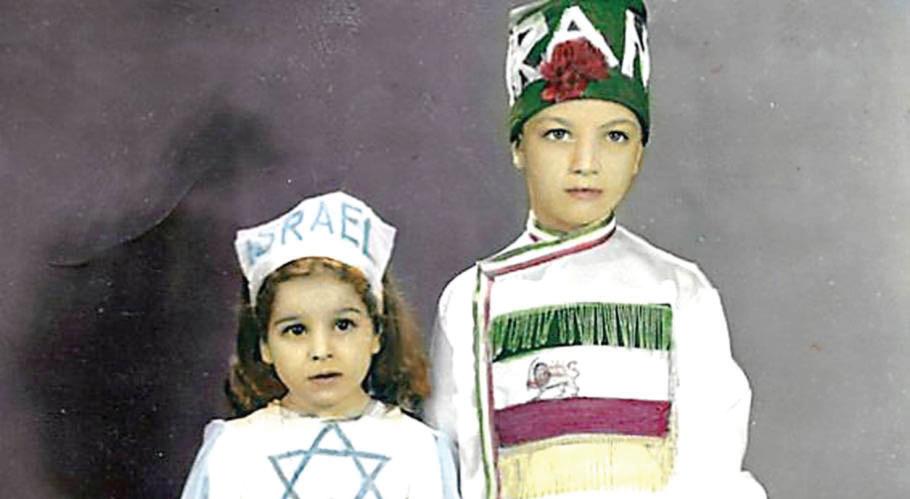
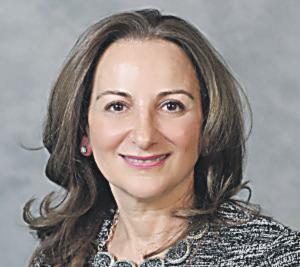
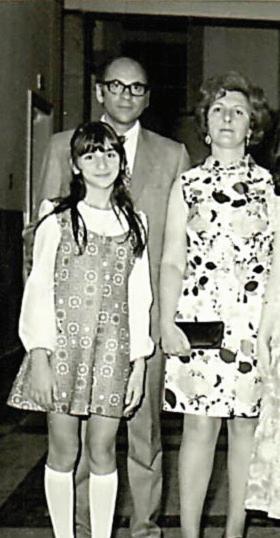
Our profile this month features Regina Tessone, who shares her experience growing up during the Iranian Revolution. Her story adds depth and perspective, especially as we reflect on Jewish life across generations and continents.
This issue also highlights the strength of our community. From the 2025 Sephardic Community Federation Year at a Glance to Joey Cohen Saban’s campaign announcement for NYS Assembly, from Parkinson’s programs at the Sephardic Community Center to Men’s Mornings at SBH Connect and the NEXT Senior Internship Program at MDYHS, the energy is real. MDY kindergarteners even take on the 2026 Winter Games.
You will also find inspiration for mind and body, including The Ancient Cure for Modern Anxiety and the link between fitness and Judaism. And as we look ahead, we begin preparing for Passover with practical ideas, from freezer friendly desserts to an honest look at the joys of Passover cleaning.
May this month of Adar bring you meaningful joy, steady faith, and the warmth of community. As we celebrate Purim and look ahead to Passover, may our homes be filled with laughter, gratitude, and renewed strength. Wishing you and your loved ones a joyful and uplifting Purim.
Ben-Gurion Matsas and Rachelle Fallas Matsas
VOLUME 35 ISSUE 10 MARCH 2026
ADAR - SIVAN 5786
Ben-Gurion Matsas PUBLISHER/EDITOR
Rachelle Fallas Matsas EDITOR-IN-CHIEF
JEWISH IMAGE Brooklyn, NY (718) 627-4624 image@imageusa.com www.imageusa.com
Advertising Inquiries ads@imageusa.com
Editorial Inquiries editor@imageusa.com
Published Monthly.
Digital editions available on our website www.imageusa.com.
Deadline for advertisement is the 15th of the month, prior to publication.
Subscriptions available for $24 a year for 12 issues, email image@imageusa.com.
THIS MONTH WE’LL BE CELEBRATING THE JEWISH FESTIVAL OF PURIM. IT’S A JOYOUS DAY. WE HAVE A FESTIVE MEAL; WE SEND PRESENTS TO OUR FRIENDS; AND GIFTS TO THE POOR, SO THAT NO ONE SHOULD FEEL EXCLUDED. ANYONE JOINING US ON PURIM WOULD THINK IT COMMEMORATES ONE OF THE GREAT MOMENTS IN JEWISH HISTORY, LIKE THE EXODUS FROM SLAVERY OR THE REVELATION AT MOUNT SINAI.
Actually though, the truth is quite different. Purim is the day we remember the story told in the book of Esther, set in Persia. It tells of how a senior member of the Persian court, Haman, got angry that one man, Mordechai, refused to bow down to him. Discovering that Mordechai was a Jew, he decided to take revenge on all Jews and persuaded the King to issue a decree that all Jews — young and old, men, women and children — should be annihilated on a single day. Only the fact that Esther, Mordechai’s cousin, was the King’s favorite allowed her to intercede on behalf of her people and defeat the plan.
Purim is, in other words, the festival of survival in the face of attempted genocide. It wasn’t until way into adult life that I realized that what we celebrate on Purim is simply the fact that we’re alive; that our ancestors weren’t murdered after all.
Like many of my generation born after the Holocaust, I thought antisemitism was dead; that a hate so irrational, so murderous, had finally been laid to rest. So it has come as a shock to realize in recent months that it’s still strong in many parts of the world, and that even in Britain yesterday
a cleric appeared in court charged with distributing a tape calling on his followers to kill Jews. (This article was written 22 years ago, and since then antisemitism has just gotten worse.)
What is it about Jews — or black people, or Roma, or foreigners — that causes them to be hated? The oldest explanation is probably the simplest: because we don’t like the unlike. As Haman put it, “Their customs are different from those of other people.” And that’s why racial or religious hate isn’t just dangerous. It’s a betrayal of the human condition. We are different. Every individual, every culture, every ethnicity, every faith, gives something unique to humanity. Religious and racial diversity are as essential to our world as biodiversity. And therefore, I pray that we have the courage to fight prejudice, of which antisemitism is simply the oldest of them all. Because a world that can’t live with difference is a world that lacks room for humanity itself.
Rabbi Lord Jonathan Sacks ZT”L was an international religious leader, and philosopher. The author of over 30 books, Rabbi Sacks received multiple awards in recognition of his work. Sadly, he passed away in November 2020.
PURIM’S REAL JOY
RECOGNIZING
THAT EVERYTHING, EVEN EXPERIENCING THE PAIN OF A TERRIFYING ILLNESS, IS FROM THE ALMIGHTY
EMUNA BRAVERMAN
During the month of Adar, the Talmud tells us, we increase our joy. This sense of celebration culminates with the holiday of Purim, with costumes, Megillah reading, drinking, eating and the exchanging of gifts of food. Who doesn’t smile at the young girls dressed as Queens Esther or Vashti or the little boys acting as Mordecai or Haman? A little liquor, a little feasting – what could be more joyful?
Except that’s not really the source of the happiness. It’s not based on frivolity and laughter. It’s not based on sumptuous food and a good Scotch. It’s joy founded on a deep insight about the world, on important understanding of the Almighty’s role in our lives, of His constant providence.
When we drink on Purim there is only one goal (and it’s not what you think it is), to drink just enough to remove the barriers we’ve erected in our minds and psyches that block us from seeing the Almighty’s presence in the world. This is particularly true in situations that appear negative, desperate, painful or hopeless. Those are the moments when we are the most blocked, when we retreat behind our blockades. Those are the times we most need to peel back the layers and recognize that everything is from the Almighty and it is all in His hands.
The true lesson of Purim is that everything, the seemingly good and the seemingly bad, are one; they both stem from our perfect Creator. It is this realization that brings us joy. It is the recognition that everything is exactly as it should be, that there are no other forces at work, that allows us to accept our challenges with true joy.
All the commentators point out that the Almighty’s name is not mentioned once in the Purim story. At this bleak
moment in the Jewish people’s history, He is behind the scenes, pulling the strings, turning sorrow into joy, revealing the meaning of our individual and collective travails.
This year, as I confront the medical challenges facing a loved one, I haven’t felt in the mood to celebrate Purim. Seeing and experiencing the pain of a terrifying illness, I haven’t been able to access that joy. I feel inclined to cancel all but the most obligatory of Purim activities.
But I know that’s a mistake. I know it actually misses the whole point of the day. This situation, too, is from the Almighty. This struggle too, is part of His plan. Although the curtains remain closed and we can’t peer behind them to discover the ultimate meaning, it is a fundamental tenet of our belief that the Almighty is in control, that there are no other powers.
We need to invest our experience of Purim with exceptional fervor on the years when it is hardest. It is the teaching of Purim, it is the relationship with the Almighty, it is the deeply internalized understanding that this too is good that will sustain all of us during our struggles. And that’s something to celebrate.
Emuna Braverman has a law degree from the University of Toronto and a Masters in Clinical Psychology with an emphasis on Marriage and Family Therapy from Pepperdine University. She lives with her husband and nine children in Los Angeles where they both work for Aish HaTorah. When she isn’t writing for the Internet or taking care of her family, Emuna teaches classes on Judaism, organizes gourmet kosher cooking groups and hosts many Shabbos guests. She is the cofounder of www.gourmetkoshercooking.com.
ONE ENEMY. NO ROOM FOR HESITATION.
LINDA ARGALGI SADACKA
THE GROWING COORDINATION BETWEEN JERUSALEM AND WASHINGTON REFLECTS A STRATEGIC REALITY THAT TRANSCENDS ANY SINGLE DIPLOMATIC ENCOUNTER. THE SUBJECT IS IRAN.
Israel faces the Iranian regime as a direct security threat. Tehran arms and finances proxies on Israel’s borders and openly declares its intent to erase the Jewish state.
Missiles are not symbolic. They are operational. The United States confronts the same regime from a broader vantage point. American forces remain positioned across the region. U.S. naval power secures critical maritime corridors. American deterrence shapes the behavior of adversaries well beyond the Middle East. If Iran alters the regional balance of power, the consequences will extend to both democracies.
The character of the regime is not speculative. It is visible. The world remembers Mahsa Amini, whose death in custody ignited nationwide protests. Teenagers like Nika Shakarami became symbols of a generation punished for demanding dignity. And now there is Diana Bahador. Nineteen years old. Known as “Baby Rider.” A young woman whose refusal to disappear behind imposed restrictions became an act of quiet resistance. She was shot by security forces during protests. These are not excesses of chaos. They are instruments of governance.
A regime that governs through repression at home does not transform into a reliable actor abroad. Internal strain does not soften ideological hostility. It can intensify it. When legitimacy erodes domestically, projecting strength externally becomes a tool of consolidation. This dynamic matters. Iran’s leadership defines itself in opposition to both Israel and the United States. Its hostility is structural. The rhetoric directed at Jerusalem and Washington is not inci-
dental. It is foundational to the regime’s identity.
If Iran were to secure nuclear capability, the implications would not be confined to Israel’s security calculus. It would reshape deterrence across the region, embolden aligned militias, and test American credibility on a global scale. Alignment between Jerusalem and Washington is therefore not diplomatic theater. It is strategic necessity.
Israel cannot permit an existential threat to mature unchecked. Its doctrine does not allow it. If action becomes unavoidable, the repercussions will not remain localized. The United States would confront the strategic consequences whether by design or by default. The question is not whether the two nations are connected in this challenge. They already are. The question is whether that connection is acknowledged clearly enough to shape policy with precision rather than reaction. Iran views Israel and America as linked adversaries. Clarity requires that they respond as linked allies. A regime reveals itself first in how it treats its own citizens. The evidence is already before us.
Linda Argalgi Sadacka is a writer, political activist, and community leader. She is the CEO of the New York Jewish Council and the founder of Chasdei David, a 501(c)(3) charity. Her advocacy, sparked by the tragic murder of a close friend by Hamas, has made her a leading voice for the Jewish community in America and abroad. She was honored as a Woman of Distinction in 2022 by Senator Simcha Felder for her leadership and activism. Linda is also the host of The Silent Revolution podcast, where she shares weekly classes blending Torah, prayer, and real-world reflection, making ancient wisdom urgent and relevant for our times.
When a loss occurs, before you call your insurance company or insurance broker, call me to see how your policy coverages and endorsements relate to your loss.
It’s Simple: You Purchase Insurance For Your Home And Business... You Sustain A Loss... We Make Insurance Companies Do What They’re Supposed To Do!
• Member National Association of Public Insurance Adjusters
• Licensed Realtor For Over 24 Years
• Licensed and Bonded Insurance Catastrophe Consultant For Over 19 Years
• LISTED IN WHO’S WHO OF INSURANCE 2009 - 2010
• Over 21 Years of Retailing Experience
• Over 14 Years of Importing and Exporting Experience
• Over 14 Years of Experience in the Construction Industry
• Only Public Adjusting Firm admitted to the prestigious Real Estate Insurance Committee of the Real Estate Board of the City of NY—REBNY
• Jewelers Block Insurance Claims as seen in The National Jewelers Magazine
• Fine Art Insurance Claims as seen in the Fine Art Connoisseur Magazine
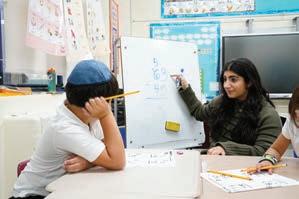
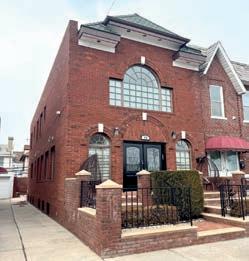
A NEW HOME FOR EXTRAORDINARY DREAMS
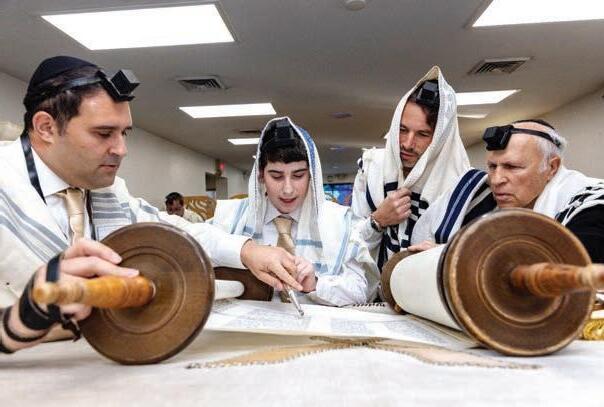
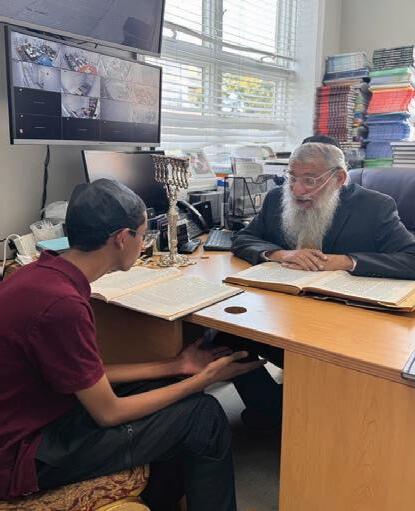
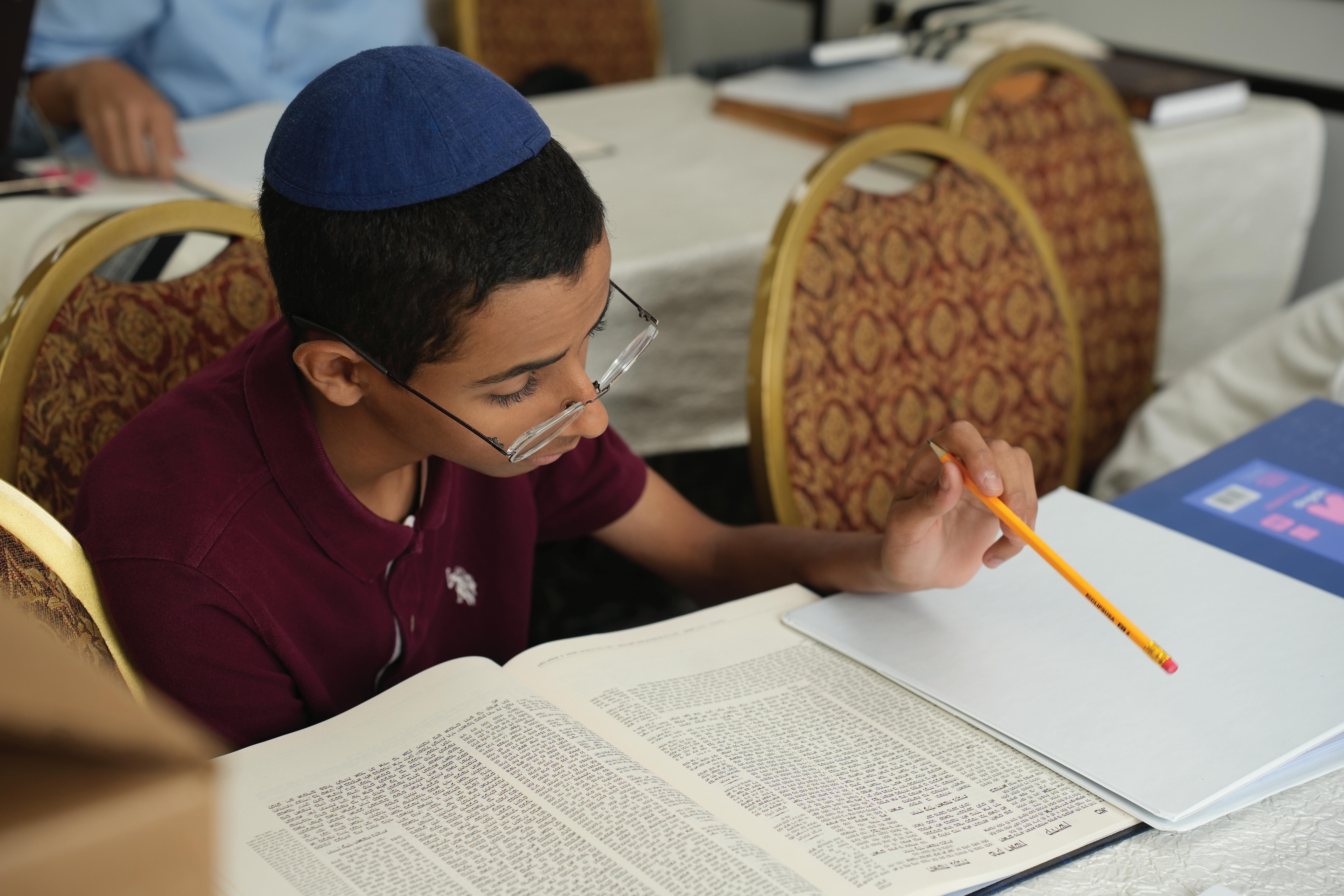
INSIDE THE SPECIAL CHILDREN’S CENTER’S BEAUTIFUL ALL-NEW VICKI & JOSEPH SAFRA BROOKLYN CENTER
ELEVEN YEARS AFTER OPENING ITS DOORS IN BROOKLYN, THE SPECIAL CHILDREN’S CENTER EMBARKS ON A POWERFUL NEW CHAPTER, EXPANDING ITS SERVICES IN A BREATHTAKING NEW FACILITY DESIGNED TO SERVE CHILDREN AND FAMILIES ON AN EVEN GREATER LEVEL.
There are moments in the life of a community that feel transformative, when walls rise not just to house programs, but to hold dreams. The new Brooklyn home of the Special Children’s Center is one of those moments.
Founded by visionary leaders Chaya Bender and Jenine Shwekey, the Special Children’s Center has always stood for one powerful promise: no family navigating special needs should ever walk alone. Now, with the opening of a breathtaking new building in Brooklyn, that promise is expanding in space, in services, and in heart.
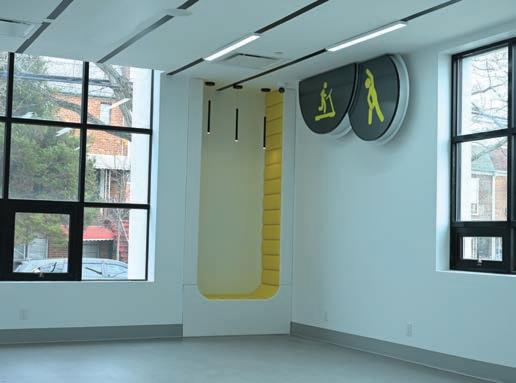
words cannot. A professional recording studio where voices can be heard and celebrated. A fully equipped baking studio, designed with child-height counters so small hands can measure, mix, and create with independence and pride.
From the moment you step inside, it is clear this is no ordinary facility. Sunlight pours into thoughtfully designed classrooms. Wide hallways feel warm and welcoming. Every detail reflects dignity, safety, and care.
There is a magnificent art room where children can build skills and confidence. A stunning music room where melodies become a language of expression, because music so often reaches where
A spacious dining room will host wholesome, family-style meals prepared in the Special Children’s Center’s brand-new kitchens. There are classrooms for preschoolers and elementary students, spaces for services, and areas for adults in the program. A shower room and spa room offer both comfort and practical relief, easing the daily load for parents and allowing children to return home refreshed and relaxed.
Parents often wonder: Will my child be cared for with dignity? Will they feel proud to be here? Inside these walls, the answer is yes.
The Special Children’s Center has always been known for showing up when families need it most. Whenever school is closed, the Special Children’s Center is open. Legal holidays. Jewish holidays. Any day public
school or yeshiva closes its doors, the Special Children’s Center opens wide.
The respite programs are filled with laughter, warmth, and genuine joy. Designed to care for the children during a family’s busiest hours, these programs restore balance. Parents often share: “My child wakes up excited to go.” And perhaps even more telling: “For the first time, I can breathe.”
While the Brooklyn Special Children’s Center already offers a robust range of services, such as after-school programming, Sunday programs including a special teen boys’ program, holiday programming, preschool and elementary classes, adult services, and support for children across a full range of diagnoses, this new building represents something greater. It represents growth. It represents capacity. It represents deeper opportunity.
As Jenine Shwekey often shares, the Center’s mission is simple but profound: to truly be there for families on every level. Chaya Bender emphasizes that special needs care is not a part-time commitment. “Families don’t get days off,”
she says. “So neither do we.” That philosophy is woven into the very structure of the new Brooklyn building.
What makes this expansion so meaningful is not just the size of the space, but the spirit inside it. The Special Children’s Center does not see diagnoses first. It sees children: with personalities, humor, talents, and tremendous potential.
we thank Jack Chehebar and Marilyn Chehebar for dedicating our brandnew building, and the Safra family for dedicating our Brooklyn Center. There are no words adequate to express the enormous impact of your incredible generosity. Because of you, our children will grow, thrive, and shine in a space built just for them.
In the music room, a shy child may find her voice. In the gym, a hesitant teen may discover strength. In the baking studio, a young boy may beam with pride over perfectly frosted cupcakes. And in every room, families find reassurance: We are not alone.
This beautiful new building was thoughtfully designed as a work of love by Margalit Lankry Design as a gift to our children and their families. It is a testament to what becomes possible when a community comes together with extraordinary compassion and shared responsibility toward families navigating special needs. Heartfelt gratitude goes to Harry Adjmi, Alex Adjmi, Richie Dweck, Elliot Tawil, Izzy Nahum and Jack Scaba, who worked tirelessly to help ensure this vision became a reality. With deep appreciation,
As the doors prepare to open, the excitement is palpable. Staff members are eager. Families are counting down the days. This Brooklyn building is more than an expansion of services. It is an expansion of possibility. It stands as a promise to every parent navigating the complex journey of raising a child with special needs: We are here. We are open. We are ready. We will walk beside you, on holidays, on ordinary Tuesdays, on challenging days, and on days of celebration. Because every child deserves a beautiful experience. Every parent deserves support. And no family should ever have to do this alone.
Reach out to get involved! 2990 Ave U 718-382-0099 dinag@thecenterny.org.
Special Ride is coming up soon! Join the magic! specialride@thecenternj.org
YearAt A Glance
THE HIDDEN RISKS OF FINANCIAL ADVICE ON SOCIAL MEDIA TRUTH VS. TREND
ARI BAUM, CFP®
SCROLL THROUGH ANY SOCIAL MEDIA PLATFORM TODAY, AND YOU’LL FIND NO SHORTAGE OF FINANCIAL ADVICE. ONE POST PROMISES EARLY RETIREMENT THROUGH A “SIMPLE HACK.” ANOTHER CLAIMS TO REVEAL THE “ONE INVESTMENT” THE WEALTHY DON’T WANT YOU TO KNOW ABOUT. THE MESSAGES ARE CONFIDENT, URGENT, AND OFTEN WRAPPED IN THE APPEARANCE OF AUTHORITY.
For many, these voices have become the first stop for financial guidance. They are accessible, persuasive, and everywhere. But beneath the surface, the line between financial education and financial entertainment is far wider than it appears. Understanding that difference may be one of the most important financial decisions you make.
THE ILLUSION OF CREDIBILITY
Popularity can create the appearance of expertise. A video with hundreds of thousands of views or a creator with a large following naturally feels trustworthy. But visibility and expertise are not the same. Social media rewards simplicity,
certainty, and emotional impact. Real financial planning rarely offers those things. It involves tradeoffs, timelines, tax implications, and decisions that unfold over decades, not days.
What works for one person in a specific situation may be entirely inappropriate for someone else. Without understanding your income, assets, goals, and risk tolerance, even well-intentioned advice can lead to unintended consequences. I’ve met investors who made meaningful financial decisions based on a single video or trend, only to later discover the strategy conflicted with their tax situation, liquidity needs, or long-term objectives. The advice wasn’t necessarily wrong. It was simply incomplete.
WHEN EMOTION REPLACES STRATEGY
One of the most powerful forces in investing is not logic, but emotion. Social media amplifies this effect. When thousands of people appear to be moving in the same direction, it creates a sense of urgency. This phenomenon, often called herd mentality, can push individuals to act quickly without fully understanding the risks. Fear of missing out (FOMO) becomes a stronger motivator than thoughtful decision-making. Financial decisions made under pressure rarely align with long-term success. Progress is not built on reacting. It is built on positioning.
ADVICE WITHOUT ACCOUNTABILITY
Traditional financial advisors operate under fiduciary standards. They are legally and ethically obligated to act in their clients’ best interests. Social media influencers operate under no such obligation. Their incentives are tied to engagement, visibility, and growth. The more compelling the content, the larger the audience. But there is no ongoing relationship, no responsibility for outcomes, and no understanding of your personal financial reality. Financial planning, by contrast, is not a moment. It is a process. It requires alignment, continuity, and accountability over time.
THE RISK OF ONE-SIZE-FITS-ALL STRATEGIES
Every financial decision exists within a broader framework. Income stability, tax exposure, family priorities, career trajectory, and long-term goals all influence what is appropriate. Generic advice cannot account for these variables. A strategy appropriate for someone early in their career may introduce unnecessary risk for someone focused on
preservation. A tax decision that benefits one household may create unintended consequences for another. Context is what transforms information into wisdom. Without it, even correct ideas can lead to incorrect outcomes.
FINANCIAL CONFIDENCE IS BUILT, NOT FOUND
True financial progress rarely feels dramatic. It is built quietly through discipline, consistency, and thoughtful planning over time. It does not depend on reacting to trends or chasing certainty. It depends on having a structure that can withstand uncertainty.
The purpose of a financial plan is not to predict the future. It is to prepare for it. When decisions are guided by a clear framework, short-term noise loses its power. Confidence no longer comes from what others are doing, it comes from knowing why you are doing what you are doing.
The most valuable financial guidance does not come from someone speaking to millions. It comes from someone who understands you.
The content is developed from sources believed to provide accurate information. Investing involves risk including the potential loss of principal. No investment strategy can guarantee a profit or protect against loss in periods of declining values. Past performance does not guarantee future results. Consult with a financial professional regarding your specific situation.
Ari Baum, CFP® is the Founder and CEO of Endurance Wealth Partners, with over 25 years of experience in the Financial Services industry. He brings his in-depth experience to Conceive. Believe. Achieve. for his clients. Securities and Advisory services offered through Prospera Financial Services Inc. Member FINRA/SIPC. Brokerage and Advisory accounts carried by Wells Fargo Clearing Services LLC.
A MOVEMENT RETURNS STRONGER THAN EVER
JOEY COHEN SABAN ANNOUNCES CAMPAIGN FOR NYS ASSEMBLY
EDDIE ESSES
COMMUNITY LEADER JOEY COHEN SABAN HAS OFFICIALLY ANNOUNCED HIS CANDIDACY FOR THE NEW YORK STATE ASSEMBLY’S 45TH DISTRICT, LAUNCHING A HIGHLY ANTICIPATED REMATCH AGAINST THE SAME INCUMBENT OPPONENT HE NEARLY DEFEATED IN 2024 IN ONE OF THE CLOSEST RACES IN RECENT NEW YORK HISTORY.
What was expected to be a routine election instead became one of the most shocking races in recent New York political history. Joey, a first-time candidate fueled by grassroots energy and community support, came within inches of victory and sparked a movement that continues to grow.
Saban’s 2024 campaign energized the Sephardic community in unprecedented ways. Voter registration surged. Turnout reached historic levels. A new generation stepped into civic life. That momentum did not fade after Election Day. Instead, it expanded.
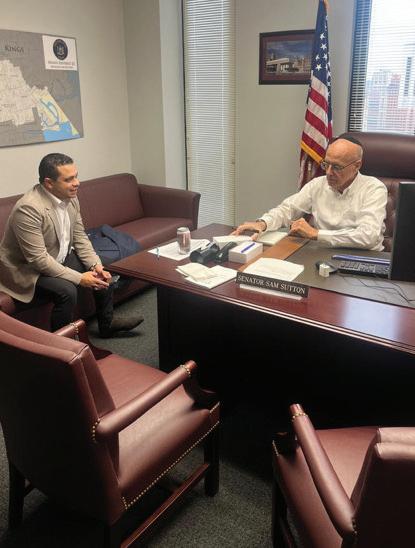
Just months later, the same grassroots infrastructure helped power the successful election of State Senator Sam Sutton. As Sutton’s campaign manager, Saban built and executed the operation behind the win, organizing volunteers, coordinating outreach, and mobilizing voters across the district. The victory demonstrated what unified leadership and disciplined strategy could accomplish.
Since then, Saban has served as Chief of Staff to Senator Sutton, playing a key role in shaping policy and delivering results in Albany. In the 2025 legislative session alone, he helped advance multiple bills into law and
A Commun y of Support
Families raising a child with special needs carry challenges that others don’t see. CARE creates a community where no one has to navigate those challenges alone. Through special programs, trusted guidance, and genuine connection, families nd understanding, strength, and support.
“
learn more about care!
worked alongside Senator Sutton to secure $20 million in funding for religious institutions, along with millions more in capital grants for community organizations. He also helped craft legislation to prohibit protests outside houses of worship and has been leading efforts to codify the IHRA definition of antisemitism into New York State law.
Beyond legislation, Saban helped spearhead one of the largest voter registration drives in the community’s history, adding approximately 15,000 new registered voters. The message was clear: this is a community ready to participate, organize, and lead.
Now, with proven legislative experience, strong relationships in Albany, and a tested political operation, Saban says he is ready to finish what he started. His campaign centers on delivering funding for community institutions,
fighting antisemitism at every level of government, strengthening public safety, securing security grants for synagogues and yeshivot, and ensuring the district has an influential voice in the state majority.
Make sure to follow Joey throughout the campaign (@joeysaban on Instagram) and be sure to vote for Joey Cohen Saban for Assembly. He’s one of us, among us, and he will make sure our voice is heard in Albany.
The movement that shocked New York once is returning. But this time it is stronger, larger, and more determined than ever. And it’s ready to win.
Eddie Esses has been civically engaged in the community for many years, alongside Joey Saban. He is an active board member of the SCF, Senior Advisor to Senator Sutton, and owns several retail franchise stores.
Morris I. Franco Cancer Center in
FEATURING SPEAKERS:
Jack Braha, DO Chief of Gastroenterology, Mount Sinai Brooklyn
At the Morris I. Franco Cancer Center 347 Avenue S (Corner of McDonald Ave)
MOVING THE COMMUNITY
INSIDE DSN COMMUNITY CENTER’S FITNESS DEPARTMENT
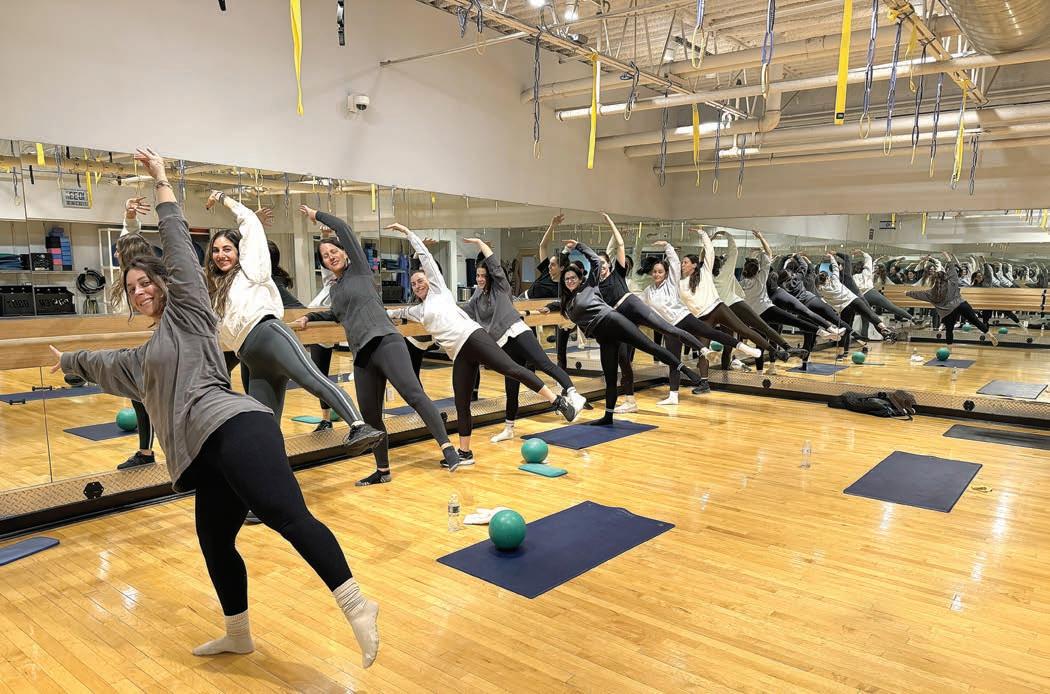
AT THE HEART OF DSN COMMUNITY CENTER’S VIBRANT WELLNESS CULTURE IS ITS THRIVING FITNESS DEPARTMENT, LED BY FITNESS DIRECTOR SHARON CARLSTROM. WITH A YEAR-ROUND COMMITMENT TO MOVEMENT, MOTIVATION, AND PROFESSIONAL EXCELLENCE, DSN’S GROUP EXERCISE (GROUP EX) HAS BECOME A CORNERSTONE OF DAILY LIFE FOR SO MANY, BOTH MEN AND WOMEN, YOUNG AND OLD, IN THE COMMUNITY.
DSN’s Group Ex program offers an impressive average of 60 classes per week, drawing over 110 participants daily, as one can see from the parking lot. Whether members are looking to sweat, stretch, strengthen, or simply reset their minds, the schedule delivers something for every fitness level, interest, and goal.
There is a class for everybody. The Group Ex schedule is thoughtfully designed and categorized to ensure balance, variety, and accessibility. Mind/Body Classes focus on flexibility, alignment, and recovery, including yoga, Wall Works, Pilates reformer & mat, foam rolling, guided and one-on-one stretch and barre. Cardio Classes bring the energy and elevate the heart rate with options like Kick A** Cardio, Sweat It Out, 305 Dance, Step, Spin, Boxing, Battle Ropes, and Fitness Center Circuits. Strength & Conditioning Classes help members build power and endurance through circuits, TRX, FeeLEEing It, Burn w/ Bren and Perspirology
Toning. This wide-ranging lineup allows members to mix and match styles, prevent burnout, and stay consistently engaged with their fitness journeys.
Earlier this year, the Pilates Reformers were relocated from the DSN Beach Club to Norwood Ave where the former Spin room was renovated to become a complete Reformer Studio, much to the appreciation of DSN’s members who find the space to be exclusive and the perfect vibe to match the reformer classes. The Spin bikes were relocated to a nearby space in Elberon where the space was renovated to create a Spin studio to accommodate 25 participants. Dani Rubin, owner of Pilates Blast, who provides instructors for DSN’s Reformer program, says, “Our instructors love the private, serene, fully equipped studio where every class includes access to all the props and thoughtful amenities.”
What truly sets DSN apart is its unwavering commitment to quality, safety and professional excellence. All
Group Ex instructors are required to hold certifications from nationally accredited organizations. A standard DSN takes seriously. Instructor Janie Fallas stated, “I love teaching at DSN because we have grown to be a family. Coming to exercise, seeing my friends, everyone with a smile on, sweating, laughing and having the best time is the best high in the world. The staff are all so accommodating and everyone greets you with respect and a smile. I feel so grateful to be a part of the DSN family.”
To keep members inspired and energized, DSN offers semi-annual Group Ex incentive challenges, a favorite among participants. The first challenge of 2026 ran from December 28 through January 15, pushing members to stay active during a notoriously busy time of year. Participants received challenge cards with three class categories and were tasked with completing five classes per category, for a
total of 15 classes in just 19 days. Every member who completed the challenge earned a DSN Fitness sweatshirt, and, of course, bragging rights. A special mention to the challenge winners, Rivka Bahary, Sherri Betesh, Danielle Brown, Suzie Chera, Lisa Cohen, Suzy Cohen, Allegra Cojab, Caroline Cornman, Danielle Gindi, Rena Golden, Elaine Grossman, Sally Grossman, Sarah Klein, Tzippy Maimon, Alison Mamiye, Laura Mizrahi, Jacqueline Shalom, Nicole Shamah, Joyce Shamosh, Gladys Sutton, Yvonne Tobias, and Leah Tobal Varver.
Looking ahead, DSN is excited to launch its Six Weeks to Summer Challenge, kicking off April 12. Challenges are free to all Group Ex members, and details are shared regularly on Instagram at @dsngroupex.
With inspired leadership, certified instructors, and a community that shows up day after day, DSN Community
Center’s Fitness Department continues to prove that wellness is about more than exercise, it’s about connection, consistency, and showing up for yourself together. Sarah Kish, when asked for her thoughts on DSN’s Group Ex program, offered, “Classes at DSN are a highlight of my day and of Jersey life. The variety of classes keeps things always interesting, and it is a great social and healthy way to start my day. I also love babysitting and find it incredibly convenient and my kids love their early start at DSN.”
Sharon Carlstrom reflects on how far DSN Fitness has come since opening eleven years ago. “Looking back at where we started, to the thriving programs and diversity of classes that we have today, is incredibly humbling. I am profoundly proud of how far this facility has come, but even more proud of our instructors and members who have evolved our classes to be more than just a workout, but a lifestyle. We’ve grown, we’ve adapted, and we’ve built something truly special together.”
WAS BROOKLYN ALWAYS THE END GOAL?
BONEI YISRAEL WAS INEVITABLE
MOST SERIOUS MOVEMENTS DON’T BEGIN WITH PRESS RELEASES OR RIBBON CUTTINGS. THEY BEGIN QUIETLY, WITH PEOPLE WHO UNDERSTAND THAT WAITING IS NO LONGER AN OPTION. BONEI YISRAEL BEGAN IN A GARAGE. THAT DETAIL MATTERS.
During Purim 2023, Saul Ancona and Michael Kraiem were sitting together studying Torah. There was no agenda. No whiteboard. No planning document. Eretz Yisrael surfaced naturally, as it always does when the conversation is serious enough. The question that followed was not emotional, and it was not rhetorical: Where is the community actually going? What came next was not inspiration without consequence. It was commitment. A shared decision to build, rather than admire. To approach Eretz Yisrael not as a slogan or a trend, but as a mitzvah rooted in the Torah,
because mitzvot are not symbolic gestures. They are obligations that move history forward.
They were not debating whether Israel mattered. That question had already been answered. What remained unresolved, and urgent, was something far more demanding: What are we actually building? The answer to that question is Bonei Yisrael.
For decades, Aliyah (immigration to Israel) was spoken about with reverence, but rarely with urgency. Bonei Yisrael reframes the conversation entirely. We exist because the old model no longer works. This is not about inspiration. It is
ZACHARY (ISAAC) LEVI
DON’T LOSE OUT!
YOUTH AGES 16-24: WORK 25 HOURS PER WEEK FOR 6 WEEKS
EARN UP TO $2,550
YOUTH AGES 14-15:
COMBINATION OF IN PERSON AND ONLINE LEARNING EXPERIENCE FOR 12.5 HOURS PER WEEK FOR 6 WEEKS
EARN UP TO $700
Apply Now!
•NYC residents between the ages of 14-24 by July 1, 2026 may apply for the SYEP lottery online by going to application.nycSYEP.com
•Select “BEGIN ONLINE APPLICATION” then enter your “email address” and create a “password”
•OeeccnnO yuuooy ceetteellppmmooc yrruuooy aooiittaacciillppppa nyuuooy wwiillll beeb addeekkssa tto o ceessoooohhc aa rggnniirrrreeffeer a..yyccnneegga CkkcciillC onno “DYCD”
•Next, you will be asked to choose a provider. Click on “Brooklyn” or “Queens” (if you live in Queens). Select “Council of Jewish Organizations of Flatbush”
•Complete the application, click “Submit,” print a copy of your application and receipt
• Prepare your required documents
JANUARY 20FEBRUARY MARCH 13 27
Even if you are not sure where you want to work, apply so that you don’t miss this opportunity.
Online applications will be accepted from January 20 to February 27
If you are not able to apply online you may obtain a paper application from our office at 1523 Avenue M, 4th Floor, Brooklyn, NY.
Submission of an application does not guarantee acceptance into the program
.
Applicants selected for SYEP will have to upload their “Required Documentation” in the SYEP Document System. See the application for the list of required documents. .
about infrastructure, about turning conviction into a concrete plan.
WHAT IS BONEI YISRAEL
Bonei Yisrael serves as a liaison to communities in Israel already taking shape for the Syrian Jewish community, places that understand something essential: continuity does not happen by accident. It is designed. But Bonei Yisrael does not stop there. The aim is not to attach ourselves to what already exists. The aim is to build what comes next.
Bonei Yisrael is working to establish a dedicated space in Eretz Yisrael, not a single building, but a comprehensive environment: homes, schools, synagogues, and the infrastructure required to sustain them. Not a retreat. Not an experiment. An extension of what has worked in Brooklyn and Deal, carried forward deliberately and built to last. That distinction matters. Because this is not about relocation. It is about rootedness. Relocation asks where people can live. Rootedness
asks what a community chooses to preserve, and what it is prepared to leave behind. Rising costs. Public leadership that no longer governs with clarity or confidence. Institutions that have grown comfortable misunderstanding the communities they serve. An environment in which antisemitism is no longer an anomaly, but a statistic. These are not grievances. They are signals. And communities that know how to read signals do not wait for conditions to improve. They act before hesitation becomes habit. A community that builds its own space is not asking permission to belong. It is declaring permanence. It is stating, quietly and firmly, that it understands where history is moving and intends to arrive there together.
“WE’LL DO THE WORK. YOU DECIDE WHEN TO STEP IN.”
Under the leadership of Michael Kraiem and Saul Ancona, Bonei Yisrael has moved from idea to momentum
with uncommon speed. Around them is a group of individuals who understand that vision only matters when it is translated into action.
Isaac Zaccai is planning Bonei Yisrael’s pilot trip in 2026, setting the foundation for what comes next. Michael H. Mamiye opened his home as Bonei Yisrael’s operational base, hosting meetings and early gatherings. Albert Mizrahi is setting creative direction and cultural tone, shaping how the vision is experienced, not just explained. Jack Srour leads the Matobu Project, advancing large-scale development in Eretz Yisrael (Land of Israel) and opening resources to move the initiative forward. Sammy Saka, part of the Matobu Project, who is instrumental in transforming Jewish life and community in Deal, NJ, is bringing his real-world development expertise. Erez is on the ground in Israel, identifying and evaluating viable locations for the community. Zachary (Isaac) Levi handles public relations and communications for the initiative.
BONOT YISRAEL (WOMEN’S DIVISION)
Bonot Yisrael, headed by Sophia Shabot, Marsha Zakay, Hannah Elmekias, and Roz Levy, is not an auxiliary effort. It is a parallel leadership track focused on family life, education, culture, and the social fabric that determines whether a community merely exists or actually thrives. These are not symbolic roles. They are functional ones. Together, this group is building a framework for young families, one that allows Aliyah (immigration to Israel) to unfold not as a disruption, but as an upgrade: a vibrant Syrian Jewish community in Eretz Yisrael, designed to improve quality of life while preserving everything that matters.
THE FIRST EVENT
The first Bonei Yisrael event was not flashy. It wasn’t meant to be. Tu BiShvat. New fruit. Shared tables. Conversations about settling in Israel that were sober, prac-
tical, and quietly electric. No speeches designed to persuade. No slogans designed to sell. Just people confronting the same truth together. The kind of gathering where people leave changed, not because they were convinced, but because something finally made sense. That is how real movements announce themselves. They don’t shout. They organize.
WHY THIS MATTERS NOW
History does not announce its turning points. It reveals them later. Bonei Yisrael exists because the Jewish future cannot be left to inertia. Because communities that last are the ones that build, deliberately, patiently, and together. What Bonei Yisrael understands, instinctively, is that communities do not drift into permanence. They decide. They plan. They commit. Every generation is tested not by what it believes, but by what it builds. The question is no longer whether Israel is central to Jewish life. That debate is over. The question is whether we are prepared to align our infrastructure with our convictions. Bonei Yisrael answers that question clearly. Not with slogans. With structure. This initiative is not asking people to leap blindly. It is offering something far more compelling: a place to stand. And once people have that, movement becomes inevitable. The real question is no longer whether Bonei Yisrael will grow. The real question is whether Brooklyn was ever meant to be the end goal?
Be part of what’s being built. Scan to receive Bonei Yisrael updates and upcoming gatherings.
Zachary (Isaac) Levi manages public relations and communications for Bonei Yisrael.
THE NEXT SENIOR INTERNSHIP PROGRAM AT MDYHS PREPARING THE NEXT STEP
AT MAGEN DAVID YESHIVAH HIGH SCHOOL, EDUCATION EXTENDS FAR BEYOND THE CLASSROOM. AS WE PREPARE FOR THIS YEAR’S NEXT SENIOR INTERNSHIP PROGRAM, WE ARE ONCE AGAIN FOCUSED ON CREATING MEANINGFUL, REAL-WORLD OPPORTUNITIES THAT SHAPE OUR STUDENTS’ FUTURES IN POWERFUL WAYS.
Running this year from April 16 to May 20, the NEXT Program is a defining experience of senior year. It is not simply about observing a workplace. It is about stepping into it. Students gain hands-on professional exposure, develop workplace skills, build confidence, and explore potential career paths under the guidance of accomplished mentors.
Behind the scenes, thoughtful preparation is already underway. Program Director Mrs. Helene Dwek, together with Dr. Daniel Vitow and Mrs. Audrey Abade, meets individually with every senior to discuss goals, interests, strengths, and long-term aspirations.
Students are guided through résumé refinement, interview preparation, and professional communication. From there, interviews are arranged if requested, and each student is mindfully placed in an in-person internship setting where they are positioned to thrive. The focus is never simply on finding a placement. It is on finding the right placement.
What truly sets the NEXT Program apart is what happens after it ends.
A remarkable number of our seniors are invited to stay on and continue working at their internship placements. Employers consistently recognize the maturity, professionalism, and strong work ethic our students bring to the workplace. What begins as a five-week internship often grows into summer employment, ongoing part-time roles, and lasting professional relationships that extend well into college and beyond.
That continuity speaks volumes, not only about the strength of our partnerships, but about the caliber of MDYHS students.
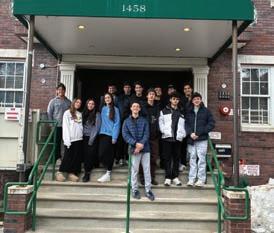
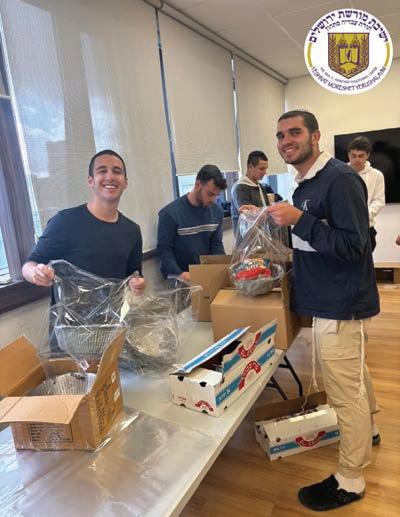
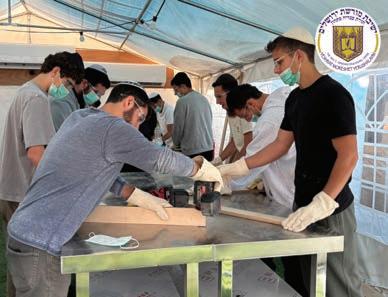
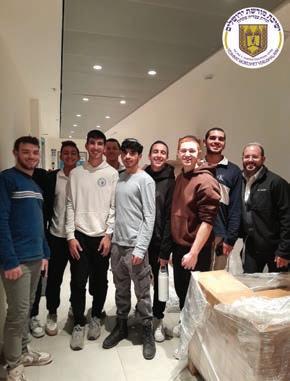
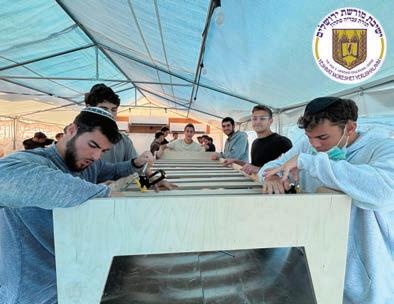
Through NEXT, our seniors don’t just prepare for the future, they step confidently into it. And often, they’re invited to stay. The story of last year’s program lives in these photos, in the faces of our students and the experiences that shaped them, reflecting the energy and growth that define NEXT.
BUILDING CONNECTION, CONVERSATION, AND STRENGTH
MEN’S MORNINGS AT SBH CONNECT
JAMIE ASHKENAZI
WITH LOVE
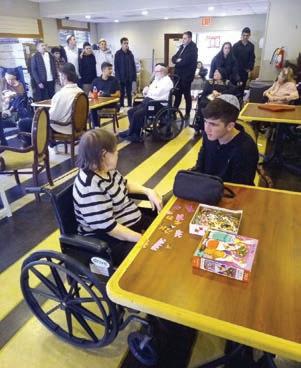
OUR MEN’S MORNINGS PROGRAM HAS QUICKLY BECOME A FAVORITE GATHERING FOR SENIOR MEN LOOKING TO CONNECT, STAY ACTIVE, AND ENJOY MEANINGFUL CONVERSATION IN A WARM ENVIRONMENT. HELD TWICE A MONTH, MEN’S MORNINGS OFFER A FULL AND ENGAGING EXPERIENCE THAT NOURISHES BOTH MIND AND BODY, PLUS A GOOD MEAL AND CAMARADERIE ALONG THE WAY.
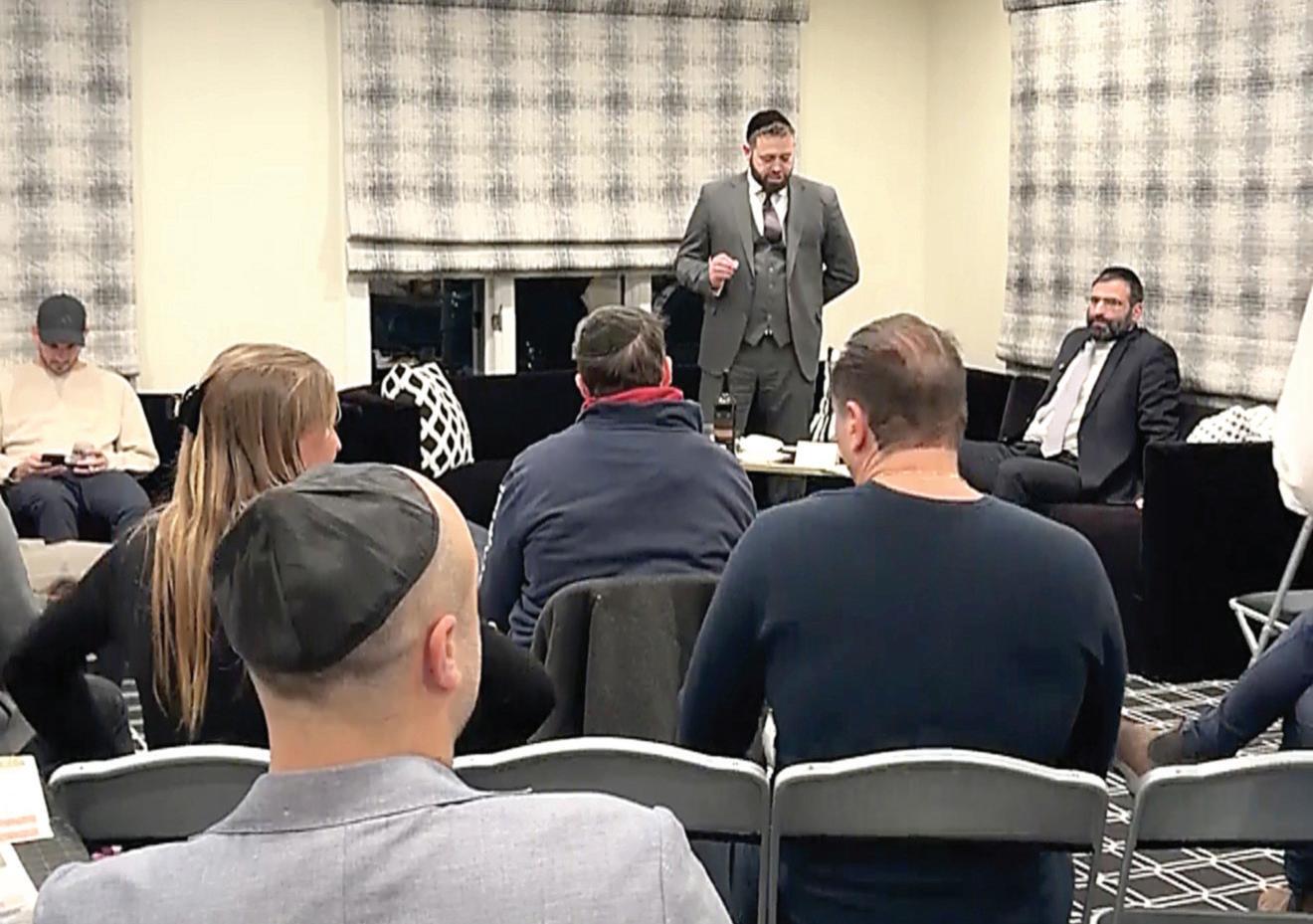
The morning begins at 10:30 a.m. with Men’s Meetup, led by Martin Salama, our very own Career Division Job Developer. The men take part in thoughtful and wide-ranging discussions on current events, history, and life experiences. The conversation is lively, reflective, and filled with shared perspectives, all enjoyed alongside light snacks and refreshments. “There’s something powerful about watching a room full of men who have lived full lives still show up eager to learn, discuss, move, and connect,” adds Martin. “Men’s Mornings gives our senior men purpose and a place where their voices matter. It’s an honor to lead a group of men who continue to show up with wisdom, strength, and heart.”
At 11:30 a.m., the group heads downstairs for Men’s Fitness with Morris Didia. This one-hour fitness session is designed to keep our men moving, energized, and feeling strong, with exercises that are both accessible and effective.
The morning concludes with lunch served at 12:30 p.m., giving everyone a chance to unwind, continue conversations, and enjoy each other’s company.
The men themselves often say it best. According to longtime participant Al Savdie, “If you would like to talk and express yourself amongst friends about any topic you’re passionate about, Men’s Meetup is the place to do it. And right after we have Men’s Fitness where you’ll definitely come out feeling younger, better, and able to leap tall buildings!”
Men’s Mornings are more than just a program. They’re a space where friendships are built, routines are strengthened, and everyone leaves feeling a little more connected than when they arrived.
Jamie Ashkenazi is the Senior Division, Program Manager at SBH.
Community Service Network, Inc.
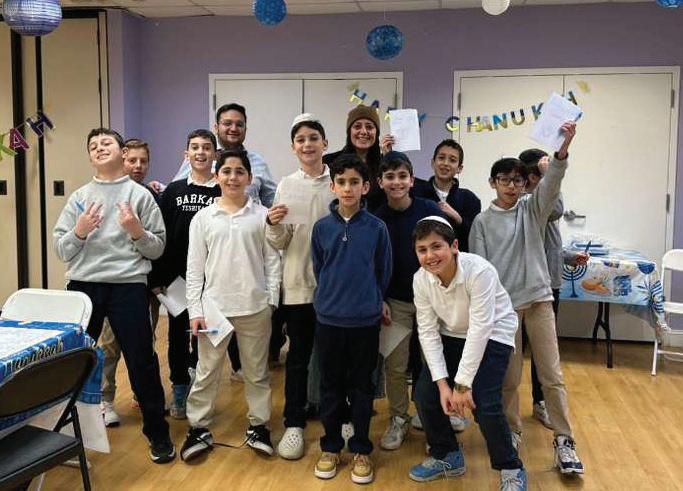
GOING FOR THE GOLD
MDY KINDERGARTENERS TAKE ON THE 2026 WINTER GAMES!
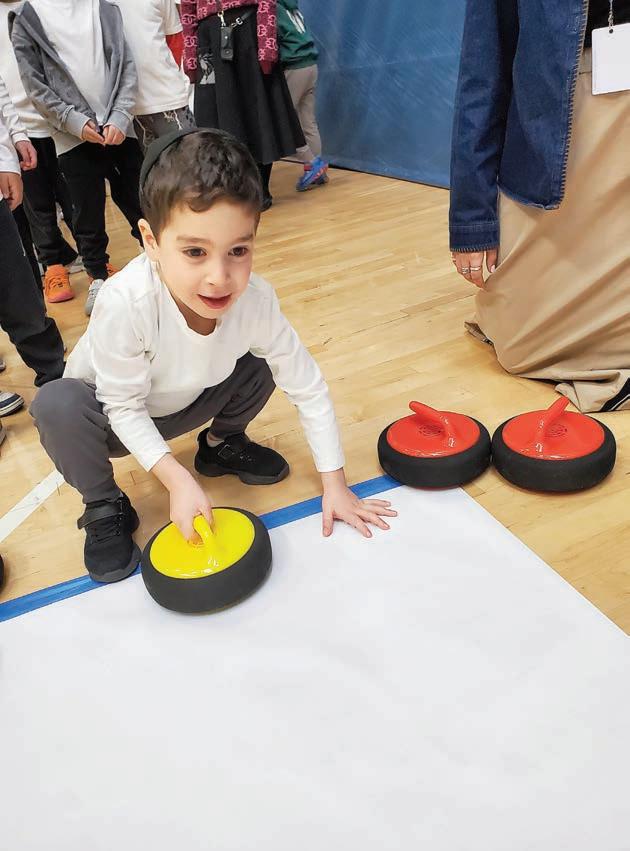
Who says you need two weeks to host the Olympics? The MDY Student Activities Department proved that you can travel the world and compete in the Winter Games, all from the comfort of the MDY gym! Our kindergarteners were treated to a high-energy, absolutely adorable “Winter Olympics” that transformed the gym into a global stadium.
AROUND THE WORLD IN MINUTES
The event kicked off with a colorful “Parade of Nations.” It was heartwarming to see the children’s faces light up as they spotted the flags of countries competing in the 2026 Winter Games. Together, we spoke about how even though people live in different places around the world, we all come together to play fair, try our best, and celebrate one another’s achievements.
Care that Belongs to
EVERYONE
At Randi’s Care, our mission has always been simple: to give every family peace of mind knowing their loved ones are cared for with dignity and compassion. Thanks to the incredible support of our community, we’re now able to reach more families than ever.
No matter your background or circumstance, we’re here to make trusted care accessible, supportive, and personal. Because every senior deserves to feel at home in their own life and every family deserves a helping hand.
NEW SPORTS, BIG SMILES
For many of our students, the specialized sports played on ice and snow were brand new. But that didn’t stop them from becoming “pro” athletes in record time! The gym was filled with laughter and excitement as they tried their hand at:
Curling: Learning how to “sweep” their way to victory.
Luge: Experiencing the thrill of the track (without the sub-zero temperatures!).
Speed Skating: Gliding across the floor and feeling the “wind” in their hair.
Our kindergarten Winter Olympics was truly a win for everyone. Students not only had a blast, but also connected to current world events, gaining a sense of awareness about the real-life 2026 Games taking place. Most importantly, they discovered that while medals are exciting, teamwork and good sportsmanship are the greatest trophies of all.
A heartfelt thank you to Lizzy Mizrahi, whose creativity knows no bounds. Our little champions walked away with unforgettable memories and a beautiful lesson in how healthy competition can be fun for all. They’re already looking forward to their next gold-medal moment!
Individualized Learning
Close-Knit Community
We
Skills for Life
We
PARKINSON’S PROGRAMS AT THE SEPHARDIC COMMUNITY CENTER
EMPOWERING MEMBERS THROUGH FITNESS, EDUCATION, AND SUPPORT
LINDA J. EBER, LCSW
“PARKINSON’S CAN BE VERY FRIGHTENING, AND JOINING [THE CENTER’S CLASSES] HAS EASED THE FEAR. THE CLASS IMPROVED MY MOBILITY, INCREASED MY ENERGY, AND MADE ME PART OF A GROUP WHERE WE ALL UNDERSTOOD EACH OTHER. WE ALL FEEL LIKE A FAMILY AND THE CLASS LIFTS OUR SPIRITS. WE NETWORK AND SHARE THE KNOWLEDGE WE HAVE GAINED.”
Seven years ago, a community member asked a staff person, “Can we offer programs at the Center for people like me with Parkinson’s?” That question led us to develop programs that promote awareness about Parkinson’s disease (PD) symptoms and ways to manage its progression. Funding from the Parkinson’s Foundation and the American Parkinson’s Disease Association enabled the Center to provide resources to individuals and families. Our various free programs address physical and emotional aspects of the condition.
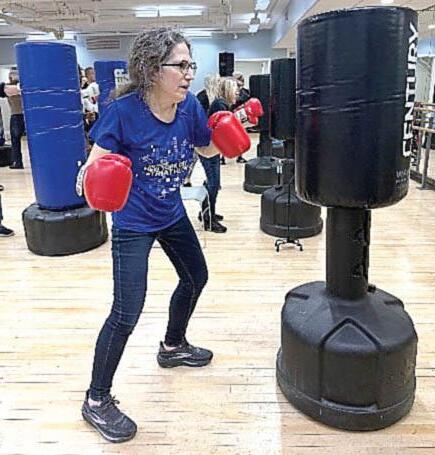
Teaming up with Evolve Physical Therapy, Rock Steady Boxing (RSB) has become one of the cornerstones of the Center’s classes for people with PD. Available in-person and virtually on Zoom, this non-contact boxing program helps reduce the progression of symptoms by incorporating stretching, strength training, core work, and reaction time to enhance mobility and flexibility, as well as improve gait and balance.
“RSB provides good coordination and response training. This class is vitally important to me because it’s the only
time of my week that I’m with other people with Parkinson’s. The camaraderie is supportive.”
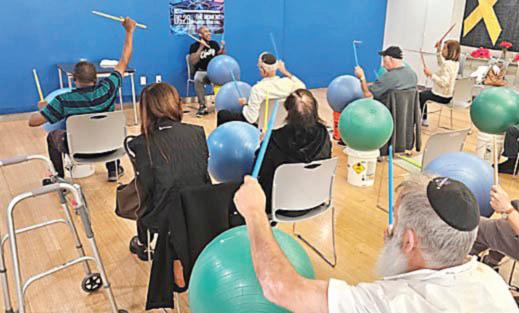
Recently, the Center began offering several new PD fitness classes. In Drum Exercise, participants use drumsticks and a large exercise ball to beat rhythms to dynamic, upbeat music. Whether seated or standing, this aerobic activity seems almost secondary to participants’ exuberance and enjoyment. Information about body structure and benefits of each movement is also included. “The teacher encourages us and puts everyone in a good mood. That makes my dopamine levels go up. I didn’t have tremors during the class. That’s not forever, but it stopped during the class.”
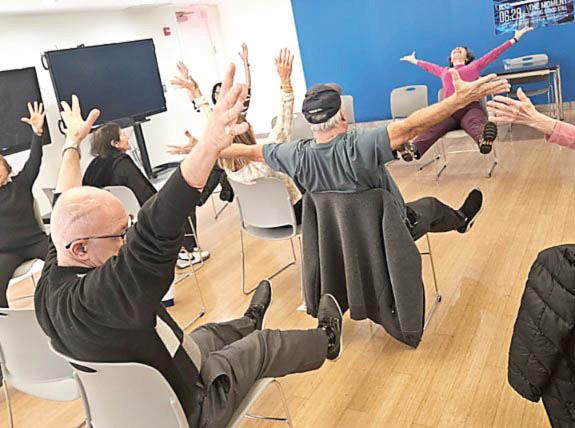
Seated Yoga, for individuals with PD and family members, aids or friends, teaches movements to help combat stiffness and a reduced range of motion. Having a shared experience encourages physical and emotional support.
“It’s hard to find a class for people with PD. Luckily, I found the classes at the Center. I feel significantly better both mentally and physically after taking the class.”
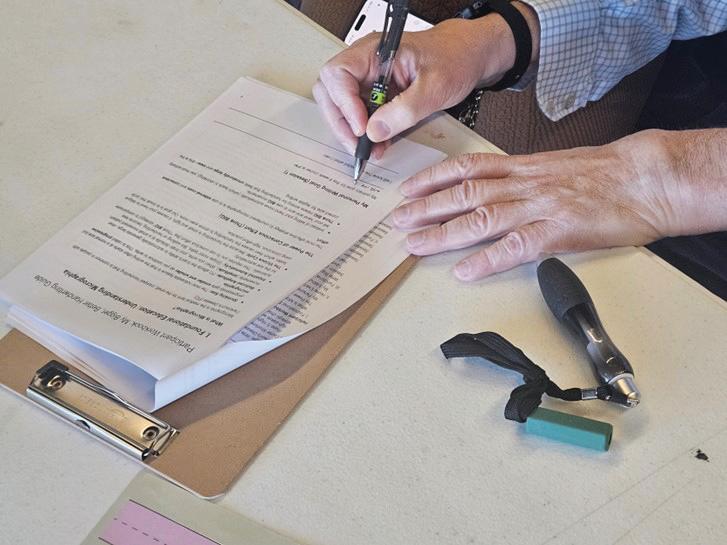
Write On! Improving Handwriting, is taught by a certified Occupational Therapist. Step-by-step guidance and adaptive tools help increase hand strength and fine motor skills to help mitigate the illegible handwriting often experienced by people with PD.
An evening Support Group for Care Partners is facilitated on Zoom by a Licensed Clinical Social Worker for participants to share experiences and obtain resources for managing their own health while managing their loved one’s care.
“Being with others who are coping with this disease is so important. There are so many challenges in caring for my husband. I often forget about taking time for myself. This group reminds me how important that is.”
This spring, the Center will offer Lunch & Learn Educational Seminars: Practical Tips for Managing PD for people with PD and their care partners. Interactive demonstrations will teach techniques to reduce fear of falling,
enhance awareness of body mechanics, and promote more independent movement.
Through the Center’s free interactive PD programs, participants gain confidence to “fight back against Parkinson’s.”
Recognizing challenges faced by those living with PD, the Center’s services aim to improve their overall quality of life and foster a supportive network. Through these programs, the Center ensures that every member can face Parkinson’s with resilience and hope.
For more information and class schedules, please contact Aimee Mishaan, Director of Community Services, at Aimee@scclive.org, or 718-954-3157.
Linda Eber, LCSW is a consultant to consultant to Community Servicess and former Director of Social Services at the Center.
REGINA TESSONE
GROWING UP DURING THE IRANIAN REVOLUTION
SARINA ROFFÉ
REGINE TESSONE WAS BORN IN TEHRAN, IRAN, IN JANUARY 1970 TO A WEALTHY FAMILY. IT WAS A DECADE OF TREMENDOUS PROSPERITY FOR JEWS. THE DECADE ENDED WITH THE IRANIAN REVOLUTION, WHICH WAS YEARS IN THE MAKING, THE OVERTHROW OF THE SHAH OF IRAN, MOHAMMAD REZA SHAH PAHLAVI, IN 1979, AND THE BEGINNING OF AN ISLAMIC REPUBLIC RULED BY THE AYATOLLAH KHOMEINI.
Regine’s maiden name is Omid Olhadj, which means, “I hope to make the hajj (pilgrimage).”
Regine’s mother is Sonia Yedid Lawi, who was born in Beirut and is very educated. She speaks many languages fluently. Her brother, Max Yedid Lawi a’h, helped Syrian Jews escape from Syria to Beirut and then to Israel. He later settled in Brooklyn, New York.
Regine’s father was a dentist, Dr. Eshagh Omid a’h. He studied dentistry and international law in various schools in France. Of their four children, Regine is the only girl. Her paternal family’s ancestry hails back to Jerusalem, having been exiled with the Jews to Babylon since the destruction of the Temple in Israel. Her paternal great-grandfather, Agha Mordehai, changed their surname from Gohar Sinai during a period of severe persecution against Jews.
From the age of five, Regine, whose Farsi name is Monavar, meaning Aura, attended the Lycée Razi.
“My father spoke many languages, German, Yiddish, French, English, Farsi, and some Hebrew. He knew many people in government and he got me into that school. We were raised to believe that the Shah loved everyone, all Iranians. He was like a father figure. His photo was on the first page of all our schoolbooks,” said Regine.
The Lycée went from preschool to high school. It was a magnificent school with a large cinema, lake, and numerous pools. It was fun to go there, even in the summer. Regine learned varied arts, including weaving small Persian rugs.
“I met the Shah in my school in 1978. It was quite emotional for me to see him because we were taught he loved us all. They told all the children to stand in line and when the Shah came, we were to bow and not look him in the eye, as it was considered disrespectful. I was curious and I looked up. The Shah looked at the principal, who said she is Jewish, she doesn’t bow. The Shah was a very handsome man.”
At school, Regine learned fluent French and Farsi. She also learned respect. Regine said, “In kindergarten, I didn’t like my French teacher. If she asked me to bring her scissors, I would bring her paper. After doing this a few times, the principal called my father. When he addressed my father, I responded in fluent French, so he knew I understood. To teach me a lesson in life, the principal made me stay in kindergarten another year. The principal explained that no matter how much I like the teacher or not, I must do what is asked of me. From a very young age, I learned discipline and to be respectful of my teachers.”
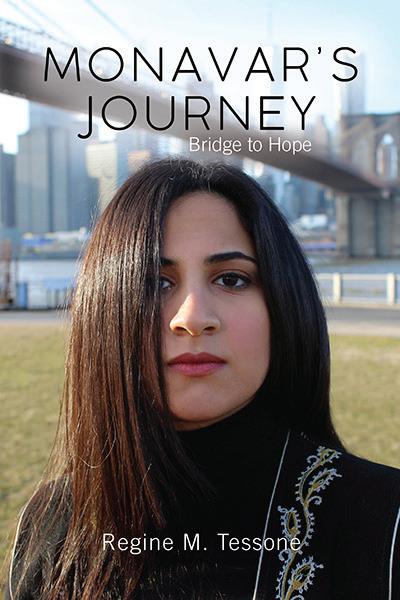
Monavar’s Journey Book Cover
Sarina Ro é Consulting Group
Celebrating 15 Years of NonProfit Expertise
O ering comprehensive services to Jewish nonprofit causes worldwide.
Providing a turnkey operation and administrative services for nonprofits
•Bookkeeping, Account Reconciliation, Accounts Receivable and Payable
•Coordination with CPAs for tax preparation and audits
Clients consistently praise her reliability, integrity, and commitment rooted in ethics, professionalism, transparency and a deep understanding of the community.
“Sarina’s high ethical standards and expertise make her the community’s go-to expert for nonprofit management.” Jacques Erdos, CPA
“Sarina and her team are personable, professional, and always ready to help. Her full turnkey operation for small nonprofits fills a vital niche.” Elliot Horowitz, CEO of H Equities
“Sarina is honest, organized, professional and dedicated to full transparency. Her knowledge of our community and expertise in nonprofit management make her an invaluable asset.” Rabbi Ronnie Kassin
“Beyond her professional skills, Sarina’s warmth and integrity have left a lasting impression on everyone who has the privilege of working with her.” Rabbi Netanel Meoded, Chief Rabbi of Kehilat Zion of Kowloon
Jews were considered integral to Iranian society. Jews owned and operated stores in the bazaar, owned factories, had professions such as lawyers, doctors, and accountants, and were members of the Majlis, the Iranian parliament. Most Jews in Tehran were wealthy. The Shah allowed Jewish men and women to attend universities in Iran, where they excelled in their studies.
“My father lived in poverty as a child; he had to share shoes with his brothers. He went from poverty to extreme wealth. His credo was education and diligent, honest work will lead to success.
“We lived in a very large flat with numerous rooms, porches, and verandas. My mother never cooked. We had a chef, a chauffeur, and a maid nanny. Ornate Persian rugs decorated our walls and floors. We attended Yousef Abad Synagogue. The synagogue was located on a street named after Yosef from the Tanach. My mother worked as a secretary in a French company that sold construction machinery to the government of Iran, and that’s how my father received contracts,” she said.
The family spent their summers in Israel with both her maternal and paternal families, as there were direct flights from Tehran.
The revolution was developing for many months. Dr. Omid saw the signs and began preparations for travel to America. Post-revolution, among the items he sent were Regine’s schoolbooks, including the one with the Shah’s photo in it, at risk of his life, as he wanted Regine to retain her Farsi language.
In the summer of 1978, Regine and her brothers vacationed in Israel for three months. Her parents traveled to Europe and at the end of August arrived in Israel to accompany them back to Iran.
In Iran, taxi drivers know the pulse of the city. On the cab ride back from the airport, her father asked the driver what was new in Tehran. The driver said they burned a library, nightclub, and local cinema, and described what was happening with the revolution.
It was then that Dr. Omid knew they had to get out of the country and he began to prepare. He instructed everyone to pack a suitcase and put it under their bed. They didn’t know when they would need to leave, but it could be any day.
From September 1978 to February 1979, safety and quality of life in Iran deteriorated rapidly. The children went to school and there was a bomb threat, so Sonia took them out of school. Having grown up in Beirut, she knew about political dissention. Regine noted that her mother was a quiet, reserved person and she never saw that side of her. “She said, if teachers or anyone call, give me the phone.” She did not allow Regine to converse on the phone with anyone she deemed suspicious.
During this period in Iran, everyone was deemed suspicious, as many Iranians switched sides from being pro-Shah to pro-Khomeini.
Esfahan was the first city in Iran to witness tanks rolling in, as early as spring 1978. Many Jews left at that time to places like Europe, Israel, and America.
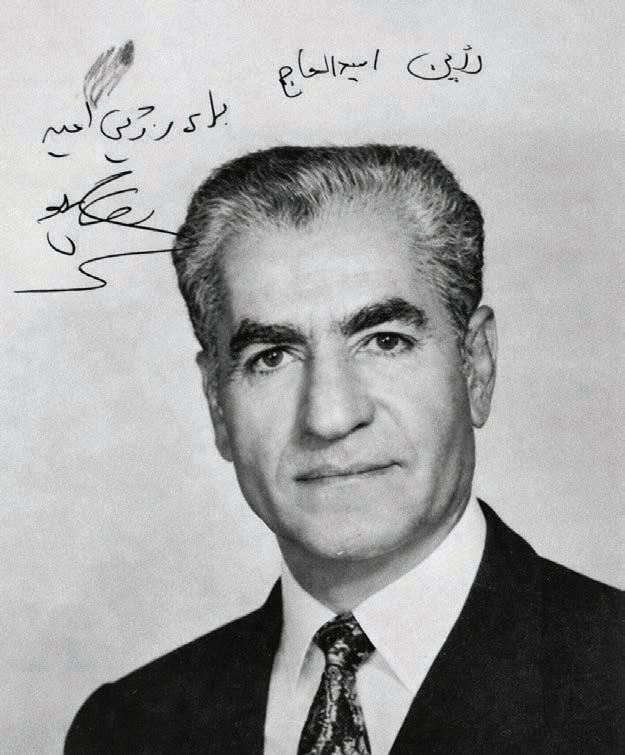
Autograph of Shah of Iran Reza Pahlavi on Regine’s first grade Farsi language book
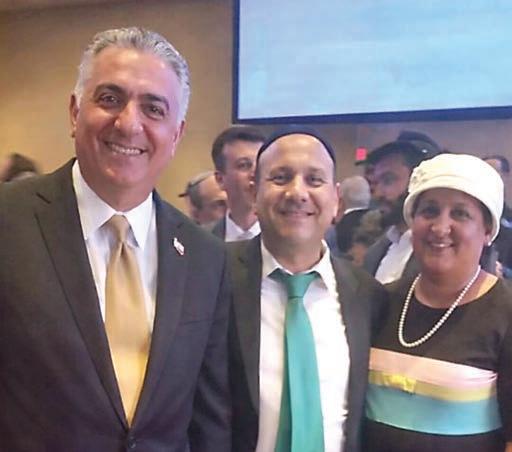
Crown Prince Reza Pahlavi with Rabbi Moshe and Regine Tessone
Those who had children learning in American universities told them to remain there, as it was clear the country was headed toward a revolution.
Mashhadi Jews were repeatedly persecuted by their Islamic neighbors throughout the years. Often, Jews were framed for crimes they never committed. If a Muslim boy was killed, neighbors would bury him in a Jewish person’s backyard and blame them for it. The Jewish community would have to pay exorbitant fees to release the accused from jail. This time, the persecutions proved more severe, as the Islamic regime empowered extremist neighbors further. Many migrated to Italy, Austria, and America.
“During those few months, we saw graffiti in our Jewish neighborhood that read ‘Death to the Shah,’ ‘Death to the Jews.’ I couldn’t see my friends from shul,” said Regine. “The shul remained closed on most days. My Muslim neighbor threw a rock at my back. I didn’t understand why. Everything was one big no. No school, no after-school activities, no playdates, no parties, no shul. Nightly curfews were placed in Tehran, accompanied by sounds of gunfire and Khomeini’s Islamic sermons played on car loudspeakers throughout the city. There were frequent blackouts and long lines for food at grocery stores.
“People saw my mother with a small child and let her go ahead of them. My mother stocked massive quantities of food, afraid of shortages. One time she sent my brother to get milk. He was gone for four hours and was out past curfew. He was stopped and showed them the milk. They took him for interrogation. Khoda-ro shokr (Baruch Hashem in Farsi), they let him go once he proved his innocence.”
Iranian militants seized the U.S. Embassy in Tehran on November 4, 1979, taking 66 hostages. Fourteen were later released, while 52 were held for 444 days. The Shah had come to the United States for medical treatment, and Islamic militants demanded his return to Iran.
In synagogues, “The heads of our Jewish community in Tehran pleaded with utmost urgency to send the women and children out. There were midnight rescue flights to Israel every Saturday night. In late fall 1978, the Israeli shlichim who served in the congregation and schools left Iran,” she said.
“After tremendous delays en route to the airport amid total upheaval in Tehran, our family boarded the last flight out of Iran on Air France, the same flight that brought Ayatollah Khomeini to Iran. We left February 1, 1979. We stayed in Paris for one month. My mother did all the paperwork for us to come to America. Her brother David sponsored us, and we had to show we could support ourselves. We moved in with our maternal grandparents in Brooklyn.
“We left at the peak of the hostage situation. Upon
arrival at the airport in New York, there were long lines and we were not allowed to get a drink of water until we passed customs. A guard asked my mother and me to go to a room for a private search. She asked me to undress and my mother scolded her and said absolutely not, that she could check me fully dressed. They were not kind and it left a miserable dent in my memory. It was a bitter pill. My mother had to prove we had money to live on. We were not refugees. We lived off my parents’ money for three years.
“My father left us at the Paris airport as we boarded the plane for New York and went back to Iran for a year. I didn’t understand why until years later, after he passed away. It was a difficult year. My mother and I cried often, as we did not know if my father would survive. He had previously been placed on a government blacklist. I vowed to become observant if my father survived. And I did.
“Years later, my husband and I were invited to Great Neck to lead holiday services, as my husband is both a rabbi and hazan. That Rosh Hashanah, Rabbi Z, name withheld, whom we knew for years, invited us for the first night seder of Rosh Hashanah. He revealed that he was a former Mossad agent placed in Tehran in the early 1970s. He told us my father helped many people get out of Iran by giving much needed information to the Mossad so they could expedite the departures of those families first.”
Hand embroidered wool vest made in Iran that Sonia Tessone passed down to her
While Sonia and her children settled in New York, they still worried about getting Dr. Omid out of Iran safely. Many people left using the land route to Turkey, as the airport was mostly closed. They needed a note from a school principal, backed by a doctor, stating Regine was sick and needed urgent surgery and that Dr. Omid needed to go to the United States. Many doctors refused to write this falsehood, fearing license revocation. One angelic doctor agreed. The notes were not used, and Dr. Omid was extracted to Turkey, then made his way to Paris. He became sick and was hospitalized. It was Passover when the family flew to Paris to be with him. They were elated to see him, albeit gaunt. He had lost tremendous weight.
In America, the freedom to speak and live as you wish empowered Regine. “In Brooklyn, my mother enrolled us in Magen David Yeshiva,” she said. “Some teachers understood what we went through, but the children didn’t. By Persian standards, they were very immature. I never acclimated to the mindset, the way you look at life. My son said I don’t think like a Westerner. I never take no for an answer. No means perhaps to me. G-D is big and anything is possible.
“In Magen David, they placed me in first grade and every month moved me up. After five months, I was in fourth grade. I learned Hebrew and English fluently. I finished eighth grade, spent two years at Flatbush High School, and then my parents couldn’t afford it anymore. I continued at Lincoln High School. The Jewish principal saw I didn’t belong there and told me I could come to his office anytime. I completed two years in one year and graduated. Subsequently, I attended the Fashion Institute of Technology to study fashion design.”
“The United States has never felt like home to me. It’s like a beautiful hotel that took care of me and pampered us with freedom. I feel tremendous gratitude to G-D and the United States for the blessings I received here. In Iran, no one dared speak badly in public. They could be held for sedition. Here, freedom is empowering. Now, after fortyseven years, the Iranian regime may topple. I await the day this evil regime collapses and a brighter future rises for us all. Israel remains my home in my soul.”
After graduating FIT, Regine married Rabbi Moshe Tessone. They have three sons and a daughter. Years ago, she founded and pioneered a business selling modest swimwear and activewear named Aqua Modesta.
“My husband and I traveled to numerous states over the years as part of his Sephardic outreach work. On one trip, we stopped at a farm in Maryland to purchase vegetables and fruit. As my skin is dark olive, particularly in the summer, the farmer offered me the items for free. He
seemed anxious to get rid of me and told me to take everything. I left disappointed without taking anything. It is sad that people look at me, think I’m Spanish, and feel afraid. They can’t differentiate between Spanish, Persian, or people from the Middle East. You’re just the other. The foreigner. It never makes you feel at home.
“When I go to Israel and get into a cab, they immediately play Persian music. I ask how they know I am Persian, and they say, ‘You look Persian.’ I’m always impressed. They just know. And they don’t look at you as the enemy. It’s different. It’s endearing.”
Read more about her inspiring journey and exodus from Iran in Monavar’s Journey: Bridge to Hope, a memoir by Regine M. Tessone.
A genealogist and historian, Sarina Roffé is the author of Branching Out from Sepharad (Sephardic Heritage Project, 2017). She is researching a new book: Syrian Jewish Paths to Freedom. Sarina holds a BA in Journalism, an MA in Jewish Studies and an MBA.
Model wearing Aqua Modesta swimwear and holding a copy of Monavar’s Journey
PLANNING AHEAD FOR PASSOVER DESSERTS
FREEZER-FRIENDLY RECIPES THAT SIMPLIFY PASSOVER PREP
PASSOVER DESSERTS ARE OFTEN TREATED AS AN AFTERTHOUGHT, PUSHED TO THE END OF LONG PREP LISTS AND LATE NIGHTS. YET DESSERT IS ALSO THE EASIEST PLACE TO PLAN AHEAD AND REDUCE PRESSURE. WHEN IT IS ALREADY MADE AND WAITING, THE HOLIDAY MEALS FEEL STEADIER AND LESS RUSHED.
Many classic Passover desserts freeze well when they are built on eggs, oil, nut flours, and potato starch. These ingredients hold moisture and structure even after thawing. With a little foresight, dessert can be finished days or even weeks before the first Seder.
Advance preparation for Passover is allowed when done properly. Food should be prepared with Passover-
designated utensils and cookware, using ingredients that are kosher for Passover, and stored carefully to avoid contact with chametz. Because Passover cooking halachot are detailed, it is wise to review them before you begin cooking or consult your rabbi with any questions you may have.
The recipes below are designed for advance preparation and freezing. They are practical, reliable, and easy to portion for guests.
CHOCOLATE CHIP PASSOVER LOAF CAKE
Dairy or Pareve
Yields: 2 loaves, 20 slices
Serves 16 to 20
Ingredients
• 6 large eggs
• 1 1/4 cups sugar
• 1/2 cup oil
• 3/4 cup potato starch
• 1/2 cup finely ground blanched almonds
• 1/4 cup unsweetened cocoa powder
• 1 cup Passover chocolate chips, dairy or pareve as needed
• 1/4 tsp salt
Instructions
1. Preheat oven to 350°F. Line two loaf pans with parchment paper.
2. Beat eggs and sugar until pale and thick, about 5 minutes.
3. Slowly add oil while mixing.
4. Fold in potato starch, ground almonds, cocoa powder, and salt.
5. Fold in chocolate chips.
6. Divide batter evenly between pans.
7. Bake 40 to 45 minutes, until a toothpick inserted in the center comes out clean.
8. Cool completely before slicing, wrapping, or freezing.
BAKED PASSOVER CHEESECAKE WITH ALMOND CRUST
Dairy
Yields: 2 nine-inch cakes, 24 slices
Serves 20 to 24
Ingredients
• Filling
• 2 pounds cream cheese, room temperature
• 1 1/4 cups sugar
• 5 large eggs
• 1 cup sour cream
• 1 tbsp lemon juice
• 1 tsp vanilla extract
Crust
• 2 cups finely ground blanched almonds
• 1/4 cup sugar
• 4 tbsp butter, melted
Instructions
1. Preheat oven to 325°F.
2. Combine crust ingredients and press firmly into the bottoms of two parchment-lined springform pans.
3. Beat cream cheese and sugar until smooth.
4. Add eggs one at a time, mixing after each addition.
5. Mix in sour cream, lemon juice, and vanilla.
6. Pour filling over crusts.
7. Bake in a water bath for 65 to 75 minutes, until centers are just set.
8. Cool completely, then refrigerate before freezing.
Wishing All a Happy & Healthy Passover
LEMON ALMOND SPONGE CAKE
Pareve
Yields: 1 ten-inch cake, 12 slices
Serves 10 to 12
Ingredients
• 8 large eggs, separated
• 1 cup sugar
• 1/2 cup oil
• Zest of 2 lemons
• Juice of 2 lemons
• 3/4 cup finely ground blanched almonds
• 1/4 tsp salt
Instructions
1. Preheat oven to 350°F.
2. Beat egg yolks and sugar until thick and pale.
3. Mix in oil, lemon zest, and lemon juice.
4. Stir in ground almonds.
5. Whip egg whites with salt until stiff peaks form.
6. Gently fold whites into the batter.
7. Pour into an ungreased tube pan.
8. Bake 45 minutes, until the top springs back when lightly touched.
9. Cool completely before removing from pan and freezing.
CHOCOLATE WALNUT PASSOVER SQUARES
Dairy or Pareve
Yields: 1 nine by thirteen pan, 24 squares
Serves 20 to 30
Ingredients
• 10 ounces dark chocolate, dairy or pareve as needed
• 1 cup oil
• 1 1/4 cups sugar
• 6 large eggs
• 1 cup potato starch
• 1/2 tsp salt
• 1 1/2 cups chopped walnuts
Instructions
1. Preheat oven to 350°F. Line pan with parchment paper.
2. Melt chocolate and oil together until smooth. Let cool slightly.
3. Whisk in sugar.
4. Add eggs one at a time, mixing after each addition.
5. Fold in potato starch and salt.
6. Stir in walnuts.
7. Spread batter evenly in the prepared pan.
8. Bake 28 to 32 minutes, until set but still soft in the center.
9. Cool completely before cutting, wrapping, or freezing.
BUILDING OUR NAME
10 WAYS TO INCREASE HAPPINESS IN THE CHAOS CHOOSING JOY THIS PURIM
DEVORA LEVY
WHEN THE MONTH OF ADAR ENTERS, INCREASE JOY. BUT HOW? PRACTICAL STEPS FOR CHOOSING HAPPINESS WHEN LIFE FEELS OVERWHELMING.
Let’s be honest. You probably don’t wake up glowing. You wake up to alarms, news alerts, and carpools. You wake up to deadlines and WhatsApp messages that already feel like a bit too much before your day has even started. And then Judaism tells you: When Adar enters, increase joy.
How? Jewish thought teaches that joy is a decision, not a mood you wait for. It’s about where you place your attention and how you interpret the chaos around you.
You can’t control the headlines. You can’t control other people. You definitely can’t control every outcome. But you can choose what story you’re living inside. Joy builds resilience. It protects your relationships from the friction stress creates. It gives you energy instead of draining what little you have.
Purim teaches this in such a dramatic way. The Scroll of Esther reads like a total political mess, hidden motives,
power plays, and strange coincidences. G-D’s name doesn’t even appear once. And yet, everything turns around.
Haman’s plot to destroy the Jewish people becomes the very thing that elevates them. The gallows he builds for Mordechai becomes his own execution site. The decree meant to authorize genocide transforms into permission for Jewish self-defense and triumph. Esther, who hid her identity out of fear, becomes the hero precisely because of that hidden identity. What looked like the end of the story was actually just the middle, and the reversal was total. Joy is the refusal to believe that the surface story is the final one. So, how do you actually choose it?
DECIDE THAT JOY IS NOT OPTIONAL
If you treat joy like a nice extra, it’s the first thing to go when life gets hard. Try to see joy as part of your emotional
responsibility. The Jewish month of Adar shows you not to wait for joy to show up, it tells you to increase it. That implies effort.
CATCH ONE HIDDEN GOOD EACH DAY
Purim is built on things being masked. Start looking for small reversals, the meeting that got canceled right when you needed to breathe, or a tough conversation that finally cleared the air. Train your eyes to notice what might be quietly working in your favor.
LOOSEN YOUR GRIP
Costumes on Purim remind you that your identity isn’t as rigid as you think. If you’re holding on too tightly to one specific outcome or one version of how things should go, try to soften a little. Joy enters more easily when your need for control relaxes.
STRENGTHEN ONE CONNECTION
Make that call you’ve been putting off. Text a friend you haven’t spoken to in months just to say you’re thinking of them. Joy expands when you’re in relationship with others; isolation shrinks it.
MOVE YOUR BODY
Joy is physical. We dance on Purim for a reason. Put on music while you’re cooking, or walk a little faster than usual. Sometimes your body leads and the mood follows.
INTERRUPT THE NEGATIVE NARRATIVES
Notice the broken record in your head. “This always happens” or “Nothing works out.” Stop and ask: Is that actually 100% true? The Scroll of Esther teaches that there are hidden layers. Leave room for the story to unfold differently.
GIVE GENEROUSLY
Whether it’s money, time, or encouragement. Purim centers on giving because generosity shifts you out of your own head. When you contribute to someone else’s joy, something inside you expands.
ALLOW REAL EMOTION
Choosing joy isn’t about suppressing frustration. Adar doesn’t erase reality, it adds dimension to it. Let yourself feel what’s real, and then gently point yourself back toward what’s possible.
MARK THE SMALL WINS
You finished a project, kept your patience, or made it through a rough week. Light a candle or share dessert. Say, “That mattered.” Celebrating the small things builds momentum.
CREATE ONE DAILY HABIT OF GRATITUDE
It doesn’t need to be a long list. Just one acknowledgment, said out loud or written down. Gratitude trains your attention. What you look for, you start to see.
Adar isn’t about pretending life is easy. It’s about remembering that reversals are possible, that hidden good exists, and that joy can be built, even before your circumstances change. You don’t have to transform your whole personality this month. Just increase. A little more warmth. A little more generosity. A little more lightness. Sometimes that small increase is what begins the reversal.
Devora Levy grew up in South Africa and made Aliyah 24 years ago. She is a life coach and educator who works with women, teens, and couples, both virtually and in person. She also gives workshops on relationships, resilience, and personal growth. Trained through the Refuah Institute in Jerusalem, recognized by the American Association of Coaches, and certified in Reality Therapy, Devora lives in Israel with her husband and seven children.
CELEBRATING PURIM IN IRAN
LIKE ESTHER, GROWING UP IN IRAN I WAS ENCOURAGED TO KEEP MY JEWISH IDENTITY PRIVATE
JACQUELINE SAPER
FOR ME, THE PURIM STORY HAS A DEEP HISTORICAL CONNECTION TO MY HERITAGE AND HOMELAND WHERE THE STORY TOOK PLACE. DURING THE IRANIAN MONARCHY IN THE 1960S AND 1970S, THE JOYOUS HOLIDAY OF PURIM OF MY CHILDHOOD WAS CELEBRATED AT THE GRAND YOUSEFABAD SYNAGOGUE IN TEHRAN WITH PERSIAN SWEETS, SUCH AS HALVAH, THE FLOUR-BASED, ROSE WATER INFUSED DESSERT. SOME PERSIAN JEWS TOOK THE OPPORTUNITY TO MAKE A PILGRIMAGE TO THE CITY OF HAMEDAN, LOCATED 200 MILES WEST OF TEHRAN AND BELIEVED TO BE AMONG THE OLDEST IRANIAN CITIES, WHERE THE TOMB OF ESTHER AND MORDECHAI IS LOCATED.
Purim is the one holiday where my two distinct worlds of the East and the West intersect. In the late 1940s, my parents met at a school dance when they were students at the University of Birmingham in England.
My British Ashkenazi mother was confused about my Sephardi/Mizrahi Iranian father’s homeland. She had never heard of Iran (Persia was renamed in 1935) and had no idea that Persia still existed. Coincidentally, my mother Stella’s Hebrew name is “Esther” which has the same definition of star or Setareh, which is Queen Esther’s moniker in Persian. After a courtship of almost a year, my father had to return to his homeland and then they continued their
romance by international post for two years. My parents were married in Tehran, Iran on January 4, 1951, and remained married for 63 years.
Mordechai advised Esther to hide her Hebrew name Hadassah and thus her Jewish identity. To this, I can relate. My dual Jewish identity as a person living in modern-day Persia while visiting relatives in England depended on which side of the ocean I happened to be. In England, I was encouraged to be proud and to vocalize my ideas about democracy, Israel, and Judaism. In Iran, I was encouraged to keep my Jewish identity private and, especially after the Islamic revolution, be mindful that Israel was the enemy
whose destruction was based upon one of the new regime’s principles.
Celebrating Purim in Iran, I was more aware of the fact that its story occurred in the pre-Islamic Zoroastrian era of the Persian Empire, a millennium before the rise of Islam in Persia. Therefore, it is not surprising that nonIslamic Persian and Jewish holidays have been influenced by each other. Purim and Nowruz, the Persian New Year, both occur at the beginning of spring. The scroll of Esther celebrates the courage of a Persian queen and the survival of a people.
Following the Iranian revolution and the establishment of the Islamic Republic of Iran in 1979 and the subsequent eight-year Iran-Iraq war that began in 1980, the Persian Jewish community faced increased antisemitism and animosity toward Israel. Unlike their ancestors who relied on fasting and the courage of their heroine Queen Esther, the majority of contemporary Persian Jews lacked a royal advocate and had to leave their ancient homeland for good. Today, by some estimates, the Persian Jewish community is one-tenth of its size 40 years ago.
Nevertheless, in Iran Jews are considered the “People of the Book,” and they are free to practice their religion in private, as are Christians. I left the Islamic Republic of Iran in 1987 and moved to the United States. But during the eight years I lived under the new regime, Purim was celebrated with less fanfare. Persian Jews were mindful about drinking wine during Purim in a country where consuming alcoholic beverages is prohibited and punishable by law and placed more emphasis on the Fast of Esther.
In the fifth century B.C.E, Haman was vizier to the Persian Empire under King Ahasuerus, also known as Khashayar Shah to Iranians and Xerxes to the rest of
the world. He sought to annihilate the Jewish people. In modern-day times, the Jewish Iranians are once again confronted with a Persian ruler who desires to destroy the state of Israel, the land of the Jewish people. Iran’s current government labels Purim as an anti-Iranian holiday. On December 10, 2010, when tensions between Iran and Israel were particularly high, hundreds of Iranians protested in front of the Tomb of Esther and Mordecai on a small street, fittingly called “Esther Lane.”
Like other displaced Jewish Iranians, I will reminisce about Purim in Iran. Before the Islamic revolution, Iran and Israel had amicable relations and we were proud Iranian citizens who didn’t have to conceal our joy for the holiday or our affiliation to the land of Israel. I will remain hopeful that one day the remaining Jews in Iran will be able to celebrate Purim with full joy once more.
Saper is the author of a memoir, “From Miniskirt to Hijab: A Girl in Revolutionary Iran.” (Potomac Books – University of Nebraska Press), www.jacquelinesaper.com.
A happy teenager in Tehran, with my parents.
The author today
Jacqueline
THE JOYS (?) OF PASSOVER CLEANING
EMUNA BRAVERMAN
IT IS POSSIBLE NOT ONLY TO ENJOY PASSOVER CLEANING, BUT TO FIND IT TO BE THE MOST MEANINGFUL ASPECT OF HOLIDAY PREPARATION.
Everywhere I turn I hear: “I got the Here-ComesPesach blues,” sings Moshe Yess. “Have you started cleaning yet?” “I’m so stressed.” “We’re going away to a hotel this year. I just can’t face the cleaning.”
I’m beginning to feel like an endangered species, because I like Passover. It’s actually my favorite holiday. I enjoy the cleaning. I love throwing things out (if my husband hasn’t worn it in a year, make that a week, watch out!) and getting organized. And I like the cooking. I like the creative challenge inherent in the limited ingredients. I like the constant phone calls between friends, sharing new recipes and old stand-bys.
I like the community of Jewish women scrubbing our homes, grocery shopping, cooking, grocery shopping,
making menus, grocery shopping... and just when you think you have everything you need... grocery shopping. And I like the exhaustion. Not out of some masochism, but because it’s also a link. When I look in the eyes of my friends and other Jewish women in the neighborhood I see the same weary expression. It’s a look that says, “I can’t do one more thing.” And it’s a look that says, “I’m proud of what I’ve accomplished.” And it’s a look that says, “We’re in this together. We’re a community.”
I’ve had four children who were due to be born Erev Pesach, the day before Pesach (the Almighty’s sense of humor). Finally with number 3, I admitted to some physical stress and fatigue and suggested we try going away for the holiday.
Chai there!
Support the Torah study of the Edmond & Lily Safra Lubavitcher Yeshiva
The Torah study of children is the supporting foundation of the world!
Sponsor a child's Torah for the day with a $26 monthly donation
Sponsor a child's Torah study for a week with a $91 monthly donation
Sponsor a child's Torah study for a month with a $360 monthly donation
Your generosity will support a child's Torah learning and pay everlasting dividends as this child impacts the world as a Chabad Shliach and the holy work and chesed that that they will do all around the world!
Join the Chai Club today: yttl.org/chai
ytt.l.org/chai
For additional information please contact Rabbi Sholom Simon • sholomsimon@yttl.org
There was an event at a rustic wood-studded location near here. I thought, “This is my chance. Every other year I’m so busy cleaning and cooking (and grocery shopping) that I have little time to apply myself intellectually, but this is my chance to really delve into all the ideas and commentaries in the Haggadah. This year I can do it. This year I’ll be prepared.”
THE LEARNING IS IN THE DOING
And I learned an important lesson. Studying the ideas underlying Passover was not the true preparation. It was the hours of cleaning, the hours in the kitchen and the hours at the grocery store(s). It was the physical effort that led to the emotional and intellectual preparation. I felt less prepared when I didn’t take out my special dishes, when I didn’t clean my children’s bedrooms (after all, it’s been a year!), when I didn’t make my chicken soup and cabbage soup and famous (doesn’t taste like Passover) brownies.
And I felt more alone. That crucial link to other Jewish women was not being forged. I had no war stories or battle wounds to share. I hadn’t planned any creative menus and my Passover cookbooks were neatly packed away.
I had more energy, but I was disappointed. I missed the exhaustion borne of accomplishment. I missed the weariness shared across the globe.
And I missed involving my children in an important and
meaningful mitzvah. (I also missed yelling at them about dropping crumbs all over the house!)
So, much as I would like a vacation, as tempting as some events sound, I’ve returned to what I enjoy.
I can’t wait to start cleaning. (I force myself to hold out until after Purim, putting some limits on my compulsivity.) I can’t wait to start planning menus and discovering new treasures. I’m excited to bring out my Passover dishes.
(When I read that you should use your most beautiful tableware for this holiday I decided this was a mitzvah I wanted to be very strict about!) I can’t wait to start cooking huge quantities in anticipation of many guests.
And I can’t wait to sit down at the Seder prepared for the event, feeling the pride of being a Jewish woman linked to other Jewish women, and taking pleasure in being part of a nation redeemed by the Almighty from slavery (all jokes about the connection between Pesach cleaning and slavery are prohibited!) A happy and healthy Passover to all.
Emuna Braverman has a law degree from the University of Toronto and a Masters in Clinical Psychology with an emphasis on Marriage and Family Therapy from Pepperdine University. She lives with her husband and nine children in Los Angeles where they both work for Aish HaTorah. When she isn’t writing for the Internet or taking care of her family, Emuna teaches classes on Judaism, organizes gourmet kosher cooking groups and hosts many Shabbos guests. She is the cofounder of www.gourmetkoshercooking.com.
HOW TO CREATE CALMER, HEALTHIER FAMILY RELATIONSHIPS
PRACTICAL WISDOM FOR HANDLING EMOTIONS AND MOODS WITHOUT ESCALATING TENSION
SARAH PACHTER
Learning to navigate the moods of others, especially in families, is one of life’s hardest jobs. And yet, it’s learnable. Below are five key principles for becoming a master of moods, based on Jewish wisdom and real life experience from Rabbi Aryeh Nivin.
1. DON’T COMMUNICATE IN A LOW STATE
Timing is everything. Don’t give constructive criticism or try to resolve conflict when one or both parties are in a low emotional state.
Unfortunately, this is precisely when most people want to talk. When you feel hurt, angry, or constricted, the urge to “get it off your chest” feels urgent and justified. But this instinct is generated by your lower self and masquerades as honesty. Don’t fall into the trap.
2. THE 72 HOUR RULE
Rabbi Aryeh Nivin teaches a simple but radical practice. When you’re angry, wait 72 hours before addressing it. “Fifty percent of all negativity would disappear if people did this,” he says.
Why? Because when you’re in a low state, you are not only reactive, you’re often unaware that you’re reactive. Your perception narrows and instead of creating any positive change, you damage the other party and yourself. That’s why giving your child a consequence to his misbehavior should never be done in the heat of the moment when you’re infuriated.
Instead, try saying something like this: “I’m upset right now and I don’t think we can talk productively. Let’s talk tomorrow and we’ll figure out how to fix this together.”
The child sleeps peacefully. The next day, the conversation happens in expanded consciousness, when the opportunity to positively educate your child is more likely to happen.
3. LOOK FOR OPPORTUNE MOMENTS
An opportune moment is when you and your spouse or child are both in a positive state of mind. When both parties are calm, relaxed, or even giddy, then deep, meaningful conversation flows more naturally. These moments are rare and when they appear, they should be utilized wisely.
Rabbi Aryeh Nivin shares an example of an opportune or “magic moment” in his house.
“One late night, I came home exhausted from work and saw my teenagers sitting on the couch in great moods, laughing. They wanted me to join. I was tired and wanted to go to bed, but I poured a cup of coffee and stayed up to talk.
“We had phenomenal conversations and developed real connection, depth, and trust.
“I paid for it the next day because I was tired. But the Return on Investment. Unmatched. That hour was worth weeks of parenting.”
4. CREATE MAGIC MOMENTS
(DON’T JUST WAIT FOR THEM)
If you know what puts someone in a positive state, you can engineer connection. Different people enter good moods through different doors:
• One child connects through food, take him out to eat.
• Another connects through movement, go for a walk.
• Another through humor, invite him to make you laugh, or share a joke.
• Another through nature, go to the beach, the boardwalk, outdoors.
Rabbi Nivin shares, “One of my sons and I took a walk together every Saturday night for an entire year before he got married. Those were some of the best memories we created together and it was in those moments we had some of the deepest and most constructive conversations.”
Don’t just wait for magic moments. Actively work to create them and take advantage of them for the opportunity of deep conversation. This applies with everyone, parents, teachers, employers, spouses.
5. CREATE A GOOD MOOD INSIDE YOUR HOME
Homes have energy. You feel the vibe when you walk in. Our sages explain that the walls and beams testify
before G-D what is happening behind closed doors. The walls of your home absorb spiritual residue. Love, tension, laughter, restraint, it all leaves an imprint.
There are homes where you feel calm the moment you enter. Others feel heavy. That’s not accidental or random.
Be conscious about:
• Infusing warmth, unity, gratitude
• Bringing intentional presence into the space
• Taking actions to produce sweetness in the home environment through cooking and music. A mother’s challah tastes like love because it is love. A father reading to his child is a gift that their child holds in their heart for years.
When the energy of the home is positive, the difference is palpable, and a happy mood can more easily ensue amongst all family members.
Moods shape relationships. When you learn to work with them wisely, connection becomes easier and your home becomes warmer.
Sarah Pachter is a dynamic, motivational speaker who has lectured throughout the US and Israel. For the past thirteen years Sarah has passionately taught women of all ages and levels of Jewish observance. In addition to lecturing for many organizations, schools, and synagogues, she is a kallah teacher, dating coach, and mentor. Sarah runs growth groups in private homes and meets with individuals for one-on-one private sessions.
HESED IN ACTION
THIS MONTH’S COMMUNITY PHOTO ALBUM HIGHLIGHTS HESED IN ACTION. OUR COMMUNITY IS FILLED WITH SO MANY ORGANIZATIONS AND VOLUNTEERS WILLING TO STEP UP AND DO HESED. FROM FOOD DRIVES AND HOSPITAL VISITS TO VOLUNTEER EFFORTS AND COMMUNITY SUPPORT INITIATIVES, THESE MOMENTS REFLECT THE QUIET STRENGTH OF CARING FOR ONE ANOTHER. THE PHOTOS CAPTURE INDIVIDUALS AND GROUPS GIVING THEIR TIME, OFFERING HELP, AND SHOWING UP WHERE THEY ARE NEEDED MOST, WHETHER SPENDING TIME WITH THE ELDERLY, SUPPORTING SPECIAL NEEDS CHILDREN, OR ORGANIZING HELP FOR FAMILIES. EACH IMAGE REFLECTS THE HEART OF OUR COMMUNITY, WHERE ACTS OF KINDNESS ARE LIVED, NOT JUST SPOKEN ABOUT.
SEPARATING MEDICAL PROGRESS FROM INTERNET PROMISES THE PEPTIDE MOMENT
PEPTIDES ARE SHOWING UP EVERYWHERE RIGHT NOW. YOU HEAR ABOUT THEM IN MEDICAL JOURNALS, FITNESS PODCASTS, DERMATOLOGY OFFICES, AND INCREASINGLY IN NEW PEPTIDE CLINICS OPENING IN CITIES ACROSS THE COUNTRY. SOME PEOPLE DESCRIBE THEM AS THE NEXT MAJOR STEP IN MEDICINE. OTHERS SEE THEM AS HYPE DRIVEN BY SOCIAL MEDIA AND WELLNESS CULTURE. THE TRUTH IS MORE PRACTICAL AND LESS DRAMATIC.
Peptides are not new. Scientists have studied them for decades, and some peptide medicines have been used safely for a long time.
A peptide is simply a small chain of amino acids. Amino acids are the basic building blocks your body uses to make proteins. When these chains are short, they act like messengers that tell different parts of the body what to do. Your body already uses peptides to control hunger, healing, hormone release, and immune responses.
One well known peptide is insulin, which has been used to treat diabetes for many years. Another example is the group of GLP-1 medications such as semaglutide, which help regulate blood sugar and appetite. These drugs are approved by the U.S. Food and Drug Administration and prescribed by doctors. They show how peptide science can turn into real medicine when it goes through proper testing.
You are also seeing peptides show up in beauty and dermatology. In medical dermatology, some peptide based treatments are FDA approved and prescribed by doctors, such as injectable treatments that affect muscle activity or support specific skin conditions. In skincare products, peptides are used in creams and serums to support hydration
and collagen signaling, but these are regulated as cosmetics, not drugs, and their effects tend to be modest. As with other peptide uses, the difference comes down to clinical testing, regulation, and medical supervision.
Today, a different set of peptides is getting attention online and in wellness clinics. These are often discussed in fitness, anti aging, and recovery communities. You may hear claims like peptide BPC-157 promises faster healing, TB-500 promises muscle recovery, growth hormone related peptides promise fat loss, and retatrutide promises dramatic weight reduction.
Some of these peptides are being studied in laboratories and clinical trials. Retatrutide, for example, is still in research stages for obesity treatment and has not yet received FDA approval. Others, like BPC-157 and TB-500, have very limited human research available. Much of the data comes from animal studies or small experiments. That does not mean the science is fake, but it does mean the evidence is incomplete.
This gap between research and real world claims is where confusion begins. Early research can sound exciting, but it is not the same as proven treatment. Drug
development takes years because researchers must study safety, dosing, side effects, and long term outcomes. Many compounds that look promising early on never become approved medications.
The difference between approved peptide medicine and internet peptide culture mostly comes down to regulation and testing. When the FDA approves a drug, it means controlled clinical trials showed the medication works and is reasonably safe when used as directed. It also means the drug is produced under strict manufacturing standards so the dose and purity are consistent.
Many peptides sold online do not go through this process. Some are labeled “for research use only,” meaning they are not approved for human treatment. Products sold this way may vary in strength or purity, which is why medical professionals remain cautious.
Another reason peptides attract attention is that they sound natural. Because peptides already exist in the body, people often assume they must be safe. But anything that changes hormones, metabolism, or immune function can have strong effects. Natural does not always mean harmless.
Health information also spreads faster than scientific confirmation. A new study can appear online one week and become a trending topic the next. Personal stories about rapid weight loss or faster injury recovery can sound convincing, even when they do not represent typical results or controlled research.
That does not mean peptides are fake science. Many researchers believe peptides will play a major role in future medicine. Scientists are studying peptide therapies for wound healing, cancer treatment targeting, metabolic
disease, and autoimmune conditions. Some of these treatments may eventually become standard medical care, while others may not work as hoped once larger trials are completed.
For readers trying to make sense of the topic, it helps to separate three categories. First are peptide medicines that are already approved and widely used. Second are peptides currently being studied in clinical trials. Third are peptides promoted online without strong human evidence. These categories often get mixed together in public conversation.
Another practical issue is sourcing. Medications that require a prescription are meant to be dispensed through regulated pharmacies. Injectable or experimental compounds should never be purchased online or used without proper medical oversight. Do not take peptides or similar substances without consulting your doctor and using them only under medical supervision. If you are exploring peptide therapy, look for established medical clinics where licensed physicians evaluate you, order appropriate lab work, and monitor treatment over time. Avoid places that offer quick injections without a full medical review or ongoing supervision.
Peptides are neither miracle cures nor meaningless hype. They are tools scientists are still learning how to use. Some have already changed modern medicine. Others remain ideas in progress, shaped by research rather than promises.
This article is intended for informational purposes only. It is not medical advice and should not be used to diagnose or treat any condition. Readers should consult a licensed medical professional before starting any treatment or making any health decisions.
STRONGER IN BODY, STRONGER IN SOUL
THE SURPRISING LINK BETWEEN JUDAISM AND FITNESS
JULIAN BRASS
DISCOVER HOW JEWISH WISDOM TURNS TRAINING, REST, AND DISCIPLINE INTO A PATH FOR STRONGER BODIES AND DEEPER SOULS.
Iused to think fitness and spirituality lived in two separate worlds. There was the gym: protein shakes, workouts, pushing past limits. And then there was Judaism: prayer, study, community. One felt physical, grounded in sweat and discipline. The other felt spiritual, rooted in something unseen. But as I got older and life started throwing heavier punches, I realized I was wrong. These two worlds are deeply connected, and when aligned, they can elevate one another.
MY TURNING POINT
A few years ago, I was living what looked like the dream. Successful business, media appearances, global travel. But under the surface, I was struggling, mentally, emotionally, physically. I felt anxiety, fatigue, and a growing disconnect from my own purpose. I knew something had to change.
So I leaned into fitness. I trained hard, cleaned up my nutrition, and rebuilt my body. But I also leaned back into my Judaism. I started asking deeper questions. I revisited
texts I hadn’t looked at since I was a kid. I stopped separating my physical health from my spiritual growth. That’s when things shifted.
Fitness became more than a way to look good shirtless; it became a spiritual discipline. Judaism, in turn, became more embodied and more real. My workouts were bringing me closer to G-D. Judaism is a framework for optimal living, and fitness is one of the tools, reflecting the Torah’s commandment to actively care for the body G-D entrusted to you.
THE HIDDEN SPIRITUALITY OF FITNESS
Let’s break down a few places where Judaism and fitness intersect.
1. KAVANNAH: TRAIN WITH INTENTION
In Jewish tradition, kavannah means intention. It’s the mindset you bring to a mitzvah, a prayer, or even a moment of stillness. It’s what turns a ritual into a relationship. Fitness works the same way. You can go through the motions, count
reps, follow macros, and hit the gym three times a week. Or you can move with intention. Why are you training? Who are you becoming with each set, each meal, each act of discipline? When I started approaching my workouts like they were a form of prayer, direct and focused, I stopped chasing shallow goals. I wasn’t training to impress. I was training to align.
2. SHABBAT: THE ORIGINAL RECOVERY PROTOCOL
Every serious athlete knows recovery is non-negotiable. Your body needs rest to grow. And yet, most of us suck at slowing down. Enter Shabbat. Judaism hardwires a weekly 25-hour reset into the calendar. One day to unplug, unwind, and reconnect to what matters. I used to see it as inconvenient. Now I see it as performance-enhancing. On Shabbat, I rest my nervous system. I eat with gratitude. I spend time with people I love. No email, no scrolling, no hustle. And on Sunday, I come back sharper, physically, mentally, and spiritually. Shabbat is the original recovery protocol.
3. DISCIPLINE IS DEVOTION
Fitness after 40 isn’t just about six-packs. It’s about energy, confidence, longevity, and showing up for the people who matter most. But staying consistent is hard. The excuses are loud and the cravings are real.
In Judaism, we talk a lot about yetzer hara, our inner temptation, that voice that says, “Sleep in.” “Skip the workout.” “You deserve that second (or third) dessert.” Fitness trains you to quiet that voice. Every time you say no to that temptation you’re building spiritual muscle. You’re saying: I’m not a slave to impulse. I run this body. I run this mind. Avoiding processed sugar, stretching at night instead of scrolling, hitting your step goal when you’d rather crash. These healthy choices are also spiritual wins.
THE BODY IS A VESSEL
Judaism is against body shaming. The body is a vessel for the soul, something to be respected and cared for. You don’t need to be perfect. You just need to show up, and to show up strategically. When you train, when you fuel yourself cleanly, when you sleep like it matters, you’re getting fit and making yourself a stronger vessel for everything G-D wants to bring through you: love, energy, leadership, clarity. That’s spiritual energy.
HIGH PERFORMANCE
Judaism is a blueprint for high performance, a source of values that aligns with what the best coaches are already preaching:
• Be consistent.
• Rest intentionally.
• Treat your body like it matters.
• Live for something bigger than ego.
If you’re already working on your fitness, beautiful. Bring some spirituality into it. Ask yourself deeper questions while you move. Try unplugging on Shabbat. Say a blessing before your meals with presence. And if you’re already on a spiritual journey, but your health is falling behind, don’t let that gap widen. Your soul deserves a strong, clear, energized body to move through the world in. The more I align my body with strength, clarity, and consistency, the more I feel connected to something bigger than me. And the more I lean into Jewish wisdom, the more dialed-in I get physically. Don’t wait for a crisis to start treating your body like it matters. Don’t wait for inspiration to explore your faith. Start now, right where you are.
Julian Brass is a wellness leader and the founder of FFIT40 (Fit Founder Over 40), a holistic fitness and longevity movement for Jewish men over 40 who want to lead with strength—physically, mentally, and spiritually. He’s a global speaker, certified health coach, and the bestselling author of “Own Your Anxiety, blending modern wellness strategies with timeless Jewish wisdom.”
PREPARING YOUR BODY FOR SPRING WITHOUT DETOXING
LAURA SHAMMAH, MS, RDN
AS WINTER ENDS AND MARCH BEGINS, MANY PEOPLE FEEL THE URGE TO “CLEAN THINGS UP.” AFTER MONTHS OF HEAVIER MEALS, SHORTER DAYS, AND LESS CONSISTENT ROUTINES, IT’S COMMON TO FEEL SLUGGISH, BLOATED, OR DISCONNECTED FROM HUNGER CUES. THIS IS WHEN DETOX PLANS, JUICE CLEANSES, AND ELIMINATION DIETS START SOUNDING APPEALING. BUT MOST BODIES DON’T NEED A DETOX. THEY NEED STABILITY.
Your body already has an incredibly sophisticated detoxification system. The liver processes toxins, the kidneys filter waste, the digestive system eliminates what the body no longer needs, and even the lungs and skin play a role. When these systems are supported with consistent nourishment, hydration, and rest, they function remarkably well on their own.
What many people interpret as a need to “cleanse” is often just the natural result of winter rhythms. During colder months, routines shift. We move less, spend less time in sunlight, sleep patterns change, and meals may become more irregular. None of this is wrong or harmful. It’s seasonal. But by March, the body often needs help reestablishing balance.
In my office, this is exactly what I focus on with clients
during this time of year. Instead of removing foods or starting strict plans, we work on rebuilding structure. That usually begins with eating consistently throughout the day, making sure meals contain protein, carbohydrates, and fats, and restoring hydration. We look at energy levels, digestion, sleep patterns, and stress, because these often influence how someone feels in their body far more than any specific food choice.
One of the most common things I see in March is people trying to “undo” winter by eating less. Ironically, this often slows metabolism, worsens fatigue, increases cravings, and makes digestion more sluggish. The body interprets restriction as stress, not renewal.
I often use this analogy with clients: after winter, your body is like a car that has been sitting in the garage for
months. You wouldn’t drain the gas tank to make the car run better. You would refill the tank, start the engine gently, and let it warm up before driving. The body works the same way. Energy, nourishment, and consistency bring systems back online. Deprivation does not.
A spring reset is less about subtraction and more about re-introducing supportive habits. This might mean returning to regular meals after a season of grazing, adding protein to breakfast, drinking more water during the day, or gradually increasing movement as daylight returns. Even small adjustments can help stabilize blood sugar, improve digestion, and restore energy.
Another important part of this seasonal transition is the nervous system. When people feel uncomfortable in their bodies, they often try to regain control by tightening food rules. But this usually creates more stress and disconnection. Spring can instead be an opportunity to shift toward nourishment and routine rather than restriction.
The goal is not to “fix” your body for spring. The goal is to support it as it naturally transitions into a new
season. When the body receives consistent fuel, hydration, rest, and gentle movement, energy often improves, digestion becomes more regular, and hunger cues feel clearer again.
Spring doesn’t ask us to become someone new, it just reminds us to come back to ourselves. Your body isn’t looking for perfection or a reset button. It’s looking for regular meals, enough rest, a little sunlight, and patience. Just like the world outside slowly comes back to life after winter, our energy, appetite, and routines return gradually too. You don’t have to rush the process or force change. Taking care of your body in small, steady ways is enough. And often, that’s exactly what allows you to feel like yourself again.
Laura Shammah, MS, RDN, specializes in eating disorders and works with a wide range of clients, including those managing PCOS, infertility, hypertension, high cholesterol, Crohn’s disease, diabetes, and cancer. She also supports clients training for marathons, women who are pregnant, and individuals seeking to lose or gain weight in a healthy way.
• Restore a healthy relationship with
• Stop restricting/ diet cycle, binging, under/overeating, emotional eating and finally feel free to live the life you want!
A.K. A
Dr Doueck is an amazing dentist who is greatly talented, my teeth are not so easy to deal with Dr Doueck took care and had just so much patience with me and make sure I was happy every step of the way! I would 100 percent recommend Dr Doueck.
D.M. D
Dr Doueck combines state of the art equipment, skill, knowledge and experience with being a mensch. If he had a fan club, I would be its president. I have been his patient for more than twenty-five years. No one is like him.
T.B. T
Had an incredible experience at Doueck Dental this morning. I never thought a cavity removal could be a good time, but today I stand corrected. From the lovely welcoming faces that greet you at the door, to the charming yet masterful Dr. himself, Doueck Dental has yet again made my day and greatly improved my dental confidence.
V.S. V
They are the best! Very careful and always coming in to check on me. And my teeth looking amazing!! Best people there too! If you're looking for a Dentist go here for anything you need for your teeth. 100% recommend
AN ANCIENT CURE FOR MODERN ANXIETY
RUMINATION KEEPS US TRAPPED IN YESTERDAY AND AFRAID OF TOMORROW.
JEWISH WISDOM SUGGESTS A BETTER RESPONSE.
As I walked out of the conference room after a recent job interview, I felt a familiar sinking feeling, the quiet sting of wounded pride. “Good luck,” the CEO said politely as we shook hands and said goodbye. I already knew how it had gone. I had stumbled over one of the final questions, and it was hard to imagine a job offer coming my way.
On the walk home, I kept replaying the interview, reconstructing the perfect answers, and spiraling into anxious thoughts about how competitive the job market is. I couldn’t believe that after making it all the way to a final interview, I would have to start over once again.
That mental loop has a name. Psychologists call it rumination. It is the habit of reliving the past and worrying about the future, even when neither is actually in our control. It rarely helps. More often, it keeps us agitated and stuck.
The Jewish sage Maimonides offers a different way of relating to moments like this. In his words, a person should thank and praise G-D for the past, and cry out to G-D for the future. Put simply, the past is for gratitude and the future is for asking for help. Let’s unpack how this teaching can help quiet anxious thoughts.
BLESSING THE PAST: CLOSING THE LOOP
Based on the Talmud, Maimonides writes in the laws of blessings, alongside daily practices meant to cultivate awareness and gratitude, that a person must bless G-D for bad news just as they bless Him for good news (Mishneh Torah, Laws of Blessings, 10:3). This does not mean that good news and bad news feel the same. Maimonides is not asking us to experience joy in disappointment. He is asking us to relate to whatever occurred with a posture that allows you to move forward rather than remain trapped in it.
After my interview, the outcome was no longer in my hands. Whether the eventual news would be encouraging or disappointing, the moment itself had already passed. If good news arrives, bless G-D with gratitude, ha-tov ve-hameitiv (Blessed is the One who is good and does good). If bad news arrives, bless G-D as the true Judge, Baruch dayan ha-emet (Blessed is the True Judge). In both cases, the blessing performs the same subtle task. It prevents the mind from reopening the past as a problem to be solved. The event is named, received, and given closure.
Without such a practice, disappointment easily turns into incessant rumination, beating yourself up and fixating
ELIYAHU FREEDMAN
Interventional procedures and rehabilitation
on what you should have done differently. It leaves no room for productive introspection that enables you to learn from your mistakes and move on. There is a difference between learning from the past and anxious looping. Healthy reflection has an endpoint. You extract the lesson, adjust your behavior, and then allow the moment to settle into the past. Rumination has no endpoint. It replays the same scene without producing growth. Only agitation.
At the same time, unacknowledged moments of joy pass just as quickly, barely registered before the mind moves on to the next demand or worry. A blessing interrupts that cycle. It does not deny the pain or pretend the outcome was good. But it does bring the argument with the past to an end.
THE FUTURE IS FOR ASKING, NOT REHEARSING
If blessings teach you how to relate to what has already happened, Maimonides is just as clear about what to do with what has not yet occurred. In the same section about blessings, he writes that when it comes to future possibilities, a person should cry out to G-D, ask for mercy, and pray. The future, in other words, is not something to be endlessly fantasized about or worried about. It is something to be held with trust and faith.
Most anxiety lives in the future tense. What if I don’t get another interview? What if things don’t work out? You repeat this pattern as if compulsive overthinking can sway the future in your desired direction. Modern research on anxiety suggests the opposite. Repetitive “what if” thinking keeps the brain’s threat system activated. The body responds to imagined scenarios as if they were already unfolding, generating stress without solving the uncertainty.
Maimonides’ approach does not deny uncertainty, nor does it demand passivity. You prepare, you plan, and you act responsibly. But once you reach the edge of what is in your hands, the remainder belongs in prayer. Regarding the outcome of my job interview, I can bless what has already happened, learn from it with honesty, and let it pass. As I face what lies ahead, I can pray for wisdom and courage, while accepting that control over results was never fully mine to begin with. That is a Jewish path toward inner peace.
Eliyahu Freedman is an Iraqi-Jewish educator living in Jaffa, Israel. Passionate in the fields of Jewish history, spirituality and ethics, Eliyahu most recently completed a Master’s degree in Talmud from Tel Aviv University and was working on a PhD dissertation on medieval JudeoArabic history in the 10th century from Hebrew University.
Hannah Kosher Foods
THESE ARE THE PROGRAMS
BETH SIFRA RAN
Separate Orthodox Boy Scout 8 Girl Scout Club • Matchmaking
• Trips and Rallies • Free Legal Advice
Jewish Films Jewish History Classes
• Job Placement • Boxing & Wrestling
• Men's Karate • Women's Karate
• CSW on Premesis-Business School
• Brisim Performed
• Speakers Bureau
• Free Hebrew School
• Free Summer Camps
• Nursery schools • Jewish Services
• Boxing- High School Programs In Public Schools • Chess Tournament
• Free Bar Mitzvahs • Several English Classes (Green Cards) • Work Release Programs • Release Hours
• Free Flee Market • Homeless Shelter
UNLOCKING FLORIDA’S BEST KEPT SECRET
THE POWER OF THE “LADY BIRD DEED”
FOR MANY PEOPLE, A HOME OR CONDO IN FLORIDA IS MORE THAN JUST A PLACE TO LIVE. IT OFTEN REPRESENTS LONG-TERM PLANNING, STABILITY, AND WHAT THEY HOPE TO PASS ON TO THE NEXT GENERATION. IN FLORIDA, TRANSFERRING REAL ESTATE AFTER DEATH CAN INVOLVE THE PROBATE PROCESS, WHICH IS WIDELY KNOWN FOR DELAYS, COSTS, AND ADMINISTRATIVE COMPLEXITY.
One legal mechanism often discussed in this context is the “Lady Bird Deed,” a form of property ownership used in Florida that is designed to allow real estate to transfer upon death, outside of probate.
Officially called an Enhanced Life Estate Deed, this type of deed is used to let a property owner name beneficiaries who typically receive ownership at death, while the owner generally retains ownership rights during their lifetime. Traditional life estate deeds have existed for many years, but Florida is one of the limited number of states that recognizes the enhanced version, which differs in how much control the owner is commonly understood to keep.
WHY THE “LADY BIRD” NAME?
The nickname is commonly attributed to President Lyndon B. Johnson, who reportedly used a similar ownership structure when transferring property to his wife, First Lady Claudia “Lady Bird” Johnson. Over time, the informal name became widely used to distinguish this type of deed from standard life estate arrangements.
COMMONLY DISCUSSED FEATURES Maintaining Control
Under a Lady Bird Deed, the property owner is commonly understood to keep the ability to sell, refinance, or mortgage the property during their lifetime. Beneficiaries
BEN G. MATSAS
Whether you are starting a new business, buying a property, investing in real estate, or separating your assets, forming an LLC can help keep your business and personal assets separate and organized.
Choose Liberty Filing to file your:
◦ LLC or Corporation
◦ EIN (Employer Identification Number)
◦ Domain name and website
◦ Business phone number
◦ Business funding
Many Other Optional Filing Services Available
TRANSFER YOUR FLORIDA HOME OR CONDO TO THE NEXT GENERATION
Use Florida’s Best Kept Secret: “Lady Bird Deed”, a unique legal tool that has become one of the Florida state's most effective strategies for seamless property transfers to the beneficiary.
Transfer property ownership to a beneficiary while allowing the grantor (the property owner) to retain control during their lifetime. Stop lengthy probate, courts, judges, and high lawyer’s fees.
We can file all required forms for an affordable fee.
To start the processes go to the website www.libertyfiling.com/ladybird File your LLC or INC Starting at $99 Plus state Fees
For More Information:
Email: info@libertyfiling.com
Call: (347) 374-6924
Or scan the QR code below
Liberty Filing is a document filing service and registered agent. We do not provide legal or tax advice. For legal or financial guidance, please consult a licensed professional.
Ben G Matsas
named in the deed generally do not have ownership rights until the owner’s death, meaning the owner’s day-to-day control of the property is not affected while alive.
Probate Avoidance
Because ownership transfers at death, property held under a Lady Bird Deed is commonly described as avoiding the Florida probate process. This characteristic is often discussed in general explanations of estate planning concepts used in the state.
Medicaid Related Discussions
Lady Bird Deeds are frequently mentioned in discussions involving long-term care and Medicaid. In Florida, this type of deed is generally described as not being treated as a completed gift for Medicaid eligibility purposes, and property that transfers outside of probate may be treated differently for Medicaid estate recovery purposes. How these rules apply can depend on individual facts and current regulations.
Homestead Treatment
Property owners are generally described as retaining their Florida Homestead Exemption and Save Our Homes assessment limitations while holding title under a Lady Bird Deed, since ownership does not change during their lifetime.
Tax Treatment at Death
Informational sources often note that when property transfers at death, federal tax rules may treat the transfer as occurring at the property’s fair market value at that time. This concept, commonly referred to as a step up in basis, may affect how capital gains are calculated if the property is later sold.
General Considerations
For Florida condo owners and homeowners, the Lady Bird Deed is one of several concepts commonly discussed when learning about property transfers, probate avoidance, and estate planning topics. Whether it is relevant in a particular situation depends on personal circumstances, current law, and individual goals.
For general information and document preparation services related to Lady Bird Deeds, visit www.libertyfiling. com.
Ben G. Matsas is a business consultant who assists new business owners with document filing and administrative services, including forming LLCs and corporations, obtaining EIN numbers, creating websites, and setting up business phone systems and business email. He does not provide legal or financial advice.
•Classes Are Open To Individuals Age 18 +
•Pre -as sesment Te st Given Prior to Acceptance
•Regent Credit Option Available
•Day, Evening & Sunday Classes Available
•SIGN UP TODAY!
• @ COJO Flatbush
Your GED DIPLOMA Opens Employment, College Opportunities And A BRIGHTER FUTURE…
• Be Ready for a Better Job
Develop Workforce & College Readiness Skills
• Earn On Average $10,000 More Per Year
• Bridge the Learning Gap
• Strengthen Overall Knowledge
• Receive Help With College Applications
Robert Weiss Partner
Happy Purim
1) ALLENHURST
GRACE MARCUS
1) ALLENHURST Four family Investment.
3) OCEAN TOWNSHIP
For sale. 6 bedrooms, 3 baths, updated on 101x125 property! Under $1m. Near Hillel and the new tennis center!
Ocean Township for sale, off market. Beautiful 4+ bedrooms WITH POOL 150 x 166.
2) WEST DEAL – NEAR WEST ALLENHURST Beautiful home on 220 x 260 property!!!
4) ELBERON
Elberon… home near Park Avenue set on enormous 120 x 180 property ! Fits pool & sports court! Off market large property 180’ deep.
6) DEAL PROPER SOLD Deal, NJ Proper… home SOLD 155 x 150
8) SOLD… WEST ALLENHURST West Allenhurst SOLD 125’ across by 125’ deep.
4) ELBERON
7) OCEAN TOWNSHIP
8) SOLD… WEST ALLENHURST
HELP WANTED
Y.L Support Services is seeking SEIT providers. Part-time and full-time cases available in Brooklyn and Manhattan. Offering enhanced rates. Masters in Special Ed required. For more info please email ylservices6@gmail.com or call 718-614-1191.
HOUSE FOR SALE BKLYN
Ave V / Low Teens Detached home 40x100 driveway legal 2-family used as 1-family R5 zoning exclusive Call Tova Arazi Real Estate 718-496-7699
Ave M / East 10 St 2-family semi-attached brick renovated parking backyard $1.95M Call Sarah Sasson at Homecrest Realty Group 917-361-8268
Ave S / High Teens Luxury brick 1-family 56x100 lot 8BR 9.5 baths gym sauna backyard driveway sale or rent Call Tova Arazi Real Estate 718-496-7699
East 20s 1-family detached 5BR 4.5 baths private driveway 40x100 $2.7M Call Sarah Sasson at Homecrest Realty Group 917-361-8268
Ave O / Low East 2-family detached 40x100 3 floors finished basement driveway good condition Call Tova Arazi Real Estate 718-496-7699
Ave L / East 20s Detached 4BR 2.5 baths 30x100 parking $2.5M Call Sarah Sasson at Homecrest Realty Group 917-361-8268
Gravesend Ave W / Low E Newly renovated semi-detached 1-family 25x100 4BR 3.5 baths parking Call Tova Arazi Real Estate 718-496-7699
HOUSE FOR RENT BKLYN
Ocean Pkwy Near Ave X–Whole house for rent. 3 bdrm, 3levels, fully renovated, new kitchen, 2 1/2 bath, front and back porch, parking for 3 cars, garage. On a quiet corner $5600.00 /mo by owner. Available March 1, can be shown after Feb 18. Call after Feb 18. 917-796-5244.
Ave N / East 9 St 5BR 2 baths $5,800 Call
Sarah Sasson at Homecrest Realty Group 917-361-8268
Ave L / East 20s 5BR 2 baths $6K Call
Sarah Sasson at Homecrest Realty Group 917-361-8268
Ave T / East 14 St 2BR 1.5 baths $2,500 Call
Sarah Sasson at Homecrest Realty Group 917-361-8268
Ave L / East 20s Luxury 5BR 3 baths luxury $8K Call Sarah Sasson at Homecrest Realty Group 917-361-8268
Ave L / East 20s 4BR 2 baths $7K Call Sarah Sasson at Homecrest Realty Group 917-361-8268
APARTMENT FOR RENT BKLYN
Ave I / Ocean Pkwy 2BR 1 bath $2,600 Call Sarah Sasson at Homecrest Realty Group 917-361-8268
Ave W / East 1 St New 2BR 1 bath $2,800 Call Sarah Sasson at Homecrest Realty Group 917-361-8268
Ave T / East 14 St 2BR 1.5 baths $2,500 Call
Sarah Sasson at Homecrest Realty Group 917-361-8268
West Long Branch, NJ
For Sale or Rent: 4,000 sq ft office space in West Long Branch, NJ, featuring parking for 12 cars, additional handicap parking, and wheelchair accessibility. Conveniently located near Route 36. The property includes a separate 2-bedroom house and an additional rear lot ideal for development. Offered at $1.99M.
Call or text: 917-385-9247
APARTMENT FOR RENT BKLYN
Ave P / East 2 St 3BR 2 baths duplex $3,500 Call Sarah Sasson at Homecrest Realty Group 917-361-8268
Ave P Low East 3rd 2BR 1 bath $2,500 Call Sarah Sasson at Homecrest Realty Group 917-361-8268
Ave W / East Teens New 1BR 1 bath duplex $2K Call Sarah Sasson at Homecrest Realty Group 917-361-8268
CONDO FOR SALE BKLYN
Luxury Condo 3BR 3 baths plus office 2500 sq ft 2 parking spots $1.999M Call Sarah Sasson at Homecrest Realty Group 917-361-8268
Deal Poplar Ave–Lge 7BR, 3BA. C/A/C, new furn, huge master w/walk-in closet, cntr hall, huge den. Avail 6/08 $48,500. dealnjrentals. com 917-771-6900.
Oakhurst–5 bdrm, 2 bath, backyard, in-ground heated pool, fully finished house. Great location! Walking distance to shuls, $50k. ALSO Long Branch–4 bed, 2 bath, backyard, newly renov home. Walking dist to the beach and shuls, $40k. Call/text 718-954-4525.
35 Years and Still #1 Publication in the
Sephardic Community
The MaTsas FaMily and The sTaFF oF iMage Magazine would like To Thank all adverTisers and readers For 35 years oF supporT
CONGRATULATIONS
Mabrouk, Mazal Tov
BIRTHS
Caroline and Michael Sutton – Boy
Joni and Mosie Matalon – Girl
Theda and Ray Tawil – Girl
Rita and Morris Shamula – Girl
Joy and Abie Zarif – Boy
Sharon and Danny Erani – Boy
Joyce and Henry Farhi – Boy
Aliza and Morris Shasho – Girl
Celia and Teddy Chakalo – Girl
Susie and Benjamin Stavrach – Girl
Dana and Bobby Falack – Girl
Alicia and Eddie Laboz – Boy
Raquel and Louis Jerome – Boy
Esther and Isaac Saayed – Boy
Rebecca and Mark Sabbagh – Boy
Jeanne and Simon Masry – Boy
Danielle and Ricky Douek – Boy
Barbara and Richie Beda – Girl
Renee and Joey Bawabeh – Girl
Claudia and Jack Cohen – Girl
Shelly and Isaac Massry – Boy
Ruthie and Elliot Dabah – Boy
Shula and Abie Chera – Girl
Nicole and Sina Sassouni – Girl
Barbara and Isaac Sued – Boy
Susan and Klemi Azrak – Girl
Julie and Michael Kbabieh – Girl
Sara and Abie Sitt – Girl
ENGAGEMENTS
Rose Saad to Charlie Kleinman
Orit Genezia to Nouriel Kadeh
Victoria Shuster to Elliot Stein
Rina Mizrahi to Evan Lewis
Jacqueline Mizrachi to Danny Massry
Nava Saad to Joey Polansky
Sarah Aryeh to Berty Hamra
Shelley Safdie to Alan Frastai
FREE ELECTRONICS AND
RECYCLING EVENT IN BOROUGH PARK
Join us for a FREE Electronics and Textiles Recycling Collection Event on Sunday, March 15, from 10 AM to 2 PM, rain or shine, on 60th Street between 15th and 16th Avenues in Borough Park.
Safely recycle old electronics such as TVs, computers, phones, and printers, and drop off unwanted textiles including clothing, towels, bedding, and accessories. It’s an easy way to clear out clutter, protect the environment, and ensure materials are properly recycled.
Sponsored by the NYC Department of Sanitation, and cosponsored by Councilman Simcha Felder and Senator Sam Sutton.
NEW LAW ANNOUNCED ALLOWING EARLIER FRIDAY TRASH SET OUT FOR SATURDAY COLLECTION
Senator Sam Sutton’s office announced the passage of a new law that allows neighborhoods with Saturday sanitation service to place trash at the curb as early as 3:00 p.m. on Fridays without receiving a ticket. The new law is especially helpful for residents who observe Shabbat. It provides a practical solution that respects religious observance while maintaining city sanitation standards.
If your area has Saturday sanitation pickup, contact Senator Sam Sutton’s office for instructions on how to reach your local Community Board and request that your neighborhood opt in.
like
a
engagement, or wedding announcement in our magazine, please email the details to:
SCC
PARKINSON’S SUPPORT EVENTS
BINGO BLACK AND WHITE COOKIES
DSN LADIES NIGHT BINGO
PARKINSON’S SUPPORT EVENTS SCC PARKINSON’S SUPPORT EVENT
SCC MEET GLENN COHEN SENIOR TRIP
BEGINNERS HEBREW
PARKINSON’S SUPPORT EVENTS DSN MODERN BRUSH CALLIGRAPHY
BEGINNERS HEBREW
PARKINSON’S SUPPORT EVENTS
SCC
PARKINSON’S SUPPORT EVENTS
SCC
MAH JONGG AND CANASTA
COLON CANCER SEMINAR
BOOK CLUB
SCC
MAH JONGG AND CANASTA
SCC MAH JONGG AND CANASTA
PIZZA, POPCORN, & MOVIE
SCC PARKINSON’S SUPPORT EVENT
LEVI’S LOUNGE
SENIOR TRIP
DSN PRE-PASSOVER BOUTIQUE SHOW
SCC
PARKINSON’S SUPPORT EVENT
SHABBAT PARAH
PARASHAT KI TISA MAQAM HIJAZ
SCC
PARKINSON’S SUPPORT EVENT
ROSH HODESH NISAN
PAINTING WITH ROSETTE KIDS IN THE KITCHEN LADIES NIGHT OUT
SCC PARKINSON’S SUPPORT EVENT
LEVI’S LOUNGE
MAH JONGG AND CANASTA SCC PARKINSON’S SUPPORT EVENT
SCC
SHABBAT HAHODESH
PARASHAT VAYAQHELPEQUDEI MAQAM HOSENI
PARASHAT VAYIQRA MAQAM RAST
• What was life like for you in Syria? • How did you escape? or leave the country?
• Who helped you? • What was the path to escape? Over which border?
• How did you adjust to your new life?
Tell all the details of your story to prominent Syrian Jewish historian and genealogist Sarina Roffe for her upcoming book - Syrian Jewish Paths to Freedom. Interviews can be done on zoom, phone or in person. Photos welcome. Work is completed under the auspices of Sephardic Heritage Project - sephardicheritageproject.org
fine DINING
NEW YORK
BORDEAUX STEAKHOUSE
1922 Coney Island Avenue, Brooklyn (718) 942-4040
CHINA GLATT
4413 13th Ave, Brooklyn (718) 438-2576
GLATT A LA CARTE
5123 18th Avenue, Brooklyn (718) 438-6675
GRUIT
252 Empire Blvd. Brooklyn (347) 846-0622
LA BROCHETTE
340 Lexington Avenue, New York City (212) 972-2200
LE MARAIS
150 W. 46th St., New York City (212) 869-0900
MIKE’S BISTRO
127 East 54th St., New York City (212) 799-3911
MOCHA RED
127 4th Avenue, New York City (212) 419-8889
NOI DUE CARNE
141 W 69th St., New York City (212) 712-2222
PESCADA
1776 Ocean Avenue Brooklyn (718) 766-2759
UN PLAZA GRILL
845 United Nations Plaza, New York City (212) 223-1801
URBANA
1305 53rd St., Brooklyn (718) 438-4448
WOLF & LAMB
16 East 48th St., New York City (212) 317-1950
NEW JERSEY
656 OCEAN & STINGERS BAR & GRILL
656 Ocean Ave, Long Branch (732) 728-9656
BALAGAN
66 Monmouth Rd, Oakhurst, NJ 07755 (732)716-4200
BUTCHER’S STEAKHOUSE
401 Main St, Allenhurst (732) 686-1498
CRUST CO PIZZA
379 Monmouth Road, Long Branch (732) 229-2145
DIET GOURMET
167 Lincoln Avenue, Long Branch (732) 870-3287
DOUGIE’S BAR & GRILL
256 Norwood Avenue, Deal (732) 517-0300
DOWN TO EARTH
312 Main Street, Allenhurst NJ (732) 686-1597
GRANDMA’S CHEESE CAFE
101 Brighton Ave, Long Branch (732) 895-3621
JELI’S RESTAURANT
125 Ocean Avenue N., Deal (732) 686-9595
JERSEY SHORE SUSHI
250 Norwood Ave, Deal (732) 660-5393
OUTPOST RESTAURANT
125 Ocean Avenue N., Deal (732) 686-9595
PKS BY THE SHORE
244 Norwood Avenue, Oakhurst (732) 813-5757
PRIMAVERA RESTAURANT & BAR
118 Norwood Avenue, Deal (732) 430-2073
RETRO GRILL
214 Roosevelt Avenue, Oakhurst (732) 695-3119
SALT STEAKHOUSE
15 Morris Avenue, Long Branch (732) 813-7258
SHENG MAO CHINESE
214 Roosevelt Ave, Oakhurst (732) 531-7086
TAPAS
116 Norwood Ave, Deal (732) 660-1700
TEVA RESTAURANT
125 Ocean Avenue N., Deal (732) 686-9595
CONSUMER GUIDE
ACCOUNTANT
Mitch Holsborg ........................... 63
APPLIANCE SERVICE
Astre Appliance Service 124
ATTORNEY
Expert Legal Solutions 69
Gad Shaharabani 67
Goldstein & Goldstein 71
Jack Erdos .................................. 63
Robert Akerman ........................ 117
BEAUTY CARE
Laura’s Skin Care 103 BUTCHER
I&D Meat & Poultry 75 CLOTHING/MENS & BOYS
2020 Mens 13
The Garage Clothing ............... 128 CONSTRUCTION
Adjmi Construction ...................... 77 Build 1 125