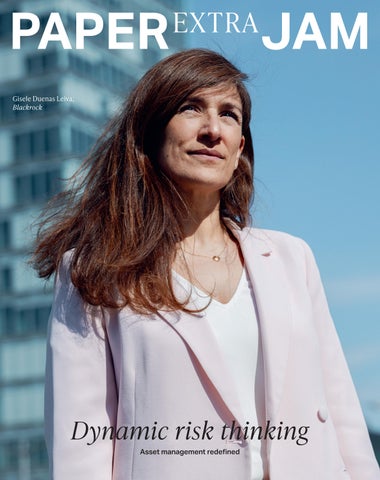
Dynamic risk thinking
Gisele Duenas Leiva, Blackrock
Around the clock, around the globe

















For over 20 years, our global footprint and capabilities have continued to grow, supporting the development and success of our clients. Today, with our 24/5 Follow-The-Sun operational model and unsurpassed asset servicing expertise, CACEIS works continuously around the globe to help you excel in all situations. That’s frog power! www.caceis.com

Since 2000
www.WeArePaperjam.lu
www.Paperjam.lu
Postal address
PO Box 728, L-2017 Luxembourg
Offices 10 rue des Gaulois, Luxembourg (Bonnevoie) Phone (+352) 20 70 70
E-mail Firstname.name@paperjam.lu
Founder, CEO and Paperjam News Director Mike Koedinger
Chief Growth and Strategy Officer
José Campinho
Chief Operations Officer
Etienne Velasti
Editorial Director Mike Koedinger
Editor in Chief Guillaume Meyer
Art Director Cassandre Bourtembourg
Designer Juliette Noblot
Based on Paperjam’s visual identity developed by Reza Kianpour (Kianpour & Partners).
Journalists Sylvain Barrette, Alix Bellac, Louise Braibant, Camille Bourgeois, Marc Fassone, Émilie Gline, Mike Gordon, Kangkan Halder, Maëlle Hamma, Hugo Hirsch, Thierry Labro, Sarah Lambolez, Manon Méral, Ioanna Schimizzi, Rebeca Suay, Claire Schlinger
Desk Editor Cédric Haumont (-321)
Contributeurs Sébastien Lambotte, Audrey Somnard, Lydia Linna
Photographes Julian Pierrot, Jan Hanrion, Patricia Pitsch, Romain Gamba
Director Francis Gasparotto (-301)
Client Media Operations Florence Saintmard (-310)
Paperjam Studio Téléphone : (+352) 20 70 70-300
Layout Sophie Melai, Louna Mayer

All rights reserved. Any reproduction or translation, in whole or in part, is strictly prohibited without prior written permission from the publisher. (c) Paperjam S.A. ISSN 3088-599X
In accordance with the law of 8 February 2004 on freedom of expression in the media, the following statement is mandatory “once a year, in the first issue distributed.” We have chosen to publish it every month. The publishing company is 100% directly owned by Mike Koedinger, publisher, residing in Luxembourg. He is also responsible for the general management and day-to-day operations.
Edito
Eltif and the liquidity mirage
The latest redemption crisis in US private credit funds has exposed a persistent illusion: liquidity, in openended vehicles holding illiquid assets, is conditional at best.
The case of Blue Owl Capital Corp II is instructive. After reaching its quarterly redemption cap, the fund halted withdrawals and moved towards returning capital. Other large managers—Apollo, Ares, Blackstone—have imposed redemption restrictions on their private debt funds, for now. These episodes are not anomalies. They are structural.
Yet Europe is moving in the opposite direction. The revised European long-term investment fund (Eltif) framework, effective since January 2024, aims to open private markets to retail investors. Launches are accelerating, even if assets remain modest. The question is not uptake. It is understanding.
In response to two decades of mis-selling controversies, has the financial sector done such a thorough educational job that European retail investors now recognise that the risk-return-liquidity tradeoff makes illiquid assets unsuitable for openended funds?
This tradeoff is not negotiable. Illiquid assets cannot be made liquid without introducing fragility.
Under stress, redemption promises become constraints—and constraints may become suspensions.
The shortcomings are well known. Stale pricing creates first-mover advantages. Liquidity buffers dilute performance and add costs, often exceeding comparable listed exposures. Performance dispersion is high, making selection difficult. In this context, open-ended structures amplify—rather than mitigate—risk.
Closed-end funds offer a more coherent alignment between assets and liability. They remove the illusion of liquidity and replace it with clarity.
The recent US dislocations are not warnings. They are reminders. Liquidity is not a feature. It is a condition—and, in stressed markets, a fleeting one.
Sylvain Barrette Journalist























Asset Management
006 Gisele Duenas Leiva
The end of static portfolio models

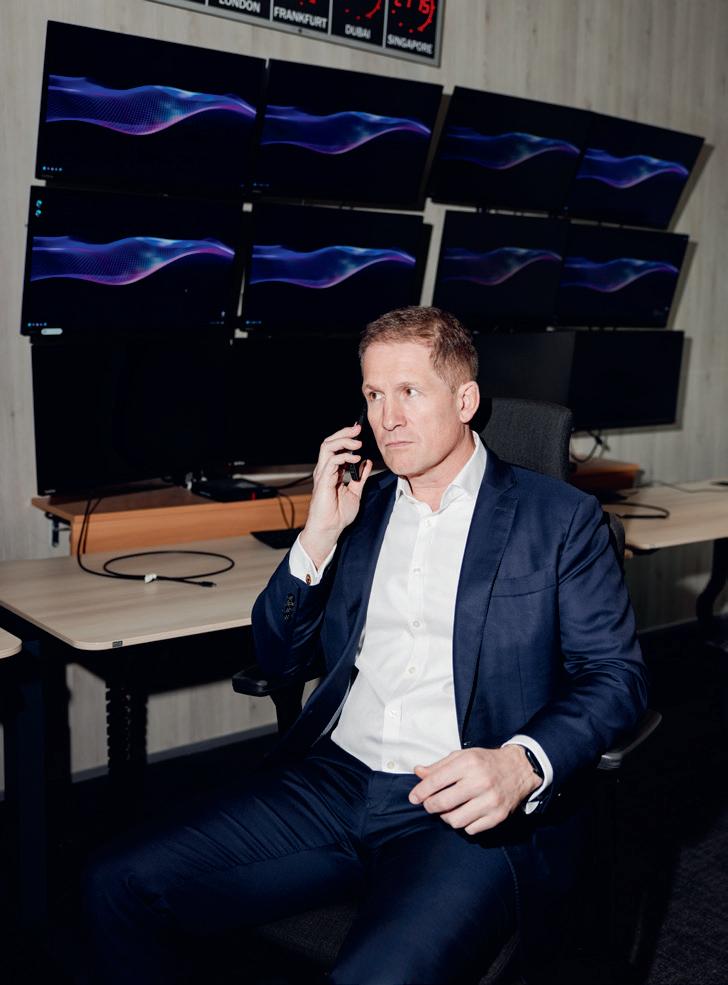
014 Britta Borneff & Jean-Marc Goy
Inside the Ucits exports machine
018 Corinne Lamesch
Ucits : cinq points de vigilance
022 Ken Shaw
ETFs: a more nuanced competitive landscape
026 Laurent Barras
Active ETFs: heavy on hype, light on evidence
030 Dominique Valschaerts & Neil Wise
Tokenisation meets the reality test
034 Neil Wise
Automation is harder than it looks
042 Ajay Bali, Neil Wise & Serge Weyland
AI investment outruns impact
046 Christopher Georgeson & Luc Verbiest
Cyber-risques : le nouvel enjeu stratégique
050 Andrea Gentilini & François Baratte
T+1 : la course est lancée
052 Kenza Netef & Pierre-Antoine Klethi
Carried interest : cinq approches
056 Julie Castiaux & Michael Horvath
SFDR 2.0: A different playing field
060 Fouad Rathle & Roberto Steri
Securitisation: between growth and risk
064 Amandine Laurent & Corinne Lamesch
Amla : la Place apprivoise le monstre
068 Luc Neuberg & Diane Pierret
Vigilance accrue sur le crédit privé
070 Dominique Valschaerts & Luc Neuberg Forecast
Conversation with Gisele Duenas Leiva
The end of static portfolio models
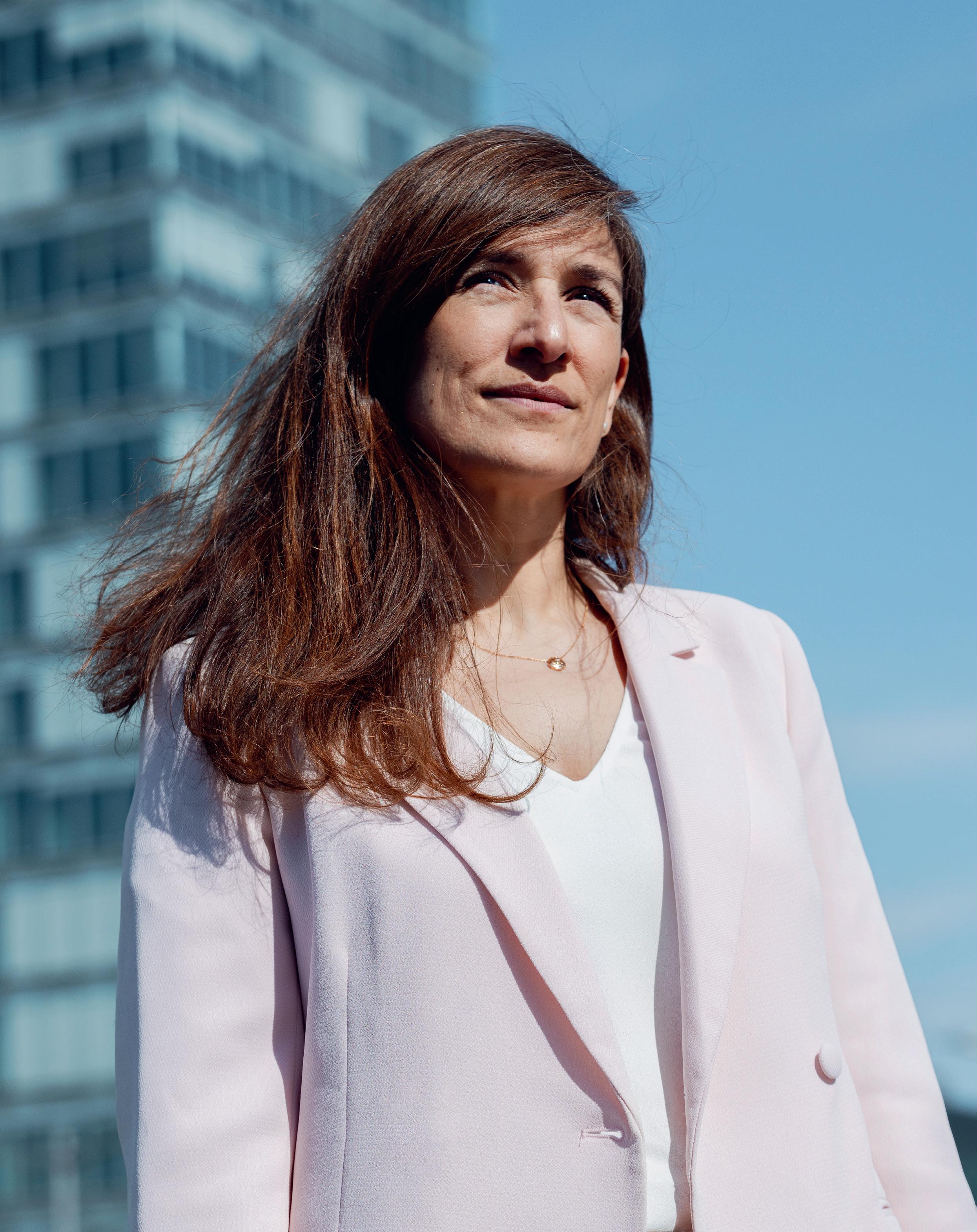
As markets grow less predictable, asset managers are questioning traditional allocation models rather than shifting to capital preservation. Gisele Duenas Leiva, head of wealth sales Belgium & Luxembourg at Blackrock, explains how portfolio construction is becoming more active and adaptive.
Guillaume Meyer, Journalist in collaboration with Sylvain Barrette Romain Gamba, Photographer

“ Family offices are clearly in a risk management mode.”
Moderate portfolio asset mix in 2025
Average allocation based on 166 EMEA moderate risk multi-asset portfolios reviewed in each quarter of 2025.
How would you characterise the current investment environment for high-net-worth clients?
We are clearly in a phase of transition. We are going through a pivotal moment geopolitically. It is a period in which many long-term assumptions are no longer valid. This creates a very different context for investors. We are no longer operating in a stable framework where past models can simply be applied. We are now in a world shaped by structural shifts, uncertainty and competing scenarios.
How is this uncertainty reshaping investor behaviour?
High public debt, volatile markets and major demographic shifts—including a large intergenerational transfer of wealth already underway—are reshaping client needs and priorities. Against this uncertain backdrop, a powerful new investment cycle is emerging around AI, creating opportunities comparable to past structural transformations such as the railroads.
Our survey last year showed that family offices see geopolitical uncertainty as a critical factor in their capital allocation decisions; they are clearly in a risk management mode.
What does this “risk management mode” look like in practice?
It translates into a much more active approach to portfolio construction. Investors are questioning traditional allocations and looking for new sources of diversification. In concrete terms, we are seeing growing interest in alternatives, both liquid and illiquid. This reflects the need to diversify beyond traditional asset classes and to build more resilient portfolios in an uncertain environment.
Do traditional portfolio models remain relevant in this context?

Blackrock currently employs more than 120 people in Luxembourg. This brings the total number of employees in the Belux region to over 140.
A cross-functional profile
Gisele Duenas Leiva, 44, has been head of wealth sales Belgium & Luxembourg at Blackrock since June 2025. Based in Brussels, the BelgianChilean national oversees the development of investment solutions for clients in the region. Active in the Belux market since 2017 with Blackrock, after several years with other asset managers, she describes herself as a “generalist,” drawing on a cross-functional background spanning wealth and institutional asset management. She maintains close ties with Luxembourg, where she meets clients every other week.
They are being challenged. The idea that a static allocation can deliver consistent results is no longer sufficient. Investors now understand that the environment is more volatile and less predictable. As a result, it is no longer possible to remain as static as before. Portfolios need to be reviewed more frequently, adapted to evolving scenarios and designed with greater flexibility. This shift implies a more tactical approach to investing. Investors are not necessarily abandoning their long-term strategies, but they are becoming more dynamic in how they implement them. The challenge is to combine a long-term view with more frequent adjustments. This requires continuous reassessment of risks, reallocation of exposures and ensuring that portfolios remain aligned with rapidly changing market conditions.
Beyond risk management, are you seeing a structural shift in how clients approach portfolio construction?
Yes, very clearly. The industry is moving away from a product-centric model. We are no longer in a logic of distributing individual products, but rather in a whole portfolio approach across public and private assets. This means that instead of focusing on standalone instruments, clients— and their advisors—are increasingly looking at the overall coherence of a long-term allocation.
How does this play out across different client segments?
The direction is the same, but investment offerings evolve with the level of client sophistication. At entry level, clients typically start with simple solutions, such as a savings plan using one or two exchange-traded funds (ETFs), to become familiar with investing. This provides an accessible
starting point. As their knowledge and confidence grow, we see a mix of ETFs and active strategies, followed by allocations to hedge funds and private markets.
Education plays a central role in this progression. We still observe significant gaps between different investor groups. For instance, 53% of European women have never heard of ETFs. This highlights how essential it is not only to provide access to investment solutions, but also to ensure that clients truly understand what they are investing in.
Are expectations also evolving in terms of transparency and costs?
Yes, particularly among younger investors and new generations. The demand for clarity is increasing— on costs, underlying exposures and how portfolios are constructed. This is closely linked to rising levels of sophistication. As clients become more informed, they naturally expect greater transparency and control over their investment decisions.
How are wealth managers adapting to this growing complexity?
Rather than distributing products, they are becoming true portfolio architects. This involves building diversified, tailored and evolving solutions that take into account clients’ objectives, constraints and life stages. The key challenge will be the ability to industrialise customisation. As clients become more sophisticated, they expect solutions tailored to their specific situations—not generic allocations.
At the same time, continued investment in education and in tools that help navigate increasingly complex markets will be essential. The ultimate goal is to empower investors to make better-informed decisions.

Pressure on credit
It emerged in early March that Blackrock has enforced the 5% redemption limit for its flagship private debt fund, HPS Corporate Lending Fund, following a sharp increase in redemption requests. These reached 9.3% of assets. The move comes amid concerns over credit quality and investor retrenchment.
Questioned by Paperjam, the group referred to the fund’s letter to shareholders: “Historically, periods of uncertainty and volatility have created some of the most compelling investment opportunities within private credit markets. We believe that we are entering into that type of environment. In our judgment, preserving the fund’s available capital to lean into this perceived opportunity set, while providing liquidity to shareholders consistently with the fund’s designed parameters, is in the best interest of the fund as a whole.”
Private markets are taking up a growing share of portfolios. Is investor interest holding up? We continue to see strong investor interest. This trend is largely driven by the search for diversification and opportunities beyond listed markets. However, it is essential to frame this approach correctly from the outset. Investing in private markets means investing in illiquid assets. This is a fundamental characteristic that should not be overlooked.
Could the development of more flexible structures blur that reality? Education and transparency are essential when integrating these strategies into portfolios. The fact that subscriptions and redemptions are possible does not mean the investment ceases to be long-term. There may be a perception of liquidity due to the structure, but the underlying assets remain illiquid.
As withdrawals increase in semi-liquid private debt funds and concerns about credit quality intensify, how do you approach liquidity management with your clients?
In the context of the European longterm investment fund (Eltif) framework, it provides clarity on liquidity mechanisms. We never present these products as liquid. We refer to them as evergreen structures. We spend a great deal of time explaining the mechanisms to our clients.
Does this protection come at the expense of performance? This is the common question of “cash drag.” Within the Eltif structure, funds typically maintain a liquidity bucket of around 20%, with specific rules in place. Rather than holding this sleeve entirely in cash, we actively manage the liquidity bucket across liquid
public market assets, which allows for a more efficient use of capital while still supporting liquidity needs.
In a more uncertain macroeconomic and geopolitical environment, what should investors keep in mind?
It is essential to analyse these mechanisms carefully and to select the right products. Selectivity becomes paramount. The range of products and opportunities is expanding, but not all are equal. Investors need to carefully assess the structure, liquidity profile and underlying exposures before committing capital.
How would you characterise Luxembourg’s trajectory within Blackrock today?
It is one of the hubs that continues to expand in both scope and importance. Growth across private markets, active strategies and technology is creating a strong and sustained momentum. Blackrock invests more than €1.8trn in Europe on behalf of our clients worldwide, and Luxembourg serves as a key hub connecting global investors with European capital markets.
Tuesday 13 October 2026
18:30
Learn more Programme Kinepolis Kirchberg
Finance is undergoing a profound transformation, driven by digital innovation, regulatory shifts, and evolving customer expectations. This Paperjam 10×6 event brings together ten thought leaders to explore how financial institutions are adapting to this new landscape.
Topics include the rise of embedded finance, the impact of ESG considerations, and the integration of AI in financial operations. Join us to gain insights into the strategies shaping the future of finance in Luxembourg and beyond. Finance is changing
Inside the Ucits export machine

Luxembourg’s fund industry now manages €8.2trn, built on decades of innovation and global reach. But as it eyes 120 untapped markets, regulatory hurdles, tax gaps and geopolitics will shape its next phase of expansion.
Britta Borneff Chief marketing officer
Sylvain Barrette, Journalist
Julian Pierrot, Photographer
Alfi
The Luxembourg fund industry manages around €8.2trn in assets, a milestone that reflects decades of strategic development. The financial centre’s roots go back over 100 years with the establishment of the country’s first banks and the 1927 creation of the Luxembourg Stock Exchange.
But the transformation of Luxembourg was truly defined by the Ucits directive, stresses Association of the Luxembourg Fund Industry (Alfi) chairman Jean-Marc Goy. This directive, which covers the management and sale of mutual funds across the EU, is widely seen as the “game changer” that turned Luxembourg from a small domestic market into a premier international distribution hub.
The Ucits export model rests on a versatile “toolbox” of legal and operational structures. Unlike some of its European neighbours, which have historically favoured a single legal form, Luxembourg offers both corporate and contractual structures, catering to the diverse preferences of international promoters. These structures come in all flavours: equity, fixed income, multi-asset mutual funds or exchange-traded funds (ETF), as well as private equity, private debt or venture capital.
Eighty markets today
Furthermore, the Luxembourg Financial Sector Supervisory Commission (CSSF) permits the use of English, French and German for regulatory communications, a flexible approach that gave the country a significant “head start” in the global market.
“International is in our DNA, because we seldom think domestically, having commercial exchanges and relationships with the three countries surrounding us and even beyond,” says Goy. Today, Luxembourg funds are distributed in
80 jurisdictions worldwide, but the industry focuses on the approximately 120 countries where these products are not yet active. The Alfi chairman believes that this success is supported by Luxembourg’s political, financial and social stability.
MOUs and tax drive expansion
Expansion into the remaining 120 countries is viewed as a “long-term effort” that requires navigating complex political and regulatory landscapes. A primary technical requirement is the establishment of a memorandum of understanding (MOU) between the CSSF and local regulators, explains Britta Borneff, chief marketing officer at Alfi.
These agreements are essential to allow for the delegation of portfolio management. Without an MOU, an asset manager in a foreign jurisdiction would be unable to launch or distribute a Luxembourg fund
“Taxation is equally a critical factor in global distribution,” says Borneff. Double tax treaties are vital to ensure that international investors are not placed at a disadvantage compared to those using local products. A prominent example of this challenge is the US market. Although a treaty between Luxembourg and the US exists, it does not currently cover investment funds as effectively as the treaty held by Ireland. This puts the grand duchy at a disadvantage, particularly for physical ETF products. “We don’t really understand why we are not on the same level of taxation,” adds Goy.
Despite these hurdles, there is significant growth in emerging markets. In April 2024, Brazil updated its laws to allow domestic funds to invest 100% of their assets in Luxembourg funds, a move that has “revived the whole distribution landscape.” Similar
efforts are ongoing in Argentina, Chile, Colombia, Peru and Mexico. These successes are the result of “long-haul” engagement. Entering the Hong Kong market, for instance, required years of exchanging “long letters of questions” to satisfy local regulators. Ultimately, the goal is to ensure that whether an investor is in Buenos Aires or Seoul, they have access to the broadest possible spectrum of geographical and product exposure through a Luxembourg vehicle.
US home bias limits global access
The international success of a good or service often begins with strong export performance in the US. American managers have historically been content with their domestic market and preferred not to involve the “international crowd” in their home-jurisdiction products, explains Stefan Staedter, partner at Arendt & Medernach. Moreover, he notes that international investors often avoid investing directly in US funds to escape the high costs of US legal advice or potential withholding tax questions.
Contenu sponsorisé par Elvinger Hoss Prussen
A law firm with a 360° view of tokenisation
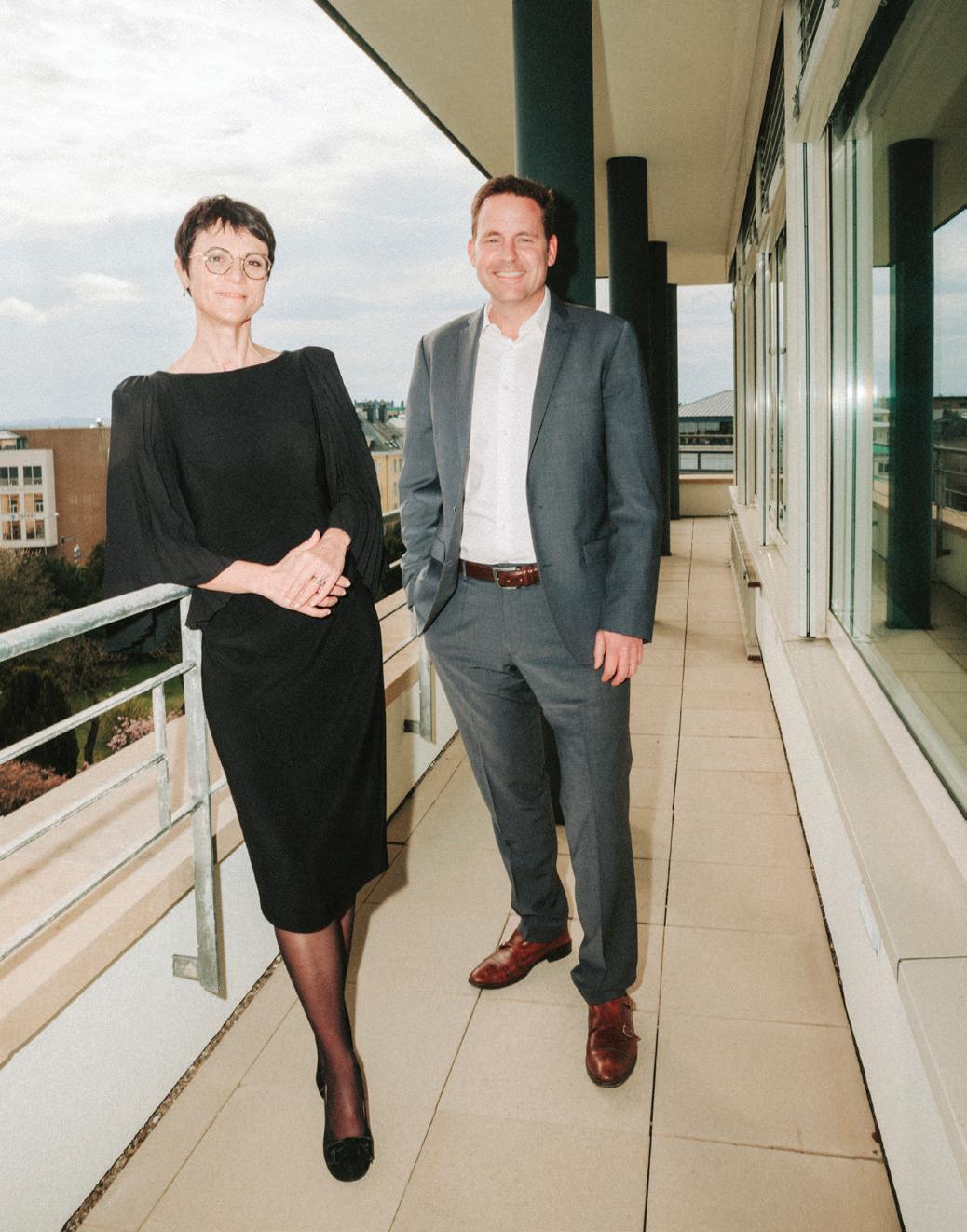
Thanks to its in-house fintech task force, which combines legal, regulatory and technological expertise, Elvinger Hoss Prussen is well-equipped to address the rapidly developing role of tokenisation in the funds industry, say Sophie Dupin and Yves Elvinger.
Tokenisation is now in the spotlight in Luxembourg, partly due to the country’s four Blockchain Laws. It aims to make the fund industry more transparent, more secure and less costly. So what kind of fund structures can be tokenised?
“Everything can be tokenised!” says Sophie Dupin, a partner at Elvinger Hoss Prussen whose work focuses on asset management, investment funds and fintech. “All you need to do is design your ideal--and we’ll do it. The current legal and regulatory environment enables us to do almost everything we want, of course taking into account applicable laws and regulations. There are safeguards, with authorisations and disclosures to be made, but today, almost everything is possible.”
Both fund shares and assets can be tokenised, and people are looking into tokenisation and blockchain in order to make their fund operations even more efficient. One use case is the tokenised money market fund, says partner Yves Elvinger, who specialises in investment funds, management companies and AIFMs, and regulatory and compliance.
Photo : Julian Pierrot
Sophie Dupin and Yves Elvinger, Partners at Elvinger Hoss Prussen
« Everything can be tokenised! »
Sophie Dupin, Partner, Elvinger Hoss Prussen
“This is particularly interesting because money market instruments are eligible as collateral. The technology can help make settlement of margin calls more efficient.” In a traditional setup, adjusting collateral exposure can take time. But this technology can allow instant settlement, explains Elvinger.
“Laws and regulations in Luxembourg should be interpreted in a tech-neutral way. As long as we are able to comply with the rules, we are not prevented from using these types of technologies,” he adds. The industry already benefits from digitalisation, but the next step is automation. “Tomorrow, you’ll be able to use blockchain technology to do deal with funds in a more automated way.”
Tech pioneer
With the support of Elvinger Hoss Prussen, Azimut in 2023 tokenised the units of one of its Luxembourg alternative investment funds, while Franklin Templeton in October 2024 received CSSF approval to launch the first fully tokenised Ucits fund using proprietary technology.
Innovation is also a way for Luxembourg to remain competitive, and the law firm has always been “very involved in new evolutions that bring added value to the fund industry,” says Dupin, who points out that Elvinger Hoss Prussen was the pioneer law firm to obtain cloud outsourcing for regulated entities, shortly after the CSSF’s circular on the topic was published in 2017. “This was a big step for Luxembourg, bringing more efficiencies and data capabilities.”
A strong link between legal requirements and technical aspects is at the heart of the “fintech task force” at Elvinger Hoss Prussen.
In addition to Dupin and Elvinger, it counts roughly a dozen experts with diverse backgrounds -- including partners Olivia Moessner, Anaïs Sohler, Tiago Nogueira and senior associate Iren Butrakova--who bring a 360° perspective to the table.
The team has a deep understanding of both the regulation and the operational side of the tech, highlights Dupin, making them uniquely equipped to understand client needs. And thanks to years of experience with other technology, like tools for transfer agent services or AML, they’re also familiar with CSSF procedures, bringing added value to clients when it comes to timing, information submission, regulatory constraints and expectations.
It’s not one-size-fits-all. Instead, it’s key to find the most suitable operating model when working on tokenisation projects, emphasises Elvinger, whether that’s a new fund structure or adapting an existing one. This depends on client needs, service providers, how the manco operates and which functions are performed internally. “We can help clients to identify the model that fits best with their setup.”
“This is an environment that is changing very quickly,” he adds. It’s difficult to predict how things will look in a few years, but the Luxembourg framework provides “additional flexibility” when defining operating models.
Moving forward
Beyond attracting interest from the international market, ideas like tokenisation and DLT can also attract next gen investors who might not have been interested in the fund industry, says Dupin.
“It’s not only about tokenisation,” concludes Elvinger. “It’s about a new, digital way to access funds.”
« It’s about a new, digital way to access funds.»
Yves Elvinger, Partner, Elvinger Hoss Prussen

Plutôt qu’une refonte complète de la directive européenne sur les actifs éligibles des fonds Ucits, l’Alfi plaide pour une révision ciblée afin de préserver la marque.
Marque
Adoptée en 2007, la Ucits Eligible Assets Directive définit les actifs qu’un fonds Ucits peut légalement détenir. Il s’agit notamment d’actions cotées, d’obligations (souveraines ou d’entreprises) et d’instruments dérivés. Un avis de l’Autorité européenne des marchés financiers (Esma) juge opportun de revoir ce cadre. Face à l’accueil plutôt tiède de l’industrie, la Commission européenne a annoncé le lancement d’une consultation au deuxième trimestre 2026.
L’Alfi appelle à la prudence. « Nous ne voulons en aucun cas porter atteinte à la marque Ucits », insiste la deputy CEO et general counsel, Corinne Lamesch. « Cette marque, utilisée dans plus de 70 pays, constitue une référence mondiale, prisée par les investisseurs particuliers comme institutionnels. Toute évolution devra donc préserver ce socle de confiance et maintenir un haut niveau de protection des investisseurs. »
Ucits : cinq points de vigilance
Guillaume Meyer, Journaliste
Convergence
L’Esma estime qu’un actif non éligible en direct ne devrait pas l’être non plus indirectement, via des dérivés ou certains ETF. Dans le viseur notamment : les matières premières ou l’immobilier. « Le risque est d’aboutir à une harmonisation par le bas », prévient Corinne Lamesch. Si certaines pratiques nationales diffèrent aujourd’hui, elles permettent aussi une diversification jugée utile pour les portefeuilles. L’Alfi redoute qu’un tel changement impose des désinvestissements importants, sans bénéfice clair pour la protection des investisseurs.
2 3 4 5 Numérique

Ouverture
L’Alfi plaide pour une ouverture « mesurée » aux actifs privés. L’idée serait d’autoriser les fonds Ucits à y consacrer une part limitée de leur portefeuille afin d’élargir les sources de diversification. « Nous devons regarder vers l’avenir et voir comment les marchés ont évolué », souligne Corinne Lamesch. Les actifs privés représentent une classe en forte croissance et suscitent un intérêt grandissant des investisseurs, y compris particuliers. L’association évoque une proportion comprise entre 10 % et 15 %, avec un plafond autour de 20 %, afin de préserver la liquidité du produit. Une telle évolution permettrait, selon elle, d’améliorer la diversification et potentiellement la performance à long terme. L’Alfi suggère également d’autoriser les fonds Ucits à investir dans certains fonds européens d’investissement de long terme (Eltif).
Titre xxxxxx
xx atendant quam, invelicia doluptatur? Em es eiusciurit, autatemped ea pra pelest, quidem nobit odieostinc iistotas a ipsa doluptatem corum quident vellitis pro officabori nobit alignatibus este arum quid que sam volupta aut xxxxxxxxxxxxxxxxa
250 signs
Les cryptoactifs figurent aussi parmi les pistes de réflexion. Aujourd’hui, au Luxembourg, les fonds Ucits ne peuvent y être exposés qu’indirectement, via des valeurs mobilières. « La question est de savoir si l’on pourrait ouvrir, avec des garde-fous appropriés, la possibilité d’investissements directs en cryptoactifs », avance Corinne Lamesch. « Toute évolution devrait évidemment s’accompagner de protections strictes pour les investisseurs. »
Innovation
L’Alfi évoque la possibilité de redonner un peu de souplesse au mécanisme surnommé le « ratio poubelle » afin d’inclure, dans une proportion limitée, certains actifs qui ne figurent pas explicitement parmi les actifs éligibles. L’association souhaite permettre l’intégration, au-delà des seules valeurs mobilières, de nouvelles classes d’actifs suffisamment liquides. Les prêts sont souvent cités par l’industrie comme exemple pour renforcer la diversification.
Photo : ALFI
Corinne Lamesch, Alfi
Radar
Net assets of ETFs in Ireland and Luxembourg (€bn)
Morningstar Direct data for European ETFs, excluding funds-of-funds and feeders, including obsolete funds Ireland Luxembourg
Scale and tax advantages keep Ireland firmly ahead in passive exchange-traded funds (ETFs). Luxembourg, though smaller, aims to find opportunities in the still-developing active ETF segment.
Guillaume Meyer, Journalist
ETF Ucits assets by domicile (€bn)
Preliminary Efama data for 2025
Withholding tax on US dividends stands at 15% in Ireland for physical ETFs—thanks to the US-Ireland tax treaty—compared with 30% in Luxembourg.
Your vision. Our legal advice. Limitless possibilities.
Stay ahea d of the forces r eshaping your business –but n ever alone . Whether investing, funding, or defending, we explore every angle to establish the best course of action, delivering exceptional advice
THROUGH OUR NETWORK OF TOP-TIER LAWYERS.

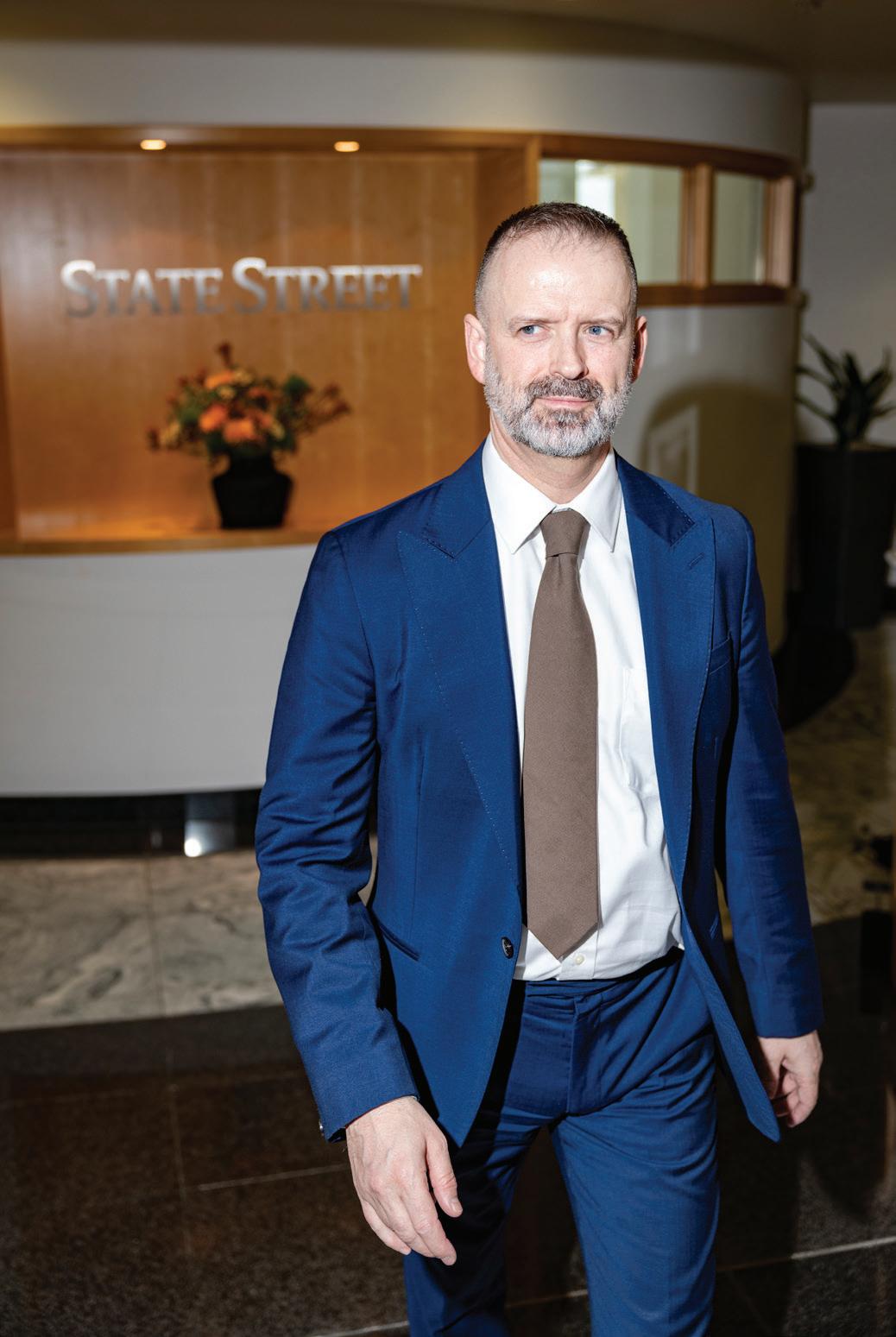
ETFs: a more nuanced competitive landscape
Europe’s ETF market is entering a new phase of expansion, driven by active strategies, new structures and evolving distribution. While Ireland remains dominant, Luxembourg is not losing ground, says Dublin-based Ken Shaw, head of ETF solutions EMEA at State Street.
Audrey Somnard, Journalist
Romain Gamba, Photographer
Conversation with Ken Shaw
European ETFs: a fast-growing
market
The European ETF market has expanded rapidly, with assets under management now exceeding €1.5trn. Growth has been driven by increasing demand for low-cost, transparent investment vehicles. While Europe still lags behind the United States, according to industry forecasts, the European ETF market could double in size within the next four to five years.
Ireland is widely seen as the dominant European hub for exchangetraded funds (ETFs), with around two-thirds of assets domiciled there, compared with roughly 15% to 20% in Luxembourg. Has the race already been decided?
I don’t like to think of it in those terms. From a State Street perspective, we’re location-agnostic as to where a client sets up its business. Ultimately, when clients launch products, they do so where there is investor demand and where their product will be competitive relative to other products in that space.
In my view, Ireland and Luxembourg are both successful. They are probably at different places in terms of asset gathering as a consequence of historical outcomes. When the European ETF industry launched many years ago, ETFs tended to be introduced in the home market of the issuer bringing those products to market.
Ireland probably became the preferred base for international or American-type issuers with equity-heavy exposure, particularly US exposure, and there are tax reasons that drove much of that. Luxembourg positioned itself with a broader mix of strategies, exposures and investor segments.
Yet many of the largest ETF providers chose Irish domiciles for flagship products. What explains that concentration?
Luxembourg is still the second-largest domicile in the region, and by some margin. There is a significant difference between the second and the third, fourth or fifth positions. People sometimes make too much of the competitiveness. If number two had 1% market share that would be problematic, but that’s not the case here. If you look at the growth trajectory of
the Luxembourg market over the last four or five years, the market actually outperformed the wider European market last year. The European market grew around 40% to 41%.
Luxembourg grew about 45%.
Luxembourg had its strongest year ever in terms of assets under management, fund launches and flows. The year before was the same, and I’m pretty sure the year before that was the same again. Each year, it is taking incremental steps and keeping pace with the wider industry. It has lost no ground relative to Ireland over the last three or four years.
Could Luxembourg’s position as a global cross-border fund centre become an advantage for ETFs? I think so. It makes me immediately think of Latin America (Latam). Luxembourg has traditionally been the first stop for Latin American managers thinking of launching products in Europe. In real-world conversations we are having today, particularly with Latin American managers, many discussions are about extending their offering to include ETFs. I would say those discussions are primarily around adding ETF share classes to existing funds.
Ultimately, they are still talking to us about ETFs. Cross-border distribution is an advantage for Luxembourg. If those managers already have Luxembourg-based funds, that positioning plays well for future ETF developments.
Active ETFs are gaining traction globally. Could this become a major opportunity for Luxembourg?
Luxembourg is the largest active mutual fund centre in Europe, and globally the momentum story in ETFs is active strategies. It’s not quite the same as in the US, but it’s definitely
“ In my view, Ireland and Luxembourg are both successful.”
the momentum story. There are regulatory tailwinds. Luxembourg removed the subscription tax charge and introduced reduced portfolio transparency, which allows managers concerned about protecting intellectual property to bring products to market while shielding certain portfolio information.
There is also investor demand. Surveys show that one of the main gaps in ETF product offerings is active exposure. In Europe, active ETFs represent about 3% of assets under management and around 10% of flows. But 35% of product launches last year were active. That growth trajectory puts Europe roughly where the US was four or five years ago.
hybrid vehicles combining listed and unlisted structures. More broadly, it will likely become the domicile for more complex products. Strategies with derivatives elements or defined outcomes are areas where Luxembourg has historically positioned itself as an expert.
Ireland vs Luxembourg: two different models
Ireland remains the dominant domicile for ETFs in Europe, hosting roughly two-thirds of total assets. Luxembourg, with an estimated 15% to 20% market share, remains the leading cross-border fund centre globally and is increasingly positioning itself in more complex ETF structures. Rather than directly competing with Ireland, Luxembourg is focusing on diversification and innovation.
Tokenisation is increasingly discussed across the fund industry. Could it reshape the ETF market? I fall somewhere in the middle on tokenisation. I don’t think it’s going to change the world in the next few years, although it could become something much bigger over 15 or 20 years. An ETF is already a liquid and digital vehicle, so some people say tokenisation is trying to solve a problem that doesn’t exist. But there are still interesting possibilities.
One argument is that a younger cohort of investors may never have a traditional brokerage account but may have a digital wallet. Issuers are therefore looking at tokenisation as a potential new distribution channel. There could be benefits such as extended trading hours or fractional ownership. But the whole ecosystem is not yet ready for a fully tokenised model.
Looking ahead five to ten years, what would success look like for Luxembourg in the ETF space? I think Luxembourg should sit very well in the active ETF space and in
If Luxembourg keeps doing what it’s doing and the regulator continues to be supportive, it will naturally do well. The ecosystem is strong, the regulatory environment is strong and the industry association is very vocal. If you look at the numbers in isolation over the last few years, Luxembourg looks extremely positive. The challenge is that people always compare it with somewhere else rather than looking at the progress that has been made.
Fund Distribution in 2030: Who Will Own the Retail Relationship?
With the rise of the retail investor, the relationship dynamics in private funds between GPs and the end investor are changing. The impact on fund distribution cannot be ignored.
A Changing Dynamic
As alternative asset managers expand into retail markets, distribution is no longer an extension of institutional fundraising but a core strategic and regulatory inflection point. The primary relationship owner of the retail client in alternatives is unlikely to be the GP. Instead, ownership will sit with a small number of powerful inter mediaries: digital wealth platforms, private banks, insurers, and large advisory networks that control access, data, and suitability decisions.
Innovations such as tokenization, semi-liquid structures, ELTIF 2.0-style regimes, and API-driven onboarding will lower technical barriers to entry. This gives platforms leverage over product design, fees, liquidity terms, and even branding, increasingly reducing GPs to manufacturers rather than client-facing partners. But regulatory frameworks continue to place the client relationship, including KYC, suitability, and disclosure, squarely with the fund manager, where the intermediary is not a MiFID regulated distributor.
Opportunity and Risk
For GPs, the opportunity is scale. Intermediated distribution can unlock vast pools of retail capital previously inaccessible and smooth fundraising cycles. It also enables product innovation tailored to retail constraints.
The risks, however, are material. Loss of control over client data and messaging, margin compression, distributor concentration risk, and heightened conduct exposure through mis-selling or liquidity mismatches are real. Strategically, GPs must decide whether to accept platform dependency, co-own the relationship through branded partnerships, or selectively invest in direct-to-investor capabilities, all while ensuring their structures and disclosures remain regulator-proof. By 2030, distribution strategy will be as critical to value creation as investment performance itself.
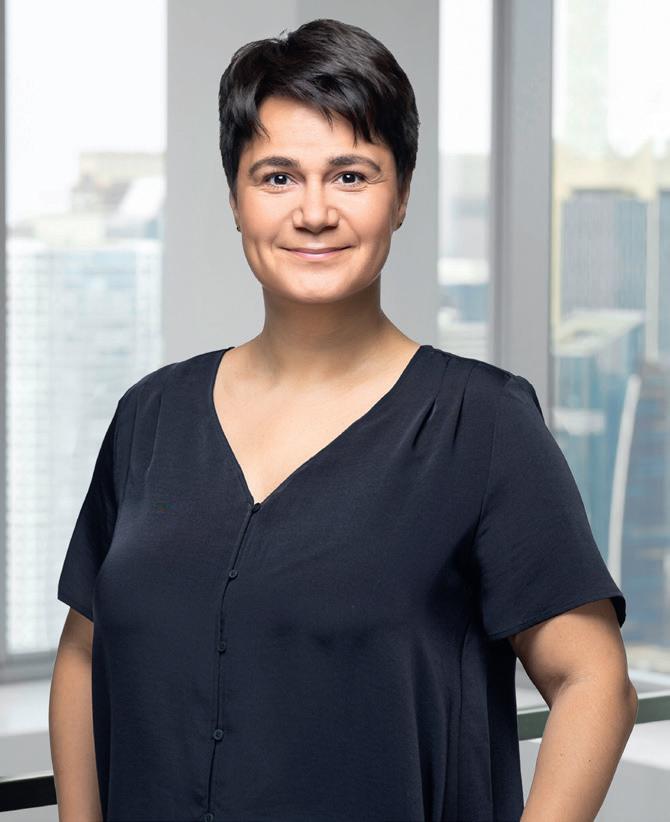
Veronica Aroutiunian, Partner at Debevoise & Plimpton
Active ETFs: heavy on hype, light on evidence
Active ETFs promise the best of both worlds—but the reality is more complex. Rapid growth can mask evidence of weak performance, while structural constraints and transparency risks may cap their long-term potential.
The volume of active exchange-traded funds (ETFs) remains low compared to the volume of passive ETFs. According to the ETF and ETP research and consultancy firm ETFGI, assets invested in the actively managed ETFs listed globally reached $1.86trn in November 2025. They account for a little under 10% of the total assets invested in the ETF industry globally, which stood at $19.44trn at the end of November.
But active ETFs are growing rapidly. This is driven by two main factors, explains Laurent Barras, a finance professor at the University of Luxembourg. First, investors often assume that the benefits of passive ETFs—such as lower costs and greater liquidity—also apply to active strategies. Second, ETF distribution differs from that of traditional mutual funds: ETFs are traded on exchanges and accessible via brokerage accounts. This suggests that they attract new capital from investors outside traditional bank-mediated networks. As studies in the United States have also shown little evidence of “cannibalisation,” this implies that these ETFs manage to attract fresh capital rather than simply bring in assets from existing mutual funds.
Short track records
Assessing whether this growth is justified remains challenging. Evaluating active ETF performance is difficult because most products lack a meaningful track record—an issue that may support current growth. The investment research company Morningstar reports underperformance over one- to threeyear horizons (see chart), but Barras stresses that results are often too “noisy” to draw statistically meaningful conclusions. With such limited history, reliable performance analysis is almost impossible due to high return volatility.
Take, for instance, a manager with no real skill (performance)—someone
Sylvain Barrette, Journalist Julian Pierrot, Photographer
with a true net alpha of zero. Around one in four managers may seem to produce a 3% annual alpha over three years—yet this can be nothing more than luck. Such figures are often highlighted in marketing materials, representing nearly 60% of the long-term equity premium (typically around 5%). Barras, however, argues that these figures provide no meaningful insight into managerial ability.
Over the long term, Barras expects active ETFs to mirror the underperformance observed in traditional active mutual funds once a decade or more of data becomes available. “I do not expect extraordinary growth in active ETFs if it is not supported by performance,” he says.
Behind underperformance
Even when skill exists, structural factors limit returns. Research indicates that the failure of active management to deliver net returns is rarely due to a lack of skill; around 80% of managers generate profitable ideas and create gross value. Some studies find that alpha on the first dollar invested (before scale effects) can reach 3.5% per year.
The main barriers preventing this value from reaching investors are capacity constraints and fees. “There is a significant difference between managing $10m and $1bn,” notes Barras. As funds grow, they become like an “elephant in a china shop,” with large trades moving market prices against them.
Consequently, it degrades the execution of even the best investment ideas. The “small is beautiful” principle applies to active ETFs, mutual funds and hedge funds alike. Once a fund exceeds its optimal size, its ability to generate alpha decreases.
The industry must also determine how value creation is shared.

“ The ETF is not a product that naturally transitions from passive to active.”
Laurent Barras Professor in asset management University of Luxembourg
Active ETFs as defined by Alfi
Active ETFs “are actively managed funds that are then distributed in ETF format,” said Alfi CEO Serge Weyland at a media breakfast in February. This involves “using an ETF as a wrapper to make those products available on digital platforms with online brokers.” Active managers are increasingly considering this option as a way to open up new distribution avenues.
Investors’ bargaining power remains weak, and there is little evidence that active ETFs will change this dynamic. While some fee compression is evident, the main beneficiaries are fund groups, which gain access to new clients without relying on traditional bank intermediaries.
A transparency trap
Active ETFs face a structural challenge around transparency. To keep market prices close to net asset value (NAV), funds must regularly disclose their portfolios to market makers and authorised participants to enable arbitrage. In contrast, traditional mutual funds can keep holdings more private, allowing them to exploit
equity managers’ 2025 year-end outcomes
proprietary information more effectively. As a result, active ETFs are often pushed towards shorter-term signals, which historically generate less value than long-term strategies.
This transparency requirement introduces a high risk of front-running, where other market participants anticipate and exploit trades. It also makes it difficult for managers to build positions gradually without signalling intentions to the market. “The ETF is not a product that naturally transitions from passive to active,” adds Barras.
While passive ETFs offer clear advantages—including efficient liquidity provision, tax benefits (this is the case for US investors in particular, less so for Europeans) and trading flexibility—these advantages are less pronounced for active structures. Passive ETFs dominate because investors trade among themselves on the exchange rather than relying on the fund to provide liquidity.
Concentration concern
Elevated valuations and a strong concentration in technology stocks raise questions about the risk profile of a purely passive strategy tracking the S&P 500. With price-to-earnings ratios at unusually high levels, Barras suggests that diversification across other markets may offer a more prudent approach for investors concerned about speculative bubbles.
For the average investor, passive ETFs remain the more reliable option. Active ETFs, despite strong growth, face structural constraints that limit their ability to deliver consistent value.
Active

tMMFs: Don’t wait, don’t rush—think strategically
Tokenised
Money
Market Funds (tMMFs) have moved from concept to live market. For asset managers and service providers, the relevant question is no longer whether to act but how.

Why now?
Banking deposits in the EU held by non- nancial corporates and nancial institutions represent roughly €7 trillion in underutilised assets. In a positive interest rate environment, idle cash carries a real opportunity cost: non- nancial corporates earn an average of about 1.2% on €3 trillion non-operational and term deposits today, compared to approximately 2% achievable through tMMFs, which o er equivalent liquidity and near-instant settlement. This is not a speculative scenario.
A French ntech founded in 2023 grew to €1 billion in AuM today, with 92% of it from corporations.
Luxembourg’s unique position
Franklin Templeton, Amundi or BNP Paribas have already domiciled their European tMMFs in Luxembourg. The reason is structural: a technology-neutral legal framework, with a pragmatic regulator that takes an enabling stance — most recently with a February 2026 update to its UCITS FAQ permitting the cash leg to be settled via e-money tokens. The Blockchain Laws, while not yet widely used by investment funds in practice, signal legislative intent and provide a ready-made legal infrastructure. The ETF market is instructive: Ireland built an 80% share through early mover advantage, creating a ywheel never reversed.
The Luxembourg window for tMMFs is open — and the regulator intends to keep it that way.
What this means in practice
For asset managers and asset servicers, the question is no longer whether to act but how. End-to-end tokenisation gives asset managers access to a new pool of capital — bank deposits. For asset servicers, the stakes go further: it automates subscription, redemption, reconciliation and record-keeping on-chain, driving e ciency gains that fundamentally disrupt the economics of middle- and back-o ce servicing. But de ning the right business strategy is a vital rst step. The aforementioned French ntech’s lesson is clear: it led with a value proposition — “put your idle cash to work” — not a technology pitch like larger incumbents. €1 billion in AuM in under two years says enough. The rms that move rst with a clearly de ned strategy — not a technology bet — will set the terms for everyone else.

Tokenisation meets the reality test
Tokenisation is often presented as the next step for financial markets, but its usefulness depends on whether it solves concrete operational problems. In Luxembourg, adoption remains uneven, with clear use cases alongside systems that already work.
Tokenisation has moved from a technical concept to a strategic talking point in asset management. Industry forecasts point to strong growth over the coming years, with managers increasingly treating it as part of the sector’s next operating model.
But that narrative still runs ahead of practice. Luxembourg’s financial regulator, the Financial Sector Supervisory Commission (CSSF), says projects in cryptoassets and tokenised traditional assets are multiplying, with the clearest momentum so far in fund tokenisation. Beyond funds, most traditional-asset initiatives remain at pilot stage. That leaves visible momentum in one corner of the market, but not yet broad-based adoption across the wider value chain.
Financial markets are not starting from scratch. They are built on infrastructure that, while imperfect, is widely used and operationally reliable. The test is whether tokenisation improves those systems enough to justify the cost of change.
Promise, qualified
For Neil Wise, chief commercial officer of Clearstream Fund Services and member of the executive board of Clearstream Fund Centre, that burden of proof sits with the new technology. “You’re seeing a lot of people talking about tokenisation, as though it’s the answer to every ill in our industry,” he says. “But I’m not seeing the problem that exists.”
His point is not that tokenisation lacks merit. It is that, in much of mainstream fund servicing, the existing system already works. The question, in his view, is whether it is being applied where the friction is real enough to matter.
Dominique Valschaerts, independent director and partner at The Directors’ Office and former chief
Mike Gordon, Journalist
Romain Gamba, Photographer
executive of Fundsquare, takes a longer-term view. “The objective should not be limited to the tokenisation of existing assets,” he says. “We need to move towards the wider use of native digital assets on the blockchain.”
Where it works
Wise sees a clearer use case where instruments are complex and manual, and where existing systems struggle to cope.
Valschaerts frames the gain at the level of market infrastructure. “Some speak of atomic settlement. I would simply call it instant settlement,” he says. The aim is to compress execution and settlement and reduce operational and counterparty risk.
The CSSF’s view suggests this is not just theoretical. Some first movers have already moved beyond experimentation, but those cases remain concentrated rather than widespread.
What already works
Wise is most sceptical where infrastructure already functions well. His example is the exchange-traded fund. “You look at ETFs, for example,” he says. “ETFs work like a security. It’s almost flawless in how you deal with it, how you pay for it. There’s liquidity, and it works.” In such markets, tokenisation risks becoming a solution in search of a problem. “There are a lot of people in the industry looking to provide solutions for problems that don’t exist.”
The CSSF’s reading points in the same direction: interest is growing, but beyond fund tokenisation, most projects remain exploratory.
The price of change
Cost sharpens the argument. “If you were to replace the current infrastructure with new technology, what are you actually saving?” Wise asks.
“ Some speak of atomic settlement. I would simply call it instant settlement.”
Dominique Valschaerts Partner
The Directors’ Office
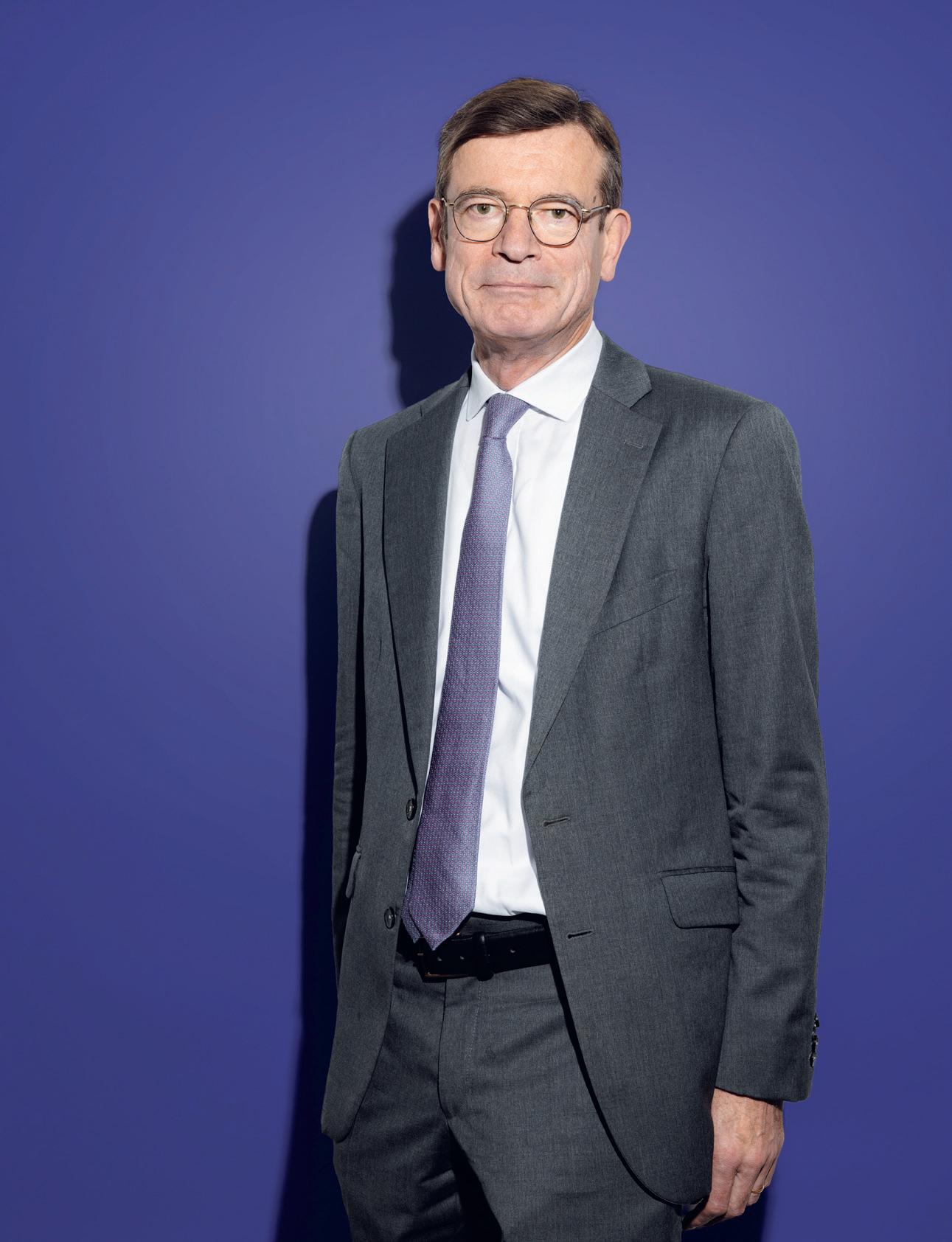
CSSF: momentum, but limited scale
Luxembourg’s financial regulator says projects in tokenised assets are increasing, with the clearest progress in fund tokenisation. Beyond that segment, most initiatives remain at pilot stage. Some first movers have moved ahead, but broader adoption is still limited, reflecting the time, resources and operational effort required to scale.
“Actually, the cost of that technology doesn’t give you any short- to midterm savings at all.”
He makes the point more precisely when discussing fund costs. If a fund already carries costs of around 150 basis points, he says, “one basis point in our sort of world doesn’t really cause any concerns.”
That matters because Wise is not only arguing that tokenisation can be expensive. He is arguing that in parts of the market it may be targeting the wrong problem. If the current infrastructure already functions and the savings are marginal, the case for replacement weakens quickly.
The CSSF gives that scepticism a practical frame, pointing to the resources, time and complexity required to build tokenisation platforms. Valschaerts narrows the argument rather than rejecting it. “That may be true for Goldman Sachs and Morgan Stanley, but not for the man in the street,” he says.
Not there yet
For
Valschaerts, the constraint is not technological. “The technology is there. Political will is there too, but it is expressed too timidly.”
The CSSF takes a more cautious view, pointing to limited experience among some market participants and to existing use cases already possible within the current framework.
Valschaerts sees that framework as transitional. He refers to existing categories of intermediaries that make sense today but would not in a fully blockchain-native market. “The current framework is good for the transitional period we are in today.”
He is equally clear on the pace of adoption. “In Luxembourg, we are still at an early stage—still feeling our way.” The expected momentum has
yet to materialise: “We have not really seen that snowball effect begin.”
The
missing piece
One reason may be that tokenisation still lacks a fully functioning settlement layer. The CSSF points to euro-denominated stablecoins as a potential enabler, allowing investment fund subscriptions to take place fully on blockchain infrastructure.
Valschaerts makes the same point in structural terms. For him, euro stablecoins are one of the missing pieces because instant settlement on a blockchain platform requires the payment leg to move in digital form as well. Without that, tokenisation remains partial. Without a digital cash leg, settlement remains incomplete.
Timing matters
Taken together, these perspectives point to a more disciplined conclusion. Tokenisation may have clear use cases, but its value depends on context, cost and timing.
Until then, Wise’s formulation remains a useful guide. “The art is to find solutions for problems which do exist.”
Read the full CSSF Q&A online
Private Credit Funds, Evergreen (r)evolution

From the Private Credit Boom to Evergreen Structures
Private credit funds have become an established source of nancing, bene ting from strong demand for tailored credit and investors’ search for assets with favorable risk return pro les. As opportunities have increased, competition has driven innovation in private credit funds structuring.
Traditionally, private credit funds were structured as closedended vehicles with xed lifespans and no investor withdrawal rights, mirroring buyout funds terms. Unlike buyout strategies, credit strategies generate predictable and continuous cash ows, paving the way for withdrawal rights that, can be accurately priced.
Private credit funds are increasingly turning to evergreen structures to attract investors, scale their strategies and secure continuous access to long-term exible capital.
The possibility of o ering withdrawal rights has led to the rise of evergreen credit funds. These funds do not have a xed lifespan, and permit investors withdrawals under speci ed conditions. Key bene ts of evergreen products include continuous exposure, reducing necessity for costly and timeconsuming due diligence associated with closedended products. The Luxembourg fund toolbox has proven particularly well-suited to accommodate di erent evergreen models.
Withdrawal rights and illiquid assets: a balancing act Combining relatively illiquid private loans with withdrawal rights requires a balancing act. Unrestricted redemption features may force funds
to sell assets at unfavorable prices in times of market stress.
Accordingly, liquidity management tools are to be implemented when liquidity stress may arise, restricting redemption volumes or compensating the funds for the costs of generating liquidity.
The longterm success of evergreen funds depends on robust liquidity management frameworks and transparency towards investors.

Frank van Kuijk, Agata Szymoniak and Daryna Ivaniuta, Loyens & Loeff Luxembourg
Automation is harder than it looks
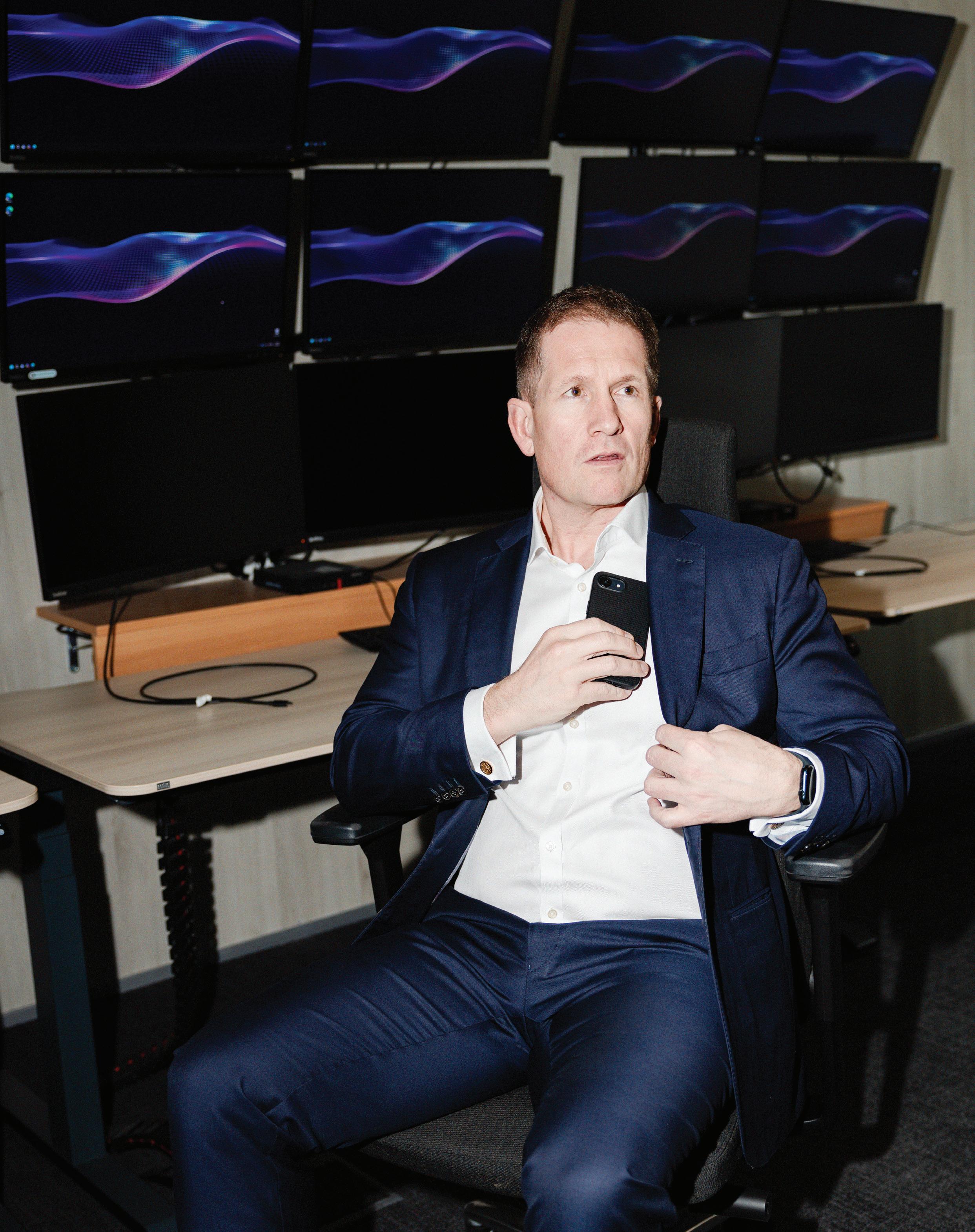
Automation is already embedded in fund servicing, but more complex products are exposing operational limits, says Neil Wise, chief commercial officer of Clearstream Fund Services, as asset managers face growing pressure on scale and processing.
Mike Gordon, Journalist Romain Gamba, Photographer
Conversation with Neil Wise
“ It’s okay for my shopping list, not for client assets.”
Assets in funds keep growing. What is becoming harder: handling more volume or handling more complexity?
Clearstream is ultimately an industrial service provider to the asset management industry. We’re not manufacturing the funds. What is very interesting is that we’re not actually mandated to do anything for the fund industry. Companies, banks and global custodians choose to use Clearstream because everything we do clients could self-manufacture, should they wish.
It’s because of that complexity, because of the scale, because of the volume of assets and client transactions, that to self-manufacture this business is something of the Dark Ages. I’m not quite saying that we’ve become a commoditised service provider. We still believe we’re adding intrinsic value to what we’re being asked to do.
But with the volume that we have— around €4.2trn of client assets in investment funds—we have to be very thorough, very precise and very correct in how we work. Those clients no longer have the capacity, and they’re not really competing with their peers, to do that better or more efficiently. In essence, Clearstream is a thirdparty fund platform.
Automation has been discussed for years. Where does the industry really stand today?
Clearstream was started 50 years ago for eurobonds and has since moved into domestic issuance, equities and third-party investment funds. Ultimately, everything we did for dealing—order routing, settlement and safekeeping of assets—relies 100% on automation.
We’re processing millions of orders a year and tens of millions of transactions. Automation is critical,
by PAPERJAM and LUXEMBOURG FOR FINANCE
Cocktail — International keynote speaker — Awards ceremony — Seated dinner
CATEGORIES
Capital Markets Expert Banking Personality ESG Champion Insurance Personality
Fintech Entrepreneur Visionary
Funds Personality Private Equity Executive
Every two years, Paperjam and Luxembourg for Finance join forces to honour the visionaries and leaders shaping Luxembourg’s financial sector.
This prestigious event shines a spotlight on individuals whose expertise, leadership, and forward-thinking contributions are helping to define the future of the Financial Centre.
The 8 winners will be revealed at a gala dinner attended by key industry leaders.

€4.2trn
Fund services chief
Neil Wise is chief commercial officer of Clearstream Fund Services, part of Deutsche Börse Group. He oversees the commercial strategy of a major fund distribution platform used by global custodians, private banks and asset managers. The business focuses on the processing of fund orders, settlement and safekeeping across multiple markets.
but it’s been like that for a generation already. These are foundations we continue to build on as the market evolves, as product ranges widen and as volumes continue to grow across different markets.
New asset managers create new products and funds and ultimately leverage the automation already in place at Clearstream and across the industry.
The benefits are not only for those who choose to use us—wealth managers, private banks, global custodians, asset owners and asset managers— but also on the other side as well. The automation that we bring benefits participants who do not choose us directly, including transfer agents, by enabling them to do their work more efficiently and with more consistency.
What’s getting very interesting is that, as we move into more complex asset classes, the technology we’ve been using for a generation does not work in quite the same way.
At conferences, you sometimes hear it is unreasonable to expect full automation because so much of the industry still runs on Excel. Are things more manual than people admit?
What I was referring to with Vestima Digital is basically how these complex products are being processed today. An Excel sheet is fantastic. It’s slightly more structured than a Word document, but not entirely something that regulators are comfortable with.
Any form of information about client assets and client investments being used on a business-as-usual basis is difficult to manage securely in Excel. It’s very easy for it to be sent, copied or taken.
Regulators are coming very hard, not just in Luxembourg but across Europe, to prevent banks and organisations from using Excel for their daily
work. That pressure is only increasing and becoming more explicit. It’s okay for my shopping list, but it’s not okay for client assets.
That is why the market is calling out for new technologies and new solutions to enable people to run their businesses and to do what they need to do for these complex instruments and asset classes. These instruments are very complex, very manual, and they need proper oversight.
The pressure we’re seeing is for a compliant way of running this business which does not equate to hiring more people and doing things manually.
How does Luxembourg fare internationally on automation in fund servicing?
Luxembourg is a globally renowned back-office location. It has built an amazing industry in finance and attracted players from all over the world to base their funds here, alongside Ireland.
The investors are mostly not here. The investment managers are mostly not here. That’s why Luxembourg is more of an operational centre.
But in order to manage that volume, you need efficient processing. The value of a platform like Clearstream comes when you have very large volumes of client orders which need to be processed in a consistent way and without unnecessary friction.
Luxembourg really drives the standards. You have the whole value chain of an investment-fund investment being automated as best we can, supported by a concentration of service providers and technologists.
Where is artificial intelligence already making a real difference in fund services?
I’m going to be slightly contrarian
Client assets in investment funds processed by Clearstream.


Automation without standardisation?
Automation in private assets has long been constrained by fragmentation and a lack of common standards, according to Serge Weyland, CEO of the Association of the Luxembourg Fund Industry (Alfi). But artificial intelligence may change that. AI can interpret unstructured data across different formats, reducing the need for full standardisation and enabling more efficient processing of complex assets.
here in that I don’t think it does yet. Artificial intelligence is attracting heavy investment across the industry. Every player is investing significant amounts of money, and there probably isn’t a CEO whose neck isn’t on the block for their AI story.
We are still very much in the exploration phase. From a material point of view, you’ve not seen a major reduction in labour or new products that are transforming the business.
You’re seeing very much baby steps, which is natural as people learn how to use the technology in practice and test what is genuinely useful.
But I’m more convinced than ever that AI will have a major impact. What I can’t promise is when. It will involve significant cost, and some smaller players will likely rely on external providers rather than build their own capabilities.
Are asset managers outsourcing more, or becoming more selective about what they keep in-house? Outsourcing in asset management has been a feature of the industry for many years. Ultimately, it comes down to what you are known for and what your point of difference is. If you are a smaller participant, the cost of building what large asset managers have is probably too high if you want to remain competitive. Outsourcing therefore becomes a strategic choice.
But ultimately you have to know what you’re good at and what your core competency is. If you don’t, you will struggle regardless of whether you outsource or keep activities in-house.
What do asset managers now expect from technology providers that they were not asking for five years ago? In the last five years, there has been
a proliferation of more complex products. It’s not just private markets. You also have European initiatives like the European long-term investment fund (Eltif).
These products are often targeted at retail investors but invest in infrastructure and other illiquid assets. You cannot sell them like a normal Ucits product. That makes them harder to distribute, harder to process and harder for investors to understand.
There is often a disconnect. The product may be a good idea, but how does it work in operations?
If a private bank or wealth manager cannot handle or hold the instrument, then you have a problem and a break in the value chain.
It can be solved by automation, but it can’t be solved in a small way. Automation is one of the wonders of the world, but it’s a pig to get it to that state.

Why equity income matters in volatile markets
Equity income strategies can provide balance in volatile markets, blending dividend income with long-term growth potential for investors.
Investors are contending with geopolitical shocks, shifting trade policies and higher funding costs, all fuelling volatility and uncertainty. Global benchmarks are increasingly concentrated: the US represents around twothirds of major global indices, and a handful of large technology rms account for a signi cant share of market capitalisation. As conditions evolve unevenly across regions and sectors, investors face a less predictable environment, making risk management more challenging.

Equity income strategies o er a lens through which to re-anchor portfolios to fundamentals. Rather than relying solely on share-price momentum, they focus on companies with durable cash ows and a track record of paying sustainable dividends. Dividends can add a tangible return component that may help cushion drawdowns and support compounding when reinvested.
History underlines the point: over the past two decades, reinvested dividends contributed more than half of global equity total returns. In other words, income has often done a large share of the long-term heavy lifting.
Why it can help in down markets
Downside matters too. Companies with durable business models, solid balance sheets and reliable cash generation are often less exposed to speculative excesses, which can help moderate drawdowns when markets
weaken. While such approaches may lag during phases of highly speculative market rallies, their focus on valuation discipline and earnings quality can contribute to a more balanced investment experience over time.
Selecting an equity income strategy Navigating this environment requires more than market timing; it calls for a disciplined understanding of how companies generate cash, allocate capital and adapt to changing conditions. At Fidelity, this approach is supported by one of the industry’s largest global research platforms, bringing together around 470 investment professionals across regions and asset classes. This depth of fundamental insight helps anchor investment decisions to quality, sustainable cash generation and disciplined analysis, reinforcing a long-term perspective focused on consistency and resilience rather than short-term market noise.
Capital at risk. Fidelity International refers to the group of companies which form the global investment management organisation that provides information on products and services in designated jurisdictions outside of United States of America. Unless otherwise stated all views expressed are those of Fidelity International. Views expressed may no longer be current. Fidelity, Fidelity International, the Fidelity International logo and F symbol are registered trademarks of FIL Limited.

Mike Gordon, Journalist
1 2 3 4
AI investment outruns impact
Artificial intelligence is drawing serious investment across asset management, but its real impact remains concentrated in narrow operational uses. The gap between narrative and measurable change remains clear.
How far has AI really moved?
What is hype—and what is real?
Where is AI actually being used?
What will hold it back?
1Strategic role
Artificial intelligence has moved rapidly to the centre of the asset management conversation. Across Luxembourg’s financial centre, and in the studies now circulating through the industry, AI is treated less as an optional innovation project than as a strategic necessity. Firms are investing in tools, talent and data architecture, while senior executives are under pressure to present credible roadmaps.
That broad direction of travel is real. Yet the current phase is still better described as organised deployment than as structural change. The market tone is confident, but evidence of operational transformation remains uneven. The most visible progress is in targeted workflows, internal controls and support functions, not in a wholesale remaking of the business model.
That distinction matters in Luxembourg, where AI is discussed not only as a technology theme but as part of the financial centre’s competitiveness story. Language has shifted quickly. The industrial challenge has not.
Enterprises using AI (%)
2
Hype vs substance
This is where Neil Wise, chief commercial officer of Clearstream Fund Services, becomes the key corrective voice. “I’m going to be slightly contrarian here in that I don’t think it does yet,” he says of AI’s material impact on the industry. The point is not that nothing is happening. It is that investment, rhetoric and conference optimism are running ahead of results. Wise argues that the industry has not yet seen the kind of labour force reduction or product innovation that would justify talk of revolution. It is still, in his words, in an exploration phase, with progress measured in baby steps. That assessment does not cancel the dominant narrative; it narrows it. AI is delivering
improvements in defined tasks, but it has not yet fundamentally changed how asset management operates.
The distinction is important because much of the public discussion increasingly collapses deployment, experimentation and transformation into the same story. They are not the same A firm can launch pilots, allocate budgets and present a coherent AI strategy without yet changing the economics of the business. Wise’s scepticism is useful because it forces the industry to separate activity from impact, and investment from proof. It also reminds readers that maturity is not the same thing as volume of noise.
3
Current applications
Where AI is proving most useful, it is doing work that looks recognisably industrial: handling documents, improving controls, reducing manual intervention and speeding up routine processes. Wise points to operational areas such as document intake, reconciliation and trade confirmation handling, where automation can remove lowvalue activity without introducing excessive strategic risk. In that sense, the current gains are real, but they are narrow and process-led.
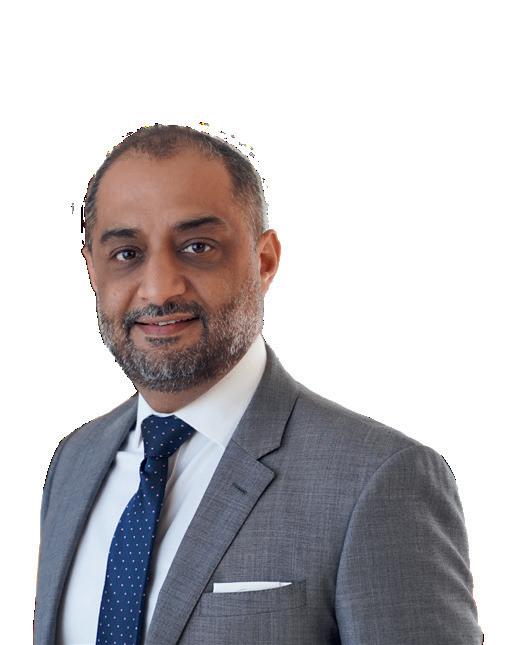
Ajay Bali, partner and technology consulting leader at EY Luxembourg, describes a similar pattern across the sector. In his view, the strongest current impact is in compliance, risk management and middle- and back-office automation. That includes document processing, reporting, monitoring, client onboarding, oversight tasks and extracting information from prospectuses for control purposes. These are all areas where inputs are relatively structured, outputs are definable and the tolerance for ambiguity is low.
His answer matters because it broadens the picture beyond Clearstream without changing its basic logic. AI is delivering value where workflows are repetitive, control-heavy and administratively dense. That is a meaningful development,
especially in a sector built around documentation, validation and reporting discipline. But it is not yet the same thing as strategic reinvention. By contrast, front-office use cases remain much less mature. Portfolio construction, alpha generation and more autonomous decision-support tools are still largely experimental, held back by governance, explainability and regulatory comfort. Association of the Luxembourg Fund Industry CEO Serge Weyland argues that AI could still matter structurally in less standardised segments such as private assets, because it can work through messy or unstructured data. But even there, the promise is clearer than the industrialised reality. For now, AI is extending existing processes rather than redefining them.
GenAI use cases already in production in Luxembourg’s financial sector (BCL and CSSF, 2025)
4
Barriers
The next phase will depend less on enthusiasm than on execution. Bali points to familiar blockers: data quality, legacy systems, privacy, compliance and explainability. Weak process design can also undermine otherwise promising tools, especially when firms try to bolt AI on to old structures instead of redesigning workflows around it.
Wise adds a harder commercial constraint: cost. Building and maintaining useful AI capability requires sustained investment, and smaller players may end up relying more heavily on external providers. That may still produce gains, but it also suggests that the path from experimentation to transformation will be uneven, expensive and slower than the market narrative implies. Timing remains the unresolved question.
Photo: EY
Ajay Bali, EY
Tuesday 19 May 2026
18:30
Learn more Programme Kinepolis Kirchberg
National Champions
From family businesses to founders, this Paperjam 10×6 gives the stage to entrepreneurs who will share their visions, challenges, and lessons learned as they plan their next moves.
On this occasion, Paperjam will also unveil its special issue featuring the results of its own study conducted with fifty national companies on their most pressing issues.
Lead Partner
OUR SPEAKERS Anne Nickels Namur
Laurent Loschetter DSL Data Service Luxembourg, den Atelier
Marc Lauer Foyer Group
Elena et Pablo Moitzheim Optique Moitzheim
Vincent Lyonnet Steel Shed Solutions
Stefano & Gianna Florio Flowey
Laura Ferber Ferber Group
Claude Maack Gradel
Hans-Jürgen Schmitz Mangrove Capital Partners
Georges Krombach Family Business Network
Cyber-risques : le nouvel enjeu stratégique

Les risques cyber ne se limitent plus aux systèmes internes. Ils traversent toute la chaîne de valeur des fonds, des prestataires aux dépositaires. Cette interdépendance renforce le risque de contagion et impose une approche globale de la résilience.
Christopher Georgeson Senior vice president industry affairs Alfi
Sébastien Lambotte, Journaliste
Julian Pierrot, Photographe
« Le danger réside dans le vol ou l’indisponibilité des données. »
Pilier de la place financière luxembourgeoise, l’industrie des fonds repose aujourd’hui sur des infrastructures technologiques toujours plus intégrées. Si les évolutions numériques soutiennent l’efficacité opérationnelle et la compétitivité du secteur, elles induisent aussi une exposition accrue aux risques numériques. Dans ce contexte, la cybersécurité s’impose progressivement comme un enjeu stratégique, tant pour les gestionnaires d’actifs que pour l’ensemble de l’écosystème des fonds d’investissement.
Pression réglementaire accrue « C’est un sujet qui est remonté à l’agenda des gestionnaires de véhicules, en raison notamment de l’entrée en application de la réglementation Dora, le Digital Operational Resilience Act », commente l’Alfi par la voix de son senior vice president industry affairs Christopher Georgeson. « Le cadre en vigueur fait désormais porter la responsabilité des risques IT sur les membres des comités de direction des véhicules d’investissement. À ce titre, ces derniers doivent se doter de la capacité de comprendre et de maîtriser les risques tout au long de la chaîne de valeur. »
La gestion du risque n’est pas un concept étranger aux gestionnaires d’actifs. Elle est au cœur de toute stratégie d’investissement. En matière de cybersécurité, cependant, le paradigme change. Chacun doit appréhender, dans le cadre de son activité, des enjeux nouveaux.
« Par le passé, la gestion de ces risques était largement déléguée aux prestataires, qu’il s’agisse d’opérateurs ICT ou de plateformes assurant l’administration des fonds », poursuit Christopher Georgeson. « Désormais, les acteurs doivent pouvoir démontrer leur maîtrise du risque sur l’ensemble de la chaîne de valeur. Il s’agit, pour les
fonctions risques, de comprendre et d’expliquer concrètement comment une cyberattaque pourrait affecter leurs activités. »
Au-delà de la conformité, c’est donc une transformation culturelle qui s’opère, impliquant une montée en compétence des équipes et une meilleure compréhension des enjeux techniques.
Prévenir le risque opérationnel Si les cyberattaques visant les institutions financières peuvent prendre des formes variées, le risque principal pour l’industrie des fonds ne réside pas tant dans le détournement de transactions. « L’industrie a mis en place des procédures de contrôle robustes, à travers la ségrégation des actifs et des mécanismes de vérification et de réconciliation visant à sécuriser les flux financiers », précise Christopher Georgeson. « Le vrai danger, après consultation de nos membres, réside davantage dans l’exfiltration de données liées aux investisseurs ou dans l’impossibilité d’y accéder. »
C’est donc surtout le risque opérationnel qui inquiète. Une attaque ciblant les infrastructures critiques de l’écosystème pourrait entraîner une paralysie des opérations. « Les nombreux véhicules domiciliés au Luxembourg s’appuient pour la plupart sur des prestataires de services, véritables opérateurs des fonds : banques dépositaires, administrateurs de fonds, AIFM… Si l’un de ces acteurs majeurs se retrouve dans l’incapacité de mener ses opérations, plusieurs centaines de fonds pourraient être touchés simultanément », explique, chez Marsh, le senior client executive Fabrice Godefroid.
Dans un tel scénario, les conséquences dépasseraient largement le cadre d’un acteur isolé. Incapables de souscrire, de racheter ou même
Cyberattaque vs fraude
Dans de nombreuses organisations, cyberattaque et fraude sont encore confondues. Or il s’agit de deux risques distincts, notamment du point de vue des assureurs. La cyber concerne avant tout l’accès aux systèmes, la paralysie des opérations ou l’exfiltration de données. Le détournement de fonds, souvent lié à des mécanismes de chantage, d’extorsion ou d’usurpation d’identité, relève quant à lui de la fraude. Cette confusion peut conduire à des angles morts en matière de couverture et de gestion des risques.
de connaître la valeur de leurs investissements, les investisseurs pourraient perdre confiance. « Une machine grippée peut entraîner des effets en chaîne, avec des conséquences potentiellement systémiques », poursuit le représentant du courtier en assurances professionnelles. Dans un pays où l’industrie des fonds constitue un pilier économique majeur, un incident de grande ampleur pourrait ainsi affecter l’ensemble de la place financière.
Mieux prévenir le risque
La réglementation vise précisément à renforcer la maîtrise de ces risques en responsabilisant les organes de gouvernance. L’enjeu consiste à s’assurer que l’ensemble de la chaîne de valeur répond aux exigences de sécurité et de résilience. « Aujourd’hui, il faut renforcer la sensibilisation de chacun, mais aussi soutenir l’adoption des bonnes pratiques et le développement des compétences », assure Christopher Georgeson. « Alors que les solutions numériques gagnent en importance, il est essentiel de rester à jour, de comprendre les risques et leurs impacts afin de mieux s’y préparer. »
Du point de vue des assureurs, cette évolution passe avant tout par une approche structurée du risque. « Le risque cyber ne peut pas être éliminé. En revanche, il peut être identifié, modélisé et quantifié à travers différents scénarios », commente le country manager Luxembourg de Marsh, Luc Verbiest. « C’est sur cette base que les organisations peuvent définir les mesures de protection adaptées et challenger leurs prestataires. »
Une réputation à préserver
Dans cette logique, la priorité n’est pas tant d’empêcher toute attaque : c’est illusoire. Les efforts doivent
porter sur le renforcement de la résilience opérationnelle. « La clé est de réduire le temps de restauration en cas d’incident. Plus l’interruption est longue, plus le risque de perte de confiance des investisseurs est élevé », ajoute Luc Verbiest. Les couvertures d’assurance interviennent dès lors en dernier recours pour absorber les risques financiers résiduels. Mais l’enjeu dépasse largement la seule dimension pécuniaire. « Le principal risque face aux cyberattaques est avant tout réputationnel », souligne Fabrice Godefroid. « Il concerne les responsables des fonds, mais aussi, plus largement, la place financière luxembourgeoise dans son ensemble. »
Dans un écosystème fondé sur la confiance, la cybersécurité s’impose comme un enjeu stratégique de résilience pour l’ensemble de l’industrie et, audelà, pour la crédibilité du Luxembourg en tant que centre financier international.
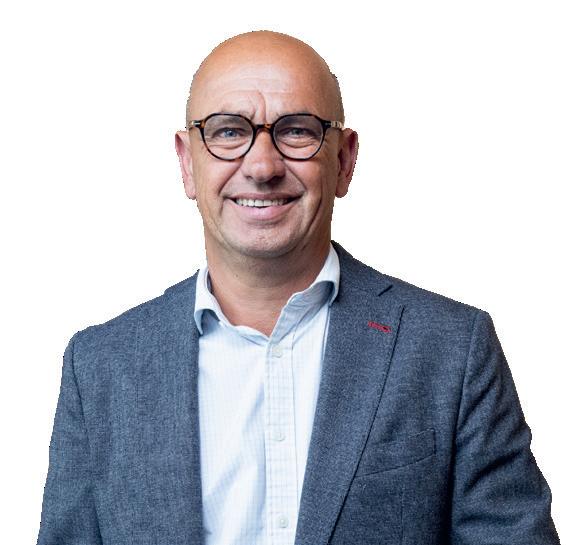
Luc Verbiest, Marsh
Photo : Eva Krins





La promesse économique des fonds Private Assets
La retailisation des fonds private assets progresse. Sans preuve tangible que les fonds tiennent leurs promesses, l’industrie prend le risque de transformer une opportunité historique en crise de con ance.
Les fonds de private assets sont des moteurs de création de valeur. Longtemps réservés aux investisseurs institutionnels, ces actifs s’ouvrent désormais à une clientèle plus large. La retailisation des private assets est en marche.
Ces fonds ne sont pas de simples fonds moins liquides. Ils reposent sur des cycles de vie longs, fragmentés et non linéaires, ponctués de valorisations intermédiaires basées sur des modèles et des hypothèses. Dans cet univers, une NAV périodique ne re ète pas, à elle seule, la réalité économique d’un investissement.
La performance réelle d’un fonds se fait en considérant l’ensemble des cash ows, sur la durée complète du cycle d’investissement, parfois très long. IRR, DPI ou TVPI n’ont de sens que s’ils traduisent la conversion réelle de la valeur en cash, et non l’accumulation de valorisations intermédiaires indicatives.
La généralisation des modèles de distribution via banques privées et structures nominee a permis d’élargir l’accès, mais au prix d’un déplacement de la complexité opérationnelle. Les ux fragmentés, scalement individualisés mettent sous tension des systèmes conçus pour des produits standardisés. Les initiatives technologiques visant à industrialiser l’exécution sont nécessaires, mais insu santes.
Le véritable enjeu est ailleurs. La concentration croissante de données (cash ows réalisés, distributions observées, valorisations successives) crée les conditions d’un changement de paradigme : juger les fonds non plus sur leur performance relative, mais sur leur capacité à respecter leurs promesses initiales. Durée annoncée et durée réelle, rendement cible et rendement e ectivement délivré, cohérence entre valeurs publiées et cash distribué : ces écarts sont objectivables. La retailisation des private assets ne pourra être durable que si l’industrie accepte ce changement. La technologie sera un catalyseur, à condition de ne pas se limiter à automatiser l’existant. Le véritable dé consiste à replacer la réalité économique et le respect des engagements au cœur de la relation entre fonds, distributeurs et investisseurs. Sans cela, la démocratisation des actifs privés risque de se heurter à une crise de crédibilité.
Jean-Pierre
JeanPierre Legrand, en charge de la practice Asset Servicing et Asset Management chez
T+1 : la course est lancée
À partir d’octobre 2027, l’ensemble des opérations post-trading devront être réalisées en un jour. Cette évolution exige de repenser tous les modèles opérationnels.
Face aux enjeux de liquidité et de compétitivité, l’anticipation est clé.
Sébastien Lambotte, Journaliste
Julian Pierrot, Photographe
À partir du 11 octobre 2027, le règlement des opérations sur des titres négociés en bourse devra s’effectuer dans un délai d’un jour ouvré. Jusqu’à présent, les opérateurs disposaient de deux jours pour les finaliser.
Cette exigence « T+1 » est introduite à la faveur d’une modification, adoptée en 2025, de la réglementation sur les dépositaires centraux de titres (CSDR). « Cela ne modifie en rien les conditions nécessaires à la bonne réalisation d’une transaction. En revanche, le temps disponible pour accomplir l’ensemble des opérations est considérablement réduit », résume le head of division market infrastructure à la CSSF, Andrea Gentilini, qui préside également le groupe de travail de l’Esma sur le post-trading. « Jusqu’à présent, le clearing, l’inventaire ou la gestion de la trésorerie pouvaient être effectués à T+1 afin de permettre un règlement à T+2. À l’avenir, l’organisation des flux post-trade sera fortement compressée. »
Adapter les modèles
Pour les acteurs, cette évolution implique une transformation des modèles organisationnels et opérationnels, ainsi qu’une modernisation des systèmes d’information. « Les activités actuellement effectuées durant la journée T+1 devront être traitées dès l’exécution de la transaction, à T+0, et pendant la nuit afin d’être complétées à la fin de la journée T+1. Pour cela, elles pourraient être transférées à des équipes situées sur d’autres fuseaux horaires », précise Andrea Gentilini.
La transition n’a rien d’inattendu. Les États-Unis sont passés à T+1 en mai 2024. L’Europe a suivi, dans une logique d’amélioration de l’efficacité des marchés et de réduction du risque de contrepartie.
Pour accompagner cette évolution, la CSSF a veillé à informer les acteurs de la Place sur ces enjeux à partir de novembre 2023 et de façon plus significative au cours de l’année dernière. « Les acteurs ont largement pu se familiariser avec le sujet et définir un projet d’adaptation. 2026 doit permettre à chacun de mettre en œuvre les adaptations requises », poursuit Andrea Gentilini.
Or le changement à opérer peut être conséquent, notamment pour les structures de taille plus modeste. « Il ne concerne pas uniquement le middle ou le back office. Toute la chaîne est impliquée, du front office jusqu’aux infrastructures de marché », insiste le responsable de la CSSF, qui appelle les acteurs à « agir dès maintenant » : « Les acteurs qui ne seront pas capables de régler les transactions à T+1 à l’échéance fixée risquent de rencontrer des difficultés à opérer sur le marché. »
La gestion de la liquidité sous pression
Cette transformation n’est pas sans générer de nouveaux défis. « Si le cycle de règlement passe à T+1, le cycle de collecte des souscriptions reste souvent à T+3, voire T+4 pour certaines zones géographiques », explique l’Alfi par la voix de son senior vice president industry affairs François Baratte. « Ce décalage oblige les gestionnaires à financer les opérations de négociation avant même d’avoir reçu les fonds correspondants. On est face à un ‘liquidity mismatch’. L’accélération du cycle d’investissement se fait au détriment du cycle de financement. »
Au regard de ces enjeux de liquidité, « des risques de décalage ont été identifiés, générant notamment des découverts temporaires, limités à 10 % du portefeuille des Ucits »,
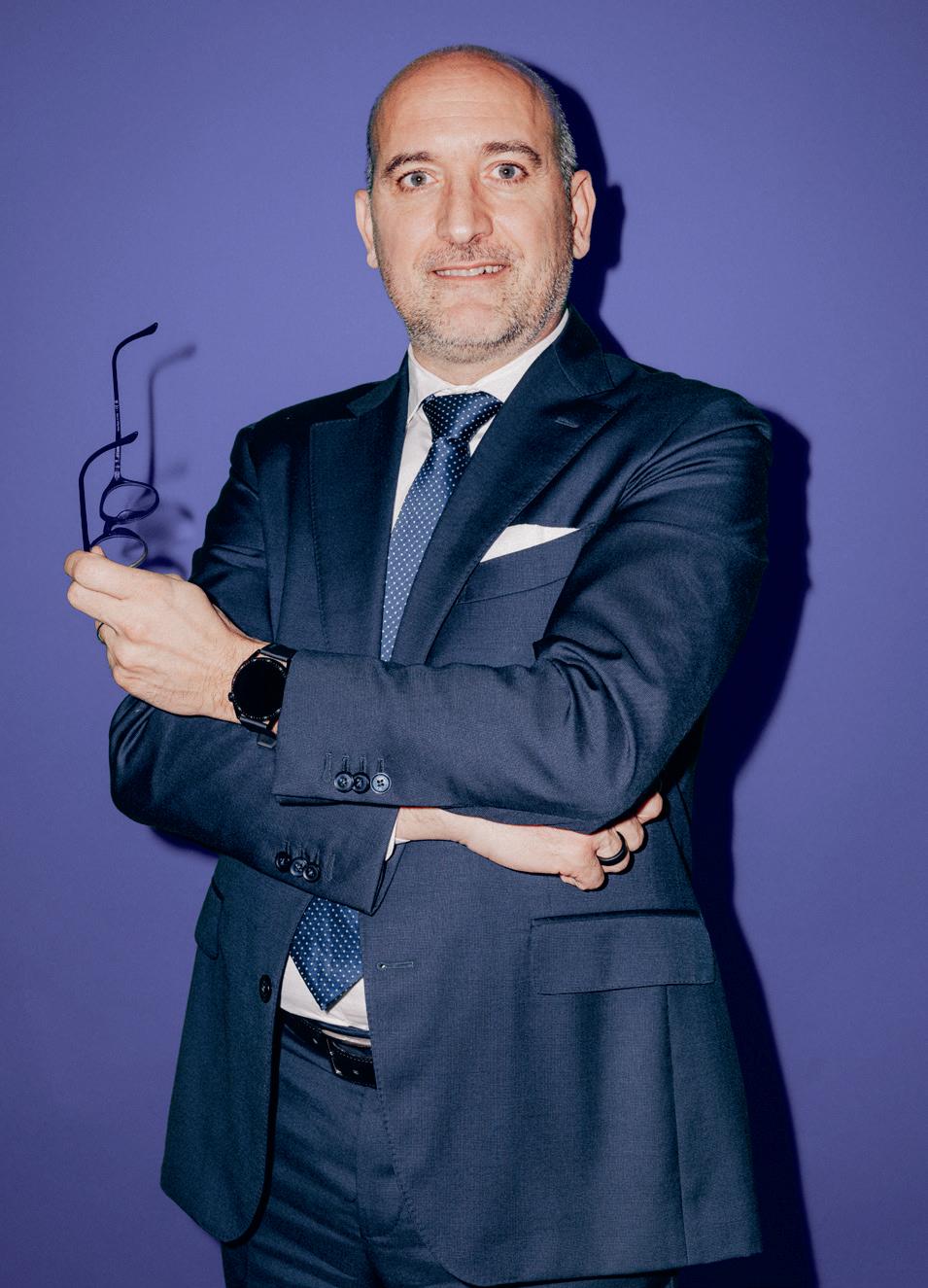
Andrea Gentilini Head of division market infrastructure CSSF
Des acteurs bien préparés ?
Sollicitée par l’Esma dès 2022 pour évaluer l’impact de la réforme, l’Alfi a mis en place un groupe de travail réunissant l’ensemble de l’écosystème « afin de définir de bonnes pratiques et d’accompagner les acteurs », précise François Baratte. Une récente enquête de l’association auprès de ses membres montre un niveau élevé de préparation et de proactivité dans l’ajustement des processus opérationnels.
précise le spécialiste, ajoutant que la CSSF a veillé à répondre à cette préoccupation : « Le Luxembourg est aujourd’hui la première juridiction où l’autorité nationale a mis en place un régime encadré de dépassement passif sur ces aspects, en accord avec la feuille de route européenne. » Ce sujet est particulièrement sensible au Luxembourg, où les
opérations de capital à l’international sont soumises à des délais plus longs que sur les marchés domestiques. Face à ces contraintes, plusieurs leviers sont disponibles : optimisation des circuits de distribution, réduction des cycles de règlement des fonds, ou encore recours accru à des mécanismes de gestion de trésorerie.
En Europe, l’imposition du carried interest suit des trajectoires divergentes, chaque État devant arbitrer entre attractivité des talents, compétitivité et sensibilité politique.
Luxembourg
Au Luxembourg, le régime d’imposition du carried interest est directement lié à la surperformance d’un fonds d’investissement alternatif (FIA) et s’inscrit dans un nouveau cadre légal à partir de 2026. Le dispositif couvre le carried interest contractuel et le carried invest, lié à une participation au capital du fonds. Ce dernier peut être exonéré d’impôt, sous conditions, notamment une détention supérieure à six mois et une participation inférieure à 10 % des parts du FIA.
« Un régime compétitif d’imposition du carried interest est déterminant pour attirer des fonctions stratégiques au Luxembourg », explique la fiscaliste Kenza Netef, chez Loyens & Loeff. L’associé Pierre-Antoine Klethi juge « opportun de revoir les politiques internes d’allocation du carried interest pour pleinement saisir les opportunités offertes par les deux nouveaux régimes fiscaux luxembourgeois ».
Carried interest : cinq approches
Audrey Somnard, Journaliste
France
En France, un régime fiscal spécial permet, sous conditions strictes (notamment un risque réel d’investissement), de traiter le carried interest comme une plus-value mobilière plutôt que comme un salaire. Les gains éligibles sont soumis au prélèvement forfaitaire unique de 30 %. Ce régime relativement restrictif vise à réserver le traitement favorable aux véritables prises de risque capitalistique. Généralement, les participants détiennent une participation dans le fonds, soit directement, soit via un véhicule fiscalement transparent.
2 3 4 5
Royaume-Uni
Au Royaume-Uni, le carried interest est défini comme une rémunération indexée sur la performance d’un fonds, revenant aux gestionnaires en contrepartie de services de gestion d’investissement. Son attribution suppose l’existence d’un investment scheme et d’un droit conditionné à la réalisation de profits, dont le montant varie en fonction de ceux-ci.
La réforme d’avril 2026 marque une rupture avec l’ancien traitement majoritairement en plus-value. Le régime prévu assimile le carried interest à un revenu d’activité soumis à l’income tax et aux cotisations sociales. Toutefois, un traitement préférentiel subsiste pour le qualifying carried interest, déterminé notamment selon la durée moyenne de détention des investissements (en pratique, au moins 40 mois), auquel s’applique un coefficient de 72,5 %, conduisant à un taux effectif d’environ 34 %.
Pays-Bas
Aux Pays-Bas, le carried interest est appréhendé comme une « participation lucrative » ; celle-ci est typiquement détenue via une entité fiscalement opaque. Dans ce cas, il relève en principe de la Box 2 (intérêts substantiels), à condition notamment que la société redistribue au moins 95 % des revenus au bénéficiaire au cours de l’année. À défaut, une imposition en Box 1 peut s’appliquer comme revenu du travail (imposé à un taux plus élevé).
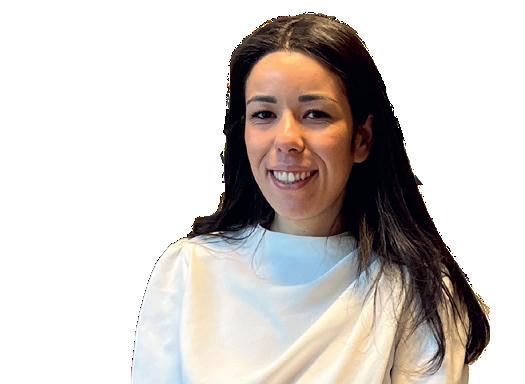
Espagne
En Espagne, le carried interest est qualifié de revenu d’activité salariée, mais bénéficie d’une réduction de 50 % sous conditions, notamment un rendement préférentiel pour les investisseurs, une détention minimale de cinq ans (sauf exception) dans certains types de fonds et l’absence de lien avec des juridictions non coopératives. Le champ d’application reste donc limité pour les détenteurs espagnols de carried interest dans des fonds étrangers.
Kenza Netef
Pierre-Antoine Klethi
Photos: Loyens & Loeff

Intelligence Forum
AI, cybersecurity, automation, sovereignty and productivity.
Fintech Sphere
Digital finance and fintech solutions.
Startups & Scaleups Awards
250 startups & scaleups. 360° Pitch arena. €100,000 Grand Prize.
National innovation, international guests, AI pioneers and EU policymakers.
SFDR 2.0: A different playing field
The European Commission is proposing a revamped Sustainable Finance Disclosure Regulation to simplify and improve disclosure rules, making them better aligned with market realities and including improved comparability to reduce greenwashing.
The previous version of SFDR, in force since March 2021, sets out how financial market participants disclose sustainability information and is designed to allow investors to assess how sustainability risks are integrated in the investment process. It classifies funds as Article 6, 8 or 9. But this system has been criticised as classifications were often used as marketing labels rather than transparency tools, leading to different interpretations and greenwashing risks.
Revised scope
SFDR 2.0 brings in three main changes, explains Julie Castiaux, partner and sustainability lead at KPMG in Luxembourg. “The first is related to the scope. SFDR 2.0 proposes to revise the scope of entities that will have to comply.”
Until now, financial market participants with more than 500 employees have been required to publish principal adverse impacts of investment decisions on sustainability factors. Now, financial advisors and portfolio managers, for instance, have been removed from the direct scope of the regulation.
Review of classification
The second change is a review of the classification system. Article 6, 8 and 9 will no longer be used. Instead, the EU commission has proposed three categories: a sustainable category (products that contribute to sustainability goals); a transition category (products that direct investments towards companies or projects that are not yet sustainable, but are on a “credible transition path”); and an ESG basics category (products that don’t meet the criteria of the first two categories). Seventy percent of the portfolio of categorised products would need to support the selected strategy.
Lydia Linna, Journalist
Julian Pierrot, Photographer
“ SFDR 2.0 proposes to revise the scope of entities that will have to comply.”
Castiaux Partner and sustainability lead KPMG
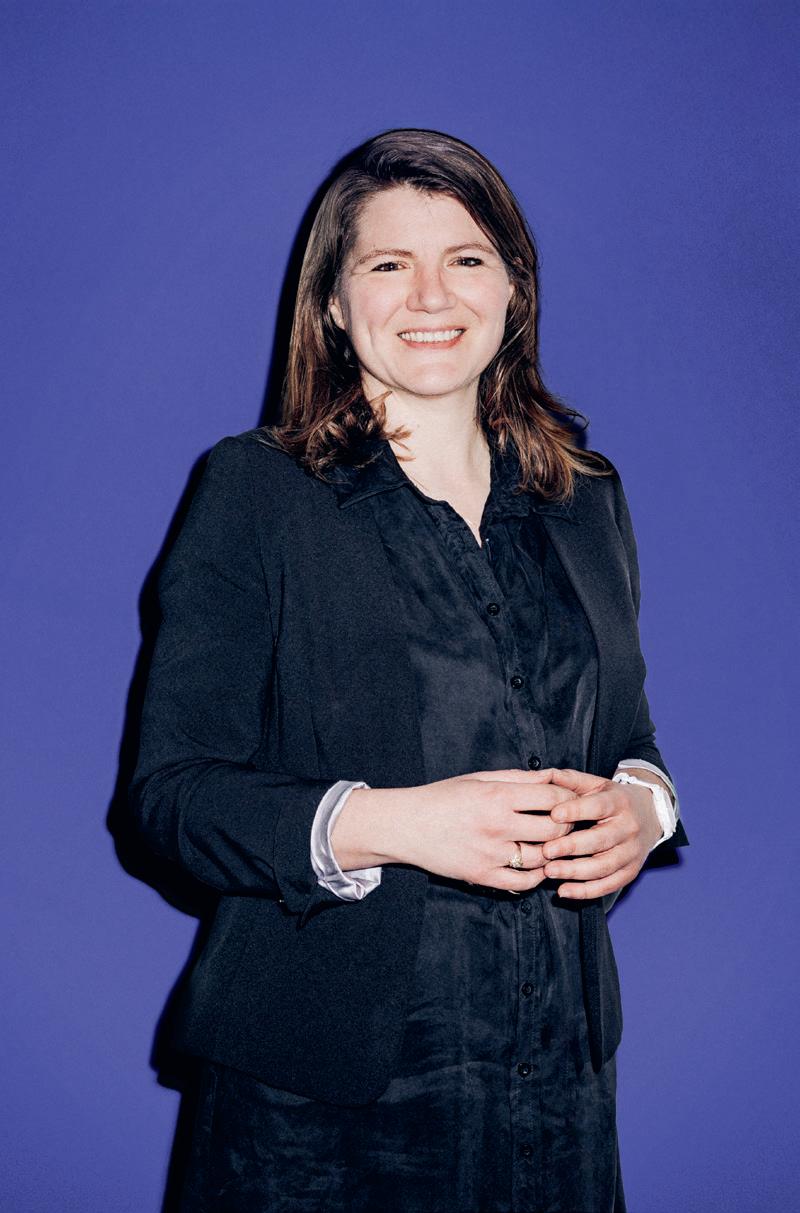
“We’re going towards hard categories with minimum thresholds, with allowed ESG methodologies–so, how can we actually select different investments–and, of course, with exclusions that do bite,” notes Michael Horvath, partner and sustainability leader at PWC Luxembourg.
Simplified disclosure requirements
The third change, says Castiaux, is that disclosure requirements have also been simplified. “The first point relates more specifically to asset managers, so no more reporting of the principal adverse impacts on a consolidated basis at their level, which is quite welcomed by the market. It was very difficult to understand the rationale, but also to make it efficient in the reporting process.” The obligation to include ESG risk in the remuneration policy is also expected to be removed.
It’s still a proposal, adds Castiaux, and the regulatory technical standards remain to be updated—though this likely won’t be done until end 2027. “What markets need to do to get prepared is to review the [current] classification of their products,” she says, “and how they’ll fit in the new classification. This is the main action to be taken by the market at the moment.”
“Much
more rigid”
So will SFDR 2.0 really be useful when it comes to reducing greenwashing?
The new proposal is “much more rigid,” replies Horvath. “Greenwashing, in the end, is about promising something and not delivering. The new framework addresses this by clearly saying that every category—so, every labelled product—has a minimum threshold that needs to be invested according to the strategy that the EU has put out.”
Research firm Morningstar in November published a forecast of
Julie
Defence and sustainability
With recent geopolitical turmoil, it may seem like ESG has been overshadowed by defence needs. But the two are not mutually exclusive. “From the regulatory angle, if you look at the proposition for SFDR 2.0, only controversial weapons are excluded from ESG products,” says Castiaux.
Indeed, the commission last year noted that the “sustainable finance framework is fully consistent with the EU’s efforts to facilitate the European defence industry’s access to sufficient finance and investment.”
how SFDR 2.0 could “reshape” the EU’s fund universe. With how the market is set up today, roughly half of funds are classified as Article 8 or 9, says Horvath. Under the stricter set of assumptions set out by Morningstar, that share would drop to about a quarter.
“It’s a drastic change of quality expected,” says Horvath. “Greenwashing risks will probably be much more limited than what we have seen before, because you have a baseline comparability between products.”
While recalling that SFDR’s primary objective” is transparency and providing information, education—particularly for retail investors—remains crucial, highlights Castiaux.
Data dilemma
A common challenge in sustainable finance concerns access to and availability of data. But this is a blind spot in SFDR 2.0, says Horvath. “What is missing is how we actually deal with data. What data is accepted, how you expect companies to handle data. Sustainability data is sometimes estimated, sometimes guessed, sometimes it’s not audited.”
“An asset manager, looking at the financial statements of a company, would never take a decision that is not verified by an independent party. On sustainability information, everybody is using information where we have no full visibility on where it’s coming from; we don’t know if it’s complete or not; people are using different standards,” he continues. “But there is no solution in sight.” The commission last year removed 80% of companies from the scope of the Corporate Sustainability Reporting Directive, making it more difficult to obtain data to feed decision-making.
Rethinking data management can help tackle this dilemma, says
Castiaux. The number of KPIs can be reduced while concentrating on a few well-defined and easy-to-read indicators. Simplifying and standardising metrics can increase transparency, make audits and comparisons simpler, and enable clearer monitoring of strategies.
Gamechanger or business as usual?
Castiaux sees the revamped regulation as a “natural evolution,” but adds that while it’s “helpful,” challenges remain. When it comes to private equity investments, for instance, most portfolio companies will not be in scope of CSRD.
SFDR 2.0 is “a gamechanger,” concludes Horvath. “It’s resetting the landscape. The ambition level has gone up and we have entered a different playing field. For investors, it should become easier to understand; for asset managers, they will need to wrap their head around how they get challenging ESG messages into two pages.”

Michael Horvath, PWC
Photo: Olivier Toussaint
Securitisation: between growth and risk

The EU wants to revive securitisation to boost investment and growth. But as new players enter the market, the push raises a familiar question: can Europe expand structured finance without reopening the door to hidden risks?
Fouad Rathle Managing director Solsek
Sylvain Barrette, Journalist
Romain Gamba, Photographer
The European Commission has proposed reforms to revitalise the EU securitisation framework, aiming to make it simpler and more efficient to support economic growth.
Published on 17 June 2025, the proposals mark the first major initiative under the Savings and Investments Union strategy, which seeks to improve how the EU financial system channels savings into productive investment.
A market poised for revival
Securitisation allows banks to pool loans—such as mortgages, corporate or SME credit—and convert them into securities that investors can buy. This helps banks free up capital, expand lending and transfer part of the credit risk to investors.
Against this evolving regulatory backdrop, new private initiatives are emerging to tap into the market’s potential. Fouad Rathle, a veteran banker with 30 years of experience, is launching a startup in Luxembourg focused on the securitisation of renewable energy, particularly solar power. Partnering with an Egyptian investment banking expert with experience in Asia and the Middle East, Rathle is targeting the wider European market, including Spain, Italy, Romania and Germany.
Regulatory strength and appeal
The firm plans to structure receivables from 100 MW solar plants by transferring the risk of power purchase agreements (PPAs) to a securitisation vehicle, which will issue seven- to ten-year investment-grade bonds. Each transaction is expected to reach approximately €200m and will be aimed at institutional investors.
On regulation, Rathle sees the European framework—and its forthcoming reforms—as a “point of strength” that enhances transparency
and investor confidence. He advocates for greater proportionality, arguing that rules should better distinguish between systemic banks and smaller market participants. While acknowledging the administrative burden, he maintains that such safeguards help prevent the excesses seen during the 2008 financial crisis.
He also views strict oversight by Luxembourg’s Financial Sector Supervisory Commission (CSSF) as a guarantee of quality and a strong selling point for the financial centre. Ultimately, the startup aims to leverage Luxembourg’s financial ecosystem to distribute high-quality solar assets to institutional investors.
Balancing growth and stability
While initiatives like Rathle’s illustrate the opportunities created by regulatory reform, they also highlight broader questions about risk. According to Roberto Steri, associate professor of empirical finance at the University of Luxembourg, “the EU’s push to revitalise securitisation markets involves a delicate balance between growth and financial stability.”
By simplifying rules and lowering capital requirements, regulators hope to stimulate market activity, but this may weaken safeguards that previously limited excessive risk-taking.
A key concern is the reduction in due diligence standards, which, while easing access, could allow vulnerabilities to build unnoticed.
Risks beneath the surface
Another issue is the shifting role of banks versus non-bank institutions. Encouraging banks to re-enter structured finance contrasts with the US model, where risk has increasingly migrated to private credit markets. If risks are not effectively dispersed, they could become concentrated
within the banking system, potentially threatening deposits.
The rise of covenant-light lending further amplifies these concerns, as weaker protections may encourage highly leveraged firms to take on riskier projects. In the event of defaults, losses could spill over into the broader financial system.
Although recent performance of instruments such as collateralised loan obligations (CLOs) has remained stable, past crises have shown that risks in structured products can remain hidden until they trigger systemic shocks. Ultimately, the EU’s strategy reflects a calculated tradeoff: stimulating market growth while accepting greater uncertainty around financial stability.
Banking hurdles for a veteran
A prominent figure in Luxembourg’s financial centre, Fouad Rathle headed the local branch of Garanti Bank Luxembourg until 2017. Despite his experience, Rathle points to the “incomprehensible” difficulty of opening a corporate bank account in Luxembourg. He was rejected by seven local institutions before turning to a foreign online bank to deposit his company’s initial capital of €12,000.
EXPAT CITY RALLY

FRIDAY, JULY 10, 2026
LUXEMBOURG CITY
What’s new in 2026?
– More games
– Over 100 prizes to win
– Corporate Teams Tournament
– Locals welcome Expats (Everyone can join)
Luxembourg’s most playful city adventure
After an unforgettable first edition in 2025, the Spuerkeess Paperjam Expat City Rally is back on July 10, 2026 —bigger, brighter and more exciting than ever. Discover hidden treasures, complete fun challenges and connect with fellow participants in a lively, feel-good atmosphere. Along the way, bars and terraces will host DJs and live bands, food trucks will serve refreshments, and photobooths will capture the best moments. More than 5,000 participants are expected this year.
REGISTER YOUR CORPORATE TEAM NOW!
1 2 3
Amla : la Place apprivoise le monstre
Tout en appelant à des règles adaptées, banques et gestionnaires d’actifs veulent voir dans la nouvelle autorité – garante de l’harmonisation européenne de la lutte anti-blanchiment – une opportunité pour Luxembourg.
Amla : une opportunité à saisir
Banques : les points de vigilance
Asset management : les enjeux sensibles
Guillaume Meyer, Journaliste
Attentes de la Place
Certains y voient un « monstre » bureaucratique, symbole d’un durcissement constant de la réglementation anti-blanchiment, d’abord dans la banque puis dans d’autres secteurs.
Le déploiement de l’Amla n’en suit pas moins son cours.
L’Autorité européenne de lutte contre le blanchiment de capitaux et le financement du terrorisme, basée à Francfort, doit atteindre sa pleine capacité opérationnelle en 2028. Sa mission : renforcer et harmoniser la supervision des règles anti-blanchiment au sein de l’UE.
À Luxembourg, on veut croire que l’harmonisation européenne contribuera à instaurer des conditions de concurrence plus équitables entre États membres. La deputy CEO et general counsel de l’Alfi, Corinne Lamesch, estime que la Place part avec une longueur d’avance : « Le Luxembourg applique déjà des standards très élevés en matière de lutte contre le blanchiment. Nous ne sommes donc pas préoccupés par le niveau d’exigence des futures règles, puisque la plupart de ces standards existent déjà chez nous. »
Du côté bancaire, la legal advisor de l’ABBL, Amandine Laurent, appelle à « faire de l’Amla une opportunité ». Si sa mise en œuvre suscite des interrogations, notamment sur le calendrier et la charge
opérationnelle, « cette nouvelle architecture ouvre aussi une phase d’apprentissage collectif », insiste-t-elle.
L’ABBL collabore étroitement avec la CSSF, qui siège dans les groupes de travail de l’Amla, afin d’influencer la rédaction des normes techniques en amont des phases de consultation. « C’est le bon moment pour réinterroger certaines approches et s’assurer que les mécanismes en place restent pleinement alignés avec leur objectif premier : la réduction effective de la criminalité financière », observe Amandine Laurent. L’ABBL plaide dans ce contexte pour un alignement renforcé avec les standards du Groupe d’action financière (Gafi).
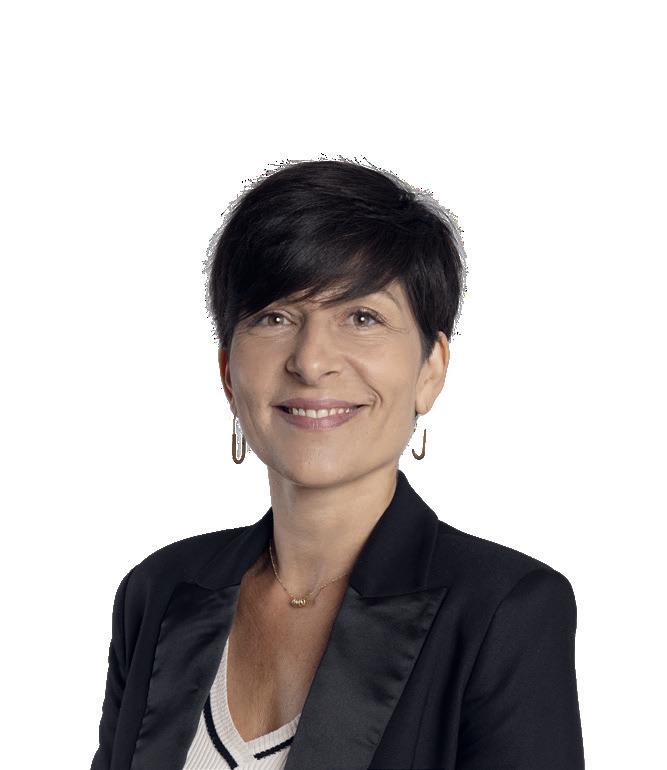
2
Banques
Pour les banques luxembourgeoises, l’arrivée de l’Amla met en lumière un enjeu clé : la calibration effective de l’approche fondée sur le risque. L’ABBL insiste sur la nécessité de donner un contenu opérationnel clair à la notion de proportionnalité, souvent invoquée mais encore appliquée de manière hétérogène.
Autre sujet clé : l’échange d’informations, en particulier dans un contexte de lutte accrue contre la fraude. Face à des schémas de fraude de plus en plus rapides et sophistiqués, les établissements cherchent à renforcer le partage d’informations afin d’agir en temps réel et de limiter les pertes. Ces échanges restent toutefois contraints, notamment par le Règlement général sur la protection des données (RGPD) et par les règles de secret professionnel, qui encadrent strictement la circulation de certaines données. Dans ce contexte, l’ABBL explore des solutions compatibles avec le cadre actuel, y compris à travers des mécanismes encadrés ou des formes de coopération renforcée avec les autorités.
Amandine Laurent, ABBL
Asset management
Pour l’industrie des fonds, l’enjeu principal est d’éviter que les futures règles européennes soient calquées sur un modèle purement bancaire. L’Alfi rappelle que l’organisation même de la distribution des fonds diffère profondément de celle de la banque. « L’industrie des fonds est fortement intermédiée : lorsqu’un investisseur souhaite acheter un fonds, il ne s’adresse généralement pas directement au fonds luimême, mais passe par sa banque, un distributeur, un courtier ou encore une plateforme d’investissement », explique Corinne Lamesch.
Dans la plupart des cas, c’est cet intermédiaire qui entretient la relation directe avec le client final, ce qui rend certaines obligations difficiles à appliquer. « Certains textes prévoient par exemple que l’on puisse 'regarder à travers' l’intermédiaire pour identifier l’investisseur final », observe la deputy CEO Dans la pratique, estimetelle, une telle approche « impliquerait des coûts considérables et injustifiés ». Si un intermédiaire financier réglementé – comme une banque – effectue déjà les contrôles nécessaires sur l’investisseur final, l’exigence d’un look-through systématique n’apparaît pas pertinente aux yeux de l’Alfi.
Audelà de ces aspects techniques, l’industrie regrette que la simplification
administrative ne figure pas parmi les priorités affichées de la future autorité européenne. Les acteurs du secteur voient dans la digitalisation un levier majeur pour une mise en œuvre plus efficace des obligations.
« La digitalisation est devenue indispensable pour lutter contre la criminalité financière car les criminels euxmêmes utilisent des technologies de plus en plus sophistiquées », relève la représentante de l’Alfi. Les procédures d’identification des clients pourraient ainsi être
largement modernisées grâce à des solutions numériques existantes.
Enfin, l’association attire l’attention sur la nécessité pour la future autorité de disposer d’une expertise sectorielle solide. L’Alfi encourage l’Amla à recruter des spécialistes de la gestion d’actifs afin d’éviter que la supervision ne s’éloigne trop des réalités opérationnelles du terrain. « En résumé, un dialogue de supervision efficace sera essentiel », conclut Corinne Lamesch.

Un dialogue de supervision efficace sera essentiel. »
Photo : Anthony Dehez
Corinne Lamesch, Alfi

Biennale de Venise Septembre 2026

Trésors d’Egypte, au rythme du Nil Novembre 2026

Japon, immersion artistique & Art Fair Tokyo Mars 2027

Émirats d’architecture & de désert
Décembre 2027

Ascension du Kilimandjaro & safaris de Tanzanie
Janvier 2027

Grand Sud australien & Open de tennis
Janvier 2027
Brésil, Grand prix & culture carioca Novembre 2027

Une série de voyages conçus autour de grands rendez-vous culturels, d’événements sportifs majeurs et de destinations d’exception.
Imaginé avec Continents Insolites, chaque itinéraire allie accès privilégiés, rencontres et perspectives, en petits groupes, avec une attention particulière portée à l’expérience.
L’Afrique du Sud en train de légende
Septembre 2027
Informations & Réservations
Vigilance accrue sur le crédit privé
En forte croissance, le crédit privé suscite des inquiétudes sur la liquidité et la transparence. Régulateur et professionnels s’accordent sur la nécessité d’un suivi renforcé, sans en surestimer la portée.
Guillaume Meyer, Journaliste Romain Gamba, Photographe
Le marché du crédit privé, estimé à environ 2.000 milliards de dollars, s’est imposé comme l’un des relais de croissance de la Place. Il n’en vit pas moins des heures tumultueuses, sur fond d’inquiétudes concernant la liquidité et des valorisations incertaines. Aux États-Unis, des retraits d’investisseurs ont déjà été observés dans des fonds de grandes maisons de gestion.
Ces tensions font écho aux mises en garde d’organismes internationaux tels que le Conseil européen du risque systémique (ESRB) ou l’Organisation internationale des commissions de valeurs (Iosco), qui alertent sur les risques associés aux marchés privés. « Le principal problème identifié par de nombreuses sources officielles est celui de l’opacité », explique la professeure de finance à l’Université du Luxembourg Diane Pierret. « D’un point de vue prudentiel, tout ce qui manque de transparence est suspect. Autrement dit, sans informations, il faut toujours penser au pire. »
Une supervision jugée suffisante À Luxembourg, les risques de liquidité et de crédit figurent parmi les priorités de la Commission de surveillance du secteur financier (CSSF) pour 2026. Interpellé, le régulateur déclare disposer d’une visibilité suffisante sur les risques liés aux marchés privés, en général, et au crédit privé en particulier. Dans une réponse détaillée, la CSSF rappelle que les fonds d’investissement alternatifs (FIA) – qu’il s’agisse de private equity, de dette privée ou d’immobilier – font l’objet de reportings réguliers, trimestriels ou annuels selon leur taille et leur niveau d’endettement. Ces données permettent de suivre la taille et la nature des portefeuilles, les stratégies, les profils de risque et le recours au levier. Elles sont complétées par des
informations hors bilan, notamment sur l’utilisation de produits dérivés via le règlement européen sur les infrastructures de marché (Emir).
Le régulateur souligne que ces éléments soutiennent une surveillance à la fois microprudentielle et macroprudentielle. Il le reconnaît néanmoins : « Il existe un potentiel d’amélioration, notamment pour mieux couvrir les risques spécifiques liés aux différents types de FIA (y compris les fonds private equity) et améliorer les données relatives au levier, dans l’optique de rendre les définitions cohérentes entre Ucits et FIA et de développer des mesures permettant de mieux évaluer les risques qui découlent du recours au levier. »
Dans cette perspective, la CSSF soutient la refonte des obligations de reporting prévue par la directive AIFMD II, qui devrait renforcer la qualité des informations disponibles et améliorer la visibilité des autorités sur les risques, notamment dans les marchés privés.
Des outils utiles mais limités Le 18 mars, la CSSF a détaillé de nouvelles obligations en matière de gestion de la liquidité, introduites dans le cadre de AIFMD II et de Ucits VI. Pour le président de l’Association luxembourgeoise de la gestion des risques (Alrim), Luc Neuberg, « ces nouvelles obligations sont bien entendu les bienvenues ». Il nuance toutefois leur portée.
À ses yeux, la situation des fonds domiciliés à Luxembourg n’est pas fondamentalement modifiée, la majorité d’entre eux ayant déjà recours aux outils de gestion de la liquidité (LMT). Ces dispositifs restent, selon lui, des solutions de dernier recours. L’expert mentionne notamment la suspension des rachats, « le plus extrême des outils », ou encore le cantonnement
dans des side pockets en situation de crise : « Ces outils sont utiles, mais ne permettent pas de gérer le risque de liquidité de manière fondamentale. »
Luc Neuberg insiste ainsi sur les limites de la régulation : « Elle n’est qu’un support et non un garde-fou total contre les crises. Nous ne pouvons pas nous reposer sur des textes de loi pour gérer les risques, c’est un exercice bien plus fondamental, et non uniquement une question de compliance ! »
8 %
Les crédits envers des intermédiaires financiers non bancaires (NBFI) représentent moins de 8 % du bilan agrégé des banques luxembourgeoises, selon la CSSF. Les liens entre finance non bancaire et secteur bancaire constituent un point d’attention des régulateurs, un problème de liquidité chez les NBFI pouvant se transformer en problème de solvabilité pour les banques.
La CSSF s’affiche sereine : « Comme ces prêts sont généralement surgarantis, le risque pour la stabilité financière est limité. »
Luc Neuberg Président Alrim
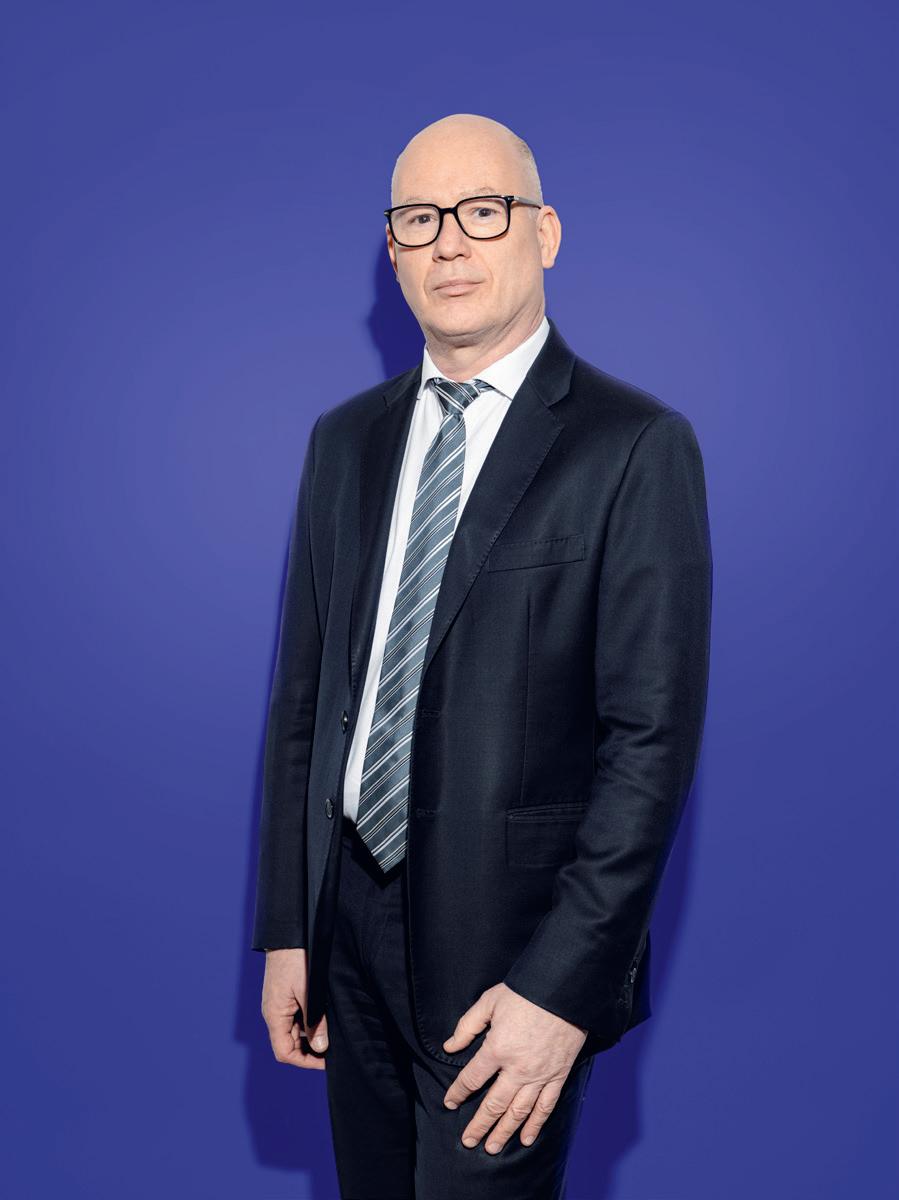
Forecast
“If Luxembourg wants to remain a leading asset management hub by 2030, it will need a technological wakeup call.”
Dominique Valschaerts
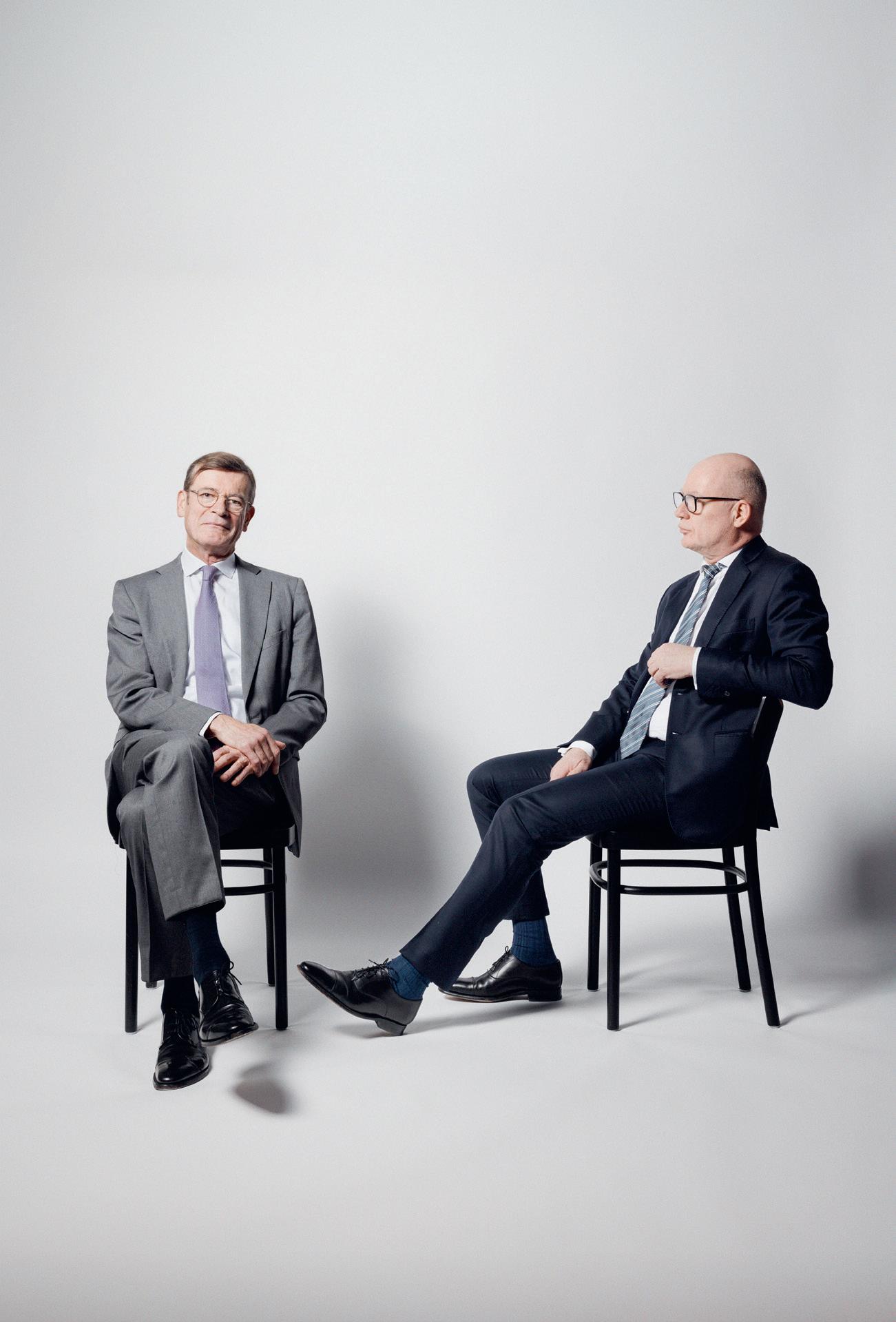
“The central question is where to allocate capital in a world shaped by geopolitical and energy pressures.”
Luc Neuberg
From performance…
PWC’s November 2025 report, Asset and Wealth Management Revolution 2025, highlights a striking paradox. Global assets under management are expected to reach $200trn by 2030. Yet the industry’s underlying profitability continues to be eroded.
“Many investors are simply not aware of the costs they are bearing,” notes Dominique Valschaerts, an independent director and former CEO of Fundsquare. According to PWC, the bulk of these charges reflects operational expenses—an area Valschaerts sees as a major opportunity for improvement. “Reducing these costs would strengthen risk management. Many failures stem from operational weaknesses and human intervention, particularly among fund administrators and asset managers,” he says.
“If Luxembourg wants to remain a leading asset management hub by 2030, it will need a technological wakeup call—particularly through the integration of artificial intelligence and blockchain,” he adds, describing the shift as “a cultural, regulatory and technical challenge all at once.”
…to protection by 2030 Luc Neuberg, president of the Luxembourg Association of Risk Management (Alrim), offers a perspective that places less emphasis on profitability. “We’re talking about decimal points. Is that really what investors are concerned about today? I don’t believe so,” he argues.
In his view, the growth of investment funds is increasingly driven not by performance, but by the search for protection.
“The central question is where to allocate capital in a world shaped by geopolitical and energy pressures. Investors are prioritising risk management above all else.”
Neuberg also highlights a blind spot in conventional analysis. Industry studies tend to focus on success stories while overlooking failures, pointing to a broader gap in financial literacy. Assets such as Bitcoin provide no protection and expose investors to the risk of total loss. “Investors often see protection as an unnecessary cost—until something goes wrong,” he notes.
Photo: Romain Gamba



Depuis plus de 25 ans à vos côtés pour une gestion engagée et durable de votre patrimoine.
Une gestion de convictions active et responsable.
Des solutions d’épargne qui s’adaptent aux différentes configurations des marchés.
Une expertise qui couvre l’ensemble des classes d’actifs, des styles de gestion et des zones géographiques. Parlez-en à votre Conseiller Financier et retrouvez plus d’informations sur dnca-investments.com
DNCA FINANCE est une société en Commandite Simple (SCS) au capital social de 1 634 468,34 Euros, ayant son siège social au 19, place Vendôme 75001 Paris.
DNCA Finance Luxembourg Branch, 1 Place d’Armes L-1136 Luxembourg. DNCA FINANCE est immatriculée au RCS de Paris sous le numéro B 432 518 041 et agréée en tant que société de gestion de portefeuille par l’Autorité des Marchés Financiers sous le numéro GP 000-30 depuis le 18/08/2000. Conseiller en investissement non indépendant au sens de la Directive MIFID II. Maison d’épargne et de valeurs