Narrowing
Fall 2023
Nesting Place
Spring 2024
The Third Law
Spring 2025
Hydrophobia
Spring 2024
Narrowing
Fall 2023
Nesting Place
Spring 2024
The Third Law
Spring 2025
Hydrophobia
Spring 2024
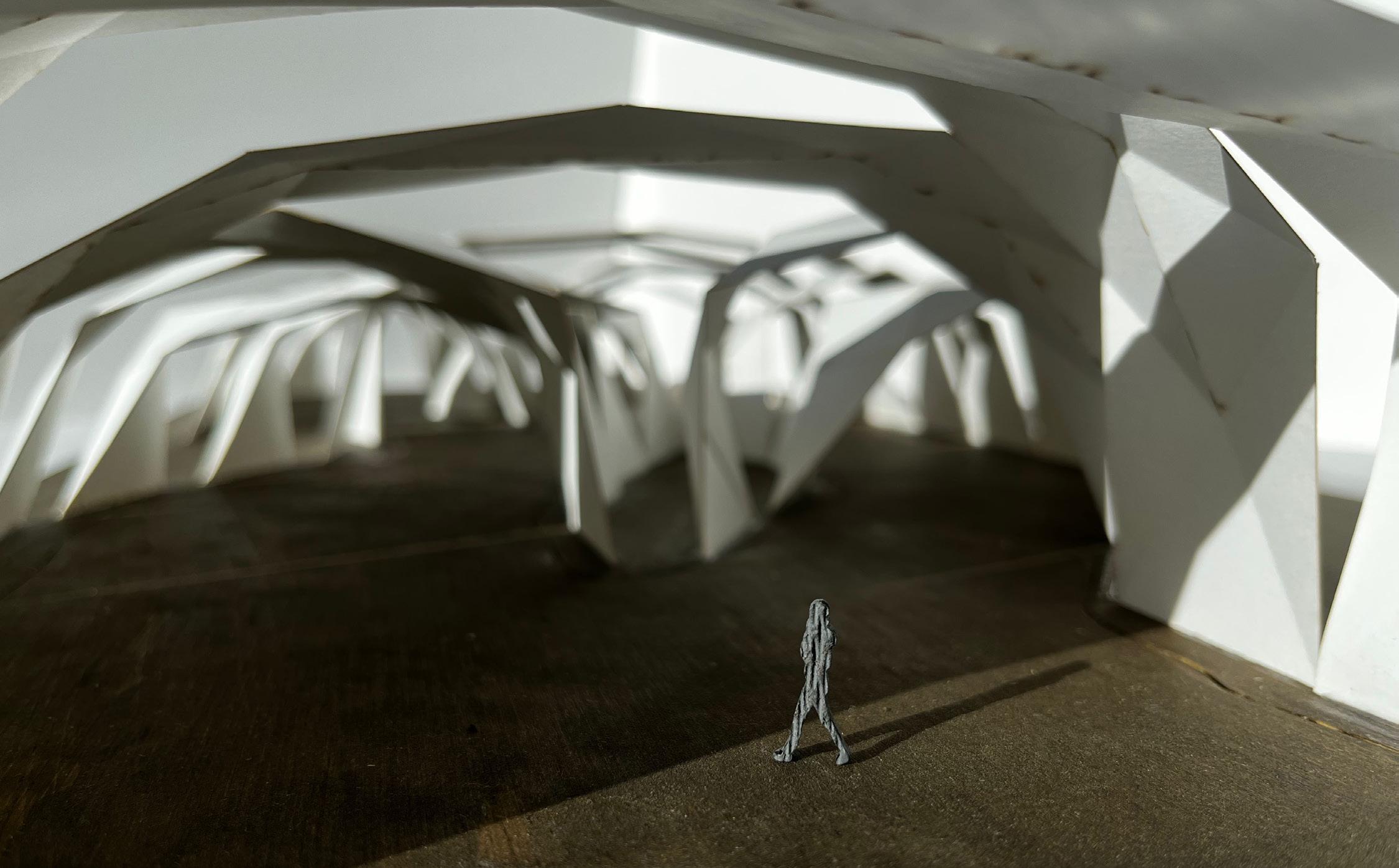
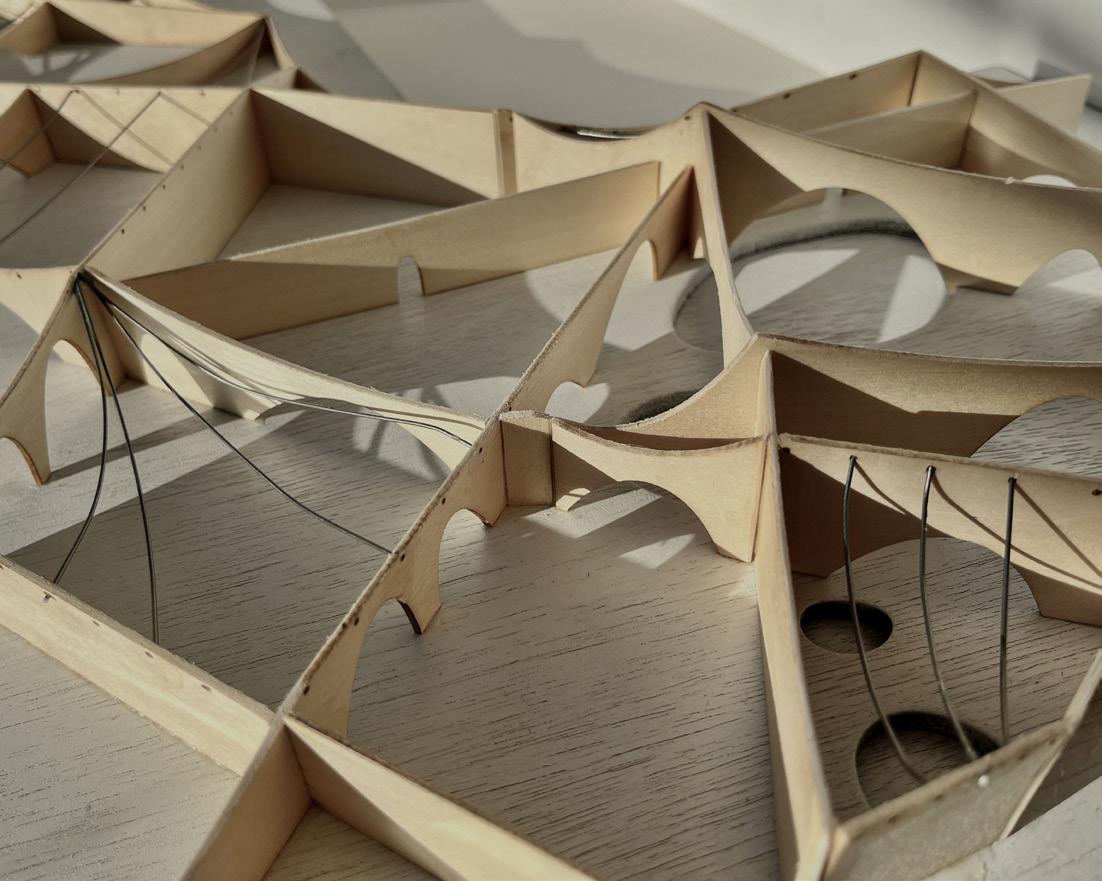
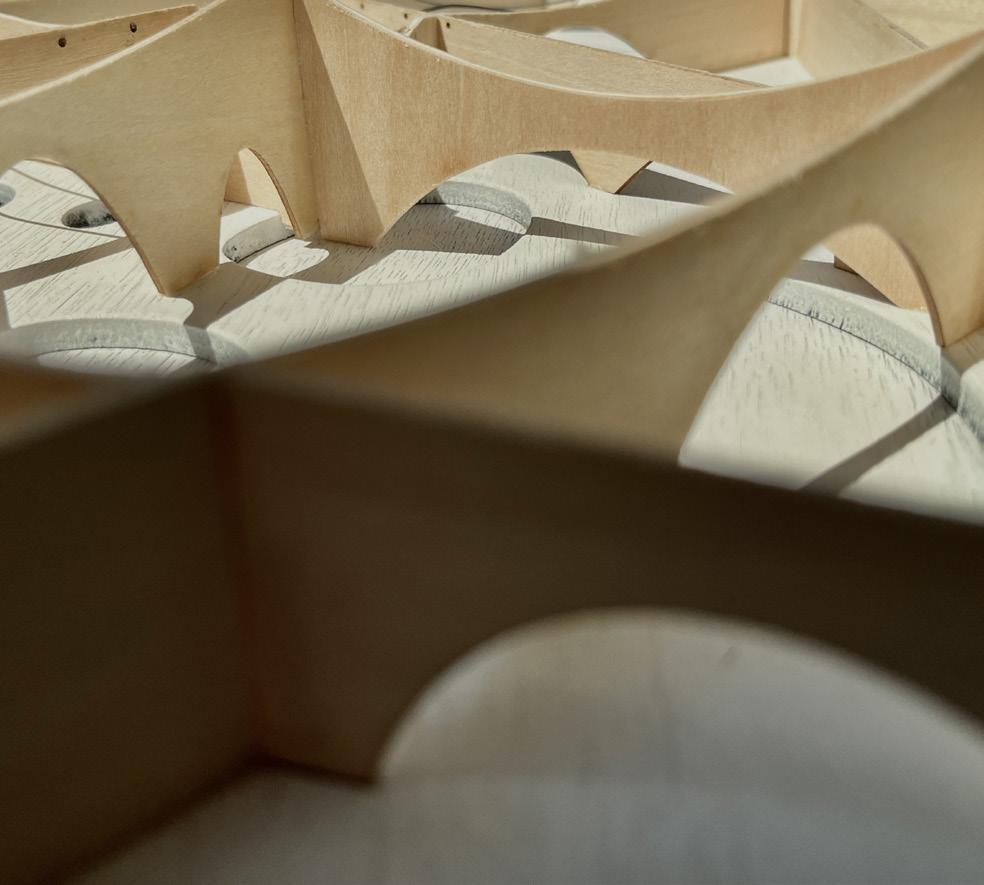
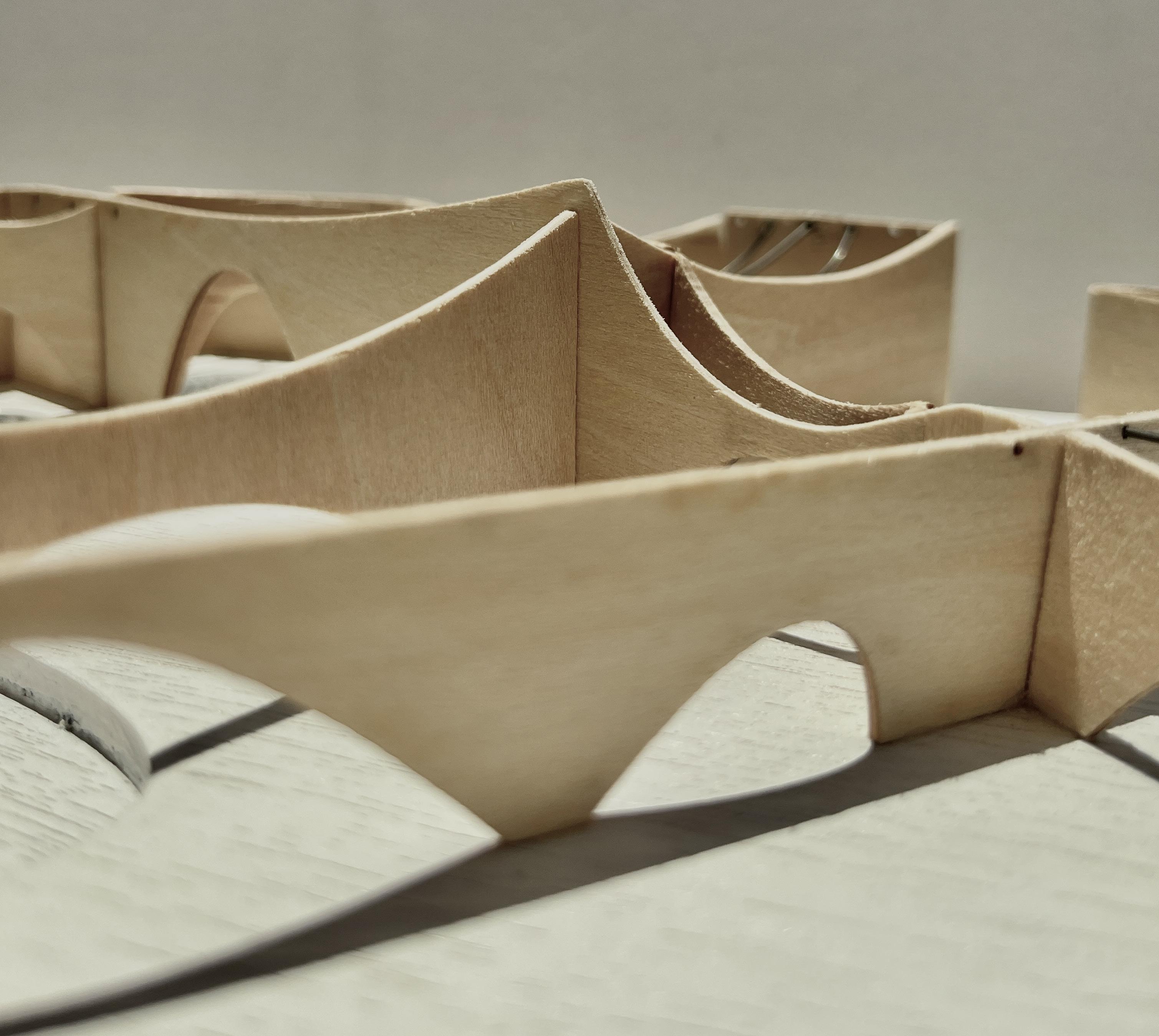
The diagrid is alive. Simultaneously tectonic architecture and structural mode of operation, the diagrid carries and pumps vertical loads into the earth through its system of diagonal bracing similar to the coursing of blood through veins. As a structural aesthetic, the lightweight beam system encases and dominates the project, directing structural forces while speaking an architectural language. Because of the diagrid’s nature as a skin based enclosure, it relies on tension members arrayed along its horizontal, commonly seen in the floor plates. In this sense, the diagrid, as a skin, relies on its bones, a form-holding skeleton.
The diagrid is an organism, a lightweight tectonic system composed of skin and bones, flowing and exchanging with its environment.
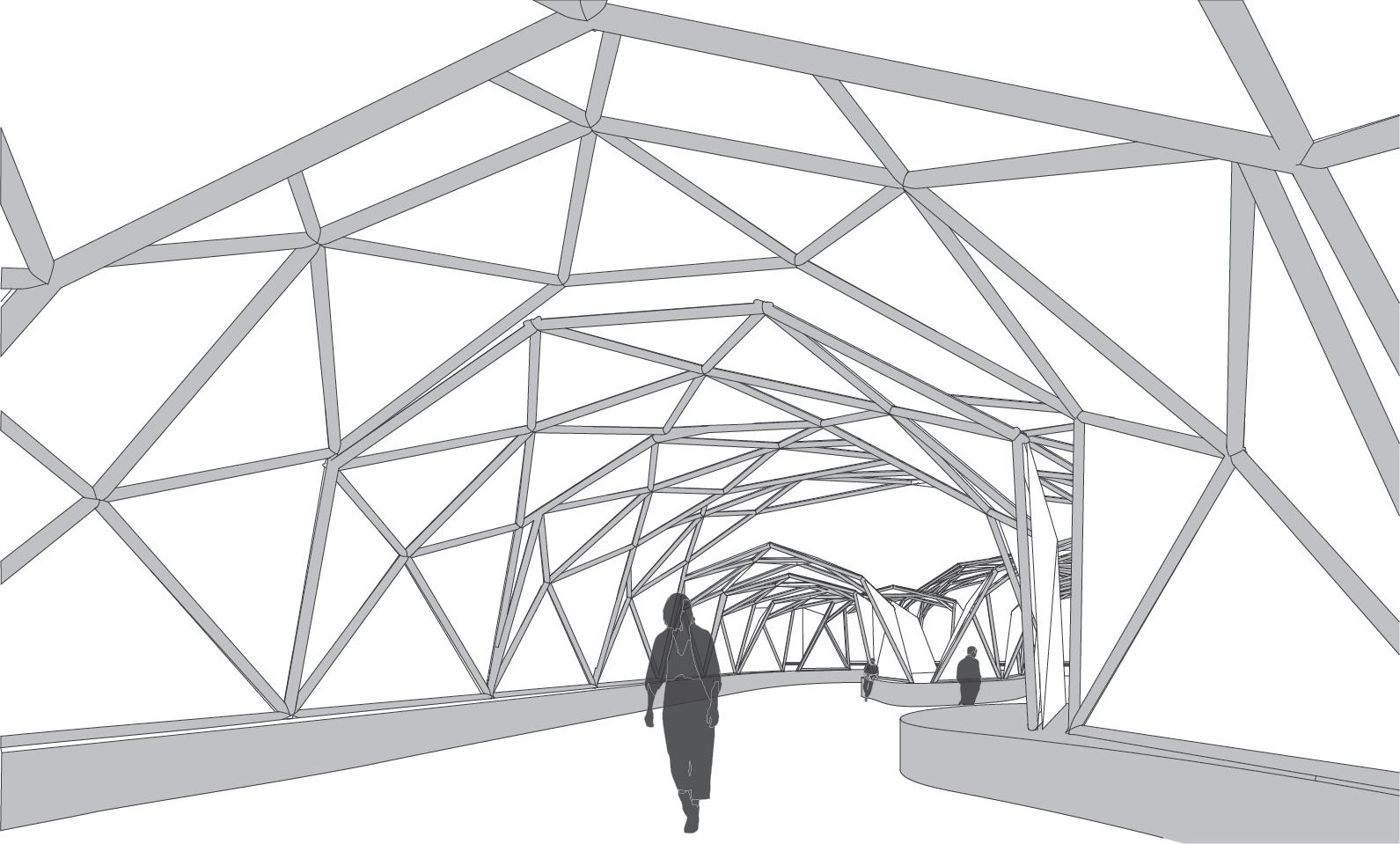
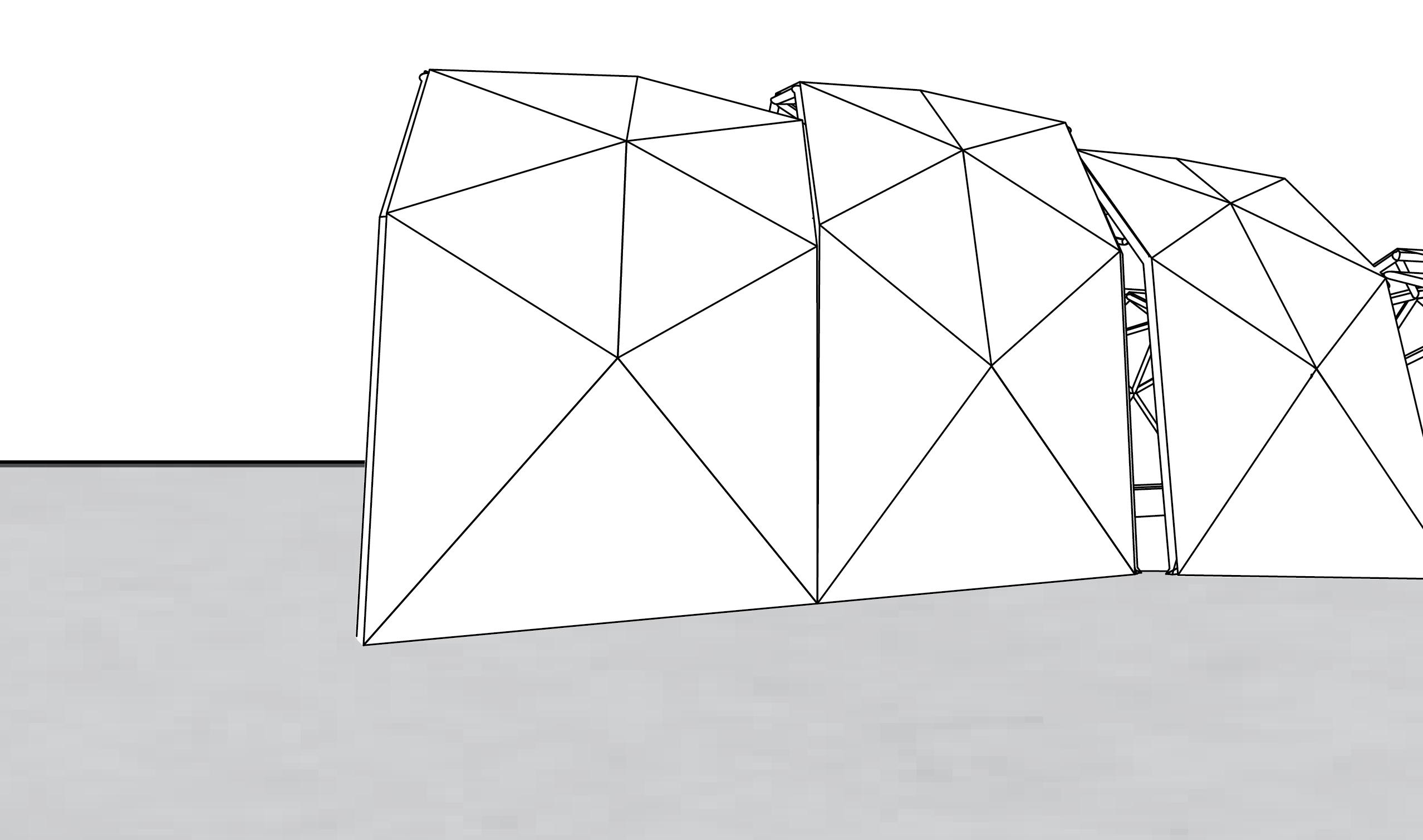
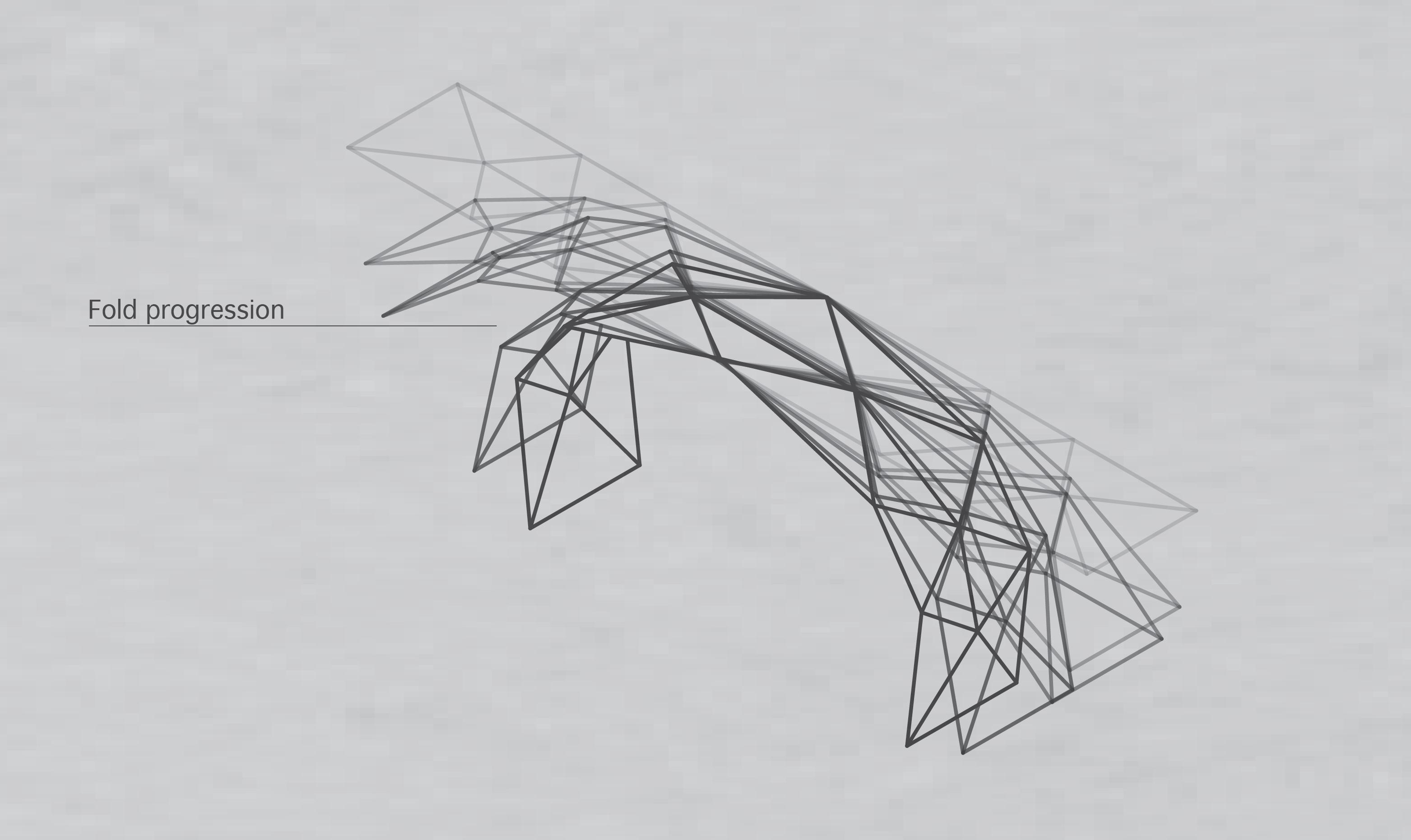
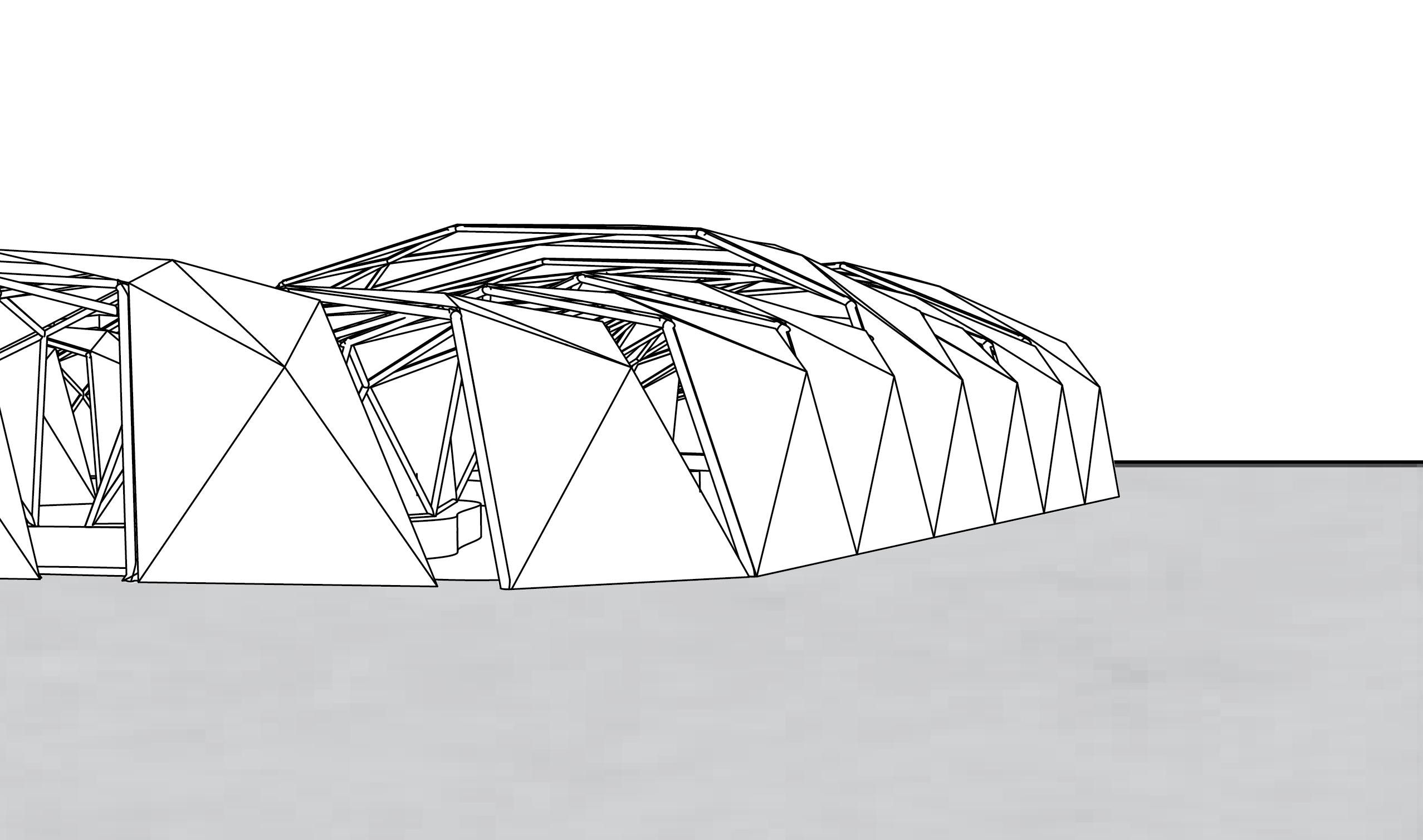
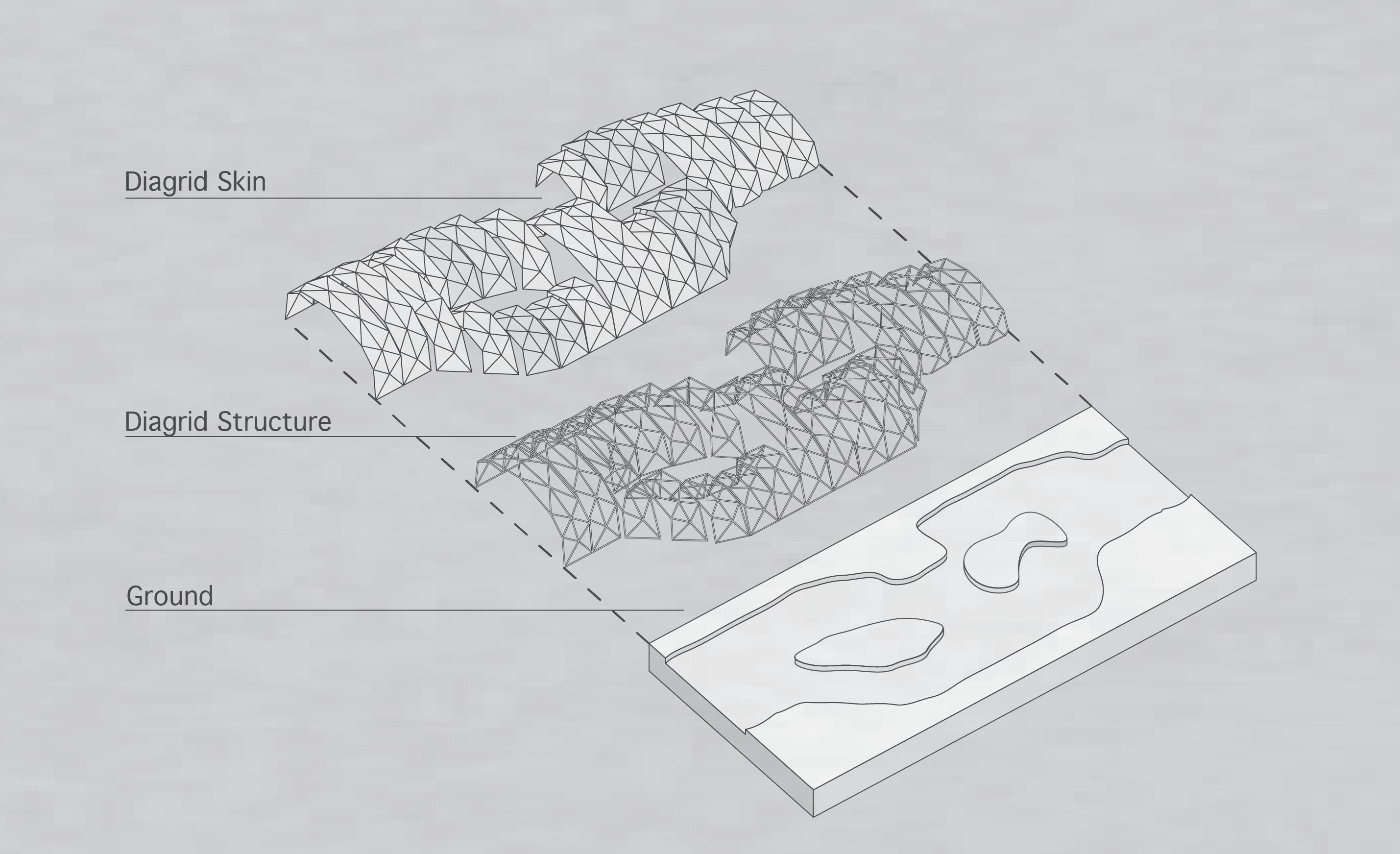
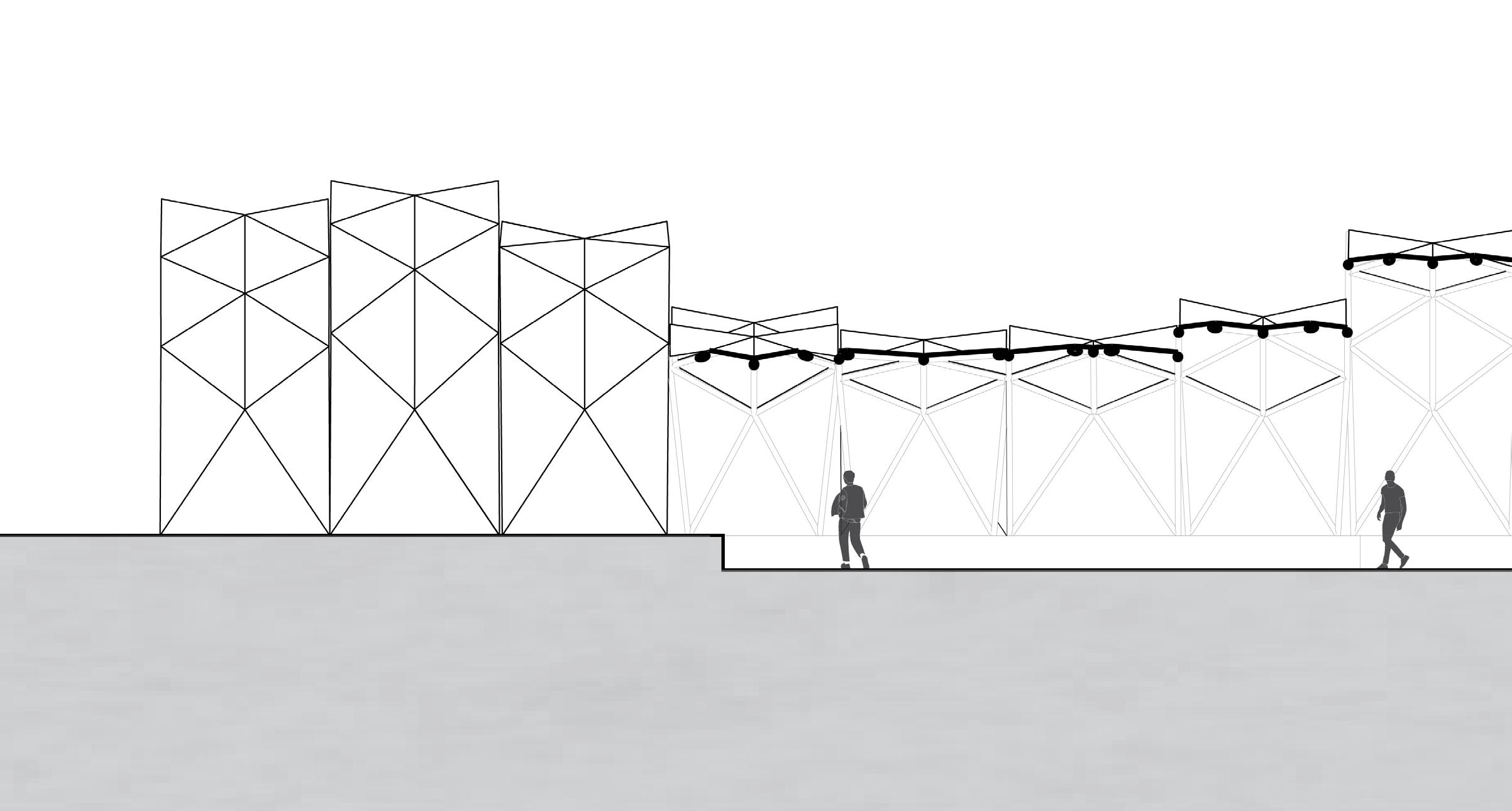
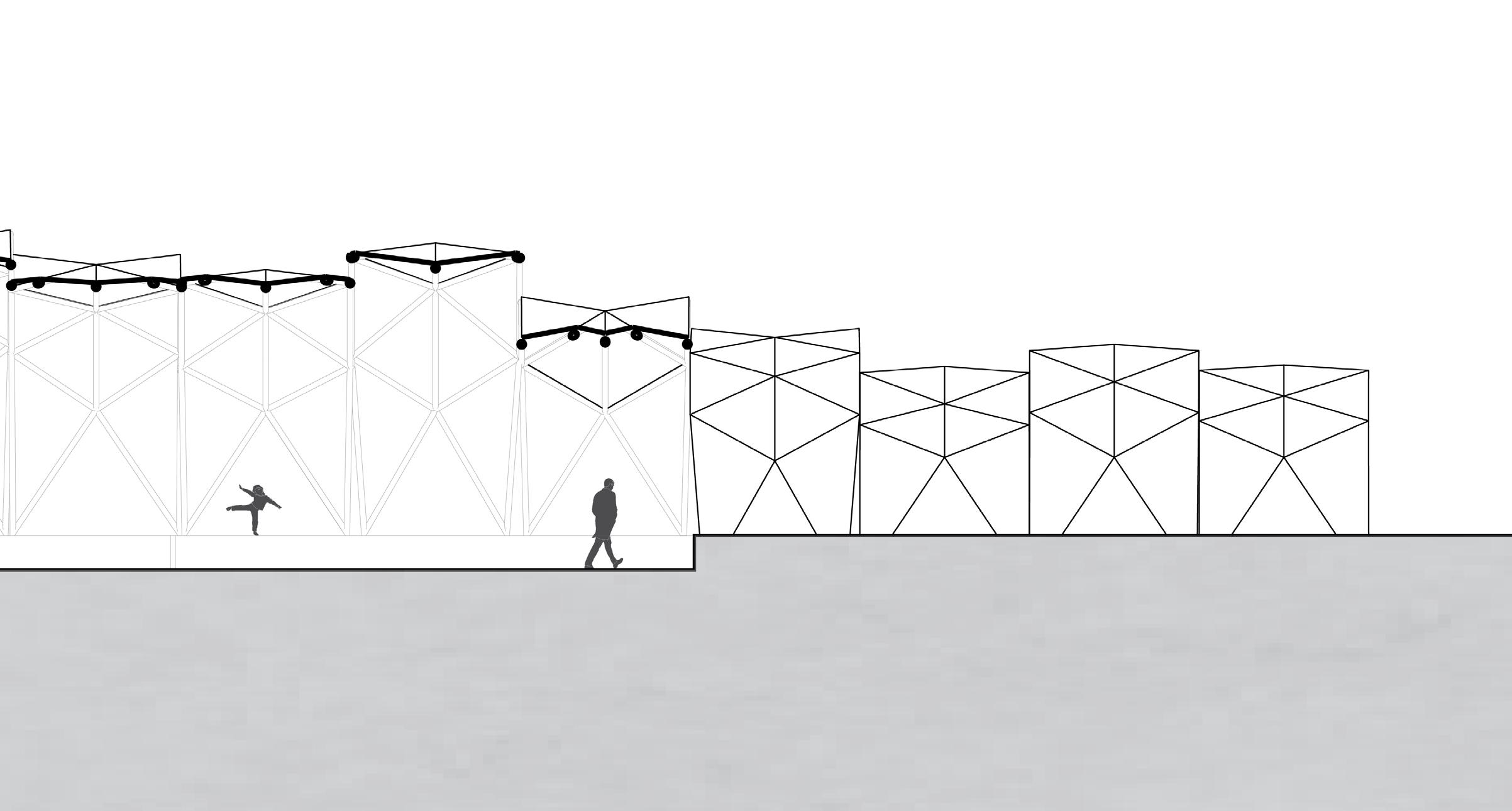
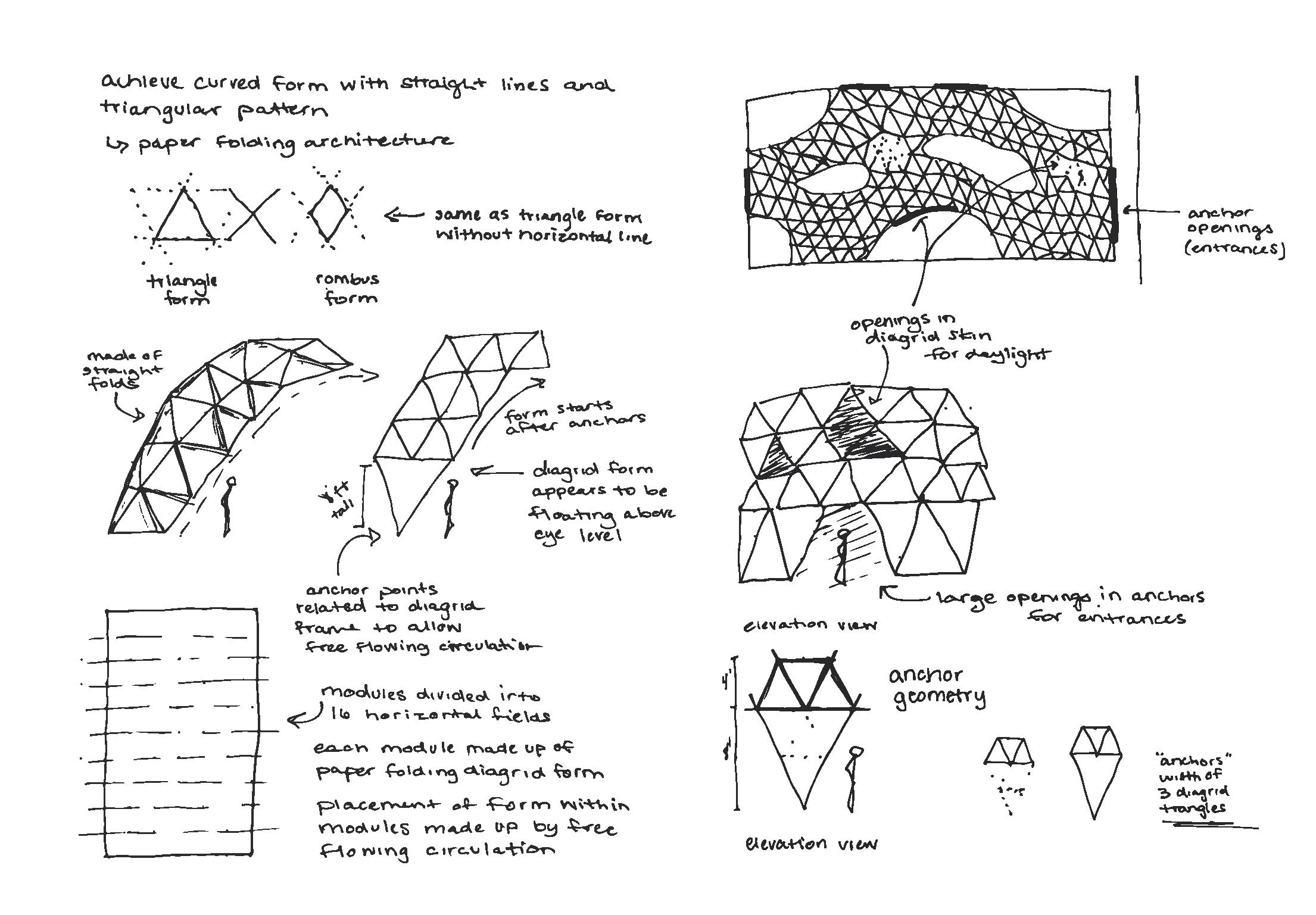
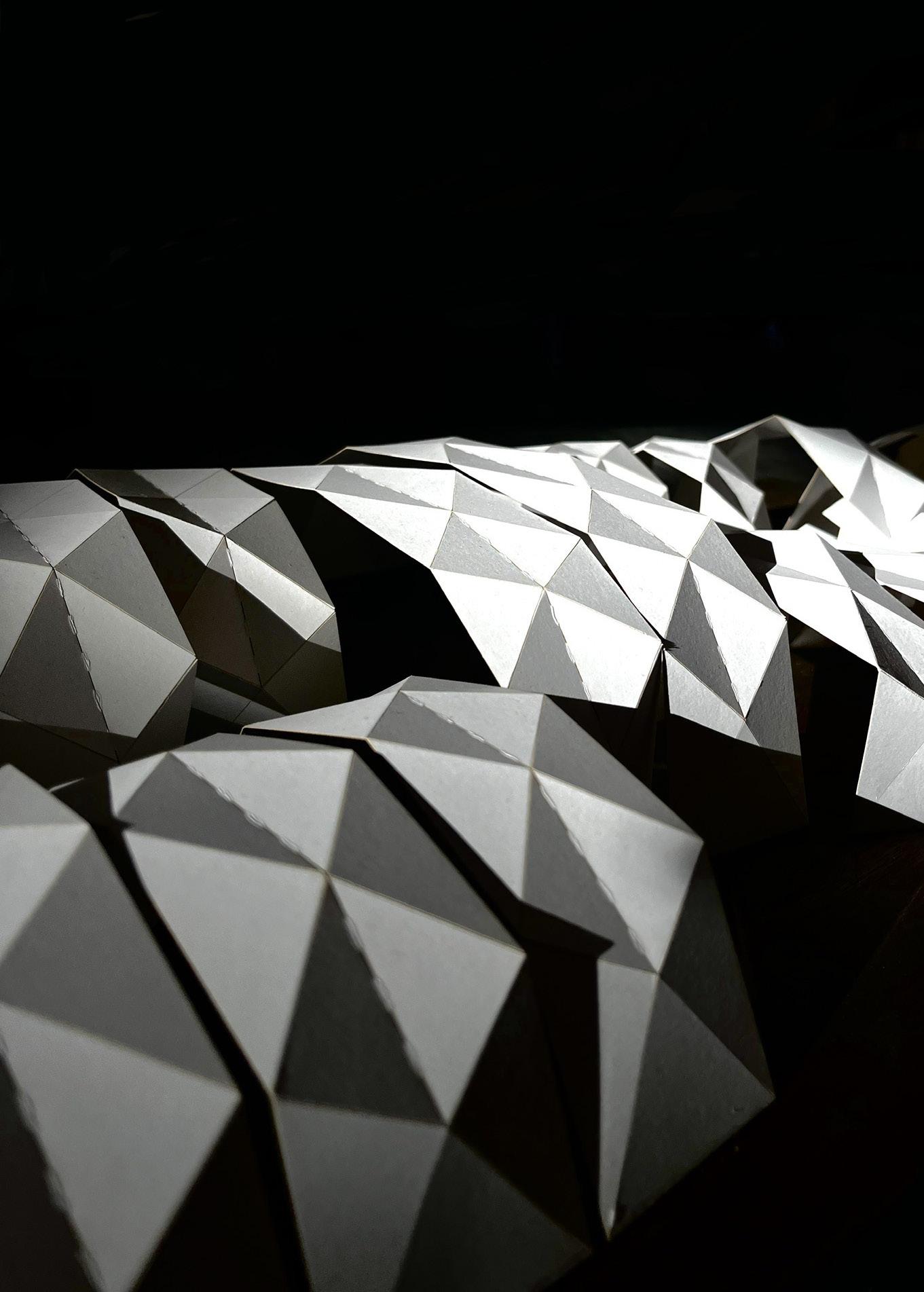
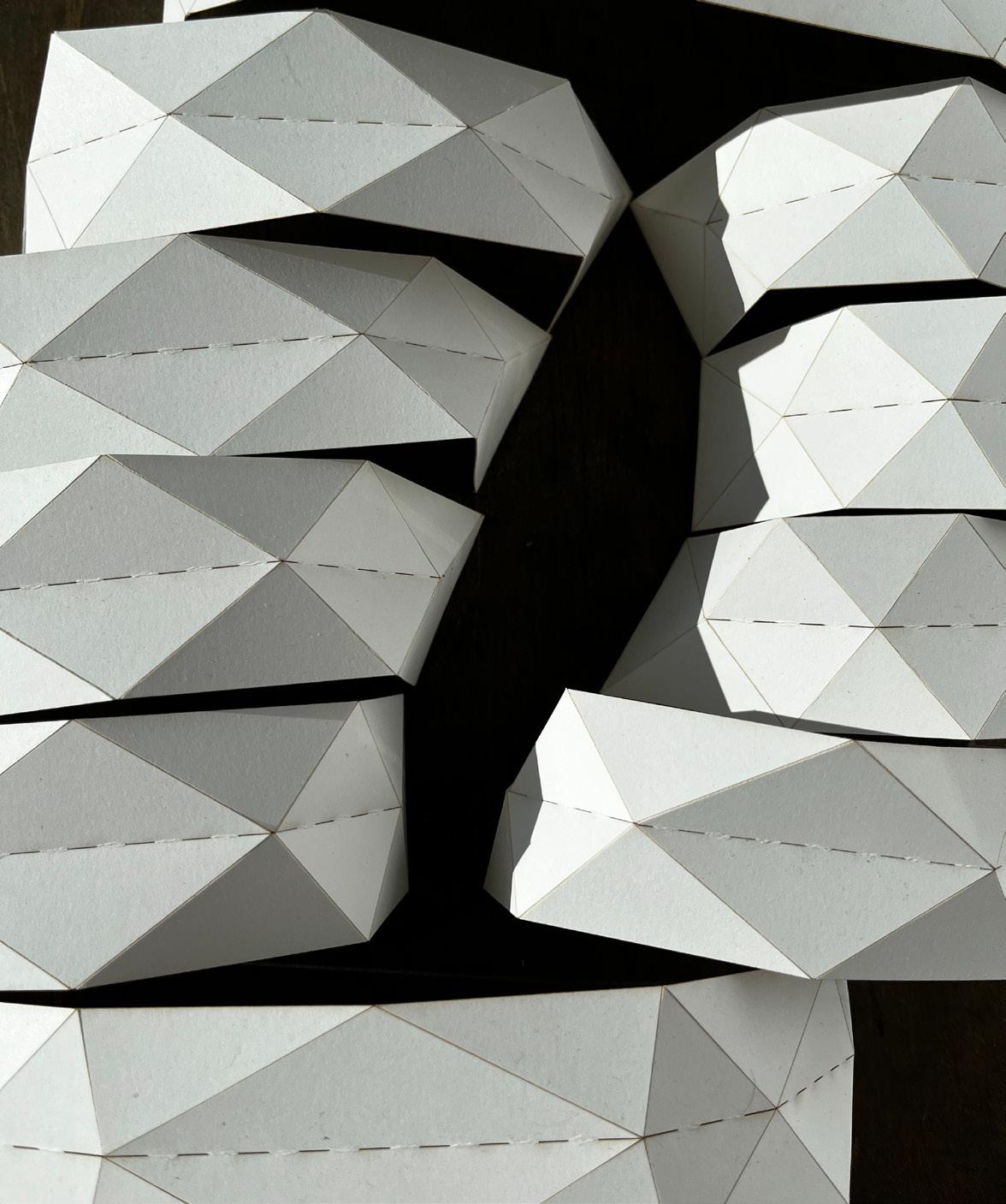
Through Grasshopper’s computational tools, the diagrid’s structural design is iteratively refined to generate a lightweight tectonic framework. Utilizing the Crane plugin for origami configurations, the diagrid becomes foldable and adjustable forming an aggregation of structural bays. Elements such as triangle size and folding angles guide the design, producing an organismic system that dynamically interacts with its environment. The final design is a seamlessly adjustable, foldable diagrid skin, embodying a balance of form and function in response to the metaphorical language of skin and bones.
“Wash yourself clean. With simplicity, with humility, with indifference to everything but right and wrong.”
- Marcus Aurelius
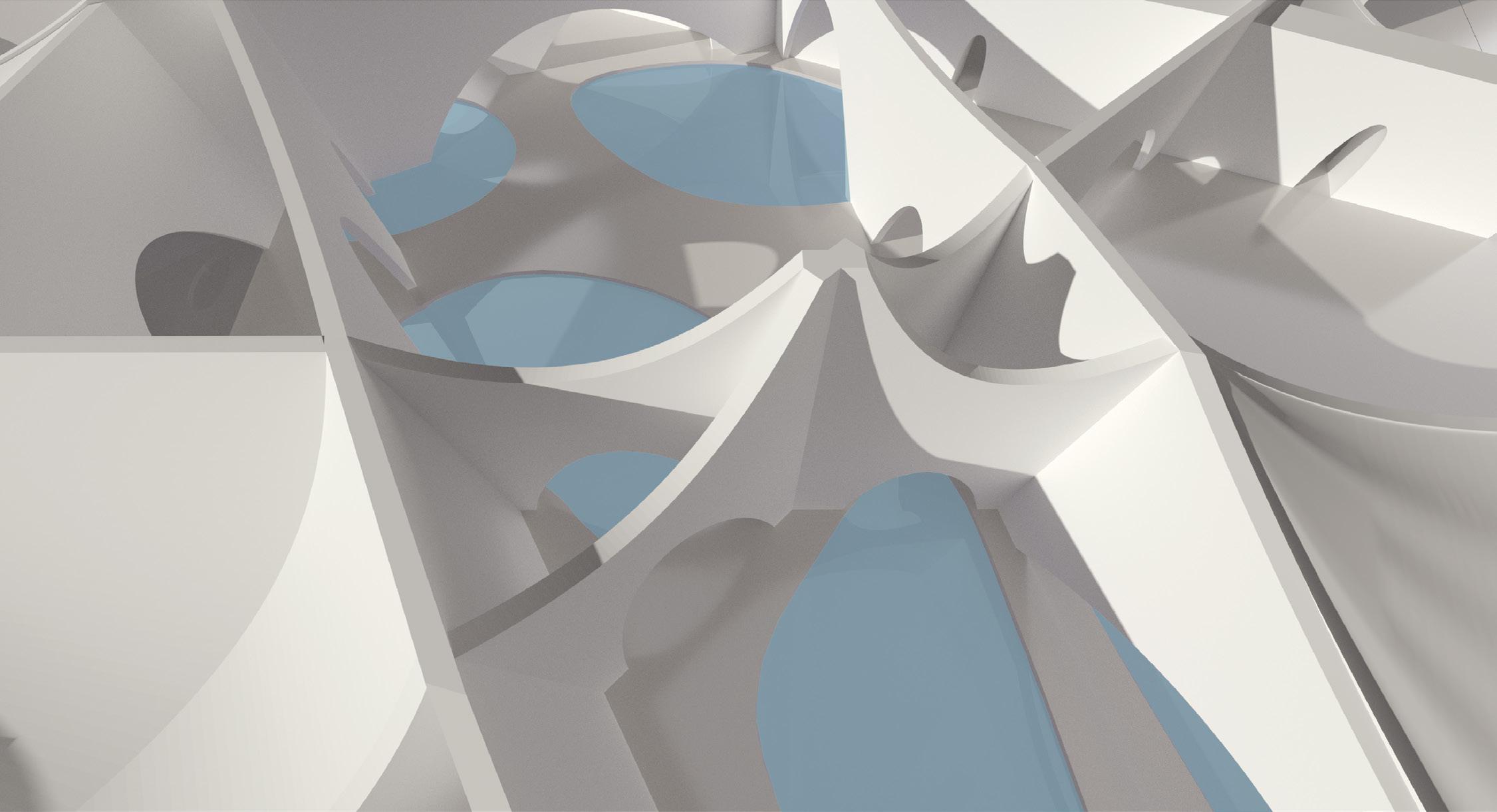
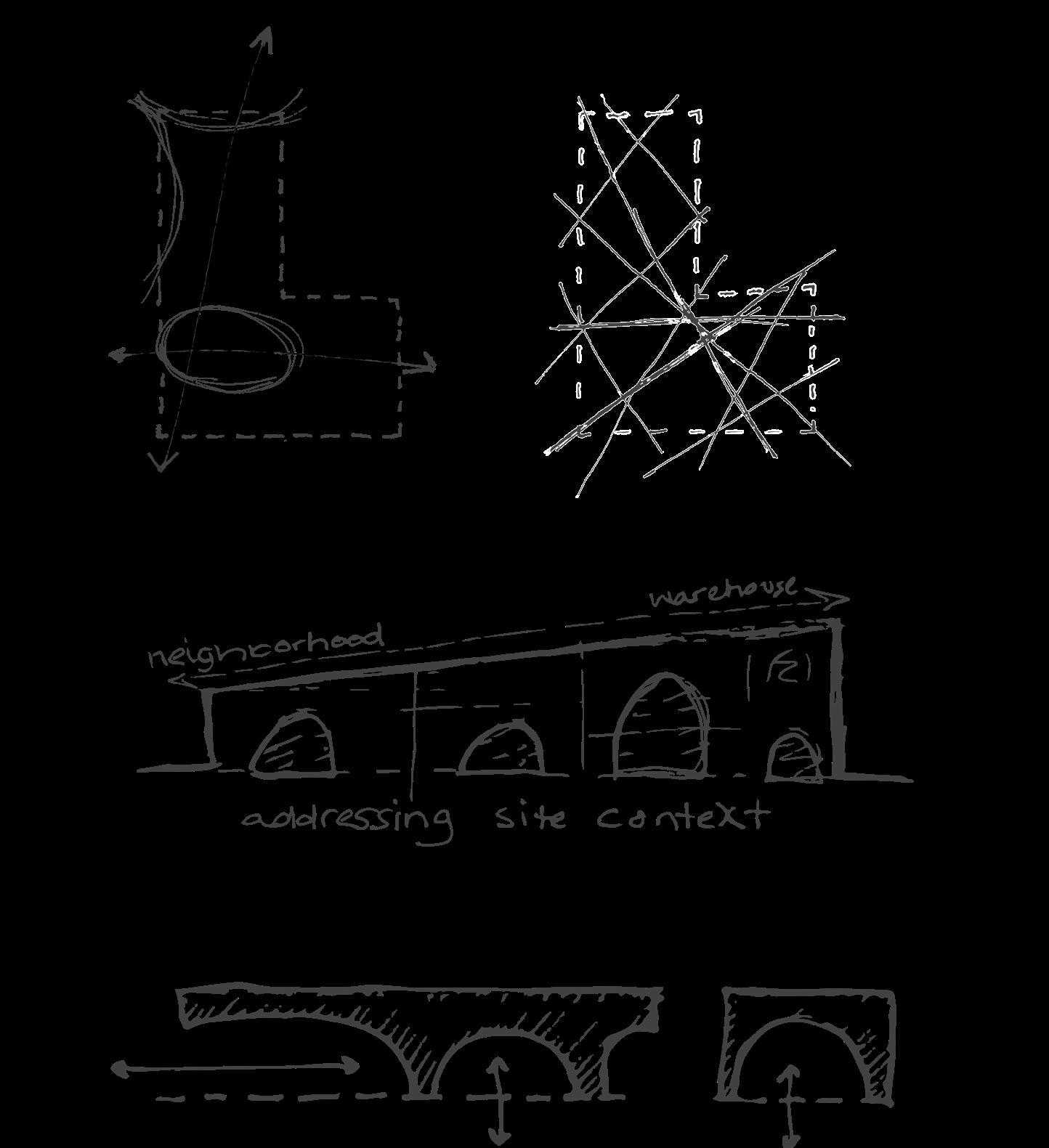
For thousands of years, cleanliness and hygiene have been a privilege, rather than a necessity. Before our modern day, the average middle-class person would not have access to a private bath. It was common for the average person to go to a public bathhouse as much as it was to go out to a restaurant. Now that we have plumbing, everyone with a home has access to a private bath, and there is no need for the public bathhouse anymore. But there lies the issue. “Everyone with a home” is not everyone. Homelessness is one of the Bay area’s greatest issues, and without a home, there is no access to a bath. With this, comes both physical and mental challenges for the people of West Oakland. We can’t solve every issue that comes with homelessness, but we can narrow the divide by providing access to resources for everyone. Not only will everyone have opportunity to cleanse their body, but also cleanse their mind.
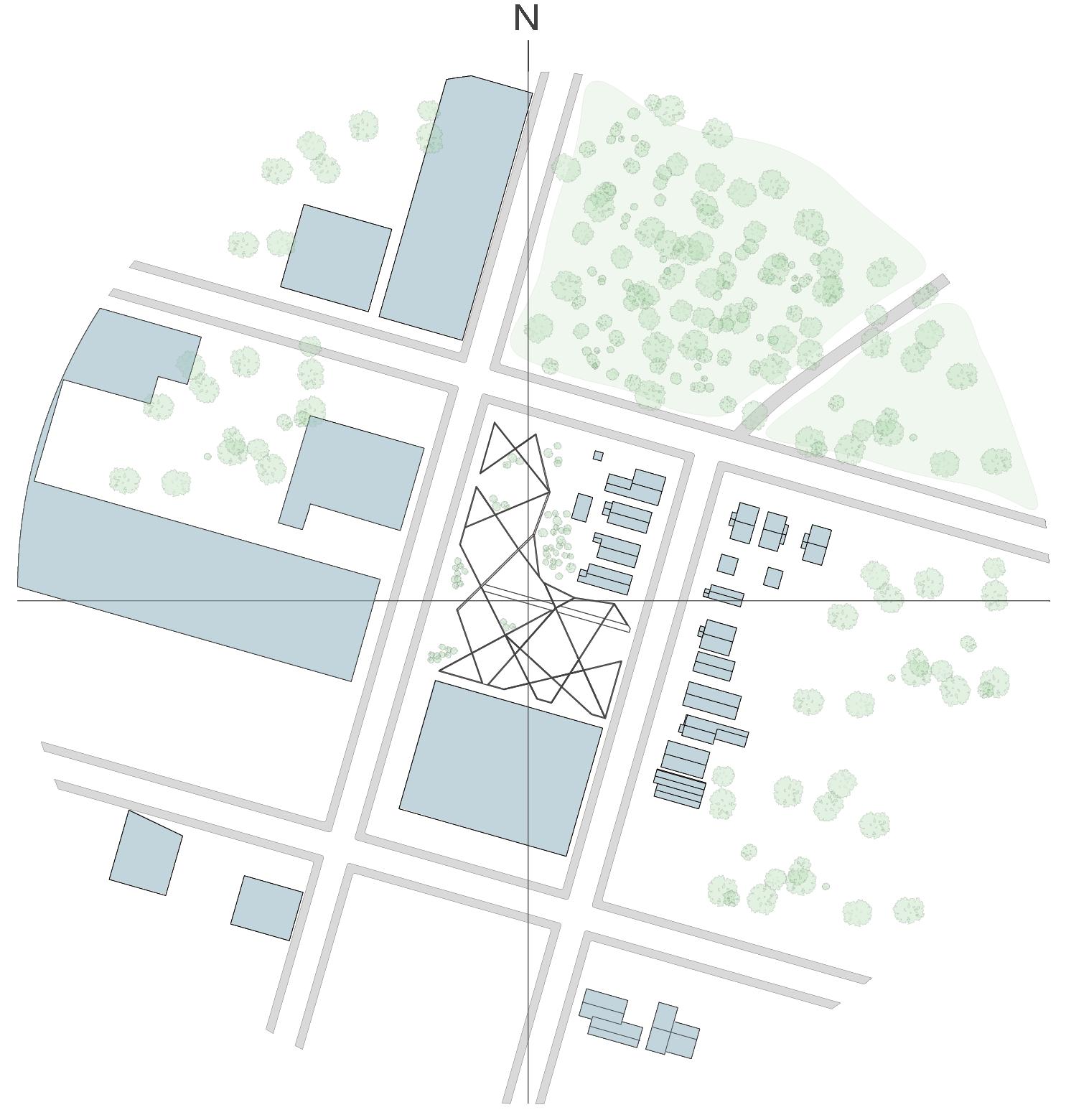
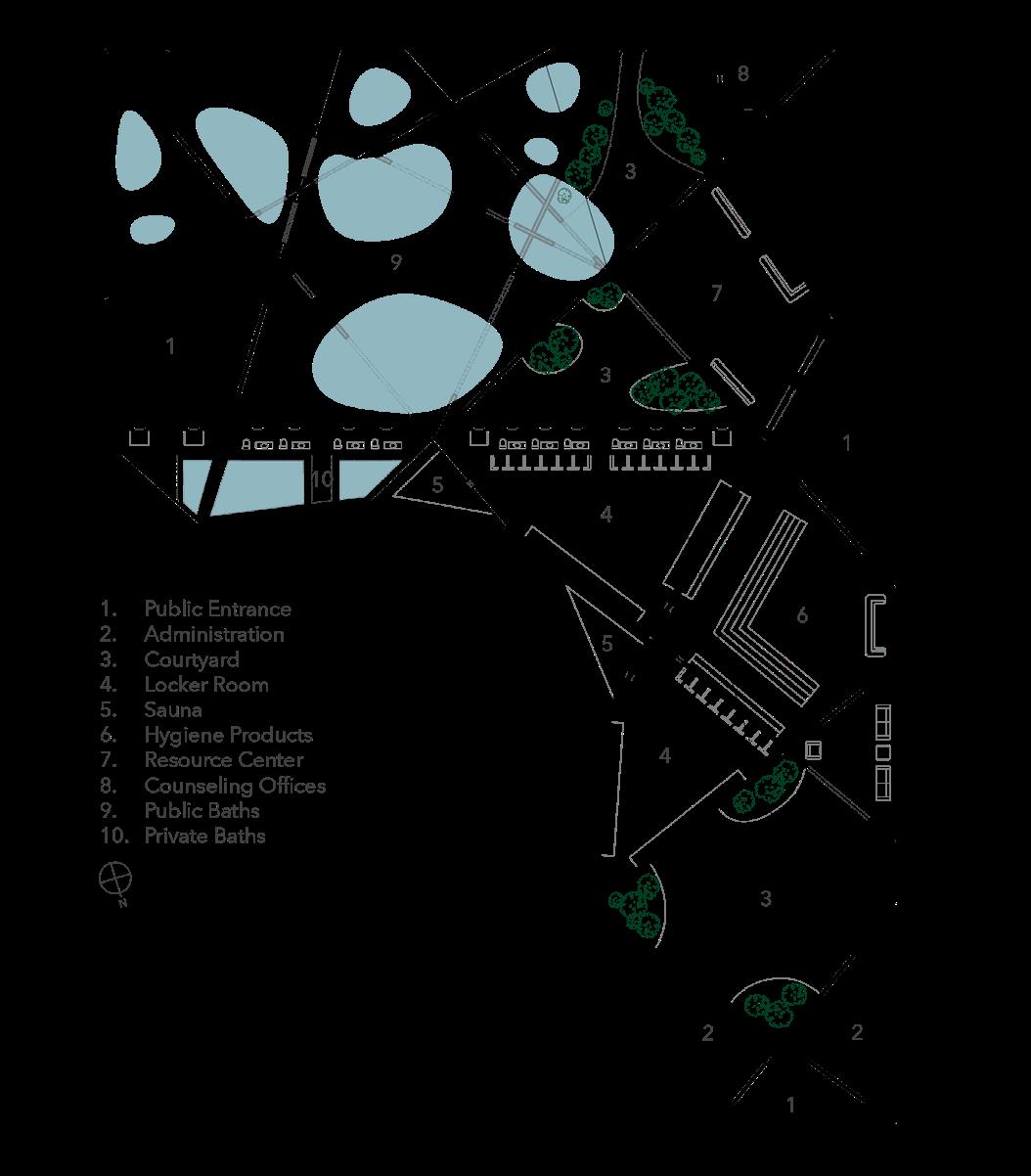
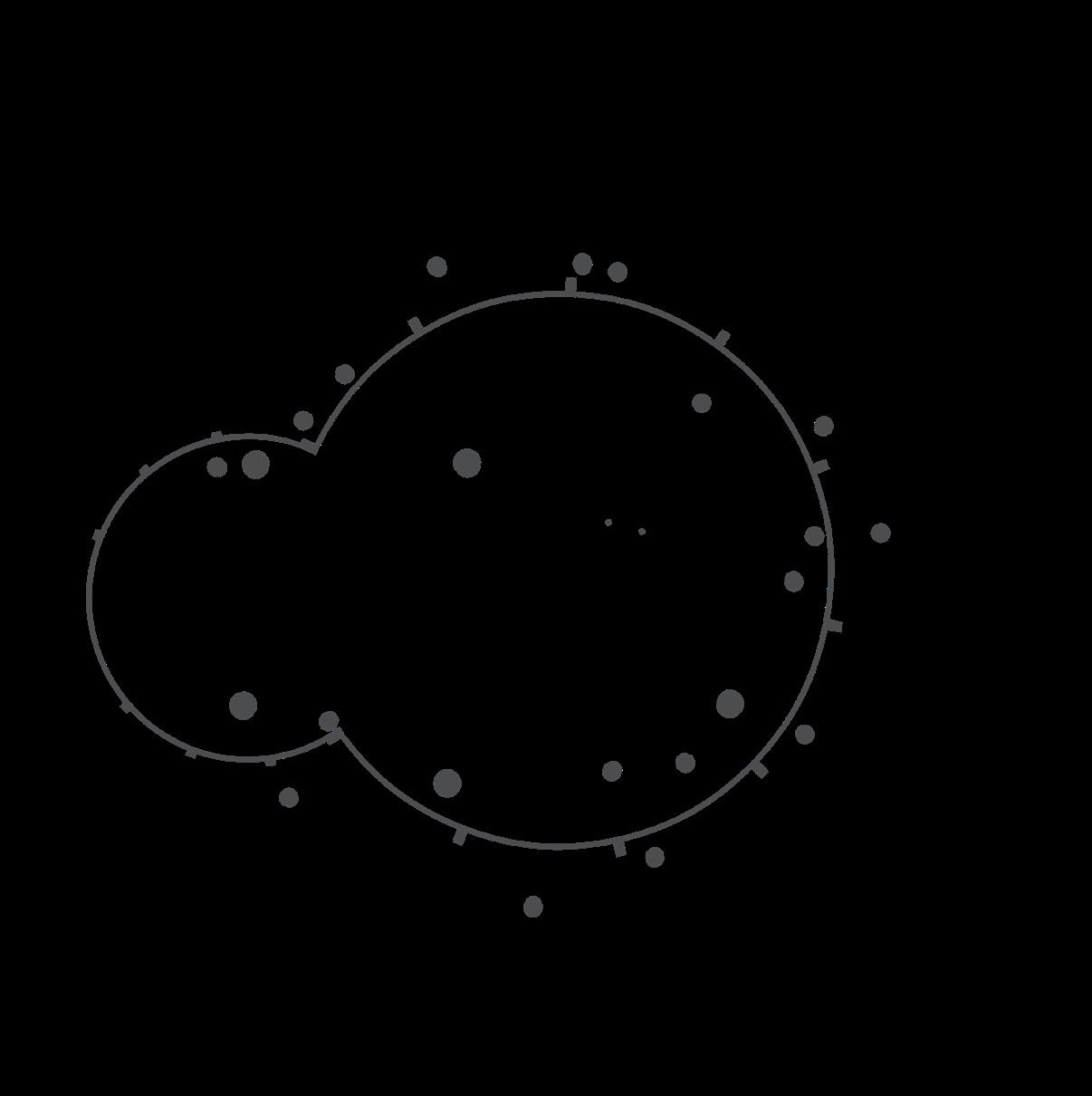
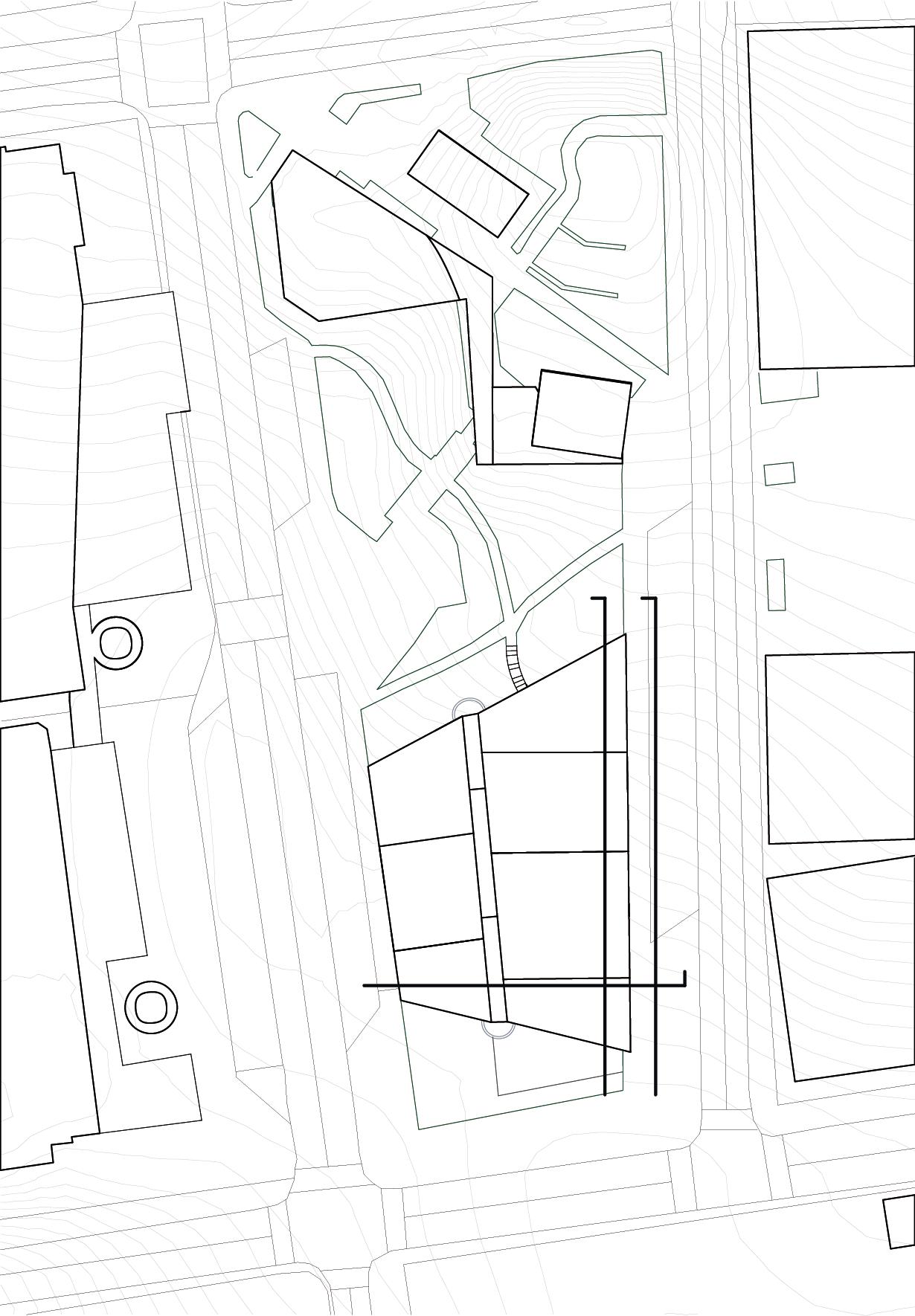
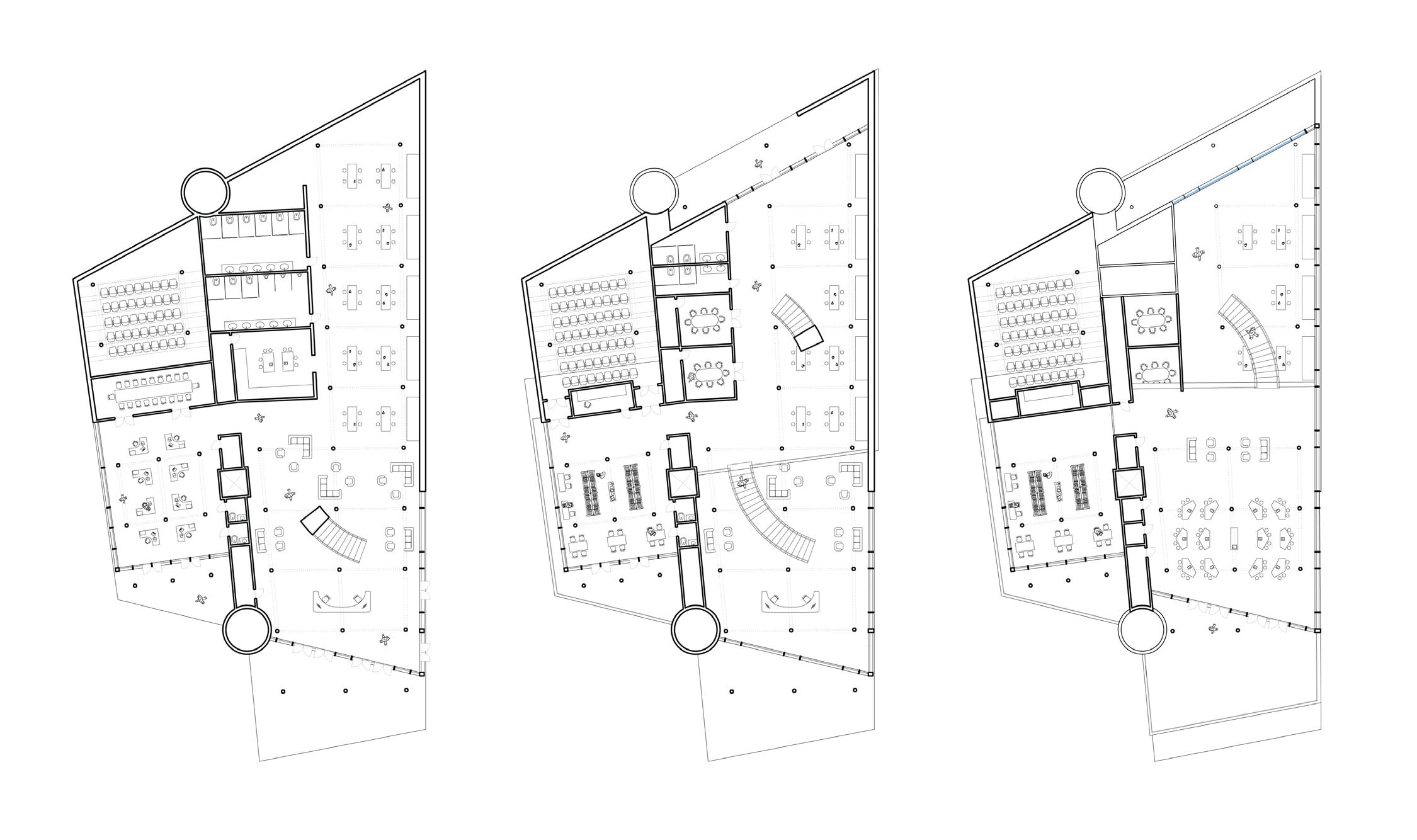
SITE PLAN PROGRAM/PLAN

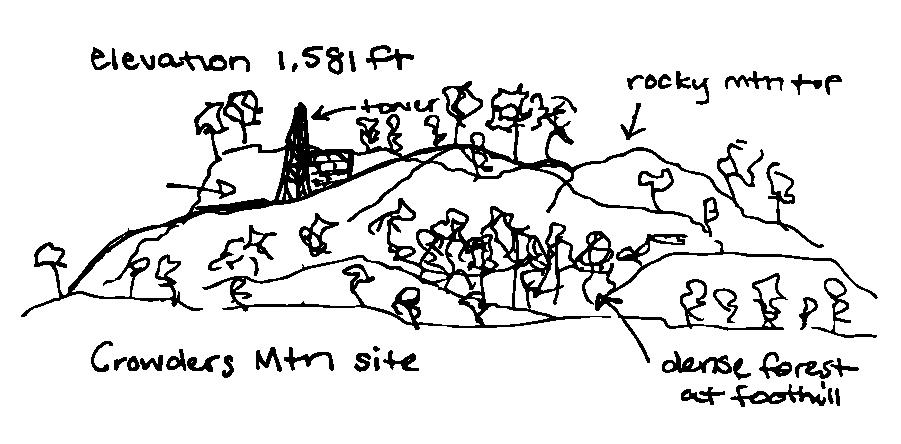
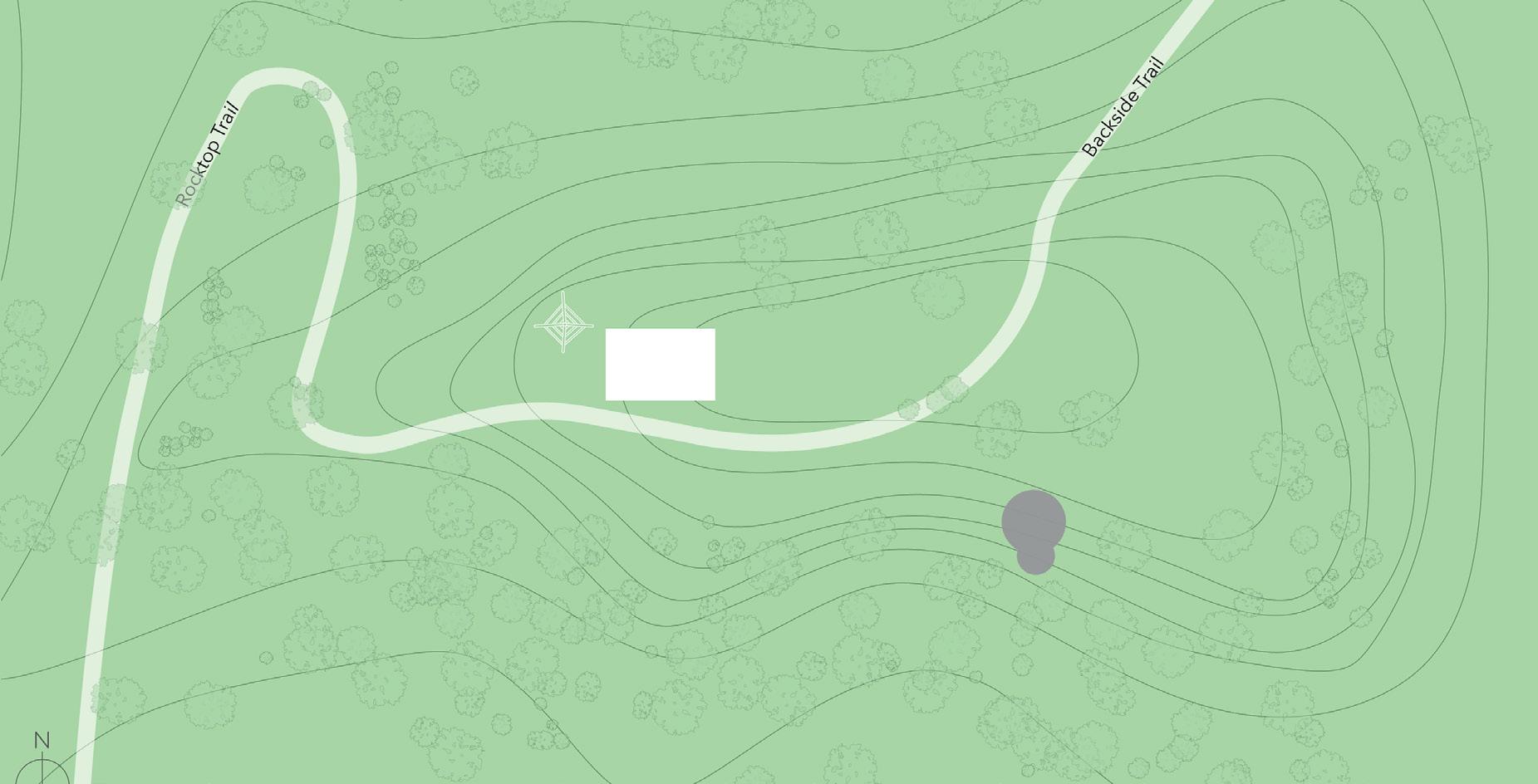
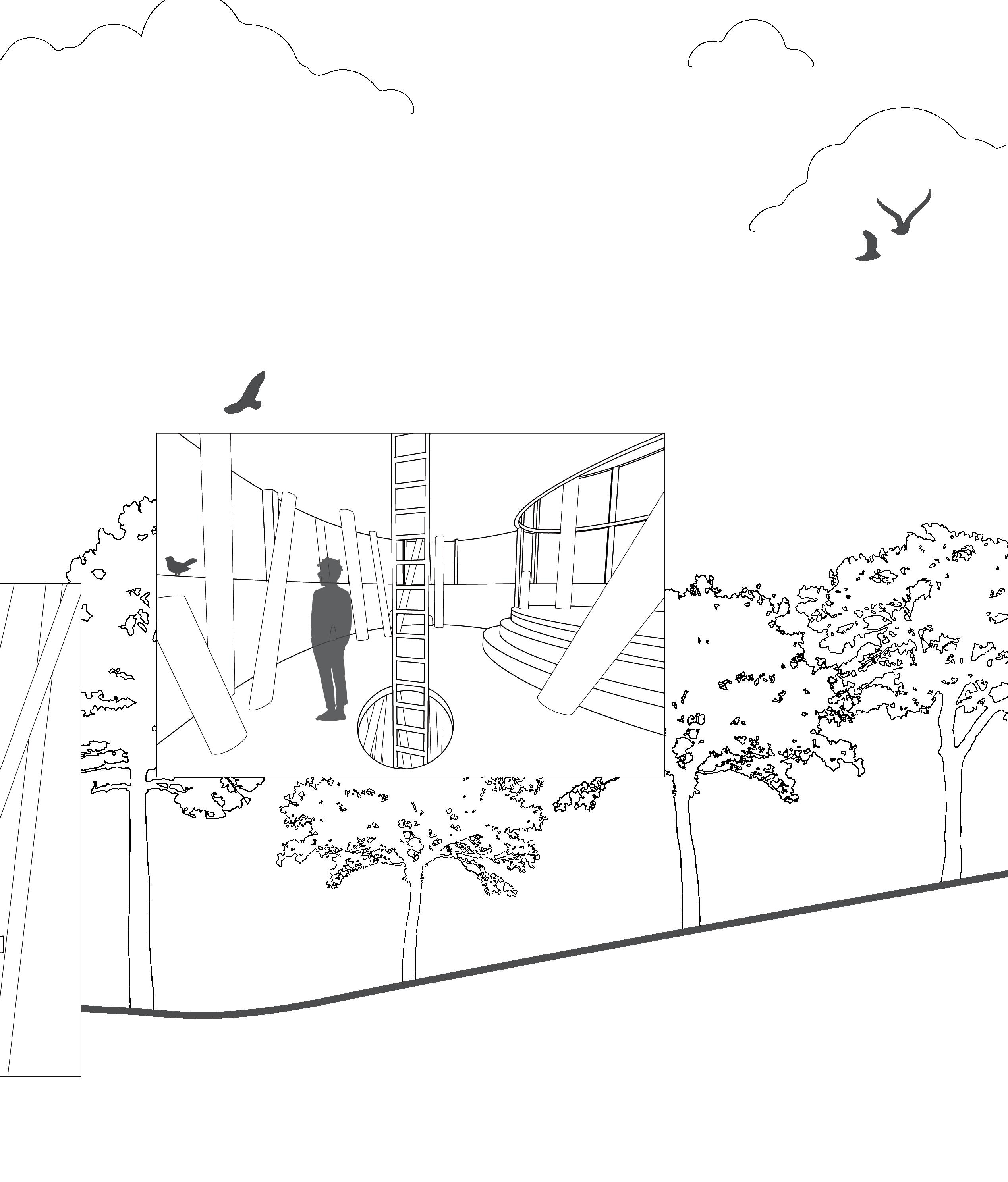
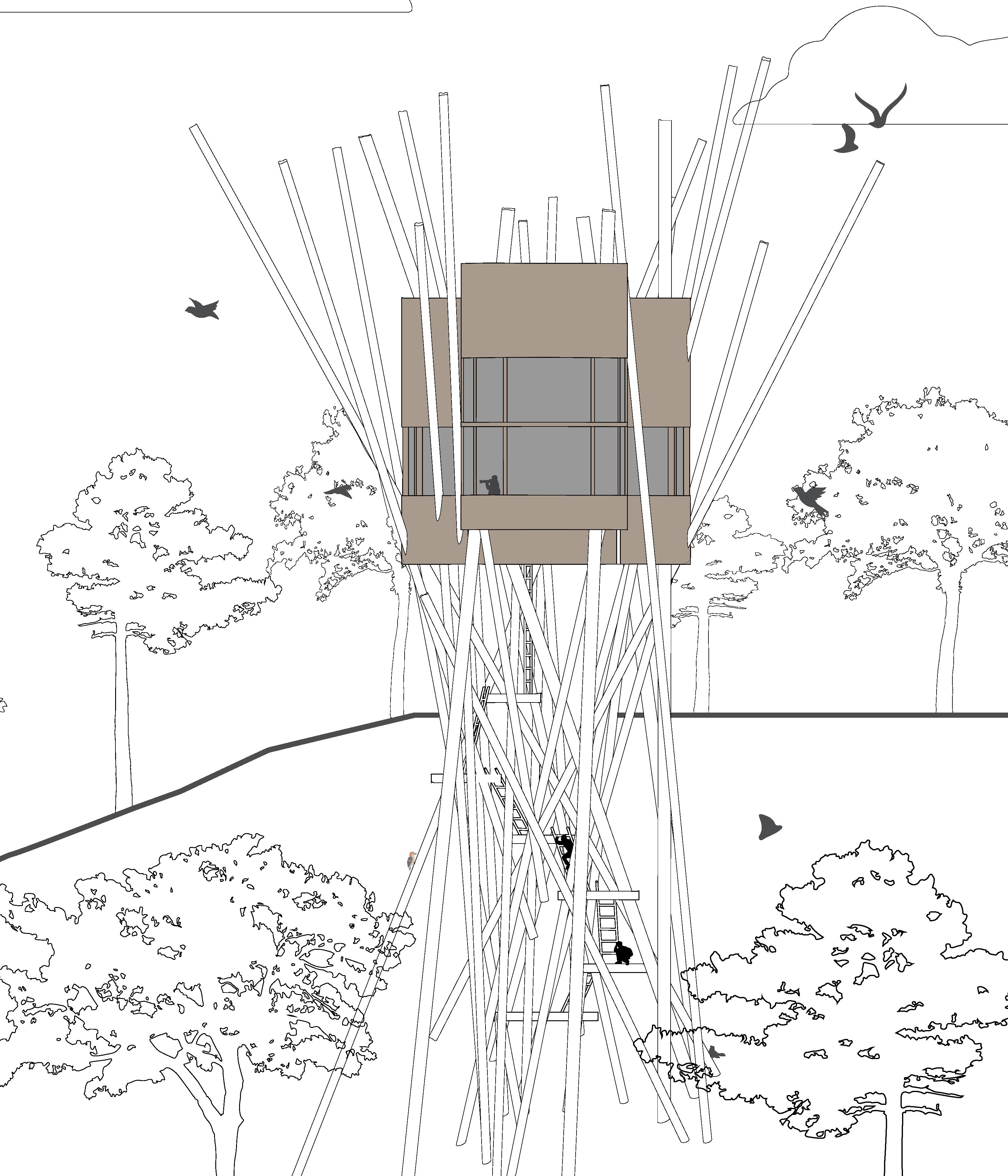
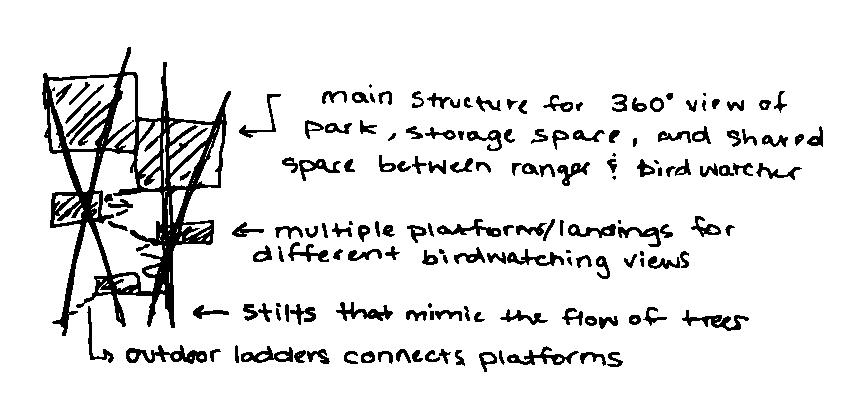
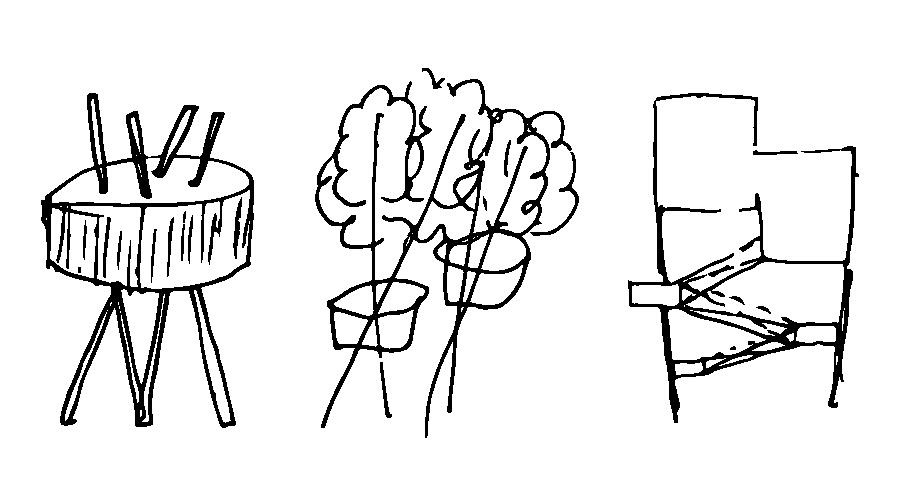
Located at the peak of Crowder’s Mountain, the tower’s structural capabilities resemble the natural engineering of a birds nest. It’s design reflects that of the multifunctional use between a birdwatcher and a park ranger, bringing the tenants closer with nature. The tower forms itself through a disordered, yet cohesive, bundle of lightweight wood, stilts weaved around a concealed frame of wood columns. Friction and tension play a crucial role in holding the nest together. Opposing lateral forces are created through crossing wood columns, bonded at their sides, resulting in a static equilibrium. The birdwatcher and park ranger must become a part of the structure, weaving themselves through the mess of the human nest. Platform landings from ladder to ladder become perches for observing from multiple vantage points, with the tower itself lying within the nest.
PLAN
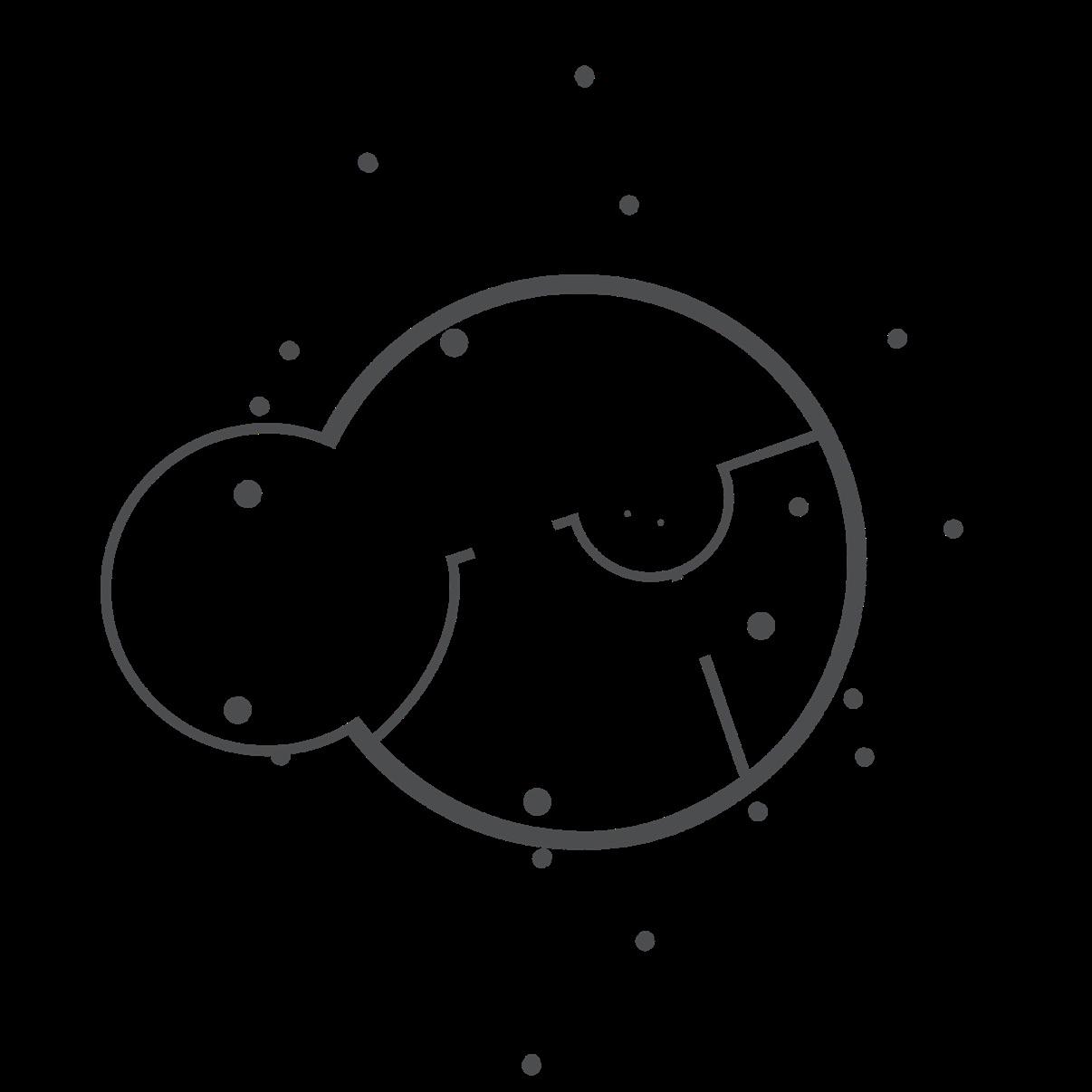
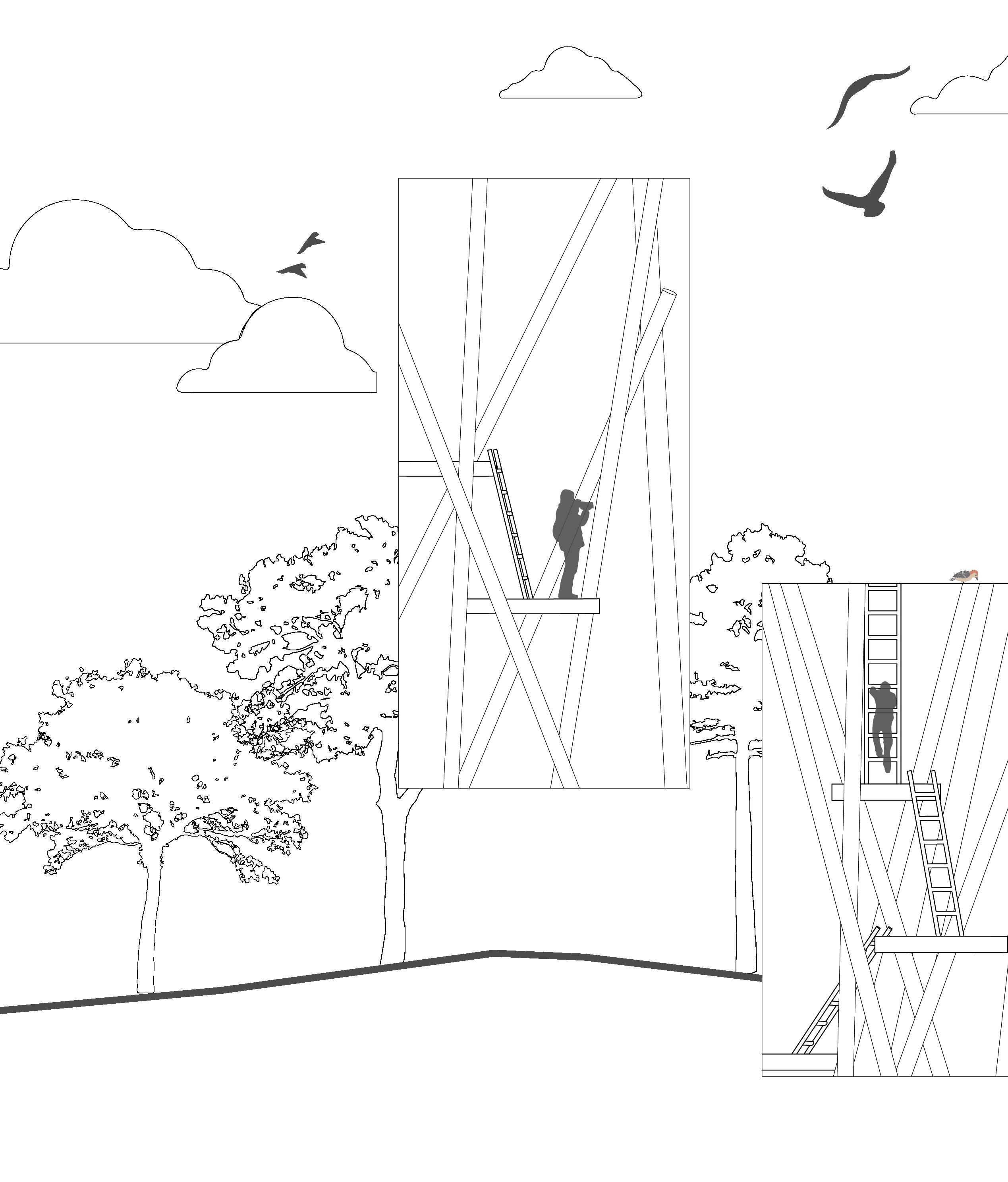
Climbing up the intricately placed ladders between the nest of interwoven wooden stilts, you are brought up inside the tower. Entering the tower, you are met with a full view overlooking the wooded landscape, reinventing the tale of a home meticulously crafted in the prospect of the wild. The nest of wooden stilts protrude through the walls of the tower, always reminding you of the spended tower that you rest in. The resting structure of the tower becomes your nest.
PROCESS WORK
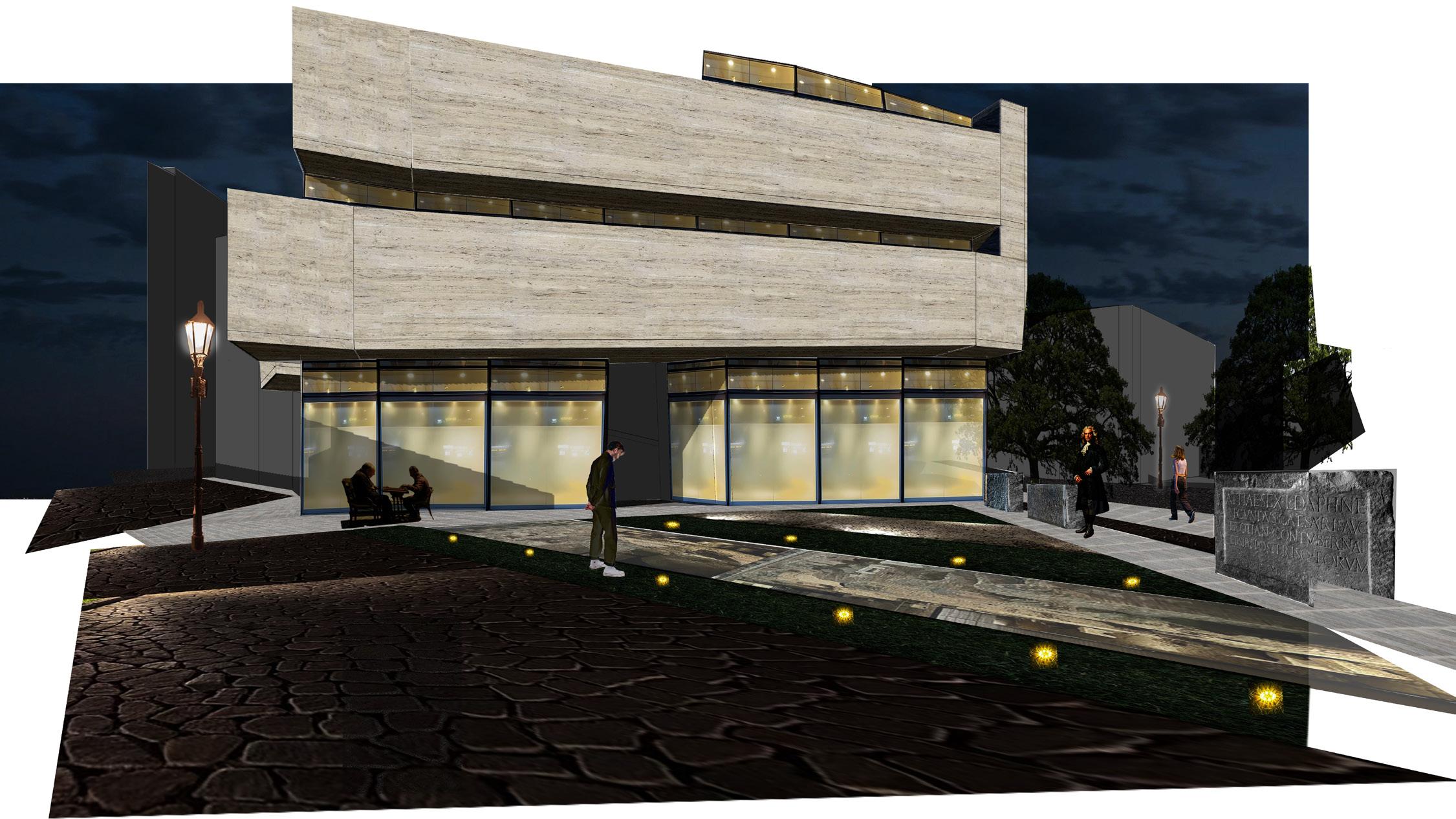
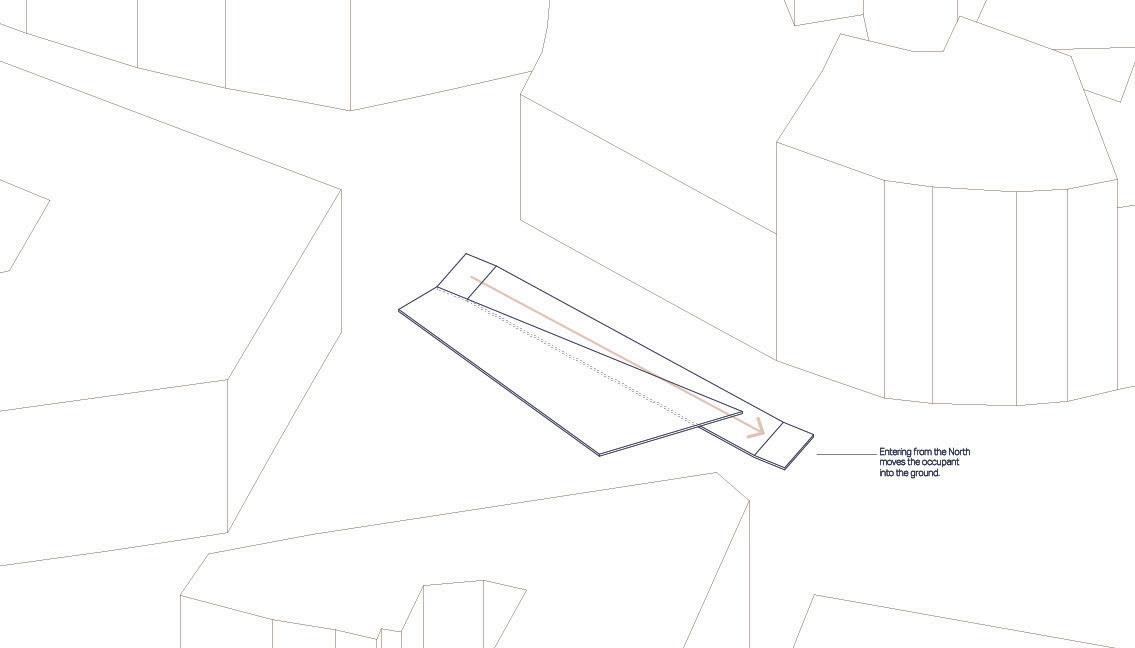
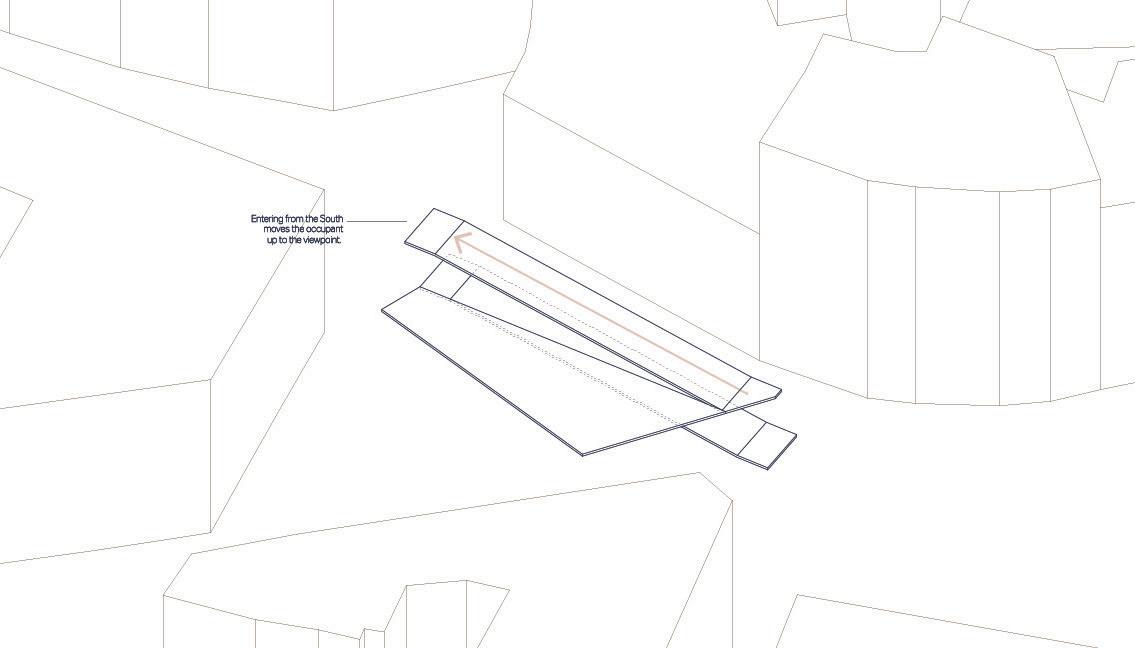
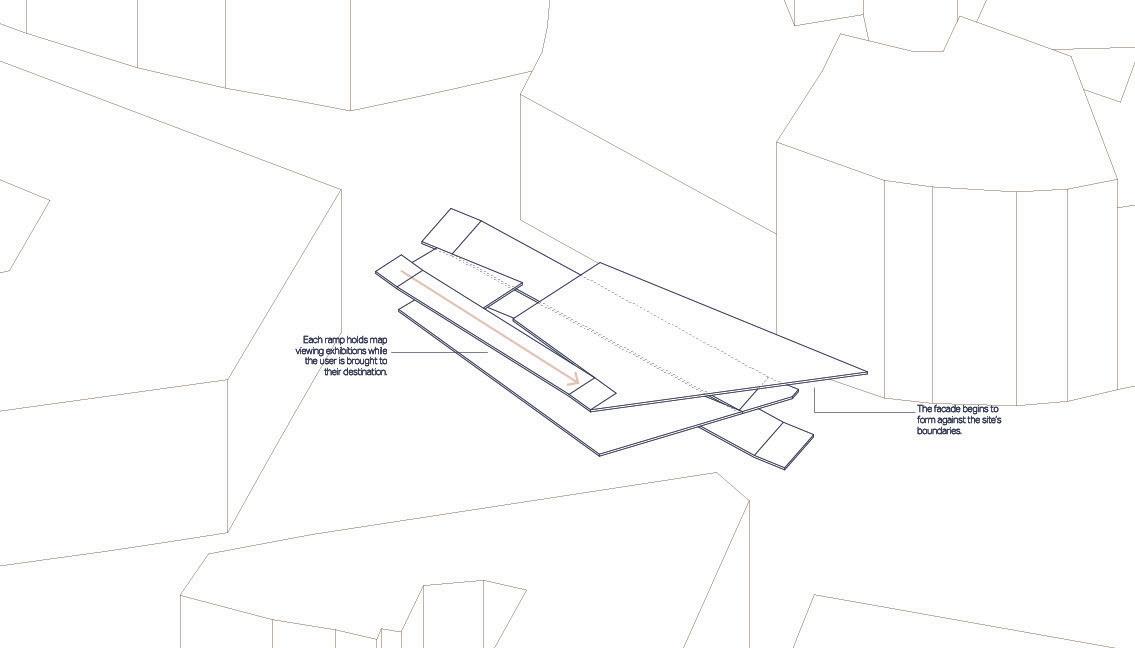
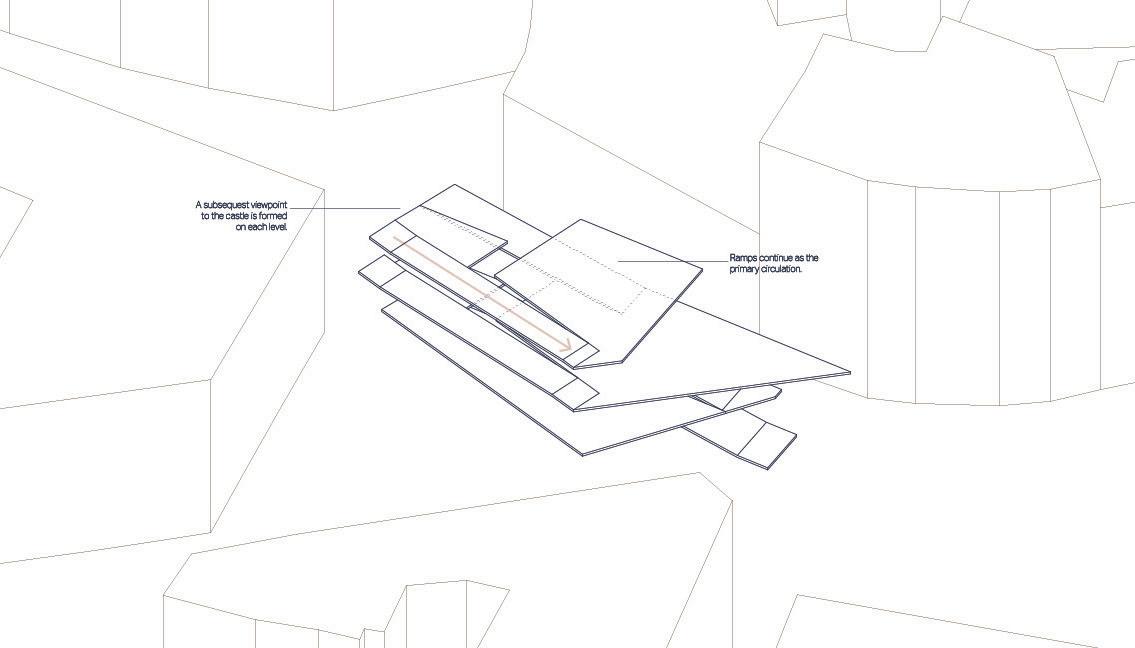
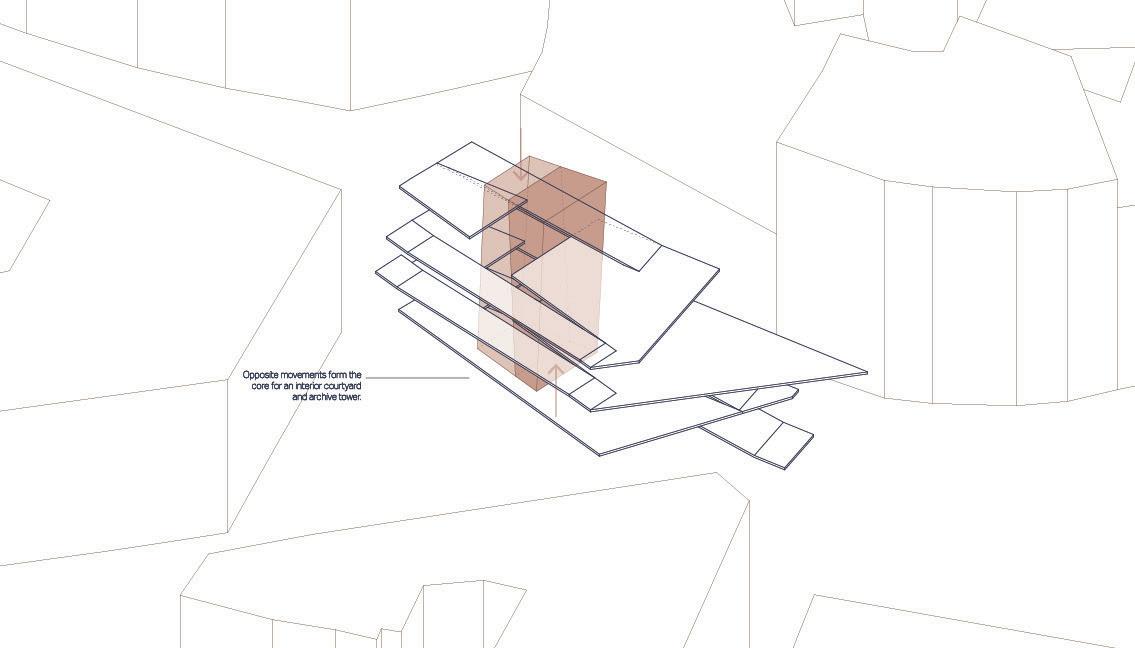
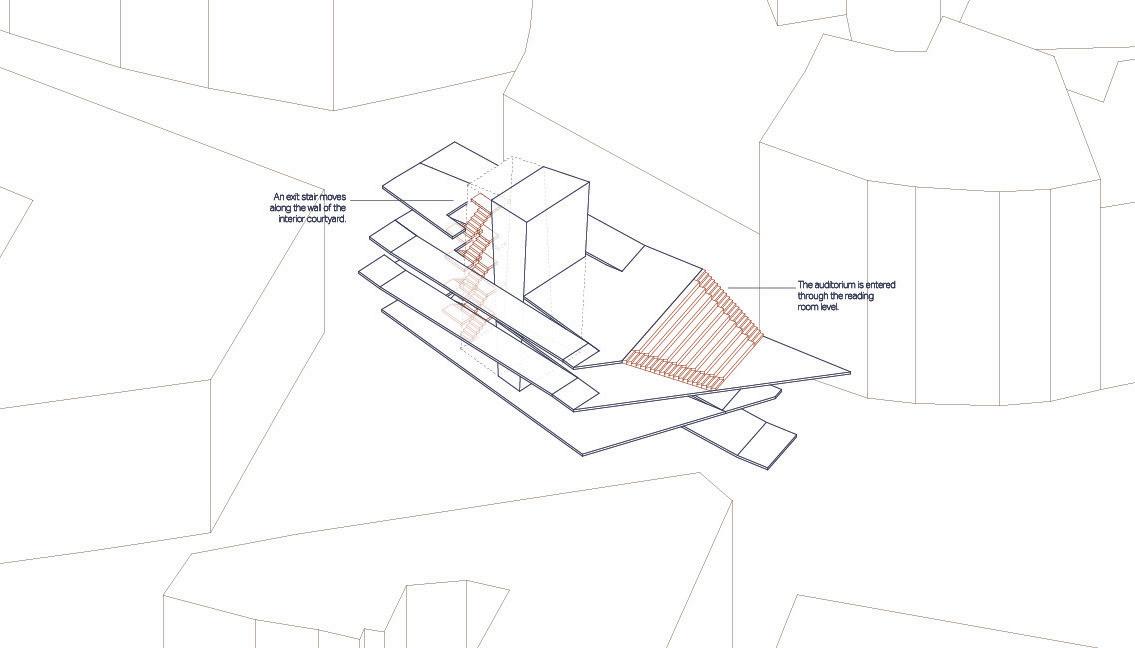
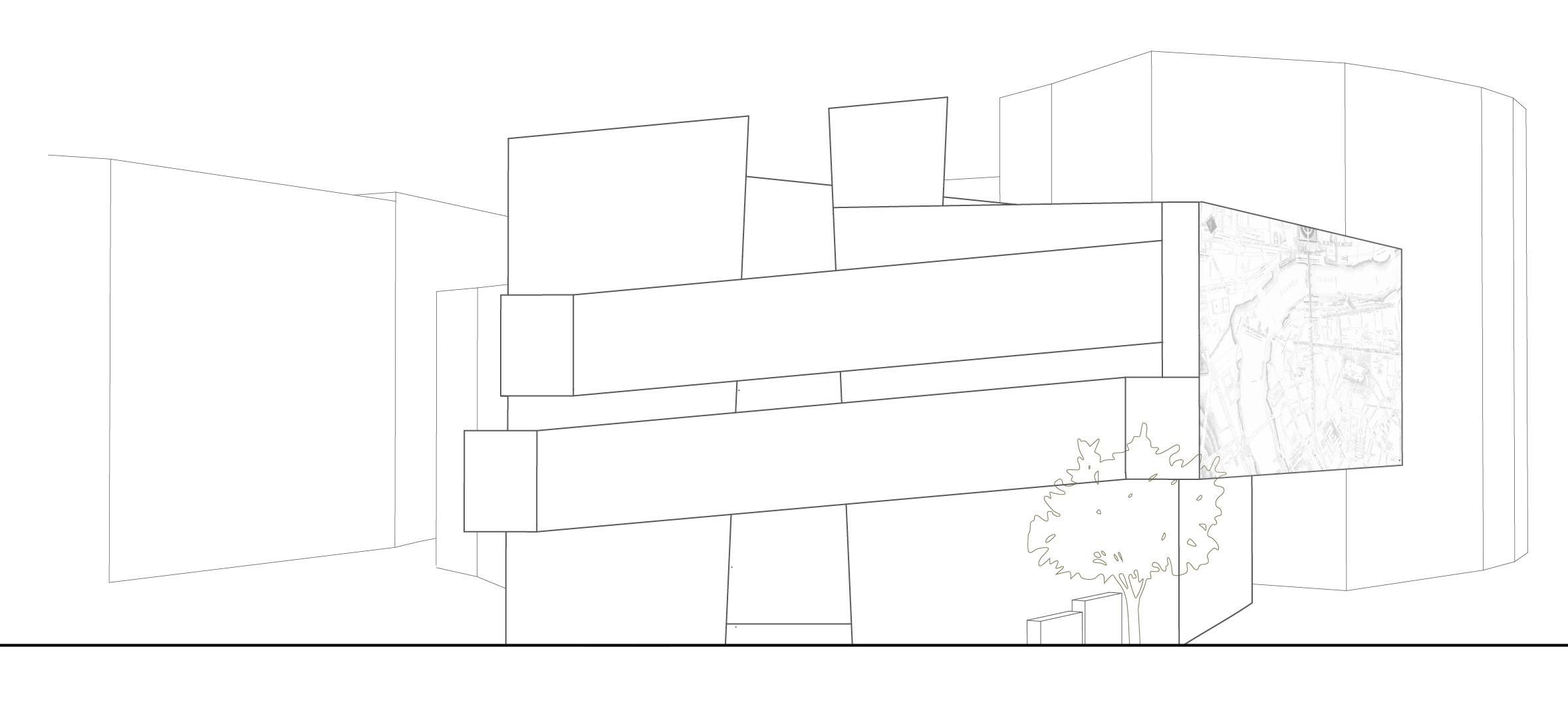
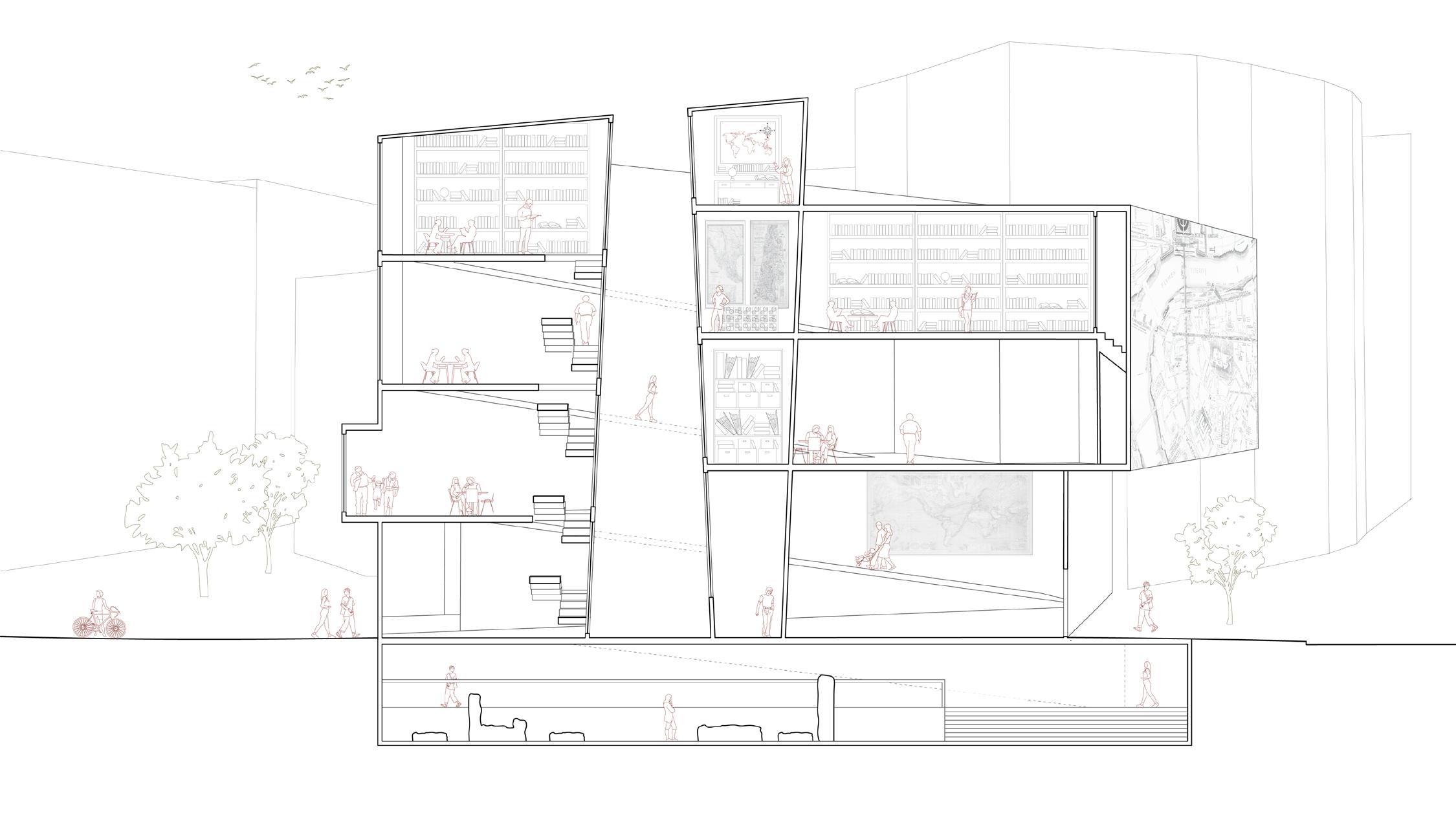
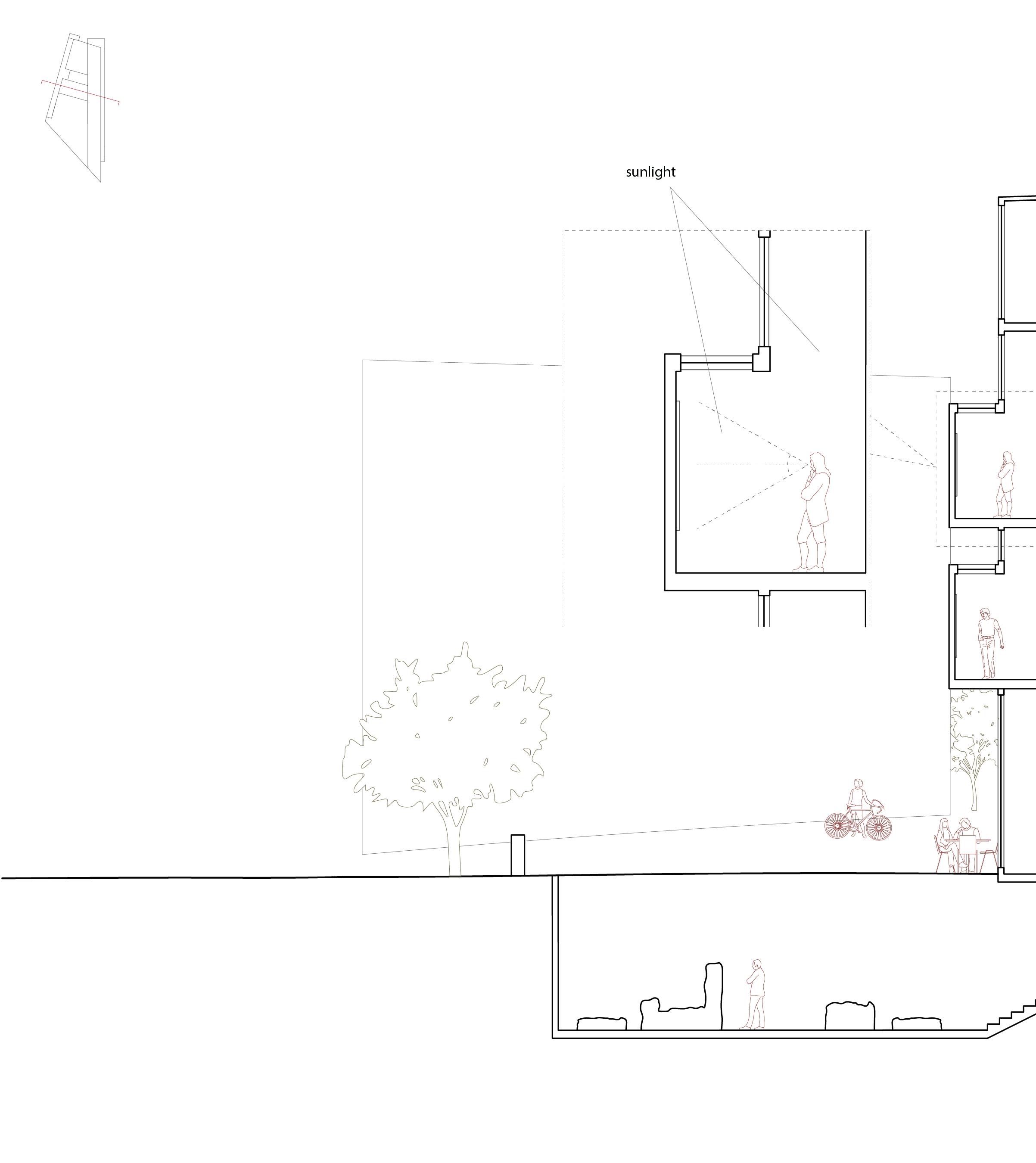
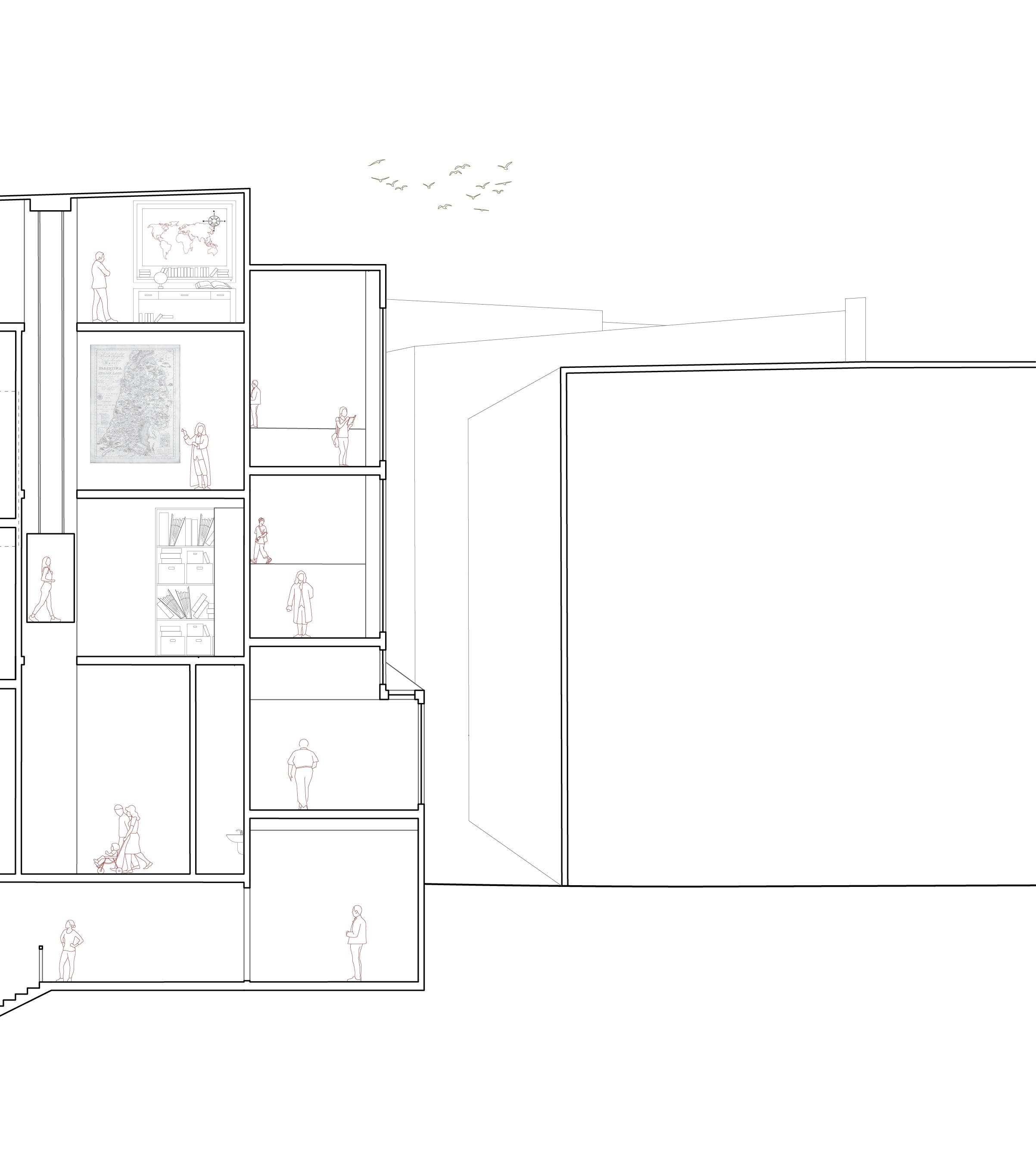
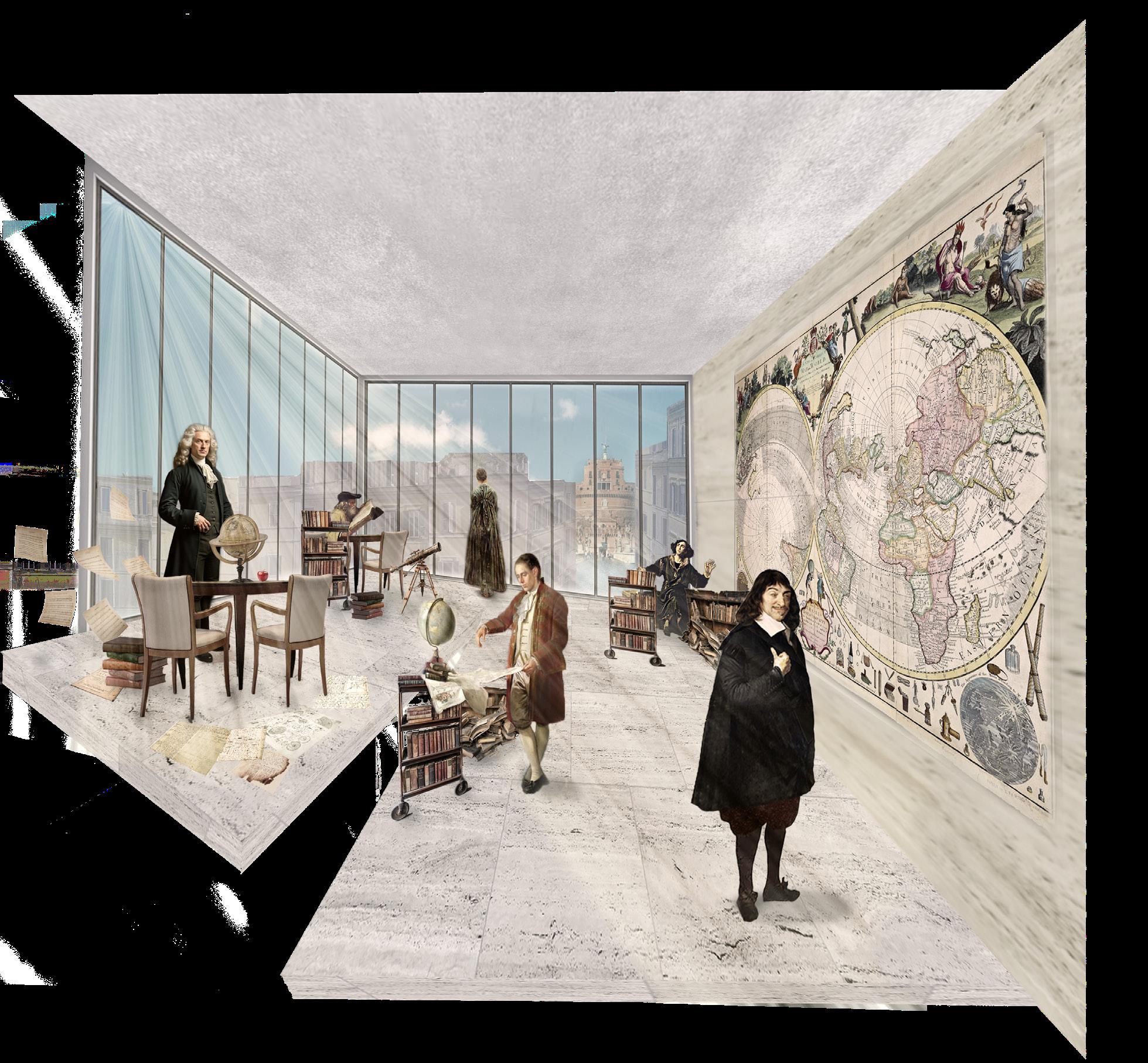
Inspired by Newton’s Third Law, the map archive and library transforms the idea of opposing forces into a spatial experience. A continuous sequence of ramps shapes circulation and exhibition, guiding visitors through a chronological journey of maps. Each ramp responds to the last, balancing movement and pause, echoing Newton’s principle in built form as the building itself becomes a timeline— each level marking a new era, culminating in the Age of Enlightenment, when Newton’s discoveries reshaped our understanding of the world. At key points, the ramps open to the city, framing views of Castel Sant’Angelo, a nearby church, and Corso Vittorio Emanuele. These moments anchor the building within Rome’s historic landscape, connecting the internal journey of discovery to the external fabric of the city.
In collaboration with Rana Blan during the Rome 2025 Study Abroad program.
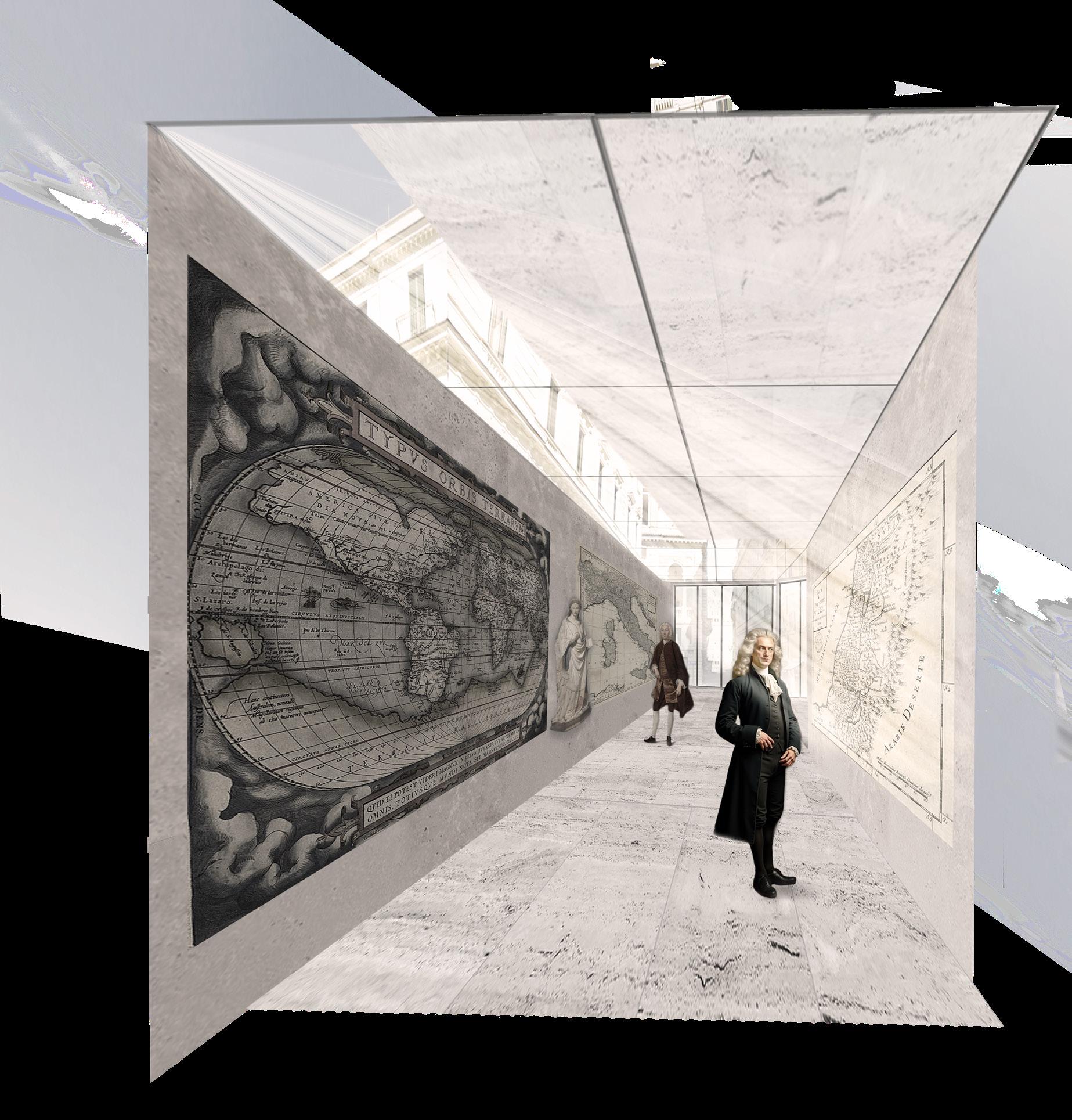
INTERIOR PERSPECTIVE: RAMP
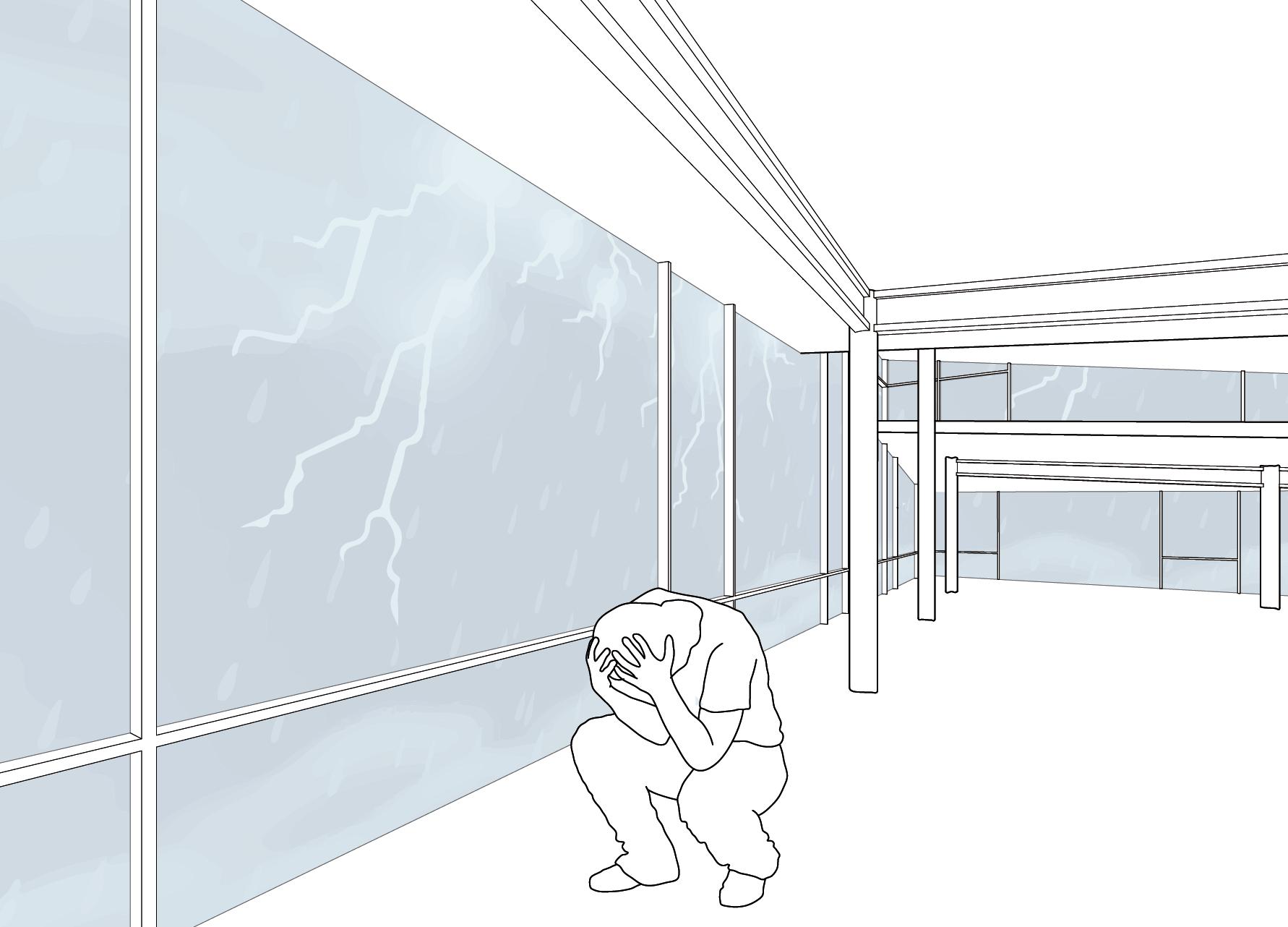
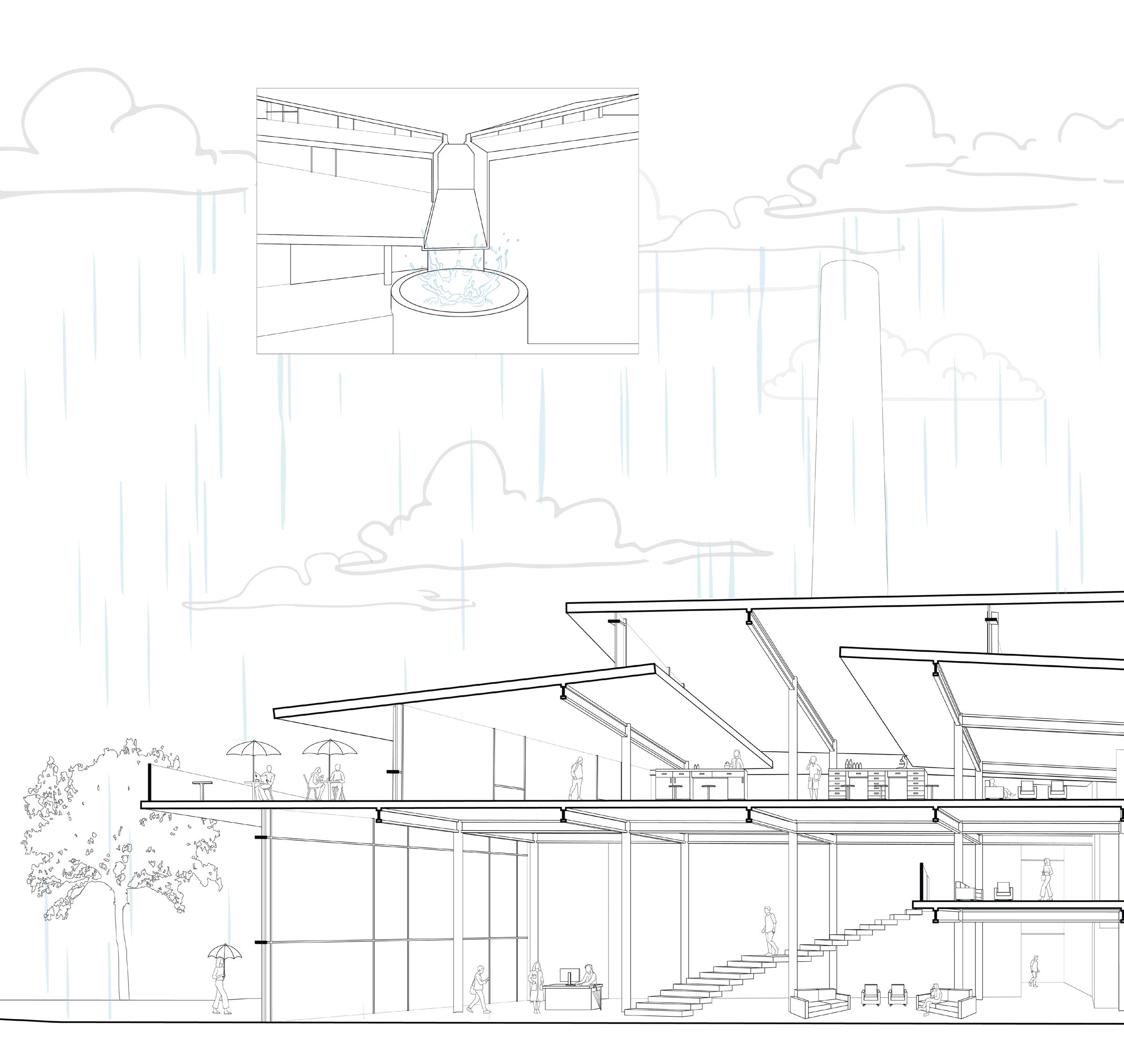
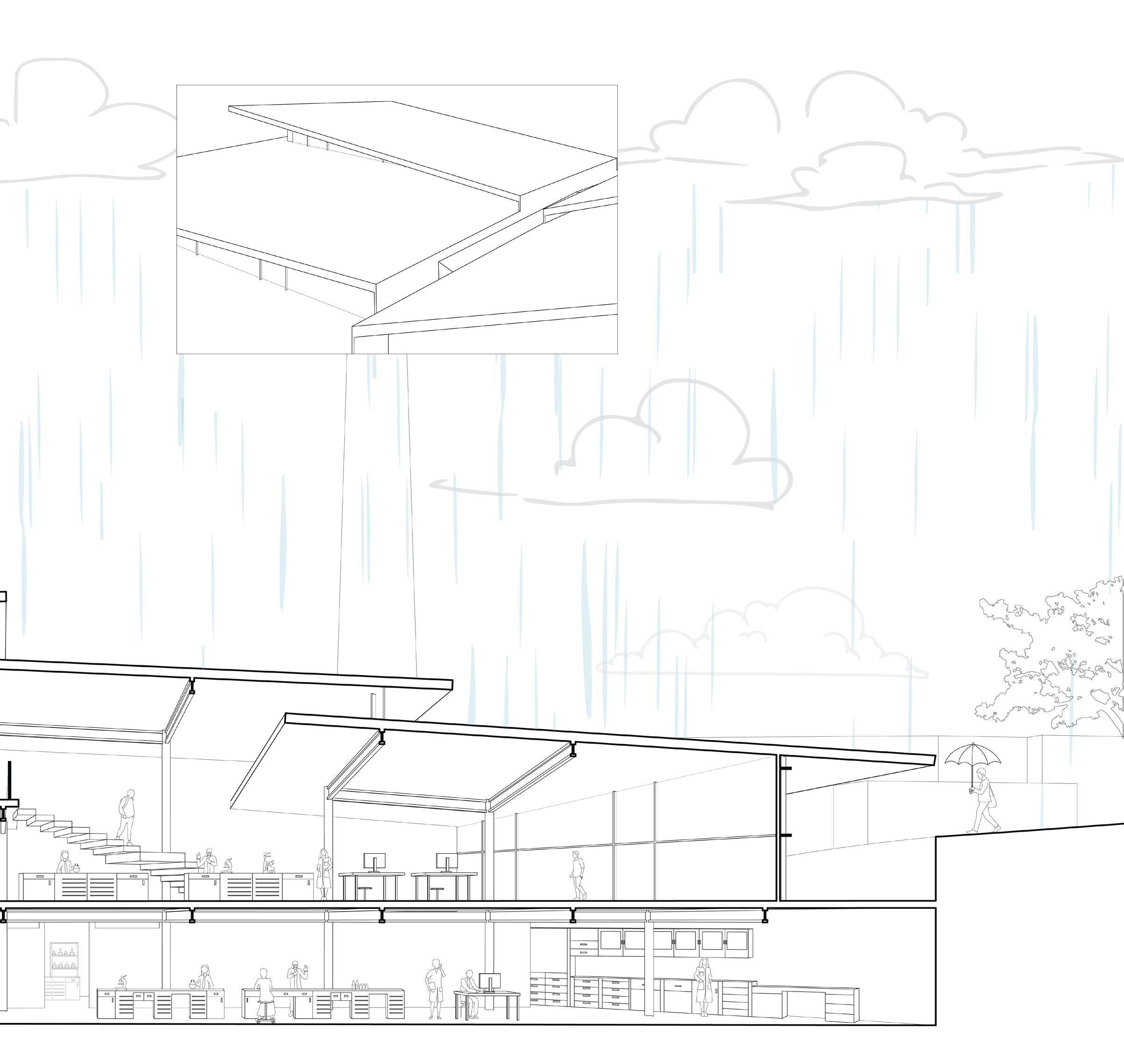
Don’t fear the water. It’s a frightening sound echoed amidst the symphony of thunder and rain, yet the storm brings essential nutrients from our atmosphere into the earth. The darkening sky brightens the life of the lab as rainwater trickles into the water collection system of the building. As the storm rages, water is replenished for the lab to continue its soil testing practices.
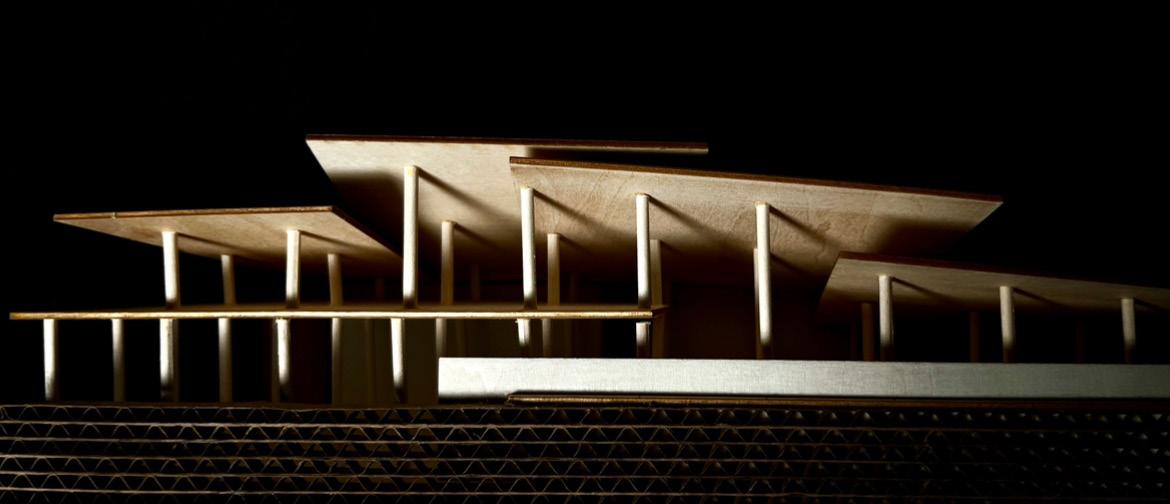
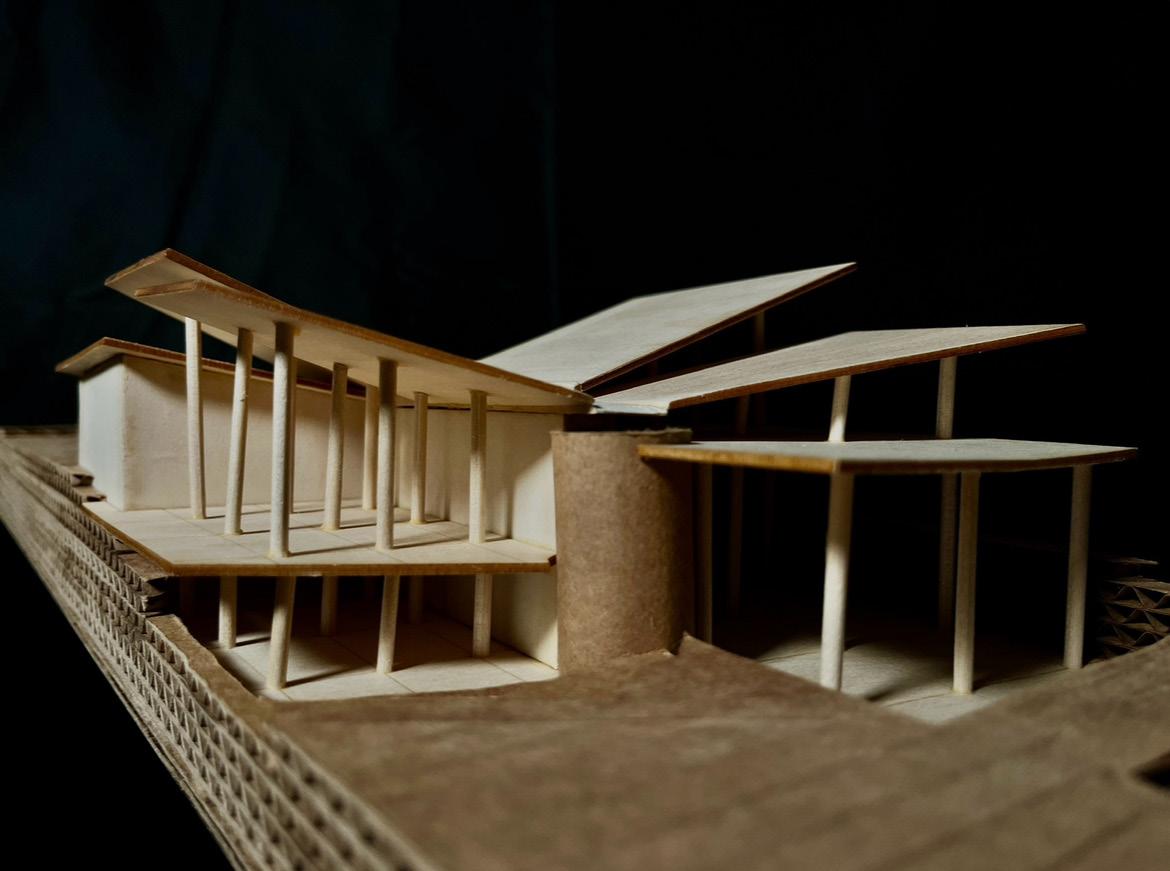
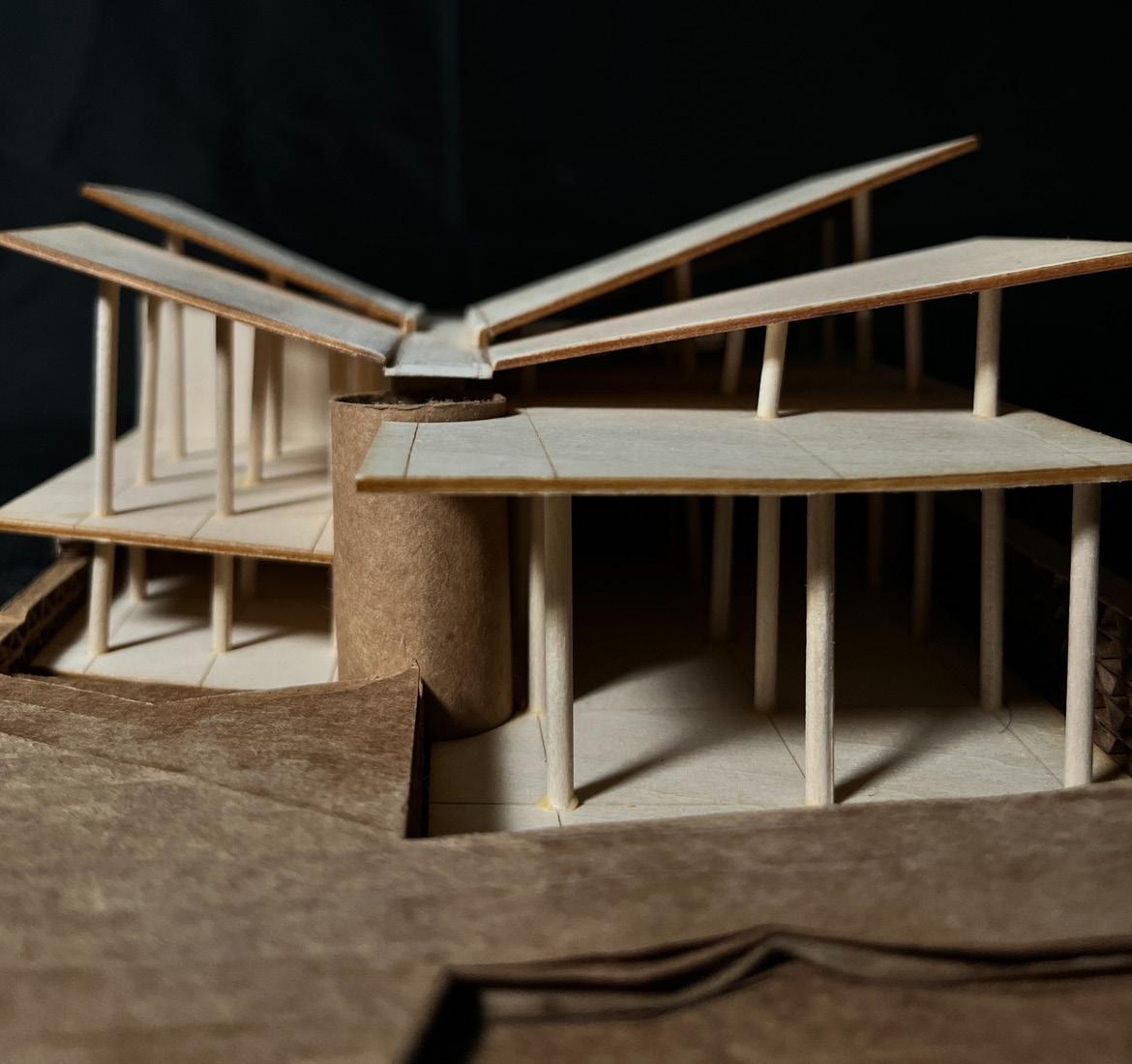
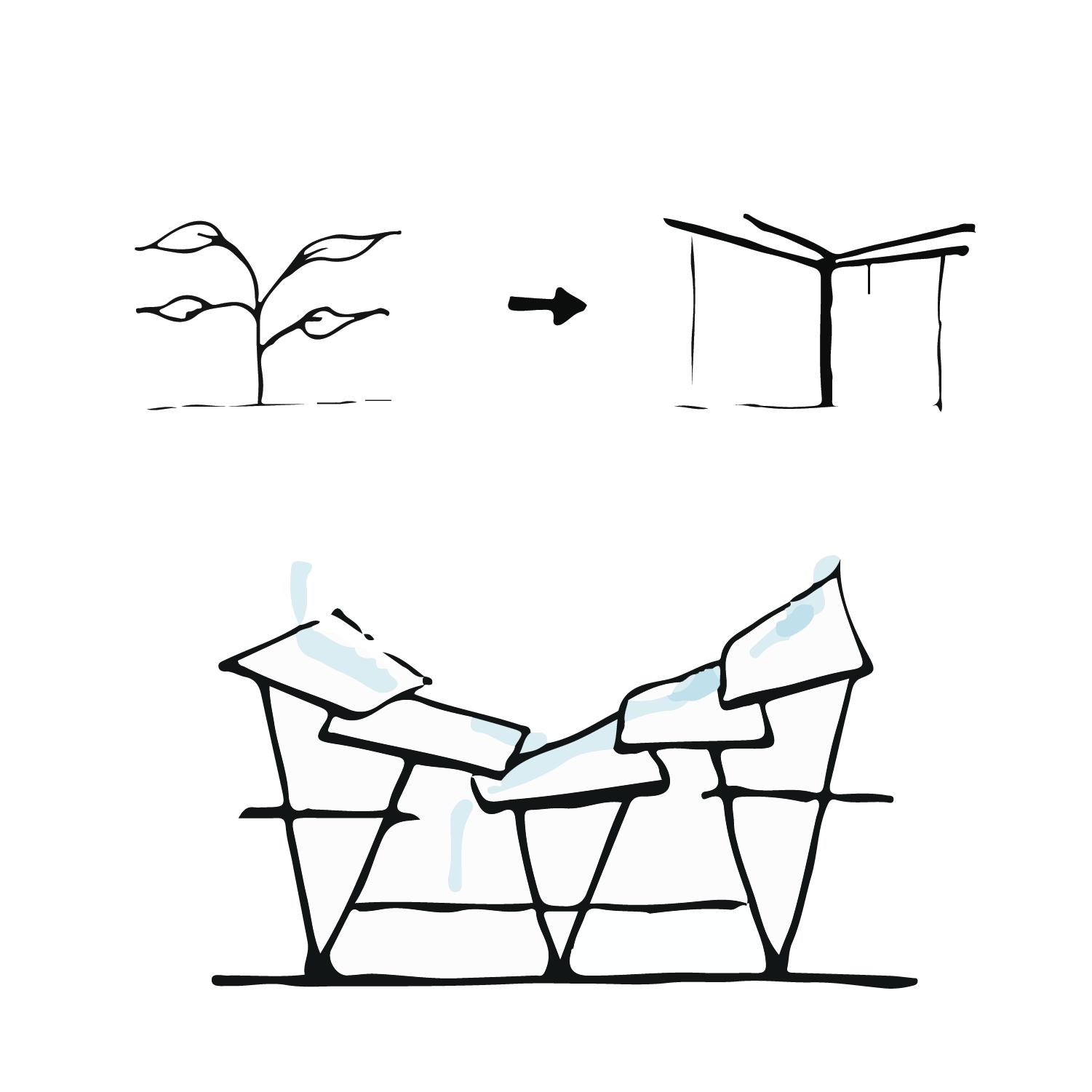
The building’s roof is hydrophobic. You watch as the rain cascades down the undulating tiers, controlled and purposeful in its descent. Just as the leaves of a plant repel falling rainwater, directing it to its thirsty soil, the roof of the building catches the rain, guiding it through its collection system.
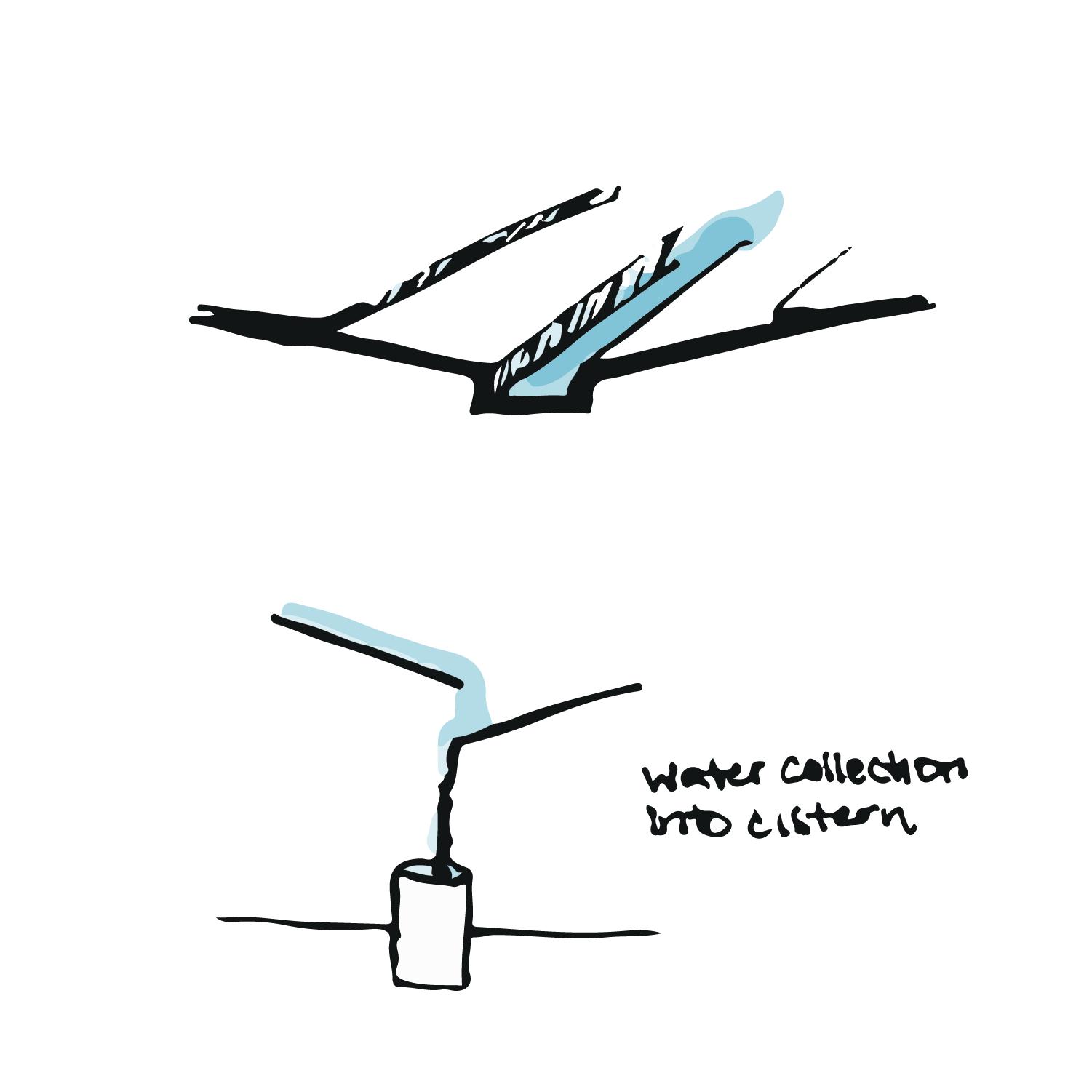
You listen intently to the sound of water sloshing through the gutters. Like the veins of a plant leading rainwater to its roots, these waterways guide the flow to where it is stored— the cisterns, the core of the building’s water system, like the roots of a plant. Water, soil, and life play into this continuous cycle of the new Bailey Park Center for Sustainability. Hydrophobia is the building’s resistance to water, it surpasses fear, sustaining water’s role in nurturing life within the lab.
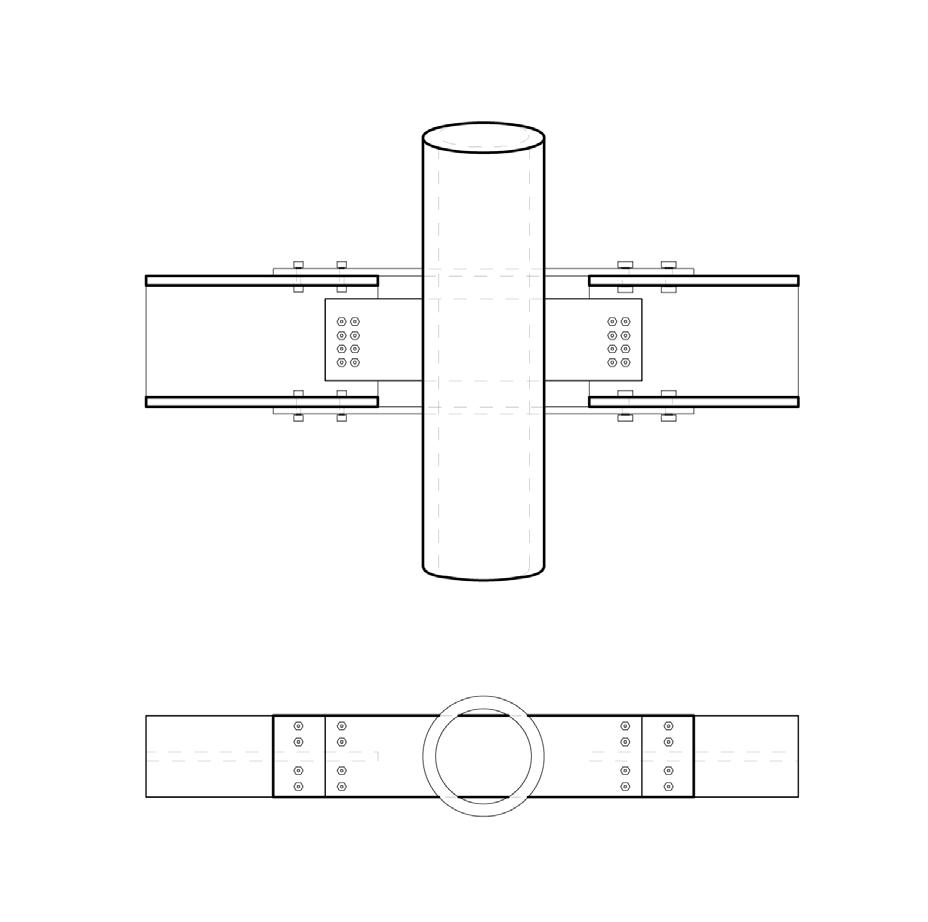
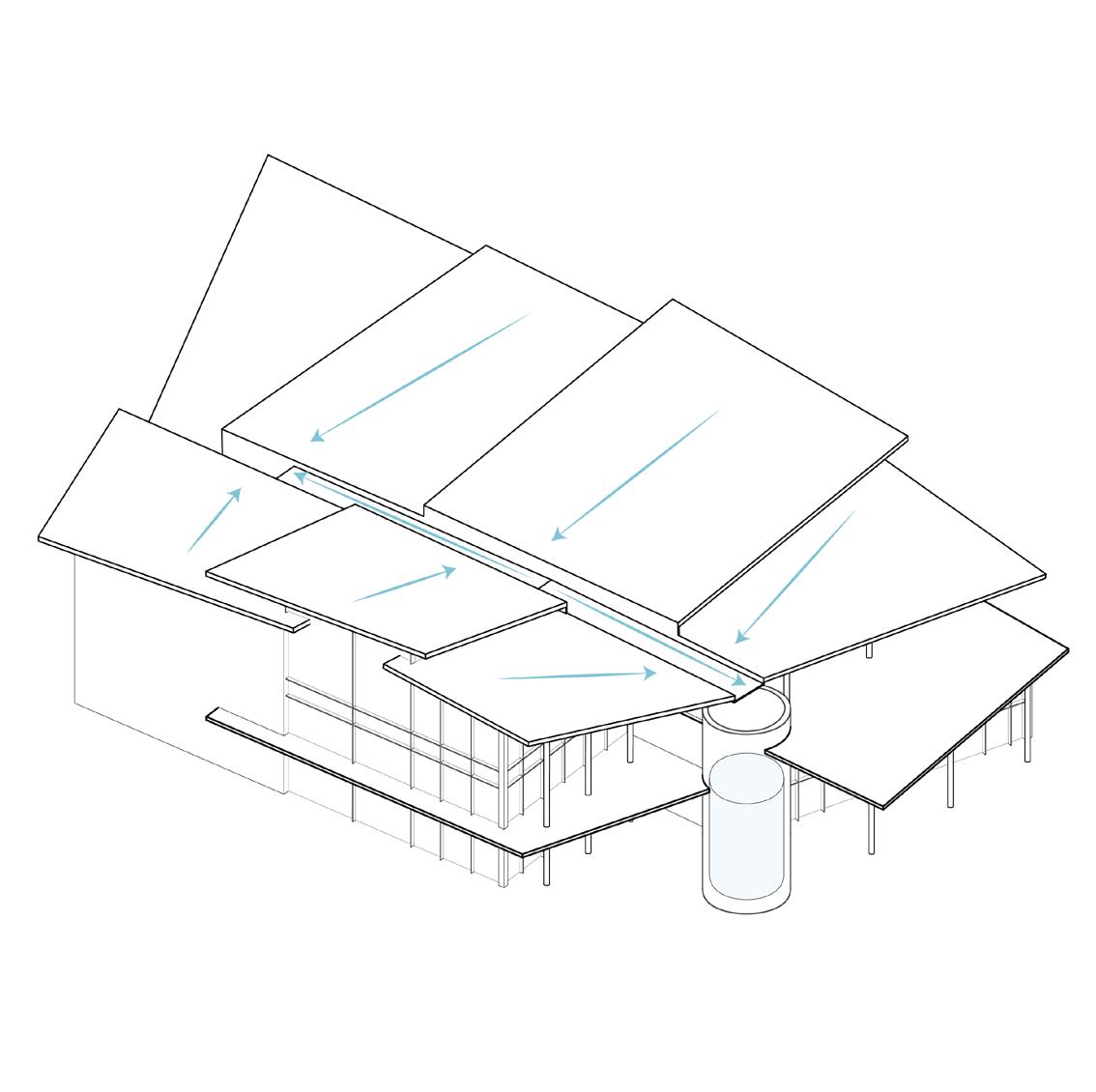
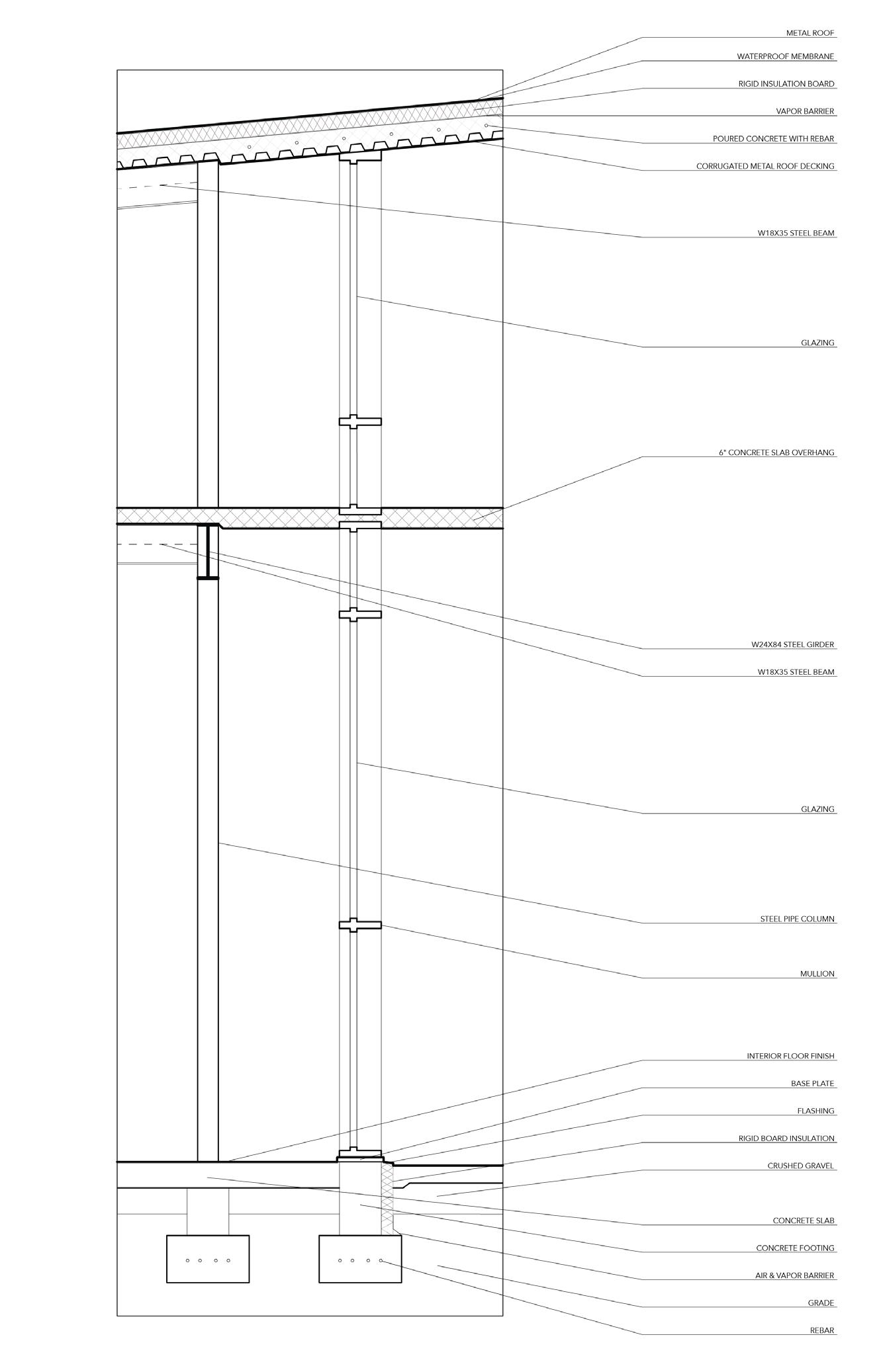
CONNECTION DETAIL RAINWATER COLLECTION SYSTEM
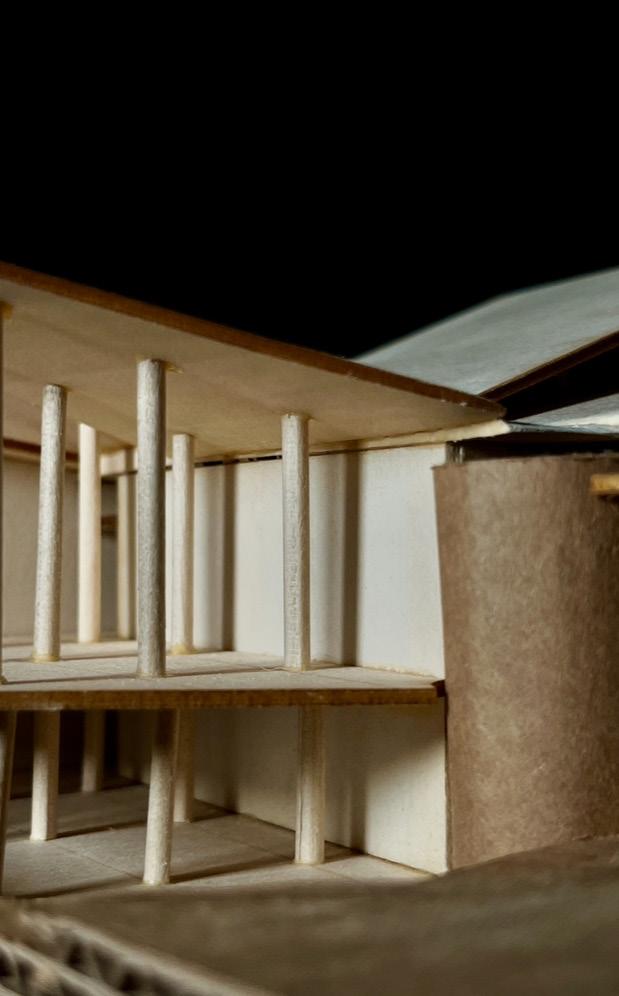
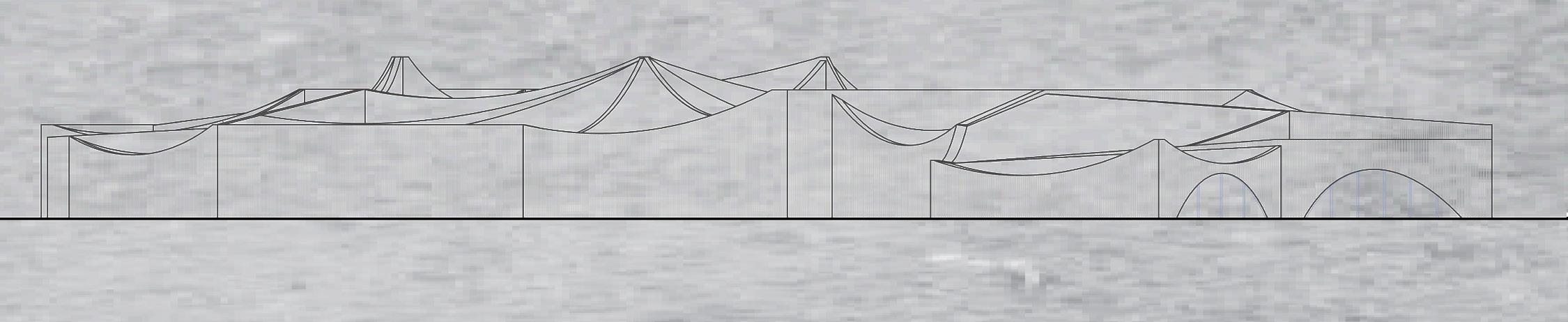
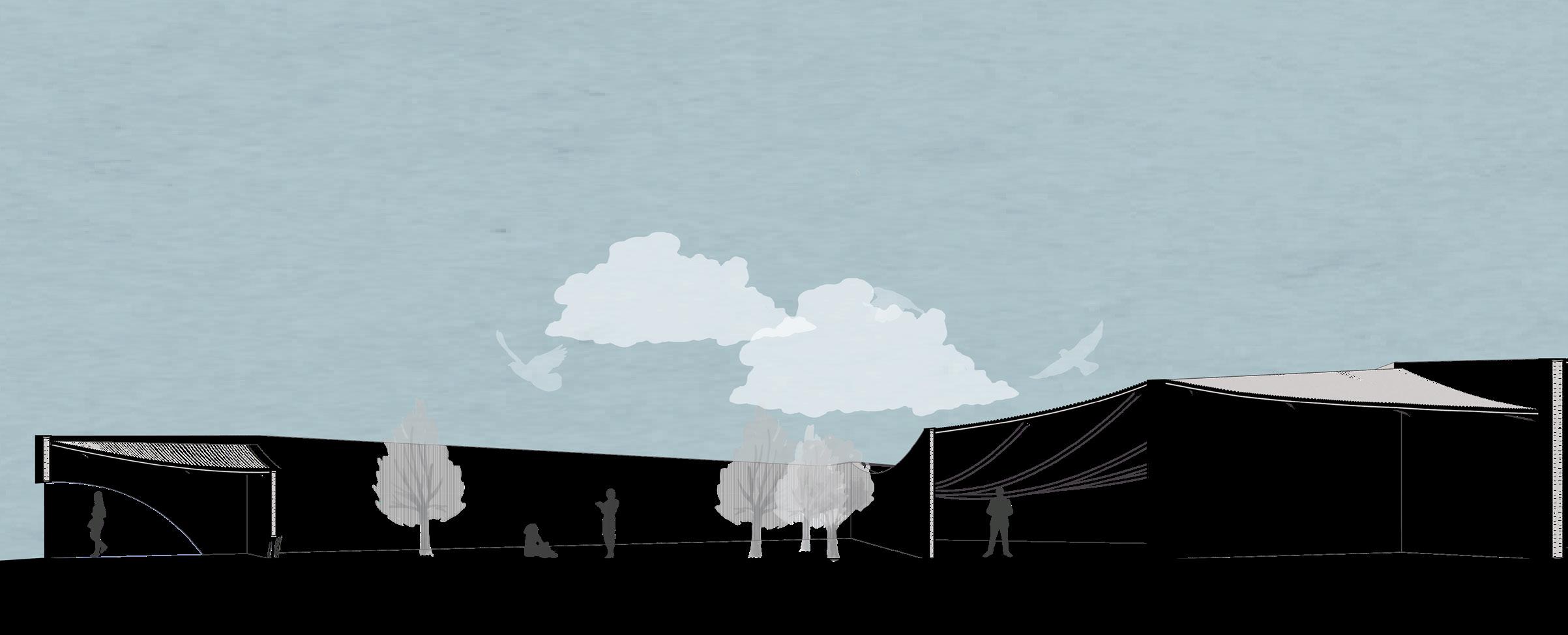
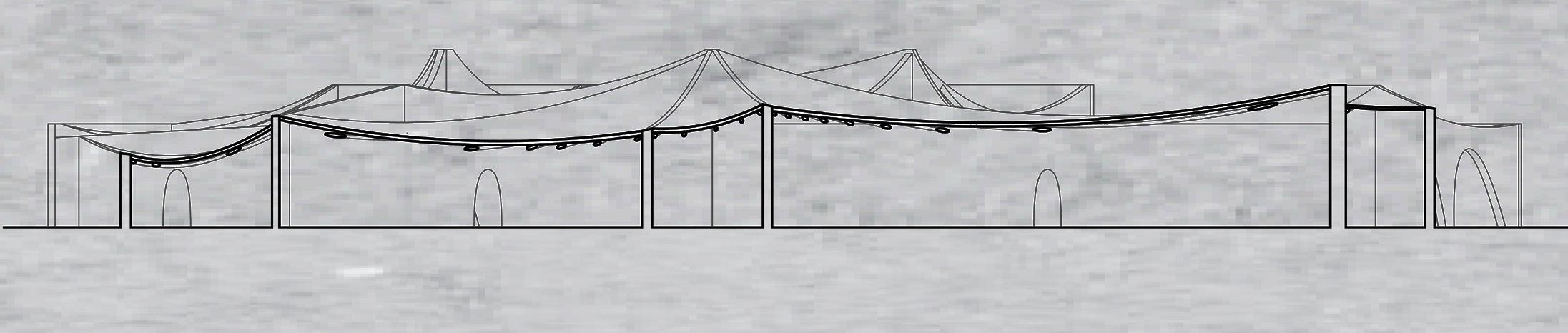
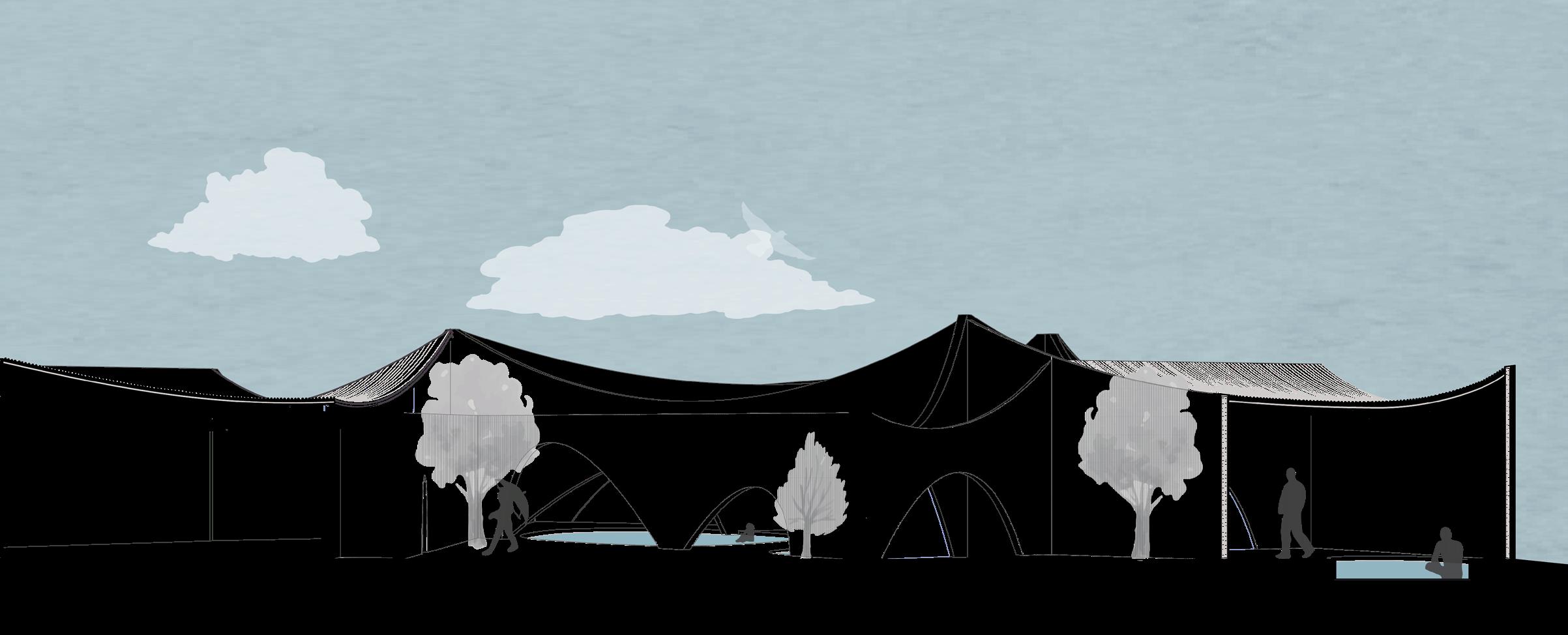
Located within Bailey Park of Winston-Salem, Hydrophobia is designed as a center for sustainability and a medical biomaterial research and learning center. The design centers on water—how it moves, nourishes, and sustains. The roof collects rainwater much like a leaf channels droplets to its roots. That water is filtered through a visible network of gutters and stored in cisterns, supplying the labs and garden. This closed-loop system supports the building’s soil testing practices and demonstrates sustainable water use in real time. Blending biophilic design with research spaces, the building includes classrooms, labs, a gallery, and an auditorium, all connected by a shared mission of sustainability and learning.
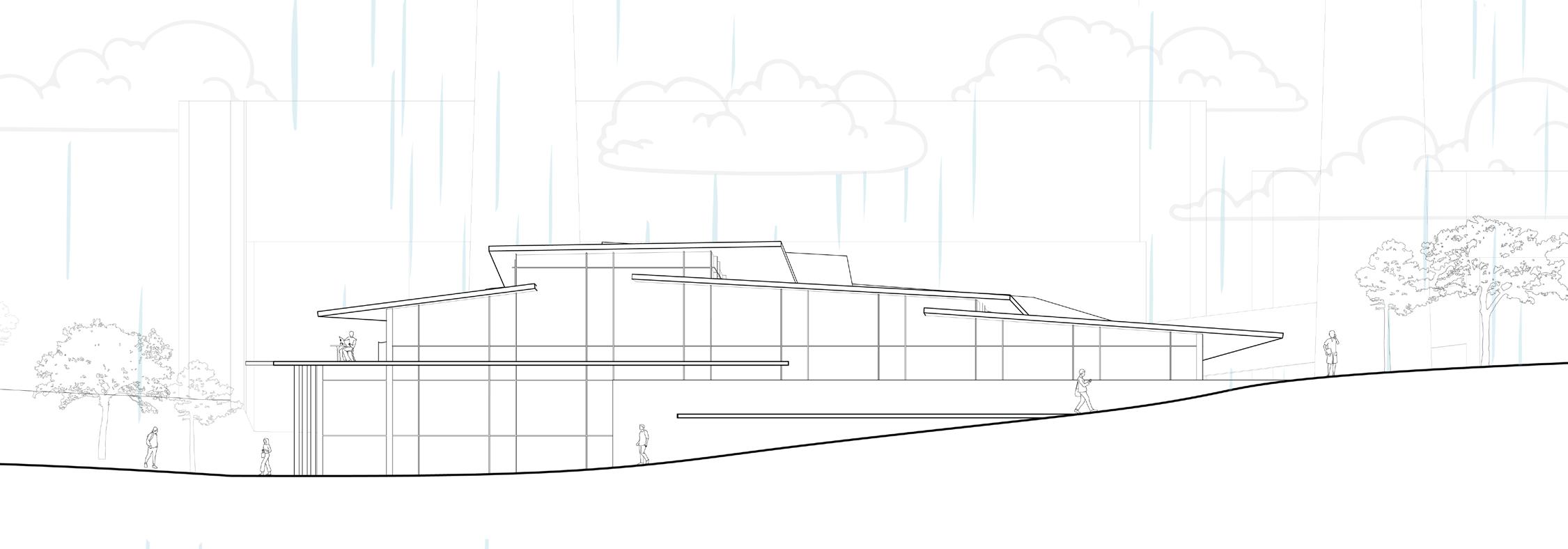
SITE PLAN
WALL SECTION
PROCESS WORK