
The Africa Climate Disinformation Toolkit

Spot Lies, Share Truth, Spark Action
N.B. Light green underlined areas are links to additional online resources.
for Journalists, Educators, Community Leaders, and Advocates
01. Introduction: Truth in the Climate Storm
https://www.ipie.info/research/sr2025-1
frica faces a climate emergency. But another crisis is fueling it: a torrent of deliberate lies about climate change. As the International Panel on the Information ) report confirms, this disinformation is actively "turning the crisis into a catastrophe." Powerful interests - fossil fuel companies, political actors, foreign lobbyists - spread falsehoods to stall action, protect profits, and exploit our
This toolkit is a direct response. It is not a static report but a dynamic, user-ready resource designed to empower you, the leaders and communicators in communities. Grounded in the African and Indigenous experience, this guide provides the practical tools needed to detect, debunk, and counter the flood of
It is a playbook for reclaiming the narrative and turning truth into meaningful action. It's built for Africa, by Africans, drawing on our strengths, v oices, and unique
he African Climate Disinformation Toolkit is a dynamic, user-ready resource that maps the threats, trends, and narratives of climate disinformation spreading across the continent. It moves beyond theory to provide practical, actionable support. Inside, you will find real-world case studies from across Africa, easy-to-use fact-checking tools, powerful communication strategies, and training materials. Crucially, this toolkit is grounded in the African and Indigenous experience, ensuring that our solutions are relevant, respectful, and effective for o ur communities.
for Journalists, Educators, Community Leaders, and Advocates
his toolkit provides a clear-eyed view of the climate disinformation landscape in Africa. It outlines how false narratives are created and how they spread through digital channels like WhatsApp and Facebook, as well as community radio. We identify the key actors behind these campaigns, from fossil fuel lobbies to political operatives and explore why Africa's unique social, economic, and digital context makes it especially vulnerable. Most importantly, this guide provides actionable steps to detect and debunk falsehoods and to communicate accurate, compelling climate information at
frica's information environment has a unique set of vulnerabilities that bad actors
With over 2,000 languages, content moderation by global tech platforms is often non-existent or inadequate, al lowing
Historical and current events have led to low public trust, making communities more susceptible to conspiracy theories and
Arguments that frame climate action as a threat to jobs and economic progress are particularly persuasive in regions facing economic hard -
The rapid adoption of social media and messaging apps like WhatsApp has outpaced the development of digital literacy skills, creating a fertile
Indigenous communities are especially targeted with false narratives about land use, conservation, and climate solutions, often as a tactic to enable land grabs and resource extraction.

Section 1: The Climate Fake News Playbook
A Practical Guide for Journalists, Educators, Community Leaders, and Advocates

A Practical Guide for Journalists, Educators, Community Leaders, and Advocates
To fight disinformation, you must first understand its tactics. Disinformation is not random; it follows a predictable playbook designed to confuse, divide, and delay climate action, especially in Africa, where false narratives exploit cultural trust, linguistic diversity, and development anxieties .
The Words Matter:
https://caad.info/what-is-misinformation-disinformation/ https://caad.info/what-is-misinformation-disinformation/ https:// caad.info/what-is-misinformation-disinformation/
Based on insights from the CAAD (Climate Action Against Disinformation) Primer, here's how we define the tactics:
1.
Disinformation: Deliberate lies designed to harm
Example: Fake reports claiming "Foreign climate funds will force African farmers off their land" to incite opposition to adaptation projects.
Defence: Trace sources. Who benefits?
2.
Misinformation: False information shared accidentally.
Example: Recycling a 10-year-old photo of a Kenyan drought as supposed “ proof” that the current climate crises are exaggerated.
Defence: Check dates and original contexts
3.
Malinformation: Truth twisted to cause harm.
Example: Cropping a scientist's quote: "Africa has adaptation potential" -> "Scientists say Africa doesn't need climate aid."
Defence: Find full quotes/context.
4.
Greenwashing: Polluters pretending to be eco-friendly or green.
Example: An oil company advertises a small solar project in Nigeria while expanding fossil fuel extraction continent-wide.
Defence: Follow the money. Look at their entire operations.
5.
Delay Discourses: "Wait, don't act yet!" arguments.
Example: "Africa must build coal plants first. Climate action is a Western luxury." (Ignores renewable energy solutions.)
Defence: Spotlight African-led successes (e.g., Kenya's geothermal grow th).





The Climate Fake News Playbook
3. Disinformation themes in Africa often fall under:
The Denial & Delay Play: This tactic has evolved from outright denial to more subtle arguments for inaction.
What it sounds like: " The climate has always been changing."
"Africa's emissions are small, so we shouldn't have to act." "CO2 is good for plants." "Let's wait for better technology."
"Africa's emissions are tiny! Why act?" / "Climate changes naturally." / "Tech will save us later."
The Economic Fear Argument: This play pits climate action against economic development, creating a false choice between a healthy planet and financial security.
What it sounds like: " Renewable energy will kill jobs in the coal sector."
"'Climate regulations will cripple our economy."" "Fossil fuels are the only path to prosperity for Africa."
"Renewables mean no jobs!" / "Climate rules = poverty." / "Fossil fuels = development."
Conspiracy Theories: These narratives are designed to erode trust in science, government, and civil society by blaming a secret, powerful group for climate change or its solutions.
What it sounds like: Climate change is a hoax created by the West to keep Africa poor." "Geoengineering and weather modification are being used to control us."
"Wildfires were started by officials to clear land for corporation s.”
"Climate science is a Western plot!" / "Geoengineering is poisoning us!" / "NGOs want your land!"

A Practical Guide for
4.
Greenwashing: Fossil fuel companies and other polluters use this tactic to present themselves as part of the solution while continuing to harm the environment.
What it sounds like: Promoting fossil gas as a "clean" or "low-carbon" bridge fuel.
Advertising campaigns that highlight a company's tiny investment in renewables while ignoring its massive fossil fuel operations .
Calling fossil gas "clean transition fuel" / Mining companies pushing "green minerals" while destroying ecosystems.
Bot armies flooding social media (#ClimateHoaxAfrica). Trolls attacking scientists/activists. Fake local groups spreading fea r. 5.
The Digital Play (Online Amplification): This involves using online armies of bots and trolls to amplify false narratives, attack climate scientists and activists, and create the illusion of a widespread popular opinion.
T his is often seen on platforms like X (formerly Twitter), Facebook, and WhatsApp.
Who's Behind the Lies? (African Context):
The IPIE report and other analyses identify several key actors behind these campaigns:
Fossil Fuel Giants: Engaged in a "dual deception" of denying climate science and deploying greenwashing to protect profits.
Certain Political Figures/Parties: Right-wing populist parties and politicians who use climate skepticism to energize their base and oppose re gulation.
Foreign Interests: Groups that disseminate disinformation to advance their own geopolitical or economic interests. Russian intelligence , for example, has used troll farms for this purpose. Think tanks or state actors pushing agendas (e.g., promoting gas dependence).
https://www.sipa.columbia.edu/news/study-con rms-in uence-russian-internet-trolls-2016-election
Sectoral Lobbies: Industries beyond oil and gas, such as industrial agriculture, airlines, and tourism, have also been found to promote climate misinformation. Industrial agriculture, mining, logging - downplaying their cli mate harm.
Shadowy Online Networks: Fake accounts and pages amplifying disinfo across platforms (WhatsApp, Facebook, X).
Big Tech:
Algorithms amplify falsehoods
https://caad.info/wp-content/uploads/2023/09/Climate-of-Misinformation.pdf
Platforms like Facebook, YouTube, X, and TikTok boost content based on clicks and shares, not accuracy. Sensational content spreads faster.
https://globalwitness.org/en/campaigns/digital-threats/far-right-newspaper-promotes-climate-disinformation-on-meta/
https://globalwitness.org/en/campaigns/digital-threats/far-right-newspaper-promotes-climate-disinformation-on-meta/
https://www.mozillafoundation.org/en/blog/mozilla-investigation-youtube-algorithm-recommends-videos-that-violate-the-platforms-very-own-policies/
https://www.mozillafoundation.org/en/blog/mozilla-investigation-youtube-algorithm-recommends-videos-that-violate-the-platforms-very-own-policies/
E xample: Mozilla (2021) found YouTube's algorithm pushed climate denial videos even without user prompts.
https://earth.org/youtube-makes-up-to-13-4-million-a-year-from-videos-containing-climate-denial-narratives-undermining-green-solutions-watchdog-says/
I n Africa, this fuels viral posts that dismiss climate science, attack clean energy, or frame climate change as a Western hoax, especially during extreme weather events.
A Practical Guide for Journalists, Educators, Community Leaders, and Advocates
Weak moderation policies
Big Tech is slow or inconsistent in removing harmful content. This is worse in Global South contexts.
Data point: Meta's 2022 Ad Library showed that climate disinformation was still running as paid ads.
https://www.niemanlab.org/2020/01/youtubes-algorithm-is-pushing-climate-misinformation-videos-and-their-creators-are-pro ting-fr
In Africa, false claims, like climate change being a foreign conspiracy, often stay online. Fact-checkers in Uganda, Kenya, and Nigeria regularly flag such posts, but platforms respond slowly or not at all.
Failure to act locally
Platforms invest in moderation in the West, but not in Africa. This leaves African languages and users exposed.
https://www.voanews.com/a/report-facebook-approved-hate-speech-calling-for-ethnic-violence-in-kenya-/6679470.html
Example: In 2022, Facebook failed to take down flagged disinformation in the Swahili and Kikuyu during Kenyan election.
Climate falsehoods about weather, farming, or government funding spread easily, creating mistrust in science and public policy.


Opaque data practices
Researchers in Africa can't access enough platform data to track disinformation. Big Tech withholds insights that would help local actors respon d.
https://www.techpolicy.press/meta-discards-factchecking-the-fragile-future-of-digital-integrity-in-africa/
This limits the ability of journalists and civil society to trace viral climate denial narratives or expose coordinated disinfo campaigns.
Case Studies
Our analysis is based on monitoring trends across WhatsApp, Facebook, TikTok, X (formerly Twitter), SMS, and community radio. Here are snapshots of disinformation campaigns observed in Africa:

Kenya:
Nigeria:
https://www.tuko.co.ke/business-economy/519318-oil- rms-pay-insta-tiktok-in uencers-ads/
Coordinated social media campaigns featuring paid influencers have been used to promote fossil fuel projects and attack climate activists, attempting to shape the national conversation around energy.

https://www.e-ir.info/pdf/33093
Following devastating floods, denialism narratives spread online, falsely blaming the disaster on local dam management alone to distract from the role of climate change in intensifying rainfall.
https://www.thecable.ng/fact-check-is-the-devastating- ood-in-nigeria-in uenced-by-climate-change/
https://bonewssng.com/fact-check-is-lokoja- ood-related-to-climate-change/

https://www.climatechangenews.com/2023/06/19/south-africa-coal-energy-fossil-fuels-climate-lobby/
https://www.dailymaverick.co.za/article/2023-06-20-resistance-to-change-sas-coal-lobby-pushes-back-against-green-transition/
Indigenous Communities:
https://roape.net/2022/01/05/global-capitalism-and-the-scramble-for-cobalt/
https://earth.org/cobalt-mining/
https://tkcraig.wordpress.ncsu.edu/abstract- ling-cabinet/environmental-degradation/false-forest-history-complicit-social-analysis-rethinking-some-west-african-environmental-narratives/
https://caad.info/analysis/reports/journalist- eld-guide-navigating-climate-misinformation/
Your Action Plan:
Detect , Debunk , Communicate !
A Practical Guide for Journalists, Educators, Community Leaders, and Advocates
A Practical Guide for Journalists, Educators, Community Leaders, and Advocates
Fighting disinformation requires a proactive, multi-layered str ategy.
Correcting false claims is only one part of the response. Equally important is building public resilience, restoring trust in credible sources, and shaping compelling, evidence-based narratives for climate justice. This includes community engagement, narrative development, media accountability, and coordinated action.
https://caad.info/analysis/reports/journalist- eld-guide-navigating-climate-misinformation/
For practical regional guidance, check out the CAAD Journalist's Field Guide to Navigating Climate Misinformation, which offers case studies and strategies tailored to the African media landscape.
Step 1 : DETECT (Spot the Lie)
Use this simple checklist to analyze suspicious content.
Check the Source: Is it a credible scientific body, a reputable news outlet, or an anonymous account?
Check the Emotion: Does the post make you angry or fearful? Strong emotional appeals are a red flag.
Check for Evidence: Does it cite sources? Are they verifiable? Or does it rely or "fake experts" or vague claims?
Check the Language: Look for absolute language ("hoax," "always," "never") and "us vs. them" framing.
Check the visuals: Are images or videos old, or taken from a different context?
A reverse image search can help verify this.

A Practical Guide for Journalists, Educators, Community Leaders, and Advocates

TheChecklist:
- SOURCE: Who shared this? Unknown page? Fake expert? Check their history!
WOL- LANGUAGE: Full of emotion (fear/anger)? "Us vs. Them"? Absolute words ("ALWAYS," "HOAX")?
- OTHER ANGLES: What do trusted local experts/fact-checkers say? Search keywords + "fact check."
- WHAT'S MISSING? No evidence? Old photos reused? Context cropped out? (Do a reverse image search!).

African Tip: Be extra wary of messages pushing quick fixes or blaming vulnerable groups (migrants, Indigenous peoples).
A Practical Guide for Journalists, Educators, Community Leaders, and Advocates
Step
2 : COMMUNICATE - Share a Powerful, African Truth
We cannot win by simply shouting facts. We must connect with people's values and offer a hopeful, compelling vision of a just and sustainable future.
Know Your Audience, Speak Their Language:
F armers: Focus on soil health, water security, and climate-smart yields. Use local terms.
Youth: Highlight green jobs, innovation, and clean energy futures. Use social media/Tik Tok.
Faith Leaders: Frame as stewardship, protecting Creation, and justice for the poor.
Elders/Indigenous Leaders: Honor traditional knowledge of weather/land signs.
Use Trusted Voices: Amplify local scientists, doctors, respected elders, farmers, and youth activists. Information is most effective when it comes from a trusted source. Empower local leaders, elders, teachers, and Indigenous leaders to be the champions of climate truth
3. Focus on Solutions & Justice: Showcase African-led adaptation and clean energy. Connect climate action to fairness, health, and sovereignty.


Tell Stories, Not Just Stats: Share real African stories of climate impacts and solutions (e.g., "How Mama Aisha's solar pump saved her farm during droug ht").






5.
Use Humor and Storytelling: A powerful story or a clever meme can travel faster and be more memorable than a dry fact sheet. Share personal stories of climate impacts and, more importantly, climate solutions.
6.
Speak the Right Language: Communicate in local languages and use culturally relevant analogies to make the climate crisis tangible and relatable.
Step 3 : DEBUNK (Set the Record Straight with "Prebunking")
Instead of only reacting to falsehoods (debunking), we must proactively inoculate our communities against them (prebunking). Prebunking works like a vaccine: you expose people to a weakened version of a misleading argument and expla in the manipulative tactics used. This helps them build up "mental antibodies" to recognize and resist the real thing when they see it.
Practical Prebunking & Rebuttal Scripts:
F or WhatsApp: "A friend sent me a video saying solar power is unreliable. I looked into it, and it seems to be a common tactic used by fossil fuel groups to slow down the switch to clean energy. In reality, with battery storage and modern grids, renewables are powering millions of homes reliably."
For Community Radio: "You may hear some people say that acting on climate change will hurt our farmers. This is a scare tactic. The real threat to our farmers is climate change itself through droughts and floods. Smart solutions like solar irrigation and regenerative agriculture actually make our farms more resilient and profitable."
For Social Media (TikTok/Instagram Video Idea: A short, engaging video titled "3 Climate Lies They Want You to Believe." Quickly show a myth (e.g., "Africa's carbon footprint is too small to matter"), followed by a simple, visua l truth (e.g., "But Africa suffers the most. Climate justice means we lead the way with sol utions."

A Practical Guide for Journalists, Educators, Community Leaders, and Advocates
Stop the Lie & Build Resilience
Prebunking is Key: Don't just wait! Warn people about common lies before they see them. Explain how the trick works (e.g., "You might hear someone say acting on climate hurts farmers. That's a scare tactic. The real threat is climate change destroying crops!").
Effective Debunking Formula (for WhatsApp, Radio, Social Media):
Lead with TRUTH : State the clear fact simply. "Renewable energy is creating new jobs across Africa."
WARN about the MYTH: "You might hear claims that solar power is unreliable..."
EXPOSE the TRICK : " ...This is a common tactic used to slow down clean energy adopt ion."
Offer CONTEXT/EVIDENCE: "In reality, countries like Kenya and South Africa are successfully integrating solar with storage for reliable power."
Examples: Radio Script: "Callers ask why Africa should act when others po llute more. Friends, disinformation uses this to delay us.
Truth: “Africa suffers most. Acting builds resilience and creates jobs in solar, clean cookstoves, and climate-smart farming - our path to true independence!"
A
Practical
Guide for Journalists, Educators, Community Leaders, and Advocates
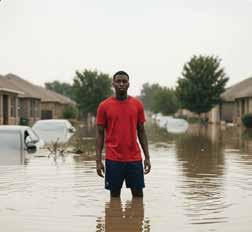
Social Media Post (Visual): Image 1: Old photo labelled "Current Floods? FAKE! Reverse image search shows 2018." Image 2: Link to local fact-checker. Caption: "Check before you share! #ClimateTruthAfrica"
Spot the Claim: See a post using an image to describe a "current" event? Pause before you share.
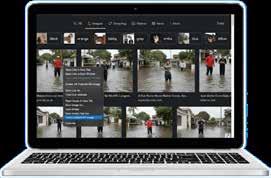
Verify the Image: Right-click and run a Reverse Image Search (e.g., Google, TinEye). Find the original source and true date to expose old or misused photos .
2.2: From Fact-Checking to System Change
SHARE TRUTH : Don't just delete the lie. Actively call out the falsehood and post the accurate information on all your channels to correct the record.
FAKE
While spotting and debunking falsehoods remains essential, these tactics alone are not enough. Climate disinformation is not just a communication problem: it is a systemic strategy used by powerful actors to delay climate action.

T o build resilience and spark change, African movements must go beyond fact-checking and countering narratives one-by-one. We must organize, legislate, and reimagine.
T his subsection offers both the skills for detection, response an d strategies for resistance, regulation, and long-term narrative change.
A Practical Guide for Journalists, Educators,
Community Leaders, and Advocates
Target the Source: Confronting Bad Actors
U se the existing S.L.O.W. Checklist and local fact-checking networks. But also ask:
W ho benefits? Always follow the money; many disinfo campaigns serve fossil f uel giants, corrupt political actors, or foreign corporate interests.
Who is missing from the conversation? Disinformation often drowns out Indigenous voices, women, youth, and frontline communities.
Practicals
(Shift from spotting lies to exposing orchestrated campaigns)
Fossil Fuel Lobbies in Africa:
Action: Demand transparency—petition Meta/X to release disinfo data in local languages. 2. 1.
Ta ctic: Fund "grassroots" groups to oppose renewables (e.g., "Gas = Af rican Progress").
Action: Name and shame-publicly link front groups to oil giants (e.g., #FollowTheMoney)
Big Tech’s Blind Spots
T actic: Algorithms amplify outrage (e.g., drought denial posts trending in Sahel).

Regulatory Levers:
Tactic: Mandatory disinfo disclosures for fossil-funded content.
Action: Template letter to pressure MPs: "Regulate climate lies as publ ic harm."
Bootcamp Link: Role-play lobbying, MPs using fossil fuel lobbying data.
Expose the Lie and Build Immunity
Prebunking builds critical thinking before lies take hold. Equi p people with rebuttal scripts, memes, and stories. But don’t stop there. 3.
A Practical Guide for Journalists, Educators, Community Leaders, and Advocates
Use debunking as an entry point for mobilizing. Ask:
Why are they lying?
What are they trying to delay or derail?
Frame each rebuttal as part of a bigger story: Africa’s right to climate justice, energy democracy, and Indigenous land rights.
Practicals
(Scale responses through organized campaigns).
Rapid Response Networks:
T ool: "Alert Chain" protocol—pre-assign roles (Verifier, Communicator , Amplifier). I.
2.
E xample: WhatsApp groups linking journalists, scientists, and activists to flood false claims within hours.

Creative Counters:
#DataMurals: Paint disinfo tactics on walls (e.g., Lagos mural showing oil l obbyists manipulating social media).
Satire Videos: Parody greenwashing (e.g., "Oil CEO sings 'We Love Solar' whil e drilling for oil.
Corporate Accountability:
Boycott Petitions: Target advertisers on disinfo-spreading platforms.
Bootcamp Link: Design a #CancelCoal campaign with protest art + investor pres sure tactics. 3.
Shareholder Actions: Guide climate NGOs to file resolutions at energy firms’ AGMs.
Tell the Future We Want
F acts don’t move people; stories do. One of the most powerful to ols is narrative-building.

A Practical
Guide for Journalists, Educators, Community Leaders, and Advocates
Center African Solutions:
D isinformation says, "Africa must wait." Our stories say: Africa leads.Highlight solar farmers, socially owned renewable projects in communities, and Indigenou s-led conservation.
Use Cultural Frames
Use ancestral wisdom, humor, or art. People connect to meaning, not stats. Let climate justice feel like justice, identity, and pride.
Reclaim the Story
Disinfo paints Africans as victims, obstacles, or dependents
Our story: We are guardians of the planet’s future.
P racticals
(Replace disinfo with emancipatory stories.)
Flip the Script on Delay Discourses:
Lie: "Climate action = neocolonial control."
Truth: "Solar microgrids = energy sovereignty. Fossil fuels = debt to foreign companies."
Story Banks for Movements:
Farmers: "How regenerative agriculture revived Ndidi’s soil during drou ght."
Youth: "Lekan built a solar startup after oil polluted his village rive r.”
B ootcamp Link:
Co-create "Narrative Battlecards" for common myths vs. visionar y truths.
A Practical Guide for Journalists, Educators, Community Leaders,
and Advocates
IV.
Move Beyond Media Literacy to Collective Power
C limate disinformation thrives when people feel alone or powerle ss. Countering it takes collective action.
Practicals
Here’s how:
Build Local Campaigns
Mobilize communities to hold polluters and platforms accountable.
C ampaigns demanding Facebook/TikTok act on false climate ads.
Local protests or petitions against greenwashed fossil fuel pro ject.
Push for Regulation
Lobby governments to adopt disinformation accountability laws.
Demand platform transparency: How does WhatsApp or Facebook mon itor African languages? Who gets deplatformed?
Work with civil society coalitions to call out platform inactio n.
Expose Bad Actors
Name fossil fuel companies funding “fake grassroots” accounts. Track astroturf campaigns.
Expose front groups posing as “energy experts.”
From Fact-Checkers to Change Agents
The Climate Facts Bootcamp should prepare participants to do more than spot fakes. It should empower them to:
Lead workshops in schools, churches, and community halls
Confront big tech in advocacy coalitions
Launch watchdog networks to monitor disinfo trends and actors
Connect climate misinformation to other injustices (resource ex traction, land grabs, gender oppression).
Section 3: Indigenous Peoples Resource Hub
( Guardians of Knowledge )

A Practical Guide for Journalists, Educators, Community Leaders, and Advocates
A
Practical Guide for Journalists, Educators, Community Leaders, and Advocates
Indigenous communities in Africa are uniquely vulnerable to climate disinformation, which is often used as a weapon to justify land grabs, illegal logging , and the destruction of ecosystems. This hub is designed to equip Indigenous leaders and advocates with tools to protect their ancestral lands, sovereign rights, and invaluable traditional ecological knowledge from malicious disinformation campaigns.
By centering Indigenous voices and knowledge systems, this sect ion aims to fortify communities against external manipulation and support their rol e as essential stewards of Africa's biodiversity and climate solutions.
Why Indigenous Peoples Are Targeted:
Lies used to justify land grabs ("You don't use this land efficie ntly").
False promises about extractive projects ("This mine brings onl y wealth!").
Misinformation painting communities as "anti-development".
Undermining traditional ecological knowledge.
Fighting Back: Strategies for Indigenous Leaders & Allies:
Document & Digitize : Safely record traditional knowledge & land management practices (audio, video, maps).

Forge Alliances: Link with journalists, lawyers, other Indigenous groups, and et hical scientists.
Demand Accountability: Expose actors behind disinformation (e.g., the mining company funding fake "community support" groups).

Build Early Warning Networks: Share alerts about disinfo campaigns targeting land/rights via trusted channels.



The Dual Threat
Disinformation Targeting Indigenous Peoples: False narratives designed to manipulate communities into giving up land or accepting harmful projects ( e.g., "This coal mine will bring you wealth with no downside").
Misinformation About Indigenous Peoples: Narratives that paint communities as obstacles to progress or incapable of managing their own land, used to justify displacing them for "conservation" or resource extraction.
Case Studies


Uganda:
https://tinyurl.com/Batwa-people
Countering narratives that displace the Batwa people from their ancestral forests under the guise of conservation.
Kenya:
https://tinyurl.com/guiseUganda
https://tinyurl.com/guiseUganda

https://tinyurl.com/kenyafactsAfr
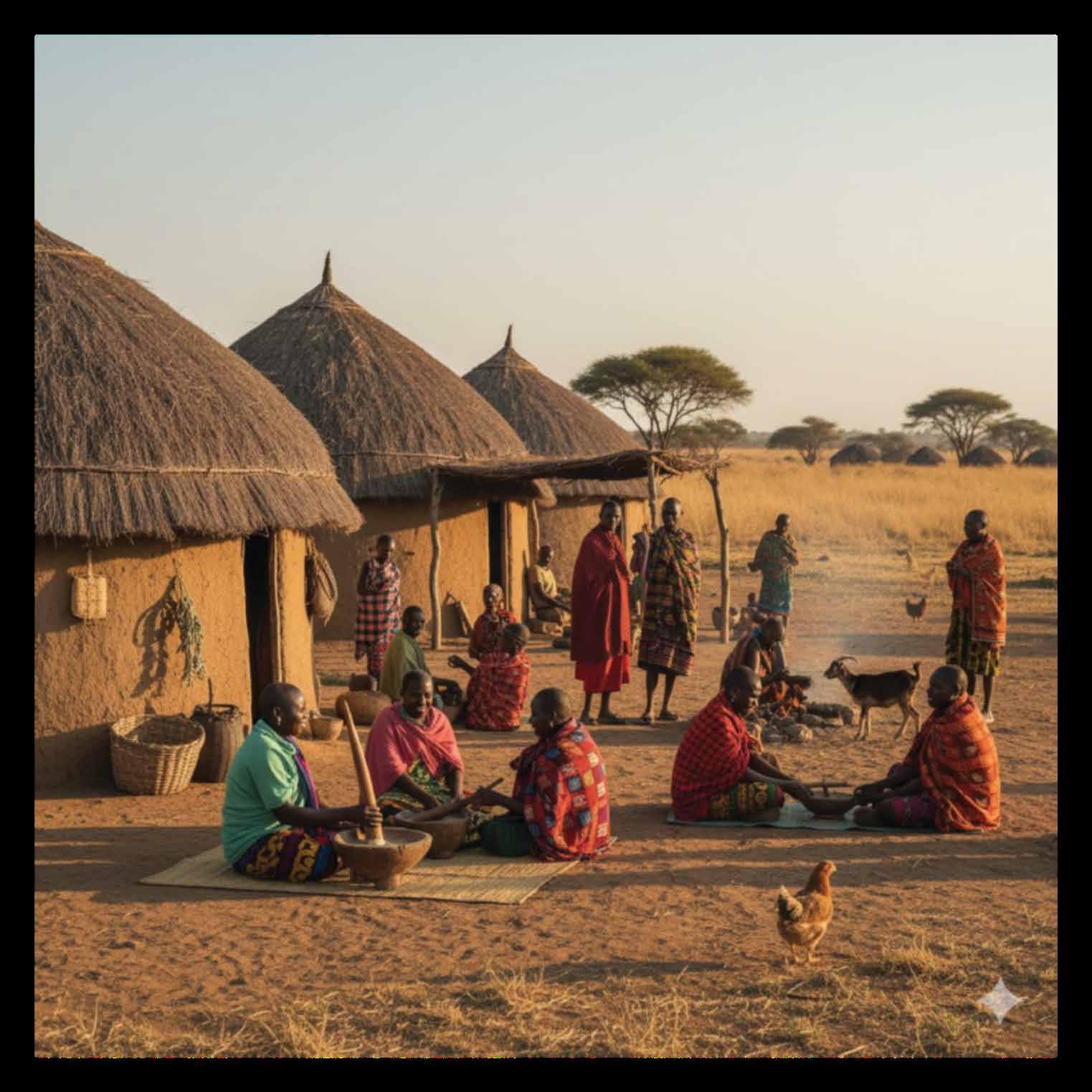
Addressing disinformation around land use and pastoralist rights for Maasai and Turkana communities.
DRC:




Fighting misinformation related to "green" mineral extraction that harms local populations and ecosystems.
https://www.amnesty.org/en/documents/afr62/3183/2016/en/
A Practical Guide for Journalists, Educators, Community Leaders, and Advocates
How to Fight Back: From Counter-Narratives to Deep Knowledge
The most powerful tool Indigenous communities possess is their own deep knowledge. This is a rigorous, complementary system, not a substitute but an equal partner to Western science. It is a time-tested system for land management and cre ating harmonious ecosystems.
Map and Share Your Stories: Document and share stories of how your community has successfully managed land, water, and forests for generations. Use video, audio, and storytelling to create a living archive of resilience.
Expose the Link: Clearly connect disinformation campaigns to the actors who bene fit from them (e.g., logging companies, mining interests).
Build Alliances: Connect with other Indigenous groups, journalists, and legal a dvocates to amplify your voice and build a united front.
Lead the Conversation: Frame Indigenous knowledge as the essential foundation for any successful climate solution in Africa.





A Practical Guide for Journalists, Educators, Community Leaders, and Advocates
Sample “Myths vs Facts” – Indigenous Peoples & Climate Disinformation
This is empty land; clearing it for farms or development helps Africa.
To protect nature, people living in the forest must be removed. Human presence harms nature.
A colonial trope that erases
Indigenous presence to justify land grabs and label land as "available" for exploitation
The Lie: " This land is better used for environmental protection"
The Truth: Elites steal ancestral lands for:
Carbon offset scams
Luxury "eco"-tourism
Illegal mining/logging under "green" labels
The Harm: Communities lose homes while extractors profit
Pastoralists rotate livestock across drylands
Sacred forests protect biodiversity & water sources Indigenous agroforestry yields food without destruction
https://social.desa.un.org/issues/indigenous-peoples/indigenous-peoples-at-the-united-nations
https://social.desa.un.org/issues/indigenous-peoples/indigenous-peoples-at-the-united-nations
Indigenous peoples protect 80% of global biodiversity. Their stewardship sustains ecosystems, unlike “fortress conservation, ” which often leads to conflict and degradation. Real conservation respects their rights and leadership.
Promote sustainable use (e.g., Kenya’s community conservancies)
https://www.nrt-kenya.org/
https://www.nrt-kenya.org/
Document oral histories and traditional knowledge
Support legal recognition of Indigenous and communal land claims
Mobilize communities to challenge false “unused land” claims
Expose who benefits from land-grab narratives
Show evidence of successful community-led conservation projects.
Use satellite/drone images to demonstrate long-term sustainable land care.
Map and document traditional land use (farming, rituals, wildlife tracking).
Highlight case studies where evictions failed but community-led stewardship worked.
Promote rights-based conservation that includes Indigenous leadership.
A Practical Guide for Journalists, Educators, Community Leaders, and Advocates
Myth Disinformation Tactic Fact Counter
Traditional knowledge is just folklore and superstition. We need 'real' modern science to address the climate crisis.
This is used to undermine the authority and agency of Indigenous leaders. By dismissing their knowledge, outside actors can position themselves as the sole "experts" and push forward solutions that benefit them, not the community or the environment.
Traditional Ecological Knowledge (TEK) is a parallel science, not folklore or anecdote.
Built on generations of observation, adaptation, and land care.
Offers place-based insights into climate, soil, water, and biodiversity. Reveals patterns and changes satellitesand models often miss.
Strengthens solutions through intergenerational knowledge. The most resilient strategies blend TEK with Western science for maximum impact.
Cite TEK in your materials, include examples of Indigenous climate solutions (e.g., water harvesting, seasonal planting cycles, controlled burns).
Use Indigenous voices, feature elders, land stewards, and community scientists as authorities in climate storytelling.
Build TEK-science partnerships and encourage co-production of knowledge between Indigenous knowledge holders and researchers.
Train journalists and educators to speak about TEK as evidence-based, not anecdotal.
Challenge language bias. Avoid framing Western science as"real" and TEK as "belief" or "myth."
Advocate for policy recognition. Push for TEK inclusion in climate adaptation and biodiversity strategies. Create visual explainers. Show how TEK has successfully predicted droughts, wildfires, or biodiversity shifts.

A Practical Guide for Journalists, Educators,
Community Leaders, and Advocates
Myth Disinformation Tactic Fact
Indigenous knowledge is “unscientific” and cannot guide climate policy.
It frames Indigenous knowledge as inferior to “Western science.”
It exploits biases about tradition vs. modernity.
It sidelines Indigenous voices in policy debates.
Indigenous communities often hold some of the most effective climate adaptation knowledge. From forest regeneration to water conservation.
Studies show that deforestation rates are significantly lower in Indigenous-managed territories compared to other lands.
Their approaches are not anti-development but pro-sustainability.
Counter
1. Evidence-based counter
Show that Indigenous knowledge is. recognized by the IPCC as critical. Example: In Niger and Burkina Faso, farmers' Zai pits restored thousands of hectares of degraded land and improved harvests during droughts, proving the system works alongside modern agronomy.
https://www.weforum.org/stories/2018/09/burkinabe-farmer-wins-alternative-nobel-for-drought- ghting-technique/
https://www.weforum.org/stories/2018/09/burkinabe-farmer-wins-alternative-nobel-for-drought- ghting-technique/
2. Reframe the narrative
Stress thatIndigenous practices complement science.
https://tinyurl.com/AfricMoza
https://tinyurl.com/AfricMoza
Africa example: In Mozambique, traditional mangrove conservation and raised housing methods reduce cyclone damage. Scientists now recommend mangrove buffers as part of national adaptation strategies.
3. Amplify lived experience:
Share testimonies and voices directly from communities.
https://tinyurl.com/factskenyaAfric
https://tinyurl.com/factskenyaAfric
Example: In Kenya, pastoralists adapt to drought through rotational grazing and water sharing. Their voices show how survival strategies rooted in tradition keep livestock alive when “modern” ranching collapses.
4. Expose the tactic:
Point out that the myth is designed to delegitimize Indigenous peoples and erase them from decision-making.
https://tinyurl.com/factcheckaFRIC
https://tinyurl.com/factcheckaFRIC
Example: In climate policy forums, Indigenous seed-saving in Ethiopia and Tanzania is often dismissed in favor of commercial seed imports, despite evidence that local varieties survive erratic rainfall better.

Section 4: Building the Movement: Next
Steps
A Practical Guide for Journalists, Educators, Community Leaders, and Advocates
A Practical Guide for Journalists, Educators, Community Leaders, and Advocates
This toolkit is just the beginning. Let's grow it together.
Our Vision: A living, evolving resource that is: Mobile-friendly & can be downloaded for offline viewing and use. Available in major African languages (French, Portuguese, Swahili, Hausa, Amharic, etc.).
Packed with interactive tools (quizzes, video scripts, download able posters).
Co-Creation Plan:
1. 2.
Pilot & Feedback: T est this draft with your networks. Share what works, what's missing, what needs changing! Use This Form.
https://tinyurl.com/aass8drn
J oin the Network: Become part of a pan-African community sharing alerts, strategi and successes. Join Here.
https://tinyurl.com/mveehhj4
A
Practical
Guide for Journalists, Educators, Community Leaders, and Advocates
Annexes: Your Action Resources
Glossary of Key Terms
Disinformation : False content shared to deceive.
Misinformation : False info shared unknowingly.
Malinformation : Truth used to mislead or harm.
Greenwashing : Polluters pretending to be green.
Delay Discourses : Arguments to stall climate action.
Prebunking : preemptively resisting falsehoods.
Debunking : Correcting false claims post-spread.
S . L . O . W . Checklist : Source, Language, Other views, What’s missing.
Narrative-building : Crafting powerful, justice-driven stories.
Digital Play : Online tricks (e.g., bots, fake influencers).
Persuadables : Audiences easily influenced by disinfo.
Climate Justice : Climate justice is about ensuring that the burdens and benefits of climate action are shared fairly, especially protecting the most vulnerable people who contribute the least to climate change but suffer the most from its impacts.
Detect Toolkit : SLOW Checklist poster, Reverse Image Search guide.
Debunk Toolkit : Prebunking scripts (Radio, WhatsApp, Social Media), Rebuttal templates.
Communicate Toolkit: Messaging guides (Farmers, Youth, Faith), Storytelling tips.
Indigenous Hub Resources : Land documentation templates, Alliance-building guide.
Africa-Focused Contacts:
List of African Fact-Checking Organizations ( Africa Check , PesaCheck , Dubawa , etc.).
https://africacheck.org/ https://pesacheck.org/ https://dubawa.org/ https://africacheck.org/ https://pesacheck.org/ https://dubawa.org/
Directory of African Climate Scientists & Experts. There is no single, comprehensive directory of African climate scientists, but you can find experts through organisations like the African Climate Policy Centre ( ACPC ), African Activists for Climate Justice ( AACJ ) , and the African Group of Negotiators ( AGN ).
A Practical Guide for Journalists, Educators, Community Leaders, and Advocates
Network of Environmental & Indigenous Rights Lawyers.
Organization Scope and Activities
Natural Justice
https://naturaljustice.org/
https://naturaljustice.org/
https://naturaljustice.org/
Legal empowerment, community protocols, and environmental justice across Africa.
Environmental Lawyers
https://naturaljustice.org/elca/about/
Pan-African legal collective focused on climate and land rights litigation
Collective for Africa (ELCA)
https://naturaljustice.org/elca/about/
Kenya Environmental Lawyers Association (KELA)
https://kenyaenvironmentallawyers.org/
Kenyan legal advocacy and policy development on environment and Indigenous rights.
https://kenyaenvironmentallawyers.org/

A Practical Guide for Journalists, Educators, Community Leaders, and Advocates
Network of Environmental & Indigenous Rights Lawyers.
Organization Scope and Activities
Environmental Lawyers Network of Namibia (ELNN)
https://elnn.org/
Namibian network promoting environmental law and governance reforms
https://elnn.org/
Indigenous Peoples of Africa Co-ordinating Committee (IPACC)
https://www.ipacc.org.za
https://www.ipacc.org.za
IPACC strengthens the role of Africa's Indigenous peoples in shaping policies on climate change, sustainable development, and human rights.
Further Reading & Sources:
[https://www.ipie.info/research/sr2025-1]
IPIE Systematic Review.
Coalition against Disinformation (CAAD) .
https://caad.info/what-is-misinformation-disinformation/
The Guardian Report.
https://www.theguardian.com/environment/2025/jun/19/climate-misinformation-turning-crisis-into-catastrophe-ipie-report
https://www.nature.com/articles/s43247-024-01573-7?utm
https://www.nature.com/articles/s43247-024-01573-7?utm
https://www.nature.com/articles/s43247-024-01573-7?utm
Hierarchical ML models can detect triggers of climate misinformation on social media.
https://pacja.org/
https://www.powershiftafrica.org/
Key African CSO Resources (e.g., PACJA, Power Shift Africa).
Key African CSOs 1.
https://counterhate.com/research/extreme-weather-false-claims/
Key African CSOs 2.
https://www.tandfonline.com/doi/full/10.1080/14693062.2024.2398169
https://www.tandfonline.com/doi/full/10.1080/14693062.2024.2398169
Climate action or delay: the dynamics of competing narratives in the UK political sphere and the influence of climate protest.
https://counterhate.com/research/extreme-weather-false-claims/ https://www.tandfonline.com/doi/full/10.1080/14693062.2024.2398169
Extreme Weather: How a storm of false and misleading claims about extreme weather events spread unchecked on social media putting lives at risk.

for Journalists, Educators, Community Leaders, and Advocates


The Africa Climate Disinformation Toolkit