The studio aims to understand the genealogy of the factory, the relations it has shaped, its contemporary condition in our own context and through a critical reading of these ask the ontological question: What is a Factory?
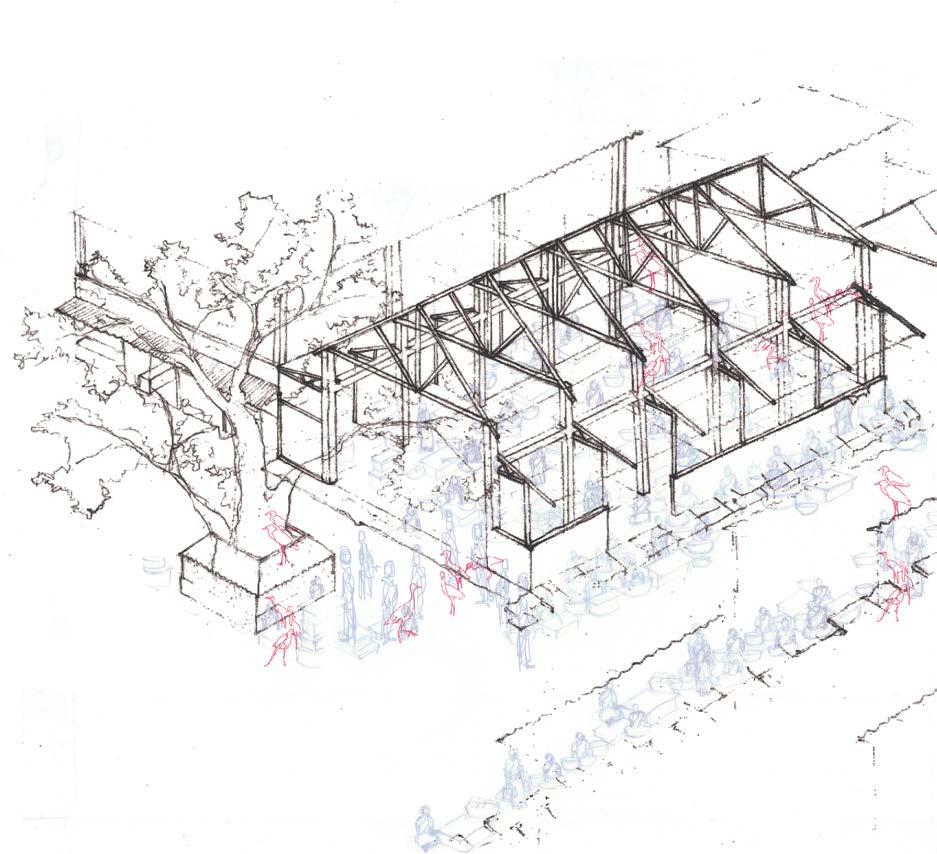
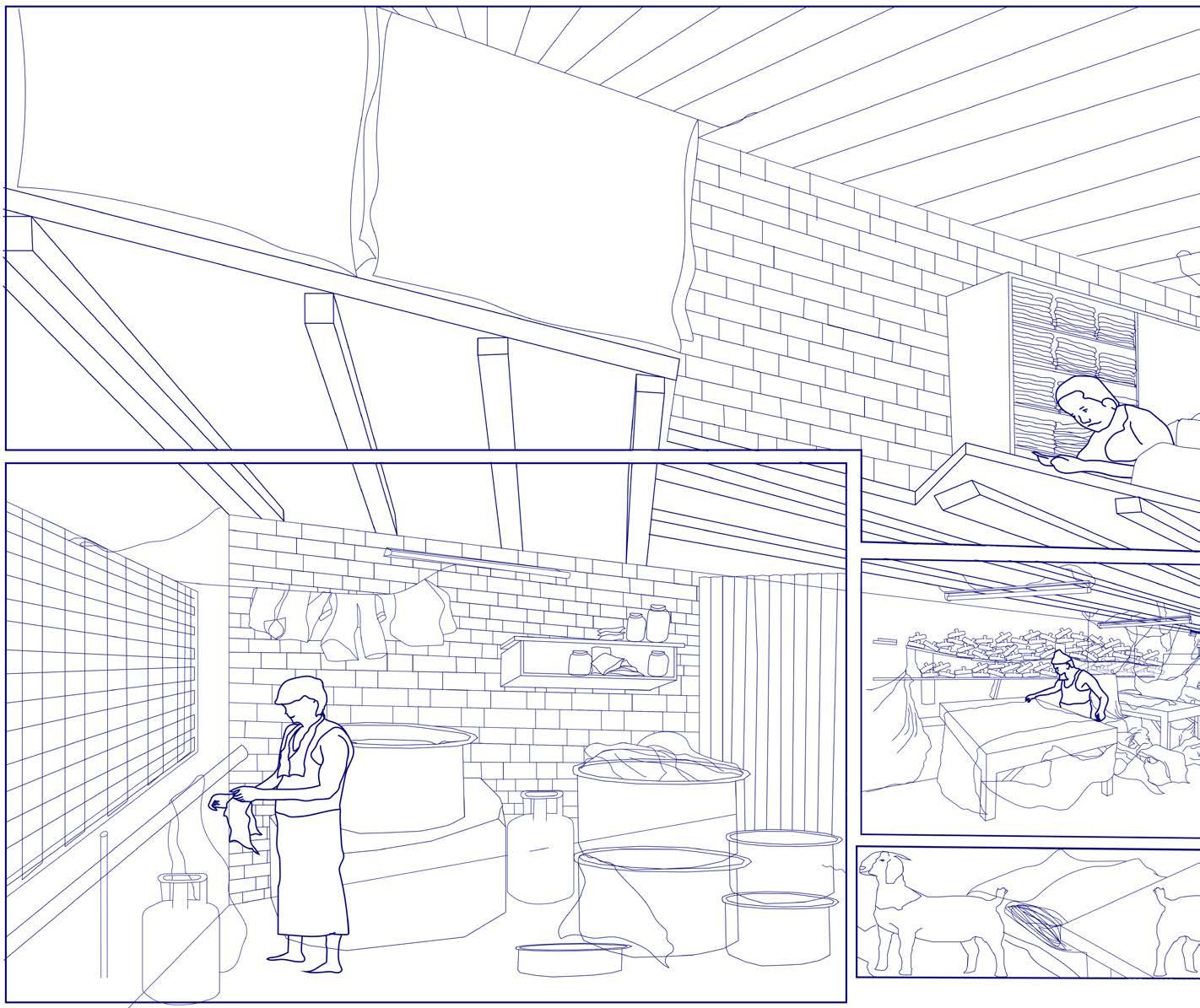
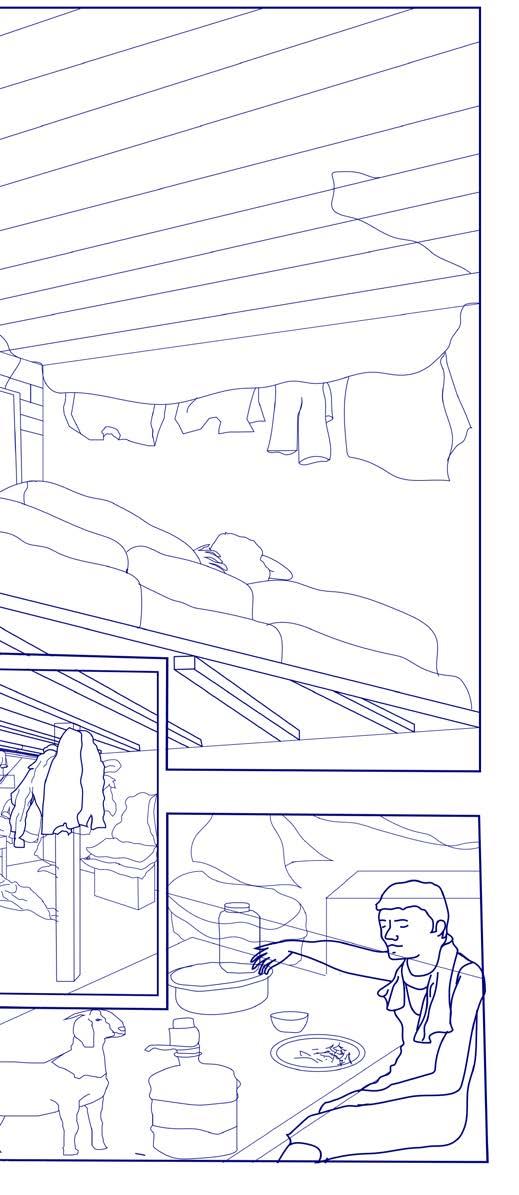
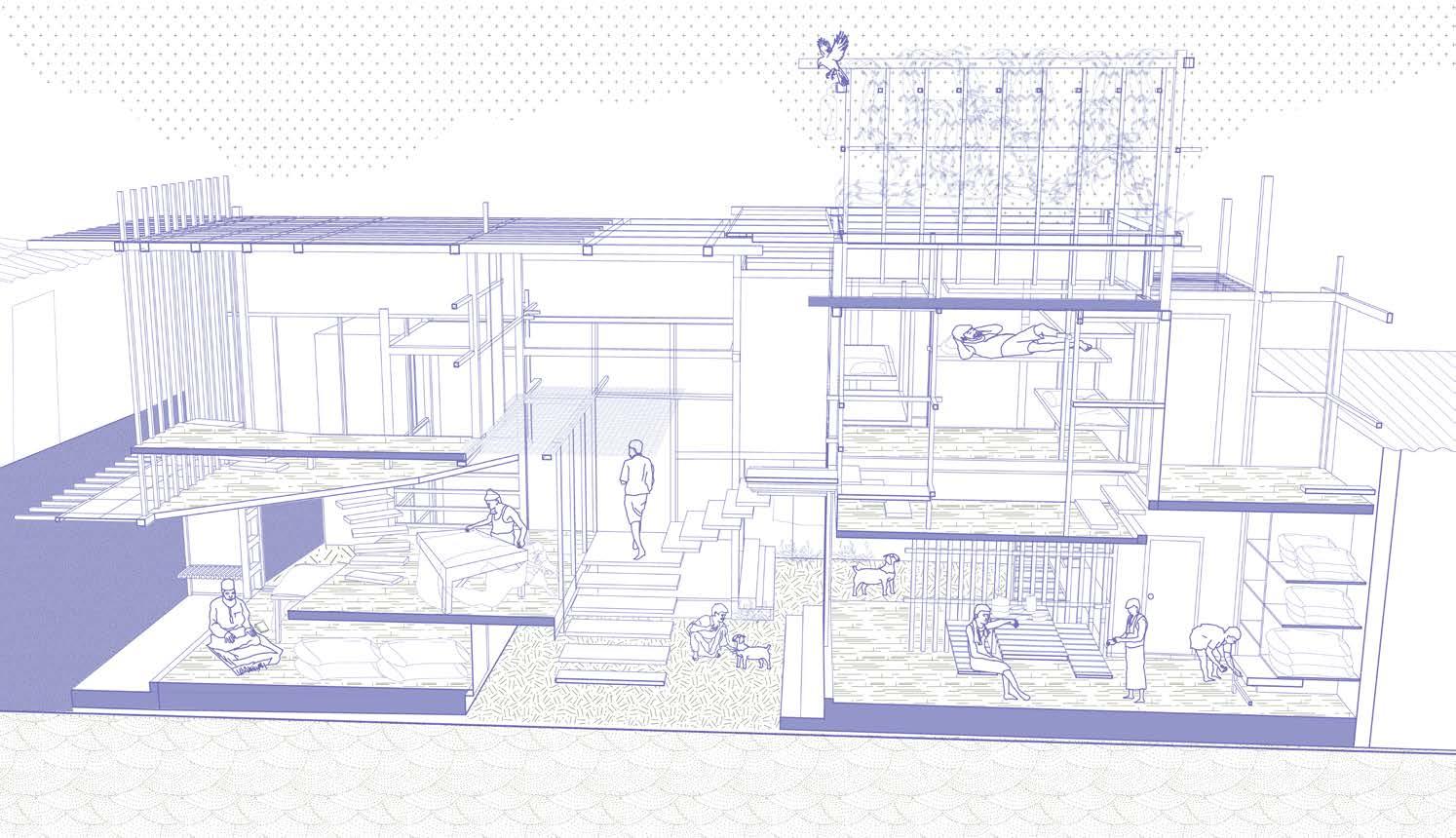
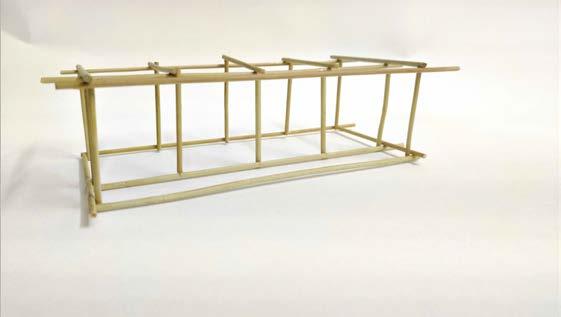
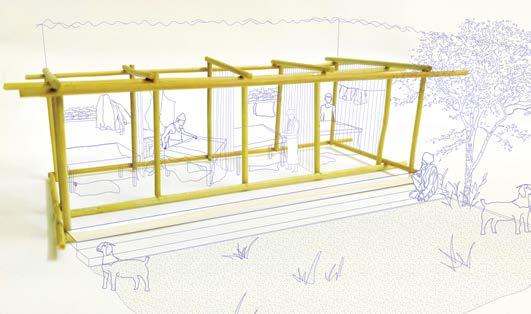
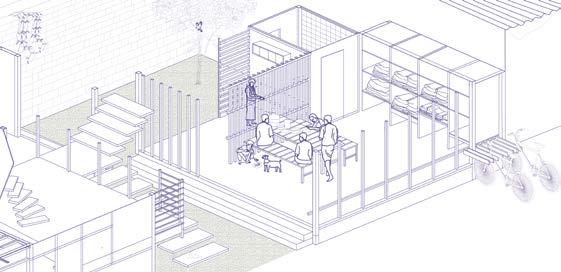
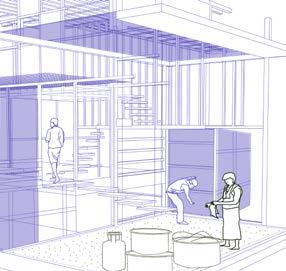
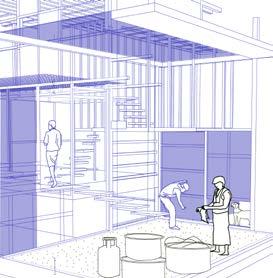
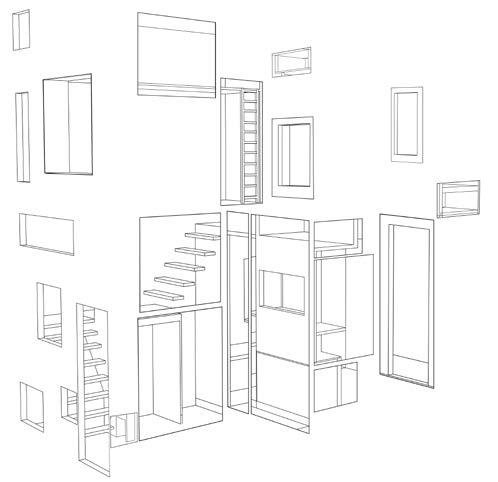
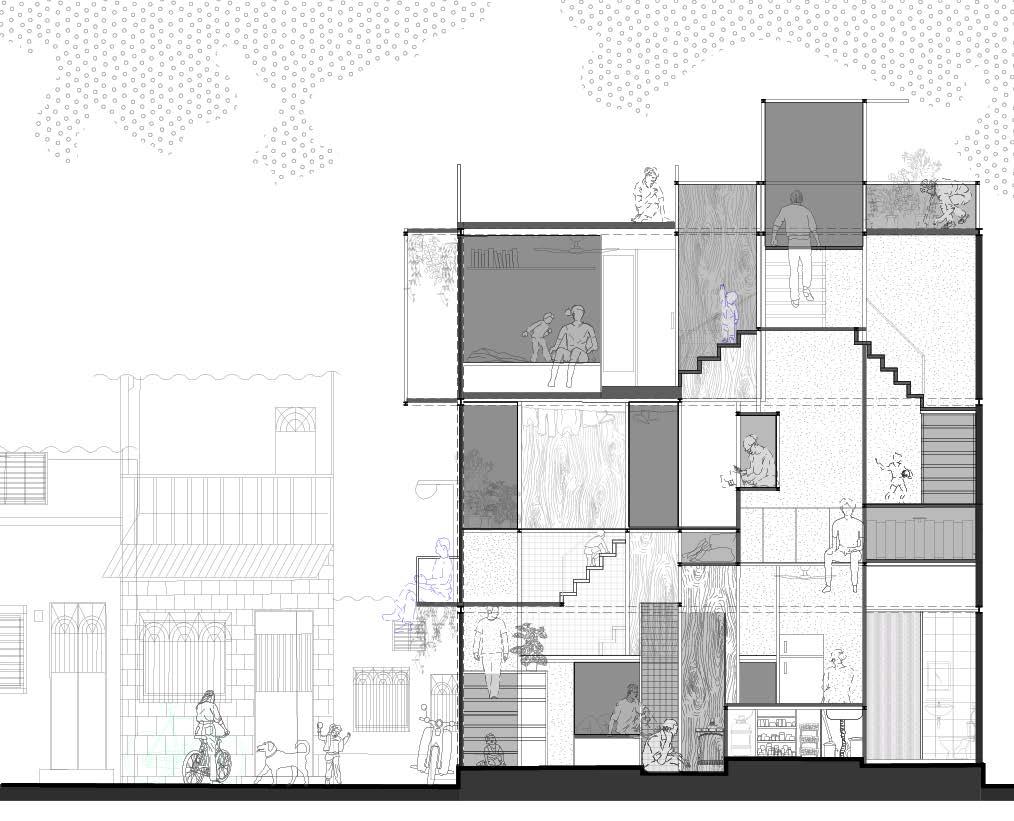
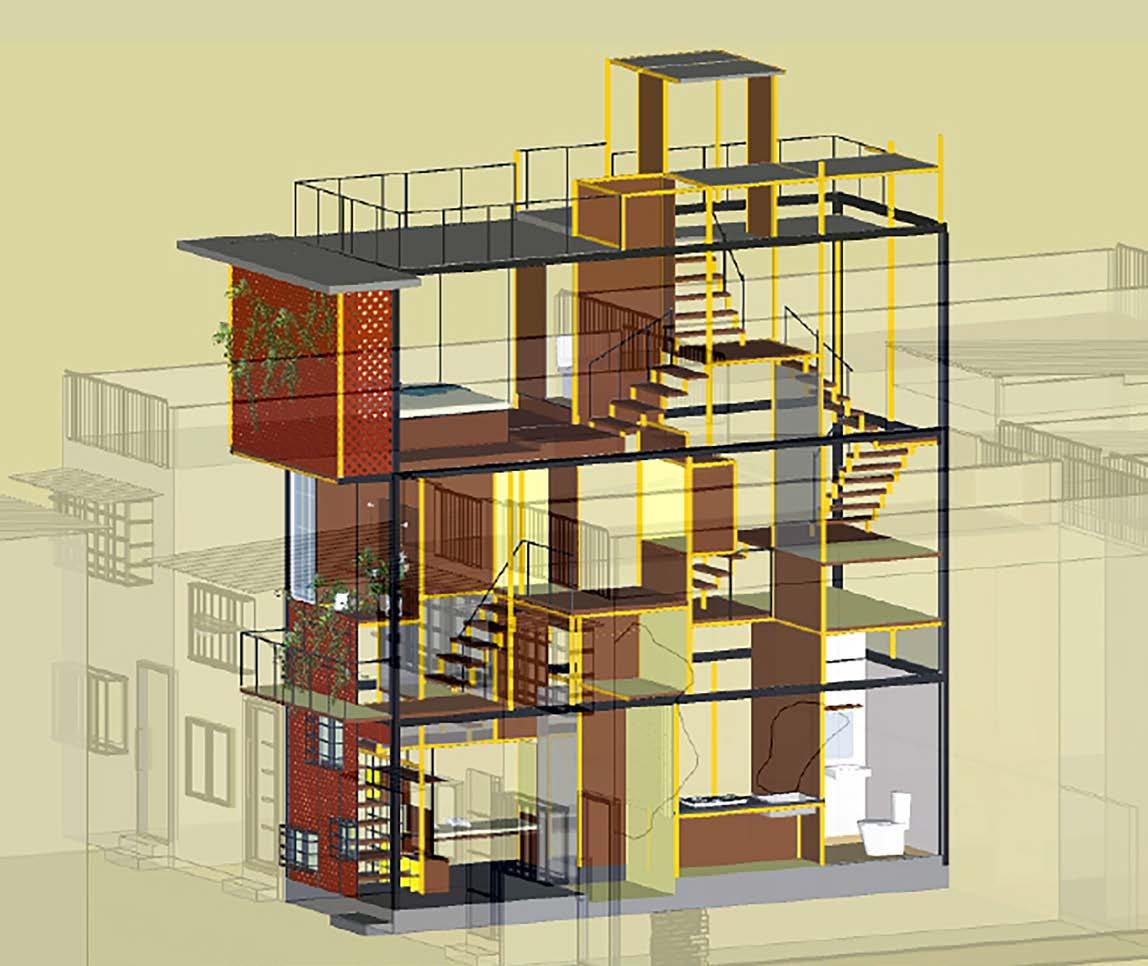
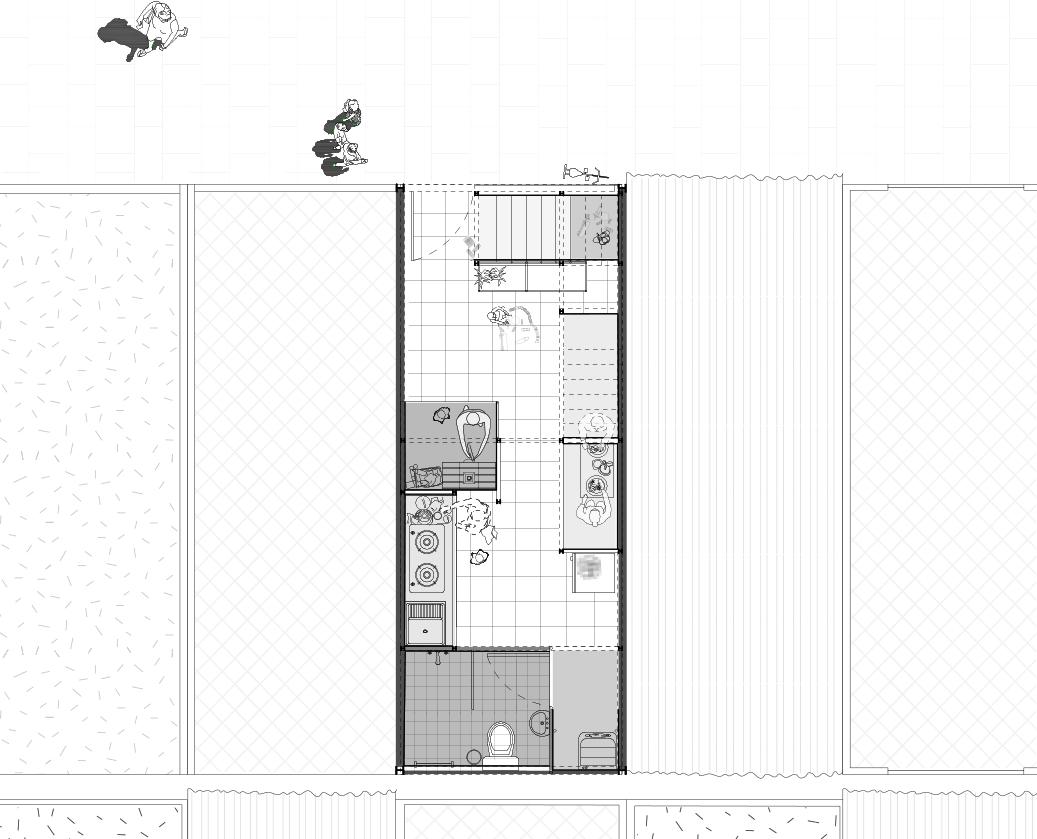
The factory choosen is located in BKC and a completely industrial area where there are slum houses which are being converted into a small scale factory. This is a batik dyeing where block printing and dyeing takes place. The workers in the factory have migrated from village to work in the city. They stay in the factory itself .Therefore i wanted to create a scaffolding or a grid which unables scalar but also programmatic infrastructure for home.The grid also becomes the unabler for various ideas of the inhabitations of body during different process that is also how the factory softens up and becomes home allowing intimate inhabilities. The grid also caters as a home for the multiple user groups around along with the factory workers. The grid can be made with hollow metal tubes with some of the spaces covered with wooden plywood for opaque covering and pvc sheets for transparency and agro nets for semi permanent covering.
The design studio focused on the understanding of ‘typology’ in architecture. ‘Type’ denotes a set of things (including ideas) which have common characteristics. As against the unique it is the generic. The architectural type encompasses a set of builtforms, which have a similar configuration of its constituent elements.
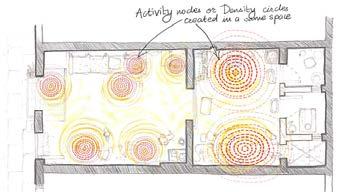
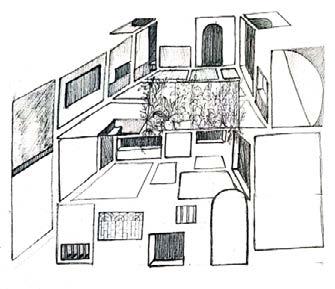
Intial conceptual sketches to understand the exsisting situation of the home and further developing it to form the idea of an alcove.
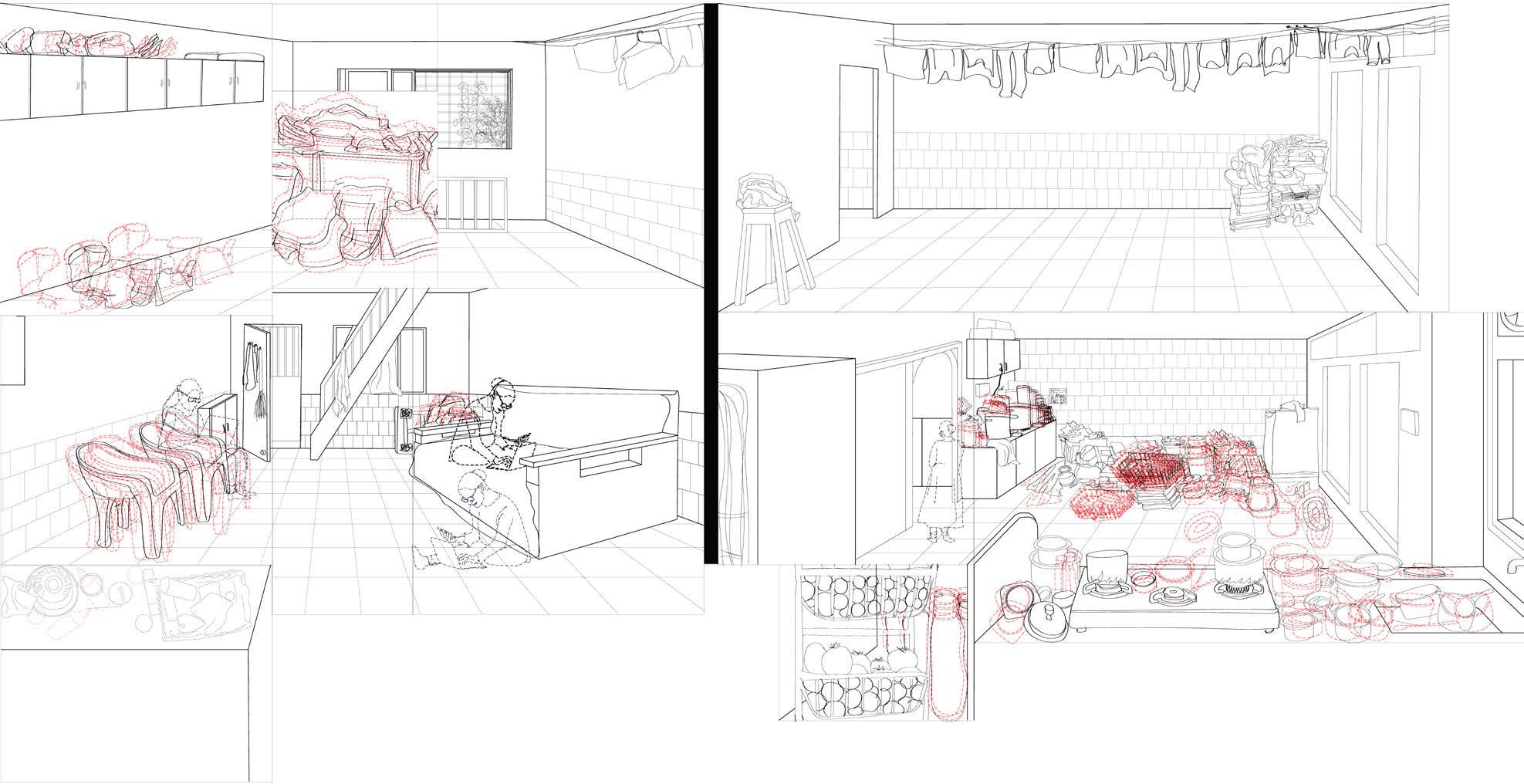
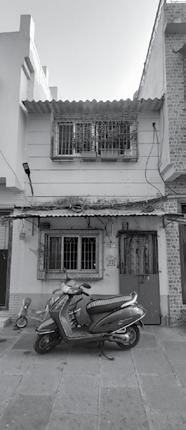
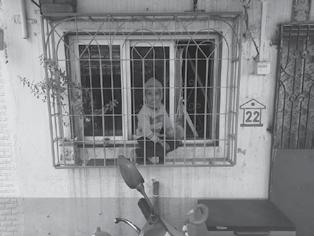
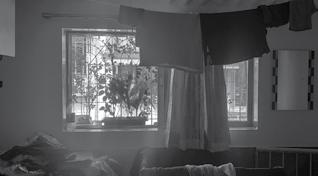
The house that i am studying is a house in charkop and its a C type of house which means it opens up in front of a courtyard on the north and is covered on the either two sides by other houses sharing a brick wall.The house consists of three members a son of 5 years living with his mother and father who are mostly busy with their office works almost the entire day. Due to lockdown the mother now works from home and has seen juggling between office and domestic activities.The pictures of the existing house show the sense of spatial organization of the space which is the different spaces giving different experiences in the same house of the office spaces as well as the domestic spaces created due the contrast arrangements of the household objects as well as the organization of space.Therefore the alcoves which are been seen created in the entire volume through these densities, through greens or through the jalli windows where the kid can be seen inhabiting them. The beams act as a frame for all the partitions of wood, pvc for closing the alcoves at certain points.
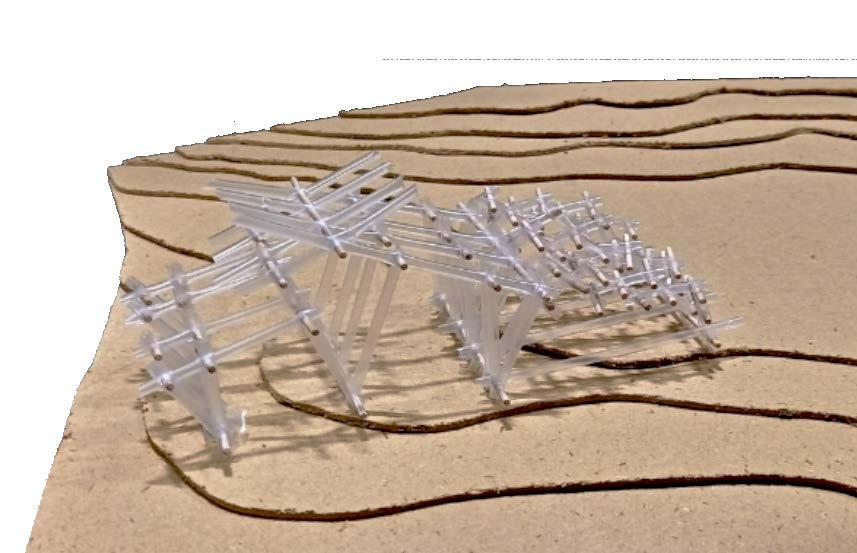
The technology module addresses the question of modularity in architecture.The objective of the studio is to think about the possible emergence of architectural forms that are more than the sum of all parts.
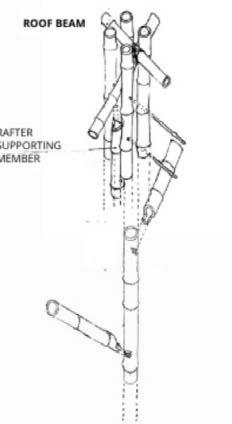
RAFTER SUPPORTING BEAM
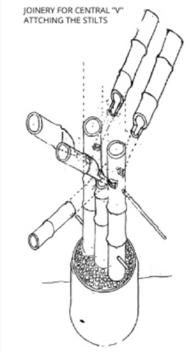
The project is a communtnity centre which also functions as a canteen and a emergency care unit during any crisis. The site on which it was built is loacted in Borivali and is which is on a slightly sloping landing.Here the idea was to use a single module which was a basic V unit multiple times and scaled up. And the module works on the principle of expanding and contracting acting as a deployable structure. Thus allowing easy building and expanding volumetrically. Therefore leading to change in scale of the project easily allowing multi-functional use.
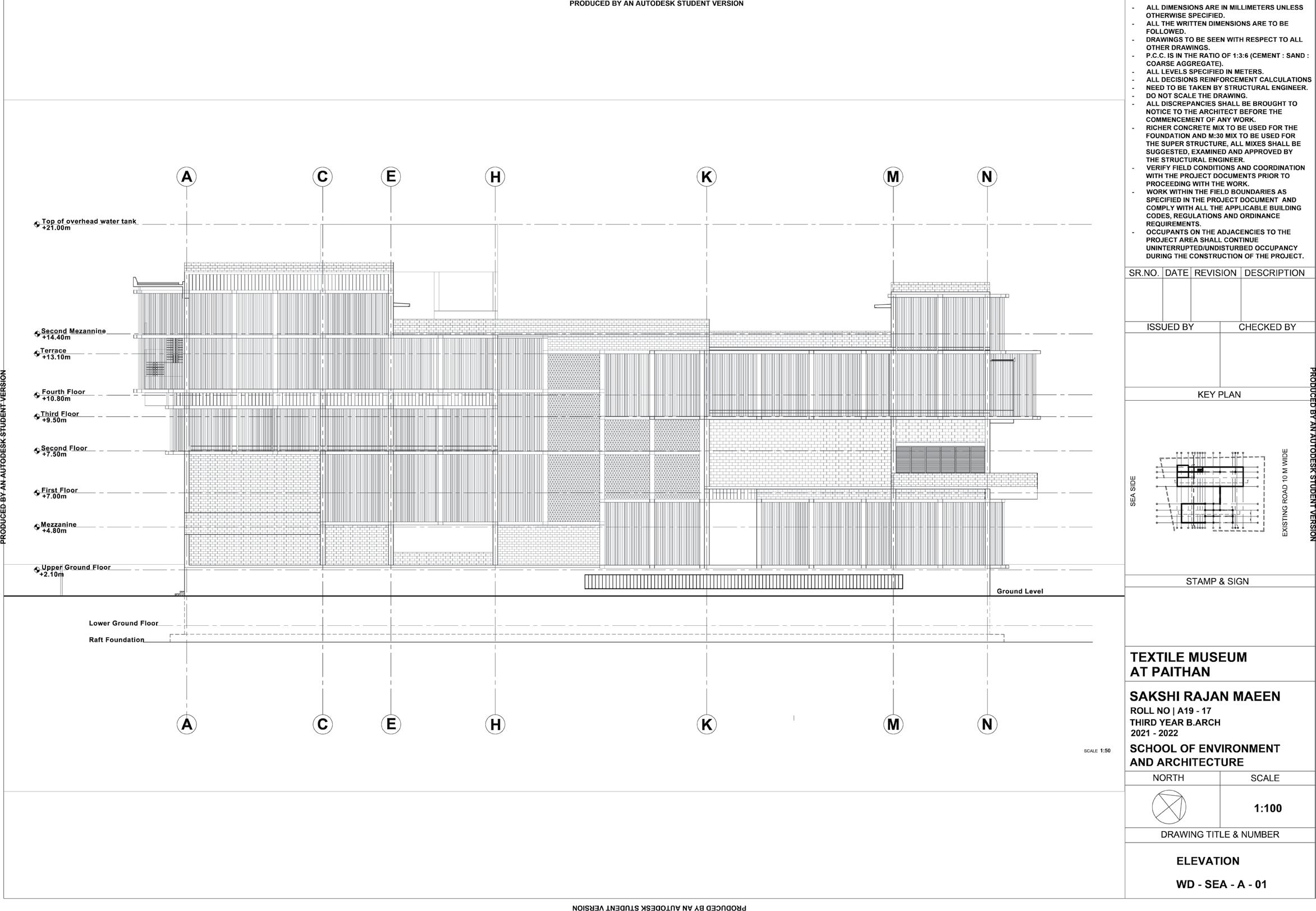
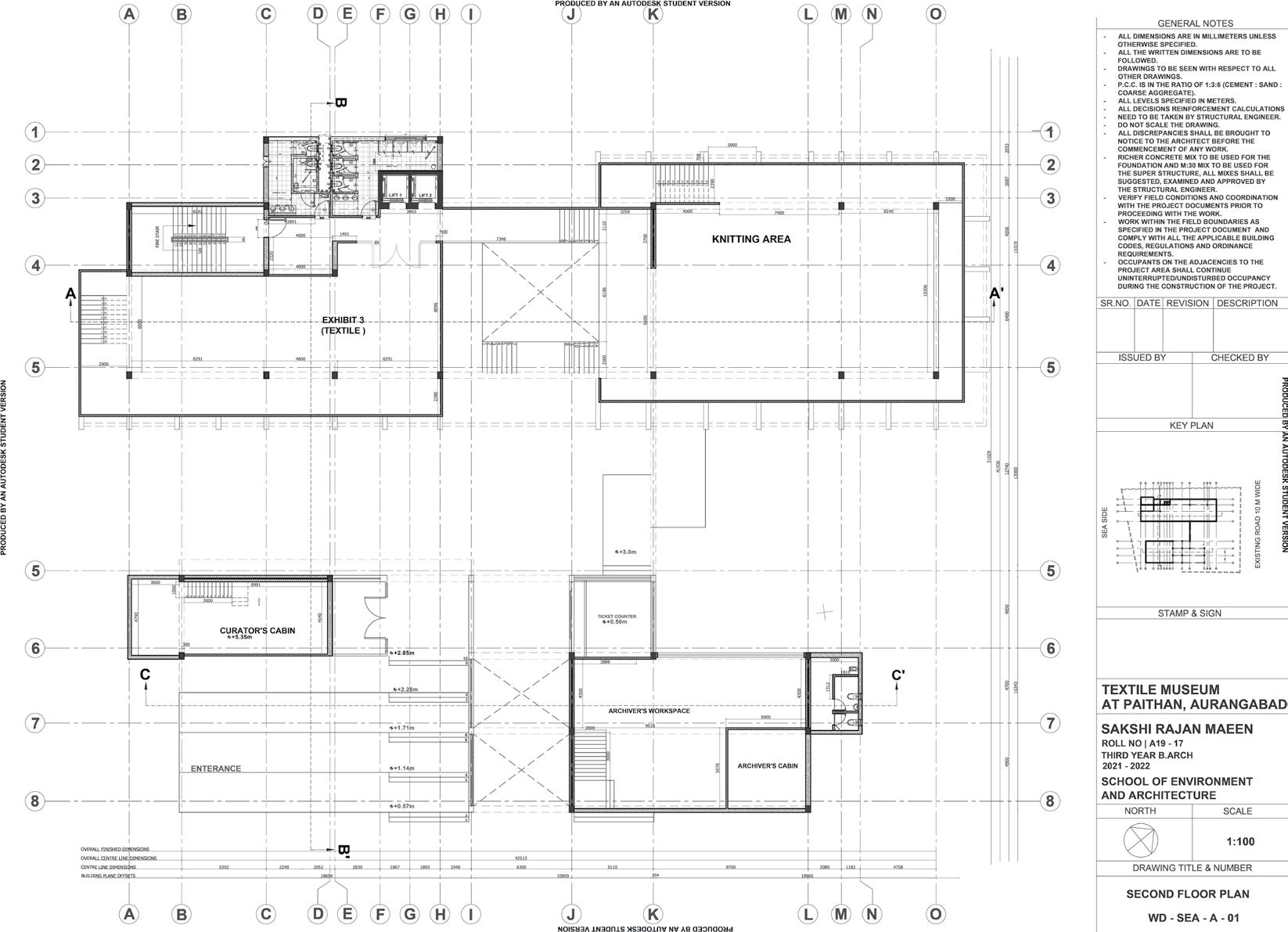
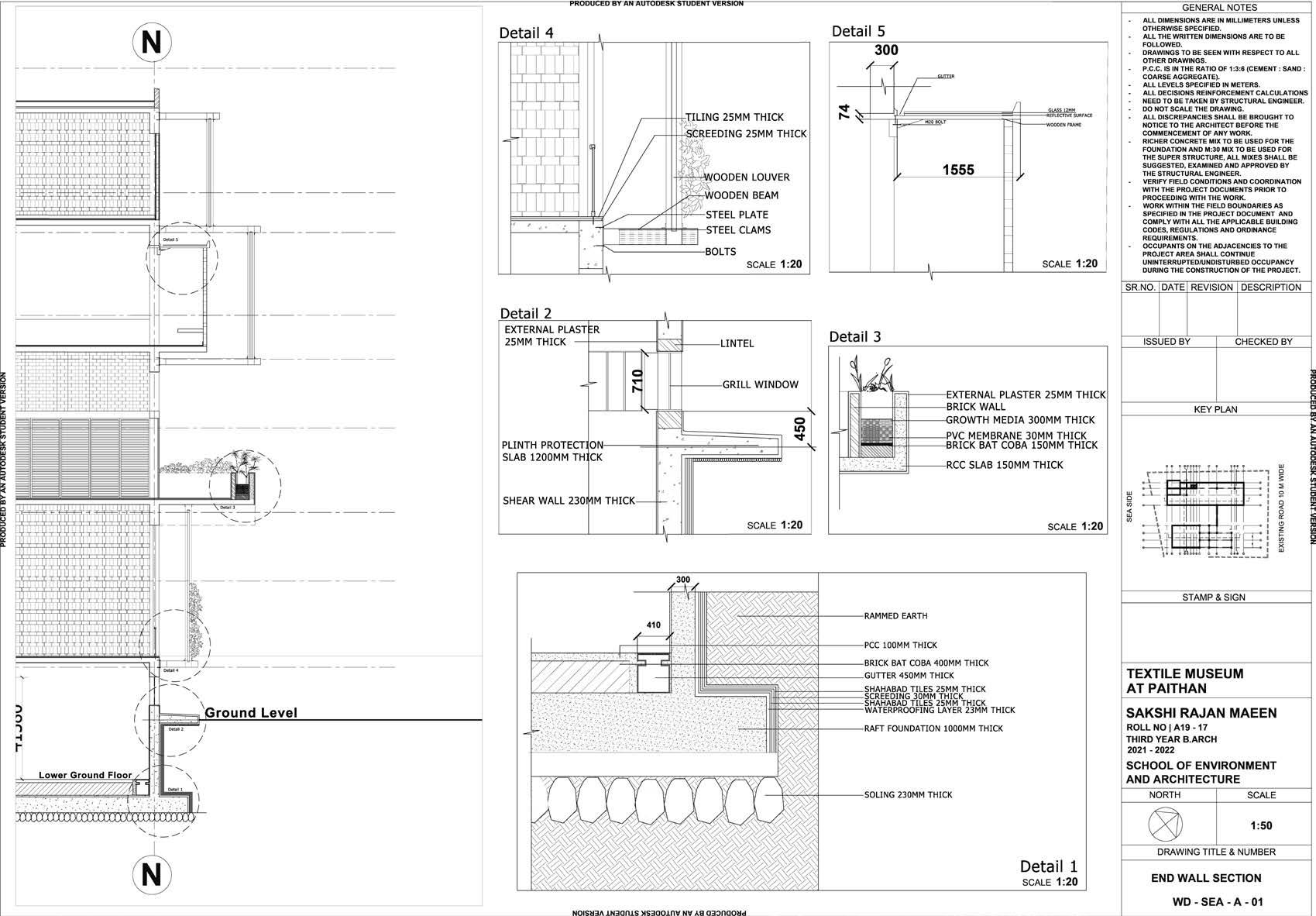
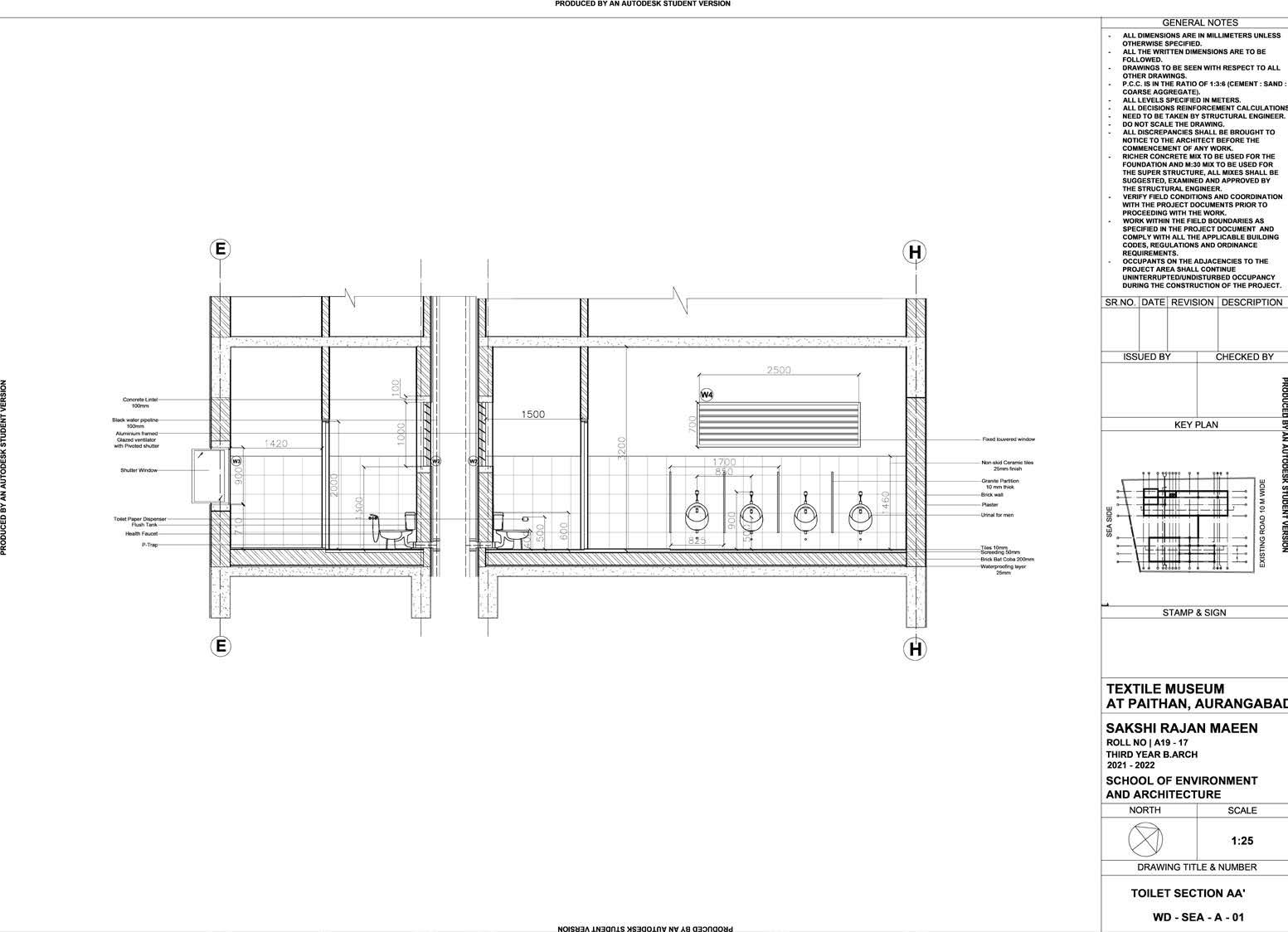
The focus of this course is three fold - first to develop in students an ability in systems-thinking ; second to develop an ability in them for detailing; and third, to develop a deep understanding of construction documentation (viz. an ability to make working drawings) that could be used for the construction of buildings.
Paithan a small town in Aurangabad recognized for its textile richness of the paithani saree along with its rich history. Thus earlier one could see the urban form of the city organized around the process of weving by creating smaller communties according to their work type and pathways connecting through these settlements. Therefore aim was to create such atmosphere through open and closed spaces which could lead the visitors through the process of the loom.
MORE THAN HUMAN INHABITATIONS
5. INHABITING INTERTIDAL ZONE:Grounds of occupancy and negotiations
UNDERGRADUATE DESIGN DISSERTATION
Semester 10 | SEA
Mentors: Dipti Bhaindarkar, Dushyant Asher
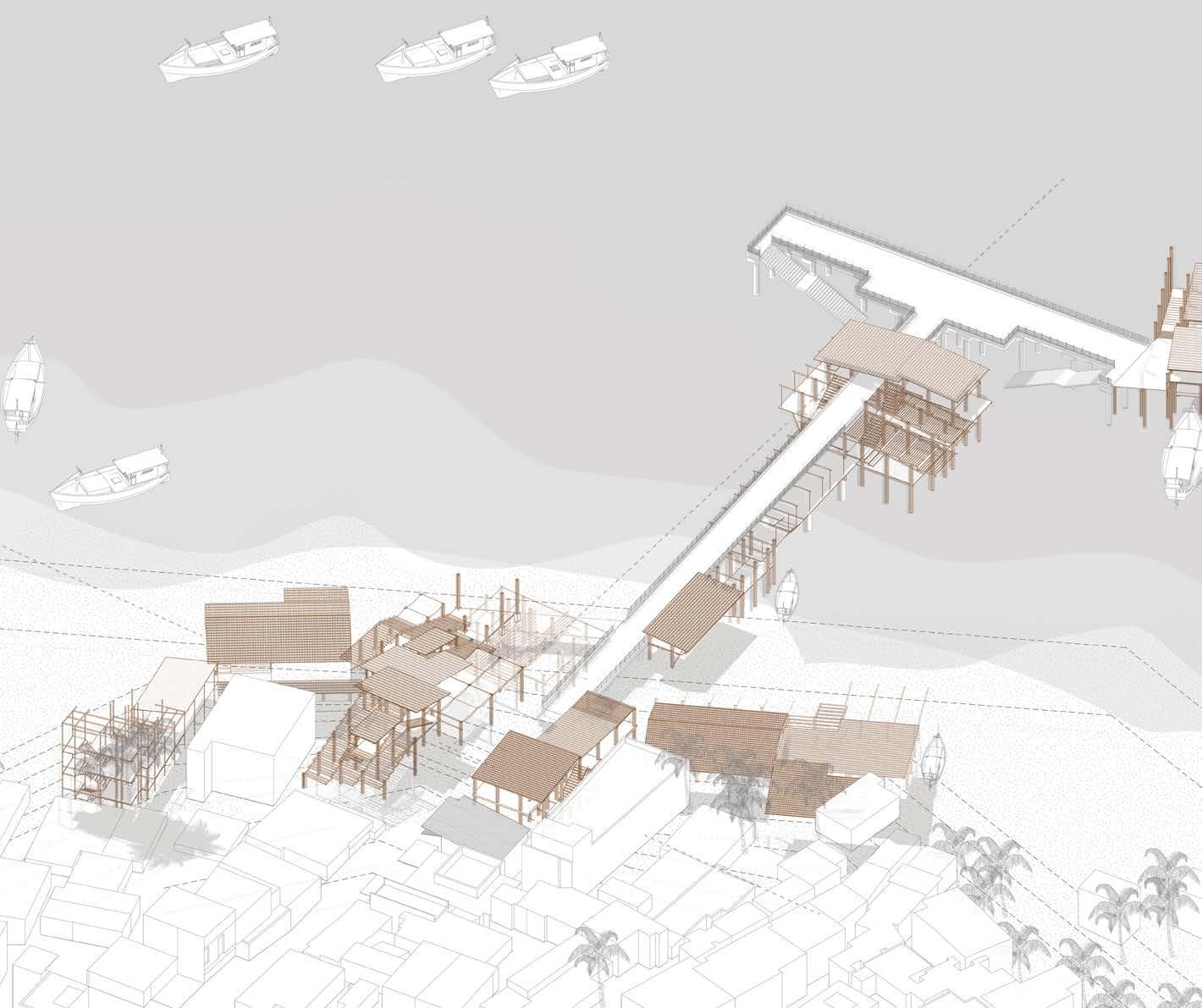
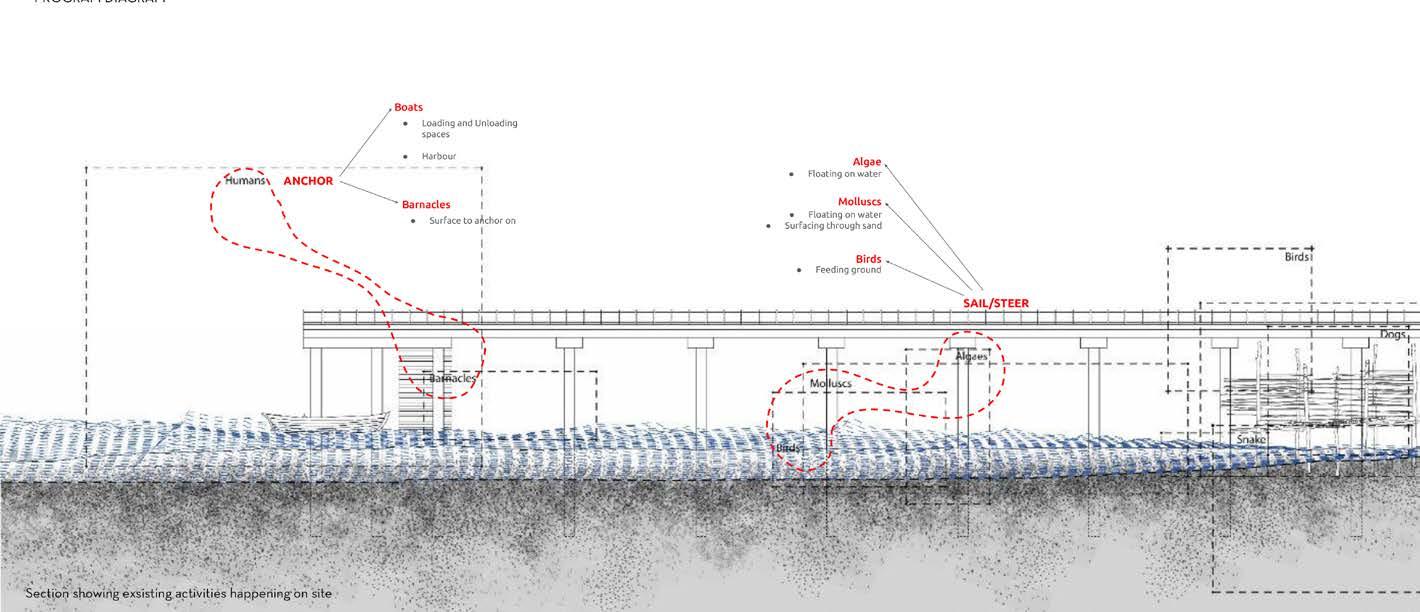
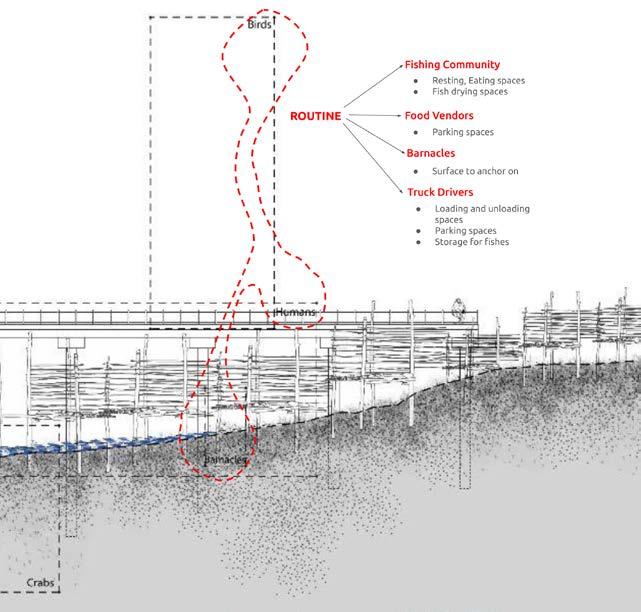
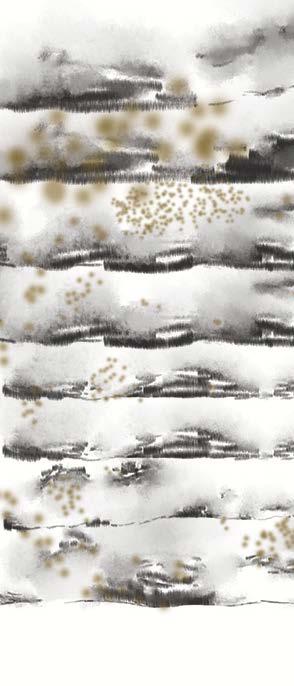
The research looked at the boundary between land and water not as a stark line between but as a space of interactions which is carved beyond the cartographic lense through the various layers and densities which shift according to the changing phenomenons of monsoon, tides, wind etc that they are situated in. Thus the objective of the research is to inquire into the spatialities and intensities produced by the temporal negotiations of humans and more than human life forms in intertidal zones.
The site chosen for it is the Arnala fishing village in north Mumbai. While strolling through the coast of Arnala another thing which was noticed was the proposed fishing harbor on the coast. A fortified building sitting on the porous land concretizing a huge chunk of land to create a newer ground for various trading, sorting, selling and storing activities even now happening on site without any demarcated space for them. Also the proposal of the harbor was overlooking the existing densities, life forms and routines of the various life forms beyond human life.
Thus the question of “What would be the architectural response to developing the intertidal zone considering the dynamism of the coastal terrain ?”
PHYSICAL
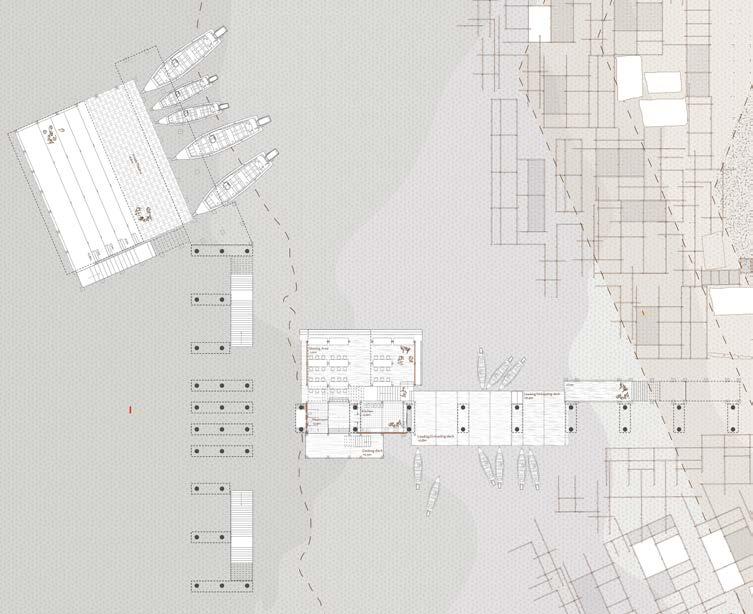
Plan at 0.8m (Scale 1:200)
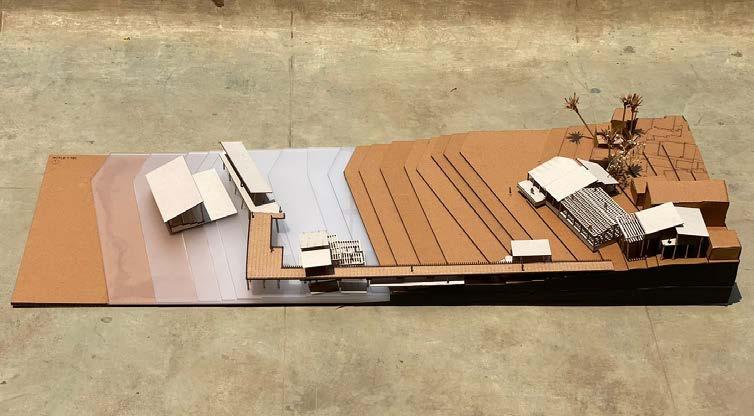
MODEL (Scale 1:150)
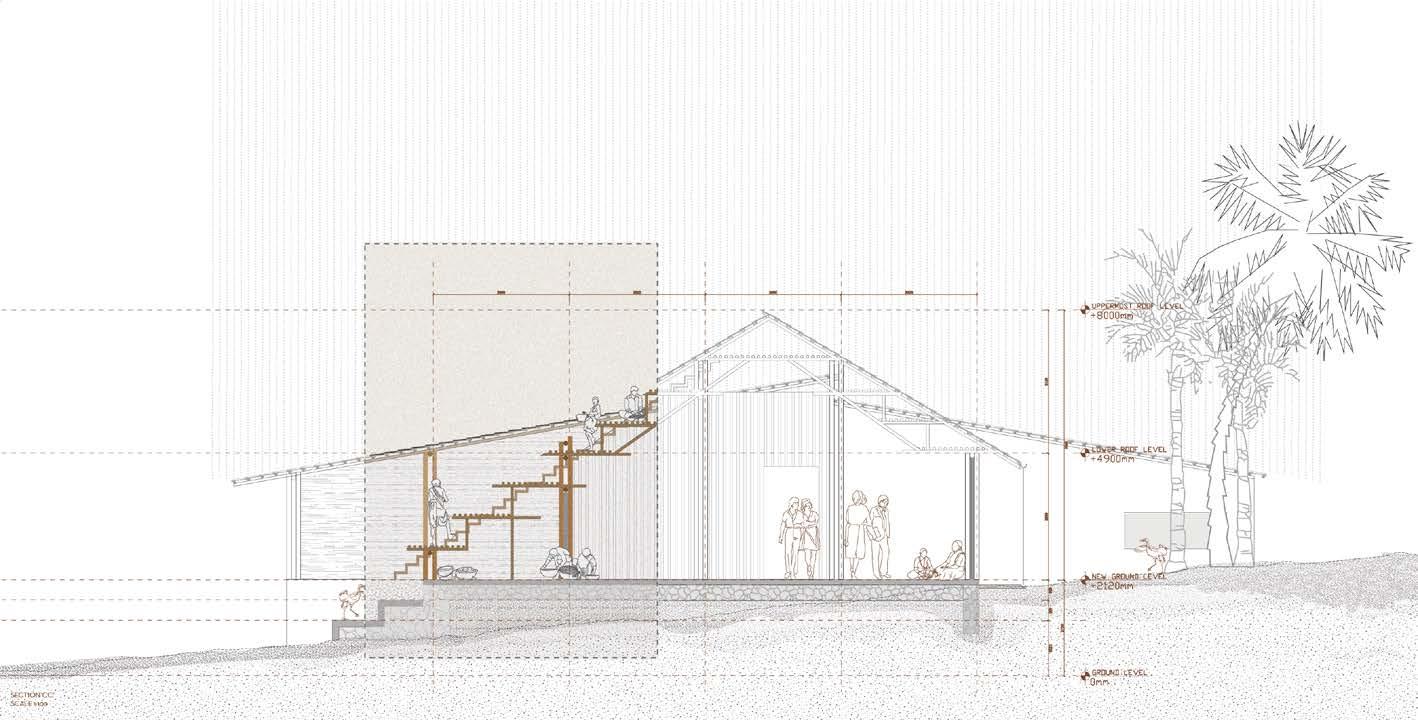
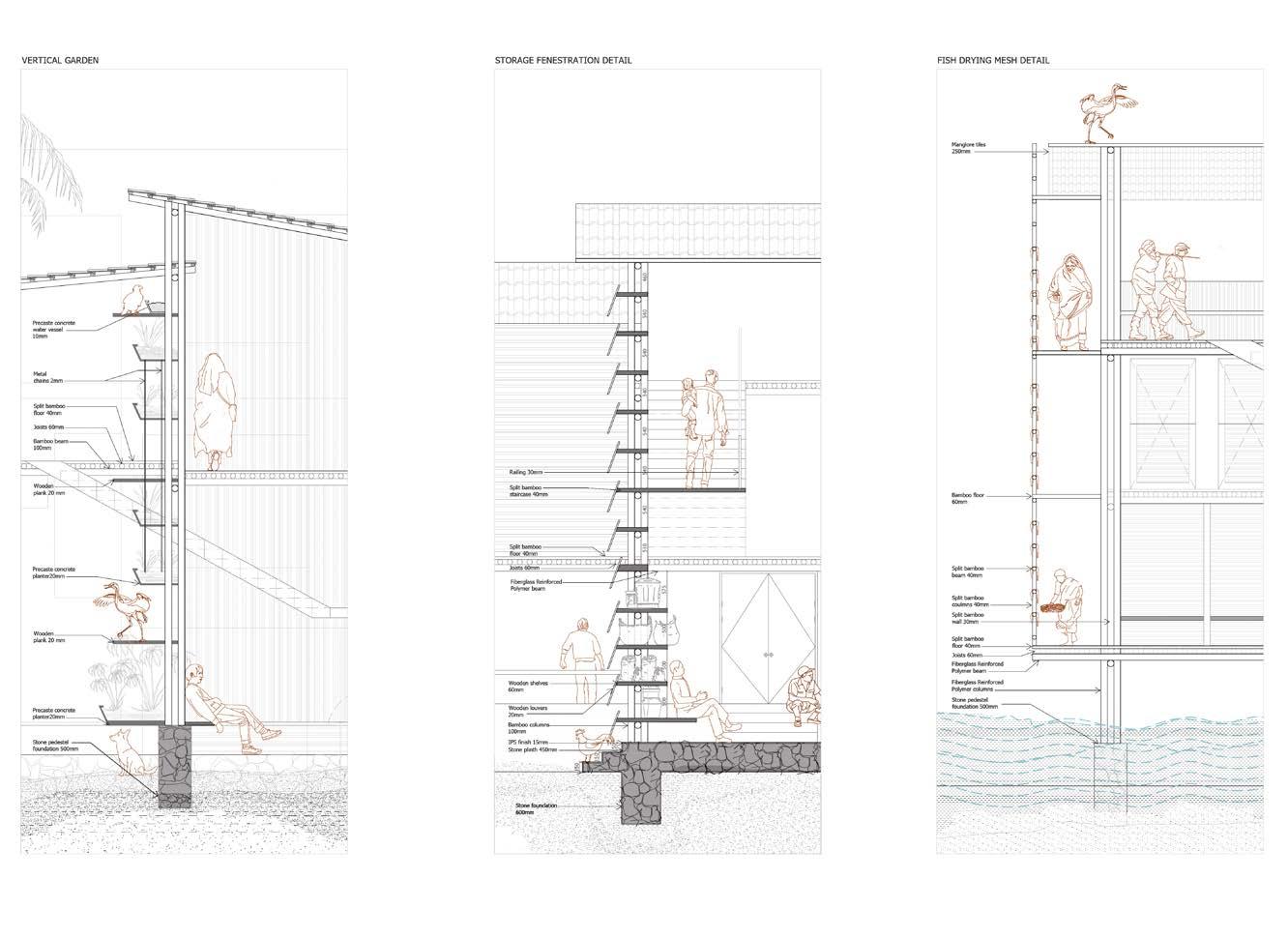
The topmost zone on the coast are the spaces anchored to the ground wherein they are mostly attached to the ground permanently The next one are the spaces below the jetty which sailing or steering on water on suspension cables taking support of the existing structure though adding more levels of interaction on the site. And the last ones the spaces floating on water though they are tied at two edges but can also be displaced to newer locations according to the usage. Also throughout the various zones the grid expands and contracts at some place to become the fenestration and accommodates various activities happening on the site. Hence allowing the different intensities of grids coming together to create nodes of interactions to play, rest, observe, eat, hide and prey from each other. The built form here is a reflection of the densities and cycles that shape them. Thus also acknowledging that the built environment is not static but rather constantly evolving and adapting to changing needs around the various actors on the site.
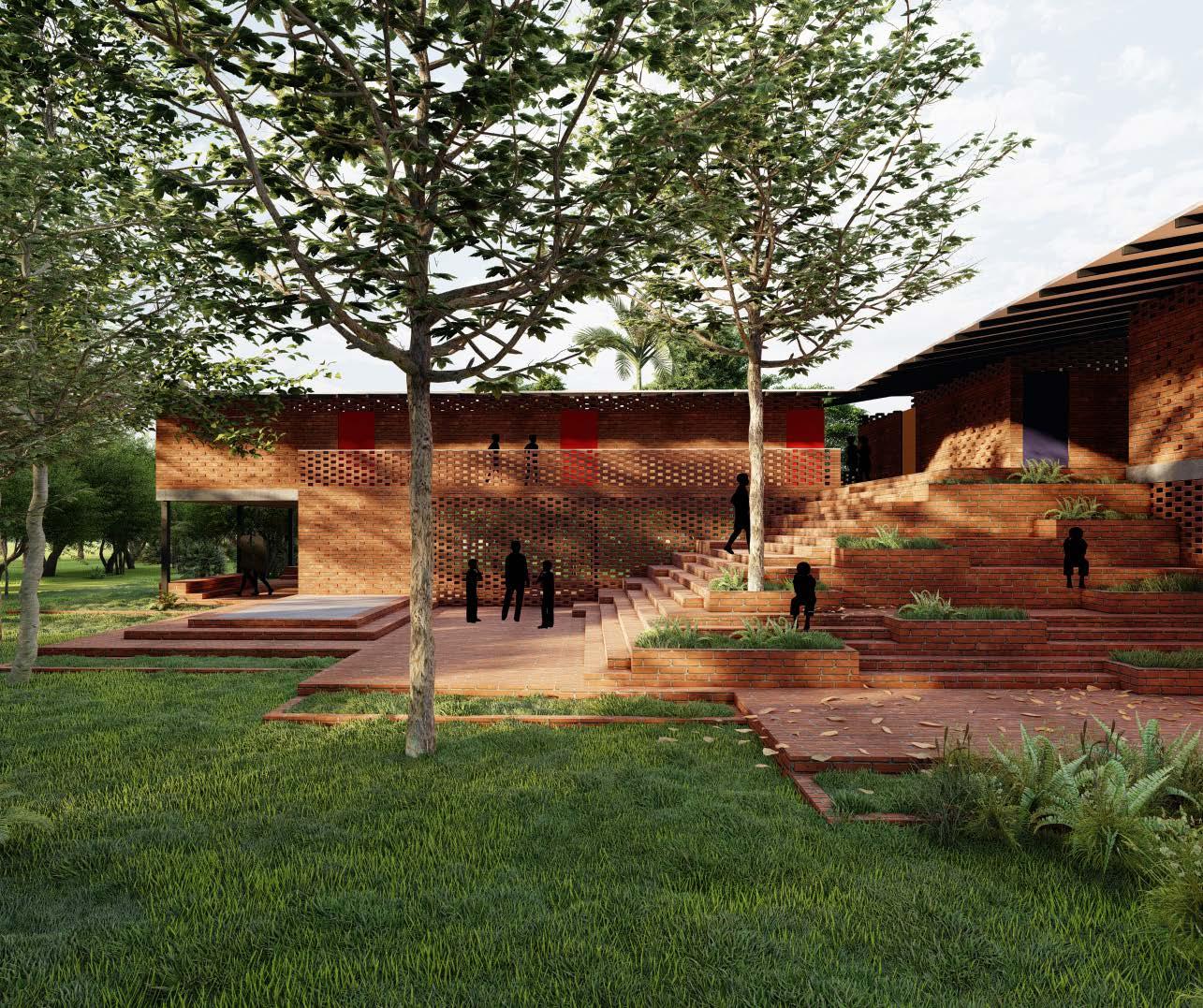
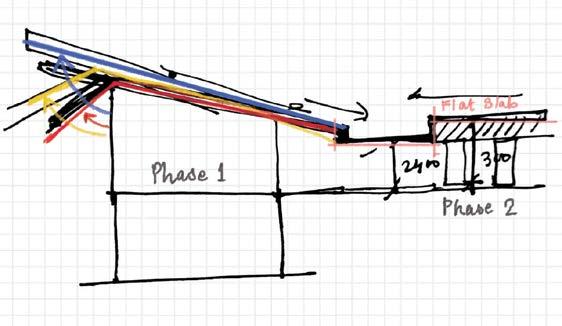
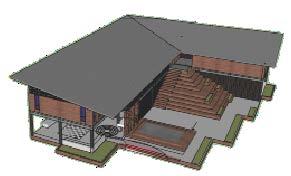
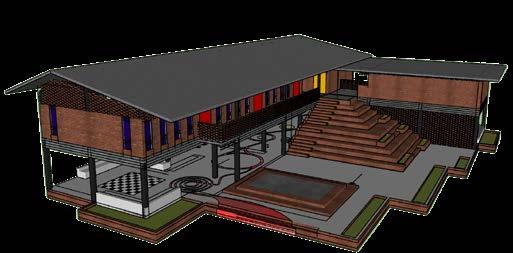
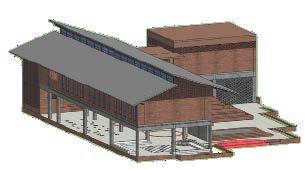
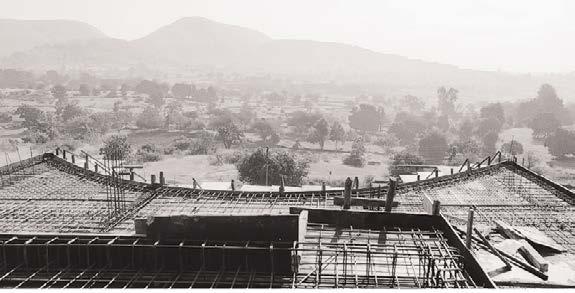
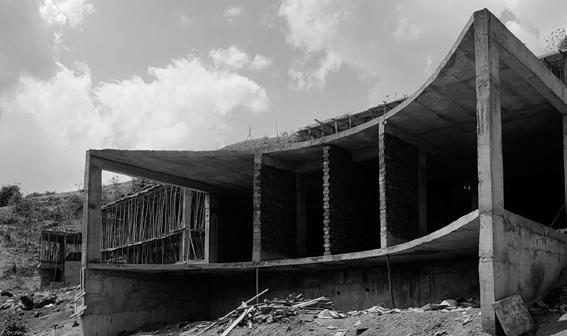
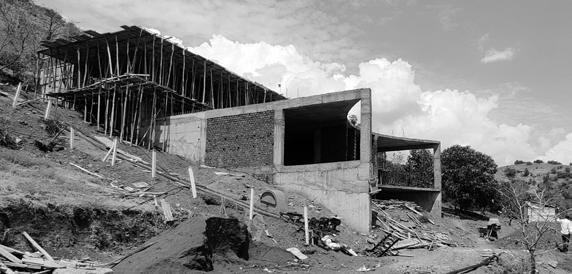
Initially, the roof was designed as a single entity that covered the entire structure. But later after the fundraiser rounds due to inadequate funds accumulation, the construction process for the project was divided into two phases. The decision of focusing on the primary needs of the school was taken which included only the 3 classrooms and the washroom areas were accommodated in the first phase. This resulted in the need for two different roofs for the two phases. Therefore different iterations were tried keeping in mind the climatic response along with the ease of construction. According to the earlier design, there was a singlesided sloped roof to allow easy water flow even during heavy rainfall. Therefore for the first phase, different angles of the sloping roof were explored.The options included either a off centre ridge and a two way slope. Another option was to add a ventilator and break the two masses at different levels.Thus adding a scope for flushed north light to enter the classroom and also saving upon the elecricity cost during the day time. The flat slab was thought as a current alternative for the second phase due to unprecidtable funds availablity also leaving a scope for future expansion.
EXPLORATIONS WITH TECHNIQUES
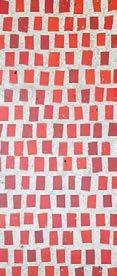
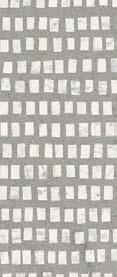
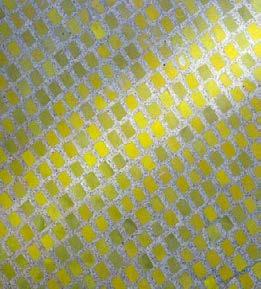
Testing out colour combinations for recycled marble flooring in the stilts.
The curved pattern of the filler slab inspired by the riverian landscape around the school.
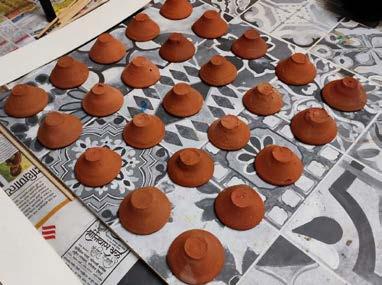
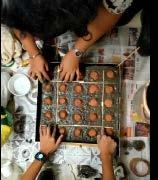
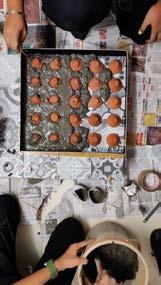
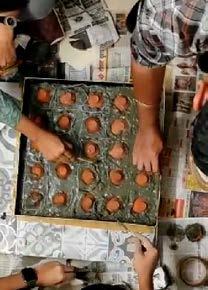
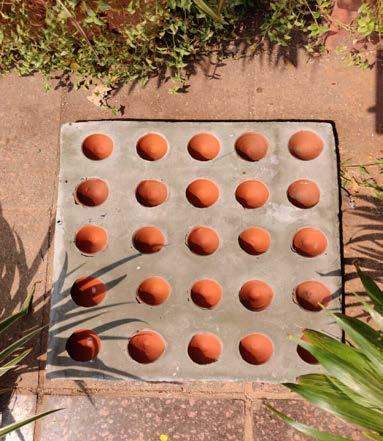
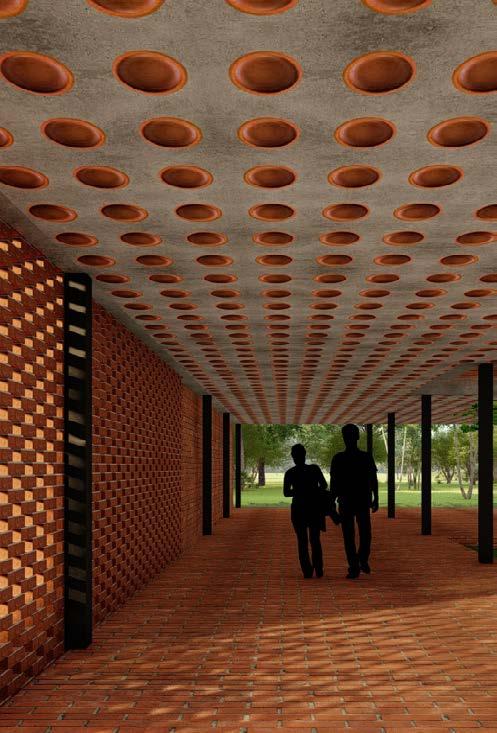
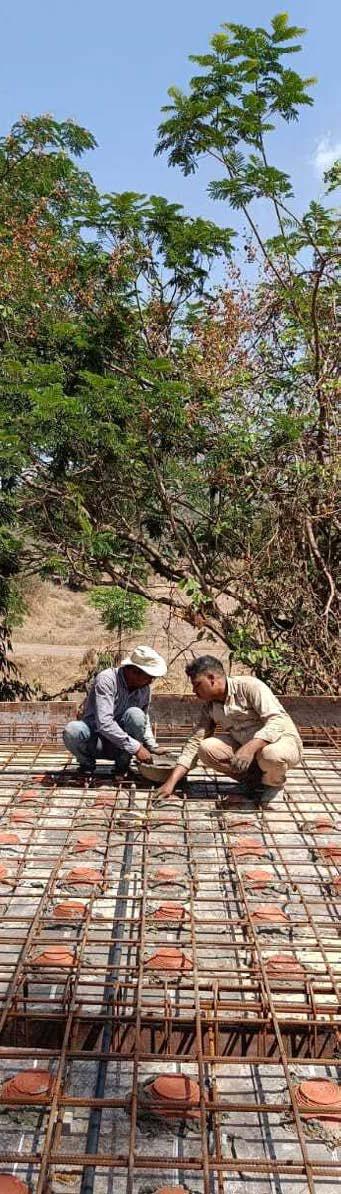
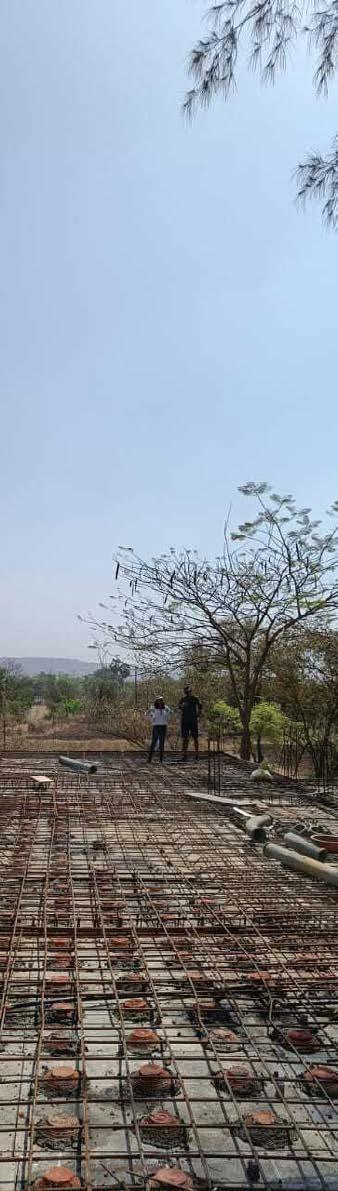
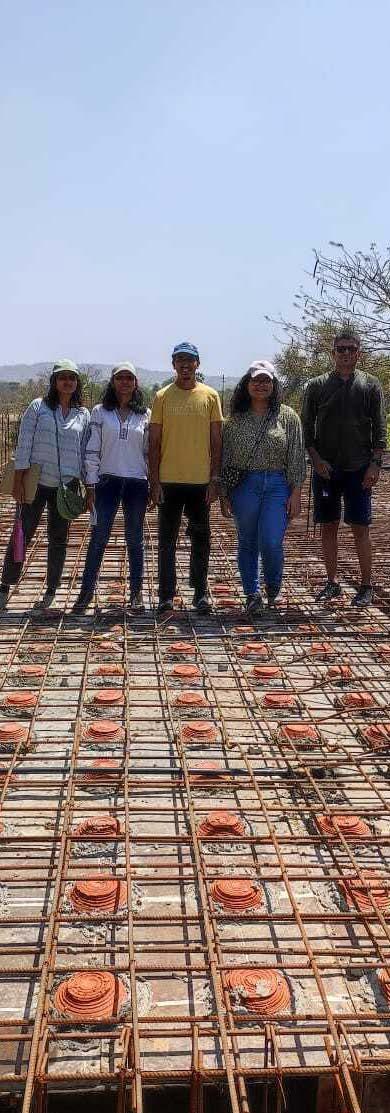
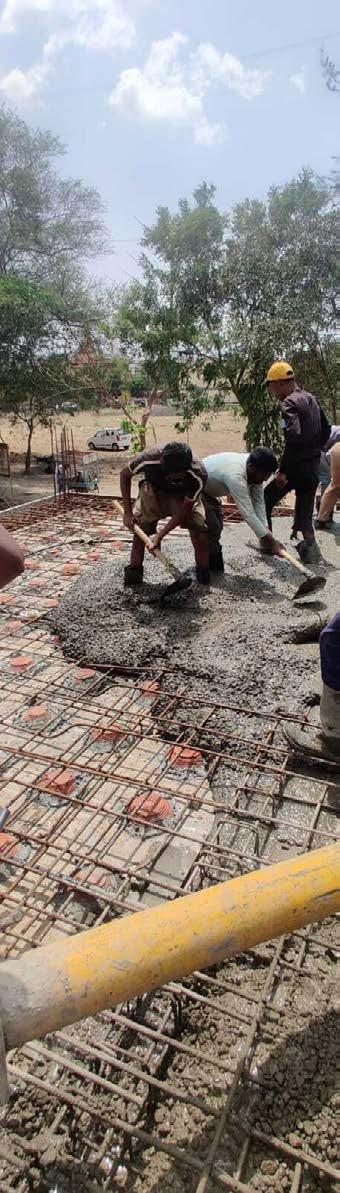
To save on the cost and construction material consumption the idea was to explore the filler slab technique. Field research was done to source locally available objects as fillers in the slab while also serving as a cost-cutting alternative. The most commonly available object were these small terracotta disks which were customized according to the depth of the slab to balance the volume consumption in the slab without compromising the strength of the slab for an institutional building. A small mockup of a 1:3 scale was cast as a tool to aid the understanding of the local contractor and his team.
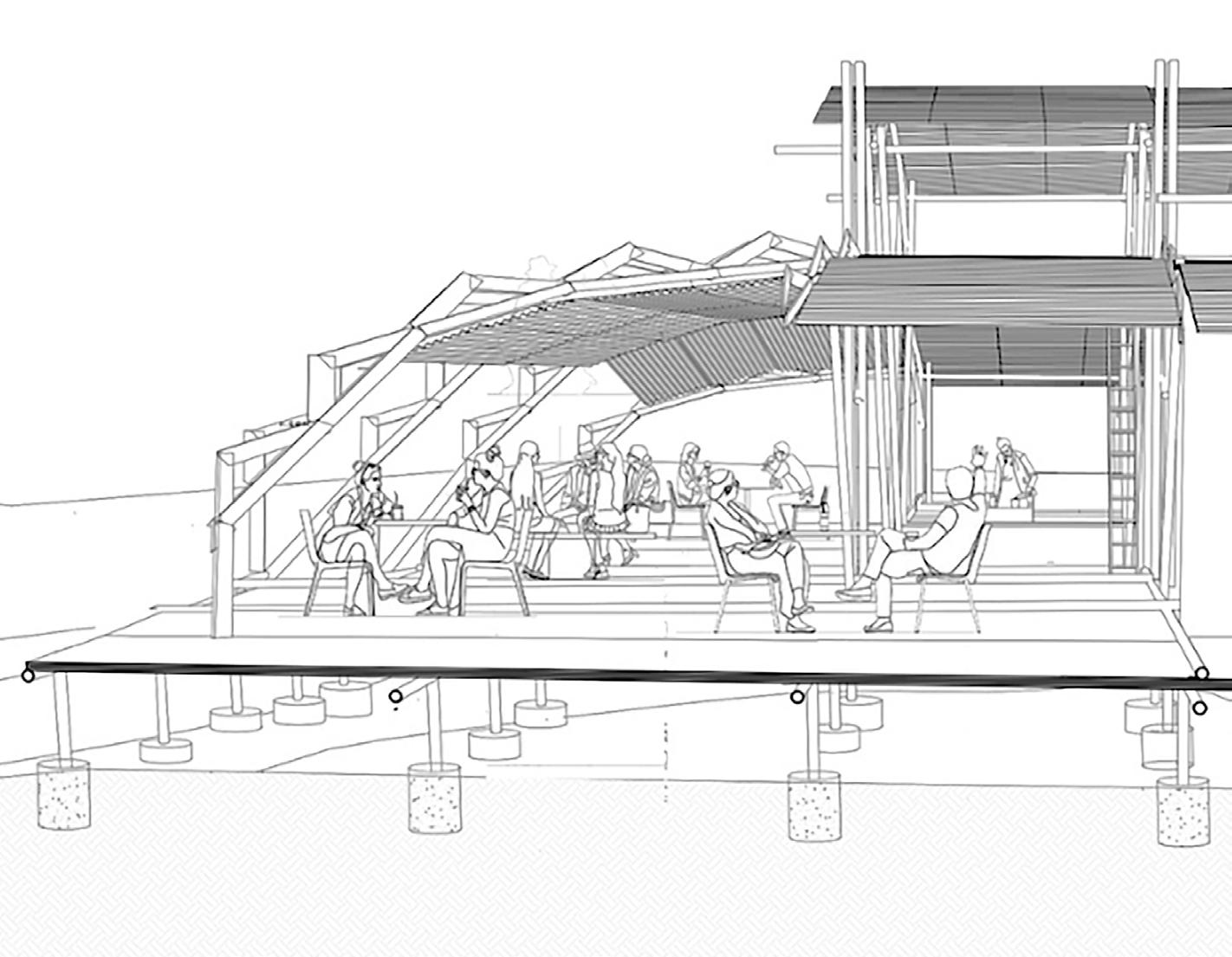
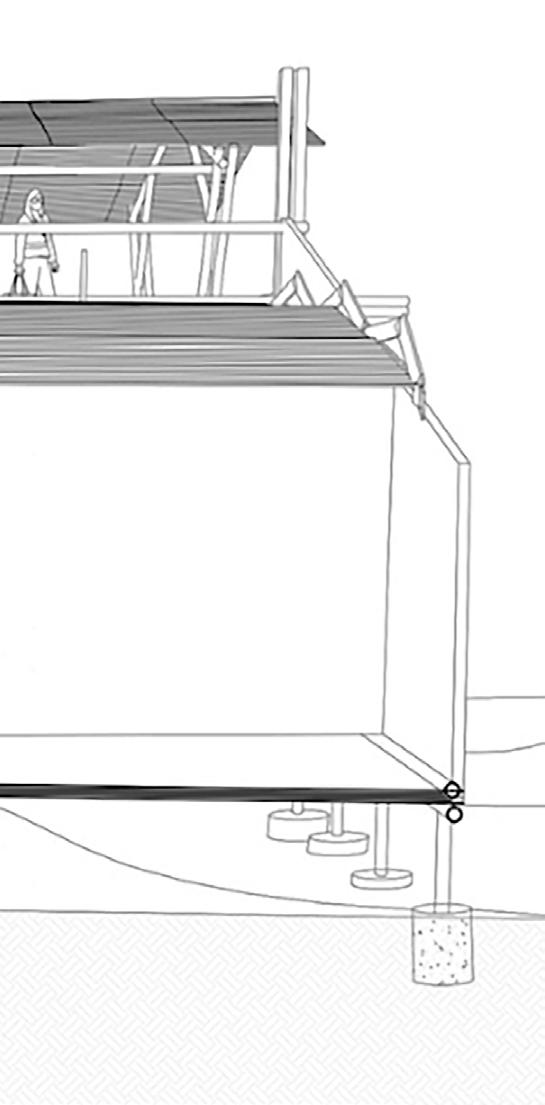
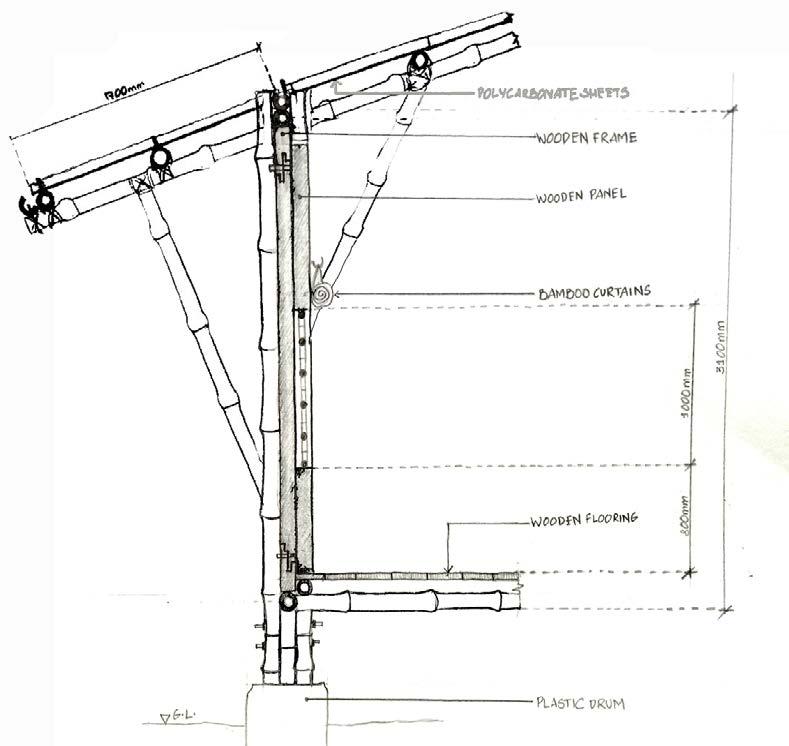
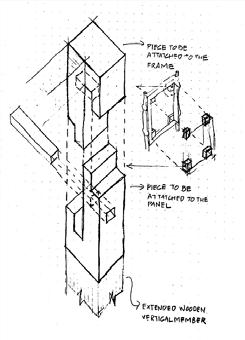
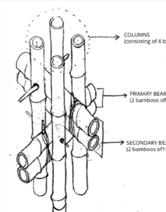
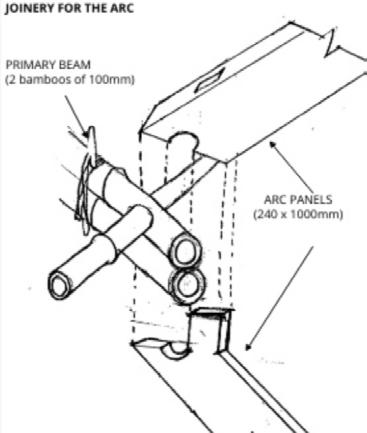
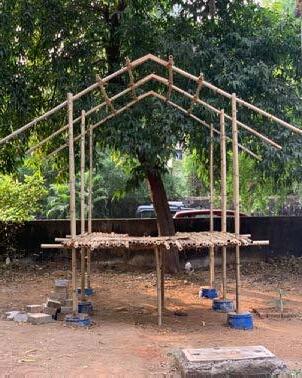
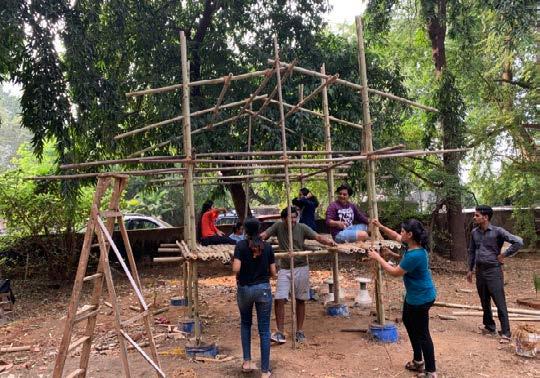
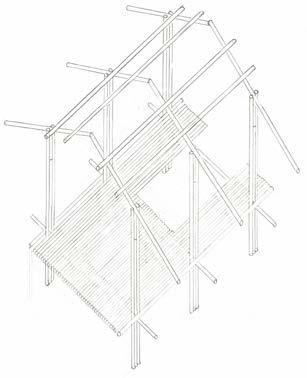
The construction took place over a time duration of 10 days, right from laying the foundation to making the 12 feet high structure stand. The foundation was laid using plastic drums and PCC. The structure stands on 6 columns with a 3 feet high plinth. Various bamboo joineries and lashing techniques were explored.
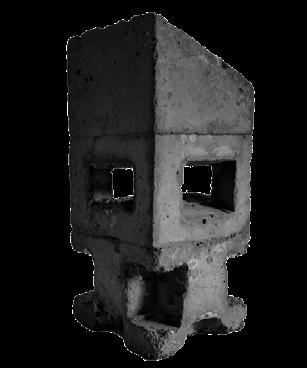
EXPERIMENTS WITH CONCRETE Technology Module | SEM 2
UNDERSTANDING FORCES IN THE SYSTEM Allied Design | SEM 1
EXPLORING ANATOMY OF A FOOT Allied Design | SEM 1
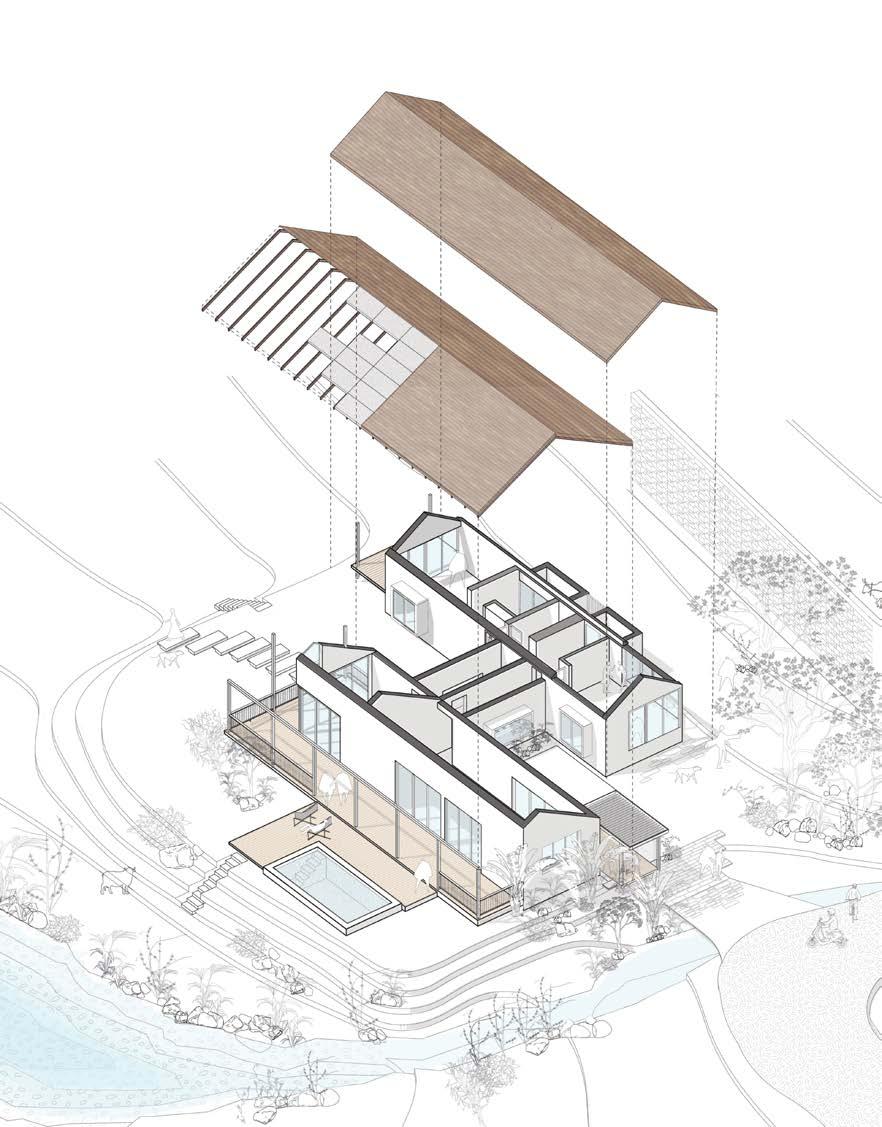
ILLUSTRATION MADE FOR PUBLICATION OF A BUILT PROJECT : unTAG ARCHITECTURE AND INTERIOR INTERNSHIP | SEM 8