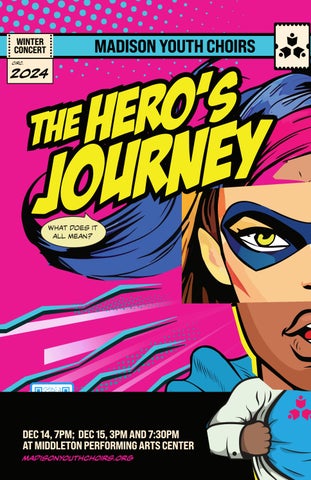
Our work this semester was anchored in the language of the hero’s journey–the idea that there are identifiable, universal patterns within every story which propel a hero forward. This is an oversimplification, of course, of a much studied and critiqued myth pattern. (Apologies to English majors, mythologists, anthropologists, and all the —ologists everywhere!)
In our core work at MYC in which we use music as a lens to explore big ideas, this theme created endless opportunities for our students to strengthen their noticing muscles and to consider their personal mini hero journeys (connections) to the perspectives uncovered in the music. How does a piece of music announce a call to action, reflect struggle, celebrate transformation, or tenderly appreciate a lesson learned? How do the notes, the text, or the rhythm provide clues about the historic context or composer’s perspective?
When these questions are asked within the context of community and students are given space to consider the relevance of the music to their individual circumstances, the result is a widening respect for multiple perspectives and a deepening care for one another. And isn’t that exactly what the world needs right now? At a time when we often feel alone in the struggle, what we do every week at MYC–studying music together, asking questions, listening to each other, and exploring together the vastness of creative expression that celebrates our common humanity–becomes a welcome companion on the journey.
Thank you for being here today, for supporting our singers, and for appreciating the myriad ways our MYC community embraces students wherever they are in their own hero’s journey. Enjoy the concert (and the program notes)!
Our program notes vary in how they reference the hero’s journey, but our shared language this semester generally followed this list:
1. the ordinary, regular life
2. a call or call to action
3. the struggle, ordeal, abyss
4. the return or transformation
5. lessons learned or mined gold
MYC’s Winter CONCERTS
are generously supported by the Diane Ballweg Performance Fund with additional support from:
Special Thanks
To our MYC community of singers and to their families who attend rehearsals week after week with enthusiasm, unwavering support, and encouragement–you make all of this possible, thank you!
To our steadfast donors and champions who continue to recognize the value of our work; we are forever grateful!
Finally, to our visionary staff whose deep commitment to our mission is on full display in everything they do, thank you for your thoughtful, collaborative work, and for your deep understanding of what is essential. We are still here because of you.
PLEASE NOTE
Every MYC concert is professionally recorded, and each concert represents the extraordinary effort and hard work of our young musicians. Help them remember their performance for its artistry, not its interruptions, by silencing or turning off all electronic devices. Individual recordings of any kind by audience members are strictly prohibited by licensing and copyright rules.
If you are attending with young children and they are having trouble enjoying the concert quietly, thank you for stepping out into the lobby.
CONTACT US
Madison Youth Choirs • 1055 East Mifflin St • Madison, WI 53703
608-238-SING (7464) • madisonyouthchoirs.org
W. Jerome Frautschi Foundation
Pleasant T. Rowland Foundation
The Courtier Foundation
STAFF AND BOARD OF DIRECTORS
STAFF
Rebecca Batis Artistic Associate
Kevin Blakeslee Instructor
Avery Brutosky Choir Intern
Ian Disjardin Operations Manager
Lana Fabish Choir Intern
Vincent Fuh Accompanist
Susan Gaeddert Accompanist
Scott Gendel Accompanist
Grace Greene Artistic Associate
Eliav Goldman Conductor
Lynn Hembel Executive Director
Calli Ingebritsen Instructor
Margaret Jenks Conductor | Project Leader
Andrew Johnson Accompanist
Lisa Kjentvet Conductor
El McCool Artistic Associate
Marie McManama Vocal Coach
David Olson Instructor
Katie Paape Operations Assistant
Chris Powers Instructor
Steve Radtke Accompanist
Michael Ross Artistic Director | Conductor
Nicole Sparacino Development Director
Margaret Stansfield Instructor
Randal Swiggum Conductor | Accompanist
BOARD OF DIRECTORS
Jennifer Lattis, President
Eva Marley, Vice President
Matthew Clayton, Treasurer
Michelle Kruse, Secretary
Teague Mawer, Past President
Chet Agni
Evan Jonovic-Heath
Arvina Martin
Melissa McNeal Adams
STUDENT BOARD MEMBERS
Linus Ballard
Isla Gard
MYC DIRECTORS: MADISON YOUTH ARTS CENTER BOARD
Laurie Fellenz
Dan Sinclair
David Schmiedicke
THE HERO’S JOURNEY
7:00pm Saturday December 14, 2024
Middleton Performing Arts Center
PURCELL
Margaret Jenks, conductor
Andrew Johnson, piano
Grace Greene, artistic associate
BRITTEN
Randal Swiggum, conductor
Steve Radtke, piano
El McCool, artistic associate
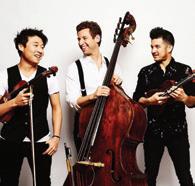
Justin Festge Russell, Guest Artist-in-Residence*
HOLST
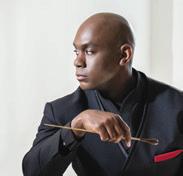
Eliav Goldman, conductor
Steve Radtke, piano
Levi Olson, violin
Arlo Cerulli, drums
We Are Weaving our Lives
PURCELL
Alexa Sunshine Rose
We are weaving our lives. We are weaving our hearts and our minds. We are weaving the bright and dark threads of our journey through. We are weaving our lives. We are weaving a blanket of light
This has become our hero’s journey theme song in Purcell. It is a beautiful reminder that each of us are on journeys–small and large–every single moment, and that we are fortunate to experience the way our journeys intersect with others. Purcell members noted that it doesn’t simply acknowledge the light, easy moments where people connect, but that both “bright and dark threads” are a normal part of our own hero’s journeys.
Moh lee hwah (Jasmine Flower) Chinese Folk Song, arr. W. Bisbee (sung in Chinese)
Beautiful jasmine flower
Sweet-smelling, beautiful, stems full of buds
Fragrant and white, everyone praises
Let me pluck you down to give to someone Jasmine flower, jasmine flower
One of the most well known Chinese folk songs, “Moh lee hwah” dates at least to the mid 1700s and the text is a hundred years or more older. At face value, the song seems to explore the beauty of the regular life (status quo) things around us, like a fragrant jasmine flower. At first, the jasmine flower symbolized youth and love and celebrated the precious value of both. As time went on and the song became known worldwide, it became synonymous with Chinese culture and identity and was played at the 2004 and 2008 Olympic games, the transfer of power in Hong Kong and Macau to the Chinese government, and many other official ceremonies. Starting in 2011, the song was used in pro-democracy protests and was actually banned in Internet searches and in online uses, but given its history and relevance in Chinese culture, that ban was hard to maintain. It is interesting to see how a piece of art can be both a representation of regular life and used as a call to action. Ask your Purcell member to share their own writing of the phrase “Moh lee hwah” in Chinese characters. It
was really hard at first, but now many of them can write it on their own without even looking at an example for help–just like the piece started out really hard and unfamiliar and now is a melody that we love. We went on our own mini-hero’s journey in learning this piece!
The High Coasts of Barbary Traditional, arr. Jeanne Julseth-Heinrich
A traditional song sung by both British and American sailors in the 19th century, “The High Coasts of Barbary” outlines a conversation between two ships–one a pirate ship and one a man-o-war ship. The story moves from a regular day at sea, to a call to action that results in a battle with the man-o-war as the eventual victor. Purcell members noted that the perspective of the song shifts from the 1st person to a 3rd person view, making them wonder, “Who is the hero supposed to be?”
The Fox Appalachian folk song, arr. Randal Swiggum
This bluegrass gem of a song is an entire hero’s journey in one piece! A fox and his family, living their ordinary life experience a call to action (hunger). The struggle is getting to town and back with dinner without being caught, shot, or unsuccessful in finding food. The fox overcomes the struggle by evading the farmer and returns with a “couple o’ geese” from the farm. Mrs. Fox and the little ones all eat and declare that the town must be “very fine”. This mini-hero’s journey is simple enough, but what makes it intriguing is that the fox–typically the villain–is here the sympathetic hero. It brings awareness to the notion of perspective and how whoever is telling the story (or is centering the story) controls the emotional impact of the narrative.
Besides being an interesting story, the rhythmic placement of syllables and open 5th harmonies make it really fun to sing. Thanks to my niece, Naomi, who has so many folk songs in her head that she can find the right song for any concert and for awesome colleague Randy for taking Naomi’s suggestion and creating this arrangement
BRITTEN
Voi che sapete (Cherubino’s aria from The Marriage of Figaro) W.A. Mozart (sung in Italian) (1756–1791)
You who know what love is, Ladies, see if I have it in my heart.
I’ll tell you what I’m feeling, It’s new for me, and I understand nothing. I have a feeling, full of desire, Which is by turns delightful and miserable.
I freeze and then feel my soul go up in flames, Then in a moment I turn to ice.
I’m searching for affection outside of myself, I don’t know how to hold it, nor even what it is!
I sigh and lament without wanting to, I twitter and tremble without knowing why, I find peace neither night nor day, But still I rather enjoy languishing this way.
You who know what love is, Ladies, see if I have it in my heart.
In every hero’s journey there is a stepping over a threshold or crossing from the known world into a new, unfamiliar world. In Cherubino’s aria, that new world is the feelings of a first crush (and all the emotional, physical, and psychological confusion and chaos that comes with it). In this scene from Mozart’s sparkling 1786 comedy The Marriage of Figaro, Cherubino (the Count’s page boy) appeals to two trusted older women, the Countess and her maid Susanna, to explain to him what’s going on and why he’s a wreck (but a happy wreck). Britten singers themselves have completely fallen for this multi-layered musical delight, as Mozart’s many musical details revealed themselves in rehearsal. A few examples: the way the music reels (like Cherubino’s moods) between melodic joy and then sudden pain or distress of a weird note or harmony, often in the same phrase. And the sudden dramatic plunging downward on “l’alma avvampar” (my soul is on fire) suggests the new, disorienting feeling of adolescent voice change.
Sirens (Premiere) Britten members, R. Swiggum, Justin Festge Russell
In 1947, when Joseph Campbell first described his idea of the hero’s journey as the great “monomyth” of all cultures, it was Homer’s Odyssey that he often turned to for examples. Odysseus’ voyage home to Ithaca was fraught with many dangers, including the sirens–beautiful women who sing a tempting song to lure sailors to their death. Odysseus has his men stop up their ears with beeswax, so they cannot hear the sirens’ beautiful singing. But Odysseus himself doesn’t want to miss this opportunity and he has himself bound to the mast of the ship. The powerful siren song drives him mad, but his crew keeps rowing, and do not obey his violent cries to unbind him.
Britten members pondered their own “sirens”--often something wonderful and good (like videogames or the Internet or perfectionism) that can become a dangerous, even destructive temptation. What you will hear tonight is a completely original piece, in a hip hop style, combining choral singing and very personal rap lyrics. We owe a debt of gratitude to our coach and co-teacher, Justin, who helped bring this piece to life.
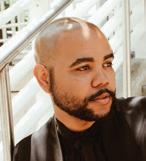
*MYC guest artist Justin Festge Russell is Madison’s 2024/25 Youth Poet Laureate. A 2024 graduate of Madison East High School, where he was captain of both the football and rugby teams, he is currently a First Wave Scholar at UW-Madison. First Wave is a nationally renowned, competitive scholarship program offering free tuition for a select cohort of urban arts students in hip hop and social activism. Much of Justin’s work as poet, rapper, and musician comes from simply asking questions about the world around him, trying not to take things at face value but find deeper meaning. He also freestyle raps under the name Jexizis and produces music videos.
Currently an education major, Justin hopes to work for MMSD someday as a middle school teacher. He loves to reflect on his own challenging middle school years, including rap circles on the playground with his buddies, and an infamous rap battle with his principal. It was a middle school teacher who got him into writing. “They showed me poetry, they showed me art, and that opened a world for me,” he says. “They helped me realize school was not just numbers and reading, but also love and growth. I want to be able to bring that to a kid near me.”
Hallelujah, Amen
HOLST
George Frideric Handel (1685–1759)
“Hallelujah, Amen” is the finale to Handel’s 1746 oratorio, Judas Maccabeus, the story of the Maccabean resistance to the controlling Seleucid Empire and King Antiochus IV. We imagined this piece like the end of an epic sports film, where the underdogs need one last play to win the game and, in that moment, everything goes into slow motion. They score that goal or catch the touchdown pass or make the full court three and there is a moment of silence before the massive eruption of noise and excitement and joy. The piece begins with celebratory shouts of victory from the basses, to which the tenors, altos, and eventually sopranos all respond with their own victorious cries. The massive outpouring of celebratory polyphony continues throughout the first half of the piece until the many layered polyphony shifts into a homophonic texture.
The writing of this oratorio has an interesting connection to one of our other pieces, “Johnnie Cope,” and our upcoming Scotland tour. The early 18th century in Scotland was filled with unrest due to the Jacobite Rebellion, an attempt by James Francis Edward Stuart, and his grandson Bonny Prince Charlie after him, to reclaim the Scottish throne for the Stuarts. While they experienced some success, including the famous Battle of Prestonpans (the battle described in “Johnnie Cope”), the Jacobite Rebellion was eventually crushed decisively at the Battle of Culloden in 1746.
At this same time, Handel was looking for a big hit after suffering from a recent run of poor receptions. He composed Judas Maccabeus immediately after the Battle of Culloden and the oratorio was a massive success with the English public, as they resonated with the story of the Maccabeans defeating the Seleucids, just as the British had defeated the Jacobites. This context was another reminder of the power of perspective. For the English, it marked a massive victory–a celebration befitting the victorious shouts of Handel’s composition. For the Jacobites and many of the Scottish Highlanders, it was a harrowing defeat, one that is still remembered to this day.
Bar’bry Allen arr. Joshua Shank
Who determines the hero? Shank’s setting of this famous English folk song allowed us to dissect this question. What we discovered is that perspective and context are paramount. When we look at this story from Jimmy Grove’s perspective, we see Bar’bry Allen as the villain and Jimmy as the hero. He is a poor man slighted by the one he loves, which leads to his eventual death. But when we look at it from Bar’bry’s perspective, we see a man who acts disrespectfully to someone he supposedly cares about and then guilts her for not being by his side despite not taking accountability for his actions. The story of Bar’bry Allen and Jimmy Grove reminds us that, while we are all the heroes in our own personal journeys, we can also play a significant role in another hero’s journey.
BRITTEN AND HOLST
Johnnie Cope Ken Johnston (b. 1960) Poem by Adam Skirving (1719–1803)
Sometimes pieces of music are literally about heroes, and commemorate their valor, or cause us to recall them. Britten figured out early on that the namesake of this song was actually not the hero, however. Sir John Cope (d. 1760) was commander-in-chief of the English army defeated by Bonnie Prince Charlie and his Scottish rebels at the Battle of Prestonpans, September 22, 1745. According to legend, Cope challenged Prince Charlie to a battle and then—losing his nerve--secretly deserted his own troops in the night. “Johnnie Cope” has been “skeired” (mocked) as a coward in this famous poem ever since.
The poem itself, as well-known to Scottish schoolchildren as “The Midnight Ride of Paul Revere” was to earlier generations of Americans, was composed by a literate farmer, Adam Skirving, whose fields were trampled in the battle. The martial music, with its fanfares and marching beat, was composed in 2001 by Scottish composer Ken Johnston for the National Youth Choir of Scotland. (Ken has become a good friend to MYC, typically attending at least one of our concerts every tour.) Learning to sing the piece in Scots dialect was a fun challenge, bringing life and energy to the story. The taunting “Are ye waukin’ yet?” means “Are you awake yet?”
COMBINED CHOIRS
We Are Weaving Our Lives
What is home? In the hero’s journey it is both the familiar world the hero must leave, and also the final destination where the hero returns, bearing hard-won treasure or wisdom. The longing for home, the deep need for a homeland, seems to be universal. Although the homeland in this song is Ireland, the sentiments described are familiar to each of us–an example of the specific in a work of art actually making it universal.
Alexa Sunshine Rose
Homeland
Mick Hanly, arr. R. Swiggum
THE HERO’S JOURNEY
3:00pm Sunday, December 15, 2024
Middleton Performing Arts Center
CHORALIERS
Lisa Kjentvet, conductor
Vincent Fuh, piano
Lana Fabish, choir intern
CON GIOIA
Eliav Goldman, conductor
Susan Gaeddert, piano
CAPRICCIO
Lisa Kjentvet, conductor
Vincent Fuh, piano
Steve Morgan, guitar
CHORALIERS
Babylon Traditional
At the end of American Pie, Don McLean’s Billboard-topping 1971 album, was this haunting song which captures the deep sense of loss during the Babylonian captivity, one of the defining events in Jewish history. It is a three-line canon (or “round”) and on the recording McLean overdubbed his own voice to create the effect of multiple voices singing in counterpoint. It has been discovered that the song is neither a folk song nor original to McLean, but originally written by English composer Philip Hayes and published in 1786. We continue to sing this song many years later so, as one of our singers stated, “we can learn from the past and honor the people whose story we are telling.”
The Path to the Moon
Eric H. Thiman (1900–1975)
Words by Madeline C. Thomas
English composer Eric H. Thiman set words by Madeline C. Thomas that describe a call to adventure, a longing to sail the path to the moon. The gentle melody is in 6/8 time, creating a sense of the lilting waves as the glistening path runs out to sea. As the song progresses, the singers accept the call to action, vividly imagining a starry night and a seabird skimming the waves where the fishes play, while traveling on for many a day. The singers considered the many ways that the composer created a sense of longing in the music, from the opening octave leap, to the crescendo and ascending sequence on the word “carry,” and finally the surprise hemiola at the song’s conclusion.
Three Quotes by Mark Twain
I. The Silent Fool
II. Telling the Truth
III. My Dear Mother
Andrea Ramsey (b. 1977)
Samuel Langhorne Clemens (1835-1910), more often known by his pen name Mark Twain, was an American author most noted for his novels The Adventures of Huckleberry Finn and The Adventures of Tom Sawyer. Dubbed
the “Father of American Literature” by William Faulkner, Twain was known for his great wit and profound satire. Composer Andrea Ramsey describes her settings of these three Twain quotes as being “conceived in Twain-esque musical styles with “The Silent Fool” being quasi-ragtime, “Telling the Truth” having the feel of a waltz, and “My Dear Mother” showing a touch of the blues.” Performing these pieces gives Choraliers an opportunity to offer a bit of mined gold to the audience and acknowledge that motherhood is a hero’s journey.
CON GIOIA
There is a Garden Leonard Bernstein (1918–1990)
This piece from Bernstein’s Trouble in Tahiti lends itself perfectly to a discussion of the hero’s journey cycle. Our hero is trapped in a garden “gone to seed,” with weeds, twisted trees, and a black and bare sky. This is the abyss, the ordeal that the hero must navigate along the journey. She hears the voice of her father urging her to come out of the garden and return home–a call to adventure, perhaps, or a helping hand from a guide–but she still cannot find her way out of the garden. She hears another voice, a singer who promises passage to a “shining garden” full of “harmony and grace.” Another call? Another guide? There were many differing opinions within Con Gioia about this voice and its call.
We wondered, how can you be the voice of the singer, helping the hero out of the abyss? We had many discussions about how to be a helper on someone else’s journey and, throughout the semester, compiled a list of examples of being a hero’s guide. Sometimes, a gentle reminder is enough to help the hero on their journey; other times, we might need to spend time talking with the person in need to help them feel like they are not alone. We practiced these skills each week, and reflected on each rehearsal–both our own ability to be a helper for others, and how we saw other Con Gioia members helping one another. Just as all of us are heroes in our own journeys, we can be the guide on someone else’s journey. We have the power to be the voice, beckoning gently to safety and refuge.
Caroling, Caroling
Alfred Burt, arr. Drew Collins
Words by Wihla Hutson
This classic Christmas song, popularized by the great Nat King Cole, is one of the pieces we worked on for the Madison Symphony Orchestra Christmas concert. The hard work required in preparation for this concert was its own hero’s journey for all of us. For many Con Gioia singers, this was the largest performance opportunity of their lives so far. The idea of singing on the Overture Hall stage with a full symphony orchestra, a symphony chorus, and for an audience of over 2,000 people was something we could only imagine at the beginning of the rehearsal process. But we had heard the call from MYC and MSO and had to set out on our journey, leaving the ordinary world behind and venturing into the special world. We knew there would be trials ahead–every hero’s journey has struggles and ordeals–and there were certainly times when learning this music felt like we were the hero stuck in the abyss. Fortunately, just as there are struggles in the hero’s journey cycle, we know there is a return once the hero has overcome their ordeal. We had some helpers along the way, including older singers from Capriccio who had performed in the MSO concert before and could lend their expertise and wisdom. And in the end, we returned home to the ordinary world having learned something new about ourselves and having been changed by the new experiences we had.
As we looked to connect this specific piece of music to our semester theme of The Hero’s Journey, we thought about the different signposts in the hero’s journey cycle that best aligned with the story being told in this piece. Our prevailing idea was that this piece is a strong depiction of the call to adventure, or in this case, a “call to celebration.” We, the carolers, go walking through the snow, our joyous voices ringing loud and clear to call all of our community to celebrate together. The tolling of the bells, a frequent representation of a call, only strengthens this interpretation.
Everywhere Christmas Tonight Joseph Martin
Words by Phillips Brooks and J. Paul Williams
This cheerful call to celebration is another one of our MSO Christmas concert selections. As with “Caroling, Caroling,” we discussed where it might fall in the hero’s journey cycle. Some of us saw it as another connection to the call, another example of a call to celebration, as we repeatedly say “come celebrate Christmas, wherever you are tonight.” Others thought of this piece as a representation of the return, the hero having come back from a life-changing journey and the whole community rejoicing with them.
CAPRICCIO
Stand in that River Moira Smiley (b. 1976)
An active composer and performer, Moira Smiley has carved out her own niche of choral music over the years, one influenced by the American folk tradition and often coupled with thought-provoking text. Smiley describes “Stand in that River,” an original composition written in 2003, as having an “American folk-hymn style à la the Carter Family.” We find ourselves in the abyss during the introduction, wondering “Where is hope? Where do the waters run clear?” not knowing where to go from here. The remainder of the song reminds us that when the storms of human life are raging, we have the constant change of rivers to soothe us. Smiley’s lyrics speak clearly to our shared human experience, inspiring us to embrace one another and believe in the power of positivity as we cast away troubles and navigate a way forward.
Blow, Blow, Thou Winter Wind Sarah Quartel (b. 1982)
Shakespeare’s song lyric from As You Like It is sung by the courtier Amiens as a commentary on the ordeal of the exiled Duke, who has been banished to the forest by an ambitious and jealous brother. It states that physical suffering caused by the piercing winter wind is preferable to the inner suffering caused by man’s ingratitude. Yet the celebratory chorus declares that while “Most friendship is feigning, most loving mere folly... This life is most jolly.” Where are we on the hero’s journey? This atmospheric setting is sprightly and uplifting, with the composer asking the singers to perform it with “a bit of frost and a knowing smile.” Has the hero been transformed and come to a place of understanding? The final chord with its open fifth may leave you wondering.
Sesere Eeye
Traditional, from the Torres Strait Islands
The Torres Strait Islands are situated between the northernmost tip of Australia and Papua New Guinea. There are more than one hundred tropical islands in the Torres Strait, about a fifth of which are populated. Although traditional Torres Strait Islands music virtually disappeared with the arrival of Christian missionaries in 1871, a modern style of music, which is strongly Polynesian in origin, took its place and a unique singingbased musical culture developed over the years. Island Song (as the locals call it) consists of a rich heritage of song dealing with matters of everyday life - fishing, weather, the sea, the behavior of animals and insects, domestic life and agriculture. Most songs are short and are traditionally repeated three or four times, with improvised harmonization inherent to the style. “Sesere Eeye” is a stand-up dance with clapping motions that mimic a kingfisher bird diving into the water to catch its prey.
THE HERO’S JOURNEY
7:30pm Sunday, December 15, 2024
Middleton Performing Arts Center
CANTILENA
Margaret Jenks, conductor
Randal Swiggum, piano
Avery Brutosky, artistic associate
CANTABILE
Michael Ross, conductor
Scott Gendel, piano
Rebecca Batis, artistic associate
RAGAZZI
Michael Ross, conductor
Scott Gendel, piano
Emily Allen, cello
Ian Disjardin, percussion
Rebecca Hale, violin
Marie Pauls, viola
CANTILENA
Chant for a Long Day Stephen Hatfield (b. 1956)
Based on two monophonic chants traditionally sung by women—the Mersiyet from Pakistan and the “waulking songs” from the island of Barra in the Hebrides (islands to the west of Scotland)—Hatfield draws elements of physical, mental, and spiritual survival common to people across time periods and cultures. Cantilena singers were immediately intrigued by the many questions of the mysterious texts and sounds, and the bundle of contradictions presented in the piece. It is both very simple and complex, speaks of loneliness in a powerfully confident way, and depicts both isolation and power in numbers. In essence, we found aspects of the hero’s journey from women past, present, and future.
The Lord is My Strength and My Song George Fredrick Handel (1685–1759)
The oratorio Israel in Egypt (which this chorus is from) is essentially one large hero’s journey. After an extended period of slavery in Egypt, a leader rises up and calls on the rulers to let the Isrealites go free. There is a series of plagues, each one sung about with extensive text painting–from jumping frogs, to pounding hail, to the buzzing flies and locusts, and then finally darkness and death. The Israelites left Egypt, but were pursued until the sea parted so that they could pass, but swallowed up their enemies. “The Lord is My Strength and My Song” is the very decorated (we called it maximalist) celebration duet that is sung when the hardships and abyss are overcome and the people celebrate their return to a new life that is free.
Technically, the piece is incredibly vocally complicated and requires huge flexibility, freedom and vocal agility. It is no small feat for young treble voices (or mature vocal professionals). As a standard in treble repertoire, it may be the first, but probably not the last time these students encounter this work on their own musical journeys.
Ella’s Song
Everyone knows the name Rosa Parks, but far fewer know Ella Baker. And that’s how Ella would have wanted it. Although she was probably the most influential Black woman in the Civil Rights Movement, she worked diligently behind the scenes to guide young activists, from 1930 when she joined the Young Negroes Cooperative League, through the 1950s struggle against Jim Crow laws, the sit-ins and 1961 Freedom Rides, to her work with Martin Luther King and the Southern Christian Leadership Conference. Born in Virginia in 1903, Ella traced her sense of mission and social justice to her grandmother who, as an enslaved woman, had been whipped for refusing to marry a man chosen for her by the slave owner. Her grandmother’s pride and resilience in the face of racism and injustice was a driving force throughout Ella’s life.
Ella was tough and disciplined, and demanded the best from those who worked with her, young and old. They nicknamed her “Fundi”—a Swahili word for the one who masters a skill with the help of the community, and then passes it on to the next generation. One of those she mentored was the young Bernice Johnson Reagon, who would later form Sweet Honey in the Rock, the Grammy-winning African American women’s a capella group. Reagon wrote “Ella’s Song” for the 1981 film, Fundi: The Story of Ella Baker, and it is still one of Sweet Honey’s most famous songs.
The lyrics to “Ella’s Song” are entirely the words of Ella Baker, including the striking opening lines, from a speech Baker gave in the “Freedom Summer” of 1964, after hearing the news of the murder of three young voting rights workers, the infamous “Mississippi Burning.”
“Until the killing of Black men, Black mothers’ sons, becomes as important to the rest of the country as the killing of a White mother’s son—we who believe in freedom cannot rest.”
Ella Baker worked tirelessly in the fight for human rights right up until her death on December 13, 1986, her 83rd birthday. We honor her hero’s journey, as well as Bernice Johnson Reagon’s, and understand that the journey continues.
“We are not made, we are not created, to hold this on our own.”
One element of the hero’s journey often present amid the abyss or the struggle is a mentor or some type of helper. Even when it seems like we are completely on our own, we often–sometimes in retrospect–see that there were circumstances, people, or even ideas that helped us get through the darkest of times. This piece was the first that we learned this season and the one that continued to bring comfort as we explored some really heavy, difficult music during an emotional season.
RAGAZZI
The Vagabond (from Songs of Travel) Ralph Vaughan Williams (1872–1958)
Along with Sir Edward Elgar and Benjamin Britten, Ralph Vaughan Williams was one of the composers most responsible for the reemergence of British classical music in the 20th century. A notable contributor in virtually every field of composition, his Songs of Travel, written between 1901 and 1904, represent his first major foray into song-writing. Drawn from a volume of Robert Louis Stevenson poems of the same name, the cycle offers a rather different take on the wayfarer cycle. “The Vagabond,” the first song in the cycle, introduces the traveler, heavy chords in the piano depicting a rough journey through the English countryside. (Program notes by Ahmed Ismail)
Song of Peace Vincent Persichetti (1915–1987)
“...a work that is saying more about less instead of less about more”Vincent Persichetti, when asked in an interview to describe what makes a successful musical work.
In this short and impactful piece, Persichetti weaves a deceptively simple melody throughout. The melody itself rises and falls mostly by steps, but includes one raised pitch, giving it an extra sense of urgency. That melody is sometimes rhythmically augmented - it moves twice as slowly, creating a sense of calm within the surge of the original melody.
Between the Wars
Billy Bragg, arr. Scott Gendel
I kept the faith and I kept voting - not for the iron fist, but for the helping hand…
Billy Bragg, English singer, songwriter, and political activist, wrote this classic folk/punk anthem in 1985. Inspired by the 1984-1985 miner’s strike in the UK, Bragg donated a portion of album sales to the striking miner’s fund. “Revolutions do not start in record shops. But if you write a song like ‘Between the Wars’, you have to come up with the actions to meet it.”
Our beloved colleague Scott Gendel wrote this arrangement especially for Ragazzi because, as Scott recently noted, “I believe strongly in its message, and just because I love it so much. What a song to share with young people.”
Kin Timothy Takach poem by Michael Dennis Browne
“There is something intangible about getting…together to sing. It’s empowering…and totally unique…To me, this poem embodies what it’s like to sing in a room full…Most people will never know what that feels like. But that’s okay. Because we know.” -from the composer, 2015.
Why do you come to choir every Sunday night? What draws you to singing in Ragazzi? Who are your kin? These were questions our singers often discussed. Takach’s choral setting of this simple poem tries to capture these intangibles.
CANTABILE
All the music you will hear sung by Cantabile tonight was arranged or composed by female or female-identifying composers.
Ise Oluwa Traditional Yoruba song (sung in Yoruba) as sung by Sweet Honey in the Rock
God’s work will never be destroyed.
This well-known traditional Yoruba song captures the feeling of “forever” - the idea that creation (or music) will never end. This arrangement was first sung by the incredible acapella group Sweet Honey in the Rock on their 1989 album All for Freedom.
Le Colibri Ernest Chausson (1855–1899) (sung in French)
Arranged by Mari Esabel Valverde (b. 1987)
The green hummingbird, the king of the hills, seeing the dew and the bright sun
Shine on its nest woven from fine grass, Like a cool beam, darts into the air.
In haste, it flies to the neighboring springs, Where the bamboo makes the sound of the sea, Where the hibiscus with its divine fragrance
Opens and brings to the heart a wet flash.
Toward the golden flower, it descends, has lain, And sups so much love from the rosy cup
That it dies without knowing if it could have finished it.
On your bare lips, oh my beloved, My own soul would sooner have died
From the first kiss on which it left its scent.
- LeConte De Lisle (1818–1894)
Chaussons’s art song, presented here in a setting by the composer Mari Valverde, uses the metaphor of a hummingbird to explore themes of courtship and love. Chausson set his original art song in 5/4 - the unexpected, odd number of beats in each measure leads to a sense of suspense and uncertainty.
No Fairy-Tale Here Zanaida Robles poem by Robyn Watson
Kayah
McCants, Phoebe Yancey, spoken word
This powerful work portrays the incredible writing and artistry of Ida B. Wells and her fight against racism and oppression. Set by contemporary poet Robyn Watson, the text uses sharp sarcasm and biting emotion to underline its central themes. Robles’ setting of the poem is sharply attentive to the text, using gospel-like and neo-soul choral language along with spoken word poetry to powerfully connect Wells’ historic work to the continued struggle against systemic racism.
Its Motion Keeps Caroline Shaw (b. 1982)
Britten’s attraction to his native English folk songs and hymns comes through in so much of his music, from his choral and opera works to his chamber music and vocal arrangements. Taking a step in that direction, and then sideways and back and around, “Its Motion Keeps” is based on the words from the first verse of the American shape note hymn Kingwood, found in The Southern Harmony (1835) and other early 19th century hymn books. (Very likely it is a text that immigrated from England.) It begins with a palindromic viola pizzicato line that gestures to the continuo lines of Henry Purcell, to whom Britten wrote several homages. The choir echoes this contour at first and soon splits into swift canonic figures like those found in “This Little Babe” from Britten’s Ceremony of Carols, eventually expanding into the “swirling spheres” above string arpeggiations in a texture that recalls the vivace movement of his second string quartet (one of his homages to Purcell). The ecstatic double choir section evokes the antiphonal sound of the early English choral tradition, with harmonies overlapping overhead in the reverberant stone cathedrals, creating brief dissonances while one sound decays as the next begins. The last line, “Time, like the tide, its motion keeps; Still I must launch through endless deeps,” is just one of those perfect, beautiful lyrics — resilient and bittersweet. (Notes by the composer)
Happens When a Woman?
Only 60 out of 193 total UN member states have ever had a woman leader. The female and non-binary members of Cantabile take this personally. What happens when a woman takes power? Maybe someday we will find out.
MYC Members
PURCELL
Sam Anderson
Lorne Ballard
Owynn Barber
Andreas Bushland
Jack DeShano-Call
Jonathan Glaw
Matthew Graybar
Abraham Harwood
Felix Killian
Joshua Kim
Bertie Krambs
Marcus Lee
August Malueg
Judah Martin
Christian Moore
Jack O’Neill
Oliver Petersen
Sam Petro
Leo Simcock
Kai Straavaldsen
Rex Stutz
Caleb Swedlund
Samuel Turner
Declan Umhoefer
Franklin Yang
Charlie Younkle
BRITTEN
Aaden Geisinger
Anderson Geisinger
Nico Horejsh
Jay Kang
Eli Ketchum
Donovan Killian
Aidan Kleckner
Rowan LaMartina-Kuersten
Max Mackay
Elia Masrour
Hugo Miller
Philip Mirnov-Lehrke
Gabe Moran
Fin O’Neill
Luther Osterholz
August Petersen
Oren Pollock
Malakai Powers
Ejaaz Ra-el
Nolan Rogers
Dominick Rozeske
Arvind Sankaralingam
Nahoa Sefo
Tenny Sinclair
Joseph Turner
Micah Vedder
David Vinluan
HOLST
Gabriel Arenas
William Auby
Matthew Chisholm
Oliver Cooper
Oliver Deshano-Call
Griffin Dyszelski
Soren Erickson
Sequoia Fagan-Kessler
Korbin Gering
James Graybar
Benny Greenberg
Sam Greve
Liam Kleckner
Luke Larson
Matthew Larson
Jack Lawler
Benny Luglio
Nicholas Mancuso
Ori Marsh
Owen McDonald
Colin McElroy
Zenon Neta
Asher Olson
Eli Paykel
Burley Pelletier
Iktan Ramirez
AJ Ridgely
Liam Rutz
Charlie Sayre
Will Severtson
Ben Spielbauer
Graham Staver
Sam Thill
David Wagner
Sylvan Wilson
Choraliers
Laura Abuaf
Coco Adelman
Nora Alliet
Blythe Ballard
Clarity Bean
Magdalena Becerra
Emma Bedor
Gabriella Caruso
Eleanor Davidson
Vivienne Erickson
Gadea García-Ramírez
Aimee Geisinger
Lilyenne Hart
Elodie Hartjes
Eleanor Hayden
Sila Henning-Olson
Marilyn Ingebritsen
Liv Kutz
Emma Leininger
Zoe Martin
Victoria Mirnova-Lehrke
Adria Mohns
Minta Mosman-Block
Finley Nivens
Aylin Nori
Sophia O’Connor
Madeline Otis
Zaia Parker
Suma Pereyra
Kalina Powers
Delaney Roth
Vivian Rust
Gabrielle Sabatino
Ruby Saha
Kalki Sankaralingam
Matilda Schafer
Sophia Schuth
Addy Schwefel
Lily Shapiro
Samantha Sornson
Bea Spielbauer
Frances Stevenson
Noelle Strom-Kendricks
Darya Tsourka
Violet Warner
CON GIOIA
Lital Adelman
Rowen Anderson
Marilyn Anthony
Ella Banfield
Lydia Beck
Anneliese Benish
Finley Bliefernicht
Natalie Callies
Jane Cunningham
Linnea Erickson
Cece Erling
Addy Gandley
Ellie Gefroh-Grimes
Clara Gillisman
Sasha Greenberg
Daphne Grevstad
Martie Han
Daphne Heinemann
Freya Henning-Olson
Ella Hilsabeck
Eva Kernkamp
Corinne Kuenzi
Taylah Lewis
Alyson Midlikowski
Veronica Niemeier
Rowan Nivens
August Pierce
Barrett Pinsonneault
Arcadia Roys
Phoenix Sallis
Miriam Sampene
Fiona Schultz
Emma Severtson
Sophia Smithka
Paige Stanford
Zoey Stellick
Iris Violi
Maya Walsh
Lucy Weeth-Feinstein
Elsa Weinfurter
Sylvia Weiser
CAPRICCIO
Lily Anderson
Sylvie Anderson
Gabbi Bedua
Lydia Benish
Eliza Besley
Ruby Burgess
Capri Carlson
Annie Charles
Violet Covarrubias Zakhar
Ellie Cunningham
Deayjah Curtis
Reece Dixson-Kruijf
Collins Eigsti
Lila Faris
Annie Gailey
Lenny Gefroh-Grimes
Violet Grabel
Emily Graybar
Lillian Halloran
Agnes Hicken-Mackey
Sarinah Hicken-Mackey
Cece Jaeger
Felix Karlson
Zoey McGregor
Lia Molle
Tenzin Nyidon
Cora O’Callaghan
Freyda Oler
Zinnia Owen
Addi Ozel
Masha Parker-Novash
Zoey Peterson
Sophia Richards
Cora Rogers
Mackenzie Saha
Kinsey Sinclair
Linden Spry
Cora Storm
Lucie Streit
Allie Vens
Fiona Vitale
Eloise Weibel
Talya Whitmore
Adele Zolik
CANTILENA
Hana Aleksic
Naomi Allen
Olive Ballard
Chiara Bauer
Maggie Benton
Chloe Berman
Maya Bondre
Keira Branum
Clara Bushland
Maureen Cavanaugh
Maeve Clayton
Derin Daly-Tas
Karista Deuhs
Sadia Dullamart
Phoebe Ehlenbach
Maggie Elliott
Rainan Falk
Corinne Faris
Helena Fruit
Camila Garcete
Leyre Garcia-Ramirez
Annie Geraci
Marian Good
Piper Hirsch
Mackenzie Hutchings
Evelyn Ingersoll
Jasper Keitt-Pride
Stella Miller
Katherine Moore
Emily Nie
Chase Orville
Camy Peterson
Nykola Polar
Treva Pollock
Claire Rattmann
Chloe Reeser
Adelle Sadler
Kai Schwab
Brynn Sercombe
Althea Shapiro
Freya Sherer
Maia Skillings
Ololade Soetan
Aurel Sopulatu
Thora Stetson
Selah Streets
Vivien Swenson
Sofie Tuck
Anahi Vazquez
Kennedy Vens
Izzy Voss
Erela Wedell-Cuningham
Abigail Winkle-Wagner
Elizabeth Younkle
CANTABILE
Olaife Adegbite
Kellyn Ash
Talli Berge
Anna Block
Sophie Borger
Tori Broker
Brynn Campbell
Maia Caruth
Nina Chan
Dominica Costanzo-Adkins
Lena Cox
Kalea Cummings
Mazi Dossa
Sophia Dyer
Lila Elliott
Lily Fellenz
Isla Gard
Lucy Gard
Natalie Graybar
Alleanah Hancock-Jammeh
Kate Hannon
Madeleine Hayward
Emily Henderson
Ellie Hershberger
Eleanor Huebner
Cate Hughes
Anya Isaac
Riley Jackson
Katarina Kenney
Onnalin Ketilson
Isa Killian
Jeana Kim-Bolt
Fiona Lalor
Babette Loesch
Leila Madureira-Alvarez
Ari Marckel
Kayah McCants
Lily Nelson
Pamina Nemet
Ella Novoselac
Sofia Ortiz-Lunyova
Mallory Peters
Sena Pollock
Elise Rancour
Kat Rettig
Marvella Saucedo-Zenti
Evan Sherer
Johanna Smith
Frankie Spielbauer
Ellie Steiner
Megan Streit
Sofia Suazo
Rhiannon Tool
Anna Wagner
Marian Wallace
Ally Walters
Violet Wickizer
Eleanor Winkle-Wagner
Lia Wochenske
Phoebe Yancey
Astrid Zimmerman
RAGAZZI
Owen Auby
Linus Ballard
Alex Bares
Liam Benish
Freddy Berkelman
Arthur Boldyrev
Max Boldyrev
Milo Burns
Sebastian Bushland
Calvin Cavanagh
Duncan Charles
Gabe Cox
Corgus Eenigenburg
Ryan Fahey
Isaac Freiberg
Henry Gehrenbeck
Theo Gehrenbeck
Isaac Gildrie-Voyles
Blu Ginko
Jackson Harwood
Drew Hill
Ben Hughes
Aaden Juarez-Kim
Liam Kendziorski
Teagan Kluetzman
Braiden Kovell
Kerry Lauer
Kikko Martin Leano
Seb LeBarron
Charles Malueg
Anthony Marino
Nate Martin
Nathan Meyer
Daniel Mueller
Kent Mullen
Luca Nicometo
Matias Picasso
Santiago Picasso
Zachary Richmond
Donovan Sido
Oden Swanson
Fi Taketani-Campos
Ben Thom
Gus Tills
Jackson Umhoefer
Charlie Vanderbloemen
Antonio Vazquez
Ollie Warnecke
Liam Weitner
Devon Wells
Shenal Wijekoon
Zane Yeazel
INTRODUCTORY CHOIRS
COLLA VOCE AND TALLIS
Clara Balint
Tessa Blakeslee
Teddy Bockelman
Rosie Buer
Ryder Bushee
Quinn Cavonis
Lucy Cheers
Cameron Claiborne
Rosa Collins
Caroline Cullen
Soren Dusette
Lottie Eidsath
Riley Hauge
Elma Huff
Fiona Hughes
Faith Jackson
Samantha Jakobson
Charlotte Jorgenson
Mak Kirchgasler
Evie Kuehn
Lily Landretti
Miko Lopez Schumann
Zoey Lozano
Anna Manheim
Chloe Mleziva
Michael Moran
Milena Novich
Charlie Parker
Genevieve Peters
Lucas Peters
Aryana Peterson
Promise Pickens
Arden Pinsonneault
Harris Rayzor
Maeve Ritz
Genevieve Schmitt
Finley Schultz
Mabel Schweiger
Ruth Scott
London Sharp
Meredith Short
Dylan Sisson
Poppy Sisson
Eva Stroud
Katie Tobin
Lucy Walsh
Marion Weiland
Friends & Donors
Madison Youth Choirs is exceedingly grateful to all who participate in our mission by making a financial contribution. Thank you for your generous support of youth music education in our community!
This list reflects donations and pledges to our annual campaign received between July 1, 2023 and November 14, 2024. We regret any errors or omissions--please contact the MYC office with your corrections.
(A)=Alumni (P)= Parent of Current Singer (S) = Current Singer
$20,000 or above
Diane Endres Ballweg
The Courtier Foundation, Inc.
W. Jerome Frautschi Foundation
Madison Community Foundation
Pleasant T. Rowland Foundation
$5,000 to $19,999
American Girl’s Fund for Children
The Aylward Family (P)
Dane Arts
Robert & Lori Koeritzer
Kenneth A. Lattman Foundation
Madison Top Company
Judith Werner in memory of Stephen D. Caldwell
Wisconsin Arts Board
$1,000 to $4,999
Anonymous
America Online Giving Foundation
Carousel Andrea Bayrd
Brittingham Fund Inc.
Cap Times Kids Fund
Marci Gittleman & Randall Blumenstein
Green Bay Packers Foundation
Susan S. Harris
Sharol Hayner
Lynn & Chad Hembel
Lynn Hobbie & Kevin Little
Jennifer & Jim Lattis
Madison Arts Commission
Madison Gas & Electric Foundation Inc.
Lolly Merrell & David Van Sickle
Deb Neff & Kurt Sladky
Elizabeth Odders-White & Matt Clayton
Park Bank
Kathleen Plunkett & Bob Fruit
Jim & Carol Ross
Michael Ross & Kirsten Fruit
Dean & Orange Schroeder
Lloyd Sinclair & Anne Keller
David & Aimee Spahos
Steinhauer Charitable Trust
Mary Stoffel & Rich Novotney
Randal Swiggum
The Evjue Foundation, Inc., charitable arm of The Capital Times
Paul Wertsch
$500 to $999
Anonymous (P)
Hildegard and Julius Adler Charitable Fund
Marcy Bradley via the Giving Tree Fund, a component fund at Madison Community Foundation
Paul & Clio Bushland (A&P)
Carol Diamond & Howard Rowley
Haben Goitom & Chris Smithka (A&P)
Kathy & Rick Graham
Mark Morris
The Sinclair Family (A&P)
Kathy & Scot Sorensen
Sub-Zero Group Foundation
Stephen & Rebecca Yeazel (A & P)
Susie & Matt Younkle (P)
$250 to $499
Carlton Beusse
Rasmus Birn
Jennifer & Martin Chiaverini
Russell & Leslie Coff
Brad & Joanie Crump
John Daane
Richard & Avis Davis
Charles Dyer & Deb Anken-Dyer
Abby & Paul DeLong
Rahel Desalegne & Girma Tefera
Erin & Dan Freiberg (P)
Jim Fruit
Susan Gaeddert & Stuart Isaac (P)
Heather Good
Kevin Gould
Jennifer & John Hannon (P)
John & Elizabeth Heiner
Christy Jenkins (A)
Jane Jiumaleh
Michael & Mary Kaiser
Laurie Laz & Jim Hirsch
Dennis & Susan LeClaire
Phil & Angel McClarey
Caitlin Mead (A)
Ruth & Paul Meyer
Penny Patterson & Sheila Faulkner
John & Eileen Pray
Carolyn & Peter Rank (A&P)
Sarah Scallon & Peter Kleinschmidt (A)
Nicole Sparacino & Rob Kratz
Karen Stuesser & Rich Cornwell
James C. Tauschek, DDS
Josh Zimmerman & Amy Unger
Shelly & John Van Note
Mark Williams
$100 to $249 Anonymous
Dr. & Mrs. C. J. Anderson
Richard E & Alice S. Appen
Wendy & Josh Arrington
Karen Baker
Cecilie & James Ballard (P)
Lesley Bartlett & Brian Chanas
Beverly Bauer
The Berkelman Family (P)
Shawna Bertalot & Tim Bartholow
Rebecca & Luke Bradbury (P)
Dennis & Lynn Christensen
Lavern Connor
John DeMain
Royce Dembo
Edith Dersch
Jill Krynicki
Chris & Carrie Enstad
Leia Esser (A)
Michael & Jane Ferris
Susan & Tim Frank
Mimmi Fulmer & Ric Merritt
Sam Gellman & Julie Plotkin
Linda Gerke
Lona George
Michael George
Tim & Kay Gies
Meredith & Richard Gildrie
Judy & Woody Greenberg
Emily & Dan Gruenewald
Pat & Bob Guttenberg
Margaret Hadley
Alice Hallaran
Terry L. Haller Fund, a component fund of Madison Community Foundation
Melanie & Jeffrey Hayward (A&P)
Laurie Frost & Jeff Henriques
Greg & Melissa Hinz
Jinkuk & Youngjoo Hong
Jenifer Horne
Kim & Peter Huff (A & P)
Anita Johnson
Katie Kaminsky (A)
Jane Kavaloski
Dan & Marijo Kessenich
David Kinney & Cathleen Quinn-Kinney
The Kruse Family
Maelanie & Peter Kuzma
Bruce & Betty Lauer
Naomi & Paul Lee (P)
Grandma Karen Lewis
Dan and Bettine Lipman
Elaine Luong (A)
Prof. Rob Maher (A)
Eva Marley (A)
Myron & Lois Martin
Teague & Greg Mawer (A)
Susan Morrison & Kelly Miess
Maureen Murphy
Christine & Ryan Nicometo (P)
Stacey & Jake Orville (P)
Kathleen Otterson
Carol Pfeiffer
Carol Pope
Jim & Jessica Schwefel (P)
Tammera & Andrew Severtson (P)
Christine Shanahan
Roseann Sheridan
Ken & Joanne Streit
Judy Swanson
Paul & Delores Swedlund
Patricia Taketani (P)
Bette Theisen
Jodie and Brian Thill (P)
Matt & Laura Tills (P)
Jan Vidruk
Jennifer & Daniel Wang
Rachelle Winkle-Wagner & Mike Wagner (P)
John Young & Gail Snowden
Dan & Irene Zimmerman
Up to $99
Anonymous (2)
Angela Ackard
Annemarie Adams
Emy Andrew
Gregg Kissel & Jean Bae
Sandra Barty
Erica Berman
Andrea & William Benton (P)
Alexis Buchanan & James Baldwin
Stephen & Joanne Borgwardt
Patti Brennan
LeeAnn Cox & Howie Hahn (P)
Marie Daleo & Evan Warner (P)
Lawrence Dallia
Nancy P. Dast
Sue Ellen Dubbert & Eric Miller (P)
Diane Garton Edie
Alana Erickson
Scott Farnsworth
Laurie & Steve Fellenz (P)
Sydney French
Brooke & Greg Gard (P)
Geanon Family
Amy & Denny Ginko (P)
Sara Guttenberg & James Chisholm (P)
Henna-Riikka Huusko
Allison & Ben Jaeger (P)
Aaron Johnson & Cheryl Silver
Heidi & Matt Kenney (P)
Mark Ketilson & Abby Ngampongsai- Ketilson (P)
Liz Kopling
Mary Langlie
The Larget Family
Kathy Lewinski
Nan Li
Patrick & Michelle Lytle
Art McElroy
Patricia McKinney-Lins
Lex McKillop
Matt McGregor
Erika & Nick Meyer (P)
Allison & Uriah Monday
Jane & Steven Morgan
Anabelle Orth
Fungwai & Jon Parker (P)
Allan & Sandy Pasch
Shaili Pfeiffer & Keith Pollock (P)
Jane Radue & Patrick Riopelle
Barbara Richards
Lane Rideout
Kevin & Lauren Rogers
Marcia L. Russell
Jaci Saeger
Nancy Sanborn
Dave Schmiedicke
Nan Schaefer
Kristen Scott & Alfredo Parana
Mike & Tricia Smith (P)
JoAnn Sornson-Marsden
Anjali Sridharan & John Krejcarek
Eric & Christy Straavaldsen (A&P)
Mary Sue Stetson
Kari Stokosa
Matthew Swedlund & Elizabeth Fleming (P)
Cheri Swenson
Jillian Tatkow
The Theoharis Family
Heather Thorpe & Scott Thom (P)
Brian and Lynn Tool
Rucha Trivedi (A)
Dawn Van Hook
Trudy Karlson & David Weber
Eric & Kathy Wendorff
Charlotte M. Woolf
In Kind
Kirsten Fruit
Julio Garcia and Rocio RamirezInterpreters’ Co-op of Madison
Linda Gerke
Kathy Graham
Park Hotel
Allison & Uriah Monday
Maggie Weiser
Gifts have been made in memory of:
Dick Beckhard
Stephen D. Caldwell
Lawrence Dembo
Gwen JeSchonek
Harry Klinger
Jennifer McMillan
Carrel Pray
Ruth Saunders
Gifts have been made in honor of:
Chiara Bauer
Martha & Joey Borgwardt
Matthew Chisholm
Alexandra Dyer Merg
Frederick Merg
Berit & Carrie Enstad
Isaac Gildrie-Voyles
Lilyenne Hart
Lynn Hembel
Margaret Jenks
Kerry Lauer
Finn Morrison Miess
Conor Murphy
The Awesome MYC Staff
Alicia Pope, Barret Karstens, Susan and Russell Pope
Michael Ross & Elliot Fruit-Ross
Brigid Ryan
Tenny Sinclair
Cassandra Sobota
Students past, present, & future who sing with MYC
Stuesser Cornwell sisters
The life-changing magic of MYC instructors
Oden Swanson
Gus Tills
Rachel & Nicole Waner
Tim Wendorff
Ethan & Isabel White
Madeleine Young
LEGACY SOCIETY
and support the next generation of expert noticers Join the Madison Youth Choirs
We celebrate the forward-thinking members of our Legacy Society who have designated MYC as a beneficiary. Learn more at madisonyouthchoirs.org/legacy