All rights reserved. May not be produced in any manner, in whole or in part, without written permission from Heather Rose, Marketing Communications Manager.
For advertising information, contact: Heather Rose (608) 260-8680 x231 hrose@madisonsymphony.org
LAND ACKNOWLEDGMENT
As we gather in this space for these concerts, the Madison Symphony Orchestra acknowledges the Ho-Chunk Nation’s ancestral lands and celebrates the rich traditions, heritage, and culture that thrived long before our arrival. We respectfully recognize this Ho-Chunk land and a rm that we are better when we stand together.
MADISON SYMPHONY ORCHESTRA 2025-2026 MUSICIAN ROSTER
VIOLIN I
Naha Greenholtz
Concertmaster
William and Joyce Wartmann Chair
Suzanne Beia
Co-Concertmaster
Steinhauer Charitable Trust Chair
Leanne Kelso
Associate Concertmaster
George and Candy Gialamas Chair
Huy Luu
Associate Concertmaster
Olga Pomolova
Assistant Concertmaster
Endowed by an Anonymous Friend
Maynie Bradley
Annetta H. Rosser Chair
Kina Ono
Neil Gopal
Elspeth Stalter-Clouse
Tim Kamps
Jon Vriesacker
Katherine Floriano
Laura Burns
Paran Amirinazari
Alec Tonno
Naomi Schrank
VIOLIN II
Xavier Pleindoux
Principal
Dr. Stanley and Shirley Inhorn Chair
Hillary Hempel
Assistant Principal
Elyn L. Williams Chair
Peter Miliczky
Holly Wagner
Rolf Wulfsberg
Olga Draguieva
Kathryn Taylor
Wendy Buehl
Geri Nolden
Robin Ryan
Matthew Dahm
Wes Luke
Glen Kuenzi
Laura Mericle
VIOLA
Christopher Dozoryst
Principal
James F. Crow Chair
Katrin Talbot
Assistant Principal
Dove Family Chair
Diedre Buckley
Renata Hornik
Elisabeth Deussen
Judy Huang
Janse Vincent
Jennifer Paulson
Hanna Pederson
David Beytas
Melissa Snell
Charlie Alves
CELLO
Karl Lavine
Principal Reuhl Family Chair
Mark Bridges
Assistant Principal
Patricia Kokotailo & R. Lawrence
DeRoo Chair
Karen Cornelius
Knapp Family Chair
Lindsey Crabb
Jordan Allen
Margaret Townsend
Lisa Bressler
Derek Handley
Trace Johnson
Alex Chambers-Ozasky
BASS
David Scholl
Principal
Robert Rickman
Assistant Principal
Carl Davick
Tom Mohs Chair
Zachary Betz
Je Takaki
August Jirovec
Grace Heintz
Mike Hennessy
FLUTE
Stephanie Jutt
Principal
Terry Family Foundation Chair
Collin Stavinoha
Linda Pereksta
PICCOLO
Linda Pereksta
OBOE
Izumi Amemiya
Principal
Jim and Cathie Burgess Chair
Andrea Gross Hixon
ENGLISH HORN
Lindsay Flowers
CLARINET
JJ Koh
Principal
Barbara and Norman Berven Chair
Nancy Mackenzie
BASS CLARINET
Gregory Smith
BASSOON
Cynthia Cameron
Principal
Rozan and Brian Anderson Chair
Amanda Szczys
Carol Rosing
CONTRABASSOON
Carol Rosing
HORN
Emma Potter
Principal
Steve and Marianne Schlecht Chair
Michael Wright
Michael Szczys
William Muir
Dafydd Bevil, Assistant
TRUMPET
John Aley
Principal
Marilynn G. Thompson Chair
John Wagner
Matthew Onstad
TROMBONE
Joyce Messer
Principal
Fred and Mary Mohs Chair
Benjamin Skroch
BASS TROMBONE
Ben Zisook
TUBA
Joshua Biere
Principal
TIMPANI
John Jutsum
Principal
Eugenie Mayer Bolz Foundation Chair
PERCUSSION
Anthony DiSanza
Principal
JoAnn Six Plesko and E.J. Plesko Chair
Richard Morgan
Nicholas Bonaccio
HARP
Johanna Wienholts
Principal
Endowed by an Anonymous Friend
ORGAN
Gregory Zelek
Principal
The Elaine and Nicholas Mischler Curatorship
PIANO/CELESTE
Daniel Lyons
Principal
Stephen D. Morton Chair
Orchestra Committee
Mark Bridges, Chair
Lisa Bressler, Vice-Chair
Elspeth Stalter-Clouse, Secretary
David Scholl, Treasurer
John Wagner, Member-at-large
Librarian
Jennifer S. Goldberg
John and Carolyn Peterson Chair
Stage Manager
Benjamin Skroch
Personnel Manager
Alexis Carreon
Scan Here
For the digital program which will contain the most up-to-date musician roster for this concert.
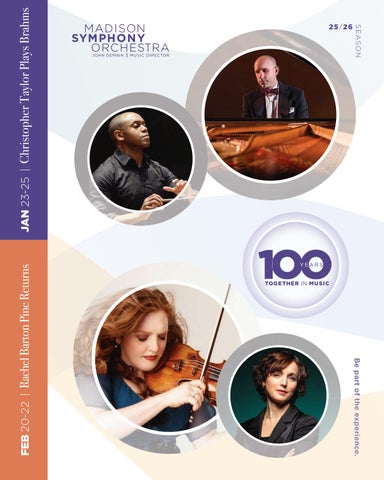
Christopher Taylor Plays Brahms
SPONSORS
thank you
to our generous sponsors for supporting these performances
MAJOR SPONSORS
Madison Magazine
Martha and Charles Casey
Madison Gas & Electric Foundation, Inc.
Fred Mohs, in memory of Mary Mohs
ADDITIONAL SPONSORS
Dr. Steven Ewer and Abigail Ochberg
Dr. Peter and Beth Rahko
Mary Lang Sollinger
PROGRAM
John DeMain | Music Director
100th Season | Overture Hall | SubscriptionProgram No. 4
Kazem Abdullah, Guest Conductor
Christopher Taylor, Piano
GABRIELA LENA FRANK (B. 1972) Escaramuza
RICHARD STRAUSS (1864-1949)
Suite from Der Rosenkavalier Prelude (Act I)
Presentation of the Silver Rose (Act II) Baron Ochs’s Waltz (Act II) Ist ein Traum (Act III) Waltz (reprise)
Endowment support for the music library collection is the gift of John & Carolyn Peterson.
The Hamburg Steinway piano is the gift of Peter Livingston and Sharon Stark in memory of Magdalena Friedman.
INTERMISSION
JOHANNES BRAHMS (1833-1897)
Concerto for Piano and Orchestra No. 2 in B-flat Major, Op. # 83 Allegro non troppo Allegro appassionato Andante Allegretto grazioso MR. TAYLOR
WELCOME TO THE MSO!
Please silence your electronic devices and cell phones for the duration of the concert. Photography and video are not permitted during the performance. You may take and share photos during applause. Thank you!
SCAN HERE
To access the digital program book for this concert!
WHERE FRIENDS AND MUSIC MEET!
ANNOUNCING THE 2026 PARTIES OF NOTE!
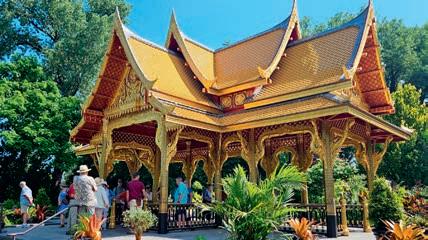
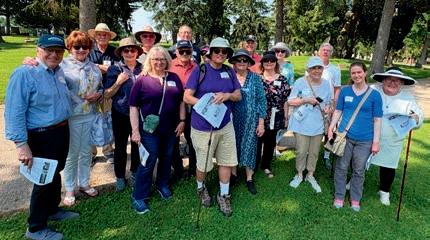
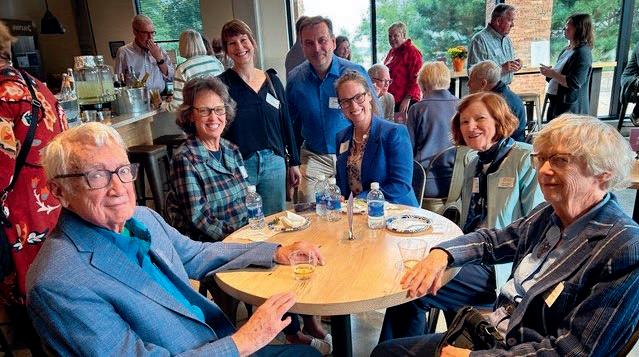
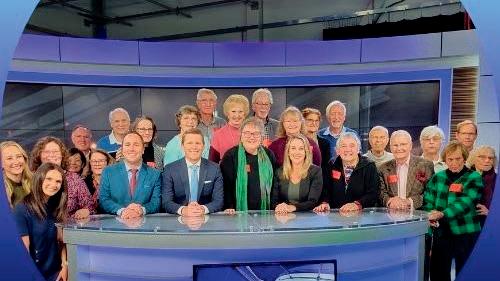
The nationally recognized Parties of Note 2026 season features sixteen exclusive experiences, from exploring the inner workings of a violin to discovering the depths of Lake Mendota. Enjoy returning favorites like an intimate tour of the Royal Thai Pavilion in Olbrich Park and a cruise through Lake Monona’s social history. Plus, new adventures await: go behind the scenes at Wisconsin Public Radio, wander a secret garden in downtown Madison, cook and dine with a local chef, and even trace your family roots. Each party is capped with a fun social hour.
JOIN MSOL TODAY!
In just a few weeks, members will receive their exclusive Parties of Note Passport with all the details and registration info. Use the QR code to join today and be among the first to experience our exciting new season. All events have limited space, so being a member of MSOL allows you to be among the first to register.
Whether you’re a lifelong symphony enthusiast, a newcomer to classical music, or simply looking for meaningful ways to connect, our events are designed for everyone. Each year, our unique gatherings bring together people of all backgrounds and ages. We invite you to discover the joy of music, build new friendships, and support the Madison Symphony Orchestra’s artistic, educational, and community programs. There’s something for everyone—don’t miss your chance to be part of these inspiring moments and have fun along the way.
PARTIES OF NOTE
For the love of music (and a great party)! madisonsymphony.org/ parties
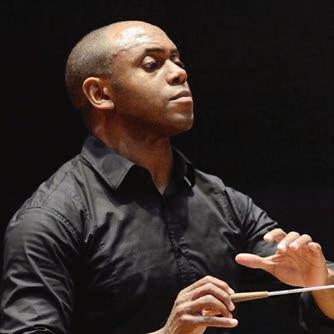
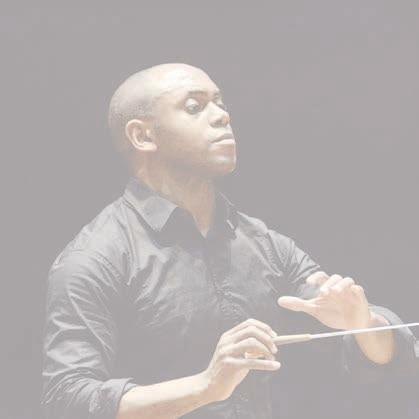
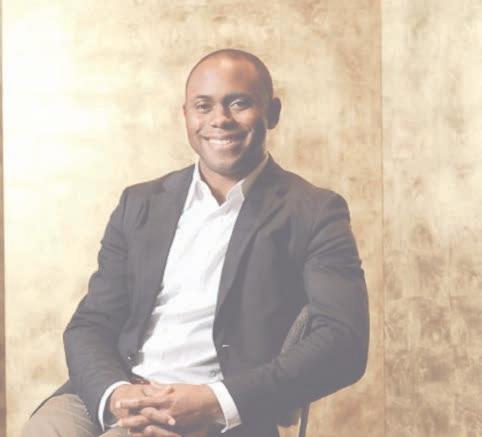
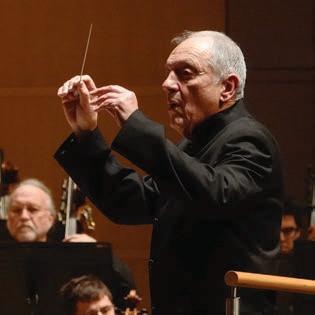
KAZEM ABDULLAH
Guest
Conductor
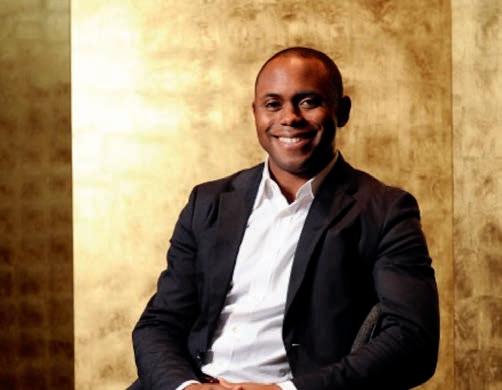
Kazem Abdullah works internationally and excels at reaching newer and diverse audiences, conducting concerts and operas in a wide variety of styles and formats.
Cincinnati symphony orchestras. In addition to his symphony engagements, he recently conducted an opera Gala for the Concertgebouw in Amsterdam, the American premiere of Charles Wuorinen’s opera Brokeback Mountain, Tosca for Seattle Opera, and HänselundGretel for Cape Town Opera.
Abdullah currently lives in Nürnberg, Germany, and was the Generalmusikdirektor in Aachen, Germany, from 2012 to 2017. During his tenure in Aachen, in addition to reaching newer and diverse audiences through innovative programming, moving out of the concert hall, and experimenting with juxtapositions of styles in non-traditional concert formats, he also conducted over 25 operas. He collaborated with musicians such as Johannes Moser, Lise de la Salle, Angela Gheorghiu, Augustin Haedelich, and Midori.
Abdullah opened this season leading a new production of Anthony Davis’ X: The LifeandTimes of Malcolm X at the Metropolitan Opera, a production the New York Times called “an American classic.” Abdullah continues his season with debuts with the Naples Philharmonic, Kansas City Symphony, and North Carolina Symphony and return engagements with the Indianapolis Symphony and the Seattle Opera.
Abdullah has delivered resonant performances of masterworks new and old, and continues to champion American composers and artists while pursuing innovative, community-based concert design. Committed to expanding the American repertoire, Kazem has led the premieres of several significant American operatic works including Rhiannon Gidden’s Omar, Gregory Spear’s Castor andPatience, and additional works by John Luther Adams, Caroline Shaw, Anthony Davis, George Lewis, Dai Fujikura, and Daniel Bernard Roumain.
On the podium, Abdullah is recognized by orchestras and audiences alike for his impressive conducting technique, thoughtful interpretations, innovative concert experiences and engaging presence. Among his recent orchestral credits are the Oregon, Indianapolis, Detroit, Pittsburgh, Atlanta, Seattle and
Prior to 2012, Abdullah led the Orquestra de São Paulo on its third United States coast-to-coast tour and the New World Symphony at the Ives In-Context Festival by special invitation from Michael Tilson Thomas. He also conducted the Tanglewood Music Center Orchestra in performances of Purcell’s DidoandAeneas in collaboration with the Mark Morris Dance Group. He was also an assistant conductor at the Metropolitan Opera, where he assisted and prepared over twenty operas, including DerRingdesNibelungen, Wozzeck, and Lulu. Abdullah has also guest conducted at companies such as the Atlanta Opera, Portland Opera, Detroit Opera,Opéra national de Lorraine and the Théâtre du Châtelet de Paris. Abdullah made his Metropolitan Opera debut in 2009, conducting Gluck’s OrfeoedEuridice.
Trained as a clarinetist, Abdullah has performed extensively as an orchestral musician, chamber musician, and soloist. He spent two seasons as a member of the New World Symphony and performed as a soloist with orchestras such as the Cincinnati Symphony Orchestra and the National Symphony Orchestra, as well as the chamber ensembles Trio Wanderer and the Auryn Quartet.
A dedicated educator, Abdullah has worked with student orchestras at the Interlochen Arts Center, the Oklahoma Arts Institute, die Höchschule für Musik Cologne Standort Aachen, the Juilliard School, the Cleveland Institute of Music, the Manhattan School of Music Germany, and the University of Stellenbosch in South Africa. He was awarded the Outstanding Young Alumnus Award by his alma mater, Cincinnati Conservatory of Music, where he worked with the students there and spoke at their commencement in 2015.
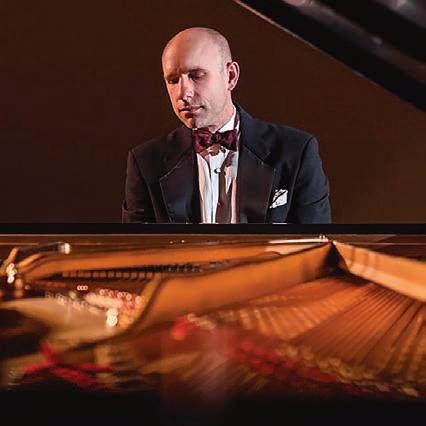
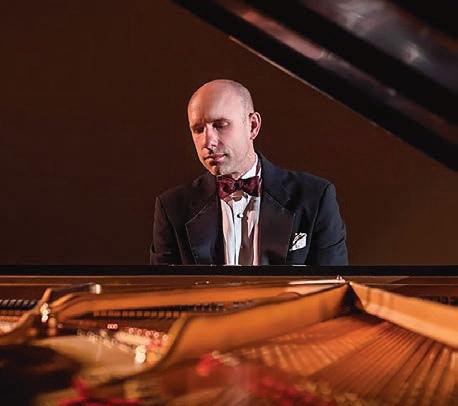
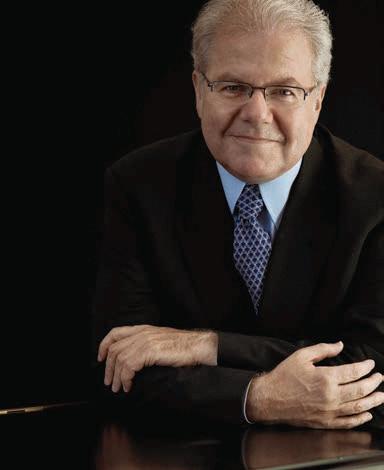
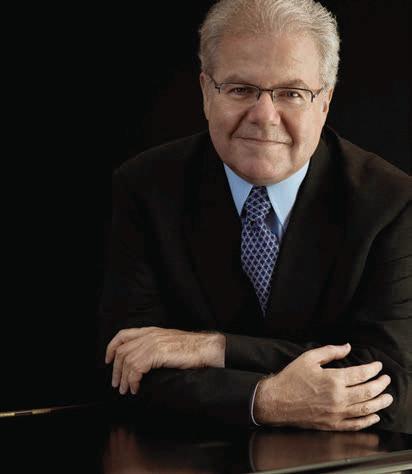
CHRISTOPHER TAYLOR
Washington’s Kennedy Center for the Performing Arts, the Ravinia and Aspen festivals, and dozens of other venues. In chamber settings, he has collaborated with many eminent musicians, including Robert McDu e and the Borromeo, Shanghai, Pro Arte, and Ying Quartets. His recordings have featured works by Liszt, Messiaen, and present-day Americans William Bolcom and Derek Bermel. Throughout his career Mr. Taylor has become known for undertaking memorable and unusual projects. Examples include: an upcoming tour in which he will perform, from memory, the complete transcriptions of Beethoven symphonies by Liszt; performances and lectures on the complete etudes of György Ligeti; and a series of performances of the Goldberg Variations on the unique double-manual Steinway piano in the collection of the University of Wisconsin. He has actively promoted the rediscovery and refurbishment of the latter instrument; in recent years he has also been building a reinvented and modernized version of it, a project that relies on his computer and engineering skills and was unveiled in a demonstration recital in 2016.
Numerous awards have confirmed Mr. Taylor’s high standing in the musical world. He was named an American Pianists’ Association Fellow for 2000, before which he received an Avery Fisher Career Grant in 1996 and the Bronze Medal in the 1993 Van Cliburn International Piano Competition. In 1990 he took first prize in the William Kapell International Piano Competition, and also became one of the first recipients of the Irving Gilmore Young Artists’ Award.
Hailed by critics as “frighteningly talented” ( The New York Times ) and “a great pianist” ( The Los Angeles Times ), Christopher Taylor has distinguished himself throughout his career as an innovative musician with a diverse array of talents and interests. He is known for a passionate advocacy of music written in the past 100 years — Messiaen, Ligeti, and Bolcom figure prominently in his performances — but his repertoire spans four centuries and includes the complete Beethoven sonatas, the Liszt Transcendental Etudes , Bach’s Goldberg Variations , and a multitude of other familiar masterworks. Whatever the genre or era of the composition, Mr. Taylor brings to it an active imagination and intellect coupled with heartfelt intensity and grace.
Mr. Taylor has concertized around the globe, with international tours taking him to Russia, Western Europe, East Asia, and the Carribean. At home in the U.S., he has appeared with such orchestras as the New York Philharmonic, Los Angeles Philharmonic, Detroit Symphony, and the Milwaukee Symphony. As a soloist he has performed in New York’s Carnegie and Alice Tully Halls, in
Mr. Taylor owes much of his success to several outstanding teachers, including Russell Sherman, Maria Curcio-Diamand, Francisco Aybar, and Julie Bees. In addition to his busy concert schedule, he currently serves as Paul Collins Associate Professor of Piano Performance at the University of Wisconsin in Madison. He pursues a variety of other interests, including: mathematics (he received a summa cum laude degree from Harvard University in this field in 1992); philosophy (an article he coauthored with the leading scholar Daniel Dennett appears in the Oxford Free Will Handbook); computing; linguistics; and biking, which is his primary means of commuting. Mr. Taylor lives in Middleton, Wisconsin, with his wife and two daughters. Christopher Taylor is a Steinway artist.
Piano
NOTES
PROGRAM
JAN 23-24-25, 2026
J. Michael Allsen
program notes by
This midwinter program is led by guest conductor Kazem Abdullah. We open with a work by the remarkable Peruvian, Chinese, Lithuanian, and Jewish-American composer Gabriela Lena Frank. She has embraced all facets of her unique background in various works, but in Escaramuza (Skirmish) it is most clearly her mother’s Peruvian heritage: the work is based upon the precolombian kachampa dance of Peru, a celebration of the agility and strength of Inca warriors. Next is a showpiece for the orchestra, Richard Strauss’s Suitefrom DerRosenkavalier. We close with a magisterial work by Johannes Brahms, the PianoConcerto No. 2, a grand work of symphonic proportions.
Gabriela Lena Frank, whose music is being played for the first time at these programs, is an extraordinary performer and composer, who draws upon her own unique multicultural heritage in her works.
Gabriela Lena Frank
Born: September 26, 1972, Berkeley, California.
Escaramuza
Composed: 2010.
Premiere: September 11, 2010, by the Huntsville (Alabama) Symphony Orchestra, Carlos Miguel Prieto conducting.
Previous MSO Performance: This is our first performance of the work. Duration: 9:00.
Background
Frank’s musical work extends to teaching and mentoring young composers, and outreach to prisons, hospitals and local (Boonville, California) public schools.
Composer and pianist Gabriela Lena Frank was born in Berkeley, California, to a Peruvian Chinese mother and a Lithuanian Jewish father. She was born with a significant hearing loss but has clearly overcome this in her career. Frank is widely known as a performer and received a Latin Grammy Award for one of her recordings. As a composer, she has written commissioned works for YoYo Ma, The King’s Singers, and several major orchestras. Frank has served as a Composer-in-Residence to the Houston Symphony Orchestra, the Detroit Symphony Orchestra, and the Philadelphia Orchestra. Frank often draws upon her own multicultural background, most frequently her mother’s Peruvian heritage, but also a wide variety of other cultures in her work: she has travelled widely throughout Latin America in search of musical influences. As she puts it, she decided early in her career that: “I wanted to, in a very general way, be as mestiza [a woman of mixed race] in my music as I was in my person: I’m multiracial, I’m multicultural, and I think that’s something deeply American.” A believer in community outreach, she founded the Gabriela Lena Frank Creative Academy of Music, at her home in Boonville, in northern California fostering young composers. Frank also volunteers to bring music into prisons and hospitals and has also worked extensively to enhance public school music programs in Booneville: an under-resourced rural school system with a large Latino population. Her lively Escaramuza, composed in 2010, was commissioned by the Huntsville Symphony Orchestra League.
What You’ll Hear
Her energetic Escaramuza (Skirmish)was inspired by a pre-Columbian Peruvian dance form still practiced today, celebrating Inca warriors.
Frank provides the following description:
Escaramuza, which signifies “skirmish” in the Spanish language, is inspired by the kachampa music of Andean Perú. Celebrating the pre-Hispanic Inca warrior, the kachampa dance is executed by athletic men who convey a triumphant, even joyful, spirit. Inspired by the kachampa dances done with fast-snapping ropes that I’ve witnessed in Perú, especially in Paucartambo during the Virgen delaCarmen festival, I’ve created a brightly chiseled romp in an asymmetrical 7/8 rhythm that is launched after an extended bass drum solo. Through most of Escaramuza, no section of the ensemble is allowed to rest for long, maintaining the high energy typical of kachampas
Scored for percussion, piano, harp, and strings, Escaramuza is—true to Frank’s description—an athletic workout for every section. It opens with a fierce, asymmetrical solo from the bass drum: evoking the bomba drum of Andean folk music. Percussion and later pizzicato strings accentuate this solo, before the low strings introduce a ferocious ostinato (a repeating figure) supporting a forceful dialogue between the upper strings and percussion. After a sudden transition, there is a slightly more delicate and playful contrasting section, before the cellos and basses reestablish the ostinato. In the end the bass drum is left to finish the piece, fading into nothing.
LEARN MORE: Like many traditions of the indigenous Quechua people of the Peruvian Andes, the kachampa dance refers back to the time before the Spanish conquest The name Escaramuza itself often signifies the time of intertribal warfare prior to the arrival of the Spanish, when the
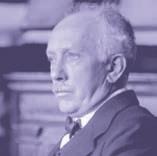
RICHARD STRAUSS
GABRIELA LENA FRANK
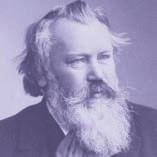
JOHANNES BRAHMS
entire Inca empire was unified under a single emperor. It is an energetic and joyful dance by young men celebrating the strength and athleticism of Inca warriors. Whether the dancers are dressed in traditional costume, which often includes masks mimicking the white faces and facial hair of Spanish soldiers, or in modern suits and ties, the dancers represent the Incan tradition that warriors must be well-dressed as a sign of dignity and pride. Part of the costume is a tasseled rope representing the whips carried in battle. The dance is accompanied by an ensemble of drums and wooden flutes.
DerRosenkavalier—which Richard Strauss referred to as his “Mozart opera”—was a light and amusing love story, very much in the comic tradition of Mozart. It was an enormous hit when it opened in 1910.
Richard Strauss
Born: June 11, 1864, Munich, Germany. Died: September 8, 1949, GarmischPartnerkirchen, Germany.
music is dominated by the 19th century Viennese waltz.
knew Octavian would eventually leave her for a younger woman, is left alone.
on symphonic style in the intervening decades.
What You’ll Hear
The Suite—likely the work of conductor Artur Rodzinski— is set in five interconnected sections, following the plot of the opera.
Johannes Brahms
Born: May 7, 1833, Hamburg, Germany. Died: April 3, 1897, Vienna, Austria.
Concerto for Piano and Orchestra No. 2 in B-flat Major, Op. 83
Suite from Der Rosenkavalier
Composed: 1910.
Premiere: Der Rosenkavalier opened at the Dresden Court Opera on January 26, 1911. The Suite was created in 1944 and premiered by the New York Philharmonic on October 19, 1944.
Previous MSO Performances: The Madison Symphony Orchestra has performed the Suite on six previous occasions beginning in 1954, most recently in 2014.
Duration: 24:00.
Background
Though the opera itself is set in 18th century Vienna, its
After the 1905 premiere of his opera Salome, Strauss remarked: “Next time I shall write a Mozart opera.” His next opera, Elektra (1909), was hardly “Mozartean,” but in DerRosenkavalier, Strauss and his librettist, Hugo von Ho mannsthal, created a wonderful blend of drama and comedy that is clearly in the tradition of The Marriage of Figaro and DonGiovanni DerRosenkavalier (TheKnight of the Rose) is set in mid 18th-century Vienna, but the music is dominated by the lilting waltz rhythms of late 19th-century Vienna. The plot centers around the shifting romantic attachments of four characters: the Marschallin (a beautiful, but aging noblewoman), Octavian (a young count who is in love with her—a “pants role” sung by a woman), Baron Ochs von Lerchenau (a country bumpkin who isn’t quite as young as he thinks he is), and Sophie (a young woman, to whom Baron Ochs is engaged). As the opera begins, the Marschallin and Octavian are together, having spent the night in lovemaking. Octavian is forced to disguise himself as a chambermaid by the announced arrival of a guest, but the guest is not the Marschallin’s husband, as feared, but rather Baron Ochs. Ochs asks for the Marschallin’s help in courting Sophie, but while she isn’t looking, he makes a pass at the chambermaid, really Octavian in disguise. Octavian escapes, and in his absence, he is appointed as a Rosenkavalier, whose duty it is to carry the Baron’s love-token—a silver rose—to Sophie. When Octavian carries out his mission, he and Sophie fall immediately in love, and Sophie asks him to save her from marriage to Ochs. After several dozen more plot twists, Ochs is confounded, the young lovers are united, and the Marschallin, who
The opera was a huge hit, and publishers, some of them unscrupulous, began to extract and sell arrangements of its music almost as soon as it hit the stage. Strauss himself extracted a series of waltzes from the opera, and the suite heard here appeared in 1944. It seems to have been largely the work of conductor Artur Rodzinski of the New York Philharmonic, through Strauss allowed for its publication in 1945. The Suite begins with the opera’s orchestral Prelude—the big, turbulent love scene between the Marschallin and Octavian. The second section is music for the entrance of Octavian as the Rosenkavalier, and an arrangement of the initial love duet between Octavian and Sophie. After a brief moment of bluster when Baron Ochs realizes that his Rosenkavalier and his fiancée have fallen in love, there are a series of waltzes for the Baron, including a lyrical violin solo. The fourth section adapts the climactic Act III scene where the Marschallin sadly releases her hold on Octavian, and Octavian and Sophie sing a passionate love duet (“It is a dream, beyond belief, that we two are united forever.”). The Suite closes with a reprise of Baron Ochs’s waltz music and a short coda.
Brahms’s second piano concerto, written over 20 years after his first, is a profound work that shows the influence of his careful work
Composed: Begun in 1878 and completed in July 1881.
Premiere: Brahms played the solo part at the first performance, a private concert in Meiningen in October 1881, and was also the pianist for the public premiere, in Budapest, on November 9, 1881.
Previous MSO Performances:
Nine previous performances at these concerts have featured Gunnar Johansen (1955), Bela Szilagi (1962), Van Cliburn (1971), Alicia de Larrocha (1981), André Watts (1990), Garrick Ohlsson (2002), Philippe Bianconi (2013) and Emanuel Ax (2005 and 2018). Duration: 50:00.
Background
More than most 19th-century concertos, this work calls on the piano soloist to work as an equal partner with the orchestra in developing the composer’s thematic ideas.
When a 26-year-old Brahms premiered his first piano concerto in 1859, audience reactions ranged from indi erence to revulsion. While its failure seems to have been due as much to musical politics as the work itself, Brahms was in no hurry to return to writing piano concertos, and certainly stayed away from works as passionate and flashy as the first concerto. He wrote to the violinist Joseph Joachim: “A second will sound di erent.” Brahms was true to his word, but a second piano concerto was over 20 years
in coming. He began sketching the concerto in 1878, during a trip to Italy, and continued to work on it over the next three years. It was not until the summer of 1881, that Brahms—with tongue firmly in cheek—announced to his friend, Elisabeth von Herzogenberg: “I have written a tiny little piano concerto with a little wisp of a scherzo. It is in B-flat...” Brahms clearly understood that his “tiny little B-flat concerto” was the largest work in this genre since Beethoven’s “Emperor” concerto. Soon after its completion, Brahms and a colleague played a two-piano arrangement of the concerto for a small group of friends, including the influential critic Eduard Hanslick. The concerto’s reputation spread quickly, and Brahms was soon invited by Hans von Bülow to perform it with Bülow’s orchestra at Meiningen. After working out small details in this private performance, Brahms played the work at in a public concert at the Redoutensaal in Budapest. In contrast to the dismal reception given his first piano concerto, this work was very successful, almost immediately gaining acceptance as a part of the standard repertoire.
In the decades between 1859 and 1881, Brahms had become a self-confident and internationally acknowledged master of symphonic form. The sharp distinction between the first and second concertos is clear in this light. While his youthful D minor concerto had been a brilliant and somewhat autobiographical work, Brahms himself was aware of its shortcomings, most of which resulted from his inexperience in orchestration. In contrast, the B-flat concerto is a more mature and emotionally reserved work that makes skillful use of the orchestra. The work was composed directly after the completion of his second symphony, and the elements of his
mature symphonic style are heard in this concerto. Brahms even adds a fourth movement, expanding the typical three-movement concerto form to symphonic proportions. But his second piano concerto also presents special challenges for the soloist, above and beyond sheer endurance. The pianist must be sensitive to the equal role played by the orchestra in developing thematic material. While there are few outward displays of virtuosity, the soloist is also called upon to play passages in octaves and sixths, immense chords, and complex rhythms, often in partnership with the full orchestra.
What You’ll Hear
This concerto is set in four movements:
• A large opening movement in sonata form.
• A turbulent scherzo with a Major-key central episode.
• A lovely Andantemovement, with a prominent solo role for the cello.
• A vigorous and expansive closing rondo, that features virtuosic passages for the piano.
The concerto begins with a calm and dignified theme played by solo horn, in dialogue with the soloist. After a brief cadenza, the main theme is reintroduced, now by full orchestra. The opening movement (Allegro non troppo) continues in a greatly expanded sonata form. Brahms’s formal model for this opening movement seems to have been the equally expansive opening of Beethoven’s “Emperor” concerto. The second movement (Allegro appassionato), Brahms’s “little wisp of a scherzo,” begins in
D minor, with a vigorous o beat figure in the piano. Aside from a jaunty Major-key central episode in D Major, the mood is turbulent throughout. Again, Brahms has expanded the form, inserting a great deal of thematic development into this normally clear-cut three-part form. After the stormy scherzo, Brahms places a gentle Andante. This movement opens with a solo cello presenting a quiet theme that is later picked up by the soloist in a tranquil and unhurried cadenza. (Brahms liked this theme enough that he later reworked it in a song: ImmerleiserwirdmeinSchlummer.) A central section is more agitated, with the piano taking a leading role, but the solo cello, now in dialogue with the piano, returns to round o the Andante. The finale (Allegrettograzioso), which contains the most dramatic and virtuosic music for the soloist, is set in rondo form. The recurring refrain begins with a forceful dotted motive in the piano. The rondo, typically the lightest of Classical forms—based upon the repeat of a main idea with contrasting ideas in between—is here expanded to massive proportions: anything less would be overbalanced by what has come before.
Complete program notes for the 2025-2026 season are available at madisonsymphony.org.
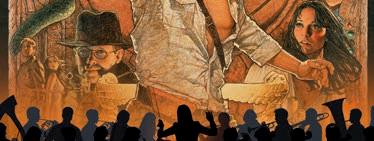
Madison Symphony Orchestra’s MSO at the Movies presents Indiana Jones and the Raiders of the Lost Ark™ Live in Concert featuring John Williams’ GRAMMY® Award-winning score performed live to the film led by conductor Kyle Knox at Overture Hall.
Williams has scored each Indy adventure, including the final installment of the iconic franchise, Indiana Jones and the Dial of Destiny . He has received multiple Academy Awards® and more than 50 Oscar® nominations. Williams is the Academy’s mostnominated living person to date and the second-most nominated person in the history of the Oscars®. He also received numerous British Academy Awards (BAFTA), GRAMMYs®, Golden Globes®, Emmys®, as well as several gold and platinum records.
Originally released in 1981 as a collaboration between George Lucas and Steven Spielberg, Raiders redefined the possibilities of adventure cinema and launched actor Harrison Ford to legendary status.
Indiana Jones is the classic hero in this adventure set in the 1930s which follows the quick-witted and determined archaeologist as he hunts for the Lost Ark of the Covenant. Often facing insurmountable odds, Indy always manages to succeed in the nick of time, joined by endearing companions and opposed by notorious villains.
With an impressive team of supporting actors including Karen Allen, John-Rhys Davies, Denholm Elliott, and Paul Freeman, combined with innovative special e ects techniques by Industrial Light & Magic, Raiders has captured the spirits of movie-goers for generations and continues to inspire adventures yet to come.
MAJOR PERFORMANCE SPONSORS
Madison Media Partners
Lake Ridge Bank
Zaia and Peleus Parker
Hooper Corporation
SINGLE TICKETS ON SALE
, the Overture Center Box O ce, or (608) 258-4141 Dates, artists, and programs subject to change.
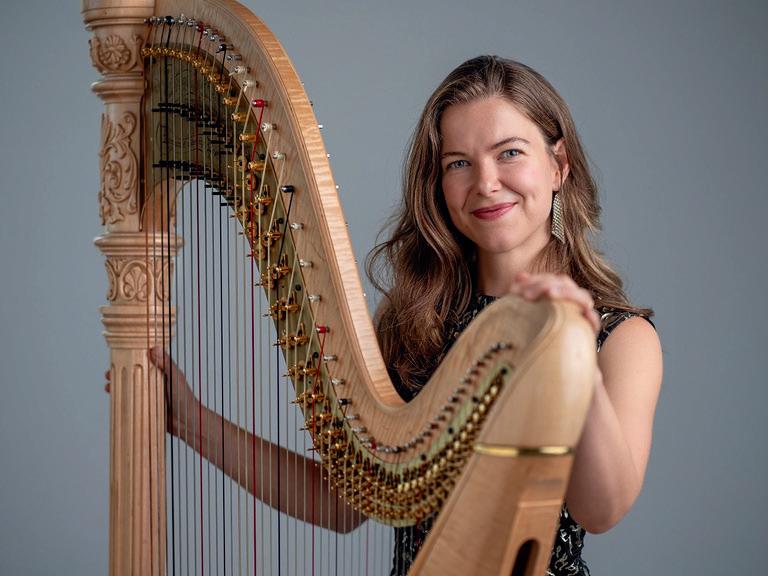
Madlen Breckbill Johanna Wienholts Iva Ugrčić
Endow a Chair
A gift to the Madison Symphony Orchestra’s endowment can provide permanent and lasting support for a position in the orchestra, helping to ensure the MSO will continue to attract and retain top quality artistic talent.
Available* Chair Naming Opportunities: Music Director Principal Tuba, Bass Associate Concertmaster
Assistant Principal Bass Section Chair
Other opportunities and more information: madisonsymphony.org/endowment
For questions or to discuss a potential gift: Casey Oelkers, Director of Development, (608)257-3734
Make Music Your Business!
Each season, Madison-area businesses help the MSO share live, classical music with over 60,000 people by education programs and special events. Are you a corporate leader who values high quality arts and culture in our community?
Visit madisonsymphony.org/corporategiving to learn more about how your business can partner with the MSO and show your support for the arts.
Bring a loved one to the winter concert of our 23rd season! You will hear the beautiful sounds of strings and winds in Septets by Franz Berwald and Mikhail Glinka. This is the perfect way to stay warm during the bleak midwinter!
Sat. February 14, 2026 7:30 PM
First Congregational Church 1609 University Avenue, Madison
Tickets at the door: $25/$20
Rachel Barton Pine Returns
SPONSORS
thank you
to our generous sponsors for supporting these performances
PROGRAM
John DeMain | Music Director
100th Season | Overture Hall | SubscriptionProgram No. 5
Tania Miller, Guest Conductor
MAJOR SPONSORS
Pleasant T. Rowland Foundation
MAJOR SPONSORS
Madison Symphony Orchestra League
Peter and Leslie Overton
Cyrena and Lee Pondrom
Richman & Richman LLC
ADDITIONAL SPONSORS
Jane Hamblen and Robert F. Lemanske
Kenneth A. Lattman Foundation Inc.
Ann Lindsey, in memory of Chuck Snowdon
Endowment support for the music library collection is the gift of John & Carolyn Peterson.
WELCOME TO THE MSO!
Rachel Barton Pine, Violin
FELIX MENDELSSOHN (1809-1847)
Overture to A Midsummer Night’s Dream, Op. 21
ERICH WOLFGANG KORNGOLD (1897-1957)
Concerto for Violin and Orchestra in D Major, Op.35
Moderato nobile
Romanze: Andante Allegro assai vivace
MS. BARTON PINE
INTERMISSION
CLAUDE DEBUSSY (1862-1918)
Prelude to The Afternoon of a Faun
IGOR STRAVINSKY (1882-1971)
Petrushka Suite (1947 version)
The Shrove-tide Fair
The Magician
Russian Dance
Petrushka
The Blackamoor
Please silence your electronic devices and cell phones for the duration of the concert. Photography and video are not permitted during the performance. You may take and share photos during applause. Thank you!
SCAN HERE
To access the digital program book for this concert!
The Ballerina
Valse
Shrove-tide Fair (Towards Evening)
Wet Nurses’ Dance
Peasant with Bear
Gypsies and a Rake-Vendor
Dance of the Coachmen
Masqueraders
The Scu e (Blackamoor and Petrushka)
The Death of Petrushka
Police and Juggler
The Vociferation of Petrushka’s Ghost
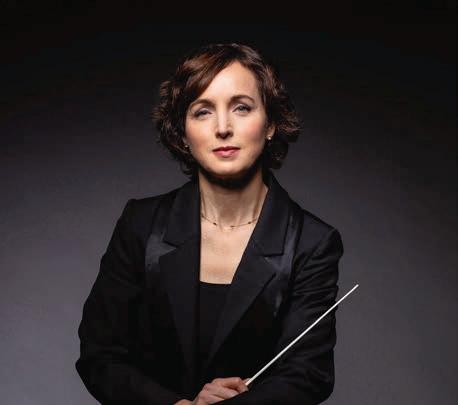
TANIA MILLER
Guest Conductor
Canadian Conductor Tania Miller has distinguished herself as a dynamic interpreter, musician, and innovator. On the podium, Maestra Miller projects authority, dynamism and sheer love of the experience of making music. As one critic put it, “she delivers calm intensity . . . expressive, colorful and full of life . . . her experience and charisma are audible.” Others call her performances “technically immaculate, vivid and stirring”.
Miller has conducted the KBS Symphony in Seoul, and the Virtuoso Chamber Orchestra at the World Orchestra Festival in Daegu, South Korea with concerts in Daegu, Hwaseong, and Seoul. She has appeared as a guest conductor in Canada, the United States and Europe with such orchestras as the Bern Symphony Orchestra, NFM Wroclåw Philharmonic, Toronto Symphony, Seattle Symphony, Chicago Symphony, Oregon Symphony, Chautauqua Symphony Orchestra, Ottawa’s National Arts Centre Orchestra, Orchestra Métropolitain de Montreal, Vancouver Symphony, Orchestre Symphonique de Quebec, Naples Philharmonic, Hartford Symphony, Madison Symphony, Calgary Philharmonic, Rhode Island Philharmonic, Louisiana Philharmonic and numerous others. Maestro Miller was Music Director of Canada’s Victoria Symphony for 14 years, and was named Music Director Emerita for her commitment to the orchestra and community. She has distinguished herself as a visionary leader and innovator with a deep commitment to contemporary repertoire and composers and has gained a national reputation as a highly e ective advocate and communicator for the arts.
Tania Miller is Artistic Director of the Brott Music Festival in Canada and the Artistic Director and Conductor of the National Academy Orchestra of Canada and of Brott Opera. Maestra Miller recently debuted with the National Symphony of Mexico and has upcoming concerts with the Xalapa Symphony of Mexico, the Janacek Philharmonic in Ostrava, Czech Republic, and Madison Symphony with recent concerts with the Eugene Symphony, Winnipeg Symphony and South Bend Symphony. Maestra Miller conducted Vancouver Opera’s production of Mozart’s Die Zauberflöte, and a 2024 concert with highly acclaimed soprano, Sondra Radvanovsky with Vancouver’s Opera West. Other recent debuts include the Warsaw Philharmonic, I Musici de Montreal, Baton Rouge Symphony and the New Haven Symphony.
Miller conducted Calgary Opera’s production of Lehar’s Merry Widow and numerous opera productions as Artistic Director of Michigan Opera Works and guest conductor of Opera McGill in Montreal. She was Assistant Conductor of the Carmel Bach Festival for four seasons, and Assistant and Associate Conductor of the Vancouver Symphony from 2000-04. She was Assistant Conductor of the Ban Summer Festival of the Arts opera production of Michael Daugherty’s Jackie O
Ms. Miller has a Doctorate and Master’s degree in Conducting from the University of Michigan. Maestro Miller received an Honorary Doctor of Laws degree from Royal Roads University, and an Honorary Fellowship Diploma from Canada’s Royal Conservatory of Music for her commitment to leadership in community and music education. She was recipient of the 2017 Friends of Canadian Music award from the Canadian League of Composers for her dedication to the performance of contemporary music.
part of the experience.
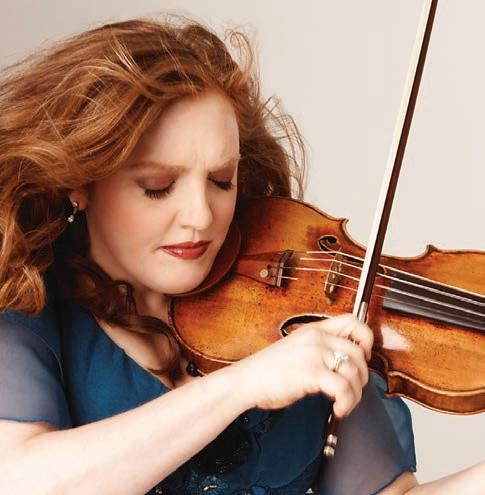
RACHEL BARTON PINE
Violin
The acclaimed American concert violinist Rachel Barton Pine thrills international audiences with her dazzling technique, lustrous tone, and emotional honesty. With an infectious joy in music-making and a passion for connecting historical research to performance, Pine transforms audiences’ experiences of classical music. She is a leading interpreter of the great classical masterworks and of important contemporary music.
Pine performs with the world’s foremost orchestras, including the Philadelphia Orchestra, the Royal Philharmonic Orchestra, Camerata Salzburg, and the Chicago, Vienna, and Detroit symphony orchestras. She has worked with renowned conductors that include Teddy Abrams, Marin Alsop, Daniel Barenboim, Semyon Bychkov, Neeme Järvi, Christoph Eschenbach, Erich Leinsdorf, Nicholas McGegan, Zubin Mehta, Tito Muñoz, and John Nelson. As a chamber musician, Pine has performed with Jonathan Gilad, Clive Greensmith, Paul Neubauer, Jory Vinikour, William Warfield, Orion Weiss, and the Pacifica and Parker quartets.
Highlights of Pine’s 2024–25 season include the Chicago Symphony Orchestra premiere of José White’s Violin Concerto in F-sharp Minor with conductor Jonathan
Rush; a tour of Israel with the Tel Aviv Soloists Ensemble, performing Mendelssohn’s Violin Concerto; Lalo’s Symphonie Espagnole with the Puerto Rico Symphony Orchestra; the world premiere of Haralabos [Harry] Stafylakis’ Violin Concerto with the Winnipeg Symphony and conductor Daniel Raiskin; Billy Childs’ Violin Concerto No. 2 with the Rhode Island Philharmonic and conductor Radu Paponiu; and the French premiere of Earl Maneein’s violin concerto Dependent Arising with the Orchestre National de Bretagne and conductor Nicolas Ellis. Over the season, Pine will also perform concertos by Brahms and Sibelius, and music by Wynton Marsalis, Jessie Montgomery, and Mark O’Connor, among other living composers. As a chamber musician, Pine will appear in recitals in Chicago, Phoenix, Kalamazoo, Oklahoma City, Milwaukee, and Tel Aviv.
In September 2024, Cedille Records releases Pine’s new album, CorelliViolinSonatas, Op. 5, a two-disc set with the 12 sonatas for violin and continuo that constitute the Baroque composer’s opus 5. Pine performs on violin and viola d’amore, holding the violin against her chest, which history suggests is the way Corelli performed (rather than holding it on the collarbone, the way today’s baroque violinists usually do).
The di erent performance style resulted in subtle changes in tempos and timing because of the slightly di erent use of the left hand and of the bow arm. The approach led to a di erent tone compared to that of Pine’s 2007 recording of the third sonata with Trio Settecento, featuring John Mark Rozendaal and David Schrader, who join Pine again in the new recording. Rozendaal plays violoncello and viola da gamba and Schrader plays positive organ and harpsichord. Brandon Acker joins the trio on archlute, theorbo, and guitar. Pine improvised all her ornaments, using a historically informed approach.
DependentArising, Pine’s previous album on Cedille (2023), revealed surprising confluences between classical and heavy metal music by pairing Shostakovich’s Violin Concerto No. 1 with Earl Maneein’s Dependent Arising, written for Pine and performed with the Royal Scottish National Orchestra and conductor Tito Muñoz. Pine’s recording of Malek Jandali’s ViolinConcertoNo 2, performed with the Vienna Symphony Orchestra and Marin Alsop, was also released in 2023 on Cedille. The previous year, the label released Violin Concertos by Black Composers Through the Centuries: 25thAnniversary Edition, featuring Pine’s new recording of Florence Price’s ViolinConcerto No. 2 with the Royal Scottish National
Orchestra and Jonathon Heyward, and reprisals of her 1997 recordings of masterworks by Joseph Bologne, Chevalier de Saint-Georges (1775), José White (1864), and Samuel Coleridge-Taylor (1899).
3.5 hours’ notice, she performed Prokofiev’s ViolinConcerto No. 1 at Ravinia with the Chicago Symphony Orchestra and Marin Alsop, replacing Midori, to critical acclaim.
The violinist has appeared on The TodayShow, CBS Sunday Morning, PBS NewsHour, PrairieHomeCompanion, NPR’s Tiny Desk and AllThingsConsidered, and PerformanceToday. She has been featured in The WallStreetJournal and The New York Times. She holds prizes from several of the world’s leading competitions, including a gold medal at the 1992 J.S. Bach International Violin Competition.
In the 2023-24 season, Pine joined the Los Angeles Philharmonic and Stéphane Denève at the Hollywood Bowl for a performance of Billy Childs’ ViolinConcerto No. 2, written specially for her. She also performed with the Royal Scottish National Orchestra, Phoenix Symphony, Mercury Chamber Orchestra, Toledo Symphony, National Symphony of Uruguay, and Minas Gerais Philharmonic. In recital, Pine appeared at the Kennedy Center, Ravinia Festival, and the Festival Internacional de Música de Guadalajara. Her early-music appearances included a performance with the Syracuse Orchestra and her daughter, Sylvia Pine; San Francisco Early Music Society with harpsichordist Jory Vinikour; and in Virginia with Trio Settecento.
Pine’s discography consists of over 40 recordings, including BluesDialogues, with a program of blues-influenced classical works by 20th- and 21st-century Black composers (Matthew Hagle on piano); DvořákandKhachaturianViolinConcertos (Teddy Abrams and the Royal Scottish National Orchestra); BrahmsandJoachimViolinConcertos (Carlos Kalmar and the Chicago Symphony Orchestra), and ElgarandBruch ViolinConcertos (Andrew Litton and the BBC Symphony Orchestra). Pine and Sir Neville Marriner’s Mozart:Complete ViolinConcertos, with the Academy of St Martin in the Fields, and her Bel Canto Paganini both charted at #3 on the classical charts. Testament: CompleteSonatasandPartitas for SoloViolin by JohannSebastianBach, and ViolinLullabies both debuted at #1.
Pine writes her own cadenzas and performs many of her own arrangements. With the publication of The RachelBartonPine Collection, she became the only living artist and first woman in Carl Fischer’s Masters Collection series. During the pandemic, she performed the entire solo violin part of 24 di erent violin concertos, live and unaccompanied, for her weekly series “24 in 24: Concertos from the Inside.”
Pine frequently performs music by contemporary composers, including major works written for her by Billy Childs, Mohammed Fairouz, Marcus Goddard, Earl Maneein, Shawn E. Okpebholo, Daniel Bernard Roumain, José Serebrier, and Augusta Read Thomas. In addition to her career as a soloist, she is an avid performer of baroque, renaissance, and medieval music on baroque violin, viola d’amore, renaissance violin, and rebec.
Pine has also substituted for fellow soloists on short notice for a number of concerts. Most notably, in 2021, with just
An active philanthropist, Pine has led the Rachel Barton Pine Foundation for over two decades. Early in her career, she noticed that young people learning classical music seldom have the opportunity to study and perform music written by Black composers. Since 2001, Pine and her Foundation’s Music by Black Composers project have collected more than 900 works by over 450 Black composers from the 18th–21st centuries. Music by Black Composers curates free repertoire directories on its website and publishes print resources. In 2024 the project released ViolinVolumes2and3 for elementary-level students, the second installment in a series of pedagogical books of music exclusively by Black composers. The Rachel Barton Pine Foundation also assists young artists through its Instrument Loan Program and Grants for Education and Career. Pine has also served on the board of many non-profits, including the Sphinx Organization.
She performs on the “ex-Bazzini, ex-Soldat” Joseph Guarnerius “del Gesù” (Cremona 1742), on lifetime loan from her anonymous patron.
Be part of the experience.
PROGRAM NOTES
20-21-22, 2026
FEB
J. Michael Allsen
program notes by
Guest conductor Tania Miller leads this program, titled “Playful Pursuits.” It opens with a decidedly playful overture by a very youthful Felix Mendelssohn. His A Midsummer Night‘s Dream captures the dancing fairies and other mischief of Shakespeare’s great comedy. Rachel Barton Pine, who was last with us in 2019, playing the Khachaturian Violin Concerto, makes a welcome return to Overture Hall, this time playing the Korngold Violin Concerto—a romantic, virtuoso work, crafted from several of the composer’s movie themes. Claude Debussy’s Impressionist masterpiece, Prelude to theAfternoon of a Faun, captures the fleeting, lazy, and occasionally R-rated daydreams of the title character. We close with one of the great ballet scores of Igor Stravinsky, his groundbreaking ballet score Petrushka Here the title character is a tragic figure, one of three puppets brought to life by a magician.
When he was only 17 years old, Felix Mendelssohn “dreamed” this lively overture, inspired by one of Shakespeare’s greatest comedies.
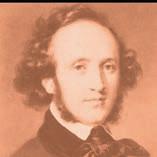
Felix Mendelssohn
Born: February 3, 1809, Hamburg, Germany. Died: November 4, 1847, Leipzig, Germany.
Overture to A Midsummer Night’s Dream, Op. 21 Composed: Mendelssohn composed this work in 1826, when he was still a teenager.
Premiere: The overture was first performed in the Prussian city of Stettin in October 1827.
Previous MSO Performance: 1944, 1973, 1977, and 2004. Duration: 13:00.
Background
Mendelssohn came by his fascination with A Midsummer Night’s Dream naturally: German romantics of the 19th century loved Shakespeare.
No playwright was as beloved by the romantics as Shakespeare: the intense character development and free dramatic form of Shakespeare’s works was a source of inspiration for dozens of composers. The Bard’s popularity was wildest in Germany, where his works were known through a translation published by August von Schlegel and Ludwig Tieck in 1801. (There is an old German witticism to the e ect that: “Shakespeare is best read in the original German.”) The 17-year-old Mendelssohn and his sister Fanny spent the summer of 1826 in the garden of their family’s home in Berlin, reading Shakespeare. Mendelssohn was impressed enough by his first reading of EinSommernachtstraum that he decided almost immediately to write a piece that captured the play’s spirit. In early July he wrote to a friend: “I have grown accustomed to composing in our garden. Today or tomorrow, I am going to dream there A Midsummer’s Night’s Dream This is, however, an enormous audacity...” Audacious or not, he wrote the overture in just a few weeks—some of his most delightful and overtly programmatic music. He dedicated the Overture to the Prince of Prussia, and seventeen years later, at the request of the prince—by then King of Prussia—Mendelssohn provided several additional pieces of incidental music for the play. The incidental music, though written by a much more mature composer, perfectly matches the youthful vitality of the Overture
What You’ll Hear
Though it is set in a relatively conventional Sonata form, it is easy to hear Shakespeare’s plot in this work.
The Overture begins with a series of almost hesitant chords, as if fairies are shyly peeking around trees. The fairies themselves appear in a light string passage before the full orchestra enters joyfully, in a passage that sounds distinctly like the much later WeddingMarch There are the horns of Duke Theseus’s party, and a flowing Romantic theme for the various pairs of lovers, and finally a rustic dance, in which you can clearly hear the “hee-haws” representing the irrepressible Nick Bottom. The development focuses on the opening fairy music, becoming almost melancholy at the end before the familiar chords bring in a varied recapitulation of the main themes. The overture closes with a reverent version of the wedding music and a final statement of the mysterious chords. One point of interest in the orchestration is that Mendelssohn wrote a prominent part for a now-obsolete bass instrument, the serpent. When he resurrected the overture in 1842, he substituted the ophicleide. The part is played today on the tuba.
Most of the themes of this grand romantic violin concerto come from Korngold’s movie scores.
Erich Wolfgang Korngold
Born: May 29, 1897, Brno, Czechoslovakia. Died: November 29, 1957, Los Angeles, California.
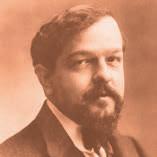
CLAUDE DEBUSSY
FELIX MENDELSSOHN
ERICH WOLFGANG KORNGOLD
IGOR STRAVINSKY
Concerto for Violin and Orchestra in D Major, Op.35
Composed: Korngold completed his Violin Concerto in 1946, though most of it is nearly ten years older. The score is dedicated to Alma Mahler-Werfel, widow of Gustav Mahler, who had been Korngold’s childhood mentor. Premiere: February 15, 1947, with violinist Jascha Heifetz and the St. Louis Symphony Orchestra. Previous MSO Performances: 2105 (Daniel Hope, violin)
Duration: 24:00.
Background
Korngold was part of the wave of musicians who emigrated to the United States in the 1930s, fleeing and increasingly repressive and dangerous Europe—to the immense benefit of American musical life. Like many of his fellow émigrés, Korngold found work scoring Hollywood films.
Korngold, born in Bohemia but raised in Vienna, began composing as a child. His father, an influential music critic, was able give him access to the greatest musicians in Vienna, but young Korngold was clearly a prodigy, and at age nine, Gustav Mahler hailed him as a genius. Through the 1920s, he maintained a career as both a conductor and as a composer, and his 1920 opera Die tote Stadt (The Dead City”) was particularly successful. By the 1930s, life for a Jewish artist in Austria was becoming increasingly hazardous, and in 1934 he accepted an o er to come to Hollywood to work on a film score. He spent the rest of his life there, and would write nearly two dozen film scores, mostly for the Warner Brothers studio. Korngold’s bold, thoroughly romantic style made him a natural for swashbuckling Errol
Flynn adventures like CaptainBlood (1935), The Adventures of RobinHood (1938), and The Sea Hawk (1940). He returned increasingly to concert music after the war—he had in fact vowed never to write anything but film scores until Hitler was defeated.
In early 2015, I was able to consult with John Waxman, son of Korngold’s Hollywood colleague Franz Waxman, and Kathrin Korngold Hubbard, Korngold’s granddaughter, on the complicated genesis of his most popular concert work, the Violin Concerto. I corresponded with Ms. Hubbard again in 2025. The two disagree on who initially suggested that Korngold write a violin concerto: John Waxman says it was his father, while Kathrin Korngold Hubbard asserts—certainly correctly—that it was Korngold’s father, Julius Korngold who made the suggestion after hearing the theme to Another Dawn. In any case, Korngold was at work on the piece in 1937-38. Kathrin Korngold Hubbard notes that in 1938 there was a “tryout” performance by violinist Robert Pollack, a family friend, who was not able to e ectively play this di cult piece. Disappointed by the performance, and tied up with work on Robin Hood, Korngold set the score aside. In 1945, with the war over, he set to work again on the concerto, when he began to rewrite it for the virtuoso Bronislaw Huberman. It would not be Huberman who performed it for the first time, however, but Jascha Heifetz. According to John Waxman, this was the result of a dinner party at his father’s Hollywood home that included the Korngolds and Rudolph Polk and his wife. Polk—Heifetz’s manager, and a fine violinist in his own right—asked Korngold why he had never written a violin concerto. The subject was quickly dropped, but later that evening, as the men and women went to separate rooms, Luzi Korngold revealed the story to Mrs. Polk. Polk phoned Korngold the very next day to request the score for Heifetz, and
Heifetz himself phoned Korngold the day after that, asking permission to play the work’s premiere. The two worked together on the final version— at Heifetz’s insistence, making the concerto even more di cult! In her biography of Korngold, Luzi Korngold notes that when Huberman visited them afterwards, that the composer told him: “Huberman, I haven’t been unfaithful yet, I’m not engaged…but I have flirted.” Huberman graciously o ered to play the concerto after Heifetz’s premiere—but died in 1947 before he could perform it. The world premiere concert in St. Louis in 1947 also included a virtuoso work written for Heifetz by Franz Waxman, the Carmen Fantasy. Regarding the concerto’s premiere, Korngold wrote:
“In spite of its demand for virtuosity in the finale, the work with its many melodic and lyric episodes was contemplated rather for a Caruso of the violin than for a Paganini. It is needless to say how delighted I am to have my concerto performed by Caruso and Paganini in one person: Jascha Heifetz.”
What You’ll Hear
This concerto is set in three movements:
• A broad opening movement in a variant of sonata form.
• A lyrical Andante.
• A fast-paced and sometimes humorous set a variations
Though it was written in the 1930s and 1940s, the Violin Concerto is a work of pure turn-of-thecentury Viennese romanticism. It also draws on themes from several of his film scores. The first movement’s ( Moderatonobile ) contemplative opening theme— heard first in the violin and
then in full orchestra—appeared in his 1937 score for Another Dawn A lighter transition leads to a lyrical second idea, a lush idea that appeared as a love theme in the film Juarez (1939). (It’s possible that in this case, the borrowing went the other direction—that this music may have been borrowed from the then-shelved violin concerto.)
After an extended solo cadenza in the middle, the movement ends with a rather free development of the two main ideas. The second movement ( Romanze:Andante ) continues in the same lyrical style. This movement shares much of its musical raw material with Korngold’s Oscar-winning score to AnthonyAdverse (1936). The violin introduces the main theme through a gauzy accompaniment of strings and harp. There are a few more playful moments, but the wistful mood is otherwise constant through this quiet movement. The finale ( Allegro assaivivace ) is a set of variations on a theme used in his score to The PrinceandthePauper (1937). There is a lot more “Paganini” than “Caruso” in this movement: this is mostly wry and lighthearted music that allows the violin to shine in brilliant technical passages, ending in a humorous coda.
This quiet work was thoroughly revolutionary for its time, and secured an international reputation for its composer.
Claude Debussy
Born: August 22, 1862, Saint-Germain-en-Laye, France. Died: March 25, 1918, Paris, France.
Prelude to The Afternoon of a Faun
Composed: 1892-94. Premiere: December 22, 1894, in Paris. Previous MSO Performances: We
have performed the work eight times at these programs between 1938 and 2019.
Duration: 18:00.
Those nymphs, I want to make them permanent.
So clear, their light flesh-pink, it hovers on the atmosphere Oppressed by bushy sleeps. Was it a dream I loved?
- Mallarmé, The Afternoon of a Faun (translated by W. Austin)
Background
This work grew out of Debussy’s fascination with Symbolist poetry. It was originally written for a planned theatrical production of his friend Stéphane Mallarmé’s poem The Afternoon of a Faun.
So clear, their it a It was a a in which become of truths. was the in French poetry from the 1880s the turn of the and associated with many of the movement’s poets: and Mallarmé. often described their in musical that expresses what cannot be in words—and many of their poems as art songs, or, as in the case
in favor of a free and sometimes kaleidoscopic style, in which fleeting images become symbols of deeper truths. Symbolism was the avant garde in French poetry from the 1880s through the turn of the century, and Debussy associated with many of the movement’s leading poets: Verlaine, Baudelaire, Valéry, and Mallarmé.
The Symbolists often described their poetry in musical terms—imagery that expresses what cannot be directly expressed in words—and Debussy responded by setting many of their poems as art songs, or, as in the case of his Prelude, using their works as inspiration for purely instrumental compositions. Stéphane Mallarmé was a particularly important contact for Debussy—he hosted weekly salóns at his home, inviting poets, artists, and musicians to present and argue over their latest works. Debussy was a regular at Mallarmé’s salóns in the 1890s, and their association led to the composition of Debussy’s most famous orchestral piece.
composer. Rather than setting this as a conventionally programmatic symphonic poem, Debussy tried to capture the ambience of Mallarmé’s poetry without really telling a story. Mallarmé, after hearing Debussy play the score on piano for the first time, exclaimed: “I didn’t expect anything like this! The music prolongs the emotion of my poem and sets its scene more vividly than color.” Though critics generally—and predictably—disliked a piece as startlingly new and radical as the Prelude, audiences and musicians took to it quickly and it was being performed across Europe and in the United States within just a few years.
What You’ll Hear
The coda one final reference faun in the horns, before the music their works as for instrumental Mallarmé was contact for hosted his and argue their latest works. was in famous but idea a
composer. Rather than this as a poem, tried capture the ambience of Mallarmé’s poetry without a story. after the score on for the first time, exclaimed: “I didn’t expect like this! The music the poem and sets its scene more than color.” critics in but the music is never strident, and the remains transparent and colorful the whole work. as the seems the music of it is worth that he disliked the term as much as the
climactic moments in this central section, but the music is never strident, and the scoring remains transparent and colorful through the whole work. (As apt as the designation “Impressionistic” seems for the music of Debussy, it is worth noting that he disliked the term just as much as the “Impressionist” painters!) The coda presents one final mysterious reference to the faun in the horns, before the music evaporates into silence.
Petrushka—the second of the groundbreaking ballets that Stravinsky wrote for the Ballets Russe—began as an informal exercise in composition designed to “refresh” him prior to beginning work on Rite ofSpring.
He had attended the Paris Conservatoire as a young man and in 1884 had won the Rome, the of from his “bohemian years”—he scratched out a in Paris as an and composer and absorbed all of these years he befriended many of the most musicians in flirted with the music of Wagner and was a of Javanese
The composition of the Prélude á l’après-midi d’un faune marked a clear turning-point in the career of Claude Debussy. He had attended the Paris Conservatoire as a young man and in 1884 had won the prestigious Prix du Rome, the stamp of approval from the French musical establishment. In the late 1880s—what he later called his “bohemian years”—he scratched out a living in Paris as an accompanist and composer and absorbed all of the musical influences in the air. In these years he befriended many of the most forward-thinking musicians in Paris, flirted with the music of Wagner (even making two pilgrimages to Bayreuth), and was deeply impressed by a performance of Javanese gamelan music he heard at the Paris Exposition in 1889. One of the most important influences from around 1890 onwards was his association with the Symbolists. Just as Impressionist painters like Monet and Renoir were rejecting realism in favor of pure color and light, the Symbolist poets rejected rigid poetic forms and description
The work’s outer sections are dominated by repeats of the famous opening flute solo, but Debussy develops this idea in a radically unorthodox way.
Igor Stravinsky
It went through several di erent versions from the 1870s onwards, but Mallarmé’s lengthy poem The Afternoon of a Faun was nearly in its final form in 1890, when he asked Debussy to provide music for a projected theatrical presentation of the work. Mallarmé’s poem is vaguely erotic throughout, with a faun free-associating on his encounters with various nymphs. Debussy’s Prelude, written between 1892 and 1894 was all that ever came of the theatrical presentation, though in 1912, Vaclav Nijinsky choreographed a ballet on Debussy’s Prelude for the Ballets Russe. (Nijinsky’s ballet went far beyond Debussy’s music and even Mallarmé’s poem in its frank sexuality—so much so that it shocked even a Parisian audience!) Debussy’s Prelude was a stunningly avant garde work for 1894, and more than any other piece, made Debussy an internationally known
It went several di erent versions from the 1870s but Mallarmé’s poem was in its final form in when he asked music for theatrical of the work. Mallarmé’s poem is erotic with a faun on his encounters with various was ever came theatrical in 1912, Vaclav ballet on the Ballets Russe. ballet far music
On the the a conventional form: an him beginning ofSpring June Saint Russia. New York
On the surface, the Prelude has a conventional three-part form: an opening section that is repeated in varied form at the end, and a contrasting middle section. However, there is nothing conventional about the way that Debussy constructed the work. The main idea—perhaps representing the faun himself—is the familiar flute theme heard in the opening bars. Mallarmé jotted a brief poem about this melody on the first page of the manuscript score: “Sylvan of the first breath: if your flute succeeded in hearing all of the light, it would exhale Debussy.” This theme reappears some eight times in the course of the work, but it is never developed in a traditional way. Each time it shows up it ends—like one of the faun’s lazy thoughts—by spiraling o into new, unrelated ideas. The flute theme dominates the two outer sections, and the middle section presents a succession of contrasting ideas. There are a few
Born: June 17, 1882, Saint Petersburg, Russia. Died: April 6, 1971, New York City. Petrushka Suite (1947 version) 1910-11. In 1946, Stravinsky arranged a suite for concert performance and published it in 1947. It was first performed by the Ballets Russe in Paris, on June 13, 1911.
Previous MSO Performances: 1971 and 1998.
Duration: 35:00.
1910-11. In arranged a suite for concert it in 1947. first
“Only a straw-stu ed puppet, this modern hero!” - Wallace Fowlie
Background
Like its companion works Firebirdand RiteofSpring, Petrushkafrequently uses Russian folk tunes in its music.
opening section that is the and a middle there is conventional that the work. The main the faun the bars. Mallarmé a brief poem about this on the page of the score: of the first breath: if your flute succeeded in all of the it would exhale This theme reappears some times in the course of the but it is never in a traditional Each time it shows up it ends—like one of the faun’s o into new, unrelated outer and the section a succession of ideas. There are a in on June 1911. a straw-stu edofSpring
In 1911, the Parisian great of young Igor
In 1911, the Parisian public expected great things of young Igor
Stravinsky. There was an ongoing craze for Russian music and ballet, fueled by the shrewd impresario Serge Diaghilev, who had brought Stravinsky to Paris two years earlier. Stravinsky’s Firebird (1909)—his first ballet score for Diaghilev’s dance company, the Ballets Russe—had been an enormous success, and by 1911, he was already beginning work on the revolutionary score for Rite of Spring According to his autobiography, his second work for the Ballet Russe, Petrushka, began as a sort of compositional co ee break between Firebird and Rite of Spring:
Before embarking on Rite of Spring, which would be a long and di cult task, I wanted to refresh myself by composing an orchestral piece in which the piano would play the most important part—a sort of Konzertstuck [concert piece]. In composing the music, I had in mind a distinct picture of a puppet, suddenly endowed with life, exasperating the patience of the orchestra with diabolical cascades of arpeggi... Having finished this bizarre piece, I struggled for hours, while walking beside Lake Geneva, to find a title which would express in a word the character of my music and consequently the personality of this creature.
One day, I leapt for joy. I had indeed found my title— Petrushka, the immortal and unhappy hero of every fair... Soon afterwards, Diaghilev came to visit me in Clarens, where I was staying. He was much astonished when, instead of sketches of the Rite, I played him the piece Petrushka He was so much pleased with it that he would not leave it alone and began persuading me to develop the theme of the puppet’s su erings and make it into a whole ballet.
Stravinsky’s hero, Petrushka, is one of the stock characters of the puppet shows that were a feature of fairs in Russia. He is a close cousin to Harlequin/Arlecchino of the Commediadell’Arte—a vulgar, low-class clown—but here he takes on a tragic role. The scenario that Stravinsky and Diaghilev created is set at a Shrovetide fair (Mardi Gras or Carnival in our part of the world) in St. Petersburg, complete with dancing bears, masqueraders, and a puppet show. The puppets— Petrushka, the Ballerina, and the Blackamoor—suddenly come to life. The ballet, which was partly done in pantomime, is a tragic love triangle between these characters, in which Petrushka is killed. At the close of the ballet, the Magician reassures everyone at the fair that Petrushka is merely a puppet, but Petrushka’s ghost appears to mock him. The ballet ends as the Showman flees in terror.
Petrushka was a hit in Paris, and again a year later in England. Diaghilev took the Ballets Russe on an extensive tour of the United States in 1916. Petrushka was the first exposure to Stravinsky’s music for audiences in New York City, Chicago, Milwaukee, Los Angeles, and many other American cities. Though some audience members (and many critics) were bewildered by this “ultramodern” score, Petrushka was generally well-received on this side of the Atlantic. (It’s a sad commentary on our country at this time to note that the music was, in fact, much less controversial in America that the fact that a black character, the Moor, killed the white Petrushka!) The ballet remained in the company’s repertoire until it was disbanded in 1929.
The score was published in 1912, and Petrushka was frequently played as a concert work. However, the fact that the ballet ended with a long, quiet episode, and the expanded orchestra required made it a problematic
Be part of the experience.
concert piece. In 1947, Stravinsky published a completely revised concert suite version of Petrushka, setting it for a standard orchestra, clarifying several problematic passages, and re-ordering the original four tableaux into seventeen movements, which are played without pauses. At least part of Stravinsky’s rationale seems to have been simply to renew his copyright on the piece. In any case, the suite works wonderfully as a concert piece.
What You’ll Hear
The 17 interconnected movements of the Petrushka Suite largely follow the plot of the ballet.
The opening and longest movement, The Shrove-tideFair, shows the whirl of activity at the fair. Stravinsky’s music is based upon at least one, and possibly several Russian folk tunes. The Magician is a sudden break in the excitement as people gather around to see the Magician bring his puppets to life with a flute. This section leads directly to the RussianDance, as the three puppets dance a wild trepak for the fairgoers. Petrushka shows this miserable puppet in his miserable cell, cursing and mooning over the Ballerina, who eventually pays him a visit, and dances briefly with him, before leaving him alone. The Blackamoor shows Petrushka’s rival lounging in his room, which is elegantly furnished. The Ballerina announces herself with a cornet fanfare and then dances a little mechanical solo for the Moor. The two then dance an insipid Valse together, to a pair of tunes that Stravinsky borrowed from the Viennese waltz composer Joseph Lanner. A jealous Petrushka bursts into the room, and struggles with the Moor briefly, before the Moor tosses him out the door.
At this point in the 1947 suite, Stravinsky brings together a
reminiscence of the opening music, Shrove-tideFair(TowardsEvening), and a series of dances drawn from the fourth of the ballet’s tableaux The Wet Nurses’ Dance is based on two Russian tunes, the first introduced by solo oboe, and the second by oboe, trumpet, and finally full orchestra. PeasantwithBear has the peasant characterized by shrill clarinet, and the bear by solo tuba. Gypsiesand a Rake-Vendor has a rather drunken merchant enter with two Romany girls—he tosses banknotes to the crowd and his girlfriends dance seductively. This is followed by a robust Dance of theCoachmen, which is also based on Russian folk material. The suite’s Masqueraders is a wild dance sequence that leads up to Petrushka’s death in the ballet. The music brings together a flurry of images—dancers dressed as a devil, a goat, and a pig taunt the crowd before everyone joins in a frenzied dance. Suddenly, everything stops for The Scu e, as the enraged Moor, sword drawn, chases Petrushka across the stage and, amidst chaotic music, strikes him dead. The Death of Petrushka presents fragments of Petrushka’s melody above tense string tremolos. In PoliceandJuggler, an o cious policeman—in the guise of a lugubrious bassoon solo—is summoned, but he is apparently satisfied by the Magician’s assurance that these Petrushka was only a puppet. In the final scene, The Vociferation of Petrushka’s Ghost, Petrushka’s ghost appears above the puppet theater (voiced by a pair of shrill muted piccolo trumpets) to taunt and threaten the Magician, who flees in terror.
Complete program notes for the 2025-2026 season are available at madisonsymphony.org.
Ax Plays Mozart
Strauss’ Till Eulenspiegel’s Merry Pranks is a mischievous tone poem that follows the antics of a legendary trickster. From daring escapades to clever pranks, the music captures Till’s irreverent spirit with virtuosic orchestral writing and humor.
Emanuel Ax returns to lend his mastery and lyricism to Mozart’s Piano Concerto No. 25 — a work filled with grandeur and elegance composed at the height of his creative genius. Grammy winning composer Gabriela Ortiz grew up steeped in the indigenous music of her native Mexico. Her Téenek channels the spirit of the Huasteca region of Mexico.
Respighi’s Pines of Rome is a symphonic masterpiece that paints a vivid portrait of Italy’s Eternal City through its famous pine trees — opening with a scene of children at play, and ending with a depiction of a Roman Army on the march. This work’s dramatic orchestration, including o stage brass and bird calls, creates a sensory experience like no other. You’ll feel energy, power, and sense of place in each piece of music at this concert.
PRESENTING SPONSOR
Myrna Larson
MAJOR SPONSORS
Irving and Dorothy Levy Family Foundation, Inc.
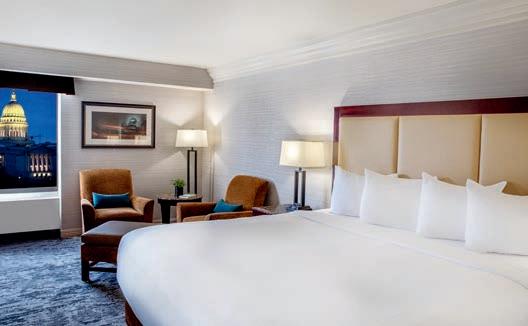
The Madison Concourse Hotel & Governor’s Club
Stephen D. Morton
David and Kato Perlman
Fred A. Wileman
ADDITIONAL SPONSORS
Dr. Thomas and Leslie France
Ronald J. and Janet E. Johnson
Von Briesen & Roper, s.c.
SINGLE TICKETS ON SALE madisonsymphony.org
Dates, artists, and programs subject to change. or 258-4141 and programs the Overture
Center Box O ce, or (608) 258-4141
MUSIC
RICHARD STRAUSS
Till Eulenspiegel’s Merry Pranks, Op. 28
WOLFGANG
AMADEUS MOZART
Piano Concerto No. 25 in C Major, K. 503
GABRIELA ORTIZ
Téenek – Invenciones de Territorio
OTTORINO RESPIGHI
Pines of Rome, P. 141
John DeMain, Conductor Emanuel Ax, Piano
Salon Piano Series
KATE LIU
SAT. NOV. 1 at 7:30 PM
Chopin
ADAM NEIMAN
SAT. JAN. 17 at 7:30 PM
Brahms, Prokofiev, Rachmaninoff
HILDA HUANG
Concert: FEB. 28 at 7:30 PM
Instrument Demo: MAR. 1 at 3 PM
Bach
ANGIE ZHANG
SAT. APR. 18 at 7:30 PM
Margaret Bonds, Clara Schumann, Beethoven
BILL CHARLAP
SAT. MAY 9 at 7:30 PM
SUN. MAY 10 at 2 PM
Jazz standards
INDIVIDUAL DONORS
Madison Symphony Orchestra
Madison Symphony Orchestra League
Friends of the Overture Concert Organ
The Madison Symphony Orchestra and our a liate organizations rely on generous donor support to fund the fulfillment of the Symphony’s mission each year. We gratefully acknowledge all individual donors for their gifts and sponsorships to the Madison Symphony Orchestra, Madison Symphony Orchestra League, and/or Friends of the Overture Concert Organ. Donors are listed according to the total amount of their monetary donations supporting the 2025-26 Season* as of January 4, 2026.
$20,000 & ABOVE
Lynn Allen-Ho mann & Michael Ho mann
Diane Ballweg
Charles & Elizabeth Barnhill
Barbara & Norman Berven
Rosemarie & Fred Blancke
Martha Casey
Lau & Bea Christensen
Marilyn Ebben
Peter & Leslie Overton
Zaia & Peleus Parker
Cyrena & Lee Pondrom
Walter & Karen Pridham Charitable Fund
Peggy & Tom Pyle
Richard & Pamela Reese
Brandon S. Hayes
Charles & Tammy Hodulik
Paul & Lynne Jacobsen
Nancy Jesse & Paul Menzel
Delinda & Je Johnson
Ronald J. & Janet E. Johnson
$3,500–$4,999
Rozan & Brian Anderson
Ellsworth & Dorothy Brown
Richard Cashwell
George Gay
W. Jerome Frautschi & Pleasant Rowland
Susan S. Harris
Myrna Larson
Roma Lenehan
Marvin J. Levy
Stephen Morton
David & Kato Perlman
Larry & Jan Phelps
Michael & Claire Ann Richman
Judith Werner
Jim & Jessica Yehle
One Anonymous Friend
$10,000-$19,999
Fernando & Carla Alvarado
Dr. Annette Beyer-Mears
Louise & Ernest Borden
Philip Daub
David Flanders & Susan Ecroyd
Joan Fudala & Richard Dike
Dr. Robert & Linda Graebner
Kay Schwichtenberg & Herman Baumann
John & Twila Sheskey Charitable Fund
Lise R. Skofronick
Thomas Rae Smith & Jennifer A. Younger
William Ste enhagen
Janet Strei
Judith & Nick Topitzes
Heidi Wilde & Kennedy Gilchrist
Fred A. Wileman
Three Anonymous Friends
$5,000-$9,999
Jon P. Axelrod
William & Claudette Banholzer
Chuck Bauer & Chuck Beckwith
Robert Benjamin & John Fields
Karl Bethke
Randy & Marcia Blumer
Patricia Brady & Robert Smith
Scott & Janet Cabot
Doug & Sherry Caves
Dennis & Lynn Christensen
Ann Coleman
James Dahlberg & Elsebet Lund
Jane Hamblen & Robert F. Lemanske
Kathleen Harker
Gary & Lynn Mecklenburg
Claudia Berry Miran
Elaine & Nicholas Mischler
Fred Mohs
Nancy Mohs
Kim & Bill Donovan
Bob Erb & Wendy Weiler
Steven Ewer & Abigail Ochberg
Michael & Emily Fitzpatrick
Dr. Thomas & Leslie France
Lori Grapentine & John Benton
Terry Haller
Valerie & Andreas Kazamias
Robert Kirchdoerfer
David Lauth & Lindsey Thomas
Ann Lindsey
Jonathan & Susan Lipp
Doug & Norma Madsen
Charles McLimans & Dr. Richard Merrion
Mark & Joyce Messer
Lorrie & Kevin Meyer
Margaret Murphy
Paul & Maureen Norman
Michael Oliva & Patricia Meyer
Joan D. Pedro
Pamela Ploetz & John Henderson
Myron Pozniak & Kathleen Baus
Beth & Peter Rahko
Doug & Katie Reuhl
Richard & Barbara Schnell
Rodney Schreiner & Mark Blank
Dan & Patty Schultz
Bassam Shakhashiri
Mary Lang Sollinger
Jerry & Vicki Swedish
Dr. Condon & Mary Vander Ark
Marc Vitale & Darcy Kind
Katie & Ellis Waller
Glenn & Jane Watts
Frances Weinstein
Greg & Jenny Williams
Anders Yocom & Ann Yocom Engelman
One Anonymous Friend
Tyrone & Janet Greive
John & Karla Groenenboom
Sharol Hayner
Mark Huth & Meghan Walsh
Phil La Susa & Dr. Jesse Sheldon
Jennifer & Jim Lattis
Linda & Michael Lovejoy
David Myers
Kellie & Ken Pederson
Reynold V. Peterson
Fred & Nancy Risser
Joe & Mary Ellyn Sensenbrenner
Harold & Marilyn Silvester
Anna Trull & John Sto et
Nancy & Edward Young
Bob & Cindy Zellers
$2,000–$3,499
Tom & Betty Akagi
Laura Albert & Terrence Polich
Mike Allsen & Robin Hackman
Emy Andrew
Gary Antoniewicz & Martha Taylor
Dennis Appleton & Jennifer Buxton
Jim & Sue Bakke
Kay & Martin Barrett
Je rey & Angela Bartell
Ellis & Susan Bauman
Larry Bechler
Anne & William Belt
Jo Bernhardt & Ralph Topinka
Bradford Brown & Maribeth Gettinger
Catherine Buege
Catherine Burgess
Larry & Mary Kay Burton
Donna Carnes
Betty Chewning & Family
David & Wendy Coe
Elizabeth A. Conklin
Steve & Shirley Crocker
Rick & Peggy Daluge
Becky Dick
Wallace & Peggy Douma
Eve Drury & Peter Beatty
Audrey Dybdahl
Fred Edelman
Gary Ernst
Kristine Euclide & Douglas Steege
Timothy & Renée Farley
Katharine Gansner
Dr. & Mrs. Frank Greer
Philip & Dale Grimm
Paul Grossberg & Dean Ziemke
Betty & Edward Hasselkus
Jim & Kathy Herman
Walter & Barbara Herrod
William Higbee
Cynthia S. Hiteman
Bradley Niemcek & Sharon Murphy
Kevin & Cheryl O’Connor
Kay & Pete Ogden
Dr. Zorba Paster & Penny Paster
Amy & Mark Pauli
Kari Peterson & Ben De Leon
Phila & Ronald Po
Steve & Robin Potter
John A. Rafoth
Christine & Robert Reed
Don & Carol Reeder
Janet Renschler
Kathryn Richardson
Bing & DeeDee Rikkers
James Roeber
Pat & Je Roggensack
Sarah Rose
Ron Rosner & Ronnie Hess
Robert Sharp & Axel Larsen
Robert Shumaker & Janet Kilde Shumaker
Dr. Beverly S. Simone
Reeves Smith & Glenna Carter
Lynn Stegner
The Stuart Family
Debra Dahlke & Robert Gake
Richard & Susan Davidson
Fred & Shirley Davie
Royce Dembo
Robert Factor
Michael & Anne Faulhaber
Marc & Marcia Fink
Richard & Patricia Friday
John & Christine Gauder
Don Gerend
Janice Grutzner
William & Nancy Haight
Bezalel & Betsy Haimson
George & Joan Hall
Dorothy Halverson
Curt Hastings
Fred Holtzman & Constance Lavine
Bobbie & Steve Jellinek
Teressa Smith
Chris & Ronald Sorkness
Sherri & Daniel Sta ord
Eric & Sandra Statz
Eileen & Michael Stenberg
Ross Swaney
Marcia E. Topel
Jon & Susan Udell
Frank & Mariana Weinhold
Julia Weiser
Derrith Wieman & Todd Clark
Eric & Margaret Wilcots
Helen L. Wineke
Judy Winkel
Susan & Rolf Wulfsberg
George & Sue Zagorski
Stan & Nancy Johnson
Stan & Nancy Johnson
Charles & Susan Kernats
Rolf
Rolf Killingstad
Four Anonymous Friends
Barbara Wolfe & Sue Four Anonymous Friends
Robert & Judy Knapp
Robert &
Ken & Elaine Kosier
Diane Adams
Stuart & Bonnie
Ei Terasawa Grilley
Thomas E. Terry
Paul & Sharon Ho mann
Ana and Paul Hooker
Charles James
Bob & Louise Jeanne
Maryl R. Johnson, M.D.
William S. Hiteman R. M.D.
Marilynn G. Thompson
Anne M.
Anne M. Traynor
Harry Tschopik
Jasper & Joanne Vaccaro
Jasper & Joanne Vaccaro
Selma Van
Selma Van Eyck
John & Pomolova
John Jorgensen & Olga Pomolova
Teri Venker
Darko & Judy Kalan
Darko & Kalan
Carol & Donald Wahlin
Terry & Mary Kelly
Terry
Catherine Kestle
Mooyoung Kim & Anna Myeong
James Klein & Mary Knapp
James
Dr. & Mrs. Ivan Knezevic
Patricia Kokotailo & R. Lawrence DeRoo
John & Barbara Komoroske
Mary
James & Karen Laatsch
Fern Lawrence
Richard Le er
Allan & Sandra Levin
Margaret Luby
Rod & Jo MacDonald
Ann Wallace
Roberta Kurtz & Margaret Schmidt
Roberta Kurtz & Schmidt
Jack Kussmaul
Richard & Judy Kvalheim
Richard & Kvalheim
Arra & Tom Lasse
Peggy Anderson
Patricia G.
John & Jane Wegenke
Faye Pauli Whitaker
Carolyn White
Dave Willow
Sarah & Eric Yanke
Fred Younger
Ledell Zellers & Simon Anderson
Six Anonymous Friends
$1,000–$1,999
Anne Altshuler & David Sulman
Gale Barber
Donald & Deborah Beduhn
Julie Marriott & David Harding
Julie Marriott & David
David & Ann Martin
Diane Mayland & Mike Hennessy
Wendy McCurdy
Joseph Meara & Karen Rebholz
Barb Melchert
Barbara J. Merz
Eugene Miliczky & Sarah Shippen
Jon & Cookie Miller
Christine & Je Molzahn
Mark & Nancy Moore
Deane Mosher & Frances Fogerty
Dennis & Karen Ne
David & Karen Benton
Gail Bergman
Ted Bilich & Jennifer Adams
Beth Binhammer & Ellen Hartenbach
Diane Bless
Randall Blumenstein & Marci Gittleman
Robert & Lynn Bolz
Bruce & Nancy Braun
Michael Bridgeman & Jack Holzhueter
Kirk Brown & Lori DiPrete Brown
Barbara & Ted Cochrane
Louis Cornelius & Pris Boroniec
Patricia Crowe
Charles Leadholm & Jeanne Parus
Jeanne Parus
Richard & Linda Martens
Stuart & Bonnie Allbaugh
Ruben & Wanda Anthony
Ruben & Wanda
Priscilla & Alexander Arsove
Baillies & Kevin Gould
Nancy Baillies & Kevin Gould
Janneke Baske
James & Diane Baxter
Joan &
Joan & Doug Maynard
Keith McDonald
Bonnie McMullin-Lawton & Jack Lawton
Patricia McQuiddy
Sharifa Merchant
Linda Mintener & Bob Jones
Robin Moskowitz
Genevieve Murtaugh
Thomas Nash III & Corinna Gries
Vicki & Marv Nonn
Dan & Judy Nystrom
Daniel O’Brien
James M. O’Brien, Ph.D.
& Jo Peterson
Gary & Mary Jo Peterson
William E. Petig
William E.
Susan & Jake Pierce Jacobsen
Judith Pierotti
Lester Pines & Roberta Gassman
Mary Pinkerton & Tino Balio
Pinkerton & Tino Balio
Kathleen & Robert Poi
Stephen & Margie Rankin
Tom Record & Voula Kodoyianni
Stephen & Rankin Record & Voula
Thomas Reid
Jacqueline Rodman
Bill & Rhonda Rushing
Kathleen Schell
Orange Schroeder
Philip Shultz & Marsha VanDomelen
John Sims
Robert & Suzanne Smith
Christine K.
Christine K. Beatty
Jim & Beecher
Jim & Eugenia Beecher
Ronald Benavides
Andrea & William Benton
Sharon M. Berkner
Jennifer & Patrick Berne
Michael Betlach
Dorothy A. Blotz
Julia Bolz
Daniel & Bormann
Daniel & Stacey Bormann
Catherine Briggs & Marthea Fox
Joyce A. Bringe
Thomas L. Bruckner
Wendy & Douglas Buehl
Jewel Carlson
Alexis M. Carreon
Catherine & Marthea A. & Buehl M.
Karen Childs Baker & Preston Baker
Birgit Christensen & Paul Rabinowitz
Karen Preston Christensen & Paul Rabinowitz
Quinn & Mike Christensen
R. Christian & Kathy Davis
Robert & Diane Dempsey
Paula & Bob Dinndorf
Glenn & Grace Disrude
Russell & Janis Dixon
Marlene Du eld & Terry Walton-Callaghan
John & Deidre Dunn
Robert & Diane Dunn
Paul Dvorak
Jane Eisner
Crystal Enslin
Enslin
Janet Etnier
Jean L. Feinstein-Lyon
Wes & Ankie Foell
Donna B. Fox
Robert & Janine Gage
Rosalee Gander
Barbara Gessner
Evan & Emily Gnam
Zachary Goldberger & Erin Fouch
Joel & Jacquie Greiner
Susan Gruber
Mary & Michael Myers
Casey & Eric Oelkers
Gerald & Diana Ogren
Julie Ottum & David Runstrom
Patricia Paska
Bobbi Petersen
Dr. Paul Polster
Gerald & Christine Popenhagen
Faith & Russ Portier
Patricia Bernhardt
Robert & Donna Betzig
Terry Bloom & Prudy Stewart
Miriam & Brian Boegel
Mel Bouche
Robert & Mary Brod
Daniel & Joyce Bromley
Charles & Joanne Bunge
Mary & Ken Buroker
Mark Kremer
Polly & Jim Kuelbs
Kathleen K. & Richard R. Kuhnen
Robert Lang
Roger & Sherry Lepage
Peggy Lescrenier
Calob Limberg
Leon Lindberg
Richard & Jean Lottridge
Hoyt Halverson & Katherine Morkri
Wava Haney
Arthur Hans & Terry Ellen Moen
Paul L. Hauri
Robert & Judith Havens
Gregg Heatley & Julie James
John & Rose Rasmus
Gregory Reed & Michael Zorich
John K. Rinehart
Sophia Rogers
Jim & Kitty Rosenberger
Matthew & Linda Sanders
Bela & Ruth Sandor
Mike Byrne & Roberta Carrier
David & Sarah Canon
Richard & Sandy Carlson
Bryan Chan
Evonna Cheetham
Linda Cohn & Gary Miller
Wendy & Fred Coleman
Joan Lundin
John & Mary Madigan
Karl & Vel Marquardt
Barbara C. Martin
Douglas & Linda McNeel
Doris Mergen
Ken Mericle & Mindy Taranto
Rose Heckenkamp-Busch & Luke Busch
Duane Hendrickson
Steven & Lynn Hodulik
Helen Horn & Ralph Petersen
William Houlihan & Mary Gerbig
Evelyn Howell
James & Cindy Hoyt
Bill & Randi Huntsman
Margaret & Paul Irwin
Kris S. Jarantoski
Rosemary & Lee Jones
Jerome & Dee Dee Jones
Jacqueline Judd & Michael Shulman
Maryanne & Bob Julian
Richard Karwatka
Vance & Betty Kepley
Charlene Kim
Larry M. Kneeland
Richard & Claire Kotenbeutel
Glenn Krieg
Catherine Krier
James Krikelas
The Lamers Family
Beverly Larson
David Lawver
Ed & Julie Lehr
Jane & Benny Leonard
Madelyn Leopold & Claude Kazanski
Vic & Sue Levy
Jane Lewis & Paul Nelson
Mike & Kathy Lipp
Richard & Judy Loveless
Maryellen MacDonald & Mark Seidenberg
Garrick & Susan Maine
Kathlyn Maldegen
Bruce & Ruth Marion
Lindsay Marty
Robert McCalla & Laurie Beardsley
Julie McGivern & Tom Smith
Marta Meyers & Ian Davies
Oscar Mireles
Rick & Jo Morgan
Faith & Kirk Morledge
Rob & Mary Savage
Fredrick & Karen Schrank
Gary & Barbara Schultz
Wayne Schwalen & Barbara Fleeman
Magdolna Sebestyen
Penelope Shackelford
Curt & Jane Smith
Lanny & Margaret Smith
Tricia & Everett Smith
Shirley Spade
Shelly Sprinkman
Gordon & Elizabeth Stephenson
Jurate Stewart
Millard & Barbara Susman
Rayla Temin
Mark & Daria Thomas
Mark & Nan Thompson
Ellen M. Twing
James J. Uppena
Janet M. Van Vleck
Michael & Ann Varda
Nancy Vedder-Shults & Mark Shults
John Walker
Toby L. Wallach
Ronald & Janet Wanek
John & Janine Wardale
David L. Weimer & Melanie Manion
Sally Wellman
Leonard & Paula Werner
Carola Winkle
Je rey Williamson
Six Anonymous Friends
$250–$499
Jason & Erin Adamany
Julius & Hildegard Adler
Sally E. Anderson
Lyle J. Anderson
Aurora BayCare Hospital X-Ray Team
George Austin & Martha Vukelich-Austin
Dennis & Beverly Ball
Rose Barroilhet
Linda & Howard Bellman
Jim Conway & Kathy Trace
Thomas Corbett
The Corden Family
Kathy Cramer & John Hart
Dawn Crim & Elton Crim Jr.
Ruth N. Dahlke
Gary Davis & James Woods
Laura & Erik Dent
Rahel Desalegne & Girma Tefera
James Donahue & Maria Mascola
Paula K. Doyle
Katrina Dwinell & Jane Oman
Timothy & Mary Ellestad
Jim & Jean Elvekrog
Phyllis Ermer
David Falk & JoAnne Robbins
Marshall & Linda Flowers
Drew Fondrk
Bobbi Foutch-Reynolds & Jim Reynolds
Clayton & Belle Frink
Dena & Casey Frisch
Paul Fritsch & Jim Hartman
John Gadow
Alan & Kathy Garant
Javier Garay
Russell & Suzanne Gardner
Fr. C. Lee & Edith M. Gilbertson
Dianne Greenley
Vicki & Alan Hamstra
Margaret Harrigan & Richard Ross
John Hayward & Susan Roehlk
John & Sarah Helgeson
Cornelia Hempe
Michael Hobbs & Sherry Boozer-Hobbs
Barbara S. Hughes
Paul & Sarah Johnsen
Paul Kent
Ray & Jane Kent
Connie Kinsella & Marc Eisen
Noël Marie & Steven Klapper
Chris & Marge Kleinhenz
Irwin Klibaner
Doug Knudson & Judith Lyons
Thomas Miller
Ann & David Moyer
Bill & De Nelson
Rick Niess & Laurie Elwell
Ron & Jan Opelt
David Parminter
James G. Pavlou & Marilyn J. Stephens
Barbara Peterman
Zachary Picknell
Sue Poullette
Gary & Lanette Price
John & Peggy Rapp
Kathleen Rasmussen
Sherry Reames
Linda Reivitz
Jane Reynolds
John Rose & Brian Beaber
Richard A. Rossmiller
Carol Ruhly
Madeline Sall
Wilton Sanders
Don & Barb Sanford
Je rey & Gail Schauer
Steven & Debra Schroeder
Andreas & Susanne Seeger
Richard Seybold
Victoria & Alan Sheldon
Carolin Showers
Karen Smith
Kathy & Gabor Speck
Carol Spiegel
James & Christina Steinbach
Andrew & Erika Stevens
Bruce & Carol Stoddard
Karen M. Stoebig
Karla Stoebig
David Stone
Elaine Strassburg
Kurt & Nikki Studt
Ulrika Swanson
David & Meg Tenenbaum
Barbara Jill Thomas
John & Bonnie Verberkmoes
Janet Vetrovec
Geke de Vries & Herman Felstehausen
Arnold & Ellen Wald
Scott Weber & Martha Barrett
Nancy Webster
Cleo & Judy Weibel
Urban Wemmerlöv & Mary Beth Schmalz
Amy Wencel
Jim Werlein & Jody Pringle
William White
John Young & Gail Snowden
Steven & Patty Zach
Thomas & Karen Zilavy
Debra Zillmer & Daniel Leaver
Six Anonymous Friends
$50–$249
Jonathan Accola
Arnold Alanen & Lynn Bjorkman
Barbara Anderson
Reed & Jan Andrew
Helene Androski & Larry Gray
Livia Asher
Brian & Tracy Bachhuber
Rachel Bain
Leigh Barker Cheesebro
George & Donna Beestman
Jeanne & Uriah Carpenter
Sally Carpenter & Barry Strauss
Susan Christensen
Kay Cipperly
Carol Clarke
Colleen Cleary & David Anderson
Randall & Pamela Clouse
Beverly Cnare Dusso
Barbara Constans
Bonnie & Marc Conway
Melissa Coons & Edward Jordan
Anne-Marie & Paul Correll
Ed & Vicki Cothroll
Randall Crow & Patricia Kerr
Bruce & Samantha Crownover
John Daane
Nanette Dagnon
Beverly Dahl
Michele Davanis Klaus & Michael Klaus
Suzanne Davis
Sally A. Davis
Douglas J. Deboer
Frances Degra
Diane & Dominic DeMain
Jeannine & Edouard Desautels
Kenneth & Molly Gage
Susan Gandley
Jill Gaskell
Laurie Gauper
Candice Gehl
Curt & Michelle Gehl
David & Gloria Gehl
Donna Gehl
Jane Gehl & Todd Thiel
The Joshua P. Gehl Family
Luke Gehl
Mark & Kathy Gehl
Mike & Pam Gehl
Michael George & Susan Gardels
Ari Georges
Shawn Gillen
Carl & Peggy Glassford
Mark & Catherine Isenberg
Karen Jeatran
Greg & Doreen Jensen
Aaron & Sarah Johnson
Dan & Janet Johnson
Doug & Kathy
Johnson
Heather Johnson
Theresa & Pell Johnson
Conrad & Susan Jostad
Robert & Barbara Justl
Kathy
Michelle & Christopher Kaebisch & Chuck Kamp
Corliss & Bill Karasov Keith
Mina Kato & Steve
Estelle Katz
Virginia Kaufman
Arlan Kay
William & Sharon Goehring
William & Sharon
Janice Golay
Joseph Kay
Marilyn Kay
Connie & Barry Golden
Robert & Dianne Gomez
Raj & Parvathi Gopal
Connie & Golden & Parvathi
Jane & Paul Graham
Anna Keld
Sherri Kelly Sherri & Jane Kent
Duane & JoAnn
Barker Cheesebro & Donna Beestman & Anderle
Mary Detra
Daniel & Lavonne Dettmers
Pat Behling & Ginger Anderle
Jeanne Behrend & Dan Fields
Jenna Behrman
Deb & John Belken
Ruth Benedict
Michael & Carla Di Iorio
Ulrike Dieterle
Paul DiMusto & Oberdoerster
Paul DiMusto & Molly Oberdoerster
Donalea Dinsmore
Dan & Carole
Dan & Carole Doeppers
Barbara Grajewski & Michael Slupski
David Gri eath & Catherine Loeb
Courtney Grimm
Diana Grove
Dale & Linda Gutman
Jennifer Haack
Kate Habrel
Magdalene Hagedorn
Ryan Hahn
Barbara & Michael Grimm Gutman Hahn
Raymond & Jane Kent Kexel
Melissa Keyes & Ingrid Rothe
Melissa & Rothe
Maureen Kind
Patricia M. King
Eric & Caroline Klemm
Marie Frances Klos
Peter & Emily Klug
Frances &
Daniel Knepper
Laurie & Gus Knitt
Donald Kometz
Bruce Bengtson
Karen Benson
Prentice Berge
Bruce Prentice
Kerry Berns & Joe Rossmeissl
Lynn & Cheryl Binnie
Lynn & Binnie
Ramsay Bittar
Meranda Dooley
Rosemary M. Dorney
Sue Dornfeld
Richard & Doris Dubielzig & Edward Dueppen
Rita E. Bogosh
Jonathan Boott
Cindy Borch
Katy Kenneth Edenhauser
Bob & Haimerl
Bob & Beverly Haimerl
Cleo Hall
Thomas & Vicki Hall
Craig & Gina Hallbauer
Jane Hallock & William Wolfort
Yvonne A. Bowen
Chris & Gretchen Brace
Steven Braithwait
Janet Brantmeier
Angela & Tom Breunig
Rita E. & Tom
Waltraud Brinkmann
Calvin Bruce & Cathy Caro-Bruce
Lou & Nancy Bruch
Gregory Buchberger
Ted & Judy Buenzli
Kevin & Tracey Buhr
Lynn Burke
Val & Tim Burland
Walter Burt & Deborah Cardinal
Julie Buss
Heather & Mark Butler
Ronald & Elizabeth Butler
Ann Campbell
Valerie Cappozzo
Alan & Ramona Ehrhardt
Ann Ellingboe
Rhea Emmer
William & Jill Emmons
Dave & Kathi Erickson
John & Joann Esser
Elizabeth Fadell
Linda Fahy
Jeanie Farmer
Paul Haskew & Nancy Kendrick
H. William & Susan Hausler
Cynthia Hawkinson
Dan Hayes
Gregg Heatley & Julie James
Jan & Maria Heide
Cheryl Heiliger
Steven & Kate Henderson
Ann Henne
Friedemarie & Thomas Farrar
Douglas & Carol Fast
Phillip & Deborah Ferris
Lorna Filippini & Clyde Paton
Alan & Cindy Finesilver
William Flader
Grace Fleming
John & Signe Frank
Raelene & LisaAnn Freitag
Janet & Byron Frenz
James Fromm
Barbara Furstenberg
Greg & Clare Gadient
Brian W. Heywood, M.D.
Diana Konkle
Mary Jo Kopecky
Daniel Jo
Douglas Kopp
Steven Koslov
Kevin & Theresa Kovach
Diane & Thomas Kramer
Michael G. Krejci
Scott & Cynthia Kuenzi
Michael G. & Kuenzi
Sheri & Jim
Sheri & Jim Kulling
Merilyn Kupferberg
Katherine Kvale & Thomas Schirz
Ann
Ann Lacy
Emma Lai & Marius Schradermeier
Paul Lambert & Anne Griep
Sherry & George Lang
and Johnson Families
Hietpas, Armstrong, and Johnson Families
Nona Hill & Clark Johnson
William & Sara Lee Hinckley
Les & Susan Ho man
Roger & Glenda Hott
William & Sara Lee & Glenda Hott Linda
Kent & Annette Hovie
Mandy Huber
Peter & Candace Huebner
Robert & Ellen Hull
Donald Huseby
Linda & Je Huttenburg
John & Karen Icke
Frank Iltis
Paul Lambert & Anne & &
Mary & Steve Langlie
Jim Larkee
Carl & Jerilyn Laurino
Carl & Laurino
Laurie Laz & Jim Hirsch
Richard & Lynn Leazer
Richard & Leazer
Sally Leong
Gary Lewis & Ken Sosinski
Lewis & Ken Sosinski
Nancy Lieg
Nancy
Steve Limbach & Karen Rinke
Bob & Lorenz
Bob & Sally Lorenz
Judith A. Louer
Dick & Cindy Lovell
Doug & Mary Loving
Dick & Lovell &
Kathy Luker
Nancy & Mark Mackenzie
Frank & Nancy Maersch
Mark & Linda Malkin
Chuck & Linda Malone
Richard & Rita Manning
Richard Margolis
Peter & Marjorie Marion
Jeanne Marshall
Kristin Martin & Lori Miller
Jim & Toni Mastrangelo
Edward Matkom
Paul Patenaude
Mitchell L. Patton
Phillip & Karen Paulson
John Pepple
Ernest J. Peterson
Roger & Linda Pettersen
Donna Jean Phelps & Thomas Phelps
Luke & Linda Plamann
Roger & Judy Plamann
Jacqui & John Shanda
Michael Shank & Carol Troyer-Shank
Sandy Shepherd
Daryl Sherman
Jackson Short
Christi & Pat Shortridge
Eve Siegel Beck
Thomas & Myrt Sieger
Nan Sievert
Liz Vowles
Greg Wagner & Fred Muci
Marty Wallace
Morris & Carolyn Waxler
Peggy & James Weber
Mary Webster
Steve & Pat Wehrley
Steven Wendor
David & Hannah Wessel
Bruce Matthews & Eileen Murphy
Gordon & Jan McChesney
Jan L. McCormick
Paul & Jane McGann
Cynthia McKenna
Bruce & Barbara McRitchie
Kate Meagher
Daniel & Laurel Medenblik
Christine & Russell Melland
Lori J. Merriam
Dale Meyer & Mary Seay
Mark Micek & Sarah Bahauddin
Stanley Michelstetter
Christine Miles
Susan Millar
Linda Miller
Margaret & Paul Miller
Mark Miller & Terry Sizer
Sharla Miller
Wendy Miller
Jerry & Maureen Minnick
Darlene & Charles Mistretta
Rolf & Judith Mjaanes
Douglas & Rosemary Moore
Jennifer Morgan
Terry Morrison
Gary & Carol Moseson
Bruce Muckerheide & Robert Olson
Craig & Karen Myers
Lynn Hallie Najem
Cheryl Namyst & Steve Konkol
Raymond Nashold
Jack & Carol Naughton
Mary & Susan Nelson
Deborah & Jim Neuman
Mary Lou Nord
Madeline & Tim Norris
Heidi & Tom Notbohm
Andrew Nowlan
Thomas & Barbara Oatman
Nicholas Olson
Richard & Marcia Olson
Richard & Mary Ann Olson
Thomas & Mary Ott
Elizabeth Palay
Pamela Palmer
James & Joan Parise
Barbara Park
Ann Pollock & James Coors
Diana Popowycz
Tom Popp
Sally & Jim Porter
Sarah Potts
Paula Primm
Mark E. Puda & Carol S. Johnston
Thomas & Janet Pugh
Randall & Deb Raasch
Donald & Roz Rahn
Kathryn Rasmussen
Loren & Margaret Rathert
Richard & Donna Reinardy
Drs. Joy & David Rice
Catherine Richard
Rick & Sara Richards
Bill & Joan Richner
Mark & Zoe Rickenbach
Diane Risley
Lorraine & Gary Roberts
Sara Roberts & Carolyn Carlson
Matt & Laura Roethe
Rosina Romano
Howard & Mirriam Rosen
Fred & Mary Ross
John Ross
Mildred J. Ross
Peggy Ross
John & Rachel Rothschild
Nathaniel Ruck
Robert & Nancy Rudd
Paul & Pam Rush
Janet Ruszala-Coughlin & Tim Coughlin
Dean Ryerson
Steven & Lennie Sa an
Paul Saganski
Beverly Sakofsky
Ruth M. Sanderson
Sinikka Santala & Gregory Schmidt
Dennis & Janice Schattschneider
Iva Hillegas Schatz
John & Susan Schauf
Dianne Schmidt
Thomas & Lynn Schmidt
Gerald Schneider
Beverly Schrag
Sandy & Joe Schulz
Ann & Gary Scott
Ann & Dayton Sederquist
Vicki Semo Scharfman
Patti & Mike Sensenbrenner
part of the experience.
Glen & Marie Siferd
Neal & Agnieszka Silbert
Sydnee Singer
Carolyn Sluder
J.R. & Patricia Smart
Derrick & Carrie Smith
Eileen M. Smith
Steve Somerson & Helena Tsotsis
Stephanie Sorensen
Keith Sperling
Gary & Jackie Splitter
Mary St. Claire
Robert & Barbara Stanley
Joanne Stark
Chuck Stathas
Gareth L. Steen
Franklin & Jennie Stein
Michael Stemper
Taylor Sto et
Jonathan & Jessica Storey
Eric & Emily James Strauss
Carol Strmiska
Rob & Mary Stroud
David & Shirley Susan
Steve & Lisa Sveum
Michael & Sarah Swanson
Matthew Sykes
Margaret Mischler Taylor
Mary & James Taylor
Pete & Ruthie Taylor
Cheri Teal
Howard & Elizabeth Teeter
Gerald & Priscilla Thain
Matthew Theiss
Glen Thio & Ka Her
Gary & Louise Thompson
Stephen Thompson
Anne Thurber & Yjan Gordon
Tom & Dianne Totten
Elizabeth Townsend & Daniel Shirley
Margaret Trepton
Judith A. Troia
Colleen & Tim Tucker
Mary Lou Tyne
Doris J. Van Houten
John & Shelly Van Note
The Veenendaal Family
Rebekah Verbeten
Elena Vetrina & Wallace Sherlock
Jan Vidruk
Angela Vitcenda & Jerry Norenberg
Karl & Ellen Westlund
Mary & Leo Wherley
Dorothy Whiting
Wade W. & Shelley D. Whitmus
Steven & Ellen Wickland
Nancy & Tripp Widder
Ernst & Connie Wiegeshaus
Candy Wilke
Eve Wilkie
Suzy Wilko
Bambi Wilson
Scott & Donna Wilson
Rick Wirch
Scott & Jane Wismans
Brad Wolbert & Rebecca Karo
Celeste Woodru & Bruce Fritz
Jon Woods
Nancy Woods
Joseph Wright
David Wuestenberg
Patricia Zastrow
Gretchen Zelle
Ron Zerofsky
Joan N. Zingale
41 Anonymous Friends
We also thank 121 donors for their contributions of $1 to $49.
* Total includes gifts supporting: MSO’s 2025-26 Annual Campaign; MSOL 2025-26 Events & General Support; 2025-26 Organ Concerts; Friends of the Overture Concert Organ’s 2025-26 Annual Campaign. MSOL and FOCO basic membership dues and fundraising event ticket purchases are not included. Giving thresholds listed here do not correspond to giving levels within specific campaigns included. We have made every e ort to ensure the accuracy of this list. If you have any questions or corrections, please contact our development department at (608) 257-3734.
Musician Feature
WENDY BUEHL
Violinist
I began playing with the Madison Symphony as a university student over fifty years ago, during Roland Johnson’s tenure as music director. At that time, the orchestra was rehearsing and performing at the downtown MATC building (the former Madison Central High School), using rehearsal rooms in the basement and performing on the high school-sized stage in the auditorium. The performance space wasn’t even large enough to allow all of the string players to be seated on the stage. Some of us were seated in front of the curtains, positioned on wedge-shaped platforms that compensated for the fact that we were actually on slanted ramps leading down to exit doors! The rehearsal schedule included five rehearsals and two performances stretched over a threeweek period. One of the rehearsals was often set up for strings alone, with the time split between sectionals (each section working on its own) and group rehearsal time.
Making the move to the Oscar Mayer Theater was a vast improvement for the orchestra. Here was a stage capacious enough to accommodate all of the players and a seating area that invited a larger audience. Aesthetically, the Oscar Mayer looked and felt like a real theater. This venue also meant that the orchestra could perform with world-class solo artists. It was a thrill to share the stage with virtuosos like Itzhak Perlman and Alicia de Larrocha.
Maestro DeMain’s arrival as music director stimulated a number of changes that elevated the orchestra to a higher level. The abbreviated
rehearsal schedule, with all of the rehearsals and performances compressed into a seven day period, meant that the first rehearsal would no longer be sight reading. It required that the musicians master their parts ahead of time in order to be prepared for a true rehearsal. At this time, more formal protocols were established for the length of rehearsals, the use of blind auditions, pay scales for players, overtime pay, excused absences, and rehearsal breaks. John also brought in up and coming young performers like Joshua Bell and Hilary Hahn, introducing Madison to the next generation of soloists. All of these changes, as well as John’s high expectations for the orchestra, lead to superior performances.
The transition to the Overture Center resulted in a huge leap for the orchestra. The amazing acoustics made it possible for the orchestra to play more nuanced dynamics and to achieve better balance between the sections. The size of the stage and the inclusion of the concert organ brought opportunities for an expansion of the orchestra’s repertoire, including the ability to perform with a larger chorus and larger brass and percussion sections. Overture Hall continues to be a treasure for Madison and a joy for performers.
From performing in a drab high school auditorium to experiencing the magnificent stage of Overture Hall has been a remarkable journey for me and for the orchestra. But through all of the changes and transitions, the joy of making music with my fellow musicians in the Madison Symphony has been a highlight of my life!
La Crosse Symphony’s Midnight in Paris
BUSINESS, FOUNDATION AND GOVERNMENT DONORS
FOUNDATION AND
Madison Symphony
Madison Symphony League
The Madison Symphony Orchestra and our a liate organizations rely on generous donor fund the of our mission each year. We gratefully acknowledge all companies, foundations and government grants, sponsorships, contributions, and gifts-in-kind.
Madison our donor our that to Madison League, Concert are to of for their Orchestra of the Overture donations as of December of the
Organizations that have contributed to the Madison Symphony Orchestra, Madison Symphony League, and/or Concert Organ are listed according to the total amount of their supporting the Season*
$100,000 OR MORE
Madison Symphony Orchestra Foundation
Madison Symphony Orchestra League
WMTV 15 News
$50,000–$99,999
Pleasant T. Rowland Foundation
$25,000–$49,999
American Printing
Irving and Dorothy Levy Family Foundation, Inc.
The Madison Concourse Hotel & Governor’s Club
Madison Magazine
Madison Media Partners
$15,000–$24,999
Capitol Lakes
$10,000–$14,999
John J. Frautschi Family Foundation
Lake Ridge Bank
Kenneth A. Lattman Foundation, Inc.
Madison Gas & Electric Foundation, Inc.
Marriott Daughters Foundation
PBS Wisconsin
Richman & Richman LLC
University Research Park
U.S. Bank Foundation
$5,000–$9,999
$2,500–$4,999
Health
Group Health Cooperative of South Central Wisconsin
Kohls & Mackie, LLC
Madison Arts Commission
Midwest Patrol & Investigative LLC
Sta ord Rosenbaum LLP
$1,000–$2,499
Baird/The Woodford Group
BRAVA Magazine
Promega Corporation
Sold with Faith Real Estate, Restaino & Associates
Veridian Homes Foundation
An Foundation
An Anonymous Foundation
Boardman Clark Law Firm
Dane Arts, with additional funds from the Endres
Lakes Inc.
The Evjue Foundation, Inc.
Fiore Companies, Inc.
Fiore Inc.
National Endowment for the Arts
Nimick Foundation
Nimick Forbesway Foundation
Wisconsin Arts Board with additional funds from the State of Wisconsin and the National Endowment for the Arts
The charitable arm of the Frautschi and the
Dane County Arts, with additional funds from the Endres Mfg. Company Foundation, The Evjue Foundation, Inc., charitable arm of The Capital Times, the W. Jerome Frautschi Foundation, and the Pleasant T. Rowland Foundation
DeWitt LLP
Exact Sciences
Overture Concert Organ includes 2025-2026 Madison Orchestra 2025-2026 2025-2026 Education and Madison Orchestra Sunset 2025-2026 Annual event ticket are have made ensure the accuracy
The Capital Times Kids Fund
Capitol Bank
Times Kids Fund Bank
Festival Foods
Google
Herb Kohl Charities
Josiah Macy Jr. Foundation
Josiah Jr. Foundation
Thermo Fisher Inc.
Thermo Fisher Scientific, Inc.
UW Health & Unity Health Insurance
UP TO $999
Above the Bar Marketing
UW Health & Health Insurance the Bar
*Total includes donations that support 2025-2026 Madison Symphony Orchestra Concerts, 2025-2026 Organ Concerts, 2025-2026 Education and Community Engagement Programs; Madison Symphony Orchestra League’s 2025-2026 Events and Activities including Symphony at Sunset 2025; and Friends of the Overture Concert Organ’s 2025-2026 Annual Campaign. Fundraising event ticket purchases are not included. We have made every e ort to ensure the accuracy of this list. If you believe an error has been made, please contact our development department at (608) 257-3734.
Fields Auto Group
Fields Auto
Hooper Corporation
J.H. Findor & Son Inc.
Reinhart Boerner Van Deuren s.c.
s.c.
Robinson Fund
The Steven P. Robinson Family Fund
Sub-Zero Group, Inc.
Sub-Zero Inc.
SupraNet Communications, Inc.
SupraNet Inc.
von Briesen & Roper, s.c.
Briesen & s.c.
West Bend Insurance Company
Wisconsin Public Radio
Woodman’s Food Markets
Alliant Energy Foundation
Matching Gifts Program
Alliant Foundation Gifts
Ascendium Education Group
Badger Bus
Ascendium Education Bus
Bobbi Petersen
Bobbi Petersen Photography
Choles Floral
Costco Wholesale Corporation
Farley’s House of Pianos
Wholesale House of Pianos list. If you believe an error has made, contact our 257-3734.
GE Healthcare
Hartmeyer Ice Arena
Heid Music and Heid Music
Family Charitable Fund
PLANNED GIVING: THE STRADIVARIUS SOCIETY
The individuals listed below have informed the MSO that they have included gifts for the Symphony in their estate plans. If you have remembered the Symphony in your will, living trust, or have made other arrangements for a future gift, we would love to know so we can thank you! We honor all requests for anonymity. Contact Casey Oelkers at (608) 260-8680 x228 for more information.
Fernando & Carla Alvarado
Emy Andrew
Edwin & Ruth Sheldon
Dr. Beverly S. Simone
Martha Jenny
Lois M. Jones
Harry D. Sage
Joel Skornicka
Dennis Appleton & Jennifer Buxton
Judy Ashford
Diane Ballweg
Margaret B. Barker
Chuck Bauer & Chuck Beckwith
Dr. Annette Beyer-Mears
Rosemarie & Fred Blancke
Shaila & Tom Bolger
Michael K. Bridgeman
JoAnn Six
Mary Lang Sollinger
Sharon Stark & Peter D. Livingston
Gareth L. Steen
Jurate Stewart
John & Mary Storer
Shirley Jane Kaub
Helen B. Kayser
Patricia Koenecke
Teddy H. Kubly
Arno & Hazel Kurth
James V. Lathers
Chalma Smith
Marie Spec
Charlotte I. Spohn
Evelyn C. Steenbock
Harry Steenbock
Alexis Buchanan & James Baldwin
Scott & Janet Cabot
Clarence Cameron & Robert Lockhart
Martha & Charles Casey
Elizabeth A. Conklin
James Dahlberg & Elsebet Lund
Barbara & John DeMain
Robert Dinndorf
Audrey & Philip Dybdahl
Jim & Marilyn Ebben
Endo Family Trust
George Gay
Tyrone & Janet Greive
Terry Haller
Robert Horowitz & Susan B. King
Richard & Meg LaBrie
Steven Landfried
David Lauth & Lindsey Thomas
Ann Lindsey & Charles Snowdon
Claudia Berry Miran
Elaine & Nicholas Mischler
Stephen D. Morton
Margaret Murphy
Reynold V. Peterson
David & Kato Perlman
Judith Pierotti
Michael Pritzkow
John Rafoth
Gordon & Janet Renschler
Joy & David Rice
Joan & Kenneth Riggs
Harry & Karen Roth
Richard Tatman & Ellen Seuferer
Marilynn Thompson
Ann Wallace
Richard & Barbara Weaver
Carolyn & Ron White
John Wiley & Andrea Teresa Arenas
Mary Alice Wimmer
Helen L. Wineke
Ten Anonymous Friends
ESTATE GIFTS RECEIVED
Elizabeth S. Anderes
Donald W. Anderson
Helen Barnick
Norman Bassett
Nancy Becknell
DeEtte Beilfuss-Eager
Theo F. Bird
Marian & Jack Bolz
Kenneth Bussan
Margaret Christy
Frances Z. Cumbee
Teddy Derse
Dr. Leroy Ecklund
Mary J. Ferguson
Linda I. Garrity
Maxine A. Goold
Beatrice B. Hagen
Martin R. Hamlin
Sybil A. Hanks
Elizabeth Harris
Julian E. Harris
Jane Hilsenho
Carl M. Hudig
Dr. Stanley & Shirley Inhorn
Renata Laxova
Stella I. Leverson
Lila Lightfoot
Jan Markwart
Geraldine F. Mayer
Mr. & Mrs. Frederick W. Miller
Janet Nelson
Sandra L. Osborn
Elmer B. Ott
Ethel Max Parker
Josephine Ratner
Mrs. J. Barkley Rosser
Virginia Swingen
Gamber F. Tegtmeyer, Jr. & Audrey Tegtmeyer
Katherine Voight
William & Joyce Wartmann
Sally & Ben Washburn
Sybil Weinstein
Mr. & Mrs. J. Wesley Thompson
Glenn & Edna Wiechers
Elyn L. Williams
Margaret C. Winston
Jay Joseph Young
Two Anonymous Friends
A Legacy of Music
The Madison Symphony Orchestra is a grateful recipient and faithful steward of planned gifts from individuals who have remembered the Symphony in their estate plans. Through a planned gift, you can help preserve MSO’s legacy of great music for generations to come. All planned gifts qualify for Stradivarius Society recognition, and requests for anonymity will be honored.
Learn more madisonsymphony.org/stradivarius
“I have designated a gift for the Symphony in my will to help ensure the orchestra will have outstanding artistic leadership for generations to come.”
– Mary Alice Wimmer, Stradivarius Society Member
In honor of Mike Allsen
Gale Barber
In honor of Janneke C. Baske
Bruce and Barbara McRitchie
In honor of Barbara Berven
Janet Renschler
In honor of Ann Bowen
Scott and Janet Cabot
In honor of Barbara DeMain
Anonymous
In honor of John DeMain
Diane and Dominic DeMain
Pamela Ploetz and John Henderson
Anonymous
In honor of Tammy and Charles Hodulik
Steven and Lynn Hodulik
In honor of Jing “Connie” Li
Tom and Heidi Notbohm
In honor of Elliot Lesperance
Jennifer Vasam
In honor of the Madison Symphony Chorus
John Heaton
In honor of Elspeth Stalter-Clouse
Randall and Pamela Clouse
In honor of John Toussaint
Reynold V. Peterson
In honor of Carolyn White
Sharon M. Berkner
In honor of Laura White
Anonymous
In honor of Greg Zelek
Christine & Je Molzahn
Margy Wilko
Anonymous
In honor of Greg Zelek & Amanda Elfman
Suzy Wilko
In Greg Zelek & Amanda Elfman Wilko
In memory Aas
In memory of Paul Aas
Melodie Aas
Mary Dzick
Joe Aas and Nancy Morris
Joe Aas and Nancy Morris
R. Patrick and Laura Morelli
TRIBUTES
The Madison Symphony Orchestra gratefully acknowledges the following donors for their contributions honoring family & friends, as of January 4, 2026. Tributes are recognized for one year following the gift date.
David Sherlock and Jennifer Gottwald
In memory of Bert Adams
Diane Adams
In memory of Norman C. Anderson
Peggy Anderson
In memory of Susan H. Axelrod
Jon P. Axelrod
In memory of Adolph and Eugenie Bolz
Cathy and Eric Wilson
In memory of Jack and Marian Bolz
Joan Bolz Cleary and Je Cleary
Cleo Hall & as 2026. one the
In memory of Marian Bolz
Samuel C. Hutchison
In memory of Barbara Ann Brown
Kirk Brown and Lori DiPrete Brown
Brian W. Heywood, M.D.
In memory of Jim & Betty Bruce
Samuel C. Hutchison
In memory of Stephen Caldwell
Judith Werner
In memory of Robert Carwithen
Samuel C. Hutchison
In memory of Wayne Chaplin
Gail Bergman
In memory of Jim Ebben
Marilyn Ebben
In memory of Jon S. Enslin
Crystal Enslin
In memory of Anita Healey
Valerie and Andreas Kazamias
Christine and Robert Reed
In memory of Perry Henderson
Elaine and Nicholas Mischler
Shirley Inhorn
David and Vicki Cary
Stanley Inhorn
Douglas Kopp
Rhea Emmer
Dave
Henry and Carol Ebert and Kathi Erickson
Jeanie Farmer
Robert and Linda Frautschy
Candice Gehl
In memory Stan and Inhorn
Stan and Shirley Inhorn
Harry and Linda
Harry and Linda Argue
Patricia Bernhardt
Ramsay Bittar
Tyrone and Janet Greive
Becky Dick and Janet Greive
William and Sara Lee Hinckley
William and Sara Lee
Stan and Nancy Johnson
Stan and Johnson
Valerie and Andreas Kazamias
Elaine and Nicholas Mischler
Ruth Sheldon, M.D.
Judith and Nick Topitzes
Donna and Roger Wetzel
Anonymous
In memory of Dr. Edith G. King
Samuel C. Hutchison
In memory of Helen Klibaner
Irwin Klibaner
In memory of John Komoroske
The Armstrong Family
Aurora BayCare Hospital X-Ray Team
Jeanne Behrend and Dan Fields
Jenna Behrman
Deb and John Belken
Karen Benson
Susie Berberet
Mark and Gayle Boerschinger
Rita E. Bogosh
Janet Brantmeier
Barbara and James Brueckner
Angela and Tom Breunig
Ted and Judy Buenzli
Mark and Rita E. and Tom and Buenzli
Valerie Cappozzo
Valerie
Richard and Carlson
Richard and Sandy Carlson
Colleen and David Anderson
Colleen Cleary and David Anderson
Mary and Jack Davison
Mary Detra
Maureen and James Drunasky
Curt and Michelle Gehl
David and Gloria Gehl
Donna Gehl
Jane Gehl and Todd Thiel
The Joshua P. Luke Gehl
Gehl Family
Mark and Kathy Gehl
Mike and Pam Gehl
Janet and Marc Gehl Vincent
Connie and Barry Golden
Diana Grove
Patricia Hable Zastrow
Craig and Gina Hallbauer
Sharon and Joel Haroldson
Cynthia Hawkinson
Ann Henne
The Hietpas Family
Kent and Annette Hovie
Mandy Huber
The Johnson Family
Robert and Barbara Justl
Peter and Emily Klug
Johnson and
Donald Kometz
Diana Konkle
Alan and Toots Krueger
The Lamers Family
Angie and Scott Lawrence
The Liebzeit Family
Alan and Toots Lamers and Scott Lawrence Liebzeit
Mary and Bill Lundstrom
Mary and Bill Lundstrom
Sue and Ray Lux
Sue and Lux
Jim and Toni Mastrangelo
Christine and Russell Melland
Cheryl Namyst and Steve Konkol
Marge and Carroll Pieper
Roger and Judy Plamann
Jim and Toni and and Carroll and Plamann
David and Jane Rahn
Rosina Romano
Jim and Kitty Rosenberger
Mildred K. Ross
Peggy Ross
Jim and Ross
Paul and Pam Rush
Beverly Sakofsky
Sandy and Joe Schulz
Ann and Dayton Sederquist
Mark and Diane Selz
Patti and Mike Sensenbrenner
Christi and Pat Shortridge
Mary St. Claire
James Strother
Steve and Lisa Sveum
Michael and Sarah Swanson
Mary and James Taylor
The Veenendaal Family
Peggy and James Weber
Mary and Leo Wherley
Ed and Bonnie Wilson
Four Anonymous Friends
In memory of Barbara Landau
Anonymous
In memory of Joan Lippincott
Samuel C. Hutchison
In memory of Dr. C.B. Martin, Jr.
Barbara C. Martin
In memory of Dr. Donald McDonald
Samuel C. Hutchison
In memory of Margaret ElizabethMcEvilly
Victoria Fine
In memory of Mary Mohs
Fred Mohs
In memory of Sandra Osborn
Samuel C. Hutchison
In memory of Lillian Porcaro
Alexis M. Carreon
In memory of Grace Potts
Sarah Potts
In memory of Maurice and Arlene Reese
Richard and Pamela Reese
In memory of Will Risley
Diane Risley
In memory of Judith Saganski Paul Saganski
In memory of Dr. Pearl Sanders
Valerie Shatavsky
In memory of Jennie Biel Sheskey
John and Twila Sheskey Charitable Fund
In memory of Durwin Smith
Valerie and Andreas Kazamias
In memory of Joan Marie Smith
Rozan and Brian Anderson
In memory of Chuck Snowdon
Ann Lindsey
In memory of John Lloyd Straughn
Susan Ramsey
In memory of Patricia D. Struck
Larry Bechler
In memory of Christina CuthbertStuart
The Stuart Family
In memory of Les Thimmig
Patricia Crowe
In memory of Carol and John Toussaint
Elaine and Nicholas Mischler
Piano Specialists
In memory of John Toussaint
Samuel C. Hutchison
Reynold V. Peterson
In memory of Nicki L. Towner
Zachary Goldberger and Erin Fouch
In memory of Daniel Van Eyck
Barbara J. Merz
In memory of Margaret C. Winston
Paul and Susan Erickson
In memory of Ed Young
Valerie and Andreas Kazamias
Elaine and Nicholas Mischler
In memory of Barbara Zanoni
Burwell Enterprises, LLC
Kelly Gwiazda
Kathy Hunter
Cheratee James
Jay Kennedy
Kylie Reinhart
Mary Schulz
Courtney Thomas
Julie Woodward
A young woman has died of unknown natural causes – or her mother that her husband murdered her. Shaken and resolute, her mother journey out the truth and deliver justice for her daughter.
Based on the real story of the 1897 Greenbrier Ghost, Everlasting Faint a true crime drama, a ghost and an all-American opera. Don’t miss Madison Opera’s rst world over composed Madison’s own Scott Gendel.
13 & 15, 2026 |
2026 IN
TRANSLATIONS is story, miss premiere in 30 years, by
WITH
Any upbeat music tonight may remind you of our community. This is purely a coincidence.
When it comes to senior living, Capitol Lakes simply has the right
“feel.”
Allegro. Giocoso. Vivace.
Not the expected adjectives to describe a senior living community, for sure. But if the terms fit, they fit. We invite you to see it (and feel it) for yourself at a personal tour. Call today.
CENTENNIAL ANNIVERSARY DONORS
We are deeply grateful to these donors who have made gifts or commitments for the Madison Symphony Orchestra’s Centennial Anniversary to support special projects, programs, or performances, as of December 18, 2025.
$100,000+ CENTENNIAL CHAMPIONS
Diane Ballweg
Joel and Kathryn Belaire
Norm and Barbara Berven
W. Jerome Frautschi
Myrna Larson
Pleasant T. Rowland Foundation
Judith and Nick Topitzes
$50,000 - $99,999
Madison Community Foundation
Madison Gas & Electric Foundation, Inc.
Peggy and Tom Pyle
$25,000 - $49,999
Jim and Susan Bakke
Lau and Bea Christensen
John J. Frautschi Family Foundation
Madison Symphony Orchestra League
Elaine and Nicholas Mischler
Kay Schwichtenberg and Herman Baumann
$10,000 - $24,999
Fernando and Carla Alvarado
Scott and Janet Cabot
Capitol Lakes
James Dahlberg and Elsebet Lund
Larry Hands and Karen Kendrick-Hands
John J. Frautschi Family Foundation, in honor of John DeMain
Marriott Daughters Foundation
Gary and Lynn Mecklenburg
David and Kato Perlman
Pamela Ploetz and John Henderson, in honor of John DeMain
Joe and Mary Ellyn Sensenbrenner
$5,000 - $9,999
Je rey and Angela Bartell
John W. Erickson
Paul and Susan Erickson, in memory of Margaret C. Winston
David Falk and JoAnne Robbins
David Flanders and Susan Ecroyd
Dr. Robert and Linda Graebner
Terry Haller
Kathleen Harker
Hooper Corporation
J.H. Findor & Son Inc.
Nancy Mohs
The Parker Family
Lynn Stegner
Peter and Leslie Overton
Reynold V. Peterson
Thomas E. Terry
Jim and Jessica Yehle
$2,500 - $4,999
Rozan and Brian Anderson
Rosemarie and Fred Blancke
BMO
Ellsworth and Dorothy Brown
Catherine Buege
Steven Ewer and Abigail Ochberg
Dr. Thomas and Leslie France
Kelly Family Foundation Inc.
Allan and Sandra Levin
Mark and Nancy Moore
Dennis and Karen Ne
Reynold V. Peterson
Cyrena and Lee Pondrom
Beth and Peter Rahko
Doug and Katie Reuhl
Richman & Richman LLC
Fredrick and Karen Schrank
Bassam Shakhashiri
Mary Lang Sollinger
Stark Company Realtors
Lynn Stathas
U.S. Bank Private Wealth Management
Jasper and JoAnne Vaccaro
UP TO $2,499
Adesys IT Specialists
Mike Allsen and Robin Hackman
Ellis and Susan Bauman
Michael Bridgeman and Jack Holzhueter
Capitol Bank
Doug and Sherry Caves
Cavi, Fortune & Associates
Dawn Crim and Elton Crim Jr.
Farley’s House of Pianos
Tyrone and Janet Greive
Jane Hamblen and Robert F. Lemanske
Brandon S. Hayes
Bob and Louise Jeanne
Valerie and Andreas Kazamias
David Lauth and Lindsey Thomas
Ann Lindsey
Linda and Michael Lovejoy
Charles McLimans and Dr. Richard Merrion
Stephen Morton and Rochelle Stillman
Jeanne Myers
Myron Pozniak and Kathleen Baus
Janet Renschler and Sandra Dolister
Orange Schroeder
Lise R. Skofronick
Sharon Stark
Carolyn White
IN-KIND
American Printing
BRAVA Magazine
Fiore Companies, Inc.
Madison Media Partners
Surroundings Events and Floral
WMTV 15 News
UNIVERSITY OPERA PRESENTS
MARCH 2026
TICKETS
Carol Rennebohm Auditorium – Music Hall
Musi c
A Gift of Music
Thank you for attending this Madison Symphony Orchestra concert!
Did you costs of present from allowing from al performa
know ticket sales cover less than half the presenting concert season? Contributions dedicated MSO patrons bridge this gap, people walks to experience thrilling live orchestral performances in Overture Hall. to Annual Fund today knowing you have helped share these magnificent concerts with others in your community.
ten d ing t hi s chest r a con cert! d Stock
The Soldier’s Tale by Igor Stravinsky
Make a gift the MSO Fund to pride in View at 2026
An intimate benefit concert where music, story, and insight converge.
giving levels and donate madisonsymphony.org/individual
WAYS G IV E
Check Credit Card
Donor Advised Fund QCD from your IRA
Appreciated Matching Gift from Employer TO Monthly sustaining gift
Notes & Narratives is Wisconsin Youth Symphony Orchestras’ signature benefit concert experience, pairing a deep, engaging exploration of a single masterwork with a complete live performance, enriched by new context, collaboration, and perspective.
Featuring members of the Wisconsin Chamber Orchestra and Madison Symphony Orchestra, conducted by Kyle Knox, with special guests Kanopy Dance and narration by James Ridge, this year’s program brings Stravinsky’s The Soldier’s Tale vividly to life.
Sunday, April 19 | MYArts
Join fellow music lovers, arts patrons, and community leaders for an evening that invites you to listen more deeply and hear the music in a new way.
Learn more & reserve your seat: WYSOmusic.org/Notes-Narratives-2026
James Ridge, Narrator
Kyle Knox,Conductor
Robert E. Cleary, Choreographer
ENDOWMENT GIVING: THE CENTURY SOCIETY
We gratefully acknowledge our Century Society donors, who have made commitments of $100,000 or more to the Madison Symphony Orchestra’s endowment through outright or planned gifts, as of December 2025. Their gifts create a solid financial foundation upon which the MSO can realize its vision to be a leader in classical music performance, education, community engagement, and artistic innovation for generations to come.
our Madison as of a upon which the MSO can a artistic come.
Please support our advertisers and let them know you saw their ad in the Madison Symphony Orchestra program book. Interested in advertising with us? Visit madisonsymphony.org/ads to learn more. 5 American Printing
Capitol Lakes
New Century madisonsymphony.org/endowment a of
Century Society members are always welcome. Visit madisonsymphony.org/endowment to learn more about endowment giving and view a full list of endowment donors.
Con vivo 39 Farley’s House Of Pianos
Farley’s Salon Piano Series
Fiore Companies
Lake Ridge Bank
Carla and Fernando Alvarado
Dennis Appleton and Jennifer Buxton
Diane Ballweg
Chuck Bauer and Chuck Beckwith
Barbara and Norman Berven
Dr. Annette Beyer-Mears
Rosemarie and Fred Blancke
Eugenie Mayer Bolz Family Foundation
Jim and Cathie Burgess
Martha and Charles Casey
Margaret Christy
Pat and Dan Cornwell
James F. Crow
James Dahlberg and Elsebet Lund
William and Alexandra Dove
The Evjue Foundation, Inc.
Linda I. Garrity
George Gay
George and Candy Gialamas
Tyrone and Janet Greive
Terry Haller
Carl M. Hudig
Dr. Stanley and Shirley Inhorn
Patricia Kokotailo and R. Lawrence DeRoo
Arno and Hazel Kurth
Myrna Larson
James Victor Lathers
Peter Livingston and Sharon Stark
Madison Symphony Orchestra League
Claudia Berry and David E. Miran
Nicholas and Elaine Mischler
David and Kato Perlman
John L. Peterson
Sheila Read
The Reuhl Family
Pleasant T. Rowland
Harry D. Sage
JoAnn Six
Gareth L. Steen
Harry and Evelyn C. Steenbock
Steinhauer Charitable Trust
Thomas E. Terry
Marilynn Thompson
Judith and Nick Topitzes
Katherine and Thomas Voight
William and Joyce Wartmann
Elyn L. Williams
Margaret C. Winston
Six Anonymous Friends
The Madison Concourse Hotel
Madison Opera
Madison Magazine
Madison Media Partners 27 Madison Gas & Electric Foundation, Inc. 27 Madison Veterinary Specialists 15 Oakwood Chamber Players
PBS Wisconsin 48 Supranet 43 University of Wisconsin Opera 35 Wisconsin Public Radio 44 Wisconsin Youth Symphony Orchestra 41 WMTV 15 News
OVERTURE HALL INFORMATION BOARDS & ADMINISTRATION
RESTROOMS
Women’s and men’s restrooms are located on each level of Overture. Family assist/gender inclusive restrooms, available to persons of any gender identity and expression, are available in the following areas:
• Lower-Level Rotunda: to the right of the stairway.
• First floor lobby / Overture Hall: near coat check.
• Second floor: Gallery 2—second door to the left o the elevators.
Amenities at gender-inclusive restrooms include:
• Lockable door to provide privacy for individual users
• Ample room for an assistant/family member, if needed
• Accessible sink, stool and urinal (floor level)
• Changing stations
• Power-assist doors (Level 1 restrooms only)
ACCESSIBILITY
Overture Center is fully accessible to persons with mobility, hearing, and visual impairments. Ushers are available at each concert to assist you. Wheelchair or transfer seating is available; please notify the Overture Center Box O ce when purchasing your ticket. If you require an assistive-listening device, please alert an usher at the concert. Braille programs are also available upon request. Please contact Heather at hrose@madisonsymphony.org at least three weeks prior to the concert you wish to attend.
GUEST CONSIDERATIONS
The musicians and your fellow audience members thank you!
• Please arrive early to ensure plenty of time to get through security and to be seated. If you arrive late, you will be seated during an appropriate break in the music at the discretion of the house sta . If you need to leave during the concert, please exit quietly and wait to be reseated by an usher at an appropriate break.
• Please feel free to take photos before and after the concert, and during intermission! Once the lights dim, please turn o all cell phones and electronic devices.
• Please do not wear perfumes, colognes or scented lotions as many people are allergic to these products.
• Smoking is not permitted anywhere in Overture Center for the Arts.
• The coat-check room is open when the weather dictates and closes 20 minutes after the performance ends.
• Food and beverages are available at bars and concession stands in the Overture Lobby. Beverages are allowed in Overture Hall, but please enjoy food in the lobby. Please unwrap cough drops and candies before the concert begins.
Please take note: We will adhere to all public health guidelines and cooperate with Overture Center for the Arts to ensure your safety. We invite you to visit madisonsymphony.org/health for more information on health and safety. Overture Center safety information can be found at overture.org/health
MADISON SYMPHONY ORCHESTRA INC. BOARD OF DIRECTORS, 2025-2026
OFFICERS
Michael Richman, Chair
Janet Cabot, Secretary
Doug Reuhl, Treasurer
Ellsworth Brown, Immediate Past Chair
Barbara Berven, Member-at-large
Oscar Mireles, Member-at-large
Derrick Smith, Member-at-large
Lynn Stathas, Member-at-large
Anna Trull, Member-at-large
DIRECTORS
Lynn Allen-Ho mann
Brian Anderson
Ruben Anthony
Barbara Berven
Rosemarie Blancke
Ellsworth Brown
Janet Cabot
Cecilia Carlsson
Bryan Chan
Elton Crim
James Dahlberg
Robert Dinndorf
Audrey Dybdahl
Marc Fink
Jane Hamblen
Paul Ho mann
Mooyoung Kim
Phillip La Susa
David Lauth
Robert Lemanske
Ann Lindsey
Marta Meyers
Oscar Mireles
Richard Morgan
Leslie Overton
Jon Parker
Lester Pines
Michael Richman
Sophia Rogers
Carole Schae er
John Sims
Derrick Smith
Lynn Stathas
Todd Stuart
Anna Trull
Jasper Vaccaro
Ellis Waller
Eric Wilcots
Michael Zorich
ADVISORS
Elliott Abramson
Michael Allsen
Carla Alvarado
Je rey Bauer
Ted Bilich
Camille Carter
Martha Casey
Laura Gallagher
Tyrone Greive
Michael Hobbs
Mark Huth
Stephanie Lee
José Madera
Joseph Meara
Gary Mecklenburg
Larry Midtbo
Abigail Ochberg
Greg Piefer
Cyrena Pondrom
Margaret Pyle
Jacqueline Rodman
Kay Schwichtenberg
Mary Lang Sollinger
Judith Topitzes
Carolyn White
Anders Yocom
Stephen Zanoni
LIFE DIRECTORS
Terry Haller
Valerie Kazamias
Elaine Mischler
Nicholas Mischler
Douglas Reuhl
HONORARY DIRECTORS
Jennifer Berne, President Madison College
Kathy Evers, FirstLady of the State of Wisconsin
Melissa Agard, DaneCountyExecutive
DIRECTORS EMERITUS
Helen Bakke
Wallace Douma
Fred Mohs
Stephen Morton
Beverly Simone
John Wiley
EX OFFICIO DIRECTORS
Rozan Anderson
Mark Bridges
Rose Heckenkamp-Busch
William Ste enhagen
EX OFFICIO ADVISORS
Dan Cavanagh
Daniel Davidson
Josh Biere
MADISON SYMPHONY ORCHESTRA FOUNDATION
INC. BOARD, 2025-2026
OFFICERS
Nicholas Mischler, President
Jon Parker, Vice President
Robert Reed, Secretary-Treasurer
DIRECTORS
Ellsworth Brown
Joanna Burish
Jill Friedow
Juan Gomez
Jane Hamblen
Nicholas Mischler
Jon Parker
Gregory Reed
Robert Reed
Douglas Reuhl
Michael Richman
MADISON SYMPHONY ORCHESTRA LEAGUE BOARD OF DIRECTORS, 2025–2026
OFFICERS
Rozan Anderson, President
Don Sanford, President-Elect
Ledell Zellers, Recording Secretary
Janet Renschler, Corresponding Secretary
Leslie Overton, Treasurer
Michael Richman, MSO Board Chair
Barbara Berven, Immediate Past President/ Nominations
Louise Jeanne, VP Administration
Jackie Judd, AVP Administration
Kathy Forde, VP Communications
Cathy Buege, AVP Communications
Kathy Forde, AnnualReport
Lori Poulson, VP Education (and Youth Docent Programs)