Madison Symphony Orchestra, Inc. Heather Rose, Editor
Email: hrose@madisonsymphony.org
All rights reserved. May not be produced in any manner, in whole or in part, without written permission from Heather Rose, Marketing Communications Manager.
For advertising information, contact: Heather Rose (608) 260-8680 x231 hrose@madisonsymphony.org
#madisonsymphony
Overture Center Box O ce
Single Tickets: (608)
Ticket O ce Hours: Mon. – Fri., 11:00 a.m. to 5:00 p.m. Sat. 11:00 a.m. to 2:00 p.m.
LAND ACKNOWLEDGMENT
As we gather in this space for these concerts, the Madison Symphony Orchestra acknowledges the HoChunk Nation’s ancestral lands and celebrates the rich traditions, heritage, and culture that thrived long before our arrival. We respectfully recognize this Ho-Chunk land and a rm that we are better when we stand together.
SPONSORS
thank you
to our generous sponsors for supporting this performance
MAJOR SPONSORS
Friends of the Overture Concert Organ
Myrna Larson
Jennifer Younger and Thomas Rae Smith
ADDITIONAL SPONSORS
Mark Huth and Meghan Walsh
The Overture Concert Organ is the gift of Pleasant T. Rowland.
Support for all Overture Concert Organ programs is provided by the Diane Endres Ballweg Fund.
We wish to thank our other organ contributors, the Malmquist Family, Margaret C. Winston, and Friends of the Overture Concert Organ.
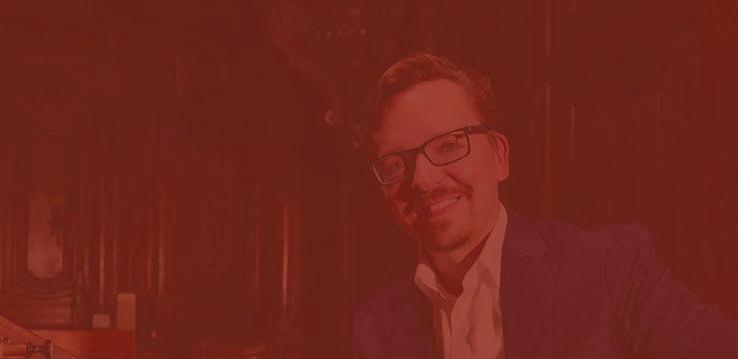
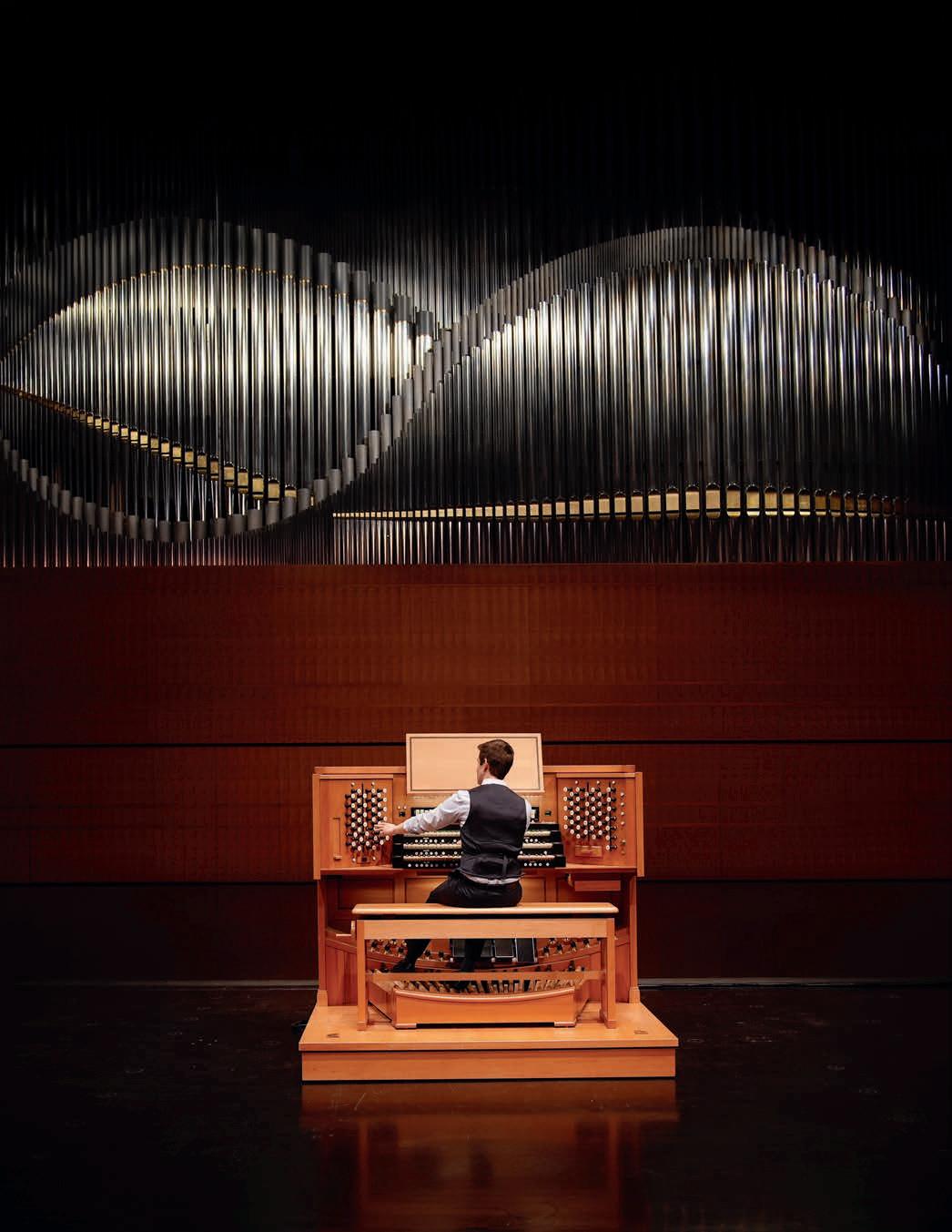
Greg Zelek is the MSO’s Principal Organist and Elaine and Nicholas Mischler Curator of the Overture Concert Organ.
PROGRAM
Overture Concert Organ Series
SubscriptionProgram No. 3
Tuesday, February 24, 2026 | 7:30 pm
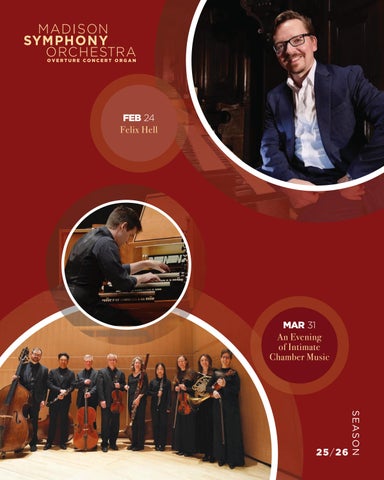
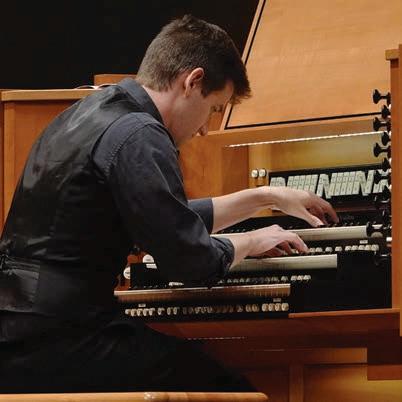
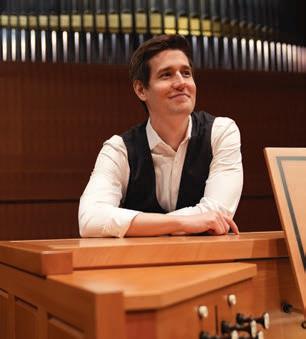
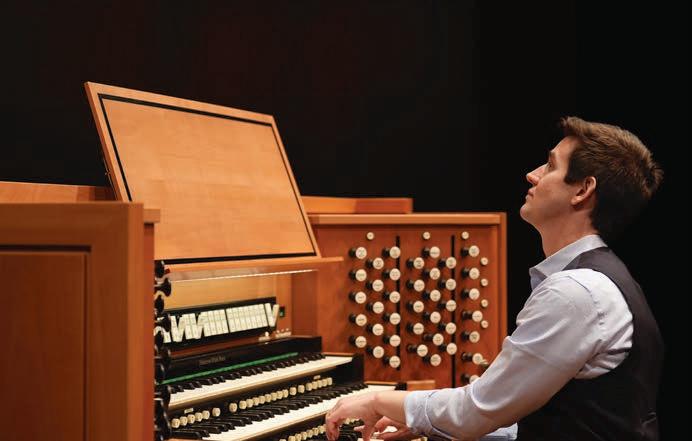
Felix Hell, Organ
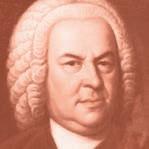
JOHANN SEBASTIAN BACH (1685-1750)
Sinfonia from Cantata No. 29, arr. Marcel Dupré
WOLFGANG AMADEUS MOZART (1756-1791)
Fantasia in F minor, K. 608
SAMUEL BARBER (1910-1981)
Adagio for Strings, Op. 11, arr. William Strickland
LUDWIG VAN BEETHOVEN (1770-1827)
Symphony No. 5 in C minor, Op. 67, arr. Felix Hell
Allegro con brio
Andante con moto
Scherzo: Allegro Allegro
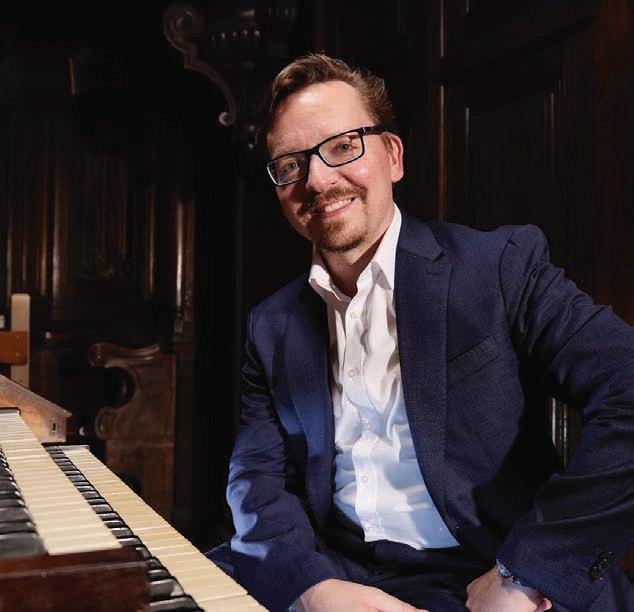
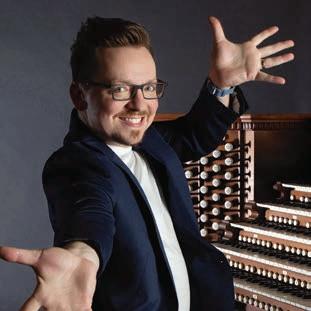
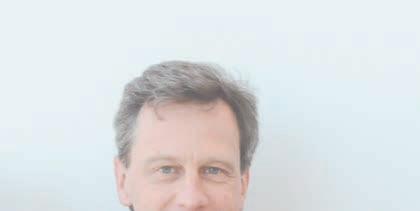
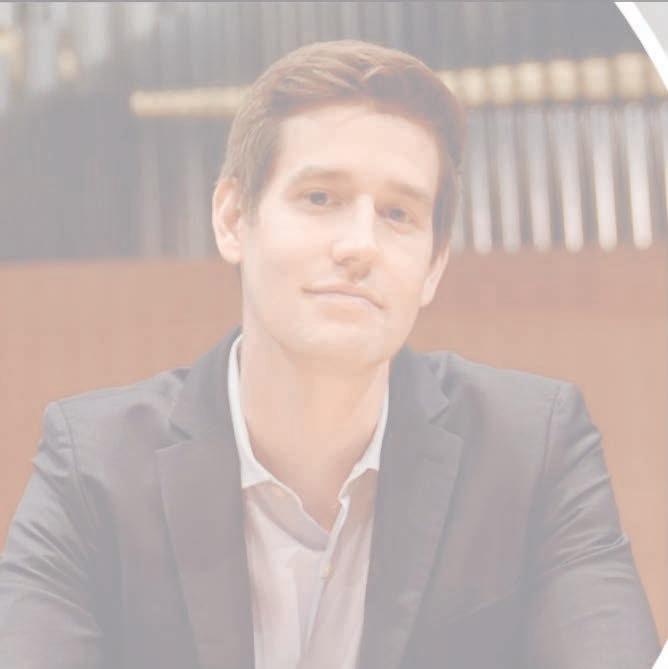
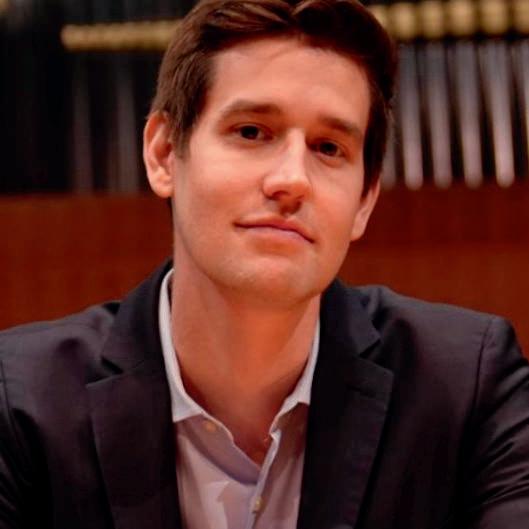
FELIX HELL Organ
A native of Germany, Felix Hell is one of the most sought after concert organists in the world. He has been featured as a recitalist and concerto soloist in more than 1000 concerts throughout North America, Europe, Asia and Australia. The American Organist raved that he “sets standards that older and honored players would struggle to equal.”
Past venues include Disney Hall in Los Angeles, Davies Symphony Hall in San Francisco, Lincoln Center for the Performing Arts in New York, the Esplanade in Singapore, Dewan Filharmonik Petronas in Kuala Lumpur, Tchaikovsky Hall in Moscow, Great Philharmonic Hall in St. Petersburg, National Center for the Arts Weiwuying in Kaohsiung, National Theatre and Concert Hall in Taipei, as well as Yongsan Art Hall in Seoul. Furthermore, Mr. Hell has performed in the cathedrals of Berlin, Regensburg, Riga, Bogota, Reykyavik, Munich, Ulm, Speyer, Worms, and Passau.
Mr. Hell has been concerto soloist with the Baltimore Symphony, Kaohsiung Symphony Orchestra, Busan Philharmonic, McGill Chamber Orchestra, Charleston Symphony Orchestra, New England Conservatory Orchestra, Mid-Atlantic Symphony Orchestra, National Academy Orchestra of Canada, Jacksonville Symphony Orchestra,
Pfalztheaterorchester Kaiserslautern, and the Deutsche Streicherphilharmonie.
Felix Hell’s discography now includes 13 CDs, with his latest recording, “Organ Fantasies: Masterworks by Bach, Liszt and Reger,” marking a significant addition to his celebrated body of work. Published in October 2023 by Universal Music Group, this exceptional album was recorded at the National Kaohsiung Center for the Arts Weiwuying, showcasing the largest Pipe Organ in Asia. The instrument, a grand creation with 127 stops and 9,085 pipes, represents the magnum opus of German organ builder Klais. This album continues Felix Hell’s tradition of exploring the depth and breadth of organ music, bringing both historical reverence and innovative interpretation to the forefront.
His project “Music Across America” allows him to travel with his own Touring Organ, performing organ concertos and recitals in spaces that do not house pipe organs, liberating the instrument from its historic confines.
Felix Hell is known for his diverse and innovative programming, drawing upon a repertoire encompassing five centuries. Furthermore, he has received global recognition for his marathon performances of the entire organ works of J.S. Bach, which encompass about 250 compositions and close to 20 hours of performance time. He has since performed the complete Bach cycle four times, most recently in 2013 in Seoul, Korea.
Mr. Hell is an avid supporter of new music for organ and frequently collaborates with composers.
Felix Hell studied at the Juilliard School in New York, the Curtis Institute of Music in Philadelphia (BM), the Peabody Institute in Baltimore (AD, MM, DMA).
In 2007, he received Johns Hopkins University’s prestigious Outstanding Graduate Award.
For more than 20 years Mr. Hell was Organ Artist Associate at Saint Peter’s Lutheran Church in Manhattan. He is currently Artist in Residence at the United Lutheran Seminary in Gettysburg. In 2011, Felix Hell was appointed Distinguished Visiting Artist at Kosin University in Busan, South Korea.
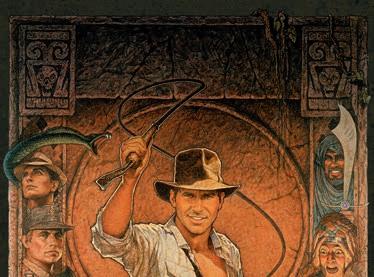
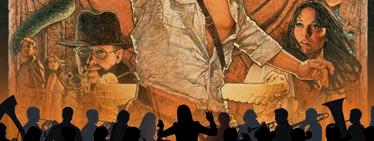
Madison Symphony Orchestra’s MSO at the Movies presents Indiana Jones and the Raiders of the Lost Ark™ Live in Concert featuring John Williams’ GRAMMY® Award-winning score performed live to the film led by conductor Kyle Knox at Overture Hall.
Williams has scored each Indy adventure, including the final installment of the iconic franchise, Indiana Jones and the Dial of Destiny . He has received multiple Academy Awards® and more than 50 Oscar® nominations. Williams is the Academy’s mostnominated living person to date and the second-most nominated person in the history of the Oscars®. He also received numerous British Academy Awards (BAFTA), GRAMMYs®, Golden Globes®, Emmys®, as well as several gold and platinum records.
Originally released in 1981 as a collaboration between George Lucas and Steven Spielberg, Raiders redefined the possibilities of adventure cinema and launched actor Harrison Ford to legendary status.
Indiana Jones is the classic hero in this adventure set in the 1930s which follows the quick-witted and determined archaeologist as he hunts for the Lost Ark of the Covenant. Often facing insurmountable odds, Indy always manages to succeed in the nick of time, joined by endearing companions and opposed by notorious villains.
With an impressive team of supporting actors including Karen Allen, John-Rhys Davies, Denholm Elliott, and Paul Freeman, combined with innovative special e ects techniques by Industrial Light & Magic, Raiders has captured the spirits of movie-goers for generations and continues to inspire adventures yet to come.
MAJOR PERFORMANCE SPONSORS
Madison Media Partners
Lake Ridge Bank
Zaia and Peleus Parker
Hooper Corporation
PROGRAM NOTES
J. Michael Allsen
FEB 24, 2026 program notes by
There’s a well-known quote to the effect that: “You can’t play a symphony alone: it takes an orchestra.” If any instrument is capable of proving this wrong, it is the organ, with its flexibility and vast palette of tone colors. This program by guest organist Felix Hell include transcriptions of orchestral pieces by Bach and Barber and an unusual work by Mozart written originally for mechanical organ. And to close, Mr. Hell plays his own arrangement of one of the greatest of all symphonies, Beethoven’s triumphant fifth.
Johann
Sebastian Bach (1685-1750)
Sinfonia from Cantata No. 29, arr. Marcel Dupré
talented son Wilhelm Friedemann. It is heard here in an adaptation by the great French organist and composer, Marcel Dupré (1886-1971).
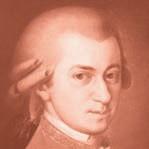
Wolfgang Amadeus Mozart (1756-1791)
Fantasia in F minor, K. 608
funereal passage that returns at several points to link the piece together. The contrasting episodes include a pair of stern fugues at the beginning and end and a long, lyrical central passage that sounds like a lovely aria from a Mozart opera.
Samuel Barber (1910-1981)
Adagio for Strings, Op. 11, arr. William Strickland
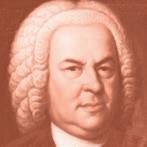
J. S. Bach did not invent the Lutheran church cantata—a multi-movement setting of sacred texts—but his cantatas are the finest examples of the form. As the Kantor of Leipzig’s Thomaskirche, Bach was expected to produce a cantata every week. In his first years in Leizig, Bach composed no less than five annual cycles of cantatas: each cycle including some 60 works, one appropriate to each Sunday of the Church Year, and special cantatas for Christmas, and the main feasts of Advent and Lent. Of these 300 works, nearly 200 survive. The Cantata No. 29, Wir Dankendir, Gott (“We thank you, O God”), however, was not for a Sunday service, but a civic one, a ceremony celebrating the election of the Leipzig city council on August 27, 1731. While the organ was usually in the background in Bach’s cantatas, supporting voices or playing continuo, the festive opening Sinfonia to CantataNo.29 includes a prominent virtuoso part for the instrument—virtually a short solo concerto for organ. Bach was e ective at reusing his own music, and adapted this part from one of his partitas for solo violin. The result was a virtuoso showpiece intended either for Bach himself or for his
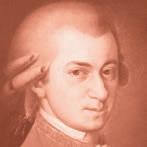
In October 1790, Mozart accepted one of the more unusual commissions of his career—to write music for a mechanical organ. There was a vogue at the time for “automata” of all sorts, and mechanical organs, which featured pieces laboriously programmed and played automatically were particularly popular. Composers as prominent as Handel, C.P.E. Bach and Haydn had already written pieces for mechanic al organ, and Beethoven would try his hand at the medium a few years later. In this case, the instrument was owned by one “Herr Müller” (in reality, Count Deym von Stržitéž, who had adopted the name Müller after he had been forced to flee Vienna after a duel). Müller was planning to open a mausoleum in honor of the late Field Marshal Baron von Loudon, and the centerpiece of this was to be an hourly performance of “Funeral Musique” by “Herr Kapellmeister Mozart.” For his part, Mozart does not seem to have been particularly enthusiastic about the commission, complaining to his wife that: “If it were for a large clock and would sound like an organ, then I might get some fun out of it. But, as it is, the works [of Müller’s instrument] consist solely of shrill little pipes, which sound too high-pitched and too childish for my taste.” However, he eventually completed three works for the mechanical organ, the most successful of which, the Fantasia in F minor, was completed on March 3, 1791. The Fantasia was quickly published in various versions following Mozart’s death, and became particularly popular as a keyboard piece. Set in a broad rondo form it begins with a solemn
In 1937, when the venerable conductor Arturo Toscanini was organizing the group that was to become the NBC Symphony Orchestra, he expressed an interest in programming new music by American composers. His colleague Artur Rodzinsky suggested the young Samuel Barber. Toscanini contacted Barber and Barber promptly sent two new works: his First Essay for Orchestra, and an arrangement for string orchestra of the Adagio movement of his String Quartet No.1. Barber waited through the orchestra’s first season for a reply and when the scores were finally returned without comment, he began dejectedly to look for a new orchestra to play them. In the summer of 1938, Barber was in Italy with his partner Gian-Carlo Menotti. Menotti suggested a visit to the Toscaninis at their summer villa, but Barber refused to go. When Toscanini asked why Barber had not come, Menotti o ered a weak excuse about Barber being ill. Toscanini replied: “Oh, he’s perfectly well; he’s just angry with me, but he has no reason to be. I’m going to do both of his pieces.” (It seems that Toscanini had already memorized the scores— he did not ask for them again until the day before the concert!) Both works were successful at their November 1938 premiere, and Toscanini recorded both soon afterwards with the NBC Orchestra.
The Adagio for Strings has come to have an association with tragedy— particularly with great public events of death and mourning— JOHANN
SAMUEL BARBER
LUDWIG
that Barber never really intended. It was played directly after the radio announcement of President Roosevelt’s death in 1945, and similarly after the Kennedy assassination in 1963. In my case, I well remember performing in a Madison Symphony Orchestra concert a few weeks after the 9/11 attacks, when the Adagio was played as an unannounced prelude in tribute to the victims— to devastating emotional effect, Because of these associations, it has also been used in film and television to underscore tragic moments—most notably in Platoon and The ElephantMan, but also in many other scores. Shortly after Barber’s death, composer Ned Rorem said of the Adagio: “If Barber, twenty-five years old when it was completed, later reached higher, he never reached deeper into the heart.”
It is the stark simplicity of this music that makes it so effective. A simple diatonic melody builds gradually from its quiet beginning through thickening texture, canonic imitation, and increasing dissonance to an intense emotional climax as the melody reaches its highest register. After this peak, there is a brief return to the opening texture and a quiet conclusion that dies away to nothingness. The version heard here is by the American organist and conductor William Strickland (1919-1881). After a series of prestigious organ posts, culminating on the bench of Calvary Church in New York City, Strickland spend much of his career as a conductor, beginning as the first music director of the Nashville Symphony Orchestra in 1946. A great champion of American music, he was responsible for editing a number of works for organ by American composers like Barber.
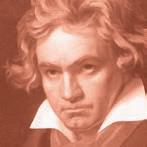
Ludwig van Beethoven
(1770-1827)
Symphony No. 5 in C minor, Op. 67, arr. Felix Hell
“It is merely astonishing and grandiose.”
- Johann Wolfgang
von Goethe
Although preliminary sketches of Beethoven’s Symphony No. 5 date from as early as 1804, the bulk of the work was written in 1807-08, at roughly the same time as the Symphony No. 6. Both symphonies were performed for the first time at a benefit concert in Vienna on December 22, 1808. The program for this landmark (marathon!) event also included excerpts from his Mass in C and the concert aria Ah, perfido, together with premieres of two works with Beethoven himself at the piano, the PianoConcerto No. 4 and the hastily-composed ChoralFantasy. After a bit of initial resistance from audiences and fellow musicians—this was, after all, a truly avant garde work—the Symphony No. 5 was recognized as a masterpiece, and has remained the single most familiar of Beethoven’s works since then.
This was a remarkable work for its time…or any time. Though not as long as his groundbreaking “Eroica” symphony of 1803, this work is played by an expanded orchestra that includes instruments seldom heard in earlier symphonies: piccolo, contrabassoon, and trombones. Beethoven was obviously proud of this innovation, and wrote to Count Franz von Oppersdorf that “...this combination of instruments will make more noise, and what is more, a more pleasing noise than six kettledrums!” Also new is the degree to which all of the four movements are linked thematically. The famous four-note motive of the opening movement reappears in all three successive movements, and nearly all of the main musical ideas are linked in some way.
There is no more recognizable motive in Western music than the opening four notes of the first movement. Whether or not Beethoven attached a specific meaning to this motto is unclear. His first biographer, Anton Schindler reported that Beethoven referred to this motive as “Fate knocking at the door,” but this may be apocryphal. Later times have attached all sorts of meanings it. For example, during World War II, because of its identity with the Morse Code “V,” it became the musical emblem of Allied victory. At the same time, it was viewed by the Nazis as one of the most purely “German” nationalistic works. In purely musical terms, however, Beethoven’s use of this rhythm in the opening movement is a work of genius. With two statements of this four-note motto, Beethoven brusquely tosses aside the stately Classical tradition of long, slow introductions, and jumps directly into the body of the movement (Allegro con brio). The opening theme is almost entirely spun out from the motto, and even the second theme, stated sweetly, is brazenly announced by the motto from the brass. The motto is also the focus of the development section. The headlong rush of the recapitulation is abruptly broken by a brief solo cadenza (played in the original by oboe), seemingly at odds with the nature of this movement, but actually a logical continuation of the main theme. Beethoven reserves his most savage fury for the coda, the longest single section of this movement, and another section of intense development.
The second movement (Andante con moto) is a very freely-constructed theme and variations. The theme is laid out first by strings and then more robustly. In the first variation, this is ornamented by delicate tracery. In the second, the theme is sparsely outlined, and in the third theme is almost completely obscured by rushing lines. At this point Beethoven launches into a section of very free
development, beginning with a lovely pastoral passage.
The Scherzo (Allegro) begins mysteriously in the low register, but soon picks up as much power as the opening movement, with a statement of the motto by the brass. The central trio moves from minor to major, and has a blustering theme in the lower strings developed in fugal style. When the main idea returns, it is strangely muted, and it quickly becomes apparent that this movement is not going to end in any conventional way. In place of a coda, there is a long and mysterious interlude, building gradually towards the most glorious moment in this work: the triumphant C Major chords that begin the Finale.
The fourth movement (Allegro) is where Beethoven suddenly augments the orchestra with trombones and contrabassoon. This orchestral e ect, probably inspired by contemporary opera, is stunning, and is replicated in Mr. Hell’s organ arrangement. The opening group of themes is noble and forceful and the second group, is more lyrical, but no less powerful. New material is introduced in the closing bars of the exposition. The development focuses on the second group of themes, expanding this material enormously. Just as the development section seems to be finished, there is a reminiscence of the Scherzo— bewildering at first, but then perfectly logical as it repeats the movement’s transitional passage and leads to the return of the main theme. While the recapitulation is rather conventionally laid out, the vast coda continues to break new ground. As in the development section, things seem to be winding to close when Beethoven takes an unexpected turn: in this case a quickening of tempo to bring the symphony to a conclusion in a mood of grand jubilation.
to our generous sponsors for supporting this performance
P R ESENTING SPONSOR
William Stefenhagen
MA J O R SPONSORS
Peter and Leslie Overton
Judith Werner, in memory of Stephen Caldwell
Condon and Mary Vander Ark
The Overture Concert Organ is the gift of Pleasant T. Rowland.
Support for all Overture Concert Organ programs is provided by the Diane Endres Ballweg Fund.
We wish to thank our other organ contributors, the Malmquist Family, Margaret C. Winston, and Friends of the Overture Concert Organ.
Greg Zelek is the MSO’s Principal Organist and Elaine and Nicholas Mischler Curator of the Overture Concert Organ.
PROGRAM
Overture Concert Organ Series Subscription Program No. 4
Tuesday, March 31, 2026 | 7:30 pm
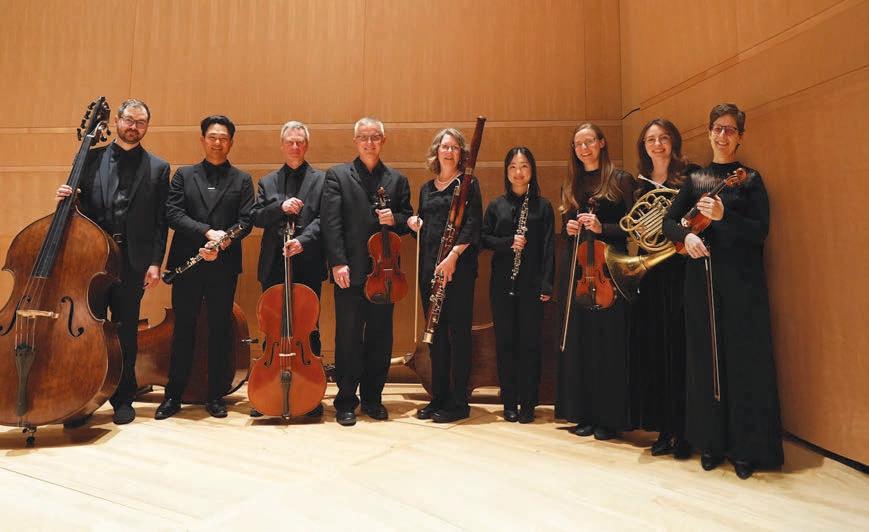
Greg Zelek, organ
Leanne Kelso, violin 1
Hillary Hempel, violin 2
Christopher Dozoryst, viola
Karl Lavine, cello
David Scholl, bass
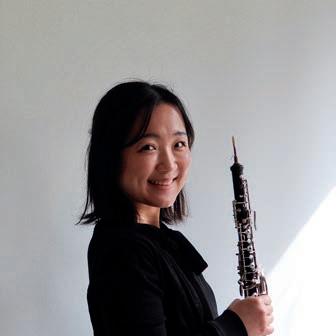
Izumi Amemiya, oboe
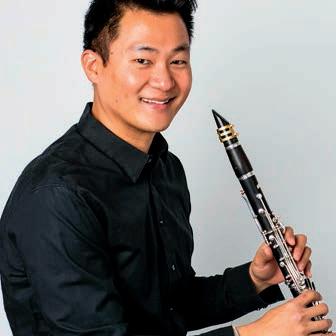
JJ Koh, clarinet
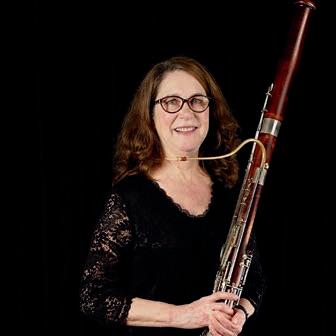
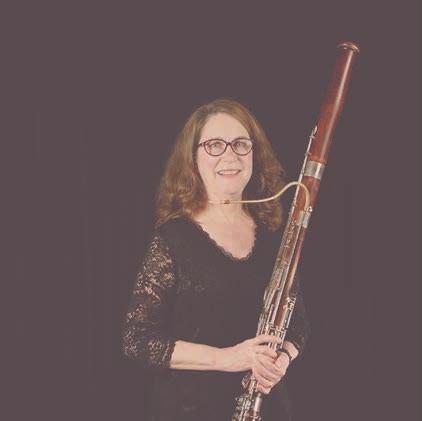
Cynthia Cameron, bassoon
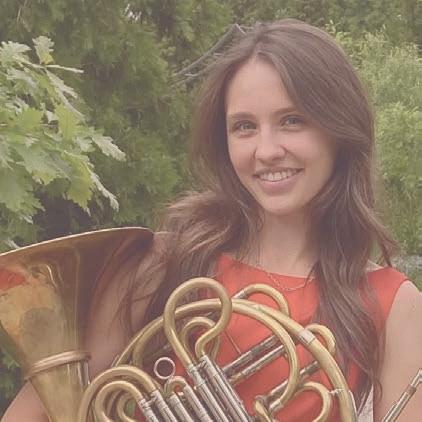
Emma Potter, horn
SAMUEL COLERIDGE-TAYLOR (1875-1912)
Finale from Nonet in F minor, Op. 2
ALL
ANTONÍN DVOŘÁK (1841-1904)
Largo from the Symphony No. 9 in E minor, Op. 95 (From the New World)
MS. IZUMI
WOLFGANG AMADEUS MOZART (1756-1791)
Adagio from Concerto for Clarinet and Orchestra in A Major, K.622
MR. KOH
WOLFGANG AMADEUS MOZART
Rondo: Allegro from Concerto No.3 in E-flat
Major for Horn and Orchestra, K.447
MS. POTTER
ÉMILE WALDTEUFEL (1837-1915)
Skaters Waltz (Les Patineurs), arr. Greg Zelek
MR. ZELEK
MICHEL CORRETTE (1709-1795)
Allegro from Sonata in D minor, Op.20, No.2
MS. CAMERON
HENRY MANCINI (1924-1994)
Theme from The Pink Panther
MS. CAMERON
ASTOR PIAZZOLLA (1921-1992)
Winter from Four Seasons of Buenos Aires
MS. KELSO
MR. LAVINE
WILHELM MIDDELSCHULTE (1863-1943)
Perpetuum Mobile for Pedals Alone
MR. ZELEK
GEORGE FRIDERIC HANDEL (1685-1759)
Organ Concerto in G minor, Op. 4, No. 1, HWV 289
Larghetto e staccato
Allegro
Adagio
Andante ALL
LEANNE KELSO
Violin
Leanne Kelso enjoys a varied career as a performer and teacher in the Midwest. She is the associate concertmaster of the Madison Symphony and assistant concertmaster of the Wisconsin Chamber Orchestra. Leanne teaches a vibrant studio of violinists and violists at the University of Wisconsin-Whitewater, where she also leads the Chancellor’s Quartet and the Baroque Ensemble. Recent solo performances include the Beethoven Violin Concerto with the Lake Forest Symphony and Bruch’s Scottish Fantasy with Symphony 847 in Chicago. As a chamber musician, she performs with the UW-Whitewater Piano Trio, Bach Dancing and Dynamite Society in Madison, and the Illinois Chamber Music Festival in Bloomington.
HILLARY HEMPEL
Violin
Music is a gift, a language, a way to share what composers have written; to express and create emotions and colors through sound. These bring Hillary Hempel joy while both teaching violin lessons privately and performing music: orchestral, chamber, and solo. Originally from Lyons, Illinois, Hillary moved to Madison, Wisconsin after becoming a member of Madison Symphony Orchestra and Wisconsin Chamber Orchestra in the fall of 2017. Since 2023, she has served as a member of the Hunt String Quartet through Madison Symphony, where she has the opportunity to share music with elementary school children, along with her wonderful colleagues. She is a member of the Avanti Piano Trio and a newly formed string quartet called the Galaxy String Quartet. She subs in Quad Cities Symphony Orchestra, Orchestra Iowa, and Oakwood Chamber Players. She played Brahms Violin Concerto with Middleton Community Orchestra in 2022. Hillary was a member of the Civic Orchestra of Chicago. She attended Colburn Conservatory of Music and Northwestern University. She studied with Robert Lipsett, Danielle Belen, and Almita Vamos. When Hillary is not playing the violin, she enjoys running, hiking, and camping in any season, and spending time with her husband Paul, family, and friends.
CHRISTOPHER DOZORYST
Viola
Christopher Dozoryst serves as Principal Viola with the Madison Symphony Orchestra, a position he has held since 2007. He was the featured soloist with the symphony in September 2017, performing Harold in Italy by Hector Berlioz. Christopher also works with the Madison Symphony’s internationally recognized Heartstrings Program as the violist for the Rhapsodie String Quartet. Highlights of his involvement with the quartet include a 2013 tour of Germany, with performances in Wiesbaden and Freiburg. Additionally, Christopher has been a member of the Wisconsin Chamber Orchestra since 2005. He is also the violist and a founding member of the Madison-based Pecatonica String Quartet, who regularly perform throughout the Midwest region.
Christopher earned his BA in Music Performance from the University of Wisconsin-Madison in 1997 and his MMU in Viola Performance from Carnegie-Mellon University in 2000. He and his family live in Madison, WI.
KARL LAVINE
Cello
Karl Lavine is Principal cello with the Madison Symphony Orchestra and the Wisconsin Chamber Orchestra. As a member of the Madison Symphony’s Heartstrings Program, Karl performs in many special needs communities throughout the Madison area. He has held faculty positions at Luther College, Illinois Wesleyan University and UW Whitewater. As a past member of the Milwaukee based contemporary music ensemble Present Music, Karl has premiered and recorded many ensemble and solo works. He was also a member of the Kepler String Quartet, which recorded the complete cycle of 10 string quartets by American composer, Ben Johnston for the New World Records label. Currently, he is the director of the Chamber Music Program for the Wisconsin Youth Symphony Orchestras.
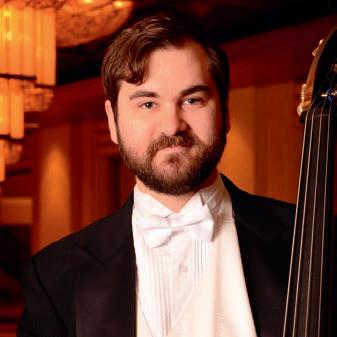
DAVID SCHOLL Bass
Double Bassist David Scholl leads an active career as a performer and educator. Currently he serves as principal bass of both the Madison and Quad City Symphonies. Previously he has been a member of the Illinois and Dubuque symphonies. Chamber music highlights include: Midsummer’s Music Festival, University of Wisconsin - Madison faculty recitals, Chicago Symphony’s MusicNOW series, University of Chicago’s Contempo series, Bach, Dancing, and Dynamite Society, as well as concerts with the Pro Arte and Spektral Quartets.
A dedicated teacher, David enjoys teaching in a wide array of settings. In addition to maintaining a private studio, David can be found presenting bass classes and coaching sectionals across the midwest. He served as interim bass instructor at University of Wisconsin Madison from 2017-2020. Currently he is the Wisconsin Youth Symphony’s sectional coach, in addition to being the bass faculty for the Music Makers program and the Madison Conservatory.
David earned his BM and MM from Indiana University where he studied with Bruce Bransby. Additional training comes from his time as principal bass of the Civic Orchestra of Chicago, Aspen Music Festival, and Alex Hanna.
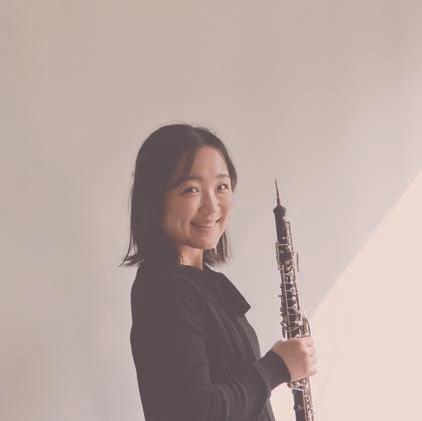
IZUMI AMEMIYA Oboe
Izumi Amemiya is the principal oboist of the Madison Symphony Orchestra. She is a performing oboist and private instructor based in Madison, Wisconsin. A native of Honolulu, Hawaii, Izumi began her musical studies on the piano at the age of eight, and started playing the oboe three years later. In 2018, she made her solo debut at the Sewanee Summer Music Festival as a winner of the SSMF Jacqueline Avent Concerto Competition. Before moving to Madison in 2022, she completed her graduate degree at the New England Conservatory with John Ferrillo that spring, and her undergraduate degree at the Indiana University Jacobs School of Music with Linda Strommen in 2020. In addition to performing with the MSO, Izumi can also be seen performing with the Wisconsin Chamber Orchestra. When she is not making reeds, she enjoys spending time with her husband, John.
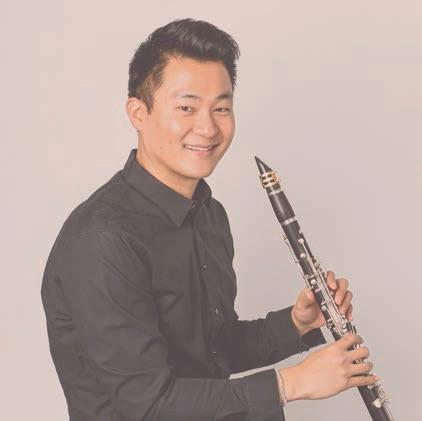
JJ KOH
Clarinet
Hailed by The Columbus Dispatch as having “gorgeous sound and dynamic nuance,” JJ Koh joined the Madison Symphony Orchestra as Principal Clarinet, The Barbara and Norman Berven Chair in 2016. For the 2018-2019 season, he served as Assistant Principal/ Eb Clarinet with the Milwaukee Symphony Orchestra and holds a position with the Wisconsin Chamber Orchestra. Koh has been a member of the Civic Orchestra of Chicago and performed with the Toronto Symphony Orchestra, Pittsburgh Symphony Orchestra, St. Paul Chamber Orchestra, Lyric Opera Orchestra, Louisiana Philharmonic Orchestra, Richmond Symphony Orchestra, ProMusica Chamber Orchestra, New World Symphony, and more.
As a founding member of the Arundo Donax Reed Quintet, winners of the Fischo National Chamber Music Competition, JJ has commissioned and recorded multiple works, taught master classes, and performed in various concert settings across the country. Koh, the principal clarinetist of KammerMahler, has participated in the
world-premiere recording project featuring chamber versions of Gustav Mahler’s Fourth and Ninth Symphonies. Additionally, he has premiered works by notable composers such as Augusta Reed Thomas, Bernard Rands, Valerie Coleman, Harry Stafylakis, and David Canfield and recorded with Nimbus Records, Tanner-Monagle, Enharmonic Records, and New Dynamic Records.
Summer festival appearances have included the National Repertory Orchestra, Lake George Music Festival, Lakes Area Music Festival, Midsummer’s Music, Washington Island Music Festival, Music in the Mountains, Apollo Music Festival, Chautauqua Symphony Orchestra, and Aspen Music Festival where he held a Fellowship for five summers. Koh completed his Master of Music and Bachelor of Music degrees under the instruction of Eli Eban and James Campbell at Indiana University Jacobs School of Music where he also served as an Associate Instructor. His final recital was awarded the Performer’s Certificate, one of the highest honors awarded by the institution.
Koh is a D’Addario Woodwinds performing artist and product consultant.
CYNTHIA CAMERON
Bassoon
Cynthia Cameron (bassoon) began playing with the Madison Symphony Orchestra in 1984 as second bassoon for 20 years, and now as principal bassoon. She has played in a wide variety of orchestras and chamber ensembles including Bach Dancing and Dynamite Society, Wisconsin Chamber Orchestra, Colorado Philharmonic Orchestra, Wingra Woodwind Quintet, Present Music, Whitewater Woodwind Quintet, Black Marigold, The Music Fix, Con Vivo and Madison Savoyards. She has performed on baroque bassoon with Wisconsin Baroque Ensemble and at Madison Early Music Festival. She has taught bassoon and coached chamber music at the UW-Madison, UWWhitewater and in her private studio.
In addition to playing bassoon, Cindy has performed on baroque recorder with Trio Chiesa, Vox Venti, Madison Bach Musicians, and Wisconsin Baroque Ensemble. For several years she coached the Winds of Southern Wisconsin, a chapter of the American Recorder Society. Cindy also plays Celtic folk music on whistle and concertina with The Twa Dogs, who have produced two albums.
Cindy holds a Bachelor of Music degree from UW-Madison and a Master of Music degree from Manhattan School of Music.
EMMA POTTER
Horn
Born in Surprise, Arizona, to a musical family, Emma Potter began playing violin in the third grade and French Horn in the fourth grade. Emma is now enjoying a vibrant music career performing with a wide range of ensembles.
Recently appointed Principal Horn of the Madison Symphony Orchestra, Emma has performed in a variety of musical settings from church ensembles to chamber orchestras, musical theater pits, jazz bands, brass and woodwind quintets. In 2019, Emma was appointed principal horn of the New York Youth Symphony, a position she held until she completed her music studies in New York. She took part in a Grammy winning album produced in 2020 featuring world premieres and works from under-represented composers such as Florence Price, Valerie Coleman and Jessie Montgomery.
In 2022 Emma made her solo debut with the Northern Neck Orchestra under the direction of Michael Repper performing Mozart’s Horn Concerto No. 4 and was a finalist in the Rice University Shepherd School of Music Concerto competition. She has played with the Detroit Symphony Orchestra, Houston Symphony, Phoenix Symphony, New York Chamber
Music Society, and Boise Philharmonic. Her tour with the Seraph Brass Quintet featured performances in Philadelphia and New York. Emma has had the opportunity to collaborate with amazing musicians all over the world, including Robert Johnson, Michelle Baker, John DeMain, Andrew Bain, and Steven Moechel. In addition, she has performed in top performance venues such as Carnegie hall, Jones Hall, and the Ozawa Concert Hall. Memorable performances include Sibelius 2, Scheherazade, Tchaikovsky 5th Symphony, and Alpine Symphony.
Emma’s outreach activities have included individual educational performances in co ee shops, house concerts, and retirement centers. These solo performances have featured Elizabeth Raum’s Concerto for Horn, Catherine Lakuthia’s I Threw a Shoe at a Cat, and excerpts from Mozart’s Horn Concerto No. 4. Collaborative outreach performances have included Eric Ewazen’s Pastorale, James Naigus’s Spectra, as well as various duets for mezzo soprano and horn, and small popular holiday medleys.
Coming from a musical family, Emma enjoys performing alongside her siblings’ trio, known as The Potter Trio. This horn, trombone and piano ensemble is now beginning a musical adventure as they extend their reach into competitions and recording. In 2023 they were finalists in the Ladies Musical Club of Seattle, and are in the process of recording an album together that will showcase music composed and arranged for their ensemble.
Emma received her Bachelor of Music Degree in Performance from the Manhattan School of Music under the tutelage of Michelle Baker and graduated with a Masters of Music in Horn Performance from the Shepherd School of Music at Rice University.
GREG ZELEK
Organ
Praised as “extraordinary in the classical music world” (Jon Hornbacher, PBS Wisconsin Life) and a “musical star” (Bill Wineke, Channel 3000), Greg Zelek is the Principal Organist of the Madison Symphony Orchestra and Curator of the Overture Concert Organ. In this role, Greg performs and oversees all of the MSO’s organ programming. The MSO Organ Series regularly attracts over one thousand ticketed audience members for each of Zelek’s creatively curated and performed concerts. Since September 2017, Greg has proudly held the Elaine and Nicholas Mischler Curatorship.
In addition to his unique position in Madison, Zelek is the Curator of the J.F. Bryan Concert Organ Series for the Jacksonville Symphony and the new Northrop Organist at the University of Minnesota.
Zelek also performs frequently as a soloist throughout the United States. Always playing his solo programs from memory, Zelek has played and premiered many of the large works of the organ canon, as well as new works that showcase the versatility of the instrument.
Alongside various orchestras, Greg has performed the organ concertos of Barber, Poulenc, Rheinberger, and Jongen. Greg has also been the organist for works such as Mahler’s 8th Symphony , Janáček’s Glagolitic Mass , Saint-Saëns’s Organ Symphony , Strauss’s Alpine Symphony , Respighi’s Pines of Rome , Foss’s Phorion , and Gounod’s Faust
Zelek is known for his inventive programming and collaborations. He has performed a classical and gospel concert with countertenor Reginald Mobley, arranged and commissioned works for cello and organ with cellist Thomas Mesa, performed in a LatinAmerican concert with a Cuban band from Miami, FL, and collaborated with electronic trombonist Mark Hetzler, in a concert featuring new music for organ, trombone, and percussion. He has also performed with the Canadian Brass in his continued role as Visiting Guest Artist at St. John’s Abbey in Collegeville, MN.
In 2016, Greg was chosen by The Diapason magazine as one of the top “20 Under 30” organists and has won prizes in numerous organ competitions. Zelek released a recording on the Overture Concert Organ in the Fall of 2022. A recipient of the inaugural Kovner Fellowship, he received his Bachelor’s and Master’s degrees, as well as an Artist Diploma, from the Juilliard School as a student of Paul Jacobs. Greg, who is CubanAmerican and a native Spanish speaker, grew up in Miami, FL and resides in Madison, WI with his wife and daughter.
PROGRAM NOTES
Michael Allsen
MAR 31, 2026 program notes by J.
GEORGE FRIDERIC HANDEL
SAMUEL COLERIDGETAYLOR
WOLFGANG AMADEUS MOZART
JOHANN SEBASTIAN BACH
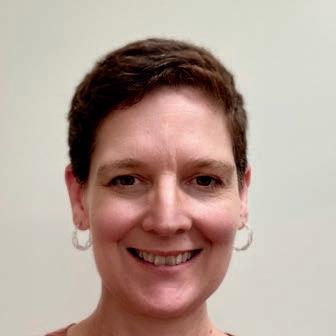
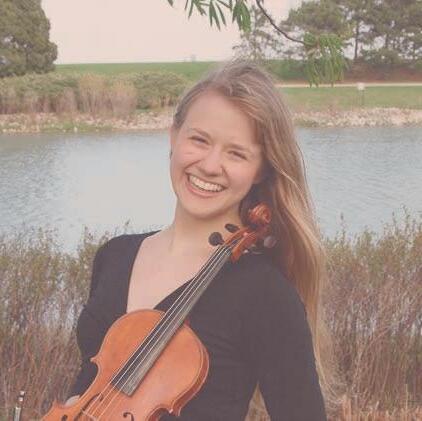
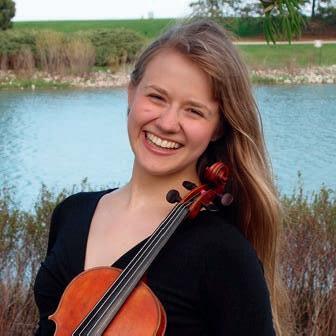
For this closing program of the organ series, Grek Zelek has invited nine colleagues and friends from the Madison Symphony, Orchestra to perform a varied program: violinists Leanne Kelso and Hillary Hempel, violist Christopher Dozoryst, cellist Karl Lavine, bassist David Scholl, oboist Izumi Amemiya, bassoonist Cynthia Cameron Fix, and hornist Emma Potter.
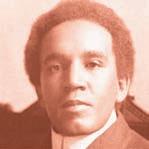
Samuel ColeridgeTaylor (1875-1912)
Finale from Nonet in F minor, Op. 2
We open with a piece by Afro-British composer Samuel Coleridge-Taylor. He was born in 1875—the son of an African father, a prominent doctor from Sierra Leone, and an English mother—at a time of deep racial prejudice in both his native Britain and the United States, where he toured extensively. He su ered countless insults and indignities, but contemporaries report that he always met these with quiet dignity. Though he struggled financially and died tragically young, at age 37, Coleridge-Taylor left behind an impressive body of music. In 1893, 18-year-old Coleridge-Taylor began studies in violin at the London’s Royal College of Music and also studied composition with Charles Villiers Stanford. His Nonet, Op. 2 was written while he was a student at RCM in London. Though the Nonet and other early works attracted positive reviews, his first great success in England was a trilogy of Hiawatha cantatas premiered in 1898-1900. These works, based on Longfellow’s romanticized vision of Native American culture in the poem Song of Hiawatha, remained popular for decades afterwards. In 1904 he made a successful tour of the United States, conducting the Hiawatha cantatas and other works, and was invited to meet Theodore Roosevelt at the White House.
The Nonet was premiered in London in July 1894. In attracted positive
reviews: according to one writer in the MusicalTimes, “the whole Nonet is most interesting, its themes are fresh and vigorous, and their treatment proves that the writer has learnt to compose with skill.”— but this was the only time it was performed during his lifetime. (The second performance took place in 2002!) Scored for oboe, clarinet, horn, bassoon, violin, viola, cello, bass, and piano (here, organ). The piece o ers a colorful palette of tone colors that Coleridge-Taylor uses throughout. The lively finale (Allegro vivace) is set in sonata form. It is based upon three main themes, the first a lively, o beat idea, and the second a more lyrical melody. The strings introduce a broad third theme to round out the exposition. He mixes all three themes freely in a short development section, before a recapitulation continues to develop each theme in turn. It ends with a brisk, accelerating coda.
Antonín Dvořák (1841-1904)
Largo from the Symphony No. 9 in E minor, Op. 95 (From the New World)
In 1892, Jeannette Thurber made Dvořák an o er he couldn’t refuse. Thurber, the wife of a wealthy New York businessman, had founded the National Conservatory of Music in 1885, and recruited some of the finest teachers in the world to serve on its faculty. Thurber resolved to hire Dvořák as the director of the Conservatory. He was lukewarm at first, but the terms she o ered were very generous: a two-year contract, with very light teaching duties and four months paid leave each year. The annual salary, $15,000, was about 25 times what Dvořák was making as an instructor at the Prague Conservatory, and in the end he accepted, eventually spending about three years in America. The “New World” Symphony is the most famous of the works Dvořák composed while in America.
According to Thurber, the symphony was written at her suggestion. She felt that Dvořák should write a symphony “…embodying his experiences and feelings in America.” It was an immediate hit with audiences in both America and Europe. The new symphony closely matched the style of his other late symphonies, a style based upon the German symphonic works of his mentor, Brahms, and with occasional hints of Bohemian folk music. There are a few “Americanisms” in the Symphony No.9, however. According to his own account of the work’s composition, Dvořák attempted to capture the spirit of American music in the Symphony No.9, and he was particularly interested in two forms of music that had their origins in the United States: Native American music and Black spirituals. Dvořák frequently quizzed one his students at the National Conservatory, the talented young African American singer Harry T. Burleigh, about spirituals, and he dutifully transcribed every spiritual tune Burleigh knew. His contact with Native American music was a little more tenuous—the only time he ever heard an “authentic” Indian performance was when he went to Bu alo Bill’s Wild West Show! While he did not quote any true American melodies in the symphony, Dvořák immersed himself in American music and culture, and wrote musical themes from this inspiration
According to Dvořák, the second and third movements were inspired by Longfellow’s Song of Hiawatha. The Largo evokes Hiawatha’s “Funeral in the Forest.” This movement opens with a solemn chorale, which leads into the main theme, a long romantic melody. (This melody became popular as a nostalgic song called Goin’ Home—so popular, in fact, that it was widely assumed that it was a traditional spiritual that Dvořák had quoted!) This arrangement includes a brief contrasting middle passage before a return of the main theme.
Wolfgang
Amadeus Mozart (1756-1791)
Adagio from Concerto for Clarinet and Orchestra in A Major, K.622
Though Mozart actively sought commissions from theaters and princes, his personal friendships were often just as important in the creation of new works. This was the case with his only concerto for clarinet, written for his drinkingbuddy and fellow Freemason, Anton Stadler. Stadler was one of the early virtuosos on what was then a relatively new instrument, the clarinet. He and Mozart met in 1783, and remained friends until Mozart’s death. Stadler seems to have been one of the many associates that took advantage of the composer in Vienna, borrowing money that was never repaid, acting as Mozart’s “business partner” (much to Stadler’s own advantage), and generally sponging o his unfailingly good-natured friend. Some biographers have even suggested that Stadler was responsible for the disappearance of Mozart’s autograph score for the clarinet concerto, and that he may even have purloined other works by Mozart to publish under his own name. For his part, Mozart was tolerant of Stadler’s mooching, and maintained a joking friendship: in a letter to his wife, he described Stadler as “a bit of an ass.” Mozart adored the clarinet and Stadler’s playing, however, and composed several works with Anton Stadler and his brother Johann, also a clarinetist, in mind: Masonic Funeral Music (1785), the ClarinetTrio, K.498 (1986), the Clarinet Quintet, K.581 (1789), and an alternative version of the Symphony No.40 (1788). At this early stage in its evolution, the clarinet was still the subject of constant experimentation and Stadler was an enthusiastic innovator. There were, at the time, two primary forms of the instrument, a soprano and a
now-obsolete alto form called the basset horn; this latter was part of the scoring of the Requiem. In 1788, Stadler created an instrument he called the “basset clarinet,” which extended the soprano’s range downwards by four notes. This was the instrument for which Mozart wrote both the ClarinetQuintet and the ClarinetConcerto, though there is an earlier sketch of the concerto that appears to have been written for basset horn.
The second movement (Adagio) exploits all of the cantabile capabilities of the clarinet. The main theme is among the most beautiful melodies ever written for the instrument: a simple and gently rising idea that is lightly developed. The expressive connections to the closely contemporary Die Zauberflöte are clear in the operatic style of the central section. [Note: There is a tragic postscript to the story of the ClarinetConcerto Though Stadler probably played the first performance in Prague in October 1791, he returned to Vienna to play the concerto on November 18. This was to be Mozart’s last public appearance: after conducting the concert, he fell ill and took to his bed, dying just a few weeks later.]
Wolfgang
Amadeus Mozart
Rondo: Allegro from Concerto No.3 in E-flat Major for Horn and Orchestra, K. 447
Another of Mozart’s closest friends was a hornist named Josph Leutgeb. Leutgeb was already known as a virtuoso in Vienna in the 1750s. He spent much of the 1760s and 1770s in Salzburg, where he was closely associated with the Mozart family, and though Leutgeb was over 20 years older than young Wolfgang, they forged a lifelong friendship. Leutgeb toured extensively as a soloist, but when he returned to Vienna in 1777, he abandoned his professional career to run a small cheese and sausage shop (purchased in part with a loan
from Mozart’s father Leopold). When Mozart moved to Vienna in 1781, he quickly renewed their friendship. Mozart eventually wrote four concertos for Leutgeb (There is also a fifth, fragmentary concerto, and the horn part of his Quintet for Horn and Strings, K.407). Like many of Mozart’s friends he was the butt of a great deal of good-natured practical joking and insults. This extended to the music itself. The solo line in the Concerto No. 1 included an outrageously insulting running commentary. In the Concerto No. 2, Mozart wrote the following dedication: “Wolfgang Amadé Mozart finally took pity on Leutgeb, [the] Ass, Ox, and Fool,” and in the Concerto No 4, poor Leutgeb had to decipher a 4-color code to play the solo part. (Leutgeb apparently escaped abuse only in the Concerto No, 3!) There seems to have been genuine a ection on both sides, however. Mozart would often stay as a houseguest with the Leutgebs when Constanze Mozart was away. Leutgeb is actually mentioned in Mozart’s last letter, which describes to Constanze how they attended a performance of his opera La Clemenza di Tito together. When Mozart died, it was Leutgeb who helped Constanze to organize the great mass of manuscripts he left behind.
The Concerto No.3 (1787) is perhaps the most popular of the horn concertos. His use of clarines in the original scoring may have been inspired by another of his Viennese musical cronies, Anton Stadler. In the final movement (Rondo:Allegro) the horn writing recalls its origins as a hunting instrument. The rollicking main theme is introduced by the horn in the first few bars. There are several changes of character as the movement progresses, but the solo line always finds a witty way to get back to this main idea.
Émile Waldteufel (1837-1915)
Skaters Waltz (Les Patineurs)
Émile Waldteufel was one of the leading figures in Parisian popular
music, and like his great Viennese contemporary Johann Strauss II, Waldteufel lived in the heyday of the waltz. Waldteufel became court pianist to Napoleon III and eventually took over his father’s dance orchestra, which became the mainstay of Parisian high society balls. He composed over 300 works, mostly waltzes and other popular dances for the family orchestra, but is known today largely for a single work, his Skaters Waltz (Les Patineurs). Written in 1882, the waltz was inspired by skaters at the Bois de Boulogne, a popular park on the outskirts of Paris. The “Boulogne Woods” became one of the most popular outdoor destinations for Parisians after it was made into a park and extensively landscaped in the mid 19th century. It hosted picnics, rowing, cycling, and hiking in summers and skating on its upper lake in the winter. The Skaters Waltz begins with a lilting tune that is the perfect picture of graceful French skaters. Waldteufel alternates between elegant music and more daring swoops as the skaters pirouette and leap.
Michel Corrette (1709-1795)
Allegro from Sonata in D minor, Op.20, No.2
Michele Corrette was a respected organist—the son and father of respected organists—composer, and teacher. He was perhaps best known in his day as a teacher and as the author of a series of method books for violin, cello, flute, viola da gamba, organ, harpsichord, guitar, mandolin, double bass, and harp. Corrette’s books are notable for their flashes of humor and for their careful comparisons of Italian and French styles of playing. Not surprisingly, they are a rich source of information on performance practice for today’s players of Baroque music. Corrette’s Les délices de la solitude (The Delights of Solitude), Op.20 was published in 1738 or 1739. It is a collection of six short sonatas for
bassoon or cello or continuo. In this performance the opening Allegro of the second sonata, bassoon plays the highly decorative solo part, while organ performs the continuo. Each half ends with a distinctive unison refrain.
Henry Mancini (1924-1994)
Theme from The Pink Panther
Though Henry Mancini studied briefly at Juilliard, this thoroughly successful composer was largely self-trained. Also a talented arranger, he started his career writing for big bands. He became one of the most sought-after arrangers in America, and created arrangements for popular singers (most notably for Frank Sinatra) but also for his own series of successful recordings. Mancini had a parallel career as a film and television composer, becoming a sta composer at Universal Studios in 1952. He worked at a phenomenal rate, completing more than a dozen film scores a year through most of the 1950s and 1960s, often in his distinctive Jazz-influenced style. Mancini had a particularly close working relationship with director Blake Edwards, and in 1963 he scored Edwards’s outrageous comedy The Pink Panther, which introduced the character of bumbling Inspector Closeau, memorably played by Peter Sellars. Mancini wrote the film’s slinky main theme to accompany the animated opening credits created by Friz Freling. In the credits the theme is played seductively by tenor saxophonist Plas Johnson, a studio session musician with whom Mancini had worked, and Mancini created the theme with Johnson’s cool sound specifically in mind.
Astor Piazzolla (1921-1992)
Winter from Four Seasons of Buenos Aires
The Argentine composer Astor
Piazzolla was a child prodigy on Argentina’s national instrument, the bandonéon—the large button accordion that is the lead instrument of the Tango. His parents moved to New York City when he was very young, and while still a teenager in the U.S., he met and was befriended by the great Argentine singer and matinee idol Carlos Gardel. He returned to Argentina at age 16 and spent the next several years playing in dance bands, eventually leading his own successful orquestatípica, the standard ensemble of Tango. He studied classical music with composer Alberto Ginastera, but in 1954 won a scholarship to study in Paris with one of the 20th-century’s great composition teachers, Nadia Boulanger. It was Boulanger who Piazzolla credited with helping to create his own style. In an interview years later, he recalled how she spent two weeks working her way through the modernist scores he brought with him, before she finally concluded that they showed a complete lack of spirit, and goaded him into playing the kind of music he played at home. He reluctantly played one of his own Tangos, and, according to Piazzolla, “When I finished, Nadia took my hands in hers, and with that English of hers, so sweet, she said, ‘Astor, this is beautiful. I like it a lot. Here is the true Piazzolla—do not ever leave him.’ It was the great revelation of my musical life.” Piazzolla returned to Argentina after a year in Paris, and began to forge a distinctive style, eventually known as “Nuevo Tango” (New Tango). It proved to be controversial in his homeland: while Tango is among the world’s sexiest dances, the music is quite tradition-bound, played by a standard ensemble, the orquesta típica, of bandonéon, violins, piano, and double bass. Piazzolla’s works eventually included electric bass and guitar, synthesizer, and other distinctly “non-típica” instruments. He also channeled a wide range of musical ideas, from Jazz and Fusion
to more avant garde idioms—but with the syncopated sensuousness of the Tango always present.
By the end of his career Piazzolla was widely heard and commissioned around the world. And the creation of “new” Piazzolla works continued after he died The FourSeasons of BuenosAires (Cuatro estaciones porteñas) heard here is a posthumous collaboration. Piazzolla wrote the four sections of this work for his quintet (bandoneón, piano, violin, electric guitar, and electric bass) in the late 1960s. In 1999, the Russian composer and arranger Leonid Desyatnikov, working with violinist Gidon Kremer, reworked Piazzolla’s originals into a set of four virtuoso movements for solo violin and string orchestra. This arrangement, adapted here for organ, transforms Piazzolla’s originals into a set of virtuoso character pieces, very much in the spirit of Vivaldi’s famous FourSeasons
Piazzolla’s Winter (Invierno porteñas) opens with pure Tango— melancholy, with just a hint of menace. This mood is broken by a brief solo cadenza, before the solo line and the organ eturns to the opening music, winding around one another like a pair of dancers. A brief episode includes a sly reference to Vivaldi—the Summer concerto. The sensuous opening melody is eventually transformed into a more aggressive Tango (with some background lifted from Vivaldi—blink and you’ll miss it…), before a return of the opening mood. The ending is a wry little pseudo-Baroque coda over a repeating ground bass.
Wilhelm Middelschulte (1863-1943)
Perpetuum Mobile for Pedals Alone
Born in Germany. Wilhelm Middelschulte spent nearly 50 years in Chicago, Where he played organ for the Theodore Thomas
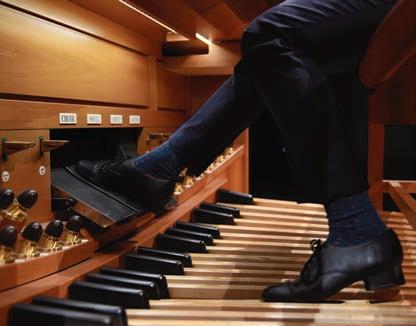
Orchestra (predecessor of today’s Chicago Symphony Orchestra), and toured widely as a soloist. Middelschulte was renowned as an interpreter of the works of J. S. Bach, and this was reflected in many of his original works. His best-known composition, the Concerto over a Theme of Johann Sebastian Bach was published in 1906. All five movements are based upon the fugue subject of Bach’s monumental Preludeand Fugue in E minor, BWV 548. [Note: Organist Ken Cowan played this Bach work on this concert series in November 2023.] The massive Fugue, some 231 measures long, is Bach’s longest fugue, and certainly one of his most spectacular essays in this form. Its subject gave this fugue its nickname, the “Wedge Fugue.” Heard unaccompanied at the beginning of the fugue, the subject begins on the note E, and the theme that follows expands chromatically above and below that pitch, creating a kind of musical “wedge.” The Perpetuummobile(Perpetual Motion) is the fourth movement (Intermezzo) of the work. A stunning virtuoso showpiece on the pedal board, this calls for techniques like harmonizing a melody with the heel and toes of the right foot! This was apparently a favorite encore piece for Middelschulte’s former student Virgil Fox, one of the great organists and showmen of the 20th century.
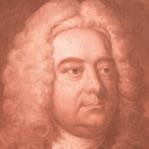
George Frideric Handel (1685-1759)
Organ Concerto in G minor, Opus 4, No. 1, HWV 289
Arguably the most successful of all Baroque composers, George Frideric Handel was already an international star when he moved to England permanently in 1717. For many years he flourished as a composer and promoter of Italian opera. By the 1730s, however, English audiences
had tired of Italian opera, with its elaborate dramatic conventions and ridiculously convoluted plots, all set in a language that most of the audience did not understand. Faced with financial ruin, Handel discovered—or rather created—a new form, the English oratorio. It was a financial masterstroke. To produce opera involved costly sets, costumes, and stage machinery, and even more costly prima donnas and castrati. However, Handel produced his oratorios with local soloists and choristers, at a fraction of what his operas had cost. The new works, which told familiar Biblical stories (in a language that the audience could understand!), were phenomenally successful. Long after Handel’s death, and long after his operas
and instrumental works had faded from memory, his oratorios were being performed again and again, and they have never fallen out of the repertoire.
One of the English traditions Handel adapted was connected to St. Cecelia, the patron saint of music and musicians. Even in rigororously Protestant England, she was celebrated annually, though British celebrations tended to take on a much more secular tone. (They focused more on the power of music rather than her more specifically Catholic legend.)
By the 1680s, large musical celebrations were held in London each year, the centerpiece of each being an ode written in her honor, which set to music by one of the best composers of the day. In 1697,
poet John Dryden wrote the ode Alexander’sFeast, an imaginative description of the music at a feast for Alexander the Great...which manages to bring in St. Cecelia at the end. It had already been set to music by Jeremiah Clarke and two later composers when Handel composed his oratoriostyle version of Alexander’sFeast First presented in London’s Covent Garden in February 1736, the ode was a sensational hit: it was one of only two vocal works by Handel that was printed in full score during his lifetime. (This score was actually included in a statue of Handel commissioned in 1738.)
Handel inserted three instrumental concertos into the lavish 1736 production of Alexander’sFeast, including the OrganConcerto
inGminor heard here. It was published in 1738 as the first of six organ concertos, Op. 4. Set in four movements, it opens with a rather serious and pompous movement marked Larghettoe staccato. This links into a cheerful, bustling Allegro, filled with “cuckoo” motives. The brief, solemn Adagio, largely for organ alone, served a bridge into the final movement, an extended Andante. This closing movement alternates between a texture where the organ is playing decorative figuration above the orchestra, and striking call and response between the soloist and accompaniment.
ENSURING A BRIGHT FUTURE for the OVERTURE CONCERT ORGAN
Honor the Madison Symphony Orchestra’s 100th Anniversary by making a gift to the Organ Endowment Fund!
As we celebrate the MSO’s 100th Anniversary, the MSO and Friends of the Overture Concert Organ invite you to support the Organ Endowment Fund through our Adopt-a-Stop naming program. The Overture Concert Organ is one of the Madison Symphony Orchestra’s most precious assets, and our Organ Endowment Fund provides a permanent source of long-term support for organ programming and care of the instrument.
With an endowment gift of $1,000 or more, you can “adopt” part of the organ and make a lasting impact. Your gift will help to ensure a bright future for our magnificent Overture Concert Organ!
$25,000Division
$10,000 Stop
$5,000Façade pipe
$2,500 Single pipe - Major
$1,000 Single pipe - Minor
Up to $999General donation
madisonsymphony.org/adoptastop
Contact: Casey Oelkers, Director of Development, (608) 257-3734
Adopt-a-Stop gifts do not quality for Friends of the Overture Concert Organ (FOCO) annual membership benefits.
ADOPT-A-STOP
Thank you to these generous donors for their gifts of $1,000 or more to the Madison Symphony Orchestra’s Overture Concert Organ Endowment Fund as part of the Adopt-a-Stop program. Donors who have chosen to adopt individual parts of the organ are listed with their individual adoptions.
ORGAN CONSOLE
Catherine Burgess, in memory of Jim Burgess
TUTTI
Nicholas and Elaine Mischler
DIVISION
Friends of the Overture Concert Organ
in honor of Samuel C. Hutchison
Great Division
Gamber F. Tegtmeyer, Jr., in memory of Audrey Tegtmeyer
Swell Division
Friends of the Overture Concert Organ
in honor of Gregory C. Zelek in celebration of his Golden
Birthday
Solo Division
STOP
In memory of Ruth and Frederick Dobbratz
Great Principal 8’
John and Christine Gauder
Pedal Contra Bombarde 32’
Reynold V. Peterson
Swell Basson 16’
Lise Skofronick
Solo Harmonic Flute 8’
John and Carol Toussaint
Pedal Posaune 16’
Ann Wallace
Solo French Horn 8’
Susan and Rolf Wulfsberg
Great Gedeckt 8’
An Anonymous Friend
FAÇADE PIPE
Dr. Frederick W. Blancke
Great Principal 16’ – F2
Daniel and Stacey Bormann in memory of Larry Shrode
Great Principal 16’ – D2
Lau and Bea Christensen
Great Principal 16’ – C2
John and Michele Erikson
Great Principal 16’ - E1
Thomas A. Farrell in honor of Ann Farrell
Great Principal 16’ – A3
Jane Hamblen and Robert F. Lemanske
Great Principal 16’ – B1
Sandra L. Osborn
Great Principal 16’ – C3
Peter and Leslie Overton
Great Principal 16’ - E2
Reynold V. Peterson in honor of John Toussaint, the first Secretary-Treasurer of the FOCO Board of Directors
Great Principal 16’ - D-Sharp2
Rhonda and Bill Rushing
Great Principal 16’ - C#2
In Memory of Jennie Biel Sheskey and Biel Orchestra, The John and Twila Sheskey Charitable Fund
Great Principal 16’ – B2
MAJOR PIPE
Anne Bolz in honor of Greg Upward
Solo Harmonic Flute 8’ – G3
In Memory of Lila Smith Lightfoot
Solo Tuba 16’ – C1
Vicki and Marv Nonn
Pedal Double Open 32’ – C1
Reynold V. Peterson
Choir Unda Maris 8’ – A3
Barbara and Richard Schnell
Solo French Horn 8’ – D1
Barbara and Richard Schnell
Solo French Horn 8’ – E1
Dave Willow in honor of Mary Ann Willow
Swell Basson-Hautbois 8’ - A2
MINOR PIPE
Fernando and Carla Alvarado
Solo Principal 8’ – C3
Fernando and Carla Alvarado in honor of Nicholas and Elaine Mischler
Swell Quintflöte 2 2/3’ – F1
Brian and Rozan Anderson
Swell Basson 16’ – A2
Chuck Bauer and Chuck Beckwith Choir Clarinet 8’ – B2
Nancy Becknell
Solo French Horn 8’ – C1
Ed and Lisa Binkley
Pedal – Vox Balinae 64’ – C1
Patricia Brady and Robert Smith
Solo French Horn 8’ – B2
Mary Kay Burton
Choir Waldflote 2’ - B1
Capitol Lakes
Swell Fugara 4’ – D3
Crystal Enslin in memory of Jon S. Enslin
Swell Basson-Hautbois 8’ - D2
Friends of the Overture Concert Organ in honor of Reynold Peterson Great Trompete 8’ – G3
Friends of the Overture Concert Organ
2015-2016 Board of Directors in honor of Elaine Mischler
Choir Clarinet 8’ – B-Flat1
Friends of the Overture Concert Organ 2019-2020 Board of Directors in honor of Ellsworth Brown
Solo Harmonic Flute 8’ – E3
Paul Fritsch and Jim Hartman
Solo French Horn 8’ – A3
Paul Fritsch and Jim Hartman in honor of Karissa Fritsch
Solo French Horn 8’ – F4
Paul Fritsch and Jim Hartman in honor of Bethany Hart
Solo Harmonic Flute 8’ – B3
Paul Fritsch and Jim Hartman in honor of Paige Kramer
Solo French Horn 8’ – G2
Dr. Robert and Linda Graebner Great Principal 8’ – C1
Betsy and Bezalel Haimson
Swell Basson-Hautbois 8’ - B1
Kris S. Jarantoski
Swell Bordun 8’ – C3
Darko and Judy Kalan in honor of Samuel C. Hutchison Swell Basson–Hautbois 8’ – C1
Carolyn Kau and Chris Hinrichs
Choir Suavial 8’ – C3
Gary Lewis
Swell Basson–Hautbois 8’ – C3
Connie Maxwell
Swell Basson–Hautbois 8’ – A3
Gale Meyer
Solo French Horn 8’ – G1
Susanne M. Michler
Swell Trompette
Harmonique 8’ – C3
Stephen D. Morton
Swell Bourdon 16’ – C1
Casey, Eric, Dylan, and Kendall Oelkers in honor of Walter & Barbara Herrod's 50th Anniversary
Solo Harmonic Flute 8' - G2
Larry and Jan Phelps
Pedal – Subbass 16’ – C1
Hans and Mary Lang Sollinger
Swell Traversflöte 4’ – A2
Harriet Thiele Statz
Choir Gemshorn 8’ – A3
Two Friends in memory of Jack Hicks
Great Principal 8’ – C3
Anders Yocom and Ann Yocom
Engelman
Solo Principal 8’ – A2
ORGAN SPECIFICATION
Johannes
Klais Orgelbau — Bonn,
2004 • 72 Ranks
GREAT
4-1/2” wind
Principal
Principal
Offenflote
Salicional
Gedeckt
Principal
Rohrflote
Quinte
Octave
Cornett V
Mixtura mayor V
Trompete
Trompete
SWELL (enclosed)
4-1/2” wind
Bordun
Tibia
Bordun
Viola da Gamba
Voix Celeste
Fugara
Transversflote
Quintflote
Octavflote
Terzflote
Plein jeu IV
Basson
Trompette harmonique
Basson-Hautbois
Clairon harmonique
Tremulant
CHOIR (enclosed)
4” wind
Geigen Principal
Suavial
Rohrflote
Gemshorn
Unda maris
Octave
Viola
Waldflote
Quinte
Terz
Mixtura minor IV
Clarinet
Tremulant
Principal
Harmonic Flute
Stentor Gamba
Gamba Celeste
Tuba
Tuba
French Horn
PEDAL
5” wind
Vox Balinae (Resultant)
Double Open
Untersatz
Open Wood
Violon (Gt)
Bourdon (Sw)
Subbass
Octavbass
Harmonic Flute (Solo)
Stentor Gamba (Solo)
Gedackt
Octave
Contra Bombarde
Posaune
Tuba (Solo)
Trompete
General Toe Studs
Divisional Pistons
Pedal Divisional
Toe Studs
Divisional
Cancel Pistons
Sequencer
Programmable
Crescendo and Tutti
Germany
to Ped
to Ped
to Ped
to Ped
to Ped Ch to Ped Solo to Ped
Solo to Ped
Sw to Sw
Sw Unison Off
Sw to Sw
Sw to Gt
Sw to Gt
Sw to Gt
Ch to Gt
Ch to Gt
Ch to Gt
Solo to Gt
Solo to Gt
Solo to Gt
Gt to Gt
Gt Unison Off
Gt to Gt
Sw to Ch
Sw to Ch
Sw to Ch
Solo to Sw
Solo to Sw
Solo to Ch Solo to Ch
Ch to Ch
Unison Off
to Ch
FRIENDS OF THE OVERTURE CONCERT ORGAN
We gratefully acknowledge the Friends of the Overture Concert Organ for their support of Overture Concert Organ programming for the 2025-26 Season. This list includes current members as of January 27, 2026.
HONORARY
LIFETIME MEMBERS
W. Jerome Frautschi
& Pleasant T. Rowland
Diane Endres Ballweg
Bruce & Suzanne Case
Samuel C. Hutchison
CURATOR CIRCLE
$1000 & above
Carla & Fernando Alvarado
Chuck Bauer & Chuck Beckwith
James & Diane Baxter
Barbara & Norman Berven
Dr. Annette Beyer-Mears
Patricia Brady & Robert Smith
Dorothy & Ellsworth Brown
Martha Casey
Richard Cashwell
Dennis & Lynn Christensen
Lau & Bea Christensen
Mike & Quinn Christensen
John & Christine Gauder
George Gay
Jane Hamblen
& Robert F. Lemanske
Kathleen Harker
Susan S. Harris
Mark Huth, MD
Darko & Judy Kalan
Myrna Larson
Doug & Norma Madsen
Kathlyn Maldegen
Joan & Doug Maynard
Charles McLimans
& Dr. Richard Merrion
Bonnie McMullin-Lawton & Jack Lawton
Elaine & Nicholas Mischler
Christine & Je Molzahn
Genevieve Murtaugh
Vicki & Marv Nonn
Peter & Leslie Overton
Reynold V. Peterson
Walter & Karen Pridham
Charitable Fund
Bill & Rhonda Rushing
Barbara & Richard Schnell
Kay Schwichtenberg
& Herman Baumann
Lise R. Skofronick
Shirley Spade
William Ste enhagen
Dr. Condon & Mary Vander Ark
Judith Werner
Susan & Rolf Wulfsberg
Jennifer Younger
& Thomas Rae Smith
Two Anonymous Friends
J. S. BACH SOCIETY
$650–$999
David & Karen Benton
Daniel & Stacey Bormann
Janet & Scott Cabot
Audrey Dybdahl
Timothy & Renée Farley
Joel & Jacquie Greiner
John & Karla Groenenboom
Terry Haller
Walter & Barbara Herrod
James & Cindy Hoyt
Kris S. Jarantoski
Maryanne & Bob Julian
Ann & David Martin
Robert McCalla & Laurie Beardsley
Joseph Meara & Karen Rebholz
Barb Melchert
David Myers
Faith & Russ Portier
Martha Taylor & Gary Antoniewicz
Harry Tschopik
James J. Uppena
John & Janine Wardale
Leonard & Paula Werner
Faye Pauli Whitaker
Dave Willow
Anders Yocom & Ann Yocom Engelman
GREAT
$300–$649
Lyle J. Anderson
Ellis & Susan Bauman
Julia Bolz
Jack Holzhueter & Michael Bridgeman
Thomas Bruckner
Mary & Ken Buroker
Dr. Larry & Mary Kay Burton
Mike Byrne & Roberta Carrier
Karen Childs Baker & Preston Baker
Louis Cornelius & Pris Boroniec
Paula K. Doyle
John & Deidre Dunn
Crystal Enslin
Jan Etnier
Bobbi Foutch-Reynolds & Jim Reynolds
Donna B. Fox
Paul Fritsch & Jim Hartman
Vicki & Alan Hamstra
Betty & Edward Hasselkus
Chris & Marge Kleinhenz
Larry M. Kneeland
Richard & Claire Kotenbeutel
Charles Leadholm & Jeanne Parus
Peggy Lescrenier
Bruce & Ruth Marion
Douglas & Linda McNeel
Margaret Murphy
Casey & Eric Oelkers
David Parminter
Patricia Paska
William E. Petig
Sue Poullette
Kathryn Richardson
Ron Rosner & Ronnie Hess
Wilton Sanders
Orange Schroeder
Mark C. Shults
& Nancy Vedder-Shults
Andrew & Erika Stevens
Karen M. Stoebig
Karla Stoebig
David Stone
Ellen M. Twing
Ann Wallace
Sally Wellman
Jim Werlein & Jody Pringle
Derrith Wieman & Todd Clark
Je rey Williamson
One Anonymous Friend
SWELL
$150–$299
Carolyn Aradine
Leigh Barker Cheesebro
Charles & Joanne Bunge
Jim Conway & Kathy Trace
Bonnie & Marc Conway
Melissa Coons & Edward Jordan
Steve & Shirley Crocker
John Daane
Douglas J. Deboer
Paula & Bob Dinndorf
Donalea Dinsmore
Marilyn Ebben
Alan & Ramona Ehrhardt
Ann Ellingboe
Elizabeth Fadell
Douglas & Carol Fast
Michael George & Susan Gardels
Fr. C. Lee & Edith M. Gilbertson
William & Sharon Goehring
Bob & Beverly Haimerl
Roger & Glenda Hott
Peter & Candace Huebner
Margaret & Paul Irwin
Greg & Doreen Jensen
Dan & Janet Johnson
Jerome & Dee Dee Jones
Gary Lewis & Ken Sosinski
Judy Lyons & Doug Knudson
Bruce Matthews & Eileen Murphy
Margaret & Paul Miller
Gerald & Christine Popenhagen
Randall & Deb Raasch
Don & Roz Rahn
John & Rachel Rothschild
Steven & Lennie Sa an
Thomas & Lynn Schmidt
Gary & Barbara Schultz
Sandy Shepherd
Thomas & Myrt Sieger
Eileen M. Smith
Curt & Jane Smith
Reeves Smith & Glenna Carter
Gareth L. Steen
Judy & Nick Topitzes
Tom & Dianne Totten
Colleen & Tim Tucker
John & Shelly Van Note
Carolyn White
Three Anonymous Friends
CHOIR
$100-$149
Ginger Anderle & Pat Behling
Emy Andrew
Christine K. Beatty
George & Donna Beestman
Bruce Bengtson
Jonathan Boott
Waltraud Brinkmann
Gregory Buchberger
Barbara Constans
Timothy & Mary Ellestad
John & Joann Esser
Alan & Kathy Garant
Jill Gaskell
Lynn Burke
Barbara Grajewski & Michael Slupski
Dr. & Mrs. Frank Greer
Karen Jeatran
Conrad & Susan Jostad
Mina Kato & Steve Keith
Marilyn Kay
Valerie & Andreas Kazamias
Marc Vitale & Darcy Kind
Noël Marie & Steven Klapper
Eric & Caroline Klemm
Miki & Ivan Knezevic
Laurie & Gus Knitt
Jim Larkee
David Lauth & Lindsey
Thomas
Sally Leong
Nancy Lieg
Steven Limbach & Karen Rinke
Dick & Cindy Lovell
Chuck & Linda Malone
Jeanne Marshall
Kristin Martin & Lori Miller
Jan L. McCormick
Daniel & Laurel Medenblik
Wendy Miller
Ann & David Moyer
Ron & Jan Opelt
Ernest J. Peterson
Tom Popp
Kathleen Rasmussen
Sherry Reames
Richard & Donna Reinardy
Mark & Zoe Rickenbach
Sarah Rose
Barbara & Donald Sanford
Sinikka Santala & Gregory Schmidt
Dennis & Janice
Schattschneider
John & Susan Schauf
Chris & Ronald Sorkness
Rob & Mary Stroud
Stephen Thompson
Teri Venker
Jan Vidruk
Ellis & Catharine Waller
Steven Wendor
Karl & Ellen Westlund
Dorothy Whiting
Wade W.
& Shelley D. Whitmus
Suzy Wilko
Five Anonymous Friends
FRIEND $35-$99
Tammy & Gary Albrecht
David & Ruth Arnold
Bob & Bonnie Block
Dorothy Blotz
Kathleen Boord
Kathleen Borner
Mary Brewer
Walter Burt
Bruce & Suzanne Case
Dory & Ole Christensen
Joan & Scott Cramer
Nancy & Russell Dean
Lucy Dechene, Ph.D.
Eve & Carl Degen
Joel Diemer
Paul DiMusto & Molly Oberdoerster
Frank & Jacqueline DiNatale
Connie Donkle
Barbara Drake
Kathy England
Elizabeth Enright
Jim Esmoil
Jared Finger
William Flader
Emily & Milton Ford
Kenneth & Molly Gage
Susan Glotzer
Sam Gratz
Marjorie K. Gray
Susan Gruber
Ed & Gloria Grys
Andrew E. Halbach
Kathy Hoch
Susan & Les Ho man
Dale Hughes
Christina Hull
Samuel C. Hutchison
Teresa Hutson
Brian Johnson
Joe Johnson
Sharon Johnson
Melissa Keyes & Ingrid Rothe
Greg & Laura Kolden
Benjamin & Victoria Korab
Michael Krejci
Linda Krueger
Mary & Steve Langlie
Ed & Julie Lehr
Judith A. Louer
Gloria Lundquist
David & Joan Milke
Douglas & Rosemary Moore
Don & Krista Nelson
Darlene M. Olson
Phyllis Osburne
Dr. Zorba Paster & Penny Paster
Phillip & Karen Paulson
Carol Pfei er
Mark E. Puda & Carol S. Johnston
Christine & Robert Reed
Lindsay & Skip Resenhoeft
Matt & Kara Ripley
Ray & Debi Robey
Cora Rund
Iva Hillegas Schatz
Jaret & Emily Schroeder
David & Gail Schultz
James & Diane Scorgie
Jacqui & John Shanda
Terrell & Mary Smith
Lorraine Ann Soltis
Steve Somerson & Helena Tsotsis
Nakkiah Stampfli & Tanner Schaefer
Robert & Barbara Stanley
Kim Stege
Cheri J. Teal
Barbara Uehling
Elliott Valentine & Katelyn French
Greg Wagner & Fred Muci
Steve & Pat Wehrley
Joyce Wells
Margy Wilko
Bill & Jackie Wineke
M.J. Wiseman
Celeste Woodru & Bruce Fritz
Ledell Zellers & Simon Anderson
Twelve Anonymous Friends
We have made every e ort to ensure the accuracy of this list. If you have any questions or corrections, please contact the MSO’s development department at (608) 257-3734.
Board of Directors and Administrative Sta
FRIENDS OF THE OVERTURE CONCERT ORGAN BOARD OF DIRECTORS, 2025-2026
OFFICERS
William Ste enhagen, President
Charles McLimans, President-Elect
David Willow, Secretary-Treasurer
Robert Lemanske, Past-President
DIRECTORS
Herman Baumann
Janet Cabot
Quinn Christensen
Paula Doyle
Audrey Dybdahl
Mark Huth
Douglas McNeel
Margaret Murphy
Mary Ann Nanassy
David Parminter
Rhonda Rushing
Jennifer Younger
ADVISORS
Fernando Alvarado
Diane Ballweg
Jim Baxter
Barbara Berven
Ellsworth Brown
John Gauder
Terry Haller
Ellen Larson Latimer
Gary Lewis
Elaine Mischler
Vicki Nonn
Reynold Peterson
Teri Venker
Anders Yocom
EX OFFICIO
Greg Zelek, Principal Organist and Elaine & Nicholas Mischler Curator of the Overture Concert Organ
MADISON SYMPHONY ORCHESTRA INC.
ADMINISTRATION
Robert Reed, Executive Director
David Gordon, Executive Assistant & Board Liaison
Ann Bowen, General Manager
Simon Arno, Receptionist & Administrative Assistant
Alexis Carreon, Personnel Manager
Jennifer Goldberg, Orchestra Librarian, John & Carolyn Petersen Chair
Lisa Kjentvet, Director of Education & Community Engagement
Katelyn Hanvey, Education & Community Engagement Manager
Casey Oelkers, Director of Development
Meranda Dooley, Manager of Individual Giving
Rachel Cherian, Manager of Grants & Sponsorships
Christopher Stager, Interim Marketing Director
Heather Rose, Marketing Communications Manager
Isabella Clinton, Audience Experience Manager
Emma Potter, Digital Marketing Manager
Greg Zelek, Principal Organist and Elaine & Nicholas Mischler Curator of the Overture Concert Organ
become a friend
Each season, many new individuals become Friends of the Overture Concert Organ by making gifts of support. Friends’ generosity helps us cover the costs of ticketed and free concerts that so many people in our community enjoy, as well as tuning and maintenance of the instrument.
New members can join FOCO for just $35! Friends, at all levels, have access to exclusive benefits and opportunities throughout the season. Gifts to FOCO are taxdeductible to the extent allowed by law.
Ticket sales cover less than half of the costs of producing a season.
Discover more about Friends of the Overture Concert Organ. Visit: madisonsymphony.org/foco
Member benefits are subject to change.
2025-2026 FRIENDS OF THE OVERTURE CONCERT ORGAN MEMBERSHIP LEVELS & BENEFITS
Benefits are available during the concert season your gift supports
Recognition in organ concert program books
Special member communications
Invitation to Showcasing the Organ events
Invitation to FOCO Annual Meeting
Recognition in MSO program books
Two complimentary beverage vouchers*
Invitation to one organ post-concert reception
Open invitation to all organ post-concert receptions
Private, reserved parking for organ concerts and events*
Invitation to a special member appreciation event
Benefits marked with an asterisk (*) have a fair market value and may reduce the tax-deductibility of your gift.