MADISON FISCHER
ARCHITECTURE PORTFOLIO UNIVERSITY OF DETROIT MERCY 2022
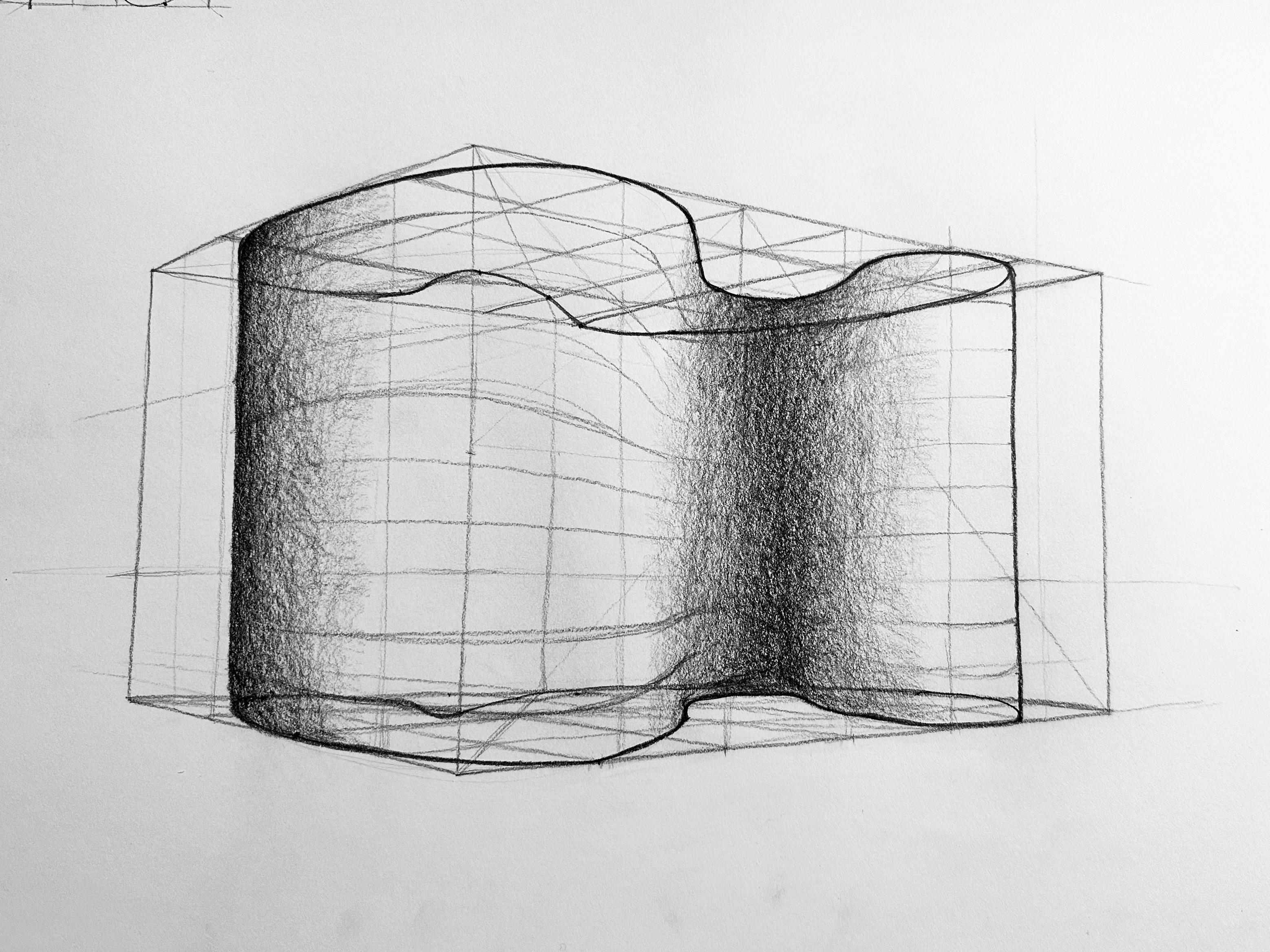


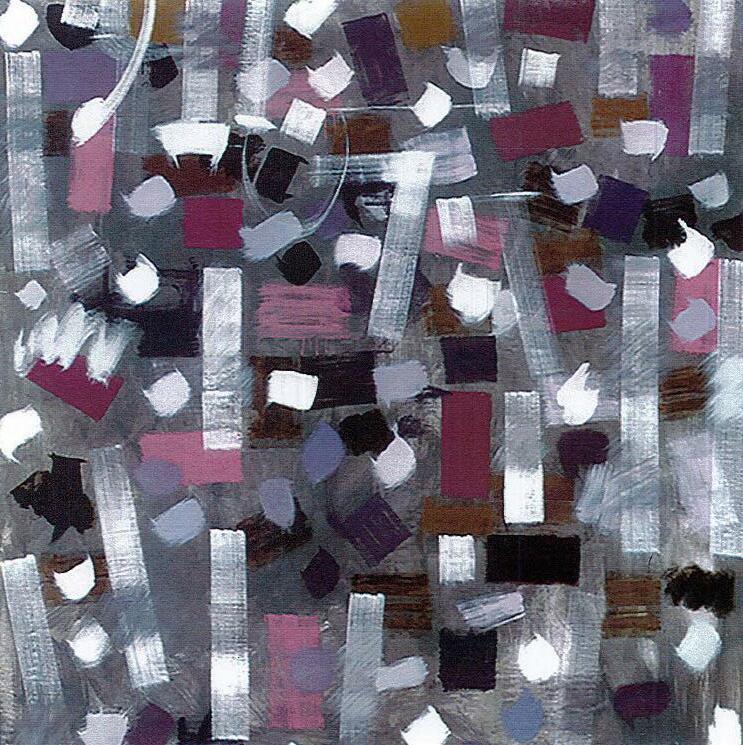
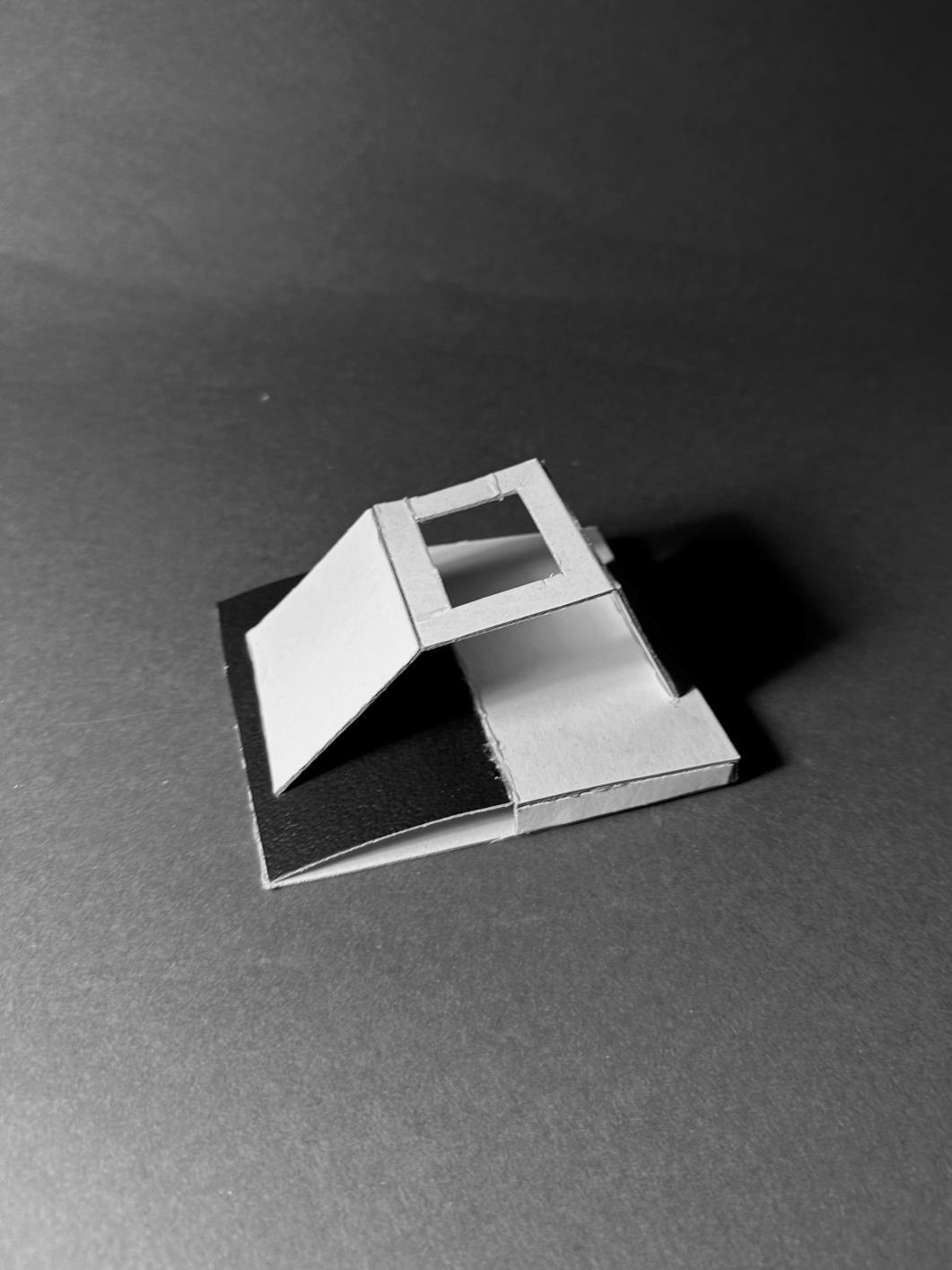
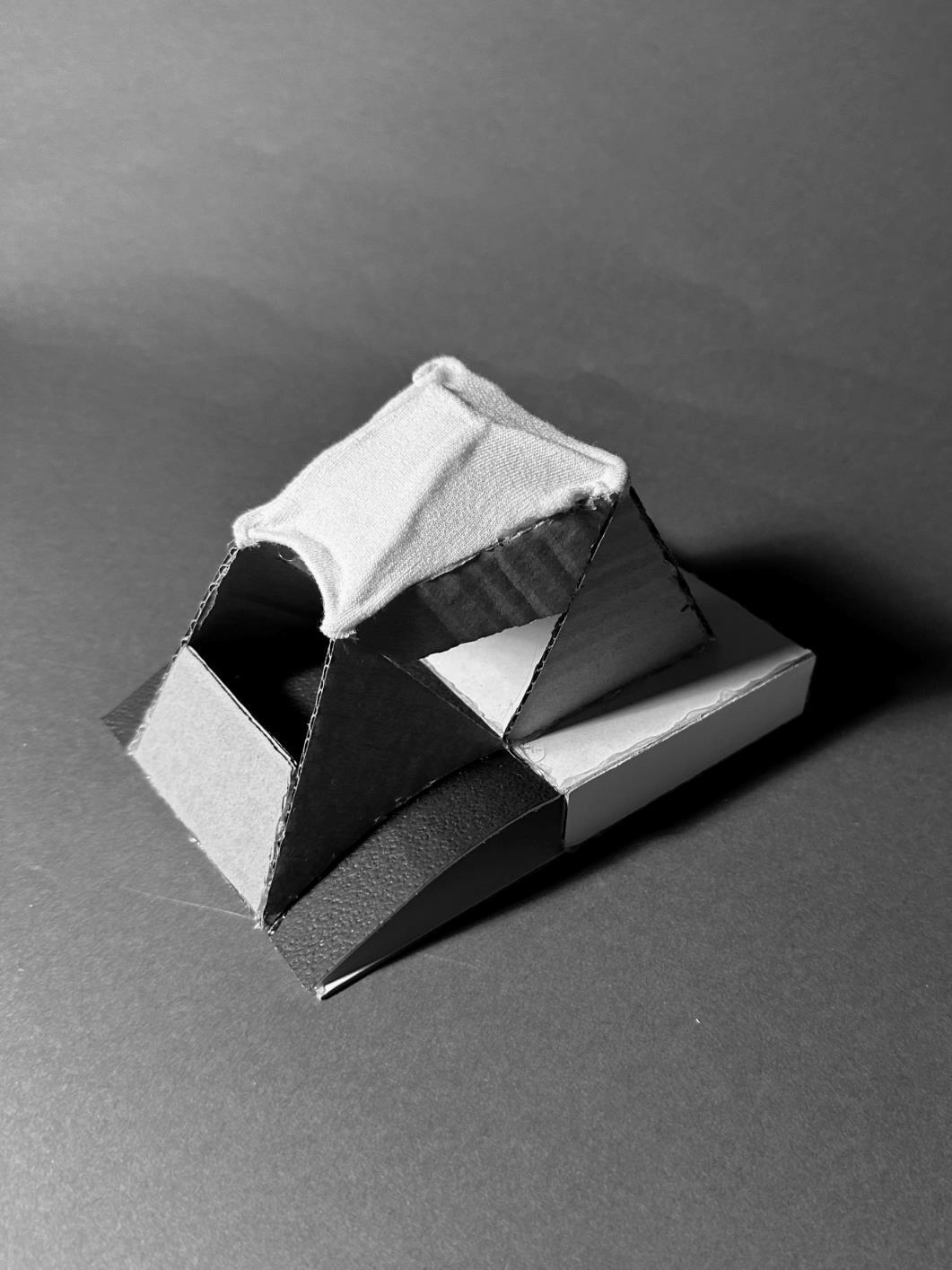
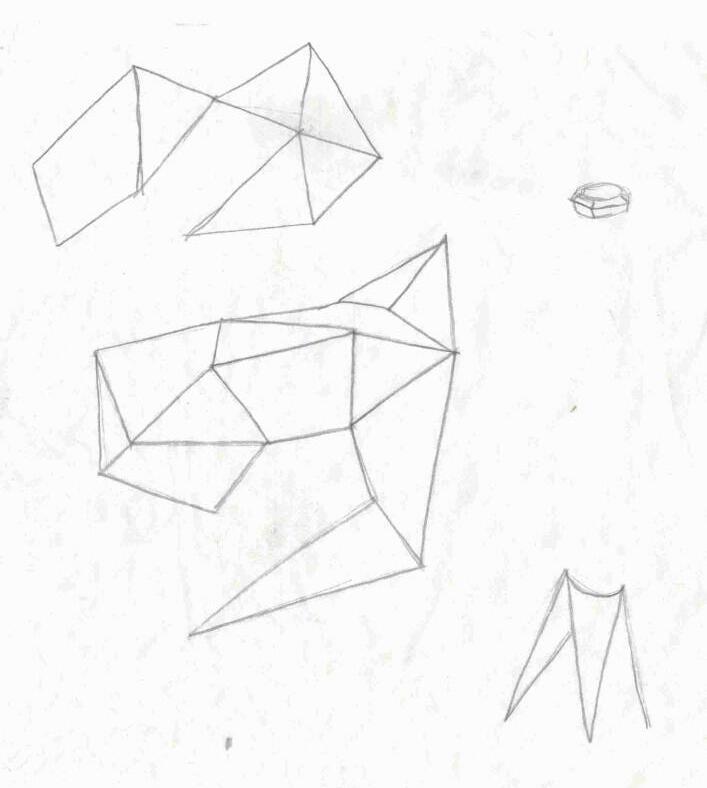
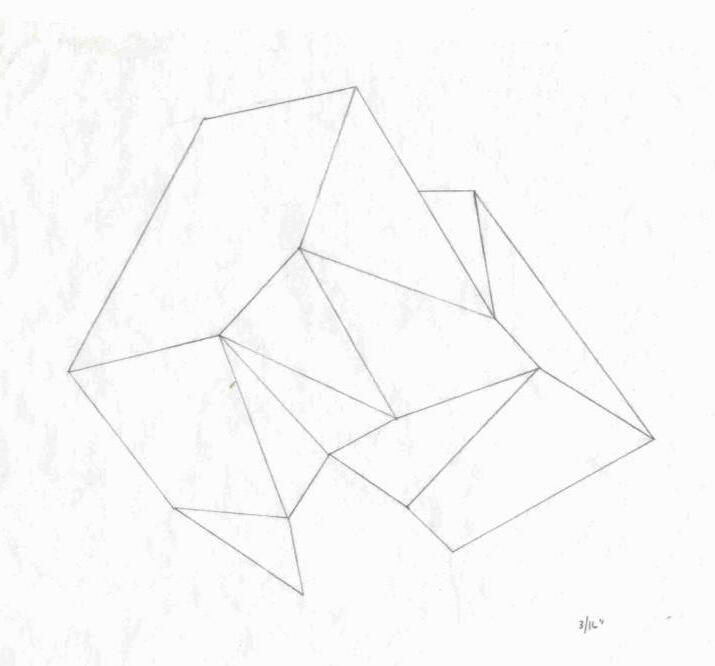
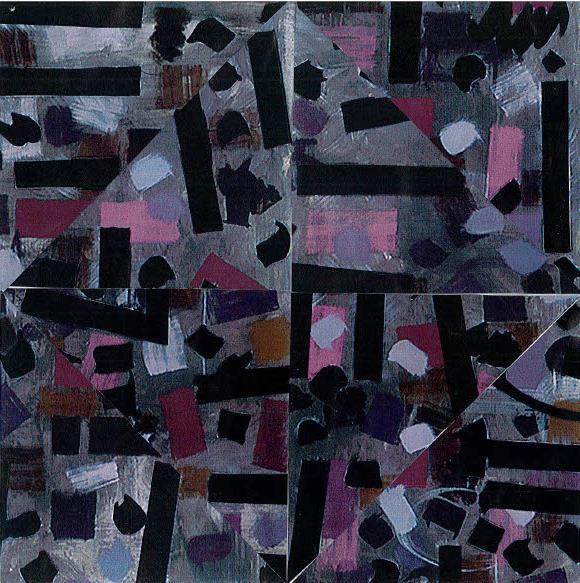
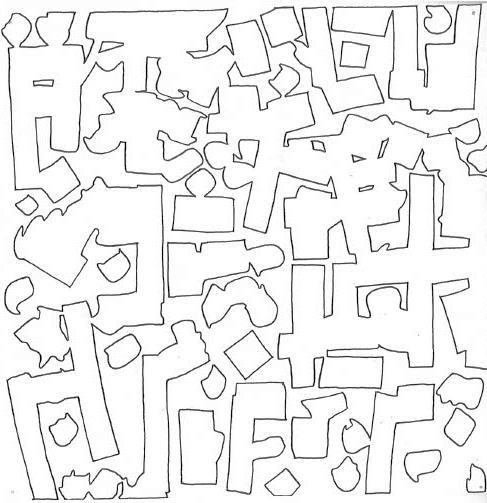
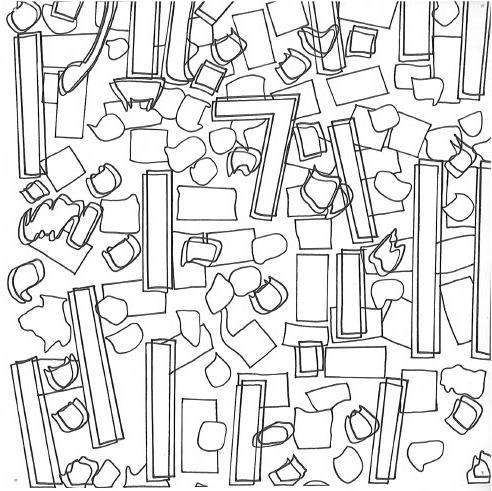
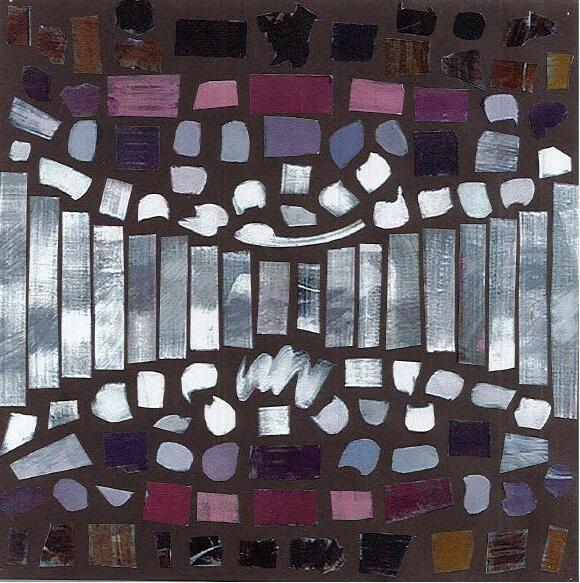
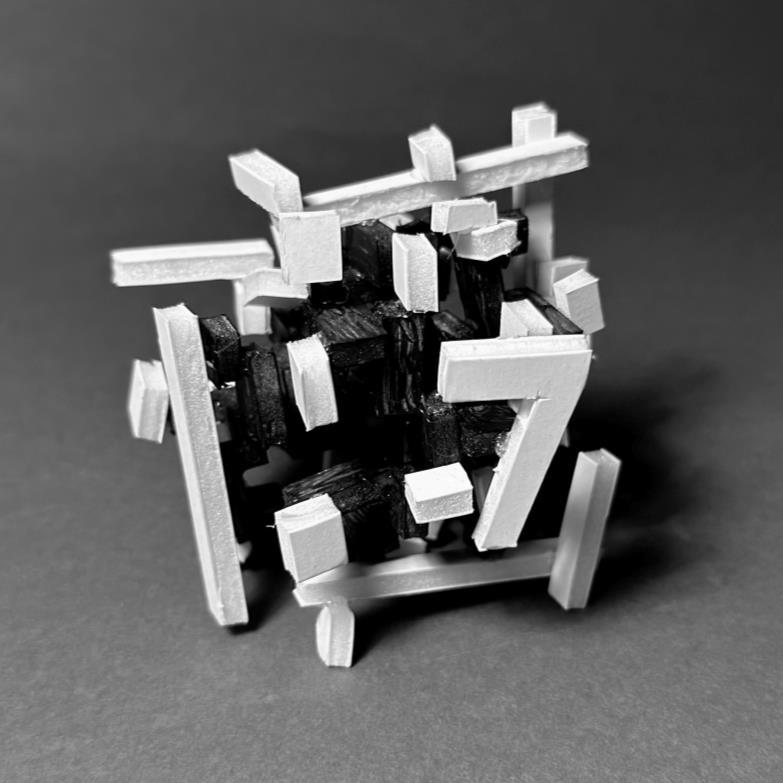
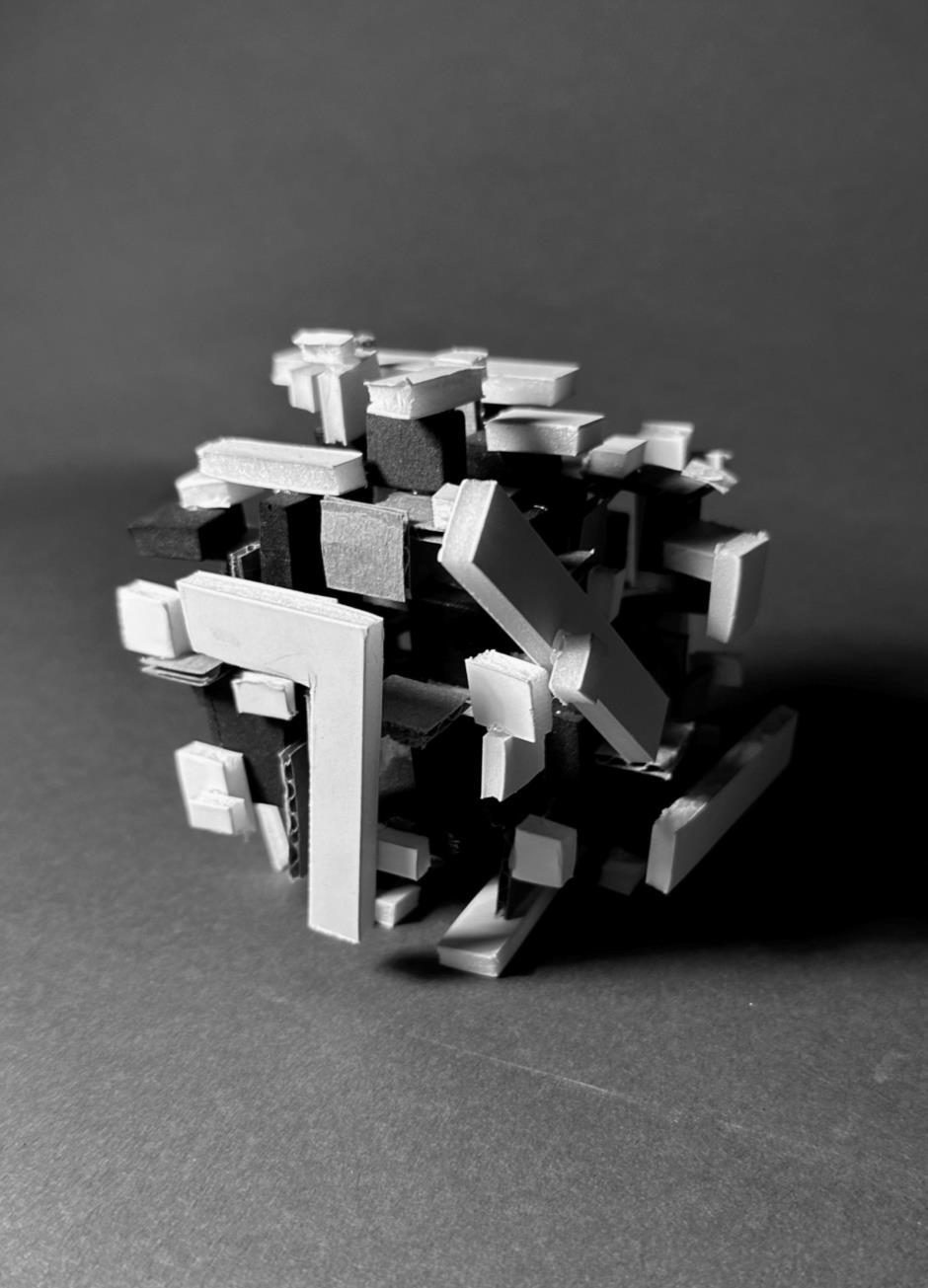
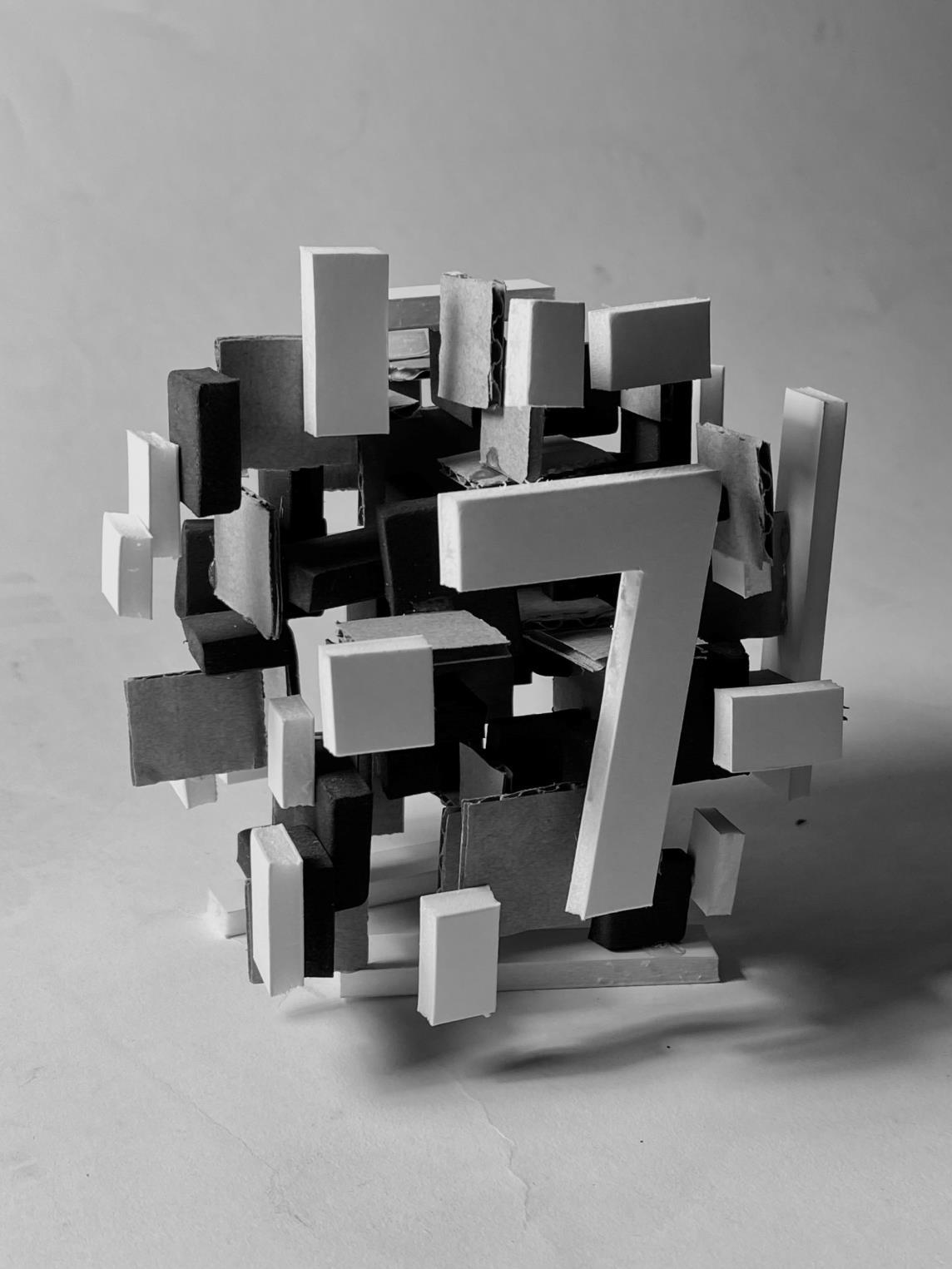
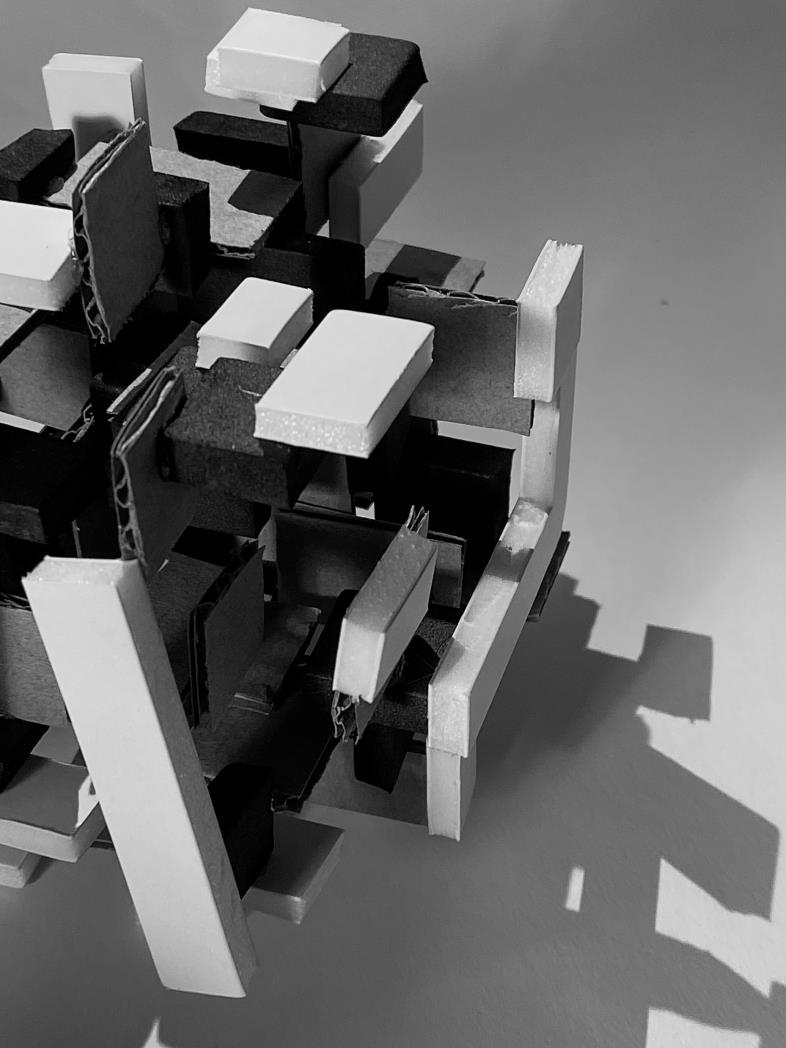
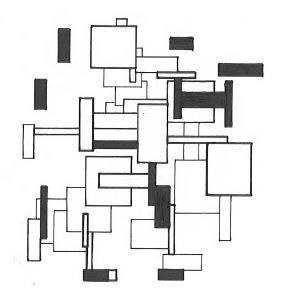
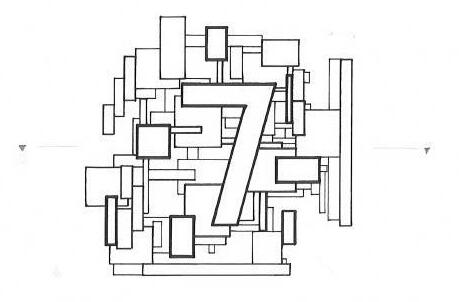
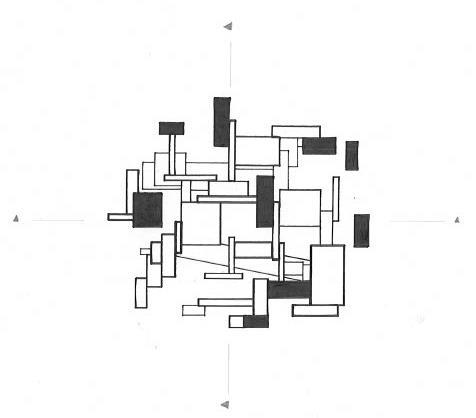
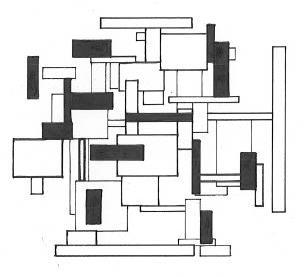
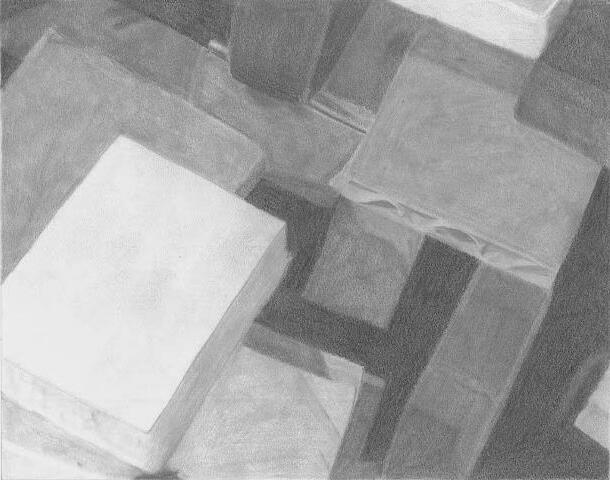
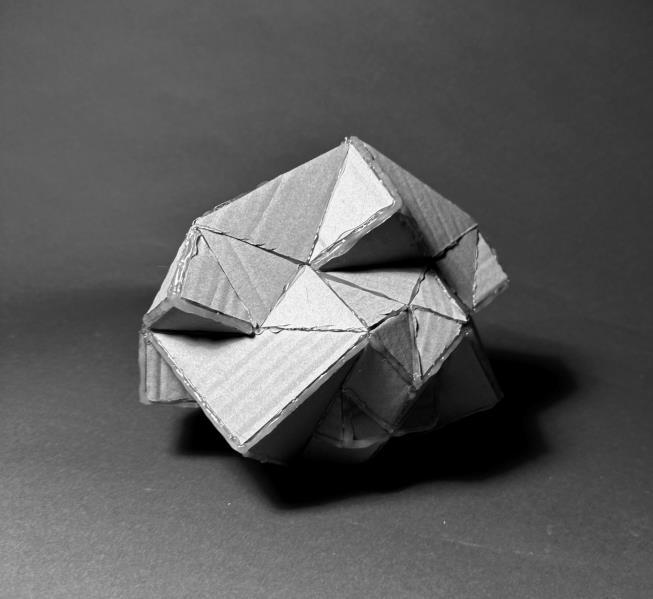
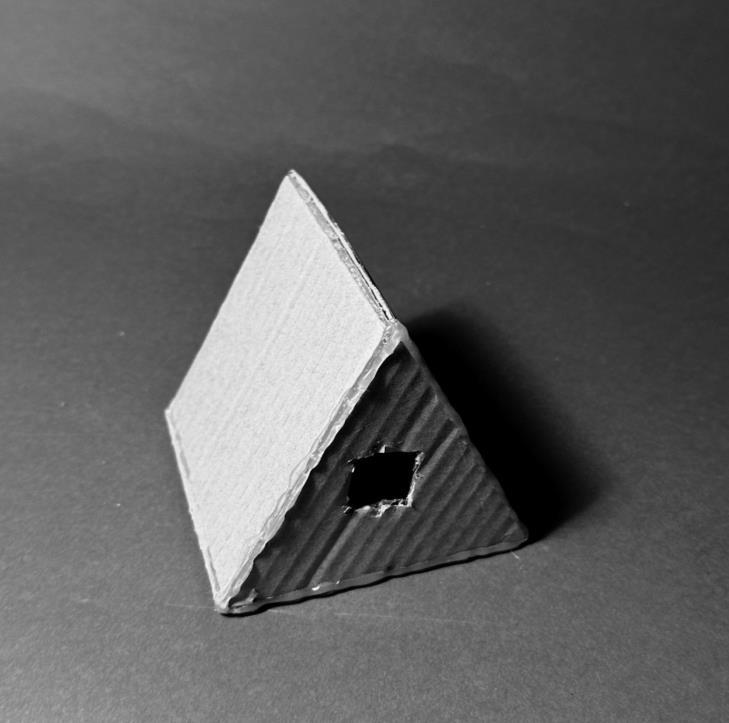
This project introduced the concept of developing an idea and exploring different variations using the form of abstract expressionism. The idea of compositional concepts was emphasized in order to have a strong sense of direction and maintain intent throughout the process. The open-endedness of abstract expressionism allowed for a range of interpretations to be derived from a single piece of art. The painting Number 4 by Bradley Walker Tomlin was used to create reproductions and variations of the piece based on the compositional concepts it portrayed. These were then translated into 3D objects inspired by the reproductions and variations, which explored being able to identify certain forms and elements and convert them into a 3D composition. Tomlin’s painting conveyed concepts such as hierarchy, contrast, and chaos. These were focused on in the reproductions, variations, and models with the use of many small shapes overlapping and a hierarchy with the white shapes on the top.

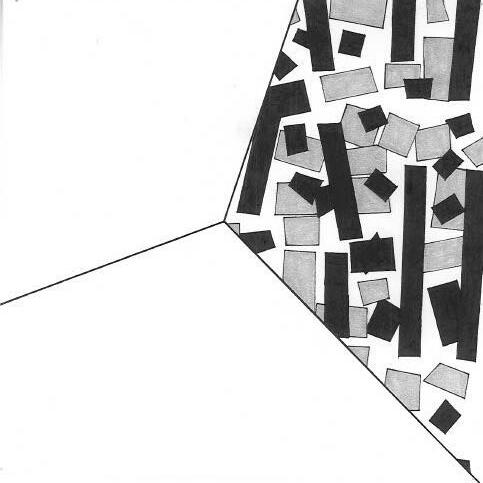
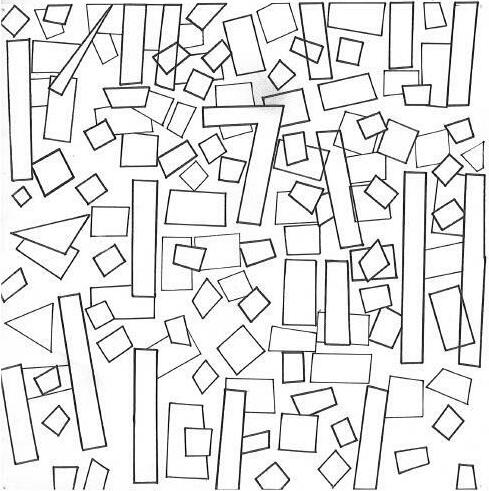
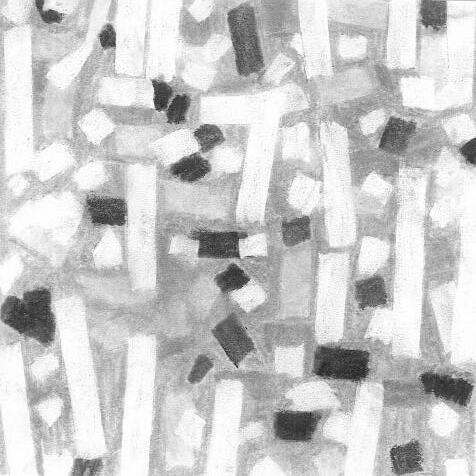


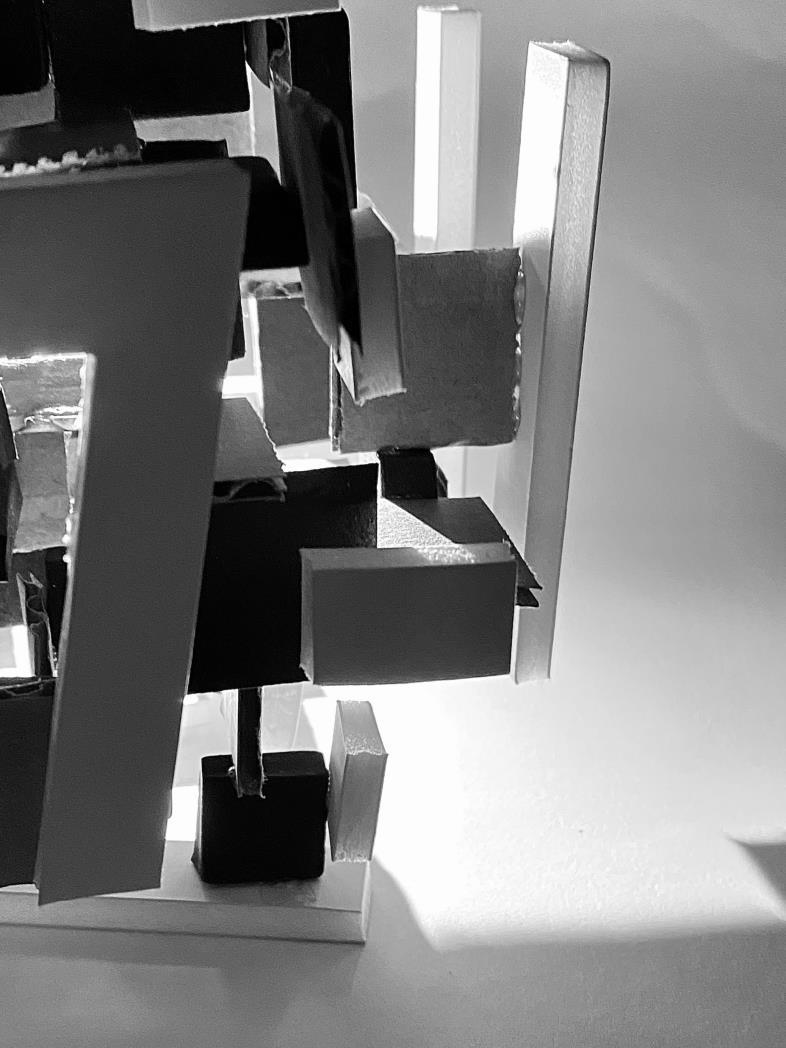
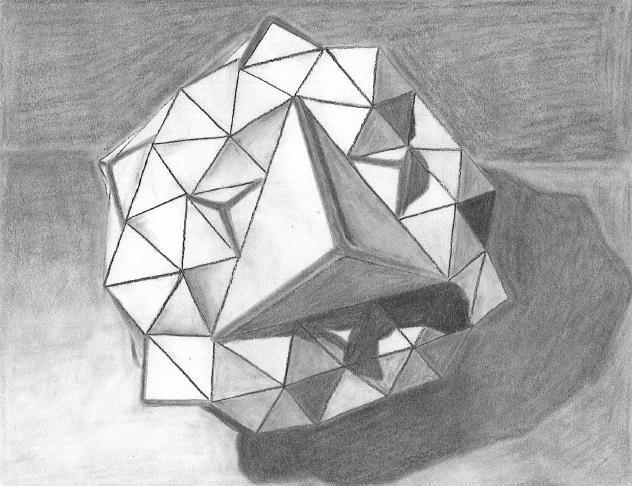
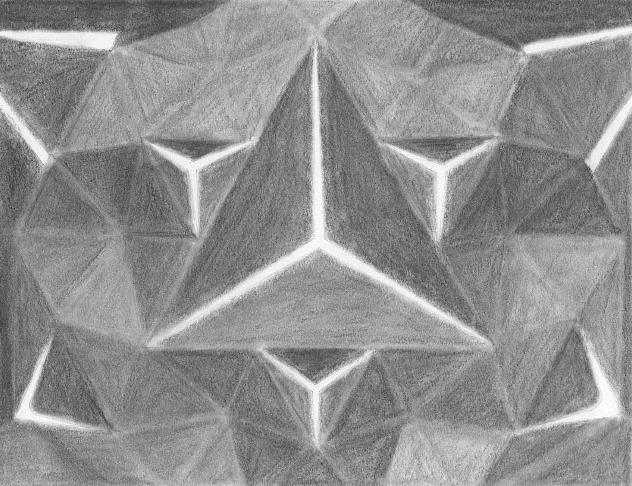
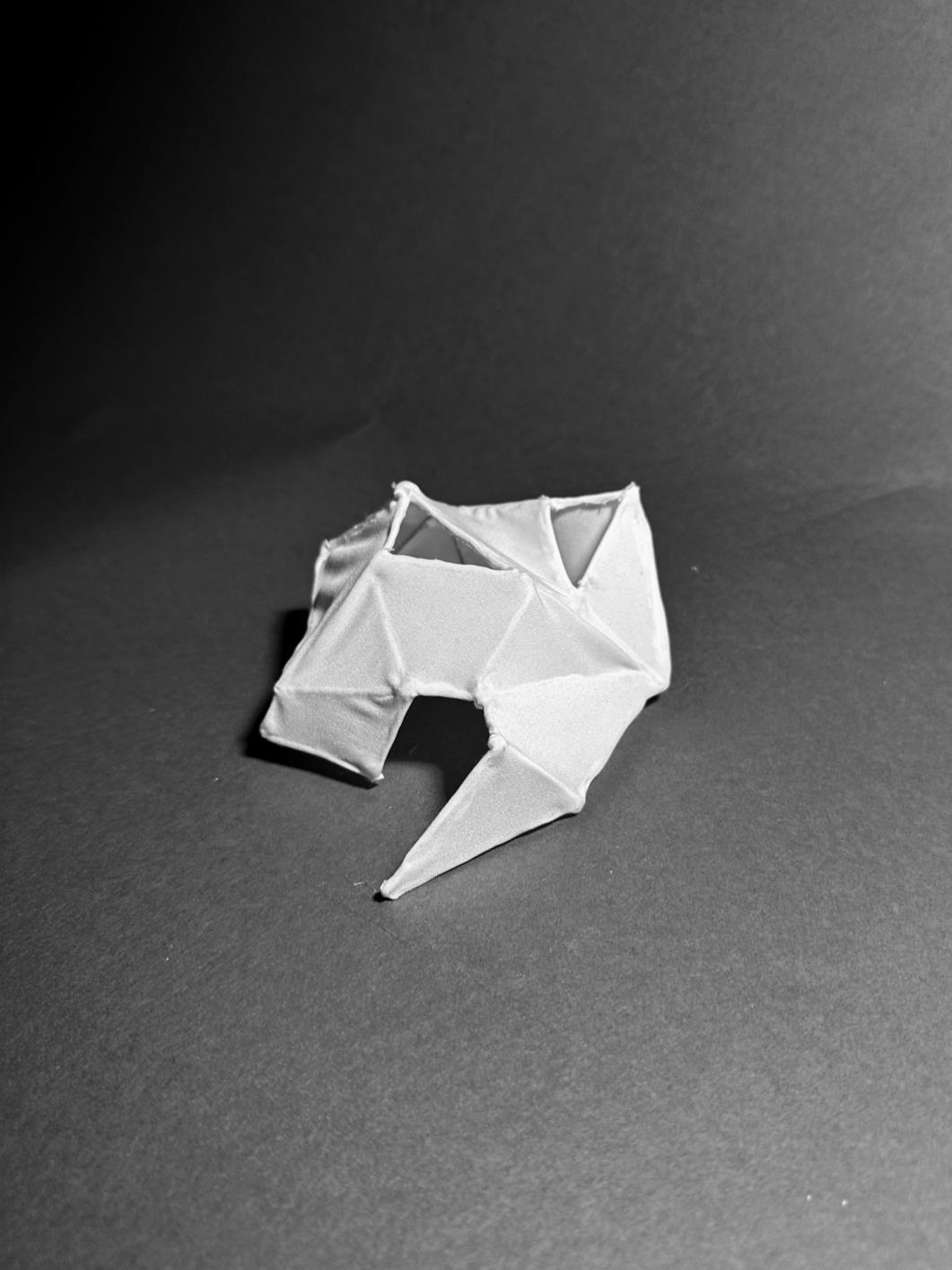
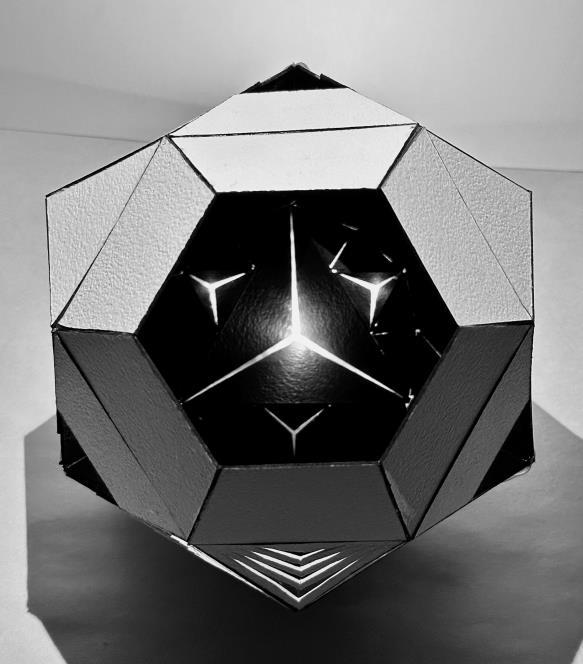
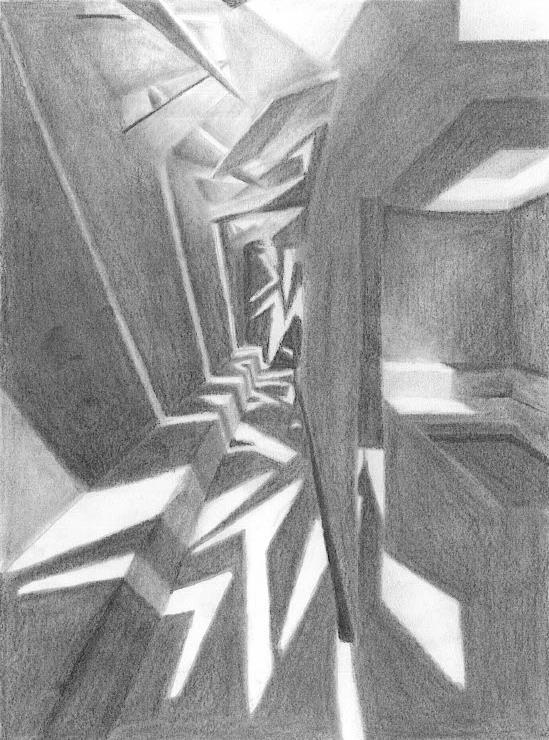
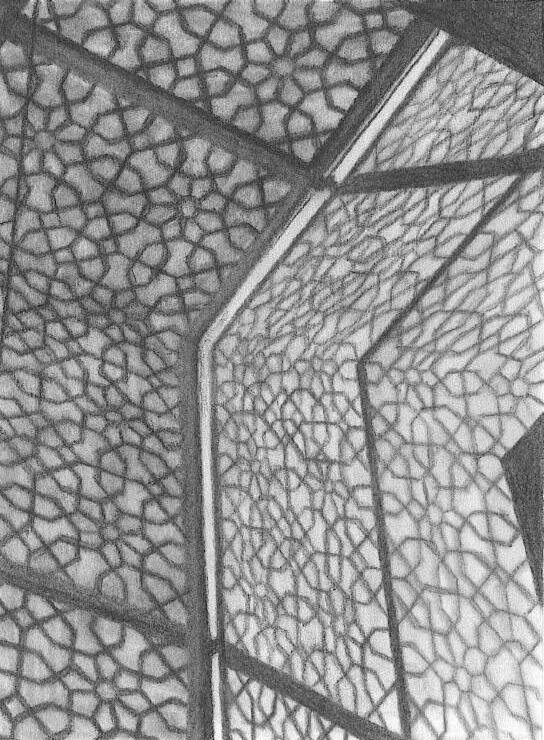
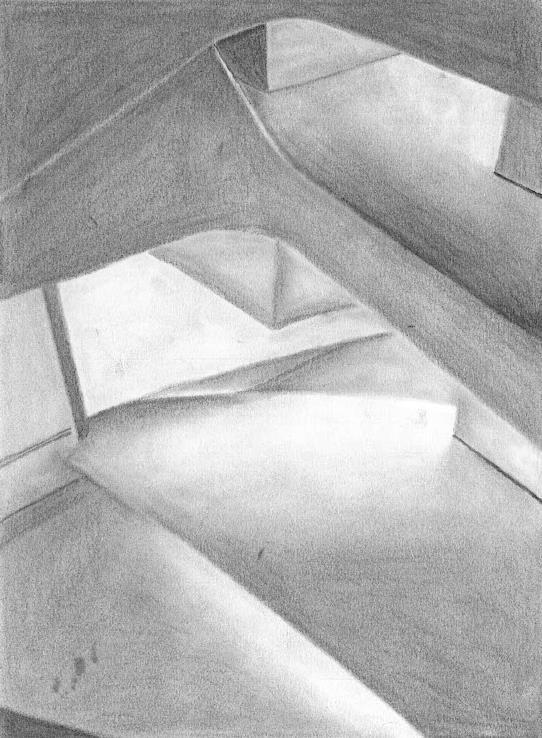
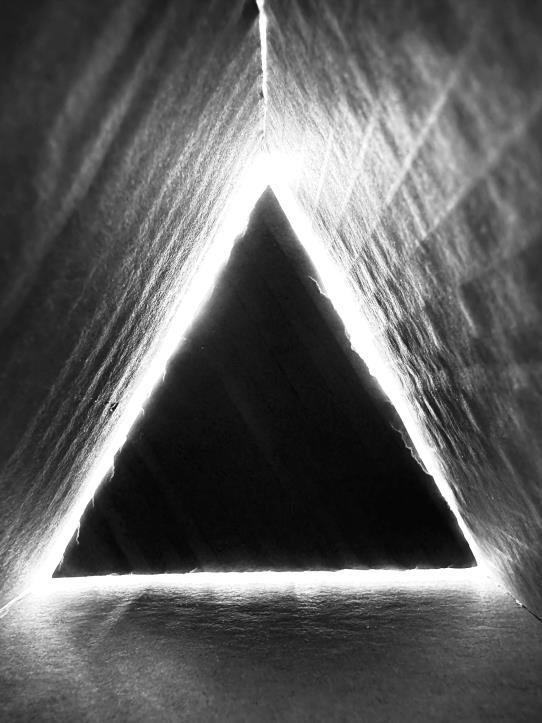
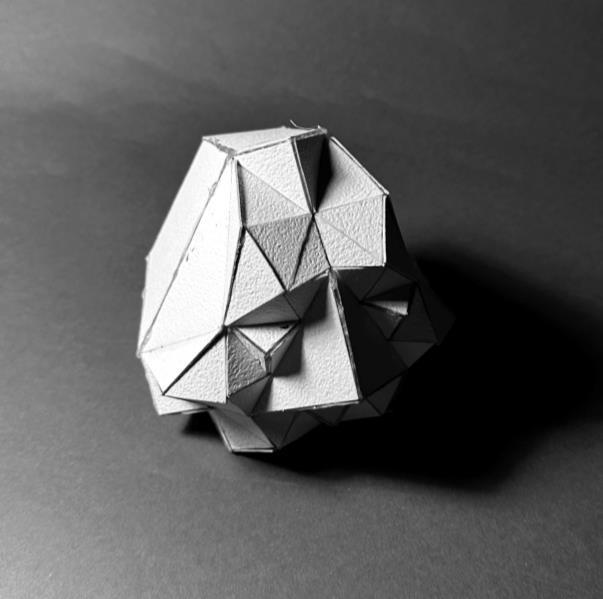
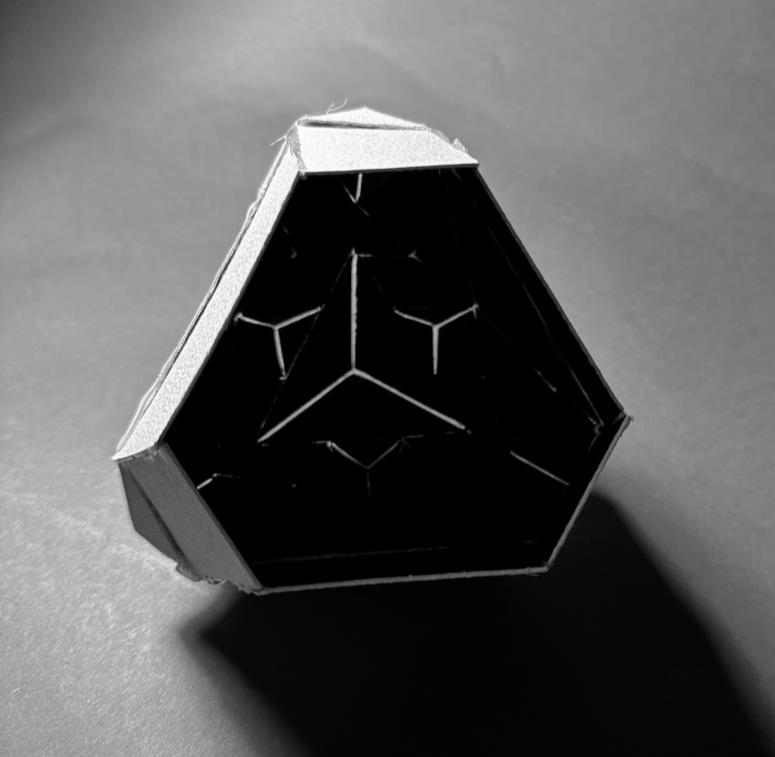
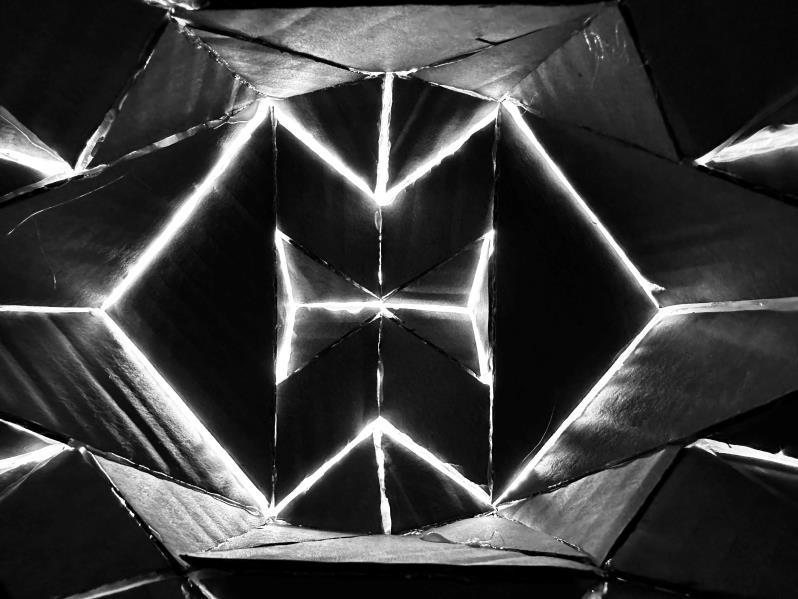
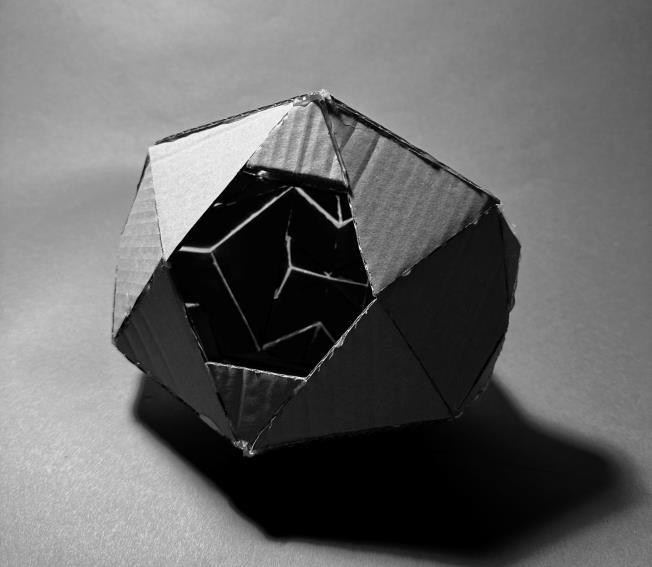
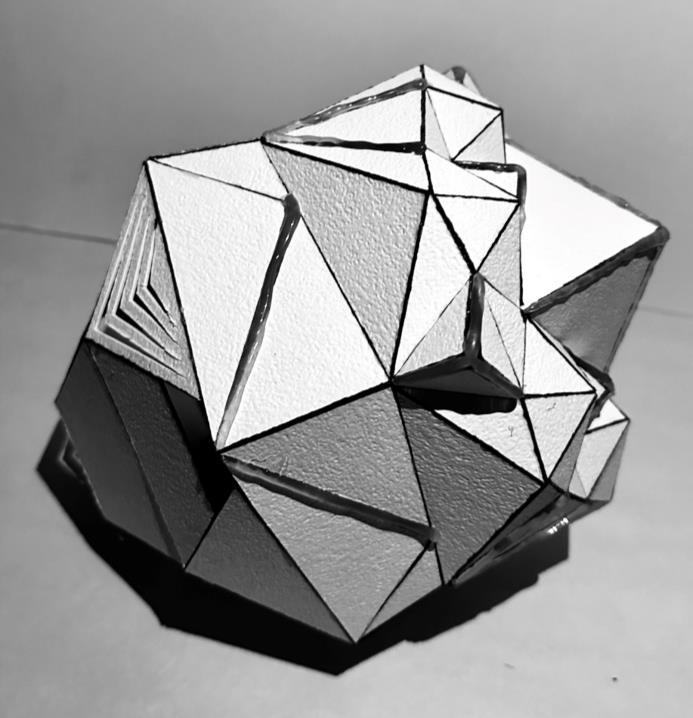
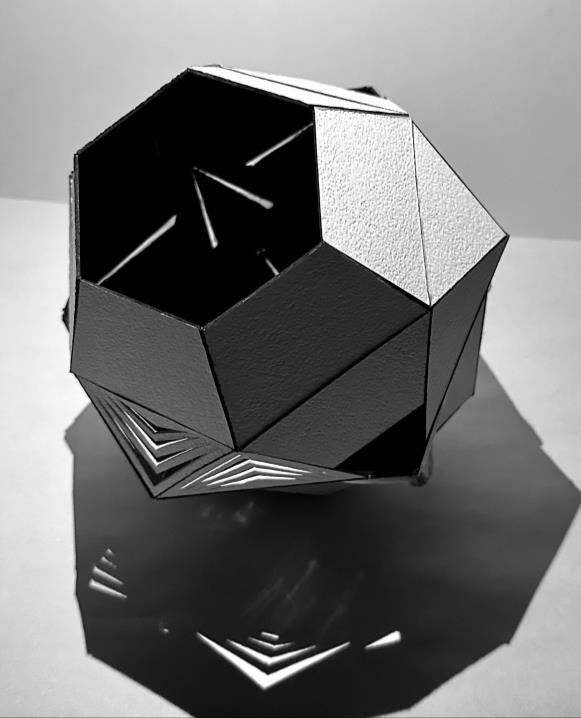
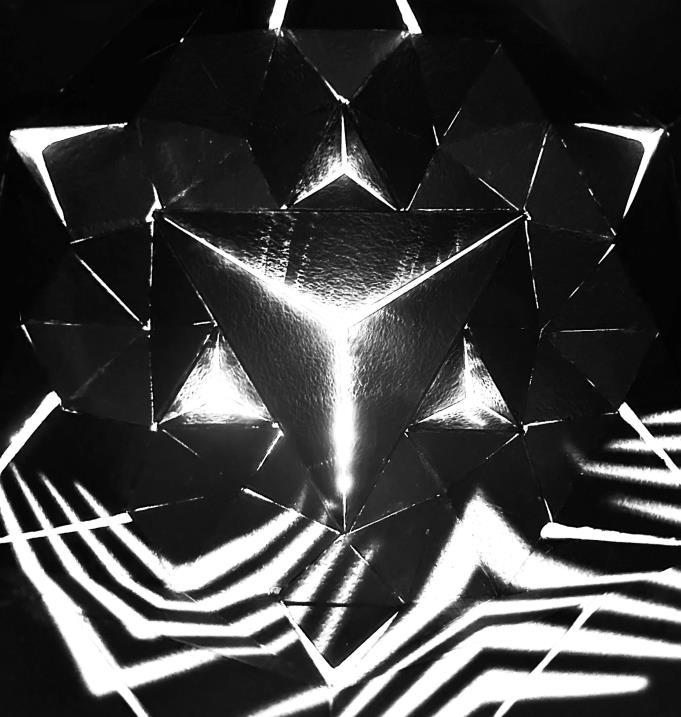
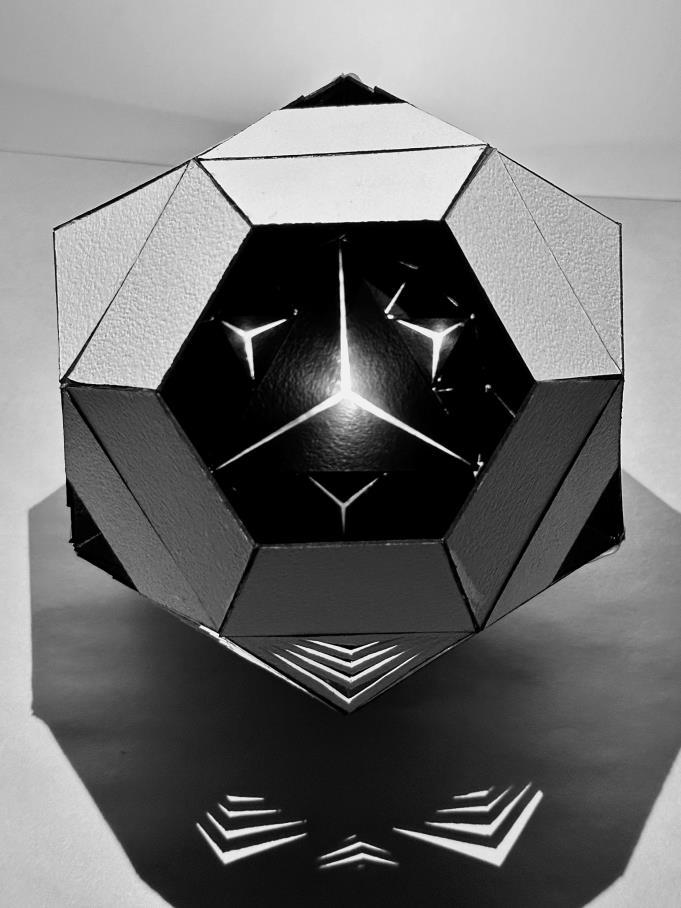
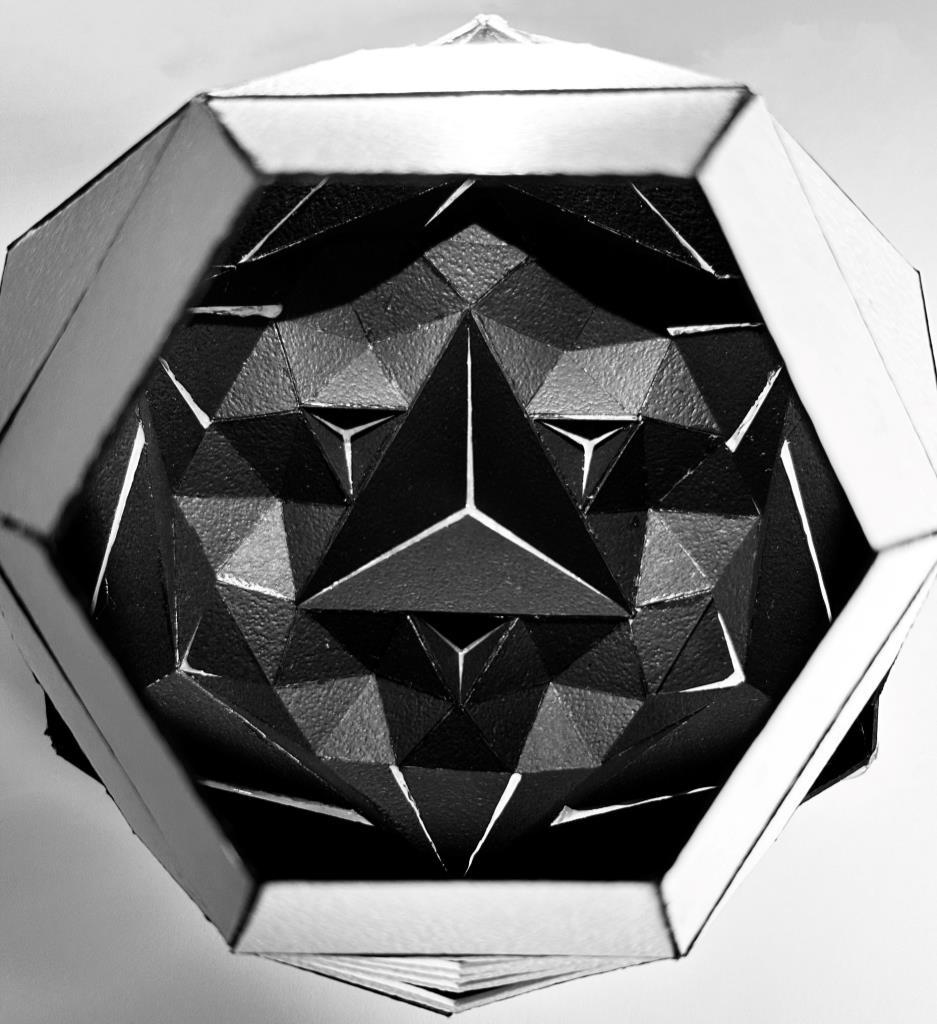
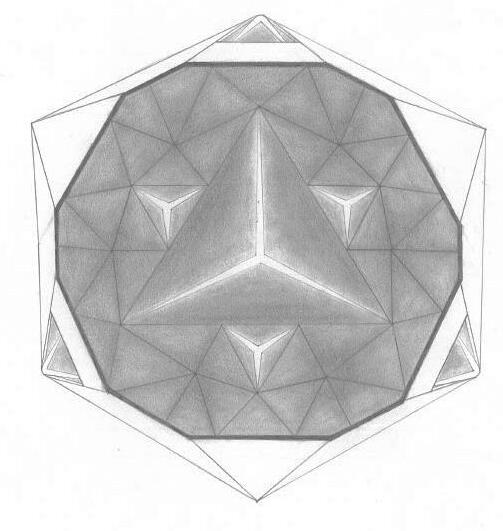
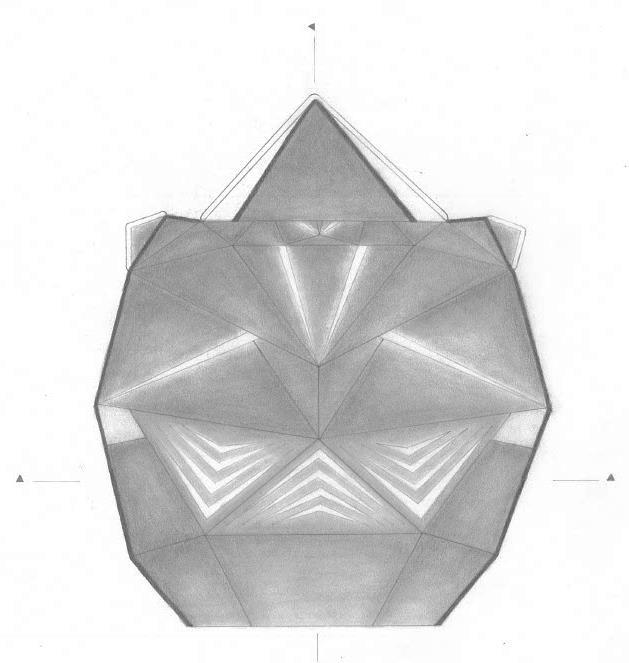
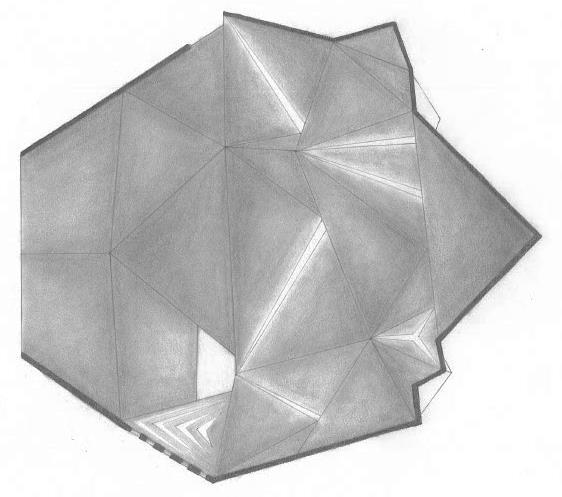
The study of light is essential when designing spaces, as it is an important aspect of perception that an architect should be able to control. Light has a prominent effect on space, which can be the addition of a certain emotion or mood, or the enhancement of the visual world. For this project, light was studied by considering certain qualities of light and exploring terms that define those qualities. Precedents were introduced to inspire the design project, which were reproduced while maintaining focus on the light qualities shown. To study light within a space, a light vessel was developed, which had to contain a particular quality of light. The vessel held qualities such as glowing, sharp, and fragmented, which was achieved by creating cracks of hot glue between dark geometric shapes. The hot glue allowed for glowing light to filter through, and the black interior helped to emphasize the sharp splinters of light.


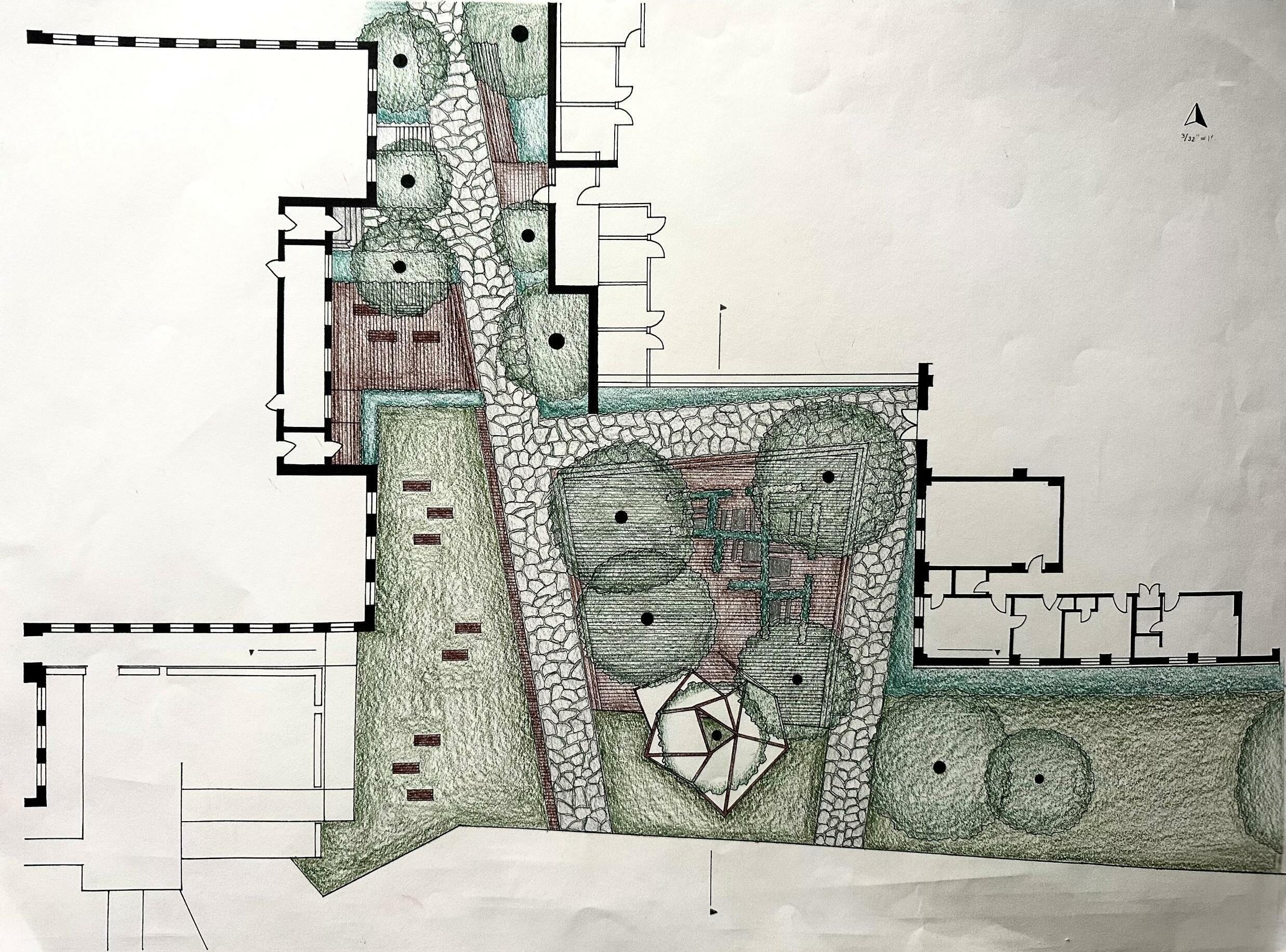
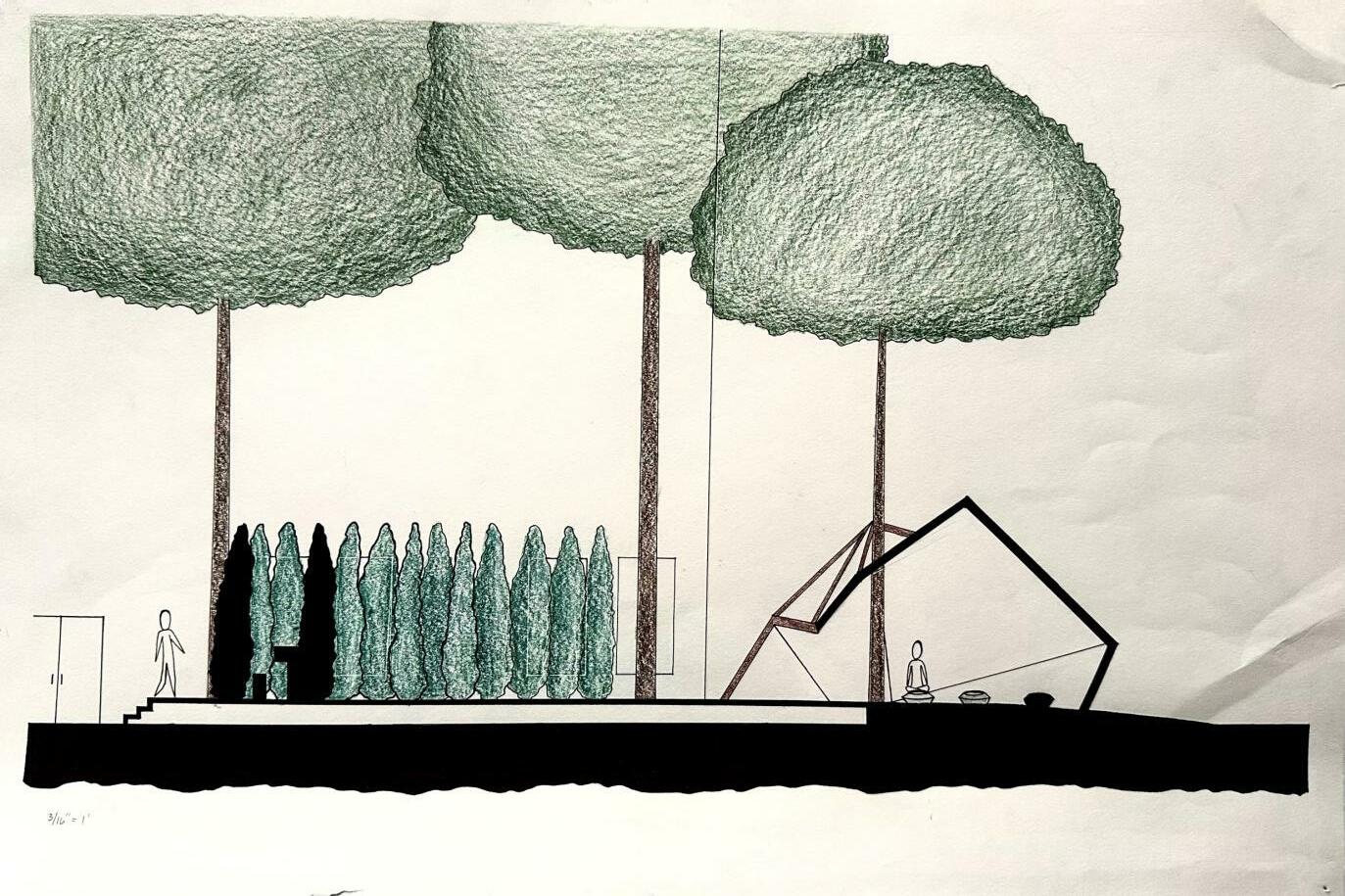
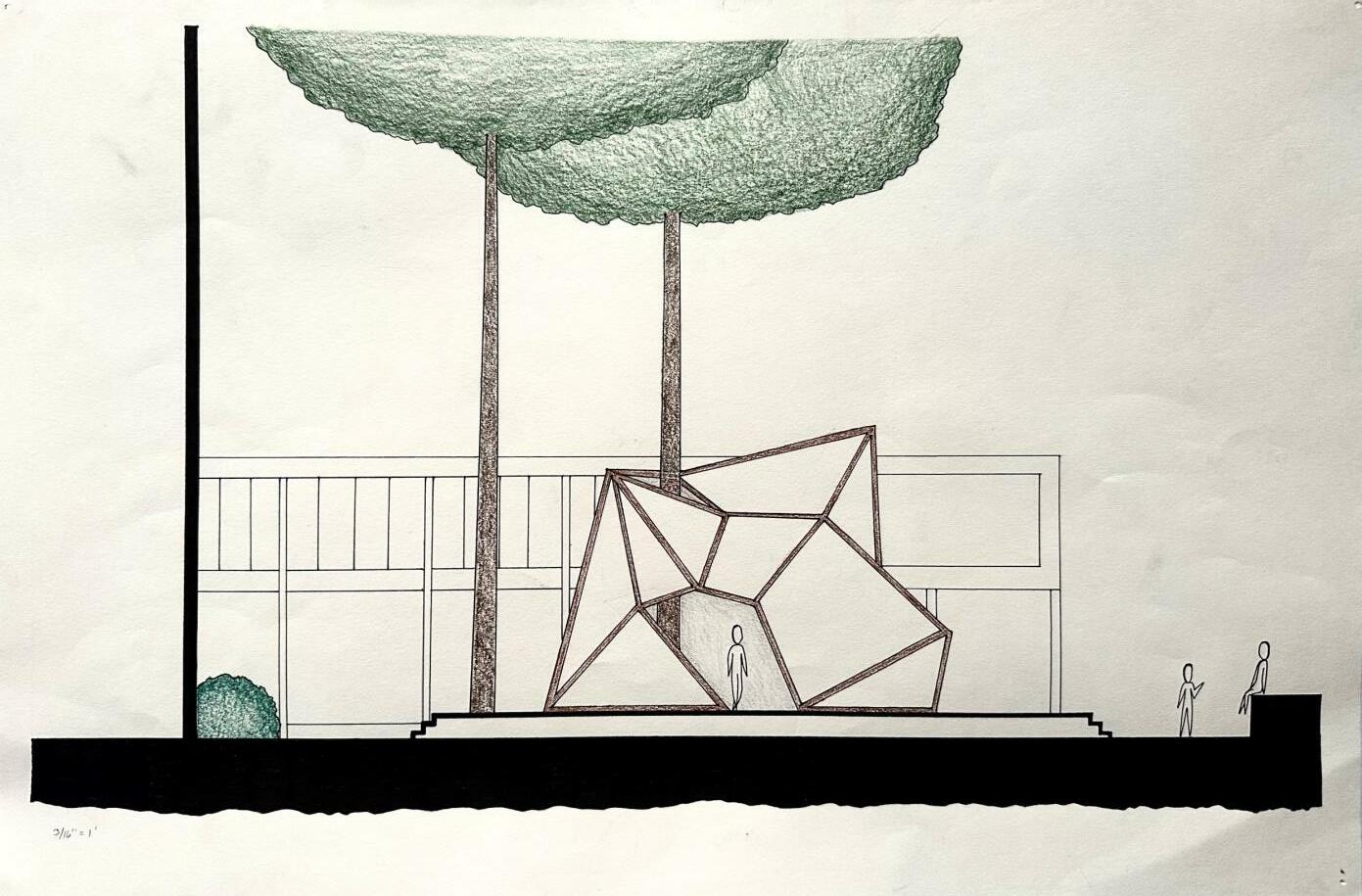
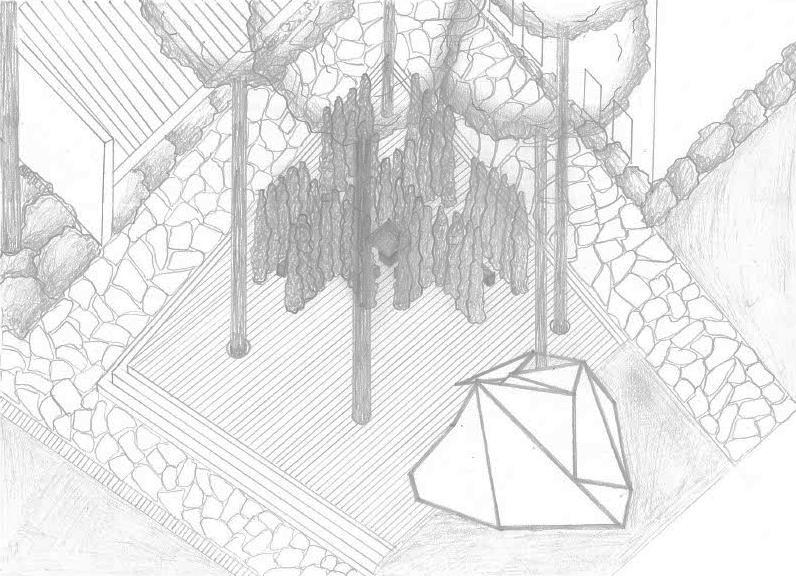
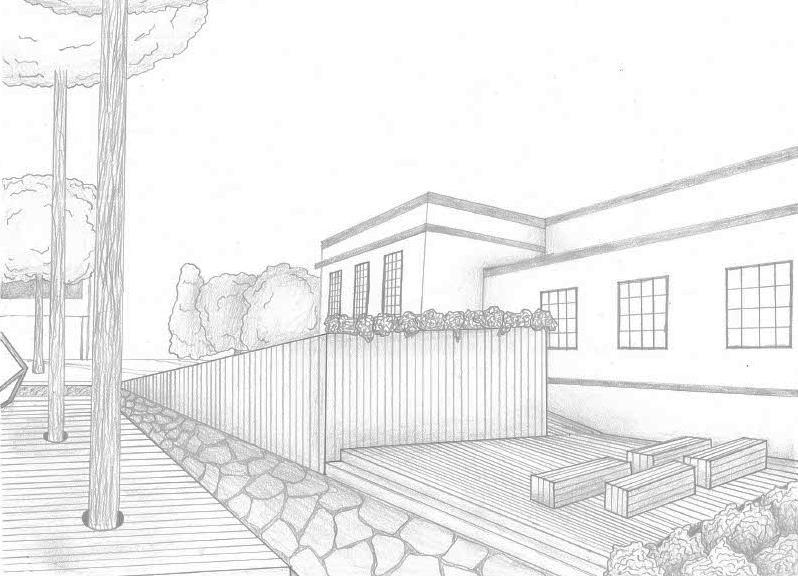
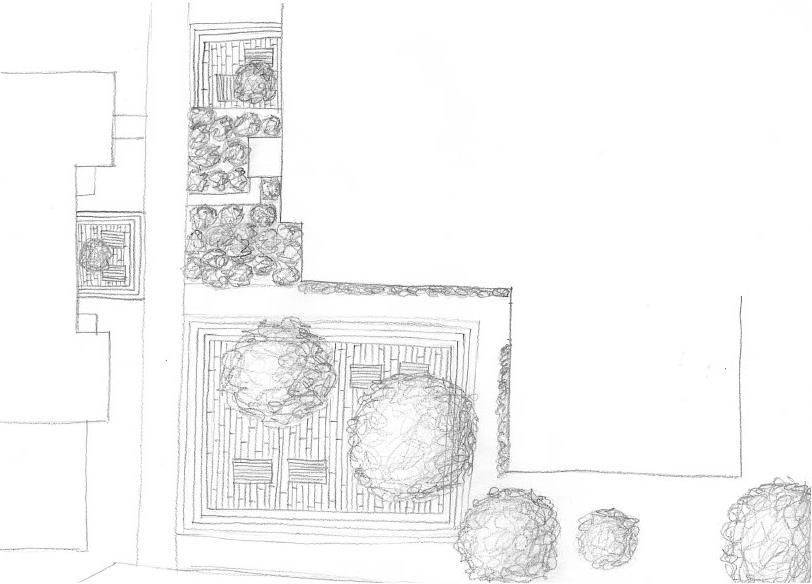
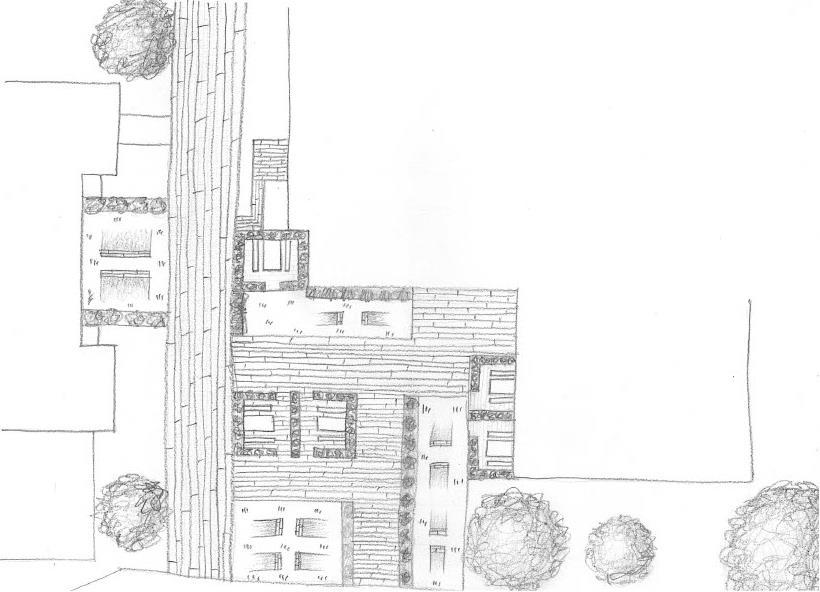
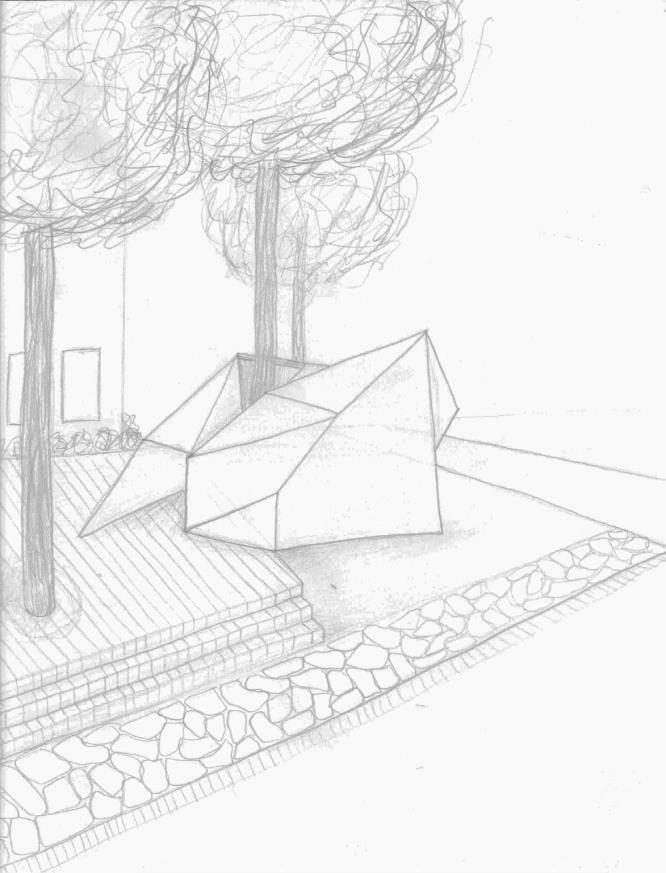
This project was the first to introduce the design of something occupying a real place that would have been used by people in the real world. Ways to create a “sense of place” were explored, meaning the design would have people connecting and interacting with it rather than just passing through. The emphasis of this project was on enhancing an exterior space without the use of buildings or enclosures, and creating a place people would naturally want to gather. The main function of this design was to provide a quiet, relaxing place for students to study and hang out, as well as maintaining a feeling of nature within the addition of architecture. This was achieved by designing individual study rooms separated by tall vegetation, along with a grassy open area for groups to gather. A pin-up space was also added near the Architecture Building for outdoor learning opportunities. Wood and stone materials contributed to the feeling of nature as well as the addition of many trees and wild organic bushes.
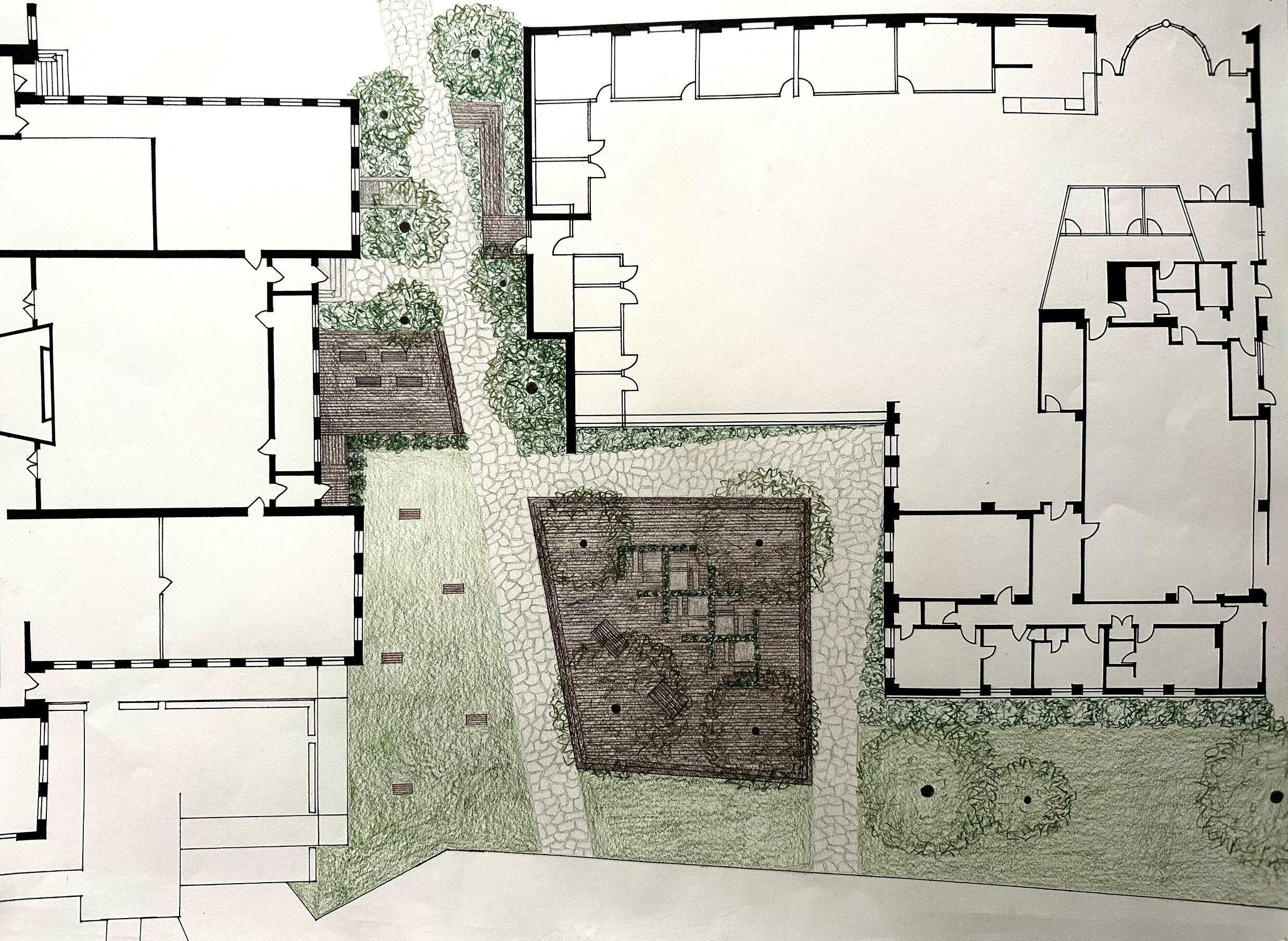
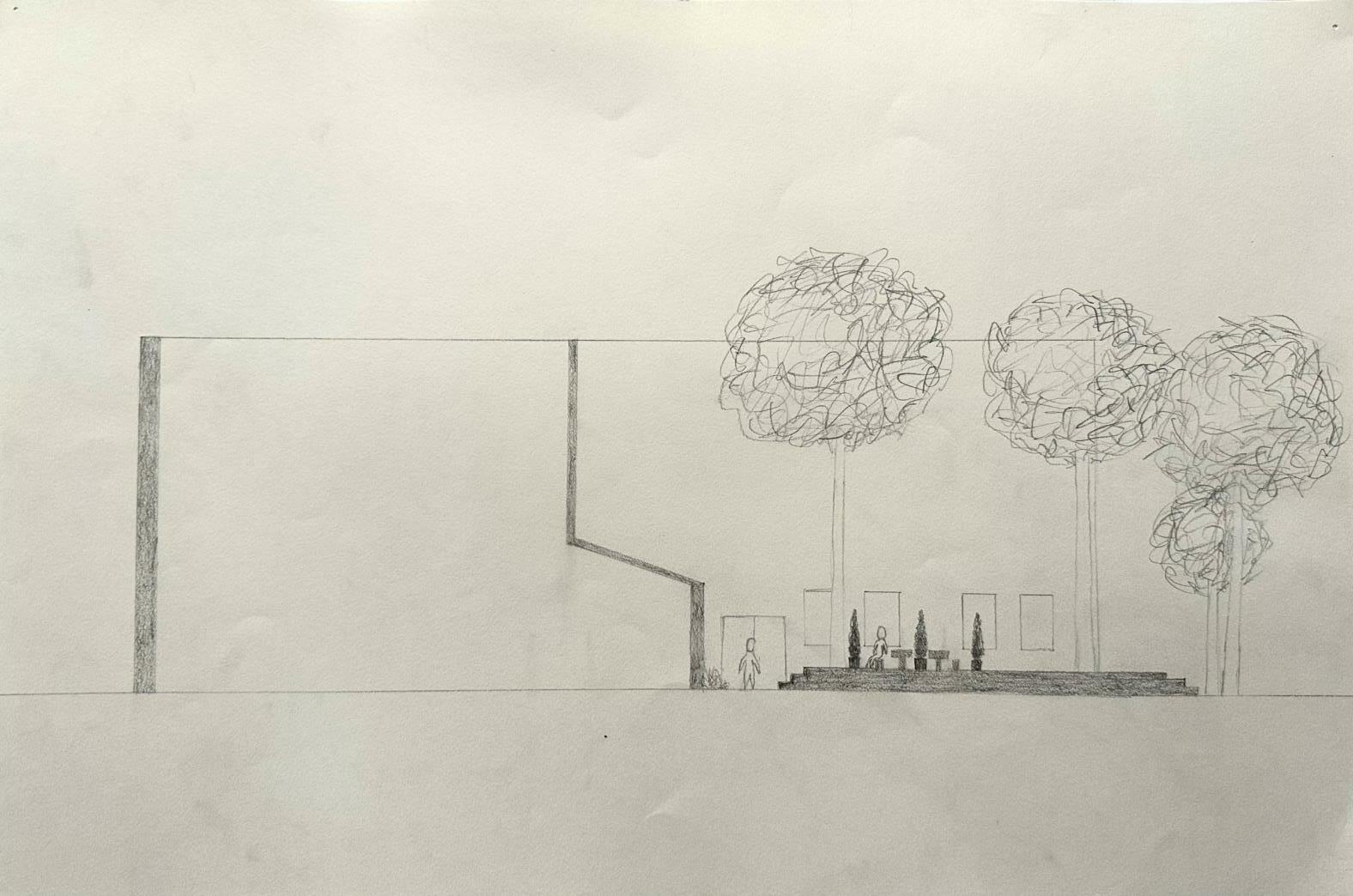
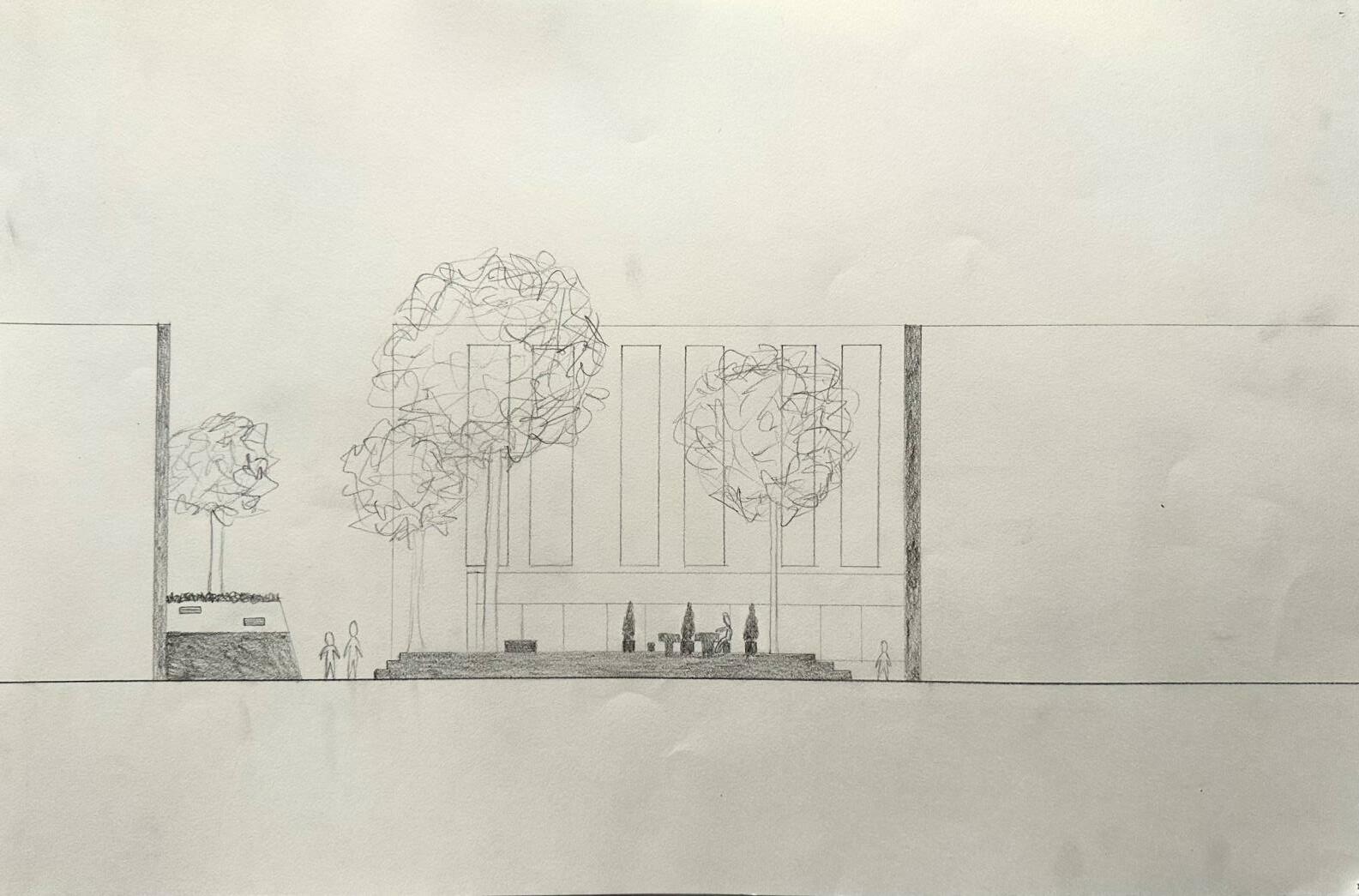
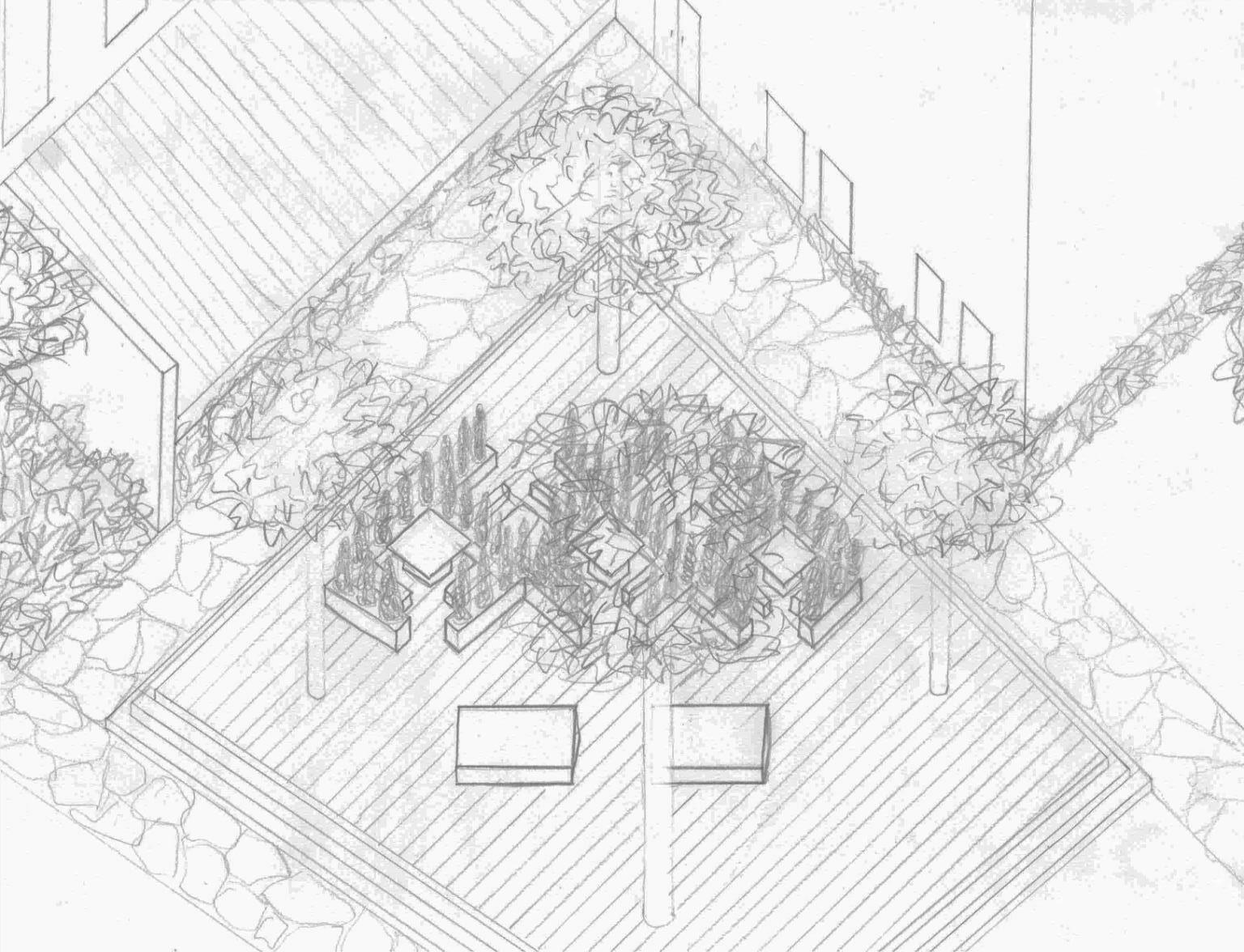
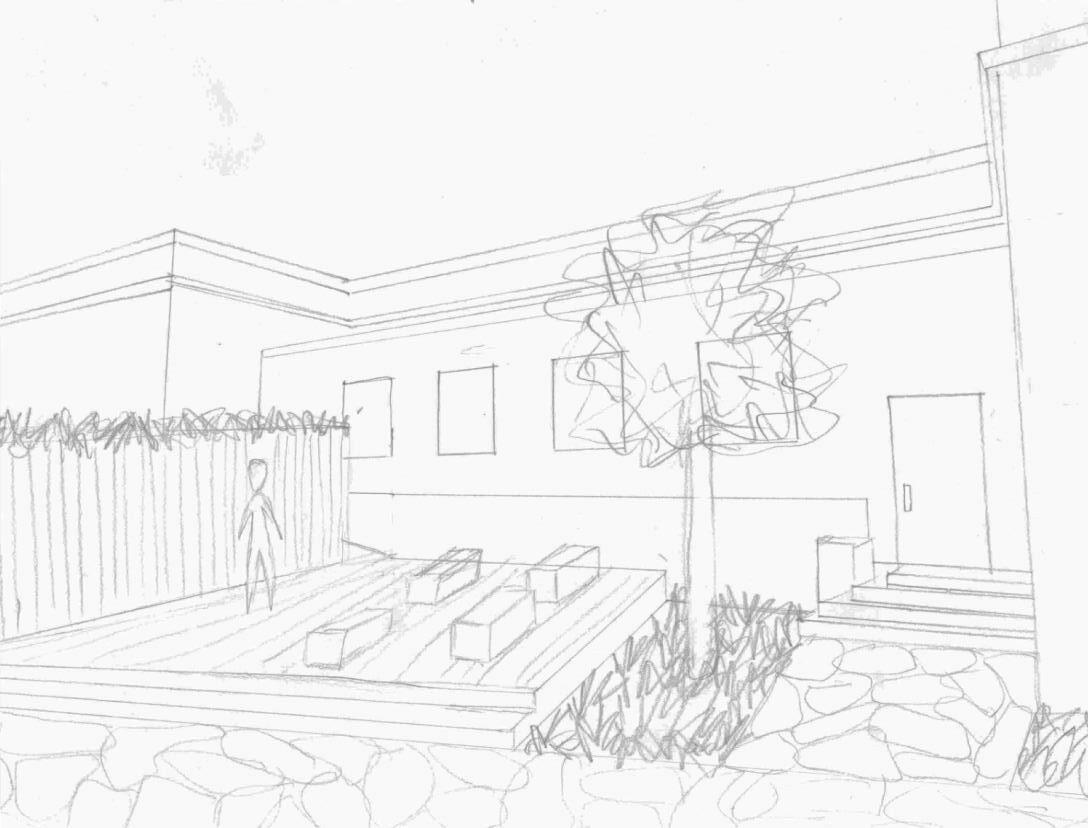
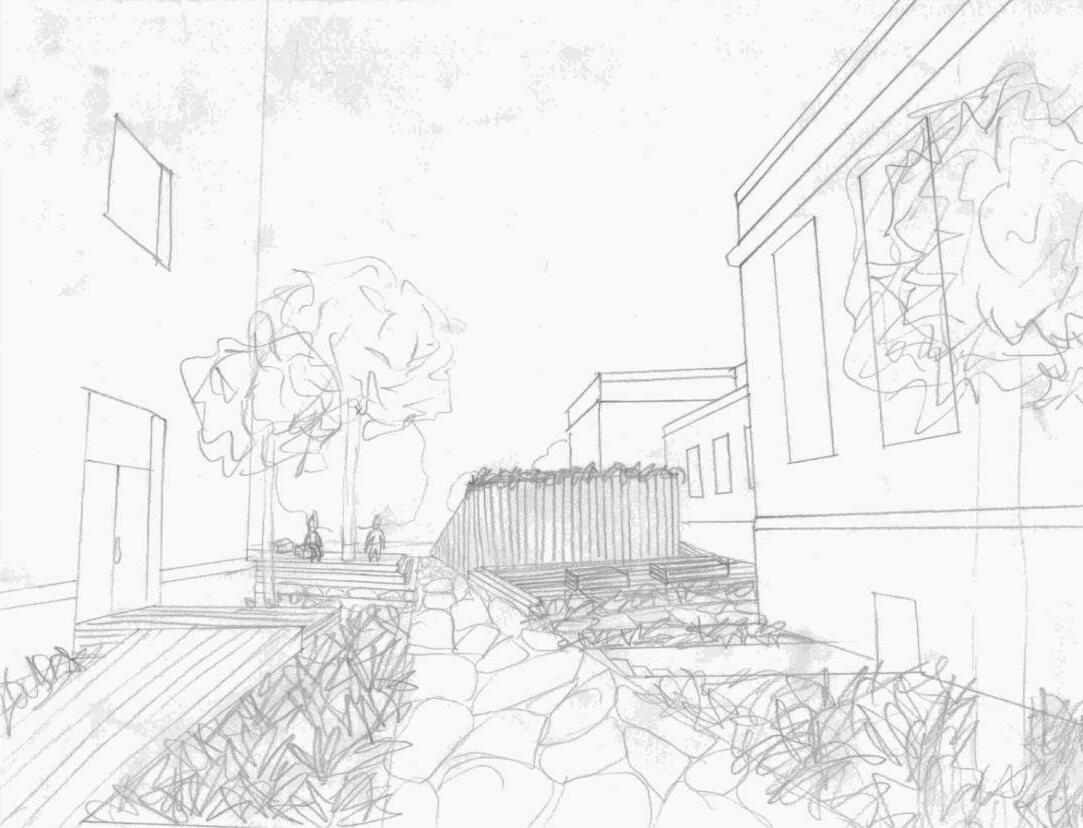
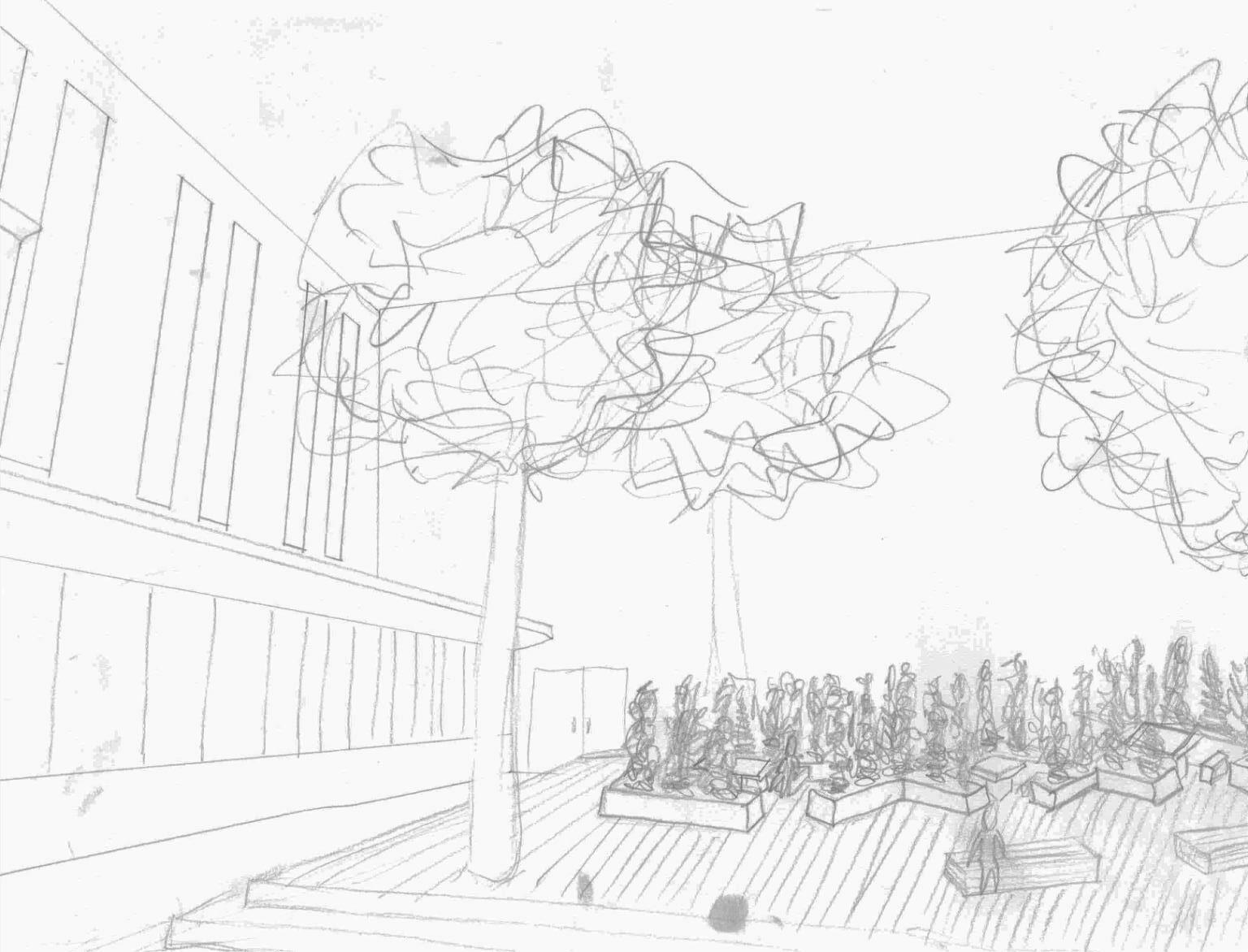
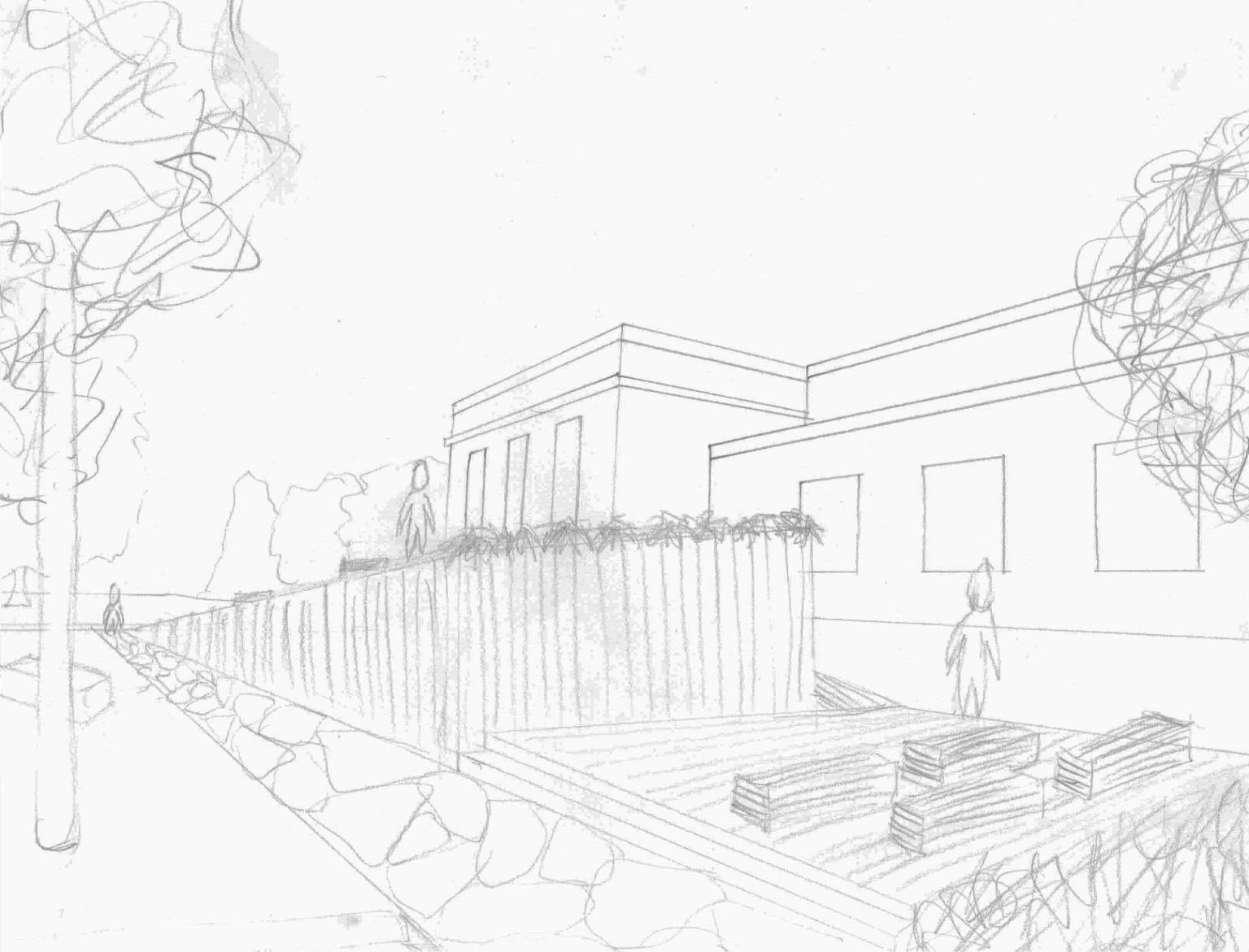
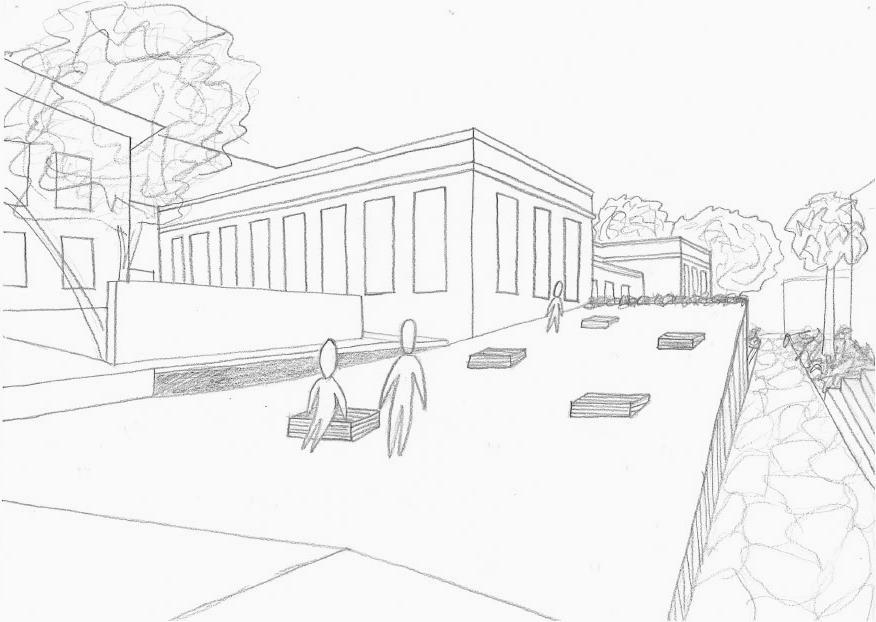
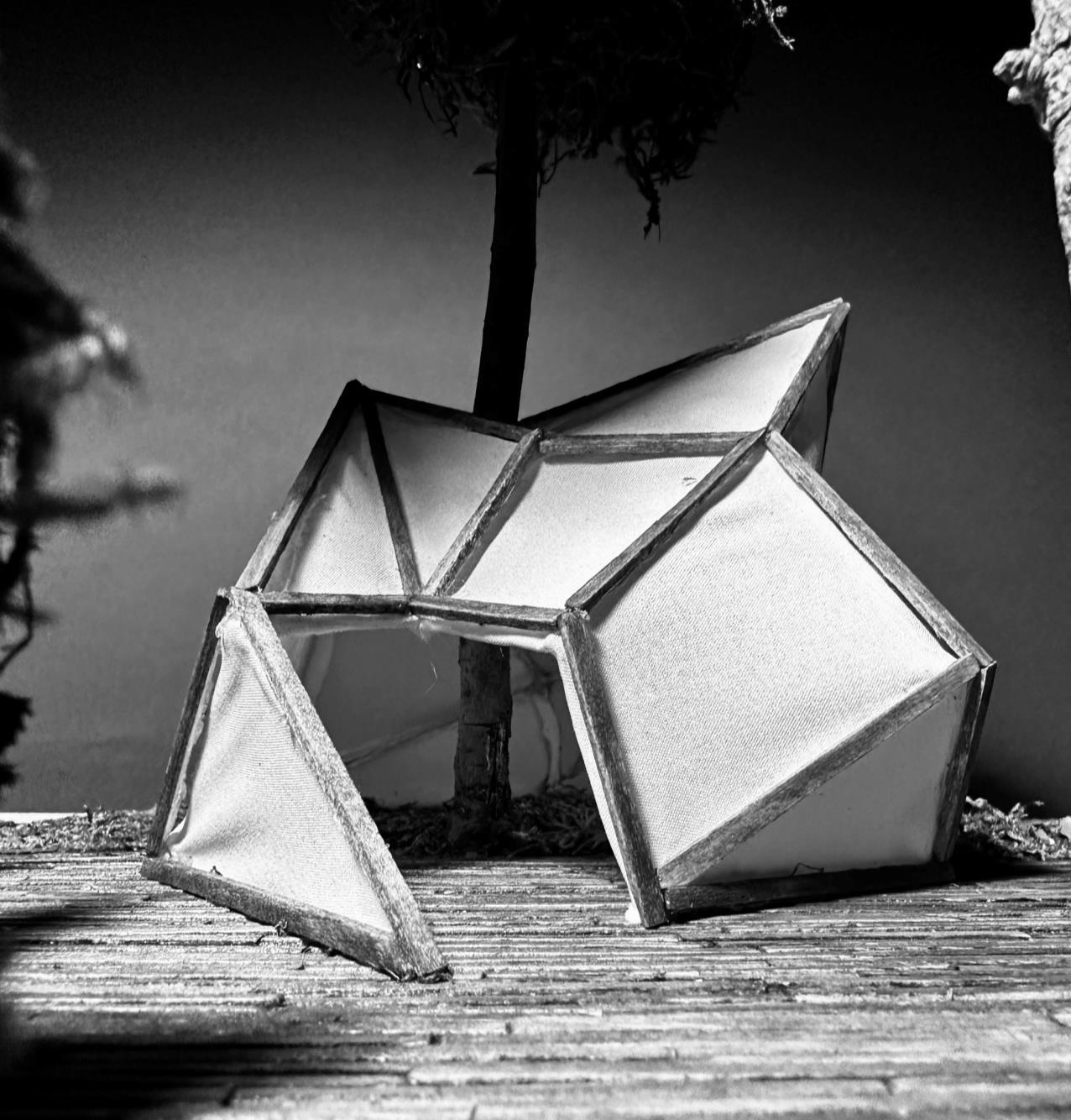
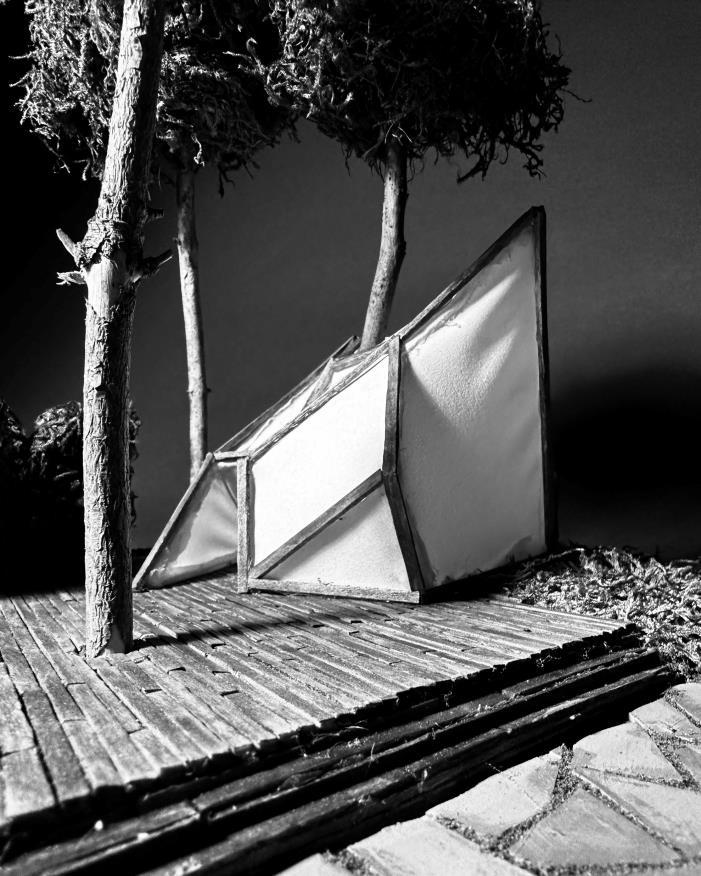
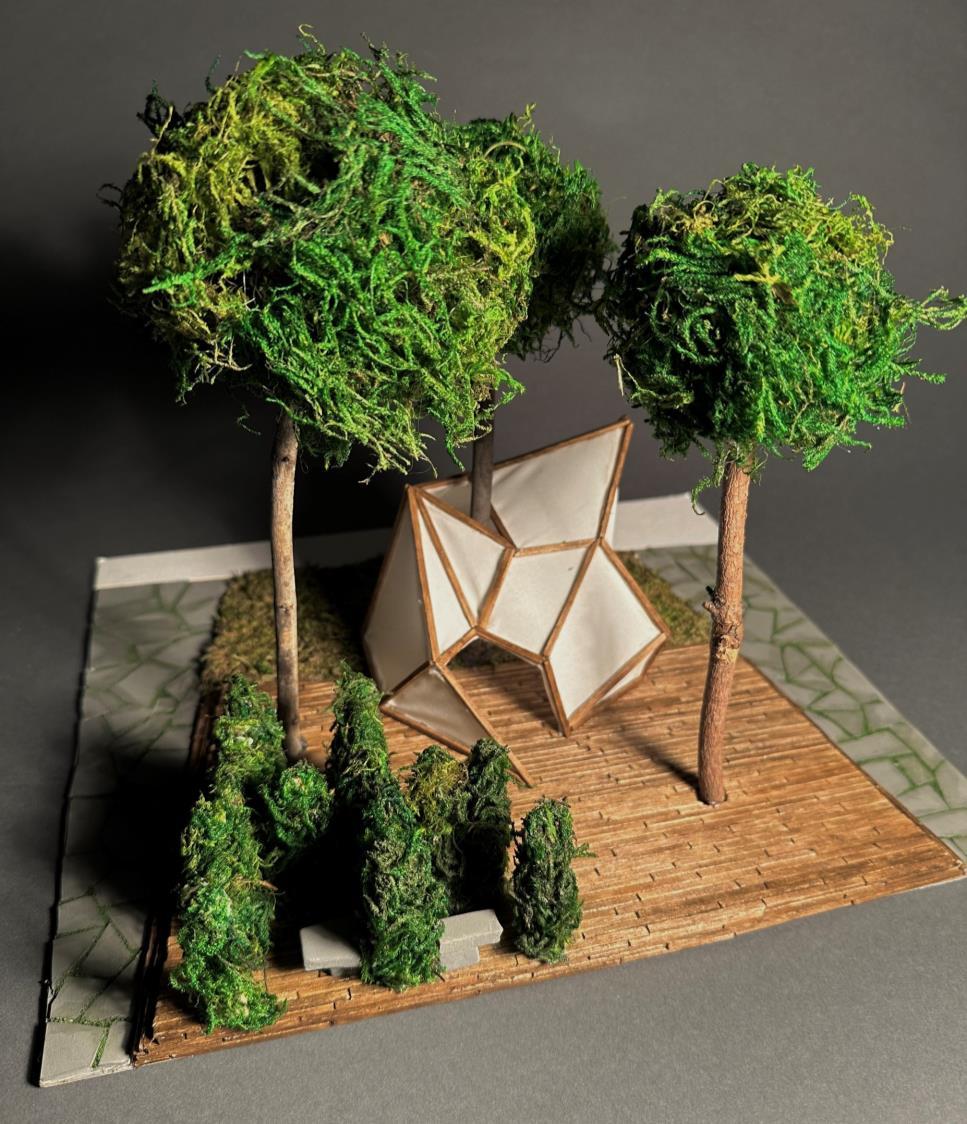
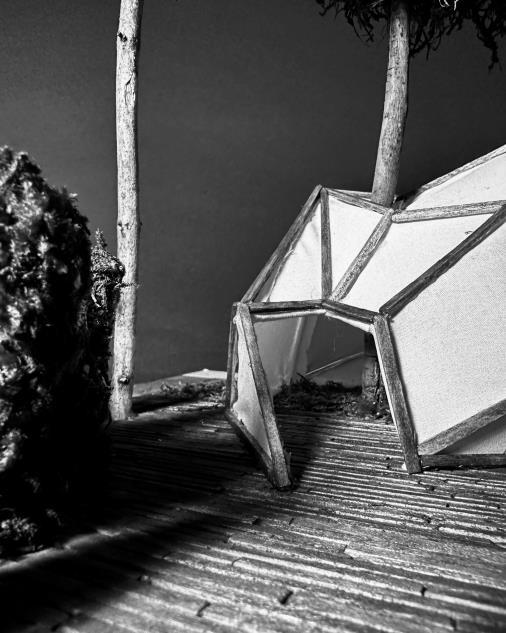
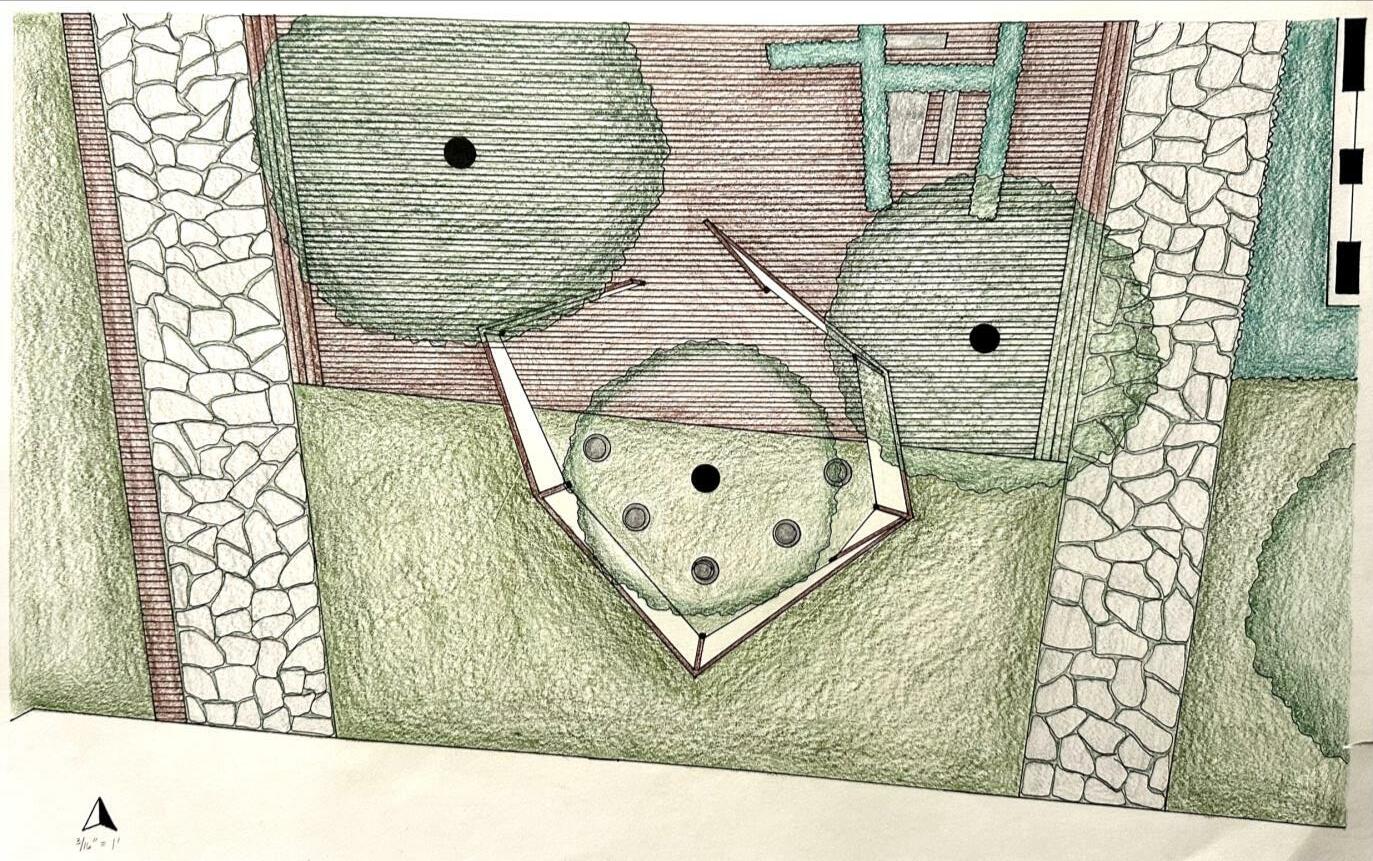
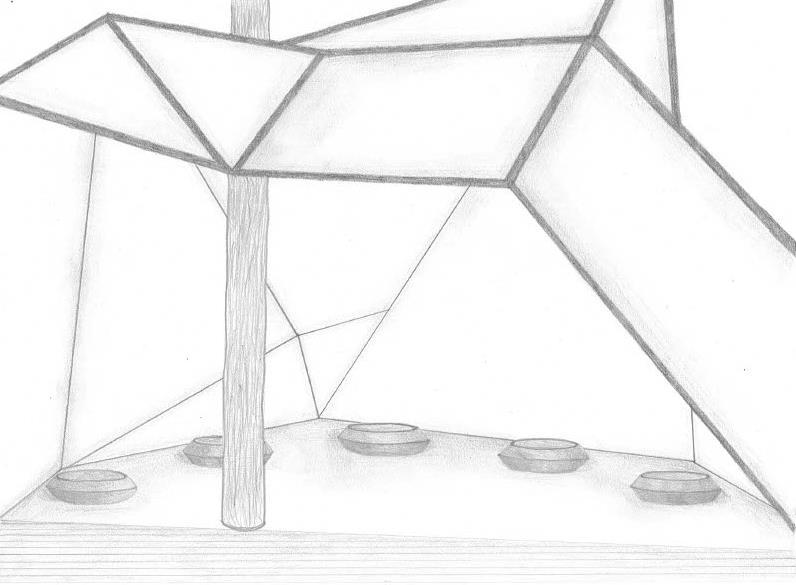
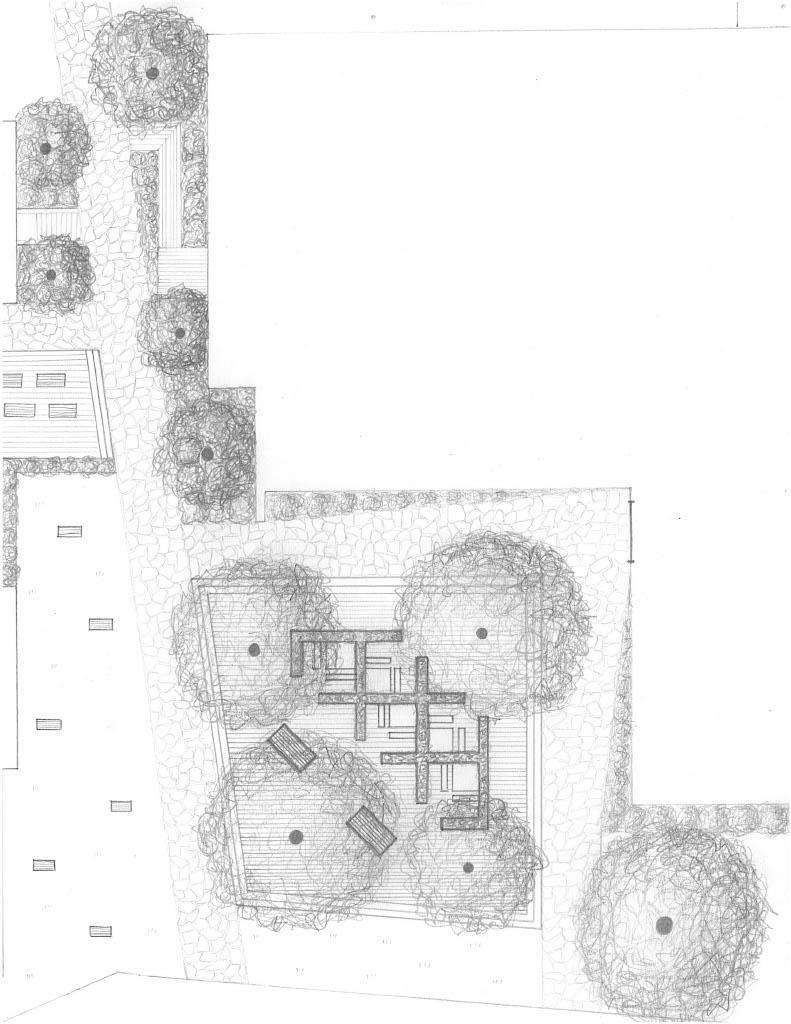
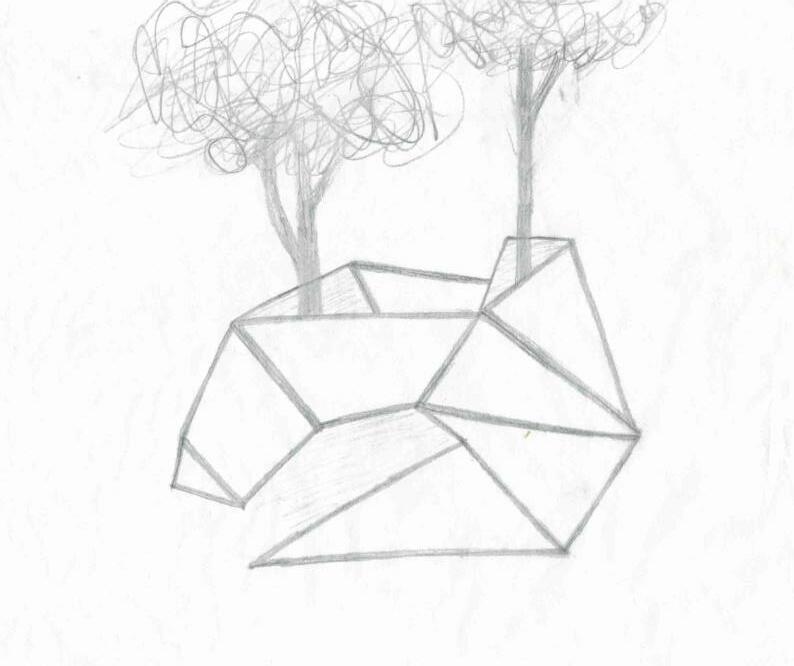
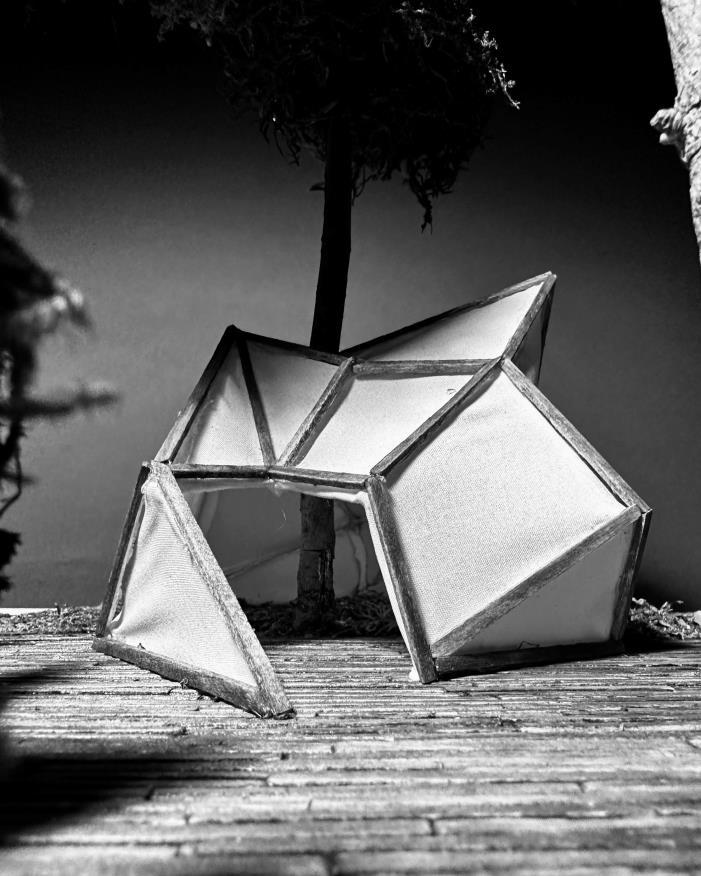
The landscape design for the Library Courtyard was expanded upon with the addition of a pavilion. The pavilion should act as a feature element that provides a stronger sense of defined space, and which both individuals and groups can utilize. The design for the pavilion should support the initial design concept that was developed in Assignment 3, so the primary function was intended to be a meditation space due to the Zen, relaxing feeling of the courtyard. This was achieved by creating a mostly enclosed space that would provide a quiet place for meditating. The fabric walls allowed for a soft natural light to filter inside and a few cushion-like seats provided a place to sit. A tree growing from the inside and the change from wood flooring to grass maintained the feeling of nature within the pavilion. The wood frame on the outside and the geometric pattern of the pavilion tied it into the rest of the courtyard.